travel

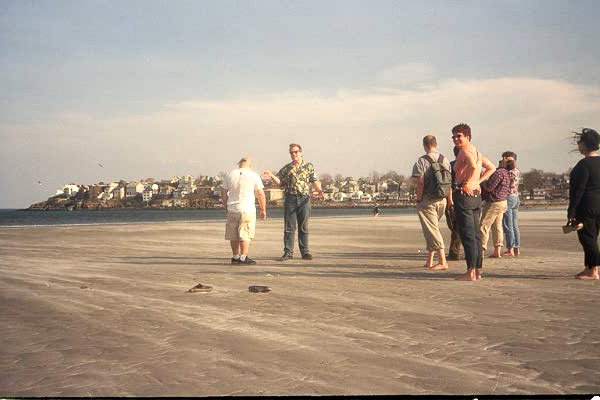
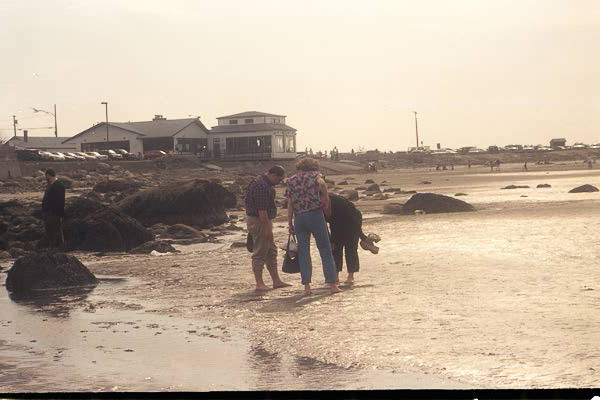
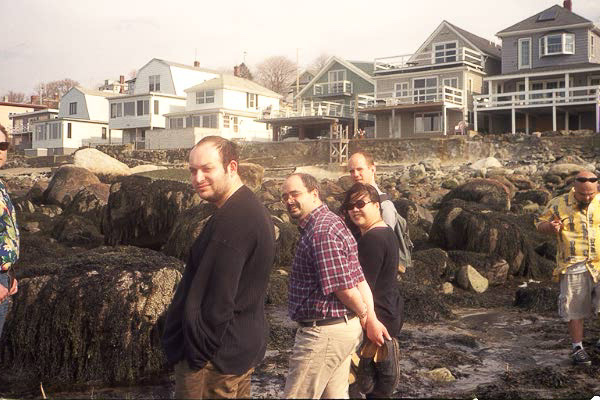
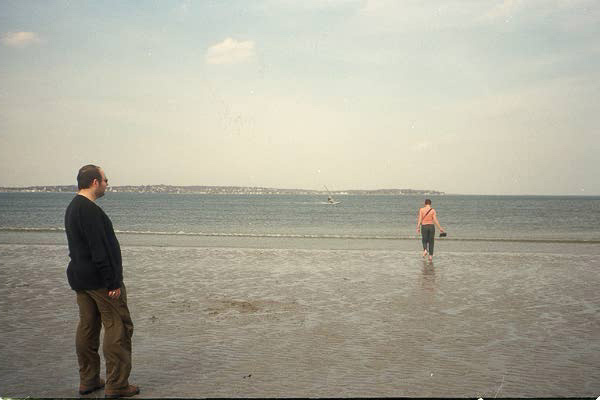
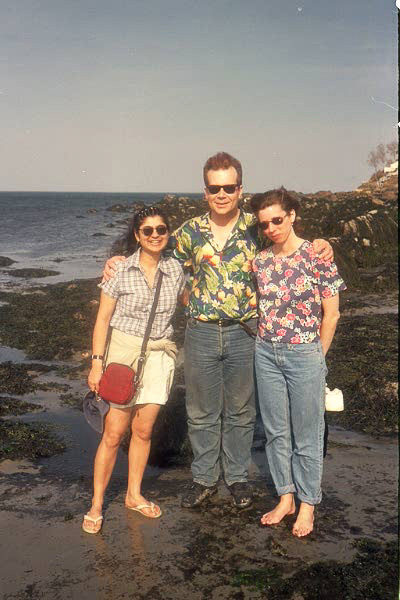
After-Brunch Beach Trip

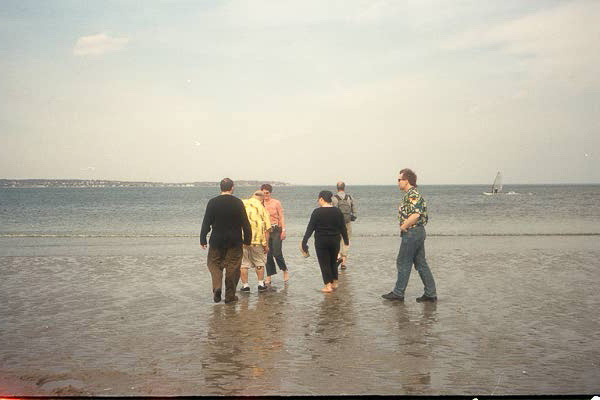
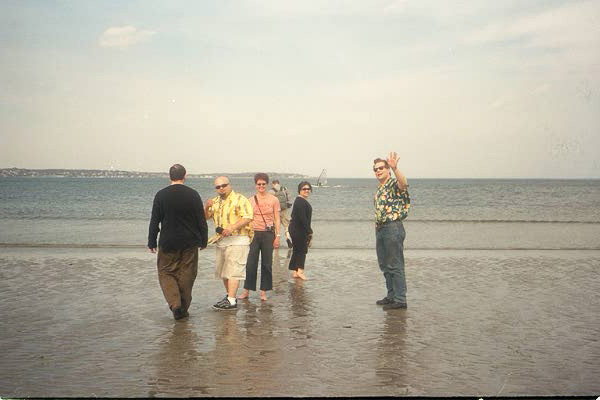
We had “the usual suspects” over (as Chhavi would say) — Marlon, Lee, Armando, Adam — as well as some others we’d never had over, such as the Hanser Show, Ann and Jen.
From Chhavi’s side, so to speak, came Sheenagh, Tammy, and Sheenagh’s friend from Germany, who was either Paulo (which is a Brazilian female name) or Faulo (which is something new to me, and I probably misspelled it even if it’s the correct name).
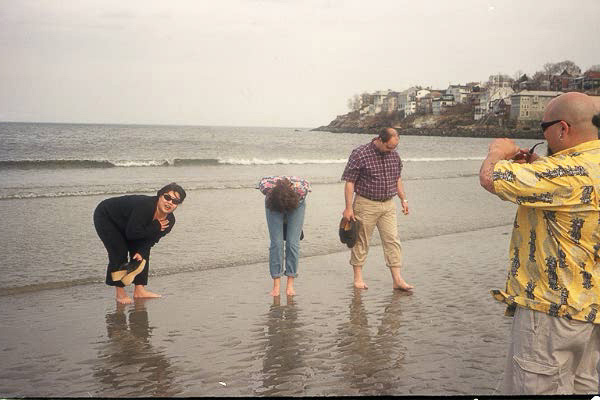
At any rate, it was an enjoyable day.
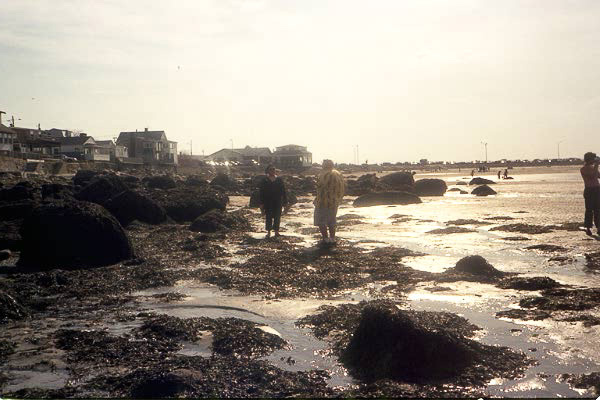
We had brunch here, then went to the beach around 2:30 or 3:00. Afterwards, we came back to the house, stopping off at Stop and Shop to pick up ice cream for desert.
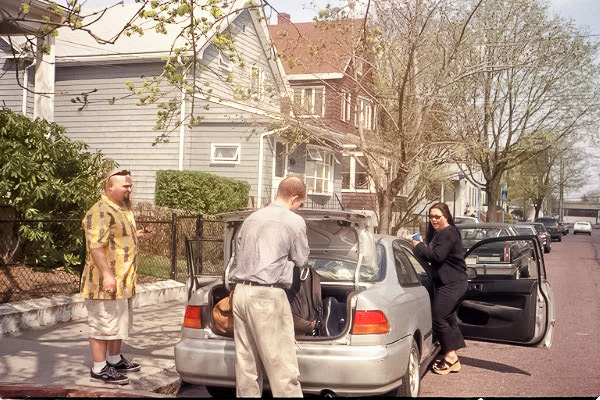
(We’d wanted to get some at an ice cream shop on the way home, but the line was out the door and down the street and we decided it wasn’t worth the wait.)
To Strasbourg and Back

I made it out Friday to catch the bus at six. Almost all the students were there, but no bus. We stood, waiting, and I began sitting, “I don’t know how many times I’ve told these people in Vienna and Strasbourg, ‘I can assure you that we will be there,’ and what if the bus doesn’t show up? What if they make a liar out of me?” I remembered that the bus company wanted full payment before the trip. “What if they decide not to send the bus, citing this as a reason?” It finally showed up, thirty or forty minutes late — I can’t remember exactly. We loaded everything on and we were off. We made it through the first border without much trouble, and we were whizzing through Slovakia. It was here that the first change occurred. Bogdan told me the problem: “The drivers can only drive eight hours each — sixteen hours total. If we go to Budapest, it will be too far for them to drive to Vienna, so we’re just going to Vienna first.” Fine by me, I thought. We slowed down our pace a little and arrived around seven thirty.

Somewhere in the middle of Slovakia — a beautiful country with mountains which shoot up to sharp peaks suddenly — Bogdan told me, “If you don’t have enough money for the accommodations, you can use some of the money Wojtek got from the students.” It was like he slapped me. “What is that money for, if not for the accommodations?” I asked him. “For museums and such,” he responded. Suddenly the money trouble returned. I got out the information concerning our bank payments, hoping that Janusz had indeed paid the whole sum. At first I thought he had — the amount was correct. Then I noticed it was in shillings. “We’re in deep *&$#,” I thought to myself. Before continuing, I’ll explain how I arrived at the stupid assumption that this money was for accommodation: Talking to the mayor, I told him how much it would cost and he responded, “Wojtek has 100 zloty from each student,” he said. Therefore, as we had been talking about the cost of the hostels, I assumed — first mistake but not the first time — that this money was that.

We arrived, and the decisive moment approached with nauseating speed. I began talking to the receptionist, hoping that we could talk her into letting us pay by bank deposit. “So you want to leave without paying and without giving any security that you will pay,” she said ever so sweetly. I offered my credit card as security. She smiled and virtually whispered, “We don’t take credit cards.” Of course not. I went back and told Bogdan and Wojtek. “And that’s for one night, right?” asked Wojtek. “What?” “We’re just staying here tonight, right?” “No, tonight and tomorrow night.” It turned out that the mayor told Wojtek that we could sleep on the bus the second night while we drove to Strasbourg. He only told me, “You’ll be in Vienna 31 May and 1 June, so you’ll need rooms there too . . .” I talked to the receptionist on Wojtek’s urging. “Maybe we can cancel tomorrow’s reservations — and that would mean we need less money.” I thought, “Yeah, they’ll love that.” They would have — we simply would have had to pay the full sum regardless of whether we stayed or not. What else would you expect? It was what I expected, but I was hoping for some miracle. Finally, we just coughed up the money and that was that. For the time being.

Vienna is a great city, but tremendously expensive. I had dinner with Astrid that first night and a simple meal — pasta and a beer — cost 240 shillings. That would have been about 70 złoty if she hadn’t graciously paid. A hot dog cost me 10 złoty. It was beyond outrageous. Astrid told me before I came, “I warn you, Vienna is very expensive.” I had no idea she how expensive she meant.

The next day we visited a couple of places in Vienna. First, we went to a historic Polish church in Vienna so everyone could go to mass, then we went to the emperor’s summer palace. Of course, the emperor had to have two — a summer and a winter palace. I wonder why not waste more money on spring and fall palaces, as well as one for those hot Indian summers and another for the unexpected return of winter that comes every few Aprils. After all, how can one expect an emperor to live in only two palaces? Surely there were more people who could have gone hungry to provide him with three or four more palaces. Whatever the reason, the poor emperor had only two palaces in Vienna and we visited his humble summer one. We walked around the grounds (didn’t actually go in — that was too expensive). Afterward, we were going to walk to the center of town, but some of the teachers and students felt it was too far and decided to go back to the hostel. Those of us who went had a nice enough time, but I can’t speak for those who went back to the hostel.

Negotiating

The next morning we headed to Strasbourg and made it about two hours before we stopped. I thought it was a toilet stop. “The bus broke down again,” I heard one teacher tell another. The drivers had worked on it a little while we were in Vienna, but obviously hadn’t fixed the problem. So we spent five hours in a parking lot somewhere in Austria waiting for the drivers to fix the problem. I called Strasbourg and told them that we might not get there until early in the morning. I read, wrote, read, rested, walked, talked, read, wrote. It was hellish.

On a side note, I think the Kiss tour buses parked beside us for a little while. I saw a bunch of guys milling around and several of them had key chains with Kiss ID cards, the sort that one wears to have unrestricted freedom backstage. I didn’t see any of the actual band members, nor did I try. I think they’re a bit silly, though I didn’t always. I once got in trouble for listening to my neighbor’s Kiss record — forbidden music when you’re six. There were all those stories that “Kiss” was an acronym for “Knights In Satan’s Service” and that listening to them would melt your brain or something along those lines.

We finally made it to Strasbourg around 3:00 a.m. and got everyone checked in and in their rooms by 4:00. Then we got up at 8:30 for breakfast and the big event: the Council of Europe. After breakfast we got our lazy selves on the road and walked to the center of town, arriving at 12:45. We decided to leave for the Council of Europe at 1:45, giving us forty-five minutes to walk there. We met at 1:45 and got underway at 2:05. After walking for eternity we made it to the Council of Europe compound itself. I was in the front so I headed straight to the visitors’ center. Wojtek took most of the group to the place they’d gone last year. After we went off to find them, we were ten minutes late. I was concerned that the discussion itself began at 3:00 and that by being late we would be interrupting. That concern was for naught. As was my concern about dressing nicely. Before leaving I asked all the students to bring something nice to wear for that day. When Bogdan heard this, he laughed. “We didn’t last year, and it was no problem.” I explained that it was a major international governing body that we were going to observe, not a carnival. “We need to look nice,” I said. When we got there, I noticed that no other groups were dressed up — nothing to worry about. Still, we looked sharp, except for a few (notably Wojtek and his running pants).

We watched a video about the Council of Europe, then headed up to the debating chamber to observe. I must admit that I was terribly excited about it all. We were about to watch a cooperative of over forty countries working together to solve problems of mutual concern. I knew we wouldn’t watch any ground-breaking decisions — such things take months or even years to accomplish. Still, I was eager to watch it all. Then one of the students asked me, “How long do we have to stay here?” and another said, “This is so boring.” Of course. I had forgotten what I would have been like at that age. “Do we have to stay here long? This is so boring!”

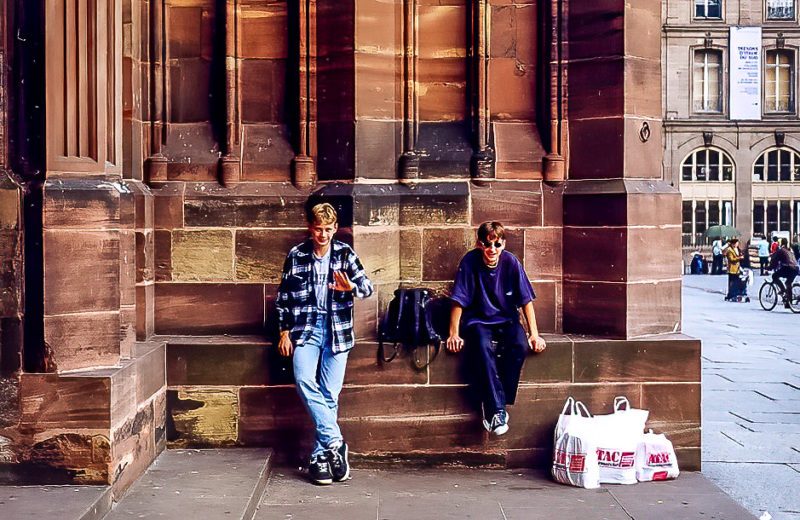
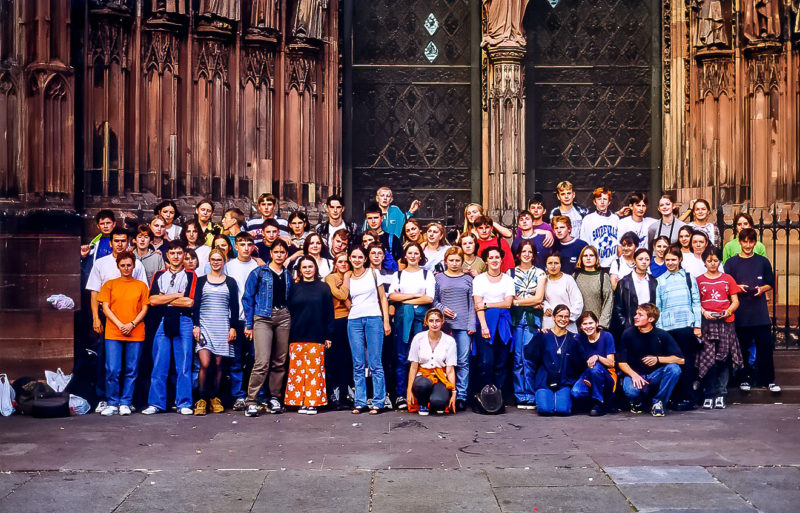
In front of the cathedral

The debating chamber was circular, very similar to the interior of the United Nations in New York. There were joined desks arranged in arcs with the main table and podium at the top of the circle. Around the outside of the room were the translators’ booths, eight of them in all: English, French, German, Italian, Russian, Norwegian, Turkish, and Greek. Of course, I put on my headphones and turned the dial directly to the languages I’d never heard before, then turned it to English so as to actually understand what was going on.

We watched a session of the Congress of Local and Regional Authorities, of which our mayor is a member. The topic under consideration dealt with locally elected officials being removed from office in Turkey without due judiciary process. We were there long enough to hear a summary of a report about the problem and a representative from Turkey speak about the issue.

So how long did we stay there? I had worked frantically for four weeks to plan this, and the local government was paying several thousand zlłoty for this trip. I worried about it constantly for those four weeks and got absolutely no sleep the night before we left because of all the things I was fretting about. I thought we would stay for longer than twenty minutes, but that was it. I must admit that I was both disappointed and un-astonished. Not even the teachers were interested in it. In fact, just as one student had asked me how long we were going to be there, one teacher asked if we were going to be long. (Later that evening I saw her showing to a couple of other teachers some of the things she’d bought. It was a shopping excursion for her.)
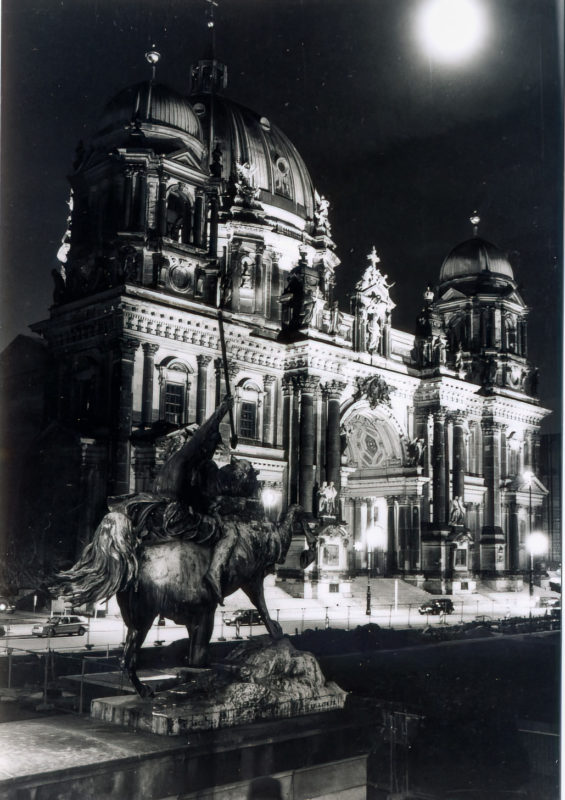
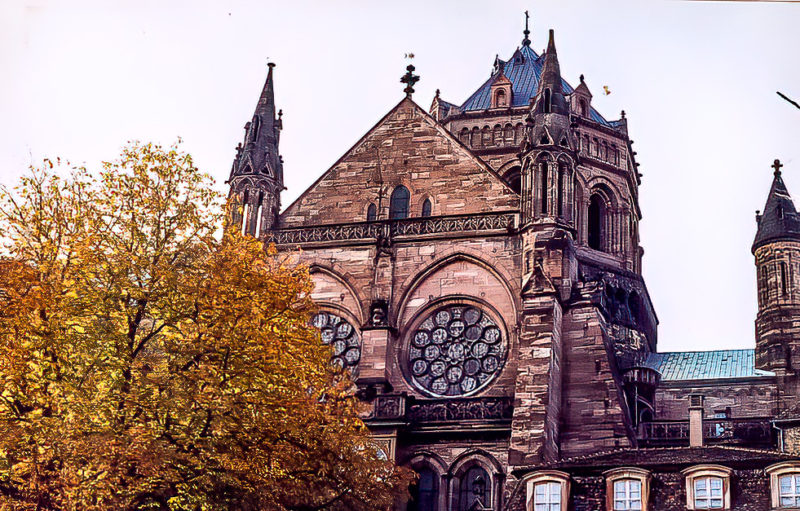
Strasbourg cathedral

After the Council meeting, we took the kids out to eat and then for a guided boat tour of the city. As we sat on the boat, I realized that the English portion of the tour was difficult enough that most students wouldn’t understand it but simple enough that I could translate it. So I began giving a rough translation. And then it suddenly got more difficult. I struggled for a few minutes, then got one of the best students and just told him in very simplified English what the guide said and he told the rest of the students in Polish. Such was my one and only attempt at translating.

The return trip was blissfully uneventful. We left at 12:00 p.m. Wednesday and arrived home in Lipnica 9:00 a.m. Thursday. We stopped in Germany to look at a famous church which I’d never heard of. It was very small, more like a chapel, and the outside and inside walls were covered with small paintings depicting the history of the world (from a German perspective, I assume). Each picture had a black angel with a very dark halo. What I found amazing was not the paintings themselves, but the fact that the ones on the outside were still intact, free from the slightest bit of vandalism. I do not know if they post a guard there in the evenings, but I saw nothing suggesting that.

Looking back on it now, I’m not sure whether I think the trip was a success or not. I guess the fact that we made it there and back without losing anyone or anything makes it somewhat of a success. Still, the lack of organization (which several students noticed and mentioned to me) made the whole thing rather stressful and chaotic — we wasted a lot of time. I’ve learned a lot in the past five weeks, and I think next year’s trip (if it does indeed occur) will be much better. Thankfully, that’s at least a year away . . .
Long Trip Home

It has been a very long journey to this moment: I am finally home, and I finally have my computer. I am no longer cut off from the technology that I became so dependent on in the past. Perhaps it was a good thing that I was without it for so long, but I am certainly not going to give it up just to make this good thing better.

The trip from Sopot to Lipnica was hellish. Saturday morning I left with Julie N. and Grace on an 8:50 train to Warszawa to pick up my computer. I got to Warszawa around one and decided it would be best to get a little more money, so I headed to the poczta in Centralna and waited in line for half an hour for my money. Then I went to pick up a ticket to Kraków, waiting in line for another half hour. “Prosze jeden bilet do Kraków, druga klasa, na ‘Express’ pociag,” I said. “Nie ma druga klasa,” said the lady behind the glass. “Pierwrza bedzie dobra,” I said. After a moment, she said it: “Nie ma.”

“Crap!” I yelled so loud that I’m sure the whole station heard me. I stormed out of the station and the tension continued to build. I asked a taxi driver how much it would cost to get to Bukowinska. The answer: about thirty zloty. I knew that Julie was supposed to be at the Marriot for a while, so I headed over there and we chatted, allowing me time to calm down. She loaned me 50 zl as a precaution and off I went. I bought a tram ticket, road out to Bukowinska and picked up my computer. Then I went back to Centralna to try to decide what to do. I decided to go to Zabrze and stay with Mike D. I knew it would take a little bit more money, but not as much as getting a hotel room in Warszawa. First I went to Katowice. The train was thirty minutes late, leaving at 8:10, so I ended up waiting about two hours for that train. The actual trip took three hours, then I hopped another train for the final half-hour to Zabrze. I found Druker’s place; I knocked on the door; no one answered. I finally got a hotel room for 23 zl and just crashed. Then today I took the 10:53 to Kraków and from there the 1:00 bus to Chyzne. Mike M. was on it, so we chatted for most of the way. Just outside of Spytkowice we ran into traffic problems – an auto accident due to all the heavy vacation traffic. We spent an hour there, then I had about a forty-minute wait in Jabłonka for the bus to Lipnica. All told, it took me ten and a half hours to get to Sopot and thirty-two and a half to get back. That’s forty-three hours of traveling.

Waiting in Krakow

Location: Krakow Glowny Train Station Waiting Room

I’ve about an hour until I leave for Sopot on a horrific six hour train ride. I’m in the waiting area, sitting beside the first woman I’ve ever heard say kurwa. She turned toward me as she laughed – many teeth were missing and the few that remained were any and all colors except white. Two police officers are winding through the crowd – no, three – asking questions I don’t understand. They’ve said nothing to me, and I am a little grateful. Two tired bums sit with blank expressions. They probably haven’t shaved or bathed in weeks. A drunk just bumped into me and he apologized with glazed eyes. An old man sits across from me, his hands folding in his lap and gazing quietly with almost childlike eyes. A group of gypsies sit together, looking at photographs. Some people read, some eat, and we all wait.

Waiting is not something I will miss when I return to America.

Thoughts on the Seasons

It is now the middle of winter, and though we have already passed the winter solstice and the days are growing, the bulk of winter lies before us. Spring is at least three months away.

One thing about winter that I have noticed here is the relative lack of natural sounds. The snow makes no sound as it piles up. (It is amusing to imagine what it would sound like if flakes made metallic sounds, like jingling keys, when they hit each other. Winter would be cacophony.) Of course there is the squeak and crunch of snow as one plods along, but even that is man-made. Nature seems to take a symphonic rest during winter. It is undoubtedly resting for the upcoming program: rain and birds in the spring and summer, and rustling leaves in the [autumn]. There is the trickle of melted snow forming streams and ponds, and the moan and creak of the ice layer the stream as it begins to flow again. Late summer will bring fabulous thunderstorms (Mam nadziela) that will keep me up at night. (And perhaps I’ll be able to capture it on film this time.)

In the meantime, all I can do is appreciate the quiet beauty of winter. And it is spectacular. In Bristol snow never stays on the ground for longer than ten days (which would be exceptionally long). There might be spots of snow in heavily shaded areas, but not the continual blanket of Lipnica. The temperature is consistently below zero, so old snow remains as a foundation for the occasional flurries. Yet despite the amount of snow on the ground, it really hasn’t snowed that frequently. The bulk of the snow now on the ground is from two heavy snow falls, and it hasn’t done much more than flurry since then.

Lipnica Wielka

Lipnica Wielka. It is a small town on the Slovakian border, in the mountains of Poland. It has a population of approximately 3,000 spread along a single road (some 18 km long, I hear). On the map it shows (bad construction) only one road into the whole village. What do they do there? I can only imagine. I will soon know.

So I will soon be in my home. There is already an environmental volunteer there – he will be done in March. It will be nice to have someone to show me around.

When I think of Lipnica Wielka, it feels just like all the times I tried to imagine what Poland itself would be like. This time I have something to base it on, but it is still a big mystery. I’ve been told my apartment is really nice – a good thing. Still I’ve no idea what is in store for me. It sounds just great. A small, remote town – isolation. It will be a great opportunity to get to know myself more.

So now the mystery is over – Lipnica Wielka. I know where I am going. My new address is simply: Liceum Techniczne, 34-483 Lipnica Wielka. One street in the whole town! I can remember thinking about what PC would be like in Africa – isolation and such. It seems that I will be getting more of that than I initially thought when I arrived in Poland. One winter evening I might actually be writing by candlelight. A dark evening with a pipeful could be nice . . .

This is soon to become a very intense experience. I am going to be a full-fledged PCV. Bizarre. It has taken a long time. It will feel like it took me longer to get into PC than to complete my service. It is difficult to believe I have been in Poland already for eleven weeks.

I am fairly close to some other PCV XII’s. Kevin and Niki are in Kraków; Melissa and Chad seem very close; a couple of others are nearby, I think. I’m glad I’ll be near people I like. The worst news is that Kerry is as far north as I am south. That’s not good. We’ve become fairly close friends. Poland suddenly seems so much bigger.

It is so very difficult to describe how I feel now. I am so excited, so frightened, so . . . well, so everything. I cannot believe what I’m about to do. It’s the only thing I can imagine doing now. The future is in another haze; I am once again imagining the letters I will write; I am imagining people visiting. Another new start.

My host mother told me that small-town kids are more eager to learn. I do hope that is true. Still, even if the kids are stubborn and belligerent about learning it will not phase. I hope. Yet it would be great to teach a group of kids who really want to learn.

Wraclaw

This morning I went for a quick walk before we left and I went into a couple of churches. One was an enormously tall and thin building that was blackened with age on the outside and completely white on the inside. As I entered I noticed a small elderly woman muttering a prayer, rosary in hand, back hunched over as she knelt. She looked at me and yet continued to mumble her prayer. As I left a few minutes later she was still there. She took a moment to look at her watch but never stopped praying. I wonder how much of her motivation came simply from a sense of duty, how much of it came from sheer habit.

At another church a woman sat in rags with a small child in her arms and another in ragged, filthy clothes nearby. I gave her a zloty and some change. I really didn’t care whether it was a scam (as so many people think of such situations) – I doubt it. And it made me wonder what forces led her to that destitution. Where is she now? Where will she stay tonight? I wanted to take her picture, but I felt it would be inappropriate. She wasn’t a tourist attraction. Yet I wanted to remember her face.

I bought an antique postcard from 1911. There is a note on the back in meticulous Polish handwriting – something about a sick grandmother, Magda told me. It is so strange to hold something so personal. That person obviously never intended someone to be reading it eighty-five years later. Part of me wants to track the person down, find out all I can about this individual. it’s virtually impossible – and only a mild passing fancy. It’s a bizarre link to the past which is at best minimal. I don’t even know the individual’s name . . .

In two weeks I will be at my site. As I looked out the windows of the bus I found myself imagining that each small town was my site. It’s as unreal to me now as Poland was to me twelve weeks ago . . .

Krakow to Radom

I made it home again. I went back to bed after writing the last entry and stayed for two hours. It was wonderful.

On the train coming home I sat with two Polish women who kept trying to talk to me. It was actually amazing how much information we exchanged. Then at the bust stop I had quite a long talk with [another] woman. She asked me how much my backpack cost. From there we progressed to where I came from, if my parents were with me, if I had any siblings, [etc.]. When I told her I was an only child, she shook her head, as if to say that she feels for my parents. It was rewarding – she told me my Polish is beautiful (“ladna”).

While I was heading back to the Rynek this afternoon a man approached me, asking “Do you speak English?” I must have been extraordinarily, obviously American. At the Greek restaurant I believe the guys had a bet on whether I was American. I guess my cap and North Face stuff made it a bit more than obvious.

Krakow, Redux

Once again I am here in Kraków; this time I am alone. Except for isolated exchanges with shopkeepers, I’ve kept to myself without speaking to anyone. This city is cozier this time. I suppose that’s due in part to the fact that I haven’t been bustling about (as I was last time). I’ve been taking my time, looking at what’s around me with no particular destination in mind. Not only hast it been relaxing but it has also given me an opportunity to explore the city consciously, getting to know it much better.

I just relocated myself. A staggering drunk intruded on my quiet spot in the park. He fell and passed out, and I doubt he will be in the best of moods when he wakes up. No I am sitting on the poet’s monument in the Rynek with Saint Mary’s right in front of me.

My day has been most relaxing, as I was saying. Perhaps I’ve accomplished little (or maybe even nothing), but I am so very relaxed – quite a therapeutic day.

I’ve spent much of the day watching the people. I’ve heard several languages and seen a few races other whites. I’ve heard snatches of English conversations all of the city. I’ve no idea how many Americans are here. I sat next to two in the cafe, but I didn’t speak to them. (I feared a repeat of the asshole I talked to last time. “What are you doing here?” “Playing the guitar.” No joke!)

It’s now seven – the top of the hour and the trumpeter plays the truncated music from Saint Mary’s tower. Legend has it that this piece was what was played to warn of the coming Turks. It stops unexpectedly in the middle of a bar because the watchman was struck in the throat with an arrow. Since then the piece has remained hauntingly unfinished.

Back to Radom

I made it back to the modest but nice place I now call home. We had a nice day. We went back to the Rynek for a while, then headed to the Jewish district. We toured a synagogue that had been turned into a museum, including a portion on nearby concentration camps (Auschwitz).

Kraków was more than I was really ready for. There was just too much: The children’s parade Saturday; all the architecture; the cafes and restaurants we went to; the dancing in the square this afternoon (and the accompanying drunk). It was all too much. I kept making mental notes – feeding the pigeons, walking in the rain, the age of everything surrounding me – but I don’t think I’ll ever remember it all. All I can say is that it was a truly magnificent experience.

What surprised me was the number of Americans we met. It seemed that we were everywhere. I guess Kraków is the city most visited by tourists. It stands to reason that we would meet many Americans.

There are so many churches in the old city. I couldn’t help but be awed by their beauty and simultaneously repulsed by the relative waste of money. How many people could have been helped by all the resources poured into those silly buildings?

First Trip to Krakow

I never really thought I would be in this city. To be honest, I never thought about this city. But nevertheless, here I am.

There’s so much to write about – I’ll just mention a few things: The expansive city center was amazing: a church at one corner, the huge center building, the city tower. It was all so overwhelming. The castle (Wawel) was a prime example of mixed architecture. The cathedral was Gothic; the palace was Romanesque; there was probably a bit of every other style thrown in for good measure. There are more pubs and cafes than could be imagined and many of them are in the basements (many of which date to the fourteenth century). We ate an Italian place and had green, salty pasta. Too much to write about – I need my computer.