Papa in 2012
fun in threes, sometimes fours
nana and papa
One of my daily rituals is to look through the Time Machine widget at the bottom of this page: it combs through all 7,000+ posts here at MTS and finds the ones published on today's date. Twelve years ago today, we threw a surprise birthday party for Nana, who was turning seventy.
We invited some friends but mainly family to the occasion, and since both of Nana's brothers had passed years before, it was mainly from Papa's side of the family. Three of his four sisters came. We had a cookout and some cake, then we took the Boy on a train ride in the park we were at. The family stood by the fenced-off track and waved at us as we passed. Of the five that were there waving, four have passed away. Of the other guests, three more have passed since then.
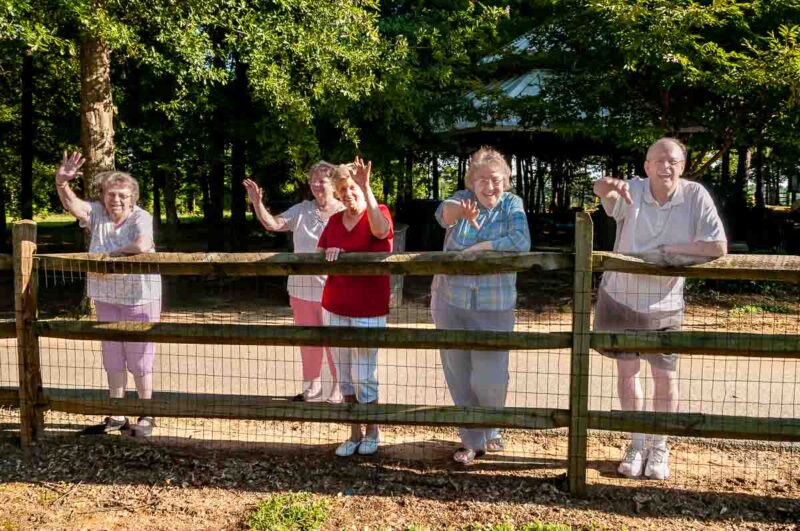
Twelve years is not a terribly long time, and yet six of our guests have passed in that time. That's one every two years. That's too many too quickly, but it's to be expected. It just surprises everyone, I suspect, when it starts happening to those around them.
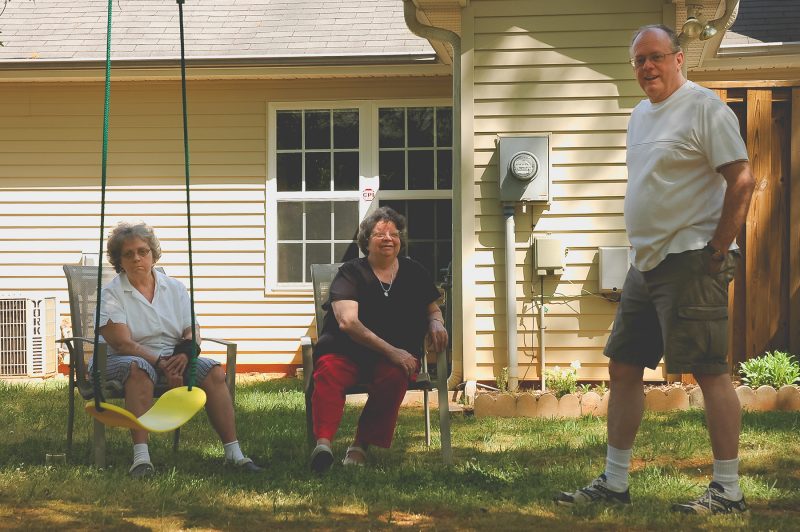
All gone now.
It’s been five years now since Nana passed. E is the same age now that L was then, and now L is only a few short months from being a legal adult.
A common theme in my writing is the suddenness and recurrence of my realization o f just how much time has passed since a certain event, and using that realization to project into the future with the realization that it will come just as quickly as this moment has arrived. Almost thirty years ago, for example, I left for Poland for the first time; project those same nearly-thirty years into the future, and I’m almost eighty, the age Papa died two years after Nana, now three years ago. See? I just did it again: created a loop of time.
In those five years since Nana’s passing, the GIrl has grown almost an entire foot; the Boy has reached a point that we just barely have to look down while talking to him. In those dunce years since Nana’s passing, the Girl has become a volleyball star and broken then re-broken high school track and field records; the Boy has picked up guitar and trombone as well as becoming a confident soccer player.
In another five years, the Girl will be finishing up college, lining up graduate school (with her interests, she will likely end up getting a doctorate straight away), and firmly established in a life of her own, a life without (to some degree) K and me. In another five years, the Boy will be almost done with high school, thinking about college, and probably still playing trombone and Fortnite. I’ll be creeping ever-nearer my sixties; K will be in her fifties.
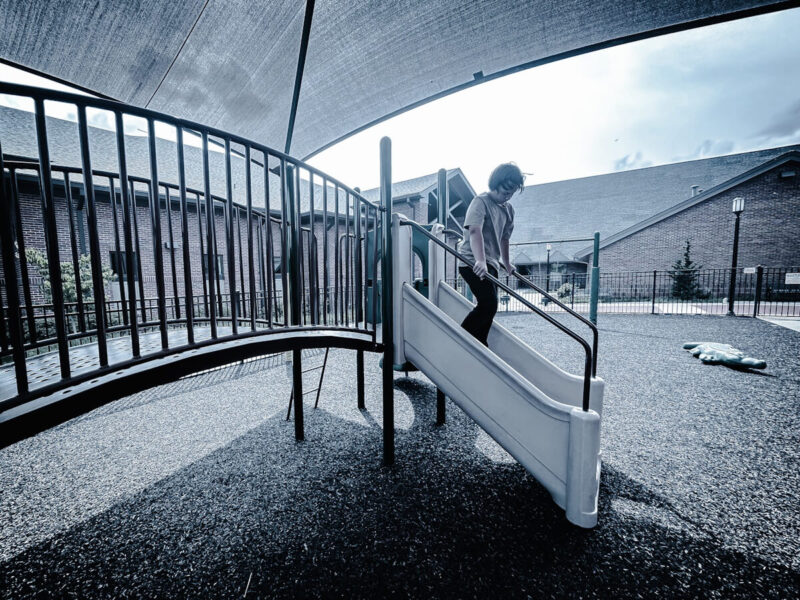
With all this in my head, we go to Polish mass in the afternoon, and while everyone is getting the pot luck afterward read, the Boy heads out to the playground and it's clear how much he's changed...
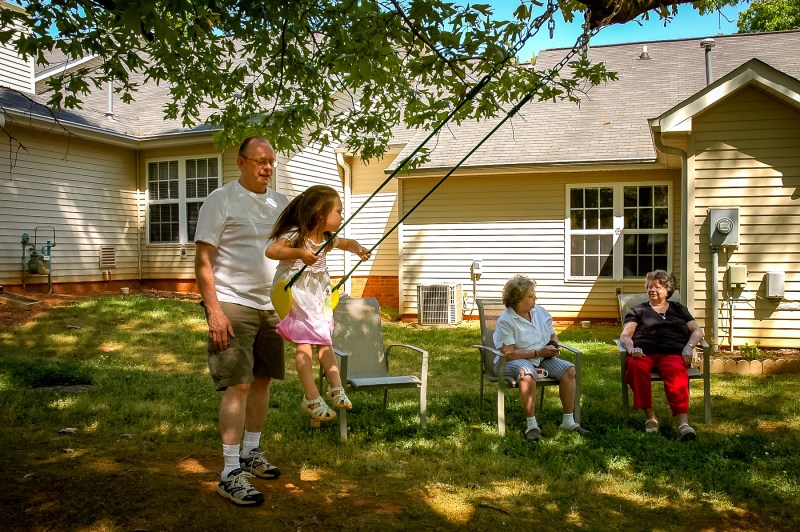
Today is Thursday. Papa's birthday the year of this picture (what was it? 2010? 2011?) was on a Thursday as well, I believe. Now only L remains.
Written on Wednesday 14 July 2021 at 6:54 PM
Getting out of bed is so simple an act that we do it without thinking. We might sometimes want to stay in bed a bit longer, but the act of slinging our feet off the bed and hoisting ourselves into a sitting position — we don’t give that much thought.
When I had my hernia surgery some six years ago, I realized how much we use our abdominal muscles to get out of bed, and because those muscles were terribly sore after surgery, I thought very much about getting out of bed. It was painful, and I wanted to get out of bed quickly to lessen the time my muscles burned, but the act of getting out of bed quickly made them hurt all the more. It was a lose-lose situation. The decision to get out of bed, then, was always a reluctant one.
On the other hand, every time I’ve overslept, I’ve leapt out of bed in a single motion, and it’s a conscious act: I’ve got to get out of the bed as fast as possible and into the shower as fast as possible so I can get dressed and bolt downstairs as fast as possible to grab something to shove down my throat as fast as possible so I can get to work as fast as possible.
Other than that, I rarely think about getting out of bed. The physical act is simple, effortless, and without consideration of its simple significance, a significance that doesn’t appear as such until the ability to do so disappears.
In two or three weeks my father has gone from being semi-independent (such that we could leave him alone for stretches up to eight hours) to being completely bedridden. I don’t think he’s quite come to accept that fact or even completely to understand it. There’s still hope in his mind that he will one day be walking again. I don’t think that’s the case; the doctors don’t think that’s the case; and deep down, he probably doesn’t think it’s the case. Several times a day he tries to get out of bed only for us to remind him that it’s not safe for him to get out of bed. He says things like, “I can’t wait until I get out of this bed and get back to normal.” He doesn’t realize that this new normal is just that, nor does he realize that tragically this new normal will only last for some period of time (weeks? months?) before the next dip, the next drop in his condition, the next “new normal.”
Every new normal makes the previous one look like a paradise. Every new normal reminds us all anew that no matter how trying and depressing for all of us involved, it’s only going to get more trying and more depressing. Every new normal makes the old one seem eons ago. Every new normal quickly begins to feel like it will always be normal, that it will stagnate. That it has stagnated. And then another dip. Another episode. Another new normal.
And the bed he occupies becomes his whole environment, his whole world, his prison.
How anyone could watch how this man is suffering mentally and emotionally and believe that the god he dedicated his life to, supported fiscally (so to speak), and was eternally devoted to would turn his back on him in his time of need — how anyone could think in such a situation that a god like that could exist, and if that god did exist, how it could be considered anything other than capricious and evil, I just don’t know. Belief gives hope, apologists claim. Yet it also gives despair. “What have I done to deserve this?” Dad has asked in his lucid moments. “Why won’t God do something after I’ve devoted my life to him?” Nana pleaded. For both of them, I think, it’s not a matter of “Why doesn’t God heal me so I can go back to my normal life” but something more basic: “Why is God allowing me to suffer like this instead of just letting me die peacefully in my sleep tonight? Why do I wake up day after day to this same prison?”
He remains, as far as I can tell, steadfast in his faith. “I know where I’m going” is his general demeanor, and that might give him some comfort. But I can’t help but think that perhaps that comfort is not worth the anguish it also brings.
In the meantime, we try to comfort him in those admittedly-rare moments of angst, keep him calm throughout the day, and help him take each day in his bed one moment at a time. I don’t know that there’s much more we could hope to do.
We ate zurek:

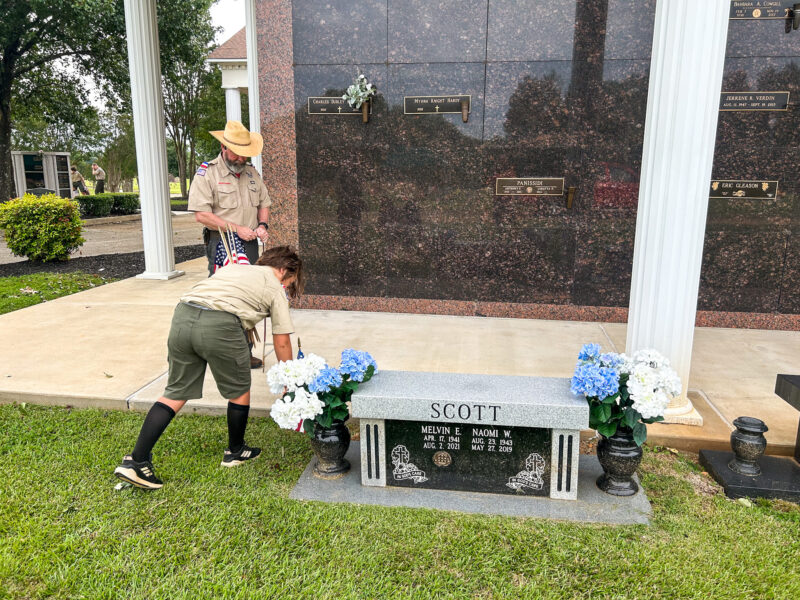
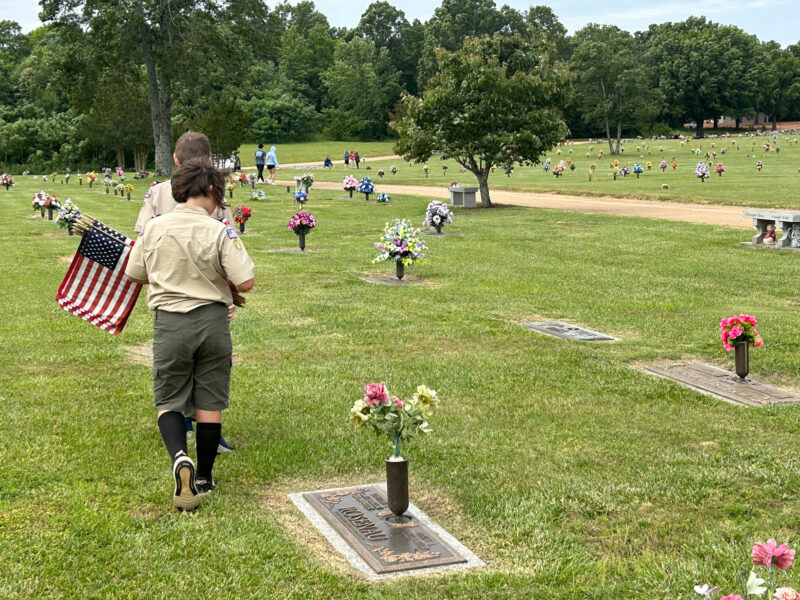
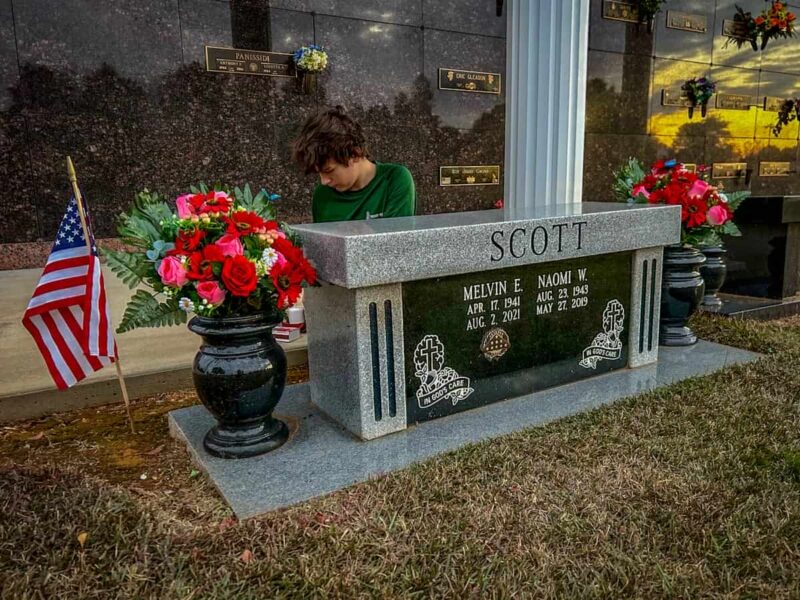
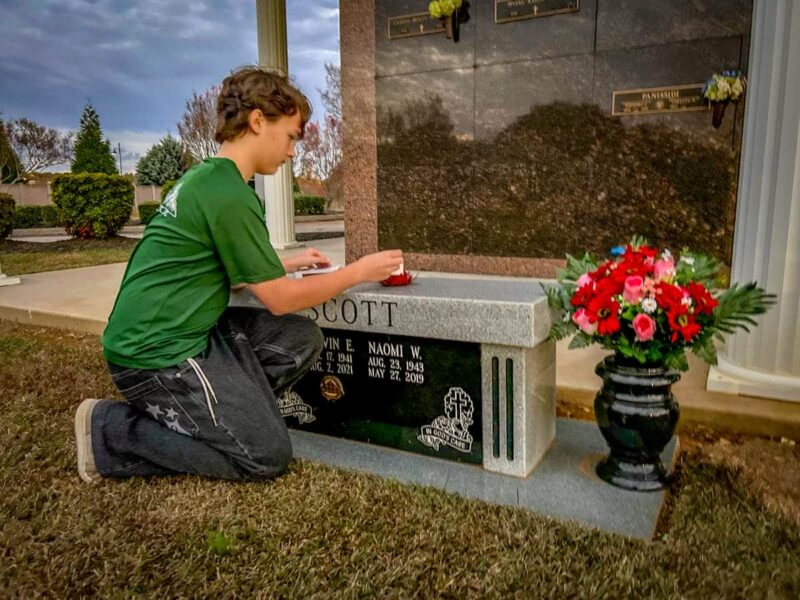
We went to show Babcia Nana's and Papa's grave:
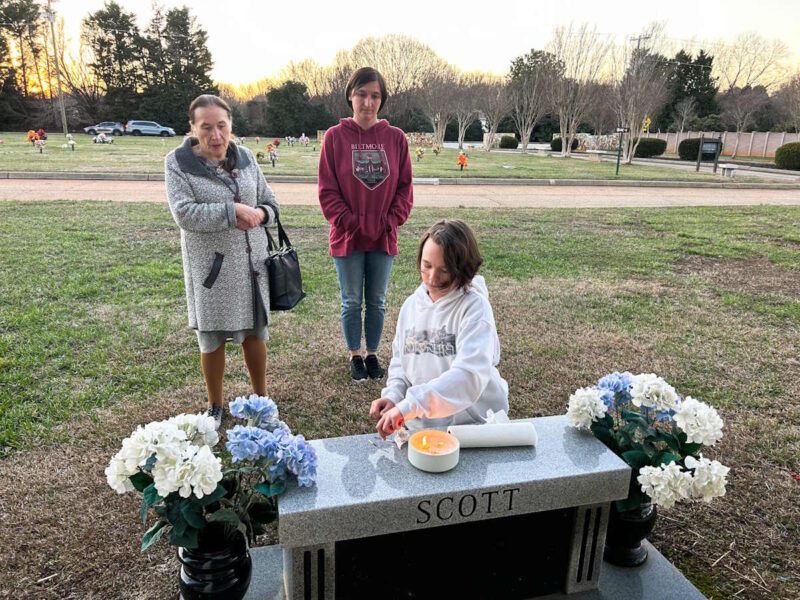
And surprisingly, no one went near a church...
We're still settling into a new routine with Babcia. K has gotten her old phone charged and running, but the closest Babcia has come to an iPhone is the old tablet we bought her years ago.
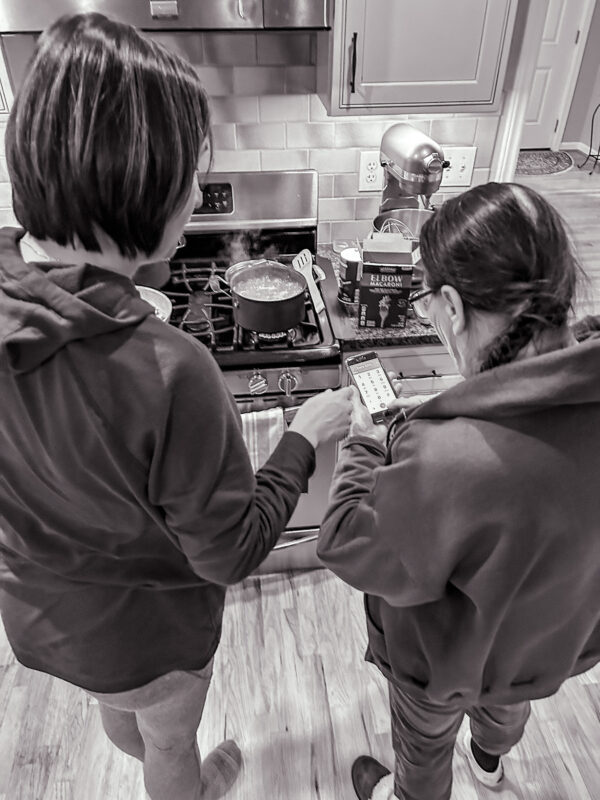
Nana struggled with smartphones as well. Papa made the switch fairly easily, and then when we brought him an iPhone to replace his Android phone, he made the shift without much complication. Nana just experienced frustration: a few tries, and she was done.
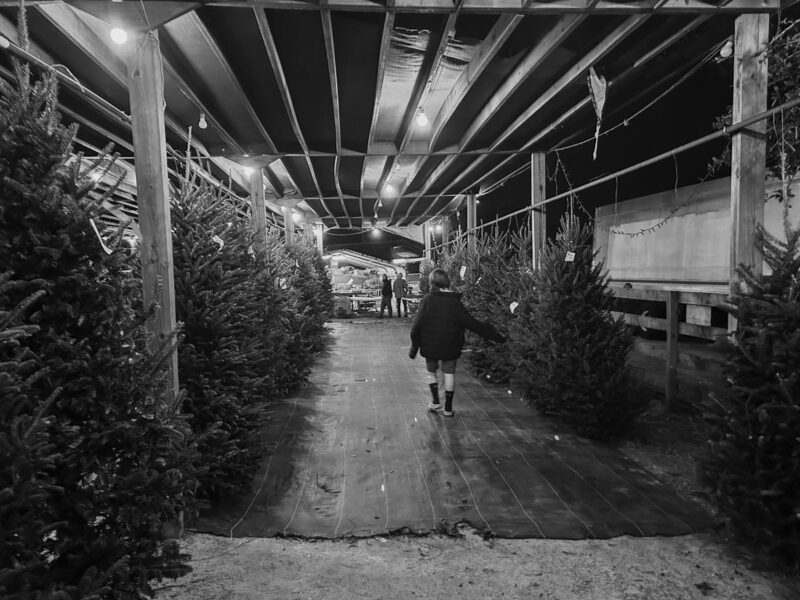
"I can't even answer Papa's phone!" she once declared. She just handed it to him. She wasn't having it.
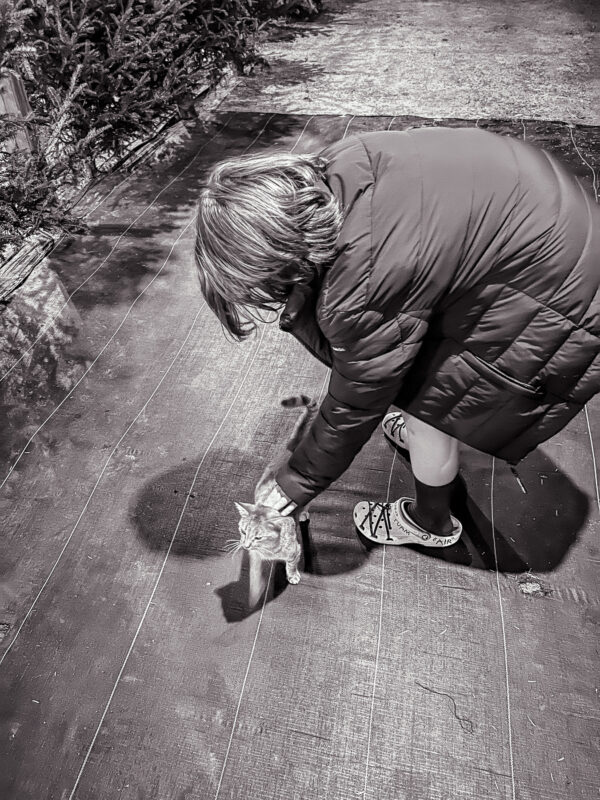
I sometimes wondered if it wasn't a sort of willful helplessness: she'd never had any problem learning new things in the past. When Papa brought home a new computer in the early eighties, she learned how to use it. Each time he upgraded after that, she learned how to use it. New software, new user interfaces (i.e., the mouse). But for whatever reason, she just never had the motivation to learn how to use a smartphone.