travel

Waterfront

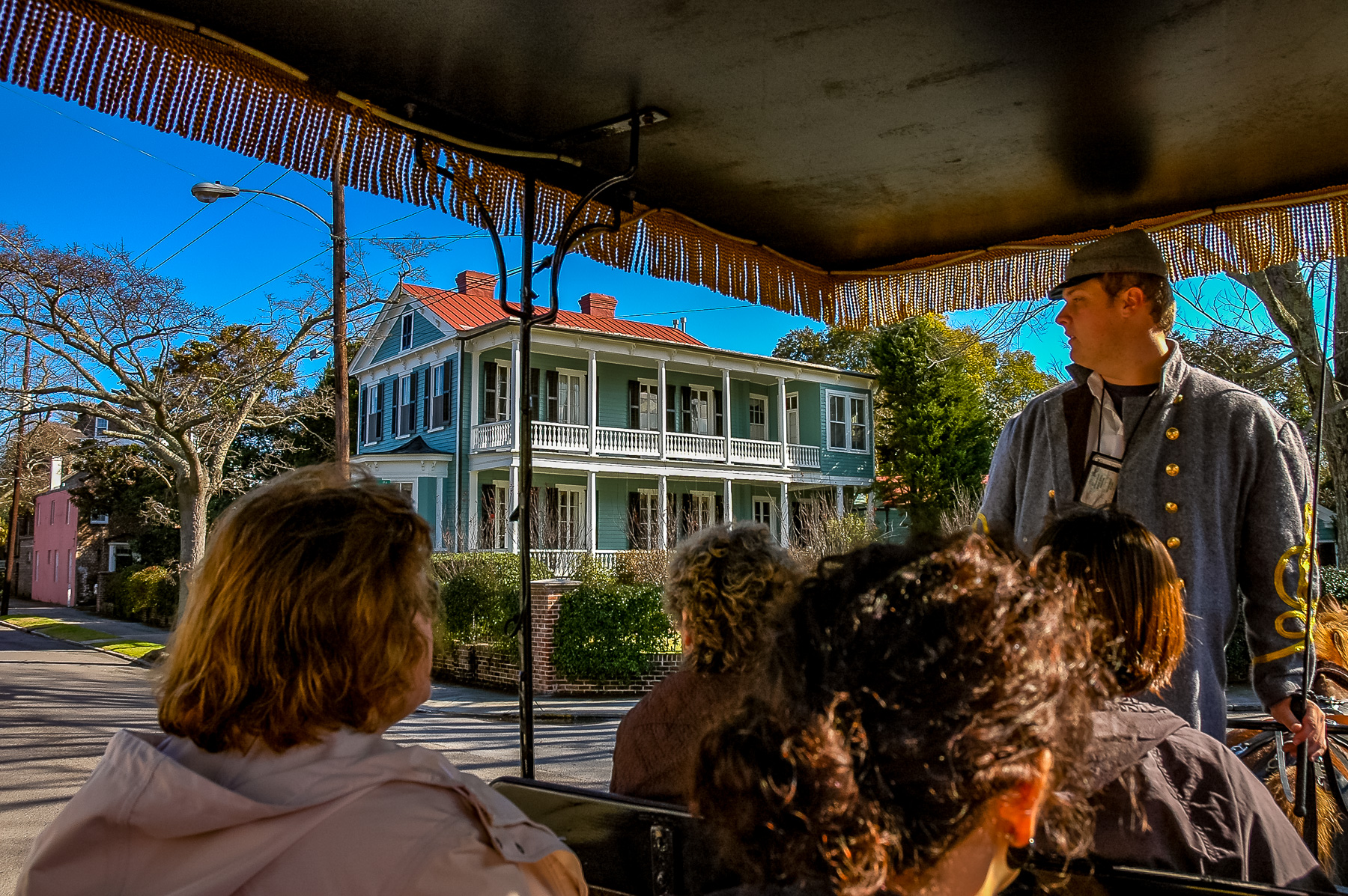
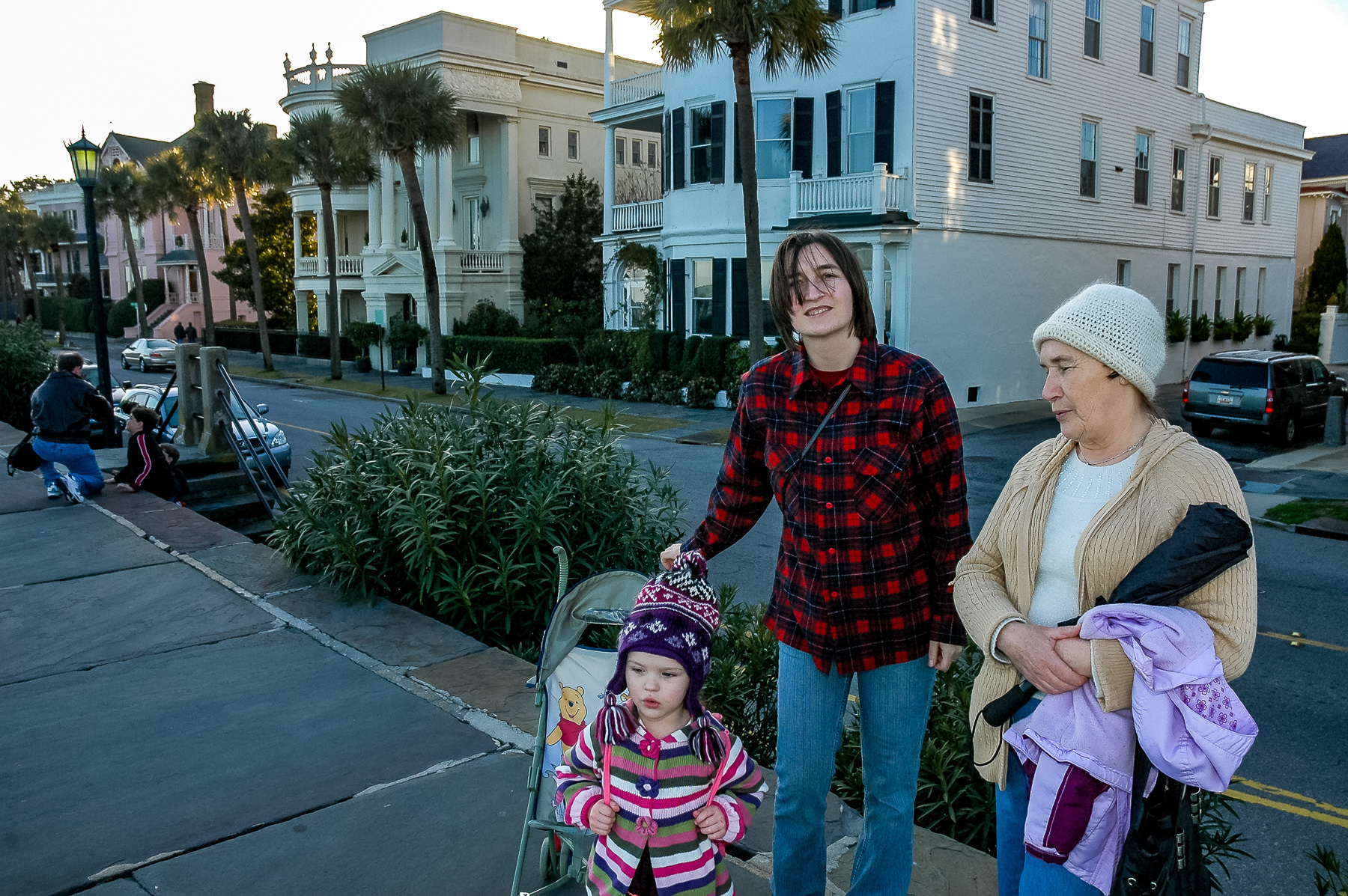
There are two parts of downtown Charleston, according to tour guides. It’s not a question of “The Haves” and “The Have-Nots” but rather “The Haves” and “The Have-a-Hell-of-a-Lot-Mores.” That’s where the houses along the battery lie.
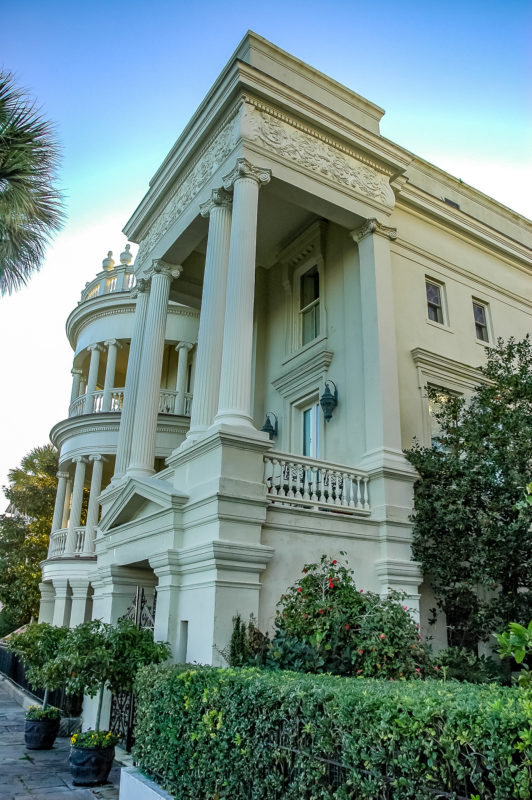
After all, who else could pay the property taxes of such houses? The annual rate for most of these houses equals a solidly middle-class salary.
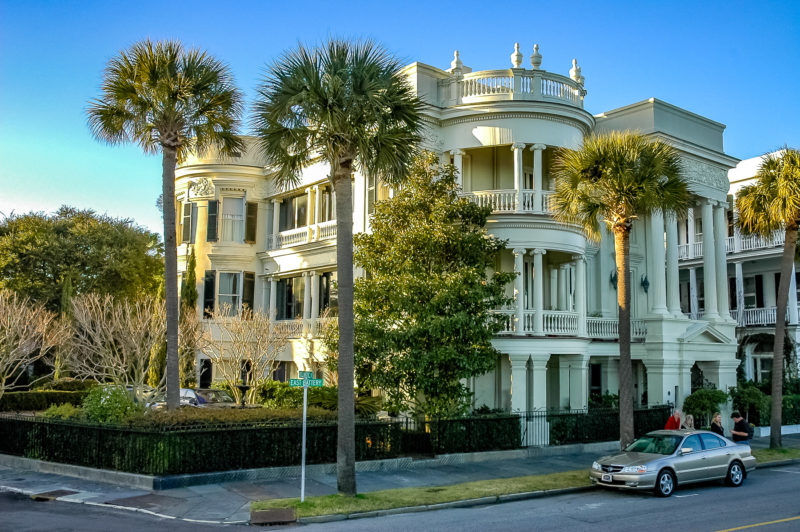
If driving a $100k Mercedes is a conspicuous sign of wealth, these houses make tourists scratch their heads in wonder. “Who could afford such a house?” we ask. Apparently, plenty of people.
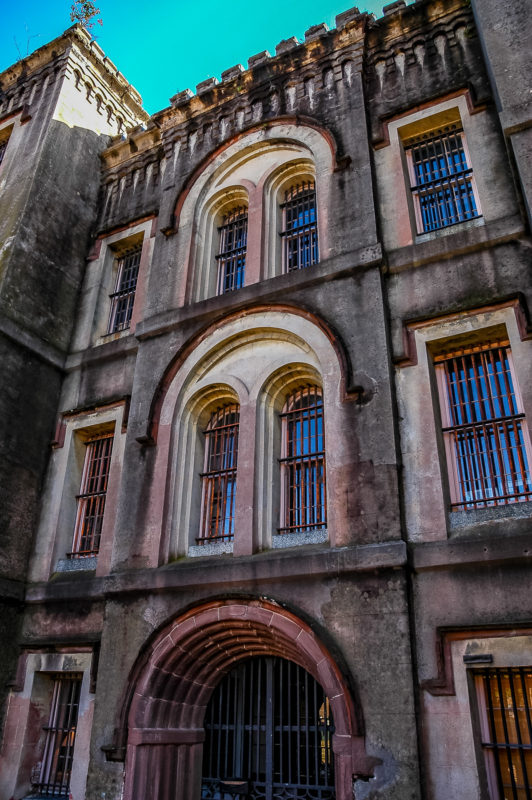
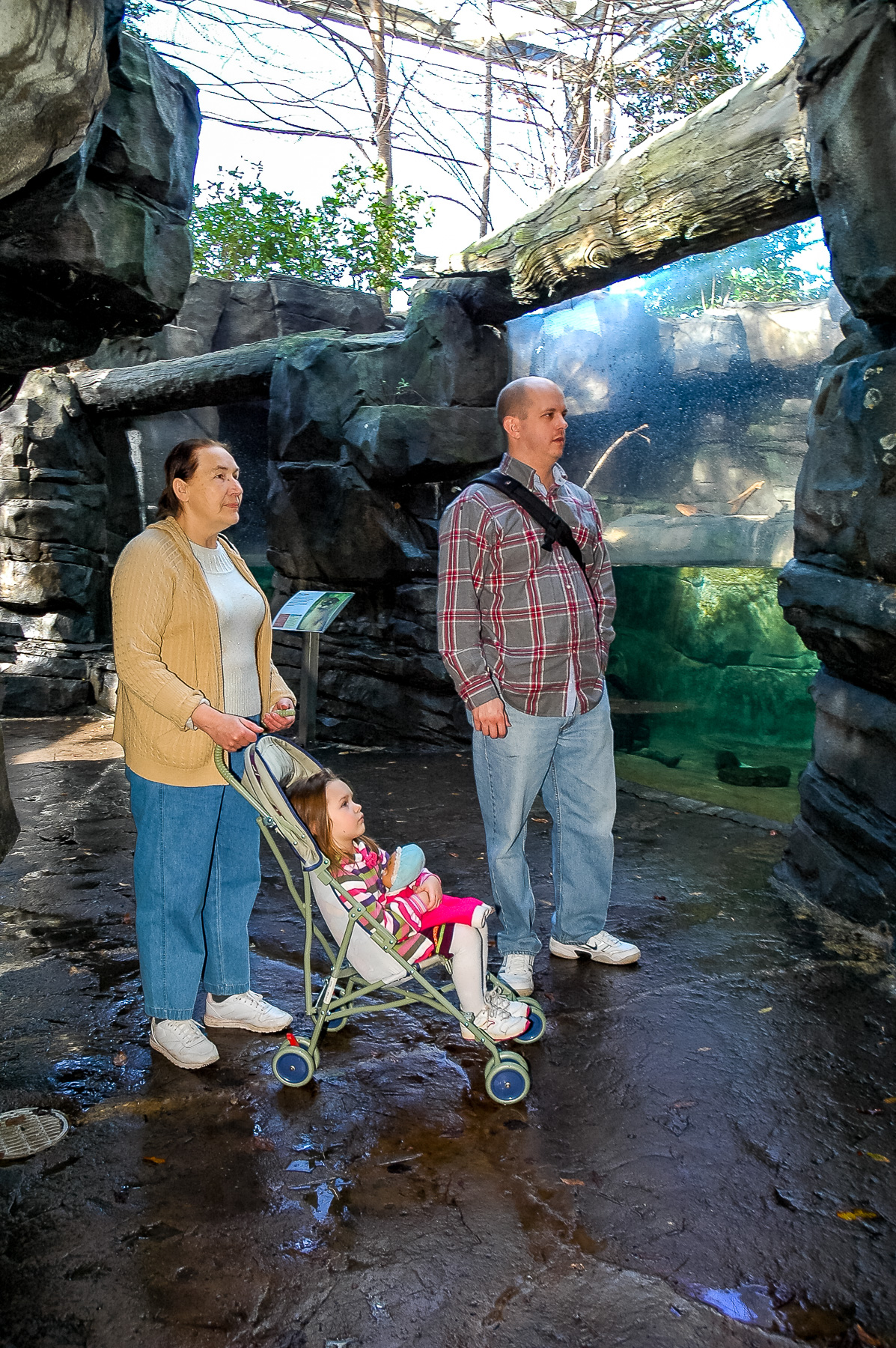
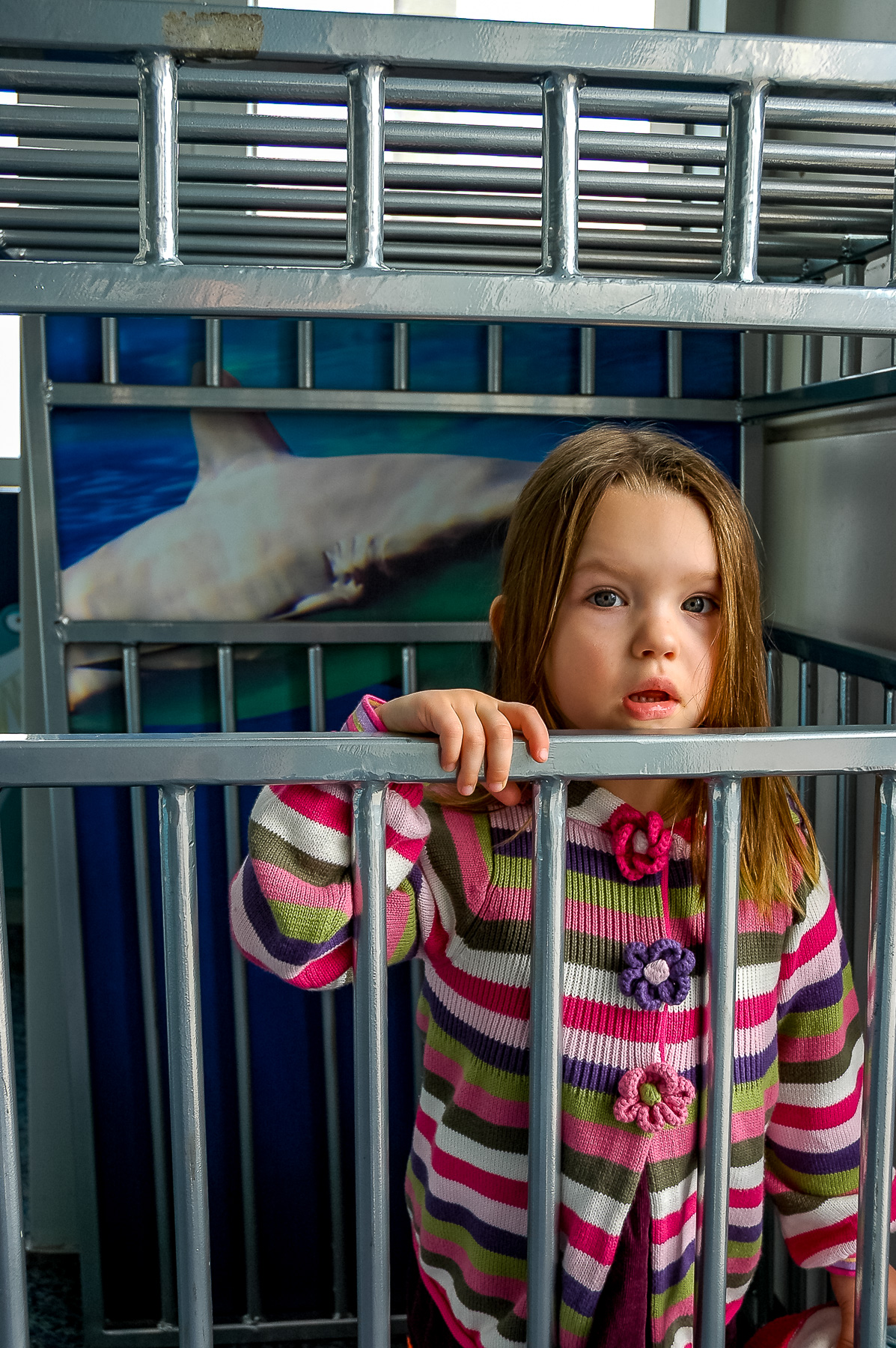
Just a few blocks away is the prison. It closed in the 1940s, never having had electricity or running water. The last execution was in the 1930s: the state had changed its method of execution to the electric chair, and having no power, the Charleston prison was unable to continue executing criminals.
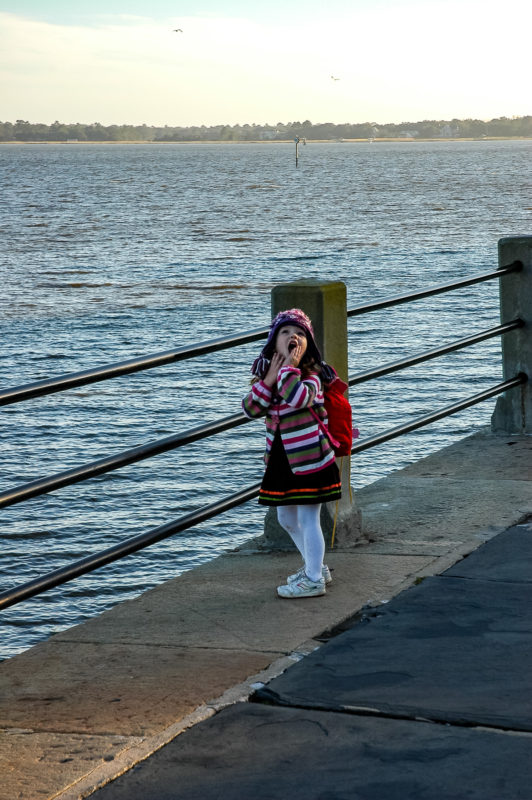
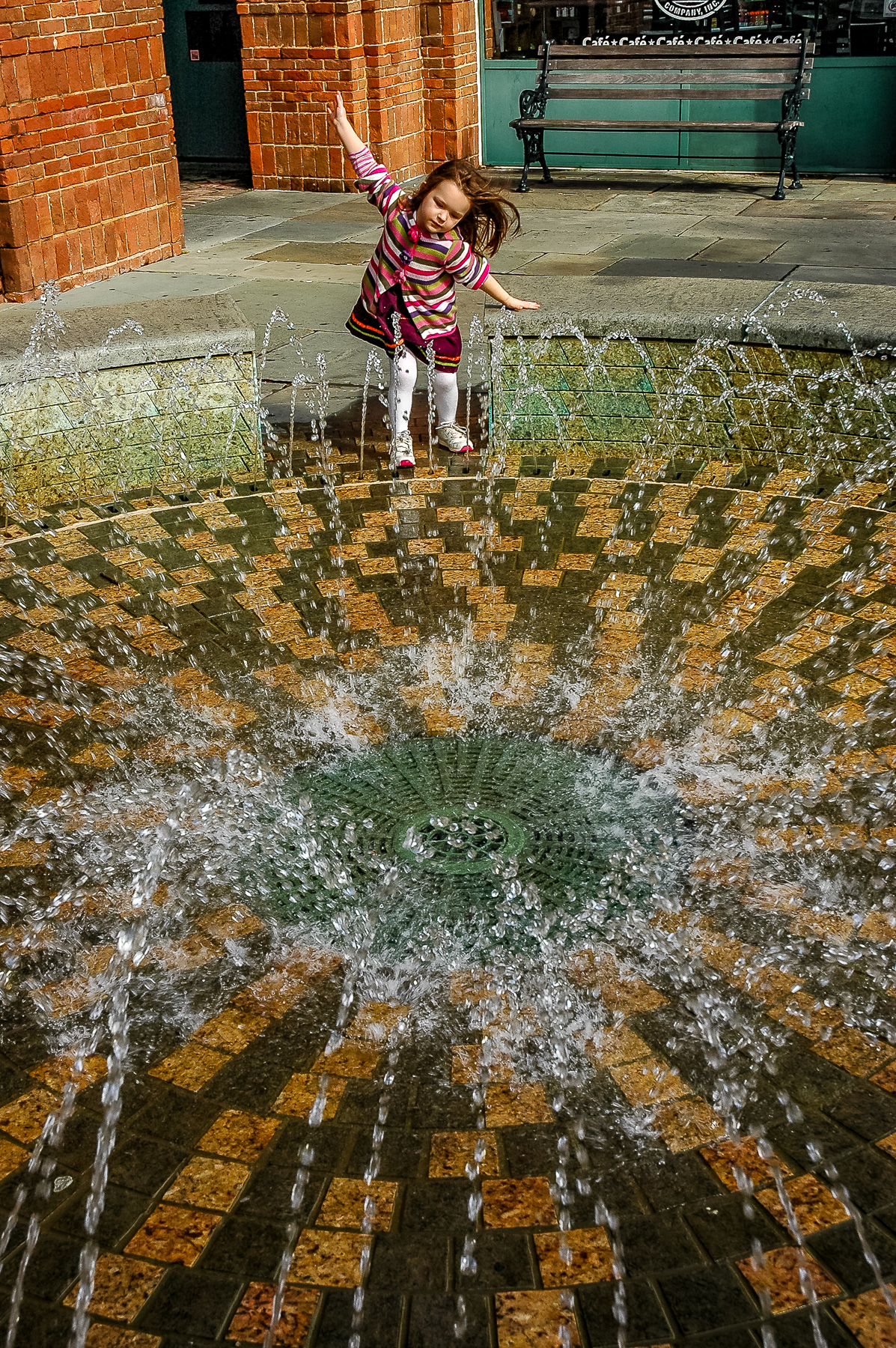
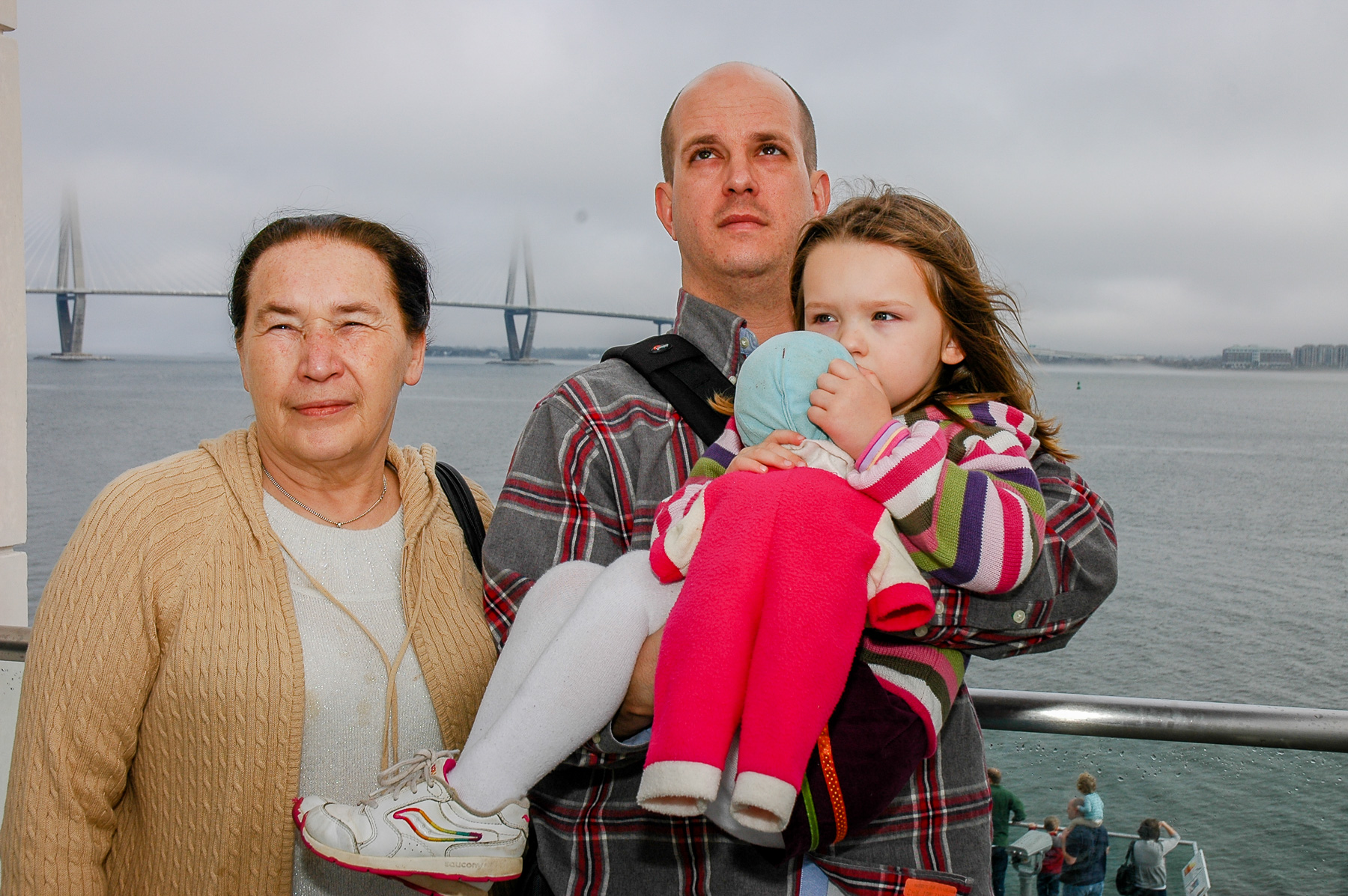
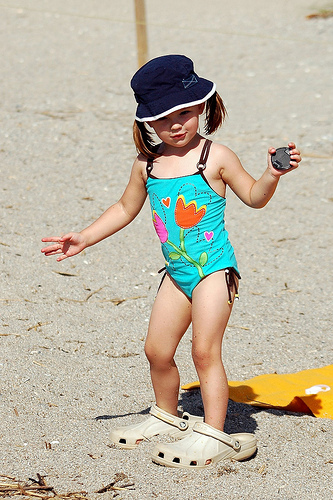
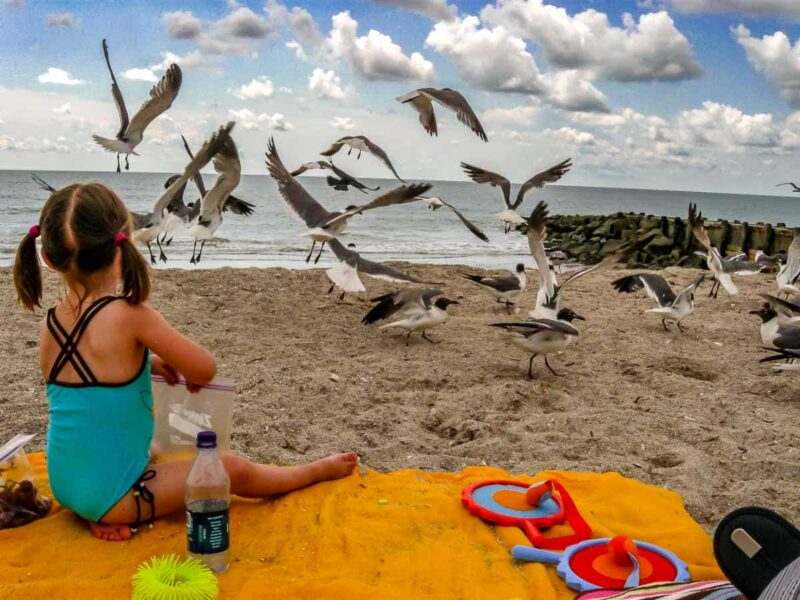
The Girl was impressed, but more so with the birds that were flying around her
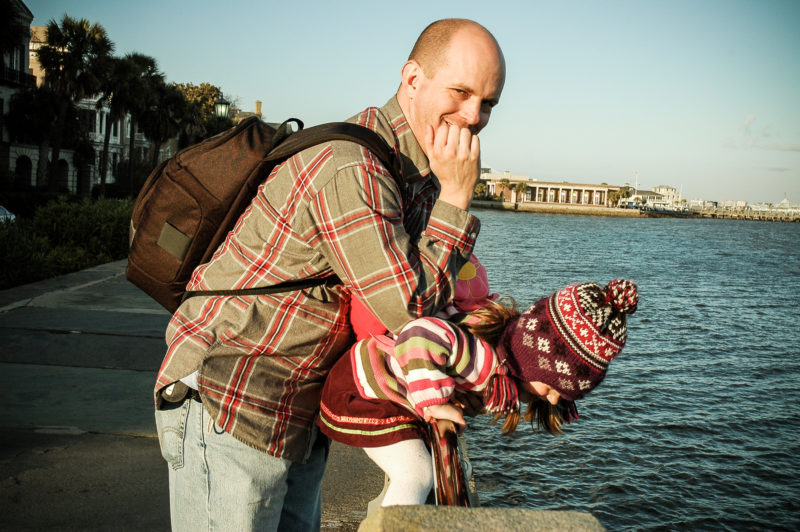
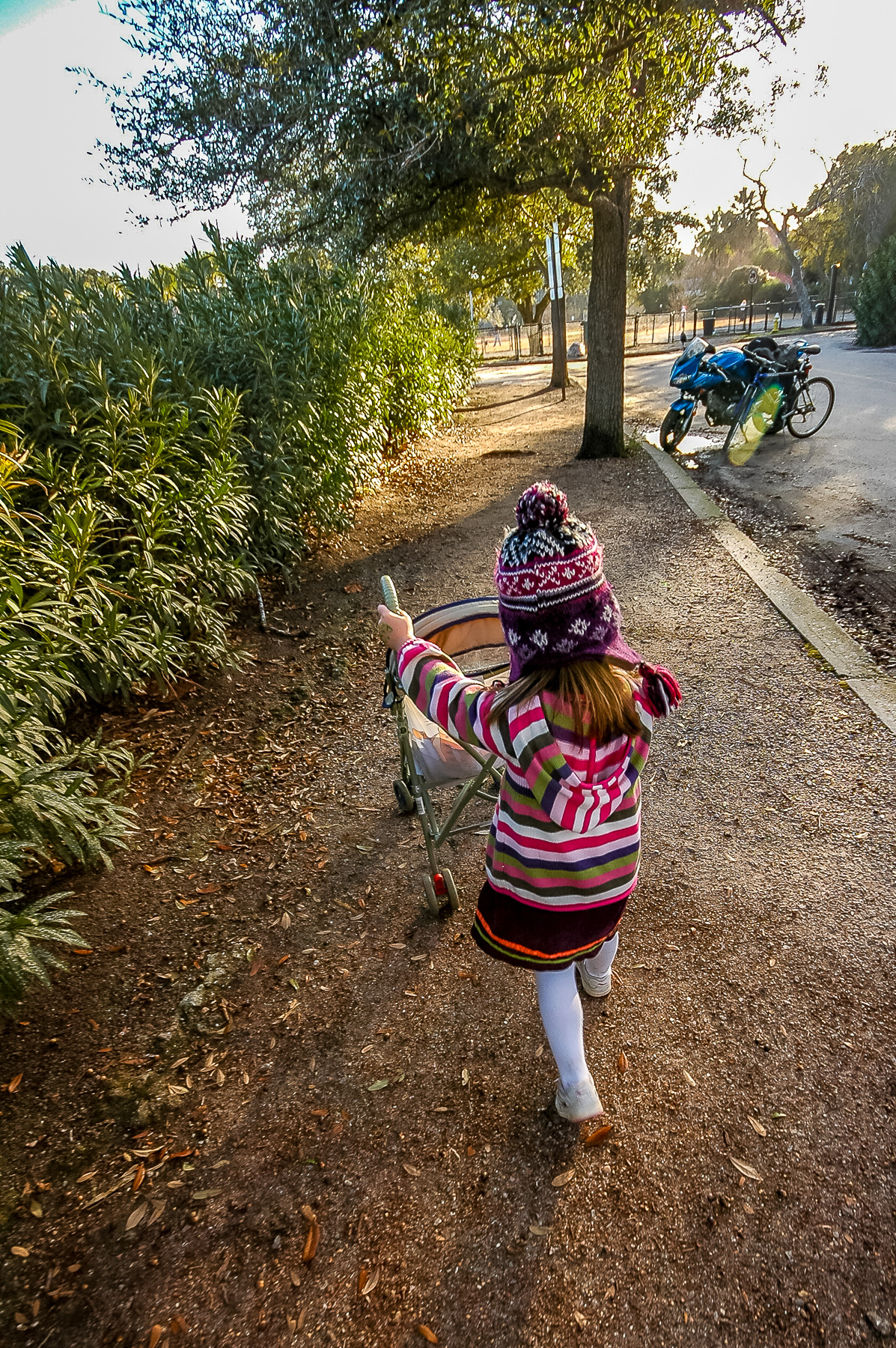
and the waves splashing below us. We weaved among the tourists, and on one occasion became an object of tourist fascination: an Asian couple saw L marching down the street, giggled, and took a quick picture. A local, out walking his dog, observed that L was “all wrapped up” and thus “cute as a button.”
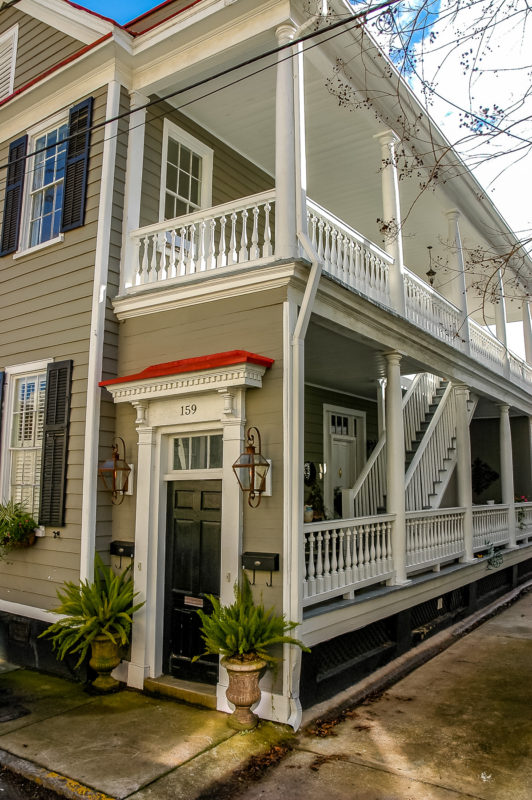
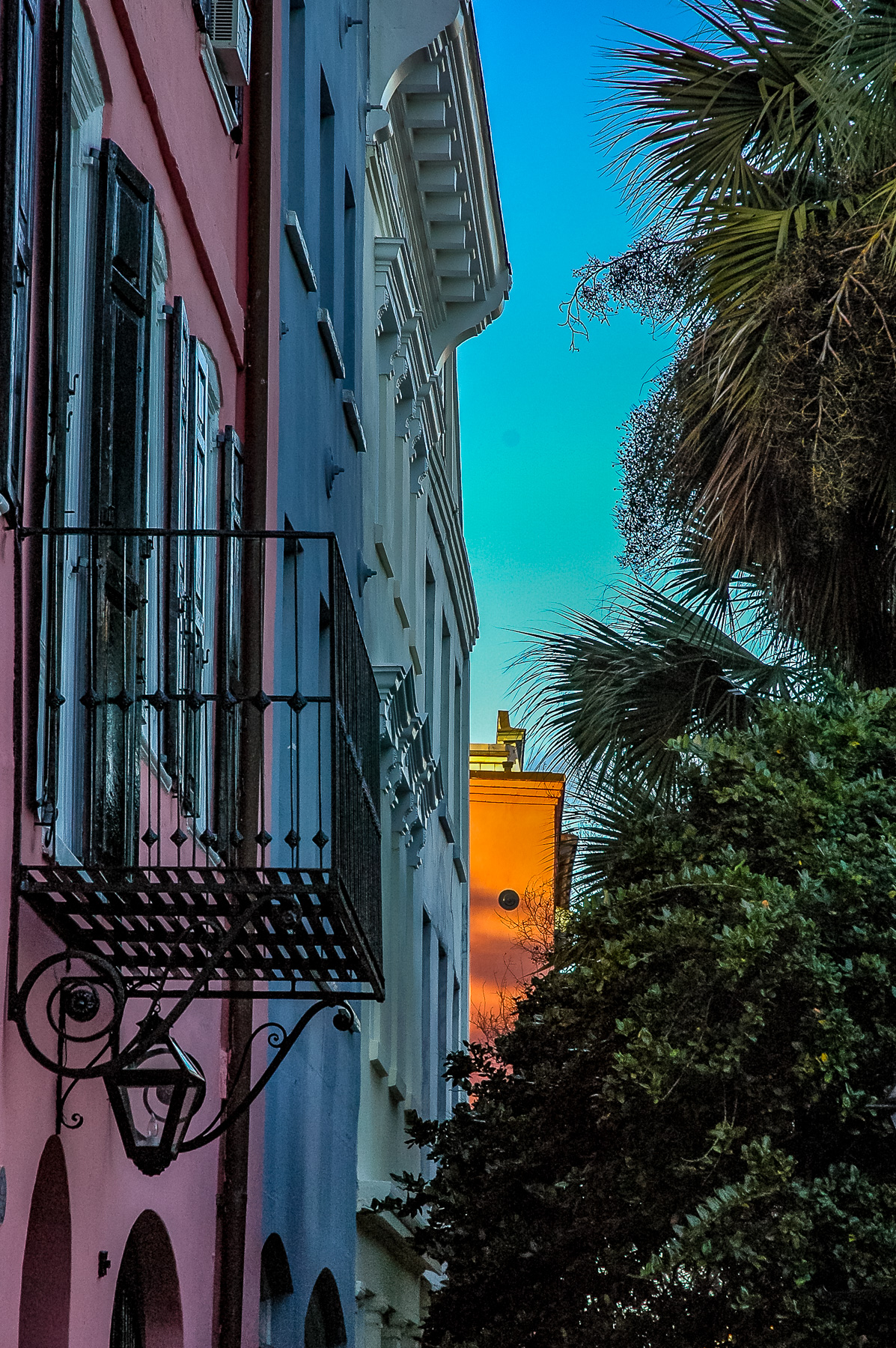
We continued on our way, though it was difficult not to look up. It’s not quite like being in a Gothic cathedral or Manhattan, but the impulse too look upward is undeniable.
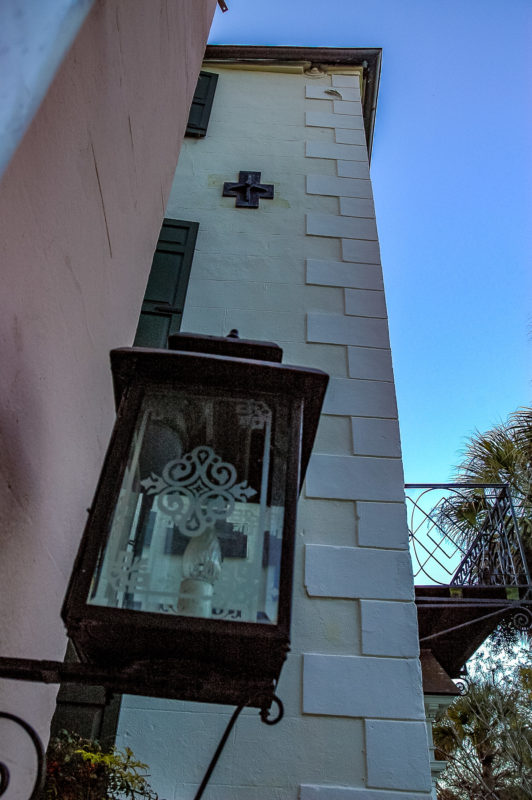
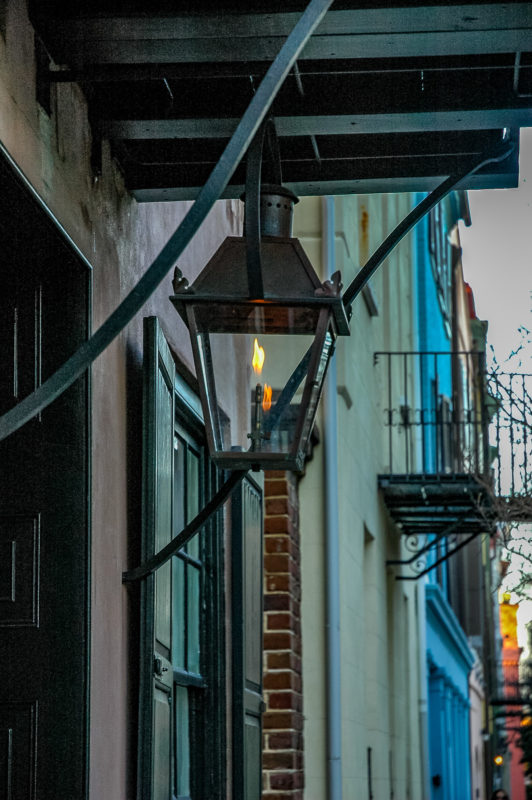
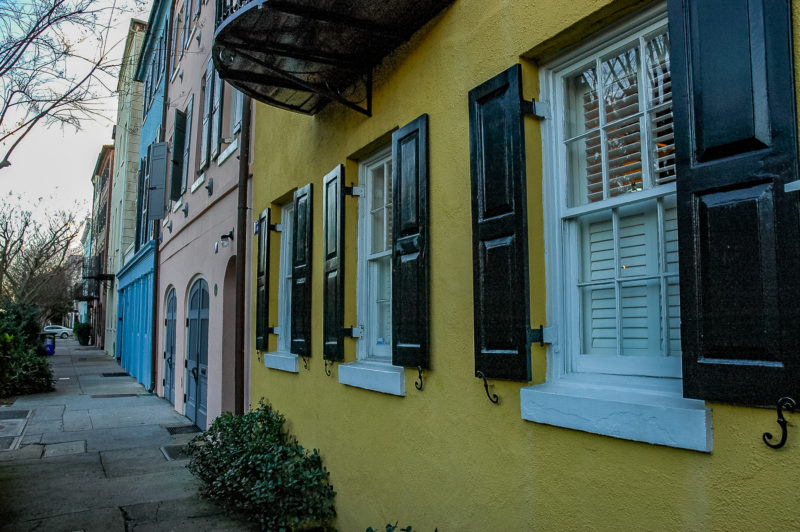
And look back: I noticed a placard announcing that we were in “Rainbow Row” and it struck me: “All the houses we’ve passed have been different colors.” It made me wonder if there is a similar tract in San Francisco.
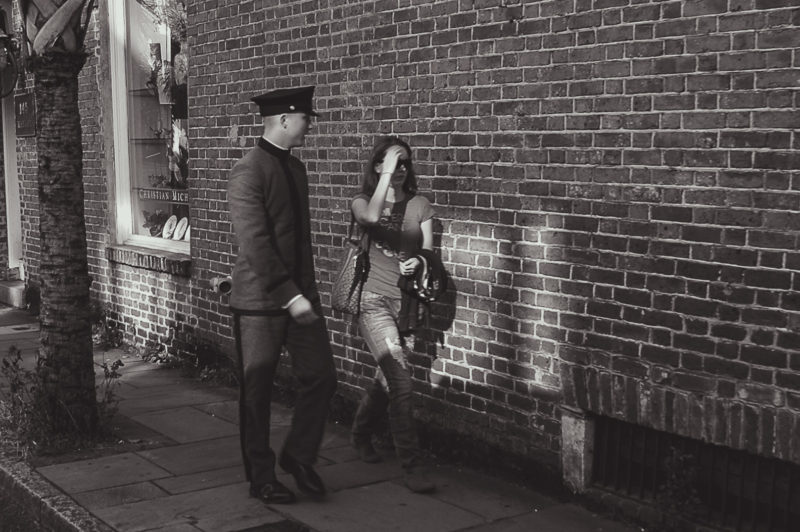
The rest of Charleston went about its usual business. Cadets from the Citadel were out, walking in packs, strolling with their girlfriends, or harassing random girls (at least that’s what some of my captures look like).
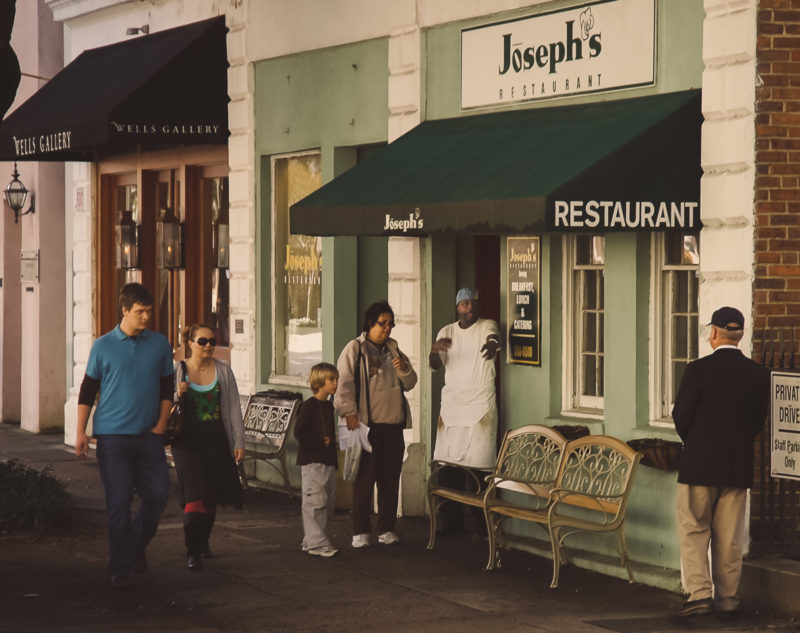
Locals stood talking.
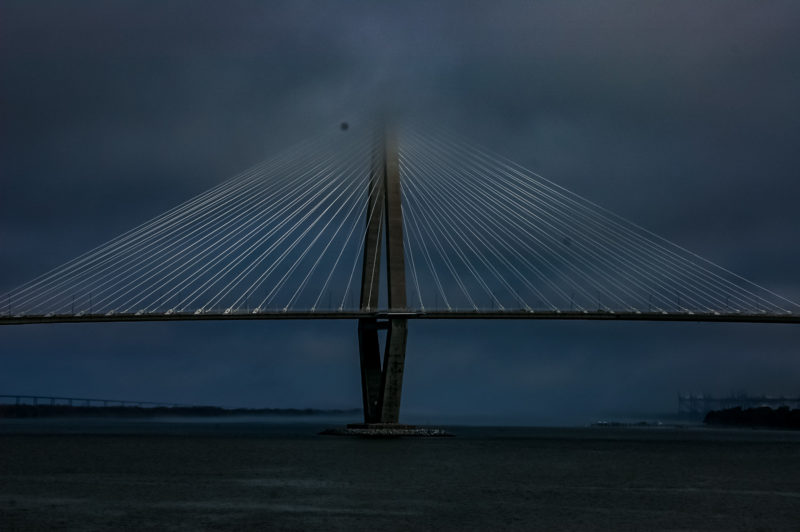
And everyone made their way here and there on a lazy Sunday.
Boone Hall

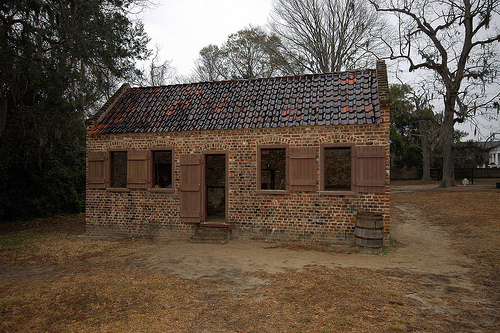
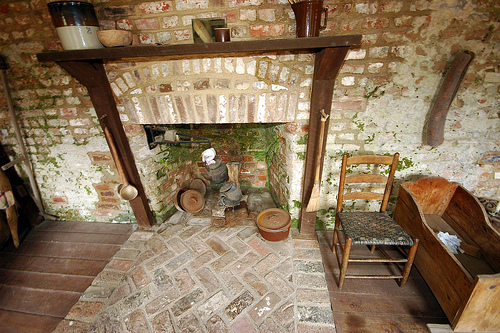
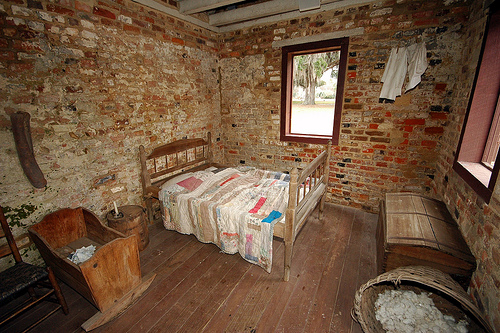
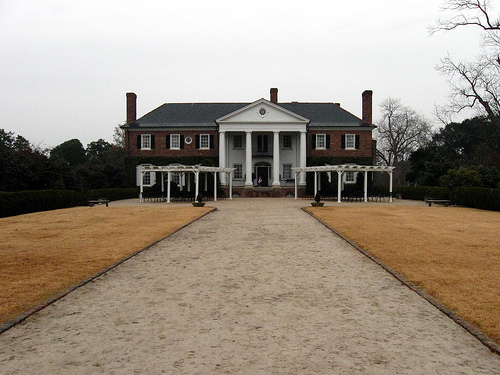
Today at Boone Hall plantation, an experience I haven’t had since visiting Auschwitz several years ago: to stand in the center of a hell-on-earth and wonder how it’s even possible. We wandered around the plantation while waiting for a tour, weaving in and out of slave quarters.

DSC_0163

DSC_0161

DSC_0160

The irony of America has never been more palpable. We are country that, from its inception, was about freedom. Yet our wealth was created on the backs of slaves. When people exclaim that, as twenty-first century whites, they are not responsible in any way for the actions of their ancestors, they are absolutely right. But for three hundred years, whites in America have built upon the foundation of those very slave holders and, until very recently, had a clear advantage for being on the lighter side of the color divide. Our free country was built, in the first century of its existence, at the expense of others’ freedom.

IMG_0693

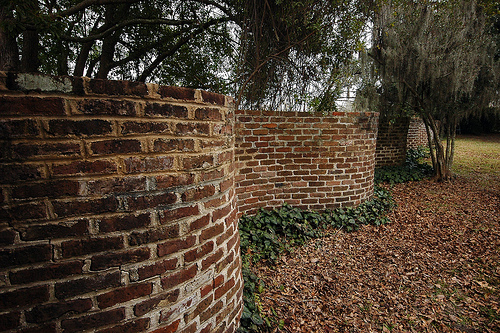
The fruits of that brutal labor still exists. At Boone Hall, the number one product was bricks. Those bricks went into many of the houses in Charleston and so provide a literal foundation for at least one American city.

DSC_0154

And so we made our way through the house and grounds, seemingly free individuals in a seemingly free country. Our chains are less obvious, and less insidious. In fact, I would say most of us don’t even realize we’re shackled to our way of life, our point of view, our idiosyncrasies, our ambitions. Perhaps that’s not a bad thing: after all, this kind of slavery can hardly be called such in comparison. Yet we saw sixteen or so months ago that when our way of life, our point of view, our idiosyncrasies, our ambitions start to sink, we feel the weight.

DSC_0174

Country Night Sky

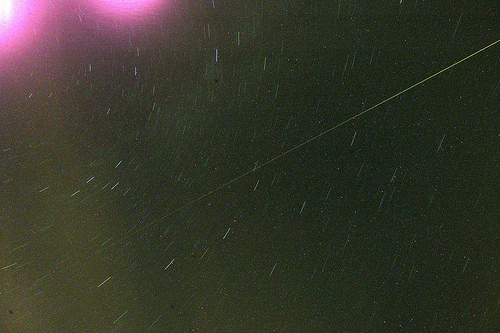
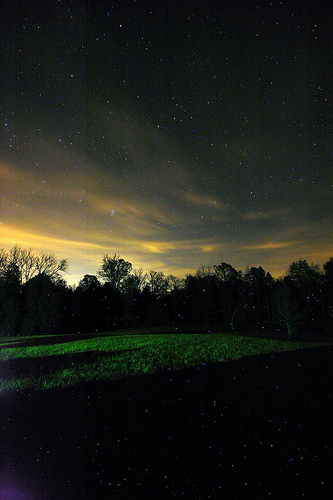
It’s impossible to stay in rural South Carolina and not take a few night shots.

DSC_9124
816.5 seconds, f/11.0, 10 mm

“Those planes flying over are Delta flights,” my uncle explains. “I’ve flown over my own place countless times. It takes me fifteen minutes to get to the airport from here and two hours to get back.”

DSC_9125
63.4 seconds, f/5.6, 10 mm

He is known for his hyperbole.

Malden Center

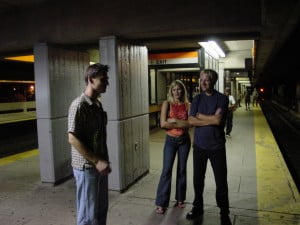
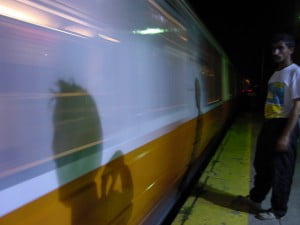
Funny how an odd thought can lead to nostalgia. Thinking about Boston before going to bed, I did a quick search on YouTube. I found a video of the MBTA (Massachusetts Bay Transportation Authority) stop at Maulden Center, Orange Line.


Like Poland, I don’t miss it and I do.

Two things I miss: first, Boston is a big city packed in a small town. The area the Greater Boston area covers is really small, and the are Boston proper covers is minuscule. The rest is Cambridge, Allston, Brighton, and a handful of others. And Malden, where I lived. Yet it has a lot of the advantages of a larger city: vivid downtown, arts, music, etc.

DSC01985

Second, I miss public transportation.

DSC01989

I miss being able to travel from here to there to way over there and back again without a car. A monthly T-pass, a bicycle, and the occasional taxi were all I ever really needed.

Returning

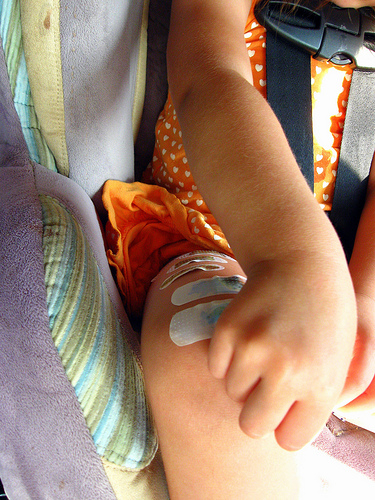
The Girl entertained herself with a box of bandages…

IMG_0373

IMG_0375

Botany Bay

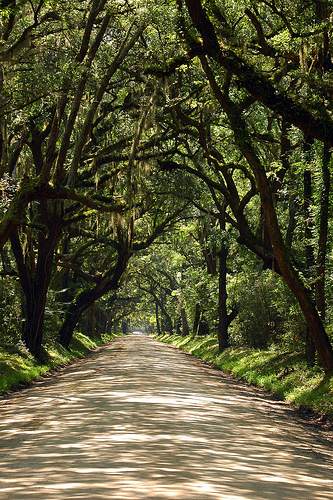
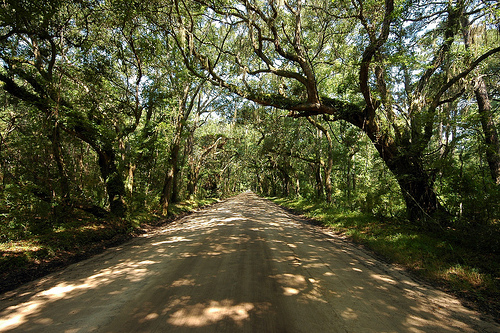
It’s probably one of the most famous roads on Edisto Island: a sand lane that runs under a canopy of Live Oaks, looking positively like something out of Gone With the Wind.

DSC_7390
DSC_7372

Botany Bay Wildlife Management area is actually made up of three plantations: Bleak Hall, Botany Bay, and Sea Cloud. All three grew sea island cotton, which has particularly long fibers and was used in France for high quality lace.

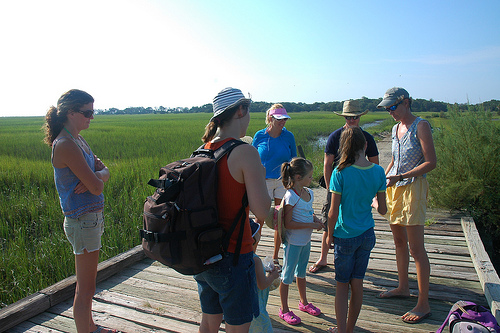
This morning, we’re going on a botany tour — appropriate, given the name of the site. One other family is joining us.

DSC_7317

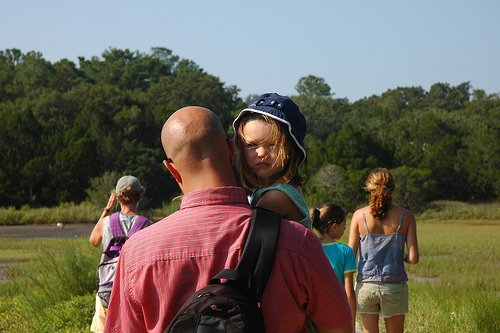
We walk among the marshes, stopping every few moments to learn a bit more about the island.

DSC_7324

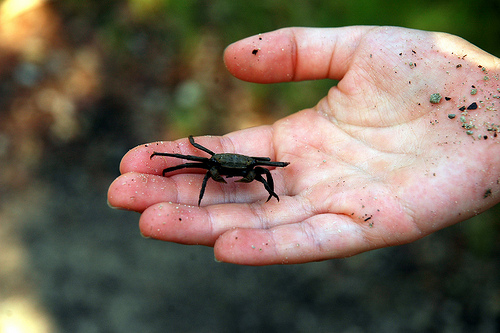
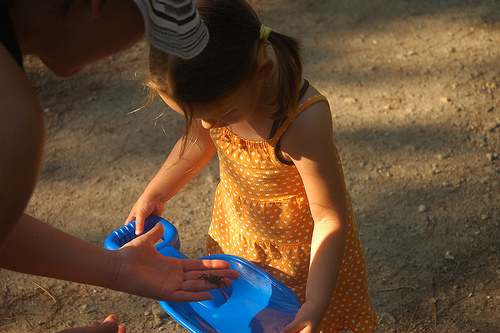
Along the way, one young lady catches a fiddler crab.

DSC_7321

L gets her own:

DSC_7518

We learn about the importance of the marshes as a protective barrier for hurricanes: they act as sponges and thus do much to minimize the effect of higher tides from hurricanes.

We find out that the English came to Edisto in search of riches and found a treasure in the huge Live Oaks on the island.

We learn that the use of palms in South Carolina naval fortifications were literally so effective at dissipating energy that canon balls essentially bounced off them.

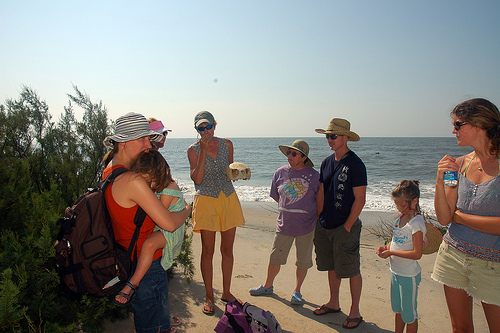
We arrive at the beach, where our guide, Meg, gave us more information on loggerhead turtles and residents’ effort to help them.

DSC_7330

It’s about the third time we’ve heard about loggerheads and the nest relocation activities of the Edistoians. They’re obviously proud of it, and rightly so: it takes a great deal of dedication among many people to keep the program going.

DSC_7336

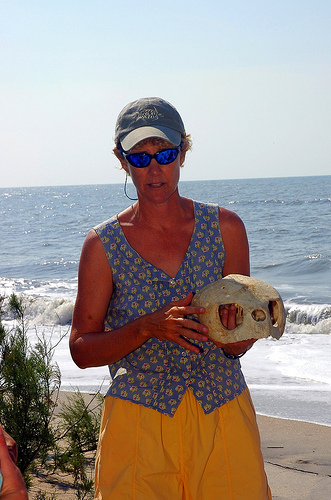
Meg shows us a loggerhead skull, and it’s immediately obvious how huge the turtles are. The females drag their bodies out of the water to dig a nest, and often enough, they don’t get beyond the high tide line.

DSC_7337

The incoming tide destroys the nests; volunteers on the island, though, head out nightly and relocate the nests. Then the hatchlings only have to worry about birds and raccoons as they make their way to the surf.

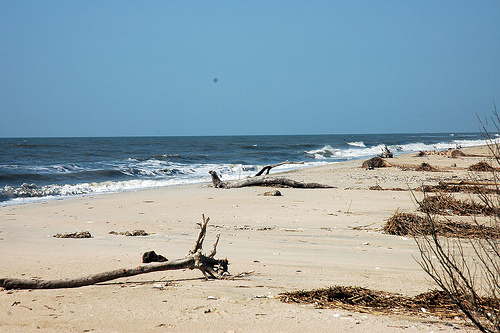
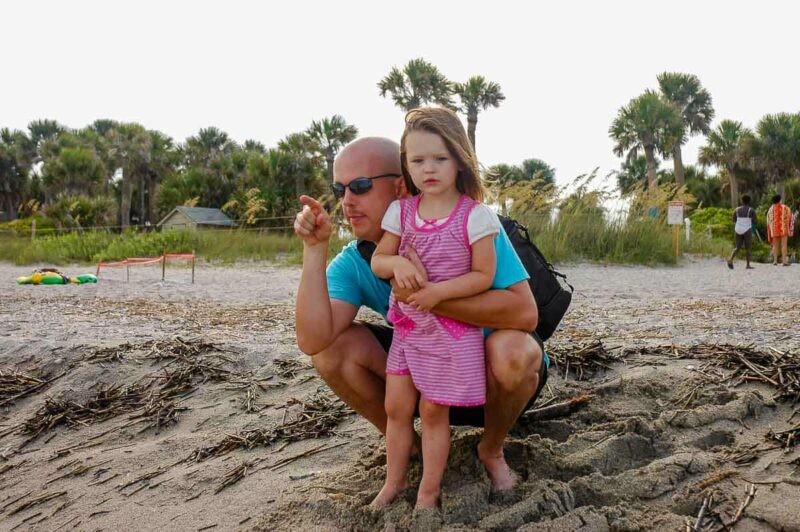
After Meg leaves, we explore the beach a bit on our own, and what a beach it is — like something from a tourist brochure. In fact, it is.

DSC_7533

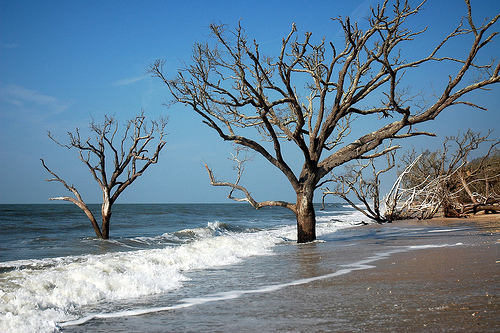
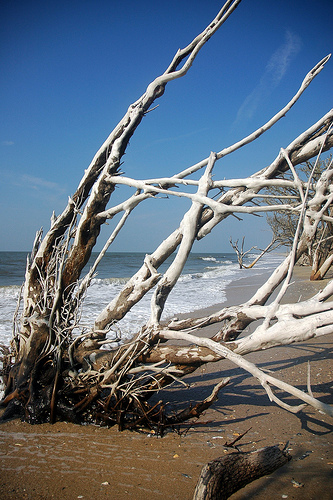
The ocean is slowly reclaiming this portion of the shore. It creeps inward at a relatively steady pace, turning everything into beach, and hence killing all the flora that cannot handle an intensely salty environment.

DSC_7551

K takes the camera and goes for a picture walk;

DSC_7553

I stay with the Girl, hoping to talk her into the ocean,

DSC_7559

unsuccessfully.

Emtpy Handed

The first camera I remember owning was one our family bought at Sears just before a trip to California in 1984. I believe it was even a Sears brand; it seemed terribly fancy for a twelve-year-old, though it was just a point and shoot.

The next camera I remember was an SLR manual focus that I borrowed from a friend. I took some pictures of birds, but I don’t think I ever developed those shots.

It wasn’t until I went to Poland in 1996 that I became seriously interested in photography. I took a Canon point and shoot with me, but I quickly discovered its limitations. I headed to the market and bought a Zenit — a Russian made SLR that could drive nails. Literally.

K’s first camera was a Russian view finder that I can’t even recall the name of. She moved to Zenit and Nikon; I replaced my Zenit with a succession of Nikon and Canon manual and auto focus cameras.

Finally, K and I ended up with our current primary: a Nikon D70s, which was fairly cutting edge when we bought it. Since then, we’ve added a couple of lenses to our collection and have a whole bag of glass to carry around.

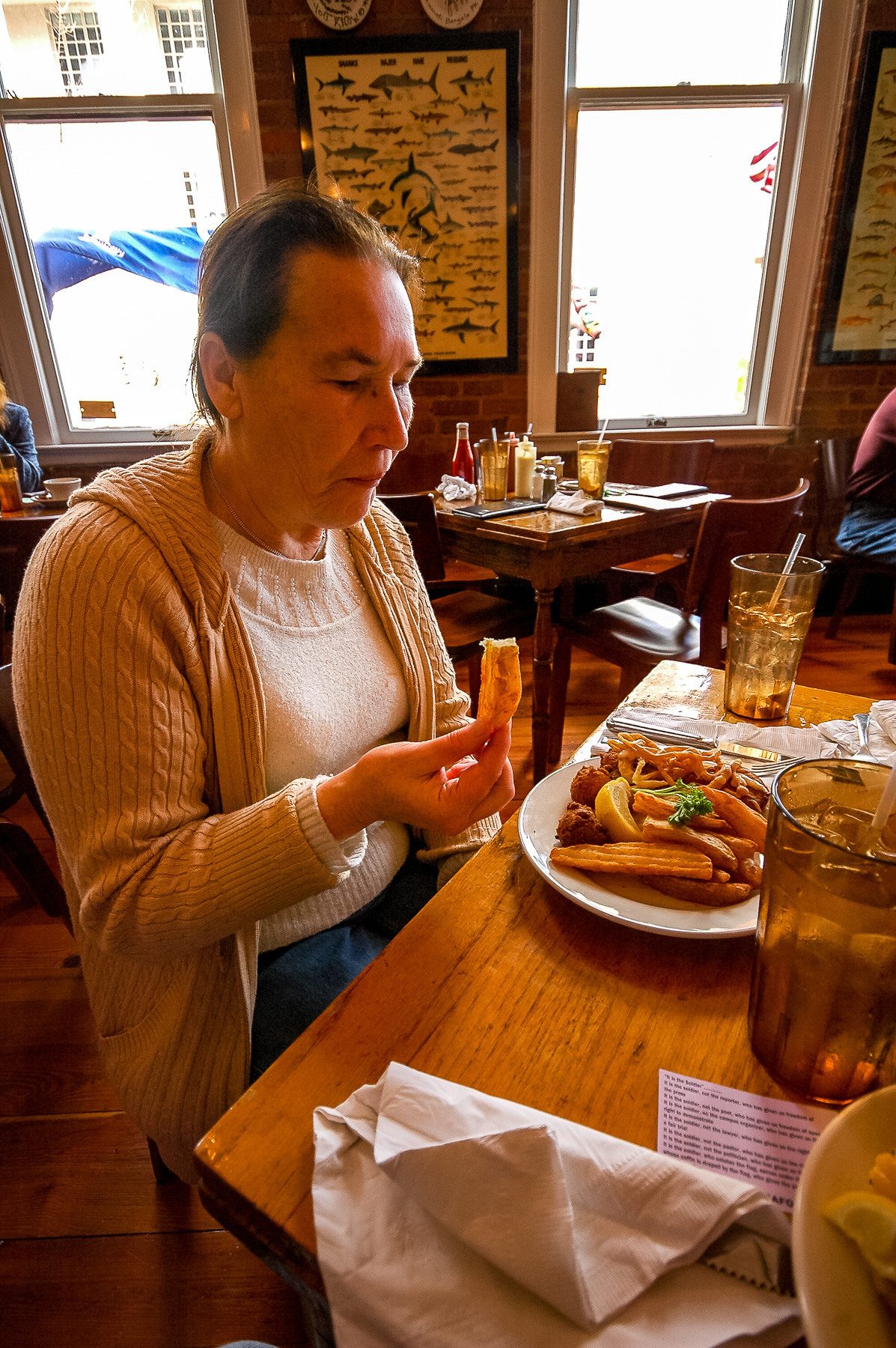
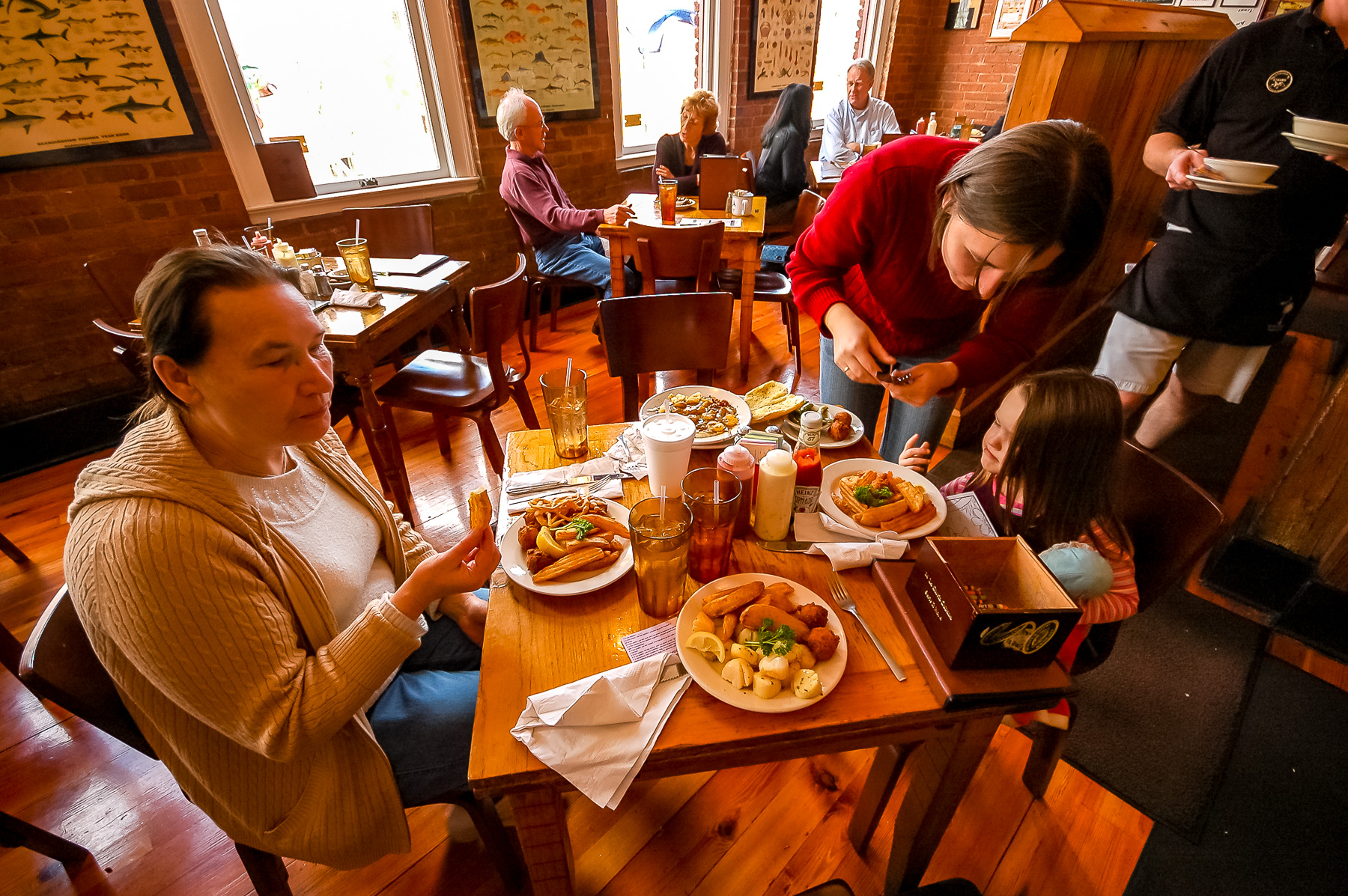
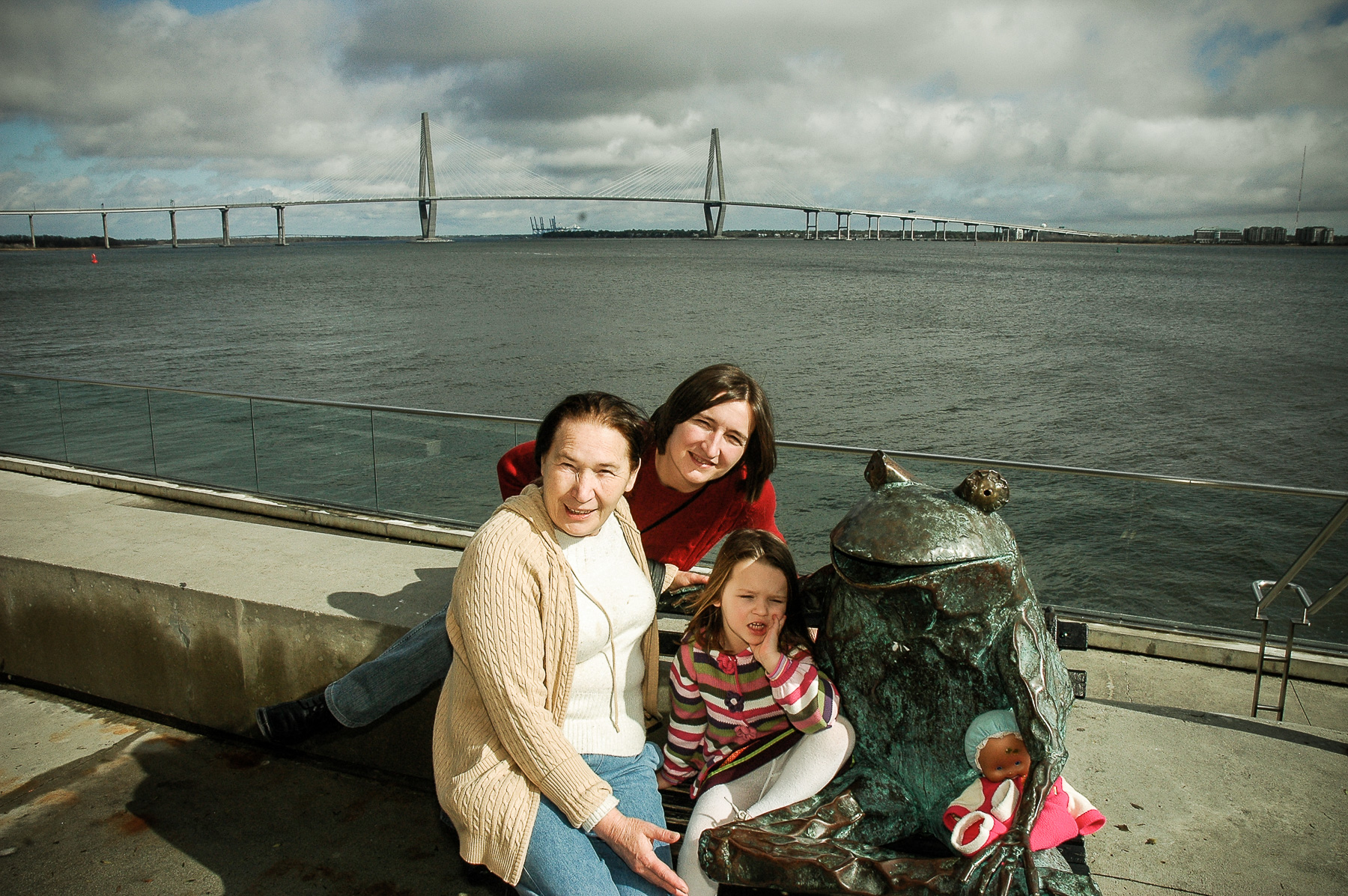
Friday, we pack our things and head to Charleston for a day of wandering about the city, stopping at cafes for coffee, taking pictures, and simply experiencing one of America’s most historic cities. We arrive and I glance in the back.

“Where’d you put the camera?” I’d been packing our bikes and related materials. I assumed…

“I didn’t get it. I thought you…”

We look at each other for a moment.

What to do?

Simple: enjoy Charleston without a camera. Life without a camera is possible.

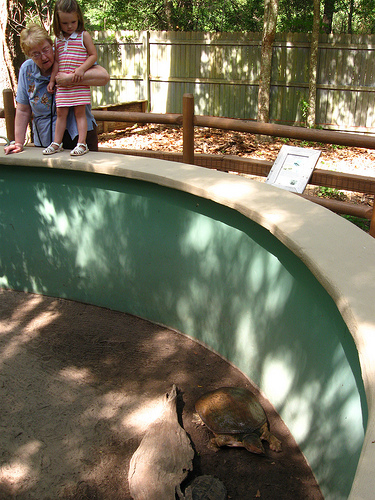
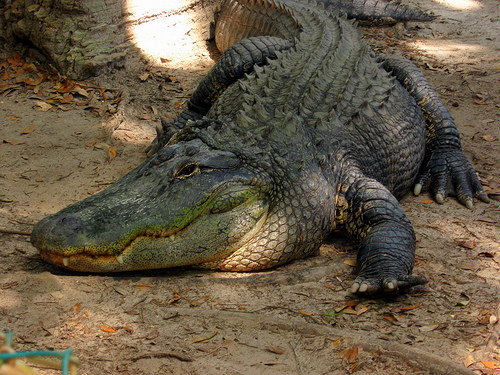
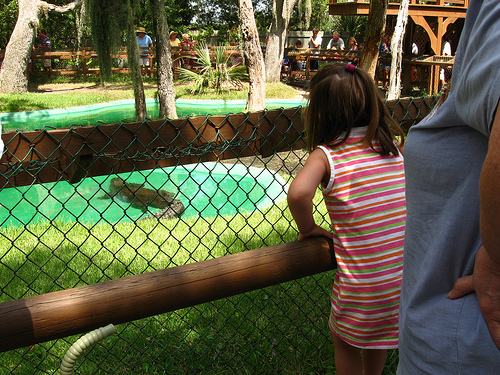
In the meantime, Nana and Papa took the Girl to the serpentarium. Nana and Papa remembered their camera…

IMG_0318

IMG_0325

IMG_0333

IMG_0336

With the Current

Wednesday afternoon, Nana and Papa arrive for a short stay on their way down to visit friends in Florida. It’s lovely to see them, but just as lovely is the prospect of having sitters for the Girl.

The day begins as it usually does: breakfast and the beach. This time, L makes a friend. They dig in the sand together, build things together, destroy things together.

IMG_0278

Then the girl heads to the water. We’re hopeful: maybe L will see her friend playing in the surf and think, “Hey, maybe I’ll give that a try.” Maybe, but not likely.

090722_beach

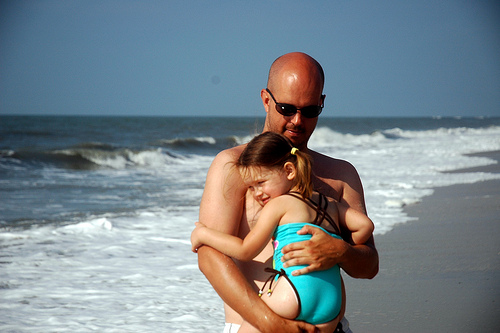
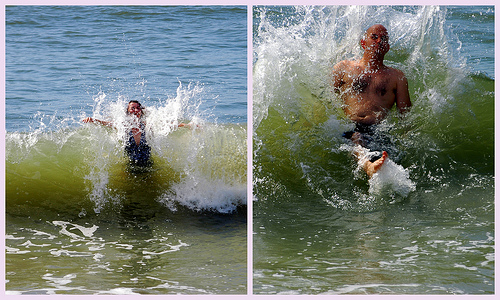
Still, with L occupied and Nana and Papa there to keep an eye on her, K and I do something we hadn’t done all week: go swimming together. Papa obliges our photo request and does a fine job.

The afternoon brings more babysitting — what to do? It’s not that we’re thrilled to be free of L, but we are. In a sense. Every time we’re without her, the same things happen: a strange sense of freedom from obligation followed very quickly by a quirky little tinge of emptiness.

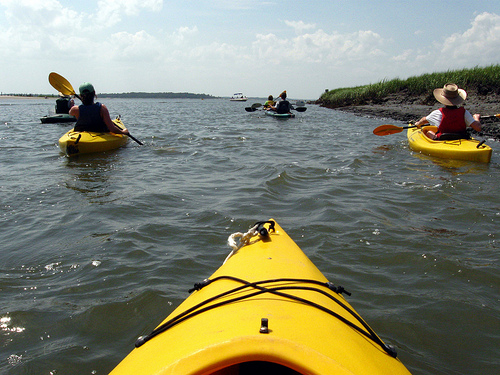
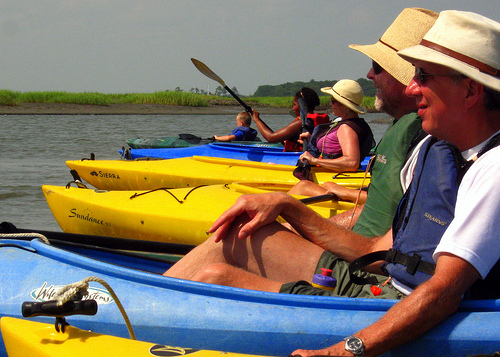
Before the tinge sets in, we get in kayaks for a quick tour of the marshlands.

IMG_0284

It has been over ten years — closer to fifteen — since I’ve been in a kayak, but I still keep my arm straight by my side when the guide asks, “Who has little to no experience in a kayak?” Surely it’s like riding a bike. What’s there to worry about? The greatest danger in a paid tour would be raising my paddle too high, dripping water onto my lap.

We set off, and sure enough, K and I are pros.

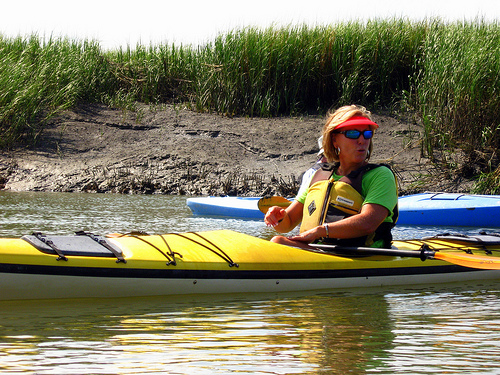
Lindsey, our guide, stops frequently to explain the flora and fauna about us.

IMG_0306

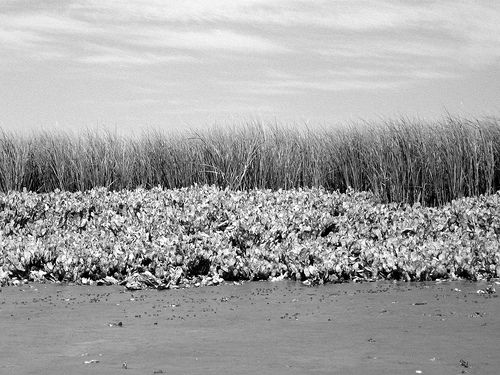
“How many think that’s mud on the banks?” she asks. Some of us would probably raise our hands if we weren’t so busy paddling. Lindsey explains that it is, in fact, hundreds of years of decayed marsh grass (I can’t recall the name of the grass). It’s also floating about in the water, and this is the primary component of the mussels’ diet.

IMG_0293

A couple of times, Lindsey has us back our canoes into the bank while she discusses the environment in detail, and answers questions.

The pressing question: Alligators? Generally, none in the marshes — they stick to fresh water and keep themselves as far away from humans as possible.

IMG_0296

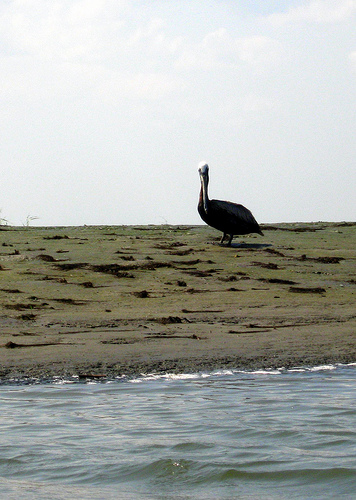
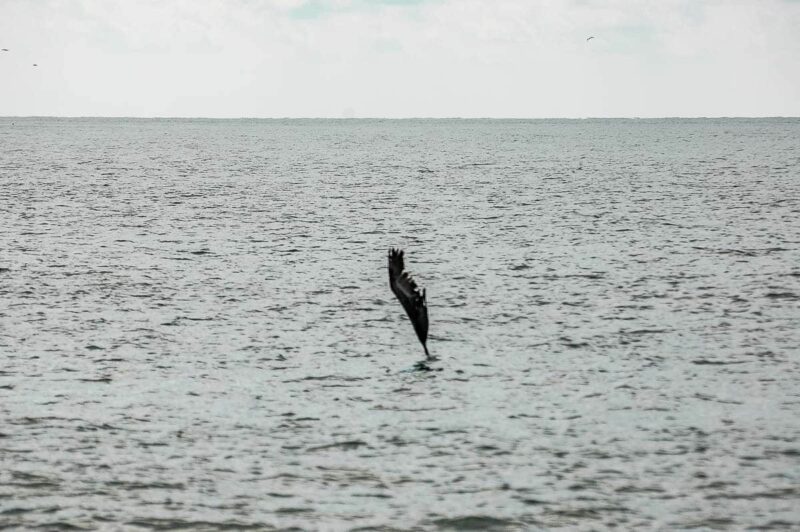
It’s from Lindsey that we learn about pelicans’ potential for eye damage due to diving for fish.

IMG_0303

As with the spider wasp, that lays its eggs in a paralyzed, still active spider so that its young can feast on the still-living spider, it strikes me as a particularly cruel twist.

Tides

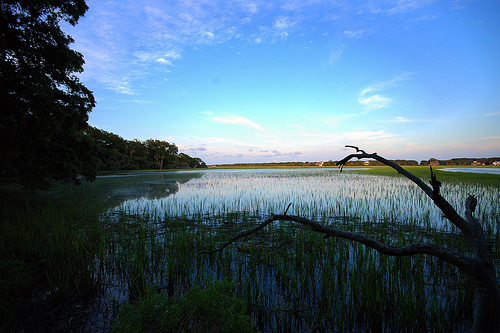
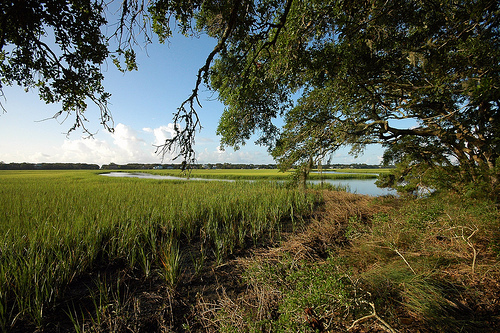
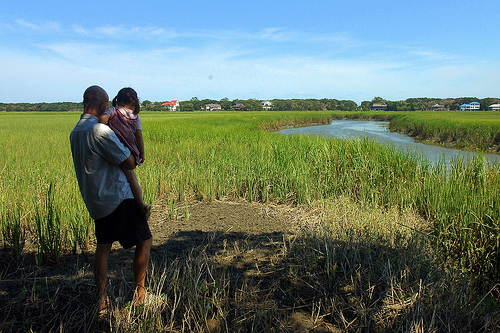
Our first view of the marsh behind our little cabin was at high tide: a sea of greenish water with twigs sticking out. We wait for low tide, wondering just how far down the water will draw.

DSC_7165

The next morning, our answer:

DSC_7172

I go out into the muck, make a quick discovery, then rush back for the girls. “You’ve got to see this,” I tell L, wondering if she’ll be as fascinated as I hope she’ll be.

DSC_7162

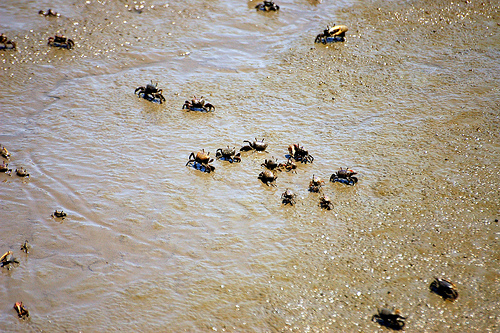
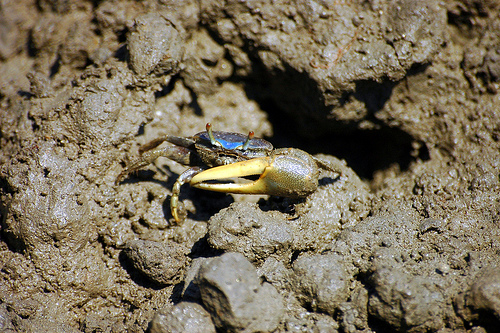
In the briny muck left behind, fiddler crabs roam about, the males waving their enormous claw, clamoring for the attention of the females.

DSC_7146

“Their name derives from the motions they make when they eat,” our kayaking guide will tell us later. “They raise their small claw up to their mouths very rhythmically, and juxtaposed to their large claw — which is used for nothing other than attracting females — it looks like they’re playing a fiddle.”

DSC_7156

L watches, and she’s immediately fascinated. It’s a fascination that will continue through the vacation, especially at Botany Bay. In the meantime, though, it’s beach time, and the Girl is ready for more digging in the sand.

DSC_7217

K and I insist on a hat for L, and with her Dora sunglasses, she proclaims, “I’m a movie star!” Judging from our YouTube account, I think I’d have to agree.

DSC_7236

After a nap and some lunch, we decide it’s time to explore downtown Edisto Island (inasmuch as there is a downtown) and get some ice cream. When we arrived, we drove about a bit, looking for the marina and shopping district we’d heard about, but all we found were million dollar beach-front homes and tourists like ourselves.

A slower pace should help.

IMG_0232

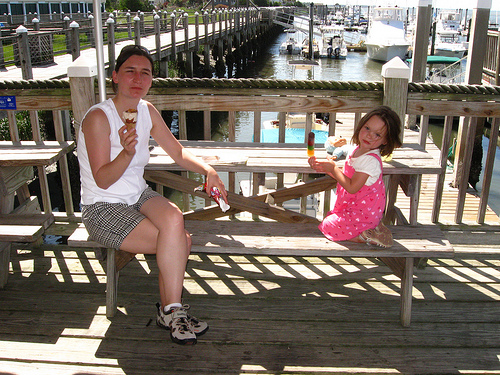
In the end, it takes us almost an hour to find the small marina tucked in the corner of the island. All the while, we’ve heard the same mantra from the bike trailer. “I want ice cream!” and it’s a relief when we find a tackle shop with a small freezer.

“I want blue!” L proclaims. It’s a common combination, food and color. She often pulls out our pots and pans to make soup and proclaims, “I’m making blue zupa!” combining the majority English with a single Polish word — another habit.

IMG_0202

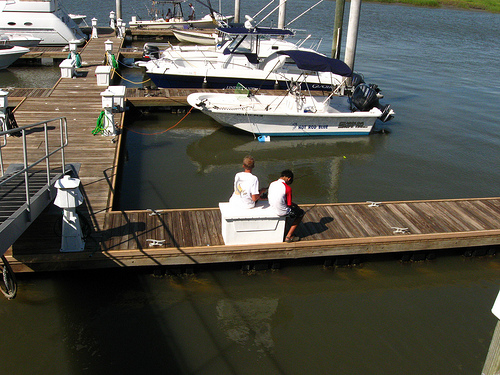
We take a quick walk down the short marina, pondering the prices of the boats and the careers of people who can afford $200k boats and $130k slips to moor them. To be able to afford such expensive toys would be a dream and a nightmare, I’m sure. K and I play the age old game of “What would we do if we were rich” as we walk along, and boats and expensive cars never come up. Living off the grid; having the fiscal freedom to live wherever we want; knowing that L’s education is paid for — these are the things we talk about. And maybe one or two toys…

IMG_0214

Satisfied with the wealth we do have — health, jobs, a happy family — we head back through the swamps.

IMG_0222

IMG_0229

Afternoon Bike Rides

This was the afternoon activity for our first morning on the beach. I didn’t combine the posts because I had yet to transfer the pictures from the small Canon we borrowed from Nana and Papa.

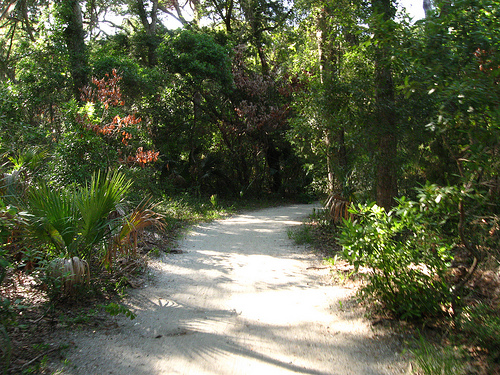
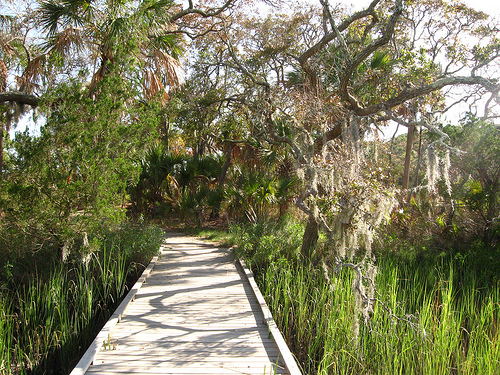
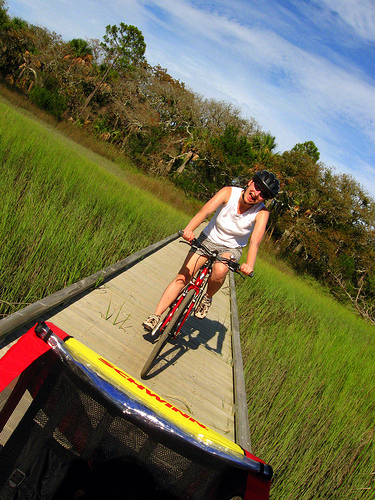
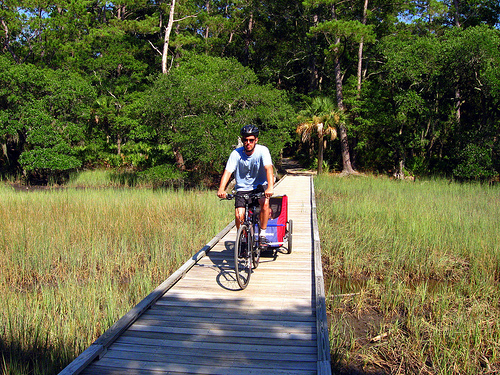
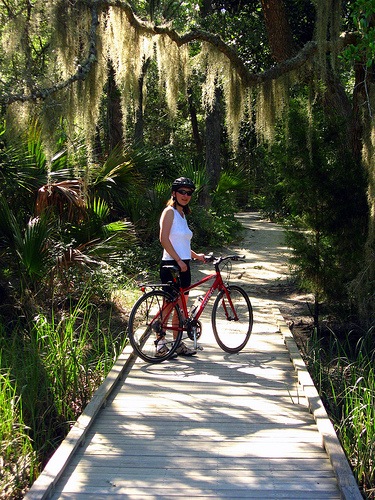
The first few days, we spent our afternoons on bikes, with L in a trailer. The state park at Edisto Island has a few miles of packed-shell bike paths with wooden bridges over the marshes. After negotiating the treacherous sand access road (riding on sand without knobby tires is much like riding in slushy snow that’s layered atop pure ice: there’s as much lateral movement — sometimes the front tire, sometimes the rear, sometimes both simultaneously — at times as there is forward movement), it was really a pleasure.

IMG_0176

Who would enjoy riding in an environment like this?

No strenuous climbs, as it was coastal terrain. No merciless sun, as it was all in a forest filled with Live Oaks and Spanish Moss. It was, in every sense, leisurely riding.

IMG_0179

Several friends thought we were nuts to go cycling in a South Carolina July. The ocean breeze combined with unseasonably cool weather, though, and it was an absolute joy. Except for the sandy road.

IMG_0182

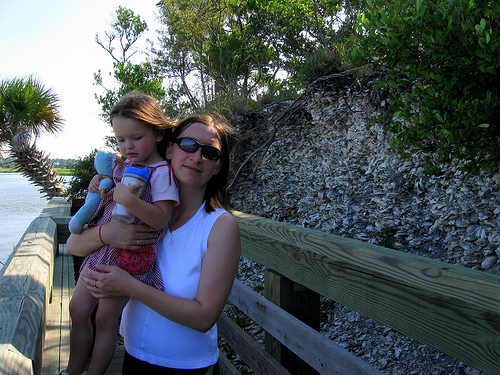
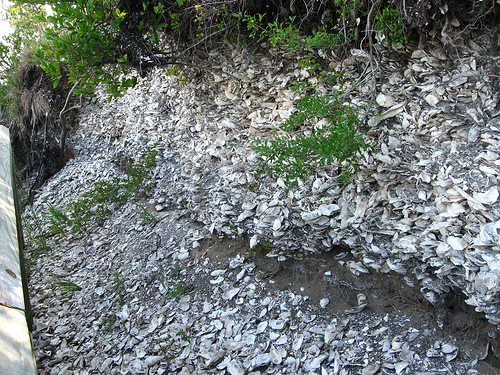
Our first destination: a prehistoric oyster shell bank. No one knows the significance of the location; no one knows why Native Americans chose this particular spot to eat oysters (and lots of them). But we do know that the mound is some ten percent of its size when discovered by Spanish explorers in the seventeenth century.

IMG_0180

Perhaps this was inspiration for Lewis Carroll:

‘A loaf of bread,’ the Walrus said,
‘Is what we chiefly need:
Pepper and vinegar besides
Are very good indeed —
Now, if you’re ready, Oysters dear,
We can begin to feed.’

Or perhaps not. All the same, it was a frabjous day, and we chortled in our joy all the way back to the cabin.

Morning on the Beach

“They’re a bit rustic,” K’s colleague said about the cabins at Edisto Beach State Park. “They’re okay if you like ‘roughing it,'” he concluded.

“If this is ‘roughing it’,” K said as we walked in, “then I’d hate to see what his idea of luxury is.” We quickly determined that in between the two visits there must have been some extensive renovations.

Surely no one could call this “roughing it.”

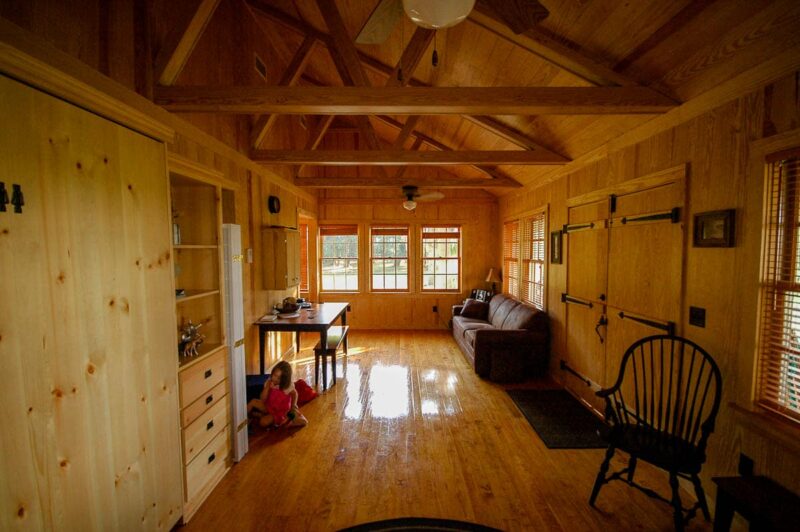
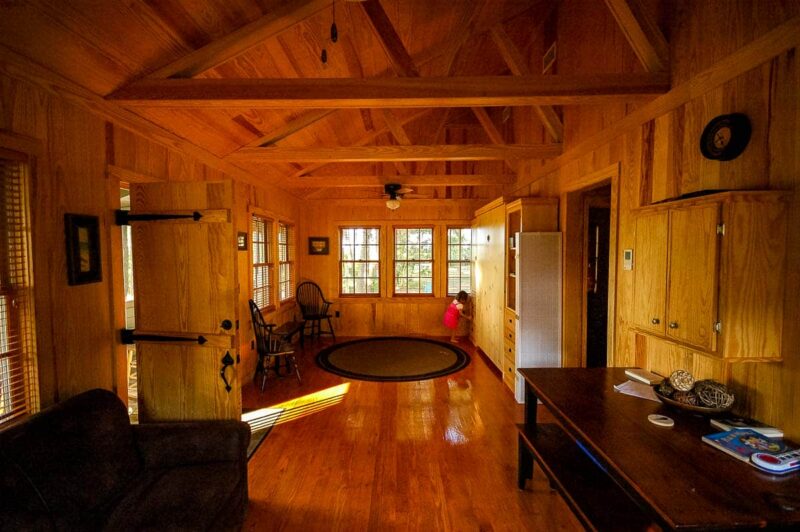
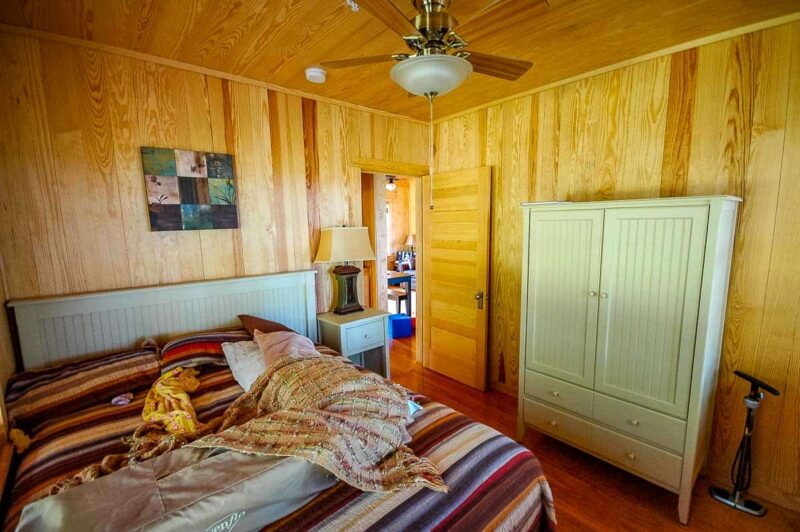
Hardwood floors and an interior done completely in unfinished pine — it is a welcoming space from the beginning. The living room has a Murphy Bed and an ample sitting area.

At the other end, a small television (hidden in the cabinet on the wall) and a leather couch.

There’s a small bedroom in one corner of the cabin — it’s L’s bedroom.

The kitchen is well light (in the day, anyway) and perfectly adequate for vacation.

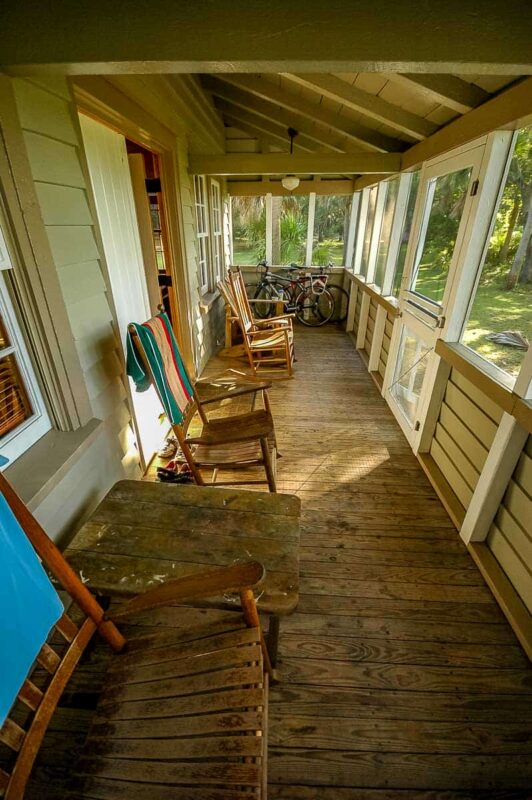
The real treasure, though, is in the back.

A restful night is a simple matter there, with the wind blowing through the palms and the crickets all around.

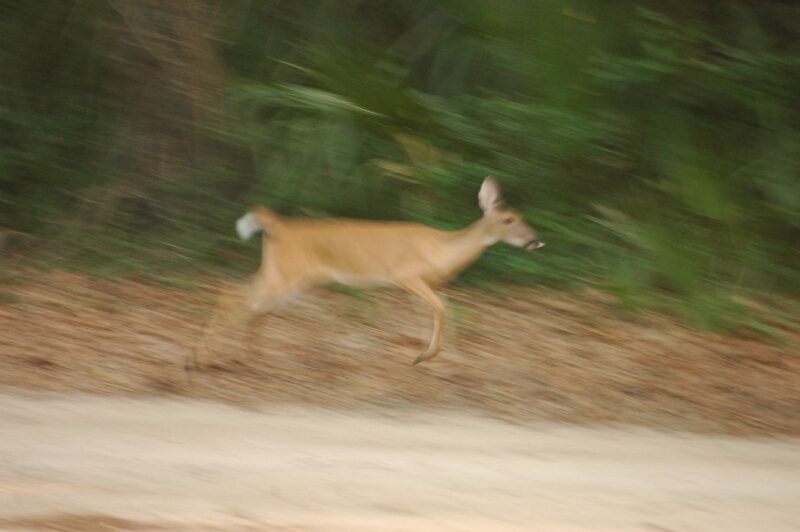
We wake the next morning to visitors: a family of four deer that almost managed to scamper away completely before I stumble back into the cabin for the camera.

Still, we didn’t come to Edisto for the wildlife. We came for the beaches, eager to give L her first beach experience.

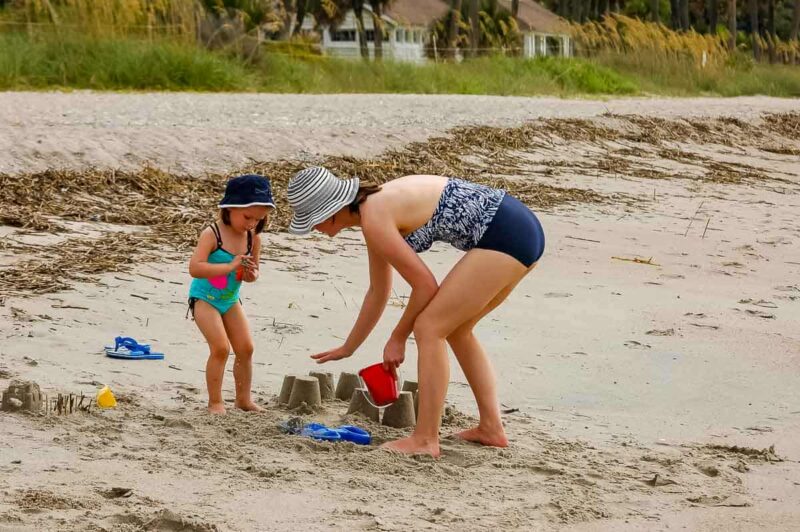
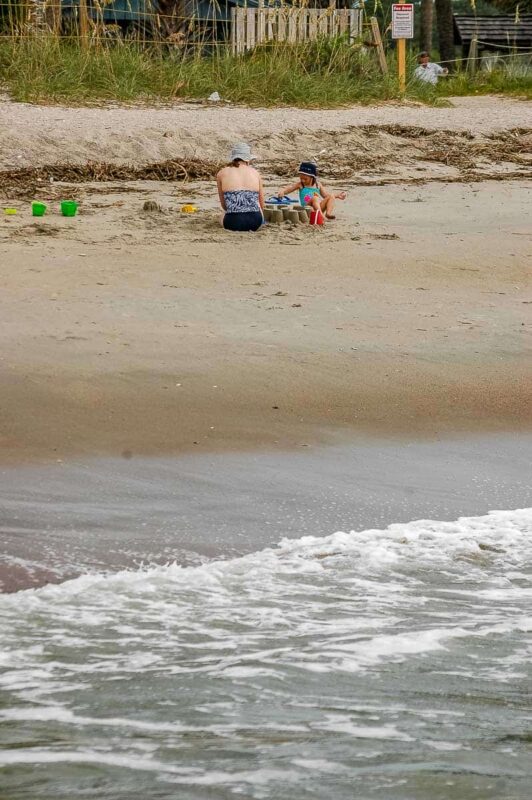
With the initial fear from the previous afternoon a distant memory, L is able to get down to some serious sand castle building. She carefully makes a ring of towers with an eventual moat. K, of course, only watches. Having grown up in southern Poland, she’s had enough beach time in her life!

The pelicans off the coast have breakfast while the architectural wonders rise from the sand. They hit the water with shocking impact. We later find out that the repeated impact can so damage their eyes that they can eventually go blind.

The Girls, somewhat oblivious to the masochistic fishing exercise going on just behind them, continue to build.

Eventually, I try to convince L to approach the water and let the waves lightly wash over her toes. She’s not receptive, and when I press the issue, assuring her that I’ll hold her the entire time, that she has nothing to fear, that I’ll never let anything hurt her (A lie? No: some things are out of my control, but those things that I can control I will control. Or will I? There is learning in pain…), that it will be great fun — all for naught.

The more I reassure her, the more she panics. At last, I calm her down and assure her that I won’t make her go to the water.

It’s like with many foods: I know she’ll love it as soon as she overcomes her distrust.

She should be glad that she’s not a pelican, I decide. Then again, instinct is frightfully powerful, as is conditioning.

Age

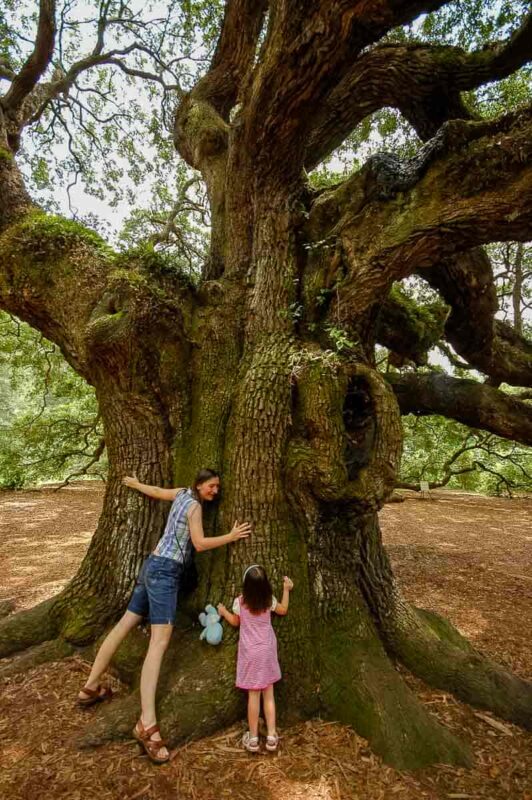
A gentleman doesn’t discuss a lady’s age — that’s what tradition says, and I suppose when you’re between 400-1400 years old, you’d rather keep that to yourself.

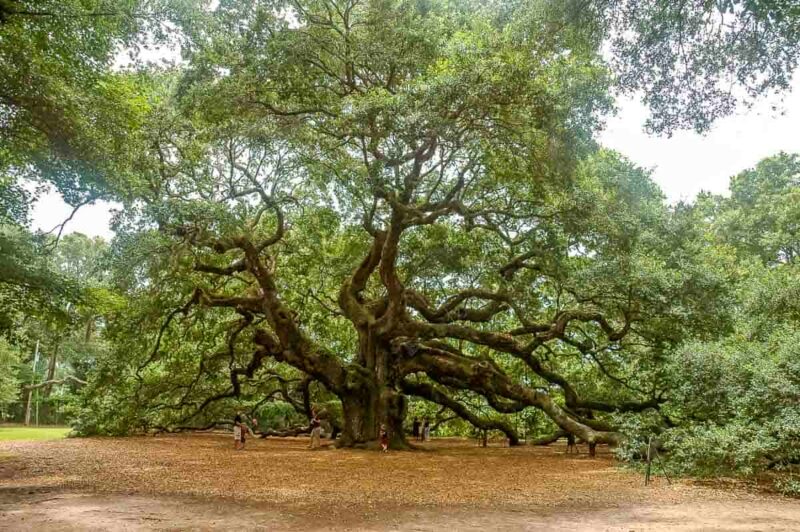
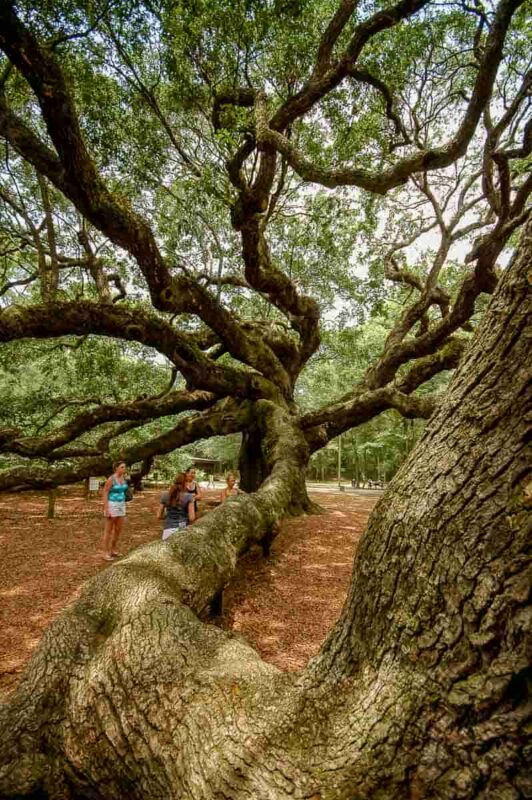
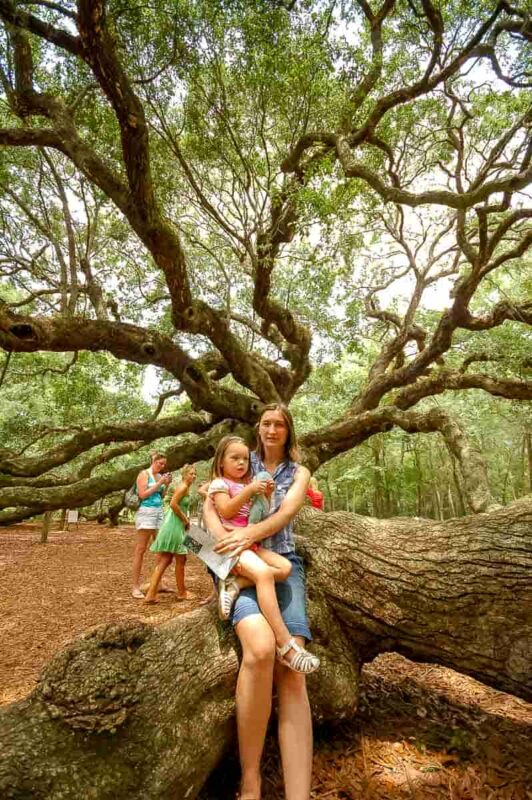
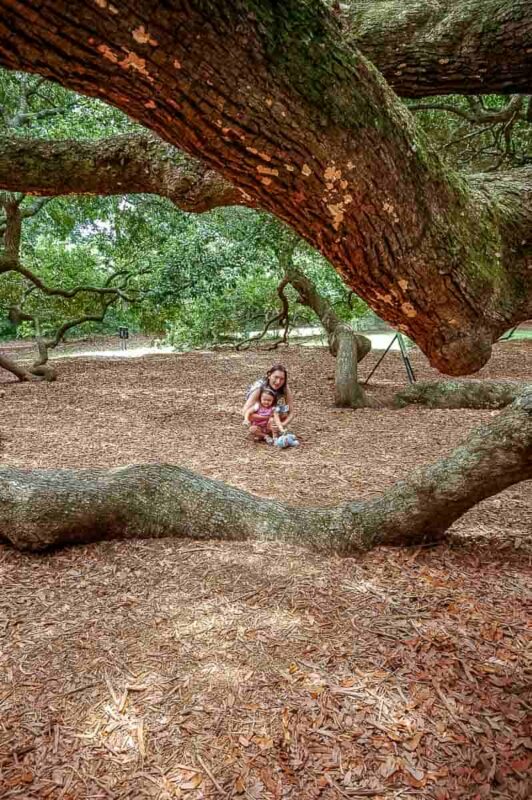
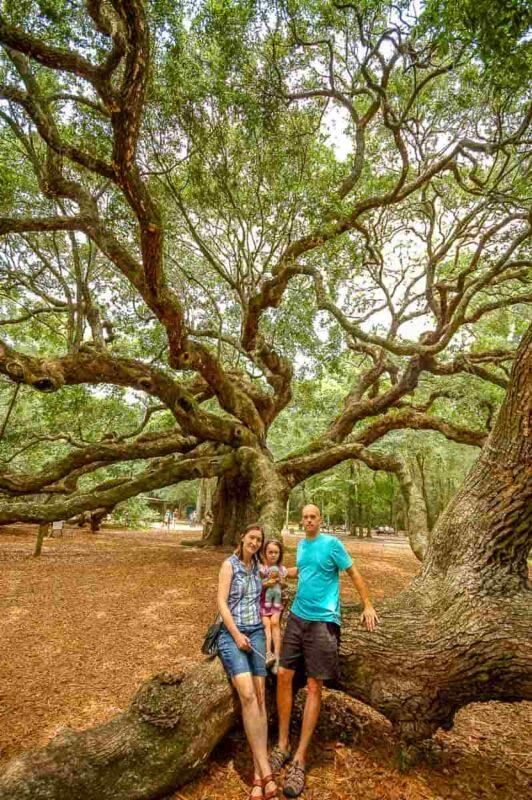
The first stop after our day at the zoo is Angel Oak, an enormous Live Oak tree on John’s Island, just outside of Charleston, SC. It is, in a word, simply enormous. It is huge in the way that the Grand Canyon is immense: one hears about it, sees pictures, etc., but it’s only the actual physical encounter that makes the impression.

Branches on the tree are larger than most of the trees we have in our backyard. They’re so large that a network of cables and metal supports seem to be the only things keeping them up.

It’s difficult to imagine anything surviving long enough to grow to this size, but I’m not quite sure how old that is. Web information indicates an age of 1,400-1,600 years. Still, it’s difficult to imagine a tree surviving that long. That would make it an acorn when the first ecumenical councils were formulating orthodox Christianity.

The brochure distributed at the oak, however, puts the age at 300-400 years. That’s much more modest, but it’s difficult to believe a tree growing that large that quickly. Our Tulip Poplar in the backyard is certainly 200 years old, and it’s not even close to this size.

Still, age matters less than tenacity, and for a tree to grow to this size in such a relatively harsh, salty climate is remarkable.

Signs posted around the tree warn of dire consequences if anyone attempts to climb it, and that’s certainly understandable. The tree would not last many more years if it invited a free-for-all of climbing, swinging, and the like. Still, it’s difficult to resist walking up one of the great branches and taking a seat.

After a lunch break, we get back on the road, arriving at Edisto Beach mid-afternoon.

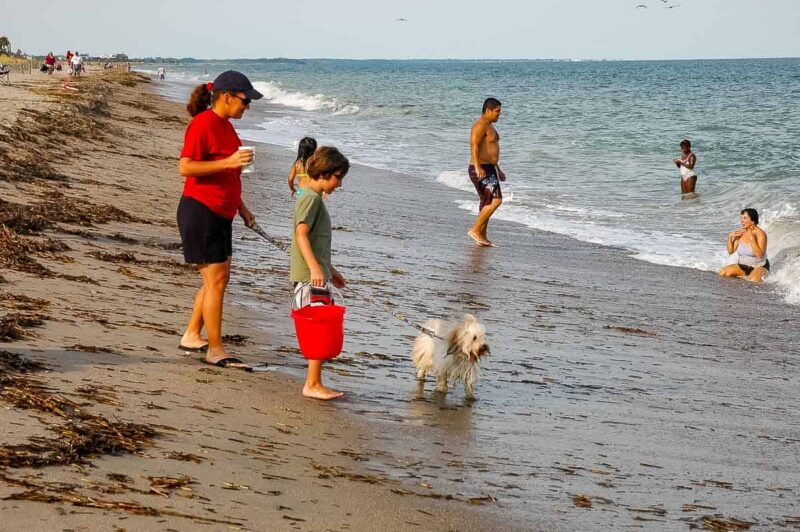
It’s been three years since we’ve been on a beach: K and I head straight for the water, shoes off. L is much less enthusiastic. In fact, she is initially terrified of the water.

The sound, the motion, the size — they’re all too much for L and she spends most of our first walk in someone’s arms.

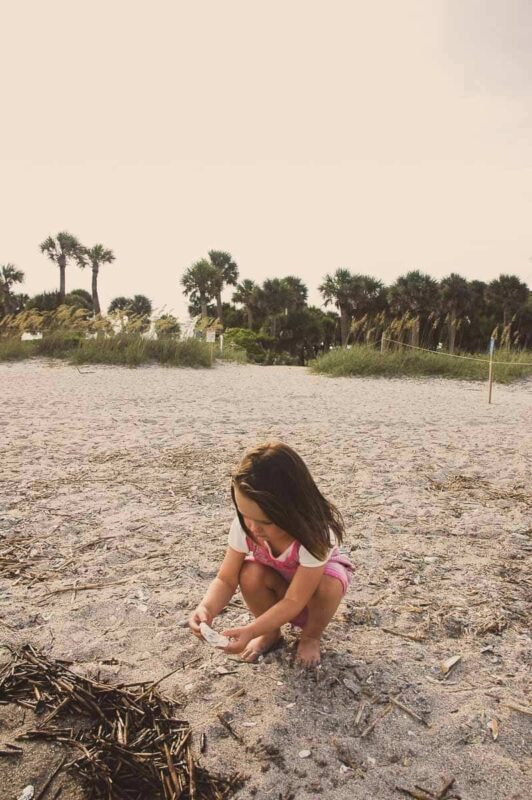
Eventually, she calms down enough to play with her new basket of beach toys.

“We’ll get her in the water by the end of the week,” I assure K.

Furman Bluegrass

Last night we returned to Furman University to watch another free, outdoor (and mosquito-free) concert. Bluegrass this time, with a band from Athens, Georgia. True, a bluegrass band from Georgia sounds about like a funk band from the Lower East Side, but they did a commendable job.

DSC_6753

I wanted to get a shot of the band, but it was dark and they were performers. By this, I mean they didn’t come out and simply play their songs. They performed: facial communication with the audience and each other; exaggerated motions while playing; dancing; whooping and hollering — sort of like one could imagine Madonna doing if she ever sang bluegrass. She wouldn’t stand at the mike and simply sing: she’d have to turn the show into a show about the music and the performer. I guess that’s what performing means. It always struck me as false: appearing to look like the musician is more into the music than he or she really is. And so each and every shot I took of the band was blurry: I was far away and they were wiggling and goofing too much.

We sat on blankets and I tried to explain the difference between country and bluegrass to some Polish friends. I was tempted to say, “Well, bluegrass takes talent; contemporary country doesn’t,” but that might be a little too judgmental of a genre that was quite fine in Hank Williams day but seems somehow to have lost its way. I made an attempt: Bluegrass is always acoustic. There’s an emphasis on the virtuosity of the players. The tempo of most songs is very quick. There’s almost always at least two-part harmony, with a high tenor harmony that can be, at times, quite dissonant. There is almost always a folk element, which is more pronounced in traditional bluegrass but still evident in its progressive forms. Some of the songs can be traced back to old fiddle songs; many old fiddle songs are showcased outright.

I grew up with bluegrass in the background. It was never a strong part of my life, but it was there, around the edges. After all, I grew up in Bristol, Virginia, which is where the Stanley Brothers made it big on the “Farm and Fun Time” show, after having been a hit in Norton, Virginia, in the heart of Southwest Virginia’s coal company. They played on WCYB radio, which is now WZAP; I grew up watcing WCYB television, channel five. That is to say, Bristol is a significant historical marker for bluegrass, and so it was always sort of around, if not literally then culturally.

My literal exposure was due mainly to my friend (I’ll call him Joseph) and his grandfather (I’ll call him Edward). Edward never really taught me; he never really advised me; he just played, with his wife occasionally wandering into the living room and adding harmony as he sang. I could watch his fingers and follow along with relative ease: bluegrass is one of those “three-chords and the truth” genres, and those three chords are often G-C-D. It was deceptive, making me unappreciative of the beauty of the music. Listening to Pink Floyd and old Genesis, I was convinced “good” music was long and complex.

He passed away just a few years ago. I was in Poland, making it impossible for me to come back for the funeral. I would have liked to have been there, for Joseph at the very least.

The last time I saw Joseph was the summer of 1998. I’d finished my requisite two years in the Peace Corps and was back in the States for the summer before returning for my extension year. He was in jail, convicted of break and entering. I happened to be in town on a Sunday, which was one of the visiting days. I picked up a couple of packs of Marlboros for him and headed to the county detention center.

No one announced my name when they told Joseph he had a visitor. “Well, shit!” he exclaimed when he saw me. “You were the last one I expected to see here.” He seemed a little embarrassed. There was a heaviness to the visit as the question that hung in the air but which I never asked: “What the hell are you doing in here?” Saturday nights of staying up to ridiculous hours playing “Super Mario Brothers” and some fight game with Mike Tyson on Nintendo, drinking Mountain Dew and listening to everything from INXS to Kentucky Head Hunters seemed to dissolve into the mesh of metal that separated us.

We stayed in touch for a couple of years after that. I finished up my first adventure in Poland and headed to Boston for grad school, exchanging monthly letters with Joseph the whole time. He’s a year older than I, but writing to him, I felt like the big brother.

I would have certainly seen him at Edward’s funeral if I’d gone. My parents said he seemed devastated.

Had I seen Joseph at the funeral, I would have asked him what the family planned to do with Edward’s guitar, an anniversary-edition Martin that seemed to play itself. “Keep it in tune,” I would have said. “Play it for your children. Teach them how to play and pass the guitar and music on.”

That’s the only way bluegrass has survived. It’s a niche market, and because of the virtuosity it requires, not everyone can simply decide in his or her mid-twenties, “I want to be a bluegrass star,” if there really be such a thing these days. No, most bluegrass players have been playing since first or second grade.

It’s true: there are university music departments now trying to preserve and teach the music, but it’s not the same. It’s admirable, and it’s what we need, but bluegrass has never been academic. It’s never been about book learning. (Edward couldn’t read music; he read — and wrote — shape notes.) It’s been about grandfathers, daughters, and grandsons singing together around a wood stove in the winter.

Downtown Asheville

We left the mountains of Madison County late Sunday morning and headed to Asheville, our home of two years.

Such an odd place, Asheville.

DSC_6352
1/400, f/10.0, 10 mm

When we decided to move to Asheville, a quirky friend of the family warned us that there is a lot of Wiccan activity going on in Asheville and that we might want to rethink our decision. I’m not sure what she was expecting: fields of Wicca-ness that float about the city, turning unsuspecting passersby into pagans, but there is a different atmosphere there. In the heart of the mountains, not more than fifty miles from the rhinestone on the buckle of the Bible belt that is Bob Jones University (here in Greenville), Asheville is a hippy-filled, laid back, liberal island.

The Girl fell asleep during the drive so we drove by the apartment complex where we lived.

DSC00008
August 2005

Changes — three new buildings, and the whole complex feels, well, cheaper. The old buildings were brick veneer and looked a little classy; new buildings show the cheap way out: one-third brick, two-thirds siding. It’s so crowded and sprawling. It was not the place we moved into almost four years ago.

We headed downtown when the Girl woke up, doing a little window shopping on the way. “I want some!” L cried when we saw slab of fudge and explained to her just what it was. For a girl who didn’t like sweets for a very long time, she has grown positively obsessive about them.

DSC_6329
1/160, f/6.3, 10 mm

Our time in Asheville was not meant to be idle sight seeing. We had a goal: buy a apartment-warming/wedding gift for dear friends of ours in Warsaw. We went to the galleries in the Grove Arcade.

The building never ceases to fascinate: built in 1924-29 by Edwin Wiley Grove, who also built the Grove Park Inn. It was a bustling little place until the Second World War, when everyone was evicted and the building converted to wartime use. In the 1970’s it served as the National Climatic Data Center. When my family would visit Asheville in the late 1980’s and early 1990’s, the building was vacant but alluring. It reopened in 2002, filled with shops and restaurants.

Unfortunately, said shops had nothing for us, and we already had lunch plans, so the restaurants went unnoticed. (I don’t think we ever ate there in our two years in Asheville, in fact.)

DSC_6330
1/200, f/7.1, 10 mm

We went to the Kress Emperium, where we attempted to sell our photos. We had been hoping to make enough money eventually to buy a digital SLR. Our lack of sales and the monthly rent turned opportunity into irony: we simple lost enough money to buy a digital SLR. Still, it’s better to have tried and failed than never to have tried at all.

DSC_6349
1/80, f/4.5, 10 mm

We went to Woolworth Walk, which, as it sounds, is an old Woolworth store converted into galleries. Still, nothing. In the end, K had a brilliant idea, but it required being in Greenville.

DSC_6356
1/320, f/9.0, 19 mm

Yet all was not lost: we got an old fashioned milkshake at Woolworth Walk; we got our fill of lesbians (of which Asheville has an enormous population; maybe that’s what the Wicca force fields do!); and the Girl got to run about a bit.

Farm on the Hill

A visit to the Asheville area is not complete without a visit with Mike and Pia, our friends from the farm on the hill.

DSC_6320_21_19_tonemapped

Their farm has grown considerably since our last visit. Their chickens have grown, they have a goat, and they added two bunnies to the fold.

DSC_6294

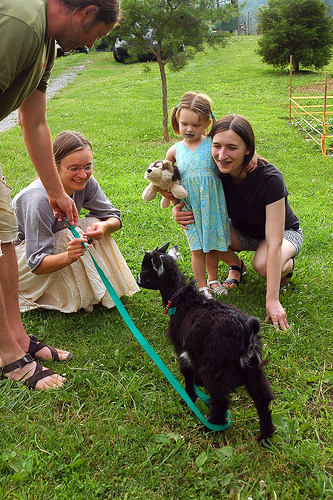
For the days preceding our visit, L continually talked about going to see Mike and Pia “and the goat, and the chickens, and the dogs, and the bunny rabbits.” When she finally met the goat (whose name is Little Bit or Leadbelly, depending on whether you’re talking to Pia or Mike, respectively), L was a little apprehensive. It’s her usual modus operendi:be terrified for a few moments, then strike that and reverse it.

DSC_6303

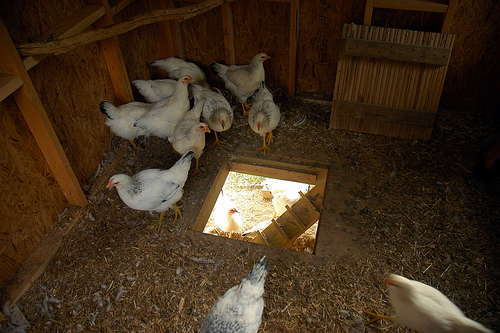
The chickens, all grown, have their own house now. The Girl was not at all interested in going inside, which is to say she would have been had we given her enough time.

DSC_6304

The sight of all those chickens, scurrying about, clucking and flapping was too unpredictable for L to handle, so she simply waited outside.

DSC_6306

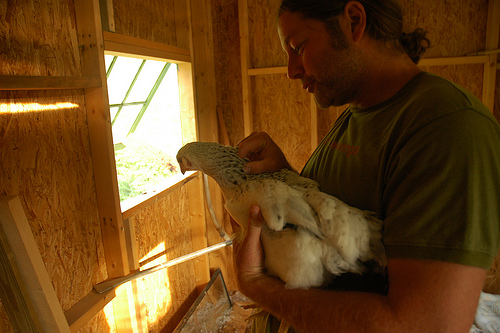
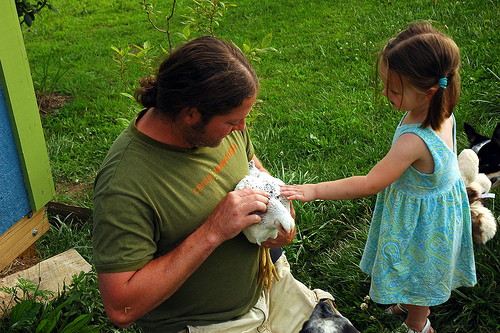
Once a chicken was isolated, though, the L was eager to pet and giggle, giggle and pet.

DSC_6308

The sun finally set, and with L in bed, we sat around the porch, then around the kitchen, talking, laughing, imbibing this and that, until after midnight.

DSC_6326_7_5_tonemapped

One of the negatives about moving out of Asheville was leaving behind friends. Yet there is a sweet note to the bitterness: the semi-yearly visits become all the more precious. We all bounce out of the house crying, “We’re going to Asheville!” It’s the classic dilemma/blessing.

In the Mountains

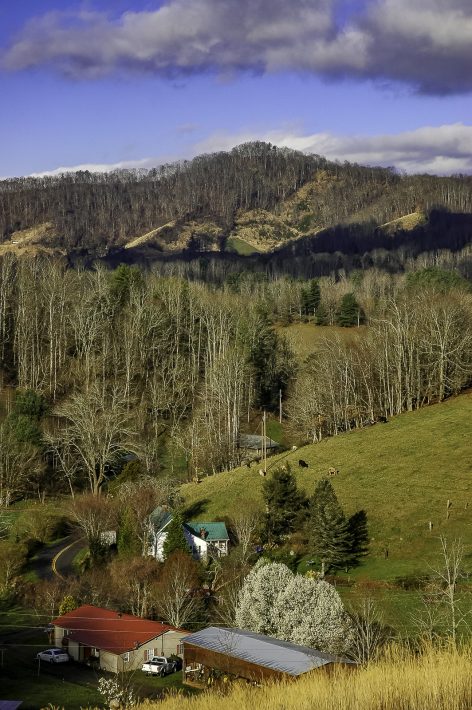
Waking up in the mountains, with French press of coffee and a fire filling the house with inviting, warm odors. It’s rare that the physical act of visiting friends — the actual physical being there, in this case, in the mountains — is nearly as pleasant the conversation that lasts into the early morning hours.

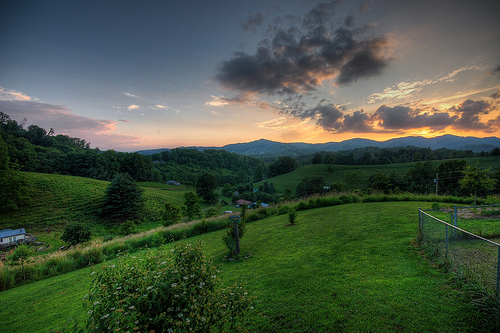
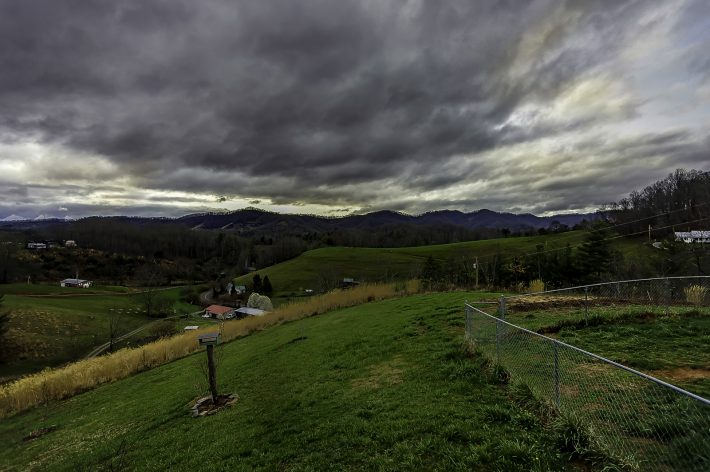
When we arrived, things were dark and wet.

The next morning, the opposite.

We were all up early thanks to our self-portable alarm clock. There was soon a fire burning in the stove and coffee working its magic in a press. And the conversation picked up where we’d left of the evening before.

The highlight for the Girl: animals. Four friendly dogs and twenty-some chickens made for an overjoyed little girl.

My Hometown

Headlining The Nation:

It was hot as Hades on June 5 in the little mountain town of Bristol, Virginia. But that didn’t stop hundreds of southwest Virginians–in the most staunchly Republican part of a state that hadn’t voted Democratic for president since 1964–from streaming into the local high school gym to whoop it up for a liberal, mixed-race fellow from Chicago with a mighty suspicious moniker. Fresh off his lopsided, nomination-clinching primary victory in North Carolina, Barack Obama had chosen–to the mystification of political experts–to launch his general election campaign not in the “battlegrounds” of Pennsylvania or Ohio but in a remote Southern backwater containing 17,000 souls who’d given George W. Bush 64 percent of their vote in 2004.
A New, Blue Dixie.

In the Mountains

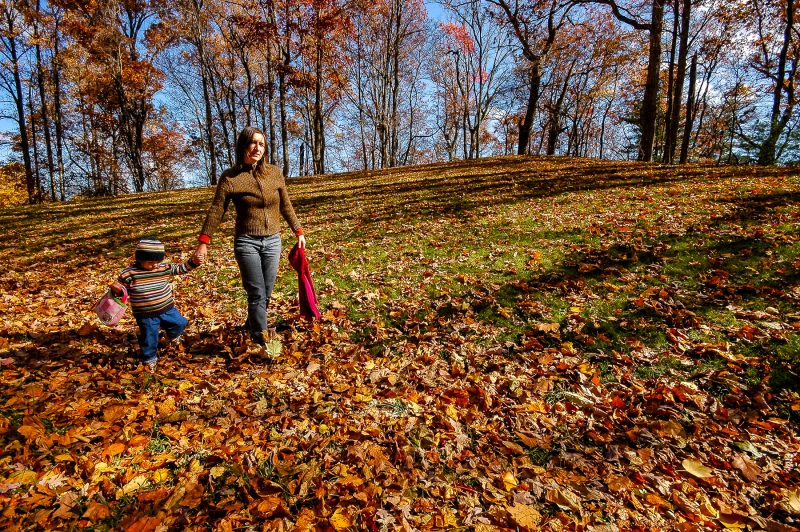
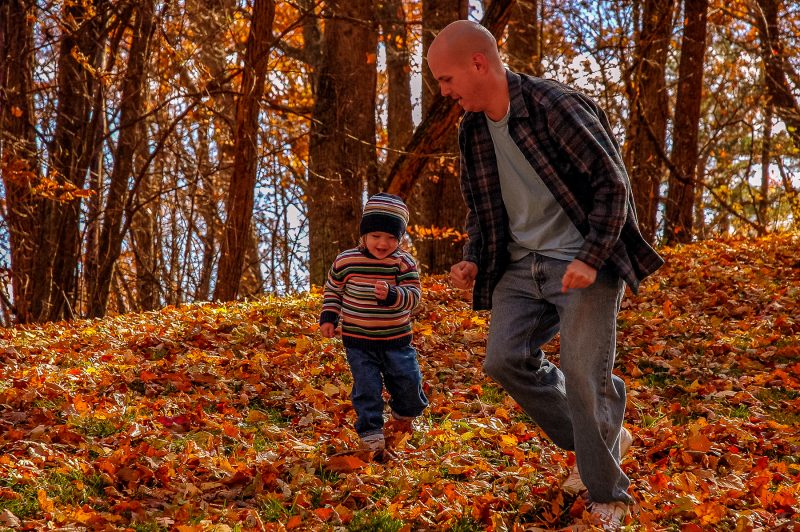
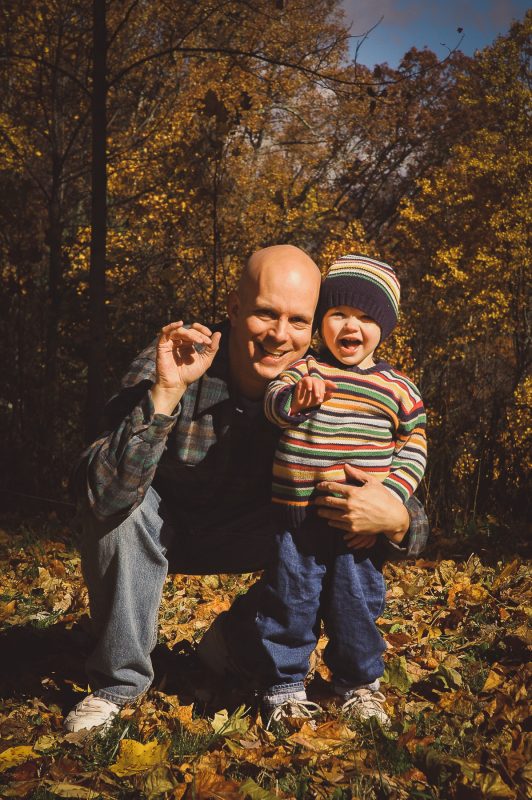
About a week too late, we headed to the mountains of North Carolina today. Last weekend the leaves were at their color peak; after a windy Saturday, there were few left on the trees. Still, we found a spot with good light and a lot of leaves and went at it.
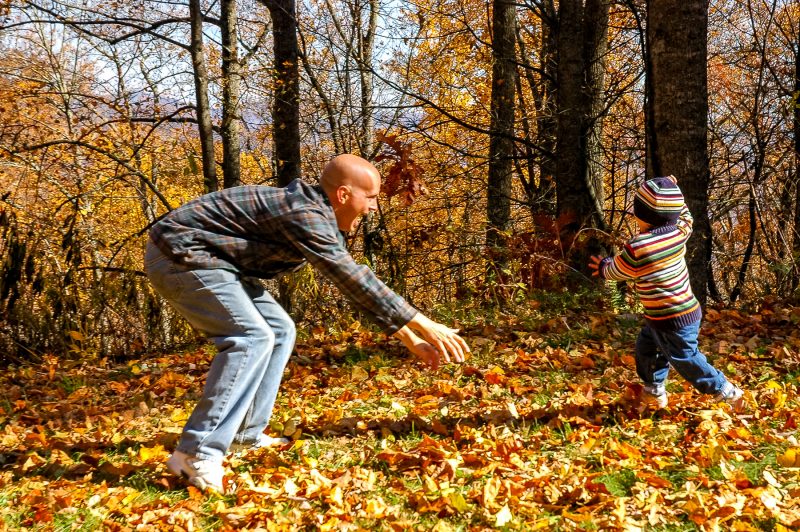
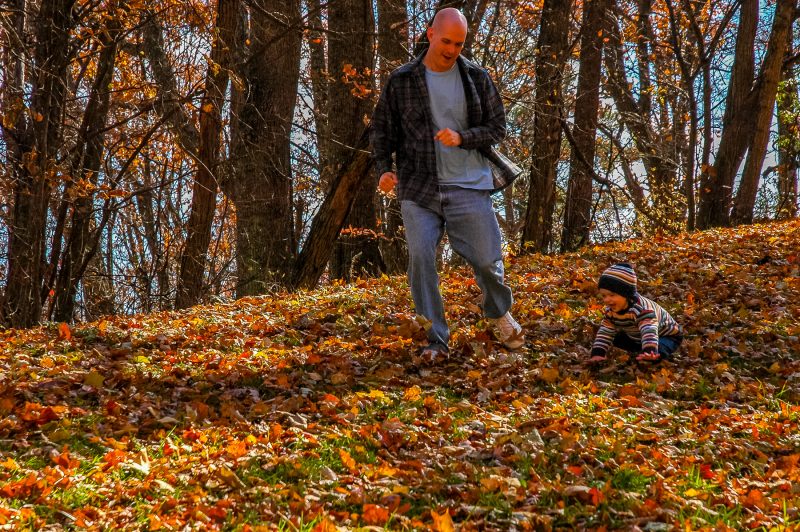
L and I ran,

fell,

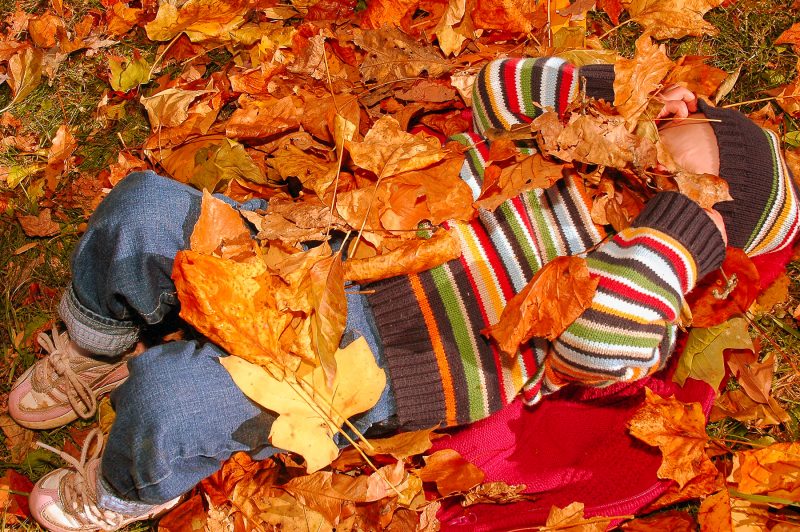
rolled around, and covered each other with leaves.

Except for the covering-with-leaves portion, it was continuous “more!” from L (and it came out as sweetly as always: “mo!”).

And while most of the leaves had fallen, there were still some magnificent views, particularly of one lay down.

Of course, what would an outing be without some quiet moments, sharing a snack.

Table Rock

I’ve been writing all day. Planning lessons (putting the finishing touches on a unit about the memoir in which we study Maya Angelou’s I Know Why the Caged Bird Sings) and preparing materials for my PAS-T notebook. The former I don’t mind; the latter is a hastle.

PAS-T is an acronym for “Pain in the…” — no, rather it’s “Performance Assessment System for Teachers”. It is, in short, a pile of paperwork that I am to provide three different evaluators as they come through my classroom two times each throughout the year for formal observations. My PAS-T notebook is to include things like,

  1. Summary of plan for integrating instruction
  2. Class profile
  3. Annotated list/samples/photos of instructional activities/materials/displays
  4. Lesson/intervention plan
  5. Summary of staff consultations
  6. Syllabus
  7. Lesson plan(s)
  8. Differentiation
  9. Annotated photos of class activities
  10. Sample handouts/transparencies/Thinking Maps
  11. Student samples of technology integration
  12. Record-keeping/monitory system
  13. Labeled and dated grades
  14. Teacher-made tests/assessments
  15. Example grading rubric
  16. Grading procedures
  17. Student work with feedback
  18. Progress reports/letters for parents/students
  19. Survey and summary
  20. Class rules with description of development procedures/reinforcement system
  21. Classroom diagram with comments/alternative room arrangement
  22. Class schedule
  23. Explanation of behavior management philosophy/procedures
  24. A printed copy of the teacher’s home page
  25. Log of rapport building efforts (notes, calls, conferences)
  26. Copy of newsletter
  27. Agenda from orientation/fieldtrip
  28. Documentation of Technology Proficiency or letter of intent
  29. Resume
  30. Certificates, agendas, support materials from presentations given
  31. Certificates, agendas, support materials from presentations attended
  32. Documentation of membership/participation in professional organizations
  33. Performance goal setting forms
  34. Chart of student progress throughout year
  35. Analysis of grades for marking period
  36. Log of collegial collaboration
  37. Documentation of meeting established annual goals

It is difficult to think of this as more than busy work. I mean, how useful can a classroom diagram with comments be to an evaluator who’s sitting in my classroom?

I’m all for accoutability, but this is starting to feel like an extra burden.

Still, I will perservere, and I will get only “Exemplory” ratings because anything else would drive me mad. If I’m to jump through hoops, I want to jump through them while juggling chainsaws and lecturing on Kant — I want to blow people’s minds.

Fortunately, I didn’t spend the whole weekend at a desk; we spent some of it at a table, so to speak: Table Rock State Park, which means more hiking and more waterfalls.

DSC_9645

Such a burden.

DSC_9652

DSC_9715

A few more pictures are available at Flickr.