A traditional southern Polish wedding lasts three days; a generous modern southern Polish wedding lasts two. The second day is called “Corrections.” You’ll pardon me if, given the fact that K’s cousin had a generous modern southern Polish wedding, all I have the energy to say today is “Sto lat młodej parze.”
travel
Neighbor’s Garden
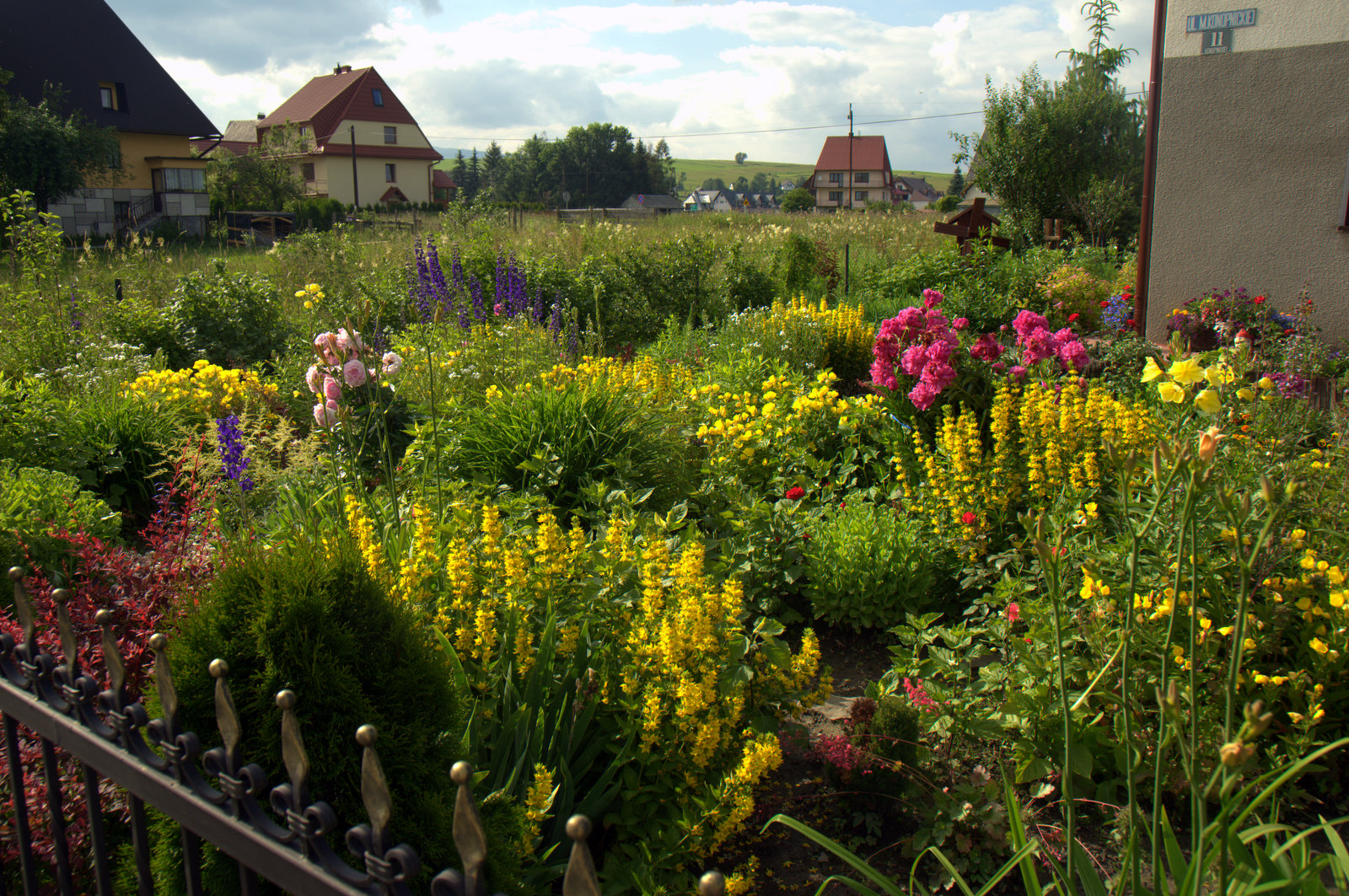
Babcias’s neighbor, a couple of houses up, has quite an impressive flower garden despite the fact that she’s raising five kids while her husband provides for the family from abroad. I saw one of the older children, a teenager, in the garden and commented on its intensity and loveliness. “Thanks,” she said, “but my mom does it all.”
Oravský Hrad
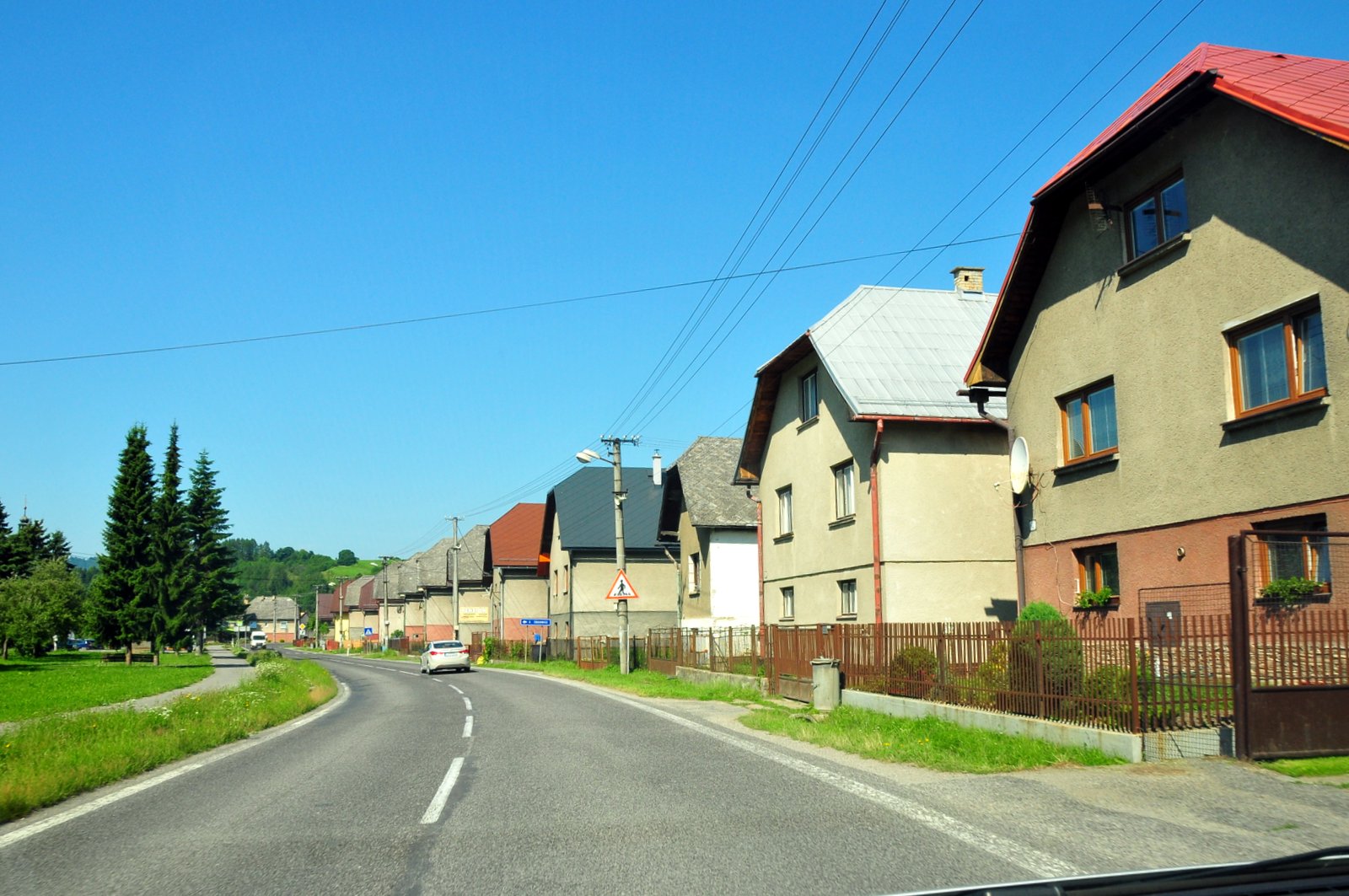
It’s obvious almost instantly that you’ve crossed the border into Slovakia. Everything looks similar, but just different enough. The villages above all: stretched out along a single road, houses huddled up to the street, house after house looking quite similar.
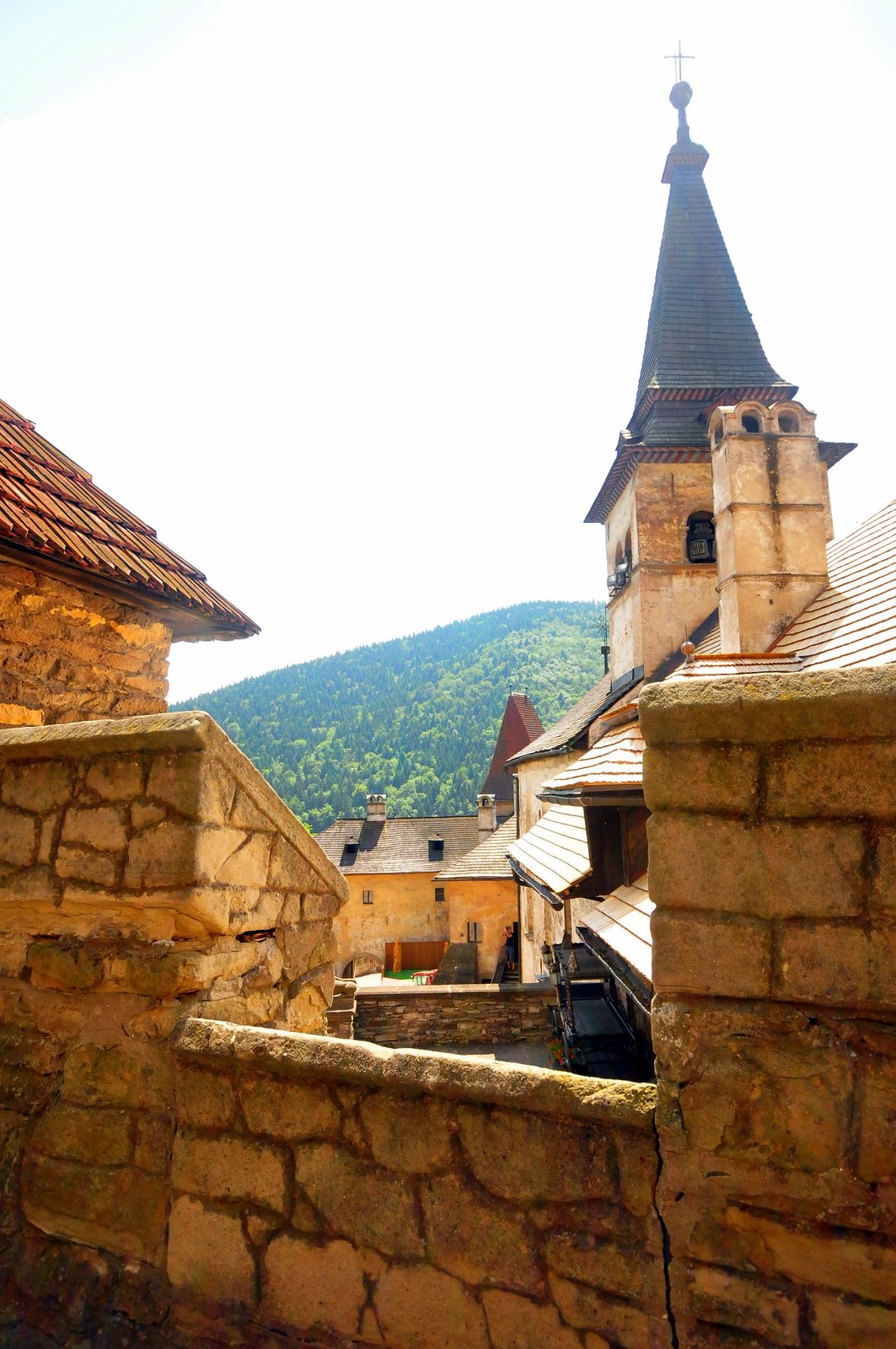
Today’s fieldtrip, Oravský Hrad — Orawa Castle, just about forty kilometers inside Slovakia but a world away from the twenty-first century. Probably the third or fourth time I’d been there, but when I’d shown L pictures of the castle — instant intrigue.
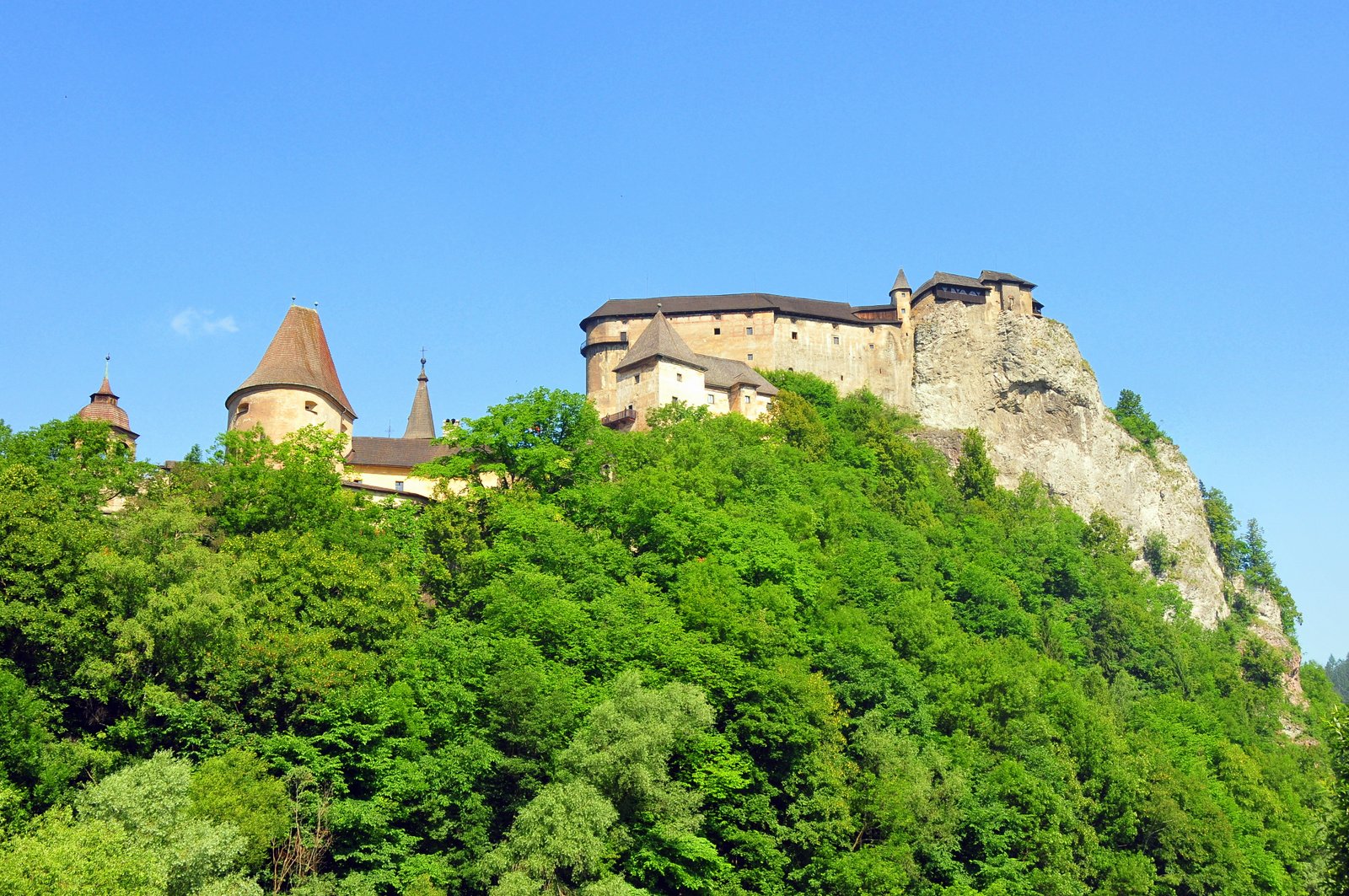
And who wouldn’t be intrigued with a castle literally perched on the razor tip of a high cliff?
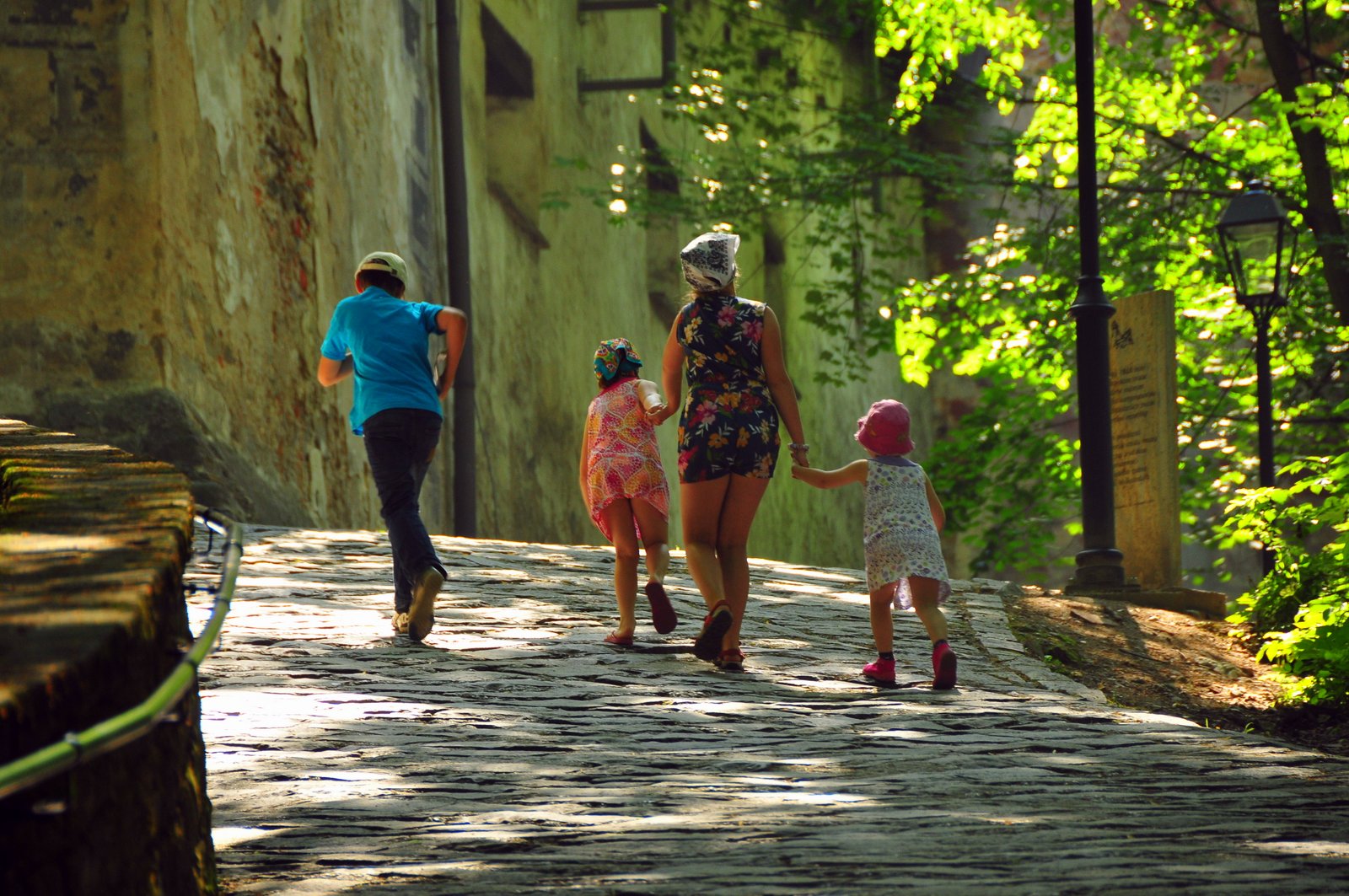
Yet I was a little worried about the legs of our smallest visitors: it begins with a climb and only grows steeper through the visit. Up, up, up — anyone with any fear of heights needs not apply, nor anyone with weak legs.
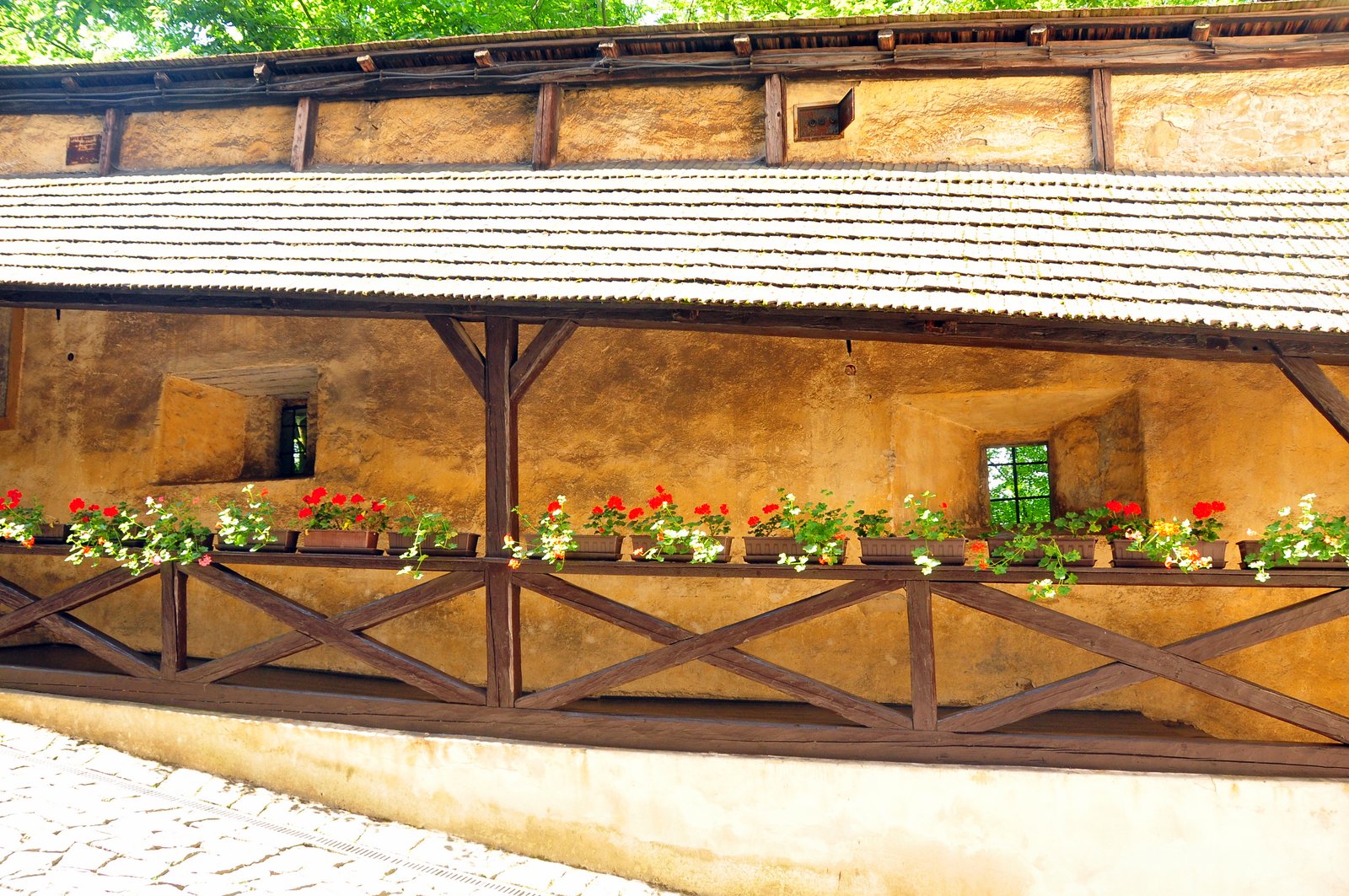
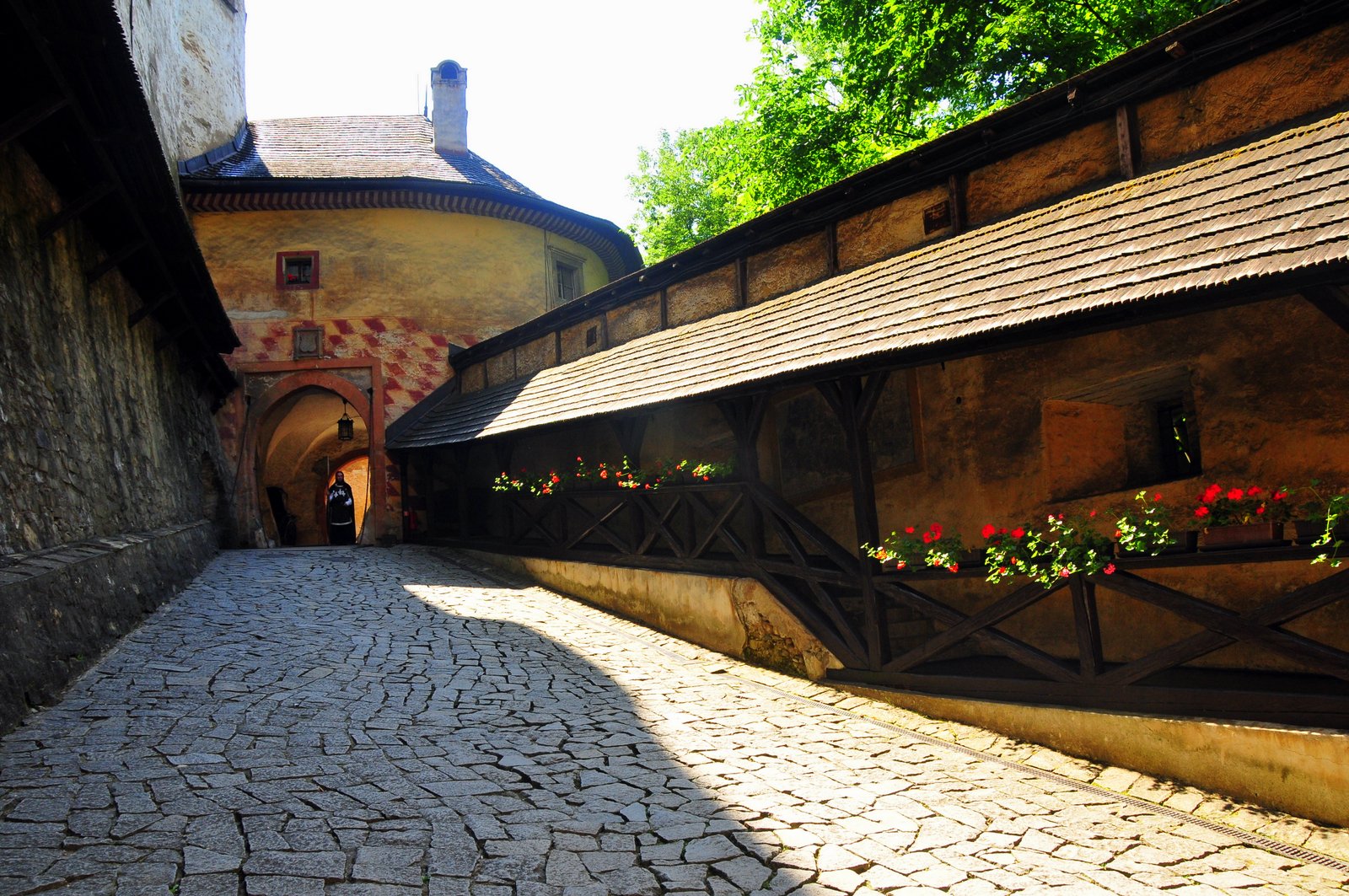
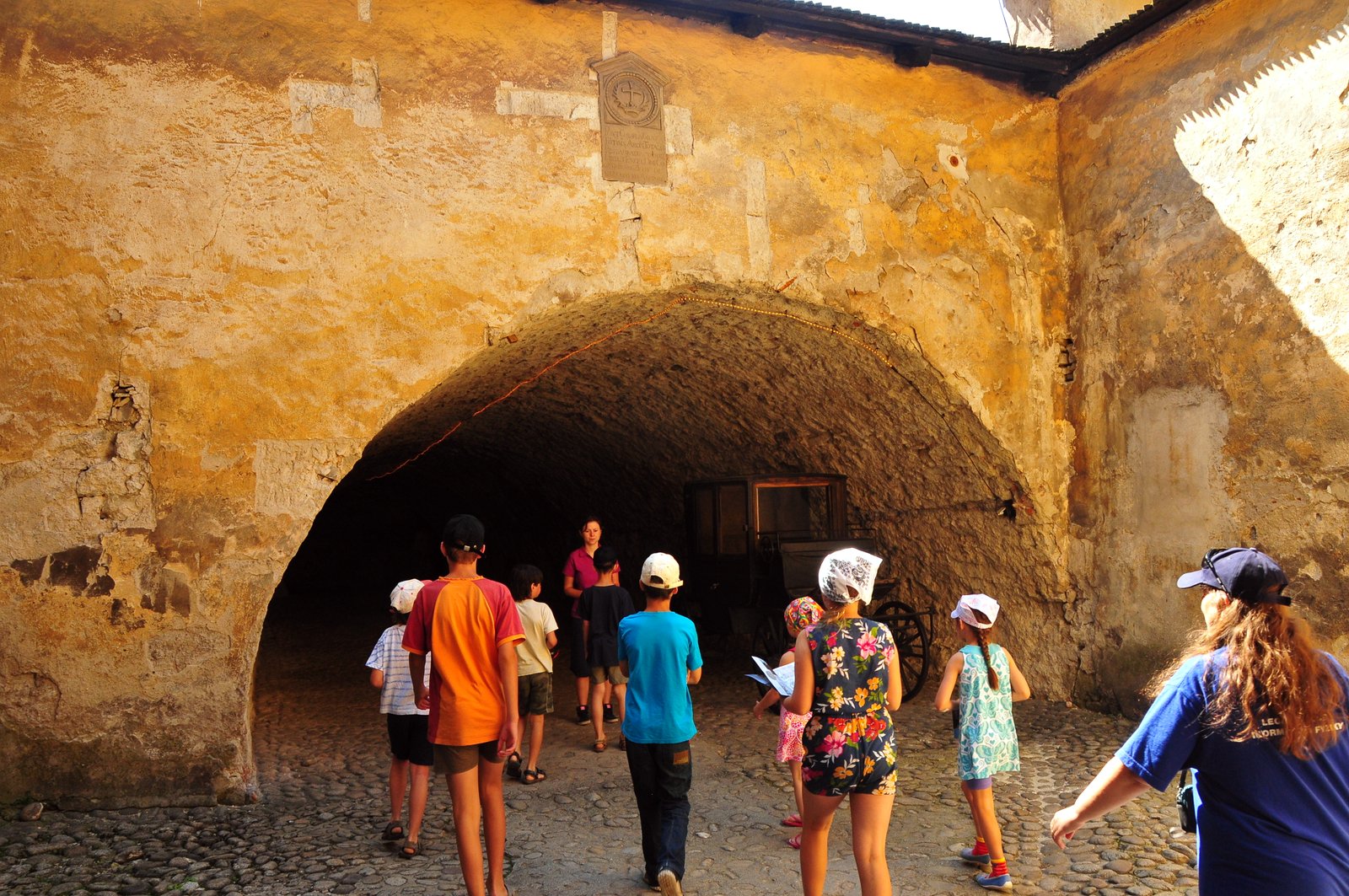
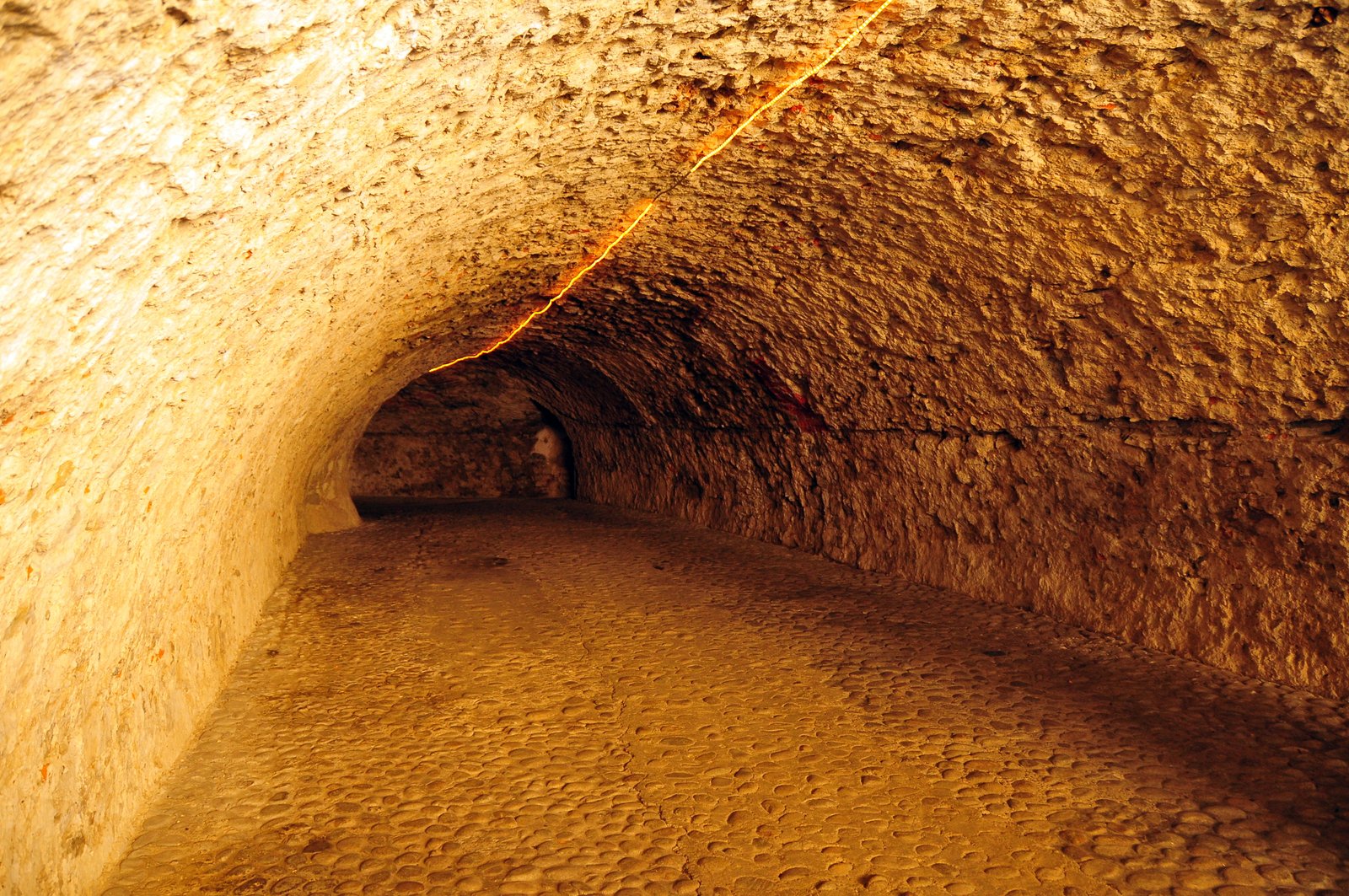
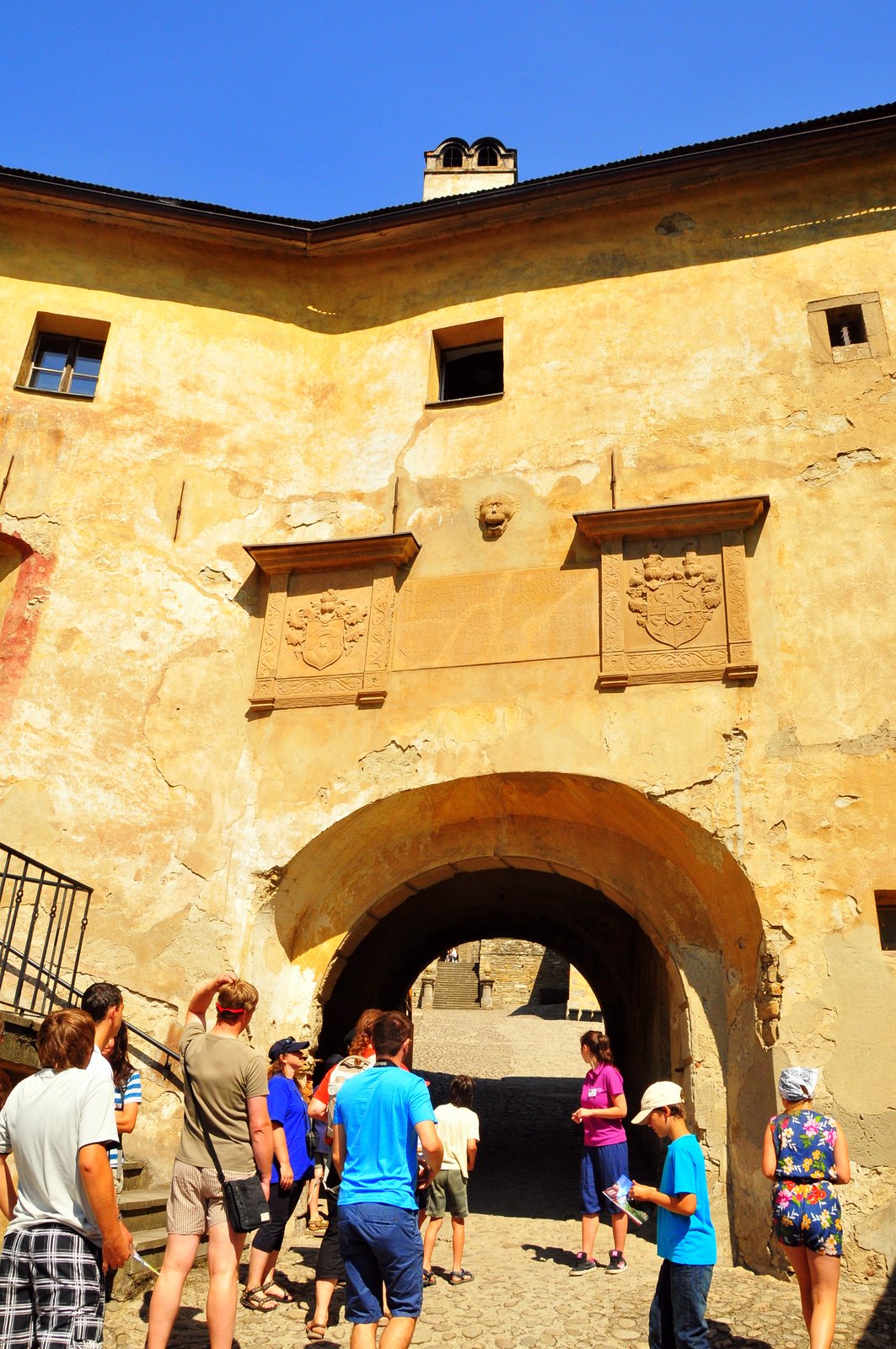
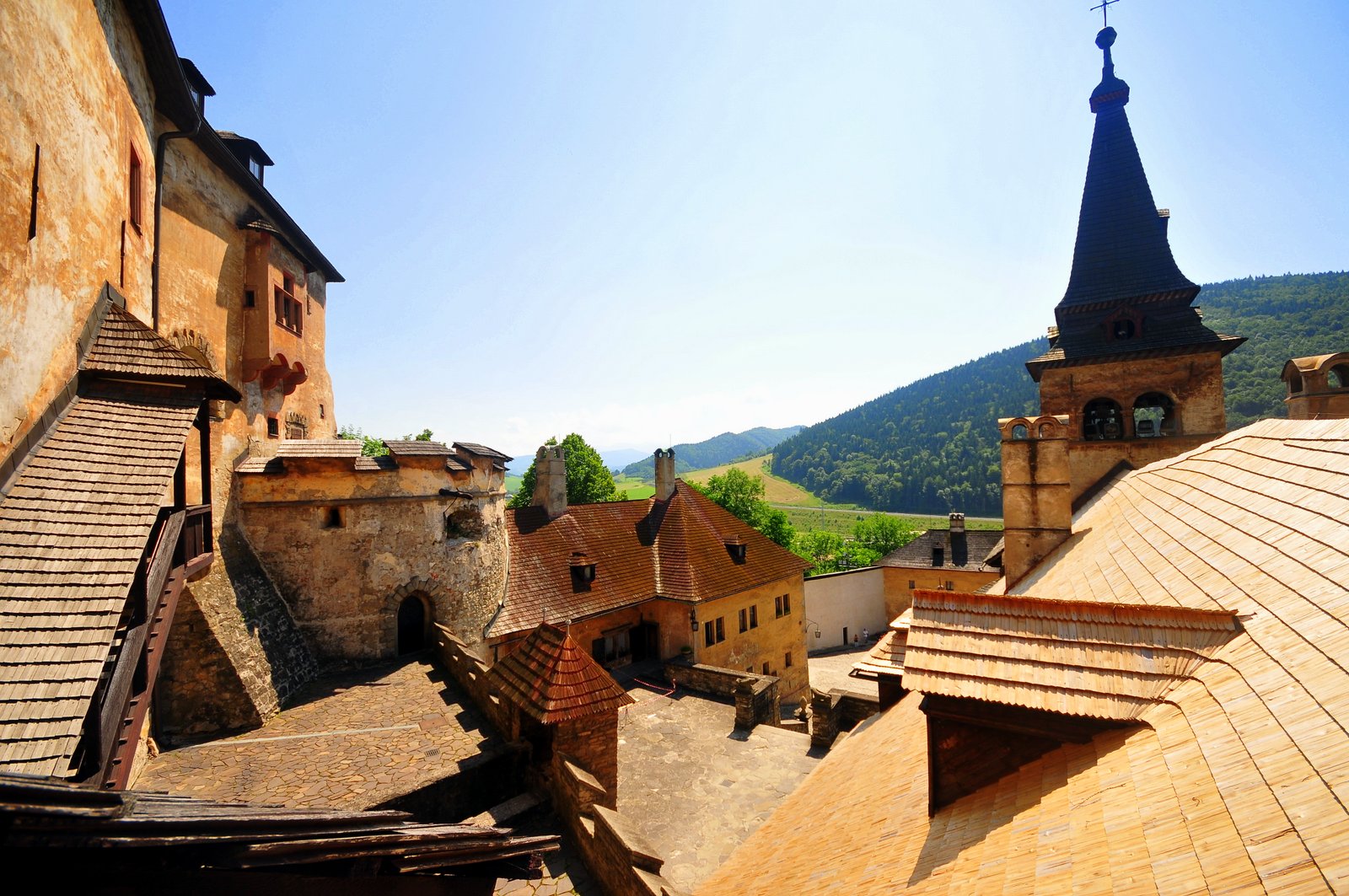
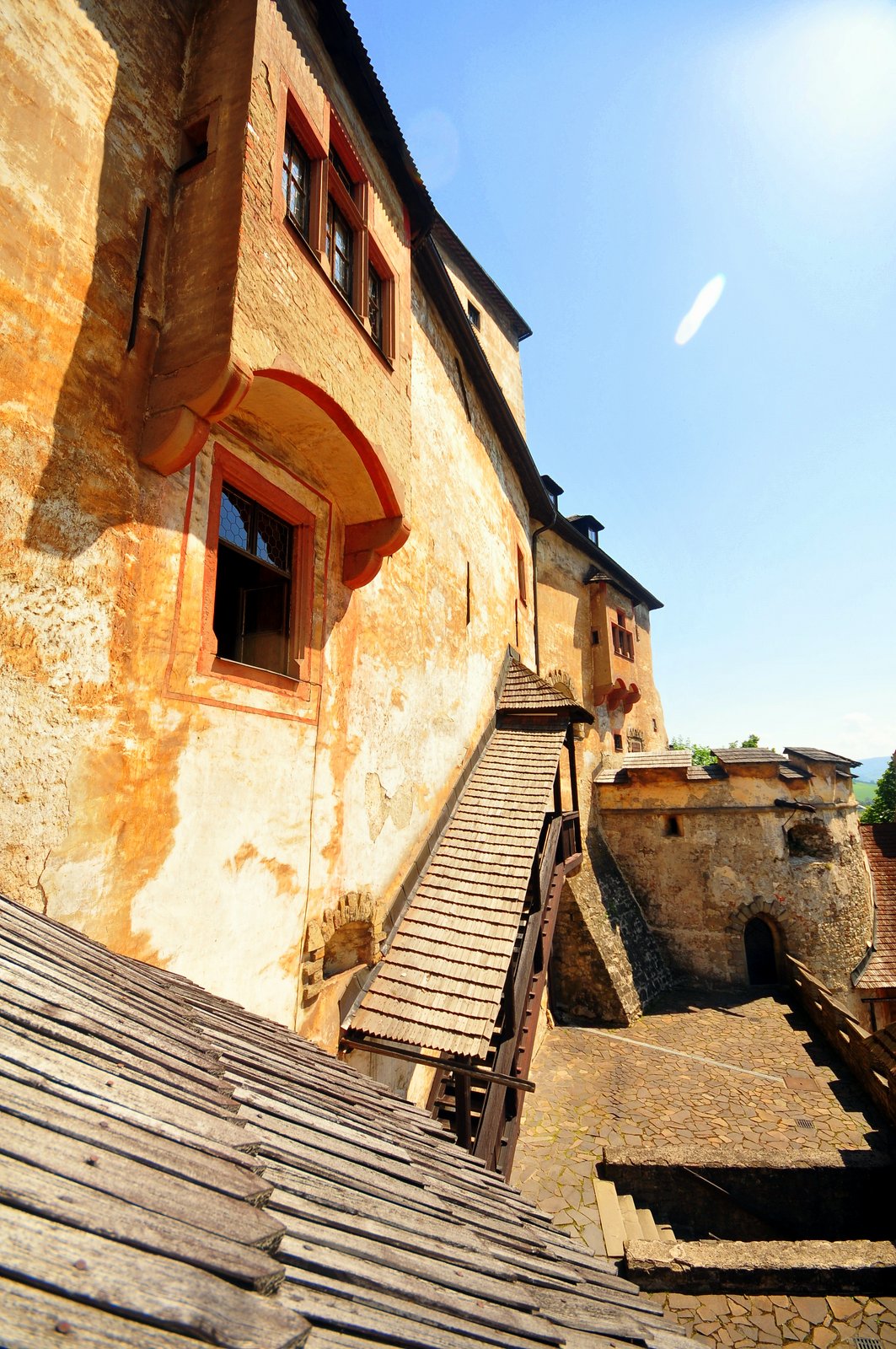
Having seen for the first time a couple of years ago the film 1922 Nosferatu, I was particularly interested in the first couple of gates. While none of the interiors were used for the film, the exteriors framed the early adaptation of Dracula.
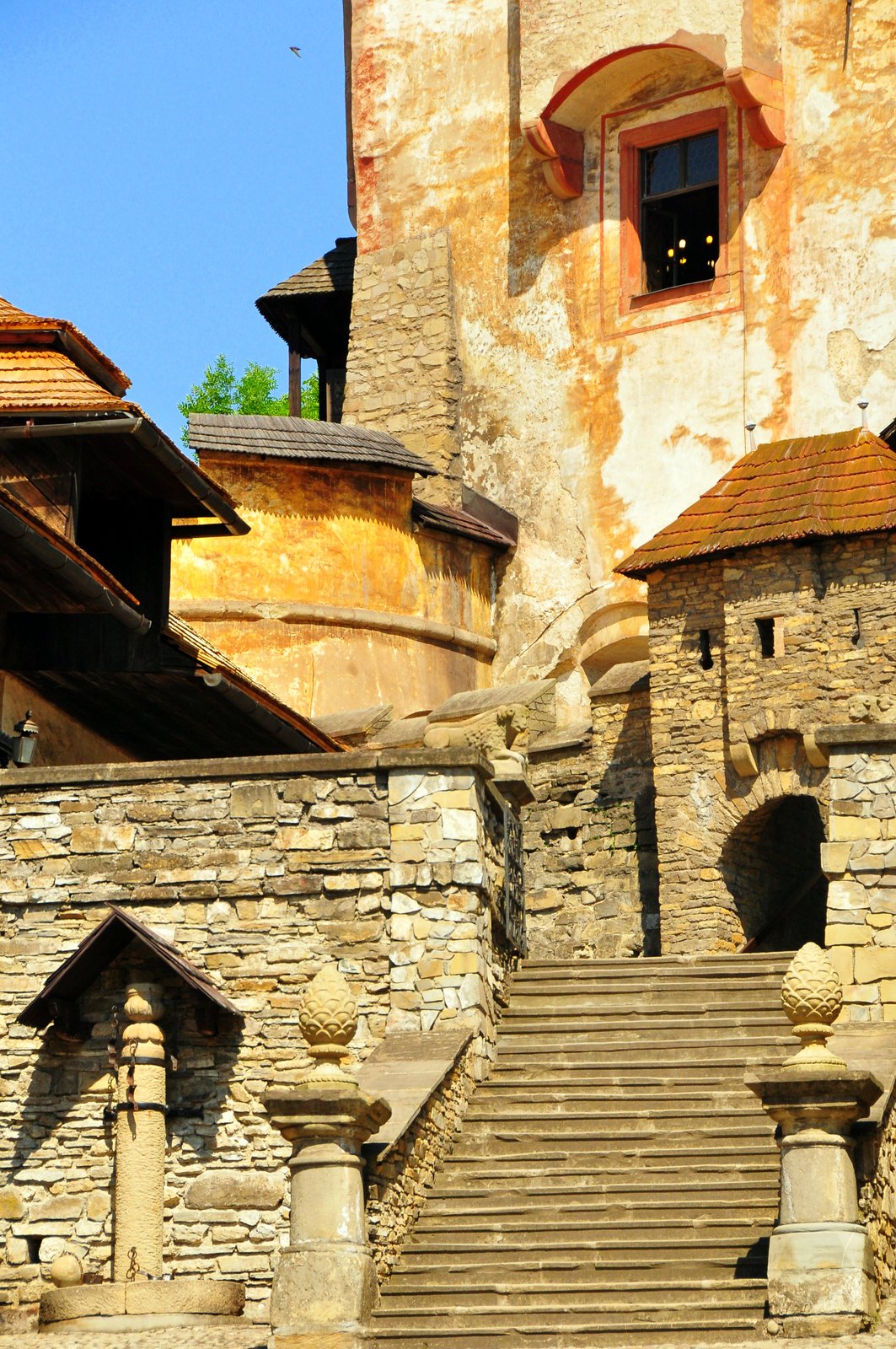
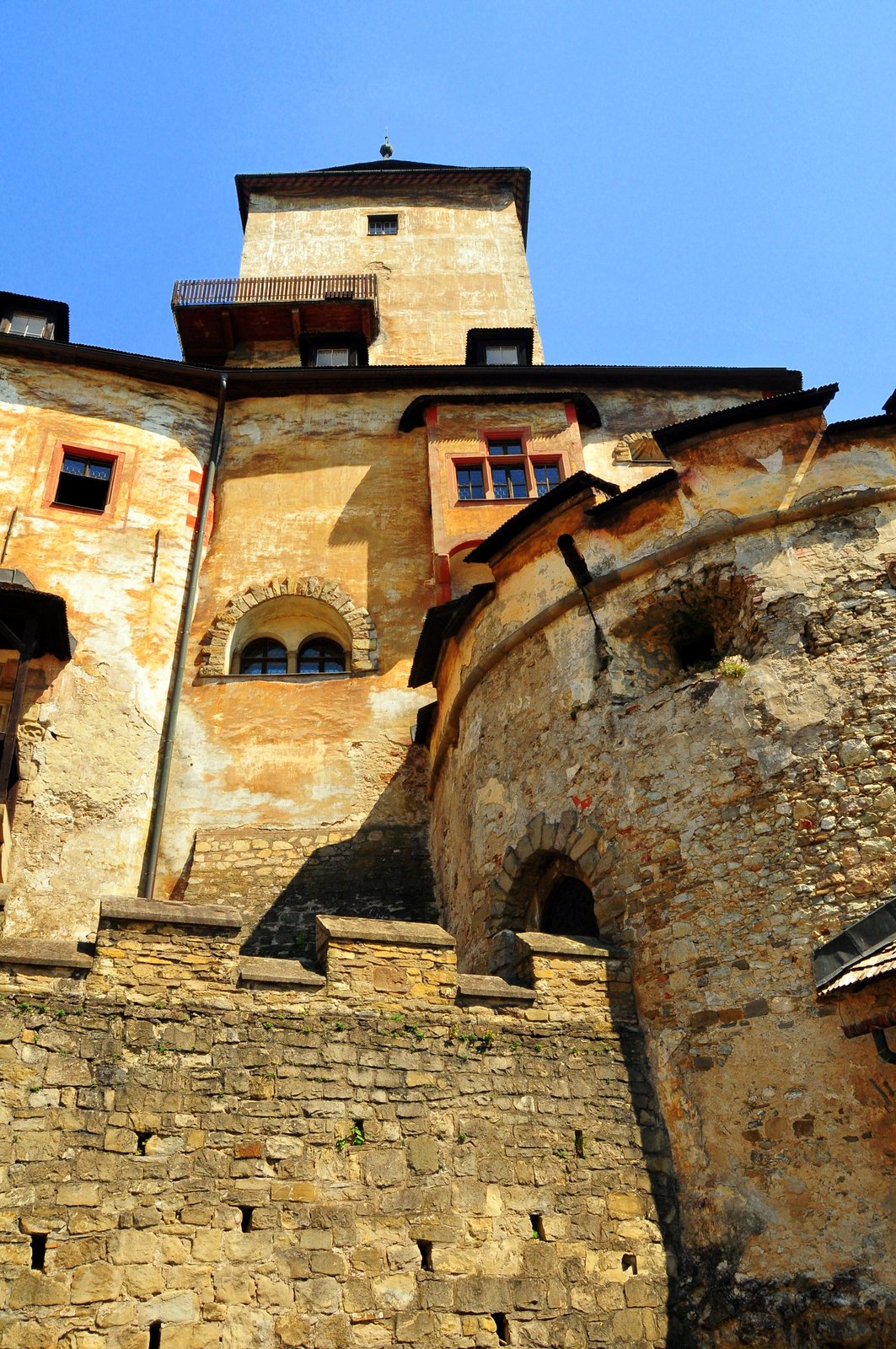
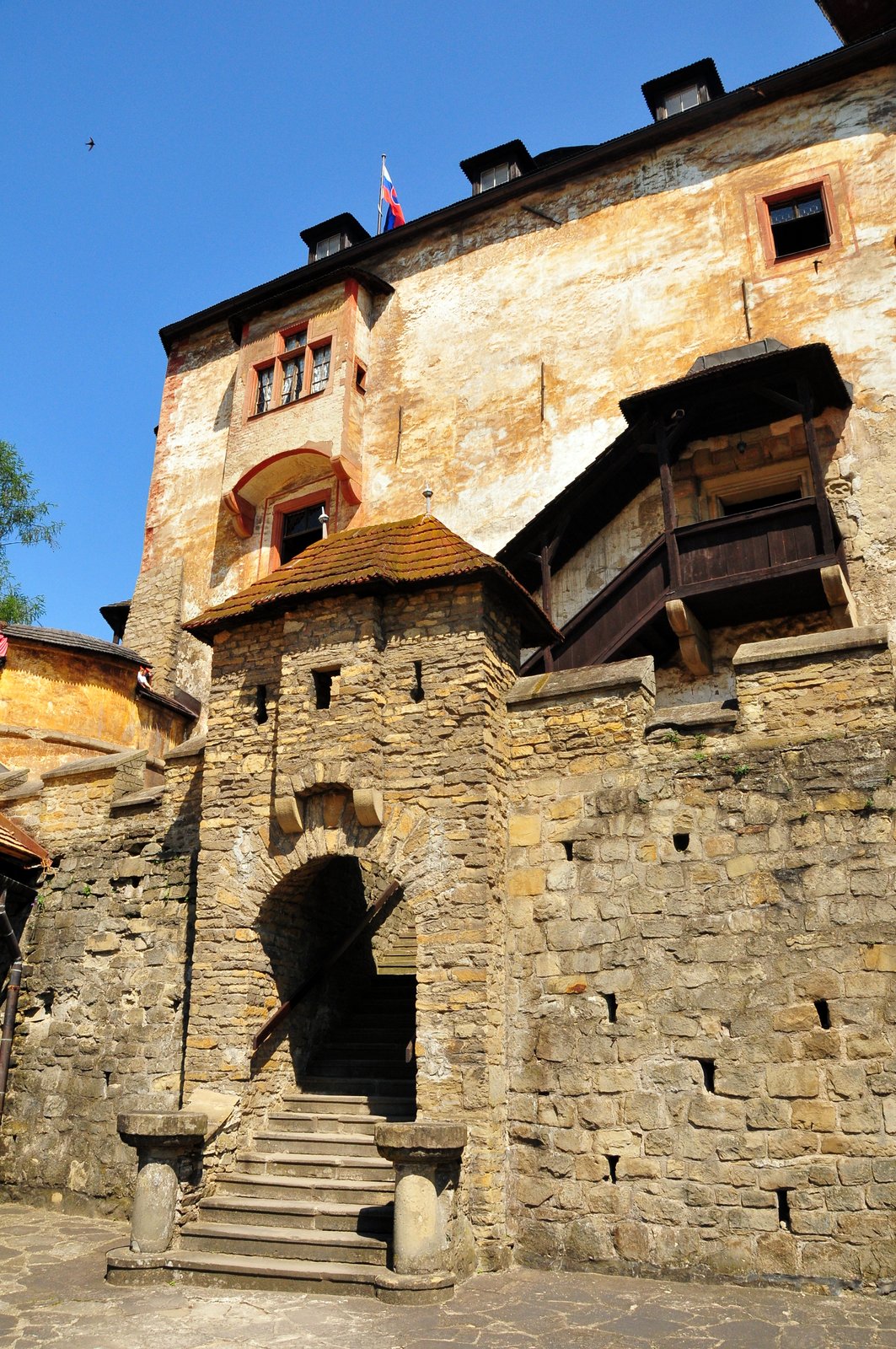
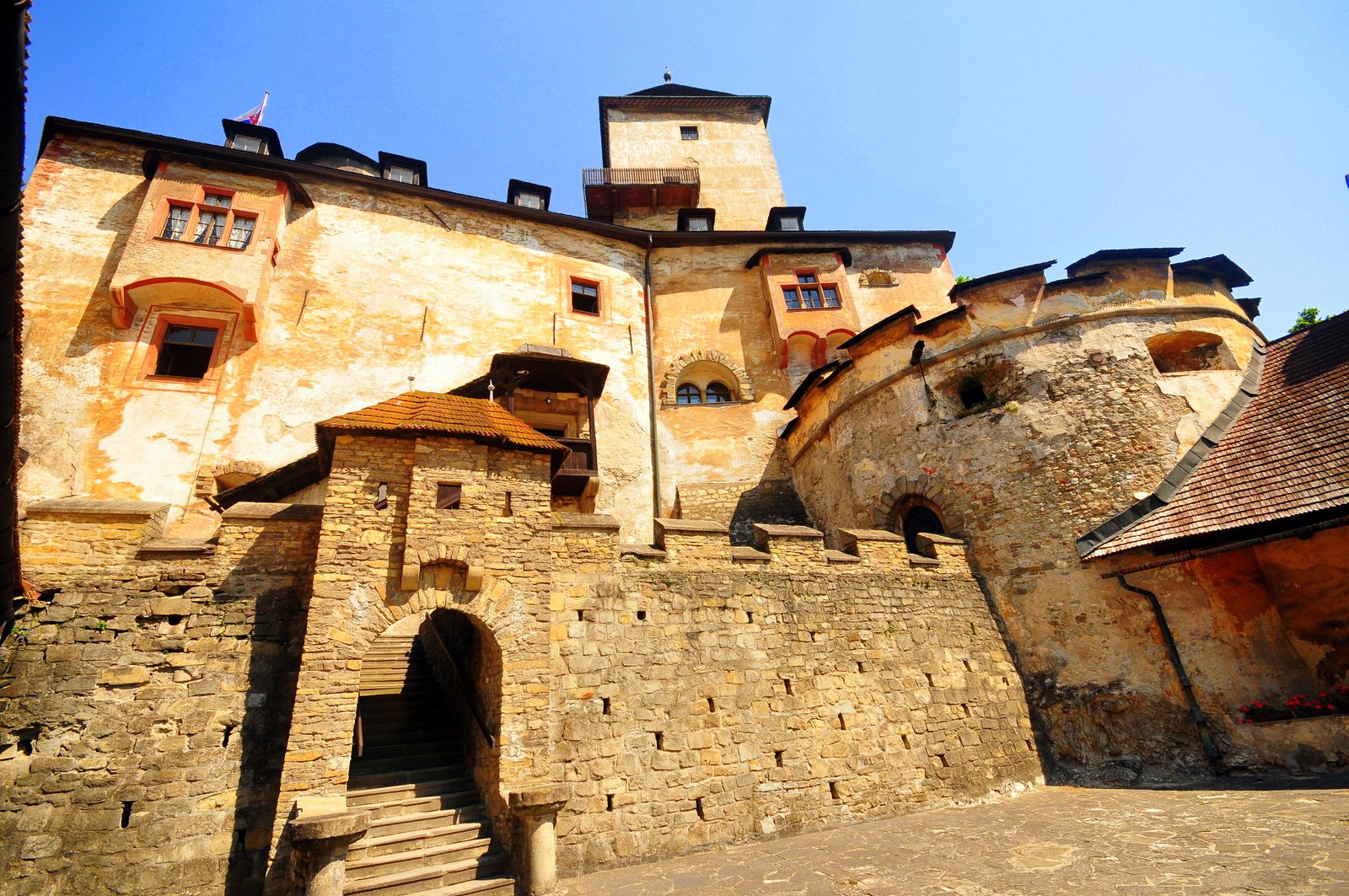
In 1922 none of the interiors had yet been renovated, but if they had, there are a few interiors that certainly would have served the film well.
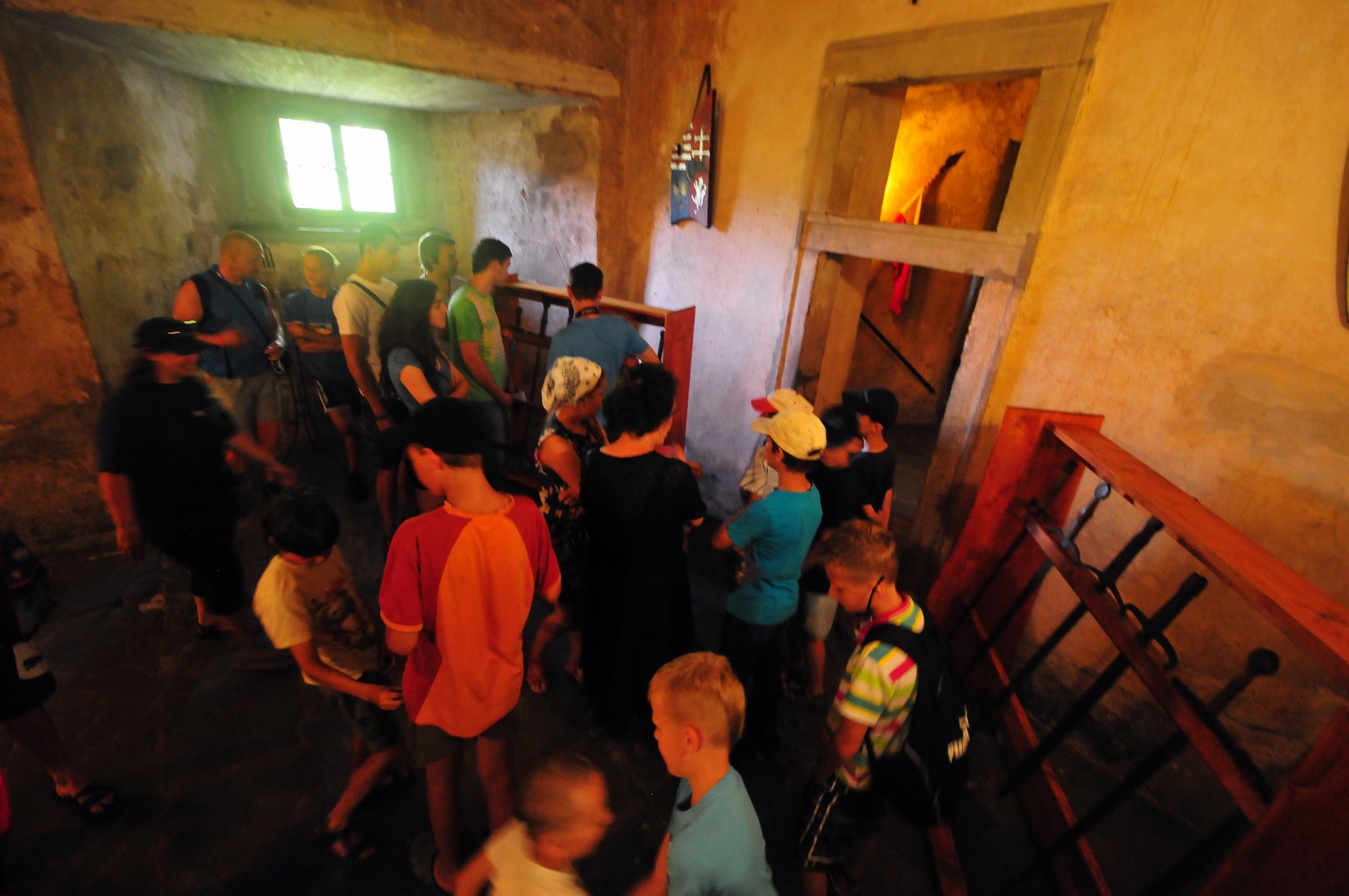
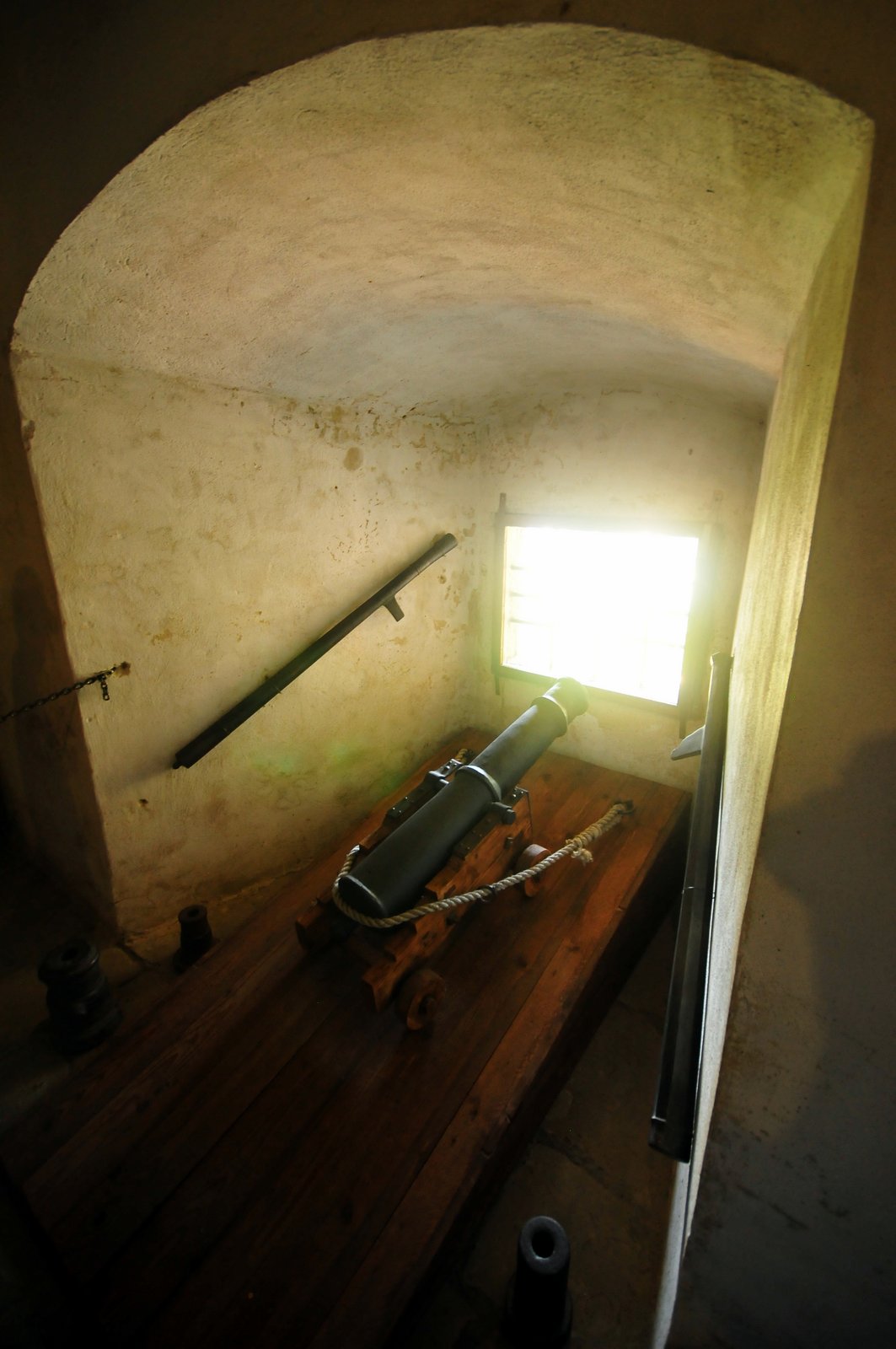
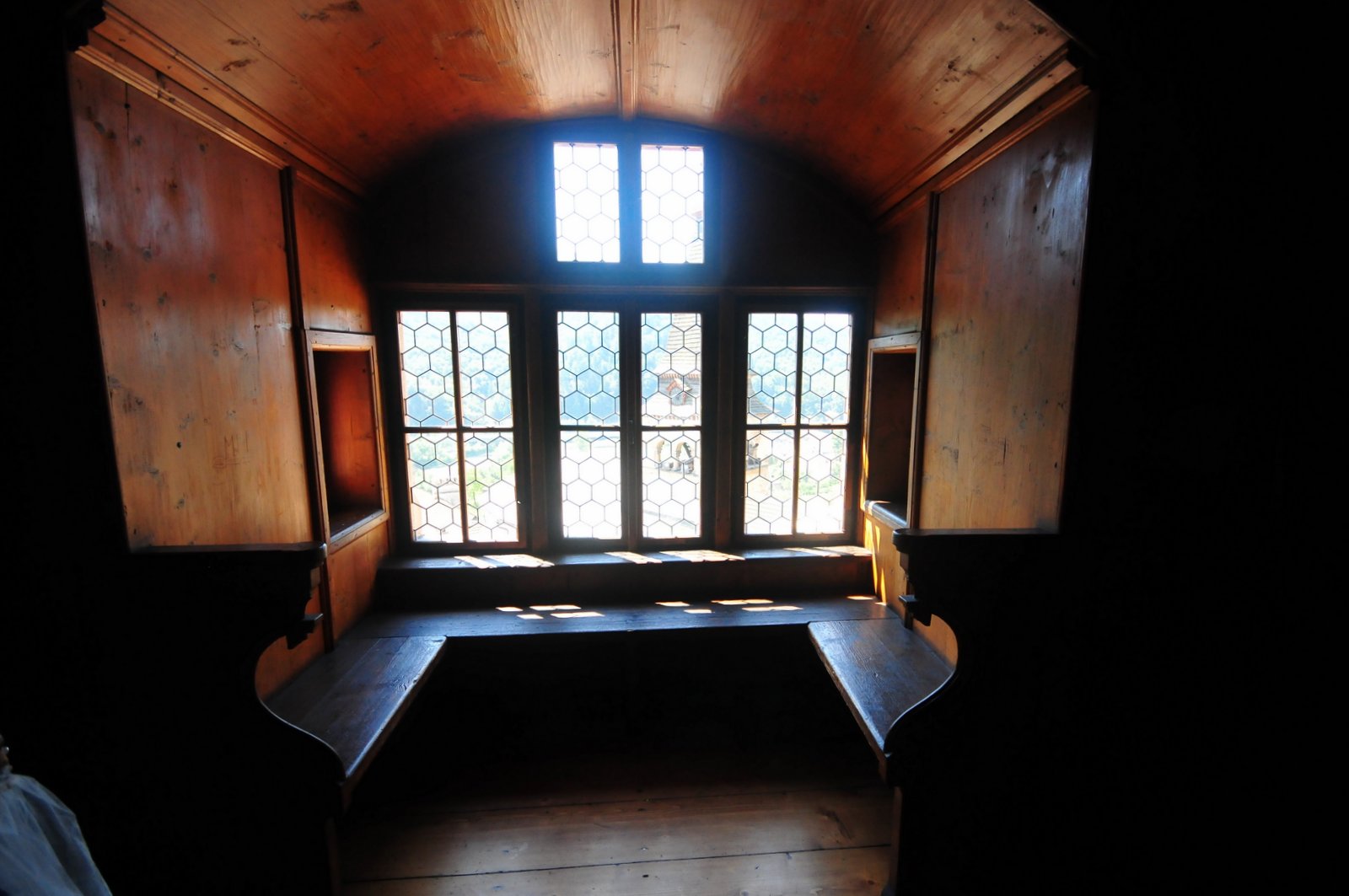
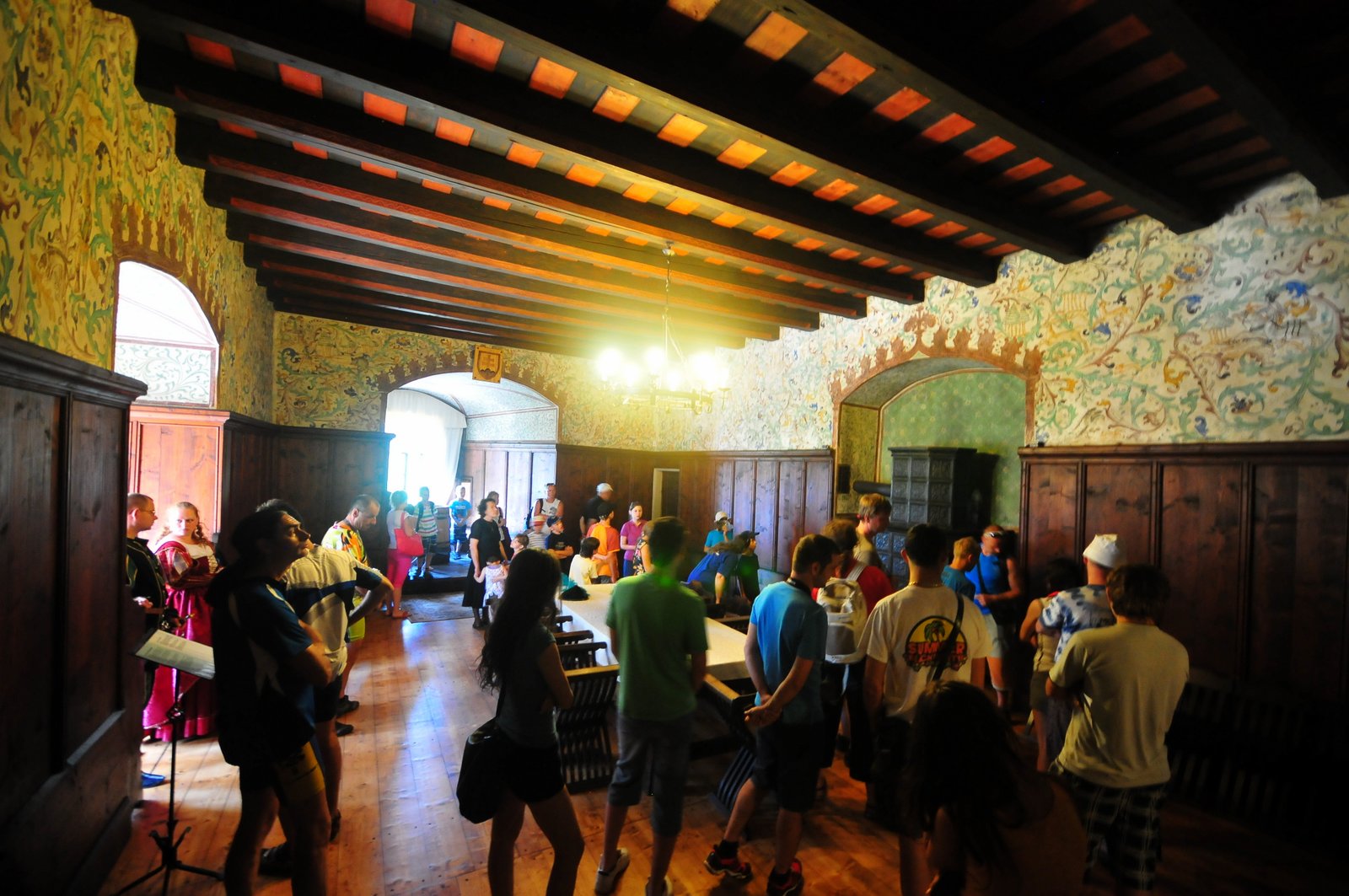
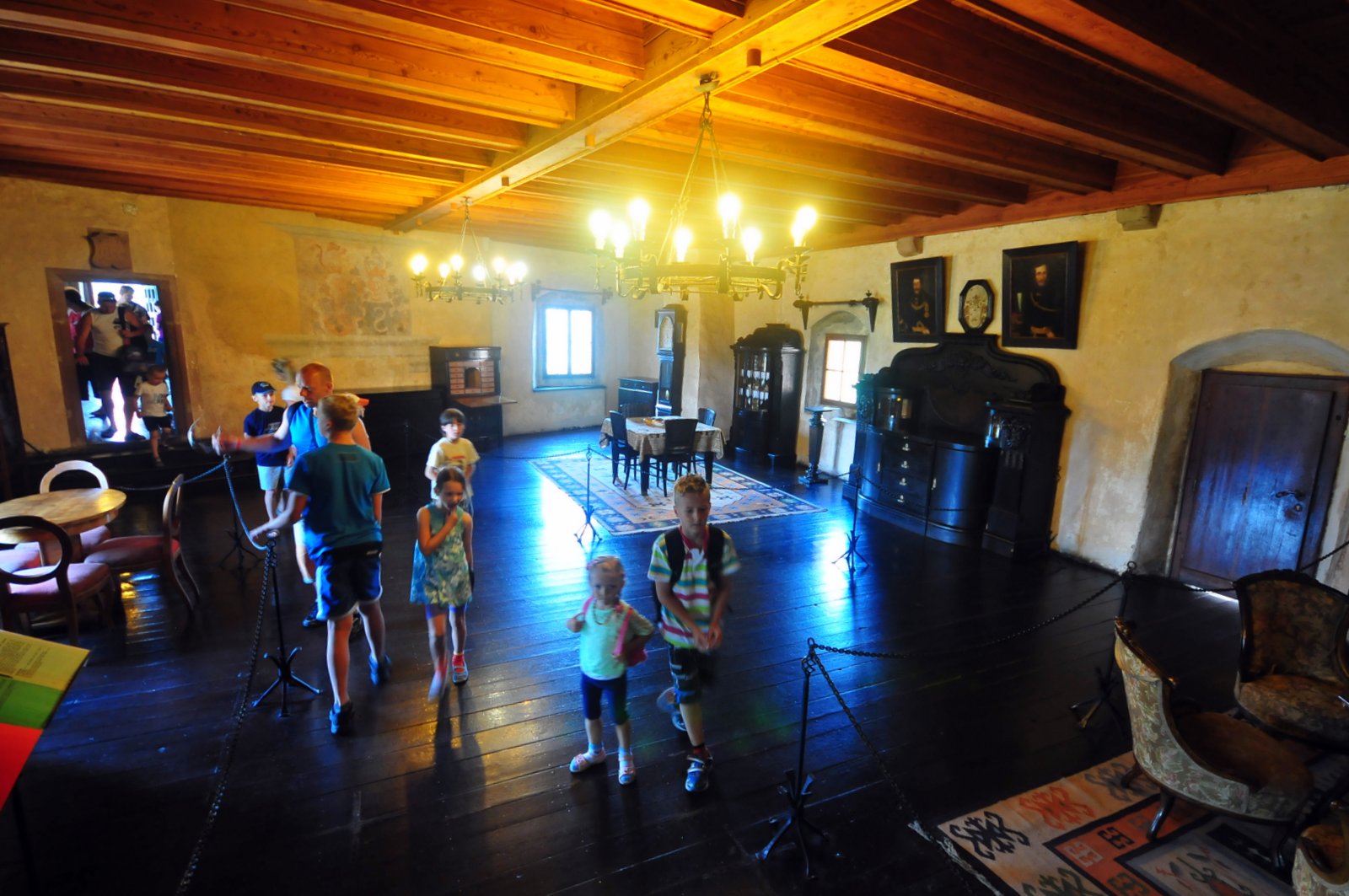
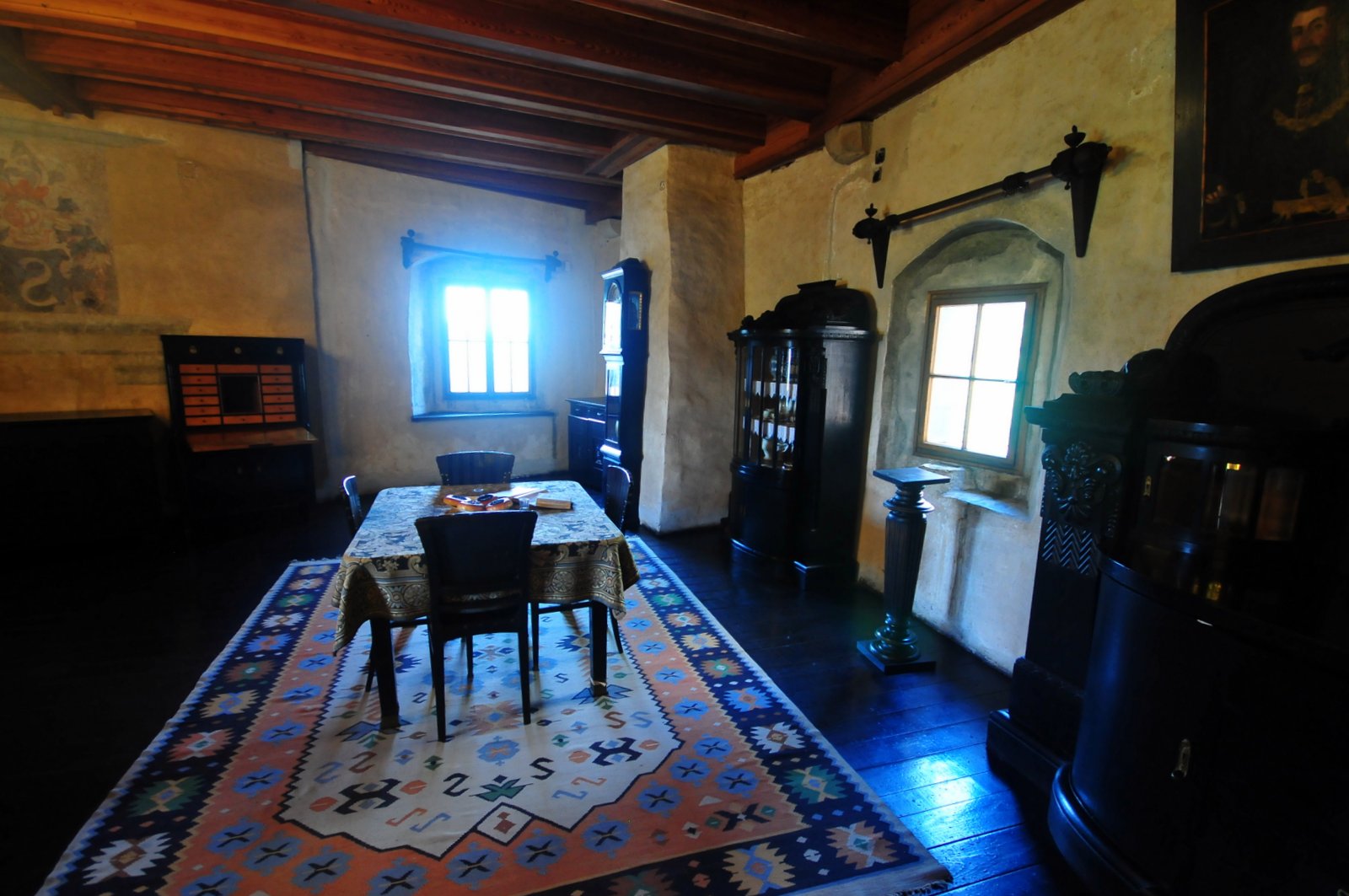
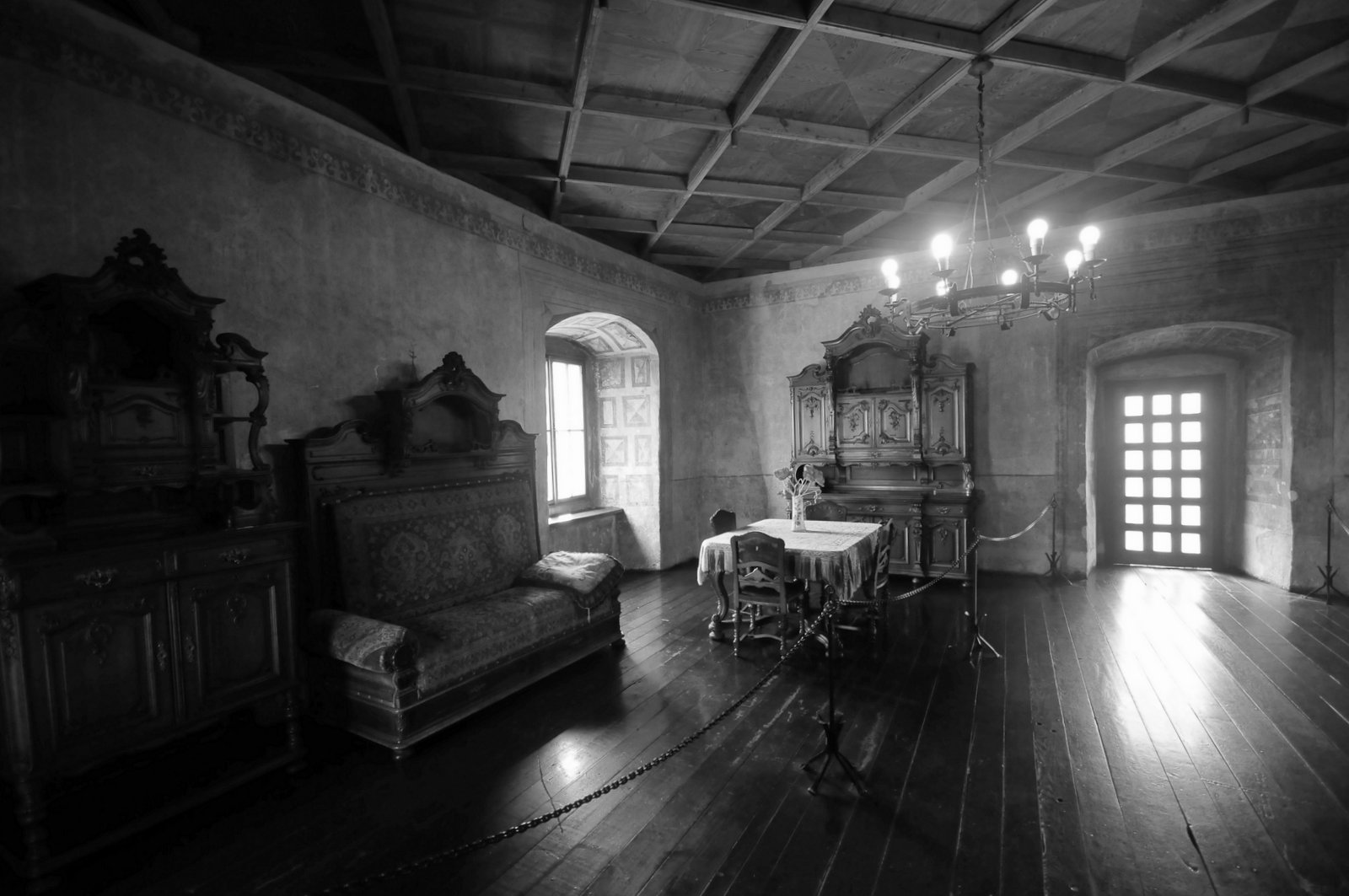
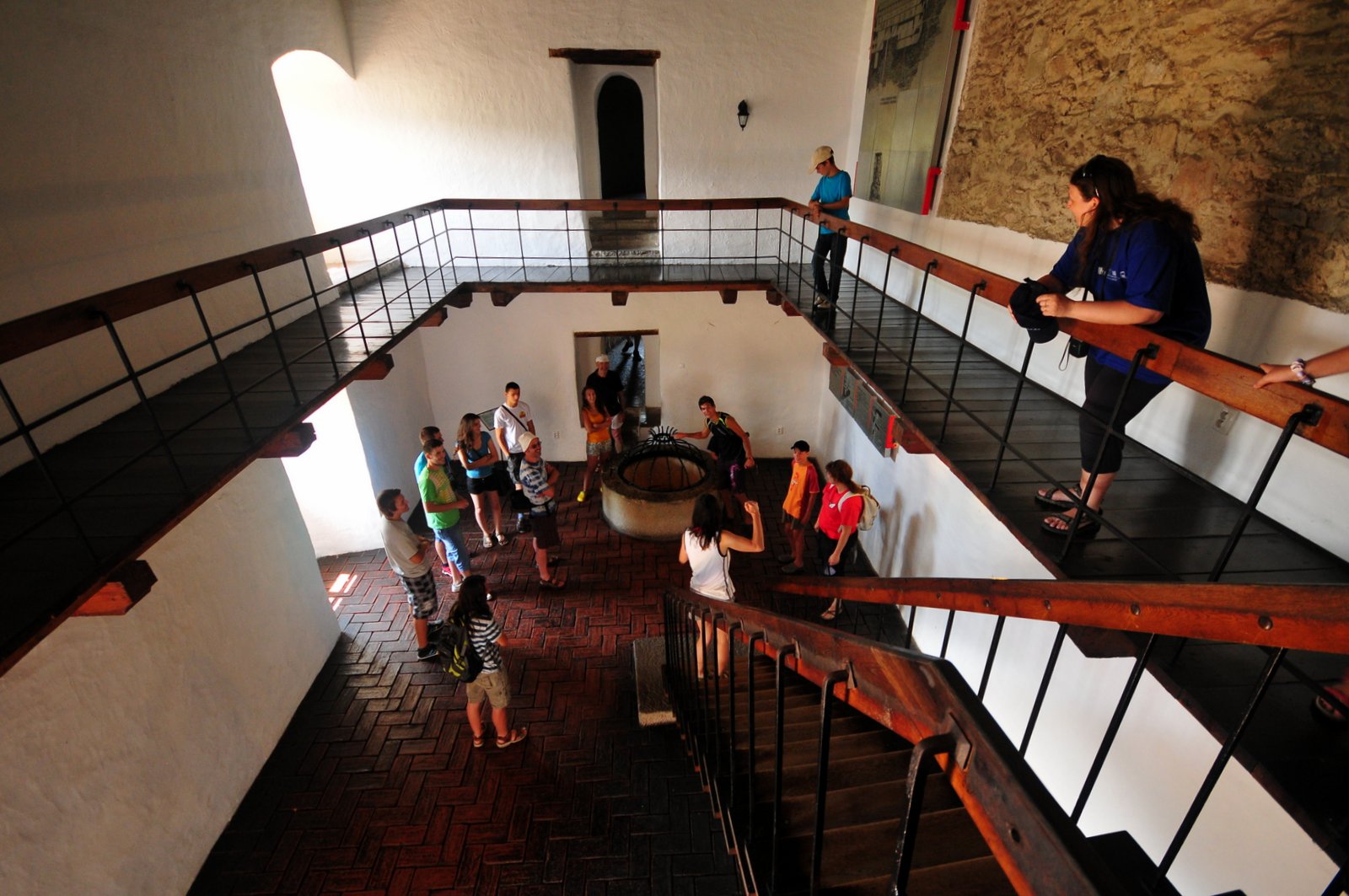
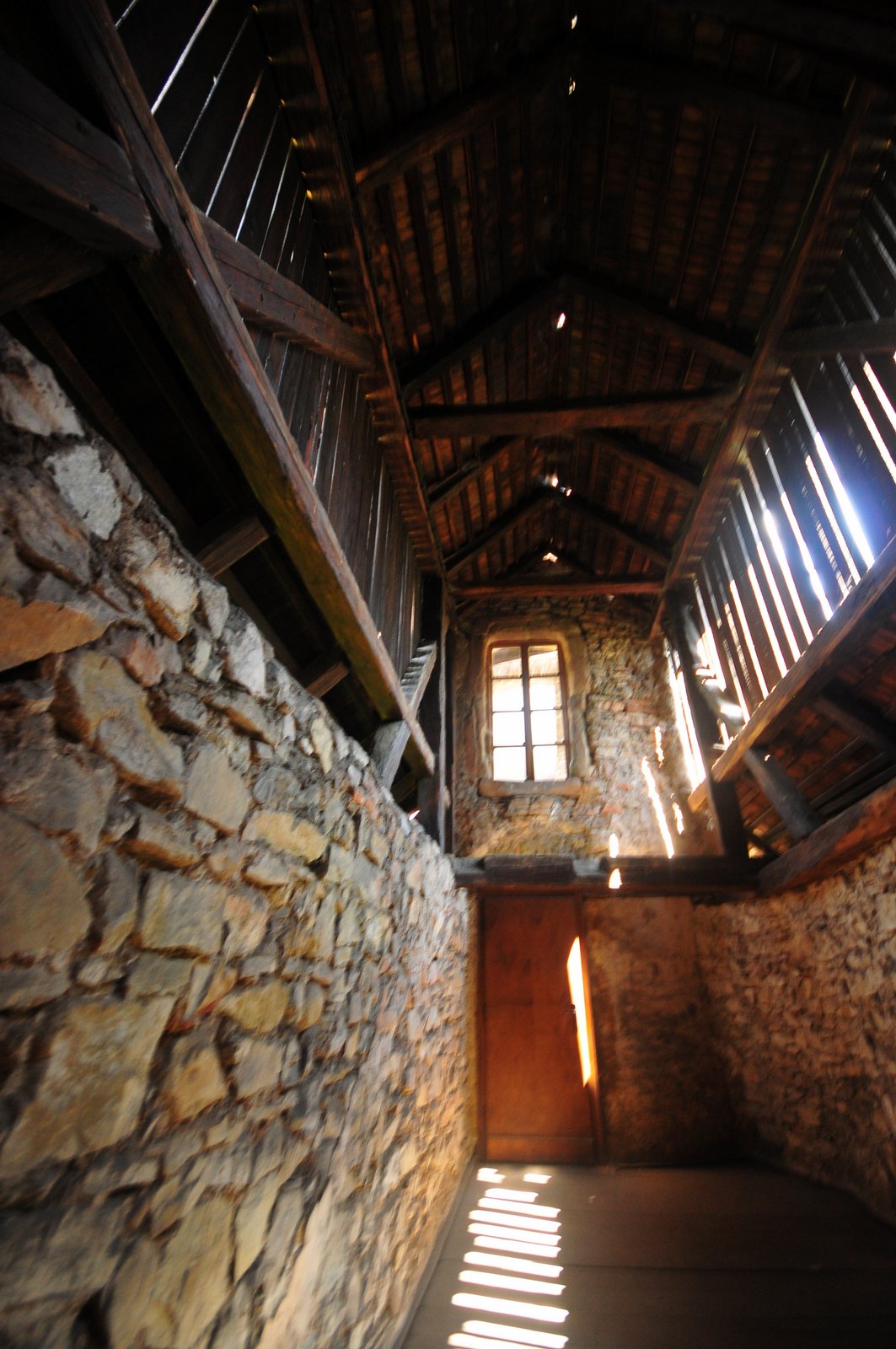
As for today’s visit, the interiors seemed less interesting than the exteriors. And most fascinating was the mannequin dressed as Count Orlok, the vampire antagonist from Nosferatu.
“Tata, is that real?” And it was a fairly terrifying sight.
“Why does he have claws?” little D asked.
“What is that?” S asked.
I explained to everyone about the film, and honestly, I thought they would continue to worry about it, to fret about it. But soon enough, they were crowded around the mannequin.
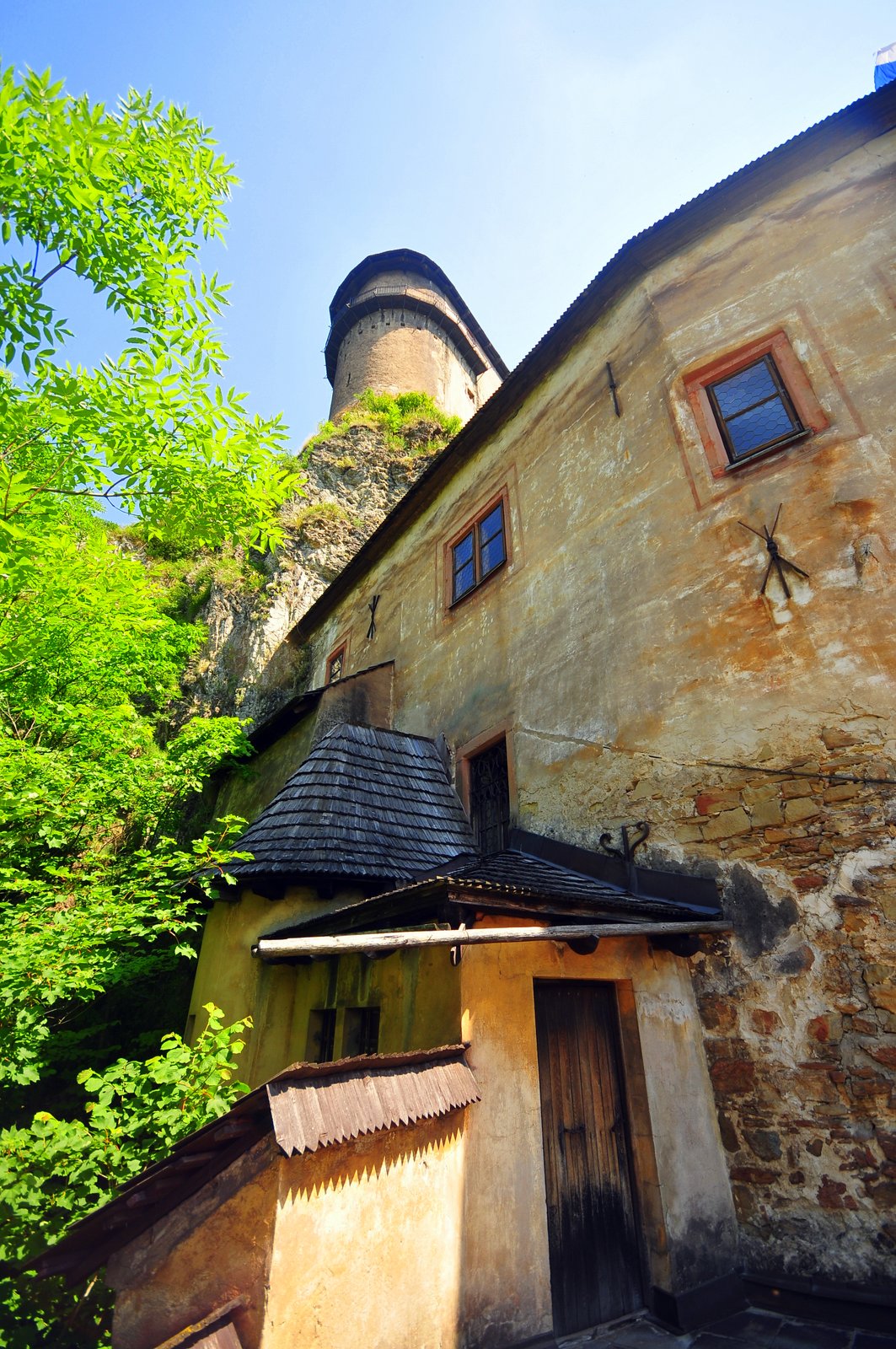
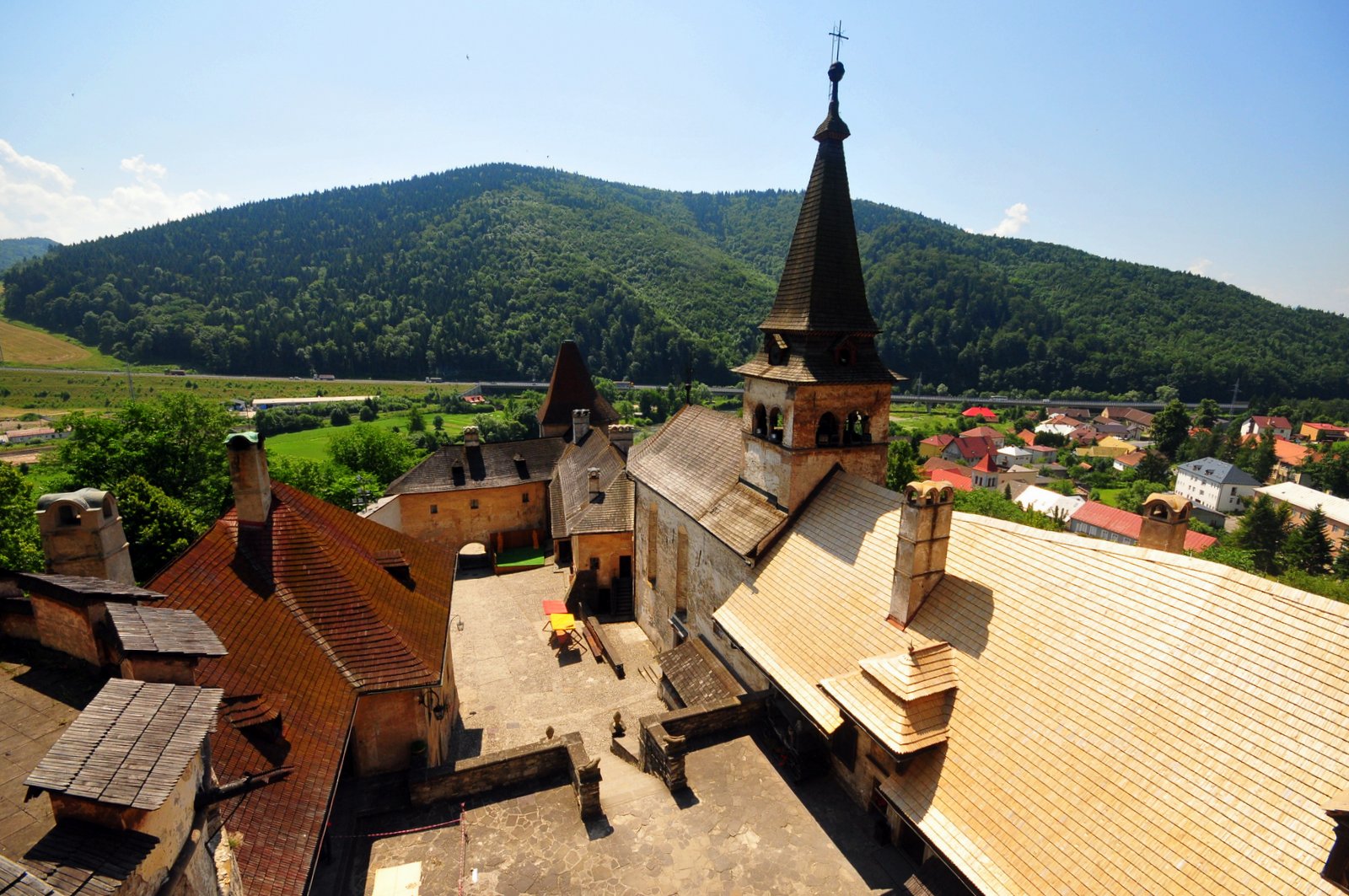
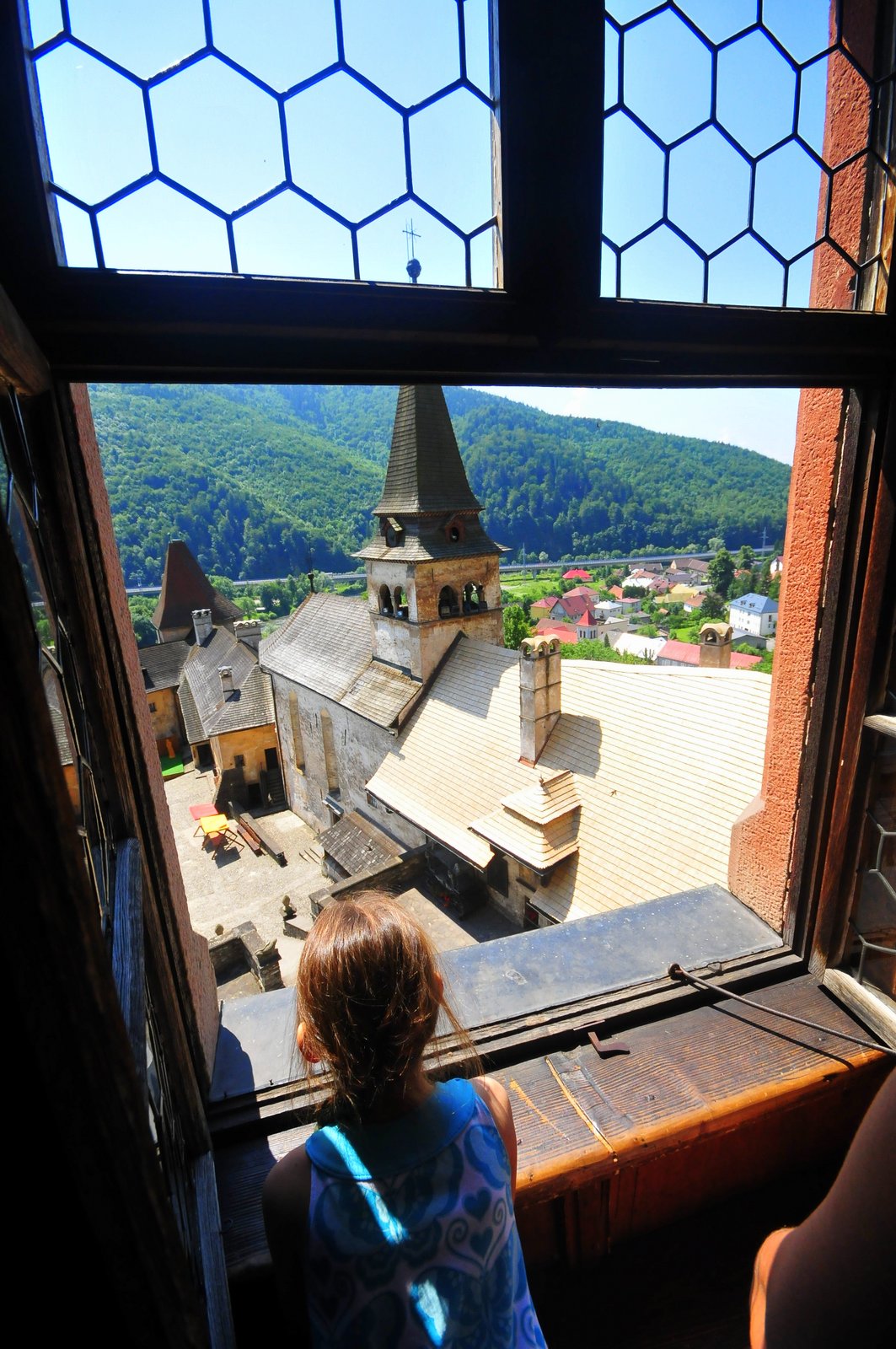
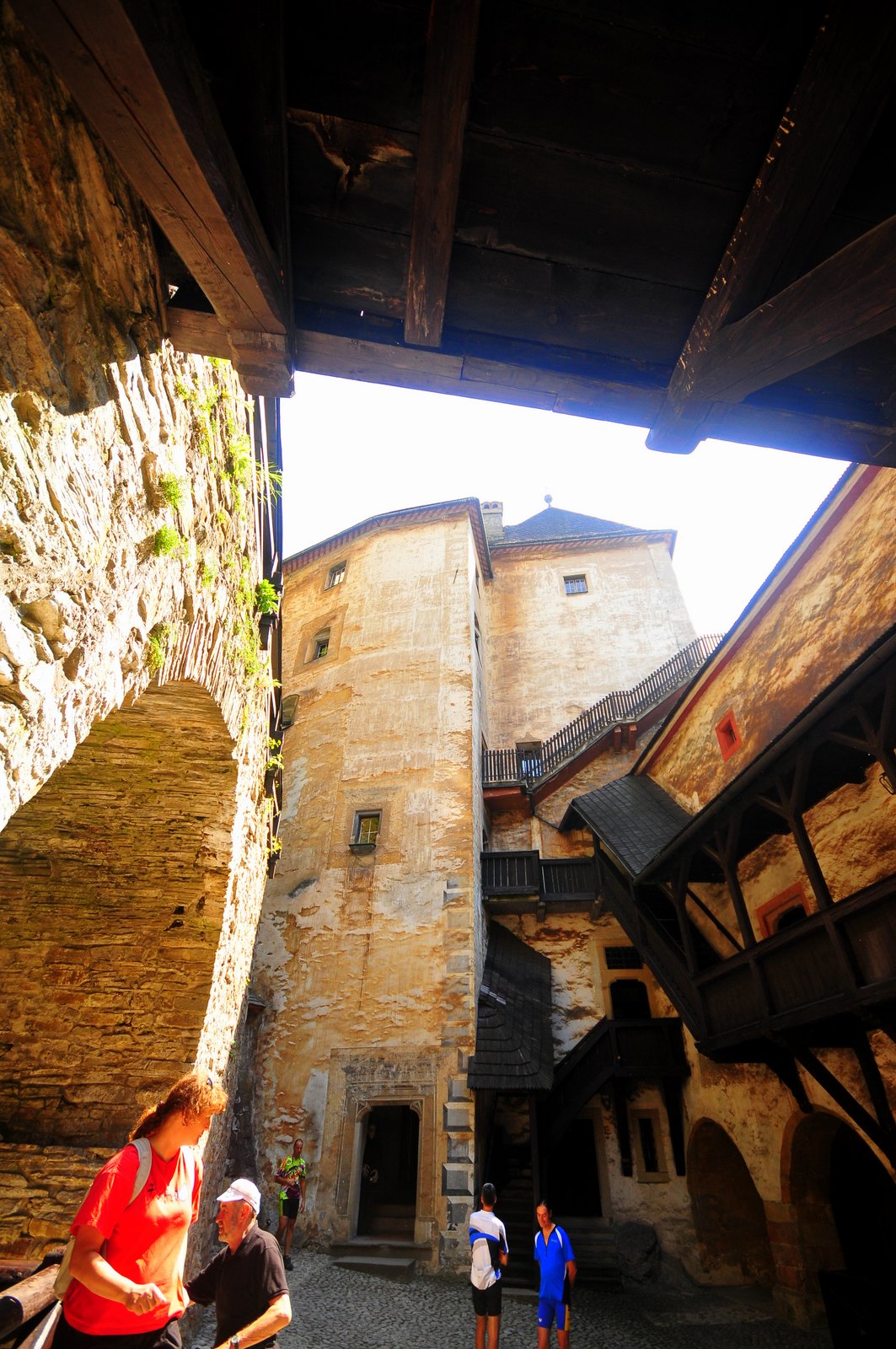
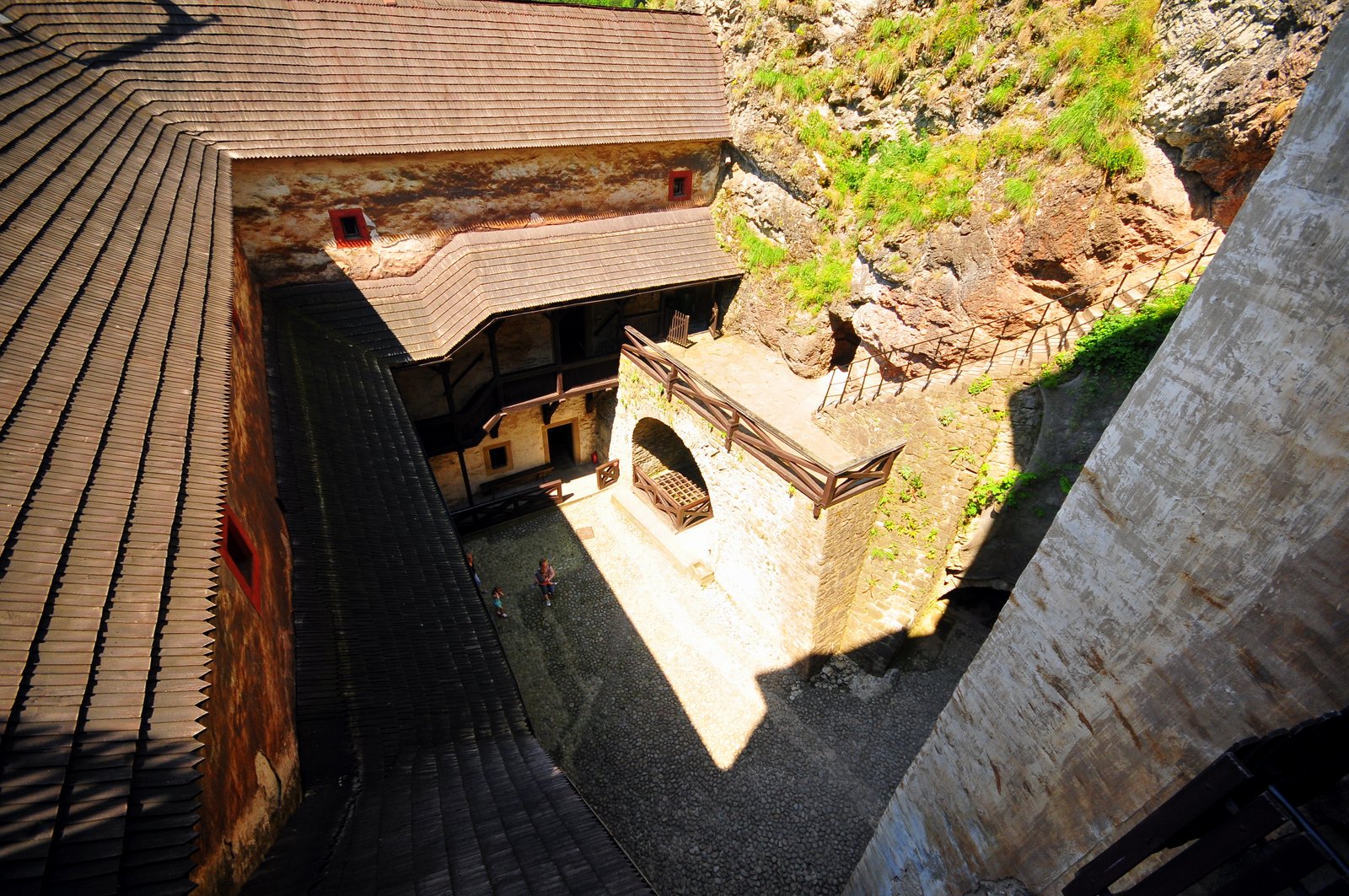
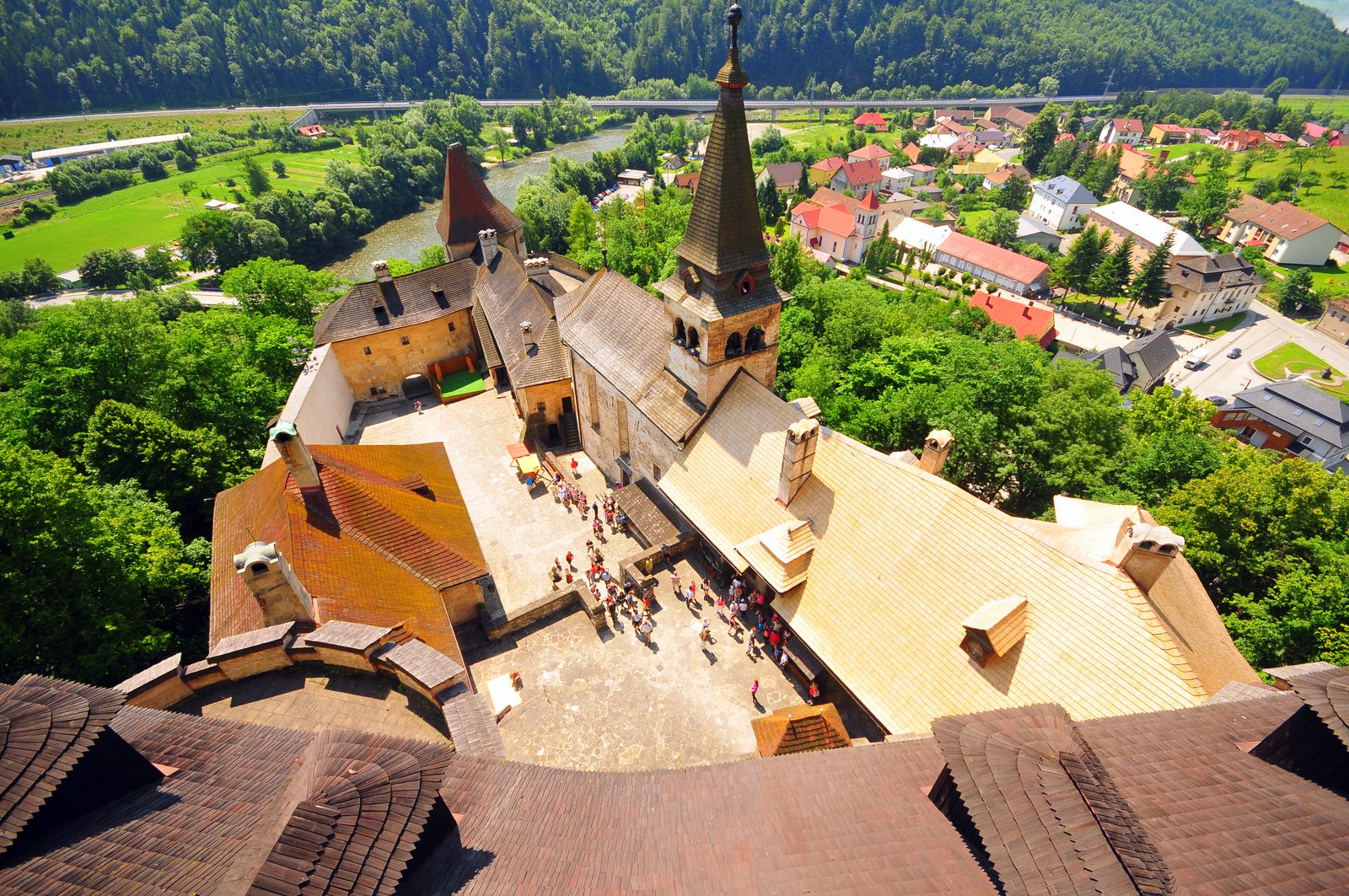
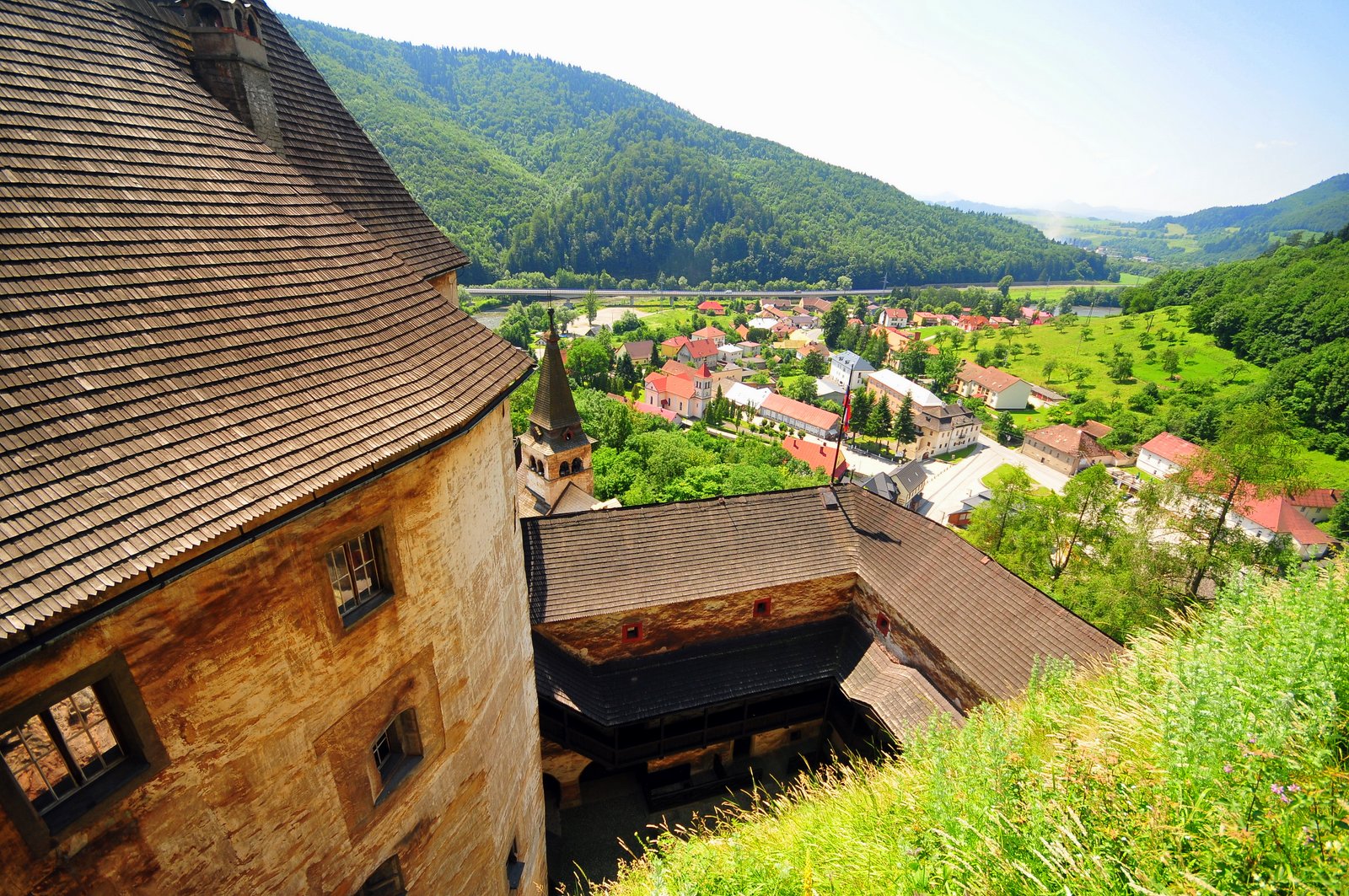
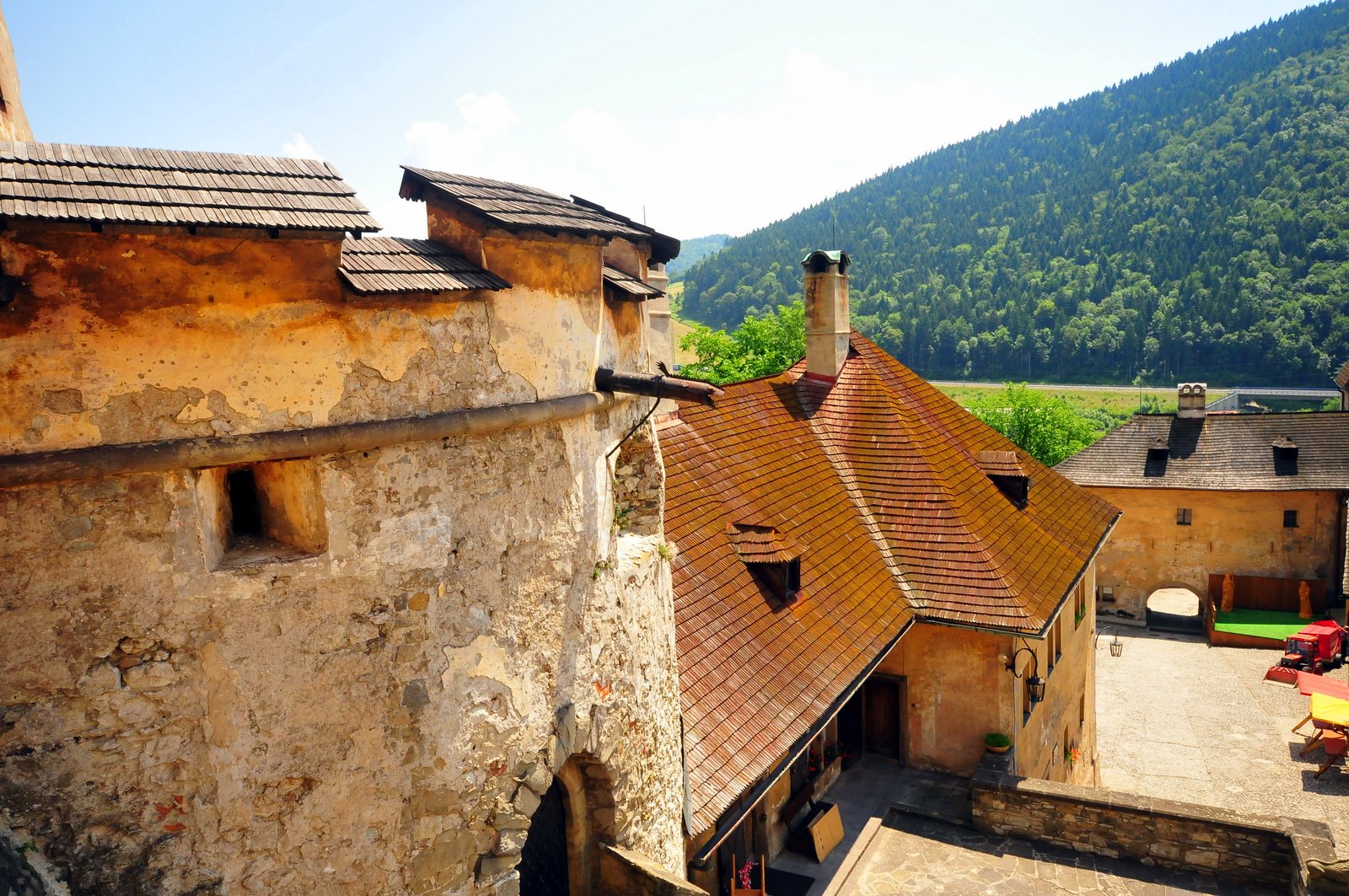
A small victory for adult common sense in children.
Lunch
Lunch at a restaurant — a break for Babcia cooking. She won’t come with us, either.
“I’ll eat something or other. For me, a crumb of bread with some milk is just perfect.” She laughs, “After forty years of cooking, you’d be satisfied with it, too.”
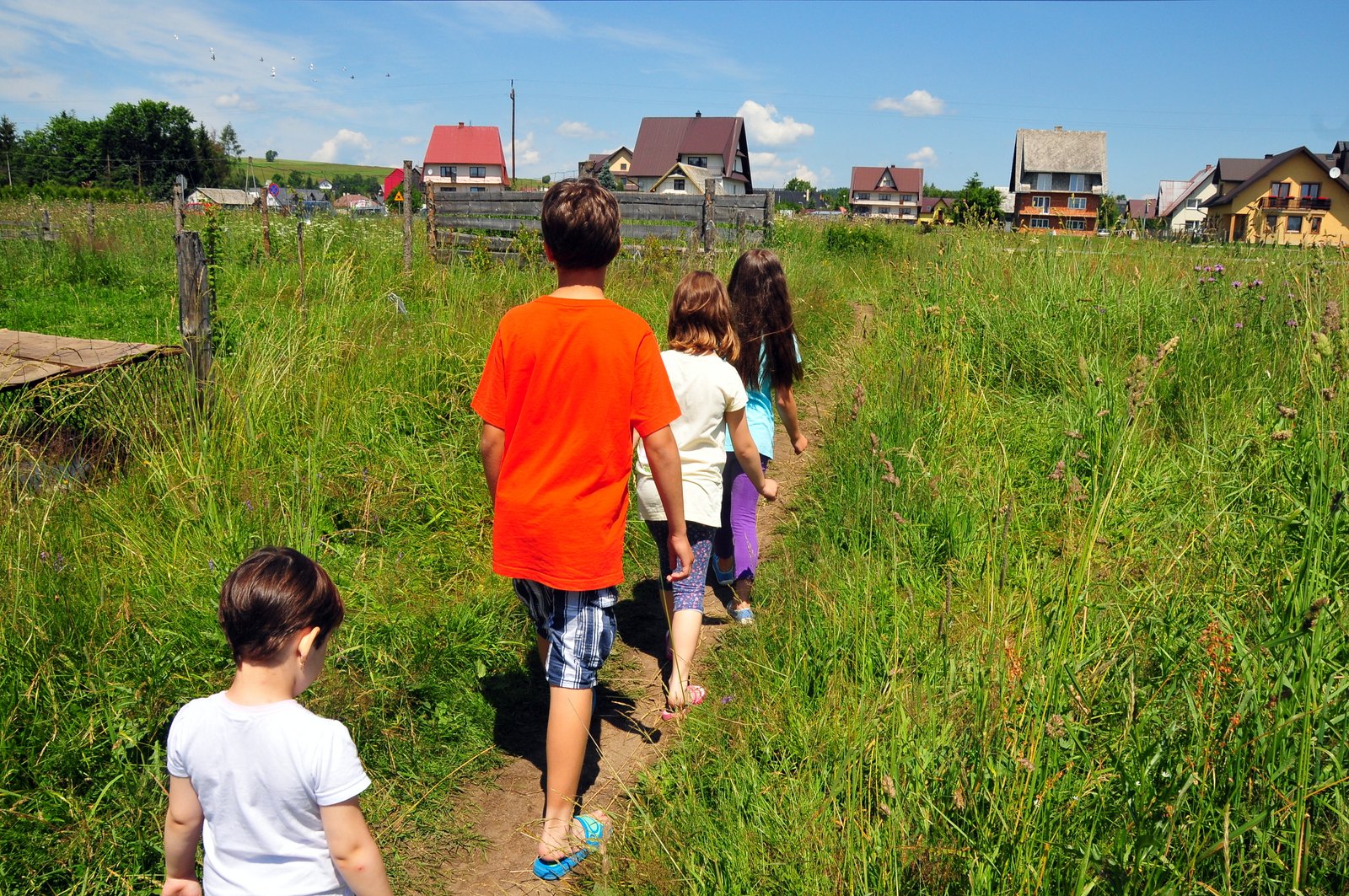
We go to the first real restaurant opened in Jablonka. This of course doesn’t count the GS-owski restaurant that was often in even the smallest of villages, nor the bars that offered only microwaved frozen food.
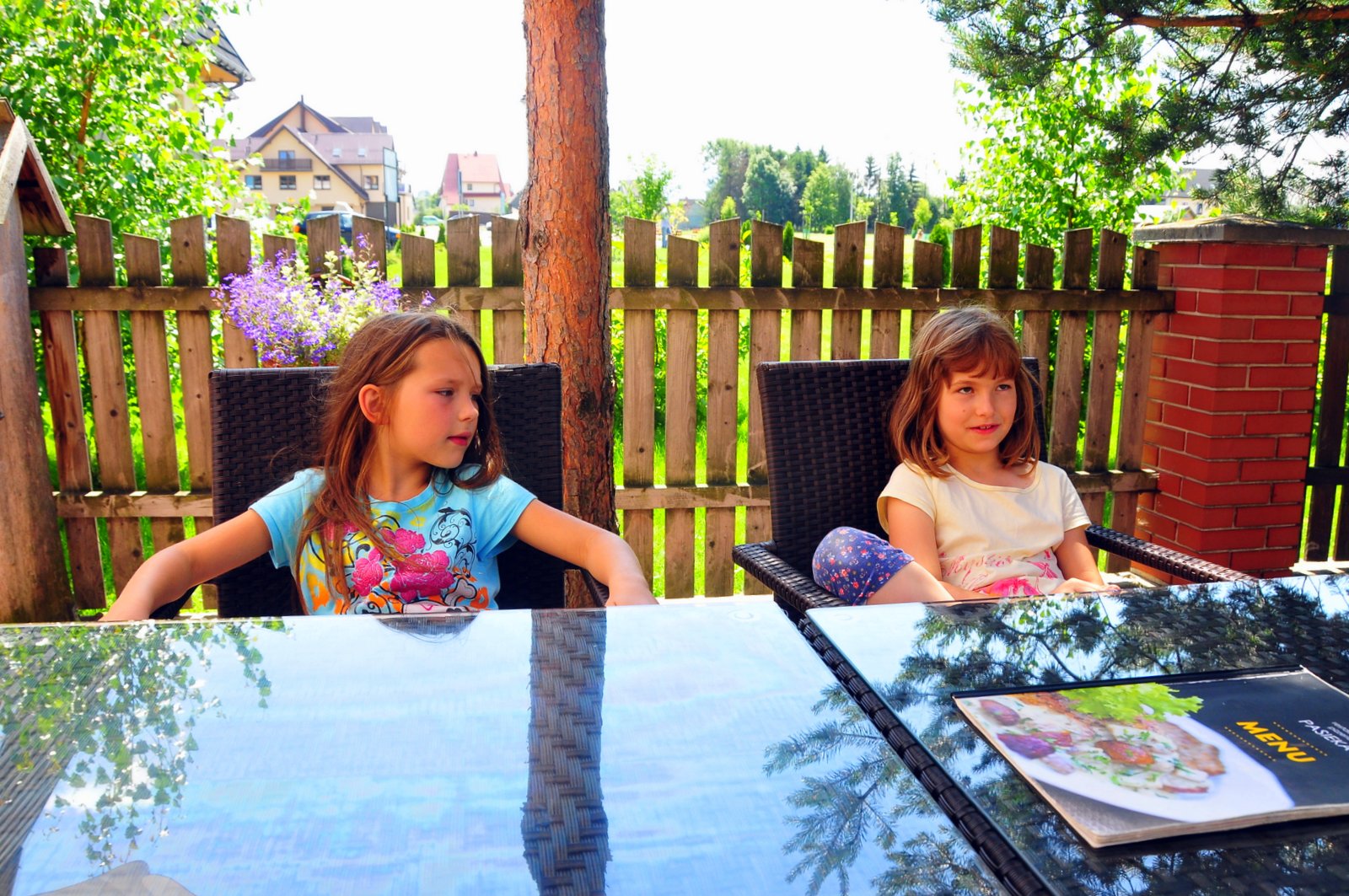
K and I came here on dates back in the early 2000s. Wednesday nights, if I remember correctly. I took the 9:30 bus back to Lipnica and waited anxiously until next meeting. In the dead of winter, those minutes waiting for the bus were torturously cold.
And so ten years later, I sit at this restaurant in shorts and sandles, my daughter across from me and nieces and nephews all about, K and E still in the States.
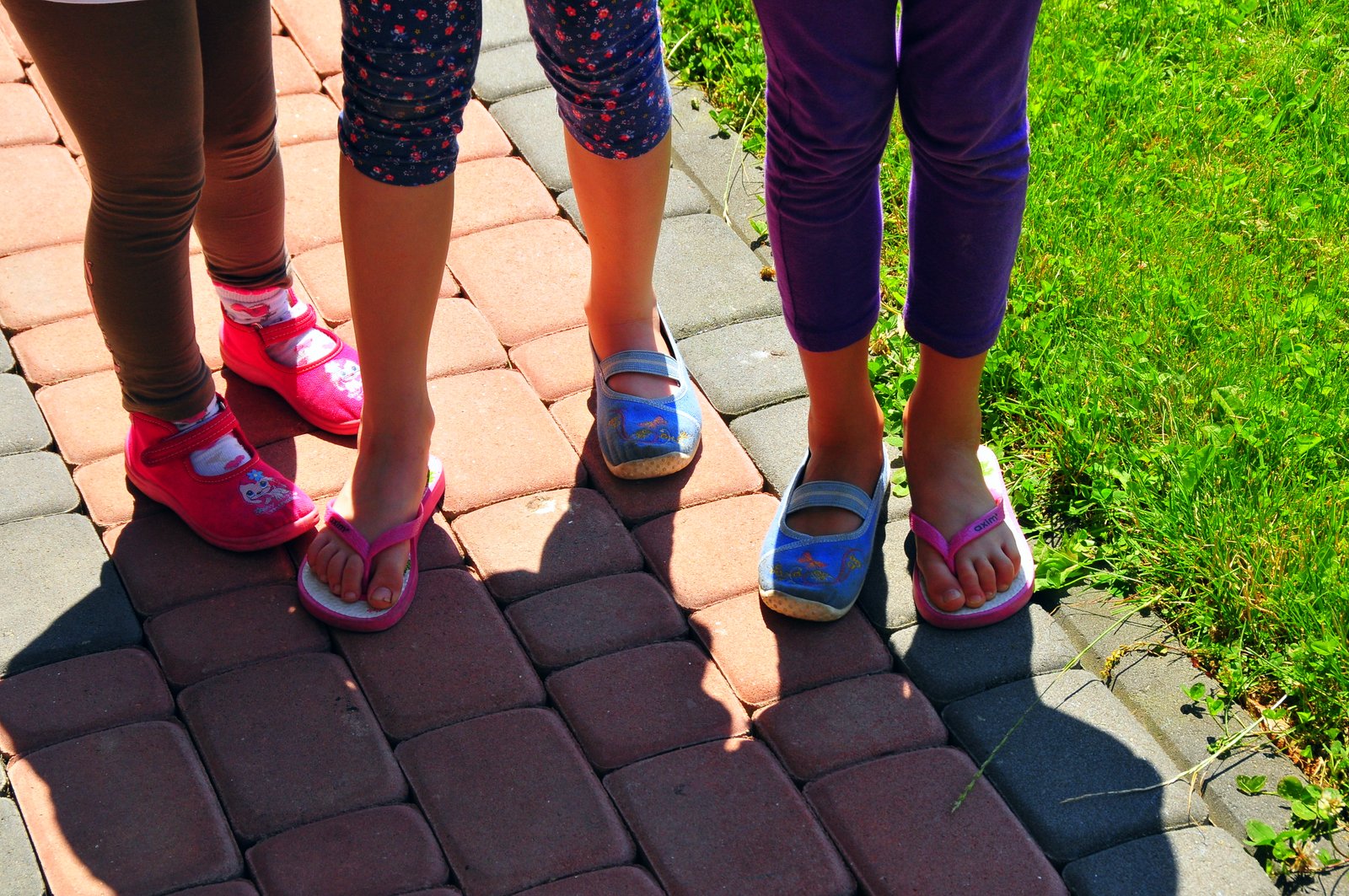
It’s almost perfect. We’re just missing a few people, and non-blistered feet that require a bit of kombinowanie.
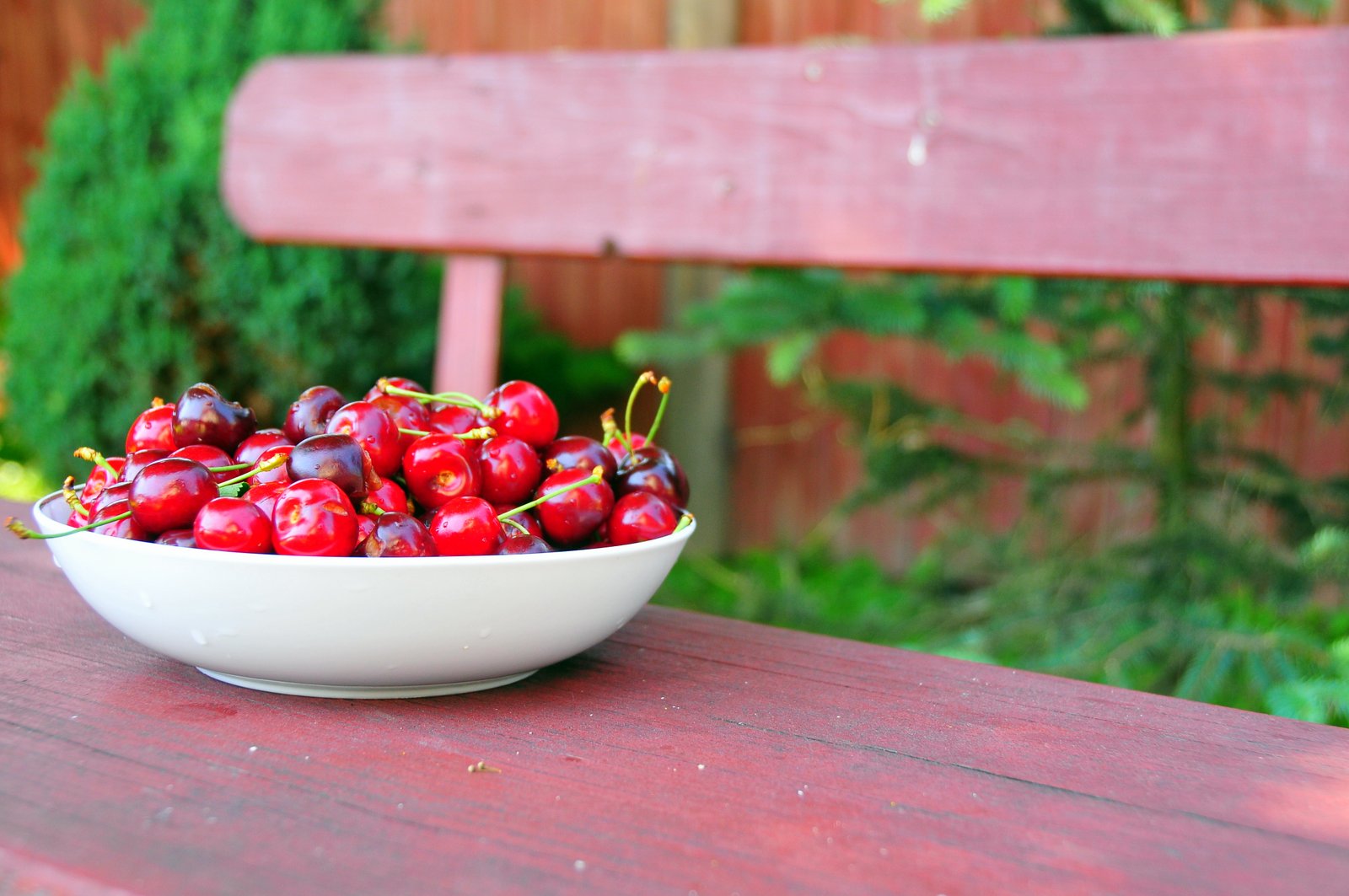
Dessert: a bowl of fresh cherries.
Like I said, almost perfect.
To the Woods
Babcia is not a fan of technology: she really doesn’t get along well with much of anything electronic. She once almost set fire to ginger snaps in the microwave when she and Dziadek first bought one because she didn’t know how long to set the timer and didn’t know she could stop the process in mid-course. She leaves the settings of the washing machine untouched and dares, simply dares, anyone to mess with it. She hates computers except for their usefulness in talking to family overseas.
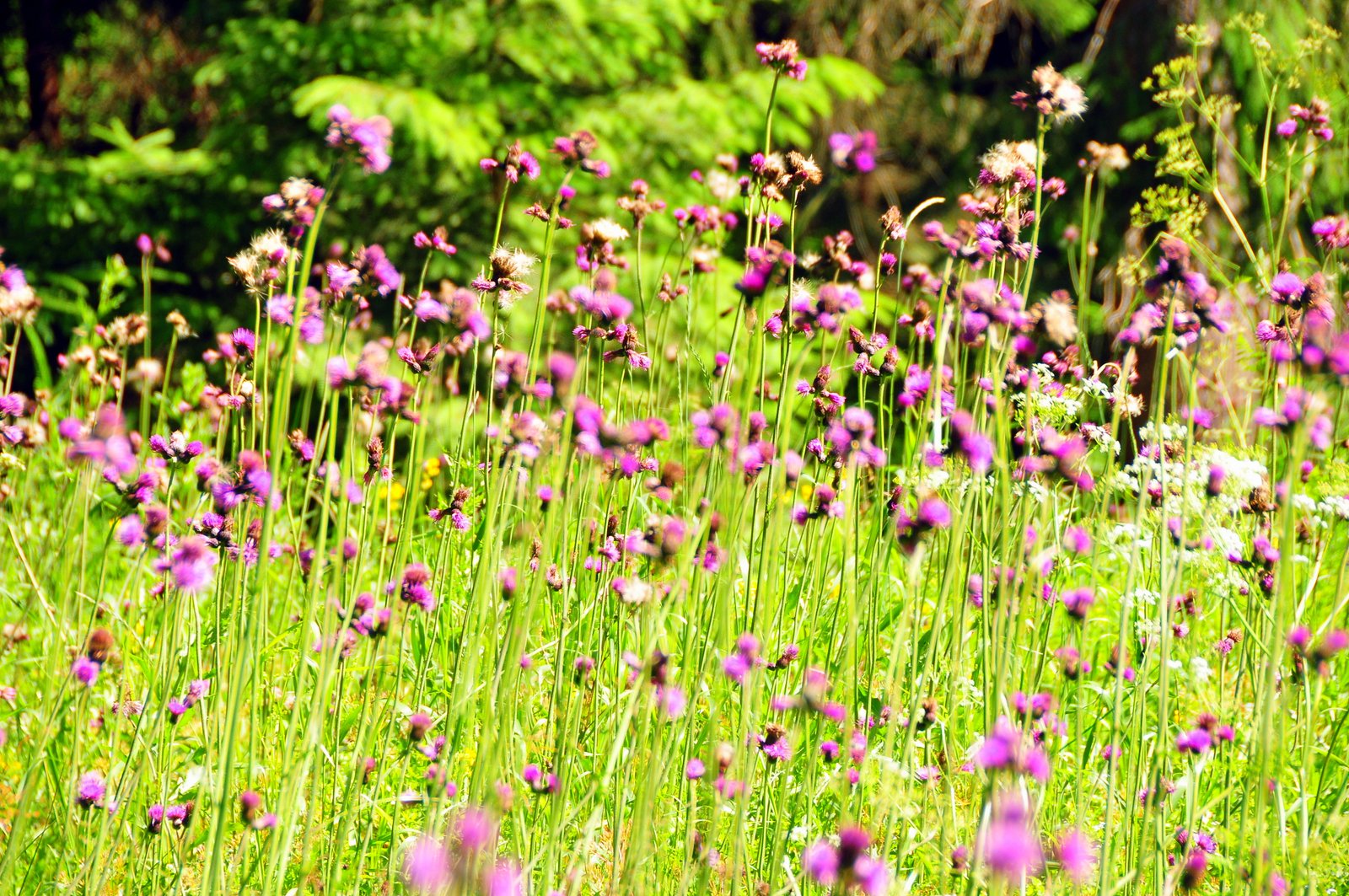
Take Babcia to a forest, though, and she instantly becomes an unending source of information. There isn’t a tree, plant, or bush she can’t name. She’s forgotten more about wild mushrooms than I’ve ever known. She can point out a hundred and one herbs and explain what they’re good for, what they heal, what they taste like. She can show you where there should be mushrooms soon. She remembers where there were mushrooms last year, the year before, the year before, and so on, seemingly unendingly.
She is simply impressive.
And so yesterday, as we were planning our day’s events (for with four children in the house, everything needs to be planned), Babcia decided that, since we don’t have power again today (the fourth day in two weeks), we would go to the forest.
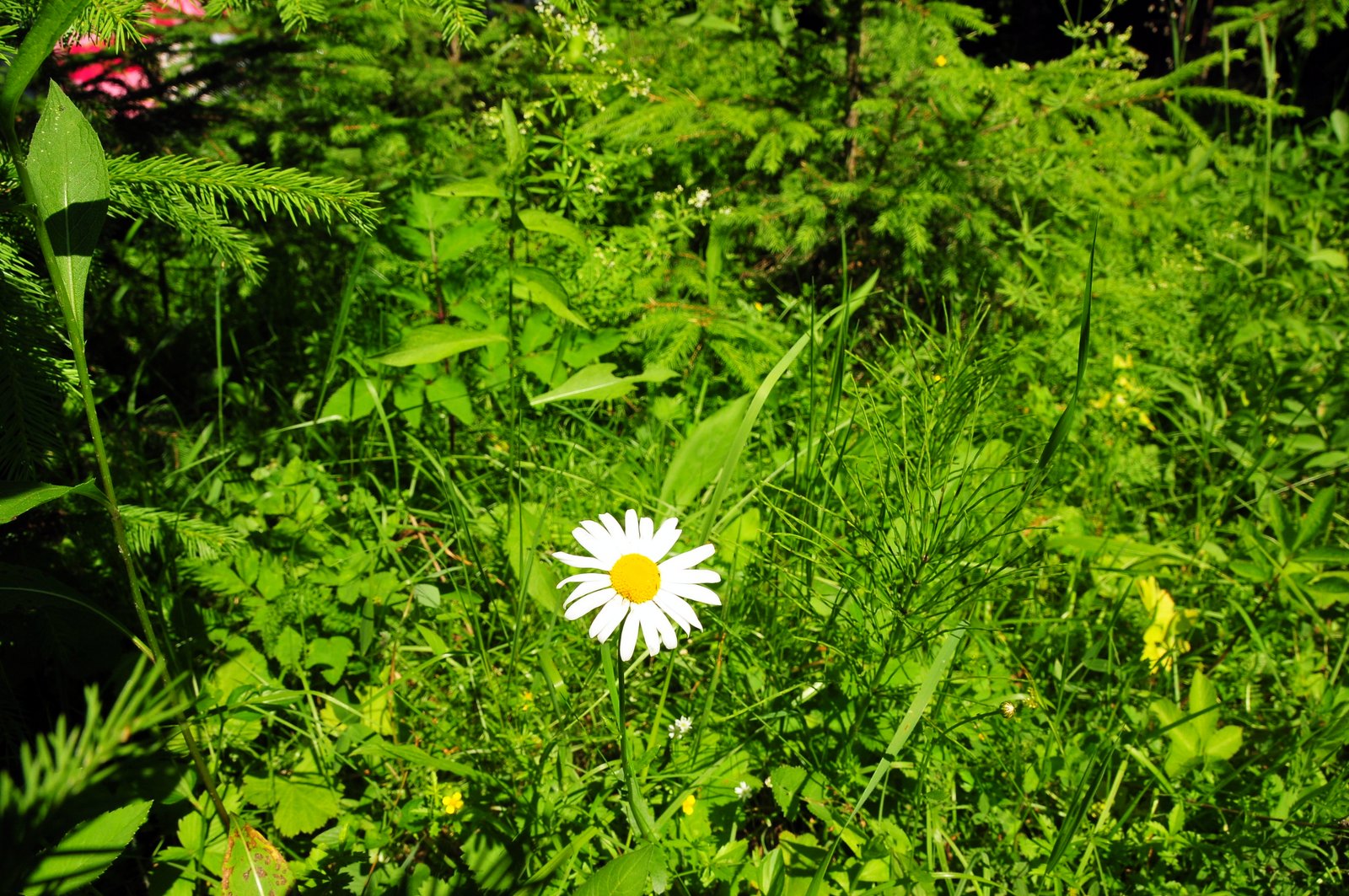
“Maybe we’ll find some mushrooms. There’ll probably be some blueberries,” she explained. “And if not, we’ll have a pleasant walk in the woods.”
We go to a small forest between Jabłonka and Lipnica Mała.
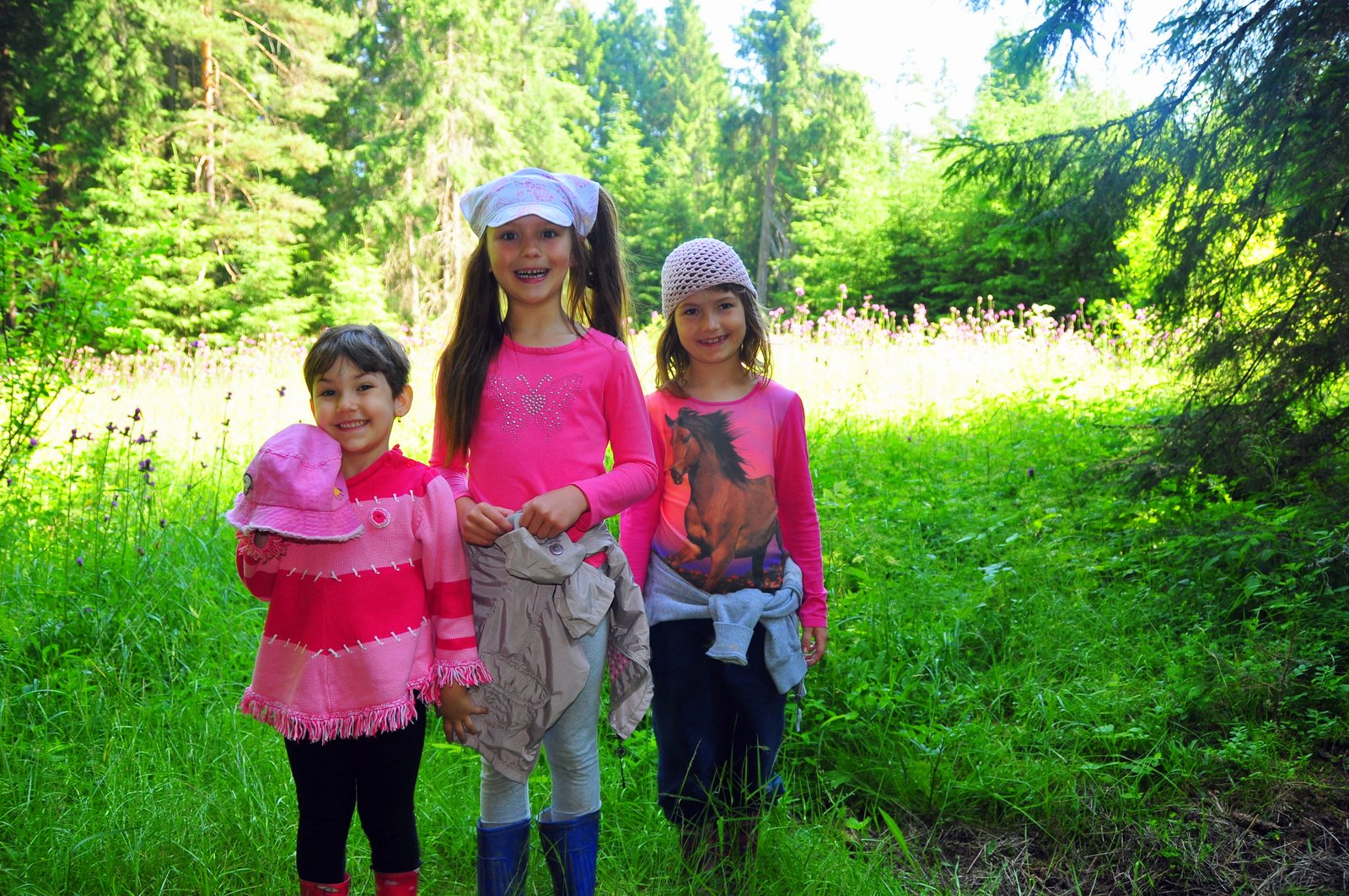
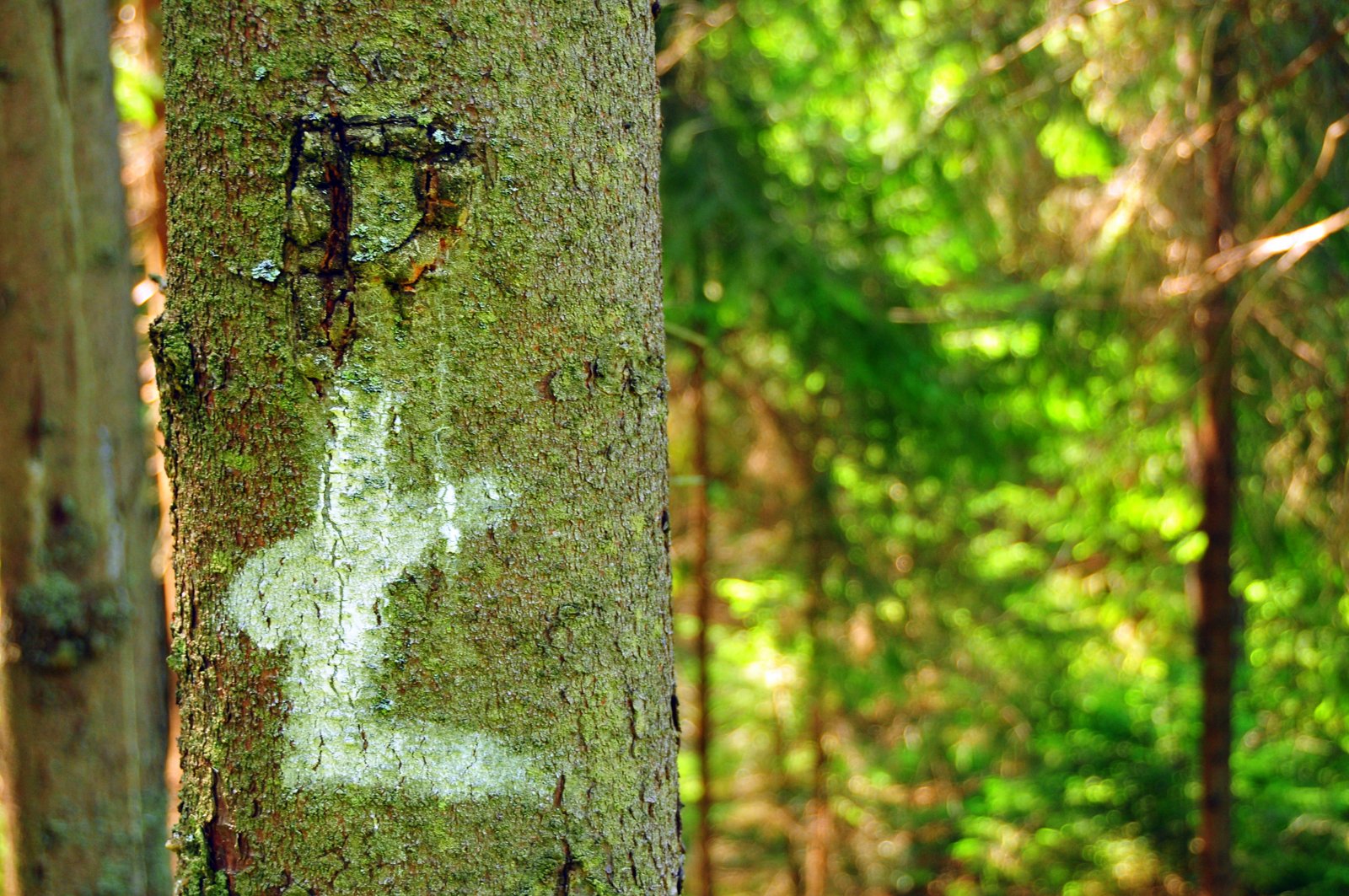
As we head out, Babcia explains that almost everyone in the family owns a bit of forest around here. “Over there is K’s bit,” she says, pointing vaguely to her right. “W’s forest of saplings is over there,” she says, waving her hand further to the right. But we head into a forest that belongs to someone whose last name begins with Ł. We know this because it’s painted on seemingly all the trees. Perhaps at some point there was a disagreement about who owned what, and Mr. Ł decided to take matters into his own hands.
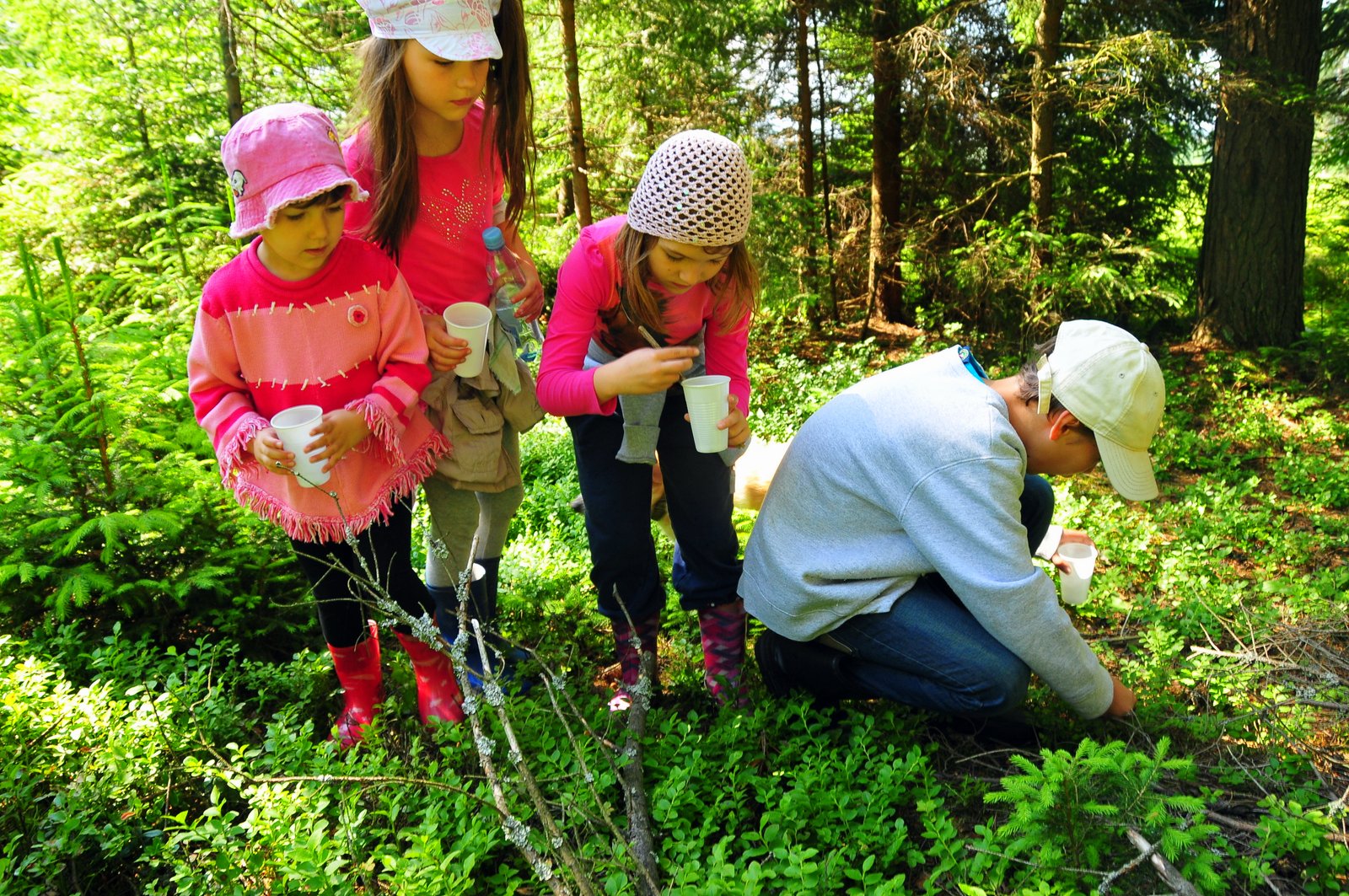
We immediately stumble upon a patch of wild blueberries. Incredibly small and light blue, the berries taste unlike anything one could find in a store. There are a thousand and one flavors in each berry: a bit of sweetness rounded off with a tangy finish and a warm, earthy, slightly even metallic undertone. At first, the blueberry bucket remains completely empty: all berries to straight to eager mouths. As we continue deeper into the forest, though, we find a calizna — an area completely untouched, with berries simply everywhere. “O Boze, daj nam calizna!” Babcia declares as she begins pulling berry after berry from the seemingly endless bushes.
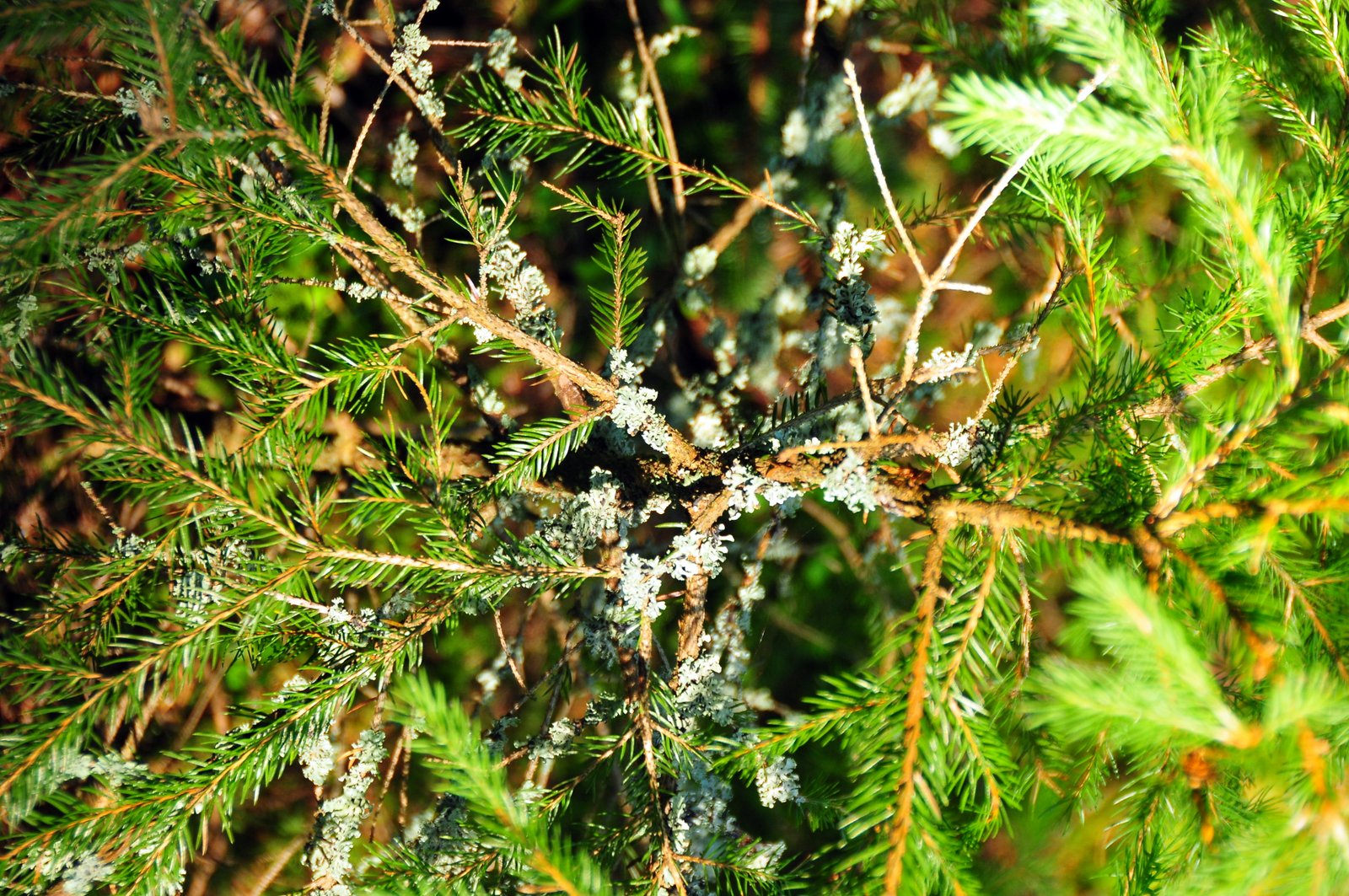
We continue through the forest, making discoveries along the way. The kids see how the forest, in its own dying, performs a natural miracle of self-resurrection. Death provides foundations for new life. Nature removes the weaker trees that then nourish new plants, stronger plants. And if not, nature will take care of them, too.
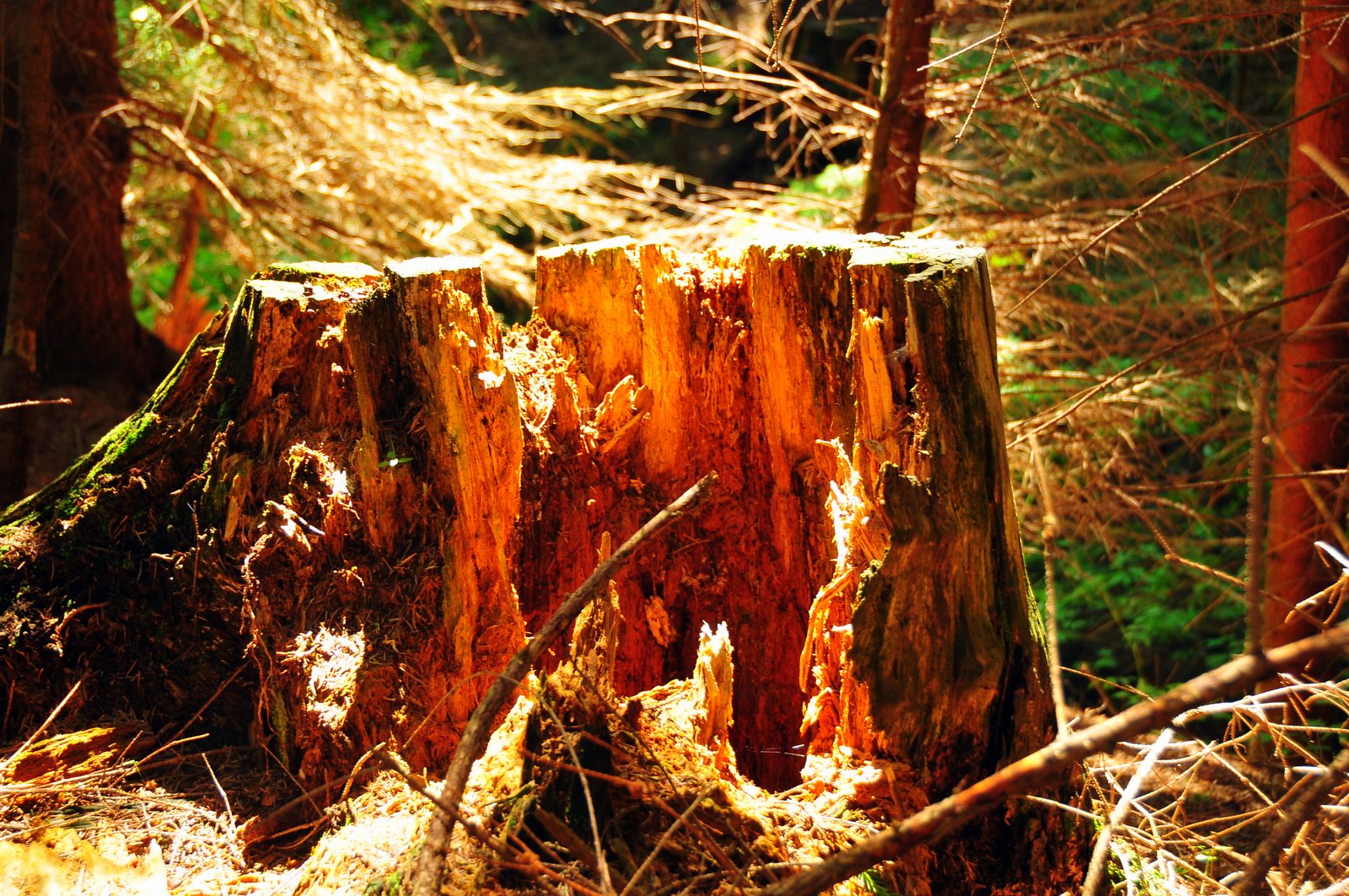
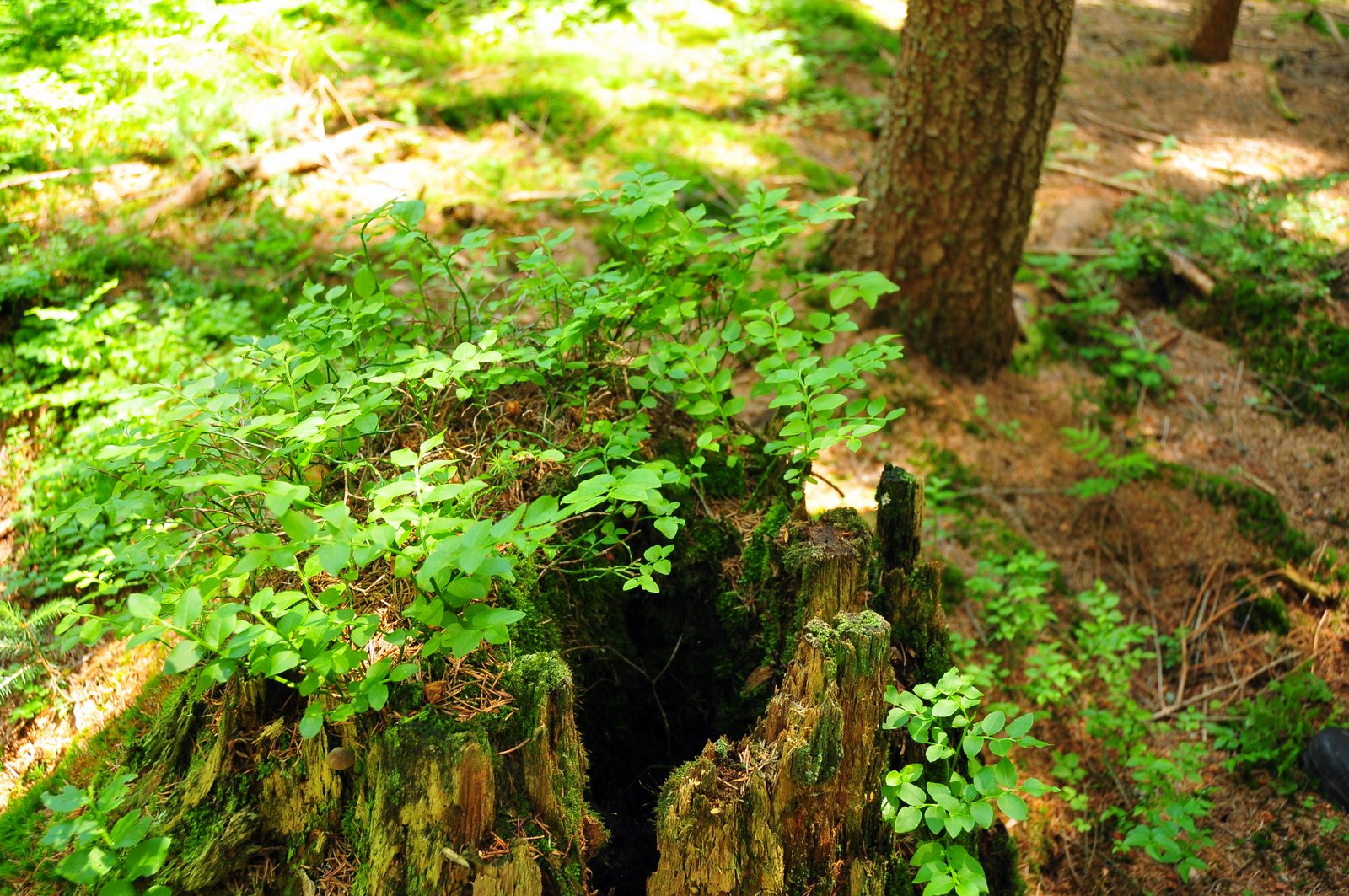
Still, though, an hour or so into the outing, we haven’t found a single mushroom. Suddenly, there it is, at the base of a tree — our first mushroom. Unfortunately, it’s just a common muchomorek. Edible, but only once. “All mushrooms are edible,” Dziadek once explained. “It’s just that some mushrooms are only edible once.”
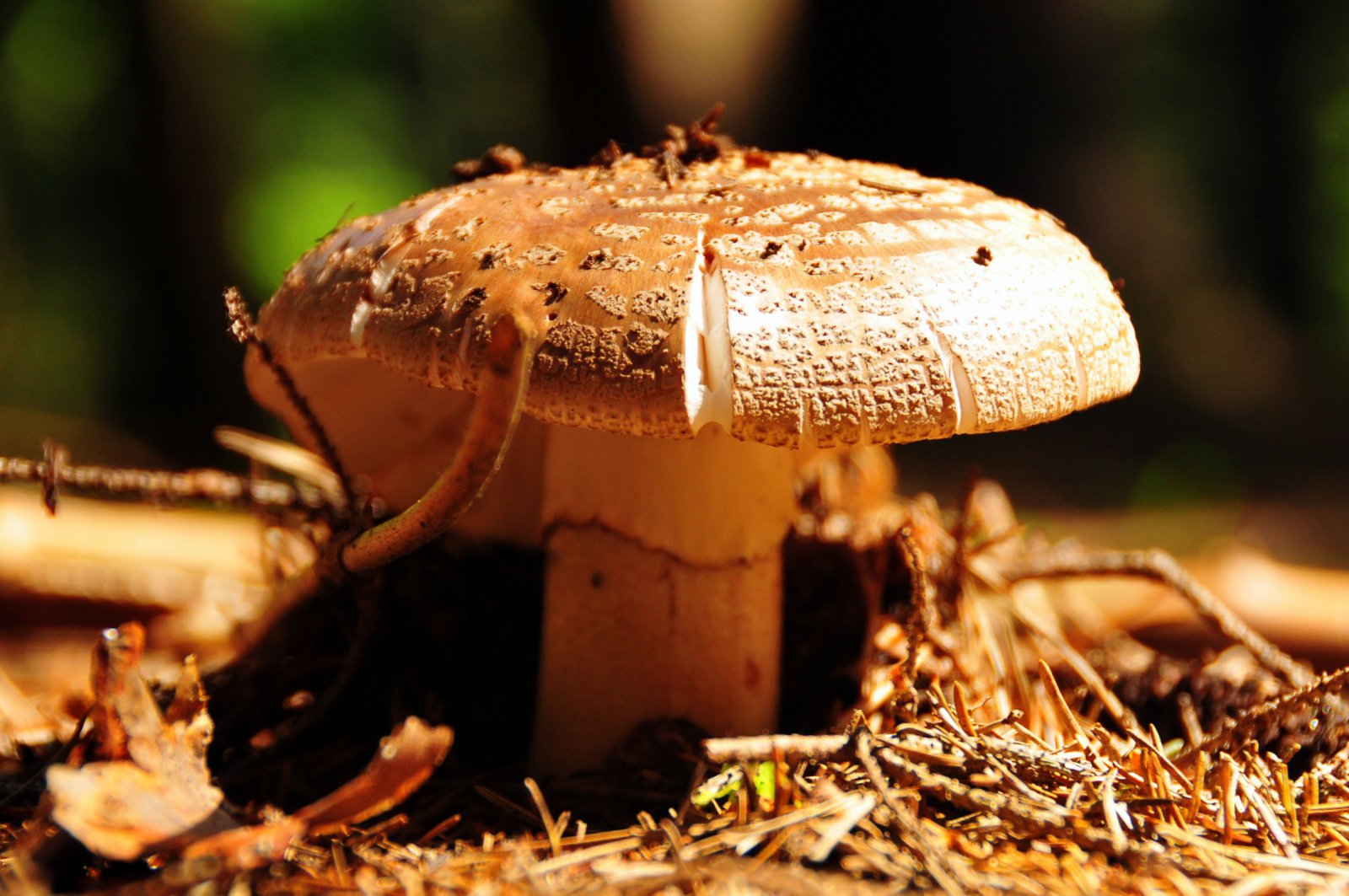
Babcia patiently explains that even though the mushroom is inedible, it’s still useful. “It’s part of the forest, and it’s useful to other creatures. So leave it alone,” she instructs when a cousin suggests we could smash it for the fun of it.
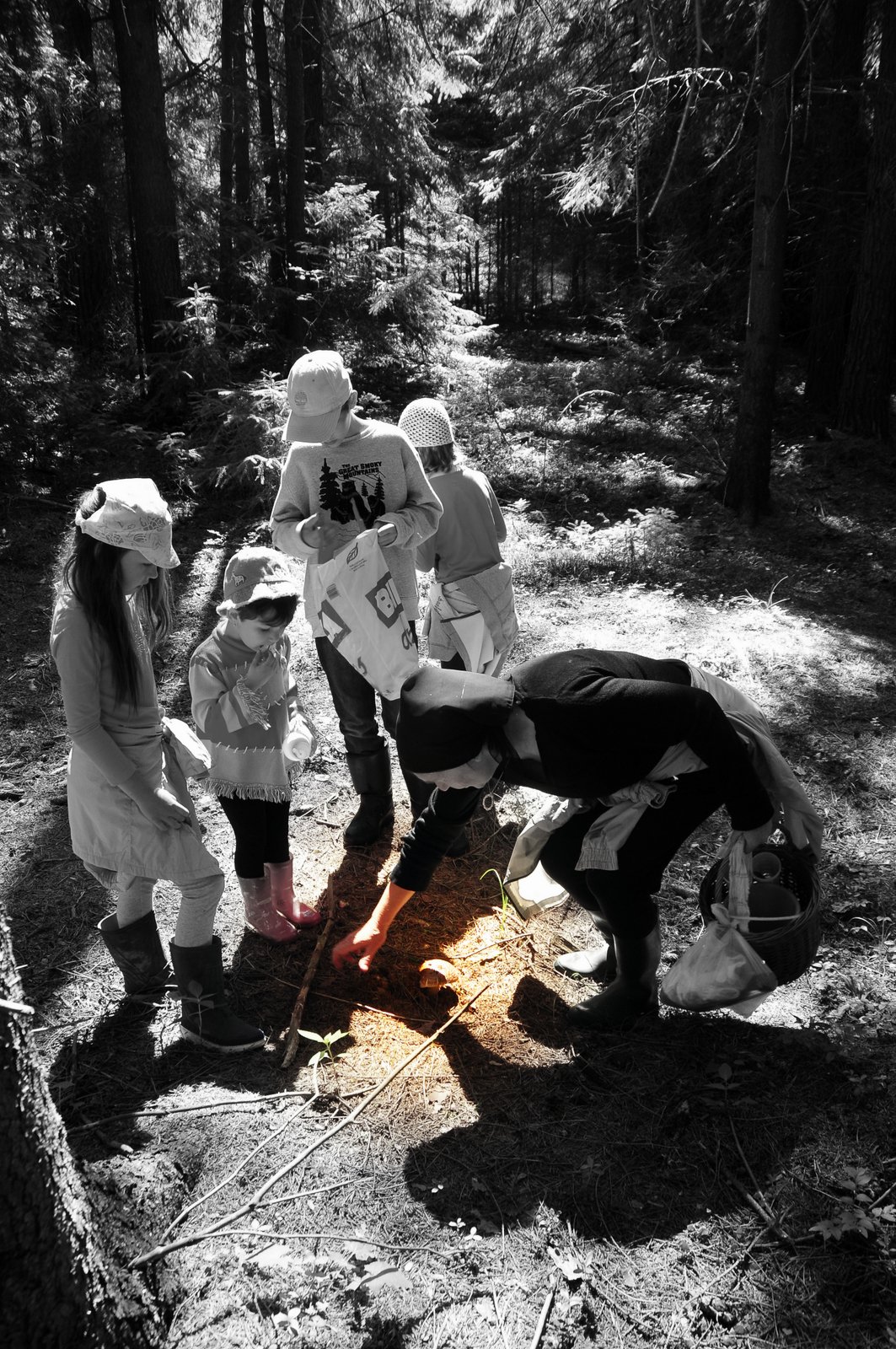
In the end, we all have blue fingers from the berries but not a single mushroom.
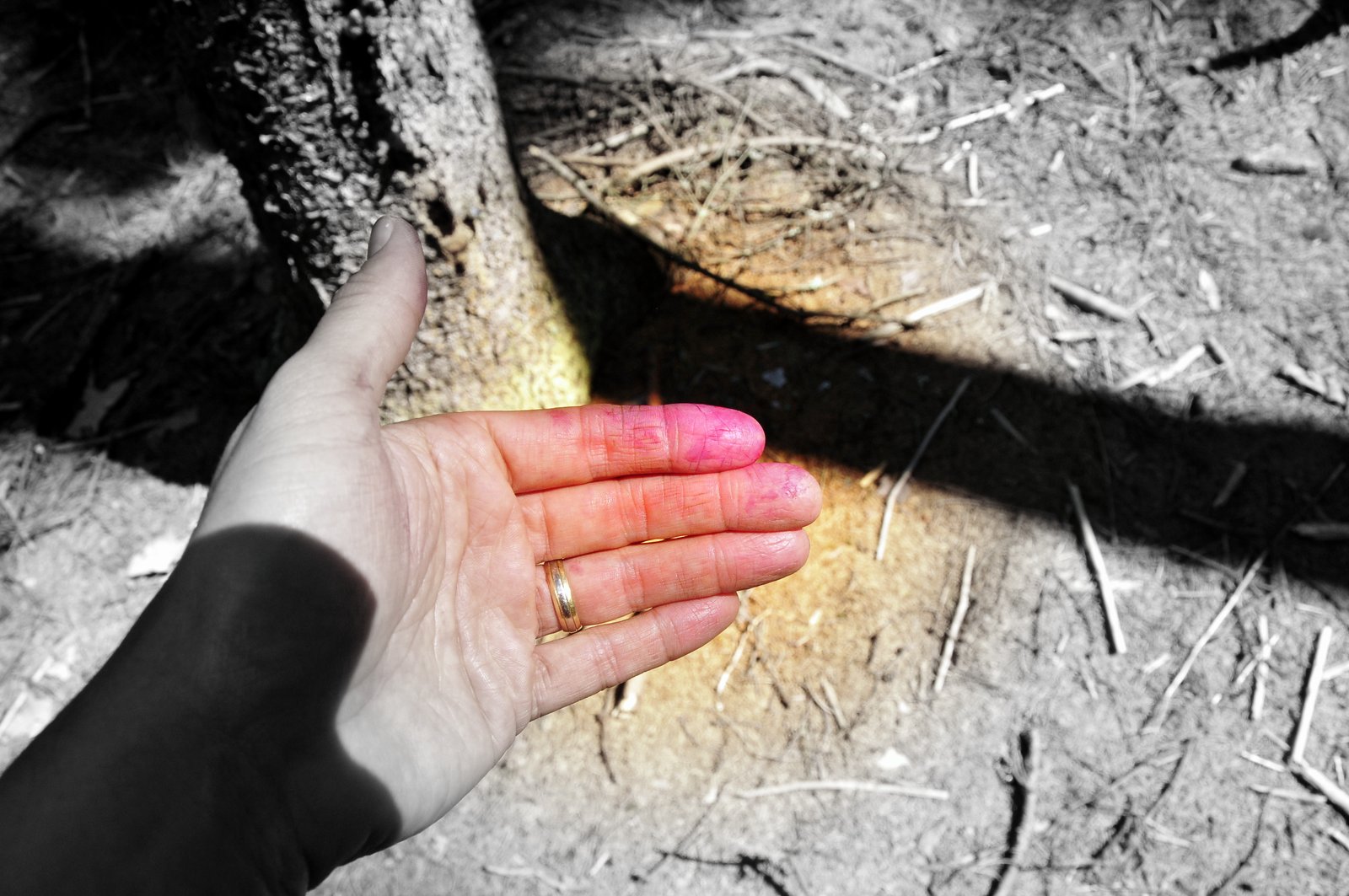
Still, that’s not what the trip was about.
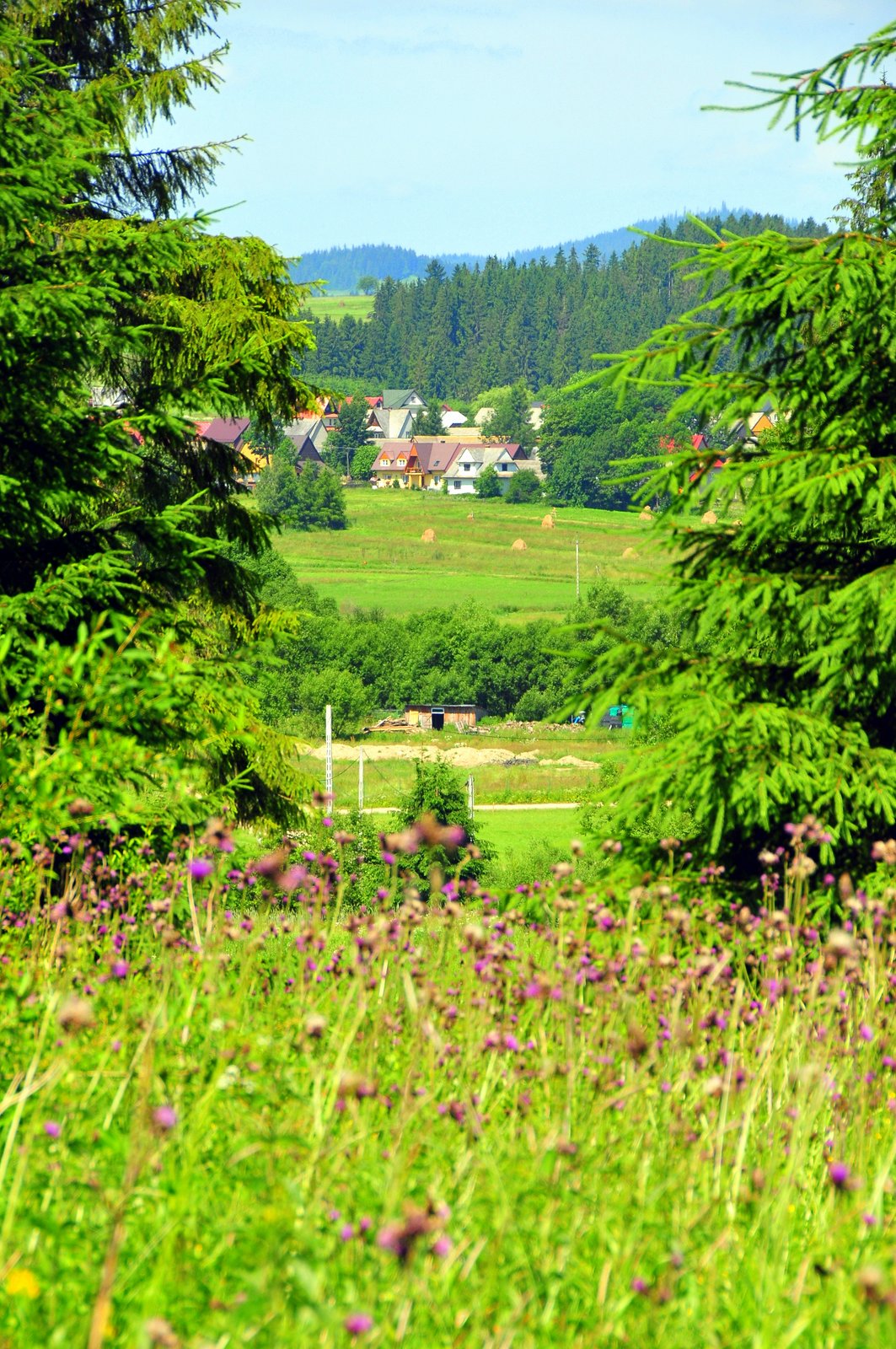
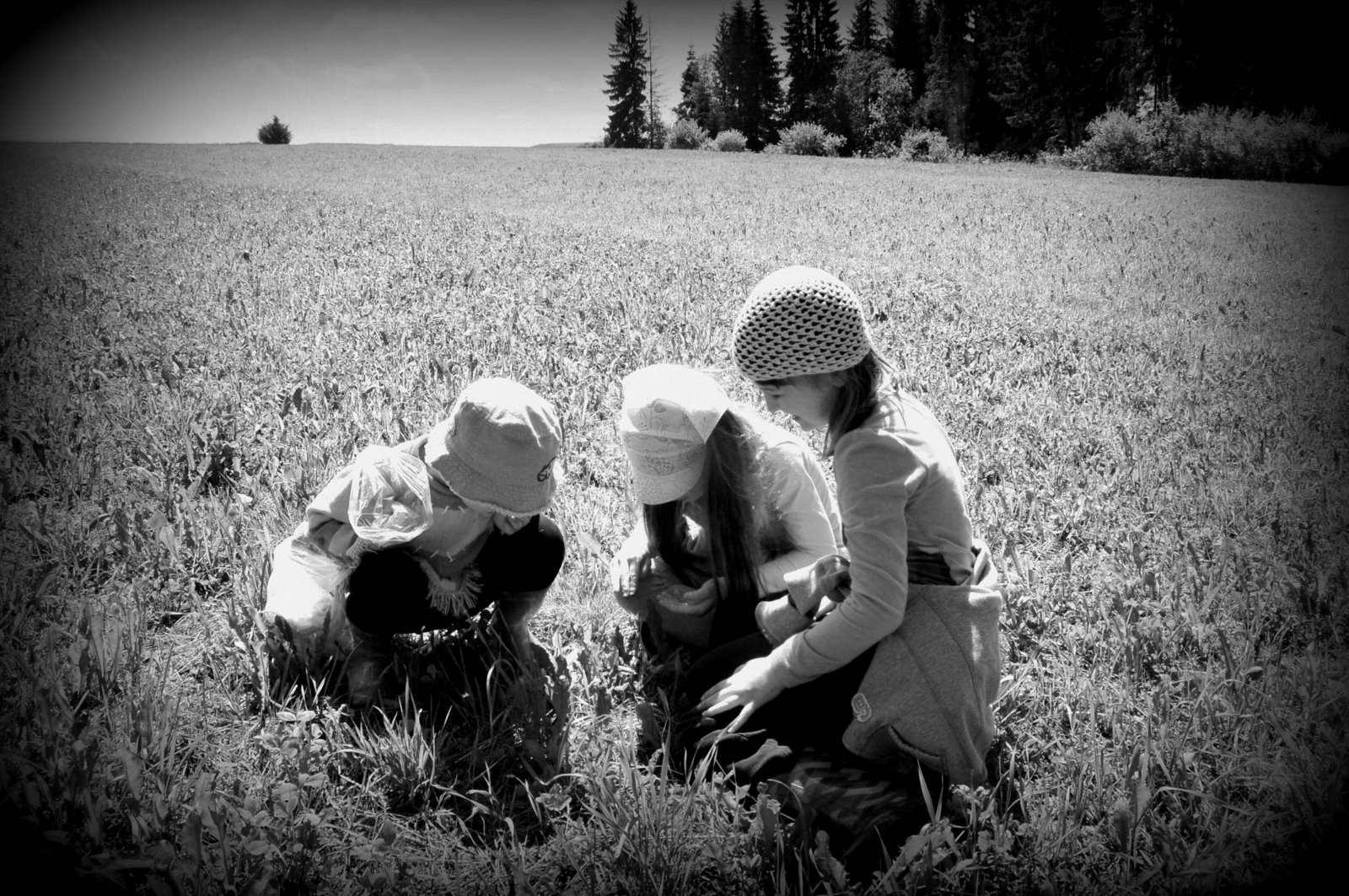
It was about the small surprises and discoveries that childhood can bring, the big and the small. Finding a Ladybug in a field.
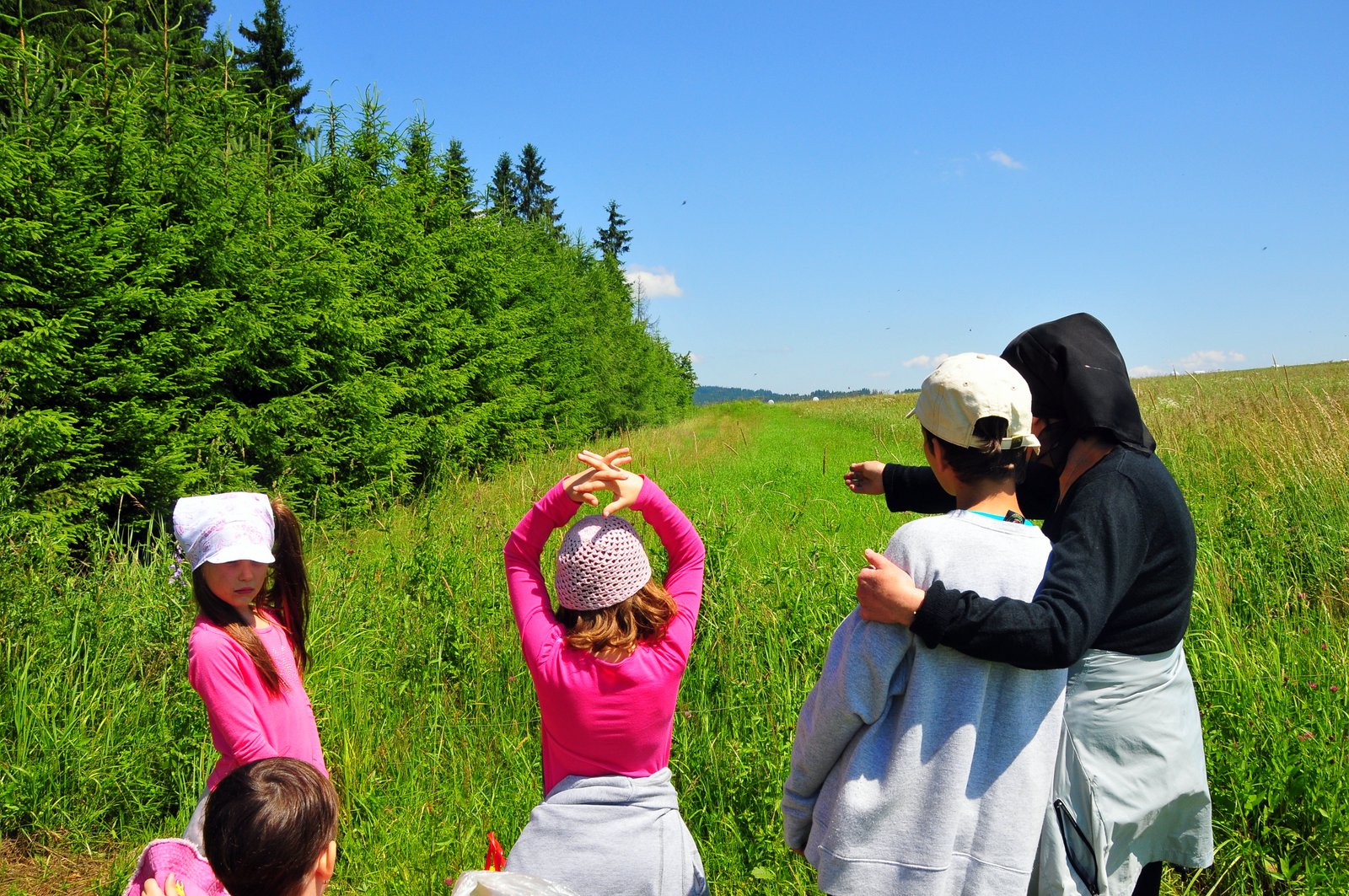
Or seeing for the first time the square of forest your grandfather gave you.
Visiting Ząb
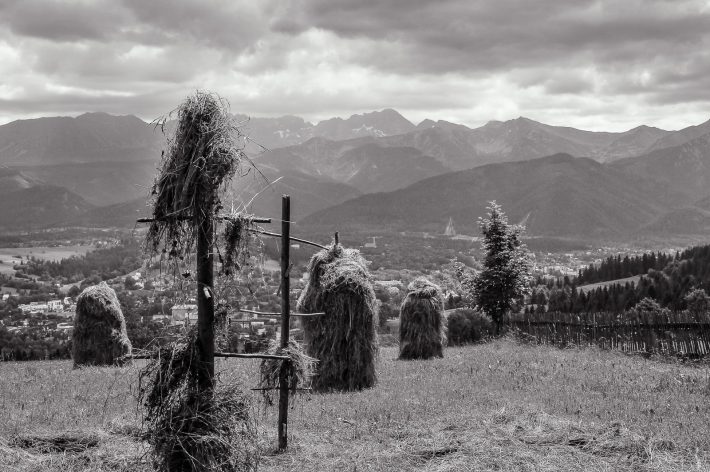
It’s always a highlight of any trip to Poland. To begin with, there are the views. As it’s the highest parish in Poland and situated just above Zakopane and opposite the Tatra range, they’re incredible. Then there is the virtual trip back in time. With people still literally using horse power, it sometimes feels like you’re trapped between two centuries. So there’s all that, but most importantly, there’s family.
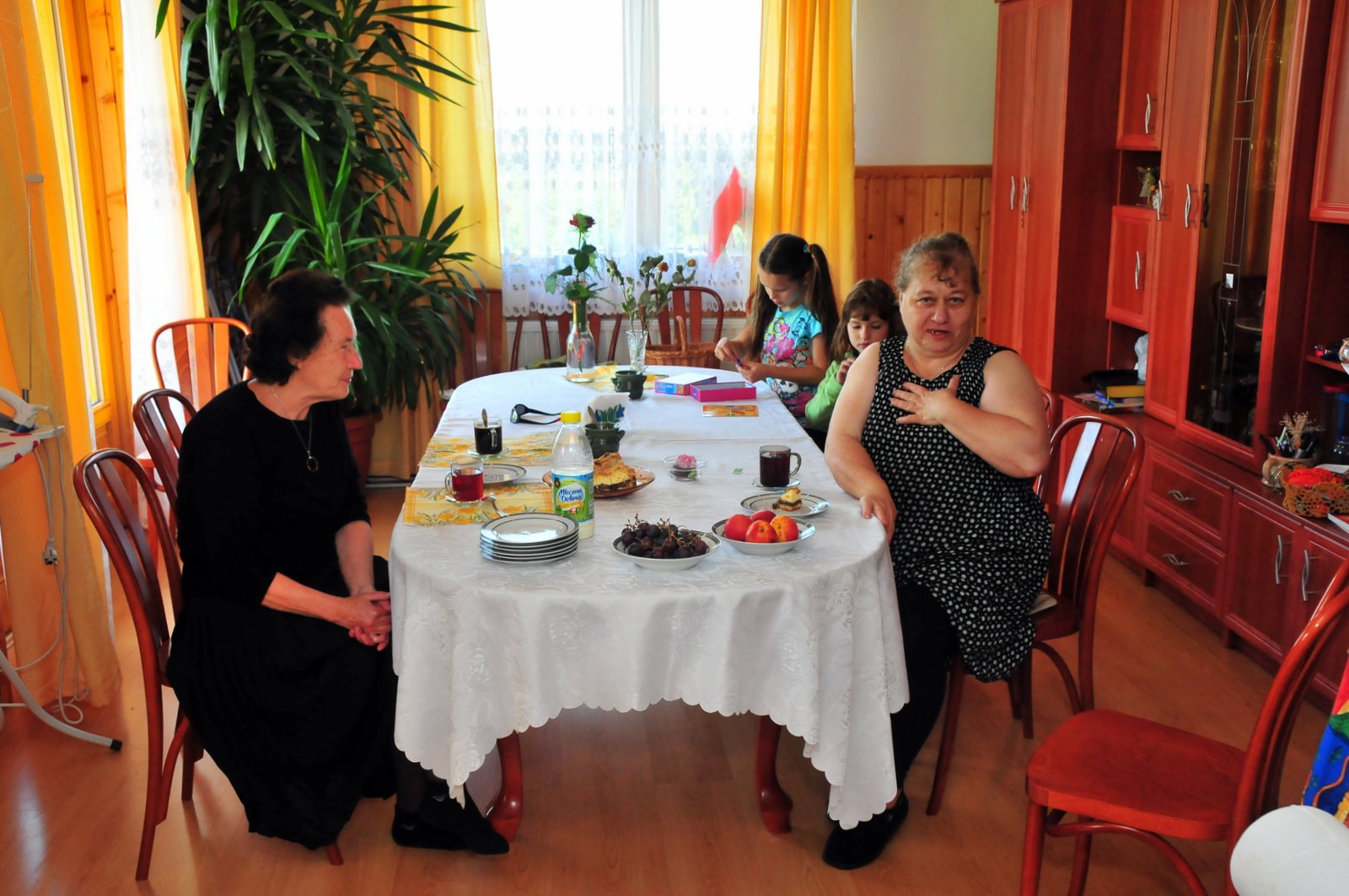
Babcia comes from Ząb and still has family there: her mother, a brother, a sister, and countless cousins. Any visit starts there. We always begin there.
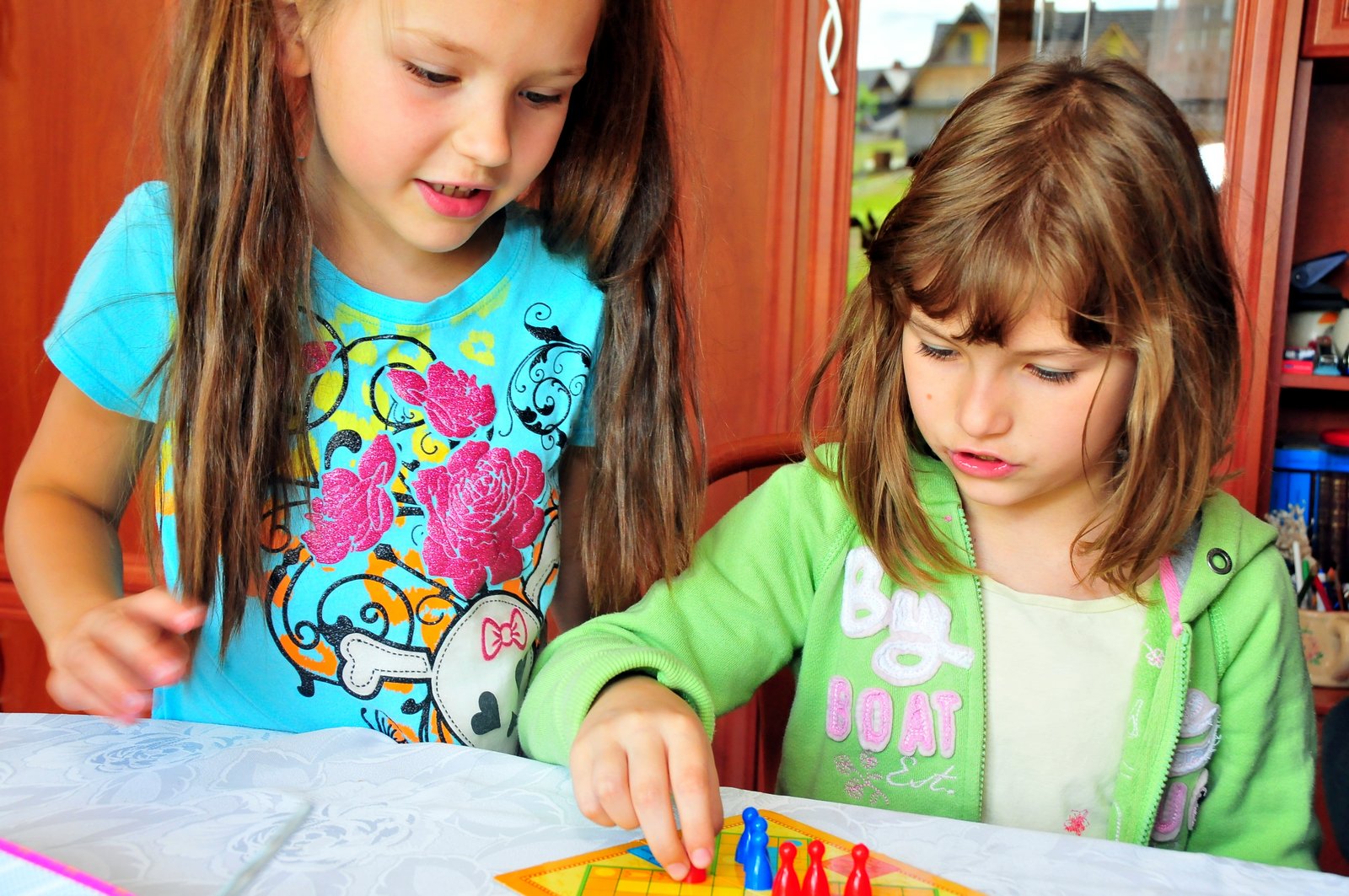
The older girls arrive and discover a board game — immediate obsession.
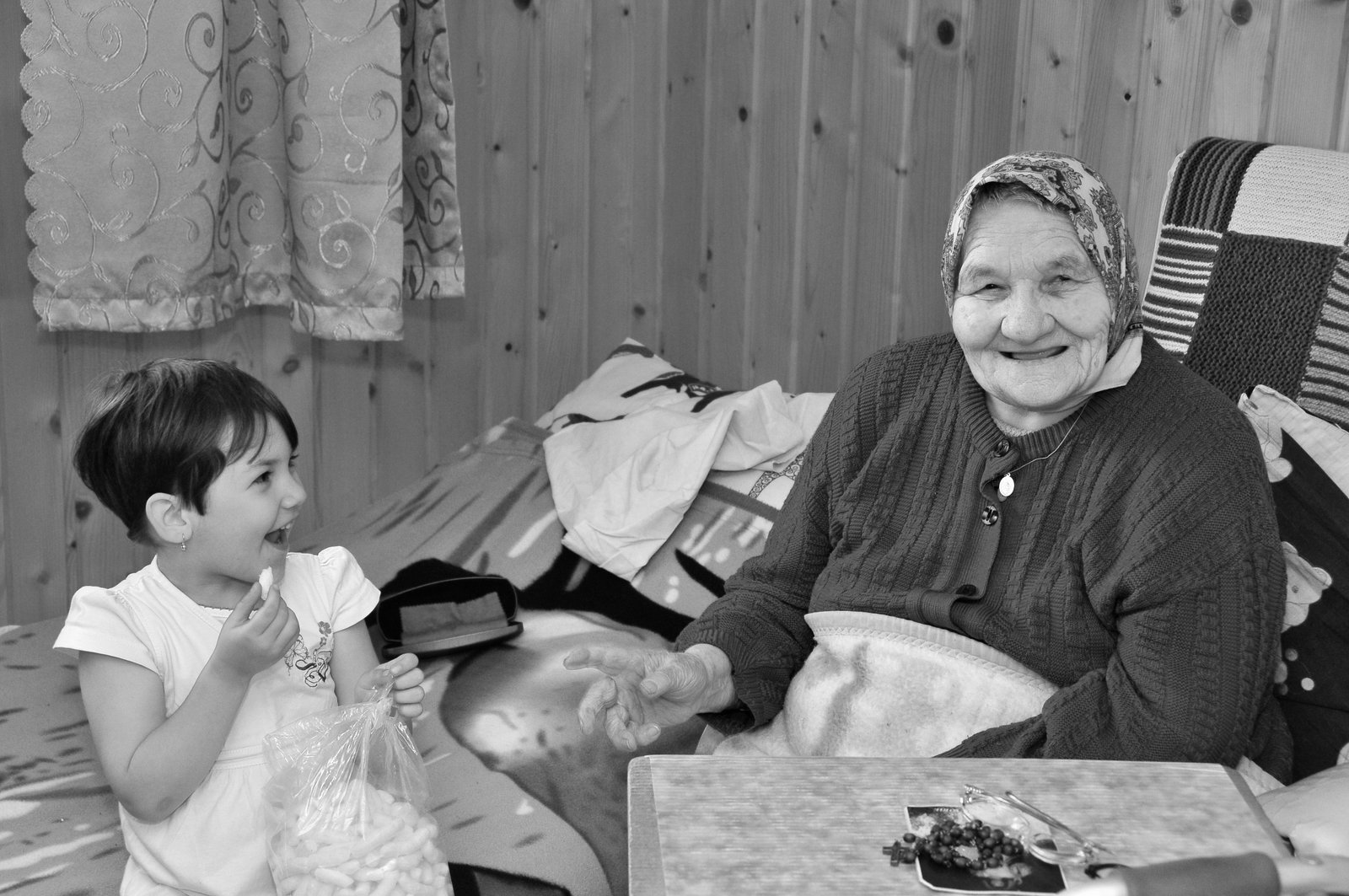
The littlest, though, heads straight for great-grandmother, who has a big — an enormous — bag of puffed corn.
We have lunch; we chat; Babcia has some quite moments with her mother. It’s as it always is, as it always should be.
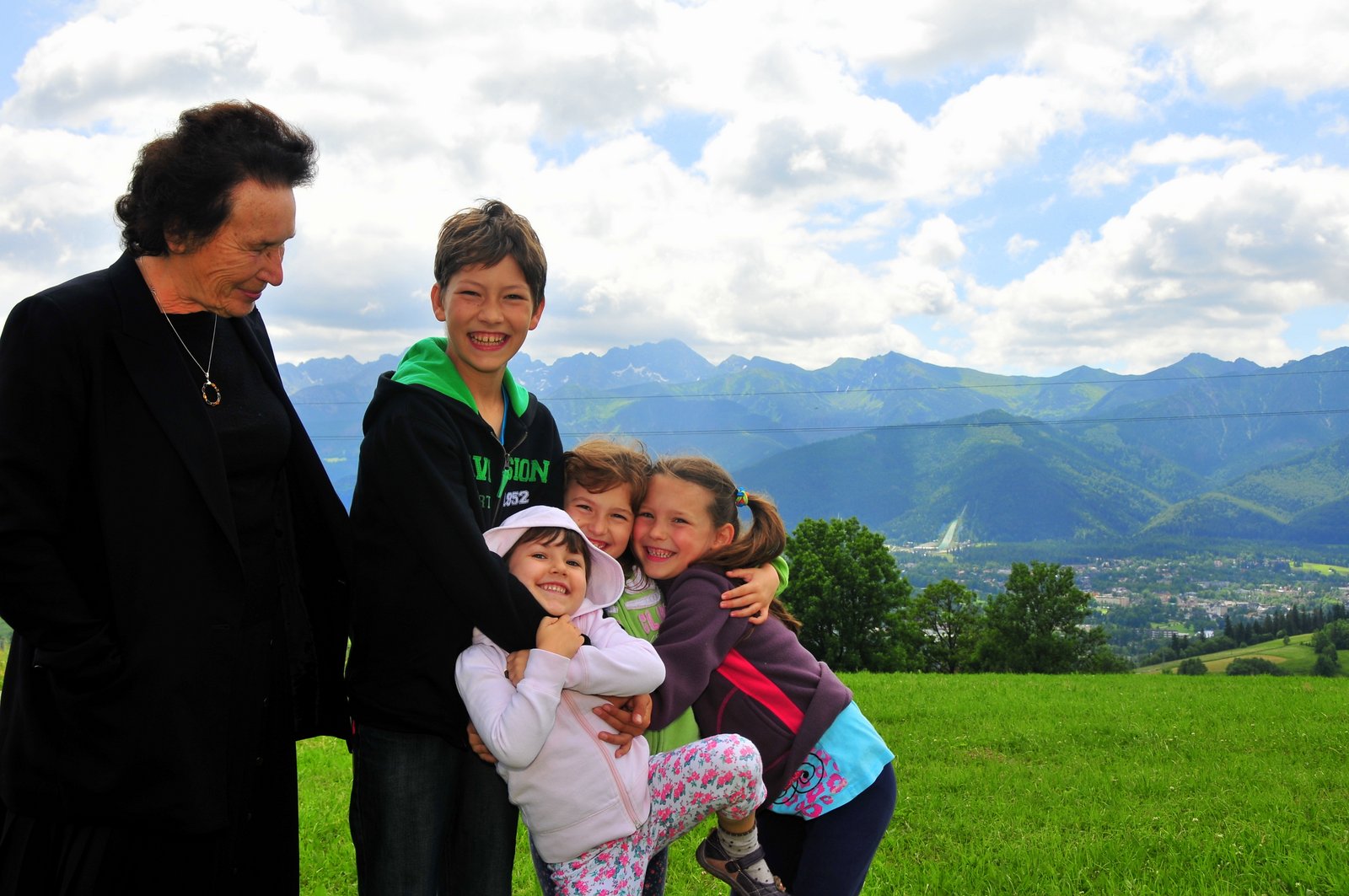
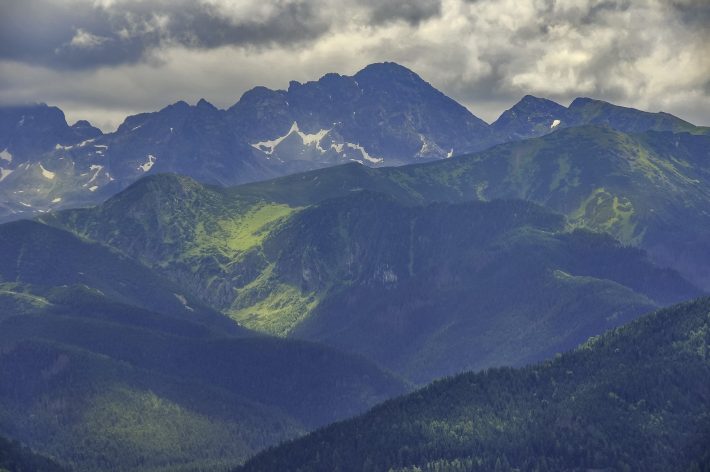
After a bit of food (what Polish visit would be complete without food?), coffee, and conversation, we had to Furmanowa, a field overlooking Zakopane directly across from the whole Tatra range. A visit to Ząb would never be complete without it, for the views are absolutely incredible.
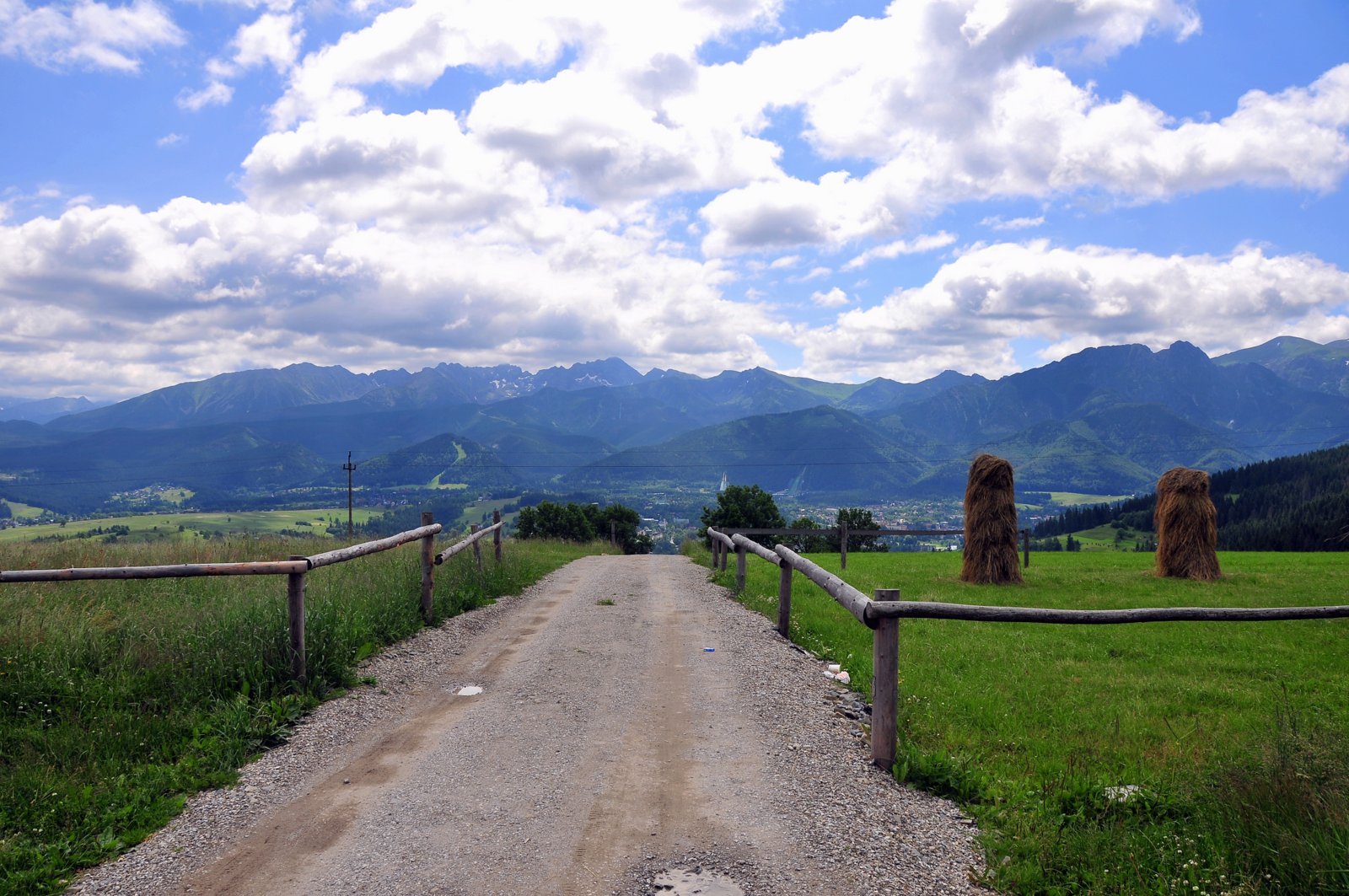
As we approach, Babcia informs us that the weather is definitely going to change: “The mountains look so close we could touch them.” Indeed, there’s a clarity in the air that belies the fact that the weather for the past week and a half has been absolutely miserable.
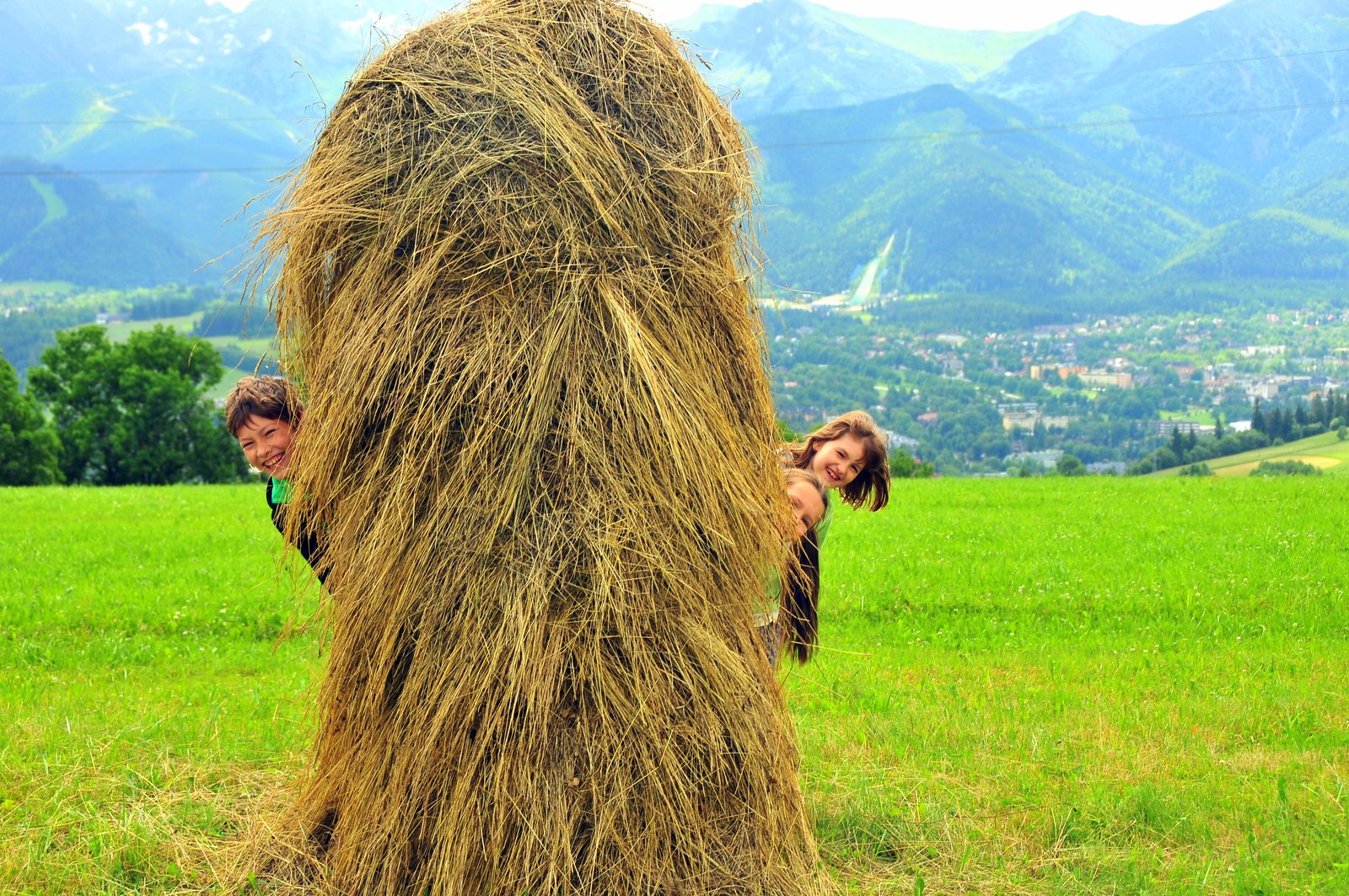
But the recent change in weather — although Babcia assures us that it’s temporary — has brought out the excitement and silliness and everyone.
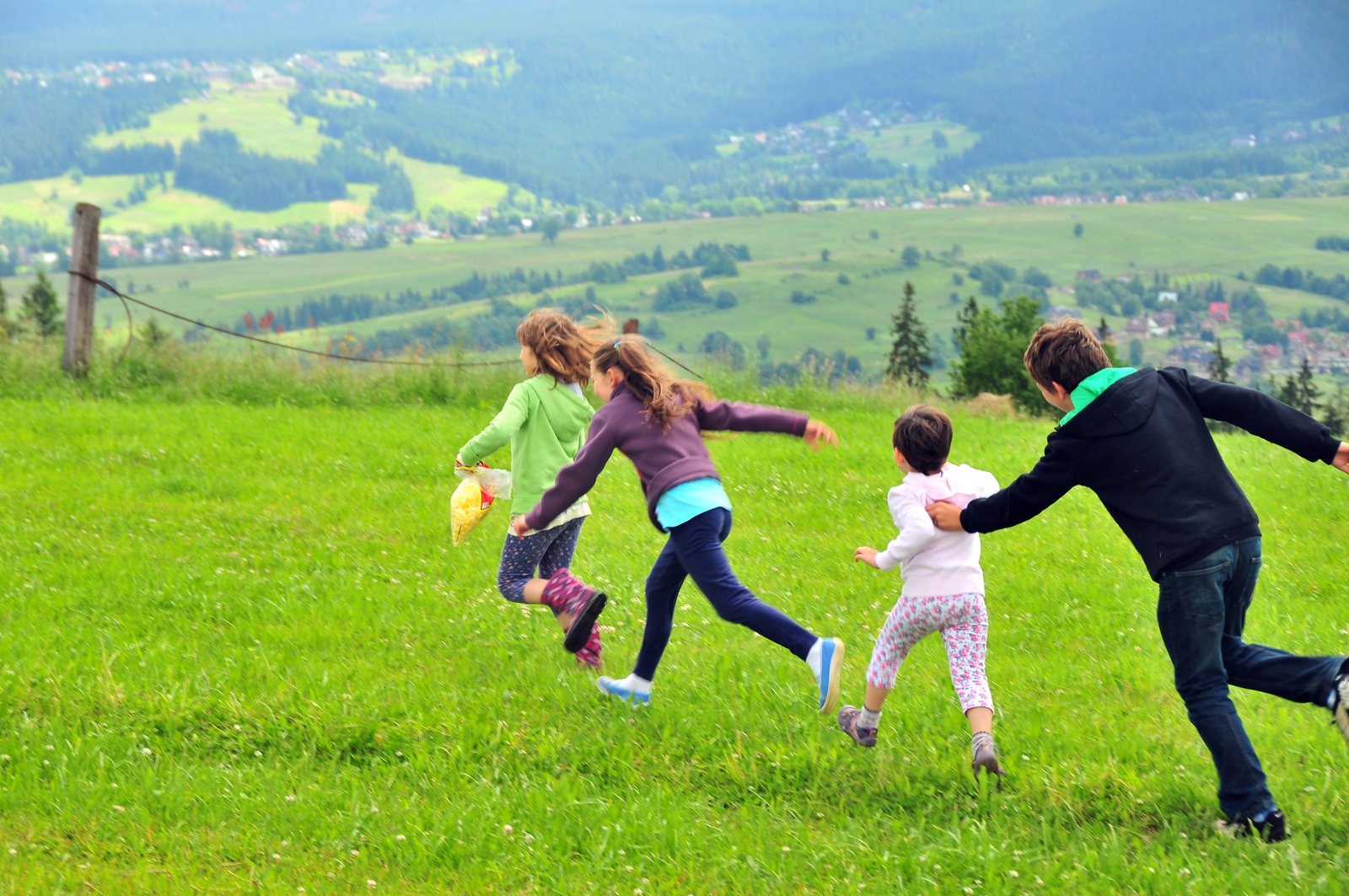
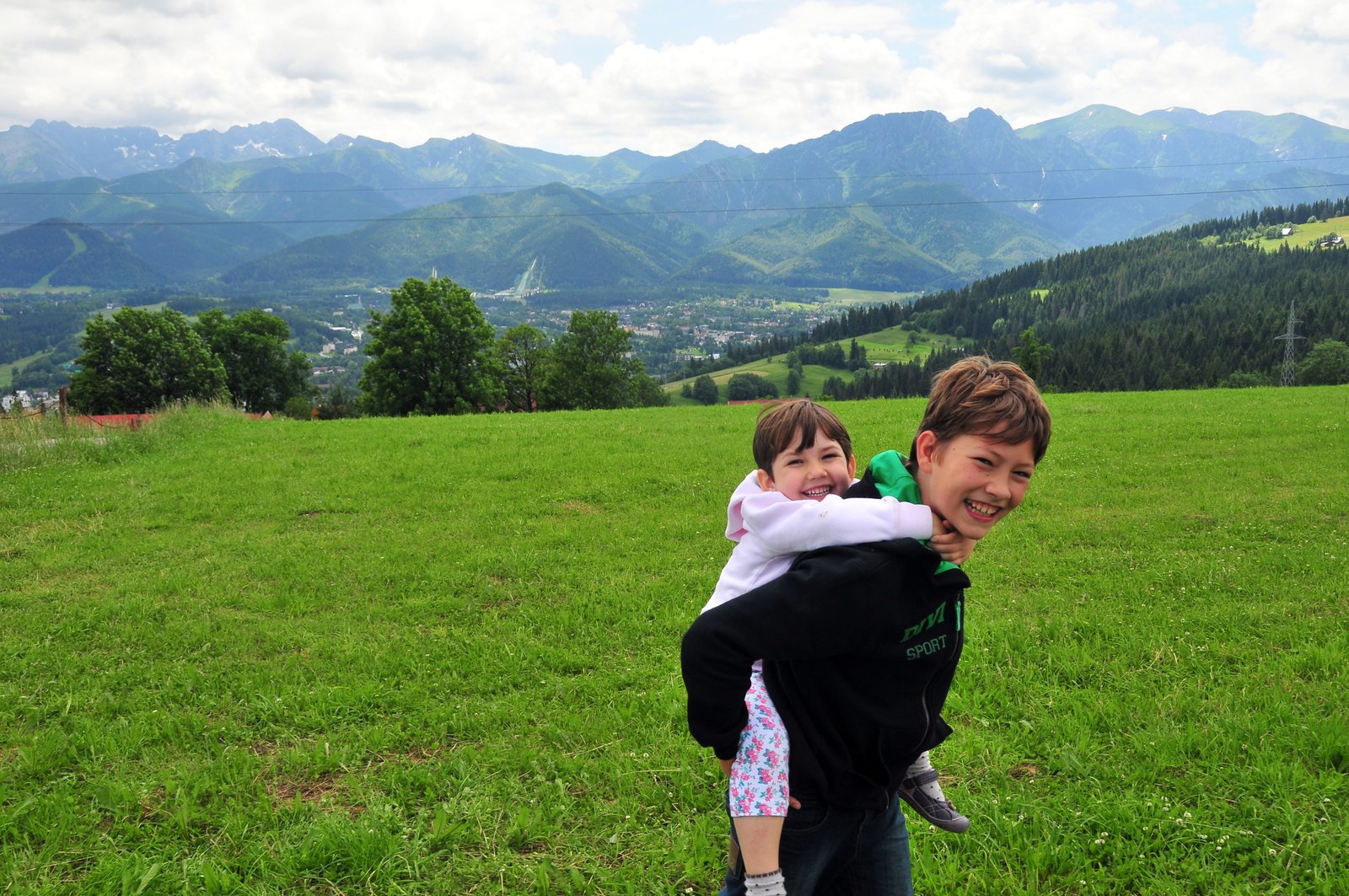
But the views. It’s hard to look away.
Today, though, we make some changes.
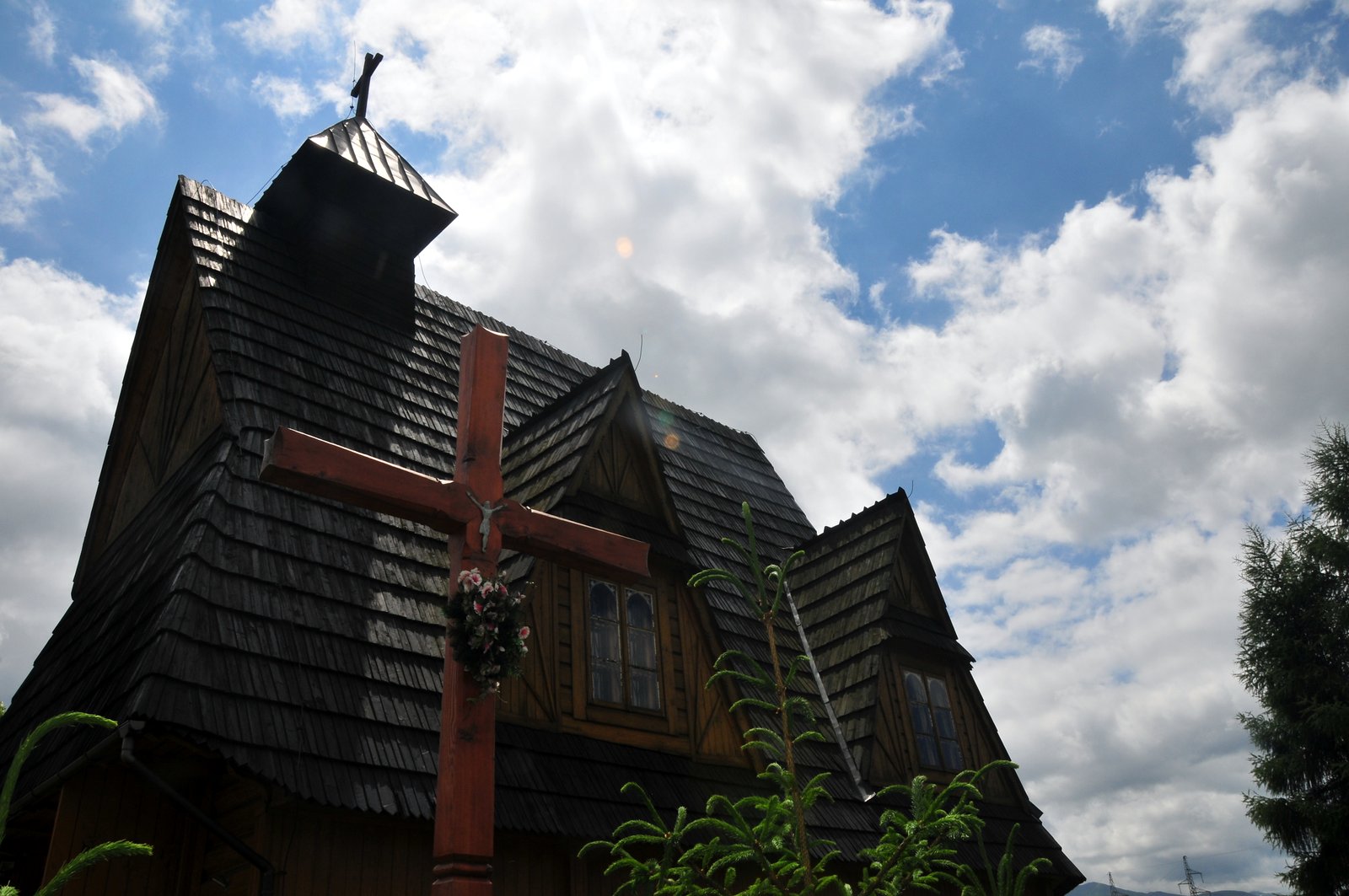
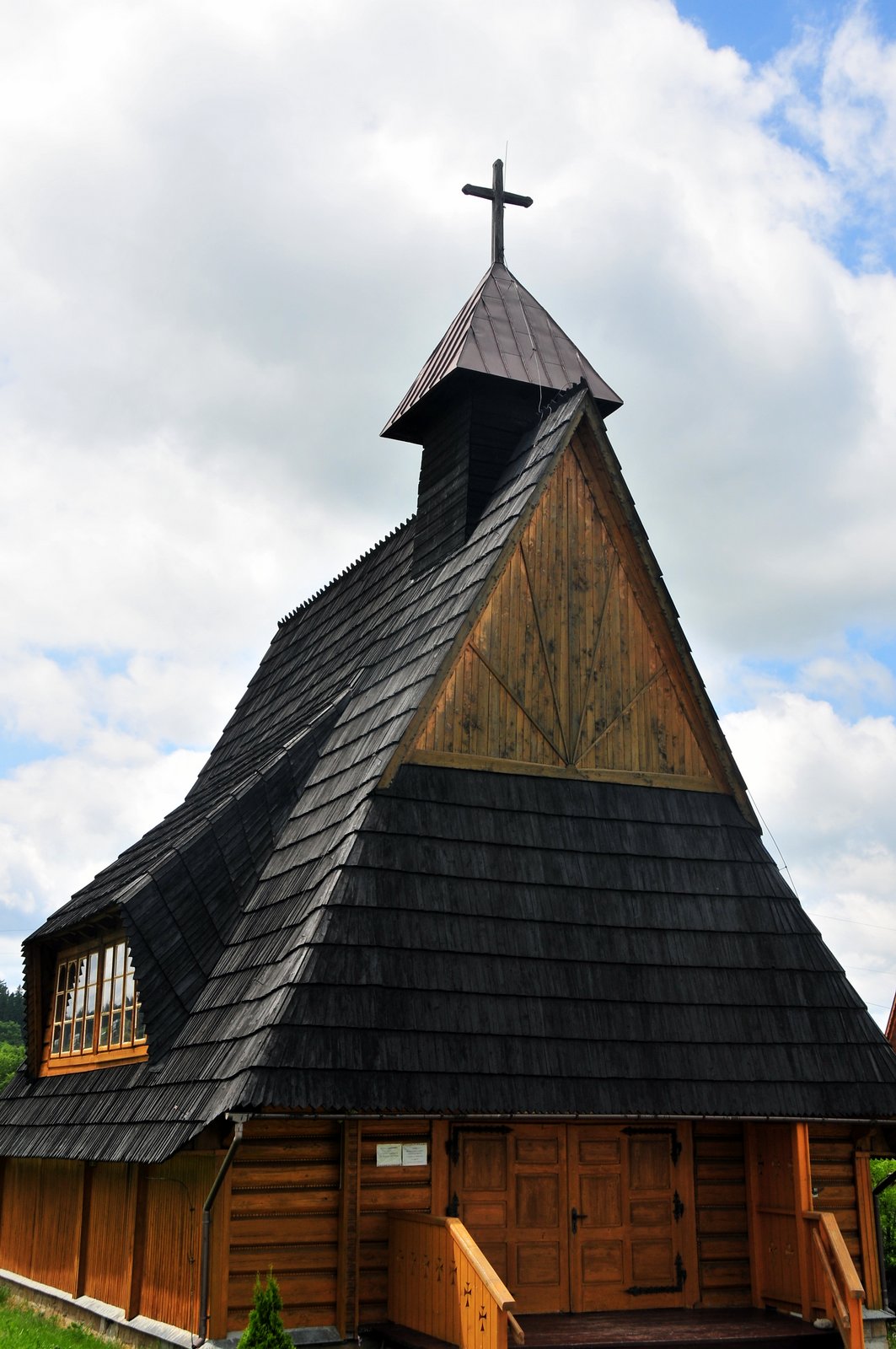
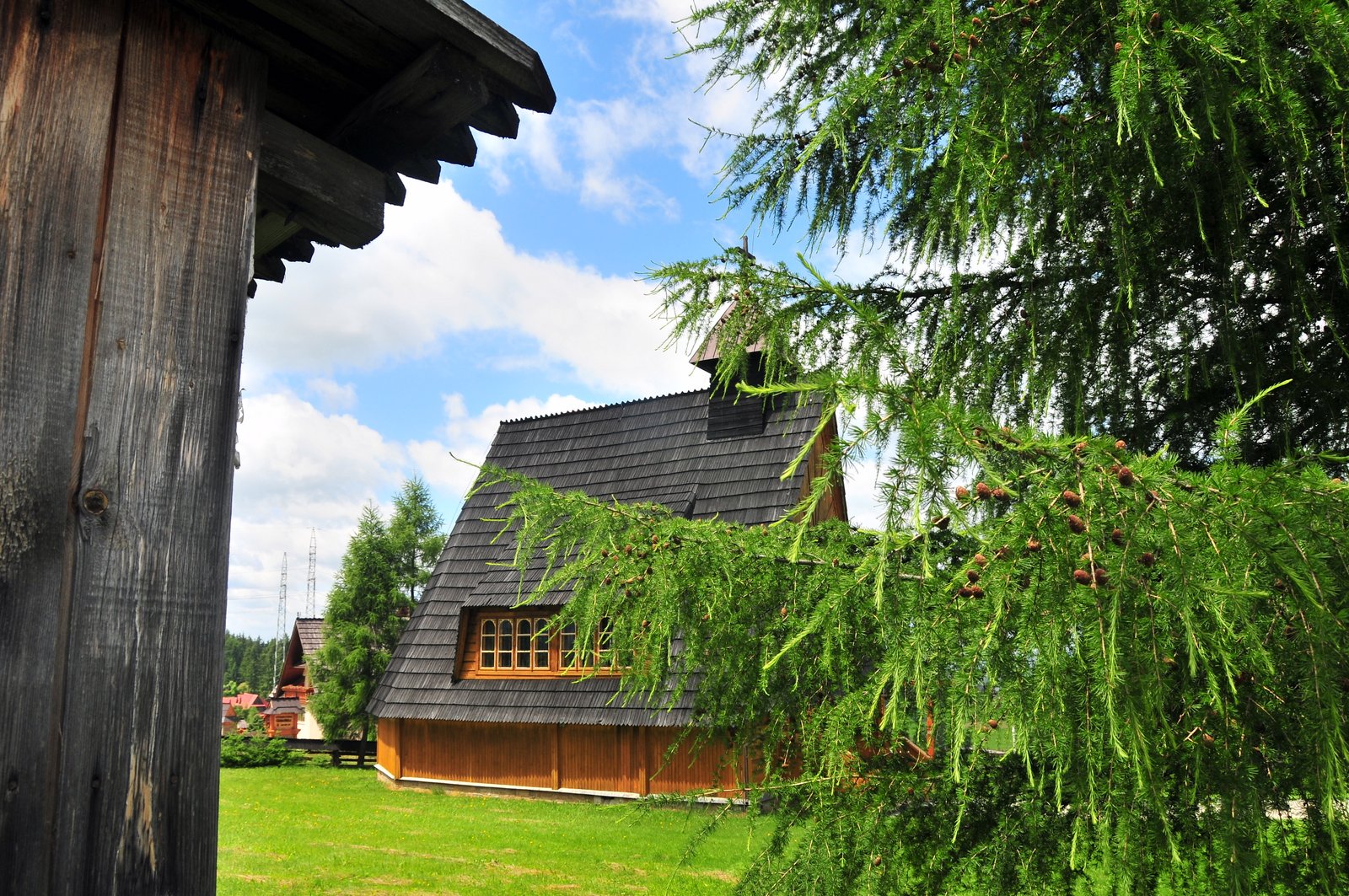
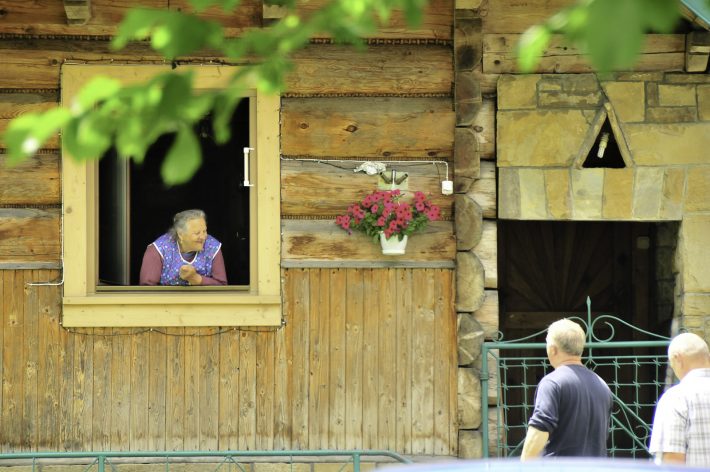
We head up by the fairly new church looking for Babcia’s grandmother’s house — the Bobak homestead. In front of the house, an unknown babcia sits knitting socks (probably for later sale in Zakopane), and she asks with a certain clairvoyance, “Are you family?” She speaks the local dialect: at the same time thicker, heavier than standard Polish and somehow lighter at the same time. I struggle to keep up with the conversation — same story as always.
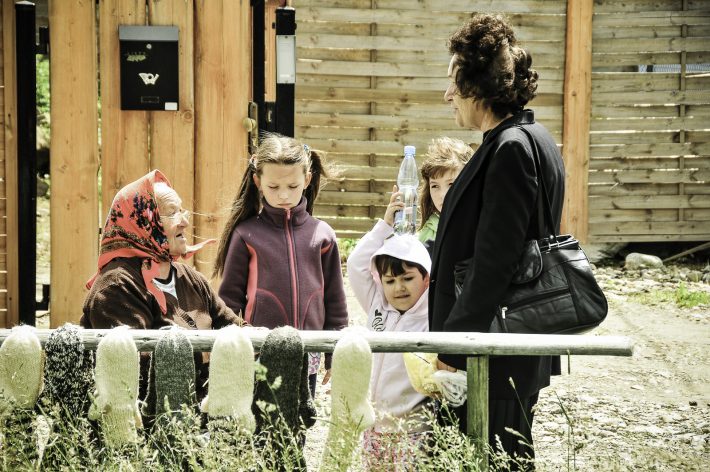
She informs Babcia that there’s someone around back working, so we head around the house to find Babcia’s cousin raking hay.
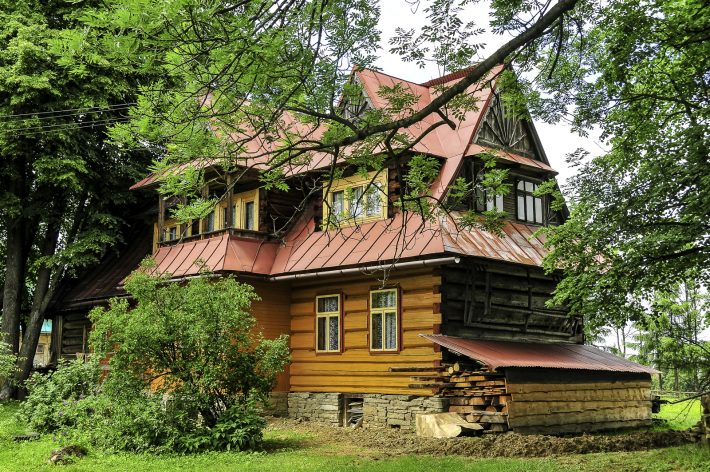
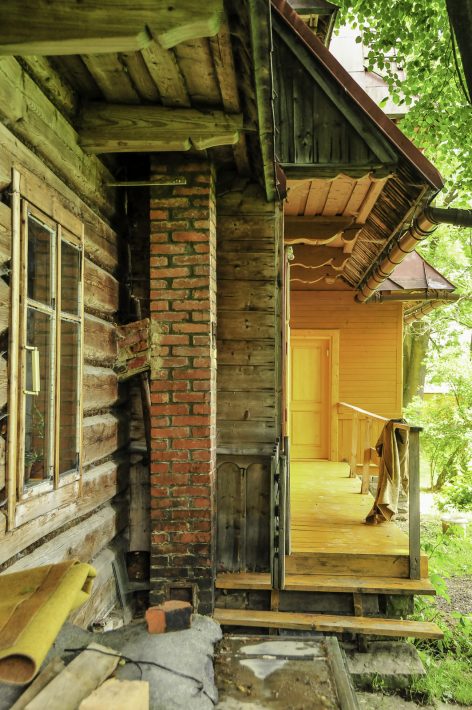
They engage in the small talk that makes family family, but initially, the house steals everyone’s attention.
“At one time,” Babcia explains, “it was widely considered one of the most beautiful houses in the region.” It’s easy to see why.
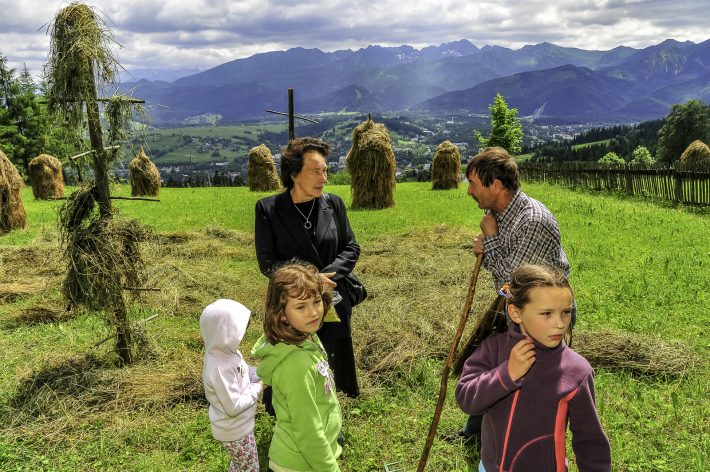
And of course, the views from their back yard — such as it is — aren’t bad either.
L and S have different things on their mind, though.
“Masz kota?” asks L. Fortunately, it’s family, so it’s not a big deal that L, as she always does, is speaking in the familiar voice when asking if they have a cat. Properly speaking, L should be speaking to adults in the third person to show respect, but the only people she’s ever spoken to in Polish are family, so in a sense, it’s not a big deal this time. However, she’s been talking to strangers like this.
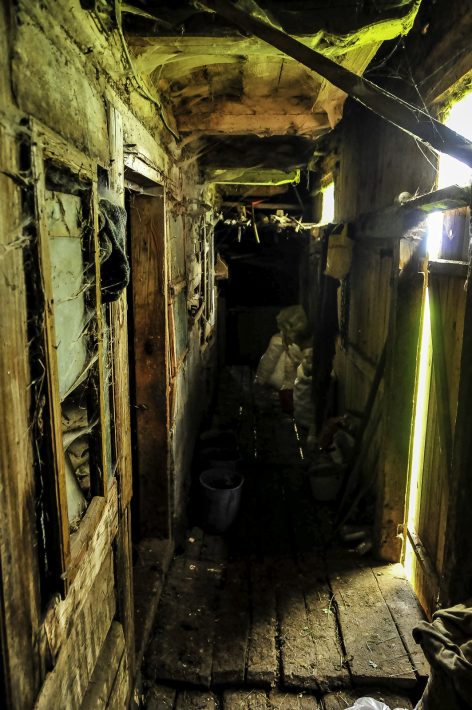
But this time, it’s family, and I don’t really feel the necessity to explain and correct. And besides, the girls have run off to the barn as Cousin A suggested, and I’m enchanted myself: the views, the people — it’s all a bit overwhelming as it always is.
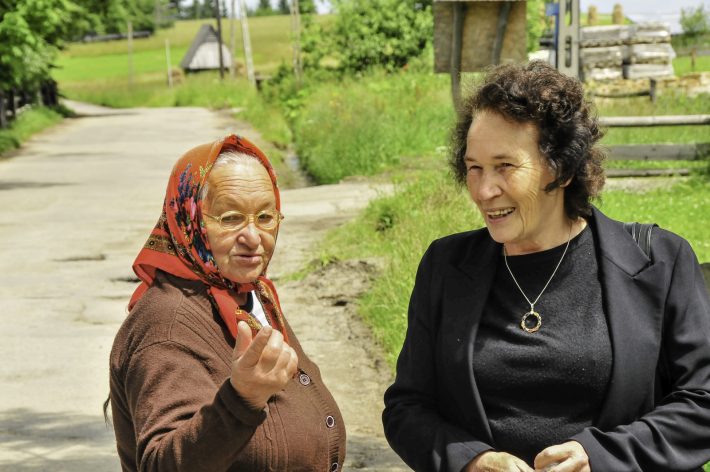
We return to the main road and Babcia picks up the conversation where they left off. More introductions, explanations, history: it always comes back to who you know here, looking for that common ground. In Ząb, though, there are really no strangers.
“Who was she?” I ask.
“I’ve no idea,” Babcia admits. She hasn’t lived here in decades and doesn’t remember everyone. “Ask Aunt Z when we get back,” she suggests. I will, and Aunt Z will immediately recognize her; Babcia will recognize the name.
But in the meantime, we’re still exploring.
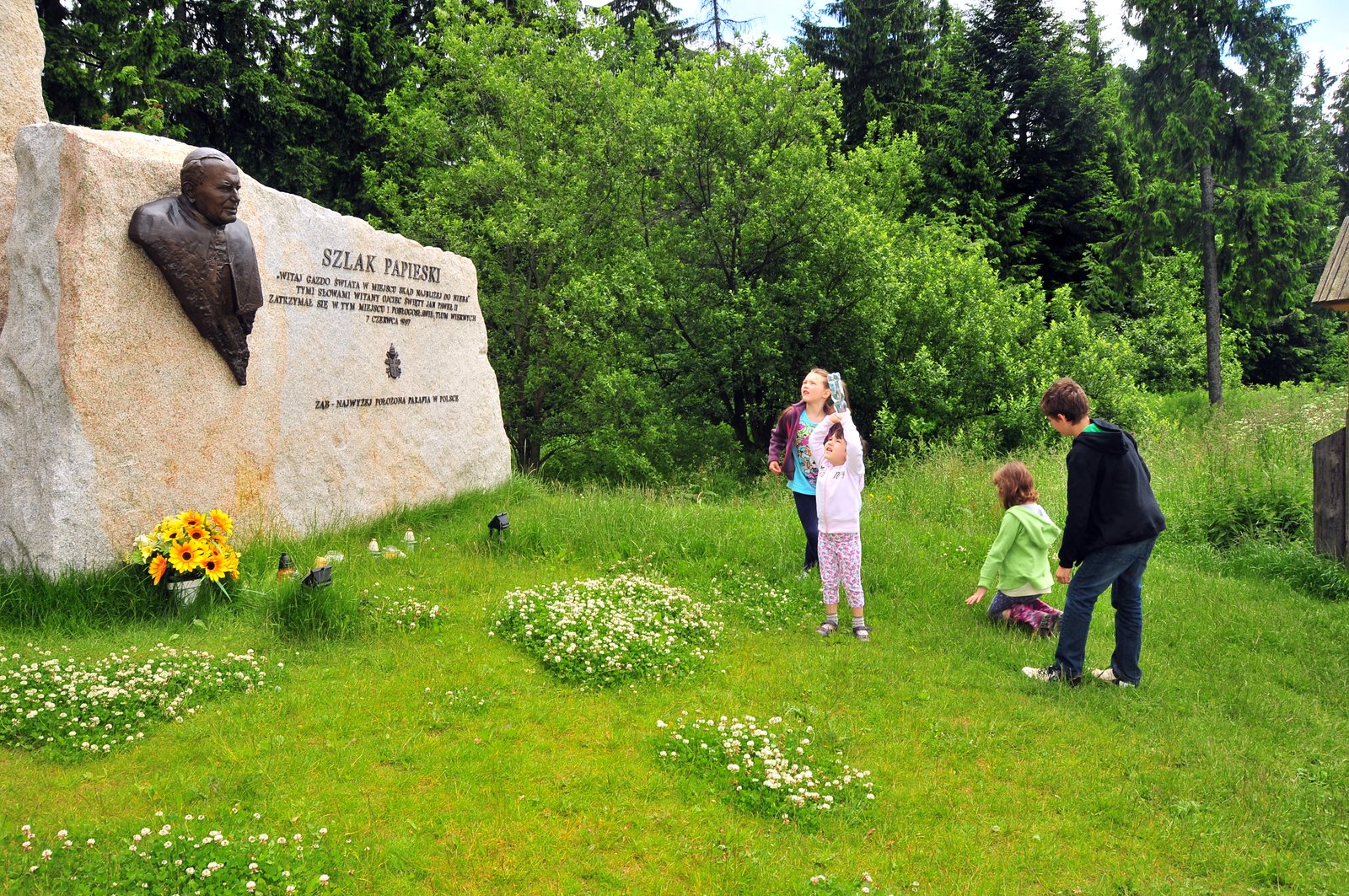
“Let’s go to the John Paul II memorial,” Babcia suggests, and we find it easily enough: we’d walked right by it searching for L’s great-great-grandmother’s house but somehow not even noticed it.
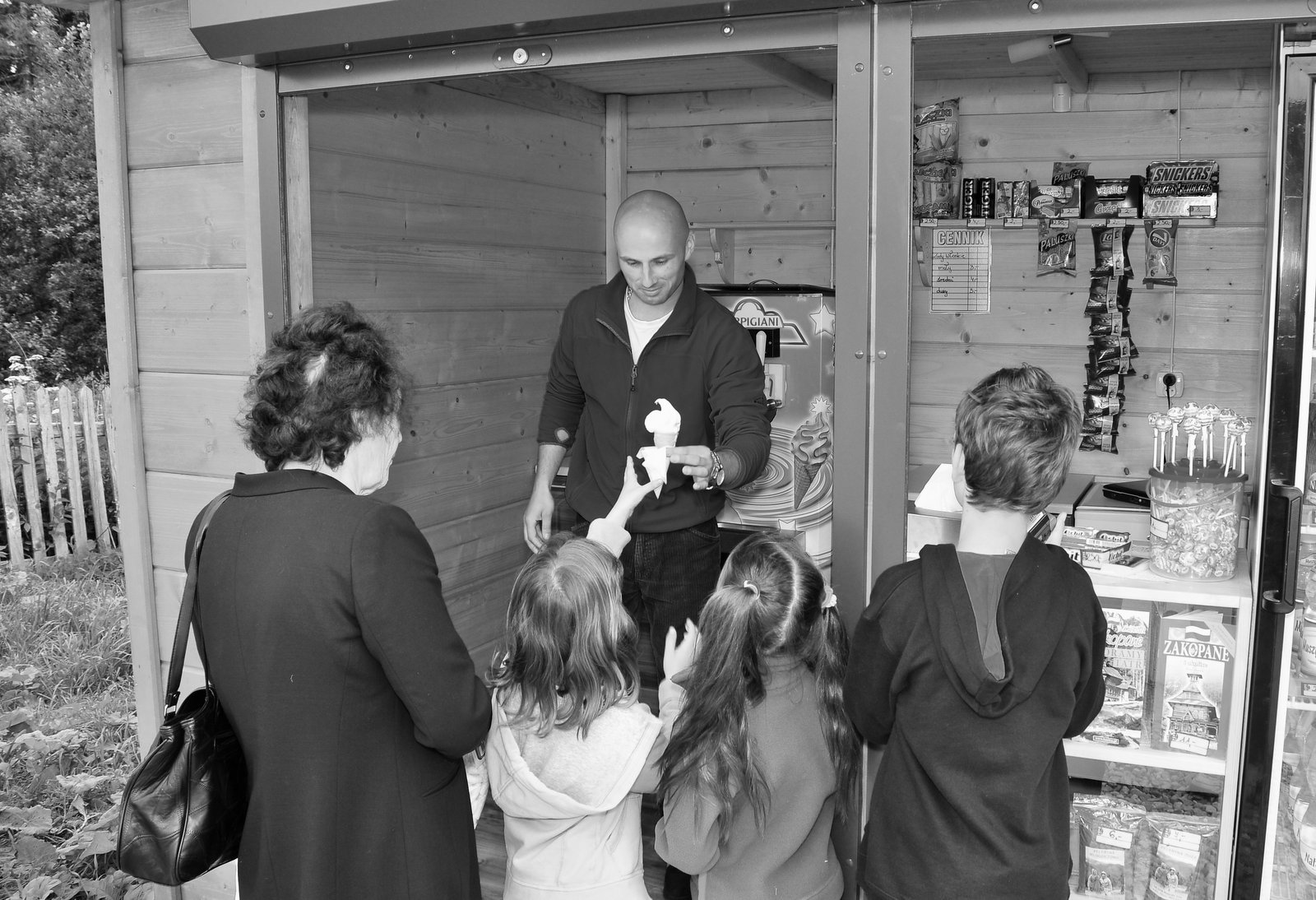
One thing, though doesn’t escape any of the cousins’ notice as we approach: the small kisok to the right that promises ice cream.
“Masz czekoladowy?” asks L. The salesman is just out of his teens, but he’s an adult, and L should be talking to him in the formal third person. I whisper “Czy Pan ma…” in her ear, and she reframes the question. Still, he’s now busy preparing four ice cream cones, none of them chocolate.
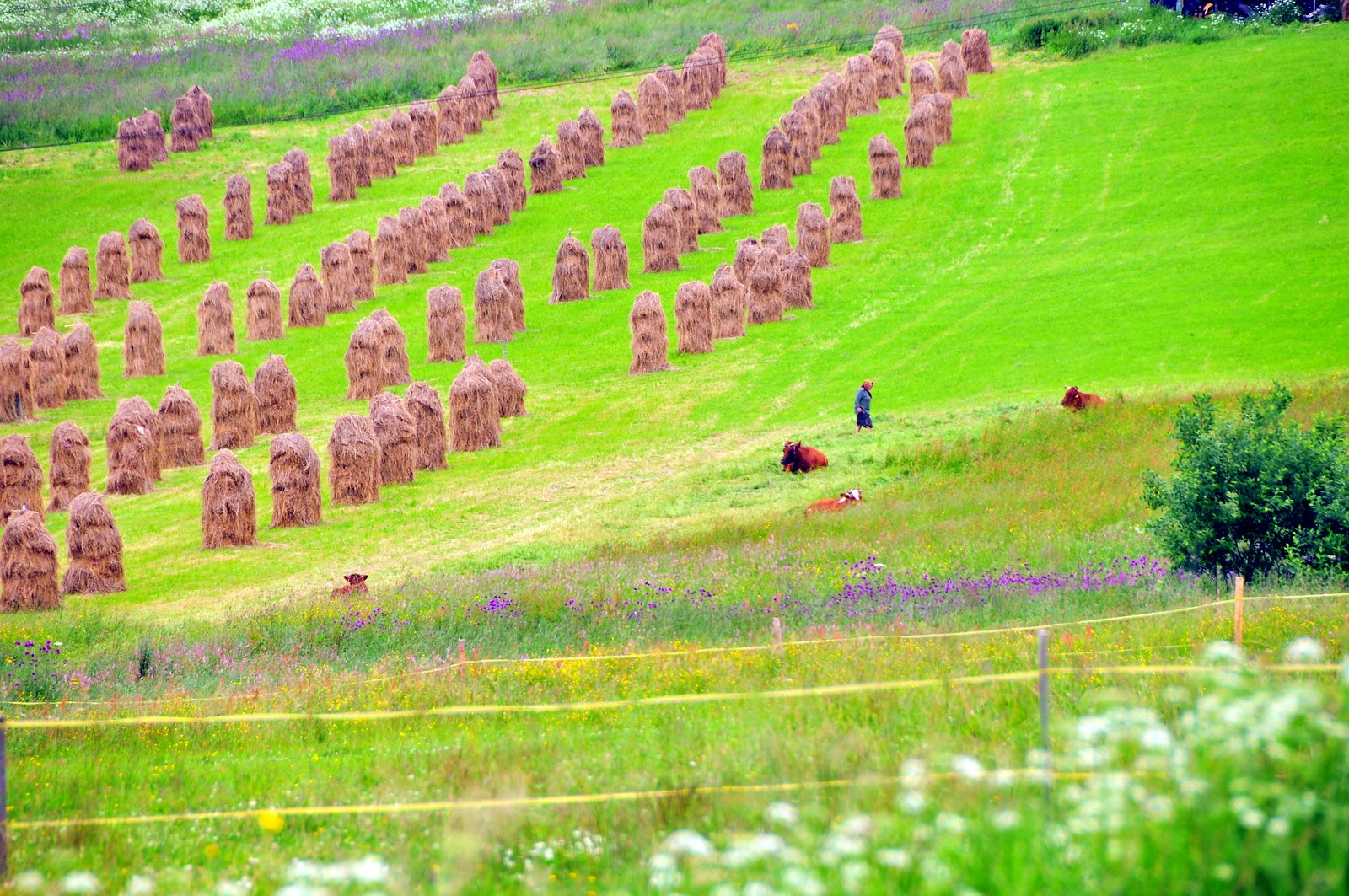
“Let’s go a little further,” Babcia suggests. “I’ll show you the path we all took when we wanted to go to Zakopane. There were no buses, no taxis — everywhere we went, we went on foot.” It takes us a little while to find the path, though. “None of these houses were here,” Babcia explains.
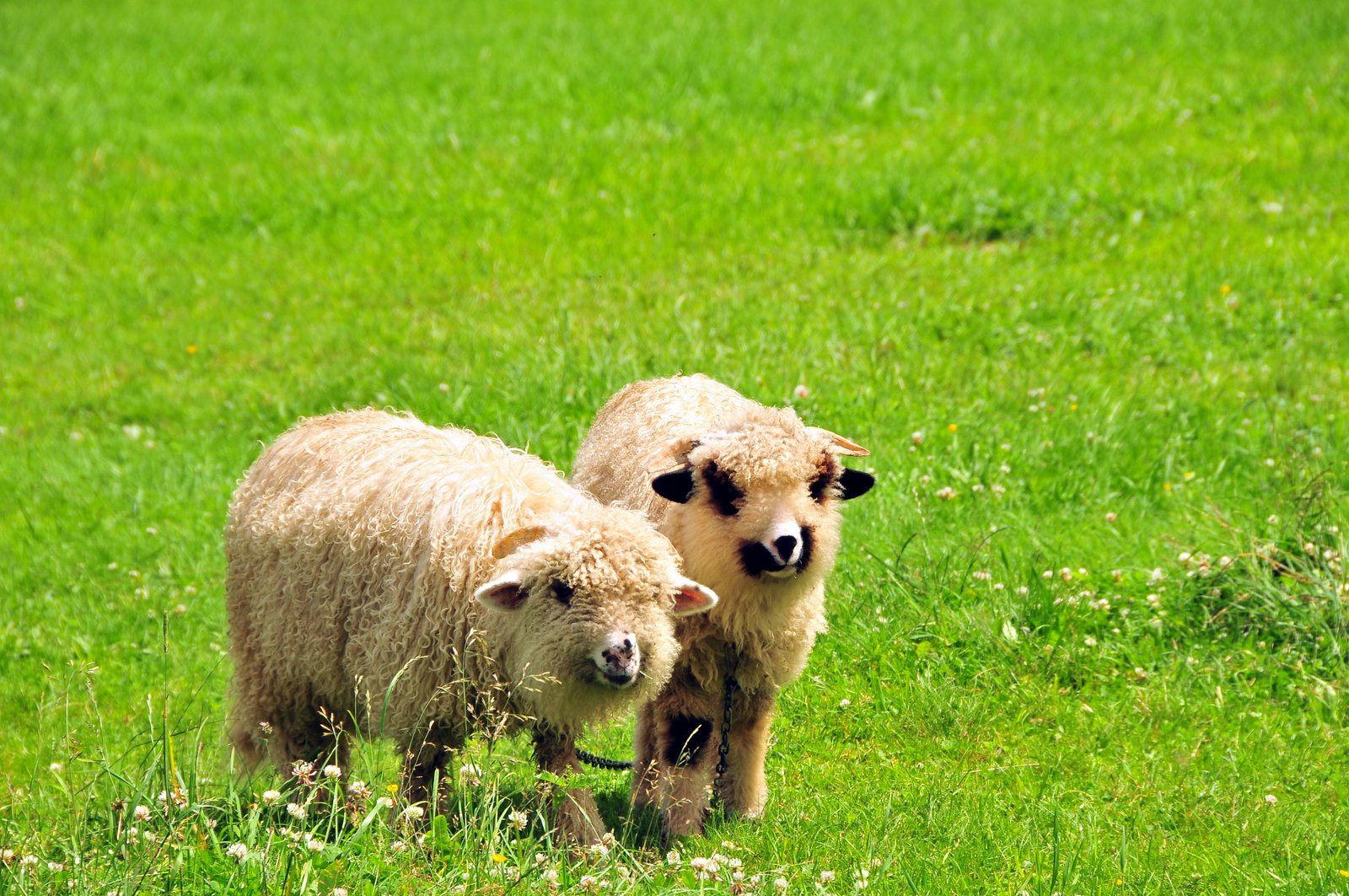
One false start leads though a mine field of dung and past a couple of sheep grazing.
“No, no, I don’t think this is it,” Babcia explains. We walk a little further and suddenly, “Oh! There! There it is.”
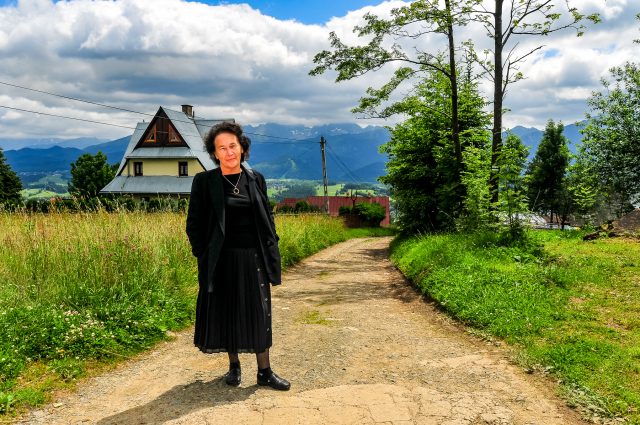
“It looks just the same — just the same — as when we walked there. Of course, I stayed in a dorm during high school, so I only made the trip on the weekends.”
“You stayed in a dorm?” asks W incredulously. “And you only came home once a week?”
“It was the best time of my life!” Babcia explains. “I had my own bed, my own closet! It was paradise.”
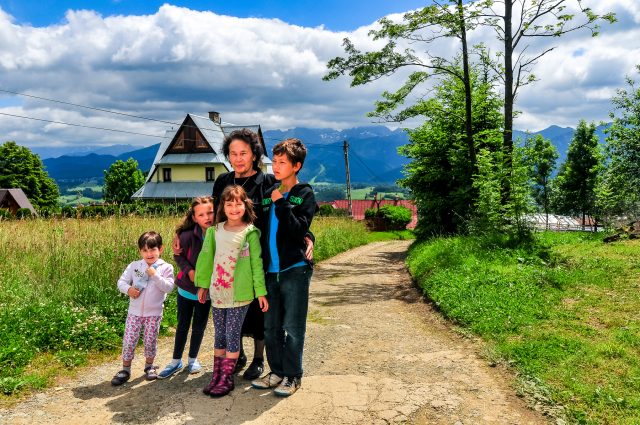
We wander about a bit more, then finally return to Aunt Z’s house. Great-grandmother is waiting. Babcia sits with her mother, listening to the radio, commenting about the recent developments in the country.
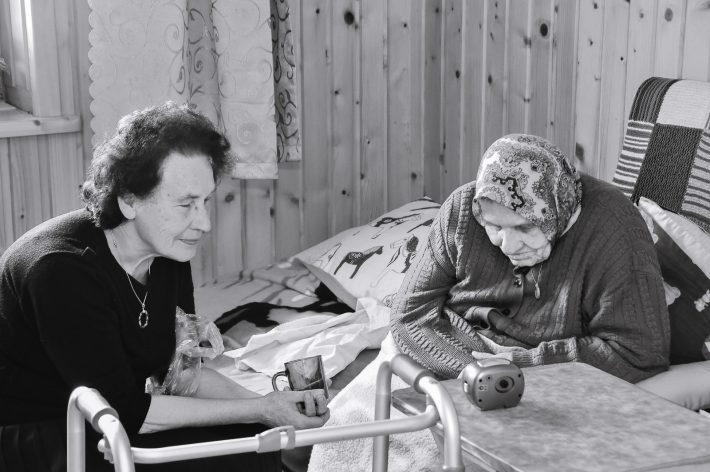
“We’ll come back again soon!” Babcia promises a few minutes later as we’re leaving. “Soon!” she reassures everyone.
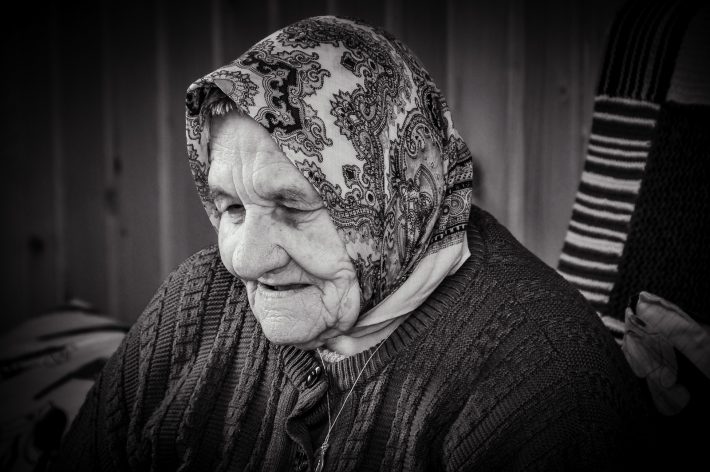
“Why even leave?” I want to ask. But the temporary nature of such small tastes of heaven only intensifies the sweetness, and so perhaps it’s best that we leave it all behind for a week or two.
Family and Family
Morning: Uncle B and Aunt K drop in on their way up north. B’s and K’s son is the current national ski jumping champion, but for everyone in the family, of course, they’re just B and K, with their son K.
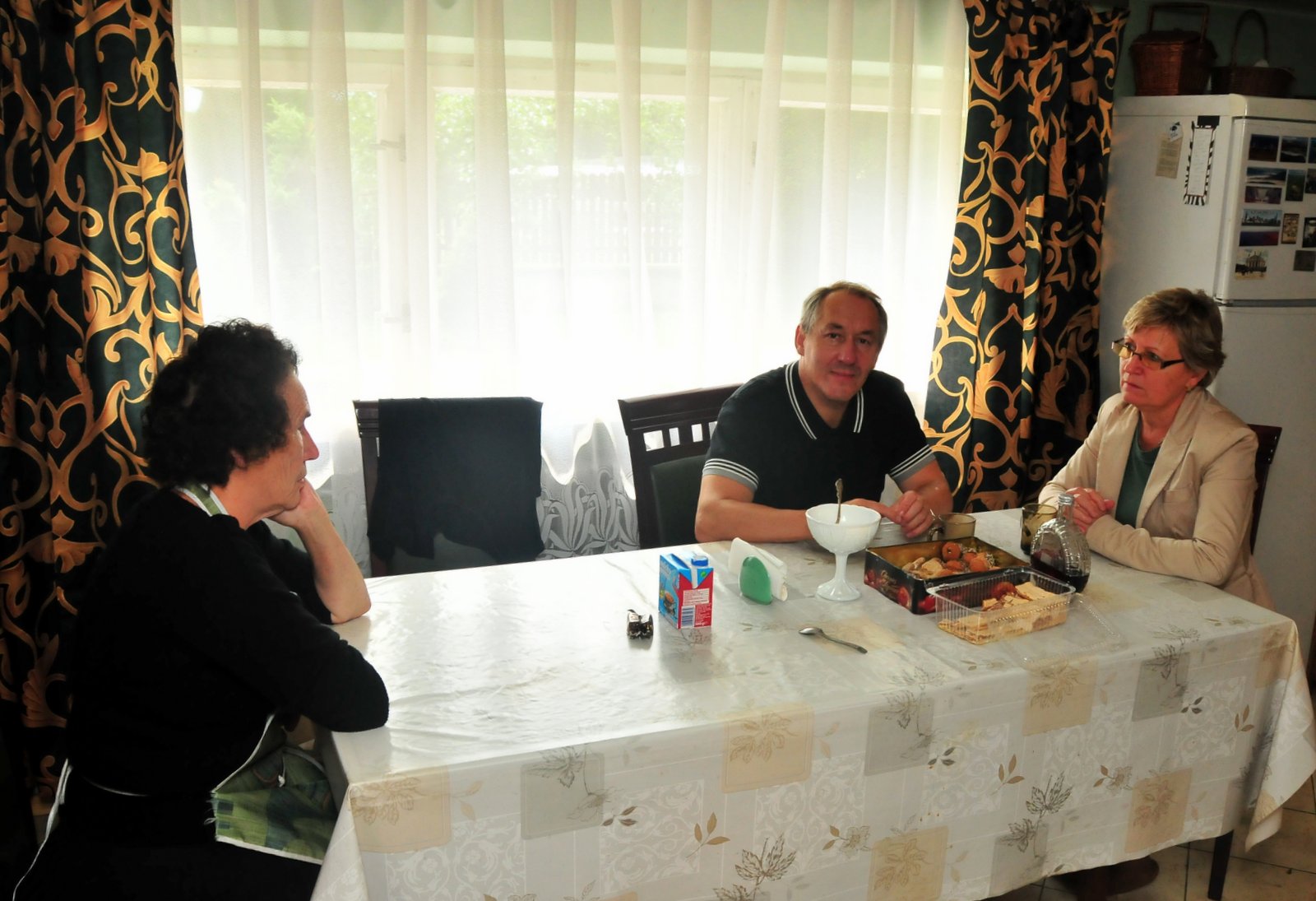
We drink coffee, eat cookies, chat about a little of everything.
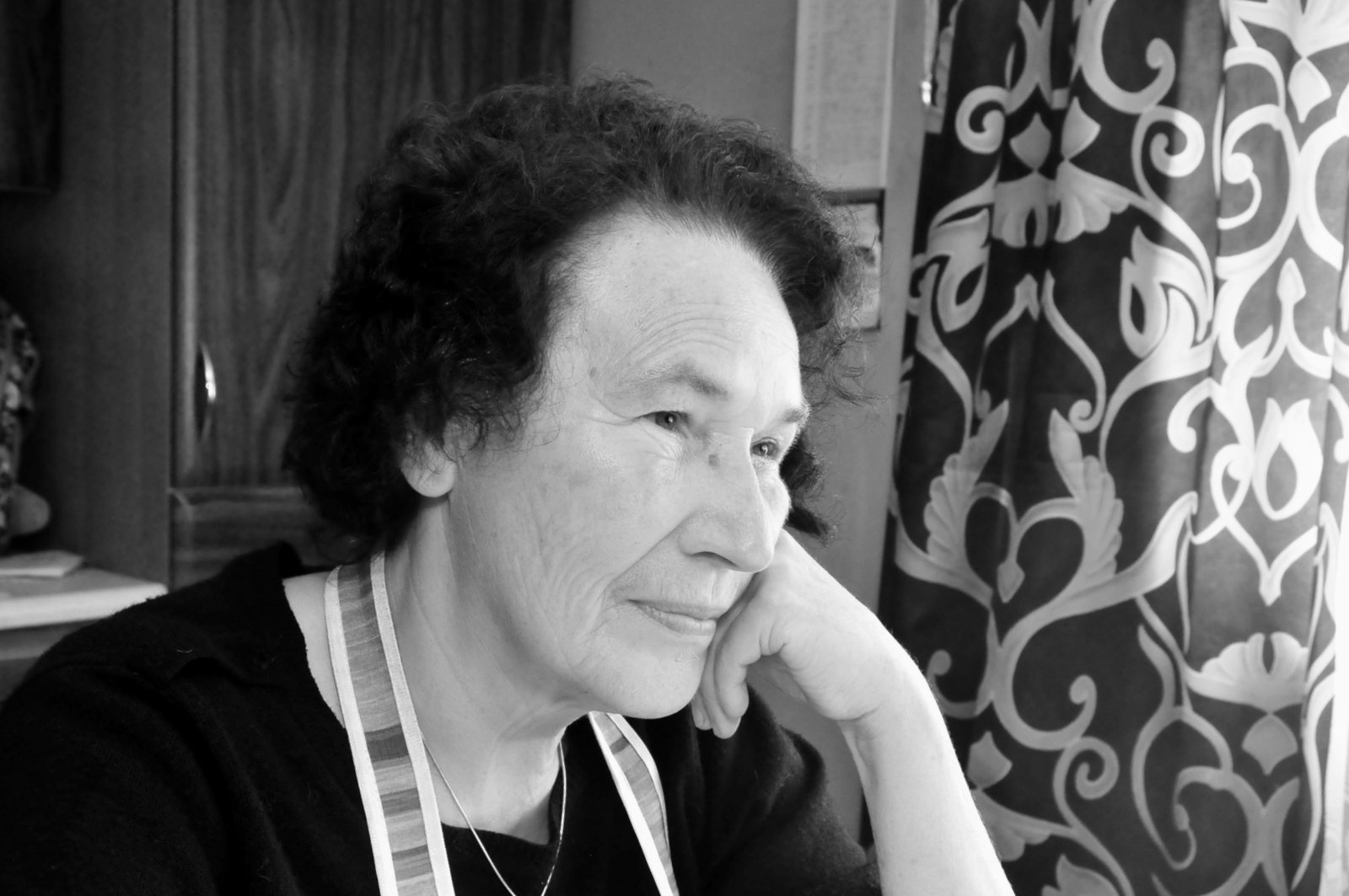
Babcia decides she needs to take a picture of us. It takes a little while.
“What do I press?” It’s a fair enough question: our camera has buttons everywhere, probably too many for the job most of the time.
“Where do I look?” More time. Sweet Babcia — technology is just not her thing. She’d live in the nineteenth century if she could.
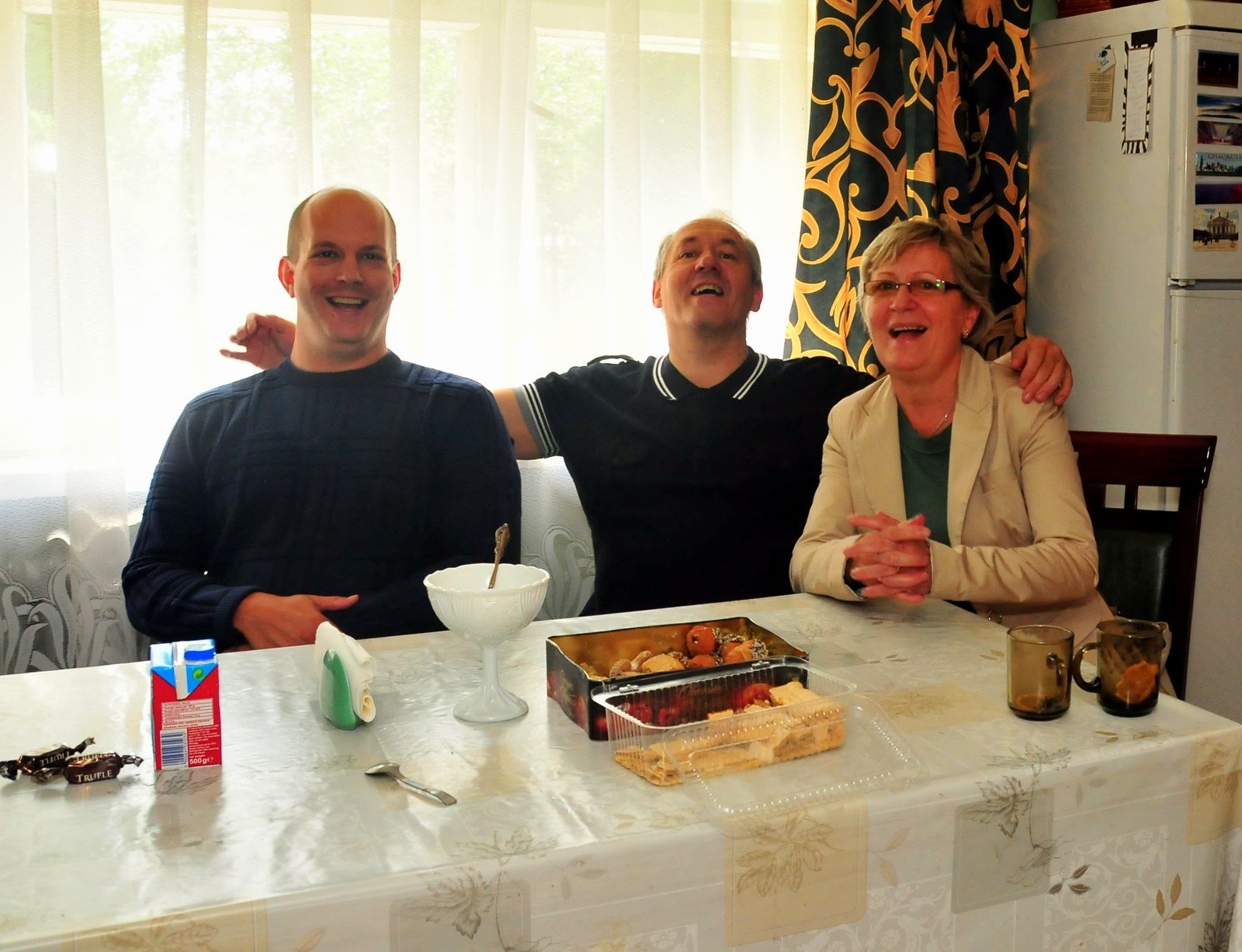
We’re all set: Babcia presses the shutter release . . . and holds it down. Flash! Flash! Flash! Flash! Flash! Five quick pictures, and by the last one, we’re all laughing, even Babcia.
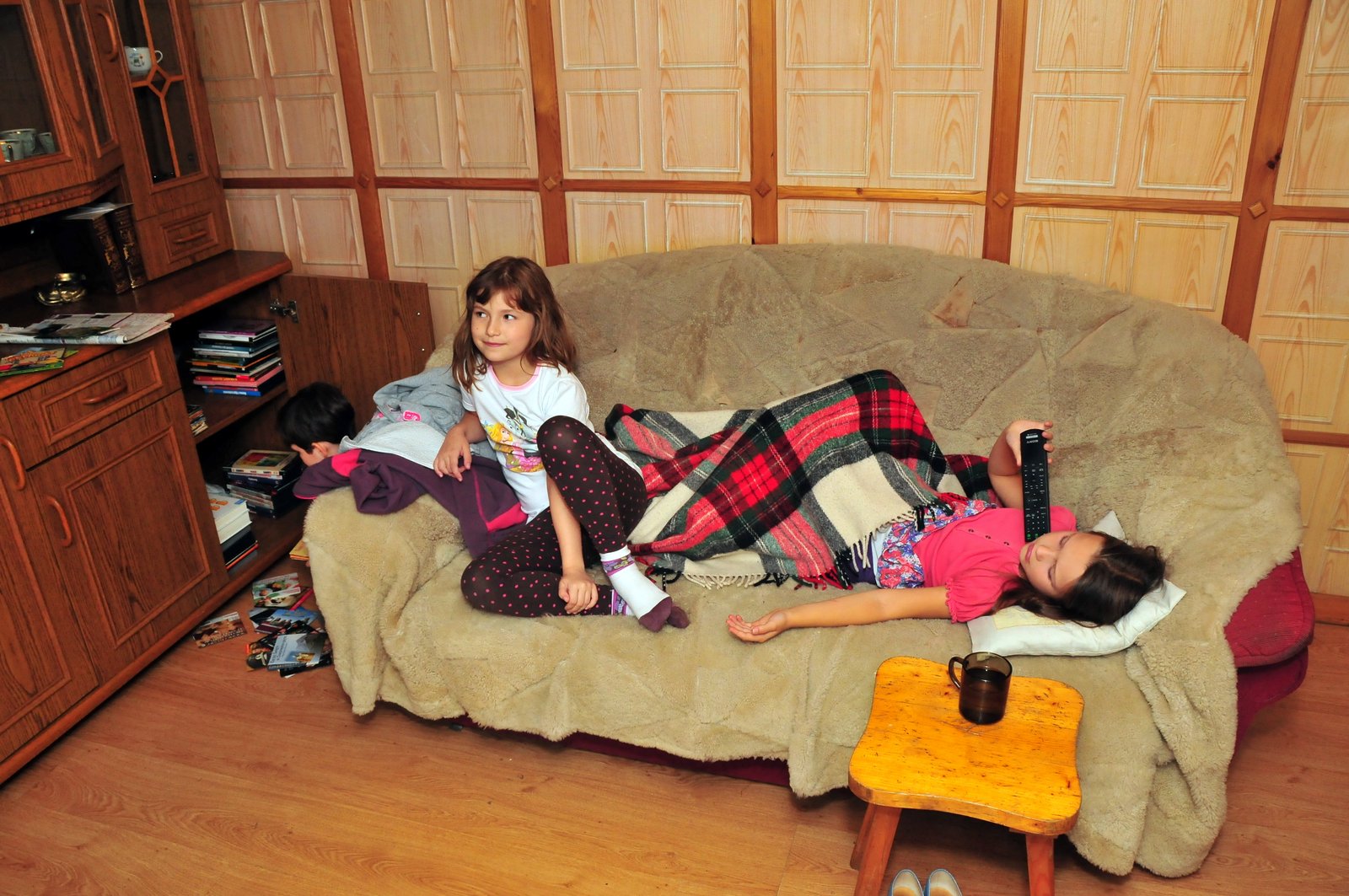
Afternoon, D and A bring the three cousins. L, S, and D are soon holed up together watching cartoons. What else is there to do when it’s eleven degrees Celsius (51.8 Fahrenheit) outside?
After lunch, we all take turns talking to K and E via Skype. It’s a bitter-sweet moment: K and E should certainly be here with us, but vacation and such being what it is, it’s just not possible this time.
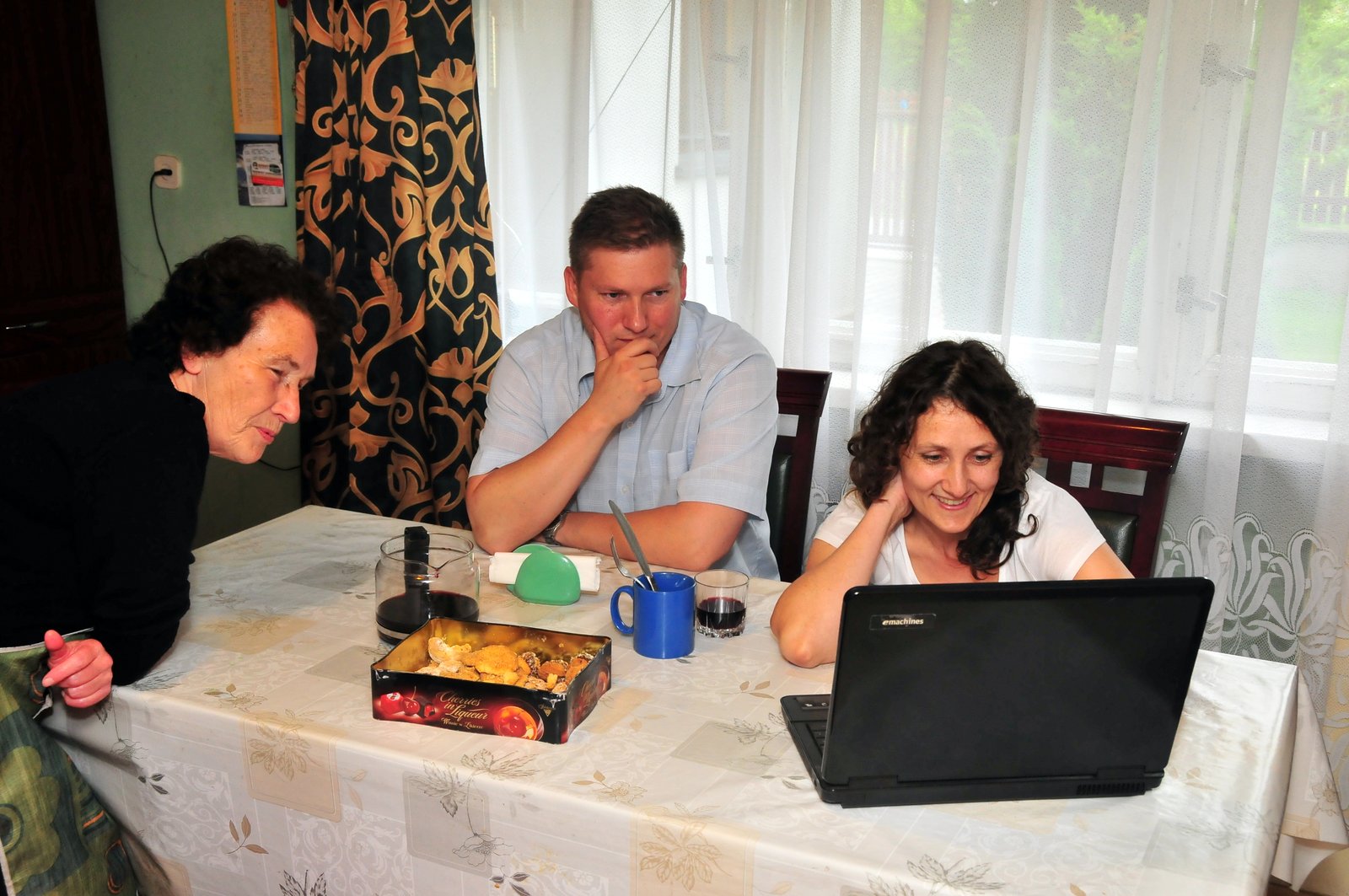
Evening: the three girls put on a show for Babcia. There’s acting.
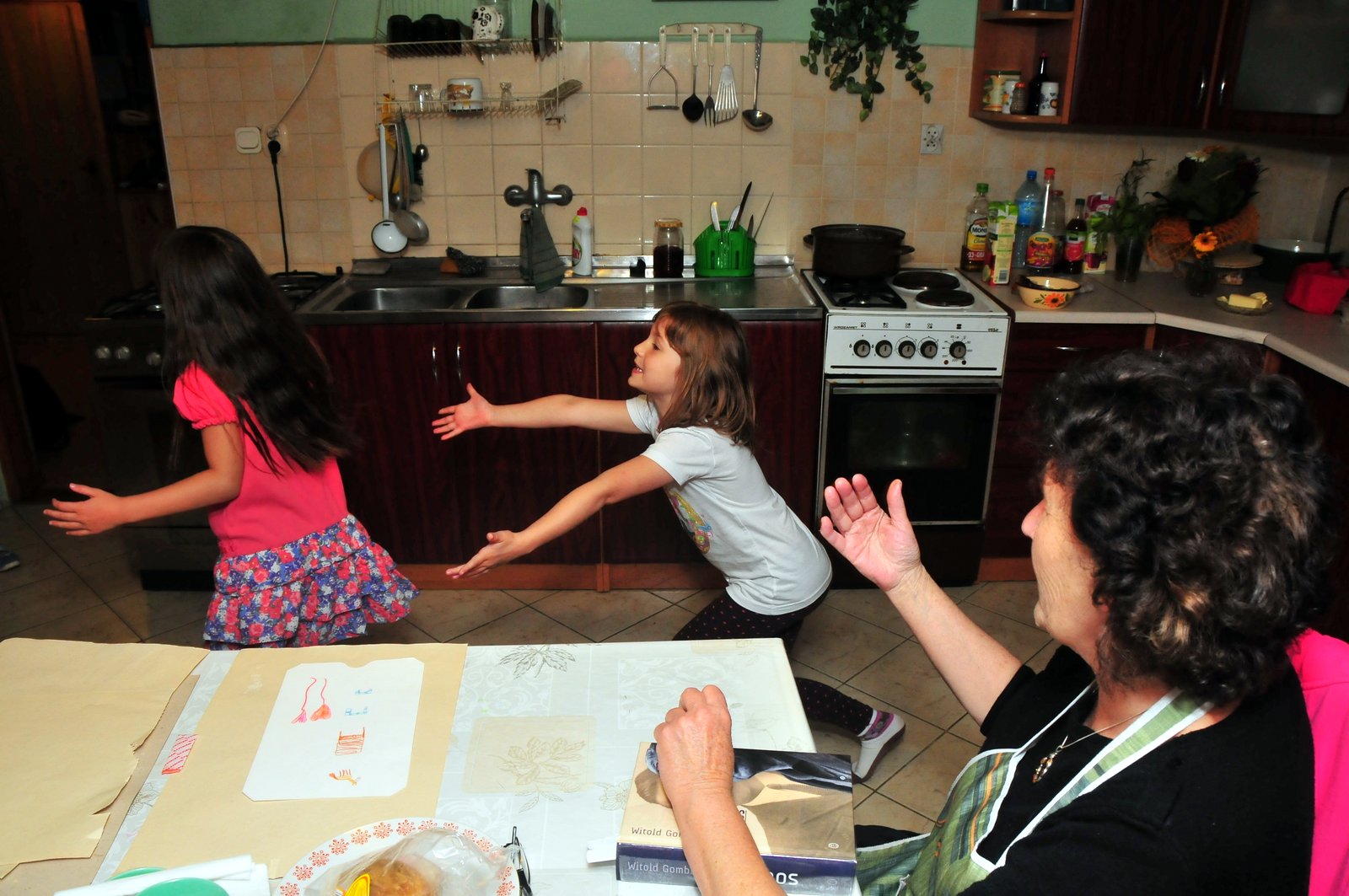
There’s singing and smiling.
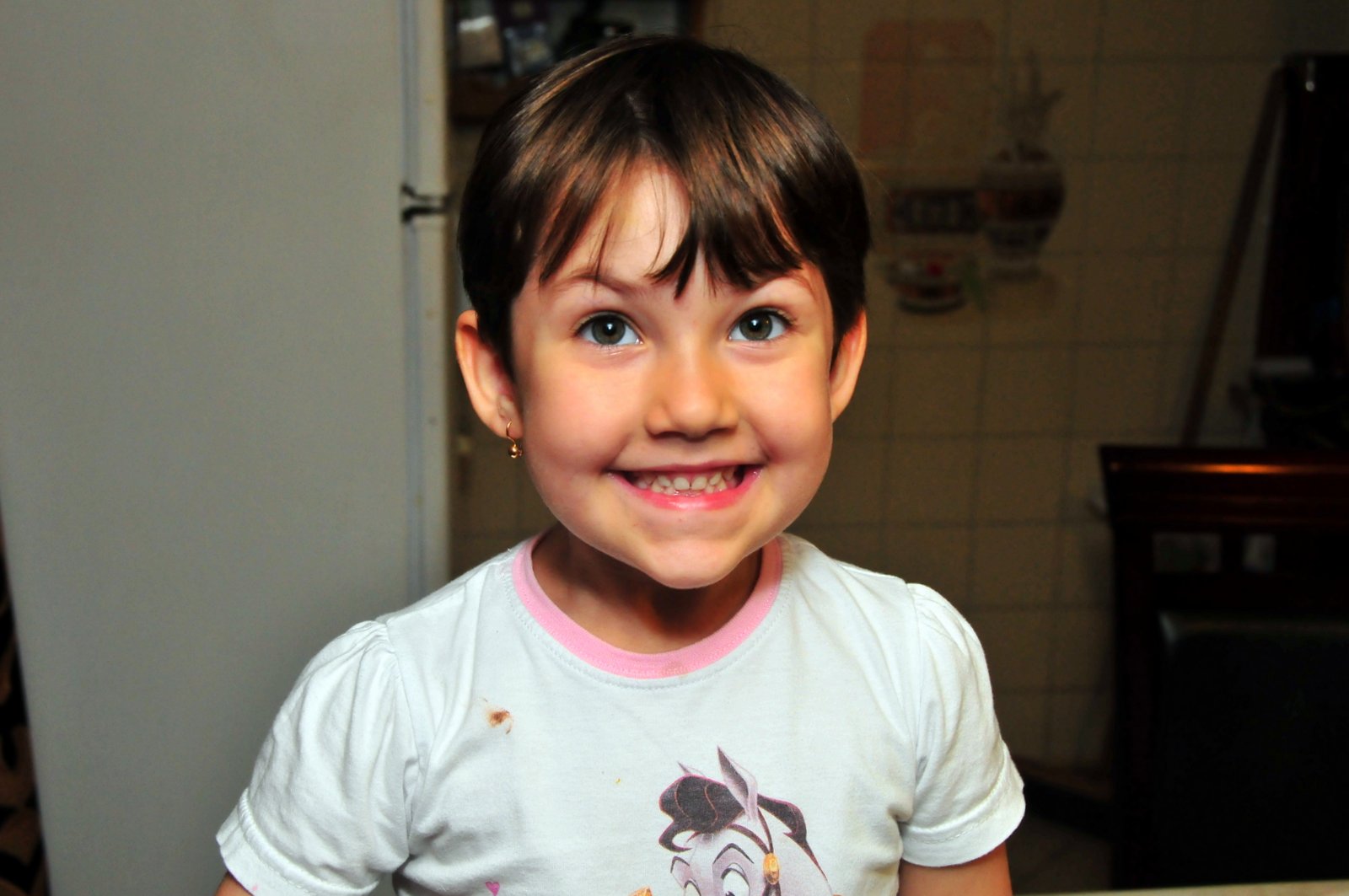
And of course with L there, dancing.
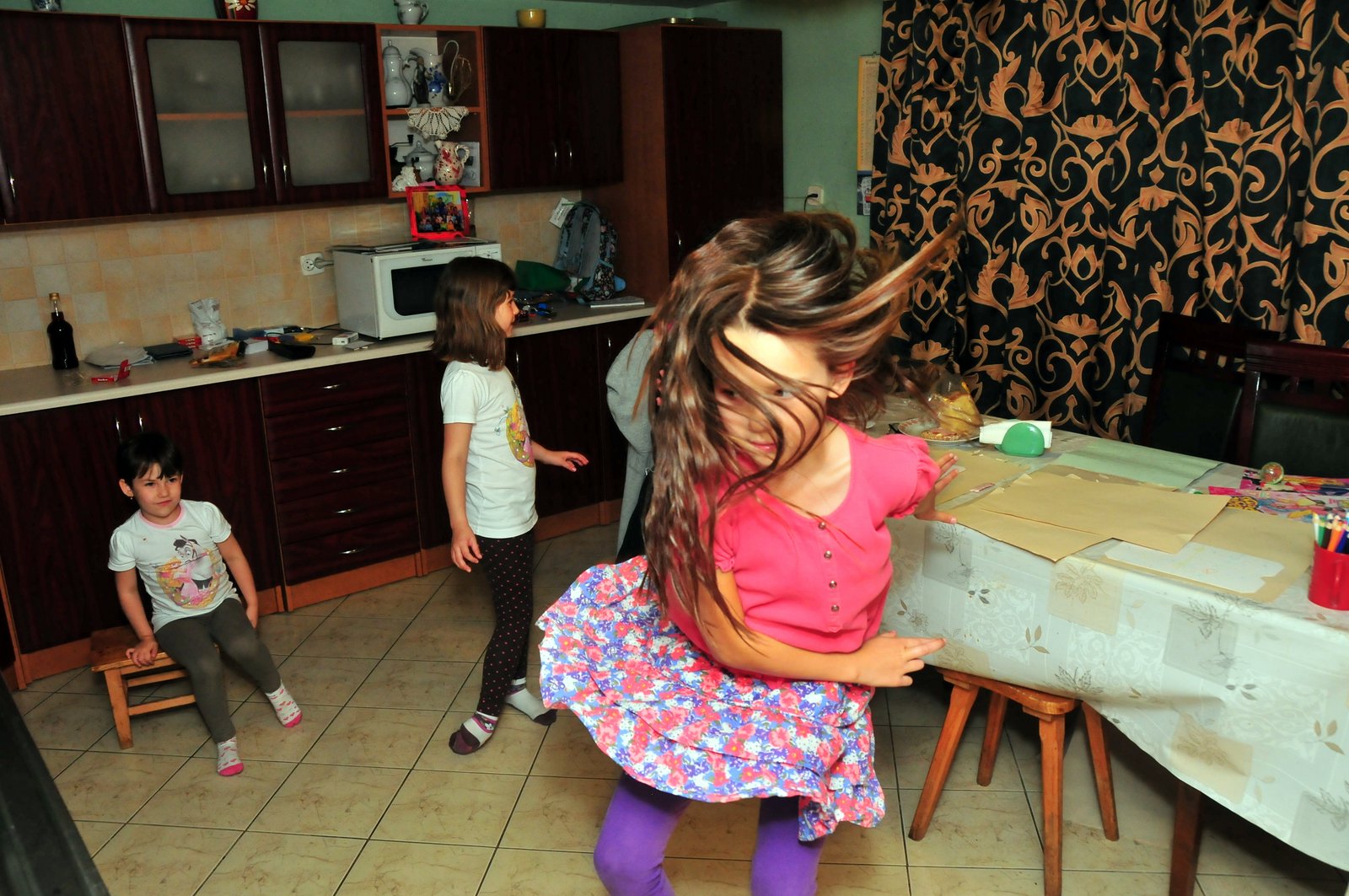
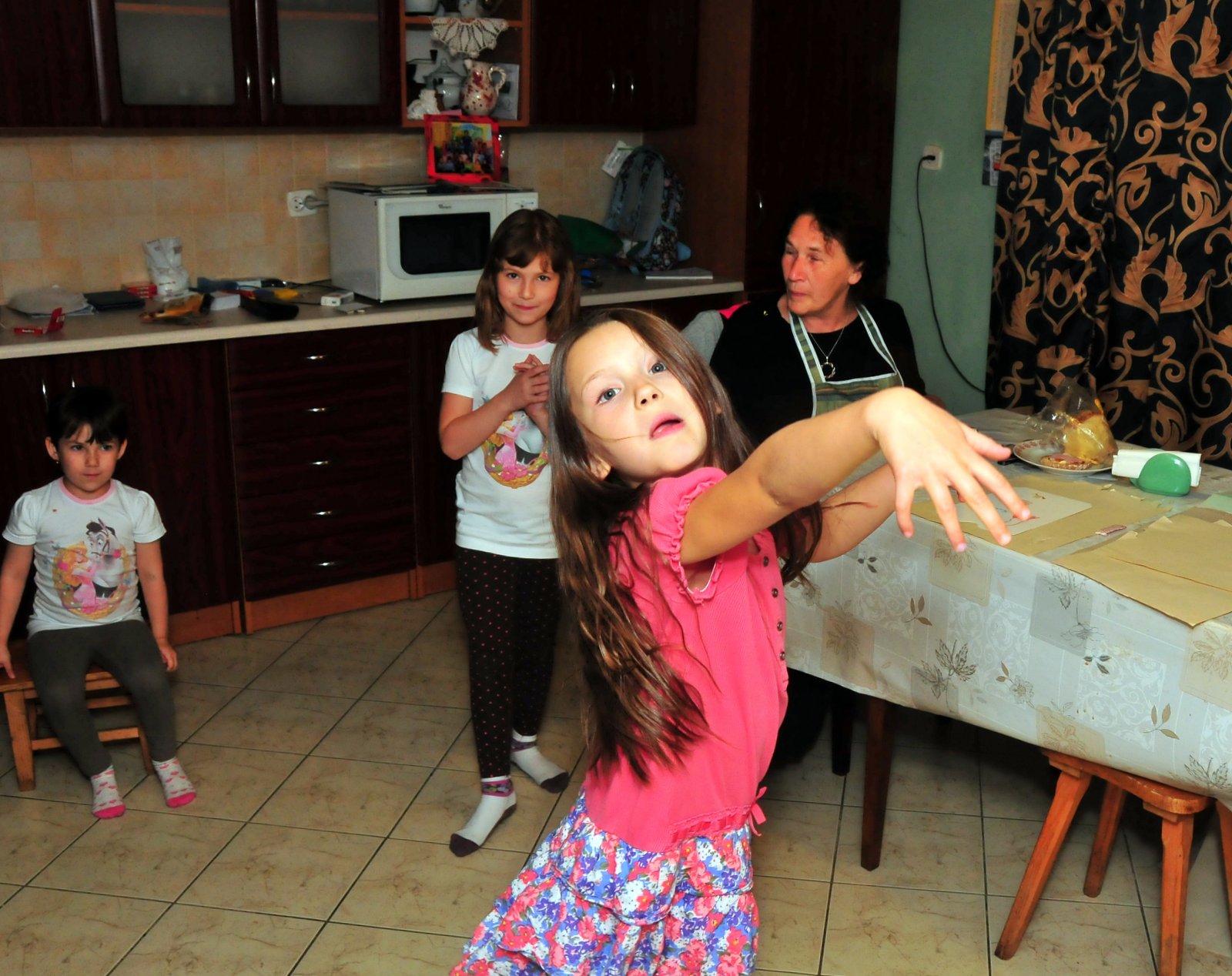
And thus begin three weeks together with the cousins.
Lunch with Aunties
Lunch with Aunties who have maintained Dziadek’s family home. Since neither had seen L in close to two years, there was a lot of doting.
“Does she understand Polish?” asked Aunt A.
“Of course!” Babcia answered. “Every word. And since she went to pre-school these last two weeks, she’s begun speaking it very well also.”
And yet the Girl buried her face in my arms for the first few minutes.
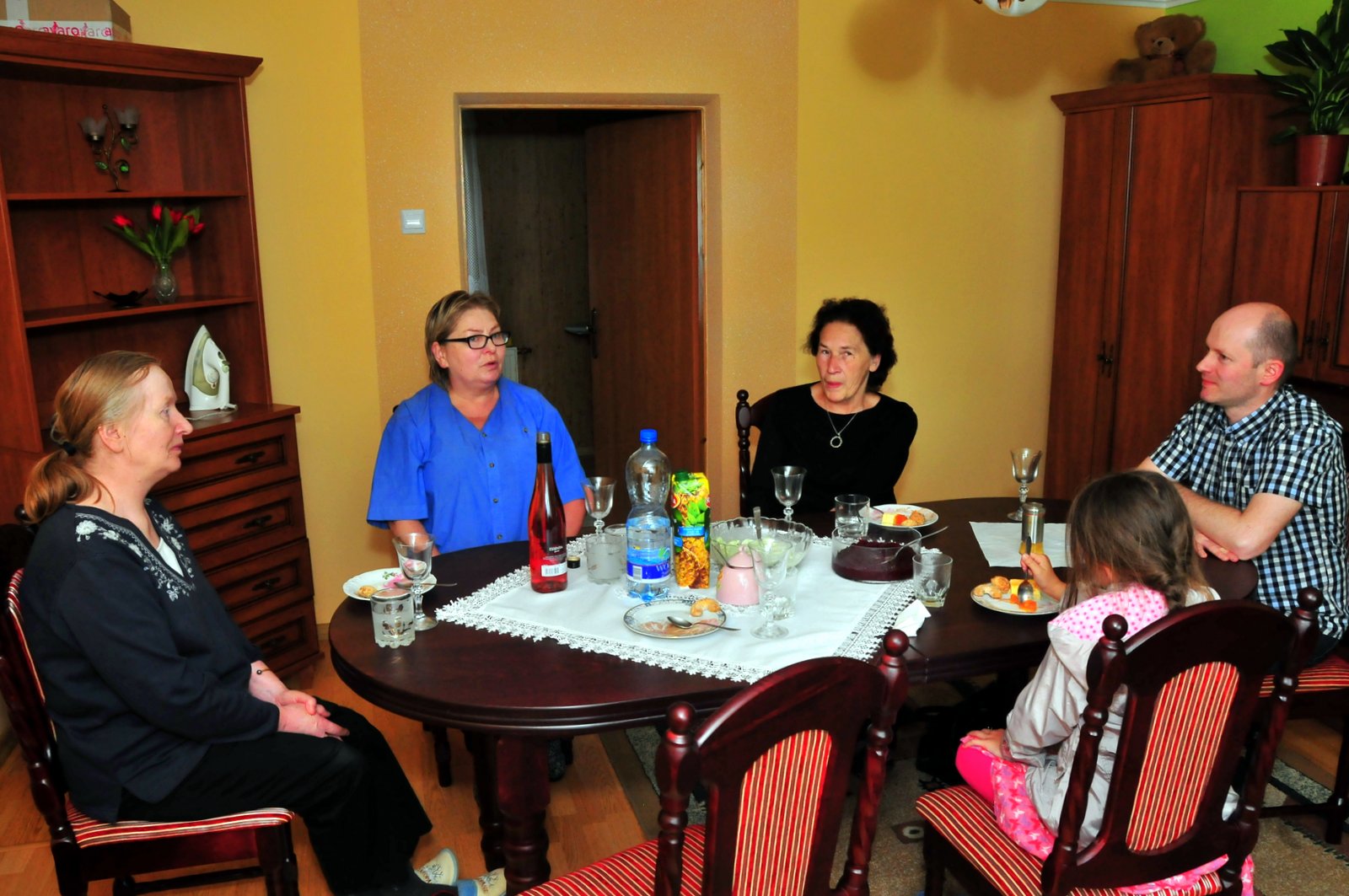
But equally as inevitable was the change that came as soon as cousin R began tickling, chasing, and generally goofing with the Girl.
“You can’t get me while I’m with ciocia!” she squealed every time R approached.
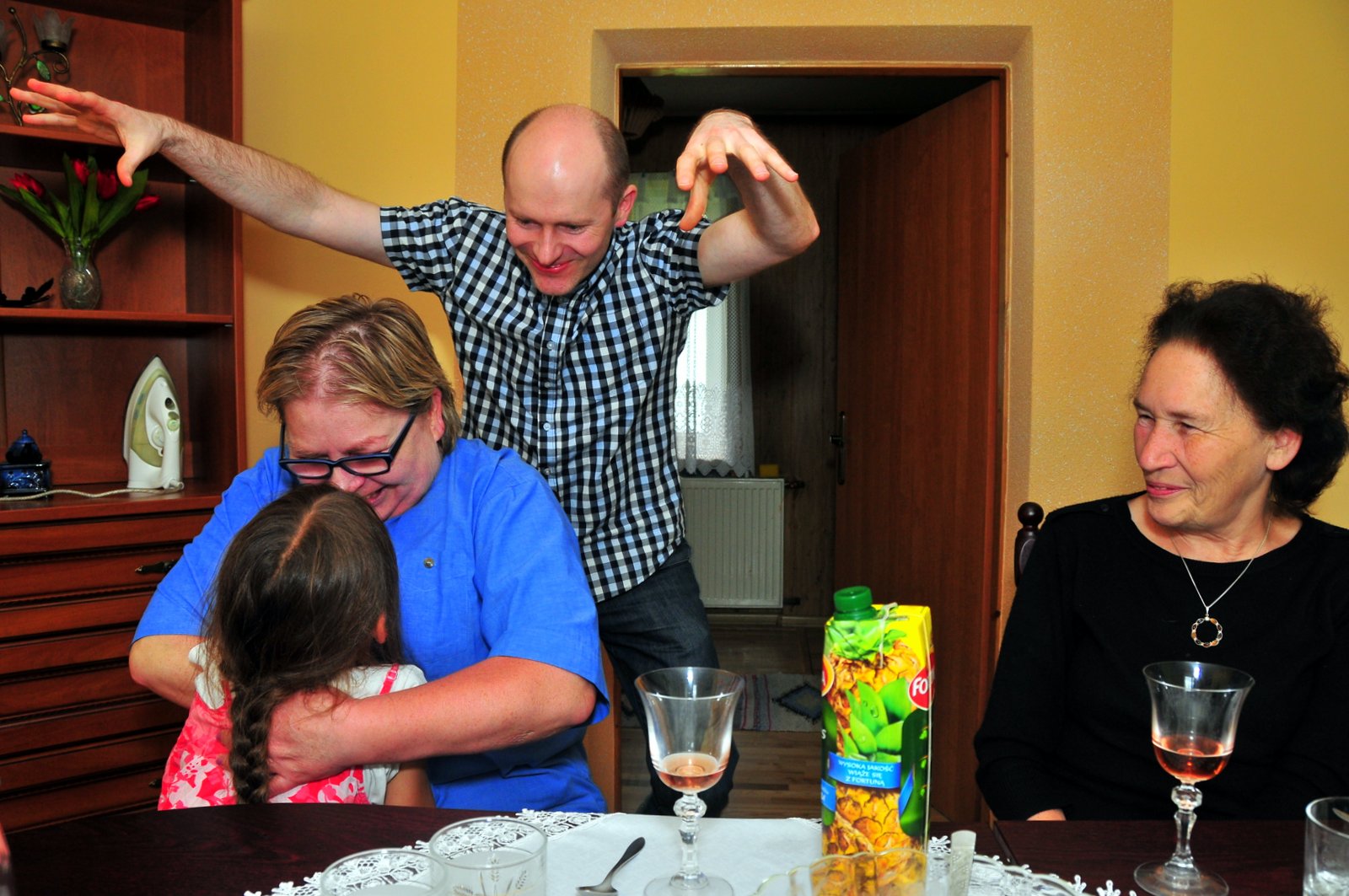
Ciocia became the great hero, always defending L with hugs and little tickles of her own. When she gave L seconds on ice cream, she certainly moved into Most Favored Auntie status.
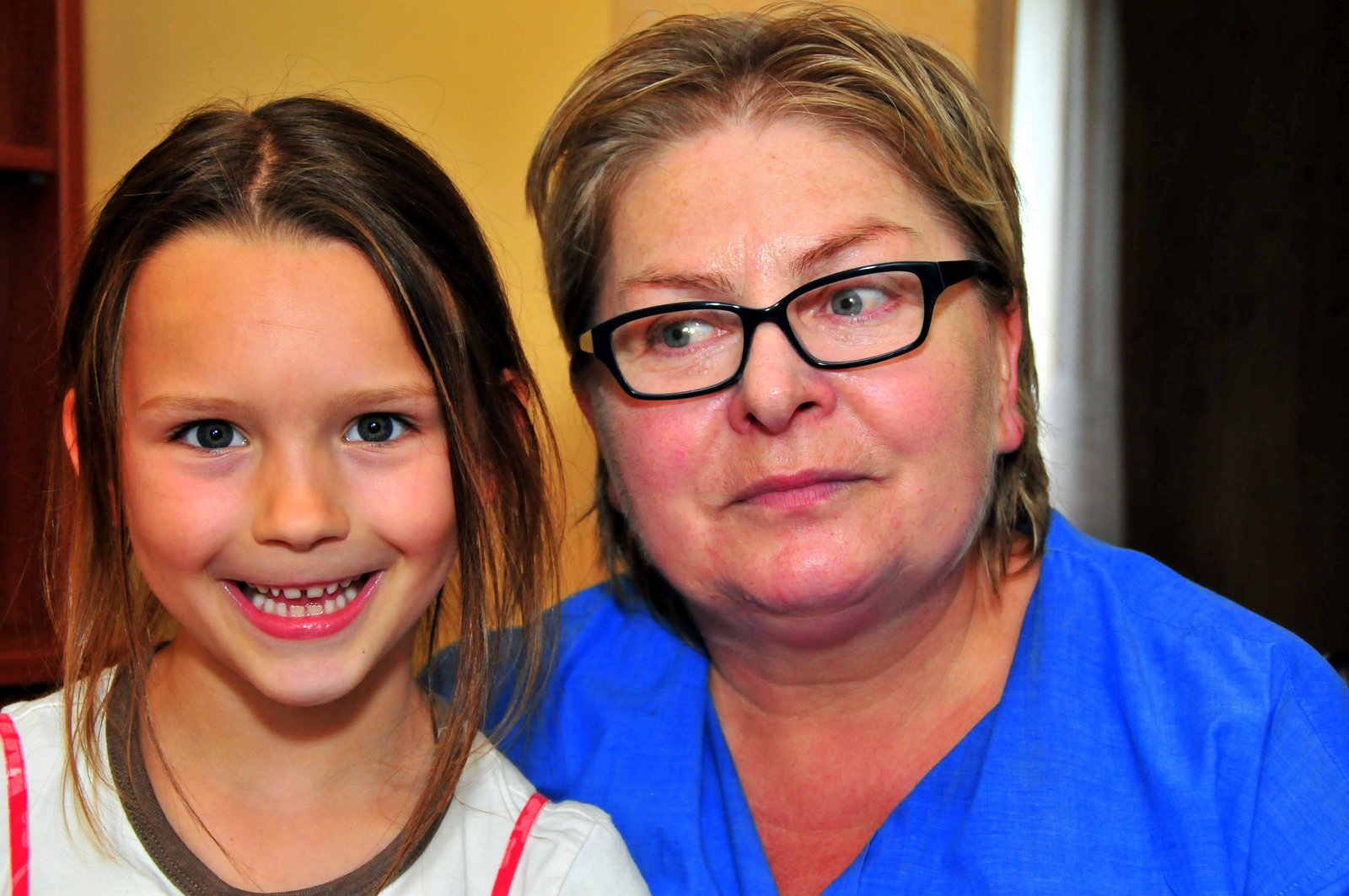
Yet it was not all tickles and giggles: R is getting married in a week, which means L will experience her first Polish wedding party.
“Do you know how we’re going to dance and sing!” Most Favored Aunt reminded L regularly. Indeed. The wedding is one of the things I’ve been most looking forward to about this visit. There are of course the usual happiness for R that he’s getting married, but there’s more to it than that.
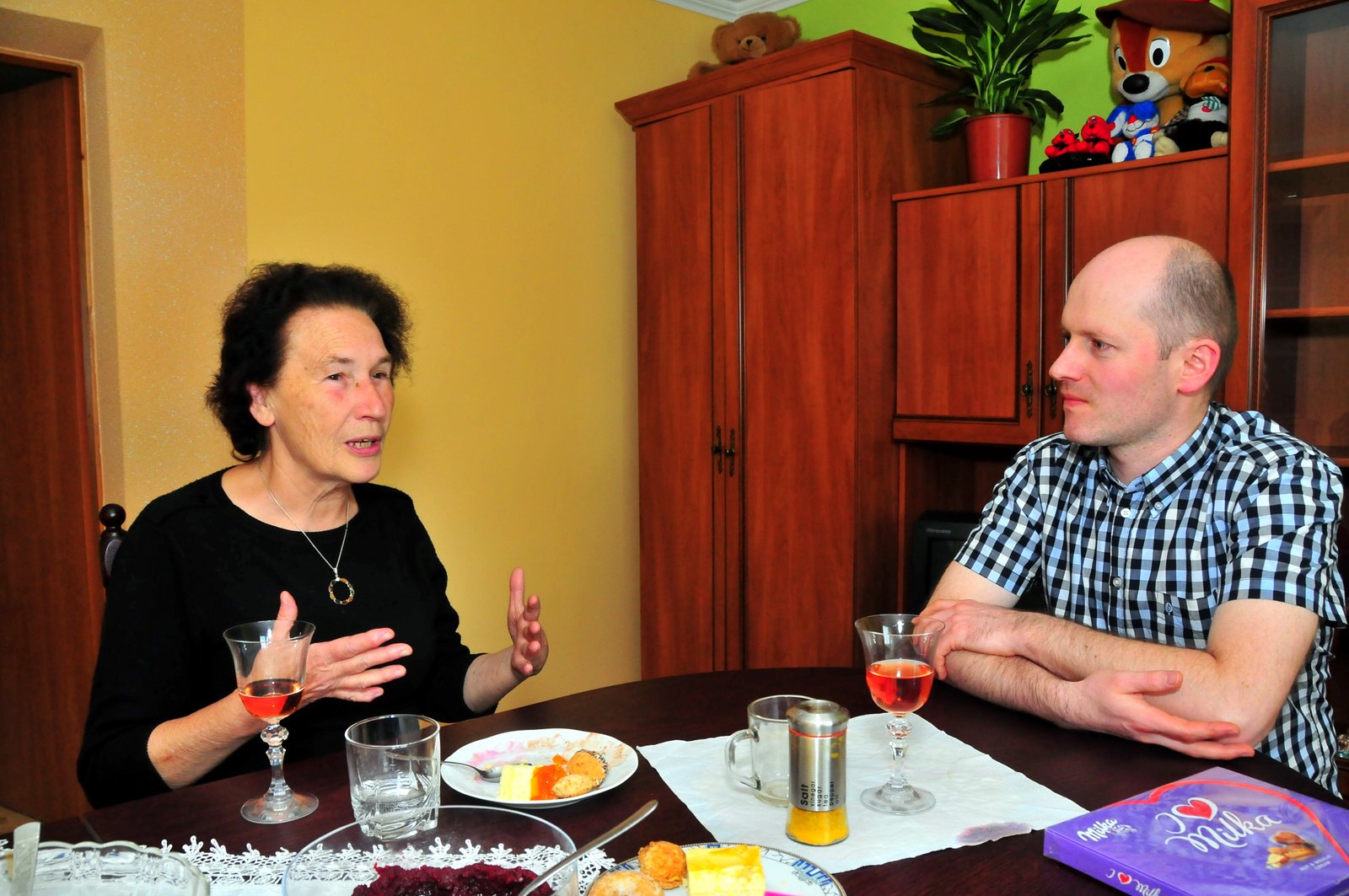
A Polish wedding party is so unlike its American counterpart. It’s a celebration at full power, an all-night adventure in food, love, music, laughing, dancing, libation, chatting, and everything else that makes life wonderful.
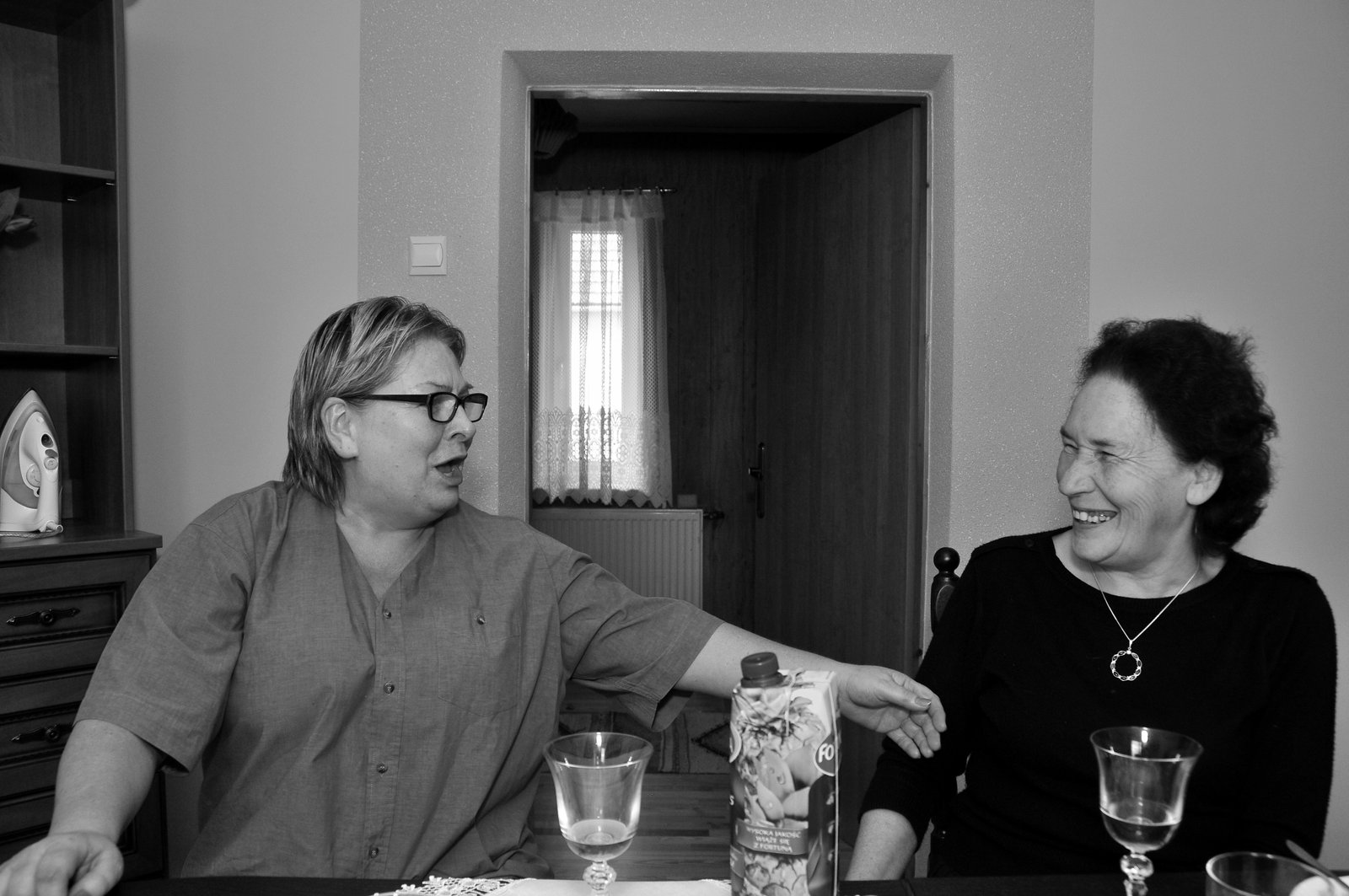
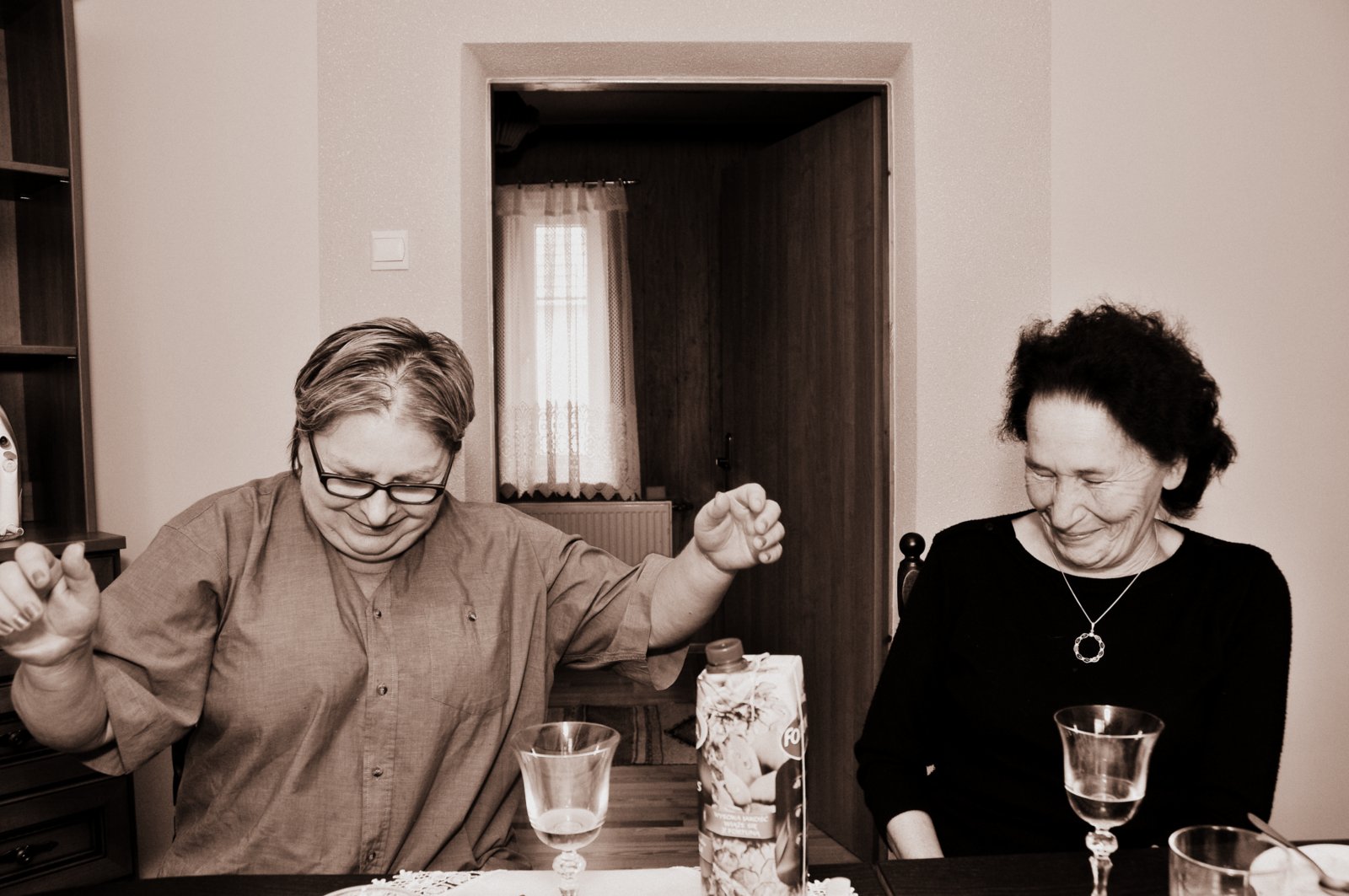
And every visit with family and friends, we get some little taste of some portion of that fast-approaching evening.
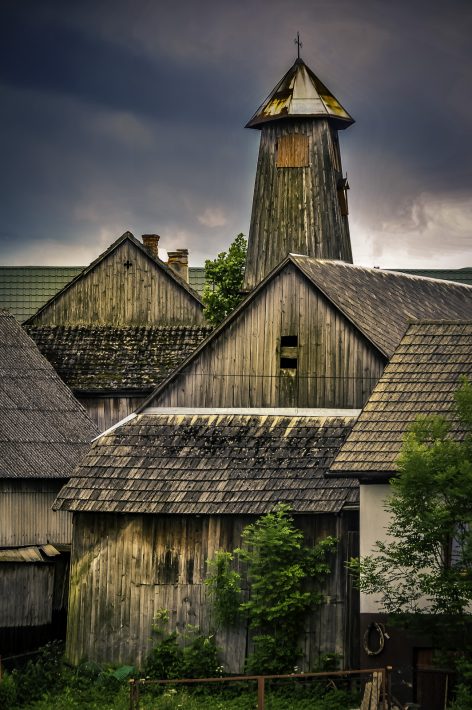
Bell Tower
Puddles
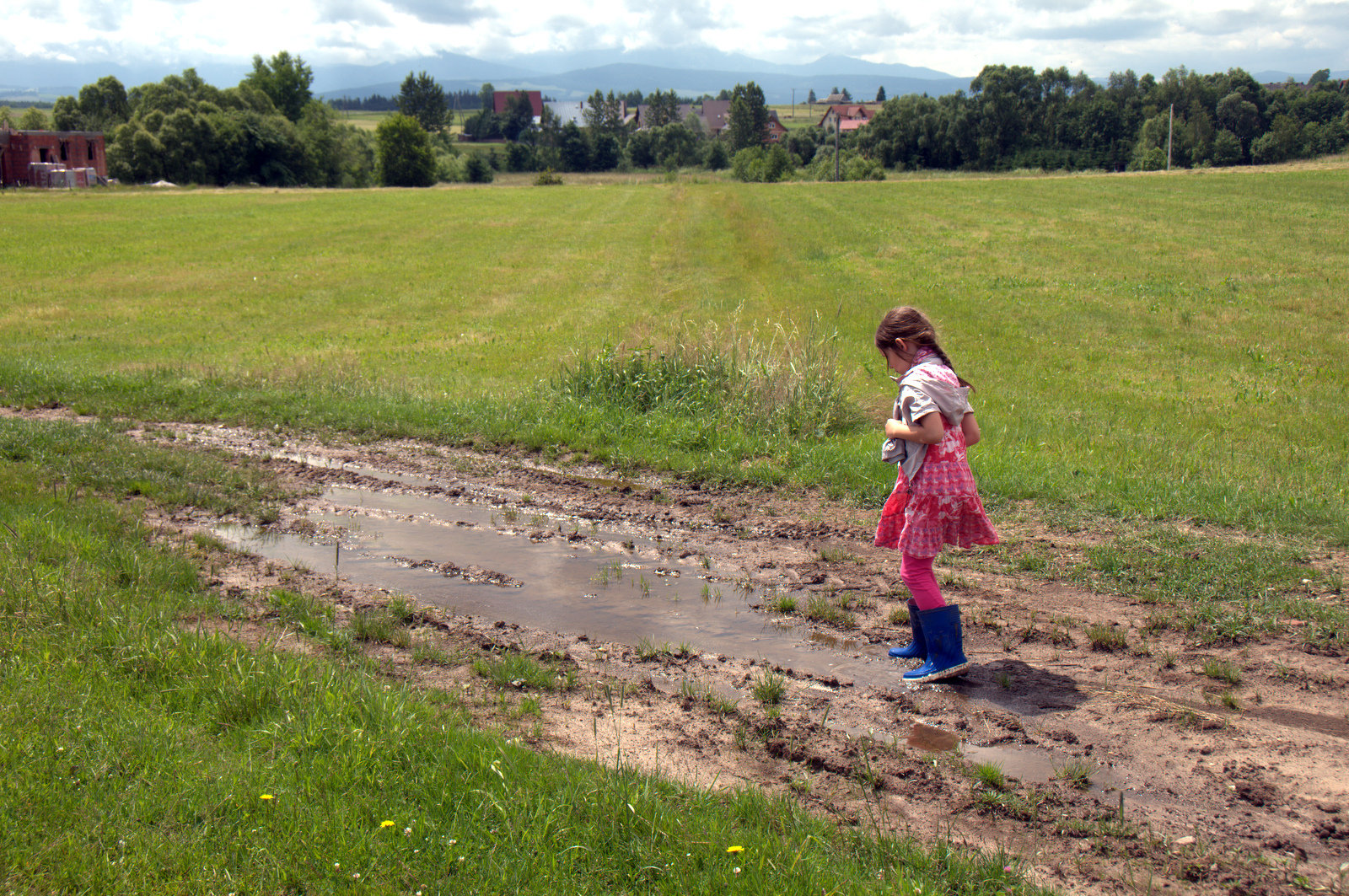
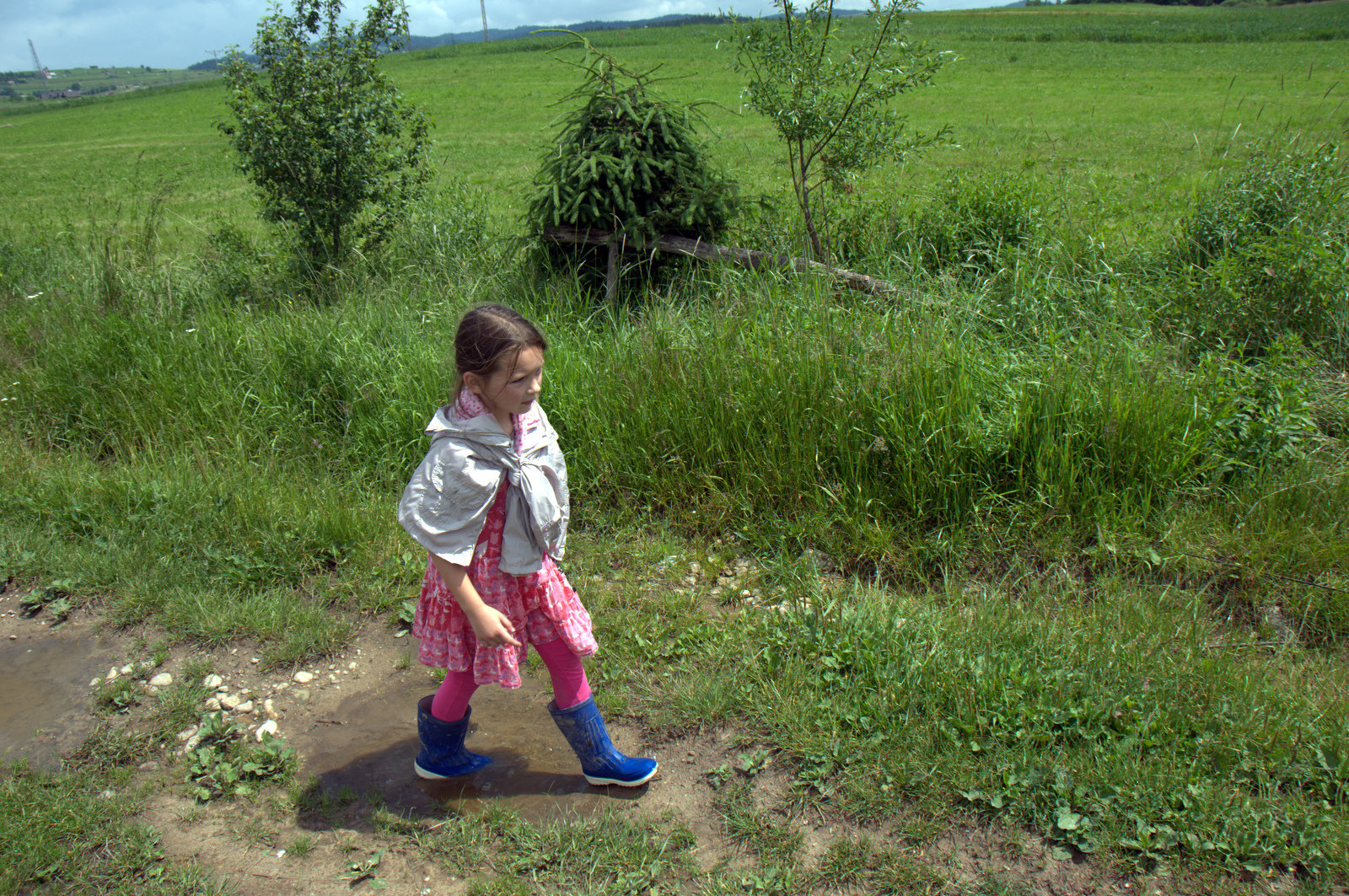
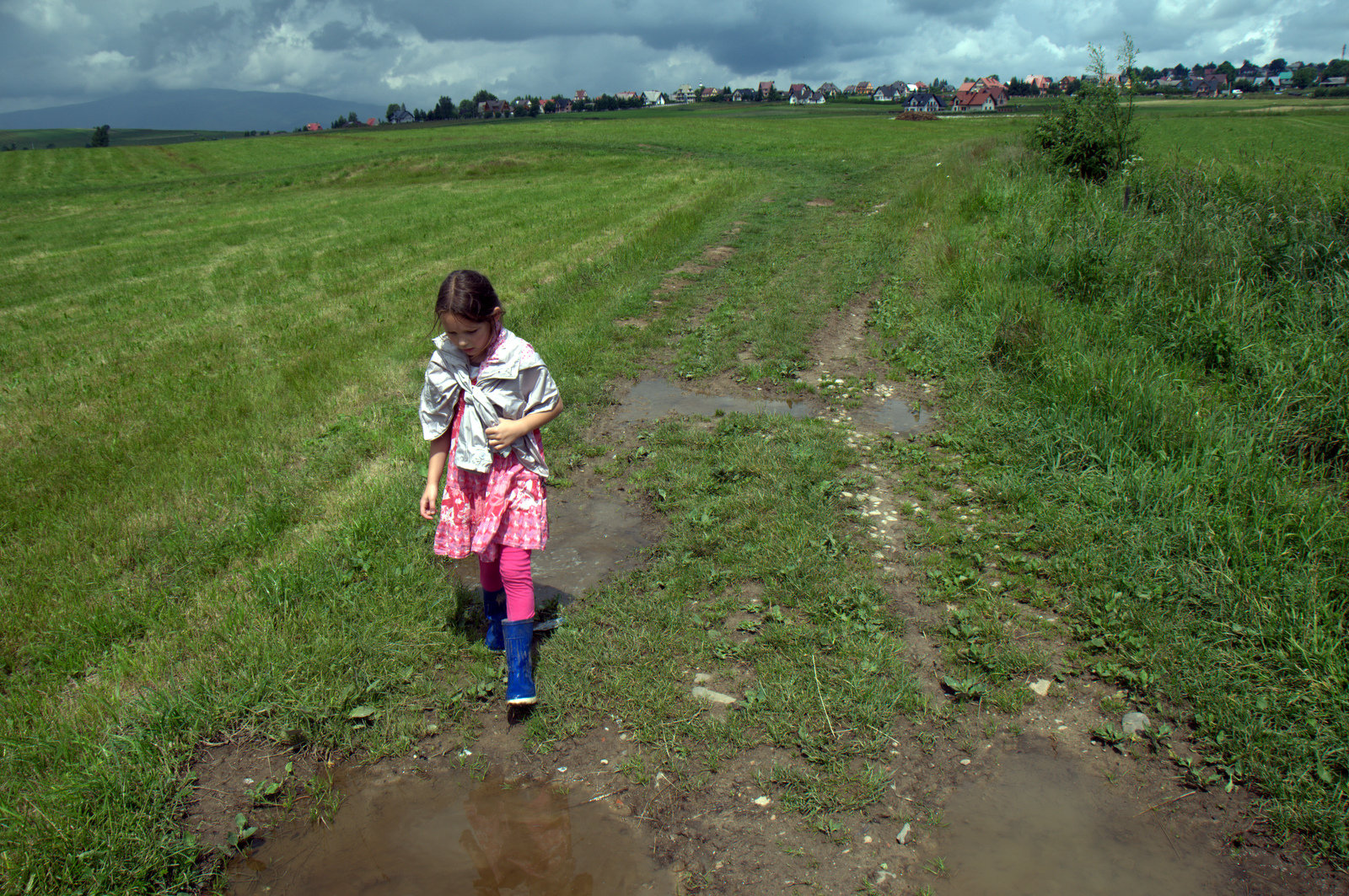
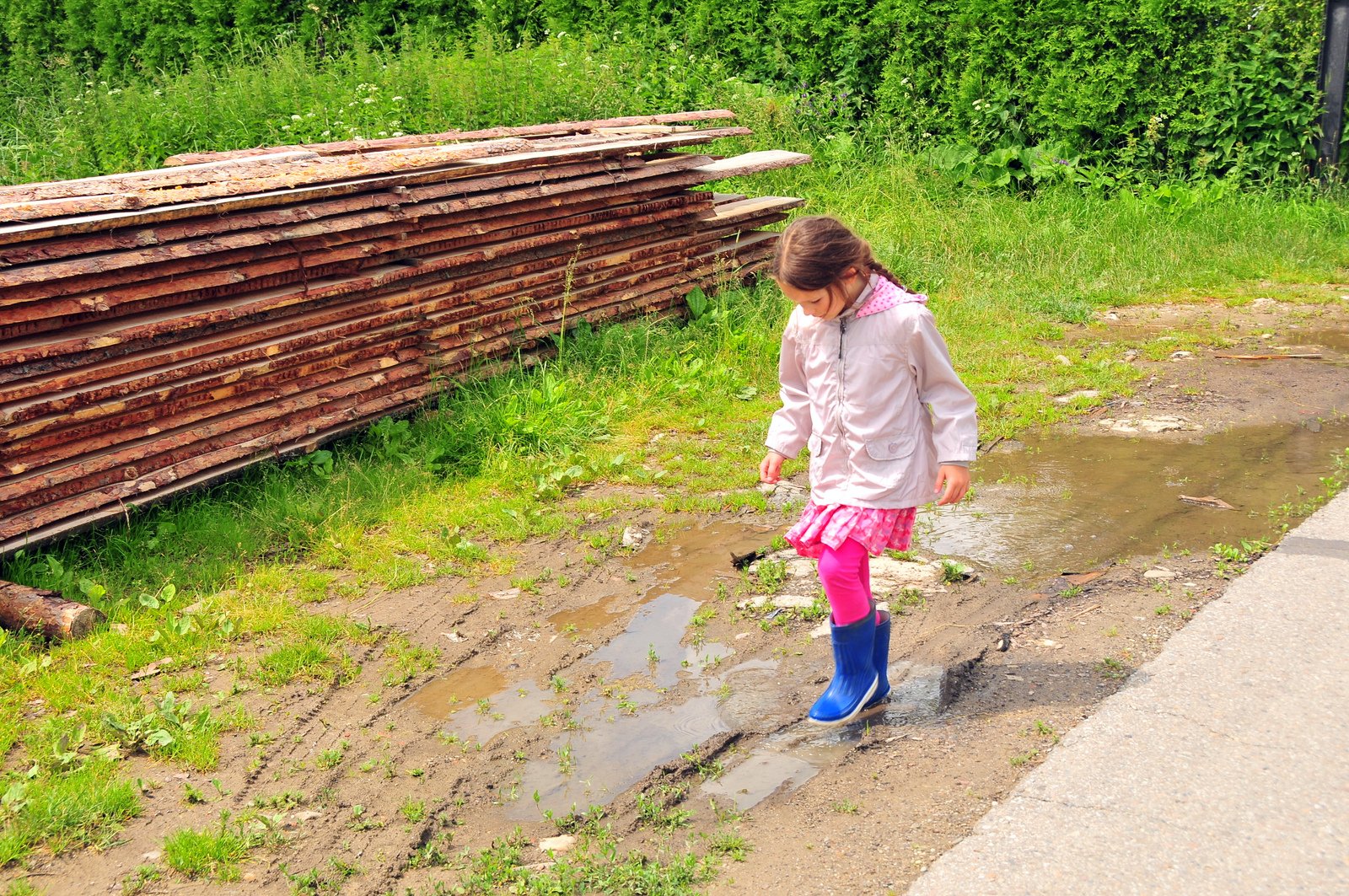
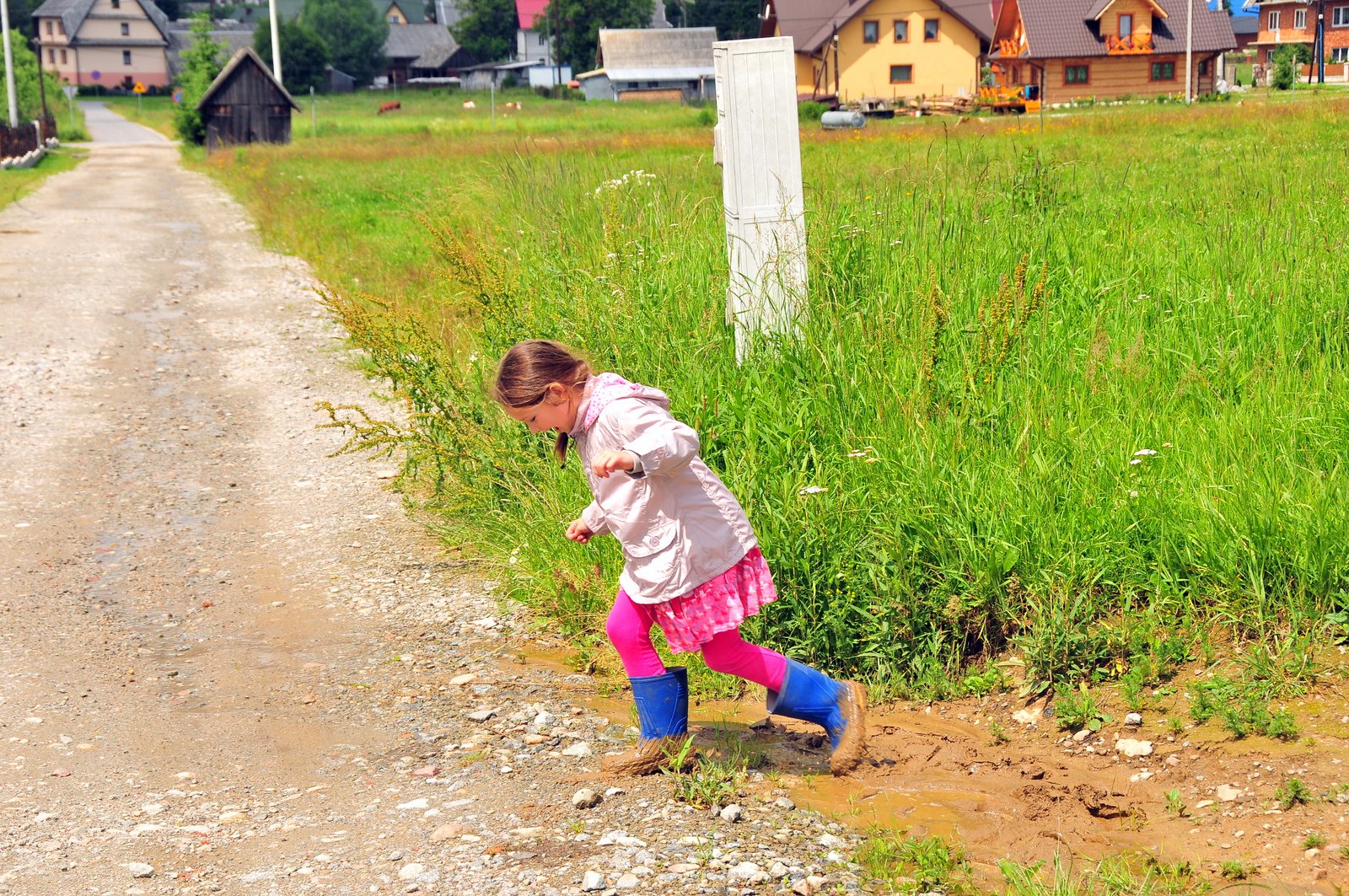
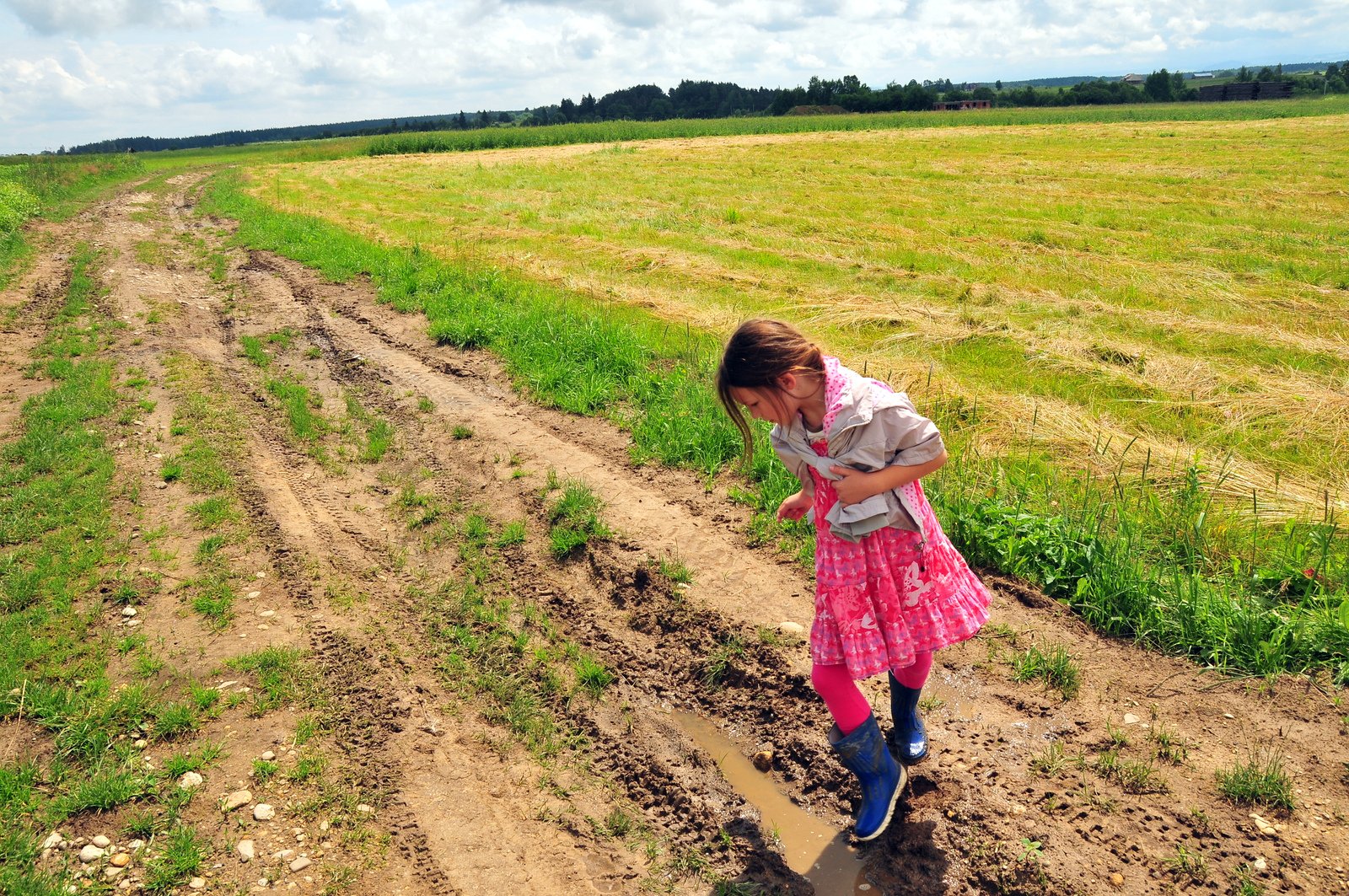
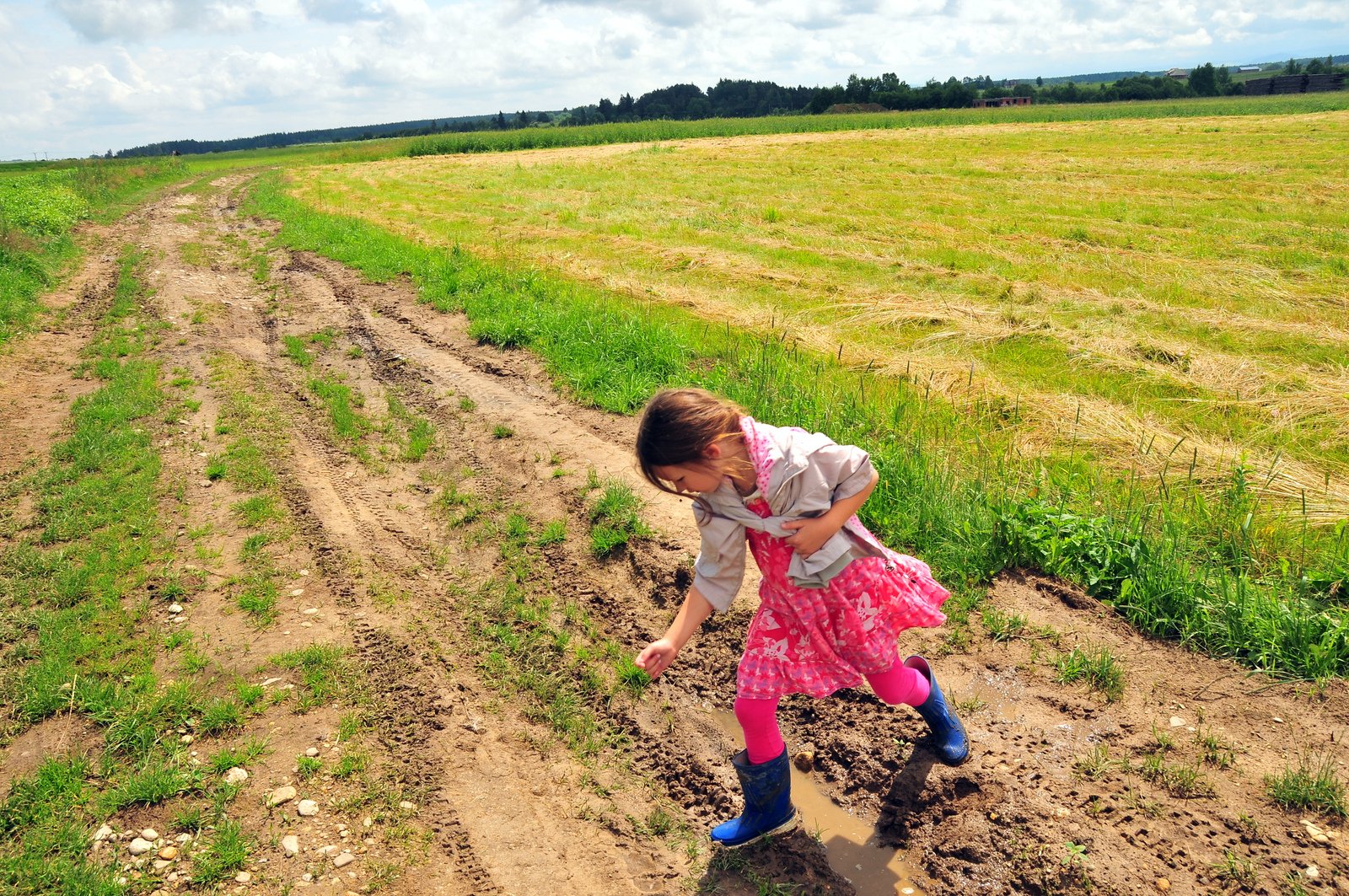
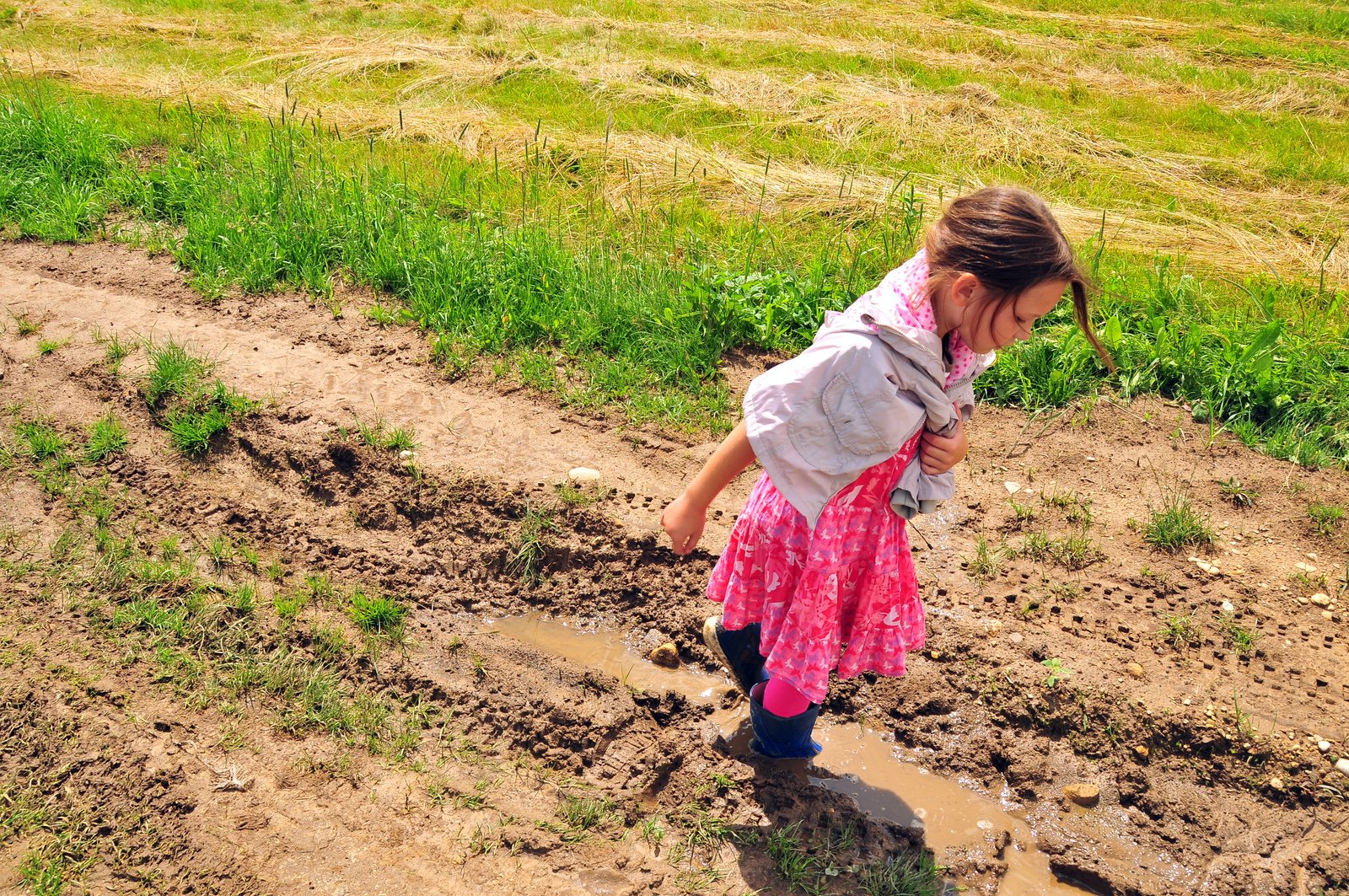
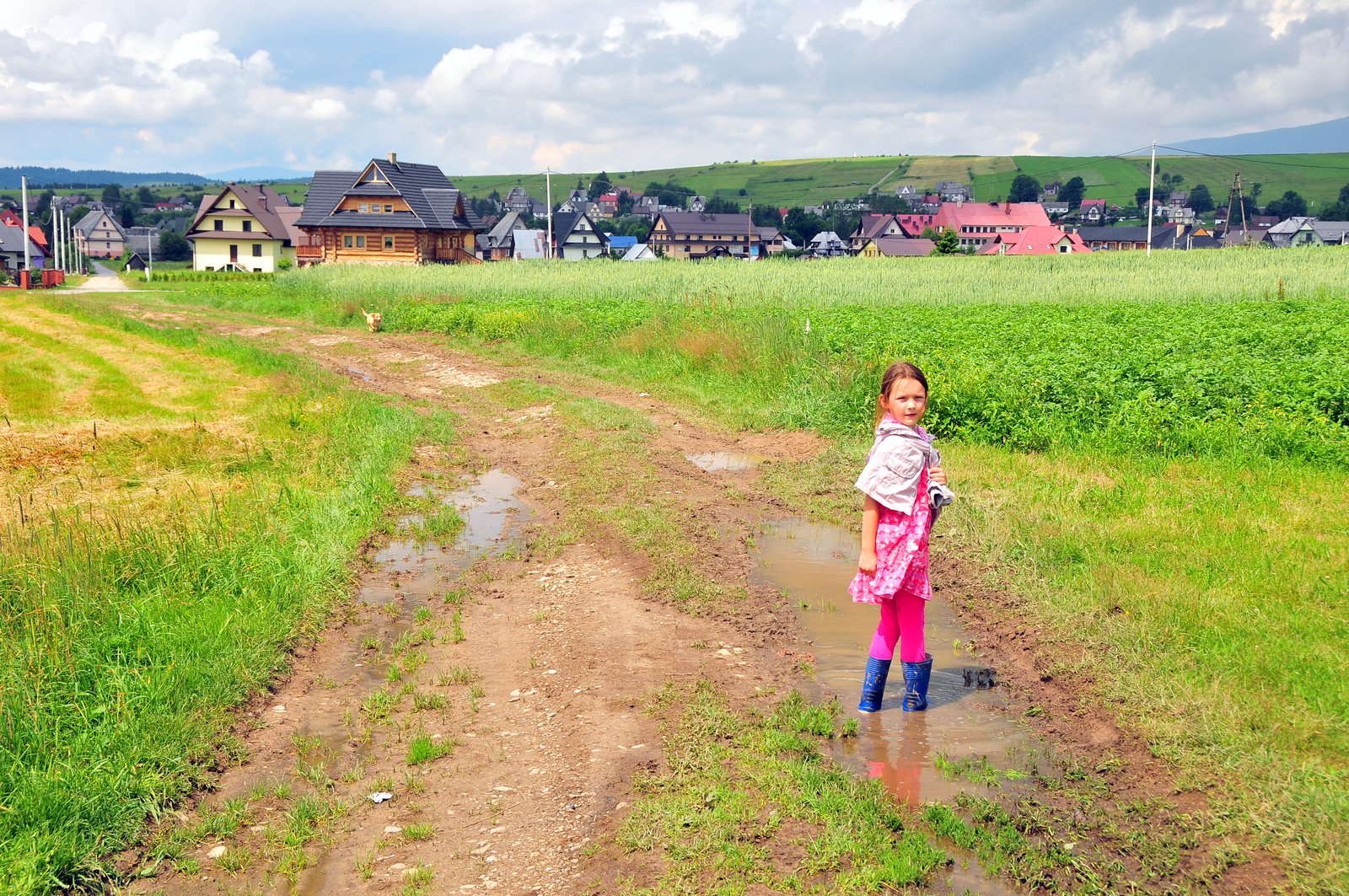
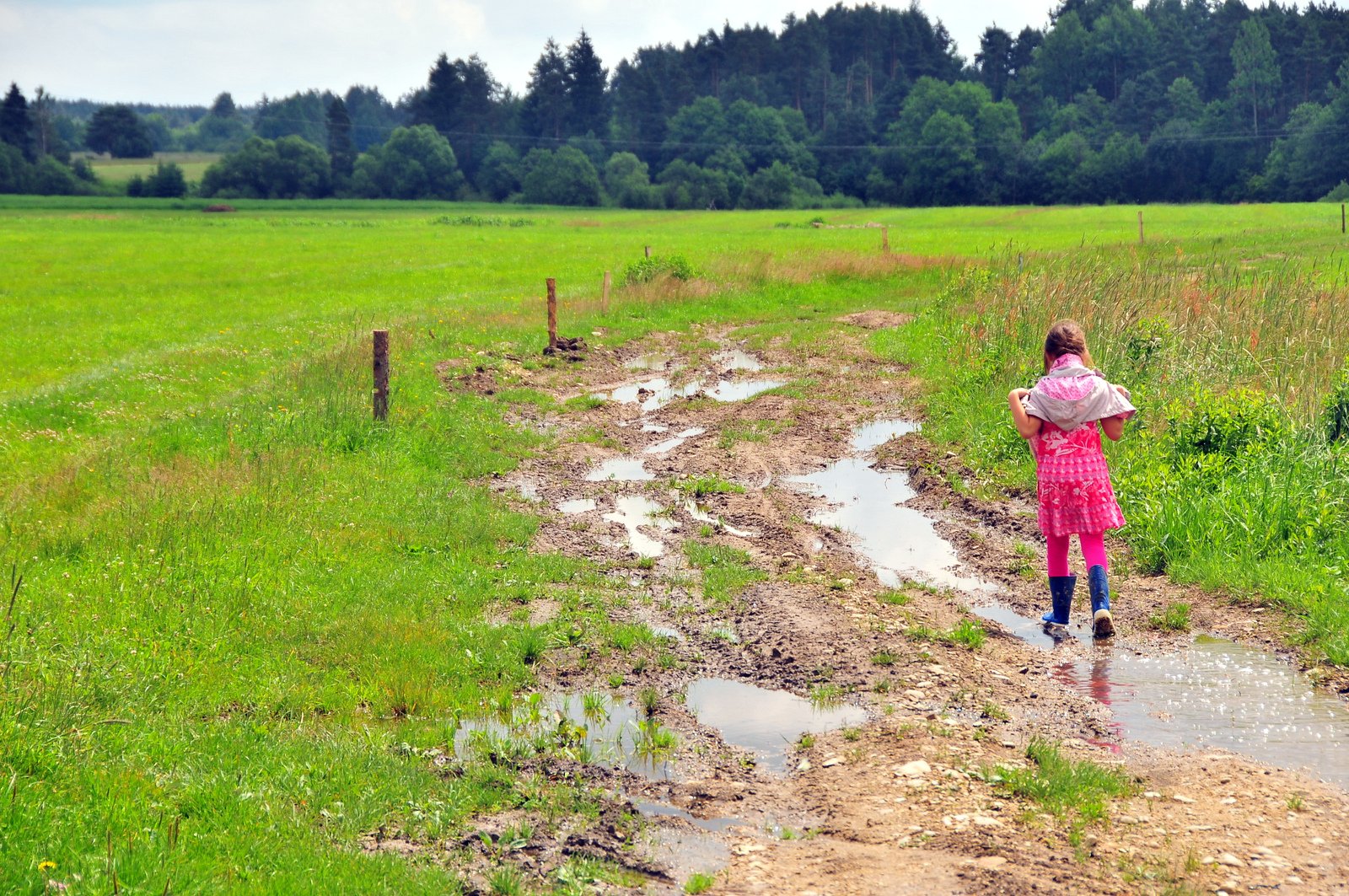
Take a six-year-old, some puddles, and a pair of gum boots and what do you have? An obsession with every (and I mean every) mud puddle.
Damp Krakow
The Girl and I headed to Krakow today. I was hesitant to take her: she can get fussy with too much walking, and I was intent on visiting some new ground.
“Are you sure you want to go? It will be a lot of walking, and we’ll be doing things you might not find so interesting,” I explained.
“Like what?”
“Like visiting old churches.”
“Sounds okay,” she insisted.
And so we went. After all, what else were we to do? Now power at the house due to repair work; no option that involved excessive outside time (for in Krakow, one can always take cover almost immediately).
And so we went.
Florianska Approach
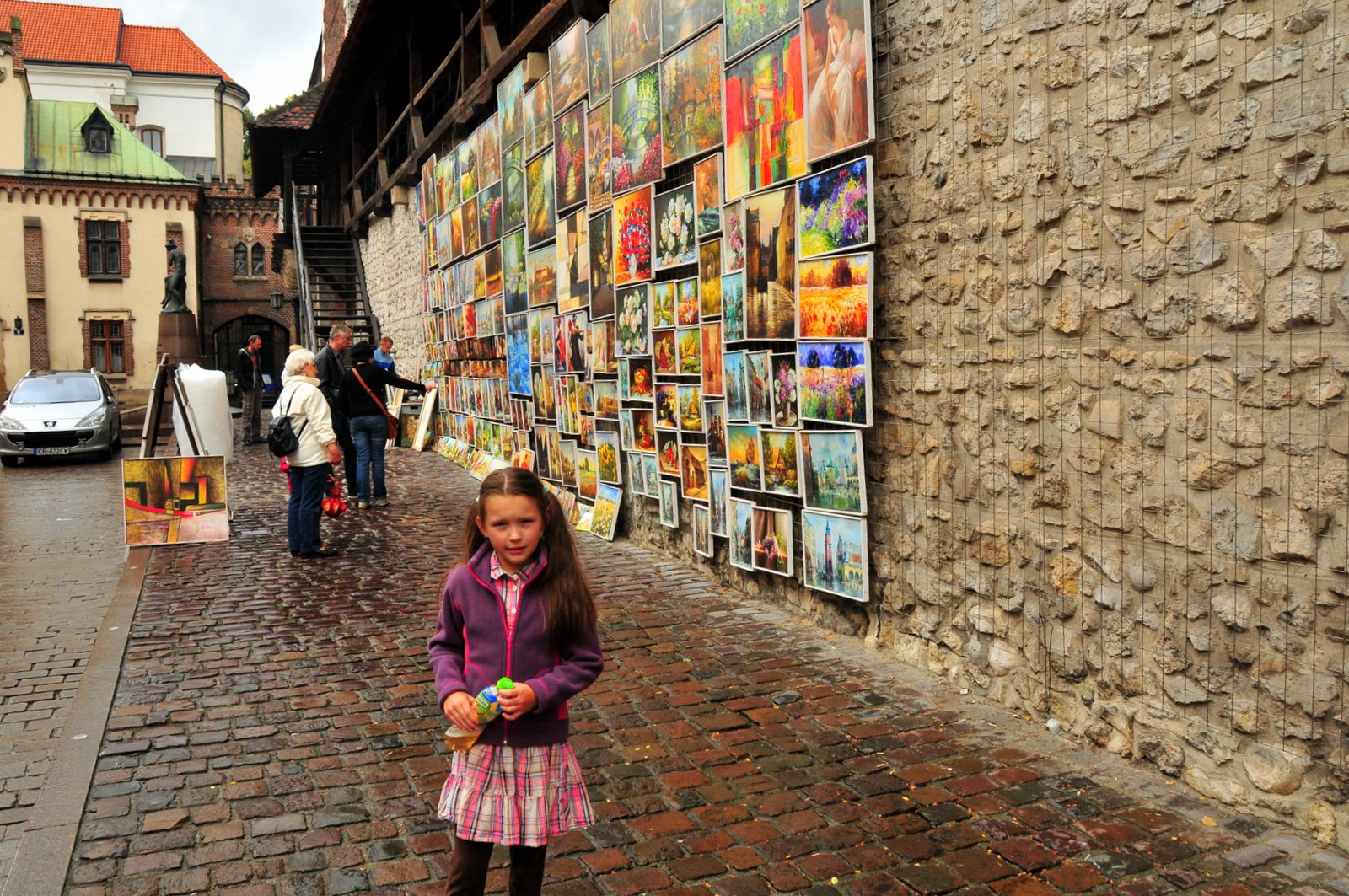
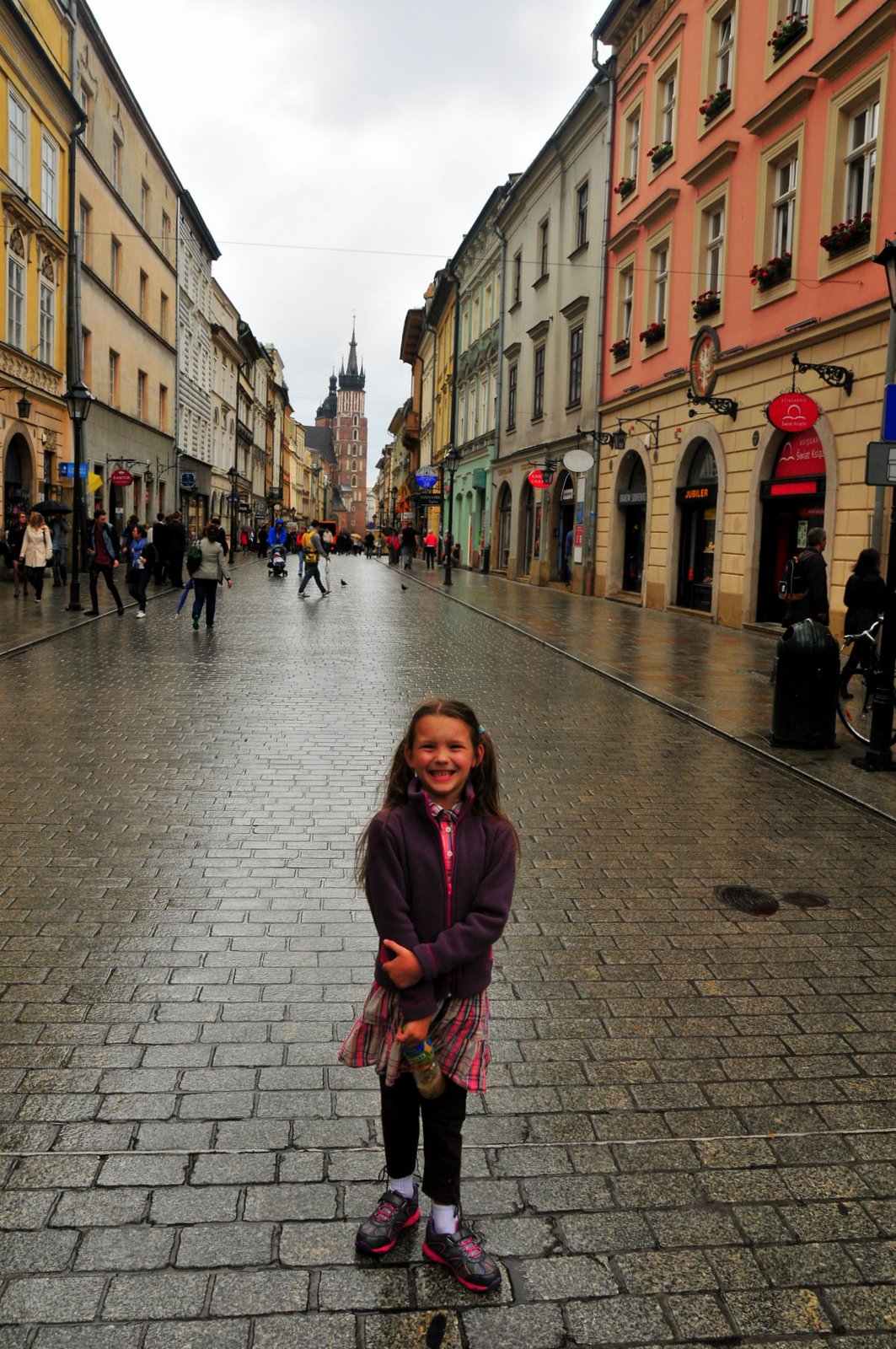
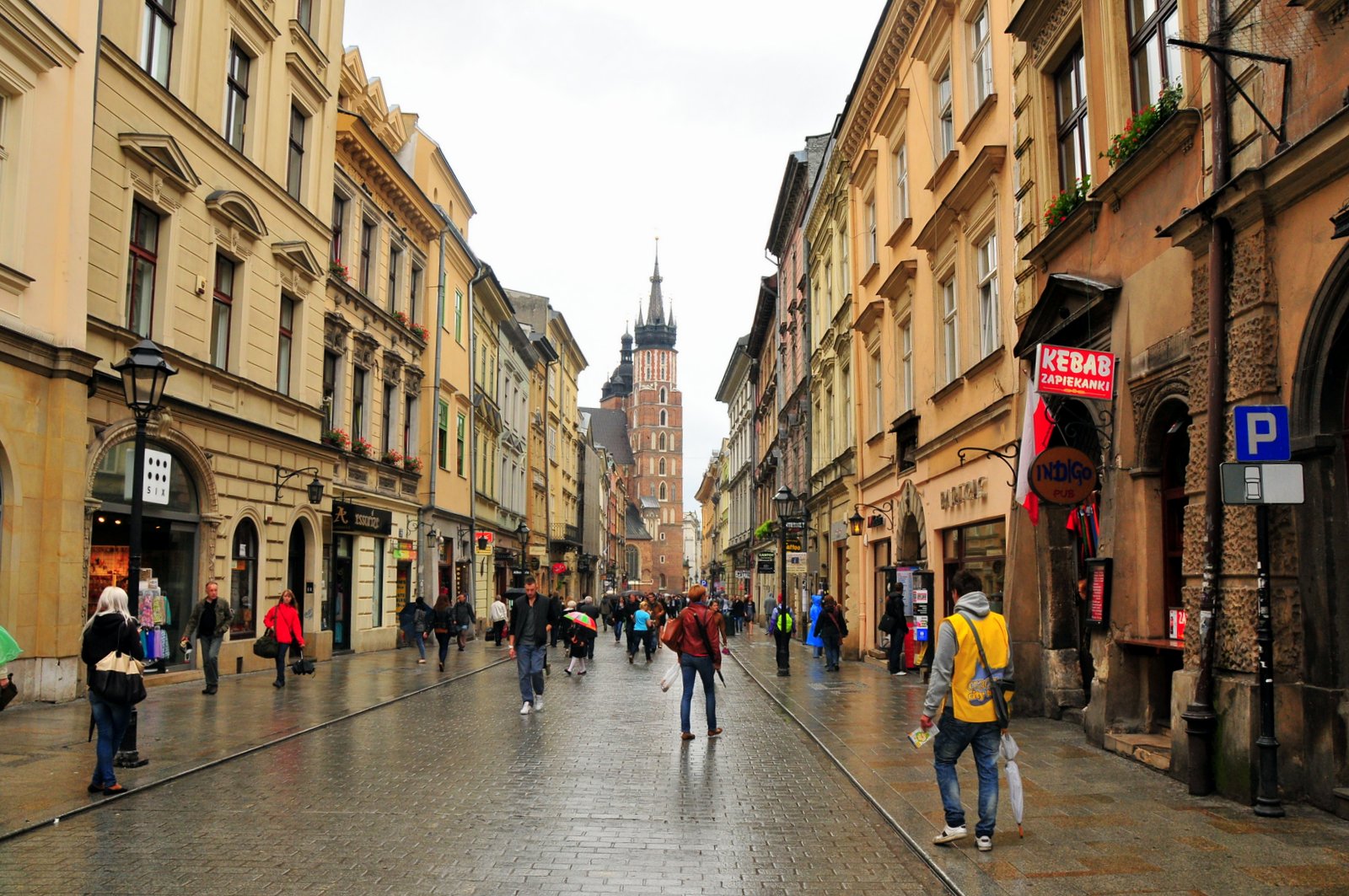
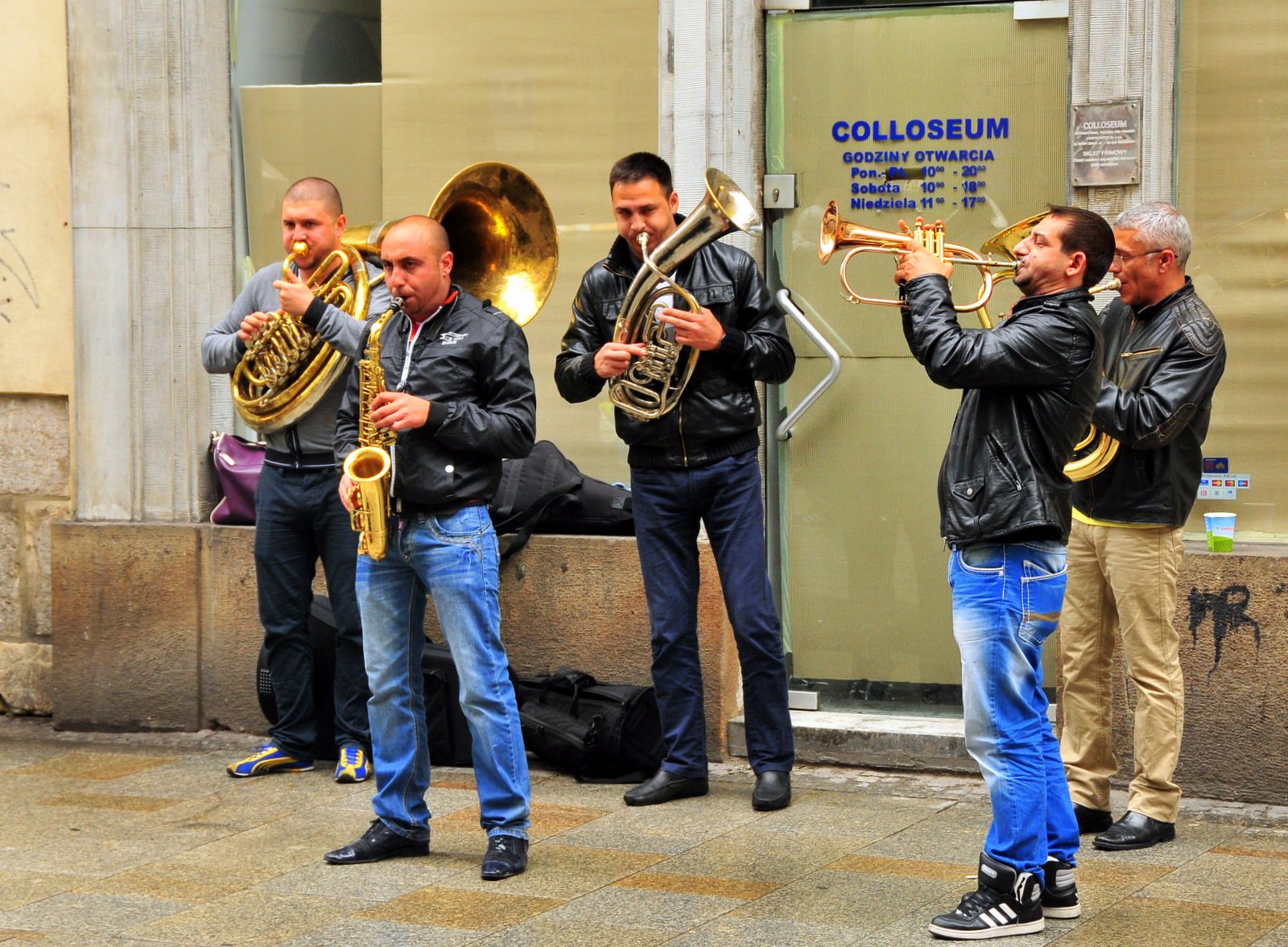
The first time one walks from the general transportation area )the bus station and train station, as well as the muddy lot that serves as the “station” for all private lines) to the main city square is probably etched in most people’s memory. Turn at the Florian Gate, head down Florianska Street, and the spire are the end only hints at the grandour of the city square. As L and I headed down the street, I somehow doubted she would be as impressed. The Romanian brass band did, though.
Plastic Nonsense
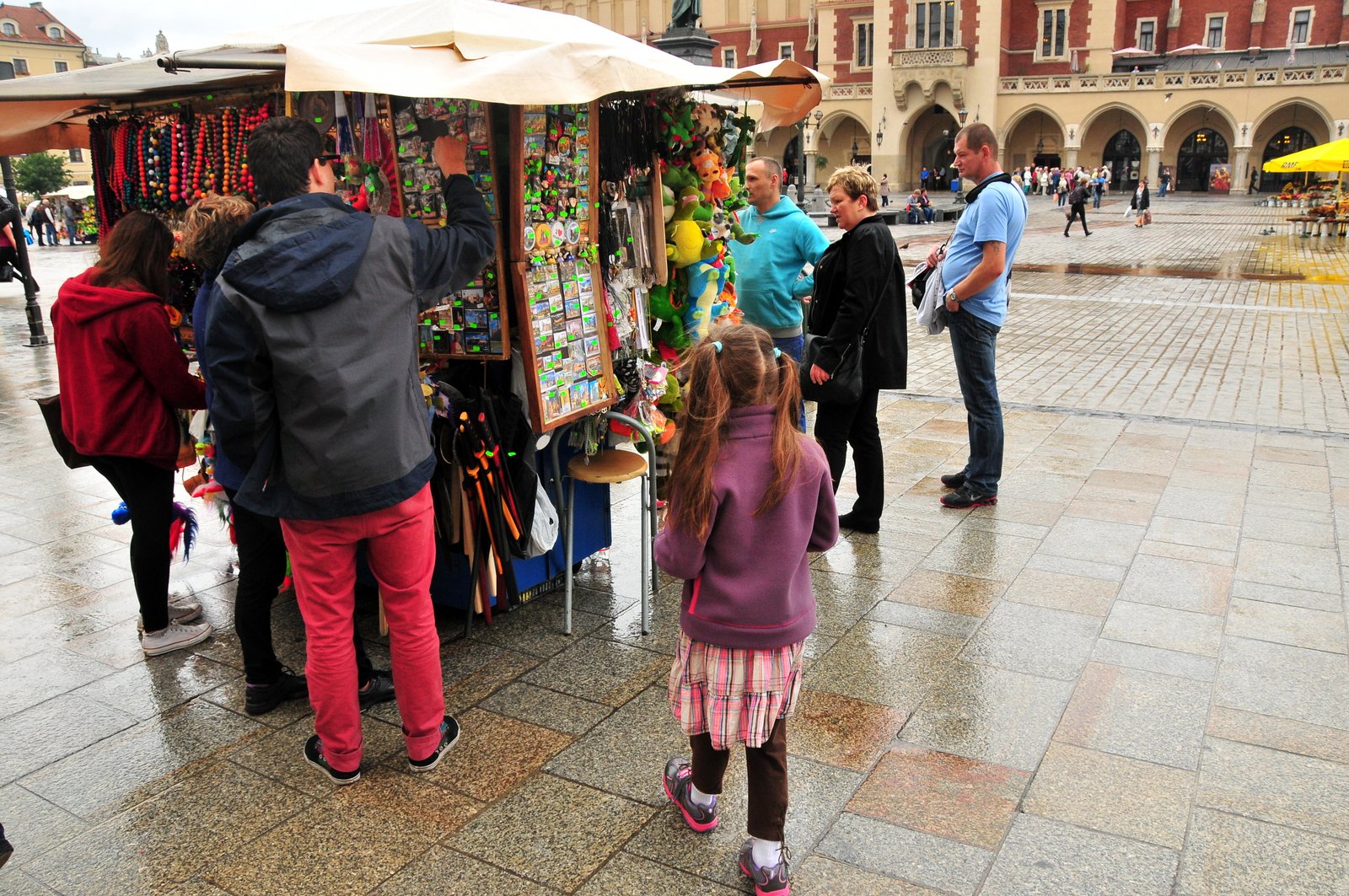
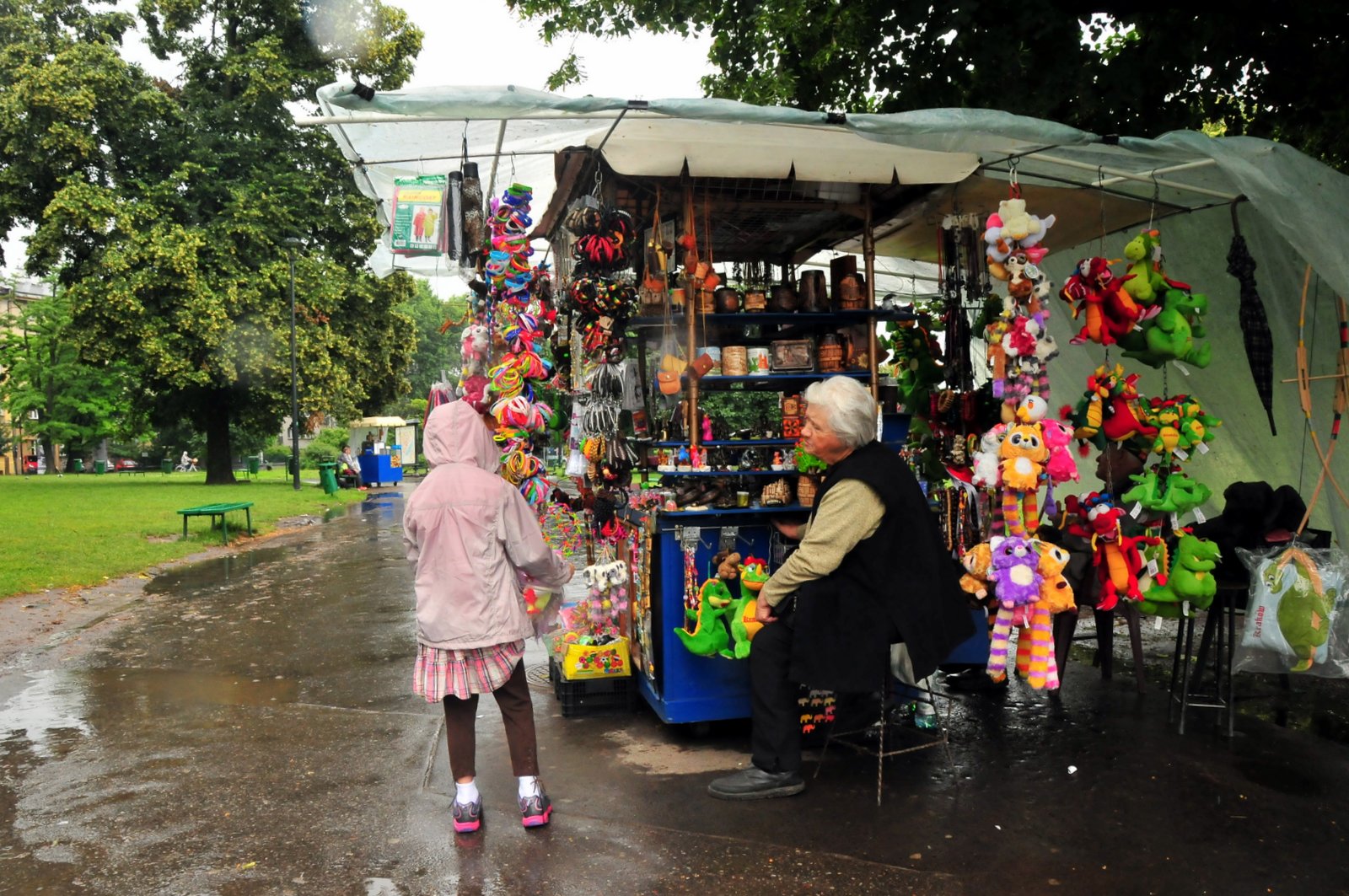
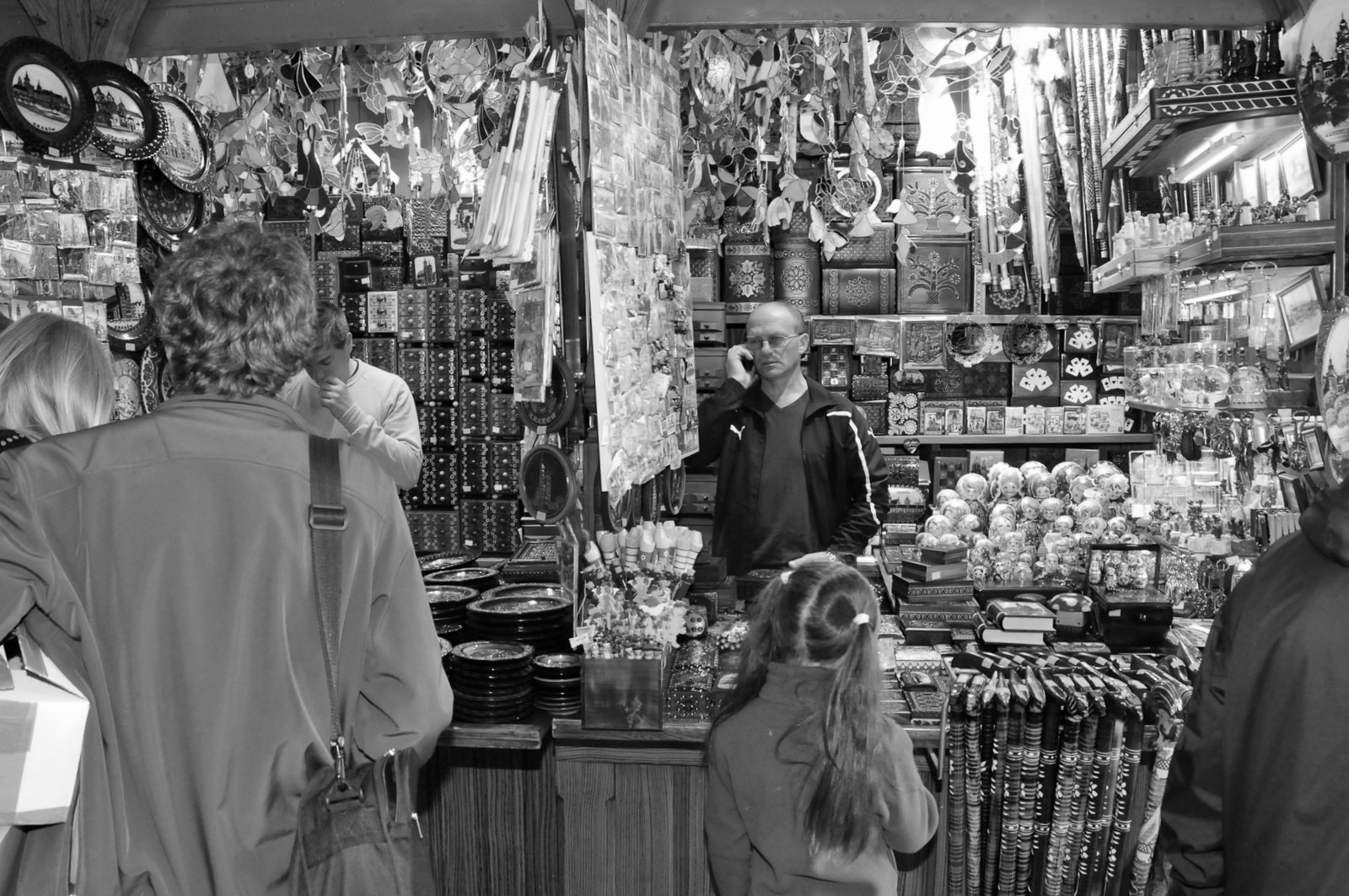
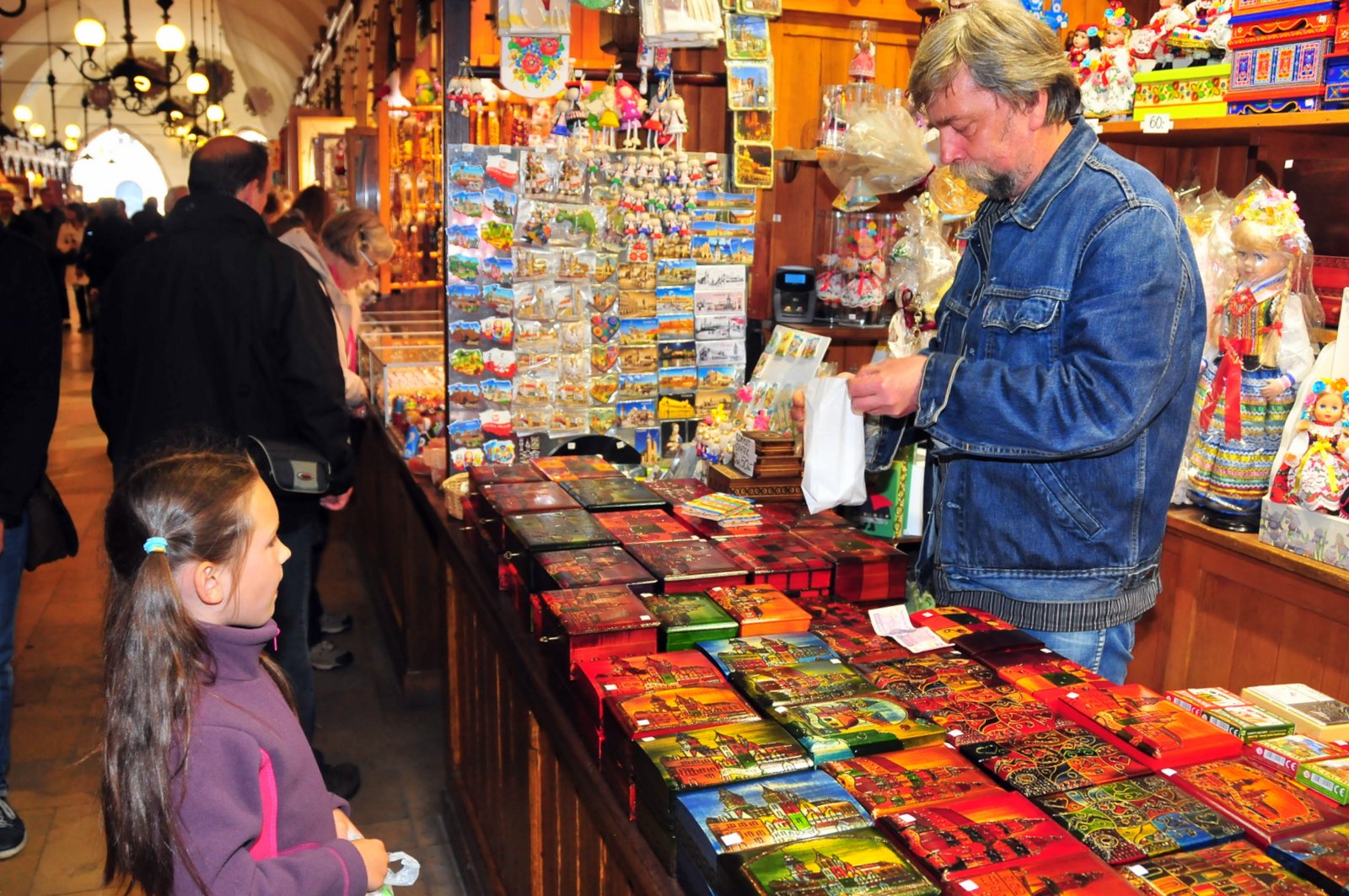
Some things were predictable: every single kisok with plastic nonsense — every single one — acted as a magnet for the Girl. “Can I look at this around at this one?” “Can I take a look at this one?” So of course when we went to the Sukiennice, she was in complete heaven.
To her credit, many of the trinkets and nonsense were for friends. And a very fun little toy for Little Brother.
Churches
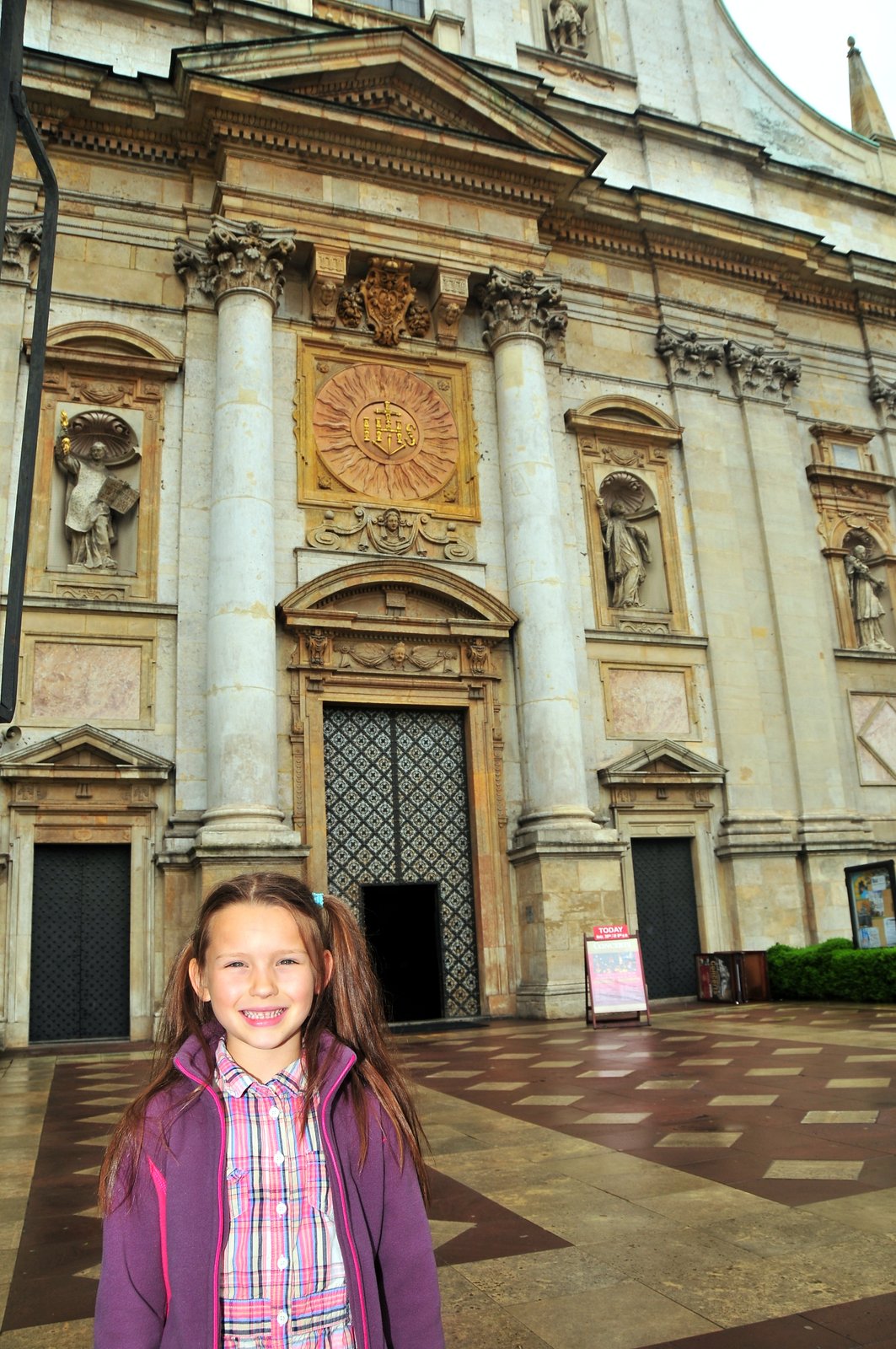
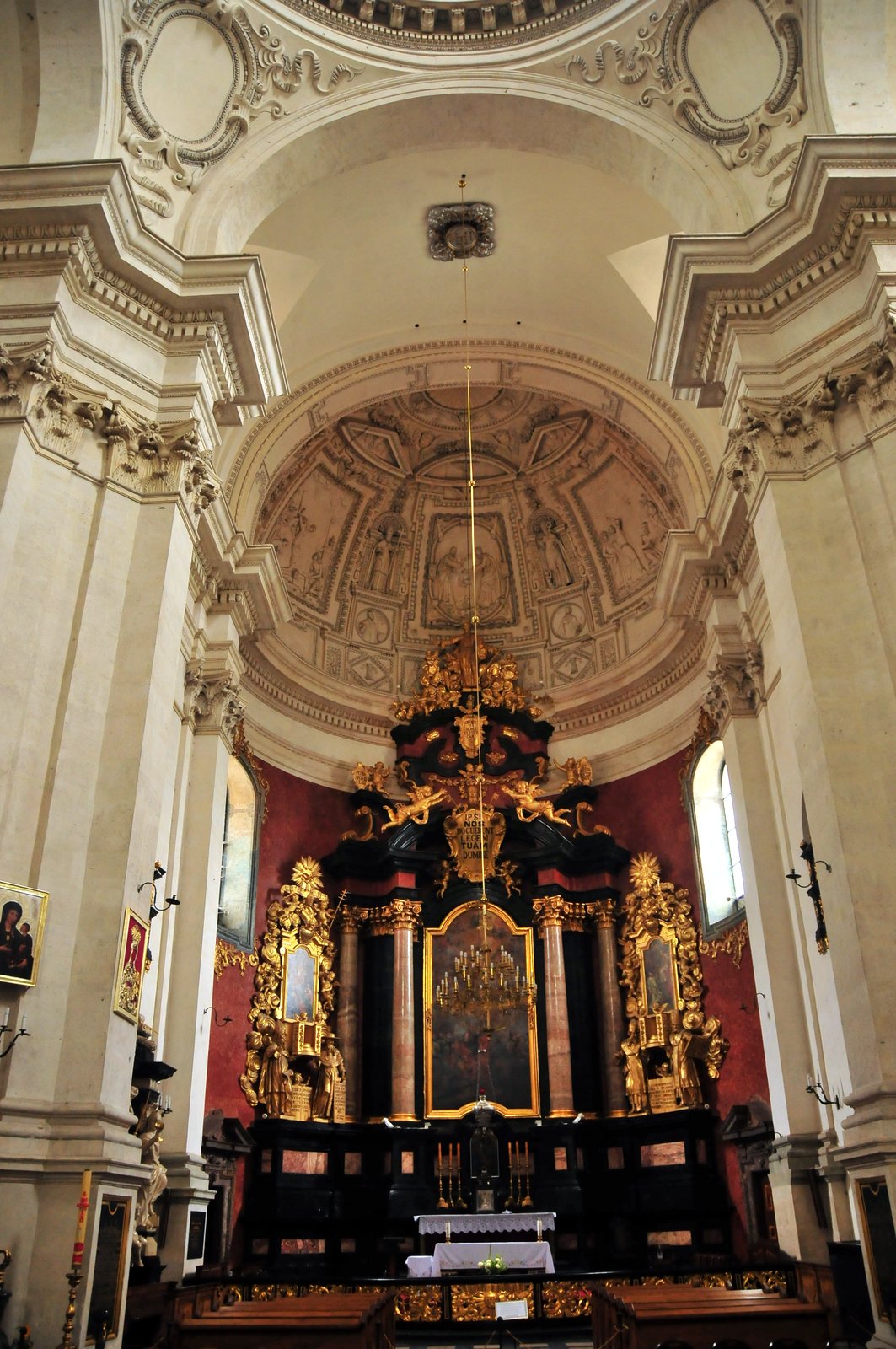
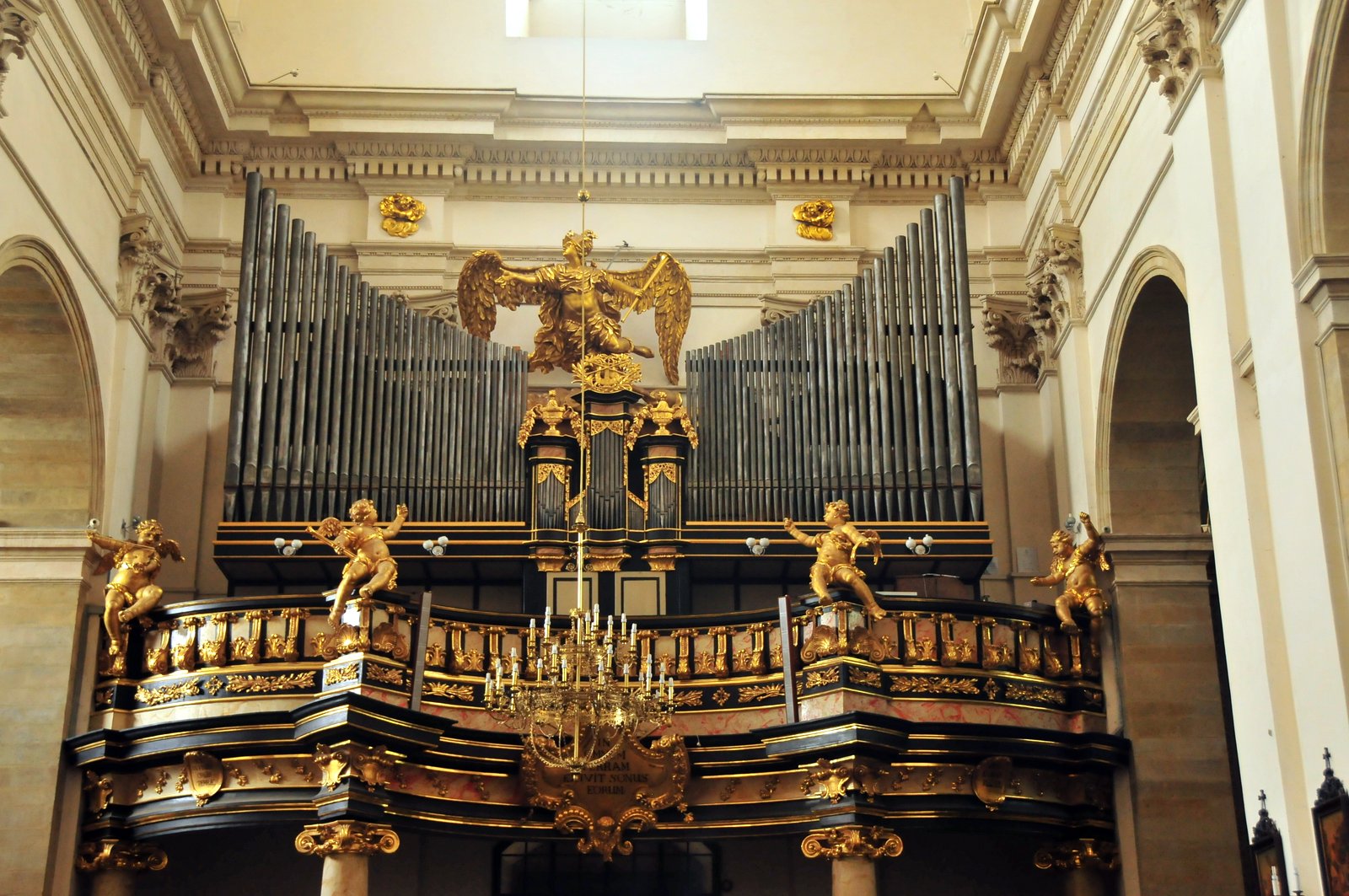
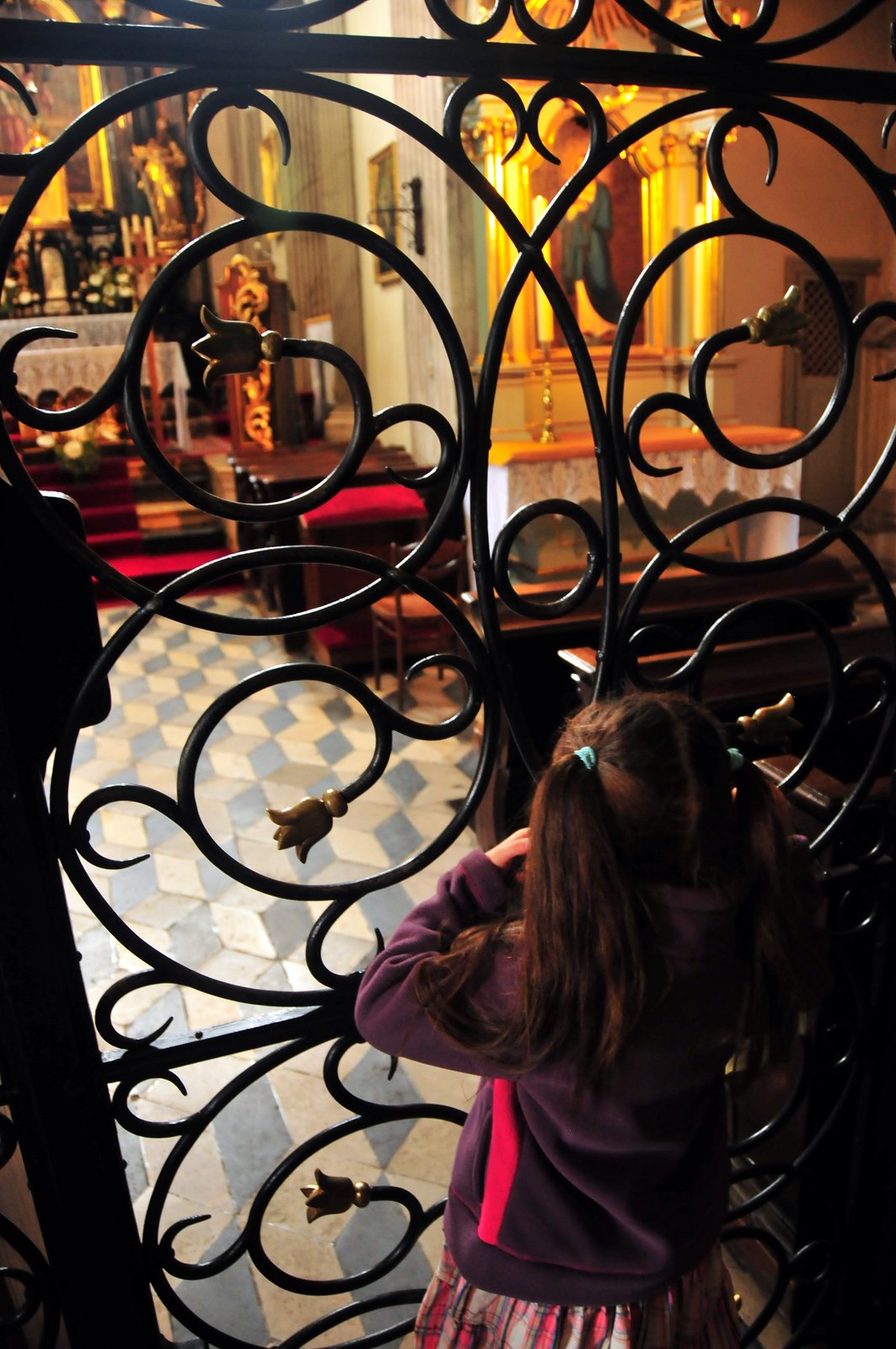
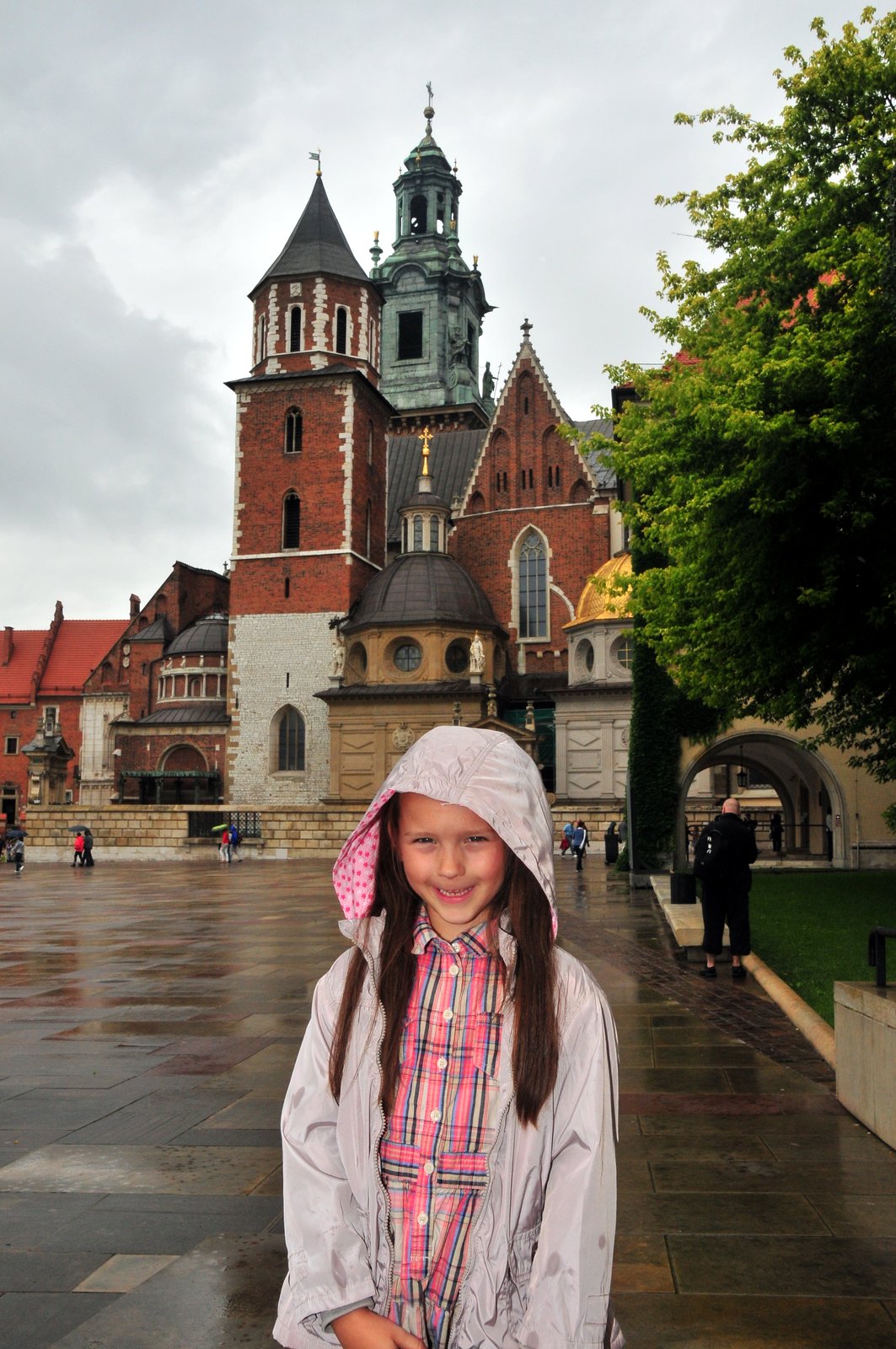
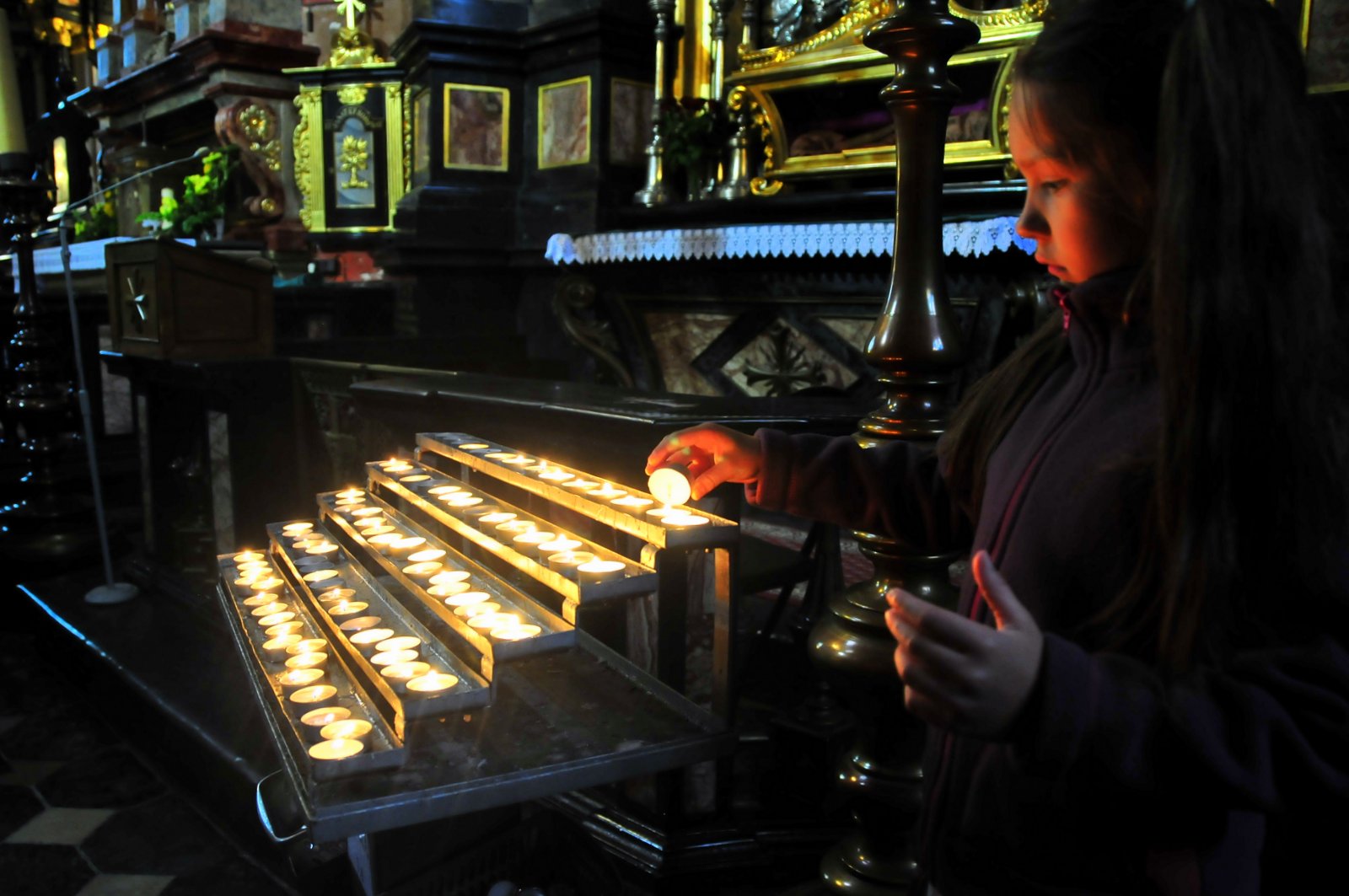
Going to Krakow means unquestionably going to church. Going to churches. They’re everywhere, and almost all of them are incredible. There are of course a couple of churches one must visit: Wawel’s cathedral and the Basilica of St. Mary.
Wawel Hill
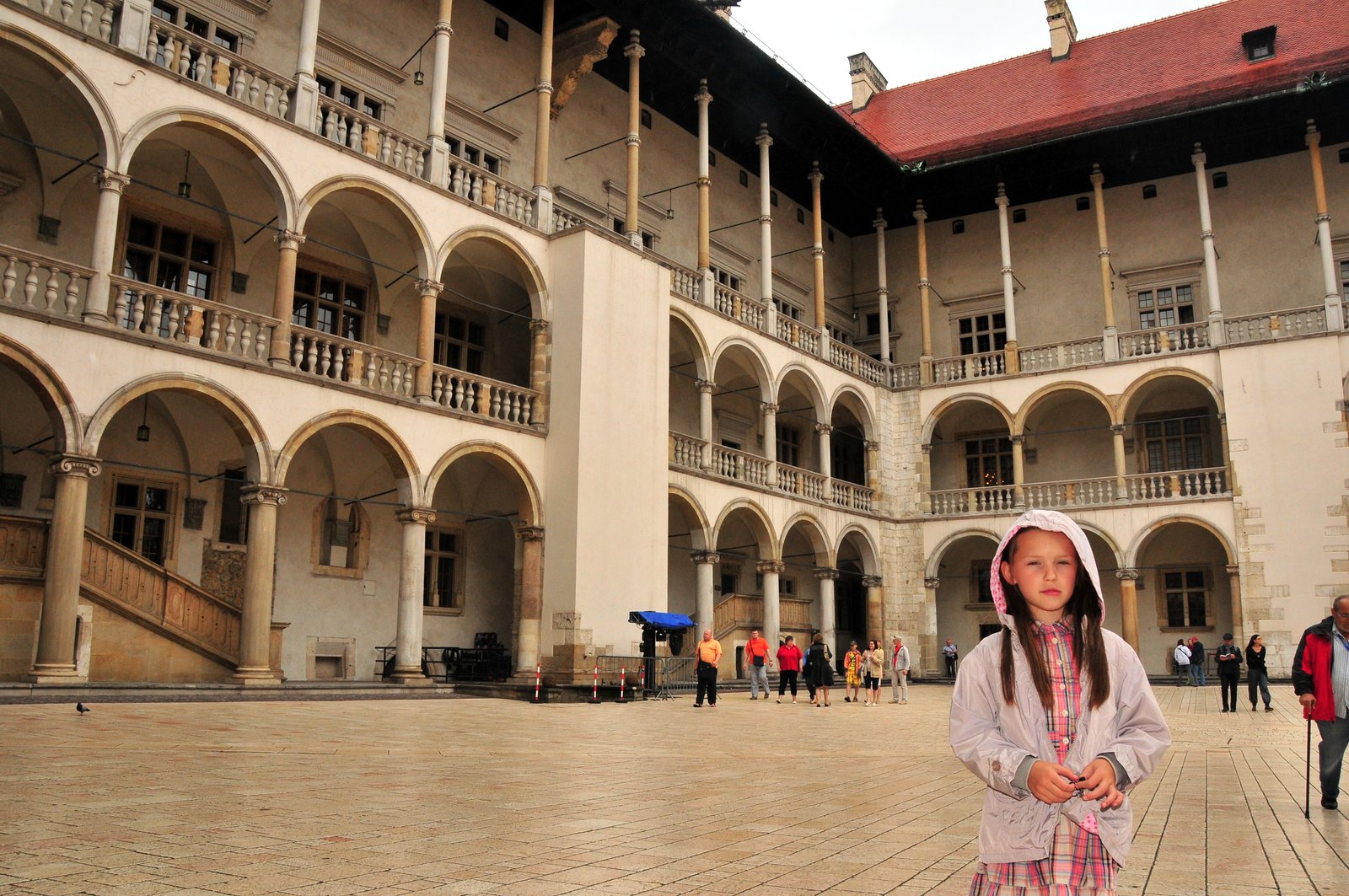
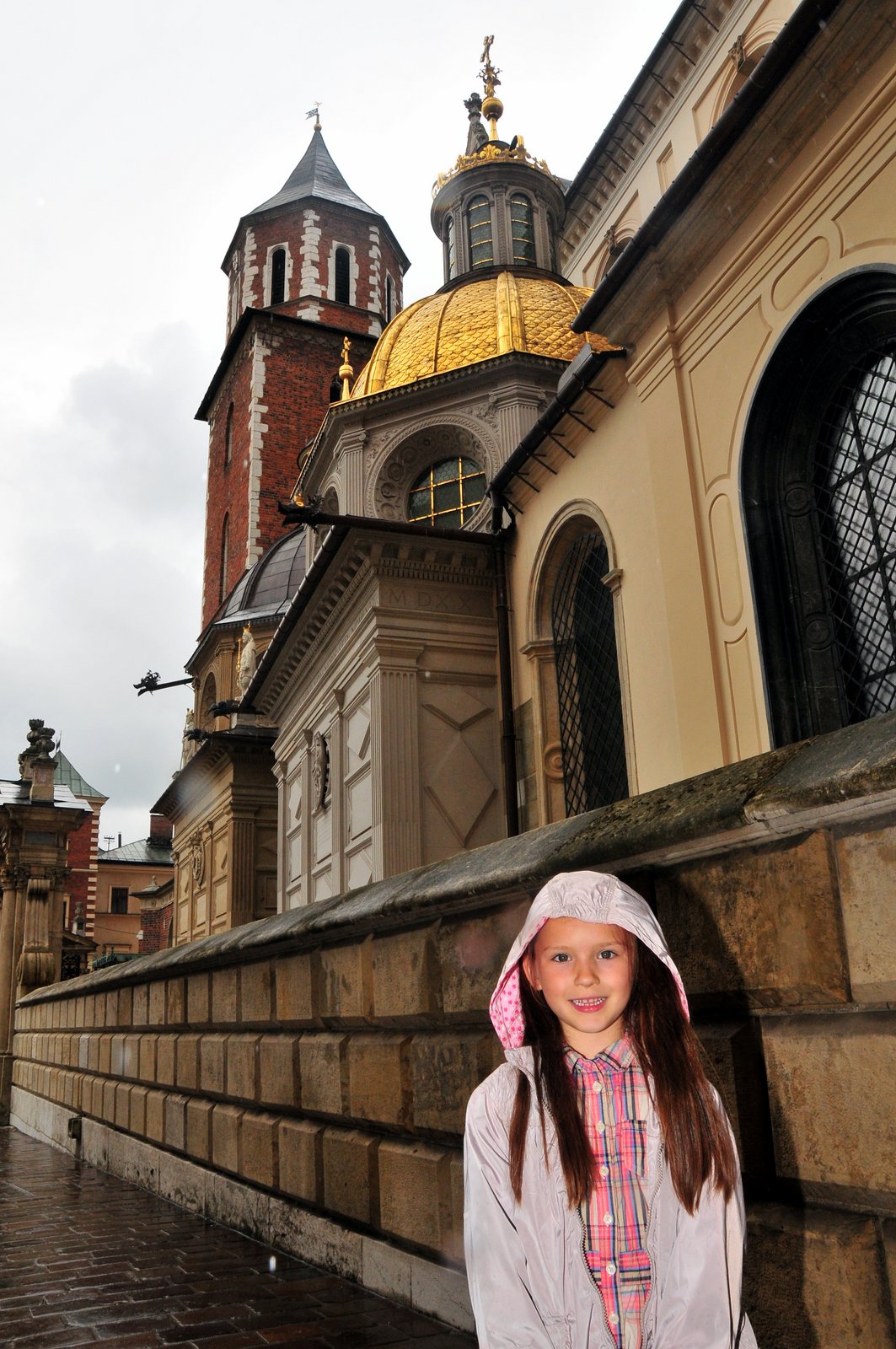
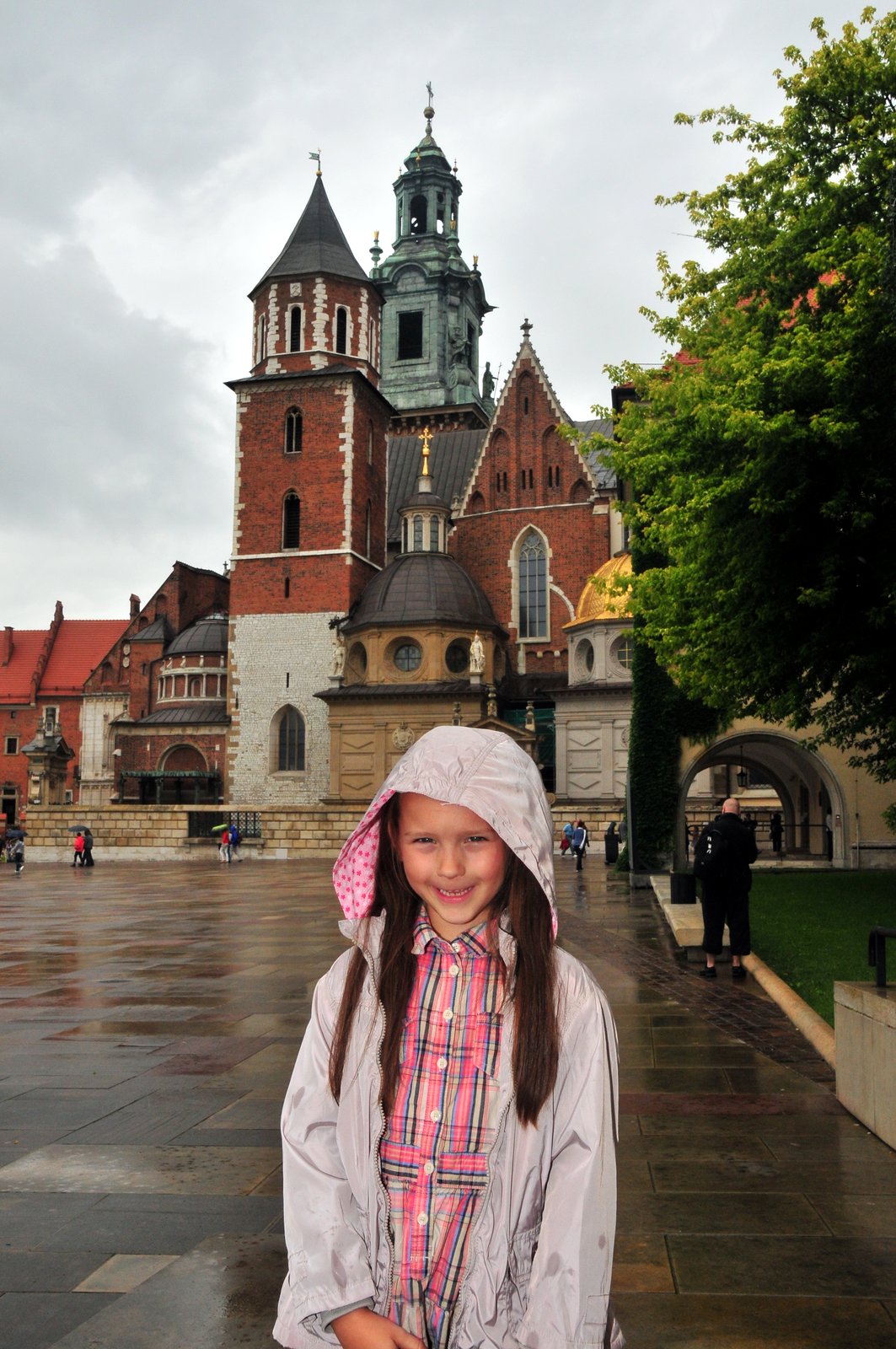
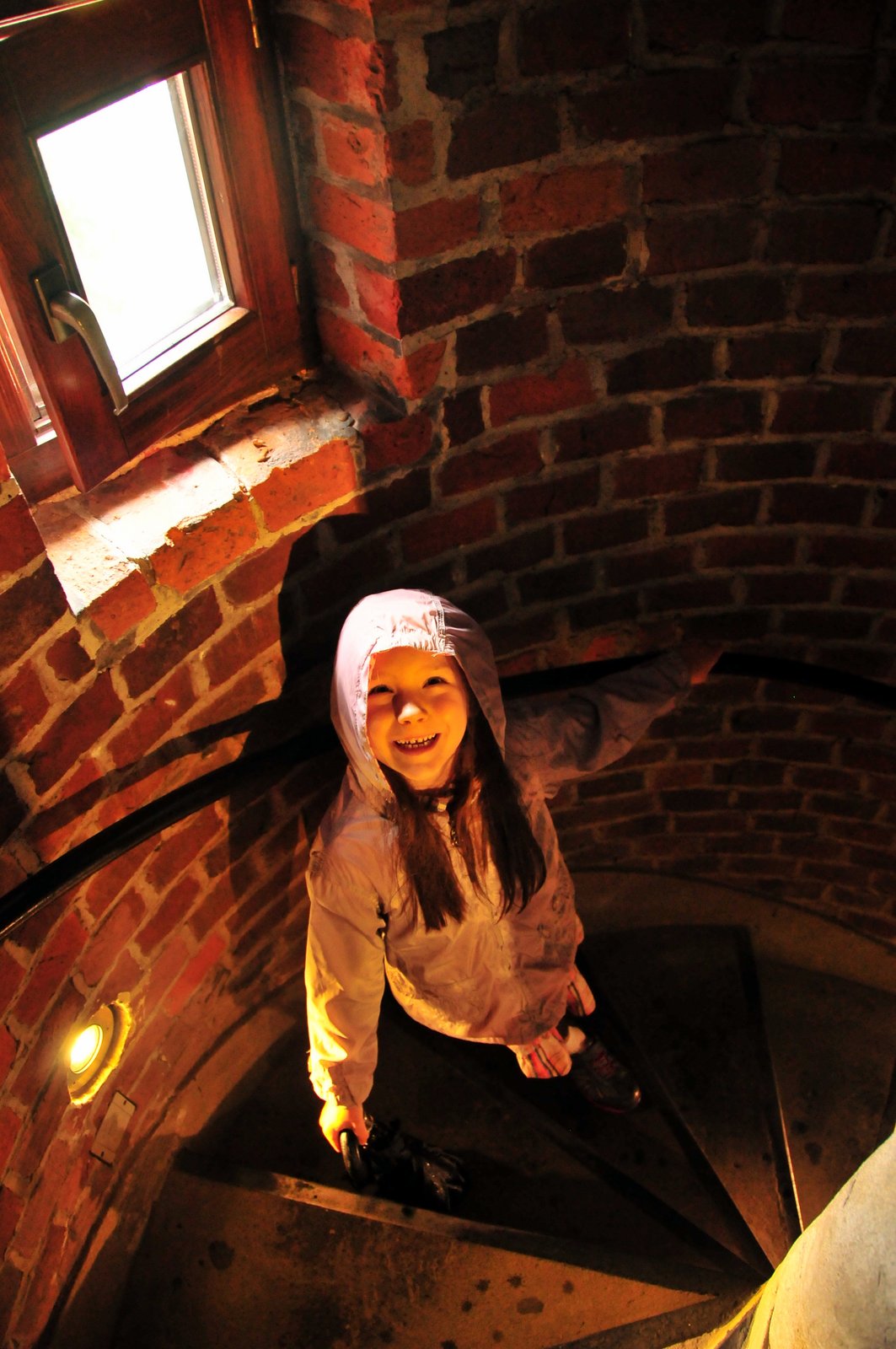
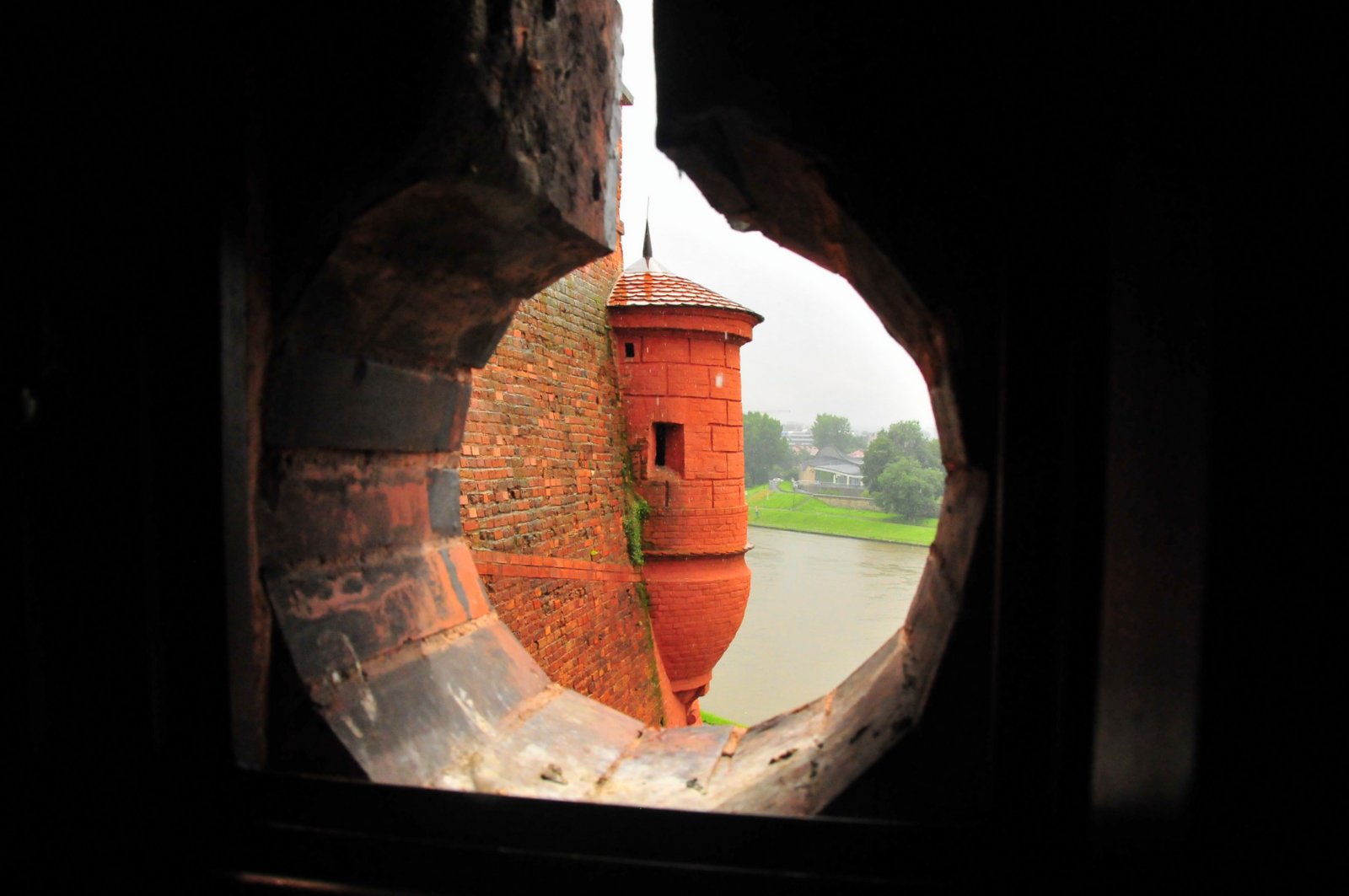
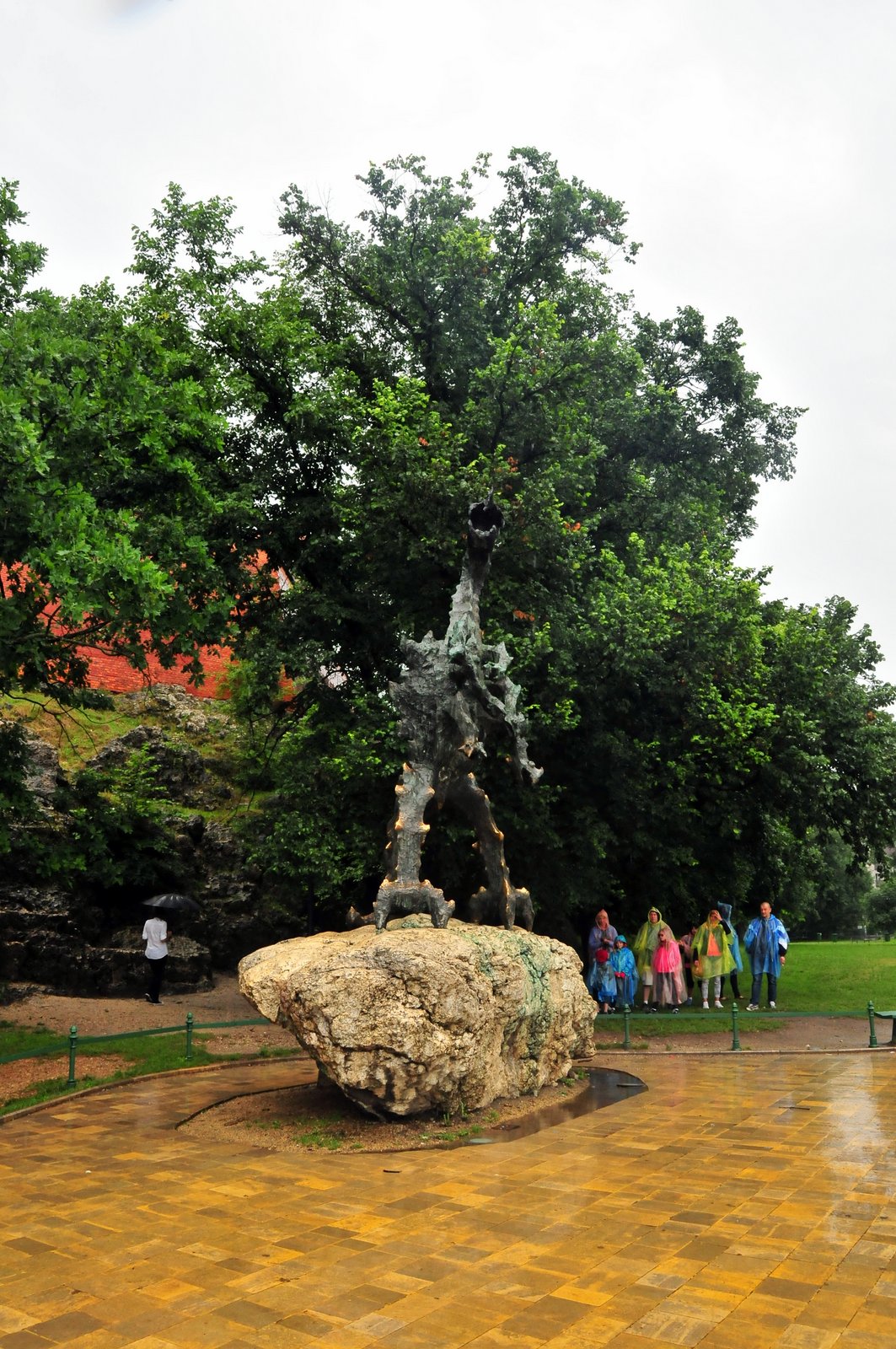
A visit to Krakow is incomplete without visiting the royal palace on Wawel Hill. Like many other potential attractions in Krakow, this one was likely not to rank too high on the Girl’s list of favorite/impressive sites. The plastic-nonsense-kiosks reign supreme. Still, some things grabbed her attention: the idea of a courtyard, which I explained as a yard surrounded by a giant house as opposed our house surrounded by a yard, fascinated her; the idea of visiting the cave of the Wawel Dragon both fascinated and frightened her.
Cold, Rainy Day
Who would ever have guessed that in southern Poland, a day in late June could pass without the temperature ever rising above the low fifties? Such a thing has never happened before today, certainly. Who would have thought L would have spent her first day in kindergarten here inside because the teacher judged it was too hot to go outside and she would have spent her last day in kindergarten here inside because the teacher judged it was too cold to go outside?
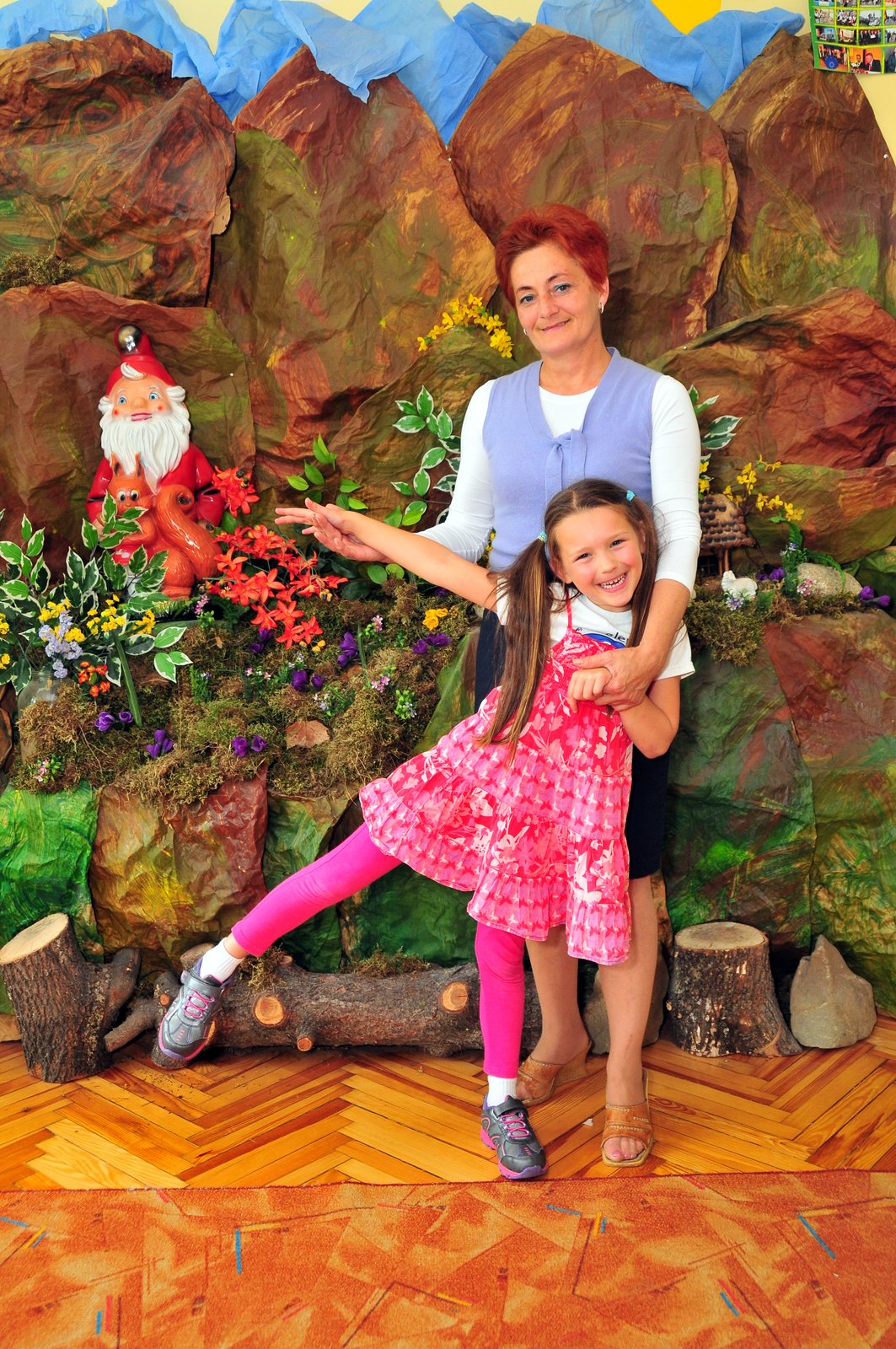
I’ve experienced it more times than I care to mention, but every single time I’m here during the summer, the cold catches me off guard. Last visit, K and I really simply forgot about how cold it could get. Perhaps “misjudge” is a better term. We came completely unprepared and had to buy clothes, just as my folks did when they came in 2004 for our wedding. This time, we came during a real Polish heat wave, and I thought, “Well, it looks like we might get through this visit without freezing weather.” Now naive. How silly.
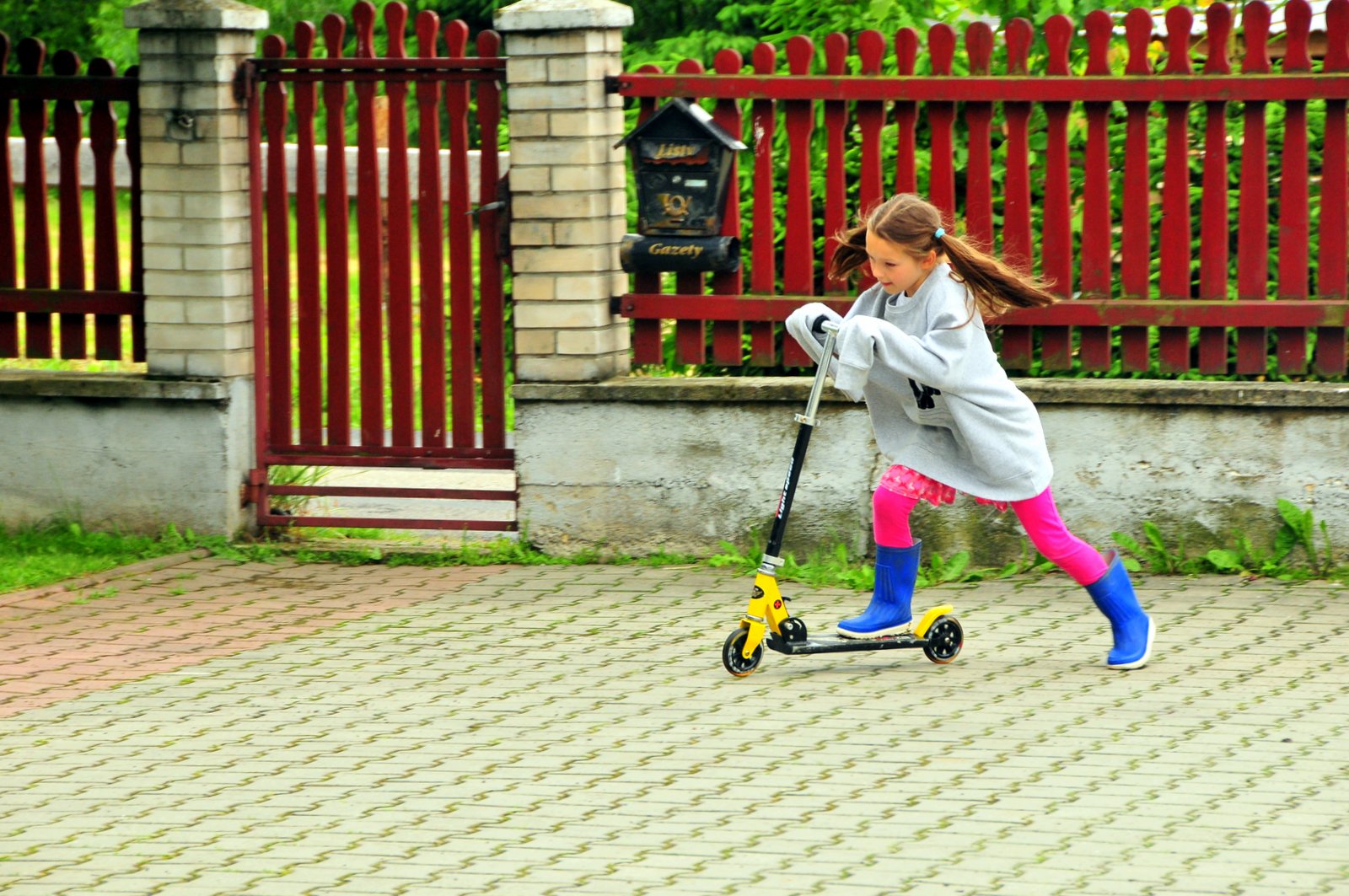
We came prepared for the cold, but not this cold. So we hunted for something warmer for L (she has a sweater on underneath that sweatshirt) and me.
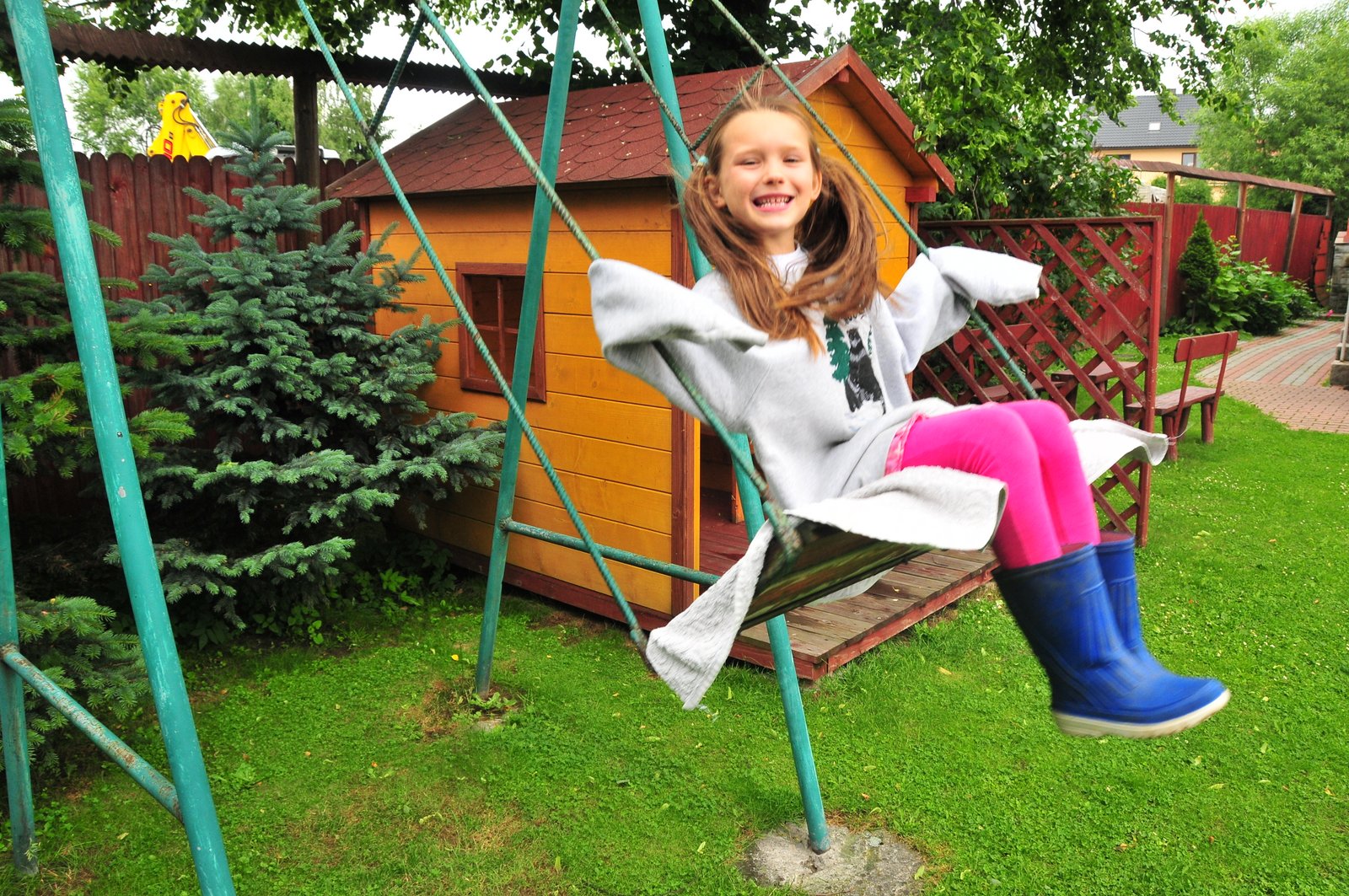
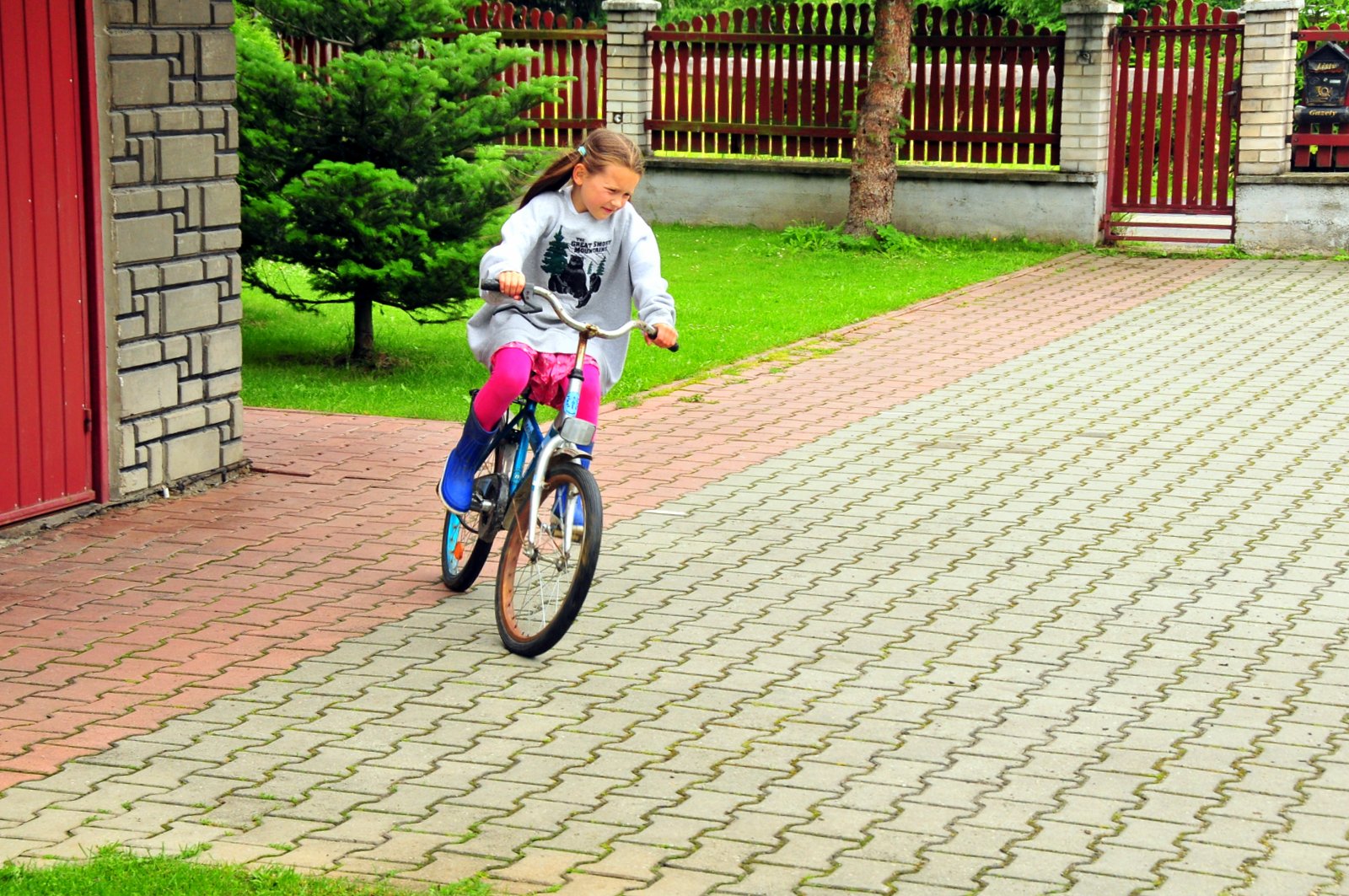
Yet a six-year-old cannot stay inside all day. She has to get some of that accumulated energy out. A bike helps; a scooter is in some ways a bit better; a dog that loves to play fetch and then be chased adds more motivation. All three mean a tired girl come bedtime.
Of course, Babcia was neither surprised nor unprepared. Nor unknowledgable, for that matter: she predicted correctly that, despite the forecast, the morning rain would stop by afternoon.
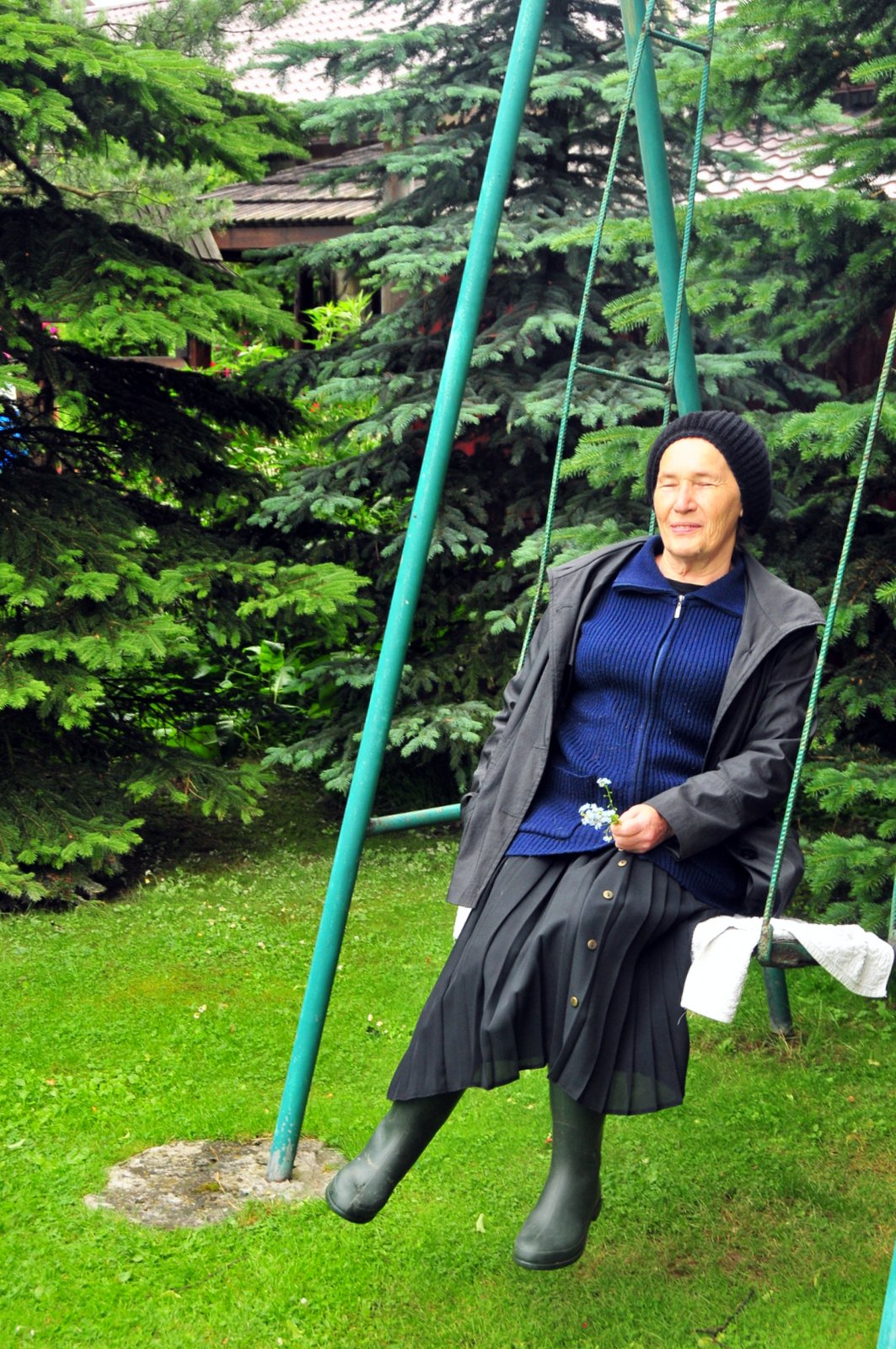
Since L and I are planning a trip to Krakow tomorrow, we’re both hopeful that her weather forecast is more accurate than the ever-changing “professional” forecast.
Warnings
Every tobacco product in Poland has a warning, much like in the States. Polish warnings tend to be more targeted than those in the US.
Mothers
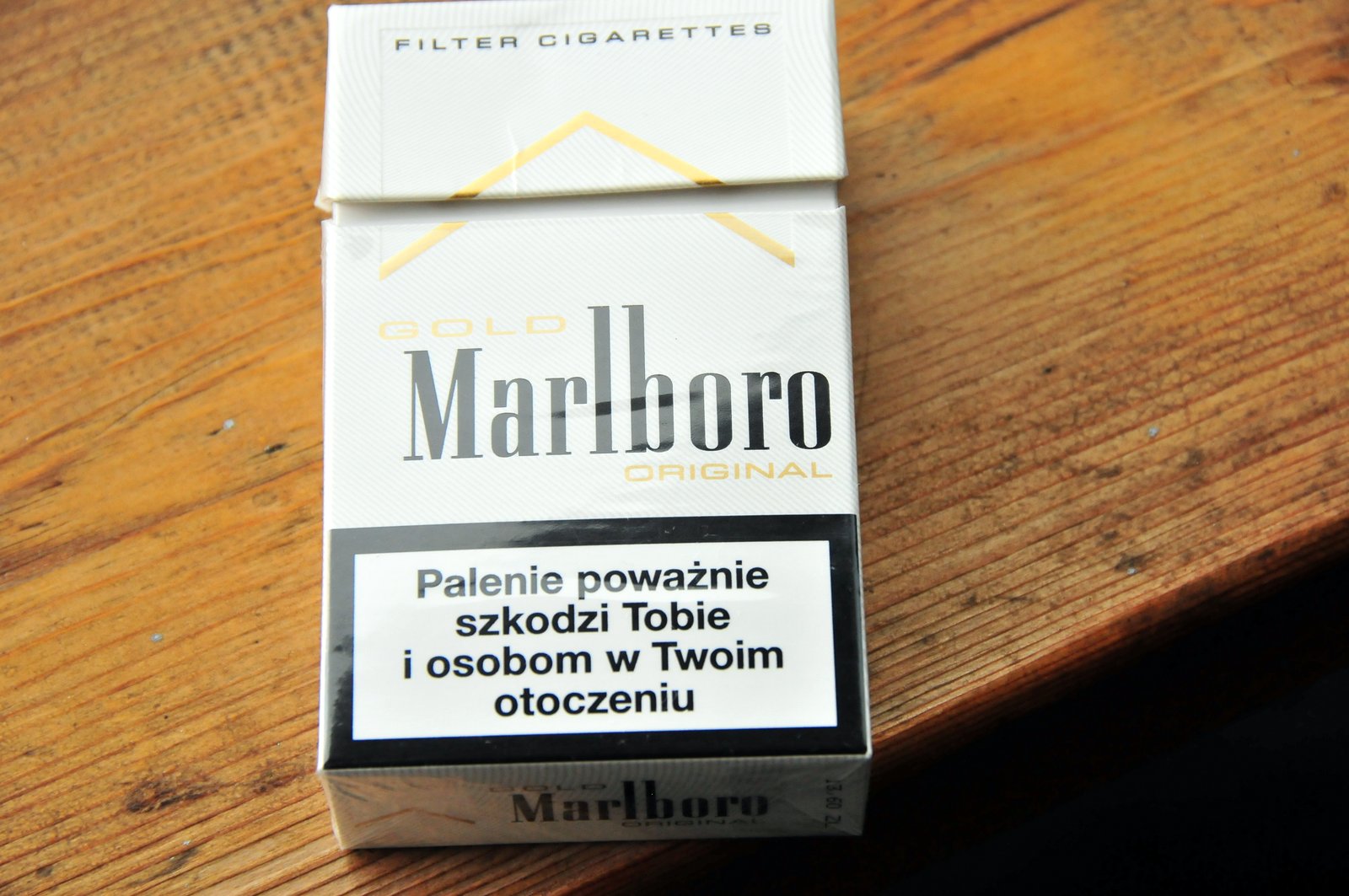
“Smoking seriously hurts you and those in your presence.”
Individuals Who Place Great Value on Their Physical Appearance
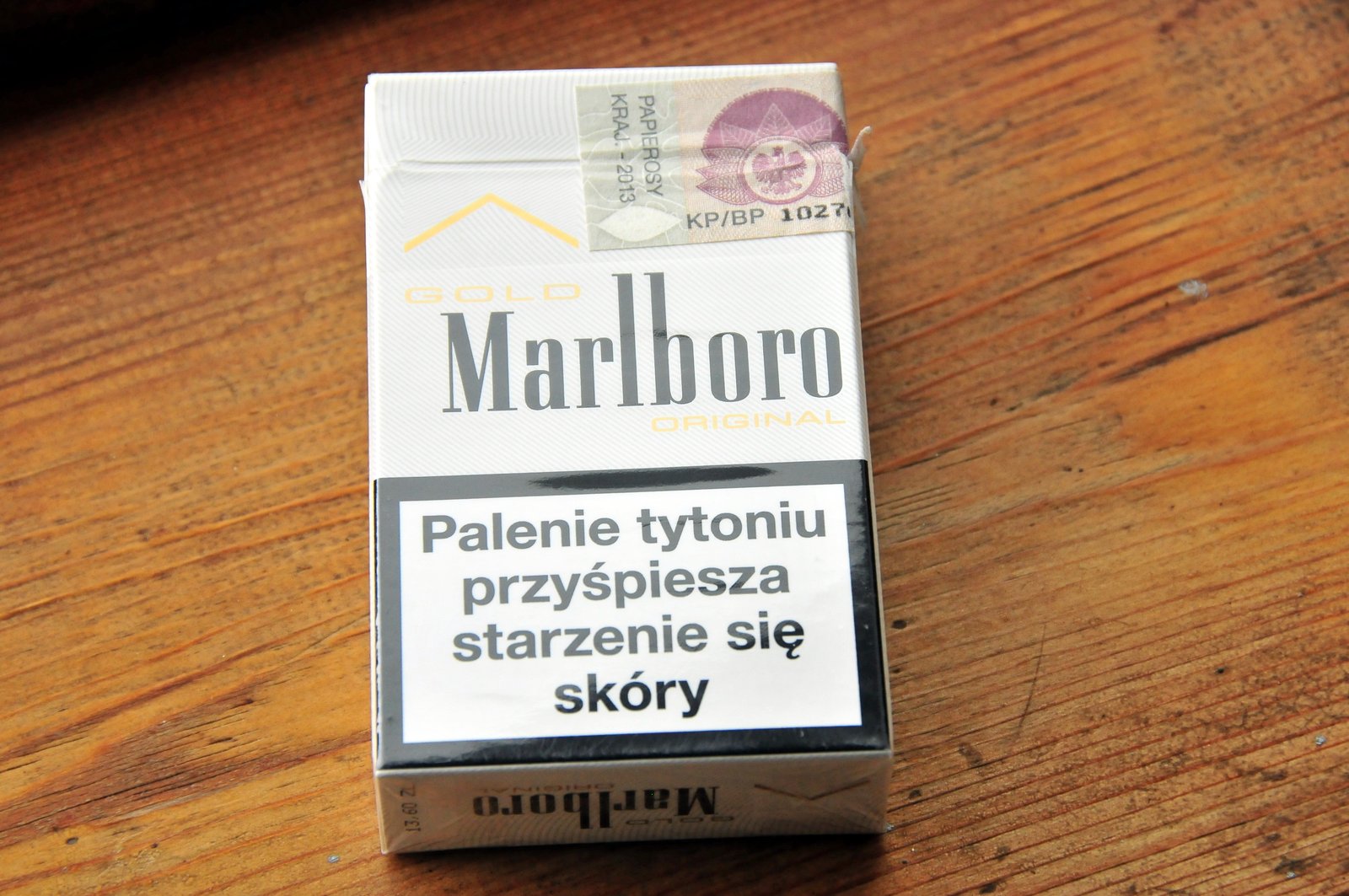
“Smoking tobacco accelerates the aging of your skin.”
People Who Are Terrified of Pain
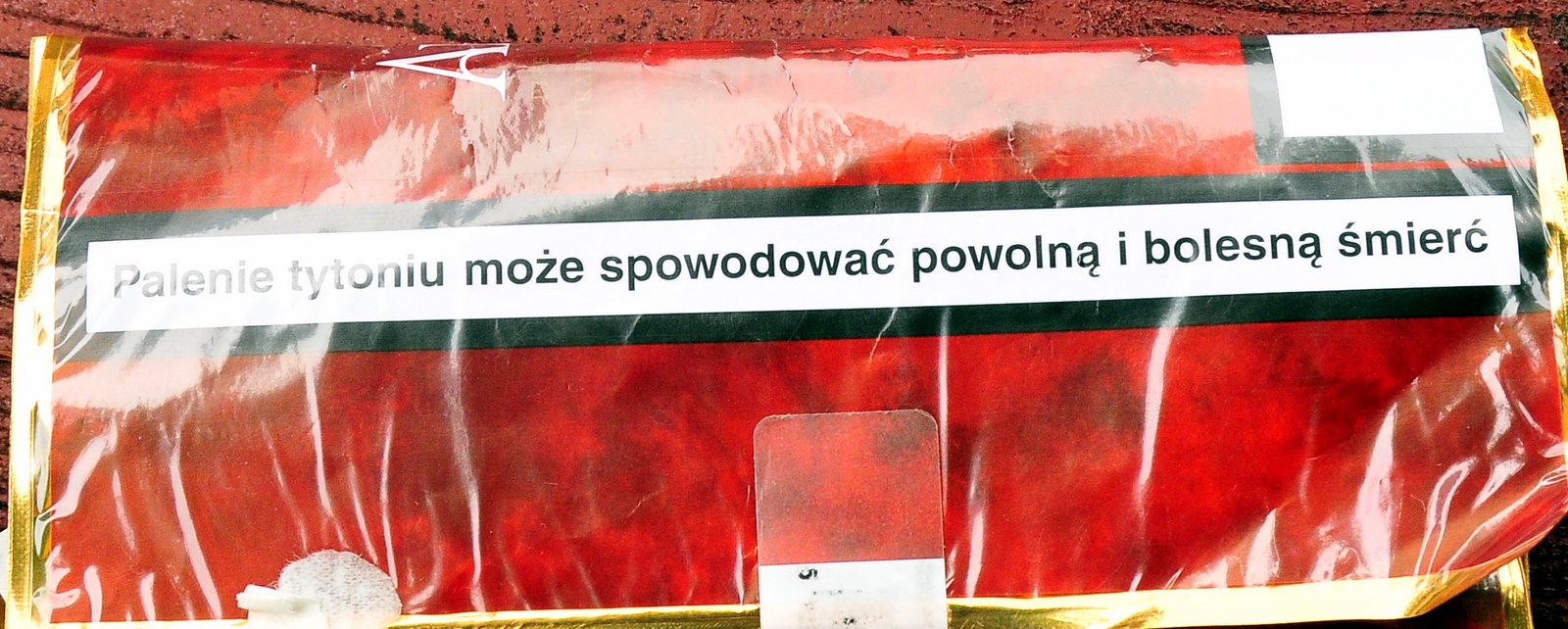
“Smoking tobacco can cause a slow and painful death.”
People Who Need It Straight
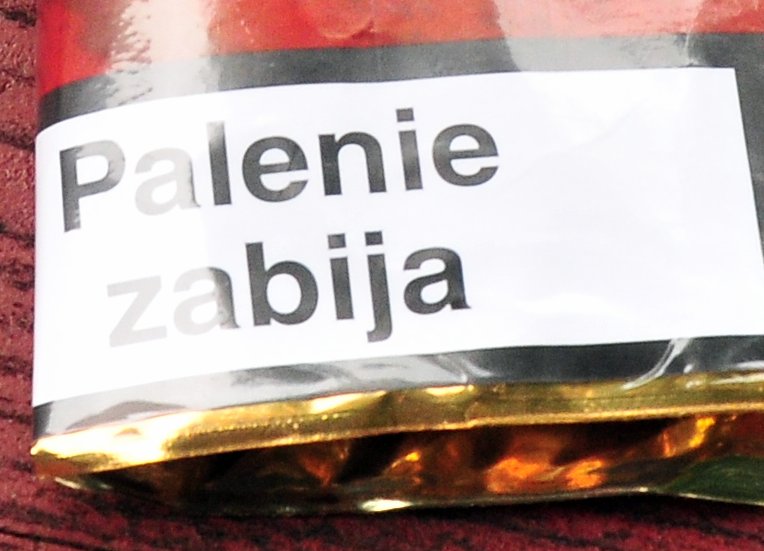
“Smoking kills.”
Do Kota
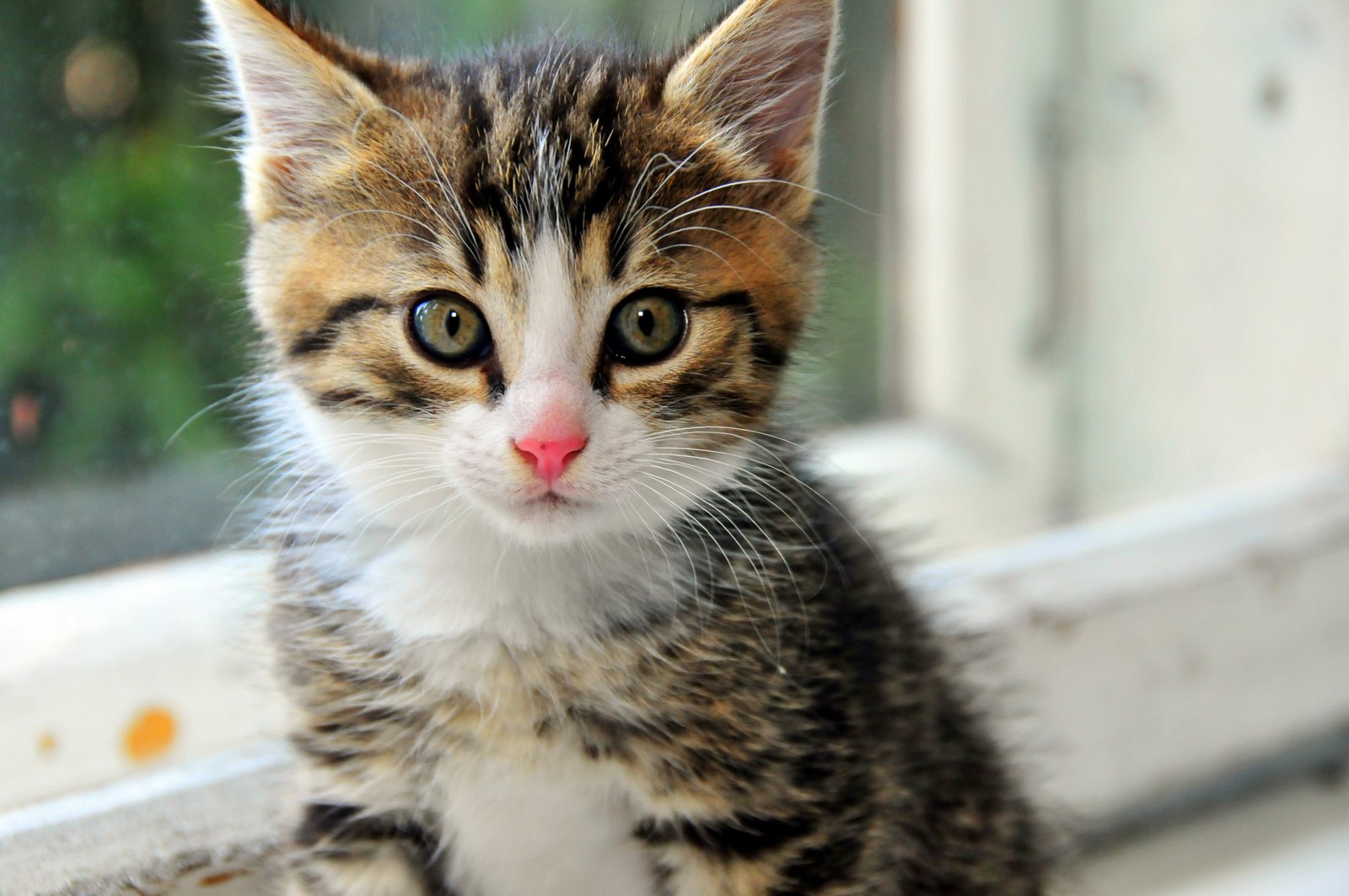
L has a great new friend at a neighbor’s house. Occasionally, she brings the little fellow over for a visit.
Rainy Afternoon
Between the recurring rain — eternal, daily, multiple-times-during-some-days-all-day-other-days rain — we tried to make the most of those periods without rain. Three mini-adventures:
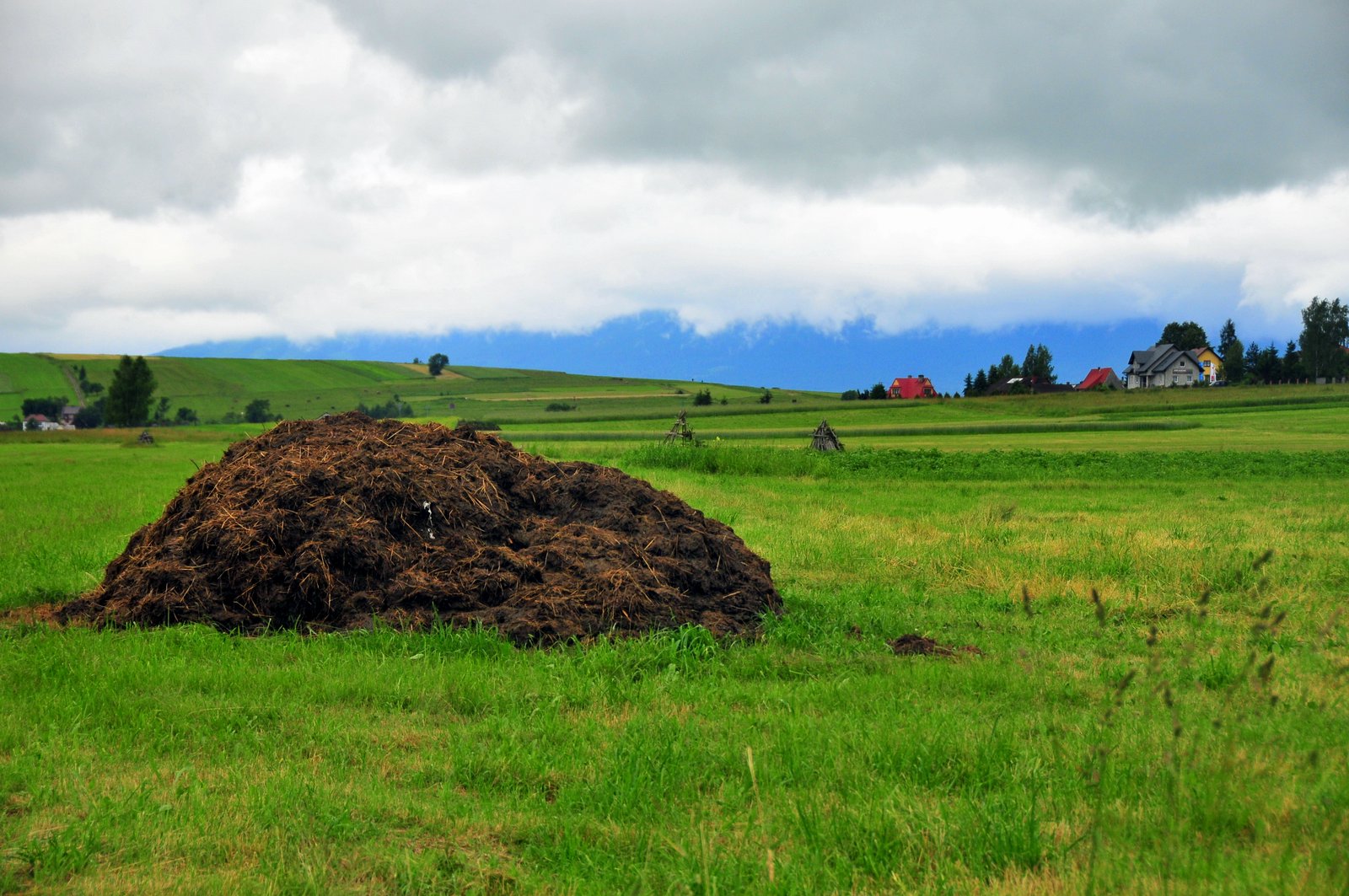
1) The dog needs a walk, so I took him for a walk in the fields, and discovered once again why the fields sometimes emit such a strong odor of manure despite the relatively few cows grazing there.
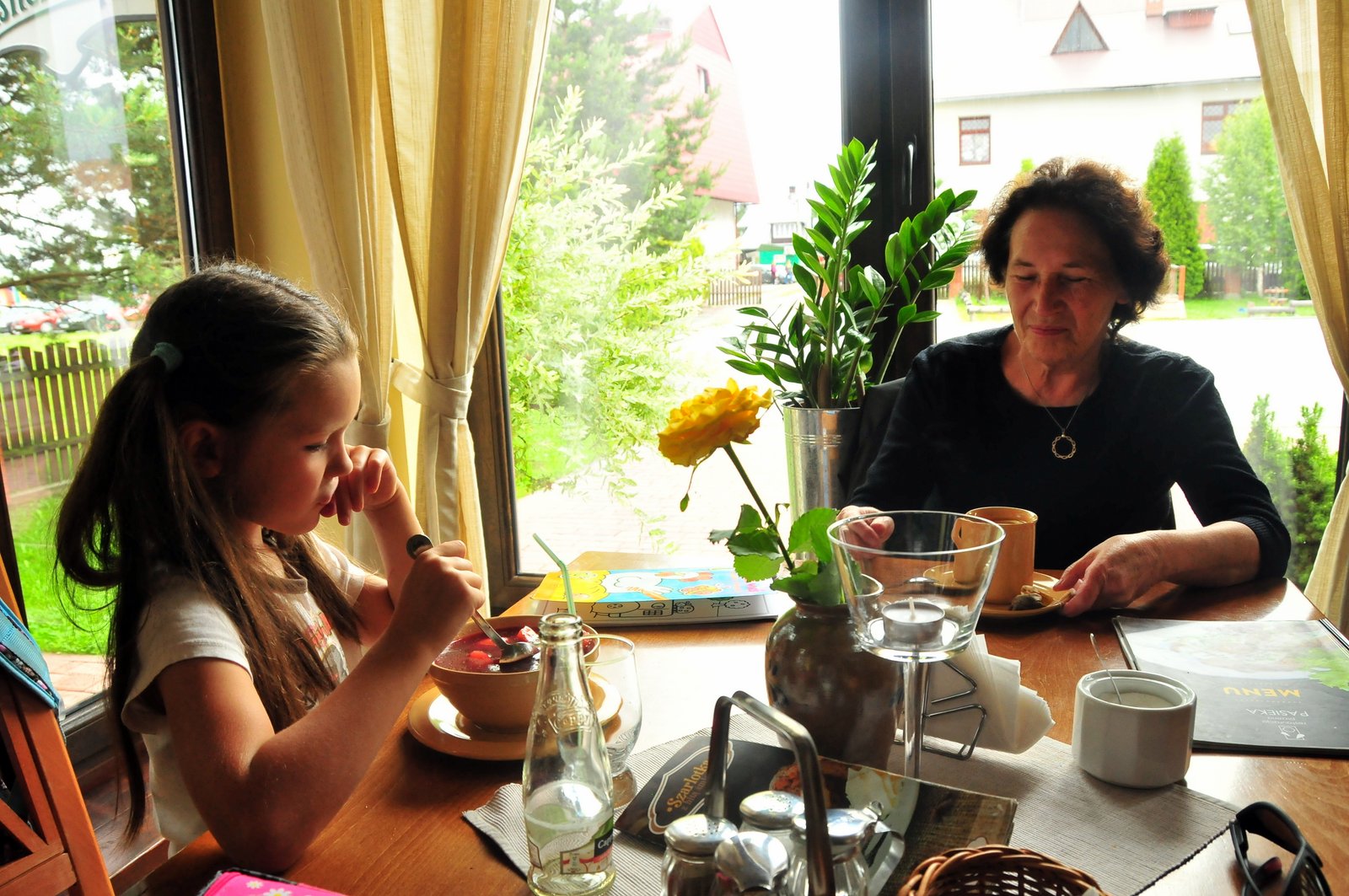
2) Days like this in Polish are called “bar days.” Hardly an appropriate option for a six-year-old; hardly desirable when alone. So we found the obvious compromise: a “restaurant day.”
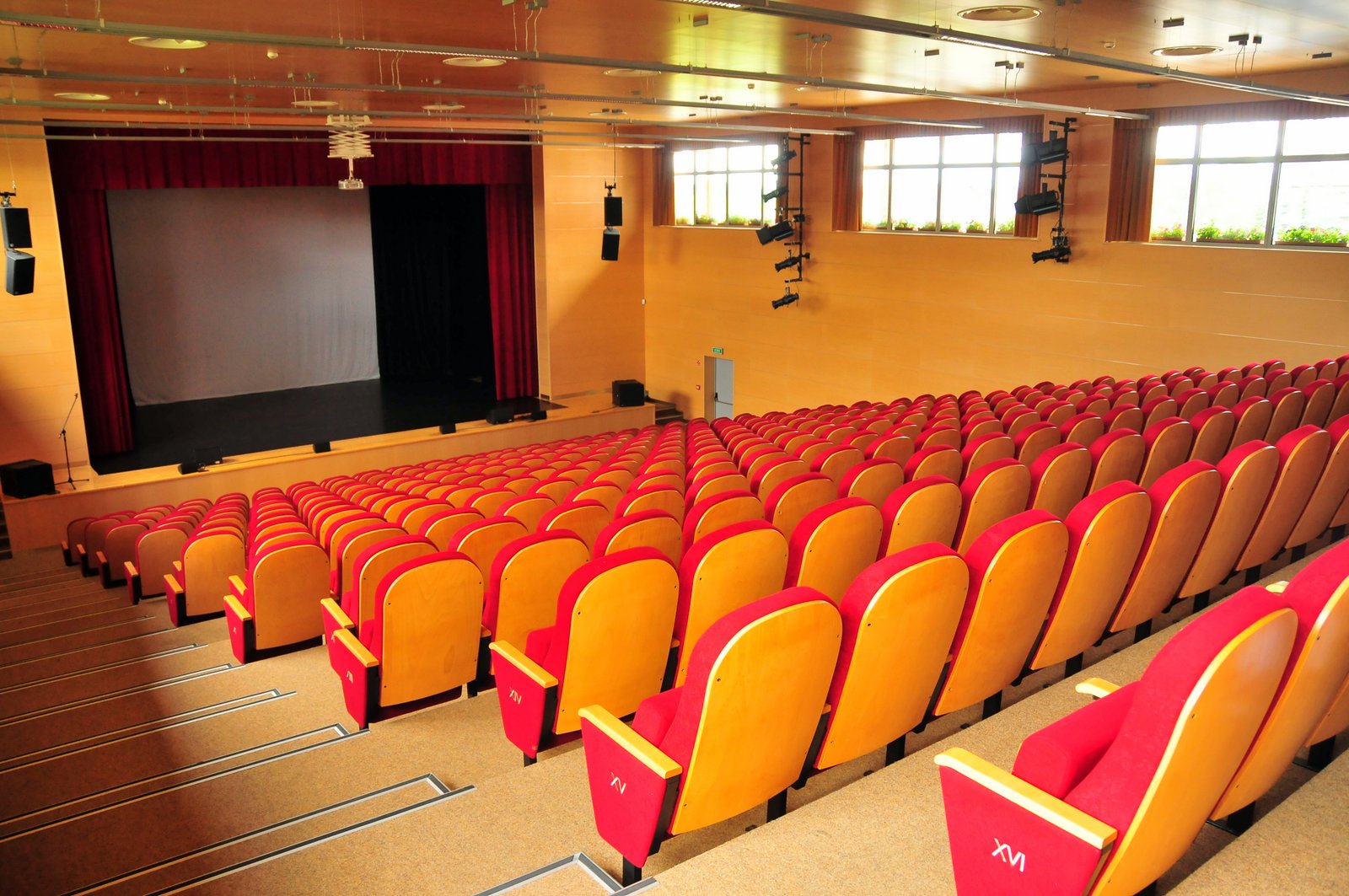
3) One former teacher/colleague is now the mayor of Lipnica; another is the director of the new Orawian cultural center in Jablonka. I set out to chat with him a few minutes and get a look at the center itself.
Not an ideal day, but what can one do on the sixth consecutive day of rain…
The Smell of Autumn
Walking the Girl to preschool today, I caught a faint whiff of coal smoke. Immediately thoughts of late autumn, of settling down for a long winter and the developing school year, of boots and jackets and layering all returned. For a brief second, it was as if I had returned to 1998.
Polish Weather
My general color association with the sky in this region is gray — a mix of dark gray and light gray, a whole palette of grays. Some days, the sky was a solid, single gray. Other days, there were lower gray clouds with higher clouds of a lighter gray. But no matter what shade of gray, there was one thing in common: the sun was invisible. Hidden. Nonexistent.
For the first few days here, the sky was blue, the sun was out, and I actually found myself thinking from time to time, “Wow, it’s actually almost hot.”
But of course it wasn’t to last. For the last week or so, the gray has returned (with the exception of a couple of hours yesterday morning), the temperatures have dropped: the Polish weather I loathed has finally arrived.
What’s New in Lipnica, Redux
A return to Lipnica today to wander about, photograph this and that, chat with the mayor, perhaps meet some old friends, coworkers, and/or students. In the end, I accomplished all four. The common theme was the same as always: change. It’s everywhere and nowhere.
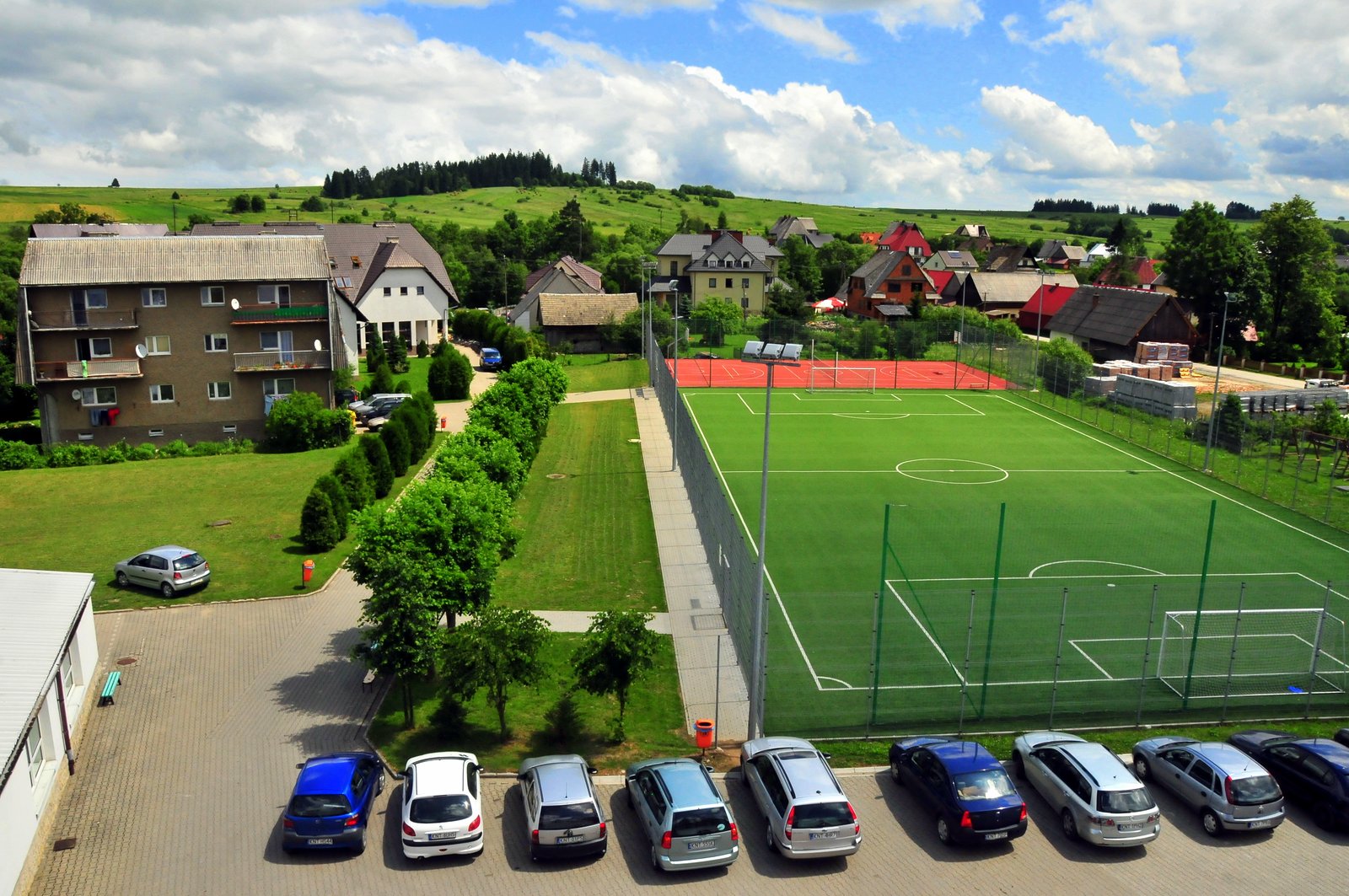
The view from the school in which I top shows how much Lipnica has changed, and how little, too. The soccer field and tennis court on the right are now; the apartment building on the left, dom nauczyciela (teacher’s housing), has been there decades, and has looked the same since at least 1996 when I first moved into the apartment in the lower right corner. Within the school itself, it’s much the same: former students are now teachers, and teachers who were there before I began teaching there still work there.
Some of the changes are typical of a country that’s moving into the full reality of capitalism, perhaps we could say the uglier side of competition. The little shop where I did most of my shopping for years, now shuttered. In an unexpected twist, I met the former owner as I was standing there.
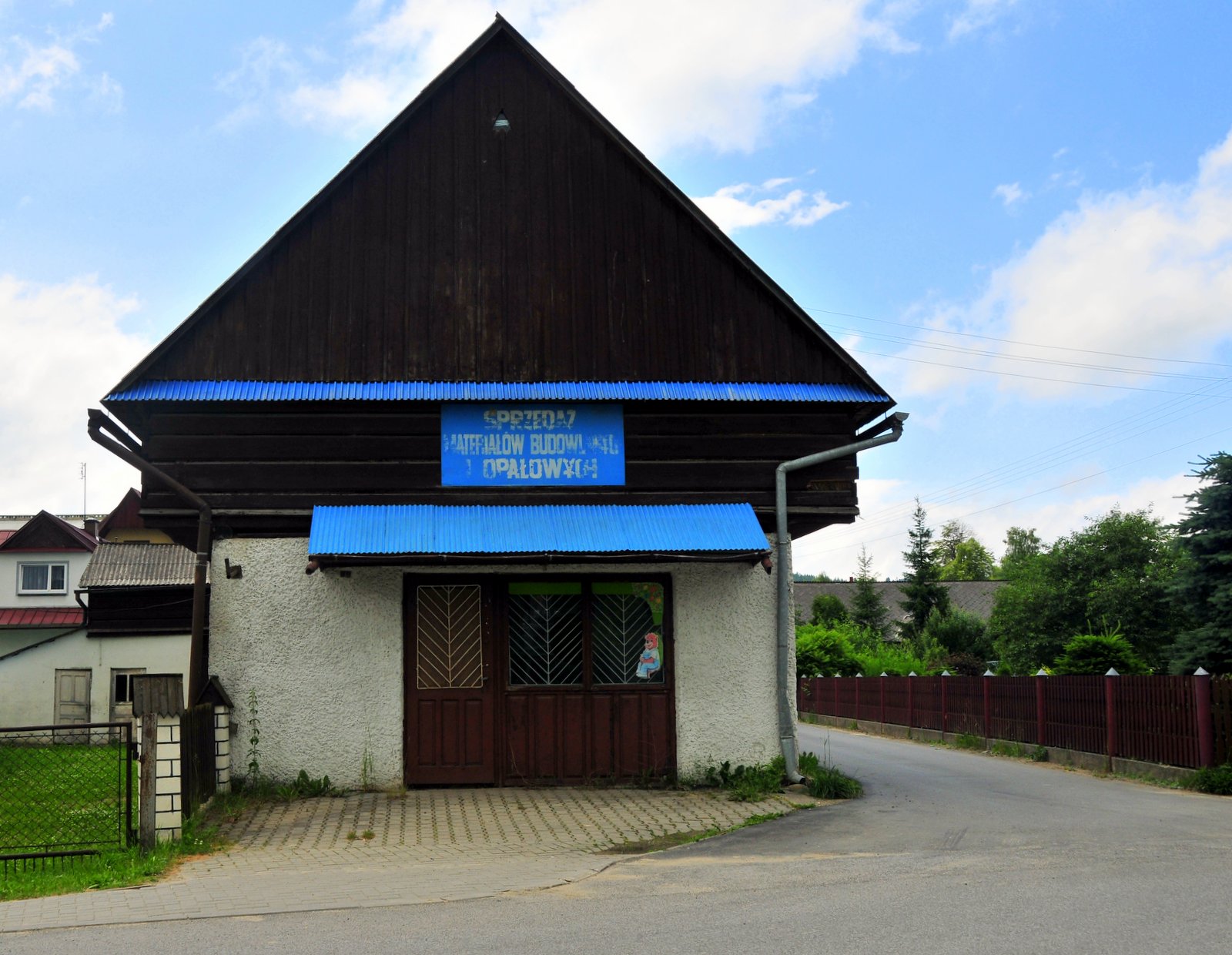
“What happened?”
“We went bankrupt thanks to the Biedronka in Jablonka.” The supermarket chain “Ladybug” has been putting local businesses out of business for years now, and I suppose it was only a question of time before affected local businesses I know.
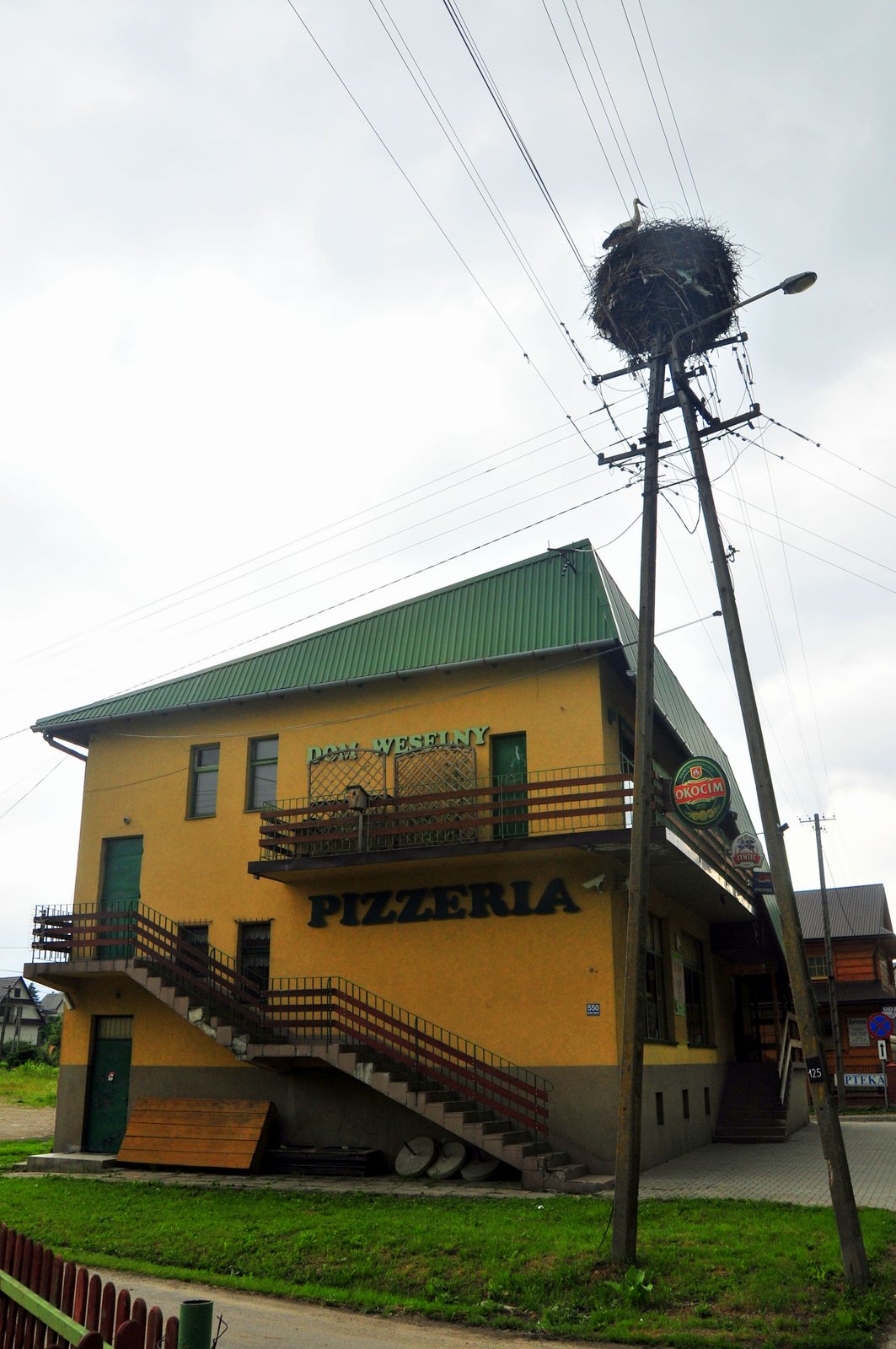
Further down the road, still more changes: the locale I frequented that closed shortly before K and I left has now reopened as a pizza place and “wedding house.”
“They don’t have much room there,” the mayor, a former teacher and colleague, explained, “so it’s really only for small weddings. They mainly handle baptism parties and the like.”
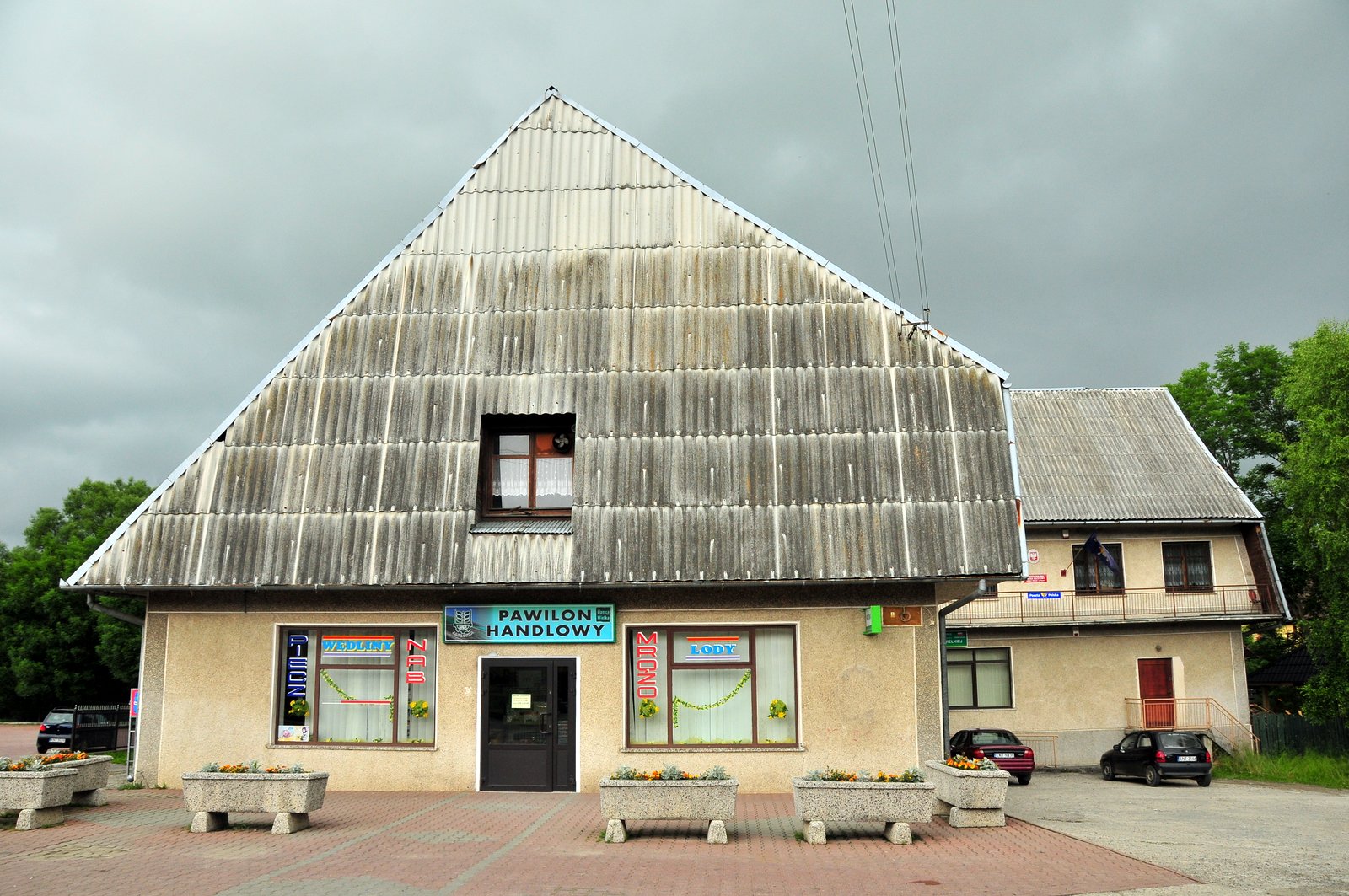
And the old wedding house, the one above “Trade Pavilion”? It too looks just like it did when I moved there in 1996.
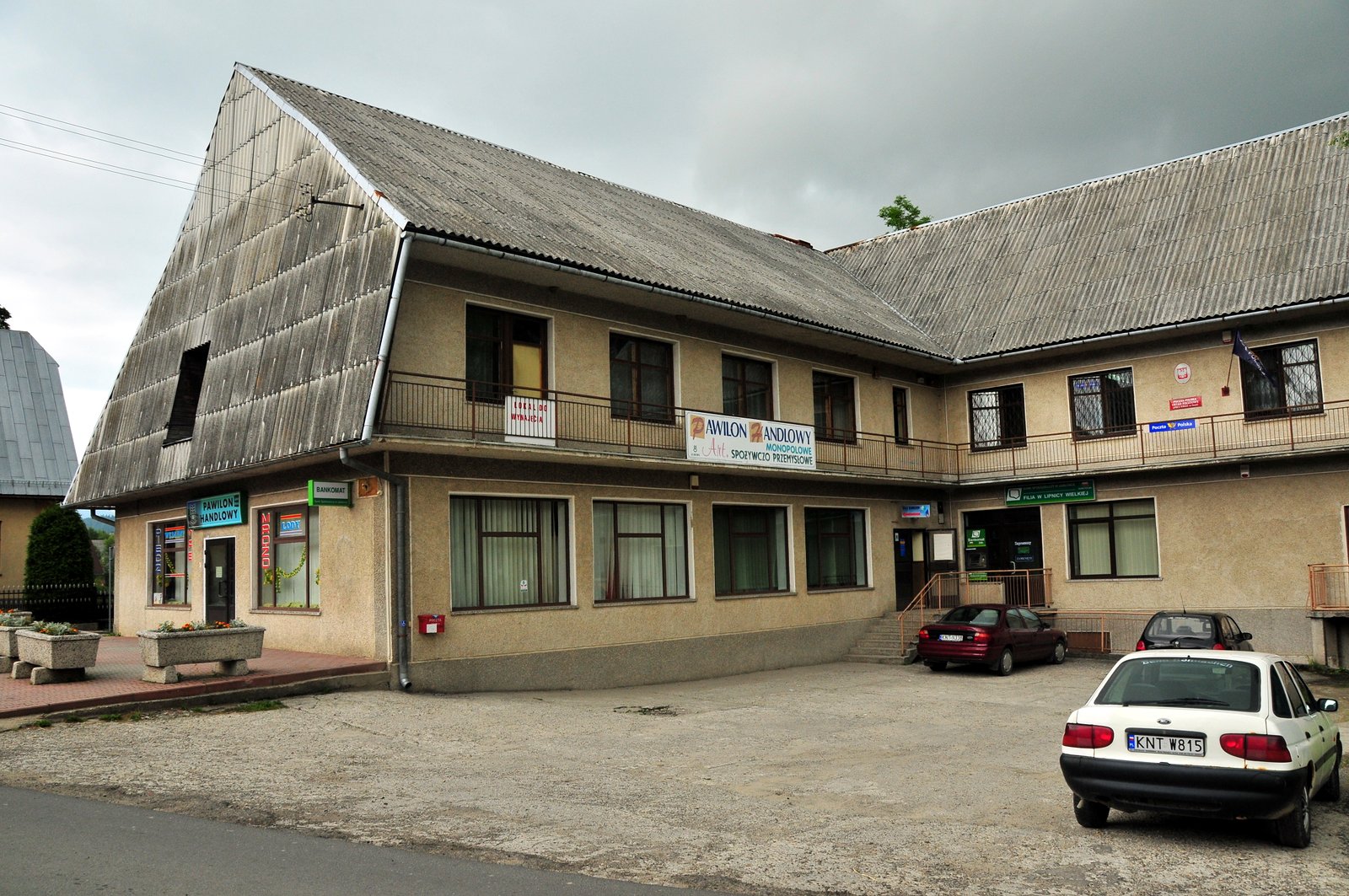
The same concrete planters decorate the front, probably in the exact same places. The metal roof is still as stained and rusted. But the store is still open, if not swarmed with customers.
One other store that seems to have made it is the small shop across from the church, within sight of the “Trade Pavilion.” It was always one of the best places to find fresh produce, and it’s probably one of the few old-style, non-self-service shops in Lipinca, if not the only one.
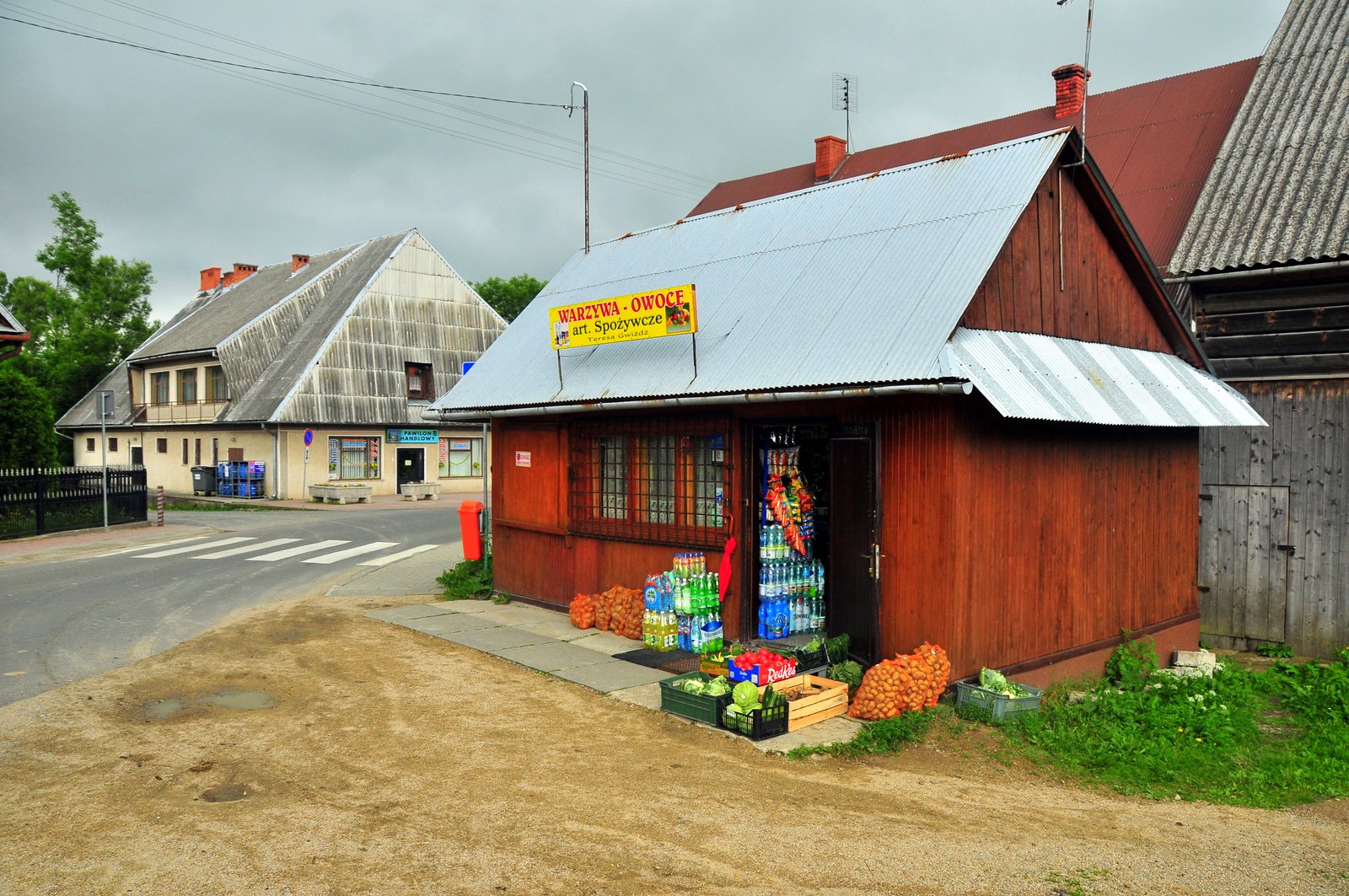
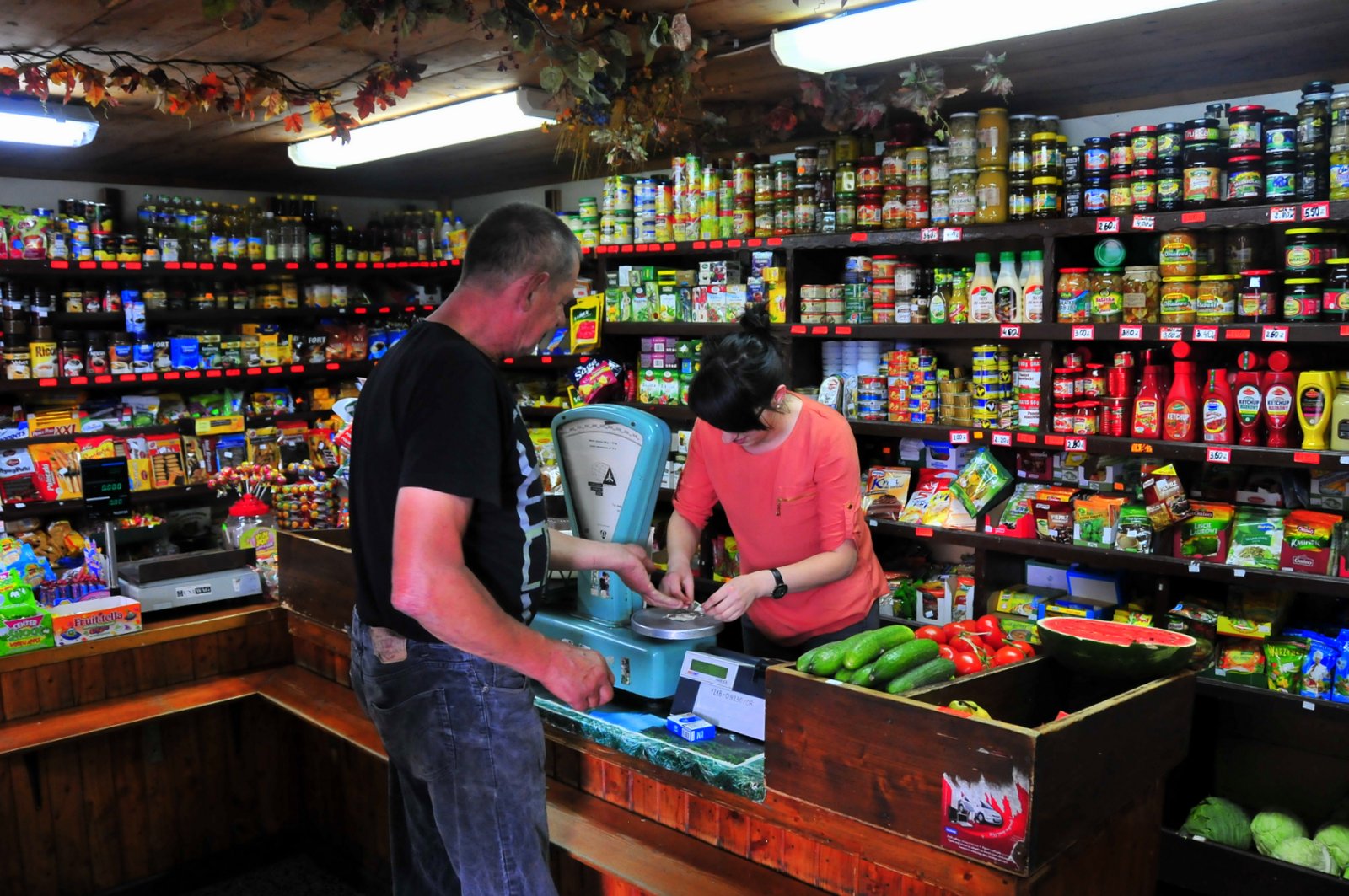
The idea is simple: the customer stands on one side of the counter; the sales assistant/shop owner stands on the other, with all the merchandise behind her. In other words, an old-fashioned general store. It was in such a store — in fact, the store up the street now out of business — that I began really having my first significant exchanges with strangers. Small talk really, but it was encouraging when I discovered I could engage in small talk. Microscopic talk, to be sure, but still, it’s the mindless chatter like that that makes one feel part of the culture.
Lost
It began with a simple question: how many Jews were there in the Orawa region before the Holocaust? We were sitting in my now-in-laws’ kitchen, and Babcia explained a common enough situation in rural Poland: most, if not all, of the stores were Jewish interests, leading to a resentment, sadly not all that uncommon, that resonates even today. More than once I’ve heard that Jews run Poland now. Yet in the midst of the original conversation, Babcia mentioned something that piqued my interest.
“There’s even a Jewish cemetery somewhere around here,” she said as a sort of after thought.
“Where?”
“Oh, I don’t know. Somewhere near Podwilk.”
That was probably ten years ago. Every time I went through Podwilk, I thought of the cemetery. I imagined a rusty, decrepit iron fence surrounding a few tombstones, trees overturning a few gravestones. A cliche in other words.
The reality, though, was much less romantic. The discovery began with a simple search on Google: “żydowski cmentarz podwilk.” A cemetery dating from the nineteenth century, the resting place for Jews not only of Podwilk but also neighboring and nearby villages: Jablonka, Syptkowice, Lipnica, and others.
Within a few clicks, I had directions:
Jadąc od strony Chyżnego należy skręcić we wsi przed kościołem w prawo, dalej kierować się drogą asfaltową aż do małej kapliczki. Przy kapliczce po prawej stronie drogi należy skręcić w prawo (droga pnie się pod górę) w pola. Od końca asfaltowej drogi trzeba iść pieszo około 250 m pod górę. Cmentarz położony jest pod lasem.
A few minutes in the car, and there was the turn to the right just before the church. A kilometer down the road and there was the small chapel with the road off to the right. The asphalt ended, and all I saw in front of me were little forests. I stopped to ask a resident, who pointed out a small patch of trees that sat near the top of a hill, in front of a larger forest.
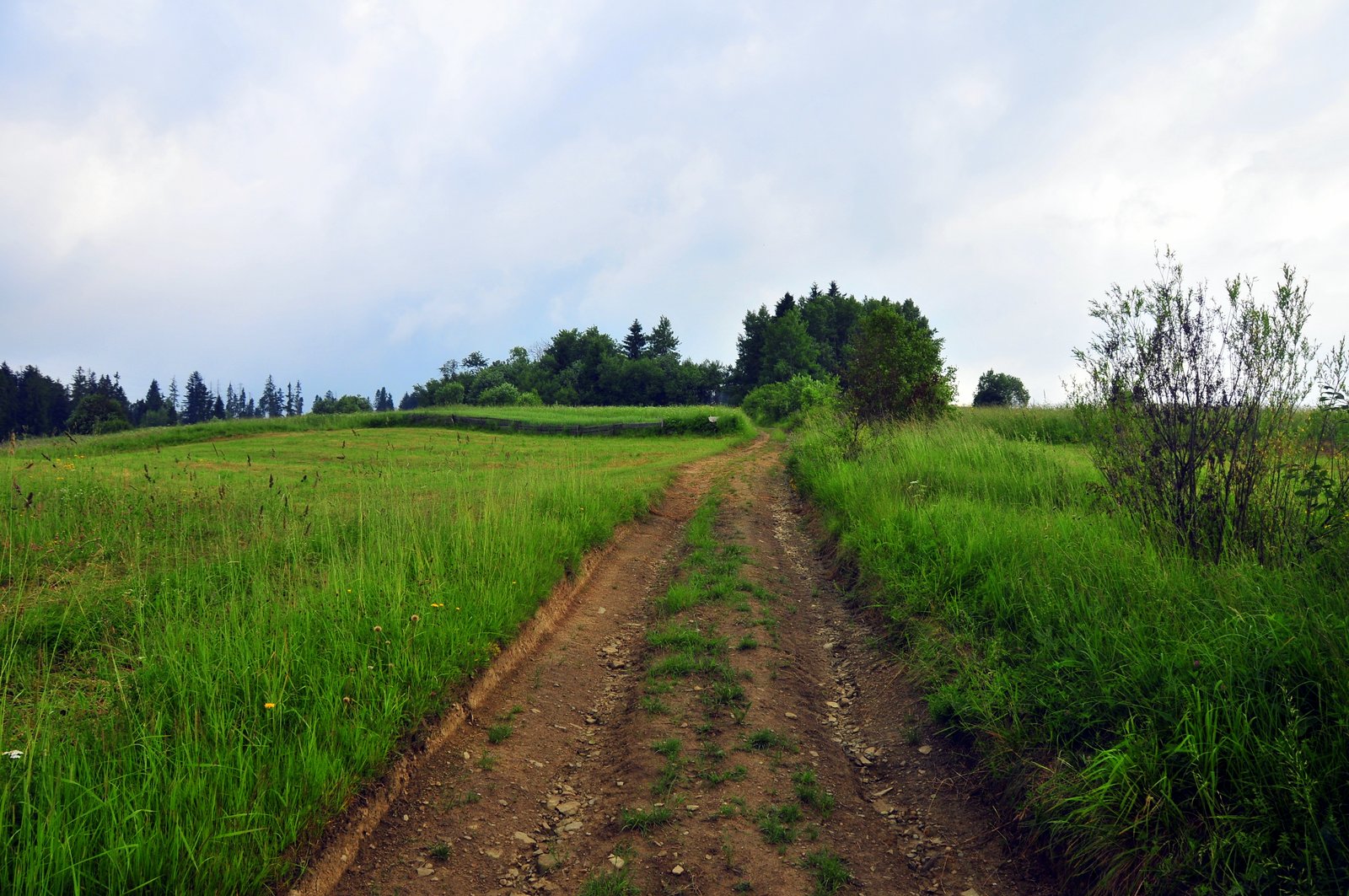
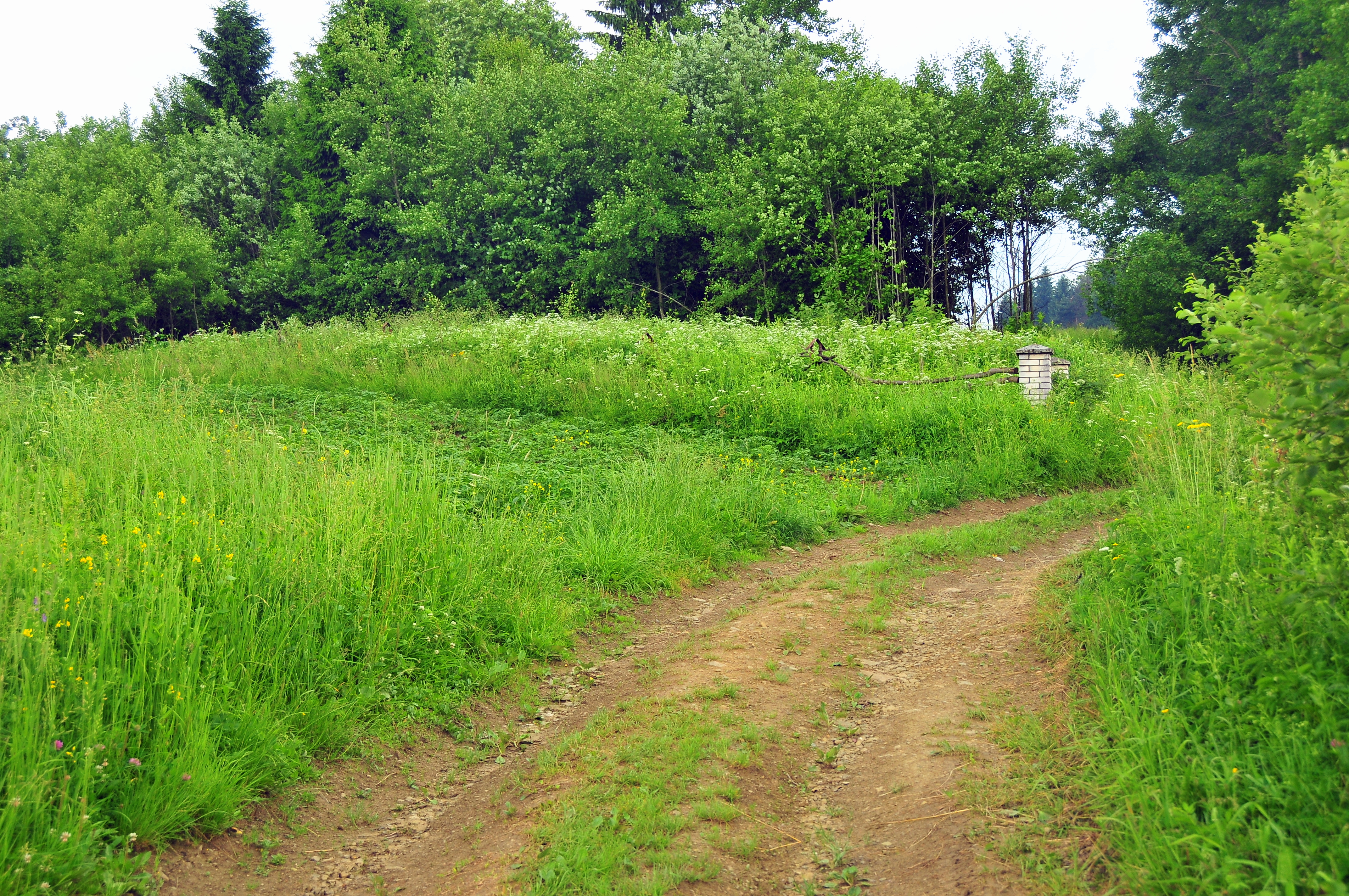
As I neared, signs of rumors I’d discovered on the internet appeared. For a few years, a group of Poles was taking care of the cemetery, and they even started building an enclosure. And there, by a field of potatoes and in front of the small patch of trees the young man had pointed out to me stood a brick fence post. Yet as I neared, I wondered if I was mistaken, though. Perhaps it was the beginnings of a house: Poles often build the fence around their lot before actually proceeding much beyond the foundation. No sign of any cemetery: nothing that even hinted at relative antiquity; no stones; no markers of any kind.
Still, I left the rutted road and headed through the weeds and grass, and hidden at the edge of the forest, I saw the corner of a grave marker. Venturing into the small wood, I saw a second, and a third. Deeper and deeper and suddenly they were everywhere.
Some lay on the ground covered in moss, completely illegible. Others leaned against this tree or that, the Hebrew lettering in various stages of illegibility. Some stood straight and true but with an edge or corner knocked off, the missing piece nowhere to be found. Few if any stood unaffected by the years of weather and roots.
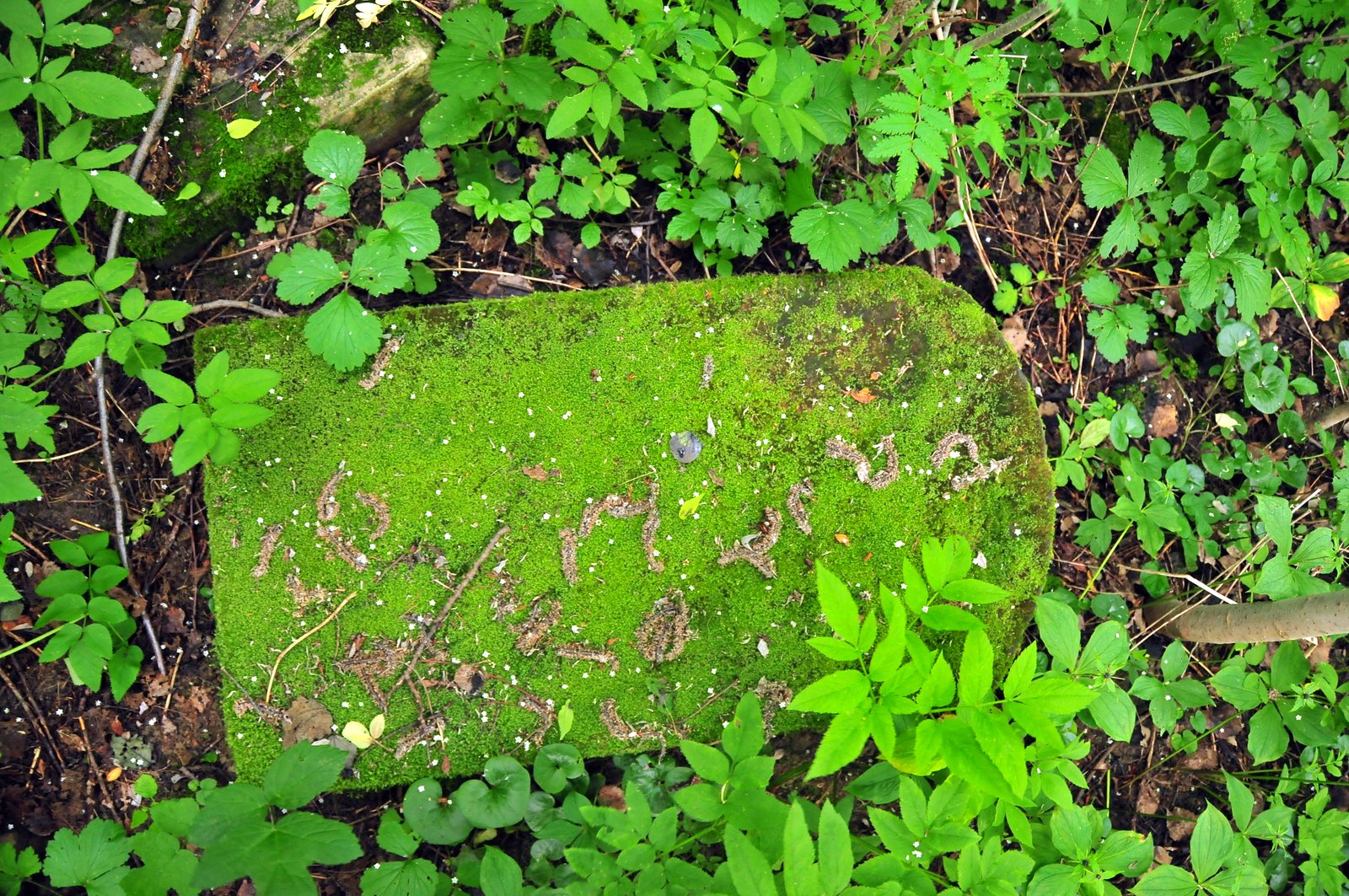
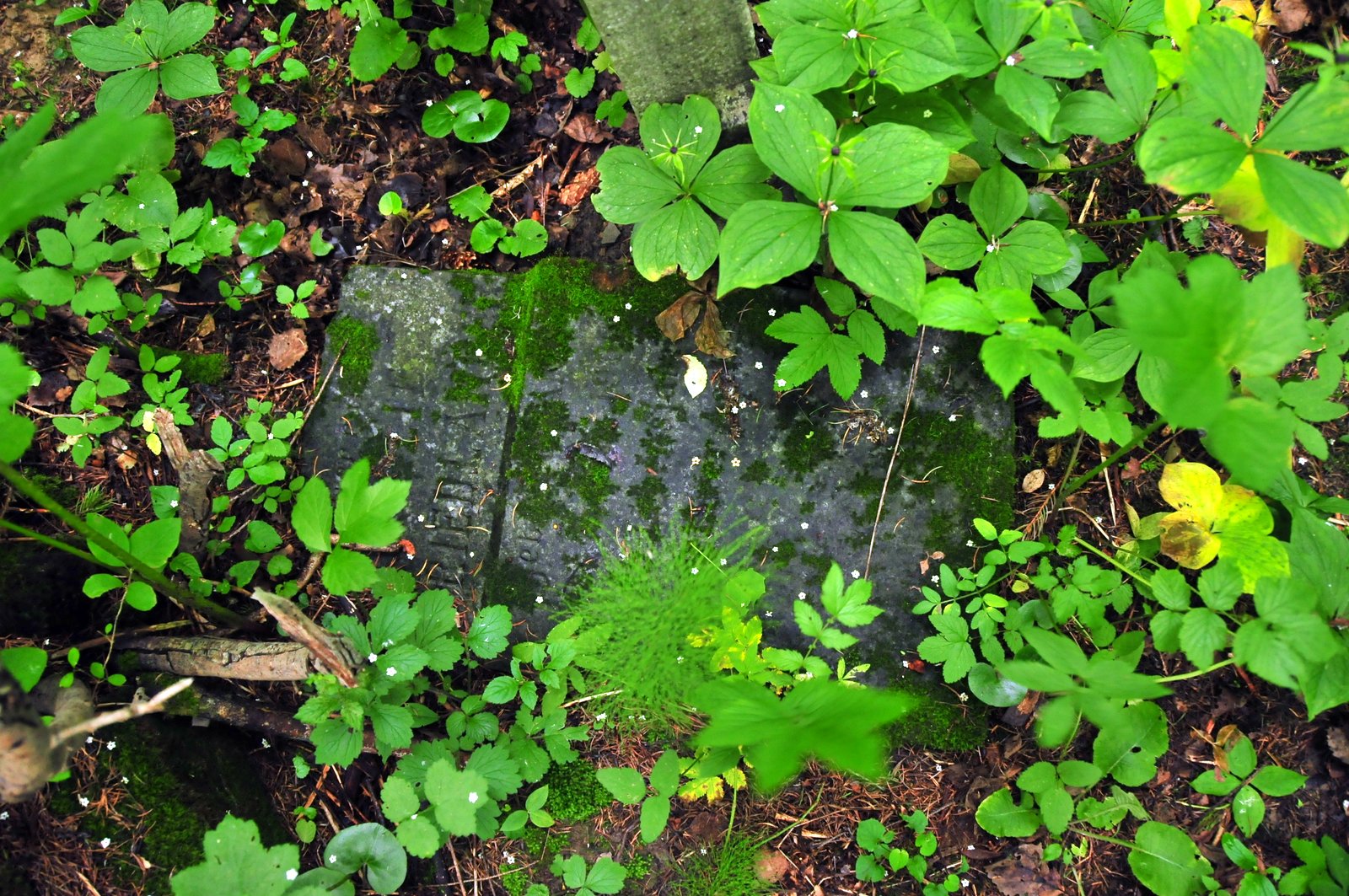
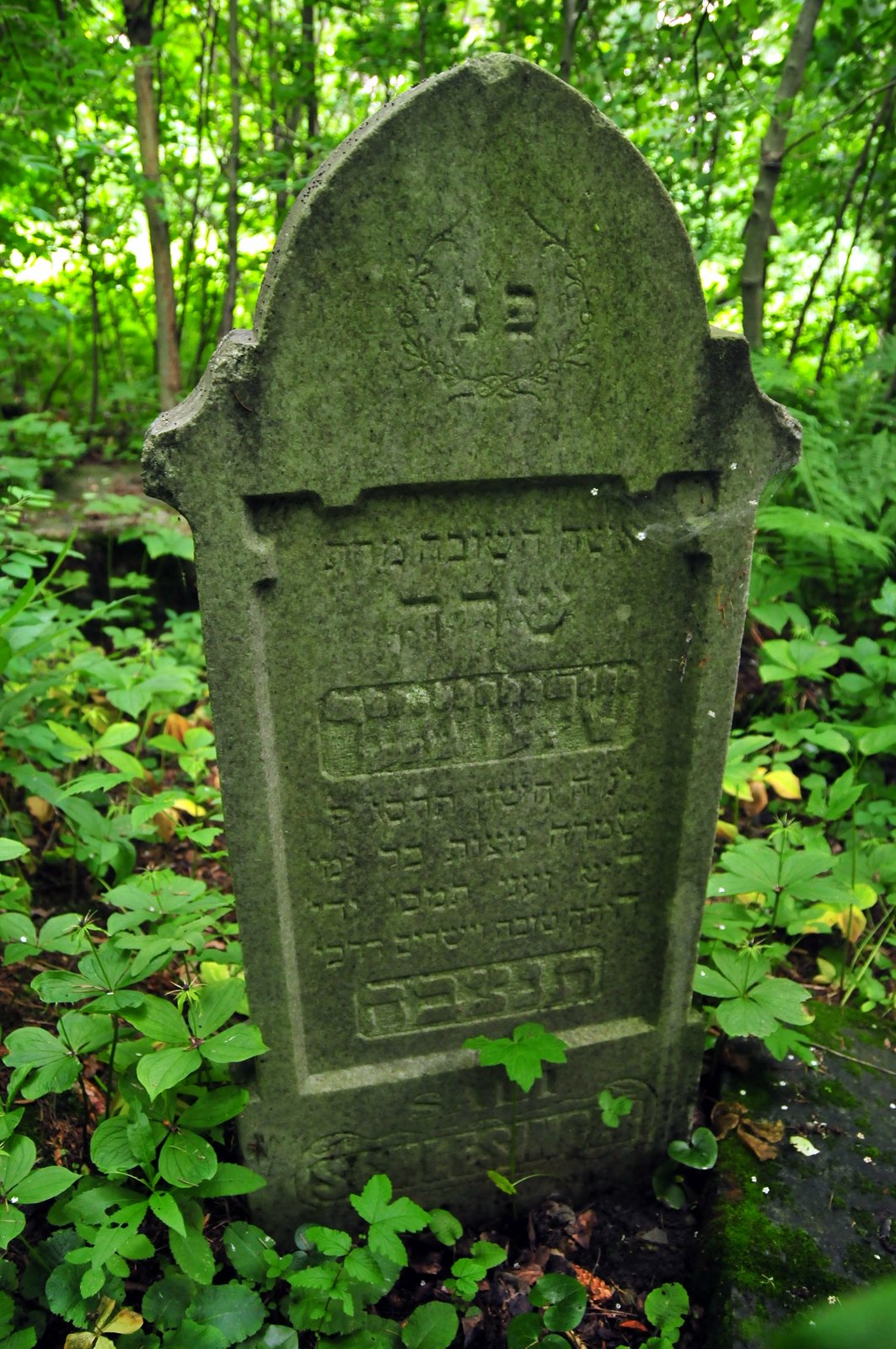
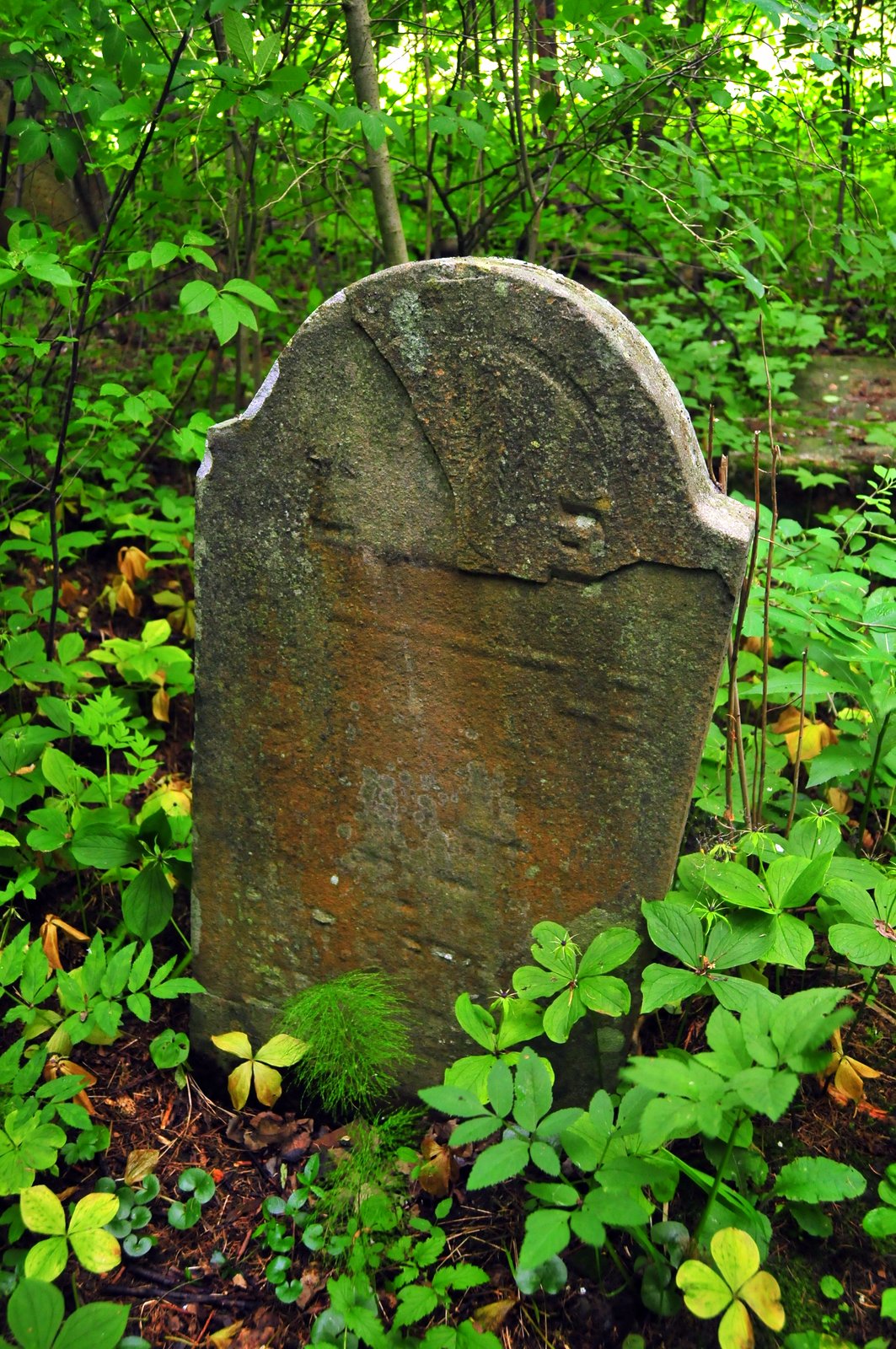
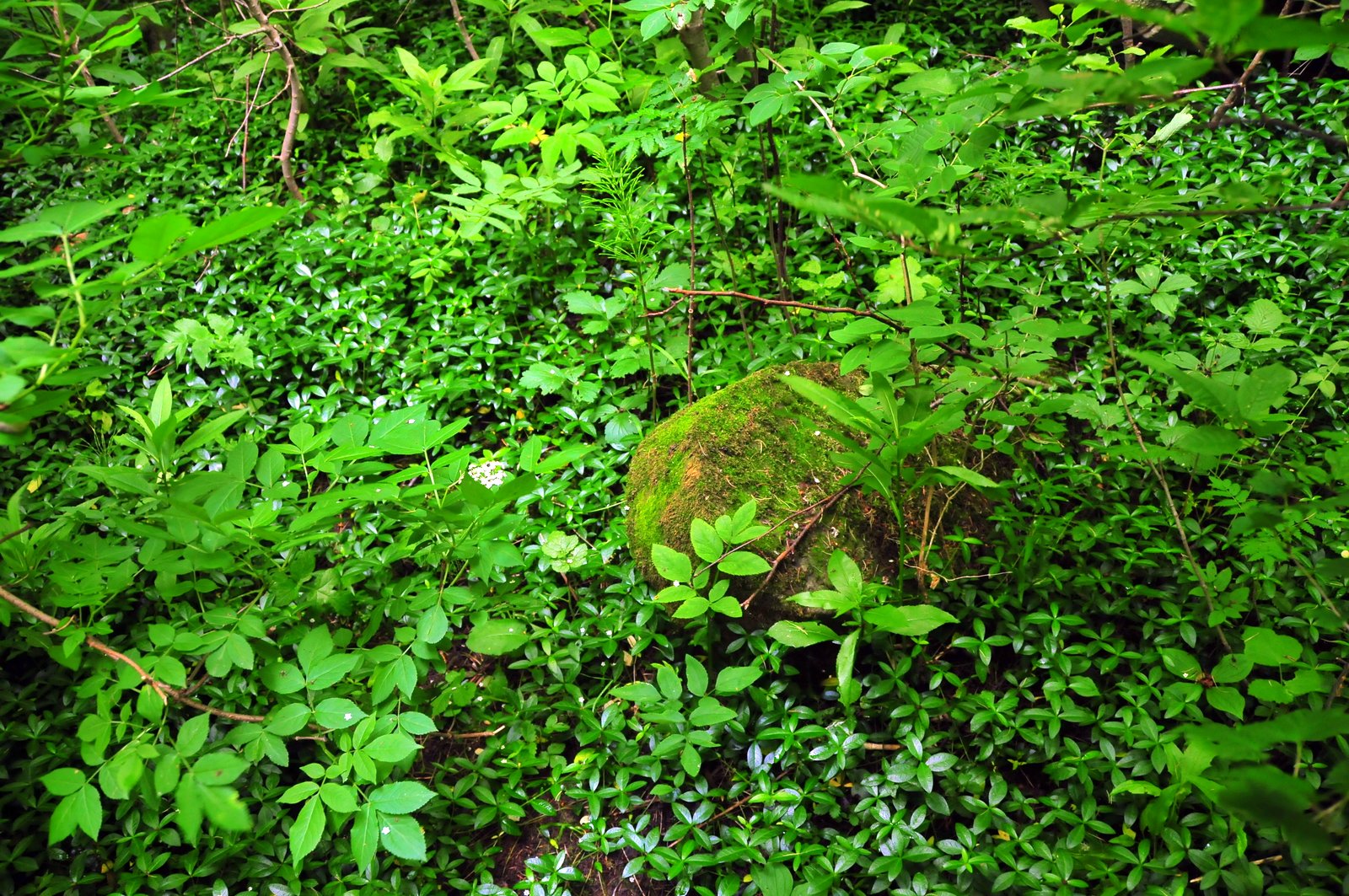
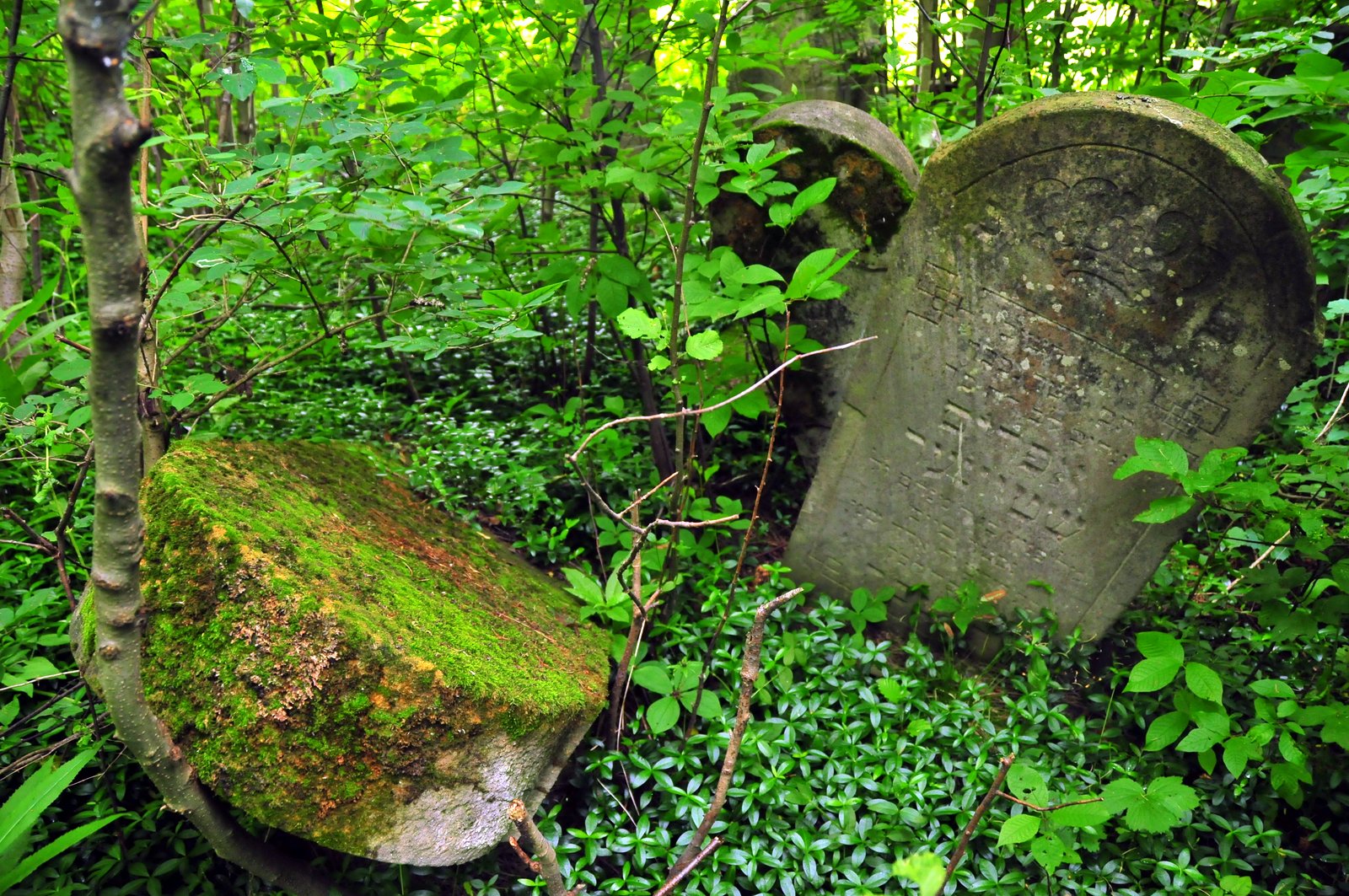
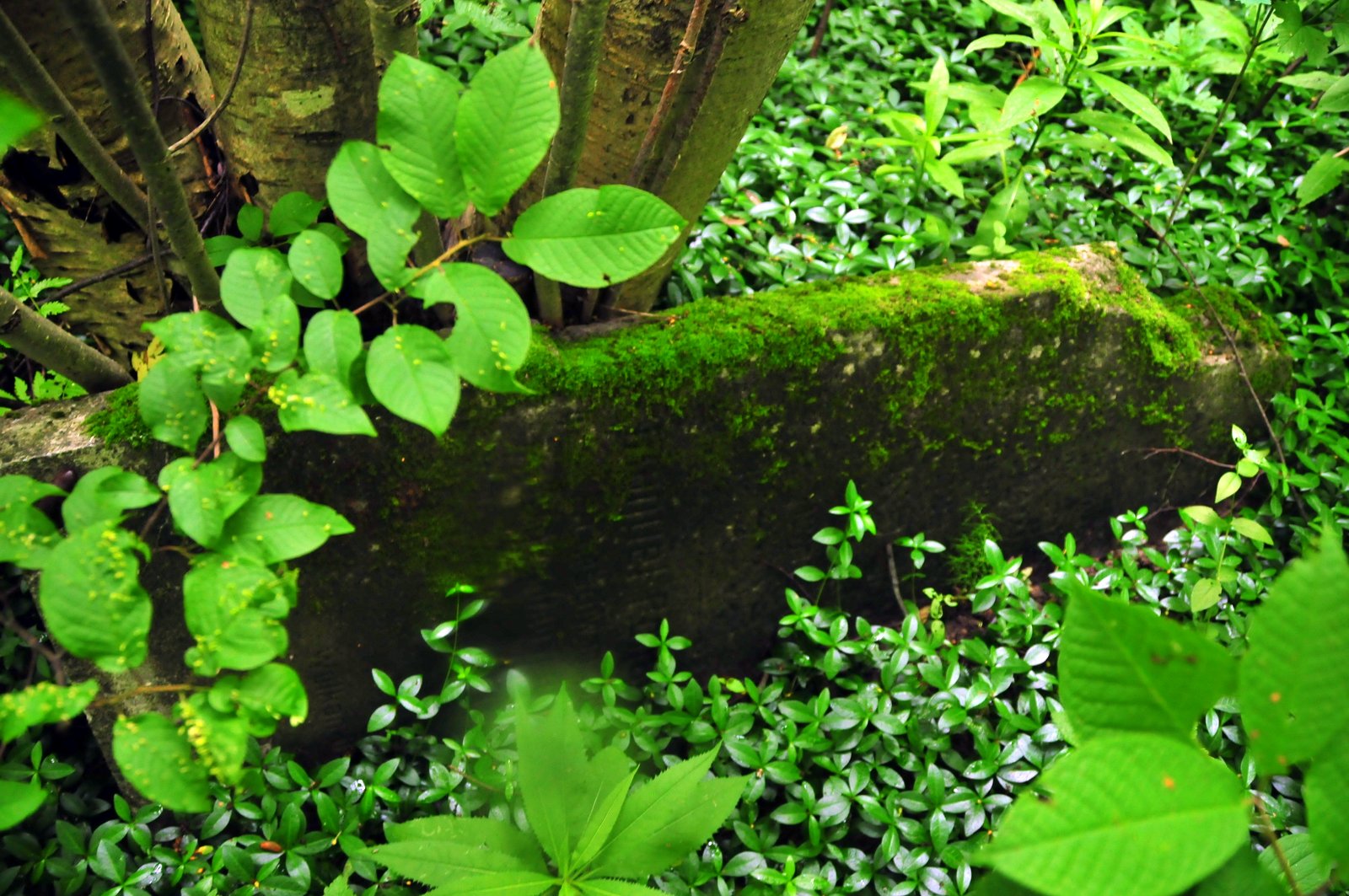

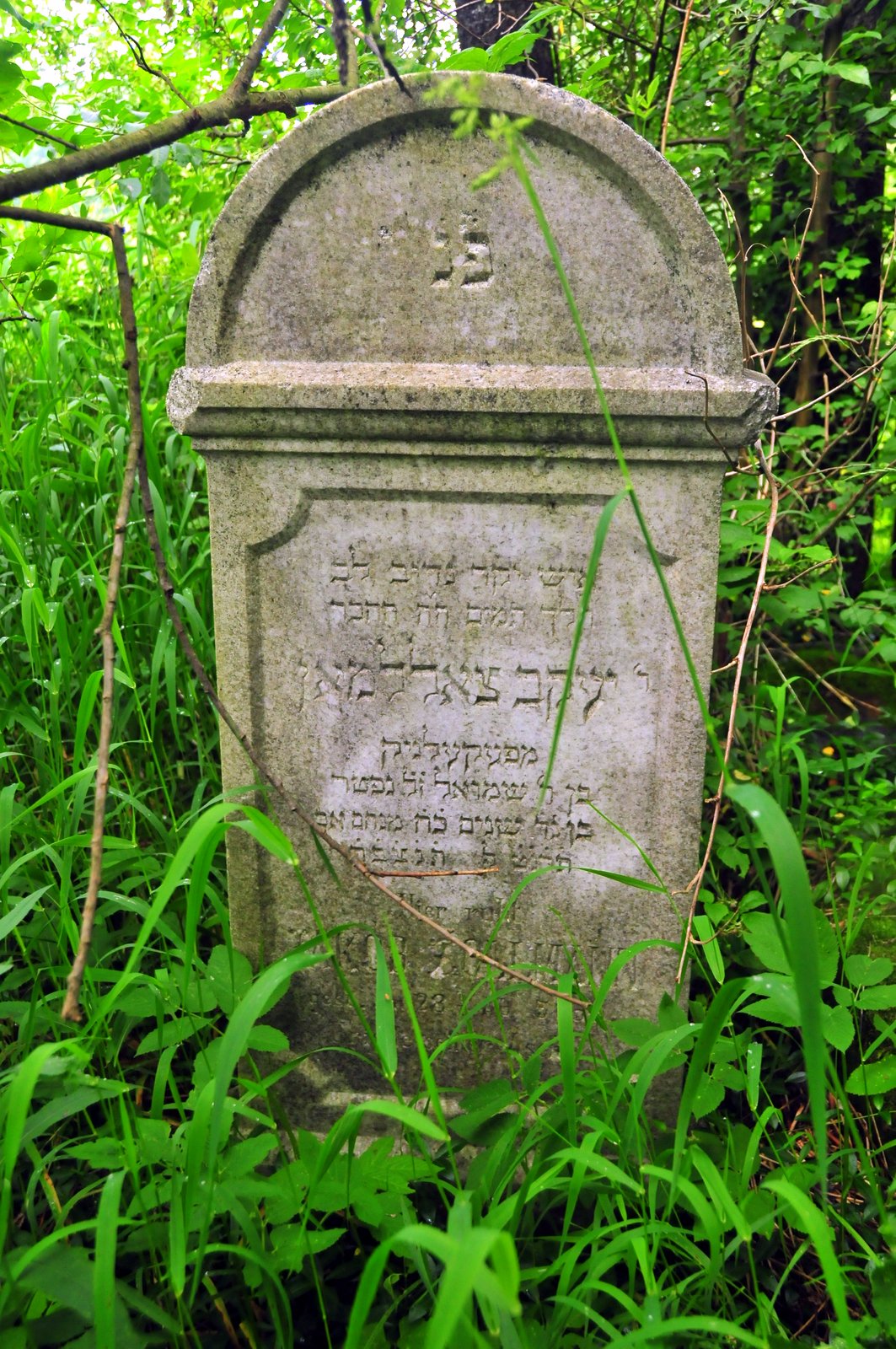

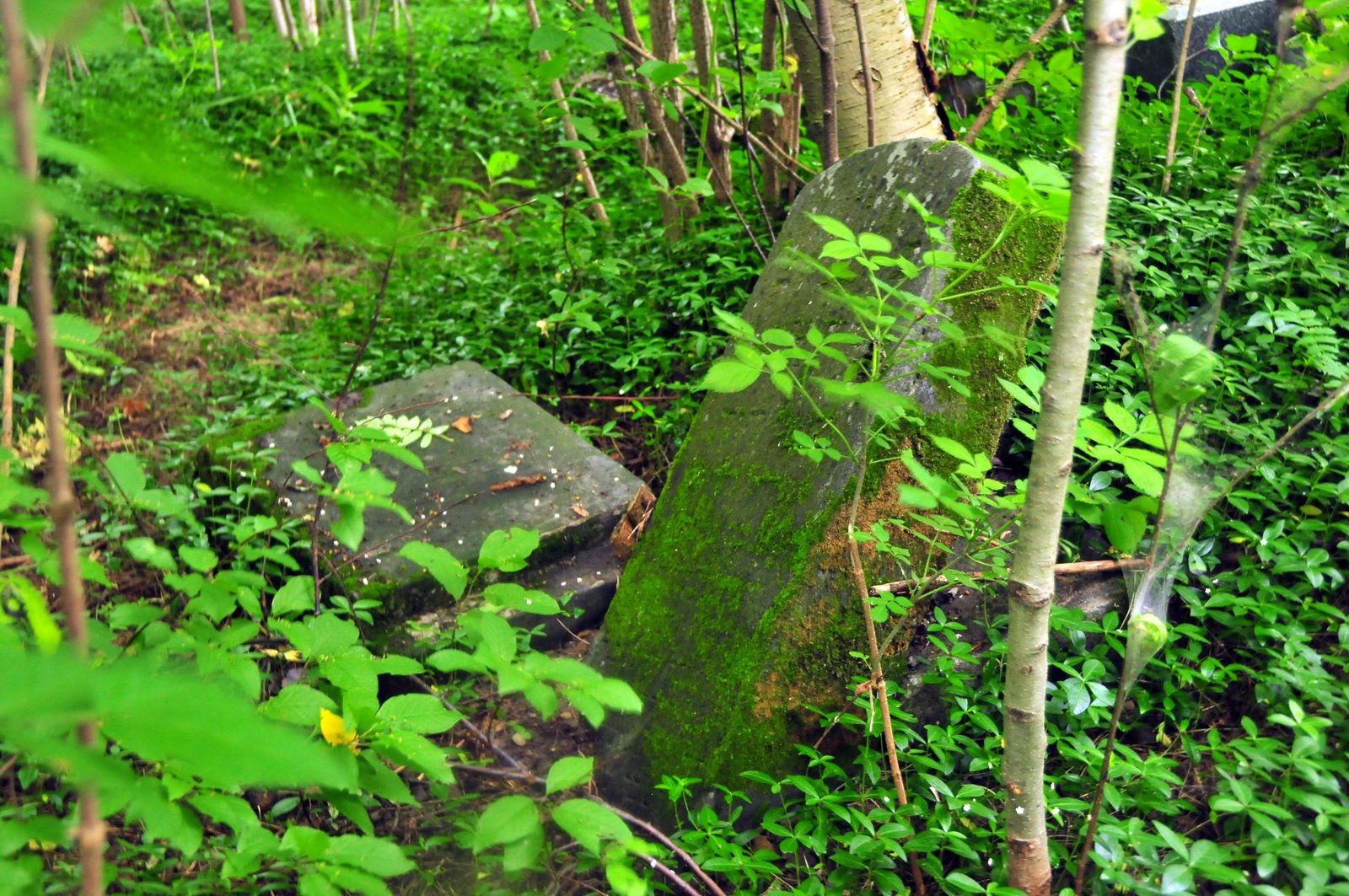

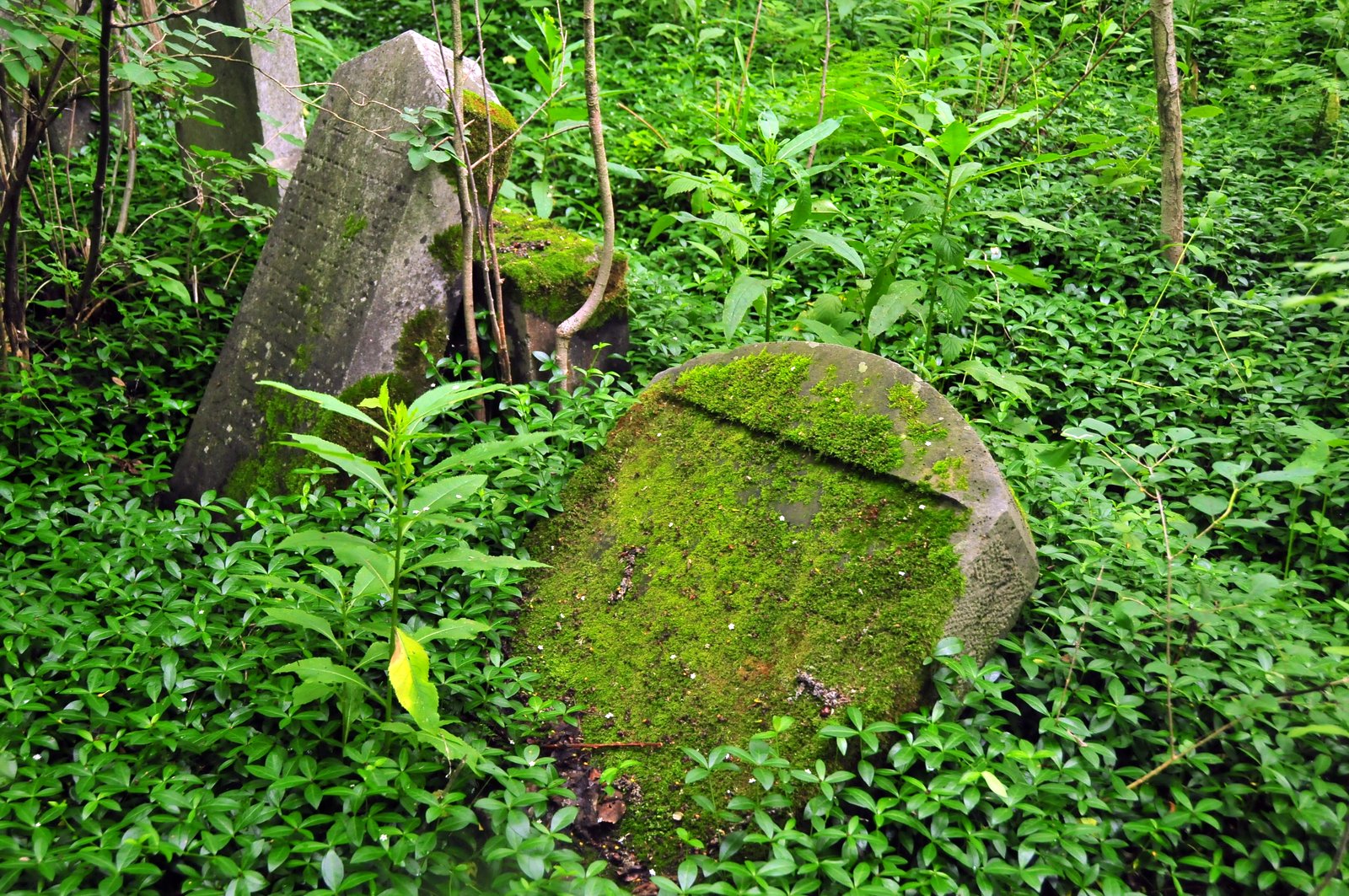
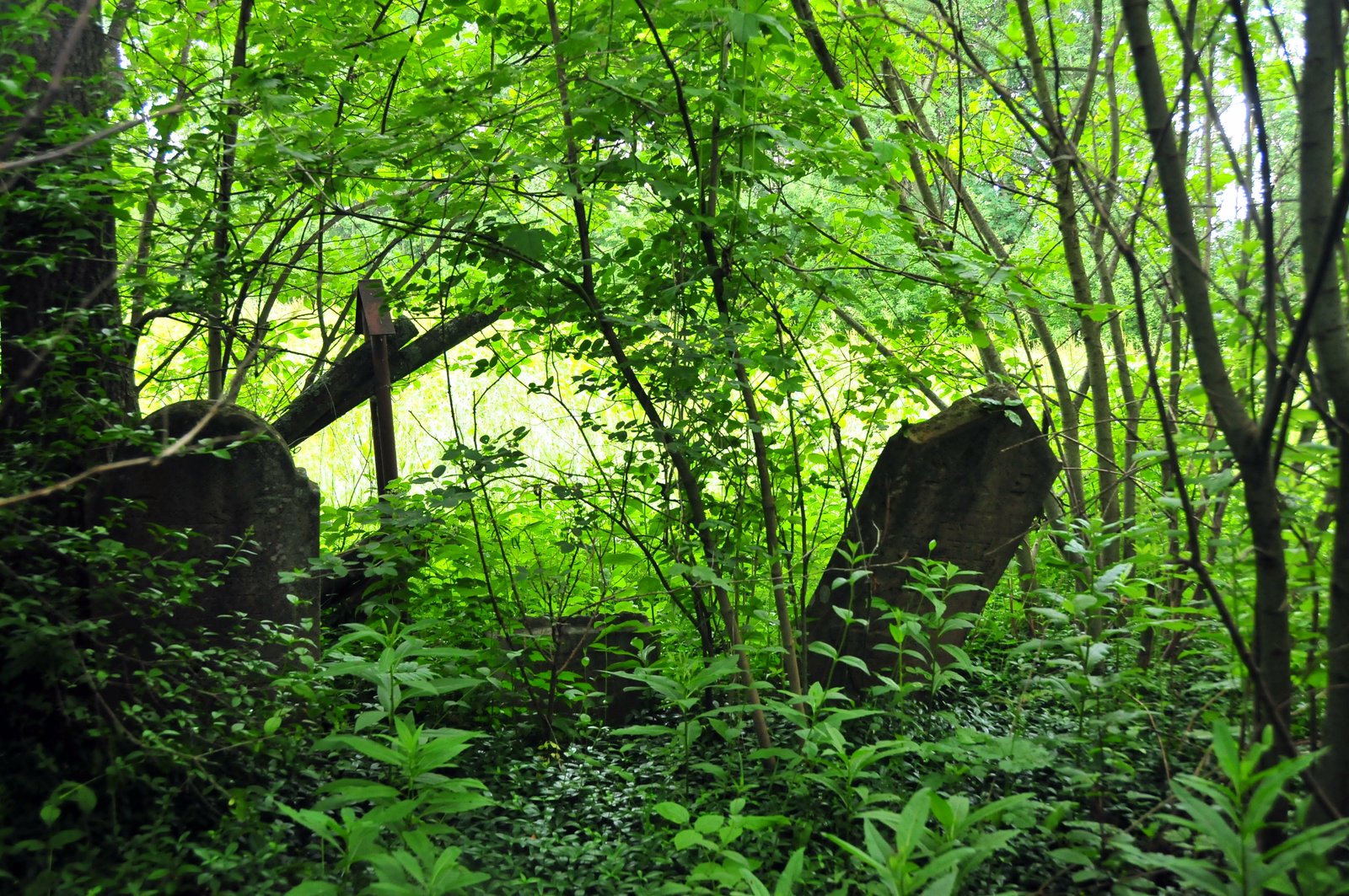
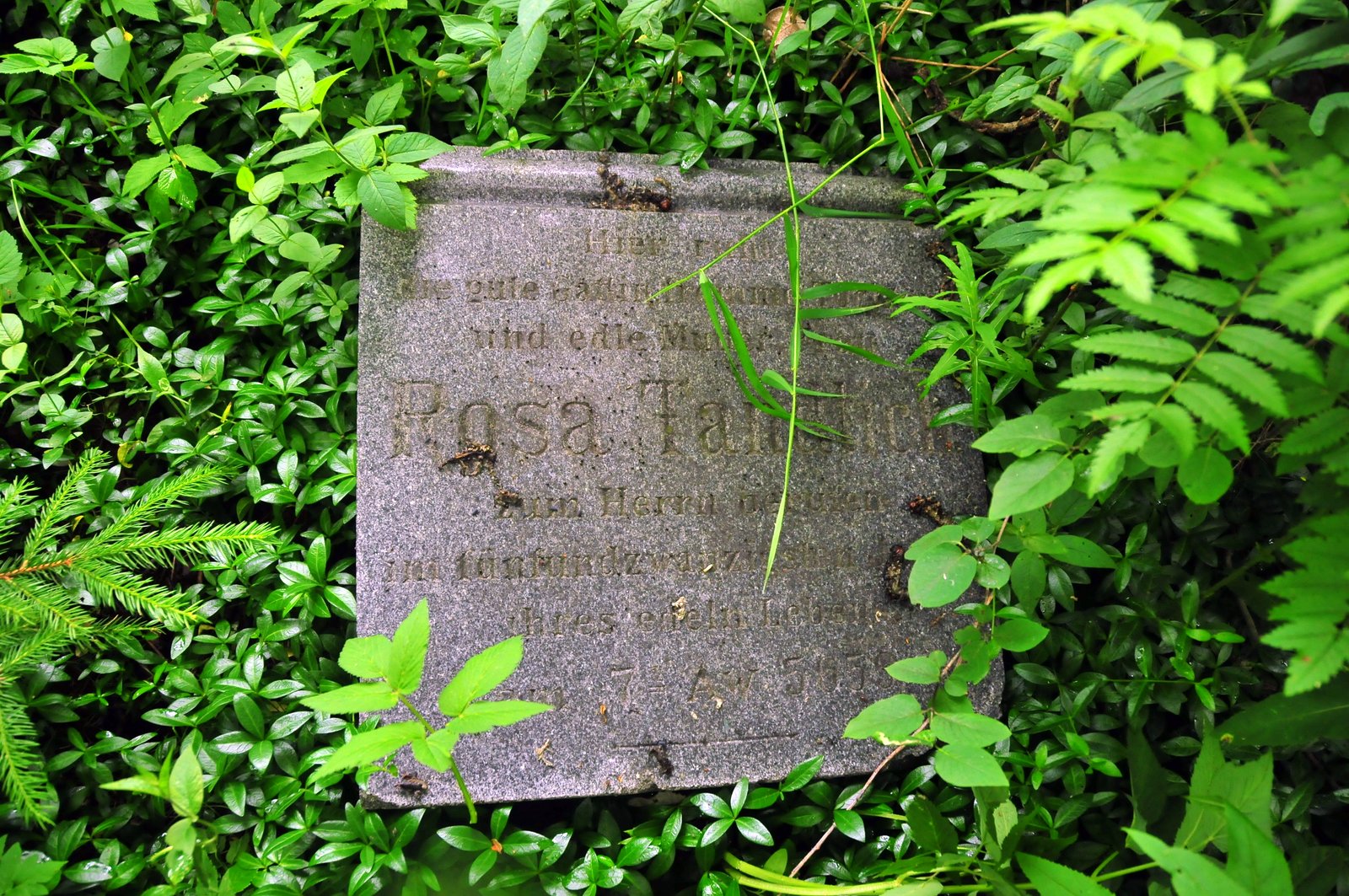
“And this is all that is left of a rich Jewish heritage here in Orawa,” I thought. The Nazis destroyed the people themselves; time and apathy is taking care of the rest. Soon, there will be little to show that Jews lived, and died, in this area.
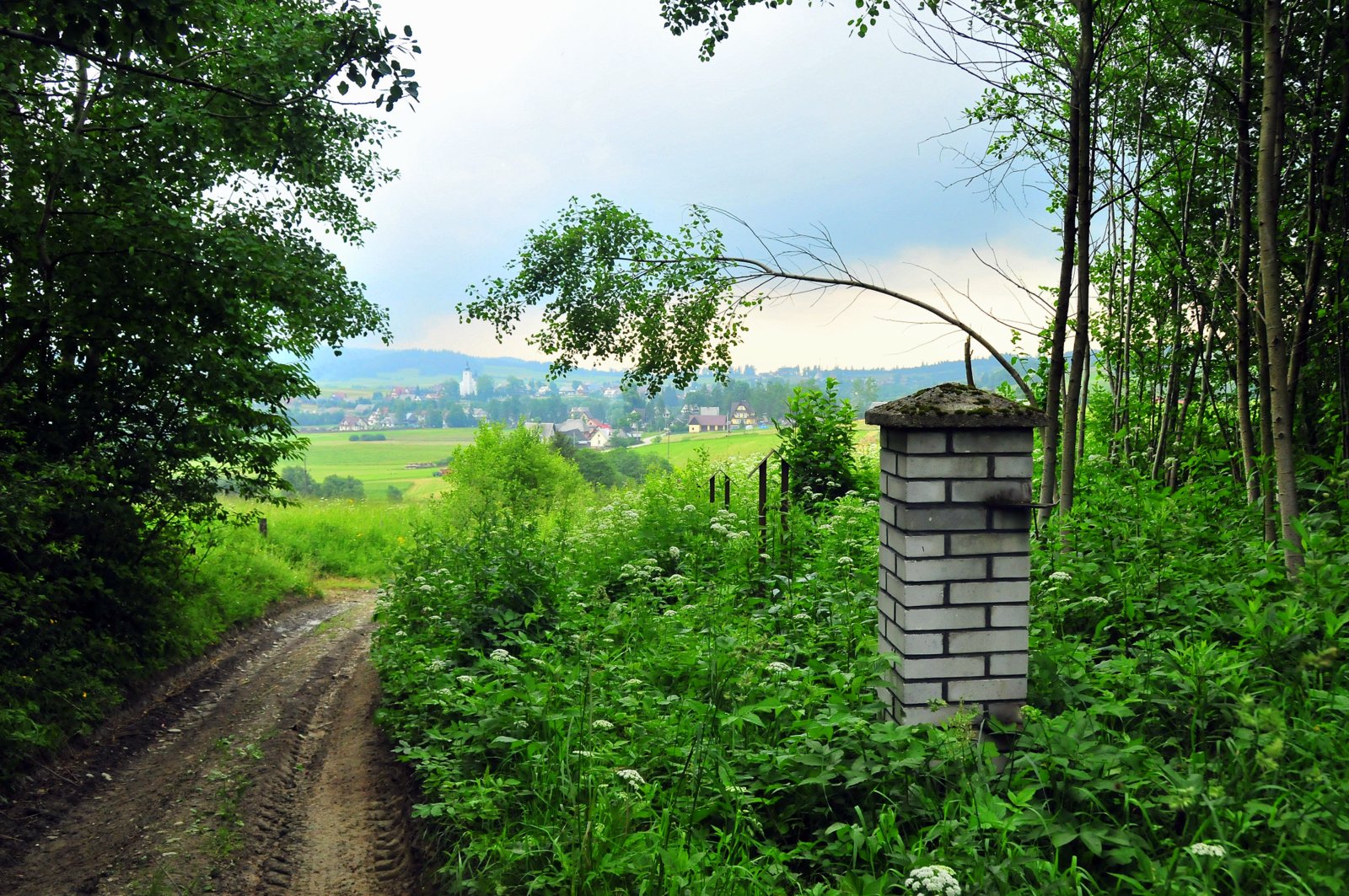
I turned to leave and noticed a small tree that looked as if it were itself about to fall. The forest will grow, fall, and rot, the stones themselves will dissolve in the countless downfalls that wash through the area, eventually, only trained archeologists, if they still exist at that time, would be able to find the cemetery.
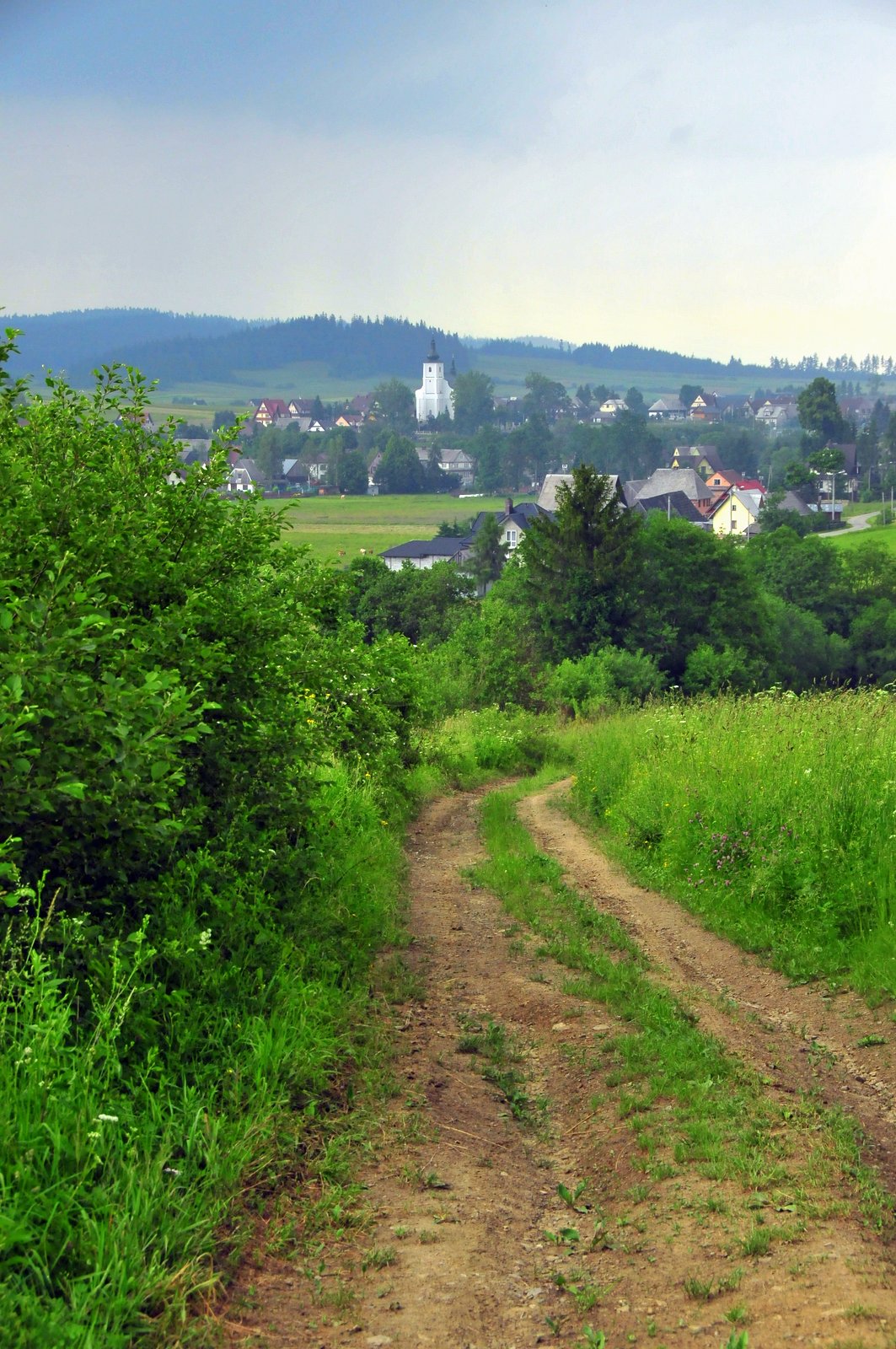
That is of course the fate of all of us, to be sure. But as a species, we’re so obsessed with our legacy, and it’s a little disconcerting to find such apparent disregard for the meager physical remnants of an entire ethnic group.
“Imagine a Polish cemetery in some foreign country looking like this,” Babcia said looking at the pictures. Indeed, imagine just about any other ethnic group’s cemetery looking like this.