

It must be a Polish Christmas cultural spill-over: we put out our lone Halloween decoration — a modest Jack-o-Lantern — on the twenty-ninth. Poles traditionally put up the Christmas tree just a day or two before Christmas, so I guess out late J-o-L is a sort of cultural cross-contamination. That or our hectic schedule.
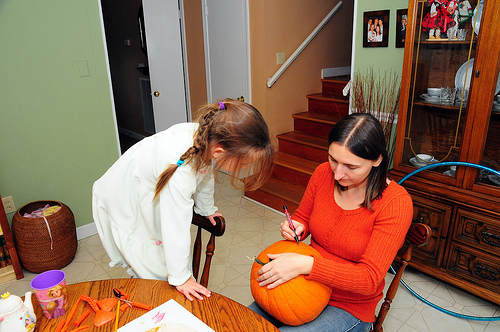
This year, at least, we managed to make the time. Two years ago, we managed something, but last year it was a wash: the J-o-L-to-be sat in the carport, abandoned and unloved, until well after Halloween.
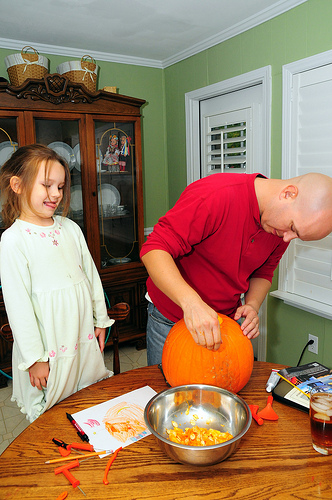
Naturally, as we worked on the pumpkin, the obvious comparisons came to mind: The Girl is now old enough to help, even if her help is a little more hindrance than anything else: a tentative hand in the pumpkin, a brush with the slimy entrails, followed by a sudden decision. “I don’t want to help.”
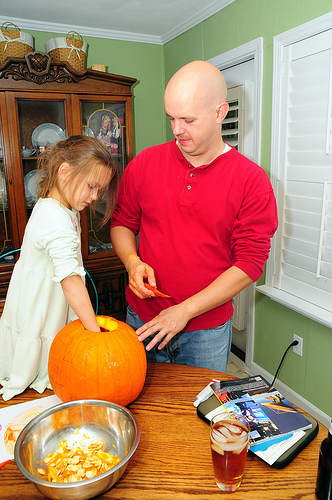
But she’s already helped enough by planning the design and serving as a consultant. This year’s J-o-l was simple: a princess with a crown.
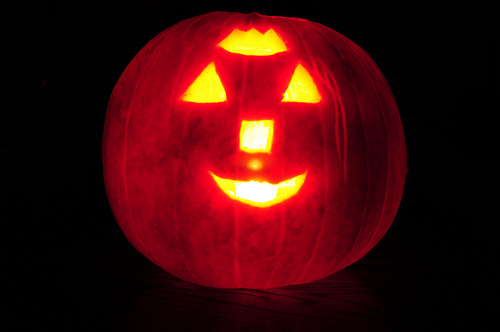
The Girl choosing a princess: how unexpected.
Once upon a time, there was a terrible, wicked queen. As a prisoner, she held a poor girl from a small, humble village. She fed the girl daily, played with her, took her to school, and inflicted other tortures too sadistic to mention here among polite company.
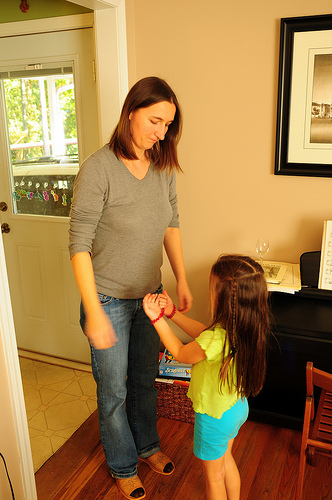
She was especially fond of binding the young girl’s wrists with Mardi Gras beads and flinging the poor, frightened girl onto the couch.
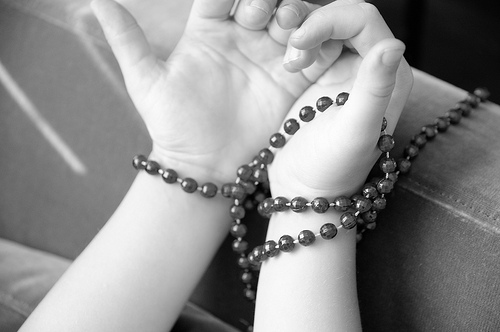
How those binds tore at the little girl’s flesh! But tight as the queen made the beads, she could not break her little prisoner’s spirit.
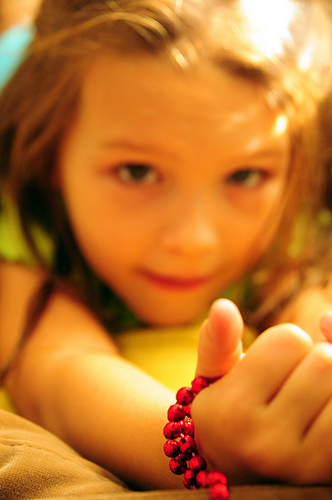
Her little captive still had the ability to melt hearts and frustrate daddies in an instant.
Thank God for loving Babcias who send entire boxes of educational materials from Poland so that little granddaughters around the world can work on their Polish language skills.
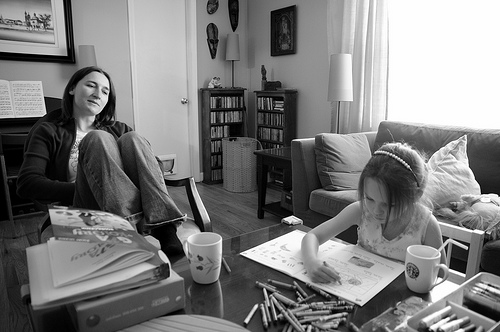
Thank God for loving Polish mamas who daily work with stubborn half-Polish little girls in an effort to keep them bilingual.
It’s a yearly tradition now, the herald of autumn, and if we lived in a colder climate, it would serve as a bookend to the summer.
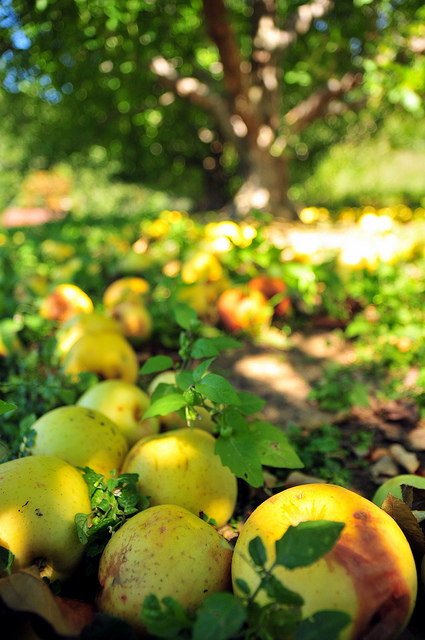
The selection is diminished at this time of year: the McIntoshes are long gone, if that’s your apple. Honeycrisp tress are long bare, and Pink Ladies are still not ripe. Of course, there’s always Red and Golden Delicious, as well as Granny Smiths, but those are at the very bottom of our list of favorites.
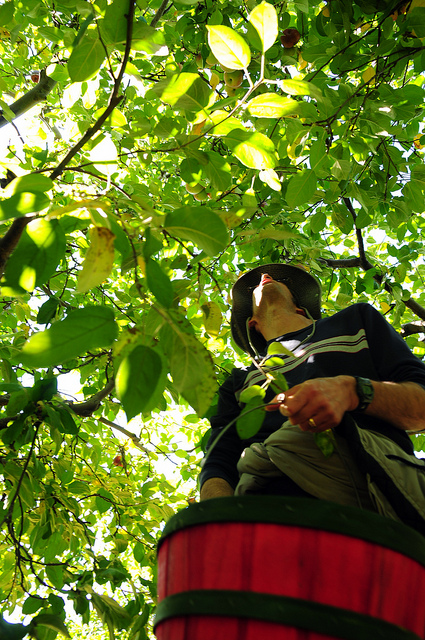
There are a few Cortlands on the tress, though, and if you look hard enough, you’ll find a McIntosh or two still hanging around.
And of course there are loads of Fuji apples.
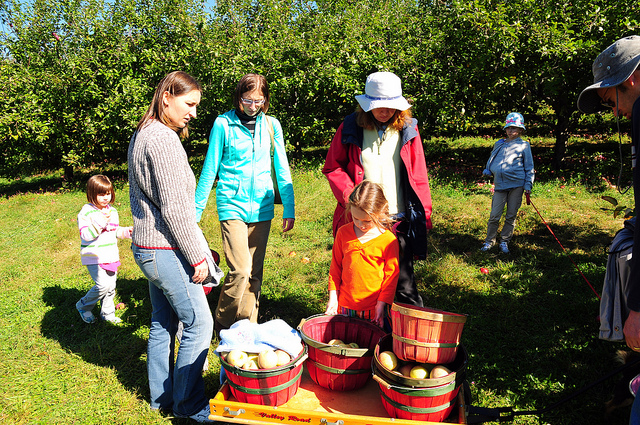
We can easily fill the baskets with Fuji, and the Girl adores that particular cultivar.
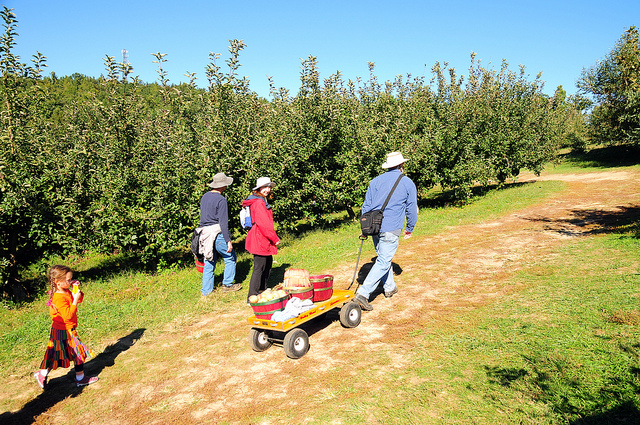
The apples, of course, are only a means to an end, which is spending time with close friends.
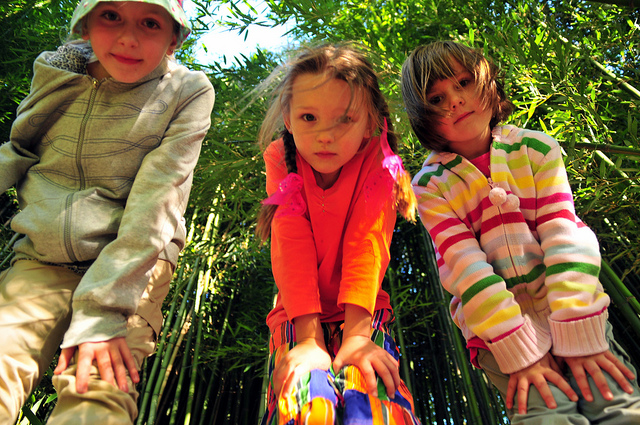
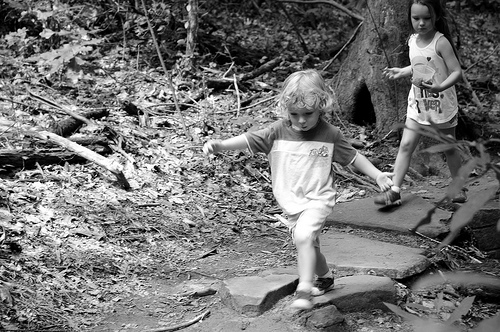
There’s a great trail along the stream and up the side of a mountain that’s just right for short legs.
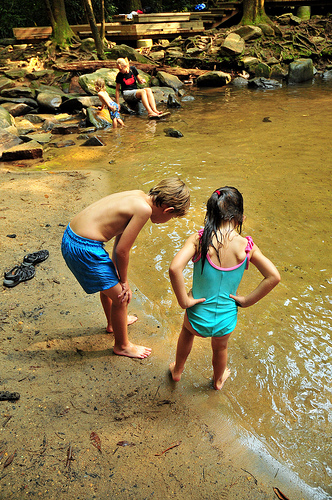
There’s a fun swimming hole. There are tadpoles squirting about, drawing undue attention to themselves from would-be harassers.
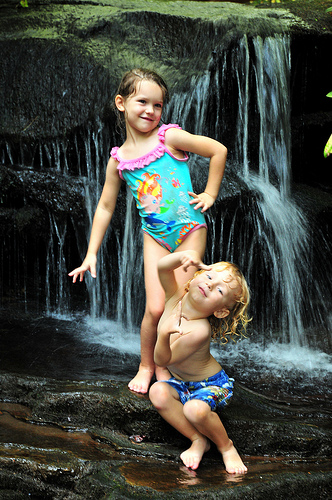
There’s a cooling waterfall with which L becomes more and more courageous. (The corollaries to this is a new ability to put her face in the water and a develop preference of showering over bathing.)

There are smaller waterfalls nearby that are positively picturesque.
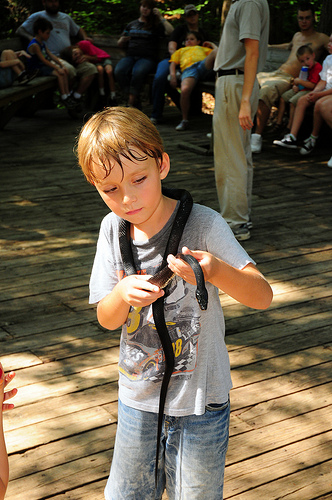
There are nature shows that allow kids to handle frogs, turtles, and multiple snakes, as well as learn about how helpful some snakes can truly be.
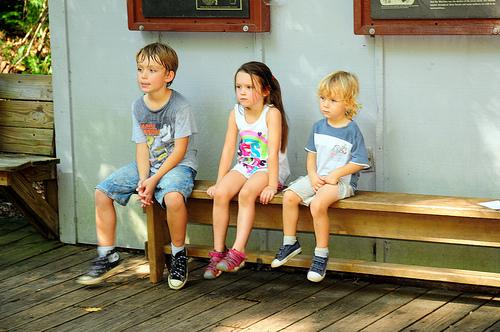
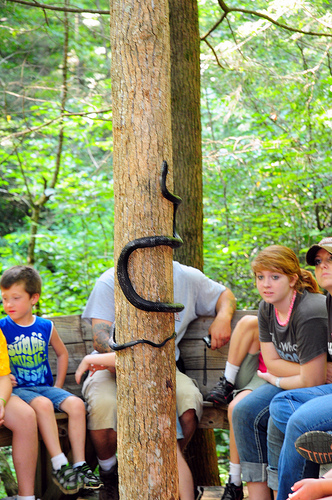
And there’s an ice cream shop just down the road.
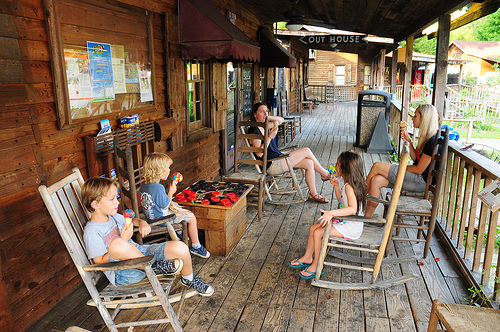
Perhaps these are some of the reasons we keep returning to Table Rock State Park whenever we can.
We’ve been getting the Girl used to no nap: she won’t have one when she goes back to preschool next week.
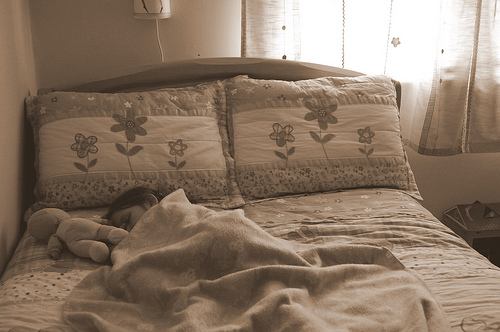
But some days, she falls asleep in the back of the car and we relent. “Half an hour,” I whisper to her as I put her on the bed and cover her up.
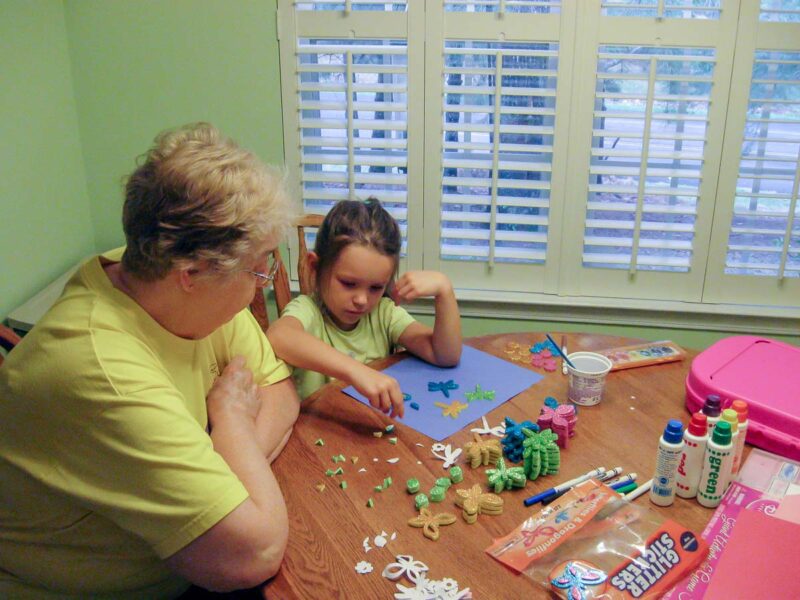
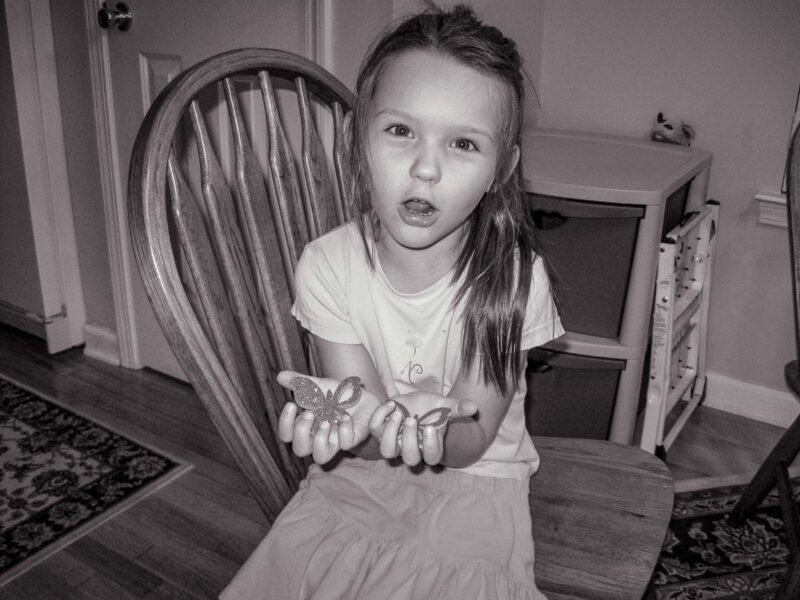
Read sixty books and you get a free meal at Chick-Fil-A.
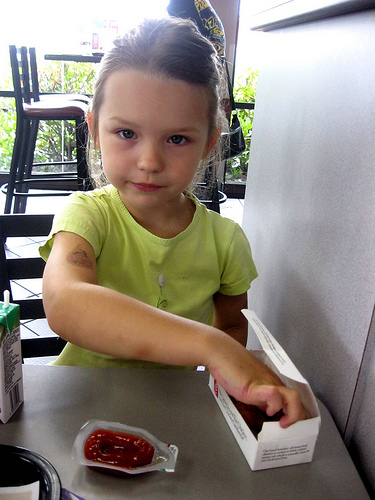
At what point does “best friend” cease to mean “someone you argue with best”?
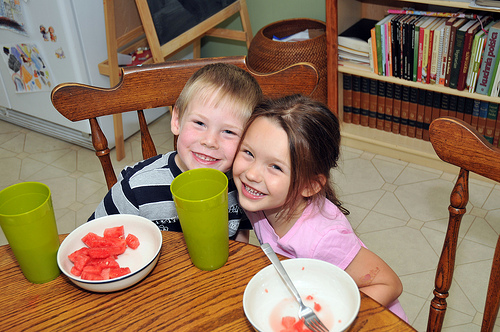
Probably never.
Birthdays are, obviously enough, the temporal equivalent of borders or landmarks. We pass them and in theory are not the same on the other side. At least that’s what our culture tells us. Birthdays always bring to mind the now-odd notion that most people in the history of the world have had no idea just how old they are, so it’s a boundary because we say as much.
But they can provide real metrics of comparison. For instance, there are firsts in a child’s life that correlate to her age. Birthdays, then, can provide a dual marker: someone turns a year older; someone else experiences a first in relation to that.
Shortly after our arrival, K had her first birthday in the States. We were staying with my parents until we found jobs and settled into a city — eventually Asheville, though only for two years. We went out to eat, had a cake — the usual.
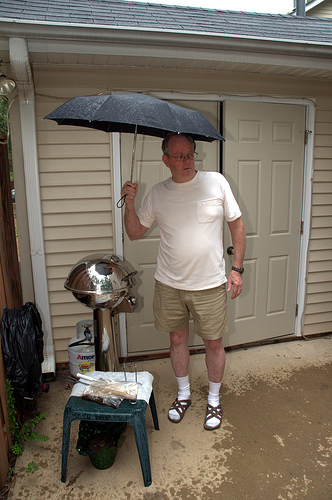
Now, six years later, we celebrated once again with my parents: a grilled London Broil (one of K’s favorites) and all the summer accessories. Though the weather didn’t cooperate, it was nothing to the head grill chef: there’s no stopping a man on a grilling mission. It just can’t be done.
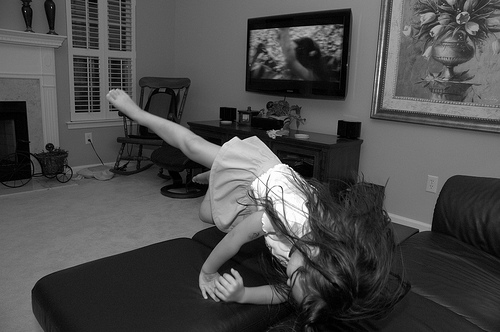
There’s also no stopping a four-year-old on a mission: as Papa was grilling in the rain, the Girl worked on perfecting her living room gymnastics and tumbling routine, taking occasional breaks to dance to the music coming from this or that program on Nick Jr.
But this birthday was different. Sure, there were Klondike Double Chocolate bars for desert — a first for all of us, but a relatively insignificant first.
Sure, K turned 26. I suggested she might want to do 25 for another year (she’s been in a holding pattern there, just as I, for a number of years now), but she decided to step out into a new age. Significant, but not earth-shattering.

What was most significant was, as always, how our daughter grew. It was the first year that L chose a present for K on her own.
It was a risky proposition.
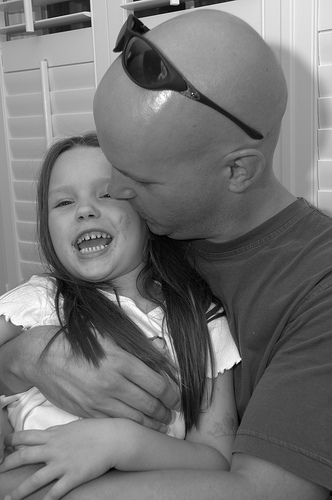
She was insistent, though, on buying a new jewelry box for K. “The one she has is old,” she advised me sagely. “Mama needs a new one.”
So off went to find a jewelry box. What we bought was a candle holder, though. Pink, and shaped like a star, no less.
“I want this one!” L proclaimed when she saw it.
“You mean you want to buy this for Mama?” I clarified.
“Right.”
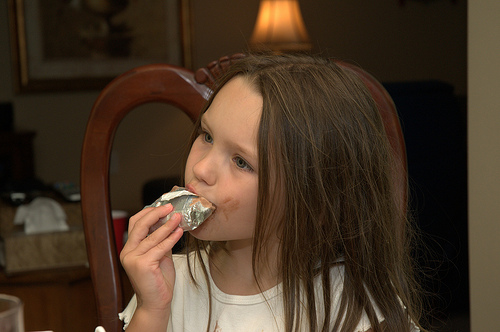
I tried to explain it wasn’t, in fact, a jewelry box. Yet the fact that it had a small door with a hing countered any argument I put forth. There’s reasoning with a little girl on a mission to buy a jewelry box for her mother.
The Girl has fallen in love with Cheerios again. It’s been four years since she ate them regularly; suddenly, she craves them.
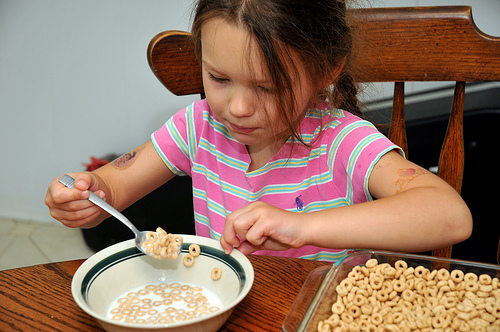
It’s one less worry, as it means she’s getting a decent breakfast for a change.
Another day at the pool, which meant two things.
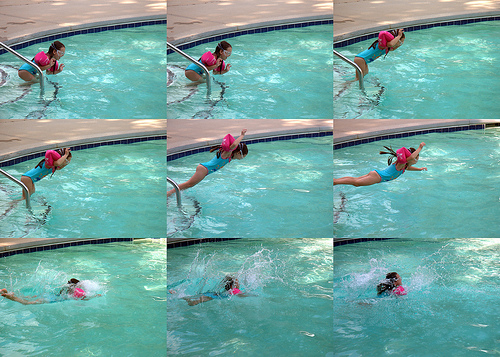
First, more fun with the new camera: at close to seven frames per second, you can really get some good time-lapse sequences.
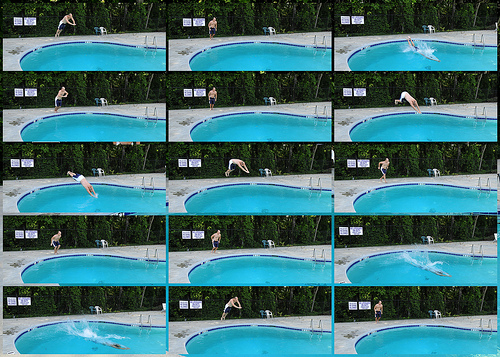
And second, the Girl learned an important lesson: if you’re going to splash someone because you’re mildly frustrated with her,
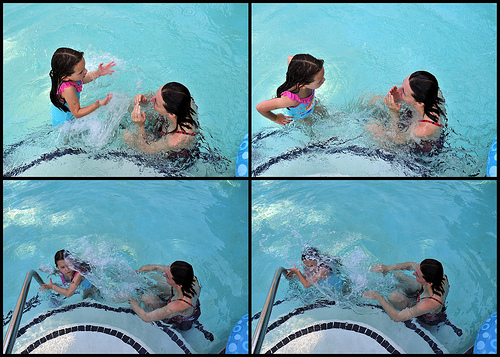
make sure that person can’t splash back more effectively.
The Girl is out of daycare — I am the daycare, which means a number of things.
Her sleeping habits have changed significantly, for starters. When we are all heading out of the door by or before half past seven in the morning, we have to get her up so early that it affects her weekend sleeping patterns: she rarely goes past seven thirty. This summer we’ve discovered that she’ll sleep almost to nine if we let her. Which means a bit of time alone in the morning before she’s up.
Yet there are some negative consequences, most significantly, a lack of interaction with other children and less outside time. We don’t have a playground in our backyard, where as the Girl’s school has several: mornings on the playground were the daily ritual.
So we do the best we can. We take her swimming. Or, rather, jumping.
Returning to places as a parent provides a yardstick for your child’s growth. The last time we visited Table Rock State Park, the Girl just shy of two years old. Her recently bald head was beginning to have enough hair to make her feminine, and she was beginning to talk. (When we watch videos of her at this age, though, neither K nor I can understand much of what she says sometimes.)
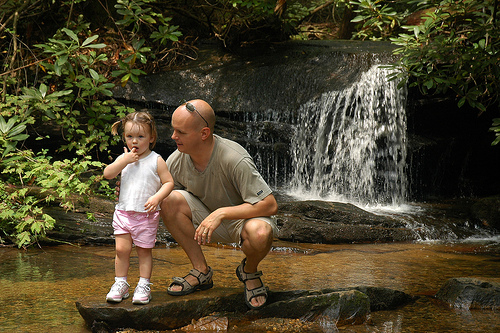
That first trip, she toddled along for some of the short hike, but most of the time, either K or I carried her in a frame-less child carrier: twenty pounds of wiggle followed twenty pounds of sweat-inducing insulation.
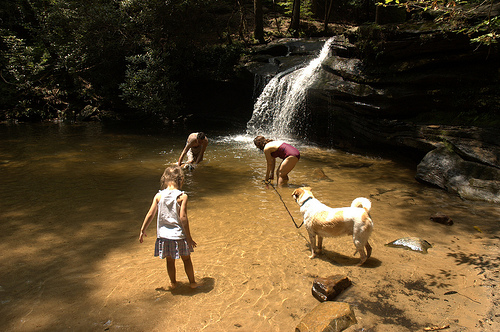
Three years later, and she is Miss Independence, resisting help on all but the steepest portions of the two-mile loop and occasionally pontificating, “It is time for a break!”
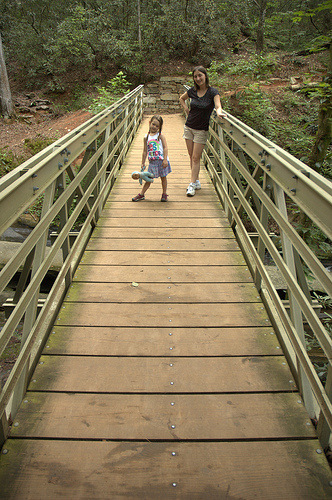
Last trip, she was barely aware of the camera; this trip, she posed. In fact, we had to tell her to stop posing occasionally: she has a tendency to get carried away.
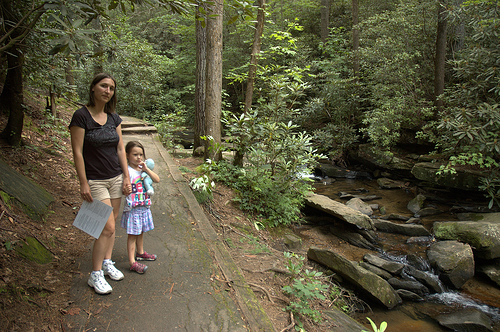
Yet some things have not changed in three years: Baby still is a constant companion, having been hiking in the mountains of Poland, photographed on the town square of Krakow, and one harrowing time, left at Target for one terrifying night.
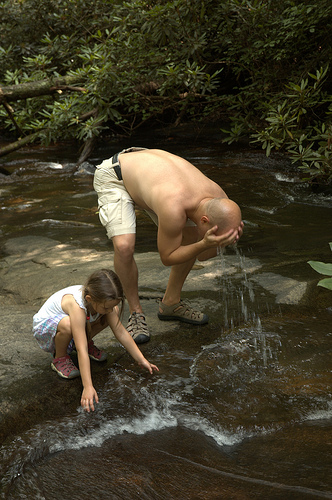
Imitation is still the order of the day, and fussing-filled frustration will likely be a frequent visitor for years to come.
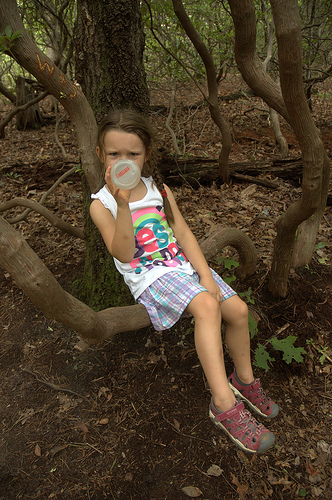
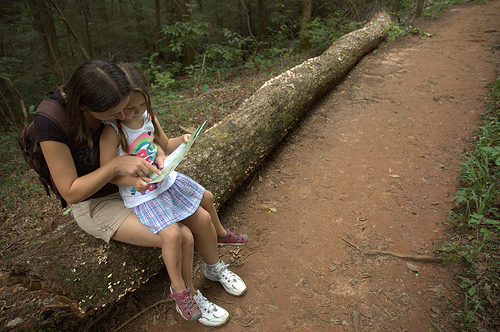
Yet the changes. We stopped for a break, and the Girl was curious: “Where are we?” K pulled out the map and showed her. At the next bend in the trail, she asked for the map to try to find where we were. The fact that she was completely off is of no importance: the curiosity is the treasure.
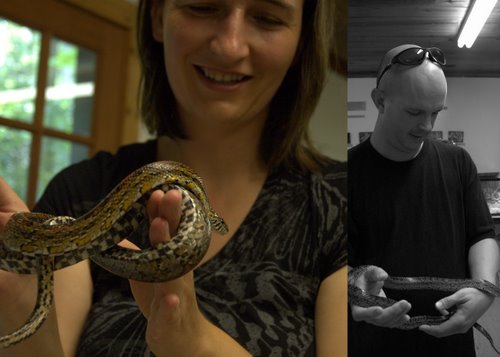
Curiosity was enough later to overcome fear and touch a corn snake in the nature center. K took a step further in overcoming that latent terror that seems to be in all of us almost instinctively.
Most telling was the conclusion: splashing about the lake with restricted parental supervision (the swimming area was about to close, so there was no time for us to change anyone but the Girl), she gravitated toward the deeper portions.
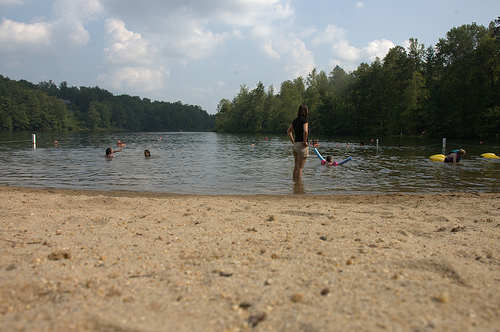
She called out, “Look how far away I am from you, Mama!”
It’s a lifelong process, learning how to lose. I’m thirty-some years older than the Girl, but I still fight the frustration of loss just as much as she. I could contend that there is a difference: losing at games of chance doesn’t phase me because it’s a question of luck; losing at games of skill–read: chess–does bother me when I feel I made a stupid mistake. Such distinctions are lost on the Girl, though: losing is losing is losing. It all hurts.
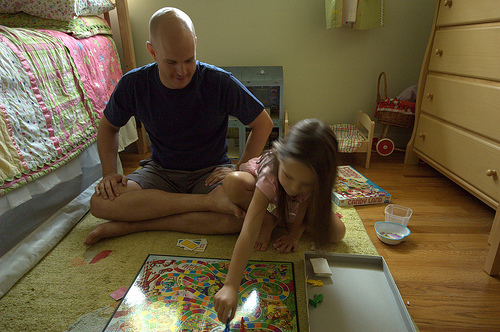
We’ve been working with the learning how to lose (and to a lesser degree, how to win gracefully) with Candy Land for ages. We’ve seen some real improvement: the complete hysterical fits have disappeared, replaced by a temporarily pout and an extended lower lip. In fact, things are going so well that I’ve stopped my Machiavellian parenting technique of stacking the deck to make sure she loses at least once or, if needed, wins once.
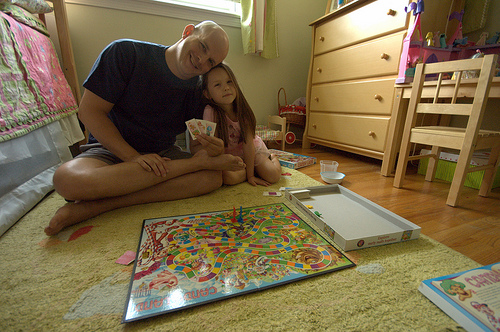
Yet sometimes that dimension of untinkered-with chance provides some amusement: three candy cards within four turns for me resulted in some whiplash-inducing jumps around the board and laughs for the Girl — even when I was surging ahead. Perhaps she knew the next card would bring me back to Earth.
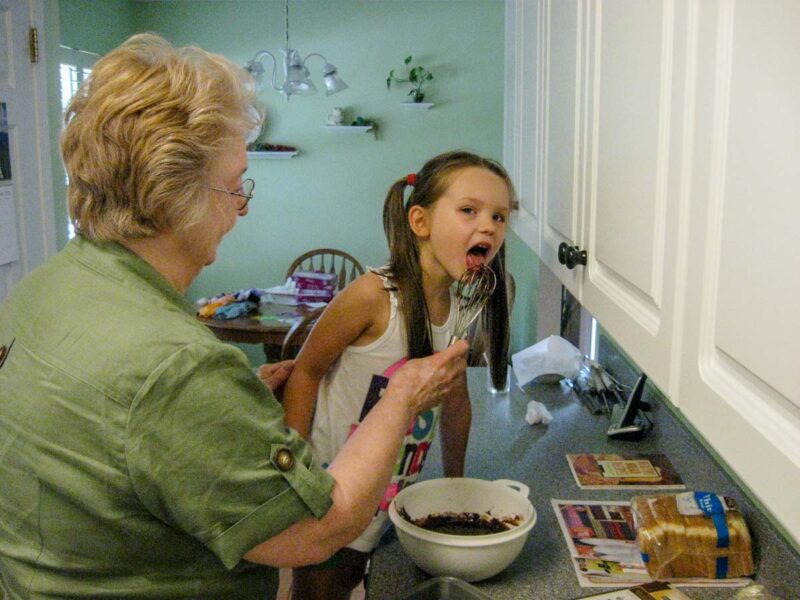
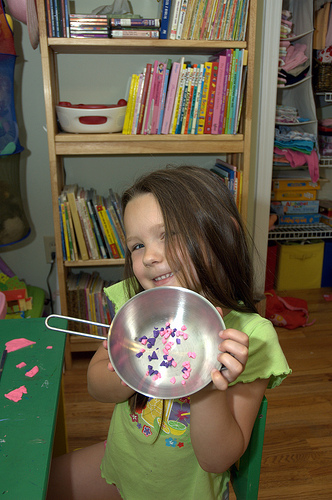
The Girl is a strange eater. In truth, she’ll eat anything if she’s cooked it. For a long time, as a child, her favorite thing to cook while banging around the kitchen was “blue zupa,” a hybrid Polish and English name (“zupa” is Polish for “soup”) for an imaginary, favorite-colored dish. K and I ate countless pots of blue zupa.
We eventually bought L some realistic play pots and pans at Ikea, and she moved from more imaginary to less imaginary. It’s truly amazing what you can cook from blue and pink Play-Doh.
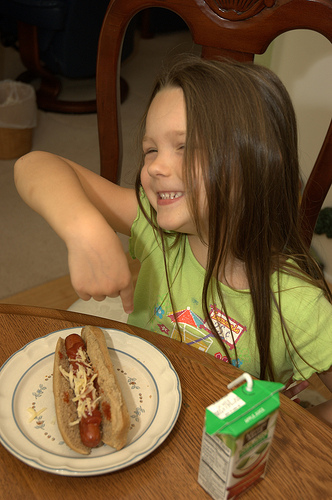
When it comes to more realistic food, though, the Girl has slightly different tastes. She likes some of the standards: spaghetti and pizza are always welcome on the table. Yet other childhood favorites have always been less popular. For instance, she just ate her first hot dog over the Fourth of July holiday. Granted, she hasn’t had much exposure to hot dogs: we eat them probably twice a year at most, if even that often. Still, she sees them at school, and probably sees how the other kids virtually inhale them. That peer pressure has had no effect (if only that would continue).
Yet non-typical foods she adores. Exhibit A: barszcz. Her favorite food, without exception, is a traditional Polish beetroot soup. She’s absolutely obsessed: she’ll eat it once a week without fail, more if we let her.
She’s also eager to bring her best friend from school to try it.
“What will you do if E doesn’t like it? If he tries it and says, ‘I don’t like it.’? I ask.
“I’ll tell him, ‘You just have to try it,'” she replies.
“But what if he tries it and doesn’t like it?” I press.
Try it and not like it? Unthinkable.
The Girl is a fan of summer snacking — what kid isn’t, I suppose. She always seems most attracted to the foods that make the biggest mess.
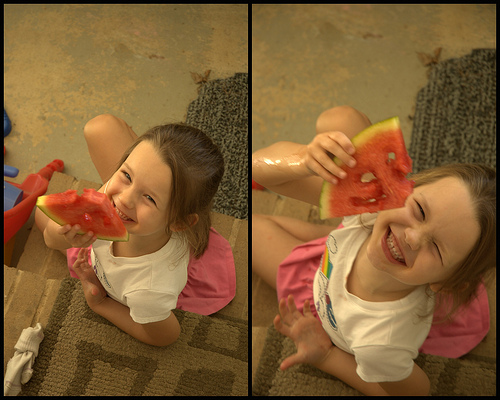
But then again, what kid isn’t? What’s the point of eating something sweet if you can’t, at the same time, wear it? That is a convenience born of the fact that watermelon and ice cream taste better in the summer. Who would want to clean up such a mess inside? Better to let it drip and leave a small bit of sweetness for the ants.
Ice cream is a different story altogether, and at the same time, it’s just a variation watermelon. Sweet and sticky, they both leave a trail behind. But only ice cream is affected by the clothes one wears.
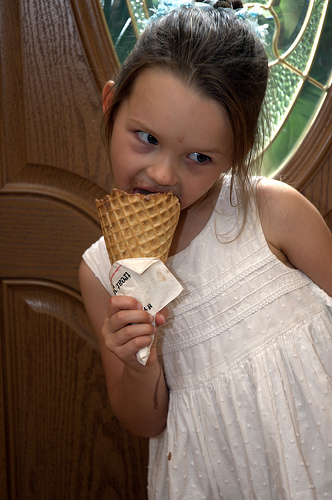
Sunday dresses always make ice cream taste best.