



L had an art show at school this evening. At least that was the explanation. It was part of a whole art evening, with performances by the chorus and strings orchestra. After dinner, L and I jumped into the car, and the Boy started howling when he thought he wasn’t going with us. Truth be told, I didn’t think he was: he usually prefers staying with Mama.
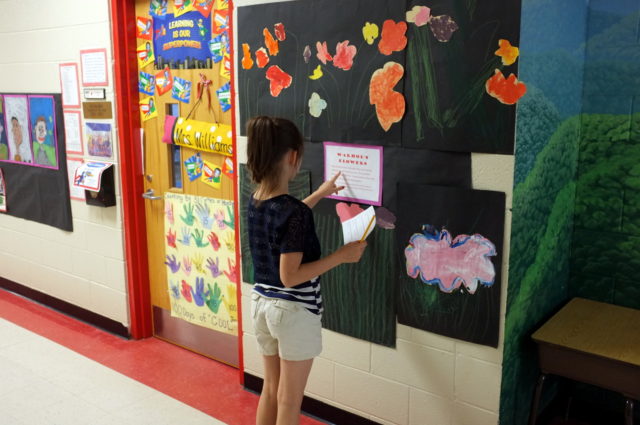
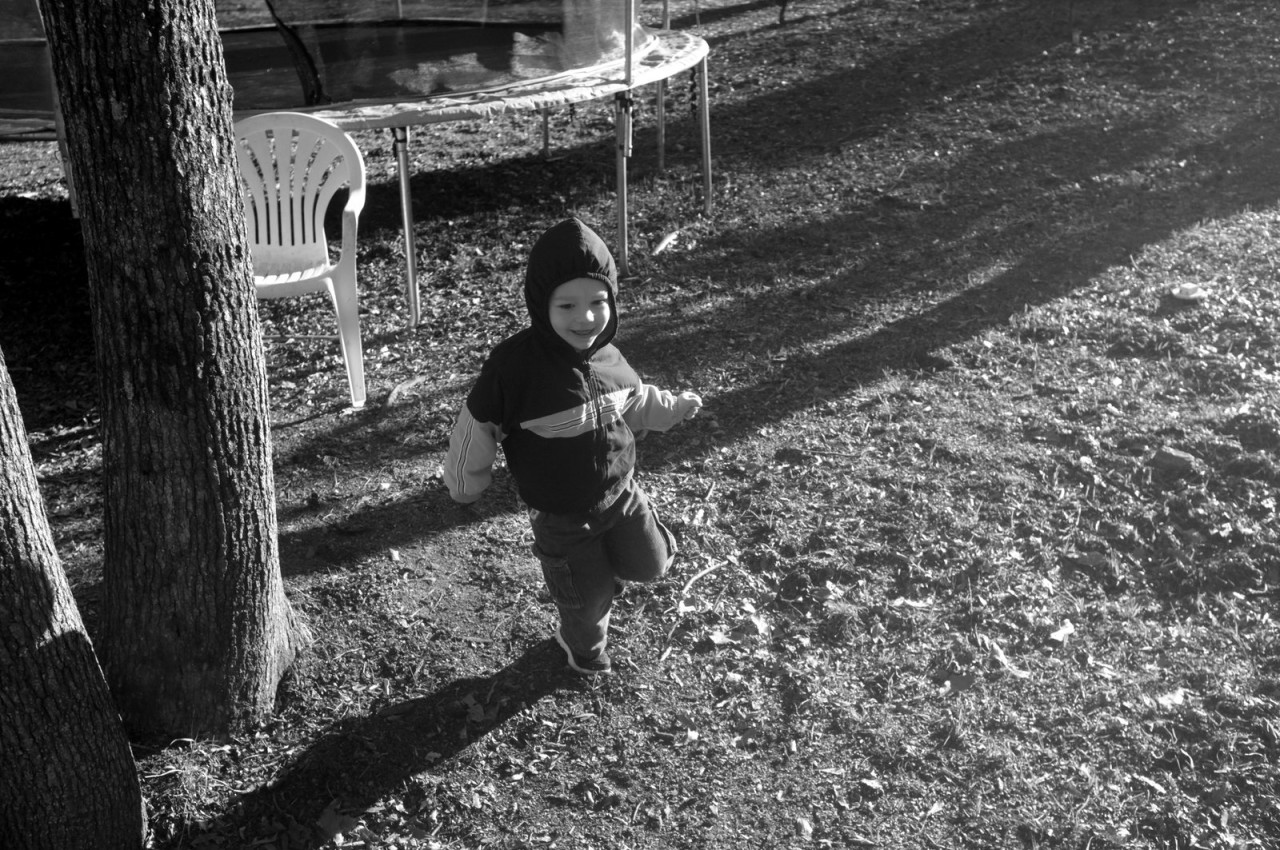
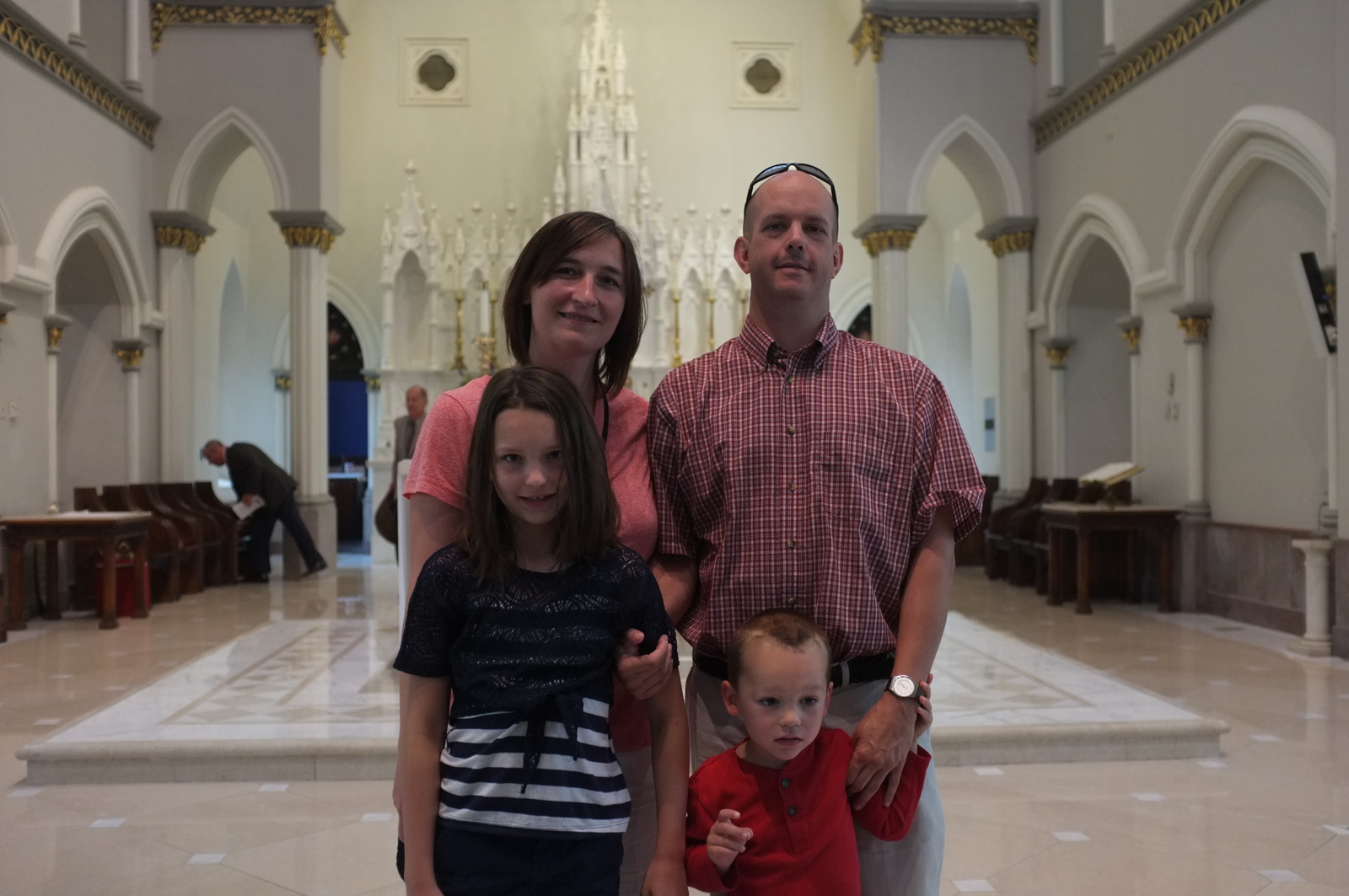
But there was no negotiating: “I want to go, too!” So we found ourselves wandering the hall of L’s school, look at students’ art work, talking about how her year has been going, keeping the Boy out of trouble. With all the wide, empty hallways, he wanted to do one thing: run.
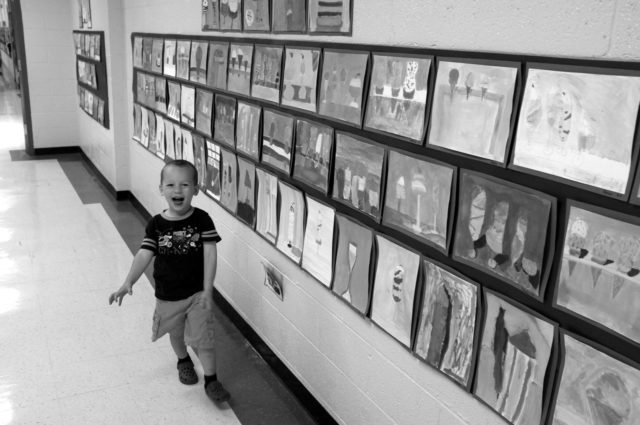
The Girl worked her way through a scavenger hunt, finding Warhol-inspired art and collages of some German school that I can’t remember.
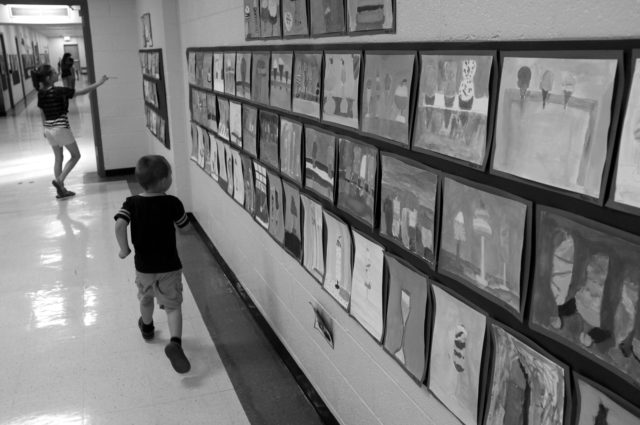
Finally we made it up to the Girl’s classroom. She showed us her desk, pointed out where all her friends sit, gave commentary on the seating arrangement.
“And poor A must sit here, beside E.” Not our E — some other boy whose Biblical name begins with the same letter and whose bad behavior seems just as Biblical in scale, when L tells about it.
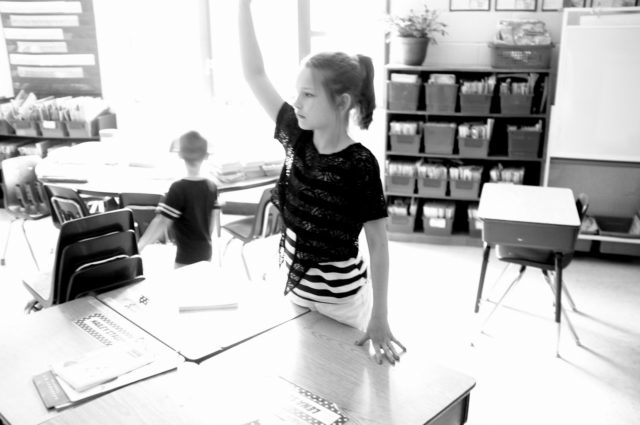
I try to help her get used to it: there will always be behavior issues in her class. It’s inevitable — a sign of our times. She’s depressed about it, but what can we do?
An example video I made for students.
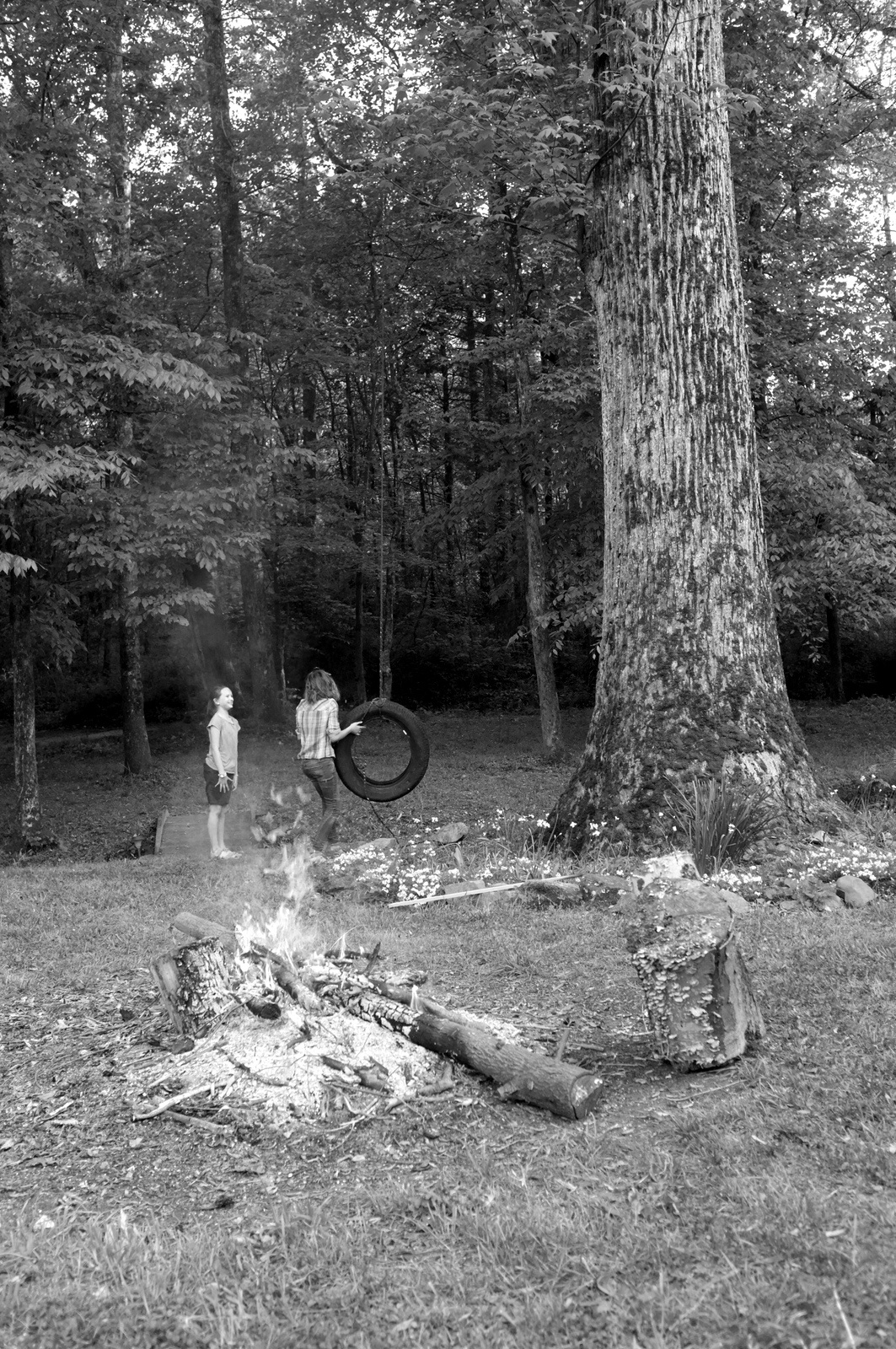
Spring in the South. Morning temperatures in the low fifties. Afternoon temperatures twenty to twenty-five degrees warmer. In other words, spring in the South is summer in Poland. And summer in Poland means one thing: bonfires.
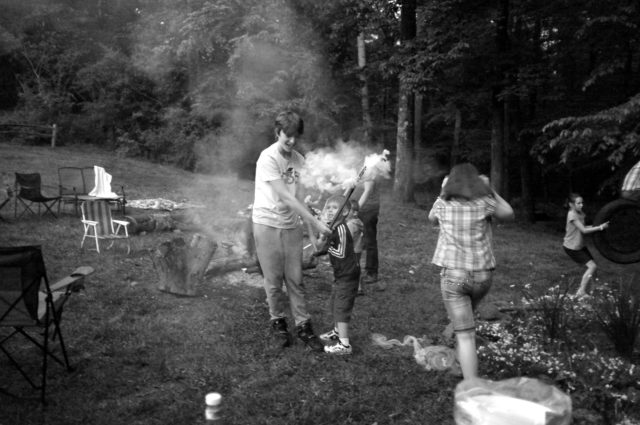
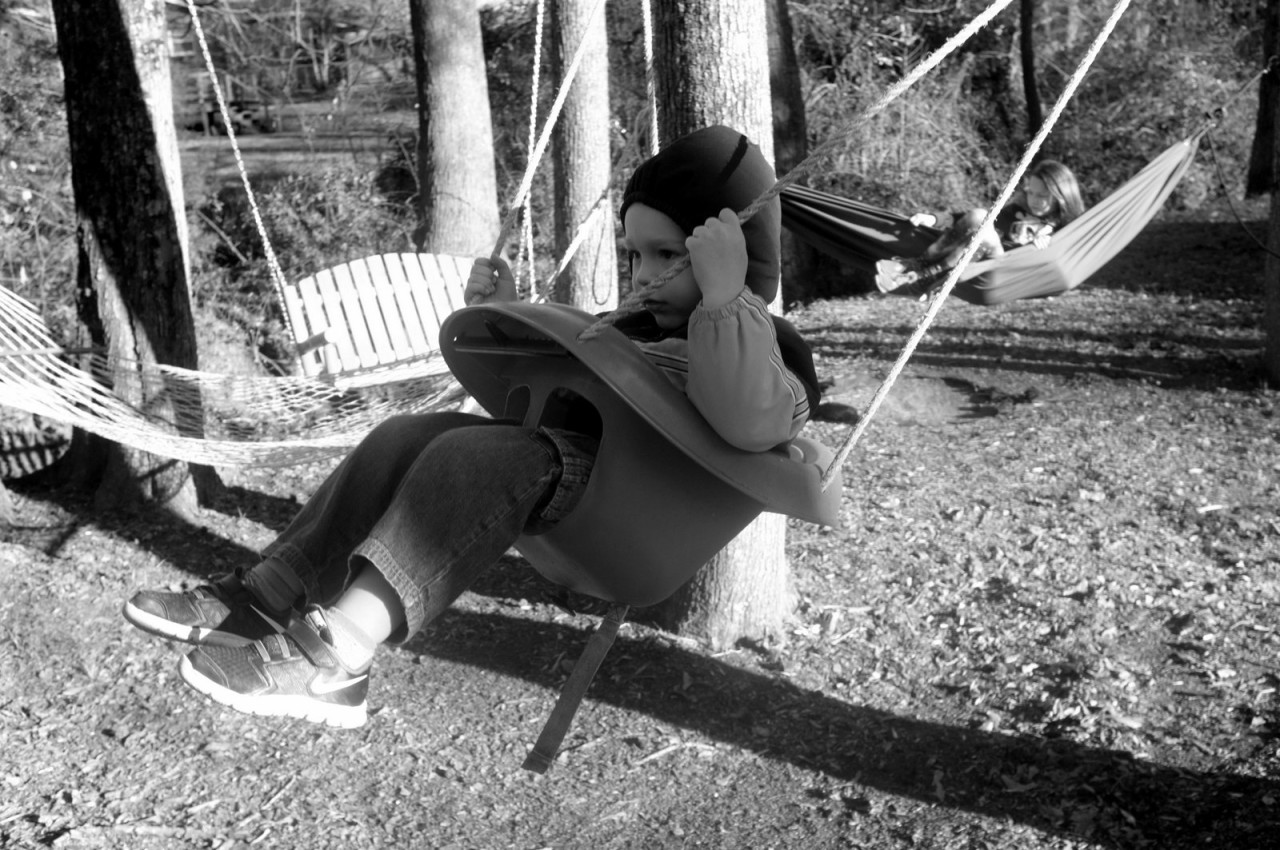
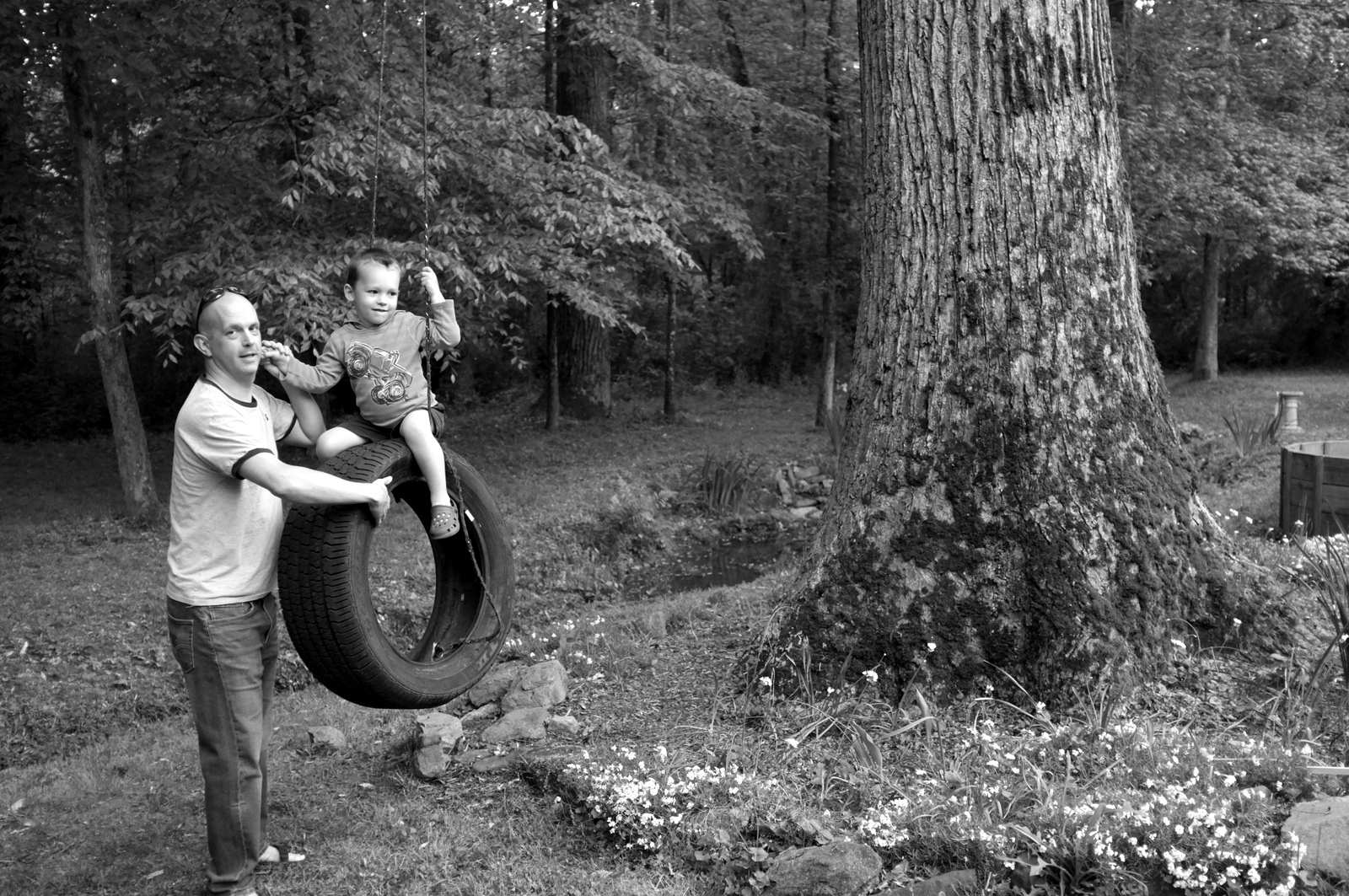
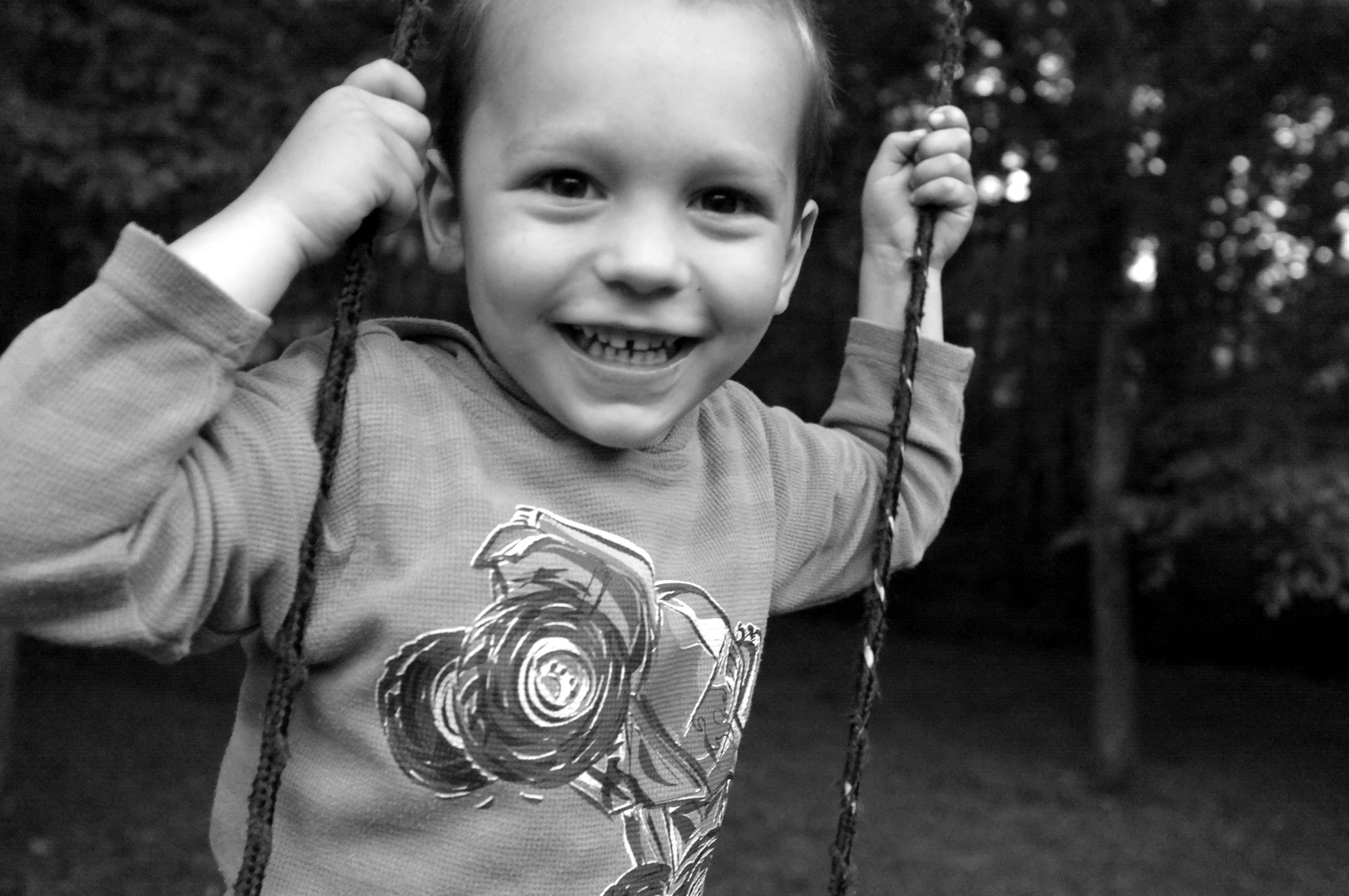
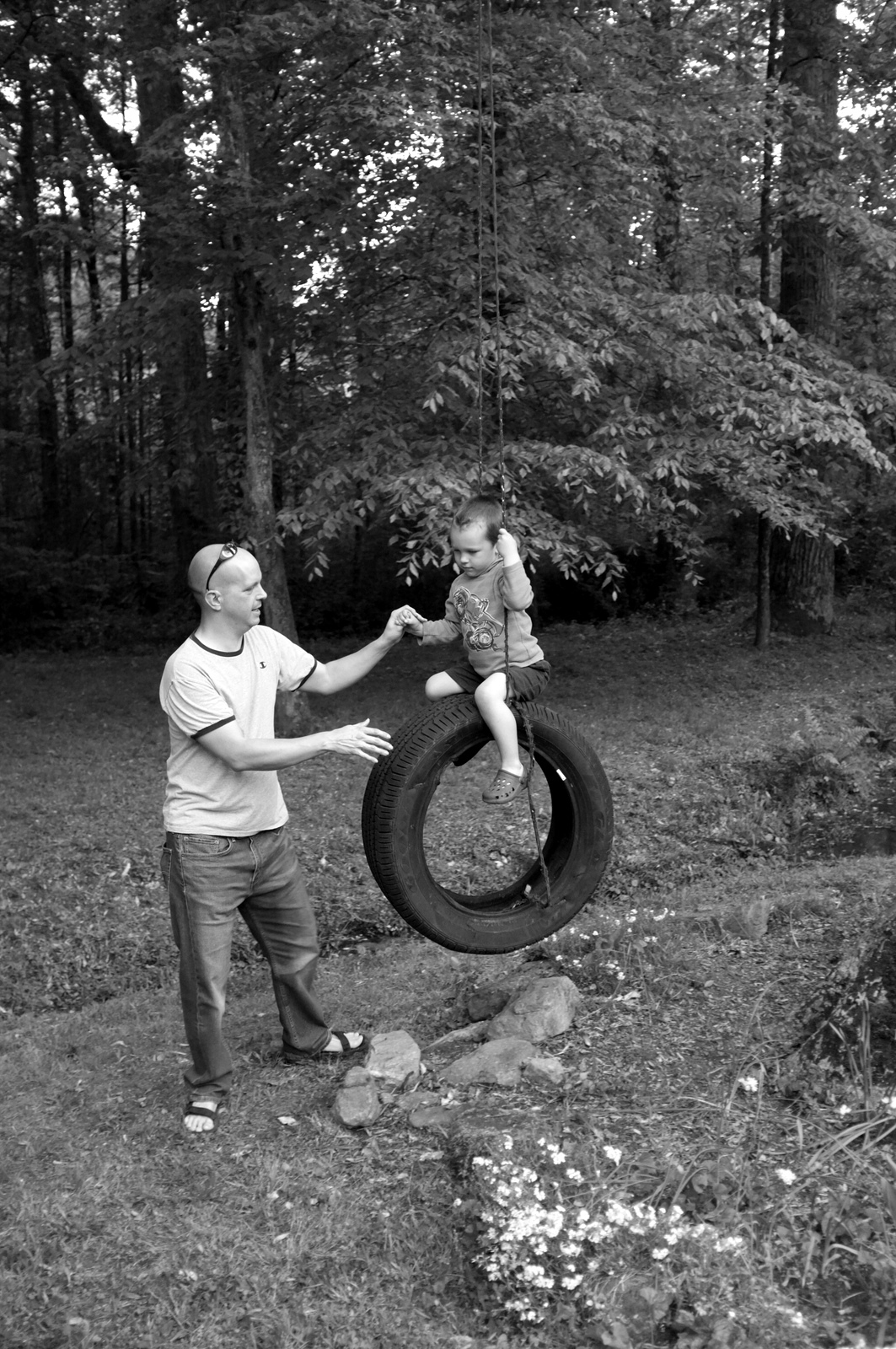
A home in the South with an enormous tree requires one thing: a tire swing.




The saying goes if you love what you do, you’ll never work a day in your life — as if “work” is somehow something to be avoided. Before we read Philip Levine’s poem, I ask students, “What is work?” and someone always replies with some variant of that quote. I want to tell them it’s a lie, for two reasons: first, no matter how much you love your job, there are times when you don’t when it becomes “work” in the negative sense of the term; second, “work” should almost never have a negative sense, if you know what work is.
We stand in the rain in a long line
waiting at Ford Highland Park. For work.
You know what work is—if you’re
old enough to read this you know what
work is, although you may not do it.
Forget you. This is about waiting,
shifting from one foot to another.
Feeling the light rain falling like mist
into your hair, blurring your vision
until you think you see your own brother
ahead of you, maybe ten places.
You rub your glasses with your fingers,
and of course it’s someone else’s brother,
narrower across the shoulders than
yours but with the same sad slouch, the grin
that does not hide the stubbornness,
the sad refusal to give in to
rain, to the hours of wasted waiting,
to the knowledge that somewhere ahead
a man is waiting who will say, “No,
we’re not hiring today,” for any
reason he wants. You love your brother,
now suddenly you can hardly stand
the love flooding you for your brother,
who’s not beside you or behind or
ahead because he’s home trying to
sleep off a miserable night shift
at Cadillac so he can get up
before noon to study his German.
Works eight hours a night so he can sing
Wagner, the opera you hate most,
the worst music ever invented.
How long has it been since you told him
you loved him, held his wide shoulders,
opened your eyes wide and said those words,
and maybe kissed his cheek? You’ve never
done something so simple, so obvious,
not because you’re too young or too dumb,
not because you’re jealous or even mean
or incapable of crying in
the presence of another man, no,
just because you don’t know what work is.
We finish the poem in class, and a young lady with tight curls and a sweet smile says, “This is the first poem in your class that I actually understand.” Apparently, all the other poems have been too much of a struggle. I like a struggle in my classroom. When students struggle, they learn. But if they’re struggling with a job for which they’re not really prepared, it’s not really productive struggle, just struggle for the sake of frustration. Perhaps this was a bit of productive struggle for her.
I return home to find E helping clean the house.
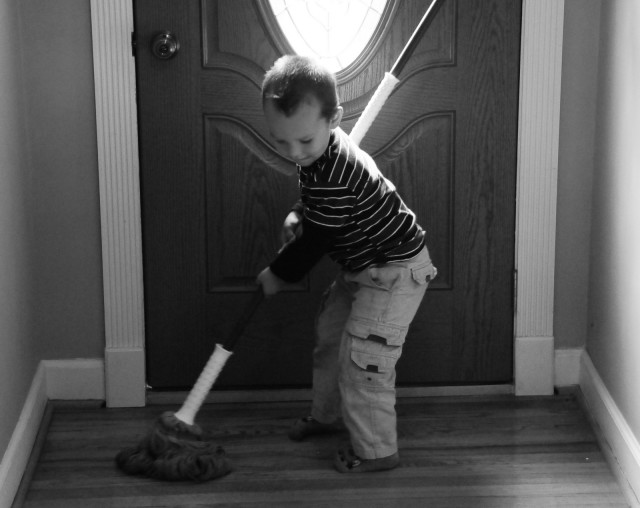
He absolutely loves doing anything an adult is doing, so when he sees someone working, he wants to join in. Even when the job is too big for him, like ringing out the mop before slopping it down on the hardwood floor.
“Honey, honey, you have to let me do that. You’re not strong enough to do it well,” K says, in Polish — understanding her would have been work for me twenty years ago, when I was about to head off to Polska and could only say “please” and “thank you” and count to ten — sometimes thirteen or even fourteen if my memory worked. For E, it’s nothing. Speaking Polish is still a struggle, for everyone in the family, truth be told, except K. But it’s productive struggle. Frustrating struggle — my tongue couldn’t get around “wykształcenie wyższe” the other evening when, as I often do, I was quoting Miś.
When the Boy finishes, he still wants to clean, so we take him to the carport cum covered porch and let him work some more.
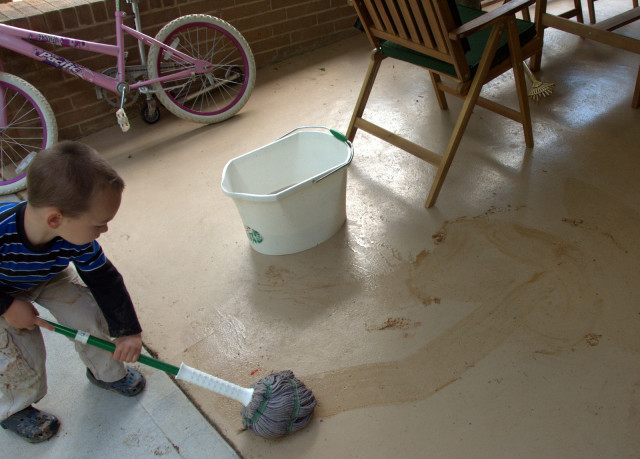
He makes a mess in order to clean it up.
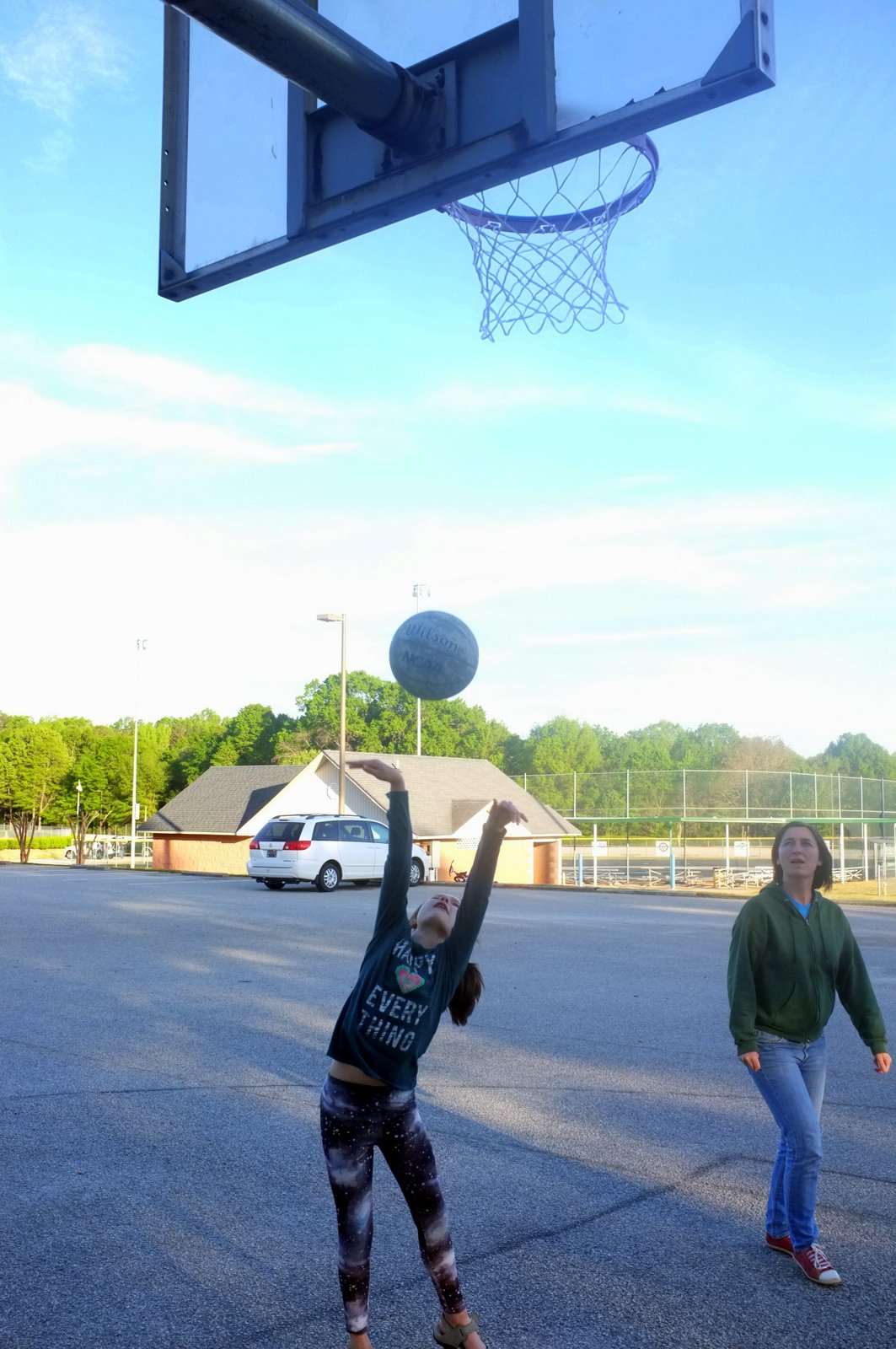
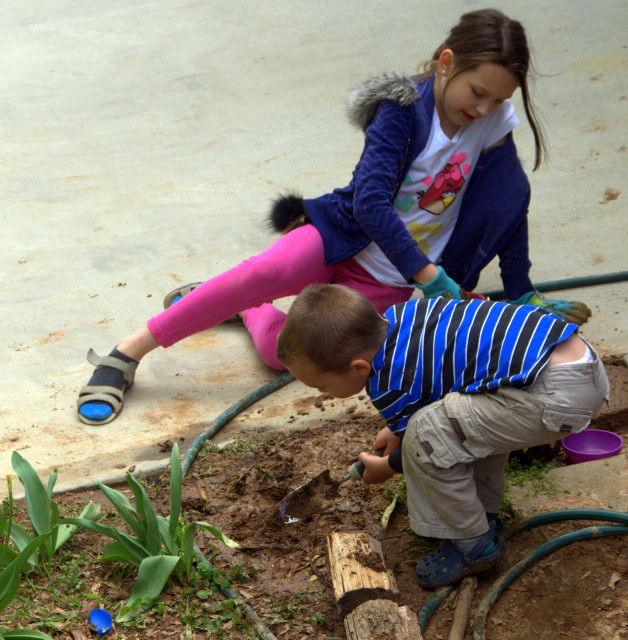
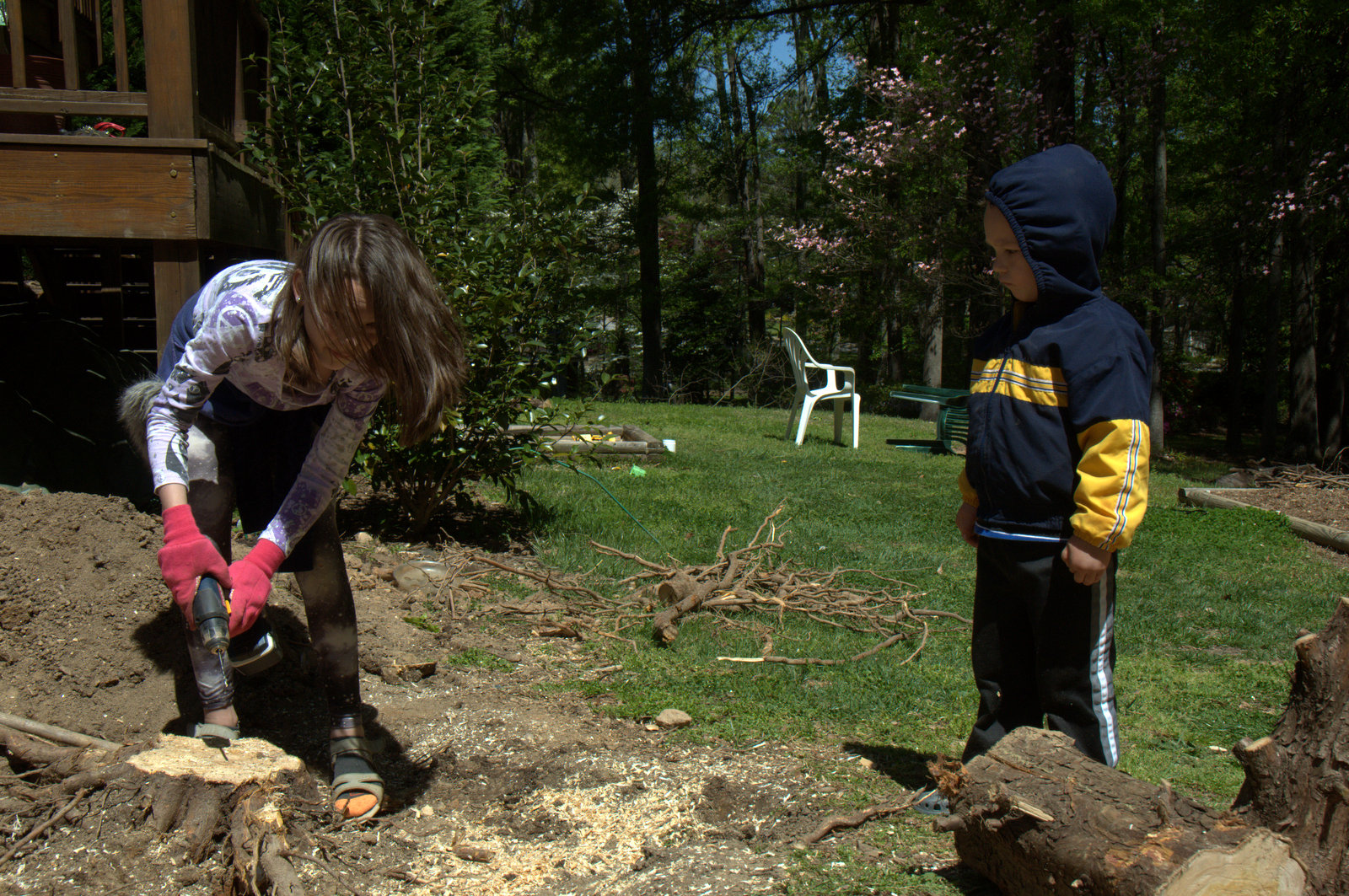
Or sometimes he just makes a mess, as when he’s playing in the mud. His sister informs me, “We’re making mud cement.” Work.
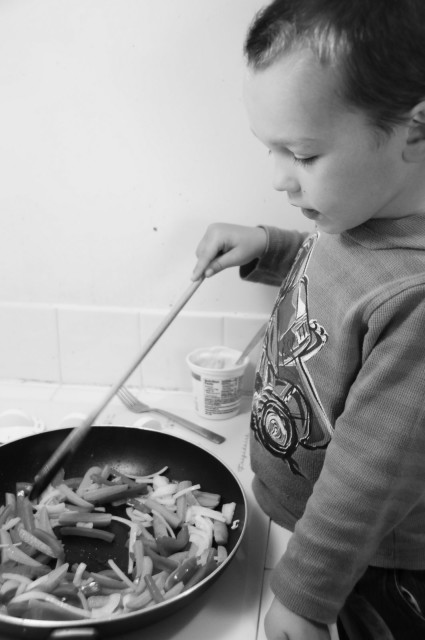
When it’s dinner time, the Boy insists on helping again. We’re having Chinese stir fry, so he’s thrilled to get to stand at the pan and stir everything, and he’s especially amused by the fact that we’re adding a glob of peanut butter to veggies, suggesting that perhaps we might want to add some jelly as well.
We have a friend who’s a chef who in theory does this all day long. So for him, is it work?
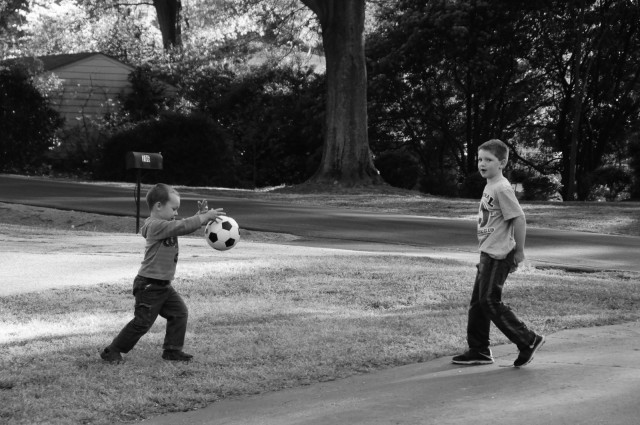
After dinner, a neighborhood kid comes around, and E play around at soccer. There’s no temptation to ask him questions like, “Would you like to be a professional soccer player?” because soccer for him is just one of many little diversions throughout the day.
If he was a pro, would that make soccer work? And why is “work” something we want to avoid? Do we know what work is?
In 1981, Pope John Paul II published the encyclical Laborem exercens, “On Human Work.” He takes a common sense approach to defining the word:
[W]ork means any activity by man, whether manual or intellectual, whatever its nature or circumstances; it means any human activity that can and must be recognized as work, in the midst of all the many activities of which man is capable and to which he is predisposed by his very nature, by virtue of humanity itself.
So anything can be work. But he makes a distinction between work and toil.
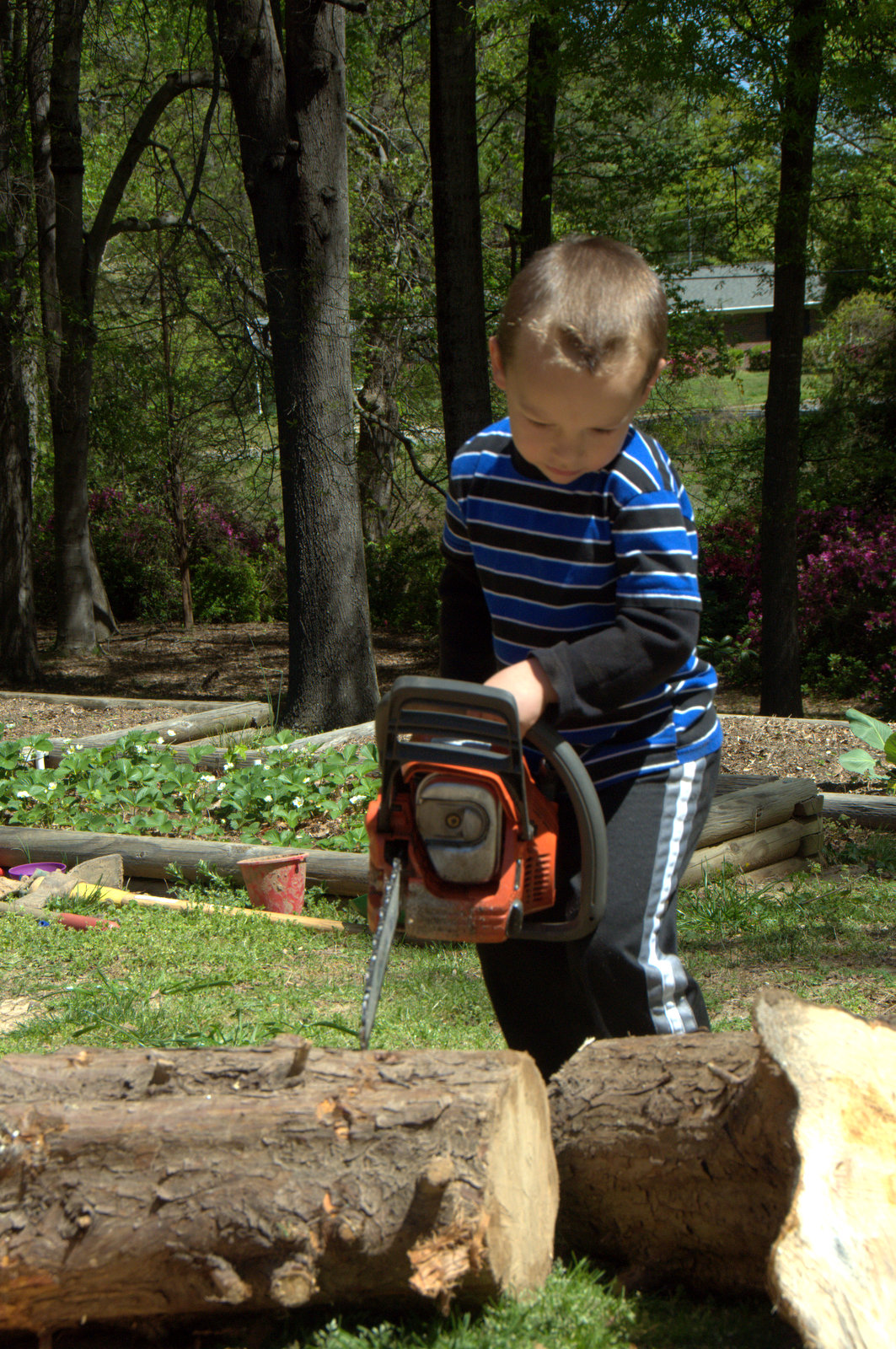
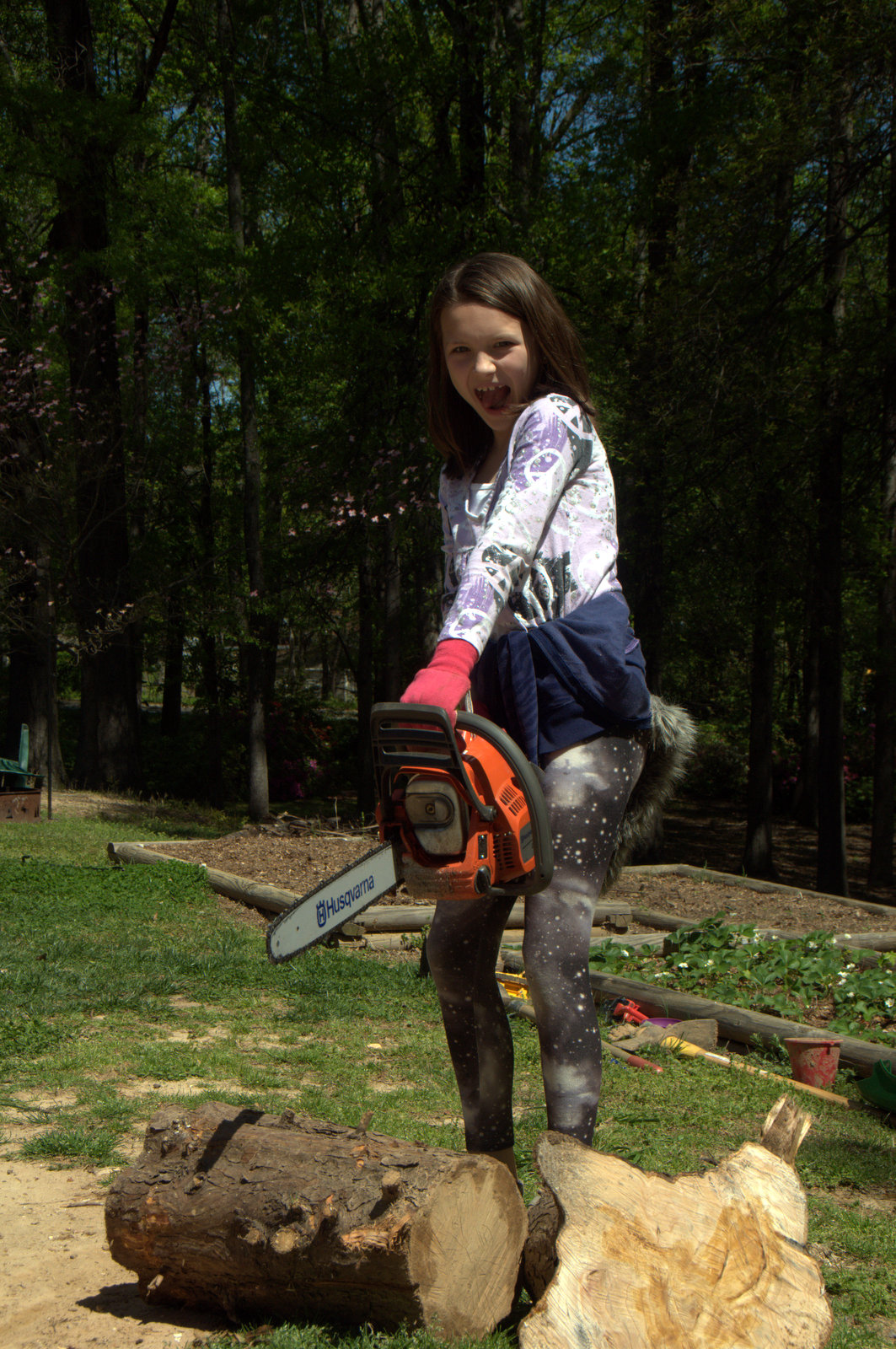
For the Boy and the Girl, it often depends on motivation.


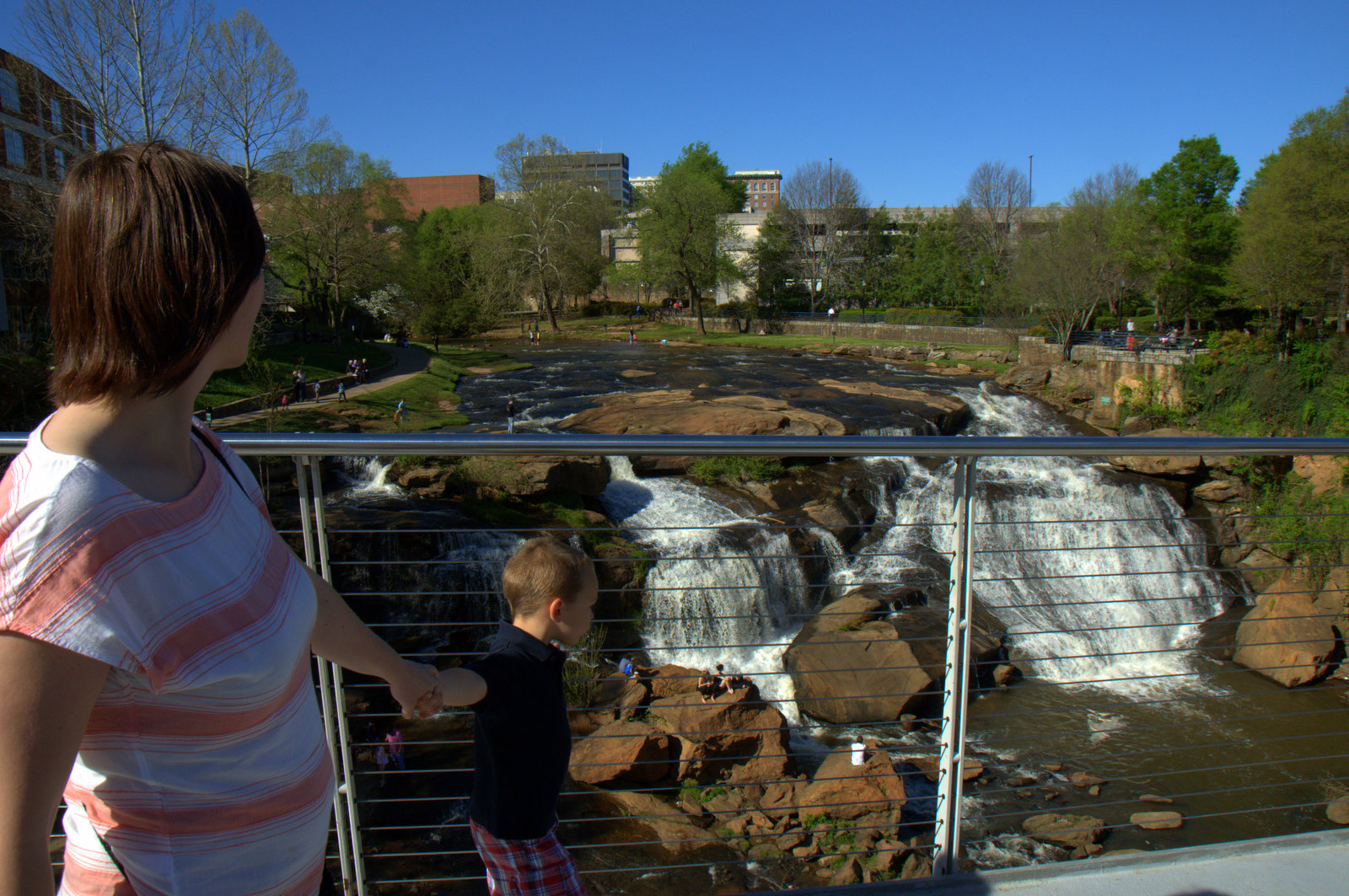
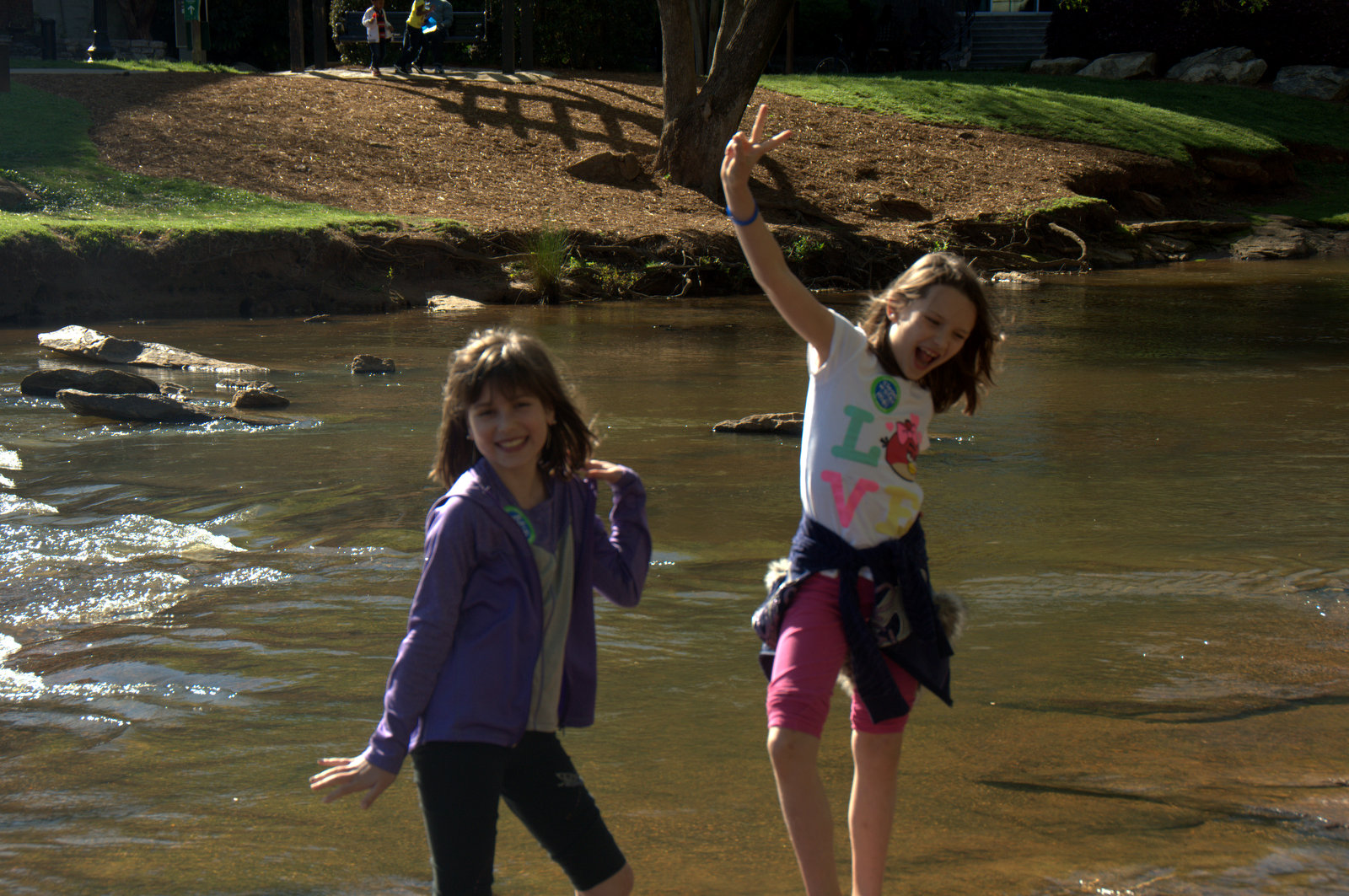


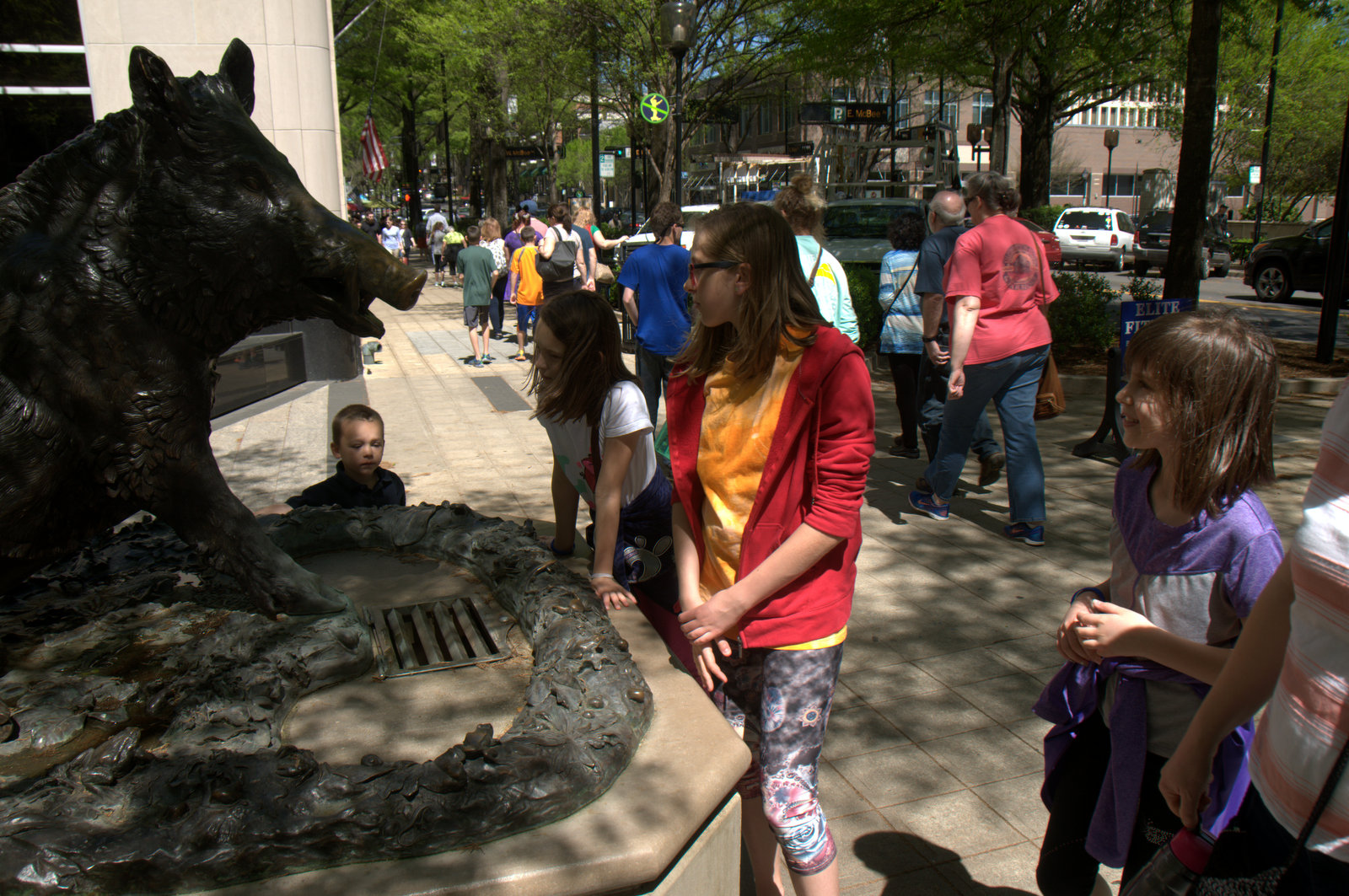
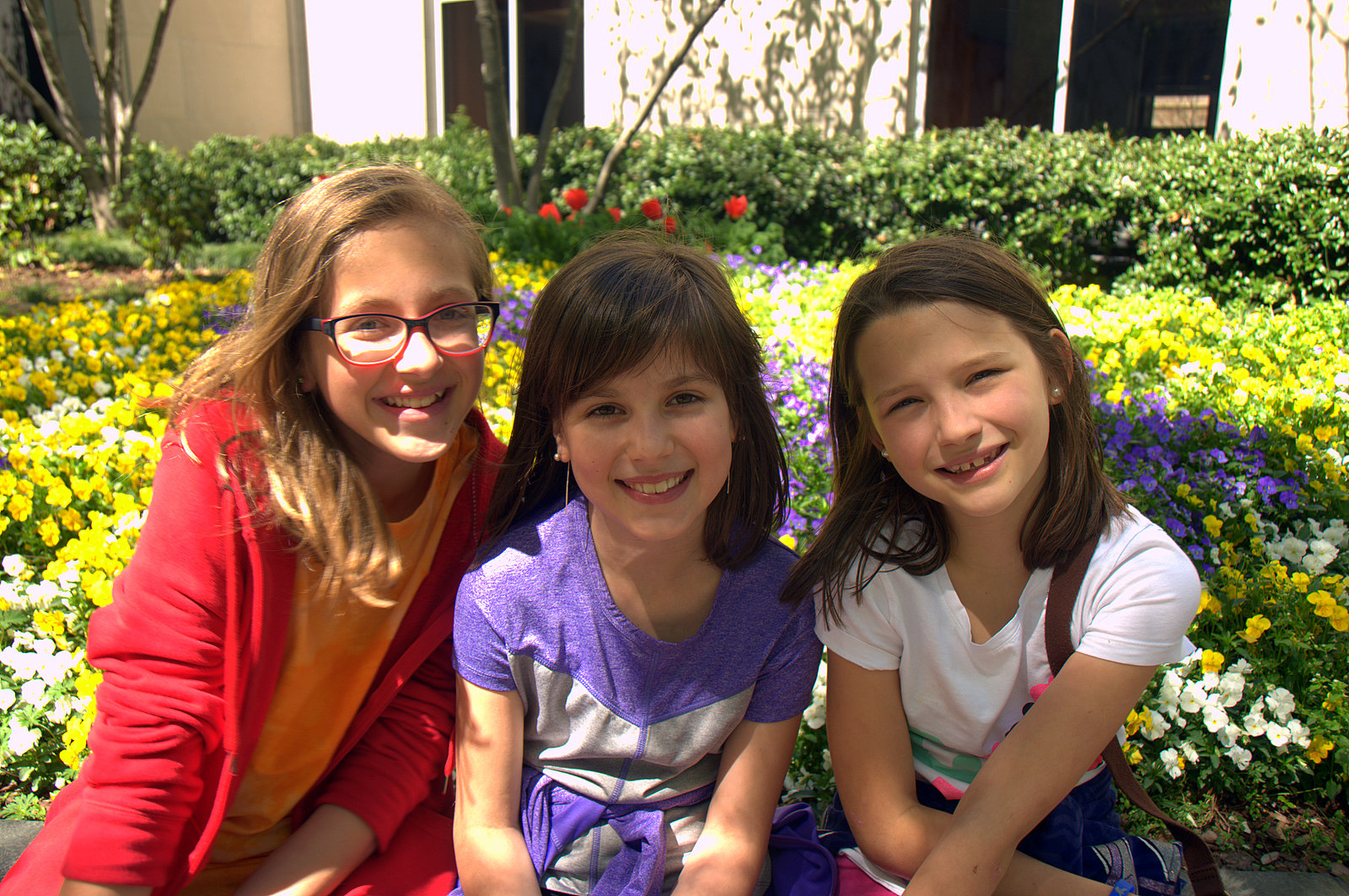

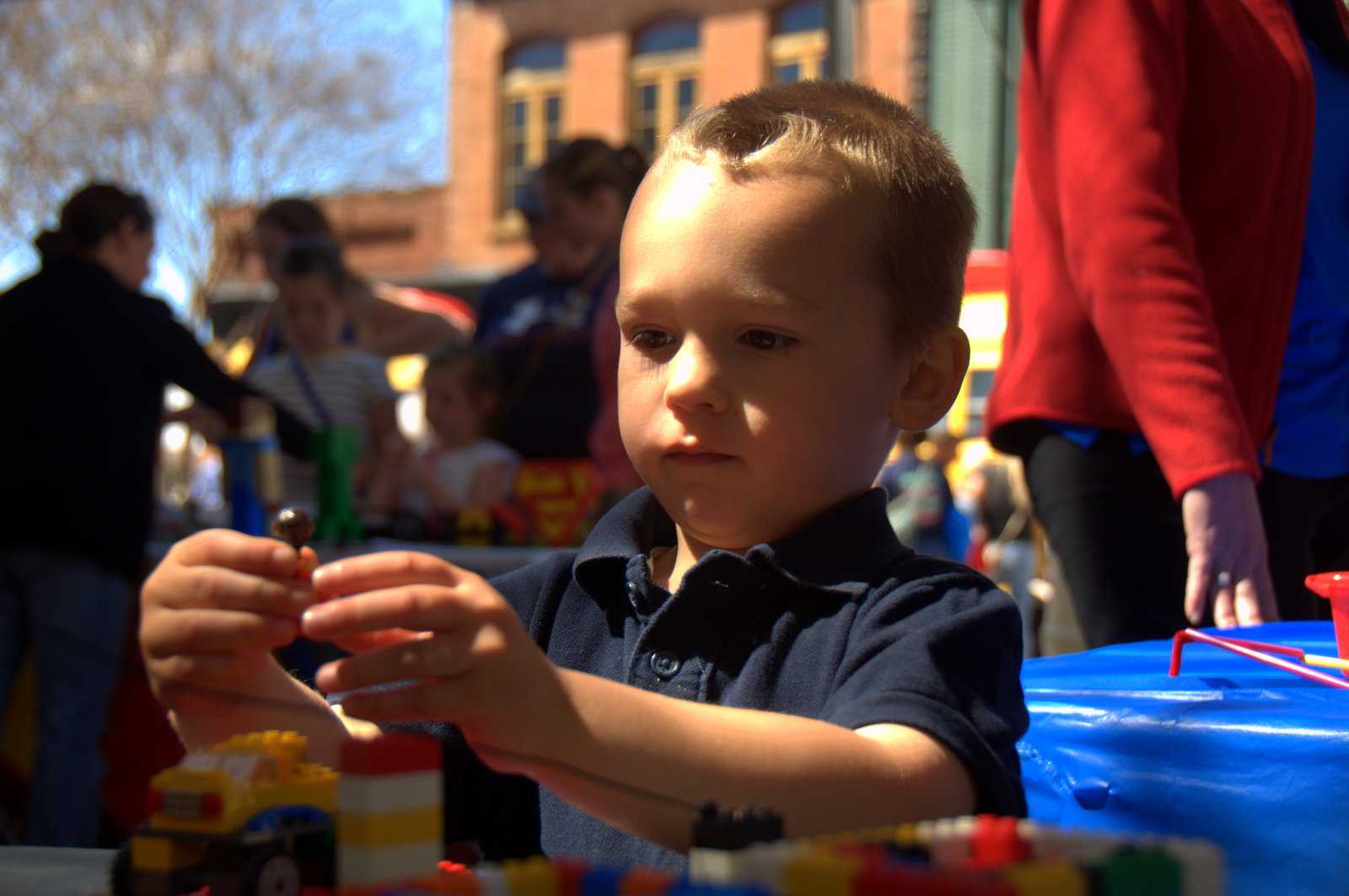


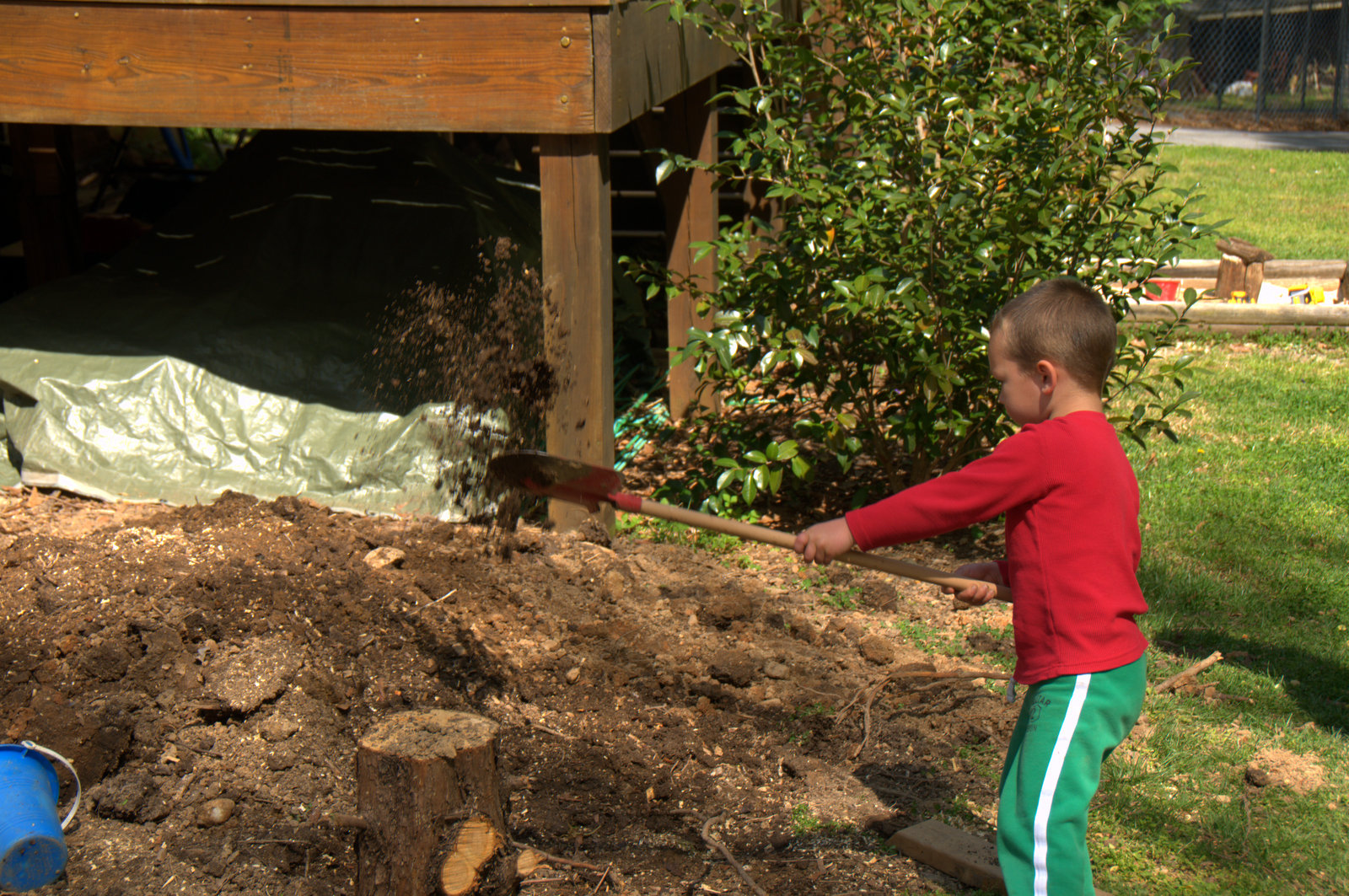
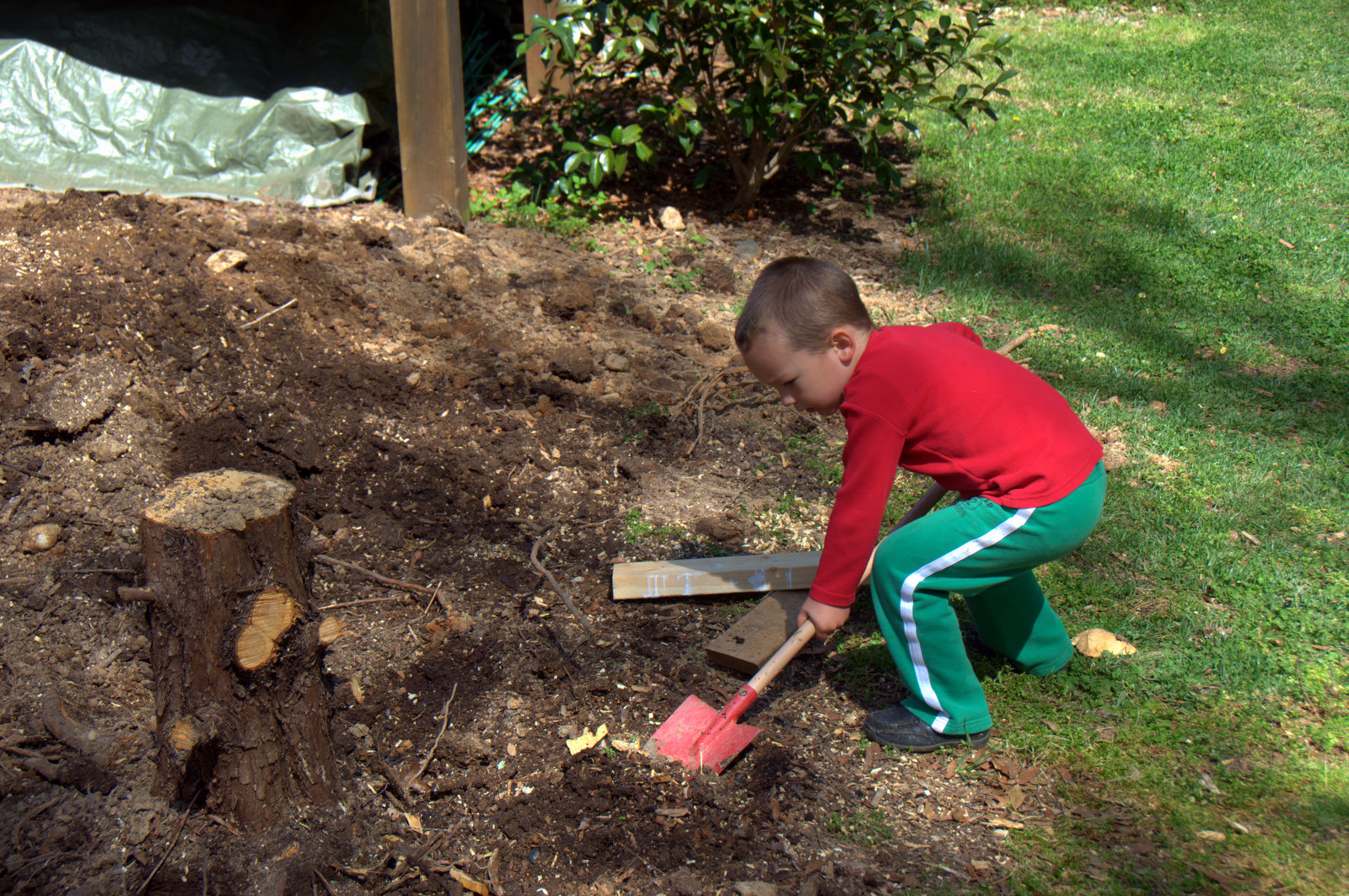
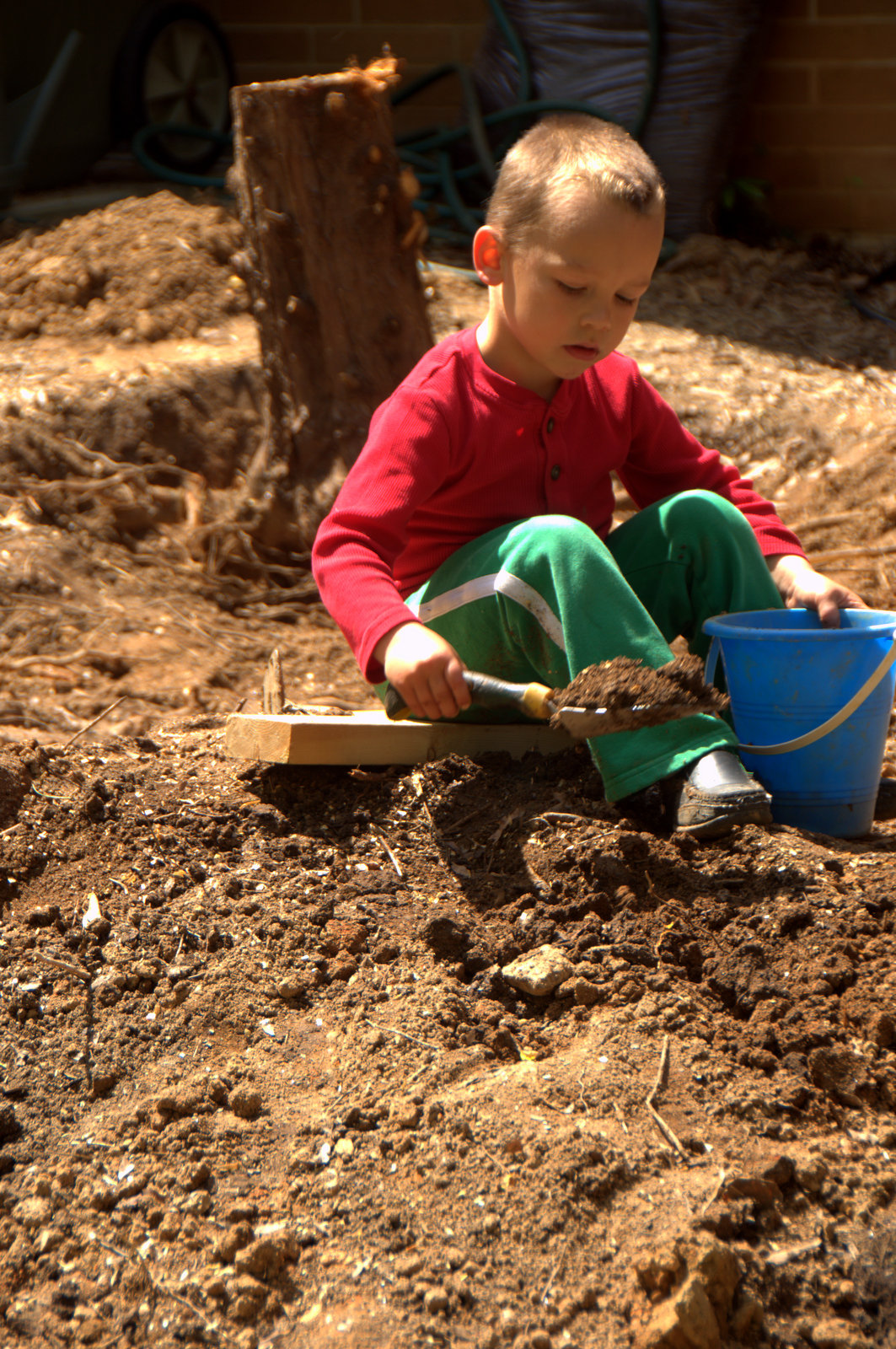
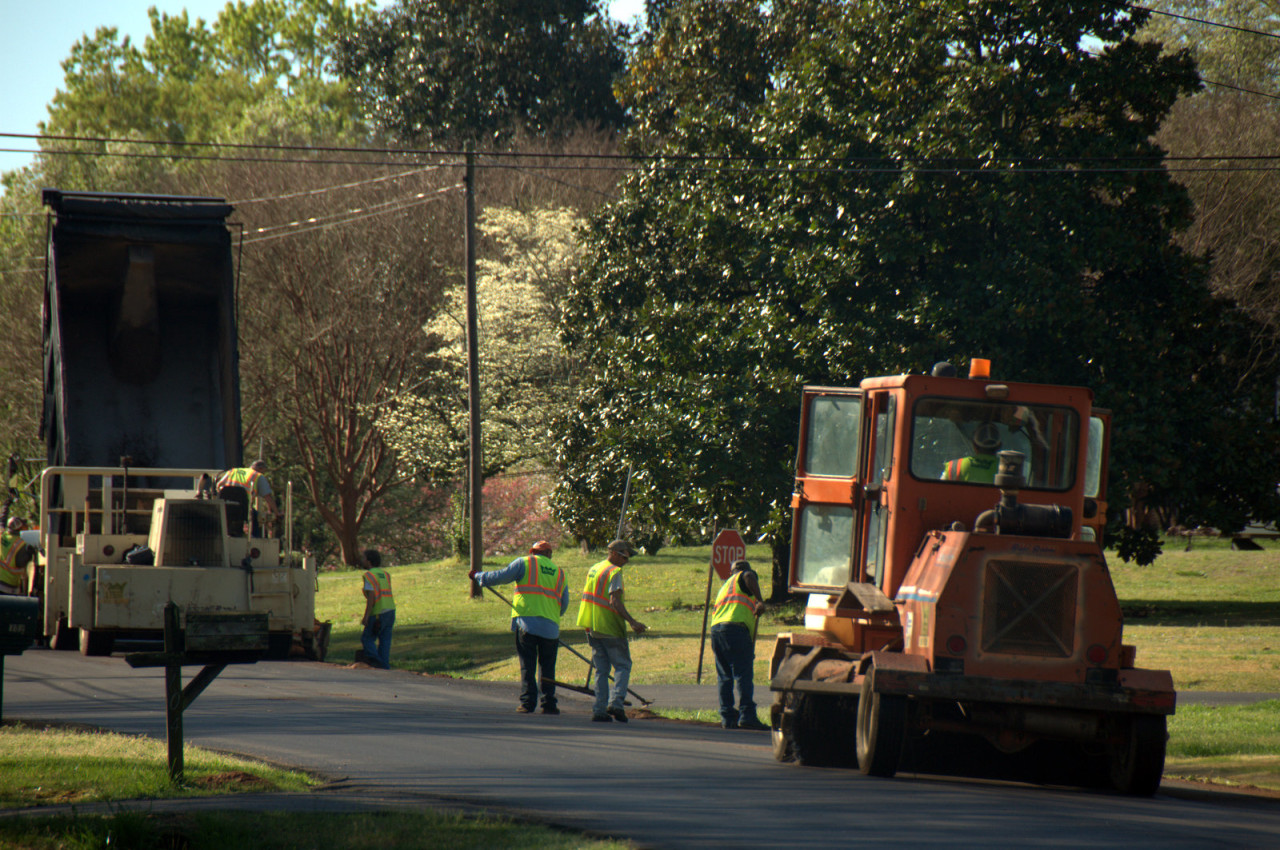
We looked out the window this morning to a surprise: the men who’d paved our street a couple of weeks ago had returned to rebuild the now-incredibly low shoulder. After the Boy finished his breakfast, I called him to the front door. His response was predictable: “Wow!” We quickly got on some warmer clothes — though it was sunny, the temperature was still cool — and headed out to watch the workers.
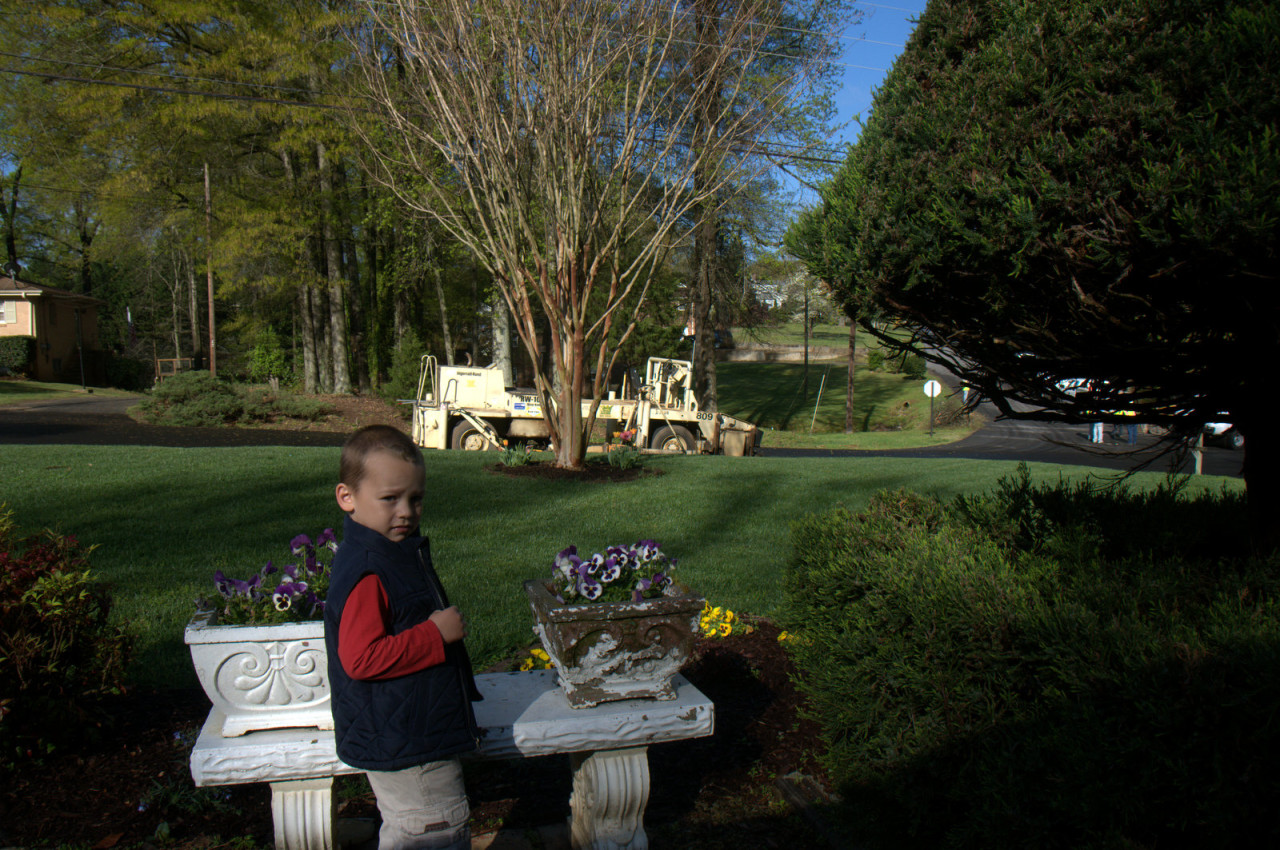
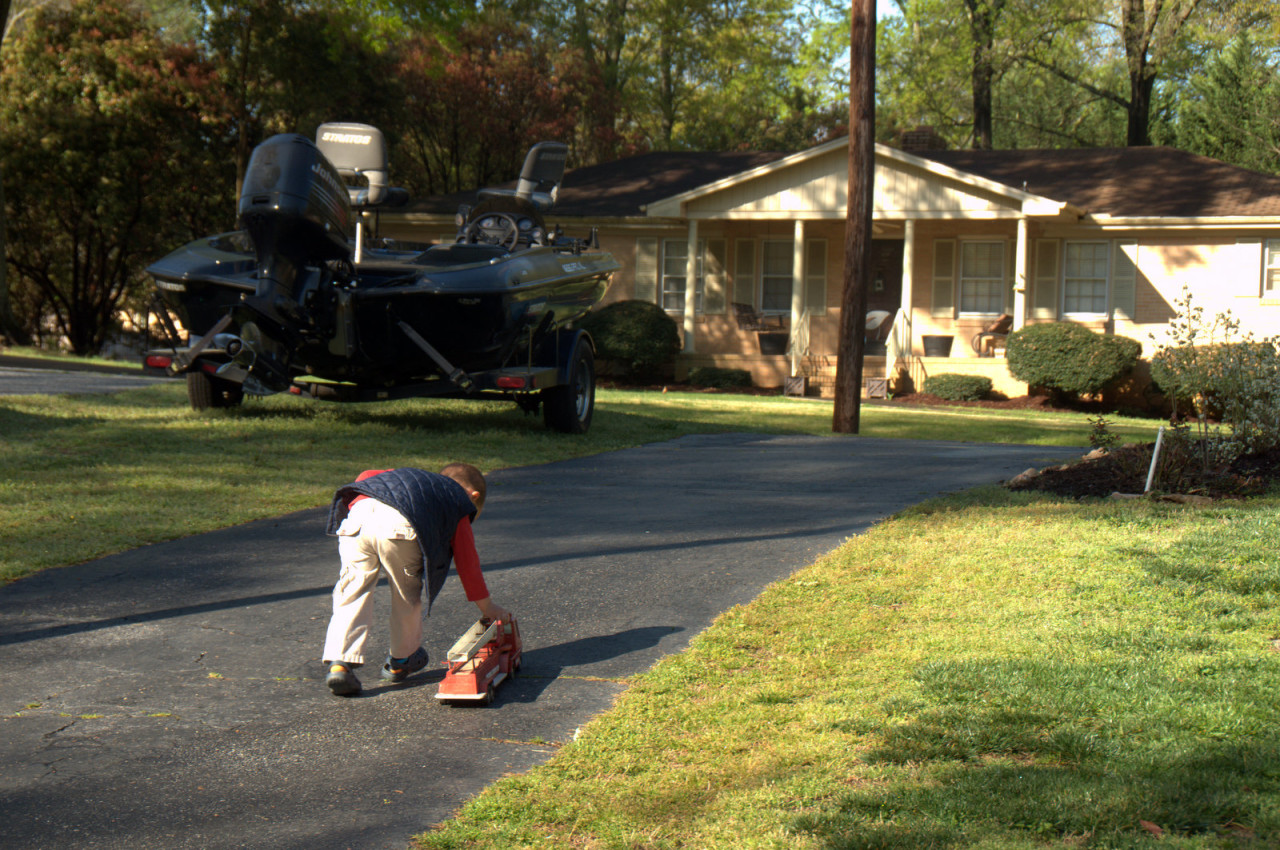
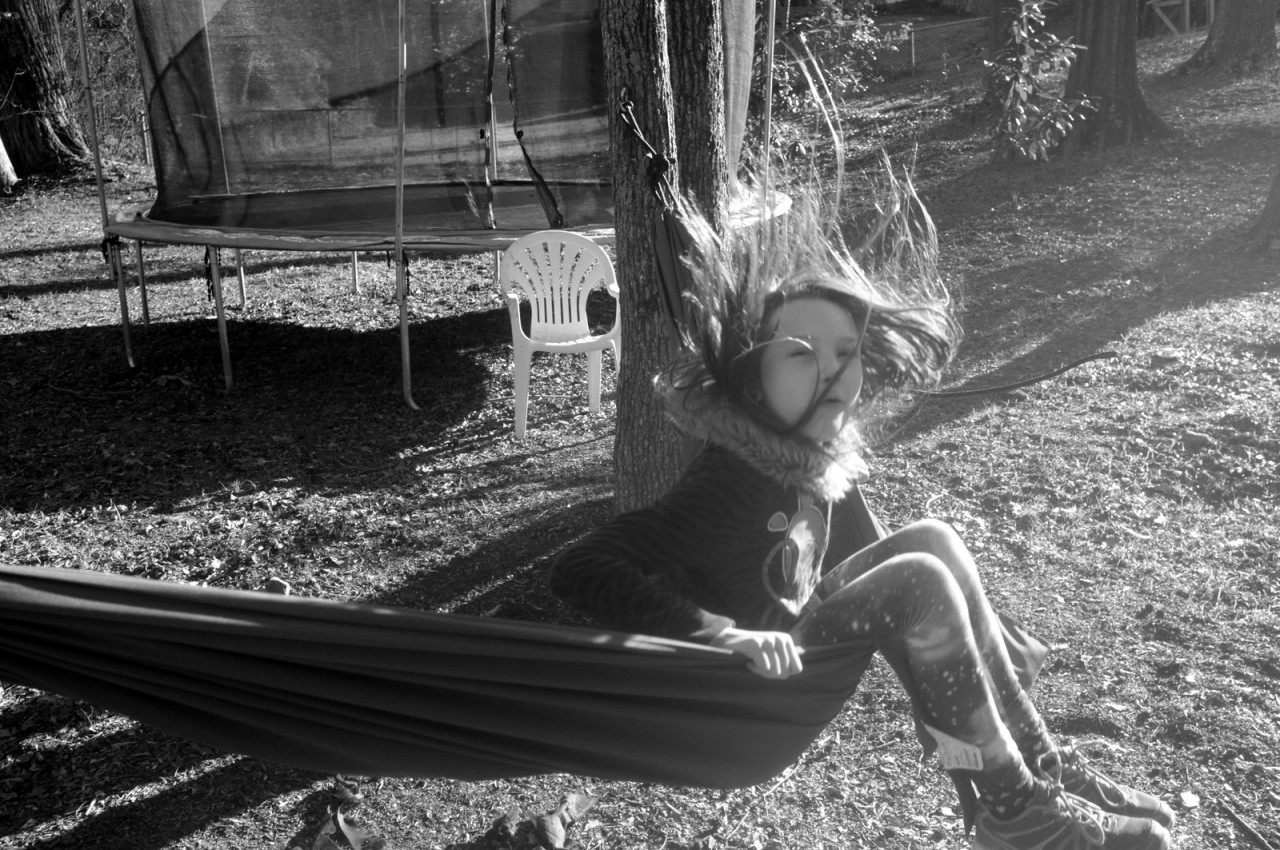
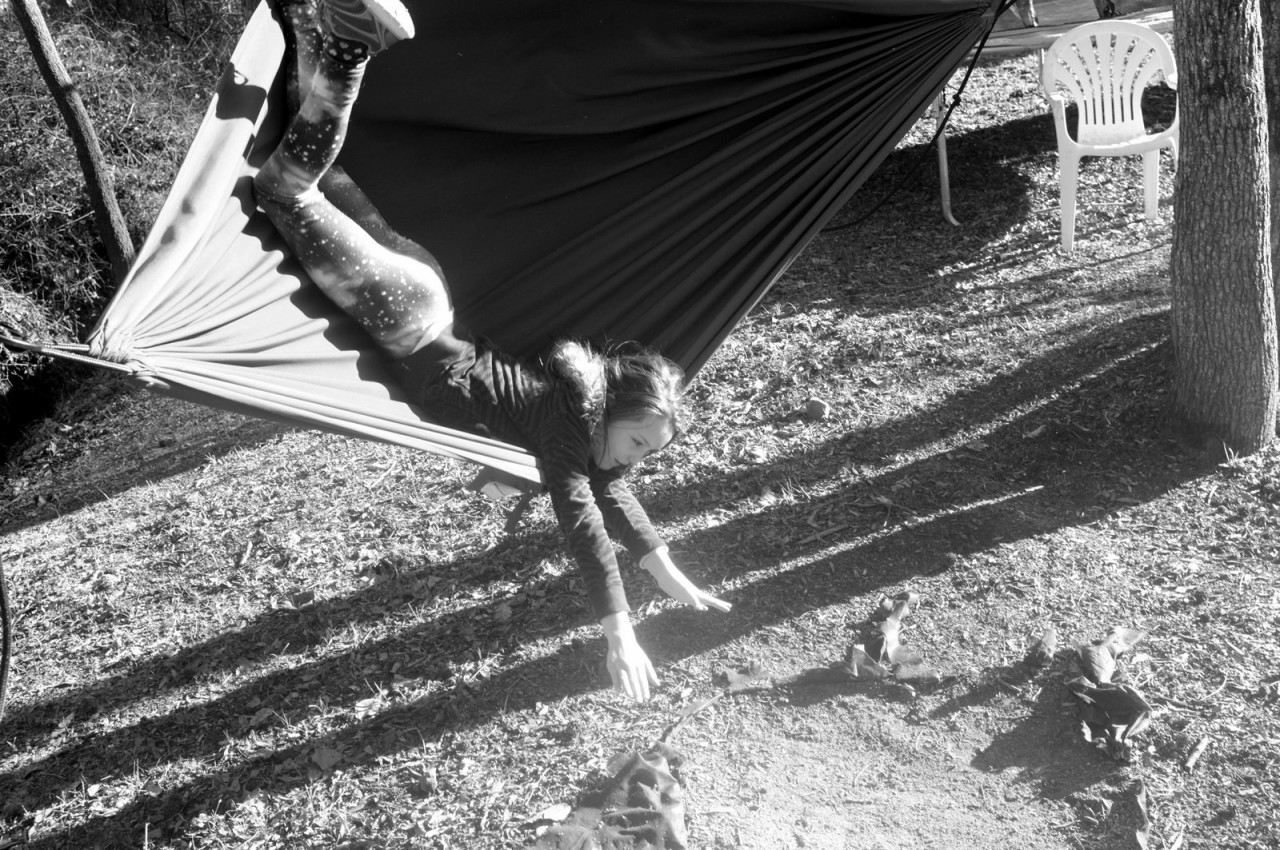
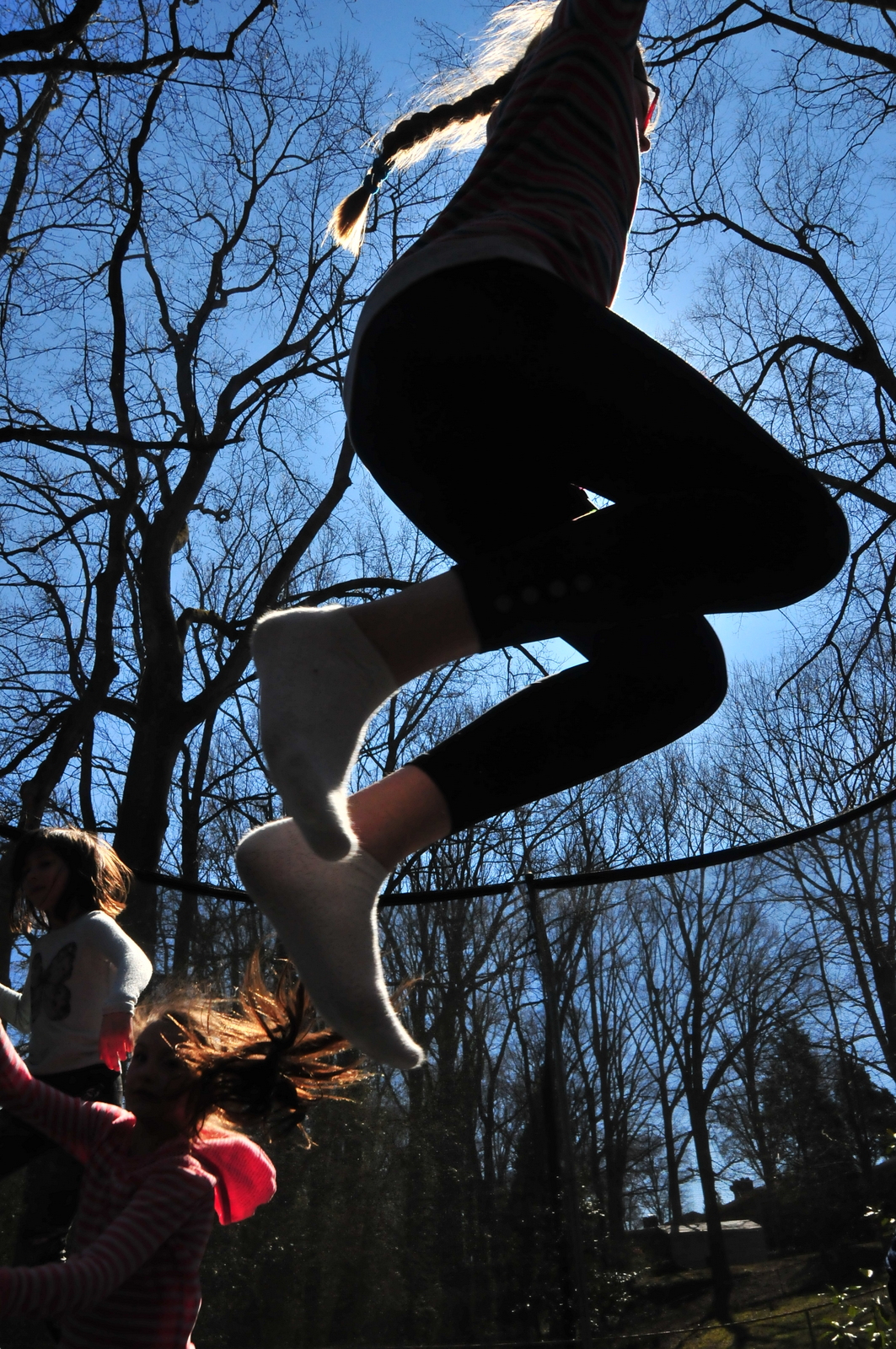
The girls, in the meantime, headed down to the trampoline, and soon enough, the Boy wanted to join them. After all the cold rain yesterday, we were all determined to spend as much time outside as possible today.
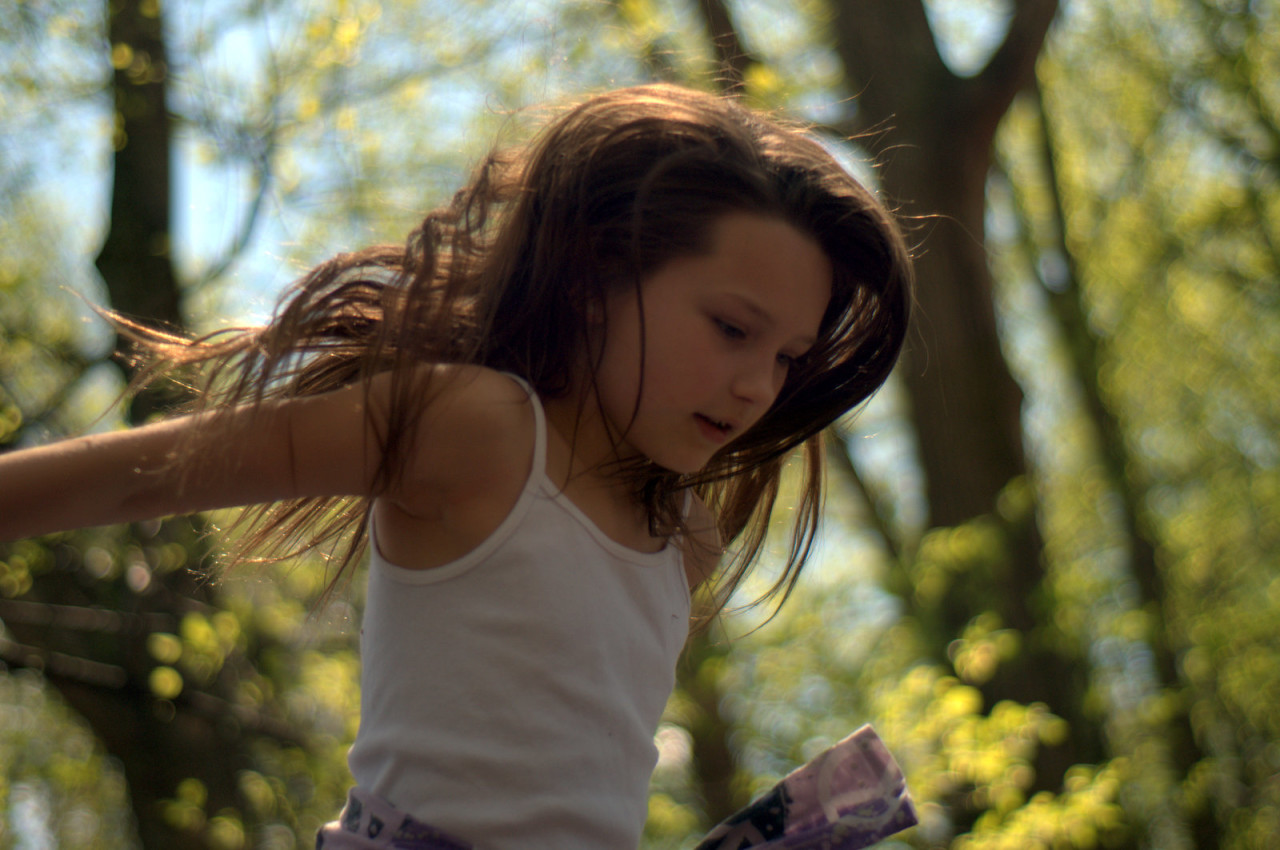


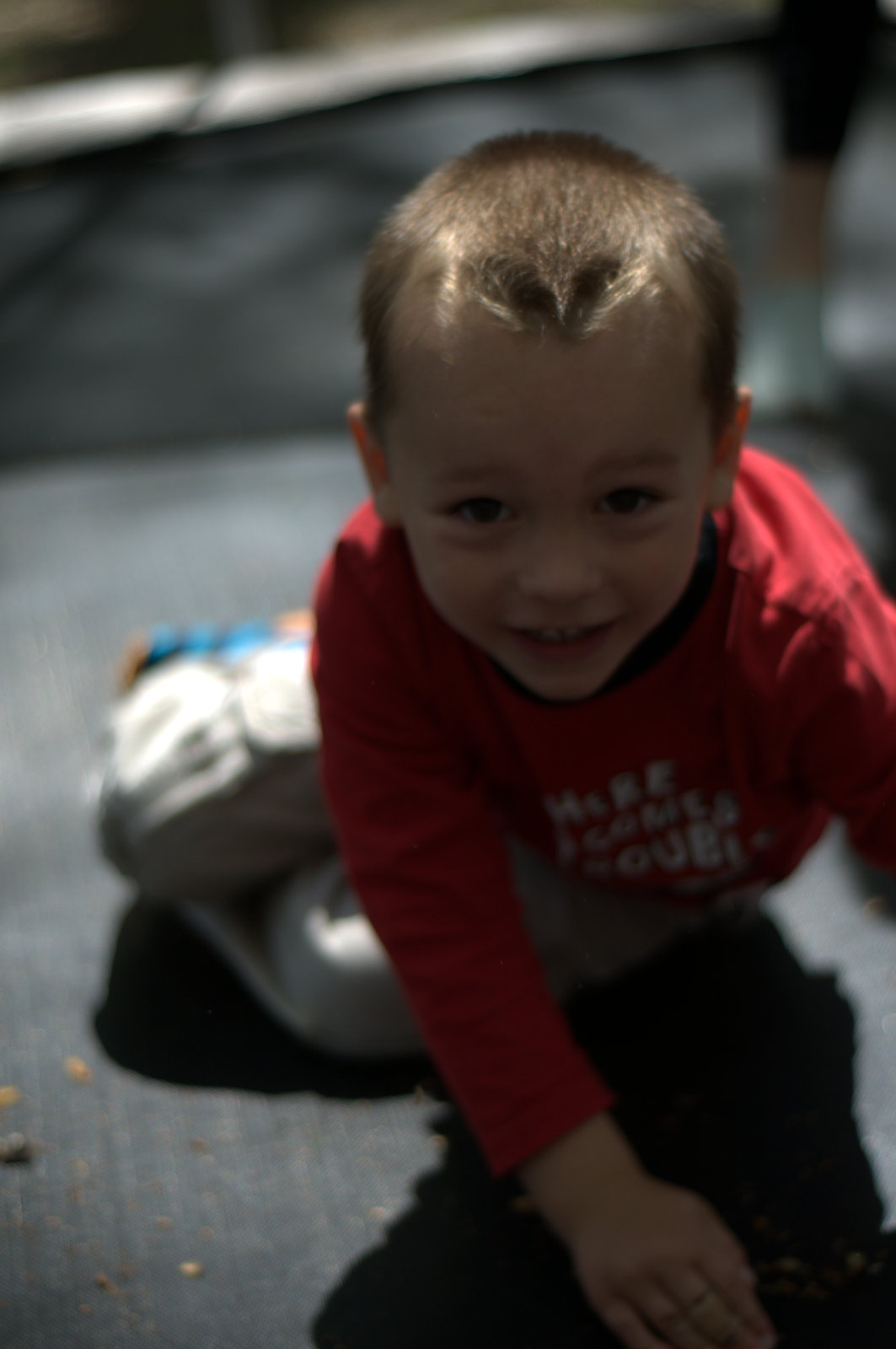
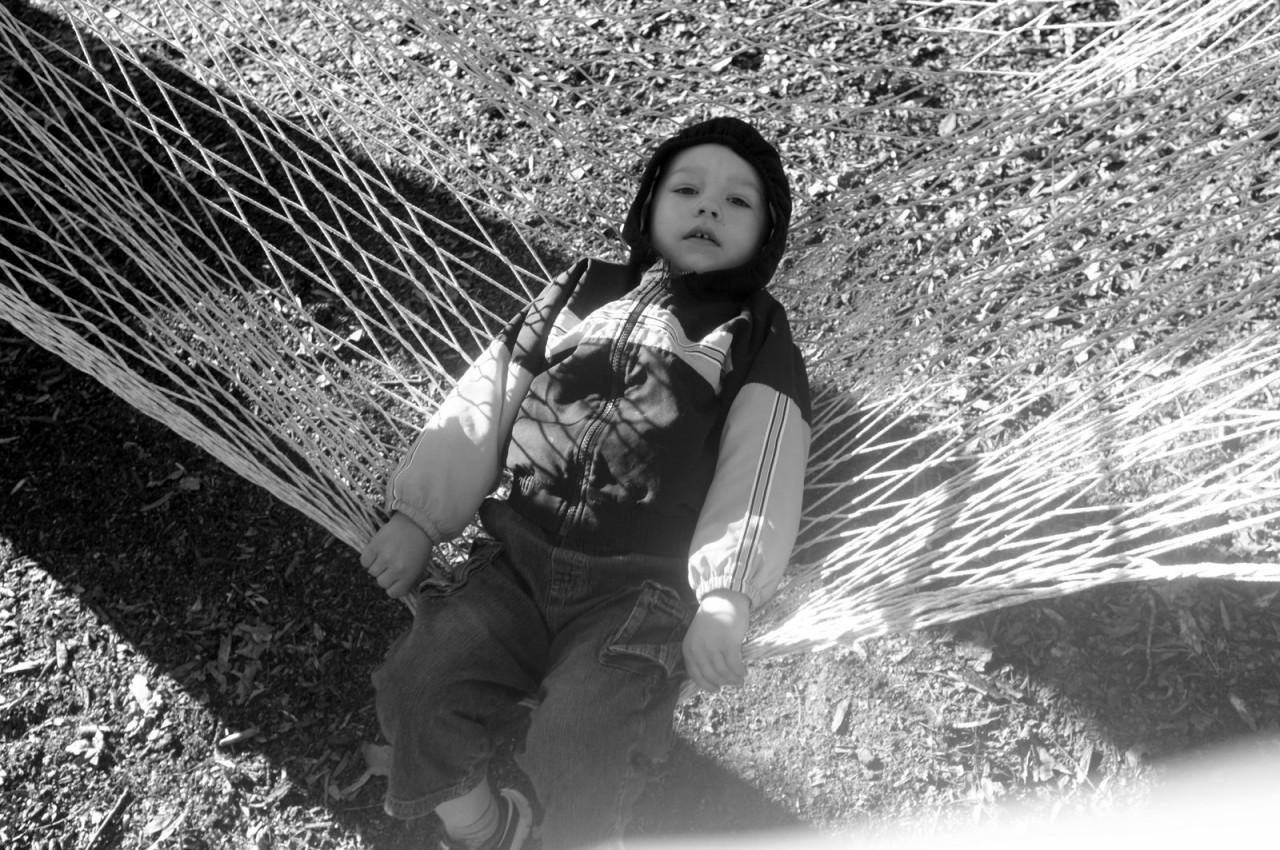
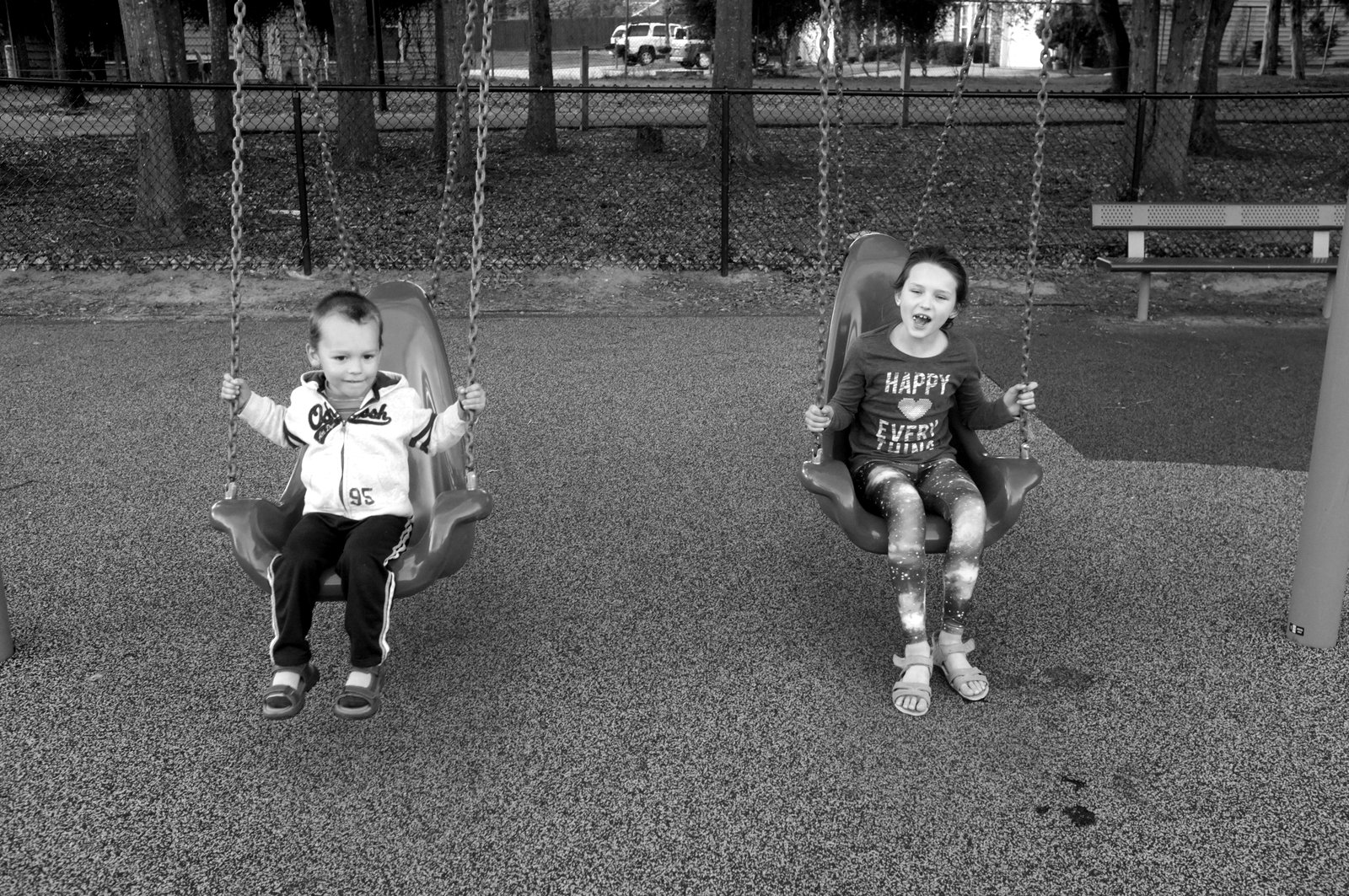
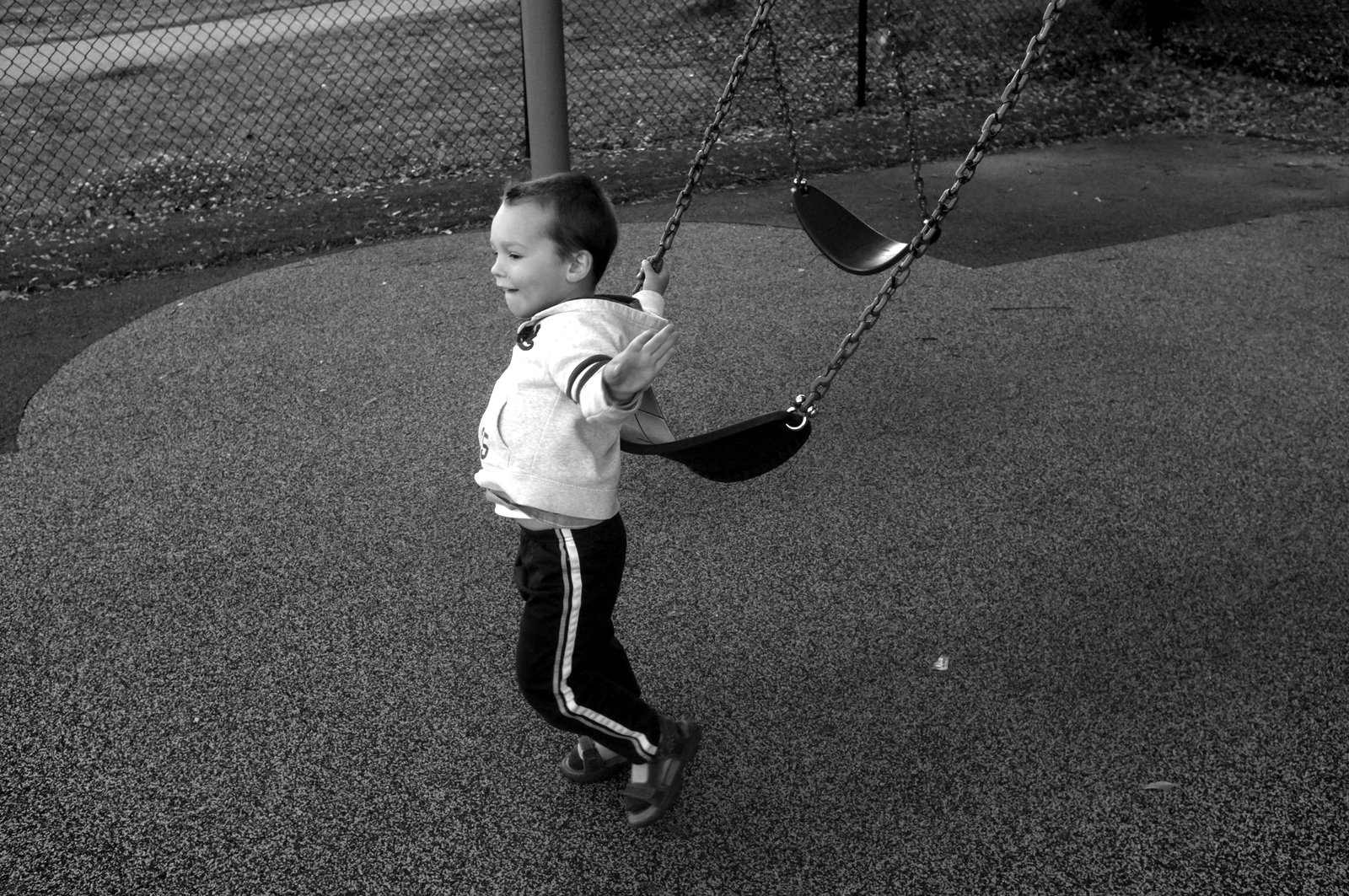
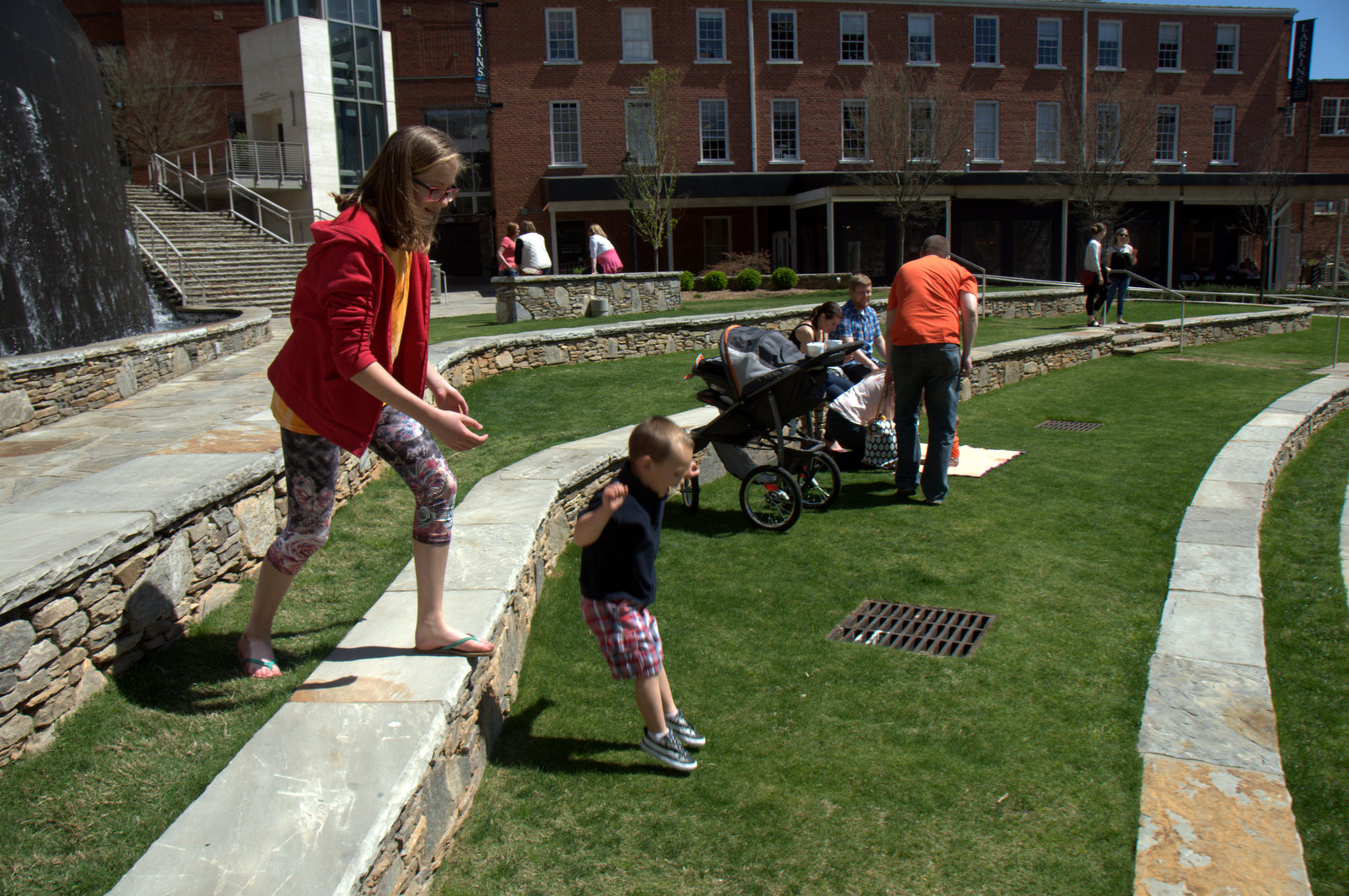
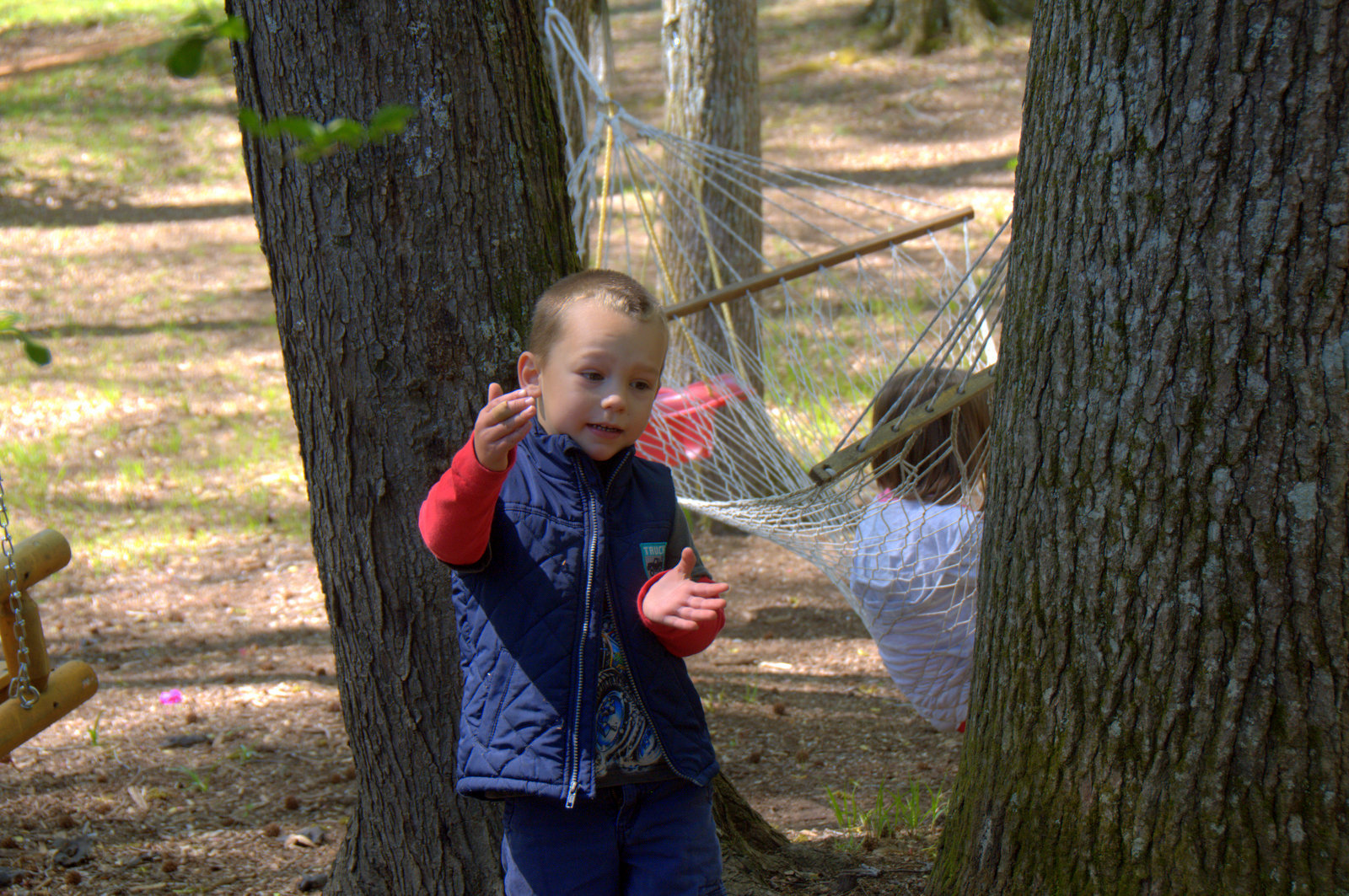
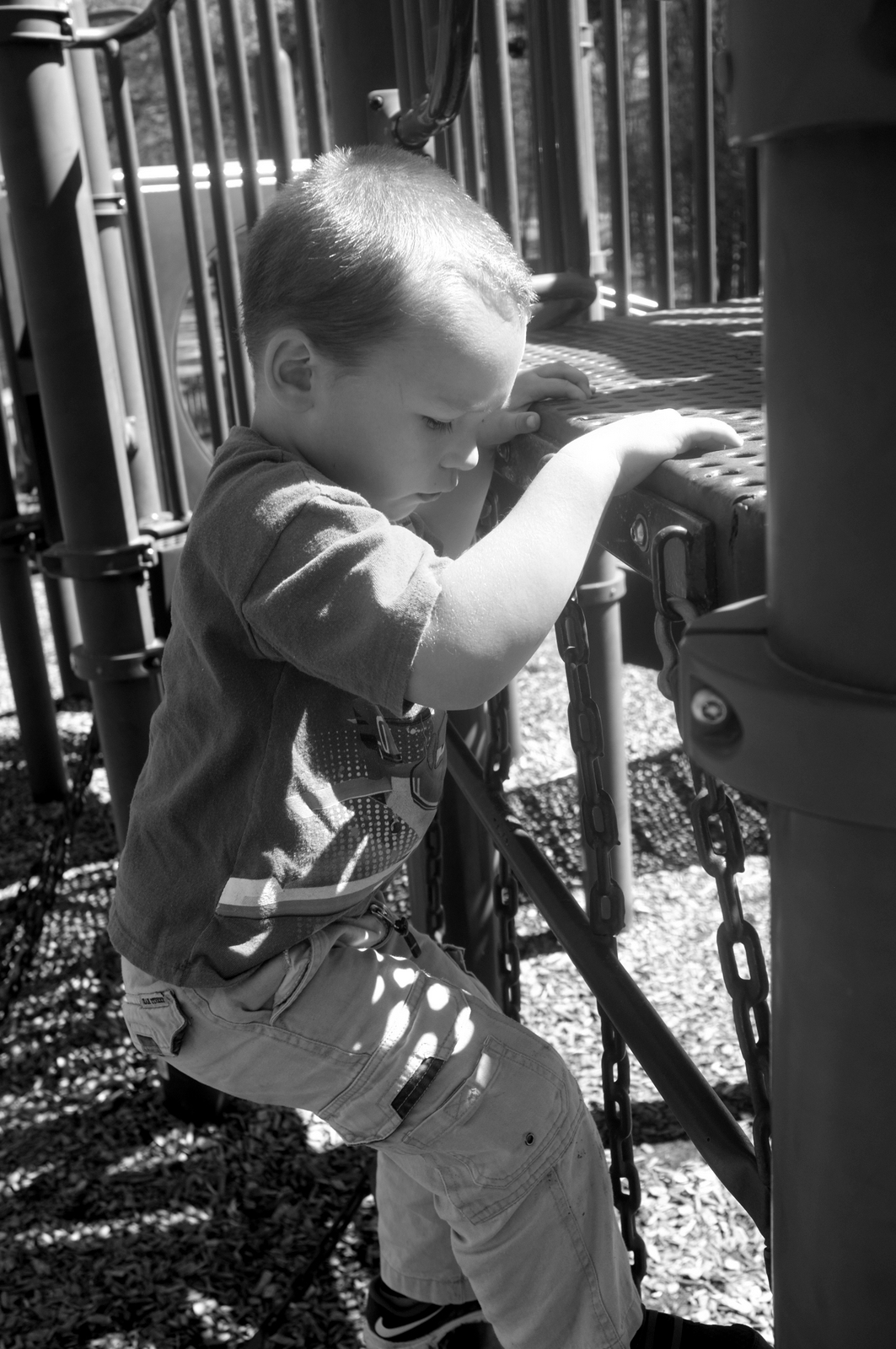
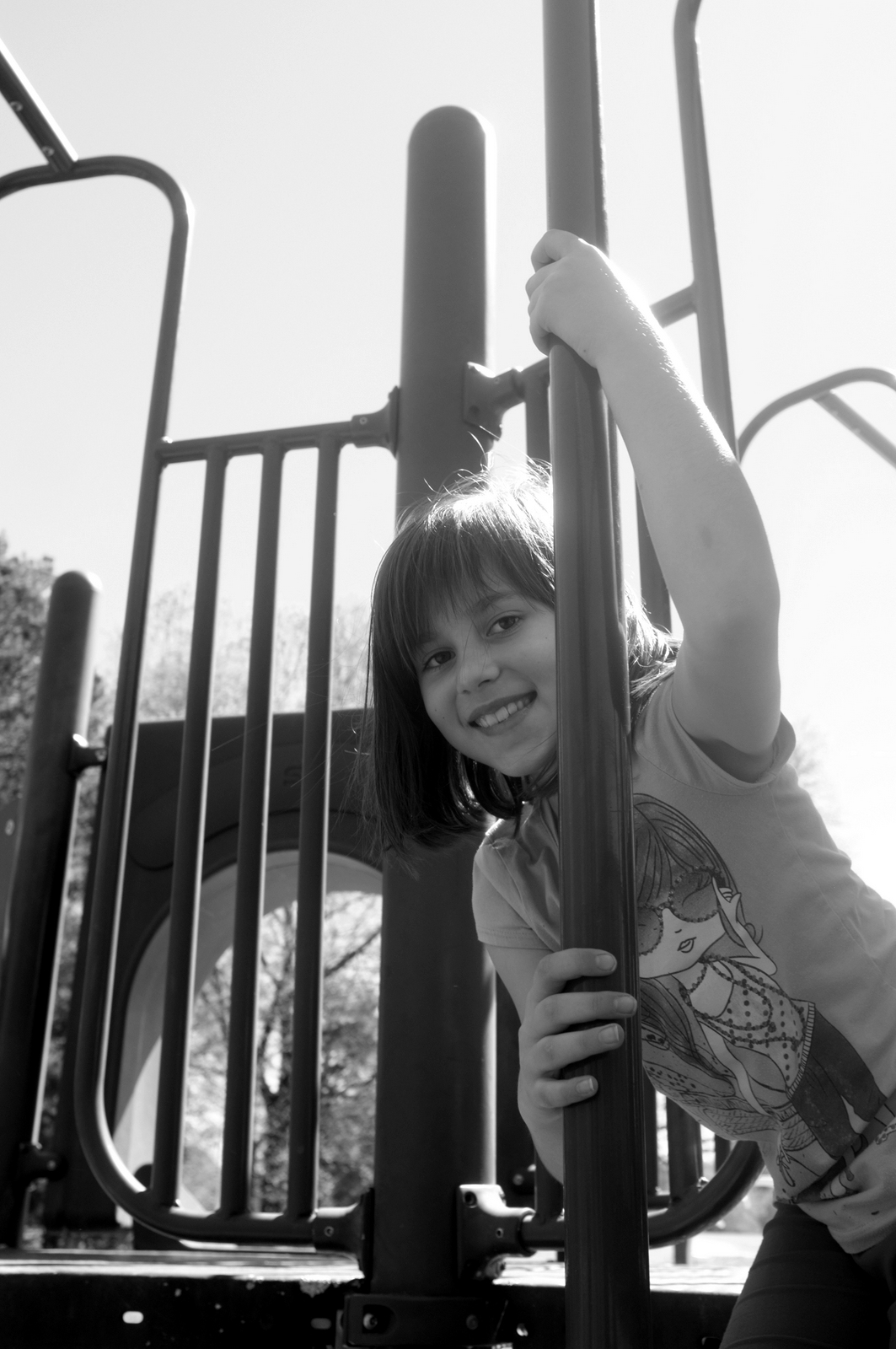
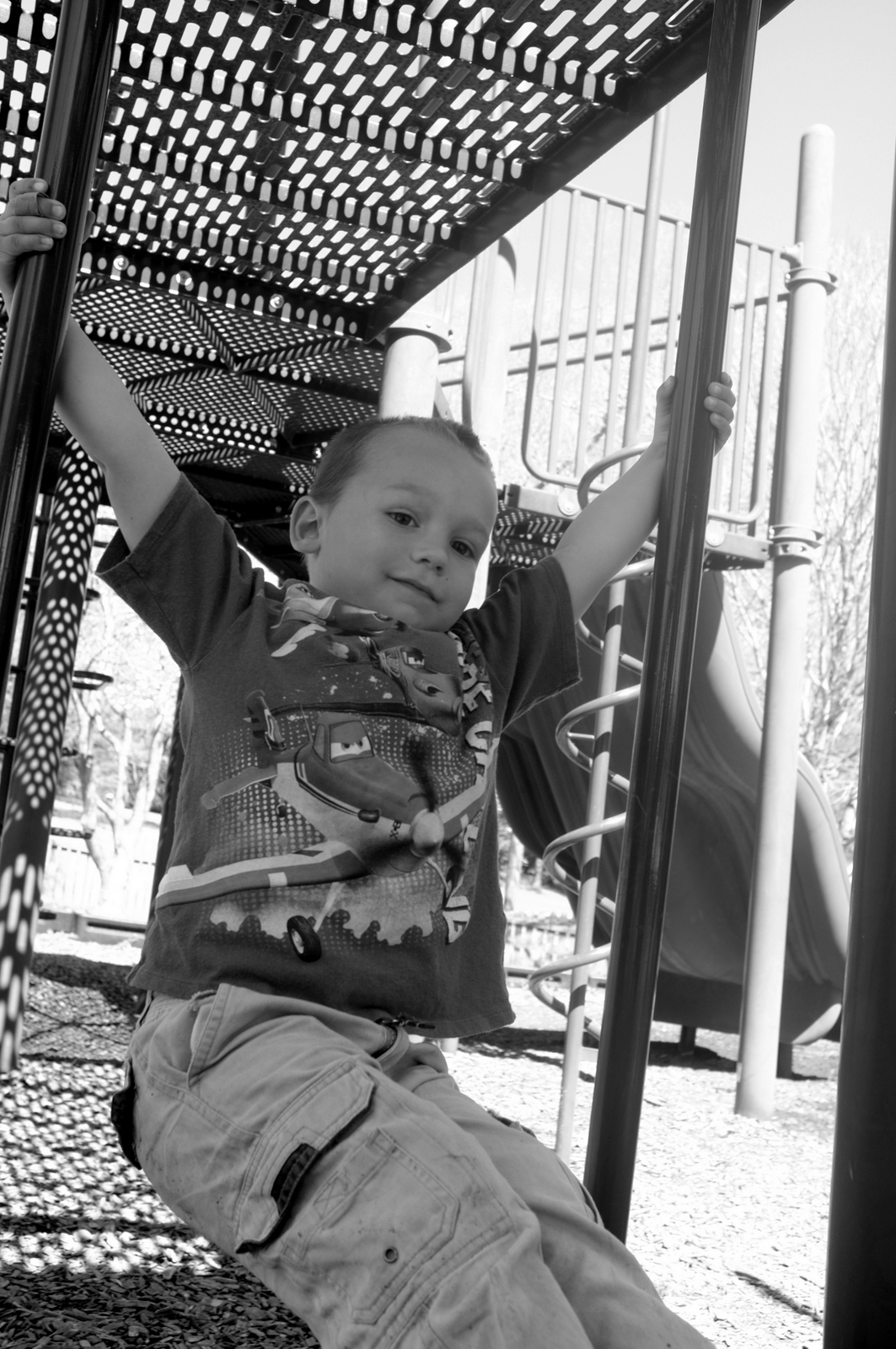
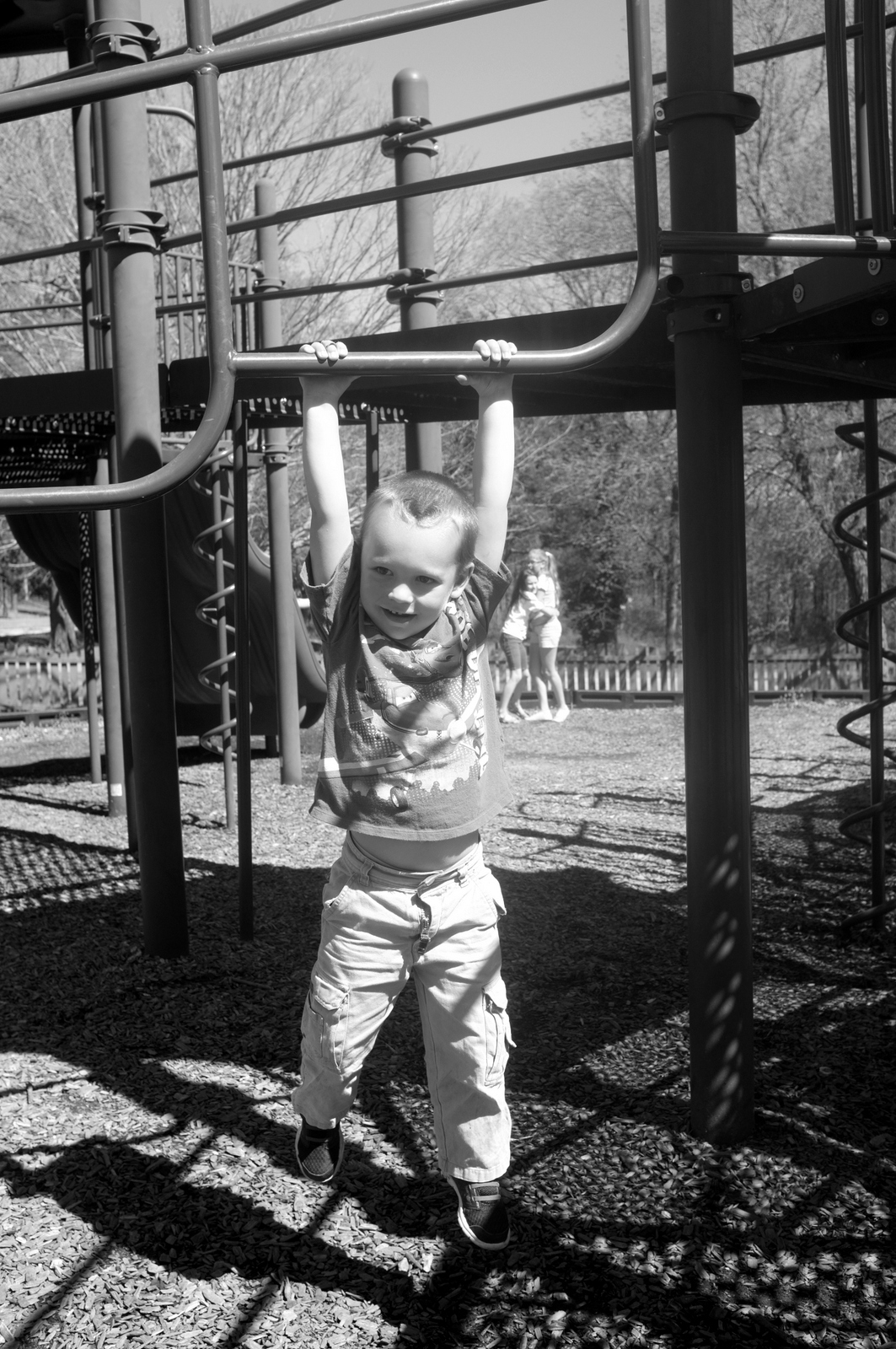
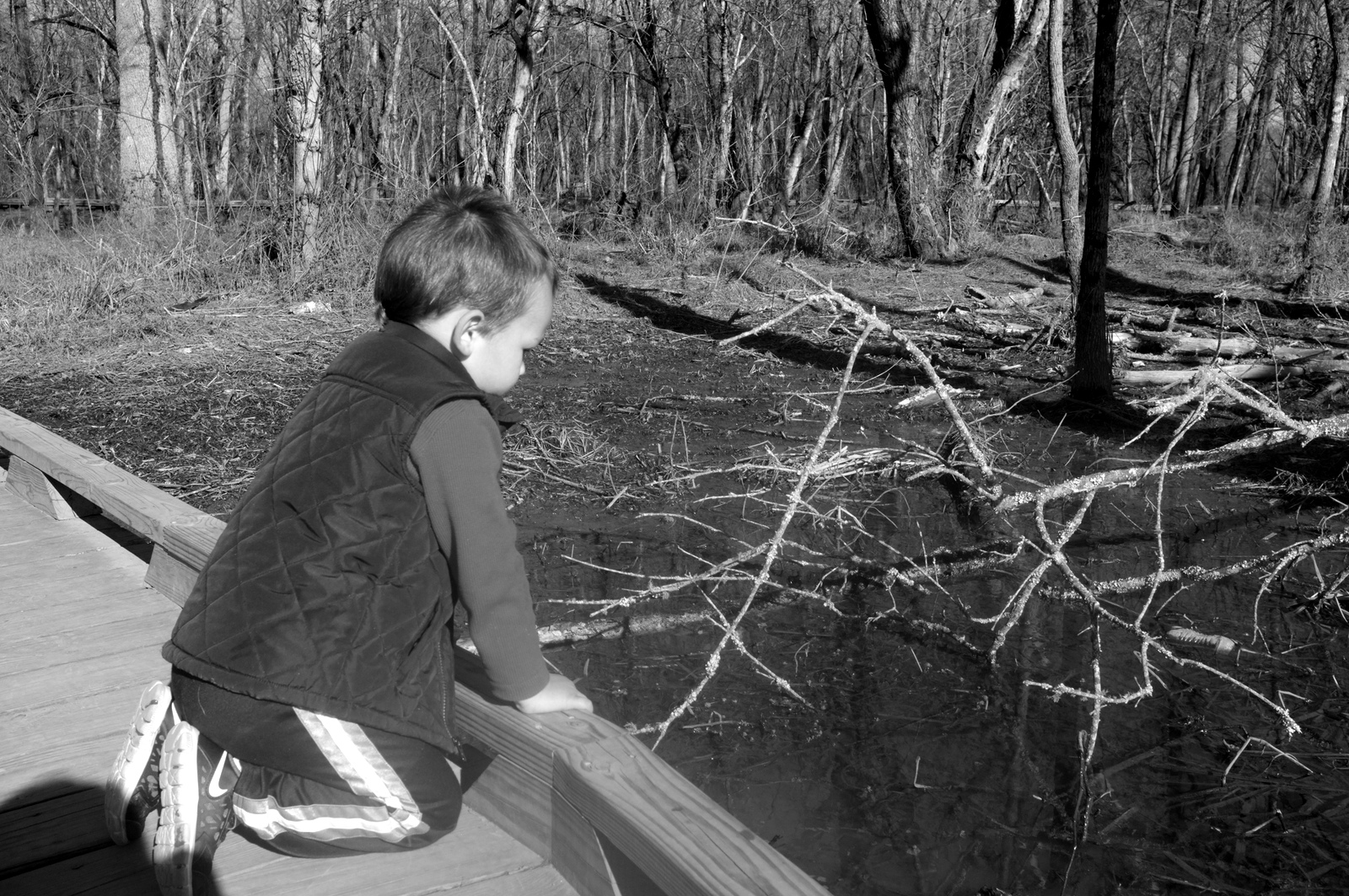
After lunch, we headed to a local park. The Boy discovered he could literally hang just about anywhere.
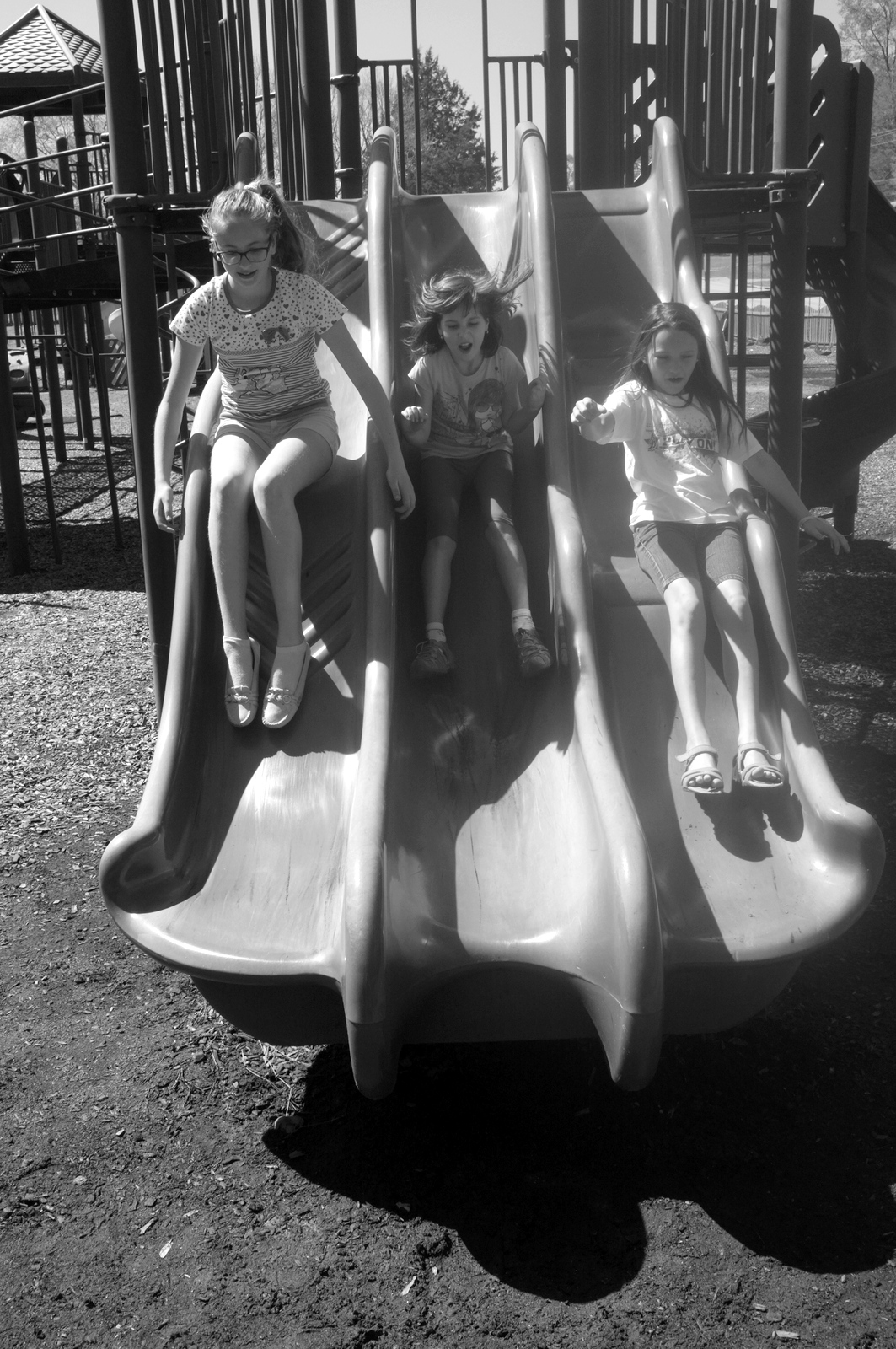
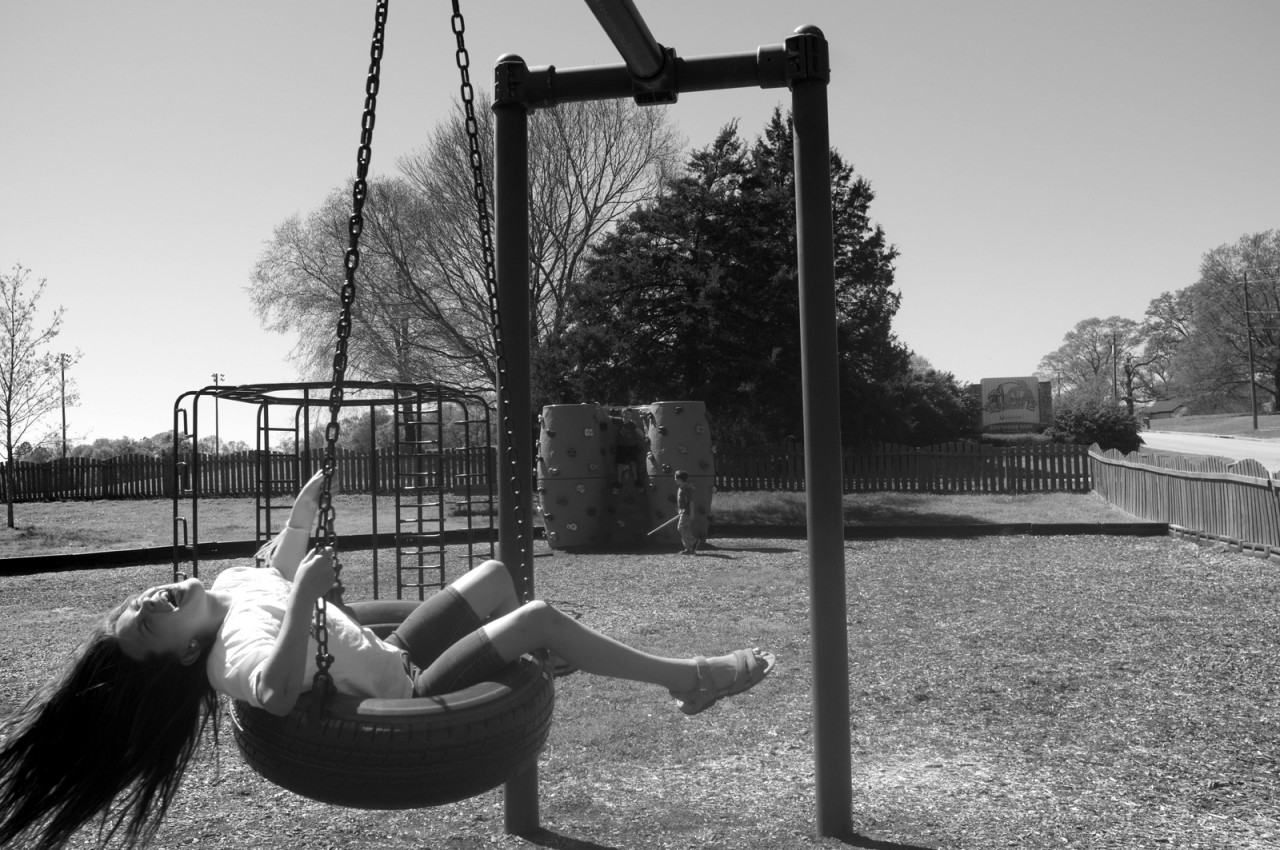


We feel this way every single spring, the relief that the winter is over, that the cold has passed, that bright sun is the norm. No matter the severity of the winter, we all feel this way, especially here in the South, where we’re not really sure what to do with cold weather anyway.
Today was the first warm — truly warm — Saturday we’ve had in the yard. Last weekend we had guests; next weekend is Palm Sunday. From here on out, weekends are not for working in the yard, so we made the most of this beautiful day.
We started with the shrubs in front of the house. The boxwoods are a distant memory, but some of the replacements have not fared well, especially the Indian Hawthorns. We did everything we could, even apparently resurrecting them one spring, but they are stubbornly fragile, so I pulled them out today. Literally — all it took was some rocking and tugging and out they came.

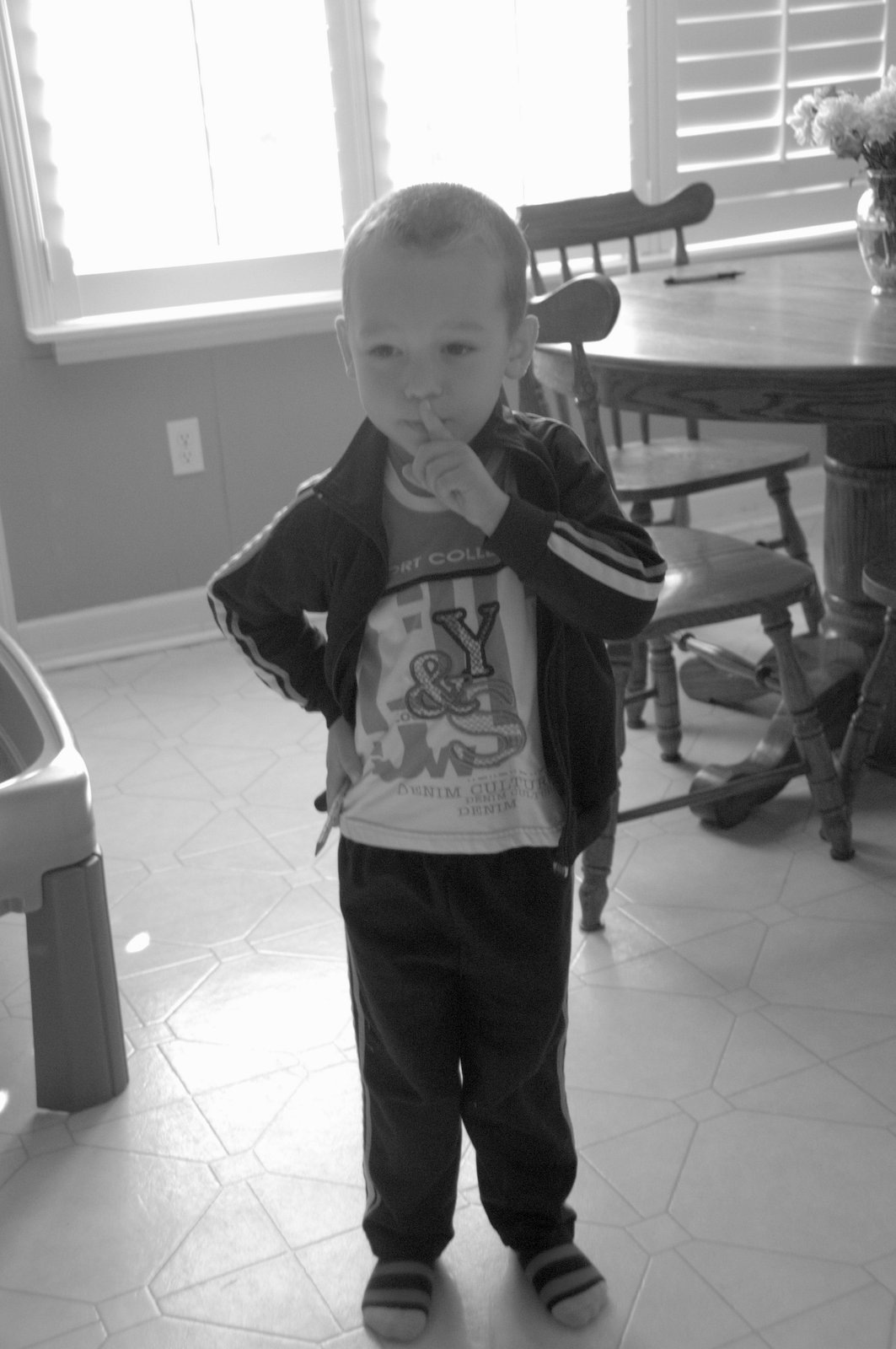

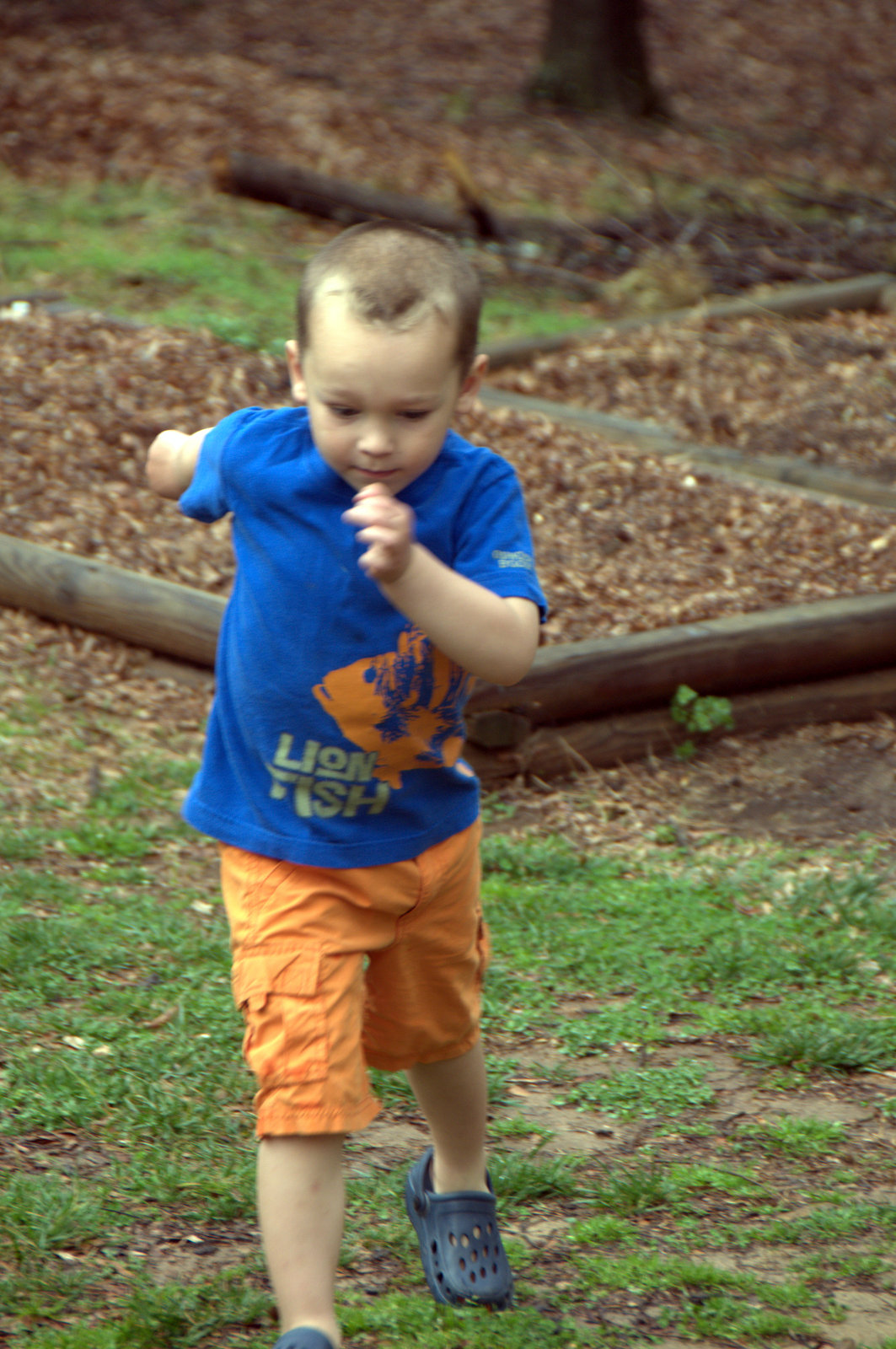

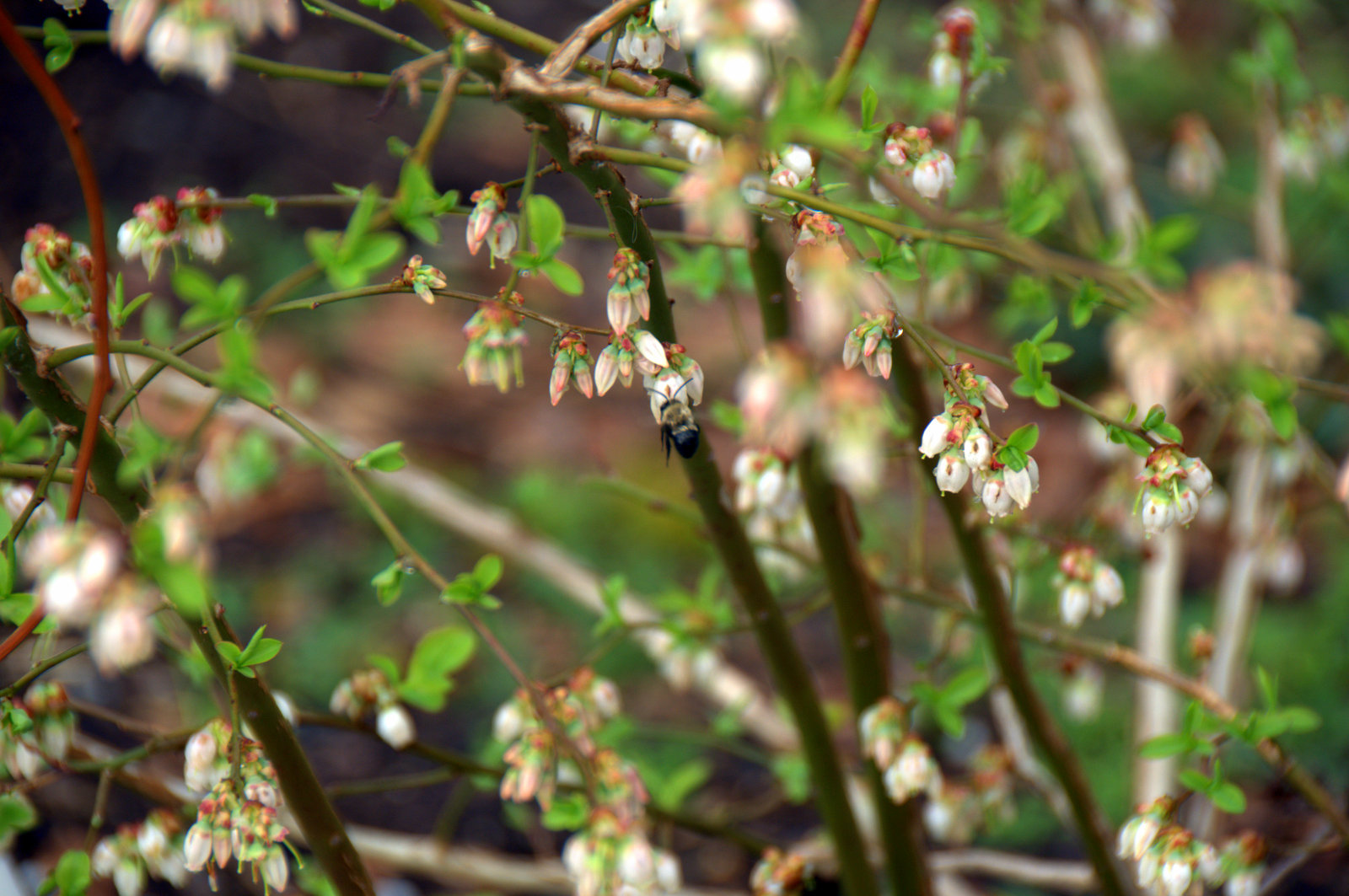
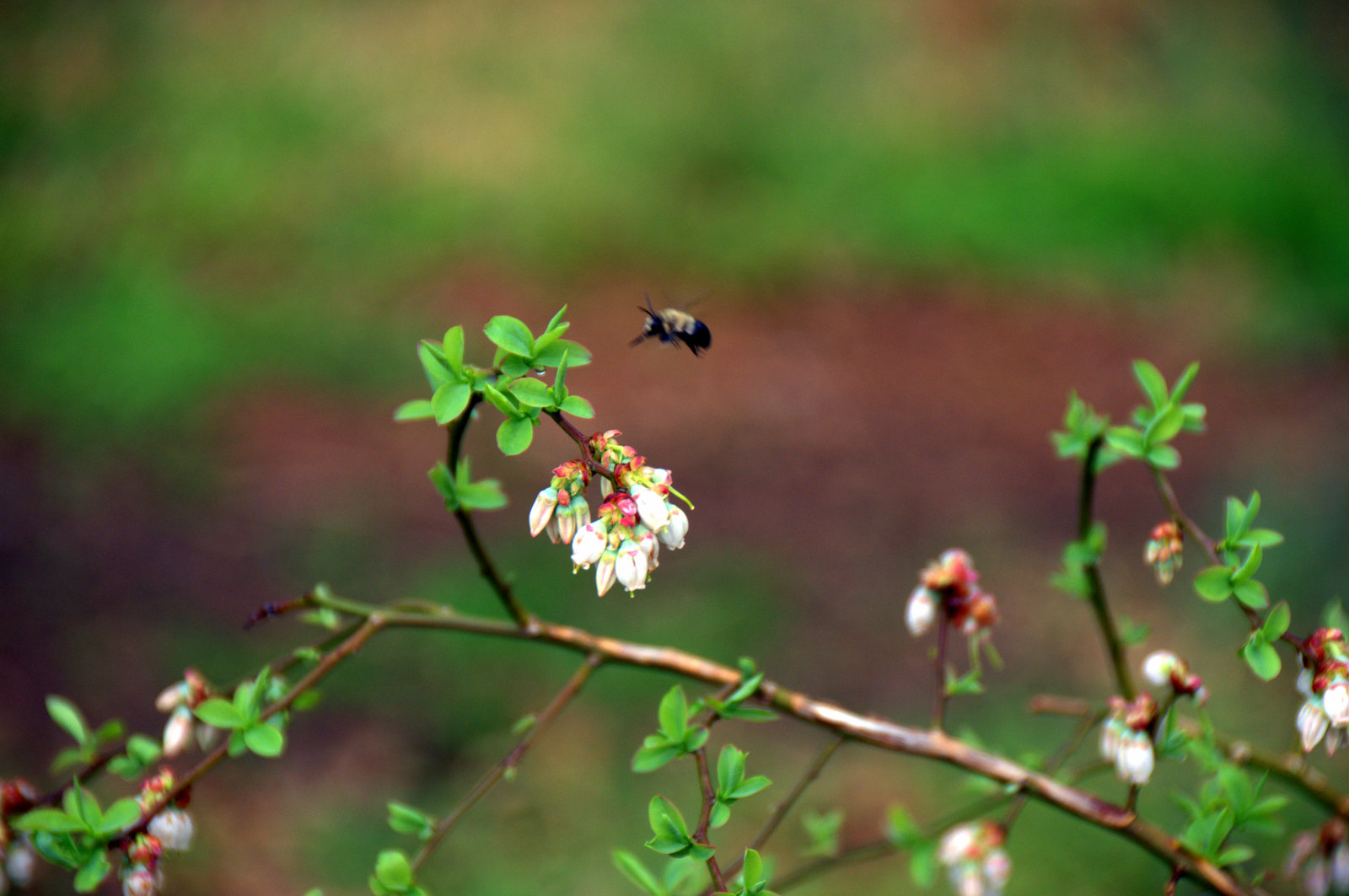
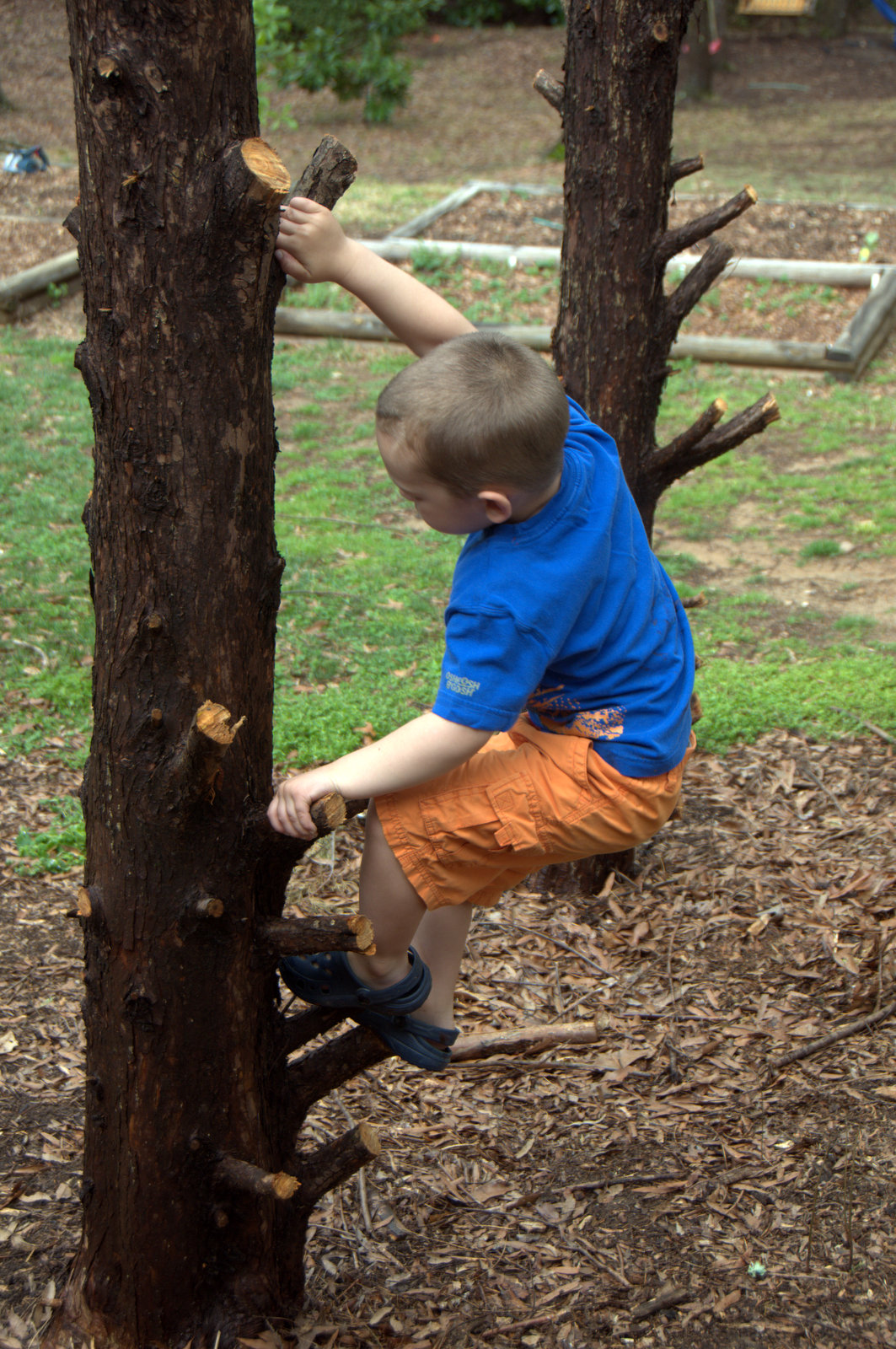
The Boy came out to help me, but the Girl was still in bed. E showed me how he walks in preschool when they have to be “super quiet.” I would imagine he has little trouble following those directions, though: he’s so concerned about following instructions that he gets upset now when he sees his schoolmates taking off their shoes. “It’s against fire code!” he fusses, echoing what his teachers told the class at the beginning of the year. Thinking of some of my own students’ disregard for rules and regulations, I was tempted when he first explained the fire code dilemma, to let him know that once he got to public school, it would become the ironic norm.
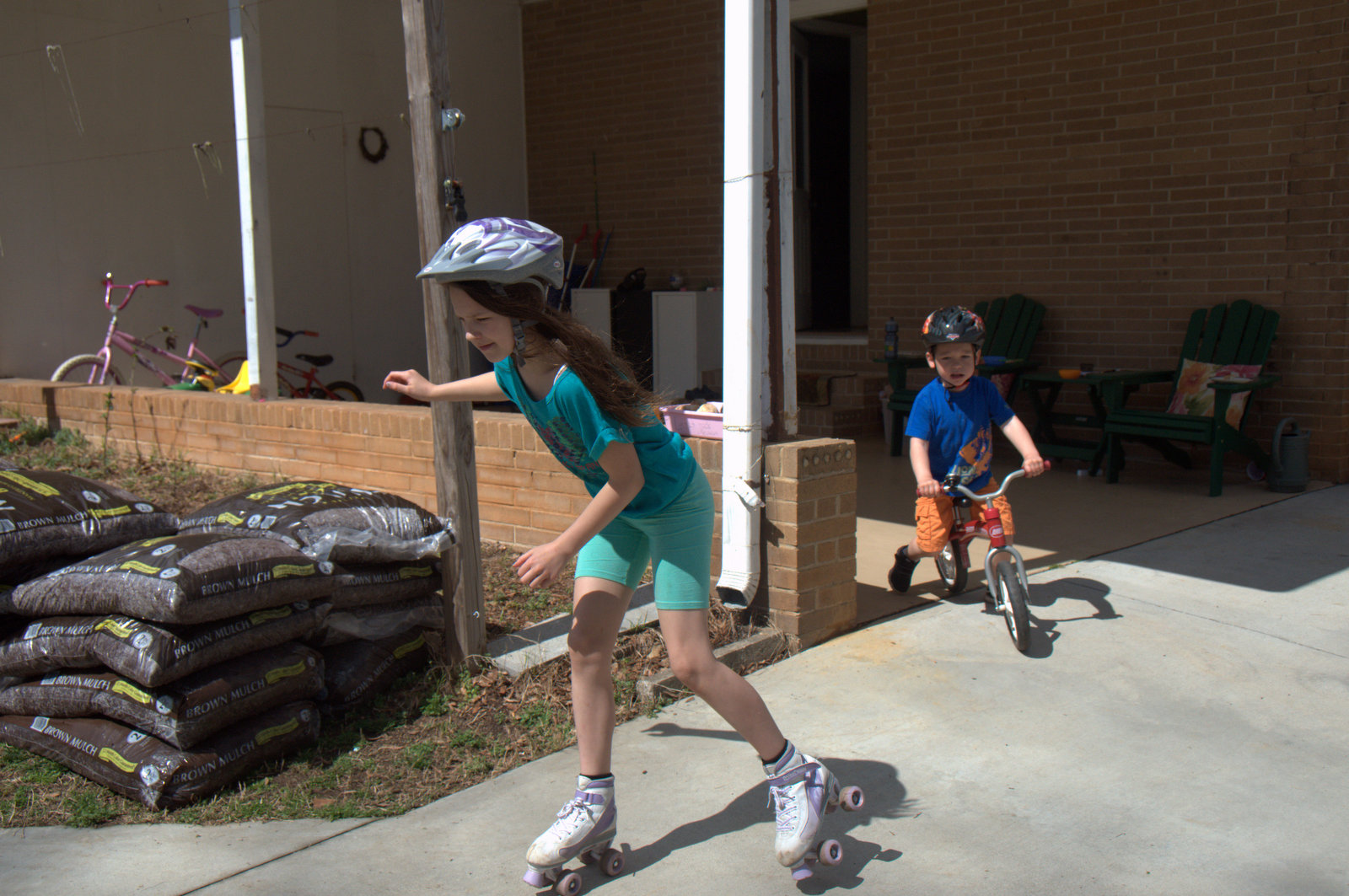
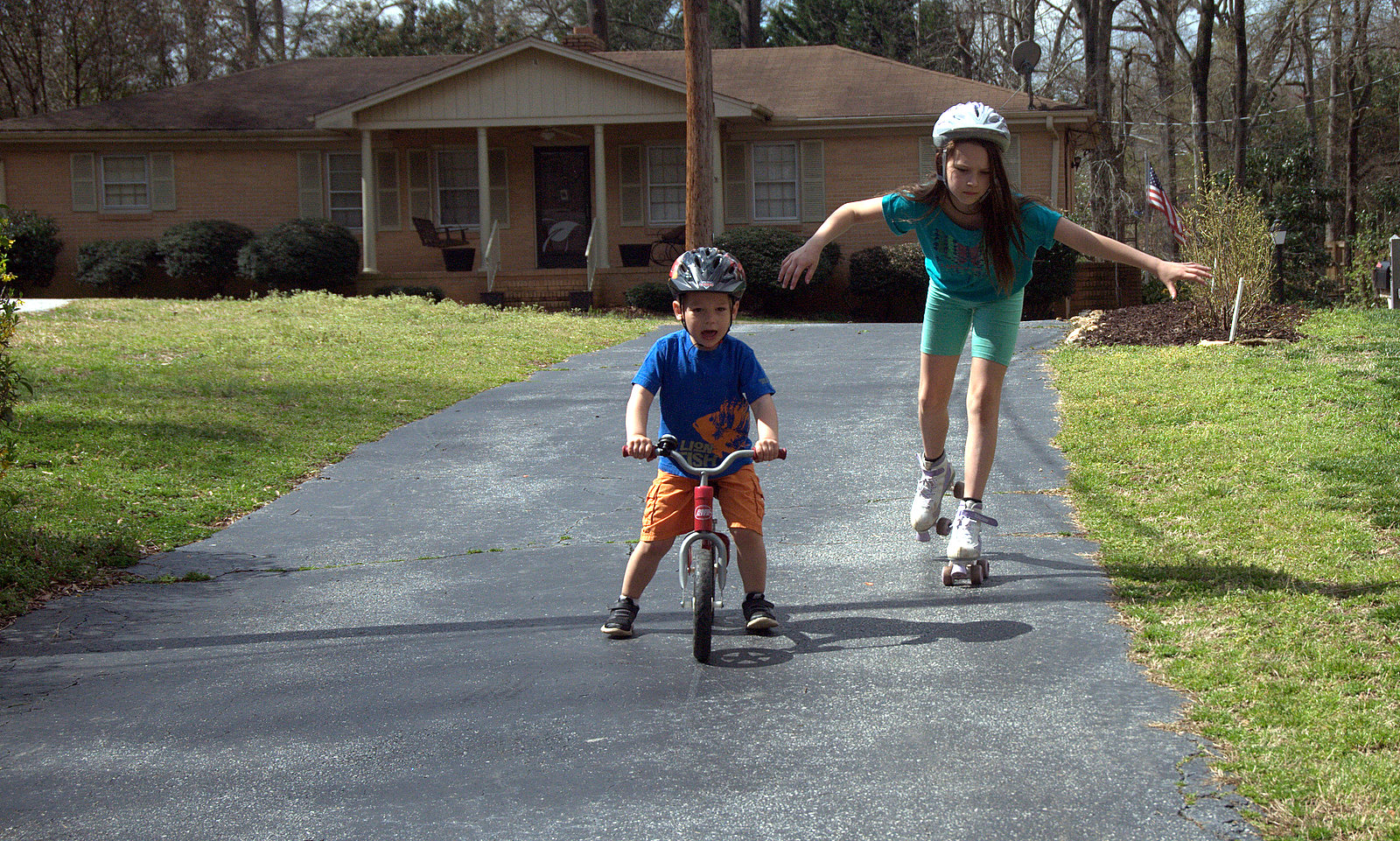
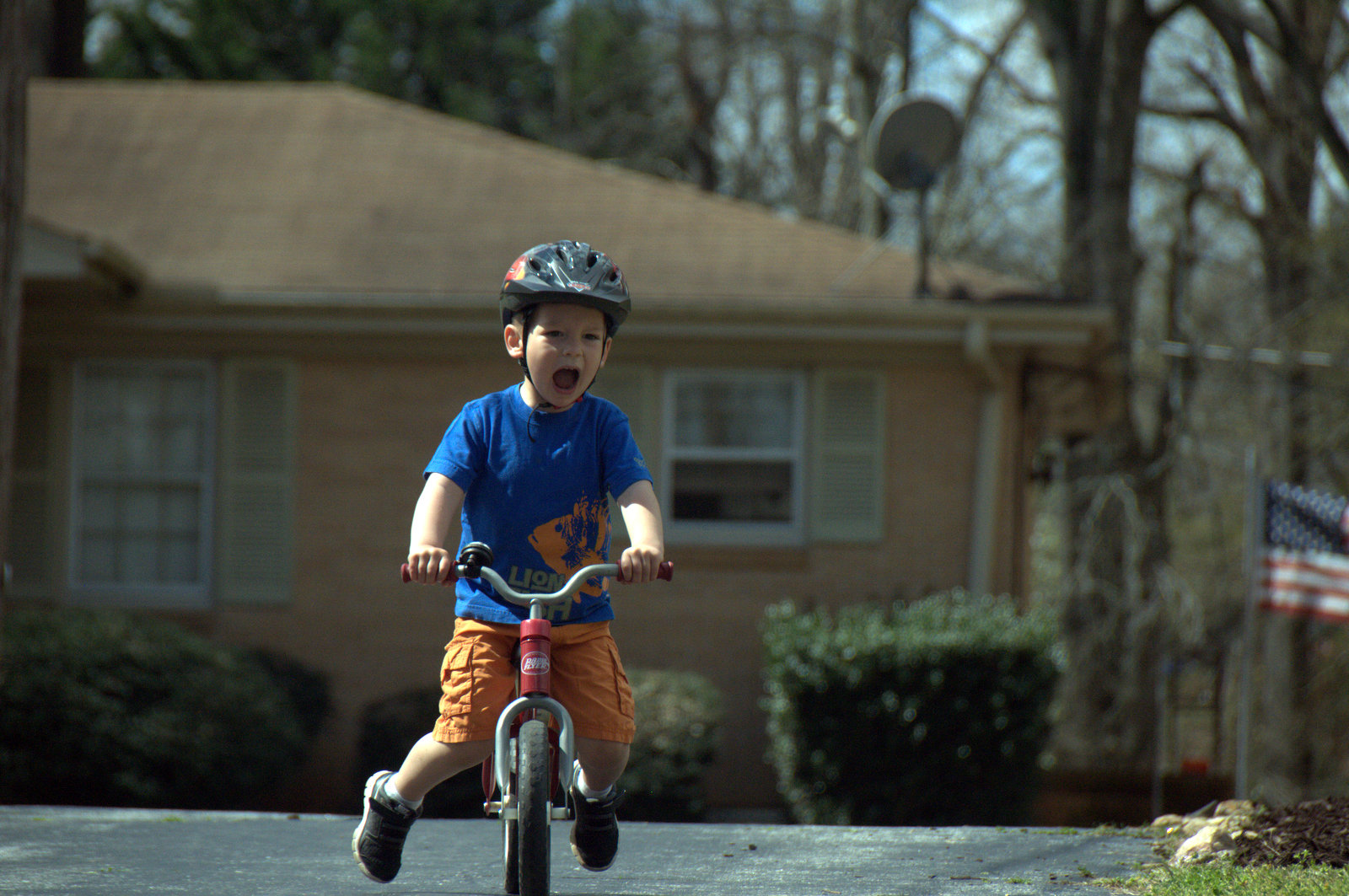
The Girl finally woke up, and it was straight to the driveway for racing. She never lets the Boy win, which frustrates him at times, but mostly he shrugs it off. It’s difficult to imagine her doing the same thing when faced with a seemingly-endless losing streak, but that’s one of the many differences that make them both precious to us.
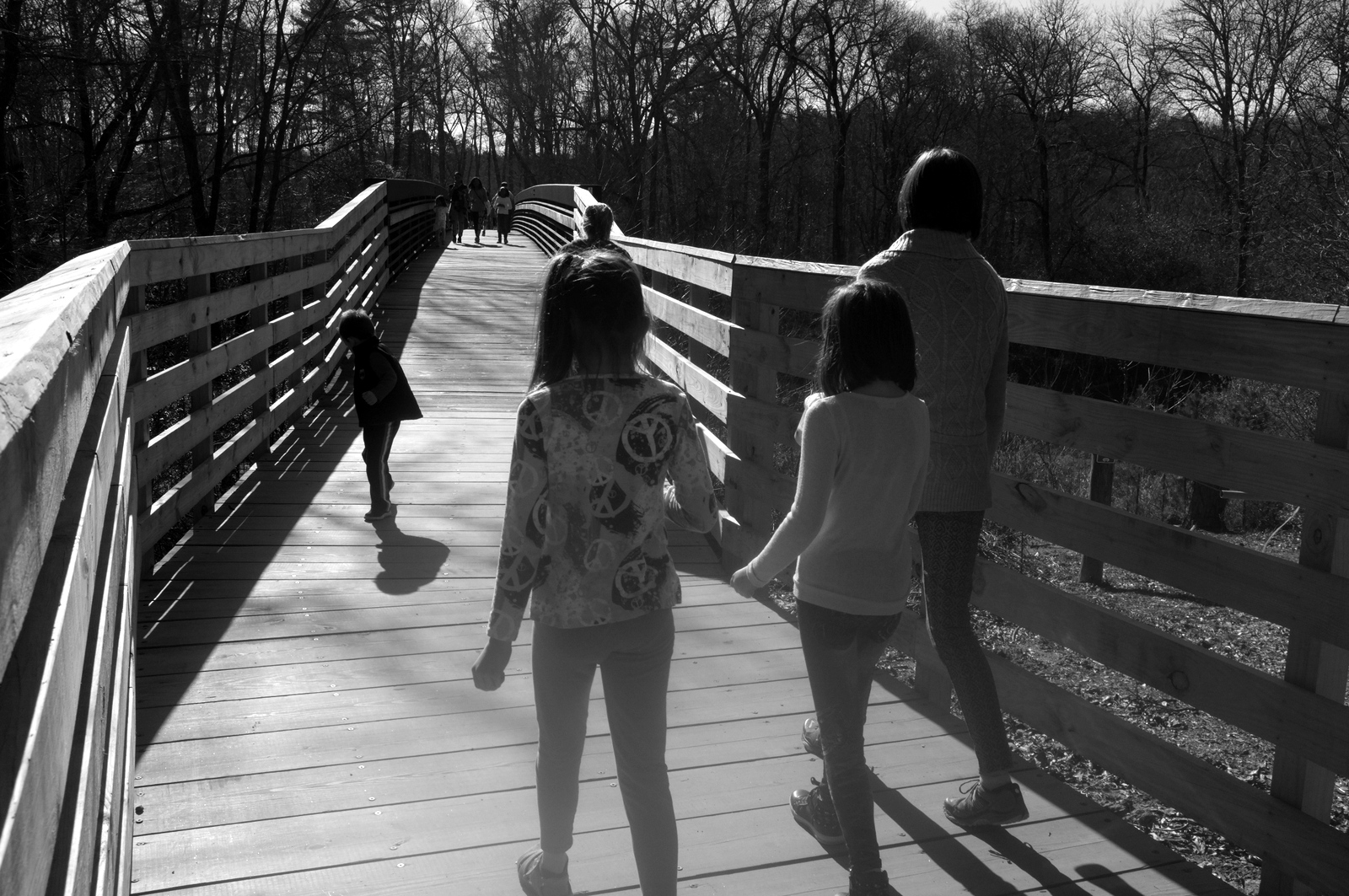
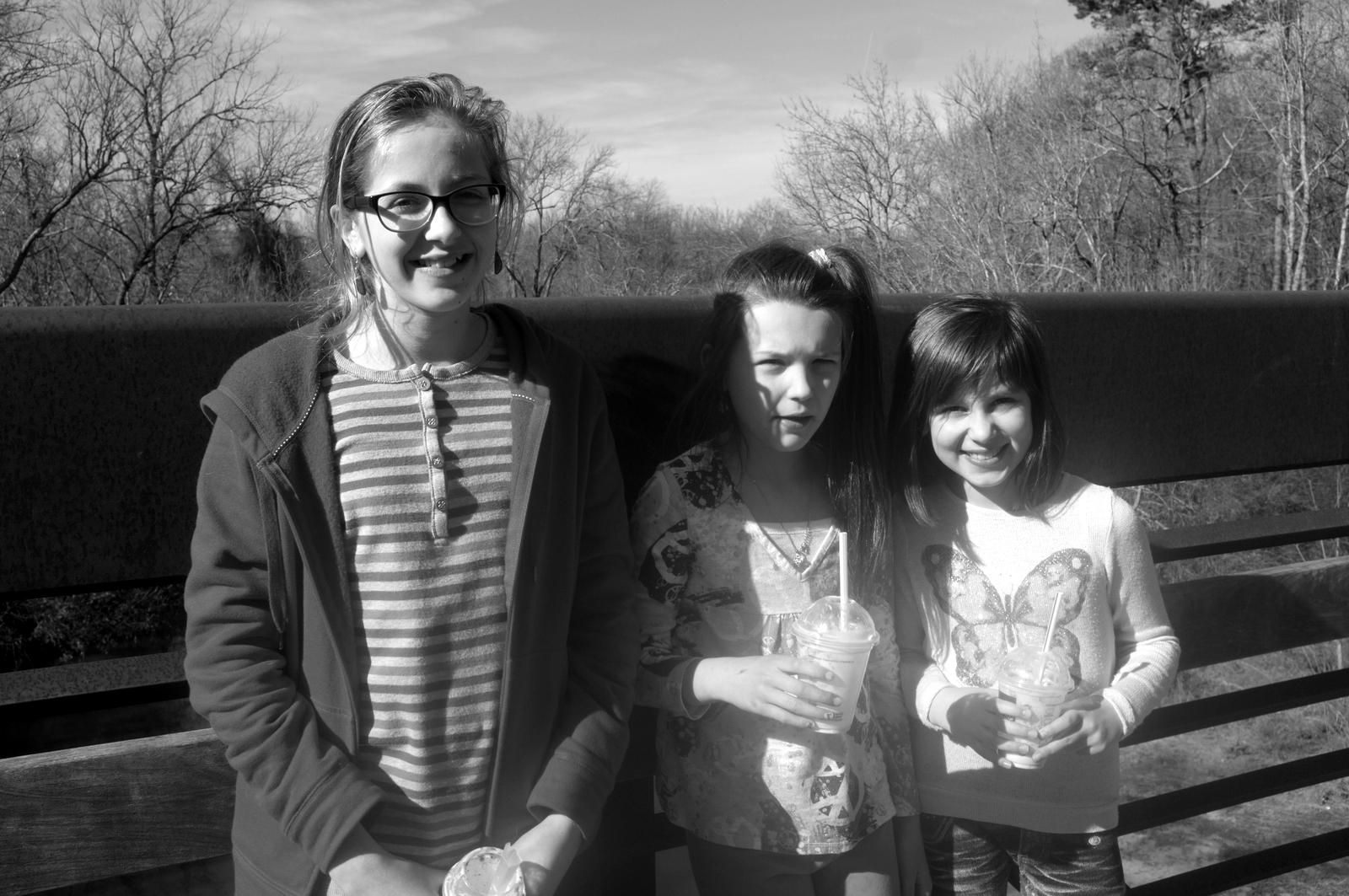
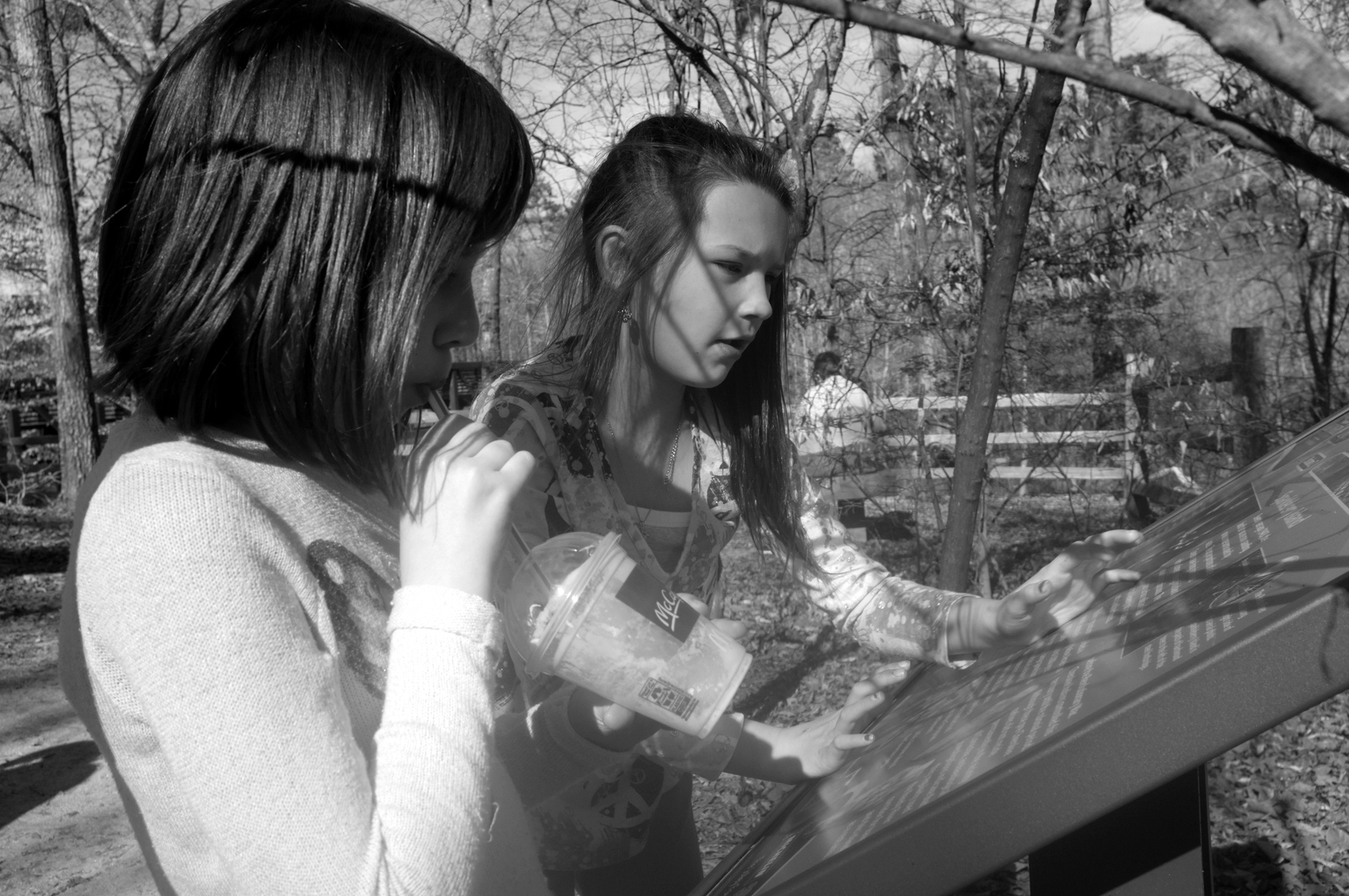
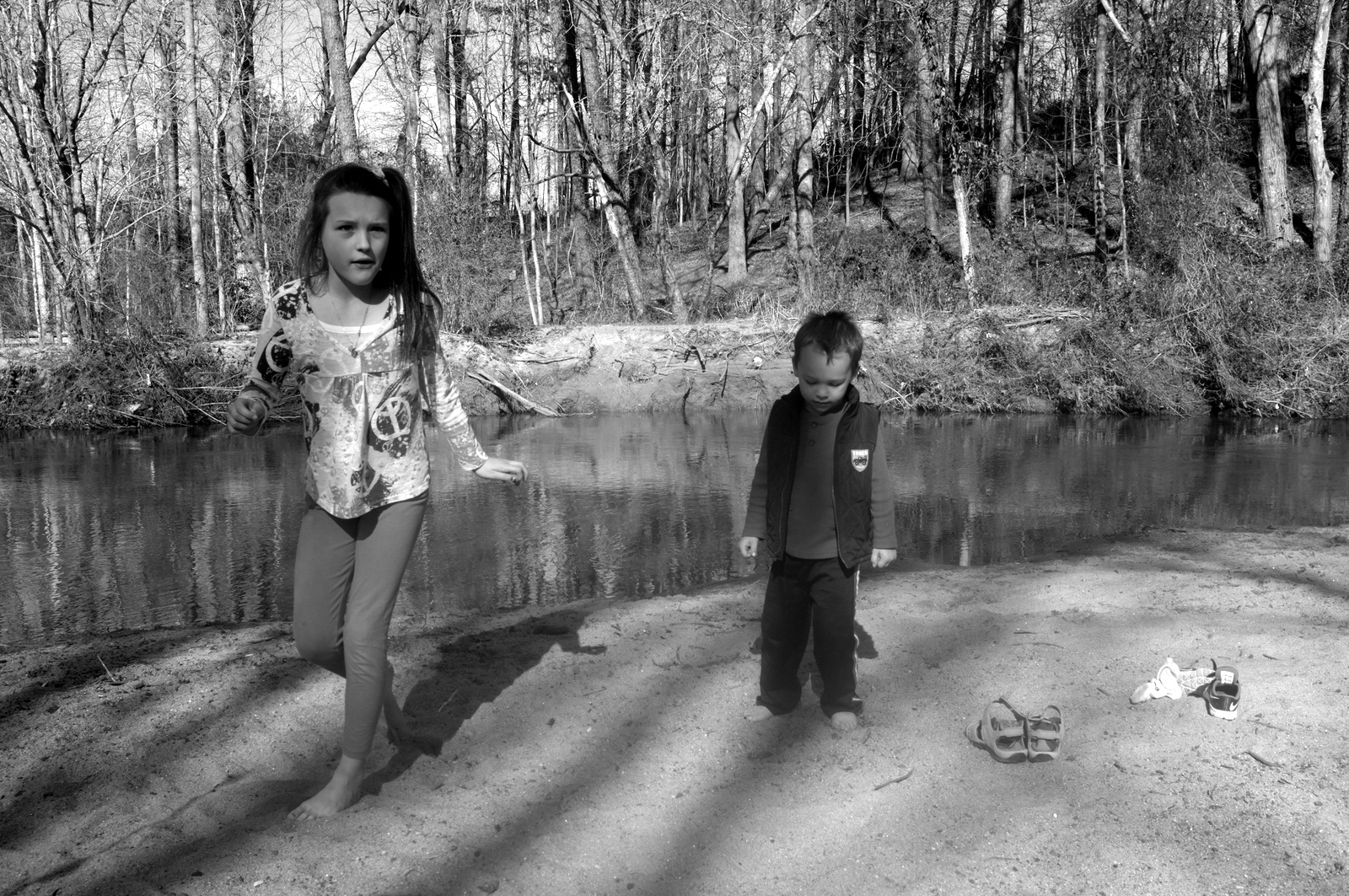
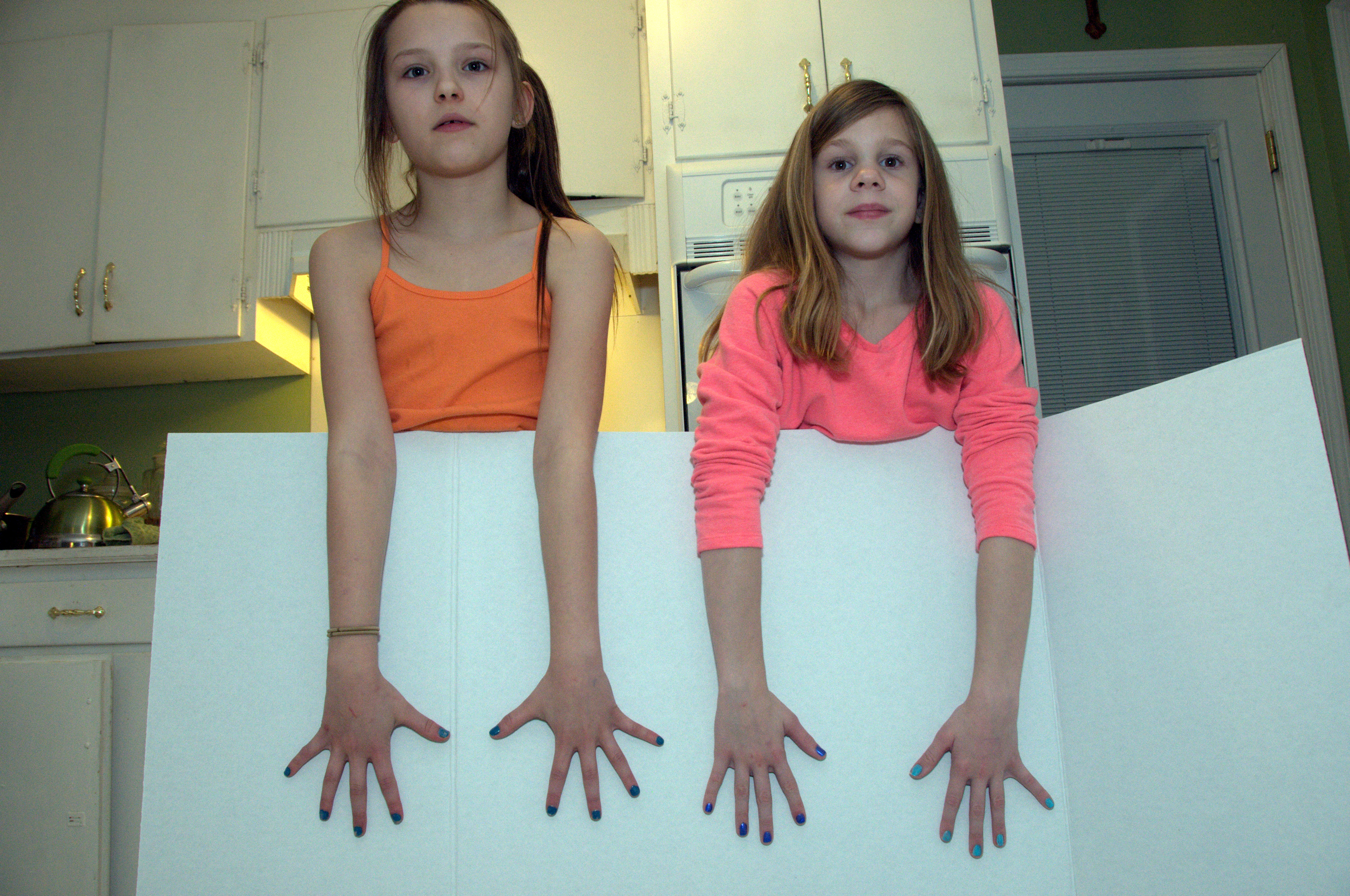
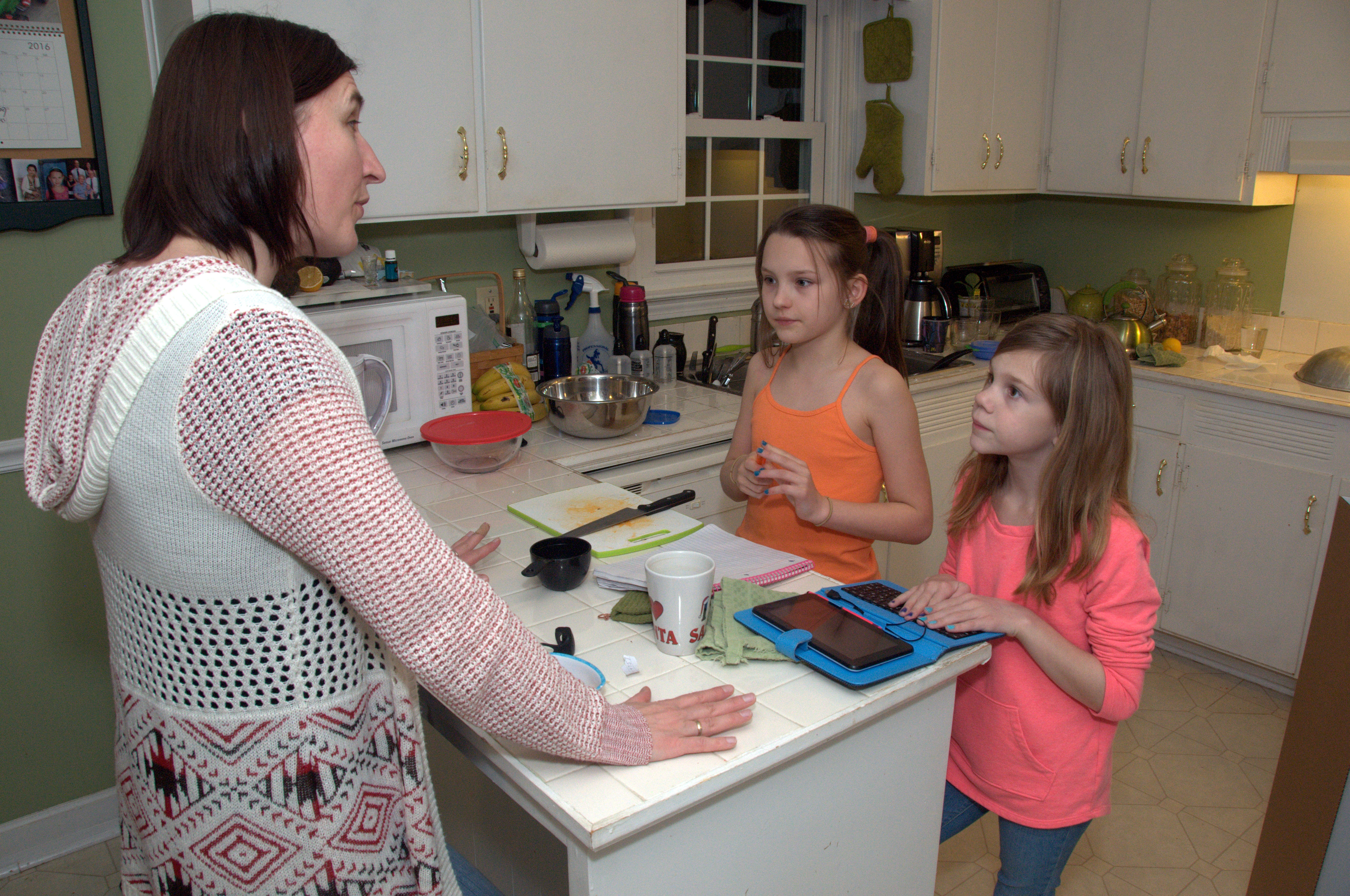
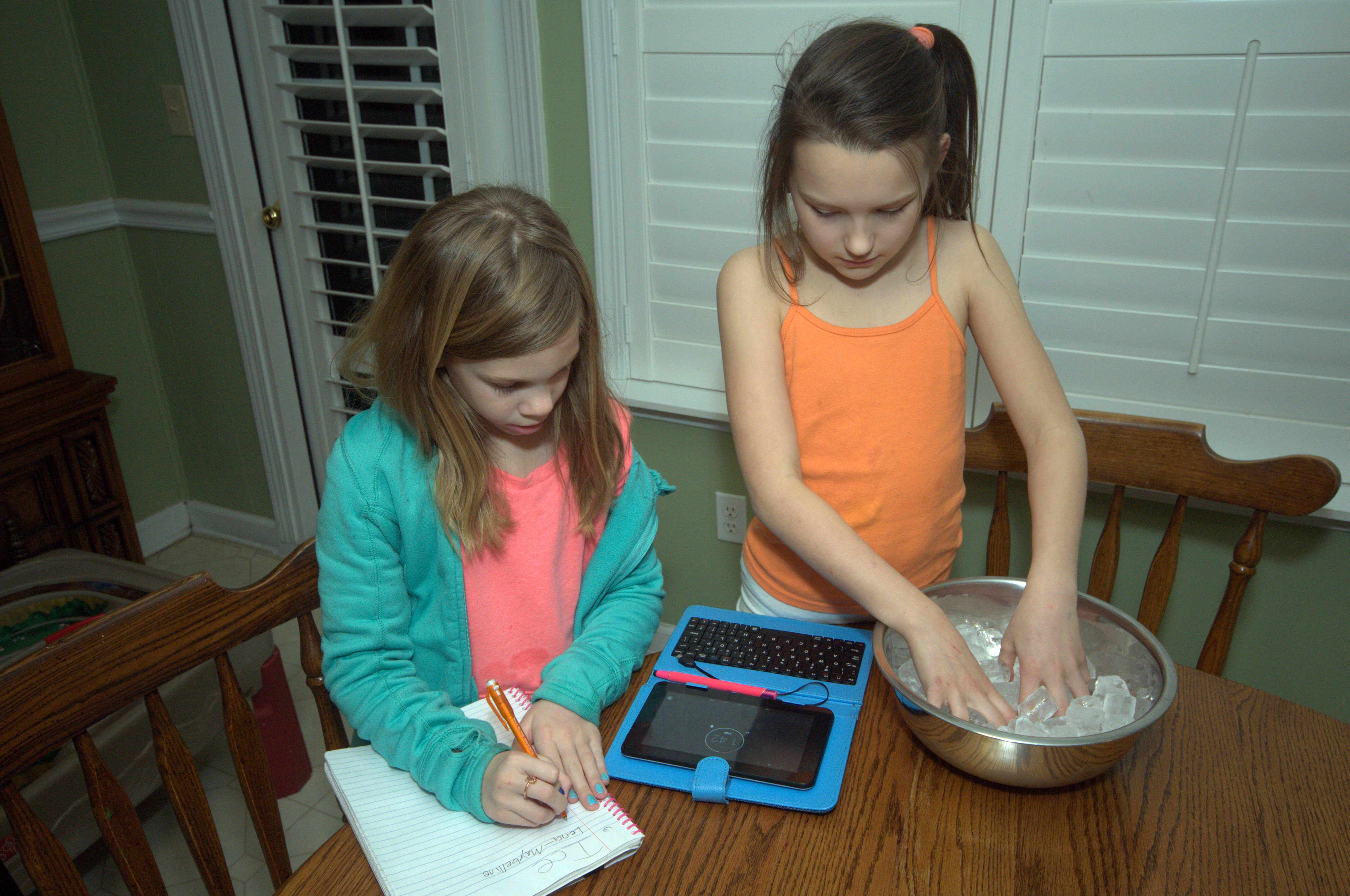
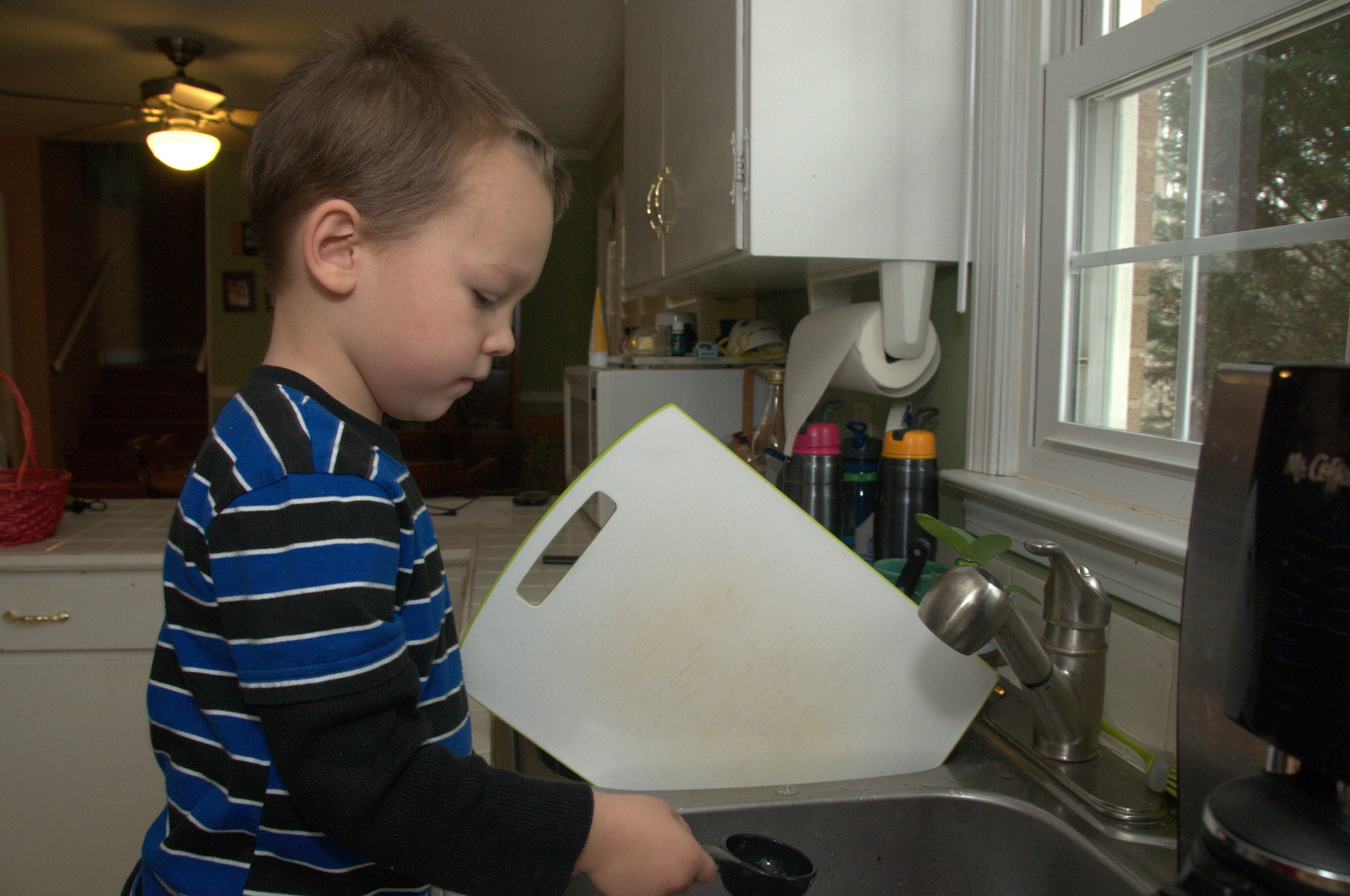
Time present and time past
Are both perhaps present in time future,
And time future contained in time past.
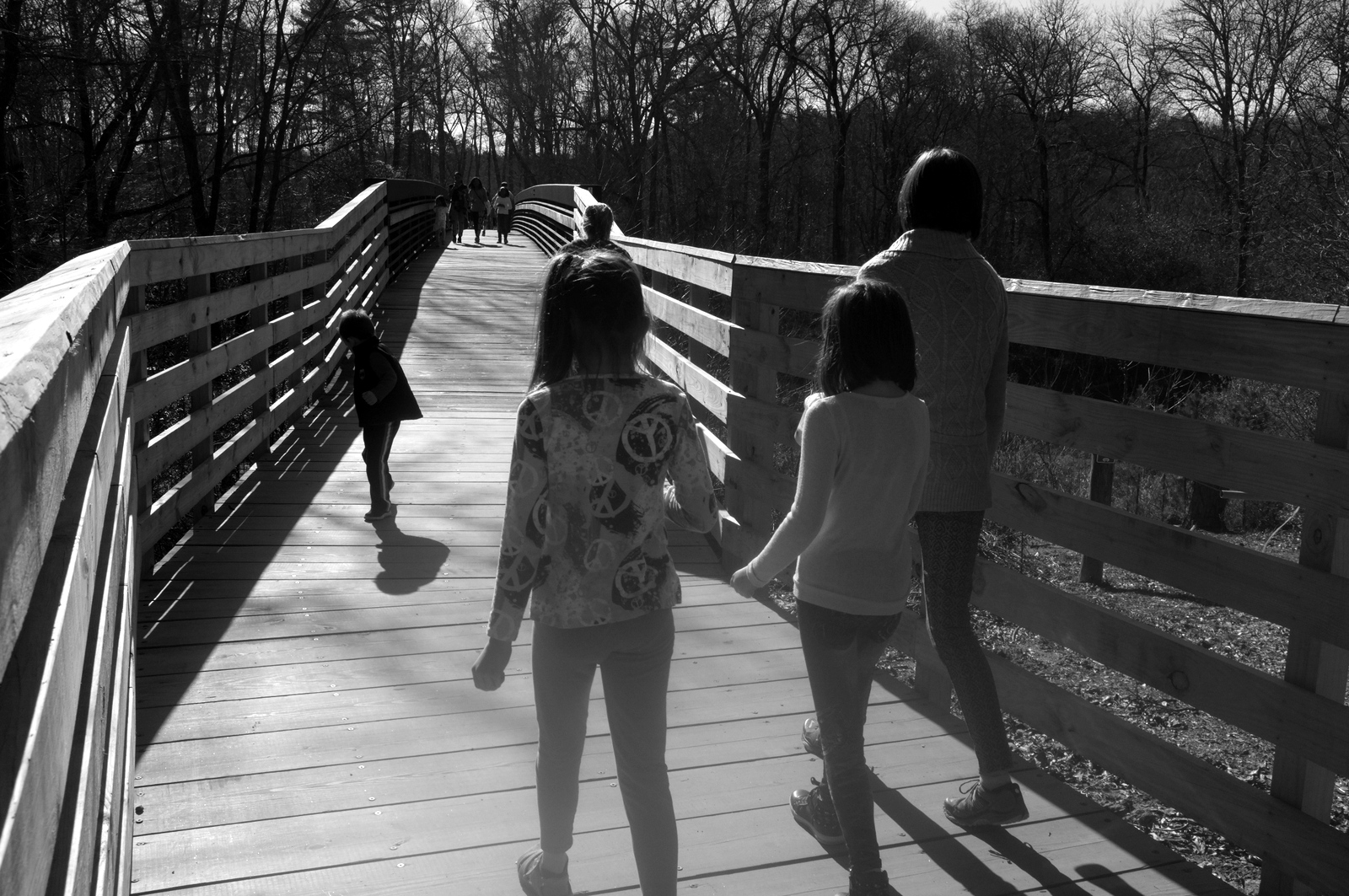
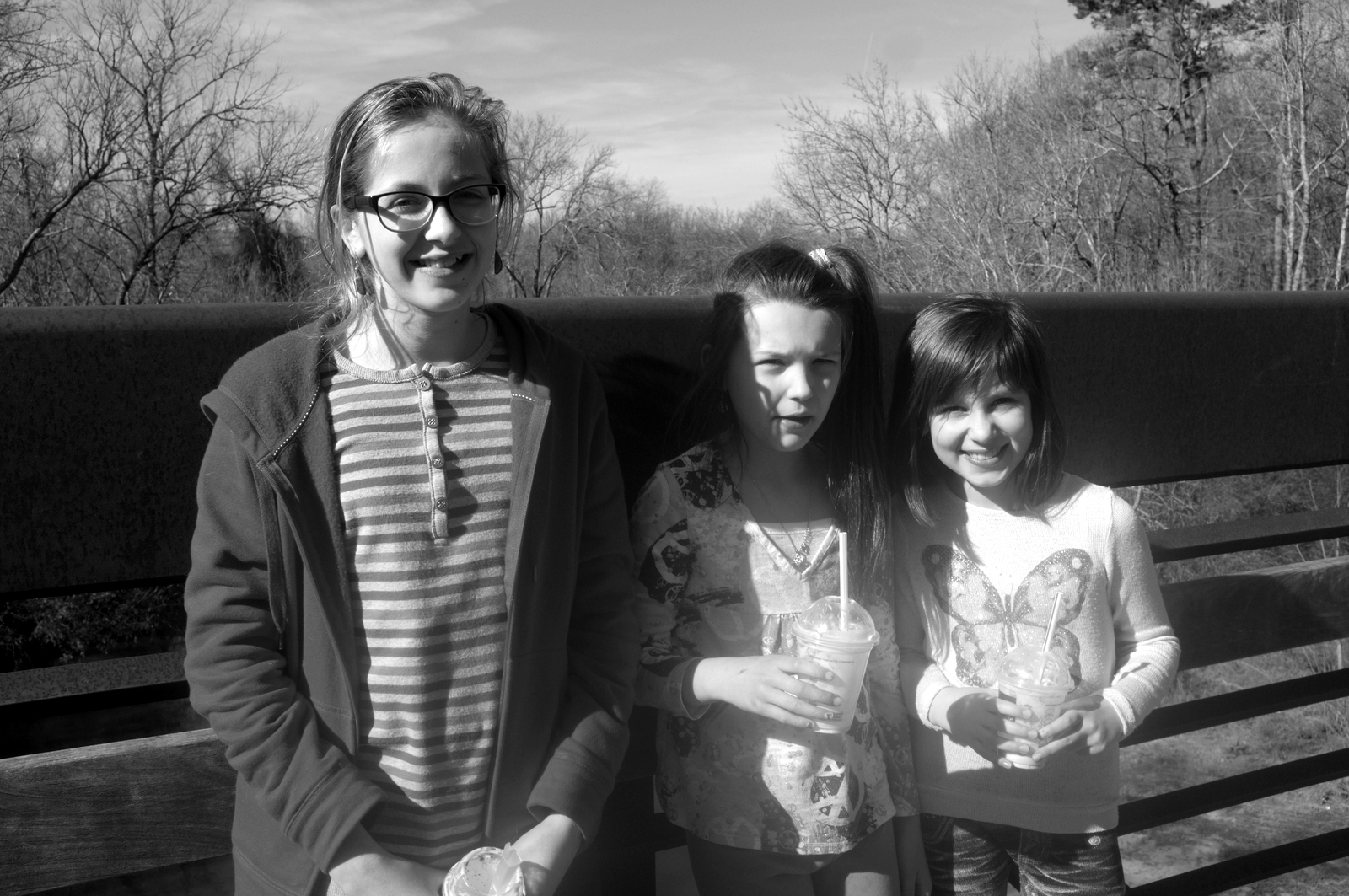
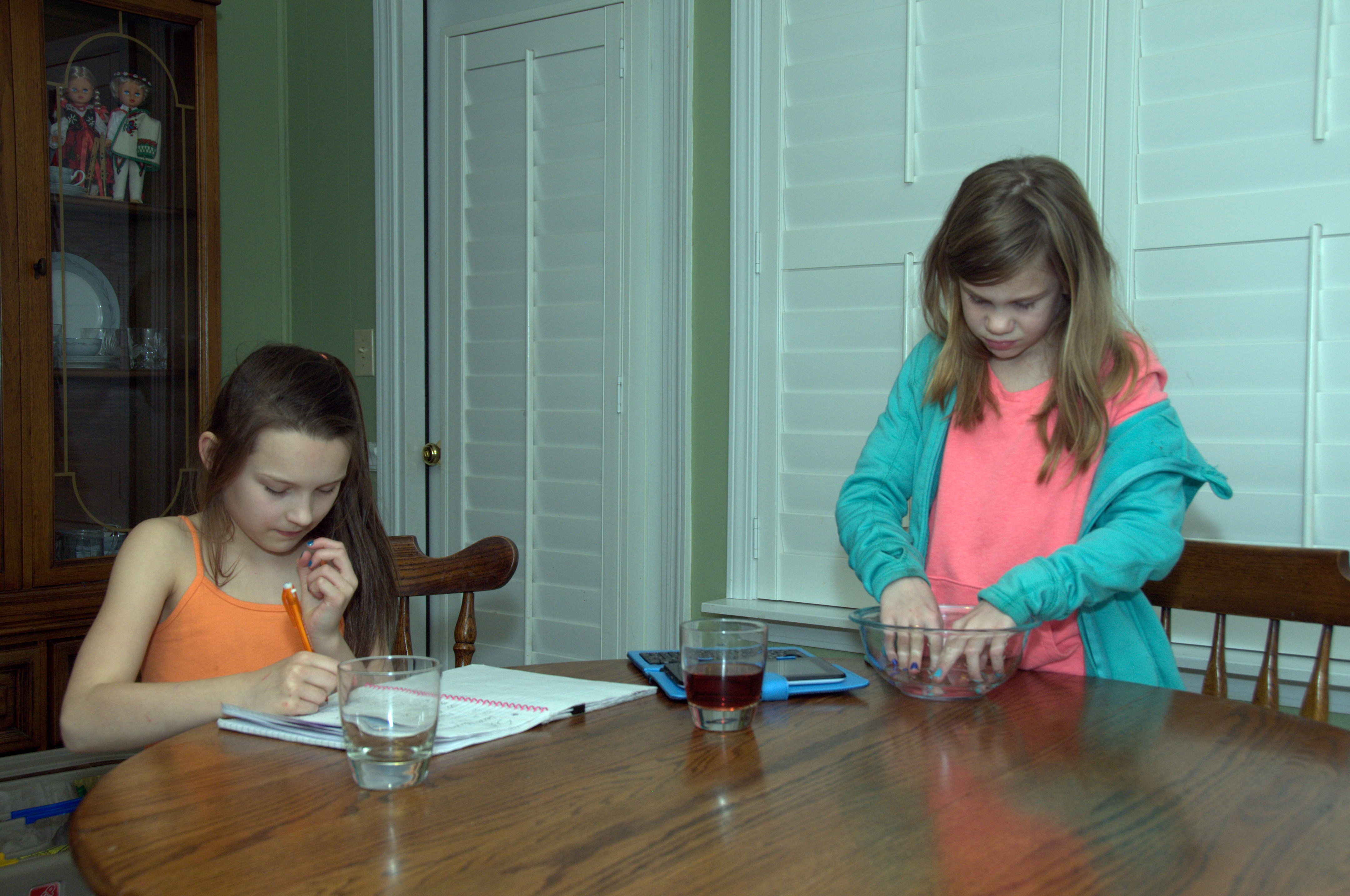
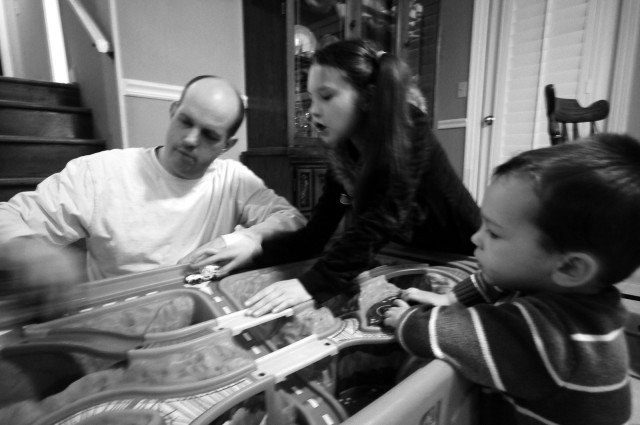
Everything I do in life teaches my children something. I try to remember that, but it’s not always in the forefront of my thoughts. Still, whether I remember it or not, such is the reality. How I treat K teaches L how a man should treat a woman, how a husband should treat a wife, and E learns the same lessons from the other perspective. How I respond to disasters, real and imagined, teaches them how they should respond in such situations. Their future, in other words, is contained in our present.
I, in turn, learned how to behave by watching my own parents, and they from theirs. Being human, we sometimes give good bad examples, but that’s part of the limitations of humanity — concupiscence, as the Catholic Church describes it:
In its widest acceptation, concupiscence is any yearning of the soul for good; in its strict and specific acceptation, a desire of the lower appetite contrary to reason. To understand how the sensuous and the rational appetite can be opposed, it should be borne in mind that their natural objects are altogether different. The object of the former is the gratification of the senses; the object of the latter is the good of the entire human nature and consists in the subordination of reason to God, its supreme good and ultimate end. But the lower appetite is of itself unrestrained, so as to pursue sensuous gratifications independently of the understanding and without regard to the good of the higher faculties. Hence desires contrary to the real good and order of reason may, and often do, rise in it, previous to the attention of the mind, and once risen, dispose the bodily organs to the pursuit and solicit the will to consent, while they more or less hinder reason from considering their lawfulness or unlawfulness.
A fancy way of saying our tendency toward the less refined appetites in life.
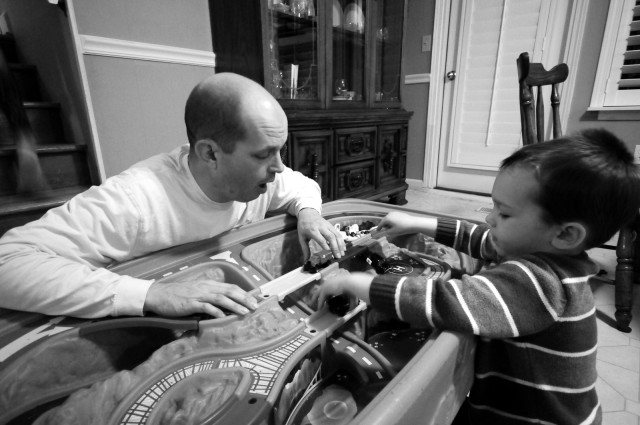
And then there are the other lessons: teaching the kids how to raise kids. Playing with them is always critical, but sometimes those lower appetites get in the way, the selfish appetites, the desire to do one’s own thing because “I’m tired” or whatever silly excuse.
Incomplete thoughts on an incomplete evening…
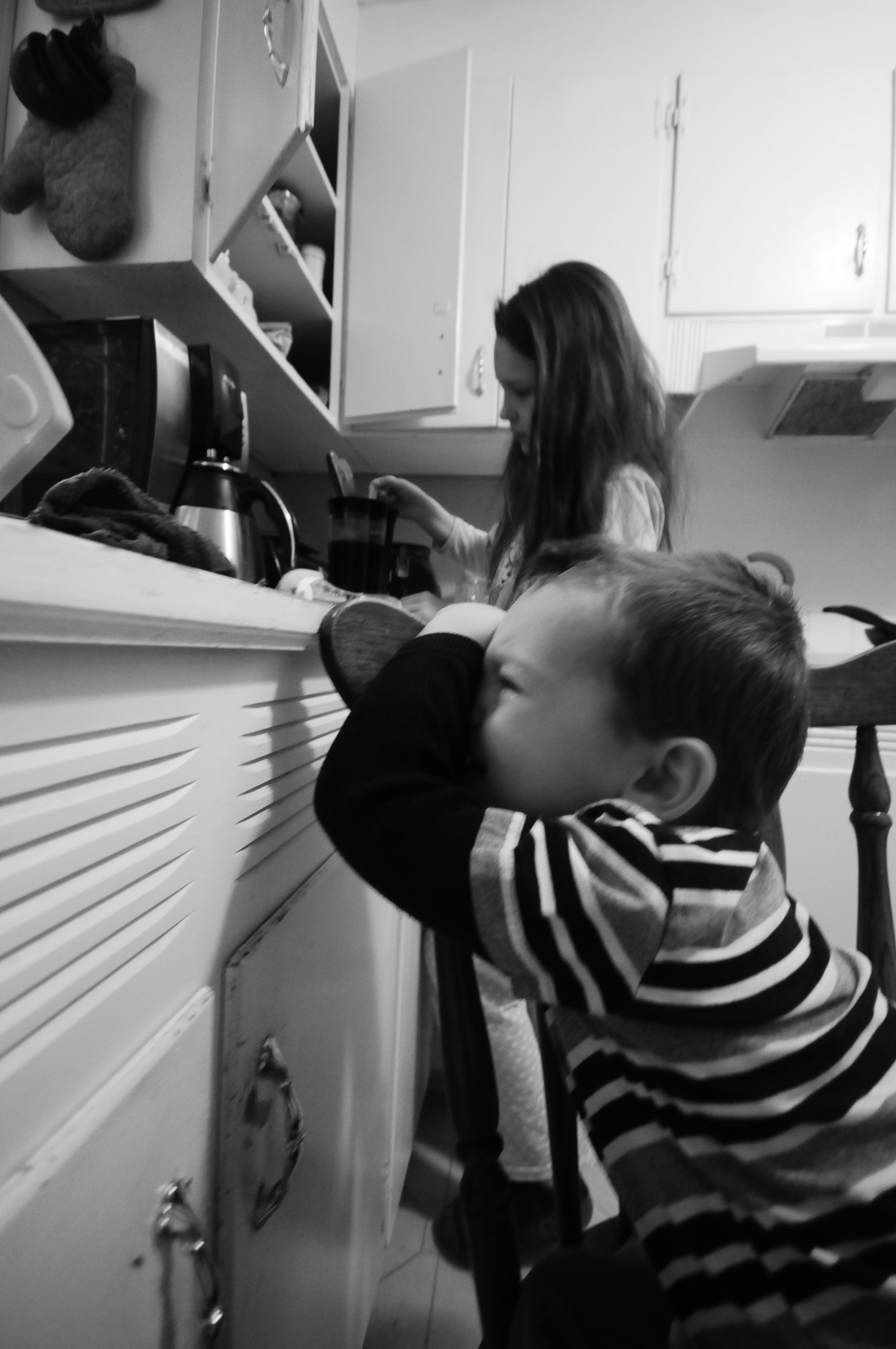
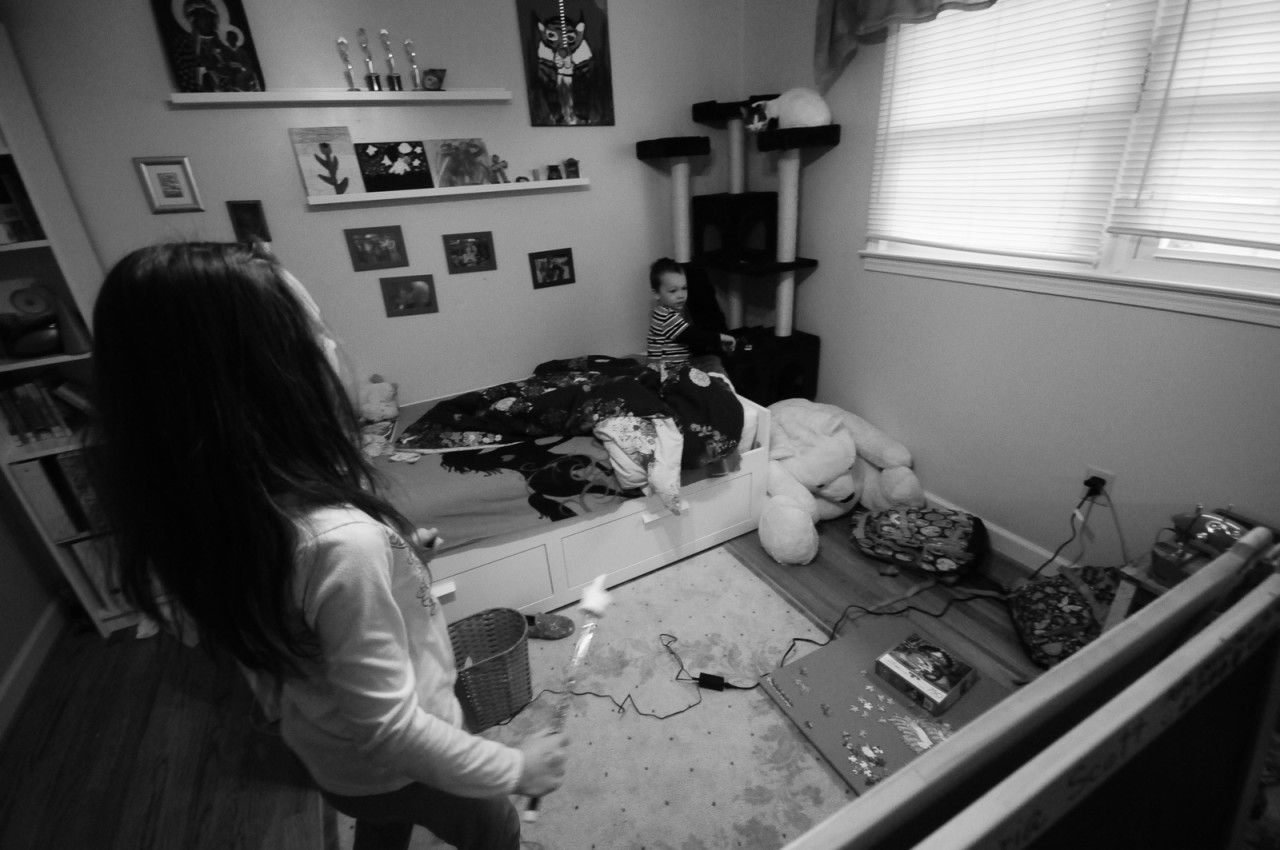
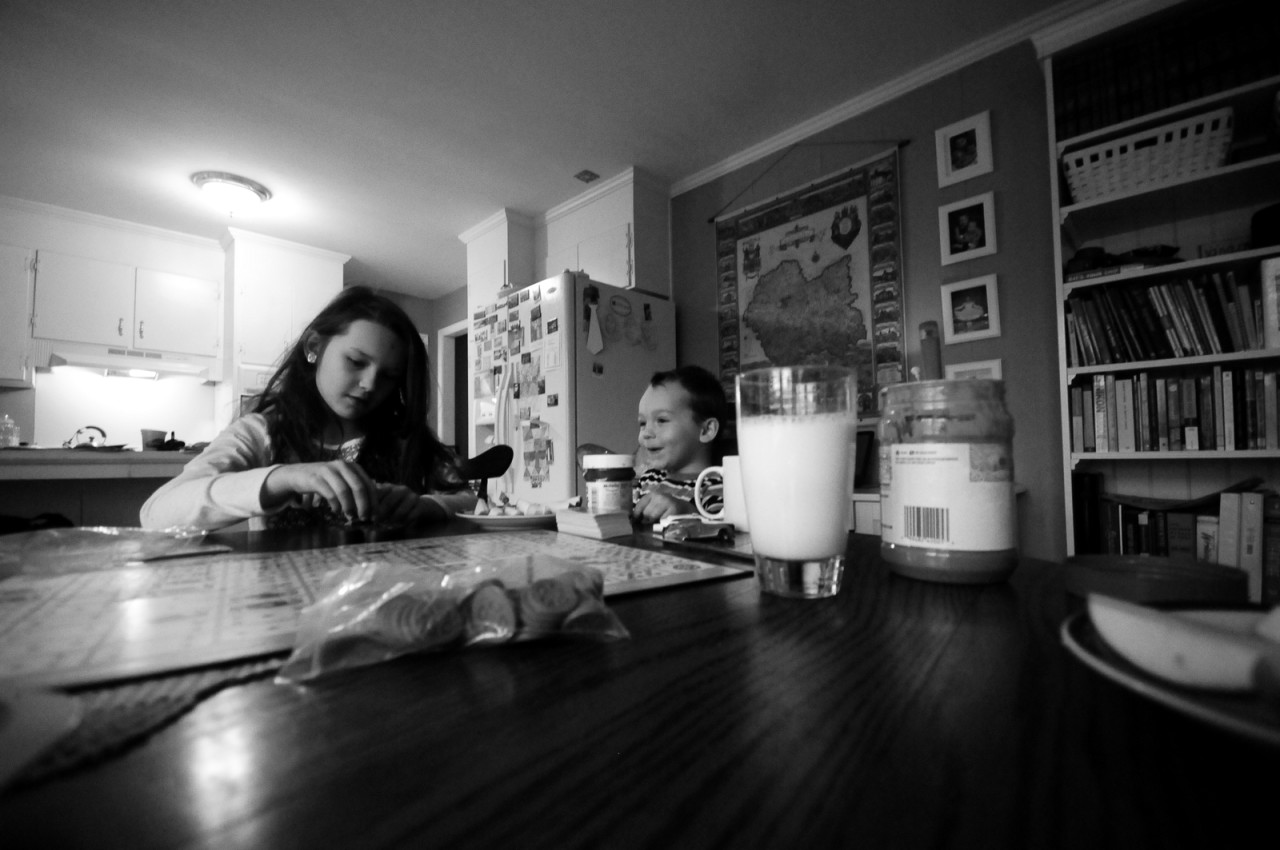
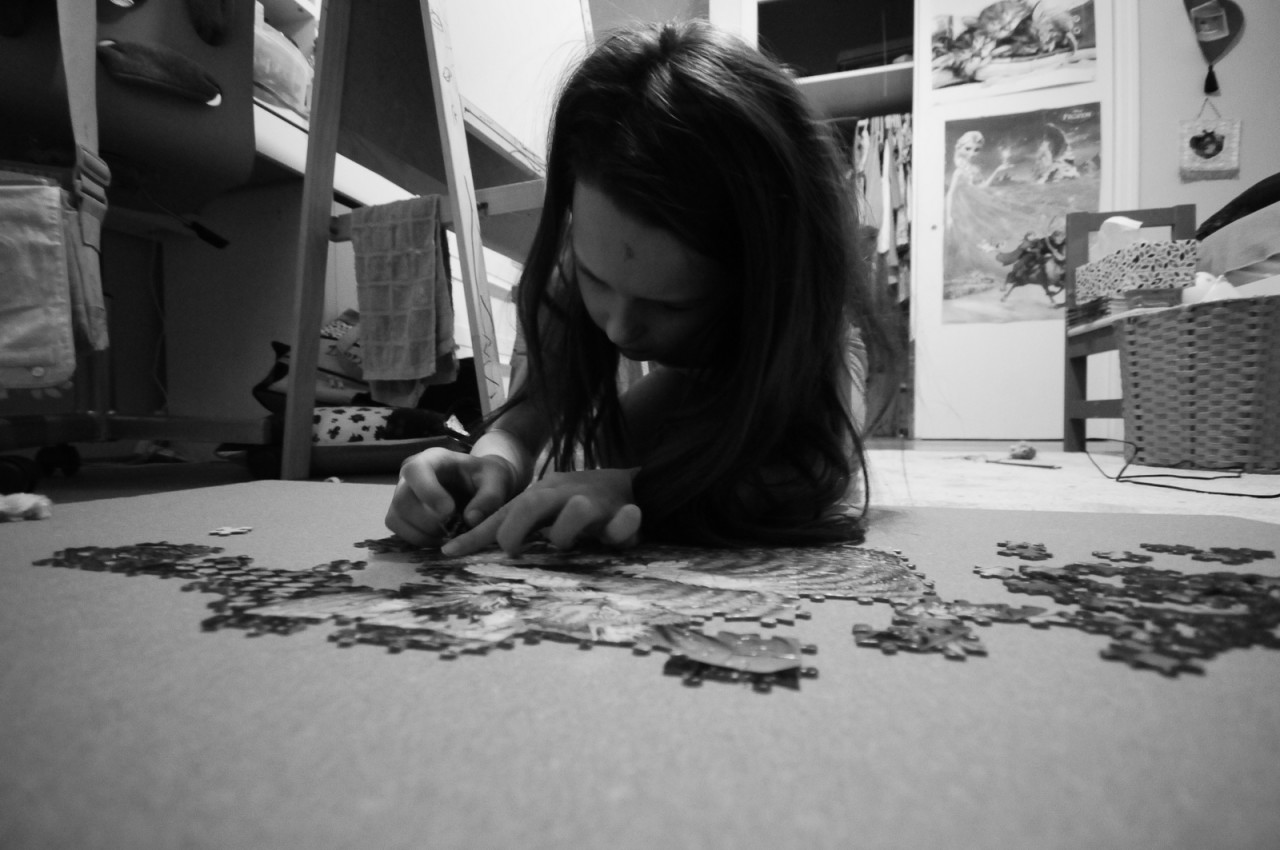
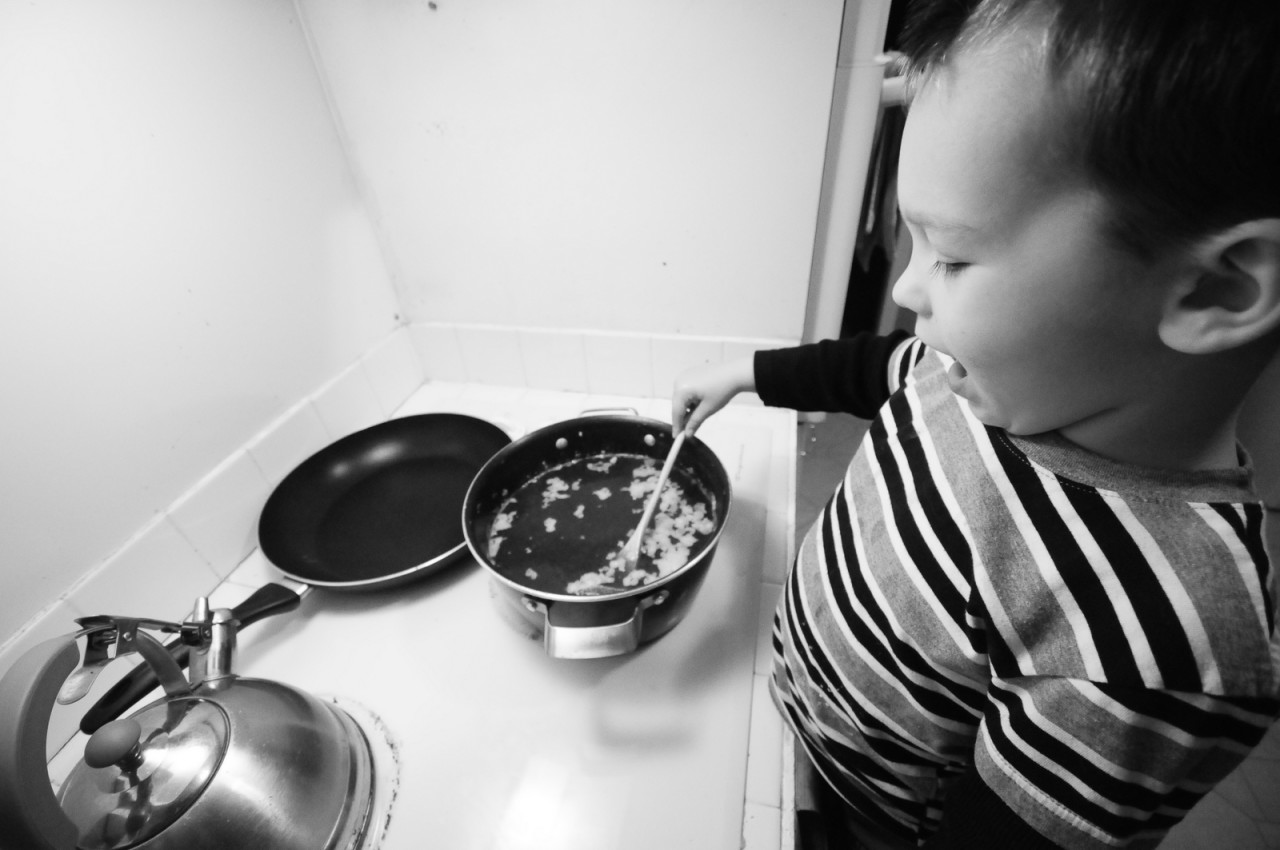
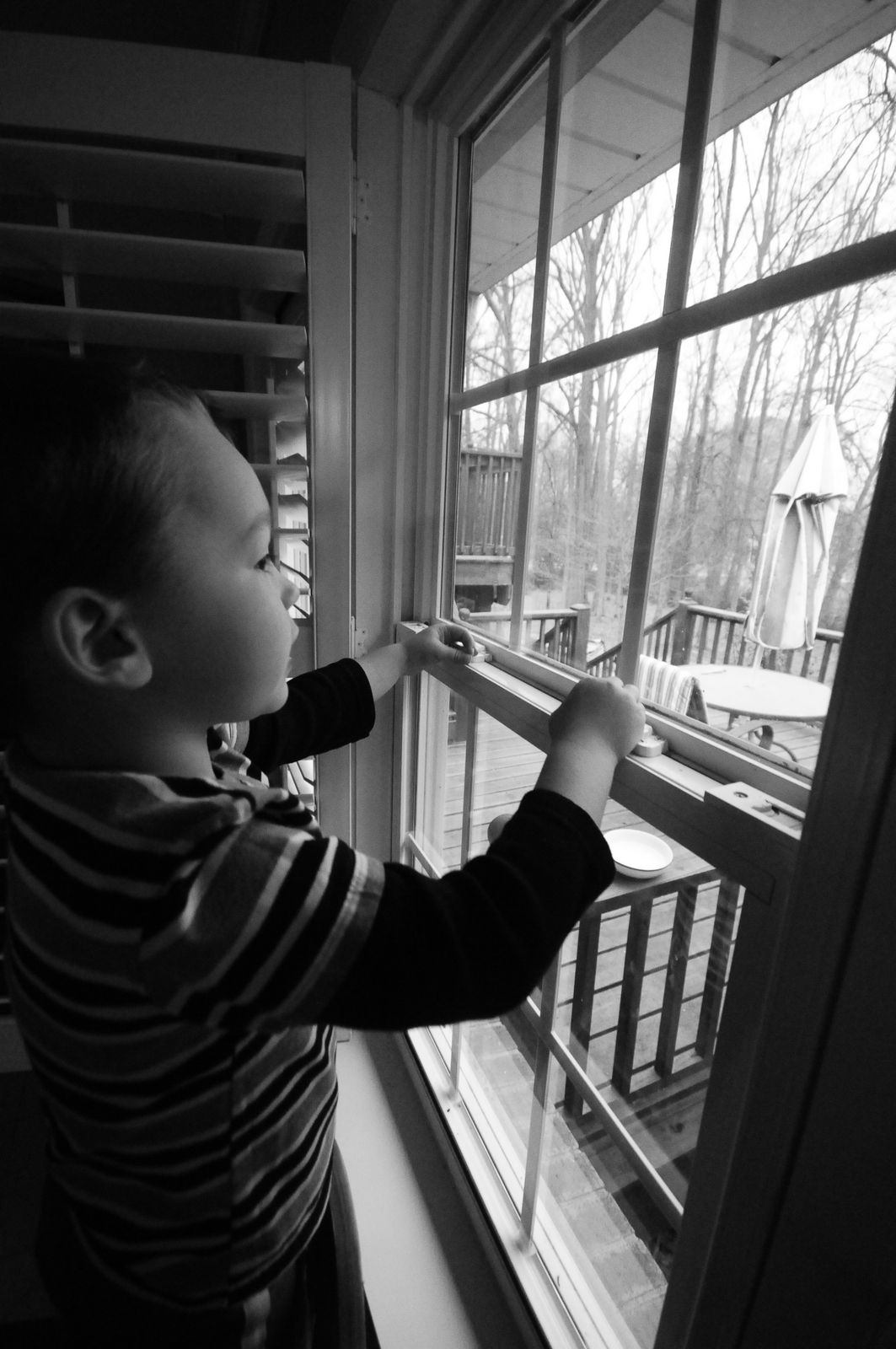
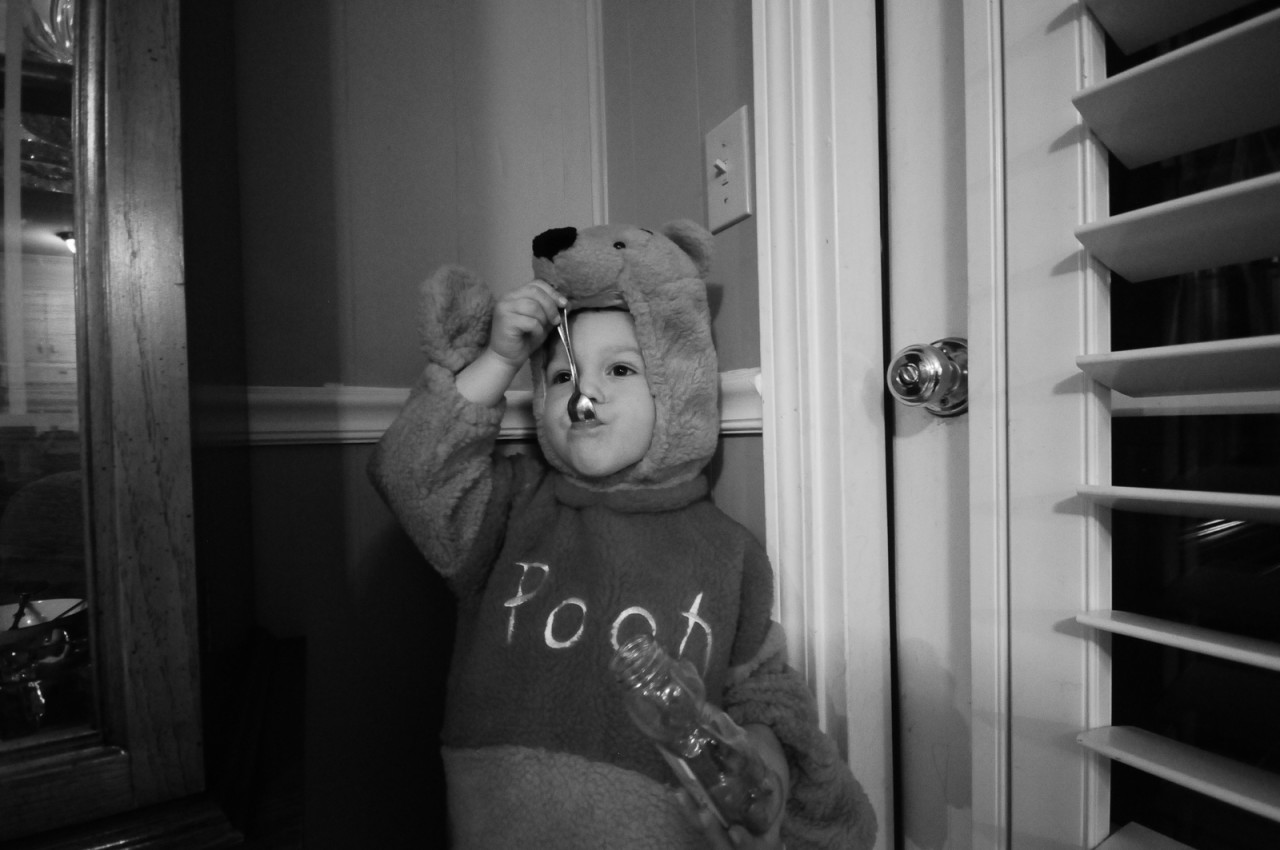
A Monday with no school means fussing over who gets to help make the coffee, playing school, playing board games with apple and peanut butter snacks, working puzzles, helping warm up soup for dinner, watching the weather for possible ice, and digging out old Pooh Bear costumes and honey.
Last night, L and I went to see the last performance of Matilda the Musical here in Greenville. She’d read the book earlier and was eager to see the show, and K gave me tickets for us as the sweetest and perfectly thoughtful birthday present I’ve received. And so we headed out in the late afternoon and came back in the late evening completely enthralled with what we’d see and talking about what we might see next. (Junie B Jones is coming later, but I think I’ll let K take the Girl for that particular one.)
Ironically, we went on a school field trip to the same venue this morning.
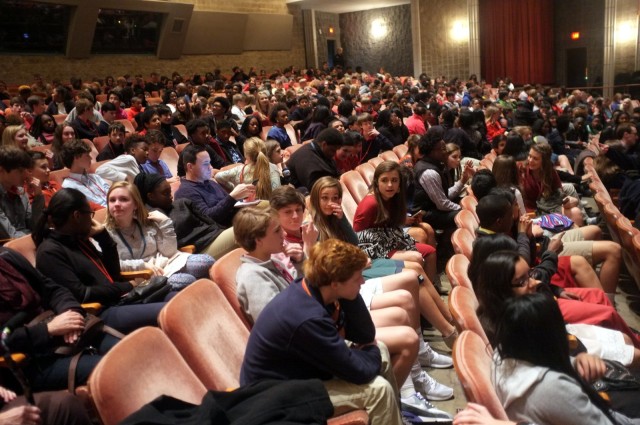
Odd, the difference between taking your own daughter to a show and taking 250+ thirteen-year-olds…