the girl

Evening Snack

“I’m hungry.” It can come has a plaintive request, a frustrated fuss, or a simple statement of fact, but come bedtime, come bath time, it’s always the same.
1-dscf0969

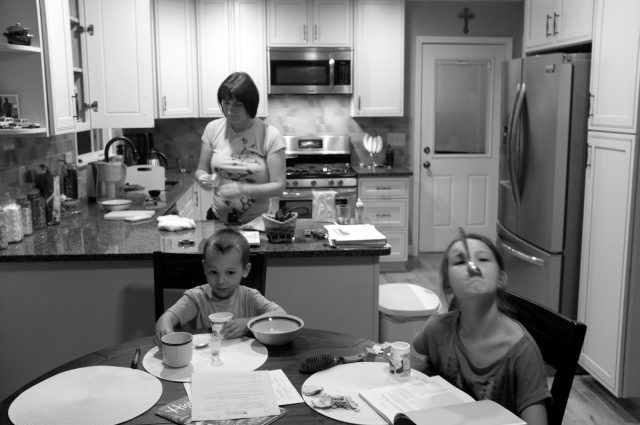
It doesn’t matter how much dinner they ate. It doesn’t matter whether we had watermelon, ice cream, cake or anything else as desert. They’re always hungry.

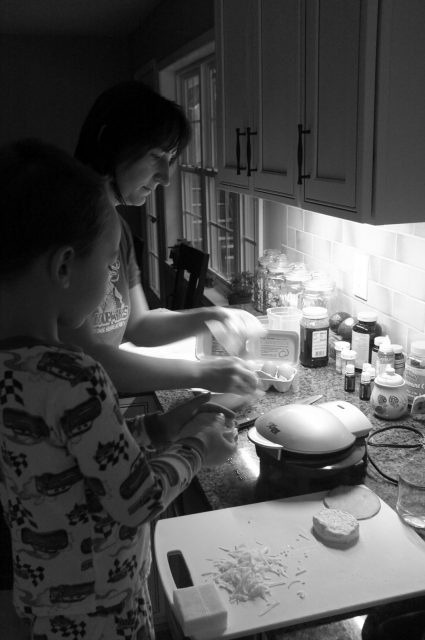
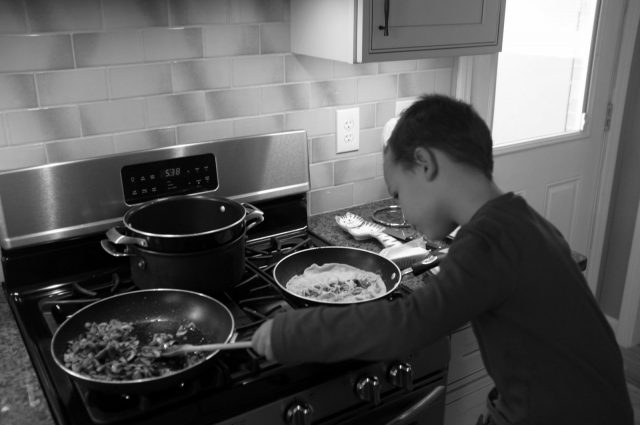
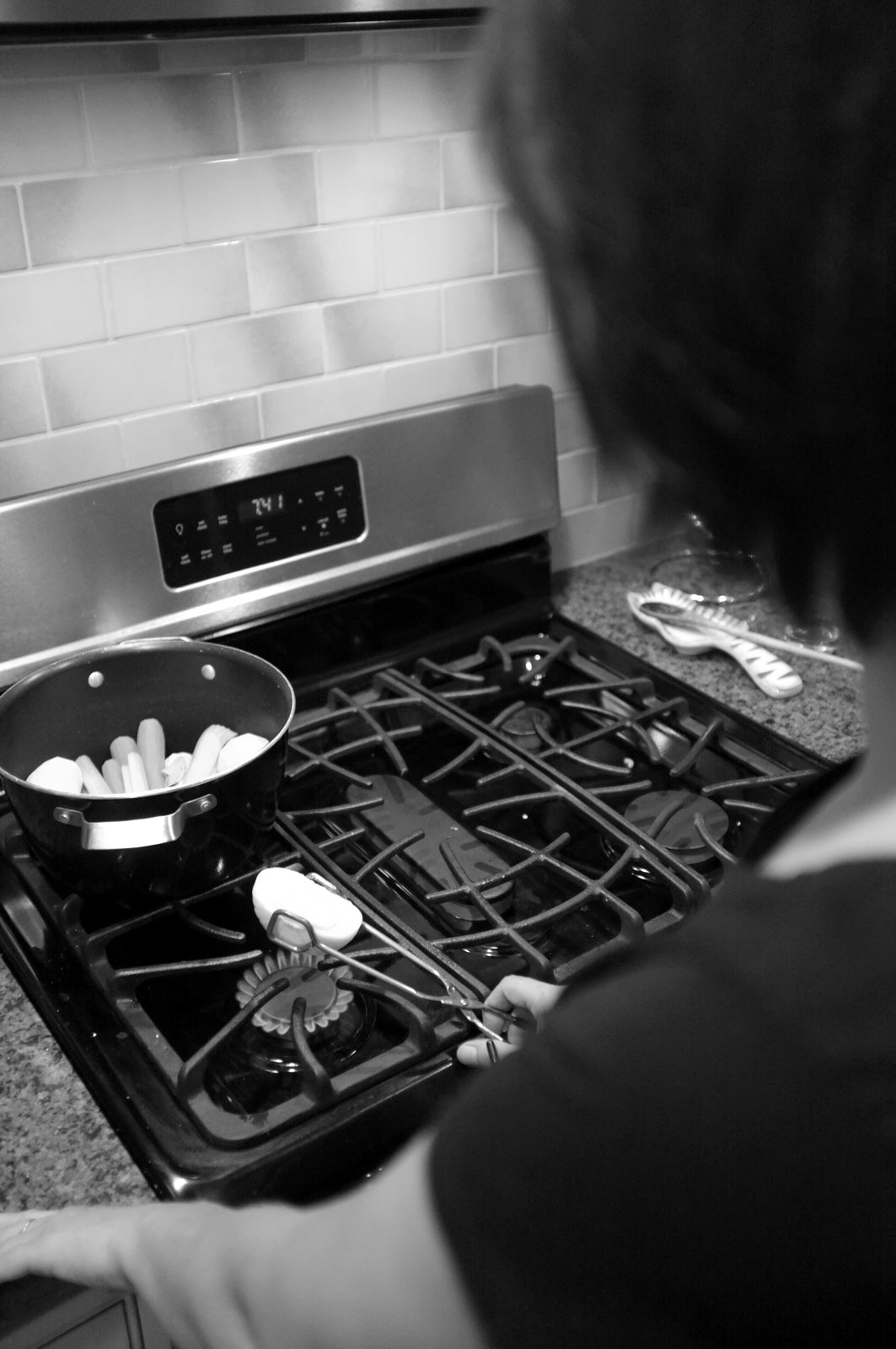
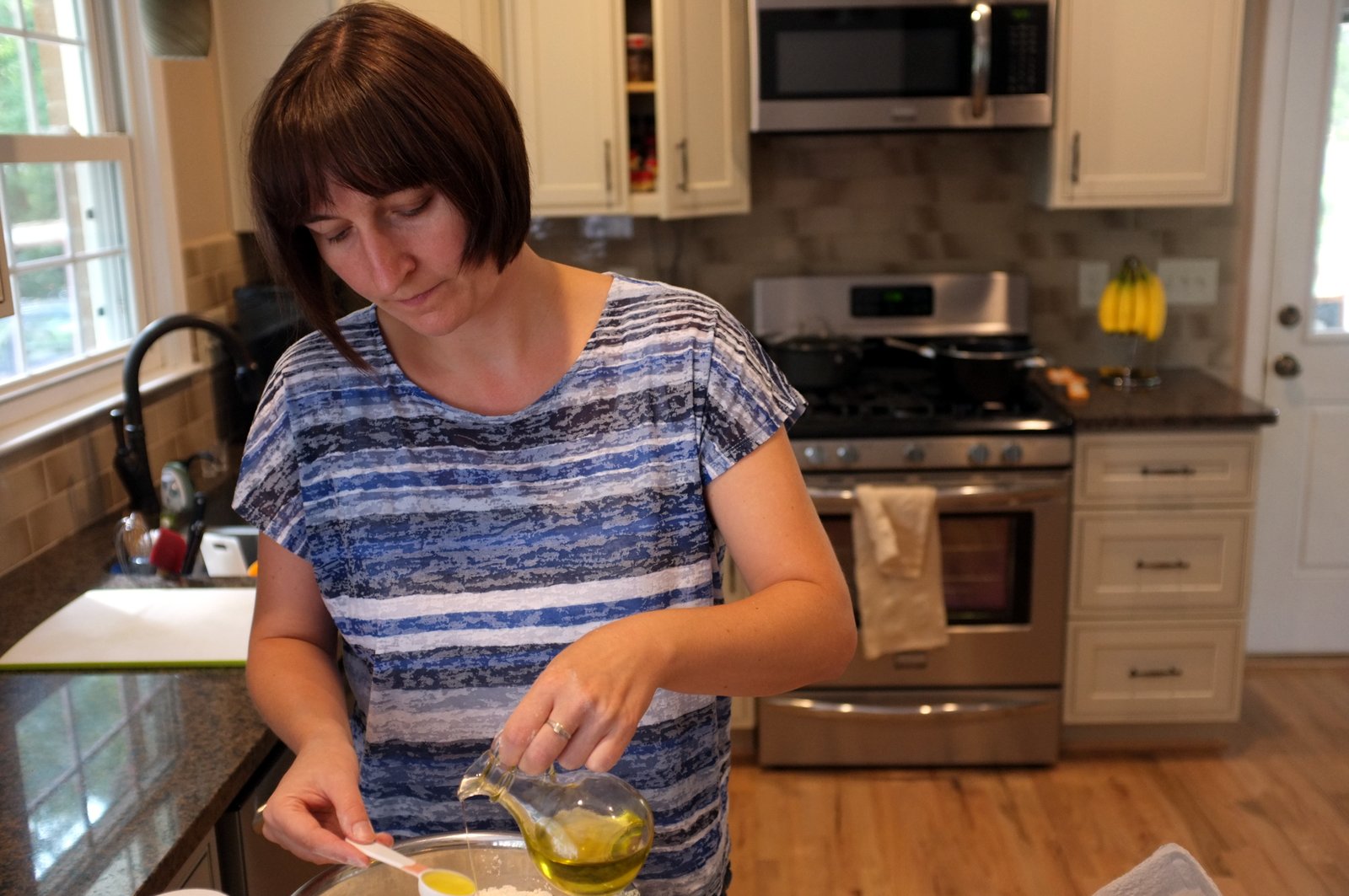
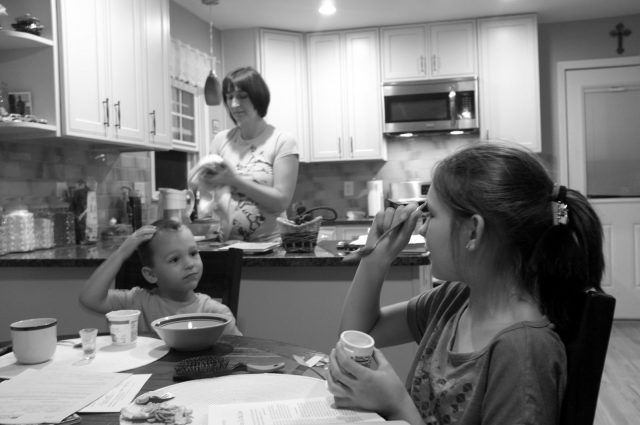
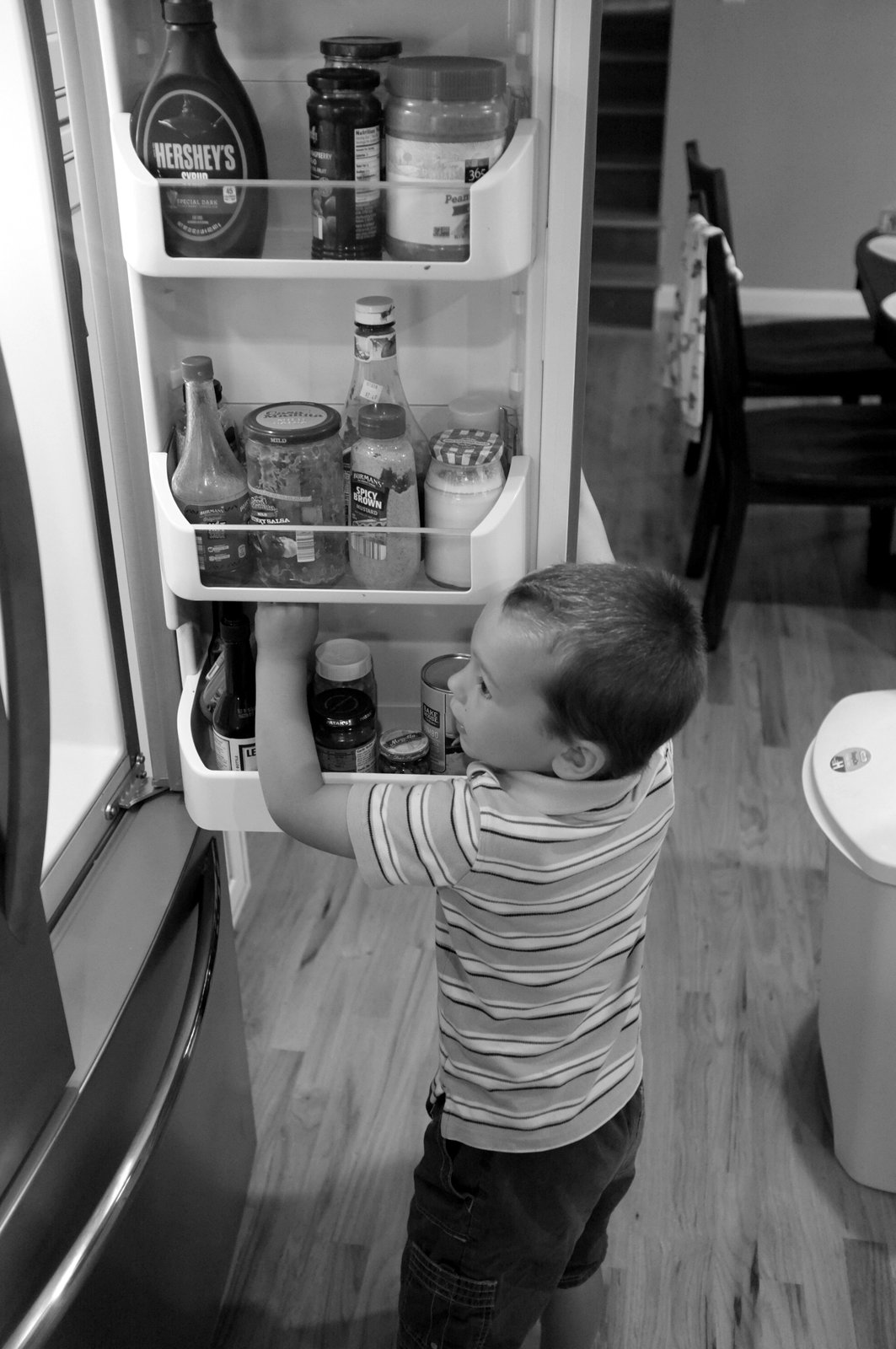
The Boy pulls the step ladder we’ve added to our kitchen due to the high shelves and begins rummaging through the refrigerator. The Girl takes a yogurt, adds a graham cracker, then tops it off with a mandarin orange. The Boy sees the orange and wants to add one of his own.
1-dscf0967

It’s a moment to offer thanks that we have food for our kids whenever they get snacky.
Leki

Our family seems to be a blended family in one sense: immunity to illness. It seems I never really get sick. K said the other day that she thought she could probably count all the times I’ve been really sick — not just feeling a little bad and going to bed early one night — during our marriage. Unfortunately, the reverse is not true: it seems that K makes up for my relative lack of illness.

dscf0871

So we were both a little curious regarding who would most influence our children’s genetics in this regard. Obviously, the best case scenario would have been to take my immune system in its entirety and leave K’s behind. Equally obviously, the worse case scenario would be the opposite.

dscf0872

The obvious happened: the kids got a bit of both, probably making them fairly normal.

dscf0877

The Boys on the Trampoline

I sat in the Girl’s bedroom, helping her prepare for an English test tomorrow. Cobbler’s kids and all. We were going over how to remember the difference between interrogative sentences and imperative sentences when the Boy came in. We chatted for a while, and I encouraged him to leave us a lone so we could finish up the Girl’s test preparation.

“Okay,” he chirped and headed out, stopping at the door to ask me if we could spend a little time together after dinner.

1-bw0_6836

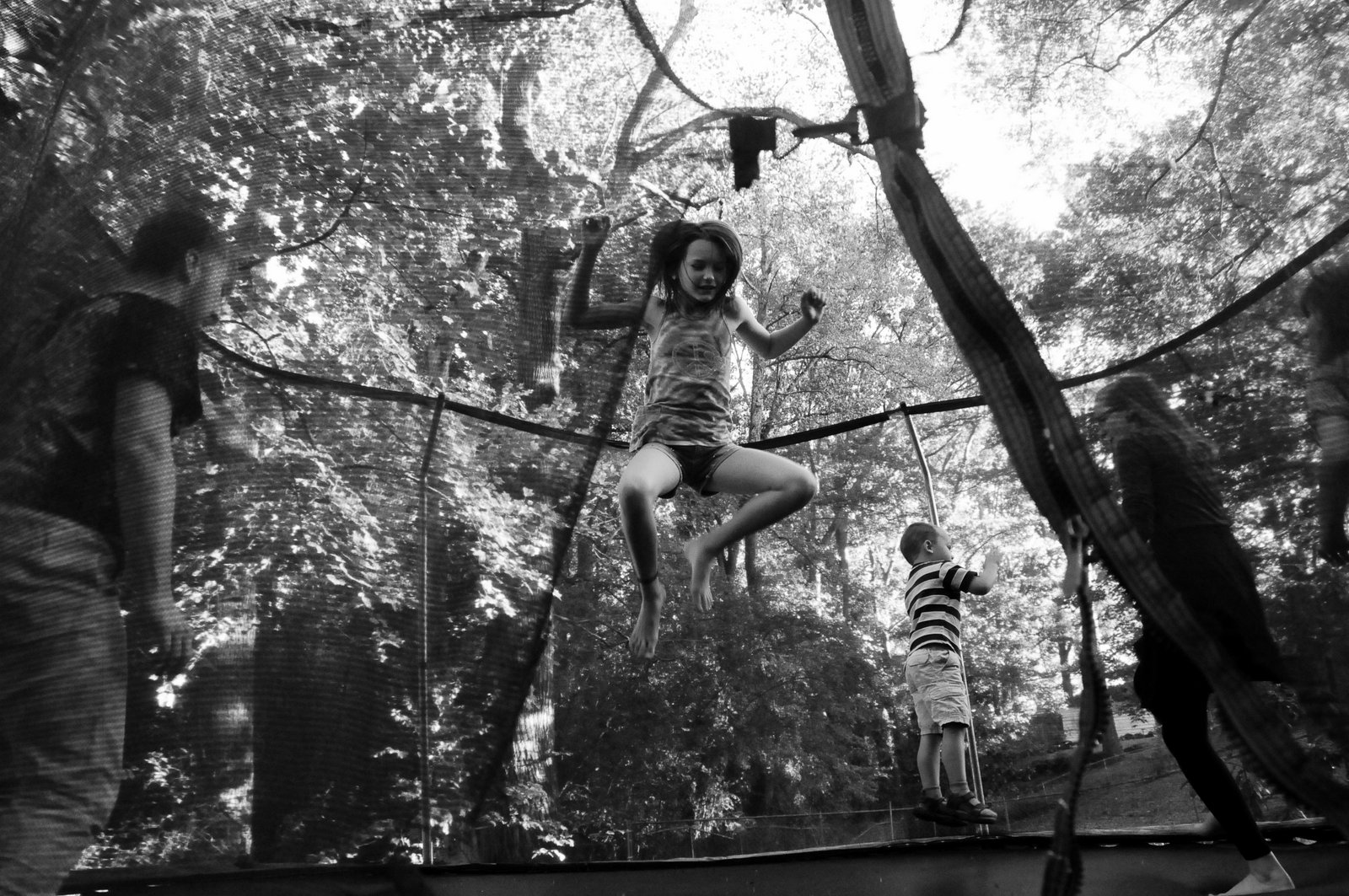
Dinner complete, the Boy and I headed down to the trampoline as L and K went through the day’s Polish lessons. As we jumped, we found ourselves eventually lying on our backs staring up at the trees above us. For several weeks this summer, he was afraid that, as the wind blew, the trees could very easily come toppling down on us. Today, we just lay there watching the sun slowly disappear and the glow of the leaves slowly dissipate.

The Pianist and the Trampoline

1-dscf0854

The sun came up and light our backyard like it always does, but we often don’t have a chance to notice and to appreciate it. Today, we still didn’t get a chance to enjoy, to savor the light — we were in our normal Sunday morning rush to get to Mass.

2-dscf0859

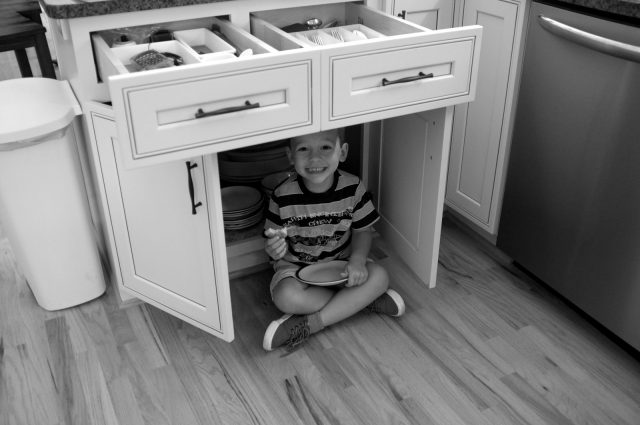
When we got home after Mass and religious education (for the Boy) and choir practice (for the Girl), snacks for everyone and a newly improvised hiding place. Then lunch, with the pianist from last evening and our near-family from further up north.

3-dscf0862

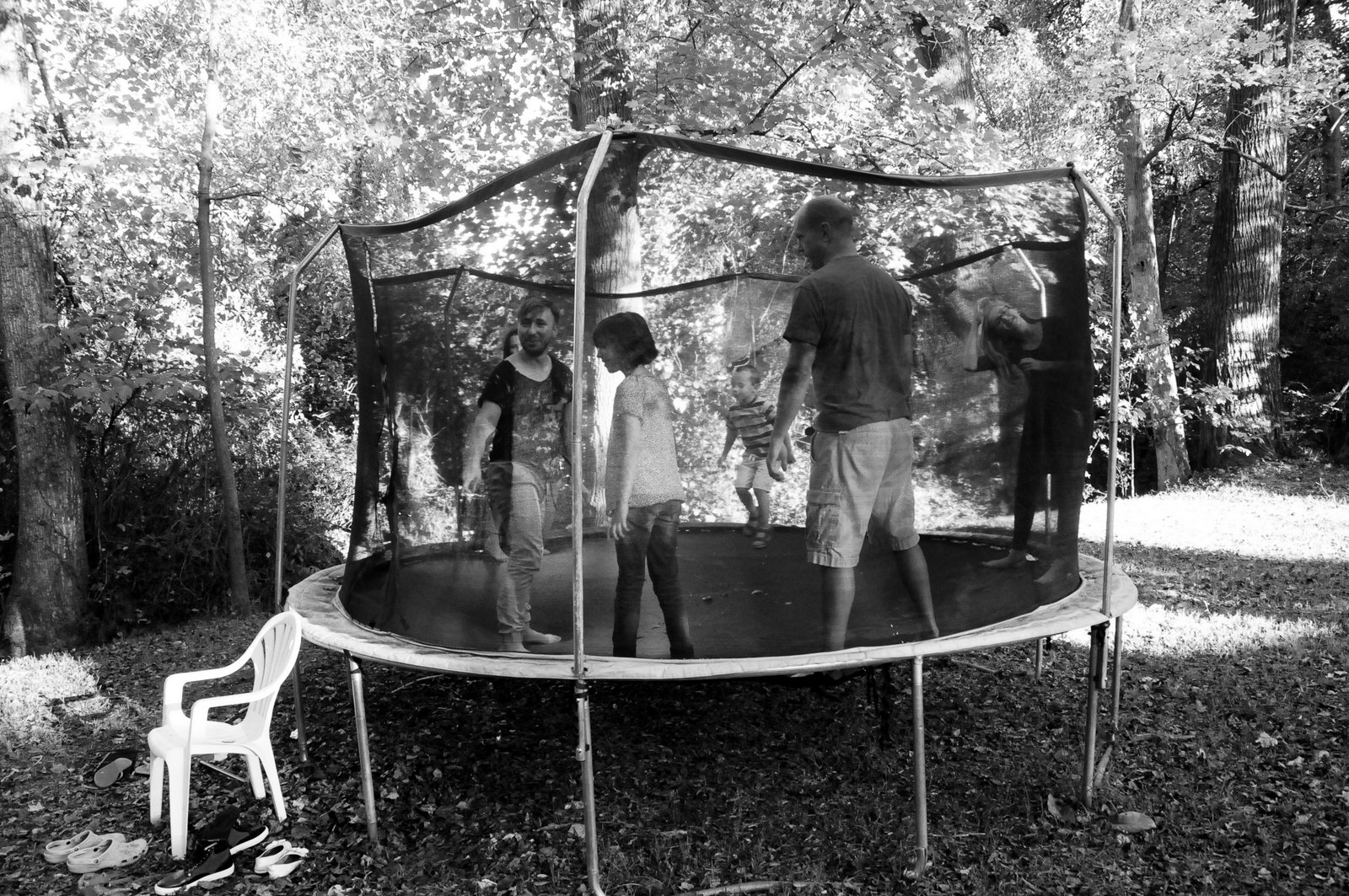
Everyone wanted him to play, and he obliged. But he, seeing our trampoline, suggested we should all go down and jump.

And so we obliged.

Afternoon

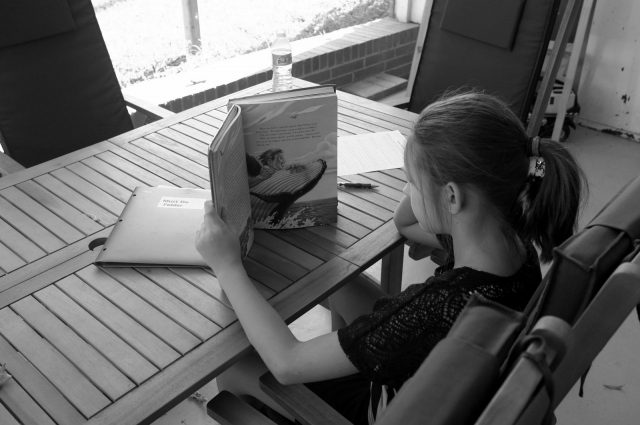
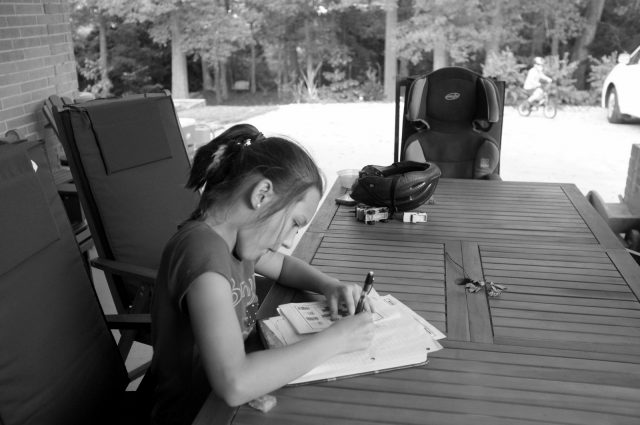
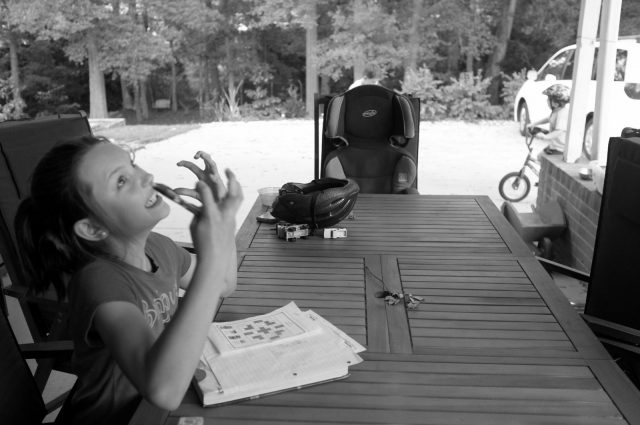
The Girl came home and did homework.

1-dscf0804

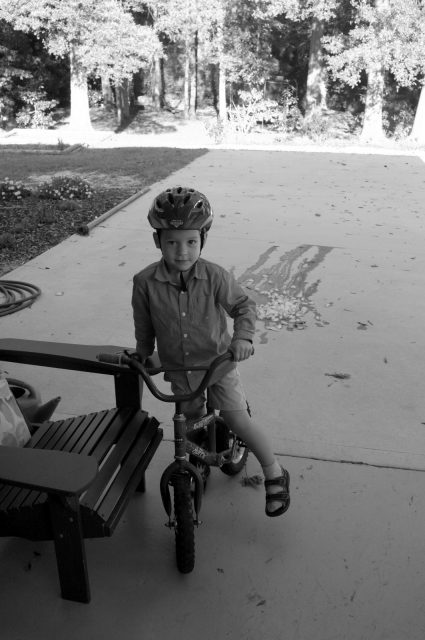
The Boy came home and played.

1-dscf0809

At the Dinner Table

We sit around a few tables during a planning period and talk about how to use the data we’ve received from this year’s fall MAP testing, a test which provides information about skill levels of our students. There’s a general score that summarizes everything called the RIT score. (I don’t know what it stands for.) That in turn can be correlated to grade levels by looking at national norms. For the longest time, eighth grade nation norms were 220 at the beginning of the year and 222 at the end. This year, the re-calculated norms have fallen three points. In addition, the data show that in a single, mixed-group classroom (something like science or social studies that is not grouped according to ability), a teacher can have a student reading at the kindergarten level and another reading at the level of a college sophomore, with all the other levels mixed in.

How does one teach a group like that?

There is a predictable corollary to that: the students who read at a second-grade level often behave on a second-grade level. Or perhaps worse, because they exhibit second-grade behavior in nearly-adult size bodies. A dangerous combination at times.

1-dscf0802

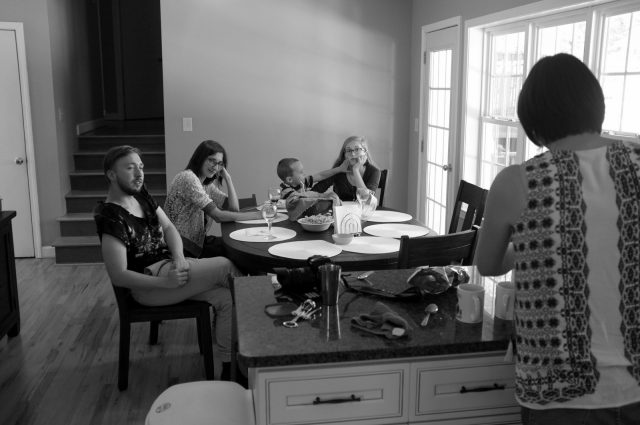
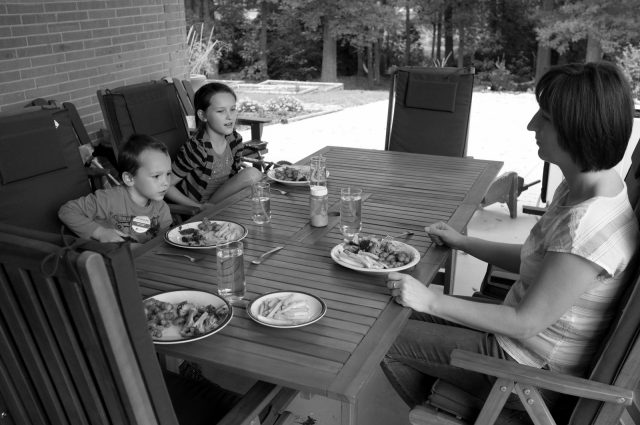
At the dinner table, we talk about our day. L tells us the latest adventures with Timmy, a student who moved here recently from up north and has been seated in L’s group. He refuses to work. He’s mean to other students. He cursed at a teacher today. He flagrantly disobeys. I suggest that he’s probably acting out because he doesn’t want to be there, and he’s hoping his behavior will somehow get him moved back up north. It’s a fairly logical assumption. But here’s the thing: his behavior is affecting my child’s education. The teacher is having to take time out of instruction to deal with him.
“He’s even worse that Demarcus, and I thought he was bad.” Demarcus has been the subject of a few stories, and I’ve found myself thinking that I have a few older versions of him in my classes. Struggling in class. Unable to work and so entertains himself. It’s a common cycle, a chicken-egg mystery by the time they reach my classroom: does the behavior cause the low academic achievement or does the low academic achievement cause the behavior? It’s probably a bit of both.

I kept my story to myself and let E tell how Jameson picked a scab in class and now it will bleed forever. I love how he’s always trying to join in “adult” conversations. He aims, shoots, and hits the target but generally only grazing it on the side.

E’s problem is relatively insignificant; L and I, though, are facing the same issue from two different sides of the desk at two different ends of the same problem. What I can do as a parent is quite different than what I can do as a teacher.

But there’s a third role: citizen. This is an issue that is larger than just my school, L’s school, our district, our state. It’s likely the condition of the majority of schools around the country.

It’s hard not to be pessimistic about this reality.

October Sunday

Last week was Polish Mass, so it was a lazy morning. This week, no such luck. With Mass beginning at nine, we have to wake up early; with L singing in the children’s choir — which is, on most Sundays, the primary choir for the morning Mass — she as to be there thirty minutes earlier, which means an even earlier start. Today, with K still coughing, we decided just L and I would go. The Boy woke up at seven with us anyway, and insisted, as he often does, on helping with breakfast.

01-dscf0683

With the new church our newly adopted parish is building soon to be completed, the choir is rehearsing for the dedication Mass in November, which means an hour-and-fifteen-minute practice after Mass with the adult choir. So it was a little after twelve when we made it back home for rosół and a bit of relaxation.

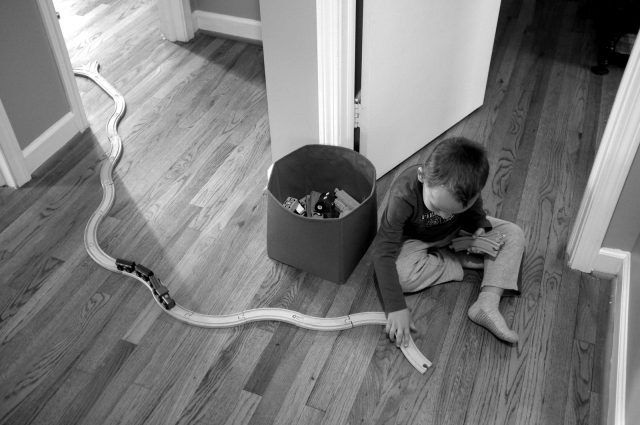
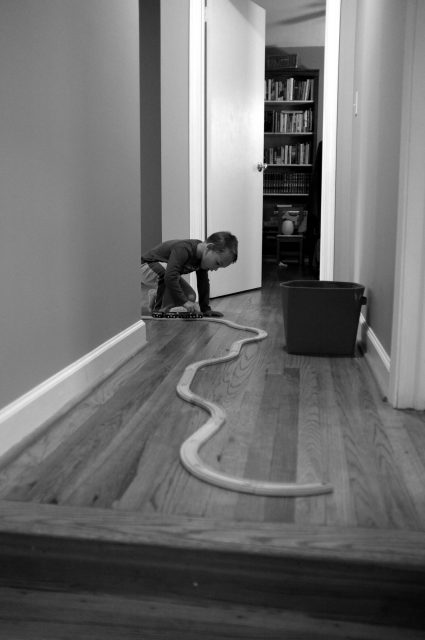
Of course, the Boy was busy when we arrived. He’d decided that he wanted to build the ultimate train track, a track that began in his room and ran down the entire hallway. It was a challenge due to the lack of straight pieces in his collection, but he managed to find a way.

02-dscf0685

“It’s a crazy, curvy track,” he explained. And as I watched, I saw that he was very deliberate his his placement, always making sure that each piece turned the opposite way as the previous to make a drunken, crazy track in between the straight spots. He wanted to turn it around and head back down the hall, but he didn’t have enough pieces.

When it came time to clean up, though, we had an issue. “I need help cleaning up!” was the fussy cry coming from the hall. “You didn’t need help making the mess. You can do it!” was the choral response. But he couldn’t clean it up the way he wanted to clean it up. He was stacking piece after piece and then trying to pick it all up at once. When the pieces of track tumbled over, his frustration exploded.

03-dscf0686

L was the same way. It’s only recently that she began to see that she doesn’t have to solve problems using the first solution that comes to mind. She’s realized that she can make multiple trips from the car to the house instead of precariously carrying every single thing at once, to use a fairly common example.

The Boy, though, was insistent. It was only with a threat — stop fussing and just clean it up or lose it — that he finally relented and gave in on his original plan. Was that wrong? Should I have helped him realize it for himself? Should I have helped him realize his plan? At the time, I didn’t give it much thought — the soup was almost ready and everyone was terribly hungry. Perhaps I could have done a better job. Maybe next time.

04-dscf0691

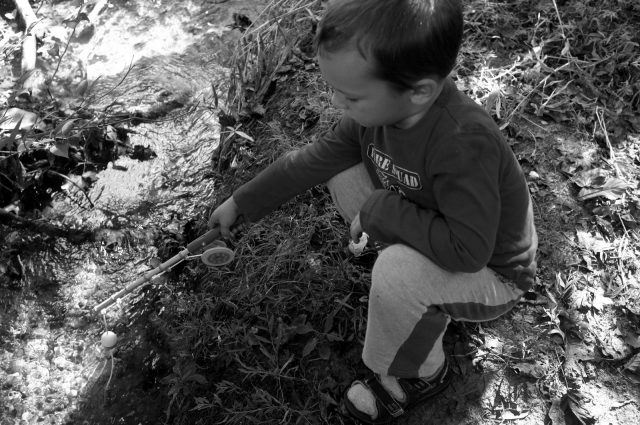
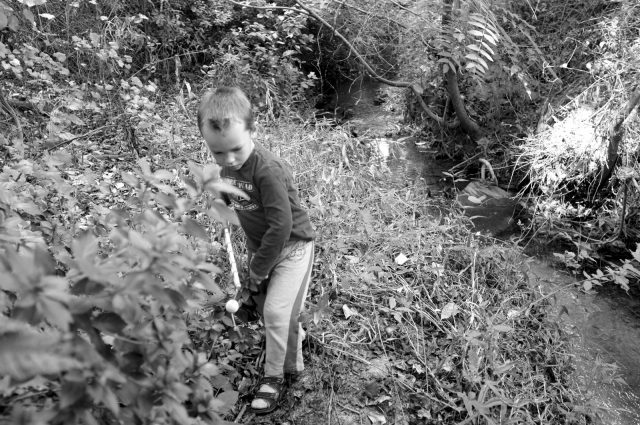
After lunch and a coffee, I took the Boy exploring. I finally managed to ask our relatively new neighbor if he minded us traipsing about his backyard, and his response was at once predictable and surprising: “No, I don’t mind at all. But I really appreciate you asking. I really appreciate that.” What was I going to do? It’s not our property.

I tried explaining all this to the Boy as we returned to our favorite little spot by the creek in our backyard (or perhaps “backyards”).

05-dscf0695

“We always ask before we use something that’s not ours.”

“This is not ours?”

06-dscf0719

Last Sunday I’d taken to the street opposite our little hiding place, hoping he’d make a mental map of where he was and figure it all out. I pointed it out to him today, but he didn’t see what I was talking about, literally or figuratively.

After we’d had enough of our favorite place, we went to our newest hiding place, which also is not on our property. I haven’t asked those neighbors if they mind, though, mainly because there are no neighbors. The elderly couple that lived there no longer do: the husband died, collapsing in the backyard for us to see from our backyard (what a traumatic event that was), and I’m assuming the grown children moved their mother into other arrangements. The house has been empty for a couple of years now, if not more. So the little spot that we carved out of the weeds and brush on their side of the creek might be a problem if someone lived there, but it’s so deep in the brush that they likely wouldn’t even notice it if they lived there.

07-dscf0747

E asked a couple of times if it was our property where we were hiding and if we had permission to be there. I thought about trying to explain it, but in the end, I just said, “It’s fine.” A lie? Yes and no.

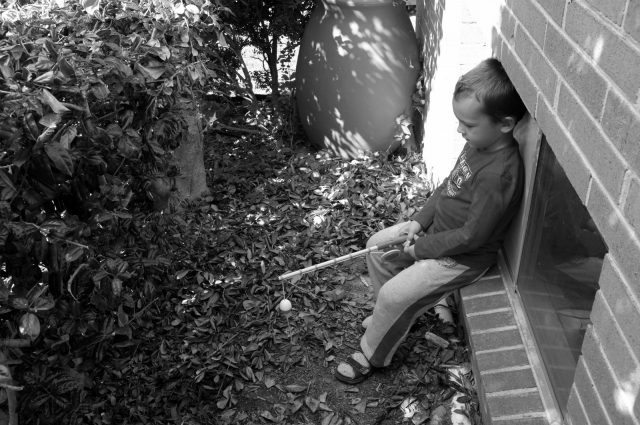
And after that hiding place, why not go to our final hiding place, behind the shrubs in the front of our house.

10-dscf0762

Hiding, hiding, hiding. What is it about kids and hiding places? They love building “forts” on the couch, and I remember how much I enjoyed a good hiding place as a kid. Perhaps it’s the bit of independence it implies, even when you’re hiding with your daddy. Or perhaps it’s the shared secret in such situations.

11-dscf0782

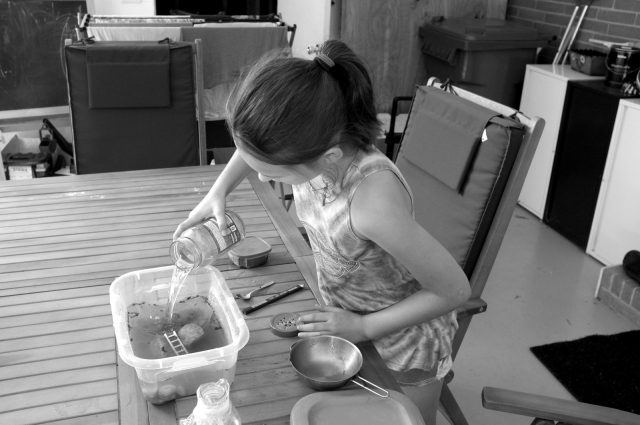
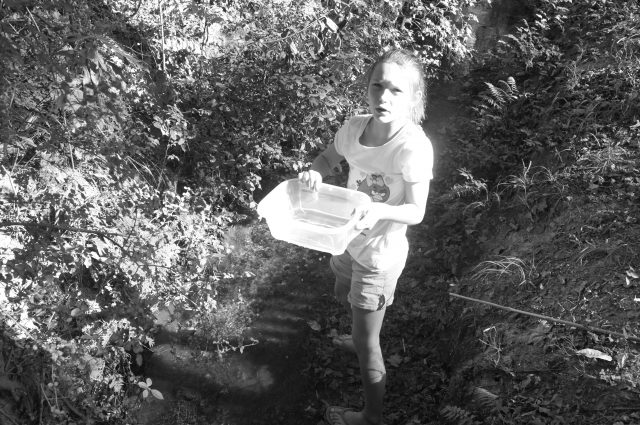
As with last week, the Girl decided not to join us. She was working on a school project on the computer and then taking care of the tadpole — Squirmy — that she’s been keeping in a plastic bin for a couple of weeks now. As she grows older, her independence obviously increases. I try to respect that, but sometimes I feel like it’s neglect: she wants to be alone sometimes, and then when she wants to be with me, I’m busy grading papers or something similar — or even something less significant.

This increasing independence also somewhat explains the decreasing number of pictures of her here. “Daddy, you aren’t going to put that on MTS, are you?” she sometimes asks, and so I try to respect her growing sense of privacy. What happens when the Boy starts asking the same thing?

13-dscf0789

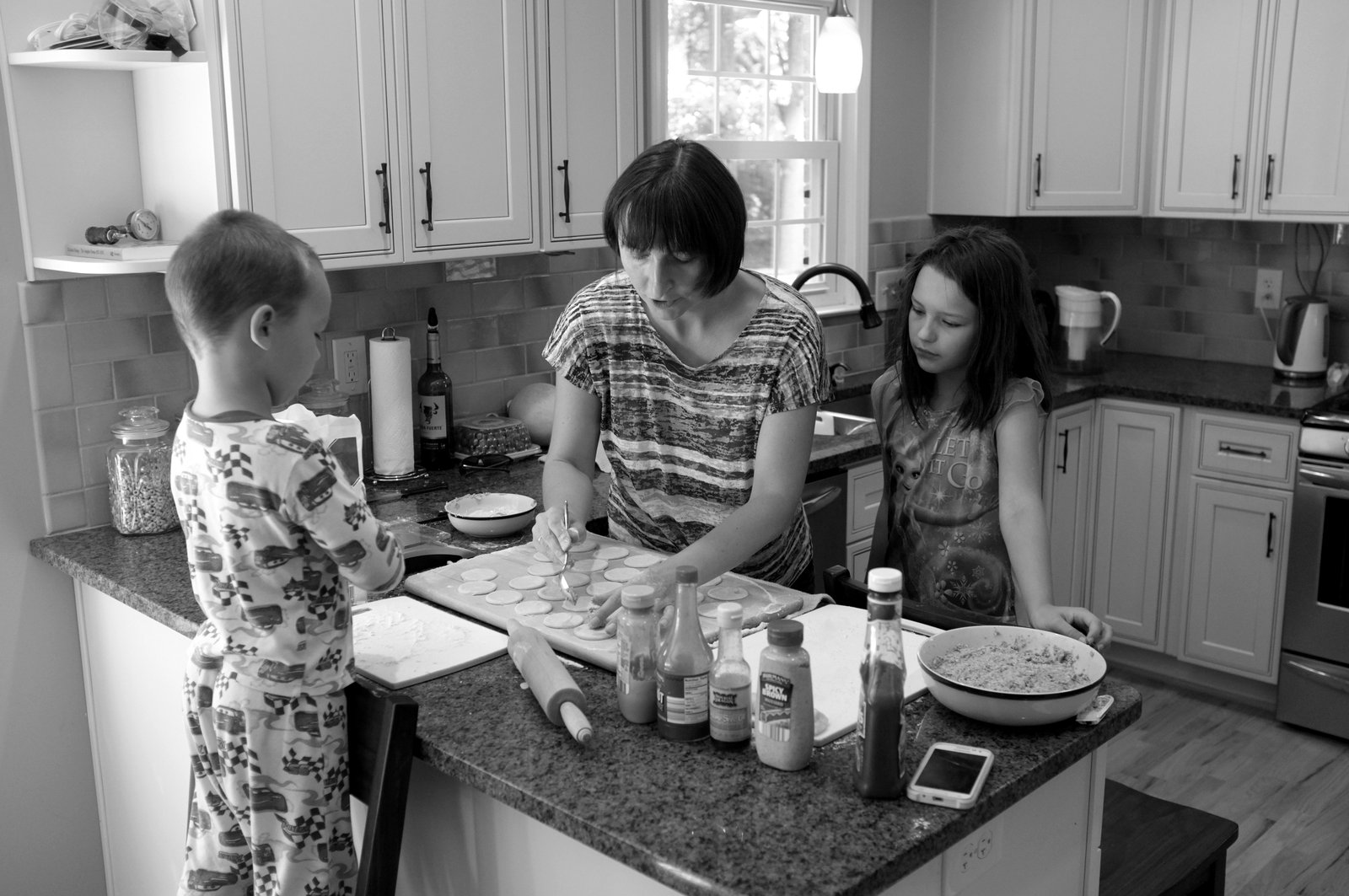
The final picture of the day mirrored the first: the Boy helping with dinner — leftover crepes (or naleÅ›niki as we refer to them) that we fill with leftover chicken from the rosół and some mushrooms we sauted for pierogis later this week.

A perfect day, in short.

Autumn Sunday

The last Sunday of the month — Polska msza. Among many other things, it means a lazy morning with perhaps a bit of outside time. During the summer, it was the only Sunday we could do much of anything outside because by the time we normally got back from Mass, it was too hot to do much of anything. There was the pool, that’s true, but even that gets a little routine after a while, I guess.

In the late morning, then, L, E, and I headed to the backyard to do some exploring. Our exploring of late is limited, though, by the fact that we have new neighbors whom we rarely see, and I haven’t yet had a chance to ask if they mind us tromping through their backyard. I’m certain they have nothing at all against it, but I still don’t want to do it until we’ve actually discussed it.

1-dscf0671

That leaves us limited to our own backyard, which we all know perfectly well — harder to pretend-explore there than it was in our neighbors’ yard. I struck upon the idea of tracing the stream that runs through our backyard. We’d waded up the stream one morning this summer, but we hadn’t gone the opposite direction. The Boy was interested; the Girl headed inside.

We followed where it passes under the road and winds through more backyards, but soon we reached a point where we couldn’t go any further. If we had long pants on, we could have braved the weeds and wild for probably another hundred and fifty feet, but not much more than that. Suddenly, the Boy had a question.

“Daddy, what if we’re lost?”

“What do you mean?”

“I mean, what if we can’t find our way home?”

I thought of what we’d just done from his forty-some inch perspective and his four-year-old mental development and realized that he might indeed have no idea where we were. I took him back to the road and pointed out the back of our house.

1-dscf0677

“Oh, neat trick,” he replied.

But could he really not know where we were? I doubt it. He has such an incredible memory for the physical layout of things, where things are located in the house, where things are located in the larger environment.

Once, K told me, they were on their way to Nana’s and Papa’s house in the morning and there was a huge snarl of traffic on the four-lane road we normally take to their place. I’d done some exploring on Google Maps before to map new routes to ride by bike and had discovered a way to cut the corner where the snarl was, and once I’d taken it when I was taking the Boy to Nana’s and Papa’s. E remembered it just as K was contemplating where that road off to the left might go and explained that it was a short cut. Between those two events passed probably several weeks.

So it’s likely that he really wasn’t as lost today as he thought he might have been. It’s possible that he could have figured his way back home. Instead, he just took me by the hand and said, “Daddy, let’s go home.”

Tadpole

1-dscf0650

The recently-caught tadpole needs more room to grow. L did some research about what they might eat and how to best provide an authentic environment for development, and she’s determined to see it through to frog-hood.

Confirmation

1-dscf0620

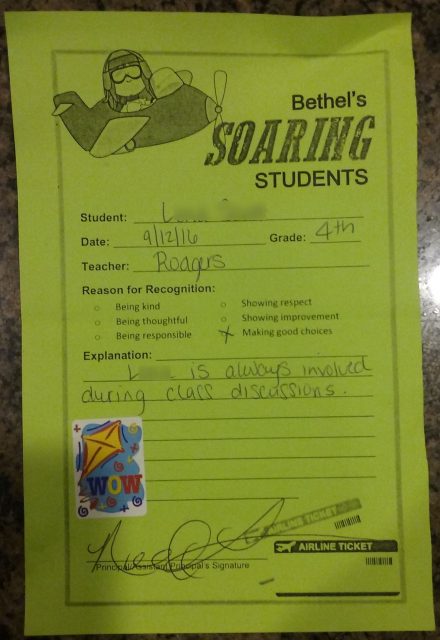
We parents wait for it all our lives, I imagine: confirmation that all the teaching we’ve done has somehow taken root and flowered. It comes sometimes in those little notes scribbled on our children’s school papers or comments on report cards. We hear about it from grandparents or neighbors. And then sometimes we see it.

2-dscf0625
A post-dinner recreation

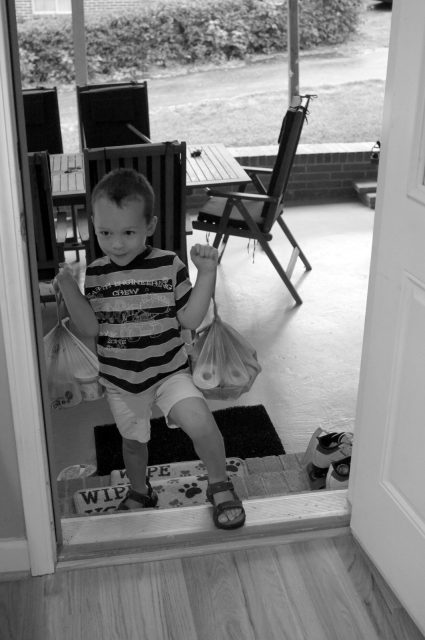
K arrived home with the Boy from a short trip to the grocery store and the pizza place only to find it had started raining. It wasn’t raining hard enough for me to hear it, so I hadn’t brought in the laundry drying on the back deck. (Truth be told, I wasn’t even aware of it being out there, but that’s an entirely different issue.) K rushed in, pizza in hand, tossed the box on the table and darted out through the back door. “My laundry!” Following a few moments behind, E appeared at the door, shopping in hand, car door closed, struggling mightily with the two bags of groceries.

He’d taken the initiative all by himself.

Coincidentally, one of the words in L’s Polish lesson for the evening was “dżentelmen,” the Polishized spelling of “gentleman,” which has the same denotations and connotation.

3-dscf0630

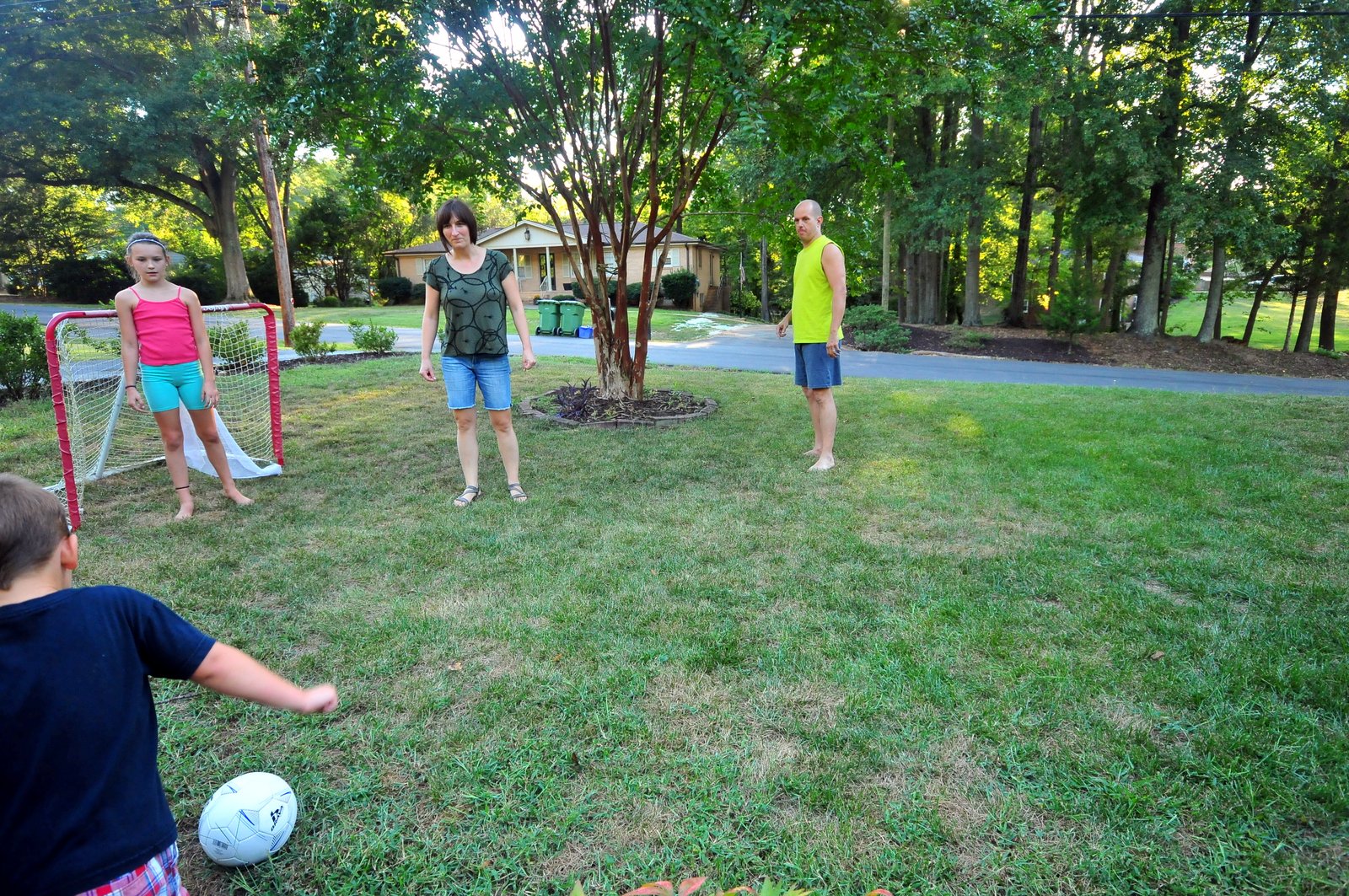
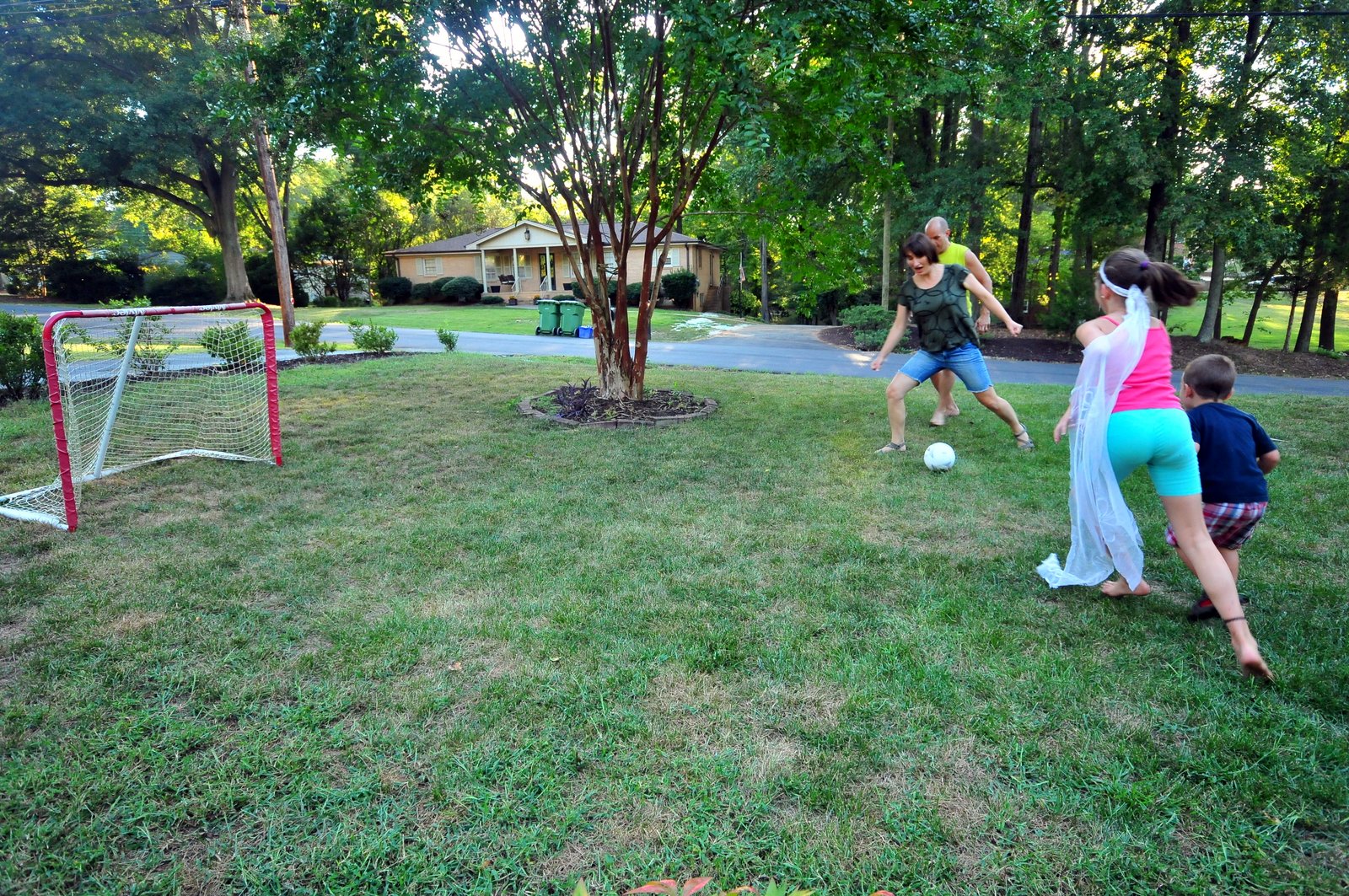
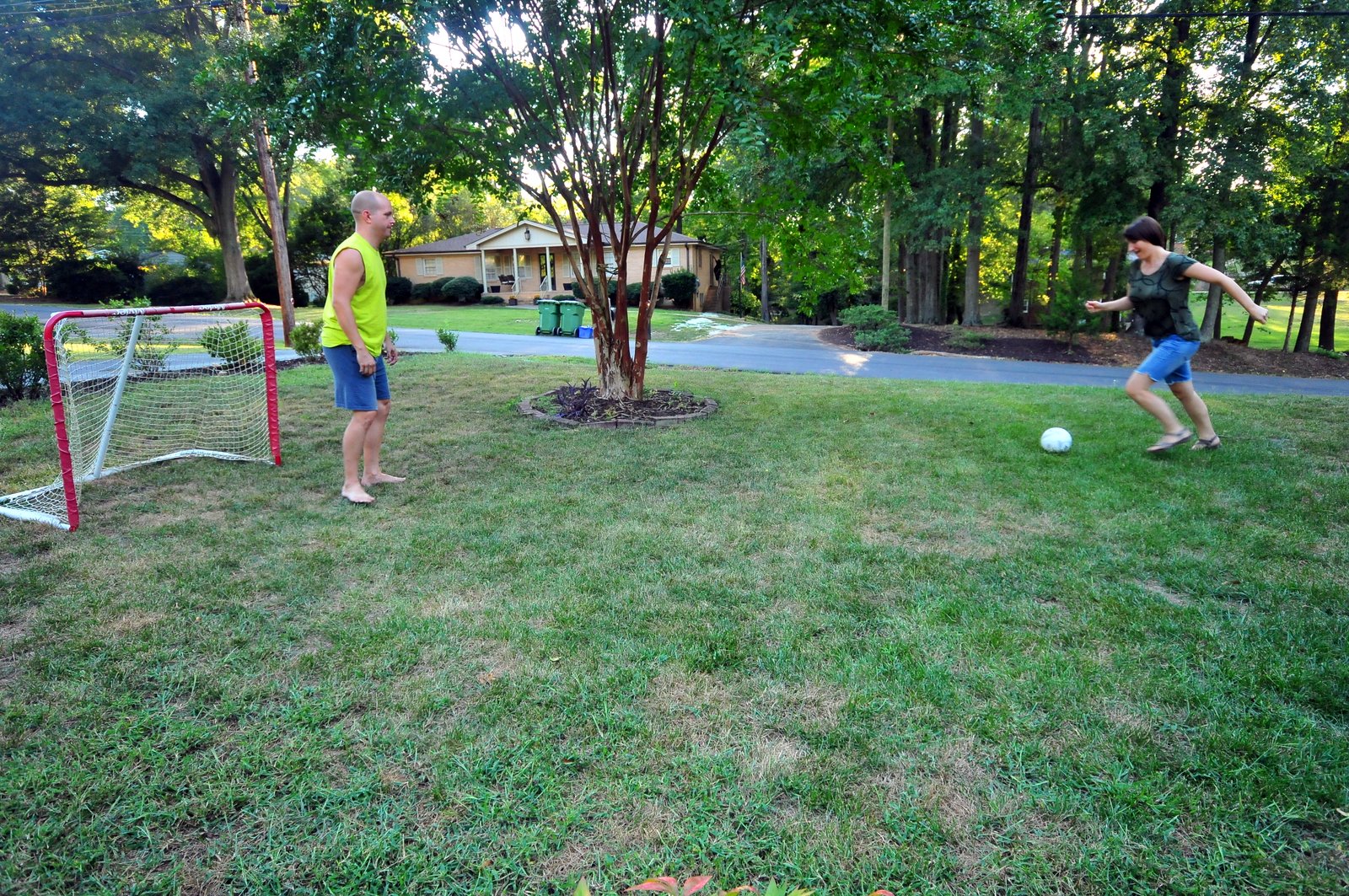
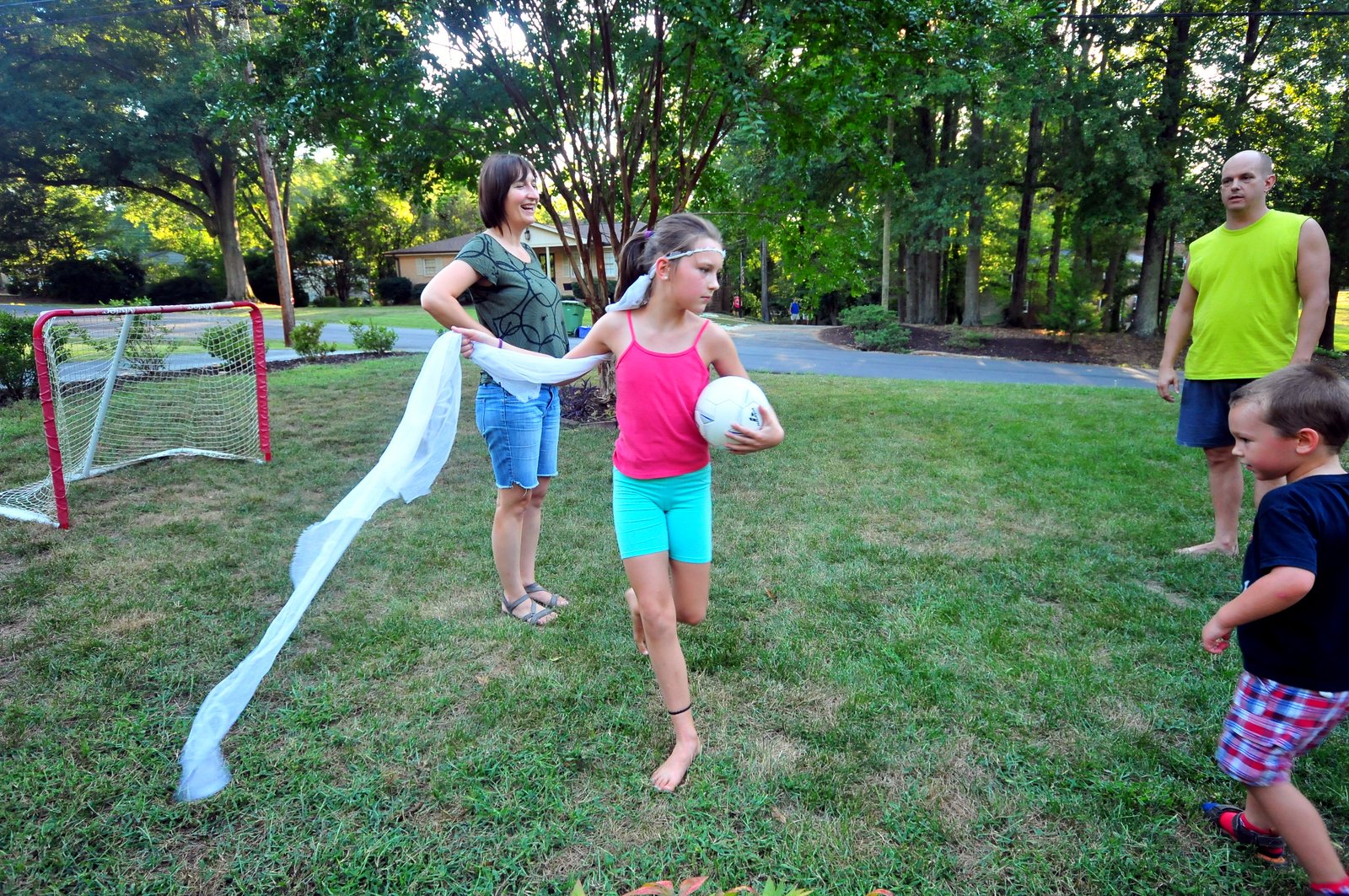
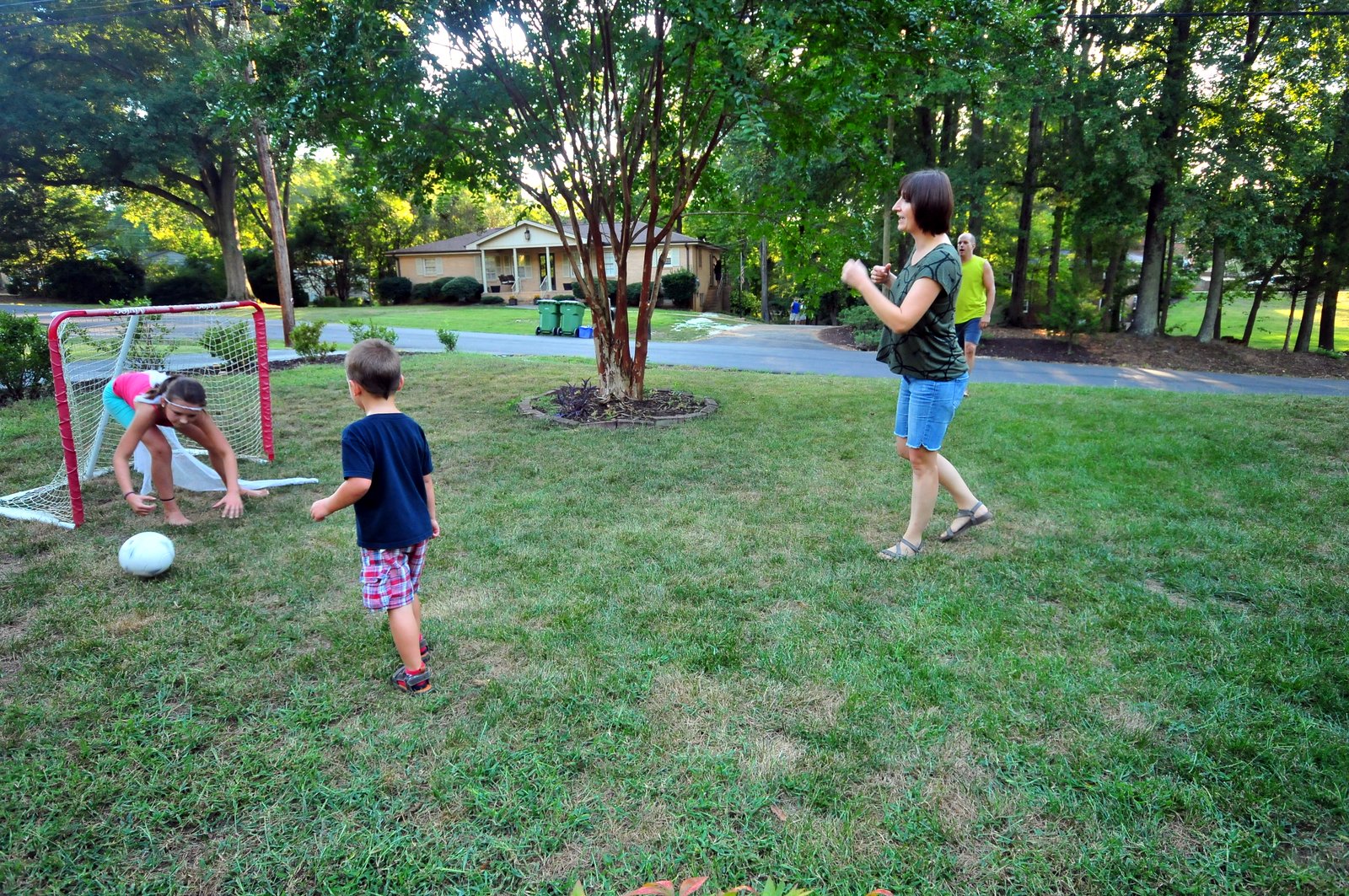
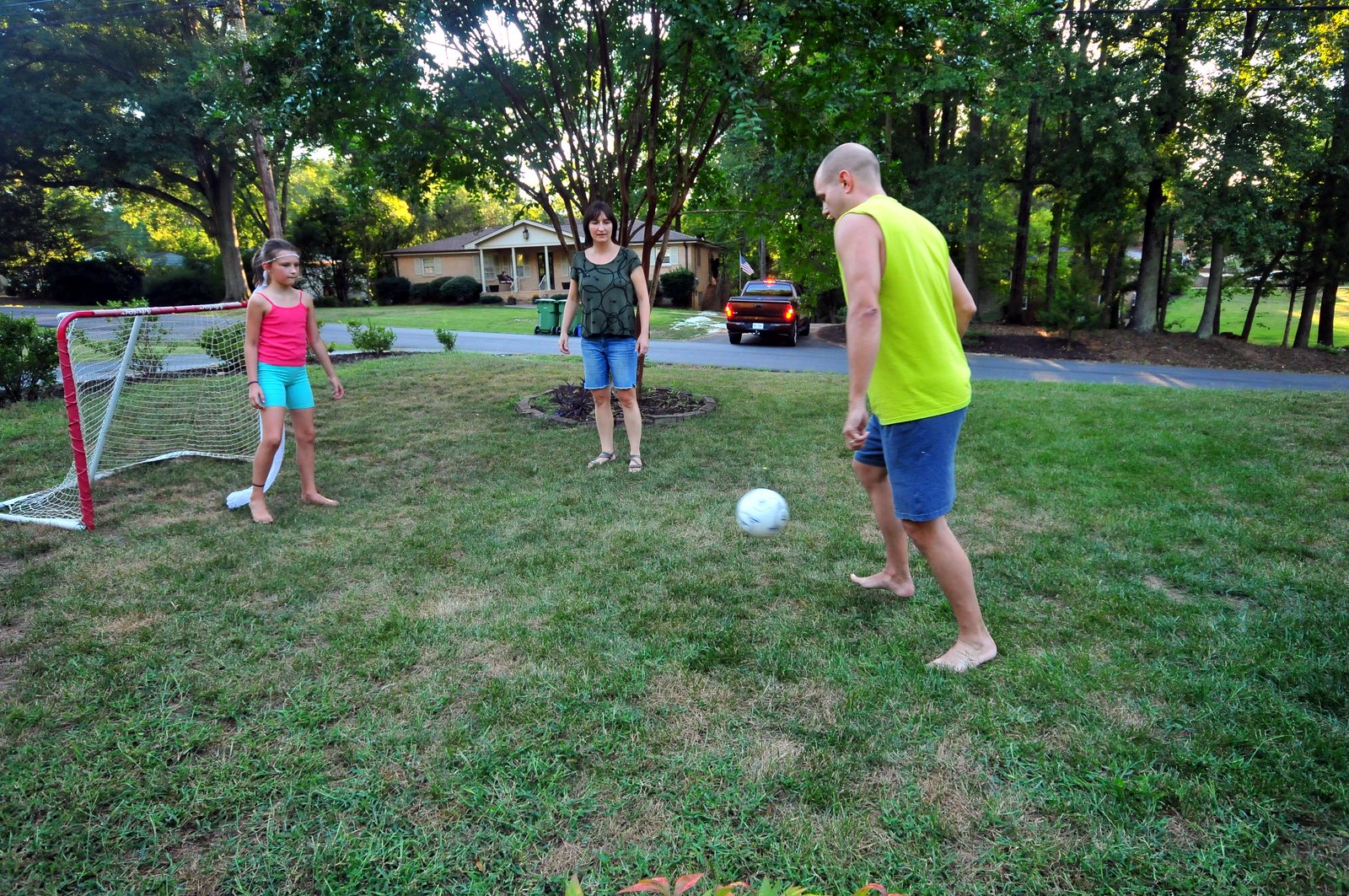
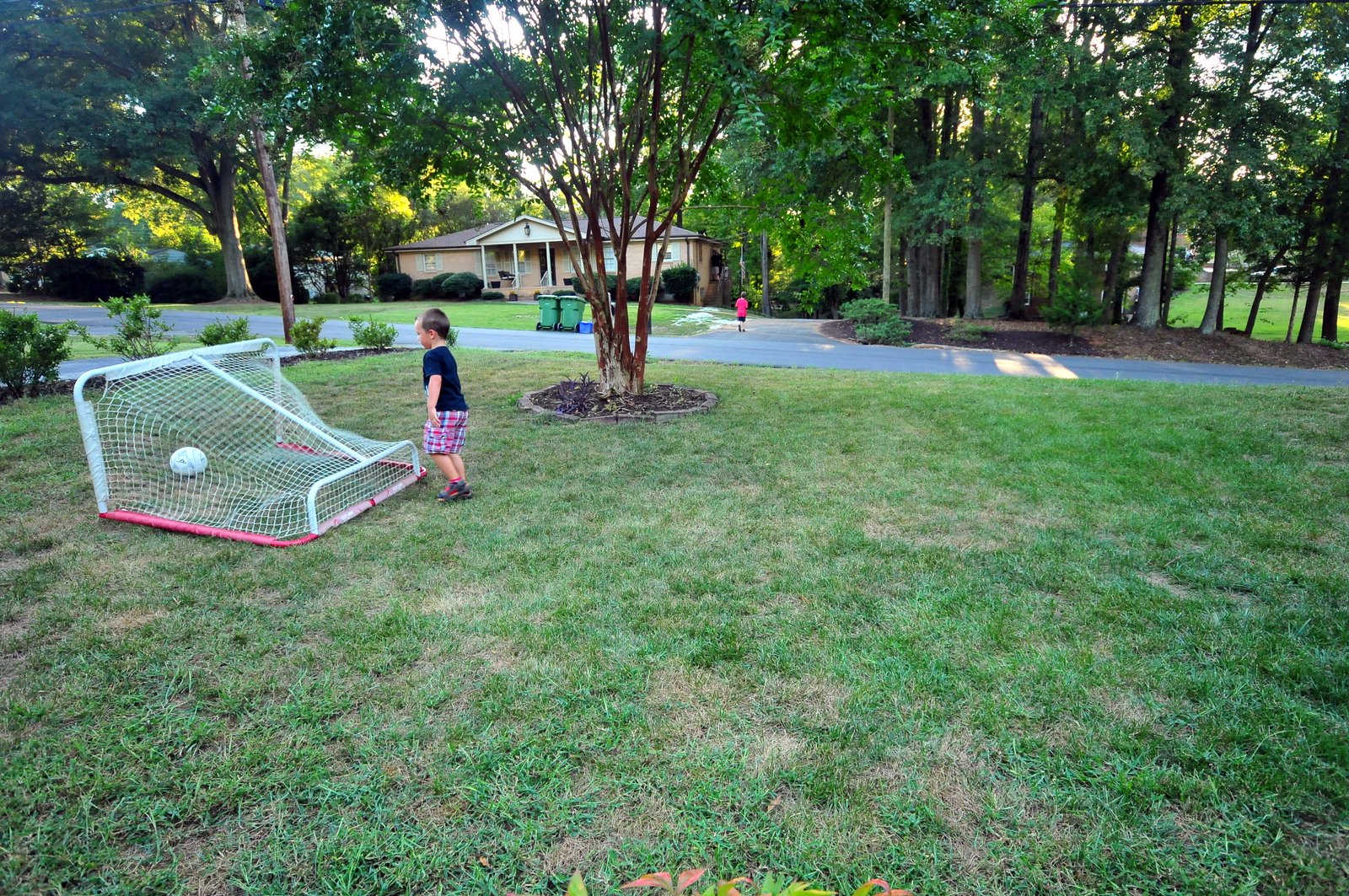
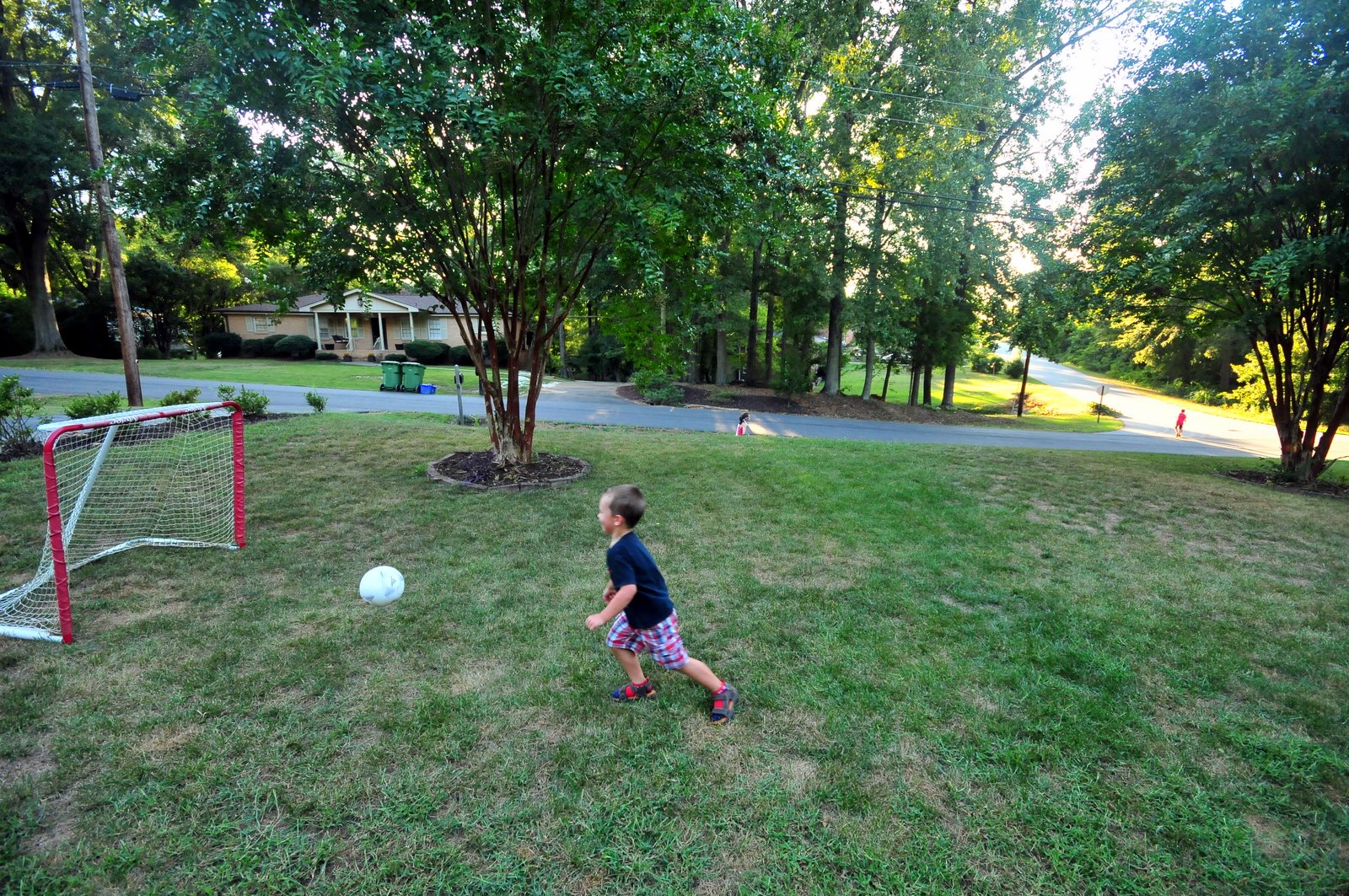
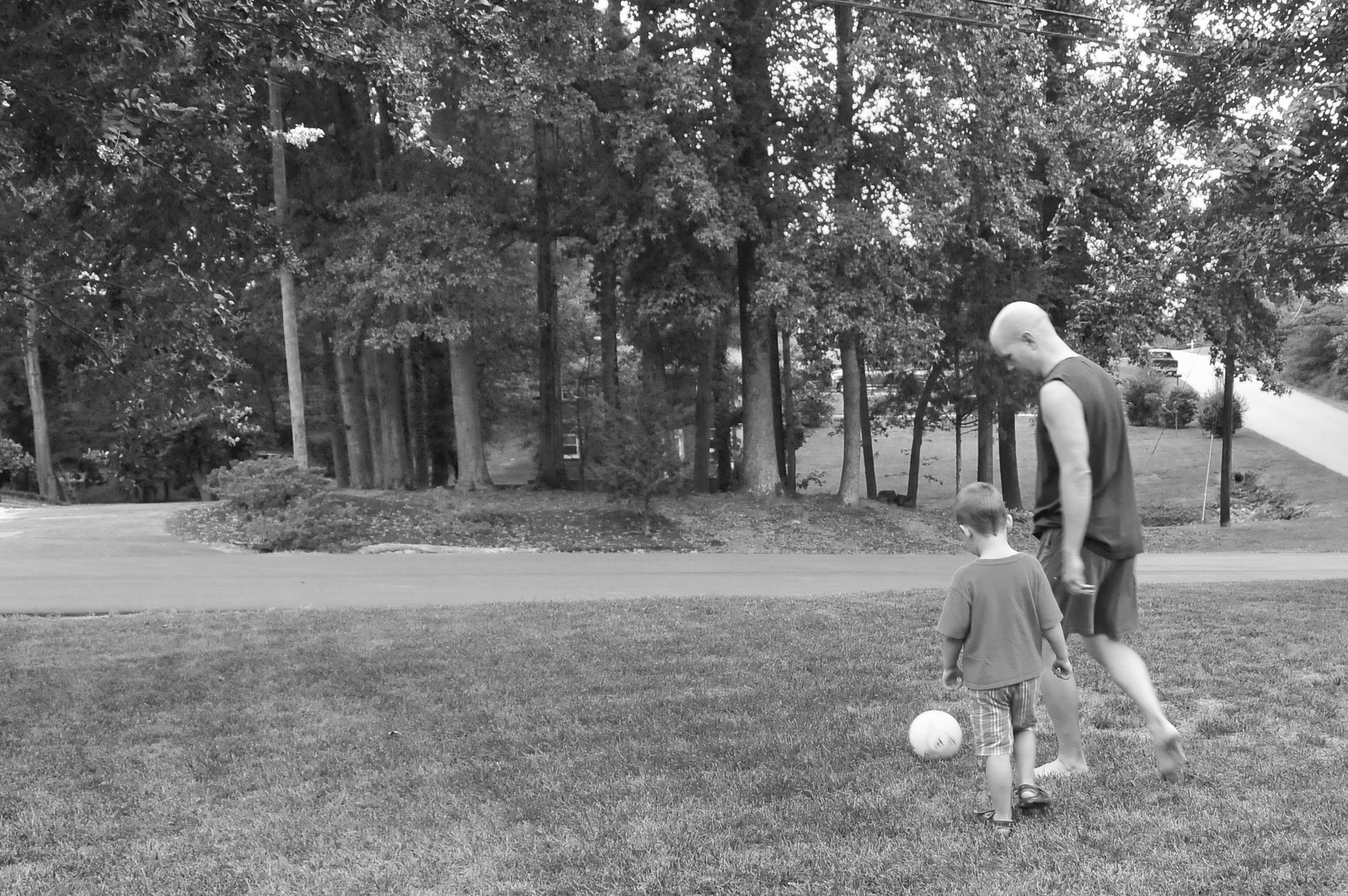
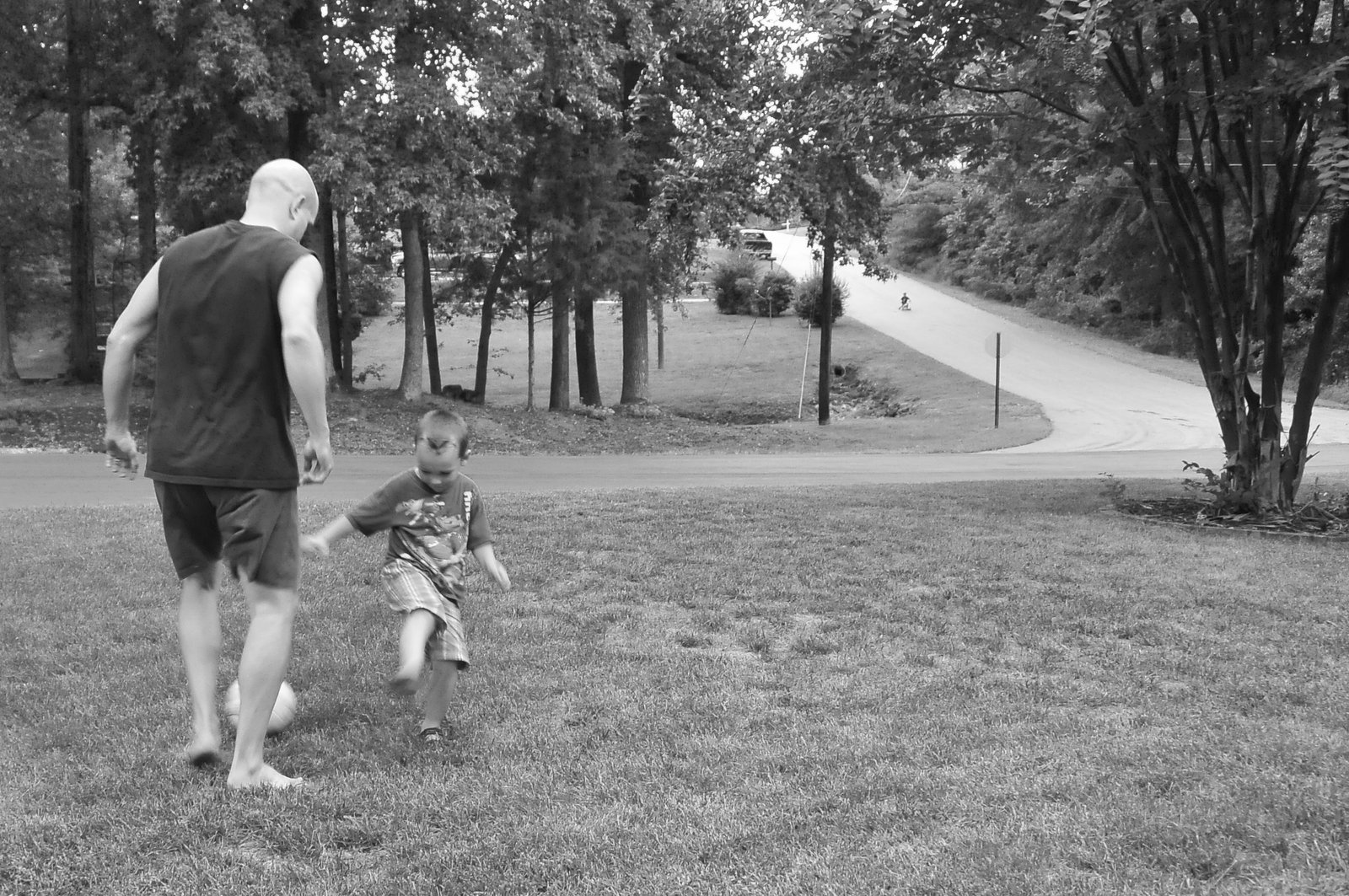
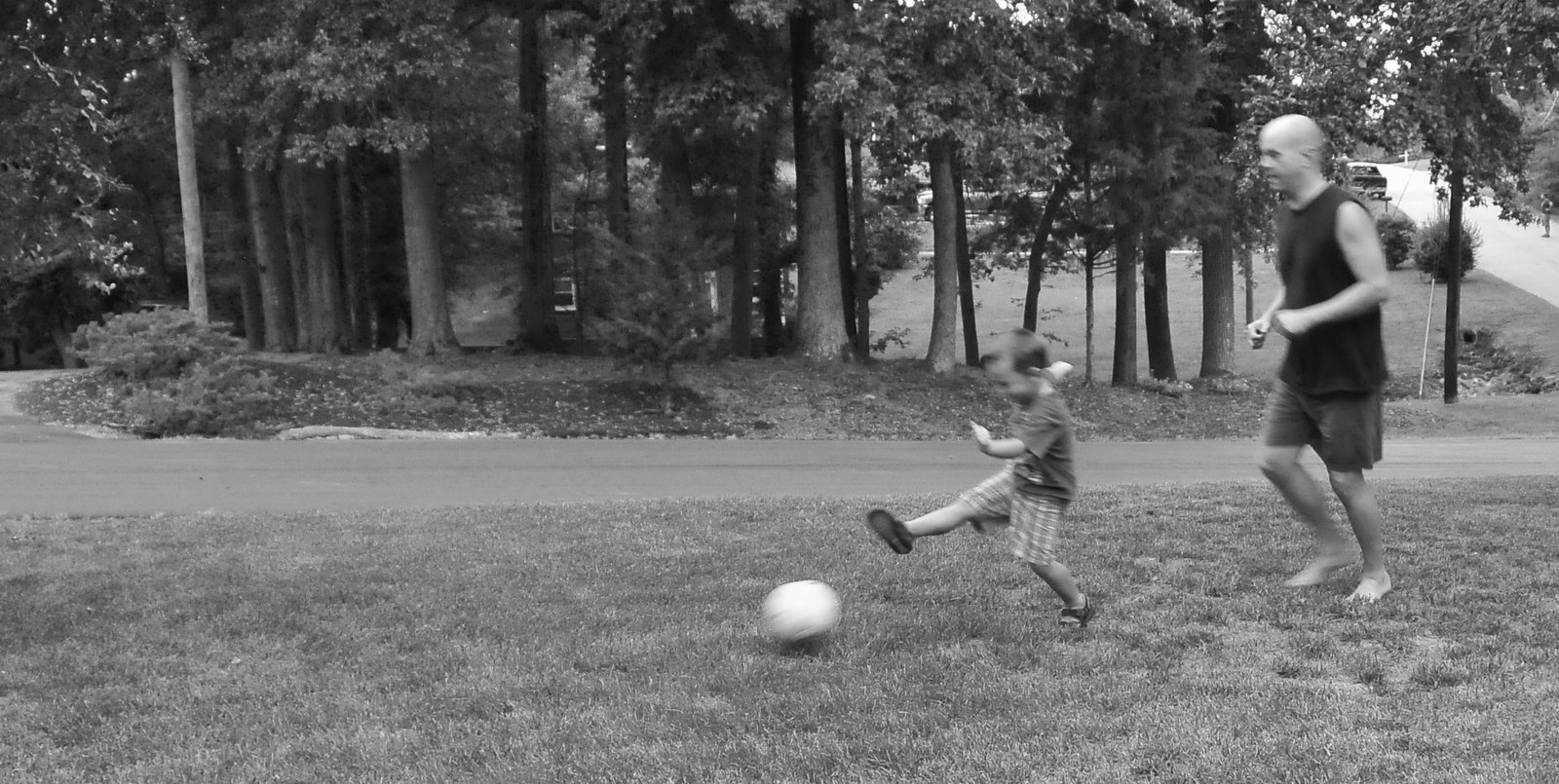
In the end, I couldn’t care less about how well he plays soccer. I’m more concerned with how he plays life. And while at the moment he seems destined to be darting around all the action in a soccer game, he seems to be diving right in to life.

Creators

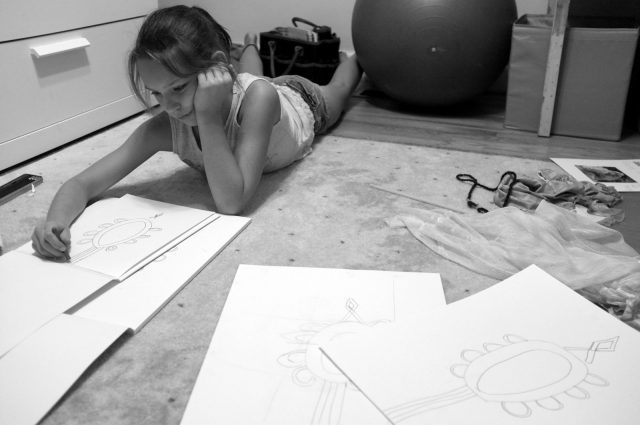
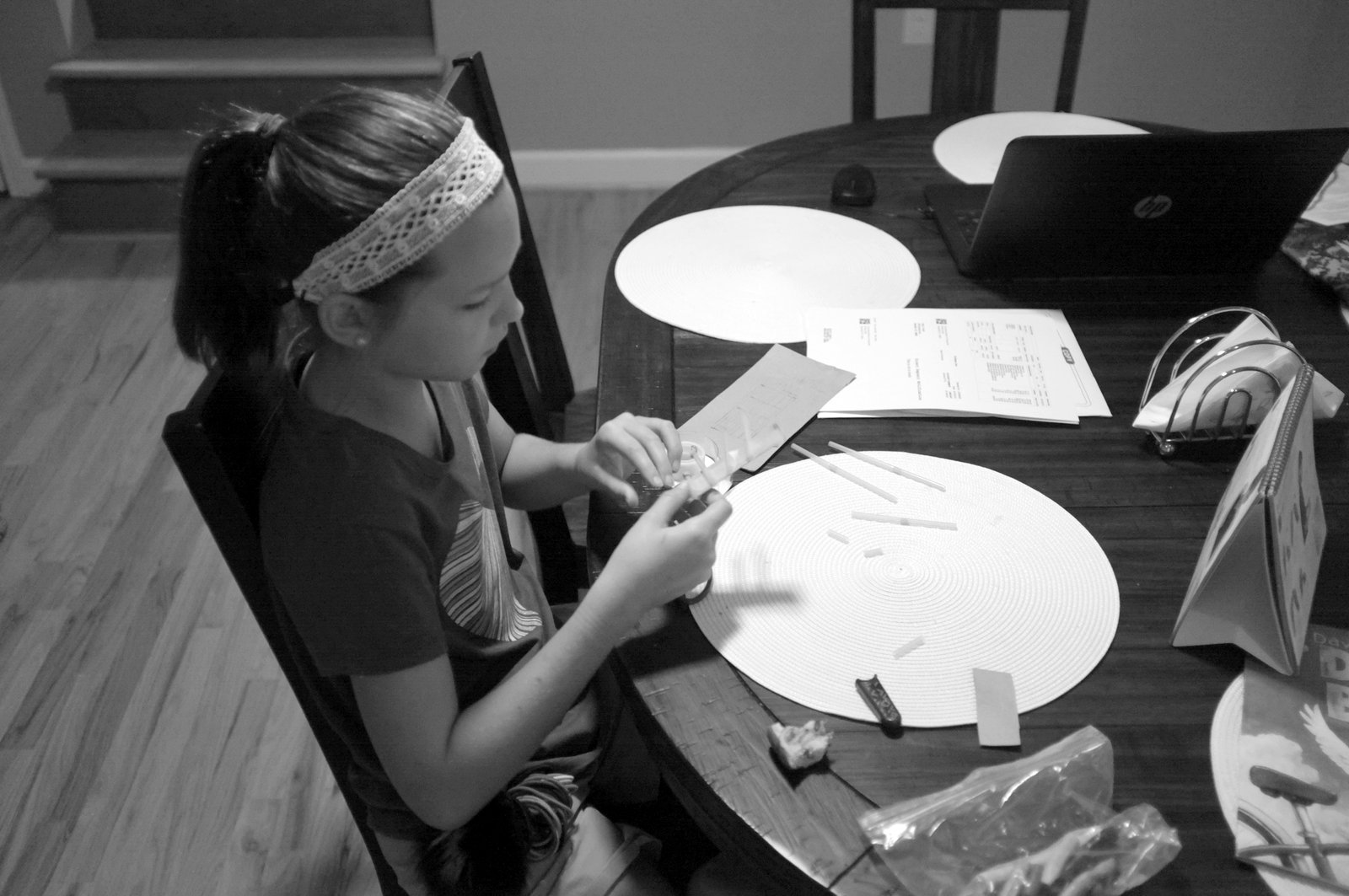
Before school, the Girl decided she wanted to make pan pipes out of straws and cardboard as she discovered in one of her many craft books.

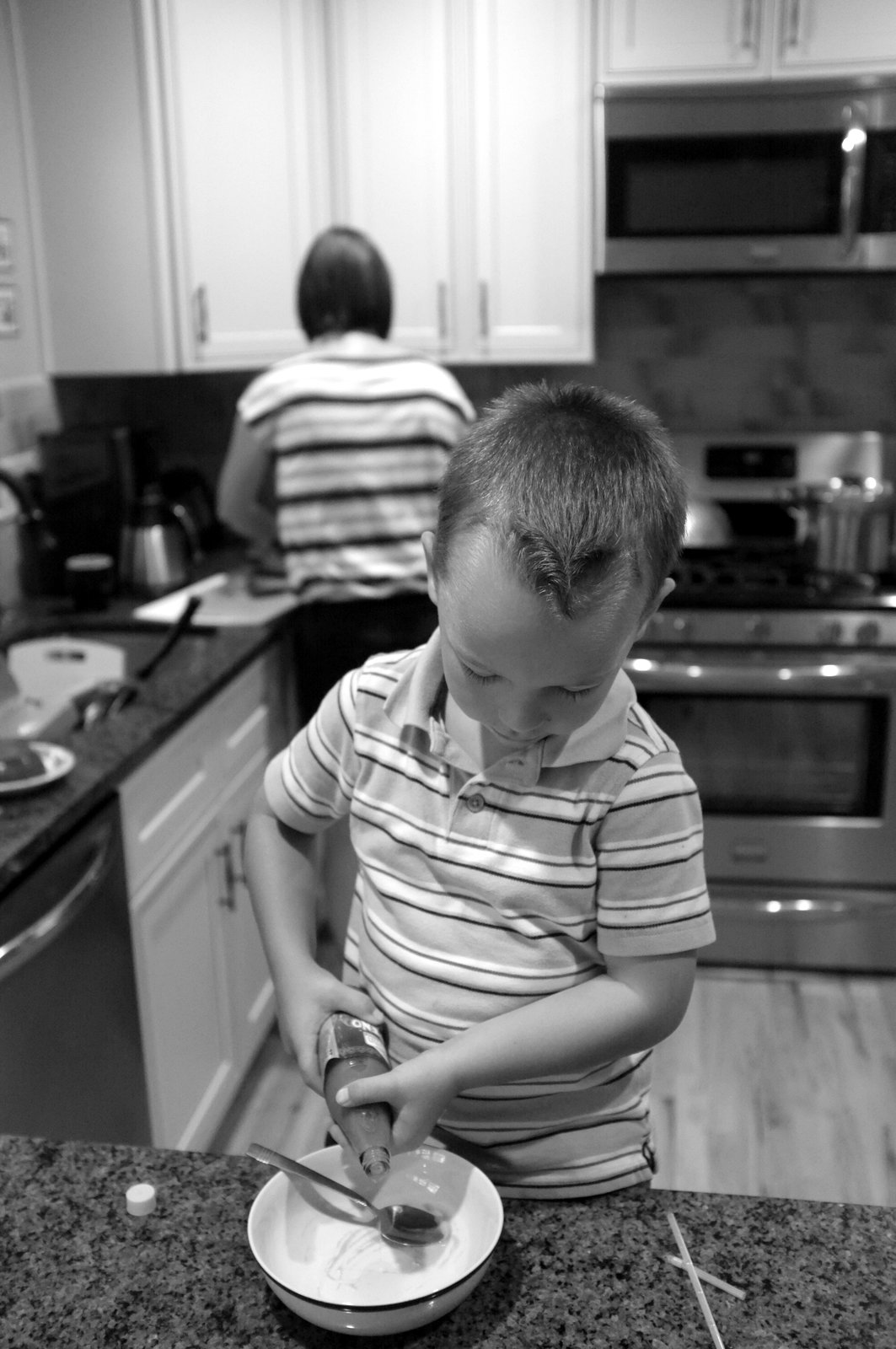
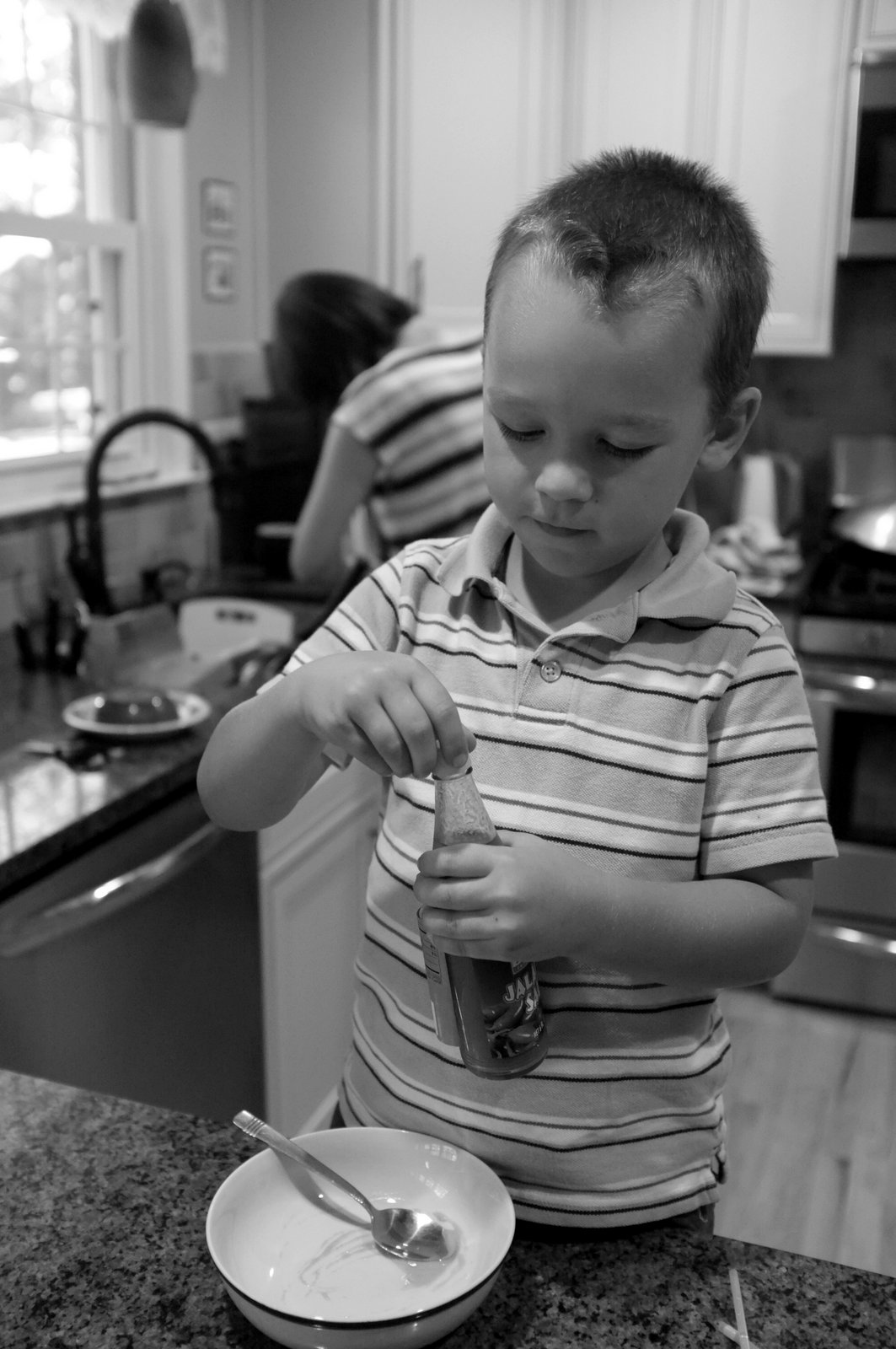
The Boy has fallen in love with experimenting with adding random things from the refrigerator.

Family Match

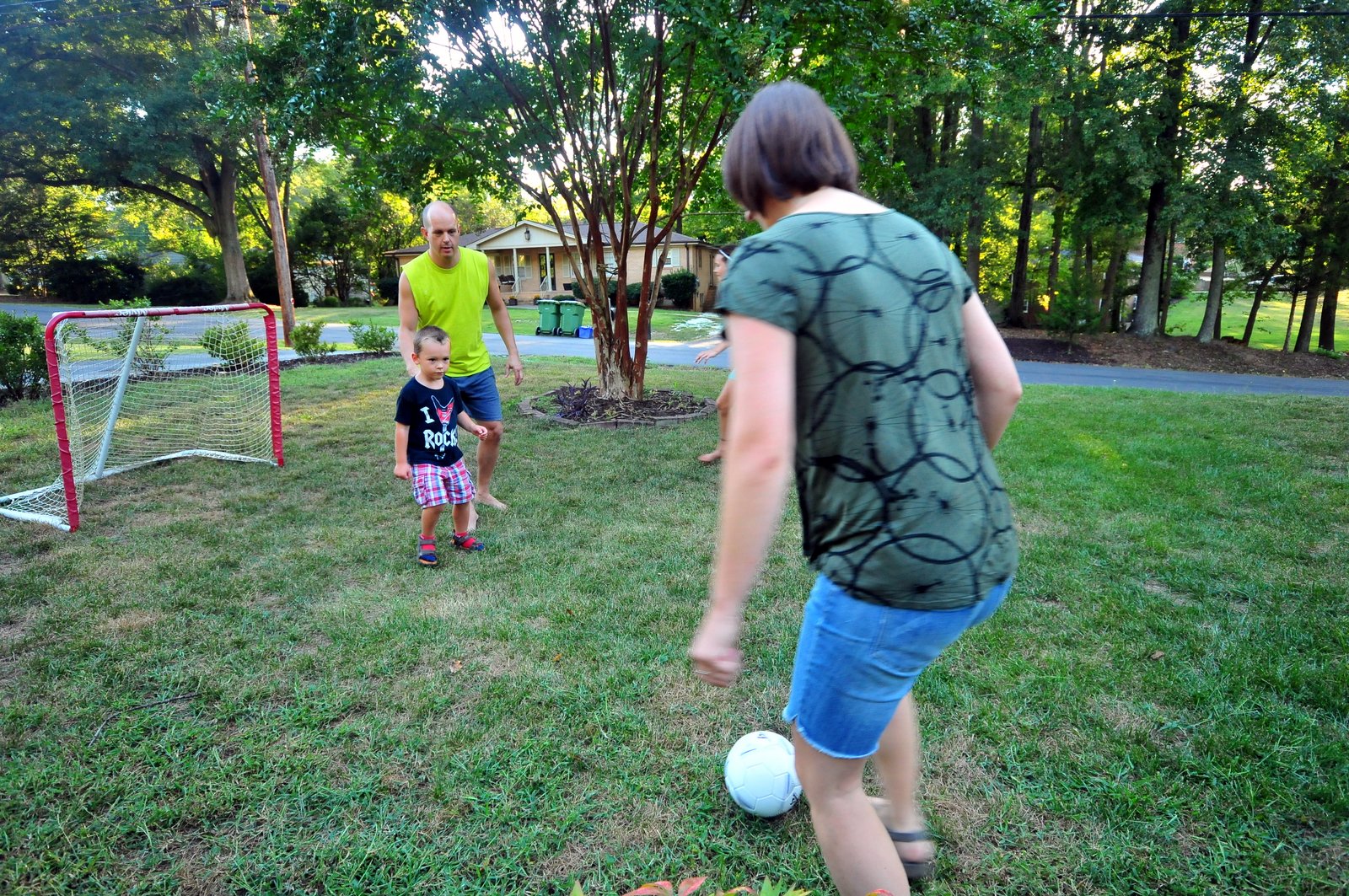
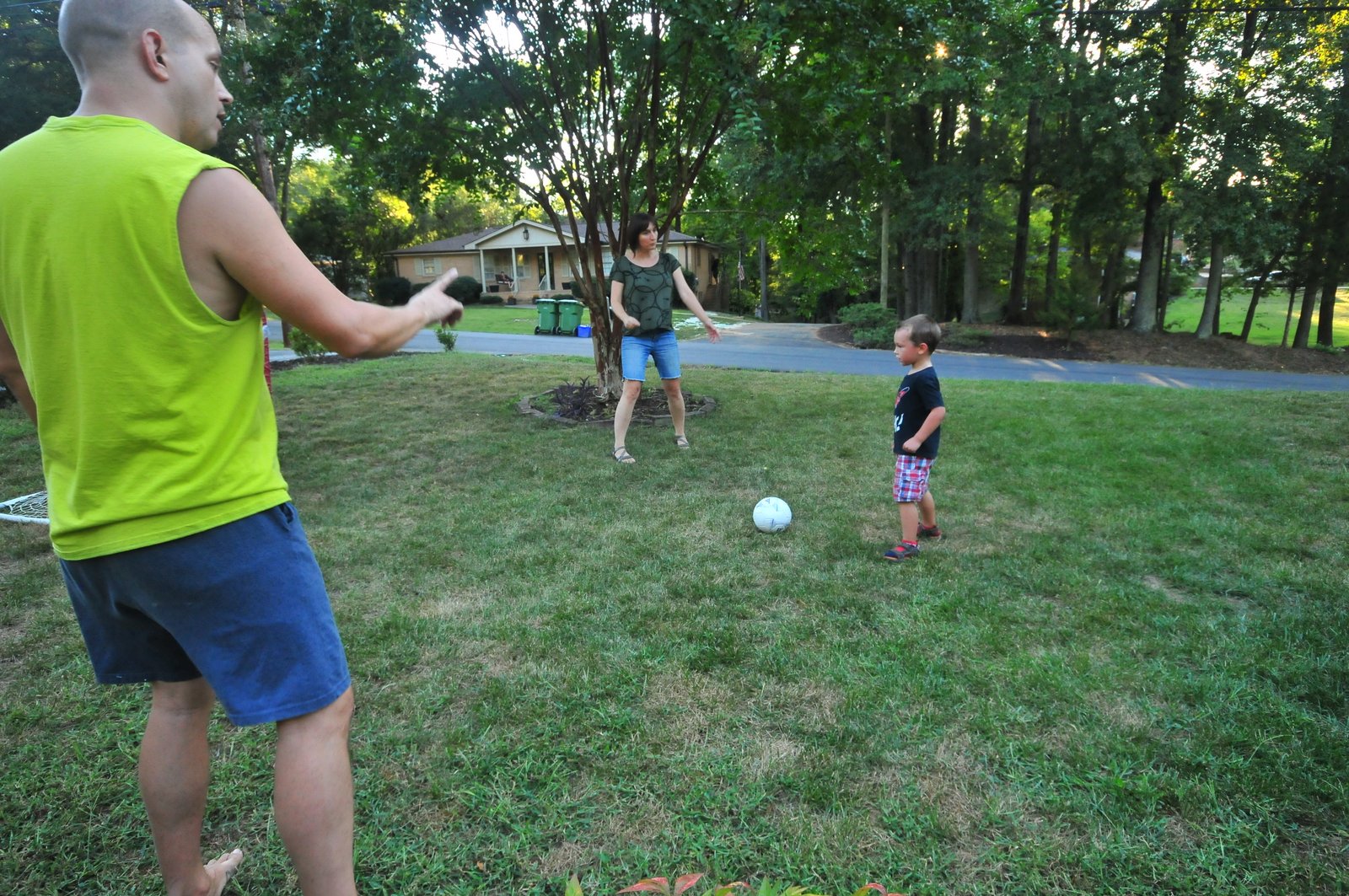
If the Boy plays Saturday like he was playing today, he’ll be something else. He was going after the ball no matter who had it, attacking toward the net, shooting — everything. We even worked on passing the ball to him for him to shoot even though that’s a guaranteed impossibility for his game Saturday.

But if I think back to the Girl playing soccer, I remember doing things like this and then discovering that none of it would really stick. “Perhaps more practice,” I’d say, and yet it wouldn’t stick. And so what if it doesn’t? He’s only four — that’s the cause of the “problem” and the reason it’s not important.

Closed

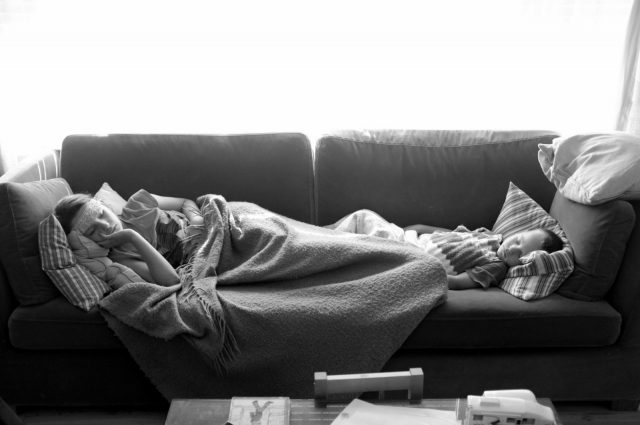
I arrived home today to find both kids with eyes closed tightly. Afternoon naps are always a little problematic because neither one of them really wants to get up. The Boy resorts to fussing; the Girl just steadfastly refuses. It doesn’t matter what’s for dinner; it doesn’t matter who’s just arrived; it doesn’t matter period. Neither wants to get up.

“How long will the grilling take?” K asked as the dinner hour approached.

“About twenty minutes.”

“I’ll start waking them up in ten, then.” And even then, by the time dinner was on the table, they were both still virtually asleep.

1-DSCF0432
1-DSCF0434
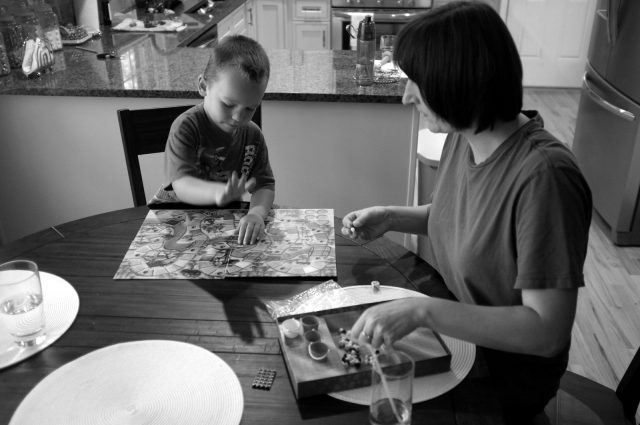
After-dinner game of “Mushroom Picking” — sort of a Polish Candyland.

Then, as the sun closes up shop for the day, the second half of the trouble begins: neither of them is especially tired.

We do what we can to tire them beforehand. I took the kids on the trampoline for a while and then played soccer with the Boy as the Girl skated about the driveway.

Still, when it came time to go to sleep, E was just jabbering away.

Sunday

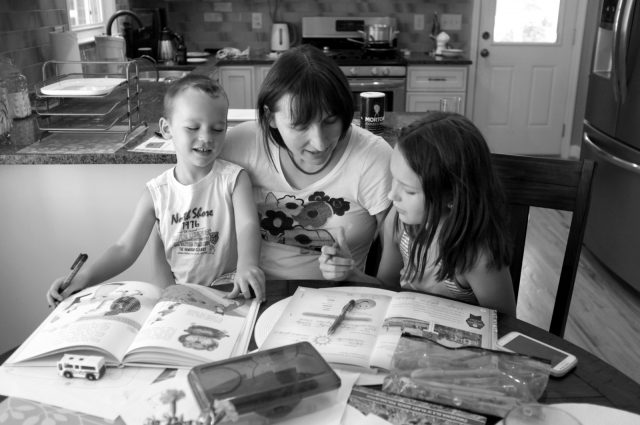
After Mass during the school year, there are a few obligatories: a fresh pot of coffee and something sweet. Feed the soul, then feed the spirit. Something like that. Perhaps accompany it with something to read, maybe a game of chess. But eventually, it’s time for the trial and treasure, for it’s something K loves and loathes doing. Polish lessons.

1-DSCF0421

The love is easy: it’s her language, her culture, that she’s sharing with her beloved daughter. The loathe comes from the frustration that sometimes accompanies it. Perhaps “loathe” is not the right word — perhaps it was just too alliterative to pass up. “It’s something that K loves and that frustrates her” doesn’t quite make it. Always searching for the right word, never able to find it, which is what makes the Polish lessons so frustrating for the Girl. Her passive vocabulary, like everyone’s, is much larger than her active vocabulary. She can understand more than she can say, like me in Polish.

E, on the other hand, has of late only a passive vocabulary for the most part. The production has ceased. However, we’re seeing that language and such is perhaps just not his strength. He can watch a cartoon about how airplanes fly and remember it long afterward. (Language, though? K was trying to teach him a Polish prayer the other evening, and he replied, “You must be kidding me! I can’t remember that!”)

In the evening, it’s time to feed the soul once again — a quiet bonfire in the backyard. The temperatures have cooled, the mosquitoes have disappeared, and we’ve entered our favorite time of the year.

1-VIV_5499

We’ve been waiting all summer for this. The kitchen is mostly done, our routines have returned, the weather has cooled, and it’s time to start everything again. So what better way to end than with a song by Antoine Dufour, a Quebecois guitarist, who wrote a song for his yet-unborn son, a song about waiting, a song I’ve listened to at least a dozen times this weekend. Perhaps the most beautiful acoustic guitar song I’ve ever heard.

Sunday