I recently bought guitar strings. “Recently” is of course a relative word, in this case meaning a month ago.
“You bought guiatr strings a month ago and you’re complaining about them? They’re ancient! Get new ones!” You who play guitar might be thinking along those lines.
Easier said than done, for like many things here in Poland, they’re atrociously expensive. Good strings (i.e., something like D’Adario) cost more than forty zloty. As I’ve explained earlier, that would be the same as paying forty bucks in the States for a set of guitar strings!
Needless to say, I’ve taken to buying Polish-made strings because they’re cheaper — in theory. But as the Polish saying goes, “What’s cheap is expensive.” Or as we might say, “You get what you pay for.”
 I did buy D’Adario strings once here — they lasted probably three months. Yes, that’s a ridiculously long time for strings, but how often would you change them if they cost forty bucks? Anyway, they sounded dead as a brick by that time, but they were still intact. None of them had broken, or even frazzled.
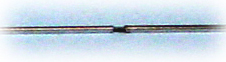
The Polish strings I bought lasted about three weeks before the D string started to fray. A close-up reveals that it might last a few days more until it completely unravels and morphs into another E string.
 Then I’ll trek back to Nowy Targ, buy a new set of strings, and kick myself for not buying decent ones in the first place.