growing

Hatchet

It’s all the Boy has been talking about for the last few weeks.

“Daddy, can we get a hatchet?”

He was thinking about buying it with his own money; he was thinking about splitting the cost with us; he was thinking about it, talking about it, probably dreaming about it.
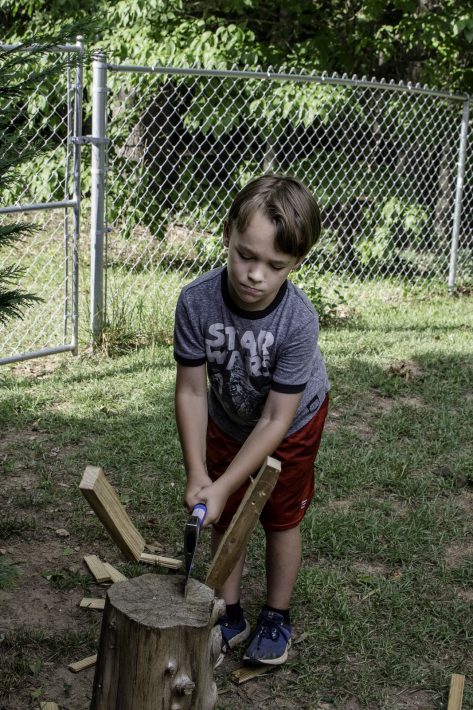
Today, we finally got it. He wanted to make sure that he wasn’t going to pay any of his money for it because he’s got his eye on another Lego set, but when, after buying nails, concrete screws, pegboard hooks, and other things on the list, we finally headed over to the gardening section, his excitement brought a smile to both K and me.
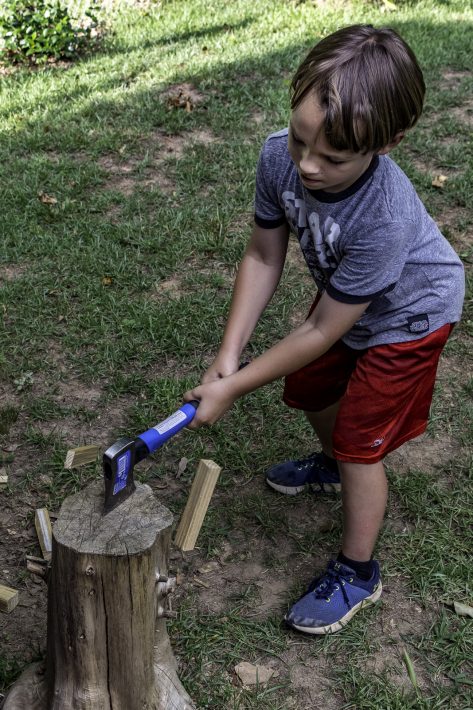
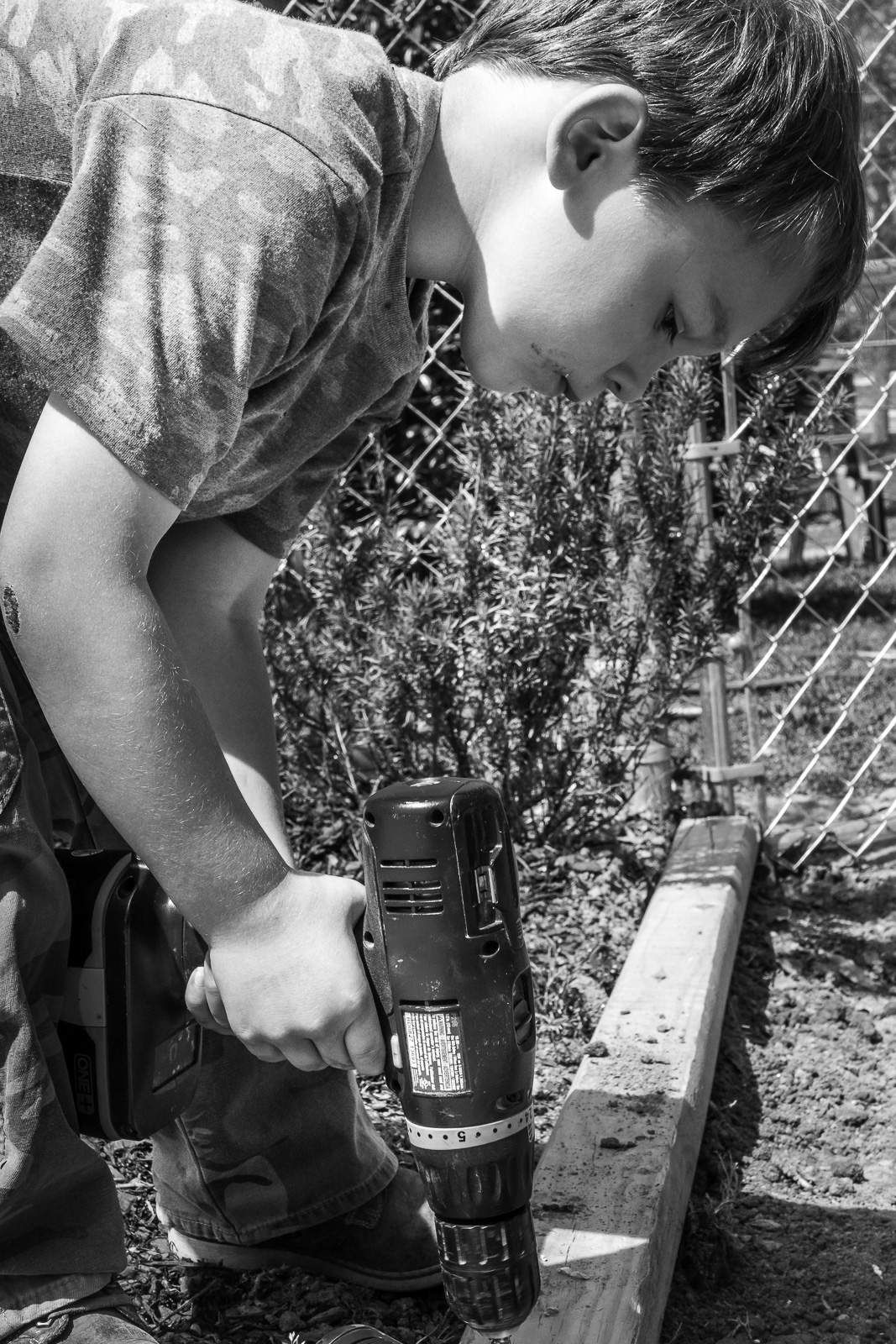
The highlight of the afternoon, then, was teaching him how to use it.

Ice Cream, 1973

More discoveries from the past. Haven’t seen myself in baby pictures in years.

Reading with the Boy

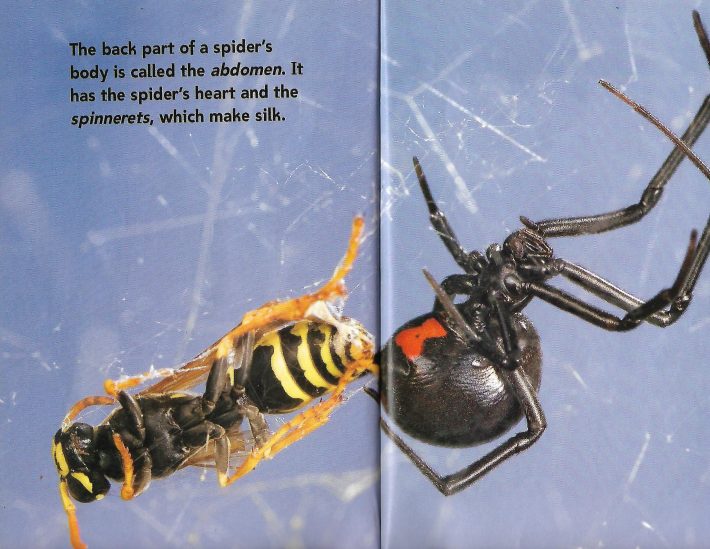
We try to get the Boy to read a little every night. Tonight we worked on L’s old book about spiders. I found the place we’d left off, but the Boy insisted that he’d finished with K last night.

“Well, it doesn’t hurt to read it again,” I said. It might have sounded like I was just being lazy, but being able to read a tricky passage fluently will build his confidence. We learn by repetition, especially recognition of new words.

“The back part of a spider’s body is called the abdomen,” he began.

“Wow — you read that tough word like a pro,” I added.

“What word?”

“Abdomen.”

He sighed. “Daddy, I recognized the word.”

“I know. And that’s a long word to know. How many letters?”

He counted: “Seven.”

“You recognized a seven letter word!”

“No, wait,” he said, counting hopefully again. “No, just seven.”

He continued, stumbling a bit: “It has the spider’s hear — hear?”

“Heart,” I helped.

“Heart and the spinnerets, which make silk,” he continued.

“Spinnerets?!” I gasped. “Are you kidding? You read that like a pro as well!”

“But daddy, I stumbled over a” and he paused to count. “A five-letter word.” He often stumbles over words, words that sometimes surprise me.  And he recognizes and reads fluently words that sometimes surprise me. It’s part of learning to read.

“That’s okay,” I reassured. “You stumbled over that word, but you nailed ‘spinnerets.'”‘

Many of my students over the years have face similar struggles, and struggling readers are not confident readers. I’ve sat with kids who were reading, asked them to read aloud, and heard difficult passages come out like this: “It has the spider’s hea hear — whatever — and the spin spin — I don’t know — which make the silk.” If that’s what’s going on in their head as they read silently, and there’s no reason to think it wouldn’t be, it’s no wonder they don’t feel confident with reading: the struggle produces nothing but a confusing text. And they’re likely to anticipate all this: before they begin reading, they’ve convinced themselves that they won’t understand it. And all of this builds and calcifies into not a mere reluctance to reading but a positive aversion to it.
Confidence eliminates those “whatevers” and “I-don’t-knows.” And so I have the Boy read books a second, third, and fourth time.

“But I already know this book,” he complains.

“I know — that’s the point,” I think.

Sifting Through the Layers

I spent the better part of today going through pictures, digital and print, looking for images of Nana to use during Saturday’s memorial. I scanned about 30 images and found about 60 others in our digital collection, and I’m only through 2013. It was much like looking at old pictures of our children: we always feel like our children have always looked like they do today even though we know they haven’t. The changes are so gradual that it takes an image from the somewhat-distant past to jar us into understanding — realizing — anew that our children are on an ever sliding spectrum, that they in fact don’t look like this for very long at all.
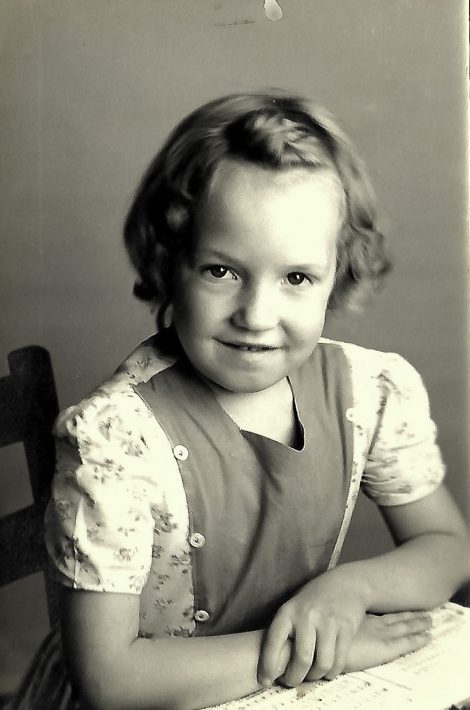
Nana in first grade

So it was with Nana. I got used to what she looked like now and forgot all about the Nana of my youth, when she was simply “Mom.” And then I began going through pictures and rediscovering images of Nana before I even existed, images of Nana when she was my age, images of Nana when she was the Boy’s age.

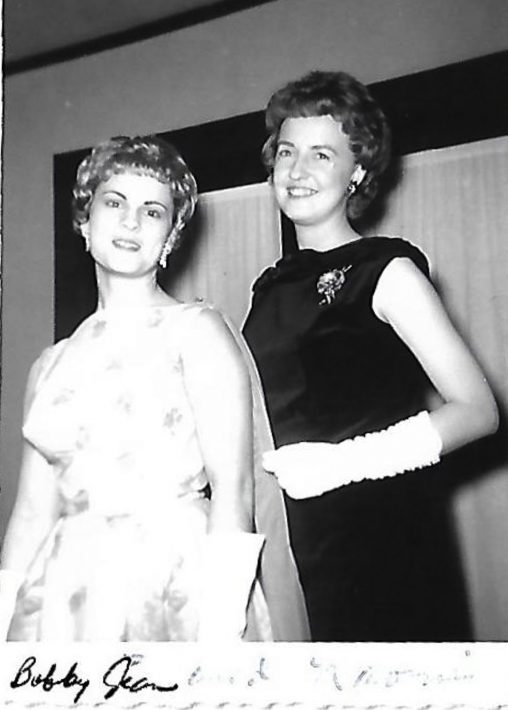
I saw Nanas I never knew. I saw Nana as a young lady, about to go out for a night on the town, looking every bit like someone off the Mad Men series.

Nana in 1963

I saw Nana as a senior in high school, just a little older than most of my students, and wondered what she was like in class.

The graduate

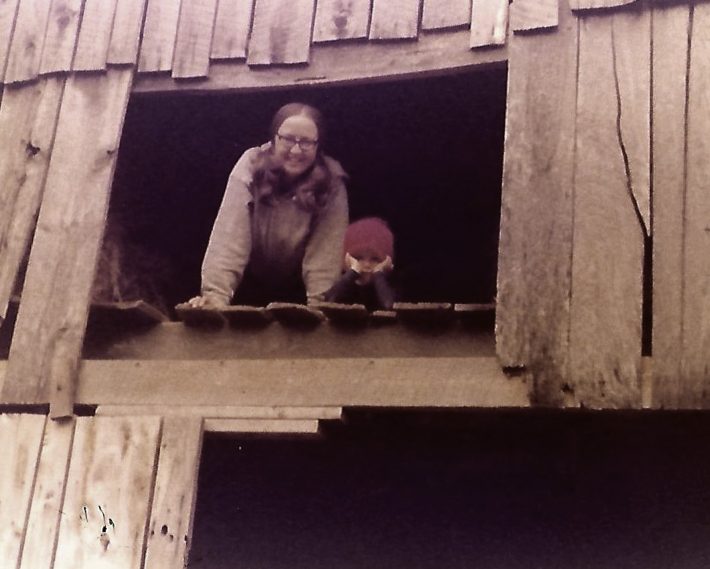
I saw Nana when she was a mother but younger than I am now, with a version of me that’s probably about E’s age. It’s as hard to imagine Nana climbing up into a barn as it is to imagine her bedridden and frustrated.

In the loft of her brother’s barn

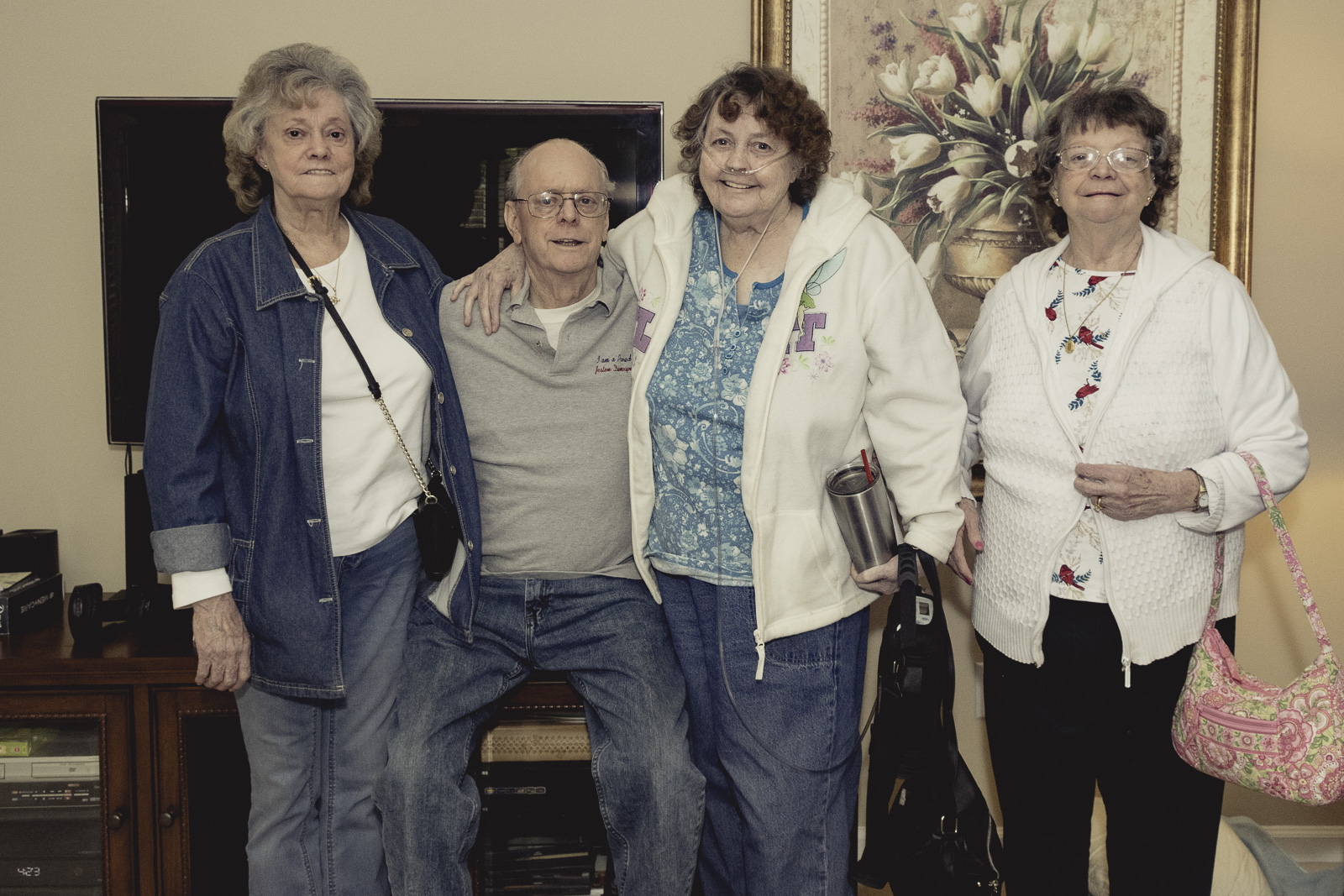
And now that she’s passed, all these versions live on in various people’s memories. “That was about the time I met your mother,” Papa explained about the Mad Men photo. Her best friend since forever likely remembers first-grade Nana as they went to school together from kindergarten through graduation.

The rest of the day I spent working on Nana’s obituary. Ever the English teacher, I examined examples before starting to write hers and I noticed I finally have an answer to students’ common question when learning the difference between active and passive voice: “Mr. Scott, when do we use passive voice?”

“In obituaries, children, almost exclusively.”

On Monday, May 27, Naomi Ruth Williams Scott, wife, mother, sister, and grandmother, passed away peacefully at home surrounded by her family after a six-month struggle. Naomi will be lovingly remembered by her husband of nearly 55 years, Melvin; her son, Gary; her daughter-in-law, Kinga; her grandchildren, Lena and Emil; and sisters-in-law Laverne Williams, Diane Mathis, Yvonne Van Seeters, and Mary Barnes, as well as many nieces and nephews, and countless friends. She was preceded in death by her father, Lewis Williams; her mother, Ruby Gordon Williams; and her two brothers, Nelson and Wallace Williams.

A native of Indian Land, South Carolina, Naomi graduated from Indian Land High School and married Melvin Scott in 1964. They lived for several years in the Charlotte/Rock Hill area relocating to the southwest Virginia/northeast Tennessee area, where they lived for over thirty years.

Versatile and skilled, Naomi worked various jobs through her life, including jobs in a flower shop, a printing and finishing shop, a travel agency, later in life, her own business. She would have argued, however, that her most important job by far, her only truly important job, was being a mother. She was a dedicated and loving mother who provided all who knew her a clear example of what it really means to be a mother.

Naomi was a very active church member in all the congregations she attended. She served as a deaconess in the Worldwide Church of God, where she also sang in the choir and provided quiet leadership through example for members. A firm believer in Jesus, she never wavered in her faith and leaned heavily on His love and promises.

The memorial service for Naomi will be this Saturday, June 1 at 3 PM at Woodruff Road Christian Church, 20 Bell Road, Greenville, SC. Following the service, there be time for fellowship and visitation with light refreshments to give everyone an opportunity to share with each other their memories of Naomi.

As Naomi felt special tenderness to all children but especially her son and grandchildren, the family requests instead of flowers memorial donations to the Shriners Hospital for Children and St. Jude Children’s Research Hospital. Since her faith was so important to her and because the church has shown so much support in this time of need, the family would be honored with donations in Naomi’s memory to Woodruff Road Christian Church.

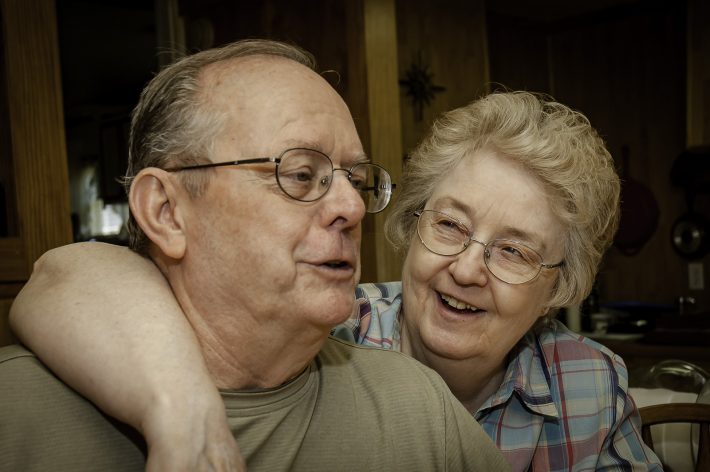
But bottom line, I look at these pictures, especially the most recent, of Nana and Papa, and it hits me again and again:

Probably my favorite picture of my parents

I simply can’t believe she’s gone. I imagine we’ll all be experiencing that for many months.

Digging, Mowing, Sealing

We put the new bed in a year ago — exactly a year ago today.

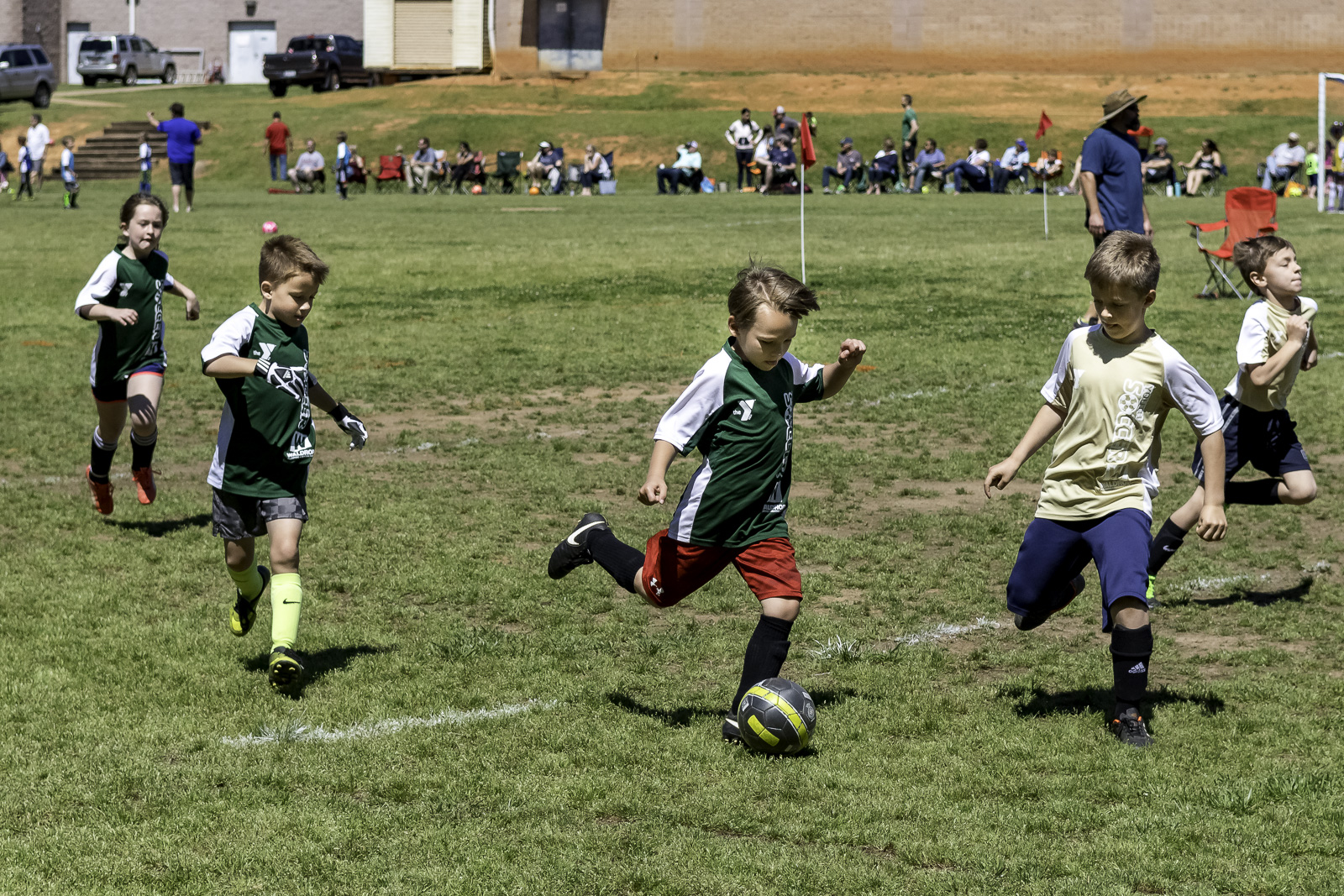
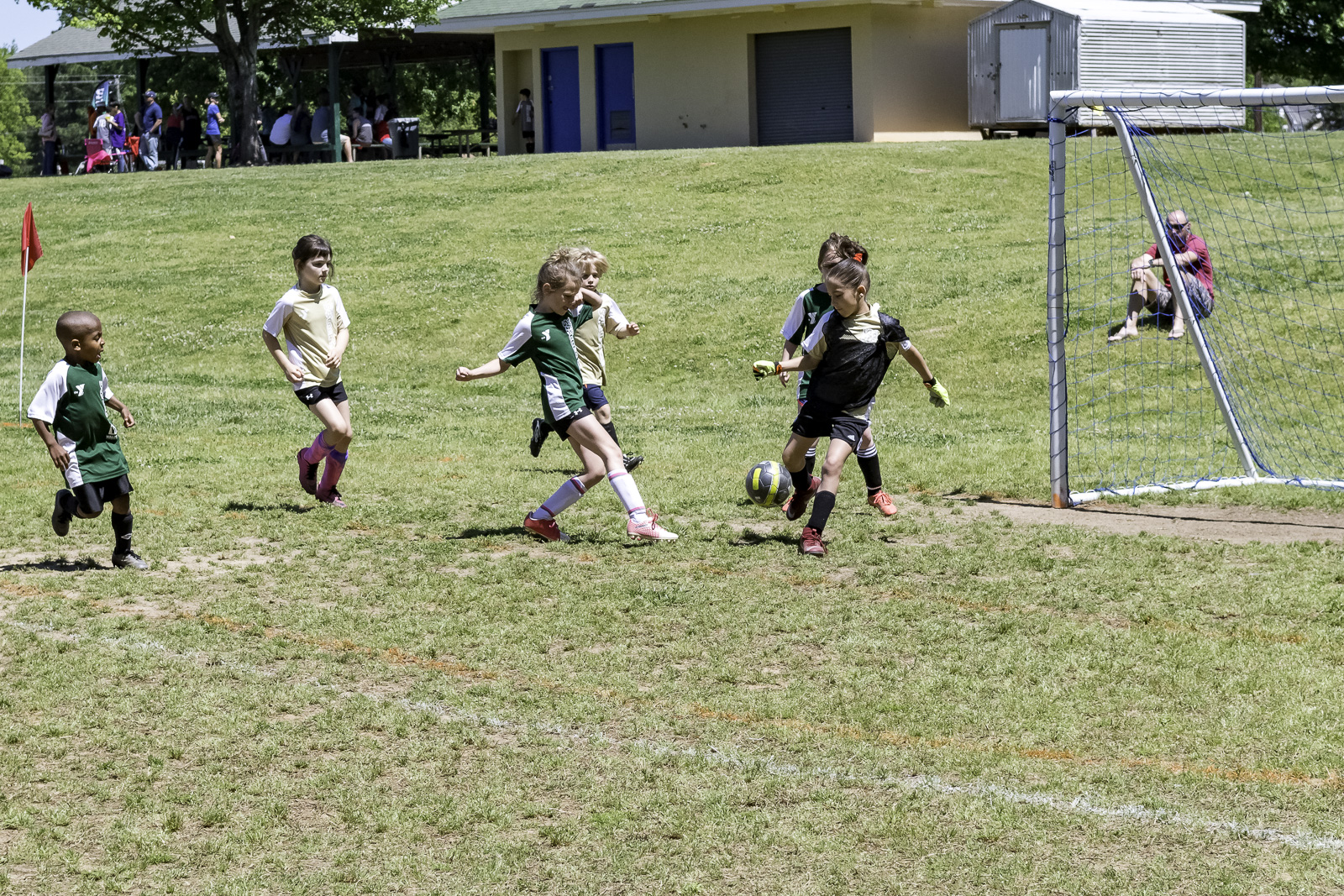
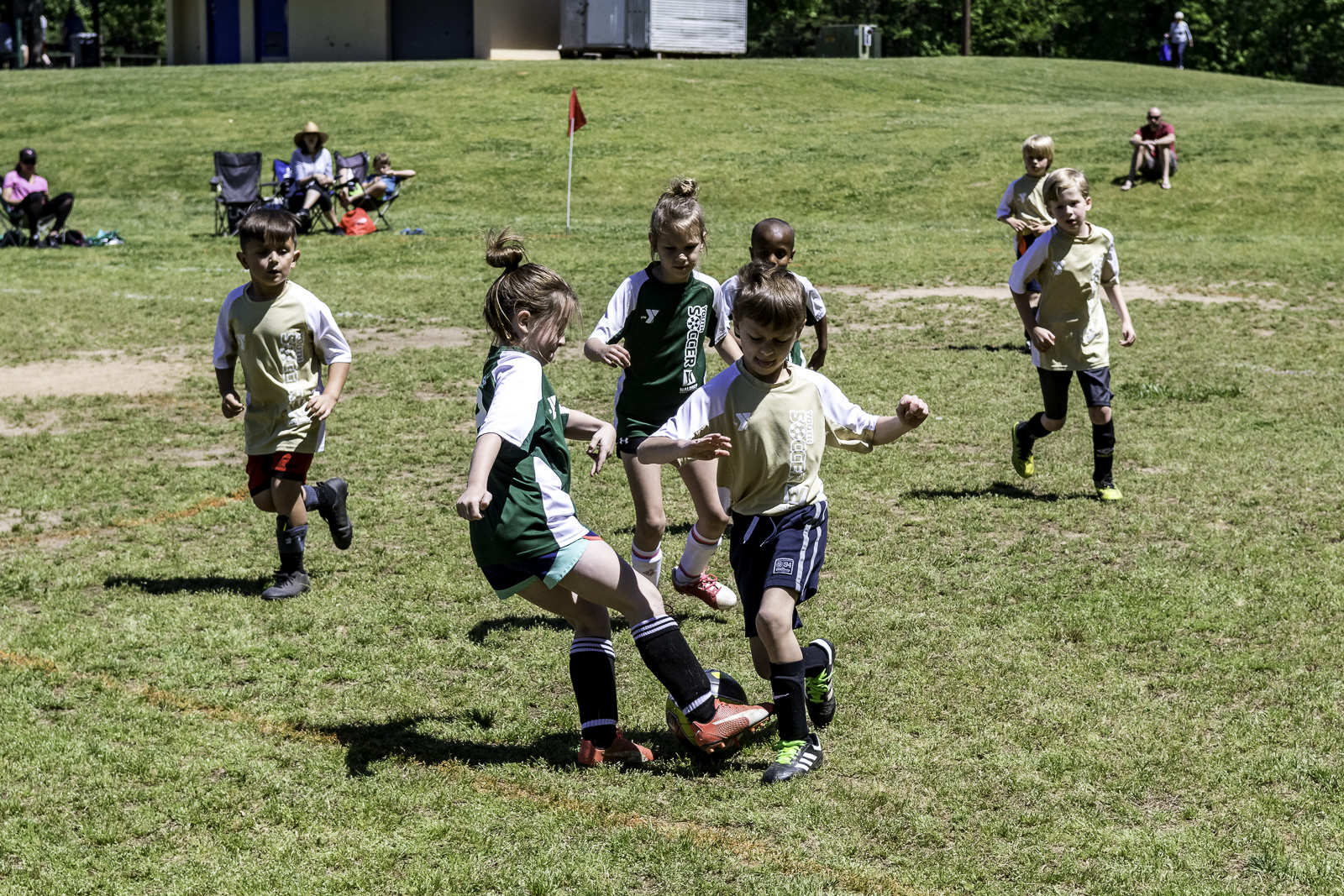
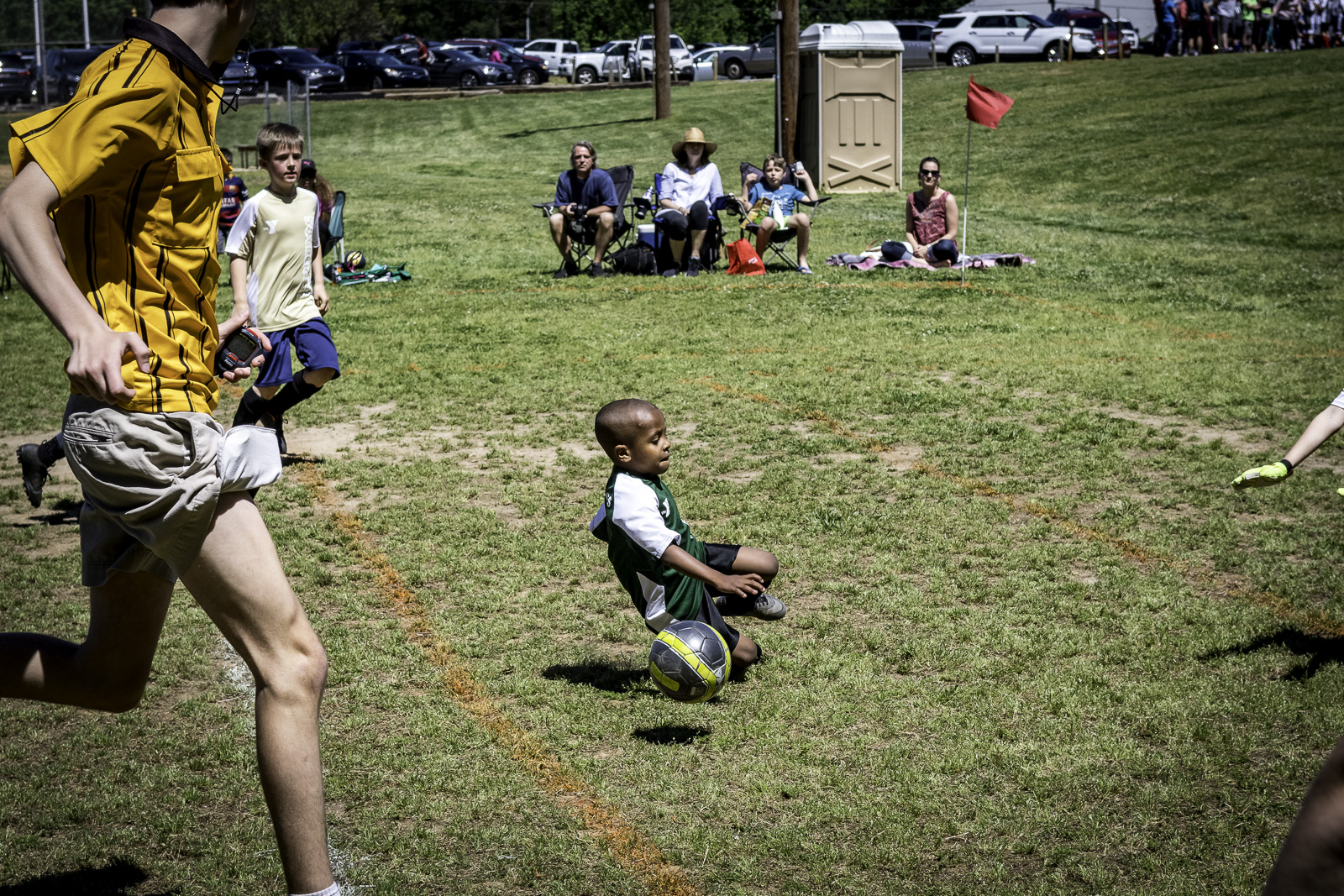
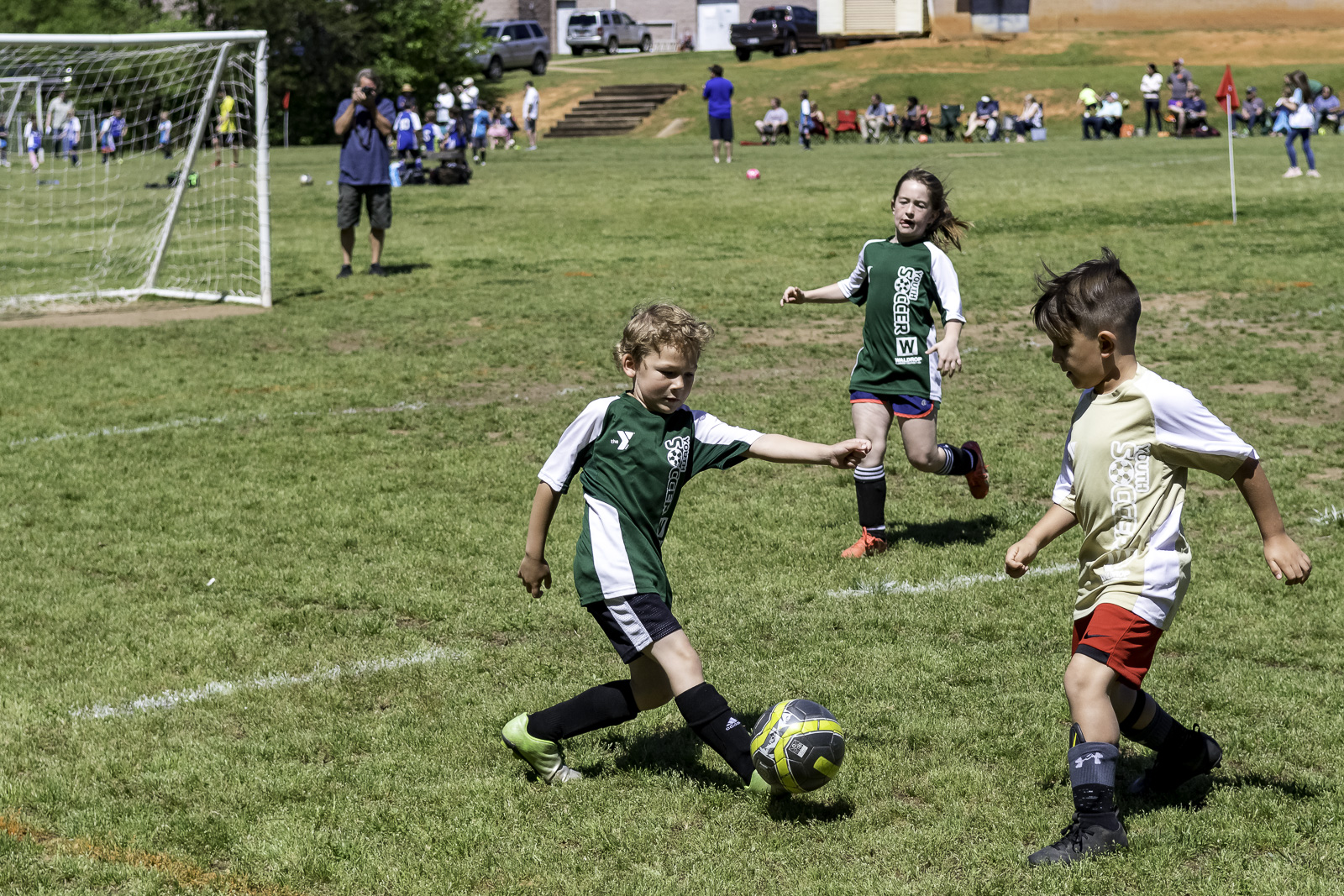
End of Spring 2018 Soccer

The day’s first victim

It’s tempting to fall into the obvious reflection: the “so much has changed in a year” cliché. A lot has changed in a year, but the majority of it has changed in the last five months, all starting December 4 with a phone call at around 9:30 in the evening while I was out walking the dog. “Nana is going to the hospital.” And from that moment, it all changed. No one knew just how much it would change, of course. No one has any real clairvoyance in medical emergencies. But here I am, a day past five months after it all started, exactly a year after we put them in, taking out the last vestiges of a garden.

It doesn’t happen often, but every now and then, Saturday work spills into Sunday. We try to keep Sunday as a day for the family, but with the last five months begin what they have, that in itself is a challenge.

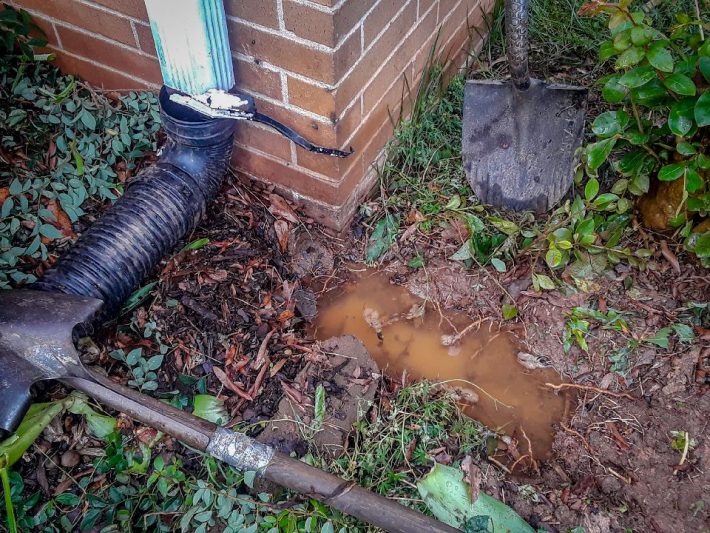
Today’s job was simple but critical: deal with the recently created drainage issue at the front corner downspout.

Yesterday’s mess before it got really bad

Visions of it seeping through the brick into the now newly created concrete-slab crawl that would offer no outlet at all haunted me, and when the rain woke me at three in the morning, I went to check and found the hack I’d created didn’t work either and set about digging, in a downpour in my underwear and Crocs at three in the morning, a quick trench to direct the water away from the house.

Crepe Myrtle free

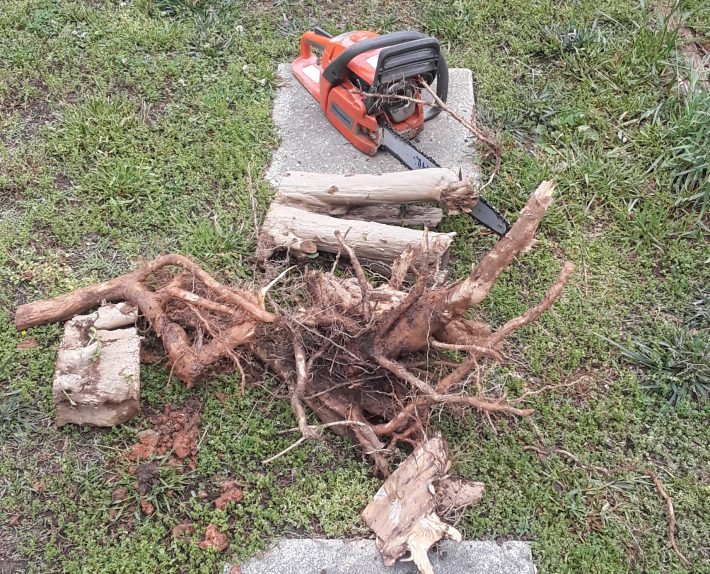
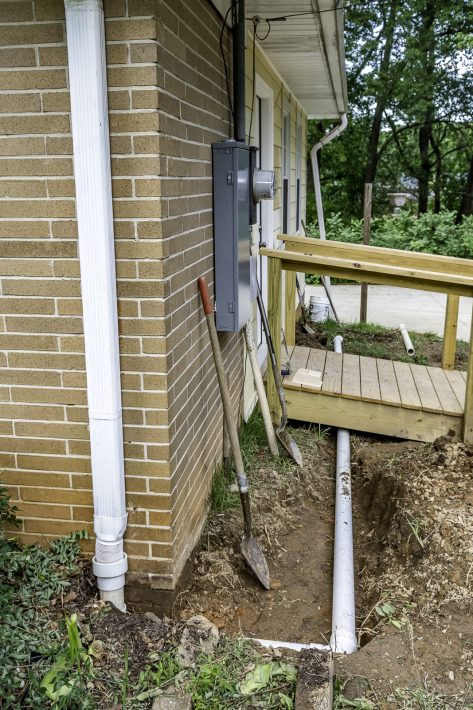
Today, then, was the day to solve the problem once and for all. The first task: dig up the Crepe Myrtle at the corner of the house. That took a couple of hours. Then, the trenching, including a trench under the newly built ramp. Why not do it before they built the ramp? Simply — I didn’t know it would be necessary.

For now, everything is simply laid out and pushed together. I’m far from done and not even sure how I’ll terminate it for effective discharge.

Next, after several hours of digging, I turned my attention back to the yard and the hedges three-quarters trimmed. I’d cut my power cord yesterday and decided to put it off until Sunday — and the torrents of rain that were by then falling didn’t do much to avoid said procrastination.

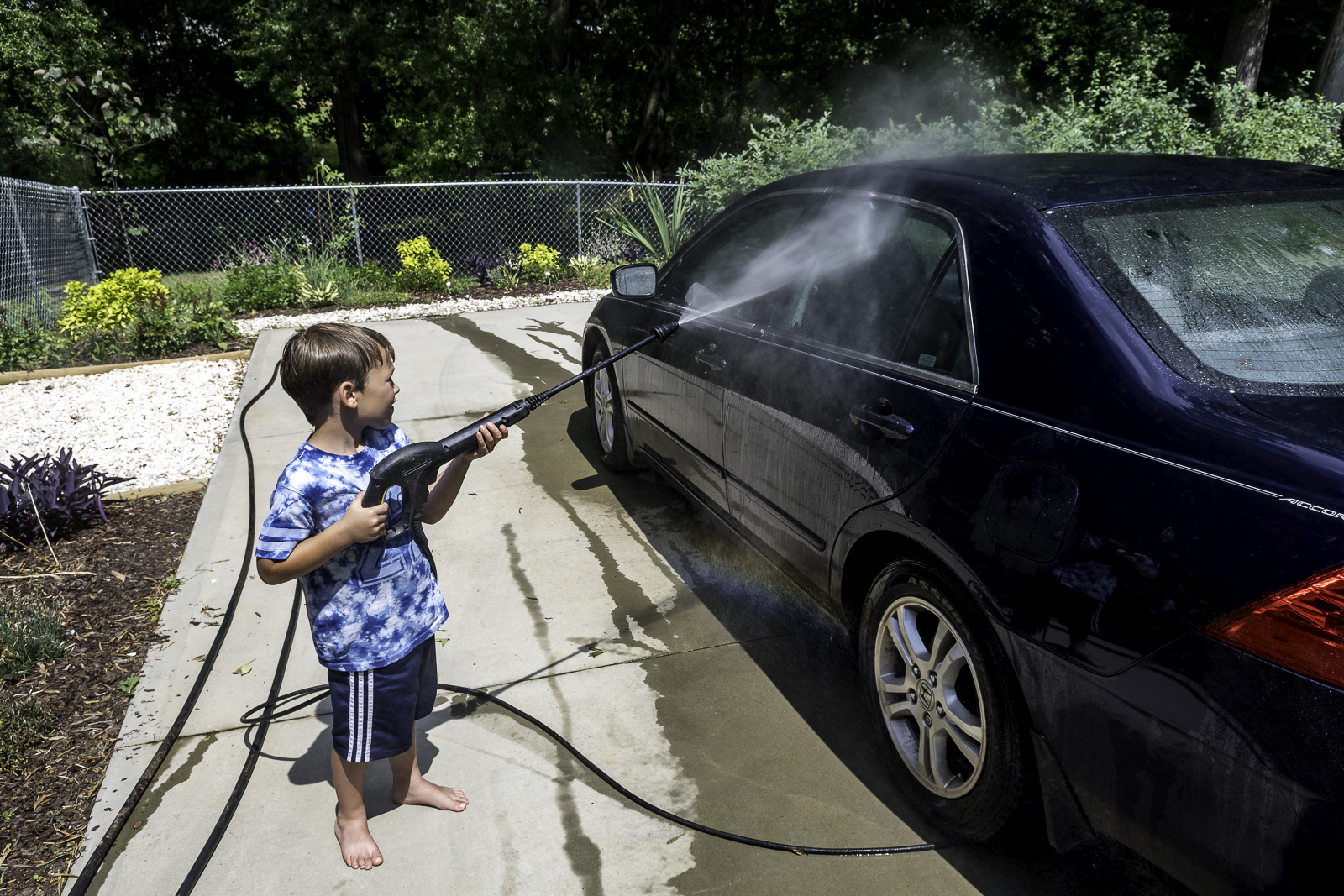
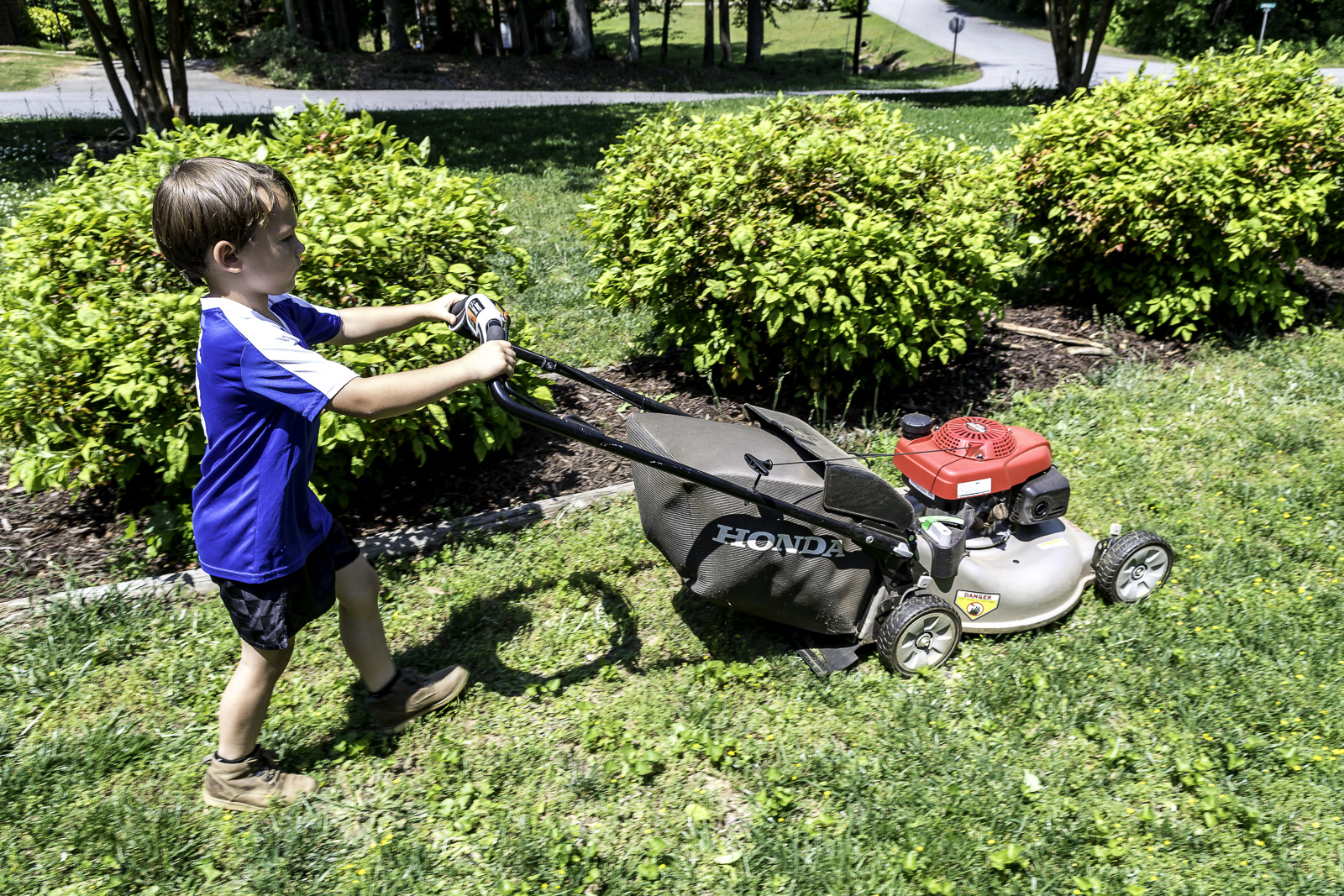
The Boy for his part was upset and thrilled about it all. Digging is one of his favorite things, and he was disappointed that he missed out on so much of it. Mowing, though, is equally enjoyable for him, and he reached a milestone today: he can now start the mower himself. He ran over the trimmings that remained around the yard, always looking for a reason to turn the mower’s engine off so he could turn it back on.
(The hard rain really did a number on our plants — they’re beaten into submission.)

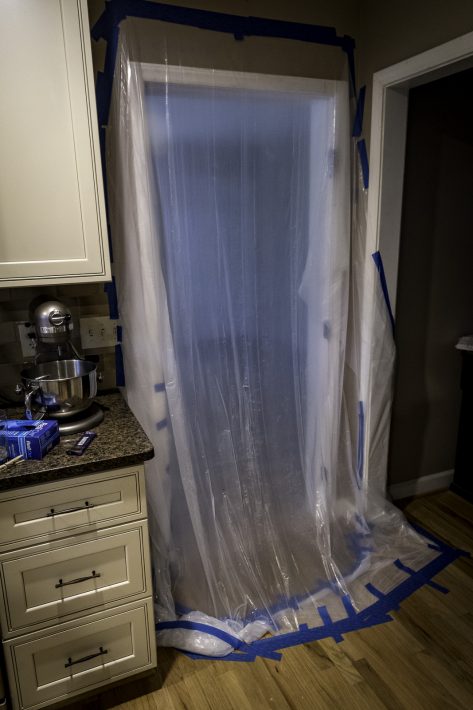
The final task was indoors: sealing up the entry to the new room. The floor guys are going to be here tomorrow, and the thought of sawdust throughout the kitchen and living room was none too appealing.

Crawling in from the back side before it was sealed: “This would make a great little fort…”

Finally, dinner without the girls: leftover soup and a salad. The Boy, being the wonderfully odd eater than he is, was disappointed with the soup (he’s grown tired of all soups, I think) and thrilled about the salad.

Spring Monday

I was worried that this would be the first of several very difficult days. With no one here to help with the kids (read: E) in the morning, it’s difficult for me to get out of the house very early. This week, however, is my duty week: I get to spend thirty minutes before my contracted arrival time supervising kids on the eighth-grade hallway. It’s loads of fun, but the downside is that I have to leave much earlier than usual. Which created a dilemma: what to do with the Boy. Two options: ride with the neighbor or leave without breakfast and have it at school.

At around 6:15 this morning, the Boy toddled downstairs, still rubbing his eyes, and presented a third option: “I’m just going to eat breakfast now.”

“Are you sure? You could still sleep another half hour.”

“Nah, I’ll stay up.”

And so the Boy proved once again that life is like calculus: there’s often more than one (or even two) solutions to a given problem.

Once at school, the usually peaceful morning duty transformed temporarily into one of those moments when, as a teacher, I see a student’s future and think, “Wow, if this kid doesn’t make some serious changes, do some serious maturing, she’s in for a long, tough life.” And much of that, in most cases, is due to environment: they’re not choosing necessarily to be a disrespectful kid. It’s something that works on the streets and/or at home, and they just bring it into the school as well.

That particular exchange foreshadowed the discussion I was to have with my honors English kids, who read Plato’s “Allegory of the Cave” last week as their article of the week. We began with a review via video:

Then the kids went through a few discussion questions:

  1. To what extent do you find Socrates’s point about the human tendency to confuse “shadows” with “reality” relevant today?
  2. What could be the elements that prevent people from seeing the truth, or regarding “shadow” as the “truth”?
  3. In society today or in your own life, what sorts of things shackle the mind?

The common theme that came through in all of these discussions was the role social media plays in creating false realities, in preventing people from seeing truth, in shackling the mind. It’s ironic: I see so many of these kids buried in their phones before and after school, yet they’re strangely aware of the negative effects.

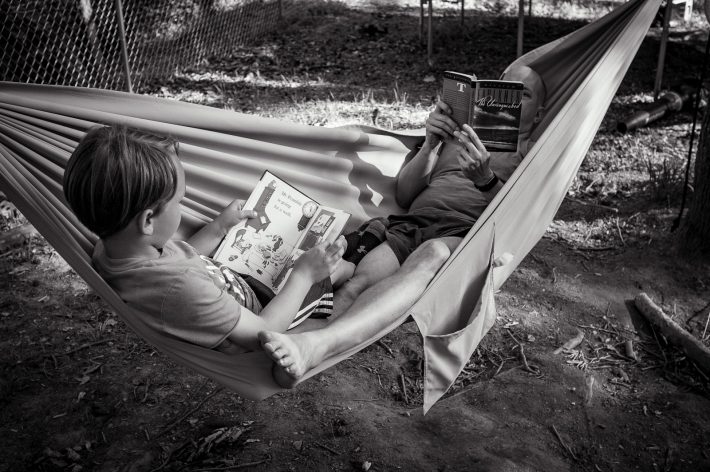
After school, I hopped out of the car thinking, “So far, other than the little issue in the morning during hall duty, this supposedly tough day is surprisingly enjoyable. After dinner, it was even more so: one of E’s choices in his literacy log is to find a pleasant place to sit outside and read for a while.

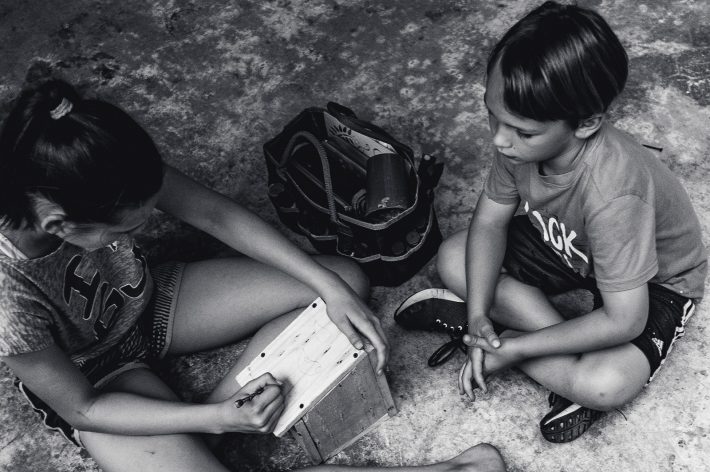
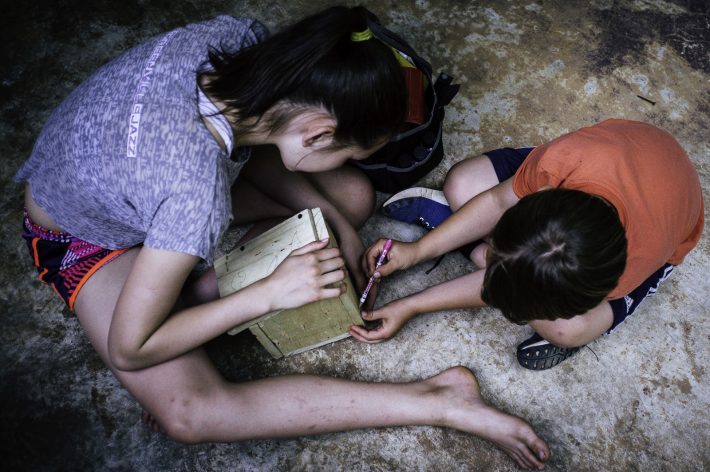
And after that, a little project: a bird house. Where did this idea come from? I don’t know. The Boy simply talked K into buy him a piece of pressure-treated 1 x 6, and although he originally planned on building a tree house from that single plank, he was flexible enough to realize that a bird house was probably more in the scope of that single plank. So he found instructions on YouTube, gathered tools, and together we built a little bird house.

“Once you’re done, I want to help with the painting,” the Girl declared, and so with twenty minutes to go before the start of E’s evening ritual, they began working.

“Let’s decorate it with birds,” the Girl suggested. They began drawing various silhouettes of birds while I got the dog’s dinner ready, only to discover we were out of dog food.

“Alright kids, you’ll have to do the actual painting tomorrow. E, you’ll have to go with me to the store to buy some food for Clover.” I was expecting a small fit, some protesting at the very least, and I was reluctant to stop the work in progress: it’s so rare that they find something that really engages them both.

Still, the Boy was surprisingly mature. “Okay,” was all he said, and off we went to get some kibble for the pup.

And so at the close of this surprisingly pleasant day that was supposed to be the first of several tough ones, I find myself realizing anew that “tough days” and “bad days” and “rough days” depend more on our perception than anything else, just like Plato’s shadows suggest.

Soccer Sunday

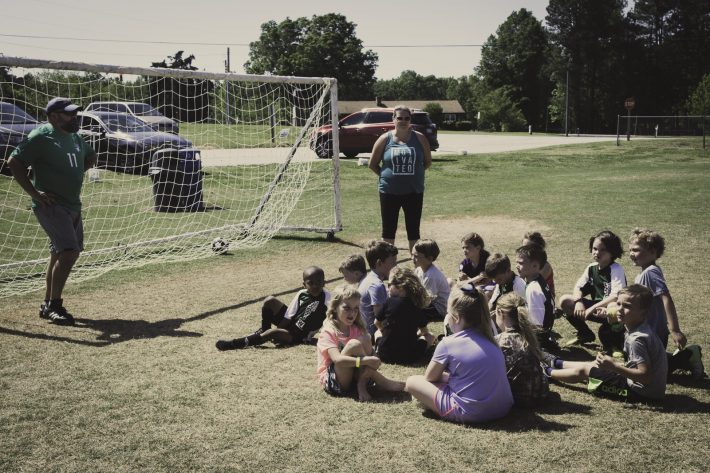
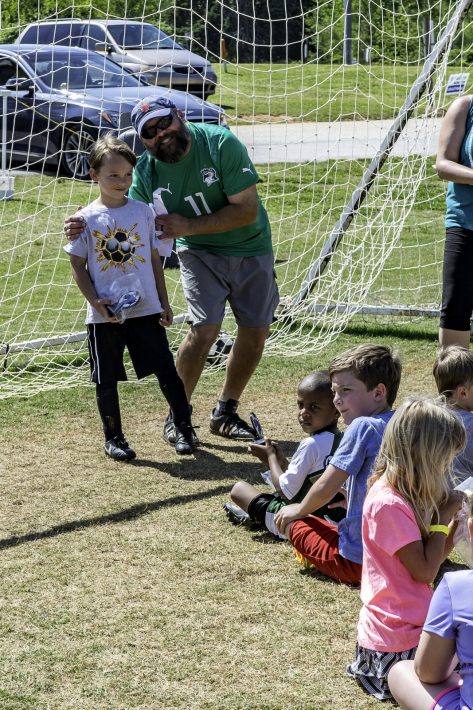
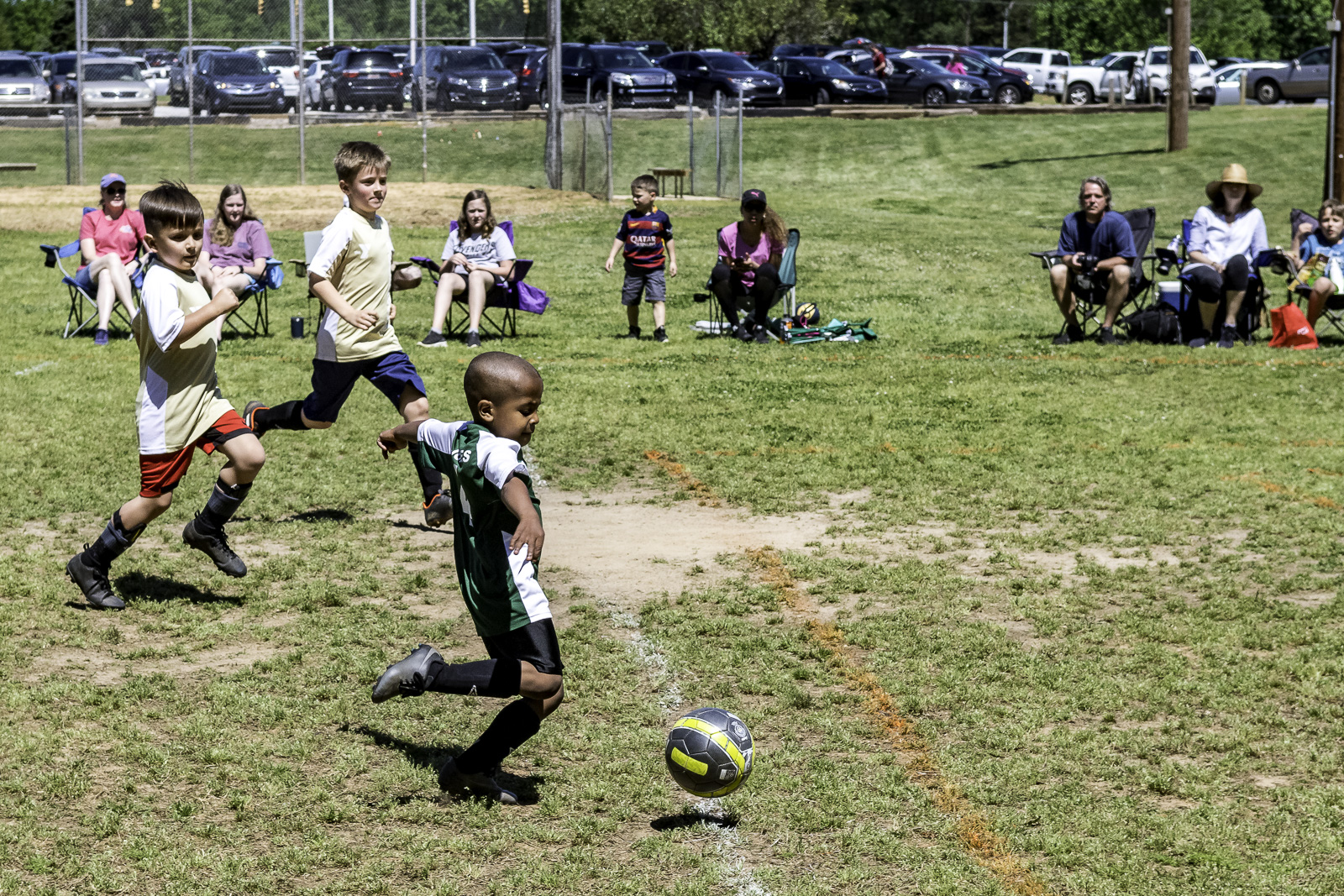
This afternoon we had the annual kids/parents soccer game to wrap up another season of soccer.

“Are you going to play?” the Boy asked.

“Of course!” Though “playing” might be somewhat hyperbolic. I have no skills to speak of, and I have no fitness to make up for it either. But I did play at the game.

I learned two things: first, I’m terribly out of shape. Since K has been staying with Nana and Papa to take care of them (alternating weeks since February, then about four or five weeks ago, every week), I don’t get out to exercise that much. I use the excuse of not wanting to leave the kids in the house alone, but that’s really just an excuse, I think.

The second was something that followed off of the first: when you’re in such bad shape and have no skills, if you’re playing kids, you can pass it off by playing like all the other parents did when we were up X-0 (can’t remember the actual score): just letting the kids win…

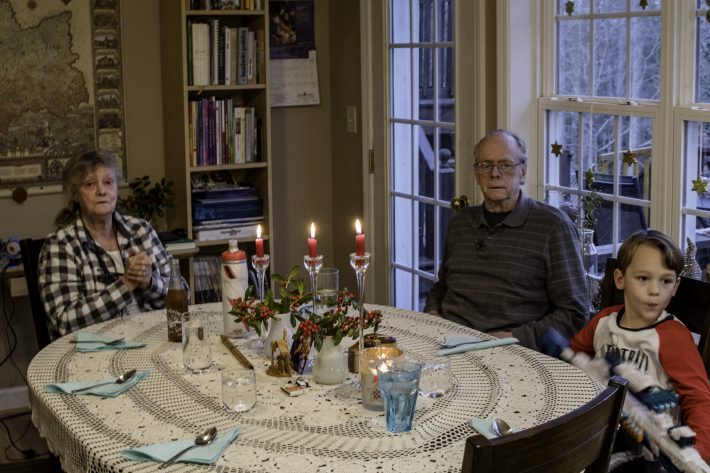
Afterward, off to Nana’s and Papa’s for dinner. There won’t be too many more times that we do that, though. The addition is nearing completion. “Two more weeks,” we say, but we’ve been saying that for a month already. But still, we only have a few more times.

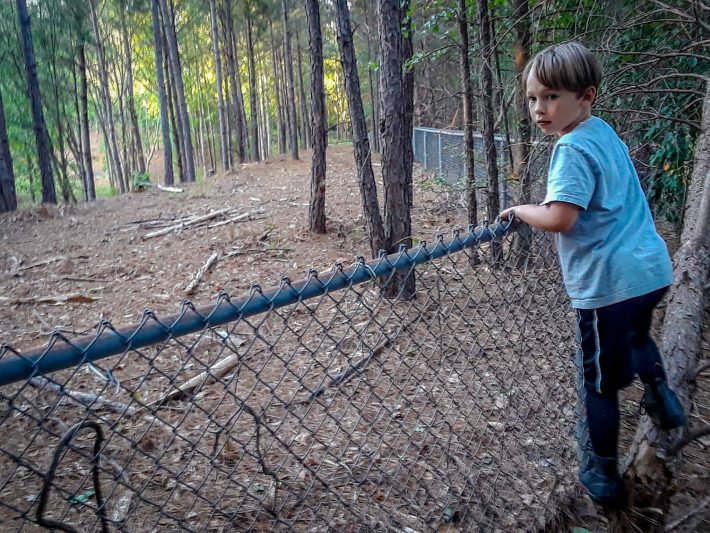
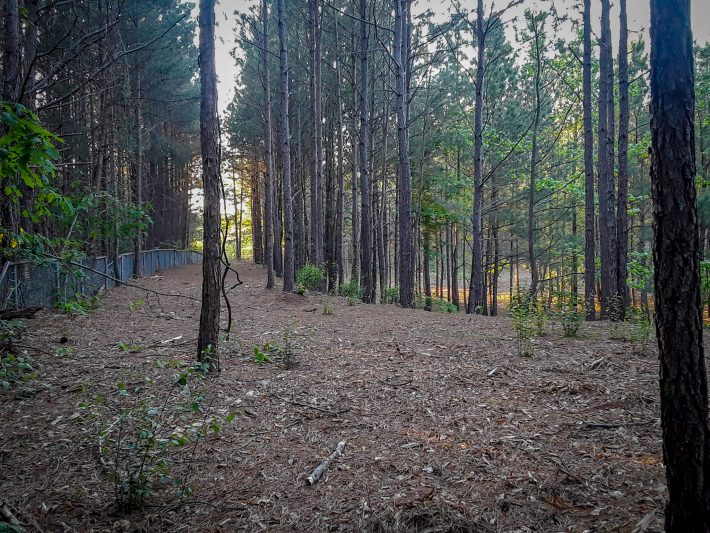
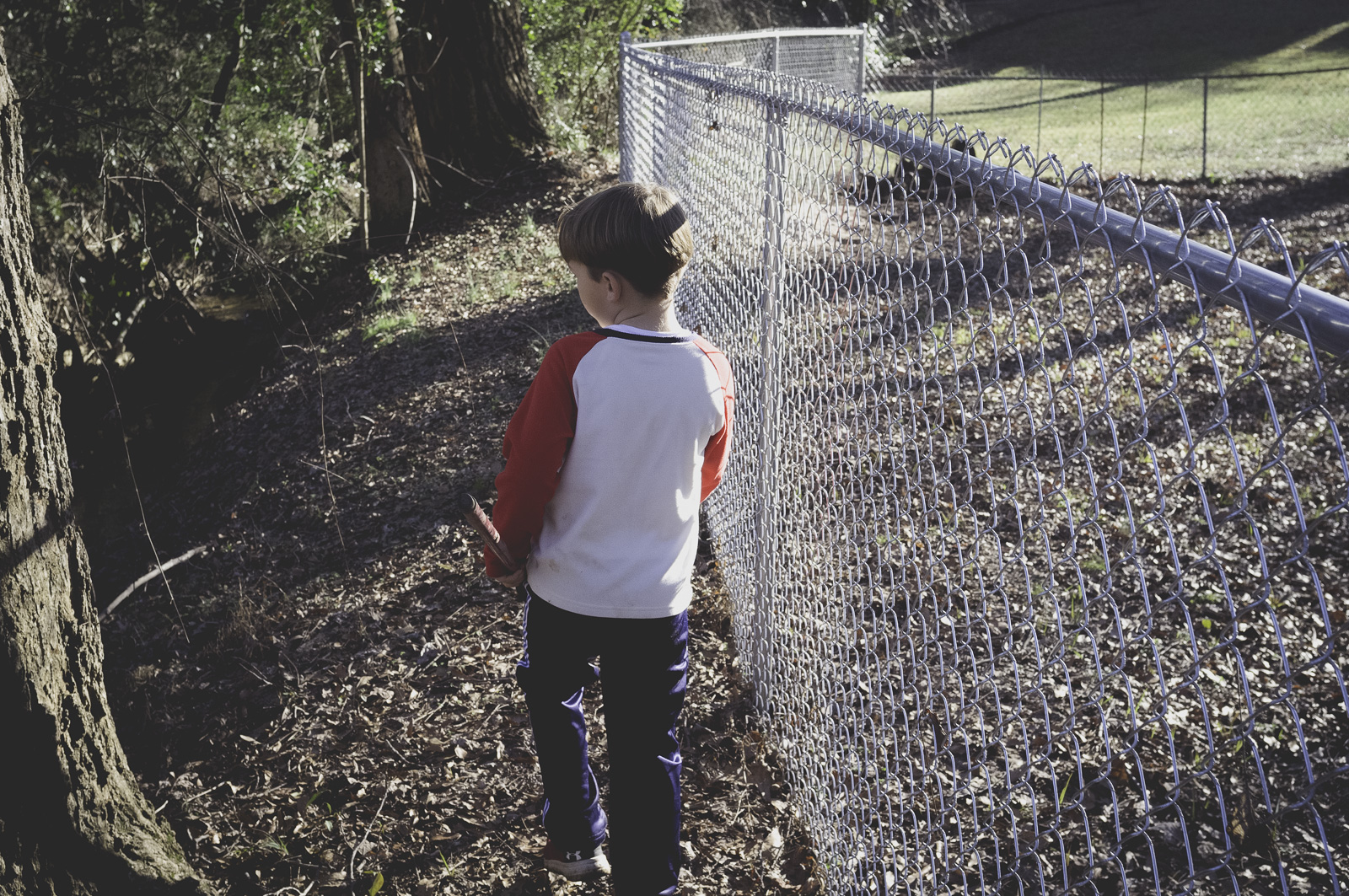
The fenced-in drainage basin mystery at the top of the hill

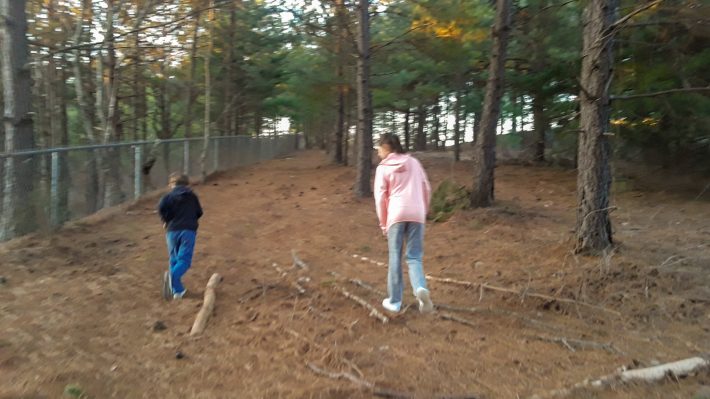
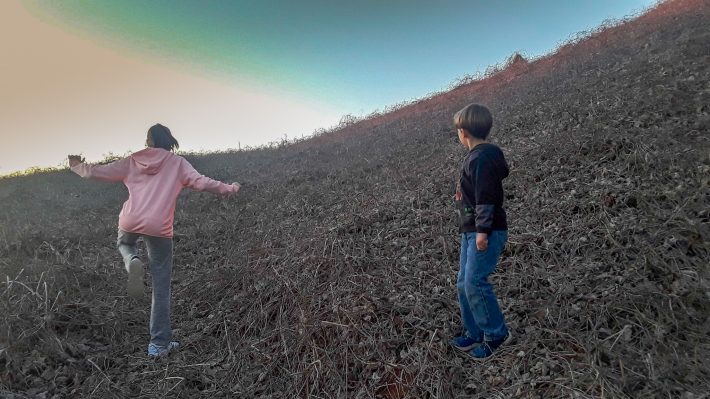
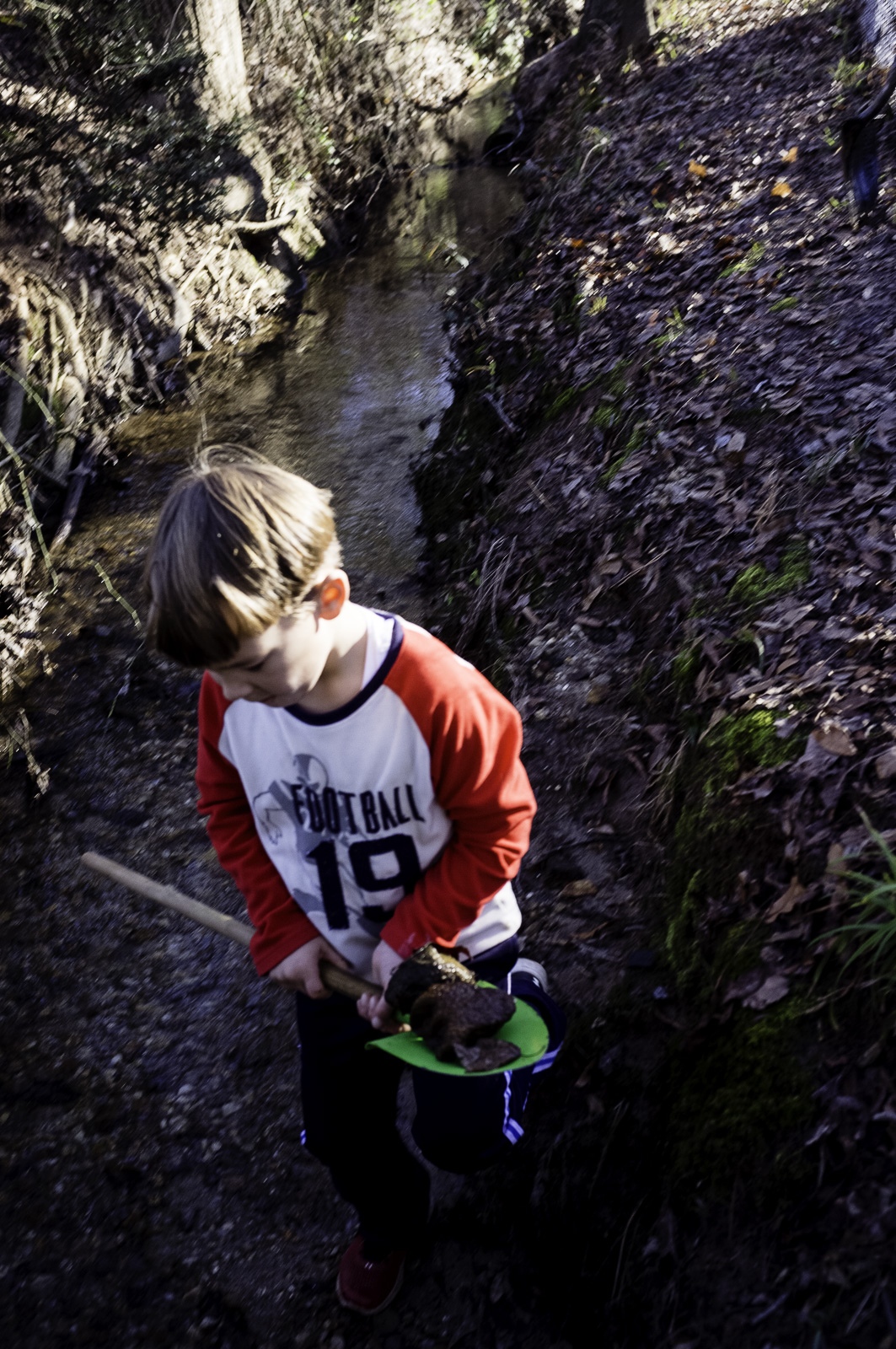
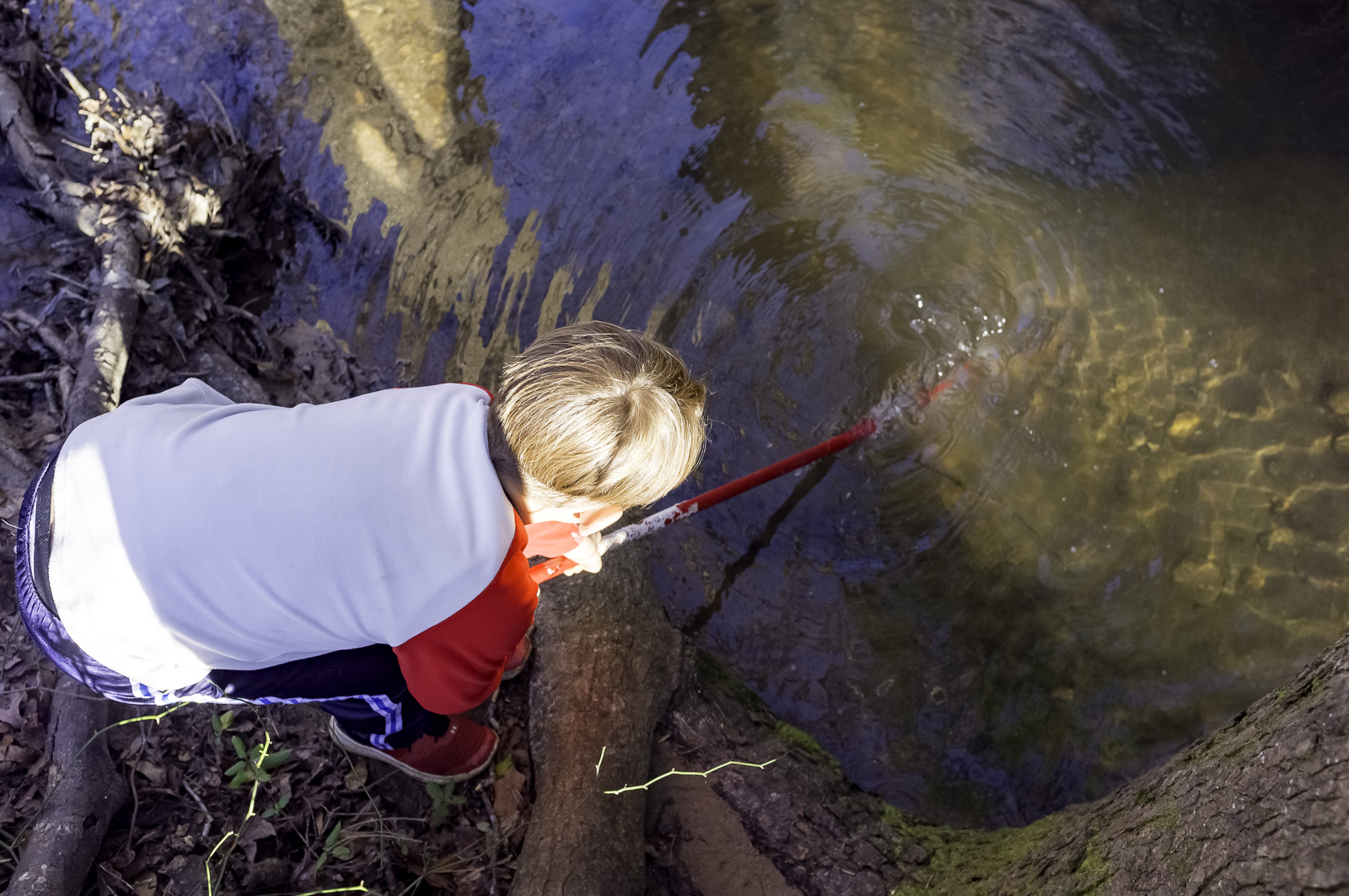
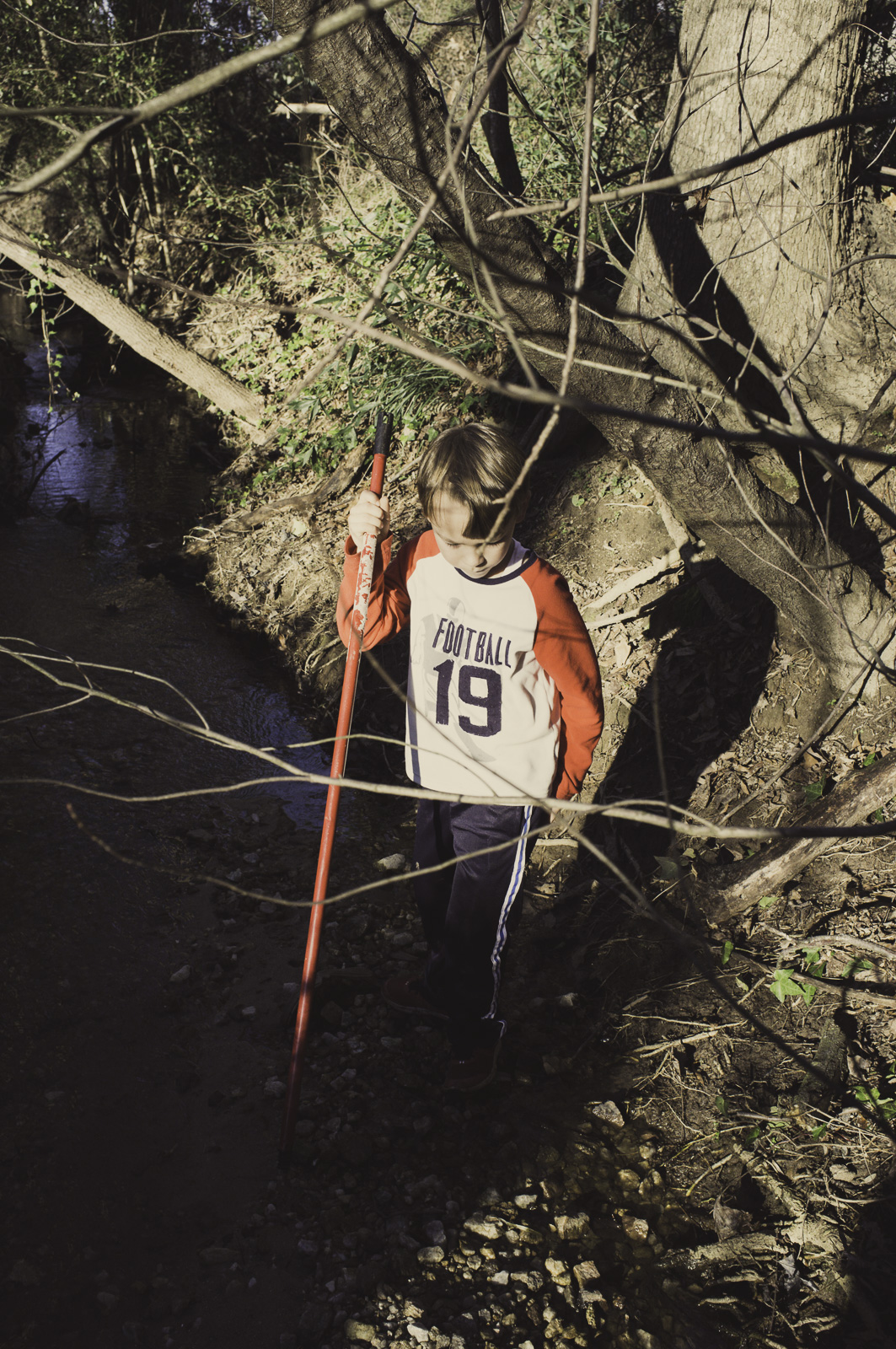
After dinner, we had a little boys’ time, as E called it. We decided to do our normal exploring around the drainage basin at the northeastern corner of Nana’s and Papa’s development’s property. It was a little overgrown as spring takes hold, but nothing like I was expecting. Perhaps the last time we go there? Who knows.
Last Saturday Soccer

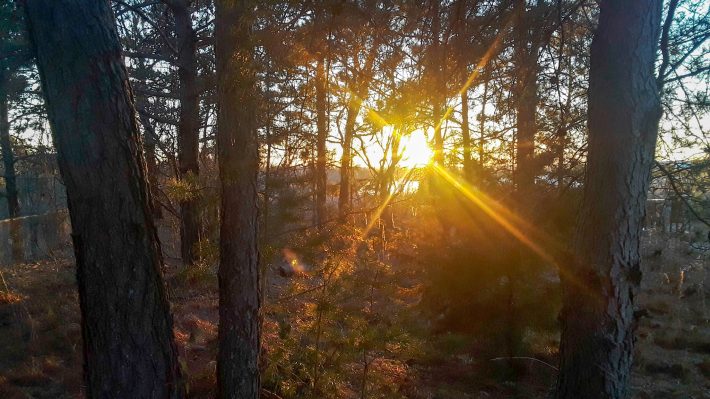
A brilliant morning — sunlight everywhere.

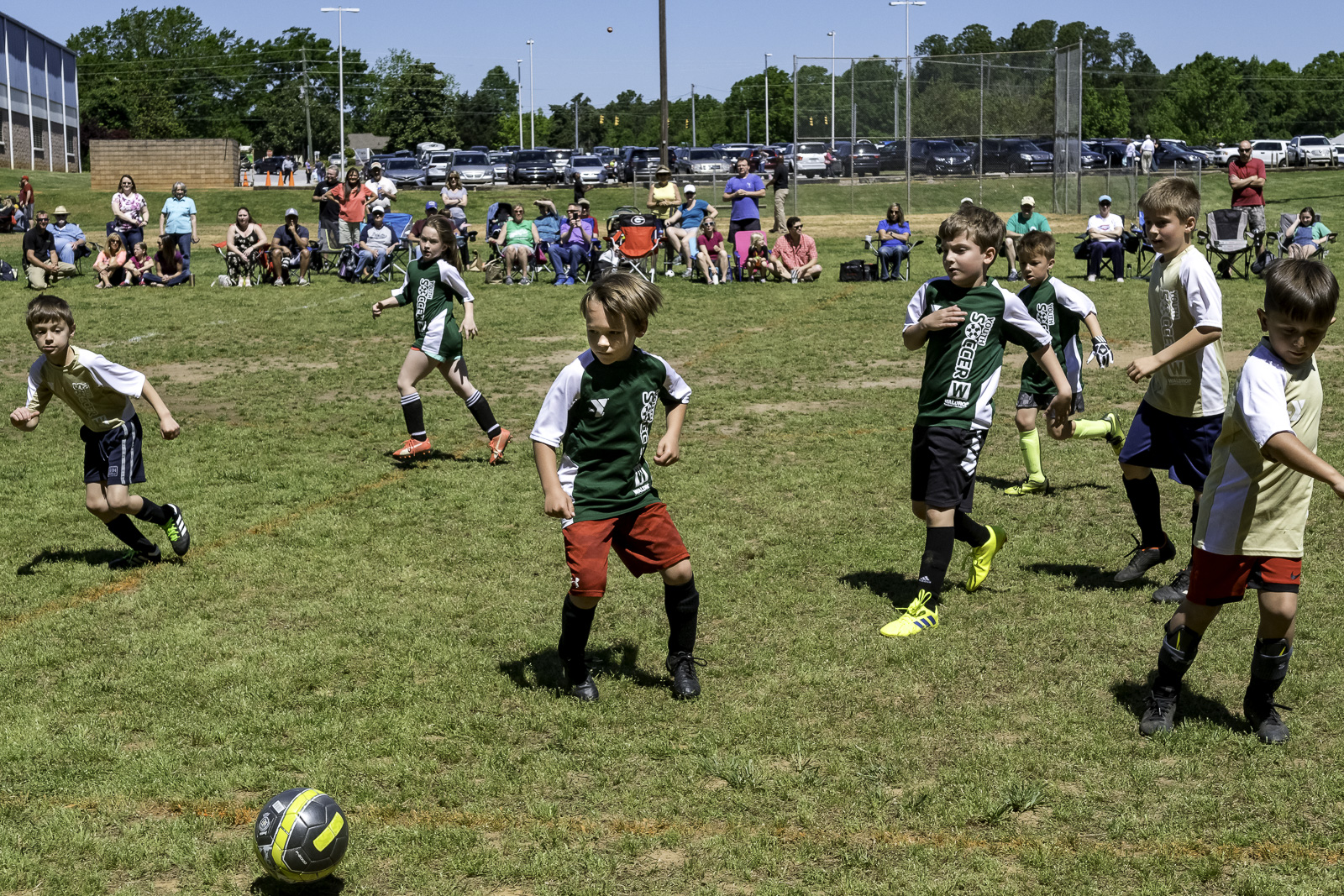
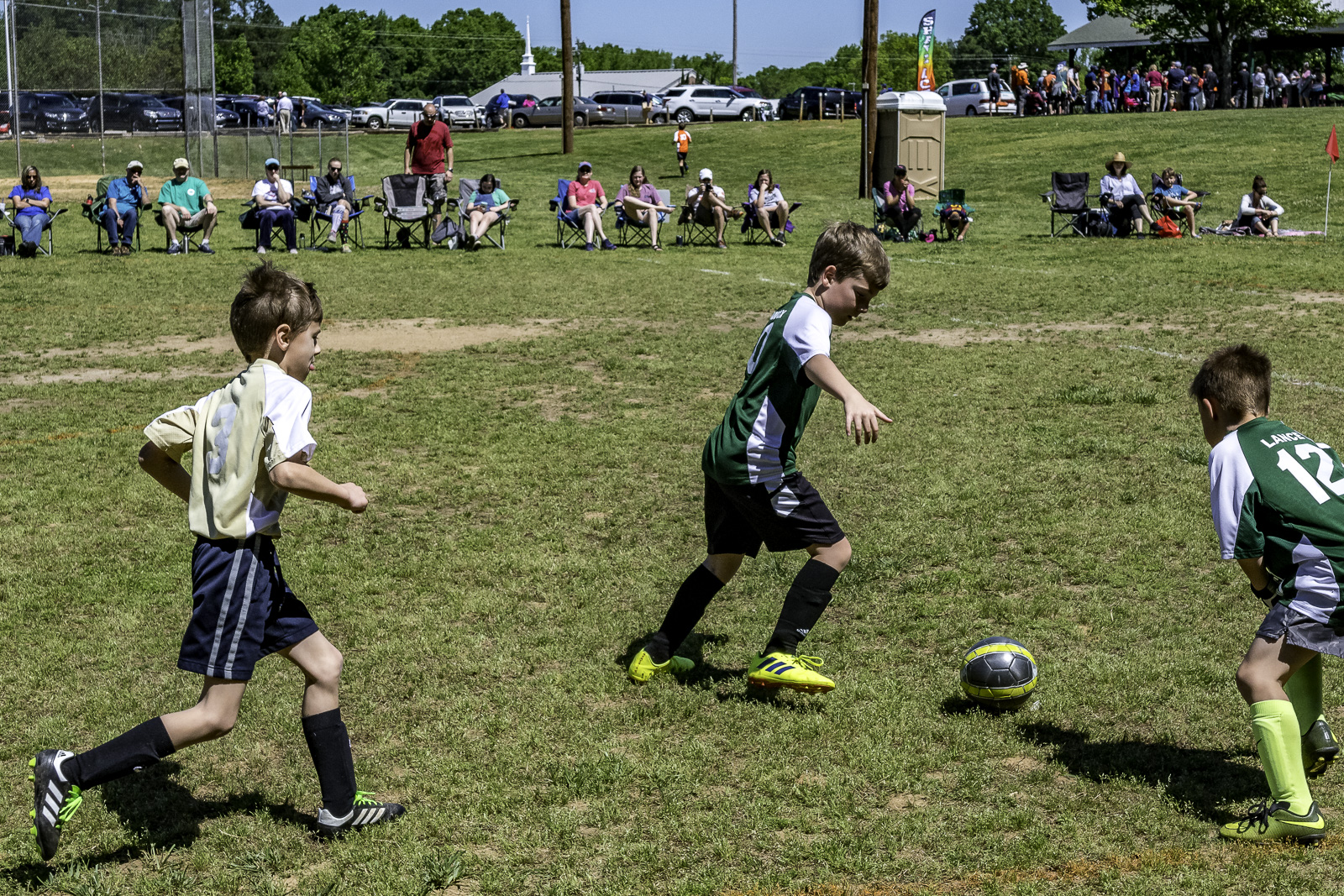
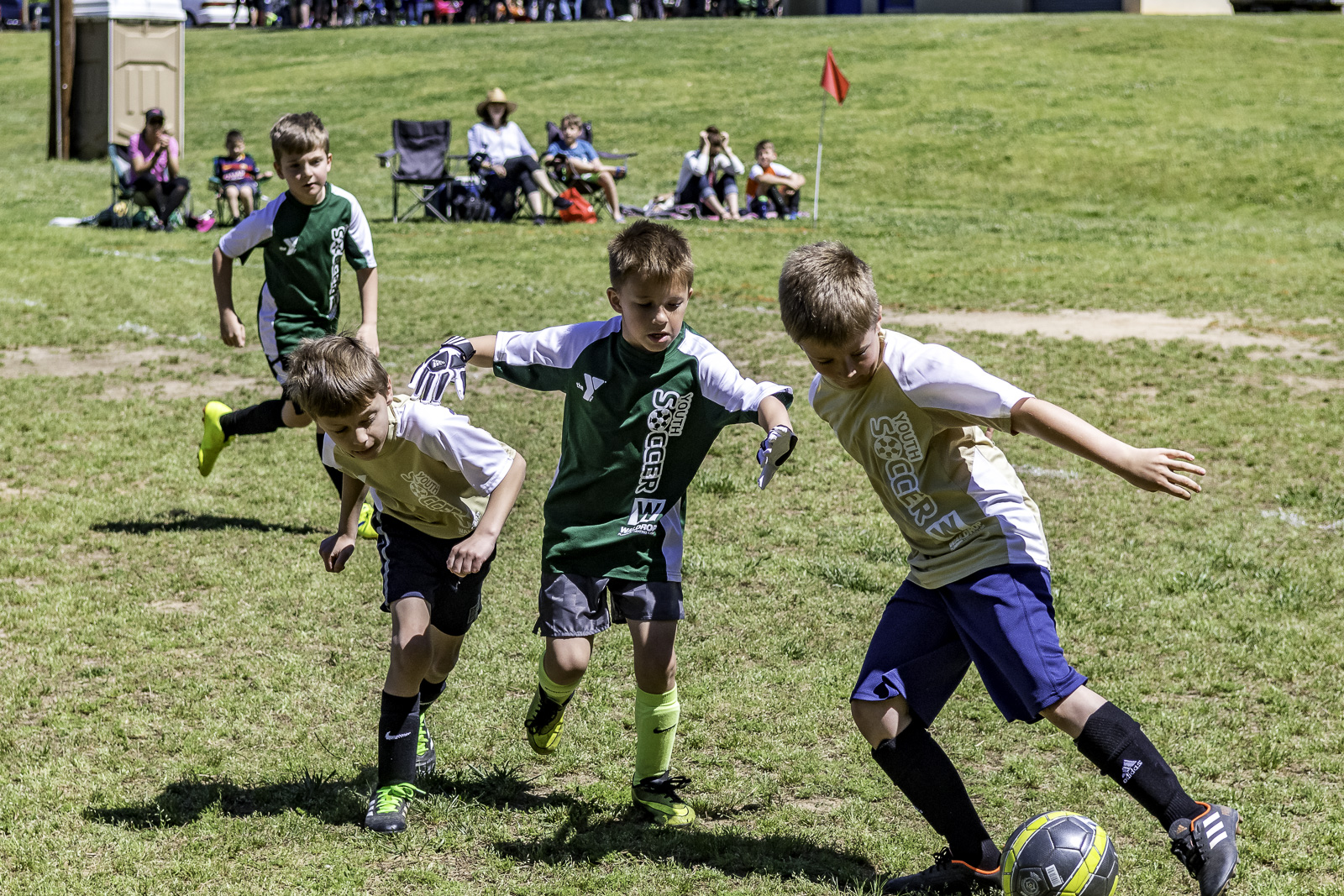
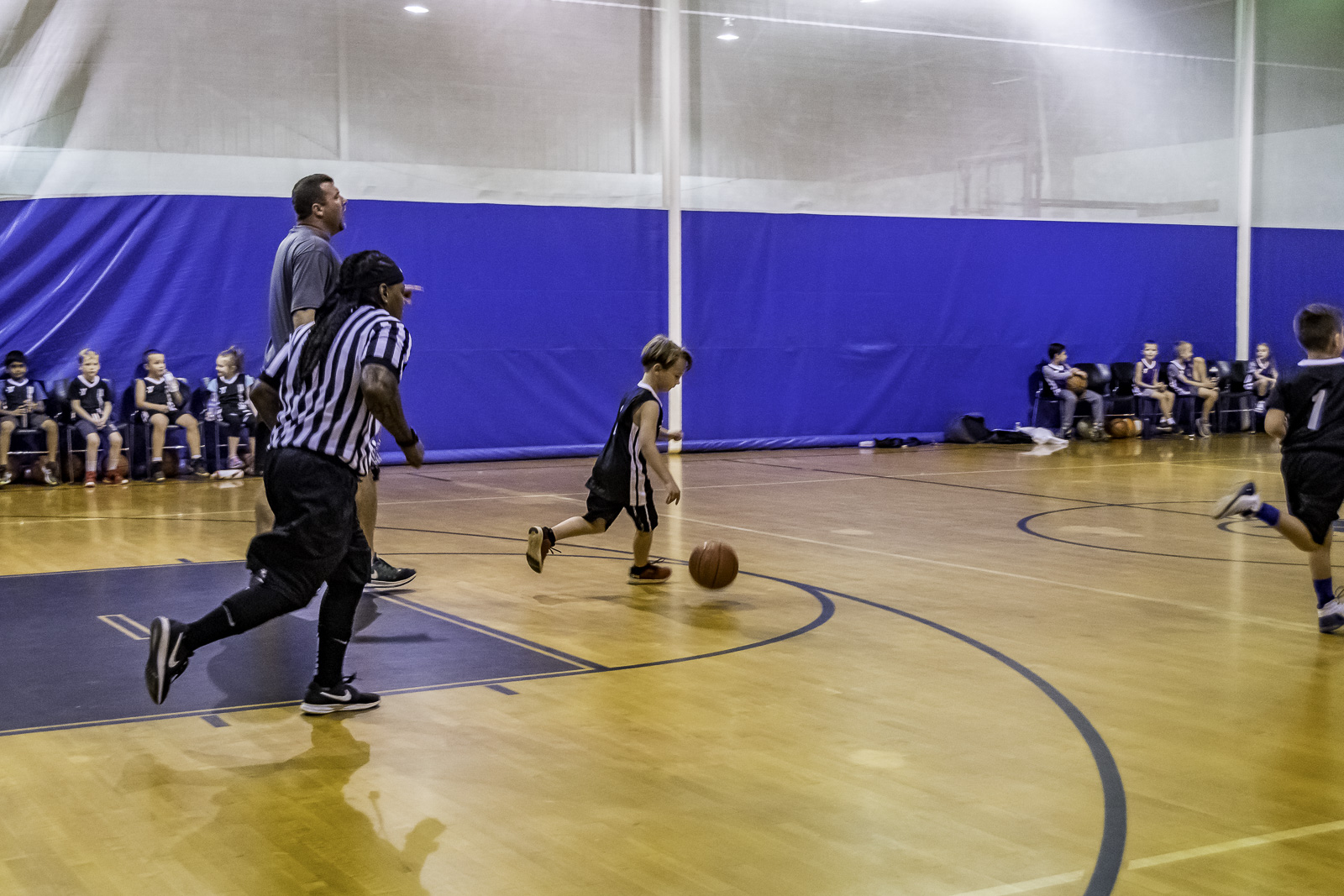
Last soccer game of the year. The Boy was excited about it — not because he was excited to play, but because he was excited to be done.

“Do I have to go?” has become something of a refrain before soccer practice and before games.

“You committed to it,” I always explain, “so you’re going to see it through to the end. We keep our word; we finish what we start.”

When I watch his play, I understand why he’s not crazy about soccer: he’s among the youngest in his age group, and he’s lacking some of the confidence that other players on his team have. He prefers playing defense for this reason: all he has to do is stop someone, which means just kicking the ball away from them (in his mind). That’s easier than attacking, when two or three are on you trying to get the ball from you — not to mention your team mates who, despite calls from the coach to realize that they’re “same team!” and instructions to “spread out,” are swarming all around you as well.

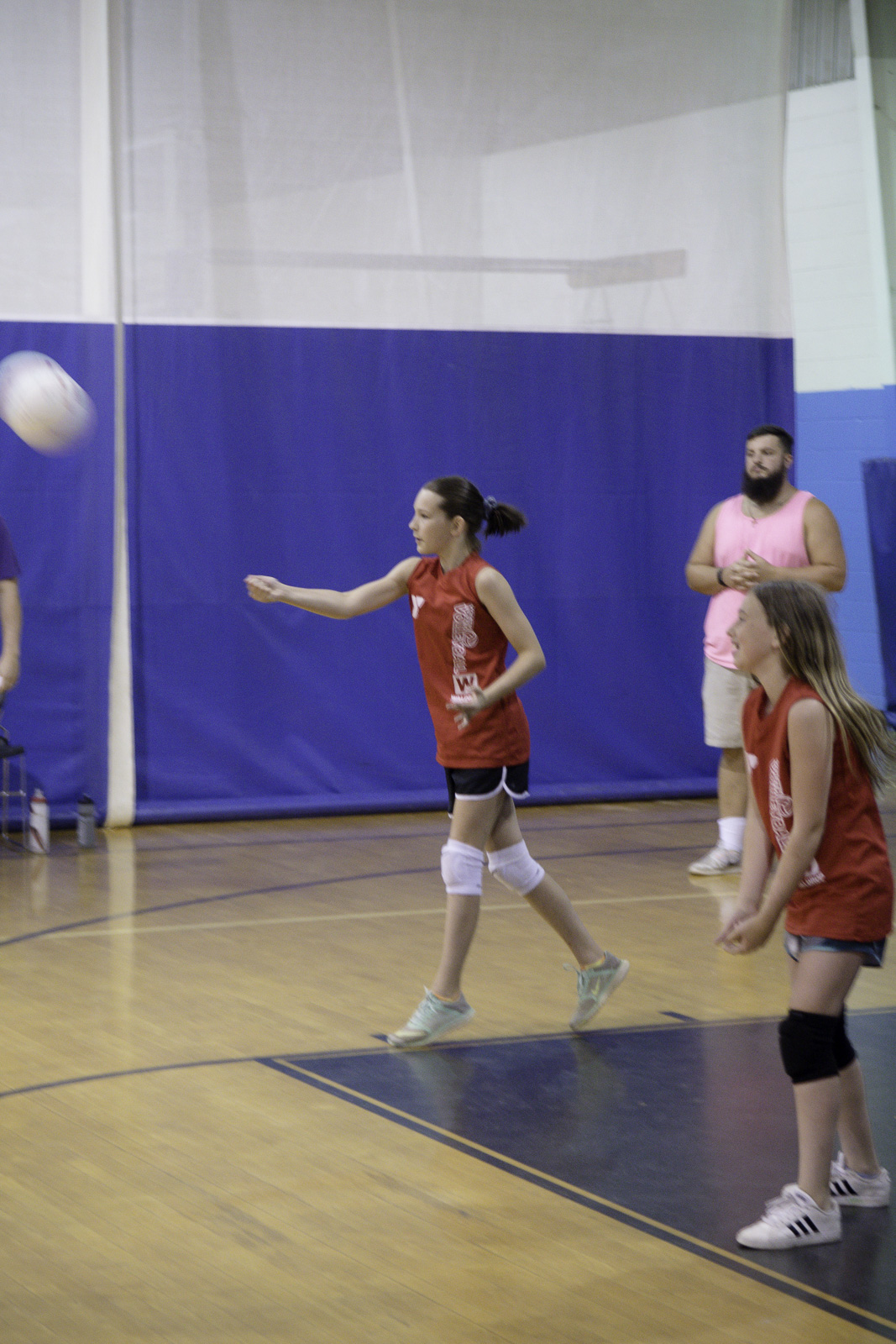
So after today, a break. Until L’s volleyball season starts up again…

Photo Request

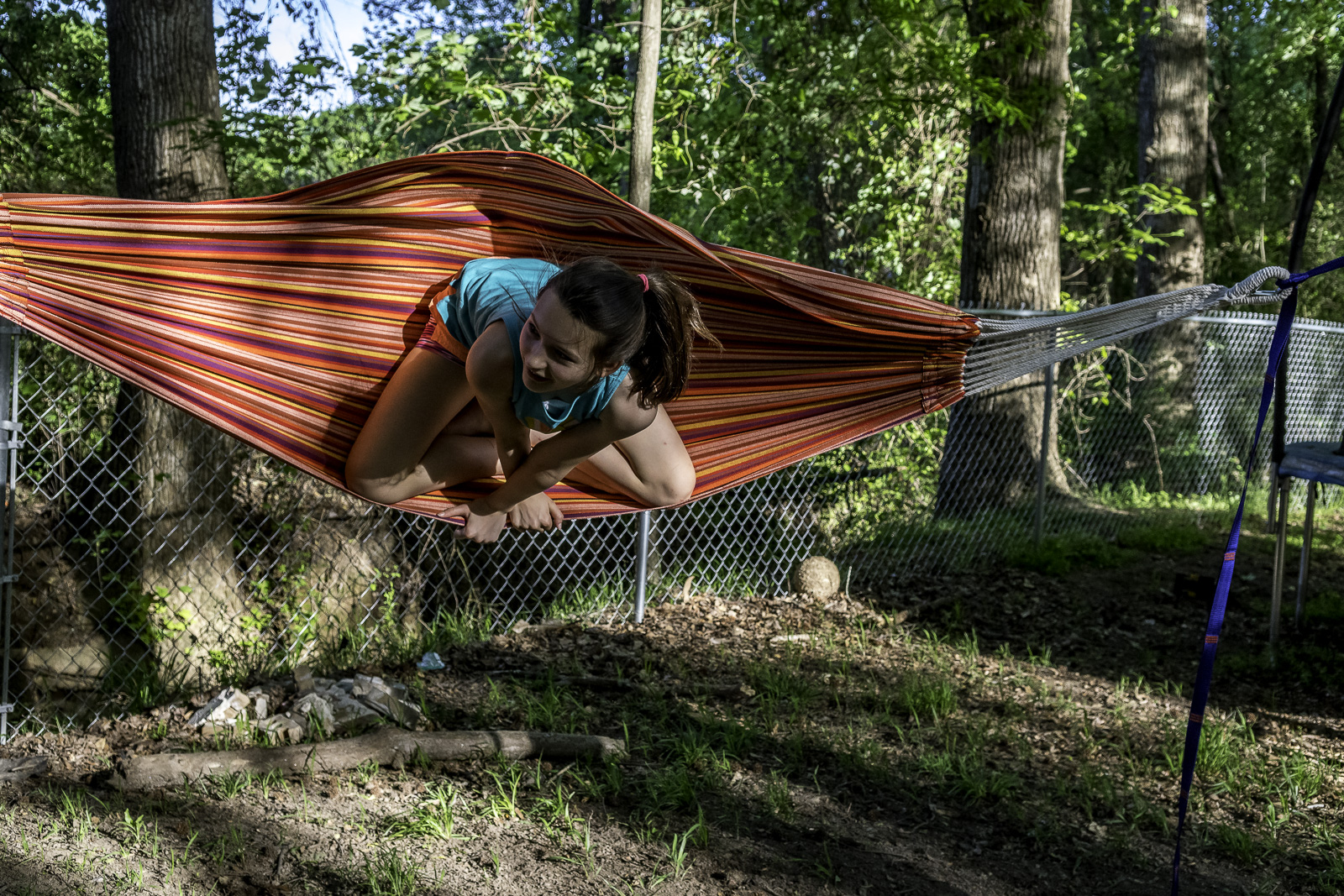
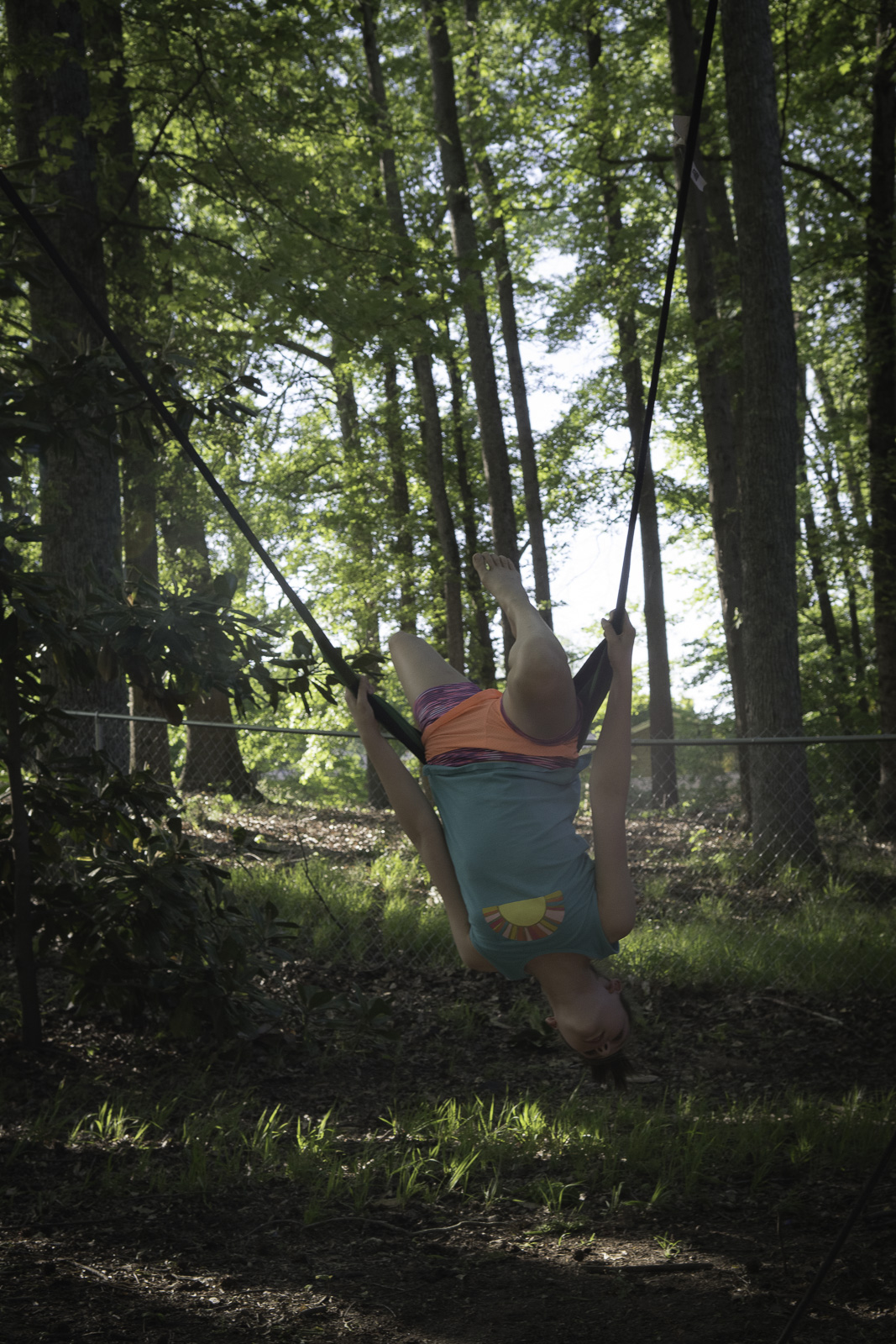
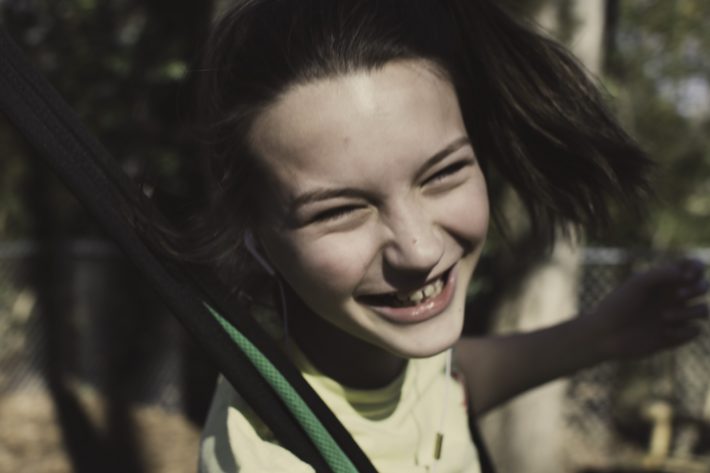
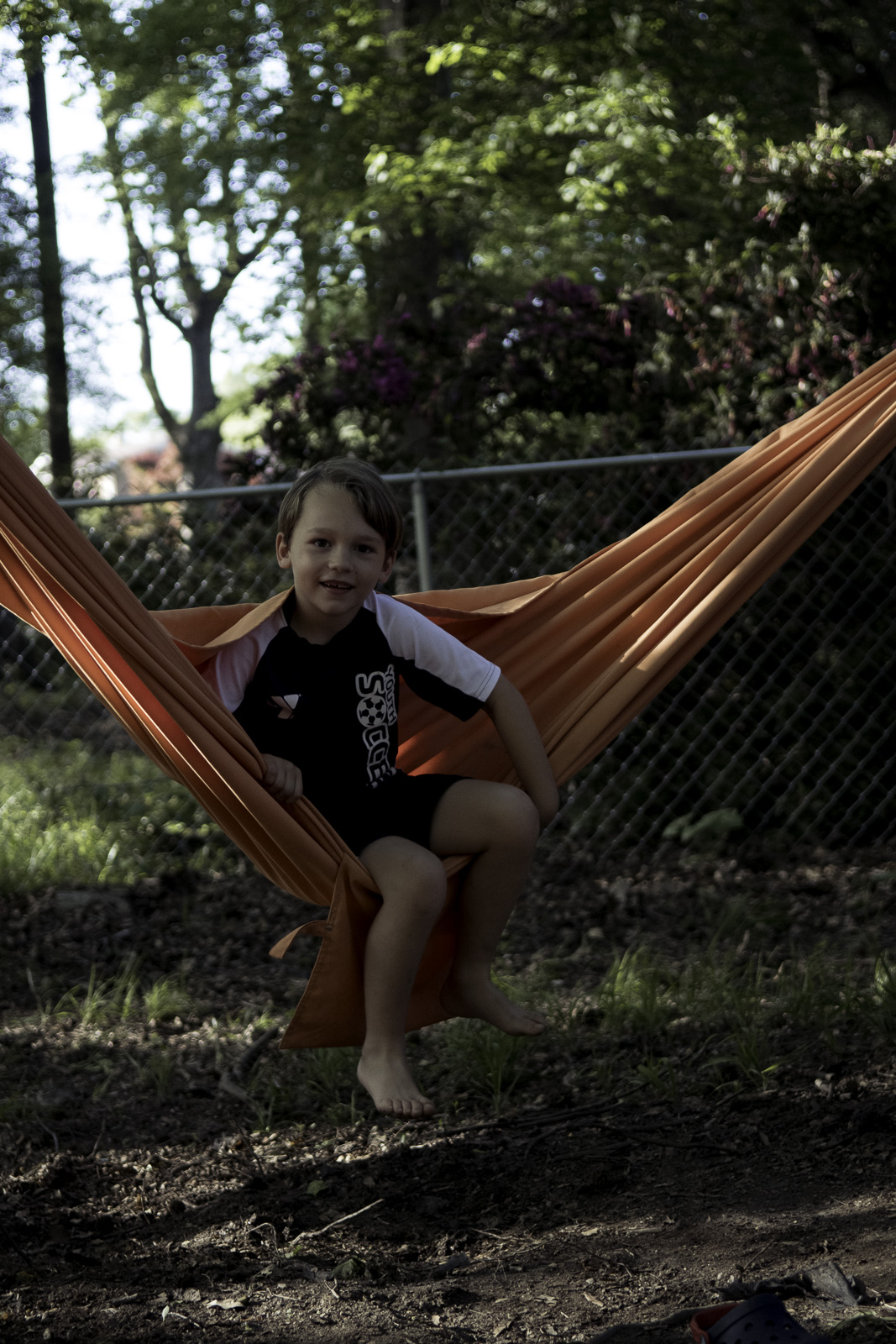
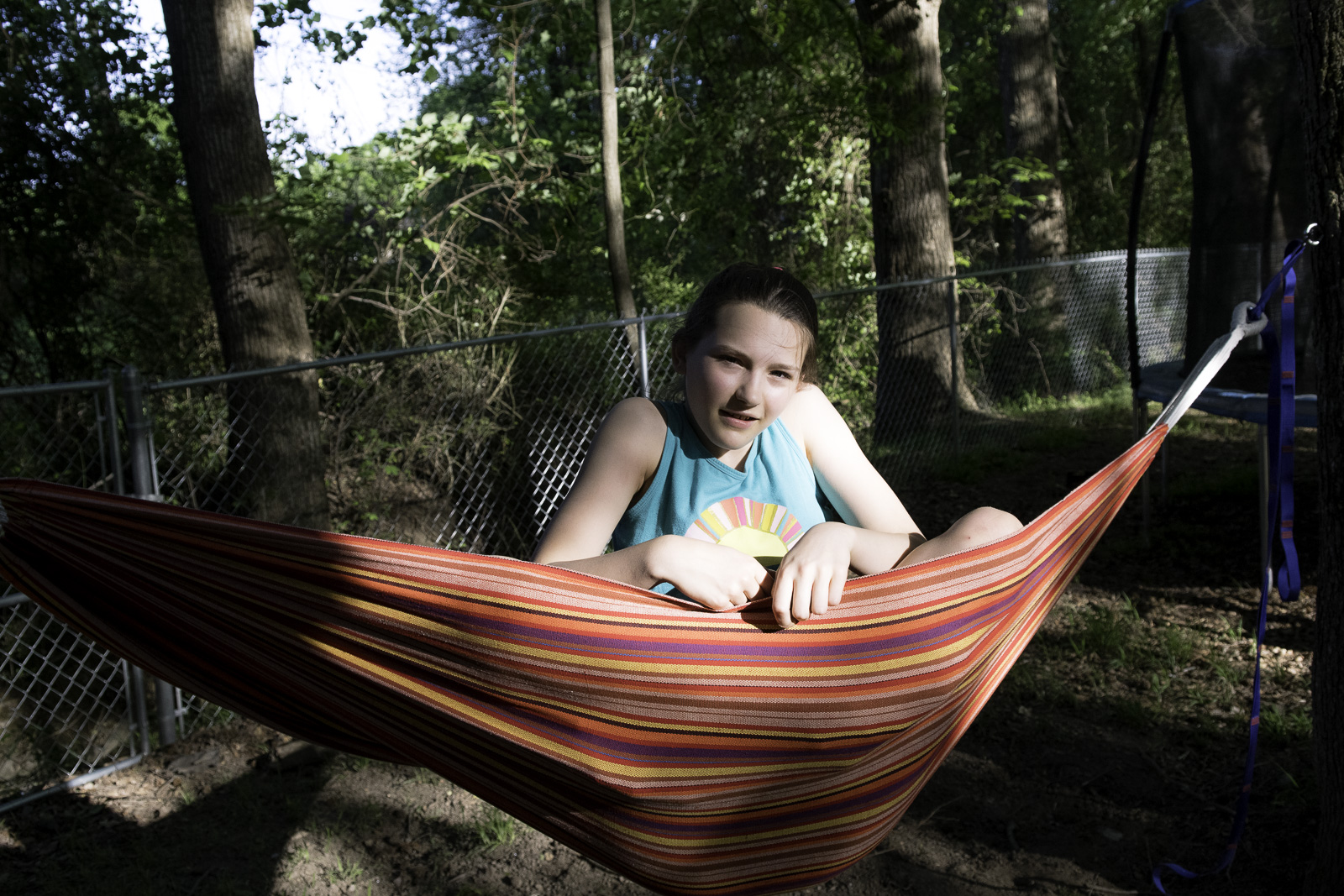
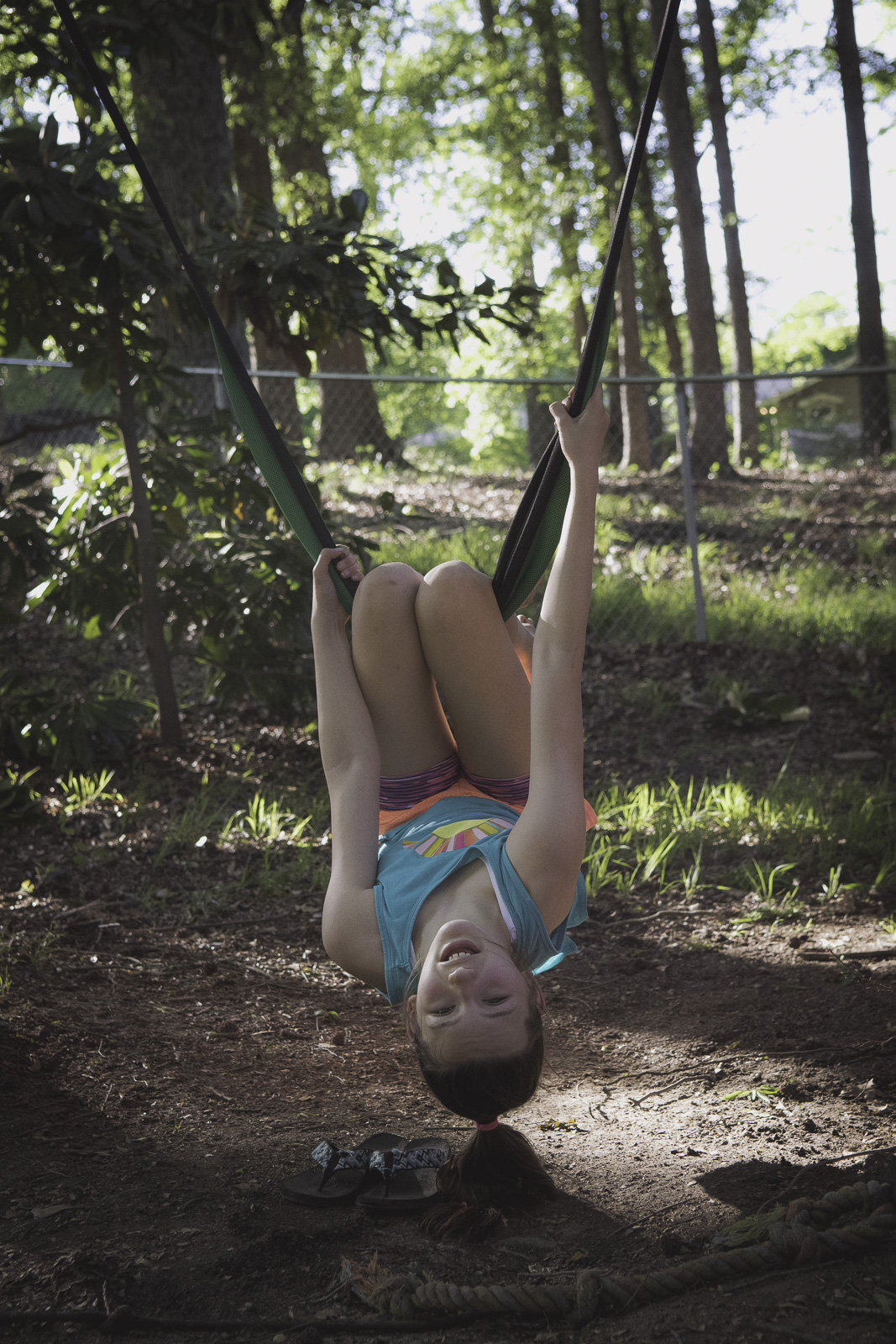
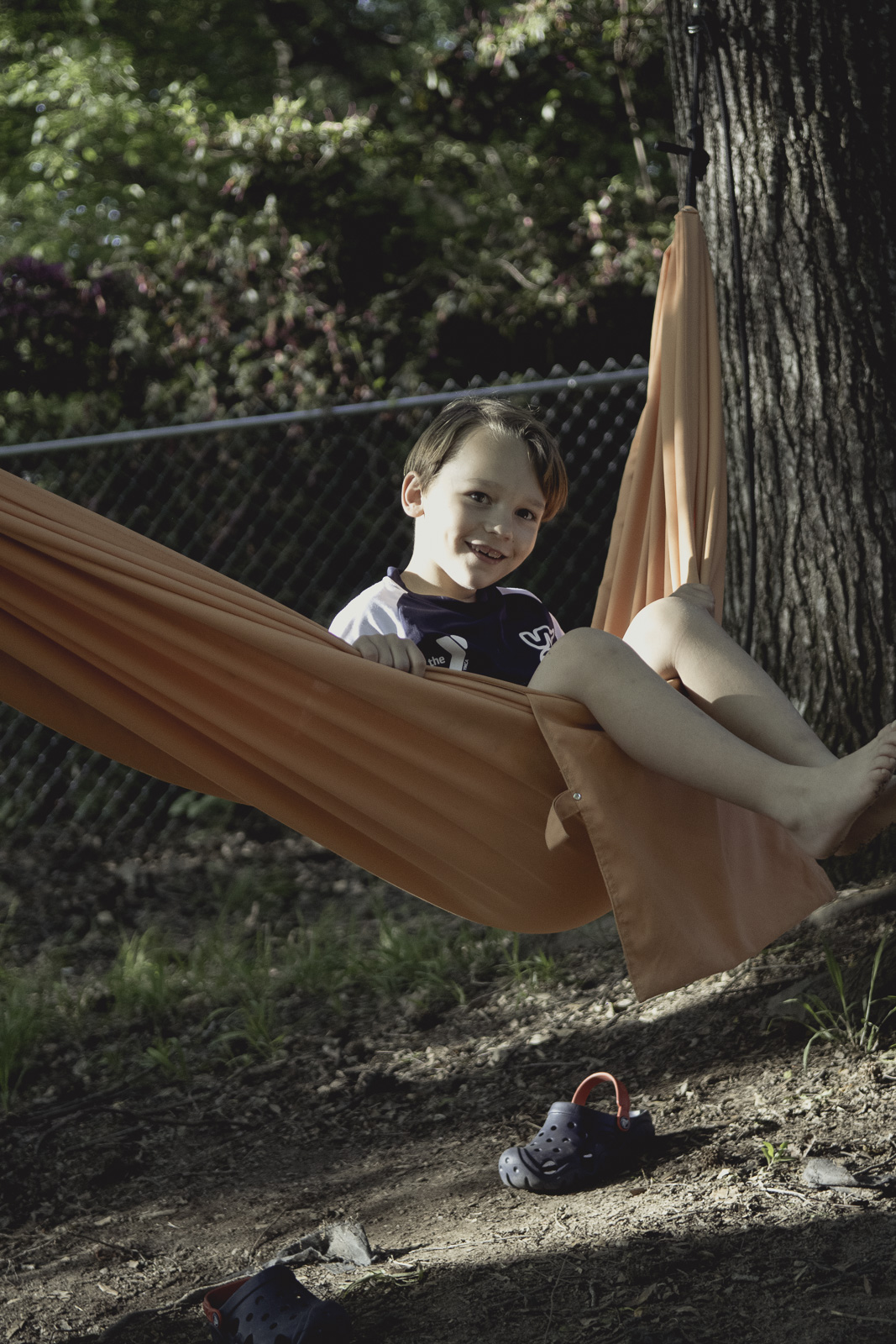
The Girl uses K’s Instagram account as a work-around for our reluctance to let her have one of her own. It works out the same, but we have a little sense of added security. Today, she asked me to take some pictures for her Instagram feed.

I don’t think I’ll ever understand that obsession kids these days have with posting photographs of themselves…

Story

His homework: write a realistic story.

“What does that mean?”

“No dragons and such.”

He wrote a story about a little boy who eats cereal for breakfast and watches Tom and Jerry as he eats.

Where do you think he got that idea?

Shelebration

The Boy only took a couple of evenings to memorize his short poem for his class’s “Shelebration,” which was a celebration of Shel Silverstein’s poetry for children. (“Did he write anything but poetry for children?” Yes, in fact, he did.) It’s quite short, after all — four lines:

They could be poison ivy,
They might be poison oak,
But anyway, here’s your bouquet!
Hey–can’t you take a joke?

Fortunately, the performance was at the beginning of the school day, else I would not have been able to attend. K, having other obligations, was unable to attend. Thus, the Boy would have been probably the only child there without a parent or grandparent in attendance. Which would have been heartbreaking for him, I know. It would be for anyone.

After the performance, when we (read: E) were partaking in the after-show snacks, he was very clingy, very physically affectionate. I looked around the room and realized quickly that he was being more physically affectionate with me than any other child with his/her parent that I could see. I was touched and a little worried. Was he that glad I was there or was he just a bit clingy, a bit lacking in confidence that I provided by being there?

Early February Sunday

It should have been a positive experience — you don’t expect to come home from a Cub Scout meeting with an upset little boy, but that’s what happened. After the meeting, all the den leaders and assistants gathered for a quick meeting and the boys went off to play for a while. The Boy walked over last, and when he did, everyone decided to play Sharks and Minnows and declared that the Boy was the shark.

Exploring in the area bordering Papa’s condo

I instantly had a bad feeling about it.
“Minnows in!” E shouted enthusiastically, and everyone ran into the play area, dodged the Boy’s attempts at tagging them, and made it to the other side.
“Minnows in!” E shouted, still smiling, still enthusiastically.

The same thing happened.

Then the taunting started. It wasn’t mean-spirited taunting. “Nana nana boo boo you can’t catch me” — that type of thing. But the truth was, the Boy couldn’t catch them. Several of them were just too fast because they were naturally faster or because they were older, and the Boy still has not developed a good Sharks and Minnows strategy. (Then again, who has?)

And so they continued. Two times. Three times. Four times. Each time, the Boy shouted “Minnows in!” with the same enthusiasm and smile, but I could tell it was starting to be strained.

Finally, after the fifth time, with the taunting increasing, I called the Boy over and said, “Time to go.”

“Okay,” he said. No begging to stay. No asking for five more minutes. Just a quick response and a jog over to my side.

As we left, one of the boys said, “I could walk to the other side, and you couldn’t get me.”

“This would be impossible in summer with all this kudzu.”

“How’d you feel about that?” I asked as we walked to the car.

“Bad.”

We talked about it more on the way home, and the Boy declared simply, “Scouts are not supposed to act like that.”

There was no real maliciousness in the boys’ actions. They were just first- and second-grade boys being silly boys. But our boy — the Boy, forever capitalized — is especially sensitive to such things.

“I’ve learned I can’t trust a lot of people,” he confided on the way home.

It was a sad parenting decision, but I suggested that might be a good idea. Sometimes it’s best to be a little skeptical about people, I explained, in simpler terms. “Trust is something we earn. Don’t just give it away.”

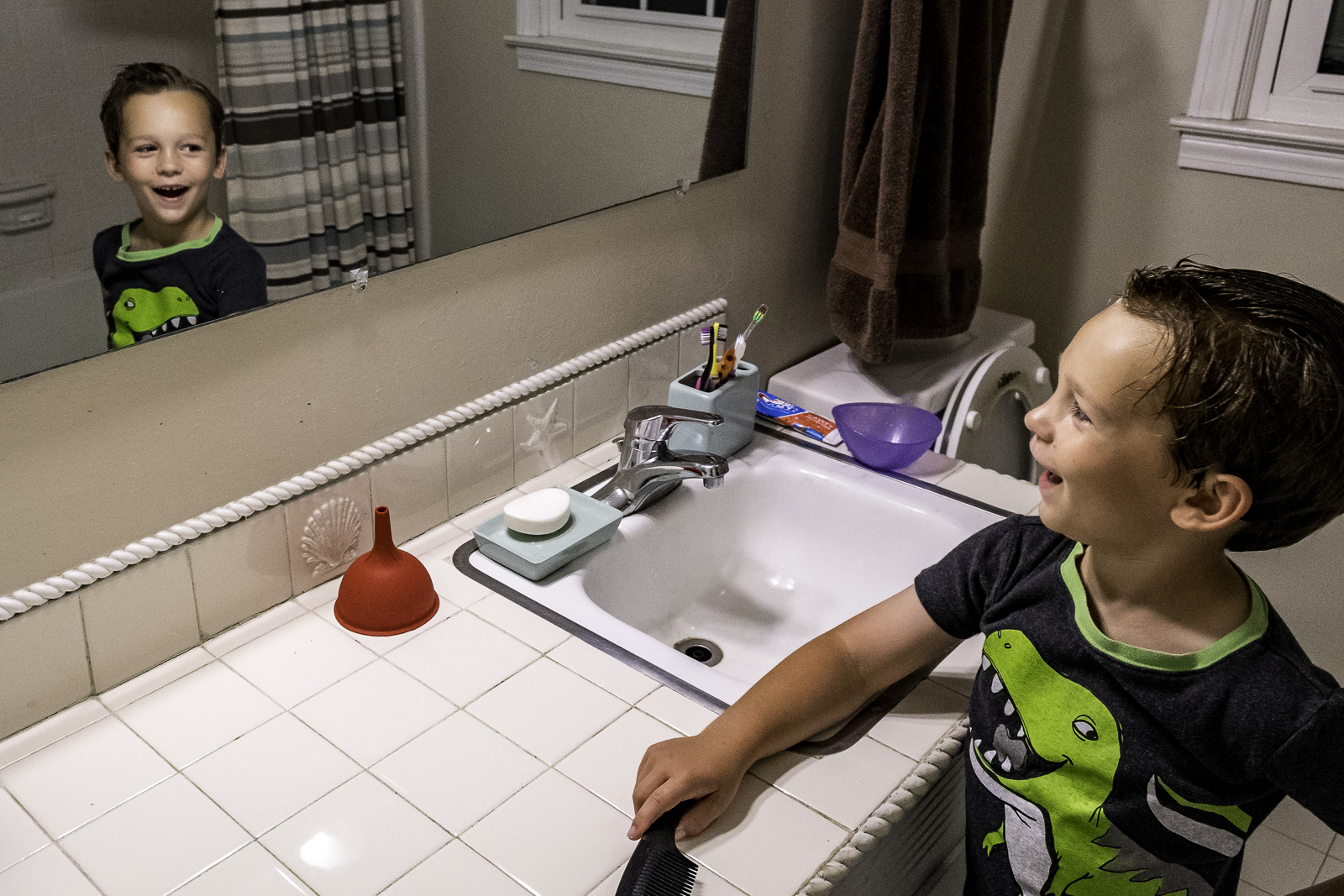
We got back to the house, snuggled a little, and everything seemed okay, but tonight, while brushing his teeth, he confided to K, “I just can’t stop thinking about it.”

Neither can I.

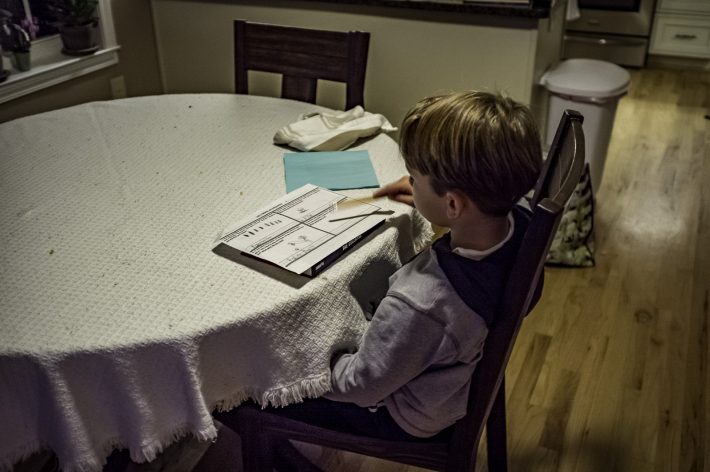
Homework

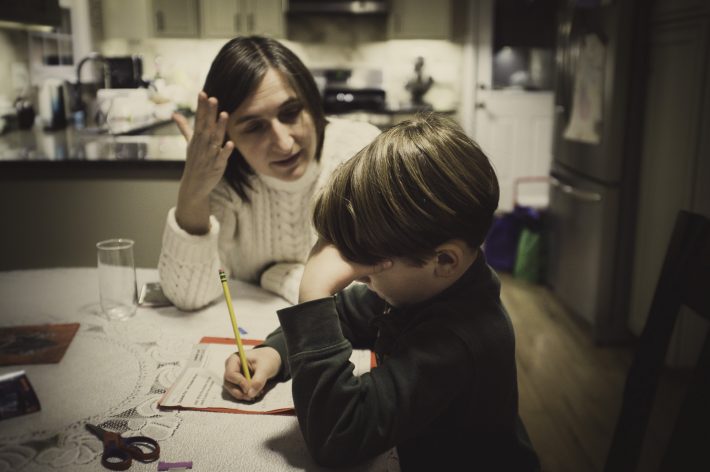
Sometimes, everyone gets a little frustrated with homework.

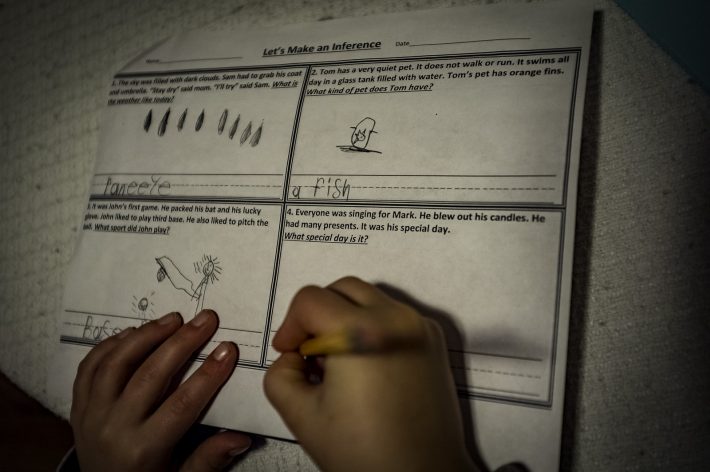
Wednesday Night Inferring

A busy day for everyone culminates in us arriving separately at home after seven, two hours after we normally eat dinner. After school, a long meeting, and a visit with Nana (out of the hospital and back in rehab — hurrah!), I’d stopped for something for us to eat; after work, shuttling the Girl to choir practice while taking the Boy shopping, running the Boy to basketball practice after dropping the Girl off at volleyball practice, then picking everyone up, K arrived shortly after.

As we ate, the kids and I decided that K’s plan for the rest of the evening was flawed.

“I’ll put away all the groceries and then go to bed if you’ll put the Boy to bed.”

“Nope. I’ll put away the groceries while you take a hot bath, and then I’ll put the Boy to bed while you go to bed yourself.” L and E agreed — Mama needed to call it a day. As I was bustling about the kitchen, I remembered it was garbage night.

“L, take the garbage and recycling out,” I said, expecting a little fussing.

“Okay.” Nothing more.

She came back in, a little whiny, and said, “E always takes out one of them. Can he take out the recycling? I’ll go with him.”

“No, sweetie, it’s late. Just do a little more than you have to.”

“Oh, okay.” Nothing more.

From this, a simple inference: our daughter really is growing up. She’s not just sprouting vertically (she’s almost 5’4″ now); she’s not just developing into a young woman; she’s maturing. With my nose pressed to the ever-present every day, I forget that sometimes. It escapes me.

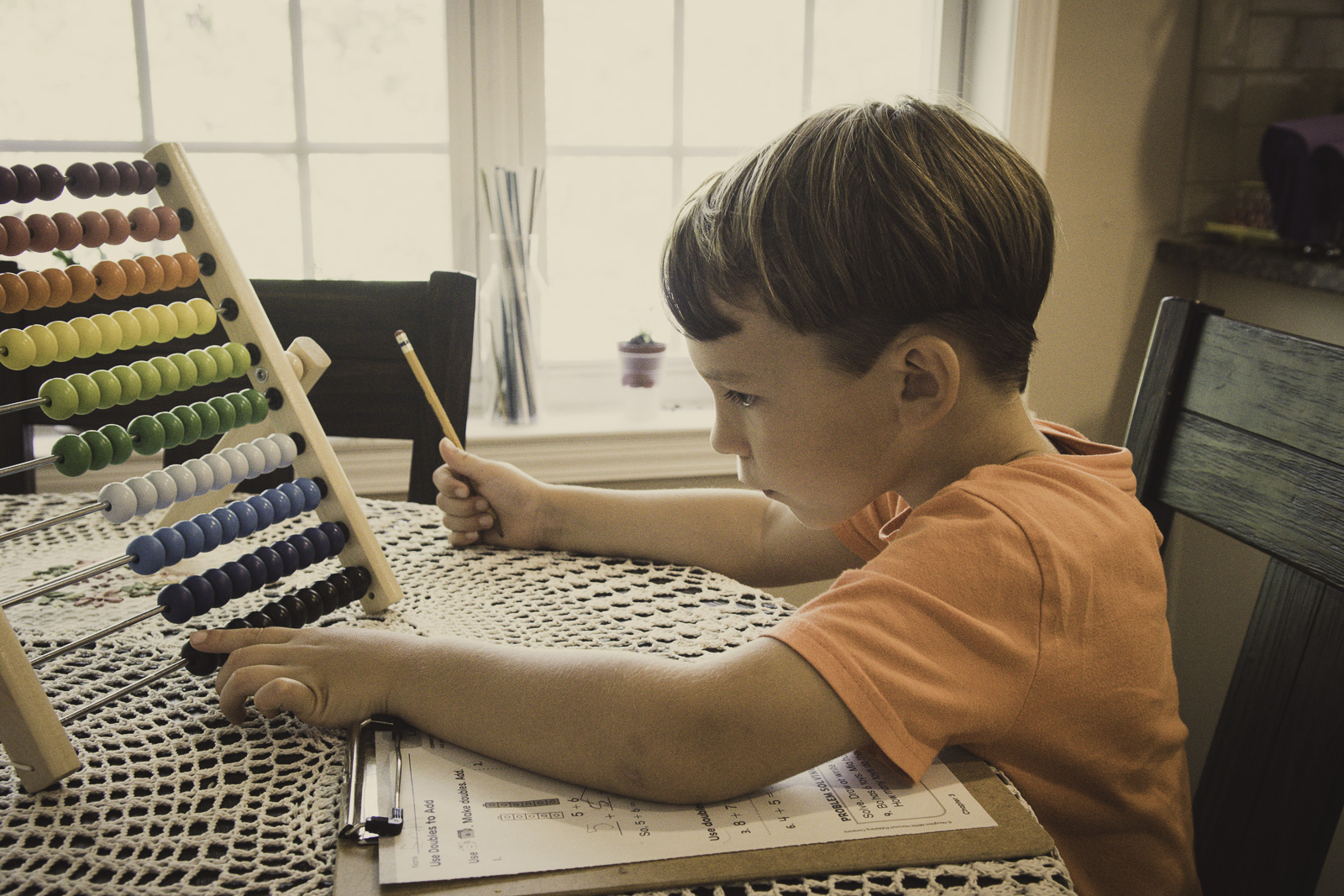
While all this was going on, the Boy had started his homework.

“What are you working on tonight?” I asked him.

“Inferring. We learned it today.”

As an English teacher, I’ve been working on the Boy’s (and the Girl’s) inferring skills for years. I taught him the word; he must have forgotten. The teacher did a better job today. “What’s that?” I asked.

“Making a good guess.”

Not a bad definition. I usually tell my students it’s “making a reasonable guess based on evidence.”

And there you might notice something: I teach eighth grade; my son is in first grade. Am I really teaching inferring again? Well, I’m not teaching inferring — they know what it is. But we’re still practicing it. Like mad. Especially (really, that should read “solely”) with my lower-achieving students. I give them a text like this:

Every day after work Paul took his muddy boots off on the steps of the front porch. Alice would have a fit if the boots made it so far as the welcome mat. He then took off his dusty overalls and threw them into a plastic garbage bag; Alice left a new garbage bag tied to the porch railing for him every morning. On his way in the house, he dropped the garbage bag off at the washing machine and went straight up the stairs to the shower as he was instructed. He would eat dinner with her after he was “presentable,” as Alice had often said.

I then ask a question: What type of job does Paul do? How do you know this? I have the students back up their answers with three specific pieces of evidence from the text, then explain how that evidence is evidence. A good student response (an actual student response) looks like this:

Paul is a farmer.I know this because he is wearing muddy boots. Wearing muddy boots is evidence that he is a farmer because if he were to work in an office or inside he wouldn’t have muddy boots. Also, he is wearing overalls in which he would not have been wearing if he was working inside. Finally, Paul’s overalls are dusty and most farmers work a lot outside so he must have gotten dirty from working outside.

So I applied the same thing to the Boy’s work. The same thing — a text followed by a question:

Everyone was singing for Mark. He blew out his candles. He had many presents. It was his special day. What special day was it?

E read the text and said, “It’s his birthday!”

“How do you know this?” I prodded.

“Because he got presents.”

“But we get presents at Christmas as well. How do you know it’s not Christmas?” He looked stumped for a moment, so I told him what I tell my own students: “Go back to the text. Find something in the text that shows it’s not Christmas.”

He read a while, thought a while, then said with a smile, “Because it says it’s his special day, not everyone’s special day. Christmas is everyone’s special day.”

I thought he’d pick up on the candles. That’s the more obvious piece of evidence. He went the more subtle route.

“That’s great. A very good observation. Now, can you find a third piece of evidence?”

Again, he looked, read, thought. “The candles. You don’t blow out candles on Christmas.”

After a tiring day, what a perfect ending.

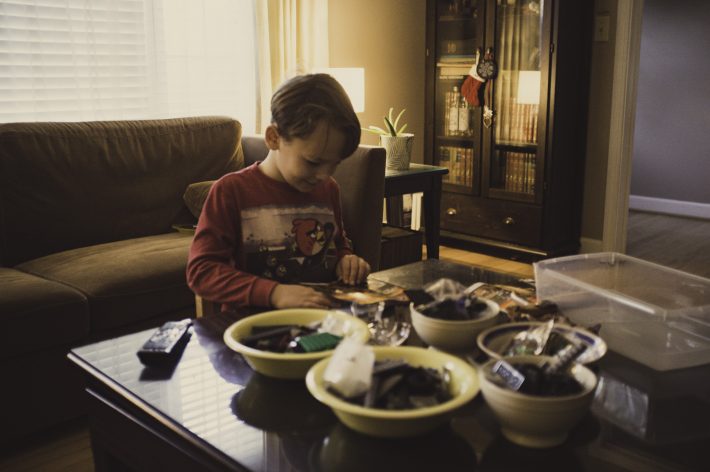
New Legos

The Boy collected a bit of money for Christmas, and it’s been gnawing at him ever since. He wants to spend it. Badly. But he has a way of spending his money on items that just don’t last. K and I let him make those decisions once we’ve advised him, like buying a radio controlled car that was clearly of poor quality and obviously wouldn’t last long, then we try to help him reflect on the wisdom of that decision. He deemed the radio controlled car a poor decision.

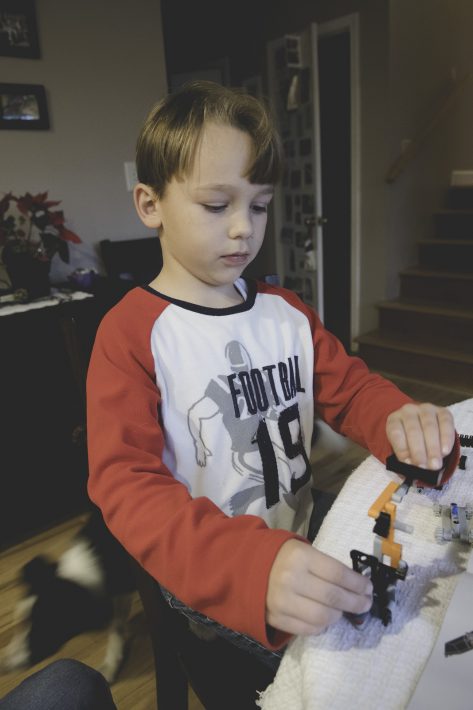
With that in mind, we tried to steer him toward something that would last a bit longer. Given his love of Legos, it wasn’t that difficult. The difficulty came in choosing which enormous set he’d actually buy.

He went with a Jurassic World set, even though he’s never seen any of the movies.

“Can I watch one of the movies?”

“No, it will only frighten you.”

That’s as far as it’s gotten, but one doesn’t have to have seen the film to enjoy the Lego set. And he knows enough about the movie to make proclamations like, “I’m going to go against the rules: the dinosaurs are going to be friends with the people, not enemies.”

46

As of today, I’m on the back half of my forties, the downhill slide to fifty. Truth be told, it’s all been a slide, year to year.

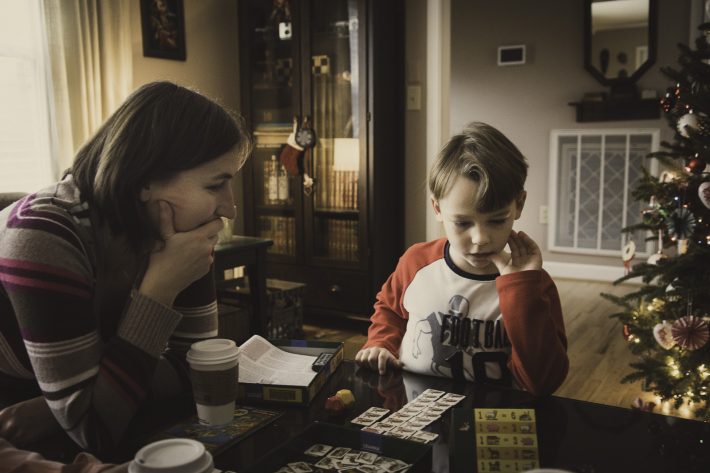
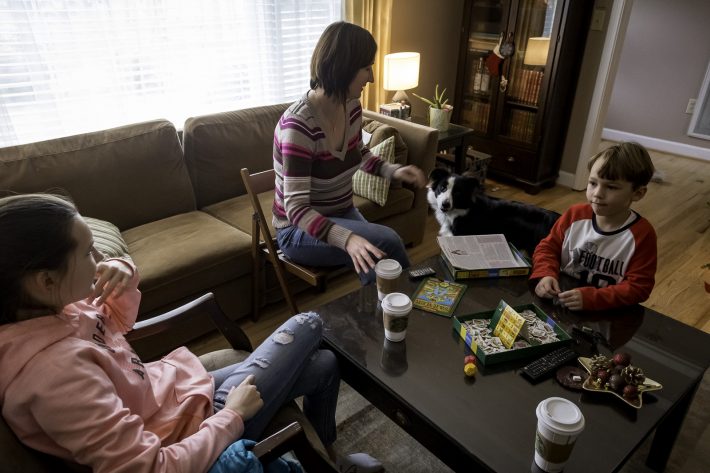
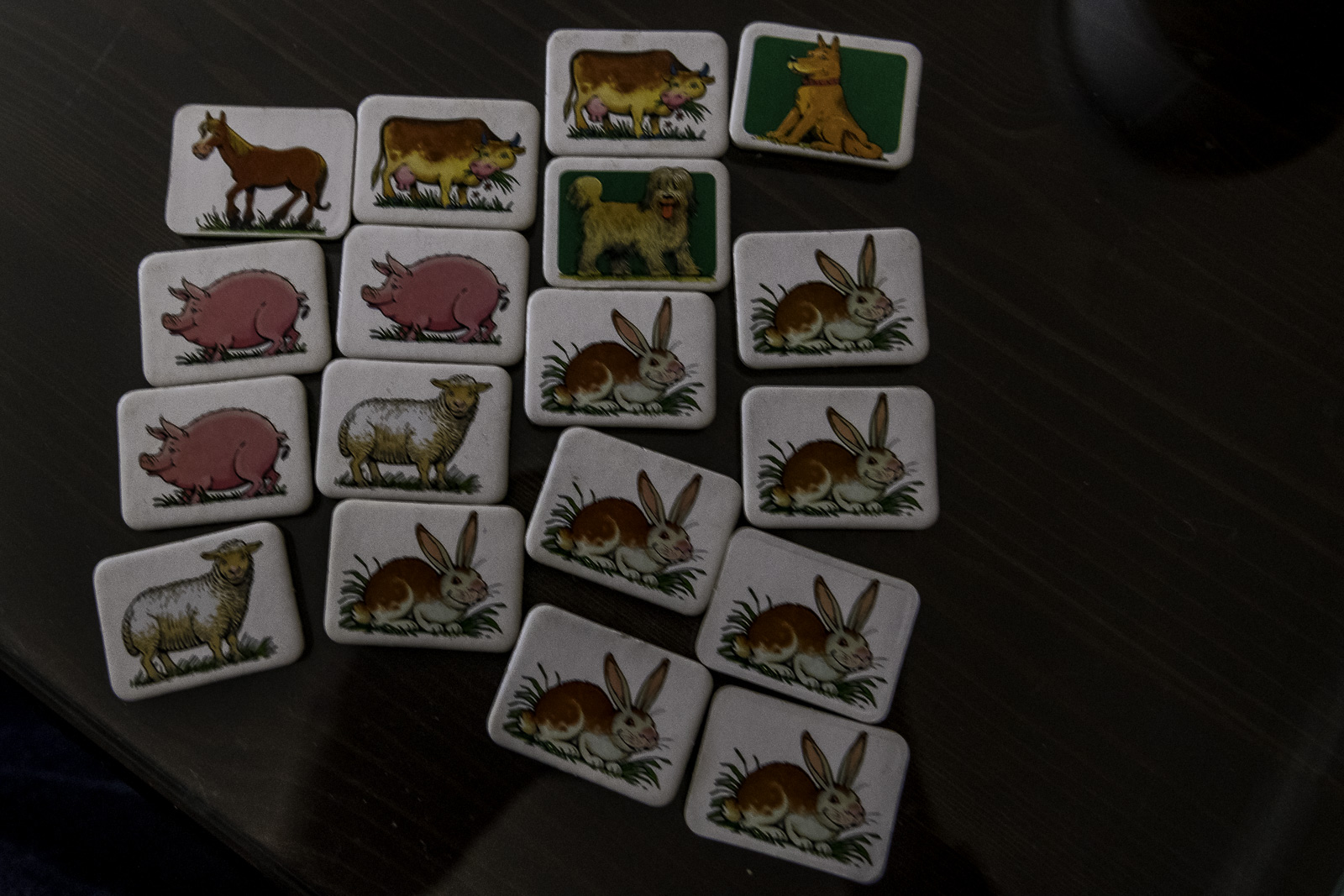
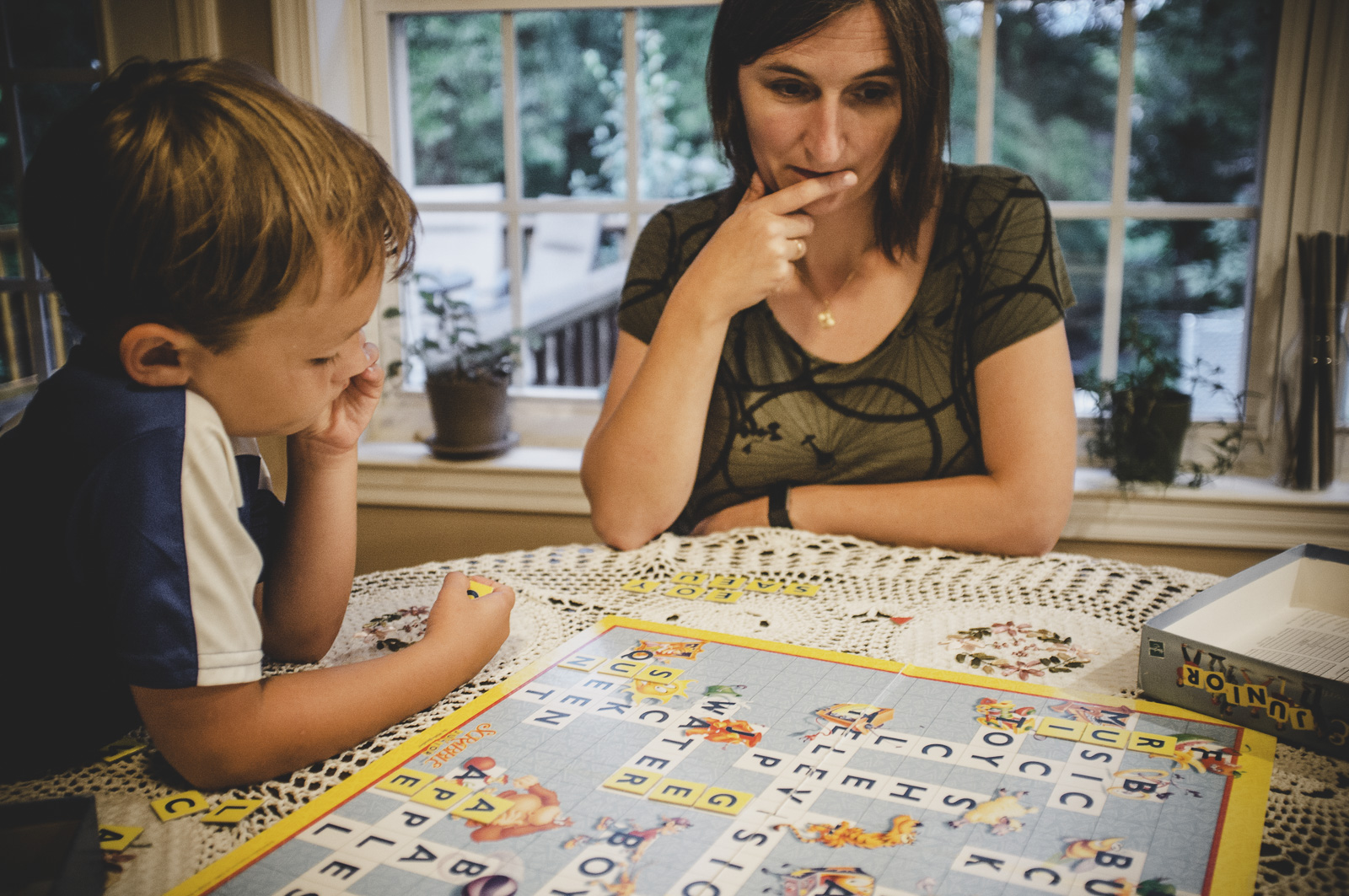
Considering his options in a family game of Super Farmer

It doesn’t seem like I’ve changed that much since the time I worried about the things the Boy worries about: how do I compare to the other boys? Am I as fast? Am I as coordinated? Am I as brave?

How do you console such worries? How do you reassure your son in this hyper-masculine culture about his fears of not measuring up to the other boys? The truth is, I not only worried about such things when I was young but continued stacking myself up against others and finding myself coming short well into my twenties thirties forties. I think most people who tell you they don’t do that are lying, probably to themselves first of all.

Clover wanted to play, too.

Life is not kind to most little boys like E, boys who are actually sensitive to others’ feelings, who can spontaneously show compassion and empathy. Who take a little while to settle into new sports. Who are so scrupulous about following rules that they ask daddy when on the road, “Daddy, how fast are you going? Are you speeding?”

My winning hand
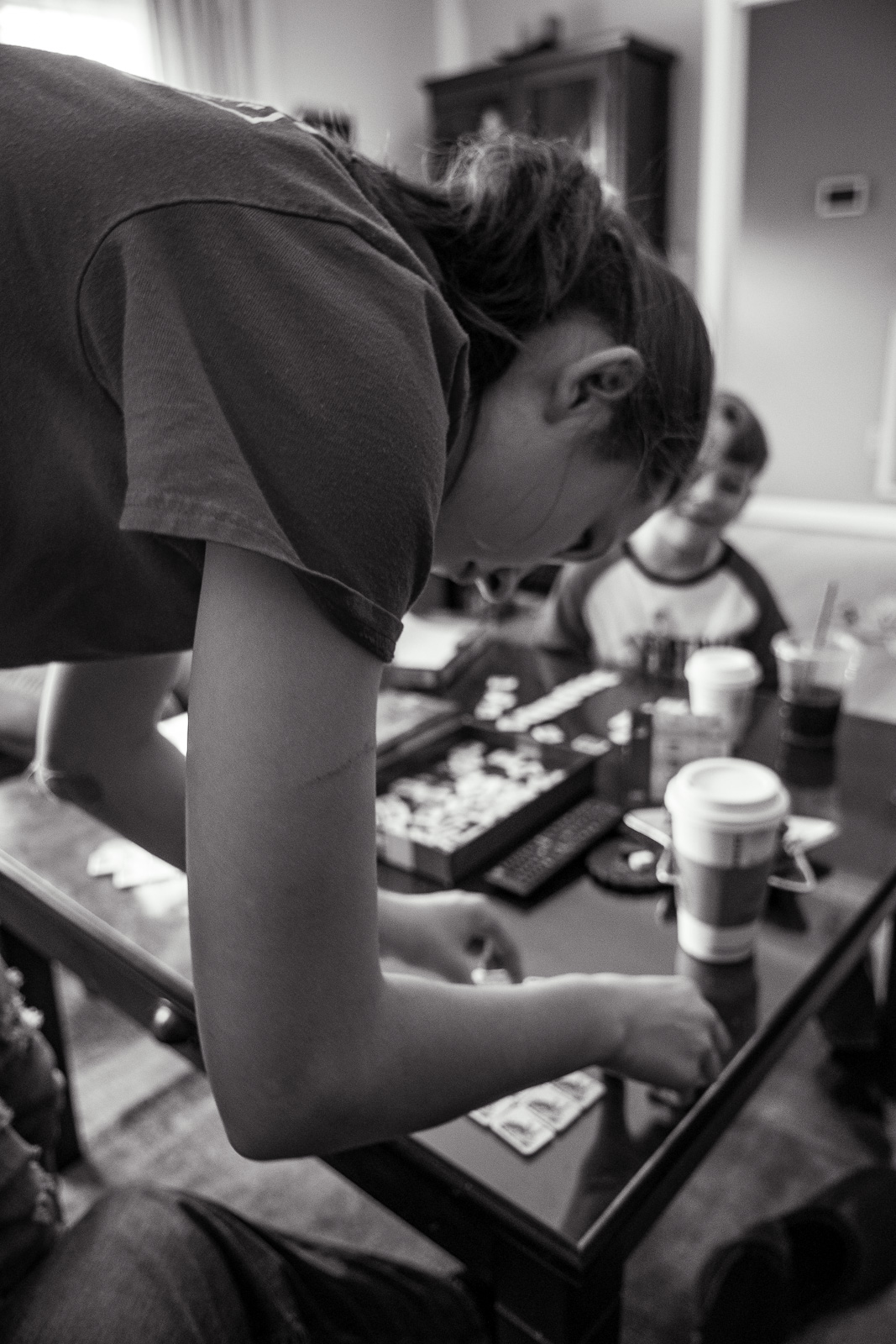
L, organizing my winning hand
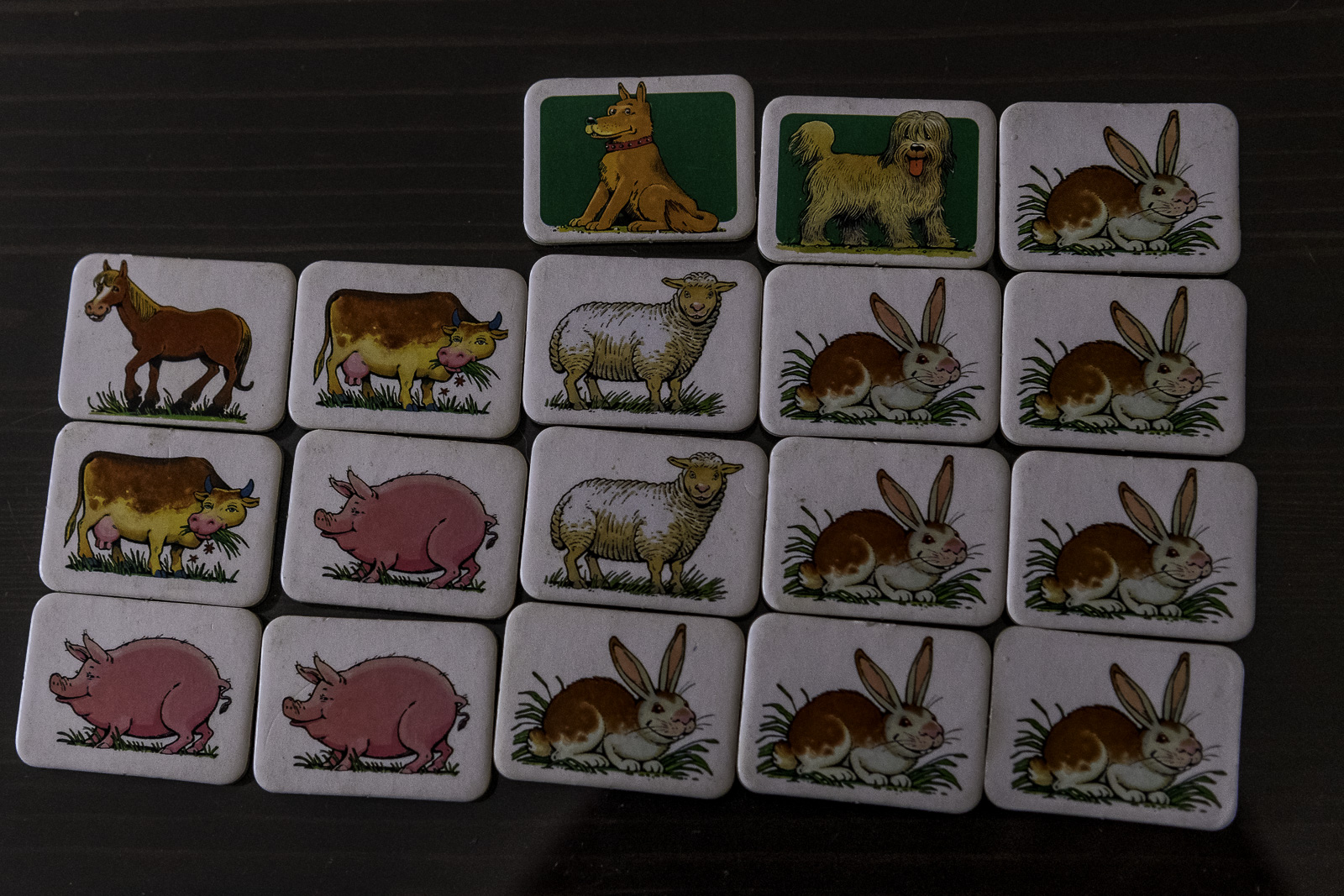
My winning hand after organization

I don’t have answers. I don’t even know if I understand the questions.

K and I talk about it. We encourage him. We support him. But we’re not there on the playground when he’s struggling to keep up with the other boys as they run about. We’re not there when kids are mindlessly cruel, and he struggles to understand why people could be so mean.

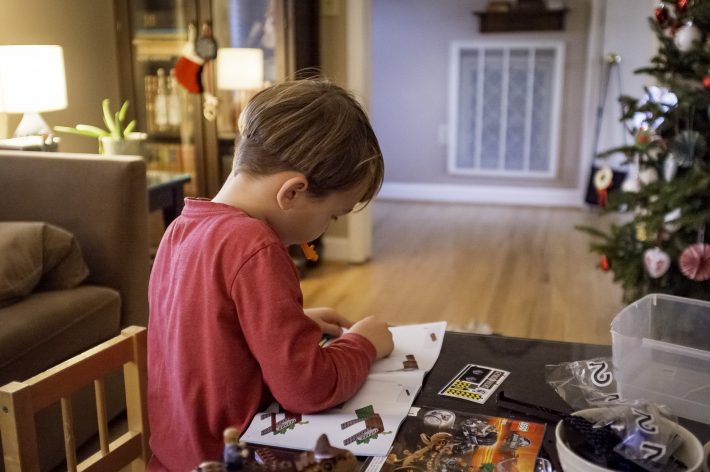
Finishing up the latest Lego project

Good souls win in the end, don’t they? I look around the world and struggle to find an answer to that question other than, “Afraid not.”

Tough

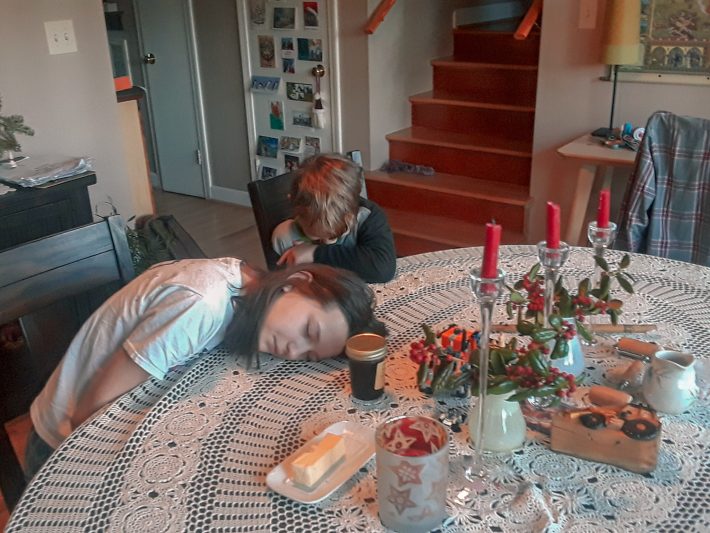
No doubt about it — this has been a tough week. Probably the worst week we’ve had in memory, K suggested. A good friend died on Monday; our cat died on Wednesday; Thursday saw two funerals (the friend and the cat, obviously) and a visit to the emergency room with Papa; and Nana still in rehab this whole week. The kids are likely feeling neglected but are showing great patience with everything. The parents are feeling exhausted. And, well, the kids, too.

Breakfast this morning started with a little nap at the table. After breakfast, we went our separate ways: the kids with K to church; I went to spend the morning with Nana.

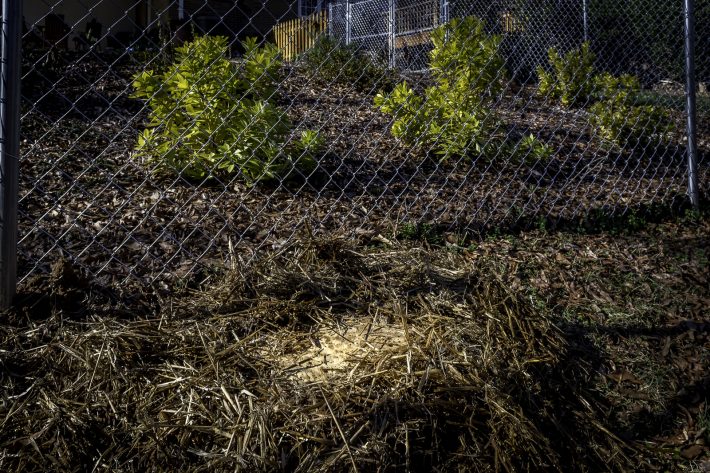
When we came back, the clear skies, after weeks, months, no years of cloudy, rainy weather, called us outside. First things first: I finally finished up Bida’s grave. We’ve been afraid that the dog might be too curious and tempted by the freshly dug earth despite the fact that we put a large stone to mark and protect the spot.

So today, I spread the best dog-digging-deterrent we’ve found al around: straw. K thinks it’s because the straw gets in the dog’s nose as she’s sniffing around, which would cause a fair amount of pain, I suppose, if the strand of straw got jammed in a dog’s nose just right. Or it could be that it hides odors, because the digging always starts with sniffing. Whatever the cause, we feel better about Bida’s grave now, though we don’t feel so much better about her absence. It’s amazing how much a little old gray grumpy cat adds to the family dynamic.

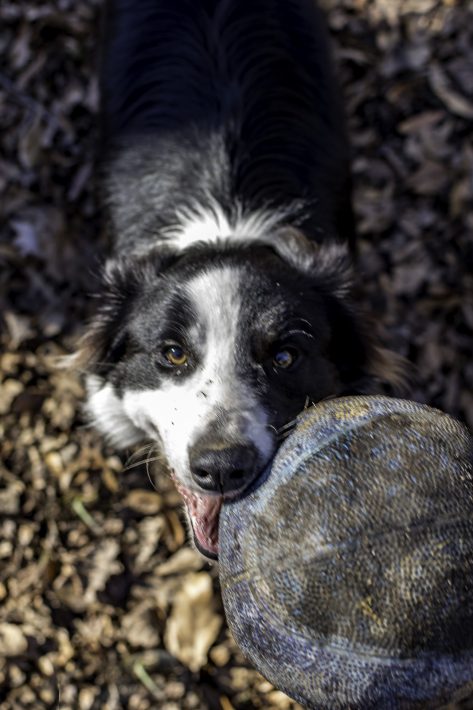
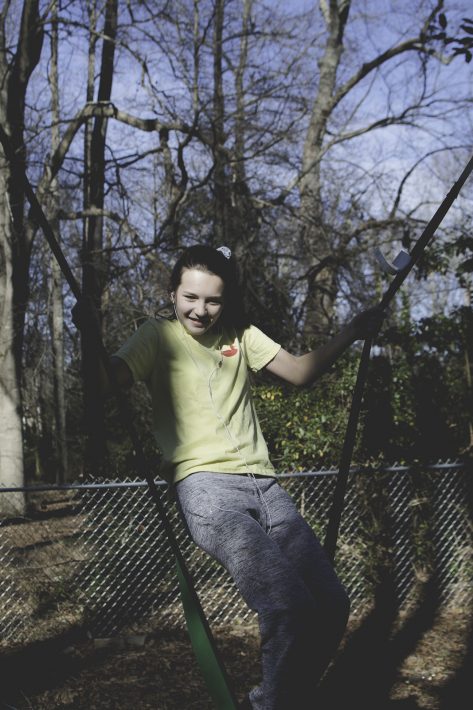
Next, we went down for some swinging, jumping, and Clover-entertaining.

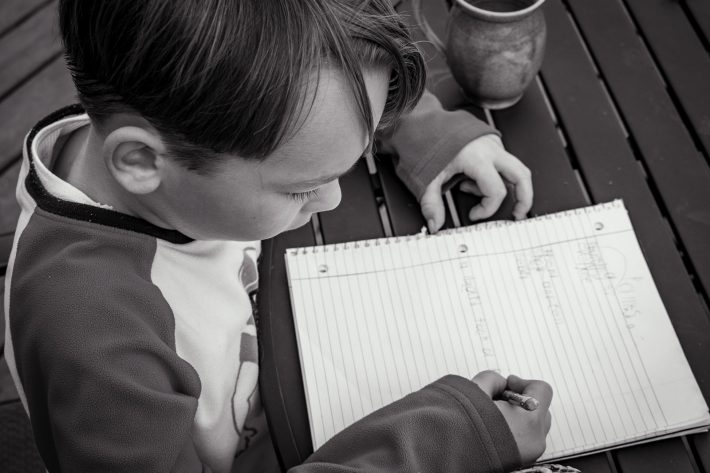
Next, a little homework. We’re trying to get everyone back into a normal schedule, which includes daily reading and writing, especially for the Boy. The Girl takes her own initiative with the homework. The Boy — not so much.

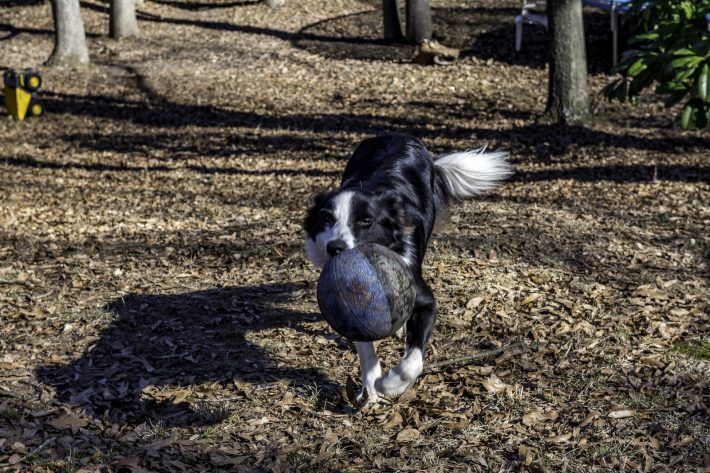
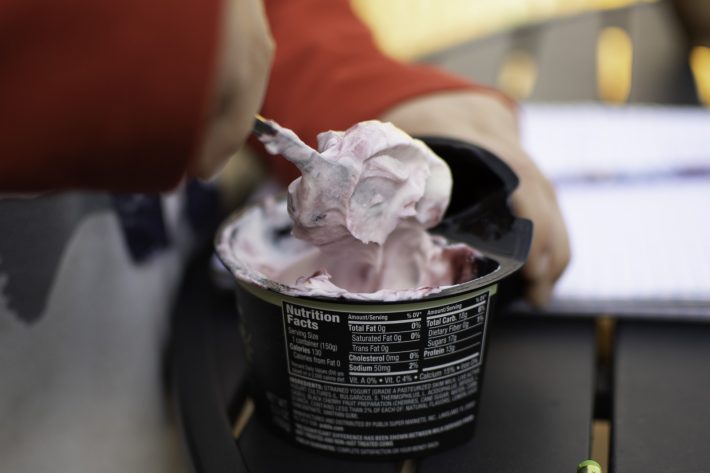
So we sat on the deck, and between yogurt breaks and tossing the ball for Clover, we finally finished the homework. The Boy was trying his best to make the process more difficult than it needed to be, and I just wanted to get through it all, because I knew what we were planning next:

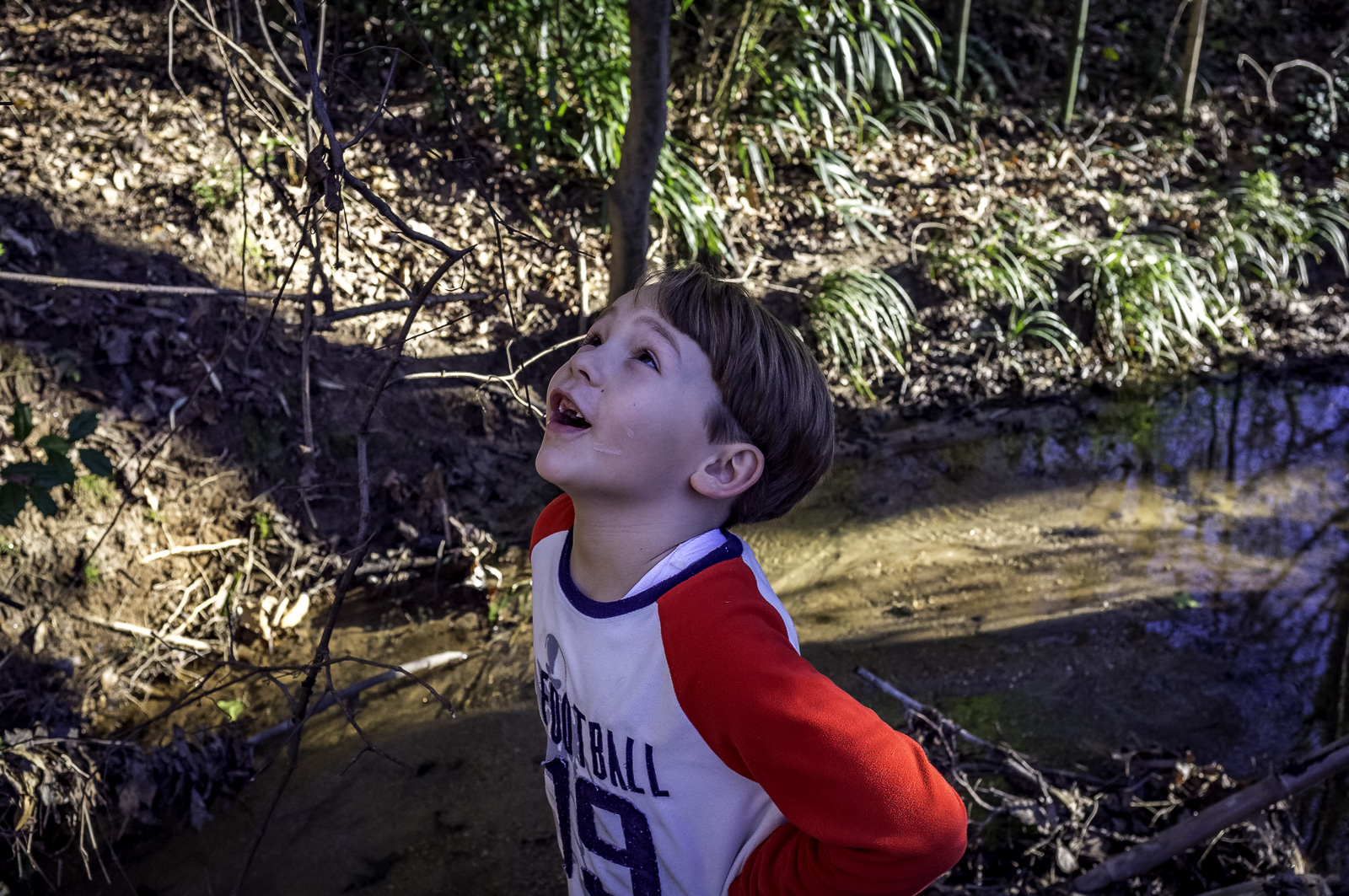
Today’s task: find a way to cross the creek. We found one, made another. Something tells me we’ll be spending more and more time out there as the weather warms.

Finally, a small dinner with Aunt D, who’s come to stay with her big brother and help out with everything.

2018 Becomes 2019

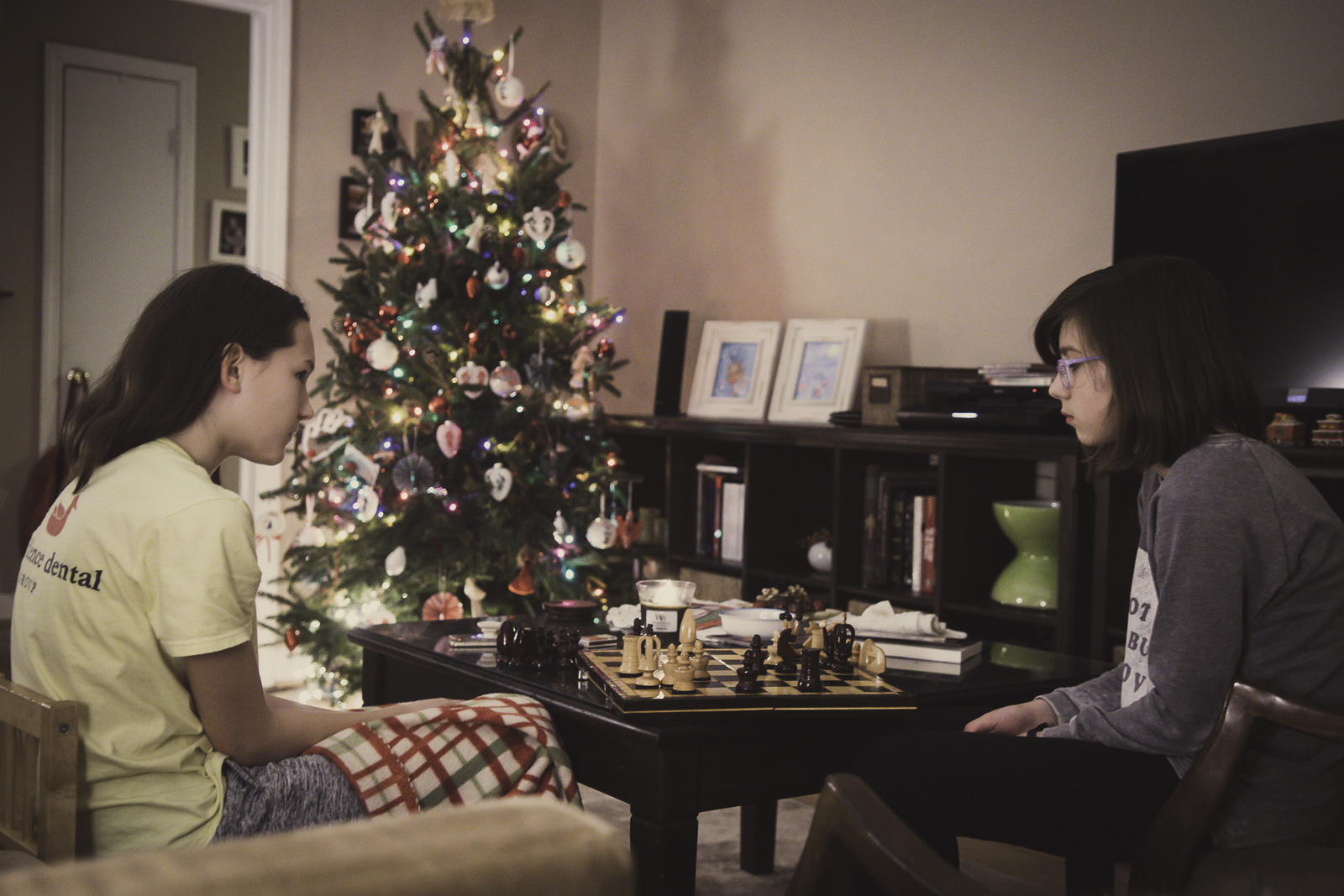
The idea was simple: twelve pictures to represent twelve months. It was something I used to do with the Girl, but with a full family — wife, two kids, two cats, and a dog — that quickly became unreasonable. I had twelve pictures and I wasn’t even through a quarter of the year.

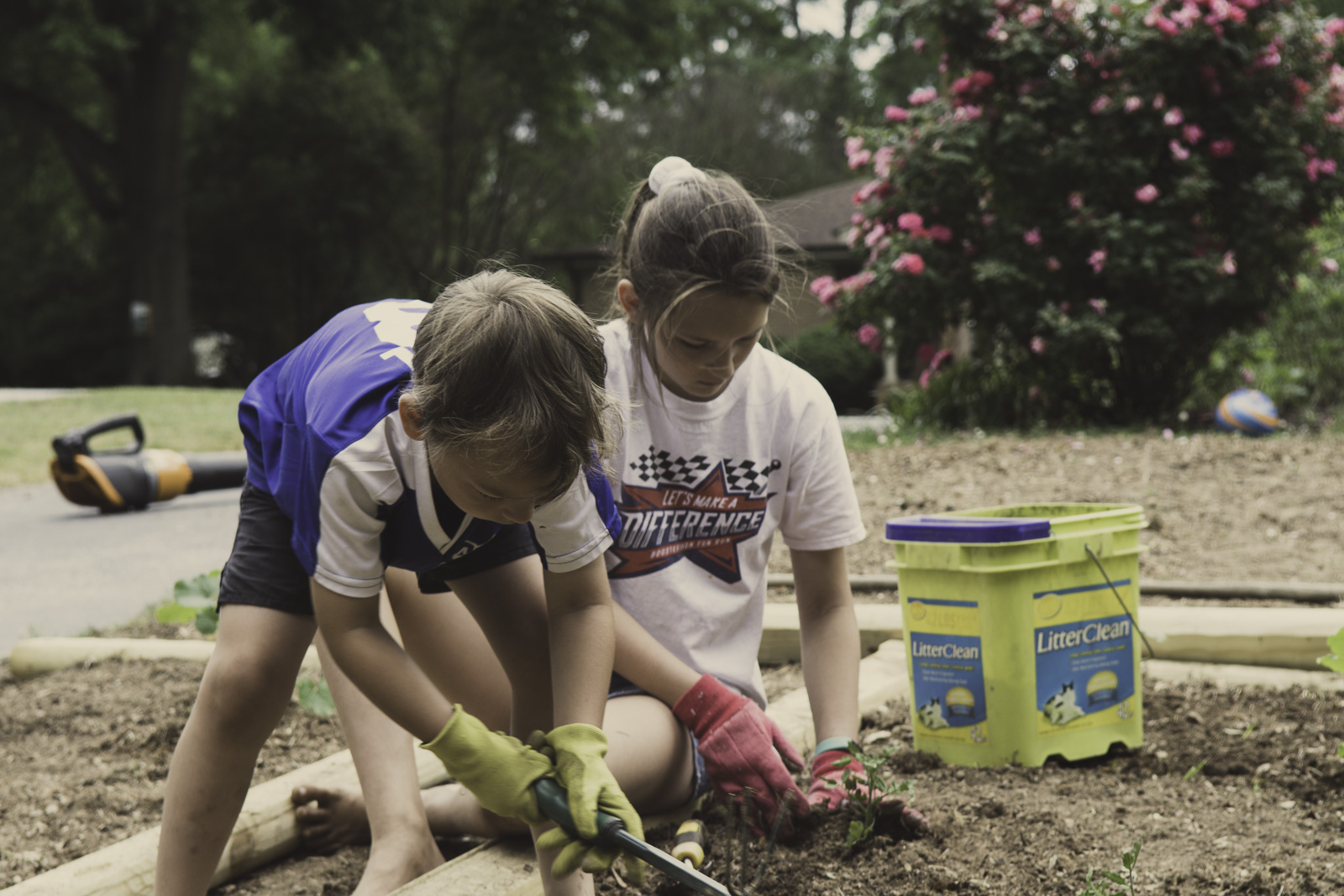
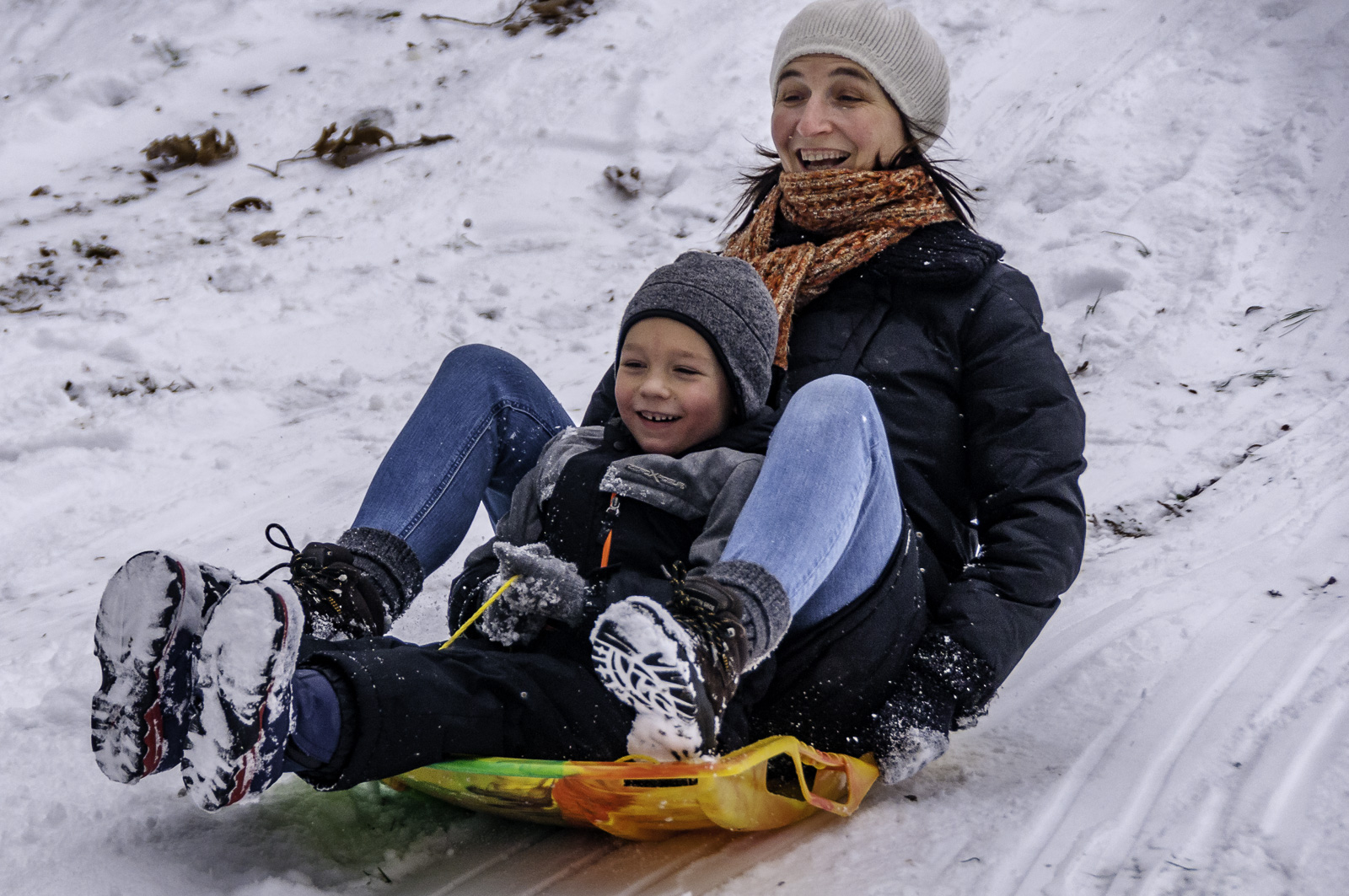
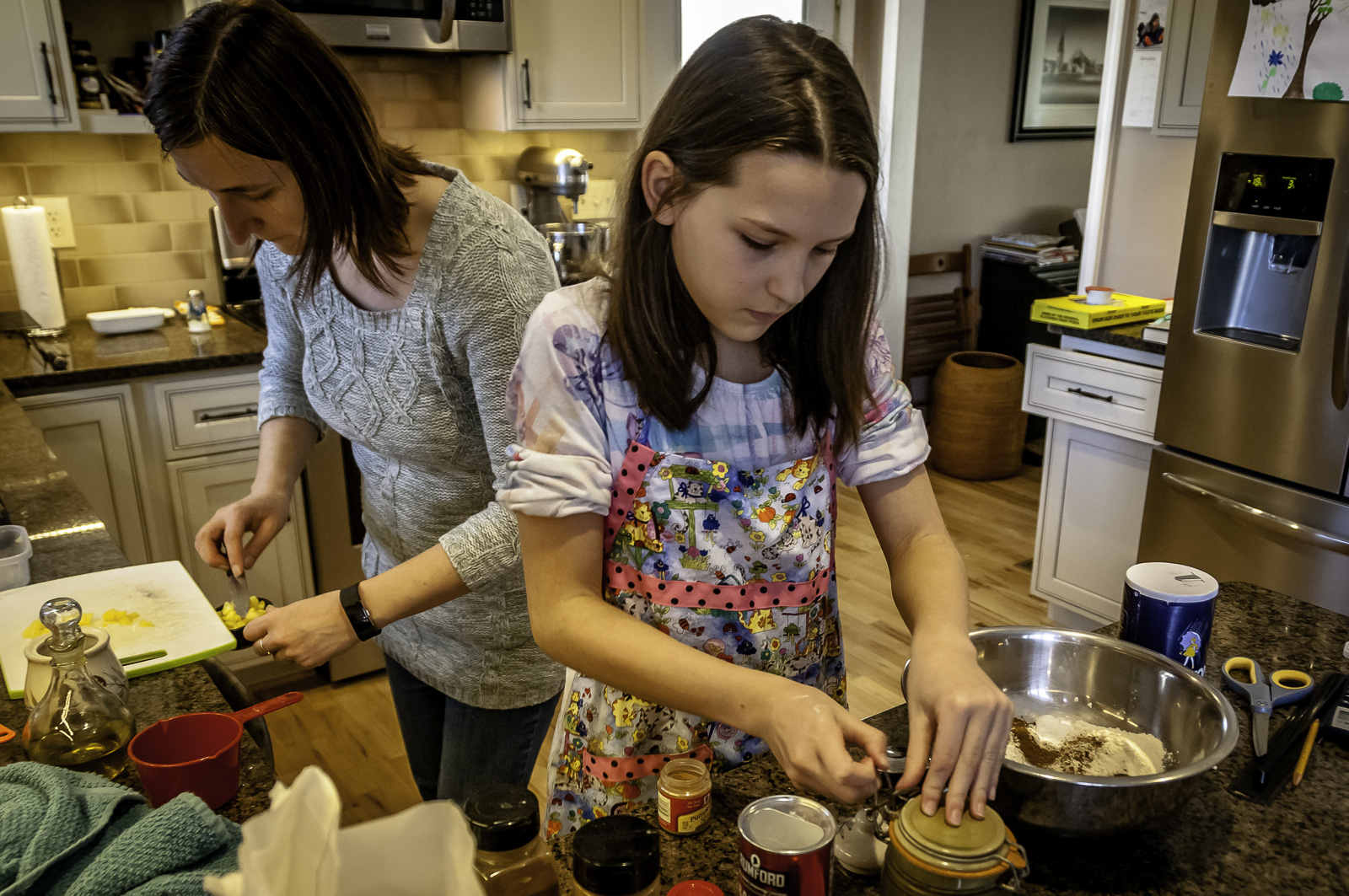
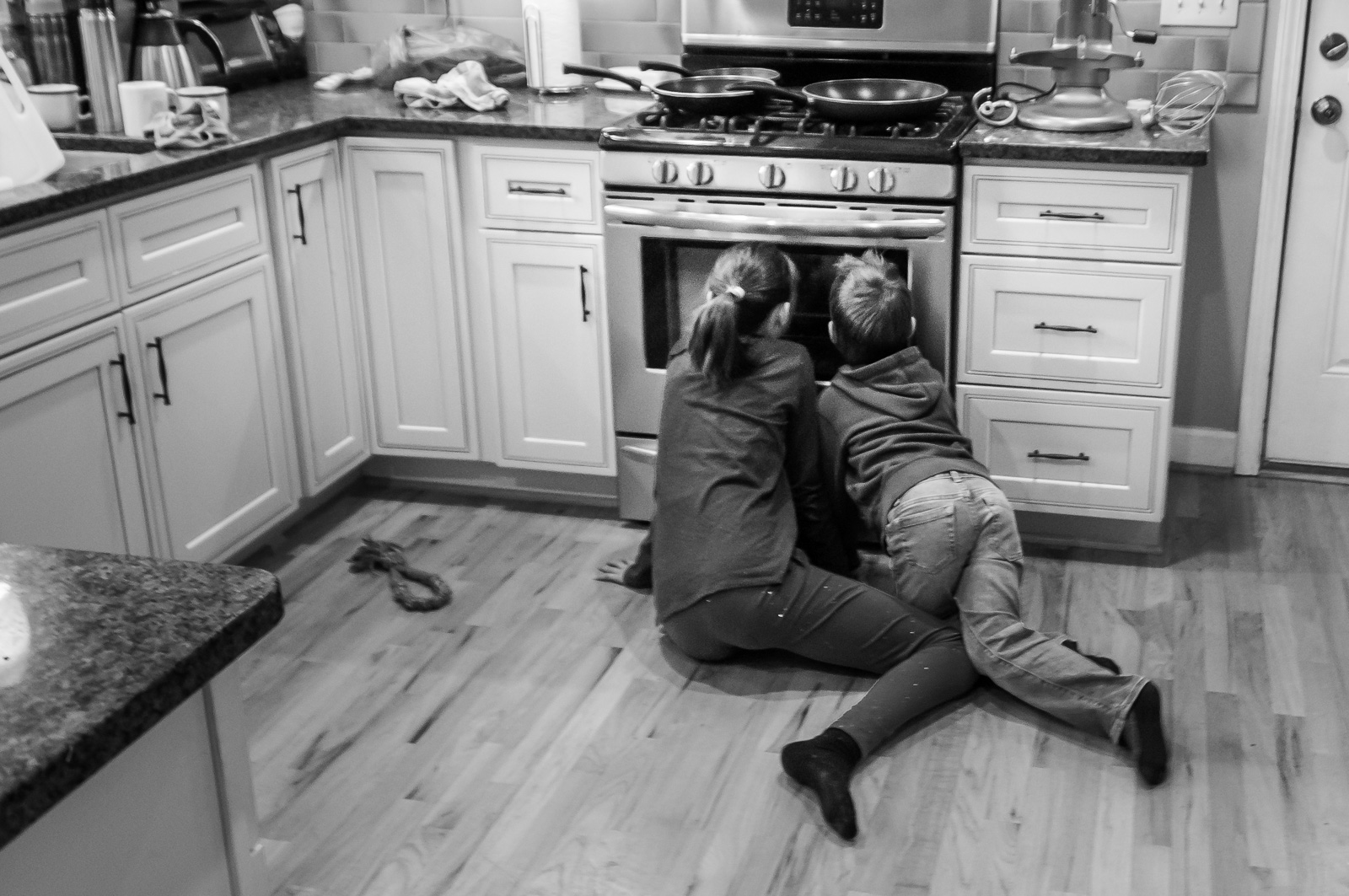
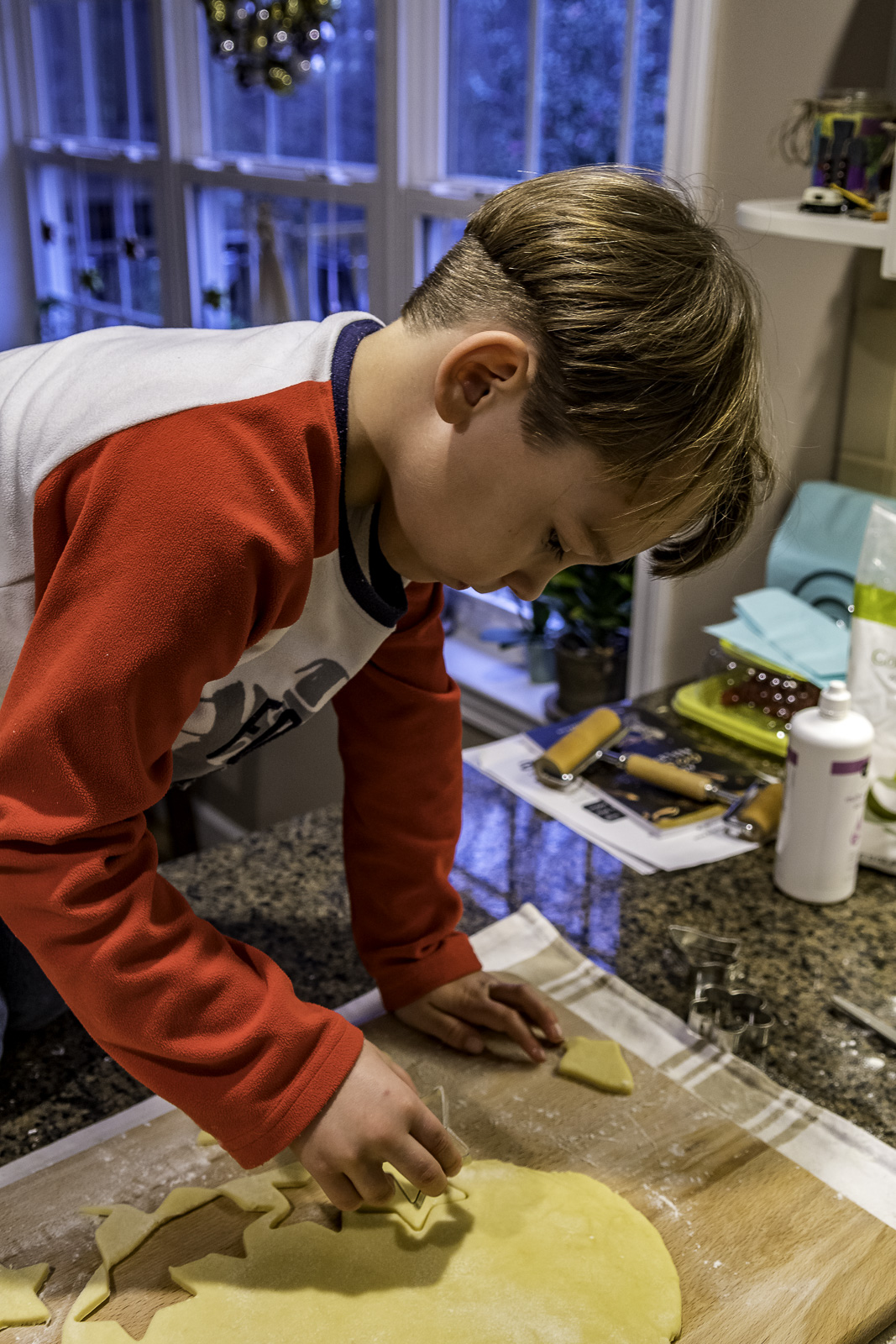
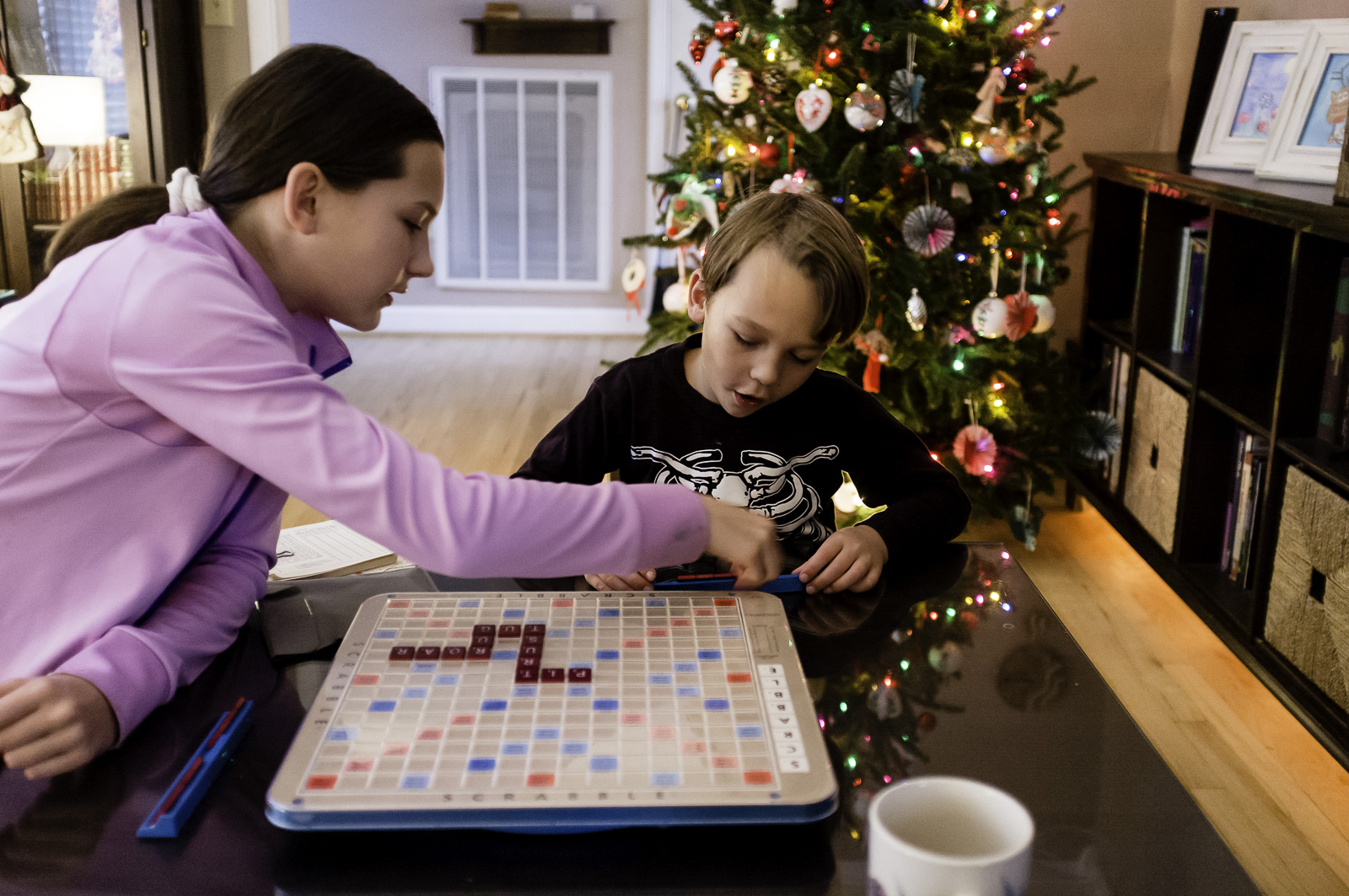
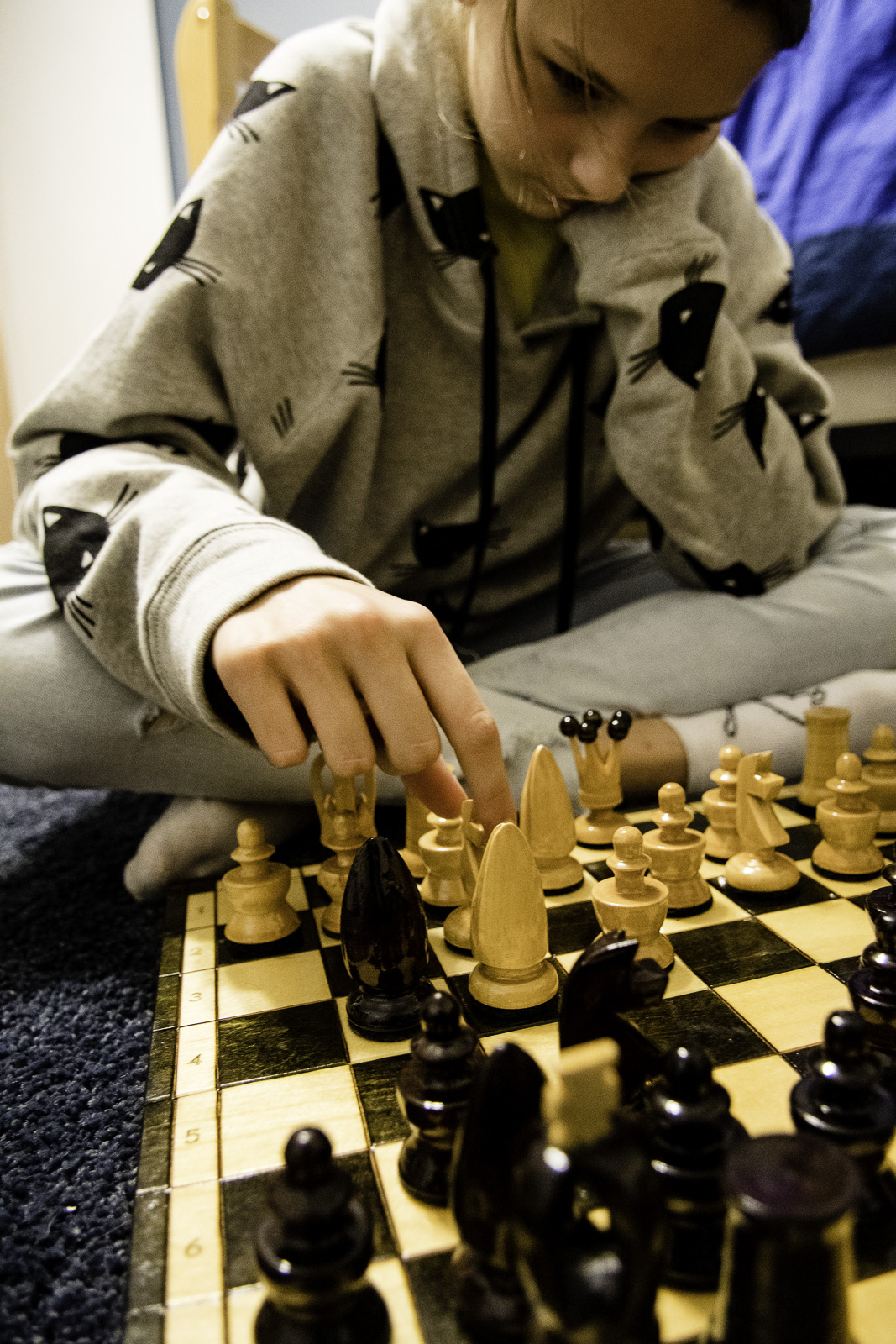
Then I began noticing a theme in the pictures, both the ones I’d selected and the ones I was noticing: maturity and independence. The kids working more, helping more, taking more on for themselves. The kids showing interest in things they’d never shown interest in before. Sure, there were lots of pictures of the kids being kids, but there were lots of pictures of kids growing up. Mowing, baking, reading, helping.

L finished elementary school and dove into middle school with eagerness. The Boy went from barely reading to showing an interest in chapter books and excitement at the prospect of reading them on his own. The Girl committed herself to singing in the church choir, now led by an Italian who was the associate choir director at the Sistine Chapel and has the girls singing most of their stuff in Latin these days.

There were some downs as there always are. One of Papa’s sisters passed away unexpectedly, and our dear friend who was battling cancer and had been given four to eight weeks to live survived only a few more days. Bida is growing more and more pathetic (in the classical sense of the word), and with her slowly stopping eating and moving less and less, for the first time, K and I discussed the inevitable. Not for a while, that’s true, but it’s coming, I fear.

This year will bring even more changes. The Girl will officially be a teenager. I will begin the second half of my forties. The Boy will likely be eating more that K. The Girl will likely be taller than K. And no matter the other changes, family will still be family.

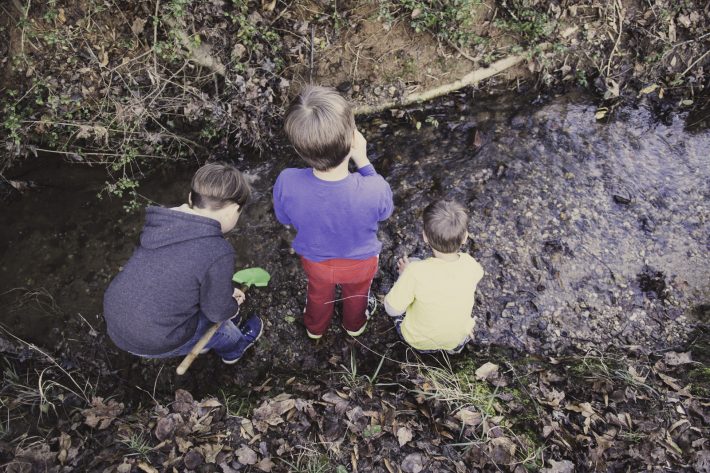
Three Boys, a Creek, and Pain

N and R came over for a little play time today after the Boy spent a couple of hours at their house this morning as K and I went to visit a dear friend who is in the final stages of a battle against cancer.

“The fight’s gone. It’s done,” said our friend. And what a fight he’d put up: this summer I helped him with an addition to his home, and he worked with a chemo backpack on, pumping him full of pain to fight the ultimate pain.

Seeing the boys playing, with all their energy, excitement, and passion was jarring in juxtaposition. All three of those boys will, at some point, grow old and die, long after I’ve done the same thing.

That’s what we all assume. We all wake up every day and work under that assumption without even thinking about it. We obviously can’t paralyze ourselves thinking every day, “Something could happen this day that takes someone we love away from us,” but a little reminder about our mortality is a good thing from time to time. It inspires us to do the little things that we might not have done because we’re tired, we need to do something else, or we just have other priorities at that moment.

Perhaps that’s what’s just beyond the edges of the addiction to pain some athletes feel. I’m nowhere near that level, but three nights of running have left my muscles aching in a way that I almost look forward to the next run, the next shot I have at pushing through the pain, of bettering the pain, because I won’t always be able to do that. There will come a time when I have to give up the fight, but each night I run, I can push against it.

Seeing that perseverance, limited though it might be, in my own children would be the purest blessing. One of the character traits I consistently see less and less frequently in my students is perseverance, or “grit” as edu-speak likes to call it these days. So many give up before even trying, convinced that they can’t do it, persuaded before they even begin that there’s no use in even trying.

It’s a natural enough inclination, I think. I already see it in E: he sometimes gives up on something so quickly that K and I just look at each other, that concerned parent look on our faces simultaneously.  So when E suggested tonight that he might want to join me on my run, it brought such a smile.

“But we’ll run the whole time, Daddy,” he said.

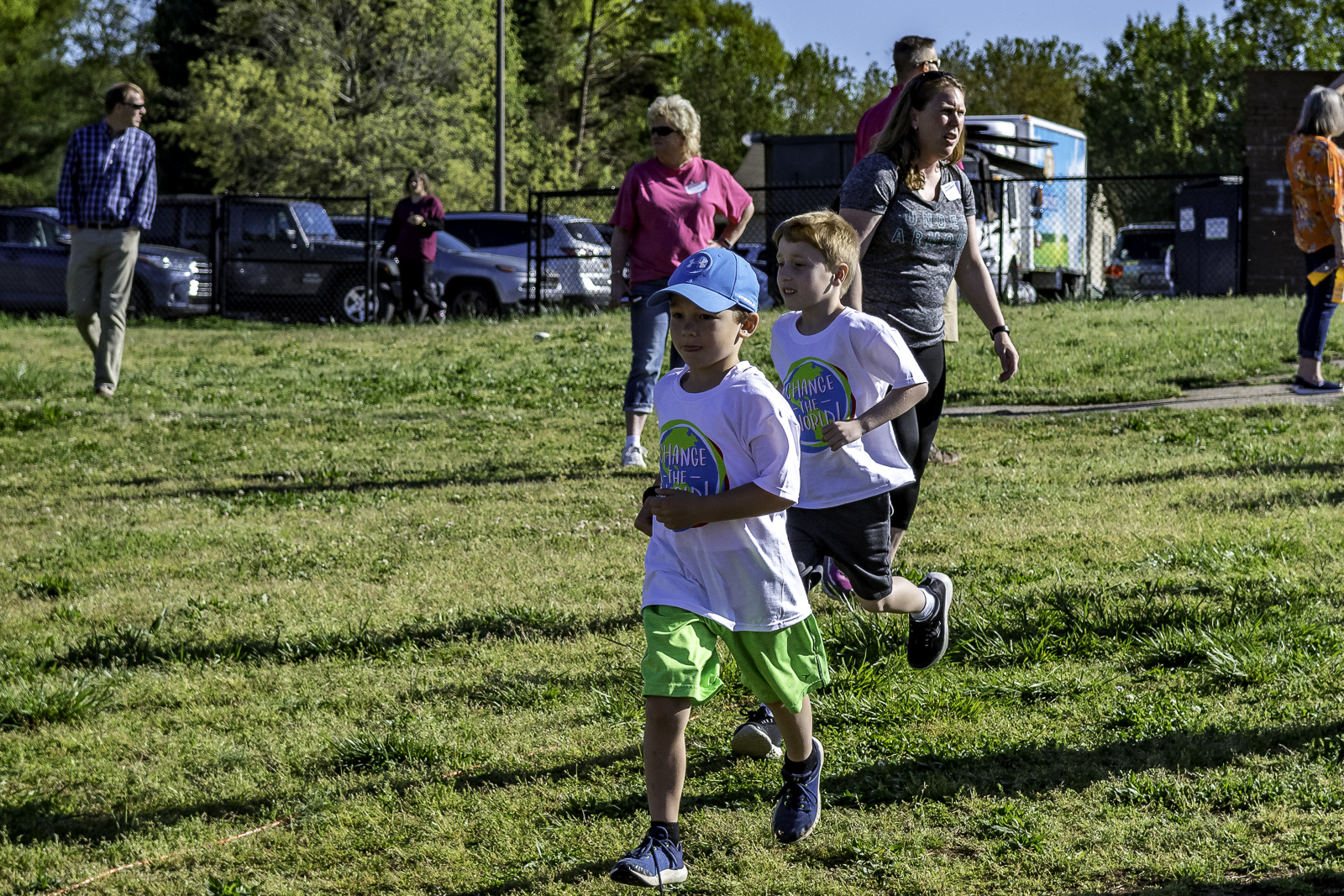
We did half a mile in just under seven minutes, with three short walking breaks and a lot of sweet, nonsensical chatter.

So I left for my solo run with a lighter step: the Boy took a little step toward becoming a fighter, toward realizing that that excitement in the creek with his friends can be found even in moments of pain.