growing

Sitting

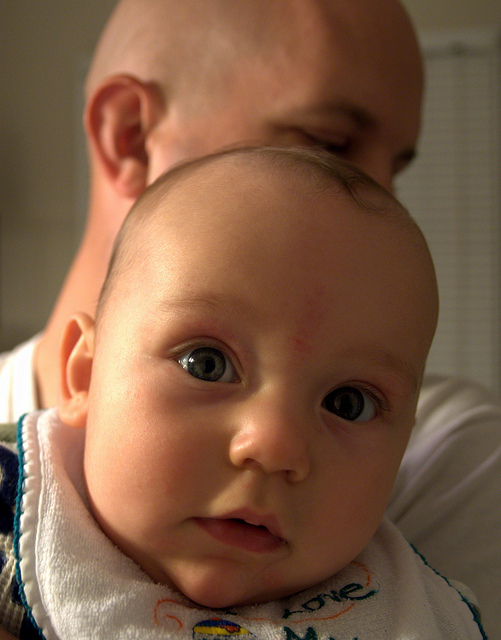
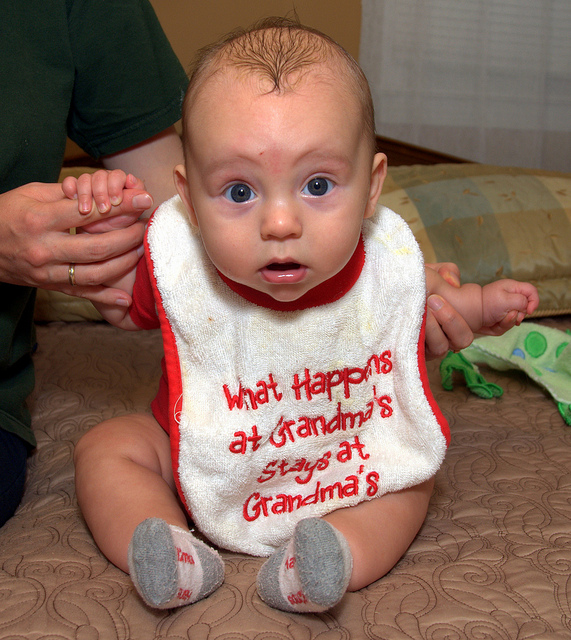
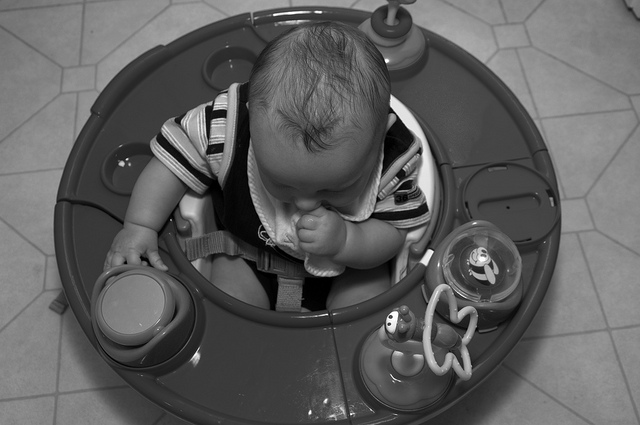
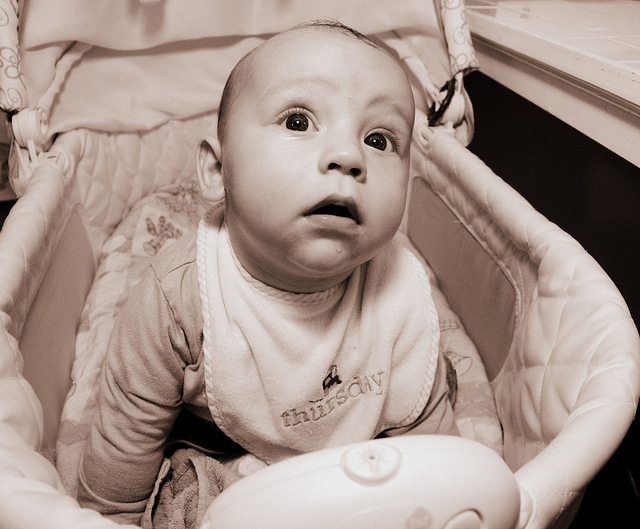
When you’re as heavy as the Boy (over twenty-one pounds at a little more than five months of age), it’s probably a little more difficult to sit up than for a more-average size baby.
DSC_5684

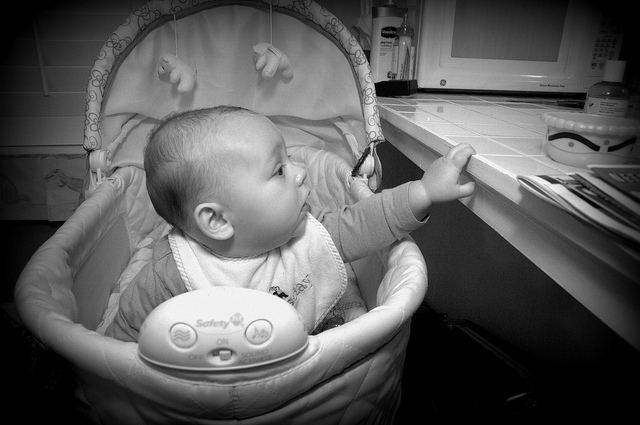
Yet he’s begun sitting a bit — or rather, slouching.
DSC_5689

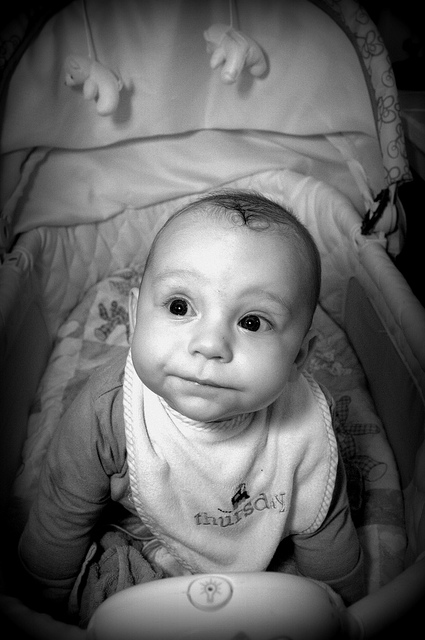
Of course, it always helps to have something to grasp for support.
DSC_5698

Babies

I understand radio and television stations had been counting down the days, but last Wednesday, the waiting ended. The Greenville Zoo tweeted, “It’s a boy! Greenville Zoo staff selected the name Kiko, meaning autumn’s child!”

DSC_5573

To call him a “cute little boy” would be misleading: he’s cute, but he’s certainly not little, for he looks to be over six feet tall. Still, compared to Mama, he’s a shrimp.

The Girl and I set out this morning finally to get a look at him. With this tweet bouncing around Greenville, we weren’t the only ones: “It has been a zoo here today! Everyone wants to see Kiko! Tomorrow he will be out from 11am – 2pm”

VIV_5583

The question of who had the best view changed from moment to moment as mother and son paced about the enclosure, with mother always keeping a close eye on Kiko, occasionally looking behind her to check on his progress, and frequently bending her long neck to give a reassuring nuzzle. Mothers do that, and I suspect they do it even when their babies are fully grown. At least we humans do it — looking at mother and son this morning, I couldn’t imagine it being any different among animals.

DSC_5575

It’s tempting to say something like, “It’s fairly different for the giraffes and such because there’s no culture out there trying to pump their heads full of garbage” (yes, still stewing from yesterday’s post), but they face existential threats hourly in the wild: I suppose the stress level is about the same. Still, do baby giraffes do things that make their parents just cringe?

VIV_5641

Probably. They probably even get dizzy just watching what their children do — that height probably doesn’t help much.

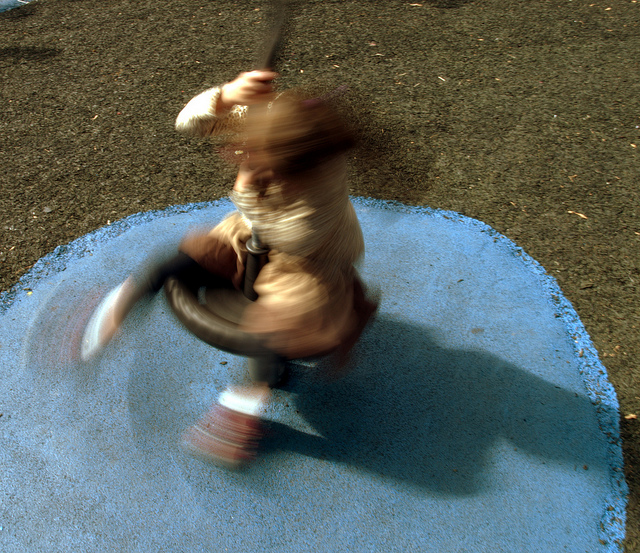
Still, as I watched the Girl after the zoo turning endless circles on this and that VIA( Vomit-Inducing Attraction), I started thinking that perhaps our lives are not so different, we and giraffes, or any other animal for that matter. We face our dangers, we teach our children to face them, and we hope that we’ve given them enough to survive, or thrive.

DSC_5652

But I suppose giraffes don’t photograph their children as obsessively as we.

DSC_5654

Dress Up

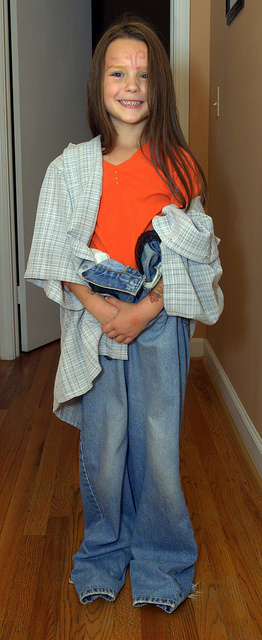
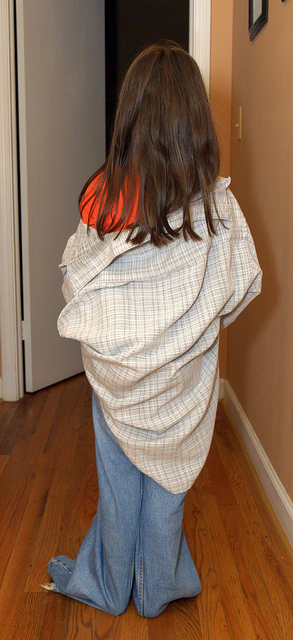
She’s growing up fast, but she’s still got some inches to grow.

DSC_5554 DSC_5555

Open Letter

Dear Typical Parents:

I think it’s about time that we all sit down and have a little chat. While we don’t have a great deal in common, we should have in common one important thing, and that is the interest in the well-being of our children.

DSC_5535

In the old days, parents’ job consisted mainly of protecting physically their children. They made sure their children were warm and fed. They protected them from the dangers of invading armies as best they could. They protected their children in a thousand and one ways, great and small, but almost always physical.

Those days are long gone, but our responsibility to protect our children remains. Only now, the dangers from which we are shielding our children are much more insidious because they are not readily, physically apparent. These dangers are all the more deadly because they threaten not the physical, but the spiritual. They threaten not the destruction of the body but the destruction of the soul. I’m speaking, of course, of our children’s mindset, their worldview, the lens through which they see the world and the matrix by which they interpret reality.

The pervasive worldview of our culture is carnal. It’s physical. It’s driven by a pathological inability to forego a momentary pleasure in the interests of a longer-lasting good. It ridicules self-denial and worships at the altar of immediate and total gratification, usually physical.

My wife and I are trying to raise our children in such a way that they understand that the “now” is often not as important as what’s to come, that the physical is never as important as the spiritual, that the mental always outweighs any pleasures that come through our senses. This is difficult because it runs counter to everything our culture — through advertising, through music, through casual conversation — everything our culture promotes. In other words, my wife and I are trying to raise freaks. Not freaks of nature, but freaks of society, freaks of culture. We’re trying to raise kids that understand that sex is not everything, and that it comes with some pretty important responsibilities, that it’s pleasure is secondary and subordinate to its ultimate purpose, which is procreation.

I wish I could say that our concerns with society deal with a number of other issues, that it isn’t only the sex, but unfortunately our society has made it so that it is only about the sex. One only need look at the recent Lena Dunham advertisement for the Obama campaign, which draws direct correlations between voting and sex — let’s be frank: when you watch the ad, she’s simply talking about the first of many sexual experiences a woman is expected to have in the guise of “serial monogamy — to see how deeply embedded in our culture this obsession with sex really is. One only has to read Kristin Iversen’s mocking commentary on the critics of the ad to see how obsessed our culture is with pushing sexuality on younger and younger children:

Does Dunham say how important it is that the first time be special? Yes. Does Dunham comment that her first time voting was what made her a woman? Sure. Is all of this amusing and charming and only blush-inducing if you are a 10-year-old girl, in which case, why are you watching this, you can’t vote anyway? Also, yes. (Source)

Our whole culture seems obsessed with it, willing to do anything for it, and increasingly expecting others to pay for the responsibility of it. It seems willing to trade of any good in a Faustian bargain for short-term ecstasy.

That is not the priority I want my daughter and son to have. And I hope it’s not the priority you want your children to have.

Unfortunately, the things my daughter comes home from kindergarten saying, drawing, and doing make me think that, if that is your priority, if you are consciously trying to raise children who put the spiritual (and you’re almost free to interpret that as liberally as you wish at this point) over the physical, then sadly, my friends, you are doing a very poor job of it.

How do I know?

When my daughter comes home with a picture she drew in school that she later explains is the plan by which Friend A wants to conspire to break up the “relationship” of Friend B with her boyfriend (these are all three kindergarteners, mind you) so that Friend A can have the young man for herself (again, these are kindergarteners); when my daughter comes home explaining this in great, illustrated detail, explaining all the steps necessary, using the terminology “break up”, “boyfriend”, “fall in love with”, and “twist”; when my daughter comes home with these images and ideas and norms, I am afraid you and I are at the very least with how conscientiously we are trying to raise our children. And at the very worse, that you are consciously raising your children to have goals and plans diametrically opposed to mine and my wife’s.

I am having to explain things that, quite frankly, I don’t want to have to explain. At five years old, she’s too young to know what a boyfriend is in any real, experiential sense, whether her experience or vicariously through the experiences of those she calls her friends.

You might not be doing this consciously, and indeed, I hope and even doubt that you are. However, the fact remains that you are teaching my daughter that I really do not want my daughter to learn. You are teaching my daughter through the example of your children, who throw up their hands and say, “I don’t care” with such derision that it even disturbs my daughter, though she has begun doing it herself. You are teaching my daughter by allowing your children to listen to the sex-infused popular music of today without even explaining, it seems, that “sexy” is not a word that needs to come out of a five-year-old’s mouth. Through your children, you are teaching my daughter so many things at five years of age that I thought she would not encounter for at least, in the very worst case scenario, another year or two.

Still, I should be grateful. You have made me more thankful than ever that, through some odd, unlikely grace, I found myself married to a Catholic woman and eventually baptized into the Catholic church myself. You have made me exponentially more vigilant about the crap — sorry, but there’s no other word for it — that today’s culture is trying to shovel on her. You have taught me that it’s never too early to be on guard. You have reminded me that my promise to my daughter and son, of which I remind my daughter almost daily when she’s frightened by this or that by simply asking “What’s my responsibility” and knowing that the response is always “To protect me”, is my primary responsibility on Earth today and that every other Earthly responsibility is secondary or tertiary at best. I don’t mean to sound bellicose, but you’ve reminded me that I am in a war for my own soul and, until they can defend themselves, my children’s souls.

All the same, it would be so much easier if I knew we were all on the same side. Sadly, I’m not sure we are. Still, it’s good to know where we stand. You and your children will be in my prayers, but my own children’s spiritual well-being will be in my prayers and my conscientious, purposeful deeds.

Regards,
The Girl’s Dad

Throw Away

I think we’re almost all pack rats by nature. Sure, there are the few that throw away everything and anything the moment it’s clear that the object no longer has an immediate use. Then there are those whose homes are garbage heaps with little paths through the clutter, people who ironically enough stand a reasonable chance of ending up on this or that reality show.

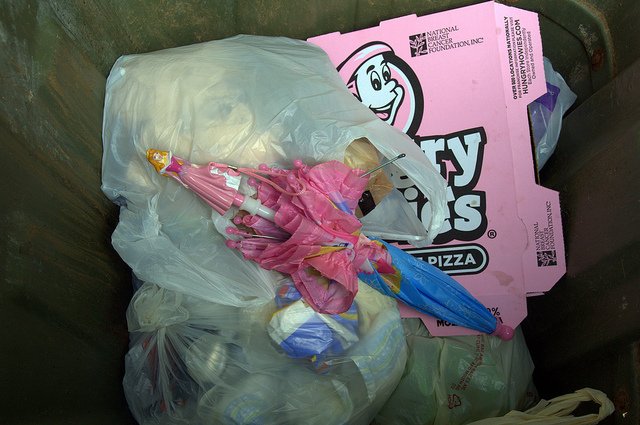
L has always been a bit of the latter. She’ll try to keep broken objects for sentimental reasons, even if she has a replacement. A prime example of this is her princess umbrella collection. Various department stores sell them, and L has bought three or four over the last few years. They’re flimsy, though, and break easily.

Trashy Miracle

Convincing her that she needed to throw the broken umbrella away, though, has always been tricky. It took her a bit of time to warm up to the idea. Today, we pointed out that the umbrella is broken — again. “We’ll need to throw it away,” K began, probably sure that the conversation wouldn’t result in much more than a bit of begging and fussing.

“Okay,” came the reply.

Some days, she’s a bigger girl than I realize.

The Boy and the Bed

Lately, the Boy has been making the oddest noise…

Laughing Boy

It turns out the Boy is quite ticklish.

First Loss

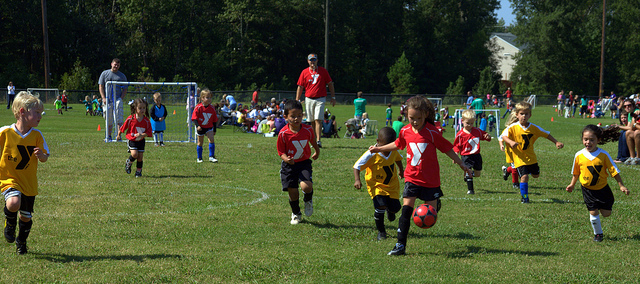
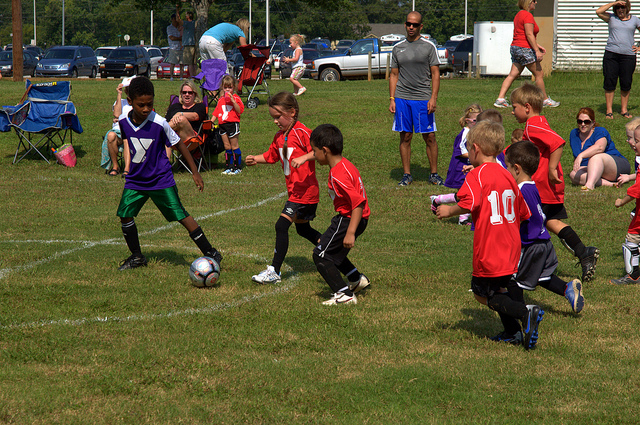
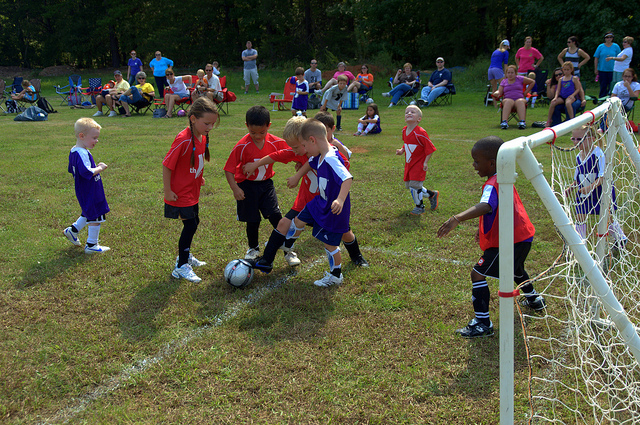
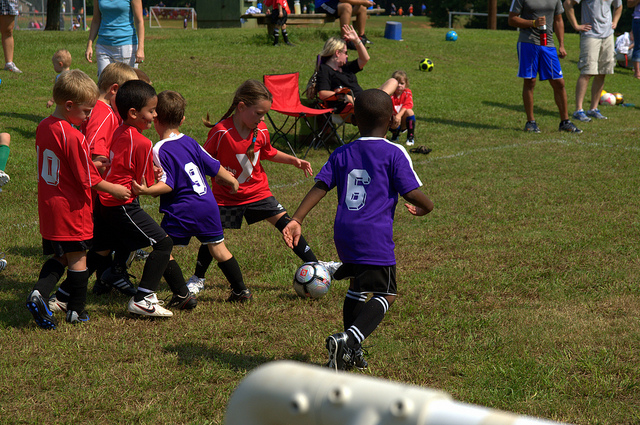
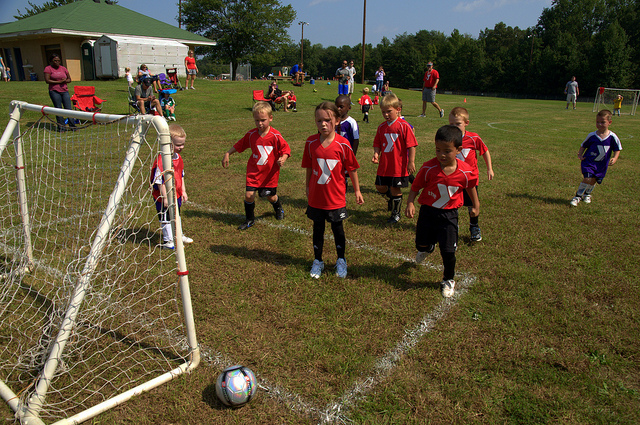
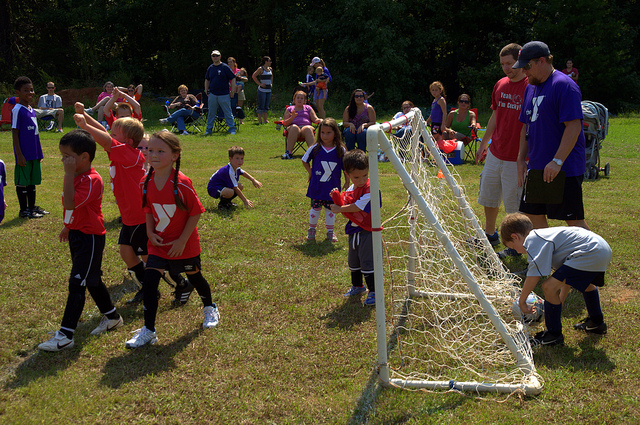
It had to happen. And perhaps it was good that it did: L’s team lost their first match today, 8-2. With a point difference like that, it was a stinging first loss. Things just weren’t going as they usually do.

DSC_4459

“That team was the best team we played,” L explained. Three young men in yellow managed consistently to stop red team’s offensive charges while also proving themselves to be exceptional ball handlers when on the attack.

DSC_4487

“There were some boys on that team that were really good,” L explained later in the day. It gave her, I hope, a view of what’s possible.

Sitting

The Boy so wants to sit. If only he could keep his balance.

DSC_3848

Goal! Again!

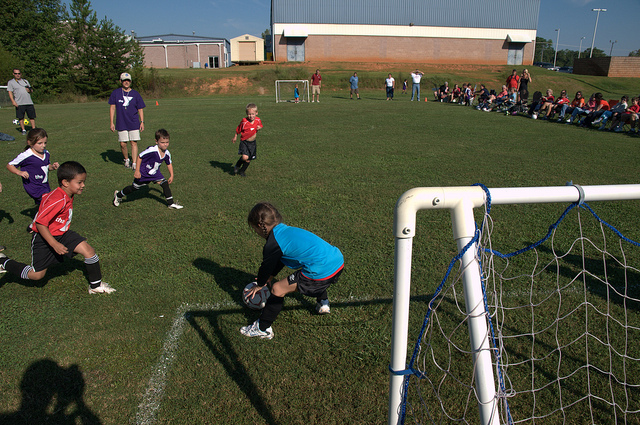
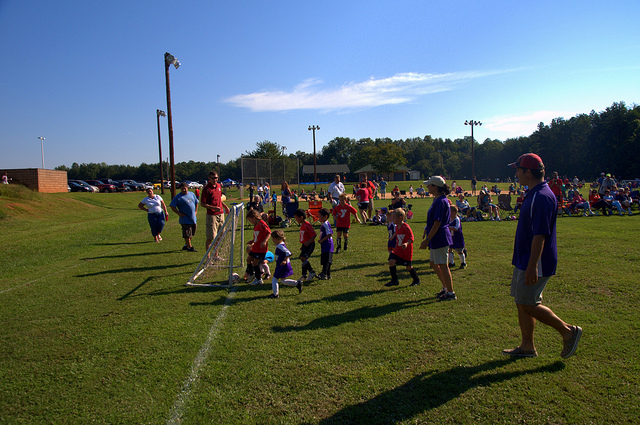
Game two. The Girl sits out the first quarter. After her adventures last game, perhaps that’s best — start slowly.

When she enters the game, she volunteers to be the goalie. It’s a potential disaster: I anticipate her frustration if she lets a ball get through. She’s doesn’t take mistakes very easily, and I know as goalie, she’s likely to experience them — especially with number five on the opposing team, who seems to steamroll through the defense like a panzer column.

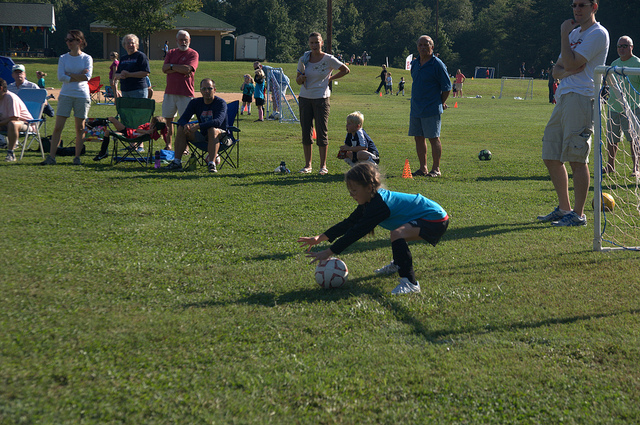
Sure enough, within a few moments of the start of play, the Steamroller Five comes barreling at the Girl. She pulls up a little short and shoots; the ball approaches L with decreasing speed. She bends down; she’s in position.

DSC_3422

And the ball rolls right through. Instant frustration; intense irritation. She begins marching to the coach, tugging at the goalie jersey the team shares, when I call her back.

“No, sweetie,” I begin. “You have to stay in. This is your position. We can’t substitute right now just because you’re a little frustrated. But don’t worry — it’s your first time out. You’ll get the hang of it quickly enough.”

DSC_3429

And the next time Steamroller Five shoots, the Girl makes the save. She makes a few more as the game continues, but come the second half, she’s ready to go on the offensive.

Her first goal is an act of pure aggression. The goalie makes the mistake of not controlling the ball fully, only gently resting his hands on the ball. L simply takes the free kick.

DSC_3453

Her second goal of the the day, though, is a beauty, a joy to watch. She emerges from a pack of defenders and faces off with Steamroller Five, who’s been playing masterful defense the whole game. Just before Five can reach her, the Girl lets loose on a cross-goal shot.

DSC_3496

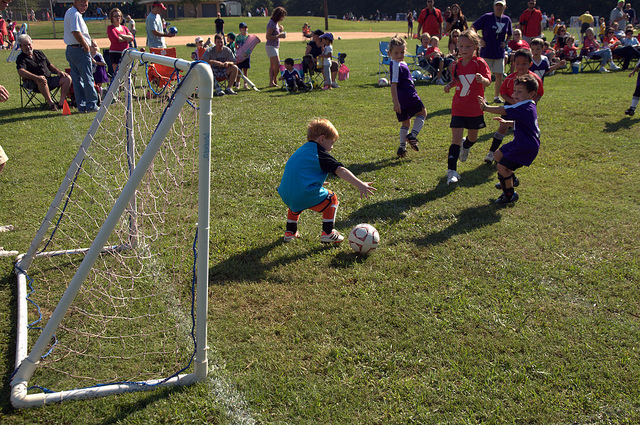
that blasts past the goalie — himself a wonder. He’s been stopping shots left and right, and he’s not afraid to dive

DSC_3499

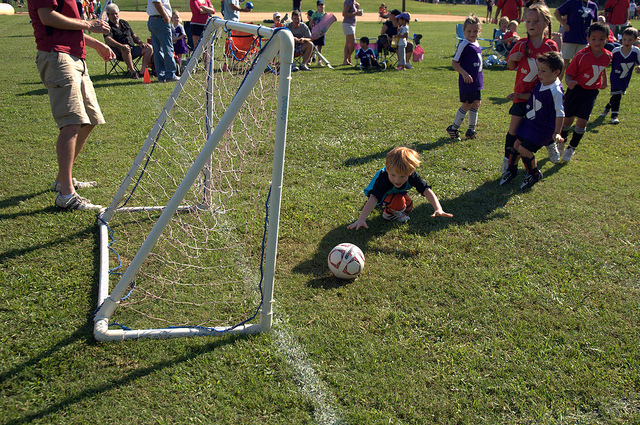
This time, though, he’s a little late. The ball squirts past; Steamroller Five looks on; L collides with a defender — it’s straight out of the World Cup.

DSC_3501

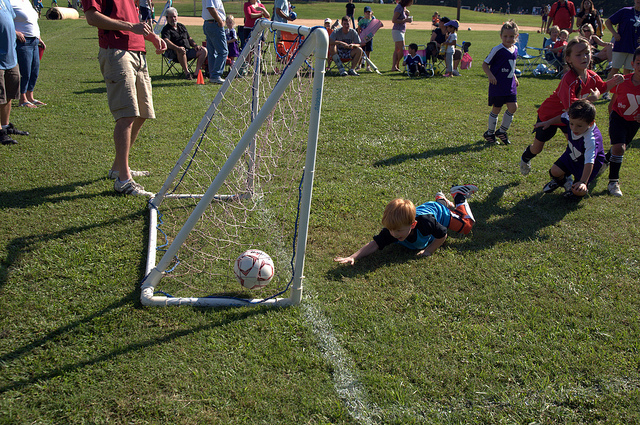
The shot just catches the bottom corner of the goal, with the goalie still refusing to give up and the Girl realizing fully she’ll be on the ground momentarily.

DSC_3503

So with two games down, we have the stats that might just encourage her to continue. She’d probably like it more if she could wear a tiara, though.

Sharing

“Name something you don’t like to share.”

Plinky

Shouldn’t the selfless answer be something along the lines of “Absolutely nothing?” As a parent who is always working to teach my daughter (and soon, son) to share, I wonder if this isn’t the perfect way to set an example. “Look, my child: there’s absolutely nothing I would not share with you. I have my ice cream, but I’m only happy if it’s our ice cream. In fact, it gives me more joy to give it all to you than simply to share it.” Indeed, in such “sharing,” I would certainly be getting the better end of the deal: ice cream melts, no matter what; joy lingers.

Sharing
Photo courtesy of bengrey via Creative Commons.

Yet isn’t that also the reckless answer? As with most questions, the more one thinks about this, the broader the potential. Do I want to share my sorrows with my children? Do I want to share my pain?

And deeper still: if I don’t want to share my sorrows with my children, why not? It would only be shielding them artificially from what they themselves would experience, and if I share my sorrow, I can control the dose. If I don’t want to share my pain, then how can I expect them to share theirs with me, which is much more important?

Future Food

It must be boring to eat the same thing, meal after meal, day after day. I can’t imagine I’d like it very much. K and I used to eat oatmeal most mornings for breakfast, and then it became an everyday thing. It soon became clear to me that I must stop eating so much oatmeal or I’d never be able to look at a Quaker Oat’s box again without having a fit of some sort.
DSC_3388

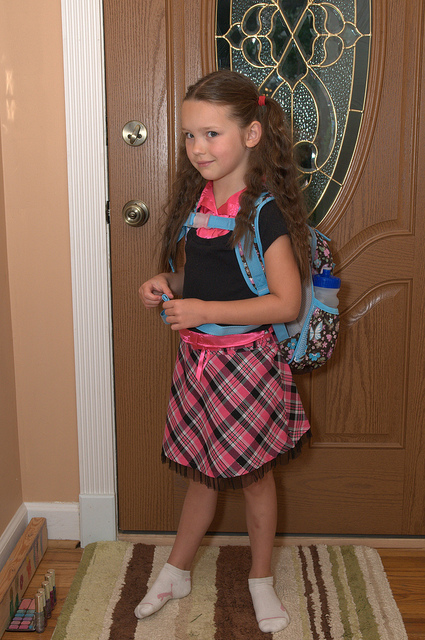
Yet that is precisely what E does, only it’s not a question of X or Y for breakfast or lunch every day. It’s a question of X for every meal, every single day.

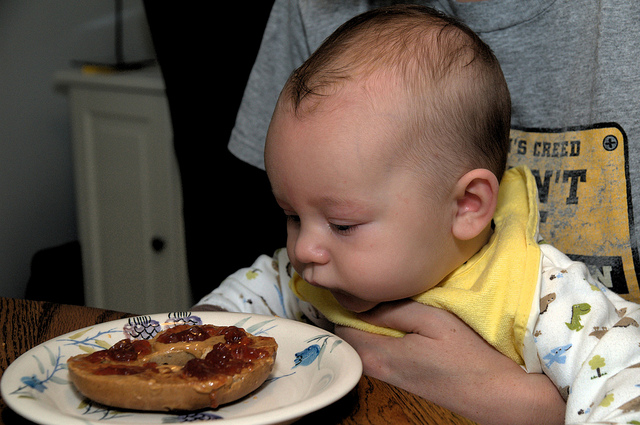
Still, it won’t last long. He’s almost four months old. We’ve begun giving him rice cereal and grated apple. At the same time, it’s mixed with milk, so it probably tastes just about the same as every other meal — the consistency alone might be a little different.

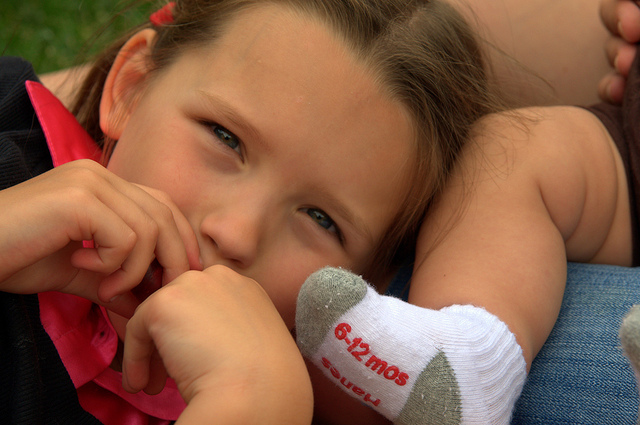
But that doesn’t keep him from dreaming of the not-too-distant future.
Hat Trick

When Pele was just over seventeen years old, he became the youngest player to achieve a hat trick — three goals in a match — in a World Cup match. In 1930, Guillermo Stabile scored a hat trick during his debut World Cup game.

DSC_3188

What happens if you combine the two?

All I was hoping for was a successful first game, and I defined success simply enough: enough enjoyment to encourage the Girl to continue with her soccer adventure. Certainly, I wanted her team to win — winning always feels good. But more than that, I wanted the Girl to leave with an eagerness to return. And so among my great fears was the shut-out. “If L’s team doesn’t score a single goal, it might be frustrating to her,” I thought.

DSC_3222

There were other concerns as well. L is not always the most aggressive person, especially in novel situations, and a first-time soccer game is about as novel as one can imagine.

Yet right from the start, the Girl is aggressive. Really aggressive. She charges the ball without concerning herself about the number of kids kicking wildly at the ball, and she often emerges from the pack with the ball.

DSC_3248

And then she scores.

We’ve all seen the typical reactions among the pros — the wild celebrations, the leaping, the shirt front over the head. L seems completely oblivious to the significance of what has just happened. Countless games have finished one-nil, and the sole scorer is automatically the hero.

L, ignorant of all this, simply walks away from the goal calmly, a bit confused even. But my reaction and the coach’s reaction tell her something big has happened.

“It can’t be a more perfect first game,” I think. No matter what happens now, we have something to celebrate. Even if her team loses 5-1, we have that single moment to smile about. “Wasn’t that a great feeling to score?” I’ll be able to ask.

DSC_3307

But the Girl has other things on her mind. She continues charging. She continues heading straight for the goal. She continues shooting.

DSC_3318

And she misses. Once. Twice. And then more lightning: another goal.

DSC_3364

And then a third. A hat trick, on her first time out. As she walks away from the goal the third time, her teammates celebrating, a small smile appears on her face. She knows what she’s done. She’s gotten a taste of athletic greatness. And she likes it.

Not content with having scored the only goals for either team, she proclaims with calm assurance as we walk back to the car, “Next game, I’m going to score five goals.”

Watch out Messi, here comes the Girl.

Errors and Mistakes

In the midst of the process, it becomes obvious to me that the road these students are on will not lead to the results they want. They’re working hard learning a new framework for planning and writing formal essays, but there are so many larger and smaller steps — I couldn’t have covered them all the first time through. Yet I sit and wonder whether or not I’ve made a mistake. Instead of essays, many of them are going to wind up with three body paragraphs that seem to have nothing to do with each other.

I’m left wondering what to do. Do I stop everyone and make a group course correction? That’s likely only to confuse some. And besides, it’s the process I’m teaching. I’m not worried as much about the finished product at this point as I am the steps the kids are taking to create that final product.

Then it occurs to me: sometimes the teachable moment is not in the moment. Sometimes it’s best to let them stumble — knowingly, even anticipating it — so that their misstep will show them rather than tell them where they were on the wrong track.

“Mr. Scott,” I envision one young lady beginning quizzically, “This essay we wrote — it don’t make sense.”

“How so? What doesn’t make sense?” I will reply, hoping that she will see then what I already clearly see  now.

“I don’t know. It’s just,” she might continue, pausing to look for the right way to express herself. “These paragraphs. They just don’t go together somehow.”

And I will smile and say, “I know, and I’m so very glad you’ve noticed that.”

Stereo

The Girl was heading up to bed. Teeth were brushed, hair combed. But one thing remained.

"Clean Up Before You Go Up"

“I’m going to bed,” she said.

“Oh, no, no, no! Not until you…” came the stereo response.

Practice

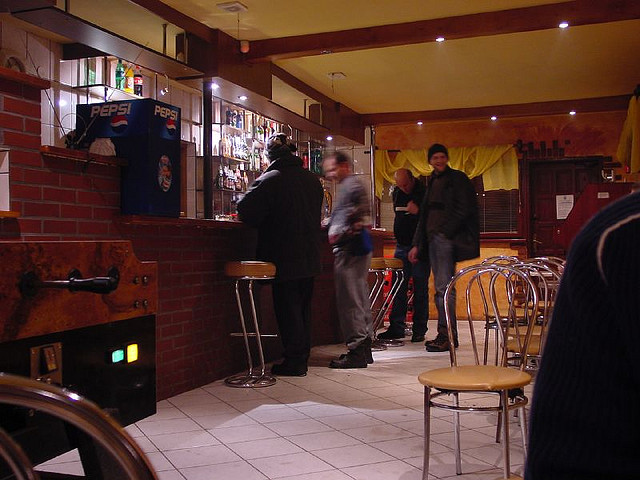
I learned to appreciate soccer sitting with friends at this or that bar in Lipnica Wielka or sitting with my in-laws, watching club play as well as Euro Cup and World Cup tournaments. It’s a deceptive game for the uninitiated, and since I’d never played or even really watched the game, I had no idea about much of it.

U Adama II

And so when it comes time to start helping the Girl with her new soccer skills, I have to rely on the basics, things I’ve inferred from watching but never actually been taught — like kicking with the inside-top of the foot for better control.

DSC_2838

It soon becomes clear, though, that the Girl either kicks the ball with the side of her foot or the front of her foot — perhaps too much too quickly.

DSC_2847

Other skills are simpler, like stopping the ball.

DSC_2876

In the end, though, we deduce that the best option is simply to encourage the enjoyment of the game, The finer points will come later.

First Day 2012

Who knows how many times I’ve done it. If I had to count, I probably could count how many “first days” at school I’ve experienced. With time on both sides of the desk, I suppose I’d have to be now nearing thirty first days.

But I still remember my first first day. Some degree of nervousness, some level of excitement, some small amount of disappointment mixed with a great deal of joy.

DSC_2298

I would like to think the Girl will remember her first first day. That she will remember how the night before her worries and fears melted in the morning to a smile and a paradoxically calm excitement.

DSC_2303

That she will remember her idea to have a desert picnic after dinner. That she will recall her planning and packing for the picnic.

DSC_2319

That she will linger over the memory of cuddling up to her mother, snuggling with her baby brother.

DSC_2326

And that she’ll think of that first day every time she sees an ice cream truck.

DSC_2333

DSC_2339

Support

The first real step toward mobility is probably the ability to roll over. The only thing we as parents can do to help that develop, though, is simply to put the Boy on his belly as often as possible, most frequently just before feeding.

Hover

Sitting, the second step, is something we can help him with. All we need is something to support him — from every direction.

To Mouth

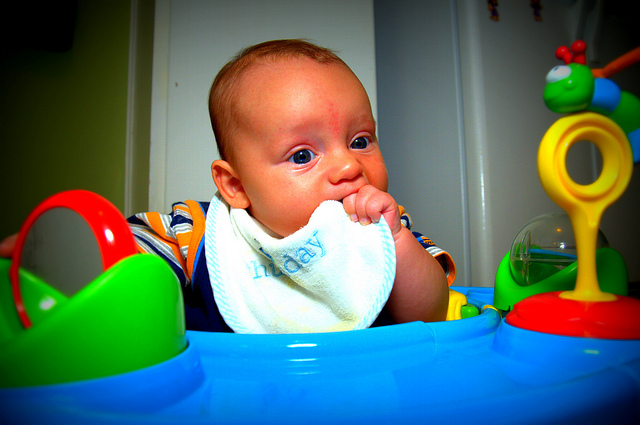
Yet he remains more interested in his bib.

Hands

Hide

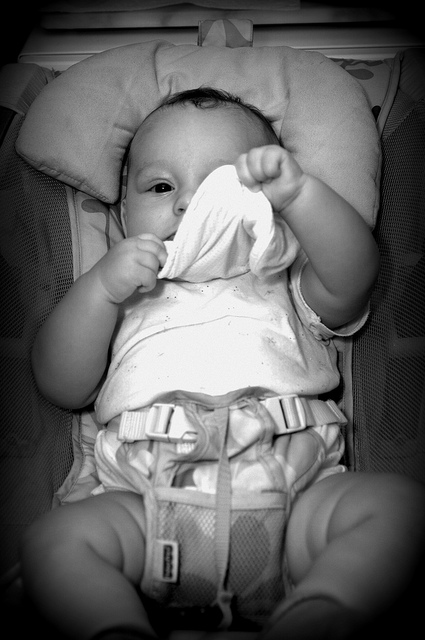
The Boy has been discovering his hands, discovering that he has them, discovering that he can control them.