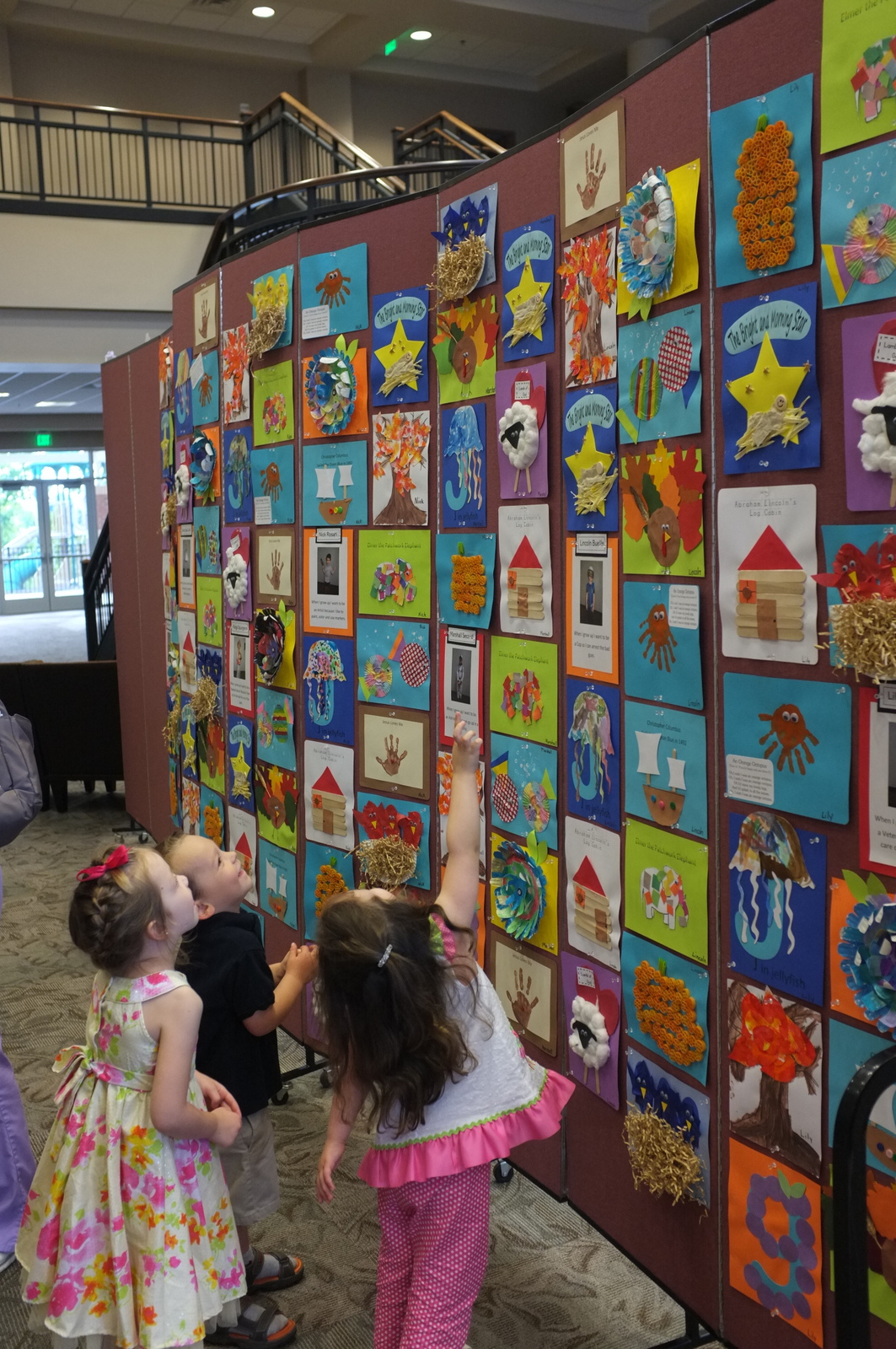
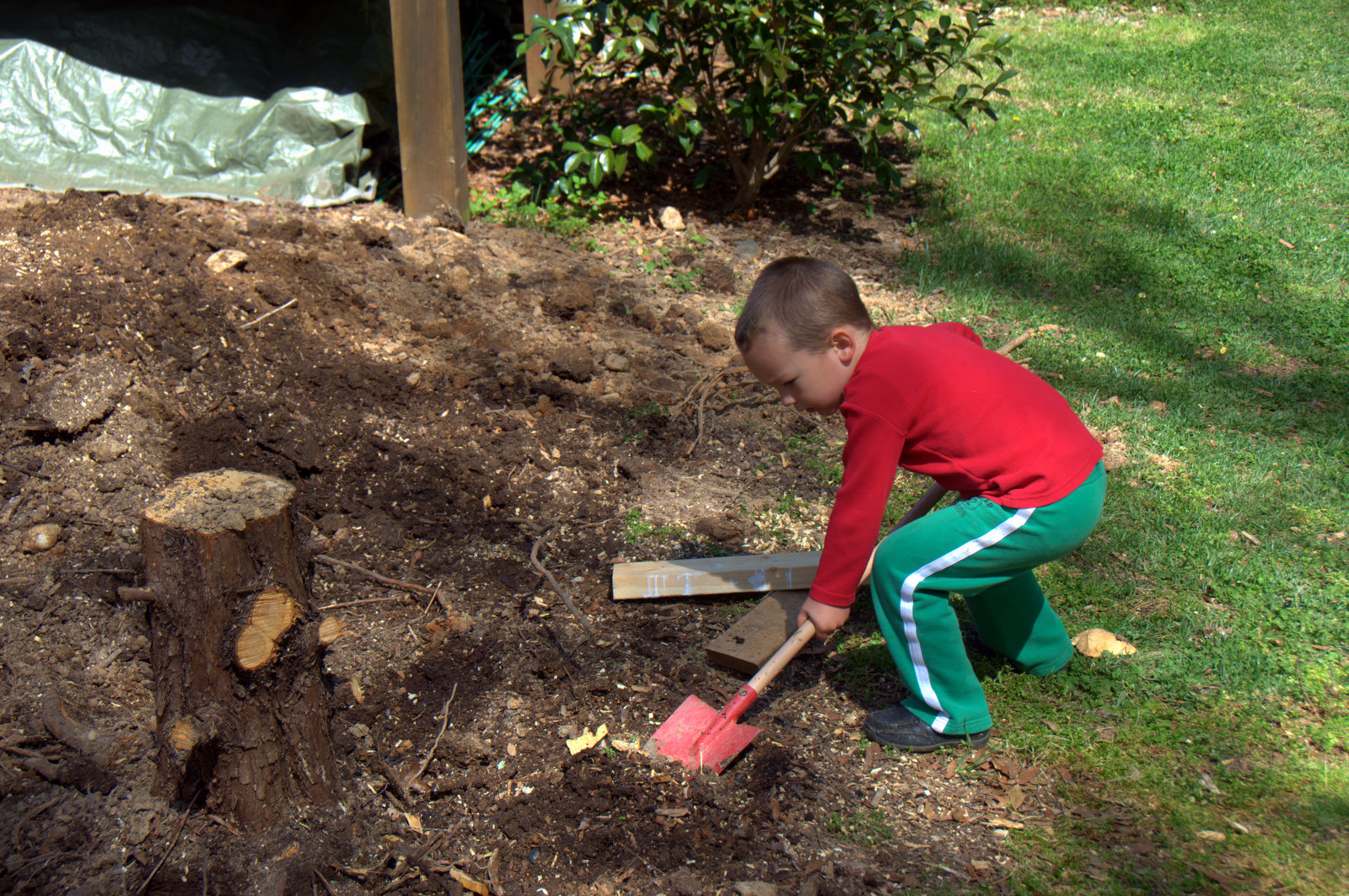
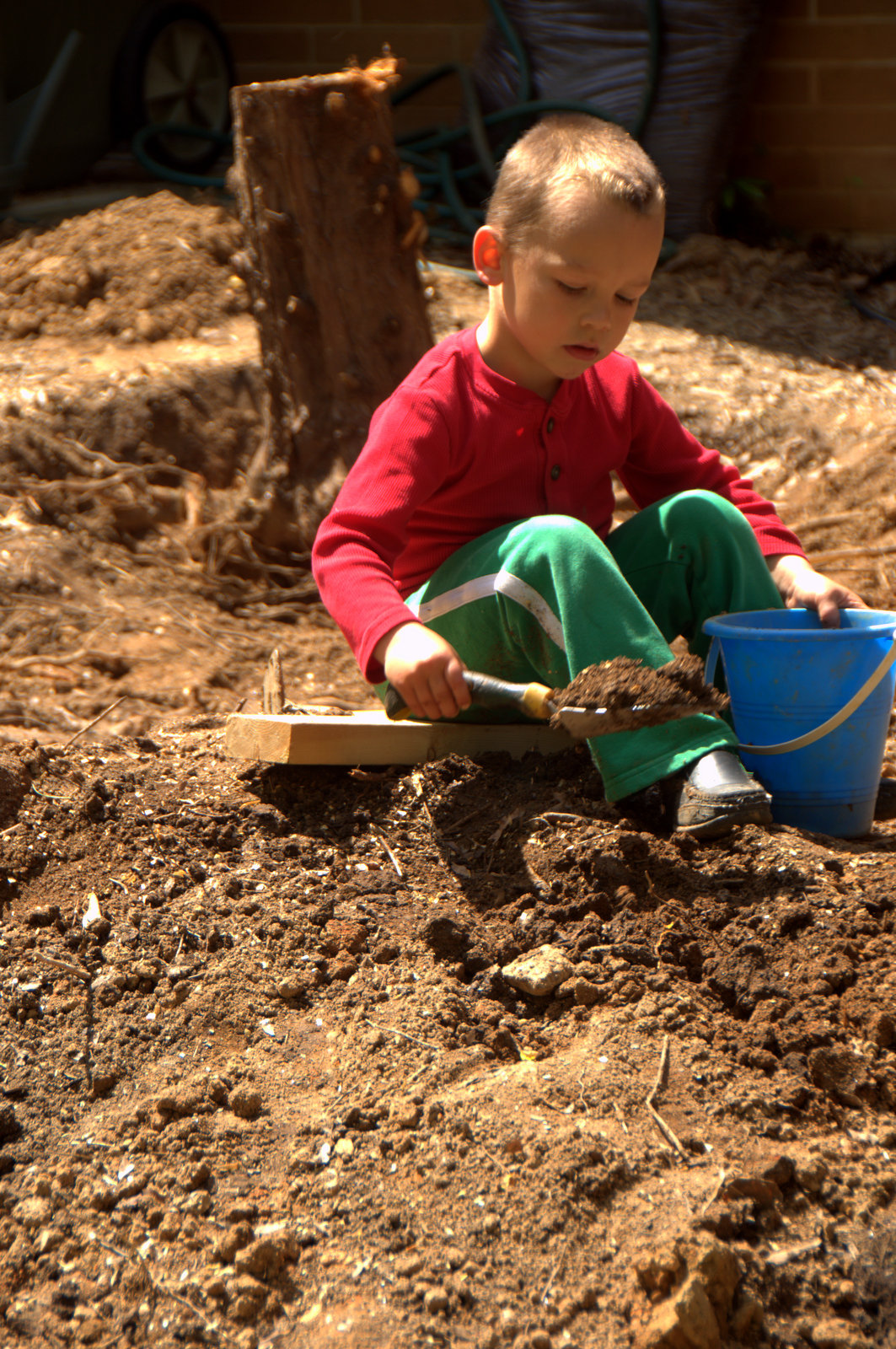
growing

New

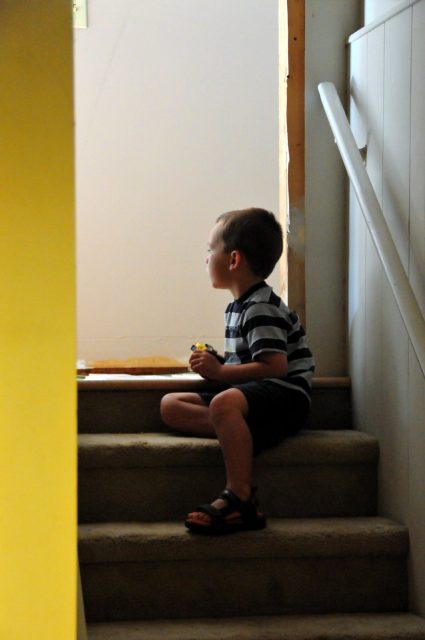
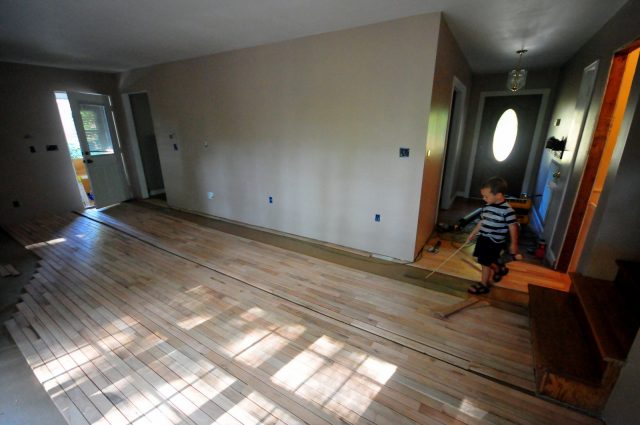
The day began with a treat for the Boy: the flooring company installed our new hardwood, which has been sitting in the living room for close to a month, acclimating to our house’s moisture levels. E sat at the top of the basement stairs and watched as two men laid out the wood for the main part of the room while another worked on the small area in front of the basement door.
1-DSC_5051

They took a smoke break after finishing the layout, then came back and finished the rest of the job in less than a couple of hours.
2-DSC_5062

He of course chatted them up the entire time.

“Sorry about how shy my son is,” I laughed. The gentlemen found him generally amusing, though, and were very patient with his questions and own little explanations.
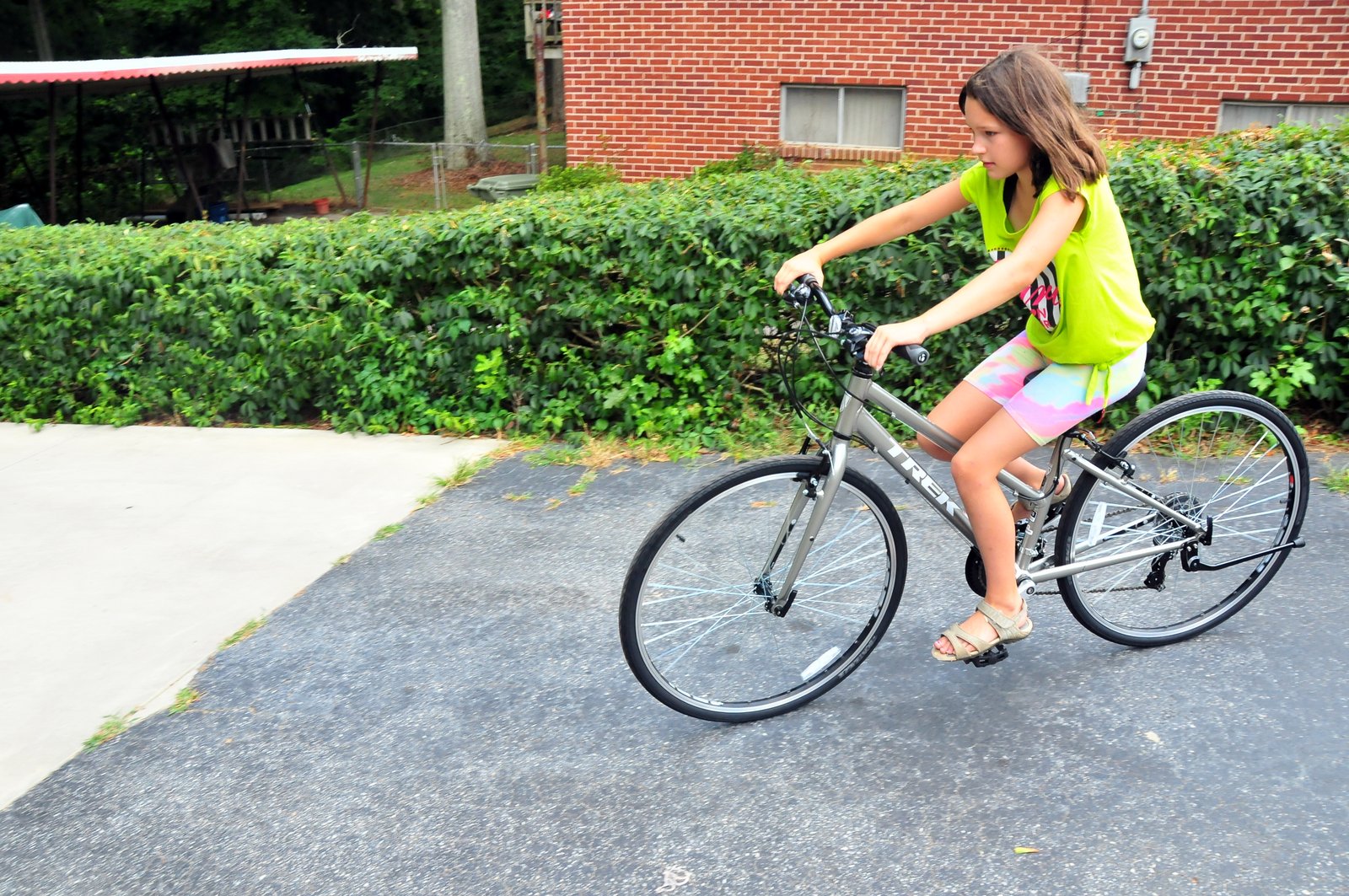
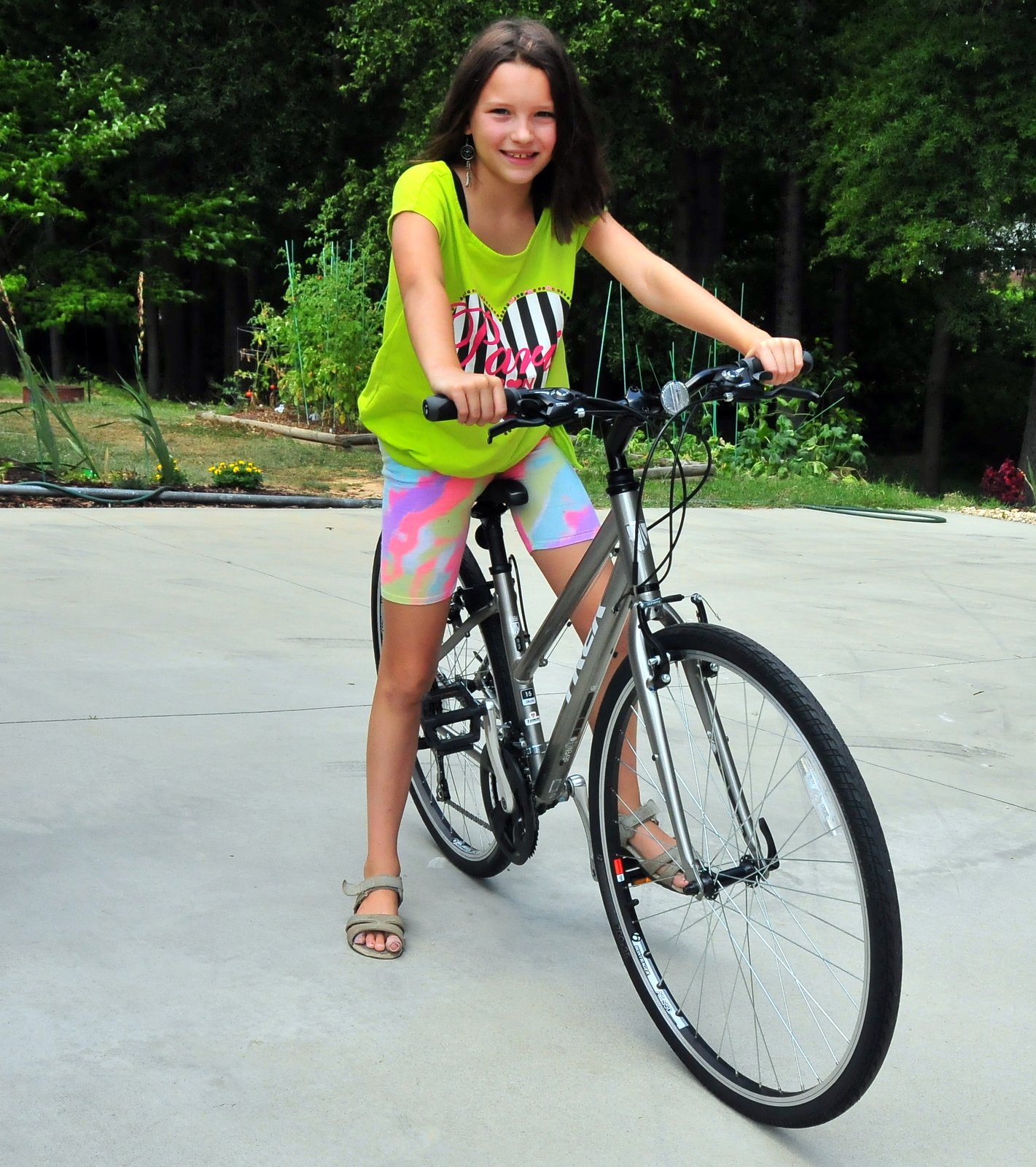
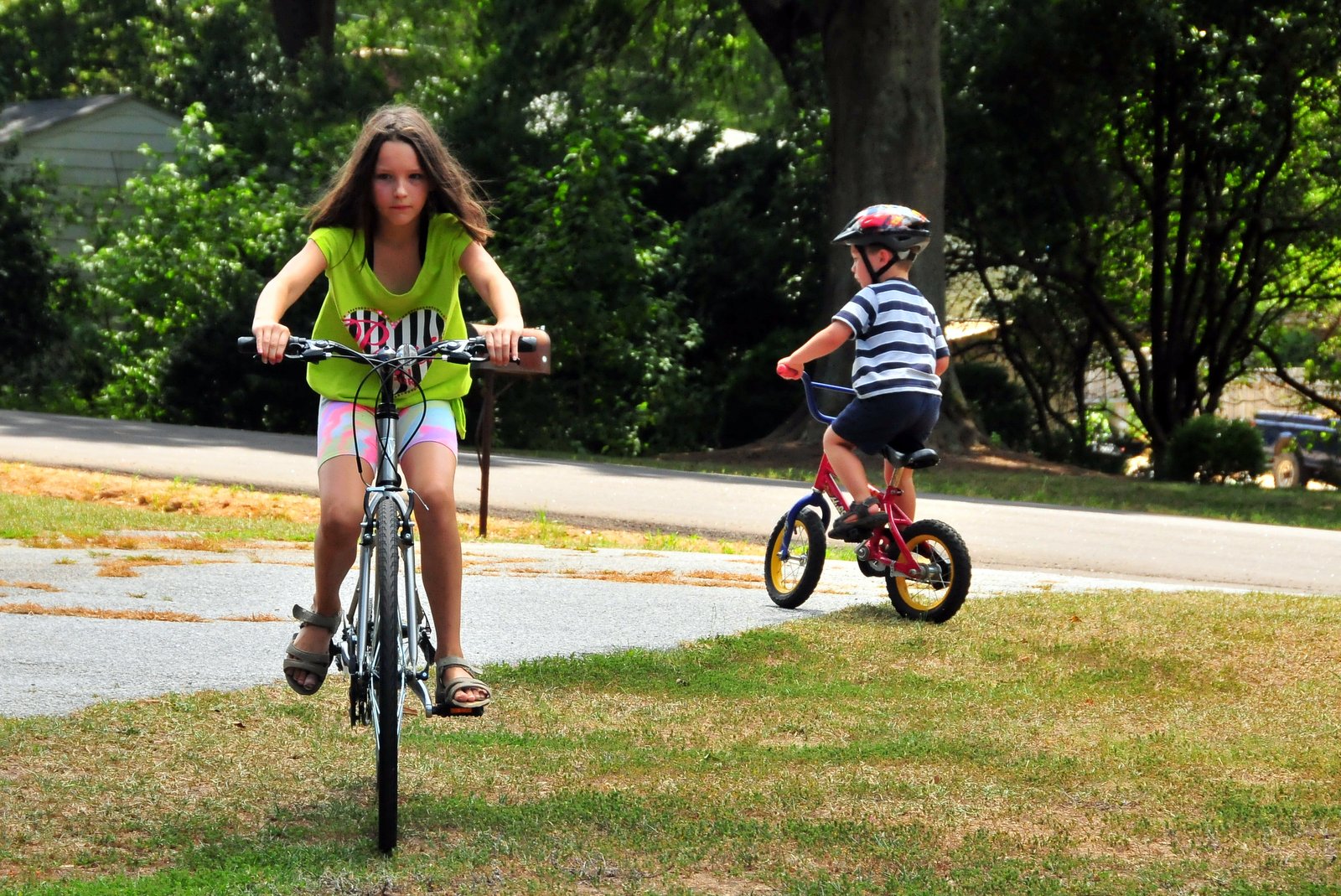
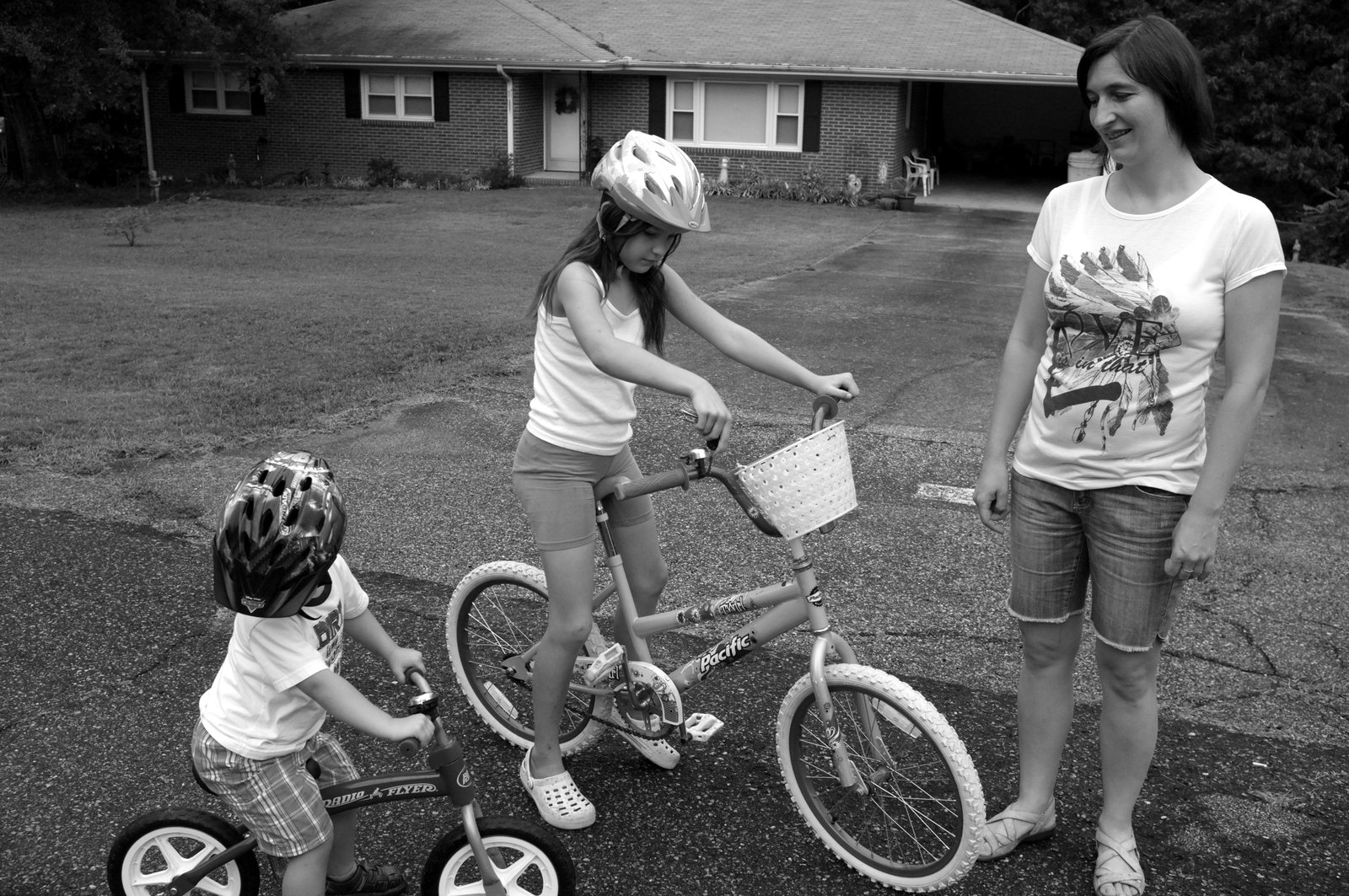
The afternoon, though, was all about the Girl: we bought her a new bike, a Trek FX, which is in fact a small adult bike. Lots of big changes for her: braking with her hands, shifting gears. Plus the size change — theoretically, this is a bike that can last her for ten years.

When K came home from work, she was happy to see the Girl’s bike (which we took out for an initial ride in the evening of 11 km), but was even more happy to see the floor.
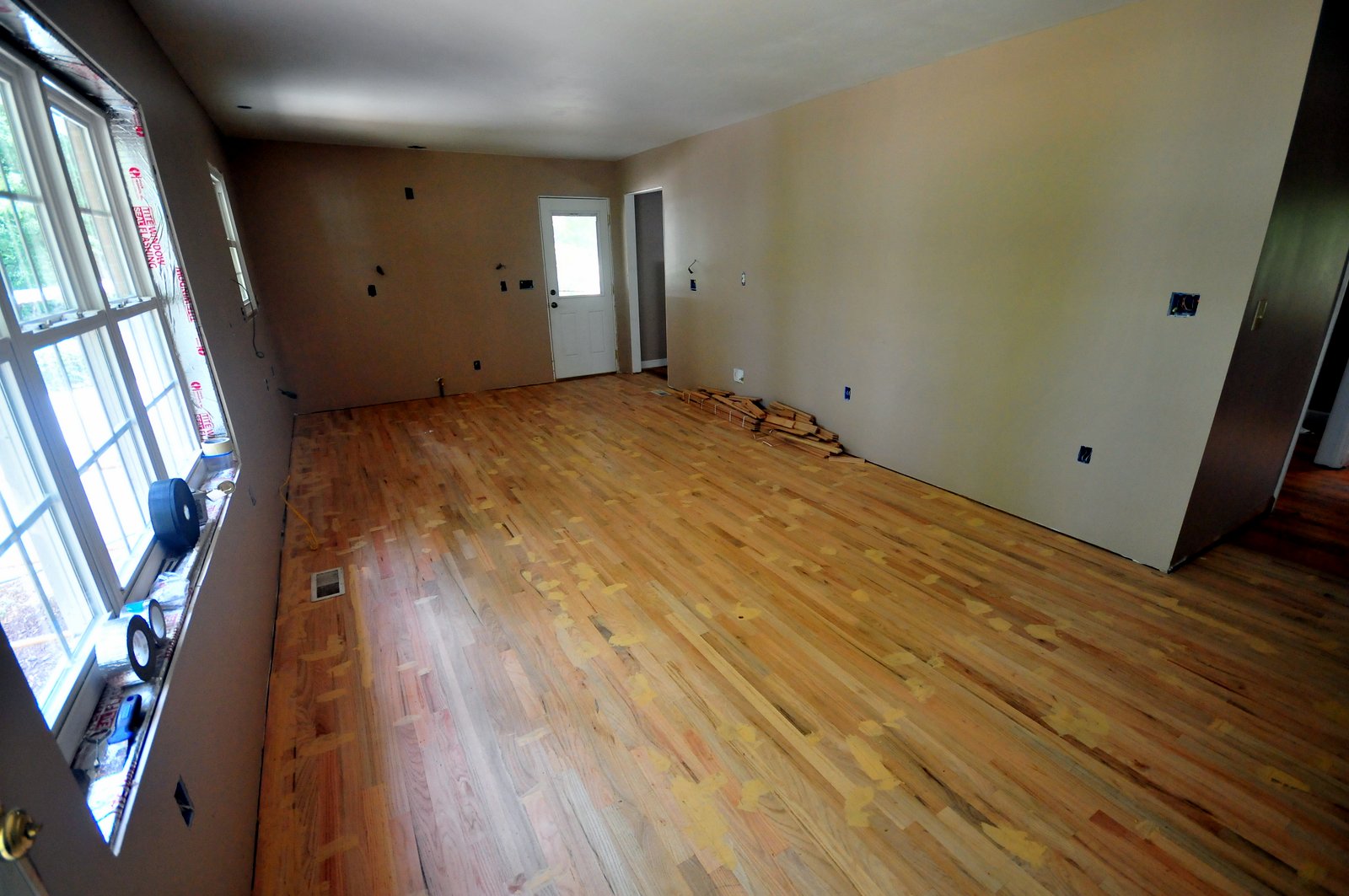
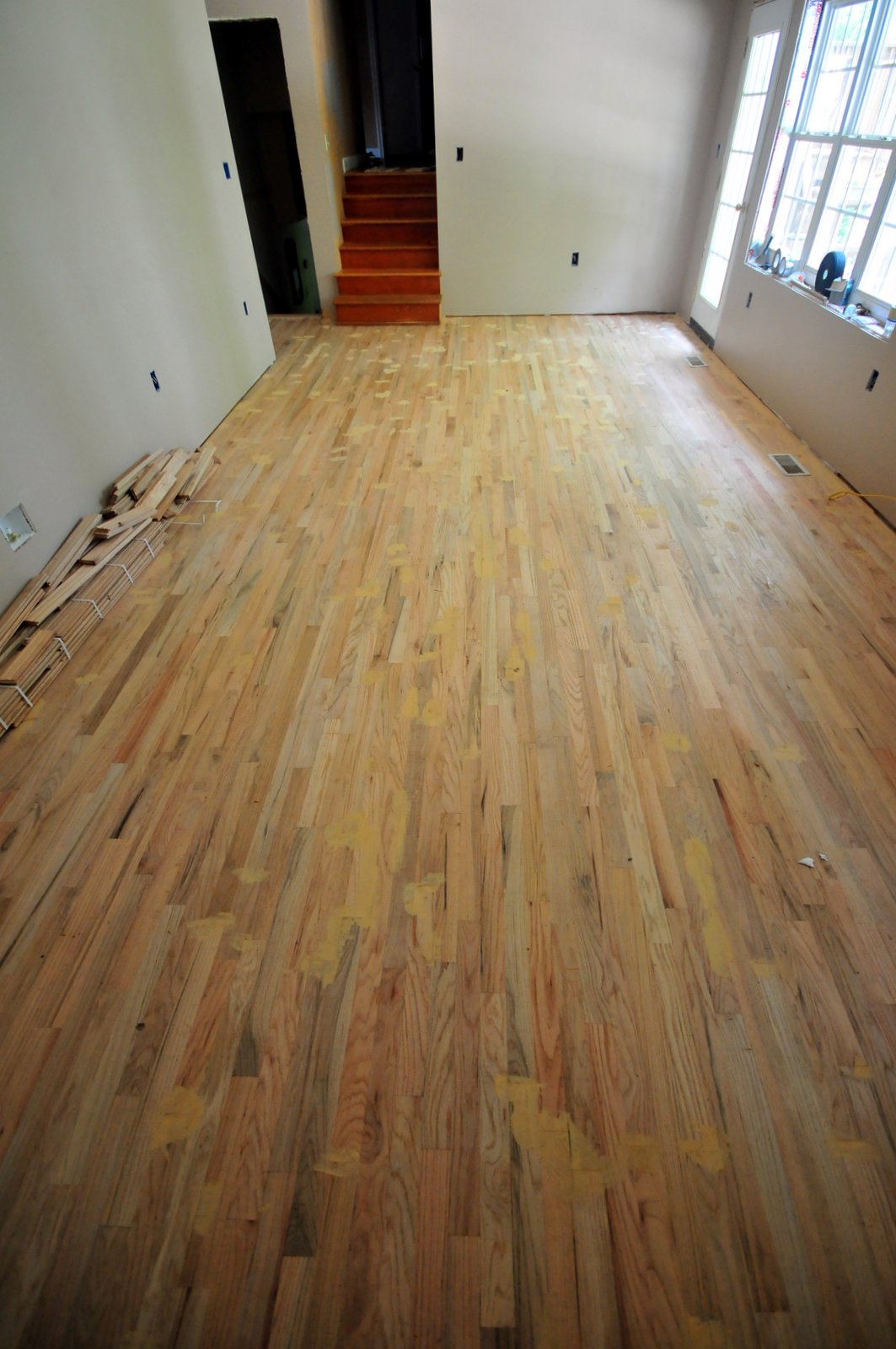
It looks like a room again.
Larry

The smoke from my Saturday-evening cigar blurs the view of his picture that hangs over the fireplace in our basement, and I look down at the wad of burning leaves pressed between my fingers and realize that it’s because of men like him, my uncle whom I never met and after whom I am named, that I can enjoy such a little pleasure. In the picture, he sits before a brick wall, his peaked cap pushed back to show a hint of his hairline, his forearms on his knees, fingers almost fidgeting, with an expression of tired sadness. I really have no idea when the picture was taken. Perhaps he was home from Vietnam on leave; maybe he hadn’t even shipped out yet. In a way, it’s not as important as the simple fact that the expression on his face mirrors my own when I really think about him, when I remember the odd bits and pieces I heard about him growing up, when I think of the simple but profound fact that, after my parents adopted me and decided that the name my short-term foster mother had been using for me fit me perfectly, they decided his name would make the perfect middle name. The uncle who, my mother more than once laughed, hated baths as much as I love them. The uncle I never met.

As a child, I remember seeing this picture hanging in my grandparents’ home, smudged brown with the nicotine of thousands or even tens of thousands of cigarettes. It was the house in which they both died tragically, though ironically neither passed as a result of the stains that seemed to cover so many of their possessions of their house. Like so many in my family, they died not from what everyone in the family thought would kill them — like my uncle. The picture — one of only two I know of him as an adult, of only three I know of him in his short life — is framed in a gold-painted rectangle that, after all these years, seems brighter than the picture itself. The mortar and the bricks behind him have faded into an almost indistinguishable hue that seems only a darker shade of his uniform, and the triangle of his white undershirt seems only a lighter shade still.

The other picture of him as an adult seems likely to have been taken at the same time, though perhaps earlier. The same brick wall seems to be over his left shoulder, but he hadn’t yet pushed back his cap, and its brim hides his eyes in shadow. I think he would have liked it that way. Perhaps the tired expression in the second picture comes from being asked, badgered, to push his cap back a bit, “so we can see your eyes.” Over his right shoulder is a tree, and in the triangle of his right arm he stands with his hands on his hips is is a dumpster with white letters stenciled in to instruct someone about something that must at all costs be “down.” Or “town”?

He died on Thanksgiving, a fact that seems so fought with irony that it almost seems like it must be one of those made-up details that our memory seems sometimes to invent in order to add almost unconsciously to the most significant events. I heard this week that there are only two truly significant American holidays: Thanksgiving and Memorial Day. My uncle embodies them both.

I am much older than he, the baby boy of the family, was in the picture, and I have been blessed with what he likely dreamed of: a beautiful, loving wife, the mother of my two incredible children. A house with a room downstairs where I can smoke my cigars with offending my wife’s nose, harming my children, or leaving a stain over picture frames that hold images of their lives. Two cars parked on a pad of concrete. A few tomato vines and zucchini plants in the backyard. All of which I have because of people like my uncle.

Counting

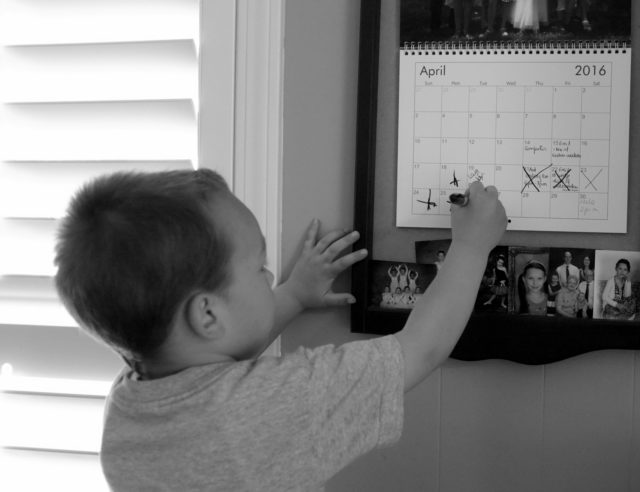
The Boy’s birthday is approaching. He’s excited — we’ve promised him that he can open one of the two classic Polish cars Babcia sent a couple of years ago. He’s had them on his shelf, unable to touch them, and has now begun insisting he’s old enough. We’ve kept it from him because of the worry that, as rough as he can be with toys, he’ll destroy them in no time.

1-DSCF8829

And so he’s begun marking off the days.

Burnt Norton

1-BW0_1533

Time present and time past
Are both perhaps present in time future,
And time future contained in time past.

Everything I do in life teaches my children something. I try to remember that, but it’s not always in the forefront of my thoughts. Still, whether I remember it or not, such is the reality. How I treat K teaches L how a man should treat a woman, how a husband should treat a wife, and E learns the same lessons from the other perspective. How I respond to disasters, real and imagined, teaches them how they should respond in such situations. Their future, in other words, is contained in our present.

I, in turn, learned how to behave by watching my own parents, and they from theirs. Being human, we sometimes give good bad examples, but that’s part of the limitations of humanity — concupiscence, as the Catholic Church describes it:

In its widest acceptation, concupiscence is any yearning of the soul for good; in its strict and specific acceptation, a desire of the lower appetite contrary to reason. To understand how the sensuous and the rational appetite can be opposed, it should be borne in mind that their natural objects are altogether different. The object of the former is the gratification of the senses; the object of the latter is the good of the entire human nature and consists in the subordination of reason to God, its supreme good and ultimate end. But the lower appetite is of itself unrestrained, so as to pursue sensuous gratifications independently of the understanding and without regard to the good of the higher faculties. Hence desires contrary to the real good and order of reason may, and often do, rise in it, previous to the attention of the mind, and once risen, dispose the bodily organs to the pursuit and solicit the will to consent, while they more or less hinder reason from considering their lawfulness or unlawfulness.

A fancy way of saying our tendency toward the less refined appetites in life.

1-BW0_1537

And then there are the other lessons: teaching the kids how to raise kids. Playing with them is always critical, but sometimes those lower appetites get in the way, the selfish appetites, the desire to do one’s own thing because “I’m tired” or whatever silly excuse.

Incomplete thoughts on an incomplete evening…

Learning

My job is about learning. It’s about teaching, too, but the more I stand on this side of the desk, the more I realize that teaching is learning. It’s not just the simple process — as if it were so simple in truth — of learning how to teach. There’s that, certainly. I’m better this year than I was last year, I hope. I’m better this year than I was five years ago, I’m sure. I’m better this year than I was fifteen years ago, I know.

DSCF8087

It’s not pedagogy and method that I have in mind, though. I’ve learned that learning is so much more than simply figuring out how to write a good paragraph, understanding how to do geometric proofs, seeing the logic of the scientific method. These things are all well and good — and important. But they all serve as simple means to ends. We learn to write a good paragraph to be able to communicate better. We work on proofs to be able to construct a scaffold of surety around our knowledge — to prove to ourselves what is is. (And to move on to higher and more challenging math.) We study the scientific method because it’s the best way to find out things about the physical world.

All this knowledge helps us in our day to day functioning, but it does very little to help with our living. I’m not more at peace with myself because I can write a paragraph. I can’t show compassion better because I can manage geometric proofs. I’m not more mature because I know the scientific process. My life can bump along just fine without this knowledge, and having this understanding is in now way insulation or protection against anything. I’m not a better person for this.

DSCF8099

I’m a better person when I connect with other people. I’m a better person when I understand that the most precious and instructive moments in life are those flashes when a couple of people connect in a real and meaningful way.

I teach my students how to make sense of Shakespeare (and, by proxy, many other challenging texts), and I show them how to organize a paragraph coherently, then how to string several paragraphs together in a logical order. Useful skills, but not life changing. Yet sometimes I get so wrapped up in the importance of those minutia (relatively speaking) that I miss the real teaching and learning opportunities. I forget that just because they’re not learning just what I want in just the way I planned it than my students aren’t learning. I forget that just because what they’re doing for a particular session has nothing to do with English than they’re not become better people. I forget that, at it’s base, that’s what all good teaching is about. There’s the subject matter, true, but all the teachers we really remember taught us more than just their subject matter. In some rare cases, we can sometimes barely even remember what exactly they taught us about English or math or Spanish, but we remember what they taught us about life.

DSCF8101

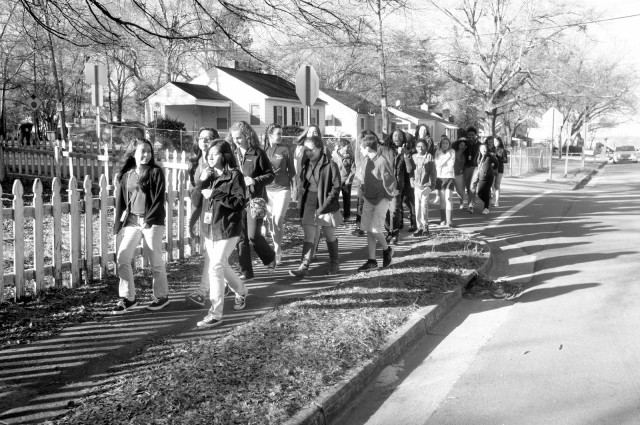
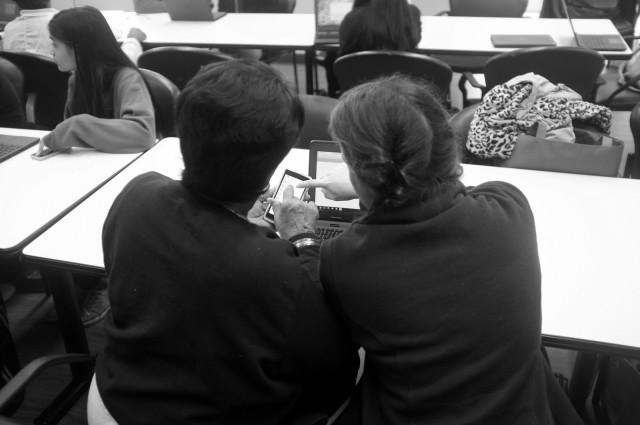
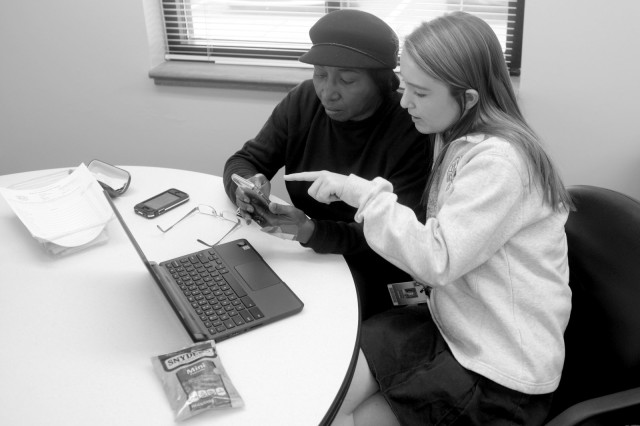
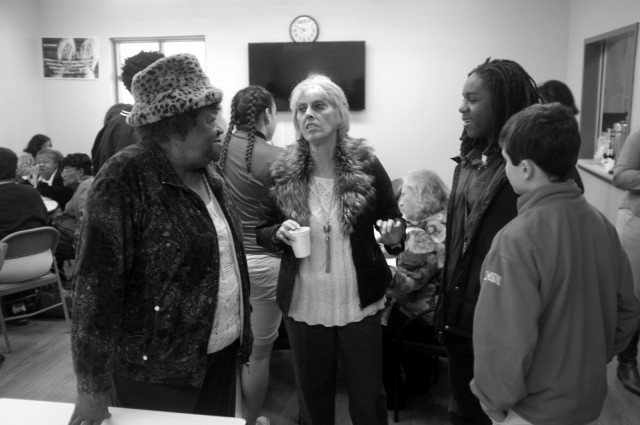
Today, I had the privilege of taking about twenty of my students down the street to a community center than has a trice-weekly seniors program. The plan was simple. The plan didn’t work as planned due to technical issues. And so from a certain point of view, it was a complete waste of time. It didn’t do what I wanted it to do. The plan didn’t behave properly. And in that mini-disaster, I learned once again — my students taught me once again — that there’s more to teaching and learning than nouns and rays and Erlenmeyer flasks.

DSCF8095

Sometimes lessons just come along than can’t be planned because the lessons themselves come simply from the messiness and unpredictability of life. Sometimes a room full of teens and seniors offers such individualized lessons that could never be planned, never be executed because life can often never really be planned. And that in itself is part of the lesson.

DSCF8114

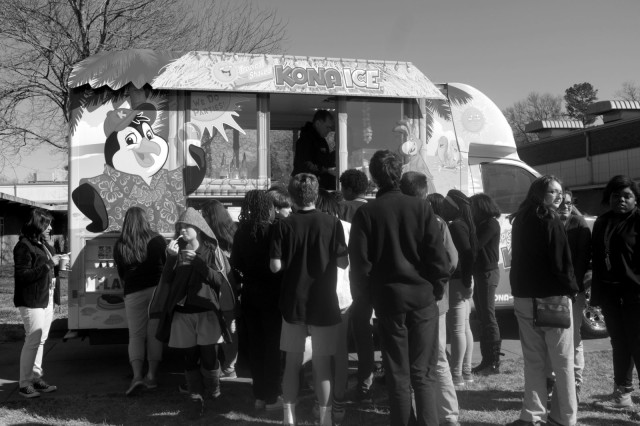
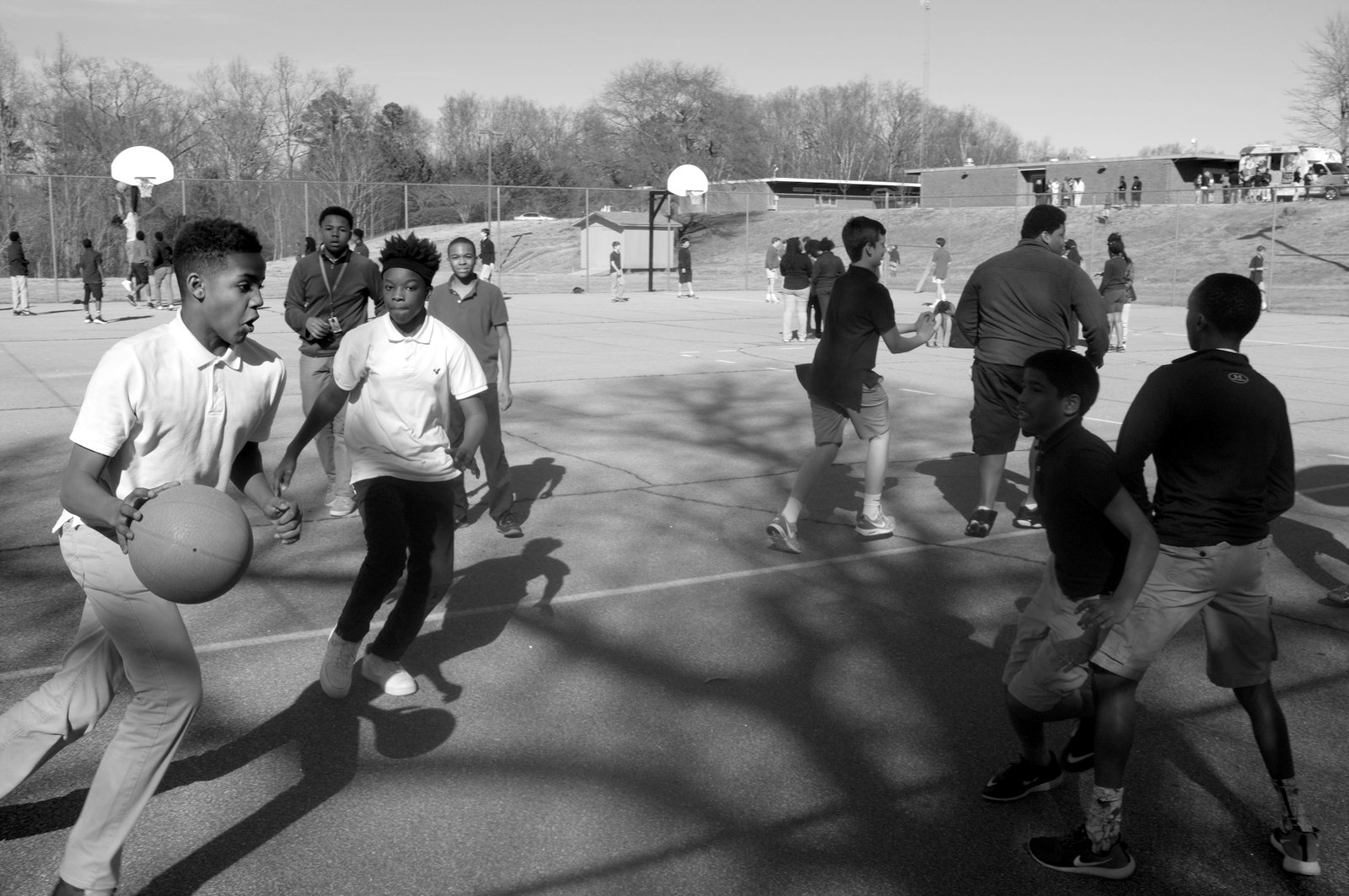
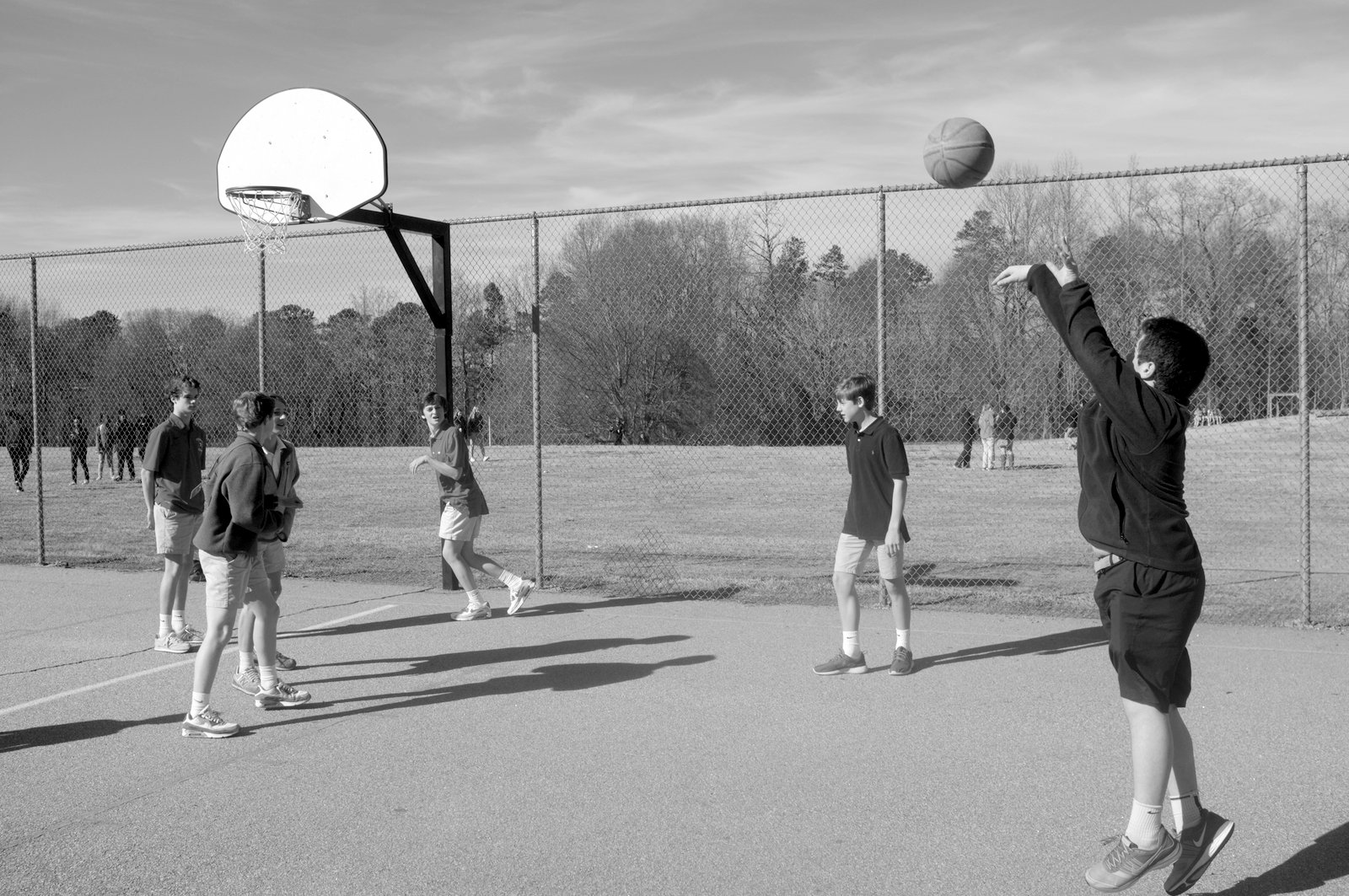
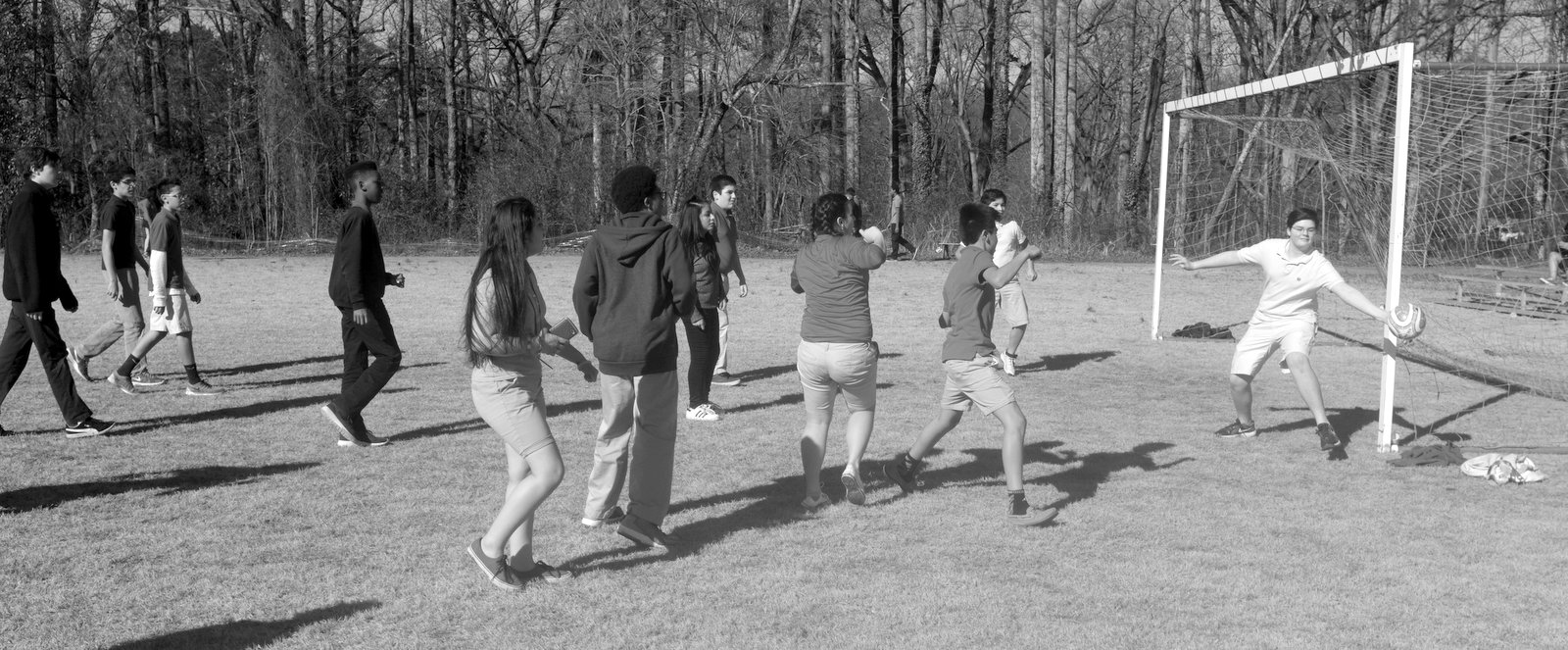
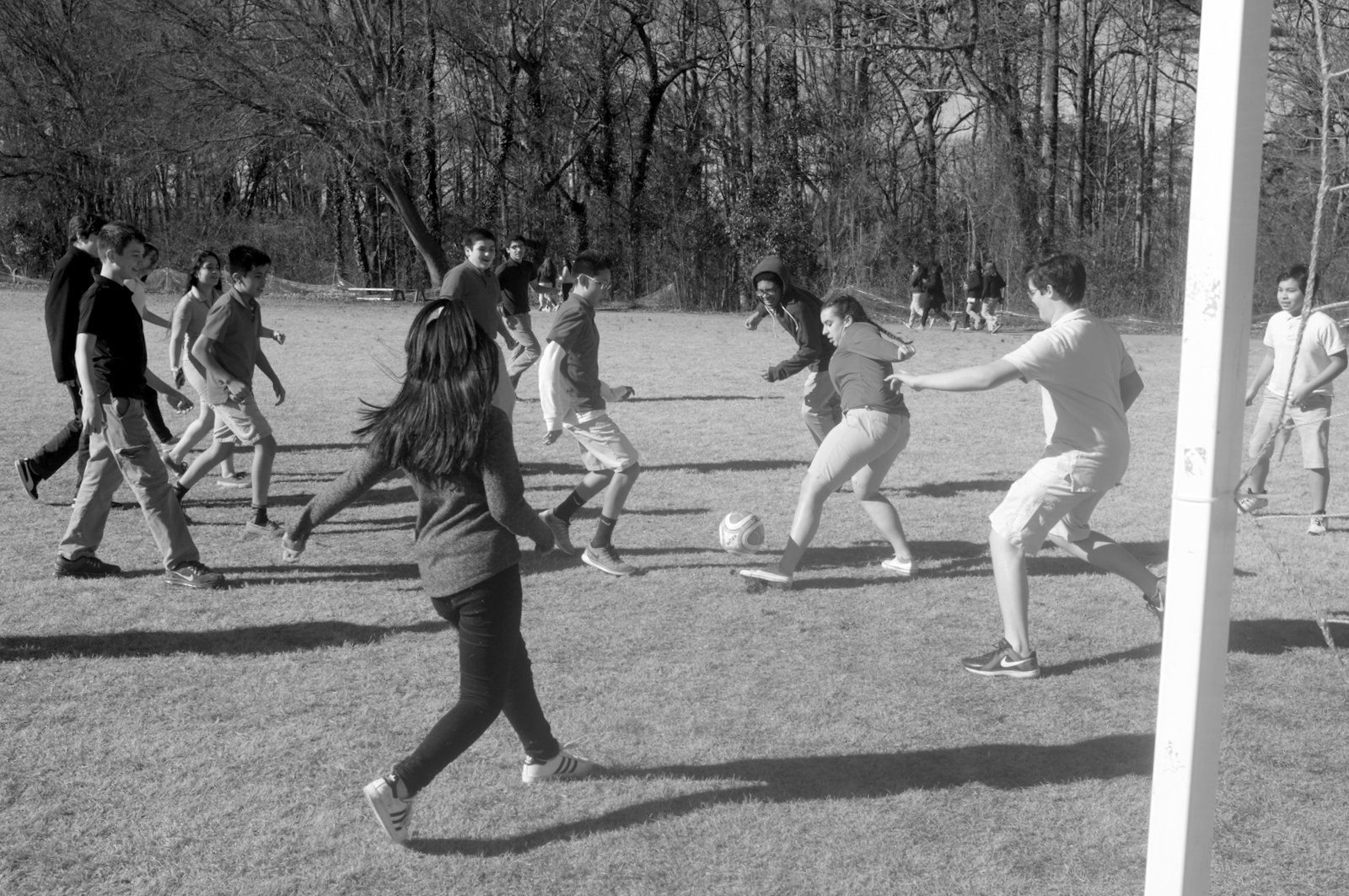
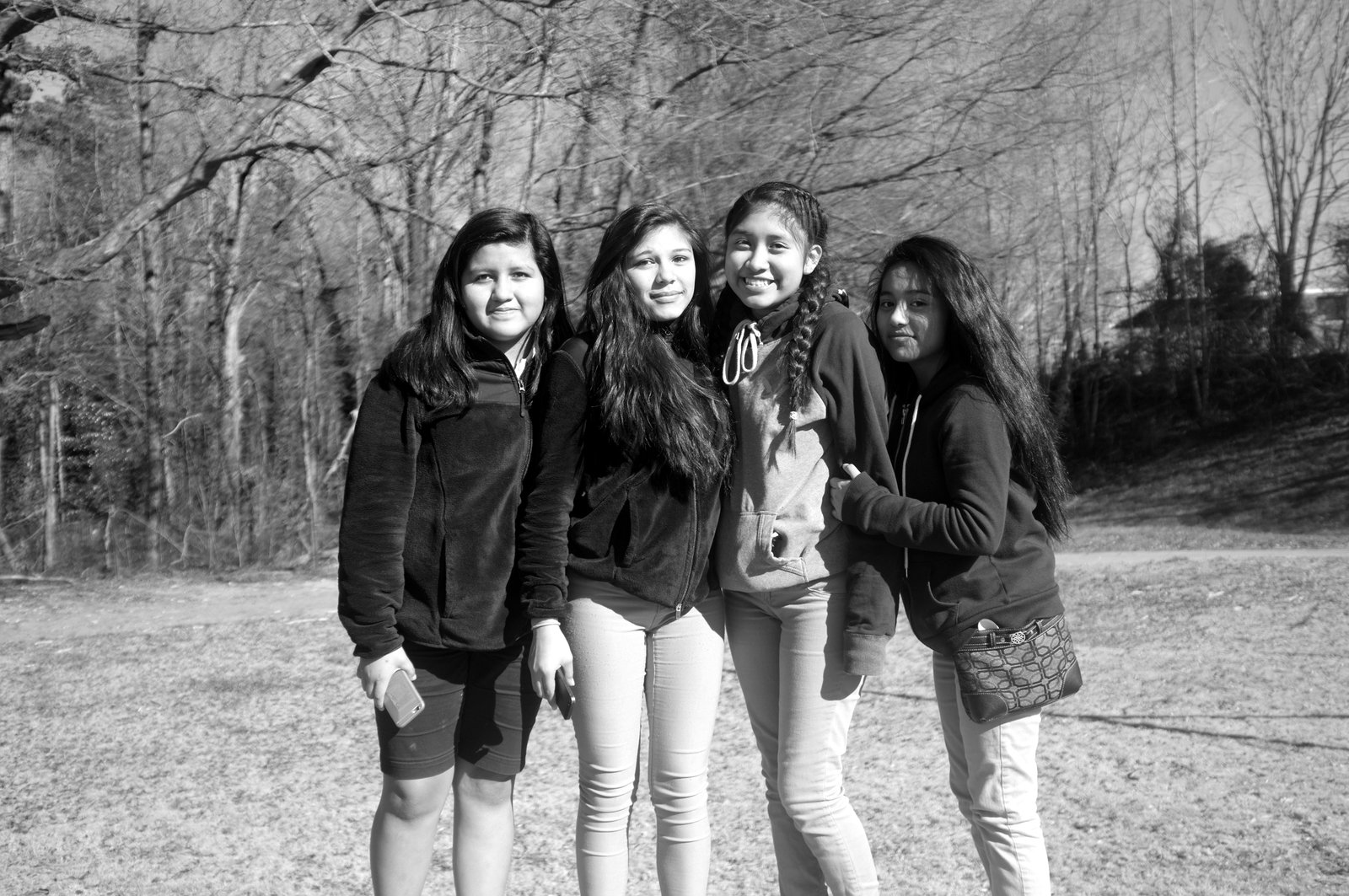
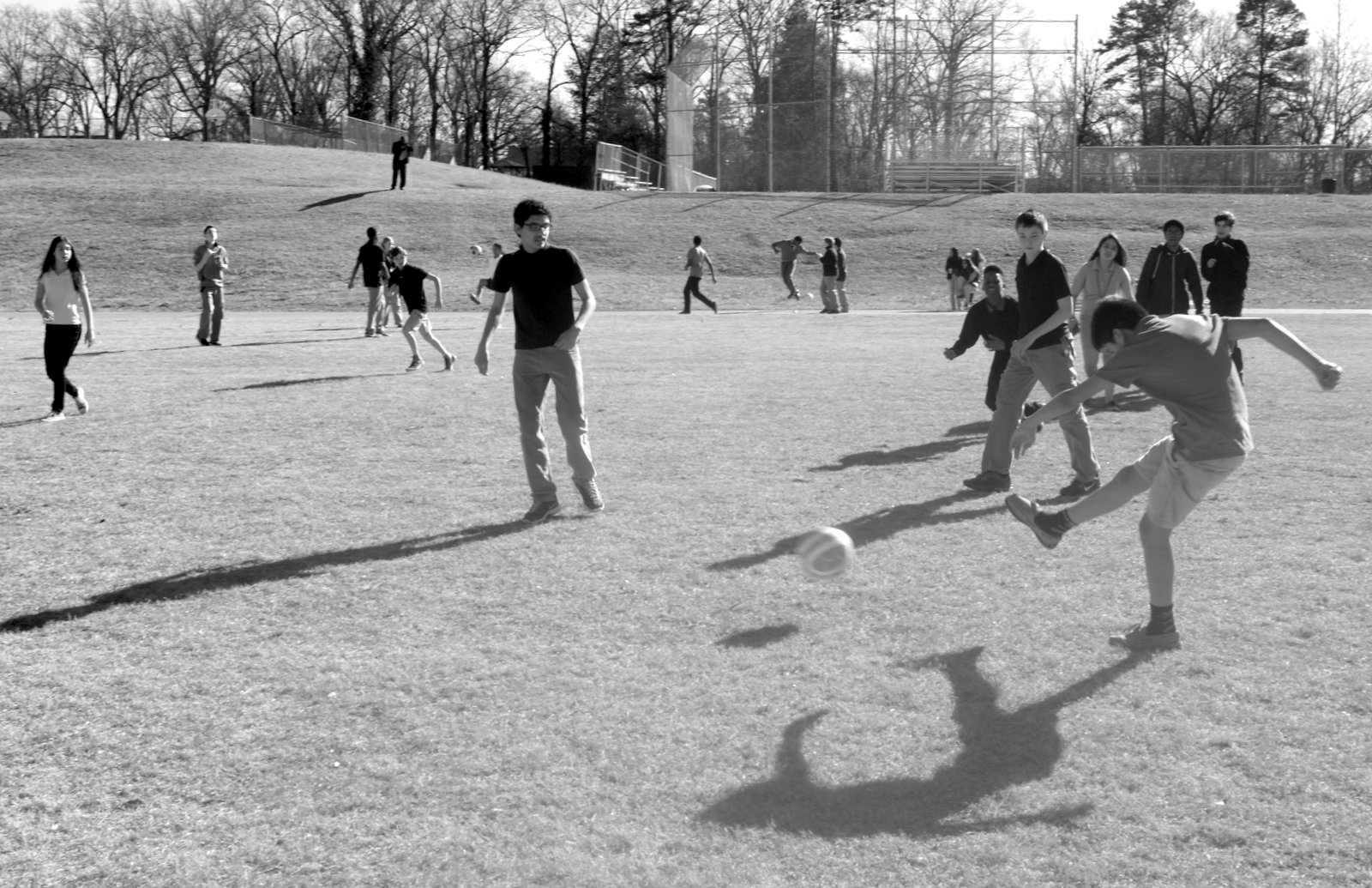
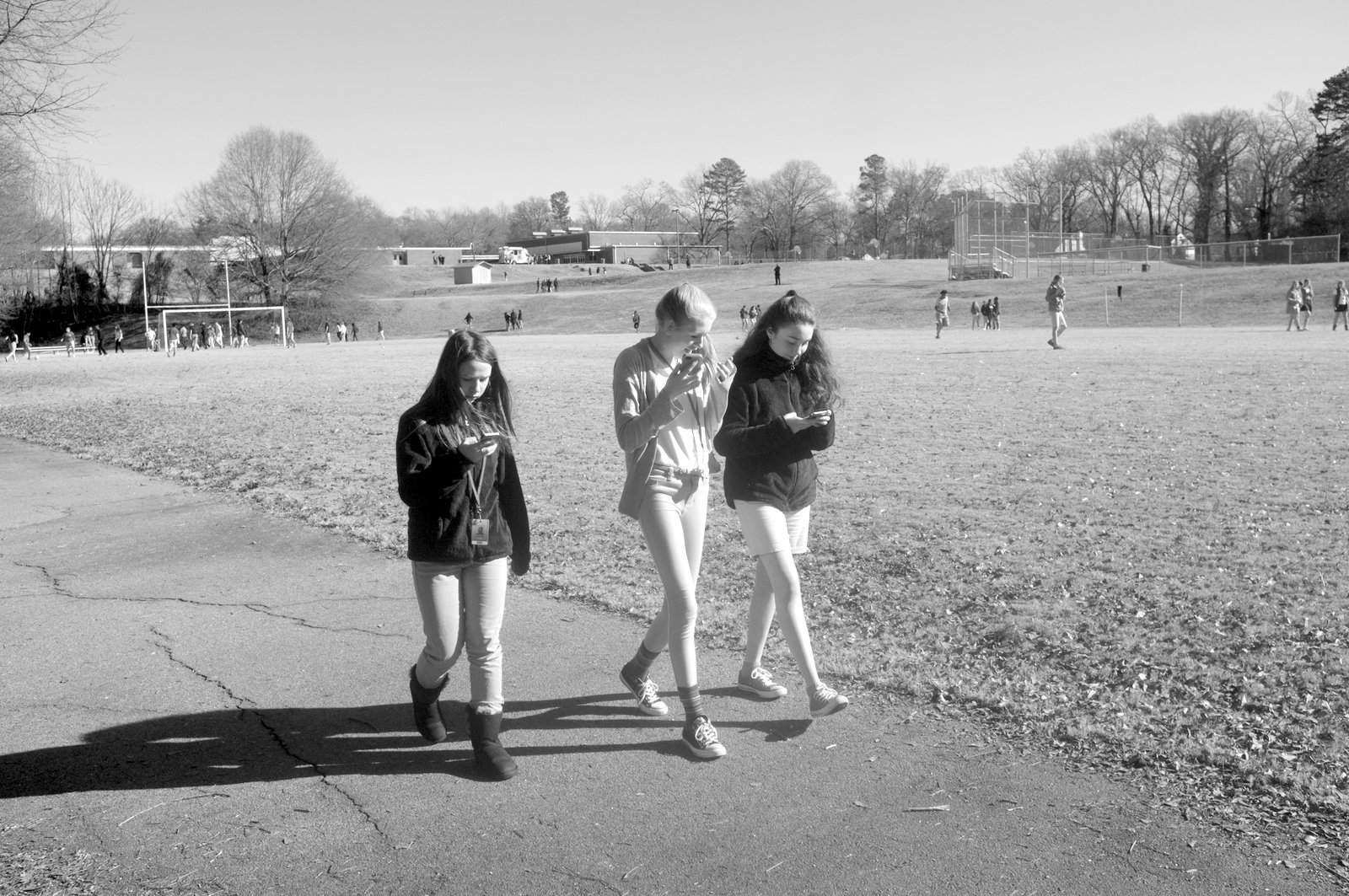
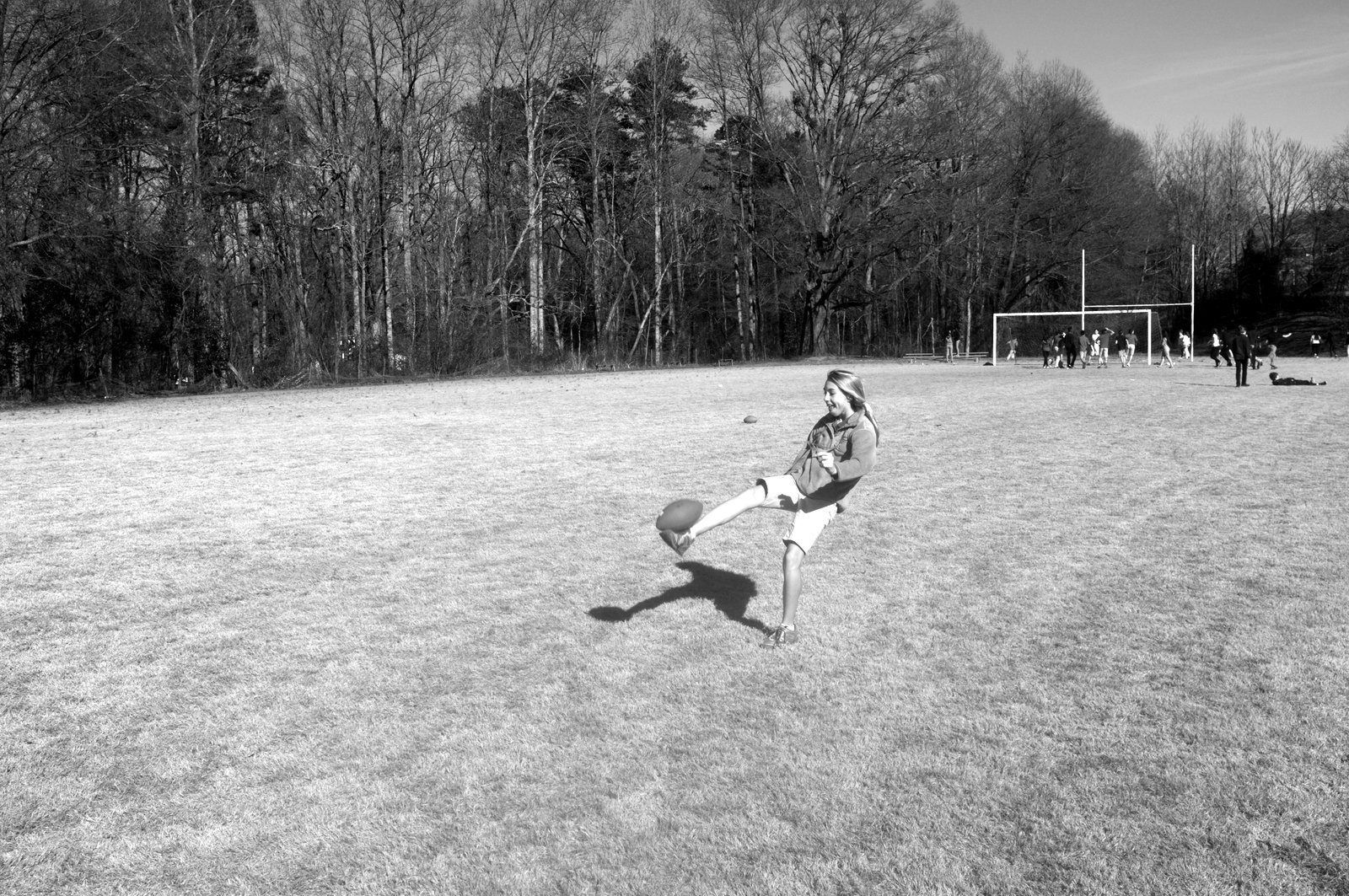
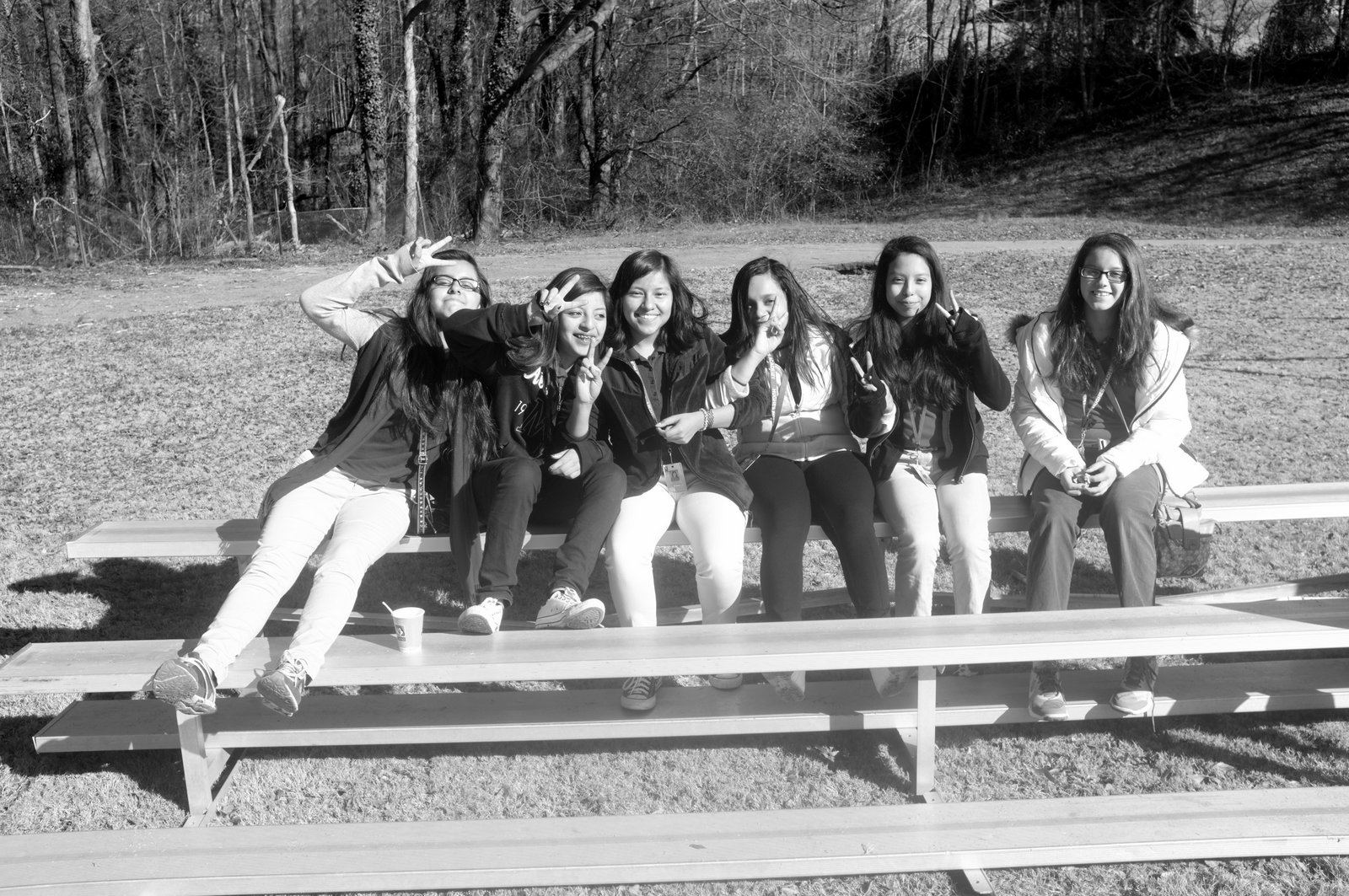
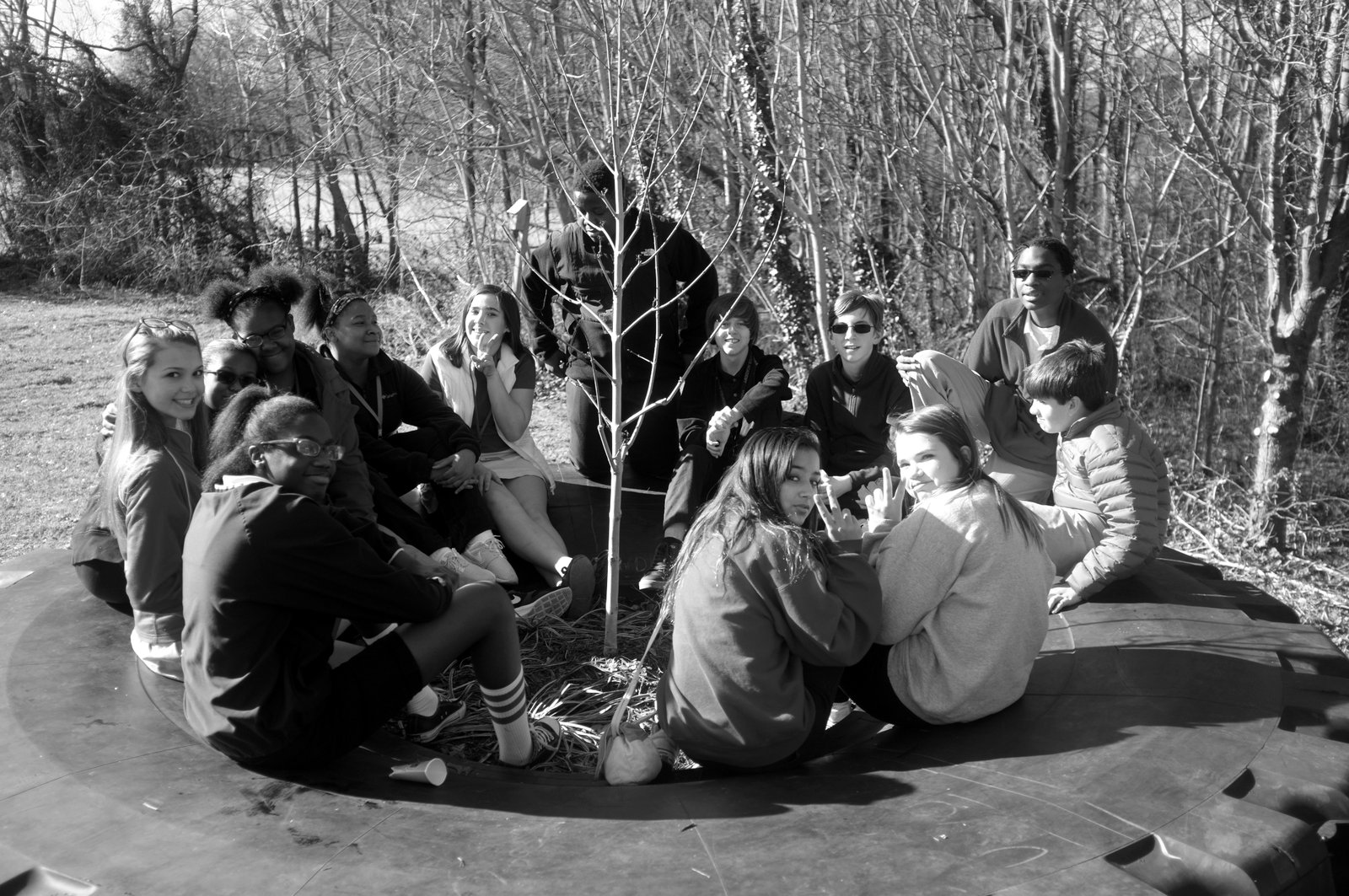
In the afternoon, another lesson about learning: not all learning has any adults at all involved. The kids headed out for their quarterly (or is it more often? I can never remember) reward day, which consists basically of forty-five minutes of freedom outside. Some kids play basketball; some kids play soccer. Some kids walk around and gossip orally; some kids walk around and gossip electronically.

And some kids just do a little bit of everything. The lessons there? Countless, and completely unplanned.

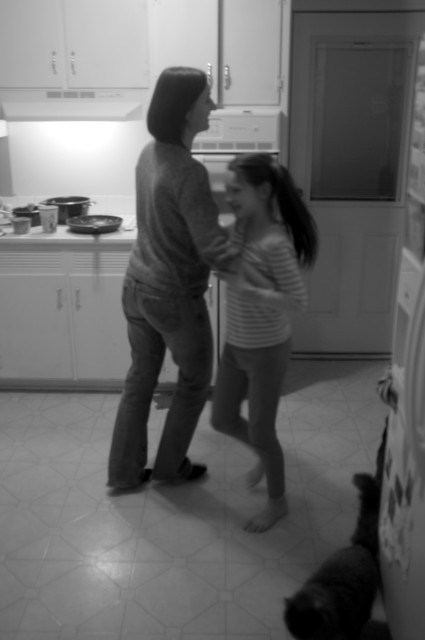
Back at home, L asked K to help her with a traditional Polish dance that she’d like to use to try out for the school talent show later this year. Tryouts are coming soon, and the Girl is not quite sure what she’s going to do. This is the first year she’s eligible, so she’s feeling a bit stressed about making a good impression. She’d noticed that all the Indian students in the past who’d done traditional dances made it to the show itself, so she reasoned that a Polish Highlander dance might stand a good chance.

2-DSCF8214

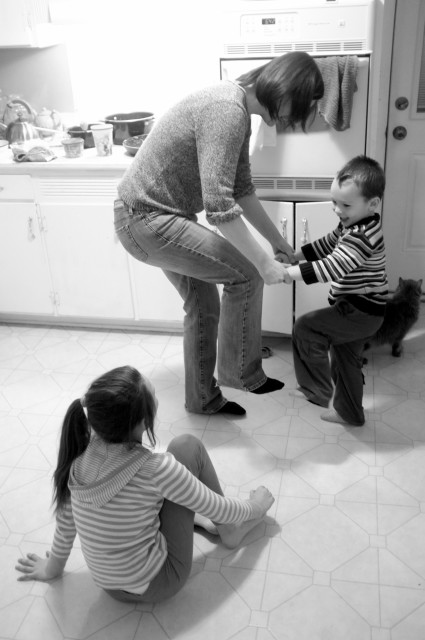
So K began working on it with her. I’m not quite sure how this is supposed to work because Polish Highlander dances are really not solos — unless you’re dancing a male part. This bit of information prompted a bit of begging from the Girl, so K showed a few male moves. And E decided he wanted to learn them all, male moves and female moves.

1-DSCF8223

Another unplanned lesson.

They’re really all around us. The opportunities are endless. And the miracle of it all is that we really don’t even have to be aware of it.

Build and Destroy

“Daddy, let’s play!” chirps the Boy with such excitement, such genuine joy and anticipation, that it’s difficult to say “No.” Sadly, I do have to say just that occasionally.

“I’m working in the yard,” I explain, and then he responds, “Oh, I’ll come help you.”

6-DSCF8058

Another time: “I have to grade papers.” That’s really a misnomer because most of my students’ work is now online, which means I’m sitting at a computer when “grading papers.” And so comes the obvious: “Oh, I’ll just sit on your lap while you work.”

Every now and then, though, I’m able to beat him to the idea. Such was the case tonight. “E, let’s play.”

“Let’s play!” came the response.

5-DSCF8052

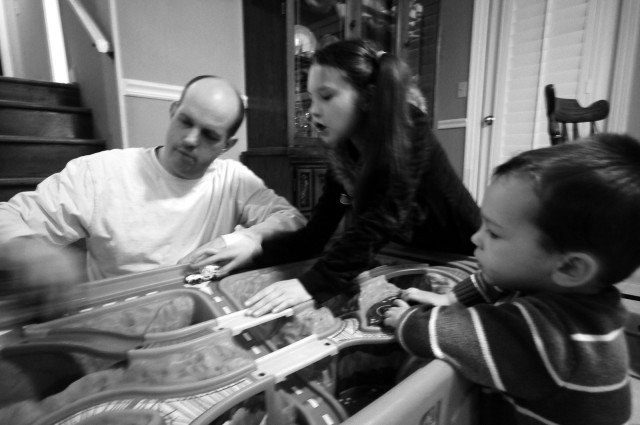
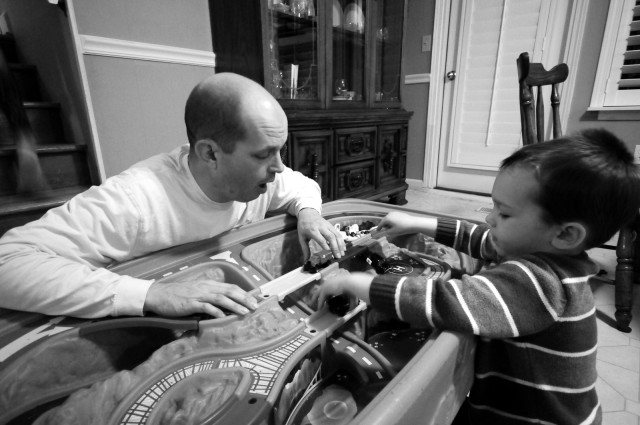
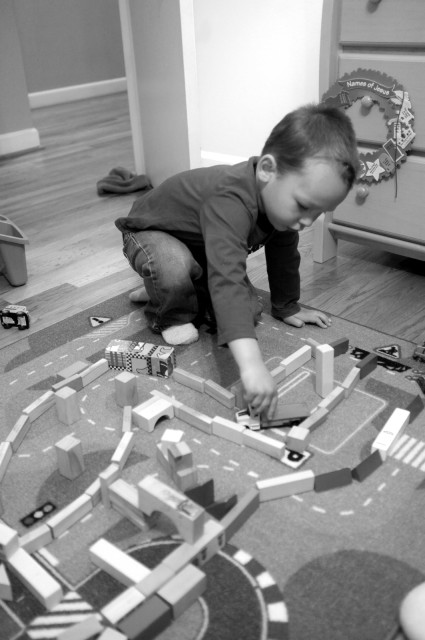
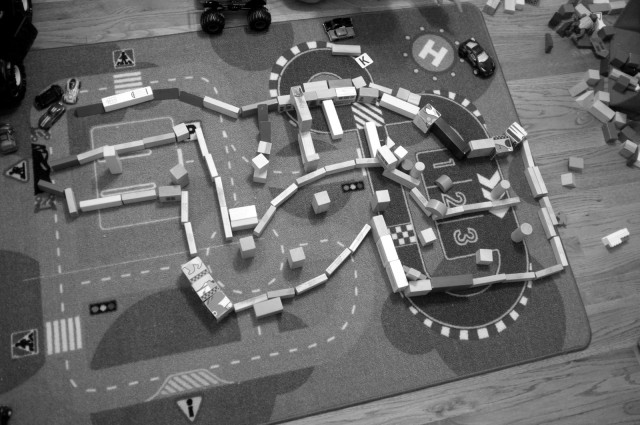
So we headed up to his room, discussing our options as we went. Whatever else might be involved, cars are a prerequisite. Want to build something with Legos? Fine, as long as it’s a device to work on cars. Want to create something with wooden blocks? Great, as long as it’s a miasto — a city for his cars to drive around.

3-DSCF8047

Today, though, I thought we might try something new: an obstacle course.

4-DSCF8048

The ladies, in the meantime, were downstairs, struggling through Polish lessons. It can be a challenge. Part of it is the simple fact that it’s more schooling after a day of school. But more challenging, I think, is the Girl’s reluctance to make mistakes. She flies through work at school, catching on quickly and mastering skills without much effort, it seems. “Math is boring now,” she says. But Polish? It’s not so easy. It’s not mistake-free. And even though she has a linguistic master in the house, she hesitates.

1-DSCF8071

Once she got the work done, though, she came up to join us.

And then disaster struck: “E, it’s time for a bath. Let’s clean up.” The fact that we could rebuild did nothing to comfort him. The fact that I promised we could rebuild tomorrow did nothing to soothe him. Now is now; tomorrow is unimaginable. “But Daddy,” he sobbed, “I have to get up, and go to school, and then we can build it.” I can understand that frustration. I experience it. I see it in my students. And I see how some of them deal with it. So when the Boy and I finished with the clean up, and he was still sniffing, I took him in my arms and said, “That was a very difficult thing to do. No one likes to do something they don’t really want to do.” Perhaps in destroying, we were able to build some character.

“Okay,” he said. And by bath time, five minutes later, it was completely forgotten.

Peeling Eggs

The Boy is always eager to help, especially when it comes to cooking. Any time K is standing at the stove, E bounds over to the dining table, grabs a chair, and slides it across the whole room to the stove.

“I want to help!”

Most often, that’s just stirring. It’s simple, difficult to mess up, and difficult to make a mess doing. Today, though, as I was rinsing the boiled eggs we’d be putting in our żurek later, he decided he wanted to learn how to peel the eggs. Rather, having just woke up from a nap, he was encouraged to learn. Bribed, for he’s awfully fussy when he’s awakened prematurely.

DSCF7833

“Want to help me cook?” I began.

He was reluctant at first, but the words “learn” and “something new” seemed to pique his interest, and soon enough, he was peeling an egg.

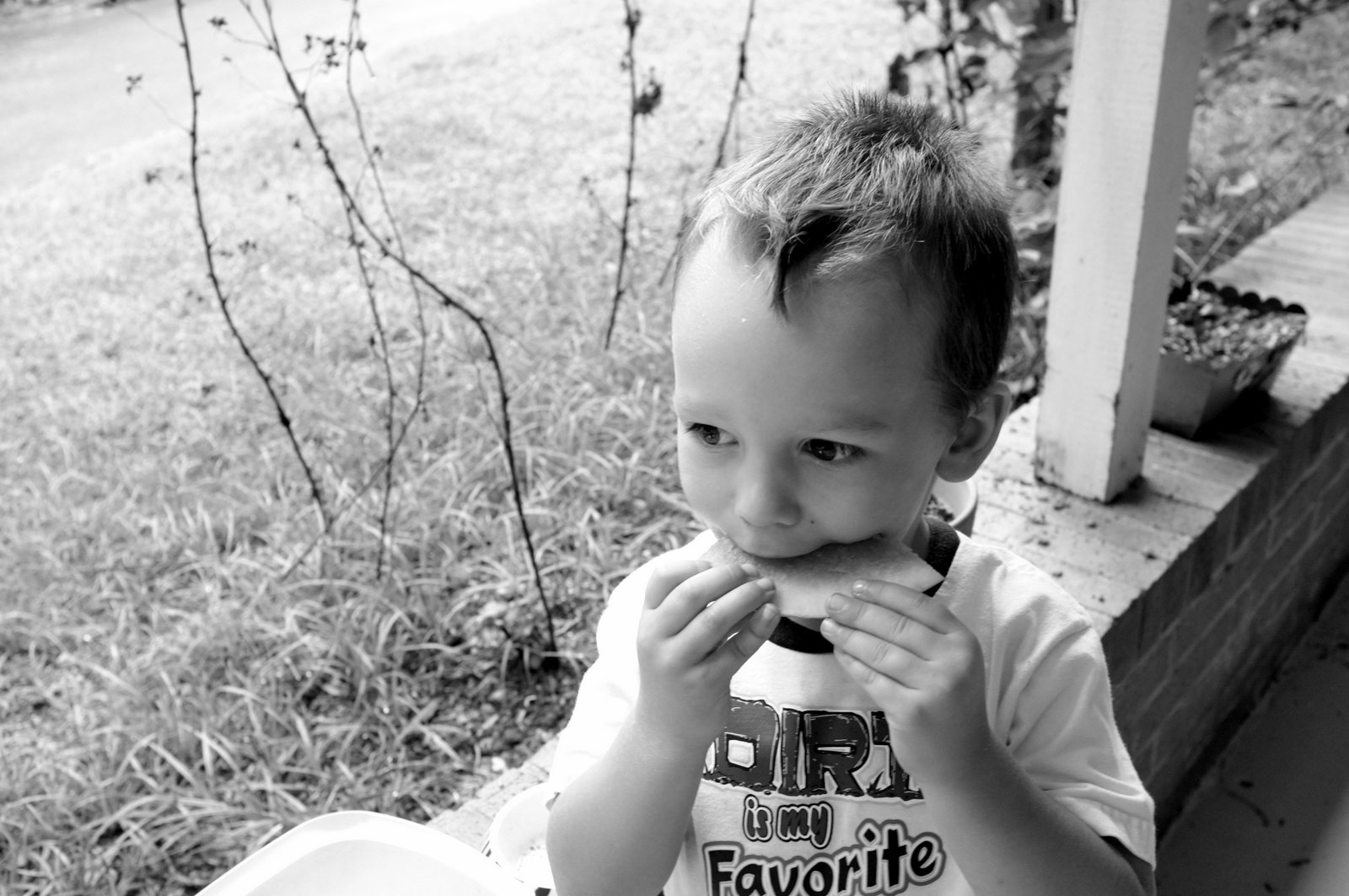
When it came time for dinner, he was quite insistent that he got the egg that he had peeled.

“Bardzo słuszna koncepcja.”

New Year’s 2016

For someone as obsessed with the passage of time as I am, I am strangely ambivalent about New Year’s Eve. When I was younger, it was just an excuse to go to a party. As I grow older, it’s just an excuse to get together with friends.

1-DSCF7751

Then, as our children grow older, it’s become an excuse for them to stay up as long as humanly possible.

2-DSCF7756

And a last stab at ice cream and chocolate overload.

4-VIV_0764

Last night, I children did both. For L, it’s not much of a feat — she managed it last year, and probably the year before. For the Boy, though, to stay up that late. This is the kid that fell asleep at his normal bedtime at our Christmas gathering last week.

5-VIV_0770

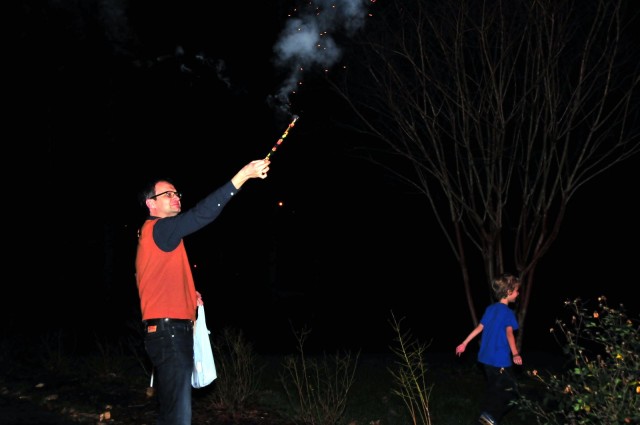
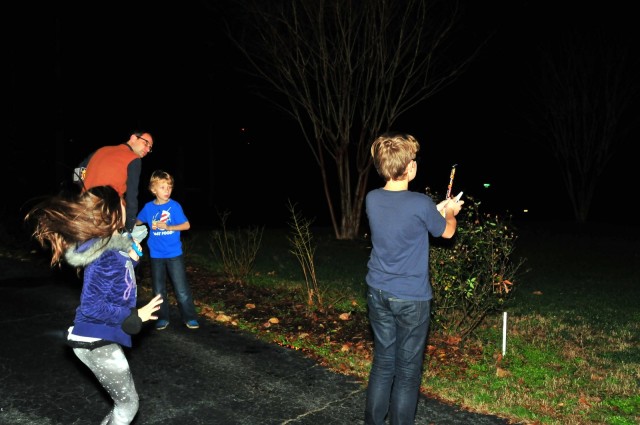
But he made it. And he survived the fearful experience of his first near encounter with fireworks.

6-VIV_0780

“Daddy, I want to go back inside,” he said, a slight panic in his voice.

“What’s my job?” I asked him.

“To protect me.”

“So I would never put you in a dangerous situation, right? I would never put you somewhere that you could get hurt, right?”

7-VIV_0782

After a few minutes, he was a different little boy.

“Daddy, I love fireworks.”

8-VIV_0784

Overcoming a fear — a good way to start the year.

For Granted

This evening, K and I finished out the day watching Iris, a film about the British writer Iris Murdoch. I know little about Murdoch, and I’ve never read any of her work, but the film stars Dame Judi Dench, so I thought it couldn’t be that bad, and it really wasn’t. Dench does a good job, as always, and it’s a tough thing, I would imagine, portraying a lively mind sinking into Alzheimer’s. It got me to research Murdoch, though, and I found a curious quote attributed to her about marriage:

I have a strong memory of an interview between Murdoch and the writer A.N. Wilson in which, when asked about her marriage, she replied: “Oh well; I love, and am loved.” She also informed Wilson that the benefit of marriage is being able to take the other for granted. (Source)

The article is entitled “The secrets of Iris Murdoch and John Bayley’s unconventional marriage,” and the article reveals that “She was apparently very sexual, and not only with John; he, perhaps, was less interested in matters carnal.” In short, she had multiple affairs, apparently fairly openly, throughout their marriage. In the film, Murdoch says to Bayley early in their romance, when he has just discovered her unfaithfulness, which she freely admits, that he just has to accept her as she is. She’s not willing to change for him, in other words. While that might be admirable in some areas, in sexual promiscuity I find it a bit selfish, and I found myself wondering at the end of the film if that’s what she meant in the interview (I researched as the film uncoiled) about being able to “take the other for granted.”

DSCF7731

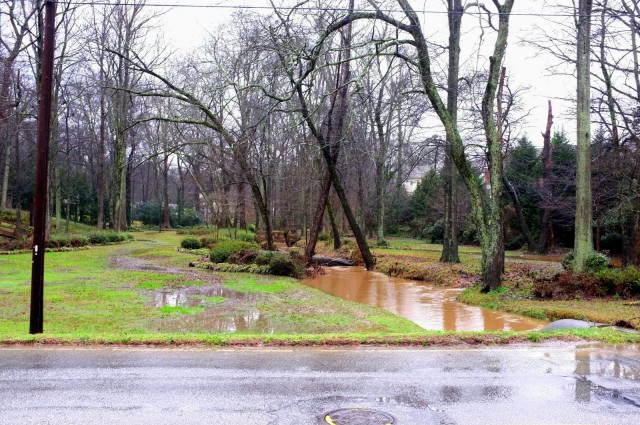
I take so much for granted it’s not even humorous in the slightest. I take for granted that I will have a dry place to stay when the rain pours and pours as it has for the last several days. I take it for granted that I will walk up and see my wife and children in the morning and carry on my life like normal. I take for granted that I can slip downstairs late one evening, occasionally light a cigar and pour a little libation, and write.

DSCF7732

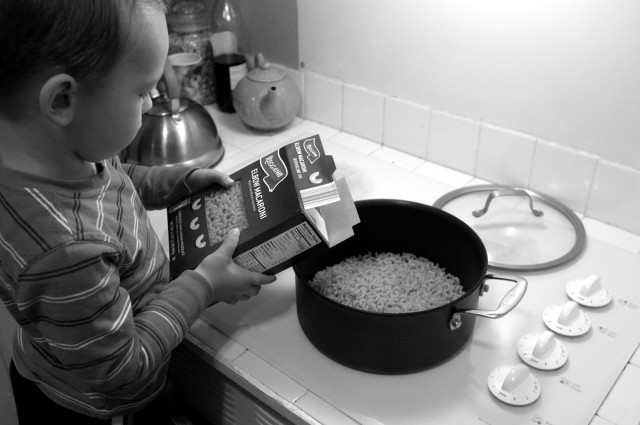
I take for granted that my family will have food to eat, and that if, after returning home from inspecting the neighborhood during a let-up in the downpour, we decide to have mac and cheese for lunch, that we can do just that. And I take for granted that I can take all these things for granted.

DSCF7734

And that is probably why I have always been somewhat obsessed by time and its passing. Like so many others, I get into the habit of taking things for granted, and when they come to an end, as this year is or as our extended holiday break is, I realize unconsciously that I’ve taken it for granted and not made the most of it. At least I did. Having children changed that to a degree

DSCF7738

I learned to be aware of each passing moment because it was just that, a passing moment. This is especially true since the birth of E. The Girl’s first years showed me how one can grow accustomed to — take for granted — the little quirks a child exhibits as she grows and then suddenly, one realizes that the child has outgrown that quirk.

Now I’m still obsessed with time, but the obsession has changed. No longer do I find myself thinking, “This wonderful experience is ending, and I’m not sure anything coming will ever be as magnificent as this,” for that was how I framed my taking-for-granted nature. Instead, I find myself shocked at how quickly time as passed, regretting slightly the moments I’ve taken for granted and more determined not to do it any more.

Keeping Up

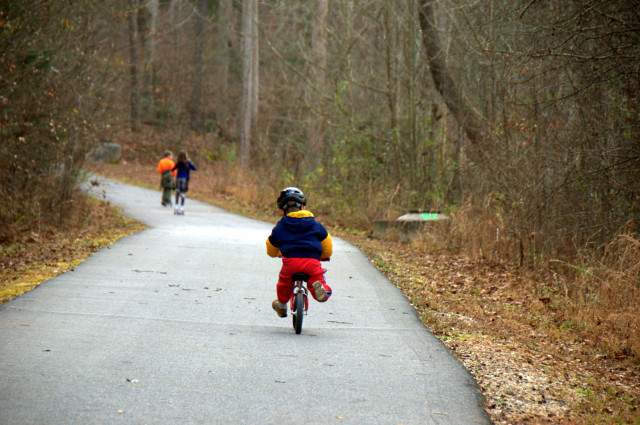
“If I passed you on the right then you’re an idiot.” On the way to the park, we were behind a car with that bumper sticker. I think it was homemade, because it had strange capitalization, and I’m not sure if it didn’t suggest that “your an idiot.” Perhaps I’m just projecting to create the irony. At any rate, I thought about the bumper sticker as the kids rode and skated ahead, returning when they got out of sight, then heading back out again, each time going a little further. Why would you go around calling random strangers idiots? Why would you worry about passing someone on the right so much that you’ll plaster an insult on your car? And of all things, why that annoying driving habit? Why not just be glad that you don’t have to worry about someone leaving you behind?

8-VIV_0602

Day Two, at the Park

The days before Christmas Eve are all about preparation. There’s so much to clean, so much to cook, so much to get ready just to cook or to clean. There’s an art in knowing when to help and knowing when helping is simply getting out of the way.

Today, K made the pierogies for Christmas Eve, and while she was at it, she used up the rest of the chicken from Wednesday’s rosół (L’s favorite, made especially for her birthday) to make some chicken pierogi. All in all, she made well over a hundred of the little dumplings, which means that flour was flying all over the place.

2-DSCF7524

Were the kids there, cries of “Can I help?” and “Why can I help?” and “L could help — I want to help!” and “Can I have some dough?” and a thousand other things would be a constant added challenge to gauging the amount of filling versus dough to make it all come out, the challenge of making cutting-board full of dumplings quickly enough that the first ones don’t dry out before the whole board gets slipped into the freezer. Not to mention one’s sanity.

3-DSCF7510

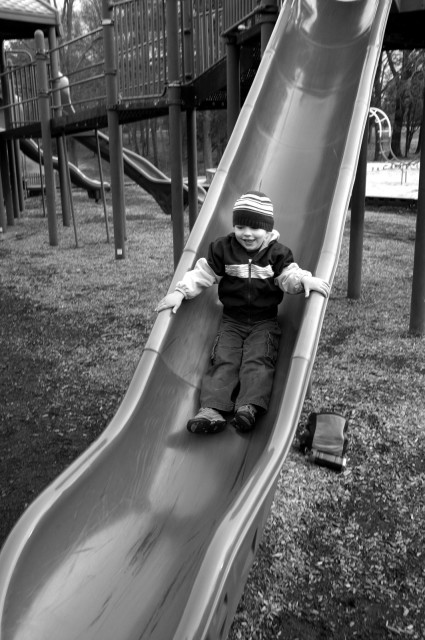
So after lunch, I packed the kids and their bikes into the car and headed to the nearest park. Southside is not nearly as crowded on it’s busiest Sunday as Cleveland Park is on an average Sunday, and when we arrived today, we had the park almost all to ourselves.

4-DSCF7503

Almost as soon as we arrived, a young man with a yellow safety vest and an unsteady stride approached us. “Hi,” he smiled awkwardly, then pointing to his bandaged wrist, asked, “What’s this?” I looked at his vest, which has his name printed on it and a telephone number, and it was quickly clear that the young man had Down’s Syndrome. I looked at his wrist and replied, “It looks like you hurt yourself. Are you okay?”

“Yeah, I’m fine. What’s this?”

I explained again, glancing around to see where his parents might be, glancing at L and E to see where they were.

“What’s this?” came the voice again.
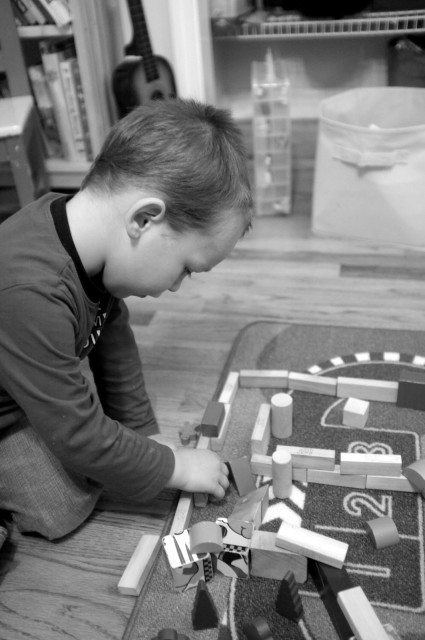
E was approaching me at that point, calling out his usual mantra — “Daddy, come play with me!” — so I simply repeated my explanation and excused myself. The Boy and I headed to the biggest slide on the playground, and glancing back at the yellow-clad boy, I saw him head to another father on the playground. Pointing to his wrist, he was clearly asking the same question of almost everyone, and it was still unclear where his parents might be.

5-DSCF7498

“Who was that, Daddy?” L asked as she ran up beside us as we headed to the bigger playground with it’s enormous slides.

“I don’t know, sweetie.”

“Then why were you talking to him?”

“He was talking to me,” I replied, knowing where the conversation was heading.

“Why?”

I explained, and L, having recently become aware of the autistic students in her own school, asked if he had “bad autism” or just “a little.”

“He isn’t autistic, honey. He’s mentally disabled. He has something called Downs Syndrome.”

“What’s that?”

I explained it quickly, and since we were then at the bigger playground, she found that explanation adequate and ran off to mount the ladder to the slide.

6-DSCF7499

Still no sign of the lad’s parents, but by then, my attention had shifted to the Boy’s climbing. Lately, he’s grown more confident and more willing to take risks, which means he was climbing on things like the chain ladders that just a few months ago were unthinkable challenges for him.

7-DSCF7497

I stood at the base of the slide, waiting for him. As he climbed up the ladder, my view was briefly obstructed, and the normal parental thoughts paraded: What if he falls? Should I be by him to help?

8-DSCF7539

I stayed where I was. He didn’t fall. I learned the same lesson for the millionth time: I have to let go. I have to step back. I have to let him fall.

1-DSCF7541

And later, when they were riding their bikes in the empty over-flow parking lot and the Boy fell, I walked calmly over to him, calling, “Oh buddy, it’s nothing. Get up — brush it off. You’re fine.”

I never figured out who the yellow-clad young man’s parents were. He talked to almost everyone in the playground and wandered freely. In fact, I wondered whether or not they were even at the park. Maybe they dropped him off and went somewhere for a while. Shopping? Who knows. Yet I’m not willing to make any kind of judgment about their parenting choices. They’re probably just letting him climb alone for a while.

(Final pierogi count: 148.)

Numbers

2

Every night just before bedtime, just before we read a story, just before one or the other of us cuddles with him until he drifts to sleep, the Boy has a choice to make: which cars will I take to bed with me? We allow him two because otherwise, there would be no room on the bed for him — he would pack every single wheeled vehicle he owns onto his bed every single night.

He makes his choice carefully, and as is typical of his personality, changes his mind a time or three most nights.

9

This weekend, the Girl will have her birthday party. Her ninth. Her last in single digits. Her interests are maturing with her body. She’s planning on painting her fingernails before her birthday party Saturday, and it’s a choice that, like the Boy’s cars, requires significant thought.

220

The average RIT score on the MAP test for eighth-grade students is 220. My gifted classes have averages well above 230. My struggling classes have sometimes had averages below 200, putting them in the range of a first- or second-grade reader. When such a class, during optional winter testing, actually goes down as a whole class, it leaves a teacher feeling particularly ineffective. What can numbers tell us about reading? Nothing? Everything? Something?

3000

At a post a day, it would take eight years to reach 3000 posts. However, to reach this, the 3000th post, it took 11 years, which makes an average of 0.747 posts per day — posting about 75% of the time. Eleven years to make it to this, the 3000th post.

Immaculate Perception

Tonight, on the way home from Mass for the Solemnity of the Immaculate Conception, K got a text. “H’s mom just sent me a text,” she said to the backseat. “H is coming to your birthday party and is very excited about it.” An affirming thought: someone other than family likes our kid. Yes, it’s sort of an obvious assumption in a sense: by age nine, most every kid has learned how to make friends with someone.

And yet, there’s the girl that sits in our lunchroom at school every single day alone. One of the sweetest young ladies I’ve ever had the privilege to teach, and yet without a single friend some days. “I just like being alone,” she said once when I plopped down across from her during lunch with my salad and began chatting. And I believed her: I was a bit of a loner myself, and I sometimes thought being alone was just easier than dealing with the uncertainties of other people. So here’s this thirteen-year-old who can’t or doesn’t want to make many friends, and I realize that it’s entirely possible that L might have made it to nine without making any real friends.

What is friendship at that age, though? Just a few weeks ago she was complaining about how some of the very people she’s invited to her birthday party were being none-too-friendly toward her — the usual petty playground stuff. Can she tell when people are really her friends and when they’re just using her, I’ve wondered. How accurate is the perception of a young girl?


Evening Walk

After a few administrative matters were taken care of — moving the car, taking the trash out to the street — we headed out this evening for a brief walk. As we headed up the street, K playfully commented on how dirty L was.

“Well, if I had to choose between a child who is filthy,” I said, “and a child who is obsessed about being clean, I’d have to go with the filthy child. At least it’s a sign that she’s outgrown her princess phase.”

The Boy, of course, has still not outgrown his machine obsession.

Balance

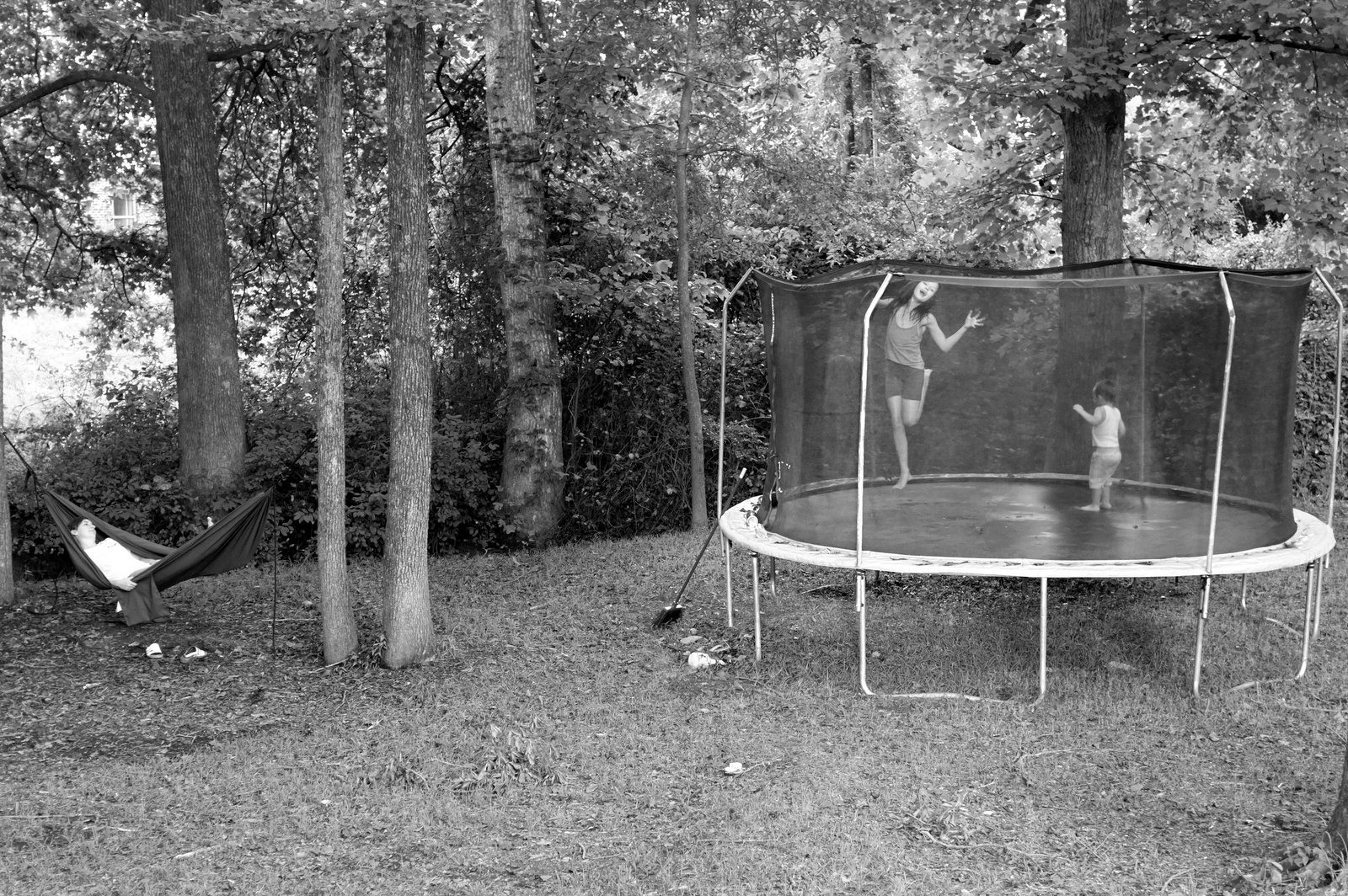
Since we’ve added a trampoline (free from friends in our Polish community whose boys, now in high school and college, have no interest in it) to our entertainment possibilities, I’ve come to see the whole potentially injurious toy in a whole new way. Sure, there’s the possibility broken bones, I guess, snapped spines, but in truth, I don’t think there’s the kind of jumping going on down there that could lead to such tragedies. And the advantages are overwhelming at times. There is of course the simple fact that it’s an enclosed space that allows the adults to relax while the kids go crazy.

DSCF5858

But what I’ve noticed most is the incredible improvement in both the kids’ balance and, to borrow an eduspeak term, their kinesthetic intelligence. When we first began the jumping and bouncing, the Boy fell quite frequently. All you had to do is jump somewhat near him and the jolt of the trampoline below him would be enough to send him tumbling — laughing often but frustrated just as often. Now, we hop all around him, and he seems simply to absorb it all with a bit of knee action. He’s gone from little timid hops to being able to bound across the whole trampoline with only four or so jumps.

DSCF5868

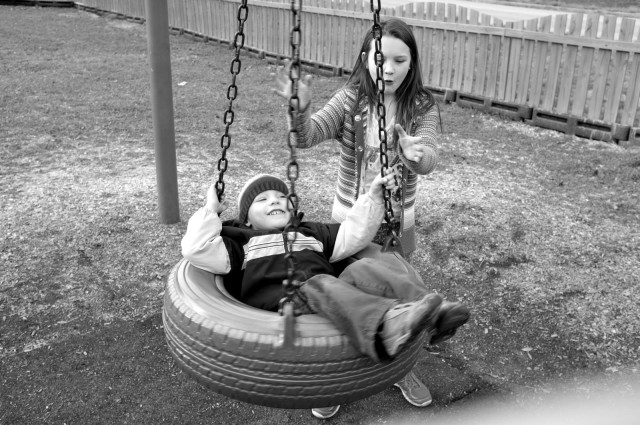
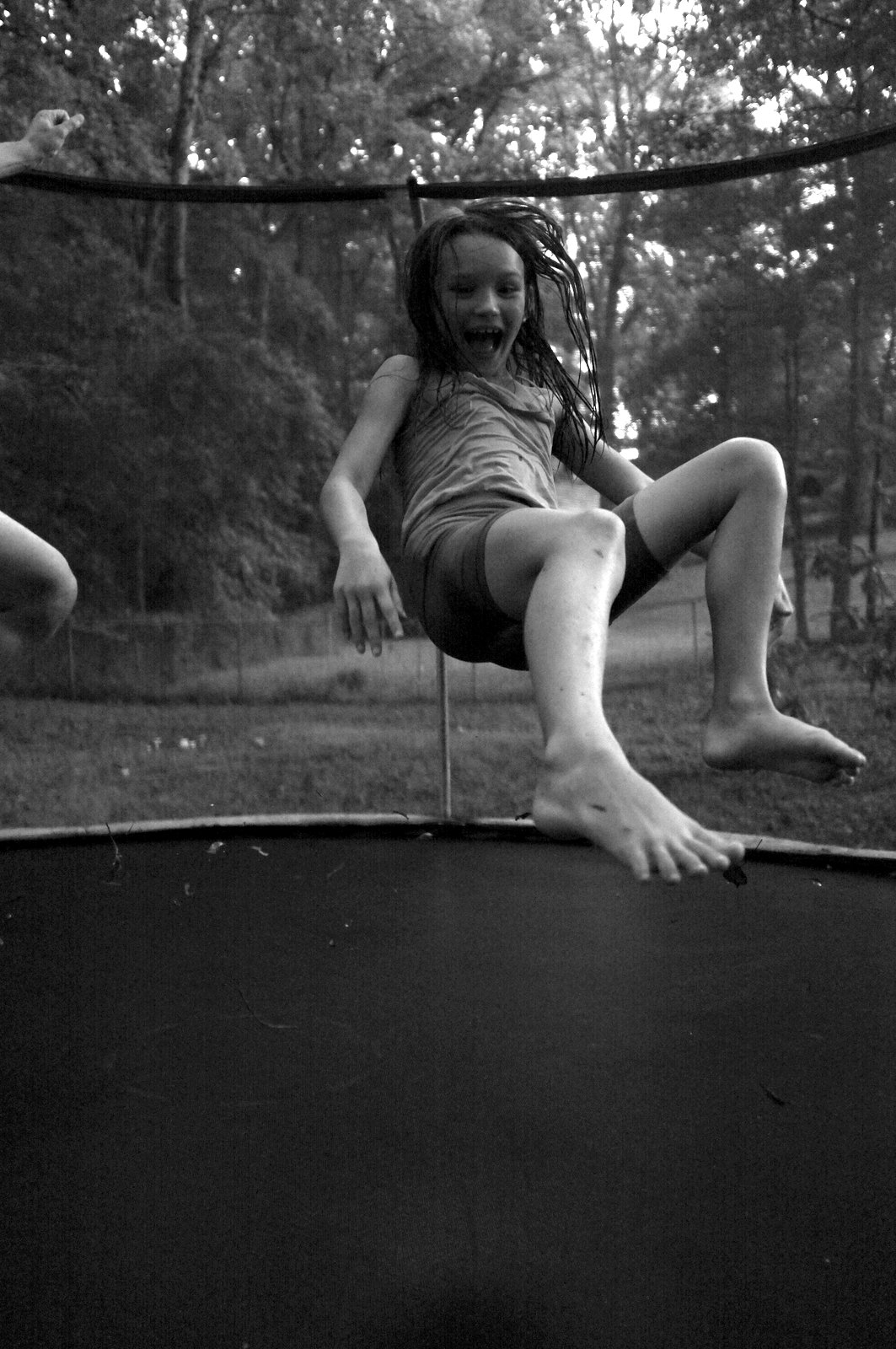
The Girl seems to enjoy it the most, though. We’ve lately been taking the whole popcorn idea to an absurd — and dangerous, K insists — level. Basically I launch her: she sits near the middle, I take a giant leap and land right beside her, and Newton’s third takes care of the rest — she pops up three, four feet into the air and lands on her feet. And if I get the timing just right, I launch her again at that moment, sending her flying yet again, making her laugh even harder. Which gets me to laughing. Which amuses the Boy. Which is why I ultimately have come to love our trampoline.

First Day 2015

“Goodnight, couch potato!”

I stopped on my way out the door just long enough to turn and give a smirk smeared with a grin. “Couch potato indeed,” I thought. Just because I’d almost fallen asleep while playing cars with the kids earlier this evening doesn’t make me a couch potato. I biked to work, wrestled with all the first-day problems that consume a teacher’s initial planning periods, taught five lessons straight, and biked home in a fairly substantial rain — couch potato indeed. Still, I just gave L a smile mixed with a slight smirk, wished her goodnight again, and headed out.
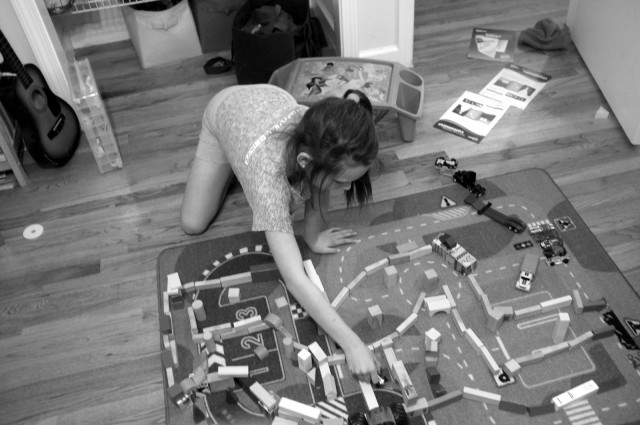
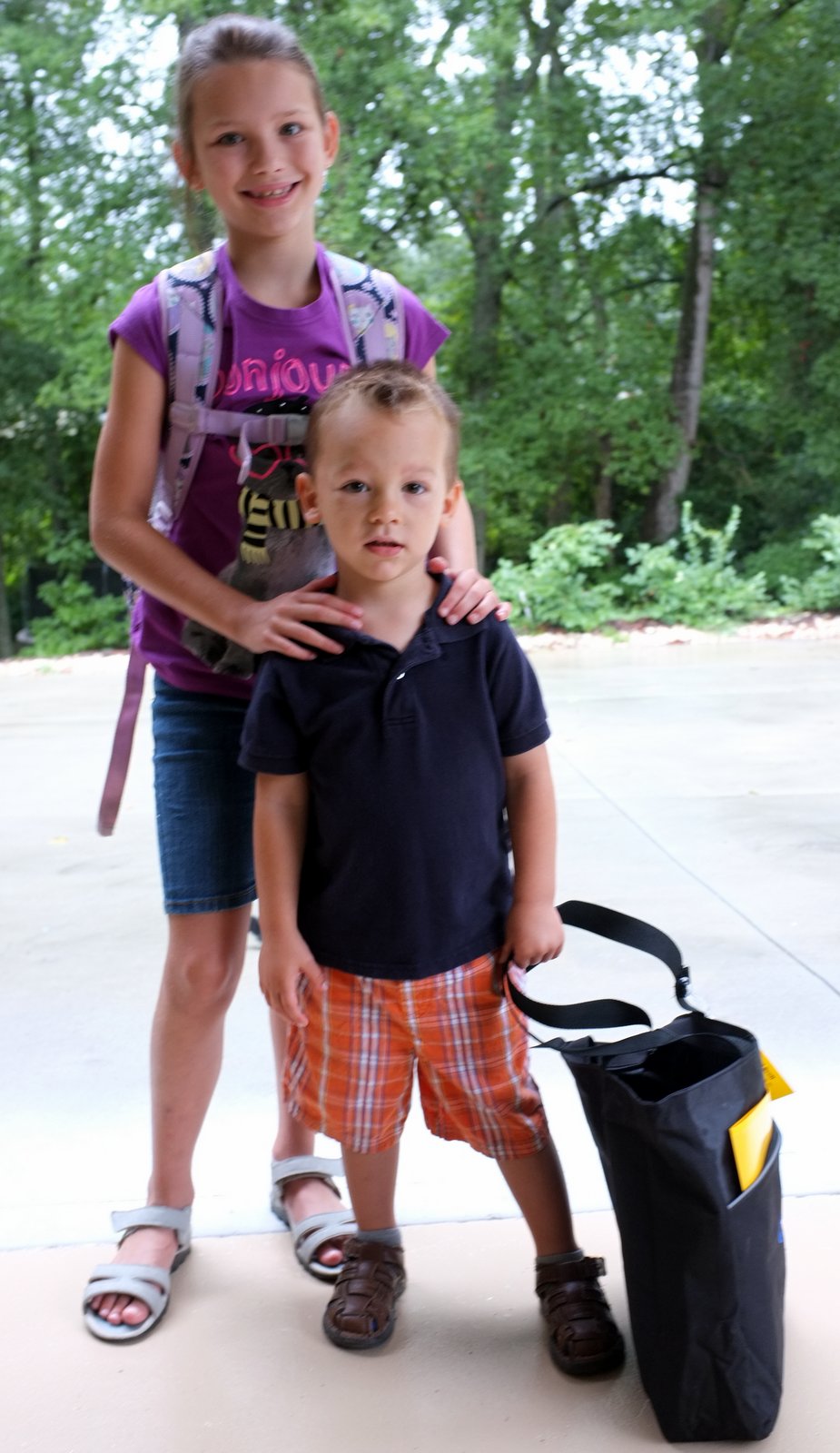
L had a rough first day in a lot of ways. Now in third grade, she heads upstairs to the classrooms that house the third, fourth, and fifth grades. Assigned a teacher known for being strict, she fretted throughout the evening about the news that they will have assigned lunch seats starting tomorrow. “Last year, we only got assigned seats when we were bad!” she sniffled, and I think I know at least part of what’s going on: L tries very hard to be a good student, and when she hears that they’re getting assigned seats, which she usually associates with misbehavior, she begins doubting her own goodness in class. It’s a fairly natural reaction, I would think, but L chews and chews on things like this until she wears it down or it wears her down.
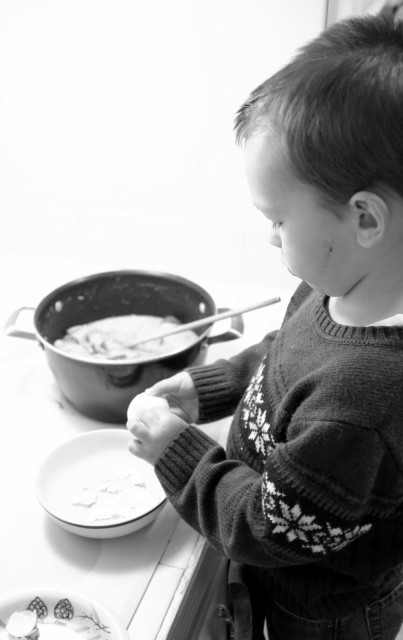
We talked about it a bit tonight, and in the course of that conversation, one of the real concerns became evident, a concern that I myself remember having when I was in elementary school. “We don’t have a bathroom in the class.” Instead, they must share the facilities with fourth and fifth graders. Who knows what that might lead to, she reasons. And while I certainly think there’s little to worry about, I do recall how we’re seeing more and more news reports that show children younger and younger growing more and more brutal. It’s unlikely, though, that anything worse than a sideways glance from a fifth grader might happen. But I too remember that fear that comes with being thrown in among older kids who are completely unknown.
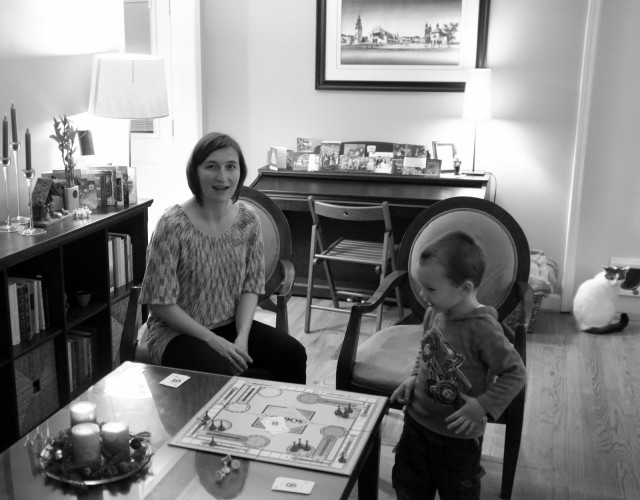
DSCF5855

The Boy, on the other hand, had a completely different experience. “But Mommy, I’m not ready to go,” he told K when she picked him up from his part-time K-3 (K-3? Is there any limit to this?!) program. The teacher commented on his manners, which consistently imzpress me, and he likely commented continually about the enormous Thomas the Train play station in his room.

And my day? First day back as an eighth-grade teacher is always a bit stressful. I’d already had my visit with the seventh-grade assistant principal to find out which students could be most challenging and therefore which students I need to focus on as I developed relationships with 100+ new thirteen-year-olds. But despite the schedule I feared would be brutal, I mounted my bike feeling I might not have had a better first day in my entire teaching career.