Photo by jspatchwork 
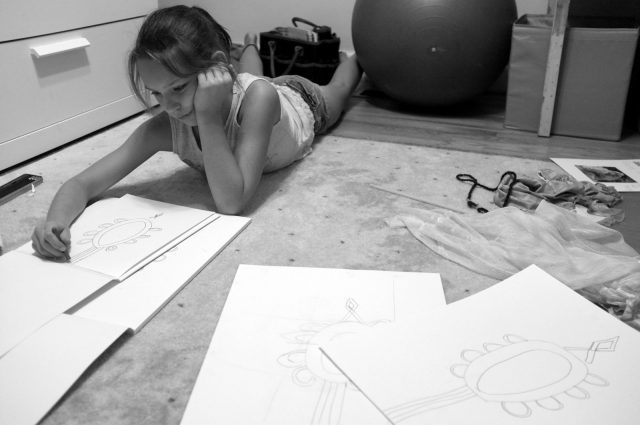
I sat in the Girl’s bedroom, helping her prepare for an English test tomorrow. Cobbler’s kids and all. We were going over how to remember the difference between interrogative sentences and imperative sentences when the Boy came in. We chatted for a while, and I encouraged him to leave us a lone so we could finish up the Girl’s test preparation.
“Okay,” he chirped and headed out, stopping at the door to ask me if we could spend a little time together after dinner.

Dinner complete, the Boy and I headed down to the trampoline as L and K went through the day’s Polish lessons. As we jumped, we found ourselves eventually lying on our backs staring up at the trees above us. For several weeks this summer, he was afraid that, as the wind blew, the trees could very easily come toppling down on us. Today, we just lay there watching the sun slowly disappear and the glow of the leaves slowly dissipate.
K is sick — first time she’s really been sick (stay home from work sick) in about two years. This evening, I was upstairs running water for the Boy’s bath when I heard the clank of cups and glasses on the counter top.
“I’m going to kick her!” I thought. “She shouldn’t be doing that!”
I went downstairs to find E, who was thirsty, emptying the top rack of the dishwasher.
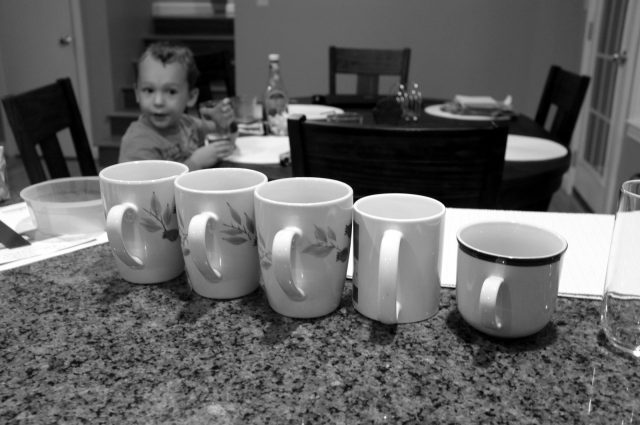
“Did Mama ask you to do that?”
“No, I just did it. I’m a gentleman.”
The last Sunday of the month — Polska msza. Among many other things, it means a lazy morning with perhaps a bit of outside time. During the summer, it was the only Sunday we could do much of anything outside because by the time we normally got back from Mass, it was too hot to do much of anything. There was the pool, that’s true, but even that gets a little routine after a while, I guess.
In the late morning, then, L, E, and I headed to the backyard to do some exploring. Our exploring of late is limited, though, by the fact that we have new neighbors whom we rarely see, and I haven’t yet had a chance to ask if they mind us tromping through their backyard. I’m certain they have nothing at all against it, but I still don’t want to do it until we’ve actually discussed it.
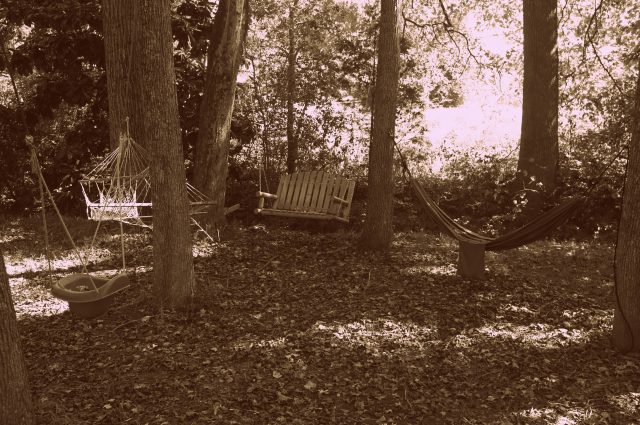
That leaves us limited to our own backyard, which we all know perfectly well — harder to pretend-explore there than it was in our neighbors’ yard. I struck upon the idea of tracing the stream that runs through our backyard. We’d waded up the stream one morning this summer, but we hadn’t gone the opposite direction. The Boy was interested; the Girl headed inside.
We followed where it passes under the road and winds through more backyards, but soon we reached a point where we couldn’t go any further. If we had long pants on, we could have braved the weeds and wild for probably another hundred and fifty feet, but not much more than that. Suddenly, the Boy had a question.
“Daddy, what if we’re lost?”
“What do you mean?”
“I mean, what if we can’t find our way home?”
I thought of what we’d just done from his forty-some inch perspective and his four-year-old mental development and realized that he might indeed have no idea where we were. I took him back to the road and pointed out the back of our house.
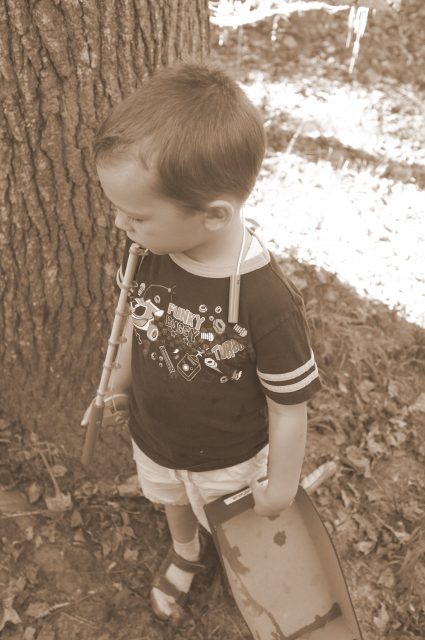
“Oh, neat trick,” he replied.
But could he really not know where we were? I doubt it. He has such an incredible memory for the physical layout of things, where things are located in the house, where things are located in the larger environment.
Once, K told me, they were on their way to Nana’s and Papa’s house in the morning and there was a huge snarl of traffic on the four-lane road we normally take to their place. I’d done some exploring on Google Maps before to map new routes to ride by bike and had discovered a way to cut the corner where the snarl was, and once I’d taken it when I was taking the Boy to Nana’s and Papa’s. E remembered it just as K was contemplating where that road off to the left might go and explained that it was a short cut. Between those two events passed probably several weeks.
So it’s likely that he really wasn’t as lost today as he thought he might have been. It’s possible that he could have figured his way back home. Instead, he just took me by the hand and said, “Daddy, let’s go home.”
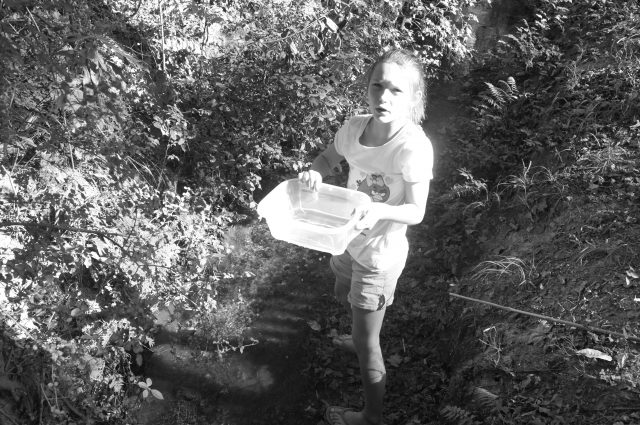
The recently-caught tadpole needs more room to grow. L did some research about what they might eat and how to best provide an authentic environment for development, and she’s determined to see it through to frog-hood.
We parents wait for it all our lives, I imagine: confirmation that all the teaching we’ve done has somehow taken root and flowered. It comes sometimes in those little notes scribbled on our children’s school papers or comments on report cards. We hear about it from grandparents or neighbors. And then sometimes we see it.
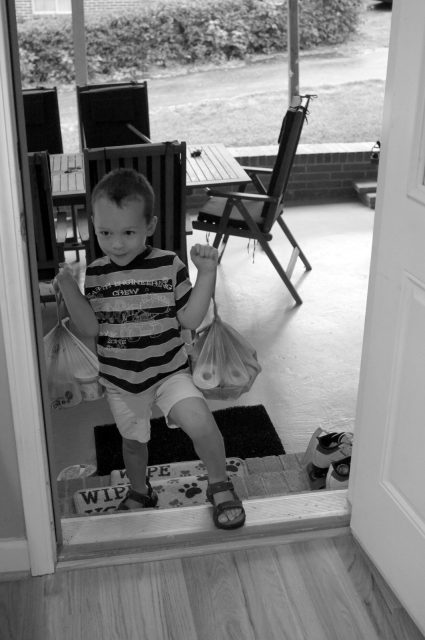
K arrived home with the Boy from a short trip to the grocery store and the pizza place only to find it had started raining. It wasn’t raining hard enough for me to hear it, so I hadn’t brought in the laundry drying on the back deck. (Truth be told, I wasn’t even aware of it being out there, but that’s an entirely different issue.) K rushed in, pizza in hand, tossed the box on the table and darted out through the back door. “My laundry!” Following a few moments behind, E appeared at the door, shopping in hand, car door closed, struggling mightily with the two bags of groceries.
He’d taken the initiative all by himself.
Coincidentally, one of the words in L’s Polish lesson for the evening was “dżentelmen,” the Polishized spelling of “gentleman,” which has the same denotations and connotation.
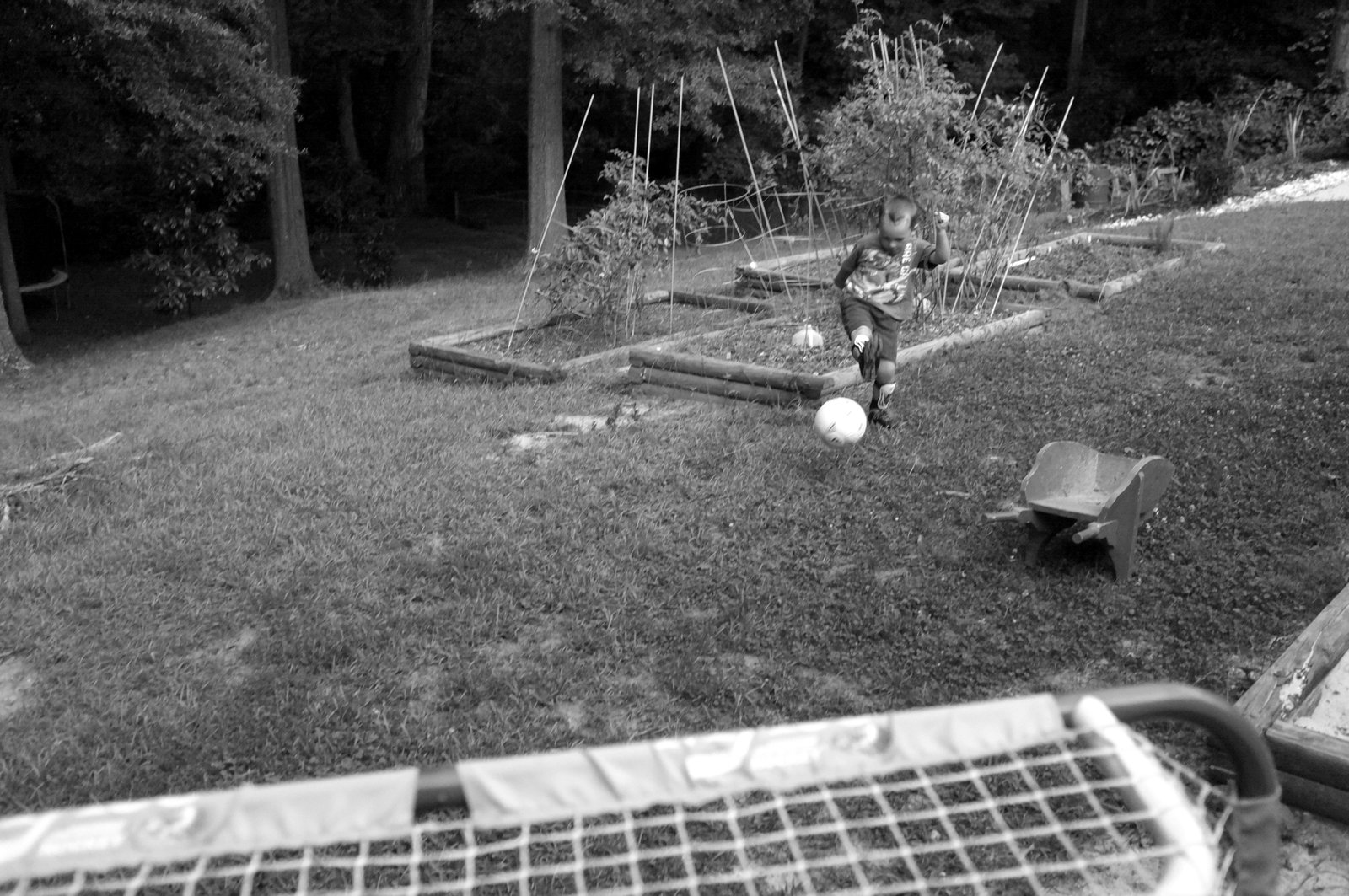
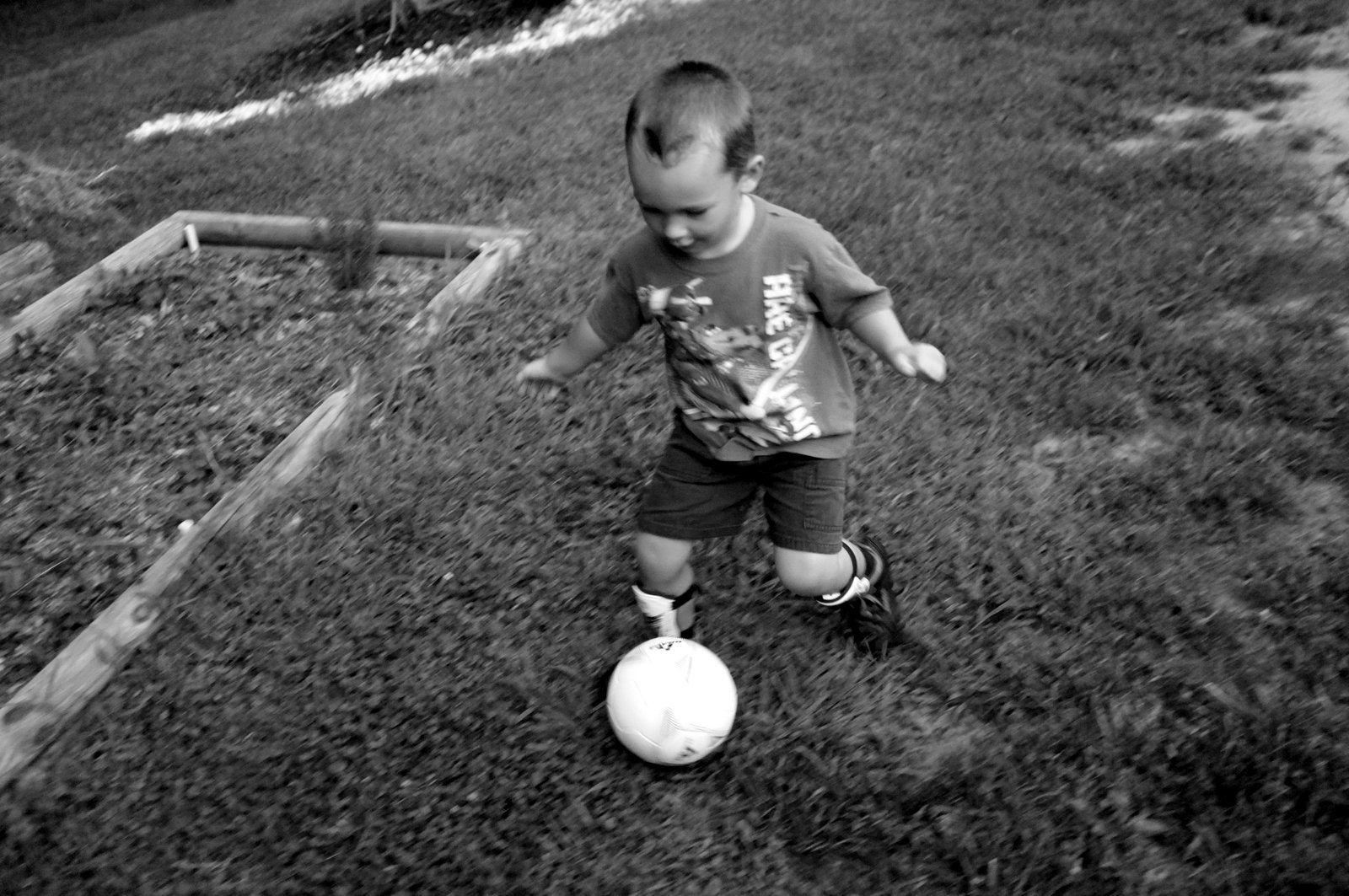
In the end, I couldn’t care less about how well he plays soccer. I’m more concerned with how he plays life. And while at the moment he seems destined to be darting around all the action in a soccer game, he seems to be diving right in to life.
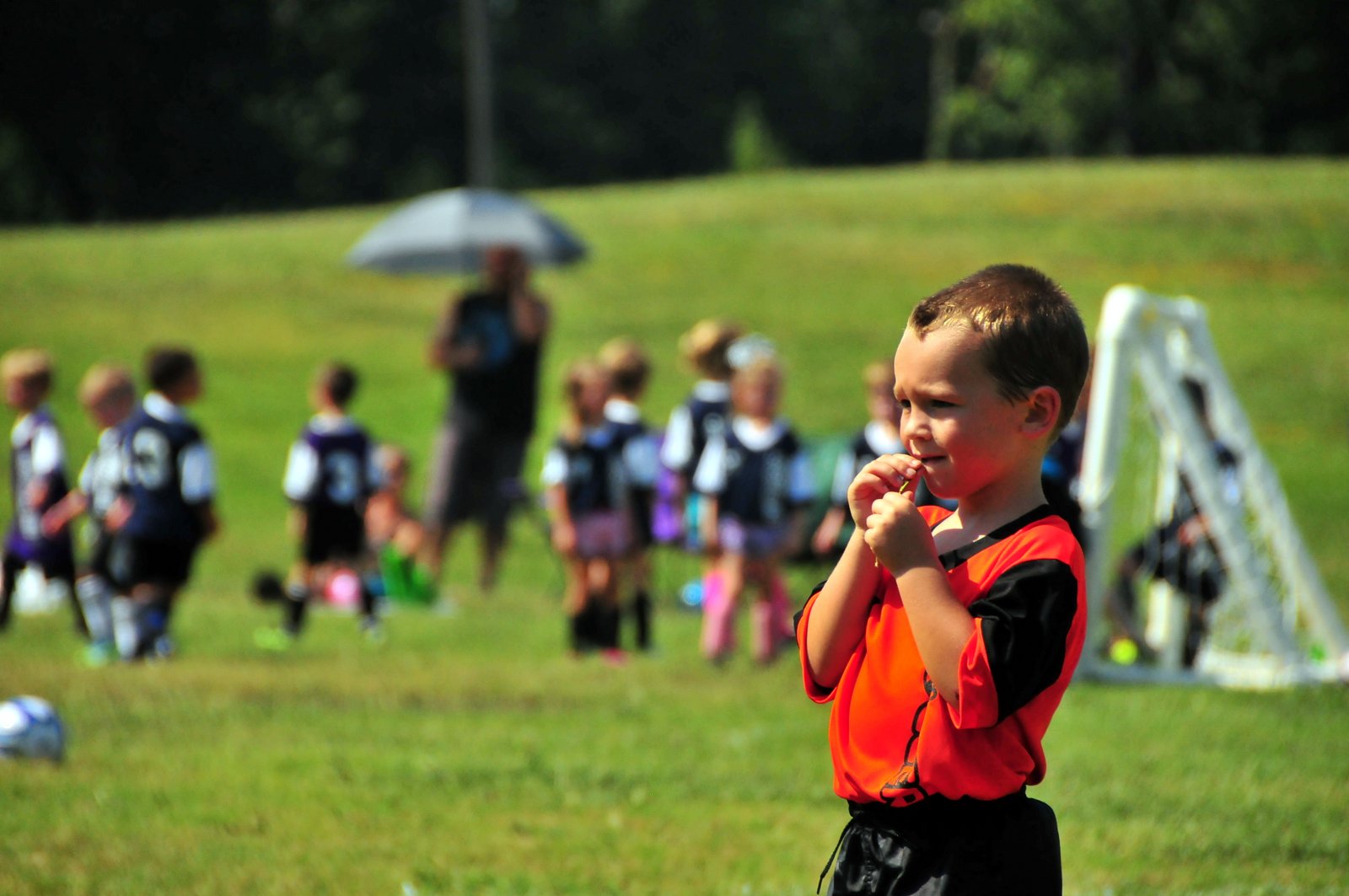
The Boy was determined not to play soccer today. “I’m scared!” was the refrain. He didn’t want to get dressed. He didn’t want to leave the house. He didn’t want to get in the car. He didn’t want to get out of the car. But once he was on the field, it was all fine.
His play was better than last week. He ran toward the ball in general, but he often just sort of ran around the edge of the hive of boys and girls kicking madly at the ball, known as four-year-olds’ soccer.
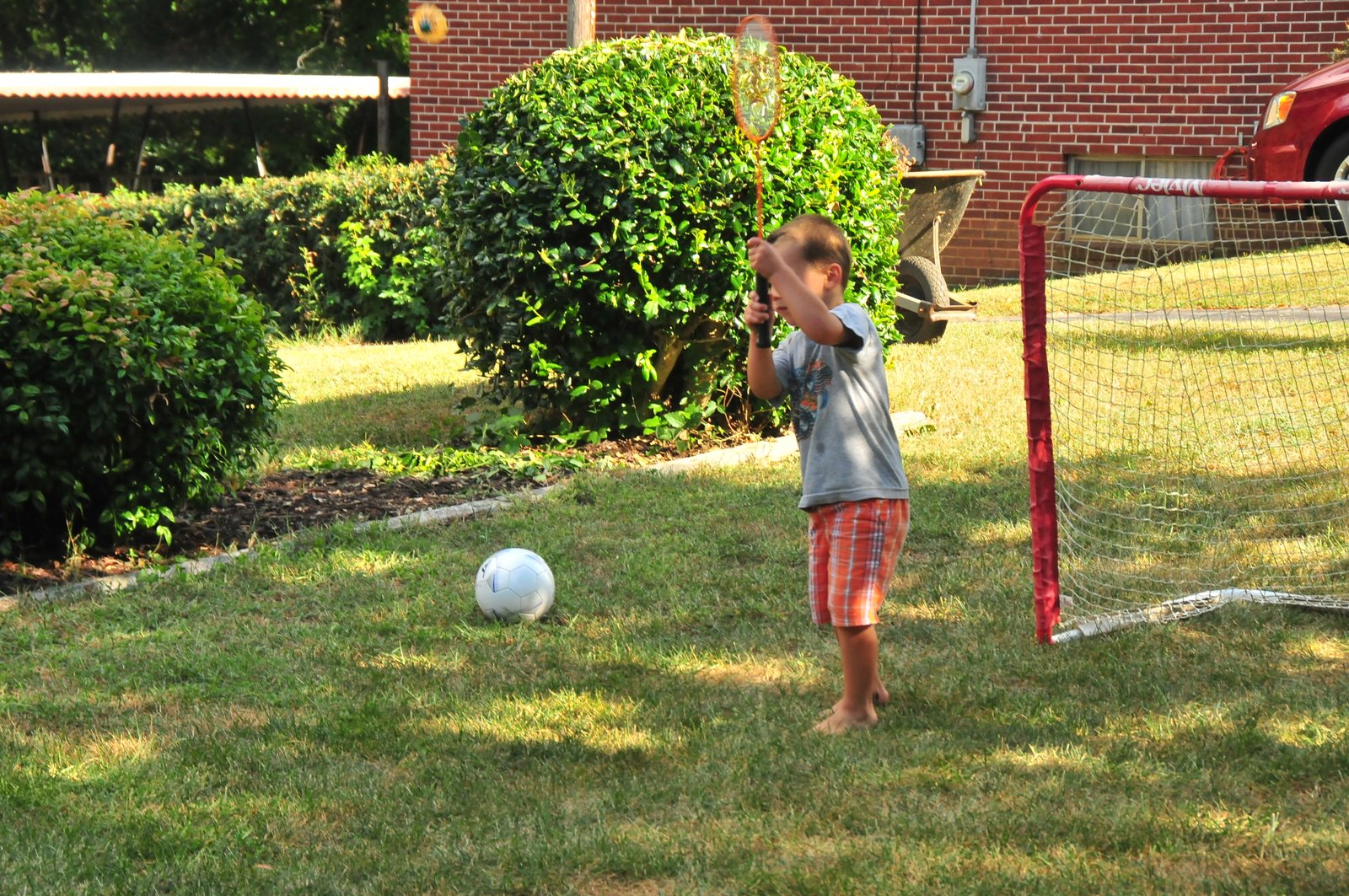
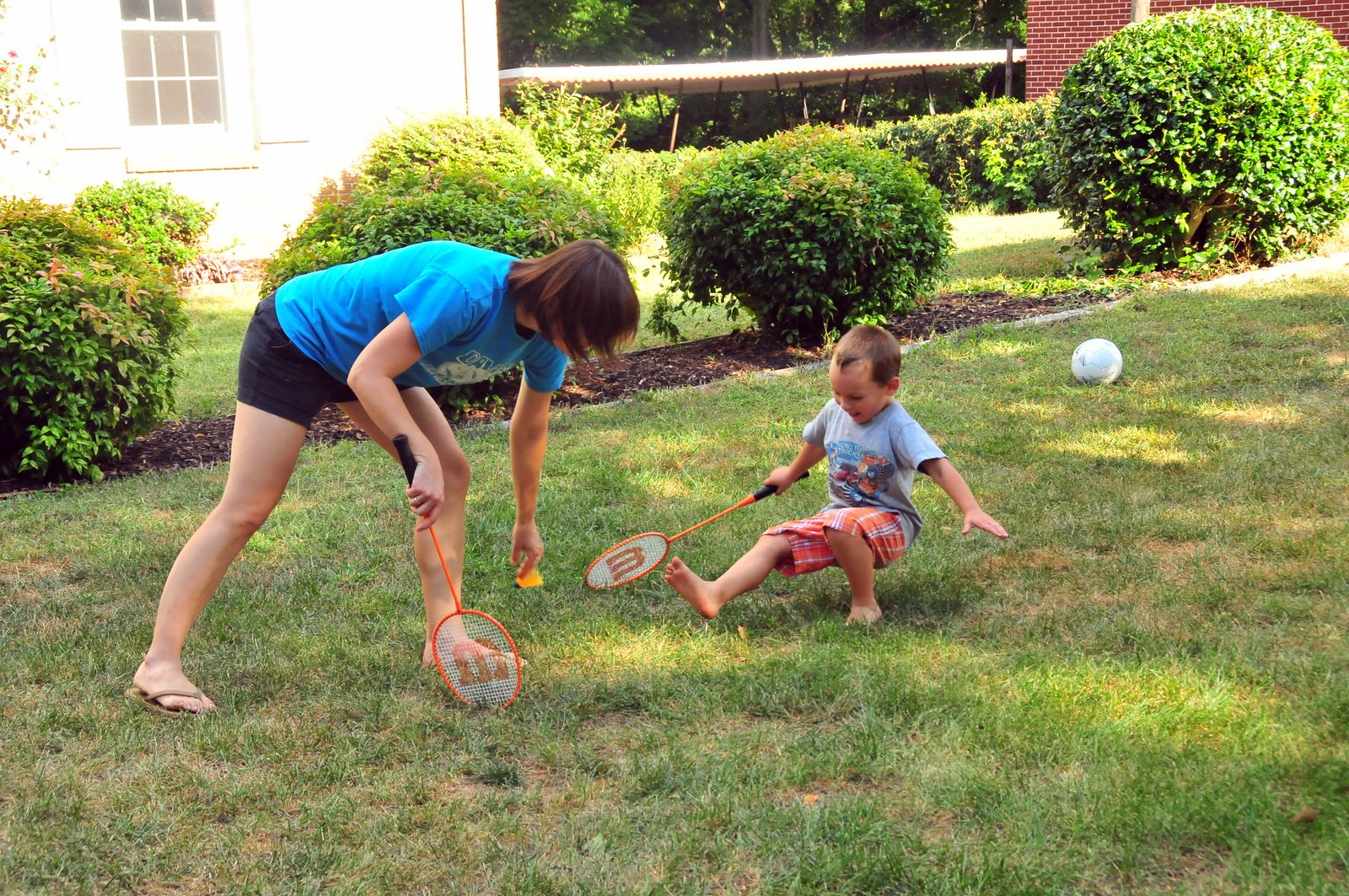
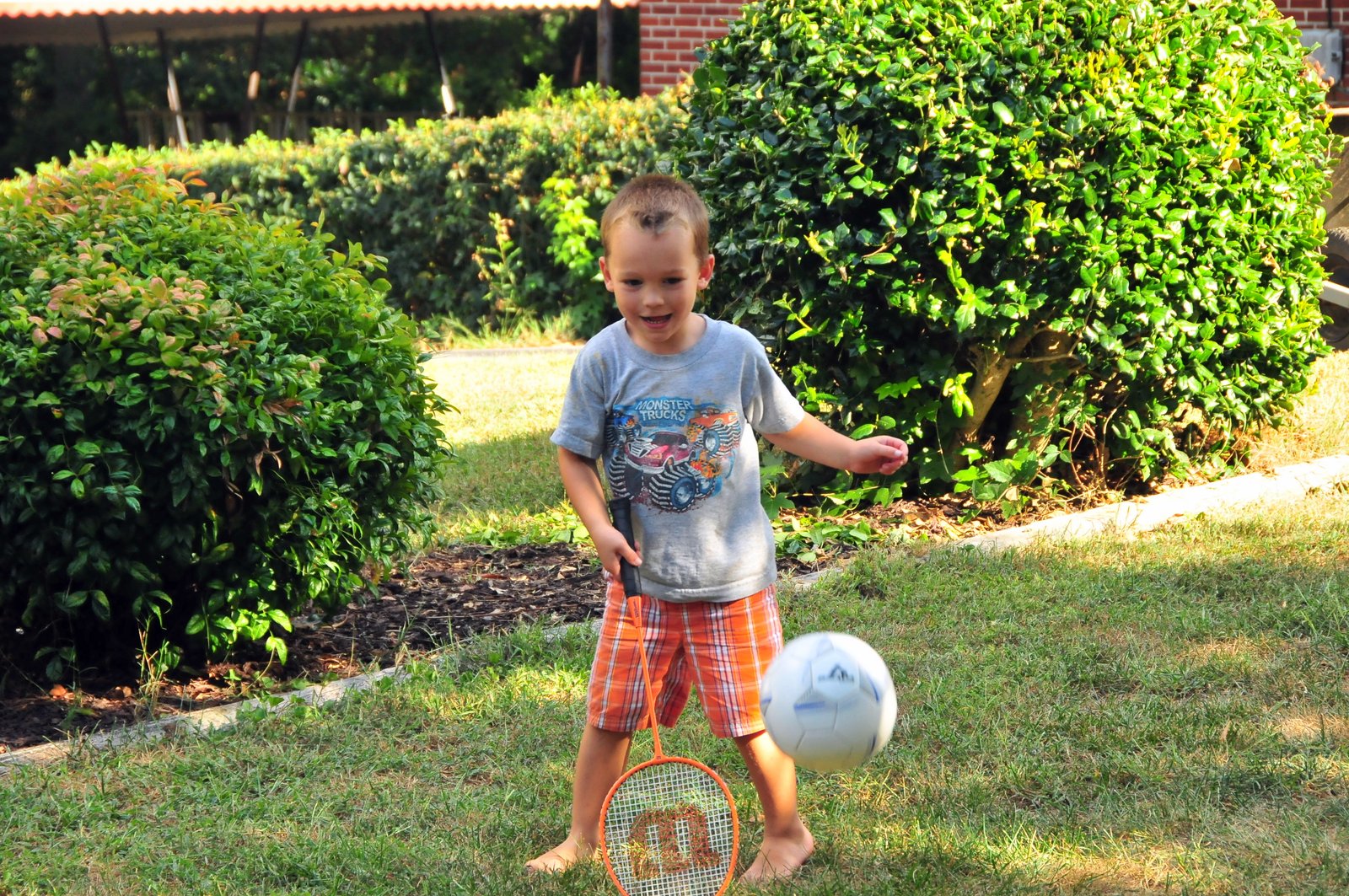
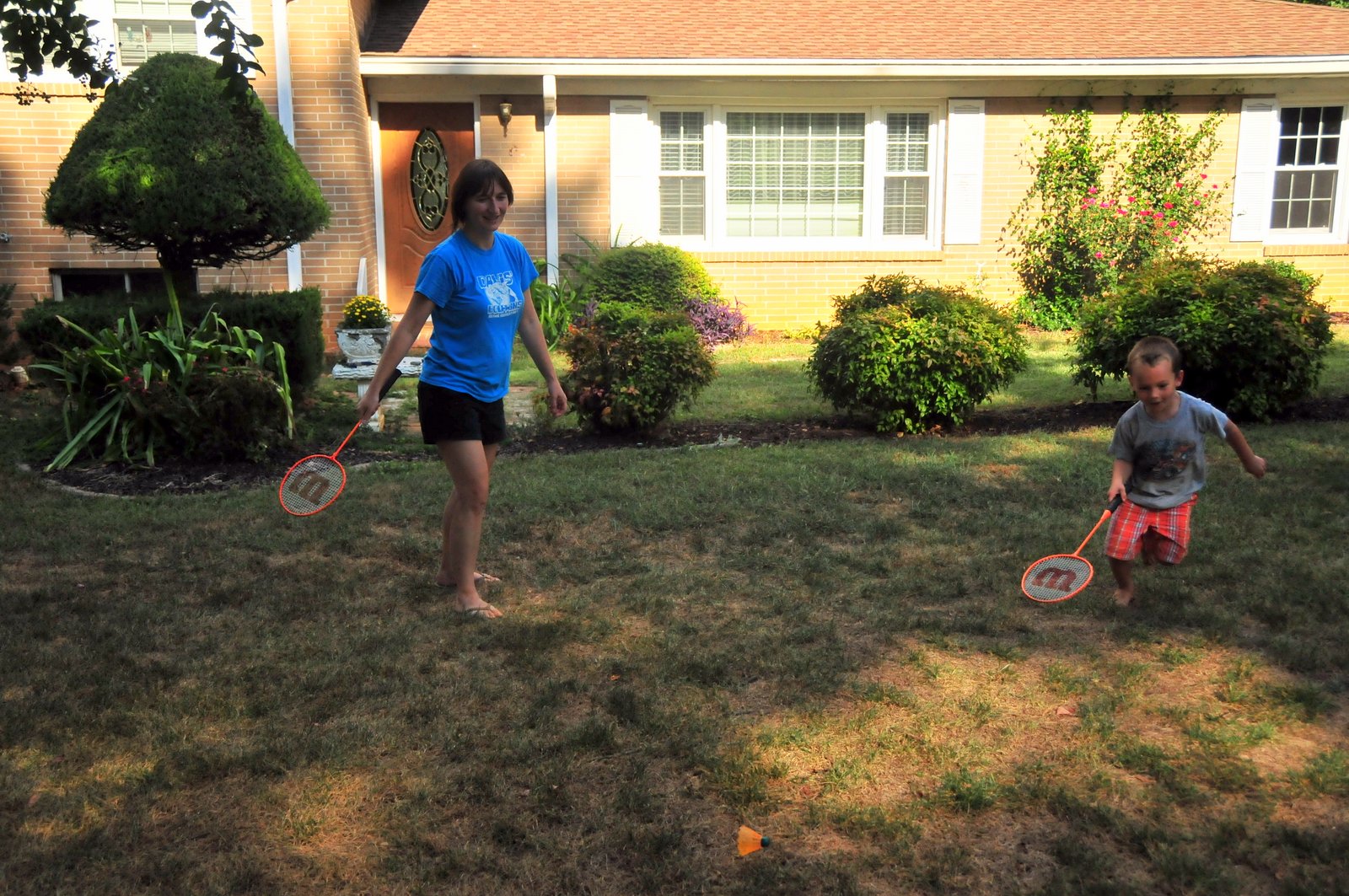
And at home, a bit of badminton.
The Boy comes out of the living room just as I’m headed that way. I jump in front of him playfully and block his way. As he shifts to the other side, I shift along with him, blocking his path. A fuss begins to arise. I lean down and whisper as if I’m keeping it a secret: “Push to this side like you’re going this way, then suddenly jump to the other side and run by.” He does so, then turns back smiling.
Why can’t I remember to turn every potential fuss into a teaching opportunity?
If the Boy plays Saturday like he was playing today, he’ll be something else. He was going after the ball no matter who had it, attacking toward the net, shooting — everything. We even worked on passing the ball to him for him to shoot even though that’s a guaranteed impossibility for his game Saturday.
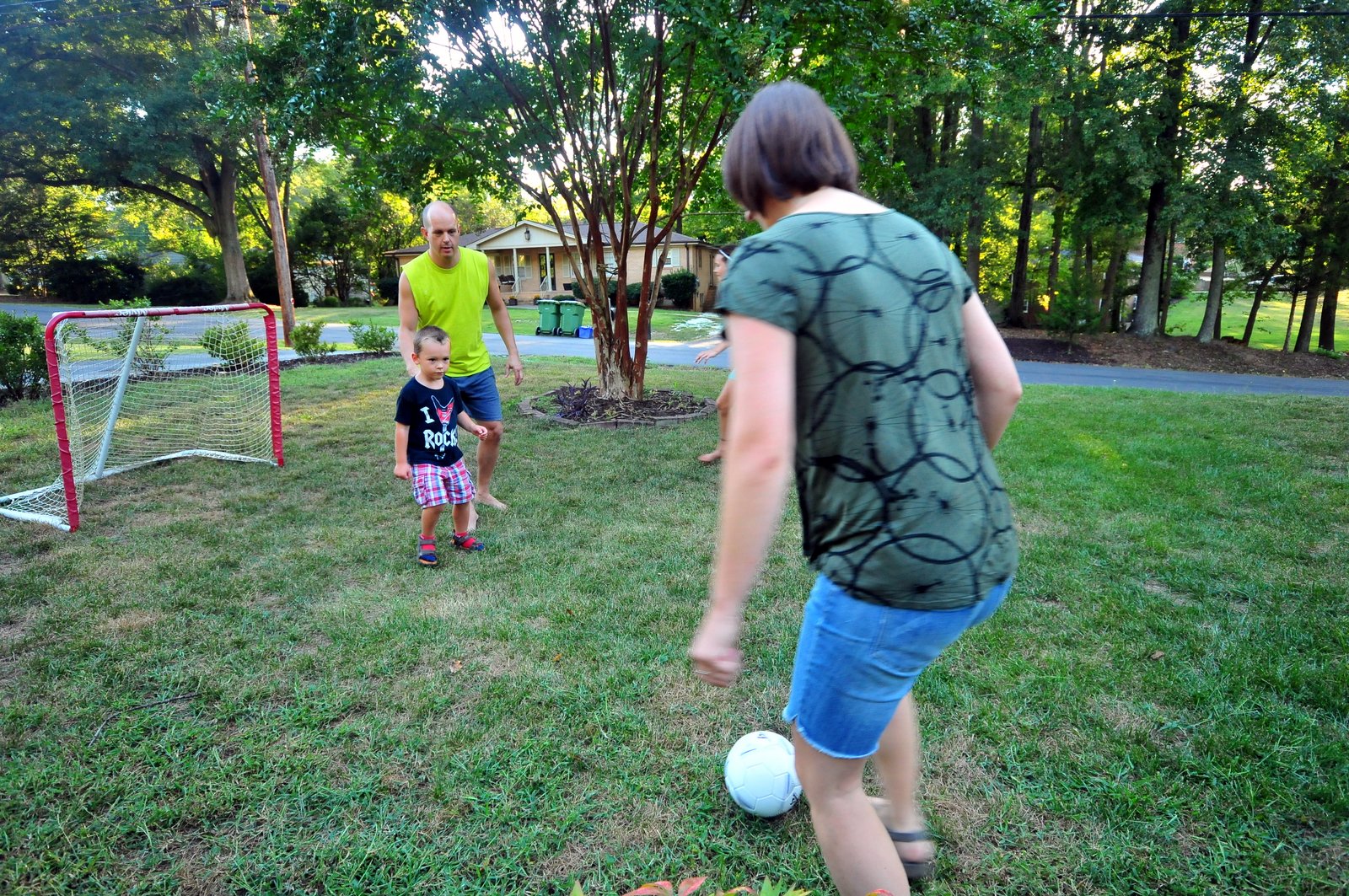
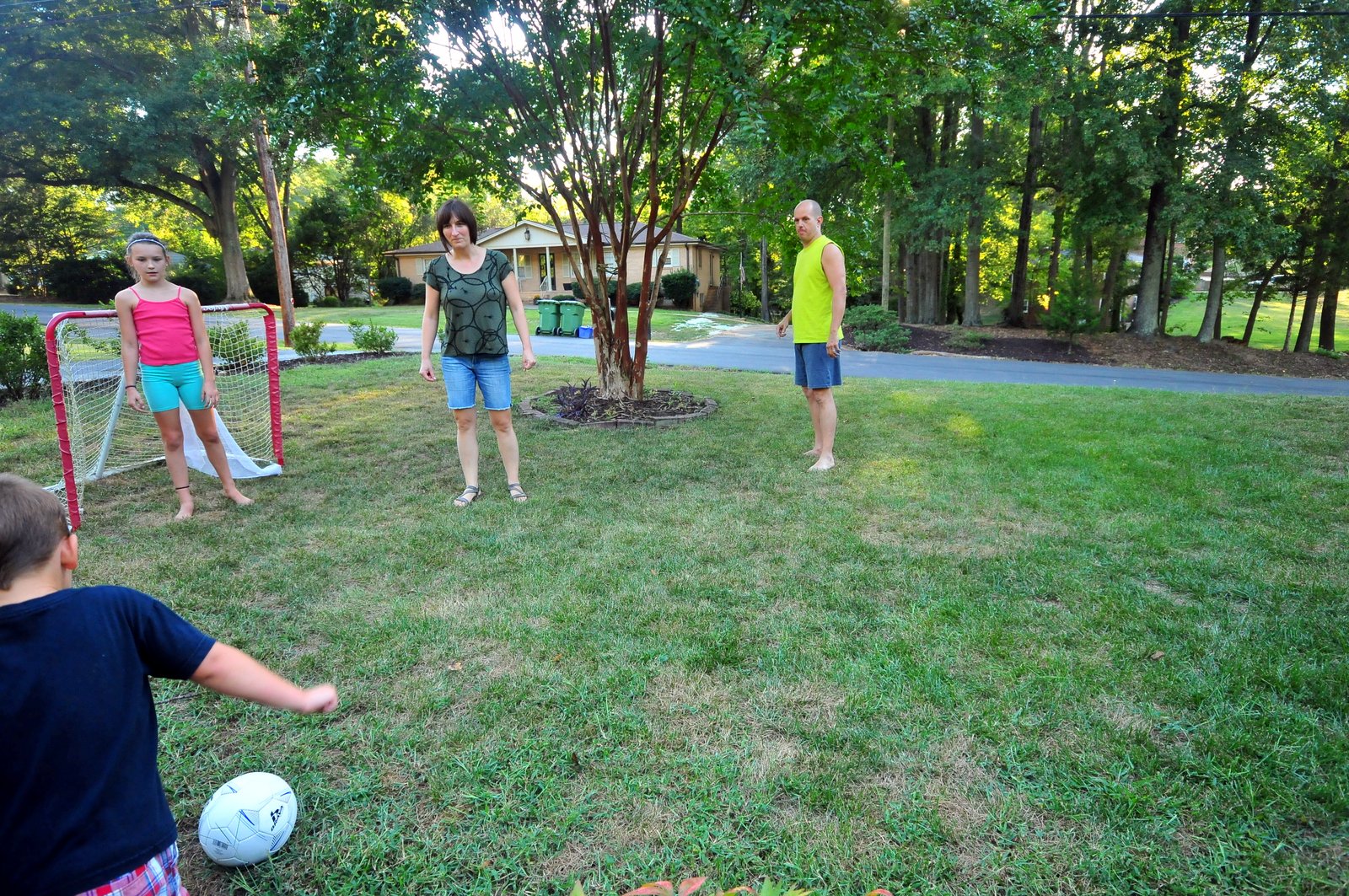
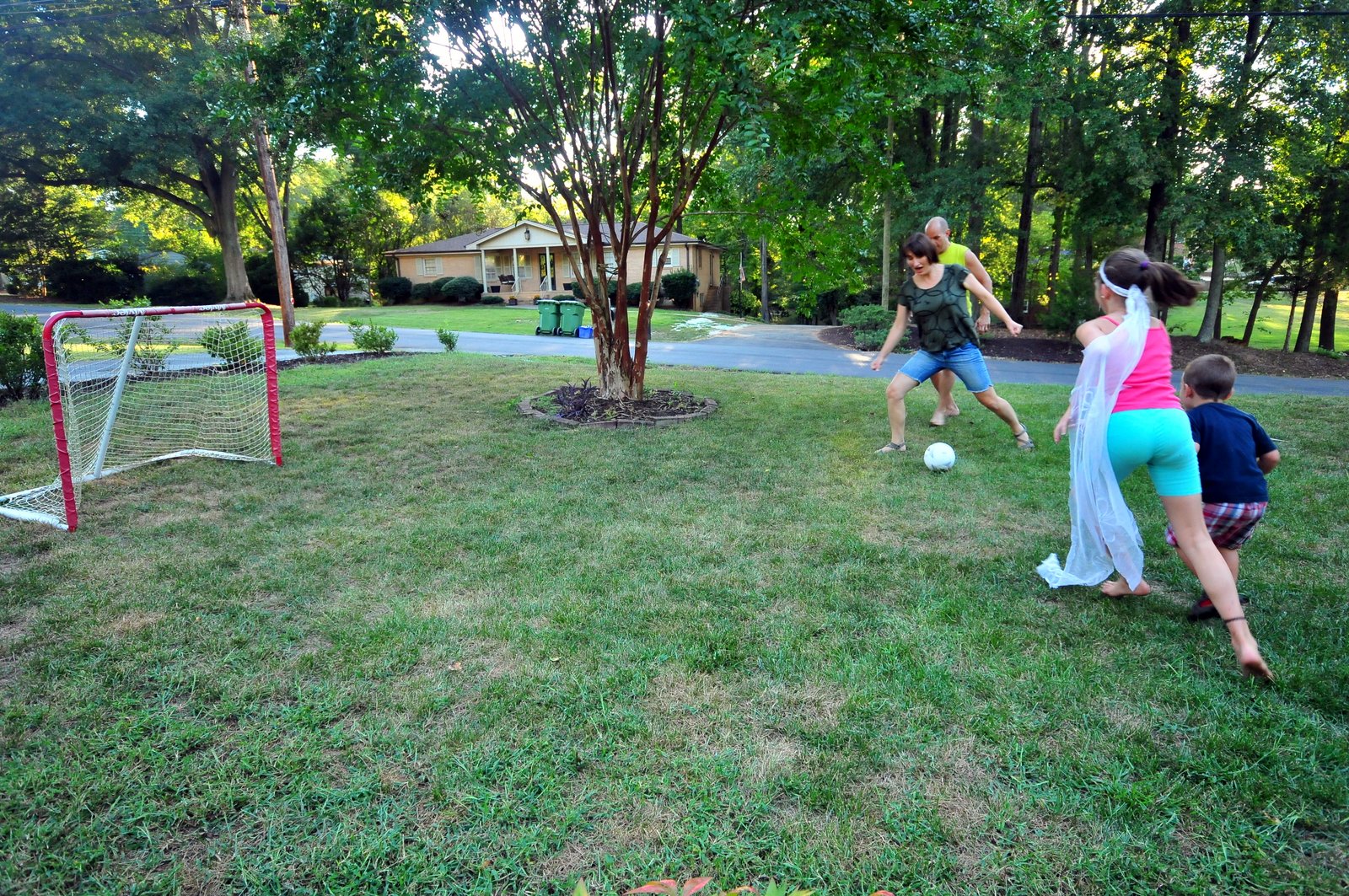
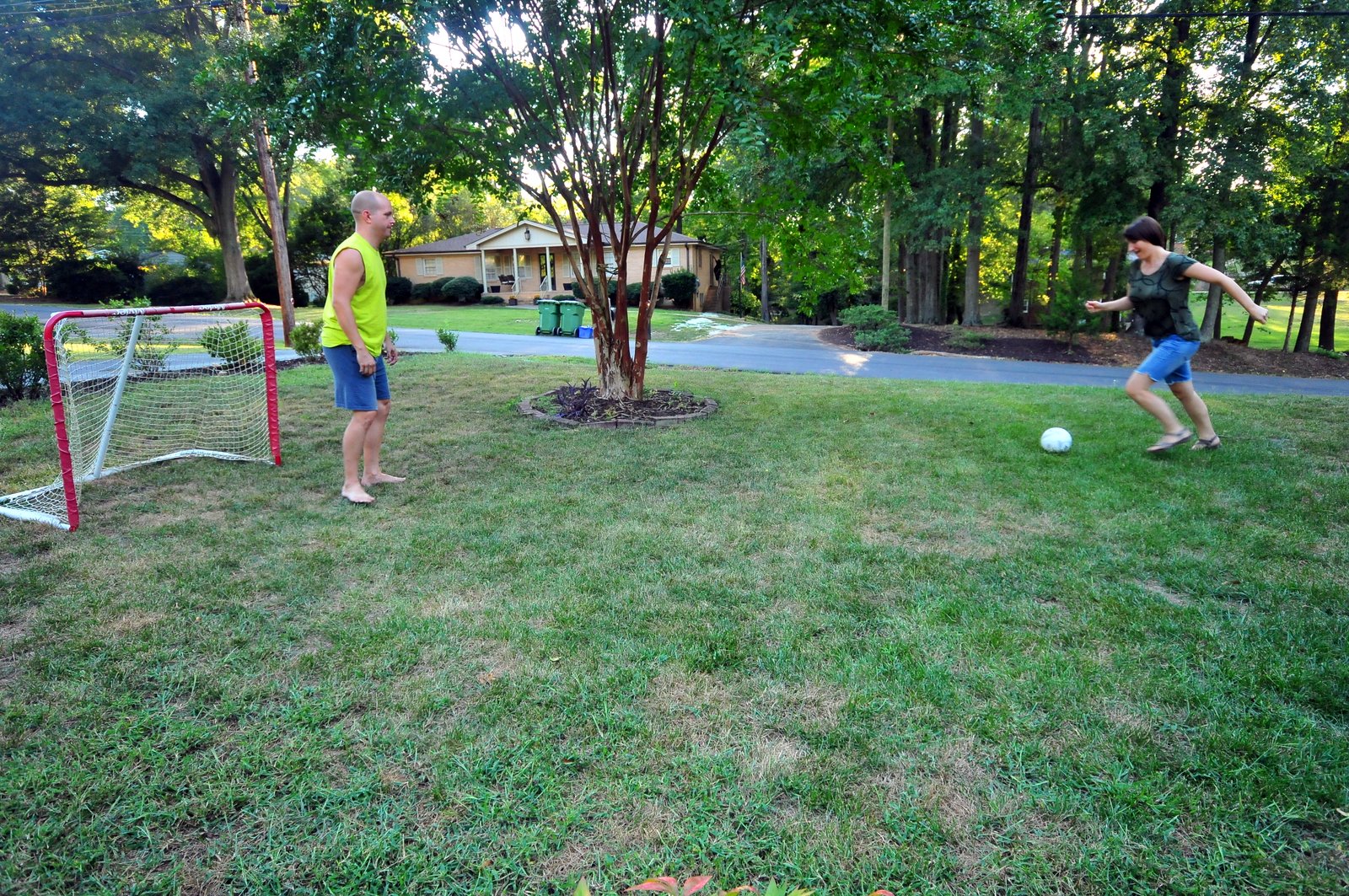
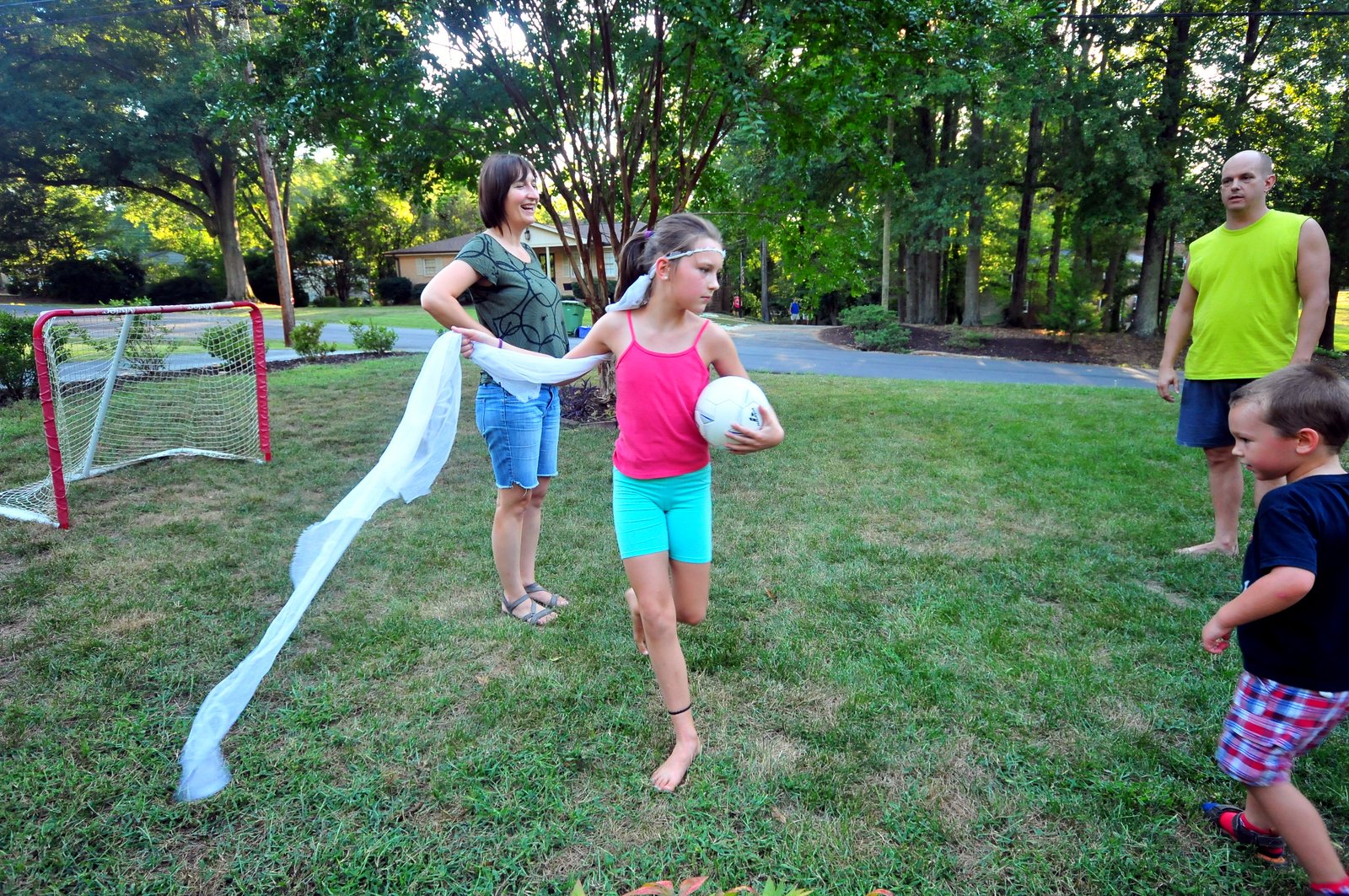
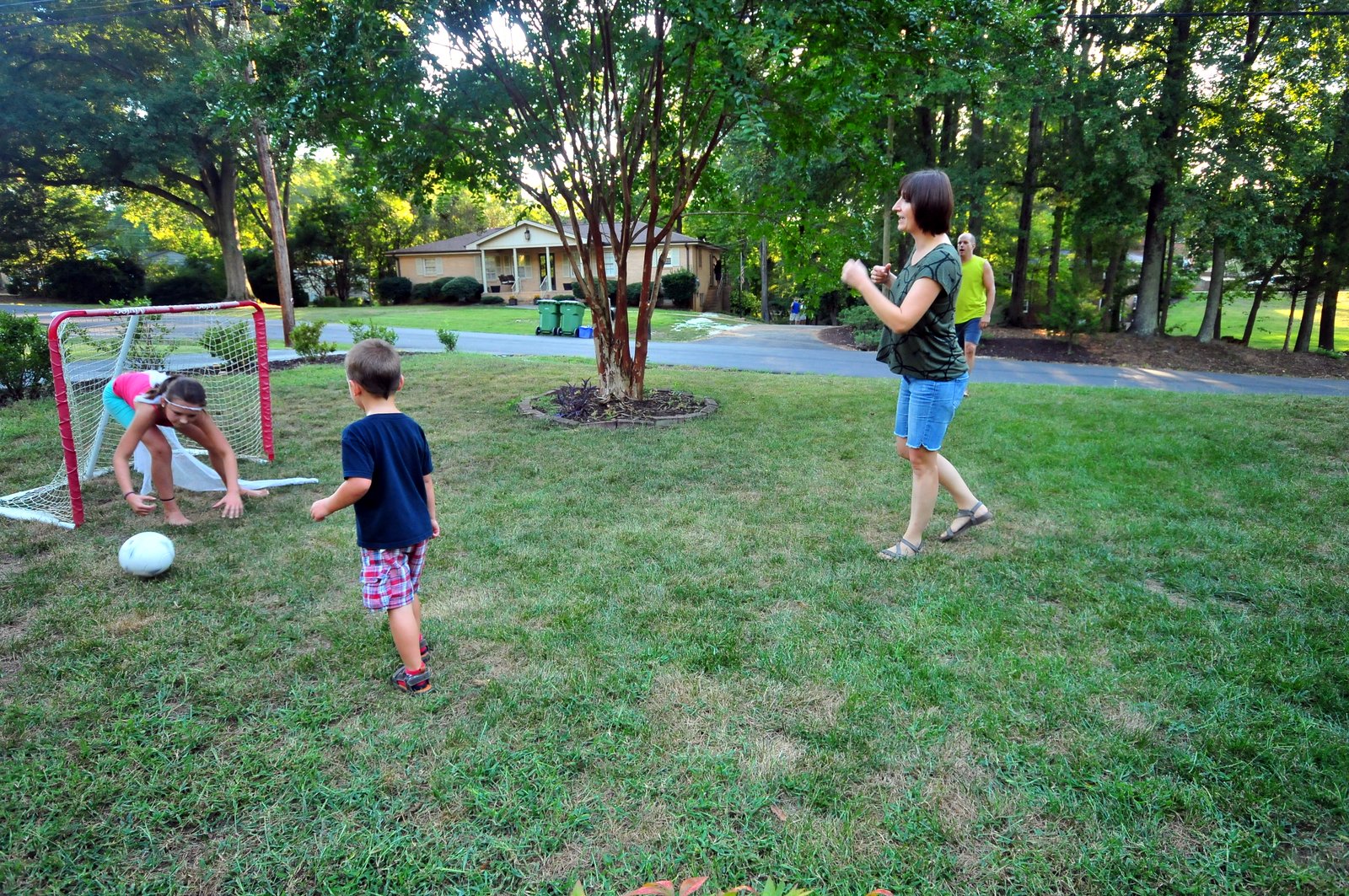
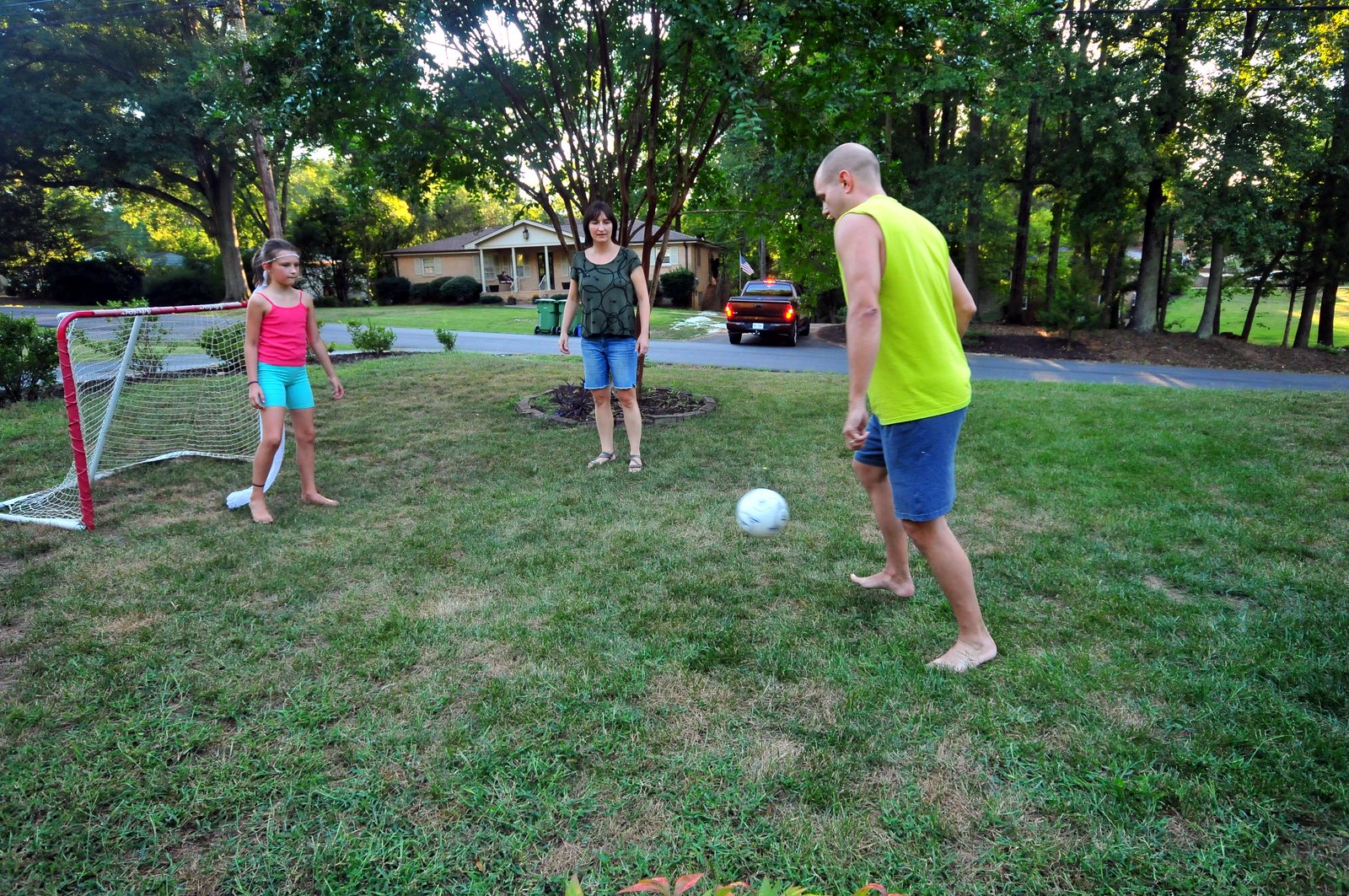
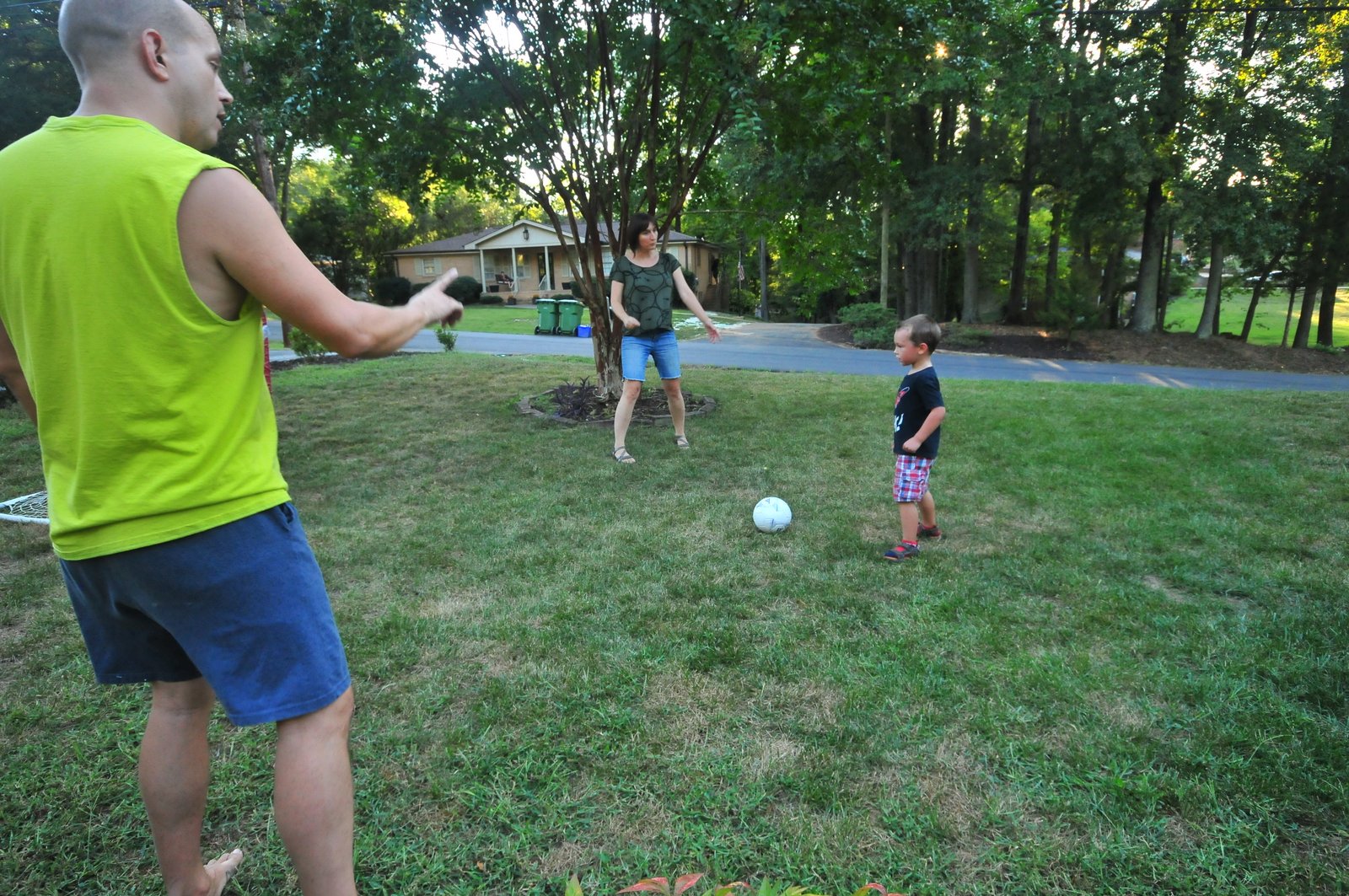
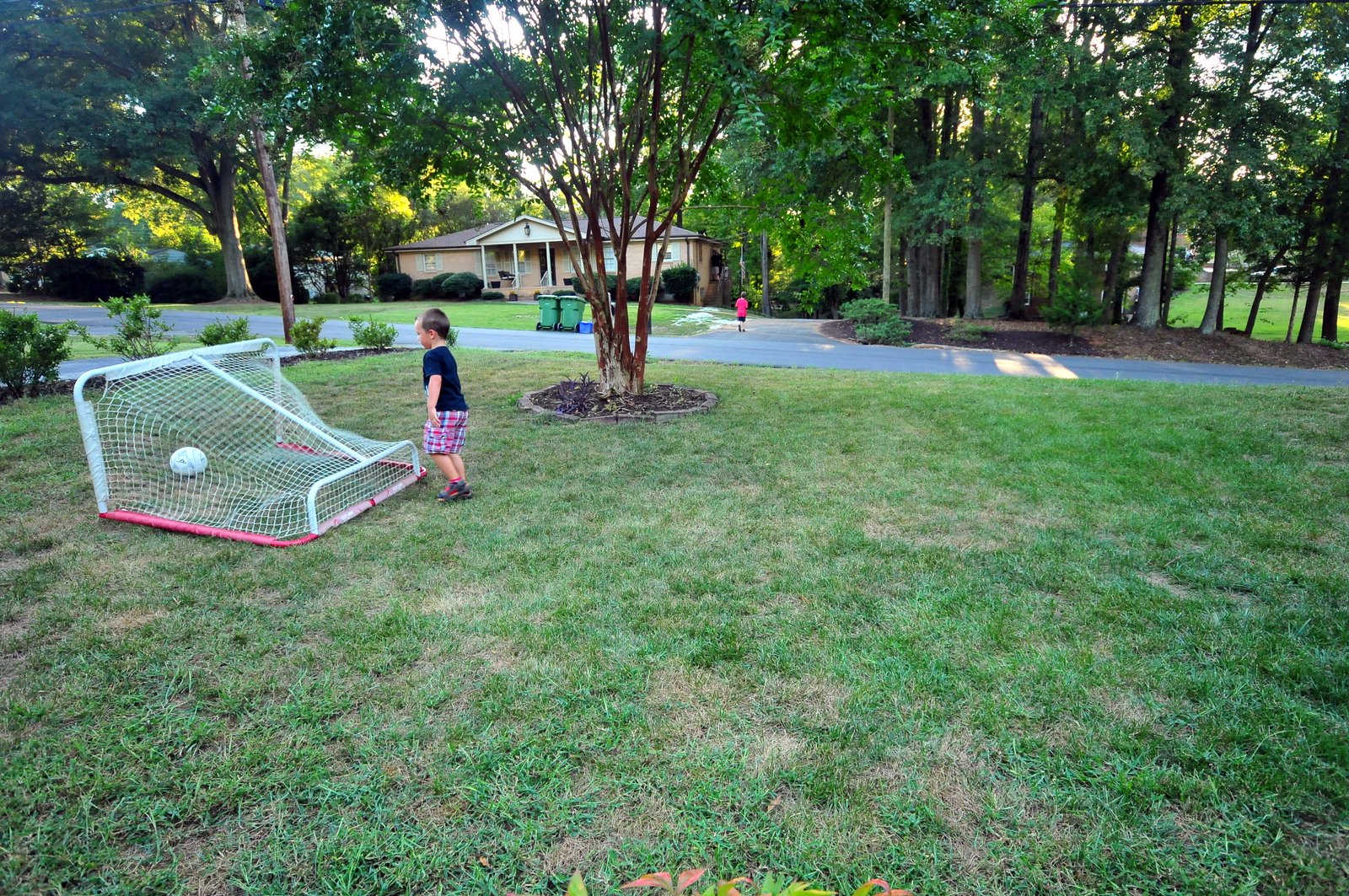
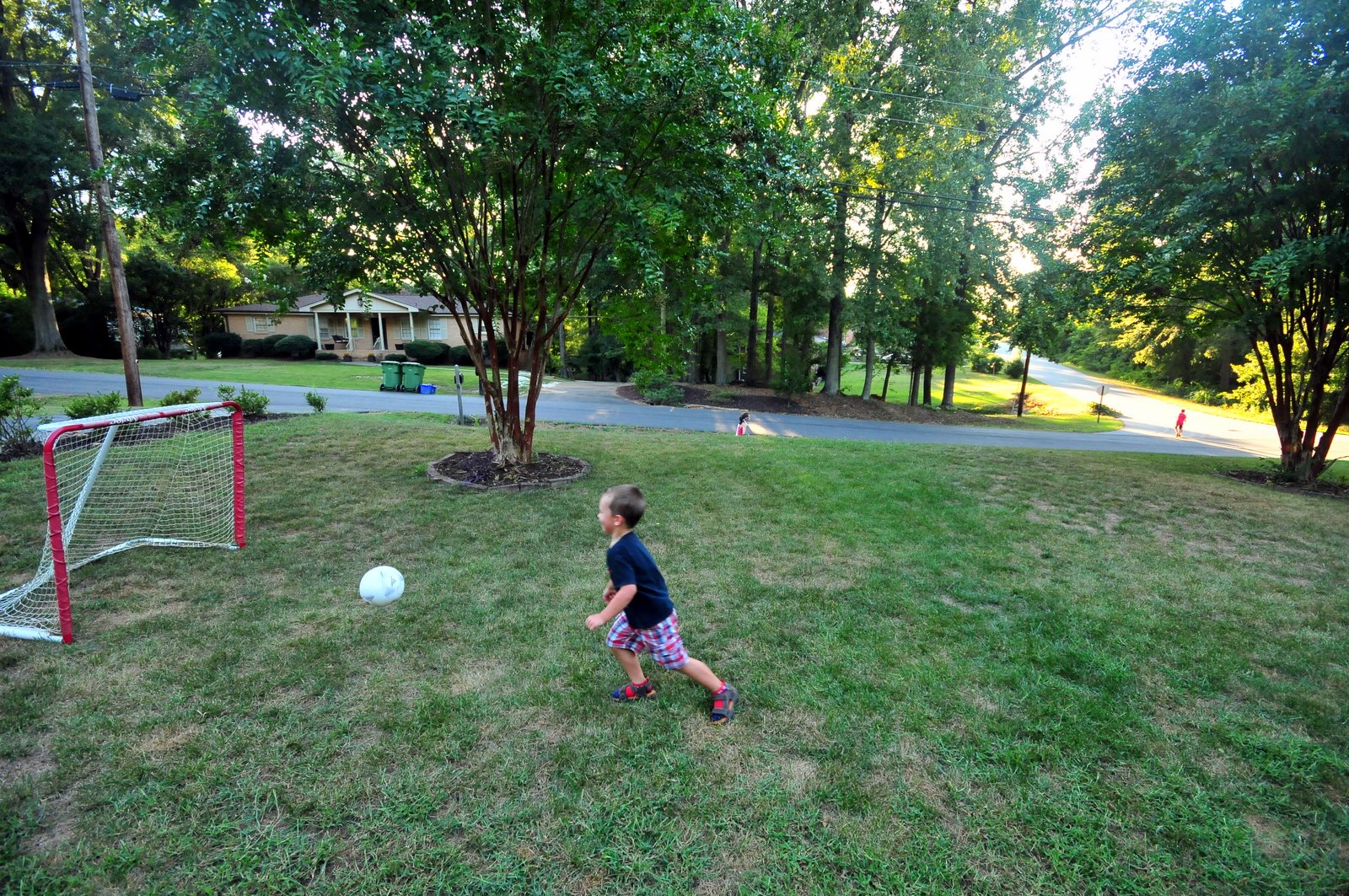
But if I think back to the Girl playing soccer, I remember doing things like this and then discovering that none of it would really stick. “Perhaps more practice,” I’d say, and yet it wouldn’t stick. And so what if it doesn’t? He’s only four — that’s the cause of the “problem” and the reason it’s not important.
Candyland is a good first game for the Boy. It’s as boring as can be for the adult playing with him, but that’s often what parenting is all about: getting over the selfishness of boredom and relishing the interaction with the child. At the same time, I remember stacking the deck when playing with L, rationalizing it to myself by saying that I was teaching her to lose gracefully or win humbly. Perhaps I was just not savoring the moment and rushing to get to the end.
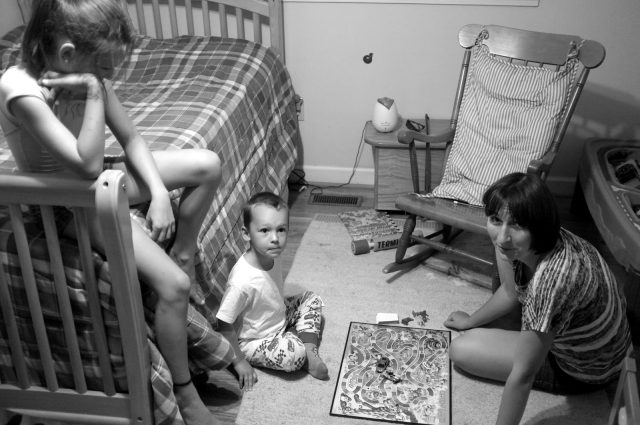
Candyland teaches turn-taking and acceptance of the luck. And while I’d like not to be one to suggest that luck has much to do with one’s fate because I’m a tough-minded, right-leaning moderate, I know that’s just bullocks. It’s luck where you’re born; it’s luck what your parents are like; it’s luck whether or not you have a handicap, physical or otherwise. Still, we right-leaning types like to think of bootstraps and such in the land of the free and home of the brave.
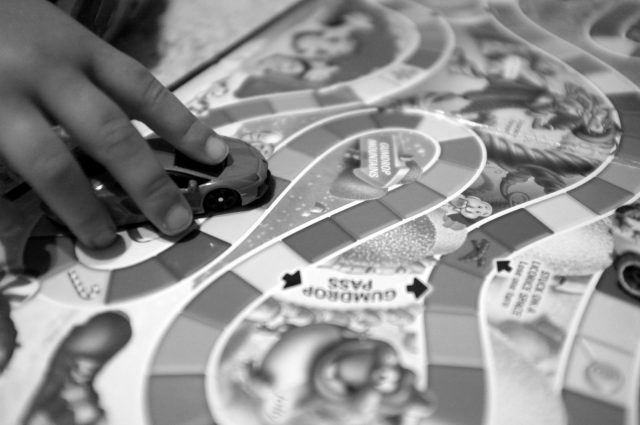
The Boy, though, had to add his little touch: the use of cars. If it’s not cars, he’s really not all that interested. Colors are difficult to remember because, well, colors, but vehicles — he can recognize Lamborghinis and campers, excavators and hot rods. But other things — not so much.
K the other night was working with him on Polish prayers, and she recited the traditional guardian angel prayer. After listening to it, he looked at K and said, “You must be kidding! I can’t remember that!”
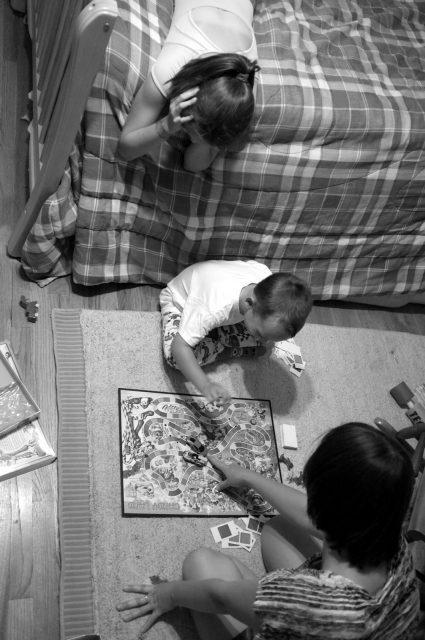
Perhaps K needs to update it, include a Bugatti or something similar.
The Boy is not an overly aggressive little fellow. He likes to play by the rules. At preschool, he got upset last year when other children took off their shoes because it was against fire code. I suppose the teacher mentioned that, and he just remembered it. So the idea of stealing the ball, of going into the herd of four-year-olds that chase the soccer ball around the field and do much of anything — that’s not his style.
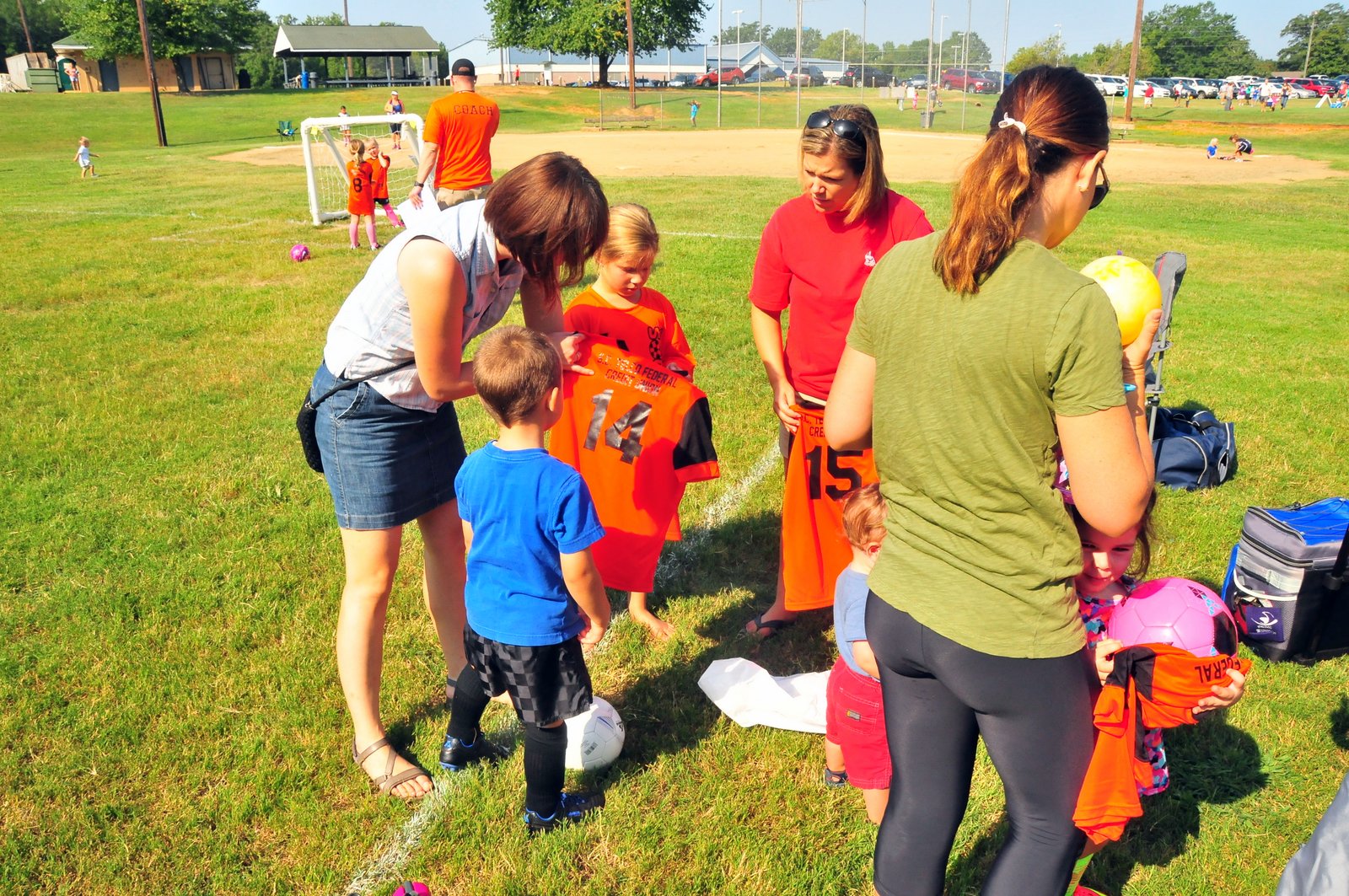
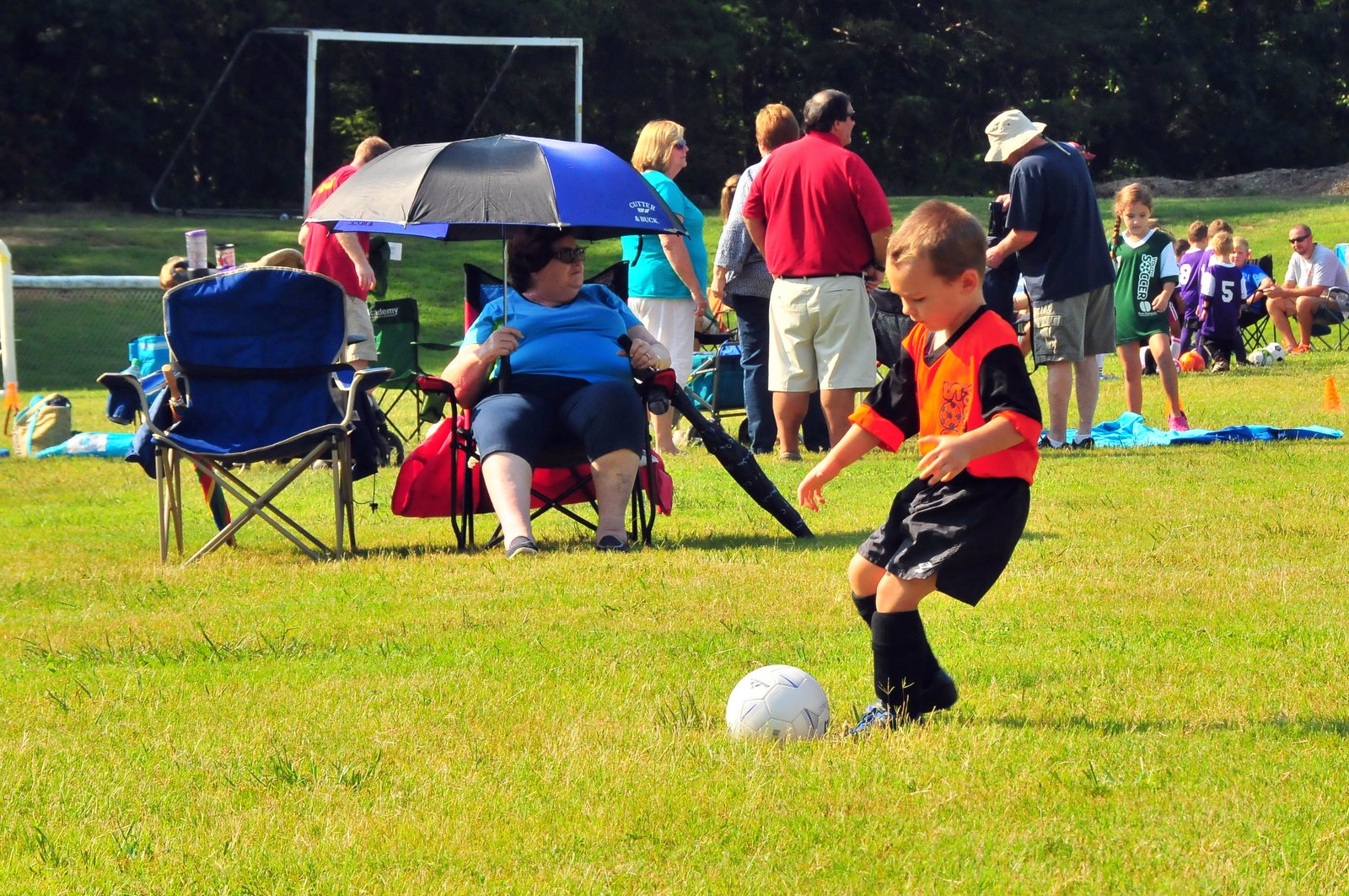
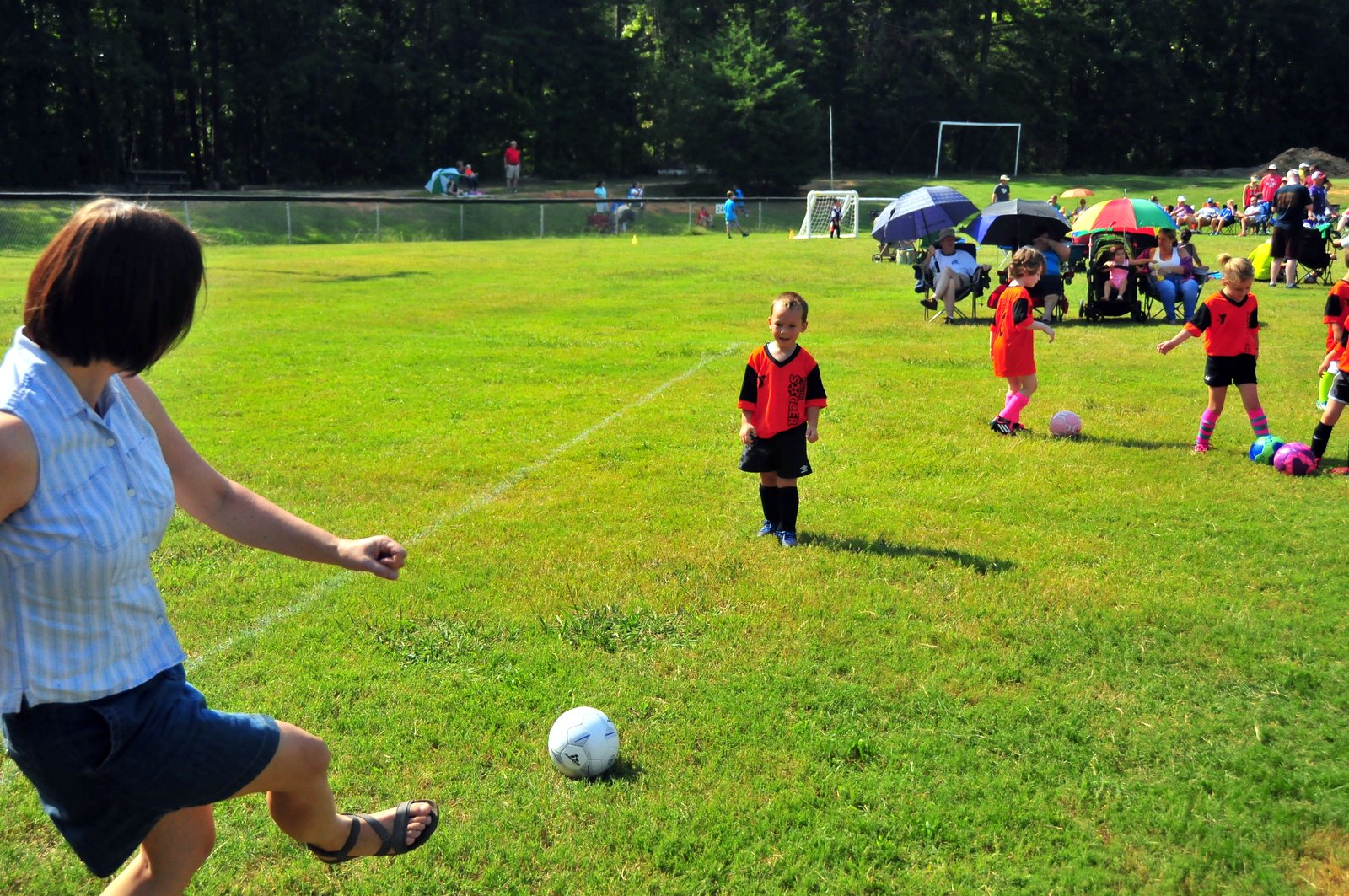
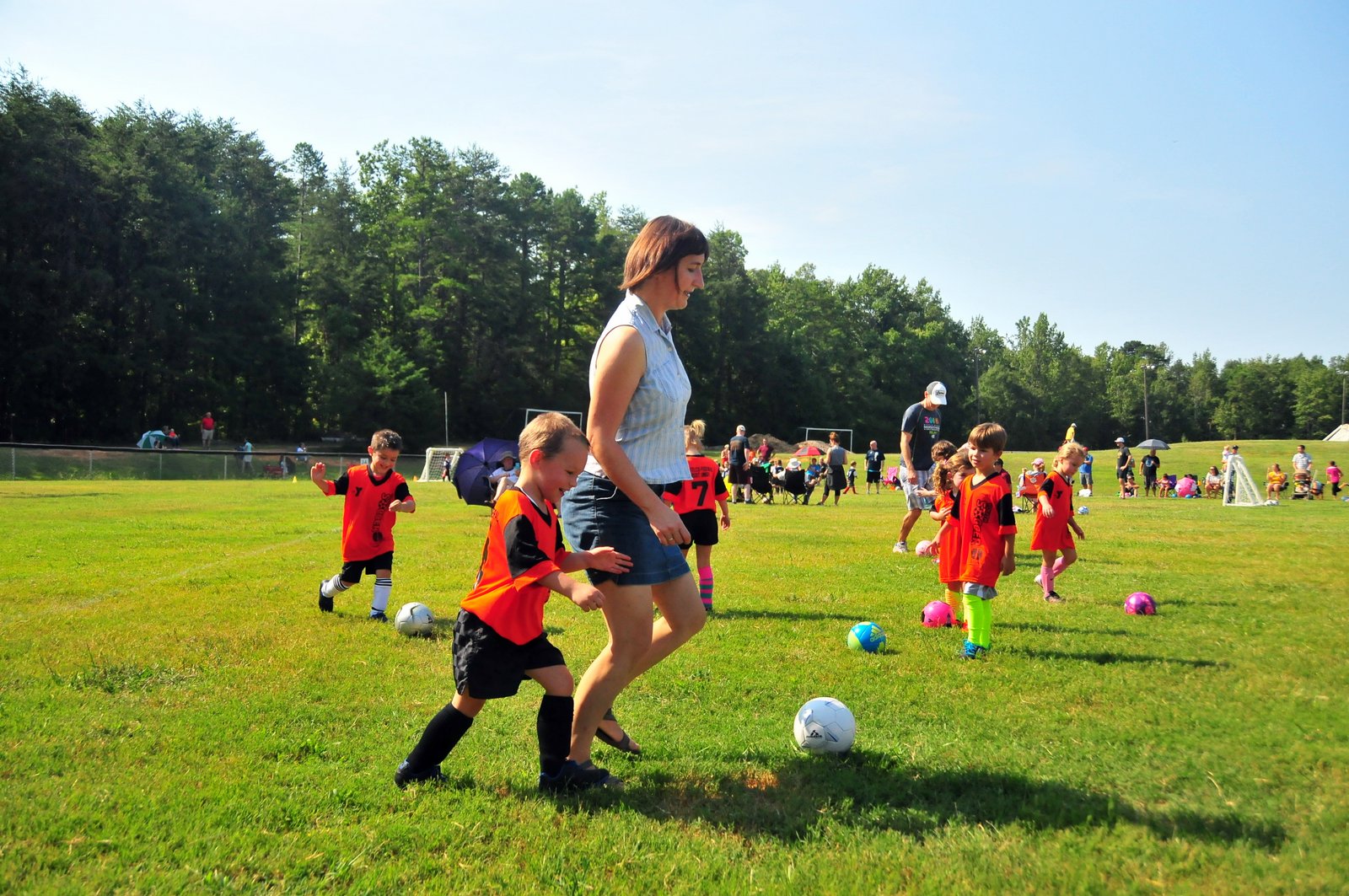
Much of the time he was in, the poor fellow was frustrated. He’d insisted on wearing an undershirt, and in the heat of the morning, it had become terribly uncomfortable. Then there was the fact that he didn’t quite even know what to do — I’ll take partial blame for that, as we really didn’t do much more this week than practice taking the ball from each other in an effort to overcome the inevitable timidness that all four-year-olds face when playing soccer.
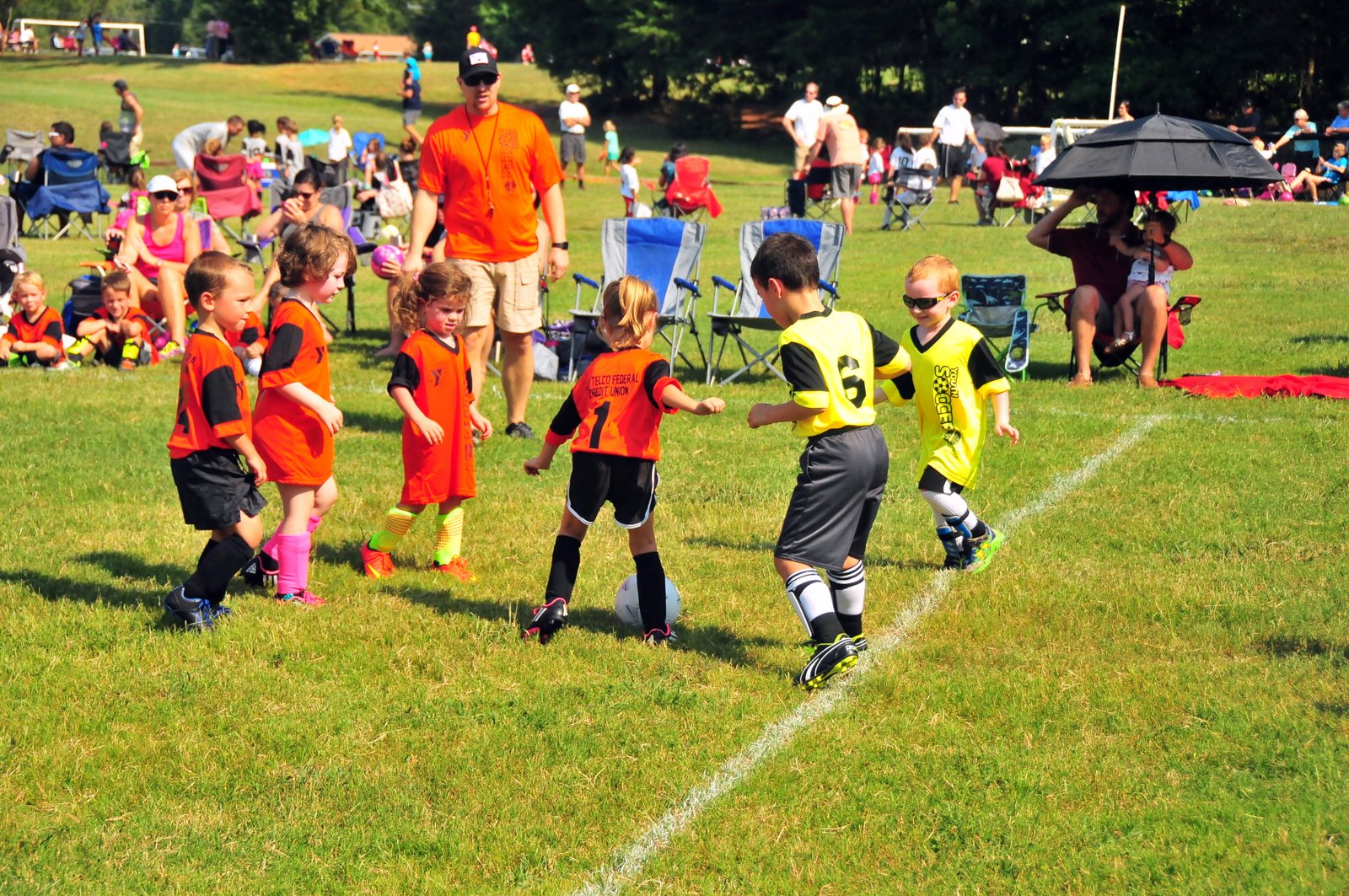
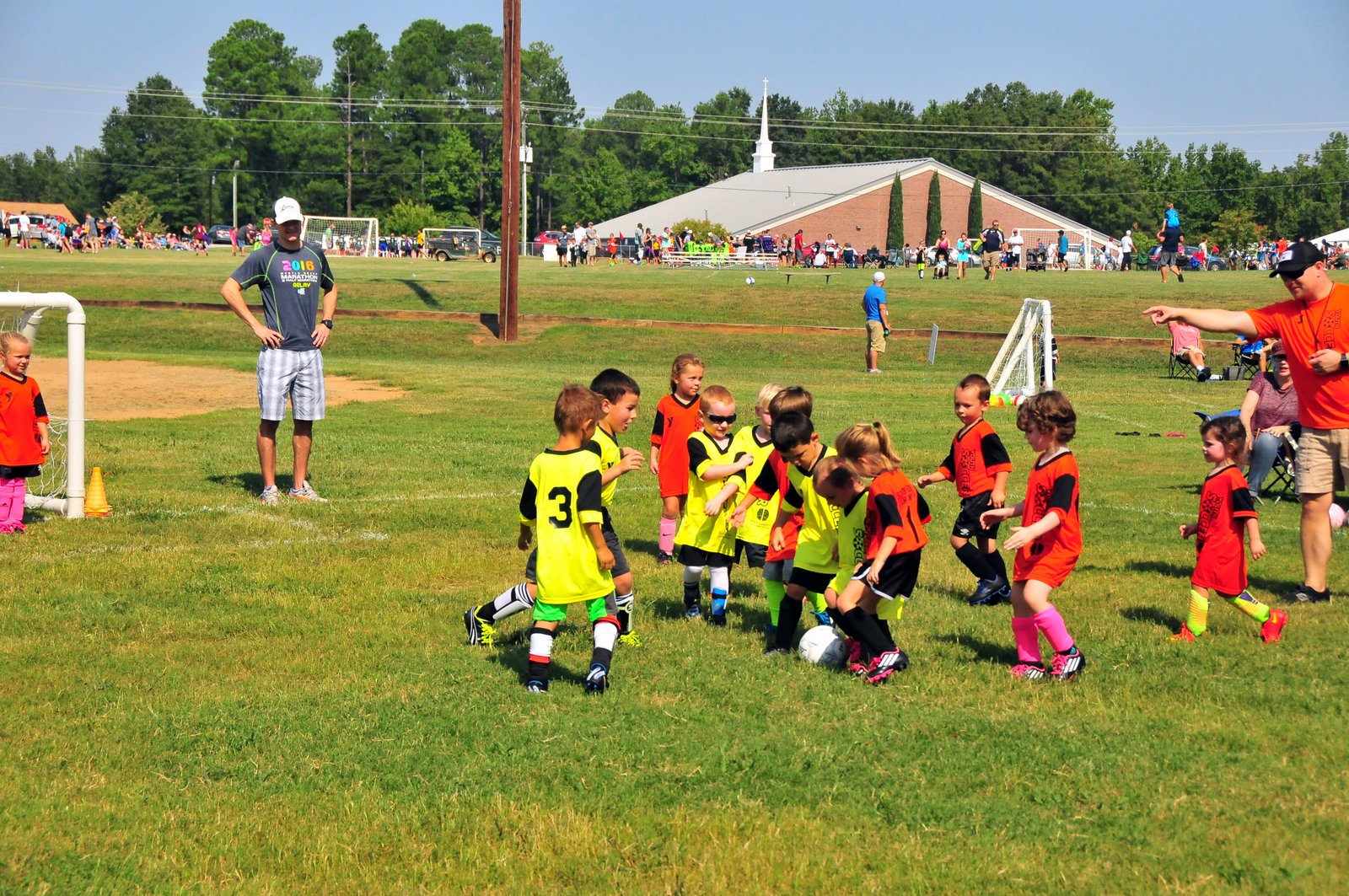
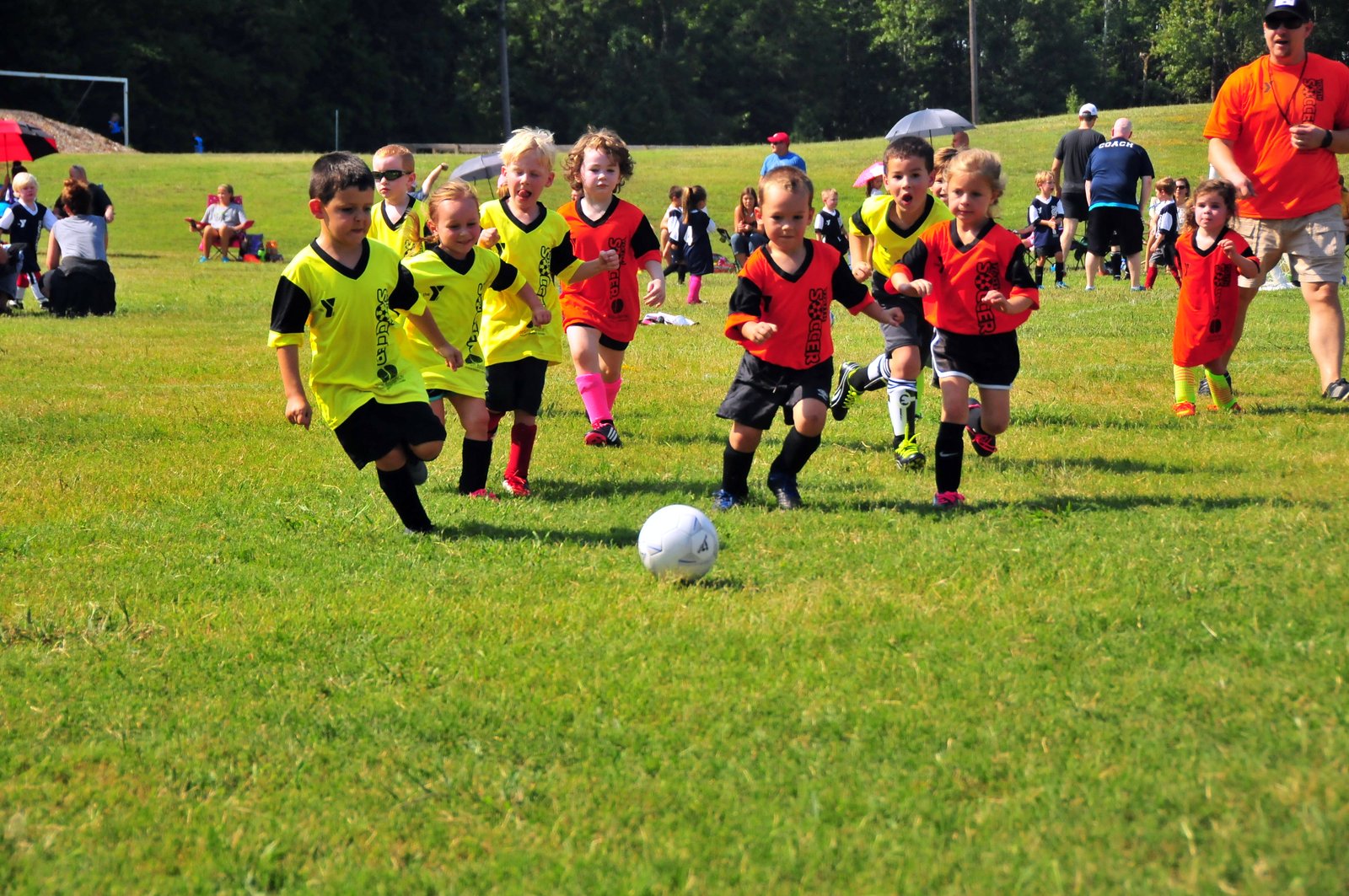
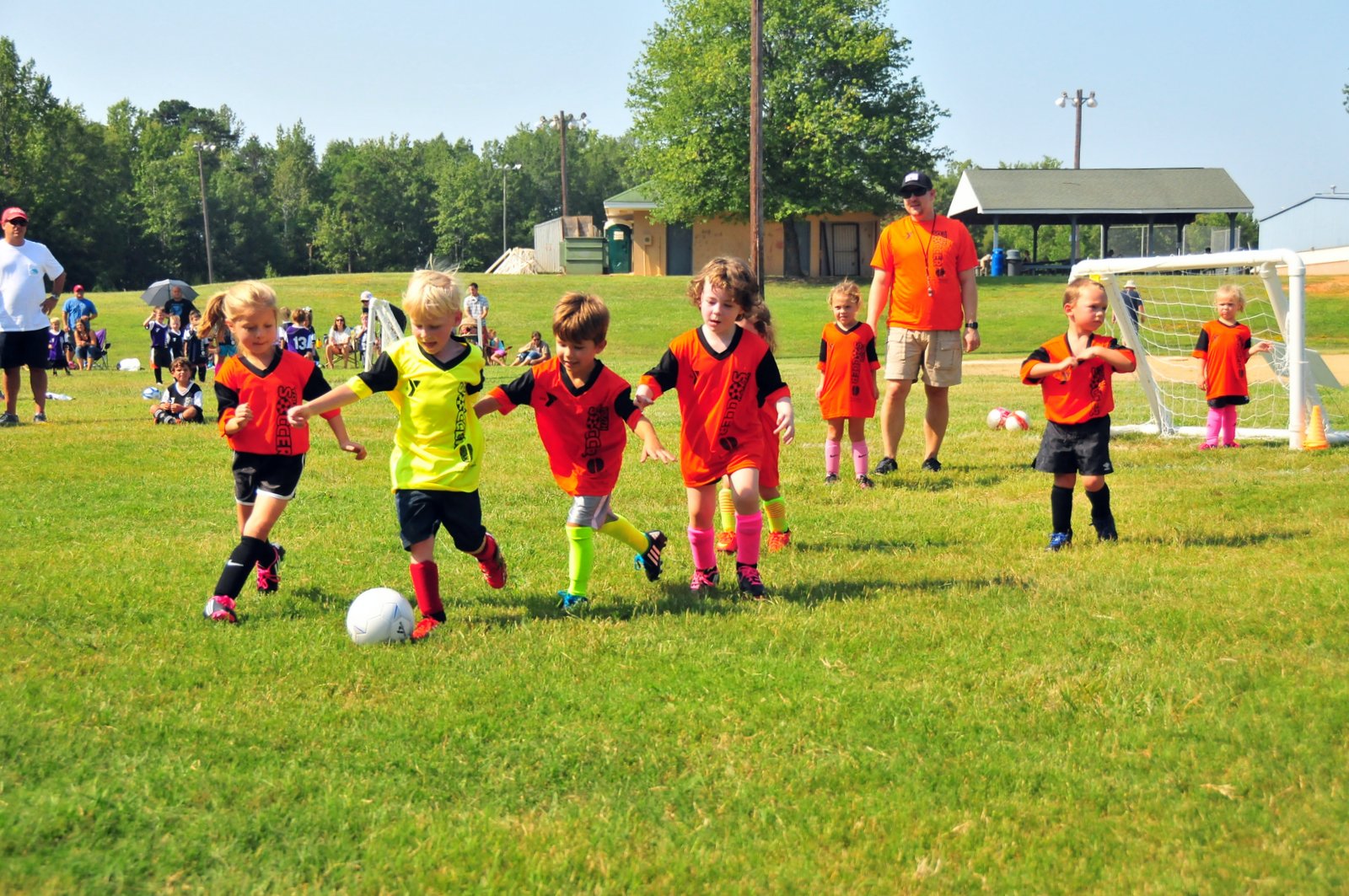
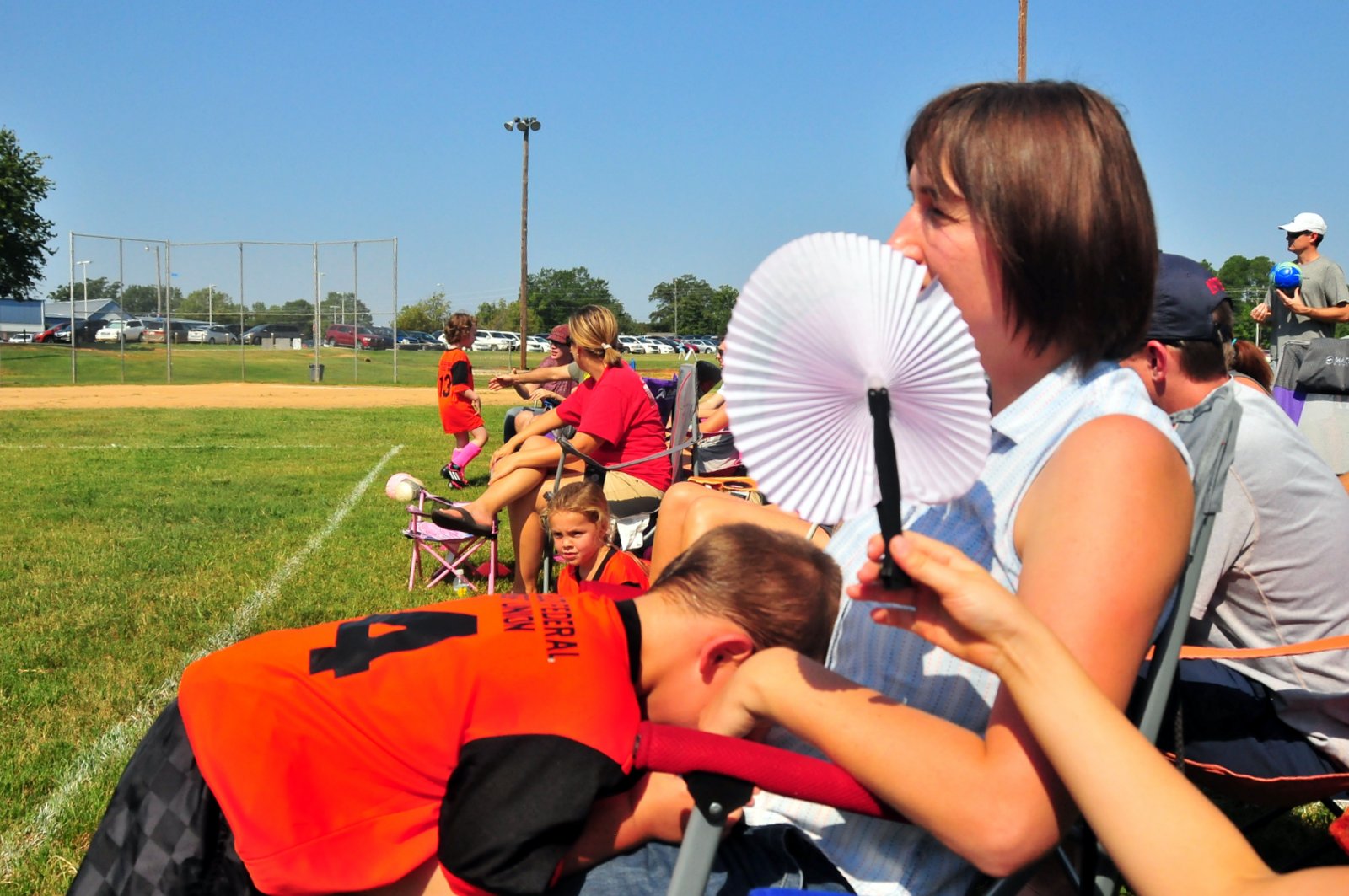
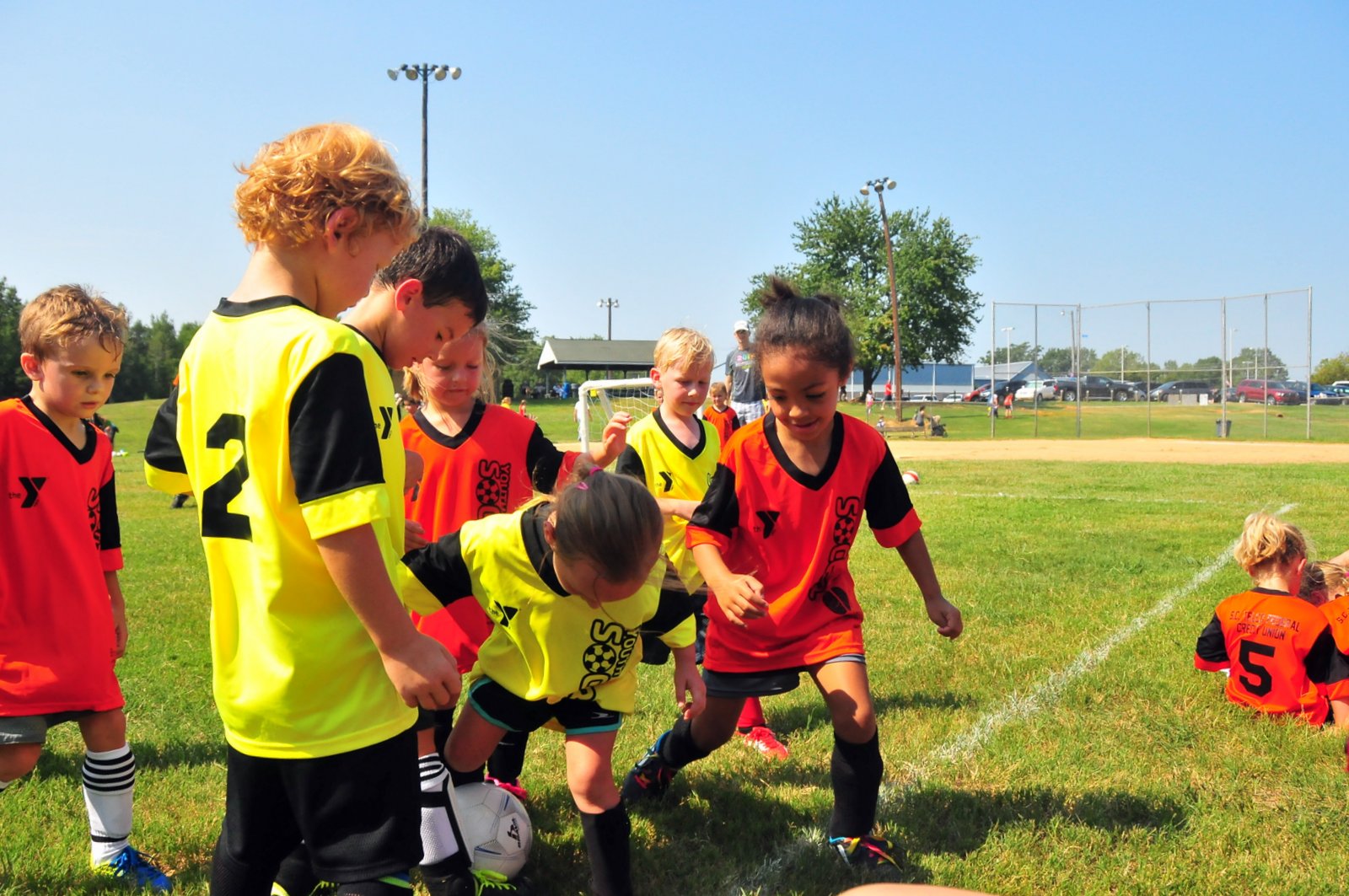
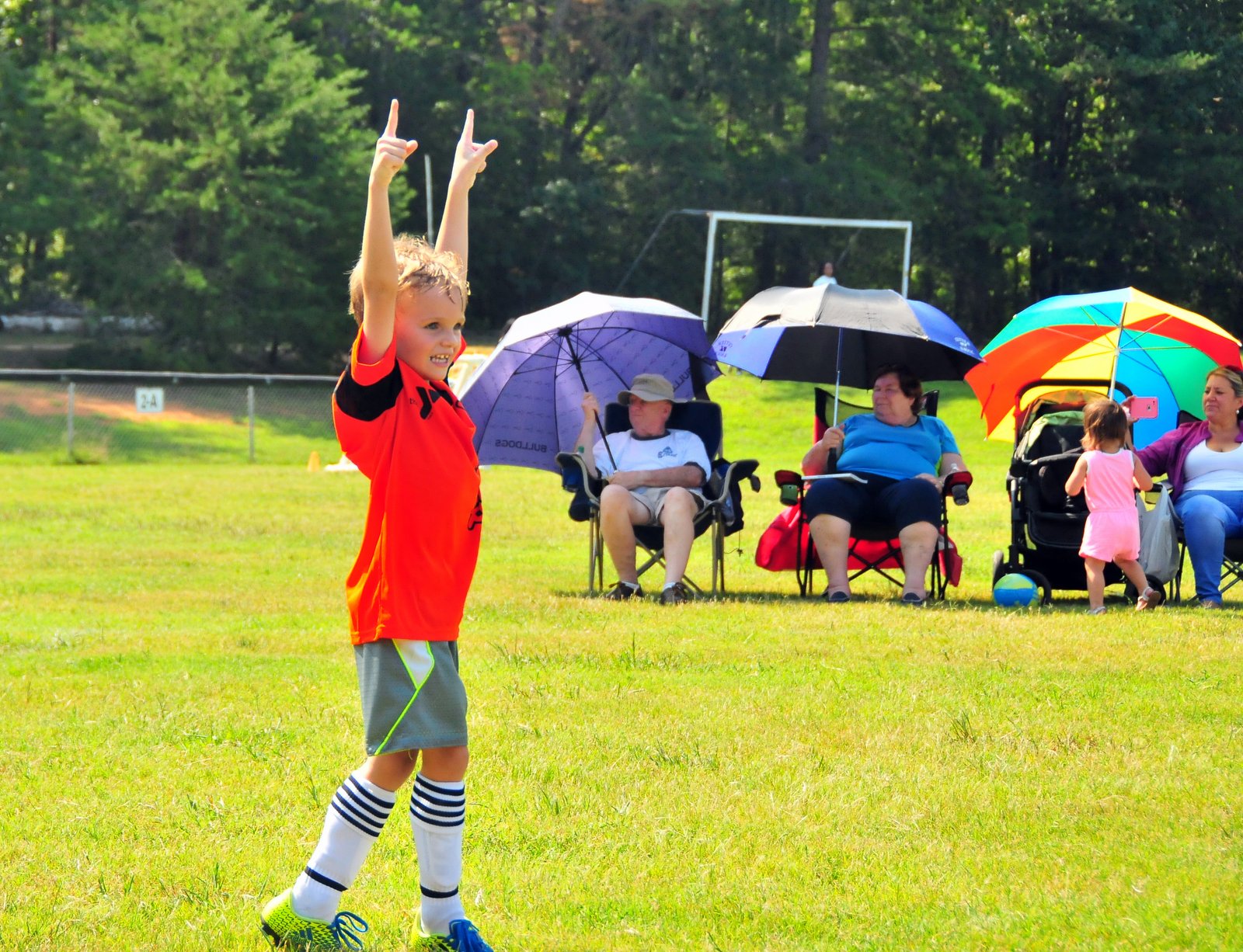
The real heartbreak occurred when, in an effort to defend, after he’d gotten his fortitude up and was engaging with the other players, he accidentally defended the ball right into his team’s goal. I’ve mixed feelings about games with four-year-olds counting self-goals. On the one hand, it’s the game. Learn the game at a young age. On the other hand, it was my son. Naturally, no one said anything, and I’m not even sure his own teammates realized what happened. And fortunately, a young man on E’s team was a real master (for four-year-olds) and scored two goals to make the first game end in a tie.
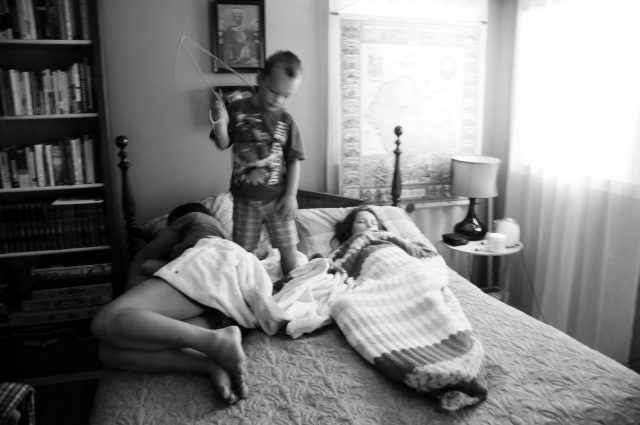
After the game, though, everyone was tuckered out. Well, almost everyone.
 I’ve begun reading Peter Berger’s A Rumor of Angels, probably for the third or fourth time. I haven’t read it in at least twelve years or so, probably longer. When I first read Berger, it was an excerpt in a philosophy of religion anthology, a portion of his Rumor of Angels that absolutely enthralled me. This would have been in 1997 or 1998, when I was chest-deep in my first Polish adventure and just coming to the conclusion that I wanted to do graduate studies in philosophy of religion.
Berger intrigued me because he posited that there are hints in our every-day existence that there is something beyond the material of this world. The hints — or rumors — are not the traditional Christian apologist’s arguments but refreshingly new ideas, like the suggestion that humor hints at a world beyond. I can’t remember all the “rumors” (i.e., arguments), and I thought I’d reread it.
What’s most interesting about it is how much I’ve changed since the first time I read it. Looking back at books after years of growth always fells like an embarrassing meeting of an old acquaintance, someone you should have stayed in touch with — at least that’s how you feel — but through time and distance became a stranger. I look at my marginal notes and wonder. I see my annotations and marvel at my naivete.
I arrived home today to find both kids with eyes closed tightly. Afternoon naps are always a little problematic because neither one of them really wants to get up. The Boy resorts to fussing; the Girl just steadfastly refuses. It doesn’t matter what’s for dinner; it doesn’t matter who’s just arrived; it doesn’t matter period. Neither wants to get up.
“How long will the grilling take?” K asked as the dinner hour approached.
“About twenty minutes.”
“I’ll start waking them up in ten, then.” And even then, by the time dinner was on the table, they were both still virtually asleep.
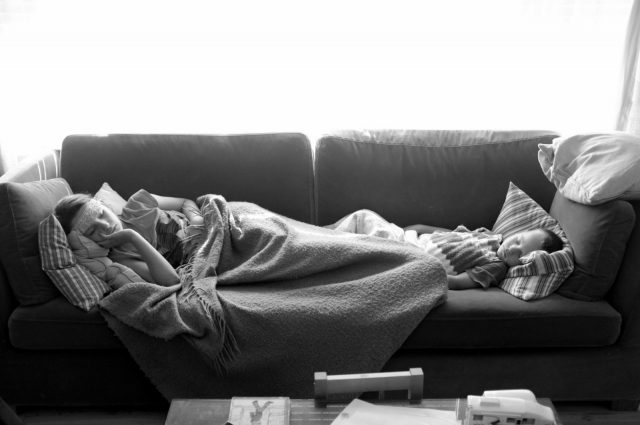
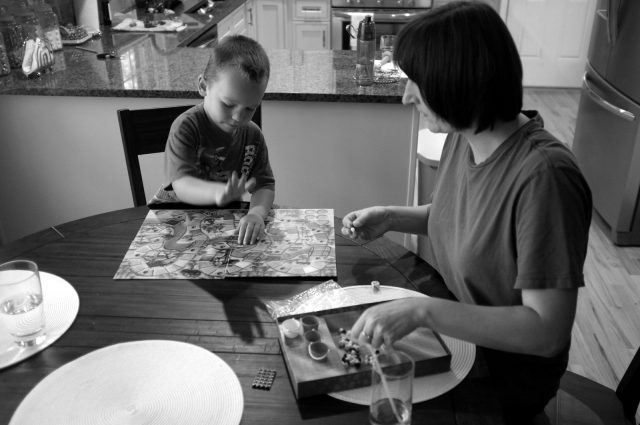
Then, as the sun closes up shop for the day, the second half of the trouble begins: neither of them is especially tired.
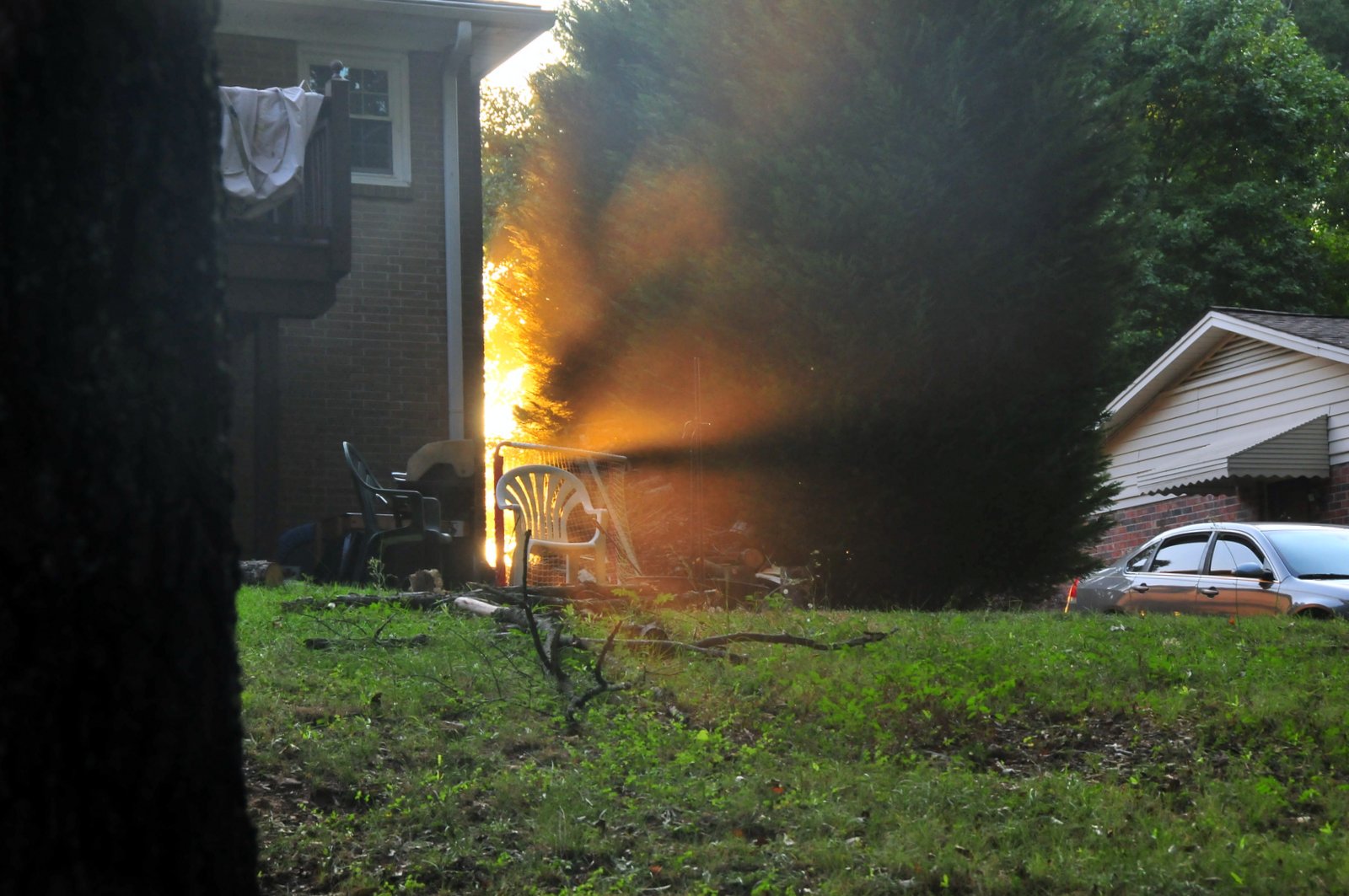
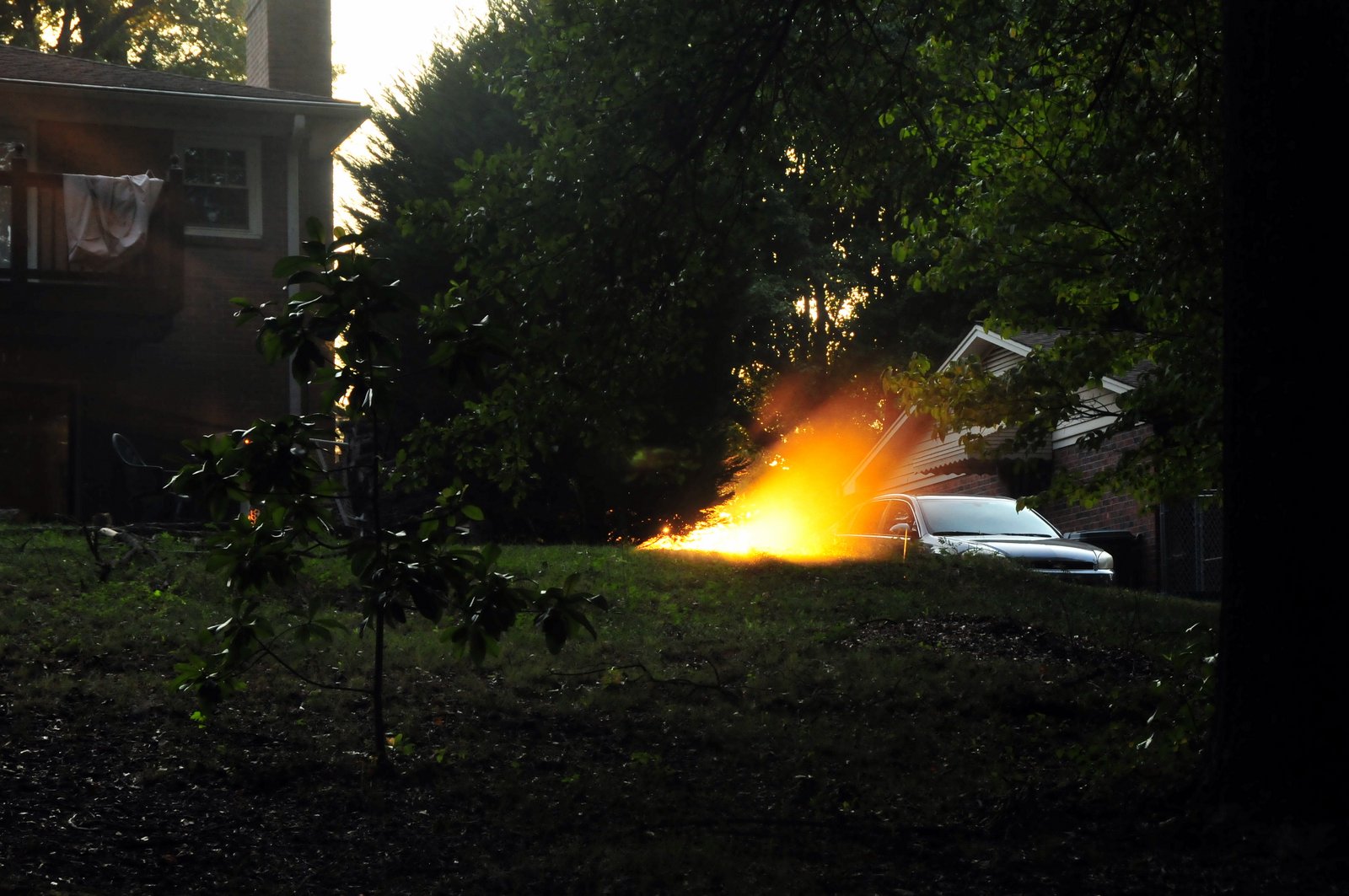



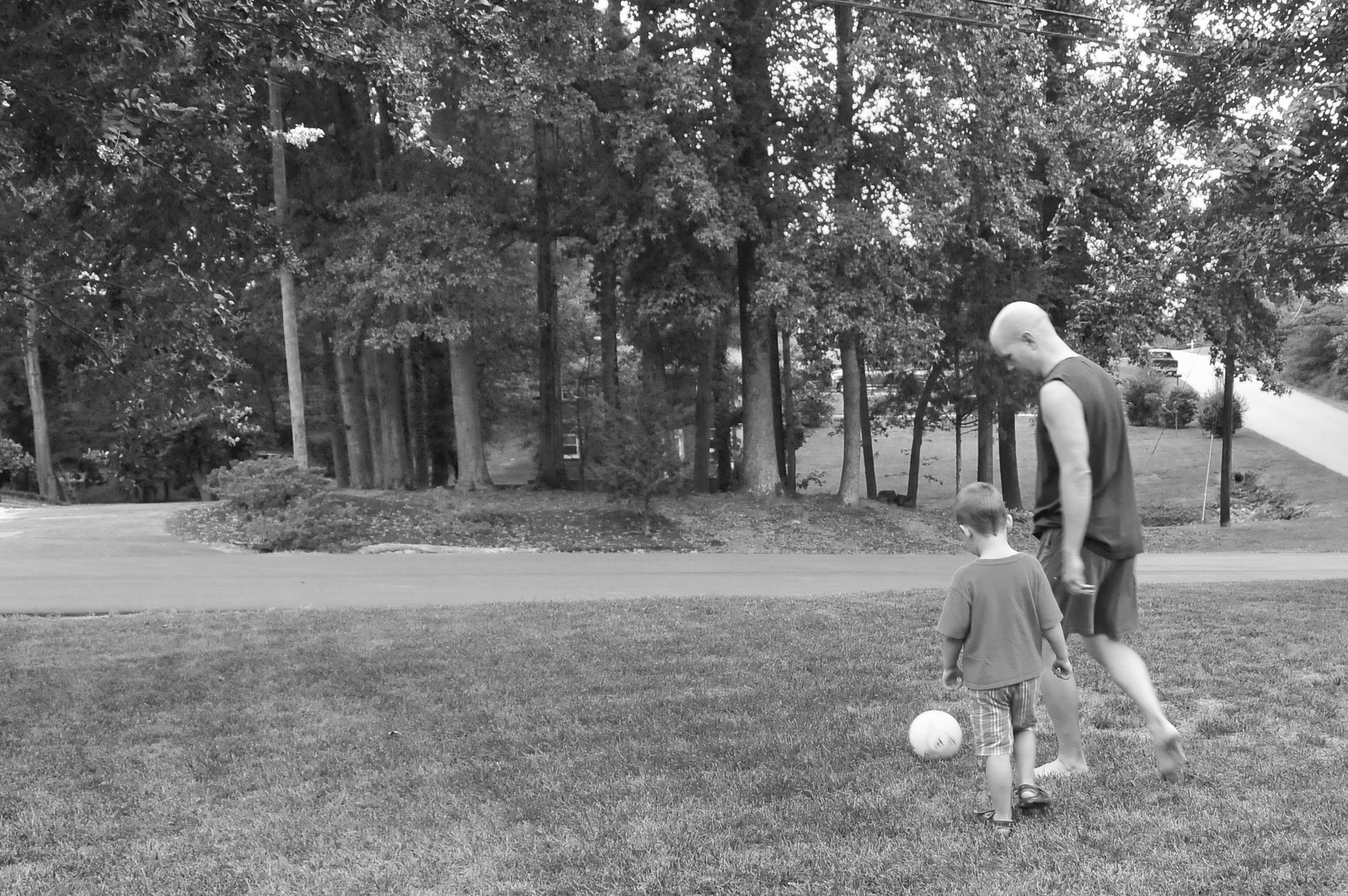
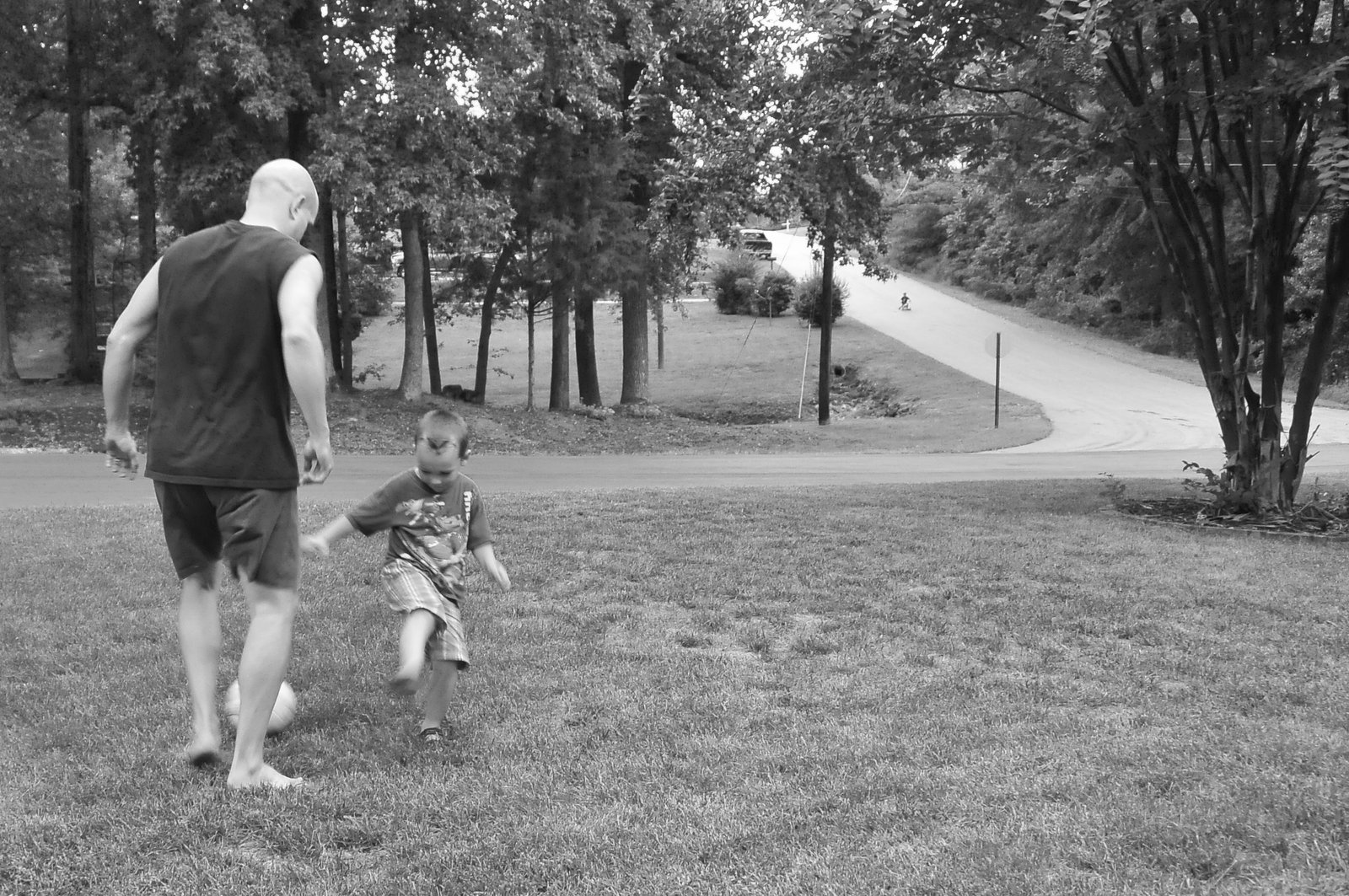
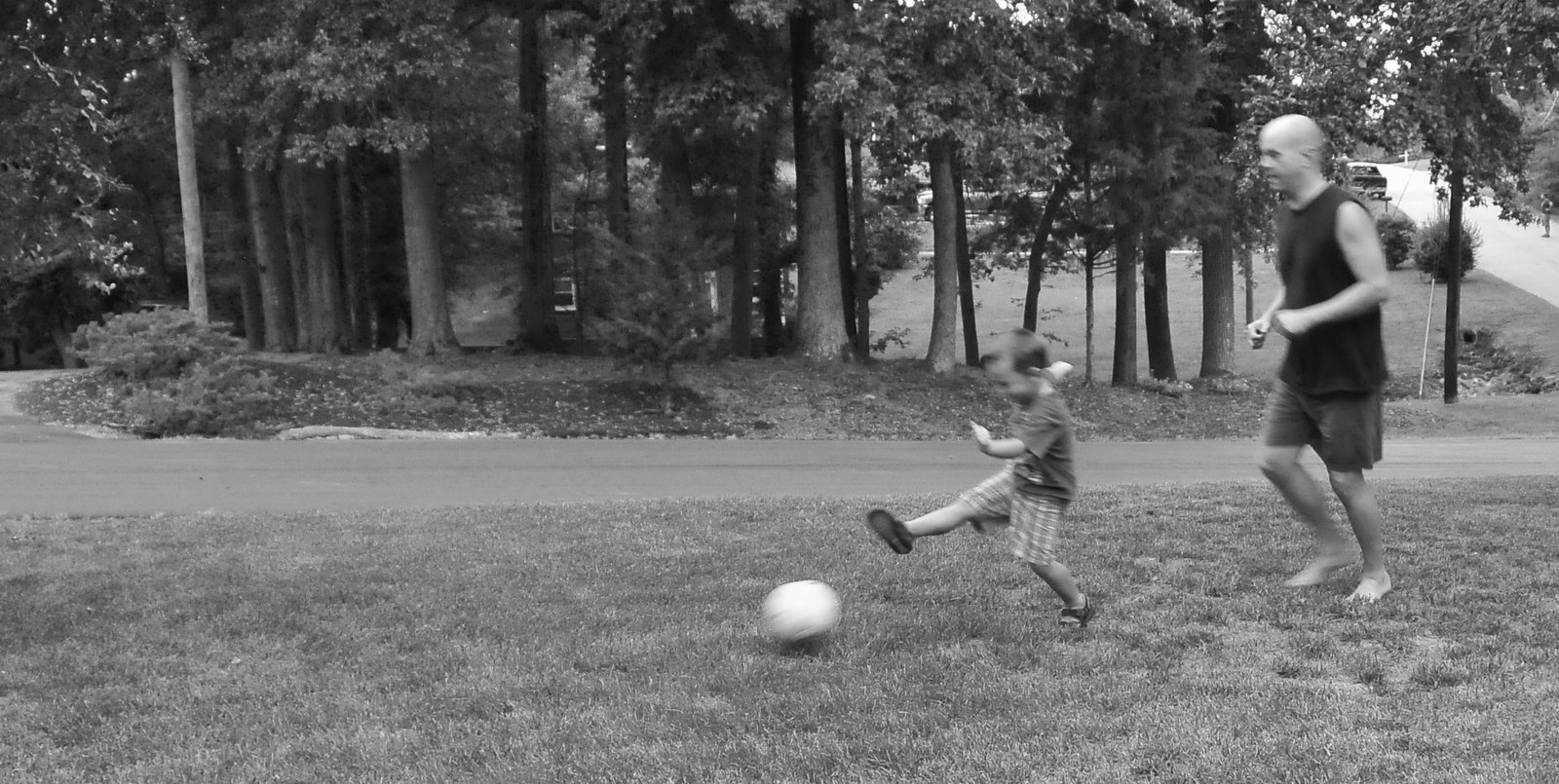
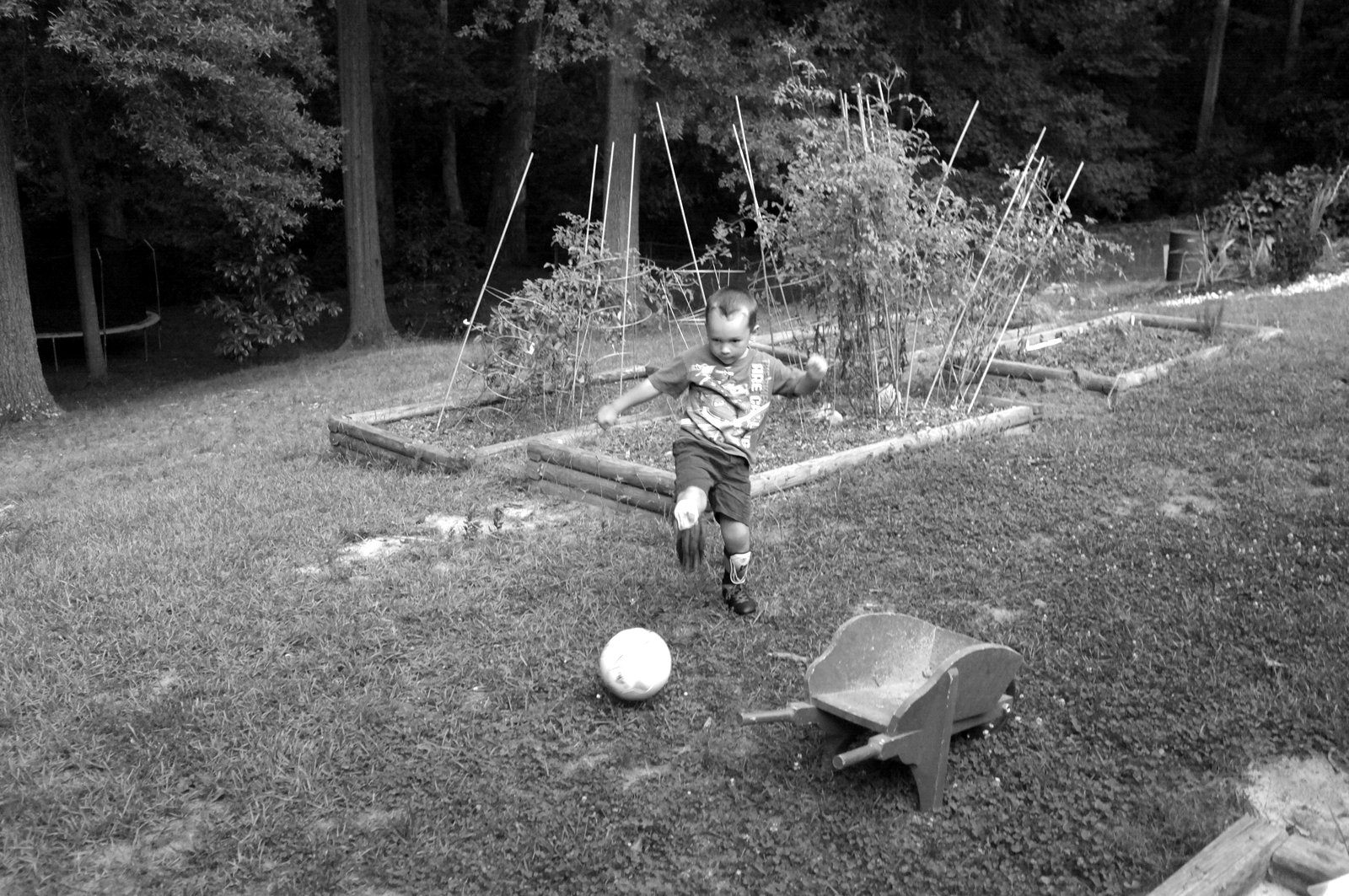
We do what we can to tire them beforehand. I took the kids on the trampoline for a while and then played soccer with the Boy as the Girl skated about the driveway.
Still, when it came time to go to sleep, E was just jabbering away.
After Mass during the school year, there are a few obligatories: a fresh pot of coffee and something sweet. Feed the soul, then feed the spirit. Something like that. Perhaps accompany it with something to read, maybe a game of chess. But eventually, it’s time for the trial and treasure, for it’s something K loves and loathes doing. Polish lessons.
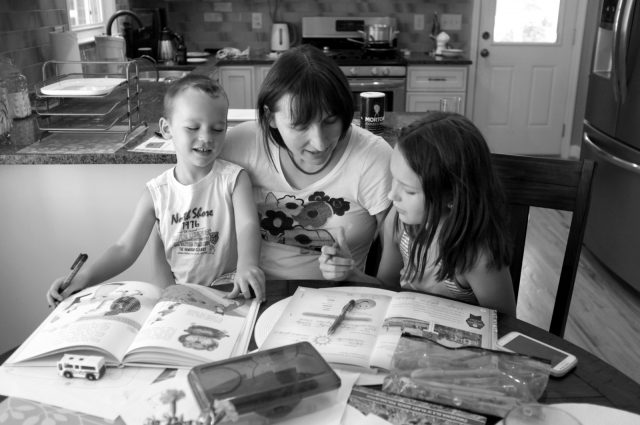
The love is easy: it’s her language, her culture, that she’s sharing with her beloved daughter. The loathe comes from the frustration that sometimes accompanies it. Perhaps “loathe” is not the right word — perhaps it was just too alliterative to pass up. “It’s something that K loves and that frustrates her” doesn’t quite make it. Always searching for the right word, never able to find it, which is what makes the Polish lessons so frustrating for the Girl. Her passive vocabulary, like everyone’s, is much larger than her active vocabulary. She can understand more than she can say, like me in Polish.
E, on the other hand, has of late only a passive vocabulary for the most part. The production has ceased. However, we’re seeing that language and such is perhaps just not his strength. He can watch a cartoon about how airplanes fly and remember it long afterward. (Language, though? K was trying to teach him a Polish prayer the other evening, and he replied, “You must be kidding me! I can’t remember that!”)
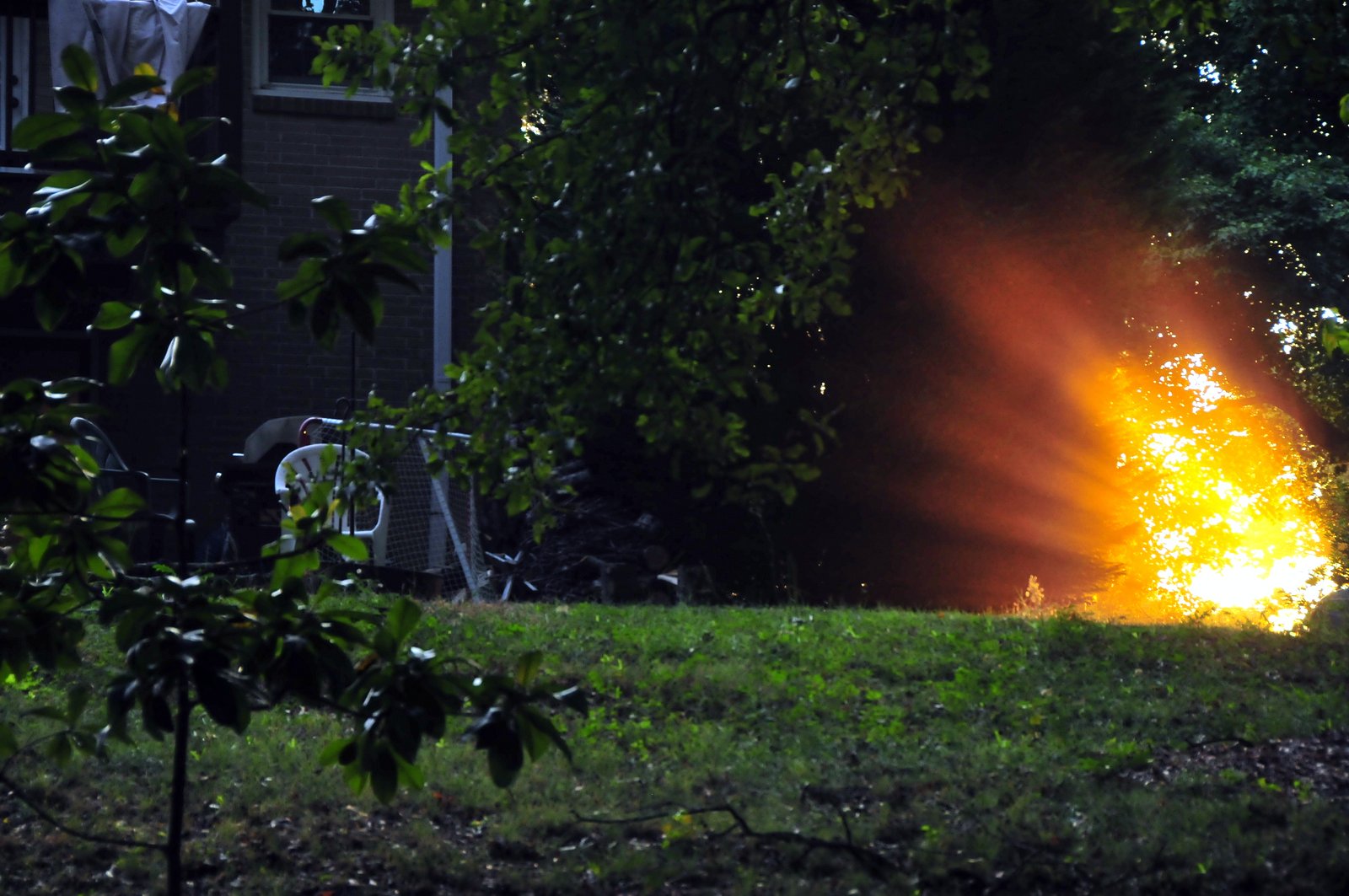
In the evening, it’s time to feed the soul once again — a quiet bonfire in the backyard. The temperatures have cooled, the mosquitoes have disappeared, and we’ve entered our favorite time of the year.
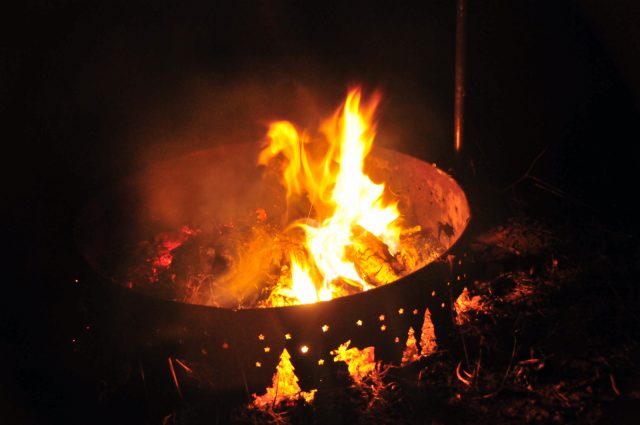
We’ve been waiting all summer for this. The kitchen is mostly done, our routines have returned, the weather has cooled, and it’s time to start everything again. So what better way to end than with a song by Antoine Dufour, a Quebecois guitarist, who wrote a song for his yet-unborn son, a song about waiting, a song I’ve listened to at least a dozen times this weekend. Perhaps the most beautiful acoustic guitar song I’ve ever heard.
The Boy woke last night, plodded to our bedroom door, stood in thought,
The Boy got a third bed last night, though he hasn’t used it yet. His first bed is of course the only one he really needs: the one in his room. It’s big and spacious, and while it doesn’t have a particularly boy-ish bed spread, it’s still acceptable for a little fellow like him. He hasn’t complained about it, anyway.
His second bed is our bed, between the two of us. He wakes up in the middle of the night for the last several weeks and, scared to be alone, comes to our bed. We’ve tried to figure out how to deal with it but nothing’s worked. Last night, K discovered an idea: make a bed on the floor for him and tell him that if he’s going to sleep in our room, he’s going to sleep on the floor.
Last night, he woke up at about two and came trundling to our bed. I took him back to his bed, and, remembering K’s discovery, I went downstairs to get a couple of sleeping pads and threw them on the floor with a blanket.
“If you come back to our room, you’ll have to sleep on the floor,” I told him. Quickly enough, though, he fell back asleep and that was that.
Tonight, I mentioned the bed to him again.
“I know,” he said matter-of-factly. “I saw it. It looks really good. I think it will be very comfortable. So if I come to your room tonight, I’ll just go to that bed.”
Not what I was aiming for.
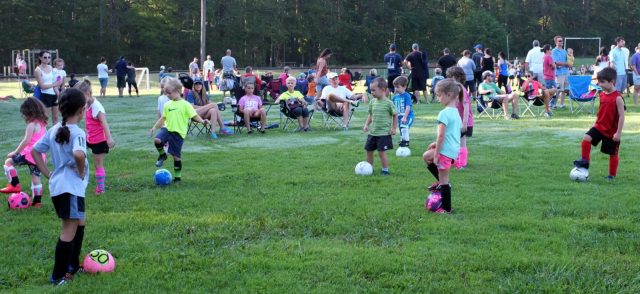
We chatted about practice during breakfast. He was excited about the prospect of doing what we did yesterday with a lot of kids. All the running and kicking yesterday resulted in a lot of laughing, and that undoubtedly fueled his enthusiasm for today. I was a little worried that, as he’s done other times, the Boy might start having second thoughts as the moment approached, but there was none of that. We put his shoes on sans shin guards, which were too small we decided, and headed to the field.
We met the coach, and E began following the other children’s example and kicking goals. His first shots were comparatively strong, hard shots. The coach’s daughter, who was a couple of years older than the players, was standing in as goalie and E’s shot flew right by her into the back of the net. I remembered how relatively tentatively L would shoot goals at the beginning and thought this might be a good sign.
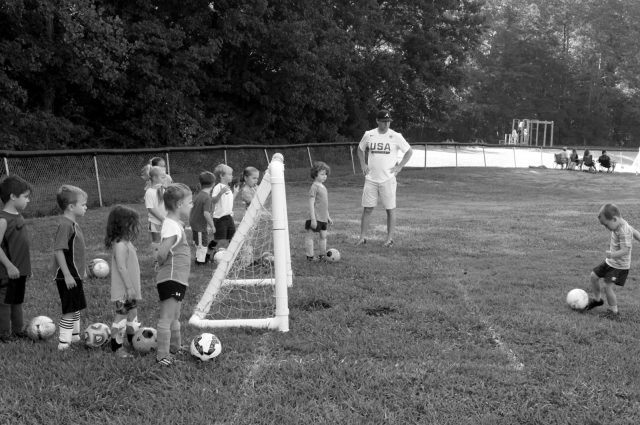
Practice shifted and the coach explained to the little ones what dribbling is and set them off toward the mid-field. Some children set off at a light jog, kicking the ball a few feet in front of them and running to catch up. Others kicked it with all their might and ran to the ball. E and a few others delicately pushed the ball with each foot as he stepped forward, a slow and deliberate journey to the mid-field. Yesterday, it was the opposite: wild abandon, kicking the ball and running as fast as he could. Such a change today. “He’s not doing it like we practiced yesterday,” I thought, wondering why he was being so very careful. It might have been tempting to compare his journey to other children’s, but to what end? He is who he is, and he was doing the exercise the way he felt comfortable doing it. I was thankful for that.
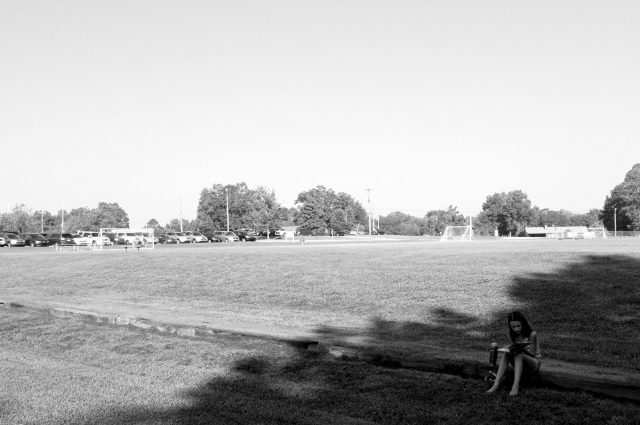
The Girl spent the first half of practice reading. She finished her book and began again with a shrug. She’s got some books that she’s read so many times that she must have them virtually memorized. The second half of practice she headed to a playground down at the edge of the fields and made a few new friends with other older sisters. What did they talk about? I so rarely see E with other girls — our neighborhood is simply filled with boys — that I can’t imagine. That shift must slowly be starting, mustn’t it? Surely they’re not talking about which Barbies they have (L hasn’t had any in years) and similar topics. Fingernail polish? School?
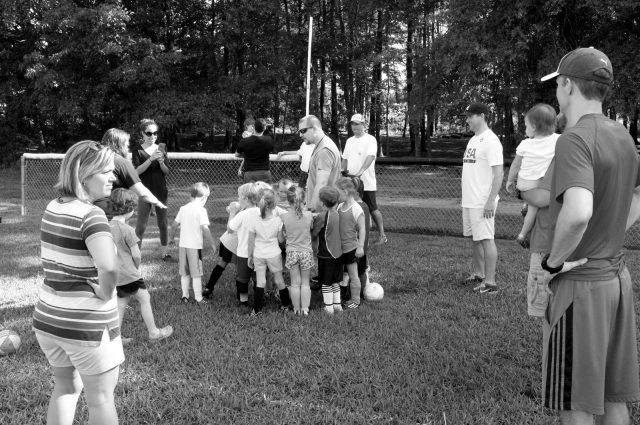
While I wasn’t able to watch and listen to the Girl’s interactions with her new friends, I was able watch the Boy interact with adults without my mediation. He listened well, remember later in practice the earlier instruction to stand with one foot on the ball when the coach is teaching a new skill. He did the best he could, but as a four-year-old will always do, he regularly checked to see where I was, making sure I was still on the sideline. The Girl became so absorbed in her activities that we could have easily left her behind — she never would have noticed until the other girls left.
That independence is growing and will only increase, I know. Are we ready for it? Ready or not, it’s coming.
First soccer practice tomorrow.


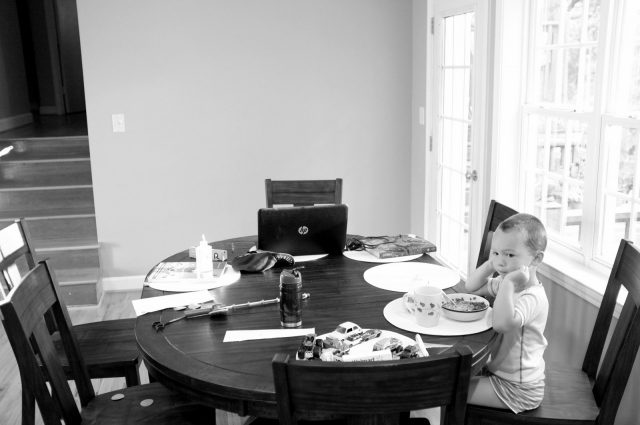
Three, maybe three and a half weeks ago, we reached a point in our kitchen remodel project that everything more or less looked like a kitchen. The counters and tops were in, and while the floor wasn’t finished yet, it was installed and looked like a floor. And yet there was so much to do — trim around the windows and doors, baseboard trim, final plumbing (including fixing problems the sewer line in the front yard and with the newly-installed gas line), lights, and the like. So it looked like we were almost there, but we were still so far away. All the changes from that point on were so small in comparison to ripping out a window and door to rebuild the header.
Finally, we’ve reached a point that we’re almost to the point that we can say, “We’re almost done.” “Almost done” because the under-the-cabinet lighting installation has been put off for some time, as has the final venting of the microwave through the room (right now, it’s just popped into the attic). So even when the back splash gets completed next week, and we finally move in the stove — the final appliance — we still won’t be complete done. And then there’s the new dining room furniture we’ve ordered so that every little thing in the kitchen, except for the coffee maker and toaster oven, will be new.
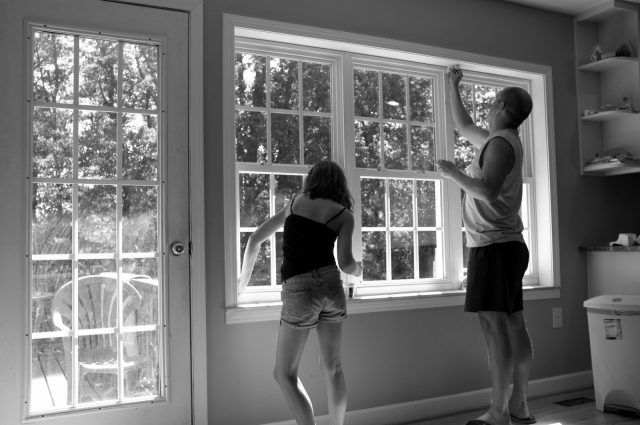
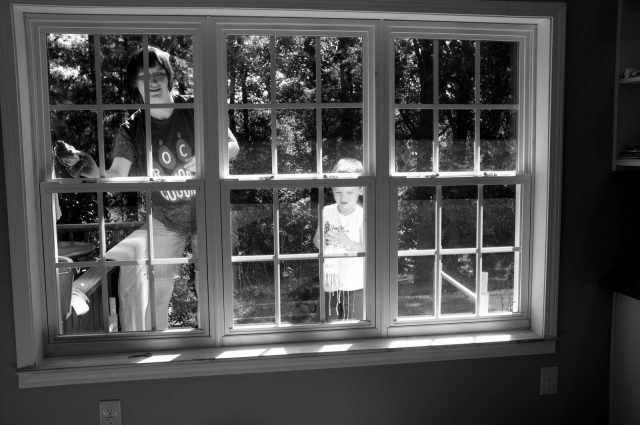
So today we made the final little adjustments and started moving in. L and I filled all the trim nail holes with spackling while E and K cleaned all the windows. Then I set out with the caulk gun to caulk the trim before it gets a coat of paint.
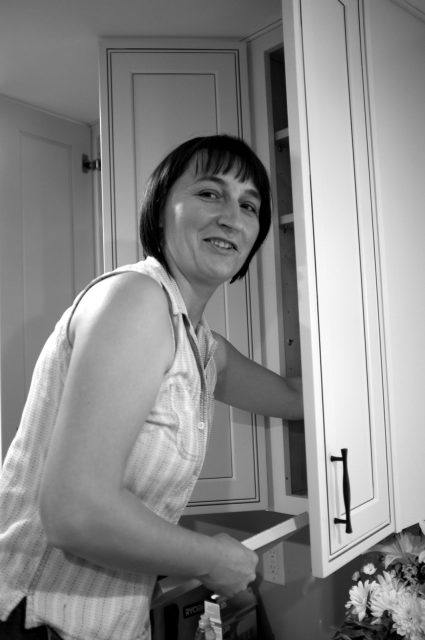
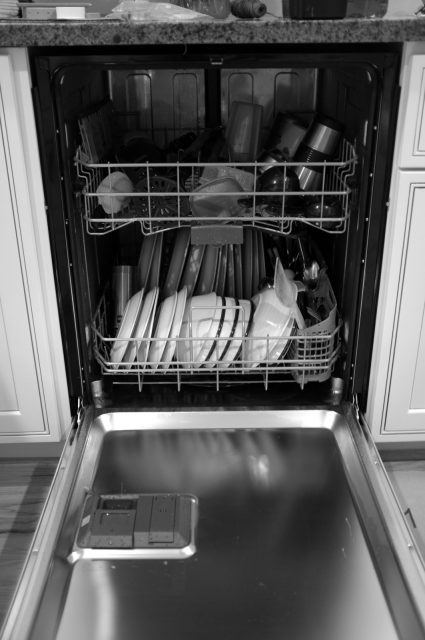
K, in the meantime, prepared all the new shelves with liners and began running all our dishes through the new dishwasher. We quickly discovered the enormous difference between the old dishwasher and the new: the old sometimes cleaned; the new is so powerful that it knocked the finish off a couple of items that we’d put in the bottom.
Tomorrow, the table migrates back to the dining area, where it will stay for a few weeks until the new furniture arrives, and we begin moving food to the kitchen, reverting our basement to just that. We’ll tear down the field kitchen in the backyard, move the grill back onto the deck, and begin to forget the work of the summer and just live.