education and teaching

Thinking Critically about the Common Core

Charles Blow writes in a recent article about the Common Core standards,

Our educational system is not keeping up with that of many other industrialized countries, even as the job market becomes more global and international competition for jobs becomes steeper.

We have gone from the leader to a laggard.

The latest attempt to solve this problem is the Common Core standards, a group of national educational standards that is supposed to encourage the teaching of critical thinking and problem solving. The standards I use are available here.

Yet they’re not universally accepted. Conservatives tend to bristle at anything they see as Federal mandates from above for national standards of just about anything. Liberals, in support with unions, don’t like the idea of using testing as a measure of teacher effectiveness. (The New York Times also had an article on growing opposition to the standards.)

Yet I wonder about what it says now that we must go to great lengths to teach critical thinking in school. I don’t recall many activities in high school that seemed geared to practicing critical thinking, and I don’t remember any direct instruction in critical thinking, yet somehow I became a critical thinker. Take for example the skill of inferring. I go to great lengths to teach my students what inferring is and what it isn’t, to differentiate between merely observing and inferring, and to apply the skill to texts. Yet I don’t remember anyone teaching me that. It just seemed like something I picked up along the way as I read increasingly complex texts.

Another new feature of the Common Core standards is an increased emphasis on what the Common Core Consortium calls “informational texts.” We just called it non-fiction. The Consortium points out that in the traditional educational progression, students spend all of high school reading literature and then they’re suddenly required to read informational texts in college. It’s as if reading the one has no influence on reading the other. I don’t really recall having to read or to analyze much more than literature in high school, yet I somehow didn’t have any problem making the switch to the “informational texts” of my college career. In the meantime, this push for greater emphasis on “informational texts” means that an entire generation will be underexposed to literature, one of the prime makes of society and social consciousness. (Of course, that’s really only true to any significant degree in in the pre-Internet world, I suppose.)

The big question of course is whether this whole enterprise will work. With states that originally adopted the Common Core standards increasingly backing out, it seems like it might just turn out to be yet another educational fad.

First Day at School

L has been worried about starting school this year. New teacher; new students; new room in a new hall — new everything.

“I don’t want to be a first grader,” she lamented.

“I don’t want to go to that school,” she whined.

“I want to go back to Ms. B’s class,” she begged.

I recall being somewhat nervous about starting new grades. First grade for me too was tough: I was starting a new school, and the bathrooms we used were situated between first and second grade (it was an open classroom design). That meant every time I went to the restroom, I ran the risk of encountering an unimaginably large second grader. It was terrifying.

L had different worries, different concerns. Her first disappointment came when she learned that she would no longer be the first released to the car line. “Well, you’re not in kindergarten anymore,” I explained. Her first bit of pride came a little before that, though, as she was walking down the hall with her class and encountered a favorite teacher from last year.

“Did you say ‘Hi’?” K asked as we talked about it over dinner.

“No, Mama! We were walking down the hall. We couldn’t talk. We’re first graders! We can’t do that!”

Welcome Back, Terrence

hoodie.psd

Dear Terrence,

Every year — every single year — I make the same promise to myself around the end of third quarter: “Next year I will start the year as an authoritarian jerk. I will rule my classroom with an iron cliche and only later loosen my grip.” It’s easier, after all, to loosen things than to tighten them up. And then by the beginning of the year, I begin second guessing myself. “Nobody likes a jerk,” I say, “and that would essentially would be acting like a jerk.”

It’s a delicate balance to achieve when you have a classroom filled with students of varying interest levels, social skills, intellectual abilities, cultures, races, economic realities, and a thousand other variables, and my job is to focus them all on one goal: improving their ability to read and to write. Some of them love school and are inherently interested in this common goal; some of them hate school and don’t care about anything I have to say; some of them love school but, being more mathematically inclined, are not inherently interested in what I have to teach; some of them don’t even seem to know what they’re doing in school; some of them have only one goal: attract as much attention as possible. And they’re all in my classroom.

This dilemma about how to open the year boils down to how to deal with one group of students: the disengaged, interest-lacking student who wants to pass most of the class period chatting. In other words, students like you, Terrence. Indeed, in every class — that is, in every on-level class — there is at least one Terrence who simply says what he thinks when he thinks it without any thought to the approriateness of the moment. I’ve literally had a student say, “If I think it, I say it.” If in that classroom, there are a few more students who, with that initial proding, will join into a conversation (in other words, they remain generally quiet until someone speaks to them), then we’re going to have little pockets of chaos throughout the classroom that add up to a disrupted and disruptive class. As the year develops and relationships grow, it seems like this might be easier to control, but the reality is often frustratingly the opposite. When you and your friends behave like this, Terrence, you rob others of an education, because I have to spend time dealing with your behavior rather than teaching.

To be a teacher, one has to be something of an idealist, somewhat naive regarding human nature. One has to look at these impulsive, often rude, sometimes cruel children — no more than two or three in a class — and think, “They must understand that their life can be better. They must want to change and simply not be able.” It’s easy to think of them even as victims — victims of neglect, of a shallow society, even of irresponsibile or possibly cruel parents. And so the second balancing act: to understand that they’re responsible for their own actions, but that they’re acting from habits formed in an environment not entirely of their choosing.

But naivete and idealism aren’t really necessary if I remember one thing: it’s all about the relationships. You and other students like you, Terrence, might have developed bad social habits because of a lack of positive adult relationships in your life, but I don’t have to be an additional, negative relationship simply in the name of “classroom management.” So at the beginning of this new school year, before I’ve even met you, I say to you what I say to every student. No matter what it feels like, no matter how harsh I seem to be, I am always on your side. It’s just that I’m on every student’s side, and when one student is taking from another her opportunity for an education, I am going to intervene and stop it. If that means coming down on you because your talking is disturbing others, then that’s what will happen; if that means coming down on others because their talking is disturbing you, then that’s what will happen. But no matter what, I am always on your side.

Regards,
Your Soon-To-Be Teacher

Rotary Phones and Education

[ted id=1732]

I am increasingly politically and fiscally conservative in a lot of areas, but concerning education…

Ken Robinson

The real role of leadership in education … is not and should not be command and control. The real role of leadership is climate control, creating a climate of possibility.

Anonymous

I’m not in teaching for the income but for the outcome.

Readying

All furniture cleaned, books back on the shelves, tennis balls back on desk legs, computers set up — and the first teacher work day isn’t for another week…

The Smell of Autumn

Walking the Girl to preschool today, I caught a faint whiff of coal smoke. Immediately thoughts of late autumn, of settling down for a long winter and the developing school year, of boots and jackets and layering all returned. For a brief second, it was as if I had returned to 1998.

First Day at (Polish) School

It’s L’s first day at a Polish school, picking up with the kindergarten kids for their final two weeks of school. She was upset the night before: “I don’t want to go!” was a common tearful refrain. “I don’t want to go” are the first words out of her mouth this morning. But a little bribery works wonders: “After school, we’ll stop in at Steskal’s for an ice cream cone, and later today, we’ll go visit a toy store.”

VIV_3593

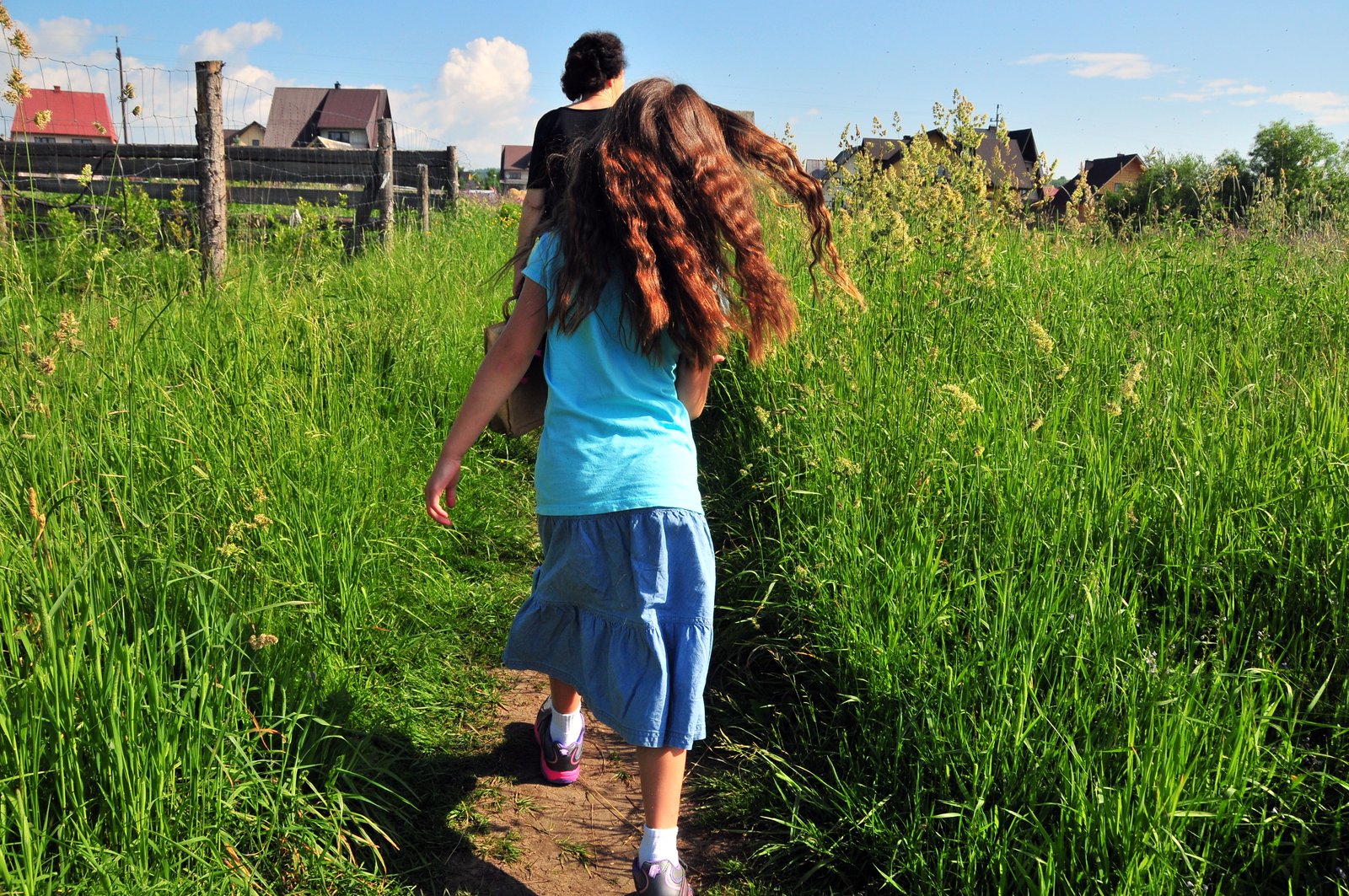
And so off we go, heading through the fields to school — another “only in rural Poland” moment.

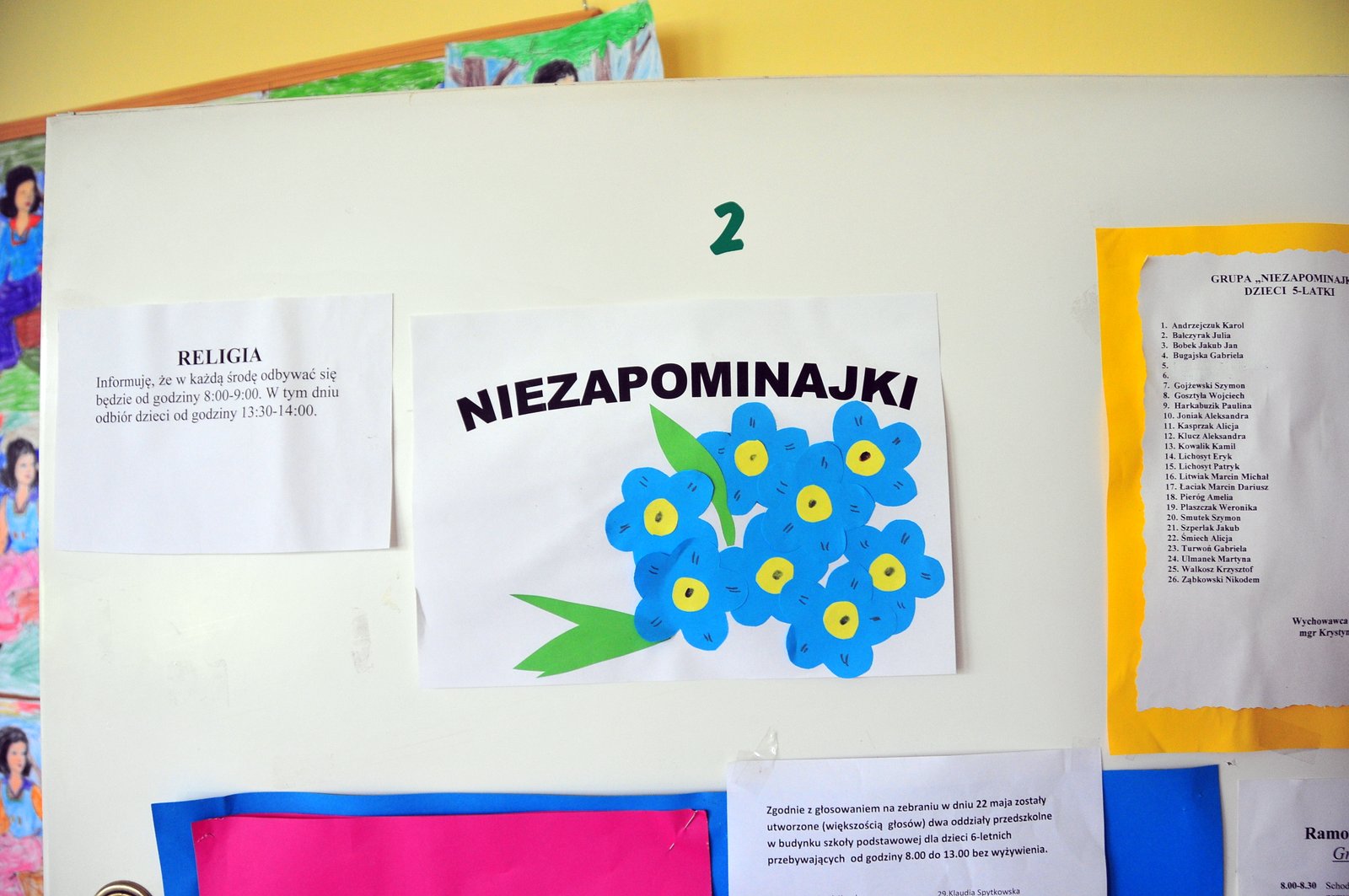
We meet with the director (not, it turns out, my former student, which is odd: I had two students with the exact same name, and now this makes the third female in this small area with the same first and last name), and she leads us to L’s teacher. Each class is given a name like “Bumble Bees” and “Dragons” and this and that: a real mix of names. L has joined the “Forget-Me-Nots”.

VIV_3602

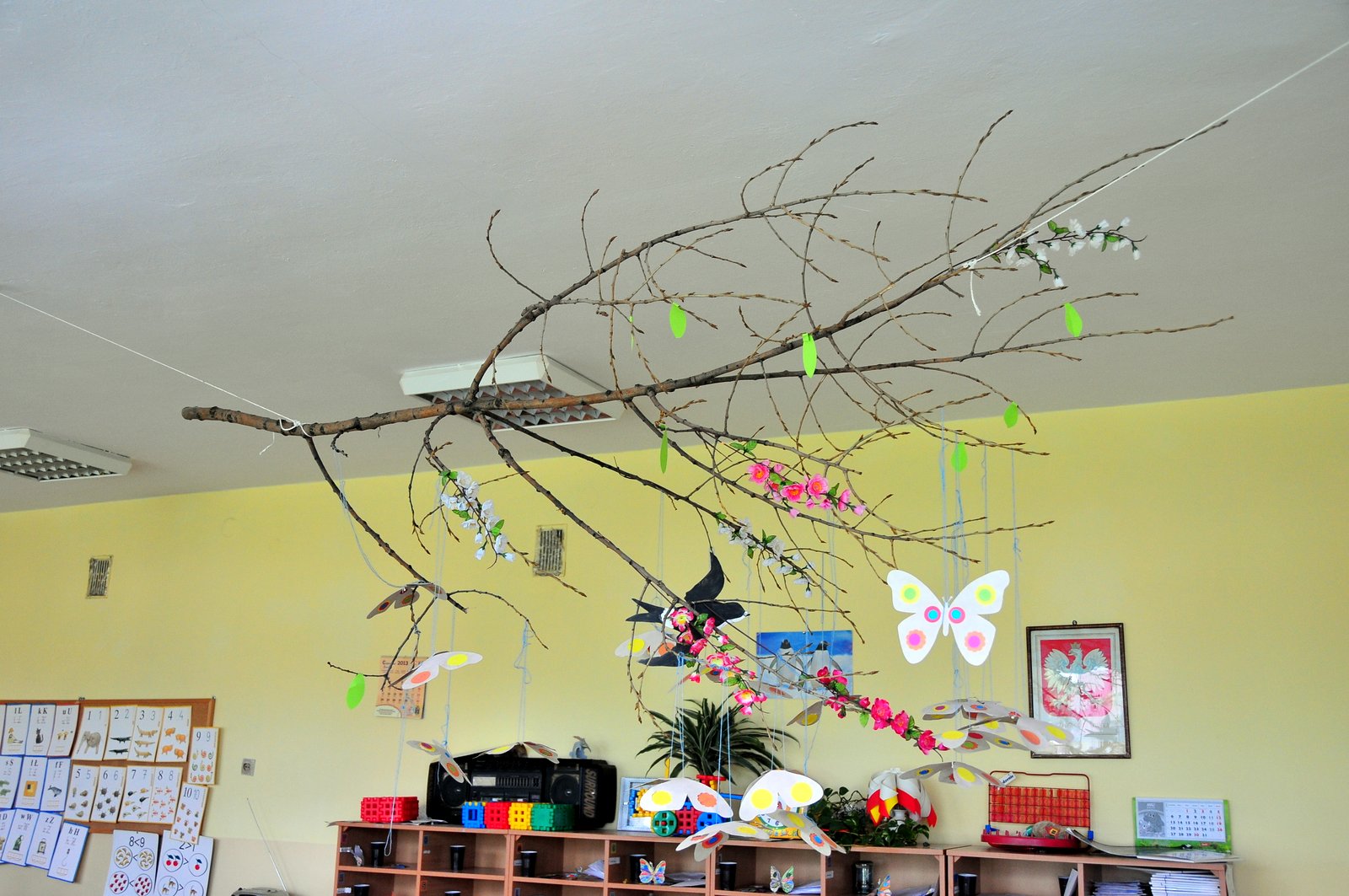
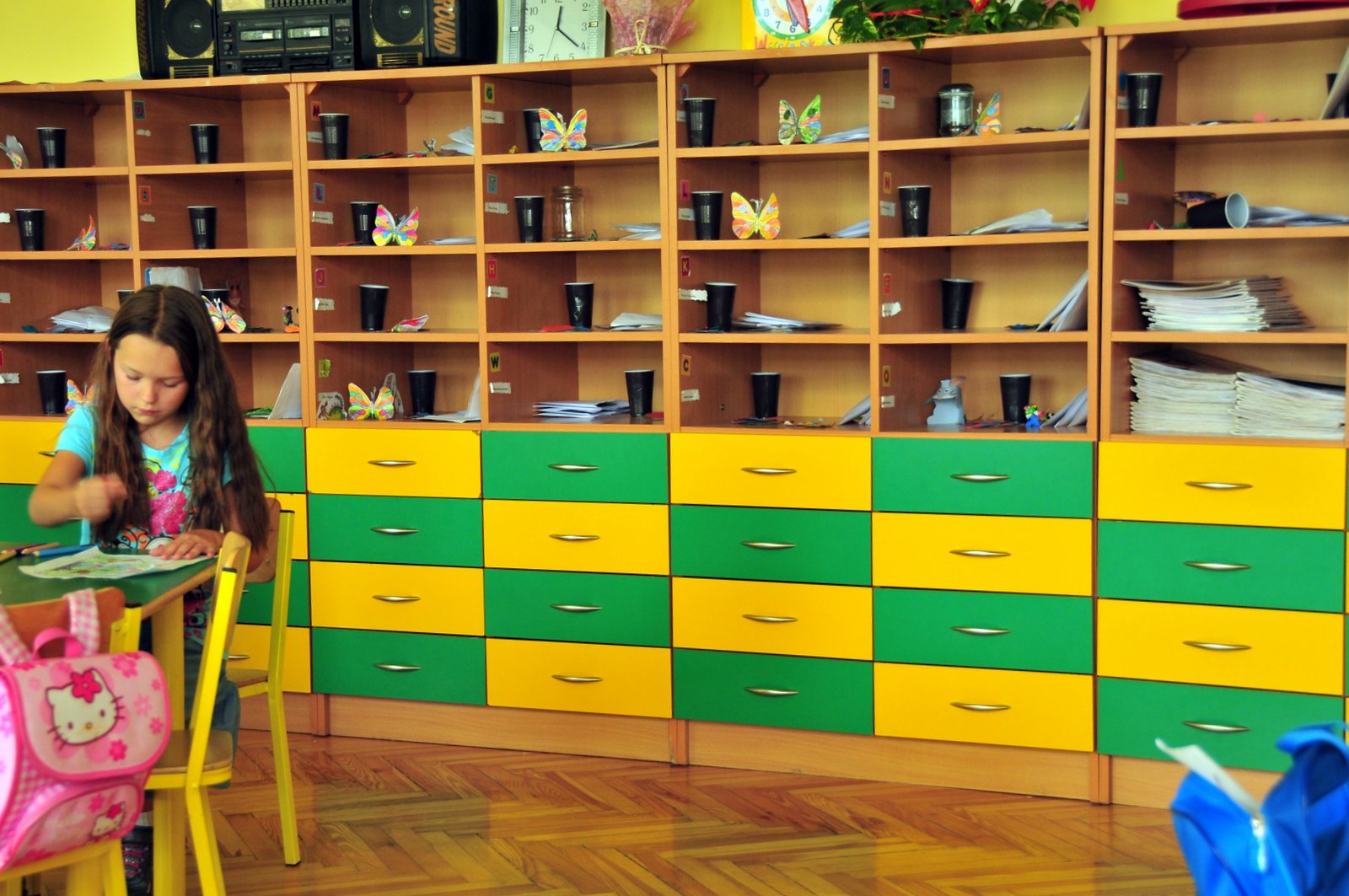
It’s a colorful room with an original bit of decoration in the middle.

VIV_3603

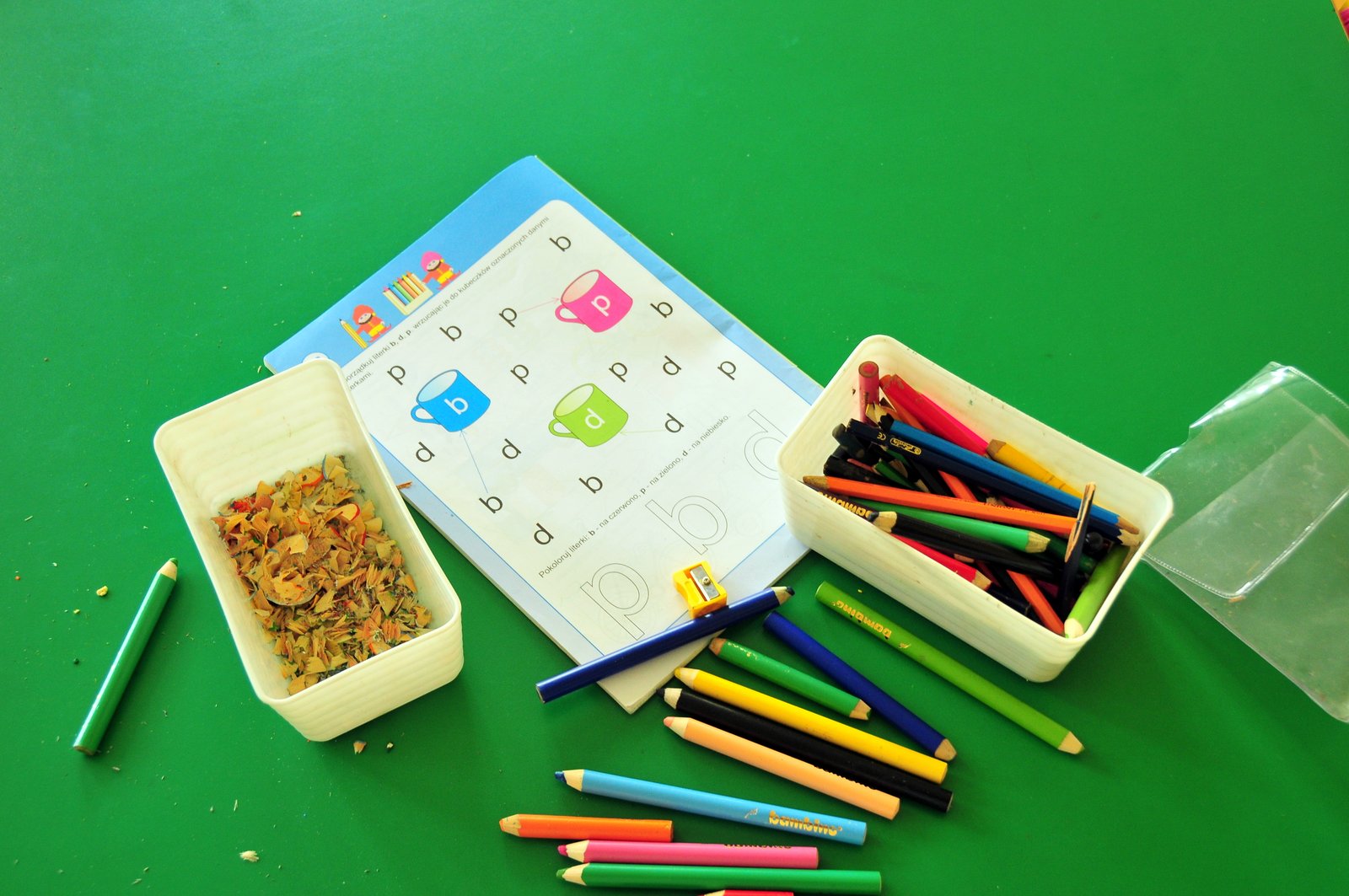
The first few minutes she’s very clingy. She doesn’t want to participate; she doesn’t want to speak; she doesn’t even want to show her face, literally. I coax her to a table of girls, and I begin chatting with them, hoping L will join in. They all introduce themselves, we talk a bit, and slowly L begins to come out of her shell. She eventually asks for a copy of the work the children are completing.

VIV_3607

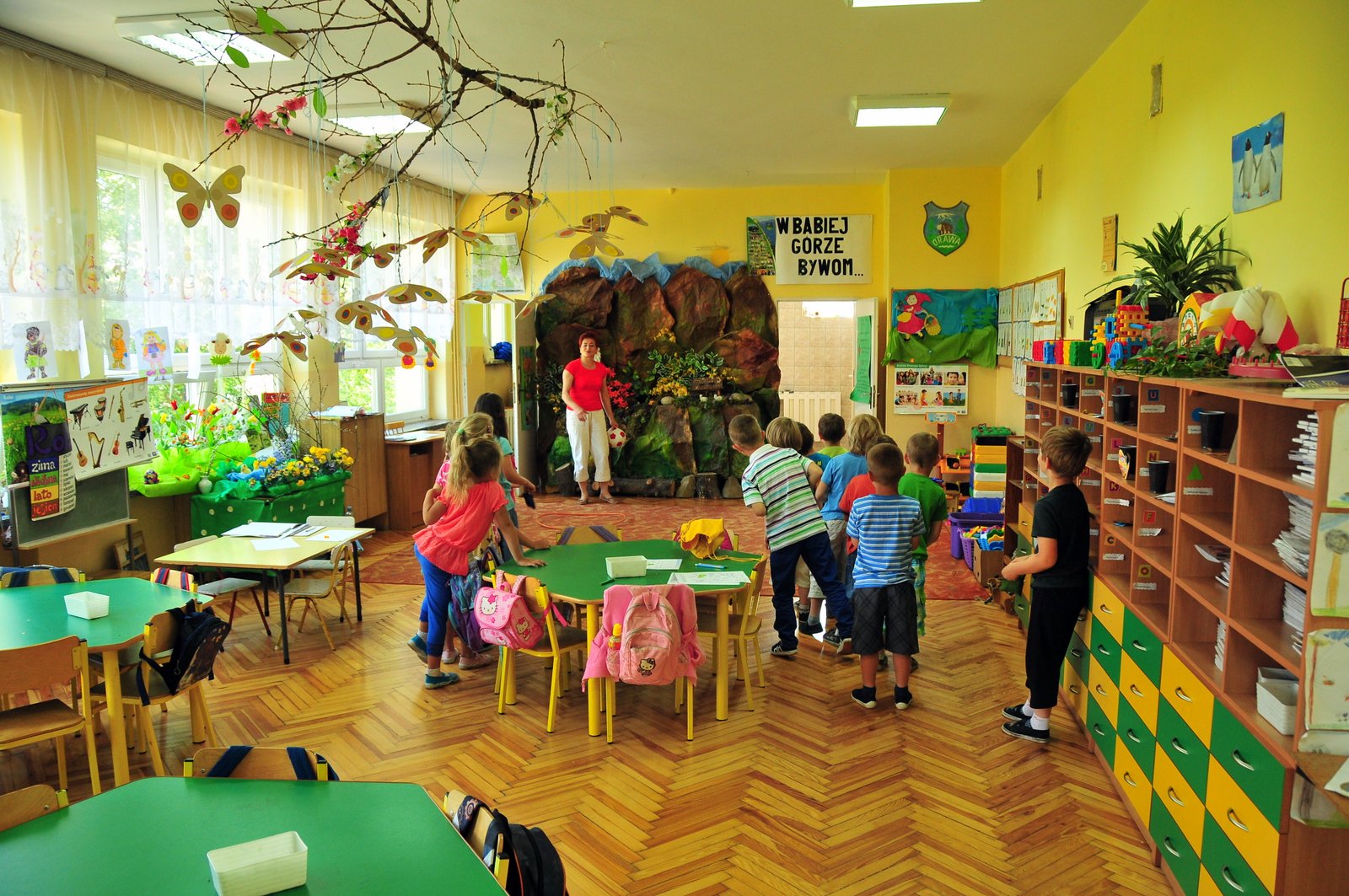
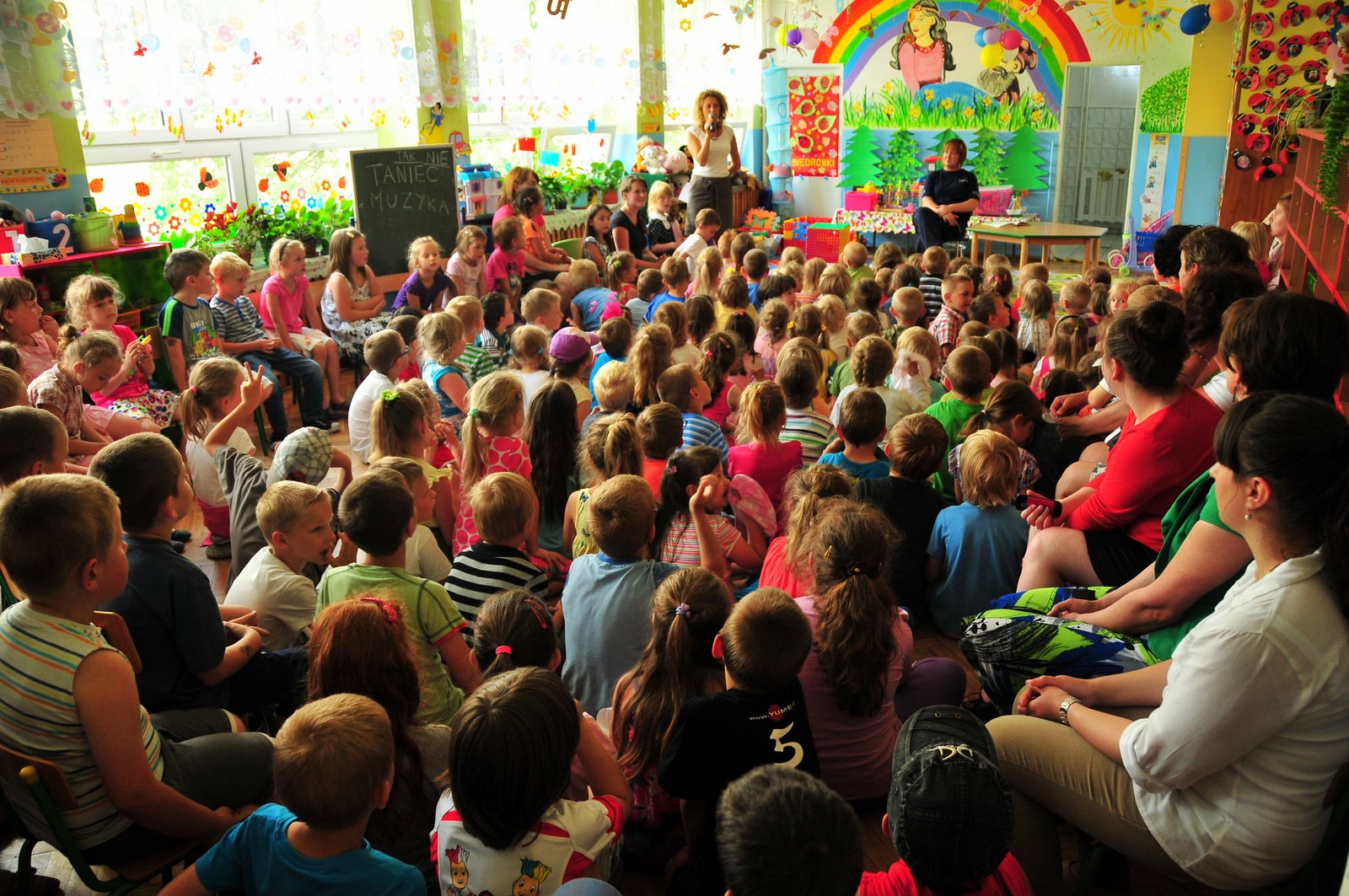
Before long, the kids circle up, sitting “Turkish style” (a direct translation of the Polish equivalent of criss-cross-applesauce). Then there are games, marching, chanting, singing, generally silliness. L takes part, somewhat reluctantly.

VIV_3597

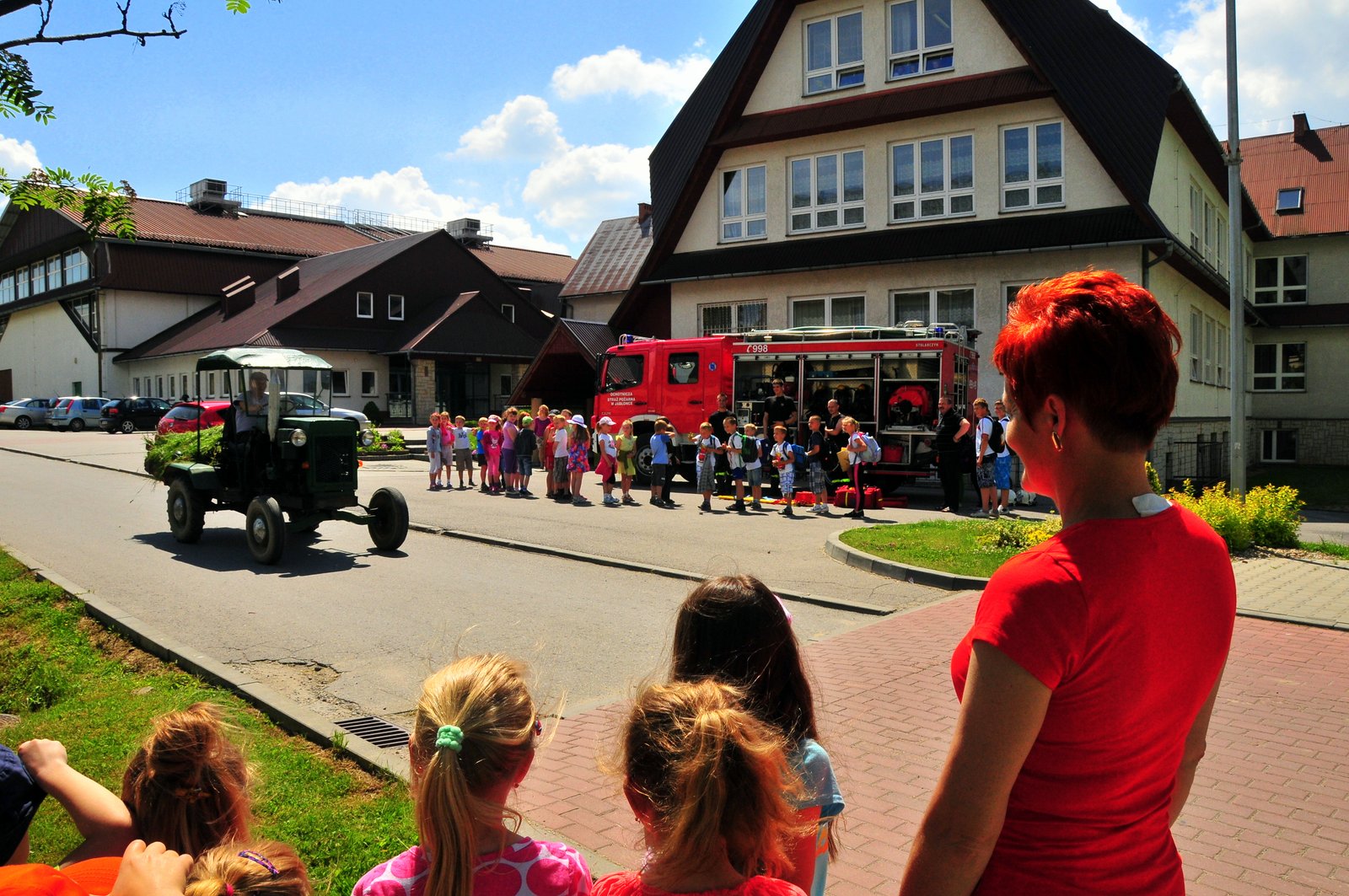
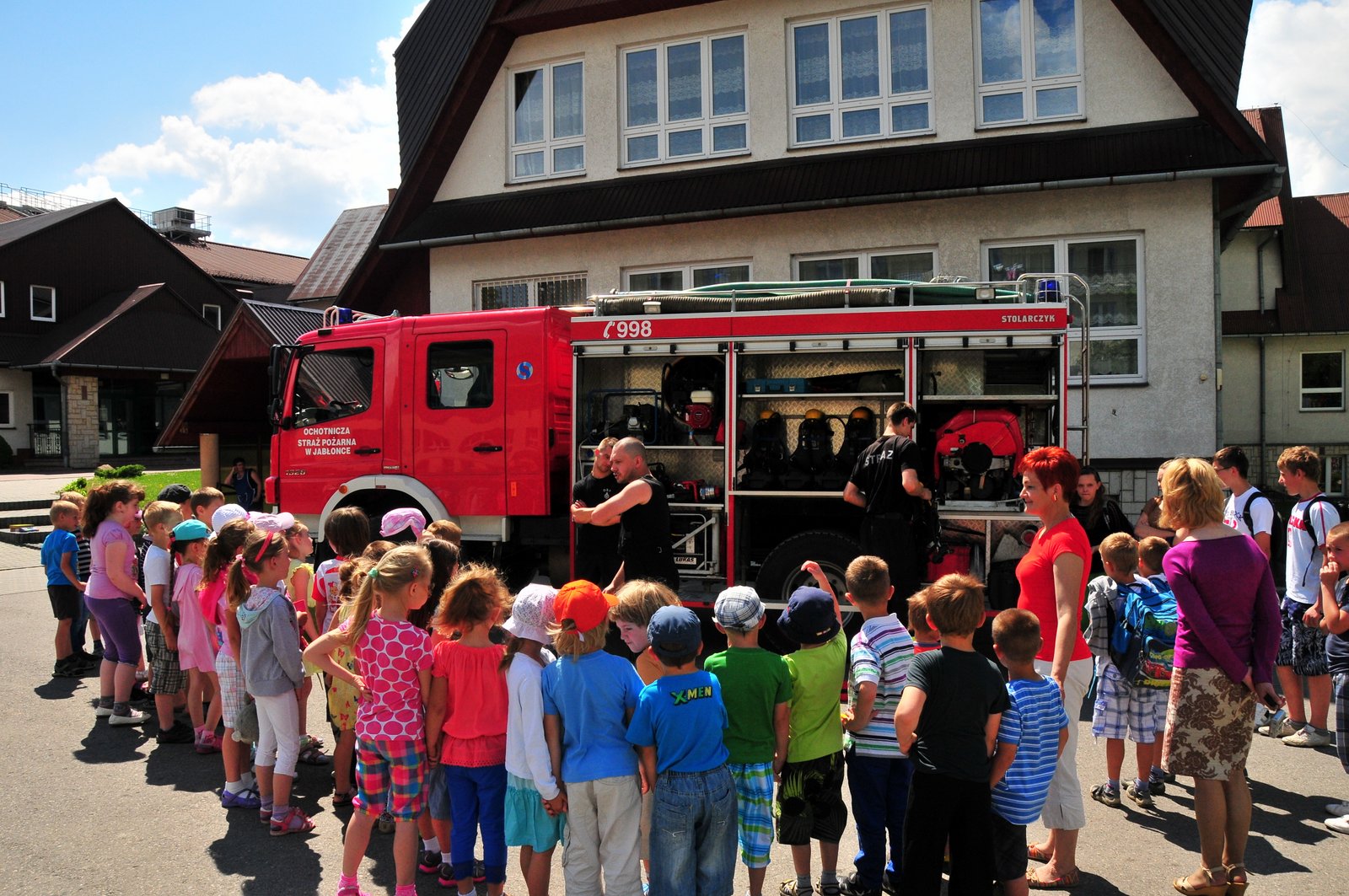
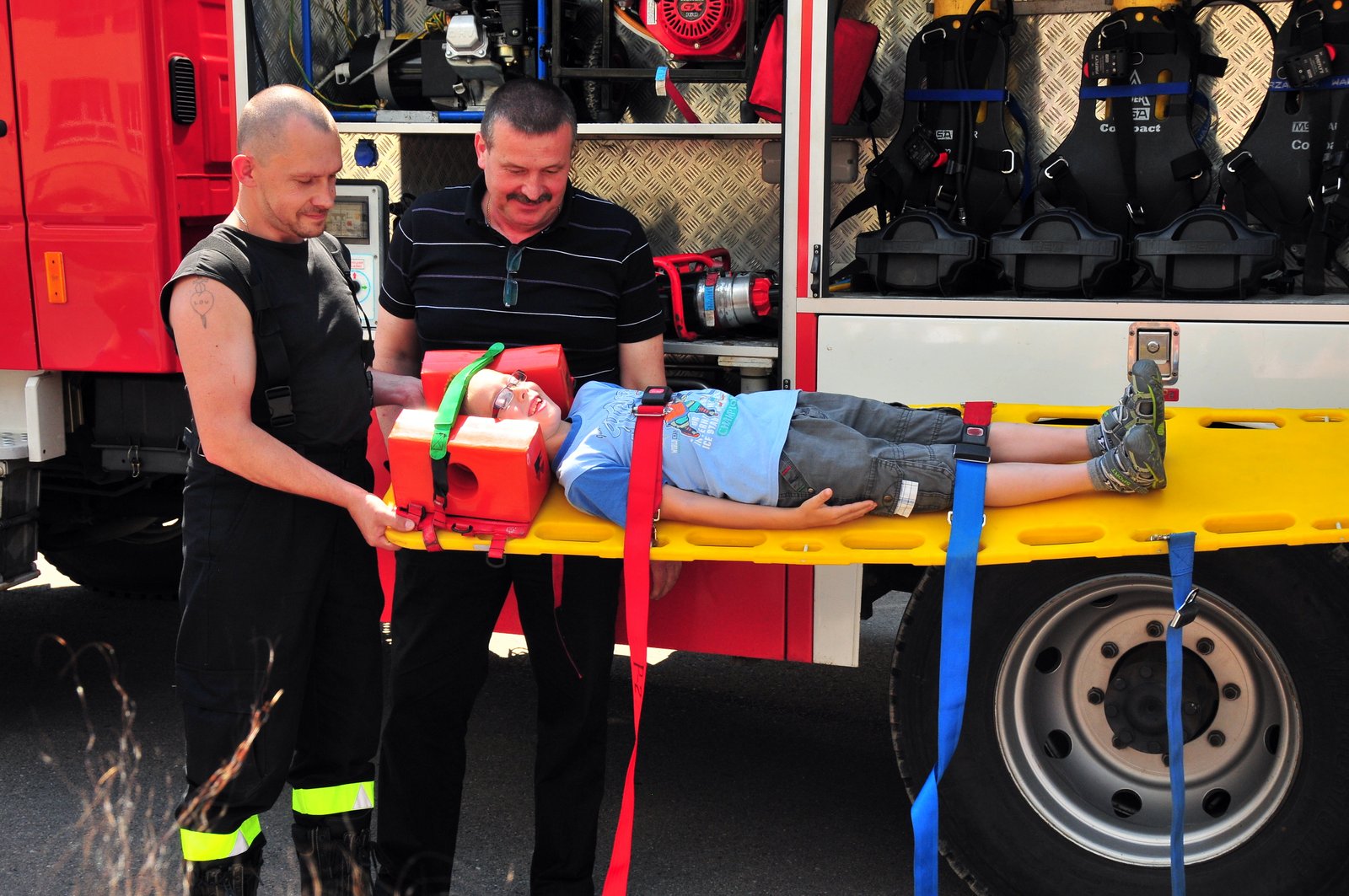
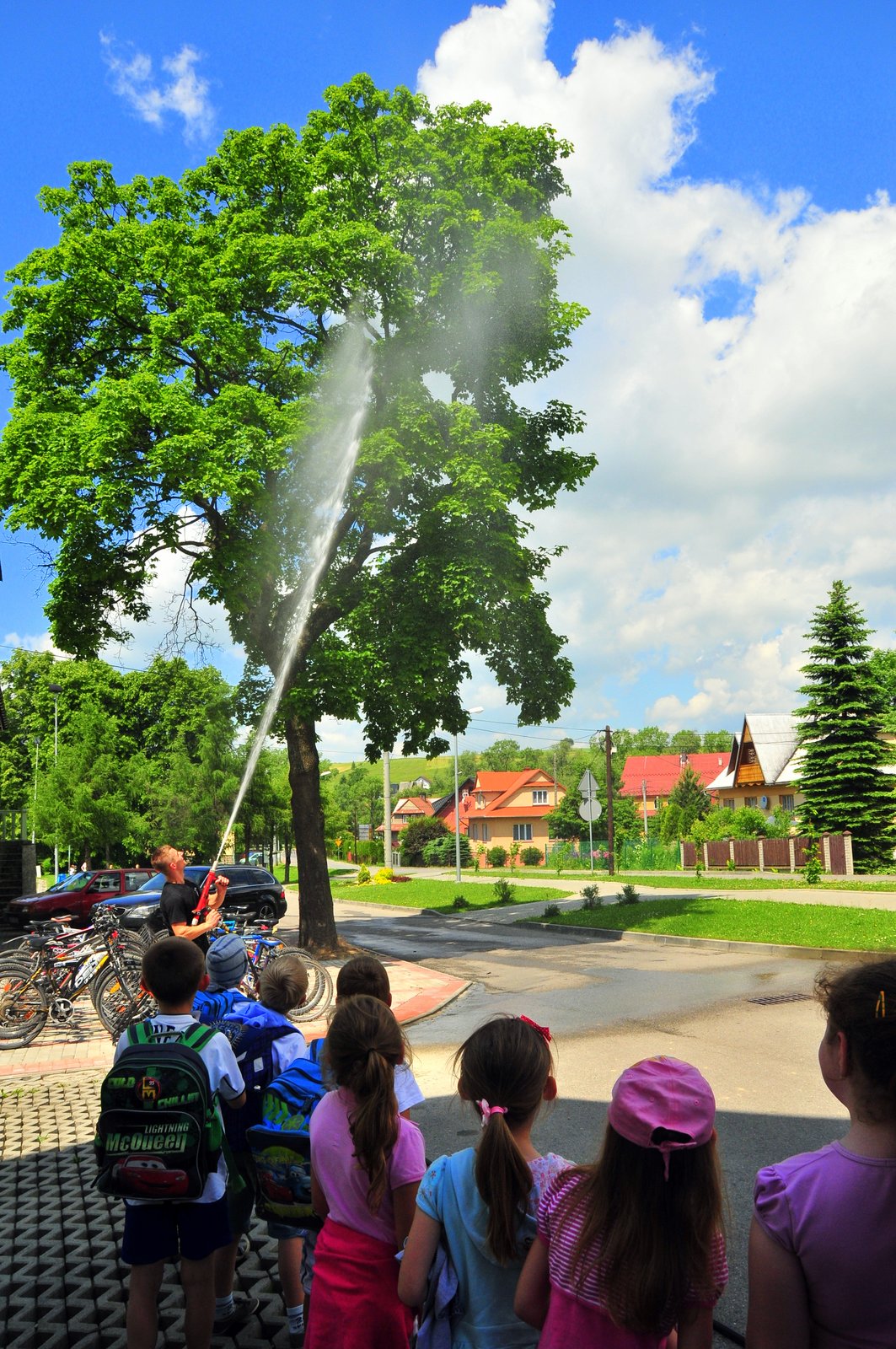
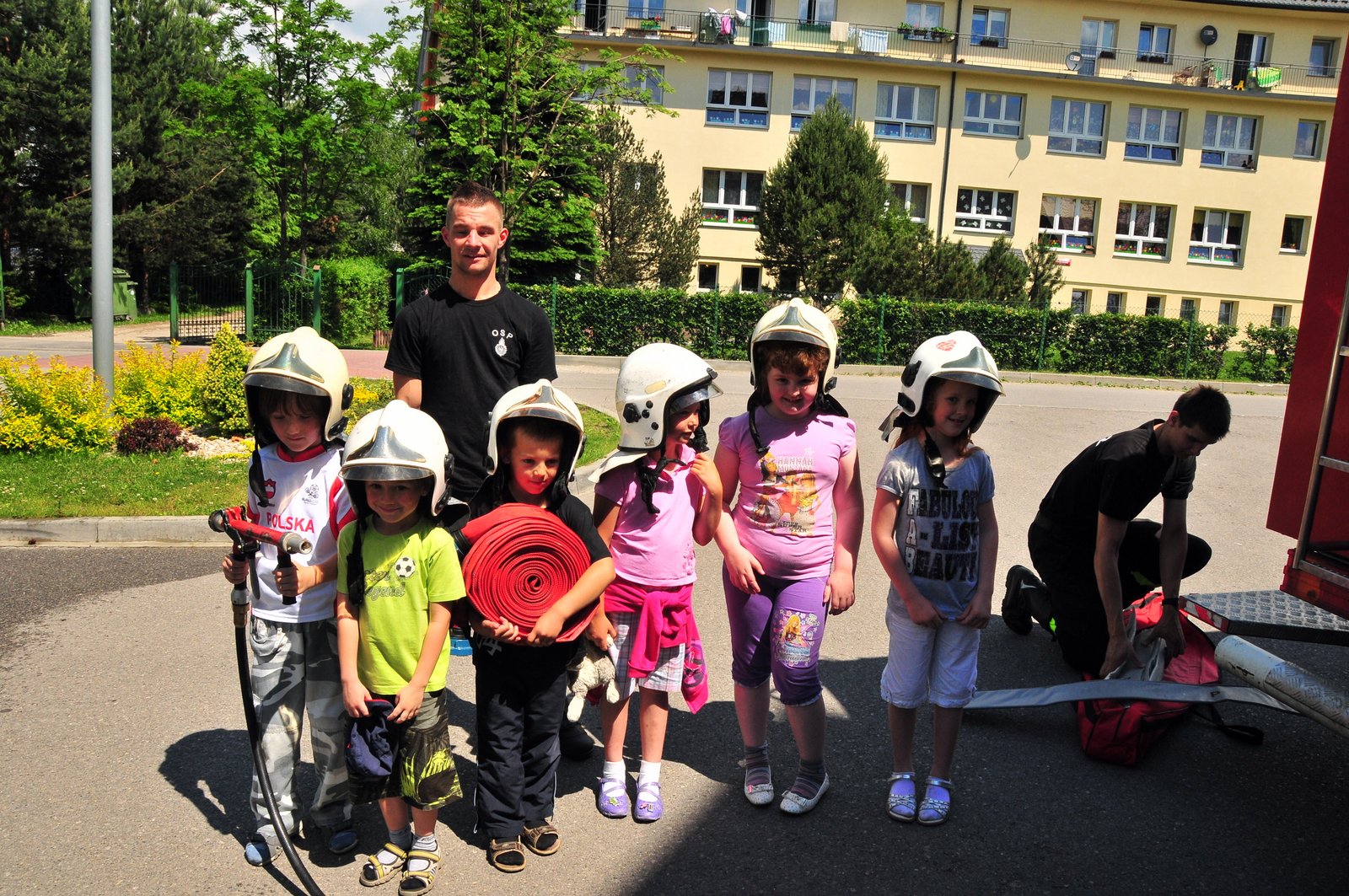
Soon it’s time for the “second breakfast” (i.e., snack), and as the children are washing up, the teacher tells me that after snack, they’re going to be the next in line to go out and look at the firetruck that has been sitting in front of the school most of the morning — sort of a guided tour of a firefighter’s world.

As we head out, another “rural Polska” moment, for we have to wait as an elderly dziadek drives his equally old tractor down the street, a tractor so old with such a weak engine that it has difficulty going over the speed bump. The driver has to throw it in reverse, getting up a little more momentum the second time, to roll over the bump.

VIV_3609

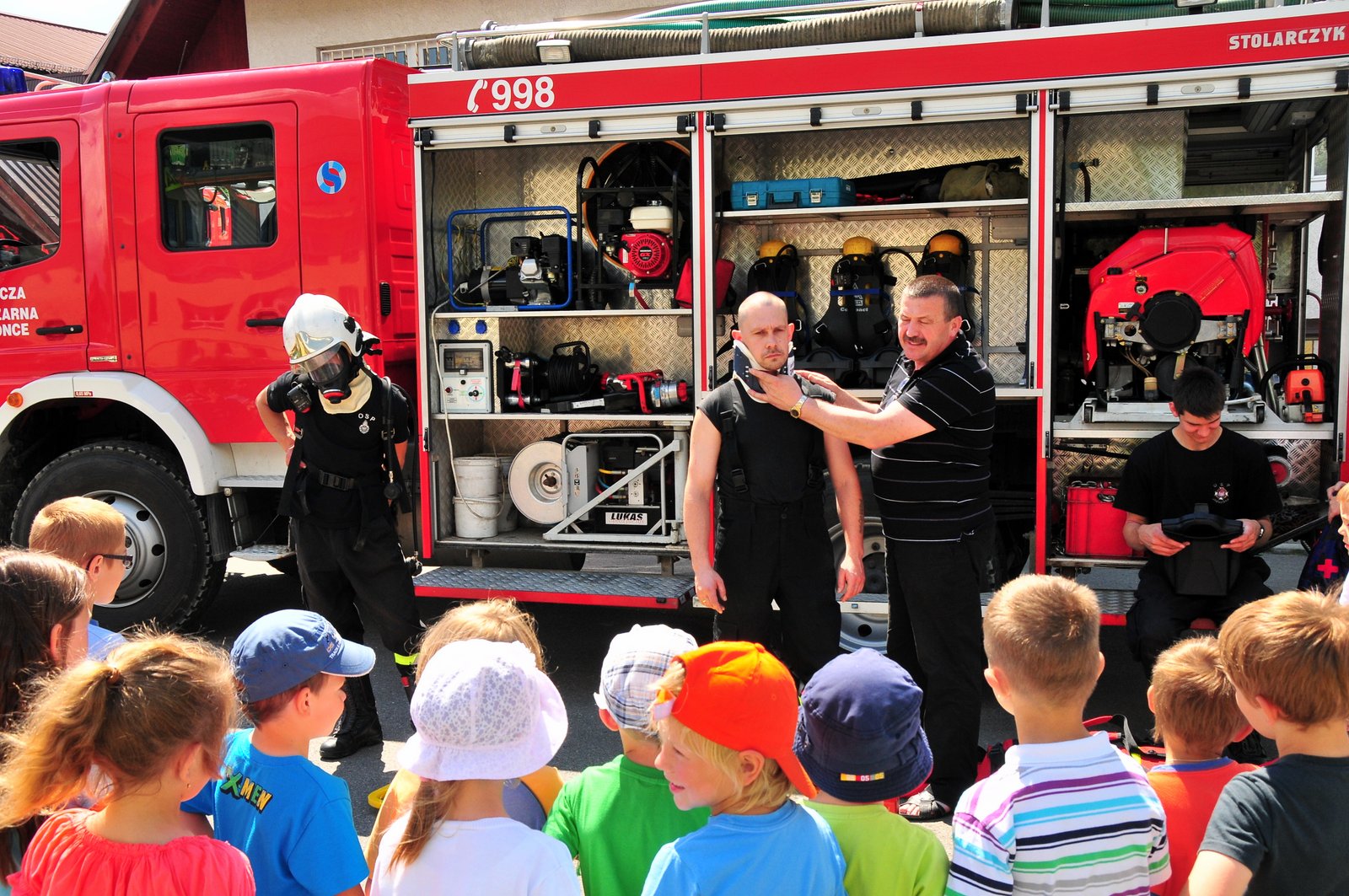
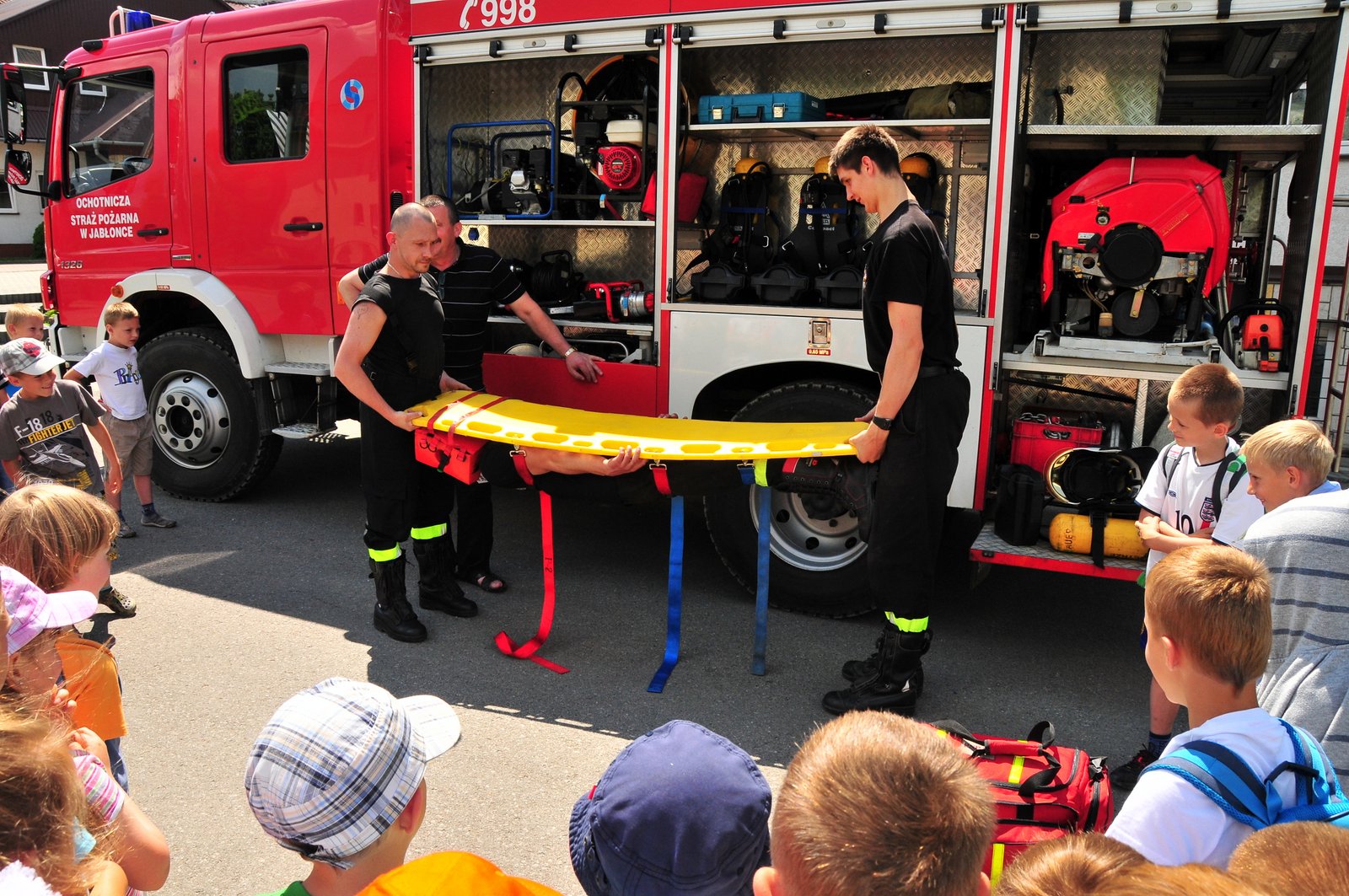
We cross the street and the presentation begins. The firefighters show the kids their oxygen masks, their aspirators, their hoses, their helmets — in a word, everything.

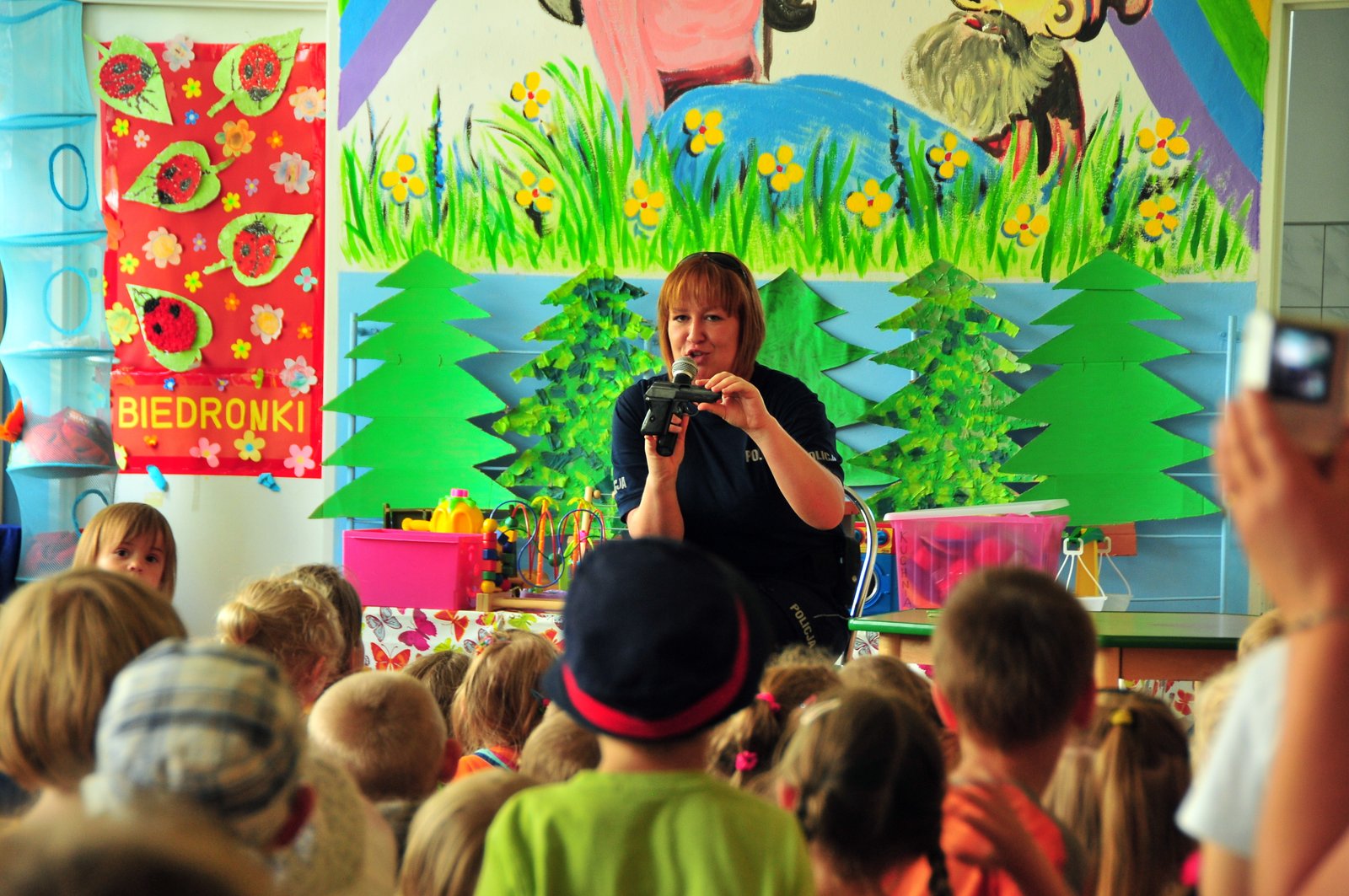
Afterward, we all head back inside for the latest installment of CaÅ‚a Polska Czyta Dzieciom — All of Poland Reads to Its Children, roughly translated. Representatives of various professions have been coming to the school to read to the children, and today, it was a police officer’s turn.

VIV_3648

Of course all the children are interested in one thing, and one thing only: the officer’s pistol. The officer take the clip from the gun, gives it a tug to release any shell that might already be chambered, then holds it up for everyone to see. Since Poland, like most of Europe, has very strict limits on citizens’ gun ownership rights (in short, there are none), most of these children have never seen a pistol in person (except on the belt of a police officer). It’s a nine millimeter with a six-bullet magazine, the officer explains, and there’s significant “Ooo’ing” and “Ahh’ing.” I find myself thinking that had this happened in the States, some kid in the group would have raised his hand to explain that someone in his family has a nine millimeter with a seventeen-bullet magazine.

VIV_3653

But we’re not in the States, and the gun produces the intended reaction, and as the children exit the room, the story has disappeared into a fog of chatting about the pistol, especially among the boys.

VIV_3655

But L has other things on her mind: there’s a picture that’s still only partially colored.

After school, as we walk with ice cream cones to the roar of tractor trailer trucks heading to Slovakia (“This is an international throughway now,” Babcia has explained more than once), we talk about the day. L decides tomorrow she can stay a little longer, then Wednesday, the whole day. Provided we go to the flea market first.

She’s turning Polish faster than I thought possible.

Middle School Fonts

The first thing an eighth grade student does when he sits down at a computer to type something for a class project is click on the font drop down box and begin exploring the myriad fonts Word has to offer. Some have their favorites and go straight to them; others like some variety and have to figure out which font best reflects their current mood. Whatever the case, the resultant font selection is usually illegible.

1-Fullscreen capture 5312013 93125 AM

If you ever ask yourself, “Who uses Jokerman?” or “What use is Kristen ITC?” or “Does anyone ever choose SNAP ITC?” the answer is always the same: these are the fonts that make middle school students’ hearts flutter and bring a flush to their faces.

Logic to the 14th Power

“But Mr. S, you don’t understand!”

Obviously I don’t.

I don’t understand how something someone — a virtual stranger — says about you can be so meaningful that you’re ready to battle the person in the eighth-grade hallway. I don’t understand how so many kids today have so little control over their emotions and seem to have no idea how to deal with troubling emotions. I don’t understand how a kid can be willing physically to hurt someone or to get hurt himself because someone spread meaningless gossip about him.

“But Mr. S, you don’t understand!”

Obviously I don’t.

Perspective

Two stories from our home state of South Carolina tonight. One, a story of a complete lack of self-control and the brutal consequences for one toddler:

A Columbia woman has been arrested after a 2-year-old boy in her care died last weekend.

Police said Thursday that 34-year-old Margie Hamm had been charged with homicide by child abuse.

Authorities say Hamm slammed the boy’s head into a bathtub faucet while she was babysitting him May 18. (Source)

It’s hard not to be depressed about humanity and enraged about this woman’s evil impulsive behavior at the same time. It’s hard to live in a world where solders walking down the street in their home town get attacked and beheaded, where little children have their skulls crushed against the hunks of metal, where various and sundry evils surround us, and not be depressed about the state of humanity.

DSC_1648

Then there’s the other story in South Carolina: in Greenville this evening, sixty-four eighth graders and high school seniors received ACE (Advocates for Character and Education) Awards, which are intended to be recognition for “students who do amazing things in their schools and communities but are not necessarily recognized for their efforts and achievements.” These are kids who help the elderly and homeless, who stand up to bullies in their schools, who say to peers “this is wrong” and set a better example. These are kids who make a difference, some of whom have more courage at their age than I still have at my age.

I was honored to receive an invitation from M, one of my own students, a young lady who represented our school at the awards and who has consistently show maturity beyond her years in my classroom. She received one extra ticket to give to someone outside her family, and she gave it to me. K and I were planning on going to a Carolina Chocolate Drops concert tonight, but when I received the ticket last week and realized the significance of her decision, there was no way I could go to some silly concert.

So knowing that there are kids like M in the world makes it a little easier to live in world filled with Margie Hamms, Michael Abdebolajos, and similar ilk.

Examples

Dear Terrence,

Listening to you talk about what your mother does when she gets drunk, hearing your stories about how your grandmother can curse with the apparent fluency of a cliche sailor, I begin to understand how it is you have so few social skills. You’ve had no one to teach you these skills, through words or example.

Yet I’m still troubled. You’ve been in school now for nine years (counting kindergarten and this yet-to-be-completed year). Surely you’ve seen other students model these social skills you’re missing. So what’s missing in the equation? Recognition. You see these successful students as simply have a different nature than you, and to an extent, they do. They’ve learned and internalized behaviors that make them seem like they have a different nature, but in fact, you could be just like that. You just don’t recognize it. And unfortunately, no matter how many times I and other teachers tell you this, you won’t believe us.

Ever frustrated,
Your Teacher

Others’ Business

Dear Teresa,

I overheard your comment to another student today about “going on down the hall before that teacher says something” because “she’s always in other people’s business.”I’m assuming you’re referring to the fact that the teacher in question will tell you to move on down the hall, probably interrupting any conversation in which you might be engaged and disregarding the potential impact of such an interruption. In case it had escaped you, said teacher is on hall duty when she tells you that. You, as a student, are in her charge; you are her responsibility. She is not getting in your business; she fulfilling her contractual duties.

What would getting into your business look like? Showing up at a social gathering you’re attending and bad-mouthing you to others might be a good example. Making desparaging comments about your personal life and the decisions you’ve made might be another example. Gossiping about you would be a third example. Telling you to move on down the hall is so far from “getting into your business,” though, is most decidedly not an example.

If you’re going to gripe about teachers, at least make an attempt not to look foolish by mislabeling your gripe.

Regards,
A Teacher Up the Hall

Beauty

Dear Terrence and Teresa,

Have you ever experienced true beauty? Your lives sometimes seem so lacking in it — the fruits you show in class make me wonder if you’ve ever been struck dumb by something truly, deeply, and unquestionably beautiful.

Listen to this if you haven’t experienced that kind of beauty.

Sincerely,
Your Teacher

Affirmation

At the end of the last school year, I had students write a letter to this year’s students. It was, in a sense, something of an evaluation. I add the “something of” because it was not anonymous; however, it did affirm some things I’ve been trying to accomplish.

I’ve tried to make the class to be rigorous: to be challenging but not impossible. Based on the comments, I think I succeeded.

  • This class is going to be one of the hardest classes that you will have so far in your life. You will learn many things in this class.
  • Let me tell you Mr. Scott is probably one of the hardest teachers you might ever have.
  • This upcoming year for you will take a lot of work. Mr. Scott has made this year very challenging for me. Although the work is extremely hard, I have become smarter and a better writer overall. If you think his class is tough, keep in mind that he is preparing you for what will come in high school next year. Mr. Scott is such a good teacher and helps you when you don’t understand. He actually teaches you what you need to know.
  • Although this year was very challenging for me I can honestly say that I have improved my writing skills tremendously. I hope that you will do the same. All it takes is hard work, attention and not giving up.
  • Even though this is a difficult class, it can also be very fun. I was never a good writer or reader, but I found many of the activities we did to be very helpful and it allows you to visualize what you are reading.
  • This class is not a normal class, nor the the teacher.  [… Don’t] be a class clown.  Just respect him, and he will respect you.  […] Mr. Scott is by far the most reasonable teacher.
  • The tests Mr. Scott gives you are a lot more difficult[ than the standardized, cumulative test given at the end of the course], and those are the ones you should really study for.
  • Oh and the tests in this class are uber hard. I mean, its [sic] crazy.
  • It’s important to always read the chapters in a novel when Mr. Scott assigns them to you.  You may think, “Oh, it won’t matter”, but Mr. Scott often has pop quizes [sic] on reading you were supposed to do.  Spark Notes can be helpful, but it’s better to just do the reading. Because you can expect the questions to be things not covered on Spark Notes.
  • Coming into English 1 you might expect it to be relatively easy because of how easy the rest of your English classes have been, but it’s not.  English 1 for Mr. Scott is very demanding, there are many tough projects, and a lot of hard books to read.

If only I could get this kind of response from all of my students…

Effort

Dear Terrence,

There’s really only one thing that’s required to pass my class: effort. There’s really only one thing required to be successful in life: effort. There’s really only one thing necessary for happiness: effort. There’s really only one recipe for healthy relationships: effort. There’s really only one path to riches of any sort, be they fiscal, emotional, intrapersonal: effort.

Yet you don’t tend to put forth any at all. I have to fight with you to keep your head up. I have to fight with you to keep a pencil in your hand. I have to fight with you some days even to look at the paper you’re working on.

“You won’t be able to do this in high school and pass,” I explain one day. “Certainly not college. And you won’t last a second on any job with this level of effort.”

“I know,” you respond. You say you’ll put forth effort in high school.

But you’ve created for yourself a habit that will be difficult to break. You certainly won’t be able to do it all at once, “cold turkey.” You’ll need to set milestones and achieve them, moving the goal line a little further back each time. And you have to begin now: high school will be too late. You’ll get so far behind so quickly, and you’ll reach an age at which you can make the decision for yourself about continuing your education, that I’m afraid you’ll just drop out.

And then what?

Concerned,
Your Teacher in Room 302

Handful of Hair

Dear Teresa,

jerry-siegel-hairI cannot imagine what it’s like to feel the kind of uncontrolled rage you felt today. To be so out of control, so boiling with rage, that you don’t pay attention to who is around and whom you are swinging at that you strike not one but two teachers — that would terrify me. I would be afraid about what I might do to those around me, to those whom I love, to those with whom I work. And yet afterward, you were so calm, so matter-of-fact about it.

“That girl said such and such,” you explained as I escorted you down the hall to the office, “and so I,” and your arms began swinging wildly in imitation of how you initiated the fight.

It scares me to think of what your life might be like if this is your reaction to something as petty as a literal “he said that you said” situation. Gossip brings out violence in you? What a miserable life you’ll have, then, if you can’t foster at least some slight self-control.

Worried,
Your Teacher

Tabula Rasa

Dear Terrence,

PyramidInvesting_DfnFig1_3DPyramidI handed out report cards today along with the notices to your parents about which classes some of you guys are failing for the year. Of course we only include the core academic classes in that list: English, science, math, and social studies. You’re failing all four.

Why?

I think we all know, but you provided eloquently ironic commentary on this when I asked you guys to do your quarterly grade assessment. Three simple questions:

  • What are your grades like?
  • Are your grades what you expected? Why are/aren’t they like you expected?
  • What specific actions can you take to change this for the fourth quarter?

When I took up the papers, yours was blank. Just your name in the corner. Nothing else.

This has your modus operandi throughout the school year. When I ask you about it, you always respond the same: “It’s hard. I don’t get it.” Surely you can’t say the same thing about this, though. Surely you understand this. It’s simple. But it’s hard: self-reflection, honest self-reflection, always is.

As I was thinking about today’s letter to you, I was helping my daughter with her homework. She gets monthly homework tables, and she’s trying to get the whole month done in a single week. Today she had to do the following:

Remember your 3-D shapes. Draw a sphere, cylinder, cube, cone, and pyramid. List something around your house that is shaped like each one.

“Daddy!” she exclaimed, “I can’t do pyramids!”

We looked online, found a drawing of a pyramid, talked about the lighter and darker lines, and she said, “Okay, I can try.”

That’s all you need to do. I’m not looking for perfection; no teacher is looking for perfection. We just need effort. You just need effort, because you’re creating such dangerous habits for yourself with this chronic underachieving.

If I could, I’d sit by you all the time, like I sat by my daughter, but I can’t. No one can. It’s the tragedy and beauty of growing up.

With hope,
Your Teacher