education and teaching

Updated

It took me four years and two principals, but I finally succeeded in my brilliant plot to take control of and completely redesign the web site for my school. It went live today.

Update

The district decided a year later that WordPress had such significant security issues that they couldn’t continue using it. Funny, Washington Post, Time magazine, and the New York Times all seem to feel differently since they use it, but what do for-profit companies know about using secure software?

Back Again

We’ll be starting school in a week, meeting (some) students in two days, but today, the faculty gathered to do two things: deal with the myriad administrative announcements and clarifications that make up the bureaucracy of public education, and get caught back up with colleagues.

01-VIV_9437

Last year we faced the stress of a new principal: what will change? What will stay the same? After a year with this man, who has done an excellent job at transforming some problems at our school as well as keeping everyone on their toes, we know that we’re in for more of the same this year. It’s good and bad. I have this lurking fear that changes we know are coming are going to make me let go of some of my most prized pedagogical possessions — lessons, units, techniques that might not work with the new approach (educational fad or not? too early to tell) well be taking as a faculty. Yet change is often good. Still, on this end of it, it’s a bit daunting.

Will and Temptation

prayerIt’s far too late for this little girl to be heading to bed, but in these last few days of summer vacation, we’ve grown lax.

We kneel for evening prayers, and I think of something Father L said to me today during confession, and it gives me an idea.

“In the name of the Father and of the Son,” we begin, already falling into that rhythm that shows we aren’t really thinking about what we’re saying. We begin, and as we pray “Thy will be done,” I stop L.

“What’s something you can do to help make this come about, to help bring about God’s will on Earth?” L shrugs, so I clarify: “What is God? He’s love, right? So to fulfill God’s will, we must love. So what’s something you could do to help fulfill that?”

She thinks for a moment. “Not yell at E,” she replies confidently. We all do it: we get frustrated or worried with what the little two-year-old bundle of fascination and excitement is about to do, see potential disaster (or sometimes actual disaster), and call out, “E!” He heads for furniture with a drill: “E!” He snaps the head off a doll: “E!” So L and I talk about how we should all take that to heart.

Returning to the prayer: “and lead us not into temptation.” Time for reteaching: “What are we sometimes tempted to do, something that really goes against God’s will of love?”

“Yell at E.”

That seems to be the key to meaningful prayer for a seven-year-old: connect it to real life, make it simple, and reinforce. Sort of like teaching in the classroom…

The Queen of England

Sure, I’m just basing this claim off anecdotal evidence I’ve experienced in my own classroom, but I’ll make the claim nonetheless: today’s kids just don’t have the imagination of past generations. I base this on the experience of students in creative writing classes having nothing to write about, and when given help with discovering the wealth of topics that surrounds them, they usually wrote about video games or thinly veiled remakes of various films.

1-DSC_5309

The scene that greets me almost every day arriving at school goes a long way in explaining this, I believe.

DSCF0003

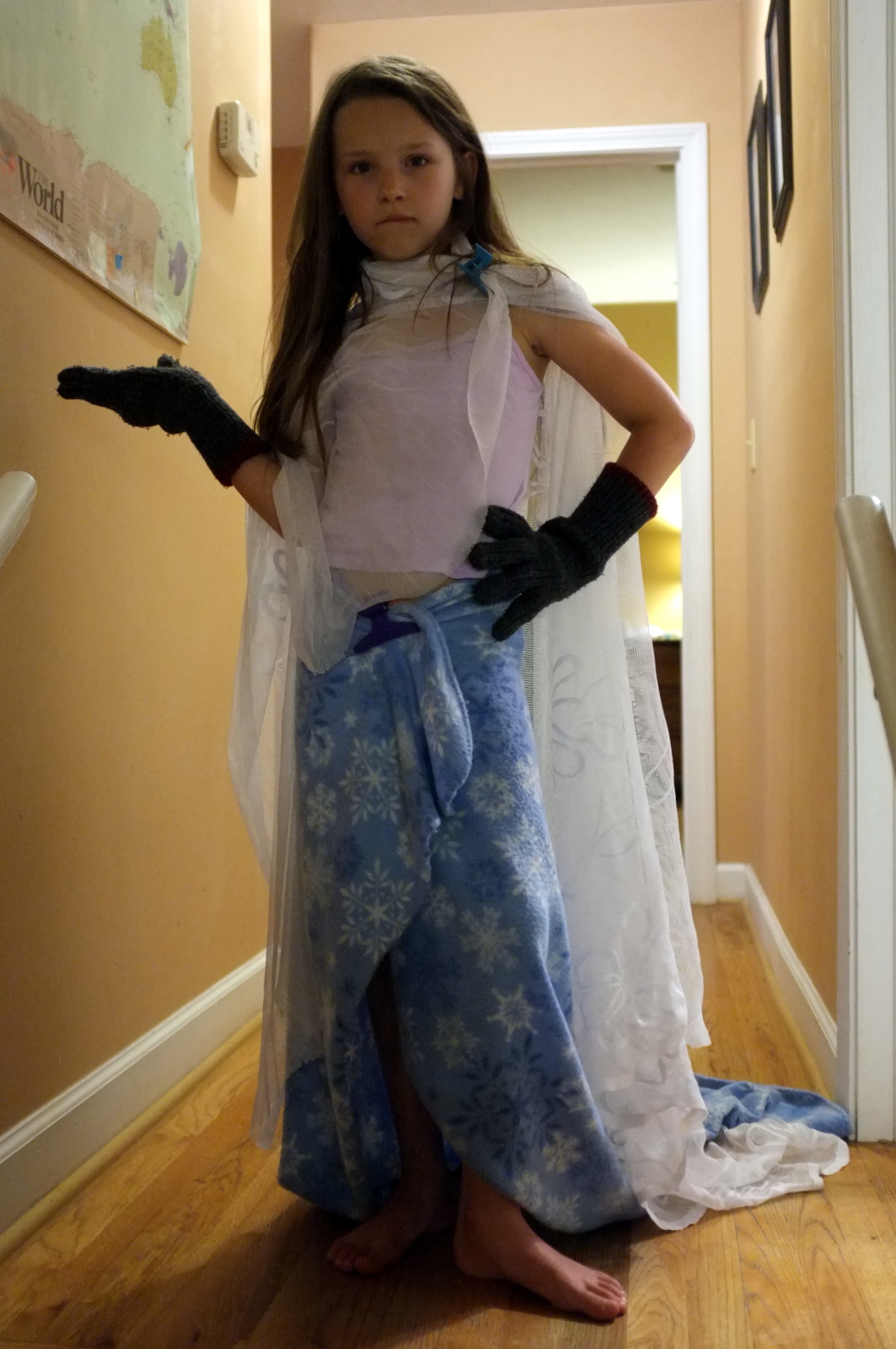
The Girl, at this point, doesn’t suffer from such a lack of imagination. She’ll take a blanket, old sheer for window treatments, and heavy winter gloves and declare herself the queen of England.

Goodies for the Teachers

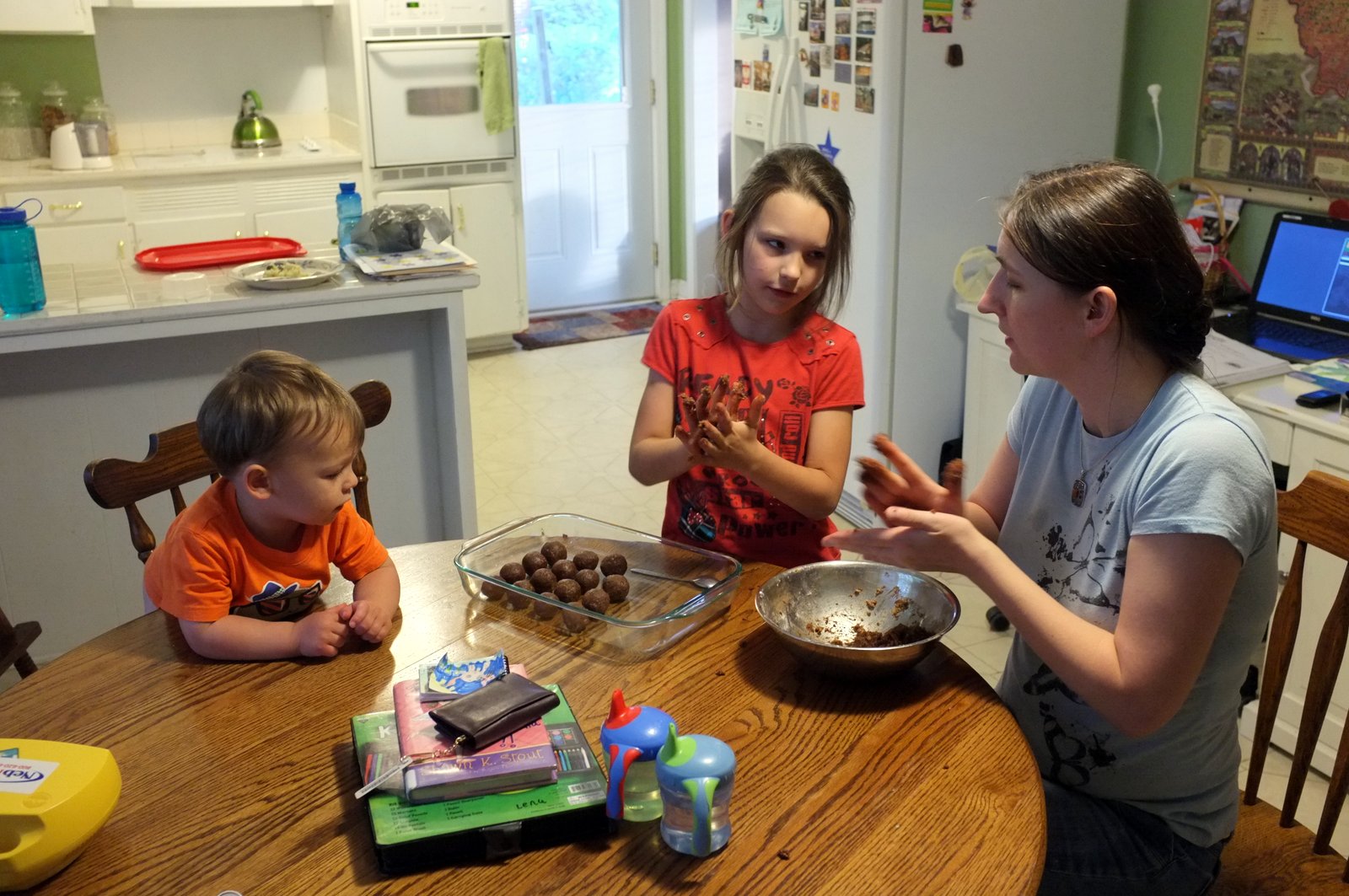
The chocolate treats we sent L’s teachers were such a hit we decided to do the same for E’s teachers. And when I say “we” in that sentence, I mean K.

DSCF0001

Measuring Success

They come in as strangers, and by now, their reactions and behavior are almost predictable. I have only a few more days with these students who’ve undergone so many transformation in less than a year, and then soon, they’ll be strangers again. One or two will send an occasional email, that’s certain; I’ll see one or two here or there every how and then. Some have younger siblings, so I’ll see them at awards nights in the future or in the car line if their sibling is the first dropped off. The rest, though, disappear for all intents and purposes, as I repeat the process next year, learning new names, new faces, new habits.

How do I know if it’s been a successful year, though? What metric allows me to make this determination? Is a letter from a student enough? Are test scores enough? (Our principal informed us that our End of Course exams for high school credit courses were the best “in a long time.” Is that a good metric?)

Letter

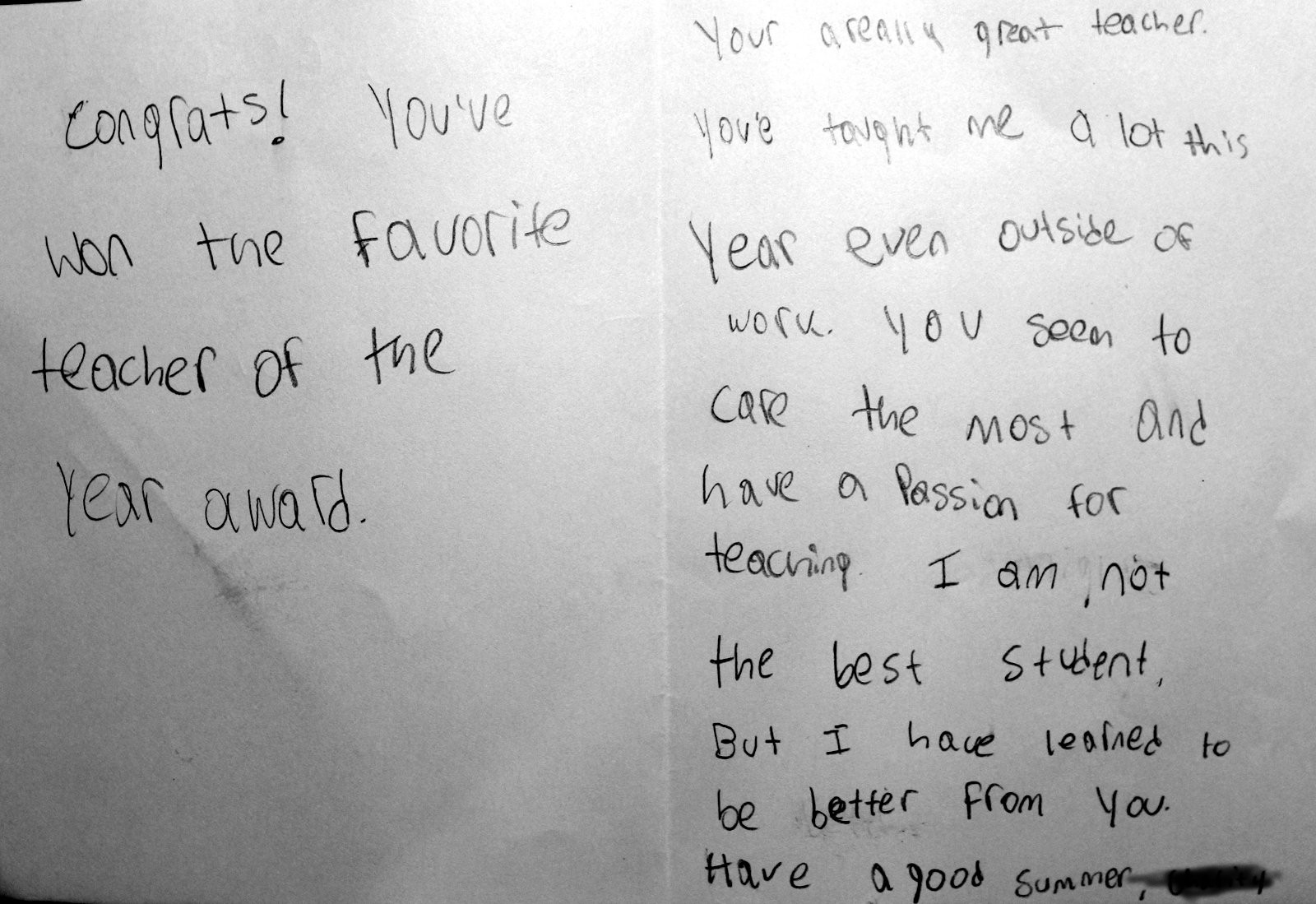
Someone — the administration I would assume — has put the kids up to writing end-of-the-year notes to various teachers.

DSCF4460

The next day, I told her, “That’s about the sweetest thing any student has ever done.”

The Delicacy of Sharing

Teaching our daughter to share has been a constant challenge, as I’m sure it has with most parents. L likes and even expects others to share with her, but getting her to return the favor — that’s always been a trick. A few events of the last few days, though, makes me think we’ve made real progress.

Friday, we were to meet a friend of hers from her first grade class at the end-of-the-year school party, a carnival with a few rides and some games scattered about the school ground.

“We’re supposed to meet at six at the silly string!” she told us, countless times.

DSCF4078

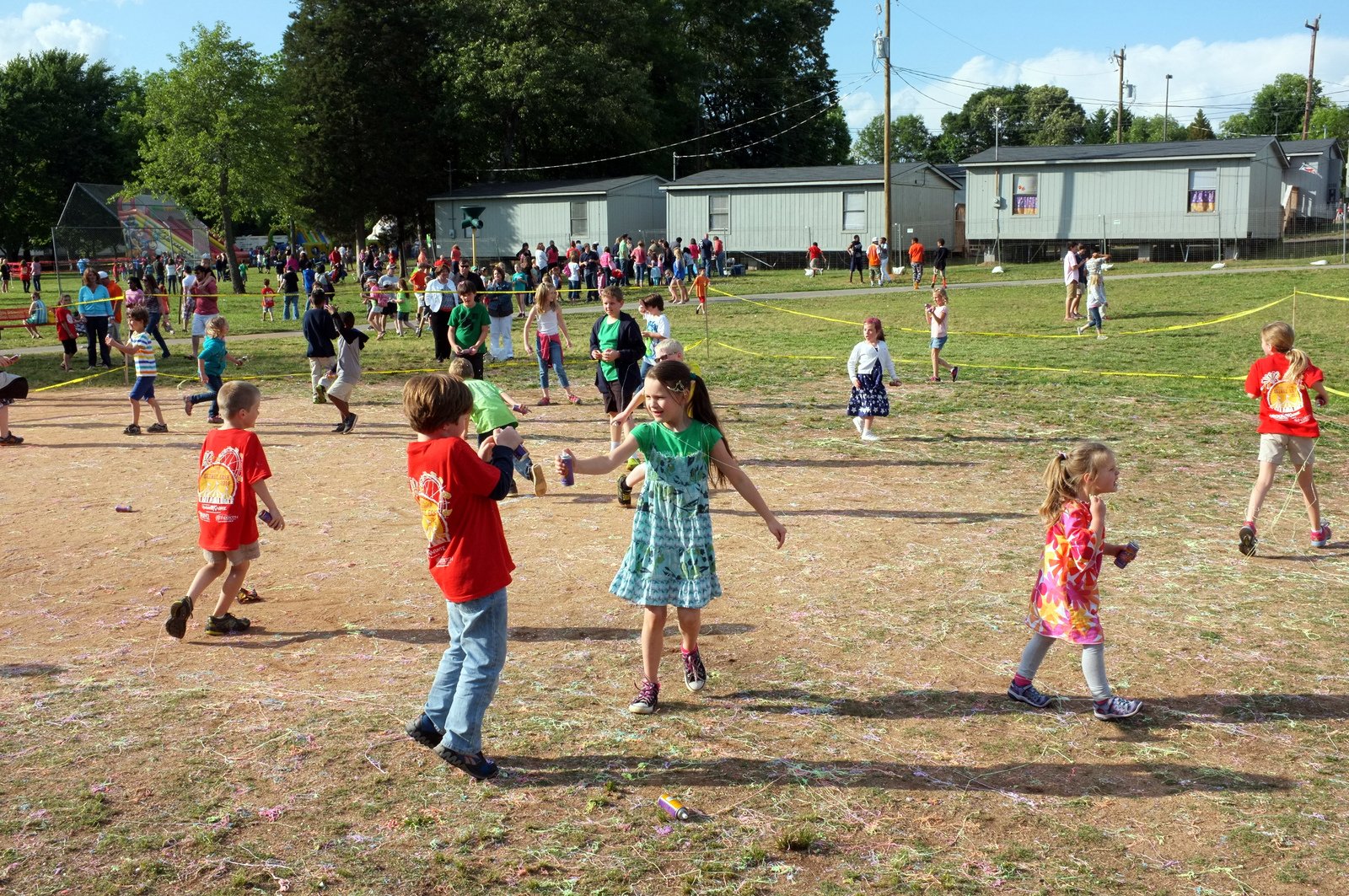
We arrived at the silly string area — a roped off portion of the field where kids ran about spraying aerosol string on each other — at the appointed time, but no friend. We got a ice treat, went on a few rides, and then suddenly discovered L’s friend, also Lilly.

With her mother’s blessing, Lilly went off with L and me, but before long, she’d run out of tickets.

“Daddy,” L said with a grave expression. “Give me the rest of the tickets. I want to slip them with Lilly.”

DSCF4081

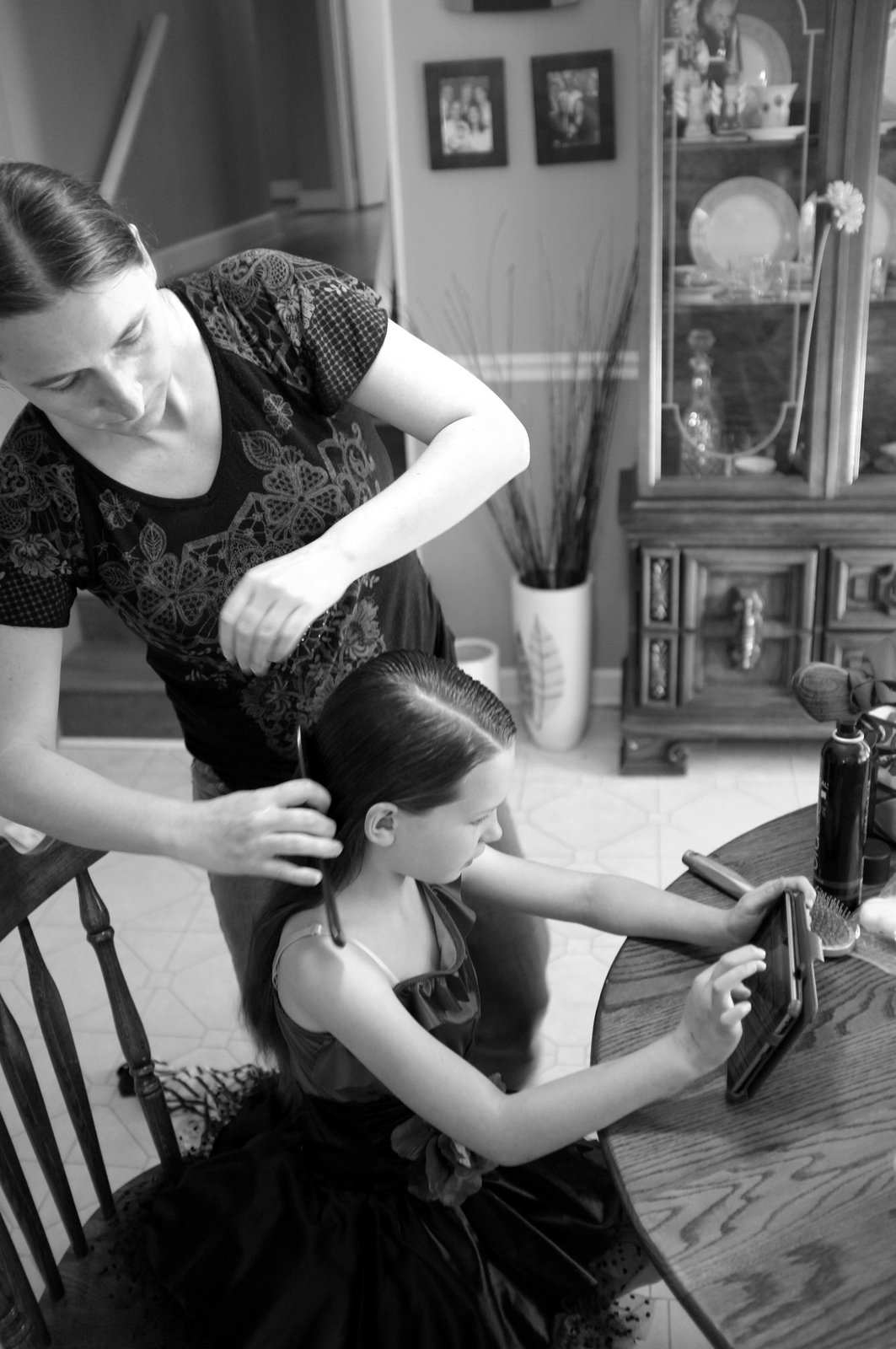
The second episode: today, during L’s preparation time before ballet portraits, I sat with E at the table to do his albuterol breathing treatment, but he was having none of that.

“No! No! No!”

No amount of cajoling, explaining, or begging could help.

DSCF4084

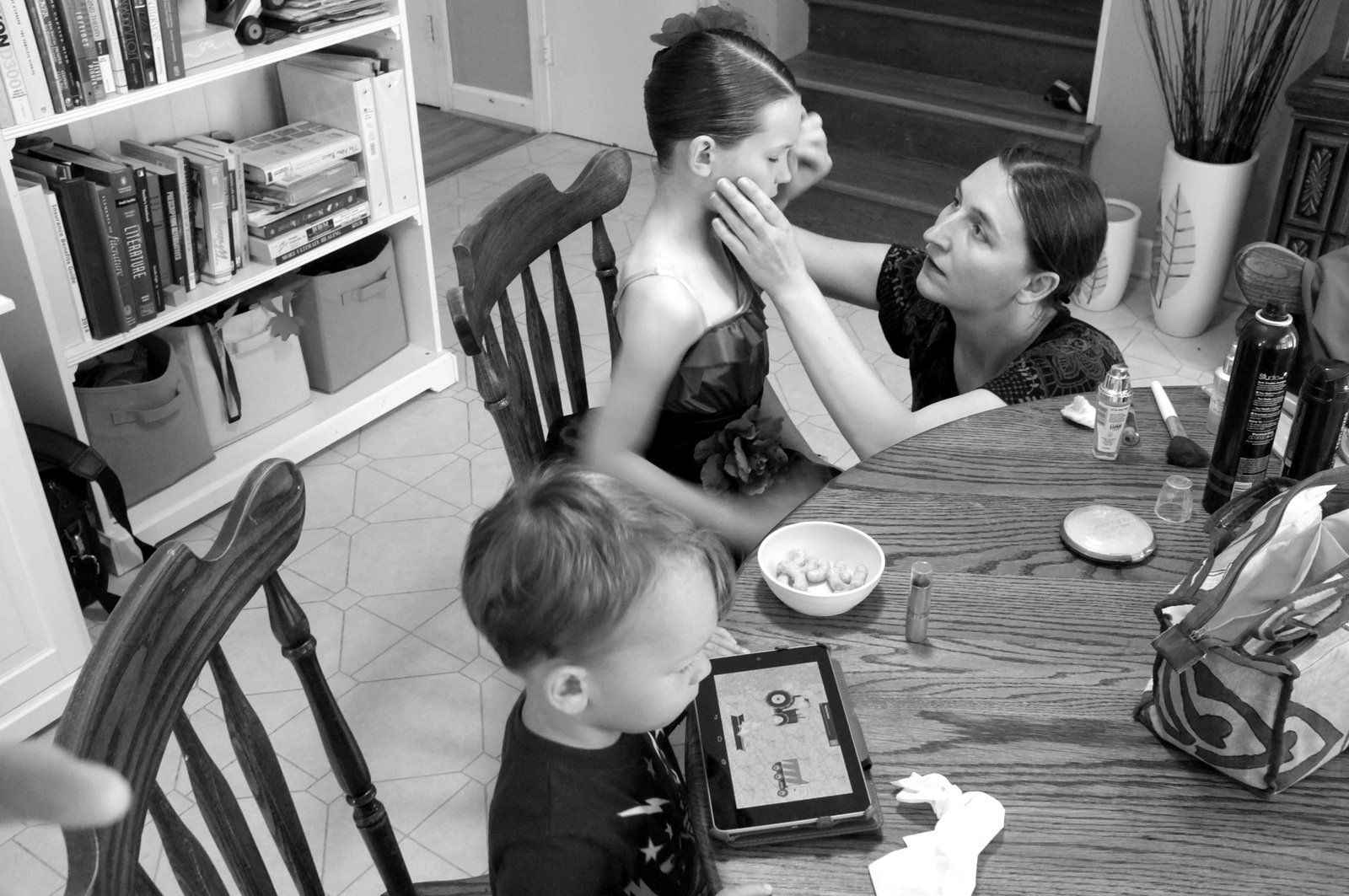
L came to the rescue, offering the Boy use of our family Nexus so he could play his favorite game, a vehicle-based shape-matching game.

He sat patiently for the treatment, playing his game and clapping furiously whenever he finished a round.

DSCF4094

“Bravo!” he cried, as did I, though for both L and E.

DSCF4098

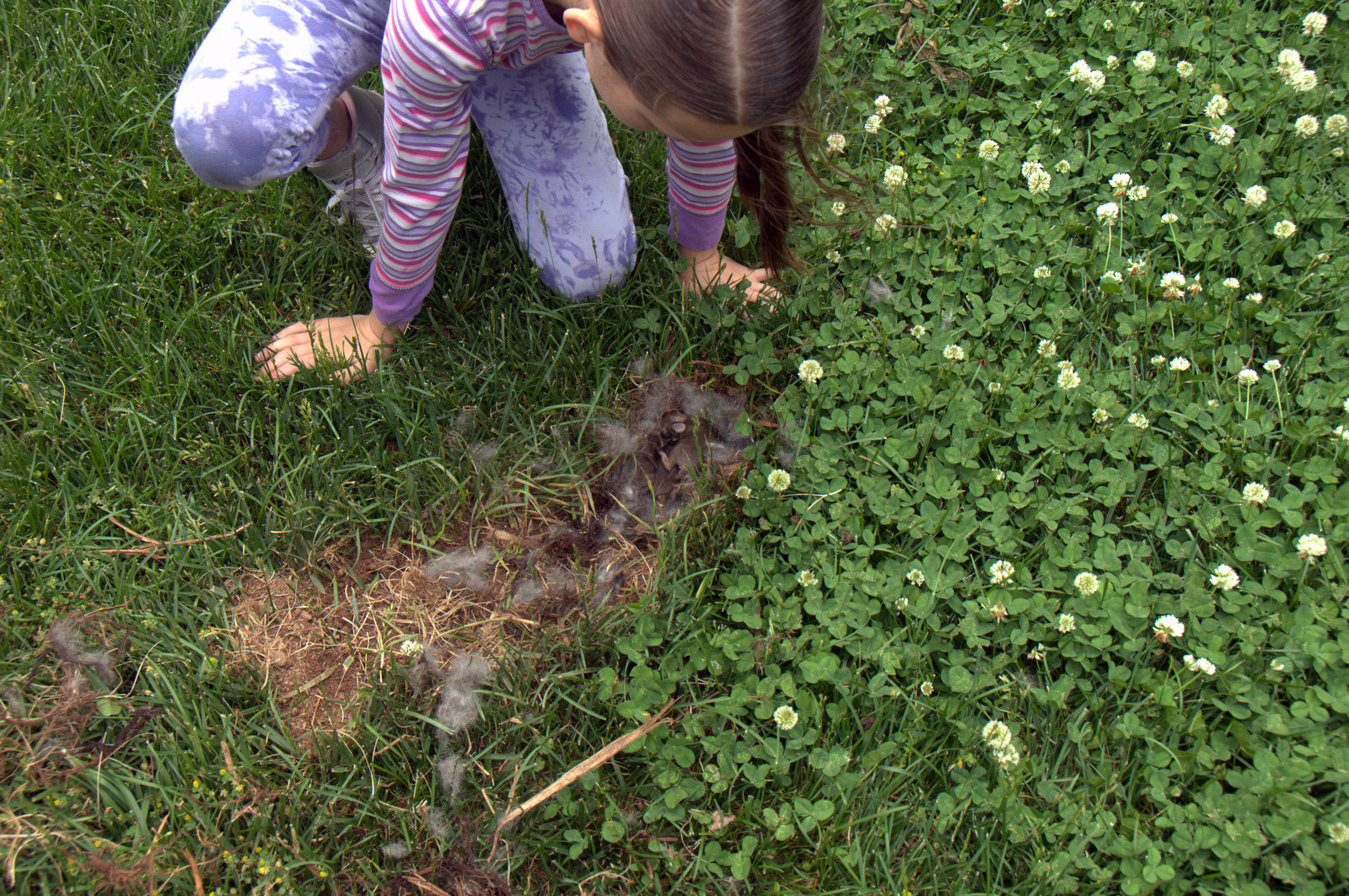
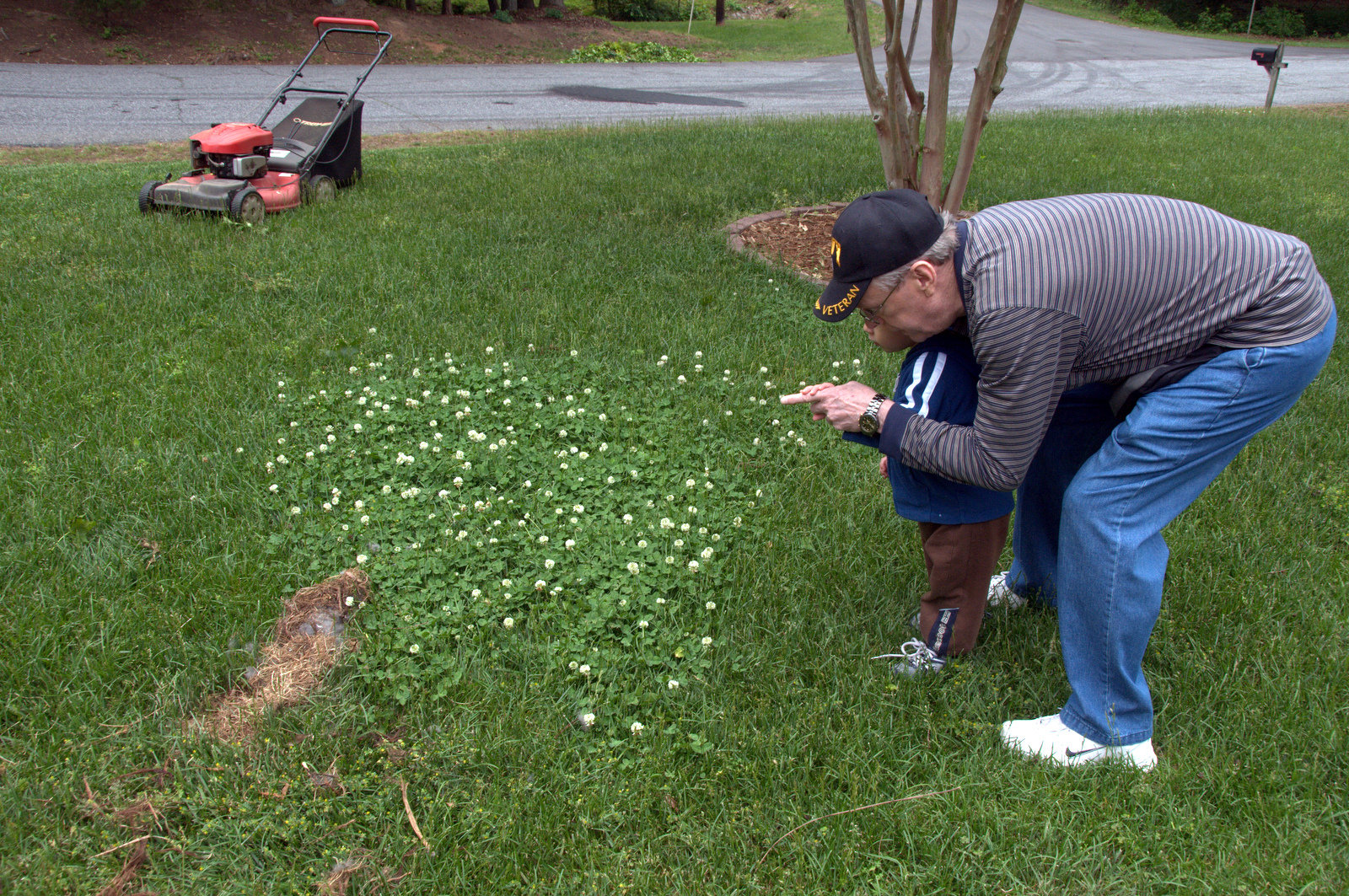
Finally, in the evening, mowing the yard after almost two weeks’ neglect, I came upon a patch of matted grass, so I headed in for the dethatching rake. As I returned, I noticed a curious patch of dry grass with bits of gray about it. I walked over, pulled the grass aside, and found a burrow of baby rabbits.

DSC_6657

L came over to get a peek, and Papa brought the Boy over.

DSC_6653

“What an odd place to burrow,” I said. Indeed, for it will be a disaster if our cat finds it, which is not as likely as it might seem given her age and general laziness.

DSC_6664

Still, I’m happy to share our yard — for once, it’s an animal that seems harmless.

Violations

In some ways, it’s an unbelievable irony. I spend the entire school year answering students’ questions, encouraging students to ask questions so I can answer them, begging students to ask questions. I sometimes have to teach students how to ask questions or even when.

“If you just blurt things out, you’re creating a problem instead of a solution,” I say. I know the kid has heard this a thousand times; I know, because I’ve told him at least 974 of those times. Still, I say it again: after all, it was a legitimate question. Wasn’t it?

Sometimes the questions stump me. Sometimes humorously: “Mr. S, why do they call a grapefruit a grapefruit? Why don’t they call grapes “grapefruit” and grapefruit “big citrus ball”? Sometimes seriously: “But why doesn’t that appositive have commas?” To the first type, I just laugh; to the second, I reply honestly: “I don’t really know. I’ll do some research and let you know tomorrow.”

But no matter the topic or the nature I (mostly) live for questions. They’re little signs of motivation, indications that the students are thinking, are trying.

And then today, after testing — the state-required SCPASS that measures my success as a teacher and my students’ success as students, or so they say — I get a question.

“Mr. S, what does X mean?”

It’s at the end of the day; I’m tired. Test violations and test rules are not even close to considerations; heck, I’m not even thinking about why the girl asked the question.

I answer her.

She asks another.

I catch on.

“These are from the test today, aren’t they?” I ask sweetly.

“Um…” she smiles.

“You know I can’t discuss this. I’ve told you guys a hundred times. We can’t talk about it. Period.”

“But why?” she insists.

Indeed.

The nature of standardized testing makes them completely useless as pedagogical devices. Assessment is meant to drive curriculum: you take the results of the test and decide where to go from there. Do I need to reteach? Did they catch it all? What topics give students the most trouble?

But these standardized tests are exceptions to that rule. I won’t know the results until next fall, when there’s nothing I can do with it except to use it to set my goal for improvement next year  I can’t discuss it with students after they take it so that we can fill in the gaps the test exposed. It’s just an enormous time suck that seems to have no other purpose than bureaucratic harassment.

But I give the straight answer: “It’s just the rules.”

“That’s stupid.”

True. I guess in a way it was a test protocol violation. The real violation, though, came much earlier, in the design and implementation of these protocols.

South Carolina Drops CCSS

I am not an engineer. Other than understanding that engineers design things and use specific computer software to do it, I know nothing about engineering. My father was an engineer, though, so I’ve been in an engineer’s cubicle, looked through an engineer’s papers, and sat at an engineer’s desk. My father even let me play with CAD software a few times when it was still the new thing–the future. So taking all this vast engineering experience into account, I would feel perfectly within my rights and abilities to sit on a panel deciding which engineering standards to adopt. Certainly I would need someone to explain the significance of this or that line of a standard or the implication of this or that sub-point, but I feel confident than the standards that would result from such cooperation would be safe, effective, and meaningful.

Who wants to cross a bridge designed to those standards? Who wants to ride in a car designed to those standards? Who wants to work in a building designed to those standards? Who wants to use an appliance designed to those standards?

No one?

Why in the world not?

Because I’m not qualified to decide on engineering standards.

Oddly enough, though, legislators seem to think that just because they’ve been to school themselves and have talked to a handful of education professors–few of whom likely have ever had any in-class experience–they have all the knowledge they need to evaluate and accept or reject given education standards. They have the misconception that they can do this, and they have the power to do so. And so the ever-changing political winds blow this way and that, tugging teachers, administrators, and children this way and that, all in the elusive hope of solving our vast educational problems.

And vast they are indeed. I don’t need to rehearse in detail the litany of statistics regarding the relative freefall of American education, how far behind the rest of the developed world our educational system has dropped. Our math scores, relative to the rest of the developed world fall steadily as do our science scores. Our literacy rate is shameful compared to almost every other Western country. So we all wring our hands, and we all mutter, “How is this possible? How have we gotten to this state, to this point, where, for example, the majority of graduate engineering students are coming from former third world countries, now second world countries, fast becoming first world, nations like India and Brazil? How could this have happened?”

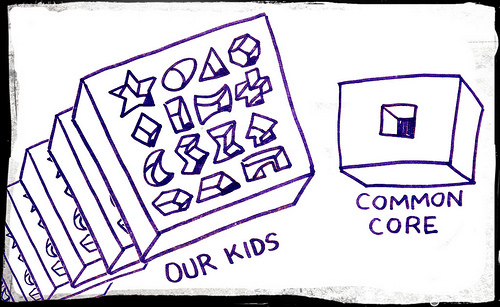
This mystery leaves us wondering about the solution, leaves our legislatures trying year after year, decade after decade trying this solution, that solution: Common Core, STEMS, classroom management schemes by the dozens, assessment schemes by the hundreds, left and right, No Child Left Behind, Title Nine, legislation, legislation, legislation, when in fact all we are doing is slapping Band-Aids on cancer patients then ripping them right back off, convinced that it’s the style of the adhesive bandage that’s the problem: we should try Flexible Strips, Sheer Strips, Water Block Plus, Clear Spots, all the various Band-Aid product varieties, when in reality all we’re doing is ripping off one cartoon bandage for another. Spiderman doesn’t do the trick? Let’s try Dora! Scooby-Do doesn’t work? Perhaps we need My Little Pony! All the while we’re convinced we’re trying radically different approaches when in fact all we’re doing is turning our children’s education into a farce.

The problem is we’re working off an incorrect diagnosis. We’re trying to cure a disease we’ve confused with its symptoms. We don’t see the real problem, so how can we see the actual solution? To express the problem is to sound like Chicken Little, but sadly, this time Chicken Little is right: the sky is falling. Our society is in freefall: the standard institutions that, throughout the history of the Western society held together the societies that literally invented the modern world, those institutions are have been doubted and criticized for over a century and have faced an outright full assault for over five decades. We have doubted and questioned and prodded and experimented with, ultimately dismantling or even destroying the very institutions that gave us the stability necessary to create capitalism, entrepreneurial competition, and the middle class, all of which were necessary for the explosion of technology we’ve witnessed in the last century. But it’s easier to point the finger at schools and say that it’s essentially a problem of bad teachers, poorly funded schools, and myriad other solutions.

The solution that so many have favored in the last two decades has been explicit educational standards followed by extensive testing, a way to provide a supposedly accurate metric of teacher, administration, and school effectiveness. This of course doesn’t work because it doesn’t factor in the true problem our education system is facing — chronic student apathy and even antipathy to education itself — because it measures all students by the same yardstick no matter their behavior in class, their absences, their rate of transferring in and out of schools, and a whole host of other elements that teachers, administrators, and schools have absolutely control over. But teachers have played along with this, adapting, re-working, or even scrapping lessons and methods as states adopt, drop, change, reword, and constantly rework the standards in an effort to get supposedly accurate metrics.

The Common Core State Standards (CCSS) were an effort (and I use the past tense because it is undoubtedly an effort soon to be relegated to the past in most states that initially adopted them) to standardize that effort across the entire country. It was an attempt to solve several actual problems in this misguided attempt to solve the larger problem. Among these issues was the relative disparity in state standards and resulting disparity in test results (harder tests produce less appealing results). Another problem was the thought that schools were graduating students that weren’t really ready for college and/or the workforce.

There were a number of reasons I disliked the CCSS. It placed an undue emphasis on what it called “informational texts,” new jargon for nonfiction. This nonfiction, though, was not creative nonfiction — essays, speeches, and such — but news articles, science reports, and the like. As a result, literature, one of the true loves of my life and my job, was relegated to a supporting role. In addition, I felt many of the language standards were too broad to be of much use.

On the other hand, I appreciated the emphasis on argument analysis and writing. Most of the writing we do in “real life” is not literary analysis but argumentative writing of one form or another. And though I disliked the emphasis on “informational texts,” one of the effects of the CCSS was to spread the responsibility for student literacy among all disciplines. Reading a text for science is different than reading a primary source in history, which is different still from reading an explanation of a mathematical principle, which in turn is different from reading a novel. The CCSS understood this and took it into consideration.

When our state adopted the CCSS, I was a little irritated: it meant that I would, once again, have to go through all my lesson plans, deconstruct them, remove portions that no longer corresponded to the new standards, and create new engagements for the newly required skills. Still, I thought, I’ve done it before; I can do it again.

“Just wait,” said another English teacher. “This is just another fad. We’ll be redoing everything again in a few years.”

I nodded in polite agreement, knowing she was probably right, but hoping in a way she wasn’t. There are not many professions that have to reinvent itself like education has to every time new standards come around. It’s an exhausting, time-consuming, often frustrating exercise. We have to let go of some of our babies, units and projects we’ve developed and perfected over the years that suddenly are useless. So when the backlash against the CCSS began eighteen or so months ago, I began to accept the fact that my colleague was right.

Yesterday, the South Carolina senate made it official:

The bill, which passed 42-0, is a compromise of legislation that initially sought to repeal the math and reading standards that have been rolled out in classrooms statewide since their adoption by two state boards in 2010. Testing aligned to those standards must start next year, using new tests that assess college and career readiness, or the state will lose its waiver from the all-or-nothing provisions of the federal No Child Left Behind law. (Source)

“Did you hear the news?” asked my colleague this morning. I shook my head. “Common Core is out.” We stood in the hallway, contemplating the repercussions and shaking our heads at the causes.

“It’s the far-right, Evangelical movement — you know that right,” she said.

I’m (now) no liberal by any stretch, and I knew my colleague isn’t either, but I had to agree when it comes to South Carolina, at least in part. And that’s what’s doubly frustrating for me about the whole thing: I feel betrayed by conservative colleagues who appear to have had a knee-jerk, emotional reaction to something they really don’t seem to understand. Almost all conservative criticisms of the English CCSS are based on basic misunderstandings of both the standards and their implementation. They’re straw man arguments in so many cases that I’ve found myself wondering if they’ve actually read the standards.

When we look at the standards themselves, they hardly seem scandalous. A few selections from the eighth-grade standards:

  • Cite the textual evidence that most strongly supports an analysis of what the text says explicitly as well as inferences drawn from the text.
  • Write arguments to support claims with clear reasons and relevant evidence.
  • Determine a central idea of a text and analyze its development over the course of the text, including its relationship to supporting ideas; provide an objective summary of the text.
  • Analyze the purpose of information presented in diverse media and formats (e.g., visually, quantitatively, orally) and evaluate the motives (e.g., social, commercial, political) behind its presentation.
  • Demonstrate command of the conventions of standard English capitalization, punctuation, and spelling when writing.
  • Analyze how a text makes connections among and distinctions between individuals, ideas, or events (e.g., through comparisons, analogies, or categories).
  • Analyze how particular lines of dialogue or incidents in a story or drama propel the action, reveal aspects of a character, or provoke a decision.
  • Determine the meaning of words and phrases as they are used in a text, including figurative, connotative, and technical meanings; analyze the impact of specific word choices on meaning and tone, including analogies or allusions to other texts.
  • Analyze how differences in the points of view of the characters and the audience or reader (e.g., created through the use of dramatic irony) create such effects as suspense or humor.

But apparently these are somehow immoral, unpatriotic, ineffective, or all three. To be fair, some conservatives might have issues with the suggested reading selections, but they were just that: suggested.

Another complaint among conservatives was the notion that this is somehow the nationalization of education, the federal government taking control of all states’ education programs. The real aim of making national standards was to encourage consistency among states. No real conspiracy there.

There is, however, another sense of betrayal that is perhaps more profound for me. In the end, standards are standards: what will replace the CCSS will, by and large, likely be exactly the same. The verbiage will be slightly different; some of the emphases will be different. On the whole, though, it will be more similar than different. And so in the end, all this will amount to an enormous example of government waste prompted by the very people who claim to detest government waste.

The state of South Carolina has spent millions in the planning and implementation of the new standards. Districts have spent additional millions in their own efforts to make sure teachers understand and are able to implement the standards. Districts and schools have bought new books, computer programs, and instructional aids to help with the implementation. District coordinators, school instructional coaches, principals, and teachers have all spent hundreds of thousands, likely millions, of man-hours retooling lesson plans, re-orienting procedures and best practices, and adding new material for the new curriculum requirements. All of that, all the money, time, work, and creativity, are now declared null, void, and useless by the wisdom of those in Columbia, men and women who have never set foot in a classroom except when touring pre-choreographed visits that show them only the best and brightest, shielding them from the reality teachers face every day.

State Senator Larry Grooms, who supported initially the immediate withdrawal of the CCSS, realized, in his merciful compassion, that that’s unrealistic, and so he supported a one-year period in which we continue with the CCSS while the state Department of Education reinvents the wheel. Grooms said, “Our teachers have already been pulled through a knot hole backward through this process. We want to do this in an orderly fashion.”

Well, thanks for that at least.

RIT Spring 2014

Every fall and spring, we pull out the tape measure and start to measure. We humans like to measure. We like to graph and explore and quantify, even things that don’t seem initially quantifiable, like how much a student has learned, how much a teacher has taught a given child. How can you measure something that is so nebulous as the teacher/student dynamic? With some students, we merely show a direction and the student strikes off on her own, fascinated with the new knowledge, seeking more on her own. Did we teach all of that? Certainly not. Is inspiration the same as teaching? Other students are apathetic for a variety of reasons, and a significant portion of our time is spent breaking through that apathy, trying to inspire, to motivate.

Still, effective or not, we trundle into the computer lab twice a year to take the Measures of Academic Progress, a test designed to serve as a fall benchmark and then spring progress report.

This year, I took notes as the students took the test.

10:03

After the first three students, we have a spring average 17 points above fall score. That’s approximately a three-fold improvement over my best yearly growth, but I fear it’s not to last. Indeed, I know it won’t last: these are the highly motivated, almost-always-do-their-homework kids who were already testing well above average at the start of the year. Still, their growth alone is encouraging.

10:52

The first results from my on-level classes are coming in. This is where we’ll make it or break it, because their motivation is not nearly as high as other students’, those in the honors classes. I tell these students, “You call those other classes the ‘smart classes,’ but the only difference between them and you is that they have the motivation to do the work.” But the results belie that, a pleasant surprise. The overall average growth has dropped, but it’s still a mind-blowing 10.09 point average. The on-level class has a 9.34 point increase average.

If I could have the results of my dreams, I would not have aimed this high.

11:40

Usually, at this point in the day, I’m thinking, “Just let the day end. Just put me out of my misery.” A student would raise her hand, indicating the completed test, and I would take a deep breath, steel myself, before heading over to record the score. “Please, please, I need some more growth. The last two kids’ scores went down. I have to have some positive scores!” It’s not that the students were doing poorly; they were simply not producing the results I’d dreamed of. Well, no, that’s not accurate: some classes actually as a whole did miserably throughout the years, and I can’t help but blame myself in those situations.

This year, it’s entirely different. I still hold my breath as a student approaches, but at this point, with 95.56% of students showing growth (as opposed to the usual 70-ish%), I’m just waiting for that score decrease that I know, just know, must be coming at some point. This dream cannot go on until the end of the day.

2:24

I pass out the students’ score sheets from their fall testing period, hopeful that these kids can pull it out. Our percentage of students showing growth took a serious hit last period, dropping from over 95% to 87.5%. The class in question is still very far above average with its scores, but very far below average with its growth. “When they’re that high already,” my principal reminded me early in the year, “it’s very difficult to get them up even higher.”

Yet despite the surprise, the day ended with almost 90% of students showing growth, and in one class, one hundred percent showed growth.

It was a year that made me think, “Well, where exactly is that merit pay?”

The Test

I prepared tonight some screenshots of various web sites for tomorrow’s lesson: students will be practicing citing an online article. I wonder if they’ll take this one seriously…

fedex

Class Portrait

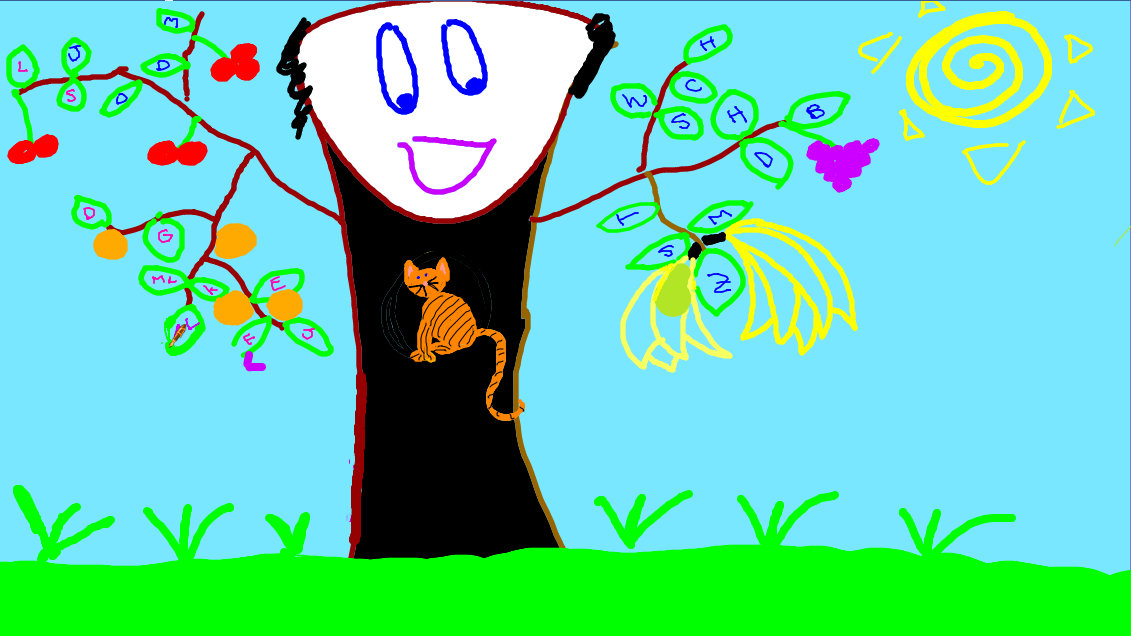
Having a little time at the end of SSR before heading off to lunch, a group of young ladies drew this portrait of the class.

1-Fullscreen capture 432014 15017 PM

Lord of the Flies

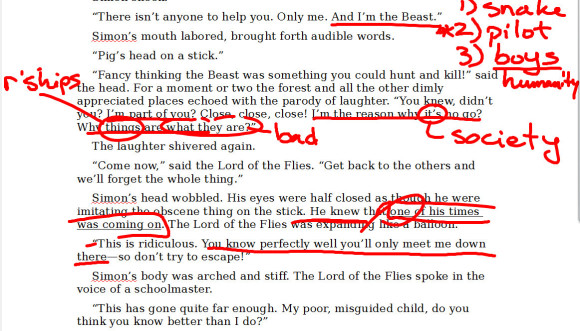
It starts slowly. In fact, Lord of the Flies is a downright boring book for the first little bit, especially for eighth graders. There’s just a lot of, well, buildup. Sure, the Beast is a little interesting, but nothing thrilling.

And then we hit chapter eight: “Gift for the Darkness.”

We do a close reading of Simon’s encounter with the Lord of the Flies, and by the time it’s over, almost all the students are eager to read chapter nine. I find out from their science teacher — most of the kids have science their final period — that all sat in rapt silence the last few minutes of class, reading Lord of the Flies. After school, one by one, the kids come to tell me how horrified and thrilled they are.

Another good time to be a teacher.

Bouncing Back

Dear Terrence,

When you walked into the classroom today, I knew things were going to be difficult for you. Your face was set in such anger: it looked as if you were about to explode. I’ve learned from experience that kids in a state like you were in are better off left alone, so I decided to let you sit there for as long as you needed, for until you become disruptive — always a possibility in such situations.

We began the lesson, things moved smoothly, and I kept my eye on you. You were unmoving for a good ten minutes. Then you loosened up a bit, but not much: your fists were still clinched, but not so tightly; your jaw was quivering with anger, but not so violently. I put the stack of papers to be passed out on the desk at the head of your row: when the stack arrived at your desk, you took one and passed the rest back. A positive step. Still, you weren’t in any place to begin work, so I let you sit. Finally, as we began marking the text, filling the pages with our scribblings and lines, our arrows and marginal notes, you raised your hand and asked for help catching up. I numbered the paragraphs, drew the lines between paragraphs for our text clusters, and handed the paper back.

“Thanks,” was all you said. And you slowly began working.

Let me tell you now: that behavior was not how a boy acts; it was how a man acts. It was impressive. It filled me with hope for your future. It reminded me again how much you’ve matured this year.

Now, the next step: set a goal to get to that point a bit faster. Then a bit faster. And before long, you’ll find yourself able to set aside even the most troubling situations long enough to deal with the responsibilities at hand. And that will be one of many signs that you’re a man.

Impressed and still smiling,
Your Teacher

Things We Pass Over

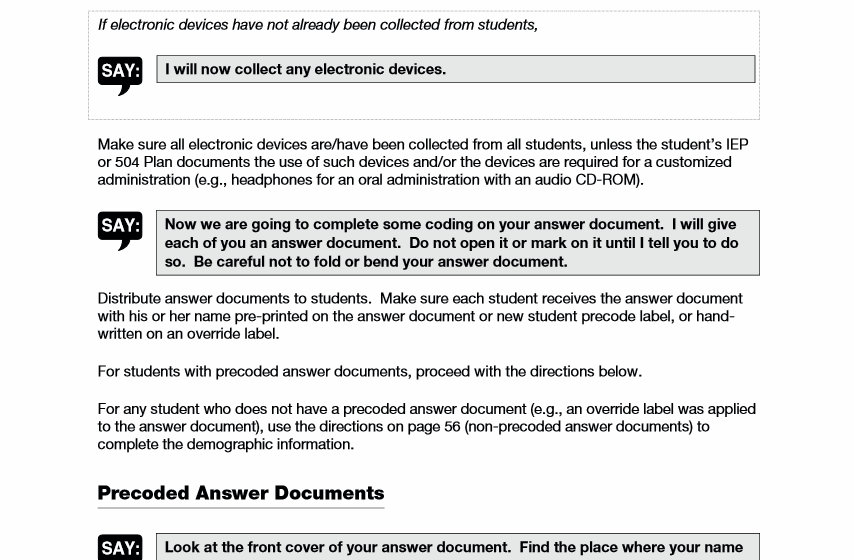
Test Administrator's Manual, available in full here.
Test Administrator’s Manual.

“I will give each of you an answer document. Do not open it or mark on it until I tell you to do so. Be careful not to fold or bend your answer document.”

I say these words and begin passing out the answer documents for the 2014 SCPASS writing test, part of the required state testing for No Child Left Behind compliance. I look at each answer document, glance at the student in front of me to confirm that I’m about to hand the correct document to the correct person, and it hits me once again, the little miracle that of being a middle school teacher.

Just months ago, these faces were strangers, a room of twenty-nine kids that I knew virtually nothing about. Since they’re taking ninth grade English in the eighth grade, their intelligence and perseverance were an obvious-enough inference. Still, beyond that, there was nothing. Just faces. Now each of those faces tells a story. I’ve learned so much about these kids in these few months that I’m certain I know them in some ways better than their parents. Certainly I know a different side of them, and without a doubt I know them better than almost any other non-family adult. I know this one’s mother died just a little over a year ago yet he holds it together more bravely than I could imagine. I know that one feels tugged between divorced parents, and does that clever one in the corner. I know which have bad habits they’re trying to break, which kids have bad habits they’re letting linger, which kids feel terribly insecure and put a brave, almost aggressive face on as a defense. I know their dreams, their fears, their loves, and even some of them, I know their crushes and heartaches.

What other job lets you see so deeply into so many people’s hearts? Why would I want to do anything else?

Influence

A hotel manager in Davos, Switzerland might be able to arrange a fine martini, a cab, or even some adult entertainment for you. He might speak four or more languages. He might be charming. But he’s not one you would likely put much stock in when it comes to questions of beginnings, metaphysical questions of origins and destinations. He’s not one you would expect to come up with earth-shattering theories about where humanity came from, about who might be listening in our most private thoughts, about who might be ultimately controlling more than we could imagine.

If a hotel manager form Davos, Switzerland proposed a theory that rewrites all history — religious, economic, political — you might suggest he put the drinks on your room tab and head upstairs to sleep it off. Especially if he suggests that the gods of all religion, ancient and modern, are aliens. That there’s proof in artifacts from around the world. That the evidence is painfully obvious.

Erich von Däniken is famous for his crackpot theories about extraterrestrial visitors’ influence on human culture and history. Thoroughly discredited, admittedly a fiction writer, Däniken’s books have still reached a wide audience.

Including my students.

In preparing for the PASS test, students have been planning and writing practice tests for the last several days. I give open-ended prompts and then we discuss, in one-on-one conferences, what went well and what could be improved. The other day, I put the following prompt on the board.

Many people influence us. Sometimes they introduce us to a new interest or hobby, or sometimes they affect our views on things. Write about someone who has had a significant influence on you.

And then I read a quirky eight-grader’s thesis: “Erich von Däniken has influence my view of history.”

I try to stay away from taking definitive stands about politics, religion, economics, or much of anything else in the classroom. I teach reading and writing — nothing else. But this, this I couldn’t resist.

“Have you read any critical analyses of von Däniken’s work?” I asked him. I suggested a few of the flaws in the theory, then encouraged him to read some critics’ view of von Däniken’s theories. Ideas like Carl Sagan’s:

That writing as careless as von Däniken’s, whose principal thesis is that our ancestors were dummies, should be so popular is a sober commentary on the credulousness and despair of our times. I also hope for the continuing popularity of books like Chariots of the Gods? in high school and college logic courses, as object lessons in sloppy thinking. I know of no recent books so riddled with logical and factual errors as the works of von Däniken.

Tolerance and acceptance of students’ views — that’s one thing. A student taking seriously ideas from an exposed fraud — quite another.

Teaching to the Test

1-Fullscreen capture 3132014 101053 PM“I’m so sick of the PASS test,” I said to our eighth grade administrator, “and we haven’t even taken it yet.” The test — technically now called the SCPASS, which stands for “South Carolina Palmetto Assessment of State Standards because just “PASS,” as it was called for years, infringed on some copyright or other — is the state assessment for No Child Left Behind (NCLB) compliance. It’s a silly hoop students have to jump through in an effort to provide data about effective teaching, effective schools, and effective students. In theory, anyway. It consists of math, reading, writing, science, and social studies assessments, and the first portion, the writing assessment, rolls around this coming Tuesday.

Regarding standardized tests, we teachers are always told we shouldn’t be “teaching to the test.” I’m not quite sure what this means, though, because it seems that, given the fact that we have state standards from which we form our curricula and from which test makers derive the tests, any time of standards-based teaching is, to some degree or another, teaching to the test.

This is even more confusing when I consider myself as not just a reading teacher but a writing teacher as well. We teach kids that they should always taken into account their audience and purpose when writing, and so it seems to me we should be doing the same for this test. The purpose is simple: to pass at the very least, with a score of “Exemplary” as students’ ultimate goal. The audience, too, is straightforward: the only people who will read these particular essays are the exam graders. Therefore, as a teacher, I should help students figure out how to write for this purpose to this audience. “It’s jumping through hoops,” I tell them, “not real writing. You’re just trying to show them that you can do all the things on this rubric.”

So we’ve spent the better part of this week and last putting together a plan to write for this purpose to this audience. And I do so in full knowledge that this is not an accurate assessment of authentic writing; it’s an assessment of prescribed writing. Still, except for bloggers, professional writers, and diarists, almost everyone in the “real world” writes primarily prescribed writing: reports, minutes, emails, summaries, proposals, invoices, and the like, so maybe it’s an accurate assessment.

Nah — it’s just hoops.