education and teaching

The Jacket

Dear Teresa,

Women-Quilted-fitting-Biker-Leather-Jacket-13-240x340You looked really sharp in that leather jacket, I must say. It really worked well with your tight, curly black hair, and you wore it with a confidence that was surprising. In short, it looked great.

Sadly, it was also a dress code violation.

I know, I know — I get tired of the dress code myself. I get tired of enforcing it. I get tired of policing it. I get tired of dealing with it. But truth be told, we all have a dress code. I can’t wear anything I want to school, and while your dress code as a student is much more restrictive than mine as a teacher, I can sympathize to a degree. Still, it’s my job to police it (I choose that verb carefully and deliberately), and every time I have to approach a student for the first time about a violation, I’m a little apprehensive. I know some students can’t handle that criticism well, and it risks turning into a confrontation that I really don’t want to have.

“No one else has said anything to me about it!” is a common refrain. Perhaps no one else noticed — after all, we teachers have a million and one things on our minds. Dress code sometimes takes a backseat.

“I wore it yesterday, and no one said anything about it!” is another common response. See above.

“I’ve worn it all year, and no one has said a word about it!” is one I hear every now and then. See above.

So when I see a dress code violation, I get a little nervous. I just don’t like situations that could escalate into a bigger issue. I always do my best not to escalate the situation, and I think I do a good job of keeping things calm. But there are some students who are determined — absolutely determined — to make an issue of it.

And then there are students like you: I mentioned the lovely jacket was a dress code violation, and you simply put it in your locker. I could tell from your body language that you were not happy at all about it, but still, you put it away without a word. I was more impressed when we talked about it: you said something like the responses above, with a few new twists, but you waited until the appropriate time to discuss it. That showed a maturity that is impressive.

Thank you for handling an unpleasant situation like a true young adult. It makes me feel even more fortunate to be your teacher.

Still smiling,
Your Teacher

Week One

73fx_blackWeek one is under behind us, and it’s been a start unlike any other. For one thing, I’ve been cycling to work, and except for Monday, which was a workday followed by meet the teacher in the evening, I’ve ridden every day this week. A total of 104 km or just over sixty miles. With my additional evening riding, it puts me at 240 km for the month, with another 120-ish on tap next week. (Add in the walking I’ve remembered to track and it rises to 350 km.) It’s by far the most I’ve ridden in a single month since K and I became parents, and it’s had a tremendous effect on everything else. Starting the day with a good bike ride gets me to the school more alert, awake, and energetic than I’ve ever felt when going by car. Ending the day with a good bike ride brings me home feeling I’ve really accomplished something for the day: not only have I spent my day well, working with kids, but I’ve got my exercise in as well.
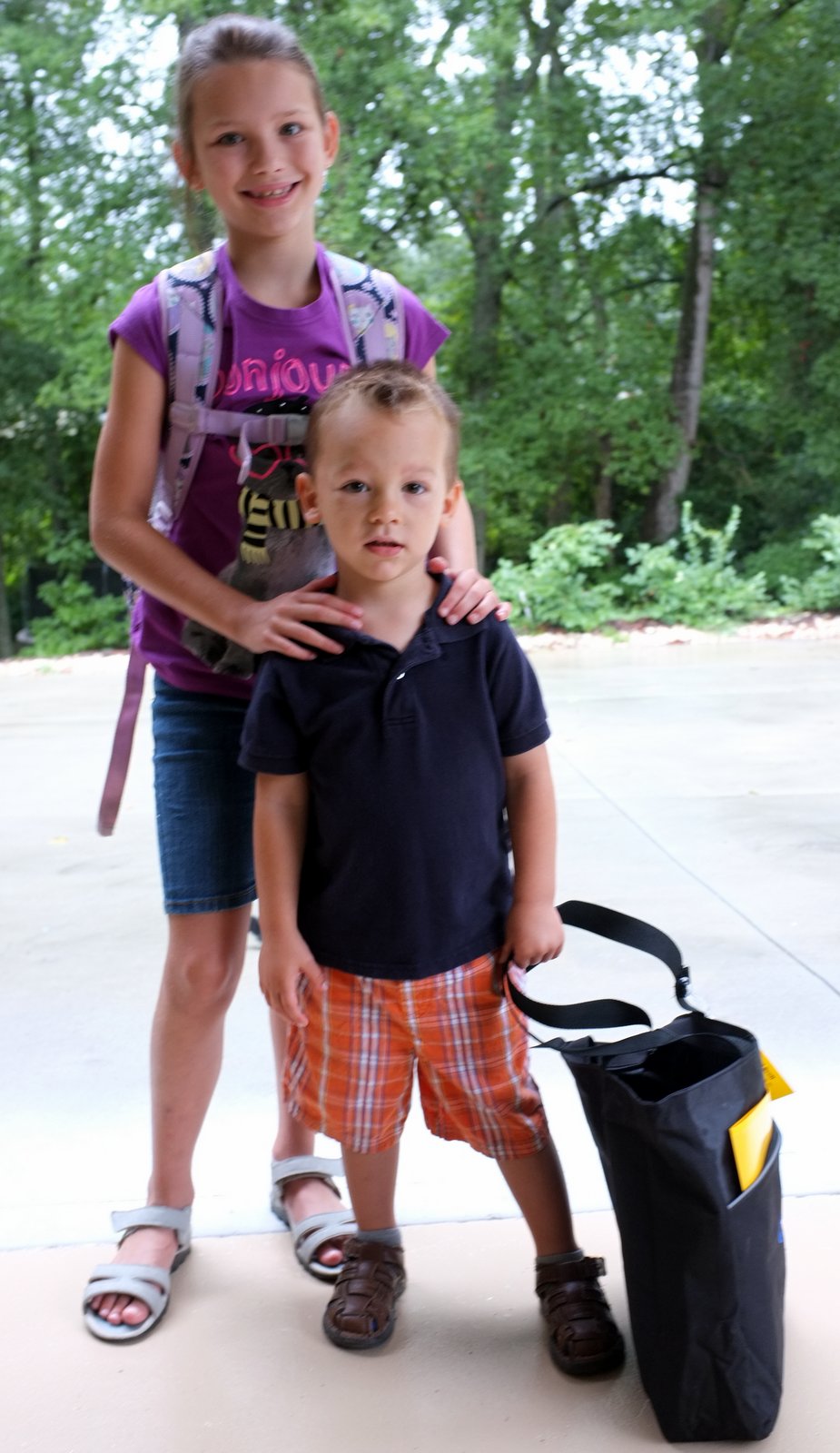
Once at school, it’s been a start of the year unlike any other as well. Last year was a bear, a real challenge that left me questioning whether I really wanted to keep teaching. I knew it was only an off year, but when you’re only five days into a 180-day school year and you already see a year of hard struggle with behavior issues stretching before you, it’s enough to make you question your commitment. This year, though, one week in and I see that this year might actually be fun again, not such a struggle.

First Week

Dear Terrence,

We’re nearing the end of our first week of school. Where are you? Three days in and I’d always be able to tell who would be my Terrences and my Teresas this year would be. Last year, I could tell within three seconds. You probably think I’m being hyperbolic (exaggerating for effect), but it’s true: one Teresa (and there were so many last year) introduced herself with her actions and words before she even entered my classroom, and several of the Terrences made clear their priorities just as they’d stepped inside my room. This year, I just don’t know where you are. Granted, I’ve seen a glimmer of you in this student and that, but you — that attitude, that consistently disruptive behavior, that anger, that defiance — are nowhere to be seen.

While that does relieve me for the most part, I must admit that there’s a little part of me that’s somewhat unnerved by it. I’m used to seeking you out and working with you and your issues immediately, and the fact that you haven’t appeared makes me think that perhaps I’ve lost my discerning edge or that perhaps you’ve gotten better at blending in and will pop up later than expected. I enjoy the challenge, that’s true, but the fact that I still haven’t figured out who you are this year gives me a bit more hope about the future than I usually have. Maybe my cynicism and pessimism are misplaced. We’ll see as soon as the honeymoon period wears off.

In the meantime, I just want to thank you for keeping it cool. I’m still fairly sure you’re out there somewhere, but you’re blending in nicely now, and that makes my job a whole lot more enjoyable.

With beginning-of-the-year hope,
Your Teacher

First Day 2015

“Goodnight, couch potato!”

I stopped on my way out the door just long enough to turn and give a smirk smeared with a grin. “Couch potato indeed,” I thought. Just because I’d almost fallen asleep while playing cars with the kids earlier this evening doesn’t make me a couch potato. I biked to work, wrestled with all the first-day problems that consume a teacher’s initial planning periods, taught five lessons straight, and biked home in a fairly substantial rain — couch potato indeed. Still, I just gave L a smile mixed with a slight smirk, wished her goodnight again, and headed out.

L had a rough first day in a lot of ways. Now in third grade, she heads upstairs to the classrooms that house the third, fourth, and fifth grades. Assigned a teacher known for being strict, she fretted throughout the evening about the news that they will have assigned lunch seats starting tomorrow. “Last year, we only got assigned seats when we were bad!” she sniffled, and I think I know at least part of what’s going on: L tries very hard to be a good student, and when she hears that they’re getting assigned seats, which she usually associates with misbehavior, she begins doubting her own goodness in class. It’s a fairly natural reaction, I would think, but L chews and chews on things like this until she wears it down or it wears her down.

We talked about it a bit tonight, and in the course of that conversation, one of the real concerns became evident, a concern that I myself remember having when I was in elementary school. “We don’t have a bathroom in the class.” Instead, they must share the facilities with fourth and fifth graders. Who knows what that might lead to, she reasons. And while I certainly think there’s little to worry about, I do recall how we’re seeing more and more news reports that show children younger and younger growing more and more brutal. It’s unlikely, though, that anything worse than a sideways glance from a fifth grader might happen. But I too remember that fear that comes with being thrown in among older kids who are completely unknown.

DSCF5855

The Boy, on the other hand, had a completely different experience. “But Mommy, I’m not ready to go,” he told K when she picked him up from his part-time K-3 (K-3? Is there any limit to this?!) program. The teacher commented on his manners, which consistently imzpress me, and he likely commented continually about the enormous Thomas the Train play station in his room.

And my day? First day back as an eighth-grade teacher is always a bit stressful. I’d already had my visit with the seventh-grade assistant principal to find out which students could be most challenging and therefore which students I need to focus on as I developed relationships with 100+ new thirteen-year-olds. But despite the schedule I feared would be brutal, I mounted my bike feeling I might not have had a better first day in my entire teaching career.

Plans, Rain, and Barszcz

It’s usually not until the end of the day, when it’s too late, that I realize I haven’t been living my life that day as if I had chosen, out of all days, to relive that one day. It’s not until I’m with L, working through our examen (which we have re-initiated with our reunion after a summer break) that I see that I’ve been going through the day relatively blindly. I look back on the day at that point and realize I wasted time and energy wallowing about in this or that negative emotion, letting this or that frustration take control. I look back, I see these things, I promise to do better the next day, and I promptly forget.

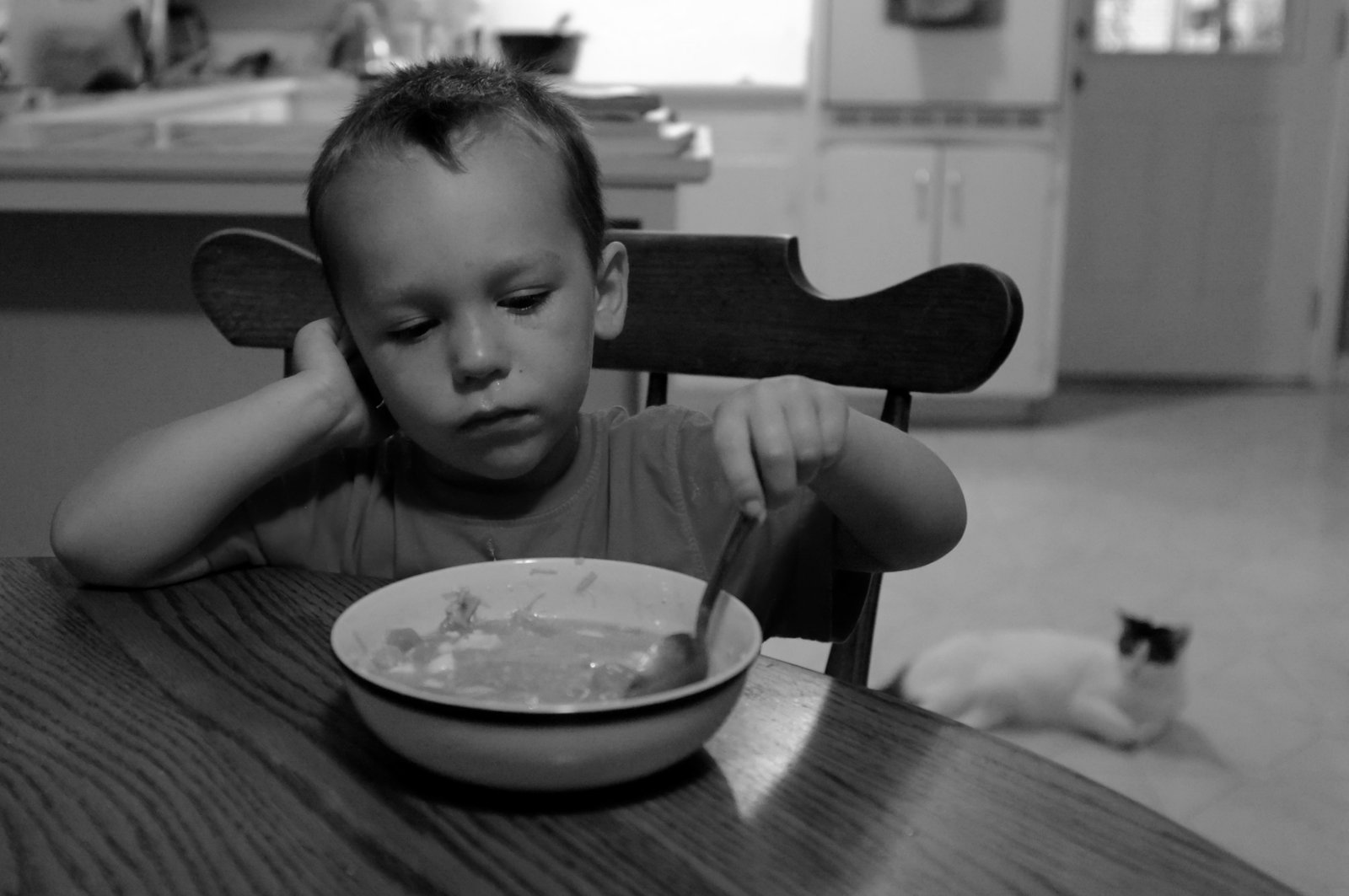
During tonight’s, though, it occurred to me that I’d been constantly aware of how lovely the day was as it unfolded. I rode my bike to school and was pleasantly surprised at my average speed. I had a long productive meeting with the other teachers on our instructional team, planning a multi-disciplinary unit that might not only teach some academic skills but also affect change in the kids’ lives. Despite the afternoon rain, I made it back to the house relatively dry. I had a lovely dinner with my family, marveling at how the kids both devour beet-root soup, which seems unimaginable given the pickiness of L. We had a pleasant walk after dinner, with the kids scooting ahead and returning on their various vehicles.

1-DSCF5804-001

And then, during our examen, I looked down at our wiry, energetic (often frustratingly so), intelligent daughter, and I realized that simply being around all the wonderful people in my life should be enough to make me aware of the marvelously blessed life I have. I have incredible colleagues at work; I always work with a great group of students; I have children that make me beam; I married a woman that constantly astounds me; I have parents that give to our own family unconditionally. I am lacking nothing. We are lacking nothing. Nothing of any importance. Simply being aware of this is the trick to having a great day, day after day.

Tuesday

I always maintained that Tuesdays had nothing going for them. Don’t get me wrong: I’m not about to suggest that Mondays have a lot going for them, I would continue. Mondays, though, have the force of the weekend behind them and the sheer necessity to get going. You push through Monday like you push through a two-kilometer, 5% grade climb at the beginning of a long bike ride: it’s not pleasant, but you still have the energy to do it, so you just do it.

1-DSCF5790

Wednesday carries the advantage of being the mid-way marker of the week: make it through Wednesday, and it’s all downhill from there. Thursday is almost Friday, and Friday is Friday. Only Tuesday has nothing going for it.

This all carries the assumption that the only enjoyable part of the week, the only part of the week really worth enjoying, is the weekend. In the summer, for a teacher, that just isn’t true: every day is the weekend in a sense. Every day can be a day of exploration, a day of getting stamped with anti-bug, anti-wild-attack-cat antidotes. Every day can include some discovery and rediscovery with one’s children.

2-DSCF5795

That’s the easy part. The challenge is getting that to carry over into the school year, to think, “‘Tuesday has nothing going for it’ is nonsense because all days have something going for them.”

3-DSCF5797

To live each day as if, given a choice of any day in your life to relive, you chose today.

4-DSCF5799

At this point in the year, less than two weeks before the kids head back into the classroom, I’m always confident that I’ll succeed. Last year, that confidence didn’t even make it through the first week of school, so challenging were a couple of classes. But in the end, that too is a choice.

Break

K informs me that I work probably fifty to sixty hours a week during the school year. Grading, planning, grading, planning in the evenings, on the weekends, in the evenings, on the weekends. It adds up, she tells me. I never keep track, but I’ll go with her assessment. That’s why, when summer break comes around, it’s an absolute relief, at least for the first couple of weeks.

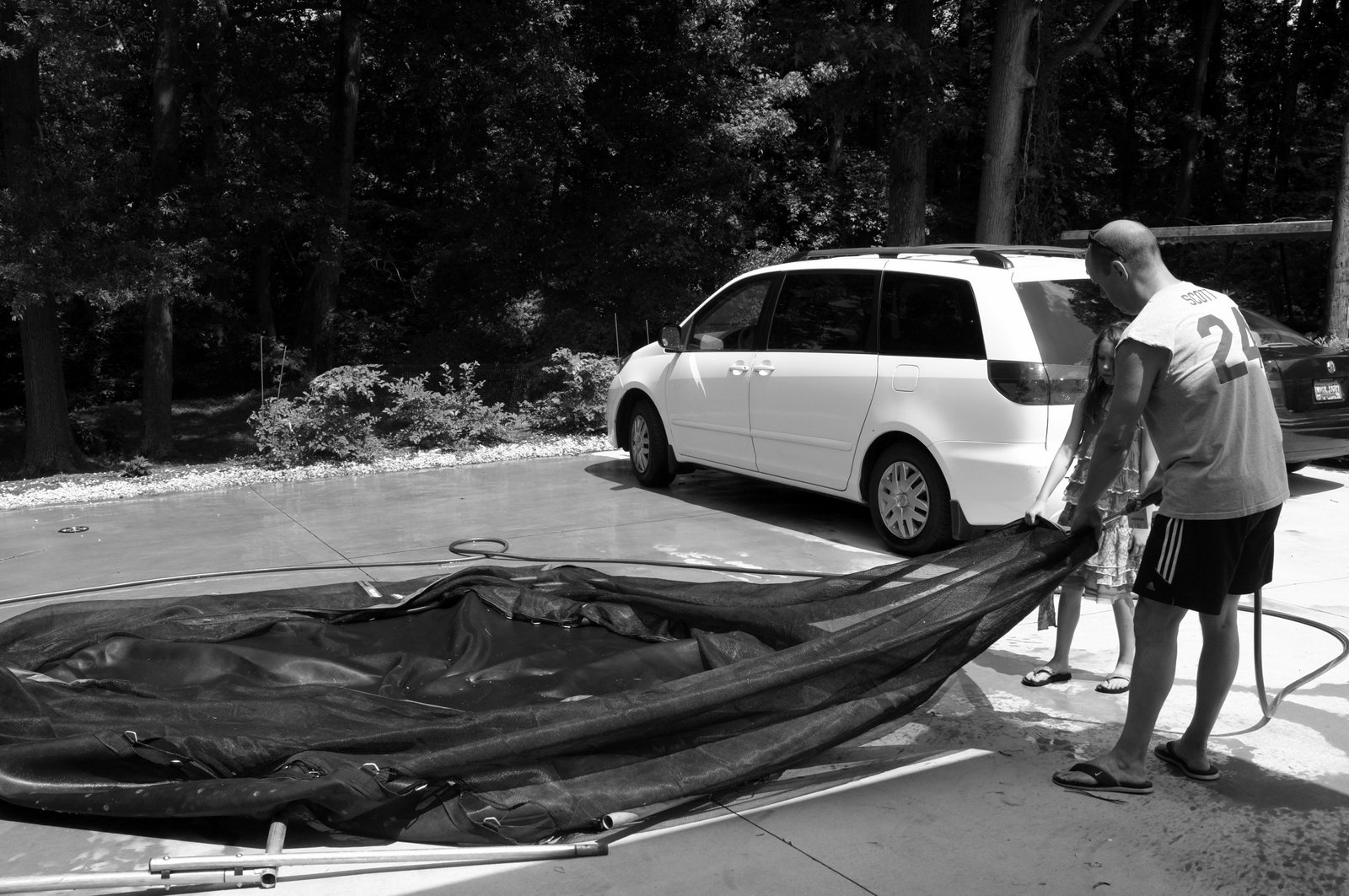
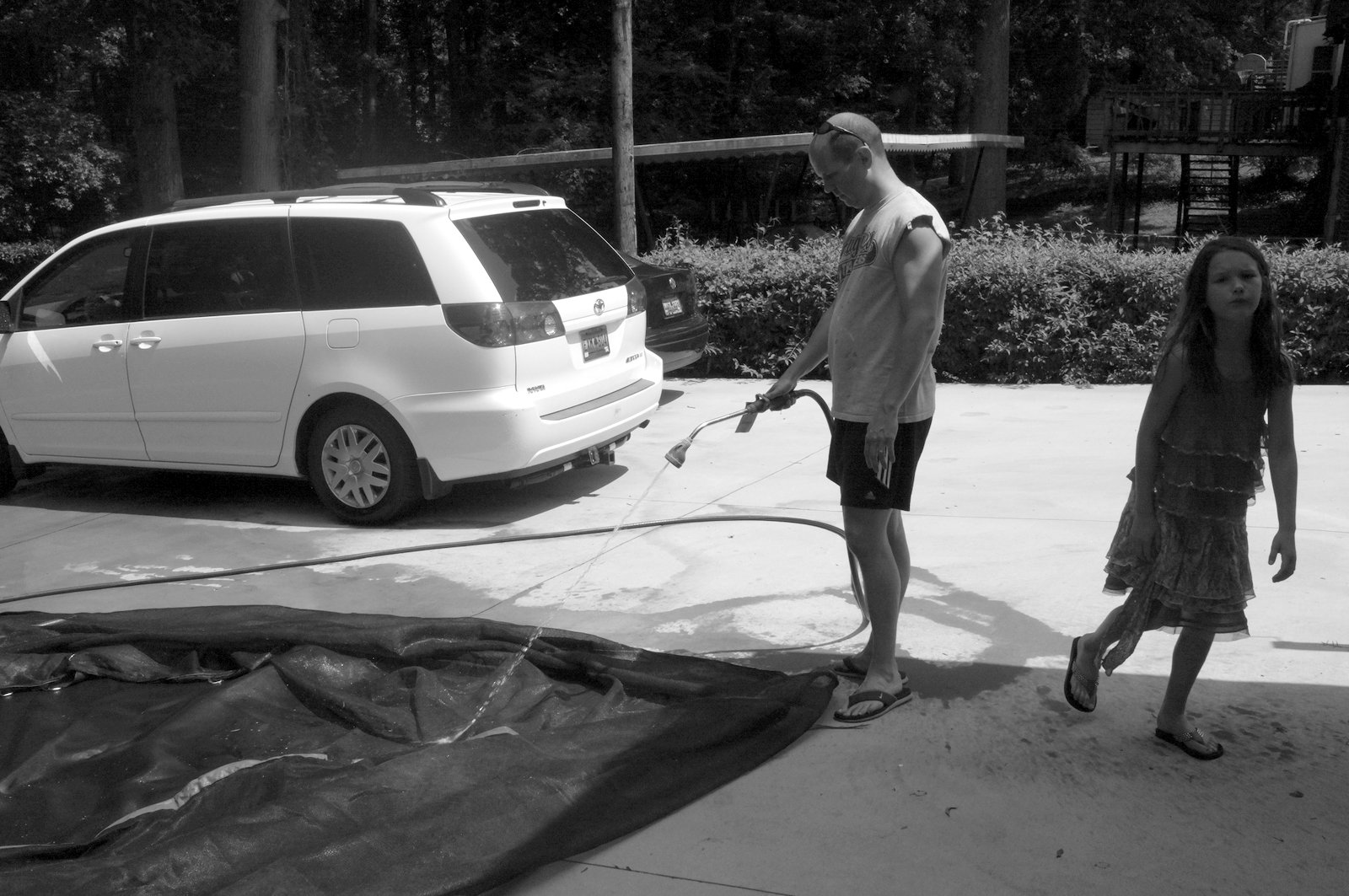
And it allows me to do things like cleaning up a trampoline we got for free from a family whose boys have long outgrown it and doing it in the early afternoon of a Tuesday.

1-DSCF4080

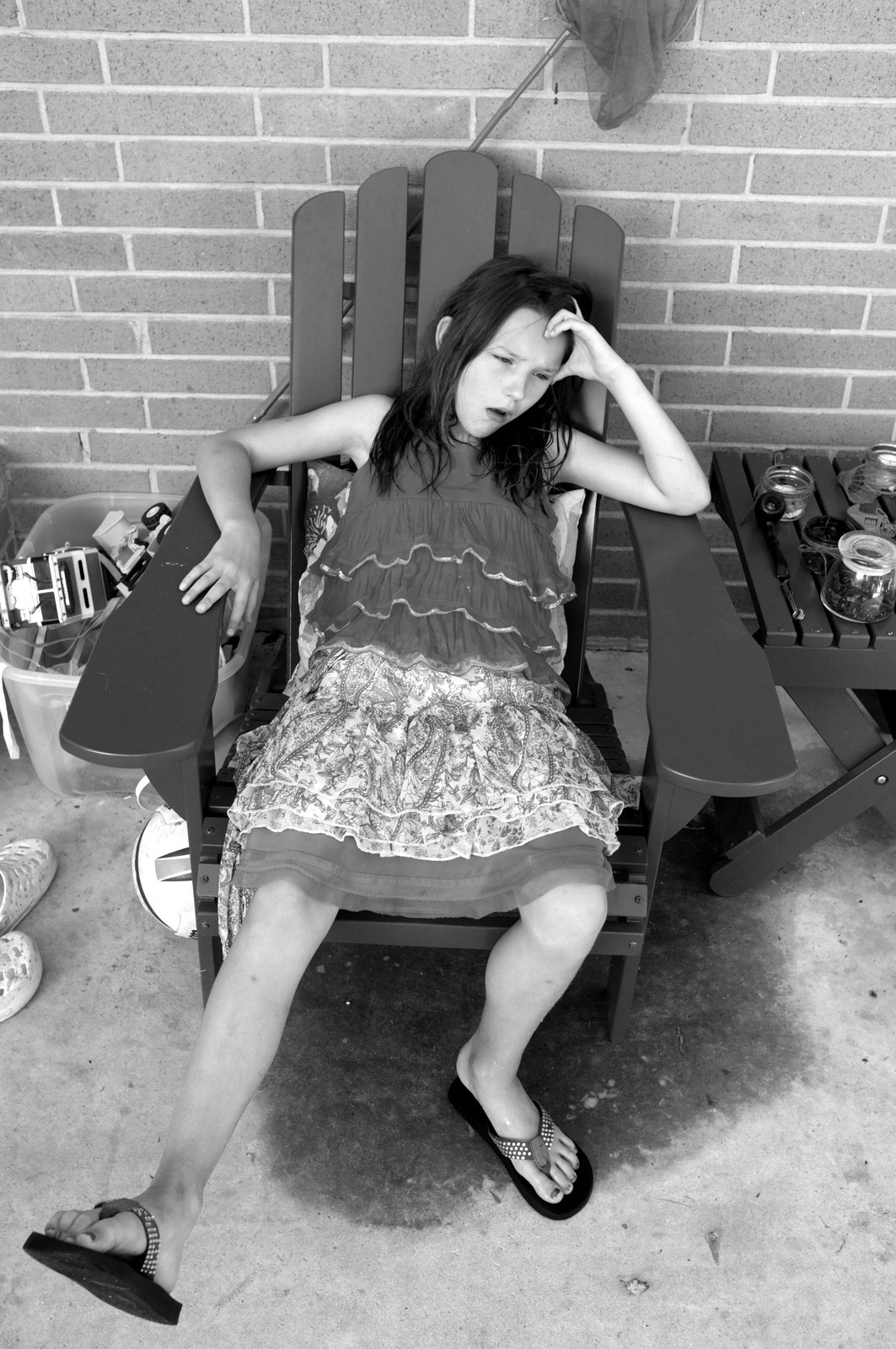
Which is also good, because as L helps, she gets tired, which bodes well for a restful night’s sleep.

2-DSCF4081

3-DSCF4082

So we all get breaks.

Time Capsule Letter

Dear Teresa,

When I met you as a seventh grader as you held the door open for students in the car line, I almost immediately found myself thinking, “I do indeed hope I get to work with her next year.” Such was the power of the first impression you made. As you progressed through eighth grade, you confirmed and deepened that first impression on an almost daily basis with your dedication, intelligence, perseverance, and humility. I know that I need not wish you all the best because you are the rare type of person who will make the best happen, who will grab every opportunity and not wait for life and blessings merely to happen but instead will bring opportunities and blessings with you everywhere you go. It has been an absolute honor and privilege to work with you this year, and I know without a doubt that when I look back over my career at some point, having you in my classroom will stand out as one of the brightest highlights.

Warmly,
Your Teacher

The Note(s)

As I am going over the parameters of the practice test we’re about to take, I notice her pass him a spiral notebook. Kids pass notes that way these days: they would fill a whole spiral notebook with slang-filled (and profanity filled for some) notes if a teacher doesn’t confiscate it. I ask him to put it up; he continues writing. I continue giving instructions, then tell him to put it up. He continues writing.

I take the notebook away from him, and he pulls another sheet of paper from his binder, with a smirk. I tell him, “Mr. S, don’t do it.” He continues writing. I let him write the note as I continue addressing the class then take it from him as he folds it. He takes another sheet of paper from his binder and begins again.

How many times could we continue this? By handling it this way, am I not just building steam in him, potentially creating a bigger issue shortly? If I were the type of teacher to do something deliberately provocative, I could push the kid to an anger that would get the best of him and give me something I could easily write him up for. These kids are so easily provoked, so easily manipulated, so short tempered, so fragile.

In the end, I just send him out of the room before either of us provoke the other any further.

Change

It was bound to happen, because it happens to all children these days. L came home crying that her friends — her best friends in her class — were bullying her. I don’t think she used that word: it was a label added afterward. The first moment K and I had alone when I came home that day, she said, “Well, some kids are bullying L at school.” And while at first blush, it sounded like it might not necessarily be bullying (we’re so quick to call everything “bullying” these days): some of the Girl’s friends were chasing here around the playground, grabbing her, not letting her go. But with each new detail, it became more likely “bullying” was not a misapplied label in this case. The girls, it seems, had recently decided that, because L had wanted to play alone during recess for a couple of days, that they didn’t want anything to do with her. They were ganging up on her, chasing her, and then holding her by force, squeezing her arm so that it caused pain, and doing it all despite L’s requests not to, despite L saying that it hurt. What was worst was that she took her entire free time one day in class to write cards of apology to her three friends, the instigators, basically saying, “For whatever I’ve done to make you angry at me, I’m sorry.” One girl ripped the card up in front of L while another took some makers and scribbled all over it. L was literally in tears as she told me, and she had been in tears earlier in the day when she told K.

So many questions running through K’s and my conversations about this. Do we know that the Girl, normally a sweet girl but capable of mean streaks like everyone, didn’t in fact antagonize a bit? Does she know, for that matter? At what point do we get the teacher involved? What do we tell the teacher? She didn’t want to tattle on them, for she still hoped to salvage the friendship, but she realized she needed help.

The most pressing question, though, was, “What do we tell the Girl?” In the end, we suggested that she hang near the teachers when they go out to recess, and when the gang begins to approach, move as close to the teacher as possible, then when they try to chase her, don’t move. “They can’t chase you if you aren’t moving, right?” And then when they begin the squeezing, the plan was to say loudly, “Stop — that’s hurting me.” The plan was that the teacher would hopefully hear and intervene, and technically, the Girl still wouldn’t have to tattle.

The next day, the debriefing: “We’re friends again.”

K and I smiled. It’s still coming, but it just hasn’t quite made it.

Wrong but Right

“Daddy, is she a good student?” The Girl was helping me grade papers (she loves going over multiple choice work — no really, there’s no convincing or arm-twisting necessary), and as she always does, she asked about this student and that student. I glanced at the name.

Is she a good student? How I answer that question would depend on how we define a good student. If we define it as a student who is always hard-working, who is always pleasant to be with, who always gets her work done and always does stellar work, there was no way I could possibly describe the student L was asking about as a “good student.” Indeed, by that metric, she is just about everything — anything — but. Or at least she was. At the beginning of the year, she was belligerent, often refusing to work, often showing nothing but unreasonable anger about any correction or redirection. She was, in short, a nightmare student. And that means that I was immediately drawn to her, immediately interested in helping her, and immediately frustrated with her more often than not.

But the last few months, she’s been changing. Some days, she works. Some days, she’s incredibly attentive during whole-class instruction. And then some days, she’s back to her old games. But there is progress. And really, if we look at any definition of a good student, progress must be factored into the definition.

“Sometimes, sweetie, sometimes,” I said, then added, “Why?”

“Because she got them all right.”

Introduction to Journalism

What I would be saying to rising eighth-graders tomorrow about my new journalism class — if I weren’t taking a sick day, that is.

This course will use the basic instructional principle of “Learn to do it by doing it.” That’s not to say there’s no direct instruction, nor is that to say that it’s a free-for-all. And it certainly doesn’t mean it will be an easy course.

This class will be responsible for creating content for the Hughes Academy web site in the form of articles, audio stories, and photographs.

  • Most basically and most importantly, you will learn how to find and develop stories as well as how to write and research according to journalism industry standards. (In other words, you will not only learn what the AP stylebook is, but you’ll also have large segments of it memorized from constant reference.)
  • In addition, you will learn how to take compelling photographs to accompany your stories. (In other words, you’ll learn how to take your photography skills beyond simple point-and-shoot and selfies and learn all the components that go into taking photos and how to manipulate them for the desired effect.)
  • Finally, you’ll learn how to make NPR-style audio stories that incorporate on-site reporting with interesting commentary. (In other words, you’ll learn how to take 15-20 audio clips and put them together into one, strong story.)

Students interested in this class need to be highly self-driven as you will (with prior instruction) be responsible for finding your own stories to research and to write. In addition, most of the assessment will involve self-assessment with self-generated goals and rubrics (also with prior instruction and continual teacher guidance). Finally, students will have to be able to work under tight deadlines and to be the type of student that simply doesn’t give up when obstacles appear. On average, you will write at least one 500-word story per week and create at least one 4-5 minute audio story per quarter. That sounds easier than it is: the real difficulty comes from the incredibly high standards necessitated by the simple fact that all our content will end up on the Hughes web site.

What are the upsides of all this hard work? The first would be the simple pride in the fact that you are doing a job that has traditionally been reserved for adults: you will be the public, digital spokespersons for Hughes Academy, and that’s what I meant by “Learning by doing.” It’s an incredible feeling knowing that what you’re writing is for an interested audience that will make comments and give feedback, much more rewarding than just writing for a teacher.  You’ll begin creating content for the site during the first class session, and by the time the year is done, you will have an impressive portfolio of published work that you can use for future reference. Additionally, because of the nature of this class, there is a lot of freedom during the class period. During a typical class, some students will be working together on an audio project while other students head out to interview a teacher or an administrator about this or that while still other students are editing others’ work while yet other students go to photograph subjects for their articles. In short, it’s not a “sit down and take notes” class, but it is in fact the ultimate in project-based learning: student driven, student assessed (with help of course), and student published.

It won’t be easy, but it will be fun, and you’ll finish the year with greatly improved writing skills.


Superlative

Every morning, she walks down the hall saying the same thing. Our eighth-grade school counselor’s mantra is, “It’s going to be a great day!” We teachers all smile at her and nod affirmingly or make a snide comment with a smile — “Not with this headache” or some similar thought — and move into our day without giving it another thought. While she does mean it — she certainly wishes we all have a great day — it’s also become somewhat of a running joke as well. She’ll look at what’s going on in the hallway, some kind of drama or other, raise her eyebrows, turn to the nearest teach and repeat, “It’s going to be a great day.”

Some days she’s prophetic: some days turn out really well. They have to — it’s the nature of teaching to have the bad but also the good, that which drew idealistic people into the profession to begin with. We all have visions of changing the world, one child at a time, of promoting self-confidence in this student, of helping that student discover latent talent. We know the statistics. We know some of the stories trailing behind our students. And we’re there to help. That’s the idealistic vision of teaching that we all cling to.

Yet even in the seemingly brightest days, there’s a kid who refuses to work, a boy who brings in some baggage from a hallway interaction and disrupts the class, a girl who is still stewing over some injustice, perceived or real, suffered in the previous class. It’s good, but it’s never perfect. How could it be? It seems for a perfect day, everyone involved in our classroom routines would need to be having perfect days as well, or at least extremely good days.

That’s the thought anyway, for such days are so rare that I think we teachers sometimes even forget they exist. The other days seem to crowd out everything else, and at one point or another, we teachers, each and everyone, have found ourselves standing in our classroom, loo out our window, wondering if we need to get out of the profession. We smile at each other in the hallway during these days and say things like, “I feel like today, if I’d just stayed home and bashed my head into the wall for eight hours, I’d have more to show for it.”

And then the stars align, the kids smile, and every kid in every class is, to some degree or other, productive. First period, a traditionally tough period for me, slides by without me even realizing the class period is about to end, and the kids, with their pencils scribbling during our Friday writing/workshop session, don’t realize it either. Kids who just Monday mounted a virtual mutiny in class. But today, they’re writing, conferencing with each other, focused. Working.

Second period comes, and everyone is busy, working on stories for the school web site or creating audio stories, heading out to interview this teacher or get information from that administrator. On the best days, the class feels like a newsroom must, and that’s a good thing, for next year, the course will officially be rebranded: “Journalism.”

Third period — a planning period — arrives, and with it, a call from the principal with a simple question about next year that just brings a smile to my face.

Fourth period, and the kids all work marvelously in groups, piecing together a rather complex argument in a rather long article, collaborating and learning at the same time. This is English I Honors, and I rarely have any issues with them, but some days, they’re just more productive than others. Today is such a day.

Fifth period, my most challenging, and everyone is writing, writing, writing. I’m sitting with a student, looking over his work, realizing that, out of seemingly nowhere, this kid’s writing has suddenly improved so drastically that it doesn’t even look like it could come from the same young man. Once again, I almost don’t realize that the class period is about to end, and neither do they.

Sixth period and we have a small epiphany about a passage in Lord of the Flies.

Roger gathered a handful of stones and began to throw them. Yet there was a space round Henry, perhaps six yards in diameter, into which he dare not throw. Here, invisible yet strong, was the taboo of the old life. Round the squatting child was the protection of parents and school and policemen and the law.

It’s not a real epiphany, for I’d aligned everything for the kids to “arrive” at that realization. They were set up, but sometimes my setups don’t work.

Seventh period — another planning period — and I cast a backward glance over my day and realize it’s the best day I’ve had in recent memory. Certainly the best day of this school year. Likely one of the top ten days I’ve ever had in the classroom: everyone productive, everyone cooperating, everyone working, everyone learning. I sit and analyze what happened that created such perfection. What did I do differently? How can I replicate this? Why don’t days like this more occur more frequently?

In the end, I realize once again the obvious: because so many people were involved today in creating such an amazing day, I can’t possibly hope to recreate it on my own. It’s not what I did, it’s what we did. It’s not how I can replicate it, but how we can replicate it. It’s a frustrating realization because it means that the power is both within me and out of my control. It brings to mind an analogy a colleague once made: teaching is like gardening. We prepare the soil, plant the seeds, we water the garden, and sometimes, we see the fruit, and sometimes we only hope that the seed will germinate at some later point.

But some days, like today, it seems like everything is sprouting.

Writing

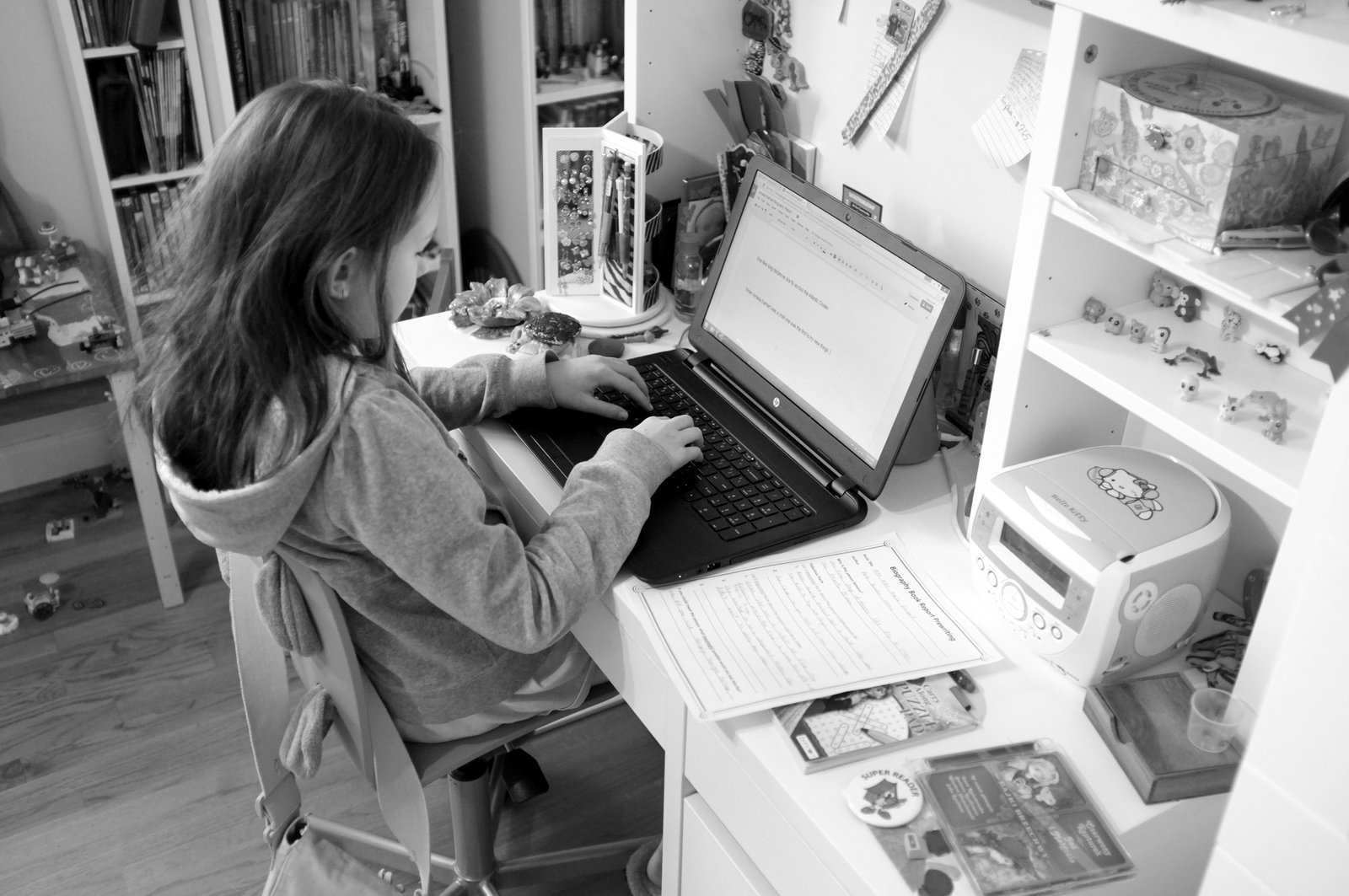
The Girl is to write a research-based biographical report about Amelia Earhart. As with all homework, I’m willing (and sometimes insistent) to help her, at least to check her work. But this is a big assignment. We’ve needed to pace ourselves, so last week, we set up a schedule on Google Calendar to make sure L completed everything in a timely fashion and didn’t simply let everything pile up at the end.

She completed the book, she finished the planning, and today, it was time to begin the report.

1-DSCF2338

It’s a fine line, though, between helping and doing for the Girl. As a writing teacher, I have experience in guiding students to see the problems with their writing and helping them improve it. But in the back of my mind, I say to myself, “This needs to look like a second-grader wrote it.” Should I teach her to transition between ideas within a paragraph? Should I show her how to turn her one-sentence opening, her thesis, into a full paragraph?

I’ve decided simply to guide her as minimally as possible, then ask her to read the finished product. If she feels it’s clumsy, if she comments on the short introductory paragraph, we’ll get to work fixing it.

“I Think He Has”

I have a little jar of olive oil mixed with grapefruit seed extract that I keep in a plastic bag in the bottom of a desk draw at school. It was from a long time ago, for an irritating spot of skin on my hand that I didn’t want to go see a specialist about. The wise Internet suggested this as a homeopathic remedy.

Today, a young man caught a glimpse of that little bottle when I was pulling something from my desk draw. Or at least I guess he did — the alternative is that he was rummaging through the drawer when I wasn’t looking, something I don’t want to imagine he did. At any rate, he went to Ms. W, the eighth-grade administrator and my immediate supervisor, with a concern shortly after that.

“I think Mr. Scott has a little jar of urine in his desk drawer.”

Ms. W told me shortly afterwards that it was very hard to keep a straight face with that concerned young man. “I can assure you, Terrence, that that was not what it was, and that there is a logical explanation for what you think you saw.”

Oh, but the fun I could have with that misconception tomorrow in class…

Dance The Night Away

Few things remind me of how glad I am to be an adult as well as chaperoning a middle school dance.

Teaching to the Test

I’ve heard about it from three different sources now: our principal, our department chair, and a colleague. We’ve all in the English department heard about it, and we’re all more than a bit nervous about the new test students will be taking in late April. It’s meant to replace a state-created test that measures progress for No Child Left Behind (still haunting us), but it even has the kids running scared. Even the most apathetic students responded the same as the teachers: “Are you kidding?”

The test — the ACT-Aspire, created by the same company that makes the ACT — porports to measure students’ ability to create an essay, and all the various elements of that process: generating ideas, developing ideas, organizing ideas, and proofreading said ideas. My students, eighth graders, will be be required to write a persuasive/argumentative essay, and they will be judged on four things: the argument, the development, the organization, and the language use. For a perfect score in the argument strand of the rubric, they are to accomplish the following:

The response critically engages with the task, and presents a skillful argument driven by insightful reasons. The response critically addresses implications, complications, and/or counterarguments. There is skillful movement between specific and generalized ideas.

This is all fine and well: I have plenty of students who could write a paper that addresses the implications, complications, and counterarguments in an insightful way. Not a big big deal.

For development, a perfect paper would look like this:

Ideas are effectively explained and supported, with skillful use of reasoning and/or detailed examples. The writer’s claims and specific support are well integrated.

Again, not that big of a deal. Certainly a challenge for some less-accomplished students, but again, this is for the absolute top score.

Organization looks like this:

The response exhibits a skillful organizational strategy. A logical progression of ideas increases the effectiveness of the writer’s argument. Transitions between and within paragraphs strengthen the relationships among ideas.

Good organization is difficult for fourteen-year-olds, and in some ways I’m most worried about this one. Organization takes time, takes thought, and fourteen-year-olds tend to be a bit impulsive. But its a solvable problem.

Finally, there’s language use:

The response demonstrates the ability to effectively convey meaning with clarity. Word choice is precise. Sentence structures are varied and clear. Voice and tone are appropriate for the persuasive purpose and are maintained throughout the response. While a few errors in grammar, usage, and mechanics may be present, they do not impede understanding.

For some of my students, I’m not even tackling the voice and tone issue. Not many fourteen-year-olds have a firm understanding of voice even with a lot of direct instruction. A lot of adults don’t.

All in all, a decent but challenging rubric. Until you consider one thing I’ve left out: its a timed test. And the time limit for this? What do the test creators consider a reasonable amount of time for students (and the time is universal for all grades) to create an essay on which so much depends? Two hours? Three? Ninety minutes? How about thirty minutes.

That’s right: one half hour to conceive, plan, organize, write, and proof an essay.

“Are they crazy?” we teachers all said almost on cue.

“Are they crazy?” all the students replied.

I have plenty of students for whom this would be a tremendous challenge if give two hours to accomplish, but thirty minutes seems laughable. It sounds as if all the decision-makers in the fine organization that creates the test got high on every possible drug and then decided on the time limit.

“I got it! I’ve got it” laughs a young executive who’s just sniffed three lines of coke, shot up some heroin, taken a few Vicodin, smoked an enormous joint, and done an Irish Car Bomb. “I’ve got it! Just for the fun of it, just for kicks and giggles,” and breaks into fifteen minutes of giggles before continuing, “Let’s give them half an hour!”

Howls in the boardroom.

Howls in the classroom.

Not the same howls. Not even close.

I’m not even sure what such a ridiculously short time limit is supposed to accomplish. Raise the stress level of students? Ensure as many short essays that are so bad that they’re easily gradable as possible?

I’ve a feeling when the state results are published, the howls won’t just be in the boardroom and the classroom anymore.

“Today Is Going To Be A Great Day”

I have a colleague who inevitably says every morning as she walks down the eighth-grade hallway by my door, “Today’s going to be a great day!” Sometimes she’s sarcastic, but most of the time, she’s very much in earnest. It’s an easy enough trick, I suppose, this power of positive thinking, but it then throws you for a loop when the same lady, after saying “Today’s going to be a great day” passes by you and says, “Today is going to suck.”

One of the many challenges with teaching is that we enter a room in which we have the whole range of thoughts from “Today is going to be a great day!” to “Today is going to suck.” Those conflicting expectations result in conflicting behaviors, which results in a conflicted teacher. When is a kid being a pain in the butt just because he feels like being a pain in the butt — i.e., the natural function of being an eighth-grader — and when is it the function of something bigger, something direr? The response to those two different motivations is shaded differently.