At times, the school year seems to extend endlessly, a pile of days that stretches beyond our sight, under which we all seem to be crushed slowly. If there’s a class that’s an inordinate challenge, the weight of that pile seems to double, and somehow, no matter how well things are going in the year, a few more days seem to be tossed carelessly on the pile as third quarter approaches. “What?! I’m this exhausted, and we’re just now in the back half?!”

Other times, the year seems entirely too short, something requiring calipers to measure. The list of standards the state requires teachers to cover seems to require twice the days the state allocates for the challenge. Some standards seem as if they might take a lifetime to master in and of themselves. “Assess the processes to revise strategies, address misconceptions, anticipate and overcome obstacles, and reflect on completeness of the inquiry.” I’m still working on that one. “Determine appropriate disciplinary tools and develop a plan to communicate findings and/or take informed action.” Ditto.

In between those two, the powers that be, in their infinite wisdom, allocate a certain number of days to testing. In the decade-plus I’ve taught in the States, that number seems to grow every year. In the case of the hard-to-handle classes, it’s a relief in a sense — for the obvious reasons. It’s tiring keeping them focused and engaged every day, and a test is just the right mind-numbing exercise to make the period pass by fairly painlessly. They get little to nothing out of it, and they put little to nothing into it, and everyone knows that’s what’s going to happen, but we do the dance anyway, and everyone goes home with their dance card happily filled. And yet for those same classes, it’s a nightmare, for teachers already feel we’re trying to cram too much into to little.
It just doesn’t seem like the proper use of time.
Wednesday afternoons are often when I catch up with school work. The Girl has choir practice, until five and K and the Boy are out doing the grocery shopping as they wait, and so when I arrive home, the house is empty and silent. I make a cup of coffee, get out some papers to grade, or more likely, load this or that website that now holds my students’ work and begin assessing, or I start sketching out my plans for the next week’s activities.

Today, however, I had a thought: I don’t have anything to do for school that is terribly pressing; my school is quite near the Aldi where K and E are shopping; I could easily pick up the Boy and take him home for a bit of playing. I called K; she asked the Boy; he was thrilled. Home we went, talking all the way about what we might play.

We settled on cars, with a bit of blocks. And in the midst of it all, out of seemingly nowhere, we ended up building jails for the misbehaving cars. E designed one, which meant he placed the blocks, and I hunted them down for him if he couldn’t find them. Then we tested it, which meant he rammed a big car into the jail to see if it stood. It didn’t; the bad car escaped. So we did it again, alternating who designed the jail. No jail held the prisoner for longer than a few moments when the Boy really set his mind and muscles to the task.
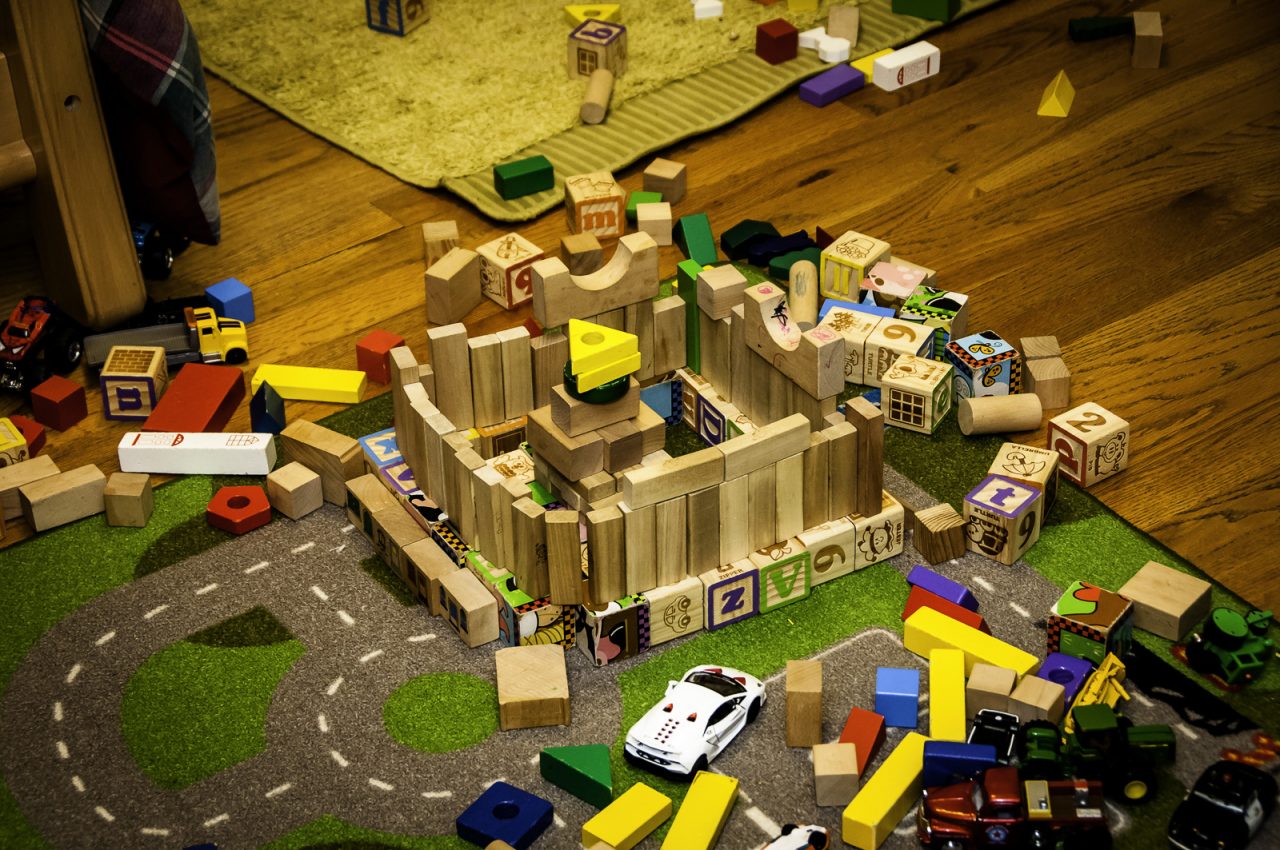
We made a big mess. The Boy got semi-hurt as he crashed his car into the pile a bit too hard. I accomplished absolutely nothing for school.
It was a proper use of time.
Coming back to school can be a relief for many of our students. They come from less than stable home lives, and the predictability of school is a comfort for them. These are often the kids that most often exhibit problematic behavior. Our principal sent us all an email to this effect. It read, in part, “Many of our students have experienced unrest over the break. Without their normal routines, meals, and social interactions found at school, they may need a readjustment period (and your grace) when returning.”
One of the things I’d decided to change in my class was to provide a mechanism for regular praise of students, both individual and group. The individual is easier: it’s just one person praising another. The group praise, though — lots of kids focusing on the good actions of one student. That was a tough one.
In developing the lesson, I thought we should spend some time writing and thinking about praise, so I prepared a Pear Deck for the kids (which allows them to respond to given prompts and see their and others’ responses projected anonymously. It’s a great way to have a real-time anonymous discussion), asking questions about when they were last praised, how it felt, when they last praised someone else, how that felt.
Some of the answers were telling, echoing the ideas in the principal’s email.
I asked students when they last remembered being praised. One student’s response was memorable:
The last time I remember being praise was when I manage to talk to people because I can’t really socialize with people. Another time I was praised was when I was working on something for a story and the person read it, and they said it was an amazing idea!
This young lady is one of the best students I’ve ever had: hard-working, kind, very intelligent, but painfully shy.
When I asked “How does it feel when you’re praised,” some of the answers really stood out:
Finally, I asked students to consider why praise might be important, given all the responses they’d given and read. One showed that at least one student understand how much impact something positive can have: “For example, it could be one compliment that could save someone’s life…… They could be depressed and just needed someone to be nice to them and show them that people care about them.”
Contrast this awareness with how students so often treat each other, with insults and snide comments that are meant to build themselves up by tearing others down. I wonder if anyone else saw the irony. Smart kids — I’m sure they did.
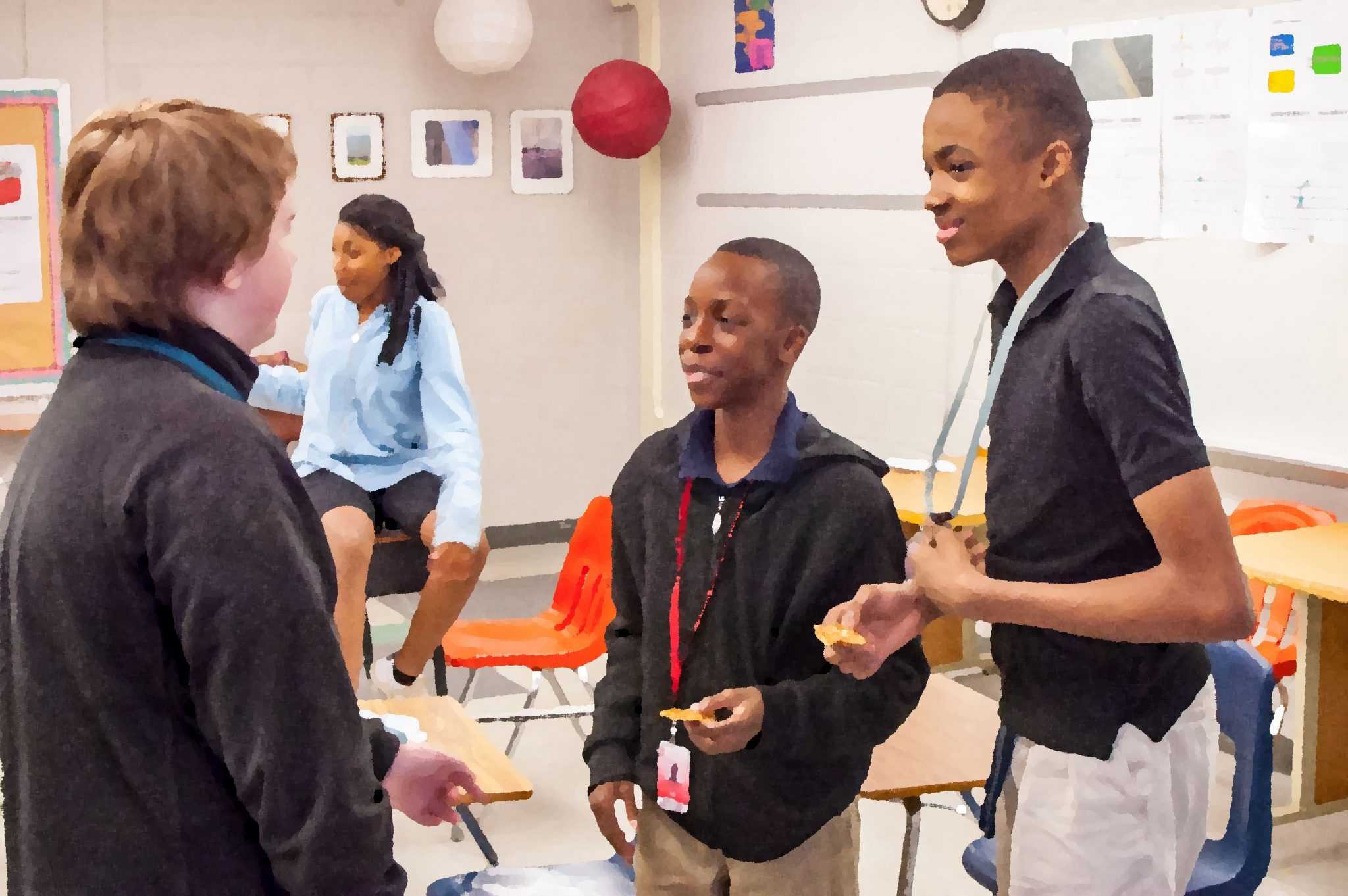


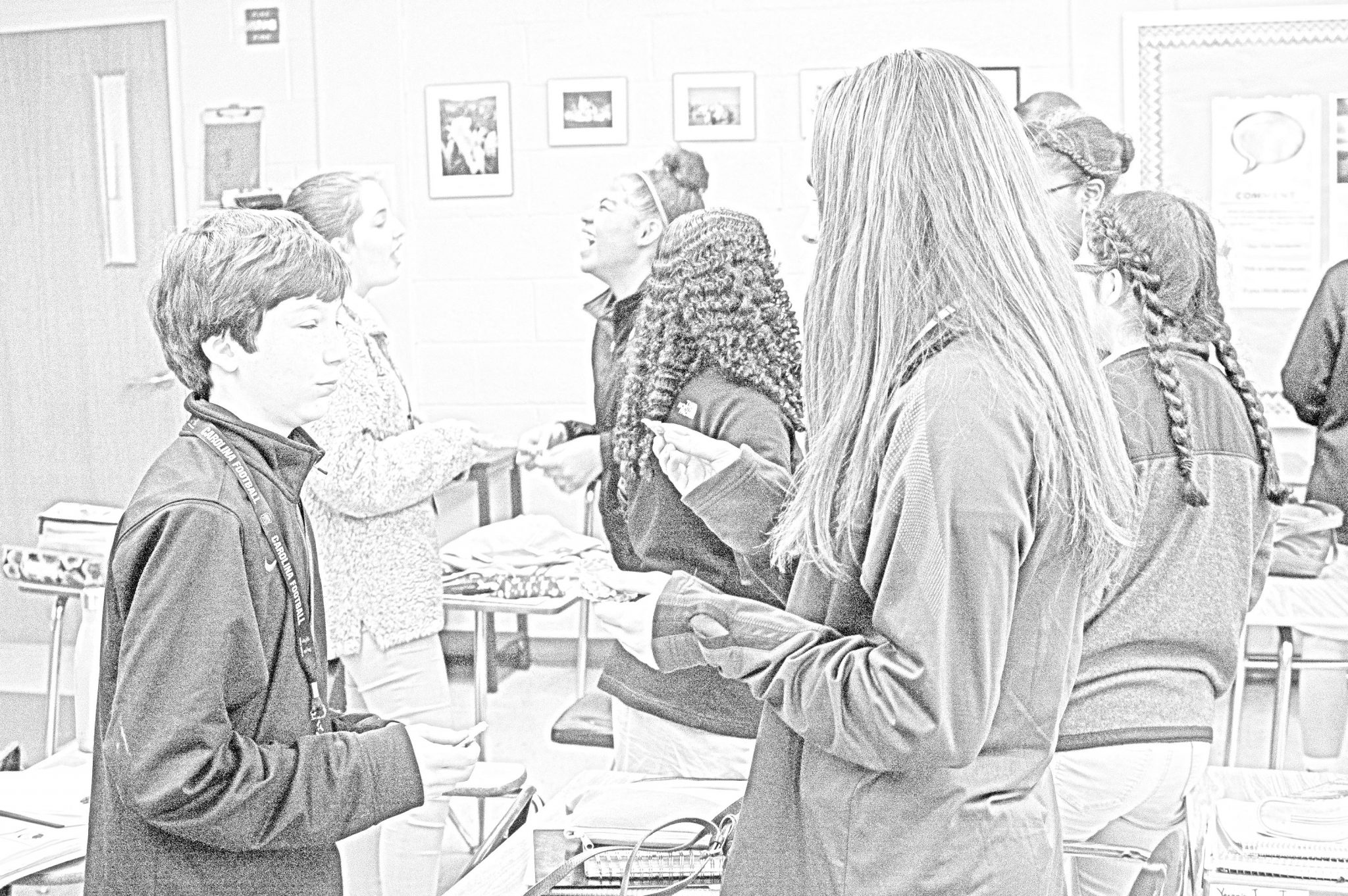
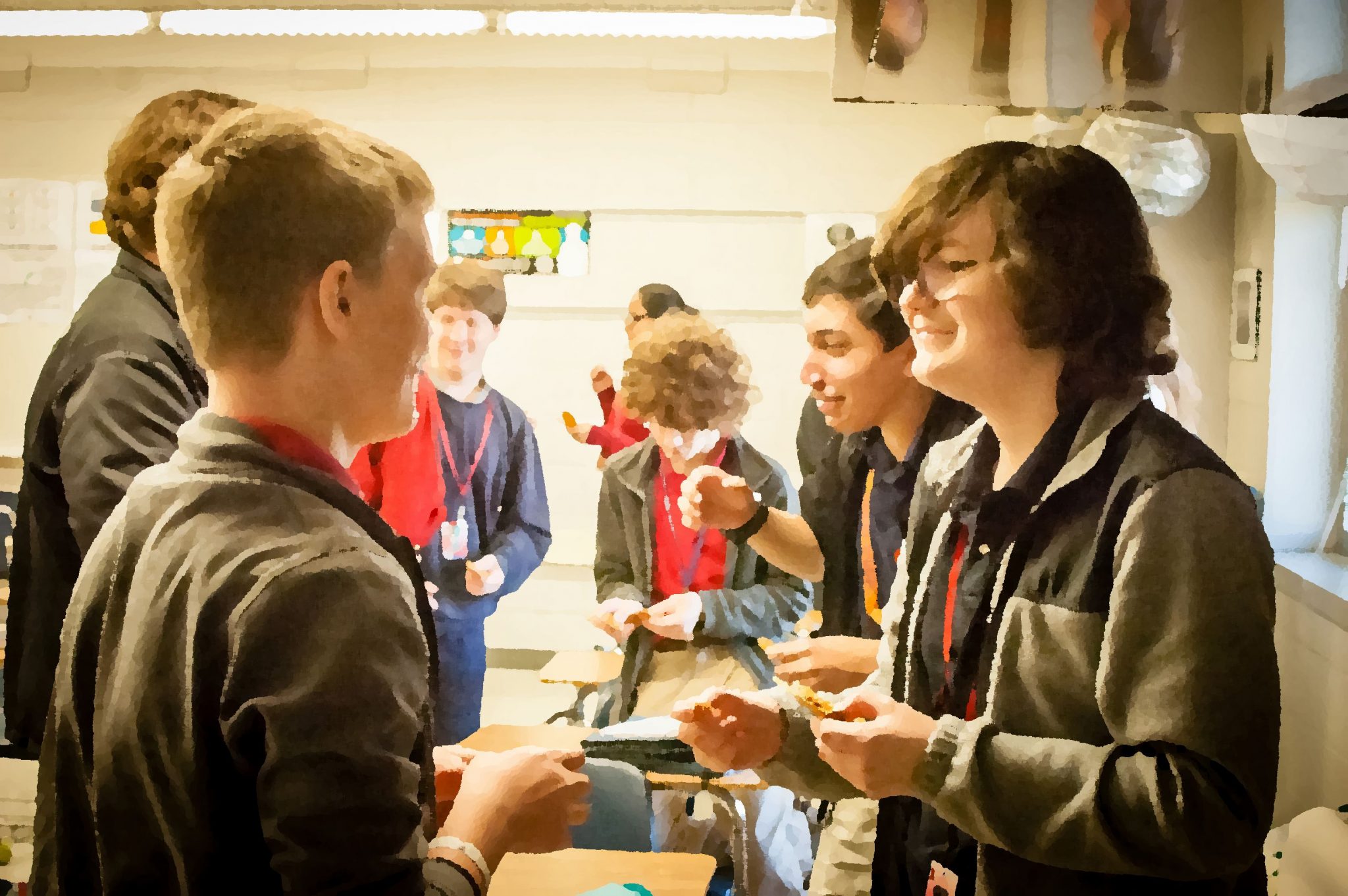
My model response in a Romeo and Juliet online discussion forum at school. The question: We watched two versions of the balcony scene (2.2). Which one more-realistically shows two people in love? Provide three pieces of evidence from the video that touches on pacing and/or tone of voice. Additionally, you might want to use body language.
Of the two versions of the balcony scene, the Royal Shakespeare Company’s interpretation shows more realistically that Romeo and Juliet are in love simply because the actors’ performances are so natural as opposed to the wooden, flat way the BBC actors appear. This is first most noticeable in the famous lines, “O Romeo, Romeo! wherefore art thou Romeo? / Deny thy father and refuse thy name.”
The way she says “Deny thy father” makes it clear that she thinks this is an absurdly impossible idea and yet says it as if she were suggesting he change his mind about what he’ll have for lunch. She looks down and laughs just before she continues as if she’s laughing at her own absurdity.
This continues to the point where she says, “Be some other name,” which she says so slowly that it emphasizes her frustration with the situation.
A final touch that makes it all seem more realistic is the way they interrupt each other during the passage about swearing to the moon.
Twice Juliet begins her lines before Romeo has finished his, and that is a much more natural way of speaking. We often talk over each other in our excitement or frustration, and by talking over each other here, it highlights the excitement they feel about each other and the frustration they feel about their situation.
It’s important to admit to your failures as a teacher, small and large, and so when I realized that I hadn’t actually made the assignment in Google Classroom this afternoon, I muttered apologetically, “Sorry, I mess up.”
“Yeah, you messed up. You messed up my grade,” came a voice behind me. I knew immediately who said it: I’m a teacher, and it’s almost a requirement to be able to recognize students’ voices for any number of reasons, but also the young lady has a distinctive voice. It’s hard to miss C.
She’d just checked her grade while waiting for our work to load, and she discovered that her grade had dropped from a D to a F. The reason was simple: she hadn’t done the work earlier in the week when I was out with a sick little boy, and she hadn’t studied twelve Greek and Latin stems sufficiently to pass a quiz on them.
“I turned in several articles of the week just earlier this week,” she had complained.
“Yes,” I had agreed. “And since you turned them in late, they are a secondary priority when compared to other work that students turned in on time. It wasn’t a priority for you to turn it in on time, so it’s not a priority for me to grade it, I’m afraid. If you turn it in on time, I get it assessed quite quickly.”
It hadn’t been enough, and she’d been fuming, so when I admitted my silly mistake, she used it.
There’s a part of me that says, “What kind of thirteen-year-old thinks she can talk to an adult that way?” There’s a part of me that wonders how she could possibly think that anything positive could come of being aggressively disrespectful like that. There’s a part of me that wonders just what she thought my reaction might be. There’s a part of me that questions if she’ll ever learn how to deal with disappointments more effectively. There’s a part of me that wonders if she’ll spend all her life blaming others — it was my fault that her grade was so bad and not her fault for not preparing for a painfully simple quiz or for not turning in work on time.
What really made the situation frustrating for her was that she, as a basketball player, can’t play if she has grades below Cs. She missed a game because she had a D in my class; now she’s got an F in my class, and the prospect of playing again anytime soon seem painfully remote. And her frustration was understandable but directed at the wrong person.
My English I Honors students have just finished up a four-week poetry unit, which is in a way one of my favorite units we do. It’s not just that I love poetry, which I do, or that I hope to instill in them an appreciation of or even love of poetry, which I do, but it’s also a one of the units where we all see real growth in students’ ability to read and think critically.
At the start of the unit, there are the concerns: Some suggest they cannot understand poetry. Some suggest poetry is just about emotions. Some suggest that learning about poetry has no practical value later in life.
To the first concern, I always point out that learning to read increasingly challenging texts with greater levels of intentional ambiguity is just like everything else: it takes time and practice. I assure them that I’ll give them some skills — some tricks, I call them — that will help them ease the process.
To the second suggestion, I point out that while emotion is a critical element in a lot of poetry, it’s not the end of poetry in itself. It’s a means to an end. The emotion one finds in poetry is not what it’s about — except for some confessional poetry, of course. Even then, there’s always something bigger. I don’t tell them then, but what I’m referring to of course is the lyric moment of a poem, that point at which the reader has an epiphany because the speaker has an epiphany. (I am speaking of modern poetry, of course. When we move back into the nineteenth century and beyond, lyric moments tend to disappear a bit. Just a bit.)
The third worry is easy: No, you won’t read and interpret poetry your whole life, but you will need the skills — picking up on connotation, determining tone, reading for changes in mood — your whole life. No matter what you do, I say, no matter what the job, you’ll need these skills.
So we dive in. We read Elizabeth Bishop and Billy Collins, Dylan Thomas and Theodore Roethke, Langston Hughes and Howard Nemerov, Robert Hayden and in preparation for Romeo and Juliet, Shakespeare. There are others, but I’ve found it most fruitful to read less and read more deeply than read more and only skim over the surface. We read poems and then go back to them again when we’ve learned another skill. We read poems once, twice, three times — again and again and again.
Then comes the test. A simple, four-question test. “Four questions, Mr. Scott?! Only four?!” they all reply when we prep for it. I give them two poems, both by W.D. Snodgrass: “Momentos, 1” and “A Locked House.”
Momentos, 1
Sorting out letters and piles of my old
Canceled checks, old clippings, and yellow note cards
That meant something once, I happened to find
Your picture. That picture. I stopped there cold,
Like a man raking piles of dead leaves in his yard
Who has turned up a severed hand.Still, that first second, I was glad: you stand
Just as you stood—shy, delicate, slender,
In that long gown of green lace netting and daisies
That you wore to our first dance. The sight of you stunned
Us all. Well, our needs were different, then,
And our ideals came easy.Then through the war and those two long years
Overseas, the Japanese dead in their shacks
Among dishes, dolls, and lost shoes; I carried
This glimpse of you, there, to choke down my fear,
Prove it had been, that it might come back.
That was before we got married.—Before we drained out one another’s force
With lies, self-denial, unspoken regret
And the sick eyes that blame; before the divorce
And the treachery. Say it: before we met. Still,
I put back your picture. Someday, in due course,
I will find that it’s still there.
We read it together, make sure there are no unknown or confusing words, then move on to the second poem.
A Locked House
As we drove back, crossing the hill,
The house still
Hidden in the trees, I always thought—
A fool’s fear—that it might have caught
Fire, someone could have broken in.
As if things must have been
Too good here. Still, we always found
It locked tight, safe and sound.I mentioned that, once, as a joke;
No doubt we spoke
Of the absurdity
To fear some dour god’s jealousy
Of our good fortune. From the farm
Next door, our neighbors saw no harm
Came to the things we cared for here.
What did we have to fear?Maybe I should have thought: all
Such things rot, fall—
Barns, houses, furniture.
We two are stronger than we were
Apart; we’ve grown
Together. Everything we own
Can burn; we know what counts—some such
Idea. We said as much.We’d watched friends driven to betray;
Felt that love drained away
Some self they need.
We’d said love, like a growth, can feed
On hate we turn in and disguise;
We warned ourselves. That you might despise
Me—hate all we both loved best—
None of us ever guessed.The house still stands, locked, as it stood
Untouched a good
Two years after you went.
Some things passed in the settlement;
Some things slipped away. Enough’s left
That I come back sometimes. The theft
And vandalism were our own.
Maybe we should have known.
The questions:
These are somewhat tricky poems. “Momentos, 1” has a couple of tones in the first part of the poem that are then echoed in mutated form in the second half.
“A Locked House” uses a long, extended metaphor that, being a metaphor, is never expressly explicated. Experienced readers immediately see that the house is a metaphor for the speaker’s and his wife’s marriage, but thirteen-year-olds don’t always see that at first.
There are some times in my classroom that I am positively at a loss, that I am standing there, looking at what just happened, listening to what’s being said, watching what’s going on, and I find myself wondering, “What in the world do I do about this?” I’ve been in the classroom for almost twenty years now, and I’ve come to realize that I will always — always — have these moments.
Last week, for example, in order to load a document I wanted the students to view on the projector, I turned my back on my most challenging class — challenging in that they are, by and large, not motivated and therefore not inclined to behave in a manner that produces the most efficient use of our limited class time — and in the few seconds that I had my back turned, this happened.
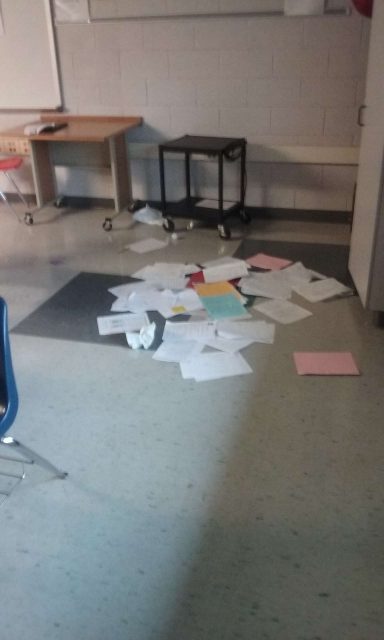
This, in fact, is a photo after I kicked some of the papers into a more consolidated pile.
Apparently, in a matter of seconds, a boy who sits in the back of the room stood up, ran to the front of the room, grabbed a girl’s binder, ran back to the back of the room, and emptied its contents on the floor with the girl in heated pursuit. This girl is not very popular, and she has a habit of antagonizing everyone around her and then playing the victim. In this case, though, she was the victim, but that didn’t stop the kids from hooting in approval at the boy’s actions.
I called them down; they stopped after a few seconds; and I didn’t have the slightest clue what to do. I removed them both from the classroom, but that’s hardly a preventative measure for the next time the kid gets an impulse to do something like this. Truth be told, the boy can be more antagonistic and disruptive among his peers as the girl.
These are thirteen-year-old kids. They’re not two or three. Yet their behavior belies their age, because this sort of thing happens so frequently. If it was a one-time occurrence, it would just be a question of youthful hi-jinks, but something similar happens on a regular basis, and I never really know what to do to prevent it.
E and I were lying on the bed in the master bedroom, reading. He always gets a book from school for his daily reading log, and often the book is leveled just right for reading with a parent: a few words he knows, enough short words that he can sound out, and a few words that he needs a lot of help with. Always a refrain of sorts, something easily remembered that he can just repeat.
Today’s book: My Dad and I.
We made it through the book, which was about all the things the narrator’s dad teaches him to do and all the things he teaches his dad to do, and E began teaching me about his star behavior system in school. Of course I knew all about it: I just had a conference with his teacher a few weeks ago, and we get a daily report about how many stars he ended the day with. But of course I let him explain it.
“We start with three stars, and if we do something wrong, we lose a star.” He paused, then added, “I haven’t lost a star yet this year.”
What will he do when he loses a star?
The Girl got her report card today, and much to her surprise, she didn’t get that B. Turns out it was on the second quarter reporting period — which means she has a hole to dig herself out of. But at least the streak remains.
The Girl tomorrow will be getting the first B she’s ever made on a report card. It’s in social studies, and it weighs heavily on her.
“I got an A on the study guide,” she told me this evening, “but I got a C on the test.”
I don’t remember when I got my first B. Probably on my first report card. I can’t remember when I got my first C, but I think it was in junior high. I do remember getting the one D I ever received: earth science, ninth grade. I think I made all As and Bs in college, but if I had, I would have not graduated simply Cum Laude but rather Summa. Or so it seems to me.
Obviously grades were never all that important to me. Sure, I wanted to do well, but I didn’t beat myself up over it. I sat back and watched everyone who was interested battle for valedictorian and salutatorian honors, and I think I slipped into the top 10% of my class and was somewhat pleased with that.
The Girl’s biggest concern is remaining on the All A Honor Roll. Will this disqualify her for end of year honors? I had to admit that, despite being a teacher, I really didn’t know. Again, I never really worry too much about it.
My own students come to me sometimes worried about their grades. My English I Honors course has had the dubious distinction of being the first B for several students over the year. I express my regret, point out that I don’t give grades but that they earn grades, but in the back of my mind, I’m thinking, “It’s not such a big deal really.” For them it is: it’s a high school credit course, which means it will count toward their GPA.
I’ve had students’ parents have their children repeat English I in high school to get that A. I’ve even had one mother require her daughter repeat because her A wasn’t high enough. “Your class was much harder,” the girl wrote later in an email.
So I try to comfort L the best I can, suggesting that it’s not the end of the world. She dries her eyes and says, “I know.” But I know that doesn’t help all that much.
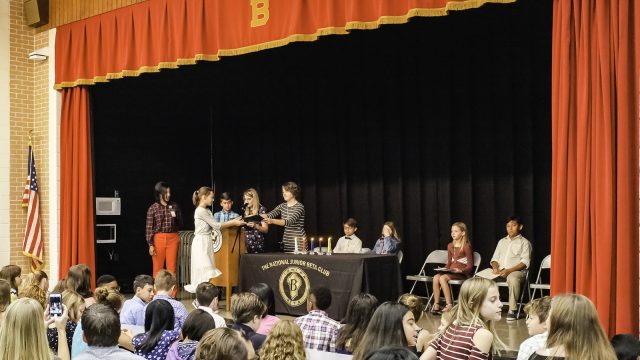
The Girl’s induction into the Junior Beta Club
One thing I’m known for throughout the school is a simple, weekly assignment that I’ve been giving for three years now: the article of the week. It’s simple, really: kids read an article from some news outlet and annotate it. I choose a few words that they must annotate, using context clues to determine the word’s meaning (as nearly as possible), and the rest of the annotations come from what Kylene Beers calls effective readers’ skills: commenting on the text, connecting to prior knowledge, questioning the text — skills like that.
I model it for them and provide a video of my own annotating process every week, and after a month or so, most students have figured it out and get straight As on the assignment. I tell them it’s like batting practice for a baseball player or shooting free throws for a basketball player — the essentials. We do it again and again and again and again and again.
It provides a great deal of insight into students’ thinking as well. Sometimes those insights are sobering.
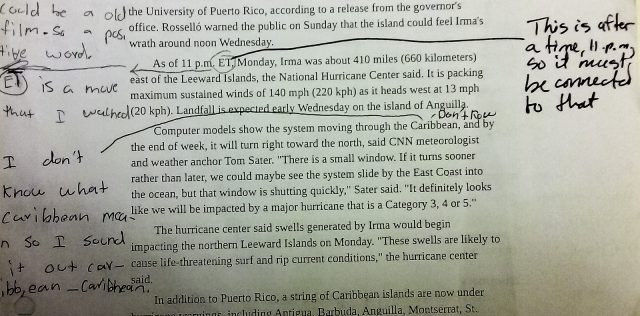
Two things here: first, I’m more than a little worried that this student made the connection with ET in this text. He included it in his summary as well, and I asked him some questions about it.
Look again — does it make sense for an article talking about a hurricane suddenly to switch to a movie? What exactly did it say about the film?
His connection to the film makes me wonder if he was reading closely at all. After all, it talks no where about the film, obviously. The fact that it comes directly after “11 p.m.” makes me wonder if he was thinking critically at all. After all, even an eighth grader who is severely lacking in background knowledge knows what “11 p.m.” means, right?
The second concern didn’t strike me as all that unusual, and yet for that, it seems all the more frightening. “This child doesn’t know what the Caribbean is,” I almost said out loud, shortly followed with the thought, “like most on-level eighth graders.” It’s a sign of the huge gap in cultural literacy that so many kids today have compared to earlier generations. I would wager that many kids in my eighth-grade class wouldn’t be able to place the Caribbean on a map, and some might not have even known it was a sea, but they would at least know it’s a body of water.
This is not intended as a gripe about how kids today have so much less background knowledge, are so much less broadly culturally informed. The same could have been said about us, undoubtedly. At the same time, it’s an indication of how that marker keeps being moved every generation.
On Tuesday, we begin my eleventh year teaching eighth graders. The kids I taught that first year are now in their mid-twenties, with jobs and families of their own. I think back to that first year and wander about some of them.
Samuel (not his real name), who had so much potential but was placed in a class that encouraged him to show his less savory characteristics. I think he could be a good defense attorney — not intimidated by anyone with a strong sense that justice is paramount. His sense of justice and fairness were a little skewed, but that’s fourteen-year-olds for you.
I think of Sarah Beth (also not her real name), who spent the first week or two in a daze because of an ADHD medication mis-dose and became such an energetic, focused leader in the class when all the details got sorted out. I can see her as a project manager, juggling a million different things and using her sweet but forceful personality to get things done.
Then there’s Requan (also not his real name). Last I heard, he was arrested for assaulting his mother. I wouldn’t be surprised if he’s in prison now, and that’s tragic. I worked with him one-on-one a lot, trying to help him learn to control his anger and his impulses. He looked me straight in the eye like a man when I spoke to him like that, and there was a dim light in his eye that suggested he really did want to change. I still wonder if I could have done more.
This time eleven years ago, they were all strangers to me. I knew nothing about them, not even their name. Within a few weeks, I could predict their responses to certain things.
This time eleven years ago, the new batch of strangers I’ll soon be meeting were toddlers. Truth be told, so was I in the classroom. I had nine years’ experience as a teacher by then, but it was my first year as the primary teacher in an American classroom. It was all a little much, that first year — all the bureaucracy and paperwork, all the behavior issues I’d dodged, by and large, in Poland. I lacked experience despite my experience, confidence despite my confidence, and above all, resources. It’s a strange to admit it, but I honestly found myself wondering, “What exactly do I teach these kids?” Sure, there were state standards, but like any such documents, they lack specificity.
Now, I have experience, confidence, and I know just what to teach them — and often it’s not in the standards for eighth grade because so many read at below-grade levels. But there’s one thing that never changes: I’m always just a little nervous about this year’s kids.
Every year, I heard the same thing. Probably every teacher hears it from their colleagues in the grade below them: “This group — whew! Prepare yourselves!” That makes those teachers sound horrible cynical, but in all fairness, we all feel that way at the end of the year. Frazzled and exhausted, we’re ready to get rid of the kids no matter how much we love them. I know this because every year someone says, “This group coming up!” I end up thinking, “Well, they weren’t nearly as problematic as your comment suggested.”
This year, though, I’ve heard something for the first time: “This year’s kids are different. You won’t have nearly the same issues you’ve had in previous years.” The careful part of me wants to be, well, careful — not get my hopes up. Expect the worst and all that. But after meeting them during open house tonight (they’re still strangers: “You know I’ll just forget your name by tomorrow,” I said countless times), I think there might be something to that.
We can always hope.
Last year, one of the teachers on our team was a novice. Like all new teachers, she began the year with a little trepidation and a lot of excitement. When the year ended and students were walking off the eighth-grade hallway for the last time, she got a little teary.
“You going to get all sentimental this year,” I asked a few days ago.
“No,” she replied quickly.
It’s a common enough reaction: that first year, watching the kids leave and knowing you won’t see them again, you feel a little sinking feeling. They’re your kids, your first kids. The ones that taught you more about teaching than any class in college ever did. You fall in love with them in a way: they’re special, even the ones who drive you crazy. And when they leave, you’re not quite sure you’ll ever have kids that you feel so warmly about, kids quite like this. After a year or two, though, you see that the next batch of kids comes in and replaces the old batch. You can’t even recall many names from the last year without stopping to concentrate on the task. And you feel just the same way about this group as you did last year’s.
It’s then that you stop being quite so sentimental about it all–and all teachers, no matter how cynical or burned out they are now, were sentimental about teaching at one point–and realize, yes, you will have kids just like this next year.
There will be another Susan, whose loud and constant talking drives you nuts but who seems to have a potential about her that she herself doesn’t even fully realize.
You will have another Albert, who sometimes can’t foresee the consequences of his actions or the implications of his body language and so comes across sometimes as being quite a disrespectful child.
Another Amelia will sit among your students, seeming always to be enveloped in a happiness that spreads to all around her.
There will be another Chester, who has poor physical and social coordination and tries to make it up by showing off intellectually.
Another Davonte will dance through our door and then proceed to do nothing. Ever.
Every student you have this year will come back next year–and the next, and the next, and the next–with a different name, a different face, but the same basic personality. Or with a similar face and different name and radically different personality. Or any and all combinations of those three, hardly exhaustive possibilities.
For a teacher, it’s not the end. It never is, until you quit teaching.
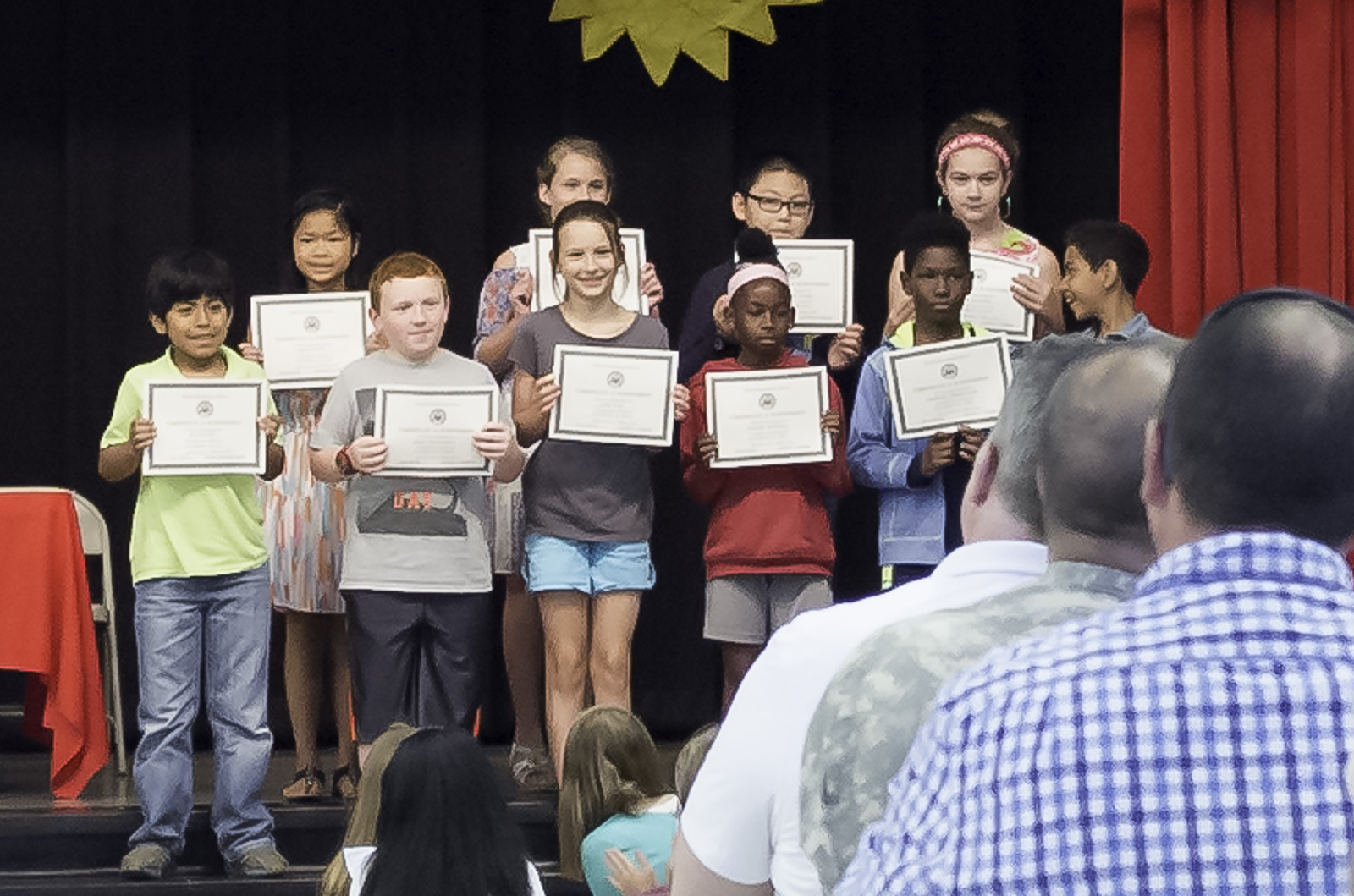
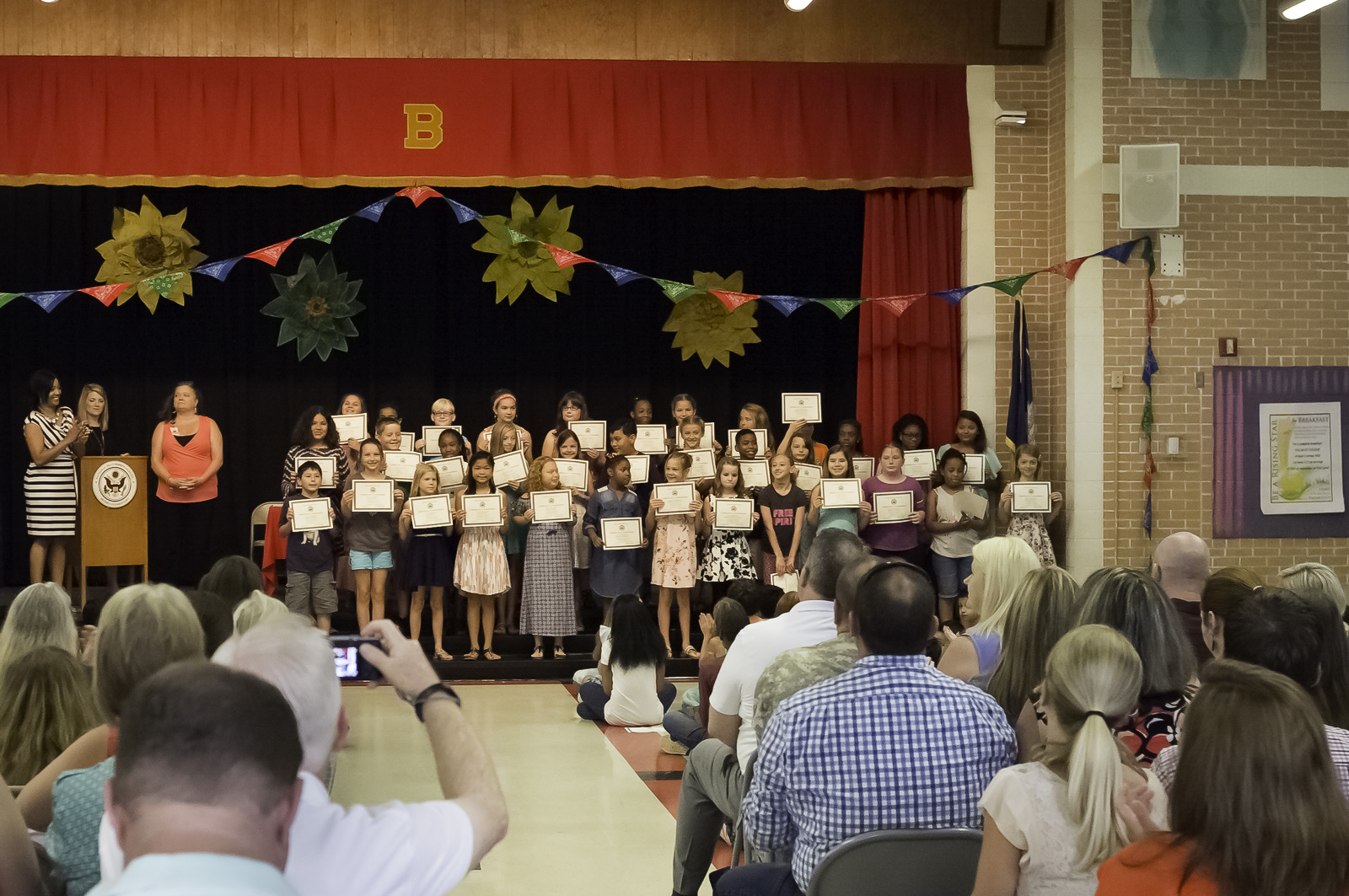
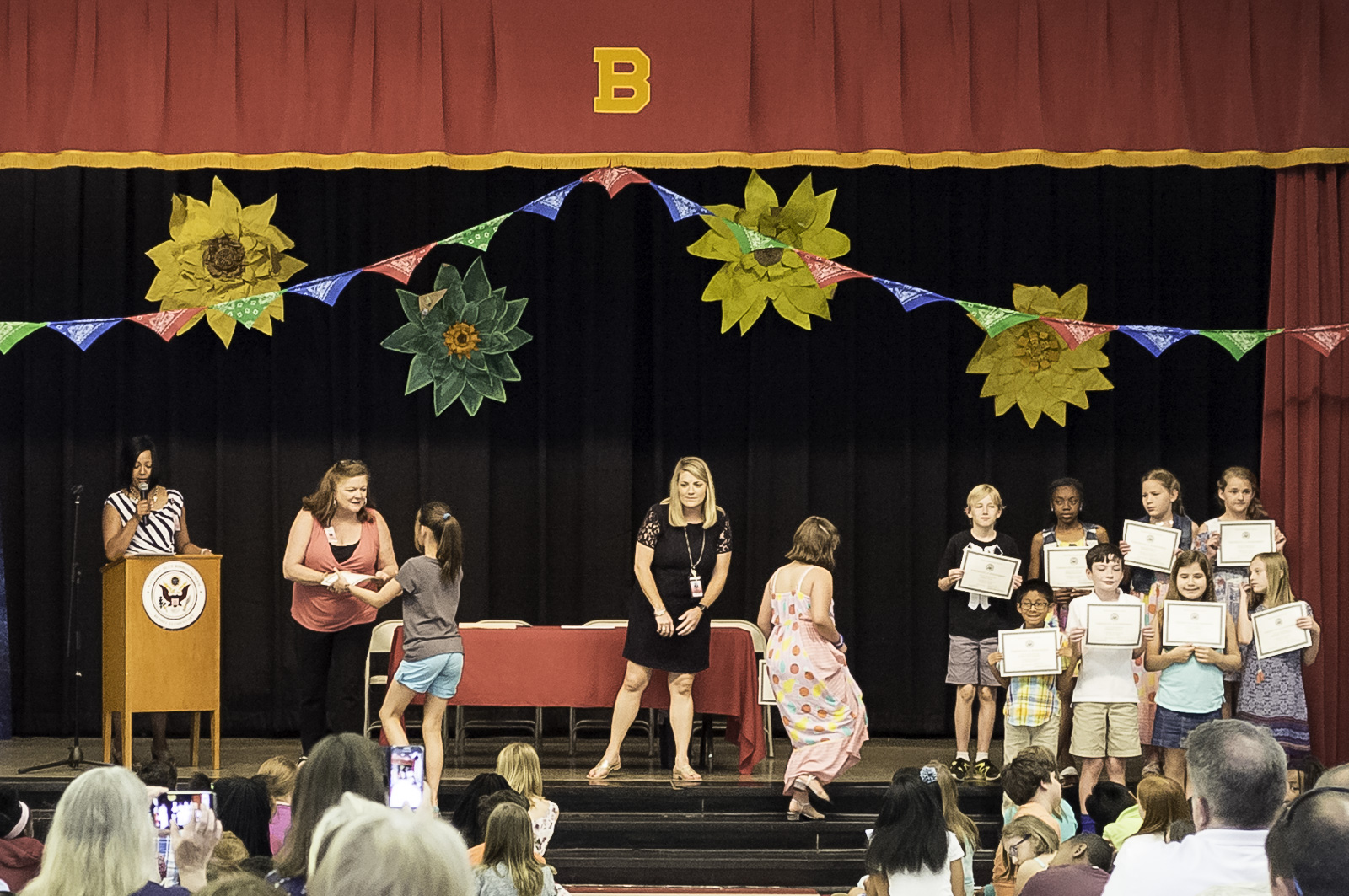
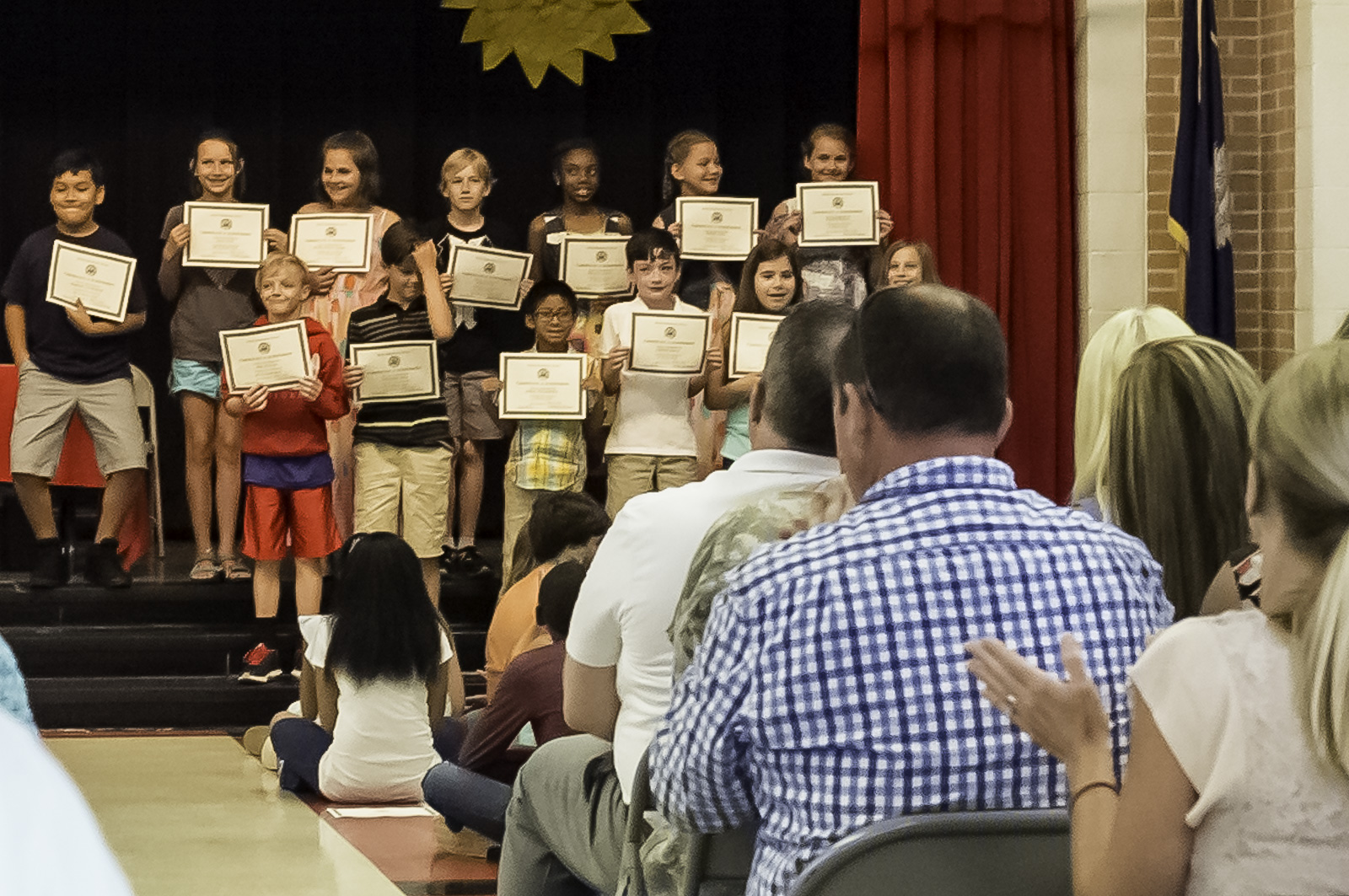
Four awards, including all A’s.
The Girl apparently is anxious to get one — they’re all the rage at her school. Everyone’s got one, and they’re so fun.
It’s the same at our school — the now-ubiquitous fidget spinner. They’re marketed as aids for kids with attention issues and hyperactivity issues. Supposedly they’ll help these kids to focus by giving them a little outlet for their hyperactivity.
What ends up happening, though, is that the kids who have them become fixated on them. They’re just another in a long line of distractions that keep them from staying focused for more than a few moments. The kid in the front row who can’t keep his eyes on his work for more than two seconds now has to contend with this little gadget in his hand and, when he starts sharing it, who’s got it and when he can get it back.
A similar trend (in our school anyway) is the fight with the eternally-in earbuds.
“Take the earbuds out,” I tell a student.
“You tell me that every day,” he says.
Not only that, but I’ve referred the matter to the administrator a couple of times and he’s sat in ISS (probably with his earbuds in ) — but every day, there they are again.
What do these to things have in common? Simple: they’re symptoms of the current generation’s need to be constantly stimulated with something.
L is starting to develop those symptoms as well. She loves to have something playing on her little CD player at all times. She wants to read with it on, do homework with it on, color with it own, play on her tablet with it on. However, what she’s playing on it is somewhat different than what the kids walking down our hallways have blaring into their heads. (How much rap can you take before you go insane? How much misogynistic, materialistic machismo can you listen to before you realize how empty it is?) No, no music for the Girl: she’s always listening to a recorded book.
I’ve had enough experience teaching now to realize that my worries about returning to school after spring break — potential laziness, potential mutiny, potential problems of every sort — are almost always unfounded. The first week back is almost always painless. But it’s busy, getting used to the schedule again.
This week was the last week before testing. Our school has decided to do the state-mandated testing a little differently this year, and I applaud the decision. Instead of having a week of eighth-grade testing, where we test day after day after day (math, then English, then science, then social studies), followed by a week of seventh-grade testing and a third week of sixth-grade testing (divided by grade because we still don’t have enough Chromebooks for the whole school to test at the same time), we’re testing one day a week for four weeks. Next week we begin, and once those four weeks of testing are over, the school year is almost over. Perhaps that’s what makes the transition from spring break always a bit easier: we all know we have that final push until the big break.

It’s also the time of year that students who are at risk of failing a given class — students who throughout the whole year have usually done very little other than disrupt class — decide they might want to try to do something to save themselves. There’s always one or two who don’t, and they usually move on the ninth grade anyway through this or that administrative and summer school magic. I’m not putting down our school: it’s a phenomenon that occurs throughout the country, I suspect. But I do have mixed feelings about it.

On the one hand, what will keeping these students back accomplish? It’s not like they’re going to behave any differently if they repeat. Because our district — perhaps state? never cared enough to check into it — has a policy that a child cannot fail two years, they’re just going to get pushed on, and if they have already been held back, they know they can’t be held back again, which probably prompts a lot of the apathetic behavior. (Students have told me, “I’ve already failed one grade: you can’t hold me back again.”)
On the other hand, isn’t this just teaching them a wonderful lesson for the future? “I can do nothing and still succeed!” What happens to them when they get to high school and the rules change? I’ve told several students over the years, “When you get to high school and fail freshman English, they don’t say, ‘Well, he was close. Let’s give it to him.’ They say, ‘Try again.’ And if it looks like you’re going to fail a second time, they don’t say, ‘Well, he’s already failed once. Let’s move him on.’ They say, ‘Nope. Try a third time.'” And by then, they’re old enough to drop out, and they do. What happens to them when they try to keep a job with that kind of thinking? In short, they don’t. They can’t.

So this is the time of year all of this swirls through my head, and I find myself thinking about my own responsibilities. It’s much easier for me, regarding paperwork and the like, just to move the kid on as well. It’s much easier for me to make my class almost impossible to fail. I think to myself, “They’re still kids: they’ll grow out of it.” But I look around at some millennial young adults and find myself thinking, “Well, maybe not.”
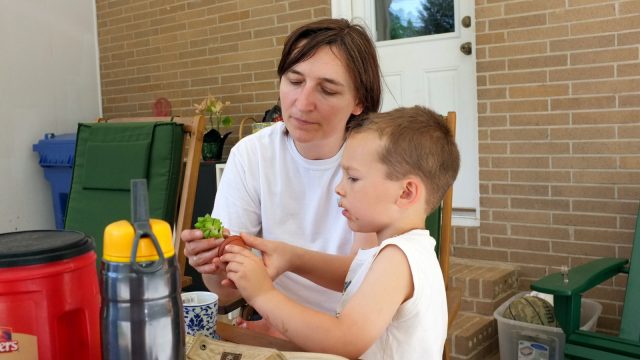
It’s also the time when thoughts and plans for summer are solidifying. This time last year I was getting a little nervous about the huge project that was looming on the horizon. I didn’t know what all was behind the walls, what all awaited us. And now I know what’s behind the walls because I put it there, and the only thing that awaits us in the kitchen is a bright, open space now.
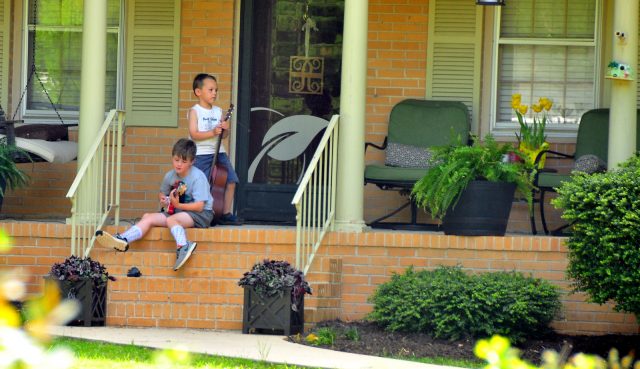
But plans are just that, and now it’s time to get planting, get mowing, get weeding — all the joys of spring that just leave you exhausted but strangely satisfied.
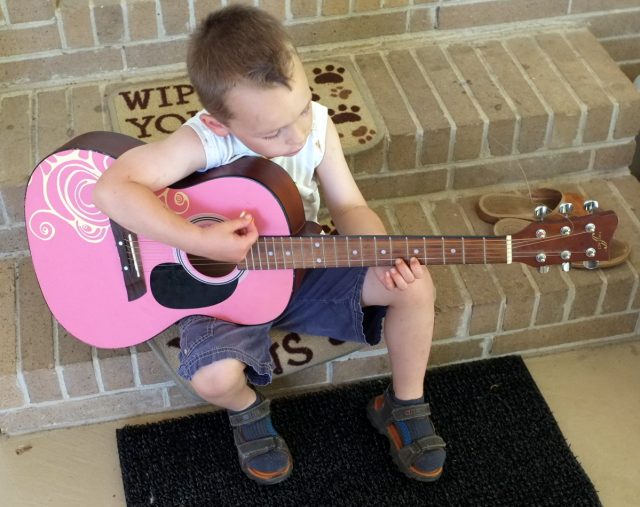
And time to play guitar with your neighbor.
Dear Terrence,
What a turnaround you’ve had these last two weeks. If I hadn’t seen it, I wouldn’t have believed it. (That’s not quite true: I would have believed it because I’ve seen it happen before, but not often. Not often enough, for certain: such kids are certainly outliers.) For the year to date, your Class Dojo positive behavior percentage has been right around 45%, which means you’re a negative influence on the class the majority of the time.
I’m not quite sure you realize the extent of your behavior. You couldn’t go more than a minute or two without talking to someone — and that’s not hyperbole but probably an understatement if anything. You turned in absolutely nothing for most of the year. When I ran a missing assignment report for the year to date a few weeks ago, you were missing 45 assignments, to go along with your 45% percent, I guess. At that point, I couldn’t have possibly given you more than 50 or 55 assignments, so that means you hadn’t turned in 85-90% of your work. Your grade was abysmal as well.
Then two or three weeks ago, something happened. What exactly, I really don’t know. Perhaps your mentor finally said something that really made an impact. Perhaps our counselor, who’s been pushing you all year, finally said something that made an impact. I’m afraid it wasn’t I who said something that made an impact because, I’m a little ashamed to admit, I had all but given up on you. You have to understand: I have 120 students. I can’t expend all my energy on one at-risk kid, and there comes a time when I have to say to myself, “I can keep going after this kid, which hasn’t worked for three-quarters of the year, or I can take that energy and apply it to that kid, who really has shown some growth.” Finite resources and all. So it wasn’t I, I’m afraid, but someone said or did something, and you’ve been a different person since then.
Last week, you turned in your article of the week and worked as hard as I’d ever seen you work. Sure, you didn’t turn in one assignment, but you did turn in two. That’s a vast improvement right there. Then there was that surprising Dojo percentage: 79%. I was shocked. You probably were, too.
Last weekend, I was wondering: “Will Terrence make it two weeks in a row or will things go back to normal?” Tuesday you approached me and said, “Mr. S, I left my article of the week at home, so I won’t be able to work on it as my bell ringer.” Wednesday, when you walked in the building and passed where I had hall duty, you waved your article at me: “Got it today!” You did your work; you set a good example. And that Dojo percentage? 90%. I like to frame things in reference to things you guys get, so I made the obvious parallel to basketball: “Think of that, Terrence: if you’re shooting 90% from the field and I’m your coach, I’m going to make sure you get paid whatever you have to get paid to stay on our team, and I’m going to tell the rest of the players, ‘Just carve out a little space for him and give him the ball. He’ll do the rest.'” That smile was unforgettable: “I know, right!?”
The truth is, Terrence, it’s not just in basketball that that 90% will get you whatever you dream of. Just about anywhere will work.
This week, it was an honor to have you in class. I can’t say I’ve always felt that way, though. Here’s hoping we both keep bring our A-game for the rest of the school year.
Impressed and still smiling,
Your Teacher

Dear Terrence,
When did a response to “Good morning” become optional? When did manners become a matter of personal preference?
For you, considering all that has passed between us, my behavior likely seems two-faced. You think, “Here he is trying to be all nice to me, and when I get to class, he’s going to be on my back about everything.” That’s not an accurate interpretation of my behavior, though. You see, I won’t deny a simple fact: despite the fact that your behavior often is the most irritating aspect of my entire day, despite the fact that your behavior disrupts the whole class, despite the fact that your behavior often descends into outright disrespect (never mind the fact that disruptive behavior is itself disrespectful) regardless of how politely I redirect you, and despite the fact that some of your behavior seems downright spiteful, I try to approach each day as if it were the first day you and I ever encountered each other. I try to give you the benefit of the doubt each and every day. In short, I try to start fresh daily.
It seems only fair. You are, after all, only a kid. Your personality and behaviors have not completely congealed, and there’s always hope that you will mature during the school year and come out the other side a different kid. It does happen. And so I want to foster that possibility, however remote, in your behavior by starting anew every morning, and the simplest way I can do that is simply saying as cheerfully as I can muster without sounding false, “Good morning.”
Ironically, this type of behavior extends even into the adult world. There have been plenty of times, in both my teaching career and in other jobs I’ve held, that I’ve come to work with a sore spot for some colleague or other. It’s hard to leave it all behind, and sometimes that sore spot gets irritated just by seeing that person, and the last thing in the world I want to do is to be cheerful and polite. But that’s part of the game. It’s not being false or two-faced to hide those true feelings; it’s called being professional. It’s called being an adult, realizing that these little rituals like “Good morning” are just that, rituals that really mean nothing more than “I acknowledge your existence this morning.” True, it is a shortened form of an older greeting, “I wish you a good morning.” But even my worst enemies I wish a good morning: if things are going well for them, they’re not likely to take anything out on me.
So let’s try this again. I’ll say “Good morning, Terrence,” and you say, “Good morning, Mr. Scott.” And we both know we’ve started our day off with each other on a positive note.
First practice is tomorrow morning.
Kindest regards,
Your Teacher