education and teaching

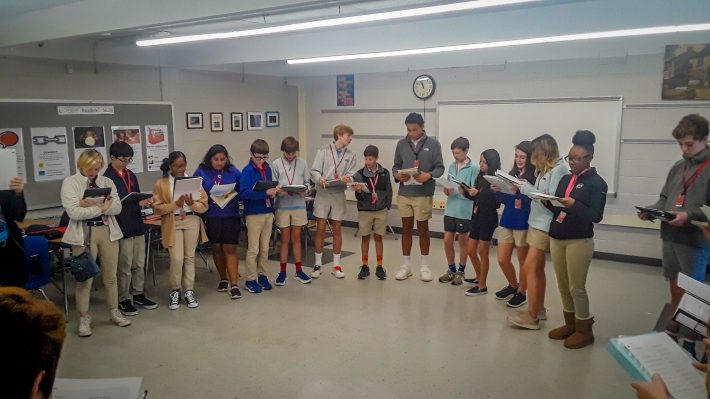
Speech

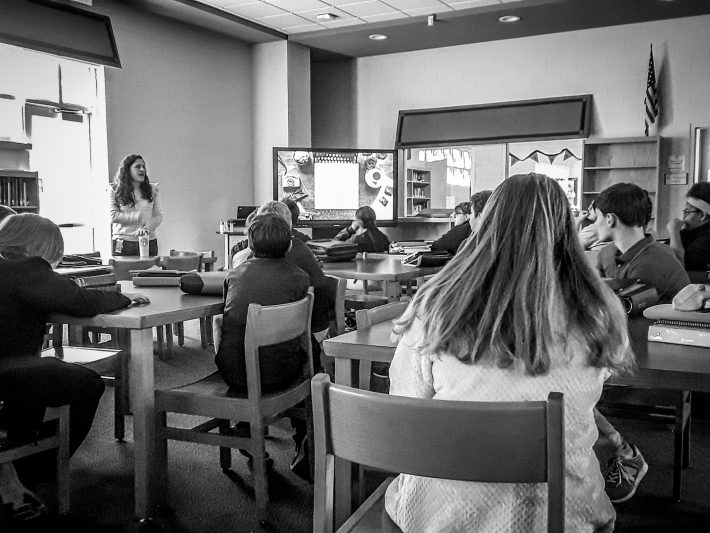
Since I’ve managed to hoodwink and bamboozle all my fellow teachers into thinking I know a thing or two about teaching, they chose me as the teacher of the year this year, for which I politely thanked them and promptly forgot about it. The head of the school’s Beta Club chapter didn’t forget, though, and started asking me in December if I would be the keynote speaker for the induction ceremony.

I said no thank you. She asked again a week later. I said no thank you. She asked again a few days later. I said no thank you. She asked again the next day. I said no thank you. She asked again the next day again. I said no thank you. She asked again later that same day.

I started thinking the only way to get her to leave me alone was to agree to do it.

“Five to ten minutes,” she said. “Something about community service.” Here’s what I came up with:


Chapel was at nine in the morning Tuesdays and Thursdays. During my freshman of college year I didn’t have class until 11 on Thursdays. Since I didn’t live on campus, getting up and driving to the college two hours before I had to be there for a class was less than inviting to an 18-year-old. (You might have noticed I only made an excuse for Thursdays; I have no excuse for the Tuesdays I missed other than to say I was 18 and not terribly bright.) As a result, I failed to fulfill the Chapel requirements that my small Presbyterian college placed on all students. To make up for the missing chapel attendance, the college required community service. I chose a soup kitchen downtown where I went to spend an entire Saturday to make up for my missing chapel requirements.

I had heroic visions of what this would be like. I saw myself serving homeless veterans, giving them hope and soup and a smile. I saw myself giving joy to those who had no joy of their own simply by showing I cared. I saw myself bravely facing the cruelties and injustices of the world and making a difference. I saw myself battling back the apathy of society and showing these poor souls that someone cared. I saw myself changing a life or three just by handing out some beans. In short, I saw myself.

By the time that Saturday rolled around, I was more than ready. I was excited. I was optimistic. I was going to change the world through my heroic self-sacrifice!

So I was a little surprised when, on my arrival, the director of the homeless shelter led me to a small pantry illuminated by one dim dingy light bulb hanging from the ceiling.

“Our pantry needs reorganization,” he said. “That’s what we’d like you to do.”

It was true: the pantry shelves had cans of fruit next to cans hot dog chili and squeezed in between them were cans of condensed milk and packets of tuna. Mysteriously there was canned cat food hidden here and there. It was chaotic. And dark. And dirty.

“We also need you to check to see which cans have expired. Set them aside so we can throw them out,” the director said over his shoulder as he left.

I stood looking at the chaotic mess and wondered how anyone could find anything. There was no denying it: the pantry shelves needed reorganization.

Still, this was not how I was going to become a hero.

The first thing I discovered was that many of the cans were not just dusty but filthy: something had leaked on these; those were so ancient that they had a cake of dust on them; some were sticky; some were missing labels. Being somewhat OCD about such things, I couldn’t just re-stack them and leave them a mess, so I requested some water and rags and wiped off most of the cans as I worked.

All told I spent almost six hours in that pantry, not talking to a soul, not giving out soup to anyone, not listening with patience to anyone’s stories, not sharing a bit of comfort or joy with anyone.

It was the antithesis of what I’d anticipated.

And that’s probably why, nearly thirty years later, I still vividly remember that Saturday. I did more community service while I was in college, though for less-than-altruistic reasons: once I discovered how relatively easy it was to knock out a third or half of the chapel requirements on a single Saturday, I started skipping chapel with abandon. But I don’t remember much about those other occasions. Just that first one, when everything seemed to be the opposite of what I was expecting but just what was needed.

Today, you are becoming members of the Beta Club, which most people see as recognition for your academic effort and perseverance. And it is that. You have shown great resolve and fortitude in maintaining the grades you have maintained. It is a laudable achievement and a reflection of the character of both you and your parents. But this prestige is not the greatest benefit of being in the Beta club.

The greatest gift to you is the opportunity the Beta club provides to do community service regularly.

Throughout the school year, the club will provide you with many opportunities for service within the school community, and many of these projects will bring a smile to your face. You’ll go to Build a Bear to create teddy bears for Ronald McDonald House and Children’s Hospital. You’ll conduct the SouperBowl food drive in the school for the Samaritan House. You’ll participate in the Acts of Kindness week for the Department of Juvenile Justice. All of these activities will, in their own way, be fun.

But I would argue that you need to fulfill some of your community service hours by doing something that’s not fun, that is in no way Romantic (capital r — you’ll learn about Romanticism in American lit), that is in no sense enjoyable. Something hard. Something that gets you dirty and makes you sweat. Something practical. Something you most decidedly wouldn’t want to put on Instagram.

This is not because I think you should punish yourself, because such work is not punishment. Such work, especially when done surreptitiously, is the stuff of character because it is often not recognized and seldom lauded. Rearranging that pantry was in a sense miserably boring. But I know that I helped other people help other people. In organizing that pantry I made the job of the cooks easier, and they were the ones doing the real work, day in and day out, not some little college freshman hanging around on a Saturday because he’d been too lazy to go to chapel. It was a little thing, but that’s why I remember it. That’s why, in a sense, it was big, because it taught me that often it’s the little things that make the difference.

So go out and find the bigness that’s in those little moments of self-sacrifice accomplished by completing less-than-glamorous community service. Go seek out jobs that bring no glory, the little things that you don’t think anyone notices. Before you know it, that type of service will become a reward in and of itself. You’ll do these things not for the Beta club service hour credits you earn but for the sense of accomplishment and character they bring. And then you’ll stop doing it for those reasons as well: it will just be a habit. It will be something you do without thinking, something you do because that’s who you are. And when you reach that level of serving others, of helping those in need, you’ll be someone who really makes a difference, someone who changes the world, one grimy soup can at a time.


In the end, I cut some of it on the fly. (I indicated what I remembered cutting above.) An odd experience overall: my brain was calculating several different trajectories at the same time:

  • Am I speaking too quickly?
  • Do I know the speech well enough to make eye contact at this moment?
  • I need my notes! I need my notes! I have to break eye contact and gracefully let my eyes fall on the spot where I should be next — without panic.
  • Who does she look like? She looks like someone I’ve seen before.
  • Am I speaking too slowly?
  • Didn’t I teach his brother? He looks a lot like Z from two years ago…
  • Is this making sense?
  • Can I cut this part short? As I say it aloud, it doesn’t sound as good as I thought it would.
  • If I skip this next part, will I have transition problems?
  • Why the hell don’t they have a mic stand? I hate standing here holding this mic.

In the end, my final version felt like it lasted about eight minutes, but I really have no idea.

An interesting experience, but not one I’m keen on repeating, but it’s not because it terrified me or anything of the sort: I make little public speeches multiple times a day. I’m just used to winging the exact words and having only a general plan in mind.


Changes

Photo by susanjanegolding

A kid makes a decision to sell something at school and soon, every part of her life is sucked into the whirlpool of consequences that follows. Another kid makes a comment about violence in school and soon, every part of his life is not sucked into the whirlpool of consequences because of parental denial.

Both these kids intersect my own life, and those intersections coincide with other intersections making this web that moves on one end when you tug on the opposite end. Both these changes affect me only coincidentally and fairly significantly — the paradox of the nature of modern life.

Both these changes get me thinking about our own daughter, the same age as these two non-hypothetical kids who go to schools not all that different from our daughter with peers not all that different from our daughter’s friends. So much of these three families’ lives line up, and it leaves me thinking, “There but for the grace of God go we…”

I want to say it’s not grace. I want to say it’s better parenting. But I know that’s not necessarily the case. And I add “necessarily” because to think otherwise is almost unbearable.

3 Hours

We had a three-hour delay today, which meant classes lasted less than half an hour and were for all intents and purposes useless unless, like me, teachers had something from previous days that could logically wrap up in that little bit of time.

And the conditions that prompted this? Dry roads…

Decisions

There was supposed to be a horrible storm coming through the area. Or there was the possibility of a terrible storm. Or at least the potential for bad conditions that might make driving unsafe for those unaccustomed to wintery weather. Or something like that. Here in the south, we have snow days without any actual snow because the district calls off school if the forecast is bad. That’s not an exaggeration.

Now, I’m not complaining about this. The district is looking out for its students’ safety when making these decisions, and to some degree minimizing the potential for lawsuits as well. That’s cynical, that last comment, but I don’t mean to be terribly cynical: I do honestly believe the schools have their students’ safety in mind.
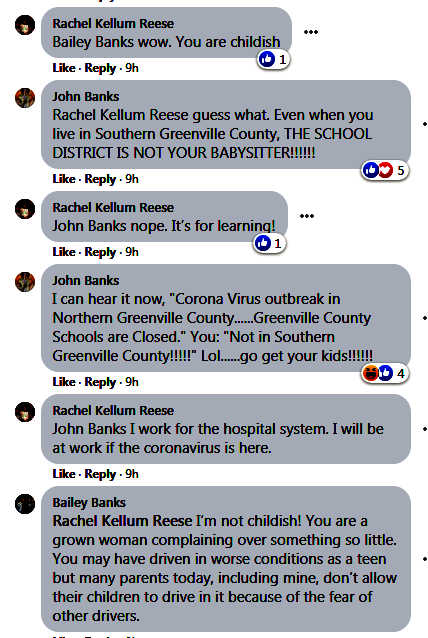
The real fun comes in looking at social media reactions to this. Today, for example, the district implemented an early dismissal and the Facebook announcement has almost 700 comments, many of which leave one feeling a little hopeless for humanity:

Progress

Working with eighth-grade kids, I’ve learned to accept progress in small steps. Behaviors don’t change overnight. They don’t even change over-week or over-month. But small changes can happen suddenly. Small changes that can grow. Small changes that serve as a foundation. Small changes that aren’t so small.

I have a student that I love. And hate. And hate to love. And love to hate. He’s got potential. He’s got a great personality. Everyone loves him. But he talks.

Constantly.

No, constantly.

No, I mean constantly.

No, I really mean constantly.

That is almost not an exaggeration. A slight exaggeration, but only very slight. He loves gossip. He loves knowing something someone else doesn’t know about someone they know in common. He loves telling people things they don’t know. He loves being a clearinghouse of useless personal information about others.

In the midst of this gossiping, this chatting, this constant sharing of information, he often gets called down. And this behavior he consistently exhibits makes him the focus of teachers’ attention so that they call him down for everything. And that frustrates him. Leads him to argue. Leads him to be disrespectful. Leads him to making very bad decisions sometimes.

I have him in homeroom and English class. Almost every day as he leaves, I tell him, “K, make good decisions today.”

“Yes, sir,” he says. (Did I mention he can be a perfect example of Southern manners?)

Later in the day, before eighth-grade students came back from related arts, I saw him again.

“K, have you been making good choices today?”

“Yes.” He proceeded to tell me about an instance when a teacher called him down and told him to close his Chromebook. “I was going to argue with, but I just closed my Chromebook.”

Two little actions from one decision: to do one thing and not do another. Two actions that most of us would do without thinking about it when told to do so by an authority figure. Two actions that would go unnoticed in other students. Two little actions; one little decision. And so much pride.

“See? It wasn’t that hard, was it?” I said.

“No, sir.”

“And the whole conflict — it just vanished instantly, didn’t it?”

“Yes, sir,” he smiled.

Next step: get him to repeat it. Often.

Passing

I learned this evening that the pastor who led our local little congregation of the WCG when I was a teenager died recently. Nana and Papa had heard years ago from their connections that the man had Alzheimer’s or some other form of dementia, and that’s what one obit said about him:

R spent his life in the ministry, lastly in the Living Church of God. Due to his ailment, he was retired but continued to attend until his condition did not allow him that freedom.

The church I grew up in held some fairly heterodox beliefs, including the one that its members (at most 150,000 worldwide) were the only true Christians and everyone else, unbeknownst to them, was worshipping Satan and through his “counterfeit Christianity.”

When I read Peter Berger’s work on the sociology of knowledge (especially his books The Social Construction of Reality and The Sacred Canopy: Elements of a Social Theory of Religion), I felt he’d looked directly into my youth and described what I’d experienced. When you hold a view that’s in the cognitive minority, Berger explained, it’s difficult to maintain that view. Everyone else says you’re wrong. You either adopt the prevailing view or you insulate yourself with what Berger called plausibility structures — rituals and such that reinforce the heterodox ideas you hold and make them seem plausible in the face of a majority who says you’re wrong. One of the most basic plausibility structures is the cognitive ghetto: you isolate yourself from others physically and mentally to avoid contact with contaminated “others,” who might introduce new ideas that lead to doubt.

Our church did this exceptionally well. We had our own little culture with its own vocabulary, customs, retreats, and other structures that kept the perverted world with their Satanic ideas at bay.

Ministers in this church enforced this isolation with varying degrees of severity and using various leadership methods. It was not uncommon to find very authoritarian and controlling people drawn to the ministry of this organization as a result.

Growing up, I had contact with a number of these ministers and heard about others. Some of them ruled as an autocrat. Many of them were controlling, manipulative, and destructive.

R was none of these.

Certainly, he enforced the rules of the main organization, but there was a gentleness about him that was unlike many of the other ministers. He didn’t seem like he was on a power trip like so many of the pastors in the church did. He seemed humble, and he could certainly laugh at himself — a rarity in ministers in that sect. One online memorial expressed it succinctly: “He brought a new way of looking at things, he encouraged the entire congregation to try new things.”

I became close friends with his sons and spent countless weekends with their family in high school. He and his wife were always kind to me and the other teens in the church.

In the early- and mid-90s, the main organization went through some doctrinal changes that led ultimately to the breakup of the church. “It turns out, we were wrong — we aren’t the only Christians” seemed to be the overriding theme. “All these heterodox beliefs — they’re pretty daft as well.” Several groups splintered off in efforts to hold fast to the truth once delivered.

My parents accepted the changes; R and his family did not.ย For years I never heard from any of them.

I found myself thinking, “How could our friendship mean so little to them? How could they just let that all disappear? Were we friends only because we believed the same things?” I knew the answers.ย Instantly we were outside their cognitive ghetto; we were the other; we were heterodox, unkosher, unclean. Dangerous.

Then in the early 2000s, I found R’s email address on the internet and had a brief exchange with him. I was curious about why he stayed with the original beliefs; he was curious about why we left. We had a few exchanges and then as often happens, it ended rather suddenly for no real reason. What really did we have to say to each other, after all?

When Nana passed, I wondered if he and his wife (rumor had it they’d separated, even divorced, but the obituary I found indicates otherwise — or at least that she kept his name) had found out about her passing. My folks were close with them, and I know the dissolution of their friendship due to no-differing theological views pained them greatly.

In my interactions with R, though, I came to see that it pained them too, though in a different way. How could we turn our back on the truth we’d once held? How could we come out of the world (“the world” was the generic term for the non-member hordes) and then go right back into it? How could we hold the key to becoming God as God is God (but not quite — hey, I said it was quite heterodox but you probably weren’t thinking that heterodox) and then give it away?

In truth, it was the church that brought us together and provided the catalyst that we used to break ourselves apart. The Lord giveth and the Lord taketh away.ย But is that really any different from how other friendships come and go? Except for the handful of true, deep friendships we have, don’t we all move through relationships in the same way, regardless of religious belief or other baggage?

I do this on a smaller scale with 130+ students every single year. I get to know them; I get to like them; I don’t consider them friends, but they’re more than just students. And then they’re gone. And truth be told, I can’t remember most of their names initially when the handful comes back for a visit. “What’s your name again?” I ask with some embarrassment.

Rejection

We all know that kind of disappointment, the kind that feels like defeat or complete failure. It seems to engulf our world, to be a lens through which we view everything hereafter. For at least some period of time, we’re sure we’ll never see the bottom of it and so never be able to climb back out of it. Like the pressure at the bottom of the sea, it seems to press in from all directions as if it has a conscious will, a desire to compress us into nothingness.

It’s been a long time since I felt that because to feel that kind of complete desolate disappointment, one has to be really young. With age comes experience, which brings perspective. We learn to say things like, “Well, this is troubling, but it’s not the end of the world.” But when we’re young, those huge disappointments feel like they are in some way the end of the world.

A young lady whom I’ve had the privilege of teaching this year applied for the creative writing program and the fine arts center here in town, hoping to get one of the six available slots for the next school year. She is a gifted writer, an avid and curious reader, and a thoughtful conversationalist — all the things you’d look for in a budding writer. She asked me to write a recommendation for her. My first draft was my “what I’d really like to say but won’t because it’s over the top” version:

In my more than twenty years in the classroom, E stands out already after only one semester as one of the most gifted and hardest working students I’ve ever encountered. She is an endlessly creative writer with a mastery of language that belies her young age. She is more determined, more mature, and more insightful than just about any other eighth grader I’ve ever met, and she has a true gift in the arts, both acting and writing. In short, I can’t think of any student in my experience who deserves the chance at the Fine Arts Center more than E, and I can’t think of any student whose later accomplishments could possibly bring more joy and honor to the school.

This young lady will be one day a renowned, respected, and imitated author, and quite honestly she will do it with or without your help: that’s how good, how dedicated, how determined she is. Admit E, and in so doing, not only will you give an incredibly gifted young writer a much-deserved headstart in her writing career but also you will give your faculty members and the student body a most incredible and memorable gift.

The latter half was way too much and probably would have hurt her chances more than helped, so it was gone long before the final draft was ready. Still, it’s what I felt — what I still feel.

This morning, I got an email from her mother explaining that she did not get admitted to the program. She was emailing me on the sly, she said, and I took that to mean I was to feign ignorance, which I did.

She came in fourth period and said nothing. She was not quite her usual self, but she certainly wasn’t a typical pouty eighth grader who refuses to work and sits with her emotions smeared all over her face. At the end of the day, I teach her again, this time journalism/creative nonfiction. The random-student-picker app I use popped her name up very first when I began one-on-one consultations, and she finally let me know what had happened.

“Where do I go from here?” seemed to be her concern. “How can I get better at writing if I have no one to teach me?”

“You get better at writing by doing two simple things,” I replied. “Writing and reading. Reading and writing.” That’s not quite true: there’s more to it than that, and a good instructor can be invaluable at providing feedback. But none of the writers we see as great had formal training in creative writing: Shakespeare, Dickens, Dostoyevski, Twain — none of them took creative writing courses, yet they serve as the core of Western literature.

No, I don’t worry about this young lady at all. She’s determined, gifted, and curious — that’s all she needs.

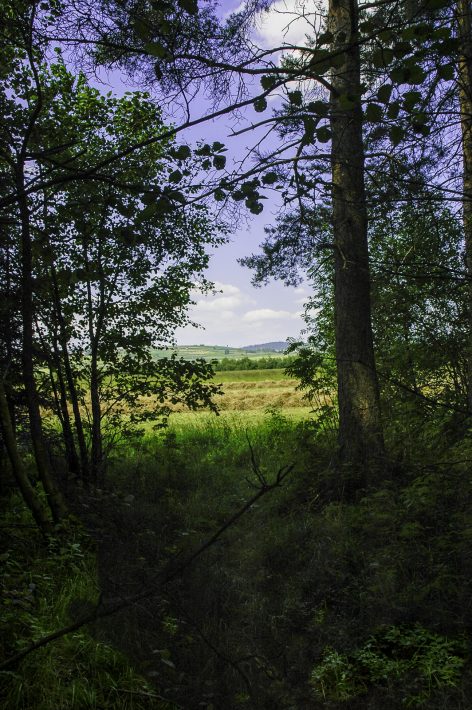
Random Photograph

Poland, 2010

And then

the little stinker comes into class today and says, “Can I get my work so I can take it to the library? I don’t want to get in trouble again.” Not quite, “I don’t want to disturb class again,” but an apologetic self-awareness that is uplifting and frustrating.

“You what’s so irritating about working with you?” I told Y. “I like you. That’s the problem. If you were a complete jerk all the time, it would be easier because it would be harder to like you as a person.” He smiled.

In the afternoon, he came back and apologized for yesterday.

Maybe the other shoe isn’t completely off — it’s dangling on a toe. Or maybe he’s just trying to put it back on.

The Other Shoe

When we get a new kid in the school, we always get a packet of information about them: sometimes it’s a thin bracket; sometimes it’s a fat pocket. But there’s always a packet.

Many of the documents included in the packet deal with the student’s behavior. Sometimes the reports in the packet don’t match the student’s behavior at the beginning. For example, a student may have information in their pocket detailing a long history of behavior issues: insubordination, disrespect, fighting, skipping class, and everything in between. Occasionally, the packet even includes information about how many administrative referrals I didn’t and the details about those administrative referrals. In general, the fatter the packet, the more there is to worry about.

The students you really have to worry about are the ones that live up to that reputation immediately. The package says there are behavior issues, and the student shows his behavior issues from the first meeting. These are the kids are going to be a challenge because they don’t even care to try to make a good first impression: Are you unaware of the fact that they are making a person brushing.

In reality, though, the really frustrating students are those who have the thick packet and show excellent behavior at the beginning of their stay in the new school. It’s a honeymoon period: they’re feeling their way around the new school and everyone else figures out what they’re all about. This honeymoon period can last anywhere from a couple of months.

Sometimes the portrayal in the packet is incongruous with the student in the classroom. It seems a miracle has occurred. Previous teachers’ comments in referrals mention insubordination, disrespect, skipping class, fighting with other students, verbal altercations with teacher, and all the student initially shows in the classroom is compliance. The temptation is to think that something has happened, that student has seen the light somehow, some way. That the student has realized the dangerous track he was on and has made a good-faith effort to change. I wish that were the case.

It never is.

The honeymoon period will come to an end. The other shoe will drop. If the kid has been described as insubordinate, insubordination will rise to the surface sooner or later. There are few miracle transformations an education.

We’re dealing with the soon in like that right now. The really frustrating thing about it is that such students have shown themselves capable of successful behavior. It suggests the behavior, to some degree or another, is a choice. If it is a choice, it’s hard not to feel some degree of negativity towards such students. One wants to say to them, “You shown you can clearly do better; you’ve shown positive traits in the class instead of disruption that steals educational time away from other students. Why? It’s hard not to take it personally that you choose the negative with us over the positive.”

It is of course much more complicated than this. But working with such kids is so tiring: it’s one step forward, three minutes of rolling backward because why step when rolling gets more laughs?

Note: This was dictated on the way home from school to a new speech-to-text app I’m trying out. I think I’ve edited out any nonsense resulting from unavoidable technical glitches, but I’m too tired to give it another read to check…

In Praise of Puns

A journal entry I wrote during journalism class after a day of subjecting my students to an endless stream of cheese puns.

In many ways, puns are the king of humor. They are the intellectual side of jokes, the calculus or Shakespeare of humor for the simple reason that they always require thought. A good pun tickles the brain as the listener runs it through her head one more time to get it (if itโ€™s a really good pun), and even a weak pun gives the listener a little boost in the thought, โ€œI get it.โ€

Puns also create pleasure in the mind of the punster. It creates that little moment of uncertainty as the joke lingers in the air and the joker is just a little unsure that everyone will get it. And because there are always those who donโ€™t get the pun immediately, thereโ€™s a little pregnant pause as understanding spreads: the little giggles (or better yet, the low groans) tell everyone else, โ€œI get it, and itโ€™s either good (the giggles) or great (the groans).โ€

This pause between the telling and the comprehension and laughter creates a space where the teller and the listener are in together on a little private joke. Puns, then, are sometimes the most intimate of jokes because they create a little humorous bond between the teller and whoever might get it immediately while excluding those who look around bewildered, often saying aloud, โ€œI donโ€™t get it.โ€

Two Households

We began Romeo and Juliet today, our first day back from winter break. All morning, as I saw the Honors English kids, I smiled enthusiastically and said, “Today’s the day. The day!” Their response was generally the same: “Hurray!”

Except for the faux enthusiasm, my thoughts are just that: Hurray! I love getting to introduce kids to the unadulterated bard. No simplifications; no abridged versions — just a couple thousand lines of blank verse.

“Why are we even doing this?” one student asked. “Why Shakespeare? Why is he important?”

The thing I love about teaching these kids is that they ask questions like that no to try to get out of it or to let me know they think it’sย not important and can’t be convinced otherwise; they want to know.

“Only one thing has had a greater impact on the English language in terms of introducing new idioms and even new words, and that’s the King James Bible.” Just look at some of the things we say on a regular basis that came from Billy:

  • all that glitters isn’t gold.
  • barefaced.
  • be all and end all.
  • break the ice.
  • breathe one’s last.
  • brevity is the soul of wit.
  • catch a cold.
  • clothes make the man.
  • itโ€™s Greek to me
  • lackluster
  • leapfrog
  • live long day
  • wear oneโ€™s heart on oneโ€™s sleeve

And that’s far from an exhaustive list.

I explained this, and then simply summarized: “Because most scholars, writers, and general readers consider him to be the most influential and perhaps best writer of the English language.”

They weren’t convinced, but it did soften their resolve a bit — perhaps itย won’t be the worst thing in the world.

Opล‚atek 2019

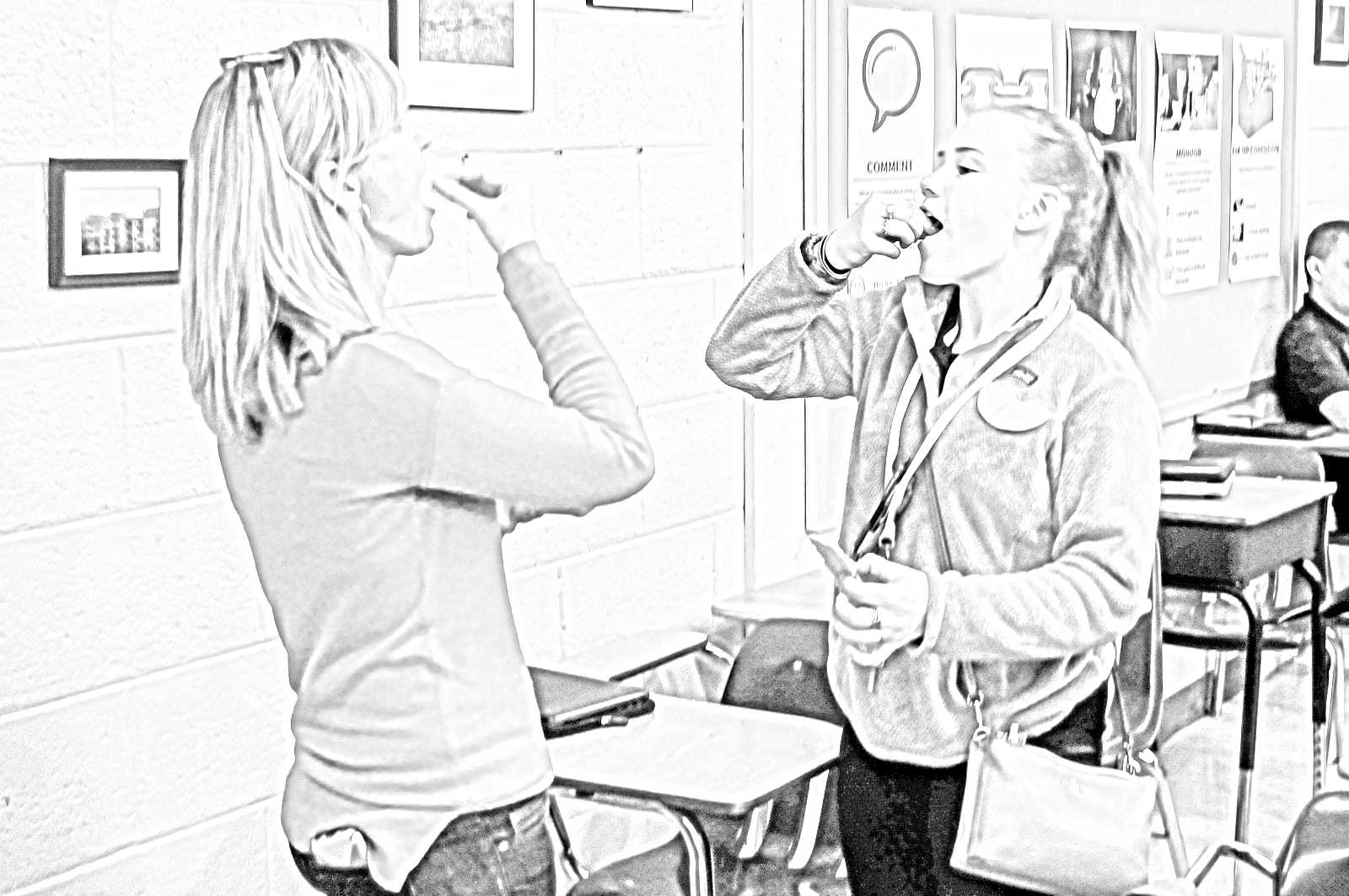
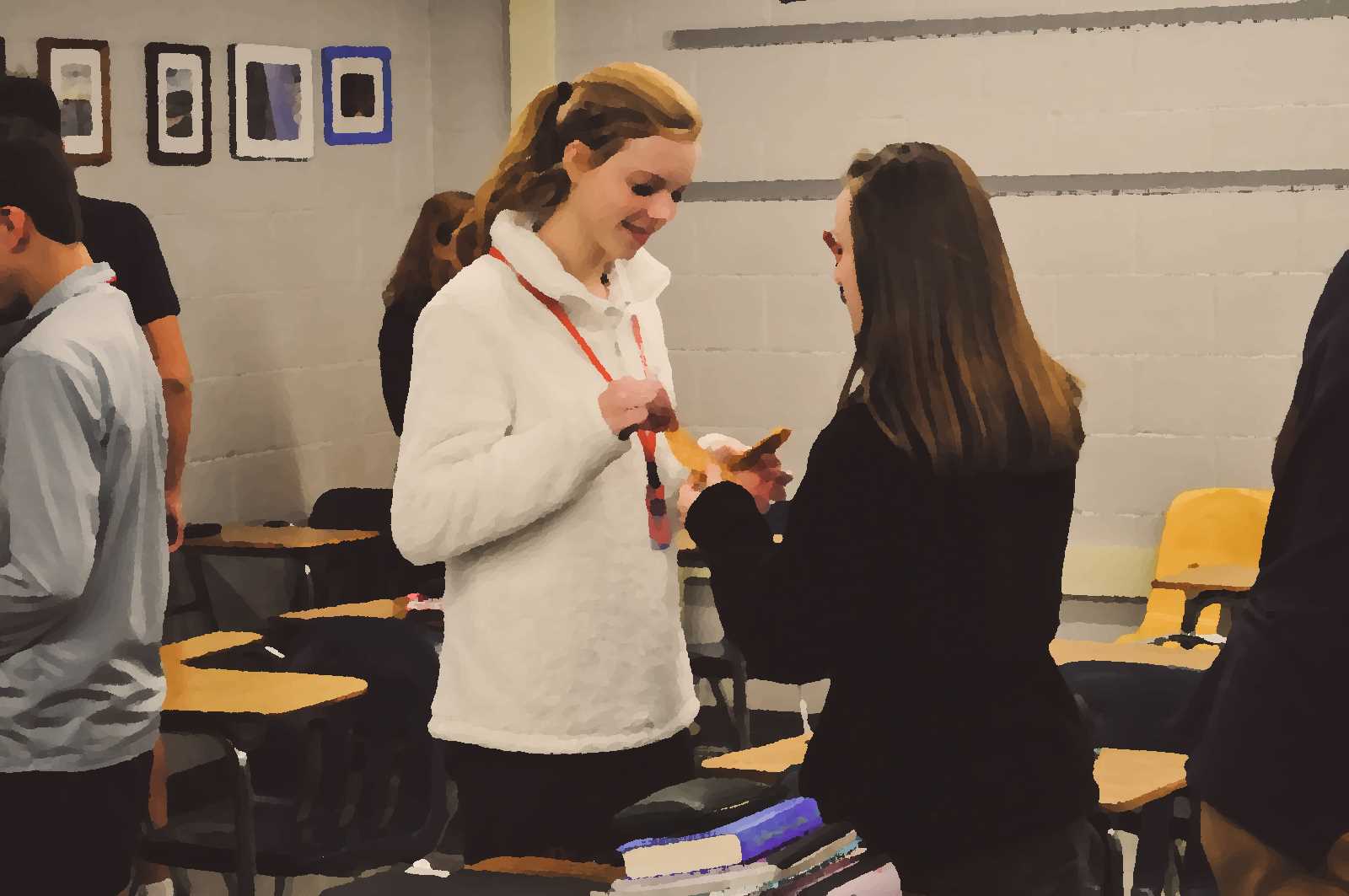
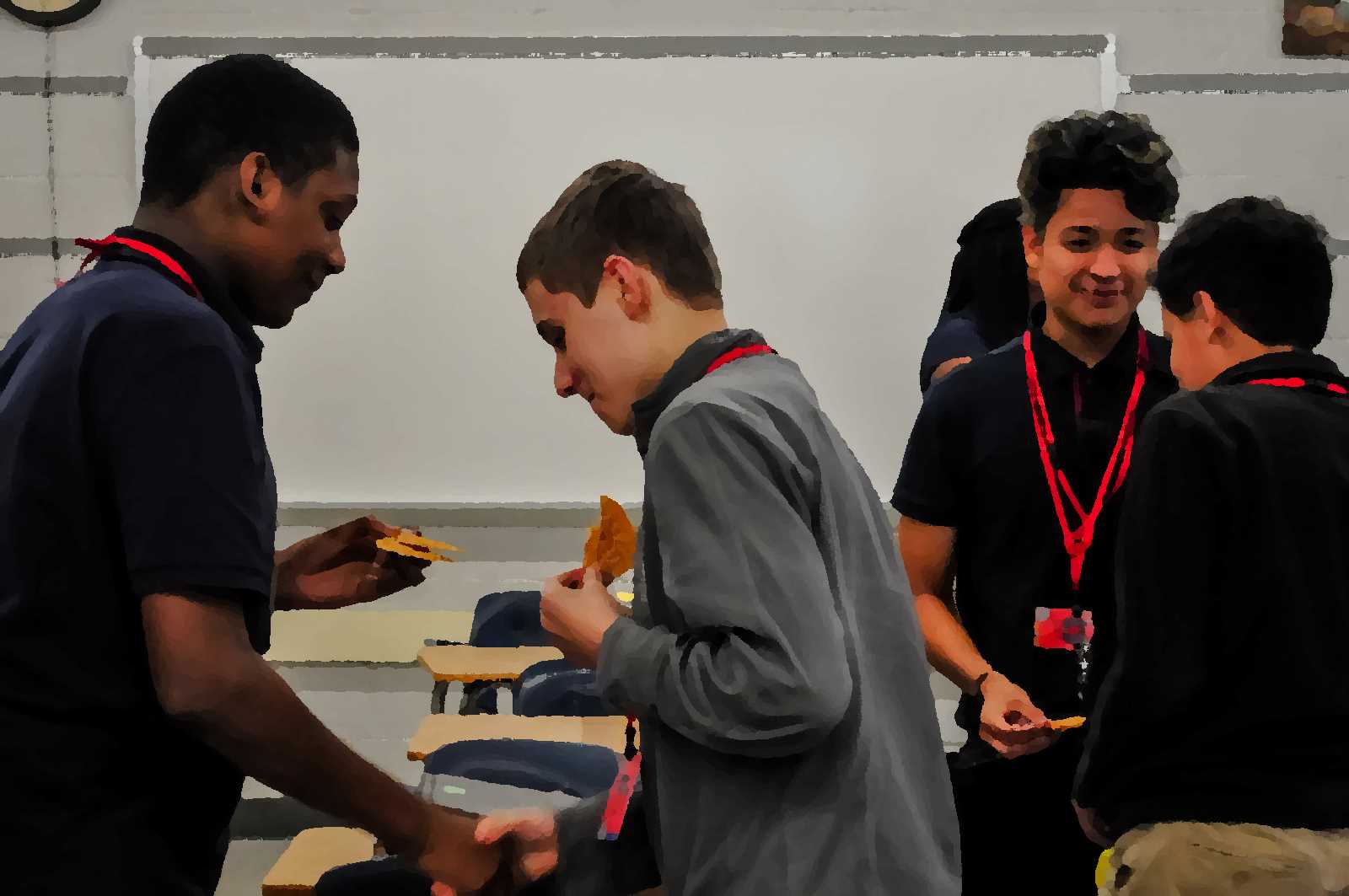
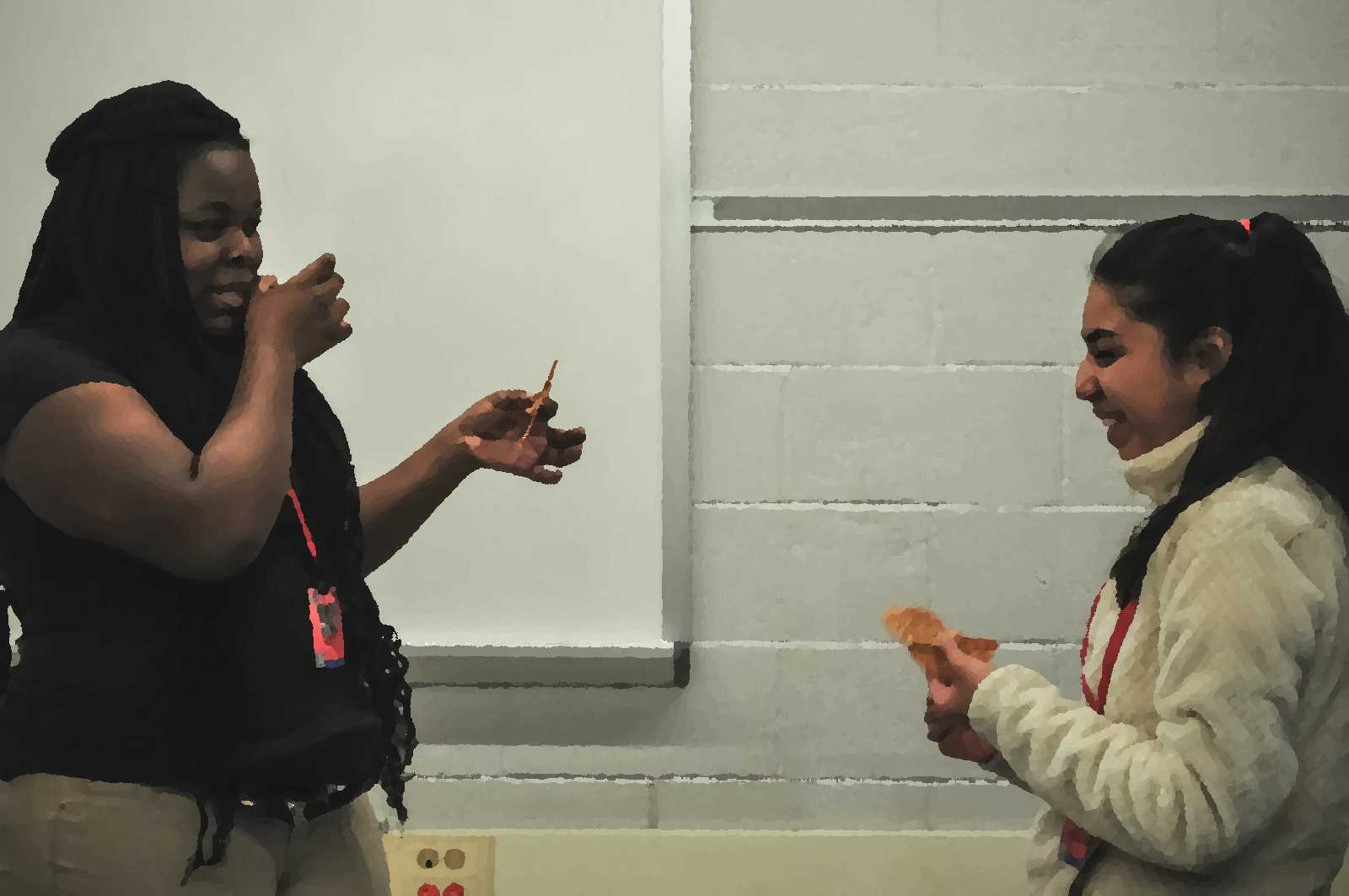
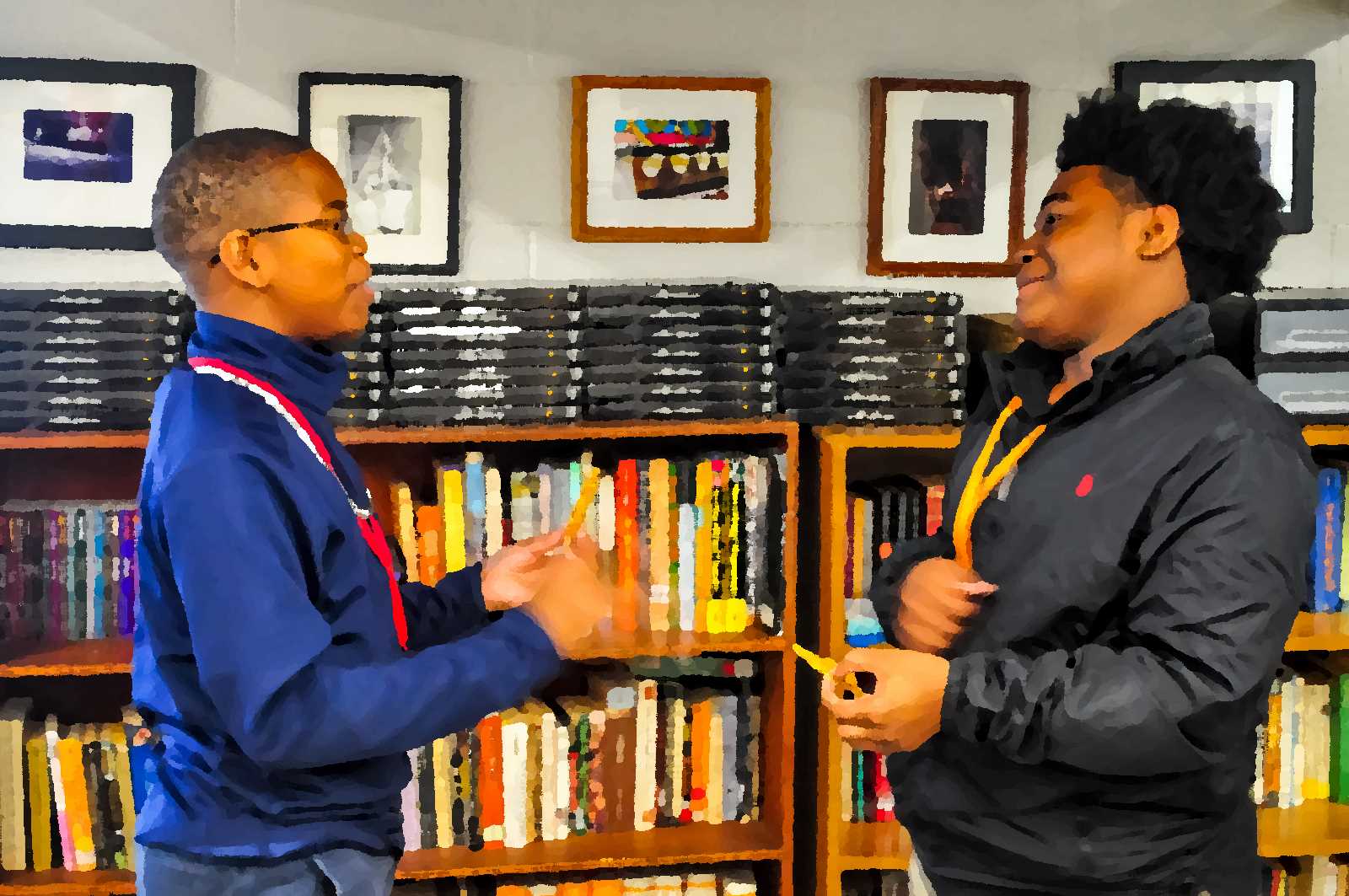
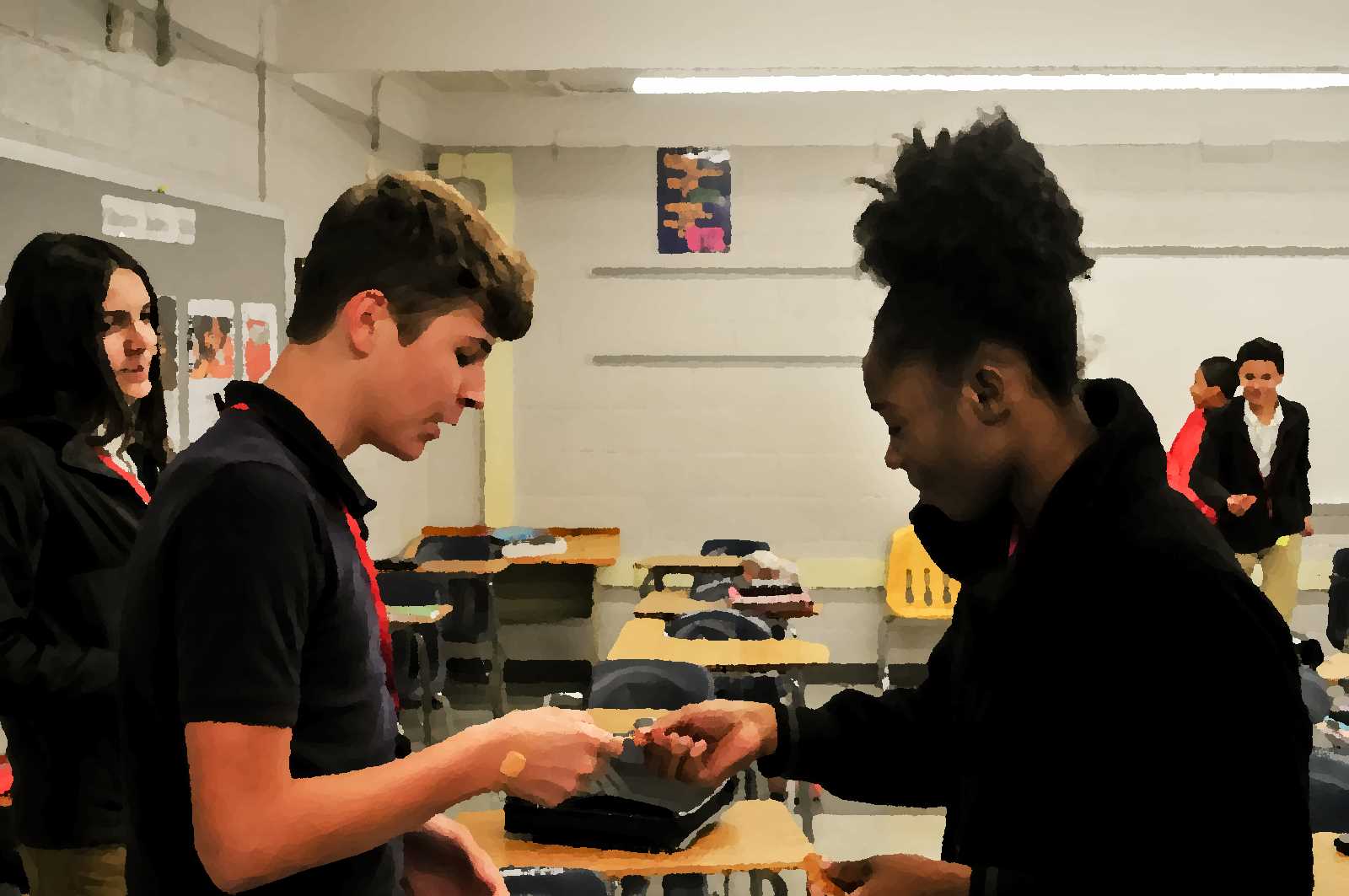
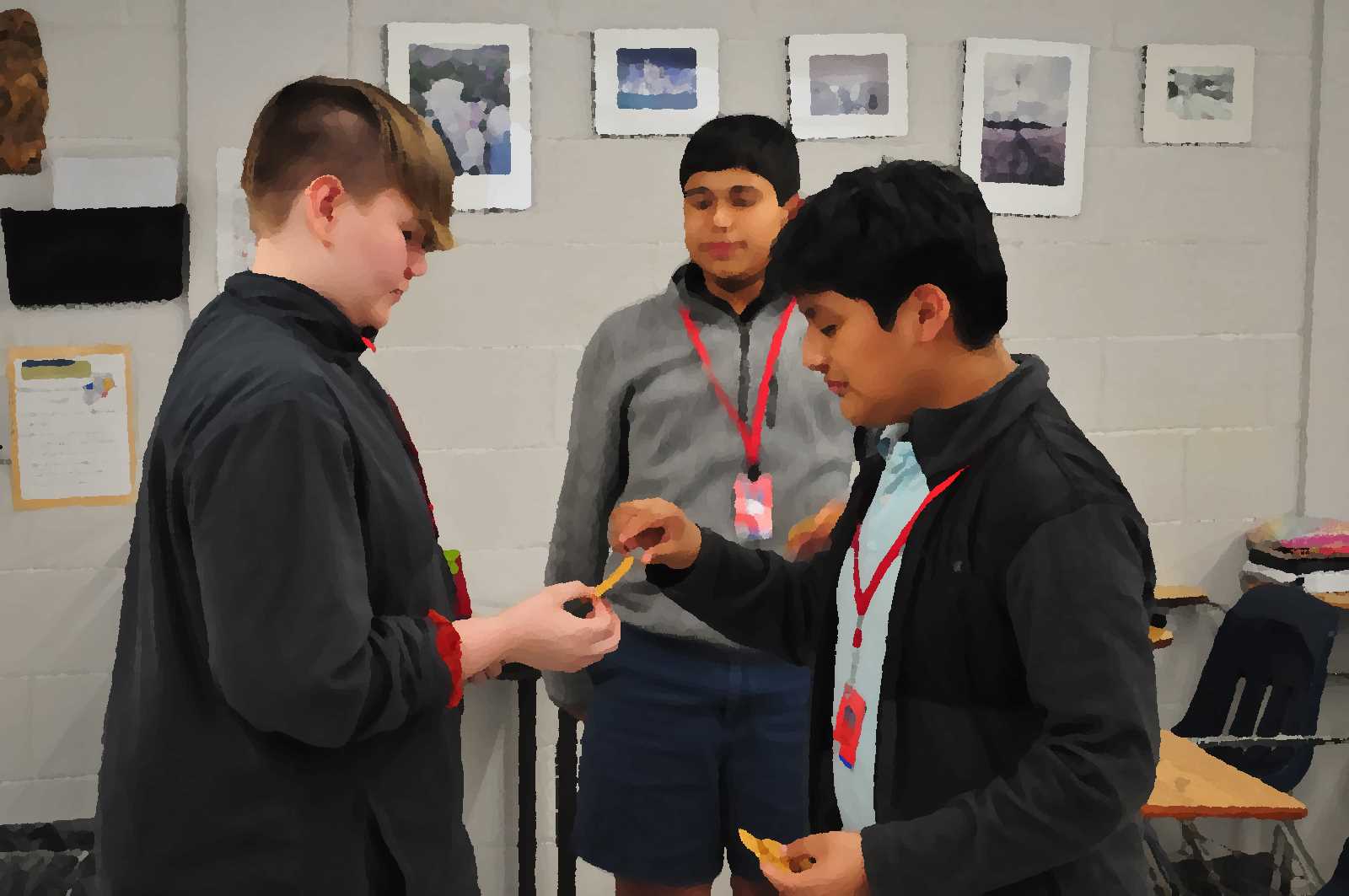
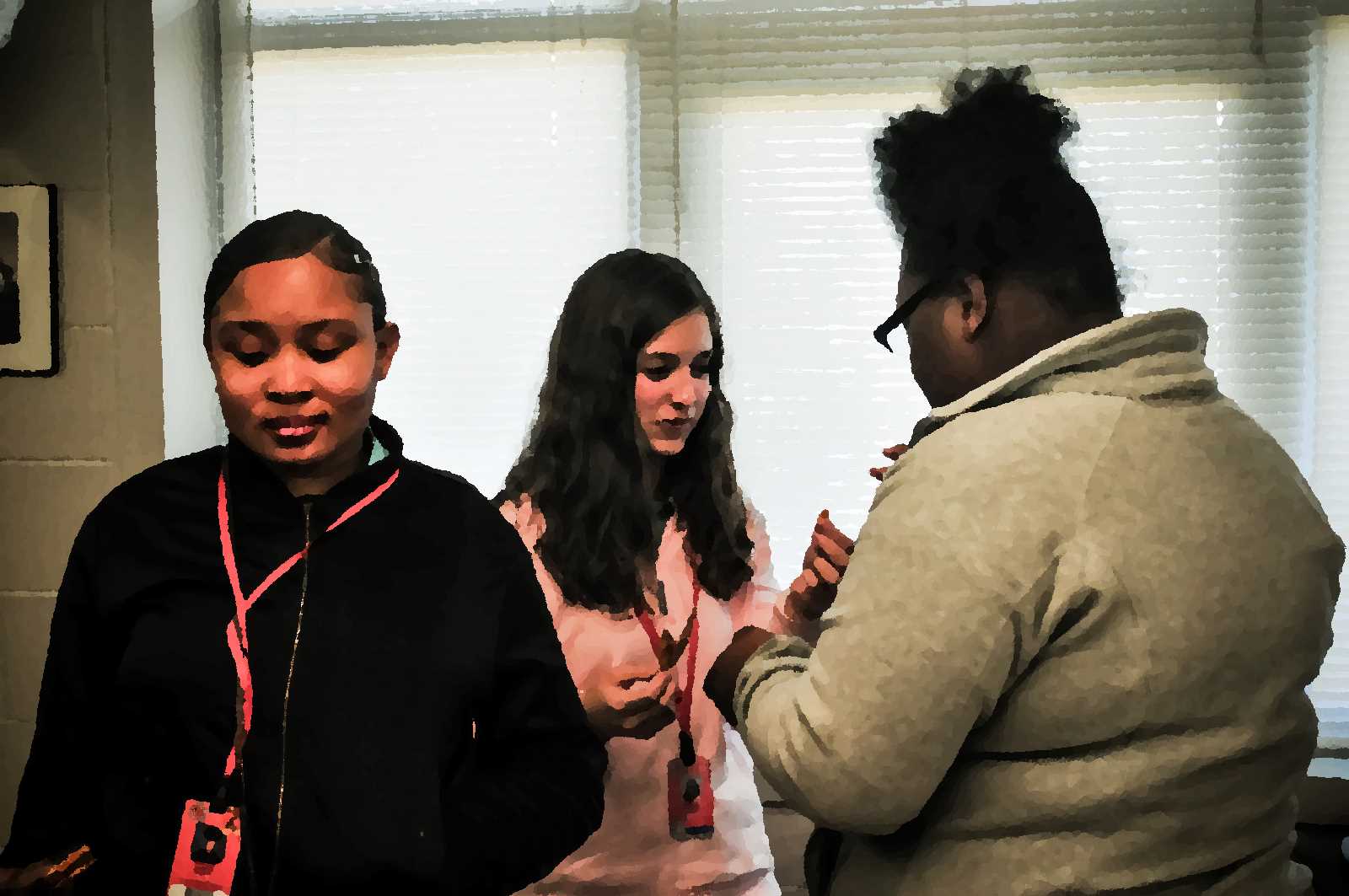
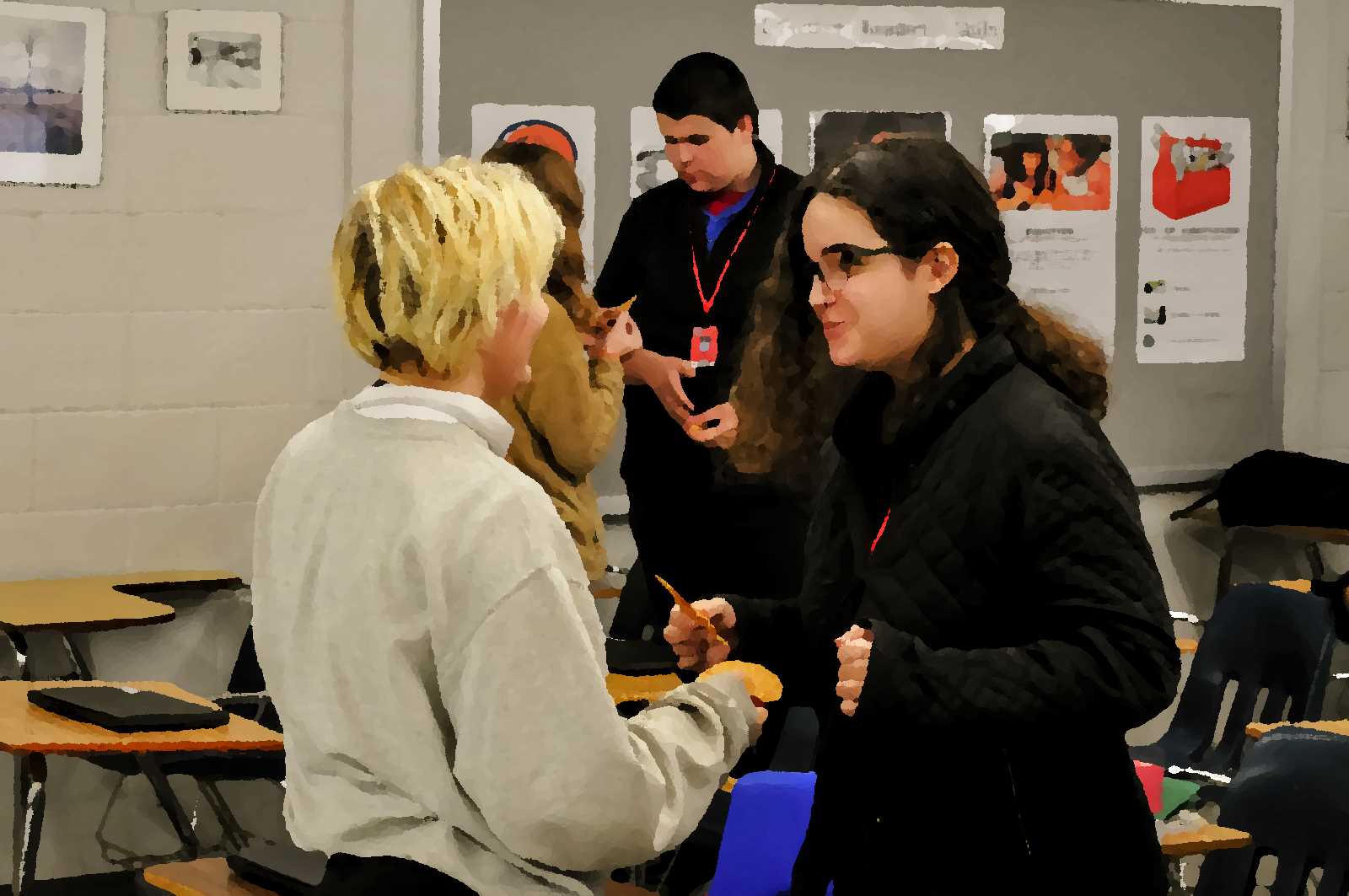
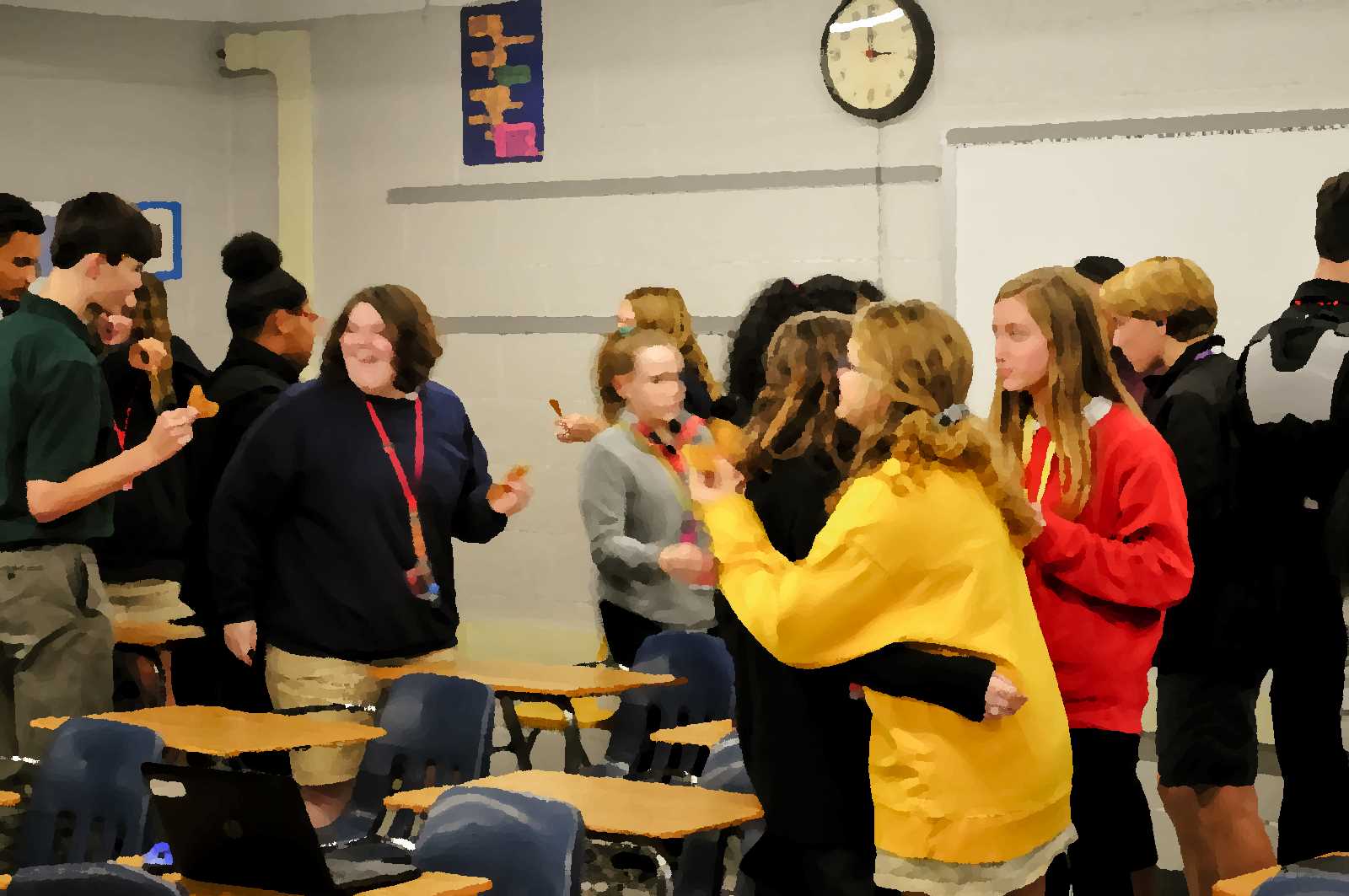
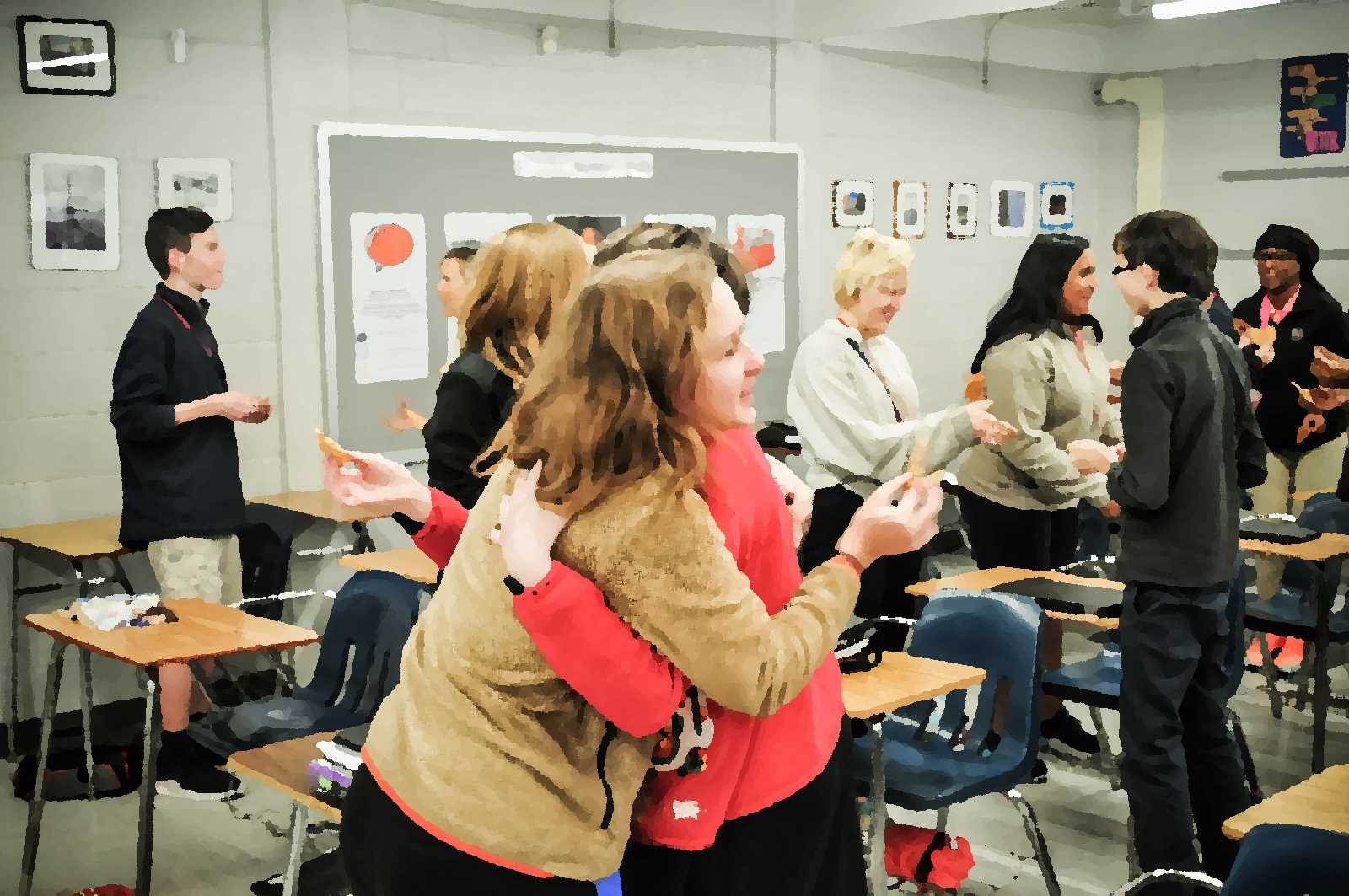
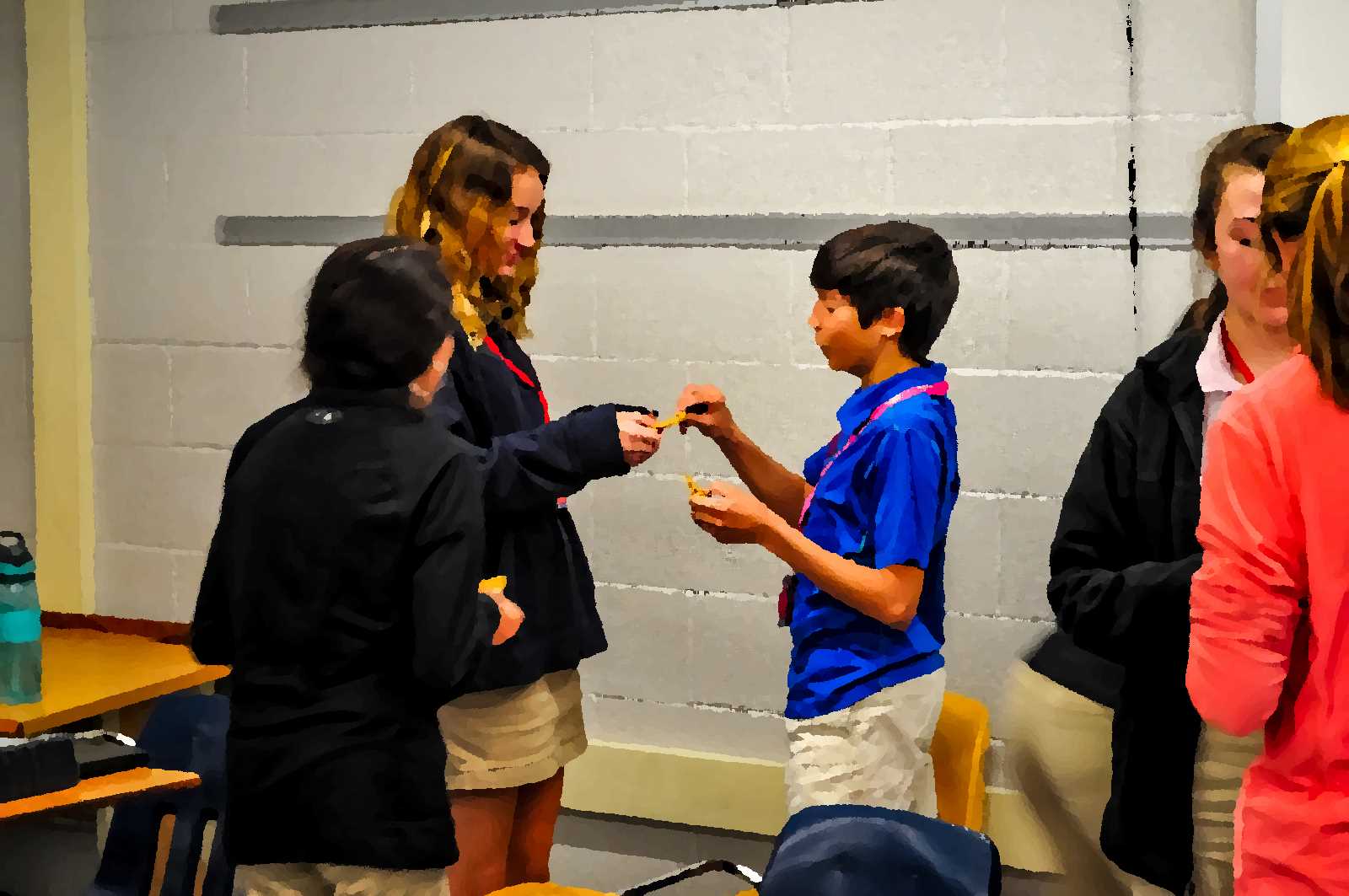
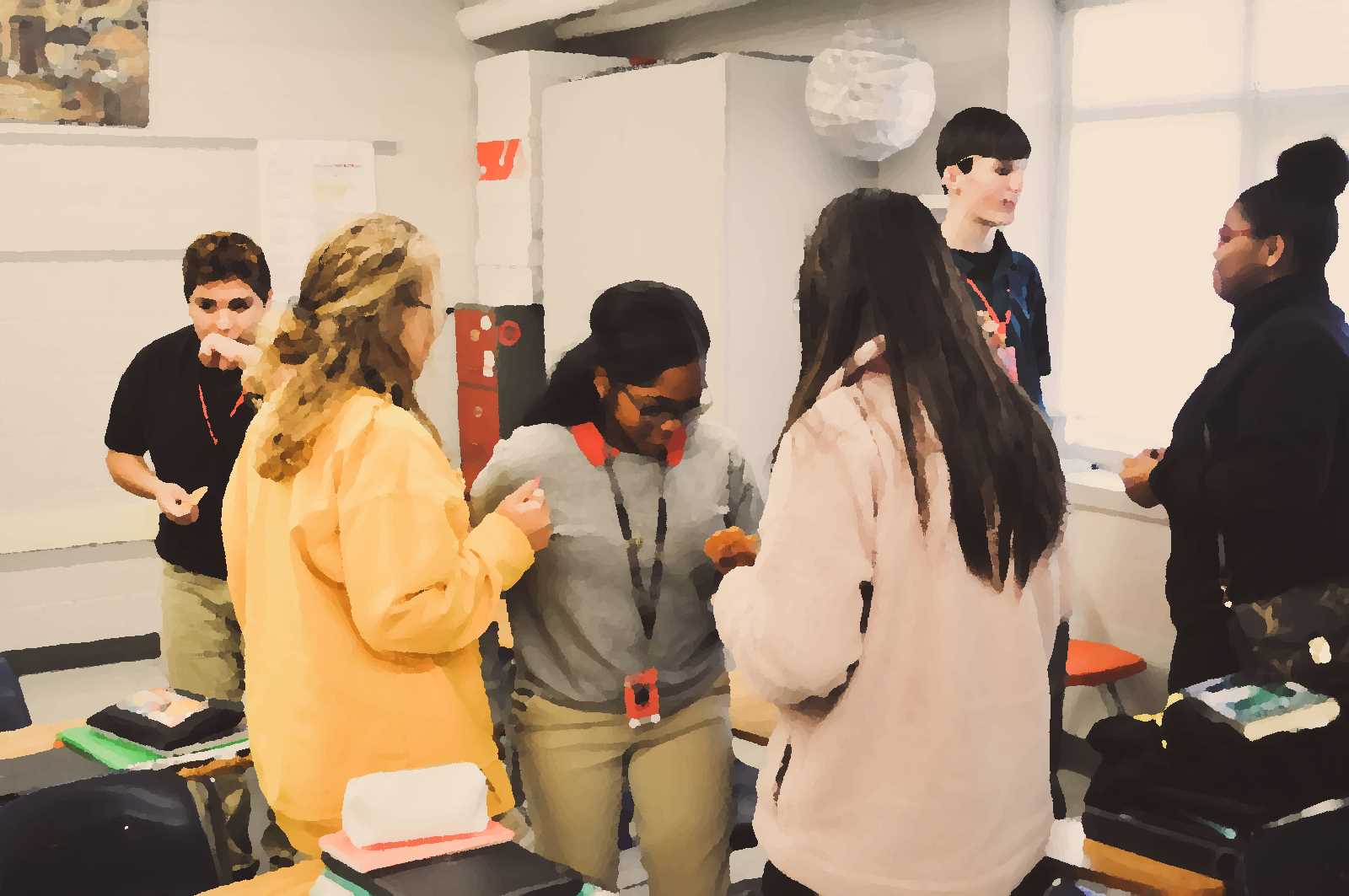
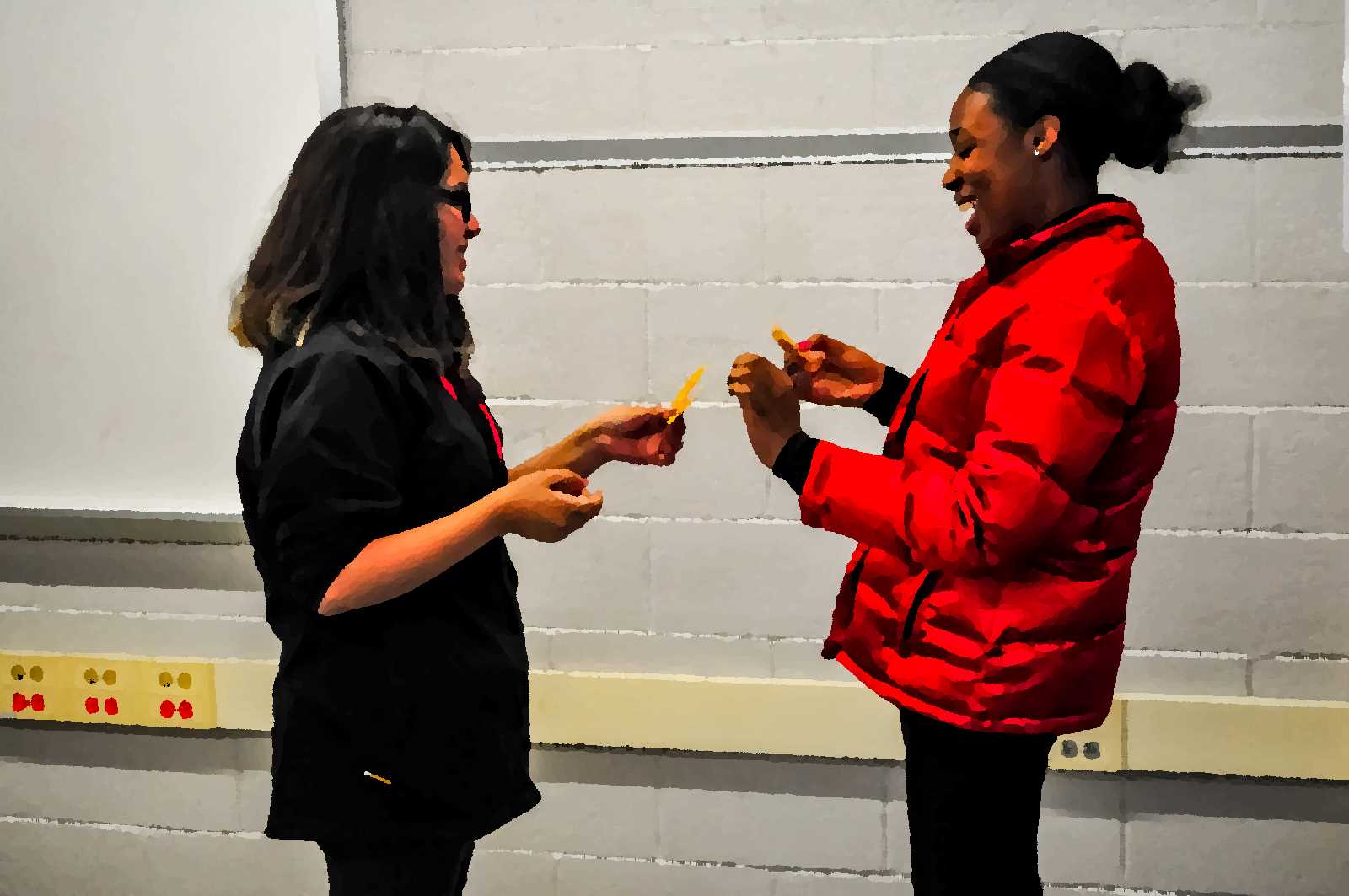
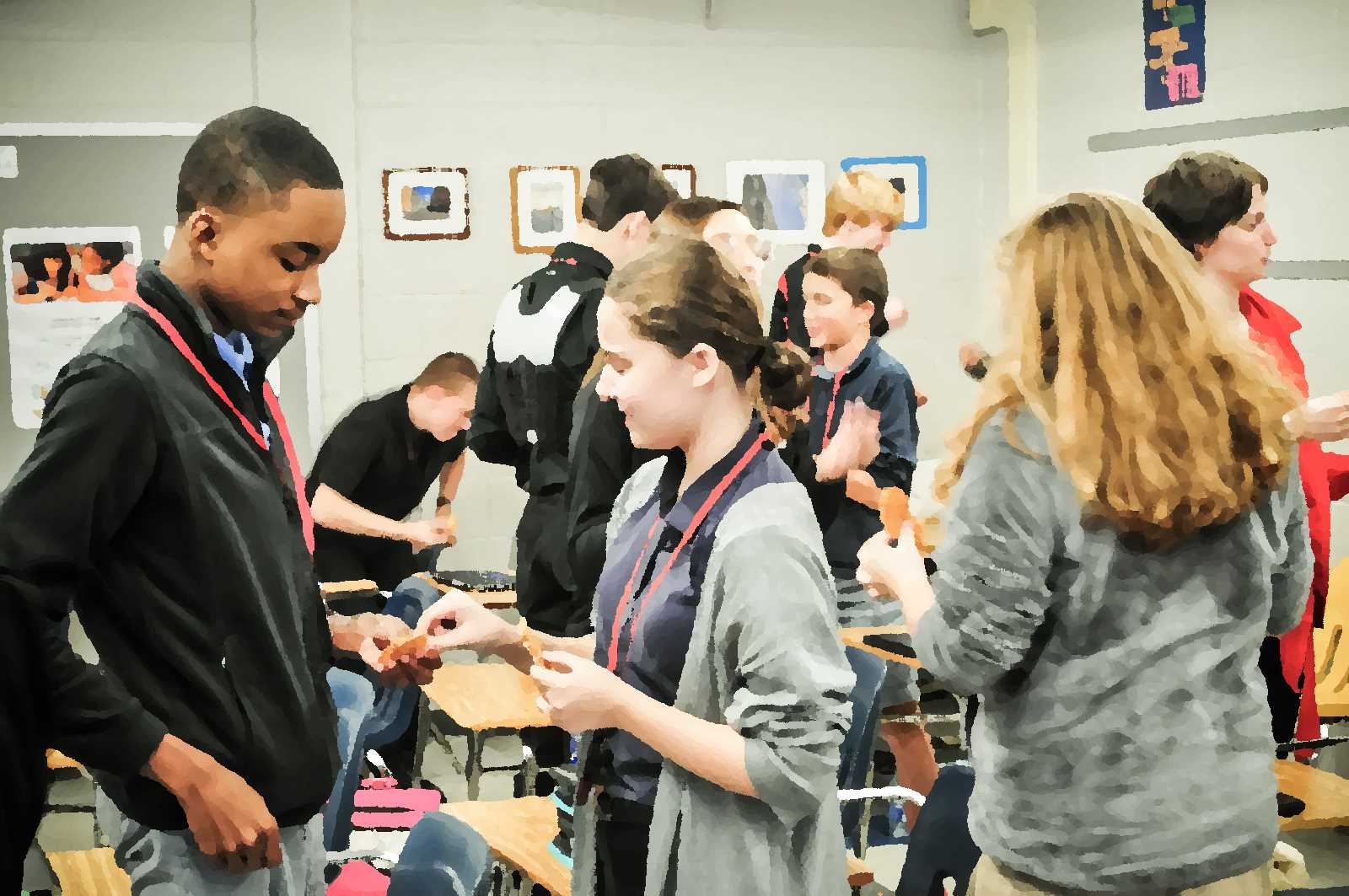
It’s the fourth year I’ve shared the oplatek with students here in America, which means it’s the eleventh time I’ve shared it with students in my life. The first year we did it, I found it to be so magical that I was sure that it couldn’t ever be so perfect. The kids enjoyed it more than I remember seeing thirteen-year-olds enjoy something proposed by an adult: I expecting at least some reluctance, some groans, some pushback.

Every year since then, it’s been the same, though. I show them images of Wigilia in Poland, explain the sharing of the Christmas wafer, and suggest that it might be enjoyable to do it here. Some heads shake doubtfully. Most just look at me suspiciously, perhaps a little expectantly.

This year, though, I tried something new: I suggested to my journalism students, whom I teach in the final period and most of whom I’ve had earlier in the day for English I Honors, if they wanted to do it again. “After all,” I said, “there are several in the room here who didn’t do it earlier.” The enthusiasm was as clear as it had been earlier in the day.

A good day to be a teacher.

Previous Years

Opล‚atek

Oplatek

Wigilia 2015

The Card and the Project

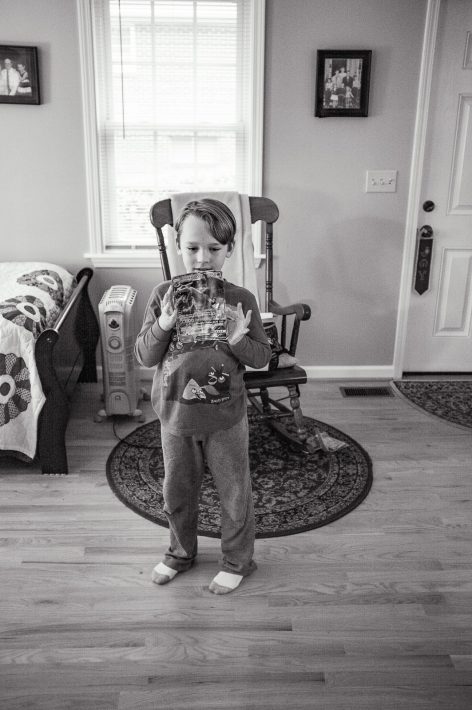
The Boy loves Pokemon cards. We play sometimes, but I’m not sure he understands quite how to play because the way he taught me seems a little overly simplistic. But we still have fun.

For some time now he’s been participating at the card trading table the teachers have set up for kids in after school. Every day he tells me about who wanted to trade what with whom, and sometimes he’s frustrated because someone didn’t want to make a given trade with him and other times he’s upset because he didn’t want to make a trade with someone — rarely are all parties happy, I fear.

During all this trading, he’s had a single-minded goal: to get some super-mega-ultra card with some ungodly number of damage points and virtual immortality. At least that what it sounds like in all his almost-hyperventilating hyperbolic descriptions.

Today, he finally managed to make that trade.

In Papa’s room with his new treasure

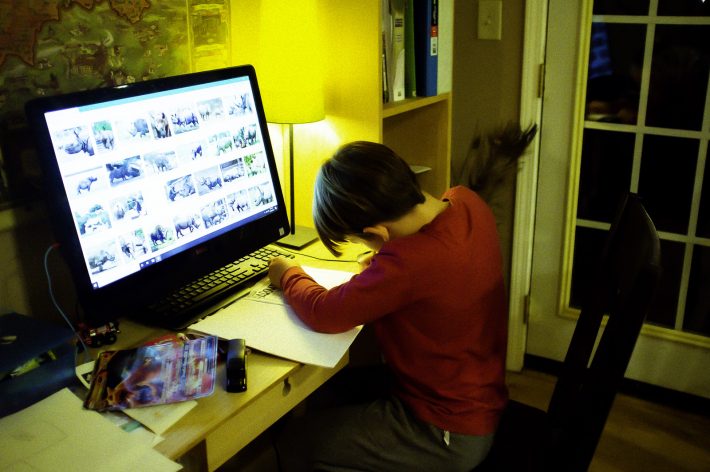
In the evening he had to work on a project that we somehow didn’t realize was a project and got swallowed up in the chaos that is our family life. He got another copy of the project and began working on it tonight.

As a teacher, I always view these things a little differently than K. I find myself sometimes judging work, thinking, “How useful is this really?” And other times I find myself thinking, “That’s a great idea. I’d use that if I were an elementary school teacher.” (God forbid!)

I also find myself a little less worried about our children’s grades. “This might drop your grade significantly!” K fussed at the Boy this weekend when we realized what had happened. My response: “Yes, and?” Grades in elementary school are not something I worry too much about. More importantly: did we make sure the Boy learned some kind of lesson about communication and organization with this adventure? Did we learn anything?

Overheard

Student 1: “Scylla and Charybdis — aren’t those names of Sirens?”

Student 2: “No, no — that’s the six-headed monster and the garbage disposal.”

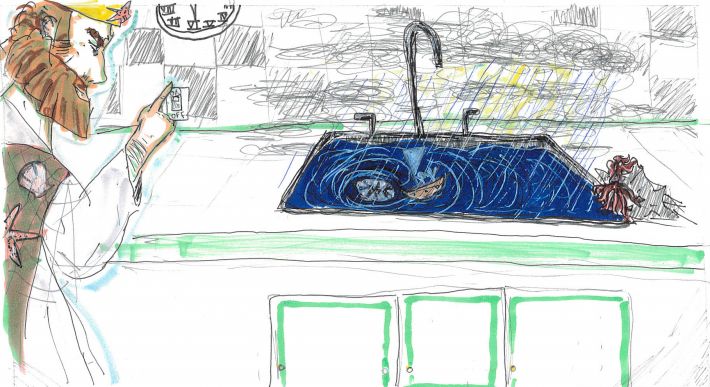
At my request, Student 2 later illustrated her summary of that portion of the Odyssey.

Saturday in the Yard

I spent an hour this morning preparing for next week’s lessons, and though I’d already readied an article for next week’s Article of the Week, I ditched those plans when checking the news, I realized what today was: the thirtieth anniversary of the breach of the Berlin Wall. The fall? Well, I guess so — once it was breached, the Wall was no more a wall.

I watched those reports on CBS Evening News realizing the momentousness of the event though perhaps not its personal significance.

I say “perhaps” and not “certainly” because it’s a question: would I have met K had the Berlin Wall not come down? Communist control in Poland at that point were already teetering. Solidarnoล›ฤ‡’s revolution, with Waล‚ฤ™sa at the visible helm, had already gained traction — almost a decade earlier — and gone underground again only to reemerge to take all available seats in the sejm just a few months prior to this significant day 30 years ago. Perhaps Germany could have remained divided while Poland transformed, but all those regimes were like so many dominoes or a Jenga pile: once one went, they all went. So I might have gone to Poland; I might have met K; but there are no guarantees, certainly.

From that spins out a series of eventualities that are far from certainties.

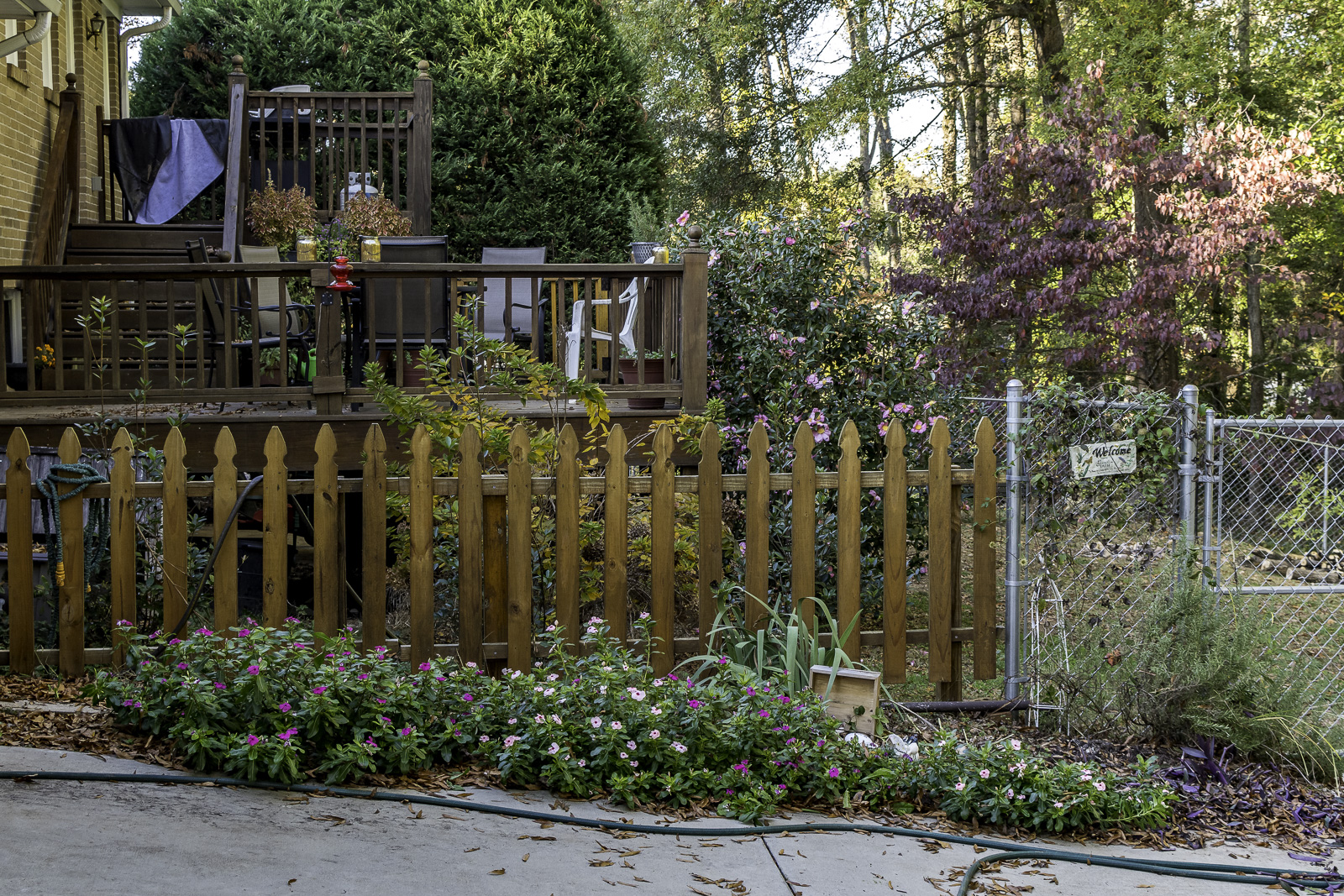
Had all that happened, it’s hard to see that I would live in Greenville now, that I, after having planned and prepared for a week of lessons at a local middle school, would spend a late Saturday morning trimming hedges, pulling the remains of flowers, and mowing.

Where I would be, what my life would look like — it’s impossible to say. But it strikes me as odd that events halfway around the world helped set a trajectory that ended with me pulling purple hearts from the flowerbed as K took the Boy to rehearsal for the Polish community’s annual Christmas pageant.

I prepared the Article of the Week assignment and decided that instead of the usual multiple-choice questions about bias and central idea — all designed to prepare students for the standardized testing that will consume the final weeks of school — I would ask them a simple self-reflection question: “What will be the Fall-of-the-Berlin-Wall event of your adolescence? What world event do you think could happen that would change the course of history permanently for the better?” And unlike all those silly questions that I have check, I’ll be eager to read their responses.

Looking for a Place

Everyone is looking for a place. I see it every day as a teacher of eighth-graders who try on different roles throughout the year and toy with various career goals as the months roll by. Today, we tried to help them a bit by providing a career day — probably close to fifty professionals came in to talk to kids about what their jobs entail, what they require, how they’re rewarding, how they’re frustrating. A little bit of everything.

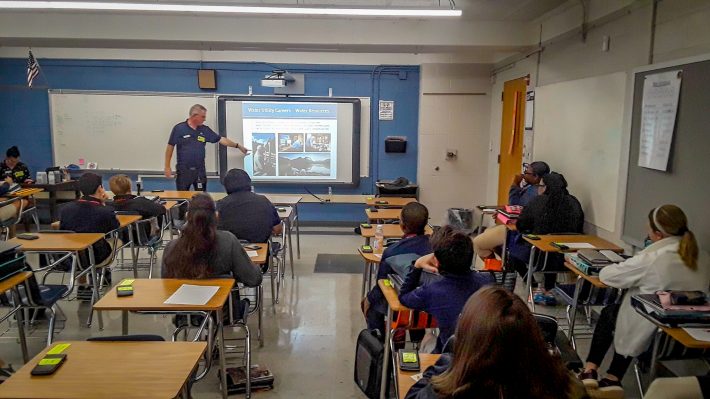
We guided our homeroom classes through three sessions, and my homeroom’s second session was with a police detective. It quickly stopped being about potential jobs and transformed into a “… ever … ?” session. Have you ever shot someone? (No, but I’ve pointed my gun at someone.) Do criminals ever leave notes like in movies? (No, but we’ve investigated some guy who was harassing females by leaving weird notes under their windshield wipers.) Have you ever been in a car chase? (Yes, but he was intoxicated and our top speed was 38 miles per hour.) Do you ever question people in those rooms with the windows that look like a mirror? (No, our interrogation room has cameras, and any officer in the building can watch the interrogation from his or her computer.) The vet and waterworks specialist didn’t get a third of the questions.

The Girl is looking for her own place as well, specifically a place to improve her volleyball skills in the off-season. We as parents thought this would be fairly simple; we thought she’d get into any club she tried out for. After all, she played for her school, which went undefeated and won the final championship tournament. She’ll have her pick. So why waste time trying out for more than one? We never thought about the obvious: clubs that have their regulars will choose their regulars over newcomers. And so this afternoon, I got an email:

Thank you for attending tryouts for X’s 2019-20 club season. We had a record number of players trying out this year, so unfortunately we were not able to place everyone on a team. We are sorry to say that your daughter has not been selected for a X team.

I sent it to K. She texted back the obvious: “She’ll be devastated.” And she was. And we felt like terrible parents because we didn’t do the research, didn’t do the thinking. “And now all the other teams have finished tryouts — what are we going to do?”

I was angry because I thought, “If she doesn’t have the requisite skills, how is she going to get them if you don’t let her on your freaking team?!”

It turned out, though, that two teams had make-up tryouts. One was at six this evening. We learned this at 5:05. So off we went.

The club owner said at the end that every girl will get some kind of offer: “If your daughter wants to play volleyball, wants to learn volleyball, we want to help.” Already, I liked the team.

Tuesday

Todayโ€™s the last day of the first quarter. Itโ€™s been the same as every year: I feel like the first quarter is dragging and suddenly, we have a couple of weeks left. Once that feeling of the year speeding by settles in, I feel like the year goes by in a blink. Weโ€™re in that period of work-break-work-break that always makes the first semester seem shorter than the second. In a few days, we have two days for fall break. Then we have three weeks before Thanksgiving. Thatโ€™s followed by another three weeks before Christmas. And then a few more breaks in January and February before everything dries up and weโ€™re all dying for any kind of break at all. March and April seem endless. And itโ€™s just October and Iโ€™m already thinking about the end of the year…

That means the Girl’s birthday is approaching — officially a teenager, with all the joys and challenges (i.e., challenges to authority) that entails. And all the changes in relationships that entails — the pulling away that I know is coming, is already manifesting itself, that I worry is something I’m doing wrong while simultaneously reassuring myself that it’s normal behavior for this age, that I acted like that at this age, that my parents and I survived it as will the Girl, K, and I (and E — don’t forget about the effect it has on him) will live through it.

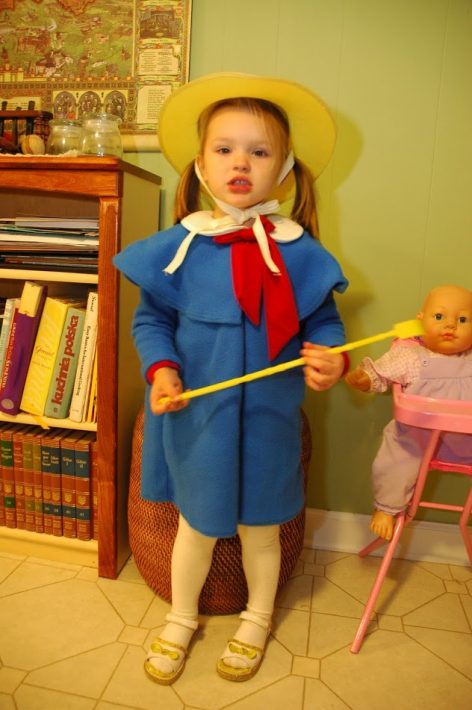
Still, I find myself thinking, “How can it be ten years ago that she looked like this? It just feels like a couple…”

Big Brother

We got access today to some new software intended to help us rein in students’ abuse of Chromebooks. Basically, it enables all teachers to become Big Brother to students: we can see every single thing they do, block sites, shut down tabs, lock computers — the whole deal short of turning off the computer remotely. Since it’s based on time of day and rosters, I see the activity of students in, say, my fifth-period class whether or not they’re in the room: if they’re on the computer, I see it.

So when I saw one of my students who was serving in-school suspension on YouTube, I closed the tab. When he started searching for Louis Vuitton shoes, I closed that down.

When he started searching for it again, I locked his computer with the message, “You won’t be able to afford those shoes if you don’t have a good job. You’ll have difficulty getting a good job if you don’t get a good education.” After a few minutes, I unlocked his computer, and he went back to luxury shoe searches. I locked it again, leaving it locked until the end of the session.

Another student who was in the room with him was talking about how this kid’s computer kept getting locked up. “He was soย mad,” this kid told his friend.

If this were a kid who normally did his work, I probably would have just ignored it. If I hadn’t just gotten access to the software (and the class hadn’t been taking a test), I probably wouldn’t have noticed it as I wouldn’t have been on the computer and wouldn’t have had the program open. Then again, if he hadn’t been in ISS, he would have been in my room, taking the test.

If, if, if…

The Swan

Written in seventh period.

A just made my day — โ€œThe Swan!โ€ she cried, recognizing the music playing. Everyone around her looked at her as if she were crazy. โ€œThe Swan! Camille Saint-Saรซns!โ€ Still, everyone looked at her as if she were speaking a foreign language, which in a way, she was. How many eighth graders in 2019 even know who Camille Saint-Saรซns is, let alone could recognize his work.

I find that, like poetry, classical music requires too much thinking for the modern ear. Motifs appear and then donโ€™t reappear for many measures. Motifs are so long sometimes that itโ€™s difficult to determine that theyโ€™re even part of a repeating pattern. The modern attention span is just not long enough to handle it.