around the house
Autumn Planting


Bag Worms
They just about destroyed one of our Leyland Cypresses last year: Thyridopteryx ephemeraeformis, Evergreen Bagworms. They devour the needles of the tree, using some of them to camouflage their cocoon and the rest for nourishment. The females — who have no wings, legs, or eyes — remain in their bags their entire lives, and as they never lay their eggs, the new larva emerge from the mother’s carcass.
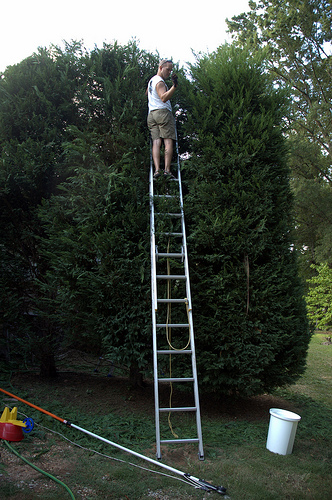
It’s a lovely little insect, in other words, one that we all love and long for. We just happen to have more than our share of them, and since no neighbors appreciate the sheer destructive capability of such a pet, we simply have to pick them off, one by one, and euthanize them.
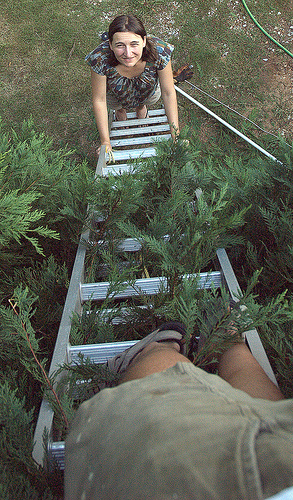
It’s really an itch-inducing process that I don’t enjoy, but occasionally it yields a nice surprise or two.
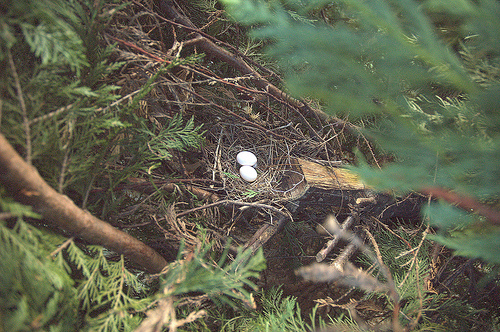
What’s ironic is that we have at least three bird nests in those three, neighboring trees, and one would assume that having birds around would reduce the population of something like caterpillar larvae. Apparently, the camouflage is quite effective.
However, we have yet another tool at our disposal. We are breaking all conventions of warfare and going biological: Bacillus thuringiensis.
Bloom
“Go out the front down and look to the left,” K instructed one morning.
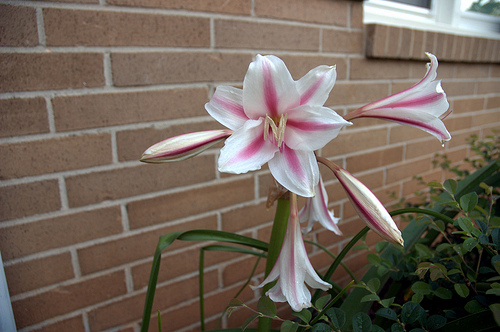
Before the Storm
The day before Christmas Eve in a Polish household is always frantic. Cakes to bake, salads to make, and general culinary chaos.
The heating system dying in the morning didn’t help, though. The verdict: the zoning system’s main control board is malfunctioning. Cost: the part alone runs $1300. Time to make some decisions. Merry Christmas from Arzel.
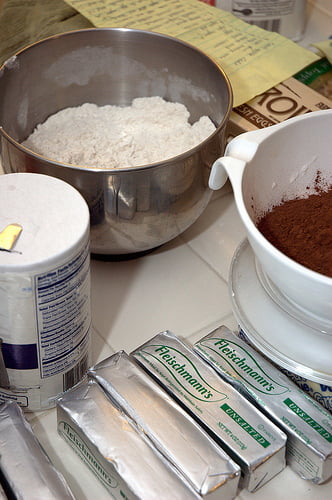
In the meantime, we have baking to do. Cheese cake, for instance, requires room-temperature ingredients, a fact inconveniently forgotten by inexperienced bakers the world over.
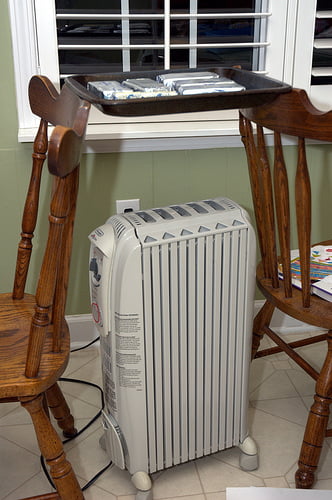
Fortunately, we had a little helper today to get us through the tough parts. Without her valuable advice and assistance, I’m sure we would have got finished much more quickly than we did been at a complete loss.
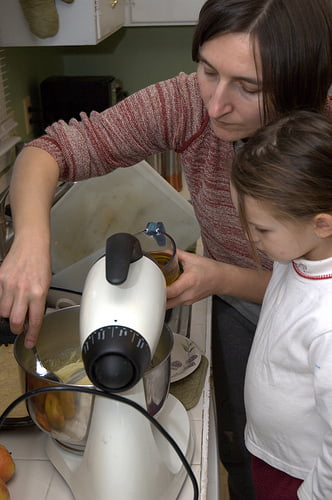
With her in the kitchen, it’s a constant battle against her curiosity. “I want to do it!” is her refrain.
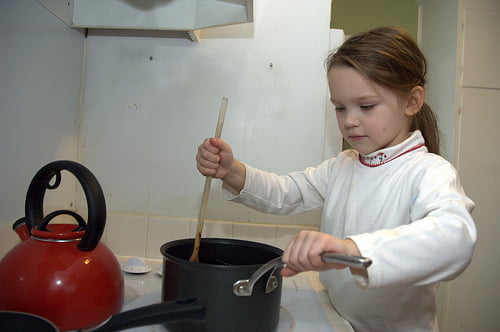
At the same time, how can one battle curiosity? Who would even want to? It’s a question of direction and redirection.
Lighting the House
We’re moving up — literally. This year was the first year we put up lights around the house.
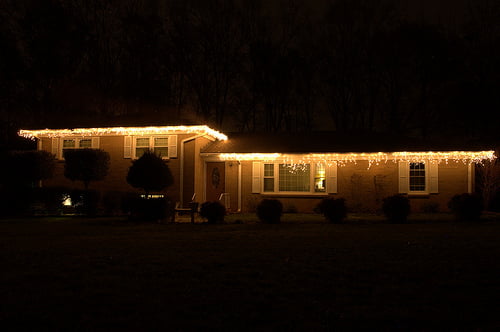
It was easier than I was expecting, just a matter of up and down and up and down the ladder.

And the realization that what comes up before Christmas must come down shortly thereafter.
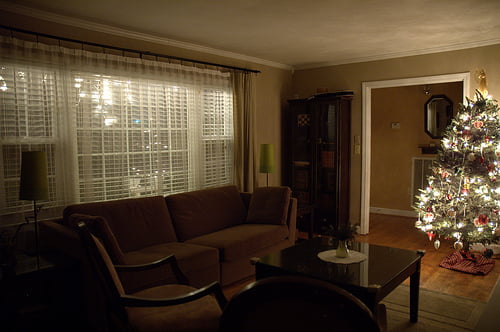
Still, to sit in the living room is a double pleasure now.
Count Me Out, In
In order to create, we must destroy.
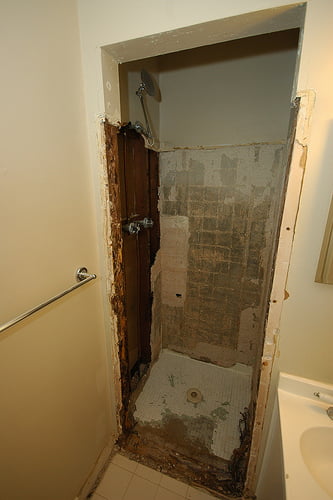
Partial destruction is oxymoronic: in the process of destroying, we often find we need to destroy more than we’d initially anticipated.
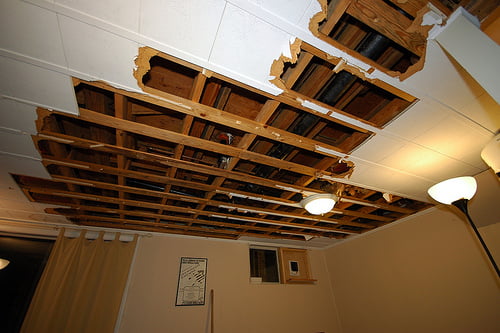
One cannot destroy only halfway, though one can create halfway. It’s called cutting corners.
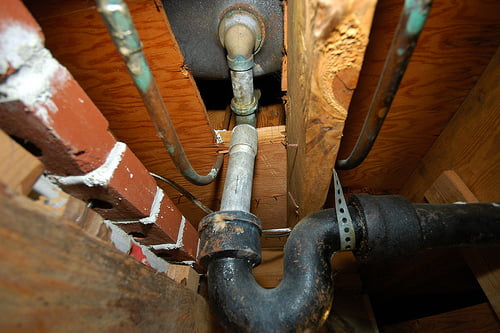
Living in a house highlights that mystery, for a house is itself a mystery.

There are leaks that leave tracks, and sinks that have no visible connection to the main drain line.
“When you talk about destruction, don’t you know that you can count me out. In.” You know, it’s going to be alright. Eventually.
Watering
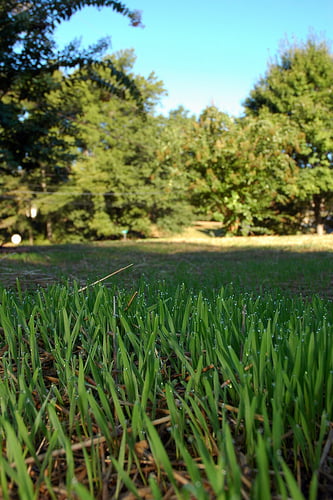
With new grass everywhere — “baby grass” as L calls it — we do a lot of watering these days.
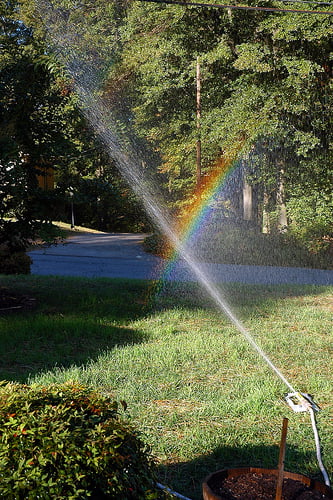
It’s enough to make me think we should have installed an irrigation system.

But then we wouldn’t get sights like these.
The Battle of the Front Yard, Redux
Last year, we overseeded our front yard. It looked fantastic.
“We have the best grass on the block!” K and I would congratulate each other. It was thick, lushly dark, and totally carpeted our entire front yard.

Over this summer, it all died.
All of it.
We looked at our wretched front yard and looked at what it used to be like, and a sort of “why do we even try?” depression would set in.
But we don’t give up. Not we. We continue to dump money into projects that probably should be left alone. So last week, we rented semi-heavy machinery,
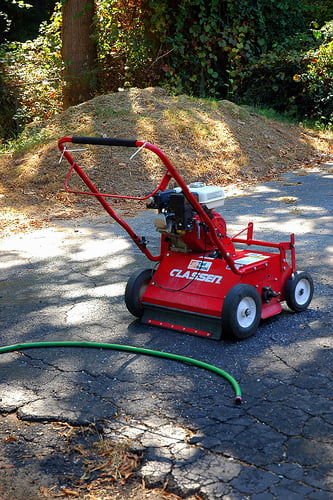
and started all over.
Technically, it was called “dethatching.” Practically, it was called “pulling up all the grass, most of which had long-since died.”
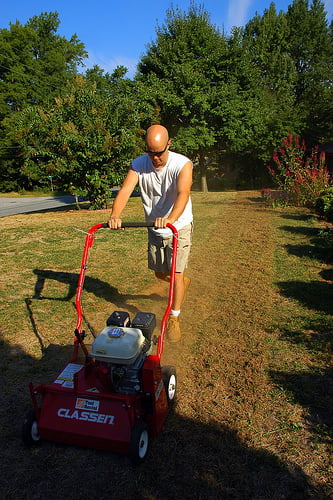
We were left with rows of rubbish — weeds, dead grass, almost-dead grass — that had died for mysterious reasons. Bugs? Disease? (Certainly not fungus: it was too dry this summer for any fungus to survive more than a few moments.)
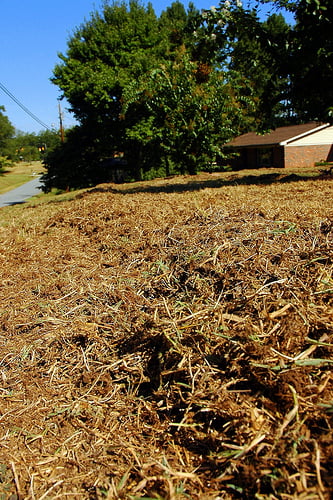
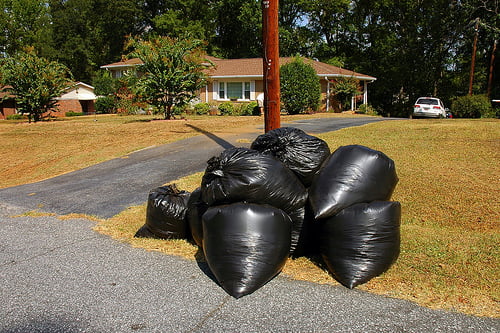
Whatever it was, we didn’t want it. So ten bags of it went out to the curb.
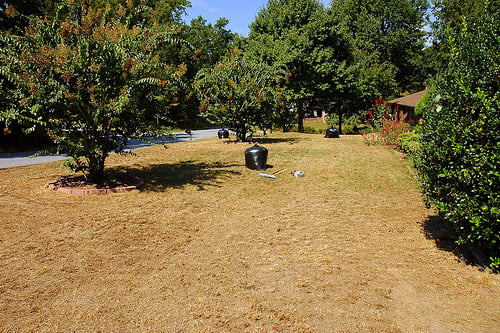
What a waste, really. It got me thinking — if our lawn survives this coming summer — whether or not I could simply run our mulching mower over the dethatched refuse and let the yard self-feed.
After applying top soil, mulch, seed, fertilizer, and straw, the rain came. After many dry weeks, we had thirty-six hours of continual rain, followed by sporadic showers through the following week.
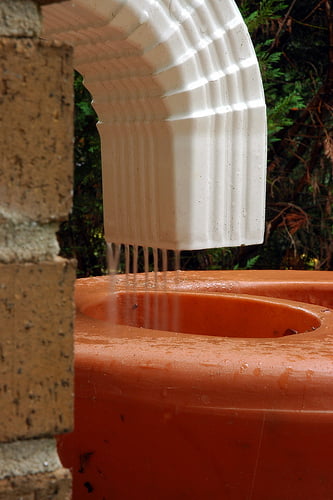
I couldn’t have planned it better if I’d tried.
A week later:
Garden
Summer means gardening for us. I wish I could say that without the knowing smile, for our “gardening” is still quite rudimentary. It’s about like saying I’m a cyclist because I manage to hop on a bike once or twice a month.
Our gardening consists of a few pepper plants, a watermelon vine or two,

perhaps a cantaloupe, and maybe a few spices, especially basil. Next to cilantro, basil has to be the best, freshest-smelling herb that exists. Apparently I’m not the only one who thinks so: K came in today with a caterpillar who’d devoured a basil plant.
“Why are you upset?” ask L.
“Because a beast was eating our basil!” K responded.
“What’s it for?” L inquired further.
“For cooking, not for caterpillars,” explained K.
“But you should share,” replied the sage.
The trouble is, we don’t have enough basil to share. We don’t have enough watermelon to share, nor cantaloupe. Our peppers are sparse too, but that’s really for a different reason.
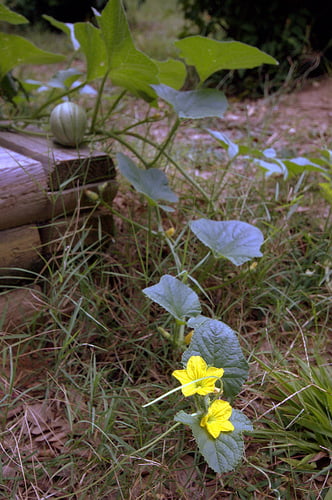
The tomatoes. The only thing we have enough to share is taking over our small raised beds. One vine alone requires six to eight stakes: each fork in the vine turns enormous and fruit-laden.
We head out daily to pick the tomatoes. We’re growing three varieties, including sweet, bright cherry tomatoes. Most of these rarely make it to the house:

we munch on them so while we’re picking the rest of the tomatoes that hardly any are left when we make it back to the kitchen.
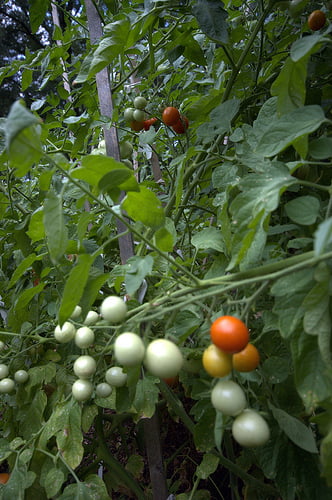
All the same, two days can produce enough tomatoes to overwhelm quickly.
This is what K tried to explain to L this evening: “We do share. We give tomatoes to Nana and Papa, to A and P, to the chipmunks and squirrels…”
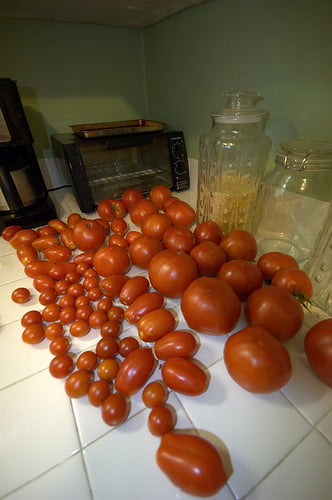
And still we end up with so many every couple of days. Then again, who can complain about this? Quarter a fresh tomato and sprinkle salt and pepper: a perfect summer snack.
Caution
In the process of saving a Leyland cypress from being utterly destroyed by a vast infestation if bagworm moths, I’ve been removing and killing hundreds (possibly closer to a thousand by now) of bag-encased larvae. Violence in the effort to save a tree.
I discovered a new risk today.
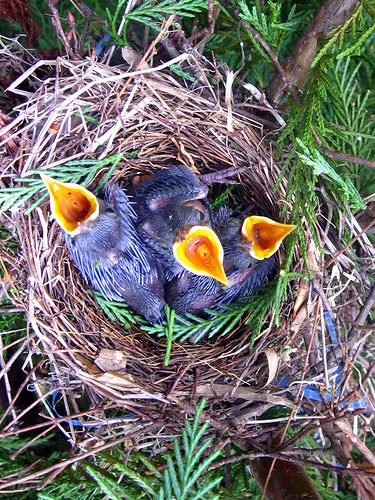
As I was working to trim the tree and remove the bagworm larvae, I heard the constant call off a bird. It was a distressing call, and I realized I must be near the nest. I moved my ladder a few feet to the east, climbed up, glanced down, and was started with what I saw.
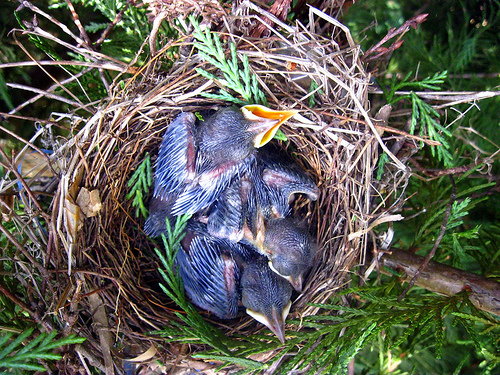
I only made a slight motion, and the three chicks suddenly raised up about four inches, mouths open, willing to ingest whatever was placed there.
My old addiction
Makes me crave only what is best
Like these just this morning song birds
Craving upward from the nest
These tiny birds outside my window
Take my hand to be their mom
These open mouths
Would trust and swallow
Anything that came along
It’s not just the risk of willingly accepting anything as food that makes a small bird’s life precarious. As they raised their almost featherless bodies from the nest, they swayed, nearly blind, their heads too heavy for their underdeveloped necks. It seemed miraculous that they didn’t fall out of their nests.
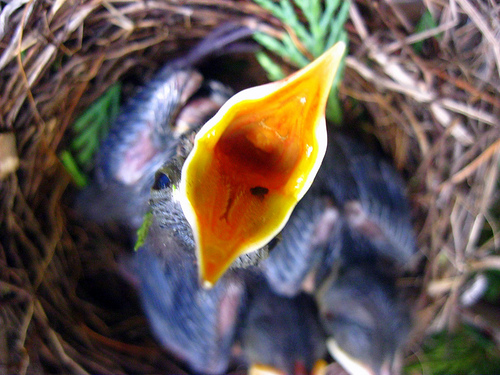
For over two hours, I was working not more than three feet from a nest chicks so young they were barely beginning to get feathers. Had I situated my ladder eighteen inches to the left, I probably would have destroyed the nest.
Lumberjack Fail
It’s almost worth of FailBlog: I cut down a tree in the backyard. Those two clauses would be enough to make many worry. “Did it fall on your house?” “Did it damage your neighbor’s property?” I miscalculated, but nothing so awful.
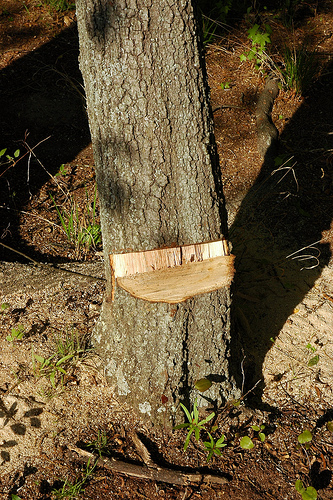
The tree — diseased and dying — was a mite, just a tiny bit too tall. A few inches. Of what significance would a few inches be in our almost infinite galaxy? For the want of a nail and all that…
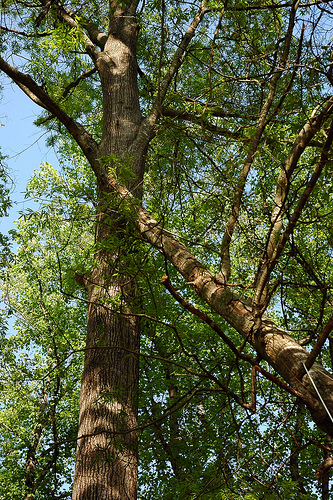
When the tree fell (after much tugging and physical cajoling, for I didn’t want it to fall on our neighbor’s fence), the top portion caught a branch of a neighboring tree.
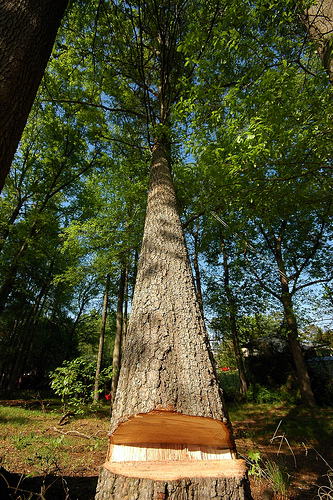
And there it remained.
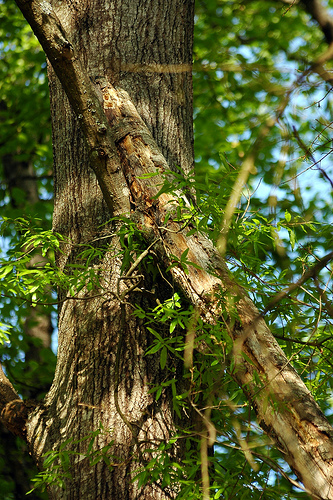
Today, I took care of the problem, but not without some trepidation. As it stood — or rather, half-stood — I didn’t know which way it would finally fall. Cutting from the bottom seemed most logical: eventually, gravity would serve to create a fulcrum out of the weakened part of the tree, pulling it in on itself.
It worked. But not after I literally cut through the entire tree, a nerve-wrenching experience. I could see the tree lurching this way or that, cracking me in the thigh, breaking a leg, an arm, a whole bag of bones. I cut through to the mid-point, then made paranoid careful cuts: squeeze the chainsaw’s trigger, a little cutting, then a retreat.
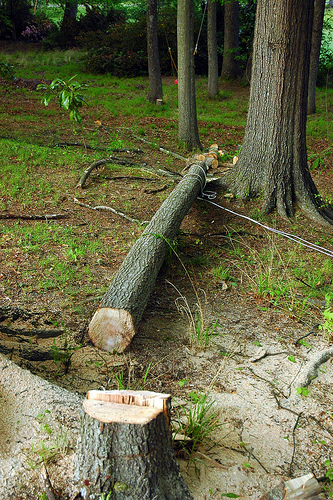
In the end, I won: no broken bones, and the wood is now is now curing. And I’m finally coming down from my chainsaw-testosterone high.
Before and After

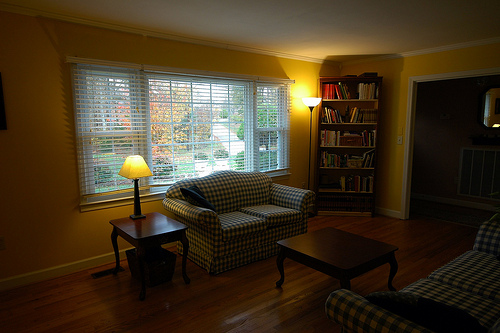
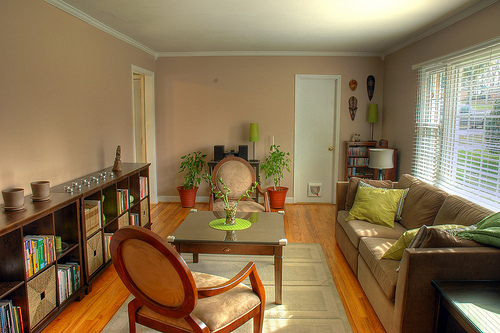
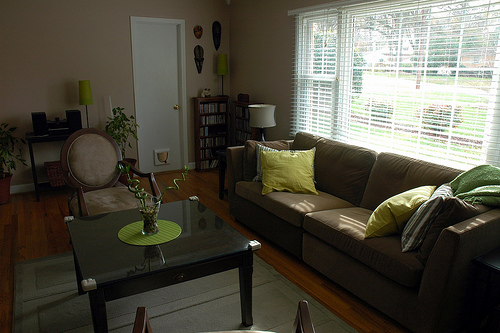
We still have pictures a hang, a television to buy, and a few final touches, but the living room, by and large, is done.


Corrections
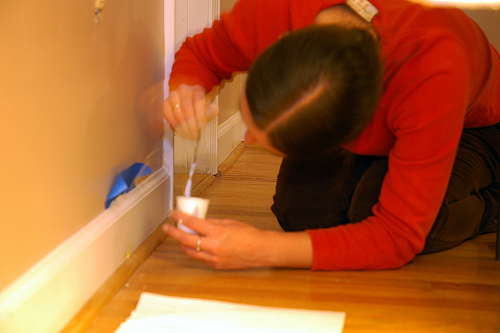
Exponent
Projects have a way of growing on me. I imagine a particular project taking a given amount of time, effort, and resources, and it never turns out that way.
“I’m going to use the orbital brush cleaner to get the kitchen floor sparkling and then put a couple of coats of protective finish on it,” I say before a day off. “It shouldn’t take me more than three hours.” In reality, I’m off by 66%: it takes me five hours.
“I’m going to replace the front sillcock. It shouldn’t take more than a couple of hours, maximum.” Lunch time comes and I’m still wrestling with it.
I look into the future at projects K and I hope to complete: remodel rebuild the kitchen; remodel the master bathroom; landscape the back yard. These are not minor endeavors. These are things that I anticipate taking weeks, which means they will take months.
The problem is, once I get started, I don’t want to cut corners. At least that’s what I tell myself: I end up doing that anyway, but it makes me grit my teeth to think about it, and I know there’s more to the extended projects than my perfectionism.
It all comes down to inexperience. Except for plumbing, no project intimidates me, but I know my lack of experience will make the job three times as long as it should require. Experience has taught me that, for I used to think my home improvement inexperience would double the time.
Our living room is turning into one such project. “We’ll just pull out the furniture, repaint the walls, polish the floor, and put the new furniture back in.” If only it were that simple.
Saturday the Chameleon
Another Saturday completed: we repainted the living room in preparation for a complete redecoration.
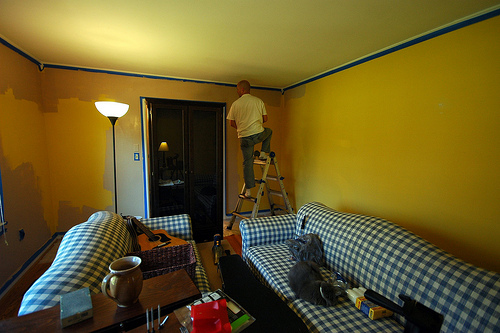
First and second coats and we’re pretty much done. I admit I’ll miss the yellow.

K felt it was too bright; I loved the way it made the room open.
Between coats, I mowed and raked some leaves. It was not warm enough to break a sweat, and so it almost didn’t even feel like work. But by most definitions, it was.
In another life, twenty-five to thirty years ago, my Saturdays were supposed to be days of reverence and quiet rest. Saturday is, of course, the seventh day; Jews and a few groups of Christians believe it is the sabbath, a time of rest. There’s something appealing about that to me, even today.
Still, in the intervening years, my associations with and expectations of a good Saturday have literally turned 180 degrees. Just as I couldn’t imagine mowing then, I can’t imagine not spending Saturdays working now.
It makes me wonder what else might flip-flop in my life, and what else has changed without me yet truly noticing.
Amateurs
Four Saturdays of work. A couple of pros would have the backs and arms to get it all done in one day. We took somewhat longer.
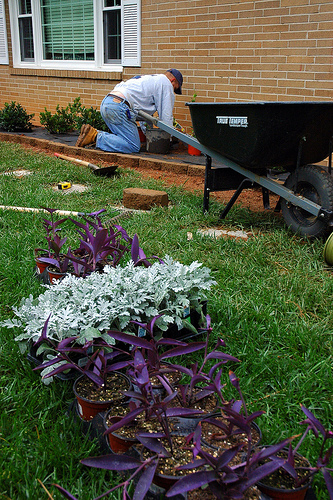
Part of it was inexperience. Having never dug up and recreated a planter, we had no idea how long it would take; we certainly didn’t know how much effort it would require.

Although the vision was very amorphous, we somehow knew what it would look like, though.
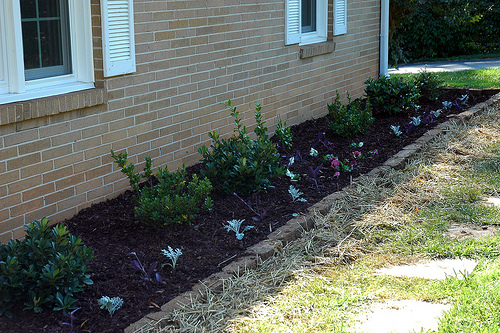
Now, instead of five boxwoods we have:
- two Loropetalum chinense,
- two Gardenia brighamii,
- three Rhaphiolepis indica,
- three Rhynchospermum jasminoides,
- a line of alternating Tradescantia pallida and Senecio cineraria,
- a small patch of Viola tricolor hortensis.
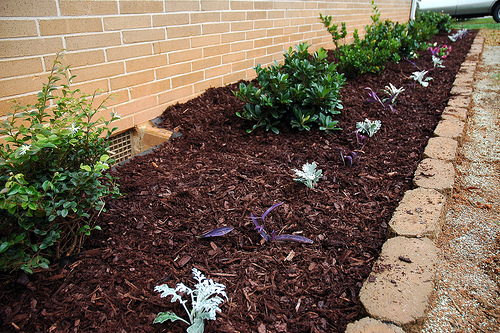
Who am I kidding? I can barely remember the plants’ common names, let alone the Latin.
The Eternal Project
The Perpetual Motion machine does exist: it is mischievously named “the house”.
When we moved in, the front looked like this:

Grass that was fried; shrubs that were ignored.

A general feeling of neglect.
A clogged sewer line a year ago finally prompted us to pull out the dying boxwoods; embarrassment at having the worst-looking lawn in the neighborhood prompted us to emergency measures with our yard.
Now, our yard is well on its way to becoming the envy of all who drive by.

The boxwoods are gone, roots and all.

As is my back.
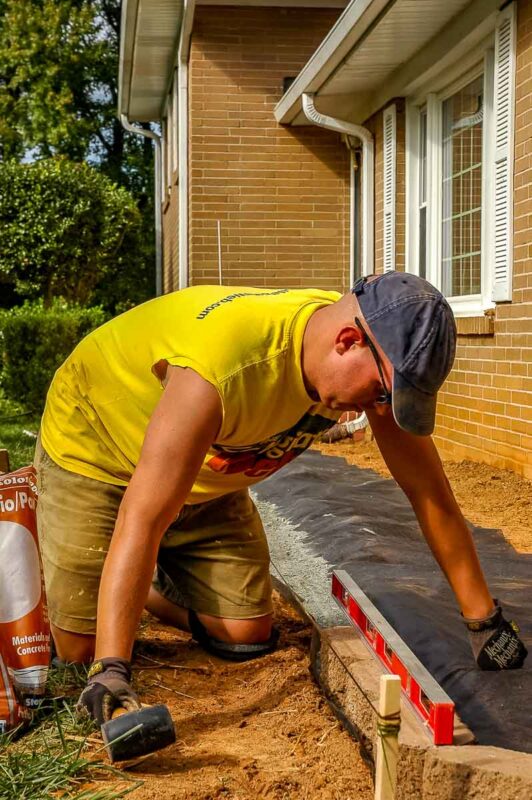
The replacement bushes are still sitting in a nursery somewhere: that’s Wednesday afternoon’s project. In the meantime, the bed sits empty.
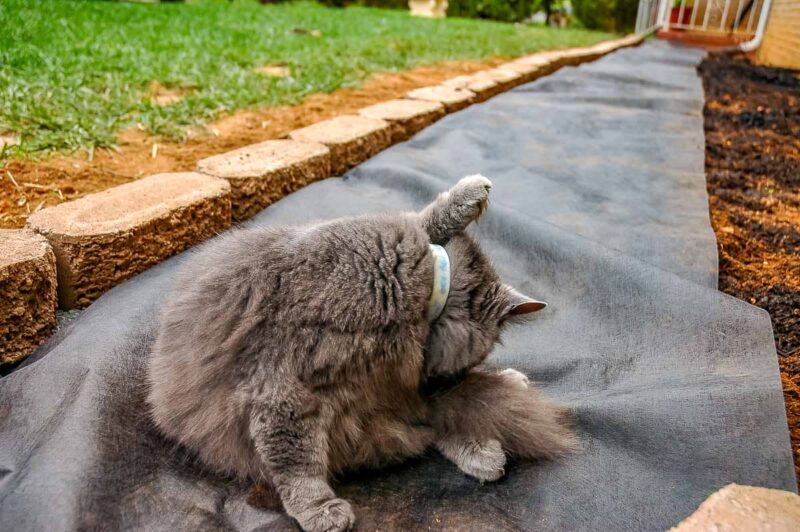
The upshot of all of this: the cat has a new place to nap.
10,000 Holes
Though not in in Blackburn, Lancashire. Rather, they’re in our yard, now.
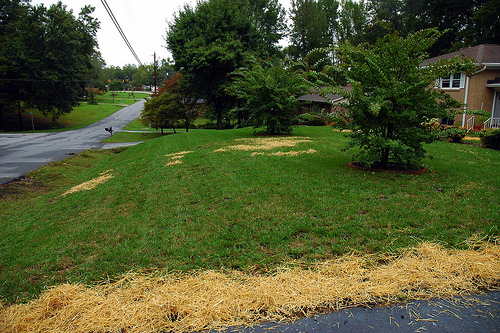
Weeding, aeration, leveling, seeding, fertilizing — it’s been a long day.
Confusion
Some weeks seem intent on confusing the sense out me. Students say things that literally leave me speechless, wondering whether or not the kid is joking. Parents and pundits around the land fall into spasms of paranoia about a presidential speech intended to encourage students to take their studies seriously. An odd, high-pitched whistle begins drifting into the house through the back windows at various times during the week leaving everyone wondering what the devil that sound could be.
A long weekend away from all the confusion and nonsense hopefully will help. At the very least, L will experience and hopefully enjoy her first camping trip.