around the house

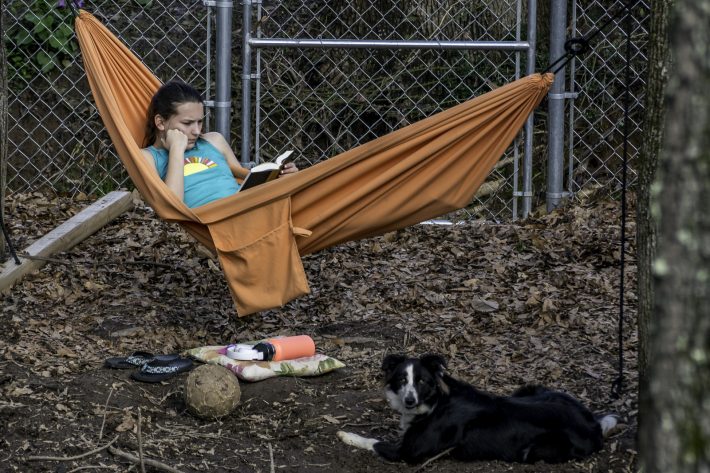
Day 55: The Swing, the Dog House, and the Bench

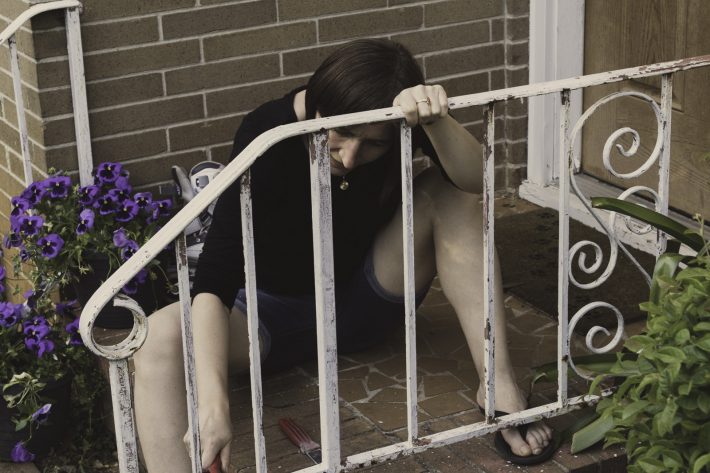
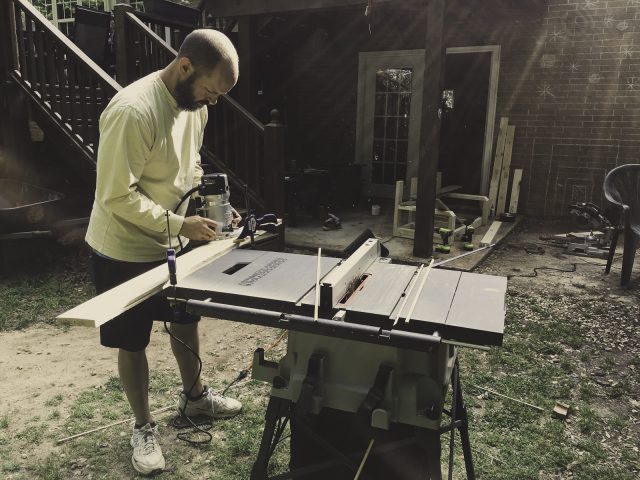
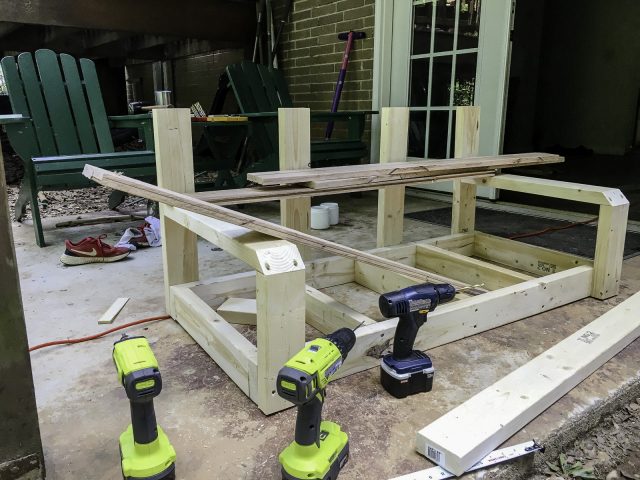
I don’t know how it inevitably happens, but projects with me just seem to swell completely out of proportion from my original estimates. Sometimes it’s simply that my estimates are wrong. No, that’s most of the time. I tend to underestimate the time required because I tend to overestimate my skills. Today, though, my estimation of the time required to make K’s Mother’s Day present was just about dead on. True, it took me longer in the end, but that’s because I decided to pull out the router and round over every edge. Why? Because I have a router and quite honestly don’t have that many opportunities to use it.
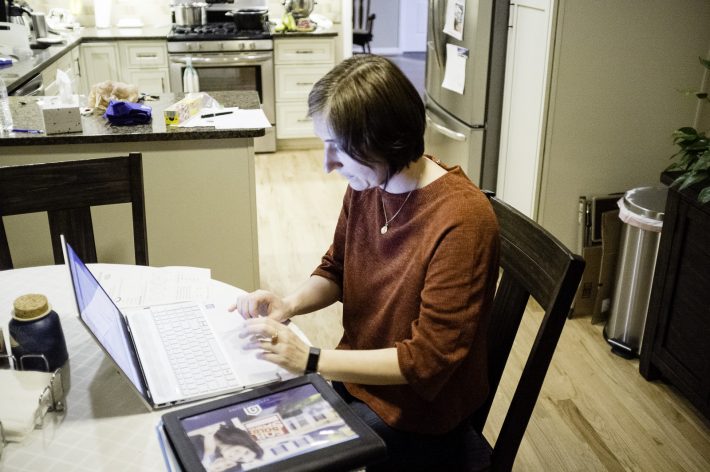
From K’s iPhone

I also decided as I was working to countersink all the screws and go back with wood filler and hide them all. That added a bit of additional time. But the raw building itself took just about as long as I anticipated.

What got me off track was not the time it took to make the bench but rather the time it took to gather the needed materials. The wood was the real trick.

I went to Lowe’s expecting to be back fairly quickly. All I needed was a bit of additional chain for the swing, a few hooks to connect the swing to the chain, and some 2x4s for the framing of the swing. The chain took quite some time — probably more than twenty minutes — because I pressed the “Press here for assistance” button and no one came for what seemed like an eternity.
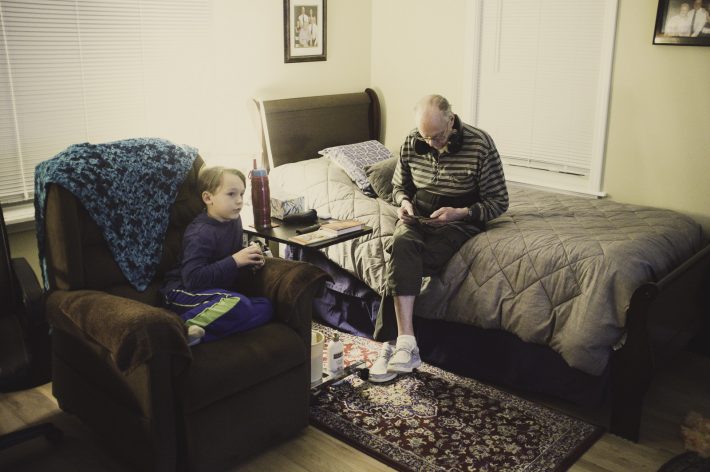
From K’s iPhone

Finally, I was ready to pick up the lumber and haul it back to the in-store sawing station to have them cut the 96″ studs down to 48″ pieces that would fit in K’s Rogue. The first trick was to find a lumber cart. I finally gave up looking for one, went to the cashier, paid for the hardware, took it out to the car, and returned with a lumber cart from the parking lot. I loaded my six 2x4s and headed to the cut station. Where I found a sign that read, “Saw not functioning.”

I felt like I was in the film Nie Lubię Poniedzialku except that I was in Greenville not Warsaw and it was Saturday not Sunday.

I just left the cart there with the lumber on it. It was a somewhat crummy thing to do — I could have at least taken the lumber back.
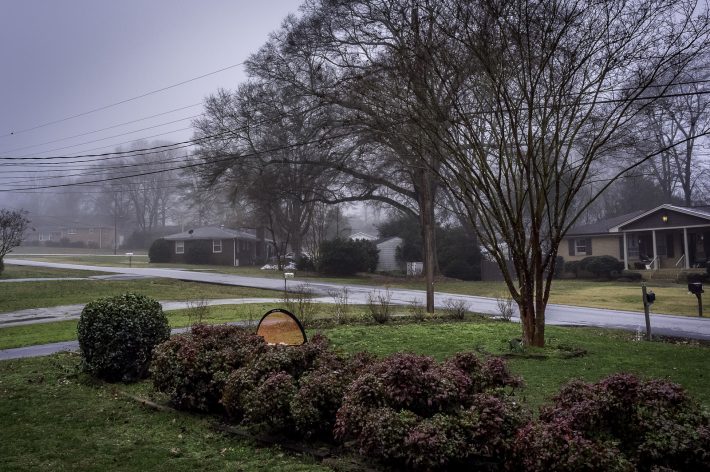
From K’s iPhone

After dropping off the hardware at the house (because it was on the way), I headed to Home Depot. The saw there was completely functional. The studs I picked out, though, were not 96″ but only 93″. So when I told the shop assistant to cut them at 48″, adding “I just need them in half-size pieces,” he did just that: he put one end of the board on 48″ and cut. And the resulting pieces were of a significantly different length. That’s when I measured and saw they weren’t 96″. I could have checked. I didn’t. I just sighed.
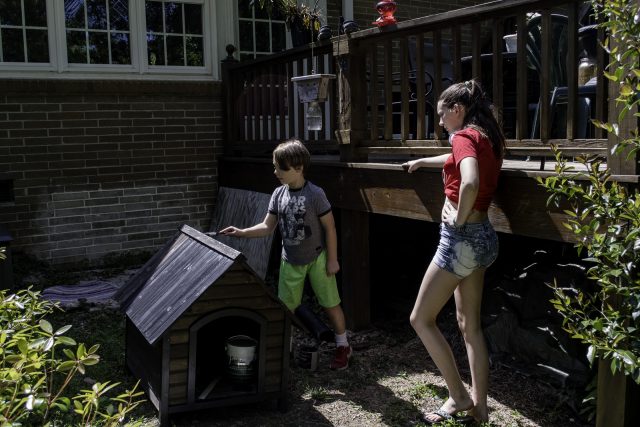
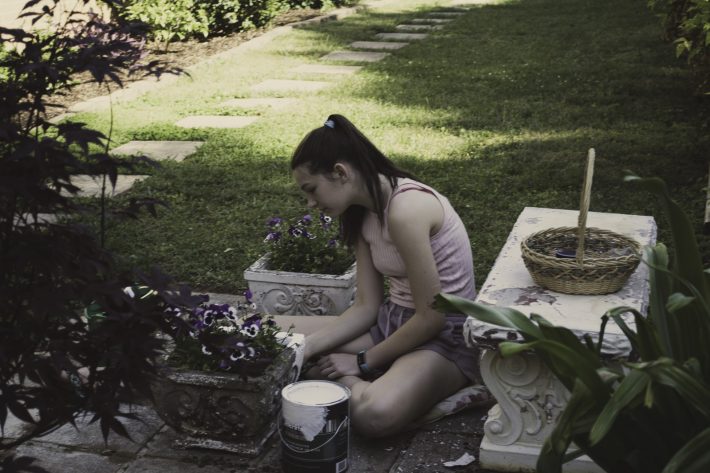
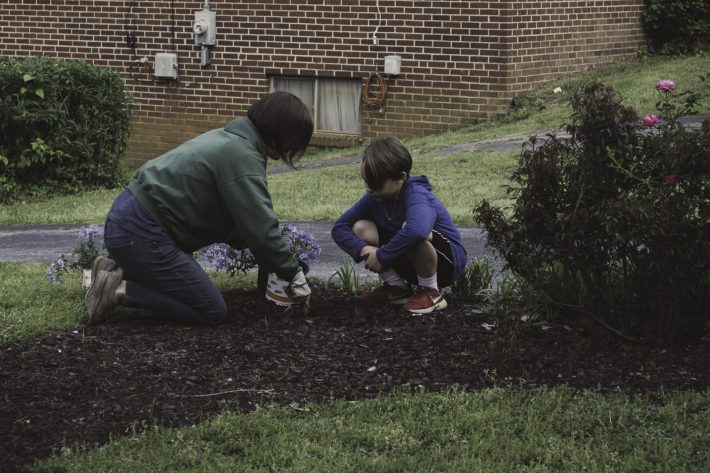
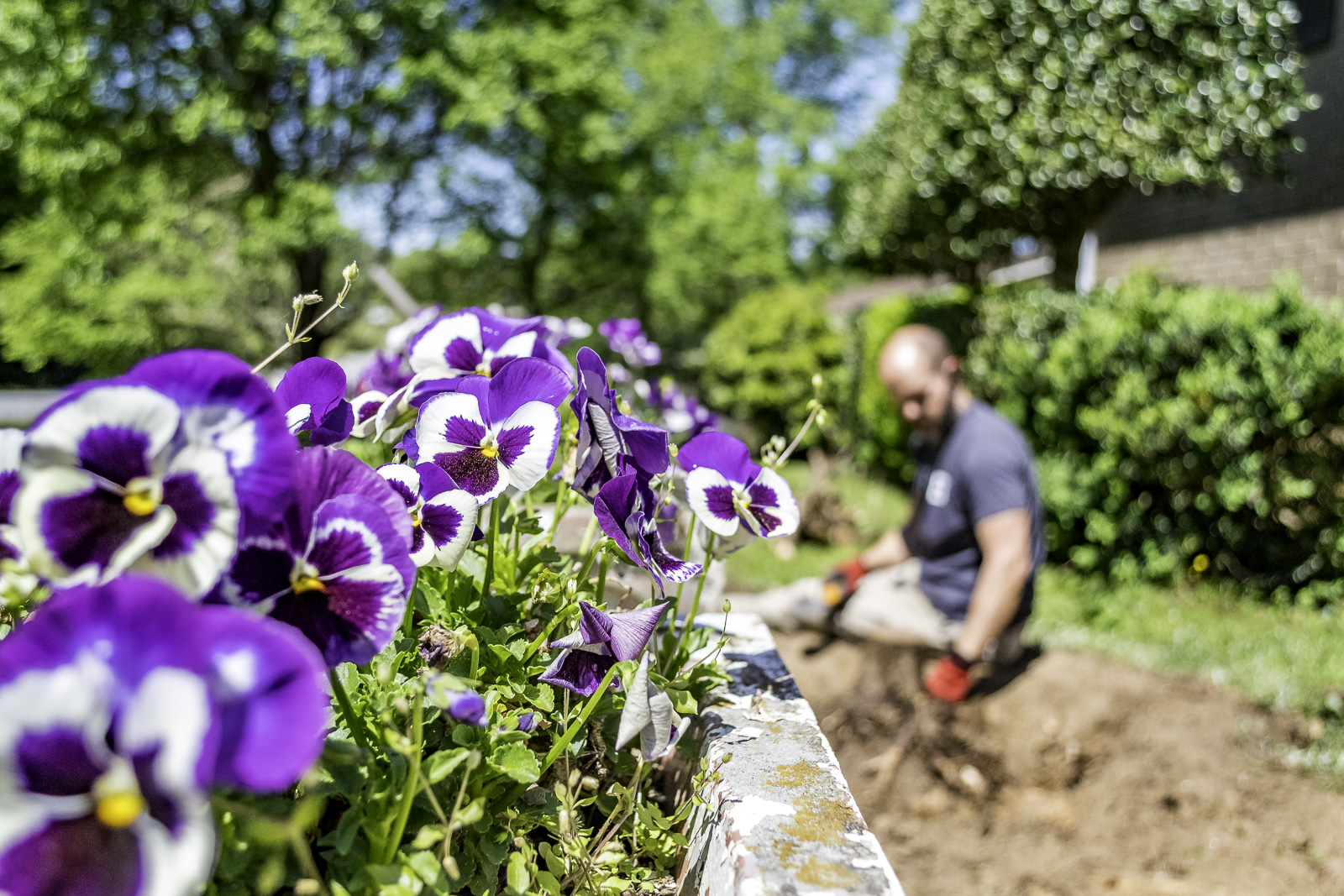
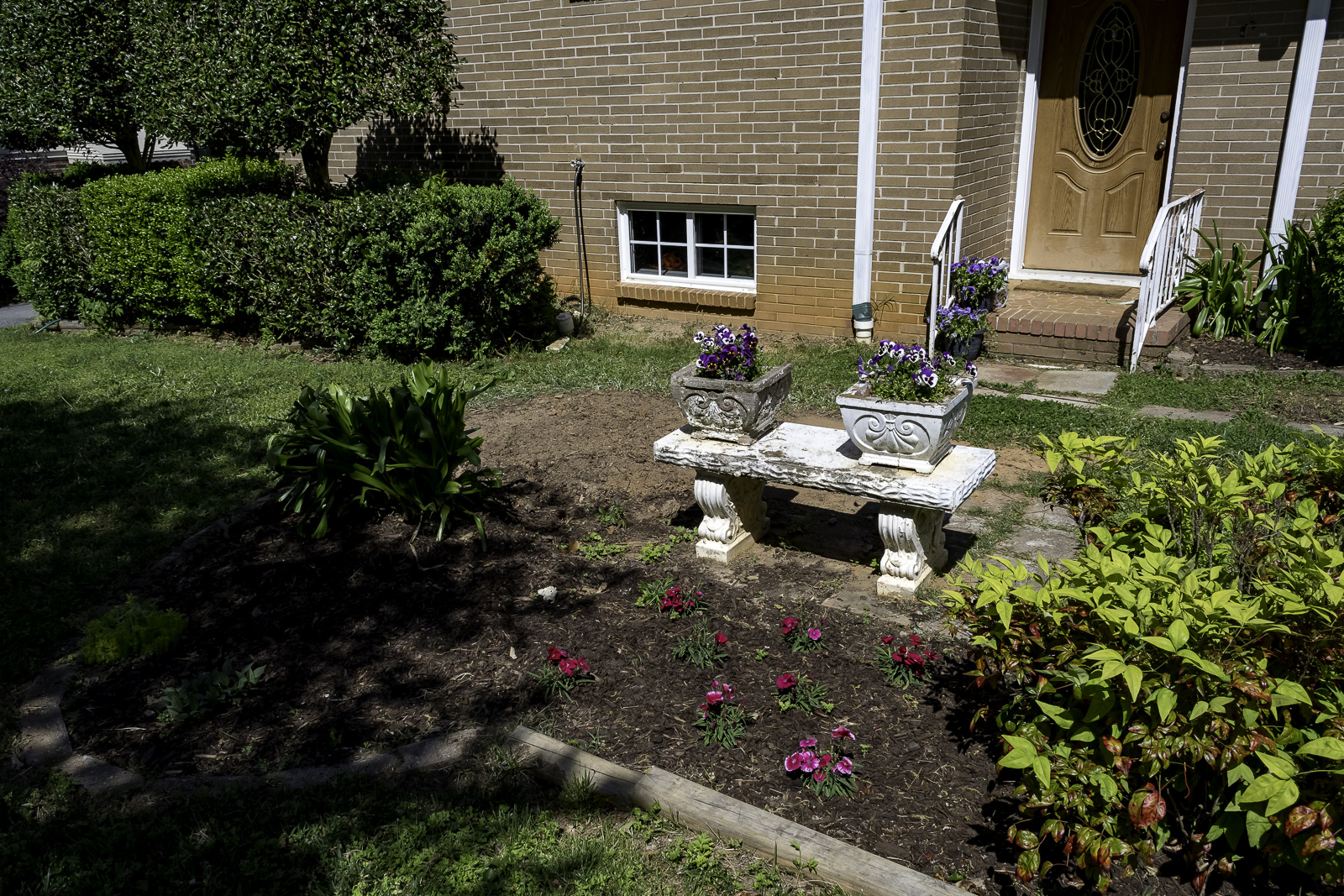
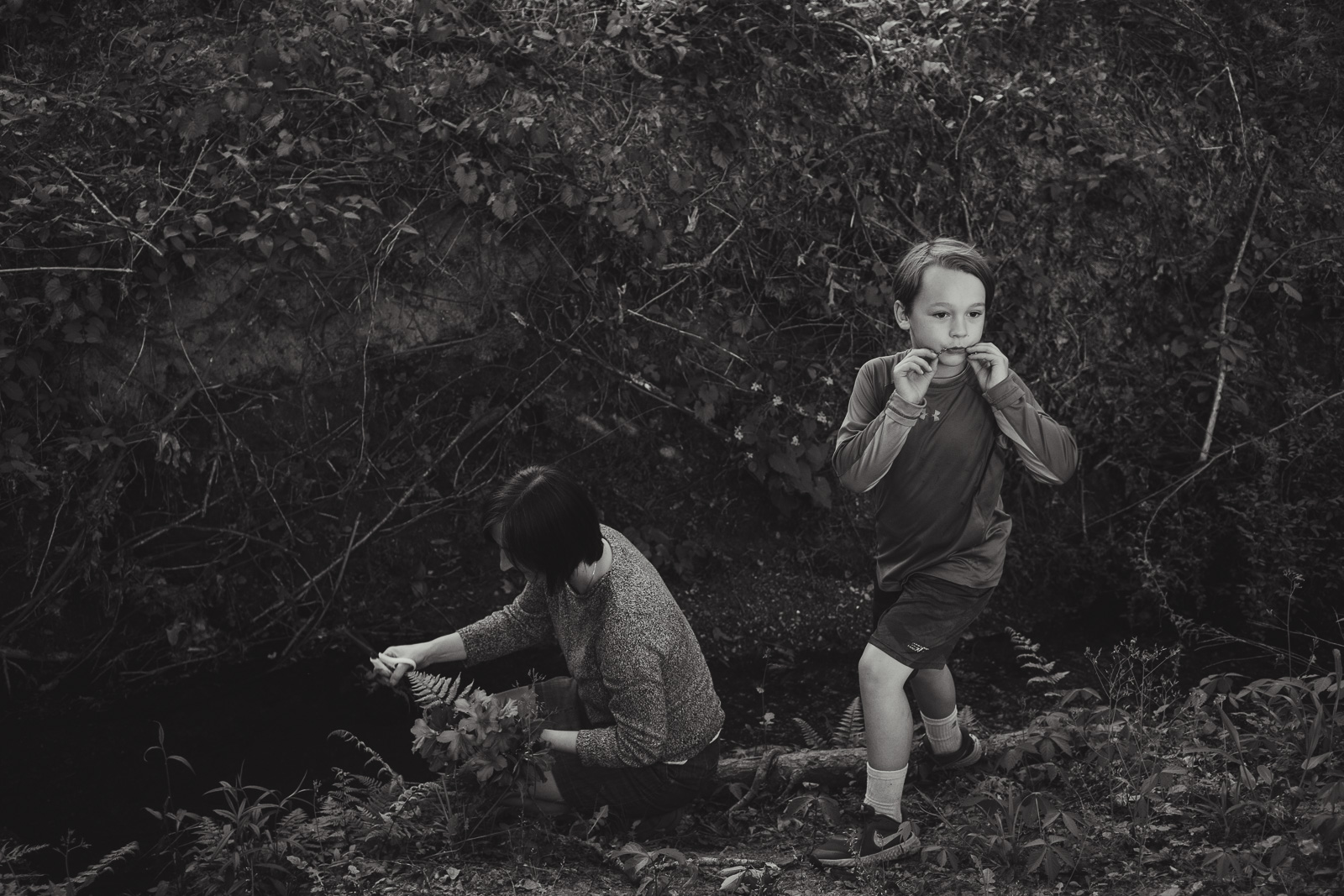
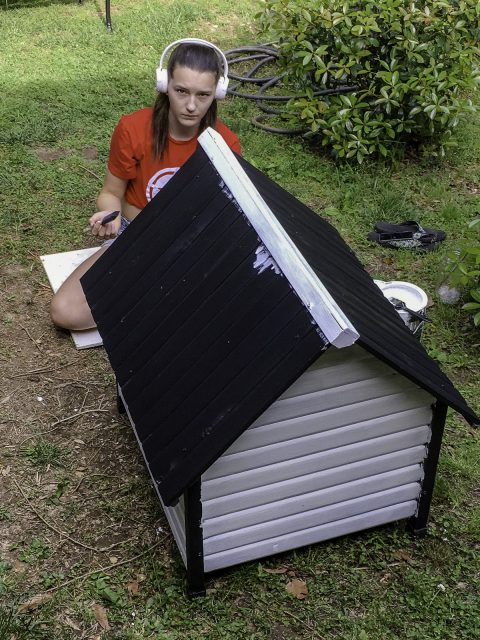
While all of this was going on, the Boy alternated between helping me and helping the Girl, who was painting the dog house and the bench.
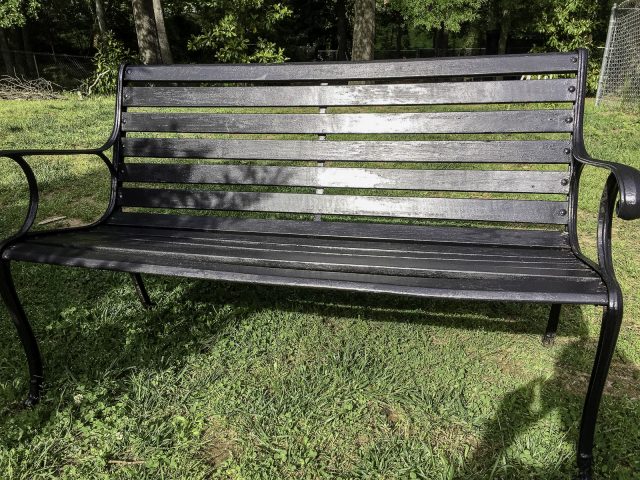
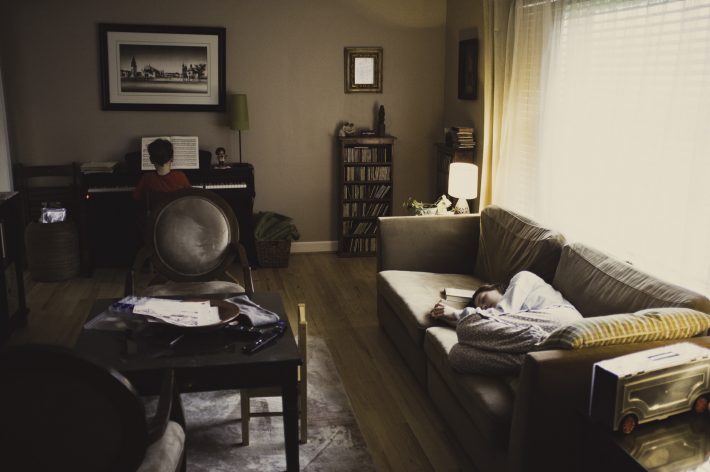
From K’s iPhone

In the evening, we watched Nie Lubię Poniedzialku. We’ve been trying to expose the kids to some of the classics, and we decided it was time for Poniedzialku. I love that film. It’s probably my second-favorite Polish film, right behind Miś. The story, such as it is, is charming: we all laugh at the horrid Monday everyone is having even though none of their trials rise above irritation. There’s no shadow of any real tragedy — just the annoyance of plans going awry.
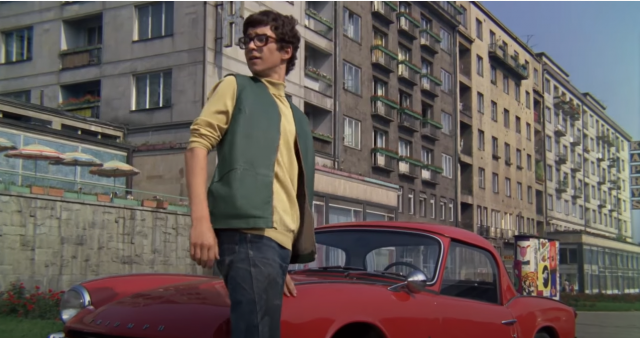
What I really love about the film, though, is the views of the Warsaw of the early 1970s. Just a quarter of a century after the Second World War, much of the city is still under construction, and what has been completed has the look of 60s communist architecture that was still prevalent in Warsaw when I arrived in 1996.

https://www.youtube.com/watch?v=1M2386VX0Po

Papa decided he’d watch the film with us. “There are no subtitles,” we warned him, but he wasn’t fazed. We explained critical dialogue, but most of it really didn’t require a whole lot of explaining.

The Boy disagreed. “I don’t get any of the funny parts, even when you explain them,” he fussed.

Perhaps he’ll find the next one we’ve planned a little more enjoyable: the classic Sami Swoi. We found it on Netflix DVDs, which means it will have subtitles. “Kargul, podejdź no do płota!”
Day 48: Scarlet Projects

This morning I had a little epiphany that I should have had months ago: “I’ll bet there are lots of audiobooks on Spotify.” I know — an obvious thought I should have had long ago, but I am sometimes a little slow on the up-take. I did a quick search and discovered that almost any classic one could imagine is there. Shouldn’t have been a surprise.

A month or so ago, I’d pulled from the bookshelf a novel I’ve been wanting on and off to re-read since college, The Scarlet Letter. I hadn’t really liked it a lot then, and I liked it even less in high school, but I reasoned that, being twenty-five years older than when I’d last read it, I might see something more in it.

For one thing, it’s been a different read because I finally made it through the opening section, “The Custom House.” When we read it in college, we were supposed to read that seemingly disconnected introduction but I didn’t. Today, I listened to it while I worked on our broken smoke, cleaning off the base blocks before screwing down the barrel that serves as the body of the smoker and then covering all the base in concrete. The job took about an hour and a half because I spent some time trying to pry off the leaking quick-connector on the hose before mixing the concrete, to no avail; the intro itself took considerably longer to complete.

And what of “The Custom House”? It’s a fictionalized attempt at making the story seem authentic by making it something of a found-footage type novel (mixing media there, I know). Was that novel (no pun in intended)? I really don’t know.

When the novel began, I was back in familiar territory. I’d initially forgotten about that opening, with the rose outside the jail door, but once that portion began, it was like hearing a long-forgotten-but-once-loved song again after twenty years:

[O]n one side of the portal, and rooted almost at the threshold, was a wild rose-bush, covered, in this month of June, with its delicate gems, which might be imagined to offer their fragrance and fragile beauty to the prisoner as he went in, and to the condemned criminal as he came forth to his doom, in token that the deep heart of Nature could pity and be kind to him.

This rose-bush, by a strange chance, has been kept alive in history; but whether it had merely survived out of the stern old wilderness, so long after the fall of the gigantic pines and oaks that originally overshadowed it,—or whether, as there is fair authority for believing, it had sprung up under the footsteps of the sainted Ann Hutchinson, as she entered the prison-door,—we shall not take upon us to determine. Finding it so directly on the threshold of our narrative, which is now about to[53] issue from that inauspicious portal, we could hardly do otherwise than pluck one of its flowers, and present it to the reader. It may serve, let us hope, to symbolize some sweet moral blossom, that may be found along the track, or relieve the darkening close of a tale of human frailty and sorrow.

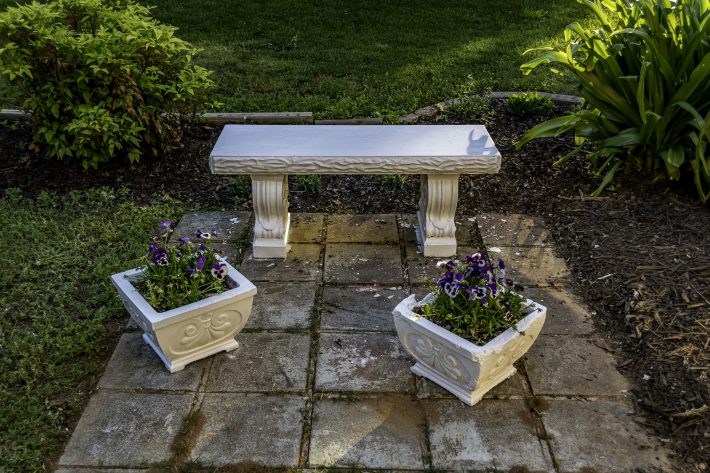
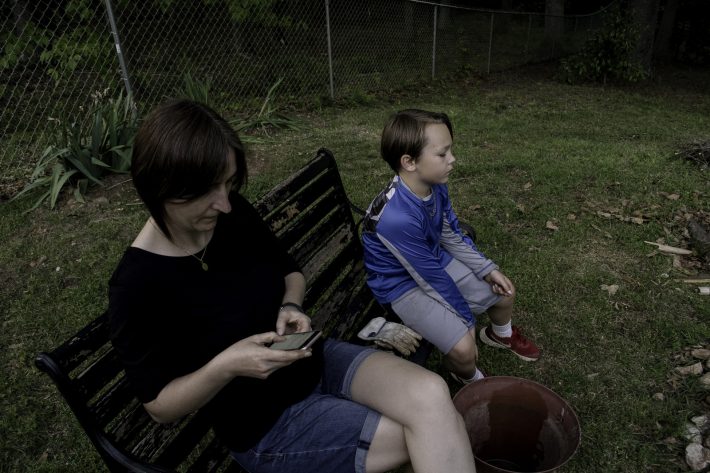
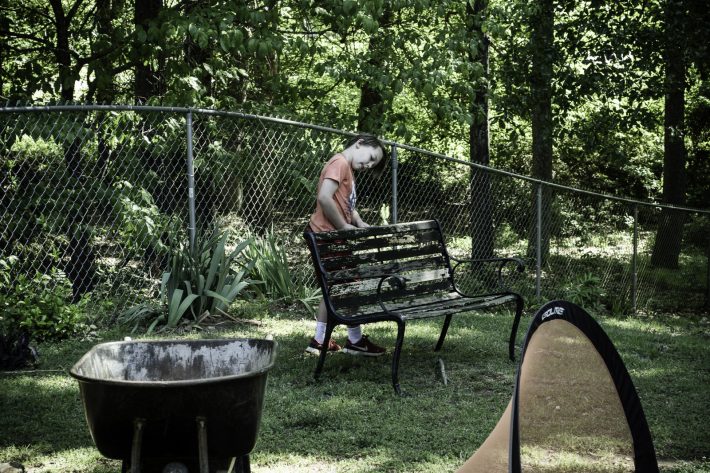
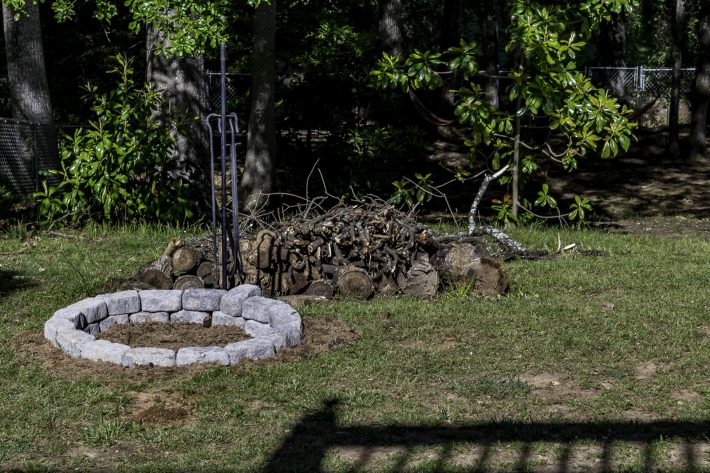
While I was working on the smoker, the Boy was working to remove the last bit of flaking paint from the bench we brought from Nana’s and Papa’s to use by our firepit.

I went inside to get the drill and impact driver and by the time I came back out, he’d disappeared.

“It’s too hard!” he exclaimed. I think he understood that I expected him to get all the paint off.

By the time I was ready to work on the next project of the day, the novel was introducing its heroine, Hester Prynne.

The young woman was tall, with a figure of perfect elegance on a large scale. She had dark and abundant hair, so glossy that it threw off the sunshine with a gleam, and a face which, besides being beautiful from regularity of feature and richness of complexion, had the impressiveness belonging to a marked brow and deep black eyes. She was lady-like, too, after the manner of the feminine gentility of those days; characterized by a certain state and dignity, rather than by the delicate, evanescent, and indescribable grace, which is now recognized as its indication. And never had Hester Prynne appeared more lady-like, in the antique interpretation of the term, than as she issued from the prison. Those who had before known her, and had expected to behold her dimmed and obscured by a disastrous cloud, were astonished, and even startled, to perceive how her beauty shone out, and made a halo of the misfortune and ignominy in which she was enveloped. It may be true, that, to a sensitive observer, there was something exquisitely painful in it. Her attire, which, indeed, she had wrought for the occasion, in prison, and had modelled much after her own fancy, seemed to express the attitude of her spirit, the desperate recklessness of her mood, by its wild and picturesque peculiarity. But the point which drew all eyes, and, as it were, transfigured the wearer,—so that both men and women, who had been familiarly acquainted with Hester Prynne, were now impressed as if they beheld her for the first time,—was that Scarlet Letter, so fantastically embroidered and illuminated upon her bosom. It had the effect of a spell, taking her out of the ordinary relations with humanity, and enclosing her in a sphere by herself.

The scarlet letter is a double symbol: it is a symbol to the characters in the novel of Hester’s sin and depravity as well as a symbol for Hester herself of her resistance. For readers, it’s both these things, but it also represents the hypocrisy of Puritans, among other things.

At this point, I’m about halfway through the novel, though completely through the day’s projects (as is L). More thoughts coming later, I’m sure.

Day 34: The Edge

I read somewhere recently that sanitation workers are struggling to keep up with the amount of trash people are putting out during the quarantine. We’re all cleaning out our houses, I guess, because what else are we going to do with so much time on our hands?

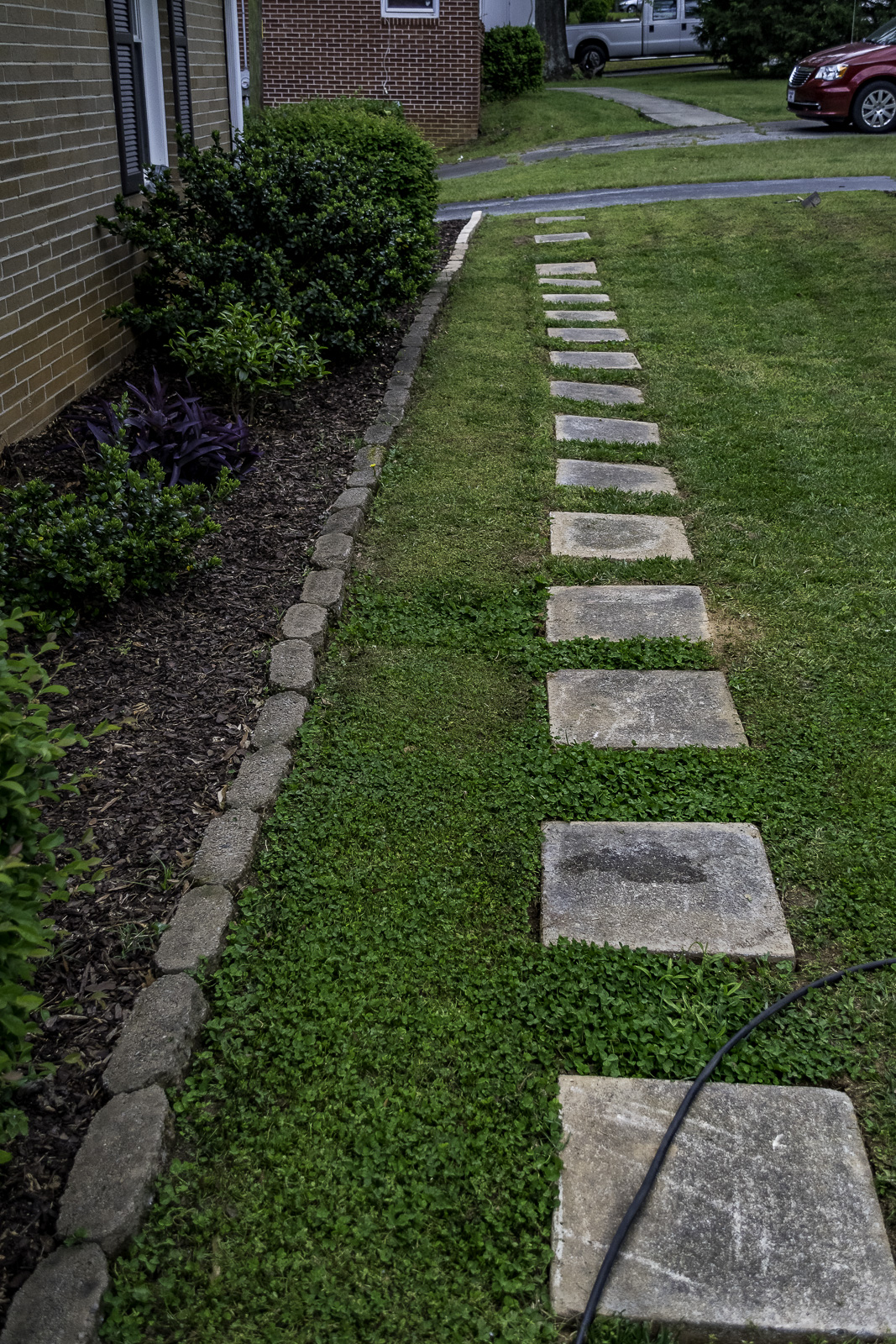
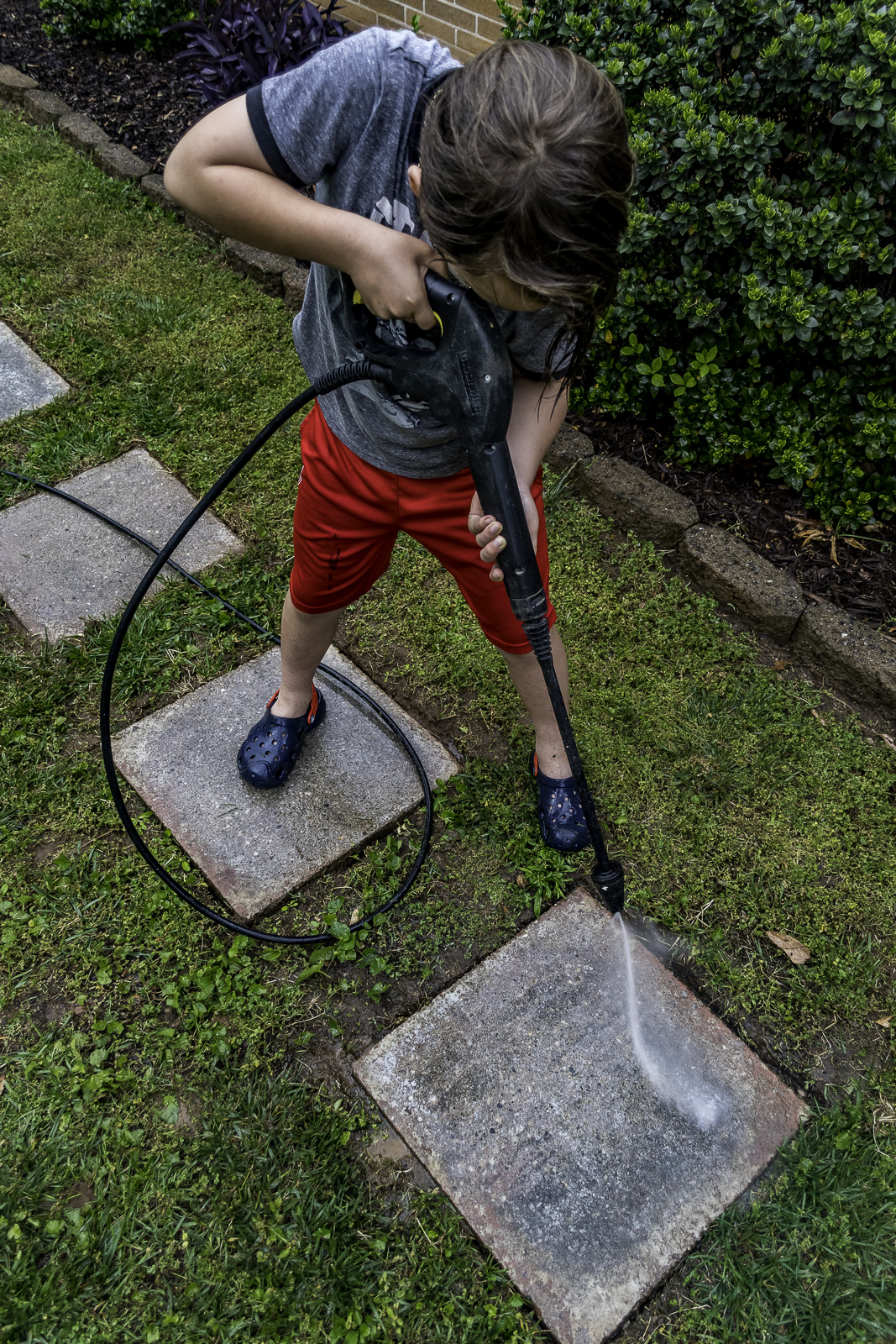
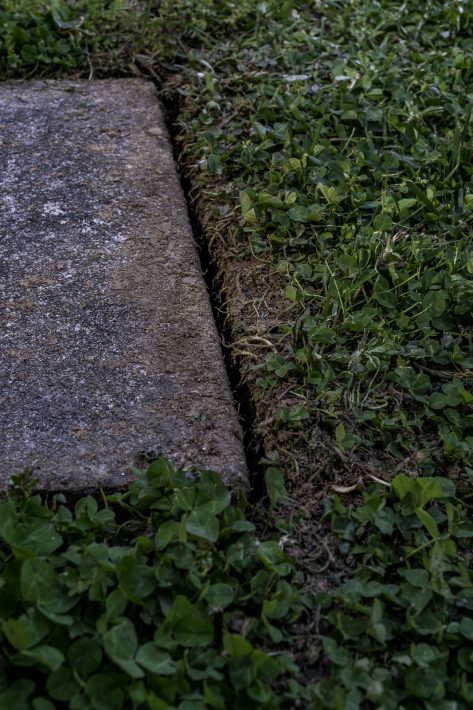
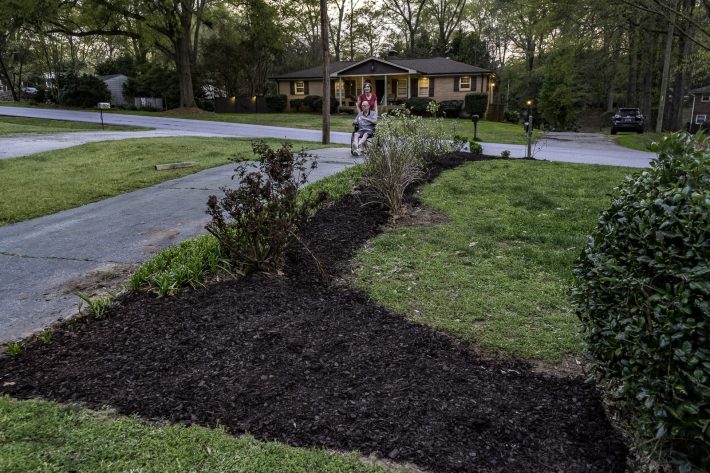
We’ve been doing a little in the house but mostly in the yard. Today, for instance, I used the edger (we have an edger now — like a router, one tool I’ve always wanted to have) to clean up the stepping stones in our front yard.

Why?

Well, I woke up this morning and thought, “What can I do in the yard today? It’s an April Saturday — one must work in the yard.” But I’d already mowed for the week. And I’d already moved the composter. And I’d already cleaned out the weeds in our jasmine. And I’d already cleaned out the briars in the corner of our lot. And I’d already moved the elderberry bushes. And I’d already enlarged our mulched flower garden. And I’d already mulched everything. “What can I do?”
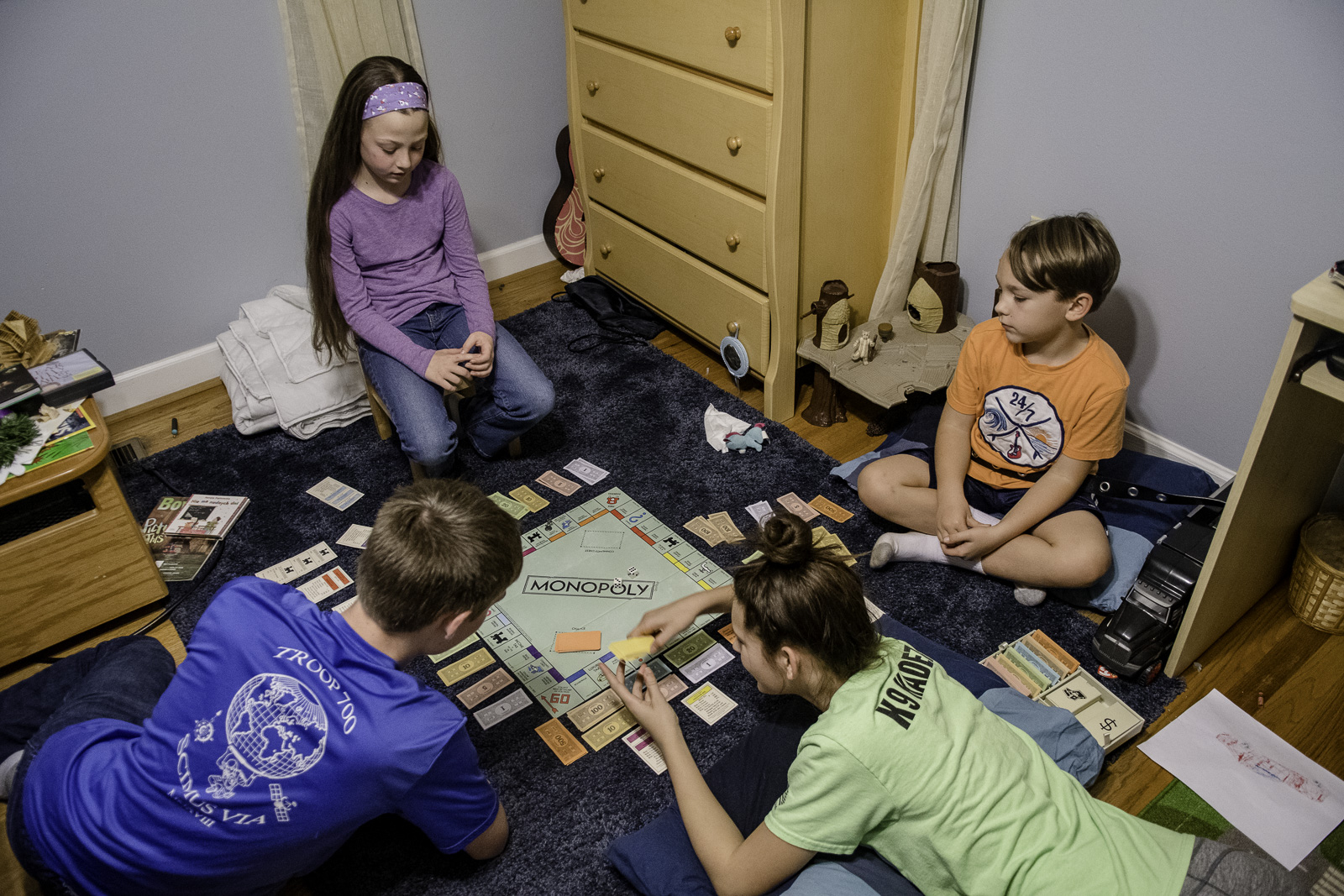
Saturday has its own rhythm, and even in these strange times, K and I try to keep all our rhythms and rituals as sustained as possible. We’ve introduced some new rituals (our almost-nightly family walks, lots more family board and card game playing, more family movies), but Saturday is Saturday — it must be spent outside.

By the time I was finished working on the stepping stones, each had a clean edge cut around it, several of the stones that had settled were elevated with a bit of gravel under them, and the last few stones that weren’t in line with the rest of them were shifted back into place.

As I worked, I listened to podcasts on cults: Heaven’s Gate, the Manson Family, the Branch Davidians, a couple I’d never heard of. They all make the little sect I grew up in seem fairly tame in comparison, but they all have one thing in common: a narcissistic man at the helm whom everyone views as being somehow a step above the rest of humanity.

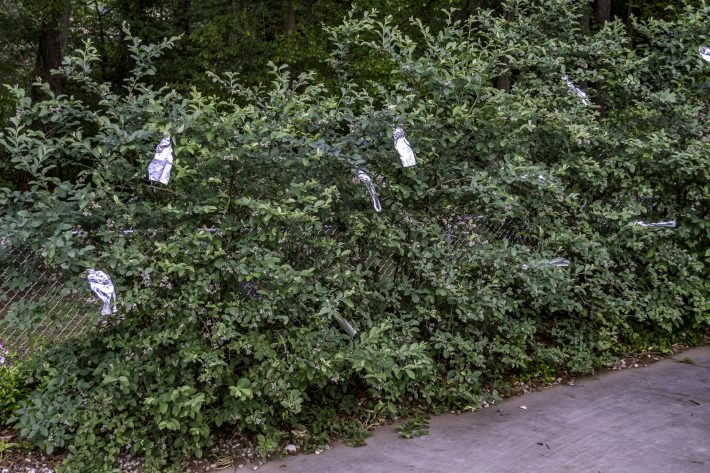
An attempt at protecting our blueberries

Then there are the members and the obvious question: how do people allow themselves to be sucked into such groups? Take Heaven’s Gate, for example: their beliefs were so morbidly ridiculous that it’s difficult to imagine anyone taking them seriously. And members of that cult (and many others) left families behind in order to join them. They gave up everything for beliefs that sound like some sixth-grader’s science fiction story for his fifth-period creative writing class. Yet all religions have their little absurdities: Islam has Mohammed flying off on a magic stallion into heaven. Judaism has talking snakes and donkeys and a man surviving in the digestive system of a marine creature. Christianity has zombies immediately after Jesus’s death on the cross:

And when Jesus had cried out again in a loud voice, he gave up his spirit. At that moment the curtain of the temple was torn in two from top to bottom. The earth shook, the rocks split and the tombs broke open. The bodies of many holy people who had died were raised to life. They came out of the tombs after Jesus’ resurrection and went into the holy city and appeared to many people. When the centurion and those with him who were guarding Jesus saw the earthquake and all that had happened, they were terrified, and exclaimed, “Surely he was the Son of God!” (Matthew 27.50-54)
Hinduism has Hanuman the monkey god — all religions have elements that just seem silly. The difference, comedian Bill Burr points out, is that most of us grew up with those more traditional religious stories and heard them all our lives: they’re party of the fabric of our childhood. These cults, though, we encounter as adults, more capable of critical thinking.

In the past, I’d probably write next that I found myself thinking about these things when I put the Boy to bed, thinking about possible lives we could have given him if we believed this or that, but I didn’t. I didn’t even think about it until now. Don’t know what to make of that, if anything.

Day 32: Changes

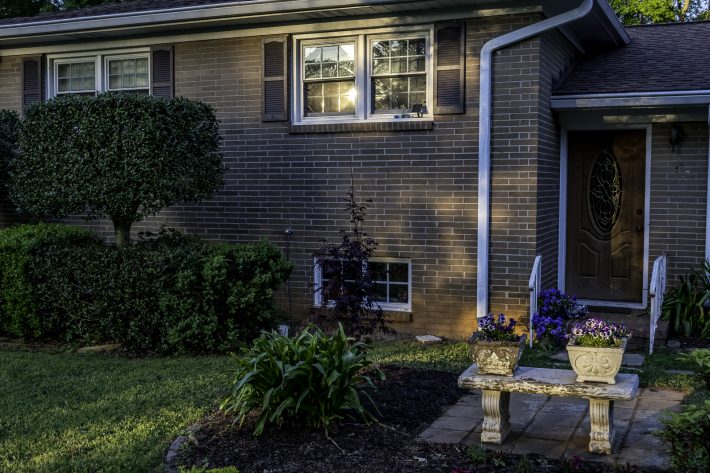
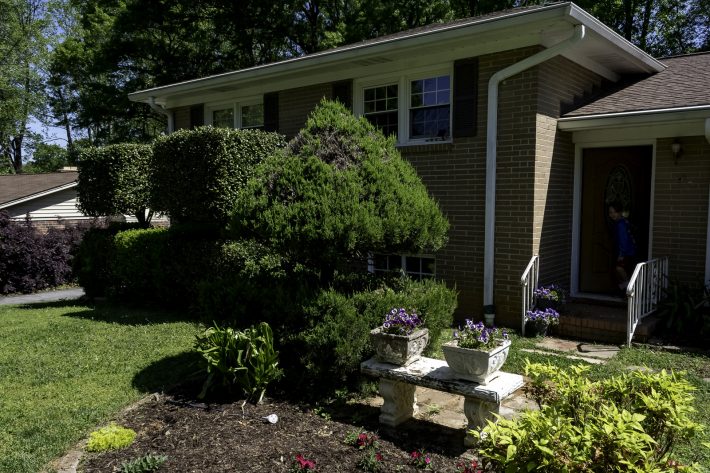
We pulled out that hideously overgrown ornamental tree by our front door earlier this week (or technically last week, I guess, but everything’s mushing together like a cheap blended scotch), so we had to replace it with something. Well, K felt we had to replace it with something. I was rather okay with just leaving it, but I was also okay with replacing it — I was just okay with it. Today, I headed out to get the replacement and a few flowers.

The plan was simple: go to Home Depot for the replacement battery for my drill and a few other things, then head over to South Pleasantburg Nursery for the tree.

“Take a picture of what’s there and show the man what was there,” K said. “He’ll help you pick something out that will fill that space.”

L’s “Franken-cooking” from a couple of nights ago

L went with me. “Take L — she’ll pick out nice flowers,” K suggested.

Home Depot took much longer than expected. Ridiculously long.

Then we head over to the nursery only to discover it’s closed: order-by-phone only. So it was back to Home Depot.

Their tree selection is not stellar, let me tell you.

We decided on a relatively mature Japanese maple, but there was no price tag, only a bar code. The Home Depot app, hastily installed, couldn’t find the price, so I photographed the bar code and went into buy it. “How much could it cost?” I asked myself.

The answer: $170.

“Um, no, I don’t think we want that tree,” I managed to stammer out. We went back and found a less mature specimen that was only $95.

The question is, why does a tree cost $170? Or $95? Or any given price? I understand Home Depot’s mark up is fairly predictable, but what about their purchase price?

K and I talked about it this evening. Somehow that price must take into account the salaries of the nursery employees, the resources (food, water, electricity) applied to the sapling or necessary for the nursery itself, the taxes and other expenses the nursery pays — all that compounded over the amount of time necessary for the sapling to reach its desired height and divided by the number of saplings that reach that marketable state at the same time.

“Whatever the expenses, it’s a rip-off,” K laughed in conclusion.

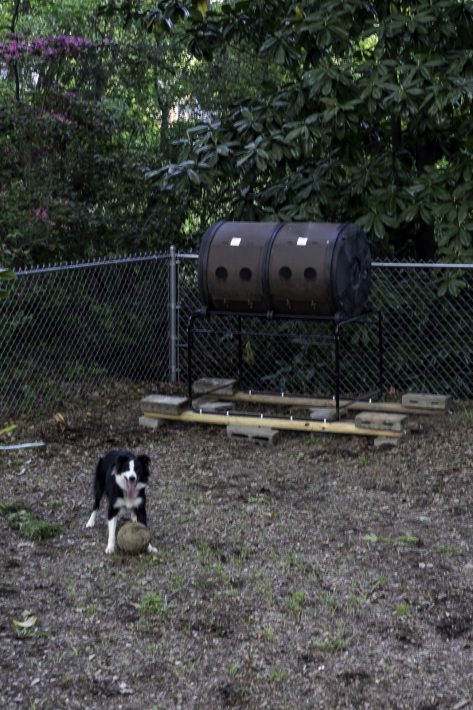
Back home, K planted the tree while I embarked on a second project: moving the composter we got for free when friends moved north. It’s current location was much closer to the house, but the barrel had somehow gotten off the gears that turn the whole contraption, and that was simply because it was no longer level, thanks in large part, I think, to the dog’s digging.

Day 27: Holy Saturday 2020

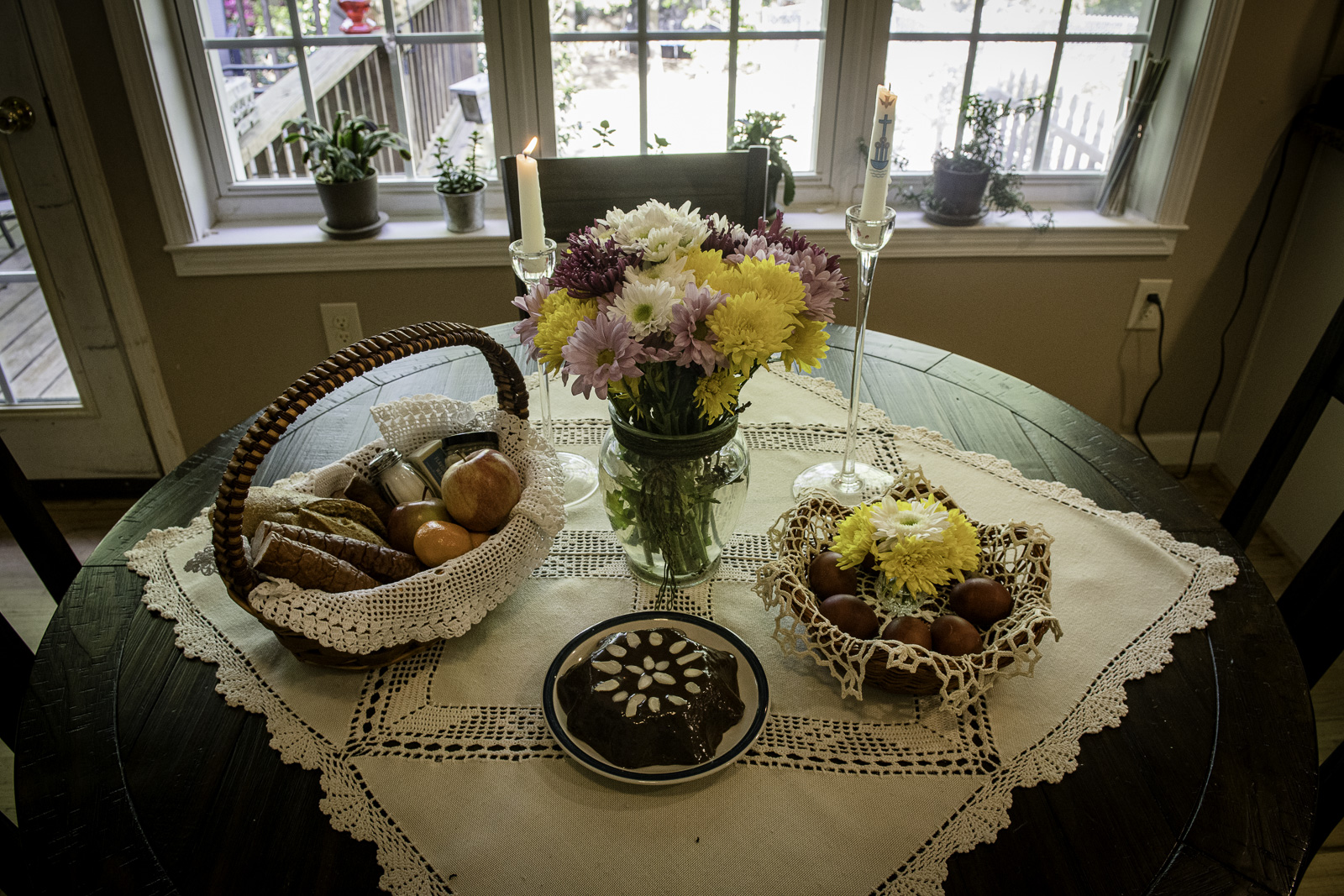
For everyone in the local Polish community, Holy Saturday has meant one thing: a visible continuation of traditions from the Old Country — the blessing of the Easter baskets. When we began the tradition, the parish pastor had no idea what it was. He quickly learned and just as quickly fell in love with the tradition.

This year, then, was the first Holy Saturday in a decade that we didn’t have a basket blessing here in Greenville. In some ways, that made Holy Saturday wholly different. But some things were the same.

That tree in the front yard that I wanted to cut down yesterday? It’s now gone, along with my back.

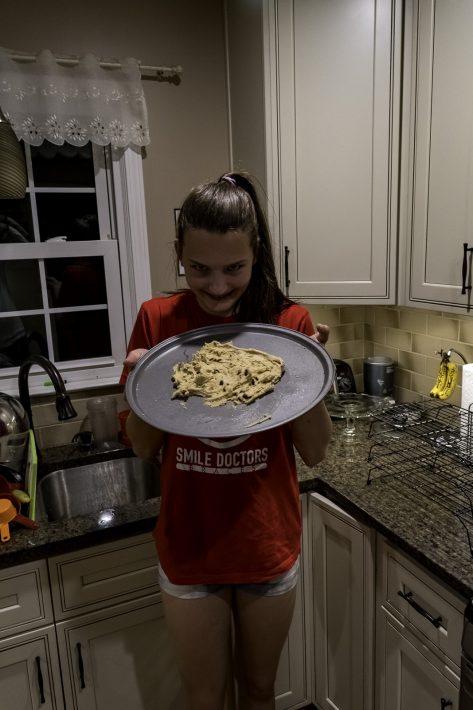
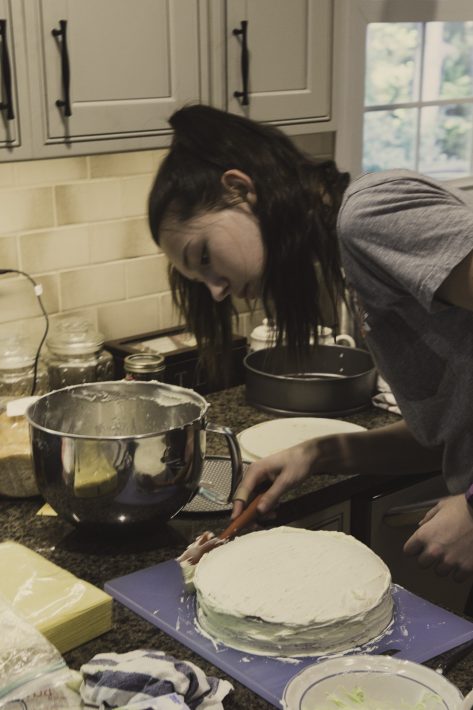
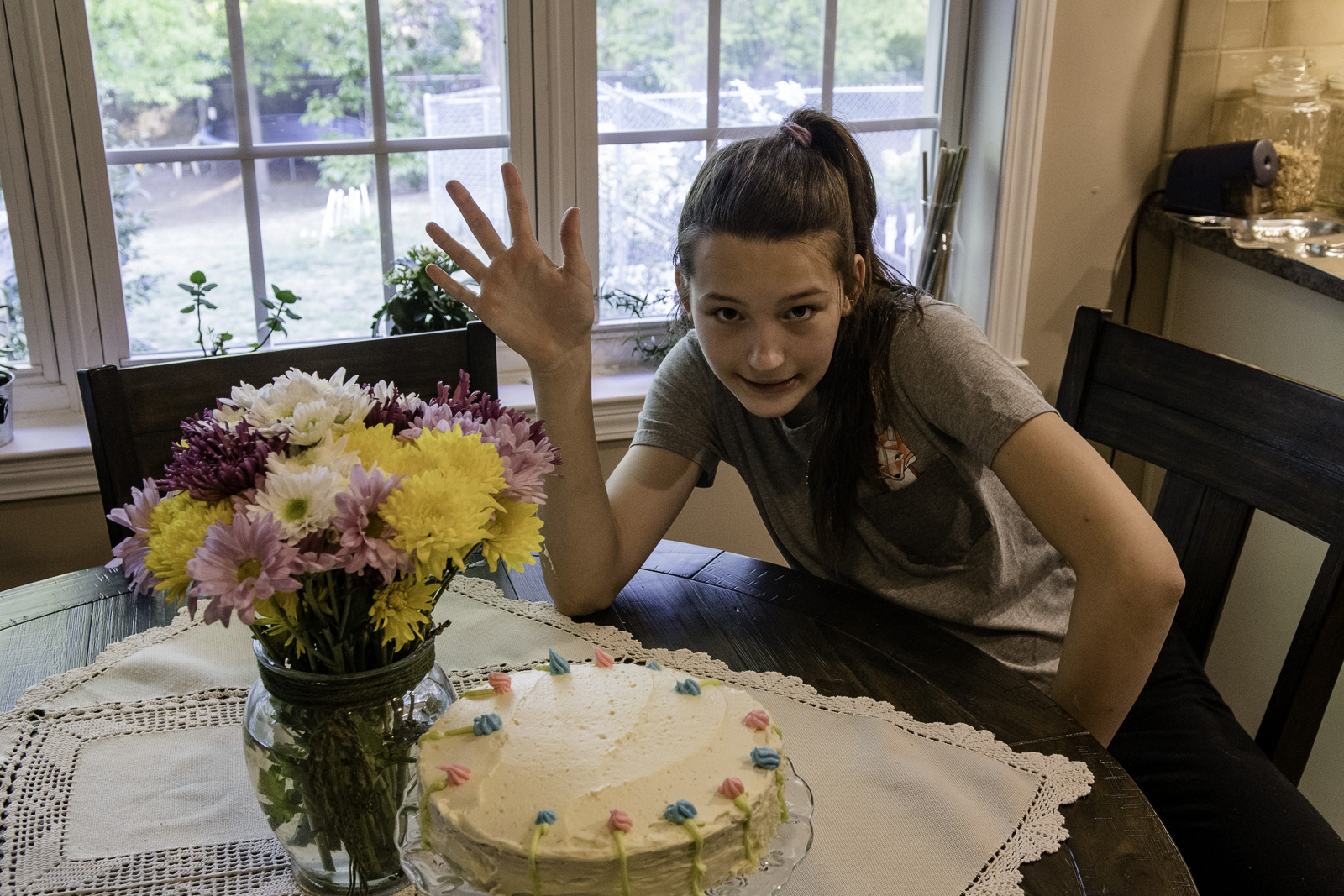
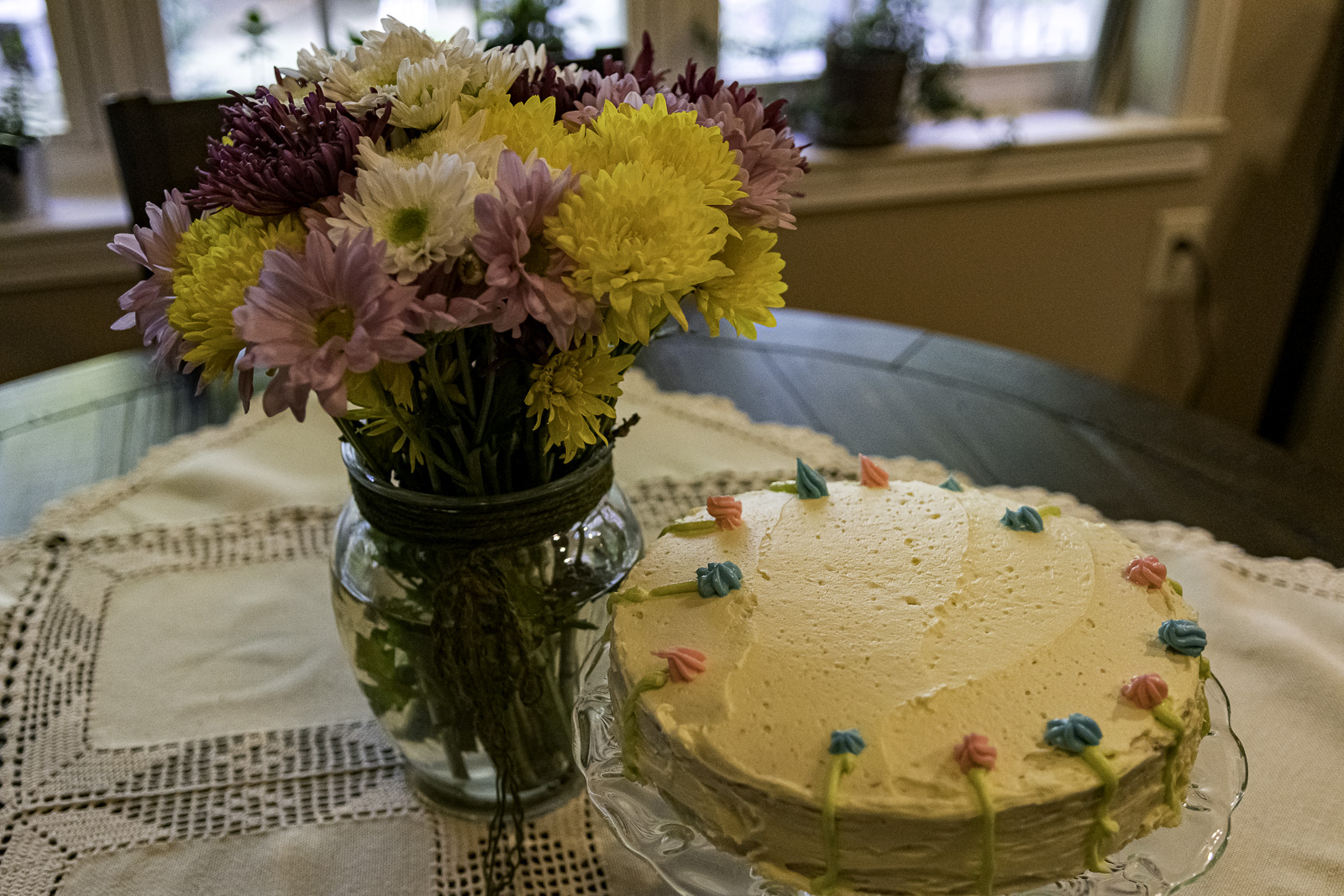
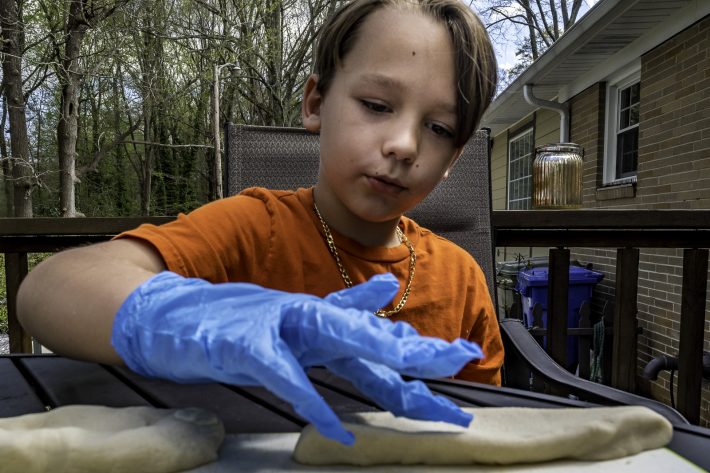
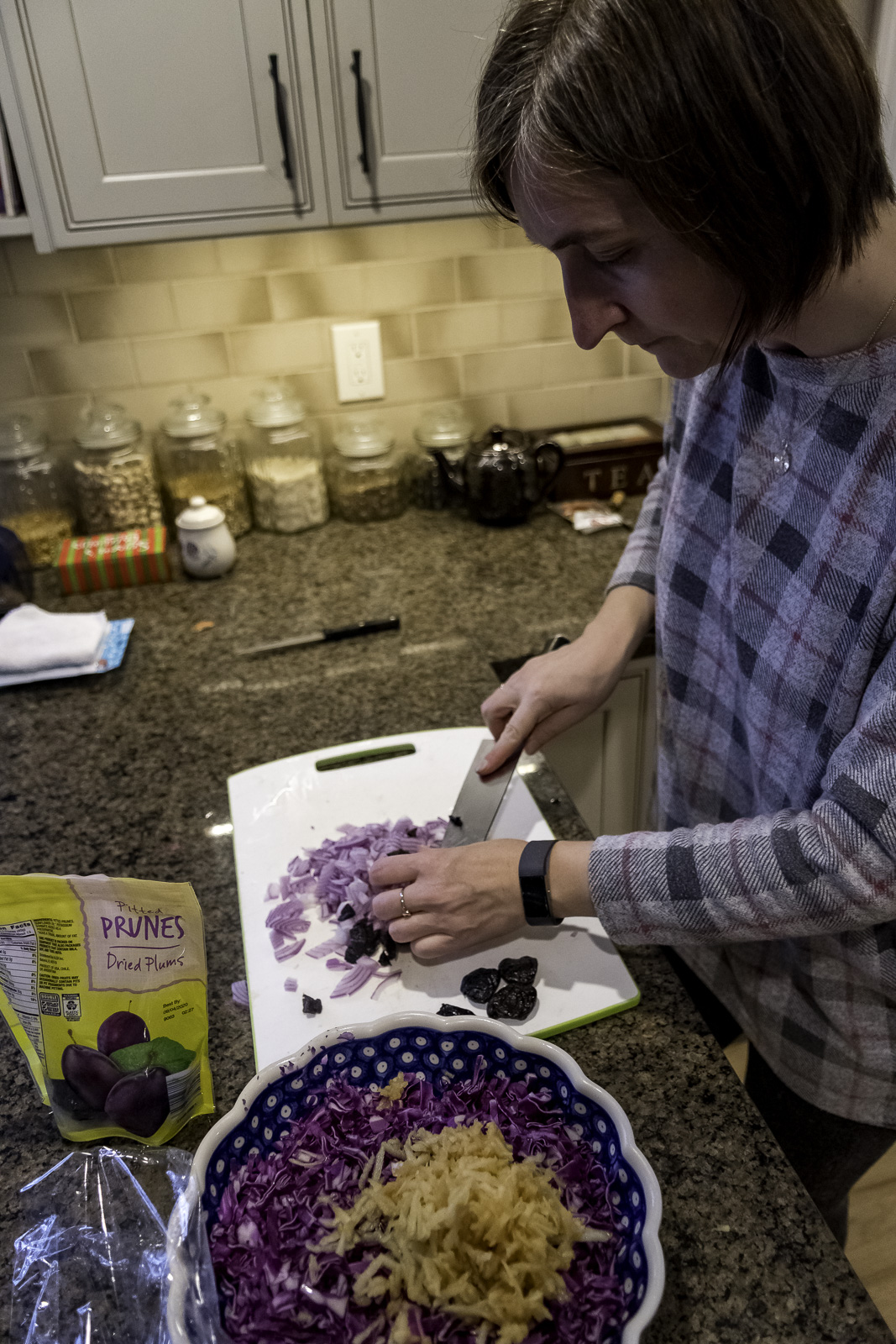
More similarities: there was baking, baking, baking. For whom? For our family. For friends. For our neighbors. For anyone who wanted it, I guess. The difference? The Girl was involved — not just involved, but insisting on seeing the whole process through to the end alone. Well, almost alone — moving it to the cake stand was a bit too scary for her.

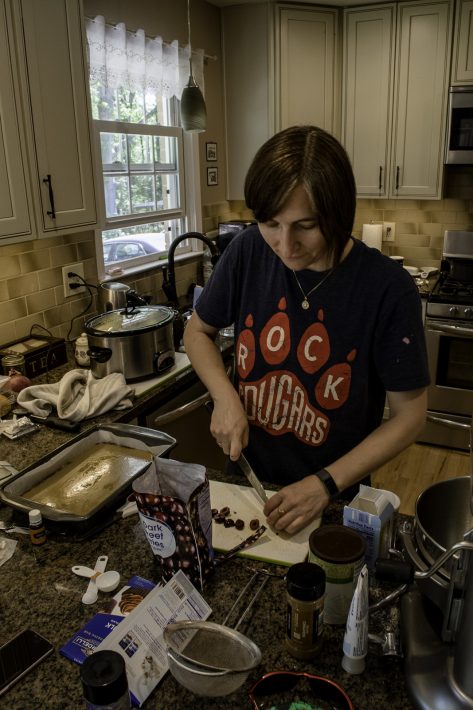
What else was the same? The kitchen was a disaster area for most of the day.

An artist at work always leaves behind a mess. And one of our culinary artists is better at cleaning up the mess she leaves behind than the other, and I’m much more likely to jump in and help clean with one of the artists than I am with the other. Lessons to learn.

Previous Years

Basket Blessing 2019

Basket Blessing 2018

Baskets 2015

Blessing the Baskets

Day 26: Good Friday

Good Friday is always a work-filled day among Poles, which I’ve always found somewhat ironic. In some ways, it’s the most solemn day of the Catholic calendar, and you would think that devout Catholics — of which in Poland, particularly rural Poland — would spend the day in prayer. In my experience, they usually spend the day cleaning and cooking (often things they don’t eat because it’s a fast day, though Catholic fasting is hardly a discipline compared to some forms of fasting).

Today’s job for me: take care of the leaves in the backyard. “After all, it is April,” K smiled at breakfast. I wanted to cut down a topiary tree in the front yard that we’ve decided is dying and needs to come down. I’ve wanted to take it down for years, but I guess that’s for tomorrow.

Day 20 in Two Parts: A View of the Day and a Rant

Part 1: The Day

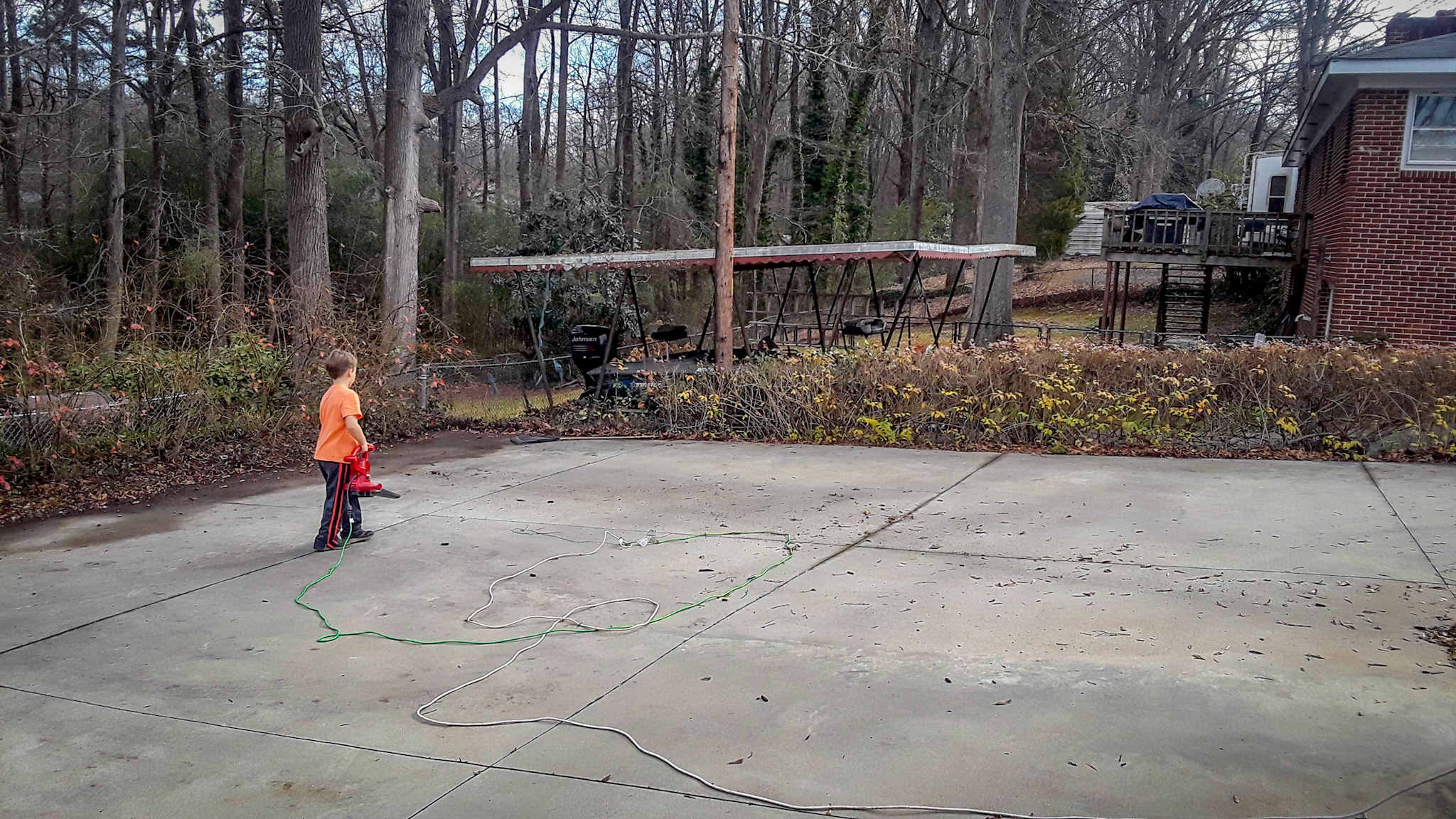
Our weed eater — I think that’s a brand name but I could be wrong — has been broken for some time. How long? Embarrassingly so. Today, we finally got a replacement, but we didn’t get as sturdy a model as might be expected. The reason? Turning things over to the Boy.

A battery-powered, small trimmer that E can handle. His reaction? “I love, love, love this!” He’s going to want to trim every day.

Part 2: Will This Change Anything?

K and I were talking a few nights ago about how this whole tragedy perhaps could have been significantly lessened if our inept president weren’t the egomaniacal narcissist that he is when our talk turned to how this might affect the country. K suggested that it would be a turning point, that the fact that America — the most powerful country in the world, the richest country in the world, the superlative-in-every-sense country in the world — was brought to its knees like this will necessitate some change, a whole new way of looking at things.

I disagree.

What I fear is that instead of turning this country’s populace into a science-first, technology-led country where politics and religion take a backseat to what science says (and if this were the case now, we might not be in the situation we’re in), it will only reinforce the same backward thinking that continues to threaten us now. Instead of seeing it as a science problem, they’ll see it as a religious problem. “God took his protection away from us because of X, Y, and Z” — fill in your favorite liberal boogieman.

We really don’t have to wait for that — it’s already happening. The amount of religious stupidity coming out of this is just mindblowing. Stuff like this.

One would think that given the evidence, anti-vaxxers would be shutting up about now:

The person credited with saving the most lives ever is Edward Jenner, inventor of the smallpox vaccine. The disease had a much higher mortality rate than the novel coronavirus that is confining many people to their homes right now; about 80% of children and 60% of adults who contracted smallpox died of it. In the 20th century alone, it killed more than 300 million people before the vaccine eradicated it worldwide in 1979.

The polio vaccine is estimated to have saved 10 million people from paralysis just since 1988, and prevented 500,000 deaths, according to the World Health Organization. A global vaccination campaign for measles that began in 2000 prevented an estimated 23 million deaths by 2018, the organization reported. (LA Times)

One would think — but then again…

And this old nonsense about Bill Gates ushering in the apocalypse. (Money says he’s using a Windows computer here…)

And people trying to call judgment down on a virus as if it’s an incorrigible child.

And when you mix in bat-feces crazy like Alex Jones and people who take him seriously, well…

When you see everything — everything — as part of some conspiracy that was foretold in a book written by Bronze Age soothsayers,  no amount of science, logic, or critical thinking can penetrate your worldview.

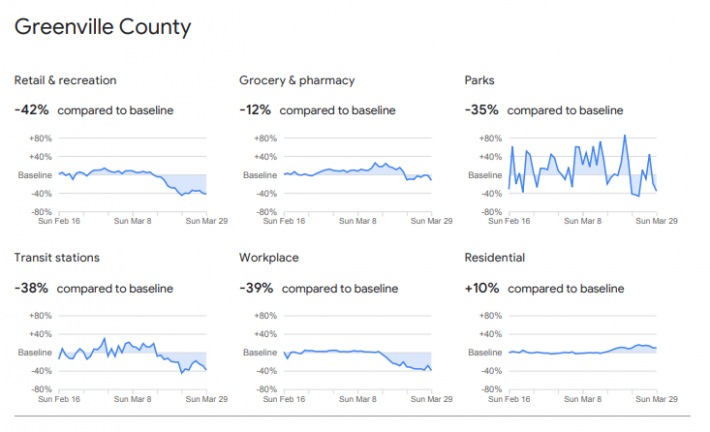
It’s not just a pessimistic sense that there’s a problem: there’s quantifiable data to show there’s a problem. Google has begun compiling reports on the changes in people’s mobility during this time.

As global communities respond to COVID-19, we’ve heard from public health officials that the same type of aggregated, anonymized insights we use in products such as Google Maps could be helpful as they make critical decisions to combat COVID-19.

These Community Mobility Reports aim to provide insights into what has changed in response to policies aimed at combating COVID-19. The reports chart movement trends over time by geography, across different categories of places such as retail and recreation, groceries and pharmacies, parks, transit stations, workplaces, and residential.

What do the data show? Well, as a disclaimer, Google warns about doing what I’m just about to do:

Location accuracy and the understanding of categorized places varies from region to region, so  we don’t recommend using this data to compare changes between countries, or between regions with different characteristics (e.g. rural versus urban areas).

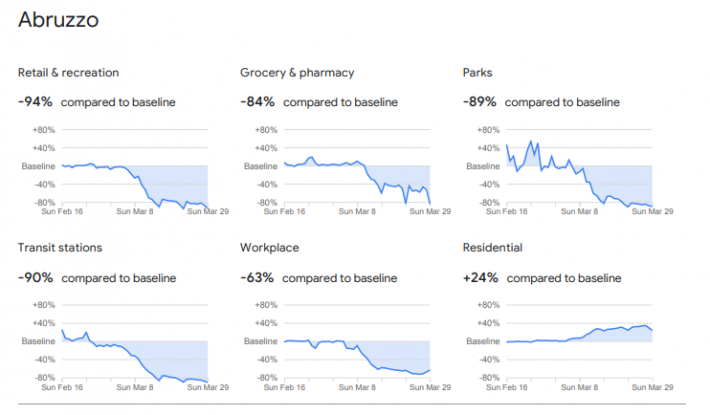
Still, data from three locations show the vast difference in national and local response.

Here’s the data from our county:

Now, we made the news recently as being the most mobile county in the nation during this time, so our stubborn little county is an outlier, but it’s where I live, so it’s the data I’ll use.

And here’s the data from the administrative district in Poland where K grew up, where Babcia still lives, and where I spent seven years:

A randomly selected district in Italy.

Are these two countries faring better than America? I suppose in raw numbers, they are. The long term picture looks better there. Why? Because they don’t have people going around saying, “I’m covered in the blood of Jesus — I’m saved and safe” like we do here.

Of course, in Poland, some bishops and priests are desperately trying to get churches reopened on some kind of limited basis, but even there, they understand the risk and want to have limited attendance. These bloody American Evangelicals — i.e., “covered in the blood of Jesus,” which is itself a disturbing image, but the second, British meaning of “bloody” works as well — want to have full, regular church services. The data makes their claims a little spurious, though:

And it’s not as if this virus is enough: we as a species can’t even go through this without some people turning it into a hell on Earth for those who are stuck with them:

In Hubei province, the heart of the initial coronavirus outbreak, domestic violence reports to police more than tripled in one county alone during the lockdown in February, from 47 last year to 162 this year, activists told local media.

“The epidemic has had a huge impact on domestic violence,” Wan Fei, a retired police officer who founded a charity campaigning against abuse, told Sixth Tone website. “According to our statistics, 90% of the causes of violence [in this period] are related to the Covid-19 epidemic.”

It is a pattern being repeated globally. In Brazil a state-run drop-in centre has already seen a surge in cases it attributes to coronavirus isolation, the Brazilian broadcaster Globo said.

“We think there has been a rise of 40% or 50%, and there was already really big demand,” said Adriana Mello, a Rio de Janeiro judge specialising in domestic violence. “We need to stay calm in order to tackle this difficulty we are now facing.” (Lockdowns around the world bring rise in domestic violence in the Guardian)

The virus is always teaching me something new:

The increased threat to women and children was a predictable side effect of the coronavirus lockdowns, said activists. Increased abuse is a pattern repeated in many emergencies, whether conflict, economic crisis or during disease outbreaks, although the quarantine rules pose a particularly grave challenge.

Predictable for some, that is. I hadn’t even thought of this — that’s how privileged I am.

So, no, I don’t think anything will change. At all.

Day 13: Landscaping

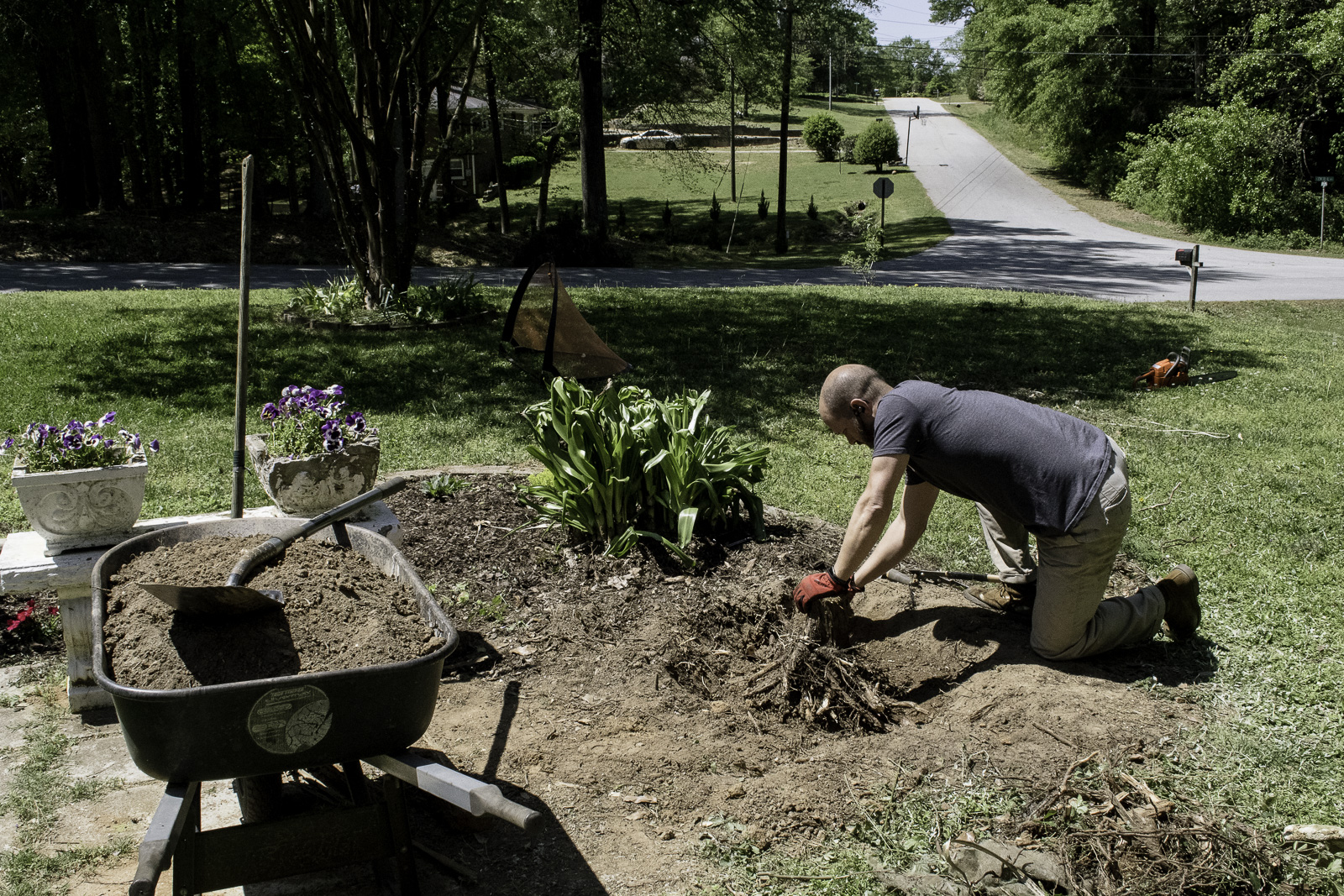
A house is a never-ending project, inside and out. There’s always something to fix, move, repaint, replant, shorten, lengthen, reinforce, replace, recalibrate, nail, screw, fasten, dig, hoe, spread, gather, clean, spray, scrub, feed, kill, water, or simply do. Our yard has been part of this ever-growing project, with a couple of landscaping elements that weren’t even there when we moved in and some that were there long gone, and some that we put in ourselves also long gone.

Our driveway planter has now grown and joined the original planter in the front yard that has changed very little since we moved in.

It also grew at the road end as well: the elderberries that were languishing in the backyard are now in the front yard, and we can’t just plant elderberries in the yard and be done with it…

Finishing Basement

We woke to foggy weather. In Lipnica, that always meant a gloriously sunny afternoon. Here — I’m not so sure. It stayed cloudy most of the morning before turning sunny.

It might mean sleepiness if it’s Sunday. Everyone was tired this morning: L because she’s a thirteen-year-old; E because he’s sick; K and I because that’s how we normally wake up.

Or it might mean more work in the basement.

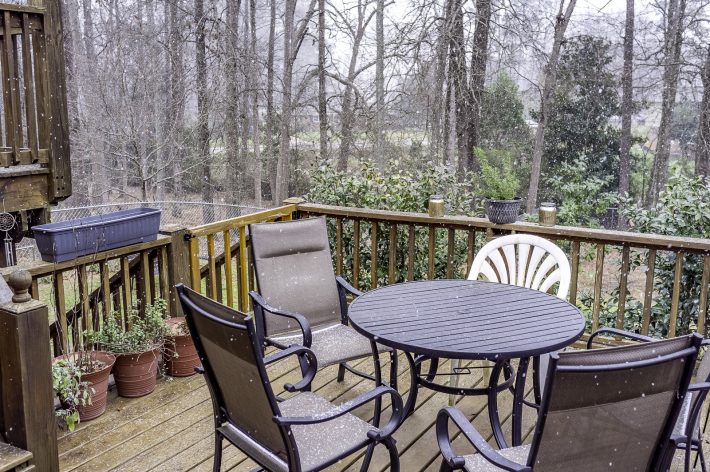
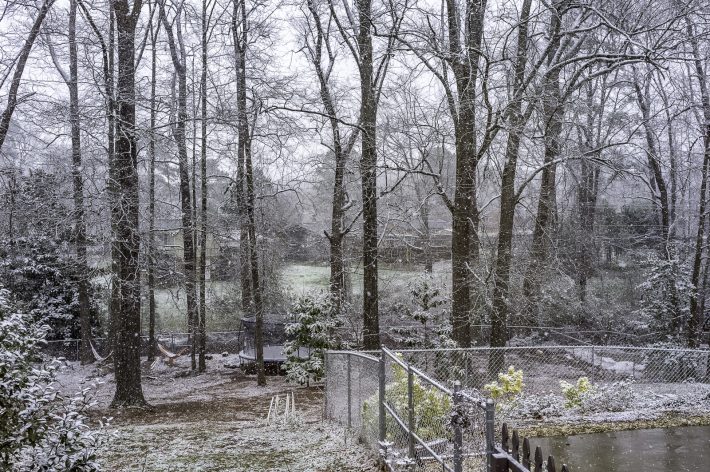
And then snow

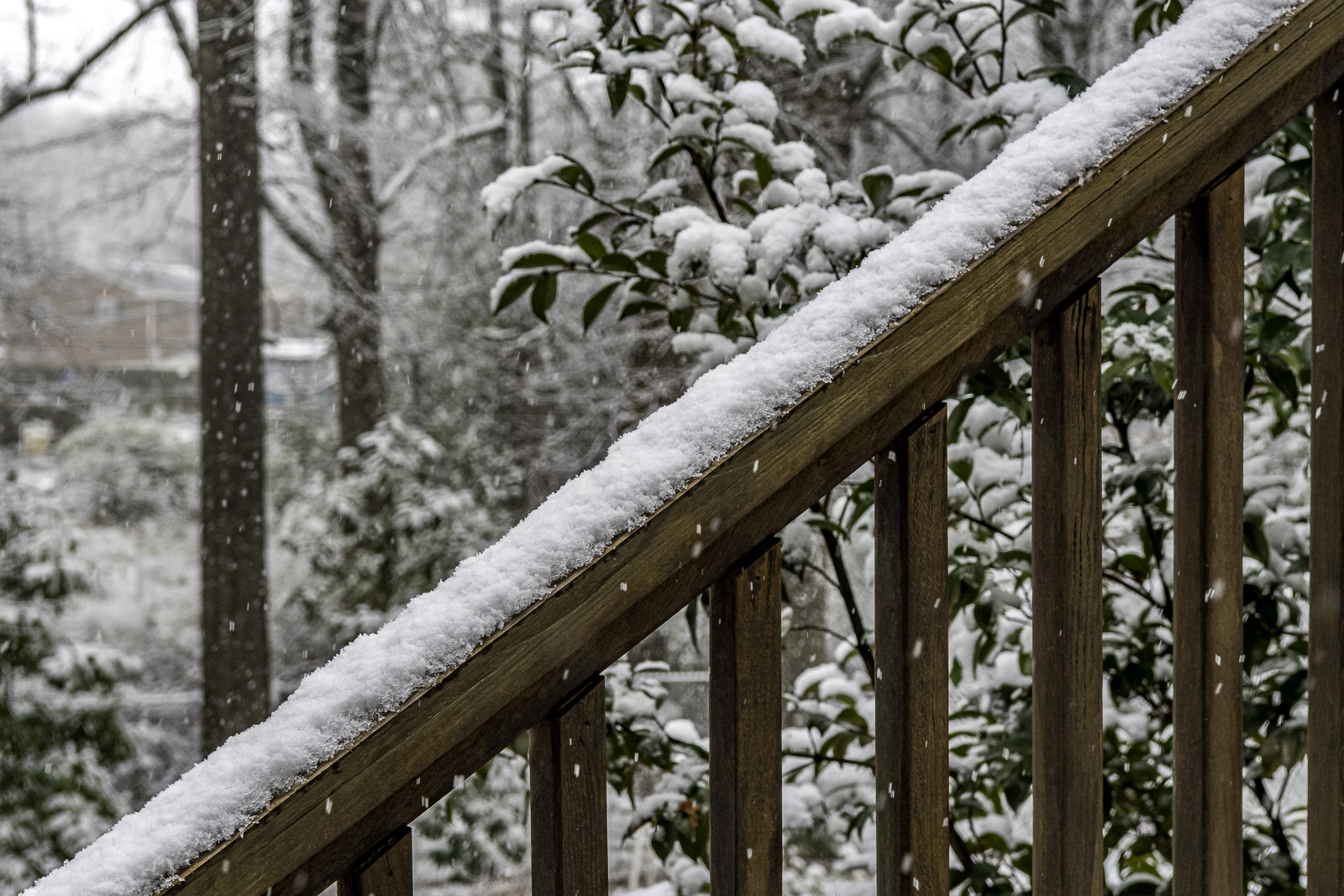
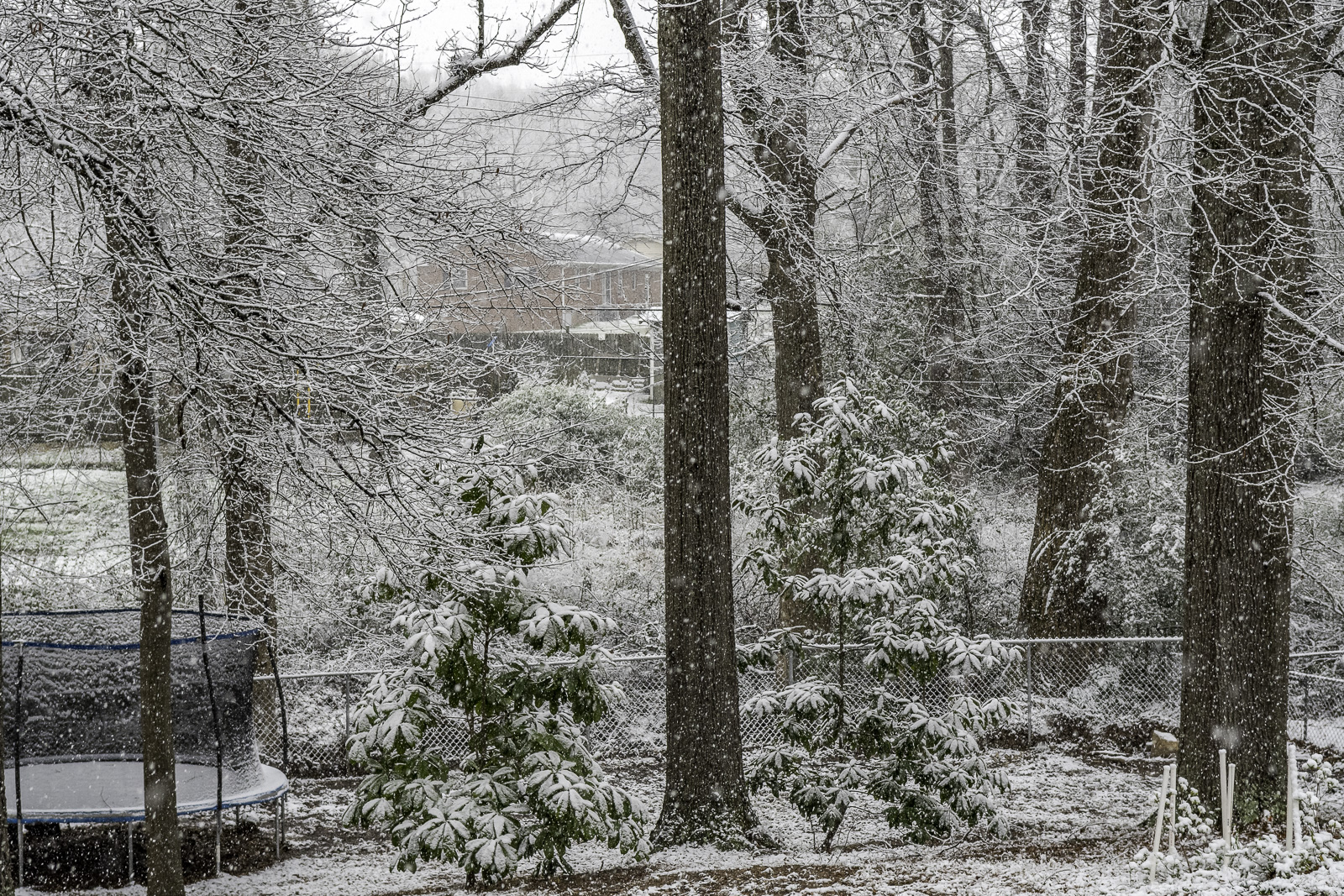
They say weather in South Carolina is ridiculously unpredictable. It can be forty degrees colder today than it was yesterday; it can go from cloudless to monsoons to cloudless in no time; it can rain today and snow tomorrow.

We’ve had weather like that the last few days.

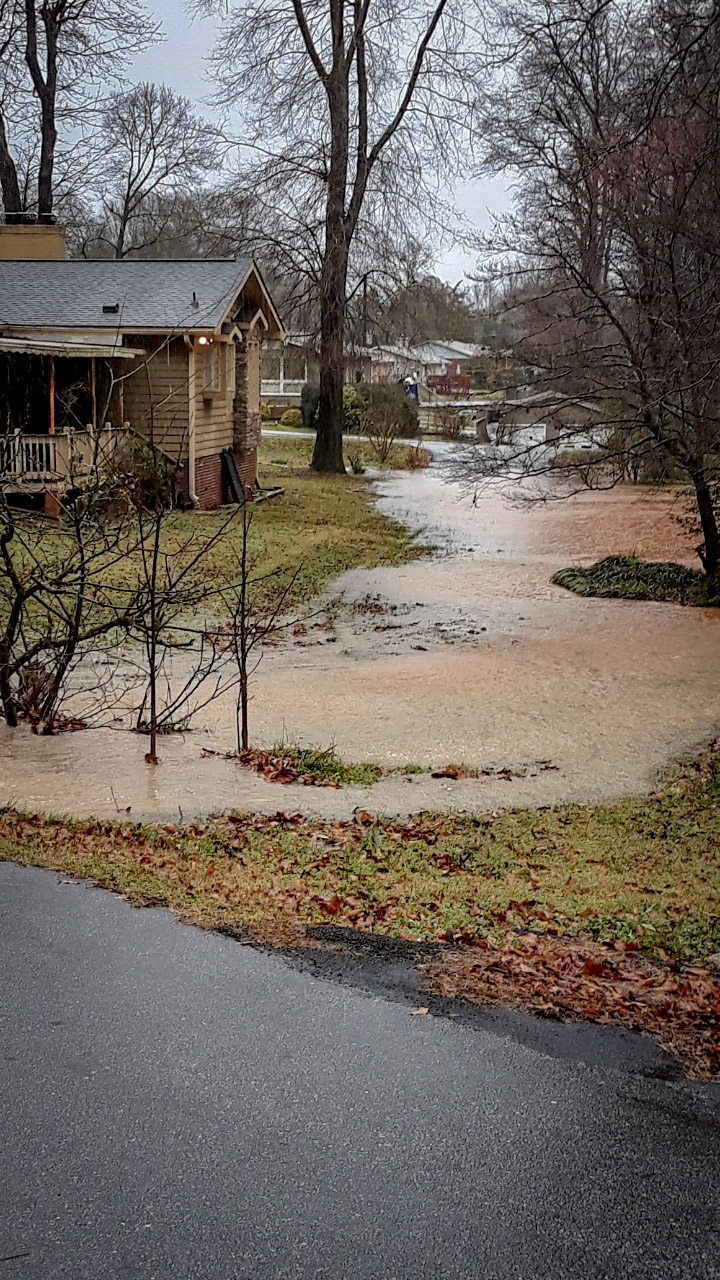
Thursday we flooded; Friday was cloudless and windy; today, it snowed.

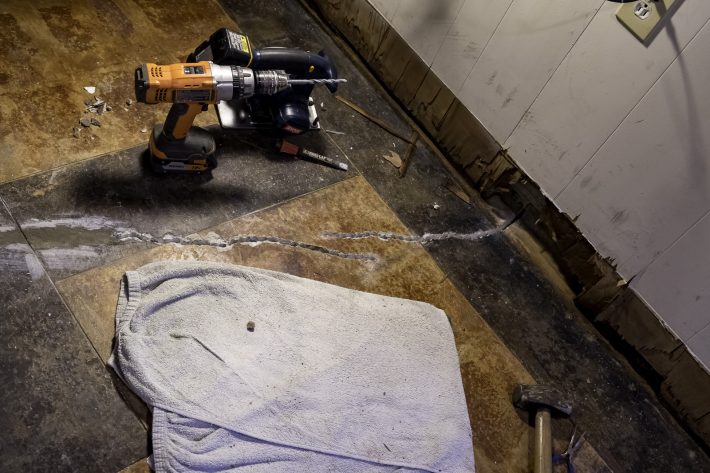
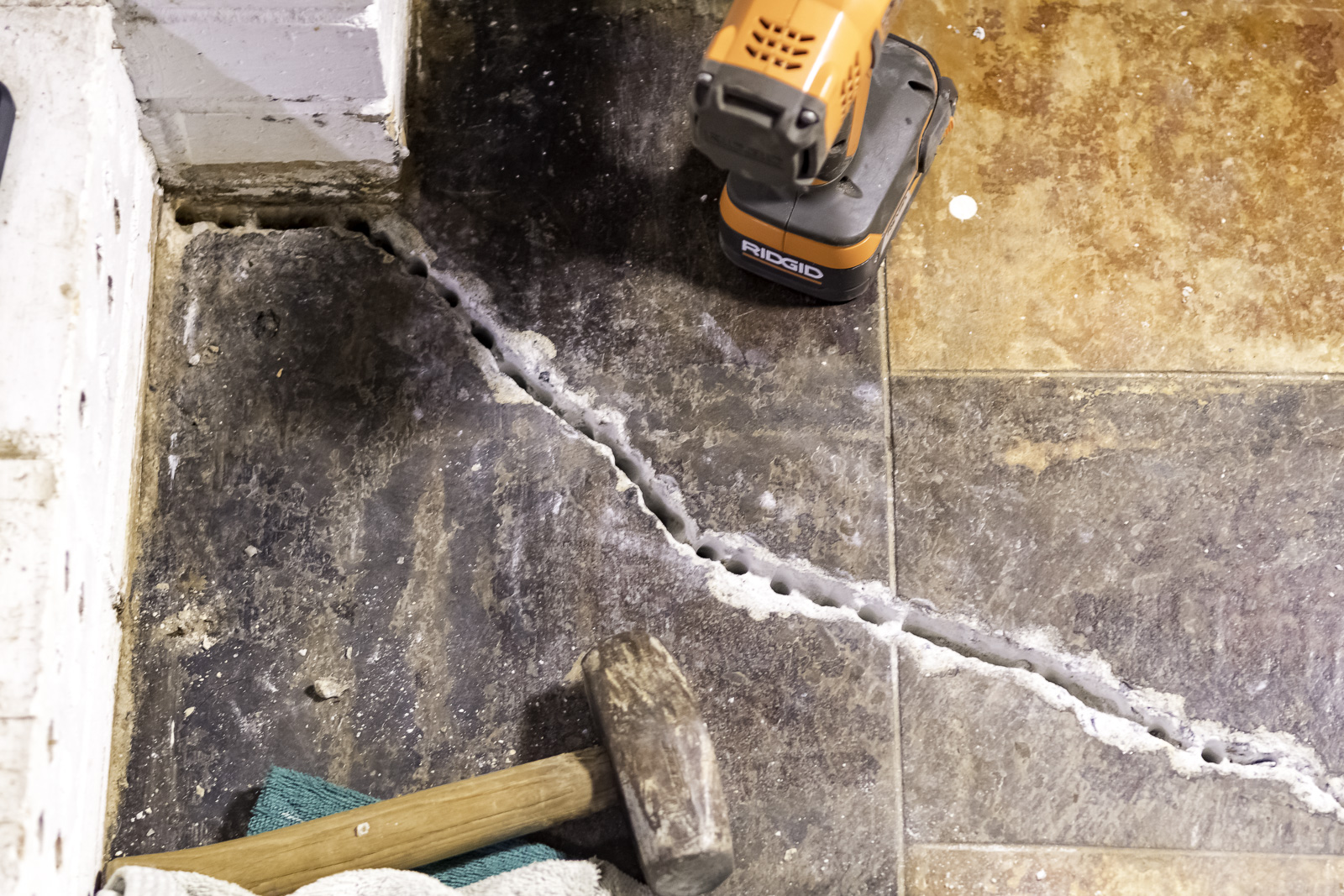
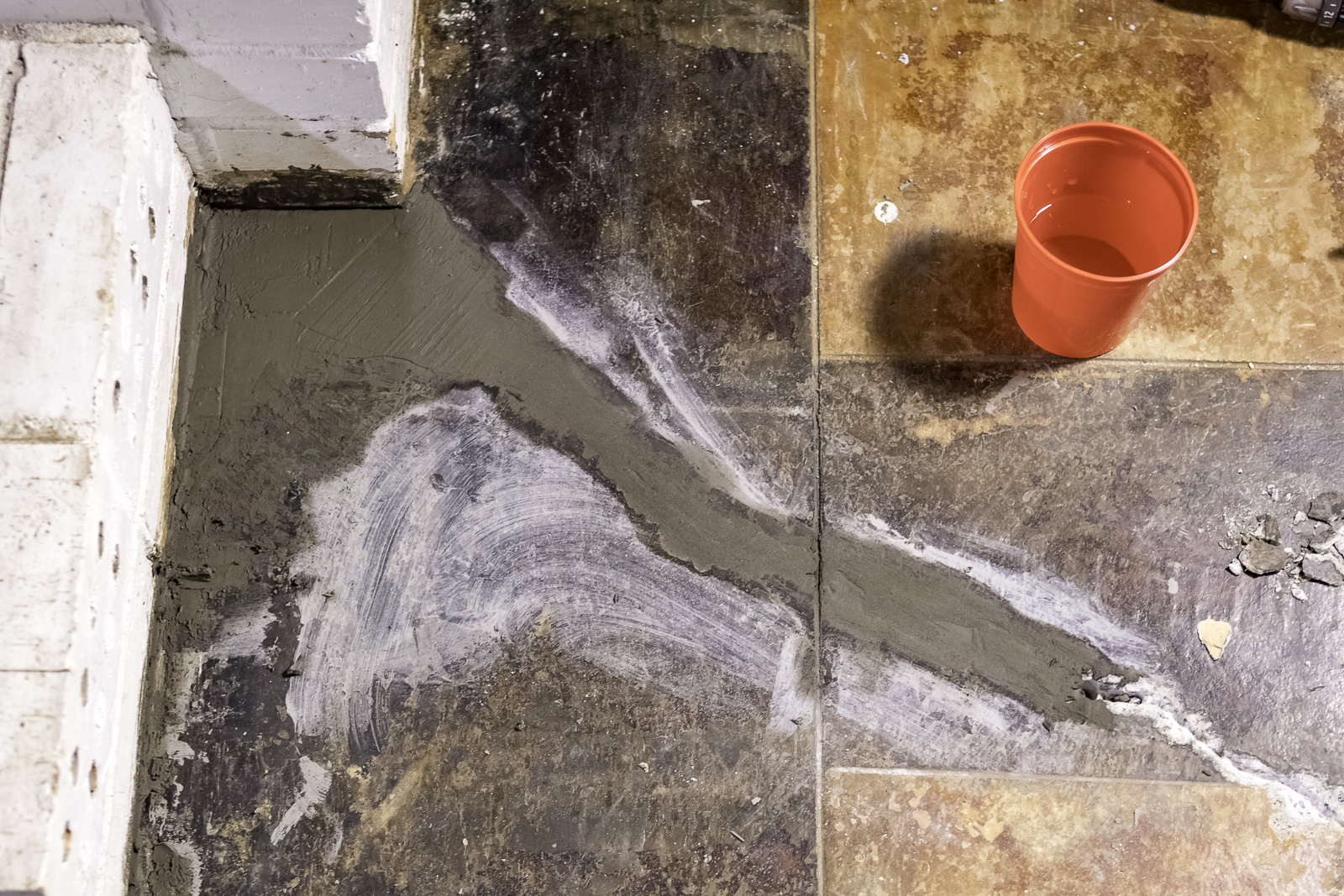
I first noticed the smallest of flakes when I came up from the basement where I’ve been sealing holes drilled years ago for termite treatment and sealed only with about an eighth of an inch of concrete: I can push through with my finger, it turns out. Yesterday and today I patched 21 such holes, and it’s a time-consuming process: each hole has a cavity under it from erosion (I guess), and it takes an unbelievable amount of hydraulic cement to patch each hole.

“Ohe thing about a flood like that is that it will show you your weaknesses,” said my neighbor. And one weakness exposed: a crack in the slab beside the fireplace. Water was pouring in through that crack Thursday — probably about a gallon a minute at its worst.

So after an hour or so of drilling and chiseling this evening, I finished the last bit of patching. Until I remembered one more wall in the other room that I hadn’t checked. A quick check revealed what I knew was the case: still more holes…

And of course, I didn’t finish the crack…

The Flood of 2020: Aftermath

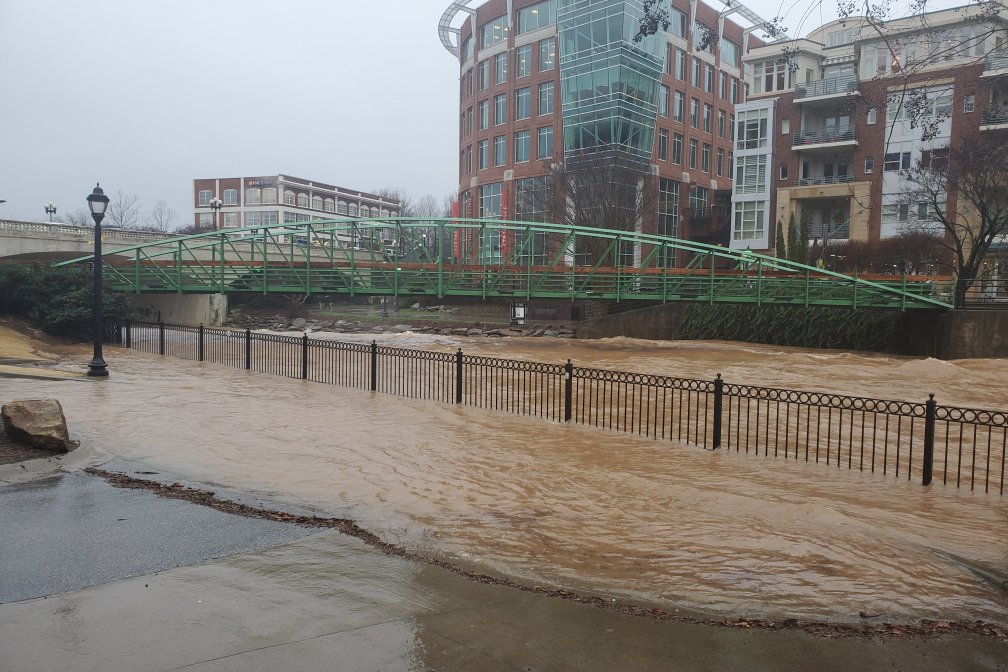
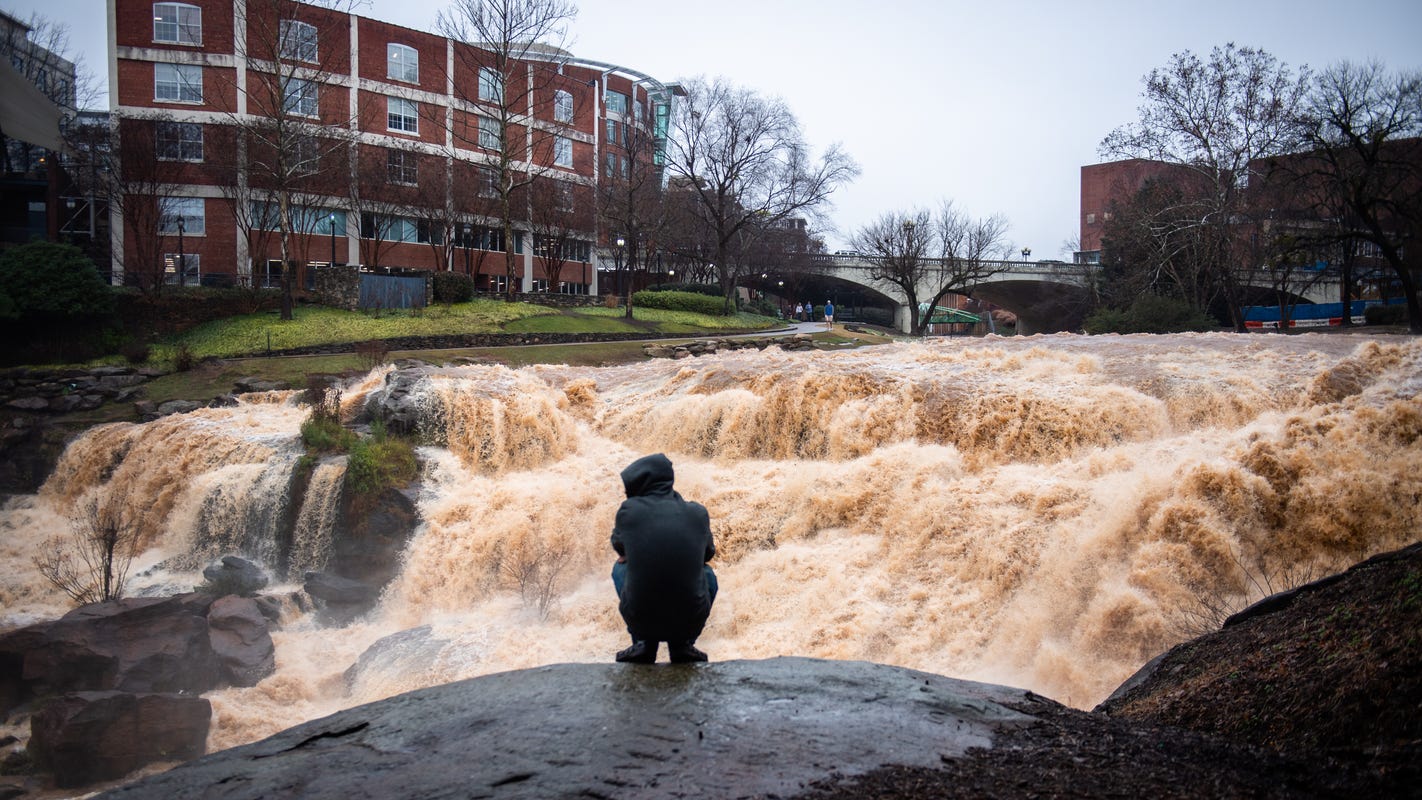
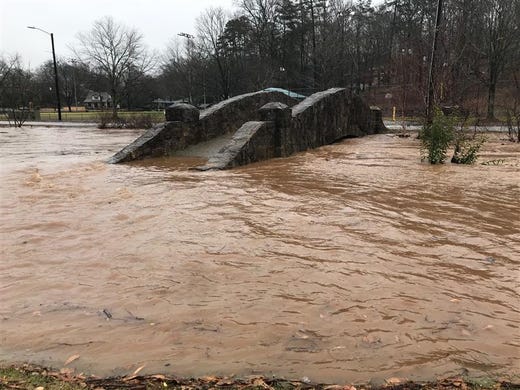
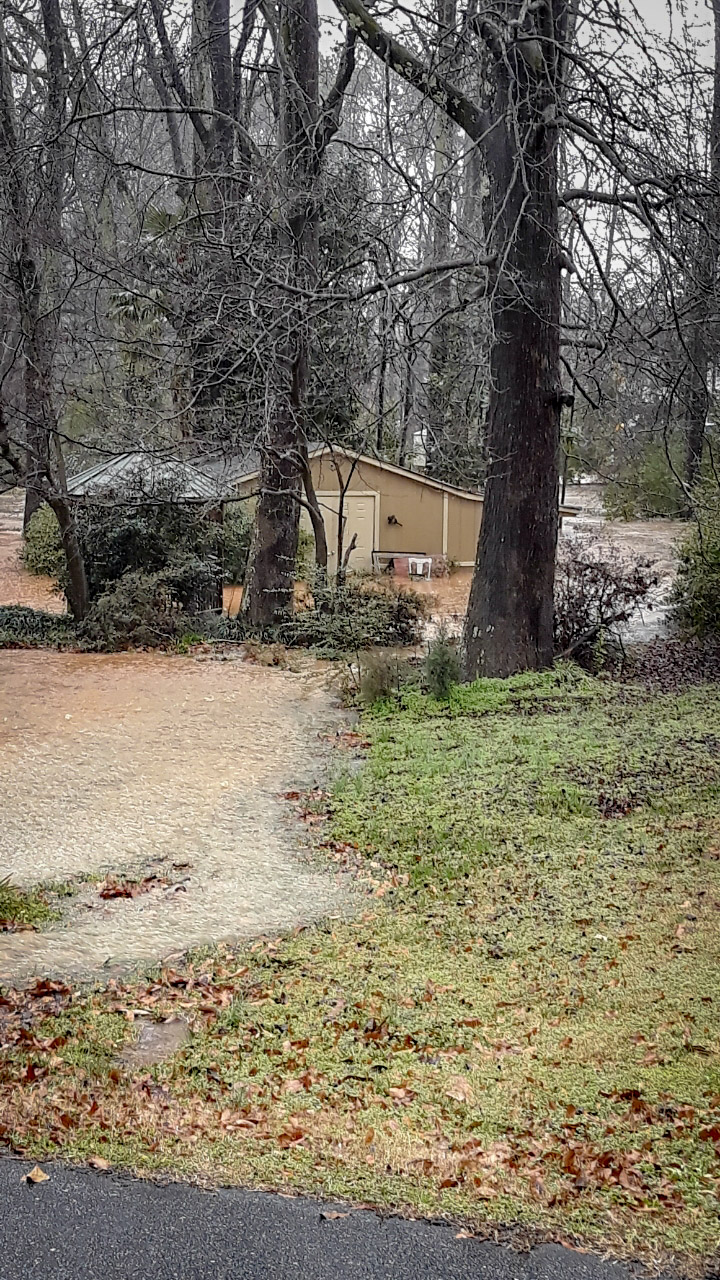
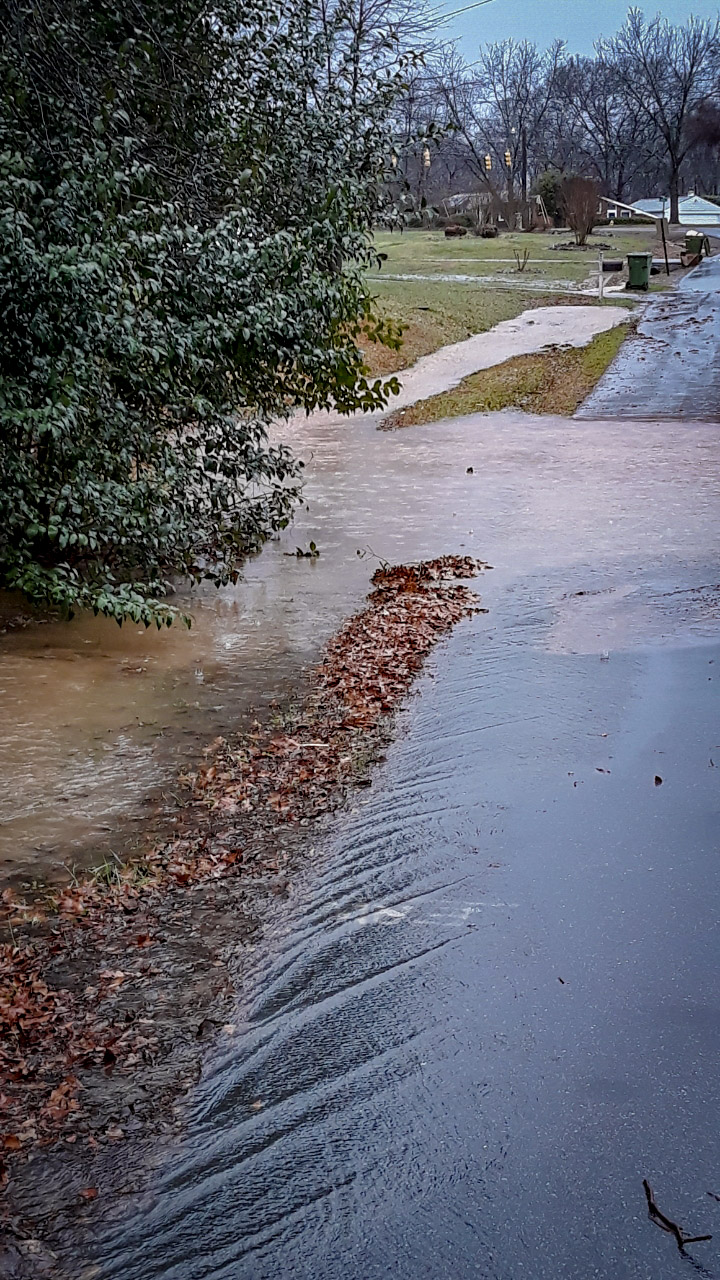
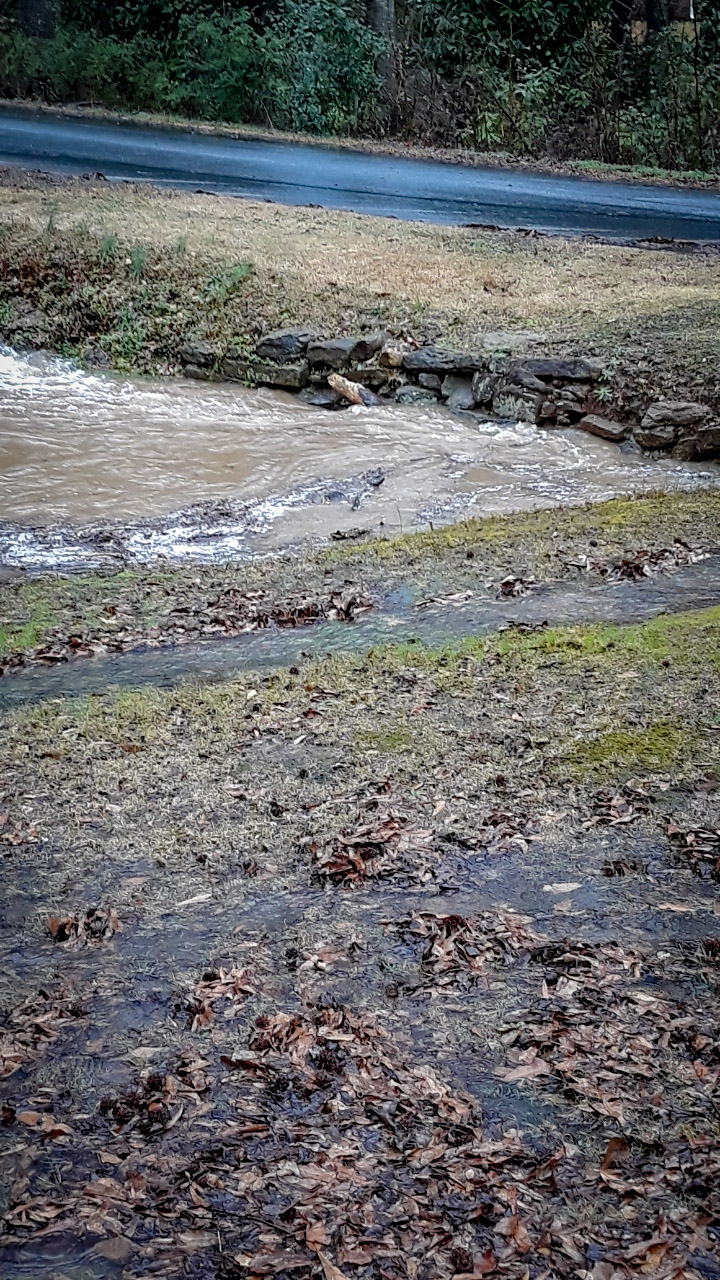
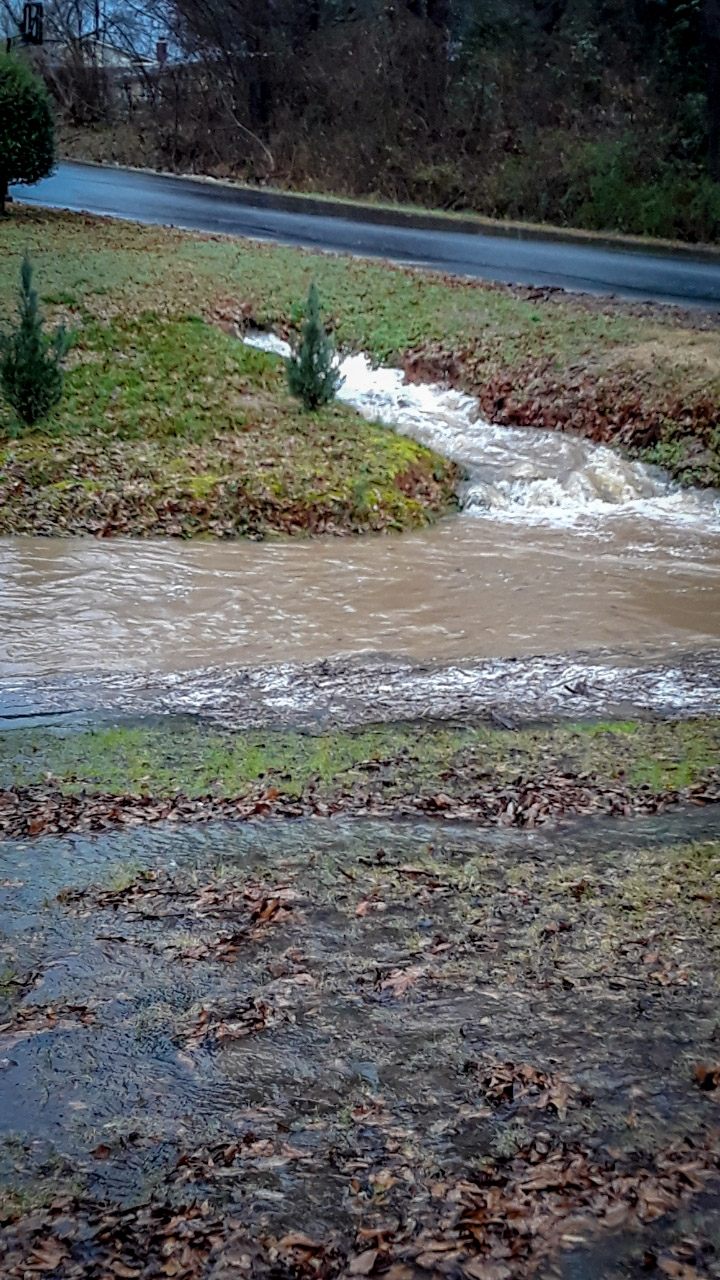
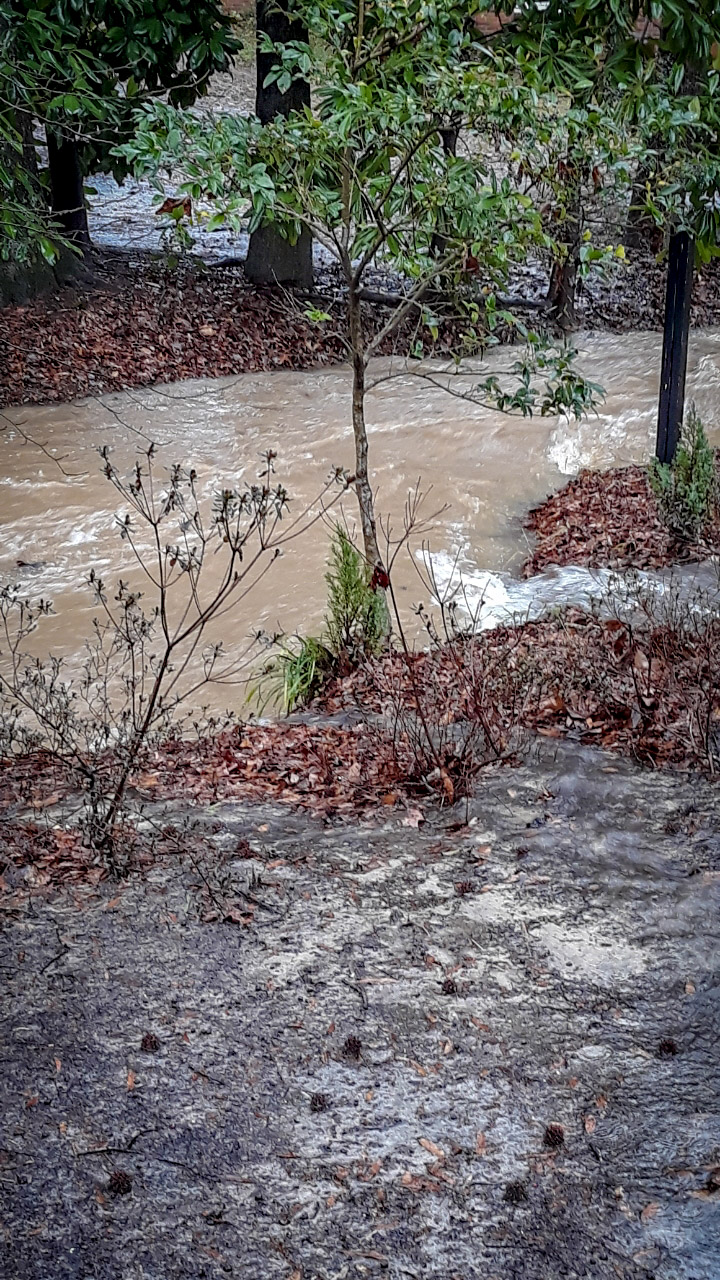
Today we got to see what the county looked like while the rain poured yesterday. It was pretty much as you might expect.

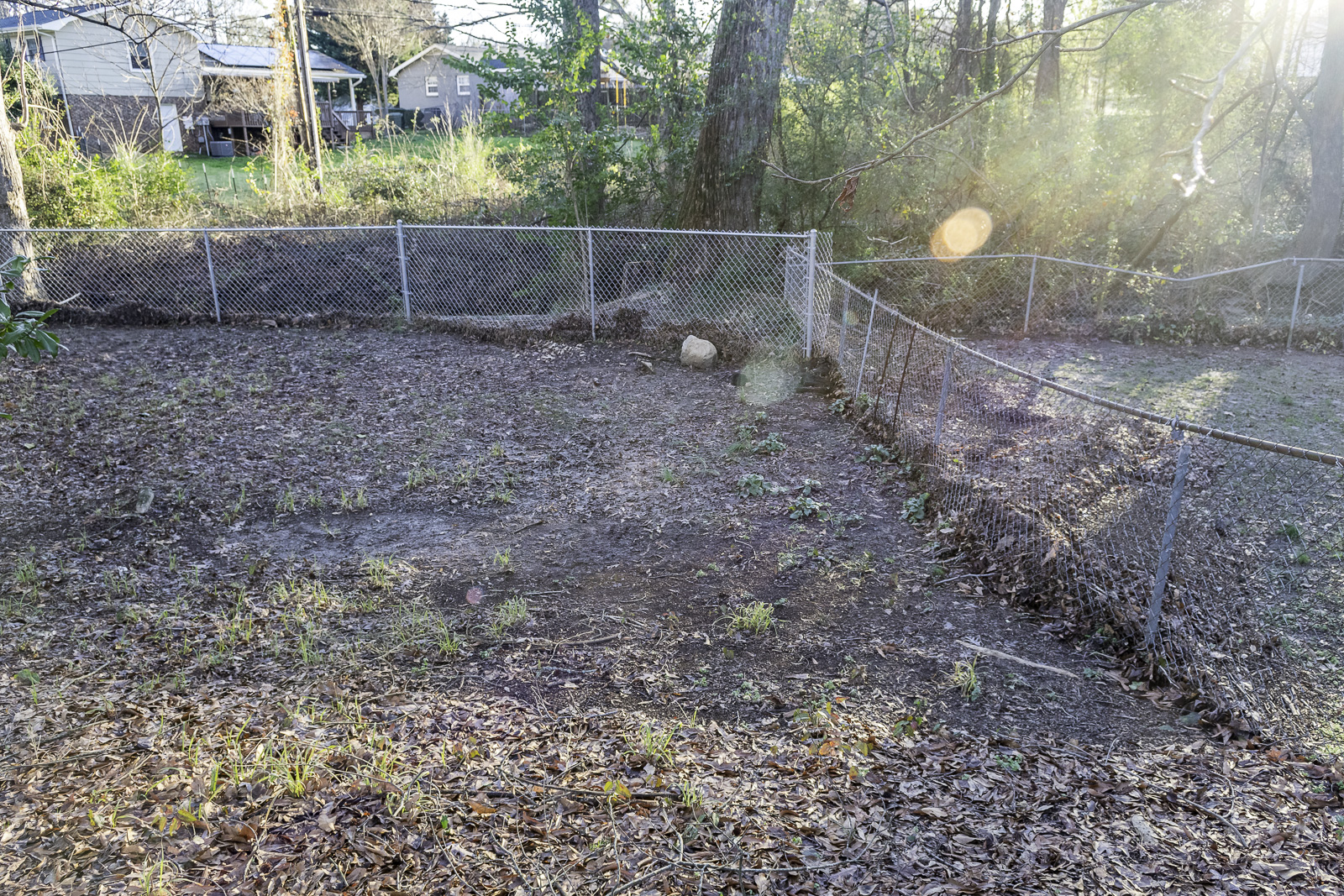
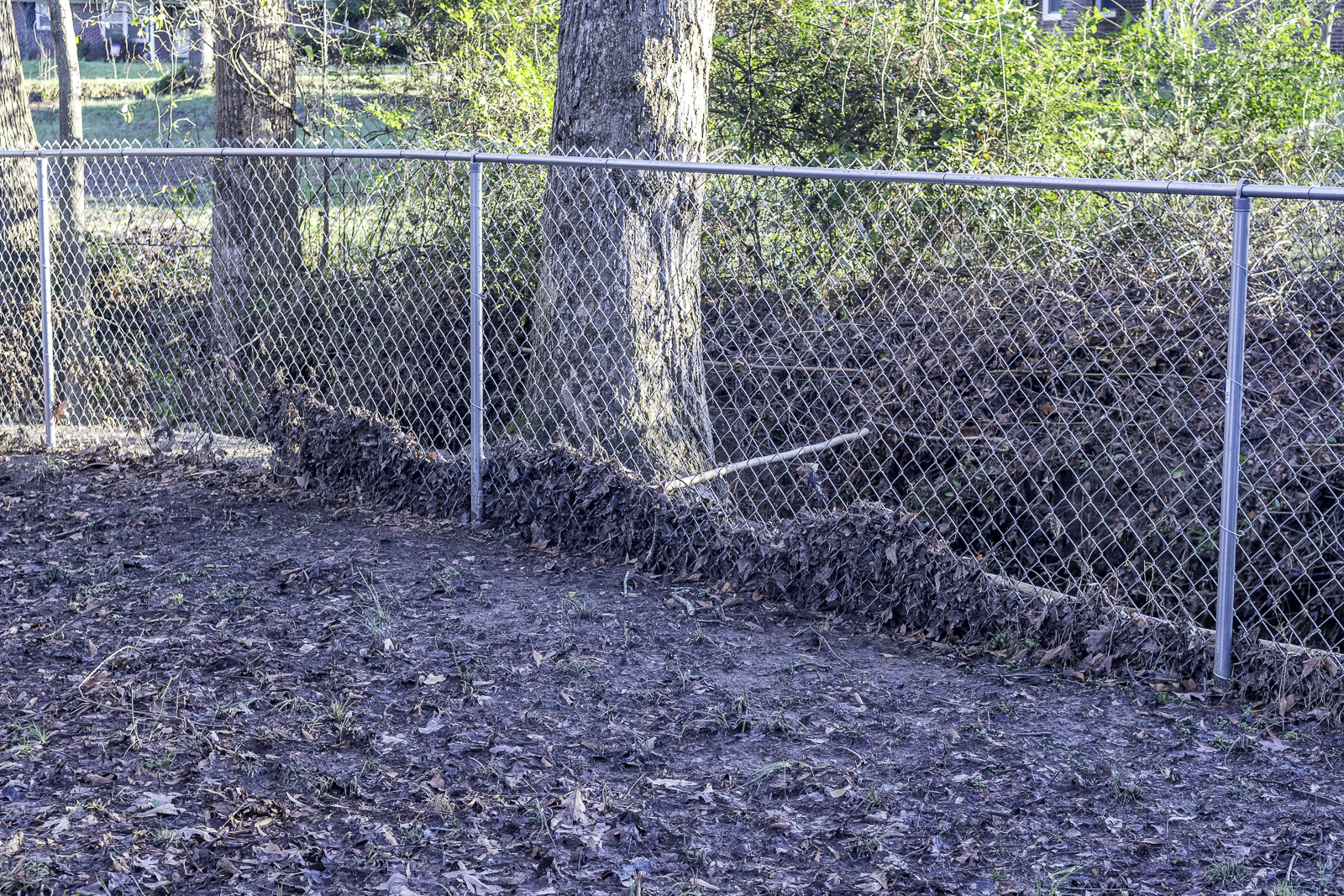
We also go to see what damage the food did to our backyard. It was pretty much as you might expect.

I was on my way to school when K called to say that school had in fact been canceled, so returning, I stopped by our favorite park to see how the dam looked. It was pretty much as you might expect.

Finally, I searched for video footage of what people were experiencing in the county and Google delivered to me a couple of videos of what people have done in previous floods in the area.

It was pretty much as you might expect.

The Flood of 2020

We knew the storm was coming: the forecast for our area was around two inches. “That’s enough to flood our basement if it comes fast enough,” I thought.

When I left for work, it wasn’t raining; when I got to work, it was. Still, I thought we might be able to squeak through without much harm.

K took L to the doctor in the morning and then went back to the house before heading to work. She texted me at 10:36: “I’m back home. I am working from home today. It looks pretty bad. I’m going to keep an eye on the basement.”

At 10:42, she sent me another text: “I just saw the sump pump turn on and pump out a little bit of water. There is a little water under the plastic [vapor barrier in the crawl space]. It doesn’t look good for today.”

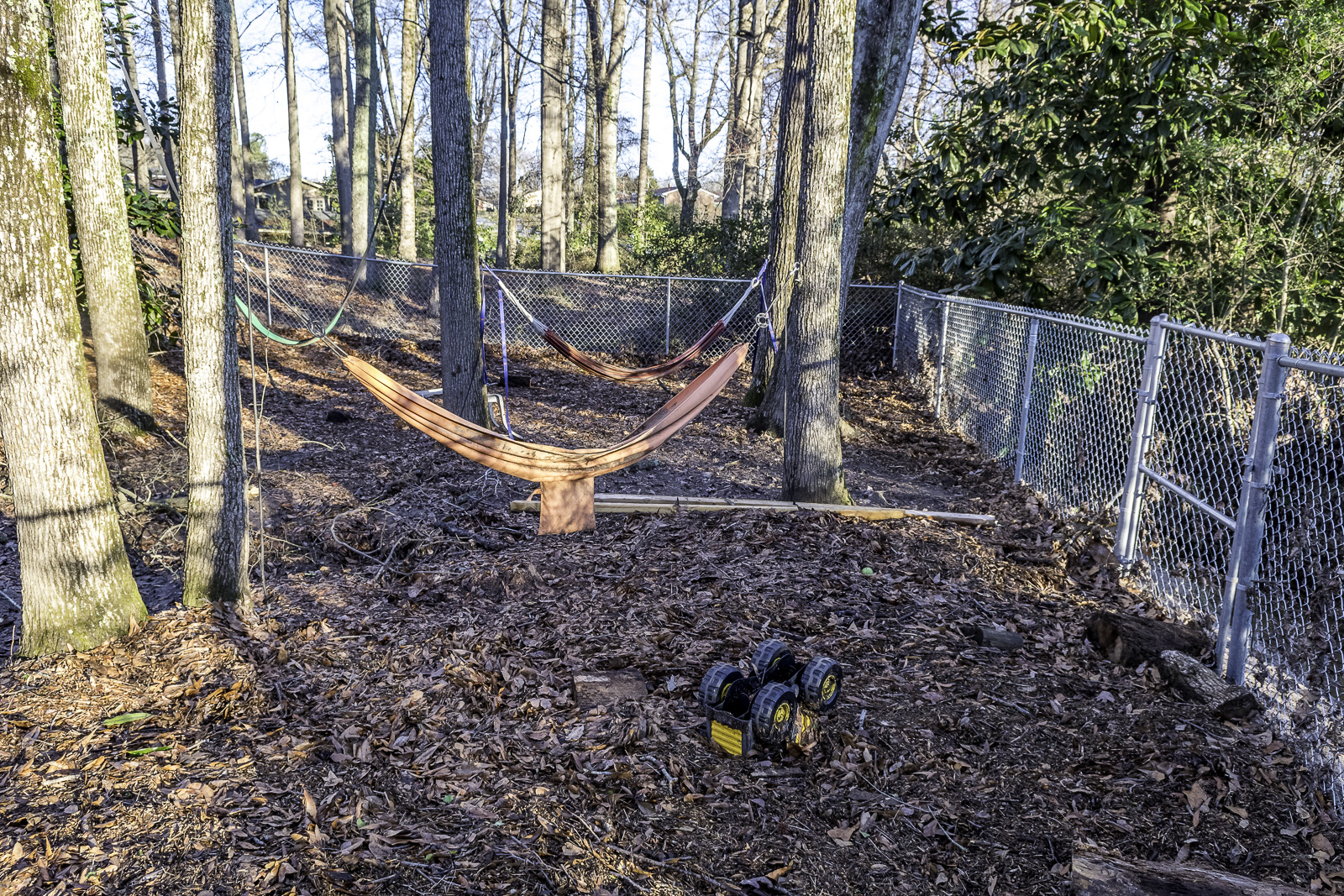
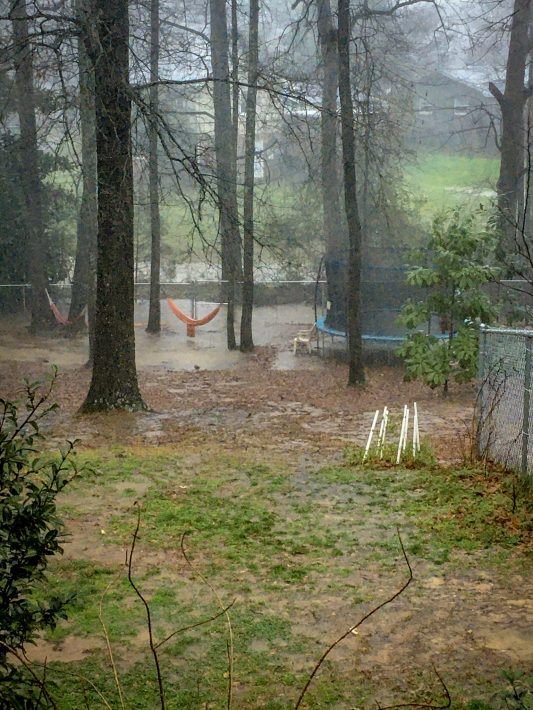
She sent me a picture a minute later:

“Oh, there’s no way we’re going to escape a flooded basement,” I thought. Still, it’s usually no big deal: we work for a couple of hours with a shop-vac and everything’s fine.

“Those hammocks will get destroyed,” I replied. Then ten minutes later at 10:54, I text: “Can you see water going into the pump basin? A trickle from the basement side perhaps?”

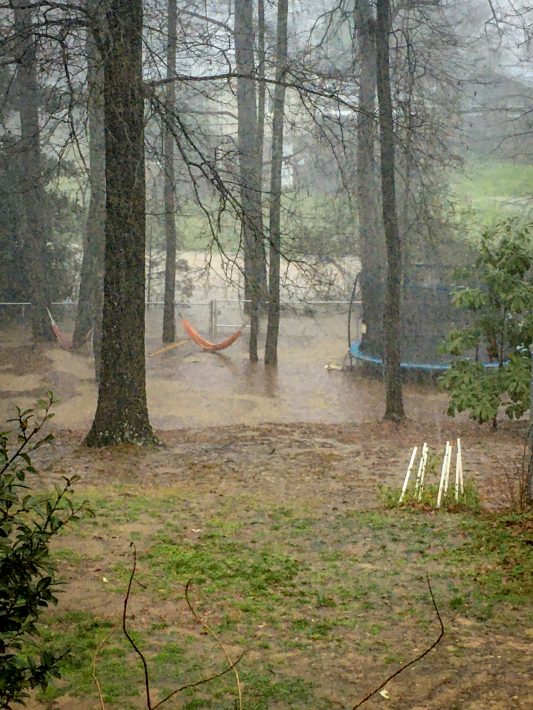
At 11:04 she sent me another picture.

And then two minutes later, at 11:06, the next text from K: “The basement is flooding.”

The trouble was, I couldn’t just dash away. We at school were having our own adventure: not a drill but an actual shelter-in-place reality. Three hundred eighth graders huddled against the wall in the corridor for almost forty minutes.

At 11:25, I texted our neighbor: “You guys flooding?”

“Creeks are bad…house is fine,” he responded. With pictures.

“K said we’re flooding,” I texted. “I’m stuck here because we’re in a tornado lockdown.”

“Want me to go help her?” he immediately replied. And that, ladies and gentlemen, would be exhibit 344,038 for the argument that he is the best neighbor one could have.

Finally, when we had everything under control at the school and the kids fed and watered, I got a text from K at 12:35: “I have been pumping for an hour and a half now. G[, our neighbor,] is here to help. I think you should come home as soon as possible. The rain is not going to stop and water is coming in like through a faucet.”

I went to the cafeteria and found the eighth-grade administrator. “My wife just said that our basement is flooding. I’m heading home. Someone’s going to have to cover my last three classes.”

“Go,” he said.

I went to the front office, where the sixth-grade administrator was talking to the receptionist. “My wife just said that our basement is flooding,” I began. “And you need coverage,” the receptionist said. “On it.”

“Go,” said both the administrator and receptionist.

And that, ladies and gentlemen, along with the calm way they implemented the tornado shelter-in-place lockdown would be exhibit 344,038 for the argument that our school faculty knows how to work an emergency.

“Water is coming through the termite treatment holes,” K texted me on the way home. A few years I’d dug out the “filler compound” with which whoever did that patched the wholes. The material crumbled under the lightest touch of a screwdriver blade. I had cleaned out all the holes on the out-facing walls and patched them. “Guess I didn’t do a good job,” it thought, stopping at the hardware store on the way home to buy some rubber plugs for the holes.

But this water was coming from holes in the inner basement walls — where I hadn’t touched any of the holes. “What can possibly happen here?” I thought.

A lot.

The water was jetting out of the holes, making little fountains just about two to three inches high — that’s how much hydrostatic pressure had built up under our house. We plugged the holes, moved some shelves and found more fountains, plugged those, and vacuumed. And vacuumed. And vacuumed. And vacuumed. And vacuumed.

It was a first: both rooms of our half-basement were flooding. And so we vacuumed. And vacuumed. And vacuumed. And vacuumed.

K went to get the kids. I stayed behind and vacuumed. And vacuumed. And vacuumed. And vacuumed. And vacuumed. And vacuumed.

We finally got everything under control around dinner time. At 5:48, I texted our selfless neighbor, “I can only just now say that I think we’ve got both rooms completely under control.”

And now, at 9:46, I hear the sump pump kick in for about the tenth time since I began writing this, so I guess it’s about time to head downstairs and see if it’s flooding again — it’s not supposed to stop raining until after midnight…

But we’re not the only ones on our street, or even the worst off. And this flood seems to have enveloped much of the South itself.

At one point in the evening, shortly after dinner, the power flicked off and stayed disconnected for a good fifteen seconds — long enough that I’d started running options through my head. When the lights came back on, K and I looked at each other, thinking about all the reports of downed trees and power lines, realizing just how much worse it could have been.

We had it worse than we’ve ever had it, but we could have had it worse still.

Previous Floods

Flood 2018

Water

Flood 2014

Flood

Finishing Up

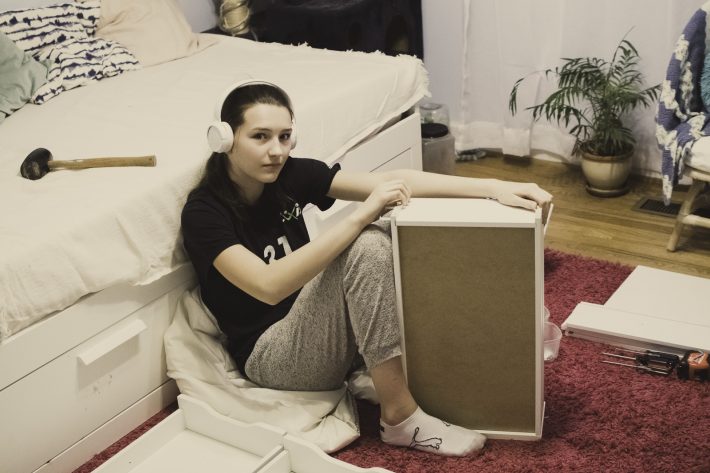
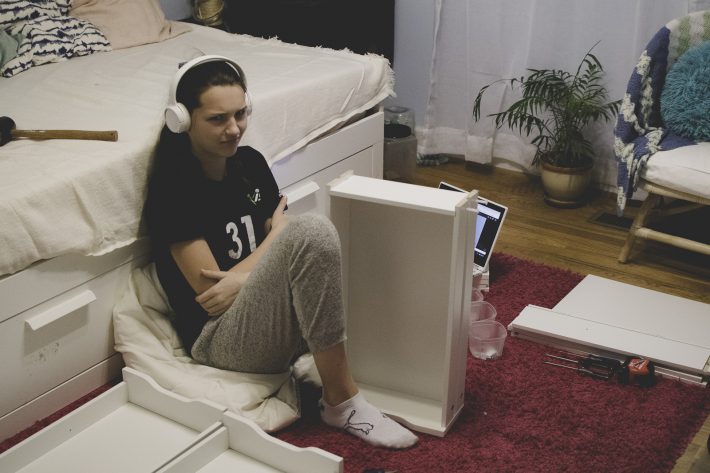
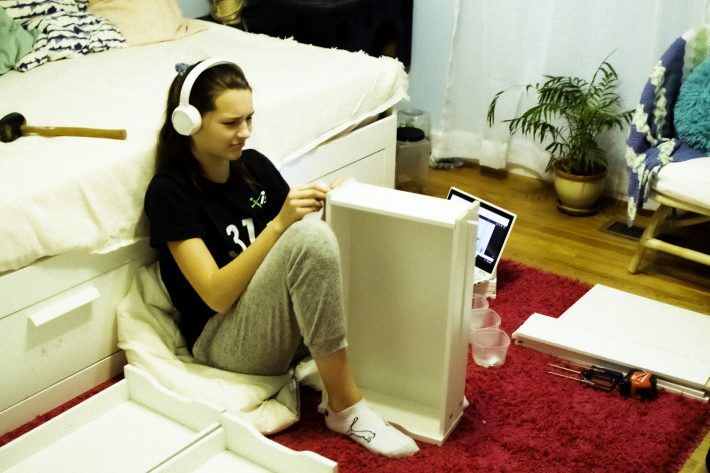
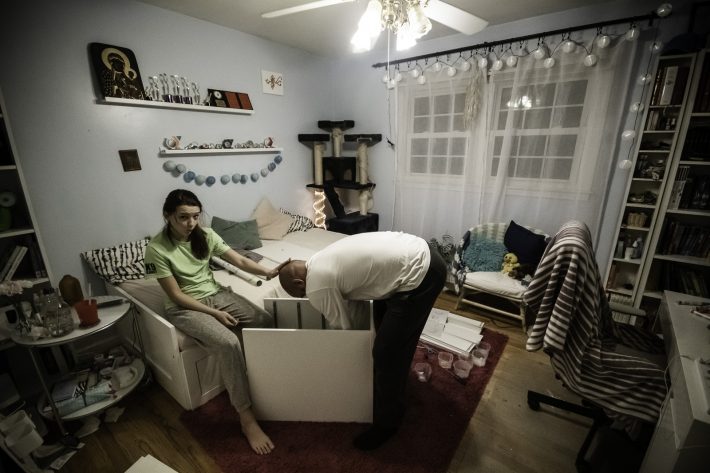
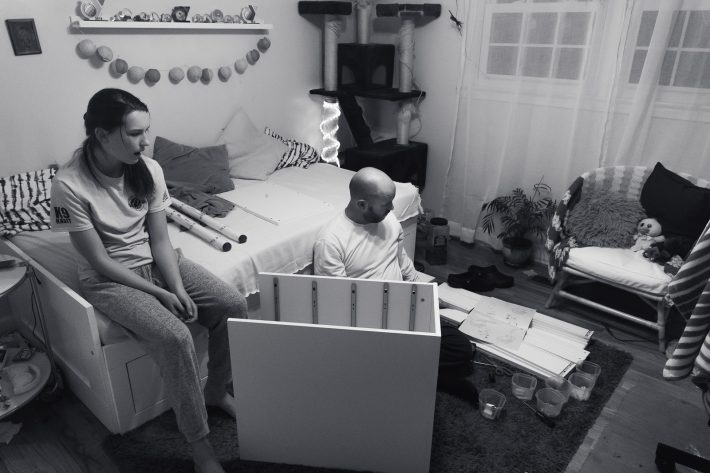
The Girl has some new furniture. She asked me to help; I did, for a while. But I resisted as well. Not because I wanted to do something else. I thought that at her age, she might get more out of doing a lot of it herself — a sense of accomplishment is a valuable feeling.

Tonight, she worked on the drawers to her desk. In fact, she completed them. And the rest of the desk, as a matter of fact.

I did what I do probably too much: I photographed the event. As she gets older, the Girl is less thrilled with my photographic attention.

Which, given this generation’s obsession with selfies, strikes me as a little odd.

Blessing 2020

I first noticed it at a friend’s house. Above one of the doors were some numbers and letters, and I thought it was perhaps a marking left behind during construction — some kind of measurement or something. Of course, the house in question was long finished: it was not one of the half-built, “raw” houses that dotted the road that ran through Lipnica. This was a fully completed house, but I didn’t really think about that. I just didn’t have any idea why someone would write something in chalk on the wall.

And then I married a Polish Catholic and found out: it’s the indication of the blessing of the house.

I’ve grown much more skeptical in the last few years and tend to have to fight the temptation to view these things as I once did, which is not all that positively. To begin with, the priest is supposed to do it. Our priest leaves a basket of blessed chalk in the church narthex with a card that includes instructions and the prayers. This year, we didn’t get the blessed chalk, so we just used chalk that we bought at Walmart. Does that make a difference? Ontologically, it should: if not blessing it didn’t make a difference, why bless it to begin with? And what exactly does blessing the chalk do? Is it possible to discern the difference between blessed and unblessed chalk?

There’s not even consensus about the origin and meaning of what one writes in chalk:

The origin of this ritual comes from eastern Europe where homeowners mark their doors with the sign 20+C+M+B=(year). CMB are the initials of the three Wise Men: Caspar, Melchoir and Balthasar who are remembered on the Feast of Epiphany.

Another interpretation given of this sign is: Christus Mansionem Bededicat (Christ Blesses this Mansion). We welcome you to bless your home for the New Year using the blessed chalk and rite given below:

One person makes the inscription with chalk above the door (20+C+M+B+14), while another proclaims the corresponding words: The three Wise Men, Caspar, Melchoir, and Balthasar followed the star of God’s son who became Man (20) two thousand years ago. (+) May Christ bless our dwelling (+) and remain with us throughout the New Year.

If we don’t know what it means, doesn’t that kind of make it, well, useless?

Perhaps. Perhaps not. Perhaps what’s more important is the unity involved in the process, both in the blessing itself and in the overarching idea. It keeps us thinking about the house as not just as a building, a location, but as a home, an idea.

New Furniture

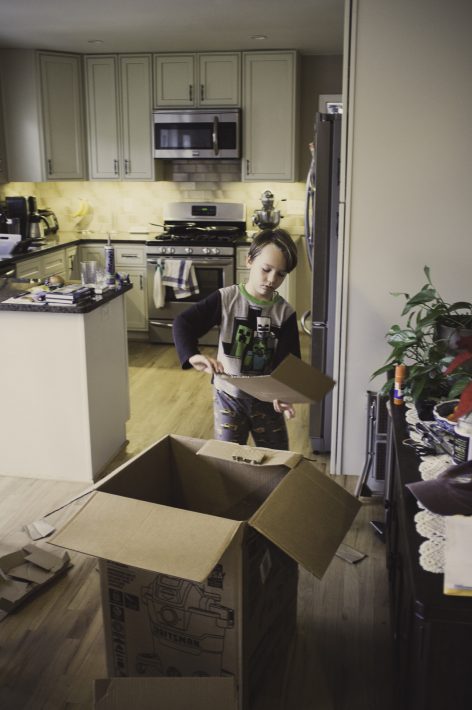
L wanted new furniture in her room. Truth be told, she’d outgrown a lot of what she already had, so it was a need rather than a want — surprising, I know.

So Saturday, the Girl and the Boy hopped into the van (we still haven’t sold it) one last time and headed to their favorite Sweedish store.

Destruction

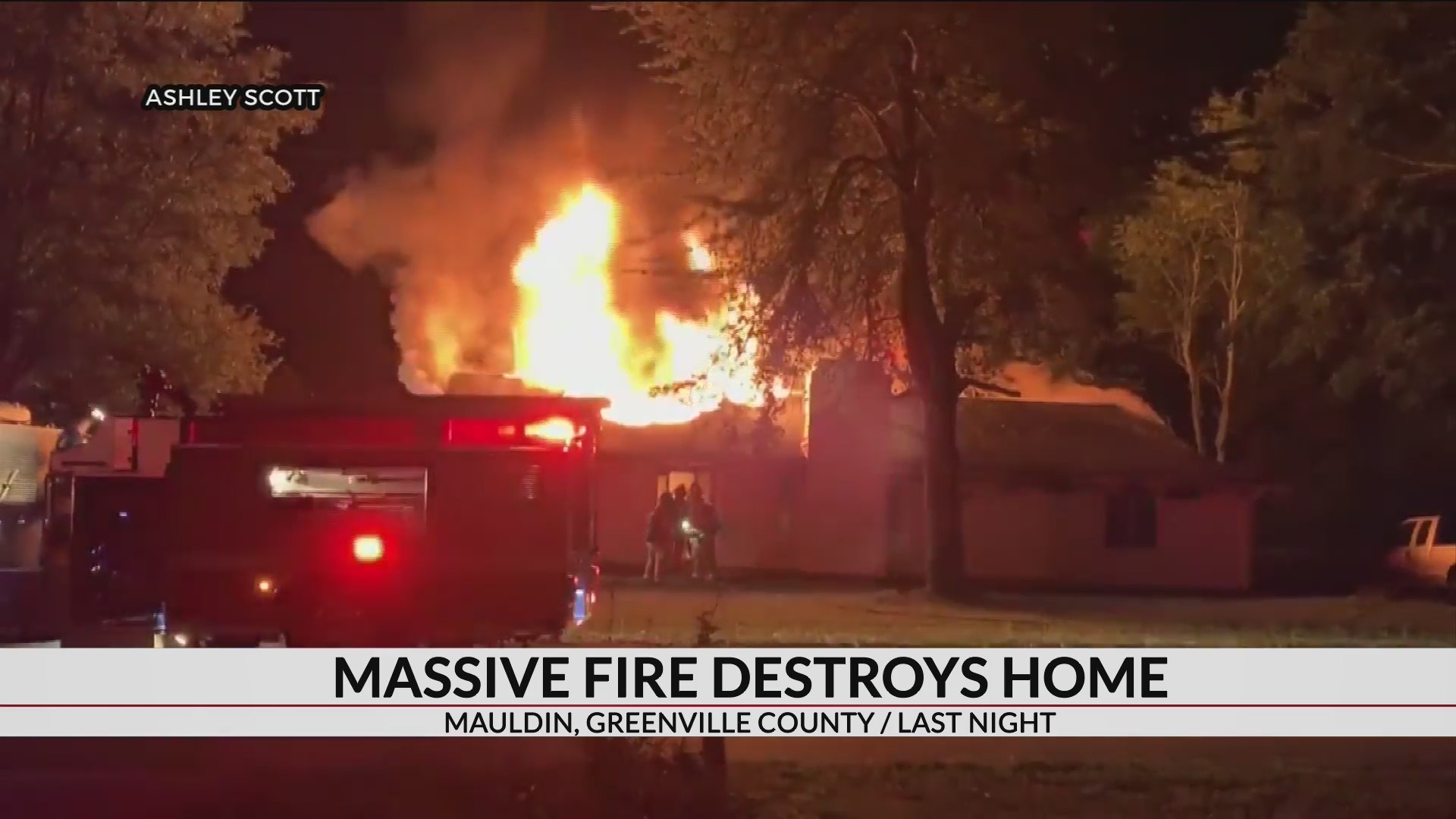
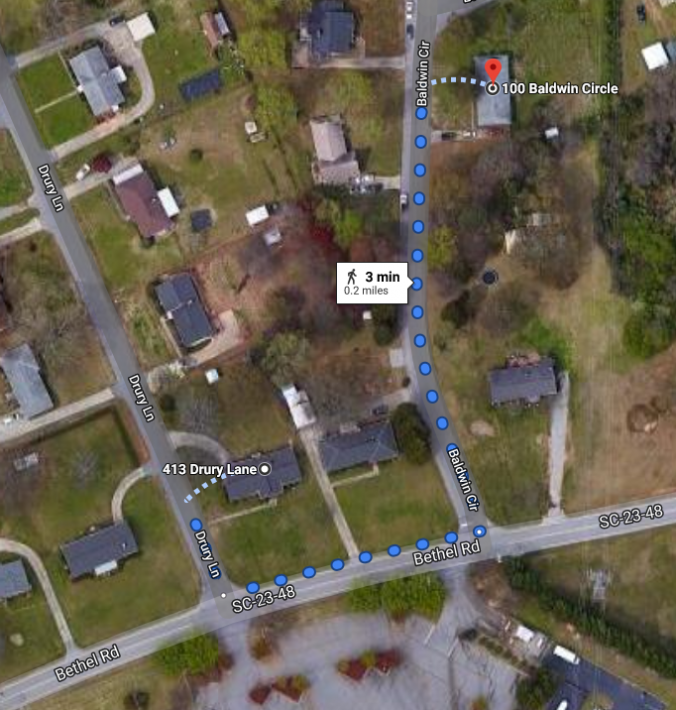
On May 30 of last year, there was an enormous fire just about a mile from where we live. The home was completely destroyed, and only a few weeks later, its remains were razed.

Massive fire destroys home in Mauldin

Here are a couple of articles about the incident:

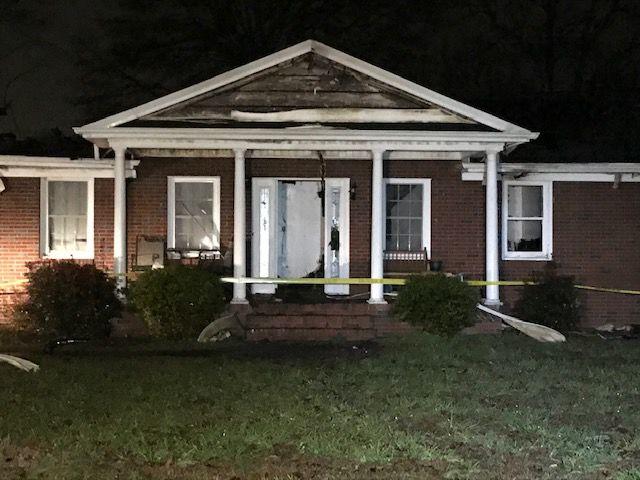
Just yesterday, there was another fire in the same area. In fact, the locations are less than a quarter of a mile away from each other.

As with the other fire, I was unaware of it until after it occurred. I would have thought we’d hear the sirens and realize how close they were coming, but perhaps not.

Crews: Mauldin home fire tears through attic

All of this, of course, got me thinking, got me remembering. When I was in high school, a home two doors down from us caught on fire when lightning struck an air conditioner and started a fire in the second story. Dad and I were home; Mom was somewhere. She panicked when she was stopped from entering the development and heard that the fire was on our street. The officers holding back traffic told her the address of the fire and she breathed an audible sigh of relief, I’m sure. Perhaps shed a tear of relief as well as tears of sorrow for our neighbors.