








The renovation is almost done — just the floor and outlets remain…
























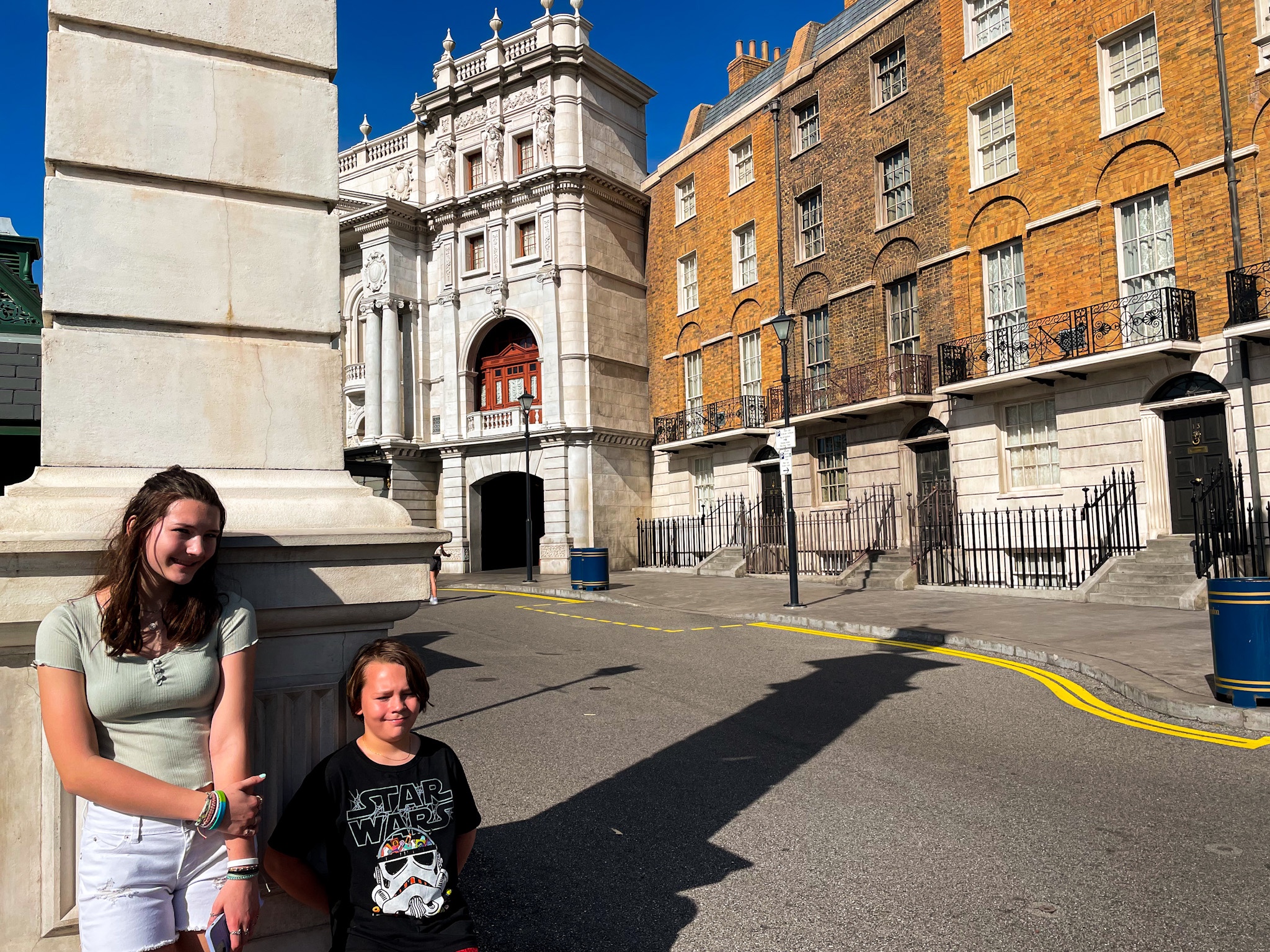









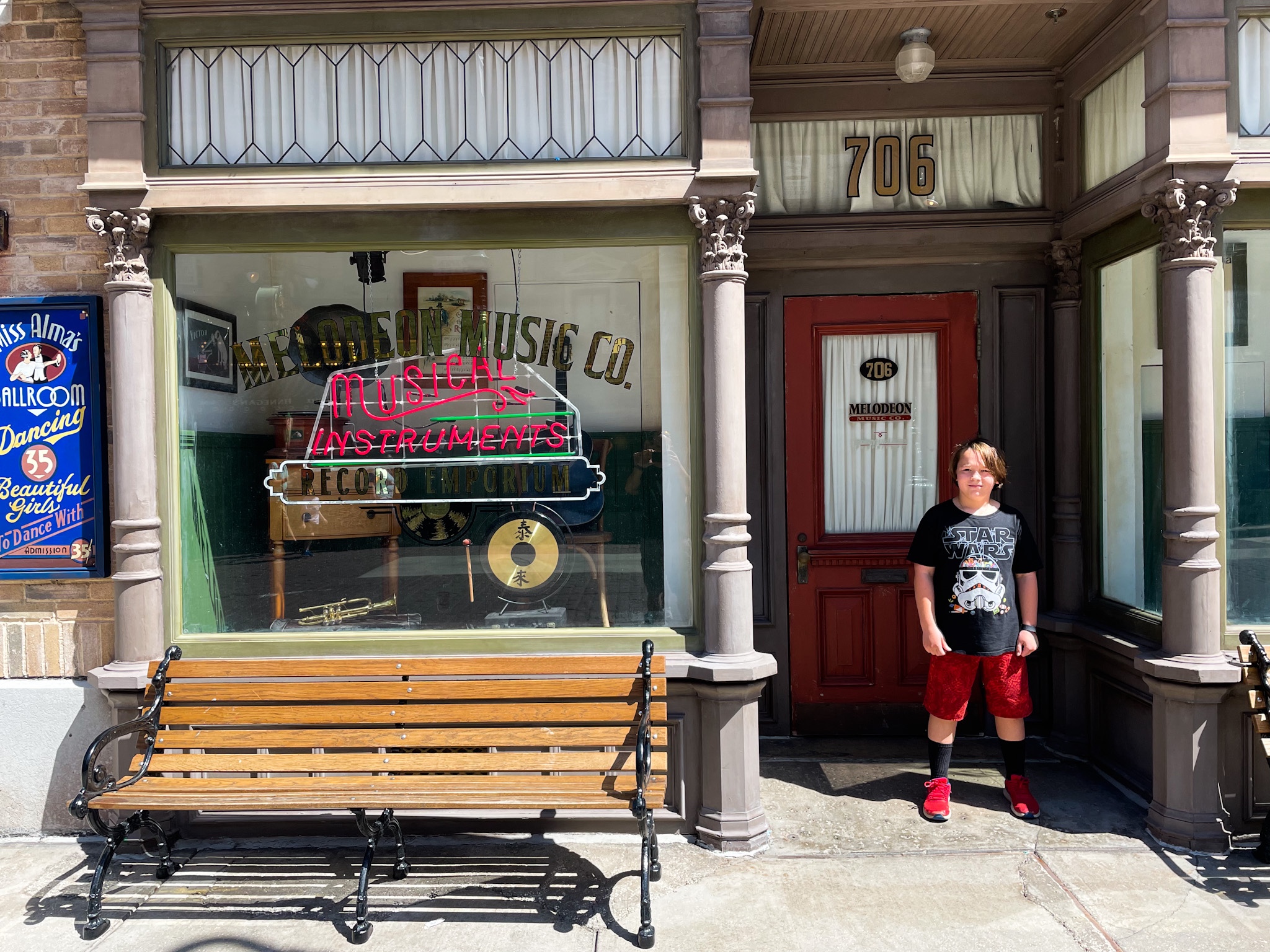











We made it to Orlando about nine hours after we left the house. With three breaks along the way, I consider that pretty good time to go a little over 500 miles.

When the kids saw the pool from our hotel room, they immediately decided that all else had to wait until they had time to swim. Only in Florida — swimming in an outdoor pool in March. When texting with K, she expressed some concern about the temperature, but we assured her that while it’s windy and thus cold out of the water, the pool itself is warm — a heated saltwater pool.

Then the Boy saw the arcade, and the next destination was set — no question about it.
“Daddy, can we please go to the arcade?” What was I to do?


A good way to start our short spring break vacation.

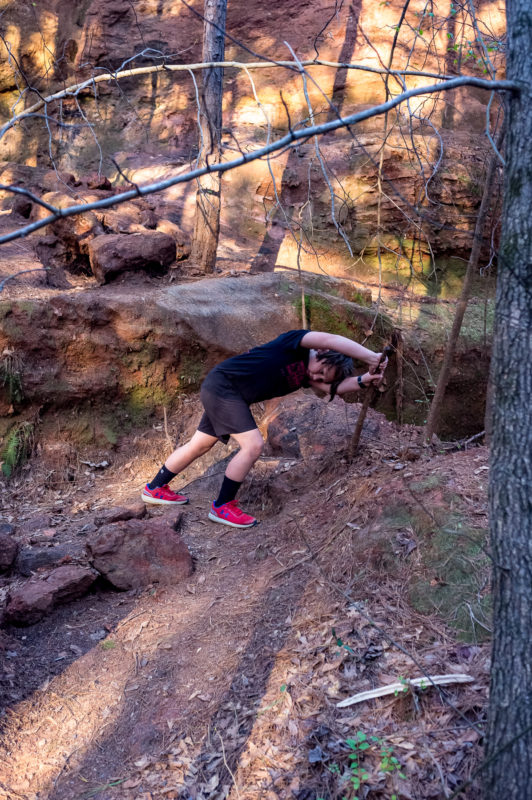

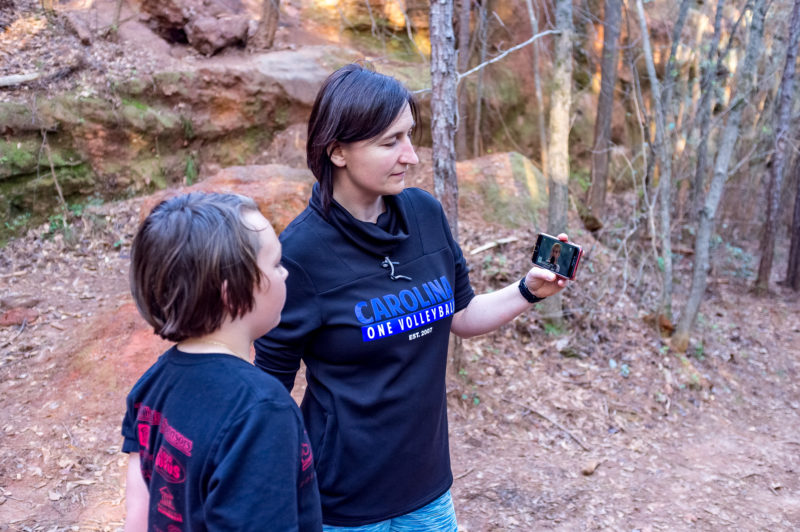


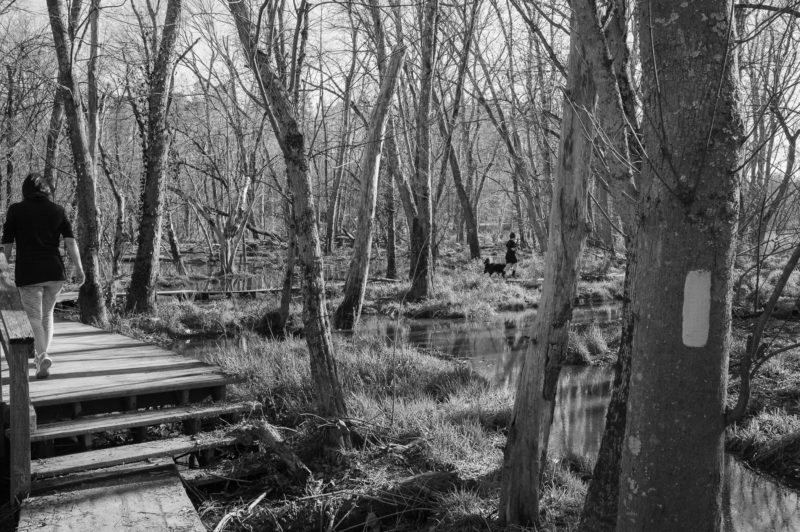






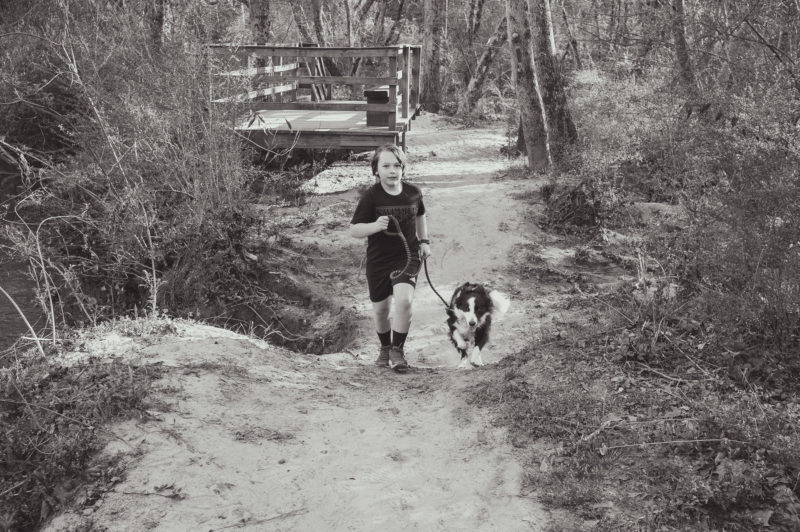

Today was the first Saturday we really spent in the yard this nearly-spring. We still have a few days to go until the official start of spring, but it feels like spring.
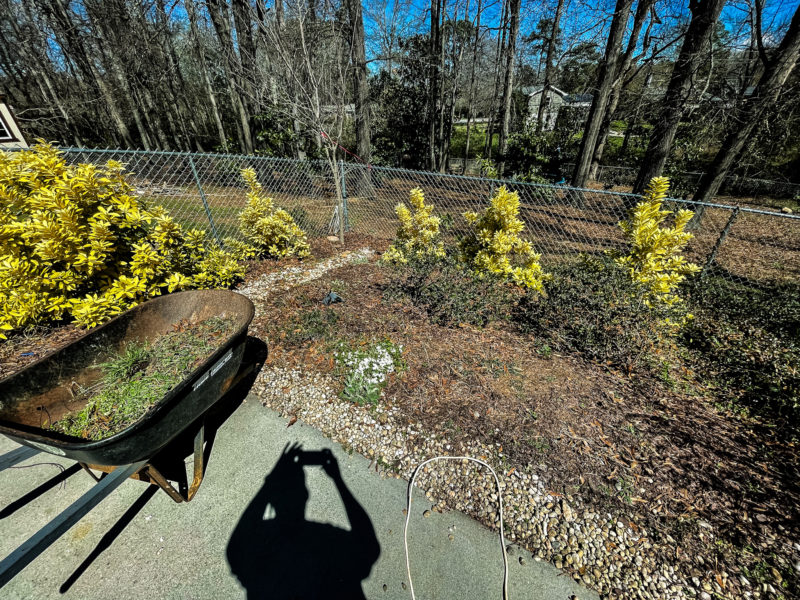
I spent most of the early afternoon working one little bit of our yard — our newest flowerbed.

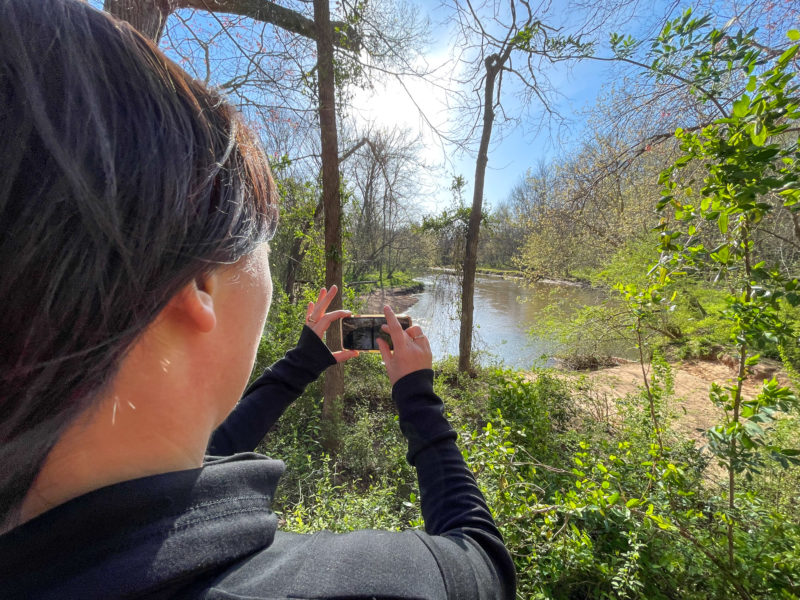
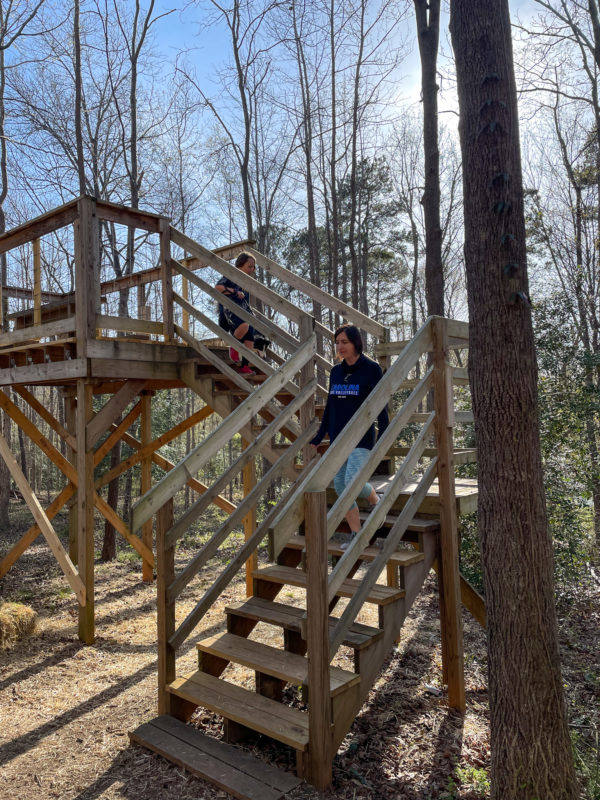
For most of the rest of the day, I didn’t really take the time to snap any pictures. It wasn’t until the end of the day, after dinner, when we were out for walk that I thought to take a few more shots.

All of them with my phone. The truth is, I use a camera less and less often. In fact, this evening I experiment with writing the whole post on my phone. I got to about here, but then switched.

And this is just another bit of nonsense to keep a ridiculous streak going…
“Pick it up!” she yelled. We were at the end of class when A, who’s always a bit of an immature prankster, pushed K’s materials off her desk. K, who has issues with impulse control (i.e., she’s a chronic disrupter) doesn’t like when her world is disrupted, and she grows verbally violent when it happens. A was walking away smiling, which of course led to K feeling even more aggrieved. “I said,” she began, taking a deep breath, “pick it up!” He walked out the door. She walked out the door herself — not to accost him in the hallway, not to get help from an adult. No — she declared as she walked out, “Well, I ain’t pickin’ it up.” Bear in mind: these were her materials. She literally walked into her next class without her materials, thinking she was perfectly justified in doing so.
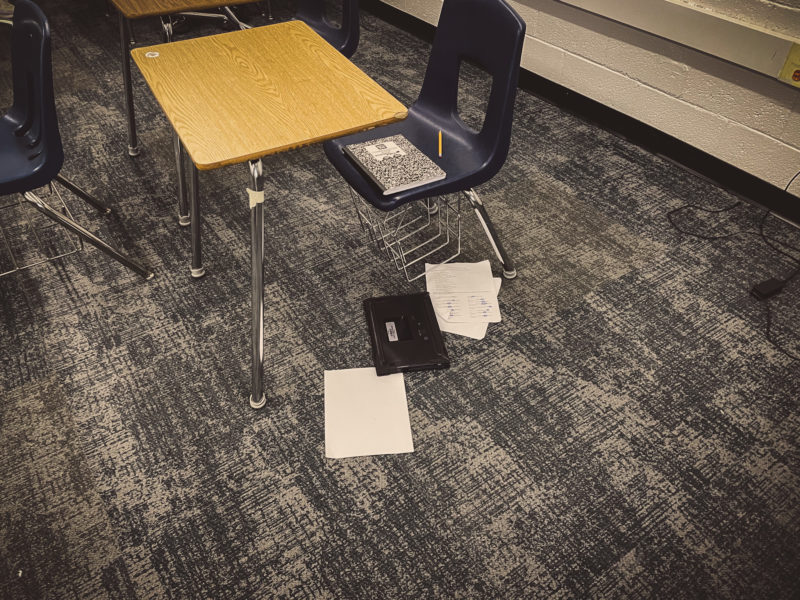
I picked her materials up and stowed them in my cabinet. Part of me was justifying it with the thought that it would teach her a little lesson; part of me did it, I think, just to irritate her further. That is, I’ll readily admit, somewhat childish, but at the time, I wasn’t thinking in terms of irritating her. I wanted her to go through the last two periods of the day without her materials to provide an object lesson to her: “Do you realize how many of your problems in school are of your own creation?” I’d planned on asking her when she got her materials back. “You had to go through two periods explaining why you didn’t have your materials, and I guarantee all your teachers responded the same way: ‘That’s your own fault.'”
Ten minutes into the next period, she was knocking at my door. A student let her in. She stormed back to her seat, and discovering her materials were missing, turned and yelled to the whole class, “Where’s my stuff!?!” She proceeded to rant for a while, completely disrupting what we were doing, but I just let her rant for a while. After about thirty seconds, I said, “K, I need you to go back to your class now.”
“But where’s my stuff?!?”
“I need you to go back to class now.”
“But I’ve got to get my stuff.”
“I need you to go back to class now.”
“I have to have my stuff. Where’s my stuff?”
“I need you to go back to class now.”
Her teacher came to the door, a puzzled look on his face.
“Mr. A says I need my stuff.”
“I need you to go back to class now.” I’ve found that the best way to deal with such situations is just to be a broken record, and as it always does, it worked: she huffed and started out of the room, then turned and walked over to a friend and started talking to her.
This is the kind of behavior teachers have to deal with every single day. Every almost single class. In some classes, every single minute.
Growing up in the eighties, I was aware that we were in the midst of the Cold War, but I never really gave it much thought. The ubiquitous duck and cover practice of the fifties and sixties was nonexistent, and it seemed to me that Sting’s song “Russians” was less a worry about nuclear war and more a song about the simple fact that, because the Russians actually did love their children (they’re human after all), nuclear war was unlikely. Mutually Assured Destruction to my mind seemed to be common sense, and all adults possessed common sense. That’s what it meant to be an adult, I assumed.
With the fall of the Soviet Union, I (and likely most everyone else) assumed that the threat of a nuclear holocaust was at last a thing of the past. The only possibility of a nuclear explosion somewhere on the planet was connected to Islamic terrorism. Communism seemed it would have more reasonable leaders to me, and the fact that at most such terrorists could gain possession of a couple of such devices seemed to offset the relative dogmatic irrationality that accompanies Islamic terrorism.
During the past three weeks, though, I’ve thought more about the possibility of a nuclear world war than I ever have. Probably because it seems more likely than ever. Putin combines the worst of both the Cold-War era Soviet Union (i.e., a ton of nukes) and the warped view of the reality of Islamic extremists (i.e., an alternate view of history complete with totally fabricated “facts” that fuels a contemporary grievance). And he’s backed into a corner. The Russians are inflicting terrible damage, but three weeks in, they still haven’t taken the capital. Russian soldiers are abandoning vehicles daily and the advance seems to be slowed to a near-standstill. If this continues, Russian surrender is the only sensible option, but it’s the one option that so many of us cannot imagine Putin taking.
The thing is, I find myself thinking of this all the time. I’m standing in the hallway, monitoring students as they change classes, and I’m thinking about it. I’m mowing the lawn, and I’m thinking about it. I’m going for a jog, and I’m thinking about it. It’s easy simply to say, “Well, you’re an adult now, and you have children: you have a better grasp of the dangers, and you’re directly responsible for the well-being of two children.”
But this is fundamentally different: Putin is one man. He answers to no one. The premier of the Soviet Union answered at least to the Politburo. There was some sense of accountability. Putin, on the other hand, answers to no one. He’s been holed up in solitude for two years now fearful of Covid and ever worried about a potential coup (allegedly) — he has literally lived in a reality of his own making, and the notions coming from his speeches indicate that his reality and reality reality don’t have much in common.
And so I, like everyone else, go through my normal routine — teaching, running, mowing, laughing, fussing — with a nagging fear just under the surface. A fear that I tell myself is ultimately not founded in reality. “Surely,” I tell myself, “Putin won’t escalate this to the point of no return.”
One of my favorite — if not favorite — Polish bands is Lao Che. Clever music, clever lyrics. Their masterpiece, in my opinion, is “Hydropiekłowstąpienie” from their album (titled in English) Gospel. From the title to the final line, that song is sharp.
It begins with what sounds like a squeaking door being closed as someone shrieks, “Jesteś wszechmogący więc jak mogłem / Obrazić Cię następującymi grzechami?” It’s a problem essential problem of Christianity: “You are all-powerful, so I could I offend you with the following sins?” Indeed, why would an almighty god be so upset with most of the silly things that Christianity calls sins? Upset enough to torture them for eternity as a result? It’s just silly.
The song itself begins with God addressing Noah:
Słuchaj, Noe
Chciałbym na słówko:
Wiesz, tak między nami,
To jestem człowiekiem zaniepokojonym.
By nie rzec: rozczarowanym.
Bo miałem ambicję stworzyć
Taką rezolutną rasę,
A wyście to tak po ludzku,
Po ludzku spartolili.
Jestem piekielnie sfrustrowany
“Listen, Noah,” he sings, “I’d like a word with you.” He explains that he’d had such high hopes for humanity but that humanity, in typical human fashion, screwed it all up. “I am damn frustrated,” he concludes, though the word he actually says (piekielnie) literally means “hellishly.”
Then comes what will develop later into the pre-chorus: “Płyń, płyń Noe płyń i żyj, a utop to kim byłeś. / Płyń, płyń Noe płyń i żyj, jak nawet nie śniłeś.” A simple command: “Swim, swim Noah swim and live, and drown who you used to. Swim, swim Noah swim and live, like you’ve never even dreamed.”
The second verse continues with the ironic commentary:
Wiesz sam, jak nie lubię radykałów.
Ale, na Boga, nie spałem całą noc
I podjąłem decyzję:
Zsyłam na Ziemię potop,
Mój mały Noe, mój Ptysiu Miętowy.
Zsyłam potop, potop!
“You know yourself how I don’t like radicals,” God explains just before declaring that after staying up all night, he’d made a decision to send a flood upon the earth.
Then the oh-so-clever wordplay begins: “Utopię waszą utopie,” he promises. “I’ll drown your uptopia,” punning on the fact that the first-person future of “drown” is only slightly different from the properly-declined “uptopia.” But the punning doesn’t stop there. Describing the flood, God declares “Zarządzam pełne zanurzenie” — “I’m appointing a full immersion,” a clever allusion to baptism. The masterpiece: God declares that his flood will be a “hydropiekłowstąpienie,” a smart play on the word “wniebowstąpienie“, which is the Polish term for Jesus’s assumption — The Assumption. Literally, it means “to heaven ascending.” “Hydropiekłowstąpienie” would then be translated “hydro-hell-ascension.”
Ths song continues with God promising to drown everything: roads and bridges, tax offices, households. Everything.
Clever, clever song.
A live version:
Every now and then, a friend from my first three years in Poland sends me a picture that I’d forgotten all about. This was with a friend C, who lived in Nowy Targ, the nearest town to my little village. We were returning from a trip to Gorzów Wielkopolski, where some of our students had participated in a Model UN session.
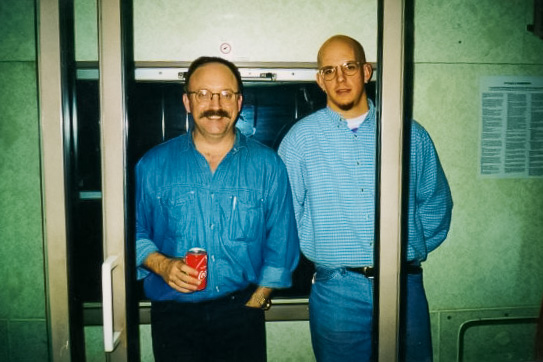
I can’t remember what the concerns were at that Model UN meeting, but any that are going on right now have only one concern: what to do about Russia’s criminal invasion of Ukraine.
I’m still working my way through Trent Horn’s Hard Sayings: A Catholic Approach to Answering Bible Difficulties. I encountered two passages this evening that just left me shaking my head.
The first was about Lot’s behavior in Genesis 19:
The two angels arrived at Sodom in the evening, and Lot was sitting in the gateway of the city. When he saw them, he got up to meet them and bowed down with his face to the ground. 2 “My lords,” he said, “please turn aside to your servant’s house. You can wash your feet and spend the night and then go on your way early in the morning.”
“No,” they answered, “we will spend the night in the square.”
But he insisted so strongly that they did go with him and entered his house. He prepared a meal for them, baking bread without yeast, and they ate. 4 Before they had gone to bed, all the men from every part of the city of Sodom—both young and old—surrounded the house. They called to Lot, “Where are the men who came to you tonight? Bring them out to us so that we can have sex with them.”
Lot went outside to meet them and shut the door behind him and said, “No, my friends. Don’t do this wicked thing. Look, I have two daughters who have never slept with a man. Let me bring them out to you, and you can do what you like with them. But don’t do anything to these men, for they have come under the protection of my roof.”
“Get out of our way,” they replied. “This fellow came here as a foreigner, and now he wants to play the judge! We’ll treat you worse than them.” They kept bringing pressure on Lot and moved forward to break down the door.
But the men inside reached out and pulled Lot back into the house and shut the door. Then they struck the men who were at the door of the house, young and old, with blindness so that they could not find the door.
How can Lot be considered righteous when he offered his daughters up to be raped?
Trent explained it, in part, thusly:
Lot’s righteousness is also seen in his hospitality toward strangers, which was a sacred duty in ancient Mesopotamia. In a time when you couldn’t go to a department store for clothes or check in at a motel when you needed shelter, the kindness of strangers could mean the difference between life and death. Lot understood that anyone who slept outside in Sodom was in grave danger of being attacked. Therefore, he offered the city’s visitor’s shelter and wouldn’t take no for an answer.
That, I admit, is at least somewhat reasonable. It seems to be the bare minimum as far as morality goes, but it’s at least a step in a good direction.

But what about Lot’s offer to give the crowd his daughters to be raped? How can that be justified? Surely it can’t.

But that doesn’t stop Horn from trying. The very next sentence:
Even Lot’s misguided decision to offer his daughters to the mob can be seen as an act of hospitality meant to protect the guests dwelling under his roof.
Go back and reread that sentence.

It’s unlikely you’ve ever read apologetics so preposterous. It’s hard to take this book seriously after reading that.
Yet the second passage that floored me this evening makes it clear that the book is not even meant for me, however seriously (or not) I take it.
Horn closes one chapter with a quote from Karl Keating:
The Bible appears to be full of contradictions only if you approach it in the wrong way. If you think it is supposed to be a listing of theological propositions, you won’t make heads or tails of it. If you think it is written in literary forms you’re familiar with, you’ll go astray in interpreting it. Your only safe bet is to read it with the mind of the Church, which affirms the Bible’s inerrancy. If you do that, you’ll see that it contains no fundamental contradictions because, being God’s word inspired, it’s wholly true and can’t be anything else.
I have so many issues with this that I don’t know where to begin.

First, I take umbrage with the assertion that there are only three options to approaching the Bible:
None of these approaches accurately describe how I’m reading it. I’m reading it with the claim that it is the word of a god firmly in my mind and then seeing what kind of god appears in its pages.

What Keating (and by quoting him, Horn) is suggesting is that we first assume that the Bible is the word of the Christian god, read and interpret the Bible as the Catholic church instructs, and that will clear up all our difficulties. I’ve never seen such an obvious, almost-celebrated example of begging the question in my life.
And it’s that notion that makes it clear that I am not the intended audience of this book. This book is not intended to respond to skeptics’ concerns; this book is for Catholics who’ve discovered those skeptics and are starting to have doubts. Thus Horn is leaning heavily on his shared assumptions with his audience. He knows that they, at one point or another, at least gave lip service to the proposition that the Bible is inerrant. He’s just calling them back to that notion. He even once admitted that he’s not trying to answer these objections but simply to show that there are possible answers out there. Well, sure, there are possible answers out there, but they’re not terribly convincing — unless you’re a believer starting to feel pulled under by doubt, then they’re a lifeline.
Soon, very soon, we will have renovated in one form or another every room in the house.

The only thing we can do more is an addition.

Which will not happen
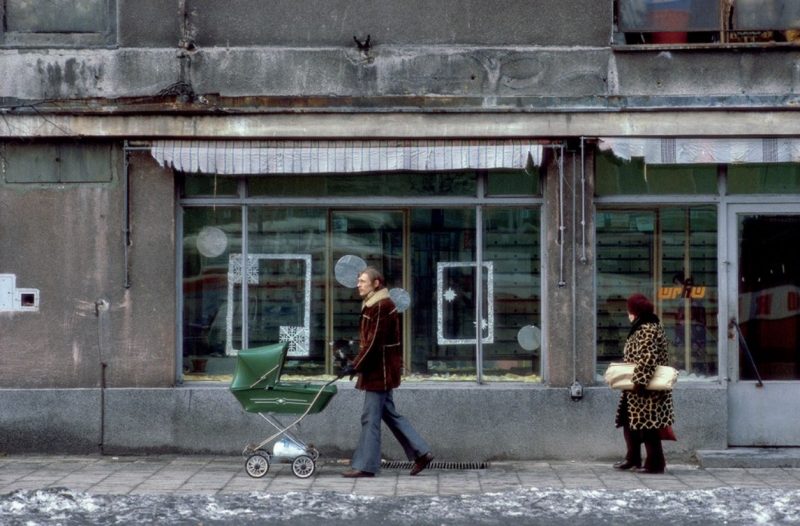
One of Chris Niedenthal’s images of Poland in the 1980s — he called it “Everything’s Gray.” I wish I’d taken more photos of the parts of Poland I knew that looked like this because they’re gone. That’s probably a good thing, but I wish I’d photographed those places myself.
There was a bar in my village that I almost never entered. It was the GS-owski bar and even in the mid-90s, it looked like one would always imagine a bar to look in a communist country.
We’re in the midst of — at least theoretically — our final renovations. The guest bath is almost done: we just have the tile work to complete (or rather, to have completed).

The basement, though, is another story…
Exploring Spotify’s “Indie Bluegrass” playlist last night, I discovered her — Sarah Jarosz, a young singer/songwriter whose music excites me more than any music I can remember from the last ten years or so. I began wandering through her catalog, continually impressed and pleased, and then I heard it. Her cover of Dylan’s “Simple Twist of Fate.” A voice; a pizzicato cello — nothing else. Perfection.
I played it for the Boy this evening and he was asking me about it. “Does it bring back memories?” he asked.
“None at all,” I smiled. I guess he’s used to me reveling in the memories particular songs bring to mind, but this song, this performance — no memories at all. And that’s what makes connecting to new music so magical. For me, the new music that hook me have a certain timeless sense to them. They feel like they should have memories dripping from them.
Over the course of the last twenty-four hours, I’ve managed to listen to about four of her albums, but the first one I listened to remains my favorite: World on the Ground. The whole thing is available as a playlist on YouTube.
She’s also released a video of completely-stripped-down versions of some of the album’s best songs (undoubtedly in their original composition state).
I’m currently reading Trent Horn’s Hard Sayings: A Catholic Approach to Answering Bible Difficulties and at about halfway through, I’ve definitely formed some definite opinions about the book. Most strikingly, I’ve come to realize it’s mistitled. Instead of Hard Sayings: A Catholic Approach to Answering Bible Difficulties, it should be titled The Passage Makes Sense if We Assume… : A Catholic Approach to Answering Bible Difficulties. That phrase — “The passage makes sense if we assume…” — is a quote from the book, and it’s indicative of the whole argument. In fact, Horn doesn’t just suggest that we have to assume to Bible is correct to really understand how it’s correct, he says it outright:
[I]t is the critic’s burden to prove that there is a contradiction in the Bible because he is the one accusing the text of being contradictory. All the believer has to do is offer one or more reasonable explanations of how the passages could be reconciled, thereby showing that the critic’s evidence is not conclusive (152).
This is ridiculous: there is nothing to prove with the contradictions. They’re sitting on the page, obvious as the sun in the sky. This passage says X; that passage says not X. There — it contradicts itself. It’s the believer’s burden to explain how it only appears to be a contradiction.
But Horn’s approach makes it possible for him to weave his conditional explanations of problems with the Bible and feel that they suffice. And does this book ever have a ton of conditionals. Within X pages, we read that “Mark may have referred to him…”, that the “name Jethro appears to be a title on par with ‘your excellency,'” that it “could be that the Midianites…”, that “[o]ne way to resolve this contradiction … is to propose,” that “both are probably referring…”, and that “It could be the case.” Let’s make a list of those statements:
This is an argument of possibilities, all of which are extra-Biblical and simply endeavor to save the Bible for people who want it saved. These explanations are just ways of explaining away obvious problems, and these types of “arguments” will only appeal to those who have already accepted the conclusion. In other words, another possible subtitle could be “Begging the Question.”