g

Thoughts on Hell

I’ve been in a Twitter conversation with a Christian fundamentalist about hell. What has come to light once again is the Christian double standard regarding hell and God’s omnipotence. This Christian and many like him suggested God doesn’t send anyone to hell. People choose to go to hell. They choose with their sins, they choose with their blasphemy, and they choose with their rejection of God. And most disturbingly, some will even admit that according to Christian doctrine and the idea of original sin, even newborn babies are deserving of this punishment because of the stain of original sin.

Yeah who determine the parameters that resulted in such consequences? Who determined that transgressions against gods will result in separation from God? God of course. God said all the rules and all the consequences, so why are you might want to try to suggest to ease your conscience that God doesn’t send anyone to hell, he set up all the framers to make that a certainty in some situations.

This Christian continued his argument by explaining that God didn’t Mikaël for humans but rather for the devil. Here once again we run into a problem when we accept the idea of God’s supposed omnipotence and omniscience. He exists outside time, Christians explain, so he knows all things at all times. That means that when he created hell for the devil, he knew man would eventually end up there as well. But the Christian view creates a surprised God who thinks, “Crap — that went off the rails quickly! I’d better do something!” My interlocutor explained it thusly:

Can you decide anything yourself? Free will. Man had free will & chose evil. He didnt have to, was warned not to but did anyway. Free will. Then God Himself made the way back. Man sends himself to hell. Your choice.

My response was along the lines above:

God made the consequences of disobedience hell. He could have made the consequences anything. He chose infinite punishment for a finite transgression—or, thanks to original sin, the transgression of a distant relative of eating a piece of fruit. Perverse.

But he’ll likely continue to insist that I just don’t understand God’s grace, that I don’t understand the finer points of the theological argument, that I just don’t understand.

And that’s another problem: why would a benevolent god make things so difficult to understand, so easy to misunderstand, when eternal punishment is on the line?!
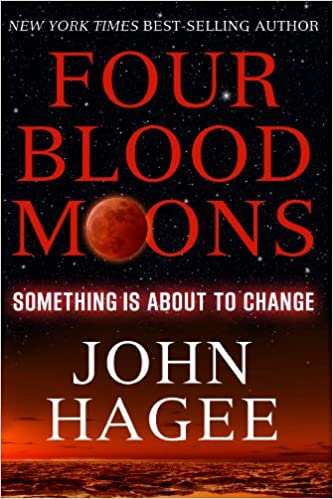
Four Blood Moons

I don’t know why I read things like this. I knew when I reserved it at the library that I was just getting this nearly-decade-old book by fundamentalist nutjob pastor John Hagee to see just how ridiculous it is — to mock it, in other words. Yet since I’m reading a book of primary documents (letters, reports, etc.) from the perpetrators of the Holocaust, I felt I needed some light reading.
The back cover blurb itself was enough to entice me:

It is rare that Scripture, science, and history align with each other, yet the last three series of Four Blood Moons have done exactly that. Are these the “signs” that God refers to in His Word? If they are, what do they mean? What is their prophetic significance?

In this riveting book, New York Times best-selling author, Pastor John Hagee, explores the supernatural connection of certain celestial events to biblical prophecy—and to the future of God’s chosen people and to the nations of the world.

Just as in biblical times, God is controlling the sun, the moon, and the stars to send our generation a signal that something big is about to happen. The question is: Are we watching and listening to His message?

It’s rare that Scripture and science align? It’s never happened. Ever. Scripture and history? A handful of times. All three together? Never. Double-never.

But I was intrigued: it sounded from the blurb that Hagee was going to try to get some prophetic meaning out of the positioning of the sun, moon, and stars. That sounds like astrology — one must say that in a rumbling, threatening voice for the full effect. Fundamentalist Christians avoid astrology or anything that looks like it at all costs. So how can a good, Rapture-believing, tee-totaling, fundamentalist, Scripture-literalist have anything to do with astrology?

First, we might want to define astrology. Sure, we all know what it is, but let’s get a good definition on the table. Let’s Google it and take the first definition: “the study of the movements and relative positions of celestial bodies interpreted as having an influence on human affairs and the natural world.”

Just for kicks, let’s see what astronomy’s definition is, using the same method: “the branch of science which deals with celestial objects, space, and the physical universe as a whole.”

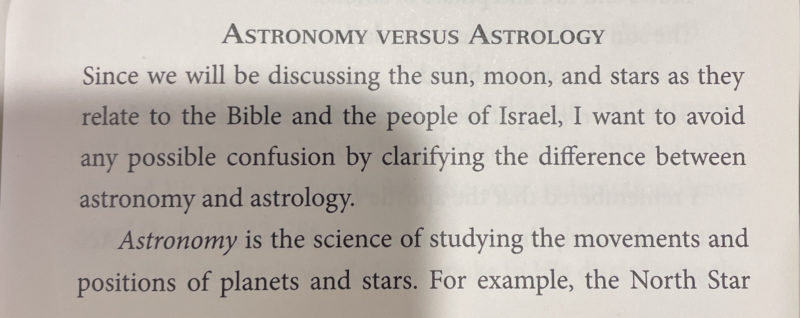
How does Hagee define these?

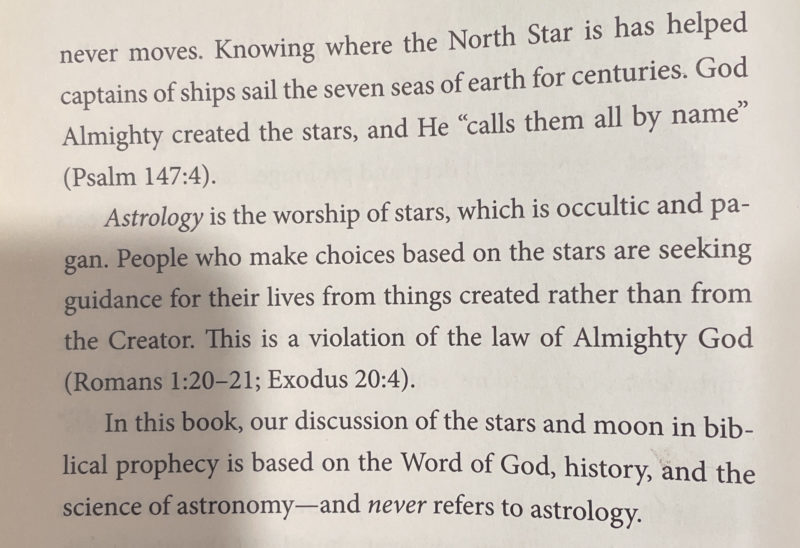
  • Astronomy is the science of studying the movements and positions of planets and stars.”
  • Astrology is the worship of stars, which is occultic and pagan.”

He literally gives the definition of “astrology” for “astronomy.” Don’t believe me (because I’d be skeptical of such idiocy myself)? Here are the shots from the book:

This means one of two things:

  1. He’s completely ignorant about what astronomy actually is, and no one around him corrected him either from deference to his position as “God’s anointed” of their own ignorance.
  2. He knows what astronomy is and is counting on his readers not knowing how duplicitous he’s being.

Neither option is good.

Tuesday Evening

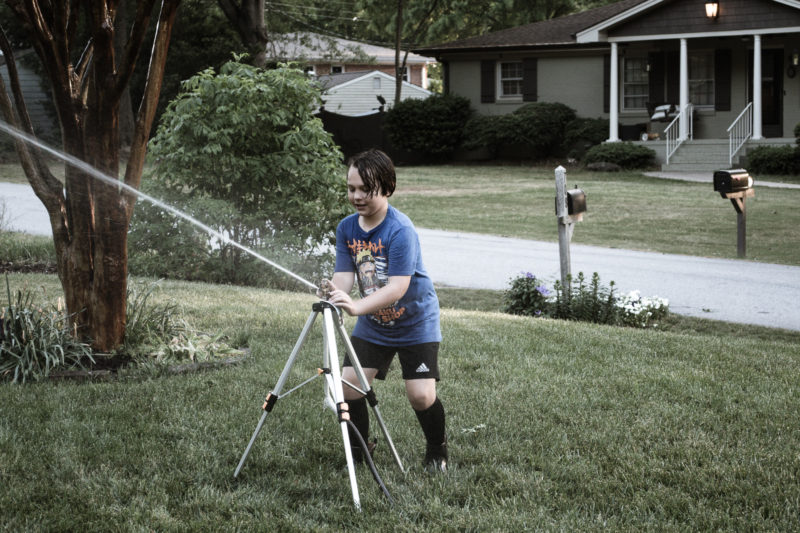
The Boy has a new chore: watering the grass in the front yard.

He does it even when it’s not needed.

I’m sure the fact that he needs to (in his mind) get soaked in the process has nothing to do with it.

In the meantime, K took some pictures of our flowers.

Of course, the real highlight for the Boy was in the evening, when his packages arrived.

Last Saturday in April

The Boy’s soccer team is finishing up this weekend with a tournament. They lost their first game today 0-4, and they tied their second game at one apiece. I didn’t take the camera to the first game; I wasn’t at the second game, so no pictures.

Instead, a picture from twenty years ago.

Report

I’ve begun The Good Old Days: The Holocaust as Seen by Its Perpetrators and Bystanders. According to the introduction,

The title “The Good Old Days” (“Schone Zeiten” in German) comes from the cover of a private photo album kept by concentration camp commandant Kurt Franz of Treblinka. This gruesomely sentimental and unmistakably authentic title introduces a disturbing collection of photographs, diaries, letters home, and confidential reports created by the executioners and sympathetic observers of the Holocaust.

It includes the Jäger Report in full. What is this report?

The “Jäger Report” is a statistical summary of the killing carried out by the Einsatzkommando 3, a unit of Einsatzgruppe A, between 4 July and 25 November 1941 in the towns and villages of Lithuania and Latvia. It was written by the unit’s commander, SS-Standartenführer Karl Jäger (1888-1959), a member of the NSDAP since 1930 who was 53 years old at the time. As historian Ronald Headland points out, the “Jäger Report” is exceptional among these horrific documents for its “cold-blooded horror” and the “mind-boggling depravity” of its meticulous, morbid cataloguing. “In no other report,” Headland observes, “do we get as detailed a picture of the steady accumulation of victims.” At the conclusion of his report, on page 7, Jäger stated that “the aim of solving the Jewish problem for Lithuania has been achieved by Einsatzkommando 3. There are no more Jews in Lithuania apart from work-Jews and their families,” approximately 35,000 in number, still living in the towns Siauliai, Kaunas, and Vilnius. Note the change that took place at the end of July and the beginning of August: Jäger’s Einsatzkommando begins shooting Jewish children, in addition to adult men and women, and the overall rate of killing increases by a factor of ten: from a total of 4,400 in July to 47,906 in August. Karl Jäger committed suicide in June 1959 while awaiting trial (Source).

It’s page after page of tabulated columns indicating the date, the location, and the number of victims as Einsatzkommando 3 moved through Lithuania, killing Jews. Two back to back entries stand out:


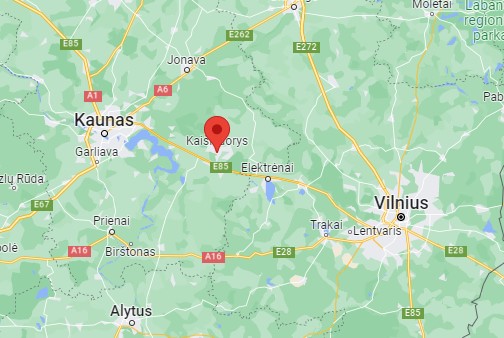
26.8.41 Kaisiadorys All Jews, Jewesses, and Jewish children 1,911
27.8.41 Prienai All Jews, Jewesses, and Jewish Children 1,078

All the Jews of a given town, wiped out in a single day. And this was long before gassing: these murders were personal, close.

The Einsatzkommandos had to take aim individually at individual people — at men, at women, at children. They were splattered with blood and brain matter at the end of the day.

The world said, “Never again!” when this happened. In a unified voice, we declared, “We will not let this happen again.” And yet it’s happening again, now, in Ukraine. Not to this extent. Not yet.

Why are we letting it happen again? Simple: the man behind all this has a whole arsenal of nuclear weapons behind him. We risk World War 3 if we simply intervene. He’s holding the world hostage as we sit and watch his troops slaughter, rape, and terrorize the civilians of Ukraine.

It’s fairly clear that, in a conventional war without the fear of nuclear weapons, the NATO allies could completely humiliate the Russian army right now. Putin knows that; his troops probably realize it; the world sees it. That’s why he keeps rattling the saber of nuclear annihilation.

And when you realize what, according to some, is the actual motivation behind all this, it’s even more sickening:

Evening Run

It was the last soccer practice of the season, so I went for a final run (at least for now) around the soccer complex. During the season, I’ve been exploring further off-road, discovering a lake I never knew about, feeling a bit dodgey coming out of a wooded area to discover a “No Tresspassing” sign where I’d just run (“I swear, there was no such sign where I entered the woods!”)…

The Dog, the Ball, and the Garden

She knows she’s not supposed to be there. I’d be a fool to expect her not to stay out as long as I’m not keeping watch. It’s the Garden of Eden in our own home.

Christian Visions

I’ve always enjoyed watching Christian apocalyptic films. They’re an insight into the thinking of fundamentalist Christians. They often see these films as representative of true prophecy, some kind of history before history. So how do fundamentalists see this future? It depends on the film, but one of the classics of the genre is the Thief in the Night series. The third film in the series, Image of the Beast, covers the period of time when the antichrist, known as Brother Christopher, rules the world as the head of the newly-established one-world government. A scrappy band of Christians, led by Reverand Matthew Turner, fights this evil power.

In one scene, Reverand Matt explains to a character simply known as “Kathy” a picture in a book, saying that it’s “a replica of the temple of Herrod, the one that Christ worshiped in. But today’s temple is defiled by the worst sacrilege that could possibly befall Israel.” When Kathy asks him to explain further, he reveals:

The computer, Kathy. The computer has been the most innovative and time-saving device known to man. Paid bills, made travel reservations, cooked meals. It’s the new golden calf. A computer that speaks and convinces people that it thinks, hundreds of millions of people will worship that inanimate object, and it’s in the temple.

We have to understand that this film was made in 1980, so computers were still relatively exotic. But come on — “A computer that speaks and convinces people that it thinks” which leads people to worship it?! In what reality would this happen? Even if we created the most magnificent AI neural network possible, does anyone seriously think people would worship it? That reveals such a level of naivete that it’s difficult to comprehend.

The film then cuts to Brother Christopher, the leader of this one-world government, addressing the globe:

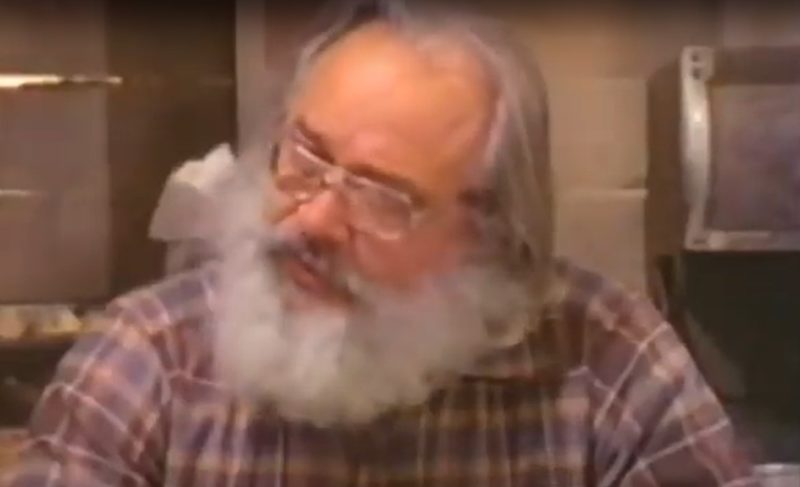
First of all, what the hell is he sitting on? Is that supposed to be a throne? How does he get up there? Levitate? And what’s with the palm tree emblems behind him? This reflects the fundamentalist view of God’s own throne (notice the angels with outstretched wings, like on the Ark of the Covenant?) because they view everything the devil does as a perversion of what God does.

But better than the imagery is Brother Chris’s speech itself, which is something spectacular:

My friends and loyal subjects, for the last four years, we have worked together to overcome the greatest physical hardships the world has ever known. World war, drought, famine, pestilence, fire, earthquakes and volcanoes of unprecedented violence. But we have prevailed, thanks to our fantastic computer technology and the intervention of his satanic majesty. Where, dear friend, was the loving God of creation during our recent perils? Was he helping mankind, the children of his creation? No, on the contrary, it is he who has visited these disasters upon us, and to you, God, God of wrath and destruction to mankind, I say do your worst, but we will prevail.

There’s so much here! He references “[w]orld war, drought, famine, pestilence, fire, earthquakes and volcanoes of unprecedented violence” to tie into the apocalyptic visions of Christians, but it raises the question of the intelligence of Satan, the bad guy in all this. Fundamentalists insist these events, which culminate in the fall of Satan, have been prophesied in the Bible for millennia, yet Satan apparently either can’t read, doesn’t know about these prophecies, or somehow thinks he can overcome them anyway.

Then there’s the direct acknowledgment of “the loving God of creation,” which suggests that the devil (incarnate in Brother Christopher) does know at the very least that God is, well, God, further underscoring this silly question mentioned above.

Finally, there’s the direct mention of “his satanic majesty.” Somehow, all these so-called Christians who remained (because all the real Christians got raptured away in the first film) then turn to blatant Satanism (as fundamentalists might view it)?!

Here’s the full scene:

It’s all so staggeringly stupid. But do Christians really take this stuff seriously? At ChristianCinema.com we find the following reviews:

  • A very good film about the end times. I recommend watching all 4 movies in series – Ronnie A T.
  • Very good and realistic. Was looking for Nicolate (sp) but do not see it. – Everette M.
  • Excellent movie. Very realistic and Scriptural! – Everette M.
  • My 12 year old wasn’t interested at first but after a while he wouldn’t leave the room. – Patrick B.
  • This whole series has been a blessing to me and my family I have enjoyed each movie and most important I have learned so much through them. It’s a great movie for believers and of course non-believers. As a believer it makes you think of your walk with the Lord, on how serious you are about following him and how big is your faith and trust in him. Great movie!! – larisa n.

More evidence that we’re too naive as a species to survive indefinitely.

Caving and Volleyball

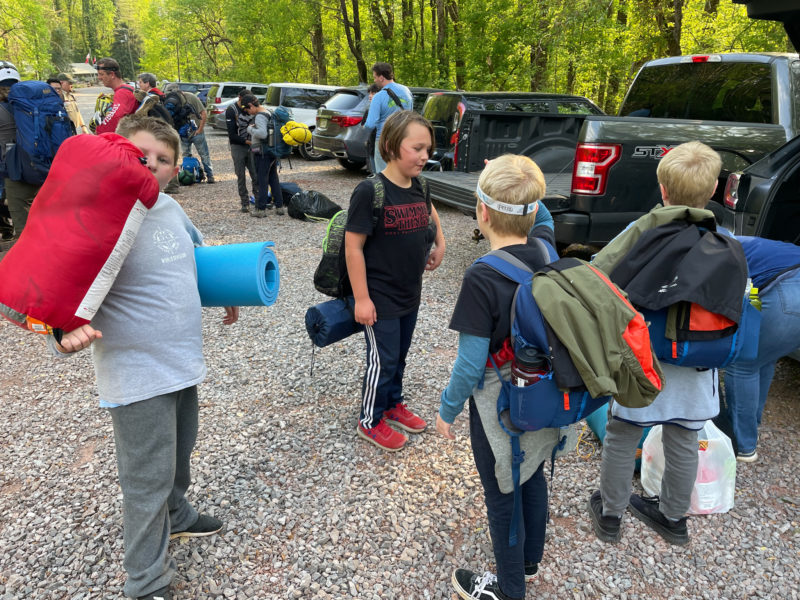
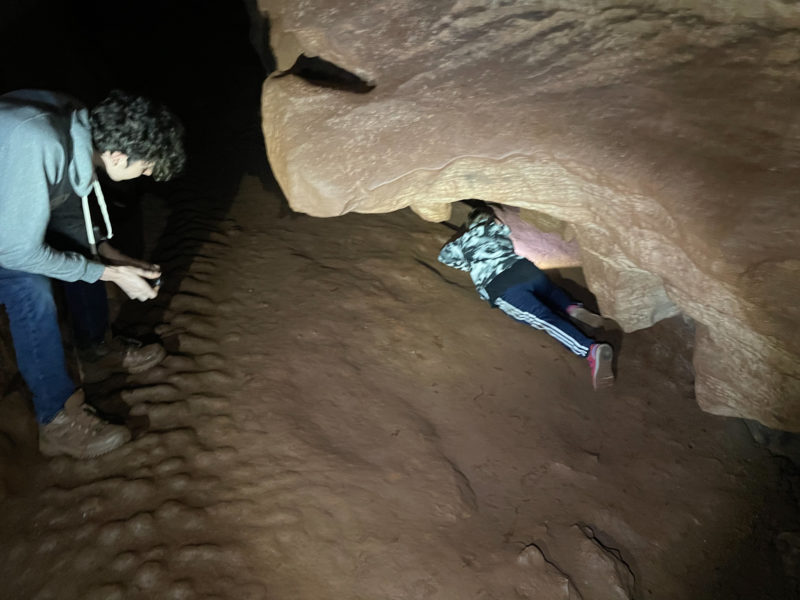
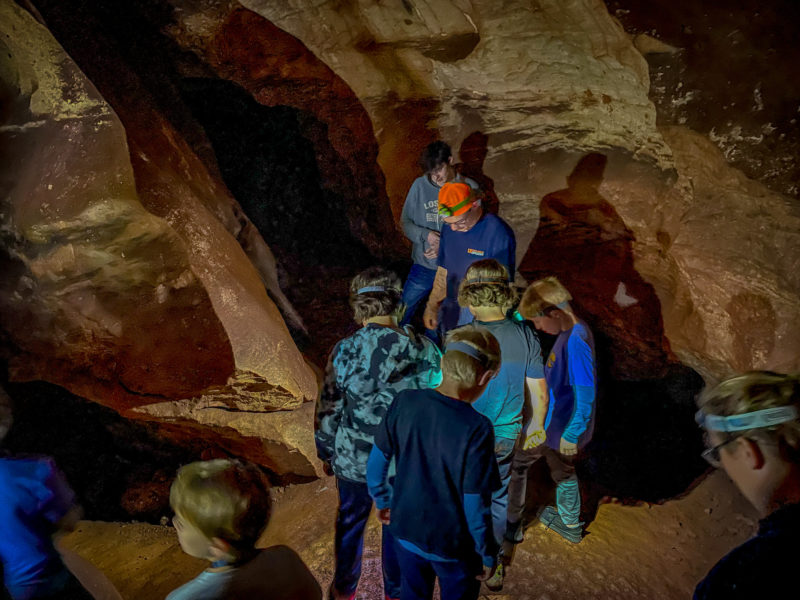
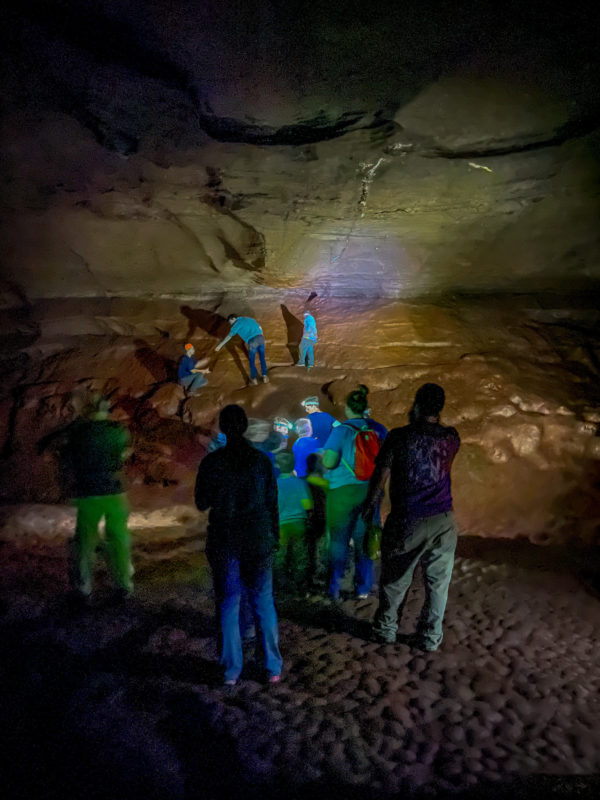
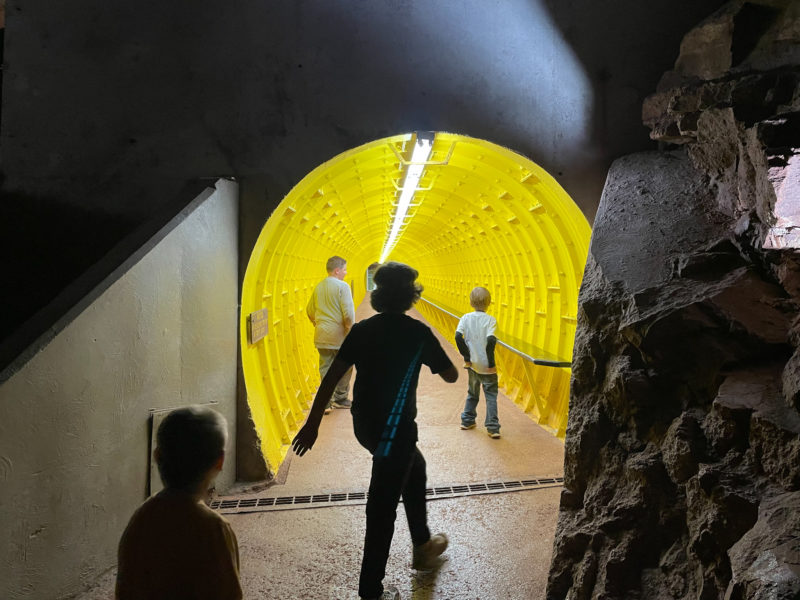
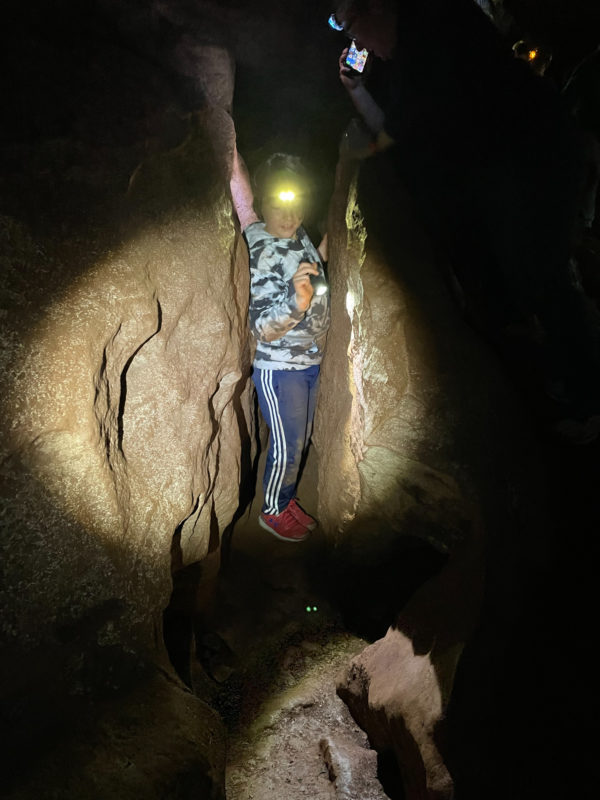
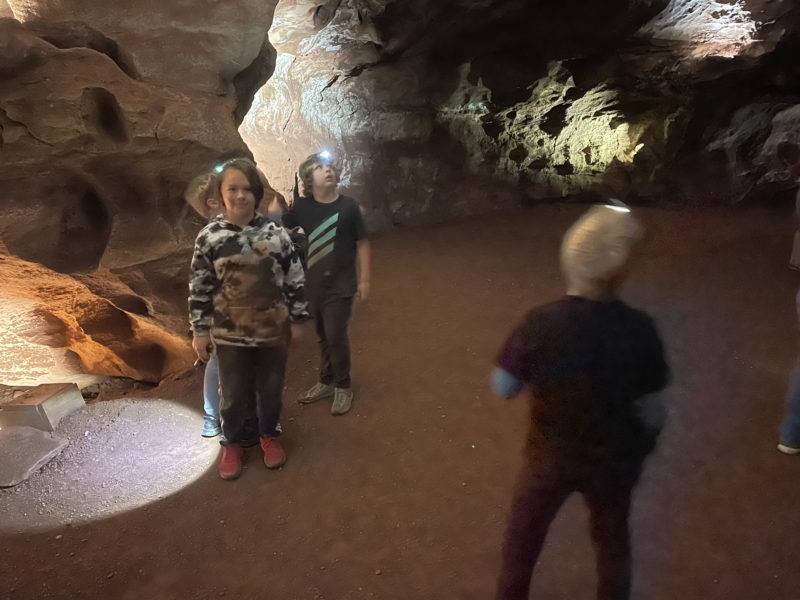
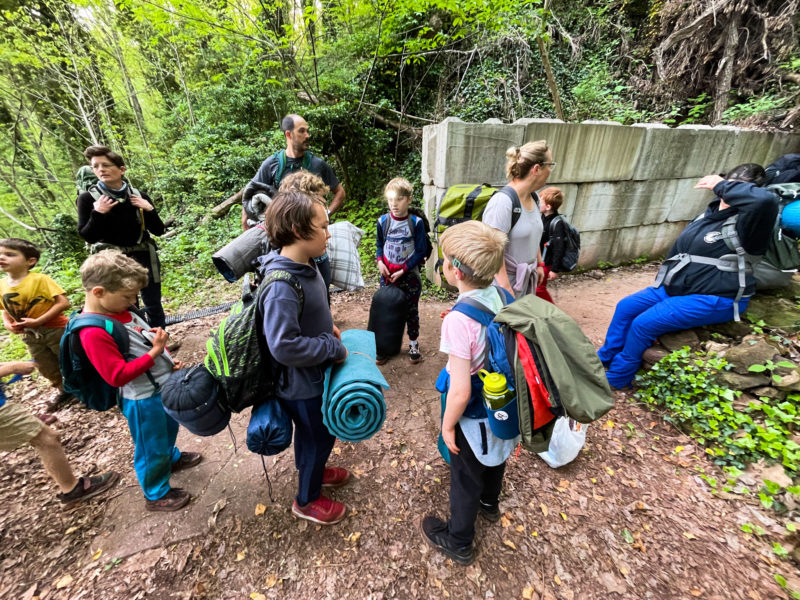
The Boy and I went on a one-of-a-kind Scouting adventure this weekend: we spent the evening rambling around an enormous cave system, then spent the night in said cave.

We all met in the parking lot around six, gear in hand, all excited, with the adults (well, speaking for myself anyway) a little anxious about how all the details might work out.

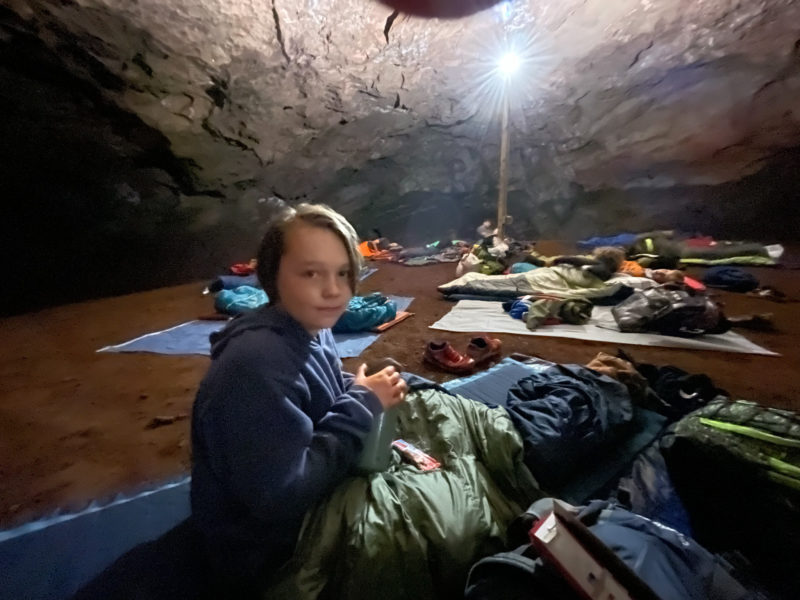
Our first stop — our camp location. It was an enormous room, with a relatively high ceiling and a length probably five times or more its width.

After we dropped off our belongings, it was time to explore. We had what’s called a wild tour, which mean we got to go to places most tourists don’t see and crawl through passages and openings that left us covered in clay and dirt.

Finally, it was bedtime. It was then that the fun began: the echoing snores; the footfalls that reverberated throughout the cave as people plodded to the bathroom; and a whole host of mysterious noises.

We made it out at a little past seven in the morning — as instructed — and after breakfast, headed home.

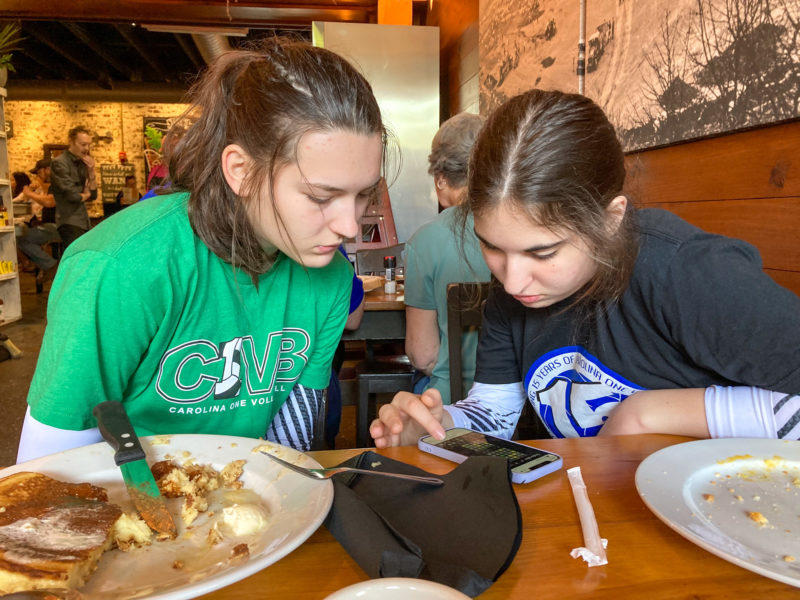
The Girl was in Knoxville, playing volleyball.

Steskal

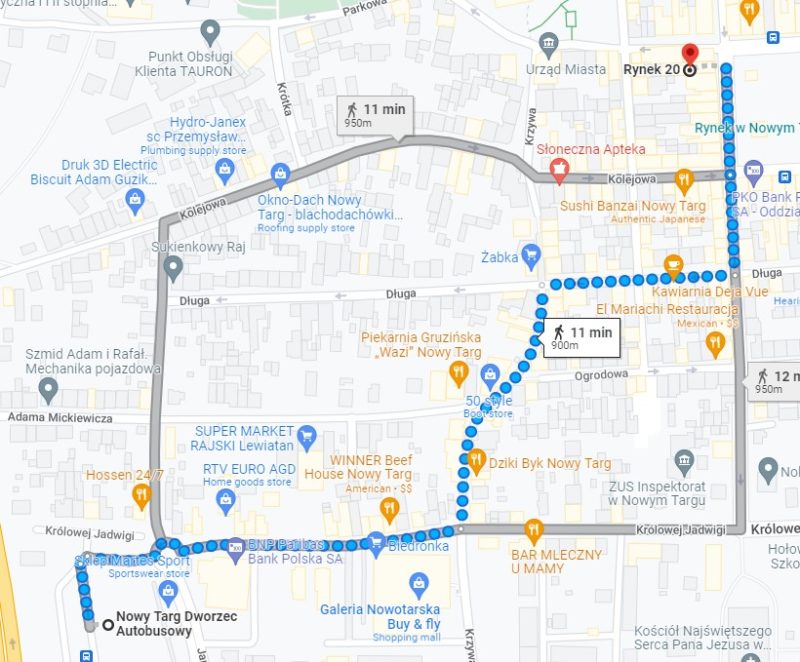
Steskal’s restaurant was on the corner of the rynek in Nowy Targ, at the intersection of Jan III Sobieskiego and Szkolna (School) streets. It was about a one-kilometer walk to the bus station (according to Google), but it was where I often spent the time waiting for the next bus back to Lipnica.

It was nothing fancy: they served the basics, and more often than not, when I ate there, I ordered fasolka po bretońsku. They made a good plate of beans.

When K and I began dating and started taking weekend trips together, we often ended up in Nowy Targ — waiting for a bus, of course. We sat drinking hot tea and talking about our next trip together, or about the coming holiday season, or about (eventually) our wedding.

At some after we moved to America, it closed. K and I were going to pop in for old times’ sake only to find it was no more.

I hadn’t thought about it in years until I found a picture while going through old photos in Lightroom.

Monument

I passed this monument countless times while I lived in Lipnica never really knowing the full story behind it.

Wednesday in Class

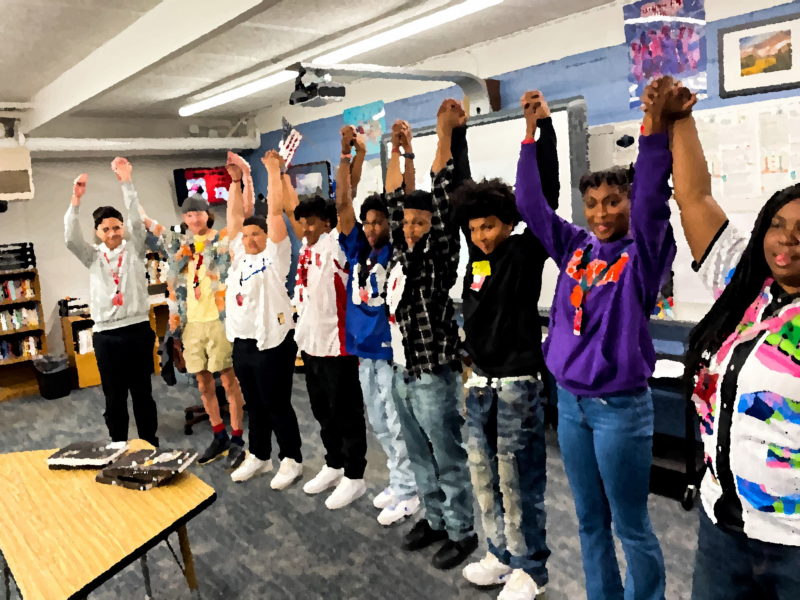
That fifth period can be a tough group of kids. They sometimes disregard what’s going on in class to have a little private conversation that is not at all private because of the number of participants and the volume of their voices. They sometimes ignore simple instructions. A few of them are capable of being truly disrespectful to other students, to me, and by proxy, to themselves.

Yet by and large, they’re a great group of kids. They’re just typical 14-year-olds, many of whom come from less-than-perfect situations and have developed less-than-perfect habits. In my teaching career, there have only been a handful of students that, as humans, I didn’t like, I just didn’t trust. In almost 25 years of teaching perhaps four or five such kids. There are no such kids in this group.

But they can be tiring.

These final weeks of school, we’re going through The Diary of Anne Frank. Why do such an important piece in the waning, testing-ladened final quarter of the year? That’s when the district requires it. It might be a good thing, though, because these kids are more engaged now than they’ve been all year: more focused, more involved, more eager in their participation.

Plopped down in the middle of this is L, a young man from Mexico who speaks not a word of English. Not a word. Well, no, that’s not true: he spoke not a word of English when he arrived last week. He’s already picked up quite a bit. And today, he was able to follow along with the play, even though he didn’t understand 95% of what the kids were saying.

“Where do you think we are?” I’d ask through my phone using Google Translate. He’d point to where we were — each time, dead on. “Great!” I’d say. His smile was ear to ear.

After Dinner Play, Redux

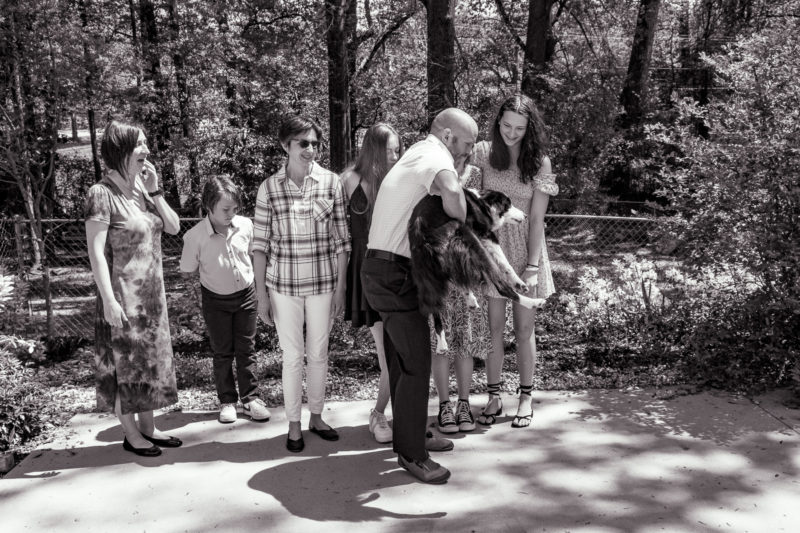
When your kids ask if we can do the same thing after dinner as we did yesterday, and it involves laughter and the dog, of course, you say yes!

The Day After, Again

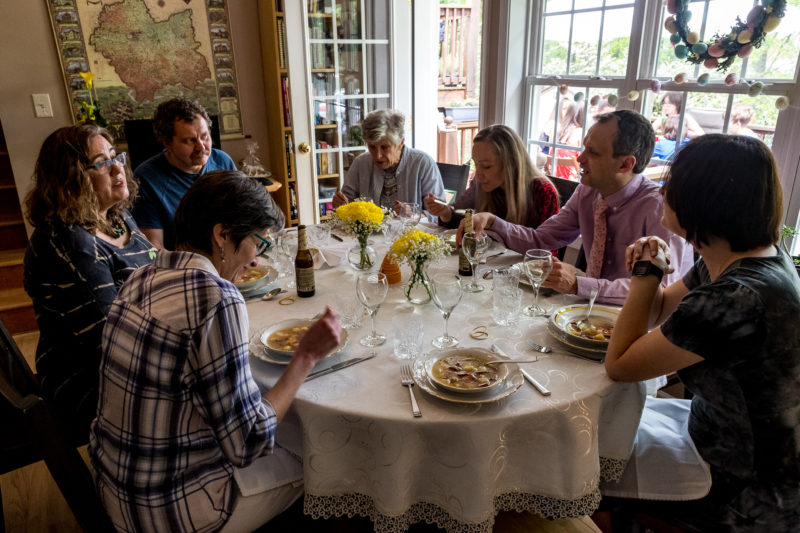
What is it about the day after Easter or Christmas that makes us want to do nothing? We do what we have to do, but it’s just off. And even if the day after is a day free from the obligations of work, it still feels off.

I’m not talking about hangovers — those are easily avoidable. Just don’t drink to excess. It’s undoubted the feeling of deflation, of everything coming down after building up for so long.

The party is over; the friends are gone; the spell is broken.

I want to say it’s because we don’t have anything to look forward to, but that’s not true. We look with anticipation and excitement at many things coming in our family’s near future: a camping trip, several tournaments, a summer trip to Poland.

Perhaps it’s the bustle of getting so much ready so quickly for a party, and then the sudden release of all that?

Or maybe it’s nothing…