g

Two Problems

I’ve been working on my own “Why I Am Not a Christian” a la Bertrand Russell’s piece of the same name. There seem to be two logical problems Christianity encounters from the very beginning before taking anything else into account.


The two main issues I have with the Christian worldview are the problem of suffering and the nature of Christian salvation. The best way to highlight these problems is to reframe them in strictly human terms to see how much sense it would make for humans to do what the Christian god supposedly does.

The problem of suffering is simple: if there is a loving god who is omnipotent, it would want its creatures to live free of meaningless suffering. There is meaningless suffering in the world. Therefore, this god is either not loving, not omnipotent, or doesn’t exist. Christians will likely quibble over the definition of “meaningless suffering,” pointing out that that it is a value judgment and that we are in no way to determine if a given example of suffering is meaningless or not (that’s their god’s decision). Here it becomes useful to put it in concrete human terms: put simply, if I had the power to stop a child from being raped, I would. No questions, no hesitation: I would just stop it from happening if I could. If I had the power to stop a child from starving to death, I would. If I had the power to stop a child from being beaten, I would. The god of Christianity doesn’t stop these things from happening. In fact, the supposed representatives of this god are all too often the ones inflicting this suffering on children.

The common apologetic response here is to suggest that the Chrisitan god’s ways are not our ways, that we cannot know what good can come from this suffering. That might be so, but that supposed good that can somehow justify the evil and make it in fact a good — that is merely speculation. What is not speculation is the suffering itself.

In response to this, apologists in turn bring up free will. Their god gave us free will, and we can use it, or we can abuse it. Their god lets us do whichever we wish because to do otherwise would be to limit our free will.

Another example shows the absurdity of this thinking. Imagine you walk in on your twelve-year-old son beating your three-year-old daughter to death with a length of two-by-four. Would you stop it? Of course, you would. But imagine you decide that to do so would be to violate your twelve-year-old’s free will, so you let it happen. The authorities find out and charge you. At your trial, you make the defense that, because we all have free will, you are not ultimately responsible and that you were merely allowing your son to exercise his free will. Would the jury accept that defense? If the roles were reversed, and you were on that jury, would you accept that defense?

Thus, reframing the problem of suffering in strictly human terms leads to a strange outcome: we realize that we hold ourselves to a higher moral standard than we hold our idea of a god. We allow a god to get by with things we would find abhorrent in our own behavior by suggesting that we’re just not smart enough to see the good that raping a three-year-old can bring.

At this point, the Christian apologist will likely suggest that this is all a moot point anyway because all this is due to the Fall, and then suggest Jesus’s sacrifice solves this problem (i.e., the Fall). We might point out that the evil still exists but at least Christians have a way to explain where it comes from: we’re flawed in our very nature due to the Fall. Jesus solves all this, the apologists assure us.

What happens when we examine that solution in human terms? Imagine my wife and I have a rule in my home: no one is to spill food while at the dinner table. The penalty for spilling food is three cuts on the forearm with a sharp knife. One night, predictably, my young son spills food. I take his arm and tell him that because of the rules, I have to make three cuts on his arm. However, because I love him so much, I’m going to take that punishment for him. I hand the knife to my wife, and she makes three deep cuts in my forearm. I look at my son lovingly and say, with tears in my eyes, “Do you see, son, how much I love you? I took this punishment for you. This should fill you with an incredible love for me!”

You, as an outside observer, would think all of this is quite absurd. You might question why I had such a strict punishment for such a relatively insignificant “crime.” You would likely suggest that it was inevitable that my child would spill some food and ask why I had that rule in the first place. And finally, you would probably think the whole blood-letting for forgiveness was ridiculous: “Why not just forgive the kid if that rule has to be in place?” you’d ask before pointing out yet again that I was the one who created the law in the first place and that it was completely unnecessary to begin with. As for my suggesting that my son should love me all the more because I took his punishment, you’d likely think that it was a highly traumatizing event for my son.

Yet this is just what Christians think Jesus does for them: he takes a punishment that they deserve and in doing so, earns our undying love. However, Jesus is, according to the doctrine of the trinity, God, so this god set the rules himself as well as the punishment. He could have just forgiven us, but for some reason, he’s insistent on a blood sacrifice to make up for sins that we didn’t even necessarily commit, so Jesus steps in to fulfill that obligation.

At this point, Christians explain that their god would like to forgive us but because of his perfectly righteous nature, he can’t. This is some bizarre argument: the nature of this god apparently restricts this god.


Nearing the End

Nearing the end of the year, and my honors students are still working hard. There are only eight days of school left, and they have two more writing assignments. One of them is a major assignment: the showcase letter to next year’s students.


“Don’t lie,” I tell them, “but scare them a little bit. And impress them.”

They’re also working on the end of Lord of the Flies. They have one short writing assignment for that: the last analytic writing assignment they’ll have for me.

They don’t know it yet, but it will be the only completion grade I give them for the whole year.

Cat Fight

Greg Locke has gone after fellow Evangelical Christian Kenneth Copeland, daring Copeland to sue him and suggesting he’s actually a “ninth-degree Mason.” As an outsider, I find this insider friction fascinating. Locke’s insult is that as a member of a Masonic lodge (and I don’t even know if that’s true), Copeland is actuallyย not a Christian and is instead worshiping Satan.

When you don’t believe in either of the characters, it’s like watching people get into a fight over which is better, Star Wars or Star Trek.

It will be interesting to see how this one plays out.

Preparing

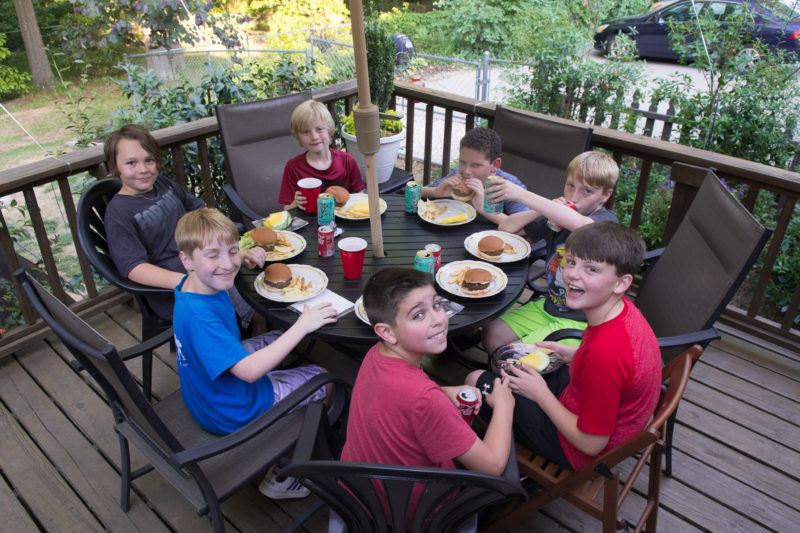
The Boy’s birthday party is tomorrow: he wanted to have a backyard campout with his best friends, so there will be seven boys having a pre-campfire Nerf war and six boys (one can’t stay over) sleeping in our backyard. At least in theory.

Sleepovers are always a bit touchy: I remember having problems with sleepovers, and once I left at about eleven at night to go back home to sleep. It was only across the street, so it was no inconvenience for anyone, but still — it was only across the street. One would have thought I could manage it one night a few hundred feet away from my parents. I guess I was about seven or eight when that happened.

We’ll see tomorrow. “It will be fine,” K assures me, and I’m certain she’s right. But who knows: one of us might be driving a tired little boy home tomorrow, or waiting with him while a tired mom comes to pick him up.


Topaz Lab DeNoise AI

I bought Topaz Lab’s noise reduction plugin for Lightroom today. I’m fairly impressed.

It cleaned up a low-light phone picture nicely:

It removed the noise from a 2005 picture at Auschwitz:

It gave a dreamy look to a photo from inside my favorite bar in Lipnica:

Looking forward to fearlessly shooting at higher ISOs.

Dedication

Our eighth-grade vice principal, who served as my immediate supervisor for most of my time teaching at Hughes, retired just a couple of years ago. An avid sports fan, he also served as the athletic director for most of that time. As such, our school dedicated the gym in his name tonight.

Much deserved recognition for an outstanding man.

Communion

One of the most disturbing passages in the Bible comes in the Gospel of John after Jesus feeds the 5000. In the passage known as the Bread of Life passage, we read,

Jesus said to them, โ€œVery truly I tell you, unless you eat the flesh of the Son of Man and drink his blood, you have no life in you. Whoever eats my flesh and drinks my blood has eternal life, and I will raise them up at the last day. For my flesh is real food and my blood is real drink. Whoever eats my flesh and drinks my blood remains in me, and I in them. Just as the living Father sent me and I live because of the Father, so the one who feeds on me will live because of me. This is the bread that came down from heaven. Your ancestors ate manna and died, but whoever feeds on this bread will live forever.โ€ (John 6.53-58)

This is an echo of what we read in other gospel accounts about the Last Supper:

While they were eating, Jesus took bread, and when he had given thanks, he broke it and gave it to his disciples, saying, โ€œTake and eat; this is my body.โ€ Then he took a cup, and when he had given thanks, he gave it to them, saying, โ€œDrink from it, all of you. This is my blood of the covenant, which is poured out for many for the forgiveness of sins. I tell you, I will not drink from this fruit of the vine from now on until that day when I drink it new with you in my Fatherโ€™s kingdom.โ€ (Matthew 26.26-29)

Mark’s account is similar because his gospel is a source for Matthew’s:

While they were eating, Jesus took bread, and when he had given thanks, he broke it and gave it to his disciples, saying, โ€œTake it; this is my body.โ€ Then he took a cup, and when he had given thanks, he gave it to them, and they all drank from it. โ€œThis is my blood of the covenant, which is poured out for many,โ€ he said to them. โ€œTruly I tell you, I will not drink again from the fruit of the vine until that day when I drink it new in the kingdom of God.โ€ (Mark 14.22-25)

And the same for Luke:

And he took bread, gave thanks and broke it, and gave it to them, saying, โ€œThis is my body given for you; do this in remembrance of me.โ€ In the same way, after the supper he took the cup, saying, โ€œThis cup is the new covenant in my blood, which is poured out for you.” (Luke 22 19, 20)

In all four accounts, Jesus makes the same ghastly claim: eating his body and drinking his blood is essential for human well-being. John 6.52 records the Jews’ response: “Then the Jews began to argue sharply among themselves, ‘How can this man give us his flesh to eat?'” While they’re not saying it outright, they are saying what most modern humans would say were they exposed to this notion for the first time: “This guy’s talking about cannibalism and vampirism!”

Indeed, there are few things in Christianity as disturbing as the cannibalistic ritual at its very core. No matter how one interprets this, it’s simply disgusting and barbaric. Protestants view it symbolically, which seems to lessen the effect, but it’s still troubling to think that millions of Protestants each Sunday symbolically eat human flesh. Catholics have an even stranger view of it, believing that the wafer they eat somehow mysteriously transforms into the actual body of Jesus even though it still looks like a cracker. For them, then, it’s not symbolic cannibalism but actual cannibalism.

If these Christians had not been raised hearing these words on a weekly basis and encountered it in another religion, they would be disgusted. It’s conceivable that Christians would reject whichever religion did teach this primarily on the basis of this teaching.

Spartanburg Tournament Day 2

Yesterday was tough; today was a little better. At least they won a set. “Look at this way,” said a friend, “it can only get better.”

Losing builds character, but I think we’ve built enough character this week.

10

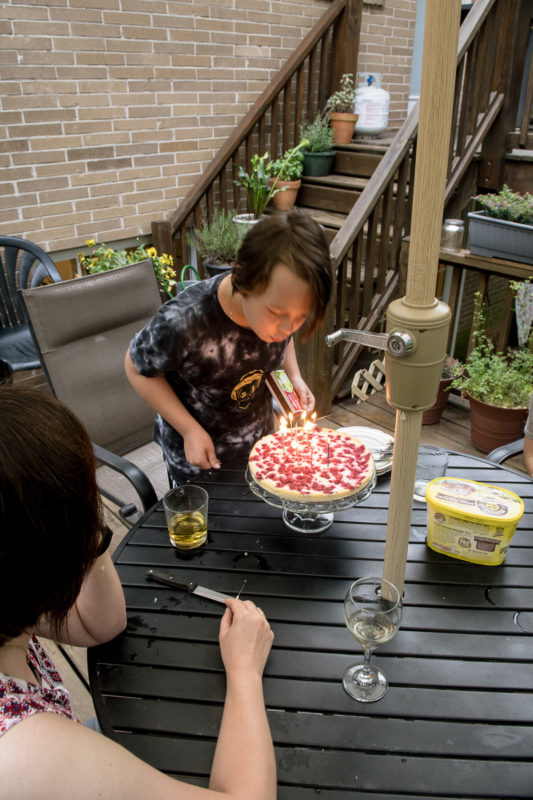
The Boy — 10 years old today. A decade of the Boy. Double digits.

In the morning, we had his breakfast of choice: bacon, eggs, and cinnamon rolls. Healthy choices. In the evening, dinner too was his choice: crab legs and shrimp.

After cheese cake and ice cream, he and I went to the local guitar store to spend all his present money in one shot:

A third guitar — a bass.

The Girl and I spent the afternoon at a tournament only half an hour away — quite a change.

She’d probably rather not talk about that, though. Let’s just say it didn’t go as well as the team was hoping.

Previous Years

Happy Mess Day

Second Time Around

Third Party

Celebration Day

Birthday

Fifth Birthday Party

Sports and Ice Cream

Seventh Birthday

Day 60: Eighth Birthday

Nine

Southside Ride

Boy, am I out of shape. Eight miles and it kicked my butt.

Having my first wreck on the new bike didn’t help. Nothing major.

One of those accidents that could have been a lot more serious, and as a result, you ride a lot more cautiously afterward. No real damage done — except to the ego.

Entertaining Your Brain During Testing

or

“How Not to Fall Asleep While Doing Nothing for Three Hours”

The title is misleading: to suggest that I do nothing at all during the three hours of state-mandated standardized testing would be to suggest a testing violation. That cannot be: a testing violation means paperwork, emails, meetings, reprimands, and the like. It means notes detailing the testing violation in one’s employment file, and in an absolutely worst-case scenario, it can mean termination of employment.

So what does this proctoring look like? I have three chairs I use in my room for such an occasion: proctoring means walking around the room and looking at everyone then sitting down in one of the chairs. After a few minutes, I get up and do it again, returning to a different chair. And then again.

“Why don’t you use the time to do lesson planning?” Testing violation.

“Why don’t you read?” Testing violation.

“Why don’t you grade papers?” Testing violation.

“Why don’t you write letters?” Testing violation.

There are only two things I can do other than walk around and watch kids take the test: create a seating chart and alphabetize the test tickets (why call them tickets — it’s not like they’re admission slips for something they really want to do). So I take aย long time doing both. I work on the seating chart throughout the whole test: it’s like nibbling at a bit of candy you’ve been craving for so long. I alphabetize the test slips slowly and in stages.

And I daydream while staring at the backs students’ heads.

Wednesday Afternoon Bike Ride

The Boy and I decided yesterday that we’d go mountain biking today after school. He wanted to go to a bike park in a town about half an hour from here, but I said it was too far and suggested Lakeside Park, where L had her sand volleyball practices. He agreed, somewhat reluctantly, but seemed eager about the afternoon when I left this morning.

This afternoon, just as I was finishing up with the bikes and bike rack, he came out to tell me he wasn’t ready.

“Well, get ready,” I laughed.

“No, I’m not mentally ready. I don’t really want to go now.”

This is what I was waiting for, almost expecting. It happens more times than I care to experience, and sometimes, K and I take a more gentle approach, trying to get him to see the positives of it, reminding him why he wanted to do it in the first place. Not today. Today, I didn’t have the time for that.

“Stinks to be you. We’re leaving in a few minutes. Change your shirt and get your shoes on.”

I went go get his bike to complete the whole packing process (his goes on last) and saw that his back tire was flat. Again. I’d just replaced the innertube before our last adventure only to have it rupture about a mile from the car. I’d simply taken the older one, which had the slow leak, and patched the leak. It had worked fine for a while.

This put a new crimp in the plan. He was already reluctant to go. Getting a flat in the middle of a ride might turn him off of riding for a while. There might be even more fussing the next time. I decided just to take the chance. I pumped up his tire, saw that it was holding, and packed the bike. When we arrived at the park, it was still holding. About midway through the first part of the ride, though, E noticed it was getting squishy. We went back to the car, pumped it back up, and rode another few miles.

“That was fun,” was his verdict.

Testing

We the kids posed for a picture well after testing to show the various positions they’d assumed during standardized testing.

Growth

It’s that time of year: my students are writing their letters to next year’s students. The English 8 kids wrote them last Friday; English I will be writing them in a couple of weeks.

The guidelines are simple:

  1. Provide advice for rising eight-graders
  2. Show off how well you can write now.

To achieve the second goal, I only allow students one class period to write the letters. The results could theoretically be a little better for the English 8 students if I gave them more time, but part of the charm in the whole exercise is watching next year’s students’ shock when I tell them at the letters they’re reading are in fact first and only drafts.

One young lady’s letter demonstrated so wonderfully how much she’d grown as a person from the beginning of the year. J, at the start of the year, was one of the most worrying students: her behavior was often disruptive; she was often disrespectful when teachers called her on her behavior; she rarely did any work, and what she did was not turned in or handed in still incomplete.

Yet over the course of the school year, she’s calmed down, learned that butting heads with teachers is counterproductive, and begun doing her work (then doing her best). Her grade has gone from a 62 (just barely passing) to a 84, just six points shy of an A.

One paragraph of her letter reads:

How to stay out of trouble in the 8th grade? Staying out of trouble in the 8th grade is probably one of the most important things you can do. One thing you can do to prevent getting in trouble is to minimize your circle and stop posting things on social media. People take a lot of things to social media and the drama leads into school so now itโ€™s the schoolโ€™s problem and once you post something on social media thereโ€™s literally no going back. It’s there forever. Having a lot of friends can cause you to get into a lot of stuff because once one of your friends is beefing with one another they are going to bring you into it because they want you to choose one or the other. My advice to you as a 8th grader right now is to never trust a soul, follow the right path and take it slow, that’s how you can be successful in the 8th grade.

There’s a certain cynicism in that conclusion, but perhaps it’s not entirely awful advice.

Mother’s Day 2022

Morning was for relaxing.

Afternoon was for relaxing, too. And a bit of spray painting.

Evening, our first fire in the new firepit.

Recital

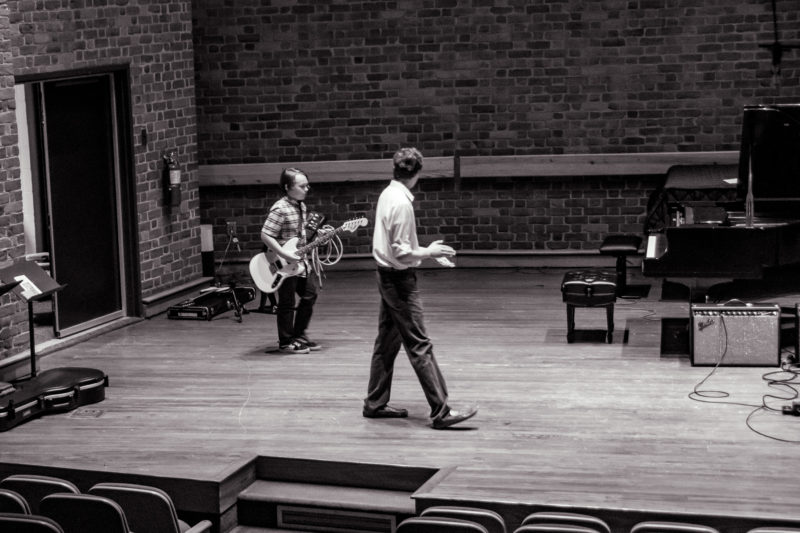
The Boy had his first recital today. He’s been fretting about it on and off since he decided he wanted to participate in his music school’s annual recital, and he was particularly worried about it once we arrived at the venue — it was all too real then. But once he got in the warm-up room, he seemed fine.

“Do you want me to stay here with you?” I asked. He glanced up at his teacher.

“No, I’ll be fine.”

I went into the auditorium and found the girls. It wasn’t hard: there weren’t more than fifteen to twenty people in the audience.

Once he and his teacher worked out a little cord issue, he began, and though he later said his hands were shaking, you can’t really hear it in his playing.

Afterward, of course, it was time for some family pictures.

And then the Girl drove us home — on the highway.