g

Sapiens Thoughts

I’ve been reading Yuval Harari’s Sapiens, and two early passages have led me to see religion in a whole new way. Unfortunately, neither epiphany is ultimately flattering for religion, but at least one thought from the book got me thinking that religion was a useful tool in our development.

The first realization comes from the argument religionists make about the existence of morality being ultimately due to the existence of a law-giver that created a conscience in us all that is somewhat similar. Murder, theft, and lying seem to be universally bad — how could this be unless some god “wrote that on our heart” to use a Christian apologist metaphor. Harari points out, however, that because we Homo sapiens walk upright, our hips have to be narrower, which led to an evolutionary preference to earlier birth. But human babies need much more care and development time than babies of other species, and this necessitated help from others. This need, in turn, led to evolutionary selection for people more likely to cooperate and live together peacefully. And this would eventually result in a moral system that prized compassion and cooperation — without the need for a god.

The second realization came from Harari’s contention that Homo sapiens development into a species that can coexist in large groups, much larger than our closest evolutionary relative, the chimp, has to do with our ability to use language to describe things that aren’t actually there. To create fiction, in other words. He writes, “Large numbers of strangers can cooperate successfully by believing in common myths.” He continues,

Two Catholics who have never met can nevertheless go together on crusade or pool funds to build a hospital because they both believe that God was incarnated in human flesh and allowed Himself to be crucified to redeem our sins. States are rooted in common national myths. Two Serbs who have never met might risk their lives to save one another because both believe in the existence of the Serbian nation, the Serbian homeland and the Serbian flag.

This common myth enables large-scale cooperation that doesn’t appear in the societies of other apes.

The problem, though, is that we are at a point in our development in which the competing myths can go to war with each other with catastrophic effects for the entire plant…

Finished

Sometimes, there’s a certain relief when we realize we’ve finished a unit of study.

Gaga Ball

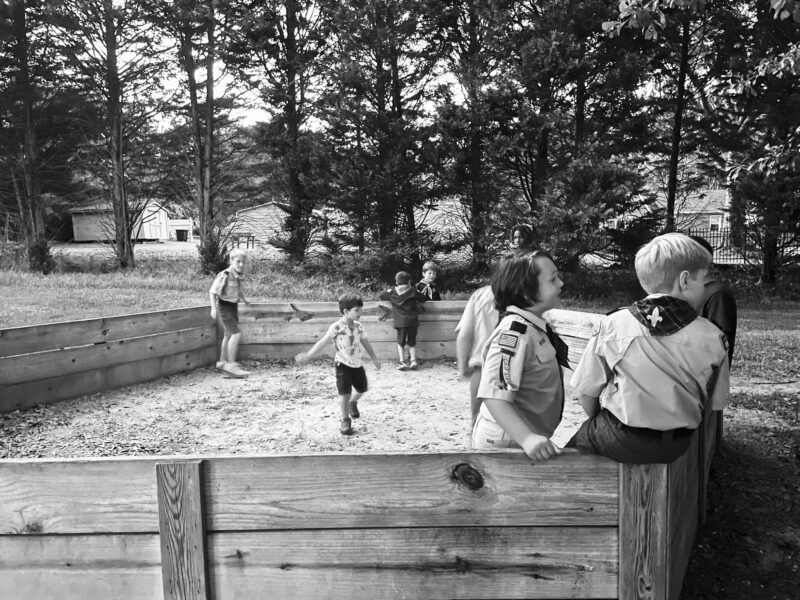
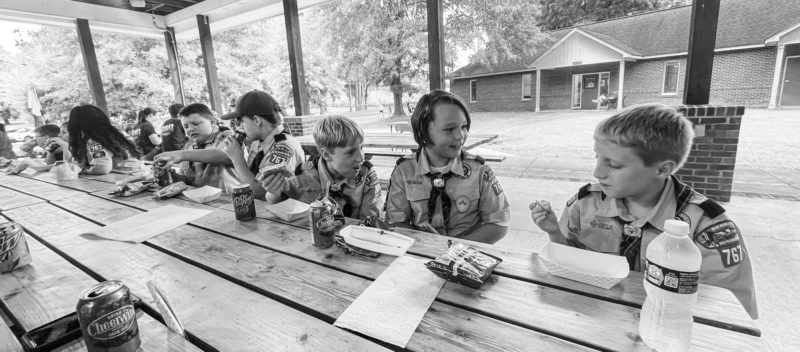
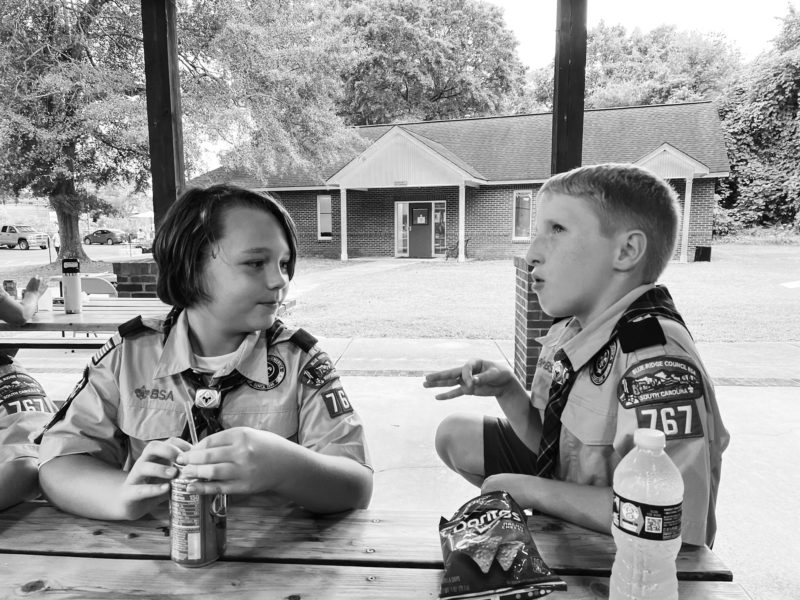
The first pack meeting today — the meeting two weeks ago was technically just a get-together, I suppose. The boys, as always, played Gaga ball afterward.

“This game hadn’t even been invented when we were kids,” one dad laughed as we watched them play.


Class today was excellent again. The main difference: like Tuesday, I tried a long, breathing-based mindfulness activity early in the lesson. Amazing how calm it made a bunch of otherwise-antsy kids.

Fluke?

I was so excited about how well things went with my toughest class yesterday: we did such good and focused work, though, that I should have expected today. Frustrating all around.

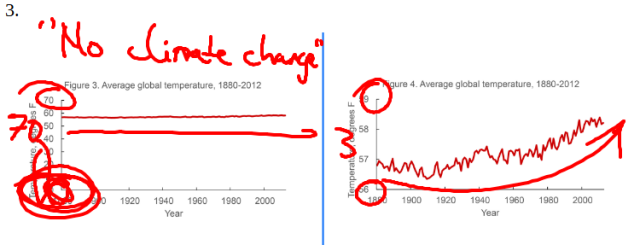
During the bell ringer, when we were going over some of their work, trying to get a student to say that the highest value on the Y axis of a graph (we’re reading a cross-curricular text about deception in graphing) was 70. Even when I pointed to it. Even when I said, “The first number is seven.” Even when I added, “The second number is zero.” Even when I said “70.” Even when I said, “Say ’70.'”

My Promethean Board pen was acting up…

Later in the lesson, when we were going over how to do something, I did the first half of the work for them — for all intents and purposes — in the name of modeling, even though we should be past modeling now. Be all that as it may, some of the kids didn’t even make use of the modeling — and really all they had to do is copy what we came up with as a class.

Every class has tough days, I guess. But they’re even tougher when the happen on the heels of a great day.

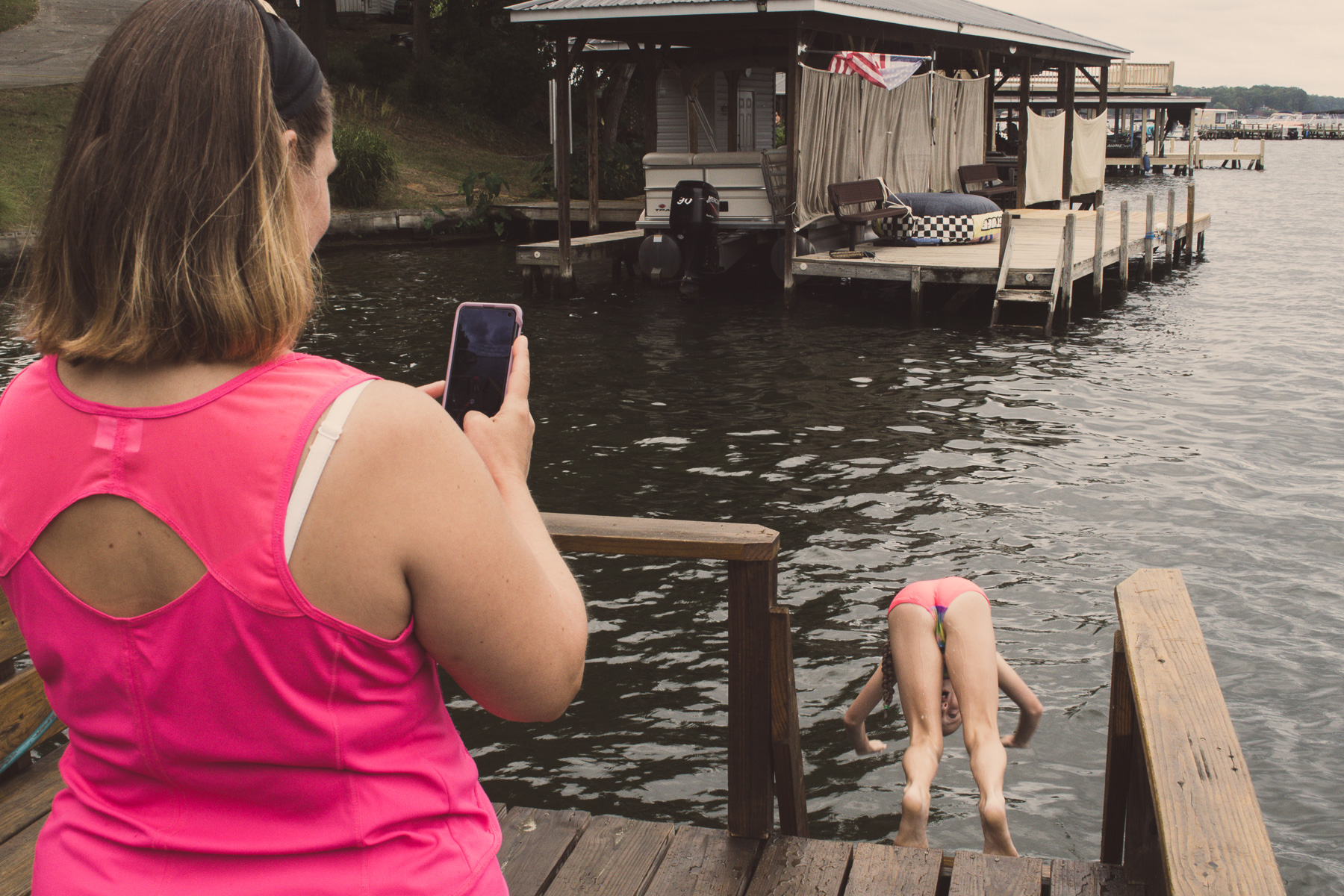
K pretending to drown this weekend

Mindfulness

I tried something today, sort of spur of the moment, with one of my more struggling classes. It’s filled with impulsive students who are generally very sweet (at least toward me) but can be very chatty. Very focused on other things than the work at hand. So before we started our main part of the day’s lesson, I had the kids do a little mindfulness work.

“Close your eyes,” I told them.

“Did they trust you enough to close their eyes?” my principal asked when I was telling him about the experience later in the day.

“Yes, they did,” I replied, thinking of what his question suggested about the relationship I have with the kids already.

“Close your eyes,” I said, a few times. There were some stragglers. Some were still focused on something else. “Just close your eyes and breath slowly for a moment.” I led them through some slow breathing, then had them visualize the work we were about to do, seeing themselves working in a focused manner and meeting success instead of frustration.

They opened their eyes, we began the main part of today’s lesson, and they had the most successful day we’ve had so far.

Bullying?

Saw the following Tweet in my feed the other day.

The general response (at least the tweets the algorithms showed me) was along the lines of “good for the school.”

This is the Christian persecution complex in action: they want to “share” their good news (which also condemns some people, but only because they’re sinning — see, it’s an act of love) and then when people push back against having those views shoved down their throat, they claim persecution.

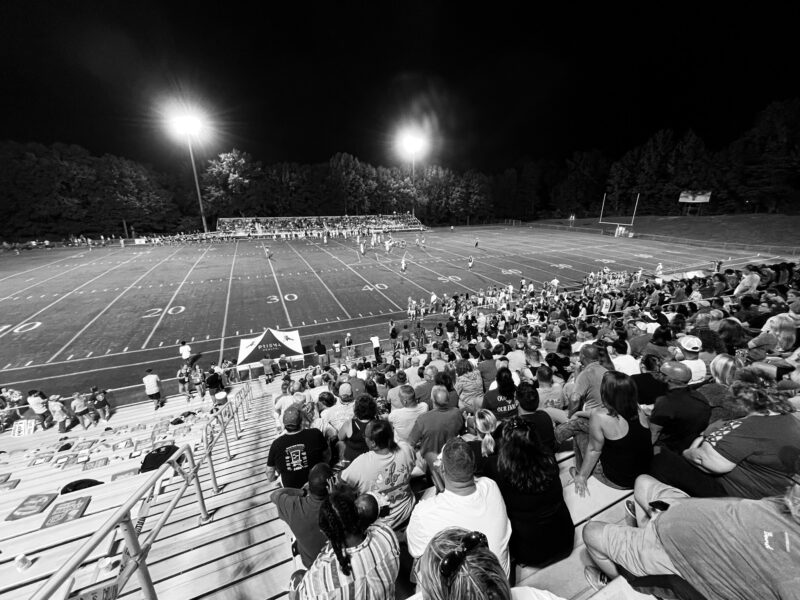
Friday Night Football

When I was in high school, Friday night football was, during the beginning of the year, the highlight of the week. Everyone would arrive early to stake out their seats and make sure all the lowly freshmen got the worst seats. Friends saved seats for each other, and had cell phones existed then, they likely would have been texting each other, asking where they were, demanding that they hurry.

All the students went to cheer on the team, to hang out, to escape parents, to escape the everyday. The cheerleaders led everyone with raucous, taunting chants, and the marching band took the spotlight during halftime. The football players looked, and probably felt, a bit like stars.

My next-door neighbor played on the football team, and though we were not close, I’d wish him luck with the game if I saw him that day. The neighbor across the street also played, but even though I was closer to him than my next-door neighbor during our childhood, by the time we reached high school, we rarely talked.

Win or lose, spirits were always high. While everyone wanted the home team to win, it wasn’t just about the game’s outcome. It was about the friendship and closeness that everyone experienced.

At least I’m assuming it was, for I never went to a Friday night high school football game as a kid. Not once. It was in part because of a lack of desire, I suppose: football was never really something I loved except for a short couple of years when I was in second and third grade. (Or was it first and second grade? Or third and fourth grade? Hard to remember.) The main reason I never went was because it was off limits: growing up in a sabbatarian sect, we observed Friday night sundown to Saturday night sundown as the Sabbath, and all worldly cares and events went by the wayside. A Friday night football game was most certainly out of the question.

I never really wanted to go, but I wouldn’t have been able to even if I did want it.

Or I tell myself that. Could my inability to go, my knowledge long before I could develop a desire to go that I would never be allowed to go, my certainty that there was something deeply and spiritually wrong with going to watch a football game on Friday night — could that have tempered my desire before it ever developed?

I tell myself that I would not have felt comfortable there even if I did go because most of that crowd — the in-crowd, the popular crowd — felt uncomfortable. But why? If I’m honest it’s because I was always distancing myself to begin with: I knew I could never really do any of the things they did on the weekend even if I was invited, even if they begged me because they thought I was the most amazing person to be around, even if I were king of homecoming (which I could have never been because, well, it’s probably obvious). I’d never been terribly close to any of them outside of school (and perhaps playing in the neighborhood after school) during elementary school, and that moved with me into junior high where it settled into a sort of permanent quasi-outsider sense that I carried with me into college.

So at tonight’s high football game — the first I, at nearly fifty years old, had ever been to in my life — I found myself wondering how different my light might have been if I had not grown up in what can only charitably be called a sect. I’m not bitter about my childhood; I don’t regret that life; I appreciate what I got in return for Friday night and Saturday events.

But I still can’t help but wonder…

A Short Response

I’ve been listening to a discussion between Alex O’Connor, an atheist, and Trent Horn, a Catholic. At one point, an audience member asks Horn a simple question: what level of evil would have to exist in the world for you to think that perhaps it’s an unjustifiable level of evil that thus counts as evidence against the existence of a god. His answer was revealing, so I made a one-minute response video.

Here’s the whole discussion:

Two and a Half Preps

My daily update for today:


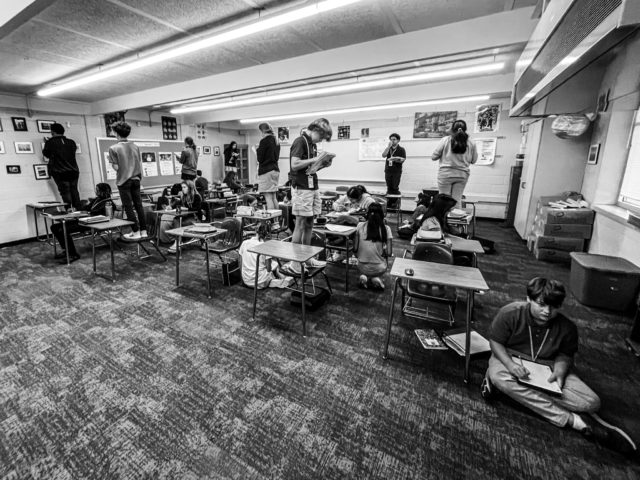
Fourth and Fifth Periods (English I)

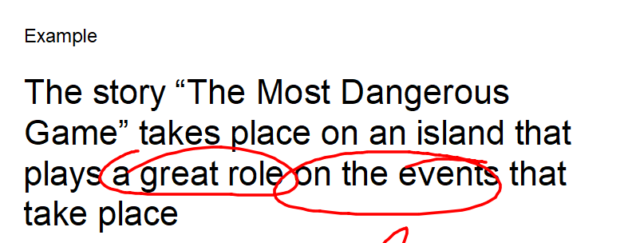
Students today worked on clearing up some final confusion over our first analytic Schaffer paragraph before beginning our second cycle. For example, the excerpt below has the problem of a very general topic sentence. Once it begins so generally, a paragraph will only go downhill from there.

Afterward, we began working on our second cycle of stories that we will use for our next analytic Schaffer paragraph. We’ll be focusing on the narrator’s point of view and the effect that has on the narrative.

We began with some unusual writing to illustrate the simple fact that what we see, figurative and in this case literally, depends on where we stand.

The “where we stand” element has to do with everything from past experience to religious views, from political views to personal food taste, and everything in between.

Then we read an intriguing story, “In the Family” by Maria Elena Llano (on Moodle). We’ll be using this tomorrow to examine how we can use the point of view of the narrator as an analytic framework and then plan a Schaffer paragraph around it.

Sixth Period

Students in sixth period finished their second Schaffer paragraph, the one that’s truly a beast: using quotes from a text as the basis for the concrete details.

We picked up where we left off Friday and worked on our concrete details.

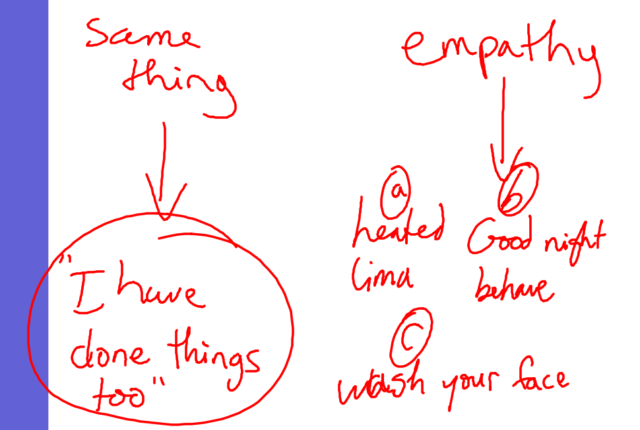
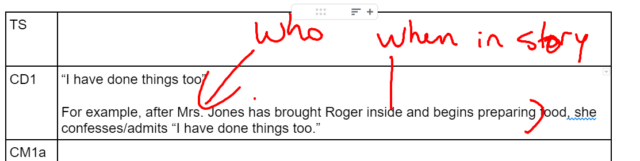
They key to using quotes in concrete details, they discovered, is to mix your words with the writer’s words: the student needs to include information about the context of the quote (the who and when in the story) and then try to slide the quote into the sentence naturally so as to avoid saying things like “For example, the text says…”

Some of the excellent examples they:

created include:

  • In addition, while Ms. Jones and Rogers are eating, she takes care to not say anything “else to embarrass him” because she knows what it’s like from first hand experience.
  • In addition, after Mrs.Jones had Roger wash his face and had a very true and kind conversation with him โ€œshe heated some lima beans and ham she had in the iceboxโ€.
  • For example, after she had him wash his face and had a very true and kind conversation with him, โ€œshe heated some Lima beans and ham she had in the icebox.โ€

Seventh Period

Students in the final period completed their first real Schaffer paragraphs after examining three example paragraphs in various states of disrepair. They had several options to choose from for each paragraph:

  • The TS is too general.
  • The CDs are not logically connected to the TS.
  • Each chunk is missing a CM.
  • The CDs do not use transition words
  • The CMs have no connection to the CDs.
  • Nothing — it’s perfect.

Students evaluated the paragraphs first in groups and then alone.

Afterward, we worked on our first Schaffer paragraphs:

Example planning: I used “shoelaces” and “toothbrush” as examples I knew no student would actually have so as not to unfairly help one group.

Every student had a topic sentence they’d created in groups: “In order to have a great year, students should (1) and (2).” The numbers represented their two best ideas from the list they’d brainstormed.  Afterward, on Friday, we made sure that the two ideas from the TS made it to CDs. And today, we worked on completing the two CMs for each CD, thus completing our first Schaffer paragraph.


We’re only two full weeks into the school year, and one of my on-level classes is about 1.5 days ahead of the other on-level class. It leaves me wondering what to do: slow down one class to let the other catch up, or skip some things with the slower class to help speed up the pace.

Neither is a good option. Time for enrichment lessons…

Perspective

It’s 9:36 in the evening, and our current indoor temperature is 82ยฐ. We’ve done the best we could to keep the temperature from rising in our air-conditioner-less house, but though the temperature is falling outside (the real kicker is that it’s currently 77ยฐ outside), it’s not falling in our house.

During my evening walk, I developed a theory about this: I think it’s because the temperature in the attic is still undoubtedly very high. Warm air rises. And if it’s got a column of warm air above it, despite the insulation between the two, it’s just going to sit there. Yeah, I know — it doesn’t make sense, but neither does an 82ยฐ house at half-past nine in the evening.

Yet thinking about it, one realizes it’s truly a first-world problem. Most of the people living in the hottest regions of the world have never had air-conditioning in their homes, and their homes are materially vastly inferior to ours.

Puts things in perspective. But we’re still tired of being sweaty…

Saturday, Late August

It’s late August — the time of year when cooler autumnal temperatures approach, but sometimes not quite fast enough. Daytime temperatures can still get up into the mid-90s, and summer’s humidity still lingers, making it feel even warmer.

That’s all fine and good if your HVAC system is working well. Sure, it might work a bit more than you would hope. The heavy heat of July is a thing of the past, and although it can be hot, late August usually brings a bit of a break for one’s HVAC system and one’s power bill compared to mid-July. Not much — just a bit.

Still, we have a relatively high-efficiency system, and the difference I guess is no big savings. Five or ten bucks perhaps.

But then the system starts stalling, starts leaking coolant, and the indoor temperature climbs despite the temperature outside. Specialists arrive, investigate, diagnose, and give a $2,200 quote for fixing the system or $800 for a temporary bandaid.

“How long will it last?”

“A few months to a few years.”

Cheap is expensive; lack of information leads to poor decisions. It lasts less than 24 hours. $800 for 20 hours of cooling.

More specialists arrive. They’ll do the fix for about 75% of the other company’s quote. We go for it. The system works for a couple of weeks, still showing some strain and problems but keeping the house comfortable.

And then the whole thing shuts down. Completely. When temperatures return to the mid-90s. And the company we’ve been working with doesn’t work on the weekend, so we’re stuck until Monday. And so you start researching things like this.

Fire Drill

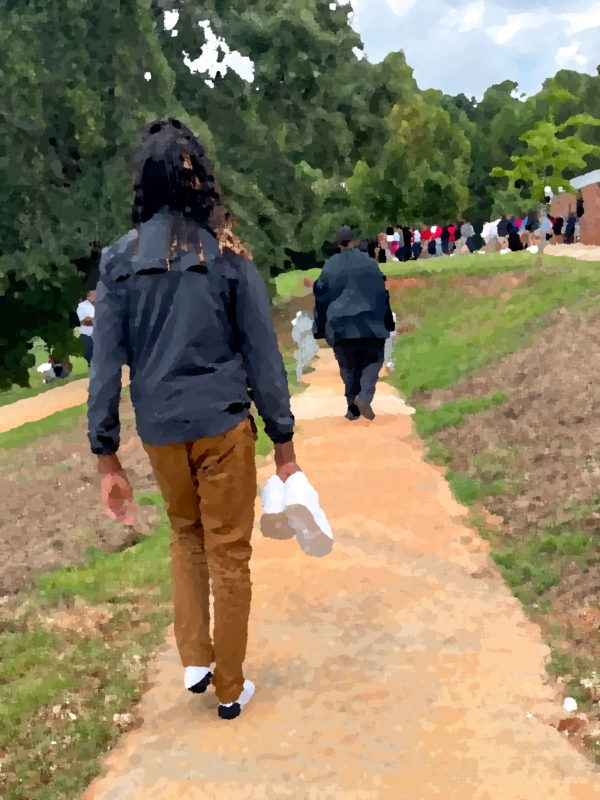
It’s always seemed to me that shoes are especially important when you’re outside and will soon be walking through wet grass. The option of taking one’s shoes off and getting one’s socks wet doesn’t seem incredibly pleasant to me, especially when it’s just the second period of the day and the socks would remain wet for hours afterward.

But spotless, white shoes are more important than comfort, I suppose.

Forgiveness

It’s a pretty impressive feat of short-sighted hypocrisy that most of the people most opposed to student debt forgiveness are practitioners of a religion that is built upon the idea of a debt being paid undeservedly…