









The mystery one street over tonight: why are two police cars parked by the side of the road, lights flashing, tromping about in the woods?

State testing is coming up, which means the state Department of Education mandates a meeting to cover test administration protocols.

It’s the same every year. Nothing ever changes. Ever.
“Can’t you test out of it?”
If only…
Evangelical Christianity as the dominant political force in America is dying from a self-inflicted wound. To suggest that Christianity in America is not waning is to ignore the obvious. But just in case, there are data to back it up:
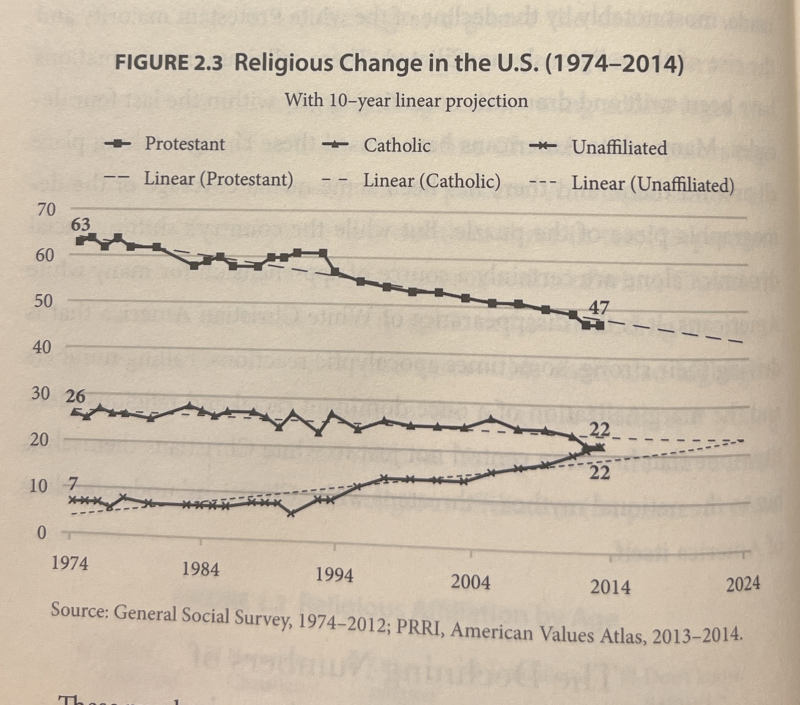
Robert Jones’s book looks at the decline of white Christian America (which he shortens to WCA) through a couple of lenses, but most significantly, the decline of WCA is due to its stance on homosexuality:
Today, many white Christian Americans feel profoundly anxious. As is common among extended families, WCA’s two primary branches, white mainline and white evangelical Protestants, have competing narratives about WCA’s decline. White mainline Protestants blame evangelical Protestants for turning off the younger generation with their antigay rhetoric and tendency to conflate Christianity with conservative, nationalistic politics. White evangelical Protestants, on the other hand, blame mainline Protestants for undermining Christianity because of their willingness to sell out traditional beliefs to accommodate contemporary culture.
Traditional Protestantism and more progressive Protestantism are both point their finger at the other, but the dilemma is real:
Moreover, more than seven in ten (72 percent) Millennials agree that religious groups are estranging young people by being too judgmental about gay and lesbian issues. Seniors are the only age group among whom less than a majority (44 percent) agree. The dilemma for many churches is this: they are anchored, both financially and in terms of lay support, by older Americans, who are less likely to perceive a problem that the overwhelming majority of younger Americans say is there.
As a skeptic, I can’t help but find hope in this.












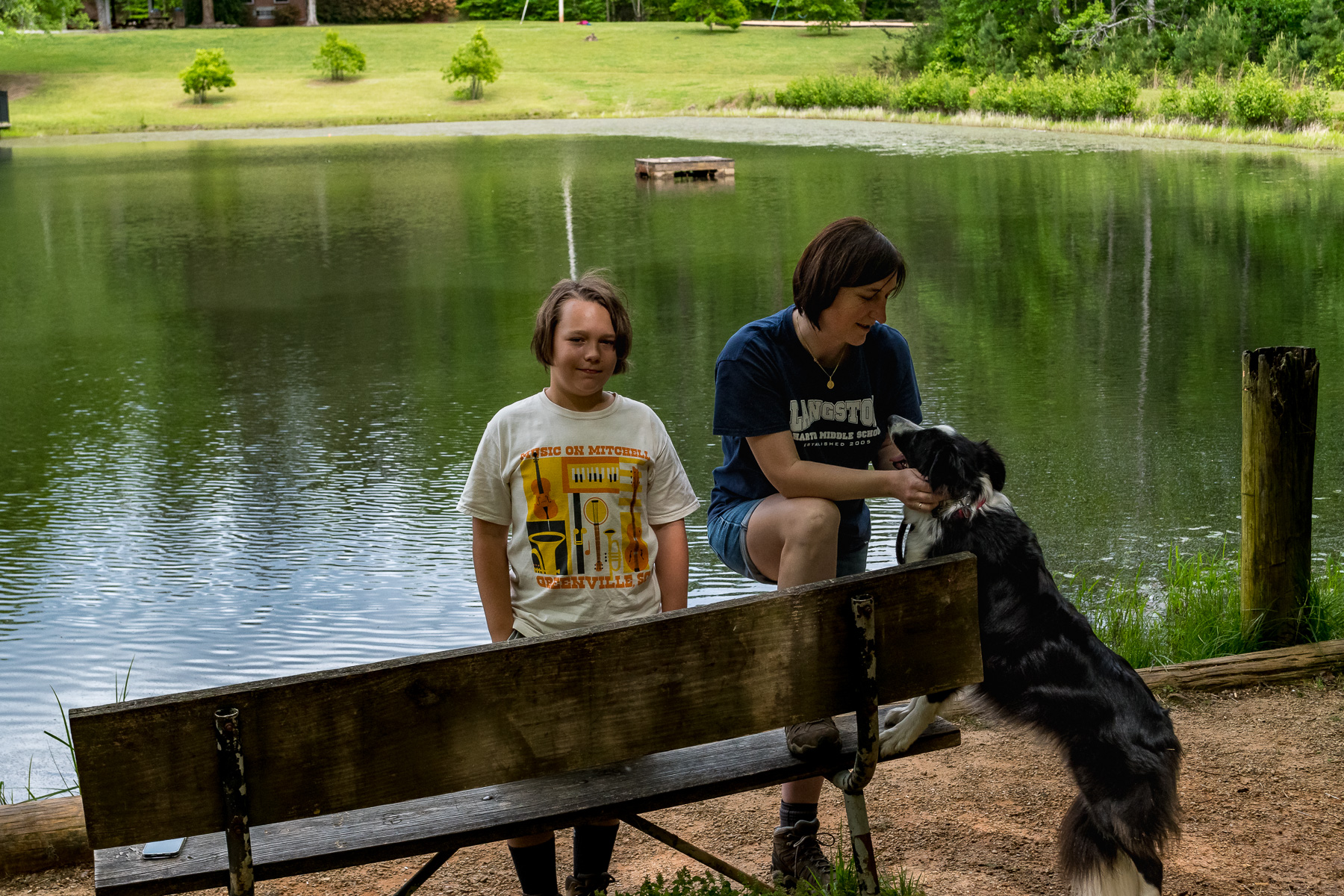












One of the things I love about teaching is the relationships I create with the kids I teach. We laugh together, fuss together (or rather, they fuss at me about how hard something is), have deep thoughtful moments together…

“Mr. S, you should put that picture on our class website!” the girl to the left declared. I didn’t, of course, put the drawing the girl on the right had created that she was none-too-proud of and mildly irritated at the thought of it being publicized.
After a moment, though, she added, “And put that picture I drew as well, so everyone knows what was going on…”








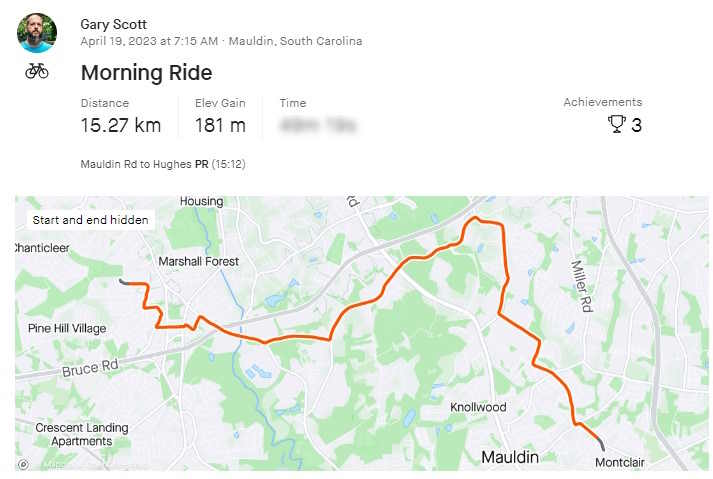
Starting to ride to work more. Those morning rides are usually fine — slow, but lovely. Afternoon, though….

More pictures from our lovely Sunday.











































Indicator 32,048,985 that your wife is Polish: you find her Saturday evening ironing sheets for family visiting the next day…
Power goes out; students with sub next door are going almost wild; these guys kept doing what they were doing.
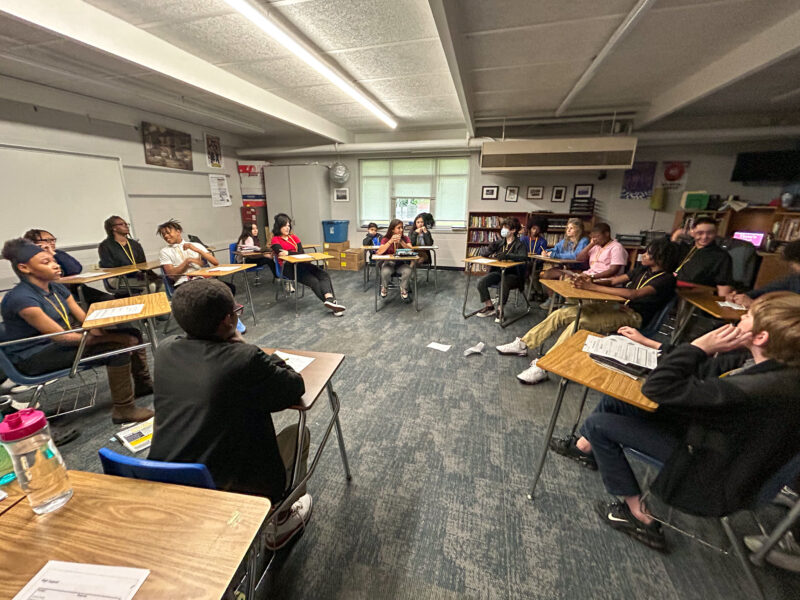
More forest cleared near the soccer complex, but soccer stayed the same.





The kids were reading about Jim Crow laws as part of the To Kill a Mockingbird unit that we started a couple of weeks ago. Part of the article dealt with the religious justification some Christians used to explain the harsh segregation of Jim Crow times. One young lady — a sweet kid that always has a smile — wrote the following comment:
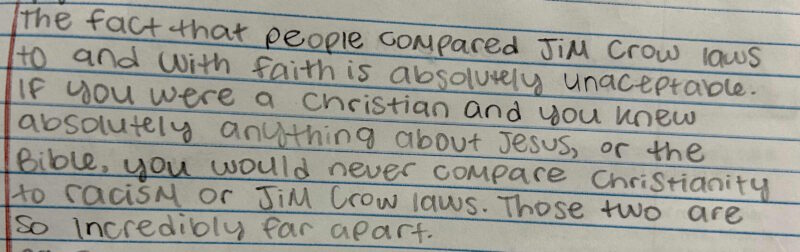
It reminded me of the suggestion that Christians who don’t read their Bibles are Catholic, Christians who read their favorite parts are Protestants, and Christians who read the Bible critically from cover to cover become atheists. It is, perhaps, an over-simplification, but I’d be willing to bet this young lady goes to one of those Protestant churches that are well-versed (no pun initially intended) in the parts of the Bible that make the feel good and avoid completely the tricky parts.
Parts like 1 Peter 2:18: “Slaves, in reverent fear of God submit yourselves to your masters, not only to those who are good and considerate but also to those who are harsh.”
Or Philemon 1: 15, 16, in which Paul sends back a slave to his owner, suggesting, “Perhaps the reason he was separated from you for a little while was that you might have him back forever—no longer as a slave, but better than a slave, as a dear brother. He is very dear to me but even dearer to you, both as a fellow man and as a brother in the Lord.” He could have suggested that slavery is wrong, but he chose not to.
Or all the countless passages in the Old Testament instructing Israelites on the proper use of their slaves.
I, of course, said none of these things to her. It’s not my place: I’m there to teach them, in part, how to think critically, not what to think. However, a close reading of the text…