g

Tampa to St. Augustine via Gainesville

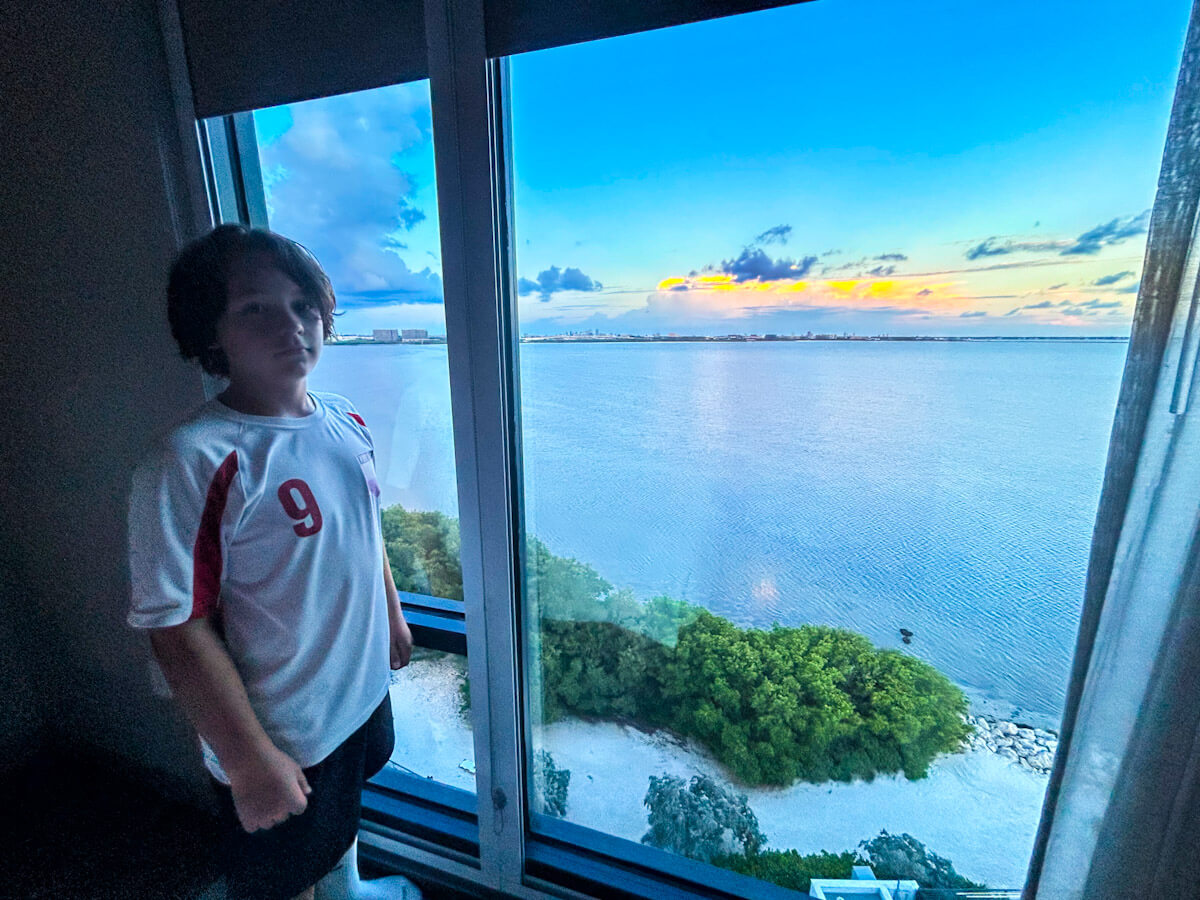
We left our lovely hotel room with an incredible view to head to St. Augustine for the second half of our Florida vacation. It’s the second time we’ve been to St. Augustine as a family, the third time for the kids and me. That is to say, we really like St. Augustine.
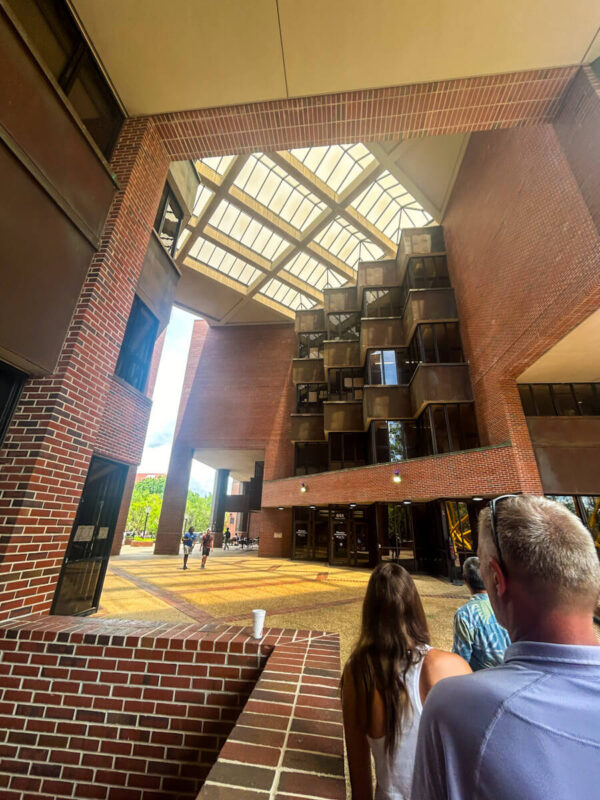
Along the way, we made perhaps the most important stop of the whole week: a few hours in Gainesville. What’s so special about Gainesville? Well, it has a fantastic Korean restaurant, as we discovered for lunch. And rocker Tom Petty is a Gainesville native. But neither of those was the real reason we went to Gainesville. Our primary motivation has to do with our daughter, who is going to college in about a year. Going to college in about a year. Her number one choice of colleges: University of Florida, which is located in — guess — Gainesville. She wants to study bio-engineering, and Florida University has one of the best programs in the nation for that.
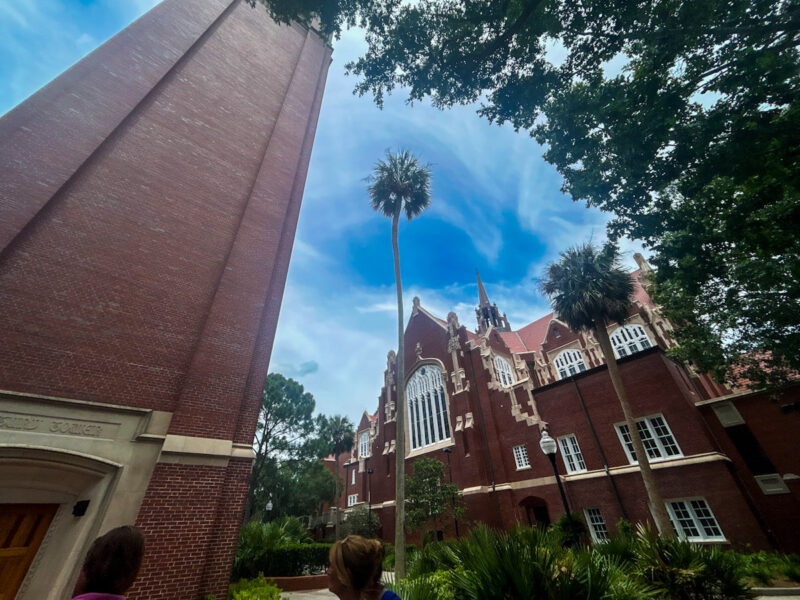
So we stopped by for a tour of the university. I tried not to talk too much or take too many pictures. The Girl remained relatively quiet during the tour. But we came away with a positive impression: the parents are happy with some of the safety programs the university implements; the Girl is happy with the college as a whole, especially one of the enormous chemistry labs we got to take a peek at.

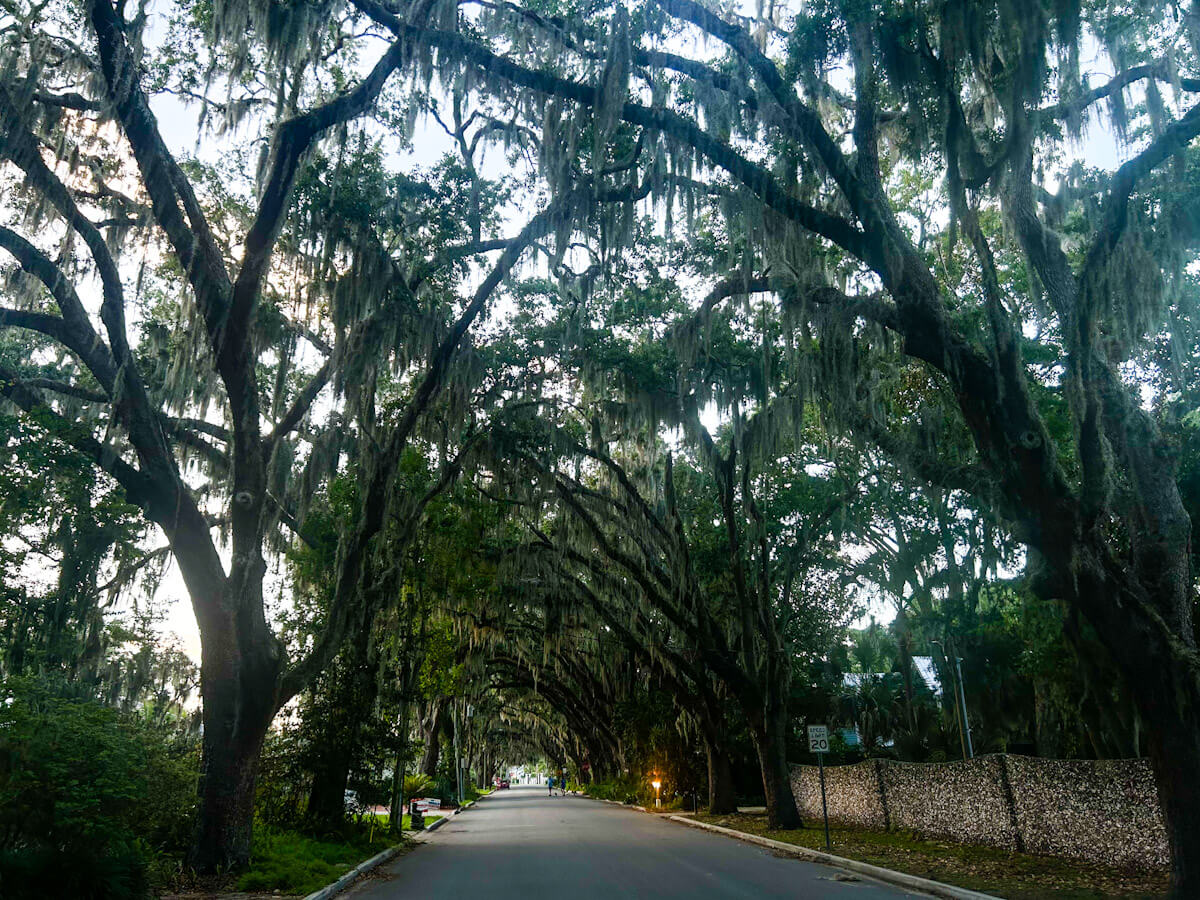
Afterward, we headed to St. Augustine and our lovely Airbnb spot: a bungalow in an absolutely beautiful part of town. Walk to the end of the street, and this is the street we see:
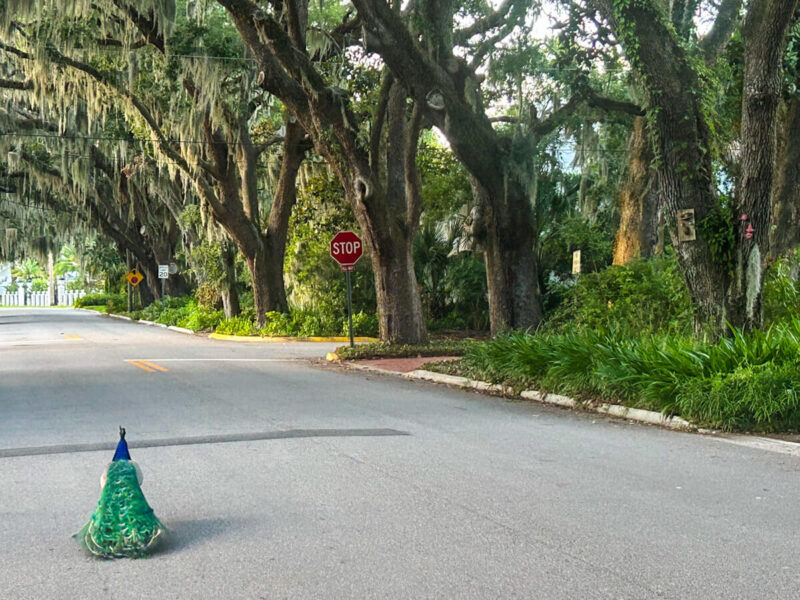
Yes, that’s a peacock taking a stroll down a Live-Oak-lined street. It’s positively bajkowy.
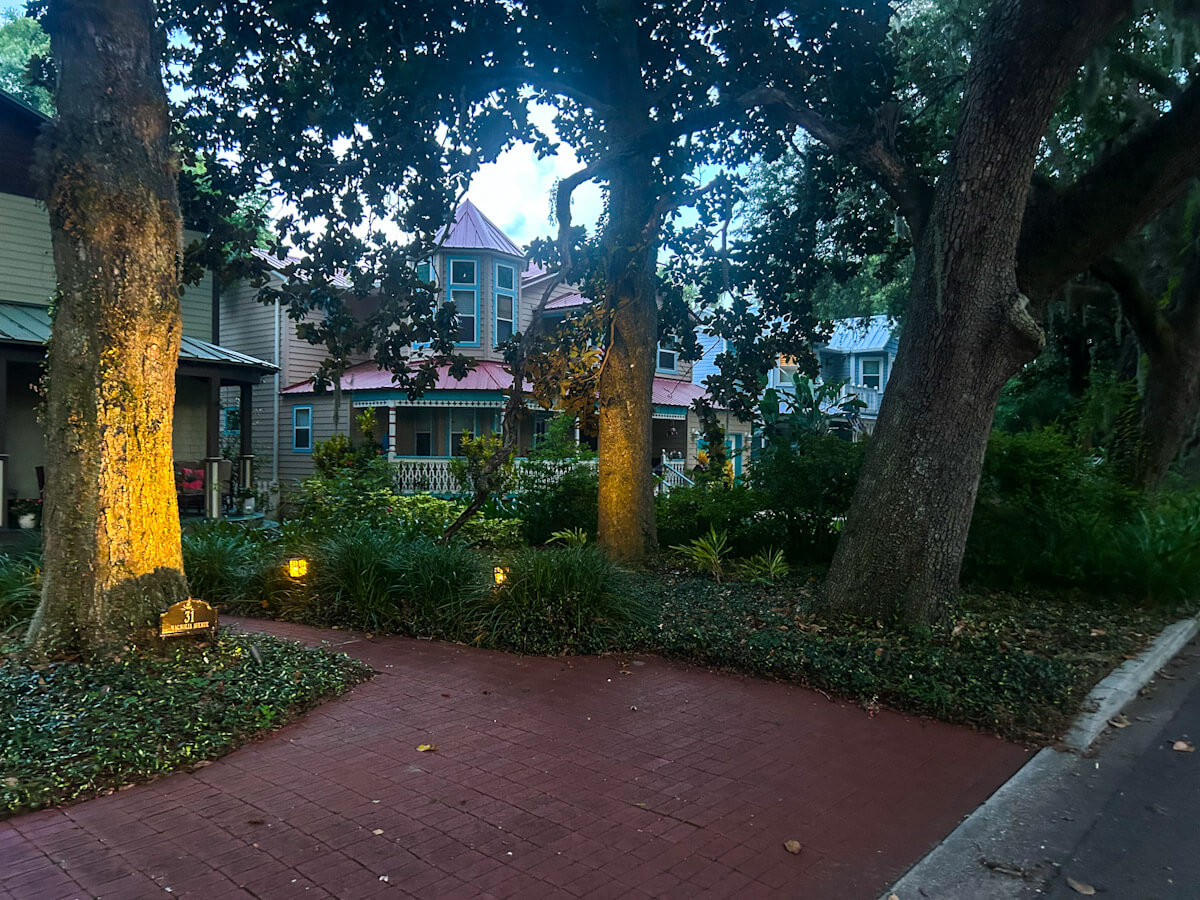
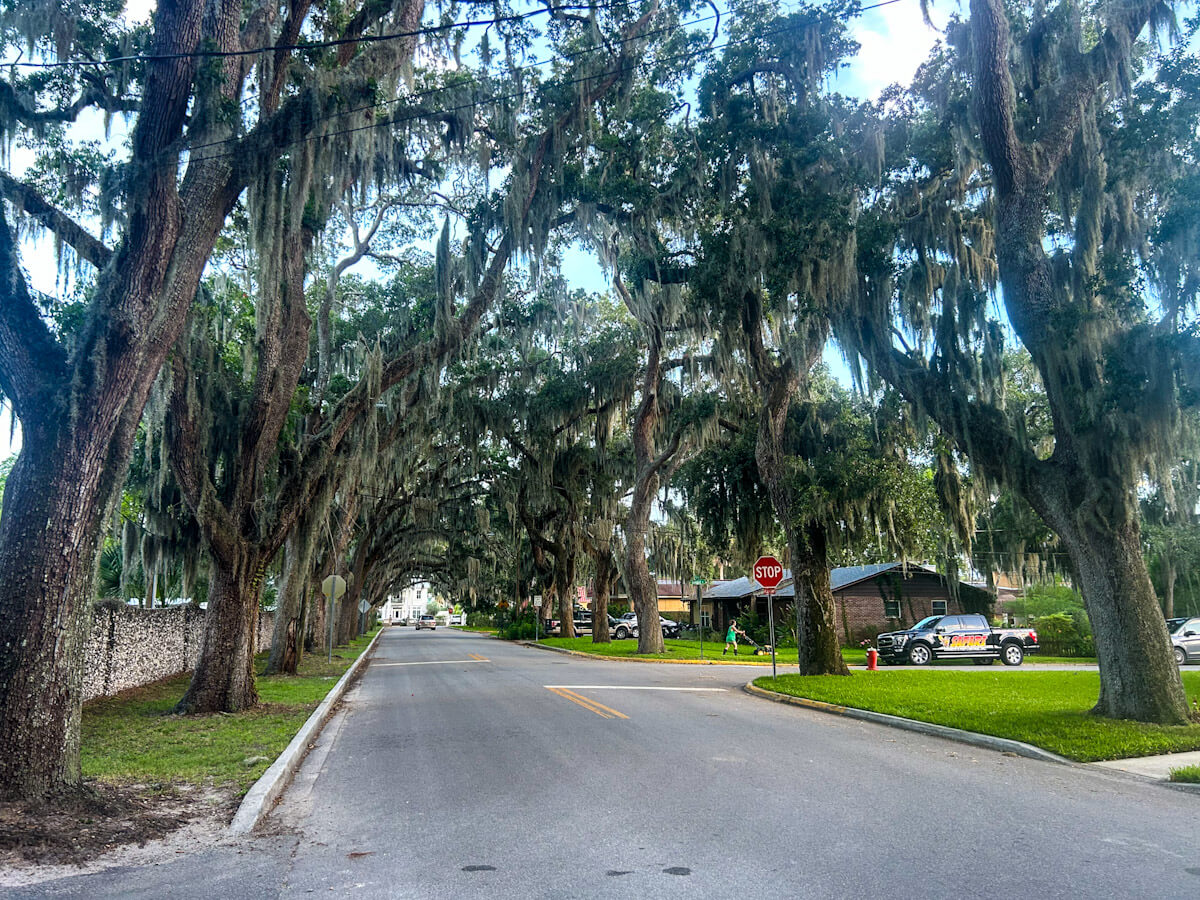
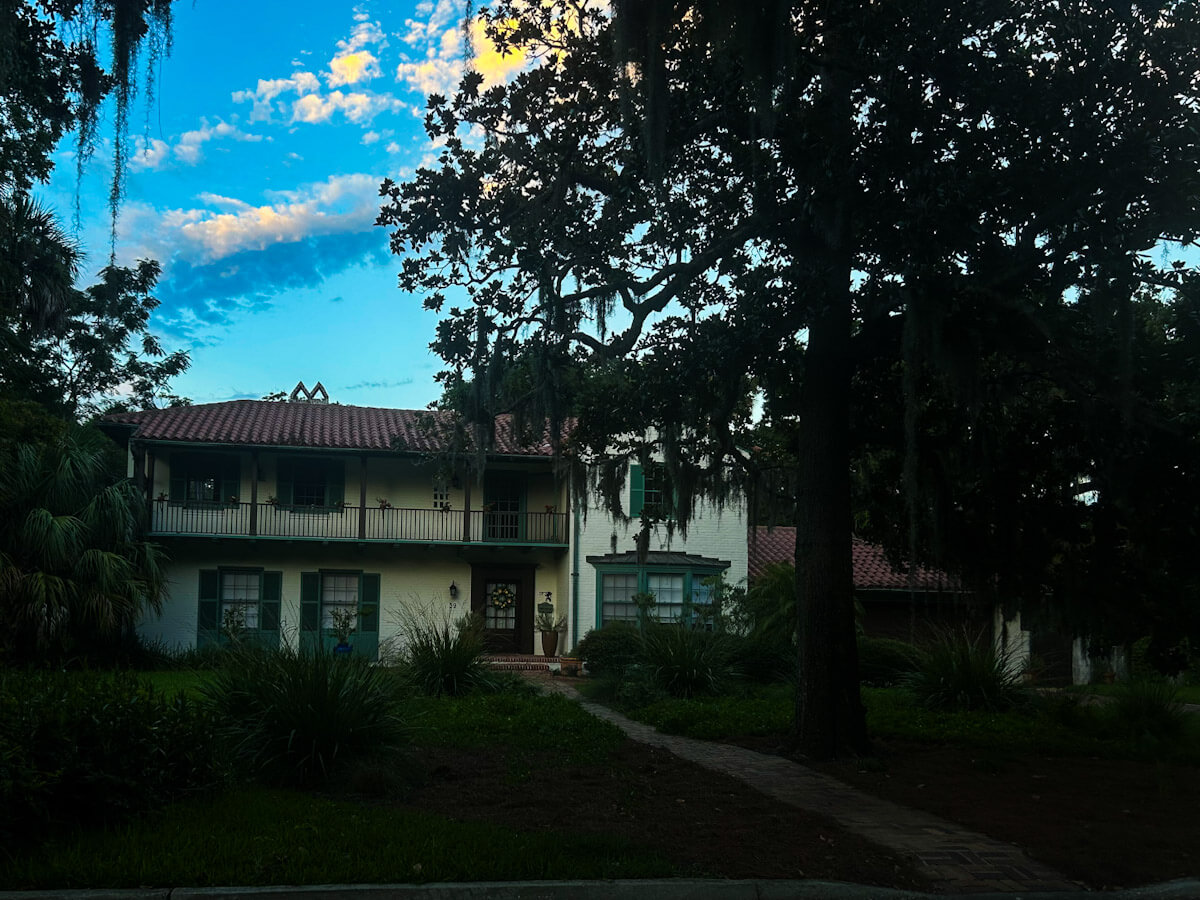
Lovely houses as well. And the peacock? They’re from Ponce de Leon’s Fountain of Youth Archaeological Park, an ethnographic museum literally at the end of our street.
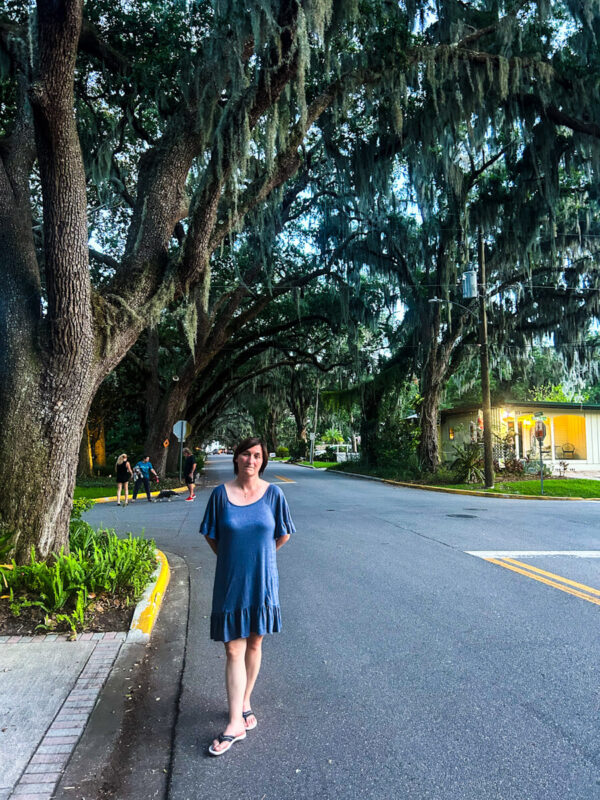
We weren’t planning on visiting any real attractions while in St. Augustine, but since it’s just down the road, we’re thinking we might. We’ll definitely visit the Cuban coffee cafe down the street.

A games night rounded out our evening: our Airbnb has several entertainment options, including a ping pong table. Poor K gets knocked around in board games, card games, and our front-yard badminton games, but she really knows how to play ping pong.
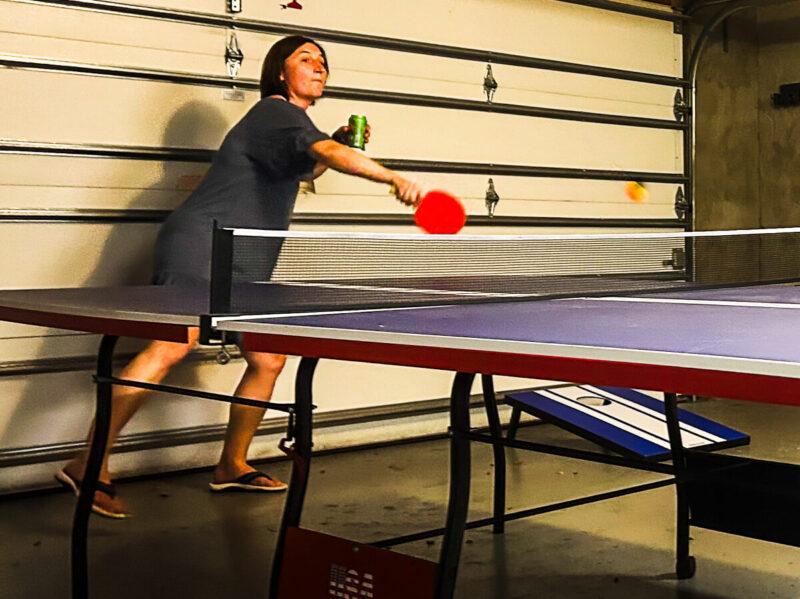
“Don’t worry,” she assured us, “I’ll take it easy on you.” And proceeded to trounce us all one after another, beer in hand.
St. Petersburg Day 2: Busch Gardens

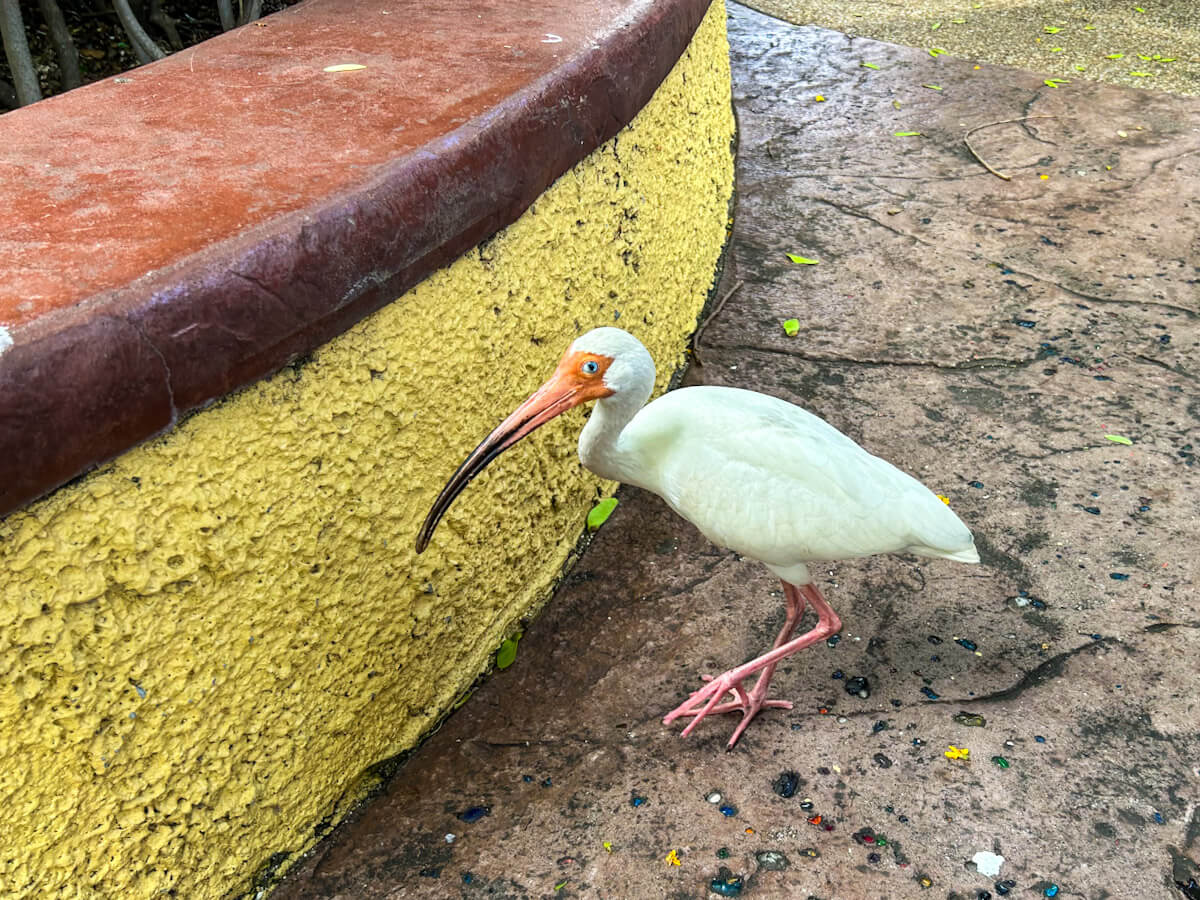
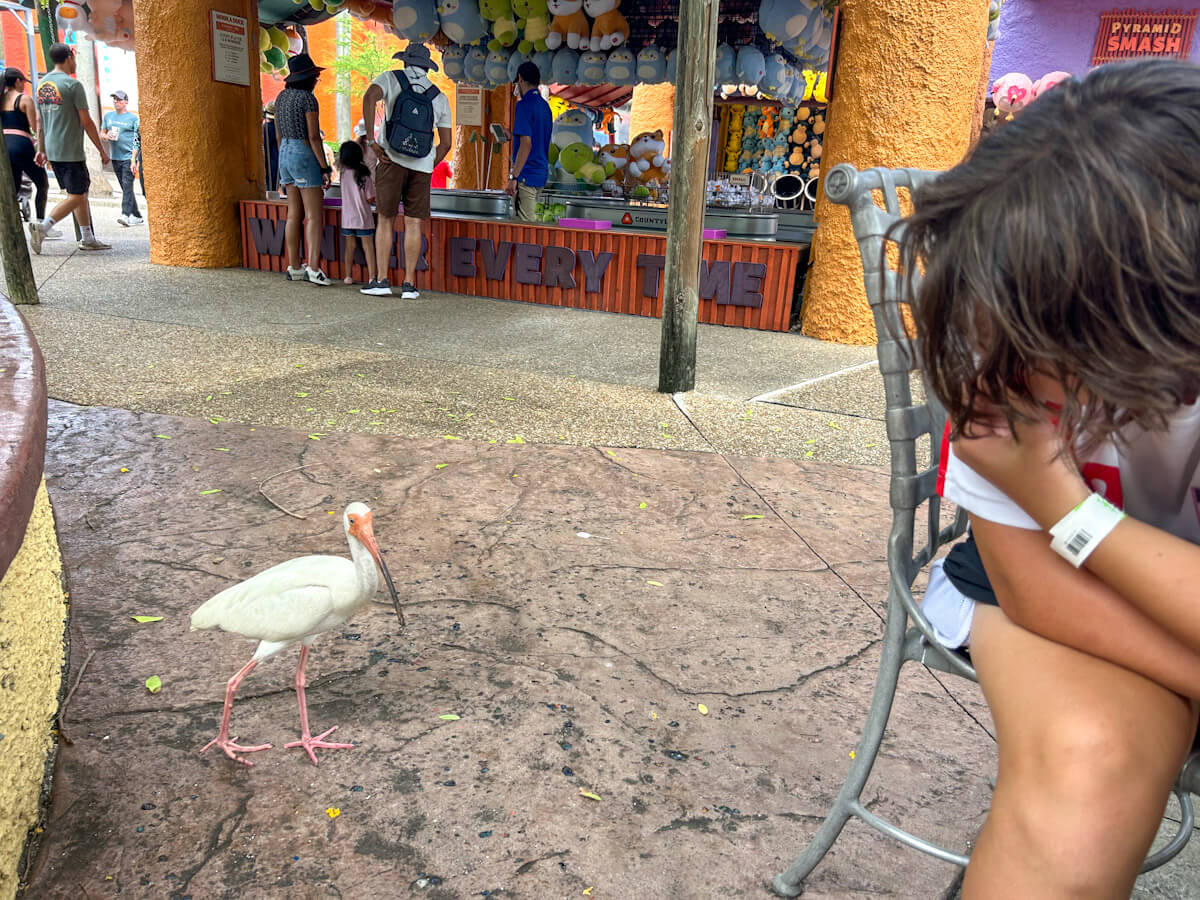
Today was not actually a St. Petersburg day: we decided we’d do something un-Scott-like. We thought about this nature outing, we considered that nature outing, but in the end, we went full-on American and spent the day in Busch Gardens in Tampa, just across the bay from St. Petersburg.

K had never been on a single roller coaster in her life. Not one. Ever. So we were all excited to see how she’d like an amusement park with something like eight or ten coasters.

We arrived and went to the first coaster right out of the entrance, the Iron Gwazi. According to the park, it is

North America’s tallest and world’s fastest & steepest hybrid coaster. The award-winning Iron Gwazi takes thrills to new heights, plunging riders from a 206 foot-tall peak into a 91-degree drop and reaching top speeds of 76 miles per hour.

Having that as your coaster ever is like taking someone who has been a teetotaller who’s interested in having his first taste of alcohol and giving him a shot of 70% sliwowica.

This is what it looks like:

Such a film fails to capture the excitement of that first drop. It’s difficult to describe that first drop: you think it should be over because how long can you remain in a verticle (well, almost verticle: it’s 91 degrees steep) drop?

As we were waiting in line, we got to talking to the folks standing in front of us, a man and his son or stepson (I couldn’t tell–the language he used was a little ambiguous). He commented on K’s bravery for picking the Gwazi as her first coaster ever.

“You’ve never been on one and you picked this as the first coaster of your life?

K’s verdict at the end? “If I can do that, I can do any of these rides.”

Orlando 2024 Day 4

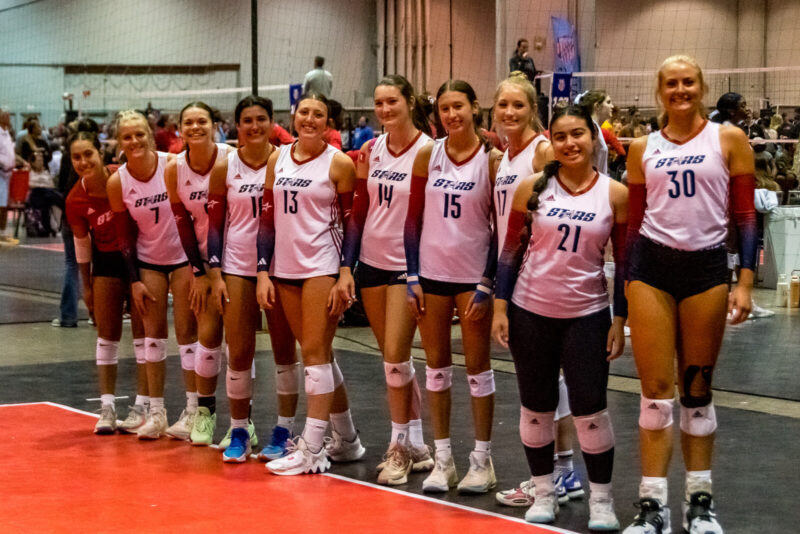
The girls won their first game but lost their second: the same story. They were up 22-19 but had several moments of trouble and ended up losing 23-25 in the first set. In the second set, they had a 12-9 lead but lost it, tying at 12, before dropping the second set 20-25.

And thus ended the third and final experience with AAU Nationals in Orlando.

Orlando 2024 Day 3

It couldn’t go on for the whole tournament, I suppose. Well, I guess it could: teams go undefeated in tournaments, but it’s rare. We were all hoping, of course, that the girls would make it through a third day without a lost — hopefully without even losing a set, but certainly without losing a game. But the first game of the morning, they met a team that was roughly as good as they are, and our girls couldn’t maintain 100% and the other girls could, so our kids had their first loss.

The first set was as close as it could be without going into extra points: 23-25. In the second set, they were going at it point for point until it was 11-11 until our girls pulled ahead, eventually reaching 17-15. But as so many teen volleyball teams seem to do, they gave the points right back to them and it was 18-18. Then it was 18-19. And then 18-20. A two-point lead is entirely different later in the game that it is when both teams are still in single digits. “If they lose one more point,” I thought, “It’s likely a done deal.” And there it was: 18-21. The girls just kept shedding points, and it was 19-23. THe opposing team needed only two more points; our girls needed three times that many. A four-point lead at that point is insurmountable unless the team has sudden burst of brilliance or the other team falls apart. We’ve seen both in the past; unfortunately, today, we saw neither, and the game ended 20-25.

The second game of the day started out tough, but the opposing team had a bit of self-destruction and our girls took the first set 25-15. Unfortunately for the other team, that meltdown continued into the second set and only deepened: 25-10.

“Only one more game, right?” I asked the Girl afterward. Usually, there are only three games a day.

“No, we have our regular 1:00 game, but we have a challenge game at 4:00.”

This was the game to determine our bracket for the final day. If we won, we’d go to gold; if we lost, we wouldn’t go to gold. So the final status of the medal portion of the tournament would depend on one game alone.
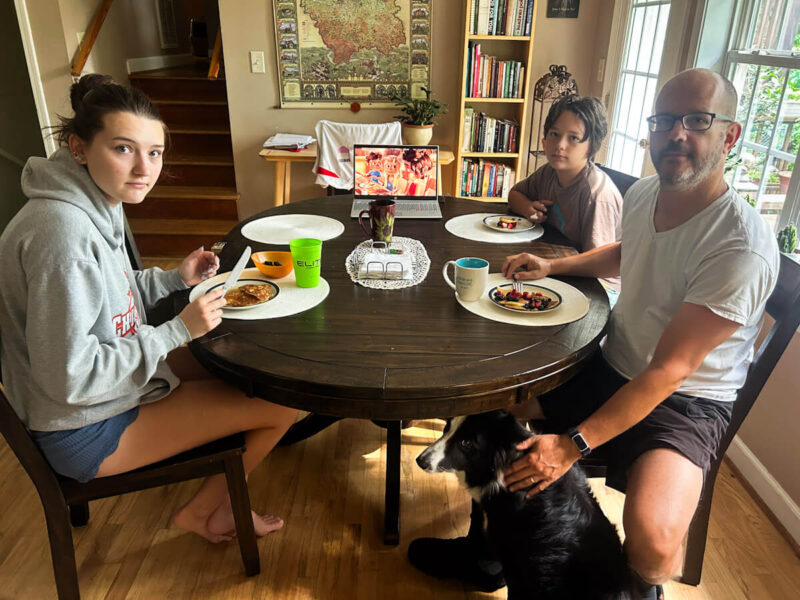
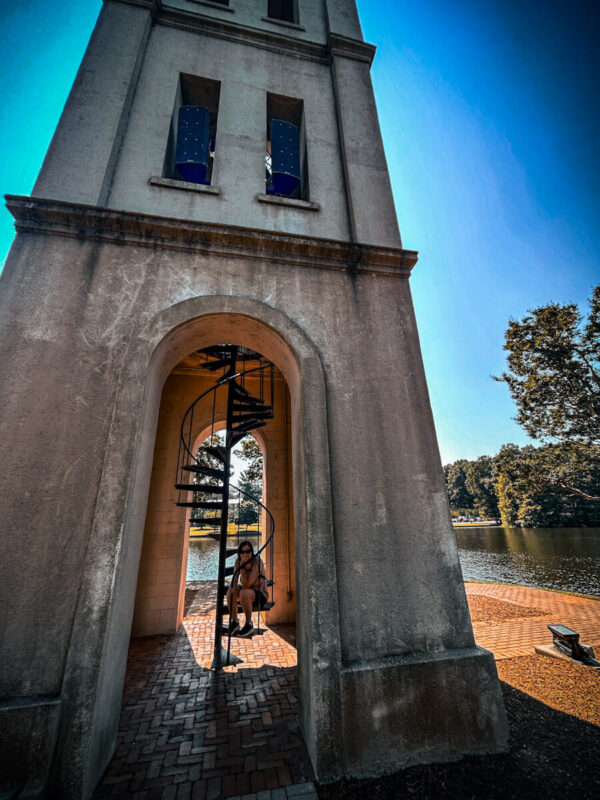
That’s a pretty high-pressure game.

To win a game like that against a good team would be exceptionally challenging. They would need to bring their very best game to the court. The defensive players would have to dig every ball; the setters would have to place every set perfectly; the hitters would have to swing fast and true; the blockers would have to be a wall.

Sadly, that’s not what happened. In fact, everything that could go wrong did go wrong. It was 1-3 in a moment, and then it just slid downhill from there. Before the girls got themselves together, playing a semblance of what they’re capable of, it was 3-11. The other team brought their very best game to the court, and the first set ended 18-25.

The second set started well. The girls were angry and determined to do better. And they did. Within moments it was 5-2, and it looked like the girls had regained their footing. Then it was 6-2, and I thought, “Alright girls, we’ll take it to three. This looks great.” And it was great, until it wasn’t. Soon enough, it was 9-6, then 9-9, and in a blink, the girls had given up a 3-16 run. The score had gone from 6-2 to 9-18. The second set ended worse than the first with a final score of 14-25.

All the girls were angry; all of them disappointed; all of them were aware that they’d simply beaten themselves. All of those times they were on the other side of such defeats this tournament disappeared because this was the only one that mattered.

It so exemplifies the nature of teen volleyball and probably teen sports in general.

Orlando 2024 Day 2

Yesterday there was a team from Texas who, I believe, lost all their games in straight sets. L has been there: she’s been on teams that leave a tournament day without a single win. The Texas team was up 11-8 at one point, but our girls rallied and beat them.

Today, it was more of the same: straight-set victories for the first two games, including a brutal second game with sets that were 25-10 and 25-11. “It’s good to be on this side of that score,” I said to another parent, “but we’ve been on the other side, and I know how that hurts.” It does a real number on your self-confidence, and soon, the bad mistakes (like the ones they were making: hitting serves out and sloppy serve reception) pile on each other. They reach a point that essentially, the team is just as much beating themselves as being beaten. Again, we’ve been there, too.

The final game was a bit of a different story. In the first set, the girls were quickly down 2-7, but the pulled it together and ended up taking the set 25-19. The second set started out much the same, but once again, they were able to pull back and then take the set 25-21

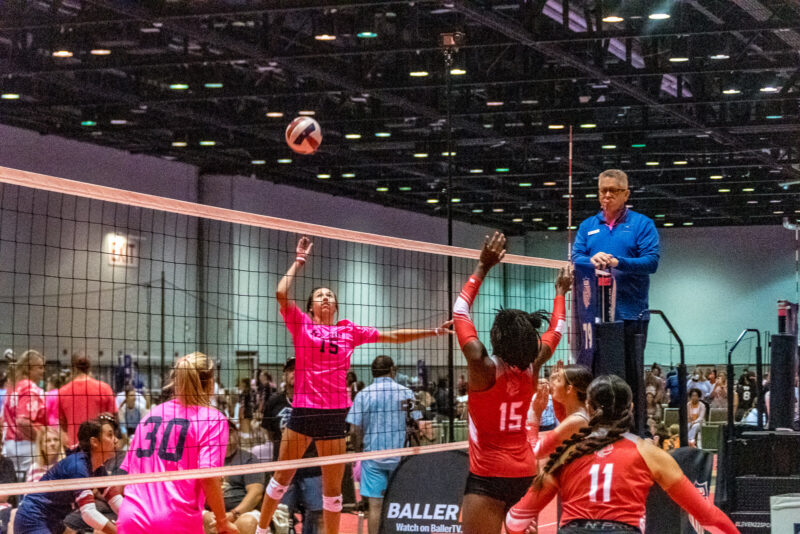
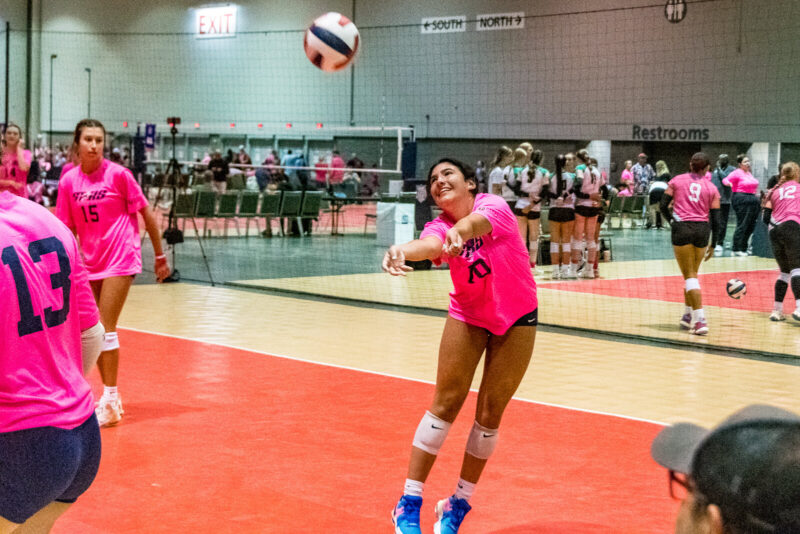
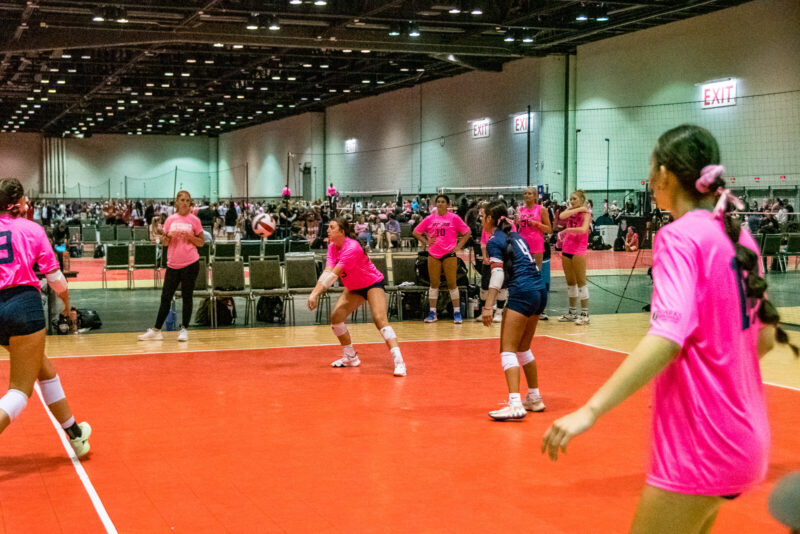
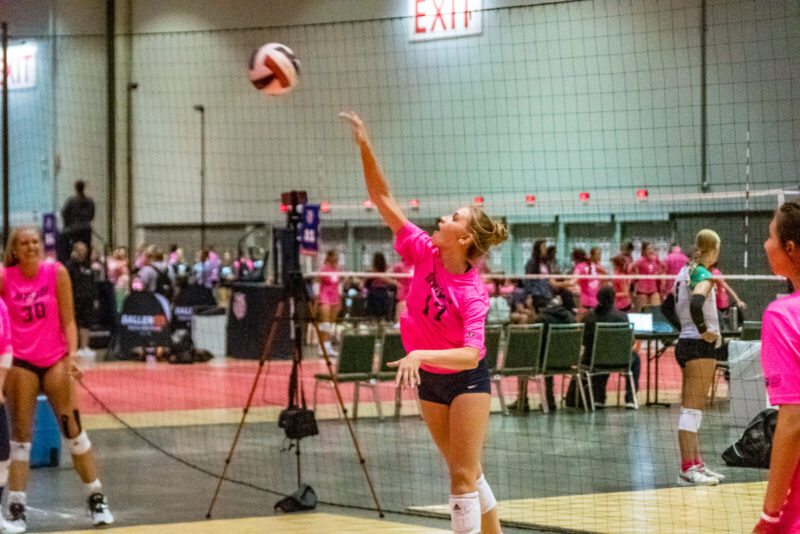
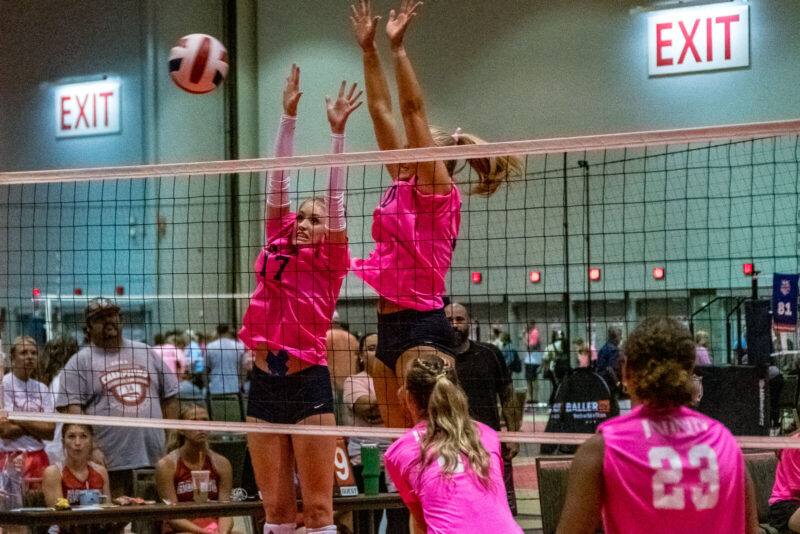
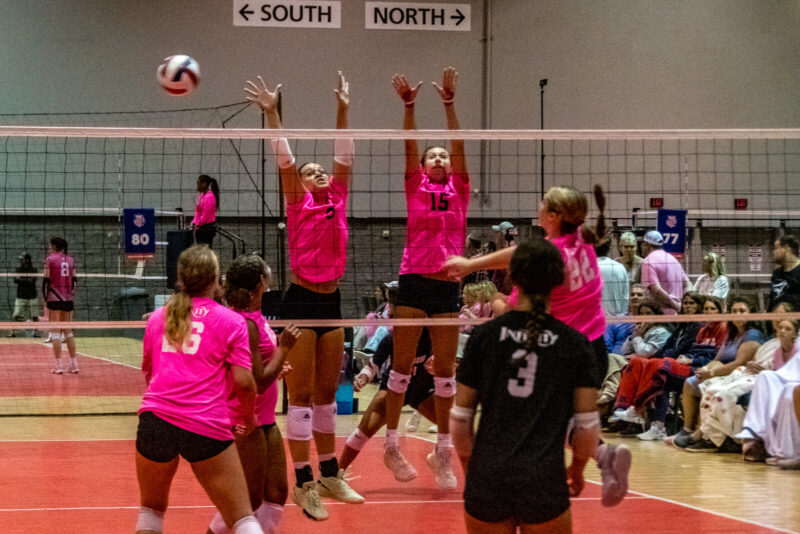
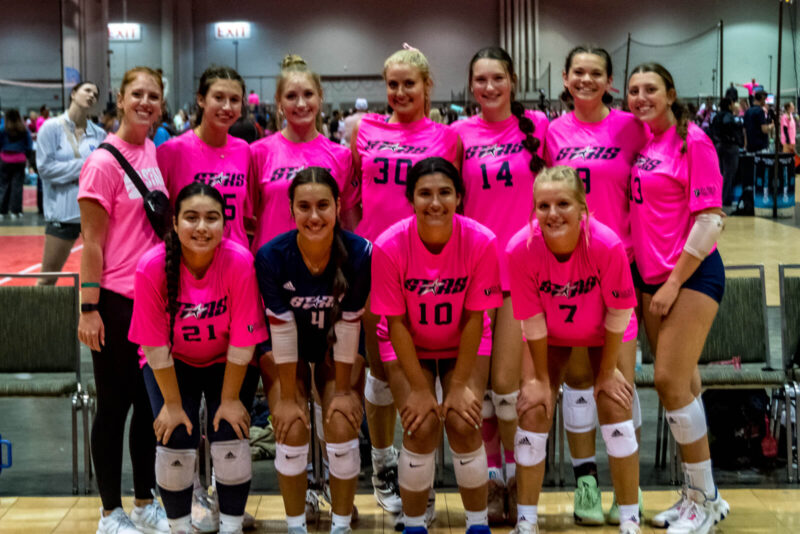
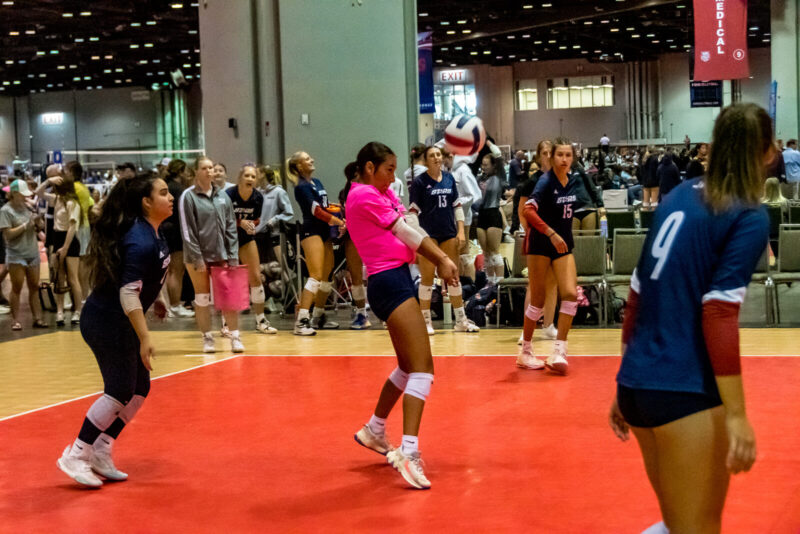
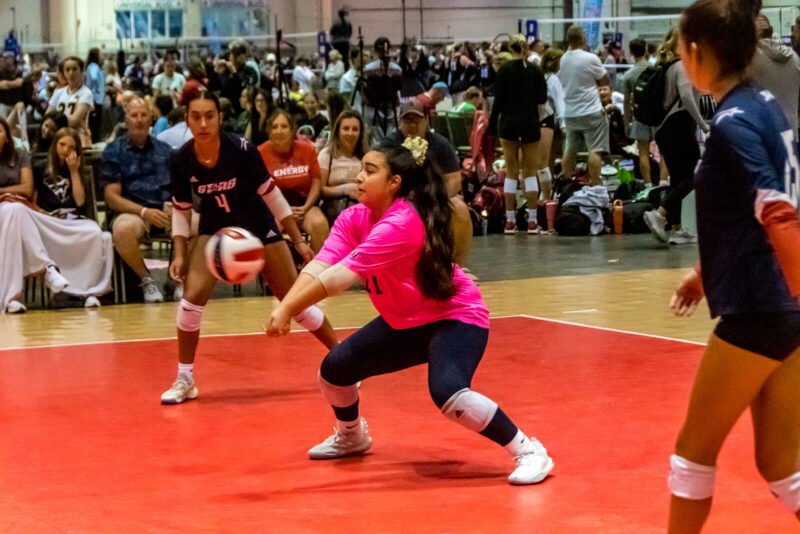
Today was Pink Out day, when all teams wear pink uniforms and I guess thinking at least in passing about the fact that women (and a few men) die of breast cancer every year. “Believe there is hope for a cure,” one shirt reads. It has a certain religious ring to it, but it’s antithetical to the whole enterprise of looking for a cure. While it is science and not faith, belief, or hope that will cure cancer, I understand the implied optimism in the shirt, certainly a critical element for anyone fighting cancer. One of the players I noticed yesterday is clearly just after chemo. A strong female outside hitter without a single hair anywhere on hear head, she stood out in more ways than one. Perhaps the pink encourages her. Hopefully.

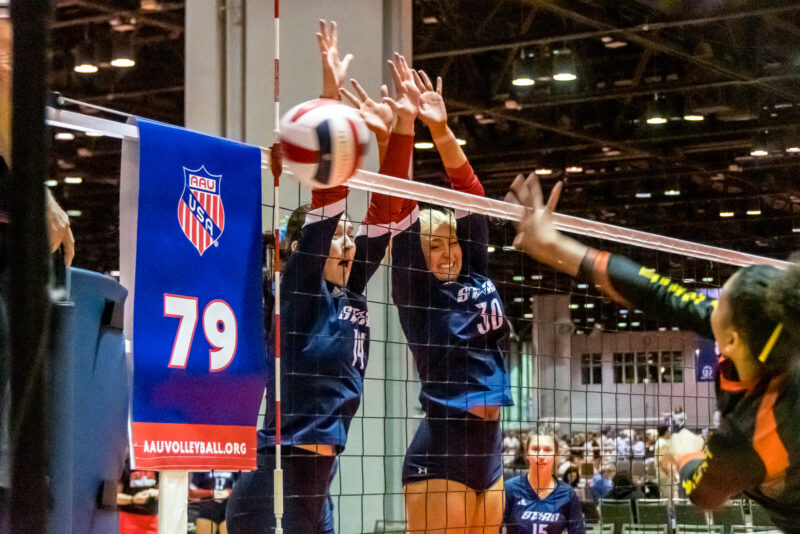
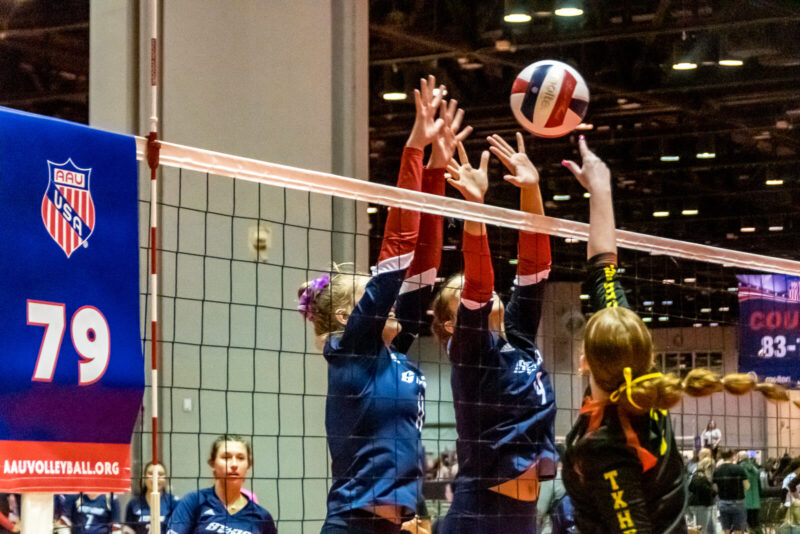
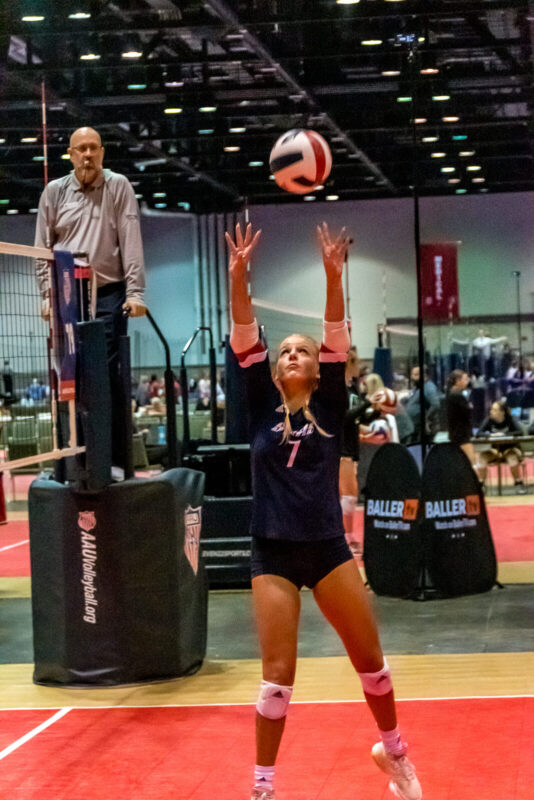
As for today’s pictures, I focused on the setters, which I don’t think I’ve ever done. In a lot of ways, their the brains of the whole team: they read the defense, make quick adjustments, and then decide which hitter to set based on perceived weaknesses in the opponents’ defense. Their sort of like the steering wheel of the team, or the neck. “Brain” seems to take something away from the other players.

In truth, all the players are completely critical. If you don’t have good defensive specialists, you won’t get a good pass to your setter. If you don’t get a good pass to your setter, or if your setter is not on her game, you won’t get your hitters in good position to attack. If the hitters are attacking, you won’t be scoring (except from opponents’ errors and blocking, and the occasional well-placed lob to the empty back corner from the setter or a DS).

As for the evening, it was games, games, games:

Orlando 2024 Day 1

The girls won all three of their games in straight sets by convincing margins. They often start like that; fingers crossed they continue like that.

Afterward, sushi

Arrival in Orlando

We’re in Orlando for this year’s AAU nationals.

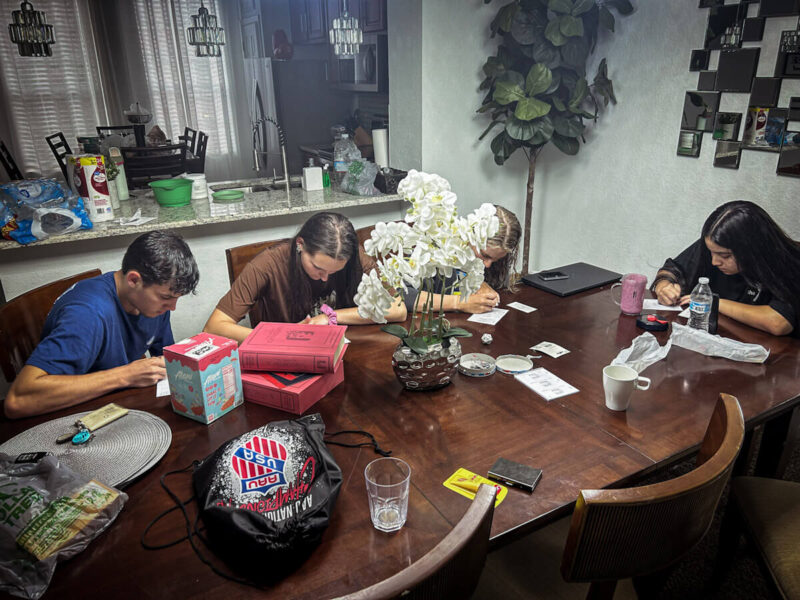
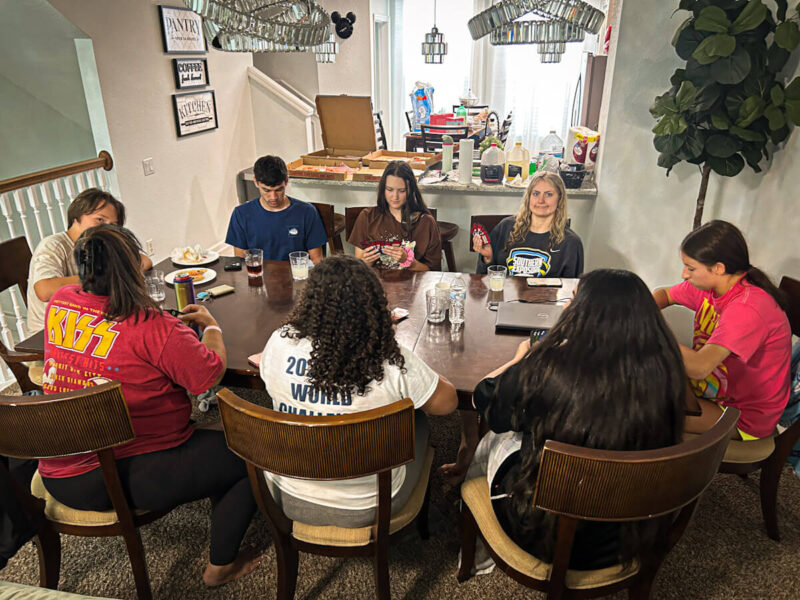
We’re staying with a couple of other families in a sizable condo.

We did some shopping ,

did some gaming, and had a generally lovely evening.

Back at home, Clover picked some blueberries.

Saturday Ride

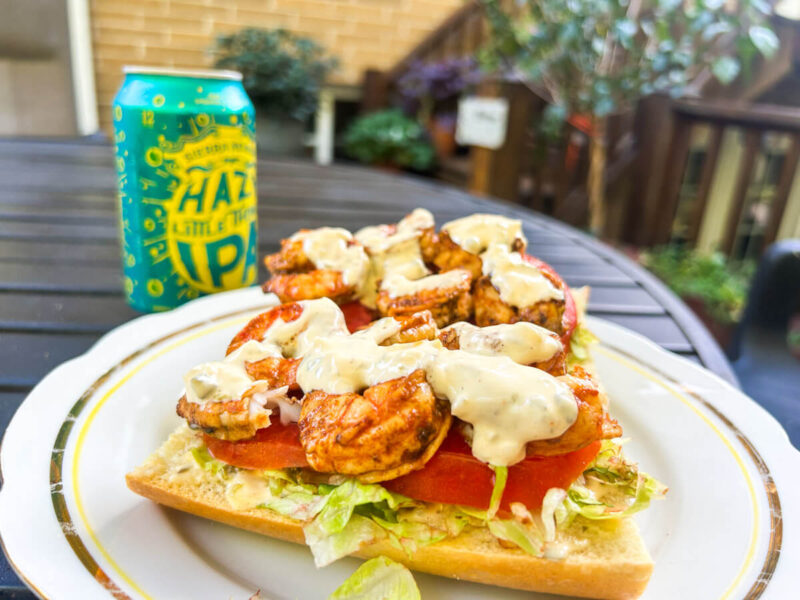
A big, ten-mile ride followed by a lot of car washing makes a delicious dinner all the more so.

Miracle

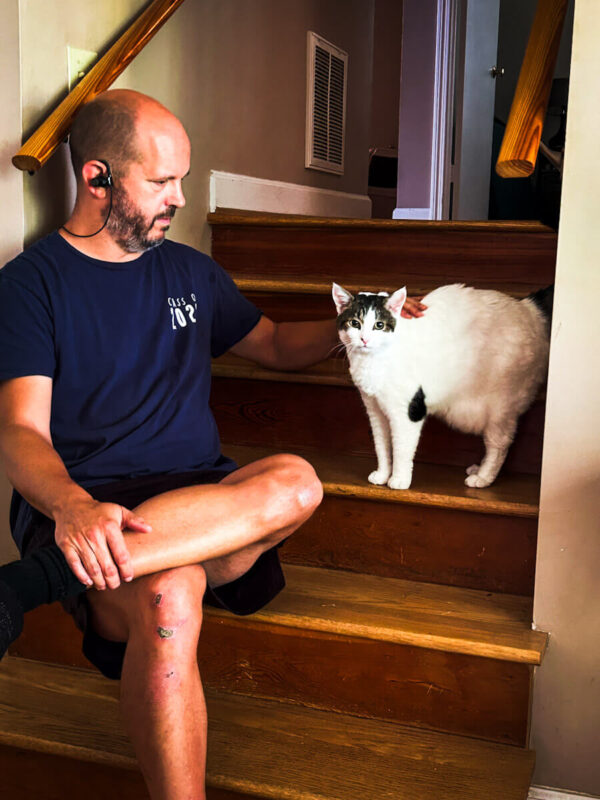
The fact that the cat even let me approach her, let alone pet her…

Against the Gates of Hell: A Short Review

The book purports to tell the story of a church’s fight for religious liberty. Specifically, it’s supposed to be an insider’s account of the State of California’s actions against the Worldwide Church of God (WCG), legal actions that began 3 January 1979 and concluded some months afterward. The state placed the church into receivership to investigate allegations of fiscal impropriety. That, of course, fed right into the church’s prophecy that it would be persecuted in the end times, and after reading the book and doing some research, I’m not convinced the state acted wisely at all.

Still, the book is supposed to be about that legal battle, and it does cover some of that. There are a couple of chapters that are virtually hour-by-hour accounts of what happened in the first days, but quickly enough, Rader veers off and spends a great deal of the book covering other things:

  1. The biography of WCG founder Herbert Armstrong
  2. An autobiographical sketch of the author
  3. An account of all the traveling Armstrong and Rader did in the name of the church
  4. The story of the building of Ambassador Auditorium and the performers who performed there

My rough estimation is that only a third of the book (at best) is about the actual legal action. That’s too bad, because it’s in the other portions of the book that Rader loses all credibility, presenting accounts that just read like fabrications.

He writes of visiting Jordan and spending time “with Prince Mohammed, the younger brother of King Hussein.” The prince was eager to play chess with someone, and Rader’s wife Niki volunteered to play him. The prince won the first game, and as they began the second game, he admitted that it was somewhat unfair. “You see, I am the president of the Jordanian Chess Federation,” he explained.

My wife said nothing. She merely pursed her lips and then proceeded to demolish Mohammed, not only capturing his queen but also giving it back to him. The prince looked astounded and the board was set up a third time. Niki destroyed him again.

Rader explained to the astonished prince, that what his “‘wife failed to tell you was that she plays all the time’ I paused just a split second — ‘with Bobby Fischer.’ Fischer, of course, is the former world chess champion with whom Niki does play, though he beats her consistently.” Fischer was, at that time, associated with the WCG, and it’s possible that she did play some chess with him, but the anecdote feels contrived.

When writing about the initial concerts in Ambassador Auditorium, which the arts community in Los Angeles supposedly jealously resisted, he writes,

Resistance came from yet another area. When the 1975 series was announced, a rabbi, noted for his radical stance on issues, charged that the Church and the foundation were launching a grave assault on Judaism! In radio broadcasts and newspaper interviews, he urged a Jewish boycott of the series. His reasoning, as I gather it, was as follows: Jewish parents attending the concerts with their children would see a lovely campus, have their cars parked by polite, well-groomed Ambassador College students, sit in a splendid hall and view all around them other well-spoken, well-dressed students. On the way home, the parents would turn to each other and ask: “Why can’t our kids be more like that? Maybe we ought to send them to Ambassador College.” Then, of course, they would be converted. The situation may sound funny but it was serious.

Again, it seems silly. Even if this unnamed rabbi said that in mock seriousness, he was surely joking. Anyone who knows the bizarre and silly teachings of the WCG would realize that Jewish children would be at no risk of converting to a little group that suggests that proof that Britain is one of the Lost Ten Tribes is the “fact” that “Saxon” comes from a shortened version of “Isaac’s sons.” Just drop the initial letter and we have “Sacc’s sons”! (Herbert Armstrong floated this theory in his largely-plagiarized “The United States and Britain in Prohephy” book.)

A final example: Armstrong and Rader were trying to get Herbert von Karajan to conduct the inagural concert. In their conversation, they had the following exchange:

Thinking back, I can see how wildly ludicrous it all must have seemed. Here we were in Germany, talking about bringing over a great conductor and a great orchestra to play in an auditorium that wasn’t there, and blandly asking him to set a date. Yet so total was Mr.

Armstrong’s confidence, so potent his persuasiveness, and so appealing the picture we painted of the great cultural center, that von Karajan became convinced. He studied his calendar, trying to shift dates. But when he was available, the orchestra was not, and when the orchestra had time, he did not. Regretfully, he informed us that it would be impossible for him to come.

“Maestro,” I asked, “in your opinion, who is second to you in the world as a maestro?”

“There is no question,” he replied at once. “Second to me is Giulini.”

“Oh,” I said, glancing at Mr. Armstrong. “Is that right?” I had never heard of Giulini and neither, I was certain, had Mr. Armstrong.

“Absolutely,” Von Karajan was saying. “He is a great artist.”

This seems a caricature of what a “great conductor” would say. Second to me?! Perhaps von Karajan was so arrogant, but it just doesn’t seem realistic at all.

Finally, there was a conversation with Arthur Rubinstein:

Looking up, he asked Mr. Armstrong sternly: “Sir, are you a professional?” Mr. Armstrong, beaming said: “No, I’m not, but you are and you will agree after you have had a chance to play them.” He explained they were Steinways, carefully selected by him and purchased in Hamburg.

Now Rubinstein became distinctly annoyed. “Sir,” he said, “I don’t like that kind of talk from nonprofessionals.” Mr. Armstrong said he understood, but once again repeated his assertion.

With the pianist continuing to bristle, I felt it wise to change the subject. “Would you like some champagne?” I asked them. Mr. Rubinstein brusquely declined but Mr. Armstrong accepted. When the waiter began pouring Dom Perignon, Rubinstein noticed the bottle and said, “I’ll have some, thank you.” To me he said: “That is all I drink; I was afraid you might order something else.” That broke the ice somewhat and for the rest of the evening the conversation became less strained.

Mr. Rubinstein agreed to perform. A couple of days before his concert, I met him in front of the auditorium and escorted him inside. While he was enormously impressed with the grounds, the building and the foyer, the moment he stepped through the doors into the theatre – catastrophe! “This is terrible!” he exclaimed. Startled, I asked what he meant. “The carpeting, the upholstery. It’s too plush. The sound will be absorbed. It will never do! Oh, I should never have come… How could you have good music with this!”

“Maestro,” I reassured him, “I know what you think, but please believe me. The acoustics are absolutely perfect. Please don’t worry about it.” I followed him down the aisle toward the stage, trying to calm him but his agitation grew as he progressed. I could see he didn’t believe a word.

“Let me see the pianos,” he grumbled and stormed up to the stage.

He ran his Fingers over the keys and the miracle happened.

He played chords on one piano, and then literally ran to the other. For many minutes he scurried between them, playing on each, his face mirroring wonderment and pleasure. He was like a child in a candy store, going from one delight to the other and unable to make up his mind which to choose. Finally he said to me: “It’s never happened in my whole life. Never have I heard two finer pianos!”

Again, it just reads like invented braggadocio

That’s the tone of the whole book: it’s more Rader bragging about himself than anything else.

To-Do List

One item on my summer to-do list is to repaint the ceiling in one of the showers. Why? There’s some stain that we have no idea what it is or how it got there, can’t get rid of it, and are tired of. So our simplified solution is fairly straightforward: paint over it with multiple coats.

Taping up the edges and protecting the rest with plastic, though, took longer than all the painting (for all coats) combined will likely take. And the best part: all the plastic, at this point, was unnecessary because I didn’t have a single drop.

Of course, if I took out the plastic…

Religious Discussion

This content has restricted access, please type the password below and get access.

Jam

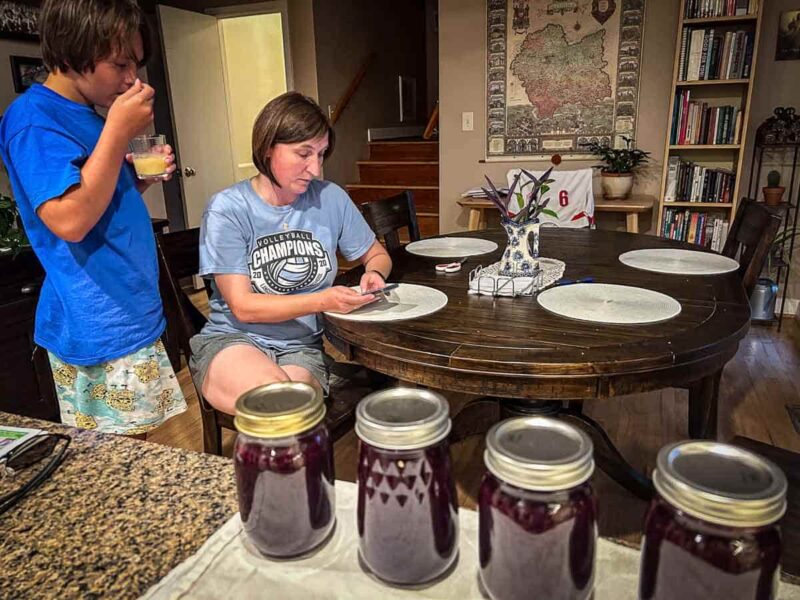
This is the time of year we feel like we’re drowning in blueberries. We head out each day and pick berries, sometimes for a few minutes, sometimes for a not-so-few minutes. Today, for example, I picked for about an hour; K joined me for about half an hour, and she was not even picking in a new spot of the bushes: she was going back over where I’d been, grabbing the berries I’d overlooked because they were hiding.

And the rest of the time? K was making the first batch of jam for the year.

Fathers’ Day 2024

Behind my back, the Girl told K that she wanted to do the Fathers’ Day breakfast this morning.

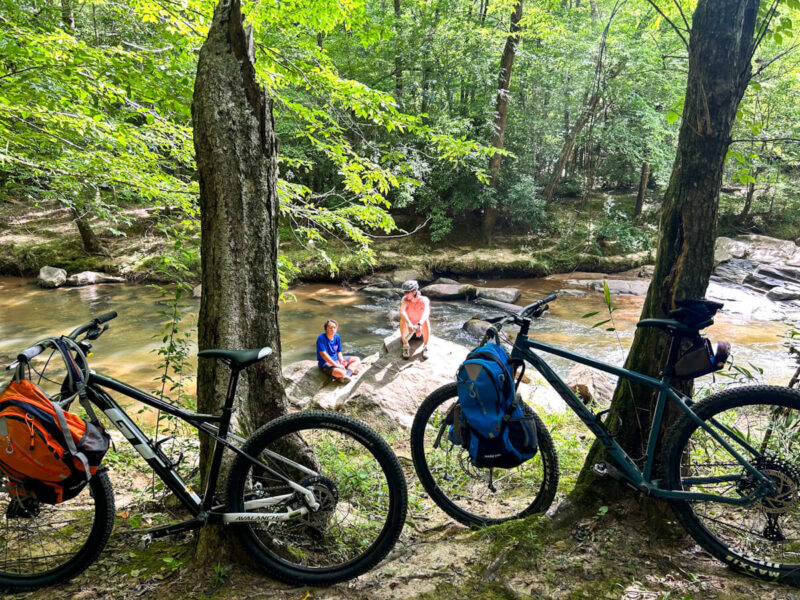
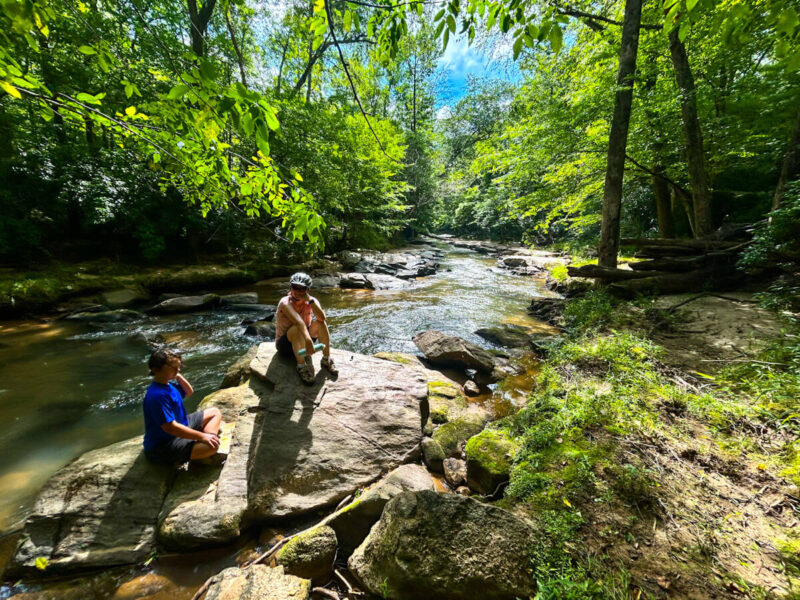
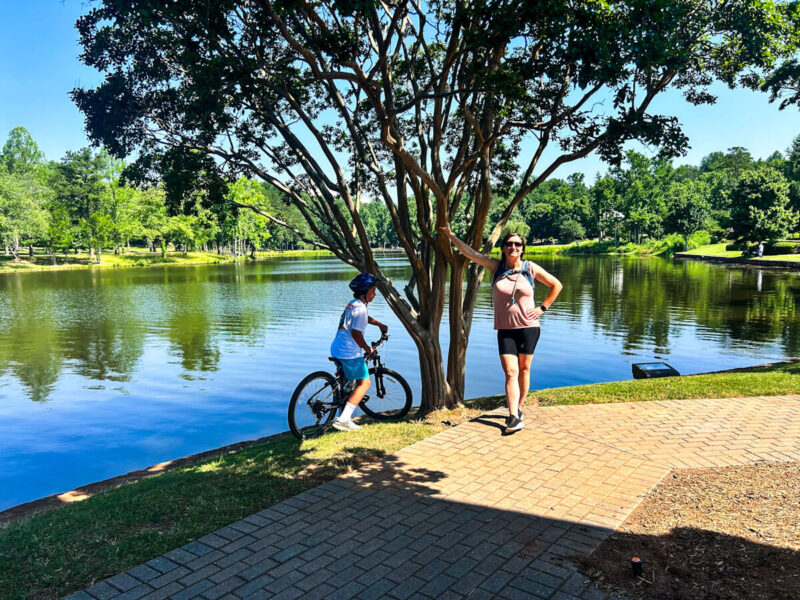
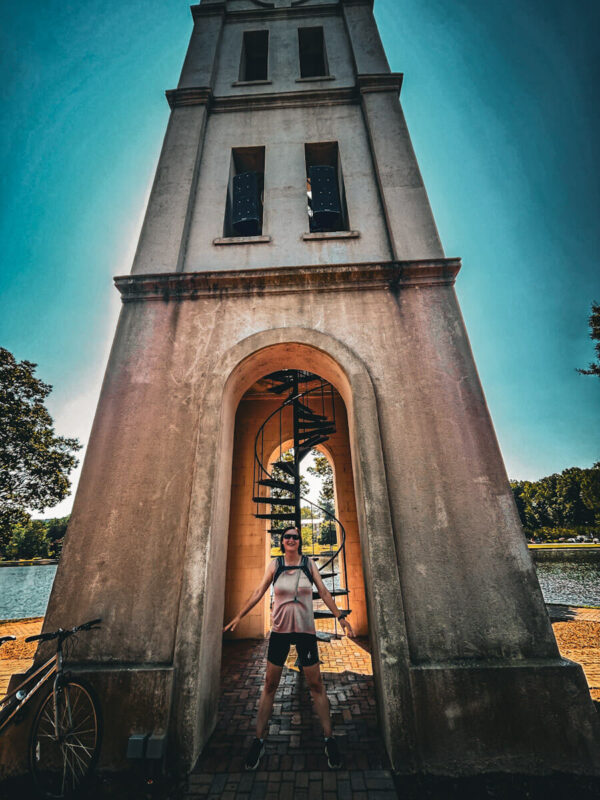
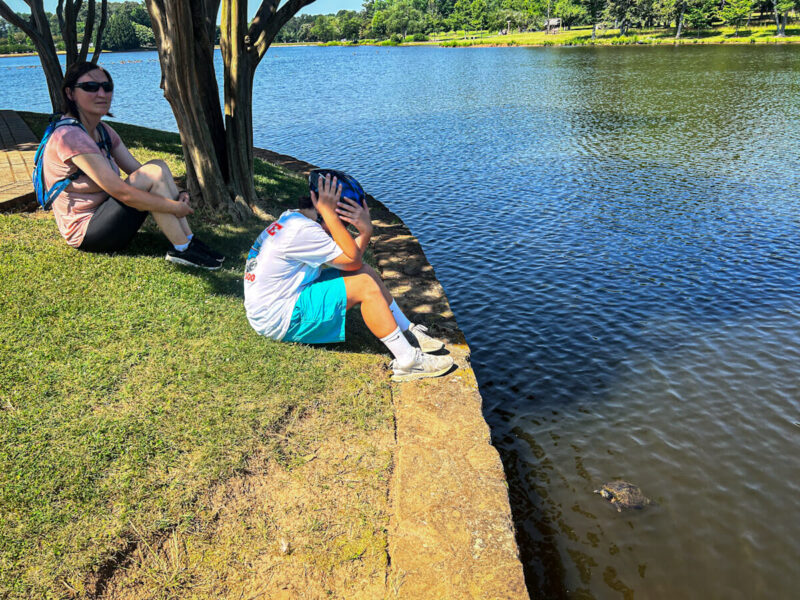
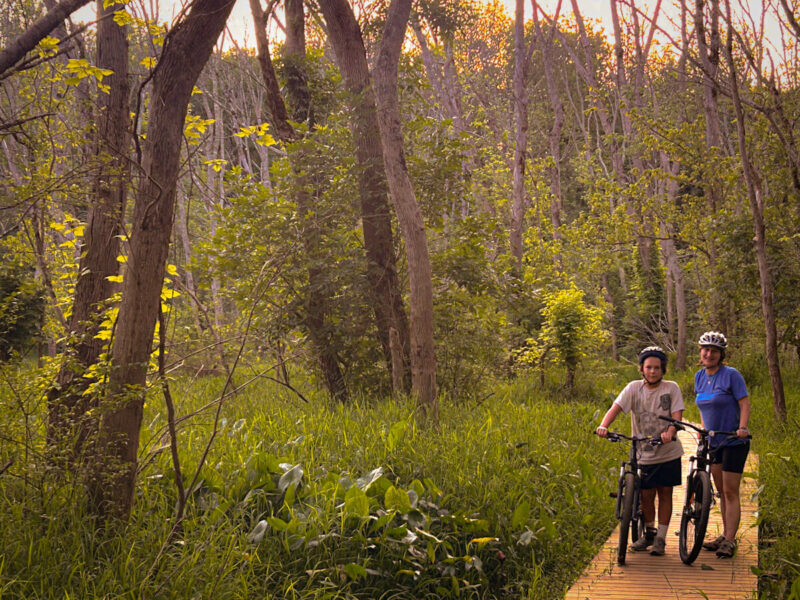
It was a fine breakfast of pancakes and fresh fruit. A great gift to accompany yesterday’s amazing gift: a family bike ride.

K at Work

A photograph from December 2023 — ugly sweater day at work.

Thursday

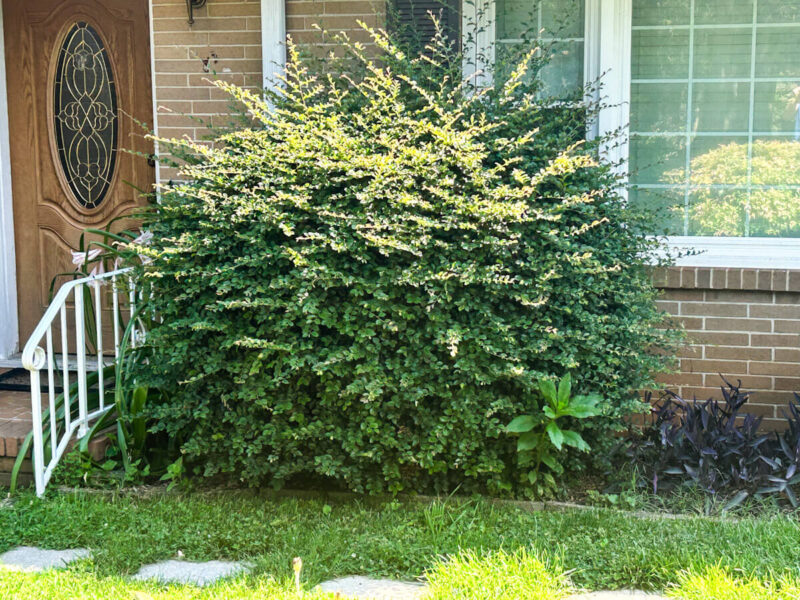
Today was a day of yardwork. “Think of all the time we spend with just maintenance,” K said as she looked at what I accomplished today. We’re not really getting ahead with our yard with a day like today: we’re just maintaining a steady state.

I turned this, for example,

into this. To do so, I borrowed my neighbor’s massive trimmer that theoretically allows one to trim the top of such high bushes without a ladder. Theoretically.

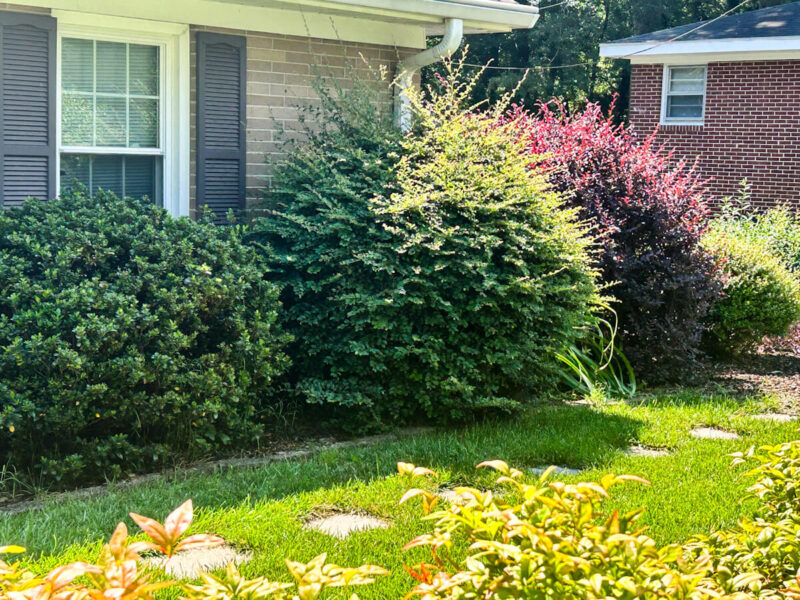
It’s also heavy. My shoulders ached after just a few minutes of work. That’s why I took it back after finishing the first two shrubs and used our own, light electric trimmer to turn this

into this. The growth on those shrubs — what are they called again? I can’t even remember what’s growing in our own yard — has been phenomenal. I have to trim them several times a year.

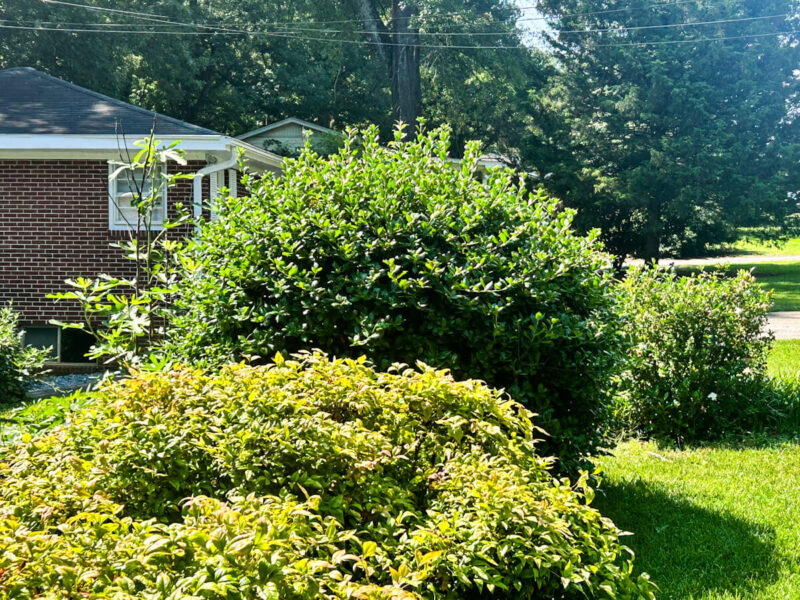
I continued with the electric trimmer to turn this

and this

into this. The trimmer has its advantages: it’s light and, well, I guess that’s its only advantage because it’s terribly stressful (perhaps not terribly, but it is an added concern) to make sure one doesn’t trim the power cord along with the shrub. Not that I’ve ever done that. Countless times.

In the evening, another bike ride.