g

So Mean

Conversation One

“He knocked me down, and I stayed calm. I didn’t even say, ‘Why do you have to be so mean?'”

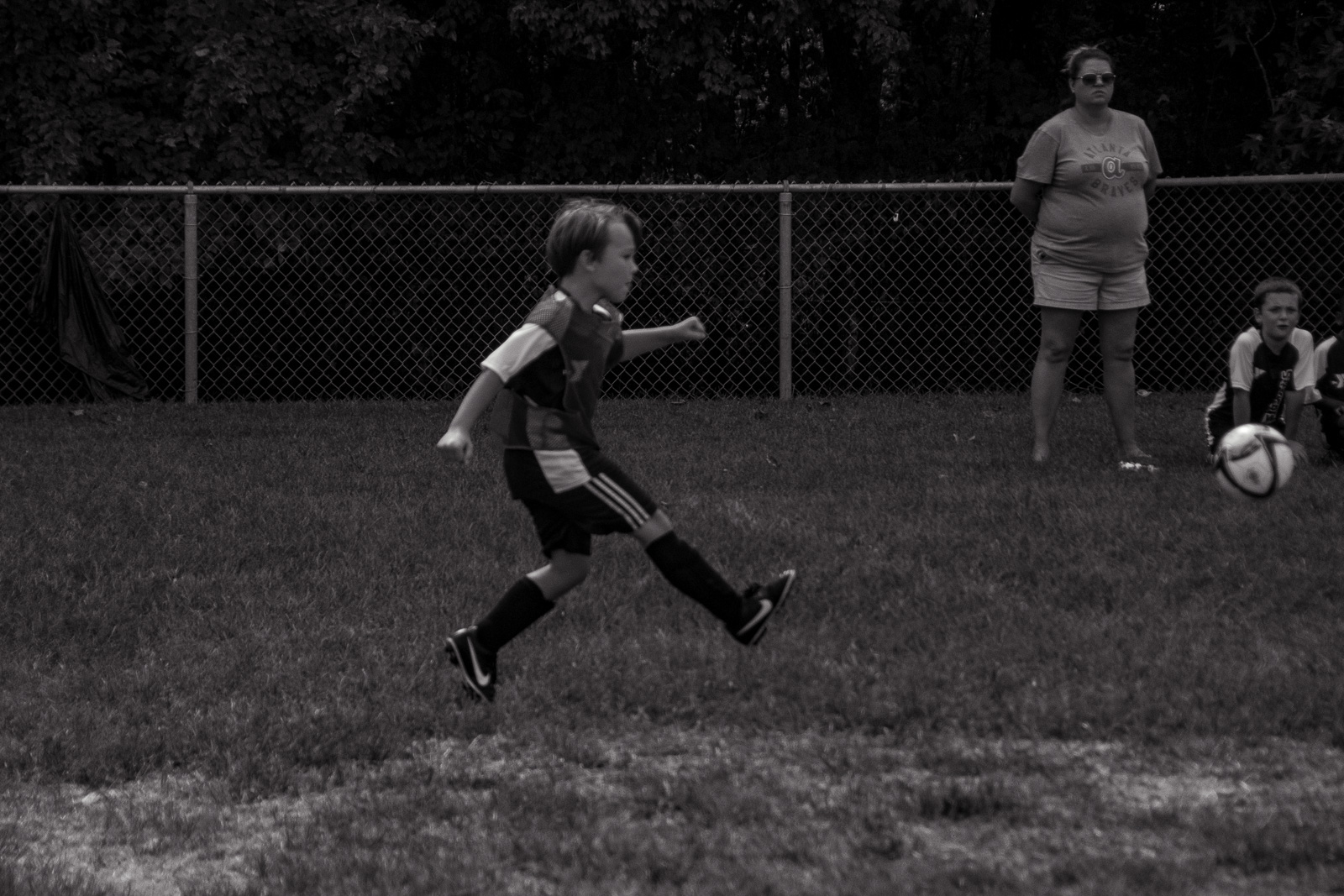
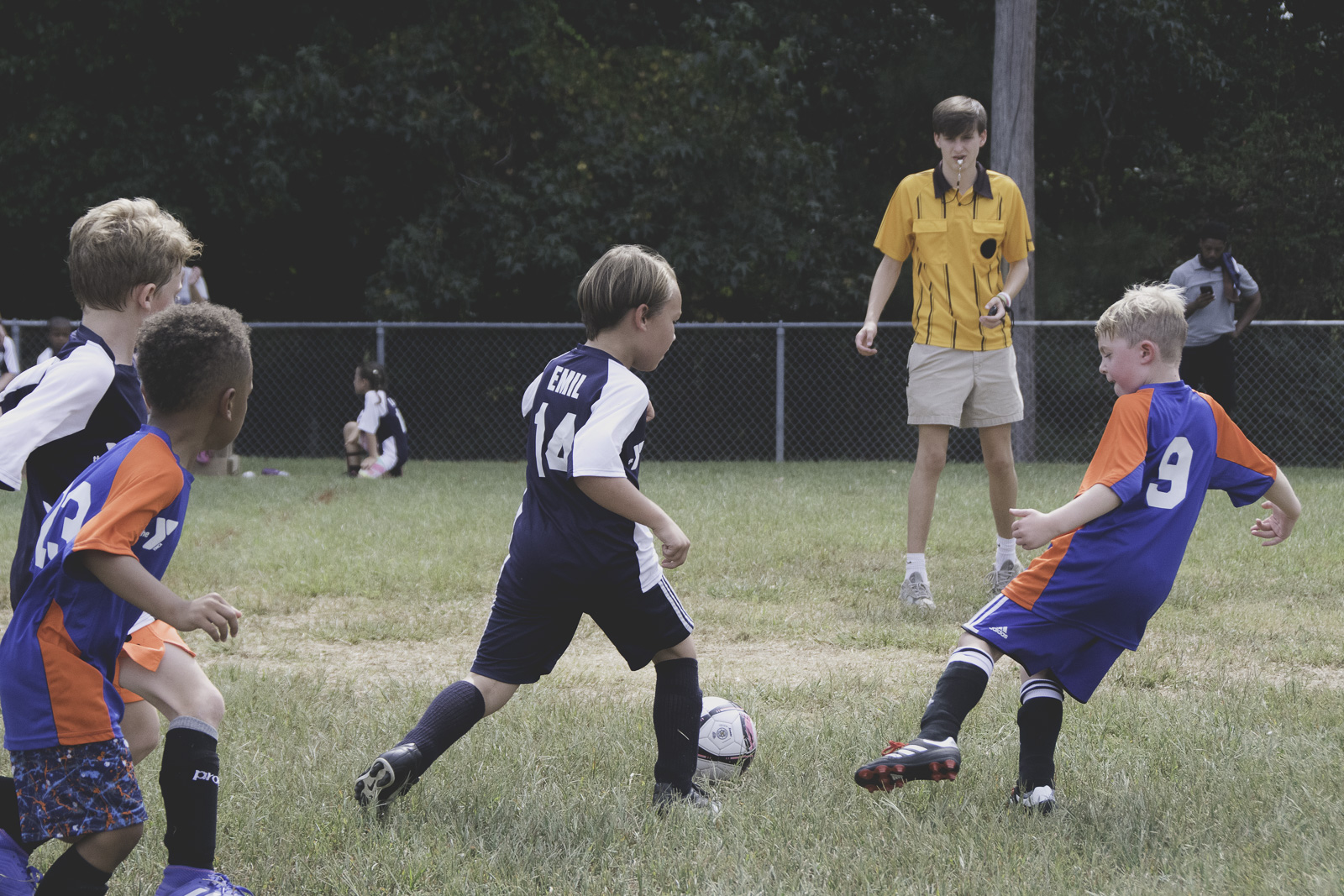
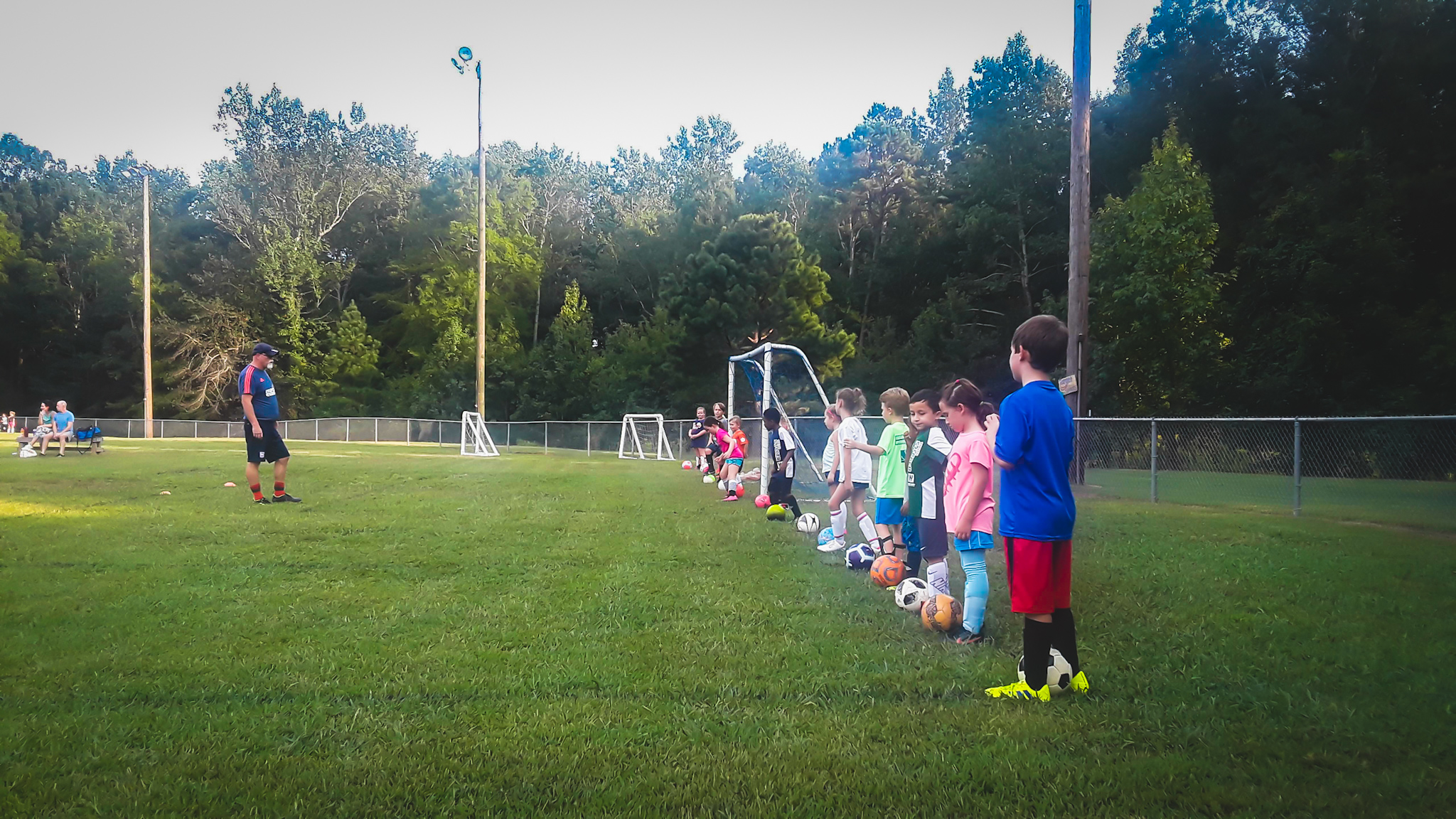
The Boy and I were on our way back home, and he was explaining some adventure or other that he’d had during recess. He’s taken to playing soccer then, and he’s often telling me about what happened during the game.

“Why would you have said, ‘Why do you have to be so mean?'” I asked.

“Well, I didn’t say it.”

“But why would you have said it? Why are you specifically pointing out to me why you didn’t say it?” I suspected it was because someone had said that to him at some point.

“Well, I was playing soccer the other day with X” (I can’t remember the name) “and I tried to sweep the ball away from him. I didn’t mean to, but I knocked him down. He just jumped up and screamed, ‘Why do you have to be so mean!?'”

It’s usually the Boy on the receiving end of such things, and I’m always trying to help him see the other point of view: perhaps it was an accident. “Oh, no, Daddy, it wasn’t an accident,” he usually insists. So I asked him, “Did you tell him you didn’t mean to?”

“I tried to,” he explained with a frustrated edge in his voice. “I said, ‘I’m sorry. I didn’t mean to knock you down,’ but he just walked away from me and ignored me.”

Sometimes, I feel like the Boy can’t win: even when he’s the (accidental) aggressor, it somehow ends with him feeling like a victim.

Conversation Two

On the way to soccer practice the evening, the Boy brought up Frida Kahlo. One of his multi-age class groups (they’re called “houses”) is named after her. “Do you know who she was?” he asked.

“Was she the Mexican painter?” I asked, thinking of the uni-brow painter who did so many self-portraits.

“Mexican? I thought she was German,” he replied quizzically.

I’m not up on painters, so I just suggested that perhaps I was thinking of someone else. “Was she friends with Trotsky?” I asked, knowing the response.

“Who was Trotsky?”

Who indeed.

“A generally bad man,” I said.

“Why?”

“Because he was responsible for the deaths of many thousands of people.”

He thought about it for a moment then asked, “Were they innocent or did they deserve to be shot?” He paused, thought some more, then corrected himself. “Well, I don’t mean deserved to be shot. They were just bad. Were they bad?”

From there, the conversation devolved: “Oh like Hitler?” “Who killed more?” “Who’s Stalin?” “Did anyone kill more than him?” “Mao what?”

Then I got to wondering: on the playground were these men the aggressors or the aggrieved? And how in the hell did that conversation end up there?
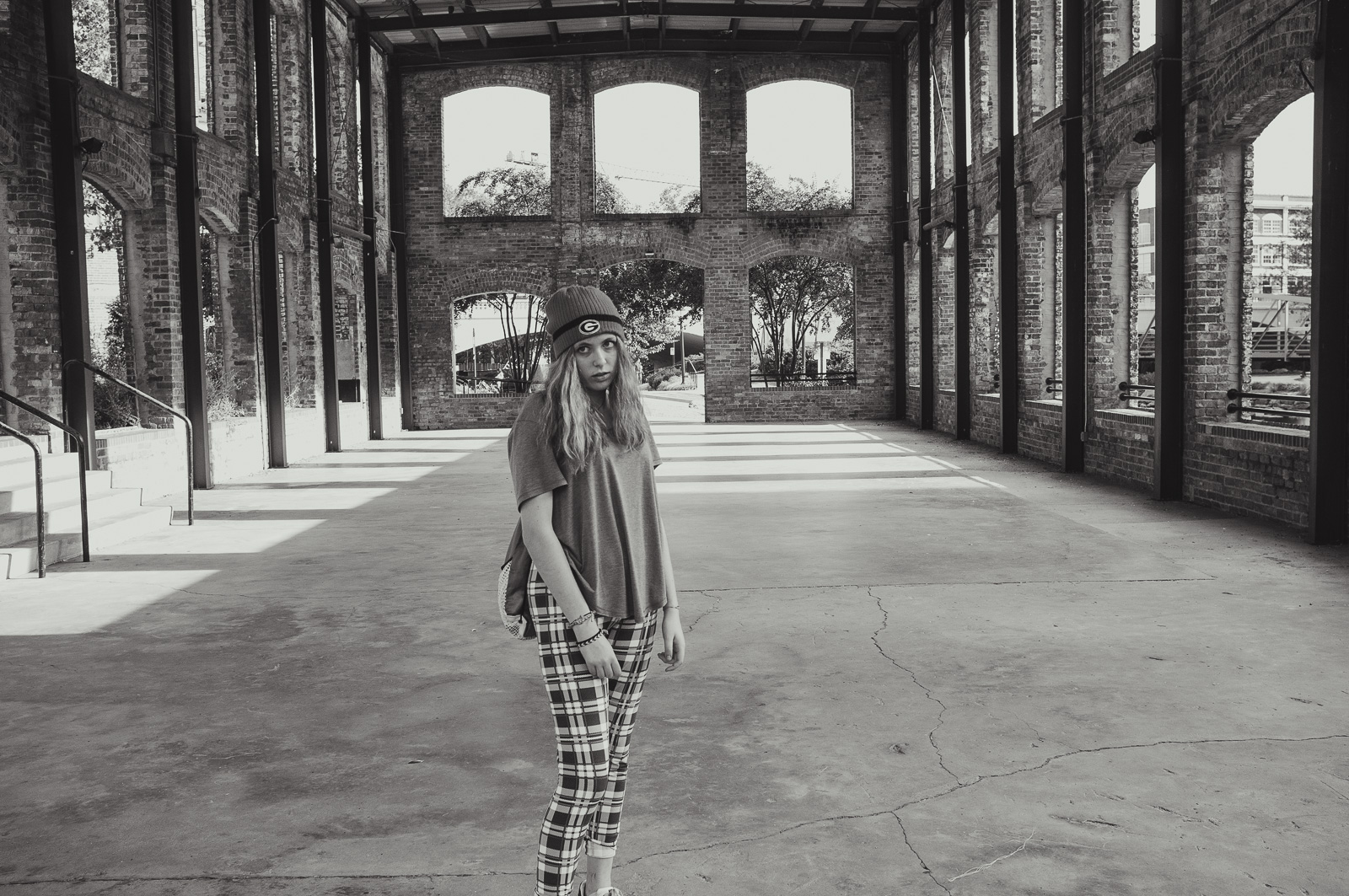
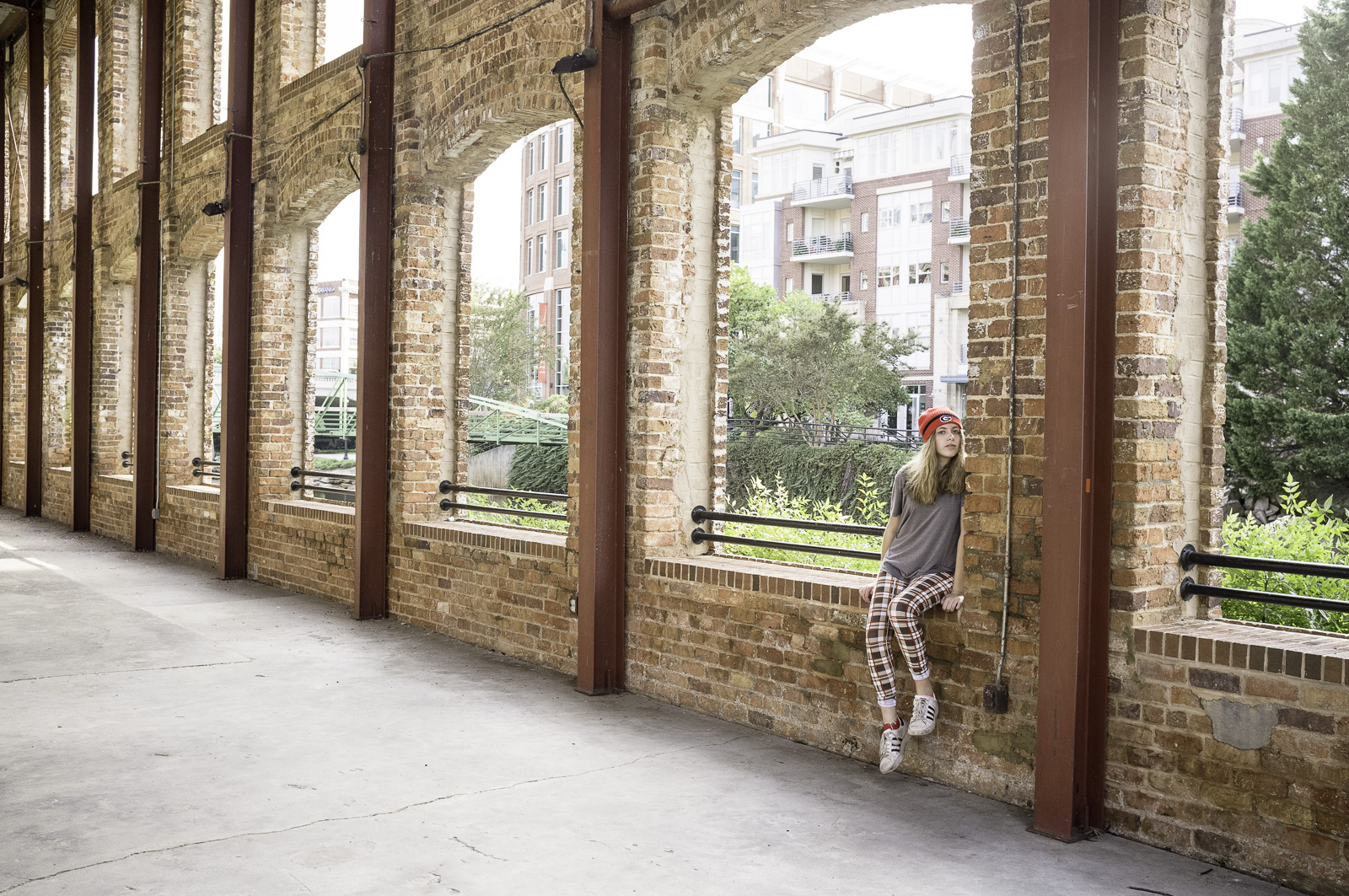
Sunday Downtown

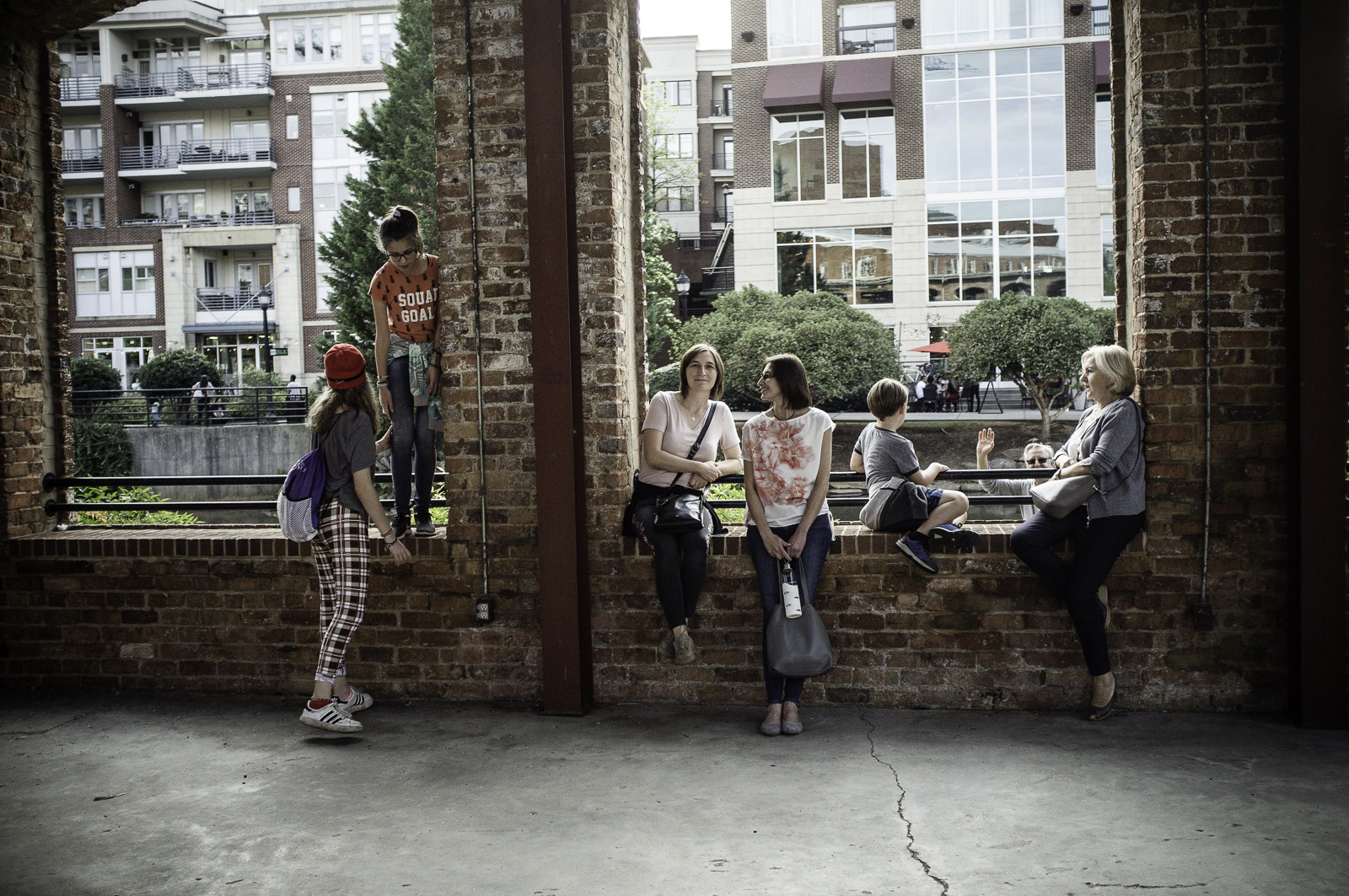
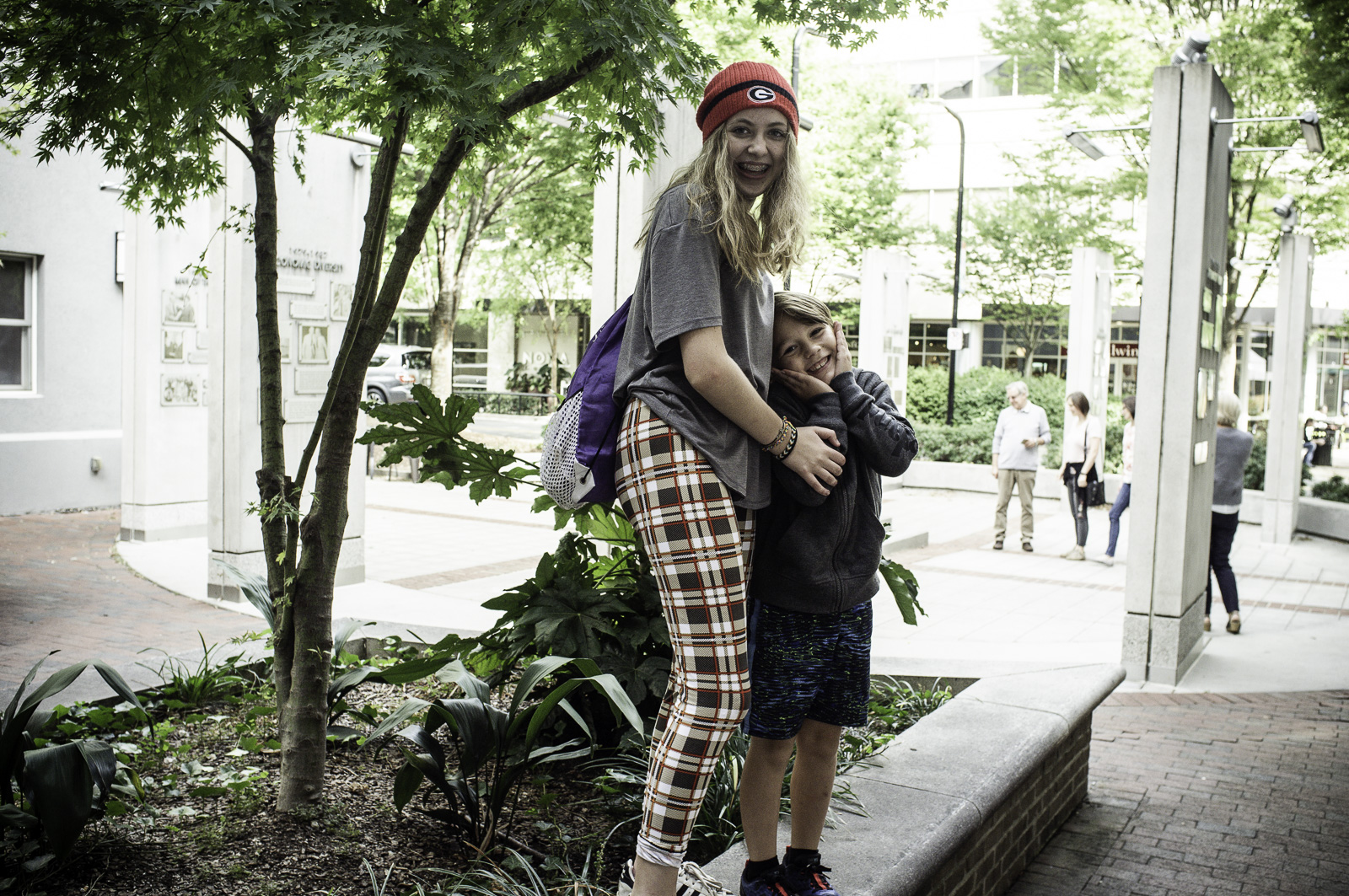
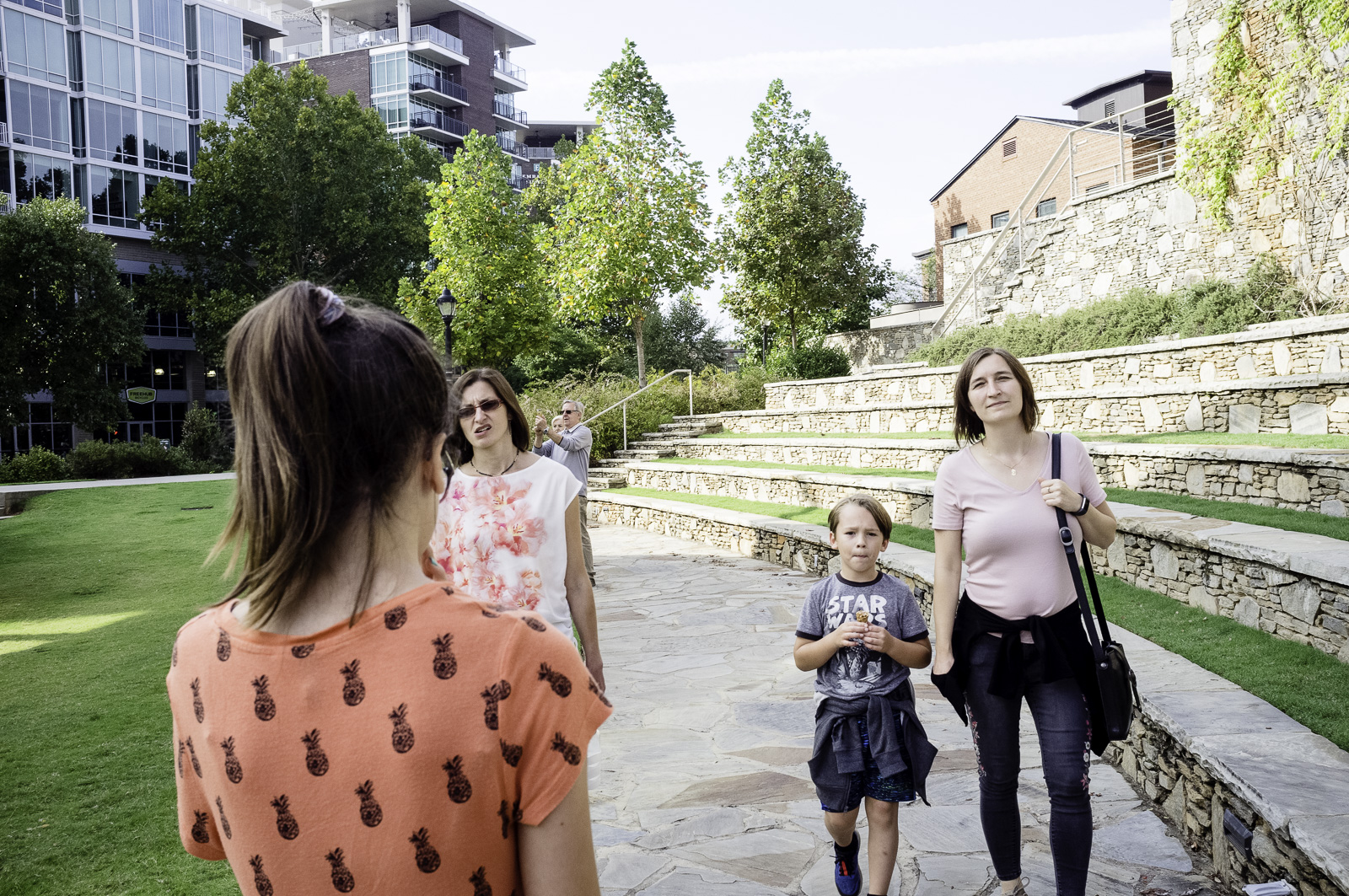
I stayed home to get caught up and prepared for tomorrow. The rest of the folks went downtown. Then gave the girls the Fuji x100…

October Saturday

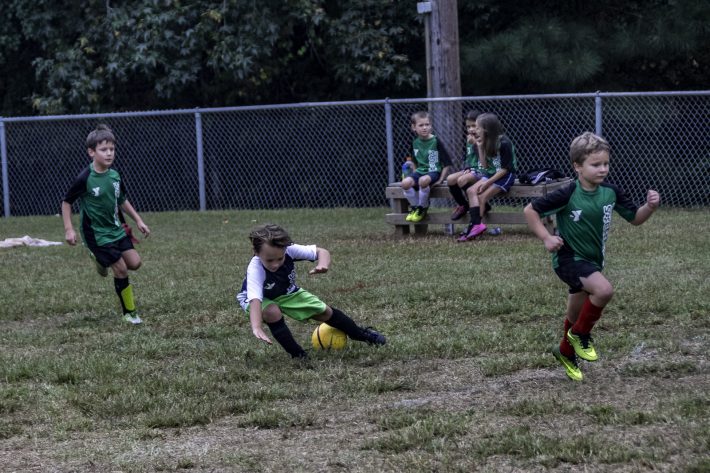
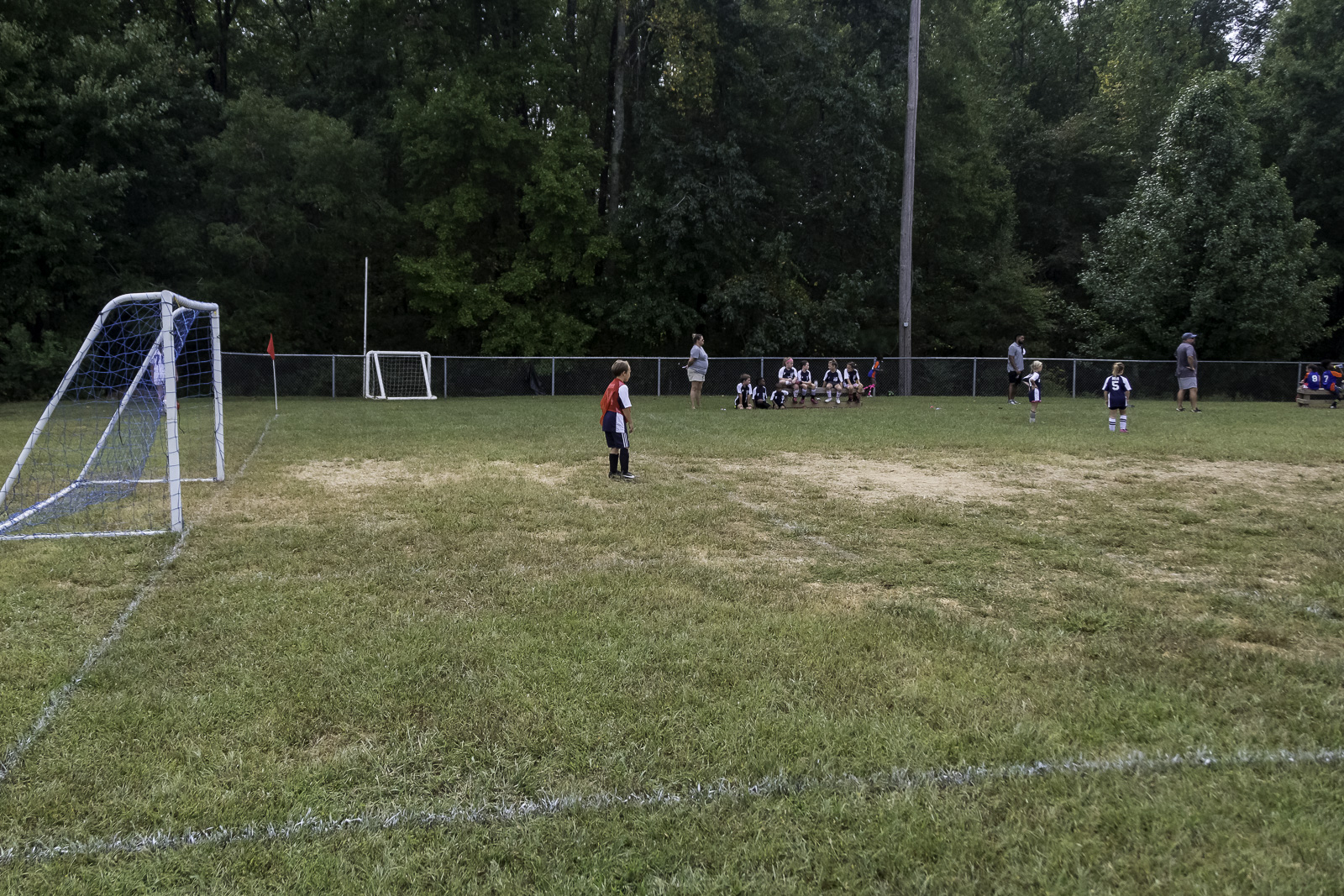
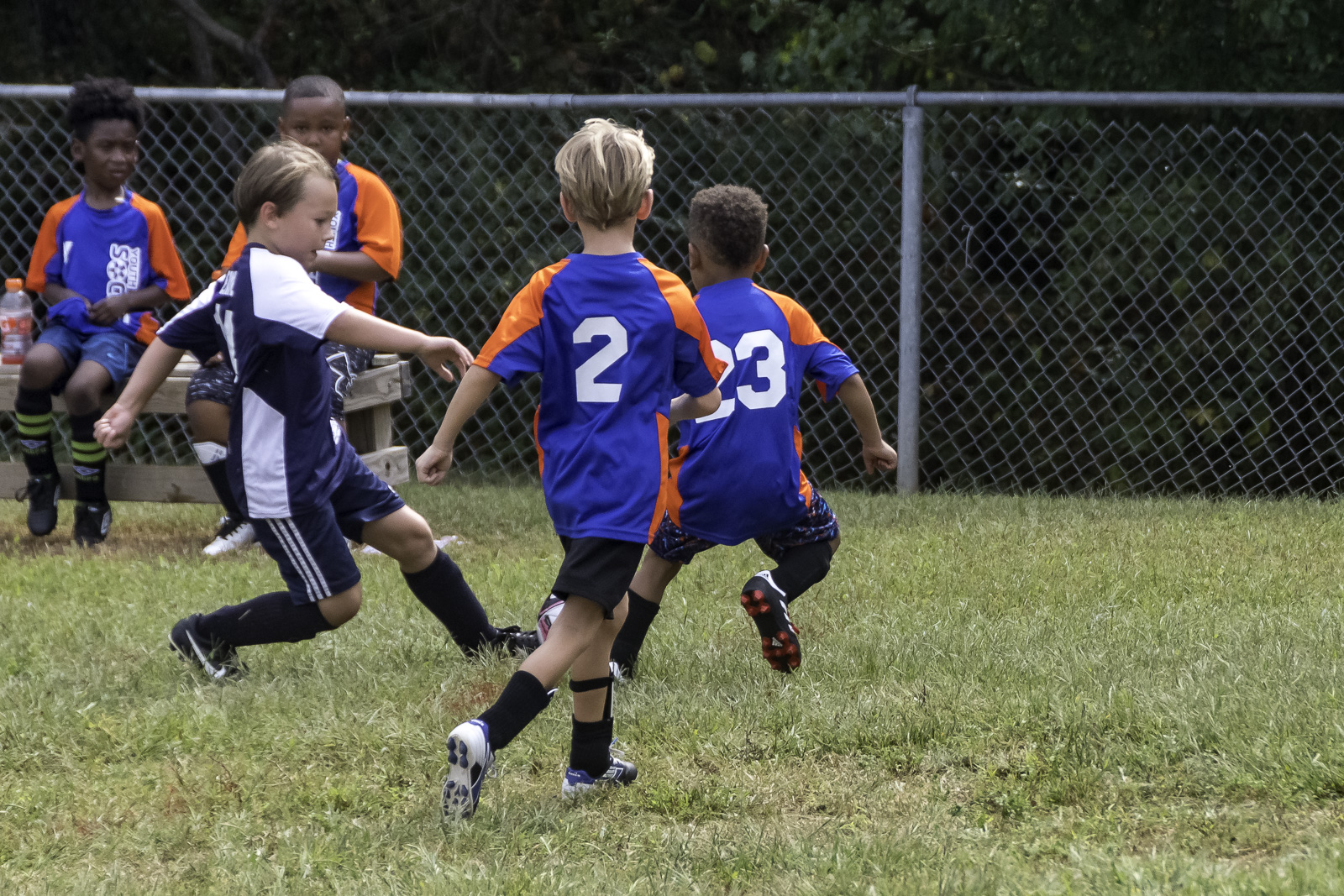
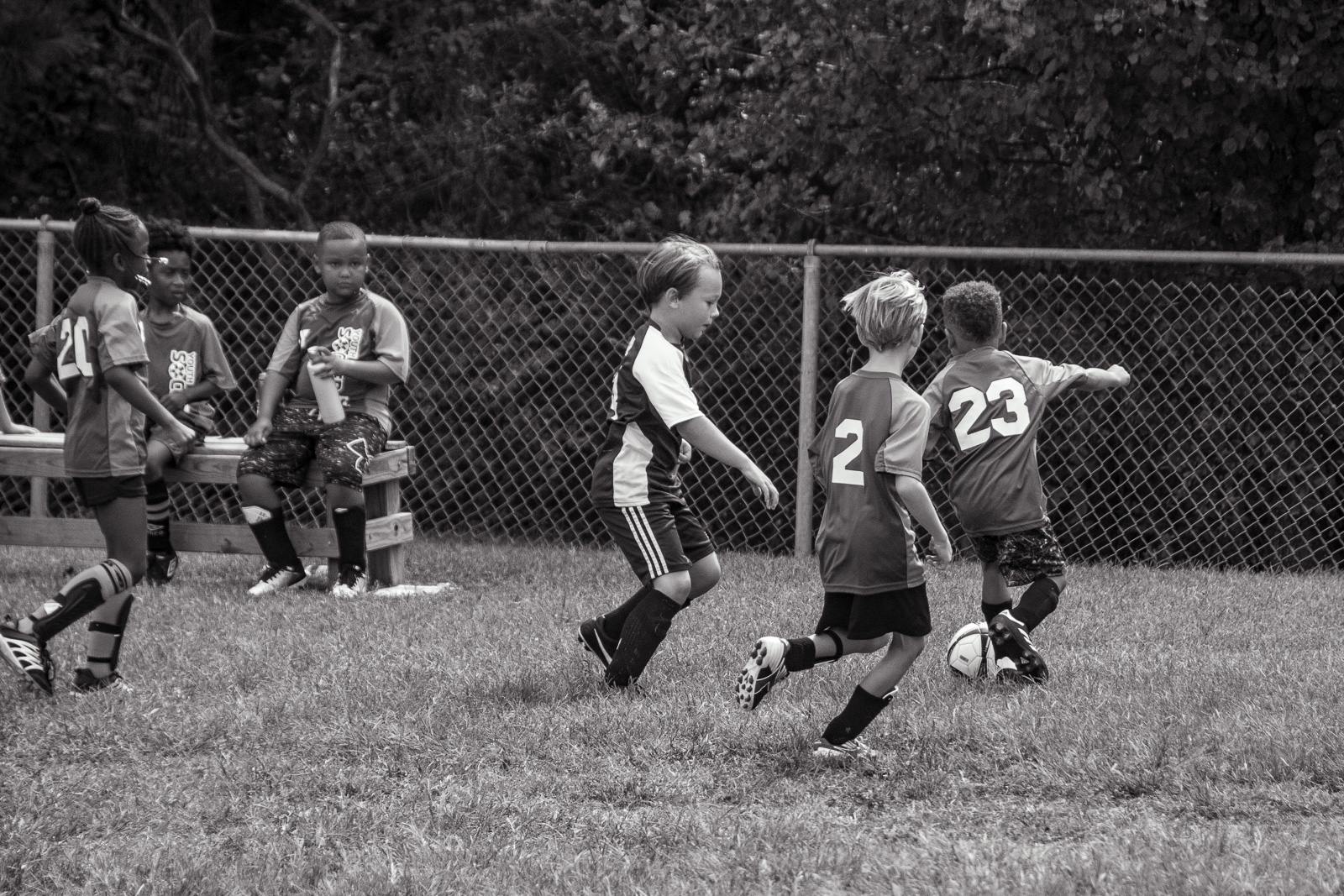
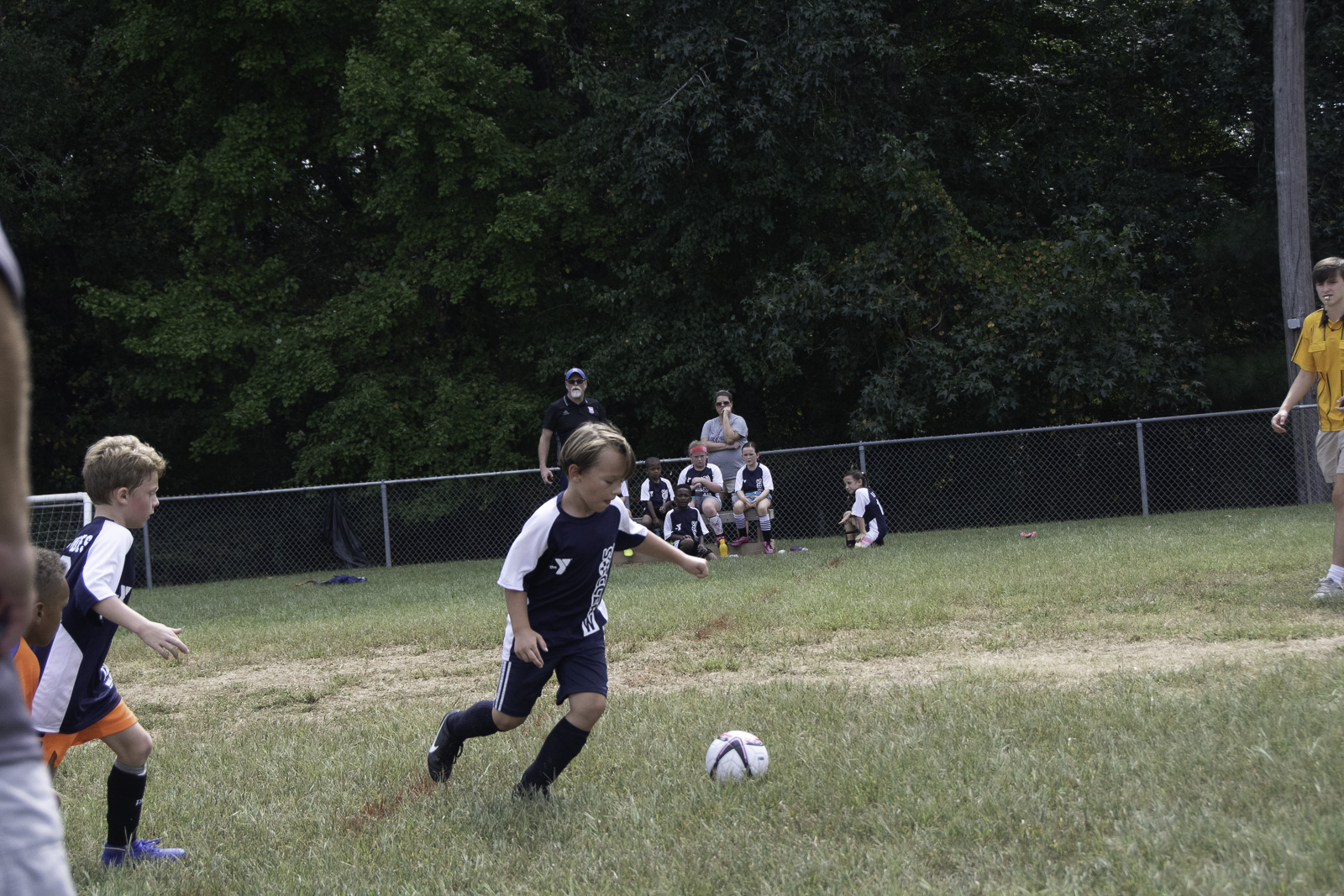
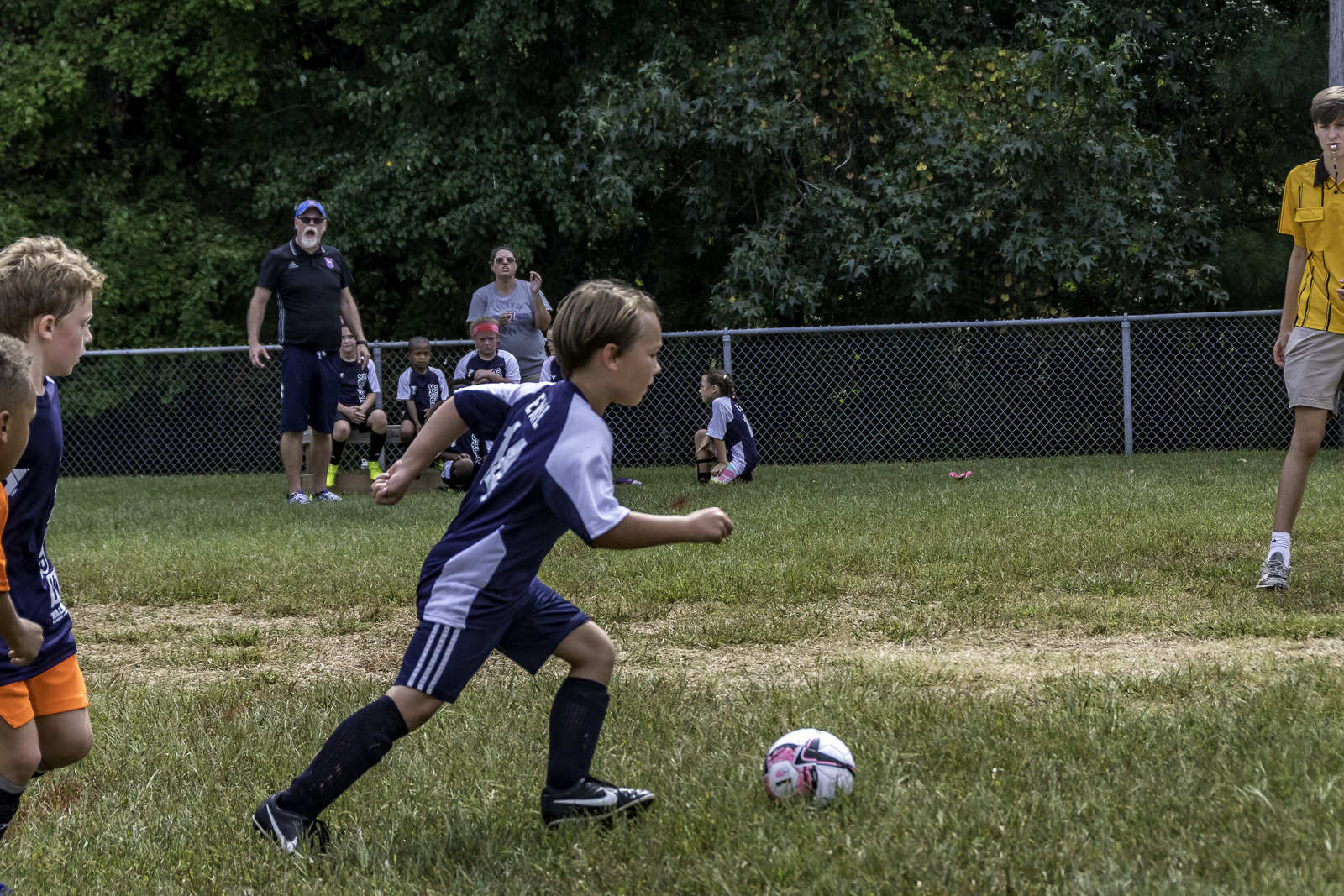
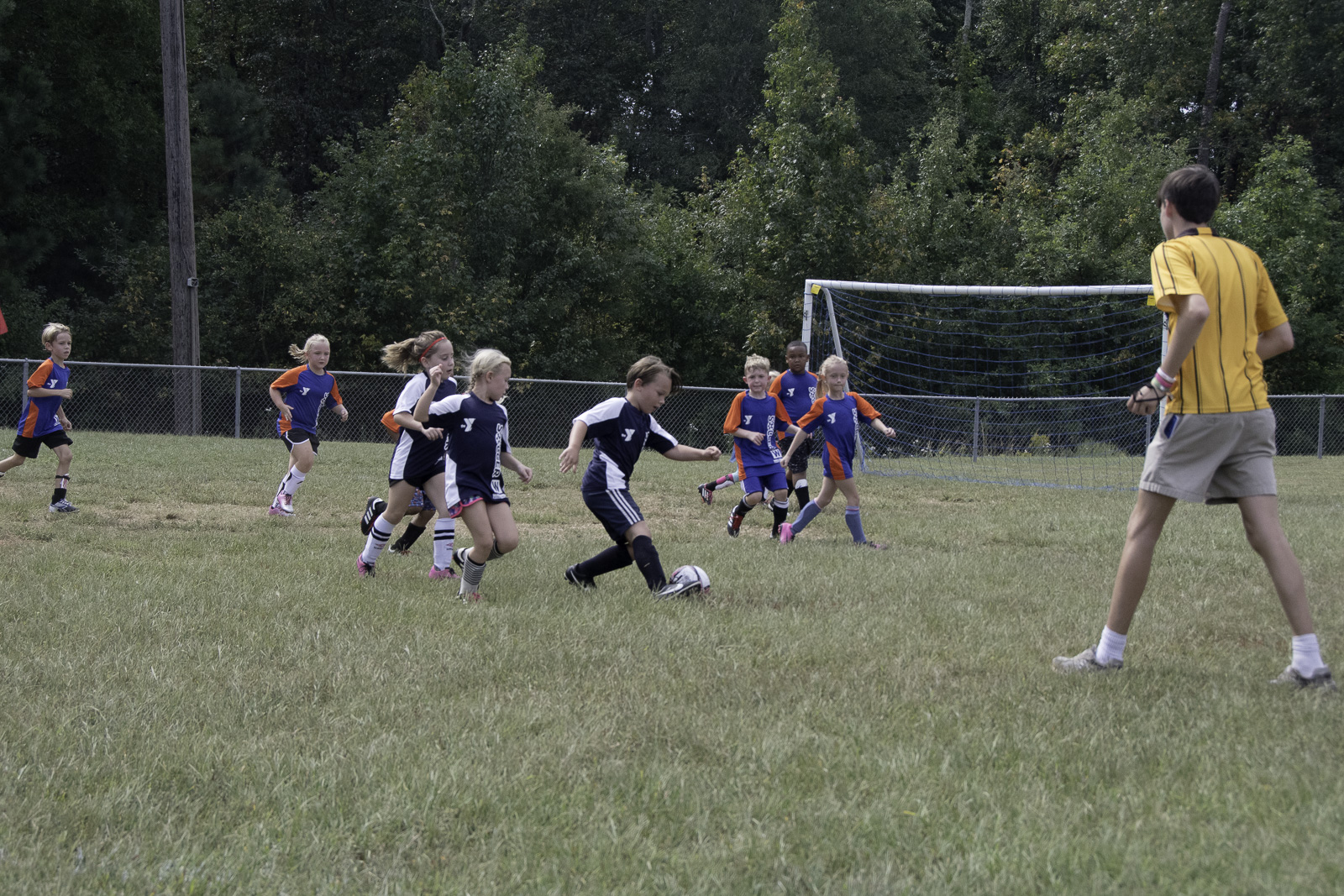
It was finally fall today: temperatures never rose into the sixties, which meant that today was literally thirty degrees — thirty degrees — cooler than yesterday. This made the soccer game much more manageable, for players and spectators alike.

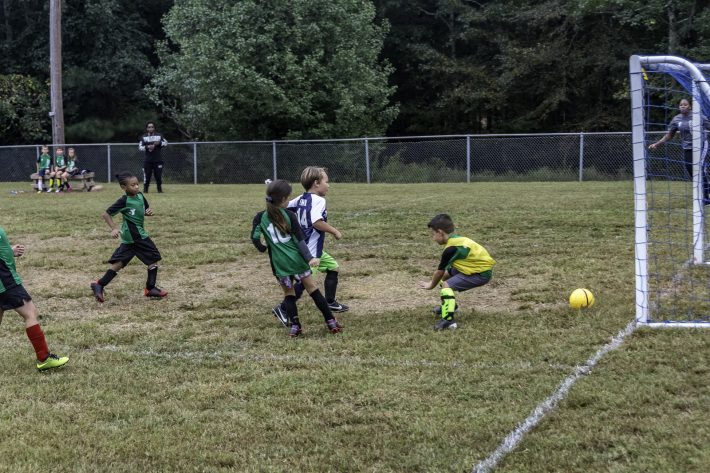
He had a couple of breaks, and one looked like it would have been a sure goal: the only defender was in front of him, running, not watching E at all.

“And then my foot touched the top of the ball instead of dribbling,” he explained later, “and I just fell.”

Later, he made it through three defenders and slipped the ball just past the goalie. He fell on the easy shot, made a goal on the tough one. Sounds like something I would do.

With Papa

“We don’t say that to anyone, though, because we don’t want them to laugh at us.” The Boy was describing to me, as we drove home from his school, a new game he and some of his friends had invented. Apparently, they have a graphic design company (of course, he didn’t use that particular term) because they all love drawing, and this weekend, they all have “a lot of work” to get done for the firm. However, they’ve kept it a secret from their non-drawing peers to avoid mockery.

How much of this potential mockery would become actual mocker, I do not know. E is sensitive, and simple, one-time, childish comment from a peer might feel like persistent, tormenting mockery to him. Still, I found his words both encouraging and discouraging. On the one hand, they suggest a certain awareness of what’s out there, an understanding that the world can be a nasty place that doesn’t smile on things that appear out of place. That’s much better than a simplistic naivety. On the other hand, he deals with that by hiding that part of himself from others to avoid it all. Of course, he’s just a second-grade boy: I don’t expect the kind of emotional fortitude that would lead someone to say, “Look, we enjoy it, and that’s all that matters,” to potential tormentors.

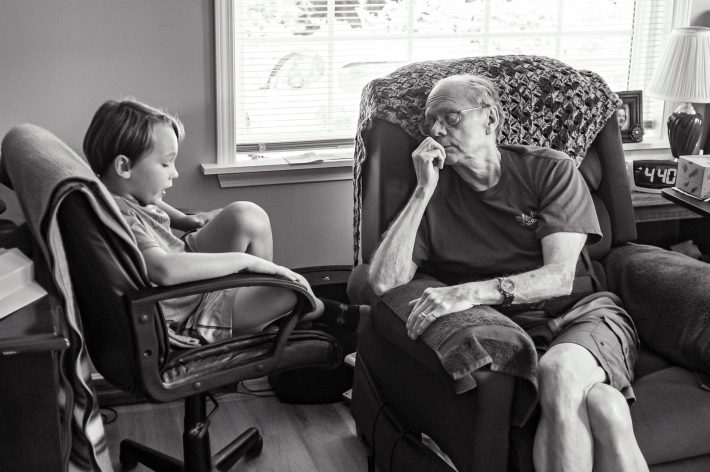
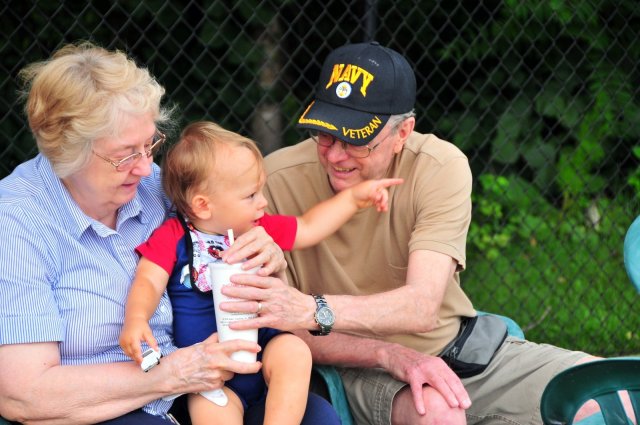
When he got home, he talked to Papa about it and a few other things. He always has a captive discussion partner when talking to Papa: it’s the number one duty of grandparents, I suppose. Parents can say, “Not now, sweetie — I have to X” but not grandparents.

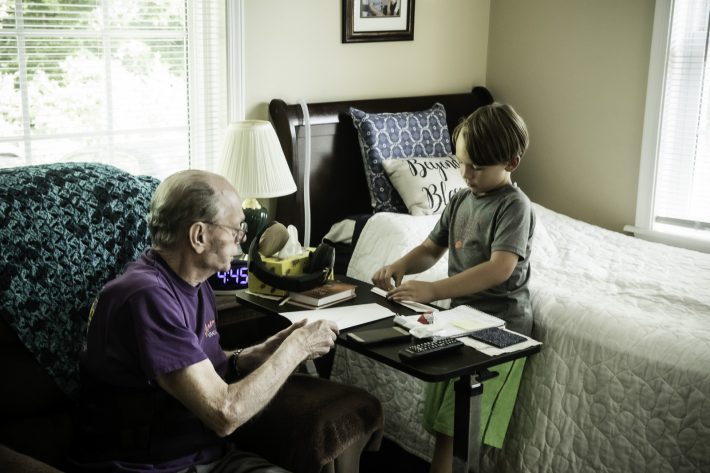
Afterward, they built a few paper airplanes together.

Soccer and Painting

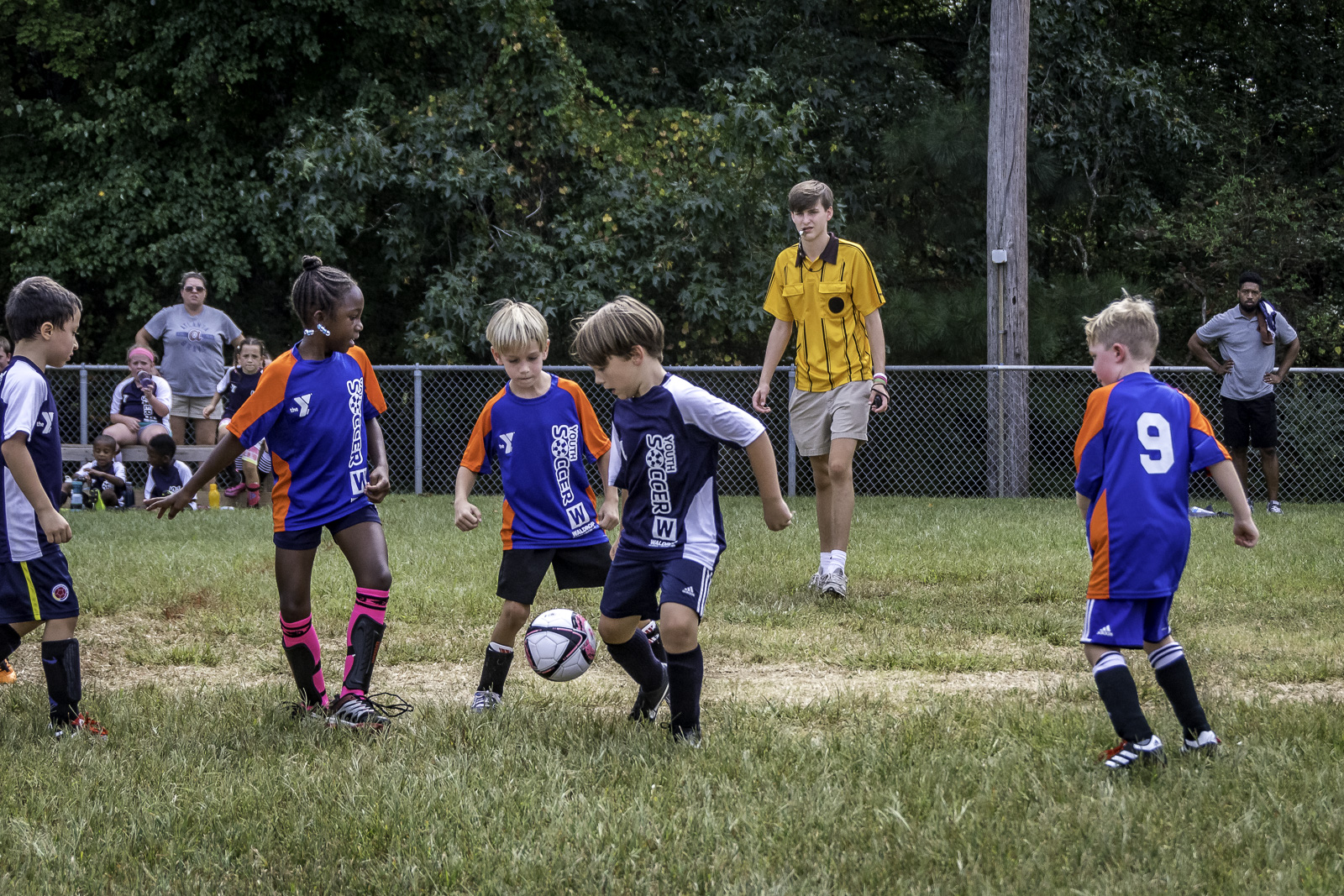
Morning: the Boy’s team played its second game. Last week, they won 8-0. This week, there was a stronger team on the other end of the field. We won 2-0, and the Boy got one of the two goals: the goalie didn’t pick up the ball, and the Boy took advantage of the mistake.

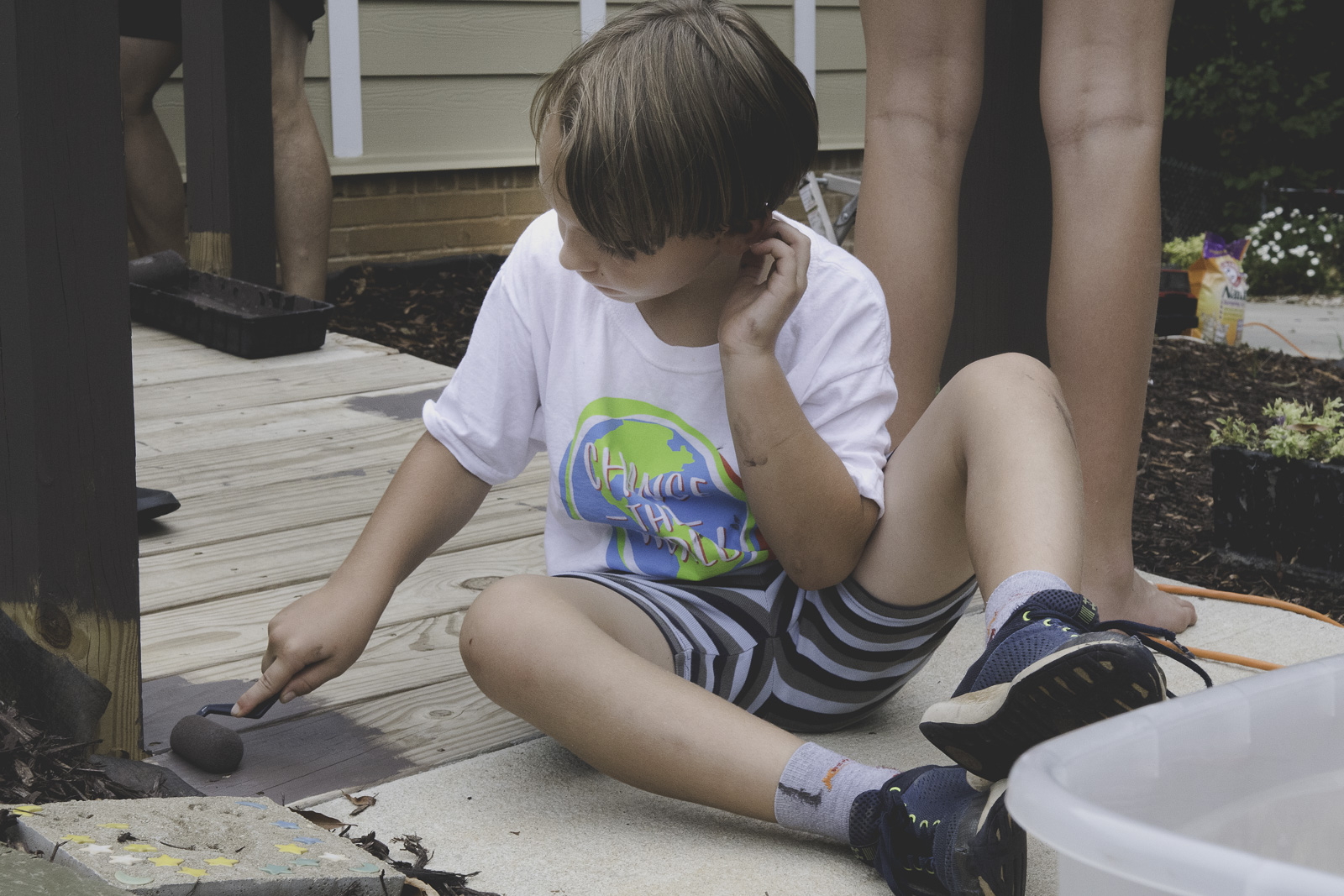
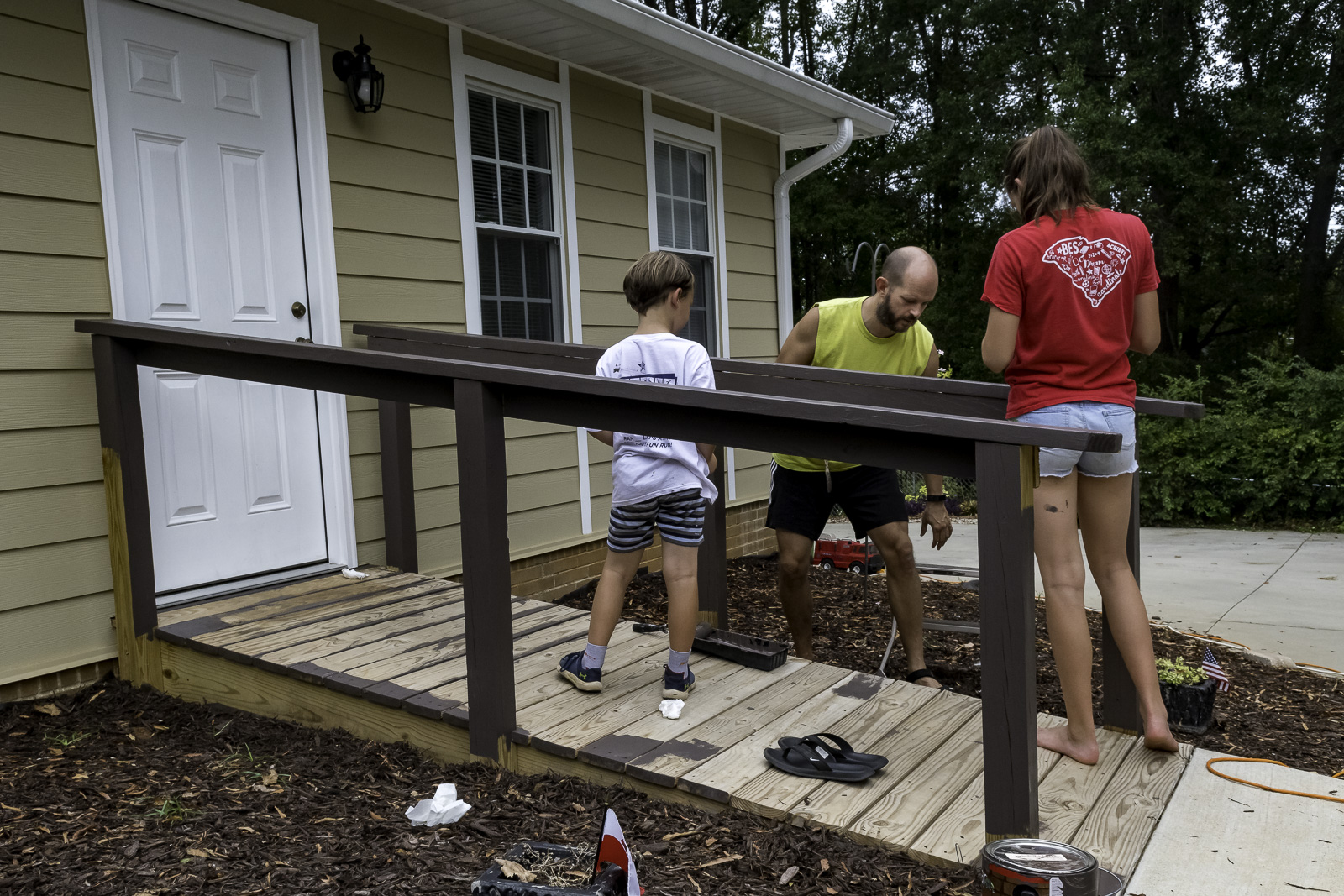
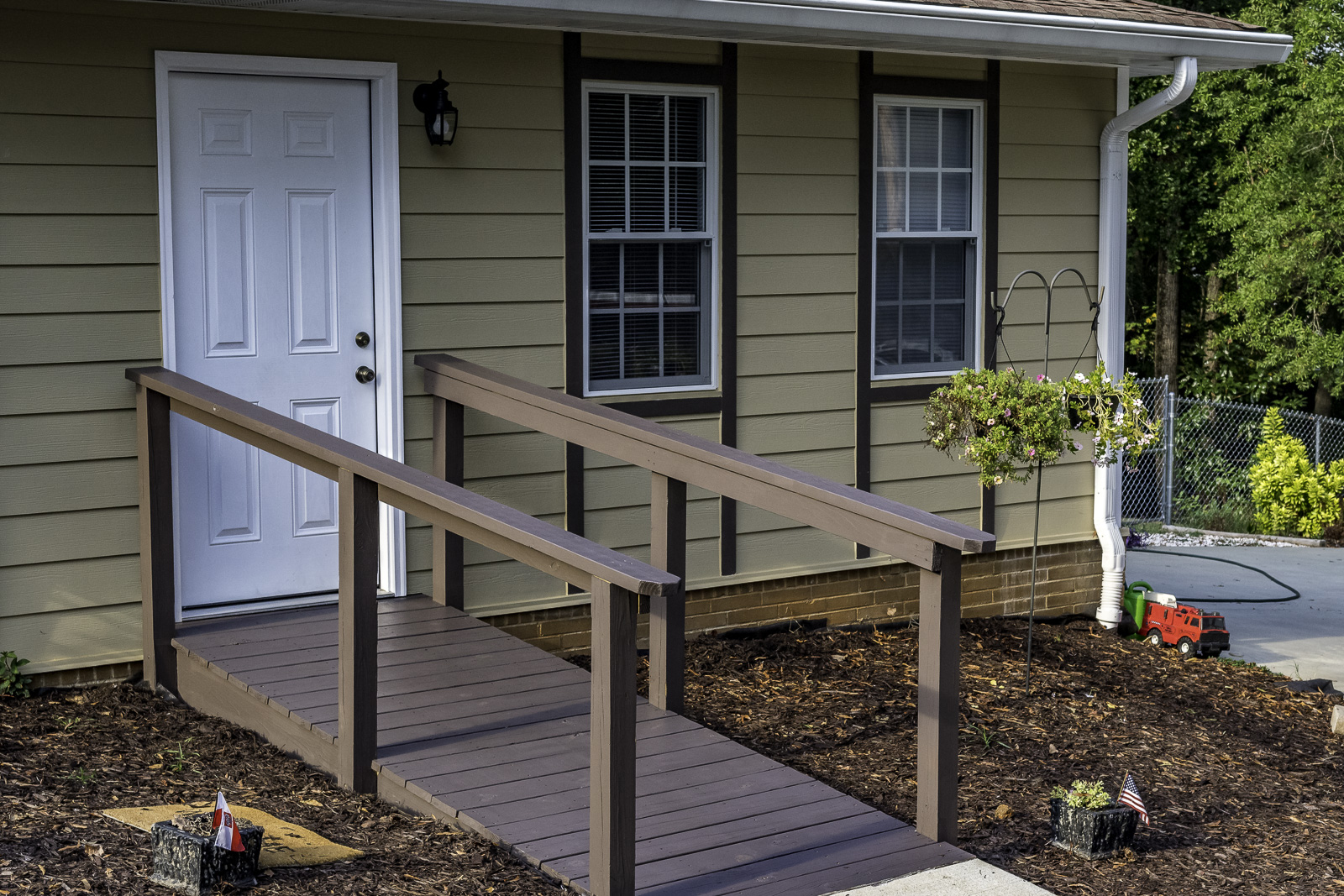
In the afternoon, we worked to do a little painting around Papa’s new addition.

A good Saturday, overall.

Drawings

The Boy has taken to drawing again. And being the generous soul that he is, the kind soul that he is — so much a more generous, a kinder soul than I — he regularly draws things for his friends at school.

Today he explained he was drawing a soccer ball for a friend at school who loves soccer.

“Is he a good friend?” I asked because I had certain concerns.

“Well, we don’t really talk. Just when we’re playing soccer. You know, stuff like ‘Let’s get the ball!’ and things like that,” he explained. That didn’t sound like the closest friend in the world. More like a soccer-field acquaintance.

And so I imagined a nightmare scenario of E, so thrilled with his drawing and happy to give something to someone that he imagines will bring only joy, giving this boy this drawing and the boy being completely nonchalant about it. Or worse, asking something like “Why’d you do this?” Or worse still, throwing it away in front of the Boy.

And then I imagined the conversation later, the confusion and pain the Boy might feel. “I would never do anything like that to someone,” he would protest. “Why would anyone do that?”

Why, indeed?

I don’t know that this will happen; I don’t know that, if it does, the Boy will even bring it up. But I do know that I can’t always be there to step in and block a painful situation, that I can’t always steer him away from people that seem callous or hateful, that I can’t always stop the pain before it starts, so I let it go at that. We’ll see tomorrow how his friend took the gift.

The Swan

Written in seventh period.

A just made my day — “The Swan!” she cried, recognizing the music playing. Everyone around her looked at her as if she were crazy. “The Swan! Camille Saint-Saëns!” Still, everyone looked at her as if she were speaking a foreign language, which in a way, she was. How many eighth graders in 2019 even know who Camille Saint-Saëns is, let alone could recognize his work.

I find that, like poetry, classical music requires too much thinking for the modern ear. Motifs appear and then don’t reappear for many measures. Motifs are so long sometimes that it’s difficult to determine that they’re even part of a repeating pattern. The modern attention span is just not long enough to handle it.

Motivation

Written in seventh period

What motivates me? That depends on what we’re talking about. What motivates me to go to work? Honestly, at its most basic level, it’s the desire to make sure I’m providing for my family. We have to pay for someplace to live, some food to eat, and the like.
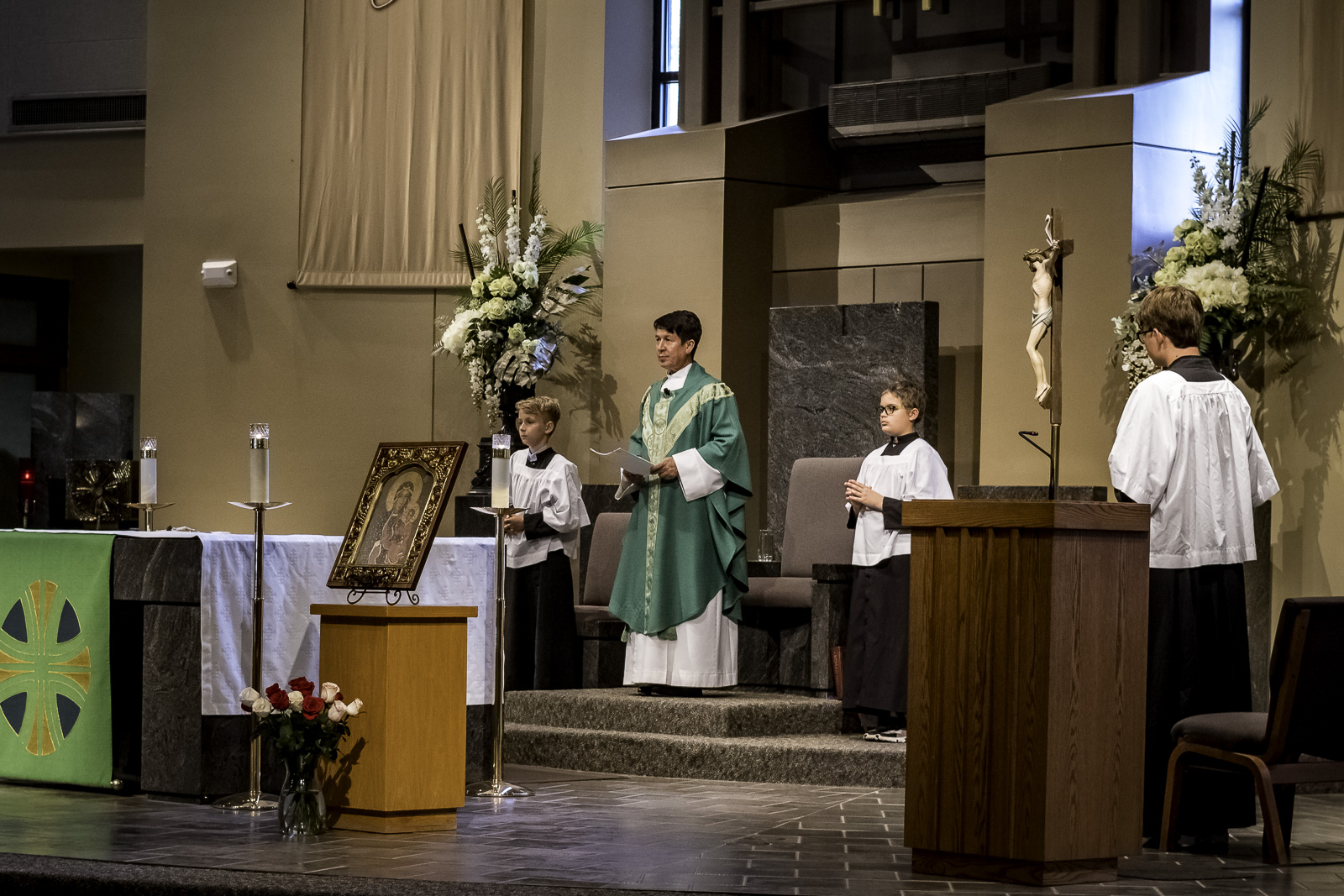
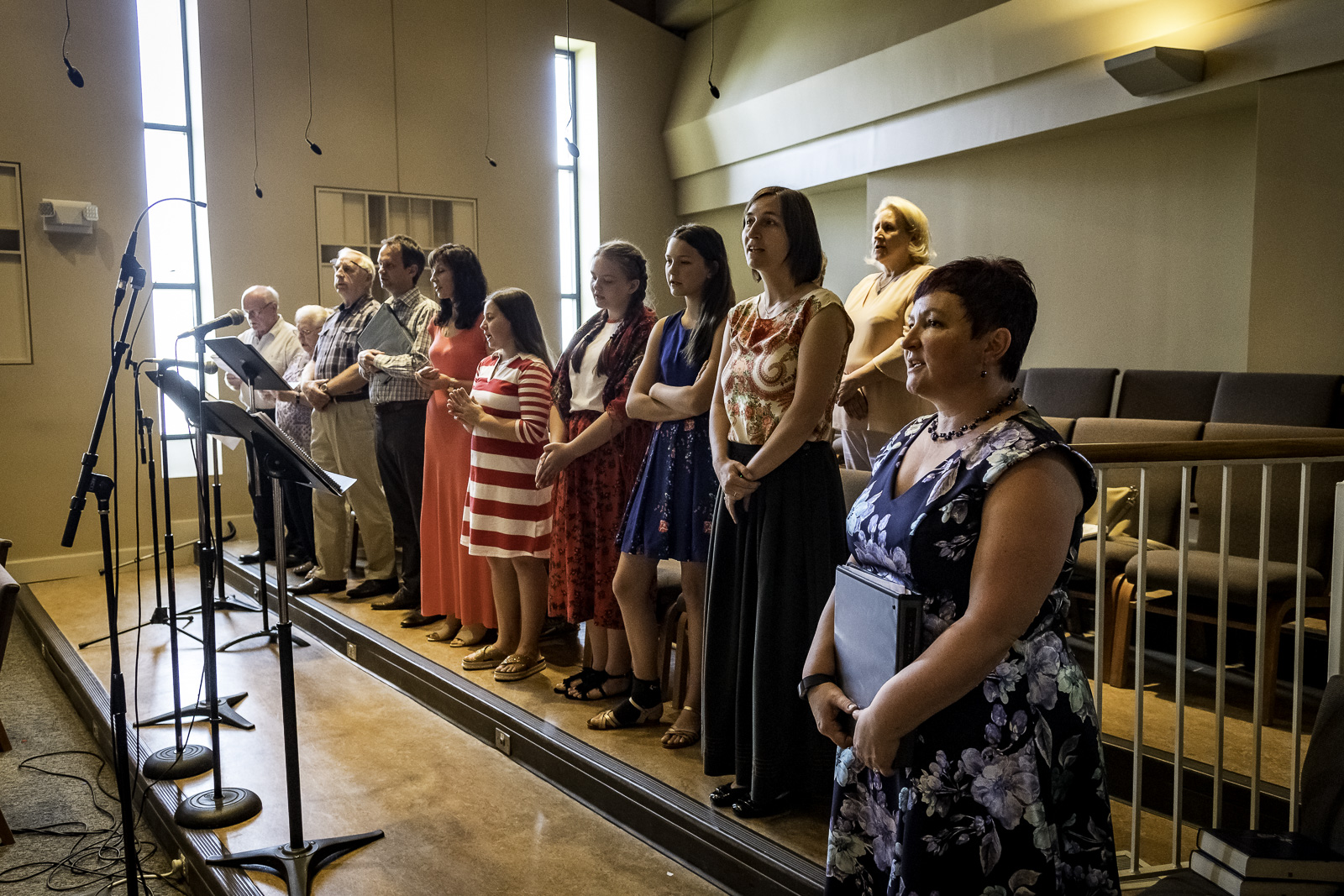
But just about any job could provide that: there are plenty of jobs that pay as much as what I earn as a teacher that I could have selected, I guess; there are plenty of jobs that pay more–some, much more–than I what I earn as a teacher, so the next question would have to be, “What motivates me to be a teacher?” Part of it is that I just like working with kids. It keeps me in touch with new ideas. And the behavior is part of it as well: when an adult acts like a child, I find it much more infuriating and difficult to put up with than when a child acts like a child. When kids are petty, they’re just being kids–they’ll outgrow it. When adults are being petty, there’s a likely chance that that’s just how they are–they won’t outgrow it. I can’t put up with that. I would not be able to keep my mouth shut, and when someone did something foolishly immature, it would grate on my nerves.

Long Week

Written in seventh period

This has been an absolutely endless week. When Monday lasts a week in and of itself, it’s no surprise that by the time Wednesday rolls around we all feel like it must be Saturday. Add to it the simple and dumb fact that I stayed up longer than I really needed to last night means I am utterly and completely exhausted, yawning endlessly and wondering if I can make it to this evening without falling asleep.

Not having to put E to bed tonight will certainly help. I do love how he cuddles up to me when it’s bedtime, but on a night like tonight, “Snuggle Time” as he loves to call it would prove deadly: I’d fall asleep and then spend the rest of the evening in a daze.

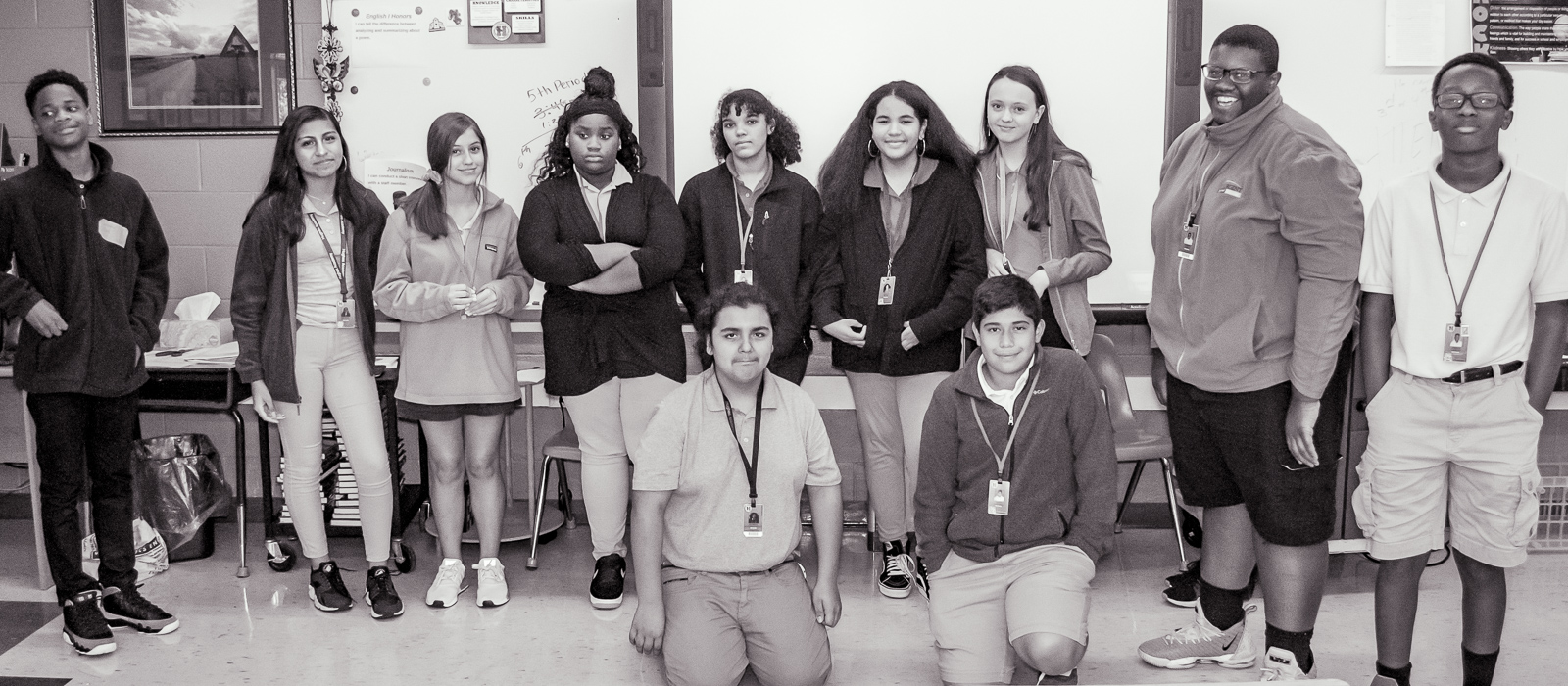
I look at my students now and none of them seem like they could possibly be as tired as I am. A just types away, gnawing on her lanyard without a trace sleepiness in her eyes. R is so calm and simply focused — typing, typing, typing. L’s cracking a smile as she types, suggesting that she’s alert enough to write something amusing and then recognize it as such. Everyone looks like their thirteen or fourteen and filled with energy. At nearly forty-seven, I feel like my battery is always hovering at around 14% — just enough to get you through the rest of the day but nothing more.

Tooth Fairy

“What should I do with my tooth?” the Girl asked. She’s had to have three baby teeth pulled because they just weren’t coming out correctly. This last one was the final to come out before she gets her braces on, something she’s not really looking forward to.

“Why not put it under your pillow for the Tooth Fairy,” I suggested.

She looked at me, furrowed her brow, screwed up her lips, marched over and said, “Right.”

“Well, why not? Get a little money. She gets another tooth. It’s win-win.”

Again, “Right.”

“What do you mean, ‘Right’?” I tried to keep from smiling, but I could feel the edges of my lips creeping upward.

“I know it was you guys,” she proclaimed.

“Oh, really?”

I’ve been waiting for this conversation for years now, wondering when she would admit that she knew K and I were the Tooth Fairy and Santa.

“Yes, I saw you!”

“And how do you know it wasn’t the Tooth Fairy. She could be a shapeshifter.” I was wondering if she would come back with, “Those don’t exist, either!” but instead, she just insisted again that she’d seen me.

Then the bombshell: “E doesn’t even believe in Santa!”

Open House

Written in sevneth period.

Last night we had open house here at Hughes. In some ways, I really don’t enjoy that, but that’s only because of how long it makes the day. It’s a small price for what actually occurs. I got to meet several students’ parents, and while it’s no different in some ways from Meet the Teacher night, the real difference lies in me: I know the kids now. They’re not just names on a roster. I know how they act, how they think (to a degree), what makes them laugh, how well they do with this or that skill. They’re no longer just names on a paper but people with whom I work. An odd thought: my students as my coworkers. Not an odd thought–an unconventional thought.

Tuesday

After all day at school yesterday, I was not all that eager to head back this morning. I left yesterday morning at 7:15 in the morning; I returned home at 8:00 in the evening. At 7:15 I was leaving again. “I feel like it should be Wednesday, ” K, who had just as long a day, said this morning as I art the tea to steep and she prepared everyone’s lunch. “More like Thursday,” I thought.

The day as almost always flew by. With my planning periods at the start of the day, my five classes pop by one after the other. Soon I’m picking up the Boy, and then we’re off to soccer practice.

In a way, there’s nothing special about the day. The trick to a life well-loved is to find the special in such tiring days.

Open House

We have Meet the Teacher night before the school year gets started, but all the students are still just unknown names on rosters. By the time tonight rolls around, when parents come to ramble through the school and follow their children’s schedules, I have faces to go with the names. And personalities. And fears. And excitements.

I got a chance to talk to C’s parents. She’s new to the school, having changed schools just at the start of the final year of middle school. A tough time to make that switch. “She’s having a tough time,” her mother confided in me. She misses her friends; she misses her teachers; she misses not having such a strict dress code — all the worries of a thirteen-year-old, I suppose.

I got a chance to talk to I’s mother and tell her what a powerful leader she can be in class. “She was making sure everyone in the class stayed on task today, really taking a strong leadership role,” I told her. Both I and her mother smiled.

I got a chance to talk to A’s parents. A is, in his mother’s words, “a diamond in the rough.” All parents see their kids like that, I know, but I think that’s really an accurate description of A. He displays flashes of brilliance in his comments and performance at times, but they’re often couched in moments of apparent apathy. Or insecurity. It’s hard to tell with eighth-graders. I think it’s hard for them to tell sometimes.

I and K with the rest of the 100%-ers

I got to meet K’s mother. K is in the same class as I. They’re real gems. K has made it to the 100% club every week (i.e., 100% positive behavior as recorded in Class Dojo). Her mom saw that and whipped out her phone. “I’m getting a picture of this!” K laughed and tugged on her arm. “No! No! This needs a picture!” If only every child could have a parent that supportive.

I didn’t get to meet other parents, parents I really wanted to talk to because of genuine concerns that are growing. Sure, I can call them, perhaps email them, but talking to them in person is always so much more productive. I try not to judge — maybe they had to work or had prior commitments — but I can’t help but see a correlation.

Last Swim

Our kids have grown up swimming in the pool at Nana’s and Papa’s condo complex. More often than not, we were the only ones there, and the kids really came to think of it as a private pool for us. “Oh, someone’s here,” was the common moan when we pulled up to find that someone from the complex was already there. In all the years we’ve been going there, I can think of exactly one time when it seemed crowded: at most, there were half a dozen other swimmers there every other time.

From 2013

Most often, Nana and Papa would meet us at the pool, and we would try to entertain them by entertaining ourselves. Lately, though, say in the last two years, Nana and Papa made it less and less frequently. With the problems she had with polymyalgia rheumatica, Nana had greater and greater difficulty walking, and they came less and less frequently. And then Nana passed away, and all the changes that came with that…

Now we’re getting ready to sell the condo, and so this season will be our last season swimming there. Which meant today was our last day swimming there.

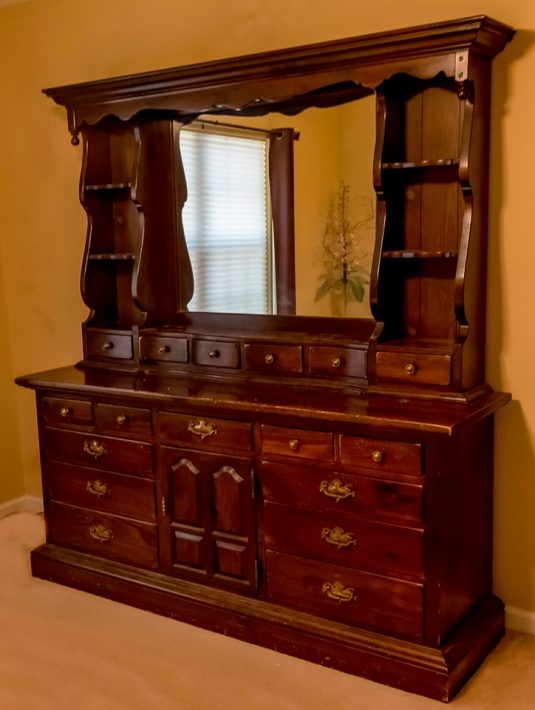
It’s not the loss of the pool that has drawn me into a thoughtful mood but what it means — the end of an era of our lives. Nana’s passing was, of course, the most significant, the most painful, but since then, the door to that era has remained slightly open. The apartment was still there, still filled with furniture, dishes, clothes, and all the memories attached. After the estate sale, most of the furniture was gone. A few trips to a local charity and almost everything else is gone. The apartment is empty except for a large dresser that Nana and Papa bought in 1979 from a family in the apartment complex where we lived. They were going through a split up and everything had to go.

In 1979, I was six, so this dresser was a constant presence in my life, the one piece of furniture connected to the time when I was E’s age. We’ve been trying to sell it for ages. We’ve dropped the price again and again until it’s now almost free, and still no one is interested.

That seems somehow sadly appropriate. Who wants someone else’s 40-year-old memories?

Through all this, though, we kept going to that pool this summer. Somehow I was unconsciously thinking, perhaps, that continuing ritual kept everything from changing for good.

From 2012

I guess what it is, is simple: that pool represents my kids as kids. It will bookend a period when they were both kids, for L at nearly 13 is no longer a little kid. She’s nearly as tall as K, and her interests are maturing to match: she’s started watching Grey’s Anatomy on Netflix because so many of her friends have been watching it, and she wants to keep up with them. When we go to the store, she’s asking to buy makeup instead of toys. The thought of going to Starbucks for some iced coffee drink nonsense thrills her. Our Daddy-L time is no longer playing with this or that but practicing volleyball. She’s getting braces soon and will likely not find boys disgusting for very much longer.

It’s all inevitable, but that doesn’t make it any less bittersweet.

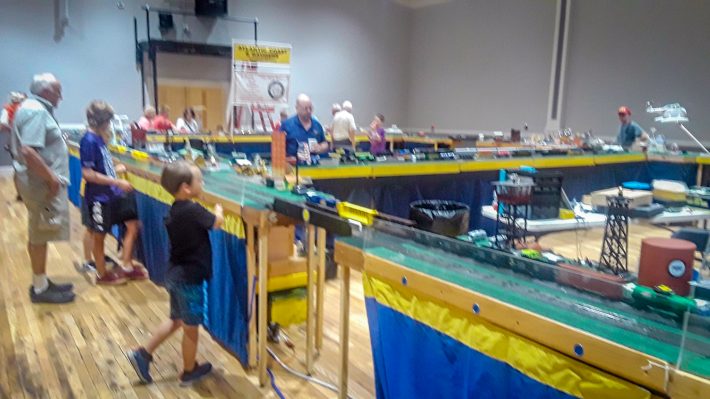
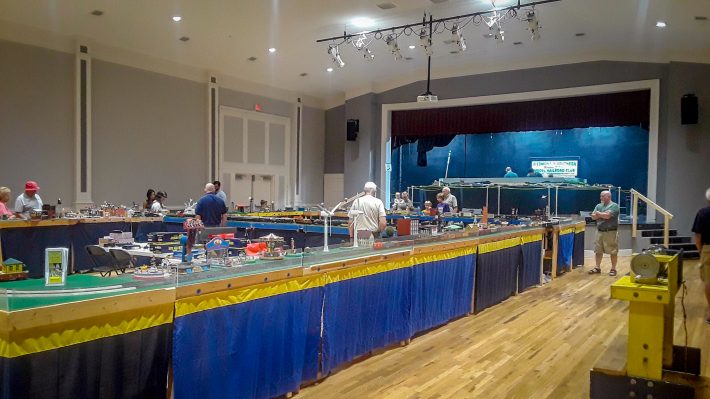
Train Show

“We’ll just go in for a little,” the Boy insisted.

“Ten seconds for each thing.” He’d been reluctant to go to the train show. Why? I have no idea.

We were there for considerably longer.

Montressor

We had one of my favorite lessons in English I today. I love that moment when everyone has the realization that Montressor is receiving the sacrament of Last Rites. It always kind of frustrates me that no one has ever gotten the importance of that one word, that little “You” that gets the ball rolling. I sometimes think that if I could set things up with some background knowledge, get them reading some texts that deal with the idea of confession, that they might figure that out. But still, how to do that without giving it to them immediately? As I told Emily A, the struggle is almost more important than the right answer. The struggle is where we build our mental muscles.

All classes have gone fairly well today. I’m exhausted, yawning and longing for a cup of coffee, but that is always a good sign. But still, on this end of seventh period, feeling the heaviness in my head, wishing I could just lie down and take a little nap, I wish I wasn’t quite so tired even if that means lessons didn’t go quite so well.

9/11 Anniversary

It’s odd that today is the anniversary of the most significant and deadly terrorist attack in US history and I’ve heard almost nothing about it and I’ve read almost nothing about it in the press. Eighteen is a somewhat odd anniversary. Ten years, fifteen years, twenty years — these are significant because, well, I guess they’re half decades. But eighteen? Doesn’t have the same kind of significance — doesn’t feel that way, anyway.

It’s difficult to believe it’s been eighteen years. I’d just moved back to Poland, and for me, that’s what’s more difficult to believe: it’s been almost twenty years since I moved back to Poland after those two wonderful yet horrid years in Boston. That’s such a central period of my life, so significant, and I tend to organize my life around that as a milestone — when I had the courage to follow my inner voice, to do what seemed like the crazy yet right thing to do. I had a girlfriend; I was engaged; I had a great job making great money in computer programming; I lived in arguably the best city in the States, a city that feels small but has everything a big city has to offer. And I gave it all up and went back to Poland — what a crazy thing to do.

The attack itself — what a strange day. I remember coming back from school and trying to figure out what Pani Barnas was saying, something about a plane hitting a building, some kind of terrible accident. It was around four o’clock in the afternoon, so that made it 10 in the morning here. That would have been sometime between the two towers getting hit. I have a memory of watching the second plane hit the tower on live TV. Karol had stepped into the other room and I called him back: “Popacz,” I said, as if there were any other reason to call him back.

These kids were still four or five years from being born. What a thing to make you feel old. The kids I teach now weren’t even alive: I can’t ask, “Where were you when 9/11” happened. “Not even born yet,” they answer. That makes it like something that happened in, say, 1967 for me. I can’t think of anything significant that happened then. Was that when Israel was fighting one of its many wars of the 60s? Was that the Six Day War? Can’t remember.

Band

I stopped and listened to the band rehearse a little while after my morning duty, and I realized how much I love the fact that Hughes has a band. It teaches kids a lot of valuable lessons — above all, teamwork. It is the ultimate group project because no one can slack if it’s to sound right in the end, and unless it’s a concerto or something, there are no stars so to speak. Everyone has their little part to play, and often those things don’t even sound all that good by themselves — a bit plain, a bit boring, a bit repetitive — but in the end, it all comes together to create something greater than the sum of its parts.

Other benefits: the self-control (one cannot play what one wants as loud as one wants), the discipline (practice, practice, practice!), and the simple value of learning music, which improves cognitive abilities and creativity among many other things.

I played sax in the band in fifth and sixth grade, but once I got to junior high (we didn’t have middle school, just junior high — seventh and eighth grades), I quit. In eighth grade, I talked my folks into letting me sell my sax and use the money to be a CD player. CD players weren’t brand new then, and that’s why my father agreed to let me buy one: it was clear it wasn’t just a fad, something that would disappear in a couple of years like Beta Max tapes did. Still, thirty-some years later (I was in eighth grade in 1986, I guess), they have proven to be little more than a long-lived fad.