Month: July 2025

New School Year

This week, I’ve begun moving into my new classroom in my new school. After eighteen years in the same school and seventeen years in the same classroom, I’ve not had a substantial change in my teaching environment in almost twenty years. Had you asked me some years ago when I was still comfortable and content teaching eighth-grade English in Hughes whether or not I’d be comfortable changing absolutely everything about my physical environment with only ten days or so until the first day of school, I would have responded calmly that I’d rather not, but inside I’d be in a mild panic at first. New understanding points out we’re all on the autism spectrum to some degree or another, and my absolute avoidance of change is definitely my spectrum element. However, I sit writing about this with the full understanding that my room is not even close to ready with a certain calm I would not have expected.

My calmness likely comes from the peace I’ve made with the change I’m embarking on. When I first tendered my resignation and began really thinking about what I’d done, I couldn’t accept it in some ways. “I’m leaving Hughes,” I’d mutter to myself while walking the dog when my thoughts circled back around as they always did. “After eighteen years, I’m leaving Hughes.” Unfathomable. A month in Europe with almost all thoughts of school banished my mind and I’m approaching it differently as I knew I would. Excitement isn’t quite the word, but I certainly feel an anticipation that I haven’t experienced in a few years. 

This time last year, just days before returning to school, all I felt was dread. What new assessments are we going to have to do? How acceptable (notice — I didn’t think how good but how acceptable) would the new textbooks be, and just how closely would we be expected to follow them? How much new “analysis” would we have to do on the district-obsessed “data” would we have to do? (I put those in quotes, though I am loath to do so, because all the data collection and analysis we had to do seemed just to be going through the motions to produce numbers for those making six-figure salaries at the district office to justify their jobs.) What changes will we implement to behavior management in the school? How much new paperwork will I have to complete? What new requirements will we have to meet with our lesson plans? These were the thoughts that made me dread going back to school, not the thought of actually working with the kids. 

Looking at the new school year with a calm anticipation I’ve not felt in years is recursive: the fact that I’m so calm, in turn, calms me more. So today, I was able simply to drop off a few things in my classroom and head back out. Gone is the bookshelf that sat in the middle of our finished basement all summer, prompting K to ask sweetly, “When do you think you might be able to take that out of here?” Gone are some of the boxes of books stacked in the storage room. Because gone is any anxiety about the new school year.
Collins and the Mind

Sam Harris, author of the excellent The End of Faith, has an op-ed in the New York Times about Obama’s selection of Dr. Francis Collins to head the National Institutes of Health.

Collins is famous for his work leading the Human Genome project as well as his stance that there exists “a consistent and profoundly satisfying harmony” between science and Christianity. While he is not a proponent of Intelligent Design, Dr. Collins believes both Genesis and Darwin. Harris explained it thus:
What follows are a series of slides, presented in order, from a lecture on science and belief that Dr. Collins gave at the University of California, Berkeley, in 2008:

Slide 1: “Almighty God, who is not limited in space or time, created a universe 13.7 billion years ago with its parameters precisely tuned to allow the development of complexity over long periods of time.”

Slide 2: “God’s plan included the mechanism of evolution to create the marvelous diversity of living things on our planet. Most especially, that creative plan included human beings.”

Slide 3: “After evolution had prepared a sufficiently advanced ‘house’ (the human brain), God gifted humanity with the knowledge of good and evil (the moral law), with free will, and with an immortal soul.”

Slide 4: “We humans used our free will to break the moral law, leading to our estrangement from God. For Christians, Jesus is the solution to that estrangement.”

Slide 5: “If the moral law is just a side effect of evolution, then there is no such thing as good or evil. It’s all an illusion. We’ve been hoodwinked. Are any of us, especially the strong atheists, really prepared to live our lives within that worldview?” (Source)

Harris is concerned about this blending of religion and science. He writes that when Collins is

challenged with alternative accounts of these phenomena – or with evidence that suggests that God might be unloving, illogical, inconsistent or, indeed, absent – Dr. Collins will say that God stands outside of Nature, and thus science cannot address the question of his existence at all.

Similarly, Dr. Collins insists that our moral intuitions attest to God’s existence, to his perfectly moral character and to his desire to have fellowship with every member of our species. But when our moral intuitions recoil at the casual destruction of innocents by, say, a tidal wave or earthquake, Dr. Collins assures us that our time-bound notions of good and evil can’t be trusted and that God’s will is a mystery.

In short, Harris is worried about the fact that, when it comes to the moral dimension of the universe, Collins ceases being a scientist and becomes a theologian. Certainly the statement “God’s will is a mystery” is not something that can be tested scientifically, Harris rightly points out.

But Harris is up to more, though. He rightly points out that this view of creation — evolution to one point, divine spark-of-morality injection at another — recreates an age-old problem: the mind-body problem.

Just how is the mind/soul connected to the body? Where does one end and the other begin? Things we’ve traditionally thought of as part of the mind/soul (such as personality) are oddly susceptible to influence through physical media. The most famous example is Phineas Gage, a railway who, through a series of unfortunate events, had a railroad stake placed in his skull. He survived, but was never the same. He changed. Instead of the kind, fun-loving Gage, he became a foul-mouthed, short-tempered jerk. His personality changed through violent manipulation of his brain. It kind of indicates that personality is not an aspect of the soul.

Contemporary examples abound. As a teacher, I see it every day: Ritalin. Over-medicate a child on Ritalin and you’ll get a somber, introverted, sleepy individual; get it just right, and you’ll get a “normal” person; under-medicate and you’ll get someone almost bouncing off the walls. When I was in school, this would have all been chalked up to “personality.”

This is exactly what Harris has in mind when he writes,

Most scientists who study the human mind are convinced that minds are the products of brains, and brains are the products of evolution. Dr. Collins takes a different approach: he insists that at some moment in the development of our species God inserted crucial components – including an immortal soul, free will, the moral law, spiritual hunger, genuine altruism, etc.

As someone who believes that our understanding of human nature can be derived from neuroscience, psychology, cognitive science and behavioral economics, among others, I am troubled by Dr. Collins’s line of thinking. I also believe it would seriously undercut fields like neuroscience and our growing understanding of the human mind. If we must look to religion to explain our moral sense, what should we make of the deficits of moral reasoning associated with conditions like frontal lobe syndrome and psychopathy? Are these disorders best addressed by theology?

Dr. Collins sees morality as an element of the soul; Harris points out that this is untestable and amounts to a re-introduction of the mind/body problem into contemporary science. It’s an insightful point, and Harris builds to this point very effectively.

It’s a tricky issue. Religious beliefs are often bedrock beliefs: they inform and shape other beliefs. Would we want a Christian Scientist in the role, someone who believes that all ailments are spiritual, figments of an unenlightened imagination?

But will Collins’ religious beliefs affect his scientific reasoning? I’m not convinced, like Harris, that it will. It didn’t when he was director of the Human Genome Project. Then again, Sam Harris is a long-tailed atheist in a Christian rocking chair country: he’s more than a little skittish, and often justifiably so.

Source: Gary Stern, at Blogging Religiously.

Rainy Chabówka

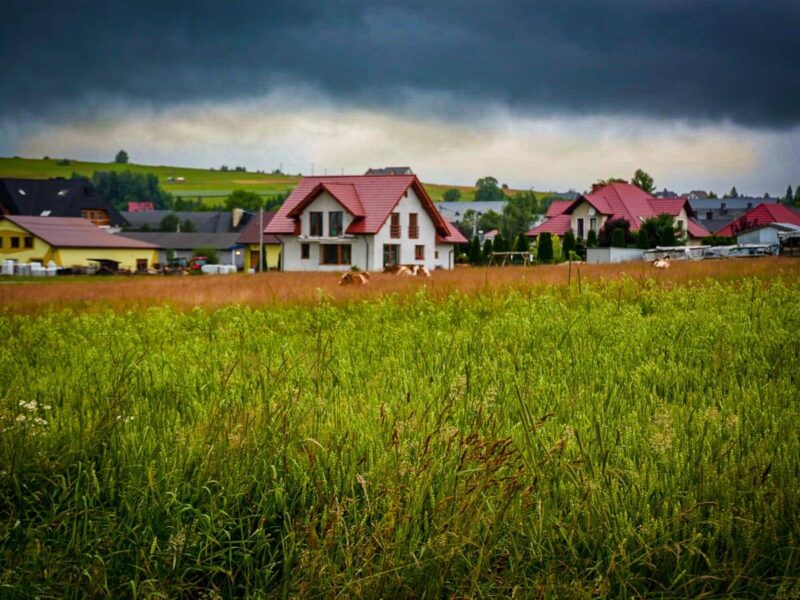
What do you do when it’s raining, raining, raining? When we took our trip to Charleston a few months ago, we went to watch the Dylan biopic that first day because of the weather, but there’s no movie theater in Jablonka. Where could you possibly go when you’re in a small village relatively far from any town?

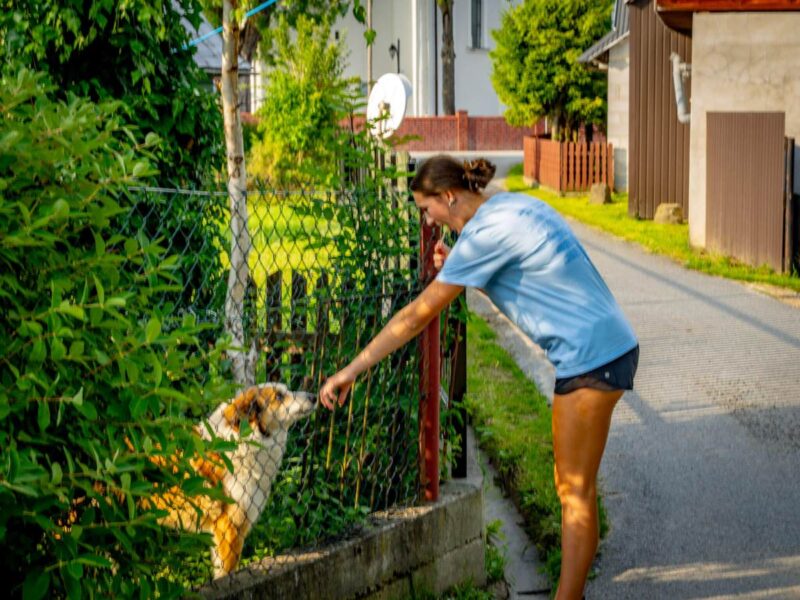
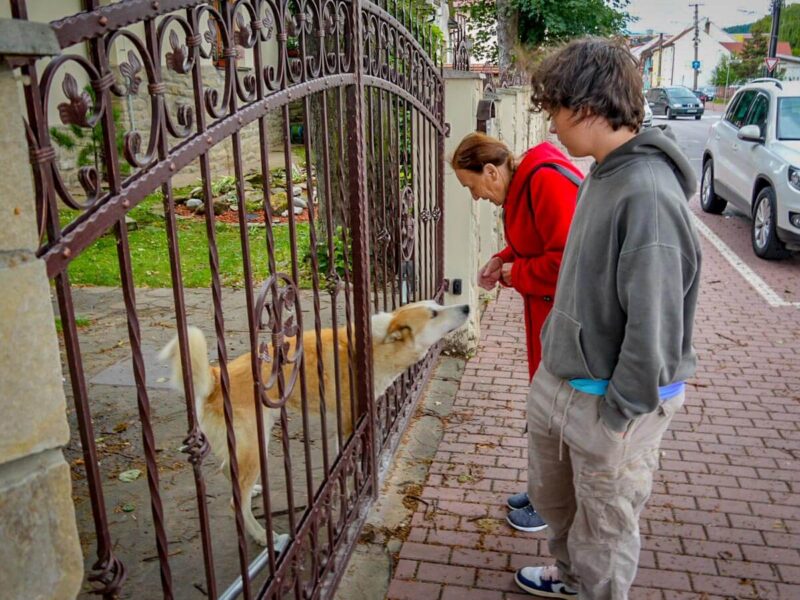
Well, when there’s a break in the rain, you can take the dogs out for a walk. There’s always something to look at and to talk about with the Boy. So that’s exactly what we did this morning. The little suka that Babcia adopted some years ago (a poor pup clearly abused earlier in your life–she’s terrified of me and all men in general) got out of her collar and caused the Boy no bit of initial worry.

“She’ll follow us and make it back home,” I assured him.

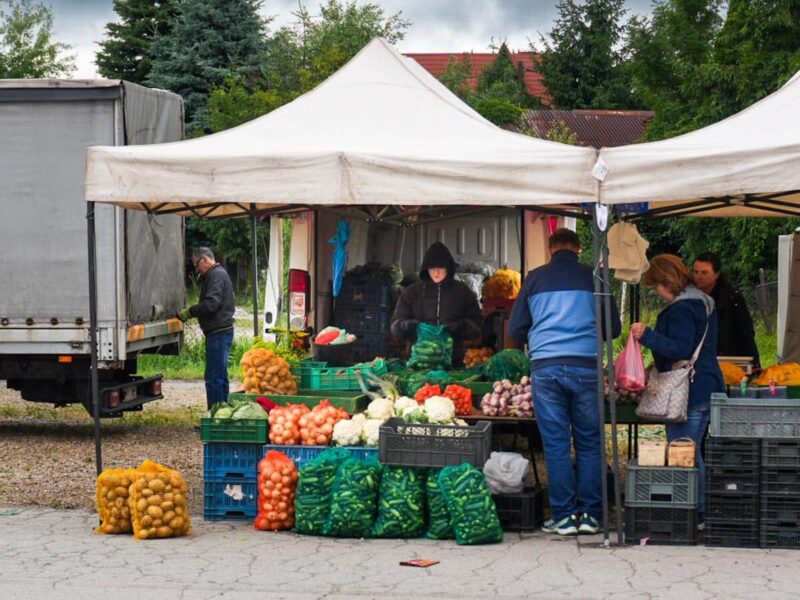
We cut through the jarmark, which, by that time, was closing up.

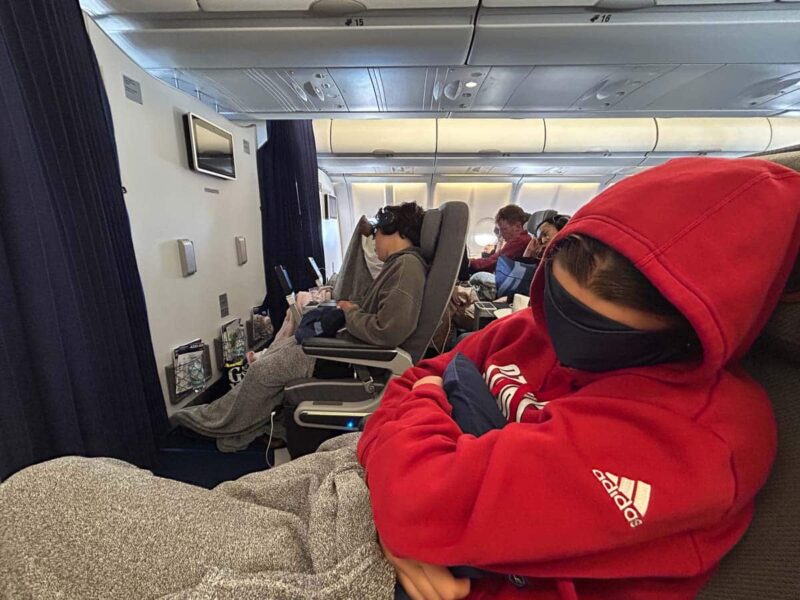
“Almost nobody is there,” the Boy informed me when I finally dragged myself out of bed at nearly nine this morning, exhausted from waking to take K to the airport and then unable to fall back asleep at 4:30 when I got back to Wujek D’s house yesterday.

(K made it home safely: the animals are thrilled to have part of the family back home, but still wondering where in the world the rest of the family is.)

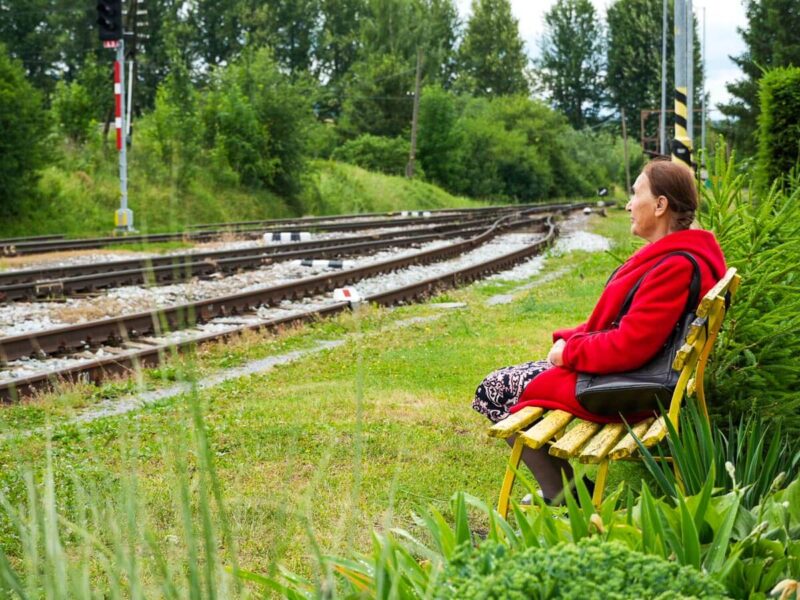
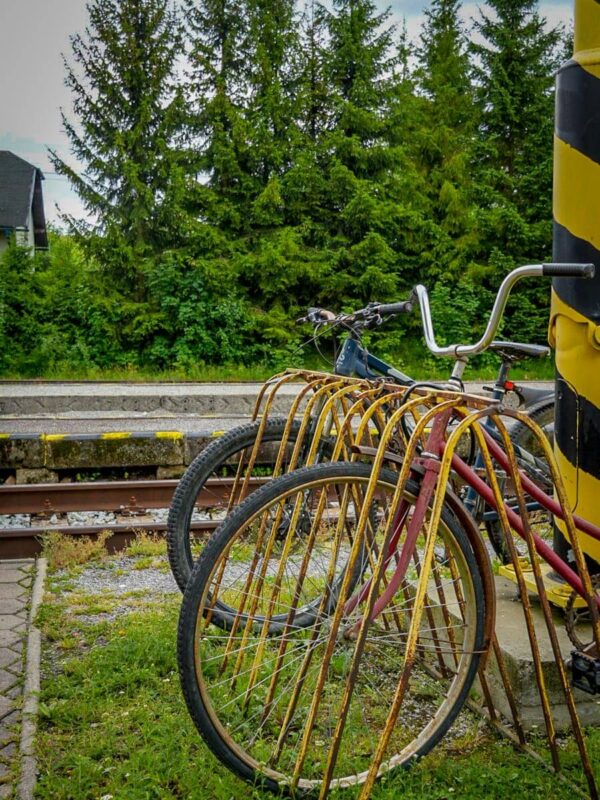
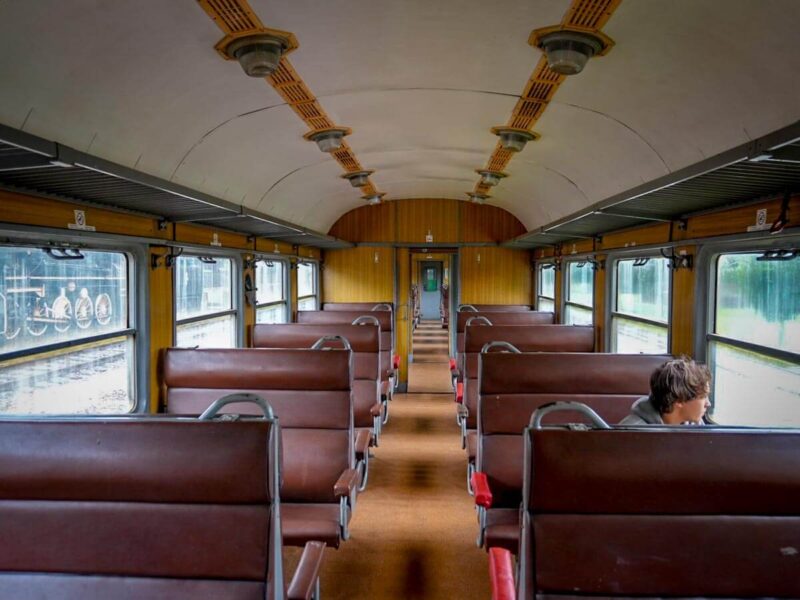
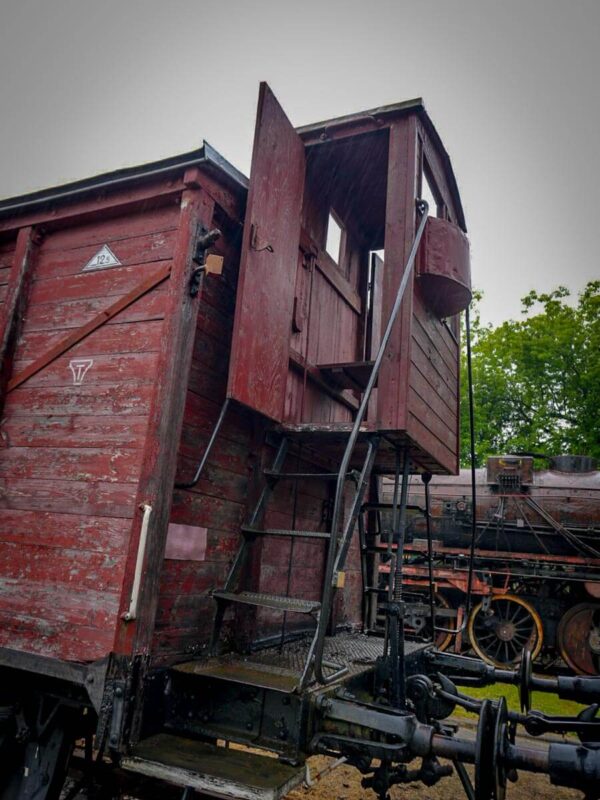
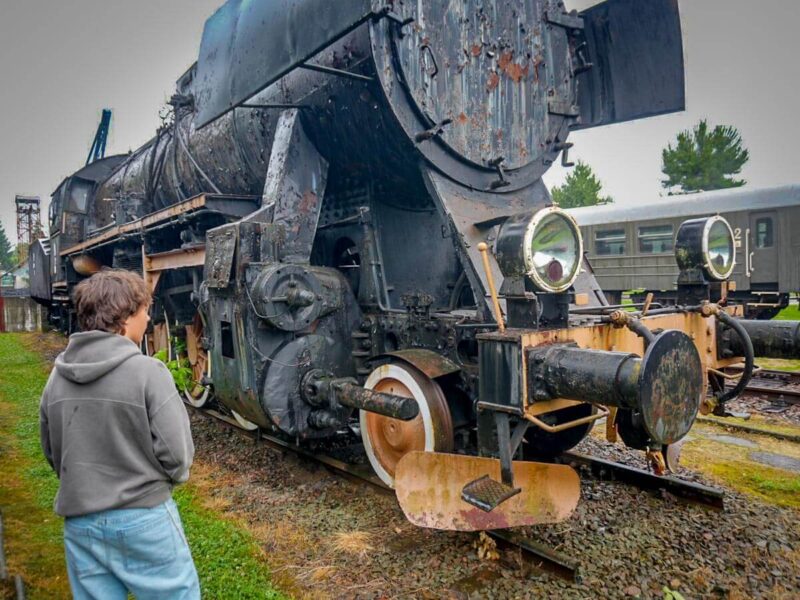
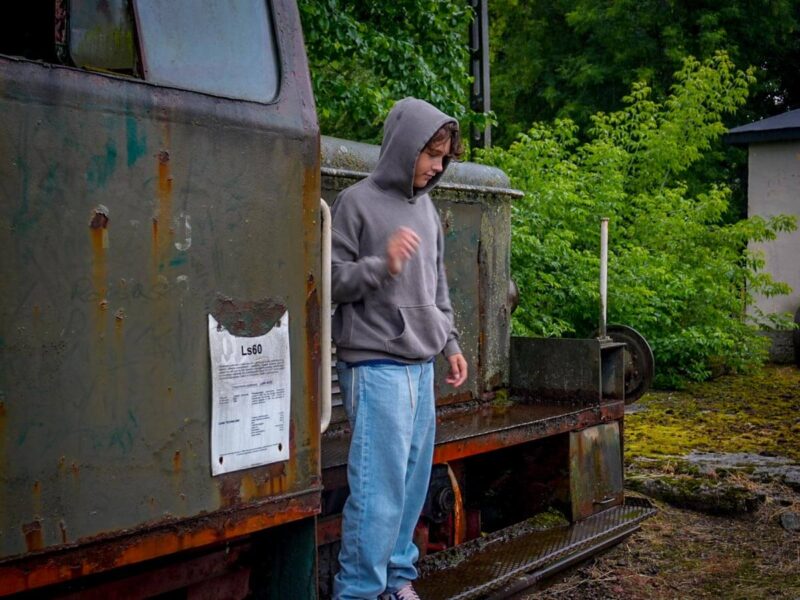
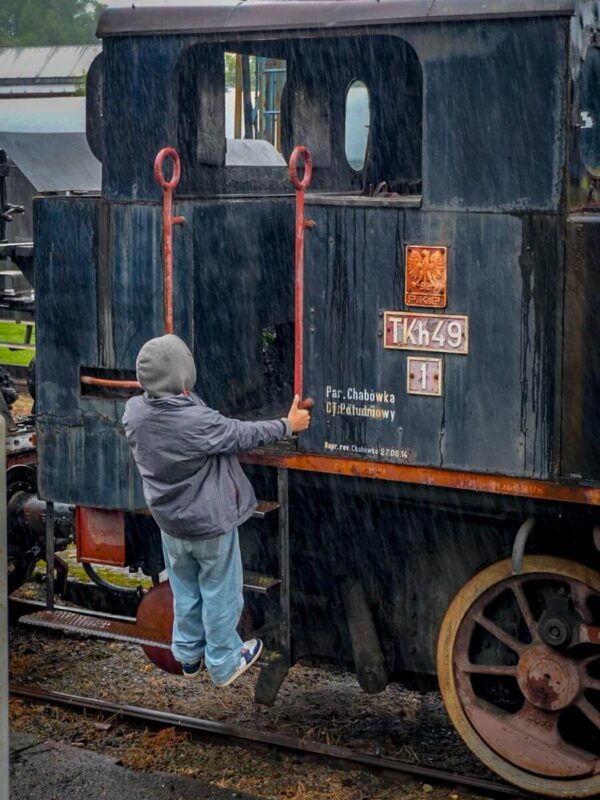
Finally, after lunch, we decided the best place to go was the outdoor train museum we seem to visit every visit lately. It was a little different this time: the Boy wasn’t as fascinated with every little thing like he was during our first visit, and the cold rain was a radical difference from the unbelievable heat we endured in 2022.

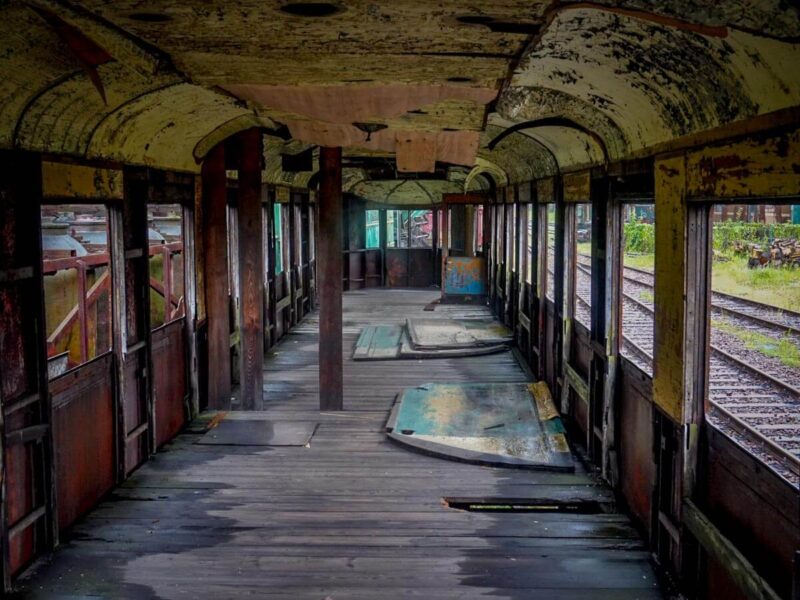
We talked about the fact that all this equipment was once new, modern, and cutting-edge. We entered an empty passenger wagon that had nothing but a wooden floor and rusted ceiling:

“Just think, son–at one point, someone climbed into this carriage and thought, ‘Wow! A new, modern car!’ And now, it’s difficult for us to imagine traveling like that, difficult to imagine the carriage as anything but an exhausted antique in a museum.”

Krakow 2025

The changes in Warsaw between the time I first explored the city in 1996 and finally returned with my family in 2017 were enormous: it was almost an entirely new, entirely different city. I’m sure the changes in the intervening eight years have not been as drastic, but certainly it has grown: new skyscrapers, old buildings torn down or renovated, more diversity in its populations–all the changes I observed in 2017 continued to some unknown end. 

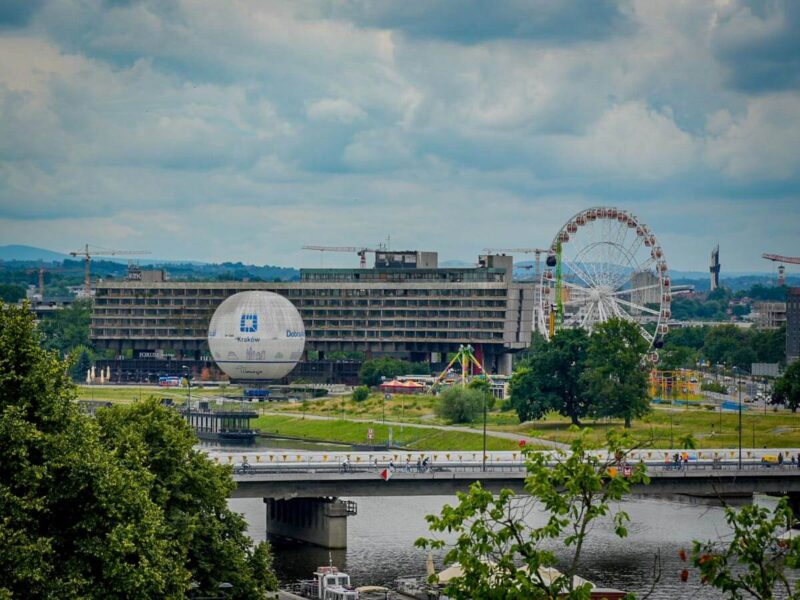
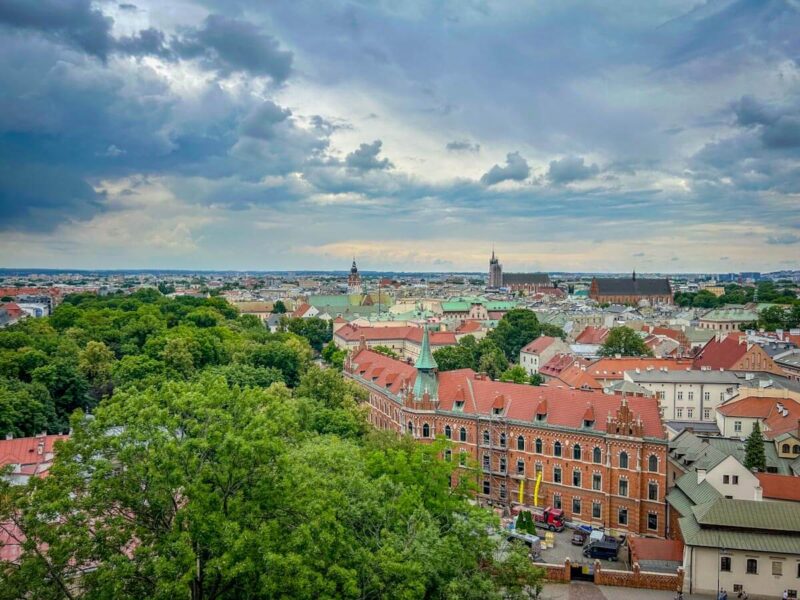
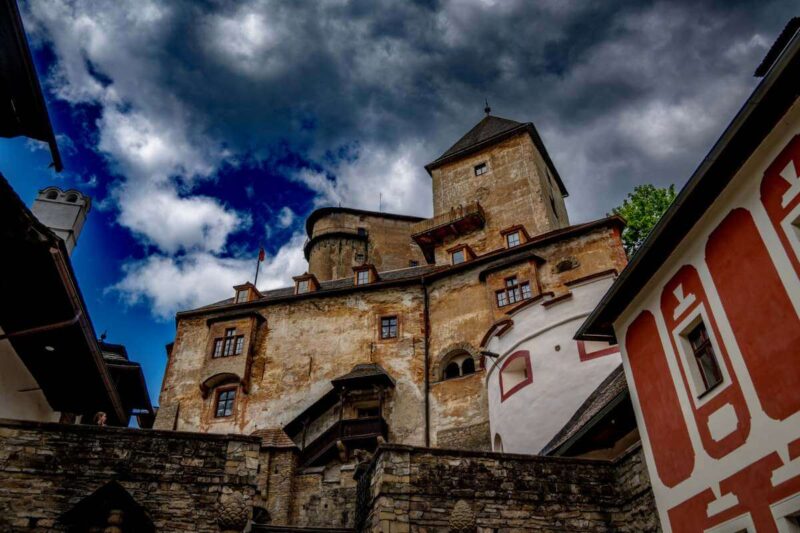
The old Forum Hotel from Wawel hill
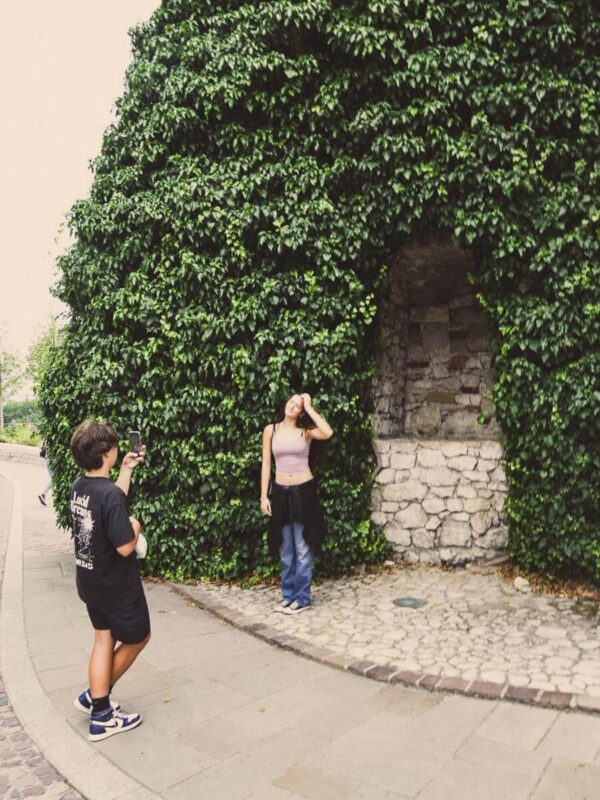
L’s favorite photographer

Krakow, on the other hand, is a city that seems to have changed little in those years. The Old Town has a lot more variety in its culinary offerings; the prices for apartments in that part of town are likely out of reach for the vast majority of Cracovians; there’s much more diversity in the population of the city and in the tourists who visit it; some buildings have been renovated a few new structures have appeared. Still, it is by and large the same city I visited first in the summer of 1996.

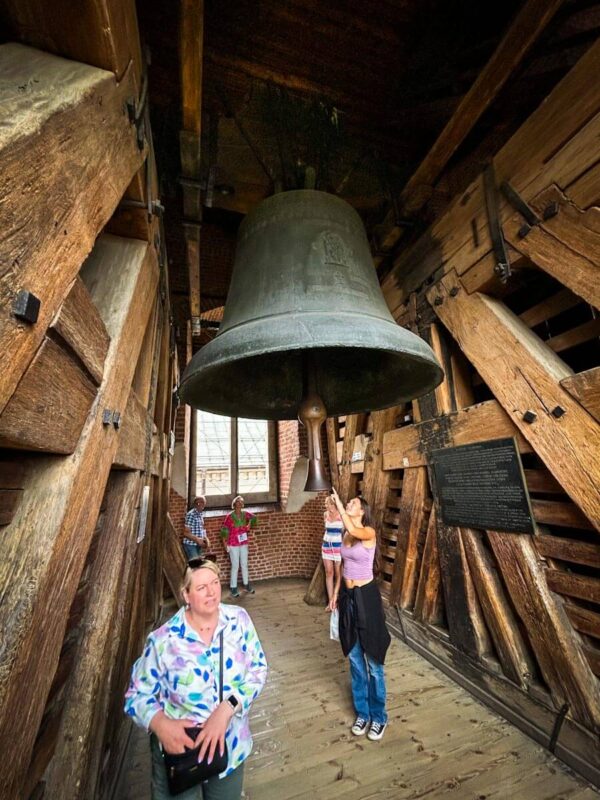
“How did they even get it up here?”

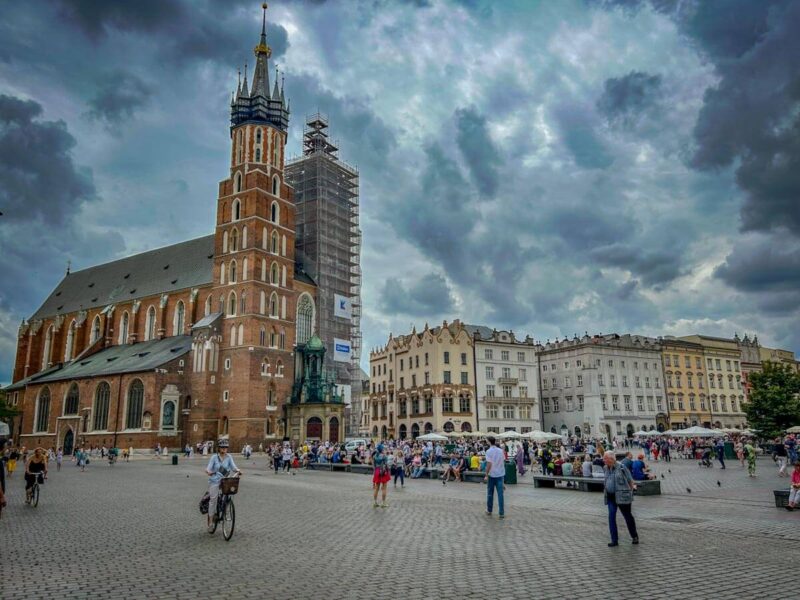
The kids and I explored a bit of Krakow today since we were already so close having taken K to the airport for her return to the States. (The kids and I will be staying another two weeks.) L’s knee is still giving her problems (it all started last week in the mountains), and the forecast predicted severe thunderstorms and continuing rain starting around two, so we made a short day of it. We really only went to two major tourist attractions: the sukiennice on the main rynek for the Girl to get a few more gifts for friends, and Wawel because, well, it’s Wawel.

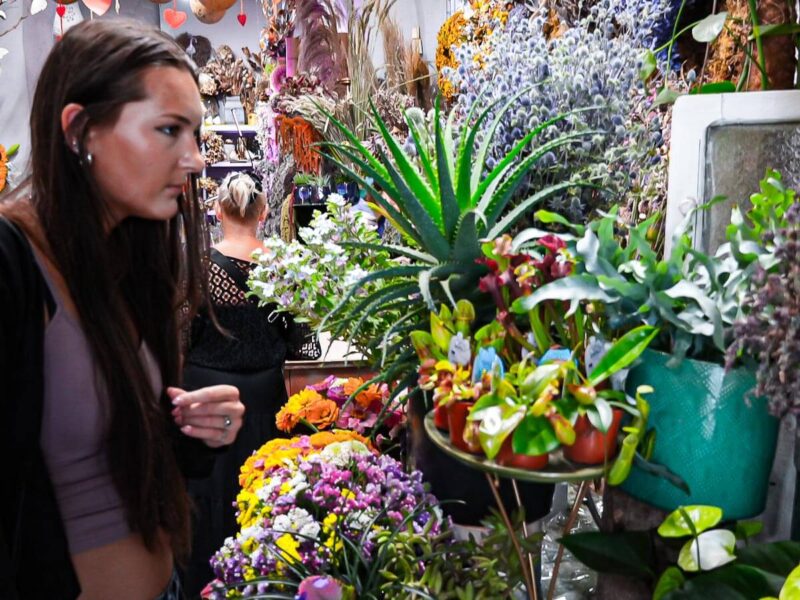
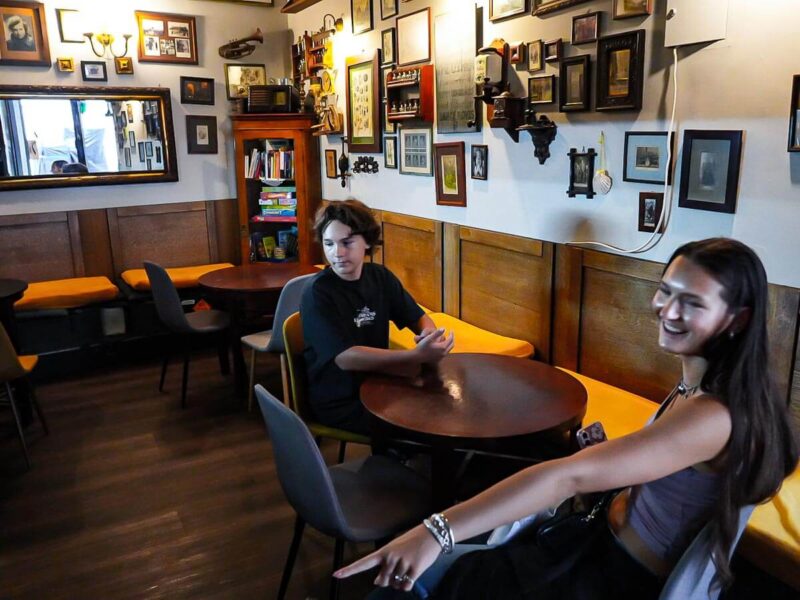
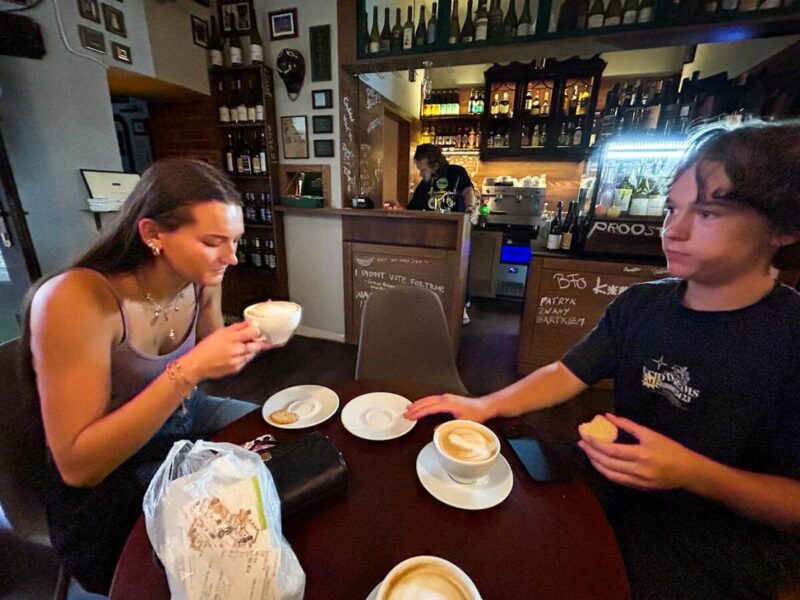
Along the way, we of course stopped in several shops that lured the Girl’s attention with vintage dresses or exotic plants, and we took a break in a charming little cafe just off the rynek for coffee (three lattes, please). All told, we spent there only about four hours–certainly not enough to do the city justice at all, but we’ve all been there so many times that it felt fine just reliving a few highlights. Besides, relief for an aching knee is more important than any tourist attraction.