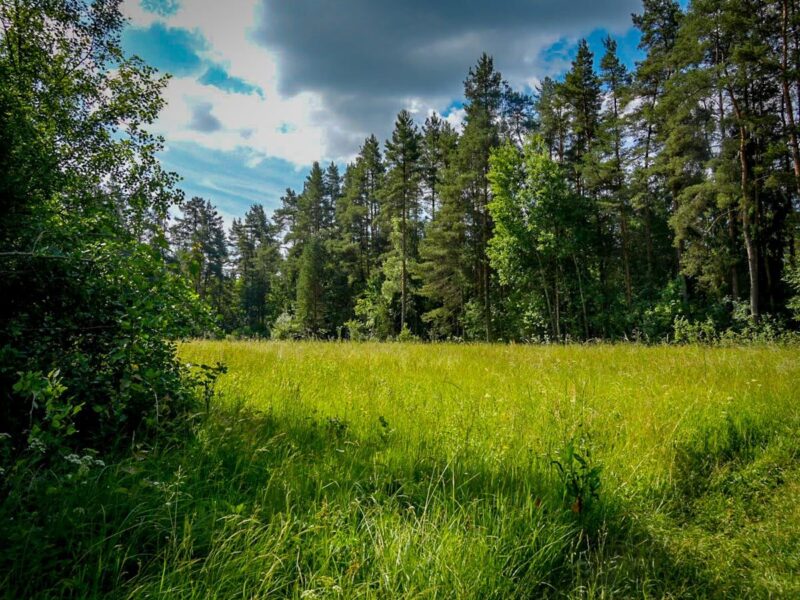
It’s a walk I’ve taken countless times. The first time I took this walk was with Kinga probably 28 or 29 years ago. At that point the deliniation between houses and fields was clear. Most all of the houses were at 15 to 20 years old, and those that were new were likely incomplete. The block walls and slab floors were done. It had a roof, and there were windows. Often there were even window boxes filled with flowers. Yet the exterior of the house was still, as the Poles would call it, raw–surowy.
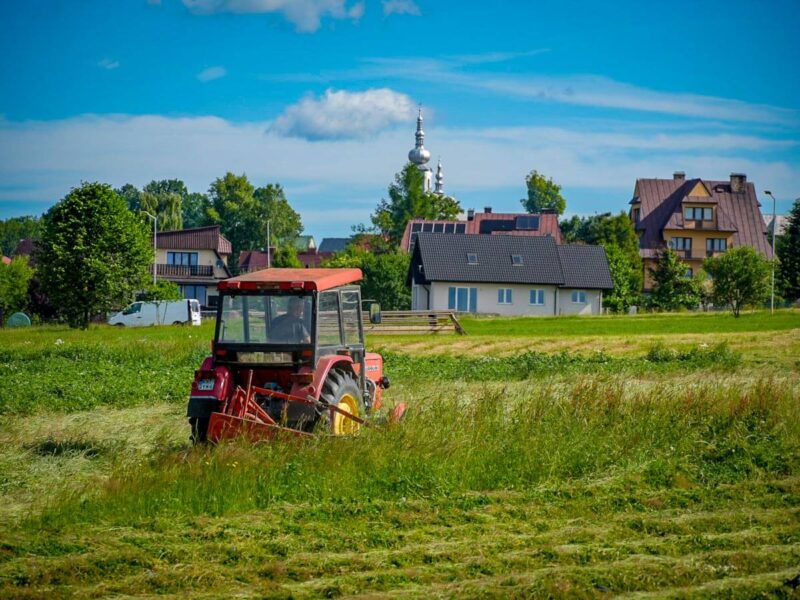
Once in the fields, one saw several things consistently. Fields planted with various crops often potatoes or grass for livestock streched out in various directions, sometimes to the horizon. An farmer might be making loops in the field as he cut that grass or turned the grass as they processed it into hay. Strang pyramids of may might line another field–triangular wooden frames piled with grass it for the final drying process. Families might be loading the grass from the frames to horse-drawn wagons to be taken to the barn storage for winter feed. But most of all there would be cows. Cows everywhere.
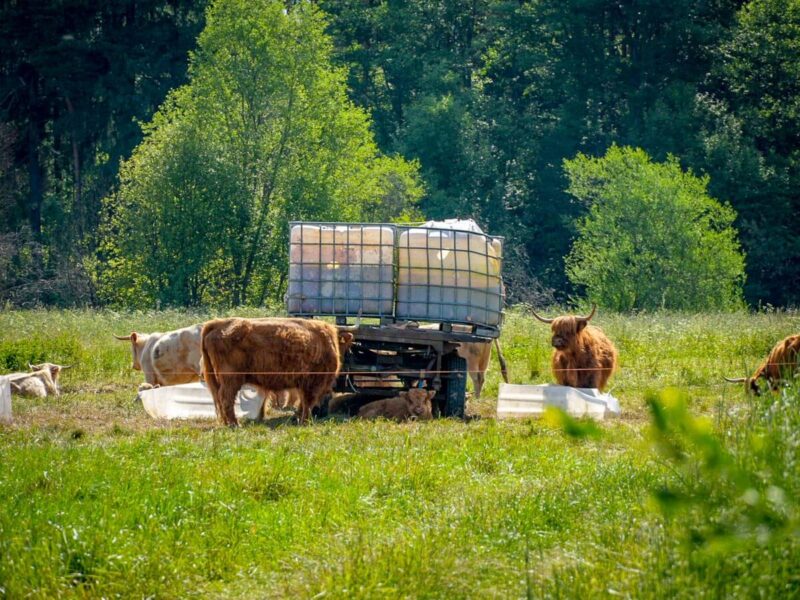
Now, almost all of that is gone. The fields have been turned under and houses constructed upon them. The cows have completely disappeared except for exotic bulls that are likely more status symbol than anything else. The A-frame with hay drying on them (drabiny the Poles called them—ladders) are also a thing of the past. In short, the Polish village to which I arrived in 1996 has completely disappeared. Cows are no longer a basic necessity. They’re simply an expense. Giant hay balers have replaced the drabiny. And the people in the new houses are once the children of those farmers whose crops and dairty once supported them. But dairy production is now on an industrial scale; crops are grown on an industrial scale. The small family farms are no longer profitable, so they disappear.
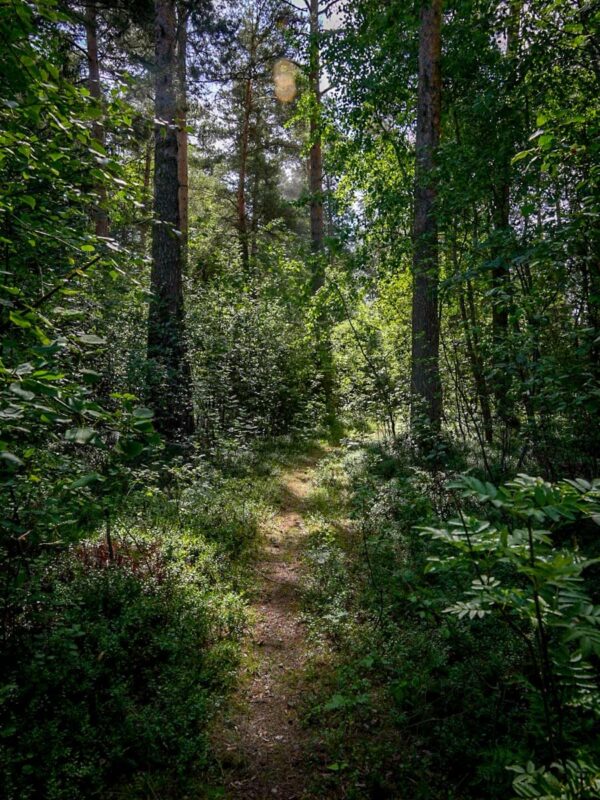
Now, I take a walk in the fields and there are no people. There are no cows. The only sound of humanity that I hear on the cars is passing on the road and the distance.
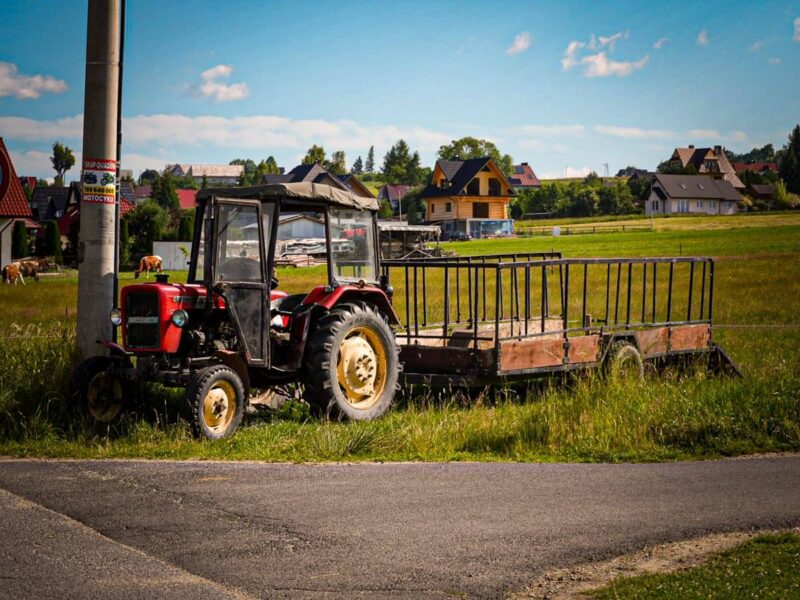
As we were driving back from Nowy Targ yesterday after getting ice cream, I was talking to my brother-in-law about how I regret not taking pictures of the communist, social realist style of architecture that was so prevalent when I first arrived in Poland. There was the bus stop in Nowy Targ, which was a textbook example of 60s Eastern European architecture, where I sat for many hours waiting for a bus here or there. I have almost no pictures on the inside and absolutely none of the front of the building. I think about the old bus station in Kraków, where I also waited for countless hours.I also have no pictures of it. Most significantly, the apartment in which I lived for three years, which was pulled down during our last visit in 2022, survives only in my memory. I have not a single shot just of the interior of that building or my apartment. I have only some pictures of the apartment when I went for a visit in 2001. I poppoed into the apartment after the American who replaced me had moved out and cleaning ladies were battling the complete mess he’d left behind. I took a picture more of the wreck than of the apartment. Those were the elements of my everyday life I should’ve realized would change, or even disappear, and I never took a single photograph.
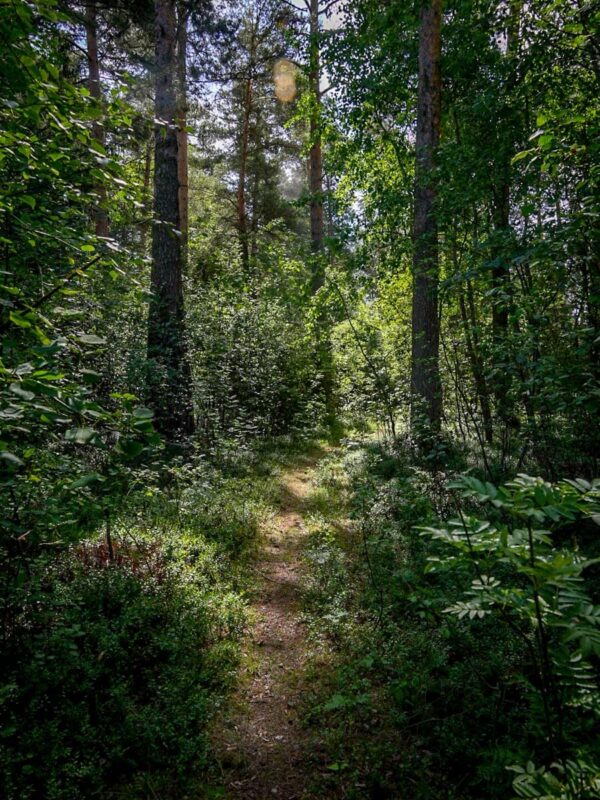
It occurred to me during the walk today, though, that all the pictures I’ve been taking while on walks in the fields over the last 30 years have been just that: images of a disappearing world. Unlike the brutalist architecture of Eastern Europe, which I knew would eventually disappear or be renovated beyond recognition, it never really occurred to me that the village too would disappear. But it should have: that’s exactly what happened in America. That’s exactly what has happened in various countries in western Europe. It hasn’t disappeared, but it has transformed beyond recognition.
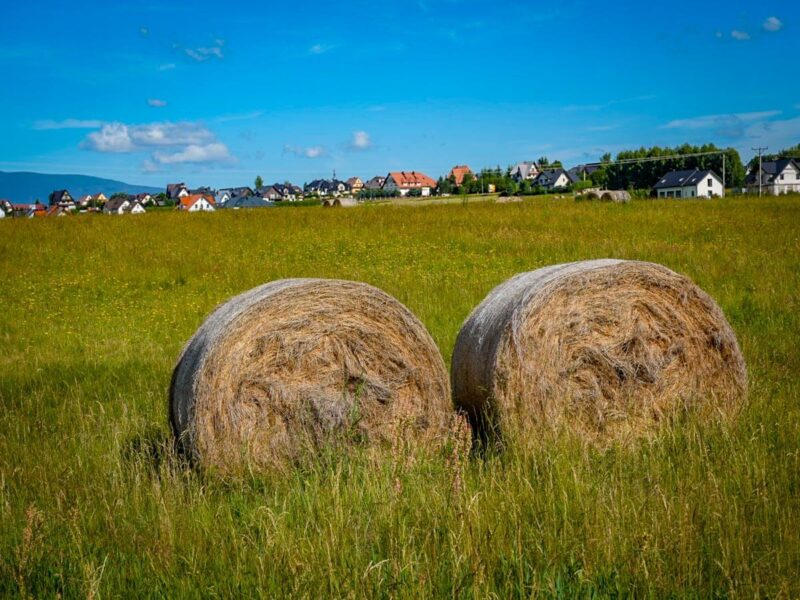
It occurs to me, though, that this has really been the theme of our visit our European adventure. We spent five days in Greece visiting ruins of civilizations that never really anticipated their own demise. They hadn’t foreseen the technological advancement of the coming millennia that would make every single element of their daily life completely redundant, unnecessary, or even silly.
We as a family are also entering a time of great change, a time of endings. L will soon be heading out to college, and since we are going to be trying to establish Florida residency for her to decrease costs during her second year at Florida, she won’t be coming to visit nearly as often as we would probably like. E has one more year of middle school, and then, as with L, high school will disappear in a flash and he too, will be heading off to college. For all we know, this might be one of the last if not the last time we are here together as a family of four. It’s depressing to think that way, and I don’t think it is the last time we are here as a family of four, but it certainly won’t be a certainty anymore.
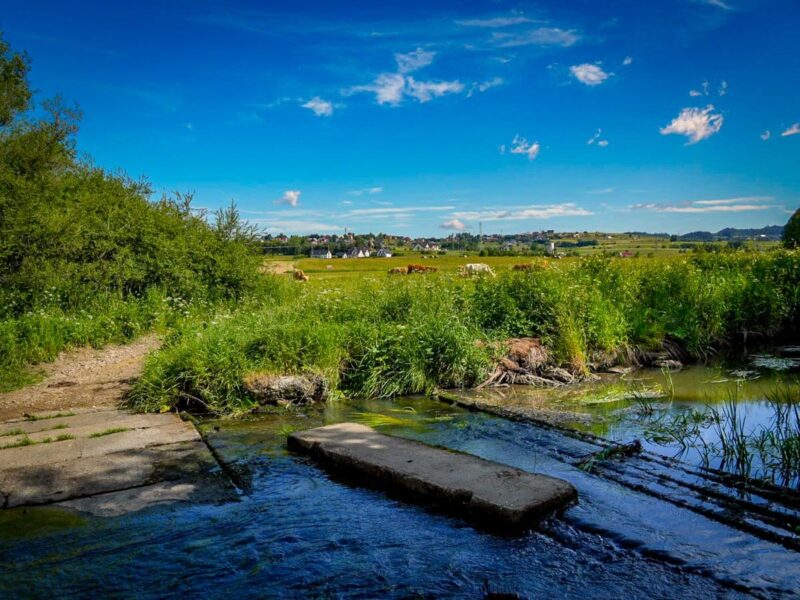
Such endings used to be heavy for me. I’m such a sentimental sap that when an ending appears, I want to wallow in the potential nostalgia of that moment. Yet the older I get, the easier those ends come. A school year ends, and instead of thinking despondently, “Oh, I will never see these kids again,” I simply think, “Well, it’ll be a new group next year.” Perhaps that is not the best example: school years by their cyclical nature never really end. One year simply replaces the other. One group simply replaces the other. No one will replace L when she goes off to college. Nothing has replaced these cows in the field now that they’ve gone. Some endings are just that: endings.
0 Comments