Month: July 2021

Beds and Bars

Getting out of bed is so simple an act that we do it without thinking. We might sometimes want to stay in bed a bit longer, but the act of slinging our feet off the bed and hoisting ourselves into a sitting position — we don’t give that much thought.

When I had my hernia surgery some six years ago, I realized how much we use our abdominal muscles to get out of bed, and because those muscles were terribly sore after surgery, I thought very much about getting out of bed. It was painful, and I wanted to get out of bed quickly to lessen the time my muscles burned, but the act of getting out of bed quickly made them hurt all the more. It was a lose-lose situation. The decision to get out of bed, then, was always a reluctant one.

On the other hand, every time I’ve overslept, I’ve kept out of bed in a single motion, and it’s a conscious act: “I’ve got to get out of the bed as fast as possible and into the shower as fast as possible so I can get dressed and bolt downstairs as fast as possible to grab something to shove down my throat as fast as possible so I can get to work as fast as possible.”

Other than that, I rarely think about getting out of bed. The physical act is simple, effortless, and without consideration of its simple significance, a significance that doesn’t appear as such until the ability to do so disappears.

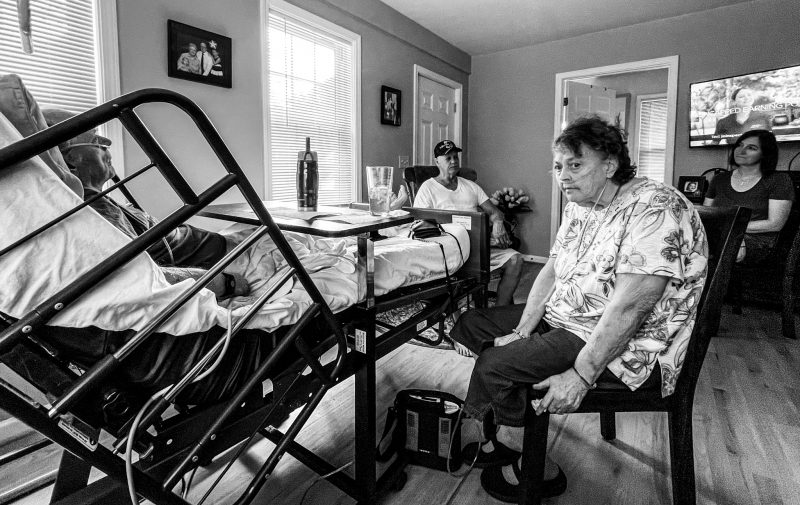
In two or three weeks my father has gone from being semi-independent (such that we could leave him alone for stretches up to eight hours) to being completely bedridden. I don’t think he’s quite come to accept that fact or even completely understand it. There’s still hope in his mind that he will one day be walking again. I don’t think that’s the case; the doctors don’t think that’s the case; and deep down, he probably doesn’t think it’s the case. Several times a day he tries to get out of bed only for us to remind him that it’s not safe for him to get out of bed. He says things like, “I can’t wait until I get out of this bed and get back to normal.” He doesn’t realize that this new normal is just that, nor does he realize that tragically this new normal will only last for some period of time (months? weeks? days?) before the next dip, the next drop in his condition, the next “new normal.”

Every new normal makes the previous one look like a paradise. Every new normal reminds us all anew that no matter how trying and depressing for all of us involved, it’s only going to get more trying and more depressing. Every new normal makes the old one seem eons ago. Every new normal quickly begins to feel like it will always be normal, that it will stagnate. That it has stagnated. And then another dip. Another episode. Another new normal.

And the bed he’s in becomes his whole environment, his whole world, his prison.

How anyone could watch how this man is suffering mentally and emotionally and believe that the god he dedicated his life to, supported fiscally (so to speak), and was eternally devoted to would turn his back on him in his time of need — how anyone could think in such a situation that a god like that could exist, and if that god did exist, how it could be considered anything other than capricious and evil, I just don’t know. Belief gives hope, apologists claim. Yet it also gives despair. “What have I done to deserve this?” Dad has asked in his lucid moments. “Why won’t God do something after I’ve devoted my life to him?” Nana pleaded. For both of them, I think, it’s not a matter of “Why doesn’t God heal me so I can go back to my normal life” but something more basic: “Why is God allowing me to suffer like this instead of just letting me die peacefully in my sleep tonight? Why do I wake up day after day to this same prison?”

He remains, as far as I can tell, steadfast in his faith. “I know where I’m going” is his general demeanor, and that might give him some comfort. But I can’t help but think that perhaps that comfort is not worth the anguish it also brings.

In the meantime, we try to comfort him in those admittedly-rare moments of angst, keep him calm throughout the day, and help him take each day in his bed one moment at a time. I don’t know that there’s much more we could hope to do.

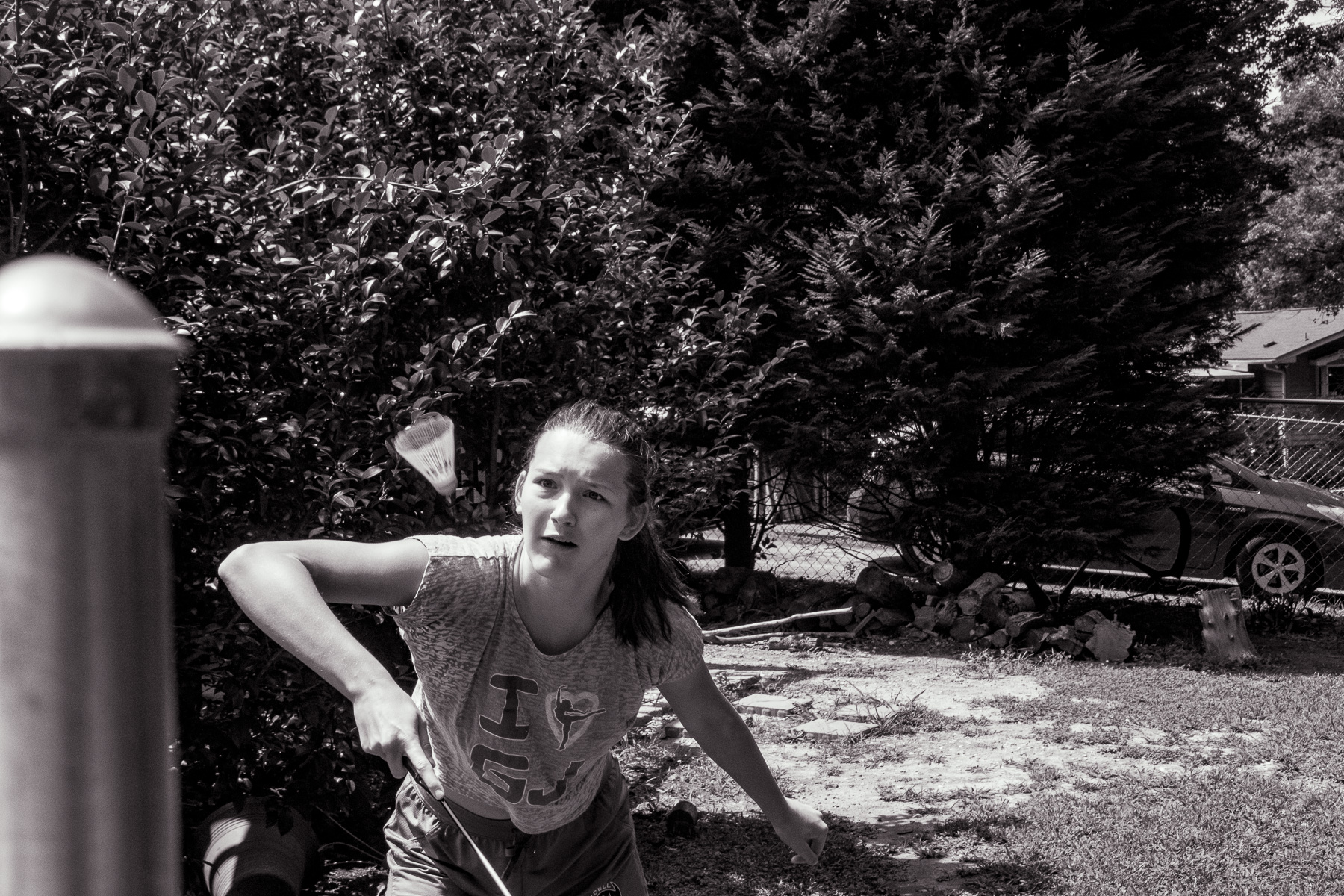
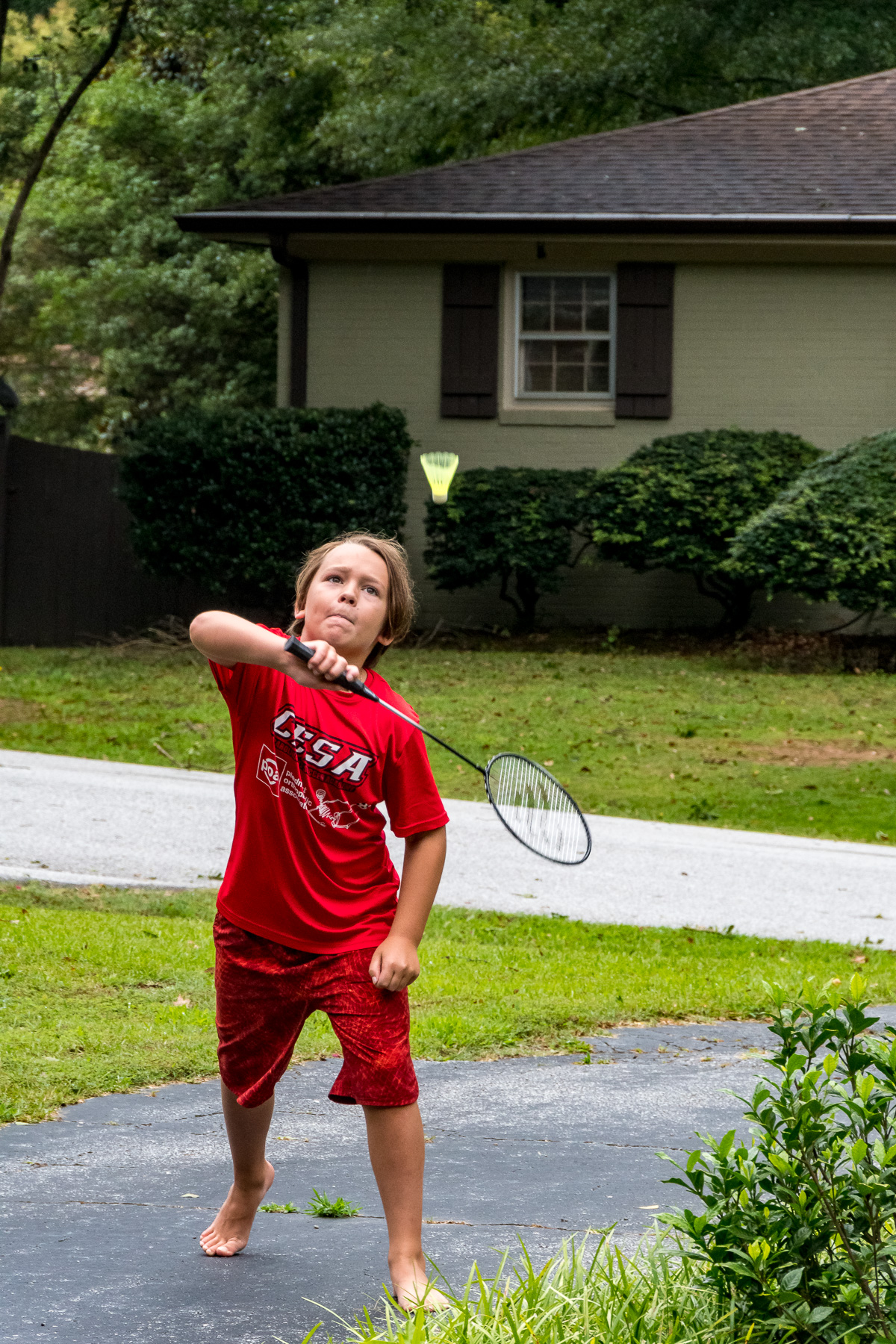
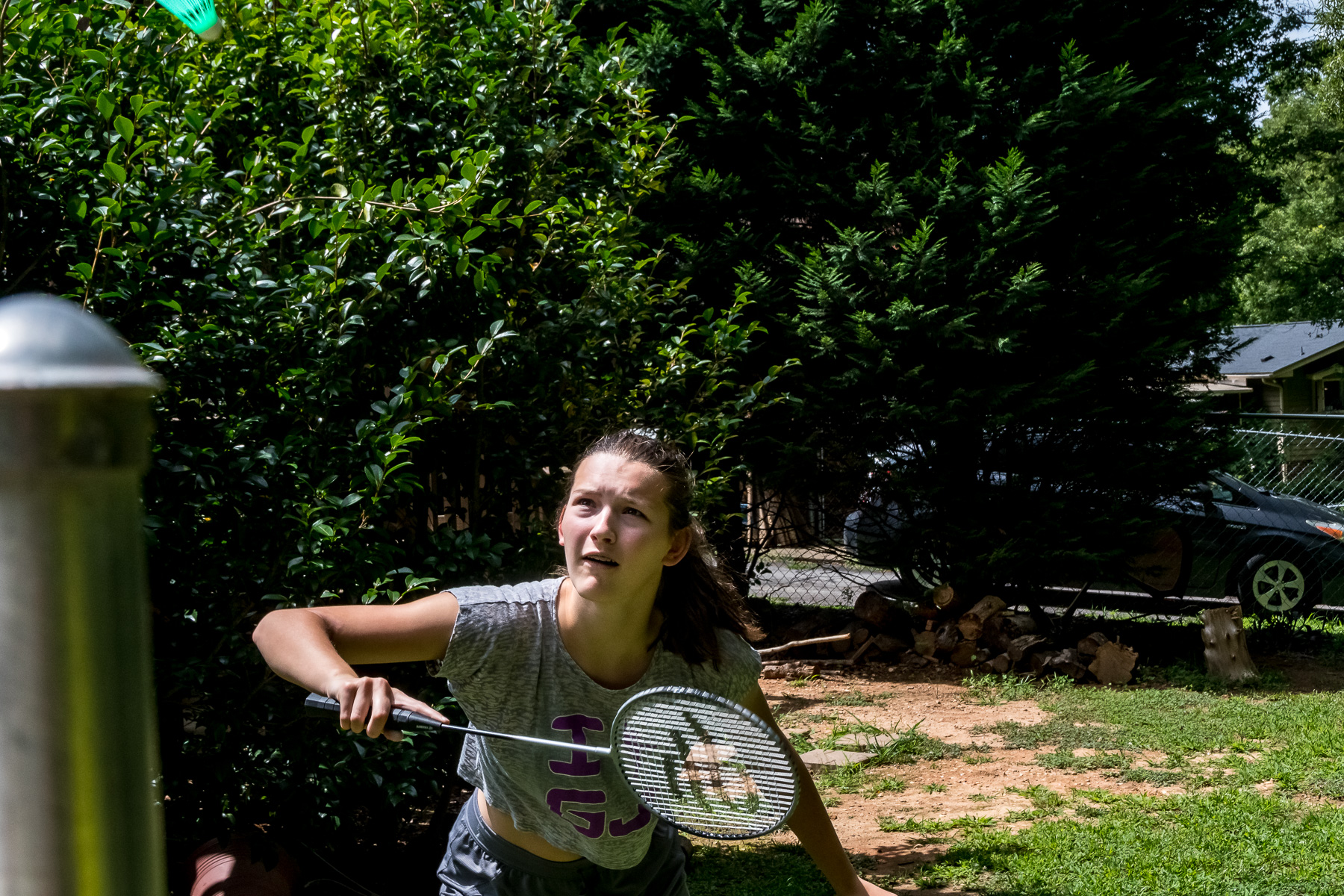
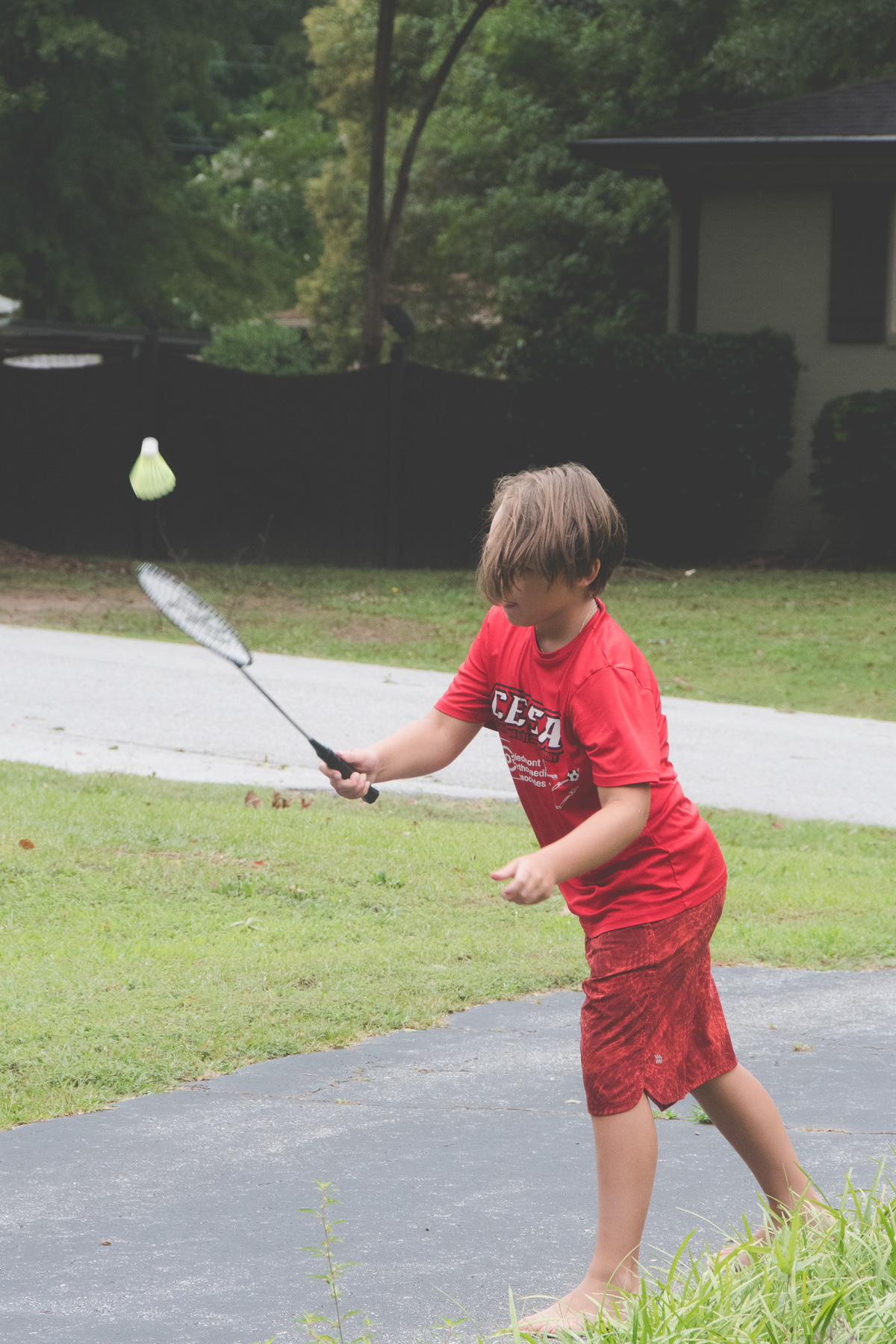
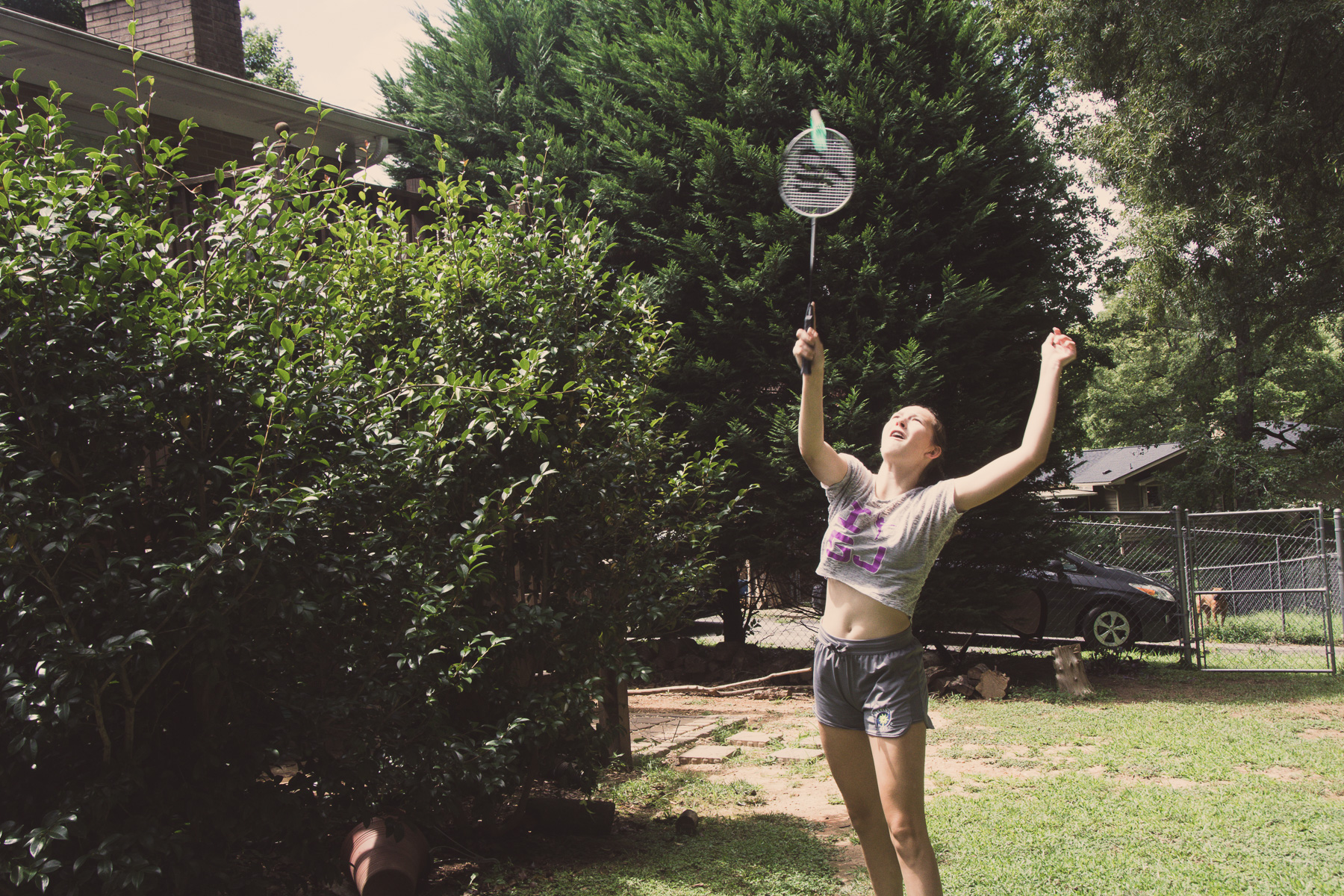
L playing in the grass league this evening

The Other Sister

Papa grew up with six siblings: four sisters and two brothers. The first sibling to go was his youngest brother, who was killed in Vietnam in 1972. I’m named after him but never met him. It was about thirteen years before the next sibling passed, Papa’s older brother, who had cancer and died in the mid-eighties. And then there three and a half decades before another sibling passed, followed by another sibling just a year or two later.

And so now there are three of them: a younger sister, Aunt D, who visited Sunday, and the first-born of the entire group of seven, who visited today. Aunt Y doesn’t get out much, and the last time she was at our house was for Papa’s birthday, probably close to a decade ago. We all used to meet at Aunt D’s house for Thanksgiving, but the last time we did that must have been five or more years ago. The last time all three of them were together was at Nana’s funeral. What a sad thought that that might indeed be the last time the three surviving siblings are together. But I guess that’s the nature of reunions as we all get older.

Night Issues

Last night just before I went to bed, L said, “I think Papa’s talking to himself again.” There was a certain temptation to just let it go, to hope that it was nothing serious and that he would simply go back to sleep. But I heard his panicked voice and realized that was not to happen.

I went into his room and discovered how far things had fallen apart. He’s pulled out both ends of his cpap tube and then tied the tube into knots around and through the metal pull handle that hangs above his bed. He’d kicked out the pad that keeps the sheet dry from brief leaks. His sheet and blanket were in a wad on the side of the bed,  both wet. His fitted sheet was wet, and his shirt was damp. In short, there was no way he would be able to go back to sleep without a major rescue operation.

Even if he were dry, his mental state was not conducive to sleep. His head was bobbing like mad, and his breathing was heavy and fast, not quite hyperventilating but close.

“Get my phone and call the hospice nurse,” K said. We knew we had to get him calmed down, and done so quickly, but I wasn’t expecting the nurse’s instructions: 5 ml of morphine.

“So we’re already to the morphine,” I thought. And that makes me think that we don’t have much more time with him. Once someone is bedridden and using morphine, the end is not far off.

We got him changed and his bed remade, then gave him the morphine. We were supposed to put it under his tongue, but I had difficulty get Papa to open his mouth let alone raise his tongue. We gave him the med and he calmed quickly. We made it through the night without further incidents, but he’s been sleeping most of the morning today.

Gymnastics with Papa

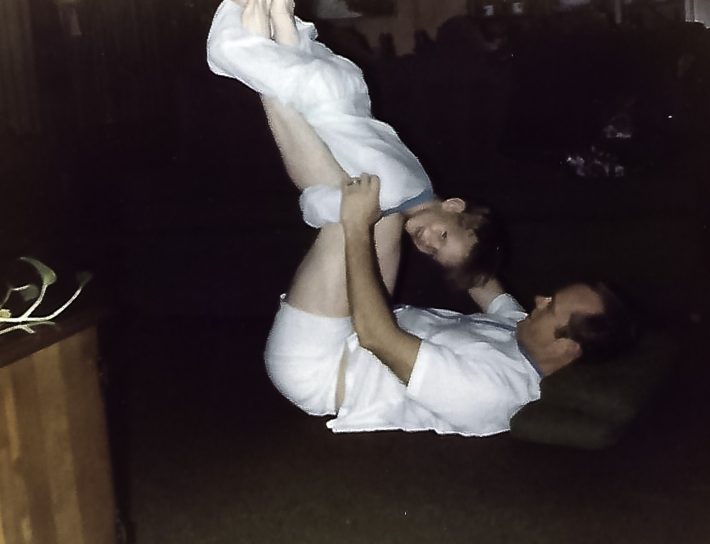
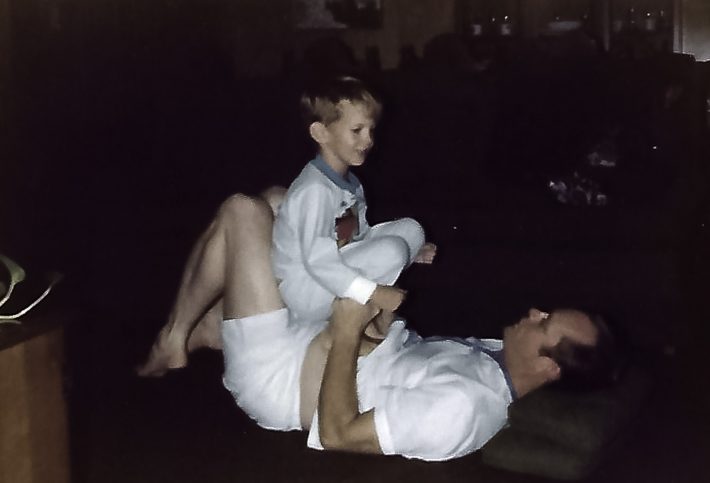
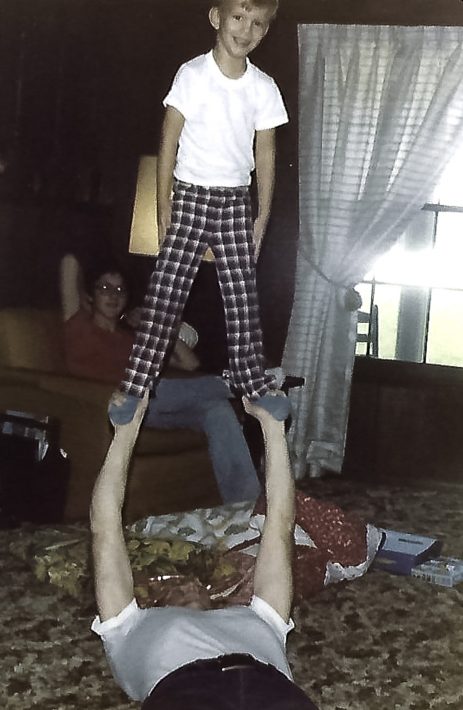
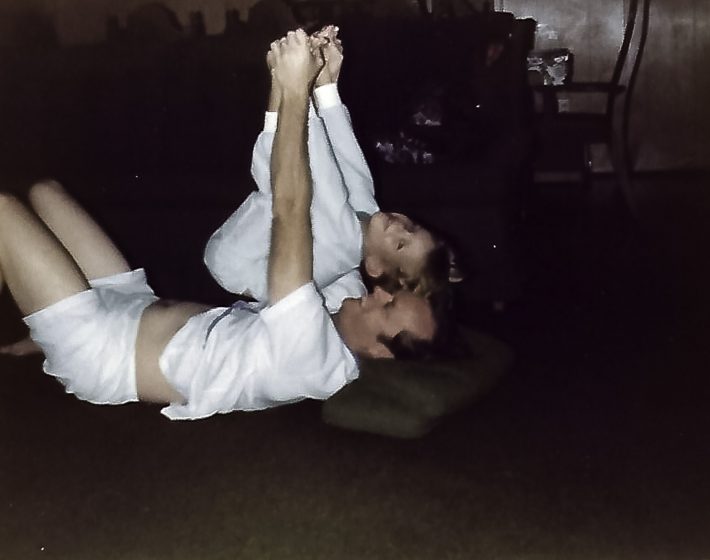
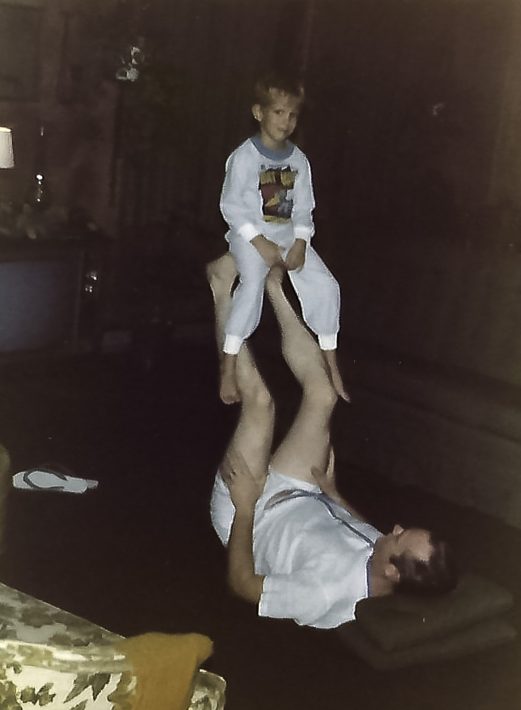
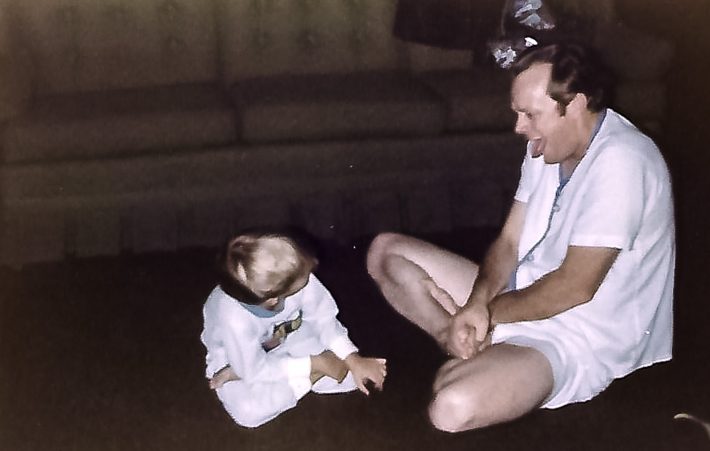
When Nana passed away a couple of years ago, I started going through all the pictures from their house. She’d gone through them herself a few years earlier and thrown out a lot, organizing the remaining pictures by year. Over the last couple of years, I’ve been scanning them and running them through Lightroom. They’re small pictures, and the resulting images are noticeably lacking in quality, but the idea is clear.

Gymnastics with Papa was a common theme when I was a few years older than E is now. One of our favorite tricks was the leg flip: holding my by my upper arms, Papa would flip me over his head, and I would land with a solid thump that sometimes jarred me throughout my body, though I never said anything.

When I was younger, the Steam Shovel was a favorite: pulling me over his chest to his head, Papa would lift me up, pause, then pop me over to his knees where I’d slide down. This was a favorite when I was very young; when I got a little older (like in these pictures), I didn’t enjoy it as much, but I never told Papa.

“Let’s do the Steam Shovel!” he’d suggest, and I’d willingly play along.

Then of course there was the simple benchpress. What was not to love about that?

I look at these pictures now, realizing that my father in these pictures is almost five to ten years younger than I am now, and I marvel at how young he is. How young and energetic, how strong.

Given how he’s suffering from Parkinson’s now and how rapidly it’s advancing, how it’s robbing him of his ability to move, his ability to think clearly, his ability to experience reality without the doubts of whether what he’s seeing is in fact happening, his ability to live in short — given all that, the man in these pictures looks like a different man entirely.

One thing that hasn’t changed is his sense of humor. He’s not able to get down in the floor and be goofy with E or L like he used to, but occasionally he’ll make a comment here and there that shows that goofy silliness is still there.

A Visit from Family

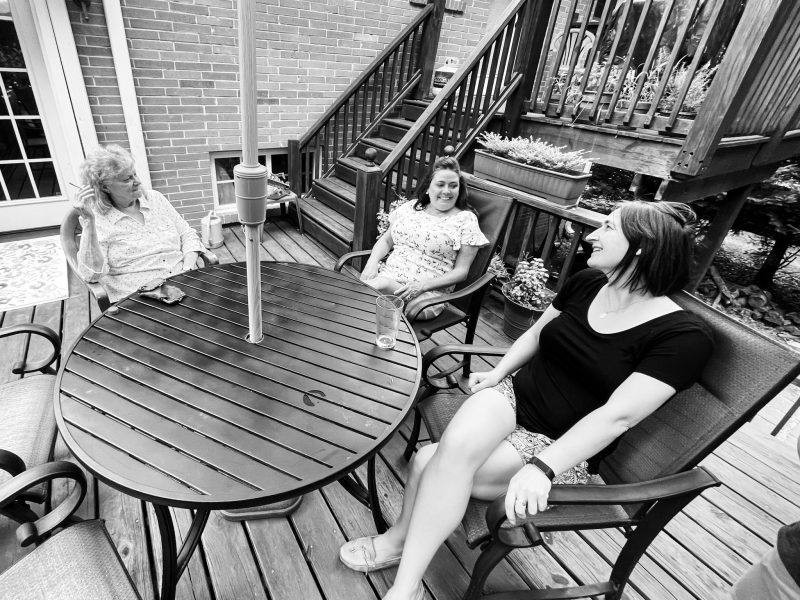
Papa’s sister and her daughter came to visit Papa today.

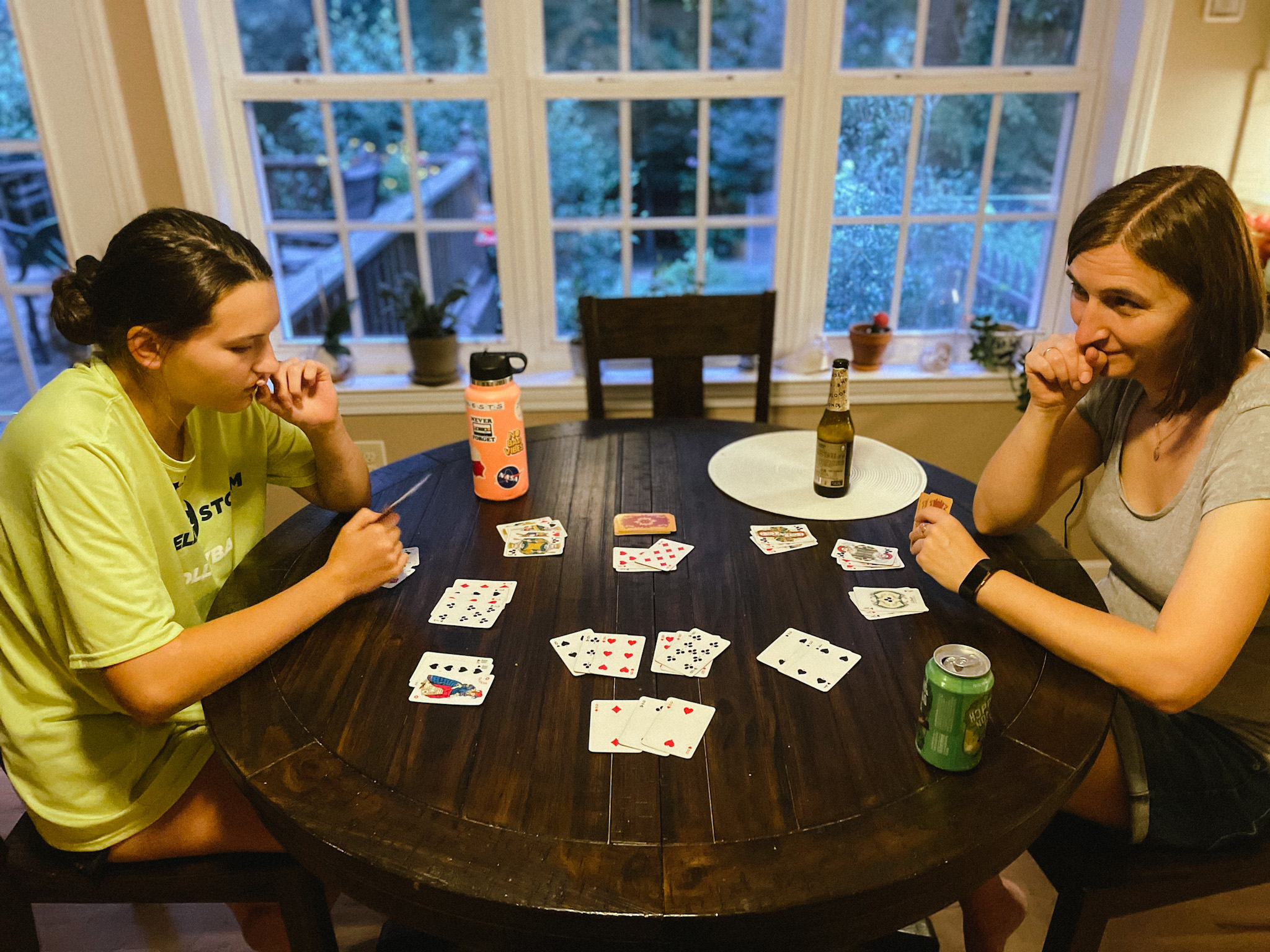
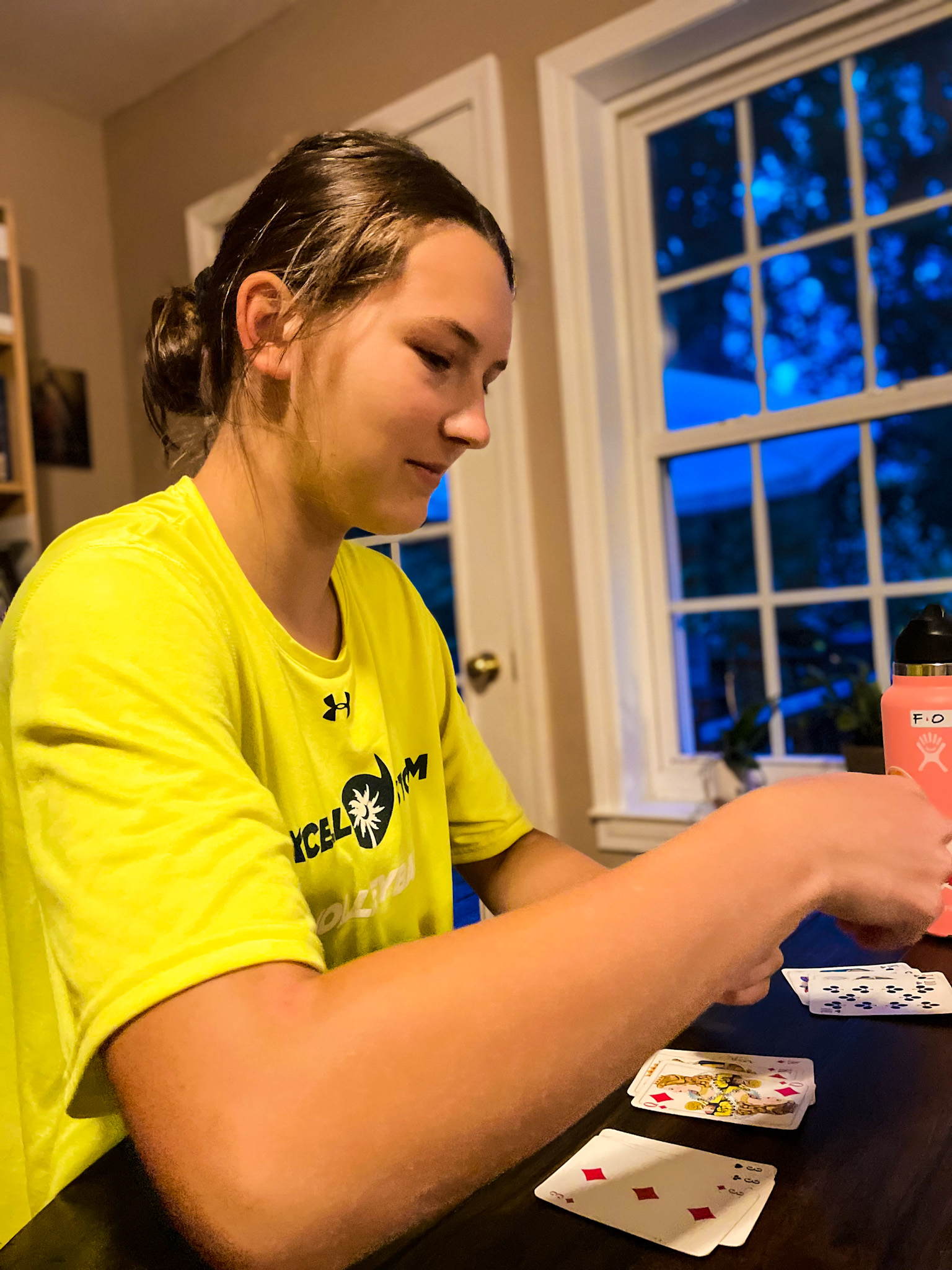
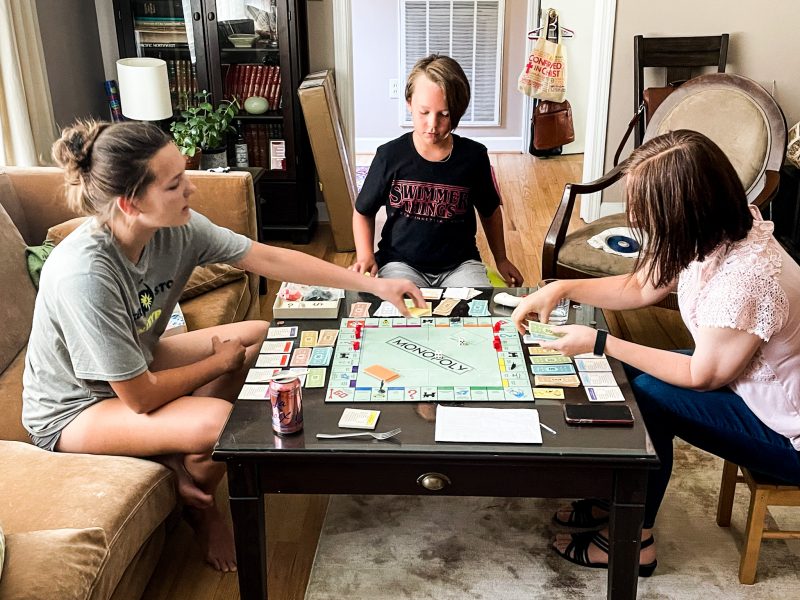
Cards

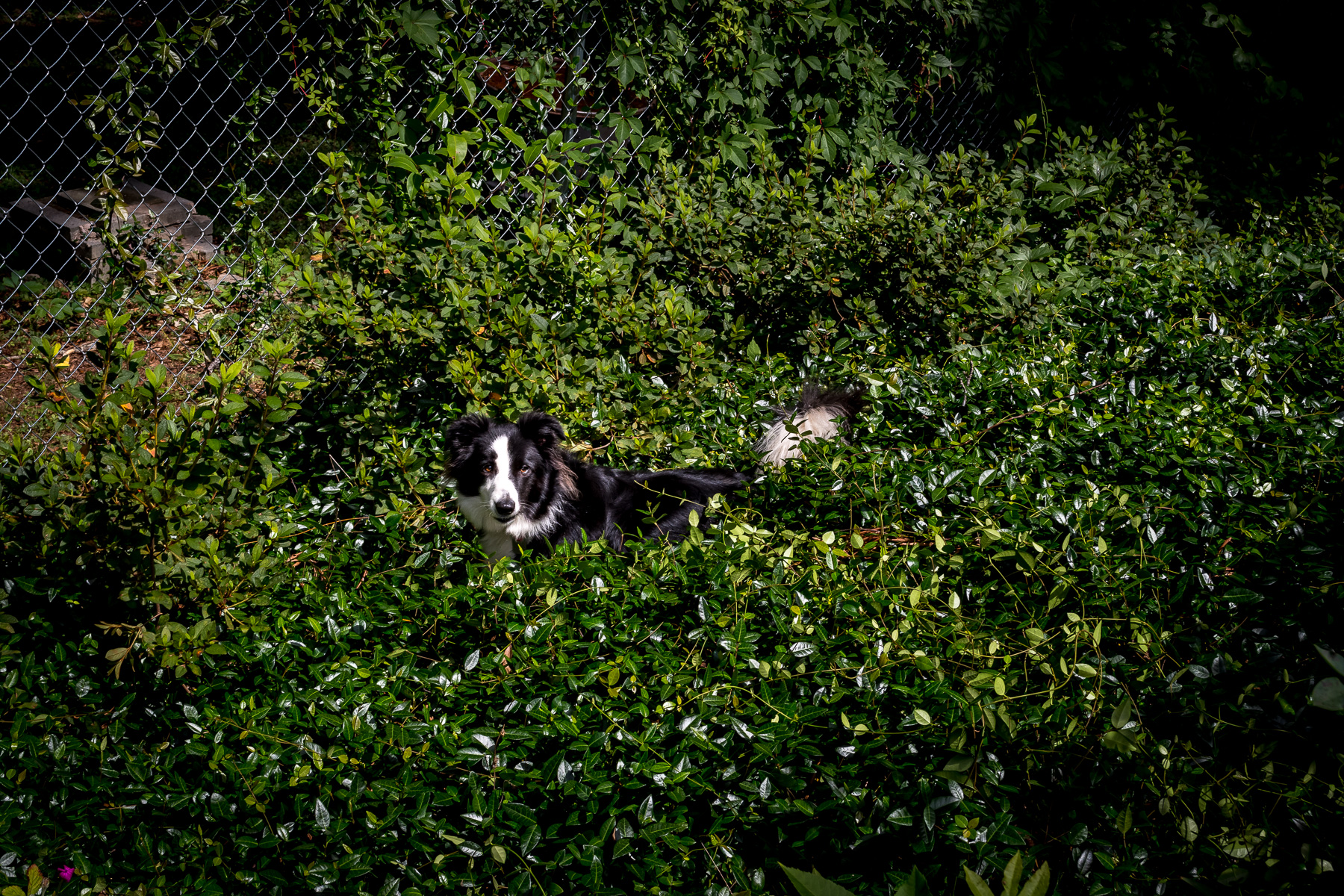
Training Clover

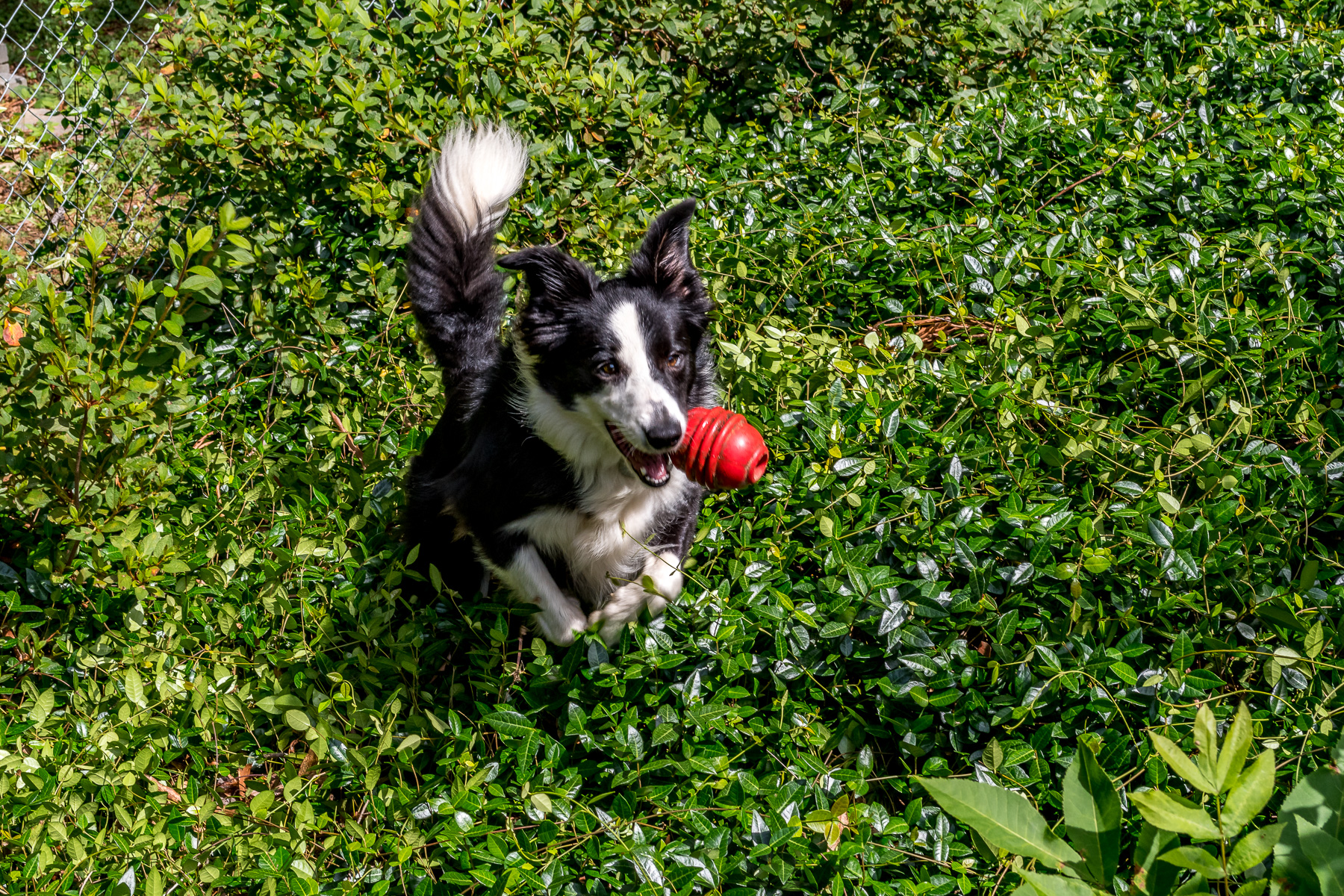
to be outside the fence and off-leash. The Girl’s idea.

Step

One of the countless tricky things about Parkinson’s, we’re learning, is its complete unpredictability. With other diseases, doctors can provide a sense of scale and timing: you are here now; the next step will likely be this; that step will happen most likely in x to y time. With Parkinson’s, the next challenge isn’t always defined. The next step is always in the dark. The time it all takes is always a mystery. And so when a Parkinson’s patient has a bad day, it’s tough to know whether it’s just that or the next step.

“But I thought Parkinson’s was a slow, degenerative disease without sudden declines.”

So did I, but that too is a variable. Mostly, if we’re talking about the termor dominant form, that’s likely the case; if they have the P.I.G.D. (Partial Instability Gait Difficulty) form, there can be, apparently, sudden declines. Papa, sadly, has the P.I.G.D. form. Each change, then, might be a significant change or just a bad day.

One of My Madeleines

The older I get, the more madeleines I discover, most of them are musical, and at least one is tragic: Billy Joel’s song, “Goodnight, My Angel.”

I’d listened to this song just a few minutes earlier when, in 1999, I received the tragic news that two of my former students in Poland, Marcela and Natalia, had drowned a few days earlier while on an outing to the Baltic Sea. I was staying with my parents because I didn’t yet have my own place, and when I got the call, I was sitting on the floor by the bed in the guest room that I’d taken over. It’s a song to one’s daughter, but the passage “the water’s so dark and deep” — so tragically ironic.

A beach on the Baltic Sea

The news was a kick in the gut.

Marcela had just finished her freshman year, and I really didn’t know her that well. But I’d been Natalia’s English teacher for three years, and I’d watched her go from a hesitant beginner to a confident speaker who absolutely demolished the required oral exam in English just a few months earlier. She was wise and mature for her age, a real leader in the class, and from the beginning, she always intimidated me a bit. A first-year teacher just out of college, I felt like I didn’t know what I was doing, and Natalia always sat in the back of the room seeming to say with a slight smile on her countenance, “You don’t have the slightest clue what you’re doing, do you?” Later, I realized what she was probably saying was, “Whoa! Slow down! Slow down!” She smiled a lot, even when nervous — we all do that, I think.

Natalia’s class — she is the girl in the very center

Every time I hear that song, I think of Natalia. I try not to imagine what her parents went through, learning their intelligent, beautiful daughter was gone because I’d start imagining what I’d do if some similar tragedy befell my own daughter. That’s when the “my angel” hits me. I try not to imagine what kind of woman she’d be now, likely a mother in her late thirties, old enough to have a child that could be sitting in my own classroom now. I don’t have, in fact, any really specific memory of her other than of her sitting in the back of the class, smiling slightly, making me feel I’d just done something incomprehensibly stupid, some rookie teacher mistake that even a kid could see.

On a field trip to Torbacz

I can rarely listen to the whole song…

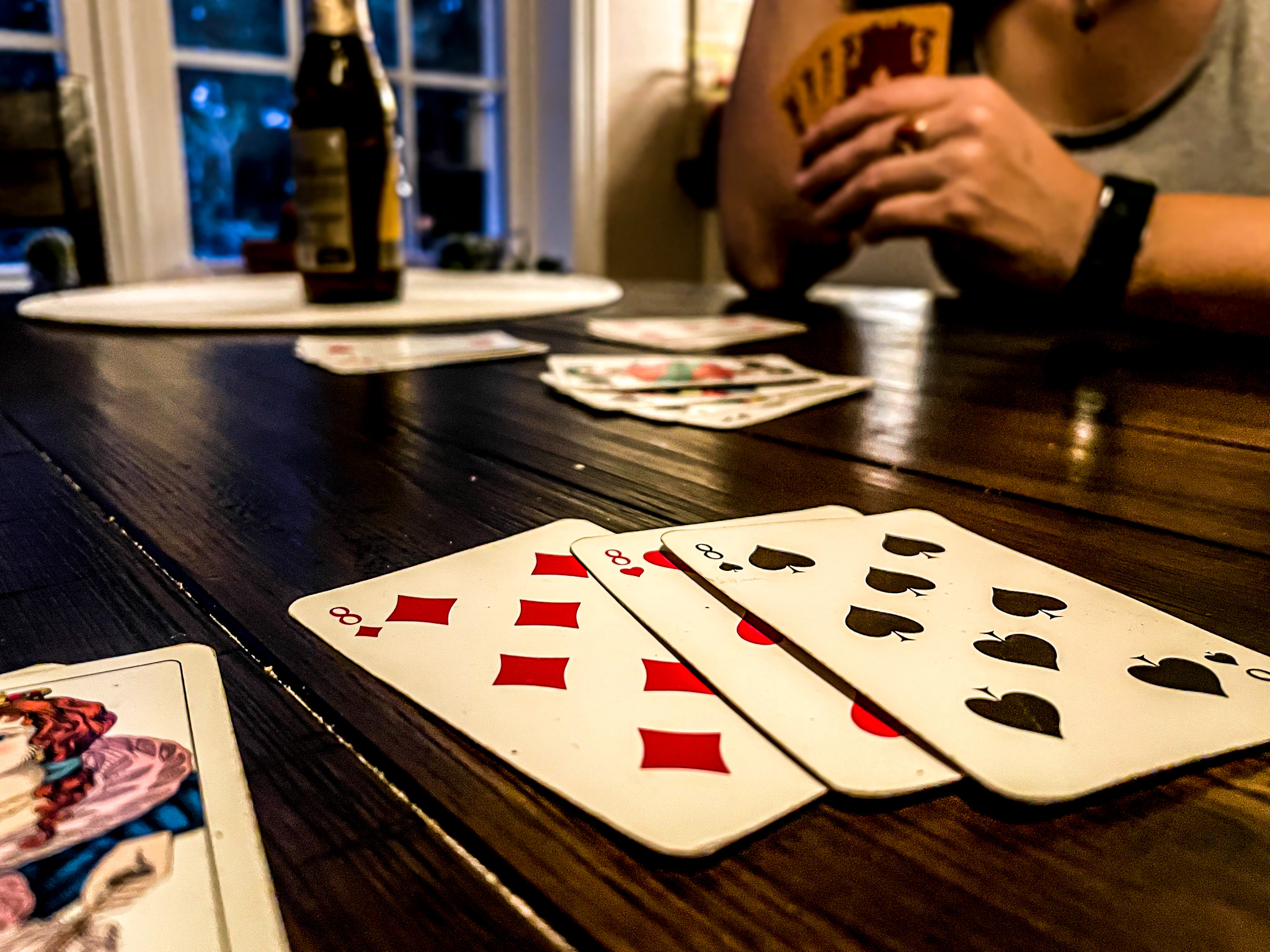
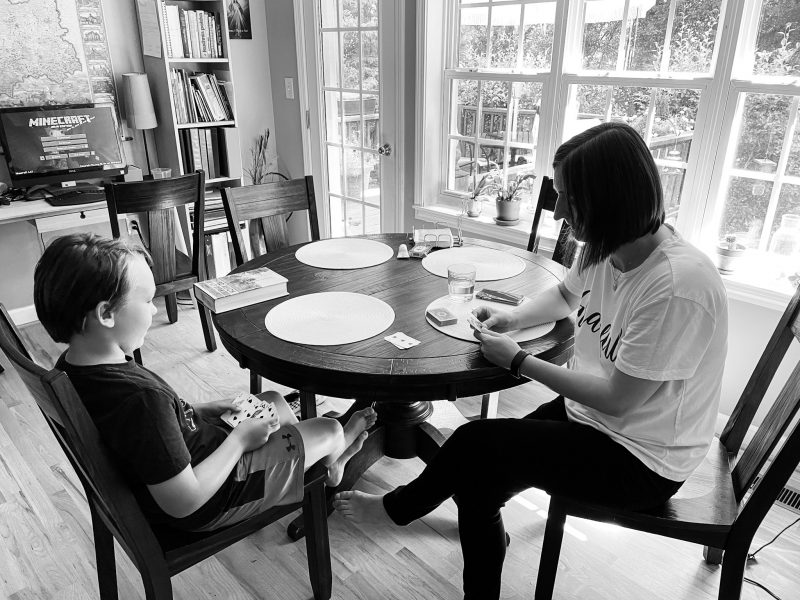
Cards

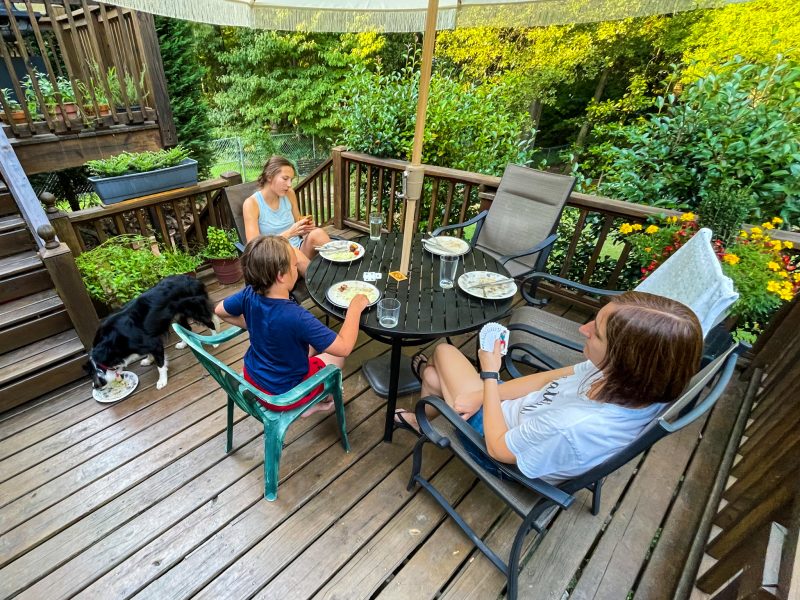
In the morning,

and in the afternoon.

Independence Day 2021

Friends invited us to enjoy their neighborhood’s firework display tonight. It was impressive given one generous neighbor does all the work and pays for everything himself.

First Check

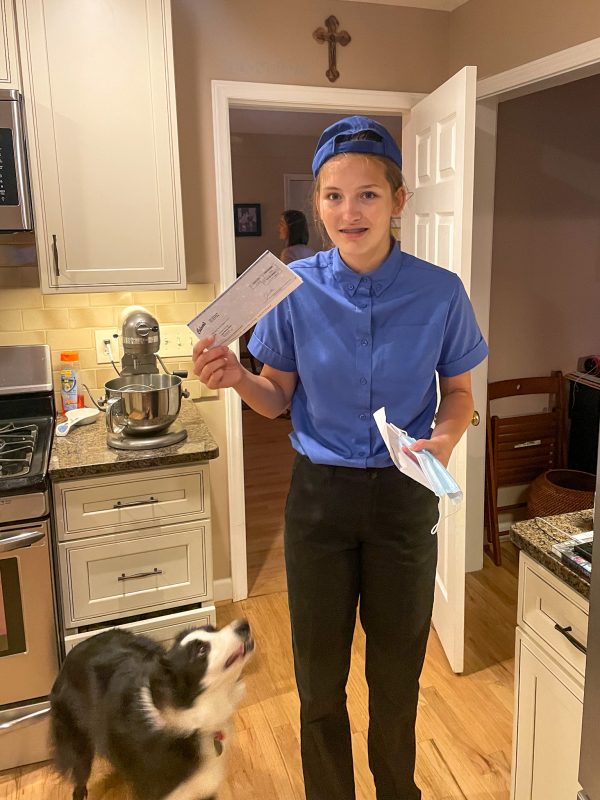
The Girl recently began working at Culver’s, which is a restaurant we’ve passed on a busy road a number of times but which we’ve never given a thought to. We really didn’t even know the type of food they serve. So we were in the dark as much as the Girl.

She’s worked a few short shifts now, and today, she picked up an extra shift through the app the company uses for scheduling employees. Workers can request coverage for unexpected time they want off, and others can pick up that coverage for extra hours. So she went in to work from 4:00 to 8:30 today.

Today, she got her first check.

First Friday

The first Friday of this July — we began with a trip to the local pharmacy to get L’s second dose of the covid vaccine. We picked up a couple of suckers while we waited, returning home to find K and E playing Wojna in the kitchen. The Boy won.

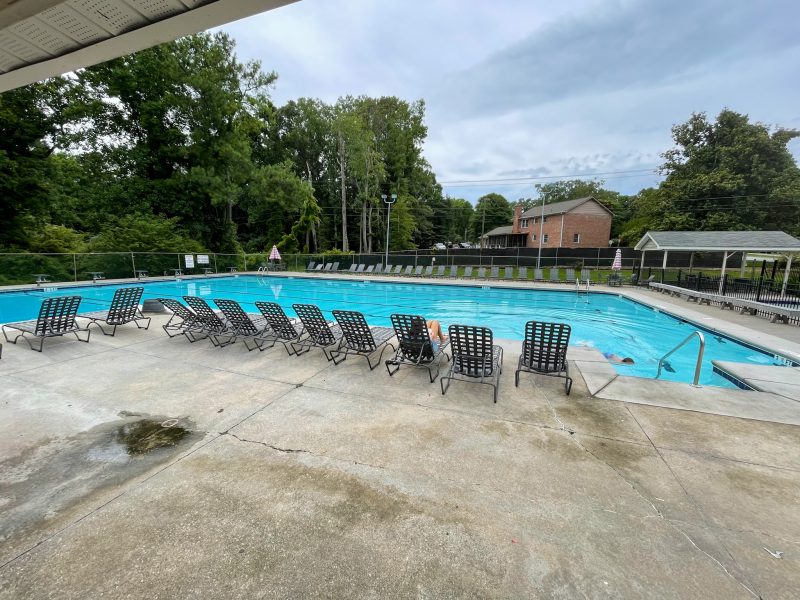
In the afternoon, we went to the pool, which to our surprise was completely empty. When we went to Nana’s and Papa’s condo complex’s pool, this was often the case. The pool we joined this year, though, has been crowded every single time we went — except today.

The Girl originally went with the intention of just reading, so she didn’t take her swimsuit. Then she changed her mind. A fourteen-year-old can just tie a knot in her shirt and dive in.

After swimming, the Girl lost the call for shotgun. The Boy has only been able to ride in the front for a little while, and he’s still more comfortable in the back due to habit. But calling shotgun — what’s not to love about that?


Thursday

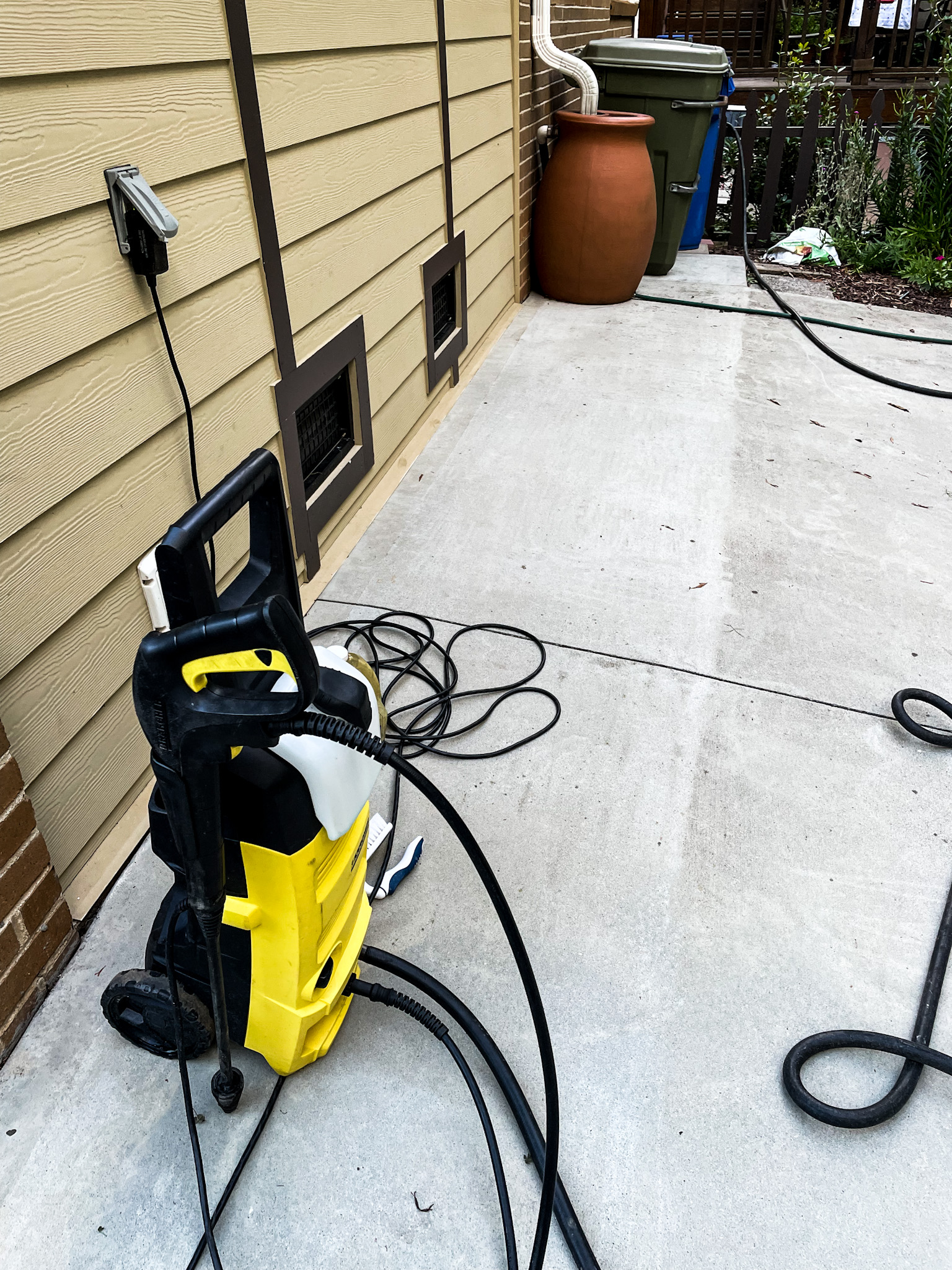
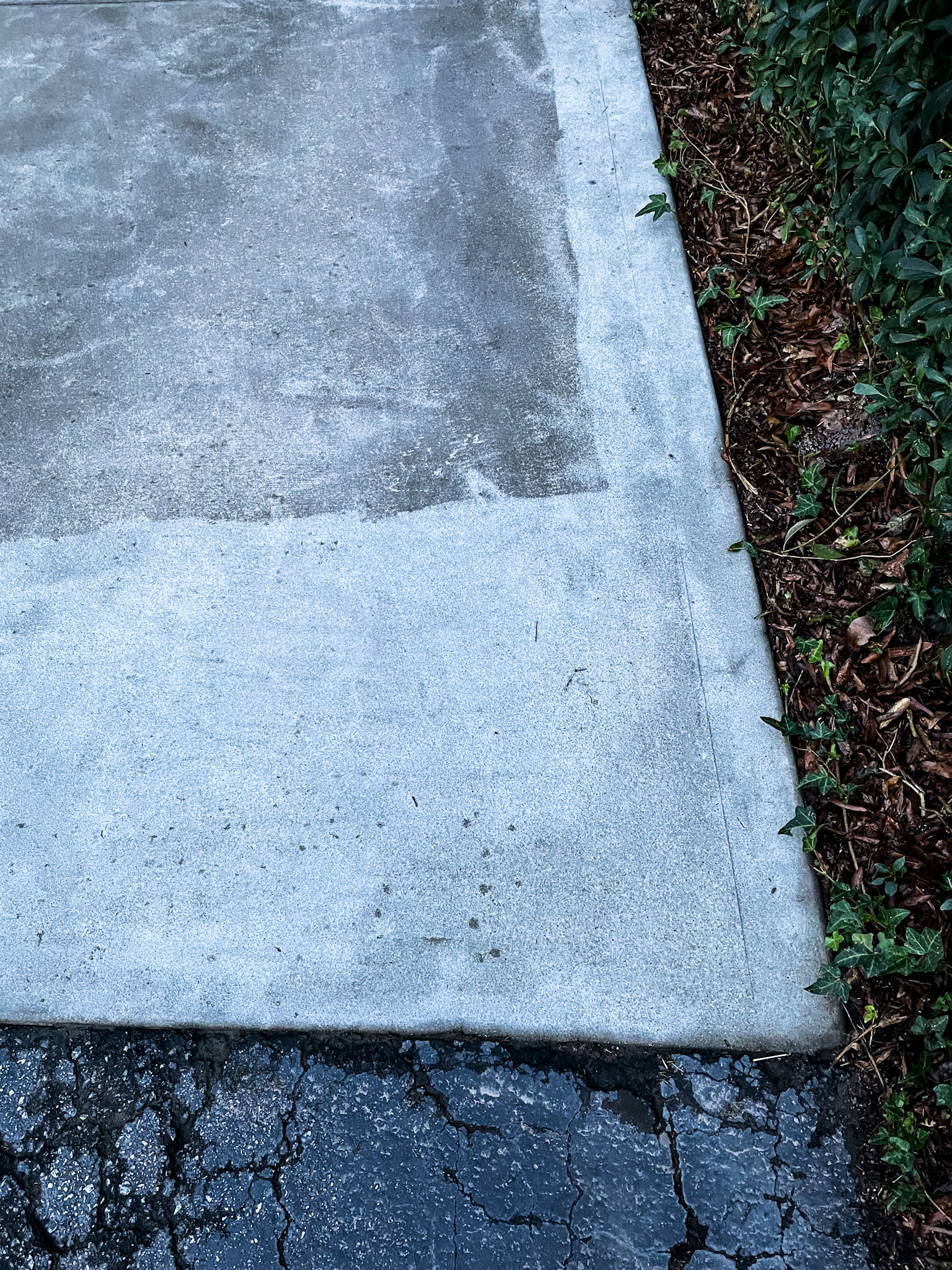
A day of working, a bit of riding, some pressure washing.

Unremarkable Thursday.