- The Boy
- Is there cheese in that mac and cheese?
- Tata
- Yes. It wouldn’t be mac and cheese if it didn’t have the cheese, would it? It just just be mac.
- The Boy
- And watermelon, without water, would just be melon, right?
- Tata
- Right.
Photo by jspatchwork 
Photo by jspatchwork
I sat in the Girl’s bedroom, helping her prepare for an English test tomorrow. Cobbler’s kids and all. We were going over how to remember the difference between interrogative sentences and imperative sentences when the Boy came in. We chatted for a while, and I encouraged him to leave us a lone so we could finish up the Girl’s test preparation.
“Okay,” he chirped and headed out, stopping at the door to ask me if we could spend a little time together after dinner.

Dinner complete, the Boy and I headed down to the trampoline as L and K went through the day’s Polish lessons. As we jumped, we found ourselves eventually lying on our backs staring up at the trees above us. For several weeks this summer, he was afraid that, as the wind blew, the trees could very easily come toppling down on us. Today, we just lay there watching the sun slowly disappear and the glow of the leaves slowly dissipate.

The sun came up and light our backyard like it always does, but we often don’t have a chance to notice and to appreciate it. Today, we still didn’t get a chance to enjoy, to savor the light — we were in our normal Sunday morning rush to get to Mass.
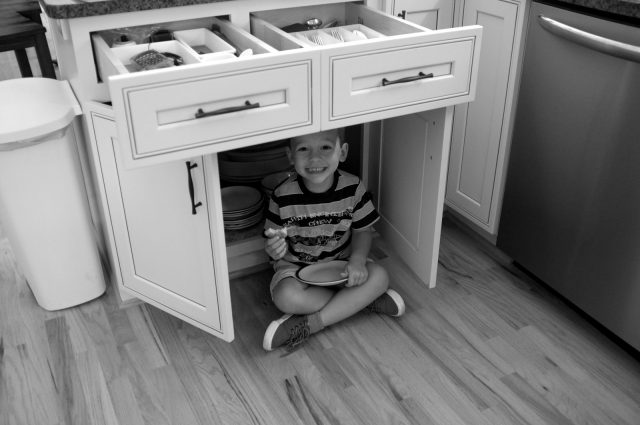
When we got home after Mass and religious education (for the Boy) and choir practice (for the Girl), snacks for everyone and a newly improvised hiding place. Then lunch, with the pianist from last evening and our near-family from further up north.
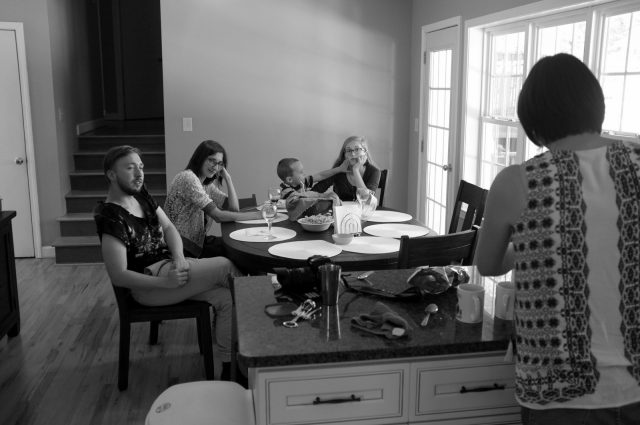
Everyone wanted him to play, and he obliged. But he, seeing our trampoline, suggested we should all go down and jump.
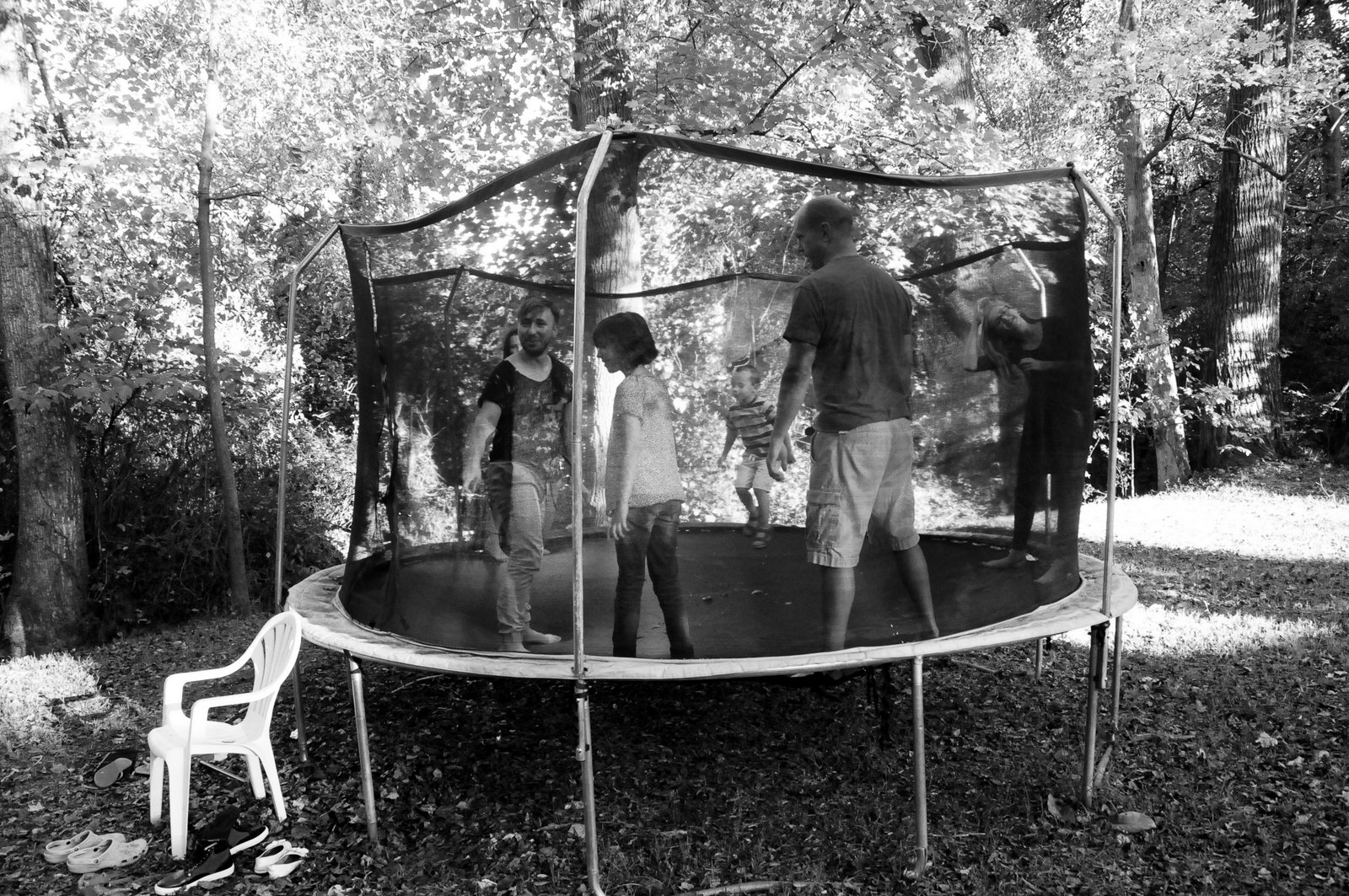
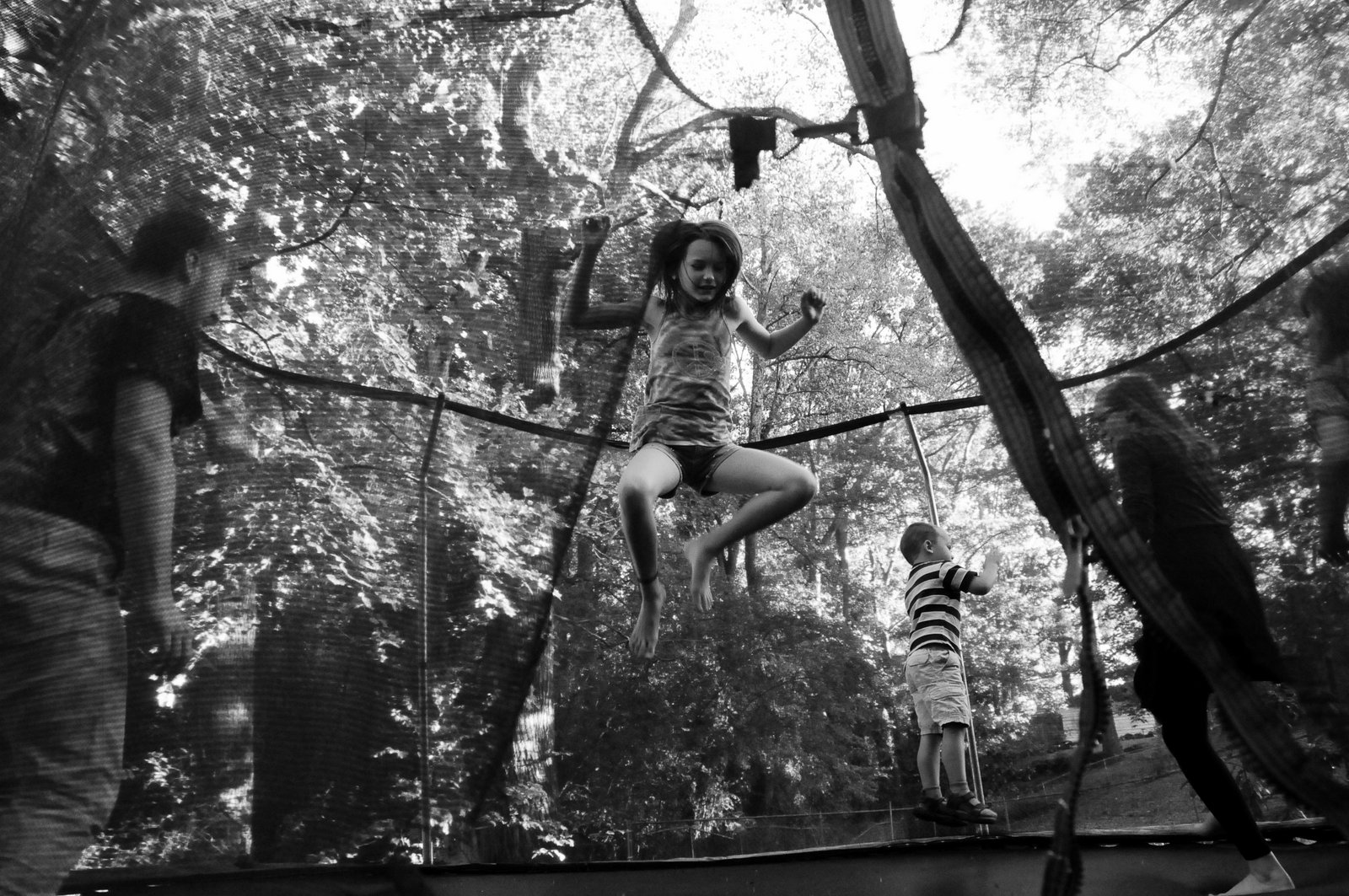

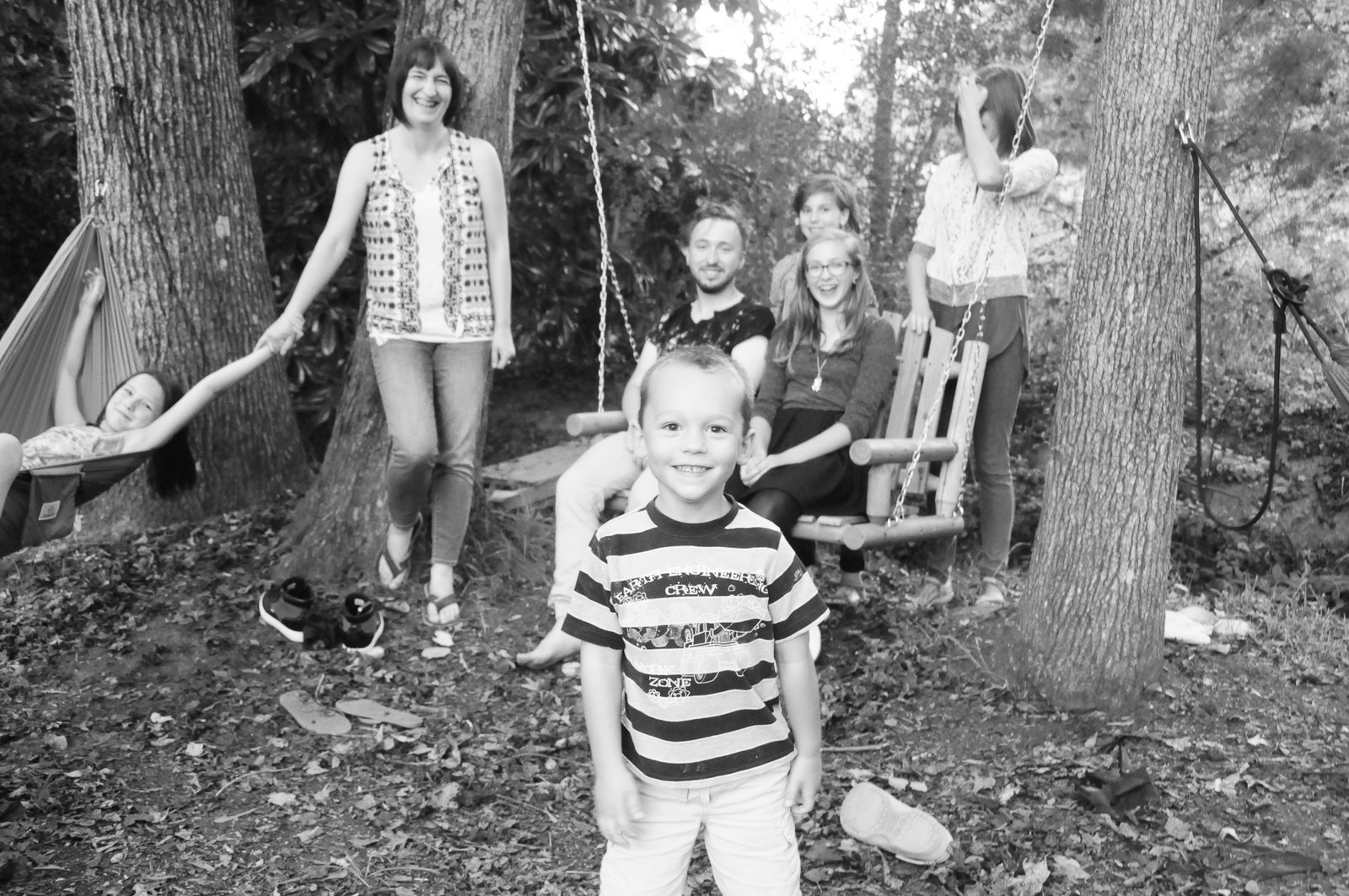
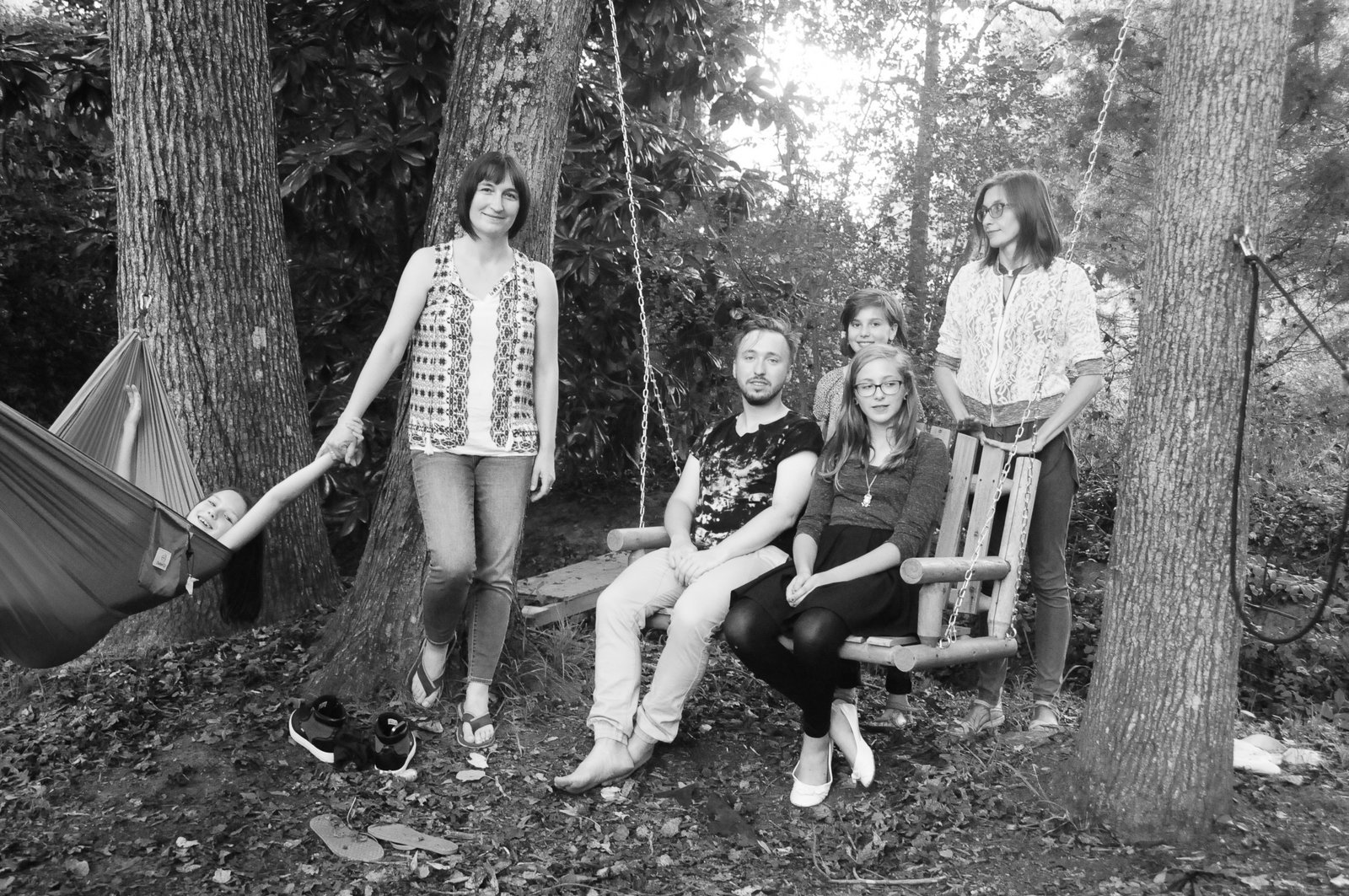
And so we obliged.
Artur, a young, up-and coming Polish pianist, gave a concert, arranged by the Polish community of Greenville.







Being Polish, he played a fair amount of Chopin. Only, he did it with a little twist.
It’s really not always been a pleasant task, morning duty. I stand by my doorway, keeping an eye on the kids in the morning as they head out to their lockers in shifts (girls, boys, then late-comers) and keep an eye on my room as well. In some years, it’s been horrific: because of the fact that the lockers for my class are, logically, more or less by my door, I’m surrounded by my homeroom class, and when it’s a class that’s challenging, it’s exhausting. There’s misbehavior in the hallway; there’s misbehavior in the classroom — watching one means neglecting the other.
This year, though, I have a class of high achievers for my homeroom, which always means few if any behavior issues. And just outside my door, one of the sweetest students I’ve ever had the pleasure of teaching has her locker. She always, always is in a good mood, and it’s evident in everything she does.
Today I mentioned to her that I’d noticed that and really appreciated it.
“Are you always in a good mood?” I asked.
“Pretty much.”
“Why?”
“I see other people happy, and it makes me happy.”
Other people’s joy makes her joyful. Such a radical notion, it seems, when you’re jaded with the behavior of some of they challenging students, students who have such warped worldviews that it’s difficult to believe it took only thirteen years to reach that level fatalism.
“Other people’s happiness makes you happy,” I said as I headed back into my classroom to get a paper for an student. “That’s beautiful.”
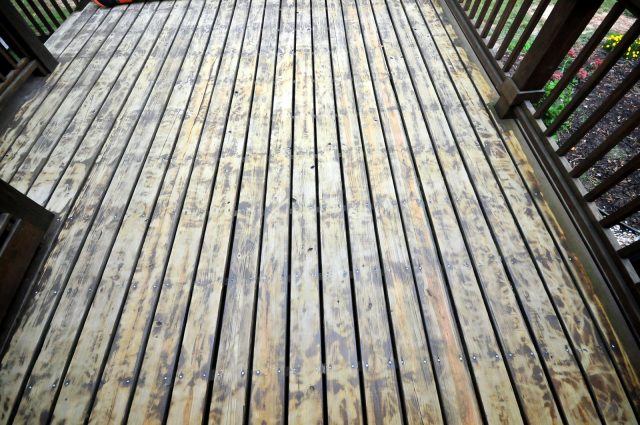
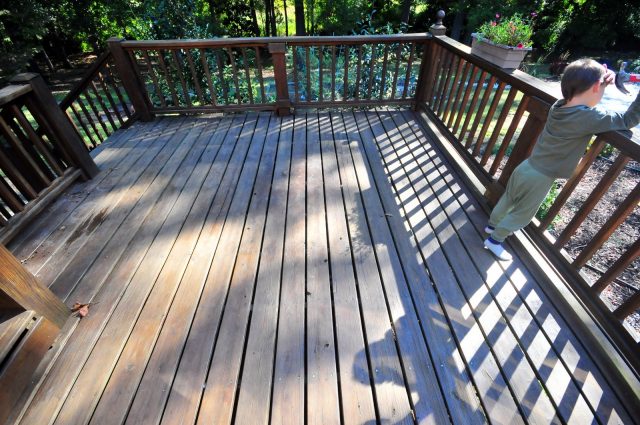
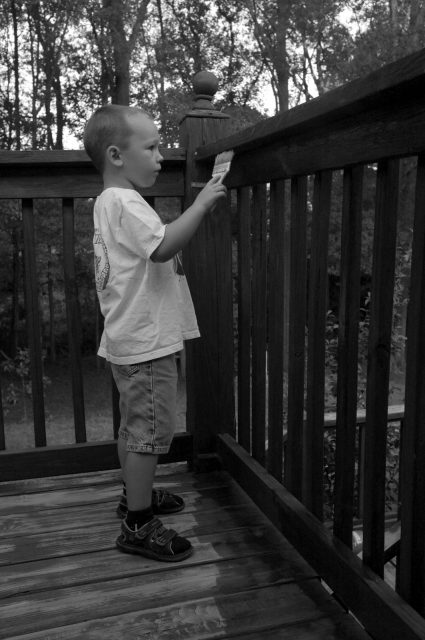
With the coming hurricane, which won’t necessarily affect us with wind but might dump some rain on us, I decided I needed to speed up the plan for re-treating the deck with water repellent. I didn’t really need a little helper, but that never really matters: the Boy will help. Period.
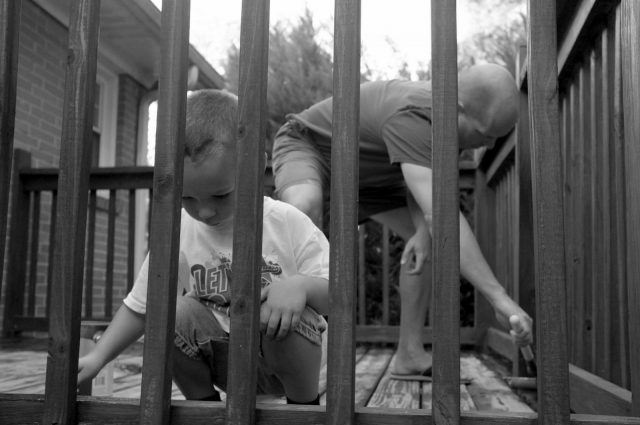
The good thing about today was that there were no worries about potential streaking or such: the bare wood drew the water sealant in as if we were applying it to sand.
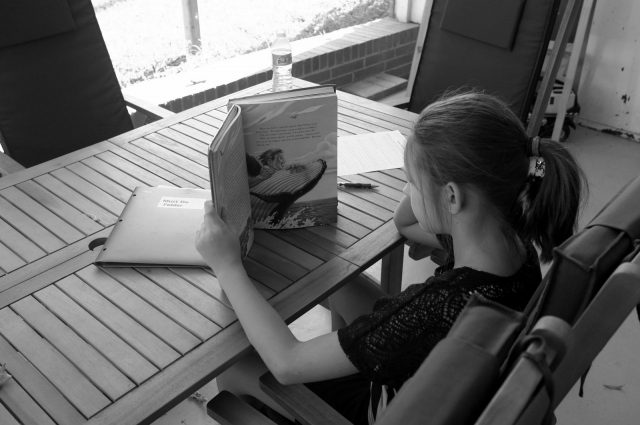
The Girl came home and did homework.
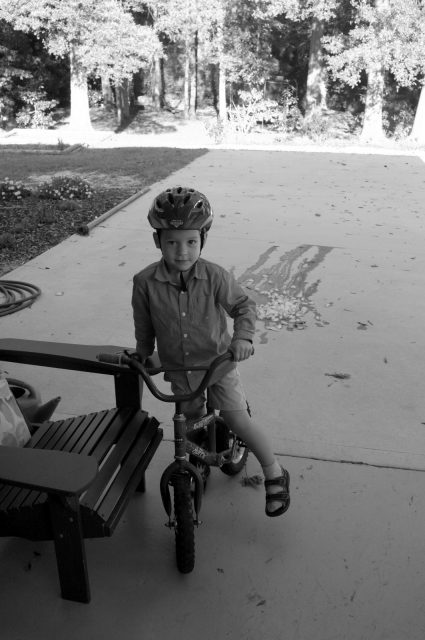
The Boy came home and played.
We sit around a few tables during a planning period and talk about how to use the data we’ve received from this year’s fall MAP testing, a test which provides information about skill levels of our students. There’s a general score that summarizes everything called the RIT score. (I don’t know what it stands for.) That in turn can be correlated to grade levels by looking at national norms. For the longest time, eighth grade nation norms were 220 at the beginning of the year and 222 at the end. This year, the re-calculated norms have fallen three points. In addition, the data show that in a single, mixed-group classroom (something like science or social studies that is not grouped according to ability), a teacher can have a student reading at the kindergarten level and another reading at the level of a college sophomore, with all the other levels mixed in.
How does one teach a group like that?
There is a predictable corollary to that: the students who read at a second-grade level often behave on a second-grade level. Or perhaps worse, because they exhibit second-grade behavior in nearly-adult size bodies. A dangerous combination at times.
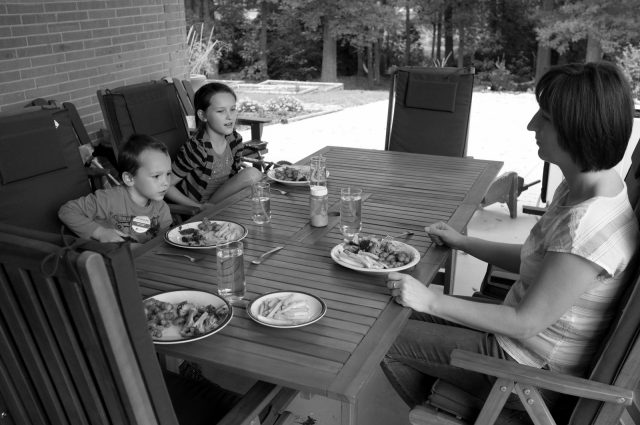
At the dinner table, we talk about our day. L tells us the latest adventures with Timmy, a student who moved here recently from up north and has been seated in L’s group. He refuses to work. He’s mean to other students. He cursed at a teacher today. He flagrantly disobeys. I suggest that he’s probably acting out because he doesn’t want to be there, and he’s hoping his behavior will somehow get him moved back up north. It’s a fairly logical assumption. But here’s the thing: his behavior is affecting my child’s education. The teacher is having to take time out of instruction to deal with him.
“He’s even worse that Demarcus, and I thought he was bad.” Demarcus has been the subject of a few stories, and I’ve found myself thinking that I have a few older versions of him in my classes. Struggling in class. Unable to work and so entertains himself. It’s a common cycle, a chicken-egg mystery by the time they reach my classroom: does the behavior cause the low academic achievement or does the low academic achievement cause the behavior? It’s probably a bit of both.
I kept my story to myself and let E tell how Jameson picked a scab in class and now it will bleed forever. I love how he’s always trying to join in “adult” conversations. He aims, shoots, and hits the target but generally only grazing it on the side.
E’s problem is relatively insignificant; L and I, though, are facing the same issue from two different sides of the desk at two different ends of the same problem. What I can do as a parent is quite different than what I can do as a teacher.
But there’s a third role: citizen. This is an issue that is larger than just my school, L’s school, our district, our state. It’s likely the condition of the majority of schools around the country.
It’s hard not to be pessimistic about this reality.
Sort of.
Last week was Polish Mass, so it was a lazy morning. This week, no such luck. With Mass beginning at nine, we have to wake up early; with L singing in the children’s choir — which is, on most Sundays, the primary choir for the morning Mass — she as to be there thirty minutes earlier, which means an even earlier start. Today, with K still coughing, we decided just L and I would go. The Boy woke up at seven with us anyway, and insisted, as he often does, on helping with breakfast.
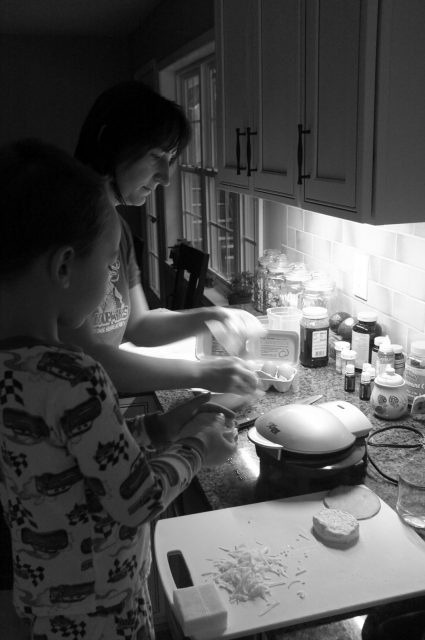
With the new church our newly adopted parish is building soon to be completed, the choir is rehearsing for the dedication Mass in November, which means an hour-and-fifteen-minute practice after Mass with the adult choir. So it was a little after twelve when we made it back home for rosół and a bit of relaxation.
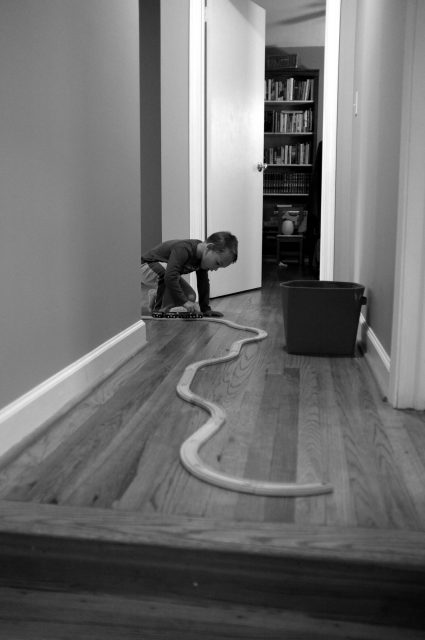
Of course, the Boy was busy when we arrived. He’d decided that he wanted to build the ultimate train track, a track that began in his room and ran down the entire hallway. It was a challenge due to the lack of straight pieces in his collection, but he managed to find a way.
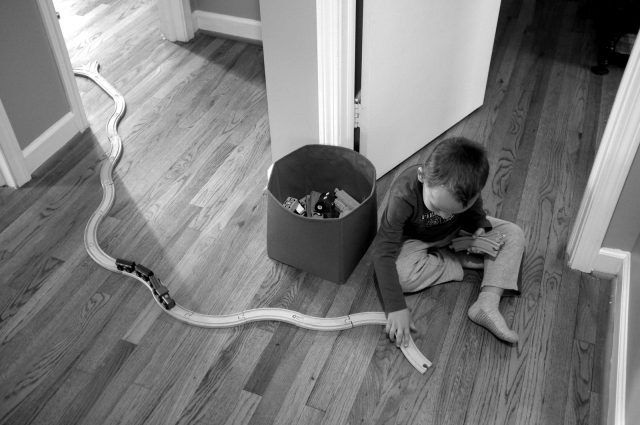
“It’s a crazy, curvy track,” he explained. And as I watched, I saw that he was very deliberate his his placement, always making sure that each piece turned the opposite way as the previous to make a drunken, crazy track in between the straight spots. He wanted to turn it around and head back down the hall, but he didn’t have enough pieces.
When it came time to clean up, though, we had an issue. “I need help cleaning up!” was the fussy cry coming from the hall. “You didn’t need help making the mess. You can do it!” was the choral response. But he couldn’t clean it up the way he wanted to clean it up. He was stacking piece after piece and then trying to pick it all up at once. When the pieces of track tumbled over, his frustration exploded.
L was the same way. It’s only recently that she began to see that she doesn’t have to solve problems using the first solution that comes to mind. She’s realized that she can make multiple trips from the car to the house instead of precariously carrying every single thing at once, to use a fairly common example.
The Boy, though, was insistent. It was only with a threat — stop fussing and just clean it up or lose it — that he finally relented and gave in on his original plan. Was that wrong? Should I have helped him realize it for himself? Should I have helped him realize his plan? At the time, I didn’t give it much thought — the soup was almost ready and everyone was terribly hungry. Perhaps I could have done a better job. Maybe next time.
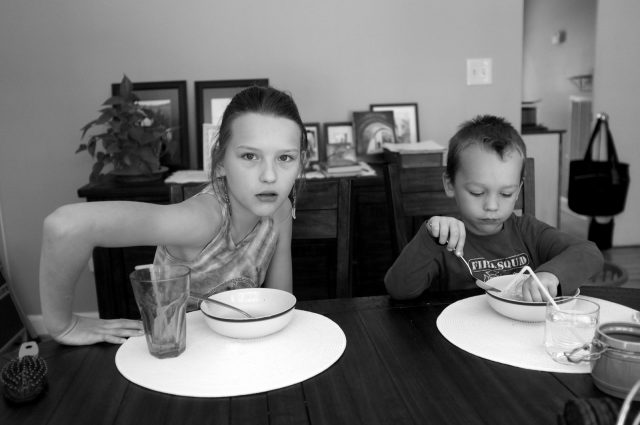
After lunch and a coffee, I took the Boy exploring. I finally managed to ask our relatively new neighbor if he minded us traipsing about his backyard, and his response was at once predictable and surprising: “No, I don’t mind at all. But I really appreciate you asking. I really appreciate that.” What was I going to do? It’s not our property.
I tried explaining all this to the Boy as we returned to our favorite little spot by the creek in our backyard (or perhaps “backyards”).
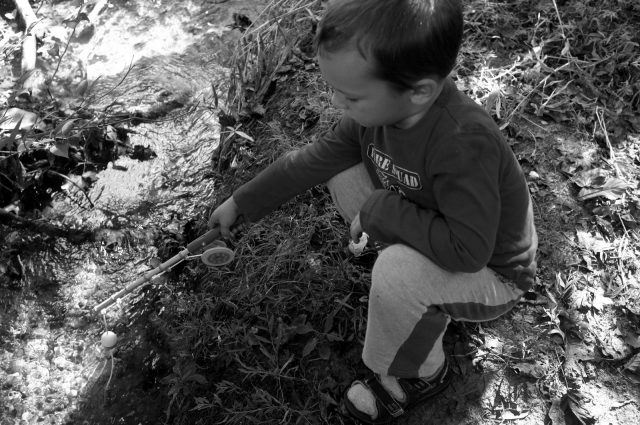
“We always ask before we use something that’s not ours.”
“This is not ours?”
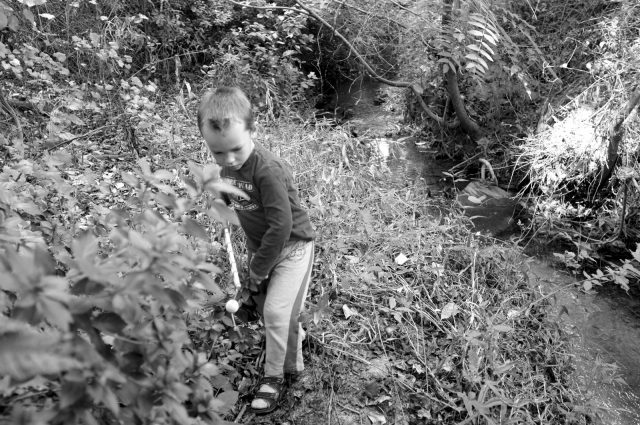
Last Sunday I’d taken to the street opposite our little hiding place, hoping he’d make a mental map of where he was and figure it all out. I pointed it out to him today, but he didn’t see what I was talking about, literally or figuratively.
After we’d had enough of our favorite place, we went to our newest hiding place, which also is not on our property. I haven’t asked those neighbors if they mind, though, mainly because there are no neighbors. The elderly couple that lived there no longer do: the husband died, collapsing in the backyard for us to see from our backyard (what a traumatic event that was), and I’m assuming the grown children moved their mother into other arrangements. The house has been empty for a couple of years now, if not more. So the little spot that we carved out of the weeds and brush on their side of the creek might be a problem if someone lived there, but it’s so deep in the brush that they likely wouldn’t even notice it if they lived there.

E asked a couple of times if it was our property where we were hiding and if we had permission to be there. I thought about trying to explain it, but in the end, I just said, “It’s fine.” A lie? Yes and no.
And after that hiding place, why not go to our final hiding place, behind the shrubs in the front of our house.
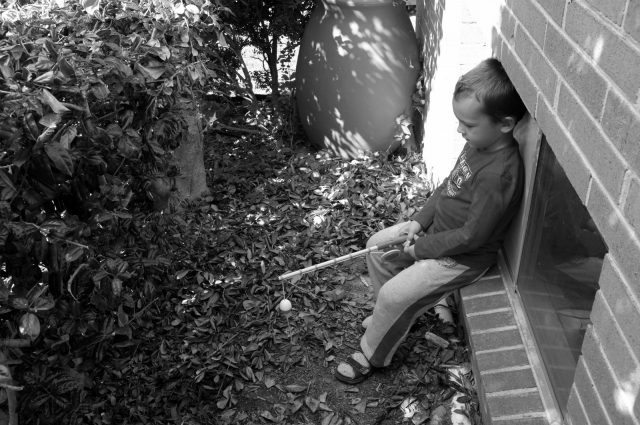
Hiding, hiding, hiding. What is it about kids and hiding places? They love building “forts” on the couch, and I remember how much I enjoyed a good hiding place as a kid. Perhaps it’s the bit of independence it implies, even when you’re hiding with your daddy. Or perhaps it’s the shared secret in such situations.
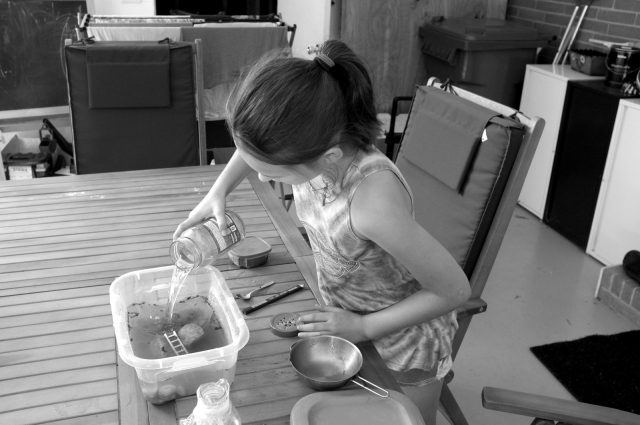
As with last week, the Girl decided not to join us. She was working on a school project on the computer and then taking care of the tadpole — Squirmy — that she’s been keeping in a plastic bin for a couple of weeks now. As she grows older, her independence obviously increases. I try to respect that, but sometimes I feel like it’s neglect: she wants to be alone sometimes, and then when she wants to be with me, I’m busy grading papers or something similar — or even something less significant.
This increasing independence also somewhat explains the decreasing number of pictures of her here. “Daddy, you aren’t going to put that on MTS, are you?” she sometimes asks, and so I try to respect her growing sense of privacy. What happens when the Boy starts asking the same thing?
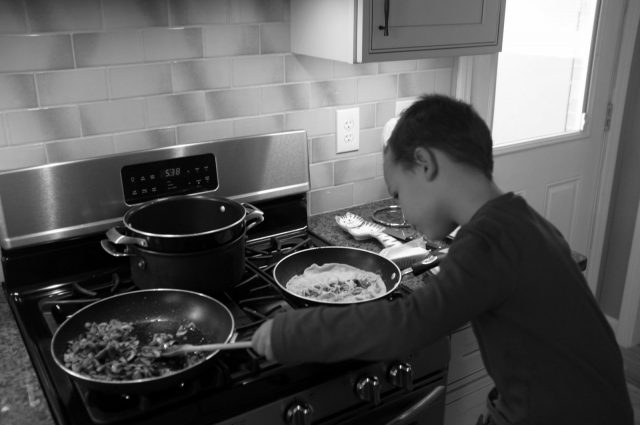
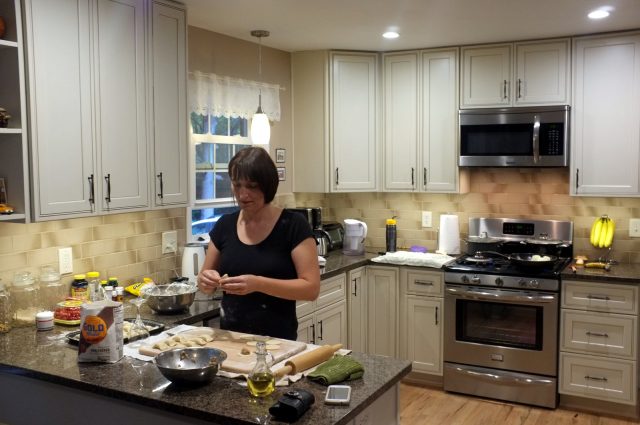
The final picture of the day mirrored the first: the Boy helping with dinner — leftover crepes (or naleśniki as we refer to them) that we fill with leftover chicken from the rosół and some mushrooms we sauted for pierogis later this week.
A perfect day, in short.
I got the before shot, sanded the whole deck, and had no time, energy, or light to get the after shot.