matching tracksuits

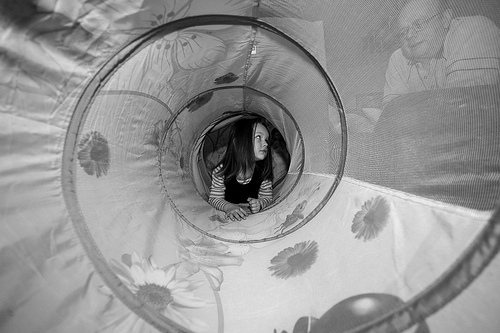
fun in threes, sometimes fours

Balance

"Shhh! There's a monster in there!" says L as we walk toward her room. She's at that age where she sees monsters, tigers, and bears everywhere. A "smoky, smoky dragon" is a common visitor at night, and right after a bath, an alligator -- simply named Alligator -- comes looking for her as she hides under her big bath towel. Saturday mornings she likes to jump in our bed (even if it's made up -- she'll willingly unmake it) and hide under the covers.

"Shhh, shhh, shhh!" she'll proclaim. "Monster's coming!"

I play along sometimes, but it creates a problem: she gets genuinely scared sometimes, and it's because there's an alligator under her bed or a dragon right over there, in the corner. I reassure here that there's no such thing is monsters, but it's difficult to do if I've just been playing along with her imagination earlier in the evening.

It's difficult to balance her developing imagination with her developing fear.

Will she learn there's no such thing as dragons before she learns Santa doesn't exist? I'm helping create both illusions, feeling slight pangs of guilt about it, and wondering if it's all avoidable.

Warsaw Winter

Hungary had its 1956 uprising, when it appeared that the Soviet satellite might gain its independence. The USSR moved in and reasserted control by force.

Prague had its Spring: reforms and liberalizations in 1968 by the puppet Communist regime that eventually warranted a full scale invasion by the Soviets to settle things down.

Poland never experienced such a "corrective" invasion, though there was always the thought that the Soviets might have invaded had Jaruzelski not imposed martial law on December 13, 1981. Lech Wałęsa's Solidarity party was gaining too much influence and there was concern that unrest might spread throughout the nation.

The conventional Polish wisdom (as I understood it) has been that Jaruzelski imposed martial law in a bid to preempt a Soviet invasion. Antoni Dudek, a Polish history professor, has published on his blog contents of a note Jaruzelski said to Viktor Kulikov, a Soviet general,

Będzie gorzej, jeżeli wyjdą z zakładów pracy i zaczną dewastować komitety partyjne, organizować demonstracje uliczne itd. Gdyby to miało ogarnąć cały kraj, to wy (ZSRR) będziecie nam musieli pomóc. Sami nie damy sobie rady.

It will be worse if [the protests] spread from the workshops begin devastating the party committee, organizing street protests, etc. If it were to spread throughout the country, you (the USSR) would have to help us. We couldn't manage it alone.

And so the possibility for a Polish Winter to match the Prague Spring was very real.

Wałęsa, in the meantime, has suggested that Jaruzelski might be brought up on charges of treason. Dudek admitted that while Wałęsa usually likes "strong words," these words might indeed be "adequate."

Jaruzelski of course denies all of this. Words were taken out of context. Shades of meaning have been applied that were not intended. It seems to be just the beginning, and given the generally closed nature of the Polish archives (compared to the open archives of the former East German government), it seems a resolution is distant, if not impossible.

Dudek's blog is available here. The Onet story includes information about Wałęsa's reaction. Hat tip to the beatroot.

14-year-old Poetry

People write about what they know. One of the prime motivations of confessional poetry was that we theoretically know more about ourselves than about anything else.

When you ask a group of thirteen- and fourteen-year-olds to write poetry, there is one guarantee: the boys will write about video games. In one portfolio of ten poems, one young man wrote two poems about games (including a haiku about “Call of Duty 5”), two poems about sports (one about playing, the other about watching), and one about hunting.

I mentioned this to a colleague this afternoon. She thought for a moment, then made a suggestion: “Next year you could tell them that each poem had to be about a different topic.”

“Then they’d simply say, ‘Well, they’re two different games, so that’s technically two different topics.'”

A Book and the News

images

Protests in Iran and ironically enough, I'm reading Azar Nafisi's Reading Lolita in Tehran (Amazon).

Nafisi was forced out of her teaching position at the University of Tehran in the early eighties when she refused to comply with the required veiling. Perhaps that refusal was inevitable, and perhaps the personality that sparked the refusal also made the memoir inevitable.

Nafisi writes of living others' dreams, and that the revolution of 1979 was just that: Ayatollah Khomeini was recreating the Iran of his youthful dreams. Dreams for some, nightmares for others.

We're all wondering whether Iranians will force themselves to emerge from the nightmare. Reading Nafisi and today's headlines gives me hope to believe that there are enough independently minded Iranians that a new revolution is possible, that armed conflict over Iran's nuclear program is not inevitable.

Before and After

DSC_9145
DSC_9158

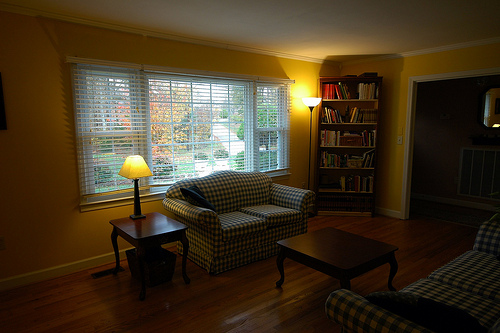
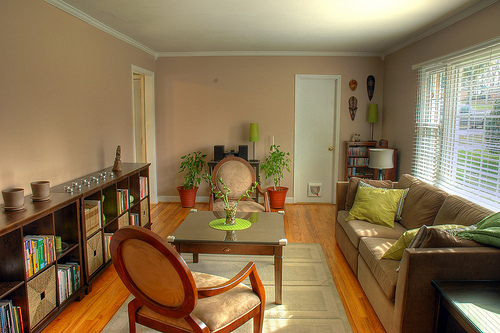
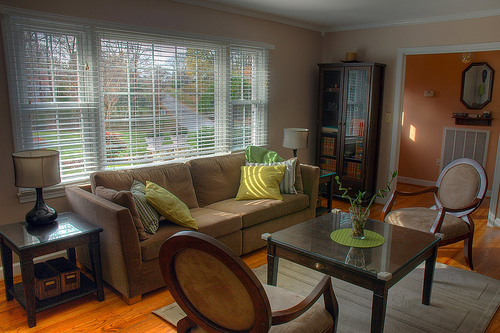
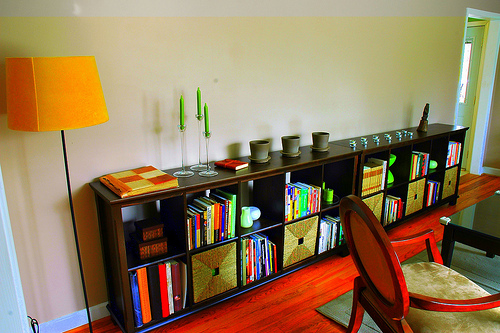
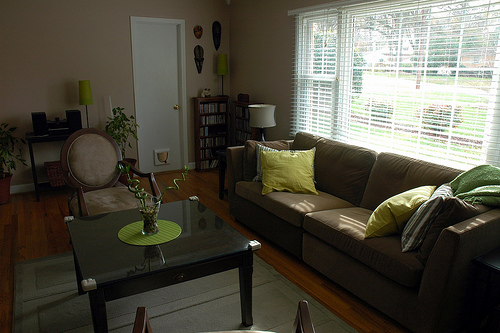
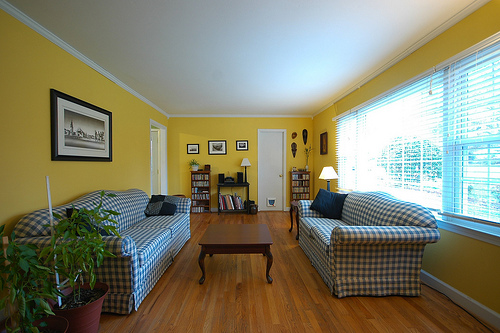
We still have pictures a hang, a television to buy, and a few final touches, but the living room, by and large, is done.

DSC_9488_6_7_tonemapped
DSC_9503_1_2_tonemapped
DSC_9492
DSC_9495

Memorex

L has an absolutely astounding memory. She can “read” many, many books — at least fifteen, I would say — from memory. She turns the page and quotes almost verbatim the text on the page.

And she corrects me.

“‘That’s what you said yesterday,’ shouted elephant,” I read from one of L’s favorite books, Goose Goofs Off.

“No, Tata! Elephant snorted!” comes the reply.

Fairy Tale

Emptiness

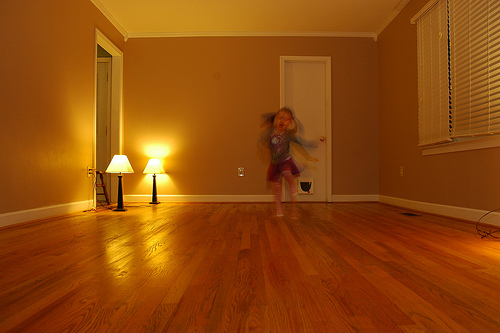
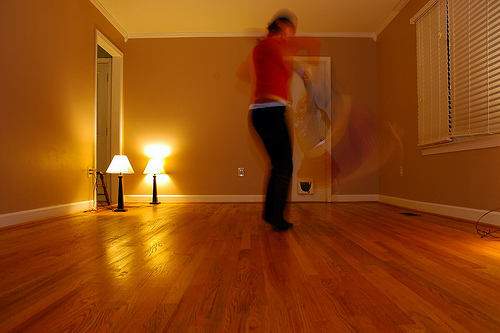
Emptiness inspires dancing — the echo of footsteps is always impressive.

DSC_9338

With the sofa and love seat sold and the remaining furniture stowed throughout the house, we now have a ballroom.

DSC_9343

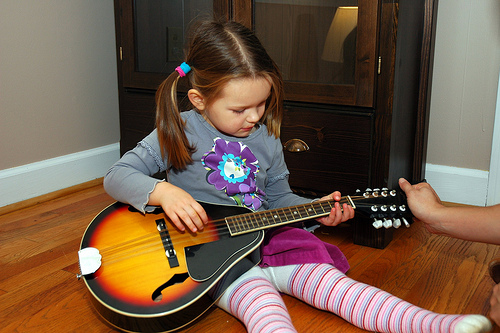
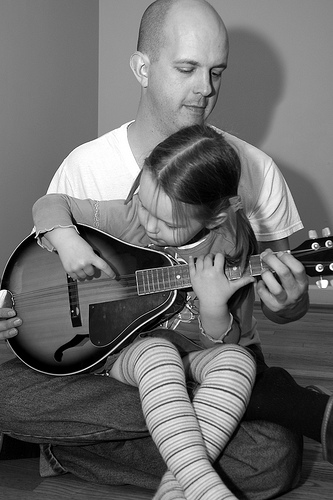
Conversely, the acoustics inspired music making, with L taking the lead.

DSC_9395

DSC_9400

Corrections

DSC_9305
0.8, f/4.5, 60 mm, flash on slow sync

Exponent

Projects have a way of growing on me. I imagine a particular project taking a given amount of time, effort, and resources, and it never turns out that way.

"I'm going to use the orbital brush cleaner to get the kitchen floor sparkling and then put a couple of coats of protective finish on it," I say before a day off. "It shouldn't take me more than three hours." In reality, I'm off by 66%: it takes me five hours.

"I'm going to replace the front sillcock. It shouldn't take more than a couple of hours, maximum." Lunch time comes and I'm still wrestling with it.

I look into the future at projects K and I hope to complete: remodel rebuild the kitchen; remodel the master bathroom; landscape the back yard. These are not minor endeavors. These are things that I anticipate taking weeks, which means they will take months.

The problem is, once I get started, I don't want to cut corners. At least that's what I tell myself: I end up doing that anyway, but it makes me grit my teeth to think about it, and I know there's more to the extended projects than my perfectionism.

It all comes down to inexperience. Except for plumbing, no project intimidates me, but I know my lack of experience will make the job three times as long as it should require. Experience has taught me that, for I used to think my home improvement inexperience would double the time.

Our living room is turning into one such project. "We'll just pull out the furniture, repaint the walls, polish the floor, and put the new furniture back in." If only it were that simple.

Saturday the Chameleon

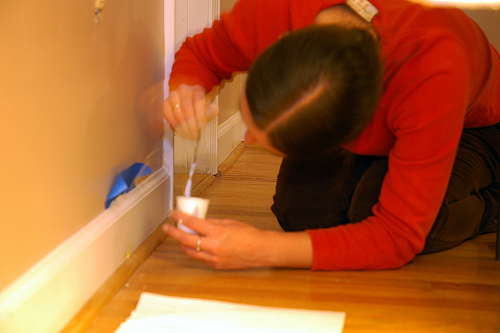
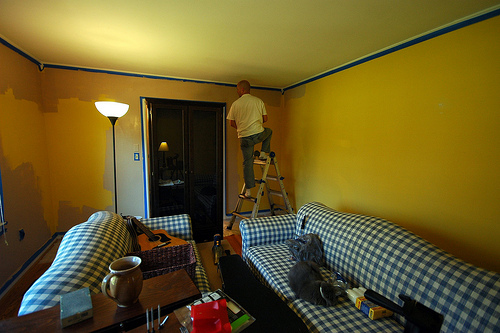
Another Saturday completed: we repainted the living room in preparation for a complete redecoration.

First and second coats and we're pretty much done. I admit I'll miss the yellow.

DSC_9293

K felt it was too bright; I loved the way it made the room open.

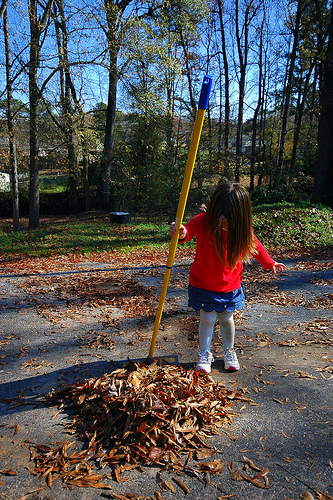
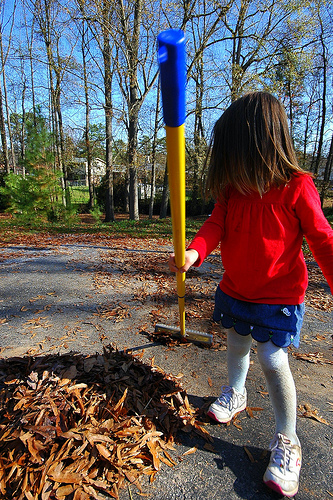
Between coats, I mowed and raked some leaves. It was not warm enough to break a sweat, and so it almost didn't even feel like work. But by most definitions, it was.

In another life, twenty-five to thirty years ago, my Saturdays were supposed to be days of reverence and quiet rest. Saturday is, of course, the seventh day; Jews and a few groups of Christians believe it is the sabbath, a time of rest. There's something appealing about that to me, even today.

Still, in the intervening years, my associations with and expectations of a good Saturday have literally turned 180 degrees. Just as I couldn't imagine mowing then, I can't imagine not spending Saturdays working now.

It makes me wonder what else might flip-flop in my life, and what else has changed without me yet truly noticing.

Fourth Thursday

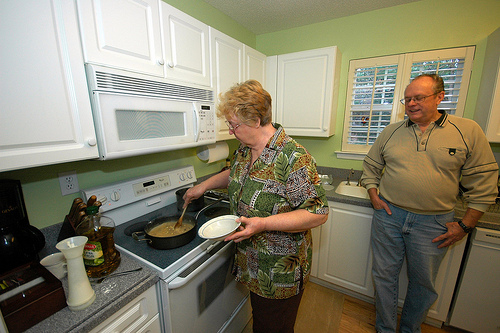
With a three-year old and no travel plans for Thanksgiving, we planned dinner around her nap. That gave us the whole morning to work around the house. As L grows, she's increasingly eager to help.

DSC_9205
1/200, f/7.1, 20 mm

It's impossible to put beans into the coffee grinder or tea into the infuser without L calling, "I want to do it! I want to help!" When I stir something in the sauce pan, when K sweeps the kitchen, L is there, ready to help.

Indeed, if we don't let her help (either intentionally or accidentally), it sometimes leads to a mini-meltdown.

DSC_9207
1/200, f/7.1, 10 mm

When we arrived at Nana and Papa's for turkey and the fixings, they had a surprise for L.

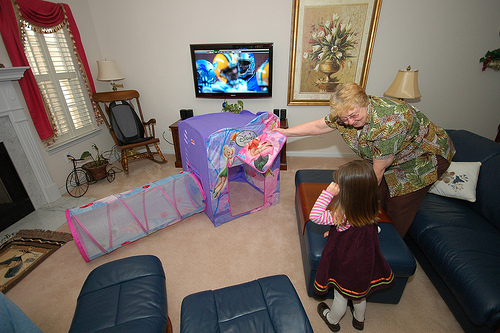
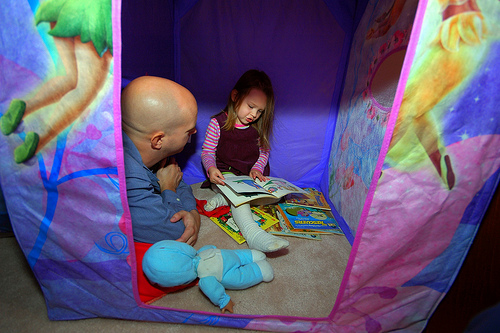
"We're tired of making a tent for her," Nana explained earlier in the week when I dropped by. It was, I would imagine, a well-established ritual: ottomans pushed together, with a blanket spread over it to create a small space for L to wallow in.

DSC_9219
1/60, f/5.0, 11.5 mm

As planned, it kept the Girl busy while everyone helped out with the final stages of dinner.

DSC_9221
1/60, f/5.0, 10 mm

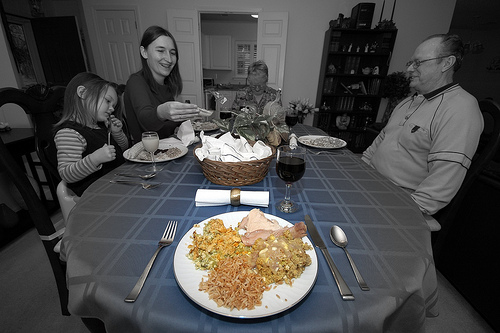
Turkey with dressing and giblet gravy, with sides of rice, casserole, and cranberry sauce. What could be more American? Indeed, as I ate dinner, I remembered when, living with a host family in Poland, I was asked to create a typical American meal. I mentioned the Thanksgiving feast; I was relieved when told (this was 1996) that getting a whole turkey would be, at best, difficult.

DSC_9230

After dinner was play time (until the turkey overwhelmed Papa and he began his post-dinner, in-seat nap).

DSC_9224
1/60, f/5.0, 10 mm

It was the first Thanksgiving without any extended family at all. No traveling; no sleeping in strange beds; no absolute dread if it was a rainy day in South Carolina, requiring us all to stay inside with four generations of smokers. It was Thanksgiving without any of the negatives. It also lacked some of the positives that certainly accompany large family gatherings.

DSC_9236
1/60, f/4.2, 11 mm

Yet, for one of the first Thanksgivings L will probably remember (at least for a few years), it was perfect. Especially the Mlenmorangie Papa brought out after dinner.

Rings

As a kid, I used to wonder what the view of the heavens would look like if we had some characteristics of other planets in our solar system. I would imagine multiple moons in the sky and vaguely wonder about the effects they would have on the earth.

Learning about dual stars and watching 2010, I wondered what the earth would be like with two suns. “Two suns in the sunset” Roger Waters sang on The Final Cut, the last album he recorded with Pink Floyd, but he was referring to the prospect of nuclear war.

For some reason, though, it never occurred to me that the earth could have rings. Apparently, it’s occurred to others:

https://www.youtube.com/watch?v=SNCBh2MLvdw

Stacking the Deck

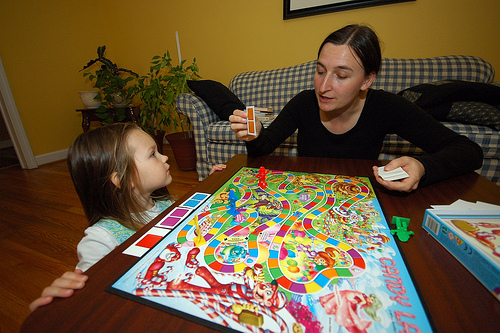
A daily game of Candy Land has wiggled its way into our routine. L has mastered the concepts: she knows what the cards are for and she generally knows which direction her piece needs to move.

DSC_8921

The problem is that Candy Land is unimaginably dull: draw a card, move your piece, wait. Repeat. While L was learning, it was a pleasant game: actually playing the game was not the objective, and as I love teaching, any educational activity is enjoyable.

Now that she knows how to play the game, though, it can drag.

I feel a little guilty about that. I should adore every single moment with her, but let's face it: there are only so many times you can feign surprise at having to go back to the Gingerbread House.

When I was working with autistic children, Candy Land was a popular free time choice. I got so utterly sick of it that I -- and I am somewhat ashamed to admit it -- stacked the deck to make sure the kid I was sitting opposite got all the good cards.

"What!? Another double-purple? Well, you're well on your way, aren't you?"

I haven't done that with L yet. In the truest sense of "stacking the deck." I might have switched the top two cards after a quick peek at my own, making sure she got another double-purple, but that's not really stacking the deck. That's helping.

Little Drummer Girl

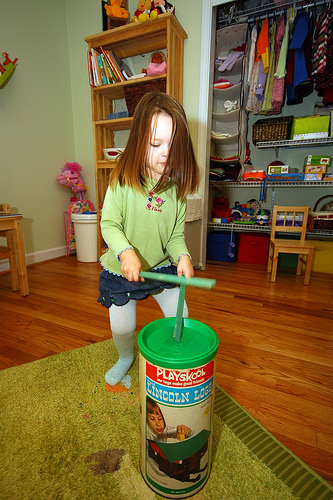
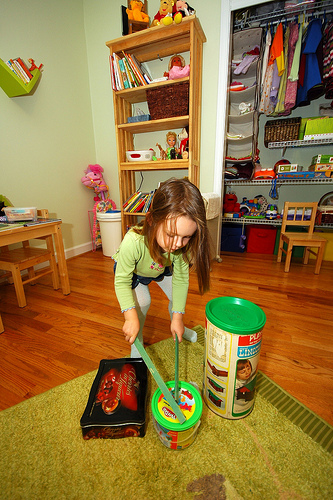
Happy accidents are part of growing up. Today, L discovered that my old Lincoln Log set makes a fairly good drum.

DSC_9174

Add an old chocolate tin and a tub for totting Play Doe and you have an entire kit.

DSC_9182