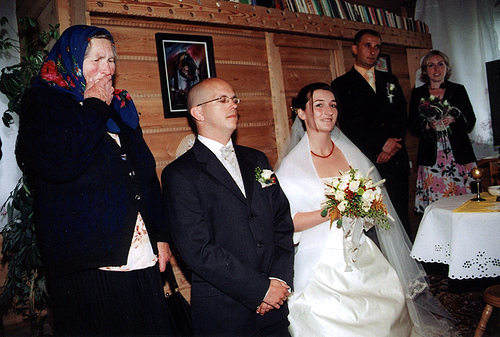
The blessing is one of the most personal times of the whole wedding. Only family and closest friends are present as both sets of parents offer their blessings and best wishes to their children before the ceremony.
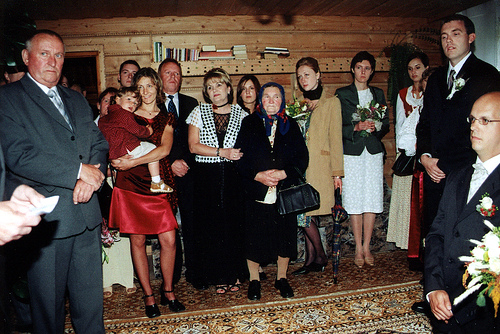
It's usually a very teary affair, with one or both of the mothers crying and perhaps a guest or two joining in.
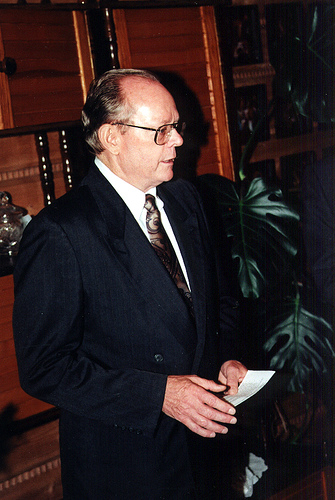
It's at this point, I suppose, that the seriousness of what's happening really starts to settle in.
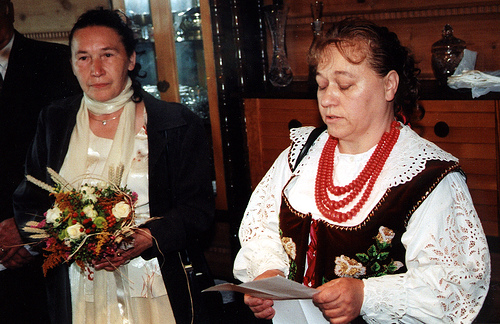
Było bardzo uroczyÅ›cie z tymi wszystkimi mowami, na szczęście obeszło sie bez zbyt głoÅ›niego szlochania.
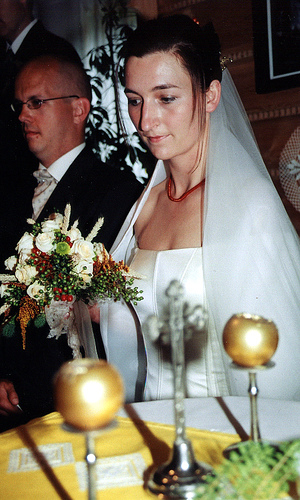
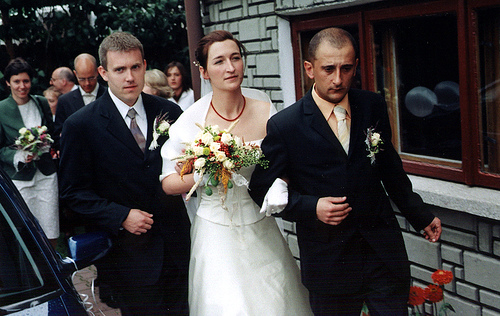
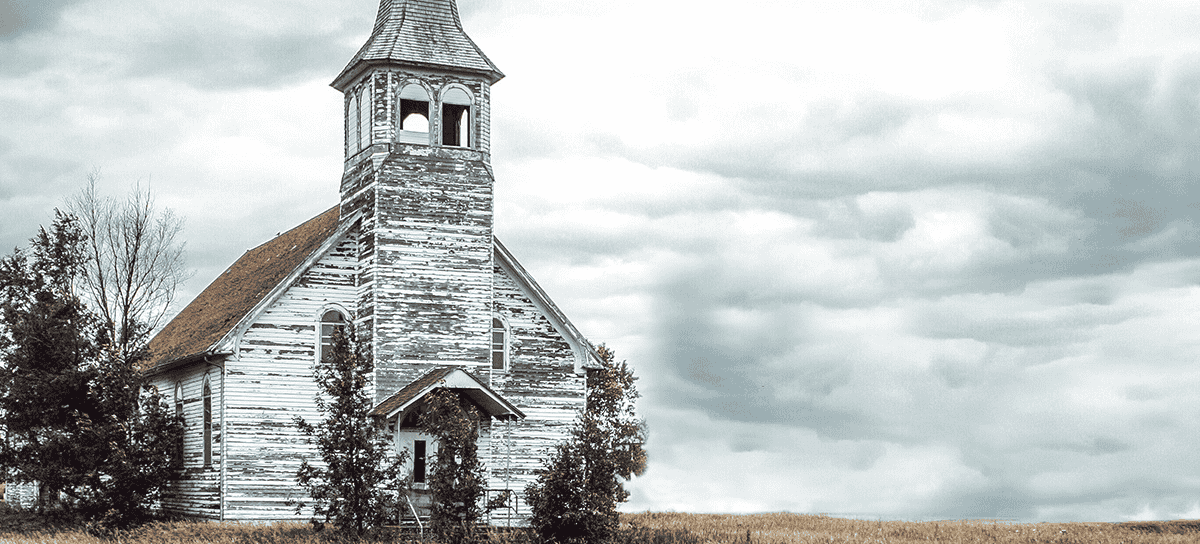
After the blessing, it's off to the church.
According to Polish custom, the bride and groom are actually the first to enter the church. They go in and sit down in front of the altar while all the guests file in.
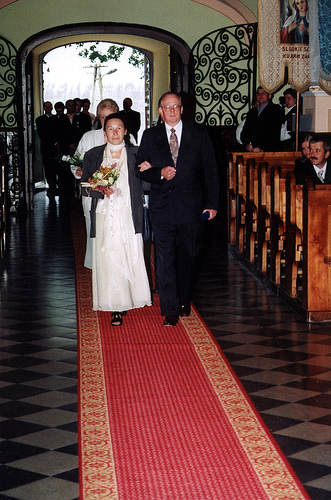
We decided to do it a little more "American" style: my Dad escorted Kinga's mother in, and I escorted my Mom, followed by the bridesmaids and groomsmen.
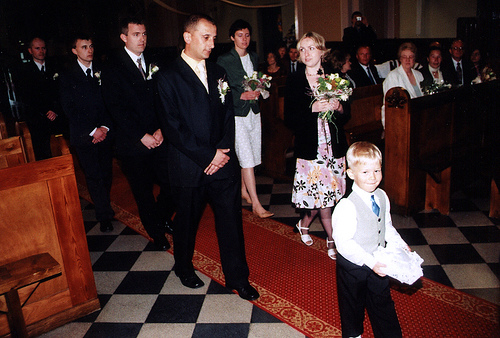
I stood by the altar for a few moments and then Kinga came in.
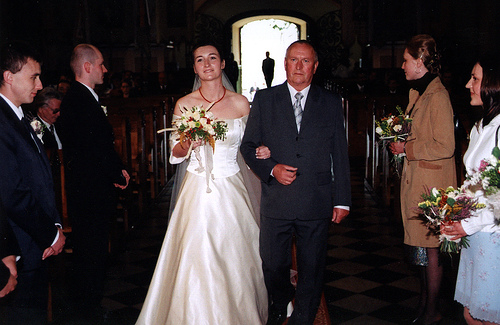
Shortly after that, Kinga and I went to a small room off the main altar with Johnny, the best man, and Maja, the maid of honor, for all the paper signing and other technicalities.
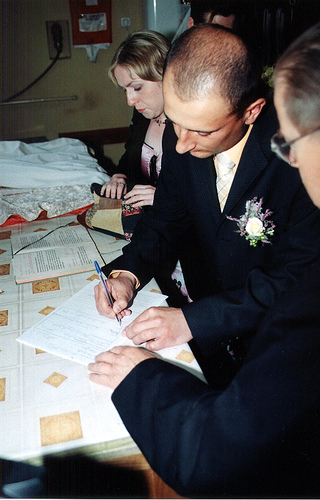
After that and a small misshap concerning a Bible, we returned to our places and the Mass began.
The Mass, despite all the unexpected pre-Mass adventures, started on time at one o'clock.
Our Mass, conducted by the rector, Stanisław Górecki was somewhat Spartan in that we elected not to have the traditional organ accompanyment during the prayers and recitations, so there was a spontaneous element to the Mass as no one really wanted to be the one who started belting out the "Amen" and such.
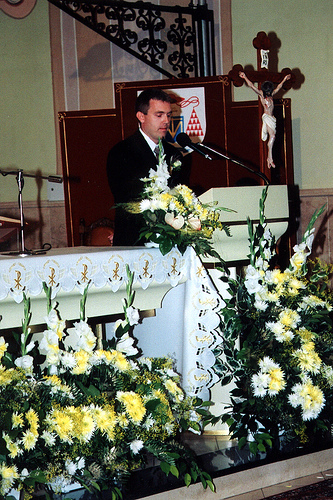
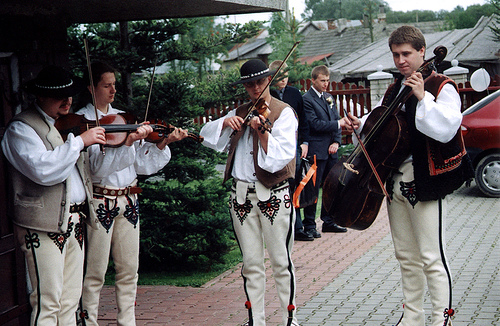
We did have music, though: the local youth choir sang, and a traditional Highlander band played (though not together, of course!).Other than that, the Mass was pretty much according to the patter of Masses for the last, I guess, few hundred years: two readings, some hymns, some prayers, a sermon, communion, and a benediction.
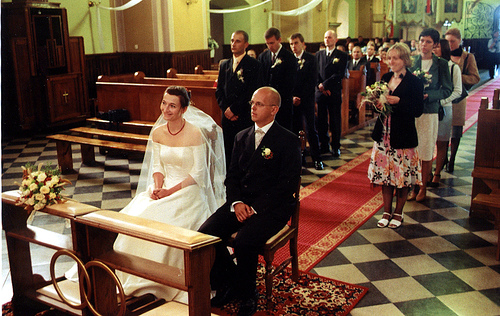
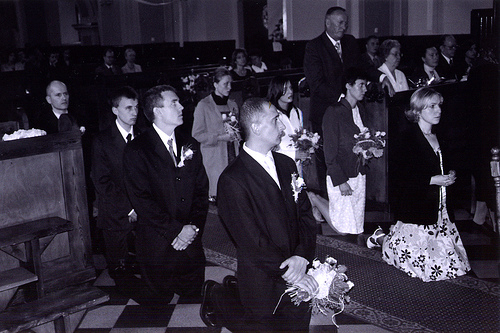
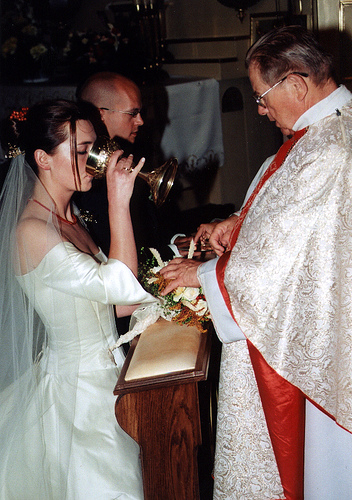
There was an anxious moment for me as we neared the giving of the communion. I had earlier been told that, as a non-Christian, my vows would be a little different than Kinga's as a Catholic. The Catholic wedding vow, after promising to be faithful, loving, and so on until death, ends with something like, "So help me God and all the Saints." Since I don't believe in these beings, it doesn't make sense for me to be asking for their help, and so in perfoming mixed marriages, the priest usually leaves that out for the non-believing partner.
In my case, though, the priest had me say that. Suddenly I was worried that he might have forgotten and later might offer me communion.
After kneeling at the main altar (which, apparently, everyone was supposed to do, but didn't),
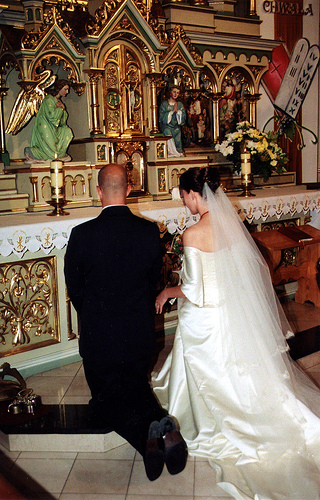
Kinga and I left arm in arm.
Msza podobno była piękna. Tak słyszeliśmy od gości, bo my widzieliśmy tylko kolejne wpadki – z Biblią na początku; ksiądz proboszcz osobiście biegał na plebanię. Do tego zapomnieliśmy przynieść świec do kościoła, no i przez 10 minut myśleliśmy, że księdzu wszystko się pomieszało z tym ślubem. No ale jakoś wytrwaliśmy, chociaż to był dla nas ogromny stres. Zresztą, jak powiedział ksiądz na kazaniu: czymże jest olimpiada w Atenach i wizyta Papieża we Francji wobec tego, co my w tym momencie przeżywaliśmy.
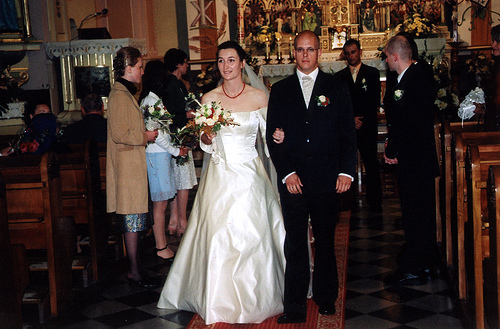
With the Mass over, it was time to leave. I suppose of all the moments one imagines about one's wedding, this is one of the (for me) least exceptional. No shudders; no thinking, "I really feel married now"; no sense of anything except, "Whew, the most stressful part is now over."
Well, no, that's not true. There was a certain amount of pride I personally felt. After all, look how beautiful the bride was that day.
After all the guests came out, it was time to kiss them. All. One after the other.
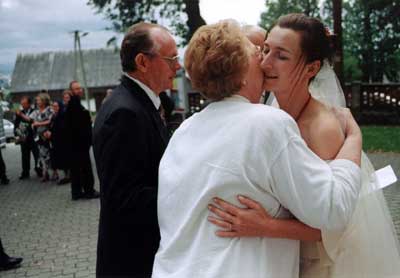
After the newlyweds and guests leave the church, the bride and groom "receive" all the guests — nothing particularly novel about that for a non-Pole. What is novel is the kissing.
Mwa, mwa, mwa — left cheek, right cheek, left cheek again.
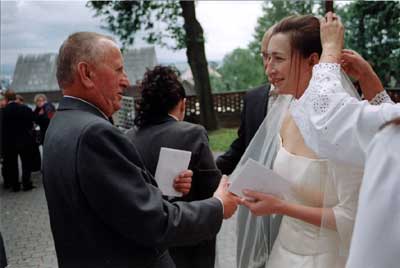
The men kiss the bride; the women kiss the groom; the women kiss the bride; and most disconcertingly, the men kiss the groom.
Having been raised in a non-kissing culture, it's taken a little while to get used to it. It's not just at weddings — most official, congratulatory occasions require kissing.

On Saturday 14 August 2004, I kissed about 120 people. I tried not to take the initiative, especially with the men. But if a man wanted a smooch, well, culture dictated that I pucker-up.
When Dave came along in the receiving line, we shook hands like men and left it at that.

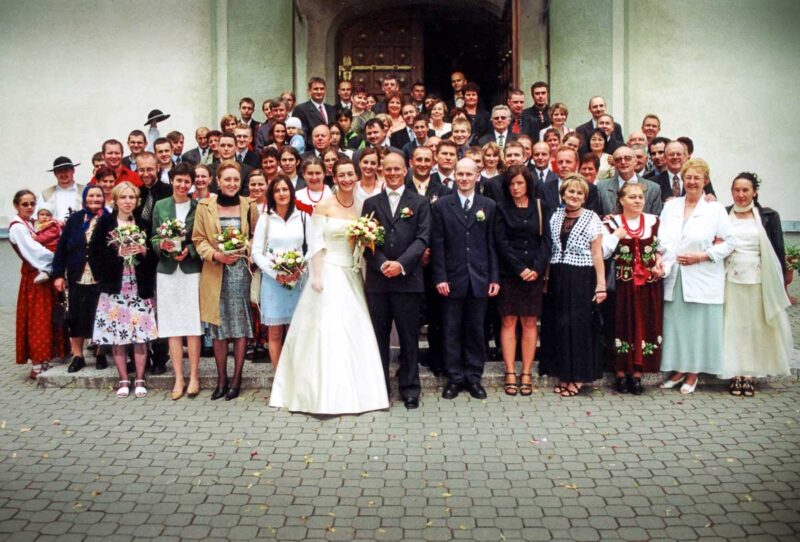
Kissing finished, the photographer took over.


0 Comments