matching tracksuits

fun in threes, sometimes fours

general

The Mountain

This is something I wrote as a quick example for students. The topic was:

Comment on one of the following quotes and how it applies to your life:

  • "A pessimist sees the difficulty in every opportunity; an optimist sees the opportunity in every difficulty." - Winston Churchill
  • "Success is a journey, not a destination." - Ben Sweetland
  • "Success is knowing what your values are and living in a way consistent with your values." - Danny Cox

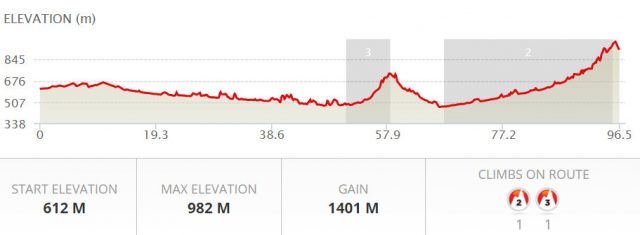
It seemed we would never reach the top. The winding mountain road in central Slovakia would pose no problem to a motorized vehicle, but after seventy miles on a bike, I was wondering whether we could make it. My wife -- then only my girlfriend -- probably felt the same way. The journey, even if we made it to the top, couldn't be considered a success; it was a question of brute survival.

We'd started off in the morning in Poland. The plan was to ride through Slovakia, into Hungary, and spend several days in Budapest. We were a little behind schedule due to rain and an unexpected break as we waited out the cloud burst. For most of the day, though, the road had been easy going: fairly flat, some downhill portions, a climb or two. Nothing serious.

That was before we hit the mountain. It sneaked up on us, really: we felt a gradually increasing incline, and like two frogs in boiling water, we were in danger before we realized danger was approaching.

On two packed bikes, we were struggling fairly quickly after the realization that we were riding up a mountain, not a hill. Each pedal stroke became a battle, and the veins in our temples bulged and quivered as they tried to carry our blood at the furious pace our heart was beating. Our lungs began to burn, then simply went numb as the heavy, post-rain, damp air practically strangled us. Our legs followed suit: first a tingle, then a burn, followed by flames and complete numbness.

With every switch-back, we were sure it had to be the last; time and time again, we were almost knocked off our bikes by the sight of another uphill stretch concluding with another switch-back. "Maybe that one is the last one," I said to my girlfriend. When it wasn't, I'd repeat the speculation on the next one, often following it with a skeptical laugh.

What we both knew we couldn't do was stop. It wasn't some kind of macho, push through the pain nonsense. No -- the simple truth of the matter is that stopping only makes it worse. Muscles cool down and the pedaling becomes more painful after the break. There's only one thing to do: be macho and push through the pain.

After a while, though, cyclists climbing seemingly endless inclines stop thinking about reaching the top. Goals become short term: "Just make it to that twig that's lying in the road twenty-five meters in front of me." The instant disappearance of pain when stopping is tempting, but one makes an honest effort to go a little further: "Before I can possibly consider stopping, I have to make it to that tree." And once the goal is accomplished, one thinks, "well, perhaps a little further."
1-fullscreen-capture-11202016-123118-am

At that point, a strange thing happens: the pain becomes enjoyable. There are all kinds of physiological explanations for the euphoria athletes feel when the pain becomes pleasure, but at least part of it is mental. The surety of completing short-term goals and the realization of how many such goals have already been reached transforms the pain into a sure sign -- symbol, if one wants to get metaphysical -- of one's ability and a confirmation that one's self-confidence is not misplaced.

It's something we can apply to life: a series of short-term goals adds up to a large accomplishment. Focusing on the here and now, concentrating on getting through the present pain, we find ourselves enjoying even pain.

We finally made it to the top, and just to the right was a hotel. "We're staying here," I said, knowing we were still fifteen miles from our planned stopping point. "I know," said a voice behind me.

If you'd asked me that night, I would have said that success is indeed a destination. Success is finally lying down on a bed after climbing a seemingly endless mountain. Two days after that, I would have said that success is finally walking down a street in Budapest, looking for a cheap restaurant.

But when I recall the whole trip, I think back to that mountain, and how some part of me wanted it never to end.

Haircut

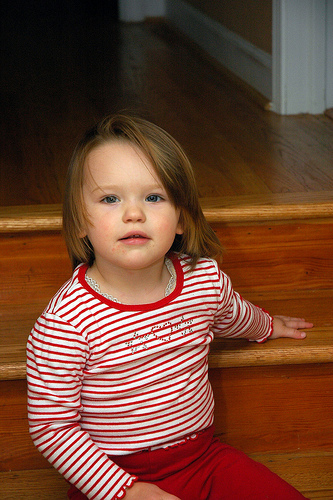
It was not her first haircut, but what a difference it made. A bit off the back and she goes from looking like a baby

DSC_2133

to looking like a little girl

DSC_2155

"I try to hold on to these moments as they pass", sings Adam Duritz, and it's become my mantra. I have to cherish the rare moments that will become ever rarer. When K is vacuuming and L panics, running to me and screaming for me to pick her up, I hold her close; she clings so tightly to my neck that it's almost difficult to breath.

"Were you scared?" I ask.

"Tak," she says, relaxing her grip and simply putting her head on my shoulder.

I'll always want to hold her when she's scared; I'll only be able to for a few more years.

Want some tragic amusement?

Listen to David Duke on the Obama election.

Obama is really going to advance radically the Zionist neocon agenda.

You probably won’t make it through more than the first six, seven minutes — I couldn’t, anyway.

It will all be over soon…

Just a quote:

In a moment of high panic in late September, the US Treasury unilaterally pushed through a radical change in how bank mergers are taxed--a change long sought by the industry. Despite the fact that this move will deprive the government of as much as $140 billion in tax revenue, lawmakers found out only after the fact. According to the Washington Post, more than a dozen tax attorneys agree that "Treasury had no authority to issue the [tax change] notice."

Of equally dubious legality are the equity deals Treasury has negotiated with many of the country's banks. According to Congressman Barney Frank, one of the architects of the legislation that enables the deals, "Any use of these funds for any purpose other than lending--for bonuses, for severance pay, for dividends, for acquisitions of other institutions, etc.--is a violation of the act." Yet this is exactly how the funds are being used.

Then there is the nearly $2 trillion the Federal Reserve has handed out in emergency loans. Incredibly, the Fed will not reveal which corporations have received these loans or what it has accepted as collateral. Bloomberg News believes that this secrecy violates the law and has filed a federal suit demanding full disclosure.

via In Praise of a Rocky Transition.

Hail Obama, Hail Mary

The Rev. Jay Scott Newman, parish priest at St. Mary's Catholic Church here in Greenville, writes on his blog about being Catholic in a decidedly evangelical region:

St. Mary’s Catholic Church is located less than five miles from the campus of Bob Jones University in the Buckle of the Bible Belt, a part of the world in which many Protestants still regard Catholicism as a pagan cult pretending to be a Christian Church or, at best, a fatally compromised version of the true Gospel. In such an environment, those who are casual, cultural, and cafeteria Catholics quickly become either ex-Catholics or Evangelical Catholics, and that is paradoxically one of the reasons why our congregation and many other Southern parishes are flourishing: the unique challenge for Catholics seeking to live their Christian faith in the South leaves no room for spiritual mediocrity, doctrinal confusion, uncertain commitments, or a lukewarm interior life. (Unexpected Catholicism)

What he said to a Greenville News reporter was sure both to unite and to alienate Evangelicals and Catholics. Hitting upon that common conservative Christian motif of "abortion is the greatest evil on the planet today" and Democrats are evil because they support it, Newman suggested Catholics who voted for Obama might not be fit to receive communion:

The priest at St. Mary's Catholic Church in downtown Greenville has told parishioners that those who voted for Barack Obama placed themselves under divine judgment because of his stance on abortion and shouldn't receive Holy Communion until they've done penance. (GreenvilleOnline.com)

The Greenville Times is even putting it on the front page, so to speak:

greenvilletimes

This is reminiscent of the calls in 2004 not to give communion to pro-choice Catholic candidates (read: John Kerry). CBS News explained it thusly:

It is unclear if pressure from the Boston archbishop will prevent Sen. John Kerry from taking communion this Easter Sunday in his home city because of the Democratic nominee's support for abortion.

Amid questions of how Catholic leadership will respond to the pro-choice senator, Kerry's archbishop -- Boston's own Sean O'Malley -- has refused to clarify a statement last summer that pro-choice Catholics are in a state of grave sin and cannot take communion properly. (CBS)

Newman's letter itself is here.

What next? People who are friends of voters who voted for candidates who are pro-choice have to get aboslution? Parishoners who touch dogs of friends who have friends who have friends who heard about someone who voted for Obama must confess?

This kind of blatantly political crap should be just cause for revoking a church's tax exempt status.

Yet a few commenters put it in perfect perspective:

  • I am confused. Rev. Newman forgives John McCain for his sin of adultery; he forgives Sarah Palin for her sin of fornication and for raising a child to be a fornicator. On the other hand, he opposes a family man.
  • Maybe the priest should refrain from taking communion until the Roman Catholic Church does enough penance for it's willful coverup of well over 10,000 child sexual abuse cases for decades.
  • This is the reason why the Catholic Church has no credibility what-so-ever.
  • Sorry Father. I am a practicing Catholic who attends mass each week at your Church. This election was multi-dimensional. I abhor abortion, but there were so many more issues involving human lives at stake last Tuesday. By the way, the headline of this week's Catholic Miscellany, which you sent me reads "Pope Congratulates Obama on Election Win." In the article, Pope Benedict says an awful lot of nice things about President-Elect Obama. Did you clear your opinion with Rome?

My Hometown

Headlining The Nation:

It was hot as Hades on June 5 in the little mountain town of Bristol, Virginia. But that didn’t stop hundreds of southwest Virginians–in the most staunchly Republican part of a state that hadn’t voted Democratic for president since 1964–from streaming into the local high school gym to whoop it up for a liberal, mixed-race fellow from Chicago with a mighty suspicious moniker. Fresh off his lopsided, nomination-clinching primary victory in North Carolina, Barack Obama had chosen–to the mystification of political experts–to launch his general election campaign not in the “battlegrounds” of Pennsylvania or Ohio but in a remote Southern backwater containing 17,000 souls who’d given George W. Bush 64 percent of their vote in 2004.
A New, Blue Dixie.

HDR

I was initially opposed to the idea of high dynamic resolution imaging. I still think it's something that's easily abused. Still, it's a fun idea.

I've finally started playing with it. I don't like any of the results -- they all look fake. But here are three:

HDR 4
Jabonka, July 2008
HDR 3
Greenville, October 2008

I posted a non-HDR version of this earlier.

HDR 1
Greenville, November 2008

In the Mountains

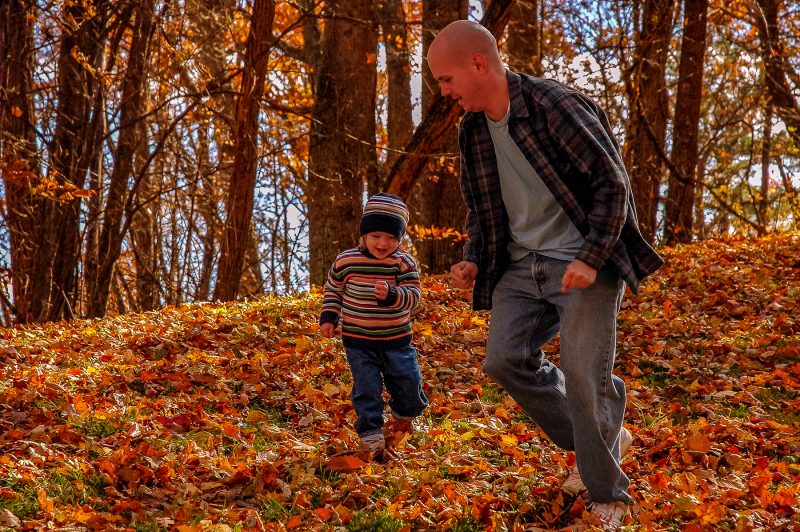
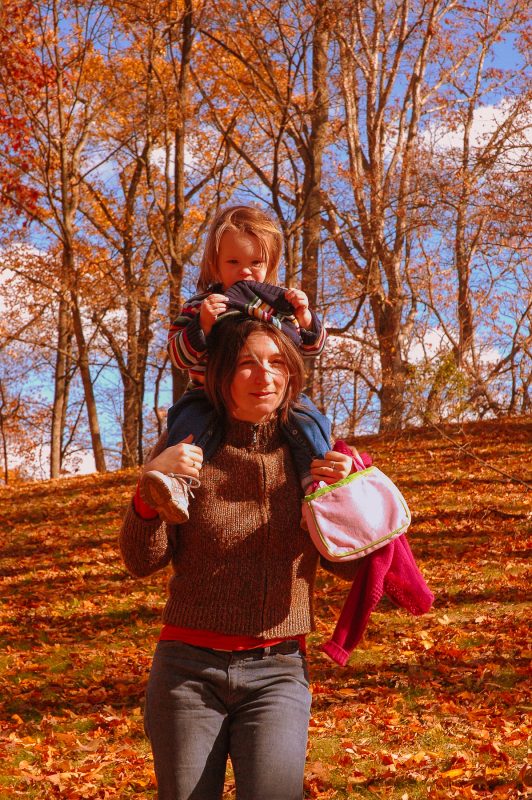
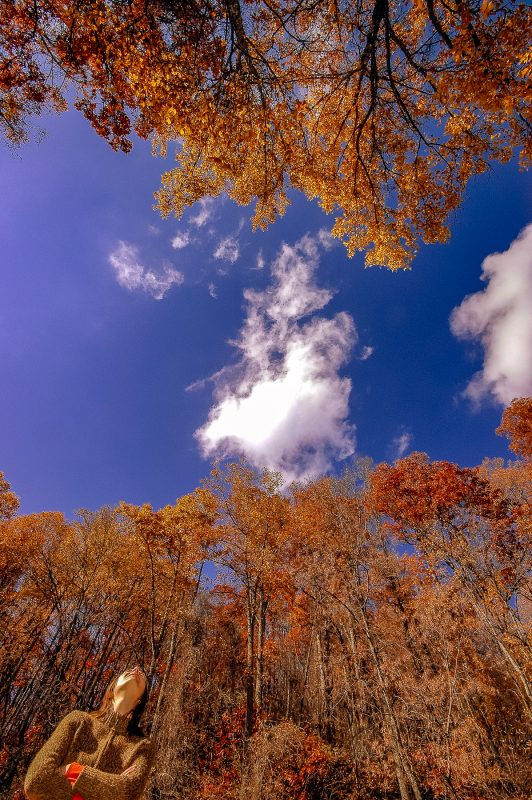
About a week too late, we headed to the mountains of North Carolina today. Last weekend the leaves were at their color peak; after a windy Saturday, there were few left on the trees. Still, we found a spot with good light and a lot of leaves and went at it.

L and I ran,

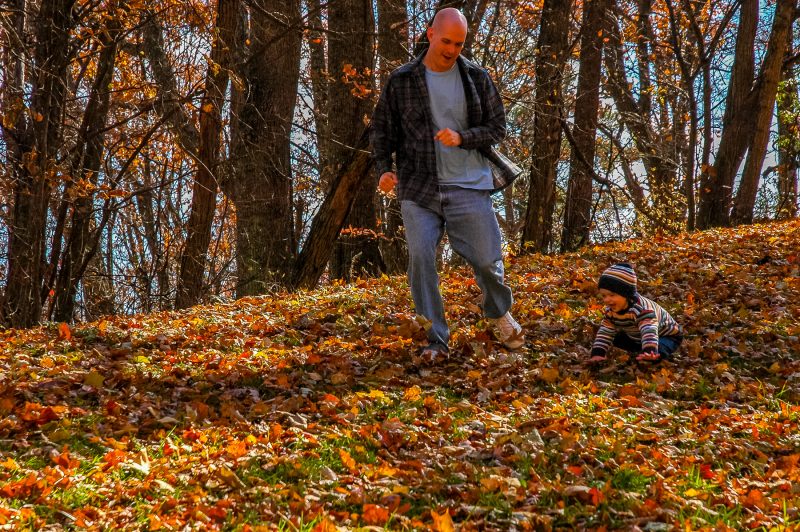
fell,

rolled around, and covered each other with leaves.

Except for the covering-with-leaves portion, it was continuous "more!" from L (and it came out as sweetly as always: "mo!").

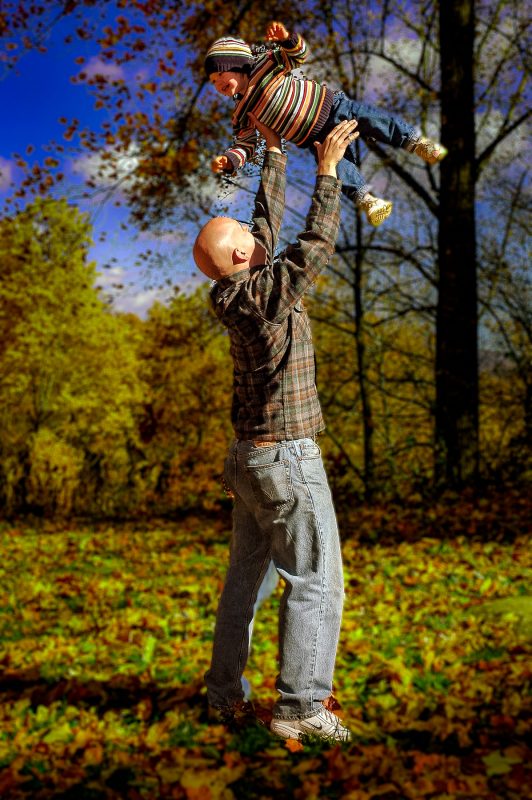
And while most of the leaves had fallen, there were still some magnificent views, particularly of one lay down.

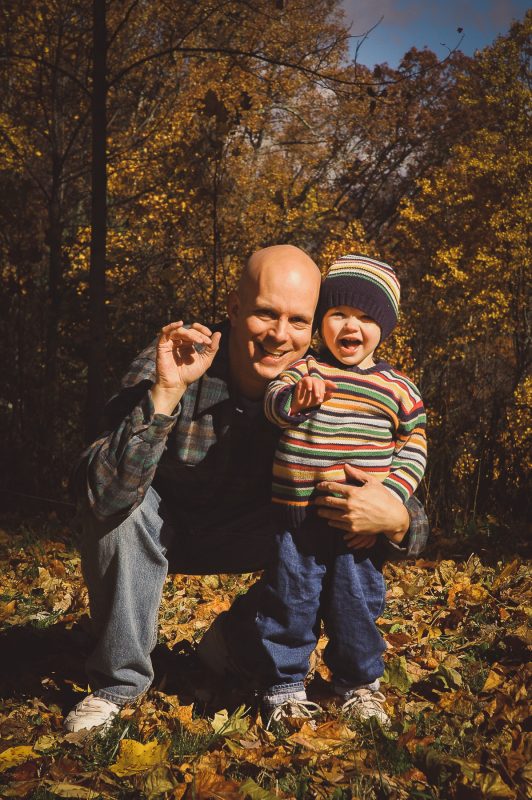
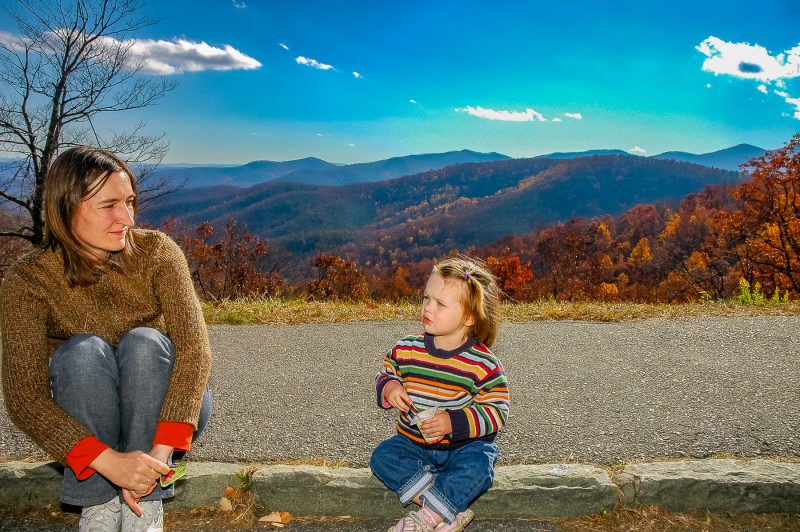
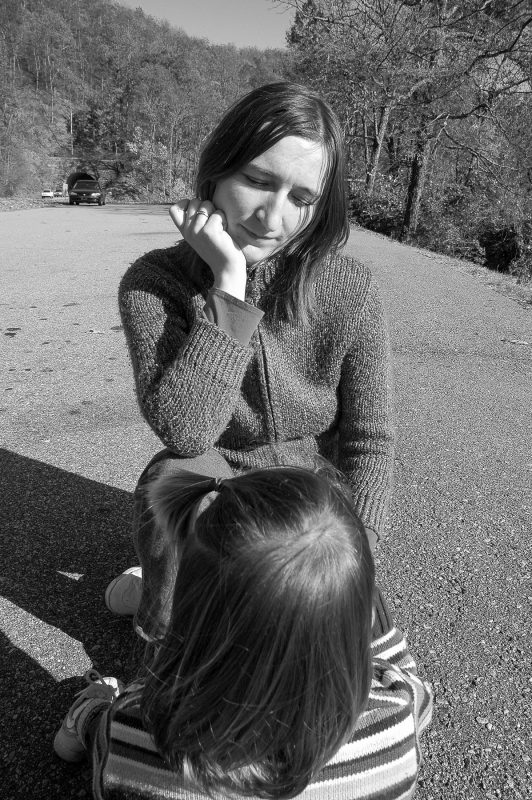
Of course, what would an outing be without some quiet moments, sharing a snack.

Sincerely, Mr. Waxman

A letter, dated October 28:

Dear Mr. Blankfein[, Chairman and Chief Executive Officer, Goldman Sachs]:

Earlier this month, the Treasury Department announced plans to invest $125 billion of taxpayer funds in nine major banks, including yours, as an emergency measure to rebuild depleted capital. According to recent public filings, these nine banks have spent or reserved $108 billion for employee compensation and bonuses in the first nine months of 2008, nearly the same amount as last year.

Some experts have suggested that a significant percentage of this compensation could come in year-end bonuses and that the size of the bonuses will be significantly enhanced as a result of the infusion of taxpayer funds. According to one analyst, “Had it not been for the government’s help in refinancing their debt they may not have had the cash to pay bonuses.”

Press accounts report that the size of the bonuses could exceed $6 billion at some firms receiving federal assistance.

While I understand the need to pay the salaries of employees, I question the appropriateness of depleting the capital that taxpayers just injected into the banks through the payment of billions of dollars in bonuses, especially after one of the financial industry’s worst years on record. As one newspaper recently reported, “critics of investment banks have questioned why firms continue to siphon off billions of dollars of bank earnings into bonus pools rather than using the funds to shore up the capital position of the crisis-stricken institutions.”

To assist the Committee’s investigation into this issue, I request that you provide the following information and documents for your company as well as any affiliates or subsidiaries:

  1. For each year from 2006 to 2008, the total compensation and average compensation per employee, paid or projected to be paid to all personnel, broken down by salaries, bonuses (cash and equity), and benefits; and a description of the reasons for the year-to-year changes in these amounts.
  2. For each year from 2006 to 2008, the number of employees who were paid, or are projected to be paid, more than $500,000 in total compensation; the total compensation paid or projected to be paid to these employees, broken down by salaries, bonuses (cash and equity), and benefits; and a description of the reasons for the year-to-year changes in these amounts.
  3. For each year from 2006 to 2008, the total compensation paid or projected to be paid to the ten highest paid employees, broken down by salaries, bonuses (cash and equity), and benefits; and a description of the reasons for the year-to-year changes in these amounts.
  4. Documents sufficient to show all policies governing the granting of the bonuses to the groups of employees referenced in items (l) to (3).

Please produce the requested information to the Committee no later than November 10, 2008. To the extent that 2008 year-end bonuses have not been finalized by that time, you should notify the Committee as soon as those bonuses are determined and supplement your response with updated information and responsive documents.

The Committee on Oversight and Government Reform is the principal oversight committee in the House of Representatives and has broad oversight jurisdiction as set forth in House Rule X. An attachment to this letter provides additional information about how to respond to the Committee’s request.

If you have any questions about this request, please ask your representatives to contact Theodore Chuang or Alison Cassady of the Committee staff at (202) 225-5420. Thank you for your cooperation.

Sincerely,
Henry A. Waxman
Chairman

I’m not sure which is more disturbing: the fact that the letter has to be written to begin with, or the fact that Time and Bloomberg scooped Congress. Shouldn’t the banks’ books have been open from the beginning of the bailout, so that Congress doesn’t find out from Time magazine that these banks are robbing taxpayers?

Oh, right — that would be real oversight. How foolish of me.

(Source: House Oversight Committee Web Site)

Voting

I wasn’t in the States for the 2004 presidential election. I watched from afar, in my small apartment above an elementary school in southern Poland. It was, in fact two, rooms (each with a bath) joined by a opening not in the original plans. It took me almost six months to convince the powers that be to join two useless rooms into one small apartment. My internet connection was supplied by the village planning office across the hall.

It was all done Polish style: “We’ve got a router with an open connection if you’re interested,” the gentleman who worked in the office informed me one day. “If you want, we can run a bit of network cable over to your apartment.” So we took a drill with a very long bit, drilled through the walls just above the doors, and stretched a cable through to my apartment.

Returning from school that Tuesday, I bounced around the internet, looking for very early results: it was only nine in the morning on the East Coast, so there wasn’t much information yet. Throughout the night, I checked; throughout the night, it became clearer that Bush had won. When I finally went to bed, it was with the strange realization that it was the second time — in a row — that I’d gone to bed not knowing the outcome of the election.

And today? Will it be any different?

If Dixville Notch, New Hampshire is any indication, we’ll know relatively quickly:

In Dixville Notch, New Hampshire, 100 percent of registered voters — all 21 of them — cast their ballots just after midnight in the first moments of Tuesday morning. For the first time in 40 years, the town voted Democratic in the presidential election, 15-6. (CNN)

Whatever the outcome, one thing seems sure: people around world are paying closer attention to this US election than to almost any other in history.