matching tracksuits

fun in threes, sometimes fours

general

“We’re Sleeping in a Forest”

When there's a toddler in the family, life is a series of firsts: first time swimming; first time on an airplane; first time at the ocean.

This weekend, we added another one: first time camping, at Oconee State Park.

Oconee State Park was one of the many parks created during the thirties by the Civilian Conservation Corps. Given all the "socialism!" and "socialist!" and "socializing!" noise of the last days, it seemed oddly appropriate that we cut ourselves off from the civilized world by going to a New Deal project. I felt brainwashed when we left, but not indoctrinated.

Our "rustic site," deep in the woods and far away from the hordes of RV-ers, was just that: very spartan. A semi-flat spot for a tent, a picnic table, and a fire circle were the only things non-native.

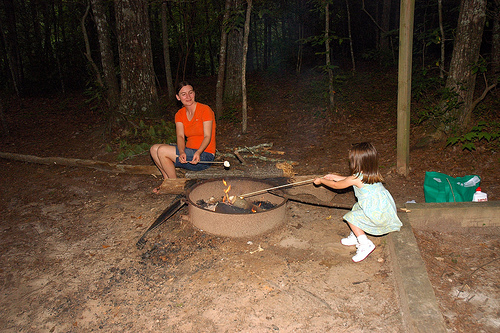
L was immediately thrilled, particularly with the prospect of roasting marshmallows on the fire.

"And now we can," began K, and L finished, "Marshmallows?"

"I'm going to bring that from the car, then we can," I said, and L finished, "Marshmallows?"
DSC_7749

When the time finally came, though, it turned out that marshmallow preference might be genetic: like me, she didn't really care for the marshmallow but greatly enjoyed setting them on fire. K and I ate one each; L burned most of the remainder.
DSC_7777

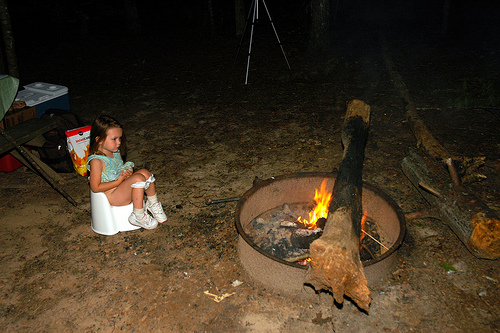
It being L's first time out, we decided to make every effort to maintain our daily routine. L was more than happy to watch the fire rather than read a book as she readied herself for bed.

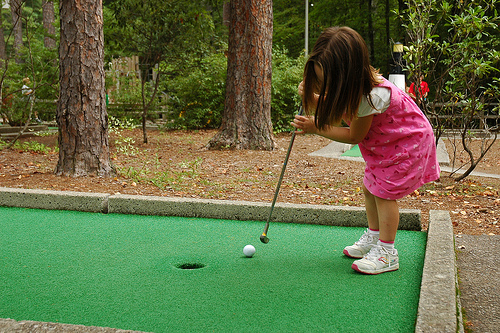
The next morning, another first: mini golf. L quickly developed her own style, and her own rules.
DSC_7788

"I hear they're going to count that as a legitimate stroke," I said to a father of two one hole ahead of us as we both watched, laughing, L gently push her ball to the hole. "If the ball remains in contact with the club's face, it's one stroke." Our neighboring golfer liked the rule.

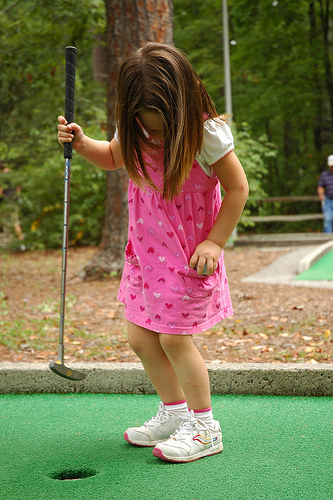
She seemed to enjoy putting it into her pocket after every hole more than the actual game itself.
DSC_7792

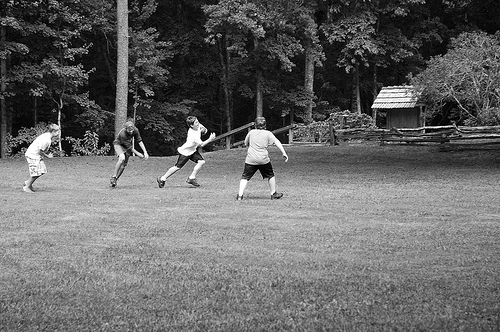
For others, it was all about the game.
DSC_7817

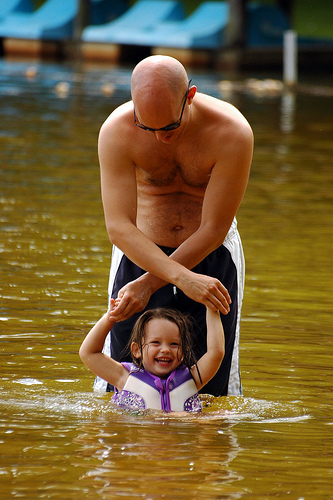
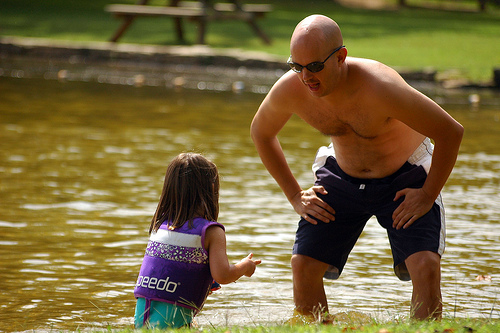
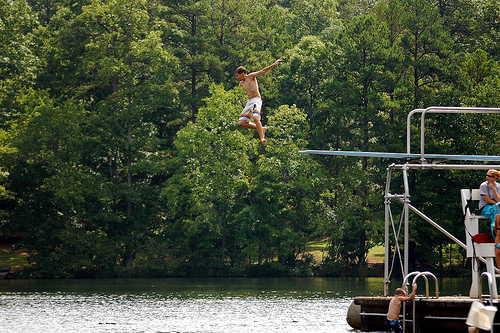
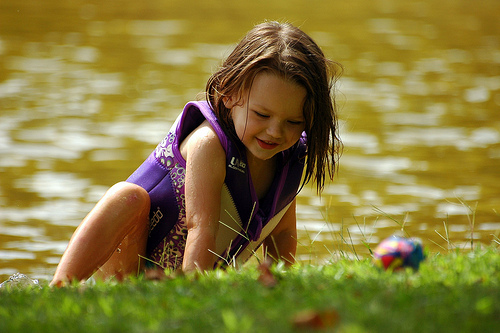
In the afternoon, we did the logical thing: go swimming. The man-made lake was shallow but cold. L didn't notice, though.
DSC_7818

The water's coolness was quite possibly a relief to some, considering their trajectories toward the water and the smack! of impact.
DSC_7826

DSC_7836

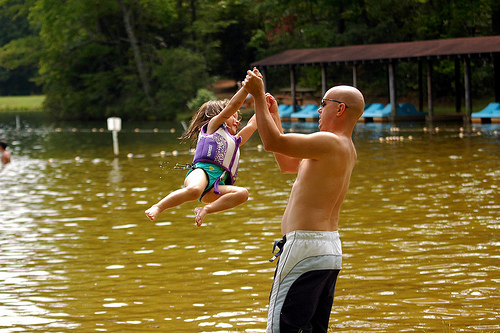
It was an afternoon of "again."

"I want to jump!" cried L. "Again, and again, and again!"
DSC_7846

DSC_7858

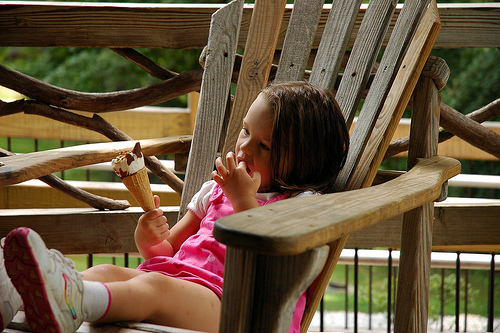
No mini-vacation afternoon would be complete without ice cream. As a younger toddler, L took a while to appreciate the sweet chill of good ice cream. These days, there's no question, no hesitation, and no doubt.

"Want some ice cream?" we asked, though only rhetorically.
DSC_7866

And the question had to be well-timed. The swim in the lake would have lasted all but five minutes had she known we were planning on having ice cream afterward.
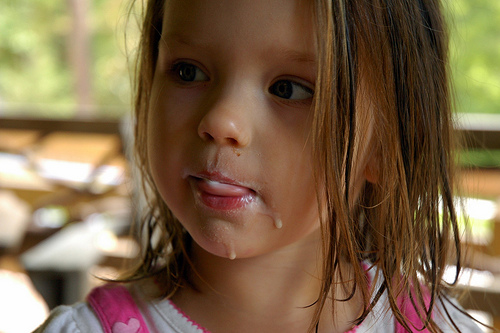
DSC_7876

We headed to a playground, where we were surprised once again at how quickly L can pick up a new skill. All it took was seeing one little girl slide down the pole at the corner of the playground and L was begging to try.
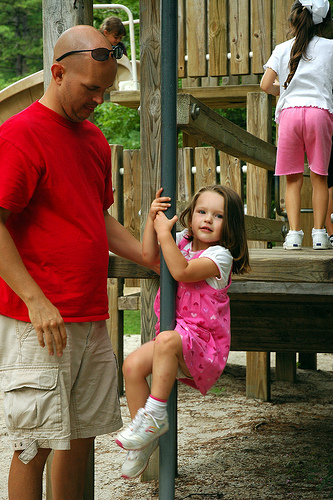
DSC_7898

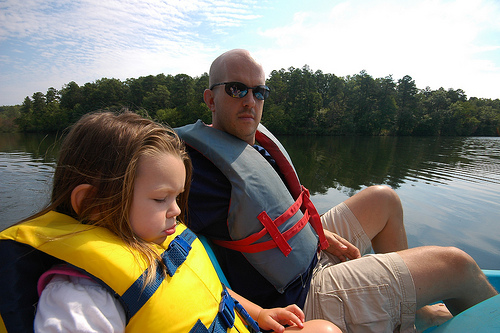
The paddle boat was a slightly different story, though. It's odd: L loves water, but she's always very nervous doing something new around the water. The ocean terrified her, and the lake at the park initially didn't calm her anxieties much.
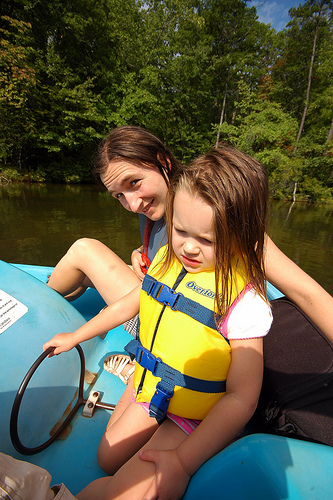
DSC_7915

Still, she was willing to try, provided we took a blue boat.
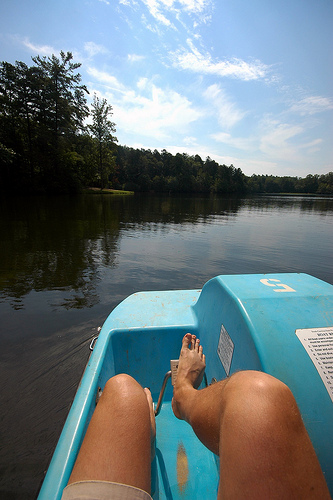
DSC_7916

DSC_7921

DSC_7922

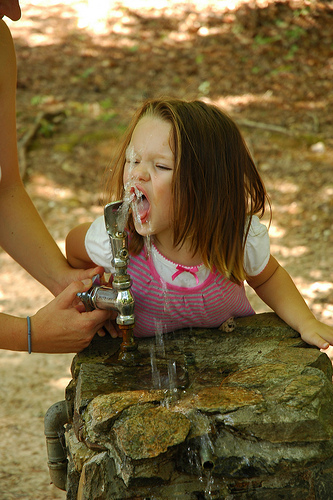
A walk around the park brought the weekend to a close, and the water fountain at the end of the trail was a thrilling surprise for L.
DSC_7965

As always, the best part, though, was the return. Lumpy, slanted nights' sleep left all of us feeling we hadn't actually slept at all. "I woke up every single time I turned over," K admitted as I mumbled about how badly I slept.
DSC_7969

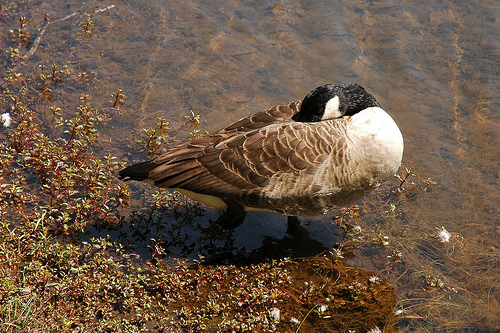
It left us all jealous of creatures who can curl up comfortably wherever they are, and happy at the thought of our own beds.

"Just think: it will be soft, even, and flat."

Confusion

Some weeks seem intent on confusing the sense out me. Students say things that literally leave me speechless, wondering whether or not the kid is joking. Parents and pundits around the land fall into spasms of paranoia about a presidential speech intended to encourage students to take their studies seriously. An odd, high-pitched whistle begins drifting into the house through the back windows at various times during the week leaving everyone wondering what the devil that sound could be.

A long weekend away from all the confusion and nonsense hopefully will help. At the very least, L will experience and hopefully enjoy her first camping trip.

Journals

How does one keep a journal? It’s something I’ve done for so long that I no longer even think about it. And yet when you’re starting out, doing it on command–and for a grade, no less–then it might seem a little intimidating.

“Three hundred words, three times a week,” I said. “About anything.”

“Anything?” the students ask incredulously.

“Yes, anything.”

“Anything” is an awfully big topic. So big it could be overwhelming. I understand their concerns.

One thing I mentioned was writing about school work and projects. I need to tell them, “You should think of a journal as a place where you simply think aloud.” Perhaps that will help. “It’s a place where you can think through the Lord of the Flies project or tease out all the reasons you don’t really like So-and-so, or where you can simply play with language.

“Here language, fetch.”

Students tend to question the value of it, especially when I tell them that I won’t be reading each journal in its entirety. “Then why write it?”

“Writing is just like any other activity: the more you do it, the better you get.”
Some buy it, some don’t.

Face to Face

What is it about the great apes that simply draws us to them? Undoubtedly, it's the similarity (both anatomic and genetic) that we share with them. The temptation is to point to our common ancestor, somewhere in the depths of prehistory, and suggest that we somehow know, on an instinctive level, that we're related.

Miss Hyde

“She’s so easy-going!” I’ve heard several people at L’s school mention this, and I’m certainly pleased about it. When I hear this, I’m also a little confounded about the Miss Hyde that appears on a daily basis at our house. “Easy-going” is not how I’d describe her distressingly often; “high-maintenance” and “tiring” are the words I’d choose.

Familiarity, in this case, truly leads to a sort of contempt (though that really is much too strong a word). She’s lately taken to behavior that, while I knew was possible irrespective of the quality of parenting, I never really believed would appear. Not being clairvoyants, we are unable to peer, or even peek, inside her head to find out what’s causing this. Exhaustion is certainly part of it, as she’s not getting enough sleep; stress is definitely a component, for she’s moved into a new group at her preschool and all that was known and comfortable has disappeared. But there must be more to it than that, and, as with the classroom, we’re left wondering whether we’re doing everything we can.

Rules of the Game

He walked onto the court, fully suited up, and all eyes were on him. In helmet and full pads, Ron stood in stark contrast to the other players, who wore tank tops and baggy pants. Their shoes squeaked on the hardwood floor while Ron’s cleats clipped, clopped, and slid about. He was ready for the game, though, and eagerly awaited the start.

Jump ball and the opposing team had the ball. Though his start was awkward as his metal cleats slid across the highly polished floor, Ron quickly got up to full speed and tackled the opponent who was, oddly enough, tempting fate by bouncing the ball on the ground. Full contact–the player went down, the ball shot off toward the center of the court, and Ron was just about to dive on it when he heard the whistle.

“Foul!” cried the ref, and Ron was confused. It had been a clean hit. There was no unnecessary roughness. Still, he shook it off and prepared for the next play.

The opposing team opted for a pass from the far sideline. Ron timed his hit perfectly: just as his victim’s fingers came in contact with the ball, Ron rammed him, driving his foe to the floor.

Another whistle; another foul.

Two clean hits in a row and mysterious fouls called on both. Ron was perplexed the first time; the second time, he was getting heated.

When his third tackle brought another foul and an ejection from the game, Ron was livid. He began yelling and screaming at the ref, protesting violently all three fouls and suggesting that the official was visually impaired.

Yet the spectators and players were utterly confused at Ron’s reaction. It was if he didn’t have any idea that the rules he’d brought onto the court weren’t the same rules everyone had agreed upon for the game. They weren’t even close. And yet, instead of trying to figure out why everything seemed to be going against him, instead of asking for help, Ron ranted violently. The referee tried to explain that Ron was applying the wrong set of rules to the game, but all Ron heard was gibberish. The ref might as well have been speaking Greek, and this infuriated Ron even more.

Finally, he declared that he couldn’t wait until this game was over and plopped himself down in the middle of the court, ignoring all pleas to move so the game could continue.

Harvest

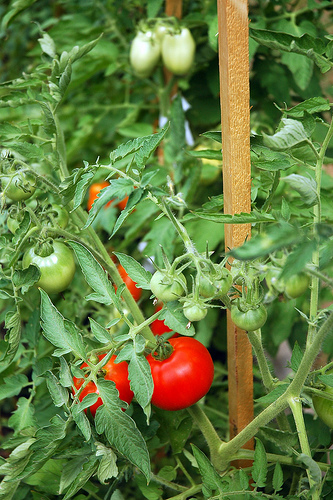
Summer mellows and our garden follows suit.

Nap

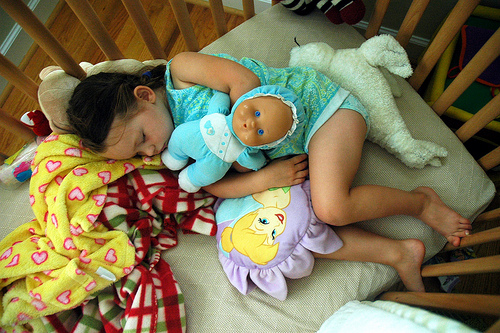
Occasionally, K and I are envious. Most often, we have too much to do at this time of day.

Fork

It's a famous riddle: You stand at a fork in the road. One road leads to happiness; the other leads to sorrow. You don't know which is which. At the fork stand two men. One always tells the truth; the other always lies. You don't know which is which. You're allowed one question to determine which road to choose. What do you ask?

The intricacies of the riddle concern me less than the general theme: a life-changing moment, with two, diametrically opposite outcomes.

As a middle school teacher, I often encounter kids standing at just such an intersection. Generally, they don't realize this, and the ones who do will probably ask the right questions in life.

Of the ones who haven't yet realized that every moment offers decisions that can change the outcome of the rest of their lives, there are three varieties.

The first give every indication that all will be well with them. This is not to say they're all studious and hard working. Indeed, many are not--as many of us were at thirteen. Still, there's something about how they carry themselves that speaks to their future success.

The second group is a mystery. Truth be told, they usually turn out alright too, but they're just not giving the clear signs yet. They're not giving any signs yet, and that's fine. They're thirteen.

The third group is the group that haunts me. I see them and it's difficult for me to imagine them making many good choices in life because it's hard to see them making choices, period.

And not to choose in this case is a choice.

It's not that they lack intelligence or even vigor. They simply don't see the choice. They don't see choice at all in their lives.

They are victims, eternally, and of everything. Adults don't seem like them and they don't know why--and they think there's nothing they can do about it. They speak with loud voices that echo through the hallways and it's just the way they are: "I'm a loud talker--it's just the way I am." They get referrals because teachers are picking on them and out to get them. Only with great difficulty can the make eye contact with anyone at all. They are subject to the whims and silliness of others: people are constantly "making" them do something. They react violently when they feel they've been disrespected, and often no disrespect was meant. They consistently show self-destructive views that make it all but certain that the cycles of dysfunction that they have obviously experienced in their lives will continue to haunt them, and their children, and their grandchildren.

Working with them is like working with a blind girl who's always been blind and who doesn't even realize she's blind. Talking to them, trying to present any view that differs from the calcified reality of their first thirteen years is like speaking Finish to an Egyptian.

There are those that wake up and make the changes they have to, that realize they're actually in control of a great deal of their lives. I know several such people. But the odds are against them, and the fact that I can do very little to change those odds is sometimes the most depressing aspect of teaching.

Birthdays

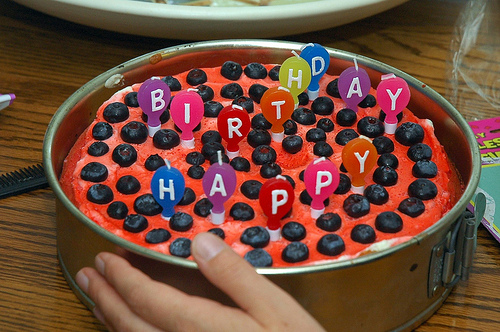
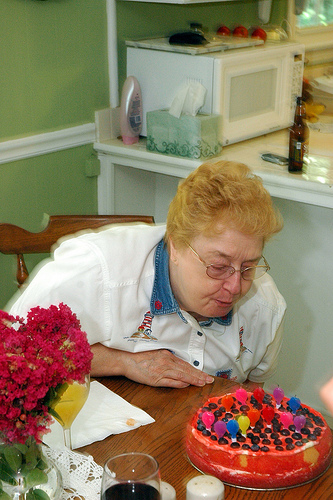
Nana's birthday was Sunday. K prepared the requisite ritual (the cake); L helped decorate it.

We took a novel approach to the birthday wishes. Or perhaps that should have been "took we an approach novel." It's a cake designed to be read while approaching it at very high speed in an appropriately-scaled vehicle.

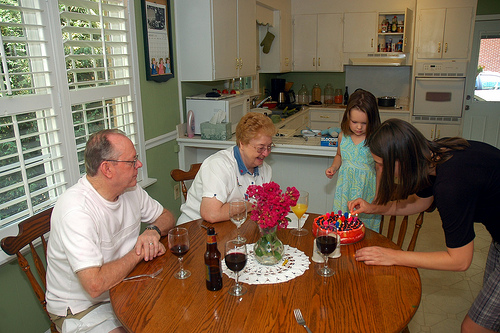
Nana made a wish,

and Papa got his own wish fulfilled.

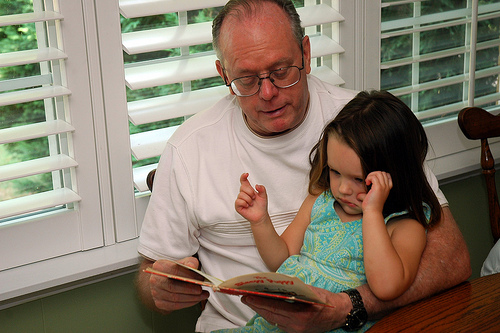
Reading The Sleepy Puppy to his granddaughter thirty-five years after he first read it to me, he didn't laugh as hard but I'm certain the joy was as intense.