general
When is working not working?
When it’s playing.
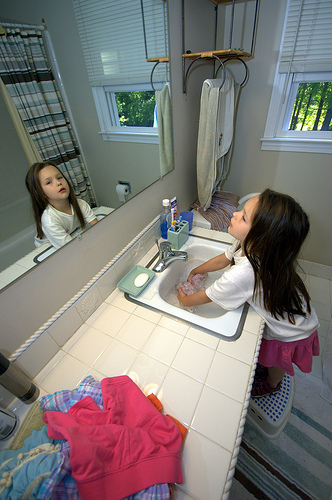
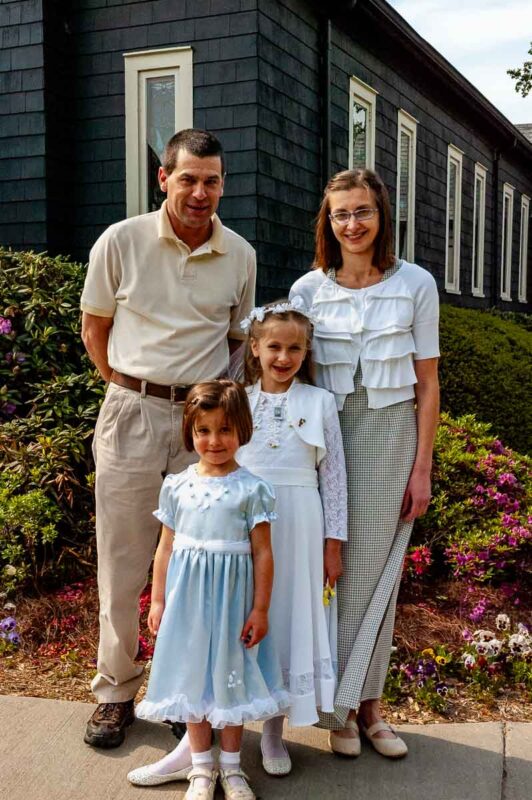
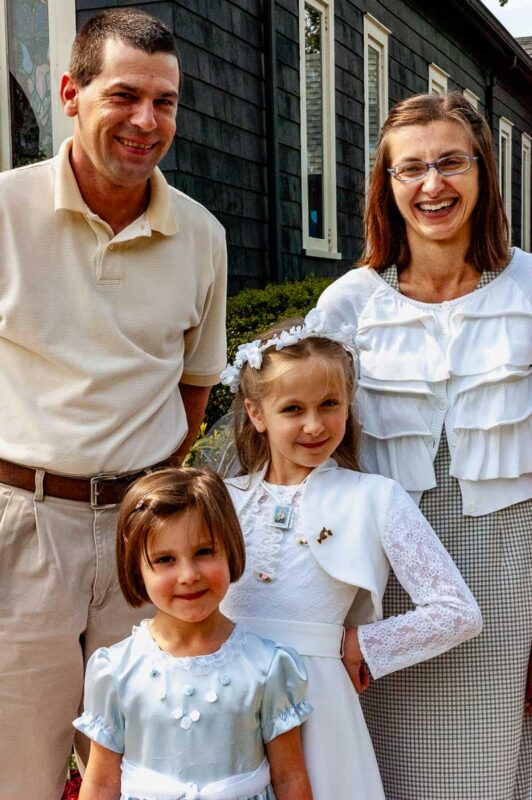
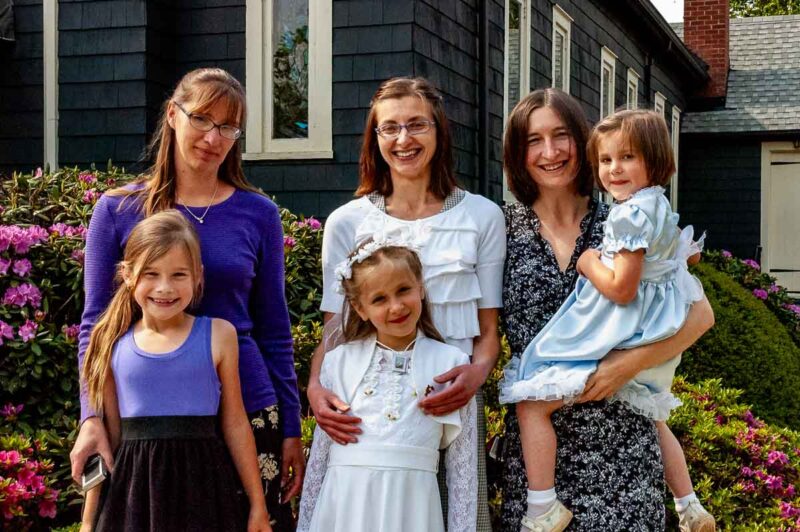
T’s First Communion
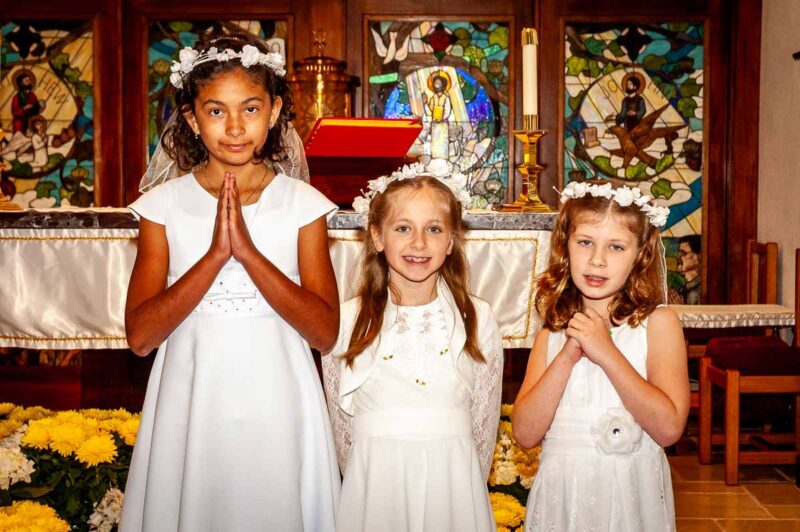
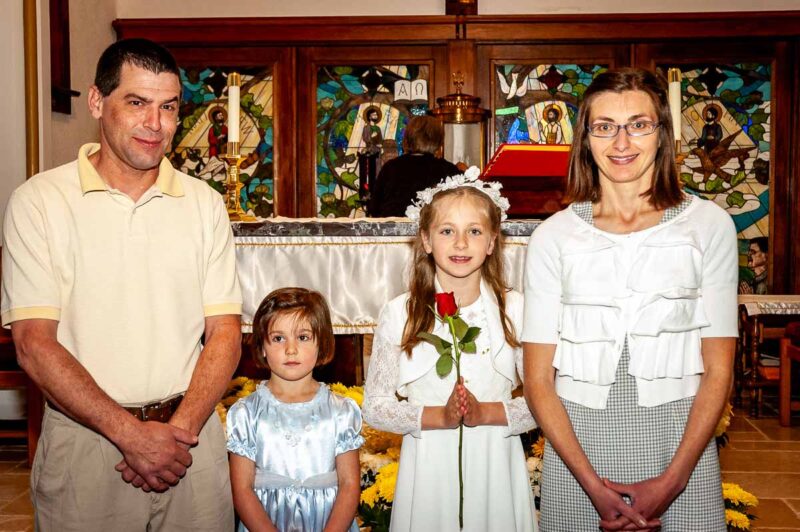
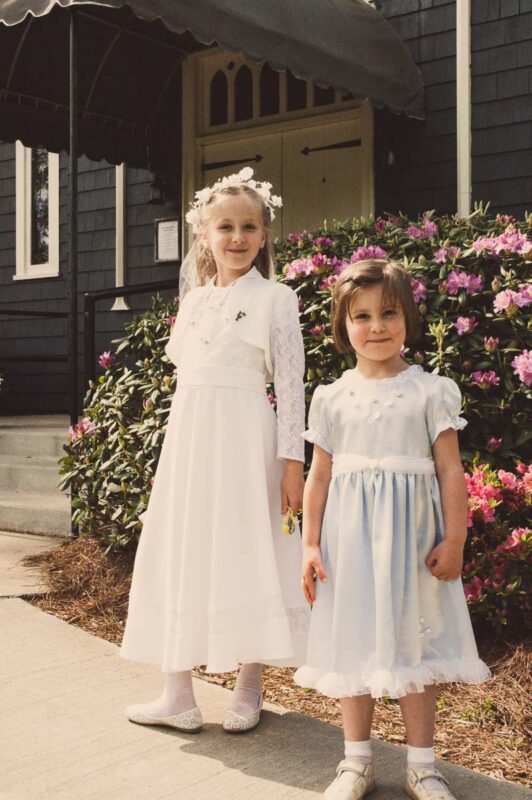
Beatification
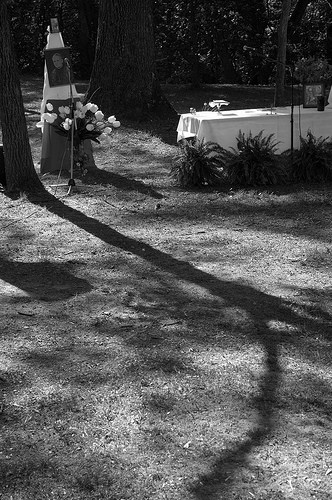
Poles around the world are celebrating today's beatification of Ioannes Paulus PP. II, born Karol Wojtyła and known to most of us as John Paul II. As with his death, most wanted a commemoration that would please John Paul II.
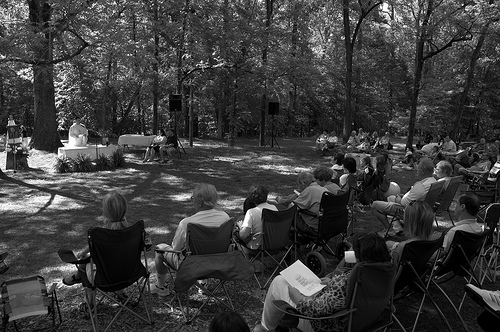
Poles in the Greenville area celebrated with an outdoor Mass and picnic.
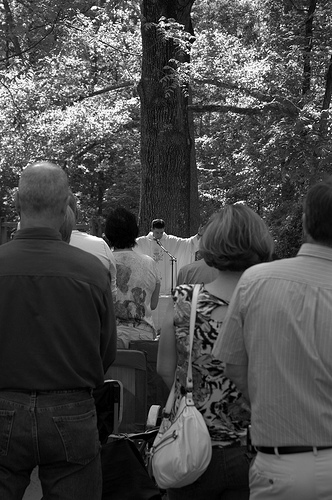
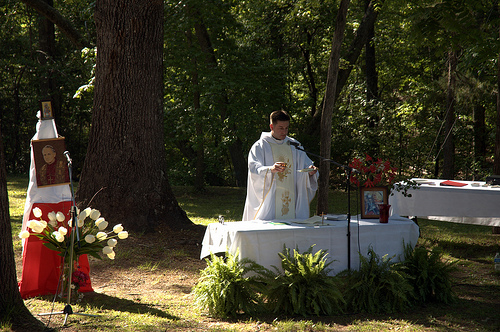
With some free advertising from a Polish-owned market in the Charlotte area, probably two hundred people Poles from South Carolina, North Carolina, and Georgia gathered in a park outside Spartanburg. A cookout and impromptu soccer football match followed a Mass under a canopy of new leaves in celebration of a newly beatified Pole.
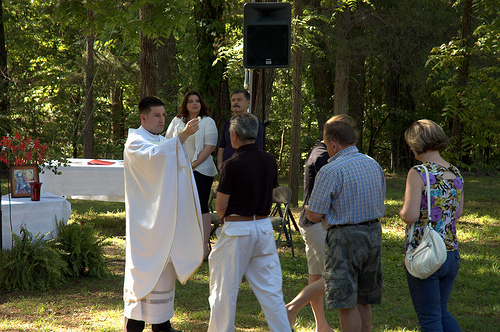
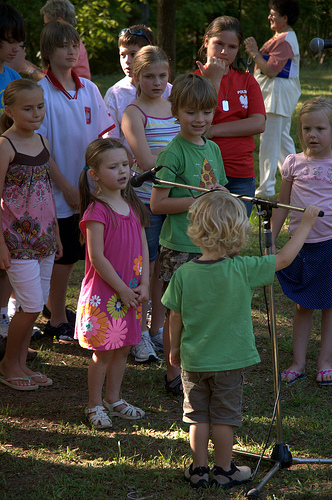
The Mass included a number of songs, anecdotes, and poems about John Paul II, including an encore performance of "Święty, Święty Uśmiechnięty," the song L sang for the Palm Sunday celebration a few weeks ago.
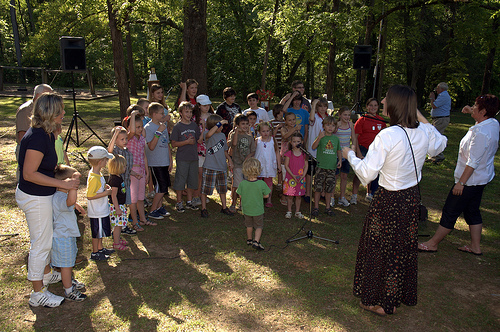
This time, she had a backing choir and a boom operator.
After Mass, everyone did what Poles do best: converse and share food.
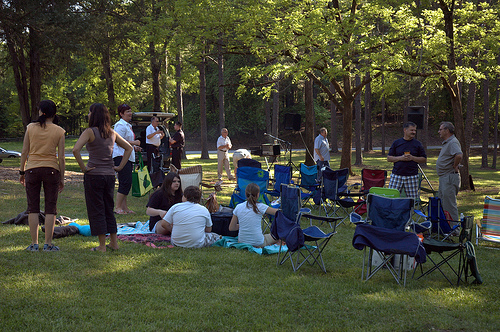
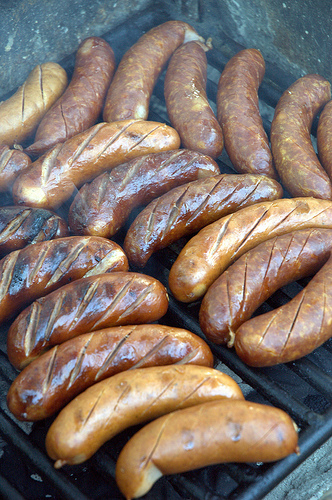
There were piles of sausages, bowls of chips, salads of all descriptions, and a table of deserts, and though it was intended to be a "feed your own family" picnic plan, everyone ranged among the groups, sharing food and laughter (among other things).
The children played
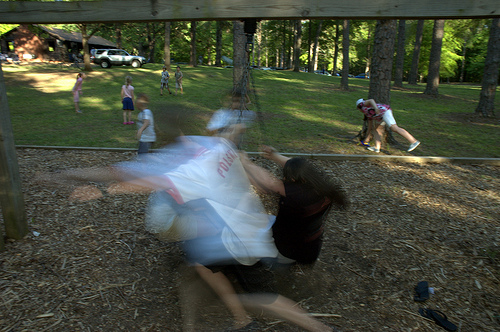
the adults talked,
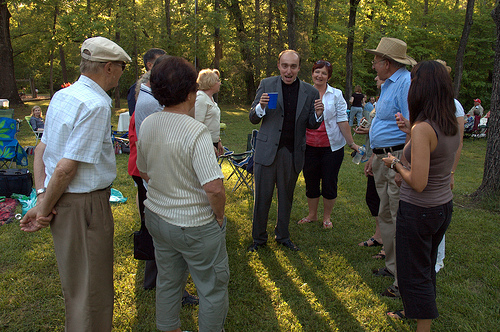
and the priest played soccer football.
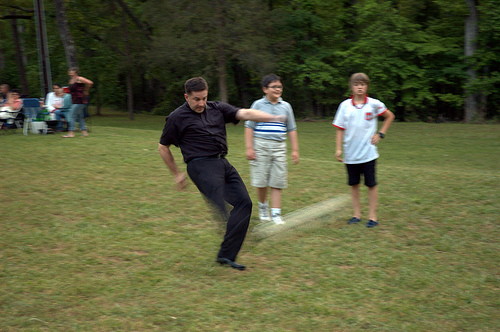
Family, sports, dancing, laughing, and Mass --
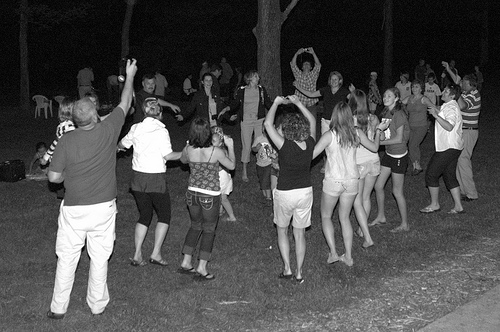
JPII was certainly smiling.
Easter Preparation
The preparations for a Polish Easter are impressive: hours of cooking, something like 300,000 square inches of cleaning (floors, walls, doors, cabinets, etc.), dozens of eggs for painting, hundreds of baskets for blessing.
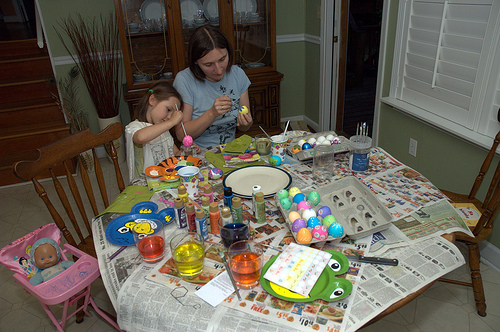
There are some greater pleasures among all these, though. And even in the drudgery, one can find some kind of meaning.
Though my mother would faint to read it, there is something inherently satisfying about cleaning. Though it’s only a temporary effect — for dirt holds sway in our world — it’s somehow an apt metaphor of life, taming the chaos and finding beauty under ugliness.
It’s not as difficult to find meaning in cooking as in cleaning, nor is it as difficult to find pleasure. As Cooking is tiring but rewarding. As Tiana’s father in The Princess and the Frog says,
You know the thing about good food? It brings folks together from all walks of life. It warms them right up and it puts little smiles on their faces.
Cooking is inherently a social activity because food is social.
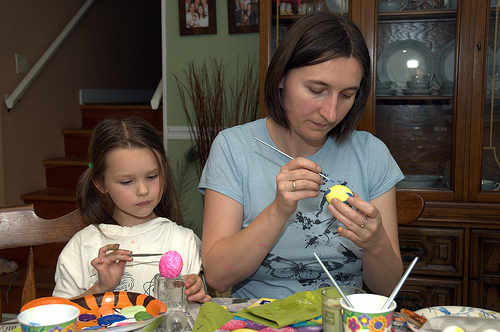
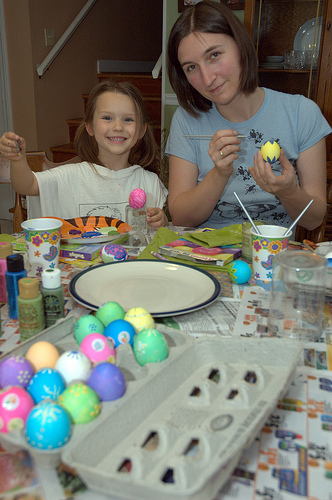
And of course it’s a pleasure to paint eggs; it’s even more a pleasure to watch your daughter paint.
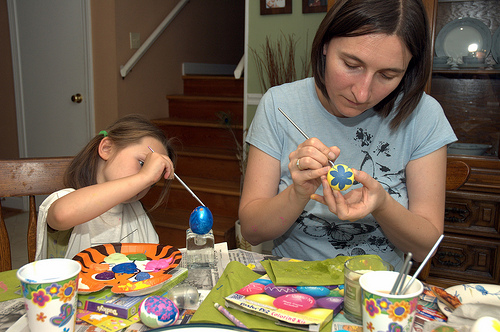
The yearly painting serves as a metric of development: the designs become more intricate and more precise. With her artistic tendencies, she’ll soon be creating eggs that put mine to shame.
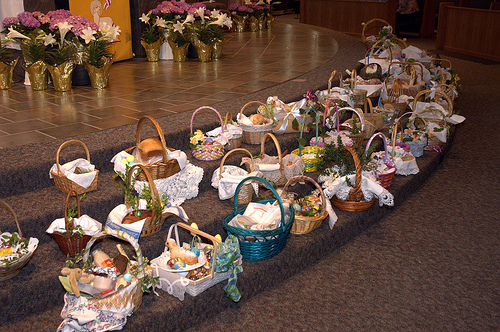
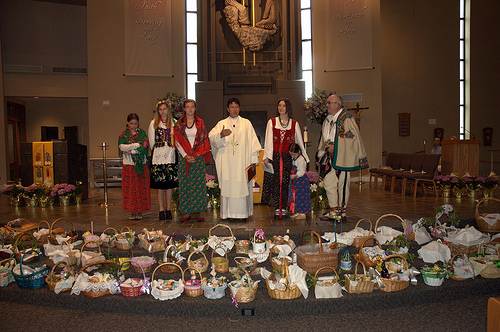
The blessing, too, is a blessing. It’s an imported tradition, with the parish priest, Father Theo — himself a transplant from Columbia — pressed into service several years ago, not knowing the tradition. Each year, Fr. Theo has become more involved, more enthusiastic.
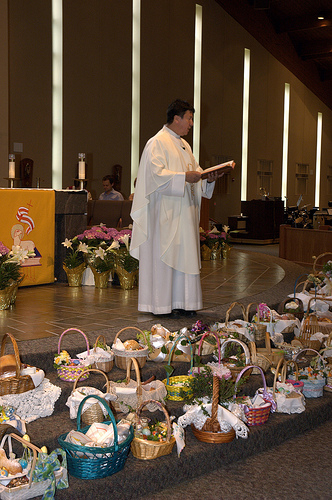
The first year, he breezed in, not knowing the significance of the tradition, and offered a quick blessing for the handful of Poles who were there. This year, there were songs, prayers, and even jokes — Fr. Theo can’t go for awfully long without smiling.
Sanding
The Girl has been asking for a sandbox for weeks, though she hasn't done so in as many words. Instead, she's been playing in whatever dirt she can find, taking her beach toys out to the patch of driveway that is unpaved and playing in the dirt there as if it were sand. She has taken Baby out and made dirt angels; she has created vast mountain ranges only to demolish them with both feet; and she has sprinkled dirt all over her legs until she was a dusty mess.
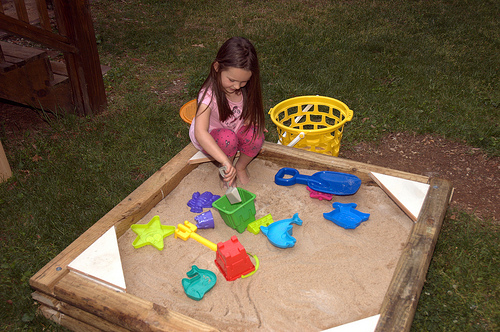
This week, Papa and I decided it was time to make a proper sandbox, complete with a mesh cover to discourage local cats from turning it into an enormous litter box.
"Why don't you just go buy one of those turtle sandboxes with the lid?" Nana asked, knowing perfectly well that it was out of the question: a man must build his daughter's sandbox, not purchase it at some chain store.
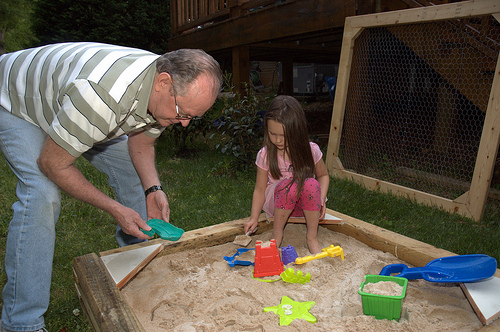
No, a father and grandfather must pull out every power tool available -- yes, even the router -- to create a mishmash masterpiece.
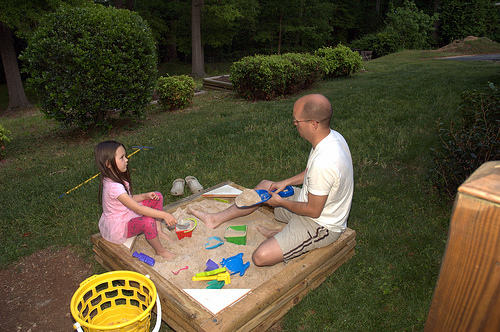
But that's only the smallest portion of the fun.
Swiety, Swiety Usmiechniety
“It is finished.”
I made it to twenty-seven, but I ran out of steam. I've the list of forty things I was going to write about during Lent, but I made the mistake of writing the easily-completed posts first, and time and exhaustion conspired against me last week. Maybe next year...
Independent Hands
It’s only expected that a four-year-old grows more independent daily. Lately, that independence has moved out of the normal realms of the everyday, personal actions — bathing, brushing hair, cleaning teeth — and into more wide-ranging spheres: cooking and buying.
She wanted a quesadilla the other day, so I asked if she’d like to help make it.
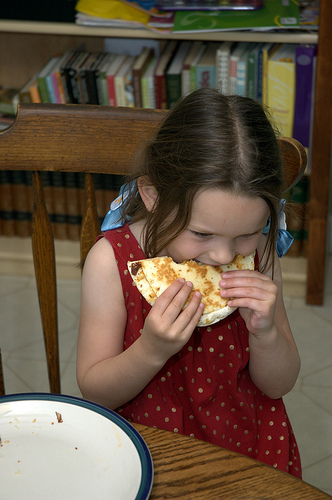
When it was done, she ate it with more relish than I’d seen her eat anything in recent memory.
During our first spring zoo outing today, we stopped for an ice cream. L needed to pay by herself — it was imperative.
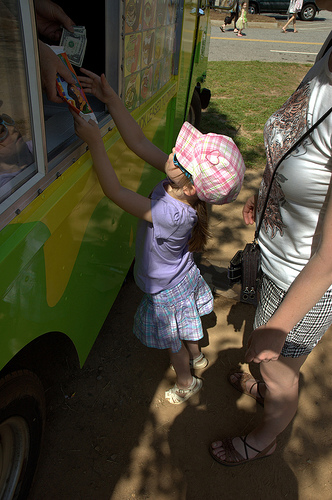
The “I can do it!” phase is thankfully far from over.
#27 — Sacred Words
Catholicism is filled with sacred words to accompany the sacred gestures, time, space, and objects.
The most sacred words, of course, are the words of Scripture, and within that, the Gospel accounts. One of the first things visitors notice is the treating of those words as sacred. When the priest or deacon begins the reading, saying, "A reading from the Gospel of...", parishioners make three small crosses with their right thumb: one on the forehead (belief), one on the lips (desire to proselytize), and one on the breast above the heart (desire to keep the words in one's heart). Thus, the sacred words are a catalyst for sacred gestures.
Prayer is another moment when sacred words bring forth an accompanying gesture. When a Catholic begins a prayer, she intones, "In the name of the Father, and of the Son, and of the Holy Spirit," and makes the sign of the cross simultaneously. The one without the other is incomplete, and while it might become a mere habit with some Catholics, I've seen some obviously sincere moments was parishioners cross themselves, and that sincerity itself is moving.
Not all sacred words are for all Catholics, though. Some obviously are reserved for priests. Blessings and absolution come to mind, but they're not the most important sacred words a priest can utter; the Eucharistic Prayer is. The highlight of the mass is the Eucharist, which Catholics believe to be the body, blood, soul, and divinity of Jesus. They revere it accordingly. Of course this is not always the case: unconsecrated hosts are simply that -- hosts. So there comes a moment when, according to the Church, the Holy Spirit transforms the hosts. A skeptic might say, "Hocus pocus -- nothing more than cheap parlor magic," and I myself said the same thing for years. Yet whether or not it's effective is not my point here: the fact that the tradition of sacred words continues is somehow admirable. I suppose it's the faith that impresses me.