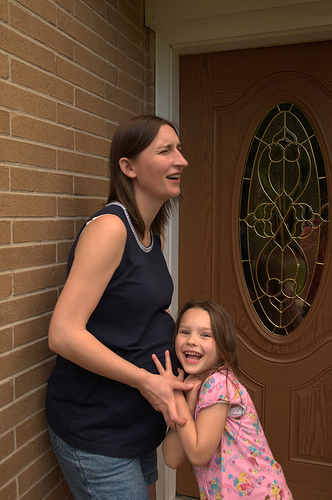
“Oh, L!” is a common refrain.
fun in threes, sometimes fours
general
“Oh, L!” is a common refrain.
It's nearing the end of the school year, which means my English I students are tackling the year's final project: an analysis of some facet Victorian England that is clearly evident in Great Expectations. Social class, adoption, education, and gender roles are popular motifs.
This year, having access to seemingly endless articles on JSTOR, I've decided to make the project a bit more challenging. After printing out twenty-five or so articles from peer-reviewed journals, I inform the students that we're going to do this one "old-school."
"No web pages as research sources."
The groans are audible throughout the school.
I flop five inches of journal articles down on a chair in the front of the room and explain that this is going to be one of their primary sources of information. We review how to skim a text effectively; we practice with a text projected on the board; we talk about the difficulty of the language; and I turn them loose.
Soon, kids are getting excited about titles like Alastair Owens's "Property, Gender and the Life Course: Inheritance and Family Welfare Provision in Early Nineteenth-Century England," struggling with passages like this: "Among families, property rights shifted according to changing circumstances and as individuals moved through their lives. Inheritance was obviously a unique phase in this life course, characterized by social and proprietorial upheaval." Fairly straightforward for adults; a struggle for young readers. But these are not kids who give up quickly, so they constantly call me over with the same request: "Can you read this passage, then listen to what I think it says, and tell me if I'm right?"
Others are combing through F. M. L. Thompson's "Social Control in Victorian Britain" in the hopes of finding something about the effects of the sense of genteel society on social behavior. Or, as they put it, how society and popularity in the upper class are related. Or something like that. I'm not quite sure I understand some of their topics, and I'm not sure some of them do either. But no worries. That's part of the point.
"What if we don't find anything for our topic?" becomes a common cry.
"Then I guess you'll change topics," I say, and sit with the frustrated student to help him find a way to narrow, broaden, or slightly shift his topic.
Their frustration seems overwhelming.
"How can we get all this research and writing done in just a couple of weeks?" is another common concern.
What they don't realize -- what I don't tell them -- is that the paper itself is of little importance at this point. Like so many things in life, it's the process. The struggle.
"I want them to have the experience of digging through a journal article only to determine that it's not of any use to them for their topic," I discuss with a colleague later. "I want them to struggle defining and redefining their research question as they find materials that shift their thinking."
By the third day of research, kids are taking copious notes (and I frustrate them by saying, "There's a good chance that twenty to thirty percent of these notes won't end up in your final paper"), sharing resources ("Allie, I know you're working on education, and this article on social class actually has something on education, too. Want it when I'm done?"), and actually smiling from time to time.
can be ...
Little hands are good at threading little beads onto little strings.

And with a young lady who sometimes has little patience, that’s no small feat.

The creative process has its demands, though, and if the motivation is there, the persistence and patience are not far behind.

Little hands are also good at opening big letters — big in their size and their significance.

“L, you have mail!” I call out as I enter. It seems her friend from school has written back.
Saturdays have set-in-stone morning rituals: a talk with Babcia and Dziadek in Poland; coffee (for we’ve given it up during the week); ballet lessons. Once it’s all done, we have time to play.
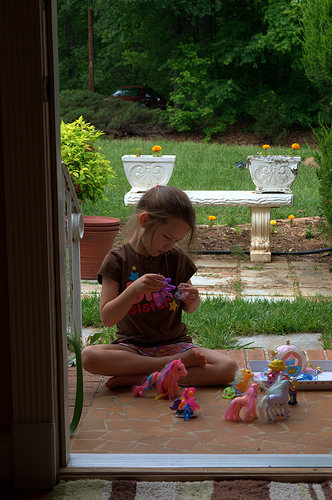
And time to work.
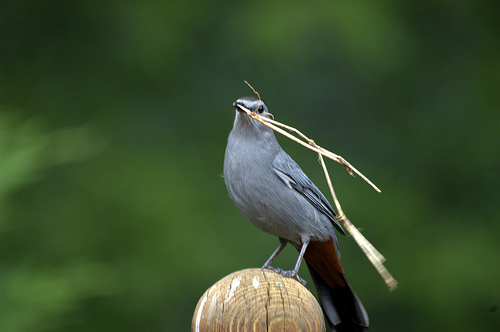
We have several bird pairs nesting in our Leyland Cypresses that block off our deck from the sides. One builder seems more industrious than the other, though. I watch this fellow make at least half a dozen trips in the space of five minutes.

But I have my own work to do: a backyard that’s been neglected since the end of last summer, with enough twigs and branches to make five piles throughout the yard. Plus there’s more tomatoes to plant, stakes to arrange, hedges to trim, grass to mow.
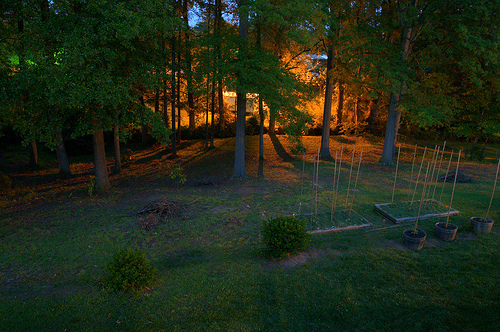
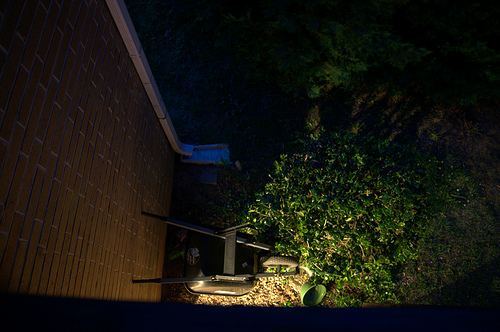
Most of it gets done, but by dusk, I’m ready to put the tools back, lean the wheelbarrow against the house, and call it a day.
We don’t want to be draconian with our rules, but television certainly must have certain limitations.
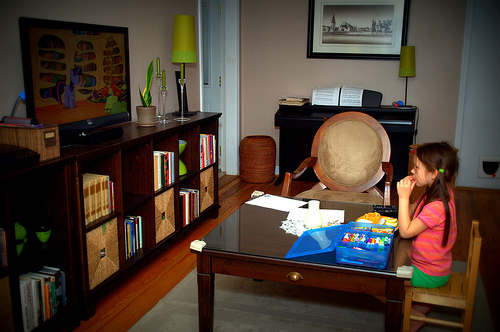
Thirty minutes a day.
You'll never hear us South Carolinians complain about the rain. Ever.
When you live in the South, you have to learn how to bake cornbread. And since the Girl has developed a taste for it, K decided it's time to add it to her repertoire.
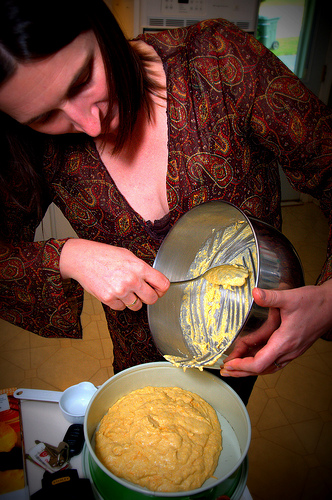
The response from L? Squeals of delight. I suppose it's to be expected: I grew up in the South; K grew up in southern Poland; we live in the South. There's simply no escaping it.
It was sometime during second or third grade, I believe, that I first realized I wasn't seeing the same things my classmates were seeing. I'd somehow discovered that if I pulled on the corners of my eyes, I could see better. The teachers noticed, said something to my parents, and shortly after that, I had my first pair of glasses.
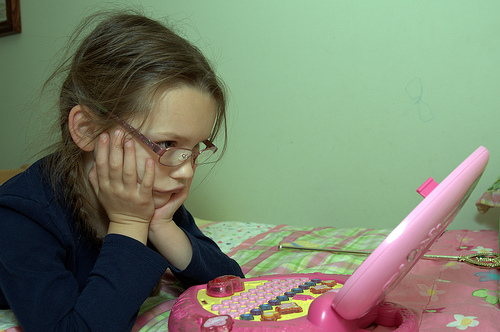
The Girl, it turns out, has the opposite problem: she's far-sighted.
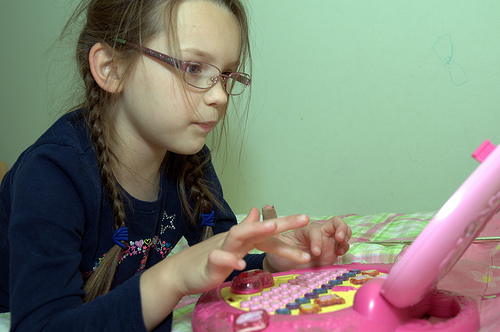
The optometrist tells us it's something she could outgrow in a few years.
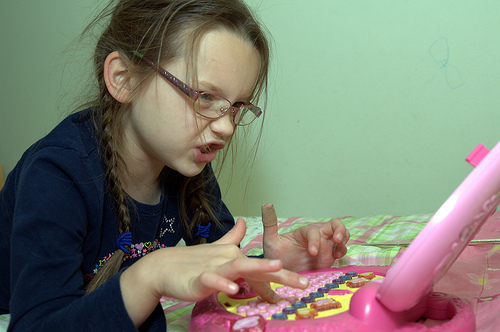
There are some things, however, she's likely to retrain for several years to come.
The first video that was entirely the Girl's idea.