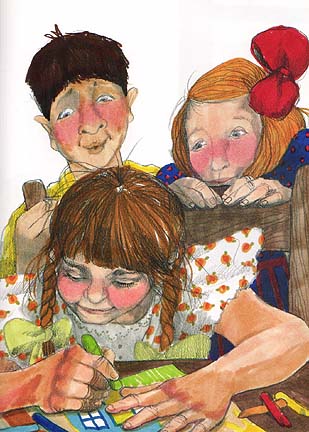
Every year, as we begin a unit on the Gary Paulsen novel Nightjohn, I read Patricia Polacco's Thank You, Mr. Falker. The story of a young dyslexic girl who was suffering the taunts of peers and the seeming neglect of teachers, the book emphasizes the life-changing nature of literacy. Trisha, the protagonist, spends the first four grades of school hiding her inability to read, feeling dumb for not being able to keep up with peers, and taking solace in her one skill, her exceptional artistic ability. It's such a touching story that even a room of rowdy eighth-graders ends up sitting in silence, visibly moved. Every now and then, a girl -- always a girl, for a boy will never show such a "vulnerability" -- sniffles in the back or wipes her eye occasionally as the story nears its conclusion.
"We have Trishas in this room, guaranteed," I tell the class this afternoon. "Someone here has felt stupid about something, been taunted for something out of her control, taken refuge in solitude and some seemingly non-academic talent that doesn't fit today's educational mold."
"We've probably all experienced it," says a boy who has never struck me as being particularly attuned to the pains and sufferings of others. I nod solemnly in agreement. And I think back to the quiet girl a couple of years ago who, leaving the classroom after that particular lesson, murmured, "I have a lot in common with Trisha."





 These deficiencies are as clear in early life as reading problems. In fact, they’re more clearly evident. What are the current options in such situations? There are few, if any. The classroom teacher is responsible for the academic instruction of thirty young children; she has little to no time to instruct little De’Andre or Clearance in the basic skills they seem so clearly to lack. So they get called down, sent to time out, removed from activities, and generally shunned. Instead of learning these skills, they become resentful of those who have the skills and meet with success in school. Indeed, they don’t even recognize that there are different skills successful students are using. “Those kids are just kiss-ups” is the common response.
 What do we do with this students are they grow older and more intractable, more incorrigible? We do the logical thing: we suspend them. Talk back to the teacher? Get three days out of school. Fight with a student? Get five days out of school. Initiate a fight that is particularly brutal? Get ten days out of school. And this helps these students how? Giving students who don’t want to be in school because they’ve only met with failure in school a chance to get out of school advances their education how?