matching tracksuits

fun in threes, sometimes fours

general

Two Conversations

One

Mama, why does Daddy have bronchitis?

I don’t know.

Is he going to die?

No, honey.

Two

Daddy, hear that? (Slightly congested cough.)

Yes. Are you okay?

We were out for that spacer [walk] yesterday, and there was cold air, and I had it in my mouth, and I swallowed it.

Did you get some medicine?

Yes, Mama posmarować-ed [smeared] me with special olej [oil]. I’ll be okay in a few minutes.
Garbage-Bagging

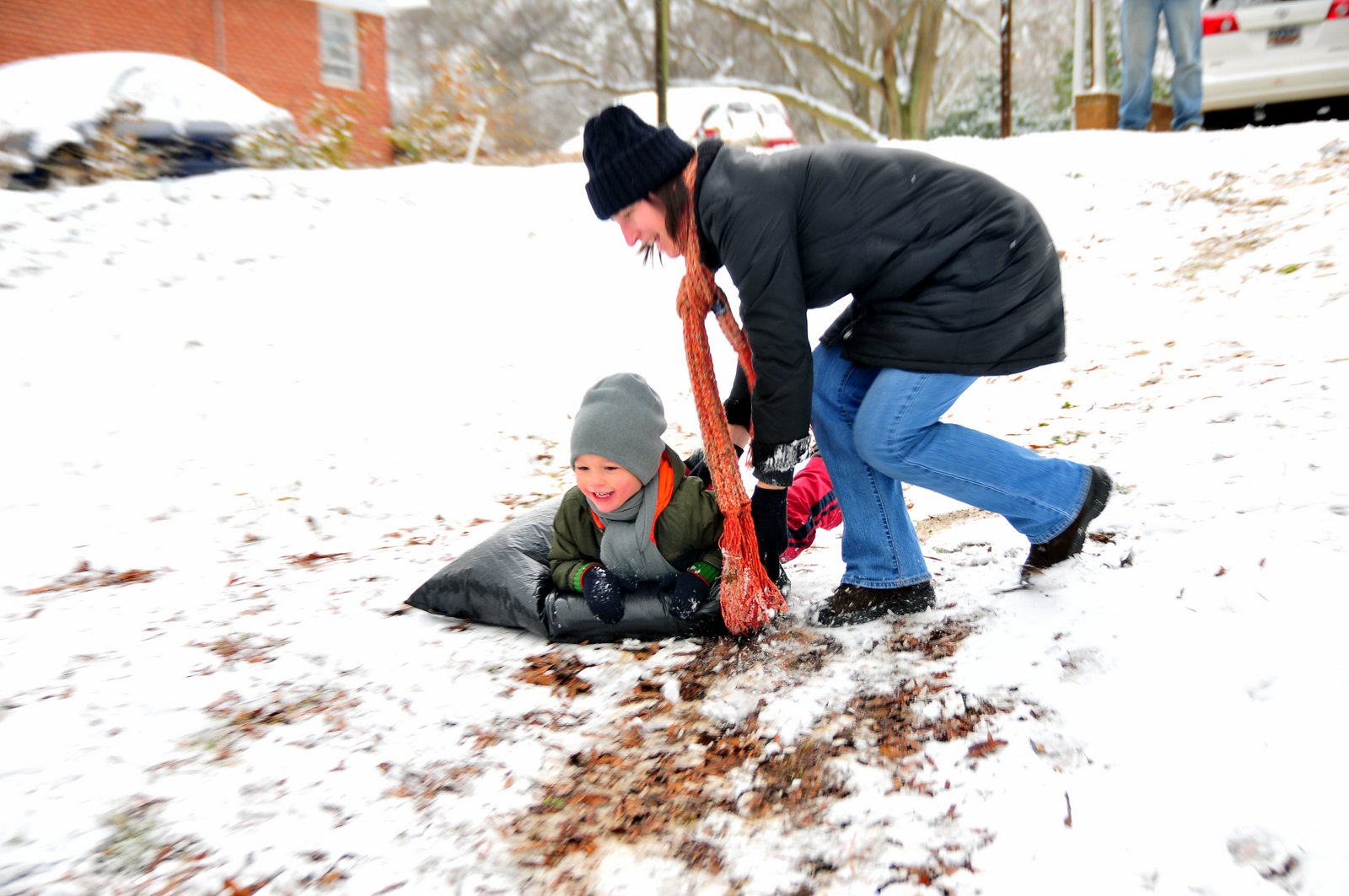
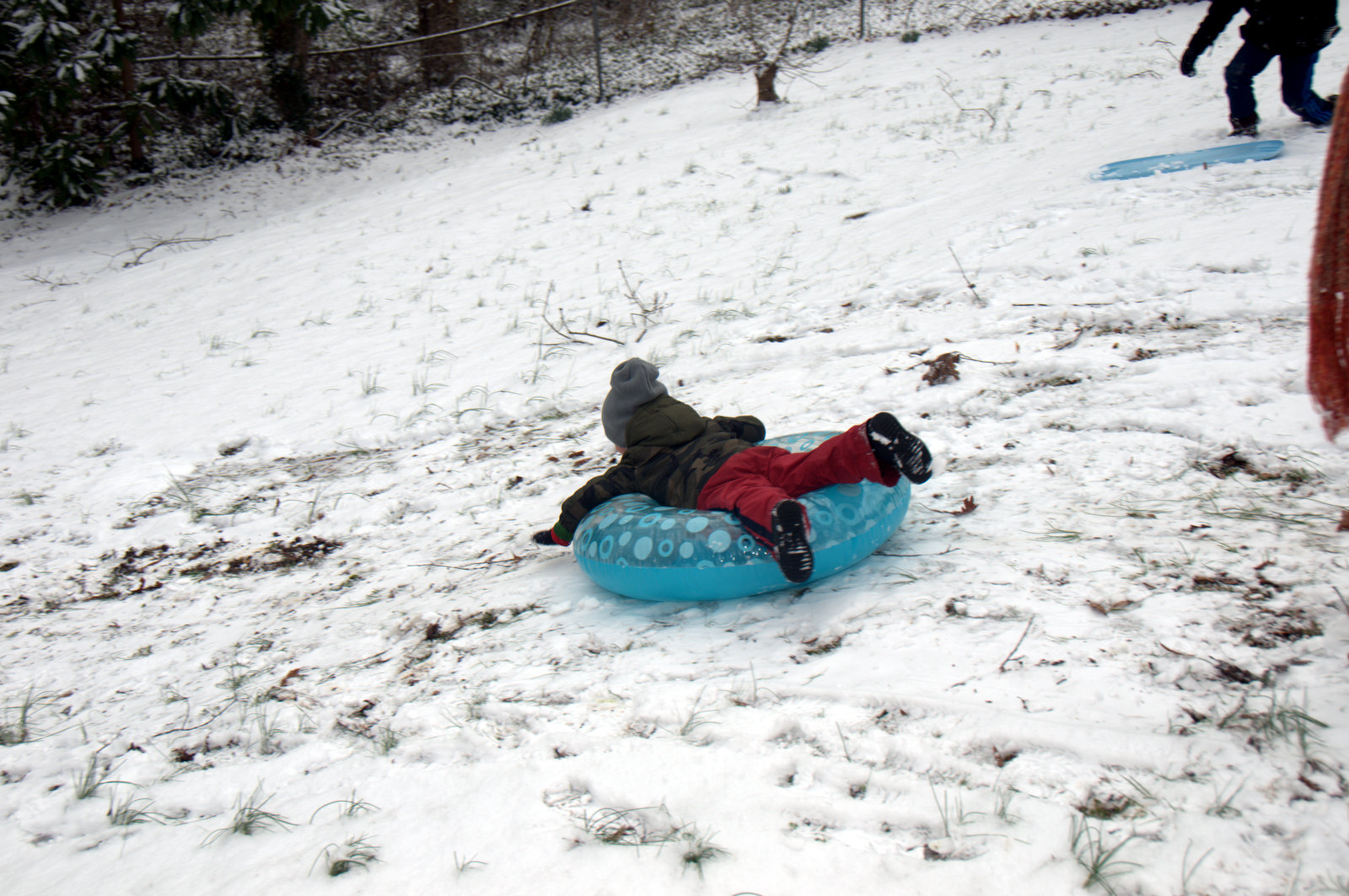
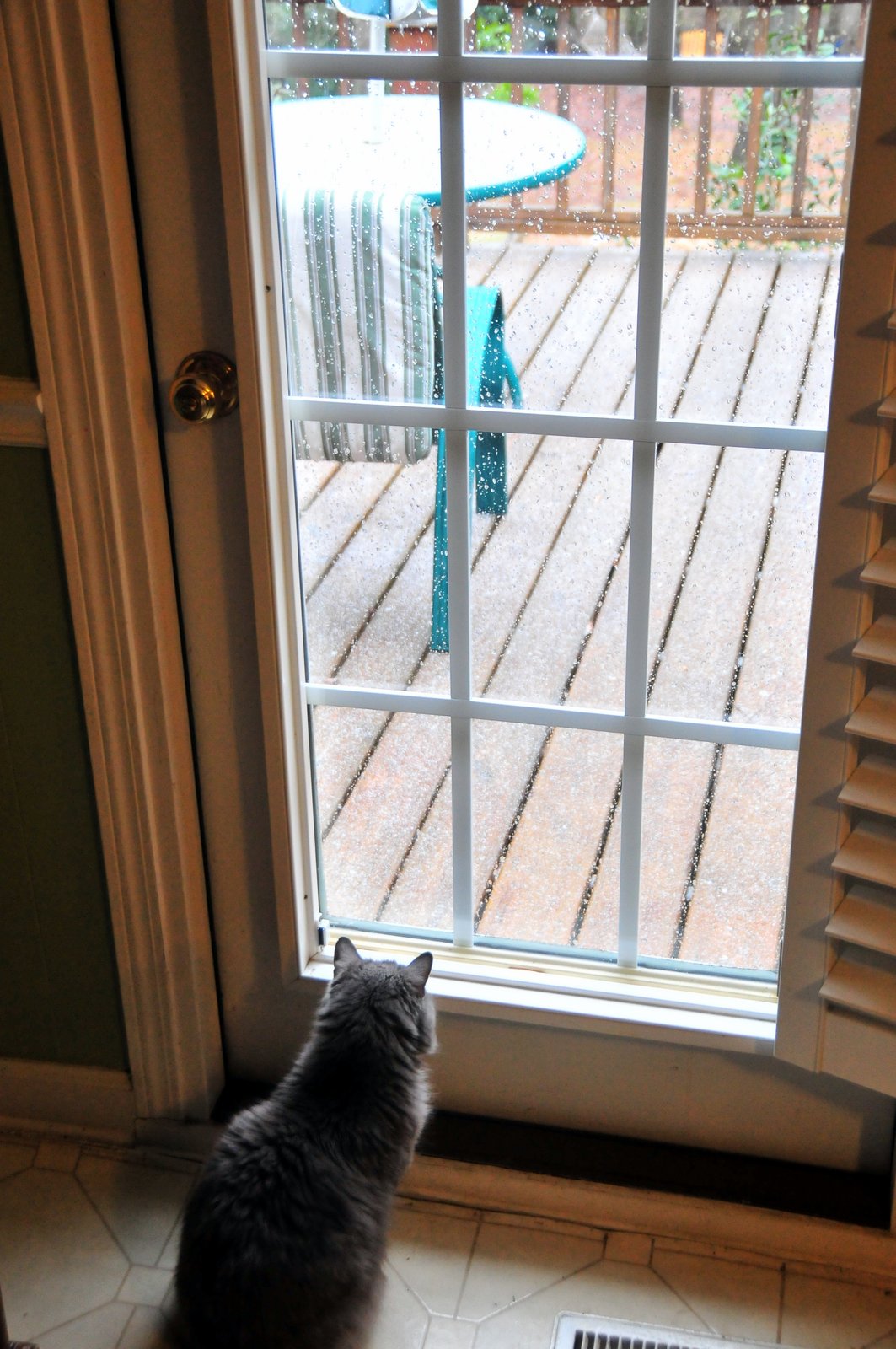
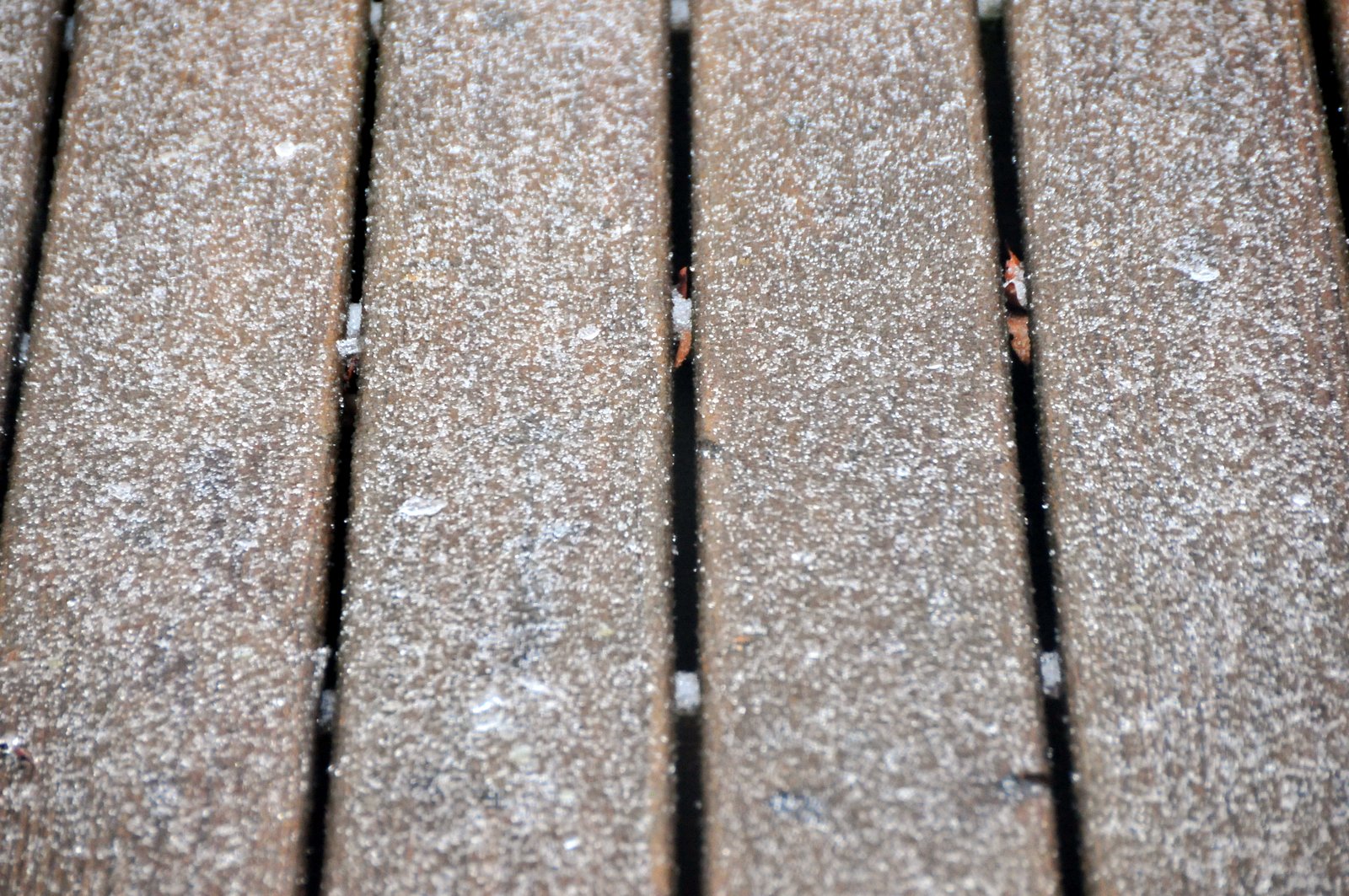
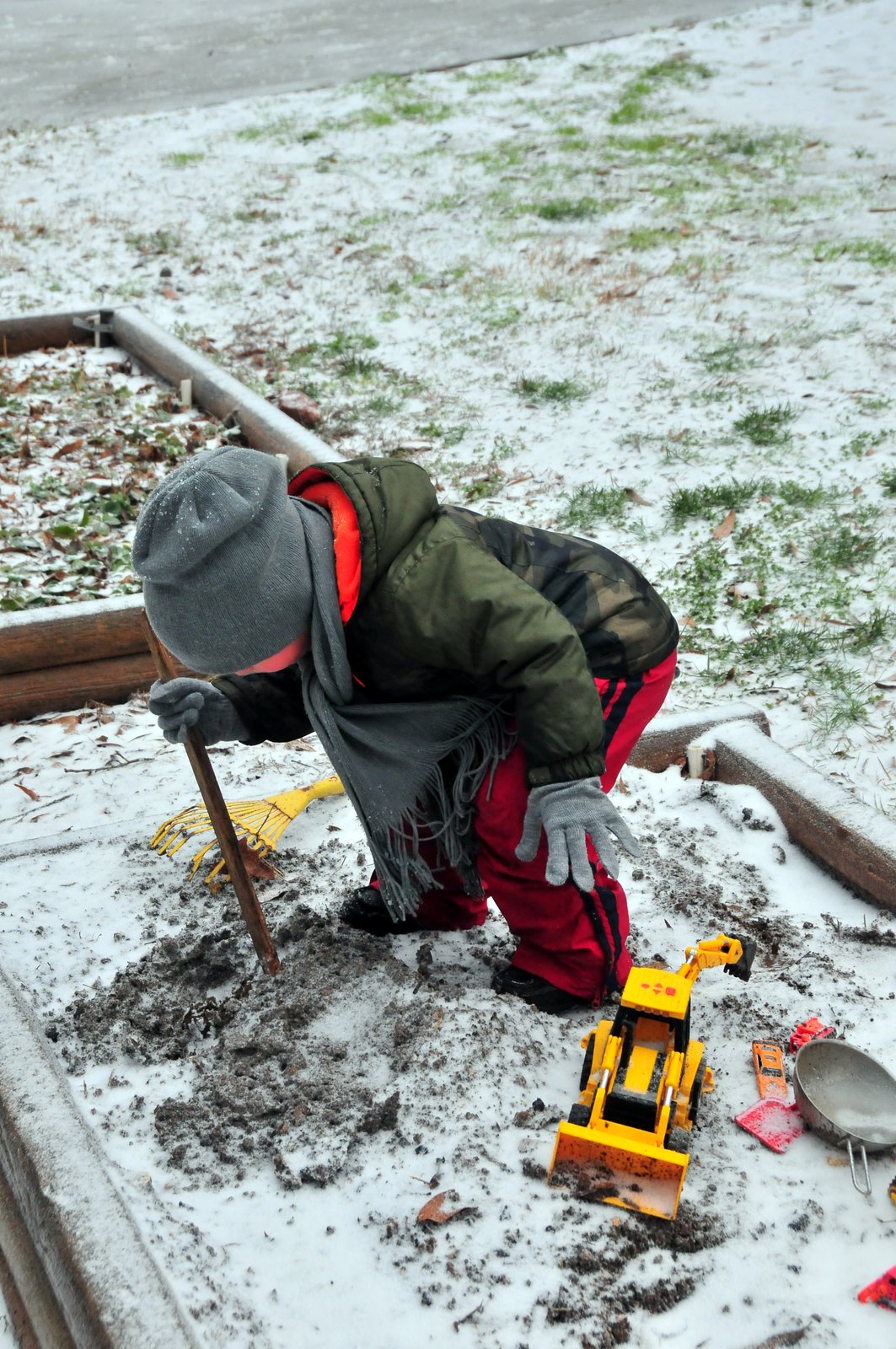
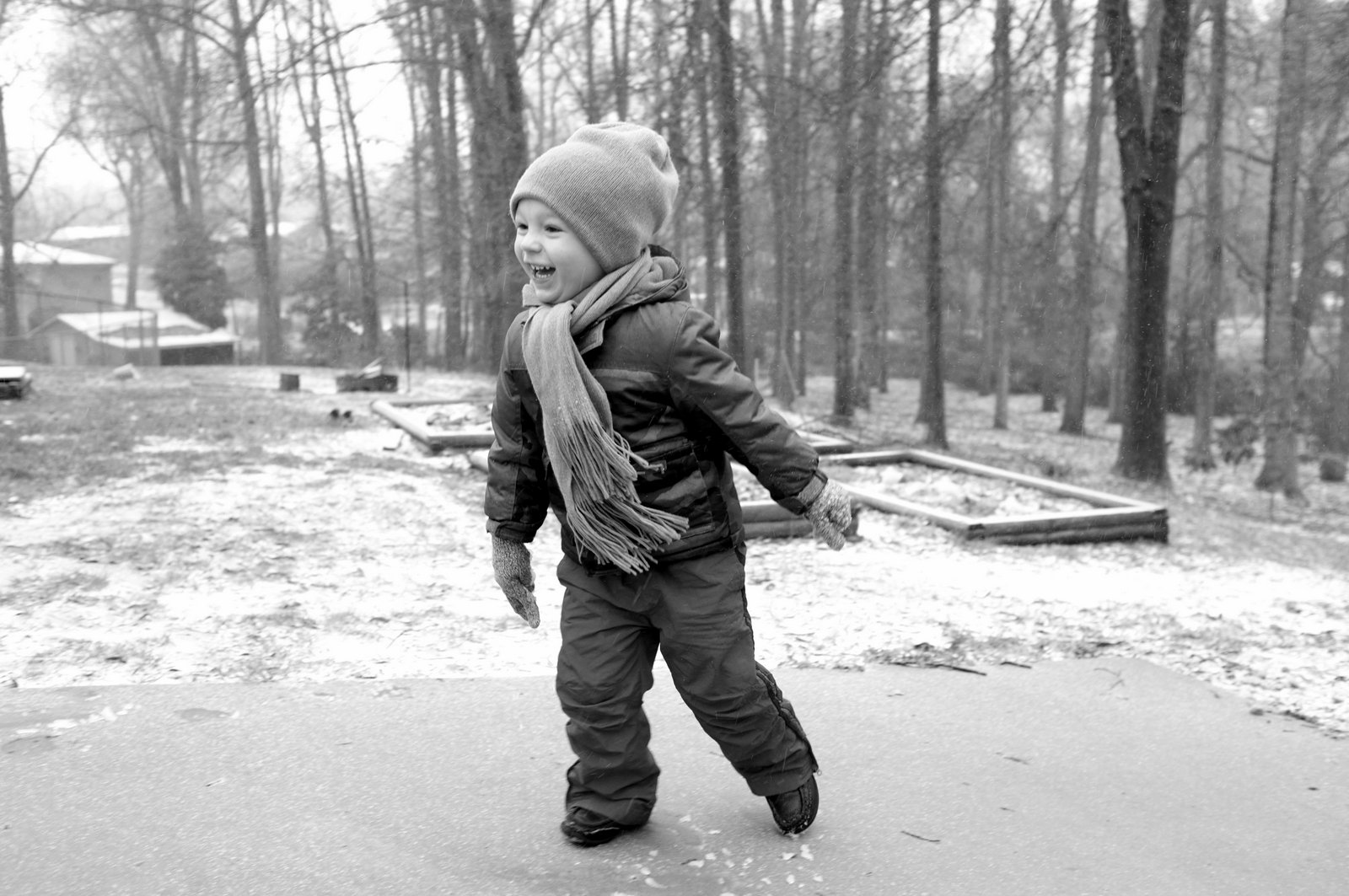
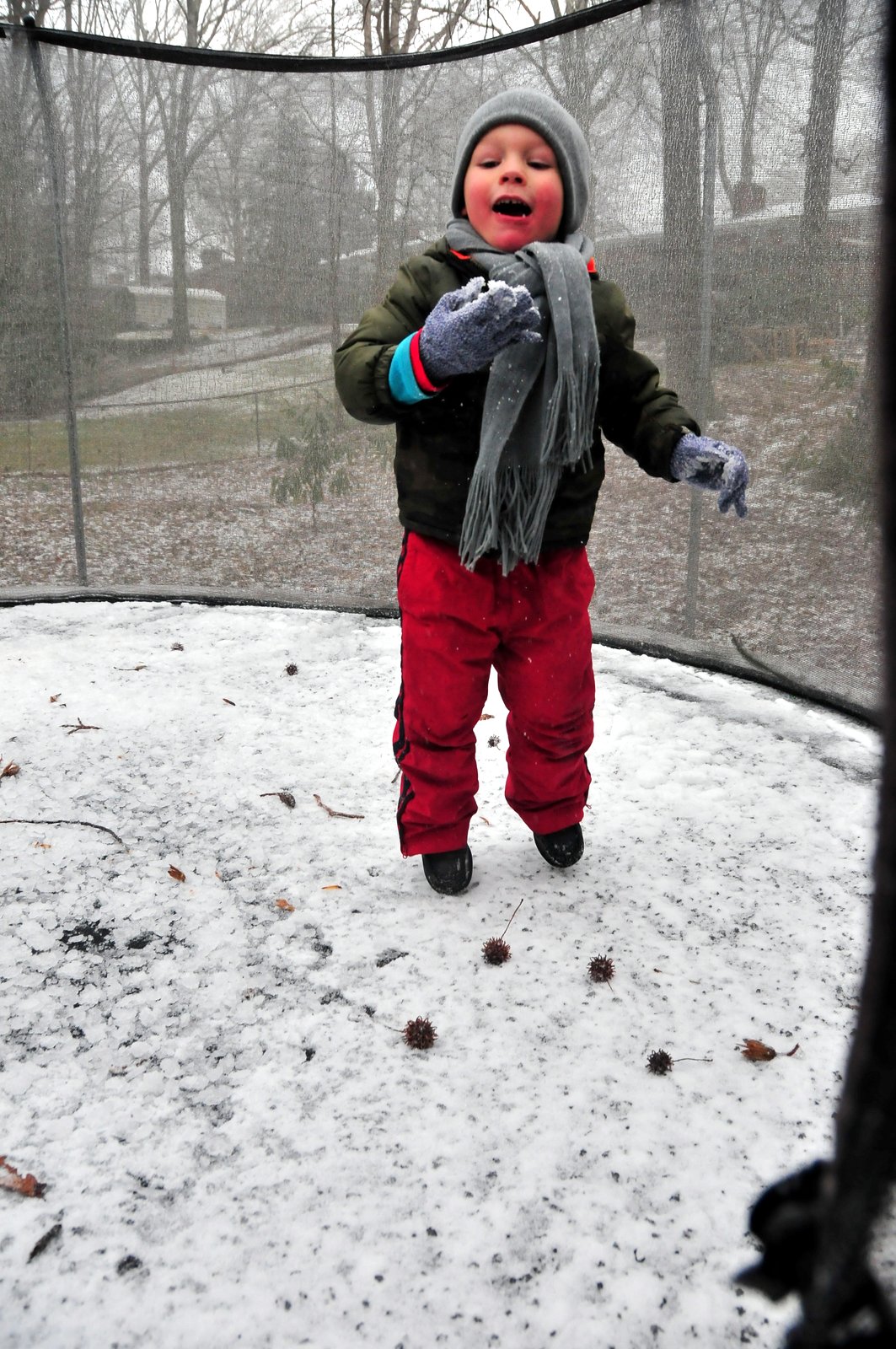
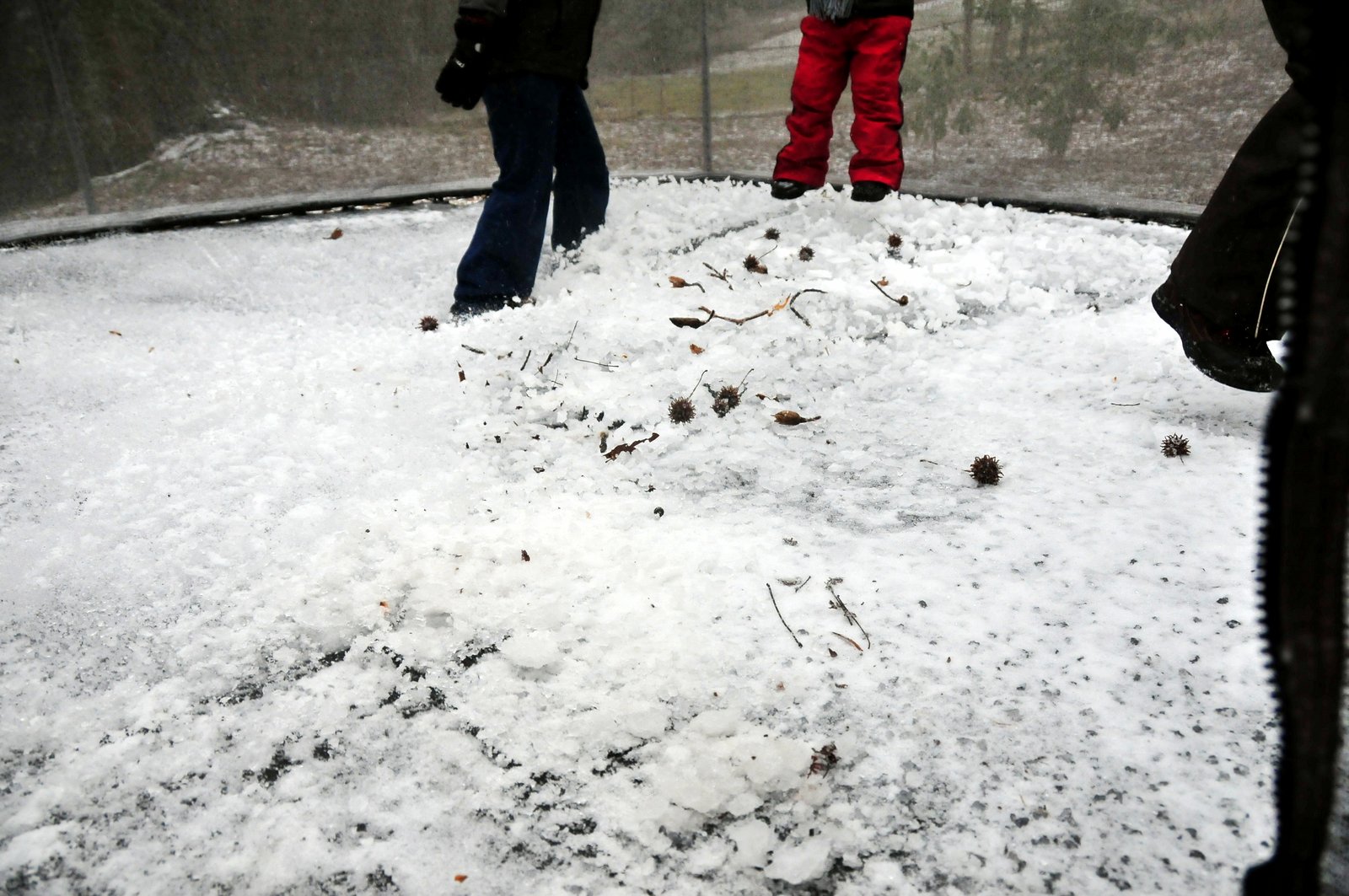
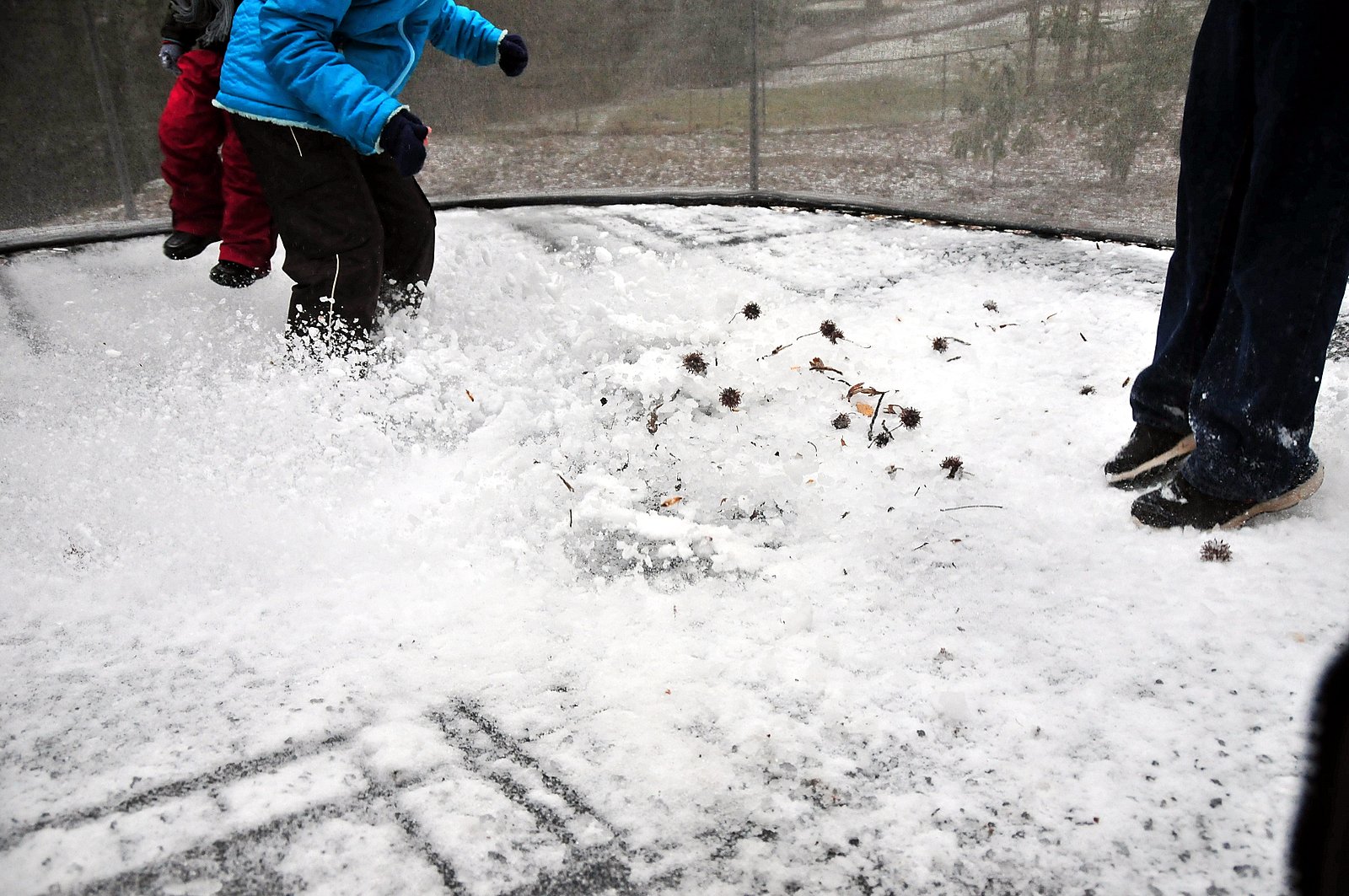
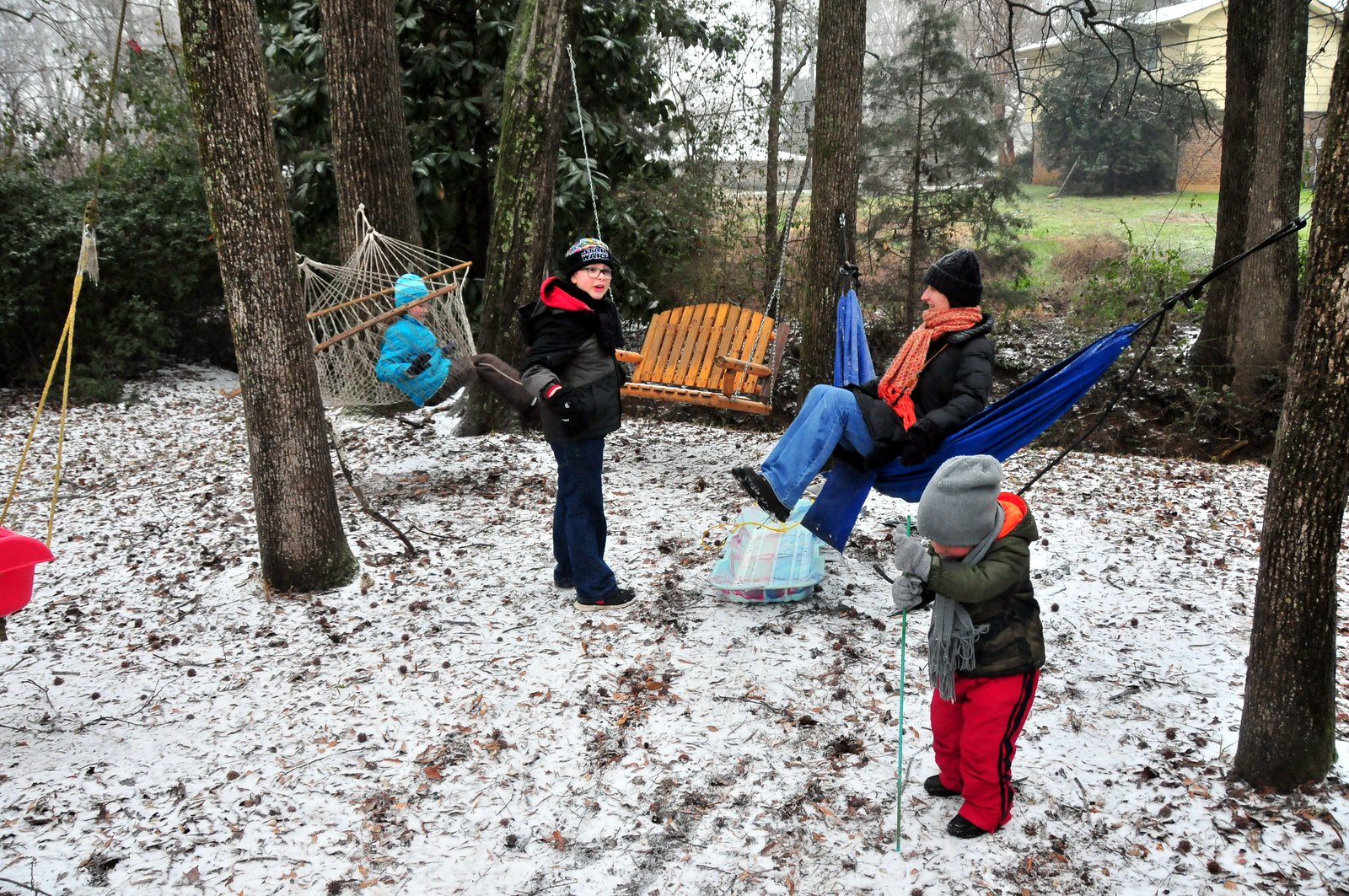
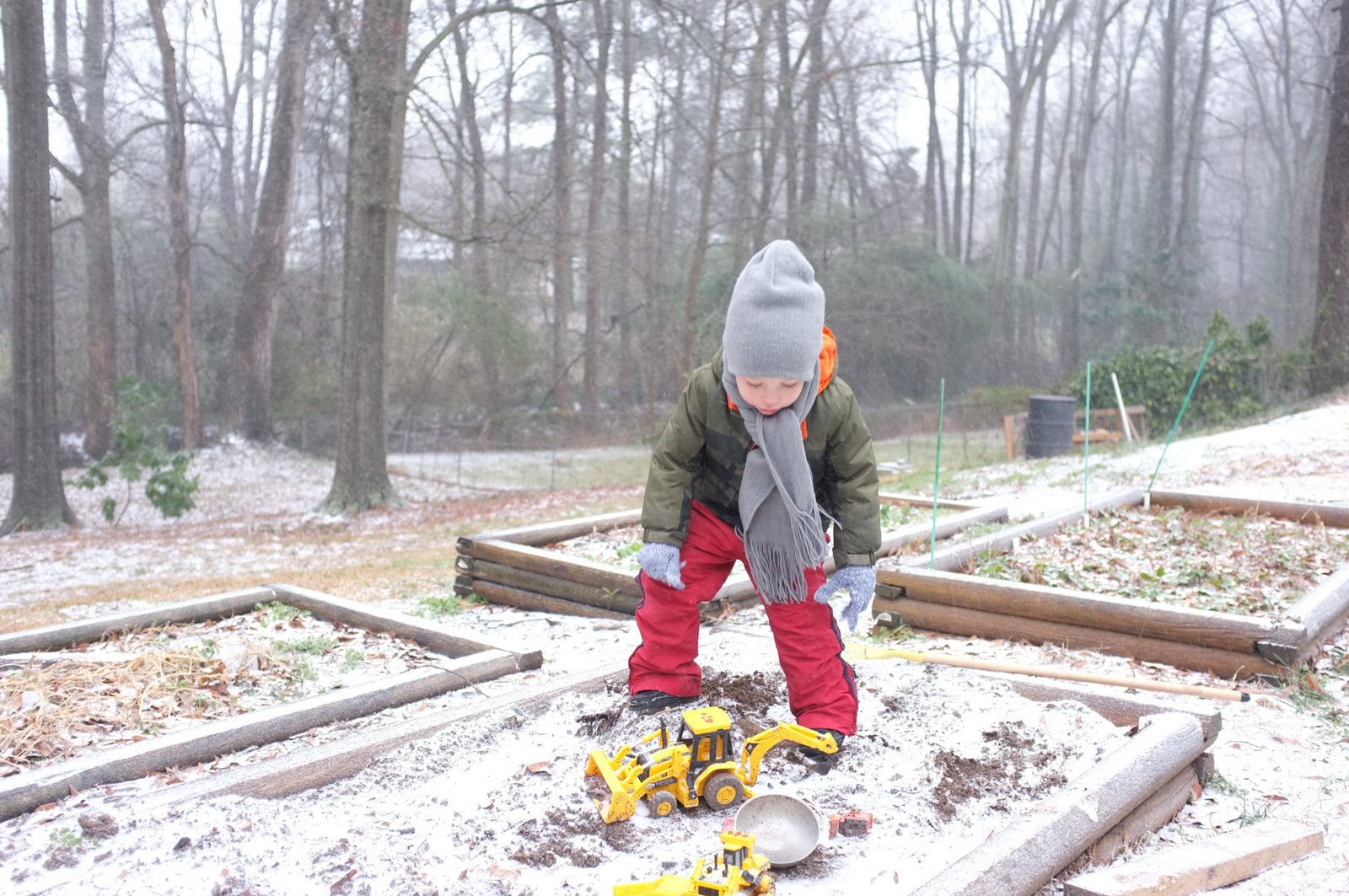
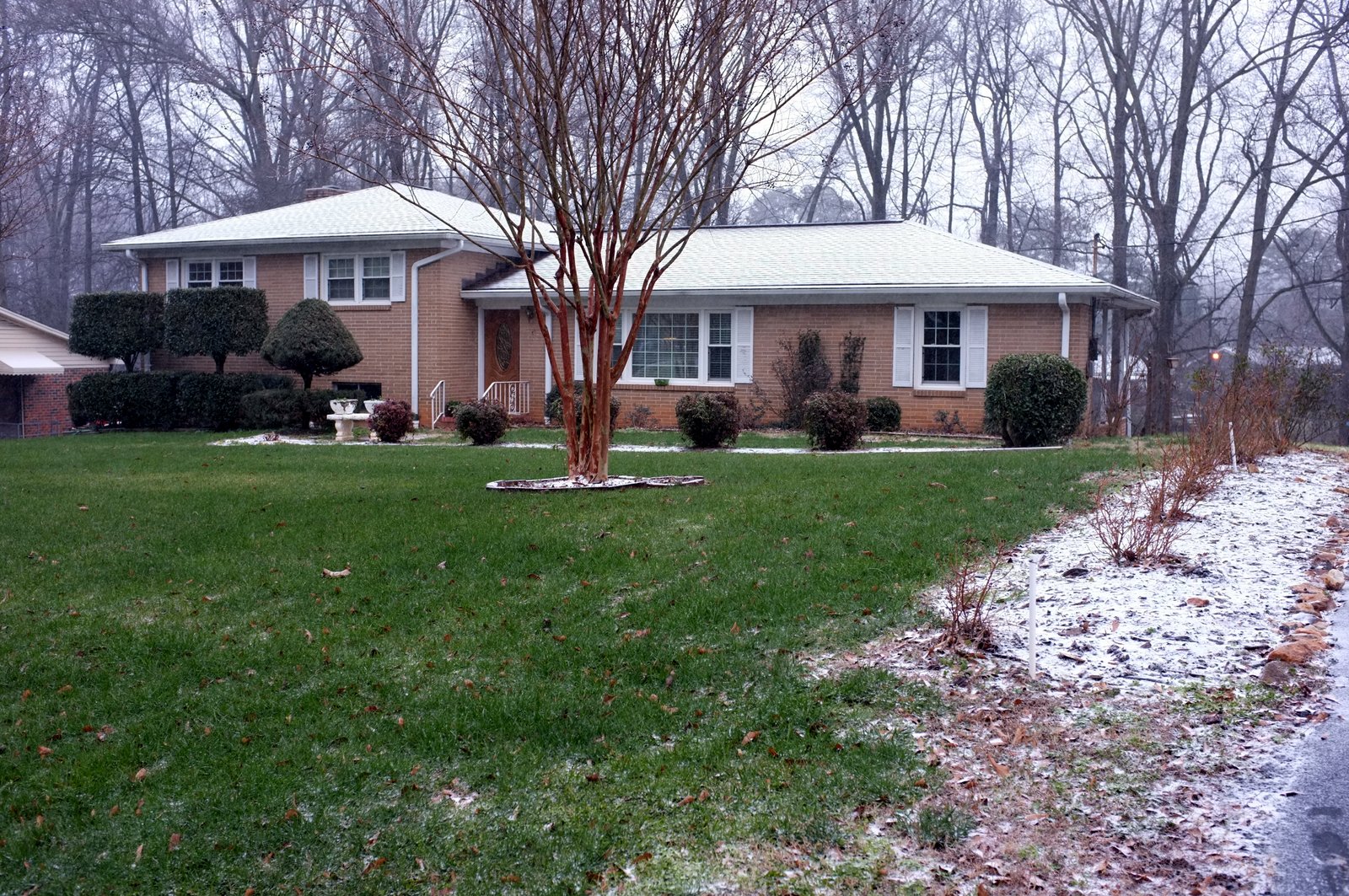
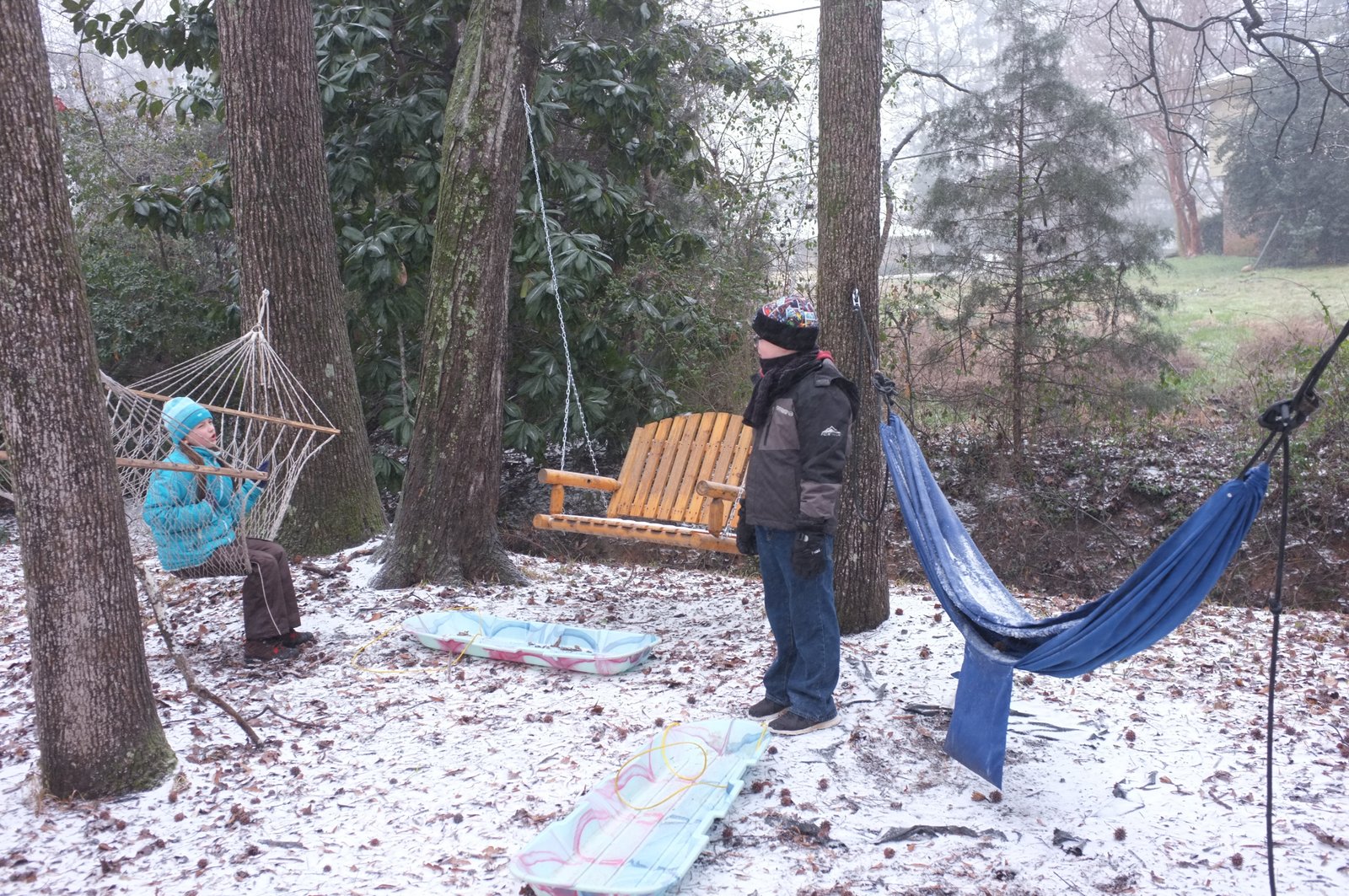
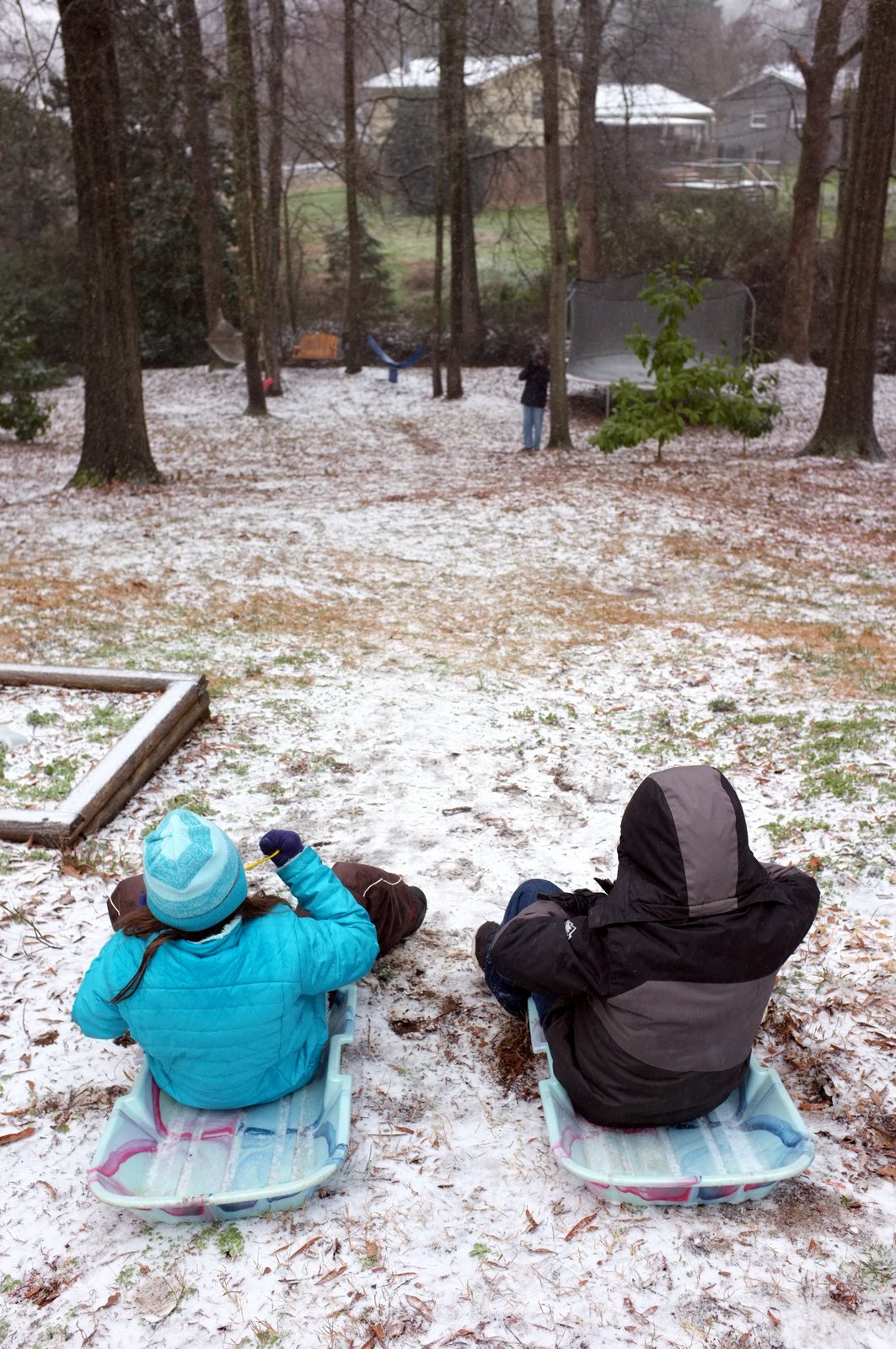
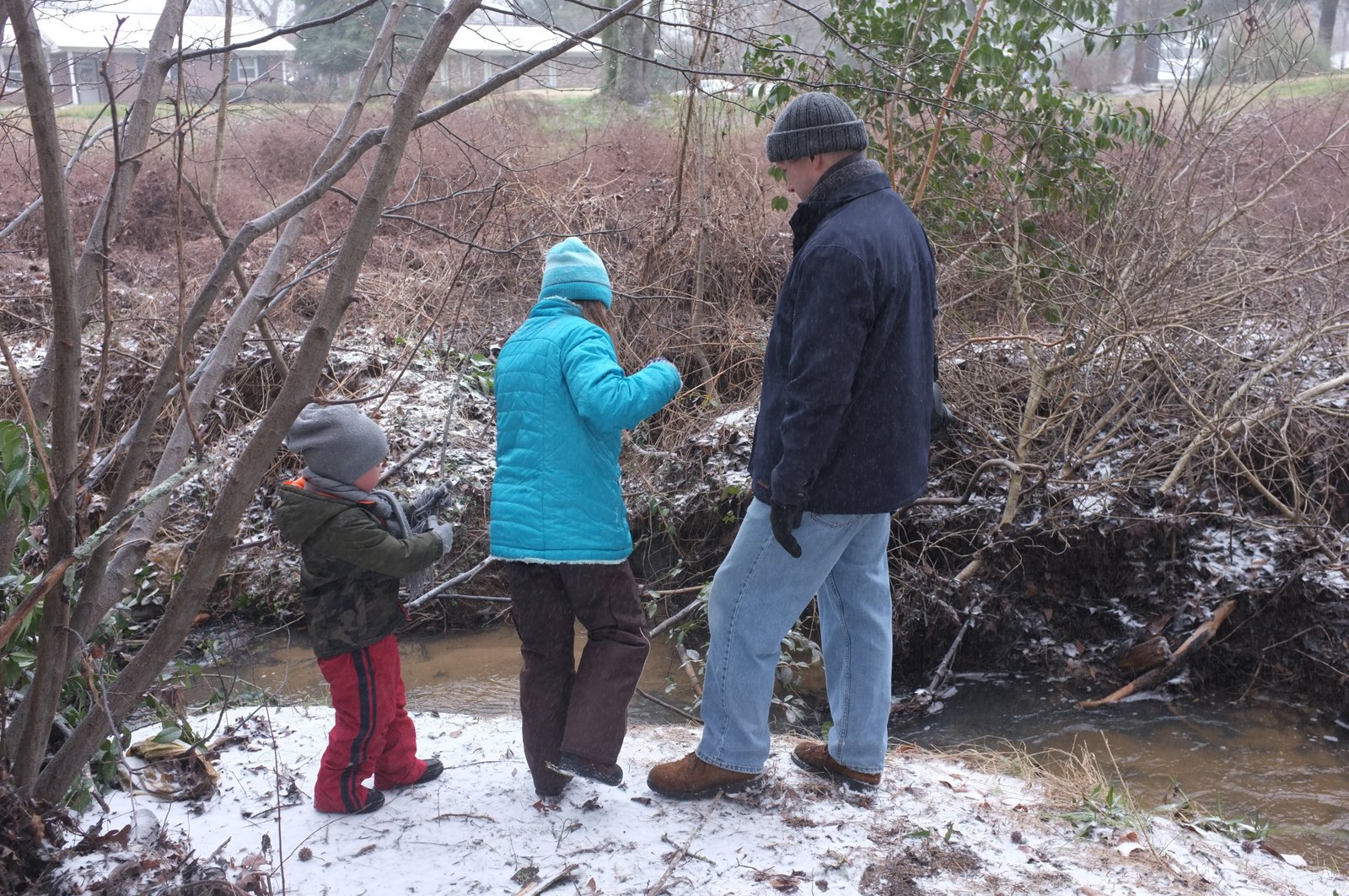
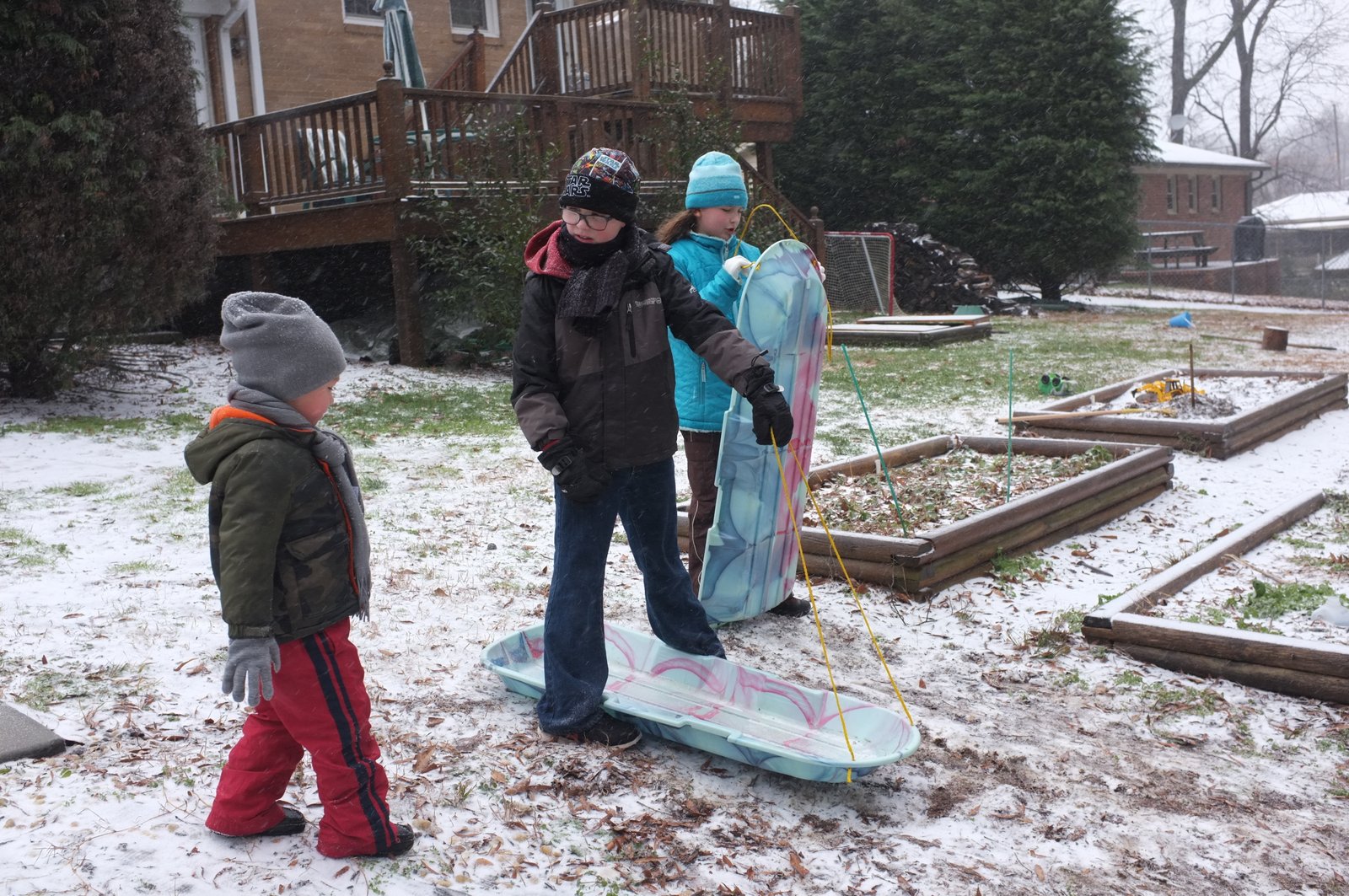
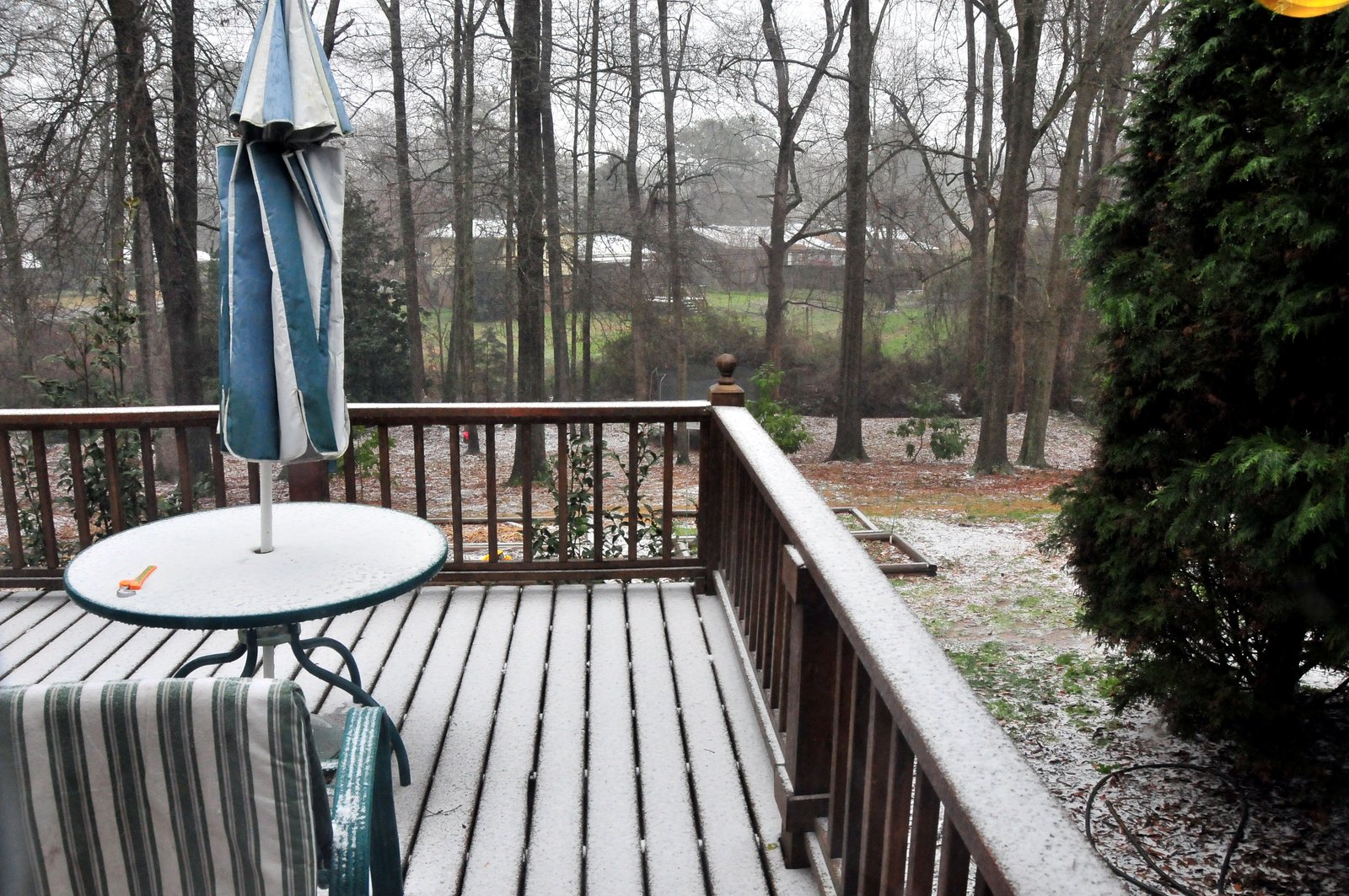
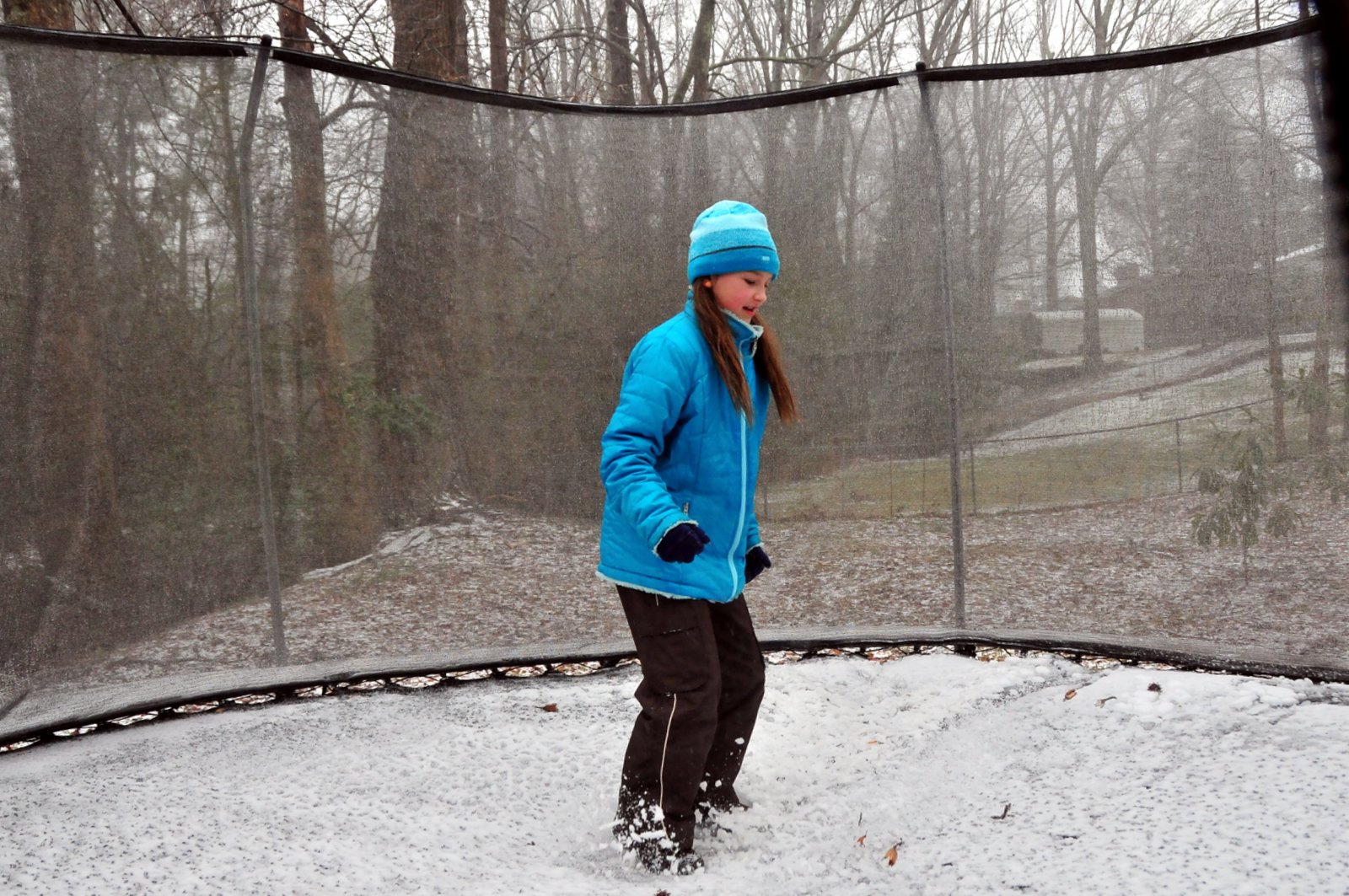
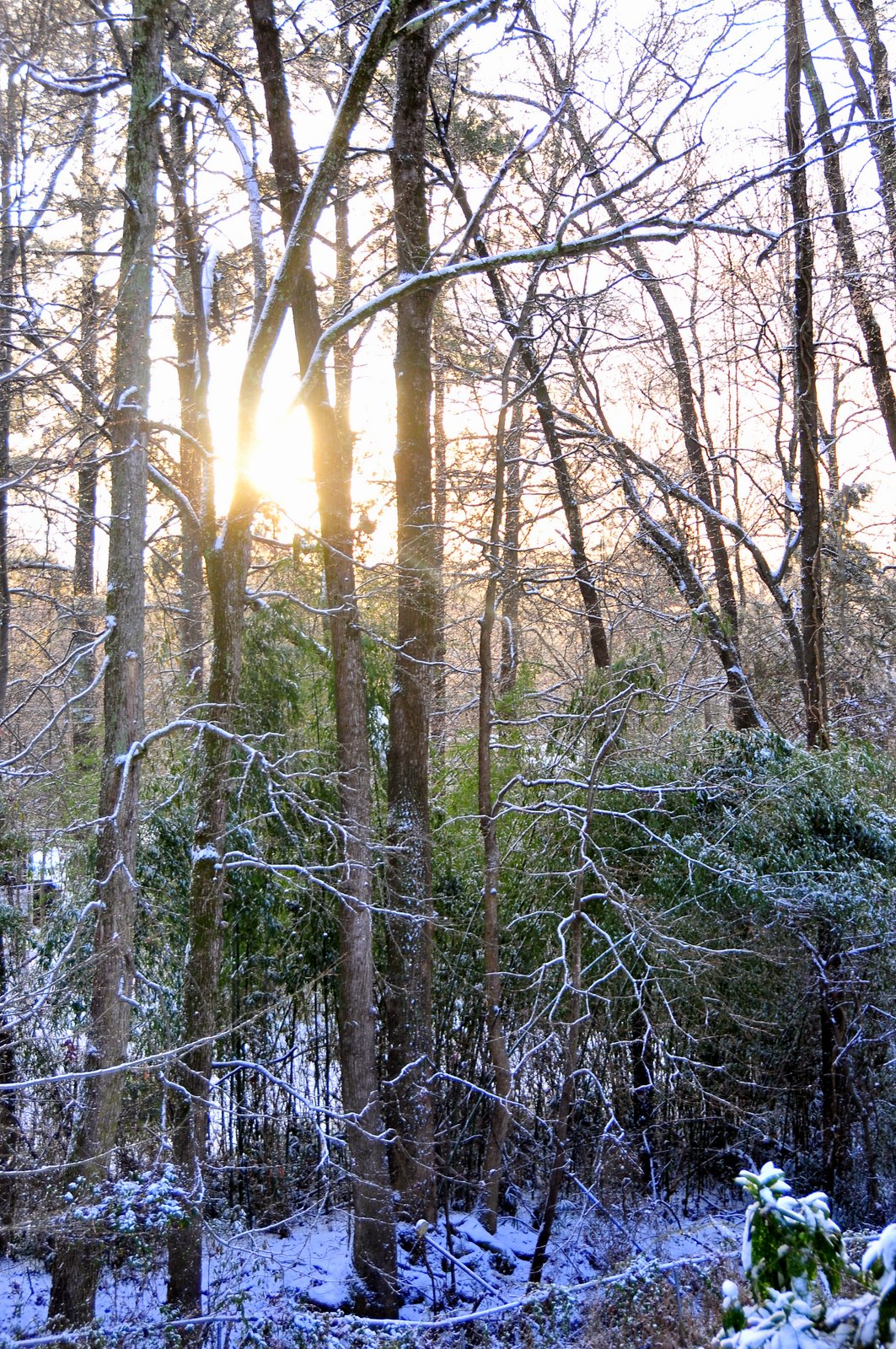
"It's supposed to start around seven this evening," I explained. "That's what all the meteorological reports suggest." The slight bit of icy snow that frosted the ground yesterday was not enough to do much of anything, one would think, but when you're on the South, any amount of "snow" is significant for children. So the suggestion that we might have even more snow was the stuff of sweet dreams as the kids plodded off to bed. "Is it snow?" was the mantra of the evening, but they went to sleep with complete confidence with the weather reports, knowing that they were only off by the time.

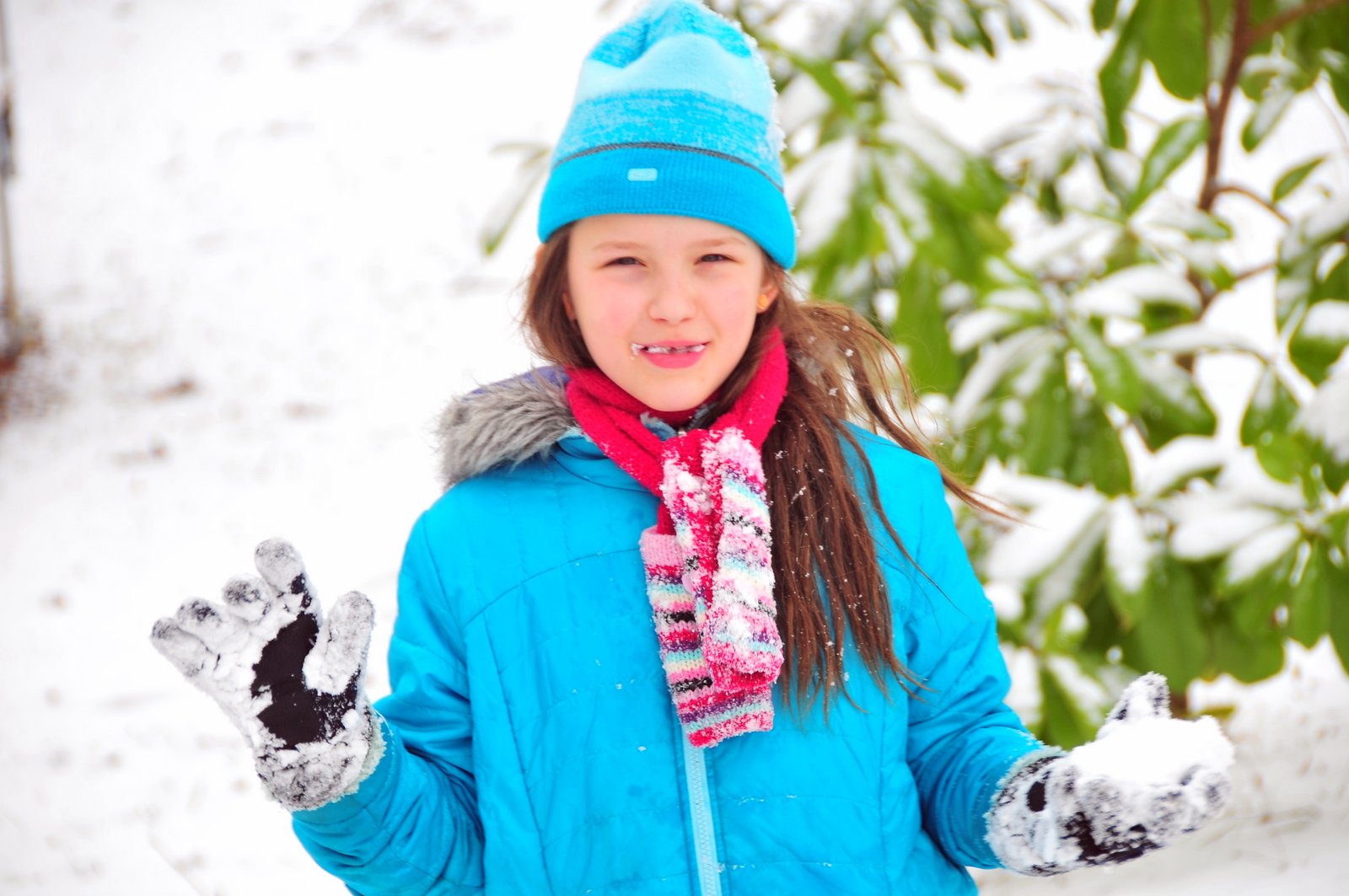
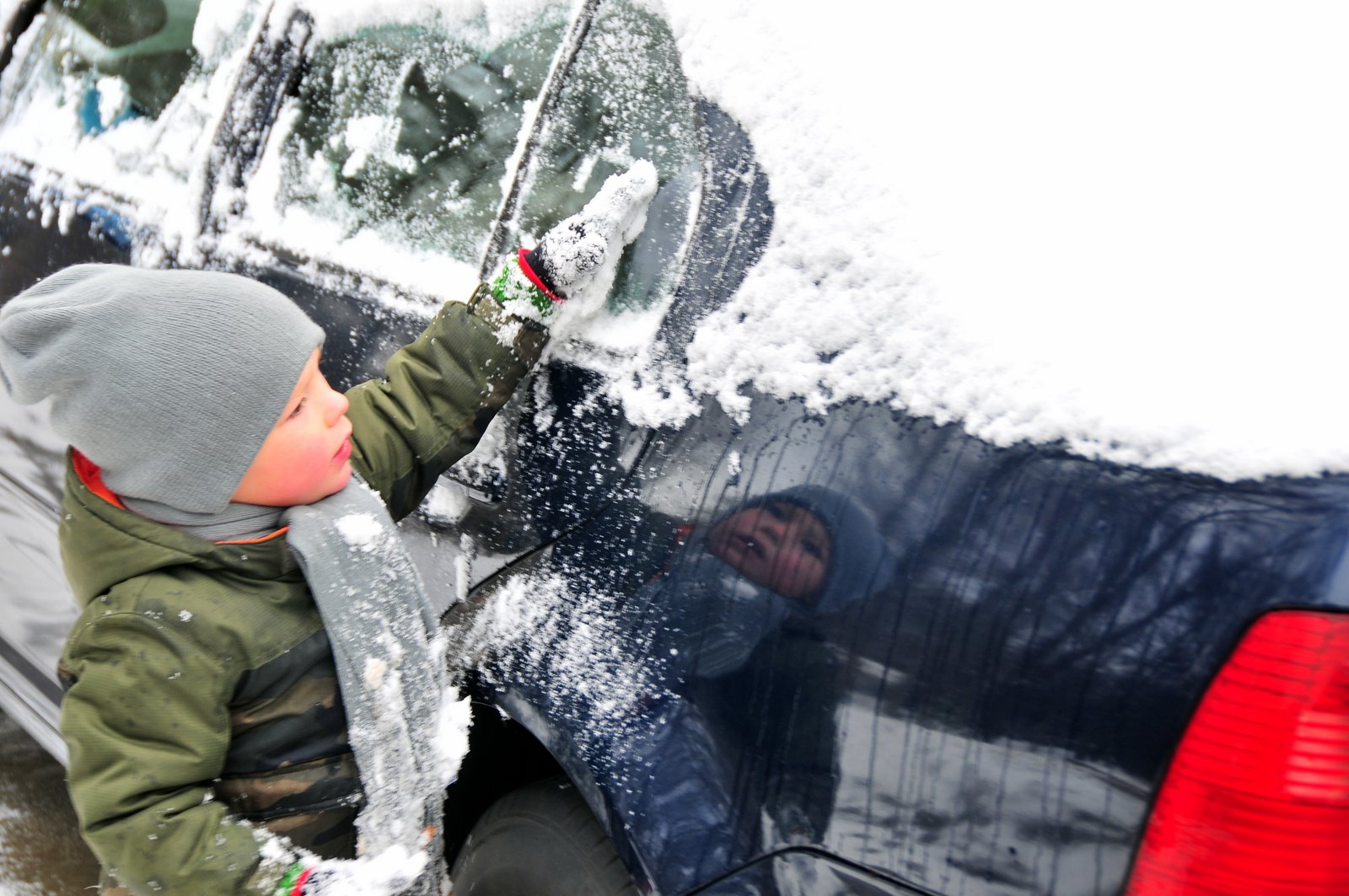
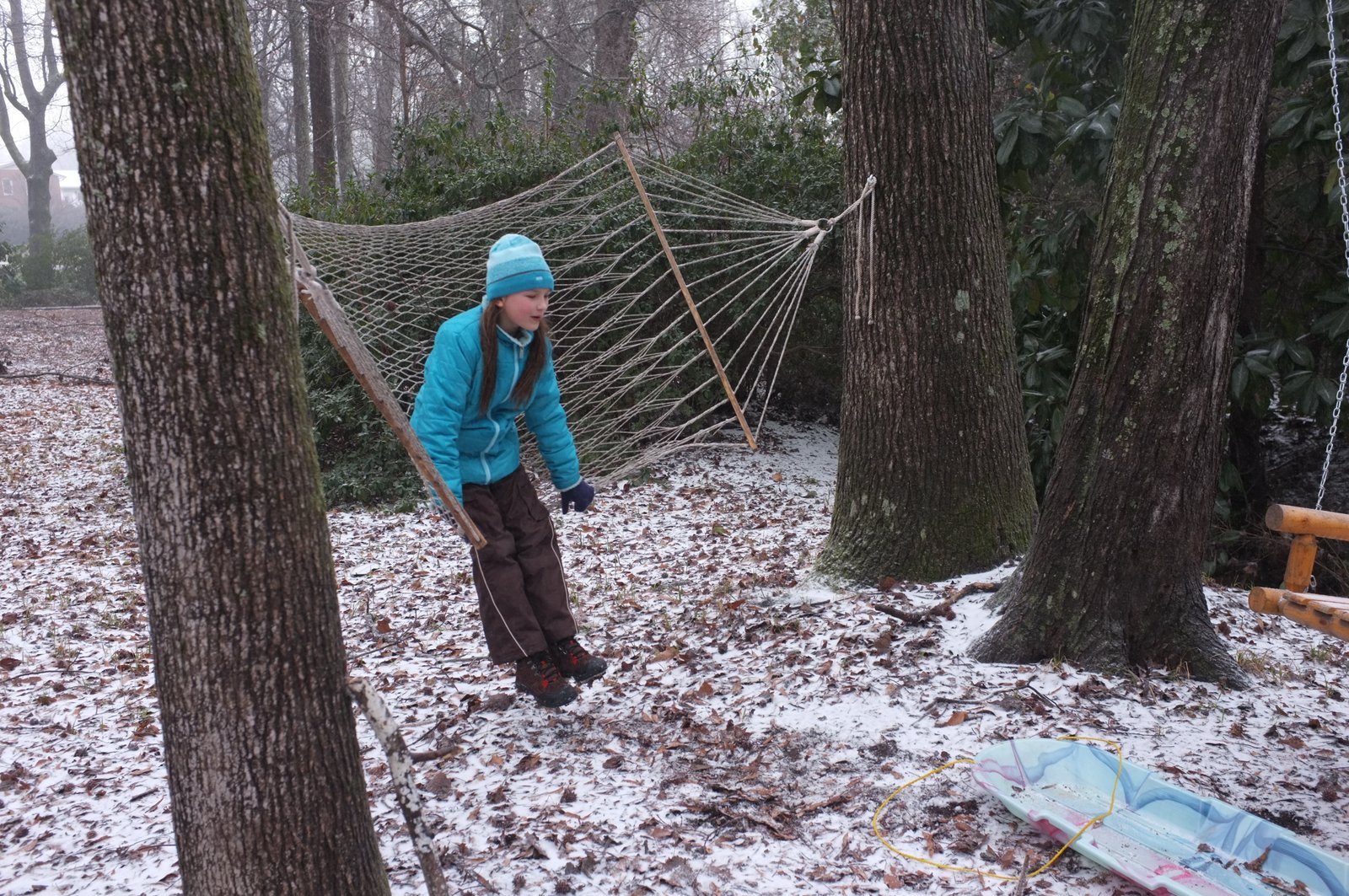
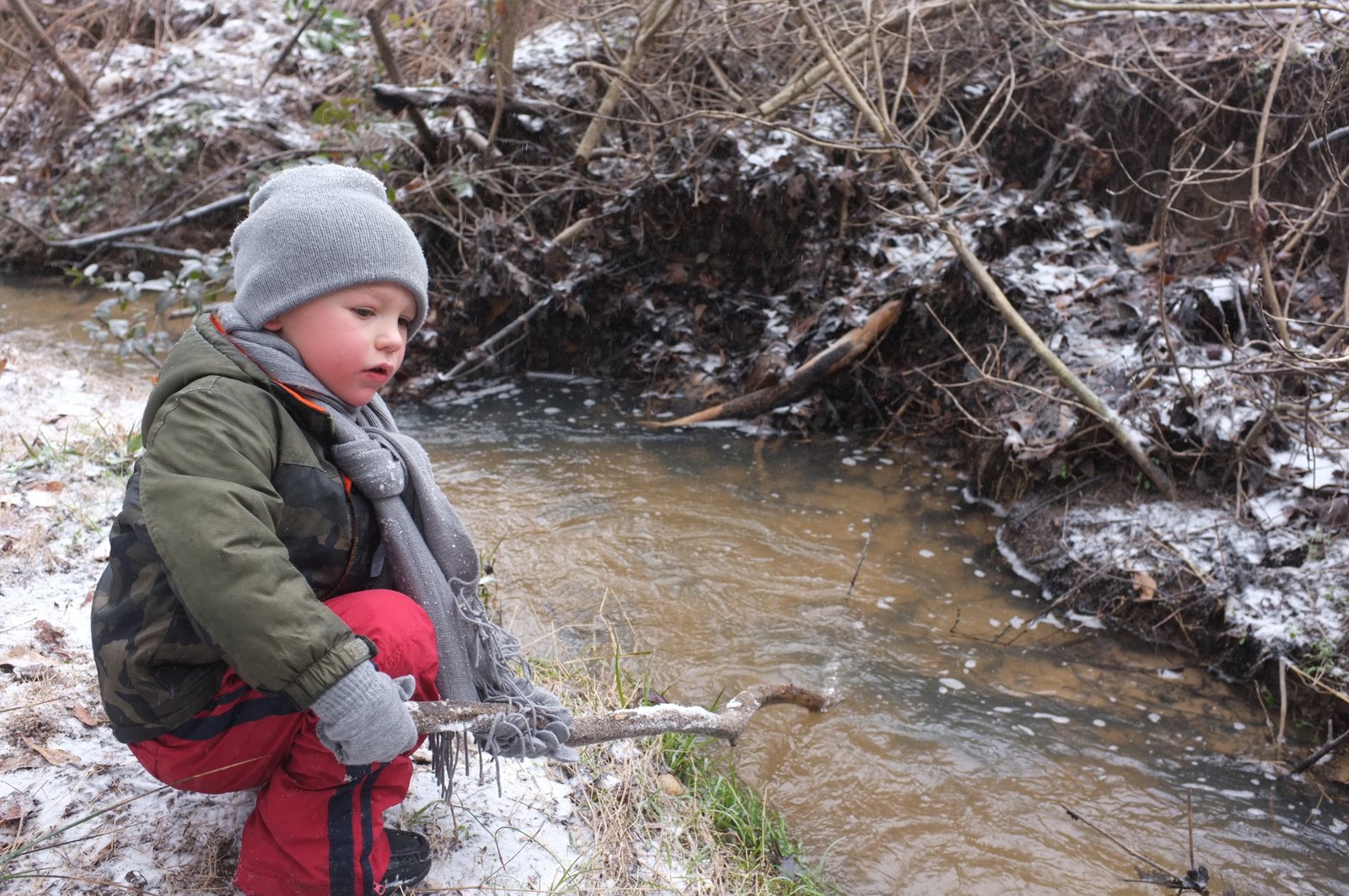
From the moment they woke up, the kids were at the window, ready to go out, ready to play in the snow. "There's so much snow!" E chirped again and again. It's only the second or third time the Boy has seen snow, so any snow at all is significant. When Dziadek was sick a few years ago, K to the Boy with her for a visit in the middle of January, and so E saw real snow, deep snow, snow that covers everything and utterly transforms the whole landscape, but of course he doesn't remember it.

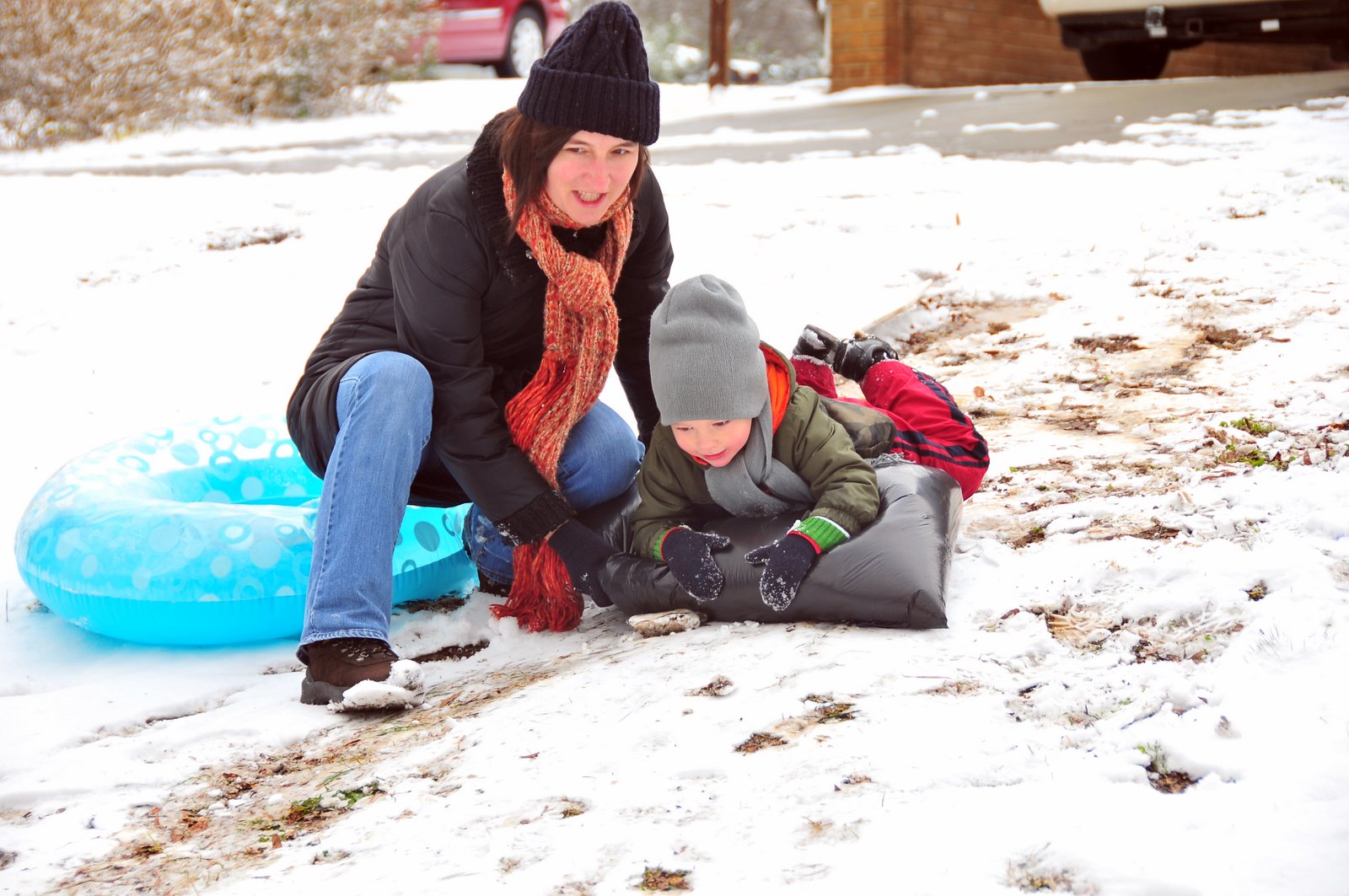
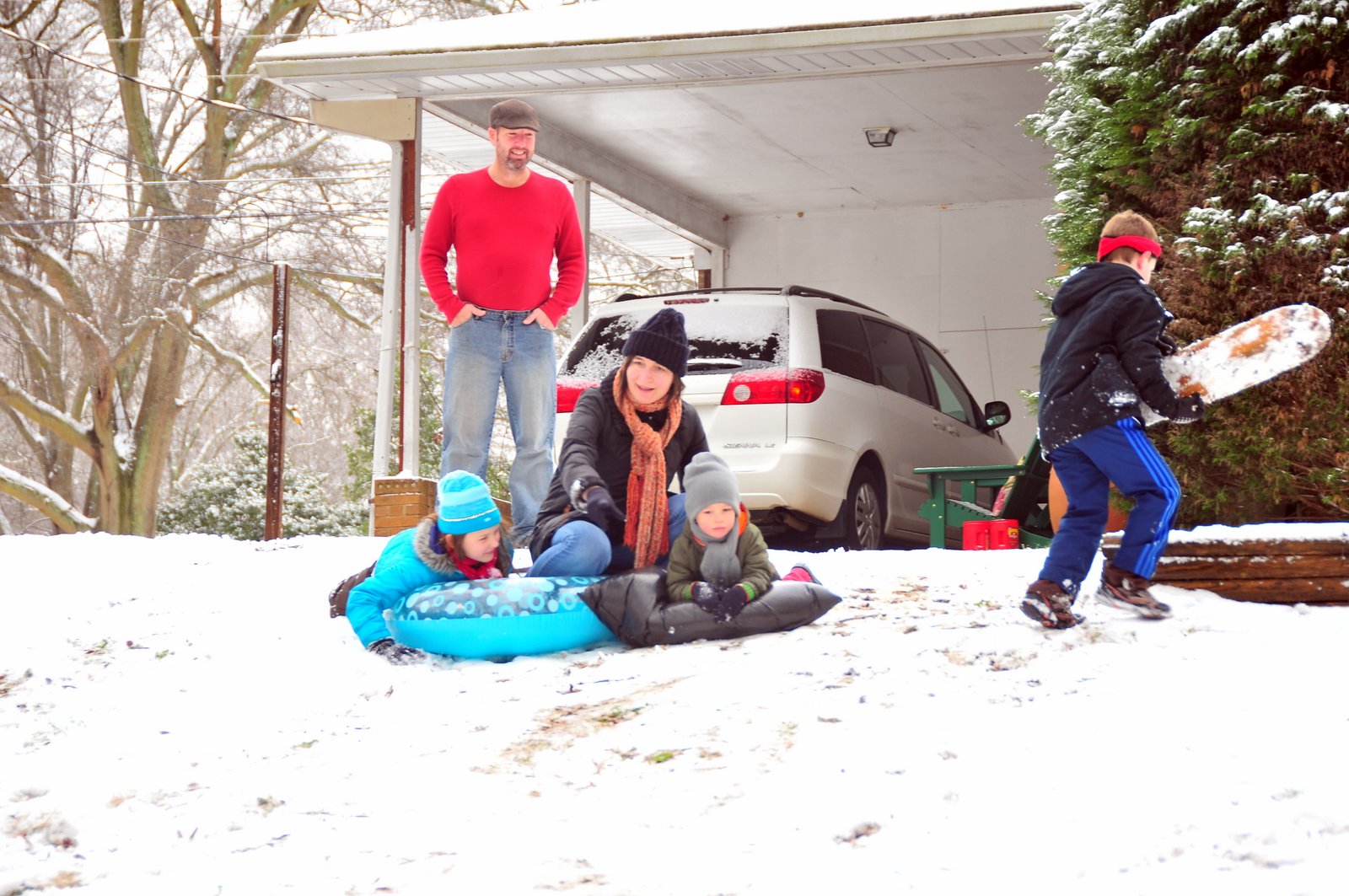
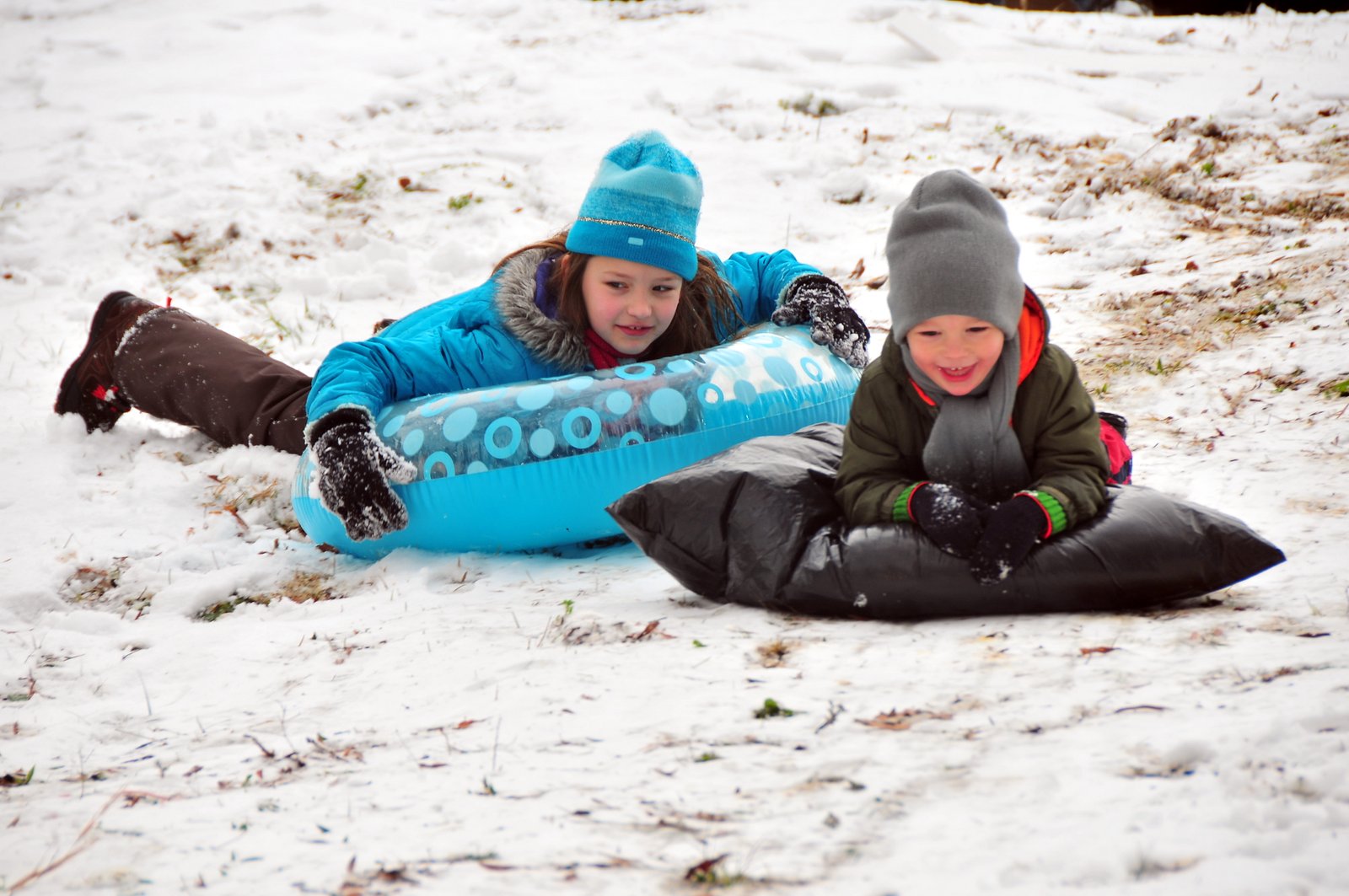
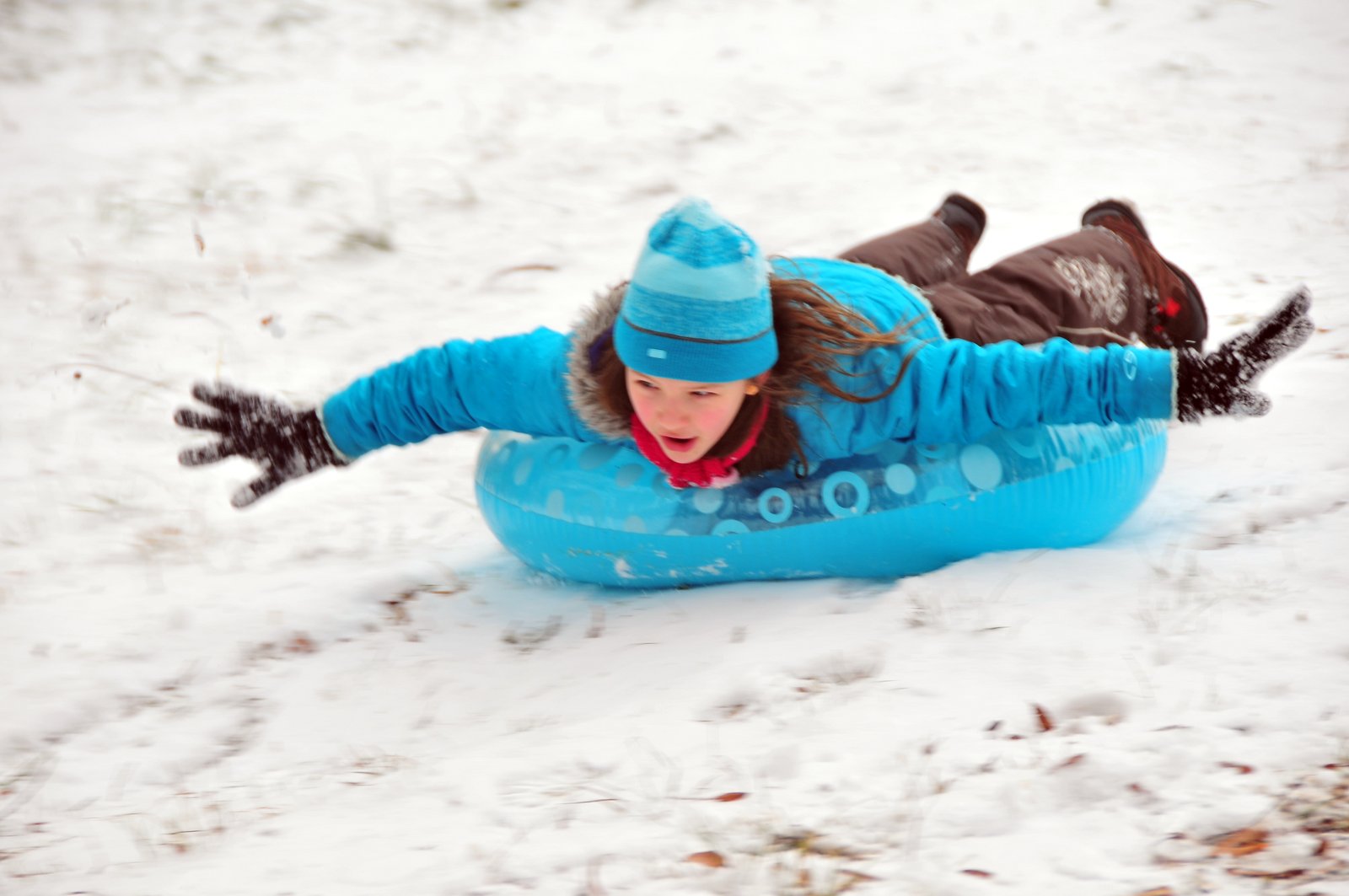
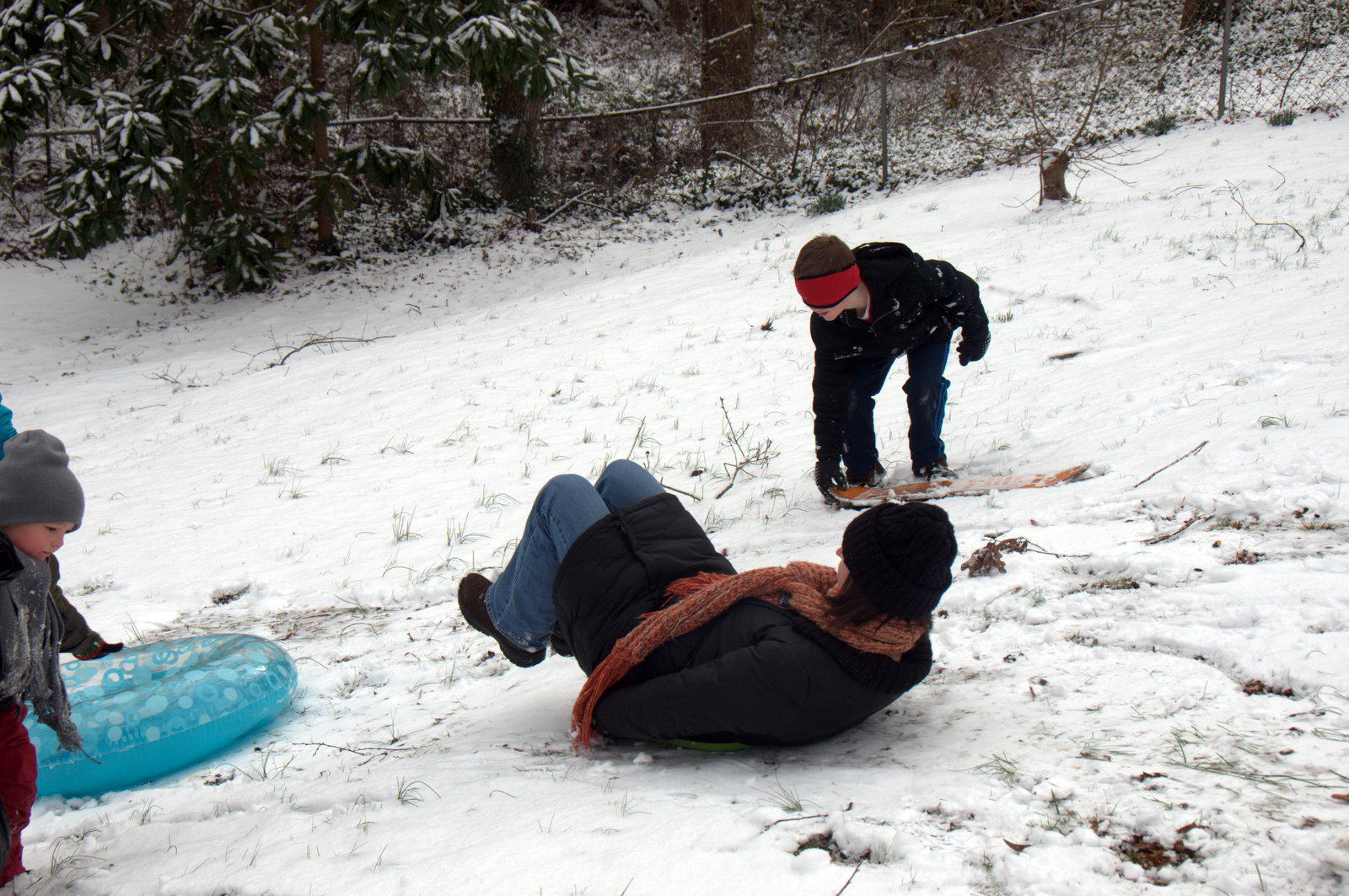
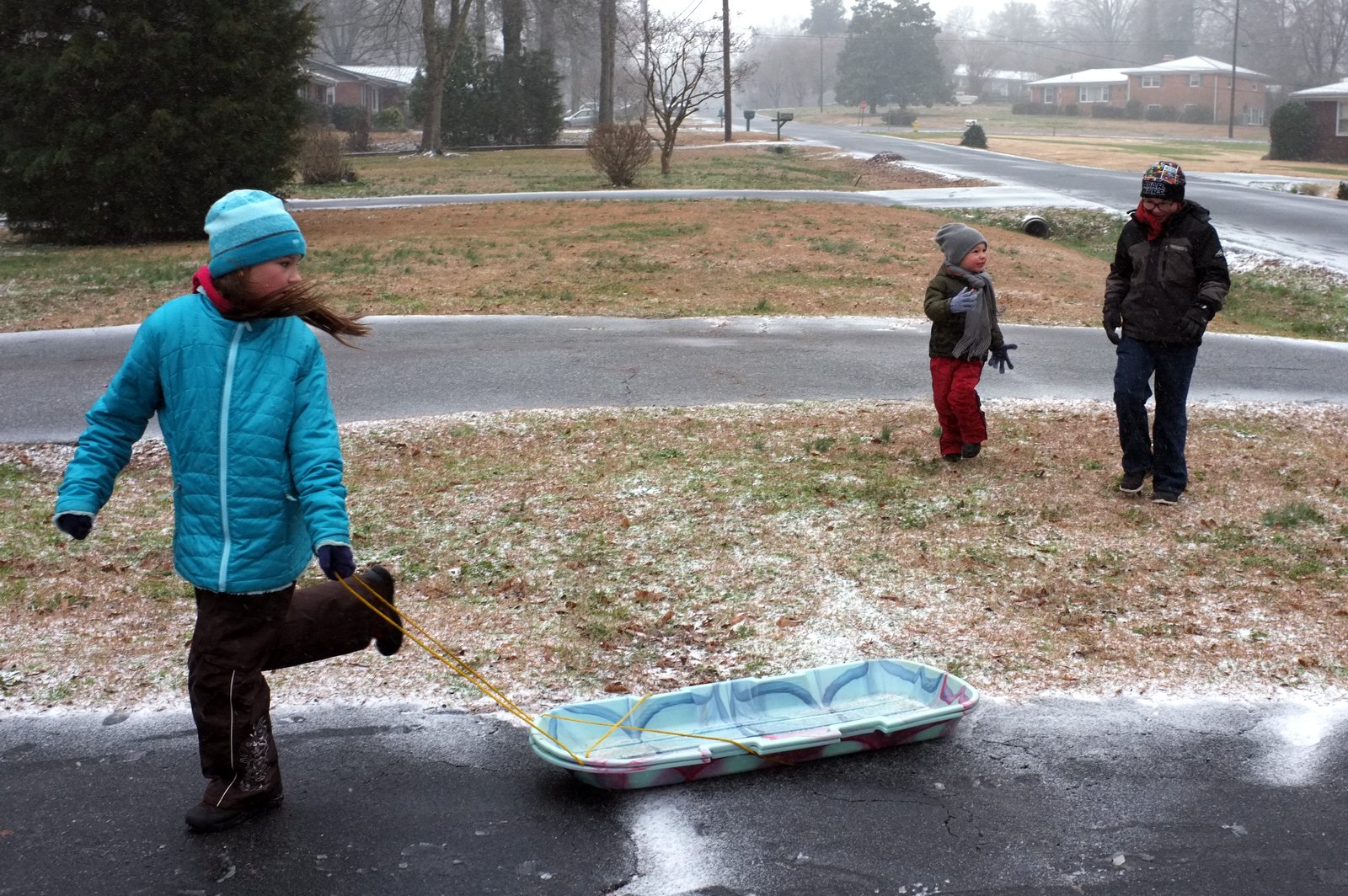
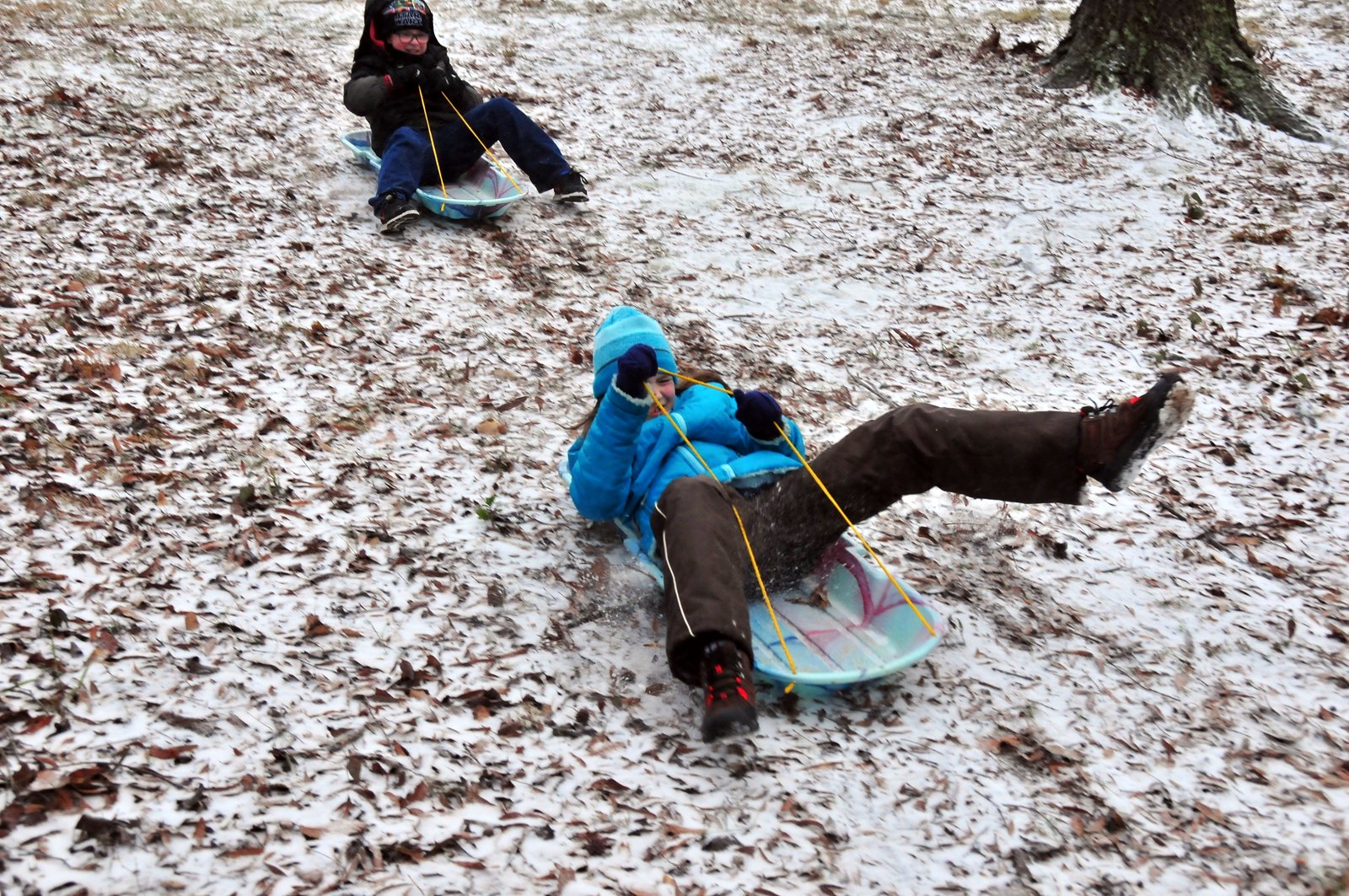
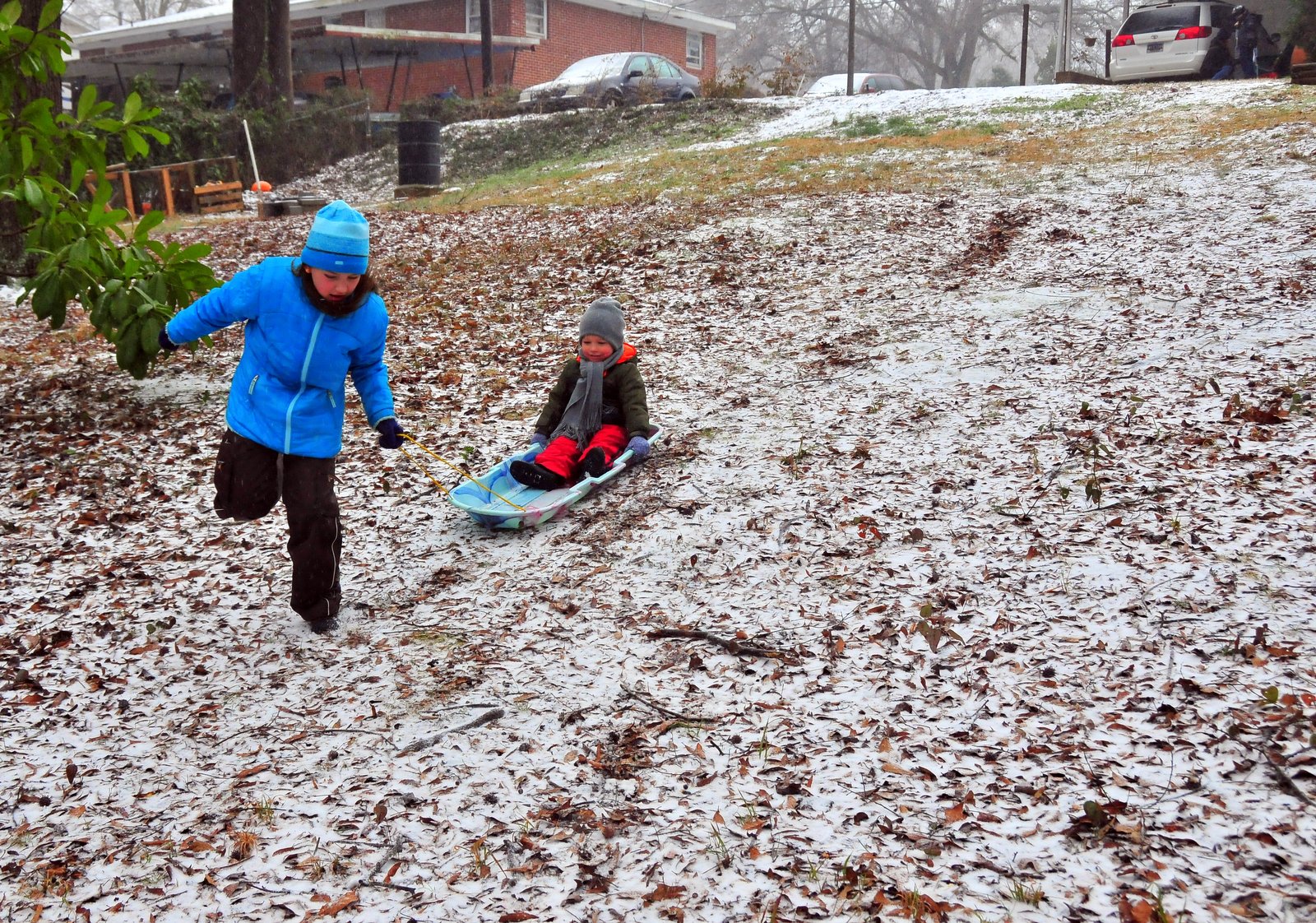
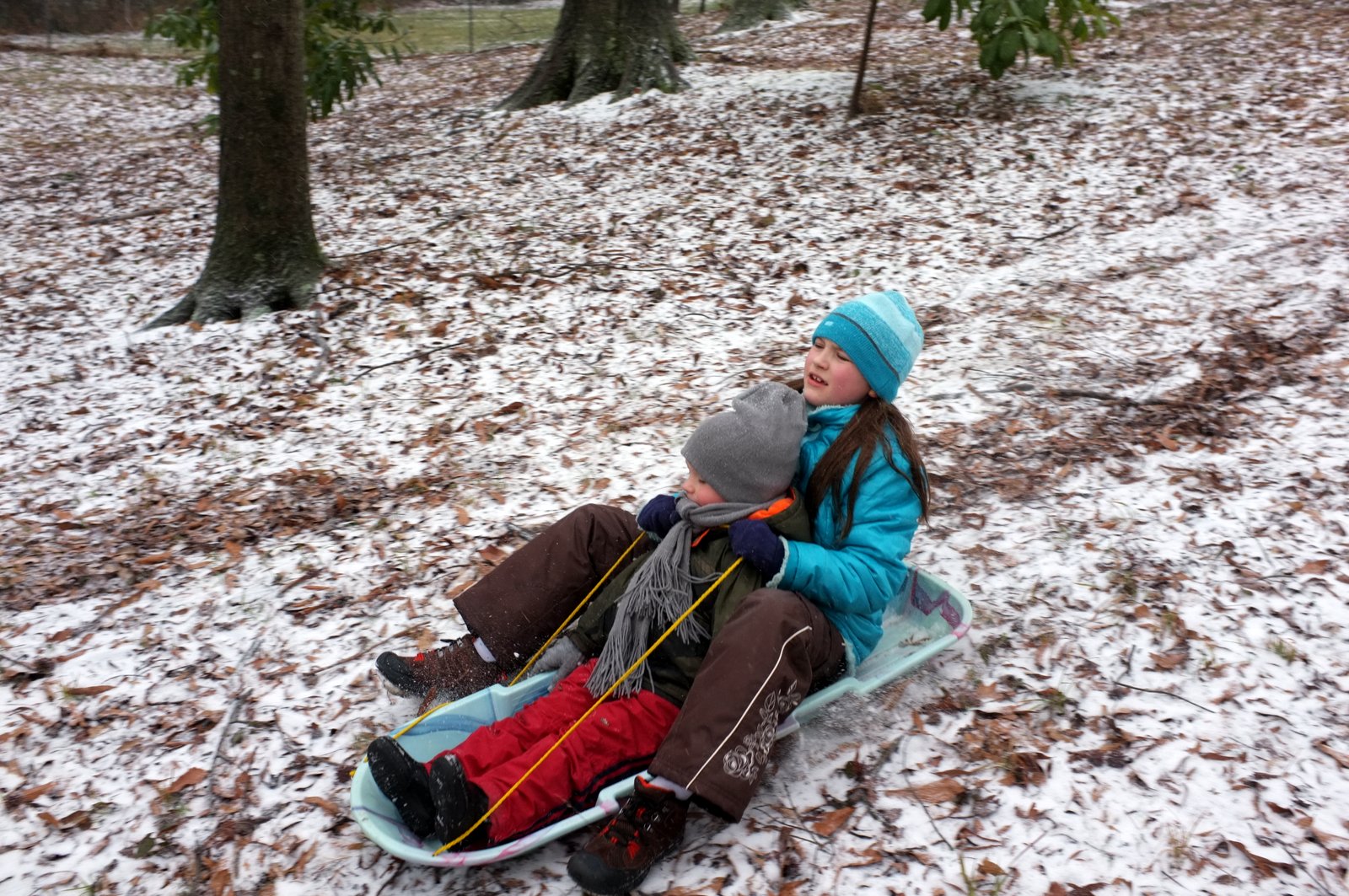
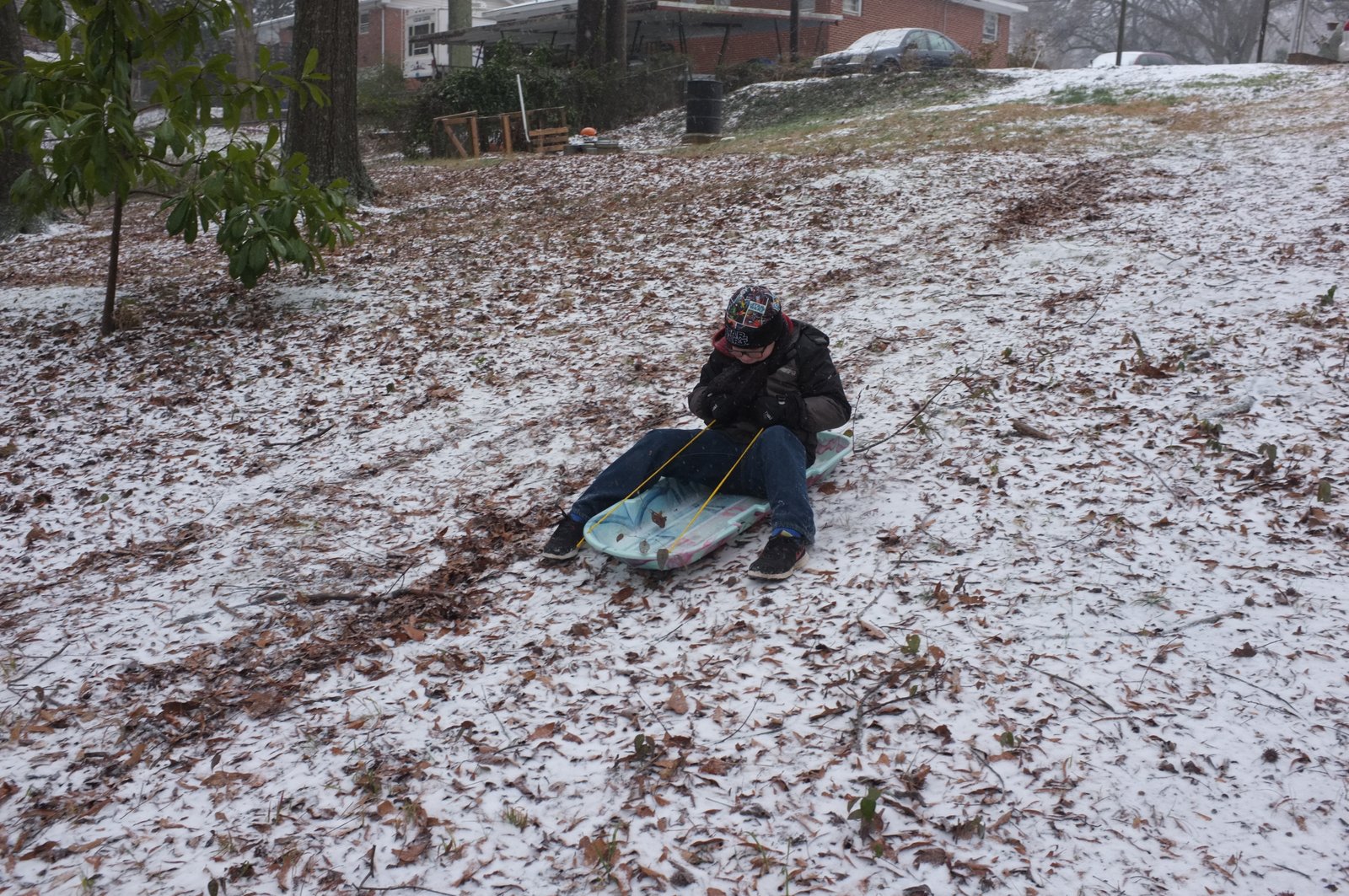
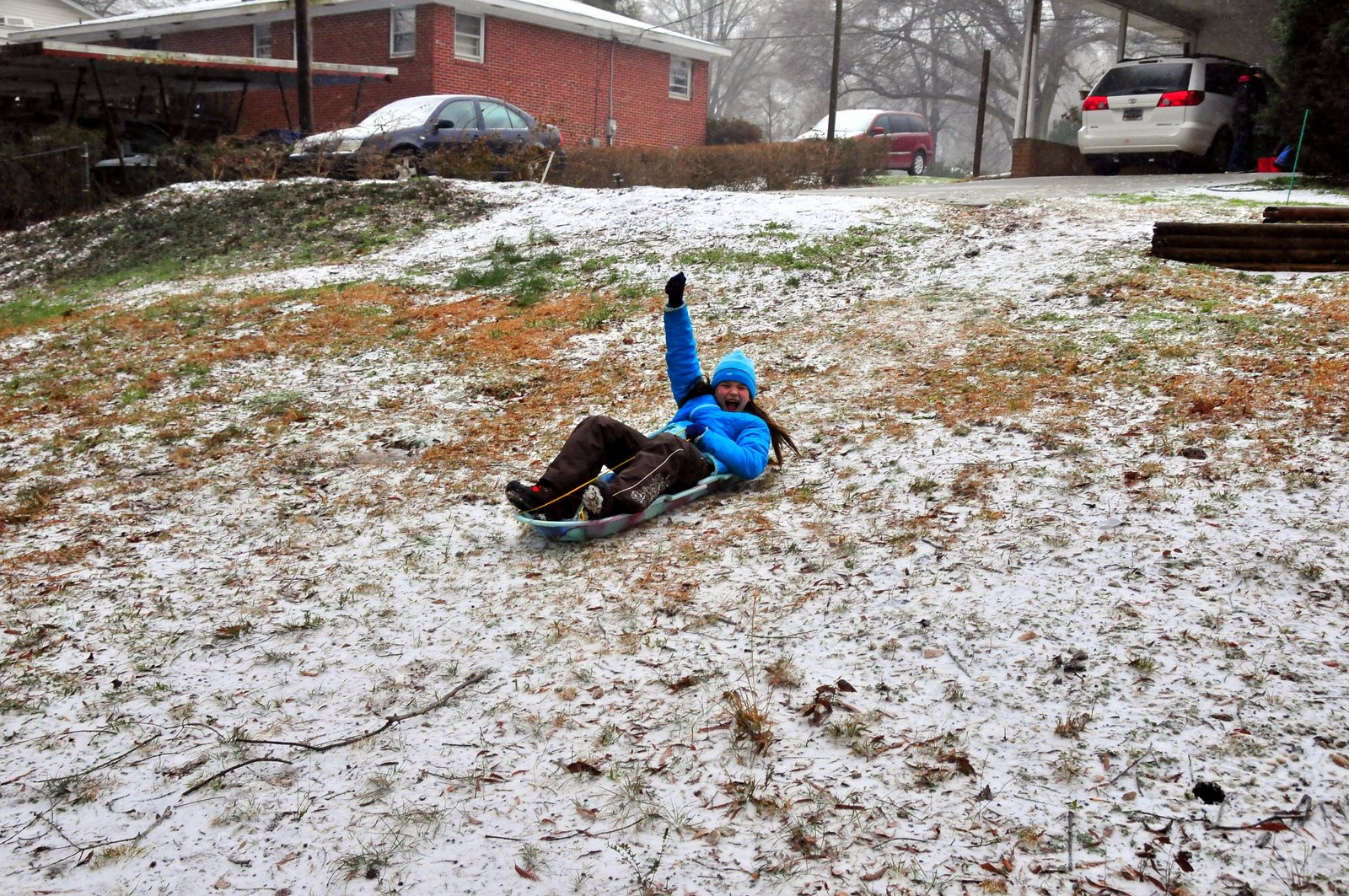
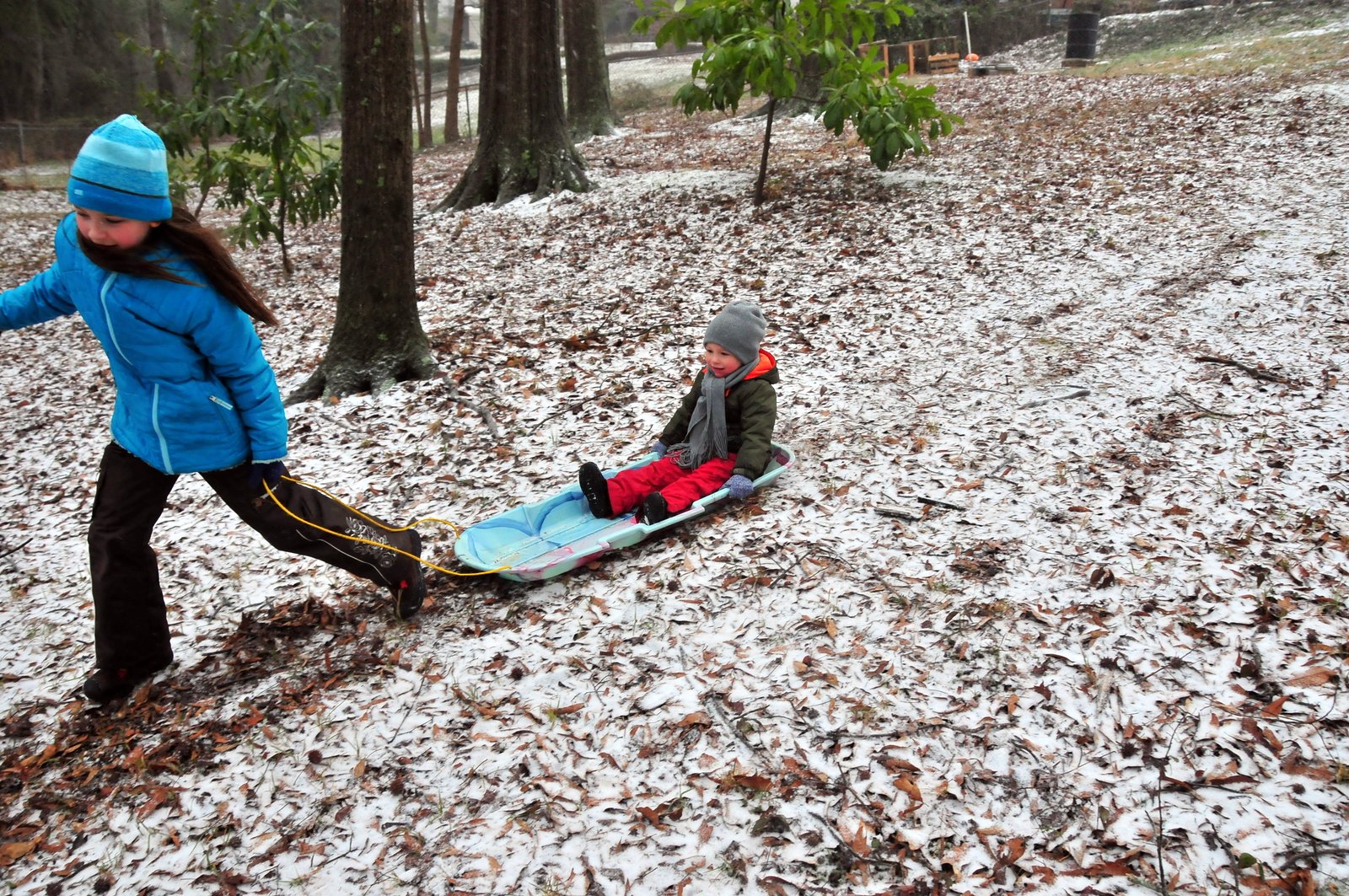
When we finally made it outside, we had a dilemma: the young man who was sledding with us yesterday had come in the morning and taken his sleds with us. What to do? "I guess we sled like I did when I was a kid," K said. And so we took an old sleeping bag -- though, properly speaking, it should have been straw -- and used it to stuff a garbage bag. K also thought we might try E's old inner-tube we used at the pool. "It's not like we use it anymore." As the finishing touch, our neighbors invited us to use their yard -- slightly smoother and with fewer trees.
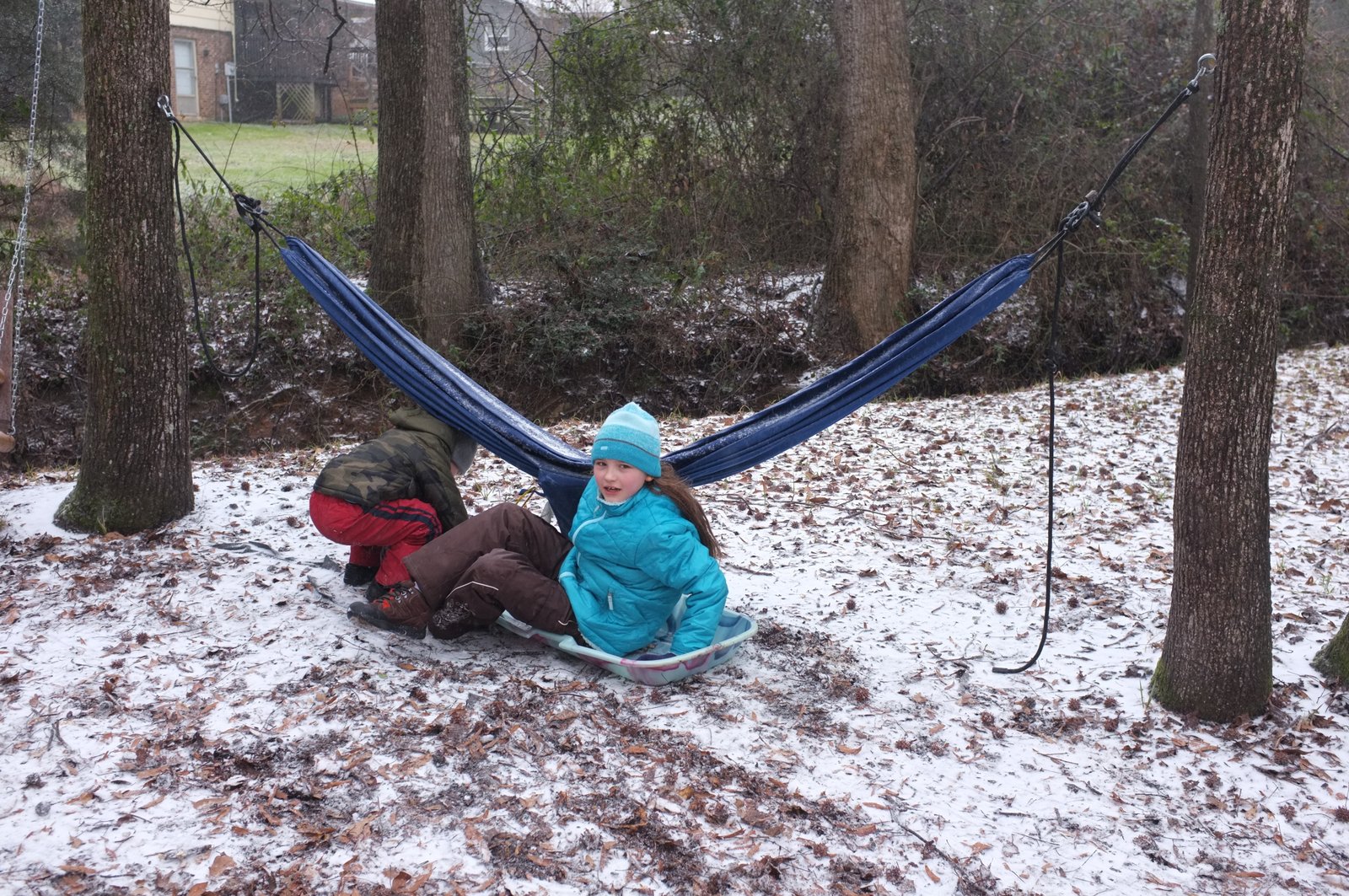
When the kids came in, they were soaked. And that's as it should be.

Snow Day 2016

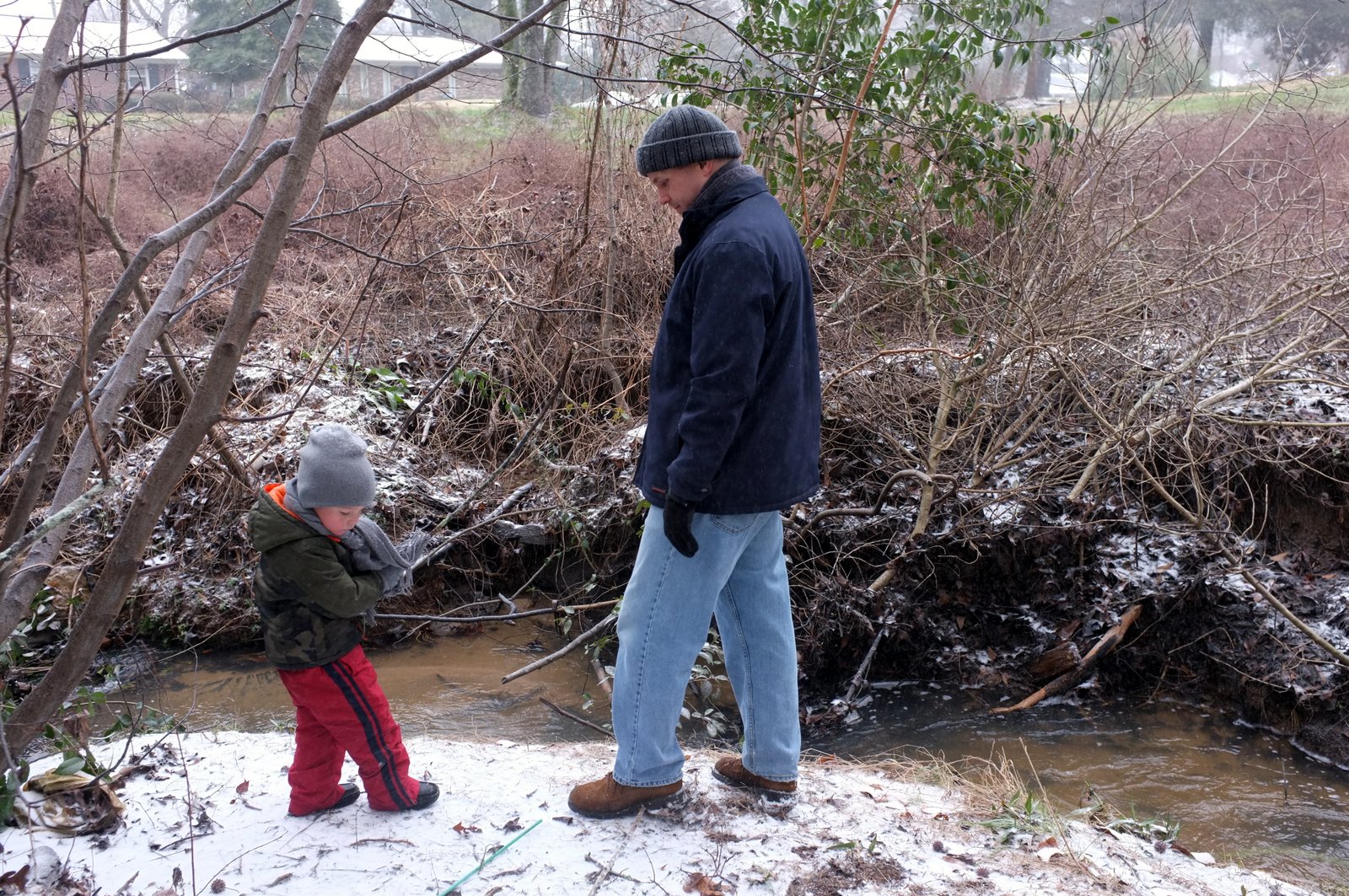
We don't get much snow here in the South. Even an inch is enough to disrupt everything. We do get a lot more ice, I think. Even then, the slightest little bit makes the news. This morning, for example, a news caster commented on the fact that there were icicles on the trees, "And they don't fall off when I shake the branch." No joke.
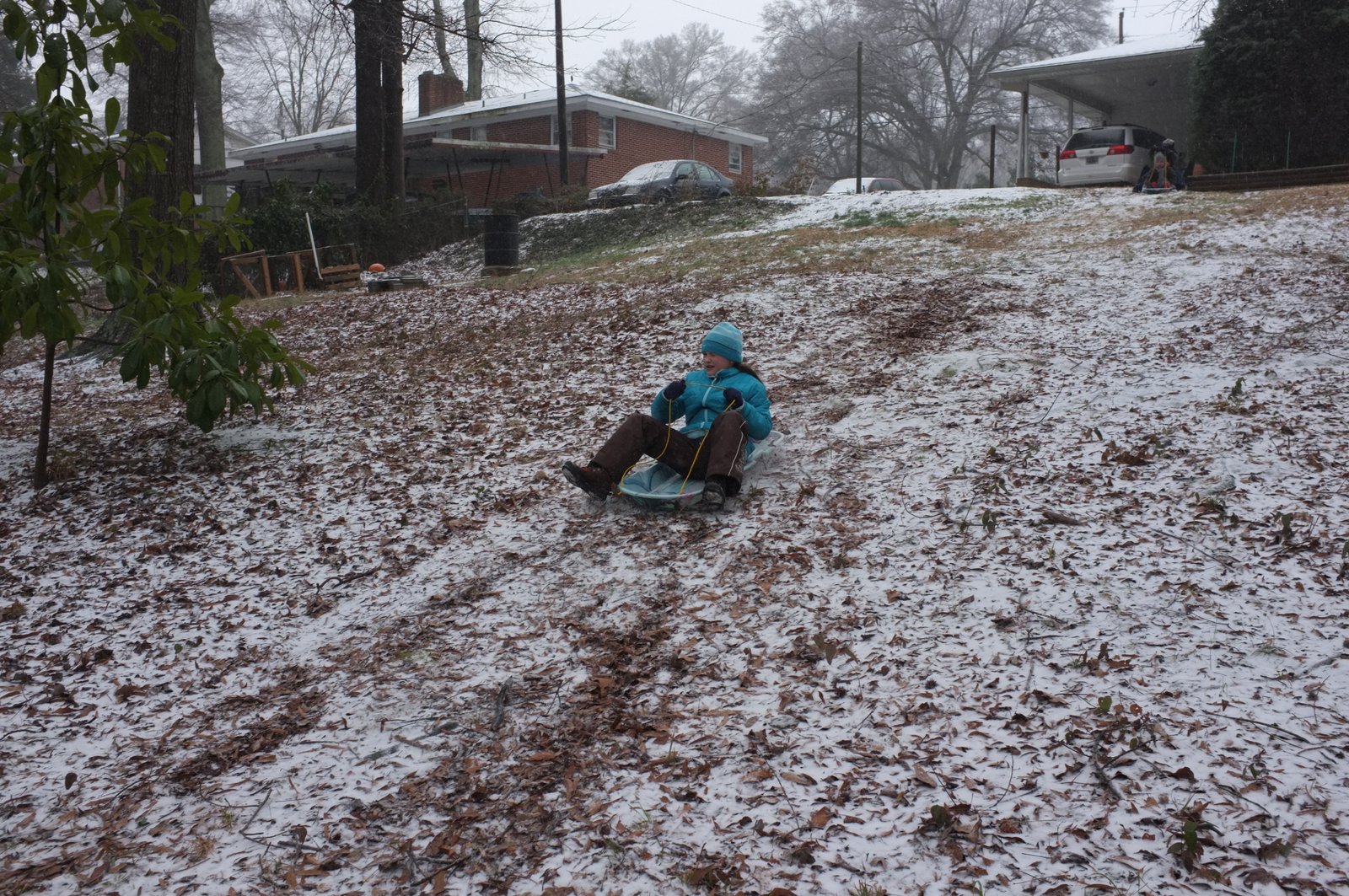
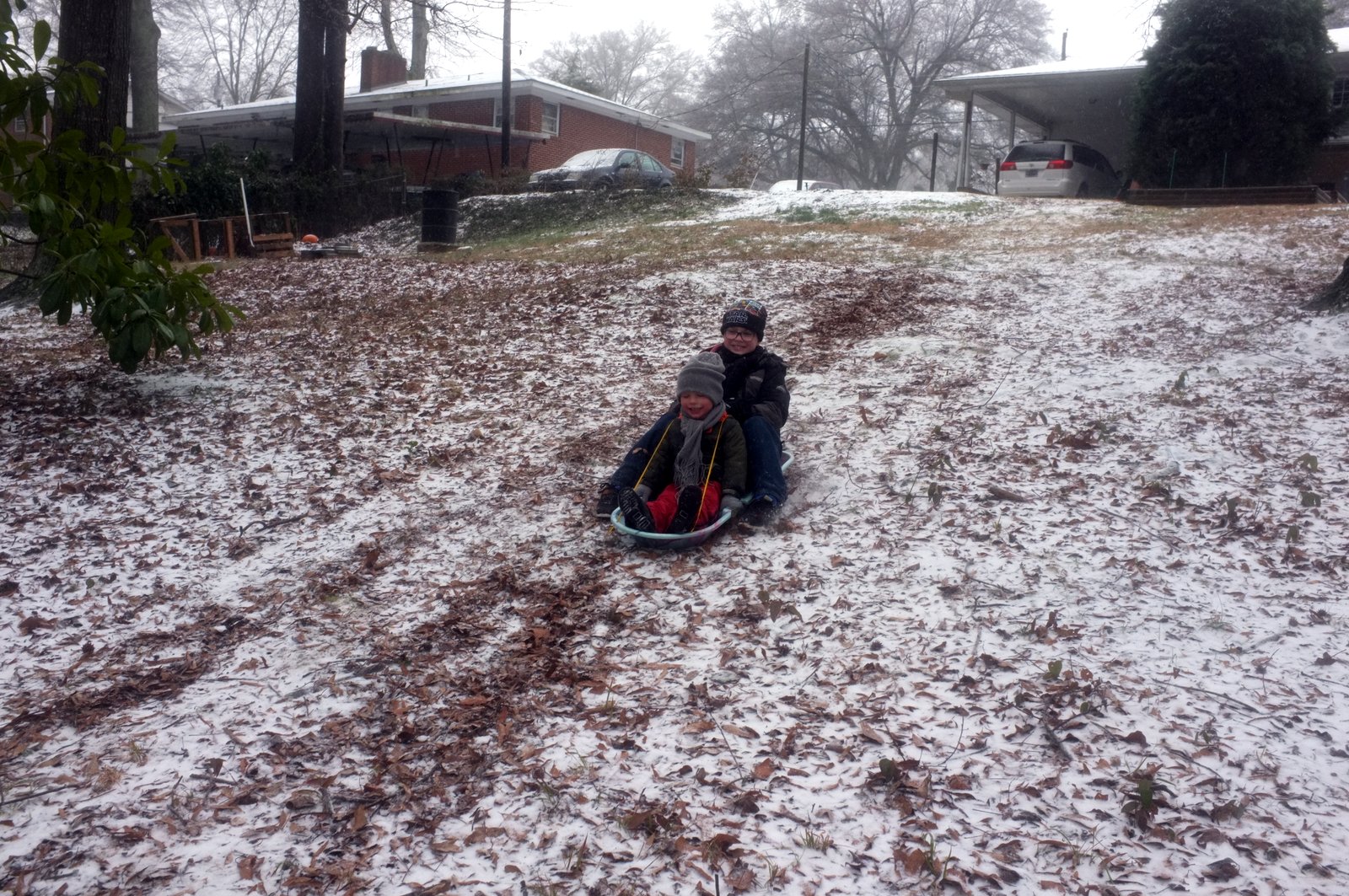
Still, when we get a little snow, or even a little ice that is masquerading as snow, we make the most of it.

Relativity

We recently decided to work with Compassion International and sponsor a child in need. We did our research; we determined the organization was reputable; we made the commitment. About the price of going out to dinner as a family once a month.

Our child is H, and he's an eight-year-old in Burkina Faso, a poor landlocked country in Africa. A few facts from Wikipedia:

According to the Global Hunger Index, a multidimensional tool used to measure and track a country's hunger levels, Burkina Faso ranked 65 out of 78 countries in 2013. It is estimated that there are currently over 1.5 million children who are at risk of food insecurity in Burkina Faso, with around 350,000 children who are in need of emergency medical assistance. However, only about a third of these children will actually receive adequate medical attention. Only 11.4 percent of children under the age of two receive the daily recommended number of meals. Stunted growth as a result of food insecurity is a severe problem in Burkina Faso, affecting at least a third of the population from 2008 to 2012. Additionally, stunted children, on average, tend to complete less school than children with normal growth development, further contributing to the low levels of education of the Burkina Faso population.

Nothing short of depressing. We feel fortunate to help, blessed to be able to help.

Tonight, we wrote as a family (more or less -- the kids were in and out) our first letter to young H. In writing it, I realized anew how ridiculous the Occupy Wall Street slogan "We The 99%" really is, how wealthy my family truly is.

We read in the material we received that there is a three-month rainy season in Burkina Faso, so we asked what that's like, explaining that it never rains here more than a few days in a row. I thought of our recent flooding in the basement, when the plugs for the termite treatment holes gave way and our basement flooded because of the hydro-static pressure. "The boy probably doesn't even know what a basement is, and he certainly doesn't have one," I thought.

While I was thinking about water, I thought of our problems in the crawl space, where a leak in the line from our sink to the refrigerator (a really old house) caused some substantial damage and necessitated mold remediation and the replacing of a large amount of insulation, something that's still on-going. These apparent "problems" for us are blessings. We have a refrigerator that keeps our food fresh. We have water from multiple sources in our house. One of his chores, in fact, is to bring water to the family. We use cleaner water in our toilets than H's family naturally has access to -- an absolutely absurd thought.

And so writing a letter to a boy growing up in complete poverty, a boy who would view us as absolutely unimaginably fantastically rick -- it was a challenge. "Ask him what toys he likes," L suggested. Later, helping E clean up his room, I realized that there, spread on the floor, were more toys than H has likely seen in his whole life in one spot. I thought about asking him what's his favorite subject in school, and then I remembered the fact sheet we received about him explained that he is currently not attending school.

These are of course almost cliche thoughts in the Western world. They are the stuff of dinner-table guilt trips: "You know, there are children in Africa..." We hear it all the damn time. But to have a name, a picture, a short personal history connected to the stories -- it makes a world of difference. Suddenly, terrorist attacks in remote countries have personal meaning. World Health Organization statistics have a face behind them. Stock images of houses made of scrap sheet metal become homes.

Last week, everyone in the States it seems was daydreaming and talking about what they'd do if they won the ridiculously huge Powerball jackpot. We could buy this and that; we could do this and that; we could pay for this and that. It's sometimes hard to remember in the midst of our conspicuous consumption that we are not the 99%. We are the 1%. We have already won the lottery in the eyes of most of the world. The question is, what are we doing with it?

Papa’s Hard Hat

1-DSCF7911

Śpij, kochanie

“Daddy, I want to go to sleep.” And so I put up the book, turn off the light, and start the music.

The Boy rolls over on his back, and I rest my arm along his back, running my fingers through his hair gently. He stops moving, his breathing slows, and within moments, he’s asleep. Still I lie, continually stroking his head, rubbing his back. He takes a deep breath, lets it out, and sinks deeper.

W górze tyle gwiazd,
W dole tyle miast,
Gwiazdy miastu dają znać,
Że dzieci muszą spać.

Just listening to the Polish lullaby gets me thinking of all the twists and turns it took to get me to this moment in which I’m listening to a song in a language I never dreamed of learning, thinking how appropriate the lyrics — “Above, so many stars / below, so many cities. The stars let the cities know / That it’s time for children to sleep” — are some nights when the Boy tosses and turns and turns and tosses as my Polish wife puts our daughter to bed in the next room. All those little twists and turns, those seemingly insignificant decisions that led to meeting, returning, dancing, flying — all the things that led to the present moment, the present family.

“It was fate,” some might say. “It was the hand of God,” others might rejoin. “It was a happy sequence of accidents,” still others might insist. Fate, accident, God — whatever the cause, I’m grateful for all the steps, trips, and slips that led to this moment. Remembering that on a regular basis, I think, is the key to happiness.

Diagram

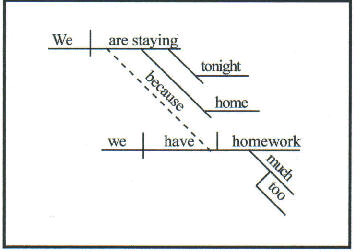
L and I were sitting by her bed, reading the graphic-novel version of Shakespeare that she brought from the school library when she came across a sentence that stumped her: the king sent to men “to consult with the oracle of Delphi, in Greece.” I explained to her what “consult” means and then began working to help her figure out what “oracle” might mean.

“If ‘consult’ means something like ‘ask advice from’ and the men went to consult with the oracle, what did they ask advice from?” Much to my surprise, she couldn’t figure it out. I explained that the verb was “consult,” the action is “consulting.” “So who’s doing the action, who is consulting?”

“The king?”

It was clear a new strategy was necessary.

basic32

That’s right, I started teacher her how to diagram sentences. There are few skills that are so incredibly useful for getting students to see the inner working of a sentence, the clockworks of the sentence. Of course it’s no longer taught today except by eccentric English teachers who have free reign with their curriculum design — in other words, it’s not taught anymore. Still, I’ve begun wondering if I could somehow incorporate it into my own teaching

43

Birthday, Thirty Years Earlier — today’s entry from Anne Frank’s diary:

Wednesday, January 13, 1943

Terrible things are happening outside. At any time of night and day, poor helpless people are being dragged out of their homes. They’re allowed to take only a knapsack and a little cash with them, and even then, they’re robbed of these possessions on the way. Families are torn apart; men, women and children are separated. Children come home from school to find that their parents have disappeared. Women return from shopping to find their houses sealed, their families gone. The Christians in Holland are also living in fear because their sons are being sent to Germany. Everyone is scared. Every night hundreds of planes pass over Holland on their way to German cities, to sow their bombs on German soil. Every hour hundreds, or maybe even thousands, of people are being killed in Russia and Africa. No one can keep out of the conflict, the entire world is at war, and even though the Allies are doing better, the end is nowhere in sight.

As for us, we’re quite fortunate. Luckier than millions of people. It’s quiet and safe here, and we’re using our money to buy food. We’re so selfish that we talk about “after the war” and look forward to new clothes and shoes, when actually we should be saving every penny to help others when the war is over, to salvage whatever we can.

The children in this neighborhood run around in thin shirts and wooden shoes. They have no coats, no caps, no stockings and no one to help them. Gnawing on a carrot to still their hunger pangs, they walk from their cold houses through cold streets to an even colder classroom. Things have gotten so bad in Holland that hordes of children stop passersby in the streets to beg for a piece of bread.

Halušky

1-VIV_0826

Reading

I give the students the same information every year, but this year, I decided to break it down in a letter. Dear student, you recently took the MAP test, which measures your reading progress. And so on and so on. It's a mail merge, so "student" is replaced with the kid's name, and all the details are individualized. Like the winter score. Like its grade-level equivalent. It's bound to be a disheartening moment for some: I'm not sure they've ever been told point blank, "Your reading scores indicate that you're reading at a second-grade level." How do you take the news that your skills are six years behind where they should be?

1-DSCF7873

There are a number of reasons one could posit for this, and for each, a exception: For some, it's a question of limited English exposure at home. But I have Latino students in my honors high school courses as well. For others its a question of limited access to books. But I have such students in my honors high school courses as well, and they solve the problem by basically camping out in the school library. No role model in the immediate family to provide the support necessary. But I've had students in my honors high school courses who'd never even met their biological father.

2-DSCF7877

At times they seem like excuses, at times they seem like legitimate -- and tragic -- explanations. Whatever the case, they're my charge, and I'm tasked with reversing the trend. Some days, though, it just feels like I'm making the situation worse still.