

While discussing the difference between the Old Testament god and the vision of the Christian god we see in Jesus, a social media commenter suggested I read Dr. Jeff Mirus’s “Making Sense of the Old Testament God” in which he attempts to “make God’s ways under the Old Covenant easier to understand” as a reader had requested. He concludes his introduction by admitting that he “can only do [his] best,” which seems to be a tacit admission that there really is no way definitively to reconcile these two visions of the Christian god and that it’s a matter of faith.
Mirus begins by suggesting that there’s not such a disparity between the seemingly harsh god of the OT and the loving god of the NT. There are two ways he does this. First, he argues that there are many passages in the OT that show a deity in line with what we see from Jesus. Fair enough. But he then suggests that Jesus had a harsh streak himself: Jesus’s “denouncing hard-hearted Jewish leaders, lamenting those who lead others into sin, rebuking the wealthy, condemning hypocrites, and foretelling disaster for unbelieving communities” were harsh elements of “Our Lord’s effort to wake us up.” He then quotes Matthew 11:21-24 in which Jesus does a lot of “Woe to you”-ing. Yet there is a big difference between genocide and harsh words. There is a chasm between rebuking someone and stoning them. This is like saying Truman was as harsh as Stalin because he yelled at people.
As the article develops, so does the offensive weirdness of Mirus’s logic. Regarding the harsh nature of the OT god’s commands to slaughter so many people, he suggests, “Finally, we must not forget the decisive separation of the sheep from the goats—those who will be sent into eternal fire.” He is literally saying that the acts of cruelty we see from the Christian god in the OT pale in comparison to hell. In other words, “Yes, our god was pretty cruel in those times, but just think about how cruel he’ll be toward you for eternity in hell!” There are elements of our god that are even more appalling than what we see in the OT, so this god is really actually good. This is another example of how Christians seem to suffer from Stockholm Syndrome: the very god that “saves” them is the being that creates the conditions from which they long to be saved!
Mirus then deals with a second “misconception [..] that the Old Testament authors thought of God’s will in exactly the same way as we do today.”
This gets at the tension between the obvious fact that humans wrote the Bible and yet Christians claim that their god inspired the Bible. Where does divine authorship/inspiration leave off and human creation begin? In saying that “the Old Testament author thought of God’s will” in any way that could be discernable in the text is to negate the divine authorship. Surely what the human authors thought would not interfere with the divinely giving knowledge of the reality of the situation. But this very idea that somehow the Biblical authors’ own ideas got inadvertently mixed in with the divine revelation gives apologists the room they need to excuse the OT god of any wrongdoing.
Mirus continues by asserting that many of the abuses in the Bible are not God’s responsibility: “It is easy to fall into the trap of believing that everything recounted in the Old Testament is the will of God.” He then relates the story of Jephthah, who made a vow to sacrifice the first thing that came out of his door if his god would grant him military victory. When Jephthah returns home, his daughter runs out to greet him, which necessitates him slaughtering her as a sacrifice to his god.
Mirus argues that this is all on Jephthah and that we cannot hold the OT god accountable for this. That might very well be a good point that solves this dilemma, but it does nothing for the seemingly-countless times this god does indeed command people to do awful things. It’s a softball pitch intended to make readers more confident in the Bible and Mirus’s argument.
In dealing with the OT god’s commands for genocide, he asks, “Is there a significant difference between reading what God has done to this or that person or this or that people in the Old Testament, either directly or indirectly, as compared with the manner in which He appoints our lives, including the circumstances and agencies through which we will die, and which He alone both knows and contains within His own Providential limits?” In other words, our god is in control of how we die anyway, so does it really make him such a monster to kill us in this manner or that manner? He is, after all, a god: he can do what he wants! He made us; he sustains us; it’s his choice.
First, imagine saying that about your own infant child: “Surely I can kill this child. I made her. I sustain her.” What wretched monster would think like that?
Second, apologists can use this line of reasoning to excuse any action they undertake, no matter how horrific


We mowed again today: yesterday’s mowing was not sufficient because the height of the grass required us to mow at the mower’s highest setting yesterday. And since we don’t have the sharpest blade in the world, it just pushed some of the grass over and cut the rest.

Today we mowed again. And pulled weeds. A lot of weeds. And put down fertilizer.
















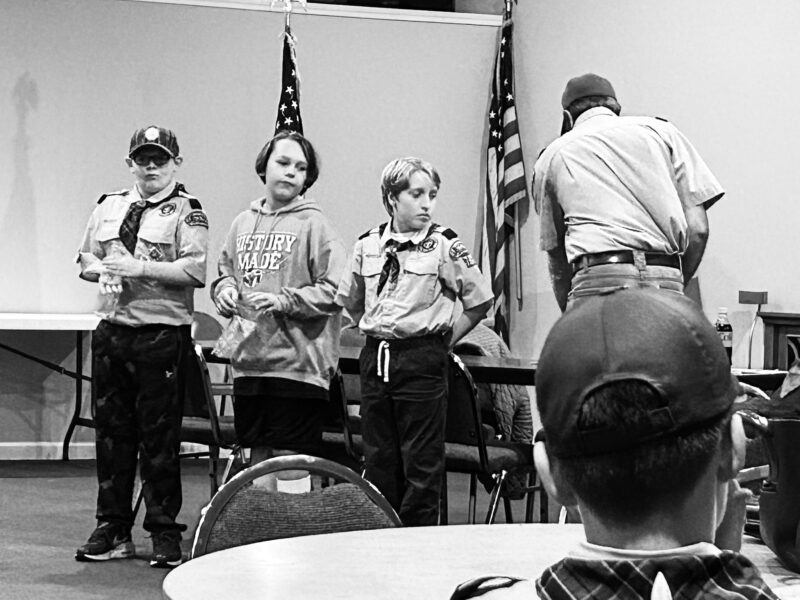
The Boy is moving on: cross-over is in a couple of weeks, and the pinewood derby is in a couple of days. After that, he’ll no longer be a cub scout — he’ll move on to be a boy scout…
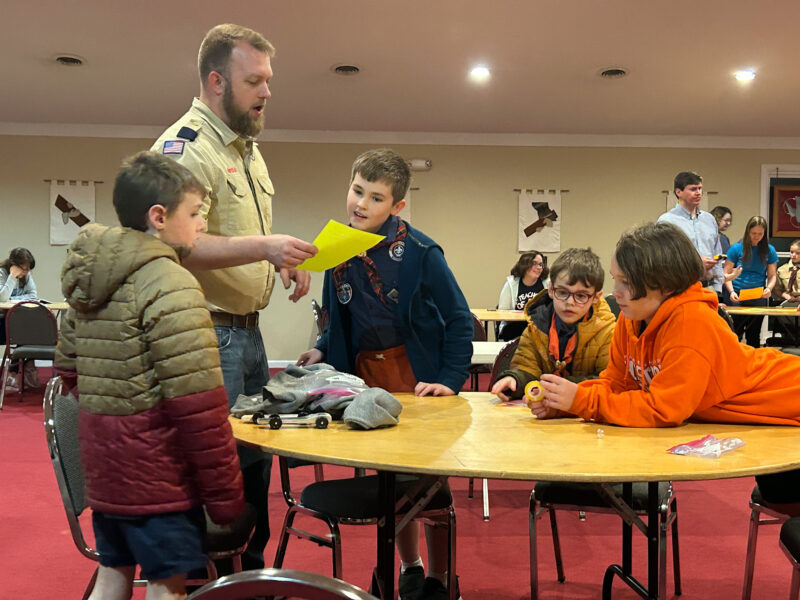












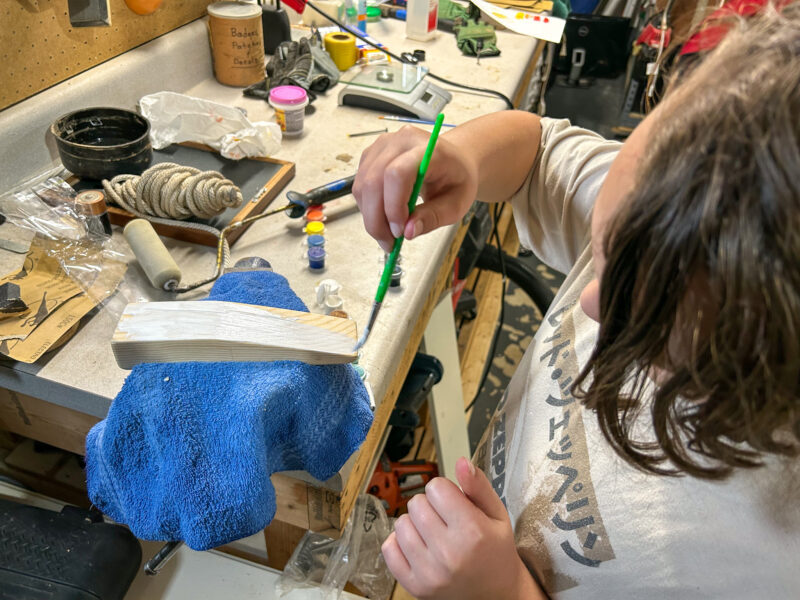
The Boy is going on his first overnight field trip this week: Tuesday morning the fifth-grade class leaves for Chattanooga and they don’t return until Thursday evening. And the derby is on Saturday, so we had to get things finished up today.
It was a close game, tied 0-0 at halftime and even throughout the vast majority of the second half. And then, with about one minute remaining, the opposing team scored.




It was disappointing, but the boys played well.

Every now and then, I delete my chess.com account and start over. Which means I start at the bottom of the ladder again. Which leads to mates like this — and I missed mate 6 moves earlier…




This will be the last year E participates in the pinewood derby. The first time was five years ago, with a pack that we left because the Boy never really felt like he fit in there.
I don’t even know how he did in that first derby, but he enjoyed it and was eager for the next derby.
The second pinewood derby was his last with that first pack. We took a year off from scouting and then returned in time for the first Covid-era pinewood derby:
I don’t remember how well we did, but I know one of E’s closest friends won that year. We tried our best, though, using all the tricks we could find:
All that stuff is illegal now.
Last year, we went for a different strategy: amusement instead of performance. Our car was the Butter-mobile.
“I was hoping to win an originality award,” the Boy confessed afterward, but we didn’t even get that despite the laughs and positive comments from everyone.
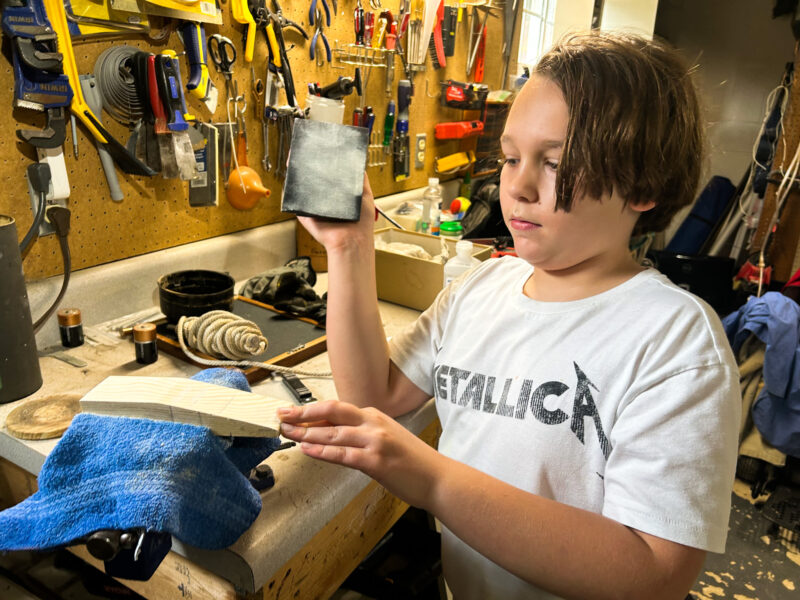
This year we’re going back to a performance idea. But we’re trying to keep it simple as well.

Today we got the shape roughed in and the first bit of sanding done.
We’ll see how things go, I guess, but I’m trying to get him simply to appreciate and to enjoy the fact that this is the last time we do this.
That made it a bittersweet activity for me…
The girls got second place in today’s tournament.