













g

Decisions

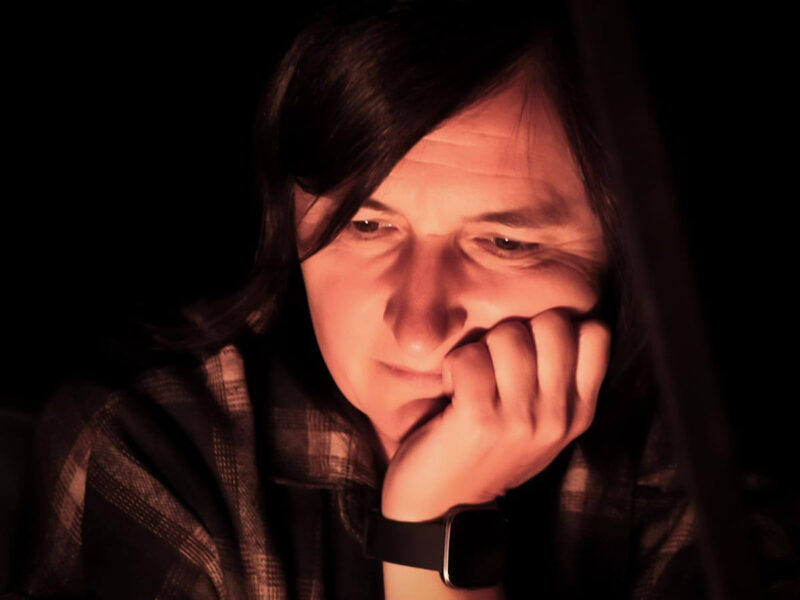
Sometimes, there are no right decisions; there’s only a queue of increasingly wrong — sometimes increasingly harmful — decisions, all standing patiently in line for us to inspect them, reinspect them, obsess over them, fret over them, stress over them, reexamine once again, reconsider yet again, and constantly feel crushed by them.

Sometimes, there are no good decisions; there’s only a pile of increasingly worse decisions — often increasingly harmful — and we just have to look them over and decide which of these awful decisions we will take, which of these awful harms we will inflict.

It’s never something as morally abstract as the trolley problem. It’s always direct harm to a relationship we treasure. It’s always choosing one hurt to inflict over another to someone we don’t want to hurt at all. And so it always doubles back on us and causes us as much pain as we doled out. Perhaps more. Perhaps it’s only with a little experience and a few years that we see that.

Sometimes, there is no way to juggle all the things we’re required to keep flying overhead in never-ending arcs. Focused on keeping the chainsaw’s roaring blades away from our hands, we lose sight of one thing or another, and the knife comes clattering down to the floor, damaging something. Or worse, someone.

I feel like this teaching throughout the day: there are little decisions I have to make constantly (Do I let her go to the bathroom now or would it be better later? Do I let him go to the vending machine?) and some only seem little (Do I call him down now, knowing how he’ll react and knowing the disruption that will cause — which will be the bigger disruption? Do I correct her writing now, even though her mistake has only a tangential connection to the topic at hand? Do I try to force this kid to work with someone or let her work on her own again this time even though we’ve had the discussion about the merits of collaboration and made an agreement to try the next time we’re in groups?). But there is always — always, always — a decision just lurking.

Nowhere else is this more true than in parenting. Things glide along fine until they don’t, and then someone is always going to be disappointed; someone is always going to be hurt.

This is especially true, I’m discovering, as one’s child moves closer and closer to that magic number: eighteen. It’s especially true, I’m seeing, as one’s child becomes increasingly cognitively developed and is no longer making arguments like, “I just want to,” but sound, logical arguments that acknowledge their own shortcomings in the present situation and yet make a good case for getting what she wants. It’s especially true, I’m learning, when she fights back tears of frustration and tries her level best to keep her emotions in check and act like an adult.

“Because I said so” is no more a legitimate reason than “I just want to.” At least it’s not anymore, because the power of logic: what’s going to change in the next two and three-quarters months? Is she going to be any more cognitively developed? Emotionally developed?

K and I love being parents, truly we do, but even after nearly eighteen years of it, we’re still wondering if it will ever get any easier.

At Work

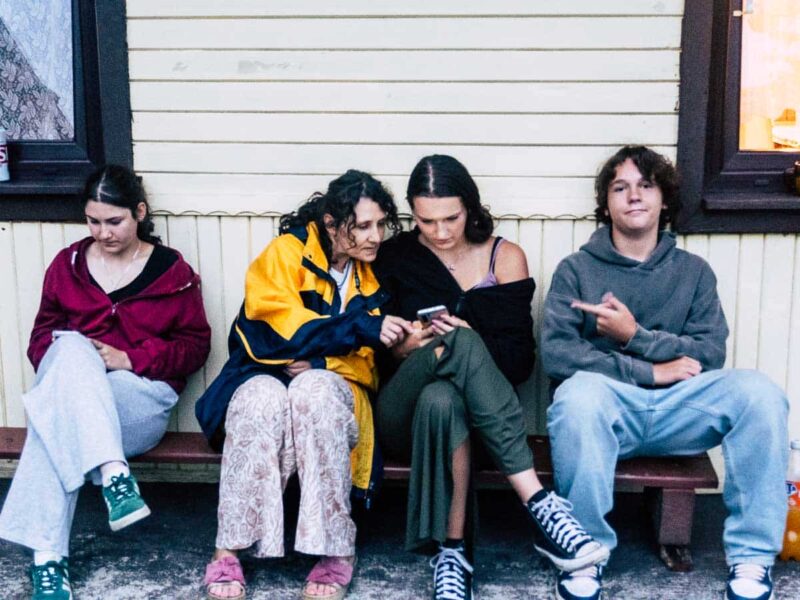
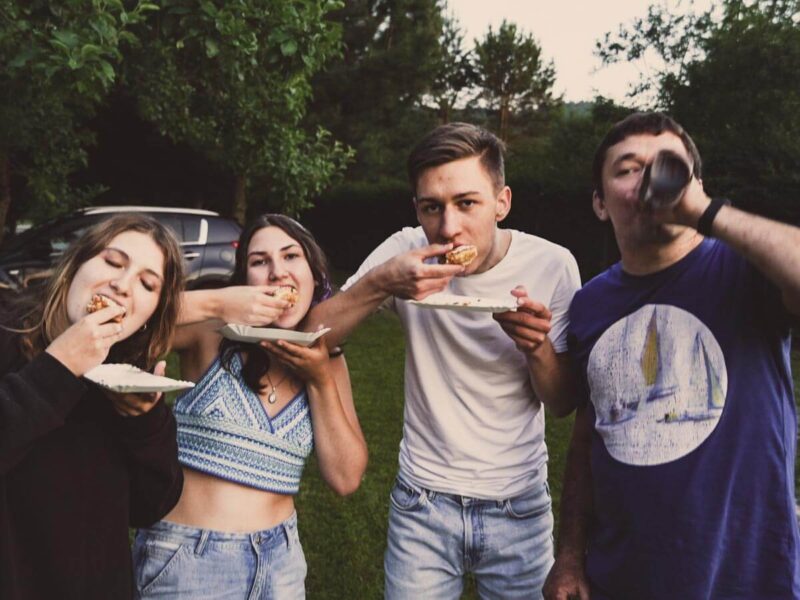
These three kids are among my best workers. Z, the boy in the middle, wasn’t the best worker last year.

This year, he is. When I told the seventh-grade administrator about the change, she threw her arms up and proclaimed, “Hallelujah!”

Old Friends, Old Teammates

They’ve known each other for years. They’ve played together on at least three different teams. During high school season, they’ve played against each other for four years.

Two years ago, when he Mauldin girls took state, L’s team beat S’s and E’s team in straight sets.

Tonight, the roles were reversed. Woodmont is a regional powerhouse this year just like Mauldin was two years ago.

But no matter who wins, the after-game picture is always the same.

Weezer

First (and maybe only) full family concert.

From School

English I students continued with their parts of speech review, getting out of the traditional order and skipping from adjective to prepositions in order to help students identify prepositional phrases. This will help them with all the other parts of speech, especially since we’re going to be covering active/passive when we get to verbs later this week.

English 8 students continued with the district-designed unit on argument based on the newly adopted textbook looking at argumentative writing. We’re looking at a second article dealing with automation and employment: this article makes the opposite claim as last week’s article “The Automation Paradox.”

Name-Calling GOP

I was looking through old posts in the “random post” widget the other evening before heading to bed, and I saw this from 2008.

Sixteen years later, and nothing has changed.

Maybe immaturity is just a GOP thing?

Goodbye to the Bard?

South Carolina Regulation 43-170 has been wreaking havoc on education this year, and few are more directly affected than humanities teachers. It reads, in part, “Instructional
Material is not “Age and Developmentally Appropriate” for any age or age group of children if it includes descriptions or visual depictions of “sexual conduct,” as that term is defined by Section 16-15-305(C)(1).”

In turn, Section 16-15-305(C)(1) reads:

(1) “sexual conduct” means:

(a) vaginal, anal, or oral intercourse, whether actual or simulated, normal or perverted, whether between human beings, animals, or a combination thereof;

(b) masturbation, excretory functions, or lewd exhibition, actual or simulated, of the genitals, pubic hair, anus, vulva, or female breast nipples including male or female genitals in a state of sexual stimulation or arousal or covered male genitals in a discernably turgid state;

(c) an act or condition that depicts actual or simulated bestiality, sado-masochistic abuse, meaning flagellation or torture by or upon a person who is nude or clad in undergarments or in a costume which reveals the pubic hair, anus, vulva, genitals, or female breast nipples, or the condition of being fettered, bound, or otherwise physically restrained on the part of the one so clothed;

(d) an act or condition that depicts actual or simulated touching, caressing, or fondling of, or other similar physical contact with, the covered or exposed genitals, pubic or anal regions, or female breast nipple, whether alone or between humans, animals, or a human and an animal, of the same or opposite sex, in an act of actual or apparent sexual stimulation or gratification; or

(e) an act or condition that depicts the insertion of any part of a person’s body, other than the male sexual organ, or of any object into another person’s anus or vagina, except when done as part of a recognized medical procedure.

This is in the 2023 South Carolina Code of Laws, Title 16 (Crimes and Offenses),
Chapter 15 (Offenses Against Morality And Decency) Section 16-15-305 (Disseminating, procuring or promoting obscenity unlawful; definitions; penalties; obscene material designated contraband).

So this morning, I walked into the teacher’s workroom this morning to put my lunch in the refrigerator, and the drama teacher was making copies.

“Are you still able to teach Romeo and Juliet?” she asked.

I told her that as far as I knew, we were still able to teach it. It is, after all, in the textbook the South Carolina Department of Education approved. I asked her what she meant.

“We’re getting word that his plays are a bit too controversial, and we might not be able to act them anymore,” she explained.

Pretty much.

Re-creation

The Honors kids are working through a parts-of-speech review, and today we went over pronouns. (Not for the whole class, mind you — we only spend about 15 minutes per day working on this. Otherwise, it would be numbingly boring for everyone, including me.) Students were identifying demonstrative, interrogative, and relative pronouns, and number five was a question, an excellent opportunity to see for interrogative pronouns.

“Let’s skip to five,” I said, giving them a moment to read it. “The first pronoun in that sentence — can anyone identify it?”

A smart young lady raised her hand. “What,” she replied correctly.

And then it hit me — there’s always a joke of the day. I like to make the kids laugh, though most of my jokes make them groan. But here was a chance to recreate a classic.

“Number five,” I repeated. “The first pronoun.”

“What,” she repeated, a little confused.

“I’m asking you — the first pronoun in number five.” I had to phrase the next part just right. “It’s what?”

“Yes.”

“Yes, what?”

“It’s what,” she confirmed, her eyebrows furrowing a bit more, smiles starting to appear around the room.

“What?”

“Number five?”

“Yes. I’m asking you. The first pronoun.”

“What.” She was starting to catch on here.

“The first pronoun!” I let a little faux frustration creep into my voice. “Look at number five and identify the first pronoun.”

“It’s what!” a full smile as she had caught on at that point.

“Why are you asking me?! I know what it is. I want to see if you know. What is it?”

“Yes!” Now she had it.

“Yes, what?!”

Exactly!

By now everyone was giggling, including her.

“Does anyone know what we just recreated?” I asked.

“Who’s on first?” came a voice from the back.

“Very good!” And our first brain break of the day was to watch the first few minutes of that classic.

Perspective

An old friend — my next-door neighbor growing up — faced a daunting procedure today: due to various complications, doctors had to amputate his right leg above the knee. I can’t imagine what that must be like. But one thing is certain: he hasn’t lost his sense of humor.

Zeno’s Paradox

In English 8, we’re off to our next set of required readings. I have very little say in what I teach English 8 this year, and a lot of the materials are too difficult for my students and too — quite frankly — boring to get their interest. Our piece is called “The Automation Paradox,” and so we did a little pre-teaching today so kids know what a paradox is. To that end, I introduced them to Zeno’s Paradox. We did some measuring, completed a little math, and I convinced them that the math was solid: the arrow should have never hit Zeno.

So then we tested the theory with a ball. Which students took turns throwing at me. I was fairly sure they would hit me quickly, but I failed to take into account the light weight of the ball and the tendency of smooth light balls not to travel in a straight line. So most of the throws missed.

But the point was made. And the kids had a blast throwing that silly ball at me.

This is what makes middle school so fun: they’re cognitively developed enough that we can get into some abstract thinking and still childlike enough to enjoy being silly.

Hike

We headed to Paris Mountain State Park today for a warm-up hike for the coming fall hiking season. E and I, we prefer mountain biking. K enjoys it as well, but she prefers hiking, and she’s got a goal for this season: the Dismal Loop. Today’s hike was much less daunting:

We tried to talk the Girl into going with us, but she was intent on studying at the library. Of all of us, she definitely has the most negative opinion of hiking.

We’ve been to this lake several times, and we’ve even got pictures of L tottering about the place as a toddler.

The Boy managed fine, but he’s insisting that he’s outgrown these hiking boots — which he wore daily just this summer at Scout Camp. Is it possibe? And they’re the Girl’s boots, not his own boots.

Two signs of how our kids are changing: our daughter elects to go study at the library (I’m sure there was a fair amount of socializing as well — that’s how I studied at the library in high school), and our son is approaching full size with alarming rapidity, with a full-size appetite developing and a full-size teenage attitude emerging.

We decided to come head back next Sunday, and the Boy and I will ride while K takes the dog for a walk. The Boy, by the way, now rides K’s mountain bike whenever he gets the chance.

So that means we’re also looking for yet another bike for him. He’s not quite outgrown his bike physically, but he’s already putting demands on it that the poor bike can’t handle. He’s broken a chain once and gotten more pinch-punctures than I care to recall.

Once we got back and had some dinner, K did what she always does: she found some chore or other she felt she should have accomplished ealier and gets to work.

I graded articles of the week for my honors kids and snapped a picture of K, noticing once I’d converted it to black and white how awful our front yard looks.

Ride

You know you’ve discovered a completely negected trail when you become a Strava Local Legend after only one ride on that trail:

Levels

There’s a caterwauling feline I’m tossing around above my head that seems determined not to be part of this juggling act, and I can’t really blame it: after all, I’m also juggling a set of kitchen knives and a chainsaw, along with some greasy ball bearings and a blob of slime one of my students made, and they’re all getting tangled up in the random arcs in which they sail over my head. Every time the cat comes into my grasp, I get a fresh set of deep gouges as the cat’s claws rip into my skin. At the same time, I have to worry about the slices the knife blades so desperately want to inflict on my arms, and the chainsaw seems determined to take off one appendage or another. The greasy bearings and slime are just the last lovely touch as they somehow make my hands simultaneously slippery and sticky, complicating the entire process. And so I’m bound to drop something.

I have two classes of eighth-grade on-level English. In one class, I have seven students of such low English ability that I’m supposed to make alternative versions of most things we do. In both classes, there are also students with special education requirements that are similar. Some of these kids need only a little help; others need a lot. So for multiple-choice tests, I make three versions: one with four possible answers per question, one with three possible answers per question, and a final one with two possible answers per question. Once I make these tests, I have to make sure that the right student gets the right test, which can be particularly challenging since most of them are supposed to be administered electronically so that we have “data” to assess. (I put that in quotes because a) it’s representative of the foundation, indeed, cornerstone of edu-speak these days as and a result, b) I absolutely loathe it.) So what happens if I give 
  • Required number of grades and suggested grading schedule
  • Required assessment that I really don’t feel is a good assessment — too difficult for these students
  • Required units/pacing guide that I don’t really feel is good for these students — too much of a shotgun, hit them with a million topics approach. 
  • Required to cover the same things as other teachers at roughly the same time in the name of “equity”

The shells on the beach just at the edge of the surf were visible for only a few moments before the white bubbles and turbulence hid them again. In the brief time I could clearly see them in the shallow water, it was obvious most of the shells were only fragments, often smaller than the smallest coins, slivers well on their way to becoming grains of sand. Every now and then, a shard would catch my eye, and I would think, “I might try to grab that one” just before incoming wave hid them once again. By then it was too late: once the water cleared up, the tide would have tkane the shard so far away from its original position that finding it was all but impossible. Another might catch my eye, but then the process would simply repeat itself.

To get a shell required calm and patience followed by a paradoxical ability to move quickly when needed. Hesitation meant the loss of the moment. In some ways, that’s a metaphor for live in general for many people. Everything is about getting the right moment, and when that fails, increased stress is the outcome.

Yet the older I get, the more I realize the error in living like that, the unnecessary stress it causes. Yes, I might not get that exact shell that I wanted, but there were plenty of other shells that were just as lovely, often more so.

Home Game

It was a tough loss: the girls were up 15-7 in the first set only to lose 22-25. It’s tough to lose after having such a lead, and it’s tough to go back out for a second set. But they did. And the struggles continued, and the frustrated girls took another one on the chin: 21-25.

Then came the third set. They jumped out to a quick lead just like the first set, but this time, instead of losing it, they increased it, taking the third set 25-14. “See? That’s what we’re capable of,” they seemed to be saying.

Then came the fourth set, which the lost 16-25. It’s these ups and downs, these moments of brilliance followed by moments of — what? — that are so frustrating for this year’s team. They know what they’re capable of: they’re just not managing to maintain it consistently.

Yet through it all, there’s our L, always the upbeat cheerleader of the team, always celebrating even the smallest victory, always cheering up the team when they’re down, always believing in her team.