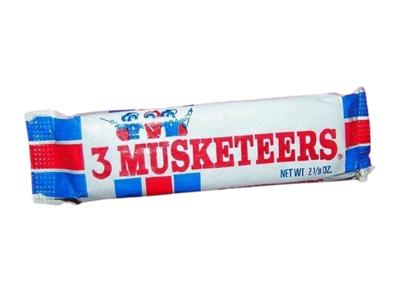
My favorite part of visiting Maw-maw's house in Indian Land, South Carolina was the store that was through the small cane stand on the other side of the highway. At a time when I was rarely allowed sweets of any kind, my mother would walk with me to the store and buy me a Three Musketeers and a bottle of Mountain Dew. We likely shared both: my mother was not one to allow me to indulge quite that much in processed, high-sugar nonsense, but it wouldn't have mattered. It wasn't the candy bar that mattered as much as the journey to get it.
The walk through the canebrake was a significant part of the magi. I would get to take one of the bamboo shoots back to Maw-maw's house, and while I ostensibly used it as a fishing rod in my backyard play, I longed to play something else. I saw it as a warrior's deadly spear or in the case of a shorter segment, a soldier's carbine. Surreptitiousness was critical here: as members of a sect that fancied itself as anti-war and even faux-pacificst, my parents had always forbidden play that emulated war or killing of any sort. While having GI Joe and Star Wars action figures was somehow okay, actual toy guns (real or fashioned out of whatever my imagination allowed) were curiously off limits. Still, I fashioned makeshift guns out of sticks, bamboo cane, Fiddlesticks, Tinker Toys, or whatever else was at hand.
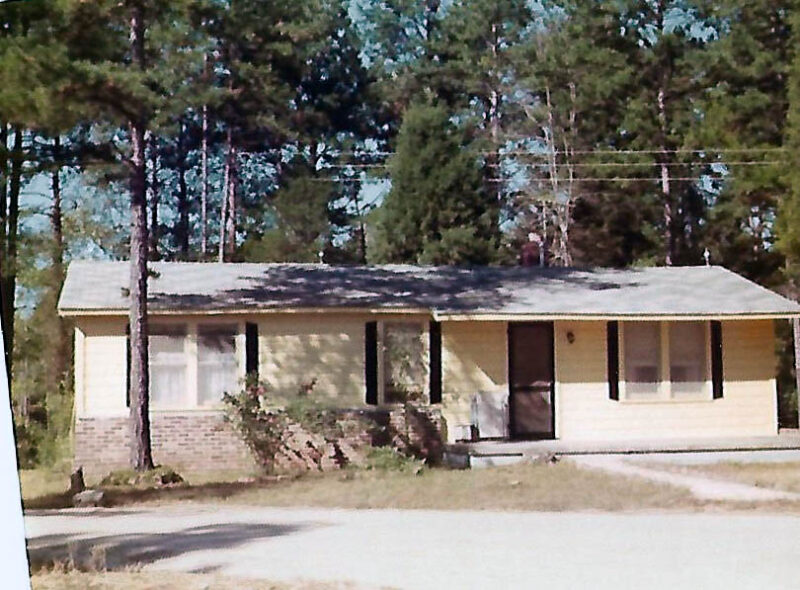
In college, I used a memory about the house as a framing device for a poem about a college friendship that I'd hoped would develop into more but instead exploded.
Protection
I
One afternoon my mother and father
took great rolls of pink fibers
and spread them in the crawl space
of grandmother’s house.
In the middle
of a South Carolina summer,
they wore jeans, long sleeves
and gloves;
they slipped masks
over mouth and nose
and looked more like surgeons
than laborers.
The layers
were to keep the slivers
of fiberglass from sneaking
into hands and slipping
into lungs.“The fibers are so small,”
my mother said. “You can hardly see
them, and they’re almost impossible
to remove.”When my father grabbed
a roll of insulation
without gloves, mother gasped,
and he groaned.
She went in for tweezers;
he stubbornly put on gloves
and continued the work
until she insisted he stop.
“Time will only make it worse,”
she said when he protested.
She took his sweaty, raw hand in hers
and hunted for the glass splinters,
twisting and turning
father’s hand, forcing
the shards to reflect
a bit of sunlight.II
I have run
my hand carelessly
along your life
and caught
a glassy splinter
in the tender pink of my palm.Exploding from the shock
of pain, shooting
my brittle chips
in all directions,
I sometimes hope
that some shard
of me has cut
through your protection
and worked its way
into your flesh,
causing a flat ache
or razor thin pain,
filling your body
with my infection.
I haven't written a poem in years, and I would argue that I've only written three or four poems in my life while the rest are trash arranged into stanzas. This one fits somewhere in the middle: it has potential but it's poorly executed.




0 Comments