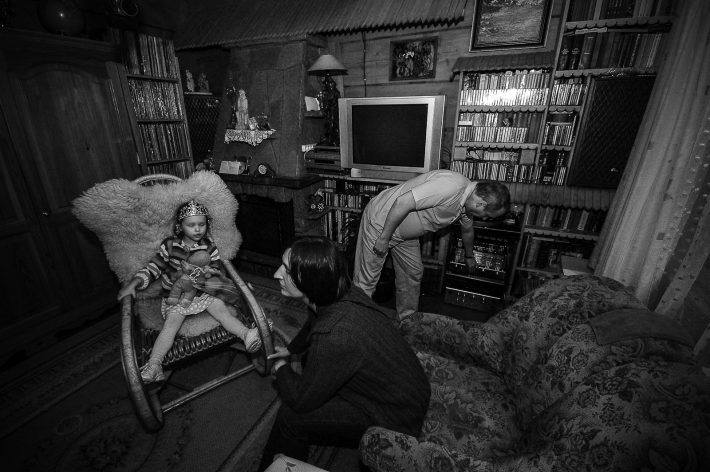
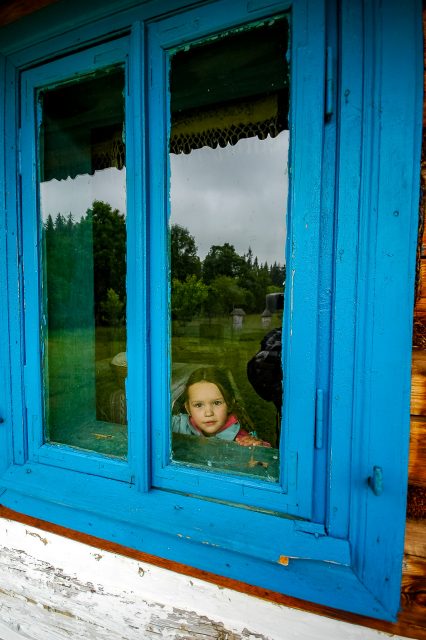
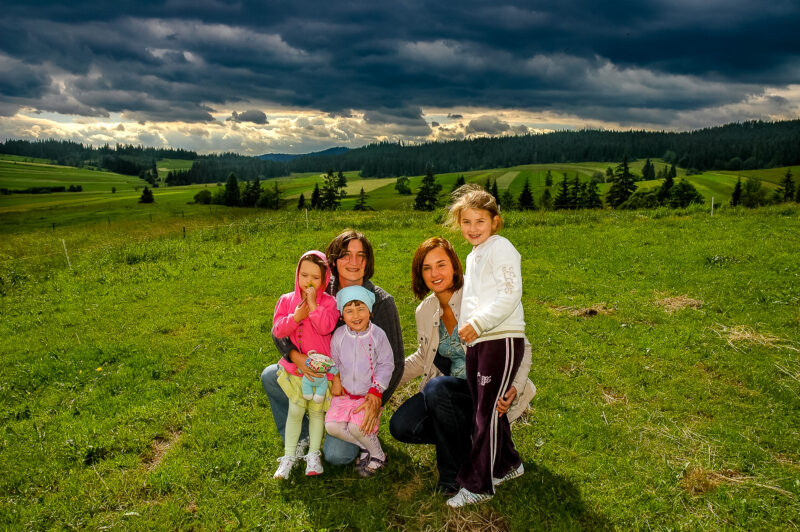
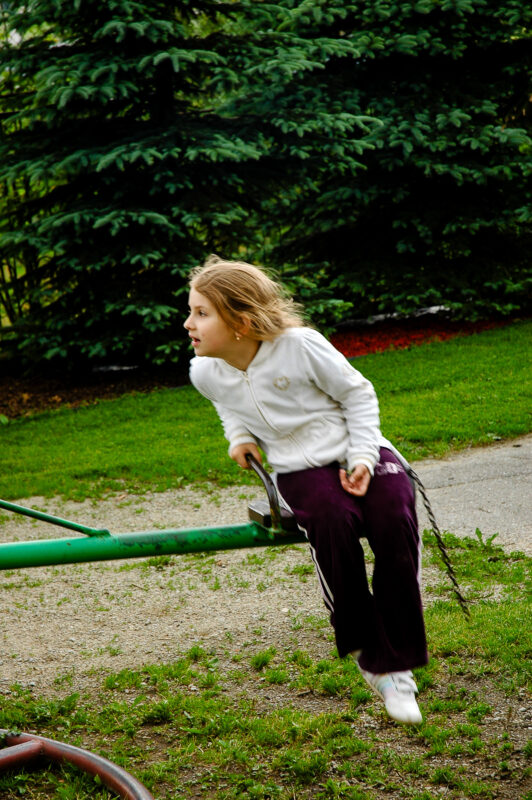
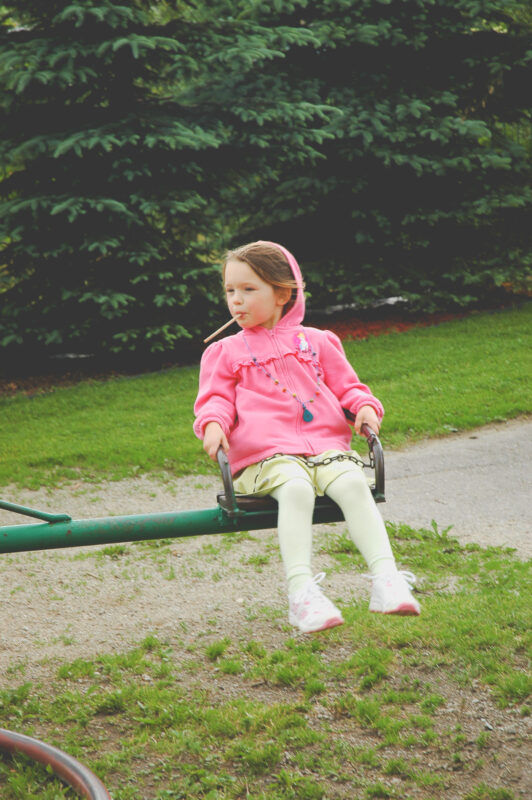
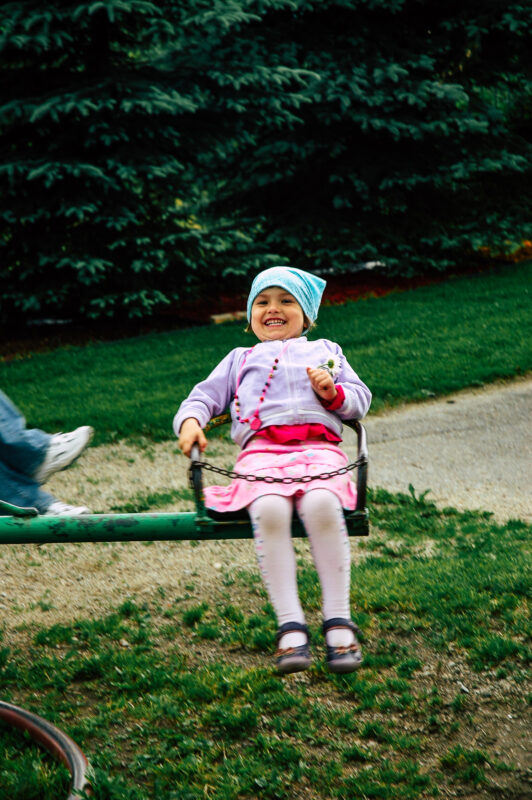
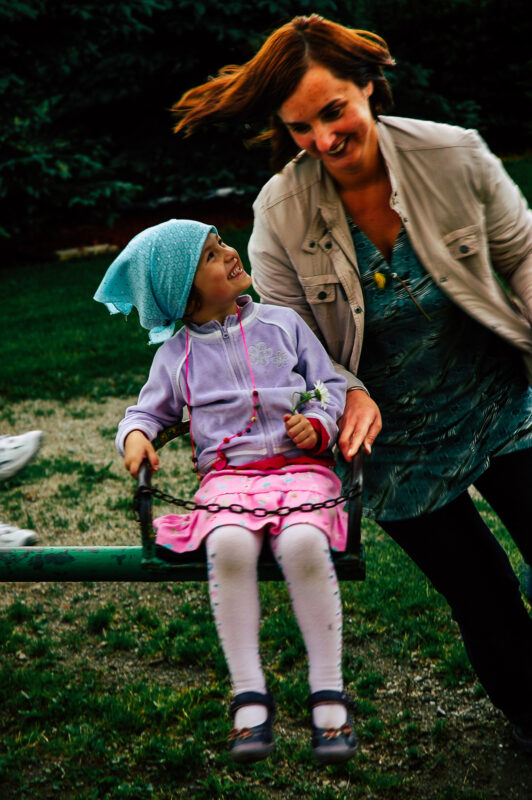
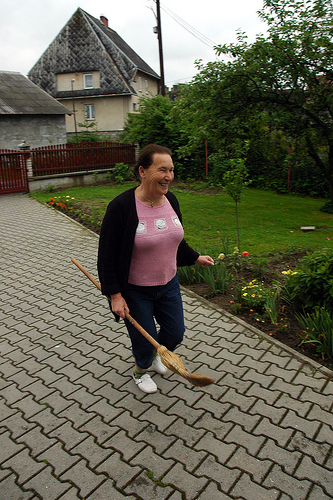
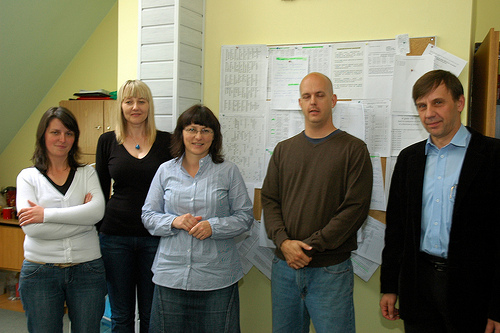
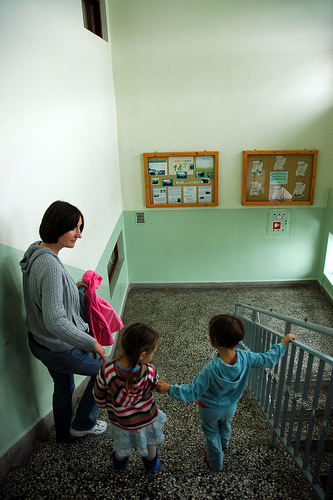
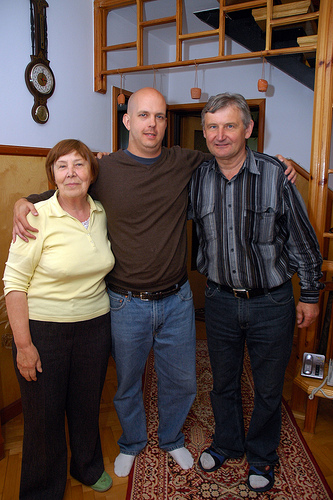
matching tracksuits

fun in threes, sometimes fours

travel

Krakow I

For everyone who visits it, Krakow holds a special place in their memory. Its cobblestones, countless chapels, churches, hidden cafes, hundreds of churches, and enormous market square invite wandering.

I've been to Krakow more times than I can remember; K lived in Krakow for five years. Yet despite all the time we've spent in the city, a visit to Krakow is a highlight of a trip to Poland. To come to Poland without going to Krakow is simply unimaginable.

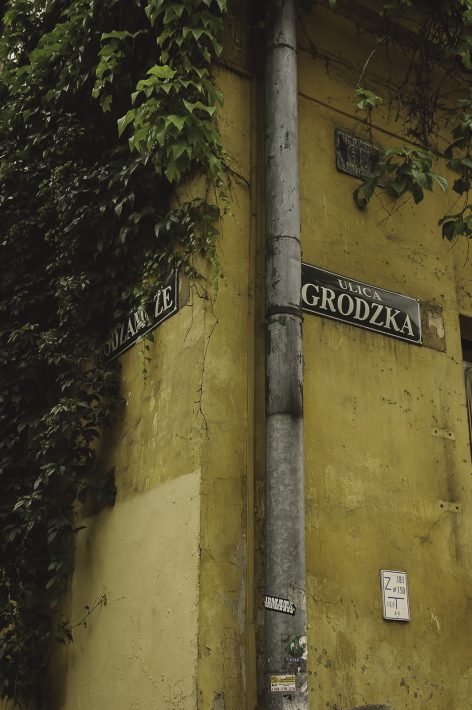
We park on the Wawel castle side of the old town and approach the rynek from the opposite corner, along Grodzka Street.
Wawel is to be our focus for the first part of our visit: with L now able to state her desires and shout her complaints, we have to make slightly different plans. Visiting the Wawel dragon, making the journey though the dragon's cave, shopping for Polish-language children's books,  feeding the pigeons on the rynek.

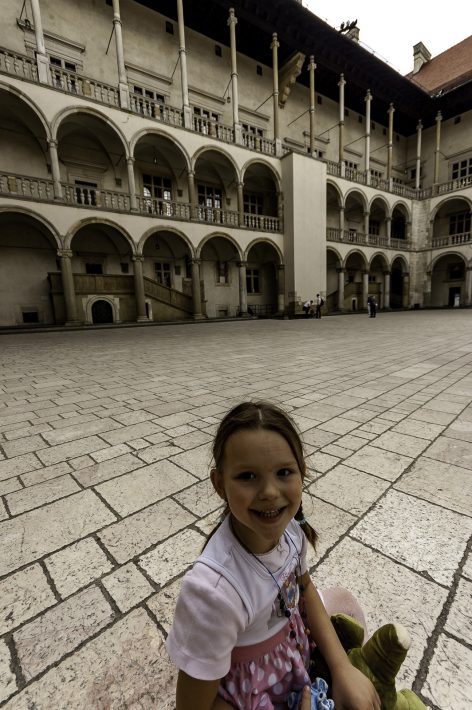
We begin with a stroll through the grounds of Wawel castle, the royal residence.
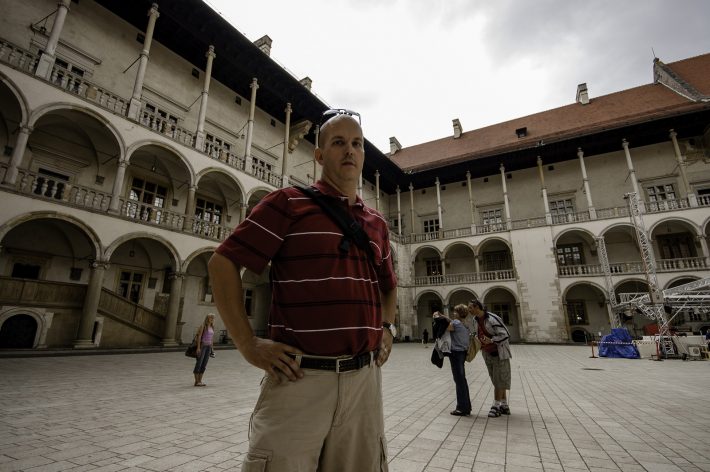
To take a tour of the residence would be something of a waste: L would get little out of it, and K and I have taken the tour many times ourselves. Instead, it's a refreshment walk -- a nostalgia tour.

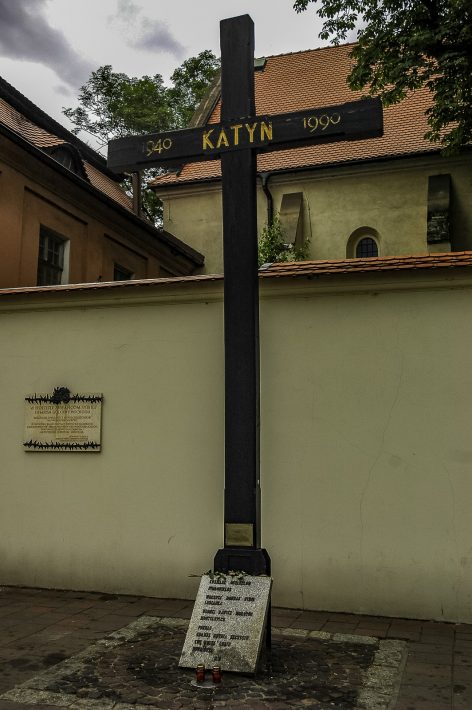
We do, however, head to the grave of Lech Kaczynski, the Polish president killed earlier this year in a plane crash. He was on his way to celebrate the anniversary of the Katyn massacre, but became a victim himself. Ironically, just down the street from his final resting place is a monument -- one of many -- to the victims of Katyn.
We also head into the cave of the Wawel dragon.

According to legend, the Wawel dragon ("smok Wawelski" in Polish) tormented the inhabitants of ancient Krakow by, well, eating them and their livestock.
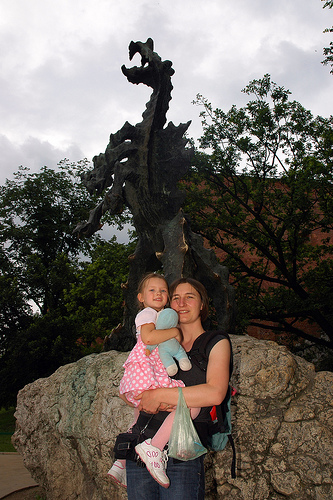
DSC_4148

The king sent all the knights to destroy the dragon, but predictably the reverse happened. As in most legends, it was a commoner -- in this case, a cobbler's apprentice named Skuba Dratewka -- who saved the day. He placed a lamb carcass stuffed with sulfur outside the dragon's lair.
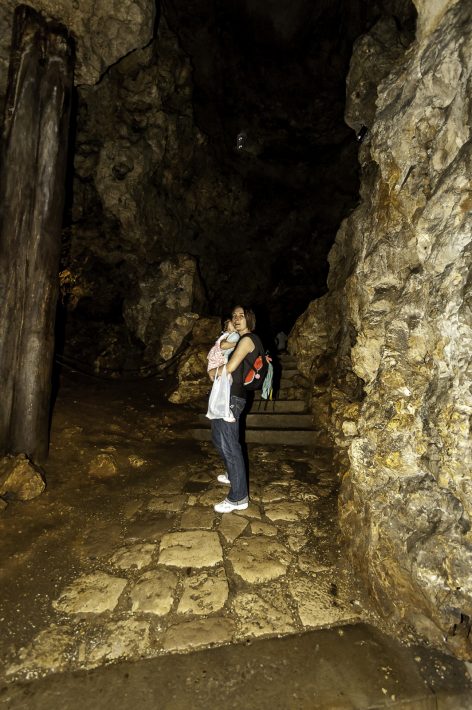
The dragon drank so much water from the Vistula River that he exploded. Problem solved, and Dratewka got his reward: the king's daughter's hand in marriage.

Modern visitors to Wawel gain access to the cave via a long spiral staircase that seems to fall endlessly into the ground.
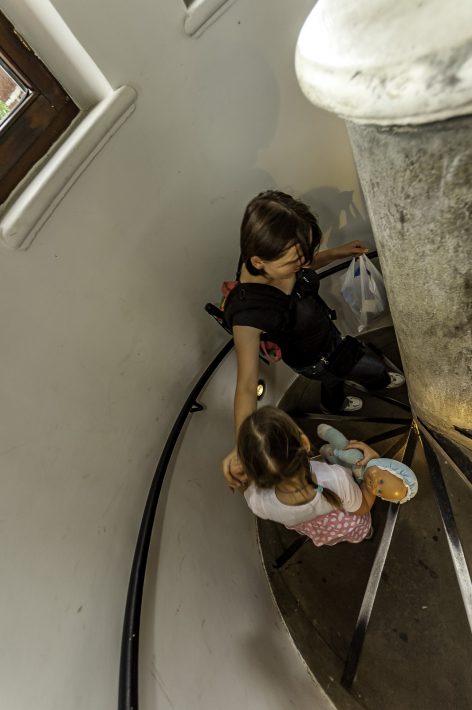
L becomes frightened, refusing to walk on her own. "Hold me! Hold me!" It's understandable: after all, a dark, tight, slippery stairway is unnerving even for us adults.

By the time we make it to the bottom, though, two things are evident: first, we have to see some pigeons; second, we have to eat. And soon.

To be continued...
Ząb

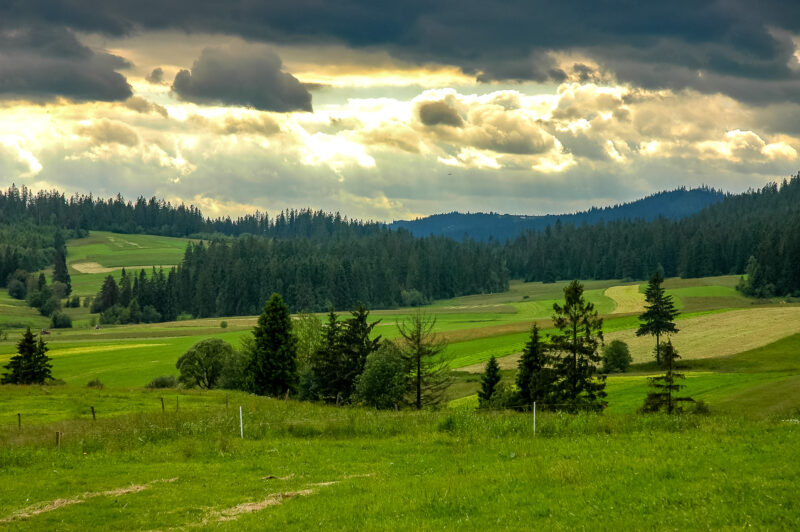
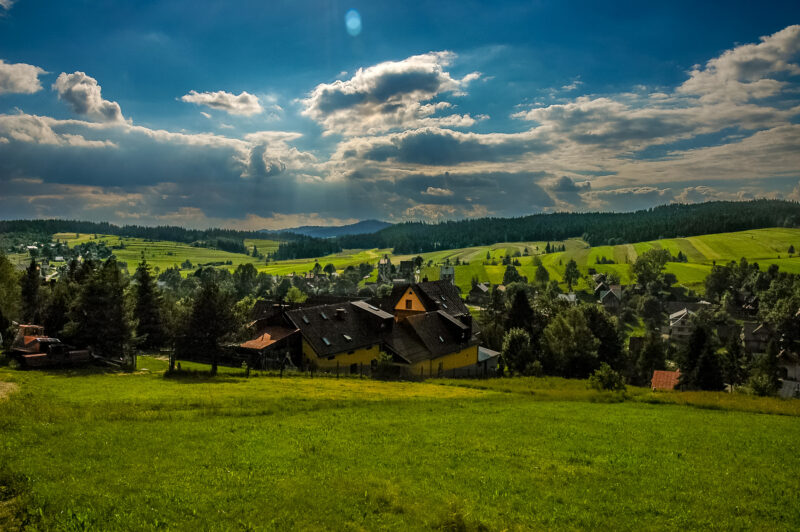
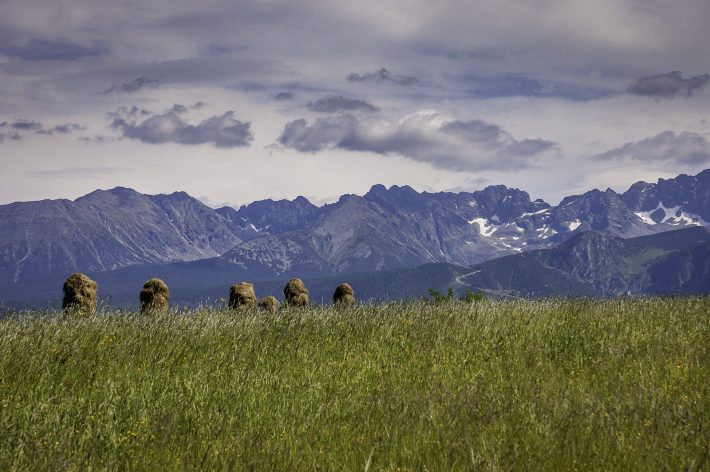
In many ways, the visit to Ząb is the highlight of any trip back to Poland. As the most elevated village in Poland, Ząb (Polish for "tooth") offers incredible views; as K's mother's home village, it offers wonderful visits with family.
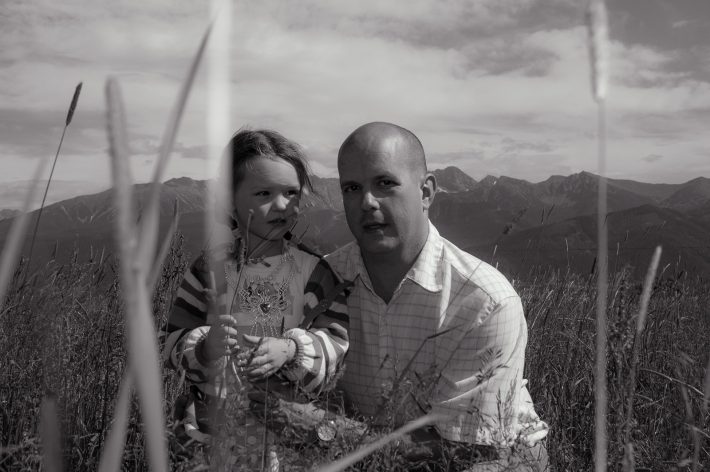
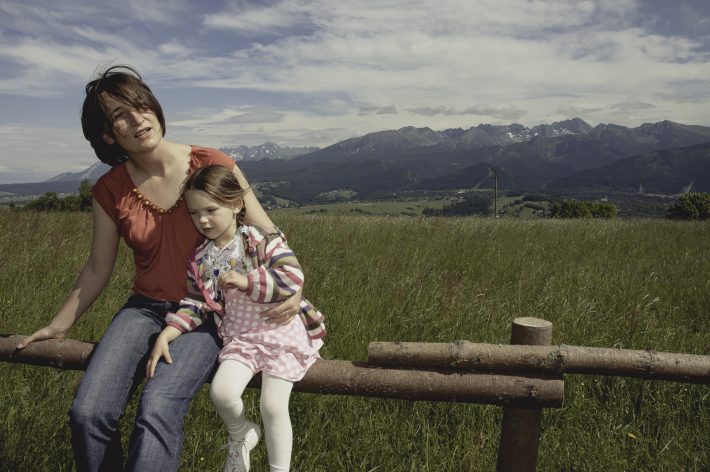
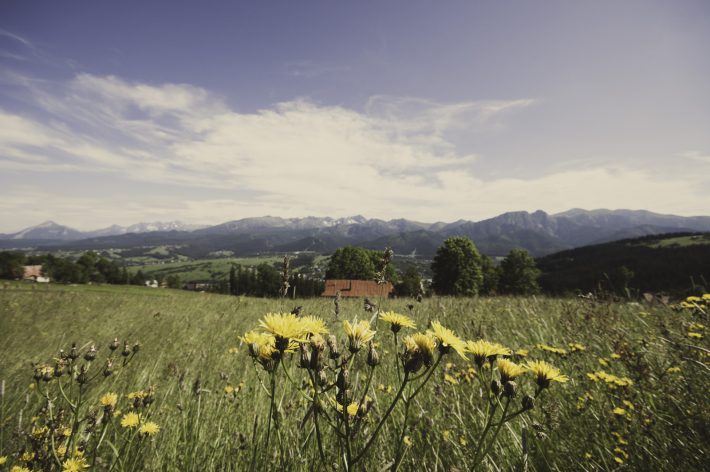
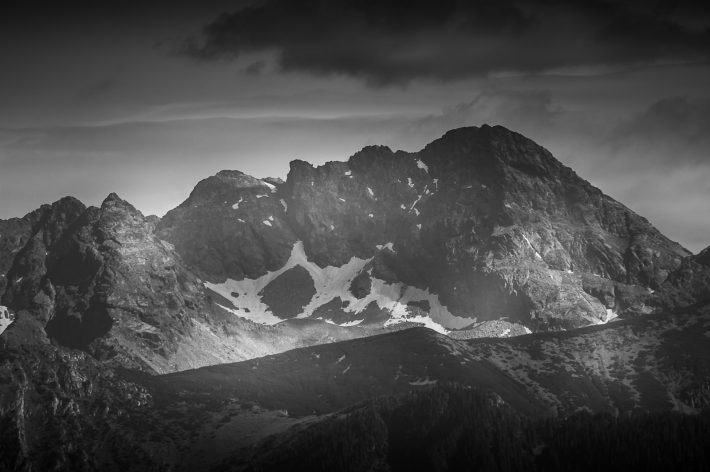
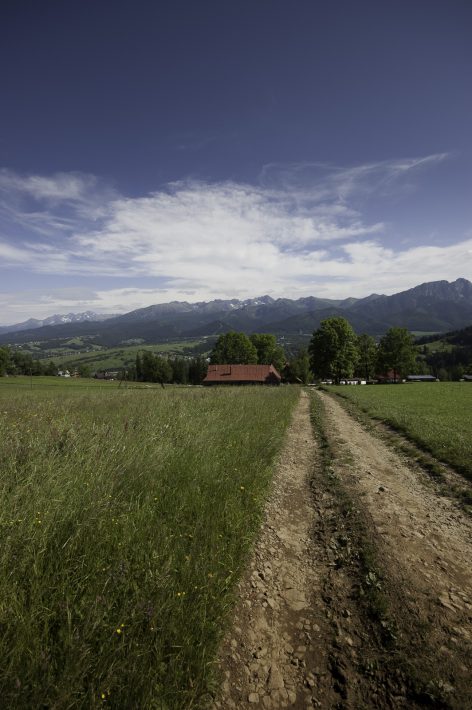
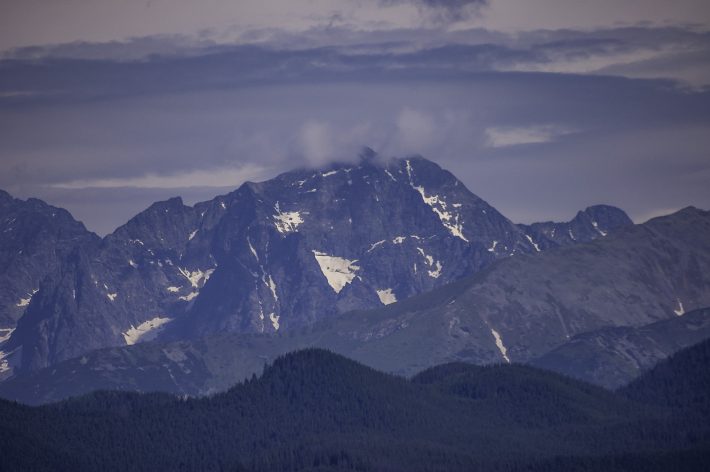
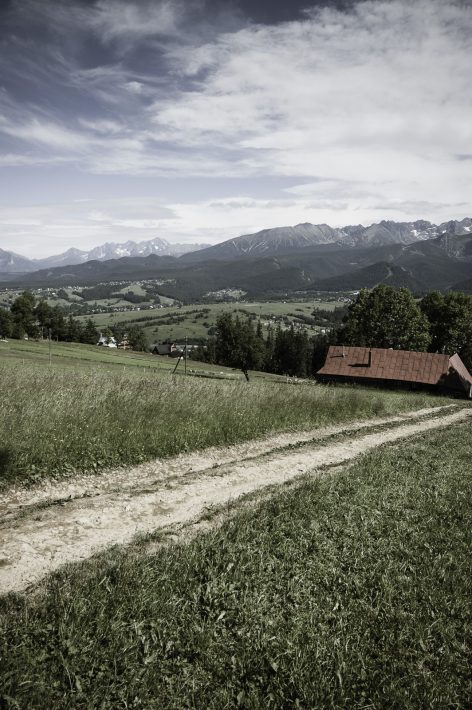
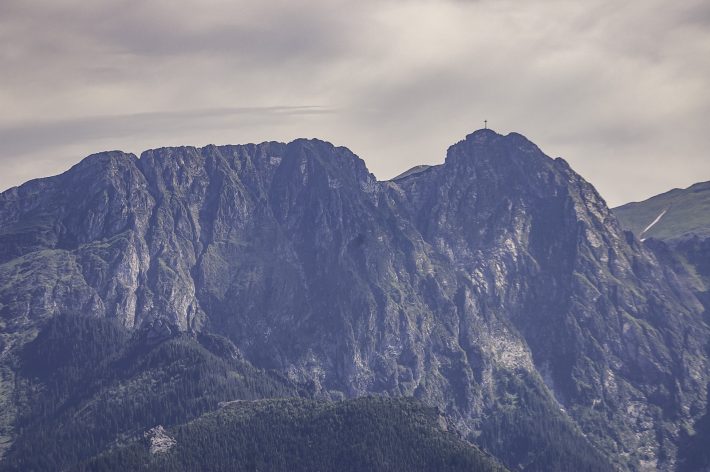
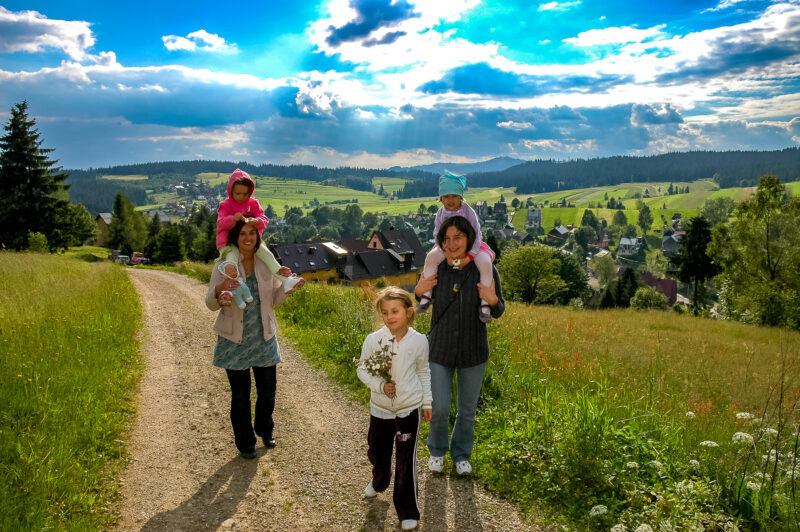
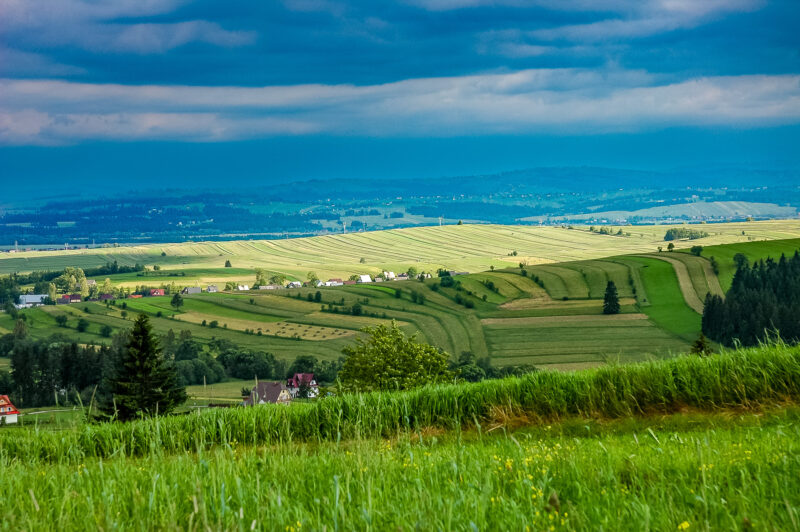
The views are indeed spectacular. From a field called Formanowa, the Tatra Mountains stretch out in their entirety just a few kilometers away.

It's a beautiful spot, and it's still -- for now -- only used as a hay field. Certainly, it's the most valuable hay field in the world: I'm sure there are many developers who would be more than happy to build on land with such a view.

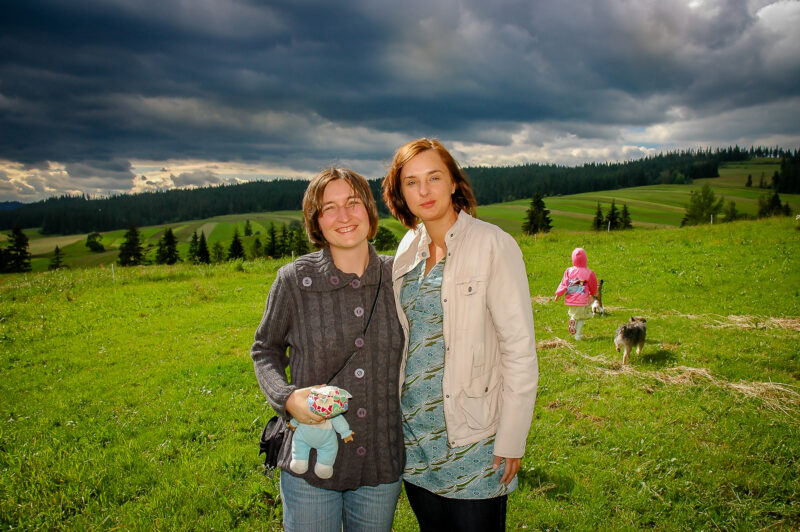
For now, it's a spot for taking portraits

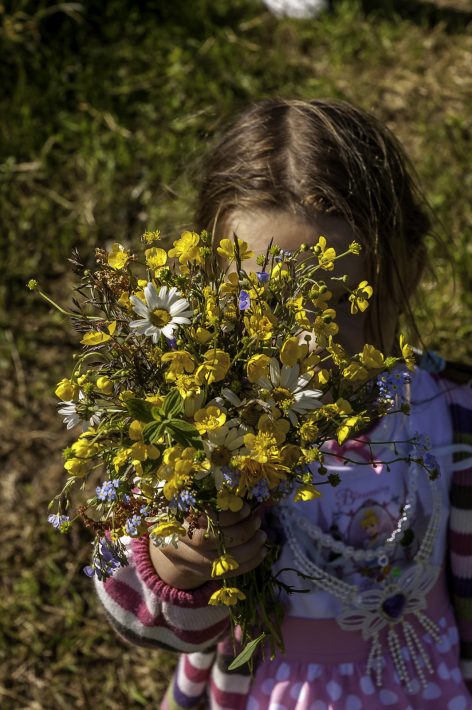
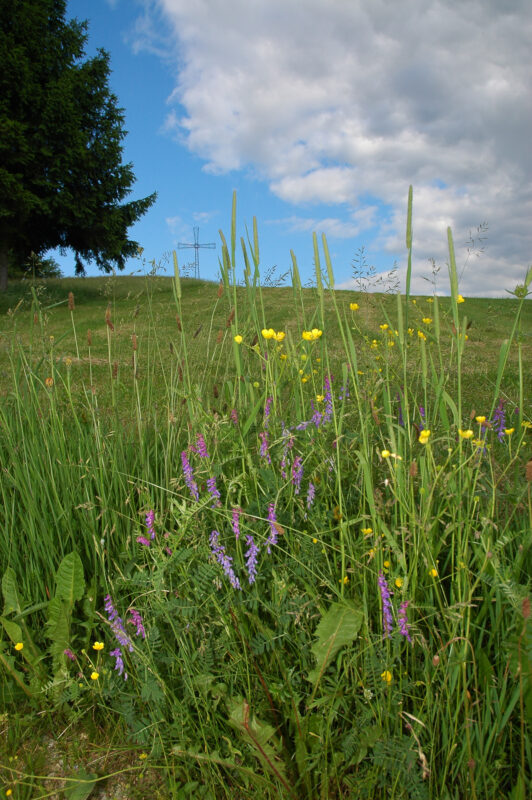
and picking flowers for great-grandmother.

"When you see great-grandmother, don't be afraid," K explains. L has had very little experience with the elderly, and we don't know how she might react. It turns out our worries were for naught. But let's not get ahead of ourselves. There were still more pictures to take and flowers to pick.

When we arrive at K's godmother's home, we find Prababcia (great-grandmother). L immediately follows, holding the flowers out in front of her, offering them to Prababcia. For now, Prababcia is simply tired and wants to sit down.

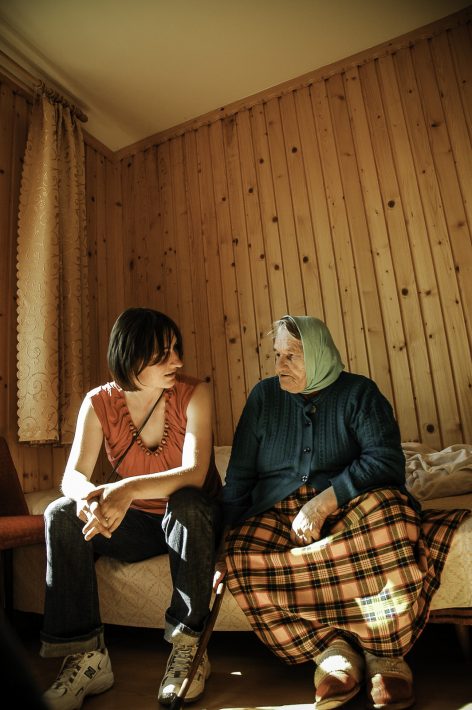
As K and Prababcia sit in her room, Prababcia begins to tell stories about the Second World War. Stories about the Nazis demanding information about the number of Jews and Gypsies in Ząb and the leader of the village plainly lying: "There are no Jews here, nor Gyspies," though there were a few of each. Stories of villagers being arrested, hung, tortured, and shot. Stories of survival.

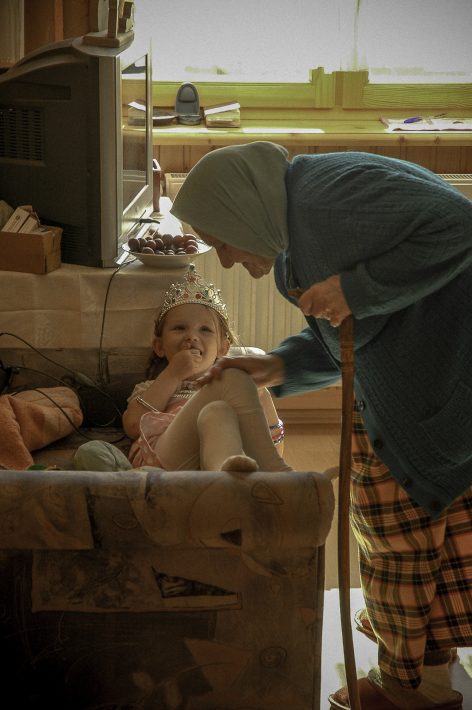
L and Prababcia hit it off immediately. When the rest of the family arrives, and we go to the living room to sit and talk, Prababcia and L retreat back to Prababcia's room. L prances and dances about the room, singing, "My kochamy ciebie." "We love you." Prababcia sits and smiles, then gets up to tickle L. Fortunately, I'm passing through the hallway, near the camera bag.

A visit with an uncle who still lives in the family home ("This is where grandma grew up," K explains to L as we enter.) brings the day to a close. The only thing that could make it better is a perfect sunset.

Multi-Purpose Party

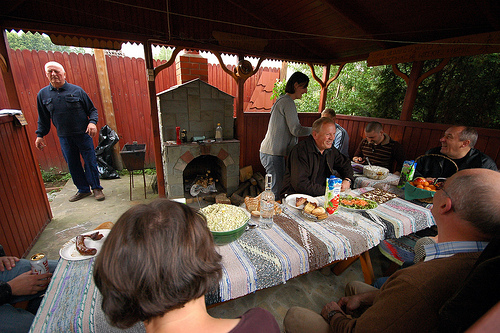
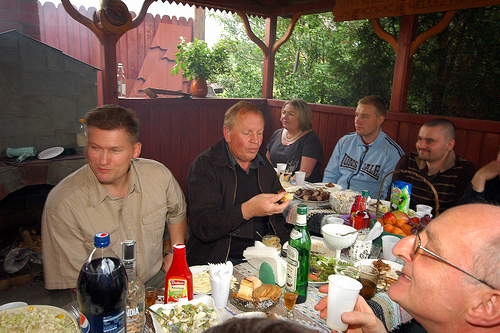
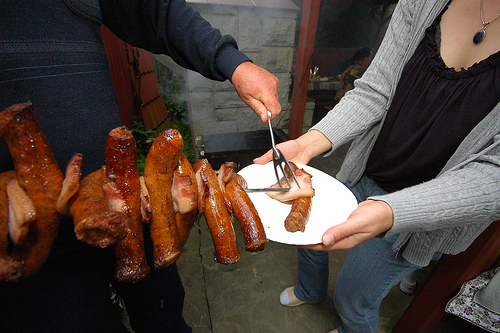
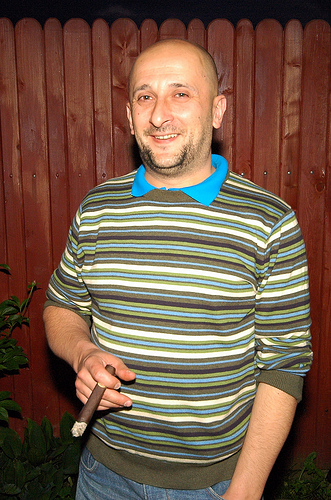
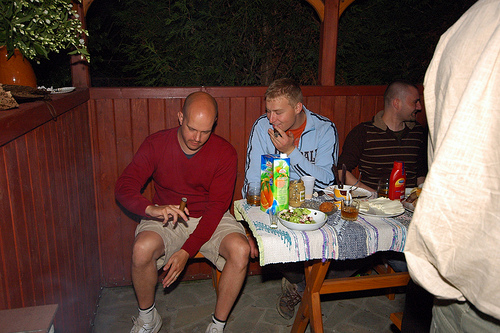
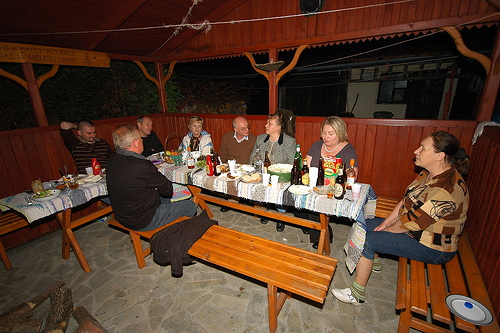
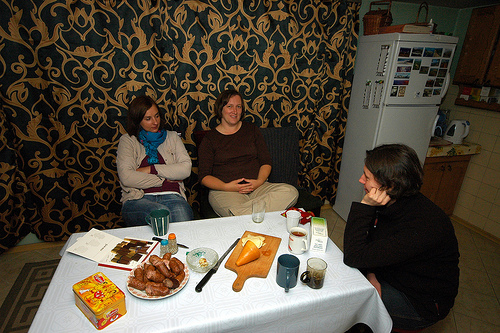
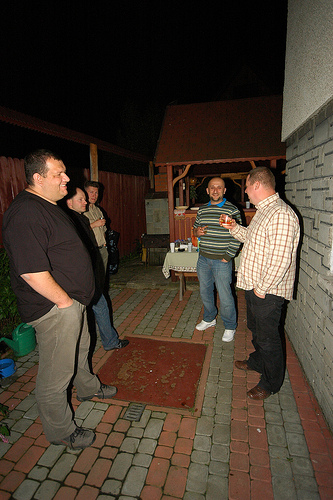
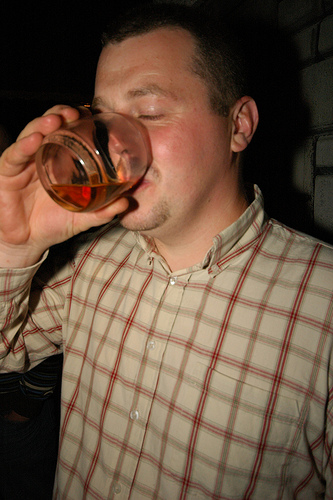
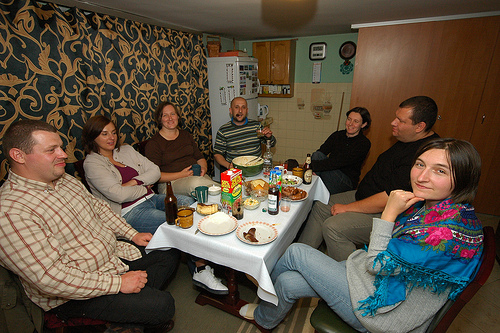
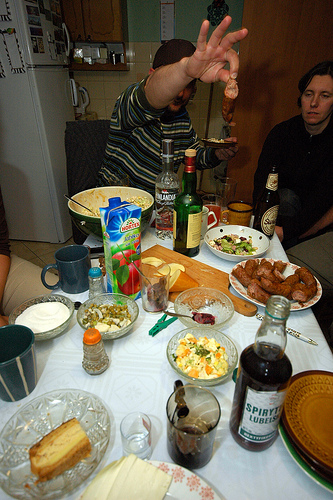
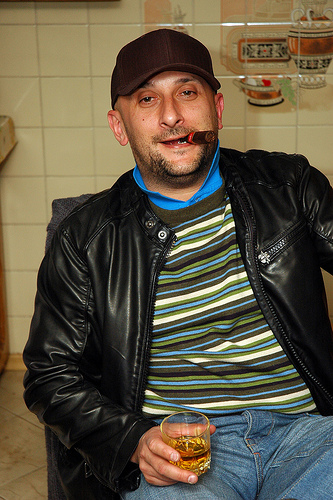
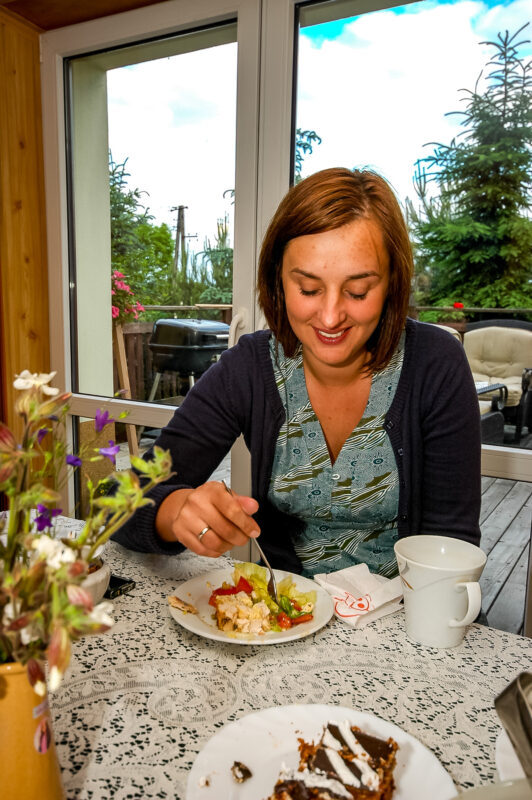
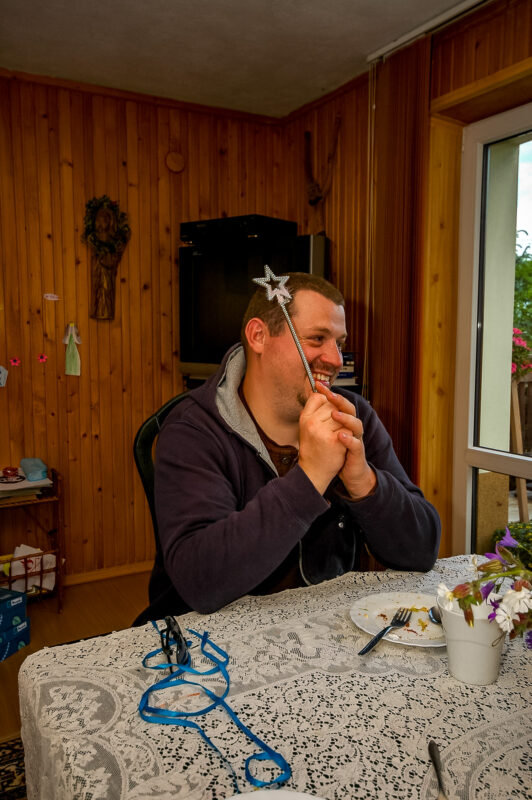
Most folks don't need an excuse for a party. We had two: first, it was my father's-in-law name day recently. In Poland (as in many countries), that's more important than a birthday. Second, the Americanized daughter returned for a visit.

As is often the case, pictures are better suited for describing a party than words.

Slovakian Walk

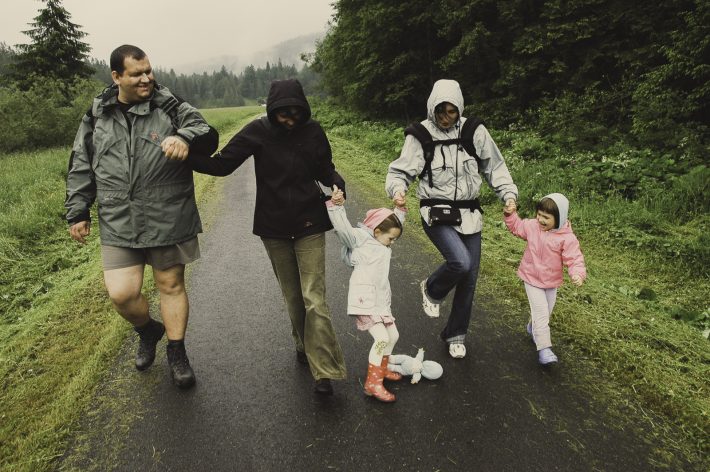
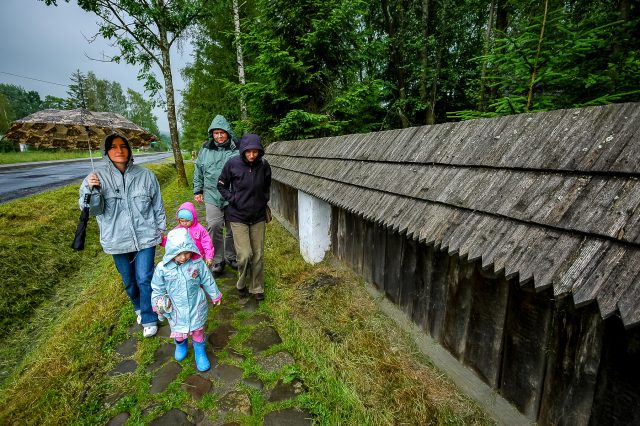
It wasn't supposed to rain. "Bedzie pogoda," everyone says, which is oddly appropriate when literally translated. A word-for-word translation is, "Will be weather"; a less literal reading: "There will be weather." It seems a little odd: there's always weather. Still, it's synonymous with "There will be good weather."

"Bedzie pogoda." Not quite. But at the very least, "Bedzie spacer..."

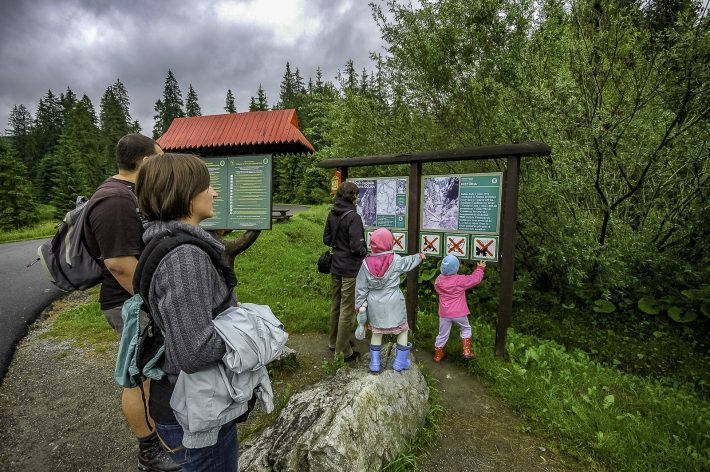
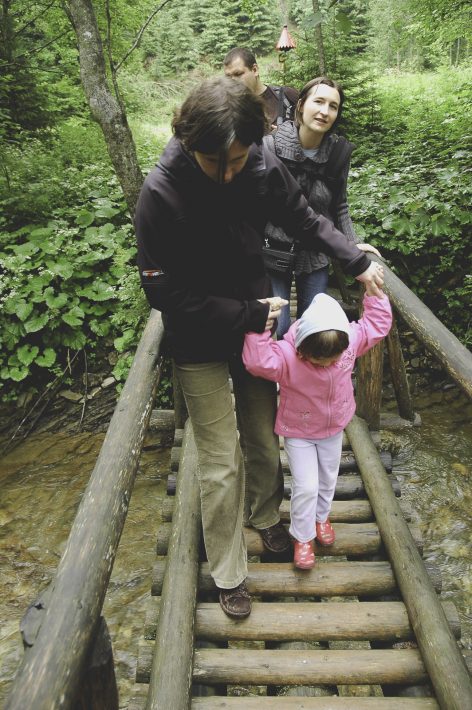
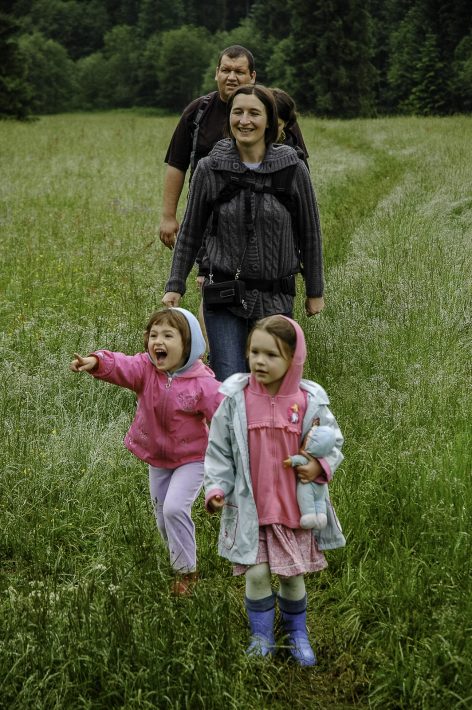
And there will be signs. With two little girls under the age of five, we had to turn it into a game. Easy enough: let's look for the path marks.

And so off we went. The sequence was simple.

Adult: "I see one."

Children: "Where?! Where!?"

There were plenty of places they didn't look but I did -- not for signs of course. For something less concrete, literally and figuratively.

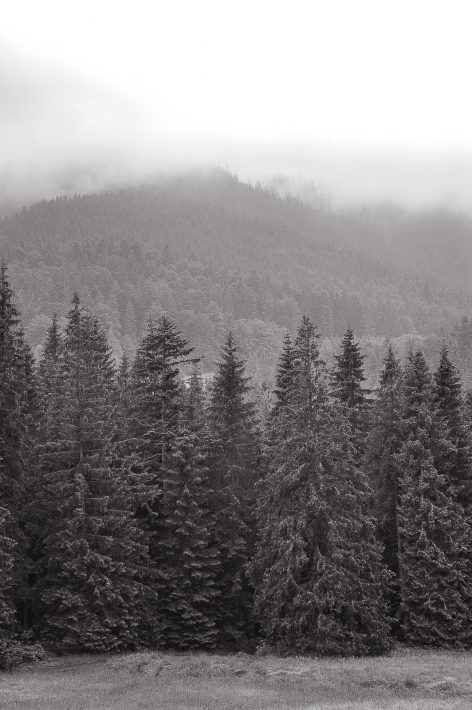
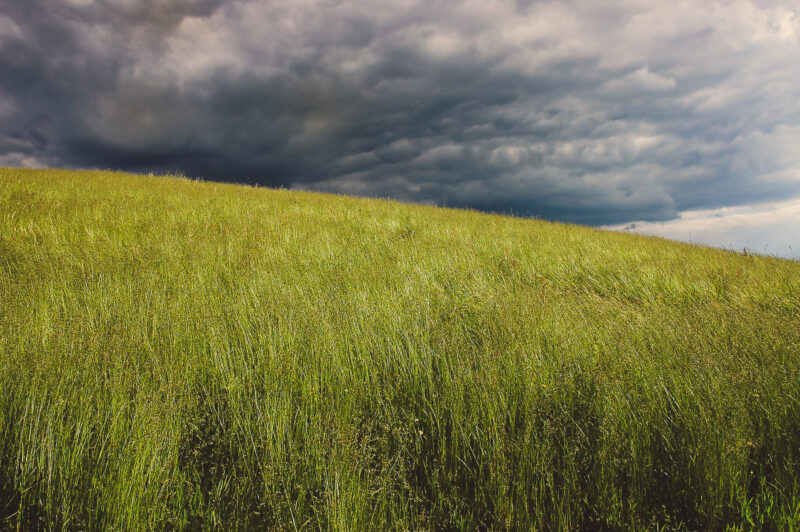
In some ways, shooting in heavily overcast conditions is easy: it makes one look less at the sky and thus focus on the things at hand. On the other hand, the light can be, at best, tricky.

Given the wet, slippery conditions, I wasn't the only one looking down instead of looking up.

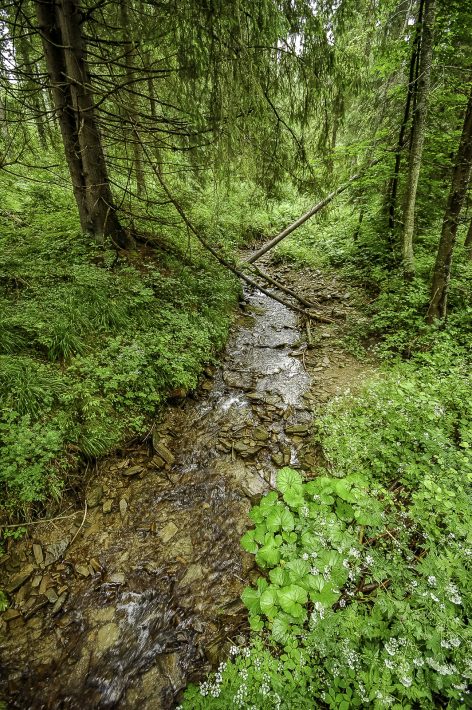
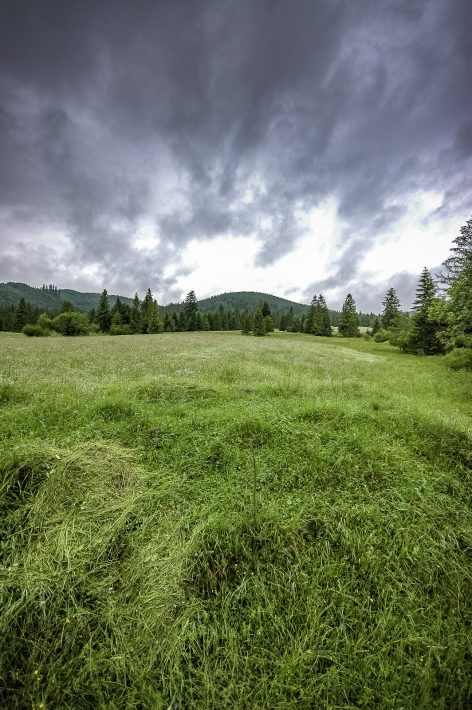
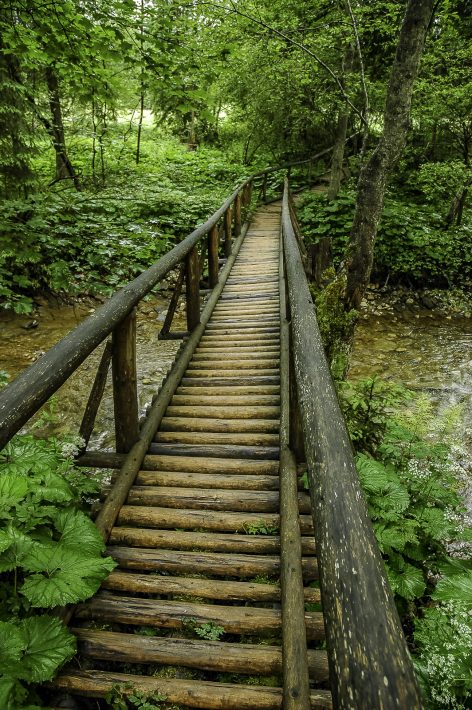
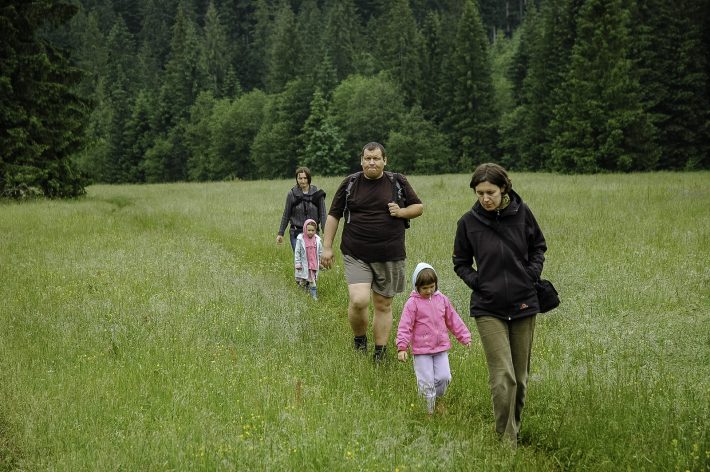
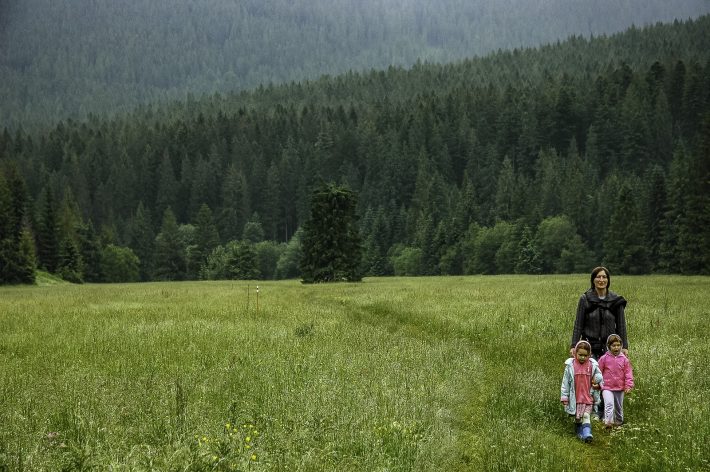
Yet the hunt for the signs continued. Through the forest, through the meadow, we looked for the elusive marks. When they became obvious (striped stakes driven into the ground beside the path), the girls become somewhat blind to them.

But the moment of discovery was as exciting for us as the girls.

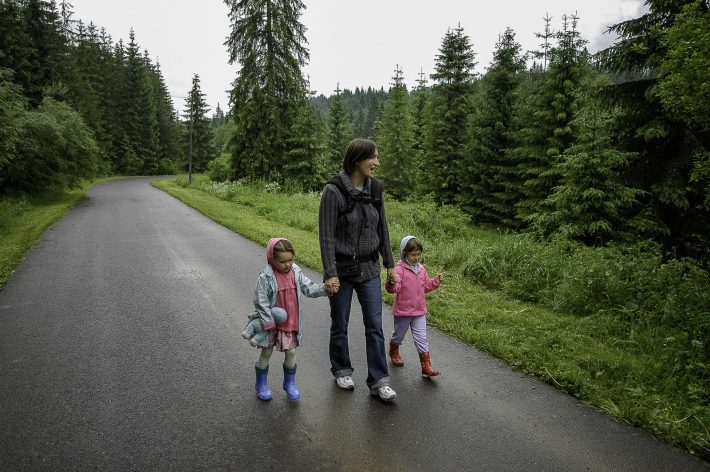
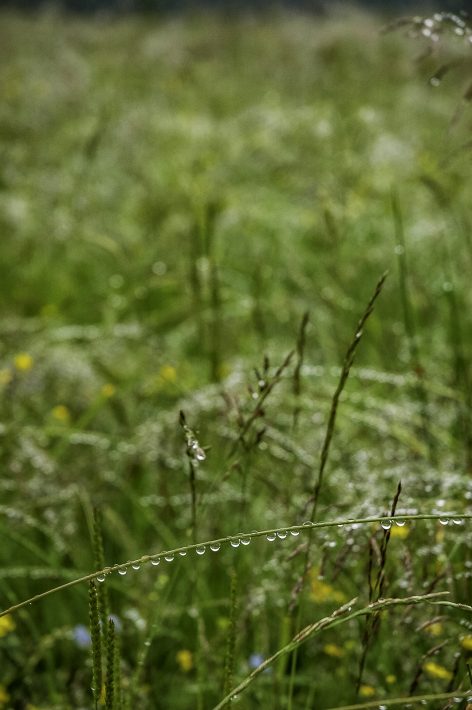
But for a great deal of the time, it was just walking. As the lingering droplets on the grass made our pants increasingly wet, it started to become a question of plodding.

Finally, we got to the forest, and the "almost" plodding became pure plodding as we slogged our way through mud and up hills, the girls on shoulders or strapped to one's back.

Once we got back onto the paved path -- an oxymoron? -- the frustration lifted, as did the clouds.

By the time we returned home, the sun was breaking through the clouds.

It sort of figures.

Orawian Time Machine

We’re reliving the past in more ways than one. The promised sun disappears; plans change.

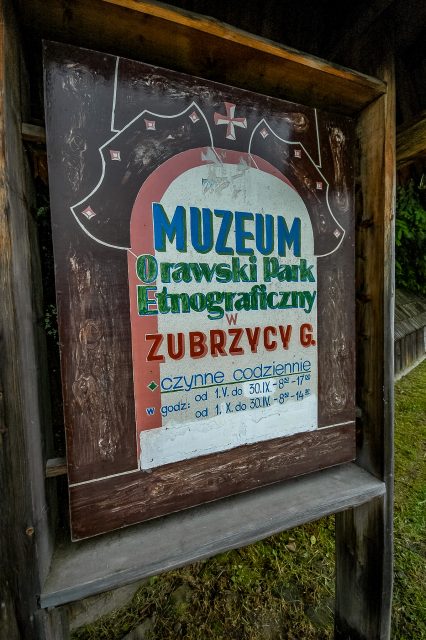
We end up visiting the outdoor ethnographic museum in Zubrzyca Gorna — for probably the fifth time.

Certainly, it was a different age altogether. Survival was at stake; comfort was an after-thought. That was what Christmas and Easter were for: a few creature comforts.

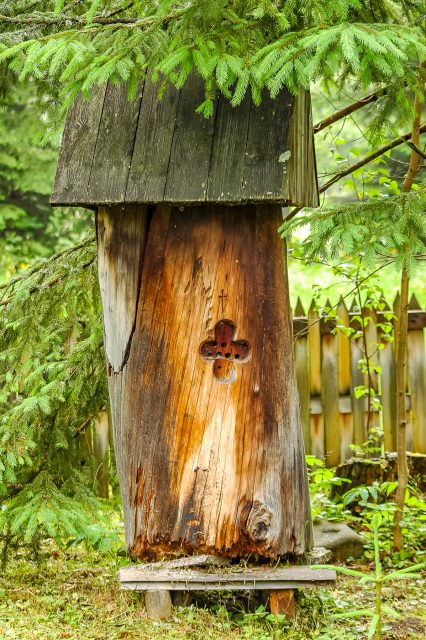
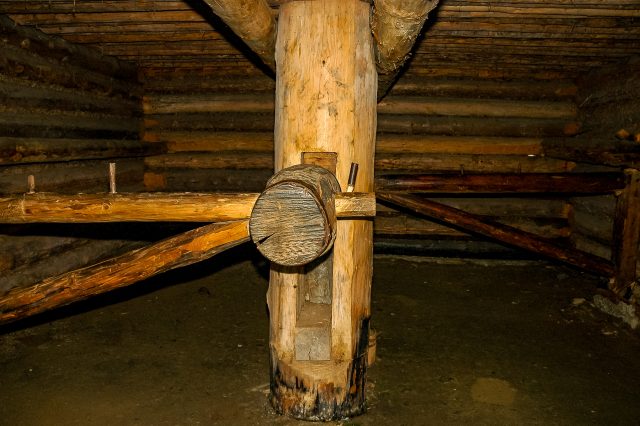
We wind through the museum, seeing how Polish highlanders kept bees in the eighteenth and nineteenth centuries,


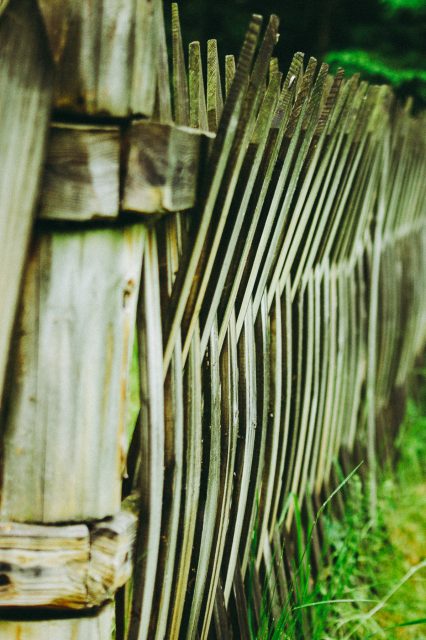
how they made fences (theoretically without nails, but in this particular case, clearly with modern intervention),

and how they forced oil out of flax seeds long before electricity and hydraulics made the task simpler.

In many ways, such a life is enviable. Sure, no Facebook and cell phones, but the slower pace and rough, subsistence living created in everyone an appreciation for what was, and a realistic understanding of the difference between wants and needs.

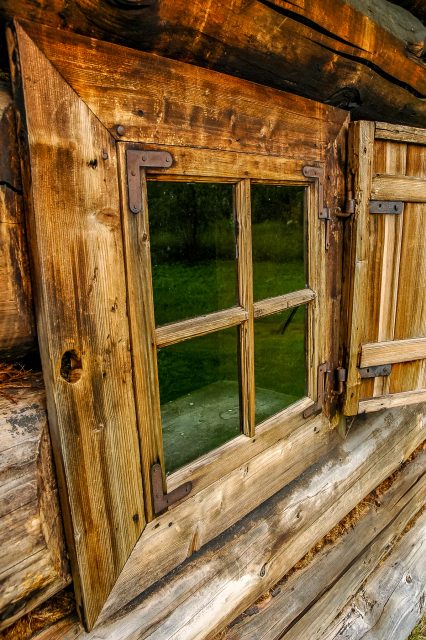
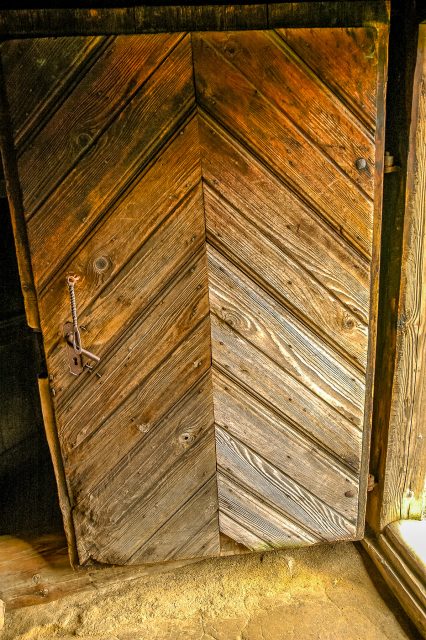
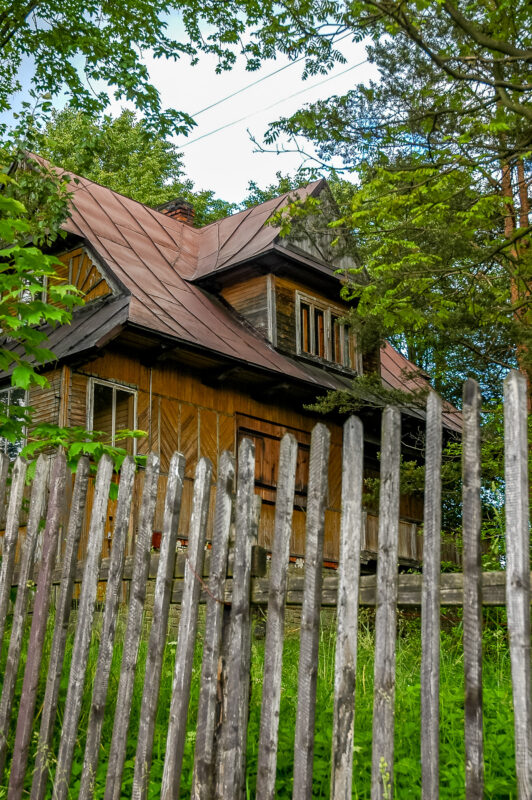
A roof over one’s head, windows and doors to keep out the cold:

Things we take for granted as we reach for more and more were, at the time, the goal.

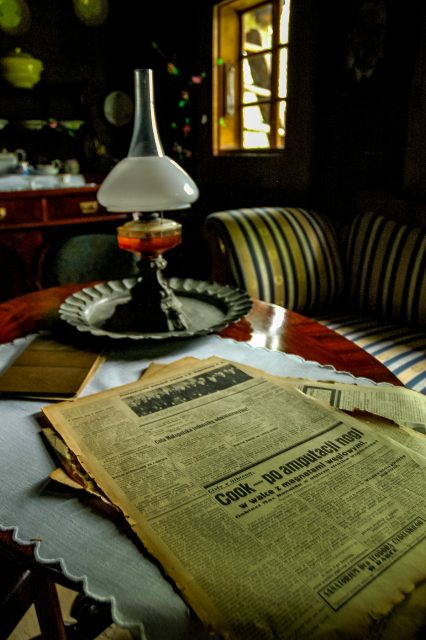
Visible headline: “Cook — after amputation of leg”

Leisure was a thing for the relatively rich. Even then, simple pleasures: reading a month-old newspaper by lamplight.

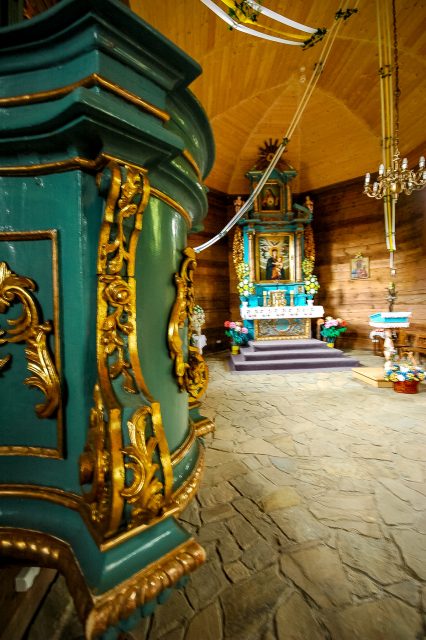
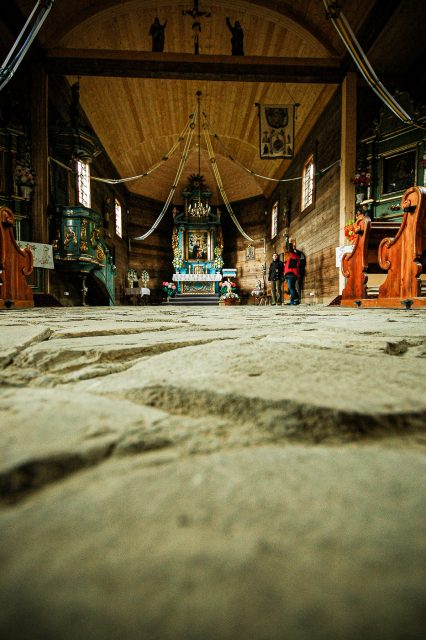
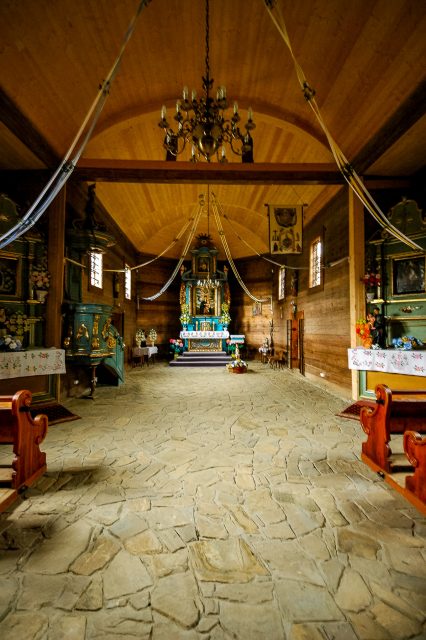
The same might be said of the soul: spirituality was not something to be squeezed in between recovering from a hang-over and watching the afternoon football game.

I used to be horribly offended at the reality of beautiful churches built in the midst of poverty. “Think how many mouths those resources could feed,” I’d say, as if the body is the only thing that needs nourishment. In the last few years, I’ve come to understand a couple of things: first, these churches were not built at the expense of the poor: usually, the rich subsidized the construction (probably with mixed motivation).

Second, these churches served to provide something of an aesthetic oasis for many. Finally, if one believes in the doctrine of the Real Presence, wouldn’t one want to create the most beautiful house possible?

More photos available at Flickr.

Friends and Landscapes

13a

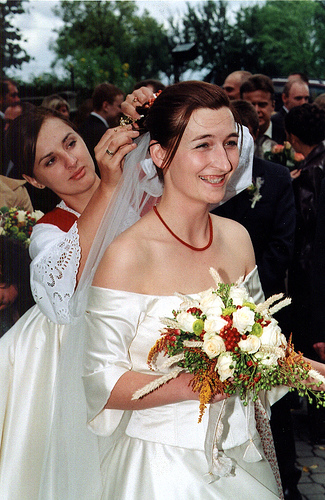
D has been K's best friend for as long as I've know K, and at least ten years longer. She was K's guardian angel during our wedding, always fixing K's veil, K's hair, K's dress -- always fixing.

Today, we went to the village D and her family now call home: Pyzowka. I could go on and on about this and that, about how it's such a beautiful village situated perfectly in hills that look on mountains. About how the girls loved the visit, especially the time wih D's daughter. About how the time with good friends always ends up with smiles and laughter.

I could go on and on about all that, but the pictures speak for themselves.

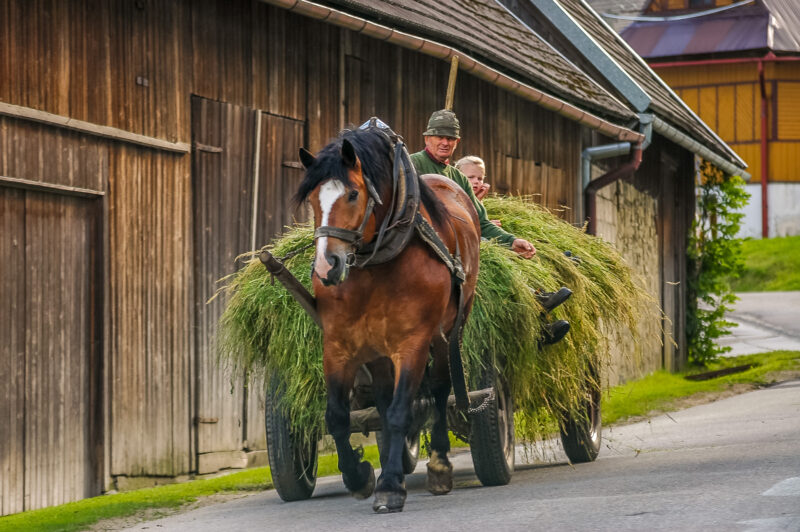
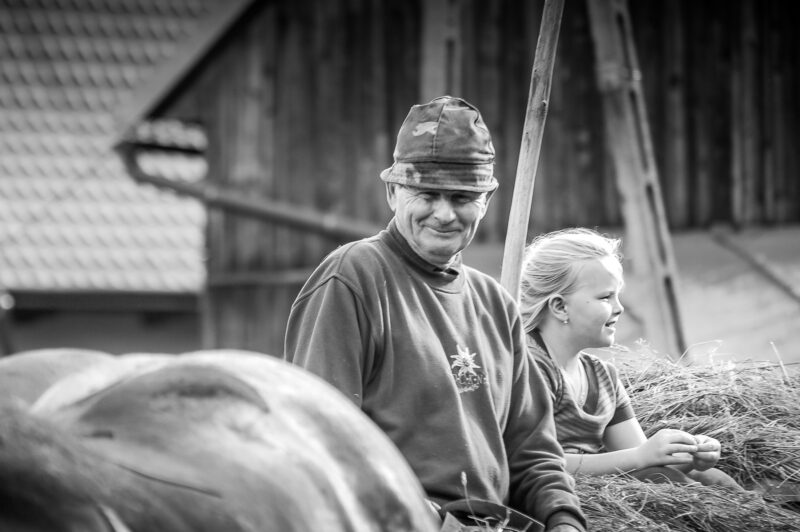
Pyzowka is a village that in a sense no longer exists in Poland. Villages that used to rely on farming and were powered by horses are no longer either. What has happened? A mass exodus? Demographics? Perhaps a little of both.

My own experiences in Lipnica -- itself a time machine -- many children paid special attention to English lessons because they promised the possibility of escape.

One former student told me, "One woman I clean for asked me, 'Where did you learn to speak English well?' I replied, 'I had a great English teacher.'" I was flattered, to say the least. And I saw for the first time how I sold the only ticket out of the village.

"It's better than working in the fields."

Often I saw my students working in the fields over the summer. For them, a summer break made sense, for they still lived the reality that inspired the summer break throughout the Western world. In the States, I'm not so sure it's necessary.

And so everyone wanted to escape. And I returned. And probably would return again if the stars aligned themselves.

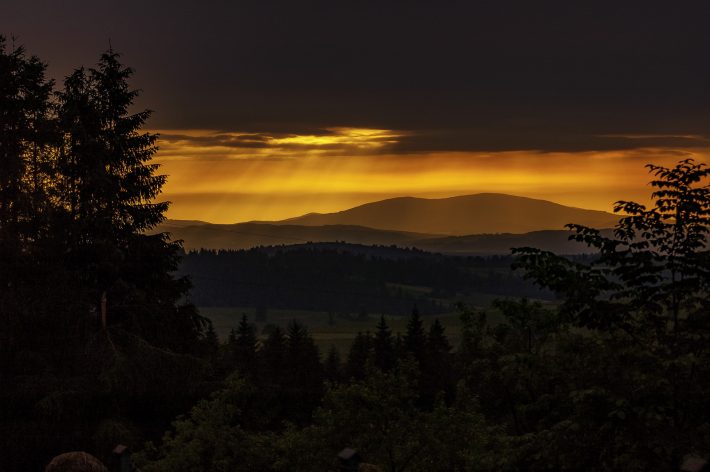
After all, who could ever think of escaping views like this?

"If I lived in Pyzowka," I told K, "I would to for a walk every stinking day."

"I know," she replied.

"Today didn't stink!" proclaimed L from the back seat.

Point taken.

Still, if you had views like this, wouldn't you head out for a stroll as often as humanly possible?

And if you had friends like this, wouldn't you visit them as often as possible?

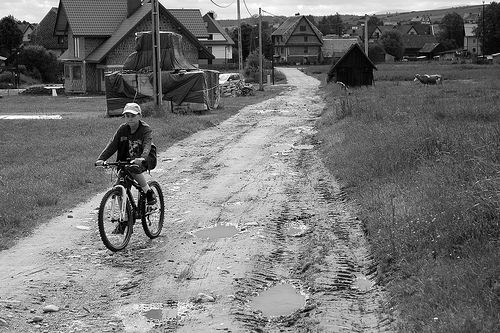
Coming and Going

DSC_3526

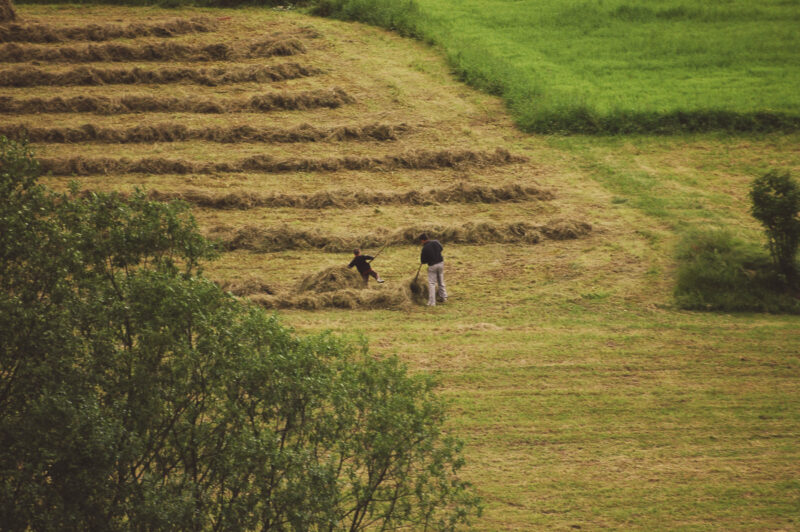
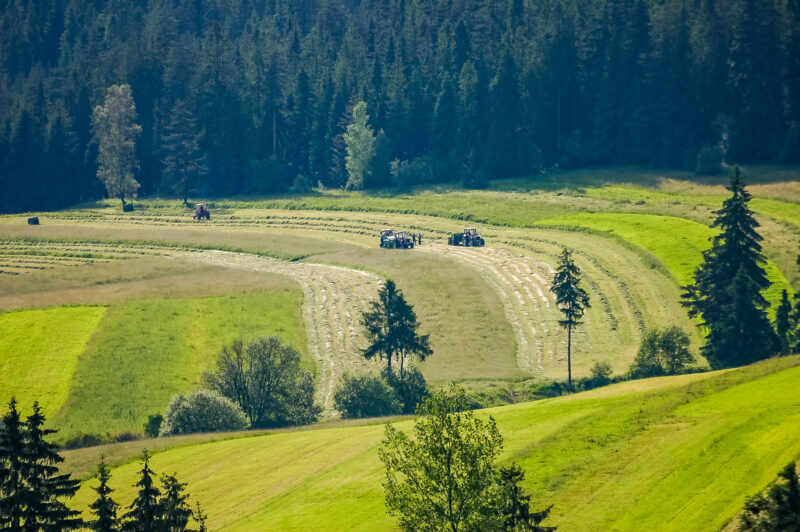
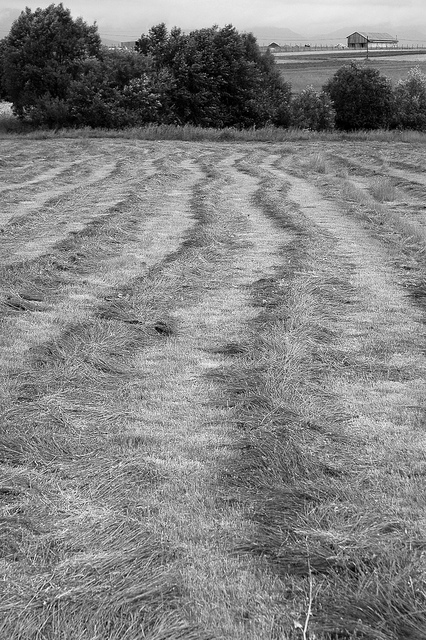
Hay Making

DSC_3518

Portions

One of the many things to love about the slight differences between Europe and America:

DSC_3446

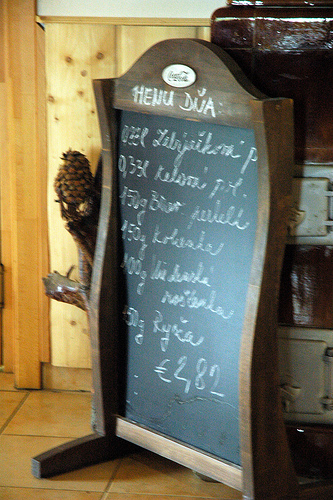
Along with prices, menus include the size of the portions.

The Cold and the Rain

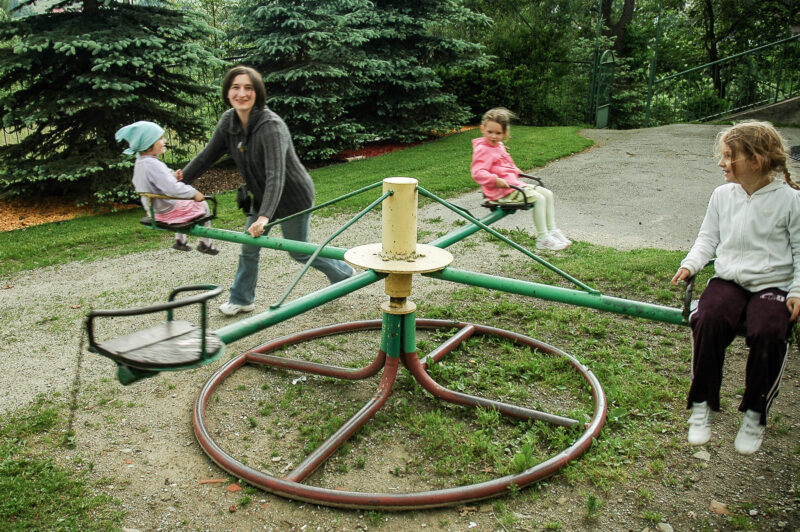
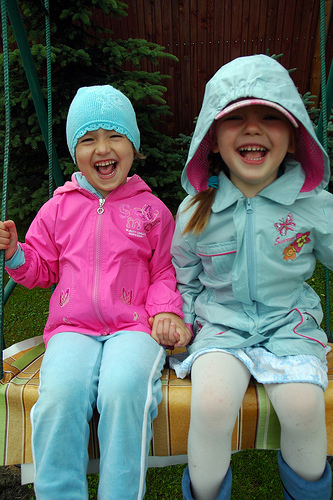
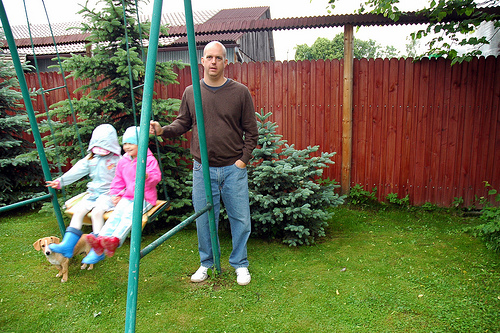
Rain, ten degrees Celsius -- you might say that it's a perfect Polish summer, but that would be too pessimistic. Yet rain or shine, the cousins must swing.

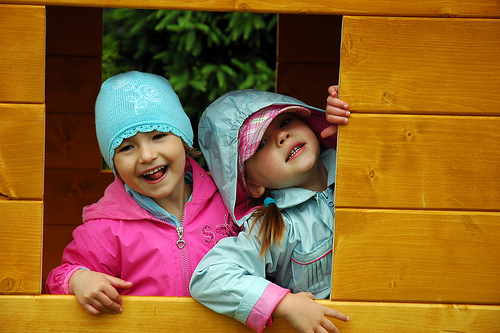
And play in the small play house Dziadek built.

Yet there is a bit of frustration. L understands Polish perfectly; her willingness to speak it is a different situation entirely. As they're swinging, S asks, "Dlaczego ciagle mowisz po angielsku?" "Why are you constantly speaking English?" "Dobra pytania" I respond, yet L says nothing. Instead she begins the international language of three-year-olds: she begins making as many odd sounds as possible.

In the end, the swing was the hit of the day. With aunt Dominika, Kinga, and I, the girls must have swung for ten hours straight. Perhaps that's an exaggeration, but not by much.

In the meantime, Babcia chases the newest member of the family -- a little mixed puppy -- for digging up her flowers, for about the tenth time. "Ja cie dam!" cried babcia, half seriously, half in jest. "Ja cie dam!"

Poles would call such a day "dzien barowy" -- a bar day. But we're not here to sit in a bar. We're here to visit, and visit with determination. And so we head to the school where I taught for seven years.

I meet several colleagues with whom I worked even in 1996, but we're all a little older, a little more experienced. The exception is a young lady who was still in middle school when I arrived fourteen years ago (eighth grade) and now teaches high school. My replacement, one might say, but I guess one would be wrong. Time passes and replacement become irrelevant. All things being fluid in the twenty-first century, talk of replacements is useless.

As we wonder through the school, I begin thinking about how little has changed, which is the nature of teaching: one spends years in the same grade only to realize that, from a certain point of view, one has been running in place. I stay forever in eighth grade now; in Poland, I stayed forever in high school. The results are, more or less, the same.

There are some things, though, that can't be replaced, like a virtual Mama. After dropping by the school, we stop by to visit the family with whom I lived for some time after returning to Poland in 2001. I'm greeted with hugs and "Synku!" It's like a homecoming. It is a homecoming.

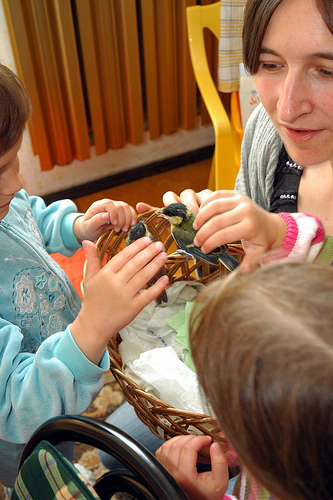
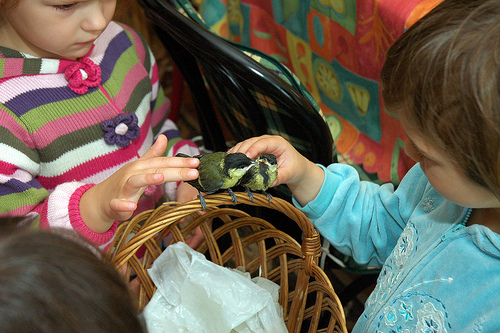
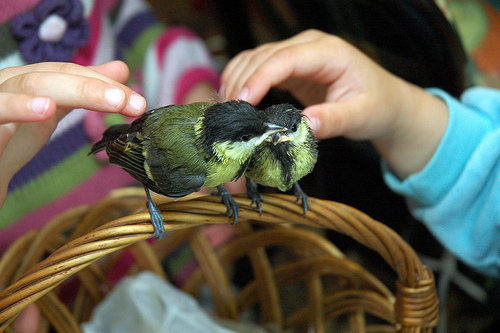
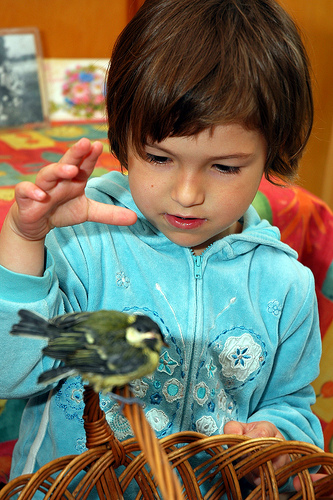
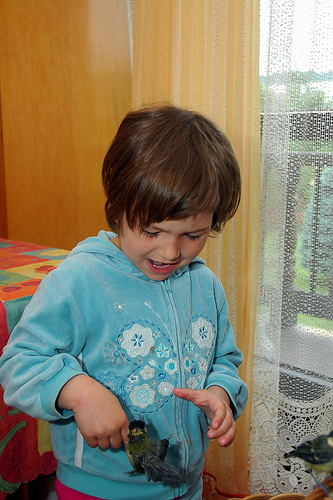
We meet the two chicks my Polish Mother (PM for future references) saved from certain death when they fell from the nest and made just enough noise for her to hear.

They're the hit of the day.

A constant, consistent attraction during our visit.

"I want to see the birds!"

And as a result really get no rest during our visit.

But panic builds instincts and reaction. Or so I'm told.

So I've heard, but what do I know? That an evening of football (aka soccer) and assorted liquids makes one less than perfectly willing to blog at eleven o'clock...