matching tracksuits

fun in threes, sometimes fours

travel

Waterfalls

Throughout Transylvania County, North Carolina, there are virtually countless waterfalls. One can purchase a guide that provides directions to various sites, with some of the less popular ones including instructions like, "Turn right on the gravel road just past the fish hatchery. Drive 1.1 miles." Yet many of them are easy to find; indeed, they're hard to miss, like Looking Glass Falls.
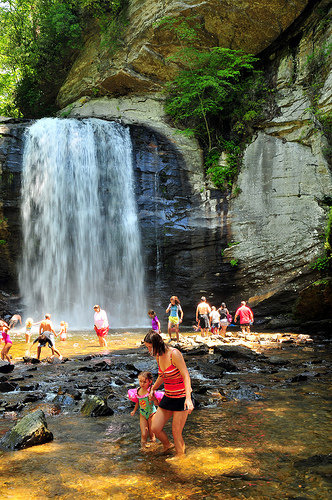
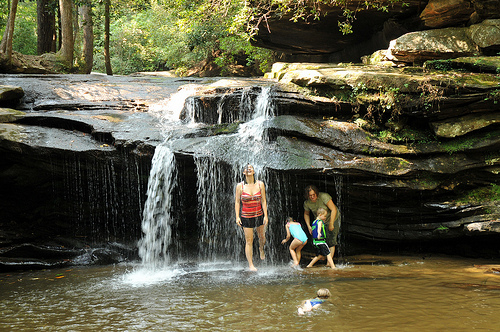
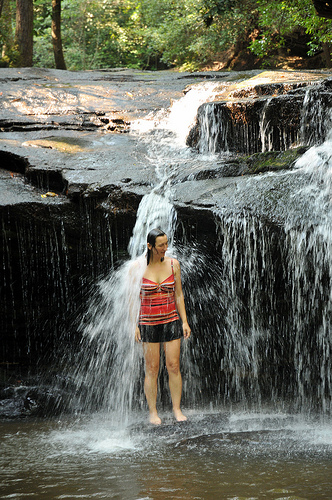
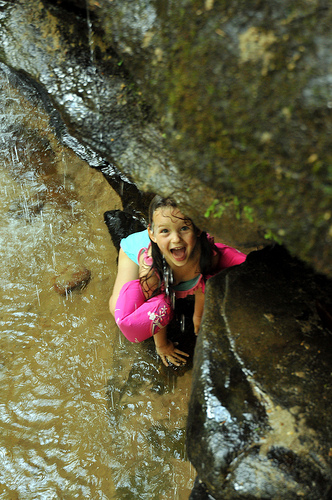
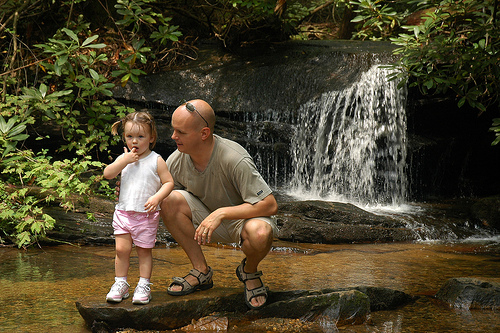
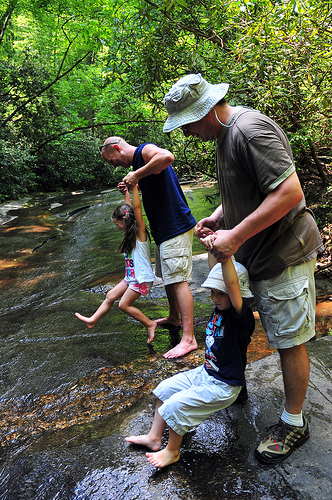
Down a winding, paved path to an enormous rock outcropping, our family and our guests find our way to one of the most significant falls in the area. A fine mist drifts through the gorge combines with the cool water for a most effective chilling experience. All that's missing is a chair and a good book (preferably a ratty copy: it's likely to get ruined in the mist).

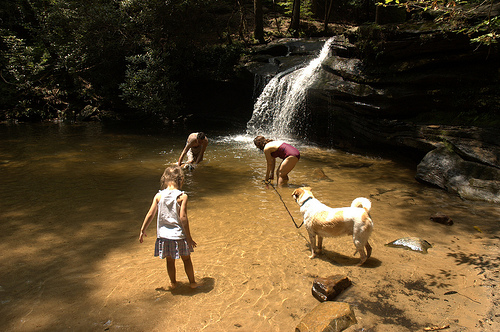
Lacking those things, we do what comes natrually: the children splash each other and K, and I switch the camera to the six-frames-per-second mode to capture fifty photos of the fun that will be whittled down to one or two.
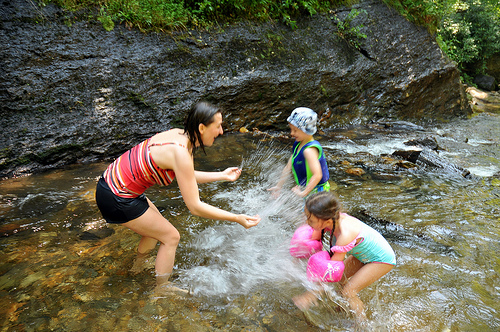
We're not the only ones playing, but it seems to me we're taking the saner route to amusement. Of course, the adolescent head is impervious to rocks, adolescent arms never lose their grip, and adolescent feet are always sure and balanced.
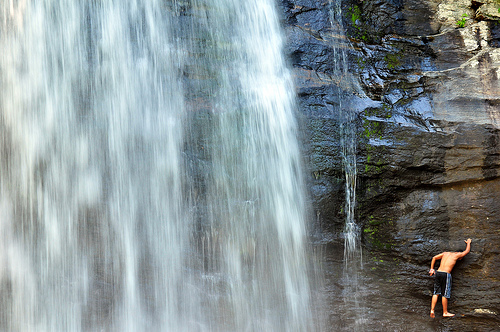
After a bit of splashing around, it's time to head further up the stream to Sliding Rock, the most famous and most popular attraction in the area. Indeed, it's so popular that we arrive to find the parking has closed because of overflow, which means the wait times for the main attraction -- obviously a large rock one sides down -- are close to fifteen minutes.

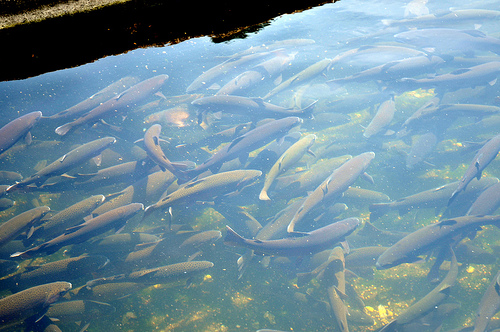
Instead we head further up the stream to the education center, which houses the fish hatchery. In the outdoor "race tracks" (do they actually have contests?), we find the trout are, according to our New Jersey Polish visitors, upchani jak śledzie: apparently commuters and fish of all species can be described this way. The saying refers to the habit of packing pickled herring tightly in jars for storage.
After a picnic break, we contemplate returning to Sliding Rock. Instead, we go for one of the "turn right on the gravel road just past..." waterfalls.
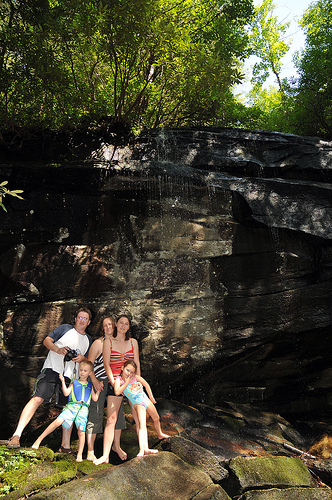
It turns out to be not as much of a waterfall as it is an outdoor, stone-faced sprinkler. The floaties and life jacket we brought for the children are for naught.
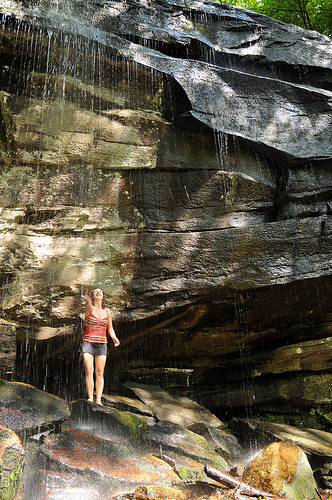
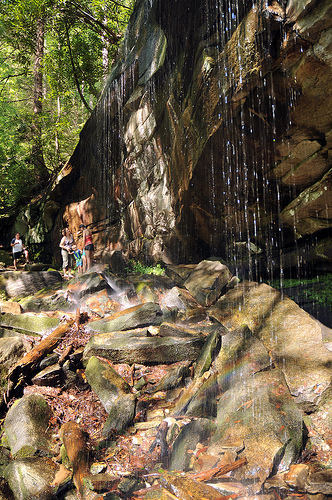
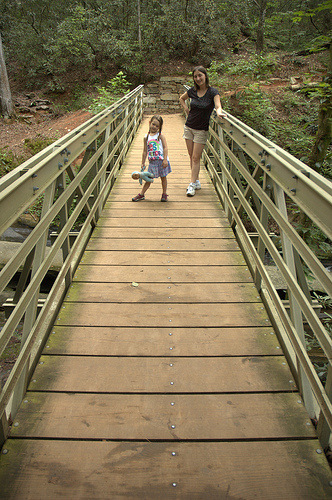
Still, a lovely view, some nice light, and a chance to trek through the forest for a while. It is a teaching experience, one could say. But not a lot of fun. That would be Sliding Rock, and we decide finally to head back and see if it's still packed.

It's not, and in fact, there is virtually no line for the star attraction.
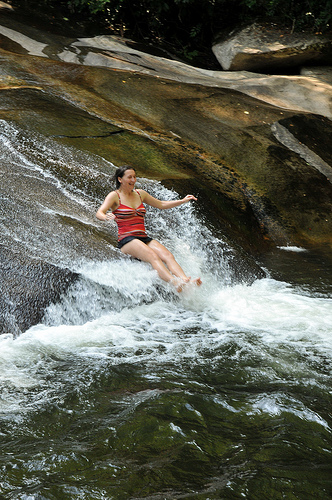
K goes first. After a while, she talks the Girl in to a short run with her.
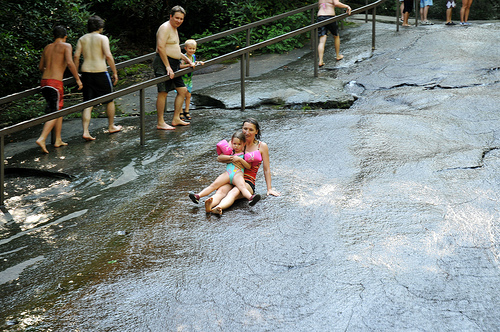
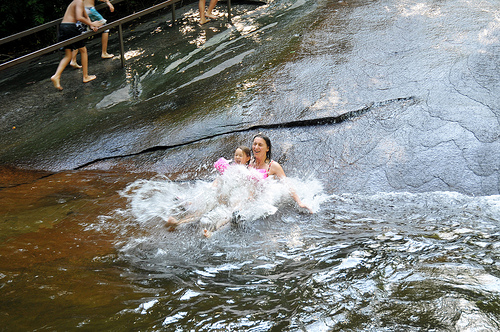
Perhaps Sliding Rock will become yet another metric of growth: the first time the Girl slides solo. Eventually.
Return to Table Rock

The plan was simple: get up at a reasonable hour, drive two hours to a spot in northern Georgia, and be awed at the fantastic views of a canyon known as the "Grand Canyon of the South." But such plans begin taking shape the evening before, and when the evening drifts into the morning and all the adults are still awake, the likelihood of the plans coming to fruition diminishes greatly.
VIV_1391

The backup plan -- the realistic plan -- was a return to Table Rock State Park. At only forty-five minutes away, it seemed a more logical choice for a late start. Being in the mountains, it also seemed a more comfortable choice.

VIV_1388

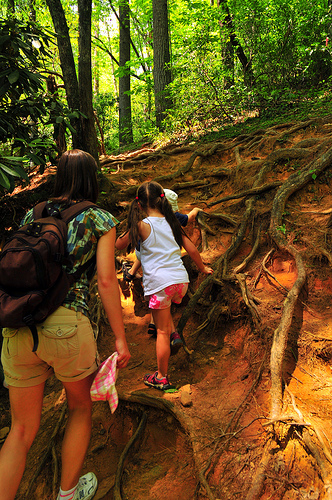
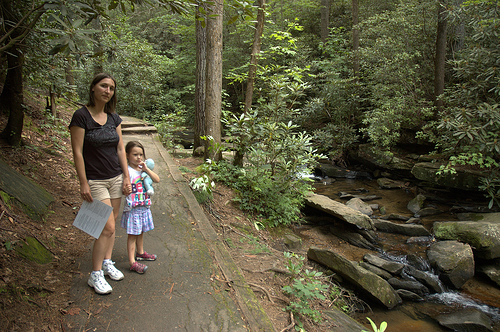
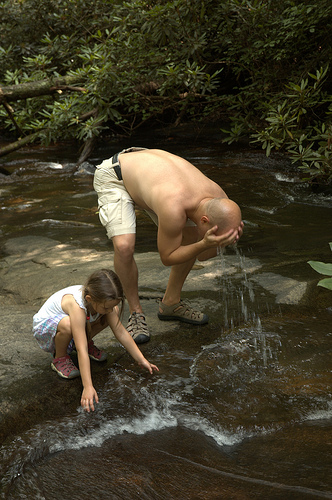
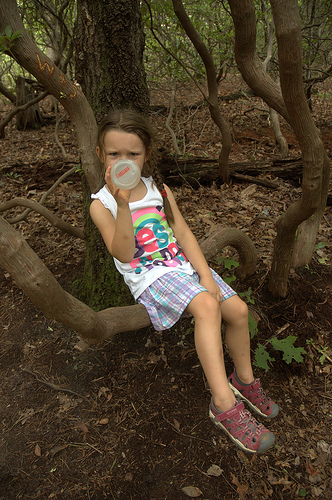
We hiked the trail we always tale: Carrick Creek trail, appropriate both for its length (four-year-olds can walk only so far) and for its scenery, which is both beautiful and, more importantly for the kids, amusing. (Who doesn't love playing in waterfalls or slipping and sliding on moss-covered rocks?)

VIV_1407

The hike was more engaging with a game, so the kids had a contest: who could find the most trail markings on trees? It's a common game we play with L to keep her interested in the walk. We played it in Slovakia a year ago, and every time we're on a trail by ourselves, we encourage the Girl to look for the signs.

DSC_1454

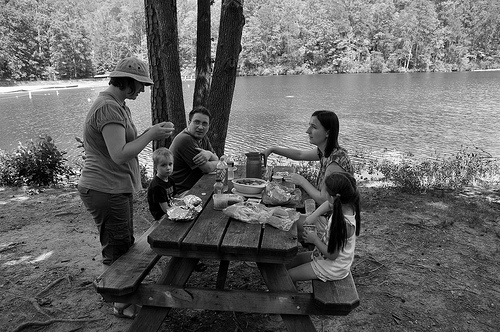
Despite the fact that both contestants marched right by trail makers without noticing them as they tried desperately to be first (apparently it was a dual contest), the game ended in a tie, which was frustrating for both the kids but a relief to the adults: one less wound to soothe. No one likes to eat a picnic when one of the diners is tinged with tragedy, feeling the sting of an unfair loss.

DSC_1517

Any heated tempers would have been quickly cooled, though: the lake's swimming area was closed, leaving only one option for cooling off after an arduous mile hike.

DSC_1524
DSC_1532

Table Rock State Park, Part II

Returning to places as a parent provides a yardstick for your child's growth. The last time we visited Table Rock State Park, the Girl just shy of two years old. Her recently bald head was beginning to have enough hair to make her feminine, and she was beginning to talk. (When we watch videos of her at this age, though, neither K nor I can understand much of what she says sometimes.)

DSC_9674

That first trip, she toddled along for some of the short hike, but most of the time, either K or I carried her in a frame-less child carrier: twenty pounds of wiggle followed twenty pounds of sweat-inducing insulation.

DSC_3326

Three years later, and she is Miss Independence, resisting help on all but the steepest portions of the two-mile loop and occasionally pontificating, "It is time for a break!"

DSC_3353

Last trip, she was barely aware of the camera; this trip, she posed. In fact, we had to tell her to stop posing occasionally: she has a tendency to get carried away.
DSC_3352

Yet some things have not changed in three years: Baby still is a constant companion, having been hiking in the mountains of Poland, photographed on the town square of Krakow, and one harrowing time, left at Target for one terrifying night.
DSC_3371

Imitation is still the order of the day, and fussing-filled frustration will likely be a frequent visitor for years to come.

DSC_3379

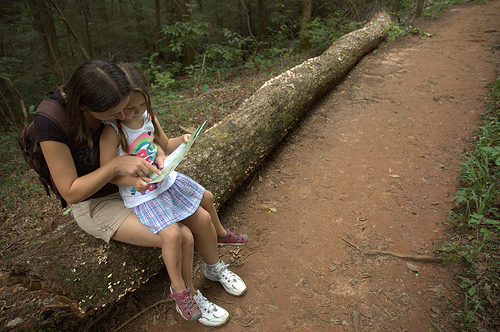
Yet the changes. We stopped for a break, and the Girl was curious: "Where are we?" K pulled out the map and showed her. At the next bend in the trail, she asked for the map to try to find where we were. The fact that she was completely off is of no importance: the curiosity is the treasure.

DSC_3408

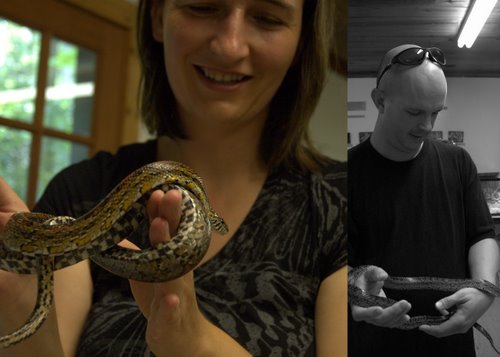
Curiosity was enough later to overcome fear and touch a corn snake in the nature center. K took a step further in overcoming that latent terror that seems to be in all of us almost instinctively.

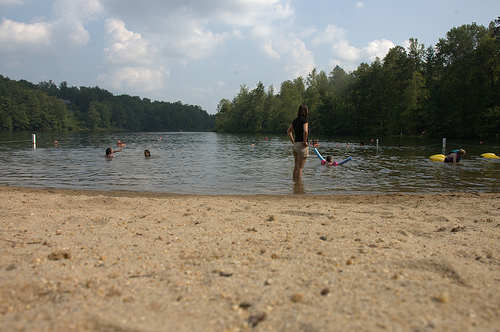
Most telling was the conclusion: splashing about the lake with restricted parental supervision (the swimming area was about to close, so there was no time for us to change anyone but the Girl), she gravitated toward the deeper portions.

DSC_3445

She called out, "Look how far away I am from you, Mama!"

Huntington 2: Atalaya

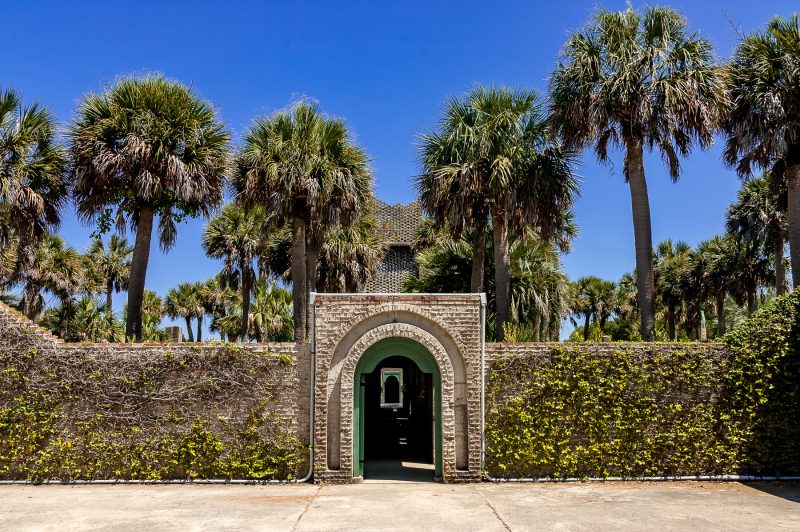
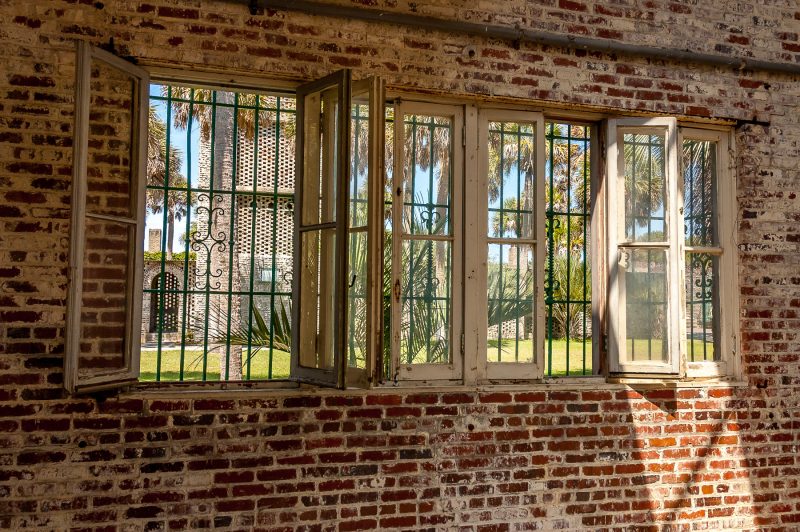
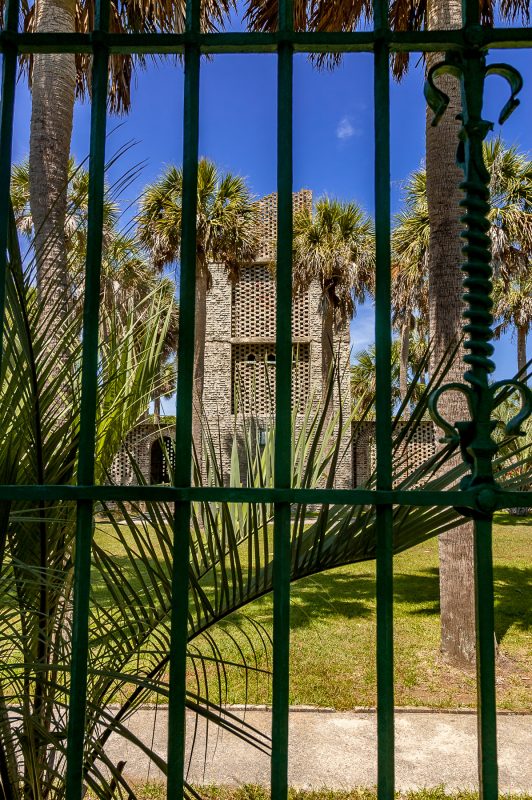
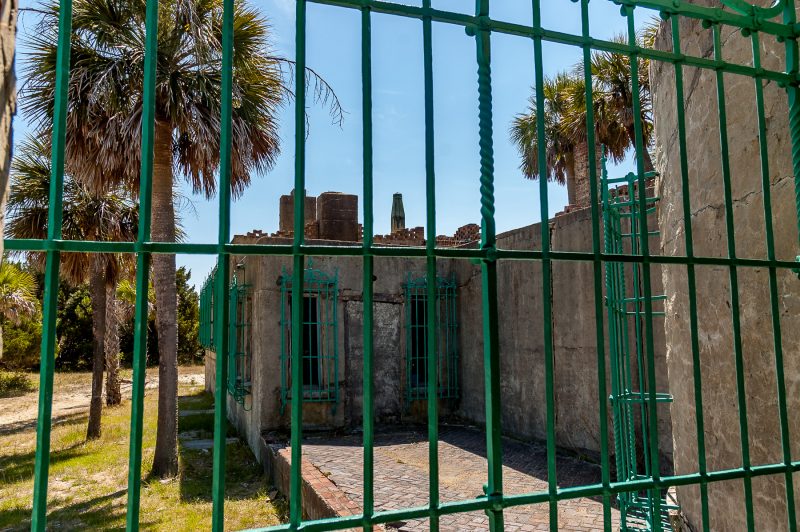
Huntington Beach State Park got its name from the original owners of the property, philanthropist and translator Archer M. Huntington and his wife, the sculptor Anna Hyatt Huntington. As such, the park also contains the Huntington's winter home, Atalaya (Spanish for "watchtower).

One's first thought is to compare it to the Biltmore estate. While it was built 50 years later and is much smaller (probably not even one tenth the size), there are certain similarities. Both Vanderbilt and Huntington got their money the really old-fashioned way: they inherited it. Both men were interested in fostering the local economy, with Huntington insisting that all workers must be local. If a skilled craftsman was needed, he paid to have someone come and teach a local how to do it.

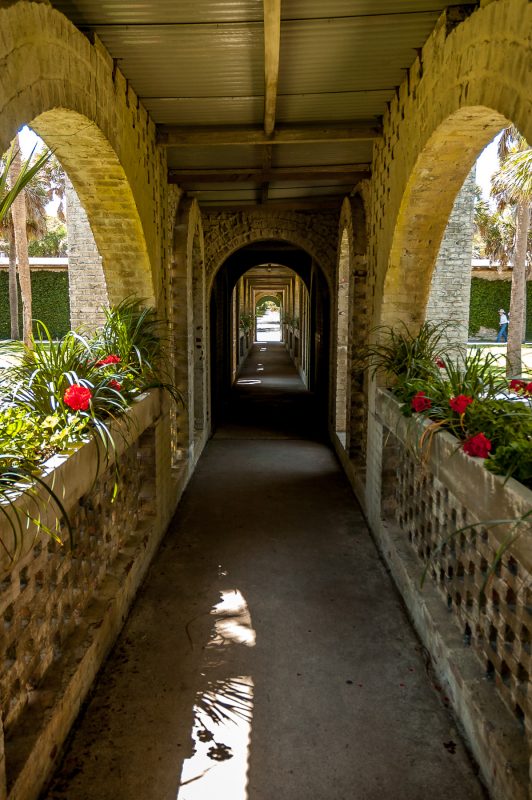
Yet there are significant differences. Apart from the size and age, the motifs are different. Vanderbilt wanted his home to look like a chateau; Huntington wanted his home to reflect the Moorish influence on Spanish architecture.

Vanderbilt hired Richard Morris Hunt, the architect who designed, among other things, the Metropolitan Museum of Art and the pedestal for the Statue of Liberty, to design the entire home. Huntington had no architect; indeed, Huntington had no plan. The home was simply constructed according to his verbal instructions.

A final difference, other than the comparative state of current conditions, is the intended purpose of the homes. Biltmore is a mansion, built for parties and guests that stay for weeks on end. It's intended to impress, pure and simple.

Atalaya had more utilitarian aims: it was a place for the Huntingtons to work. Granted, it's not work in the way most twenty-first century, middle-class people think of work: he wrote poetry, she sculpted, and fiscally, they were fine if they never made a dollar from either venture. Still, the Huntingtons never had overnight guests at the home (let alone the summer-long visits common at the Biltmore), and Atalaya was most decidedly not built to impress (though it does all the same).

A practical effect of this was that the Huntingtons turned over the home to the Army Air Corps during World War II, and the Corps set up a defensive battery at the home.

But I still come back to the similarities: apparently, Huntington had no idea how much his home was costing him and never tried to determine it.

The ability to live like that is so far removed from anything most of us know.

Huntington 1

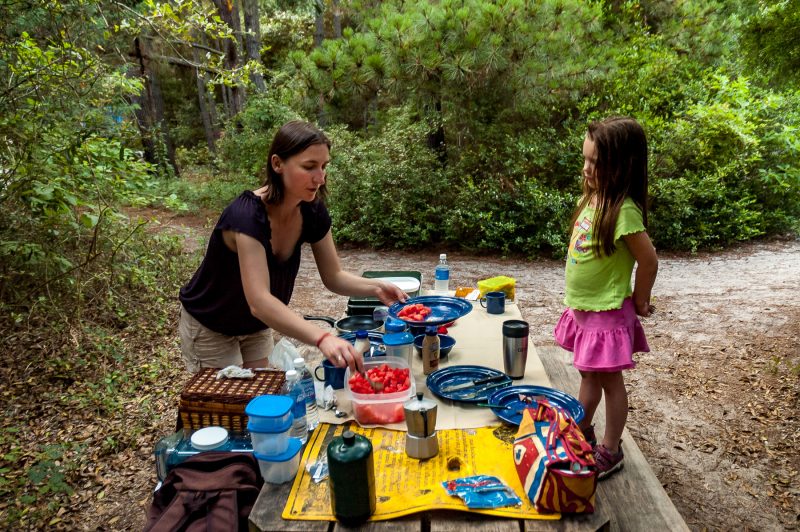
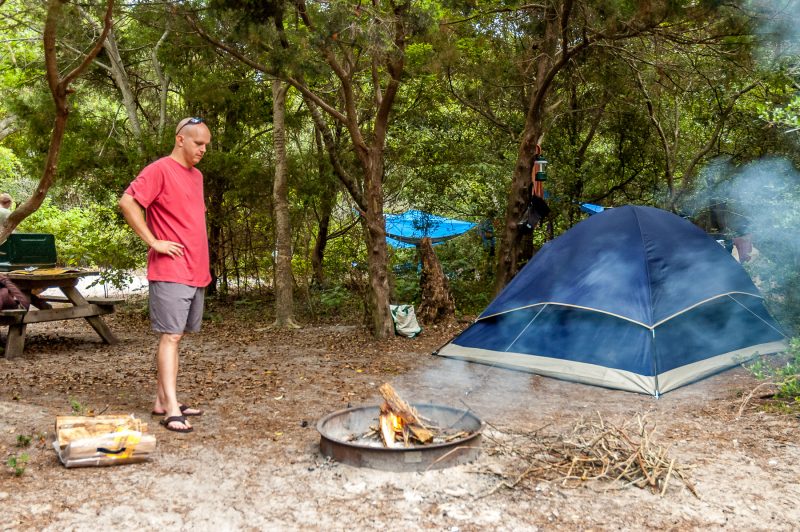
The beauty of sleeping less than 500 meters from the beach is that no matter how many times one wakes up to the sounds of the forest, including raccoons foraging neighboring camp sites, one simply has to concentrate on the distant sound of waves crashing to fall almost immediately back to sleep. The result is not necessarily a sound sleep, but a pleasant one.

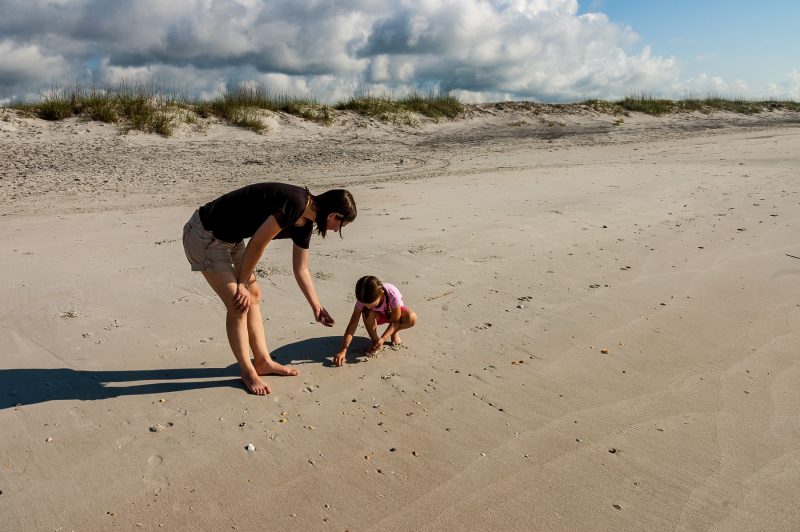
The beauty of sleeping less than 500 meters from the beach is also the after-breakfast walk. A short walk through a forest of pine, itself filled with an early-morning enchantment, and we’re at the beach. The sun reflects off the retreating waves and the low tide yields a treasure of shells for the Girl.

The Girl’s mantra changed during our short time at Huntington Beach State Park. Within twenty-four hours, it went from “When are we going to get there?” to “When are we going to the beach?”

The first day showed just how much the Girl has changed.

Her first beach experience, some two years ago, was moderately traumatic for her. The sound of the waves terrified her, and the waves were forever chasing her form the water’s edge when she finally got the nerve to approach.

This year was different.

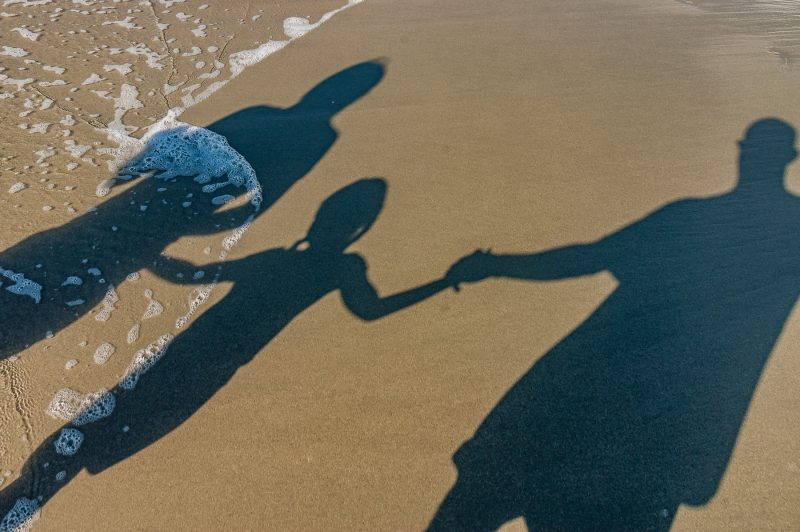
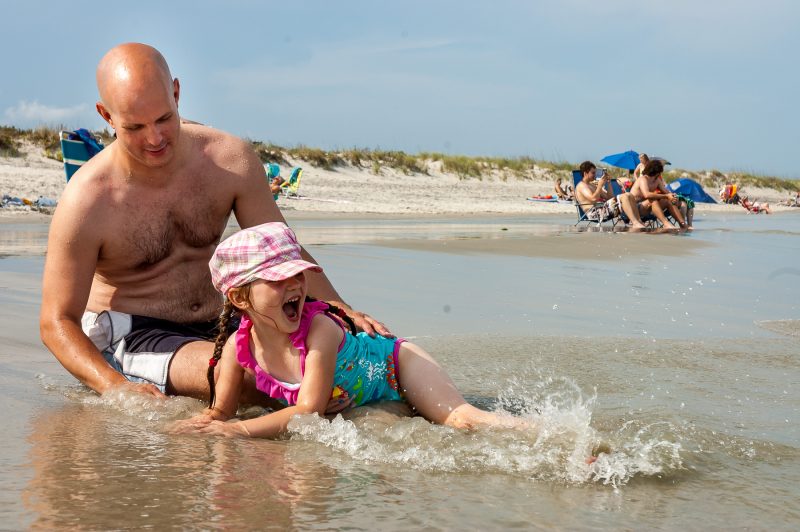
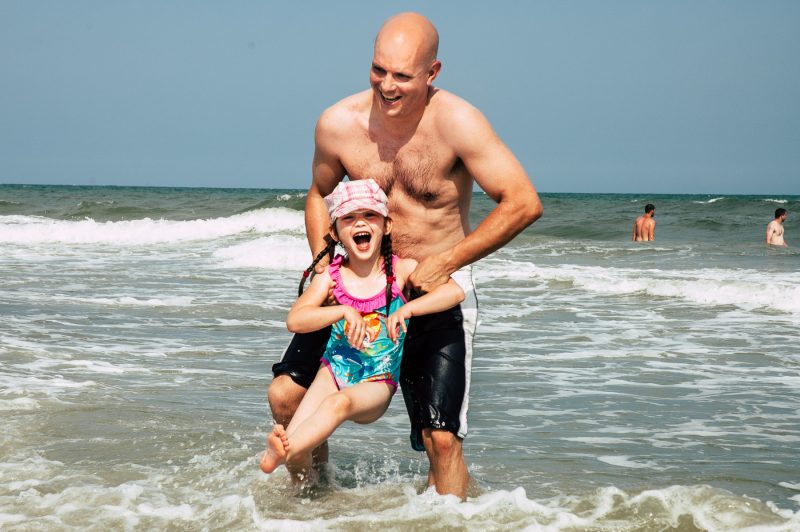
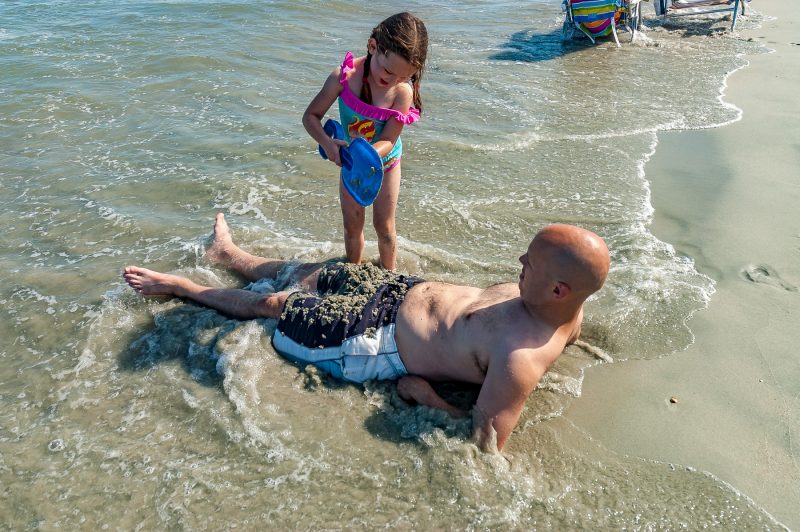
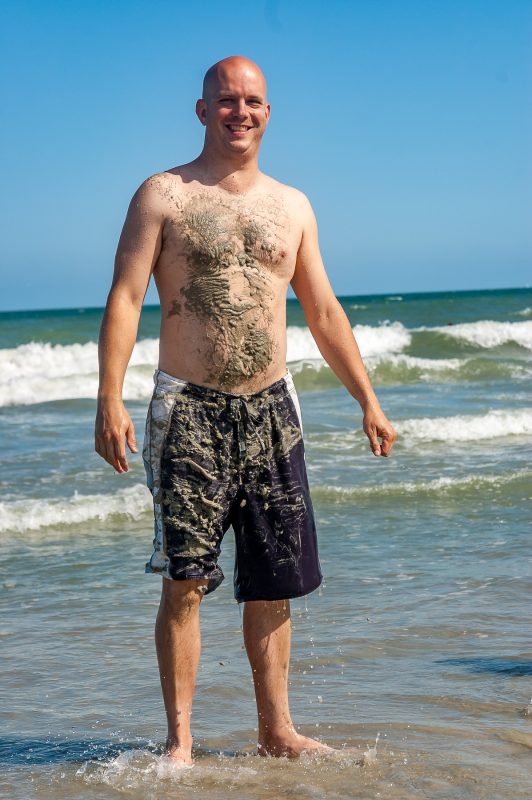
She played in the surf. She made a mess of Tata.

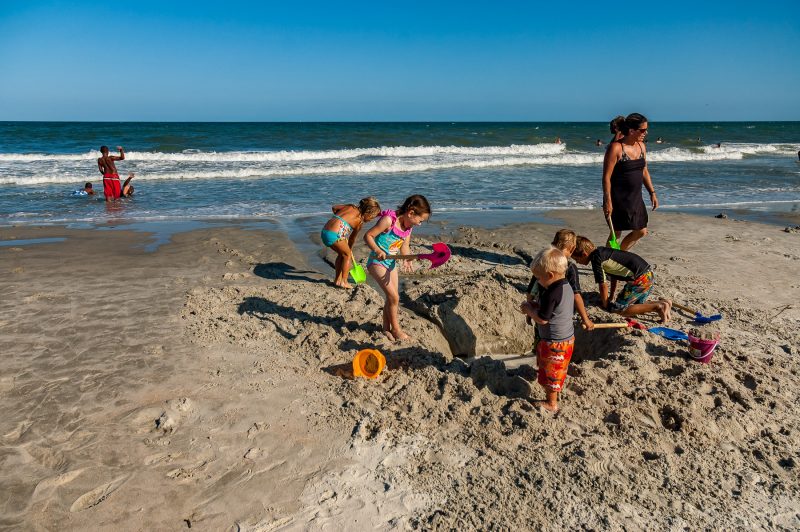
She made some new friends.

She saw some wildlife.

It was one of a thousand bittersweet moments: she’s growing up faster than we’d have imagined.

Long Weekend

A three-day weekend allows us to do things we wouldn't ordinarily do over the weekend. Trips and mini-vacations come to mind on Labor Day weekend, but we elected to stay at home. A hurricane brewing and a coughing daughter made us cancel our plans of camping at the beach, so we did things out of the ordinary.

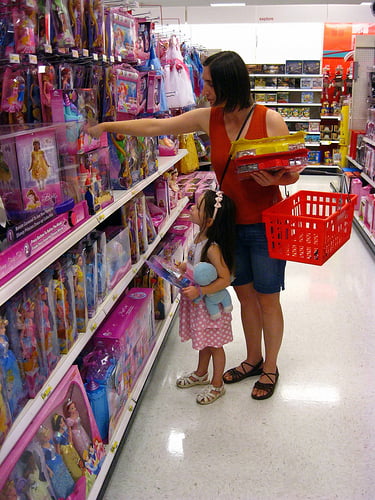
Like go to Target.

IMG_0822

L spent her own money, which Nana and Papa (from whom else would she have received it?) had intended the money for our trip to Polska. She'd received so many gifts -- from friends, family, and a particularly sneaky godmother -- that we simply didn't encourage her to spend it.

IMG_0827

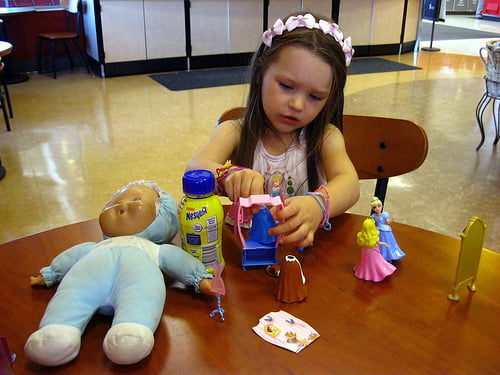
Now the encouraging begins. What to buy? So much cash, so many princesses, so little parental support. In the end, she went with Cinderella and Sleeping Beauty. The classics.

IMG_0838

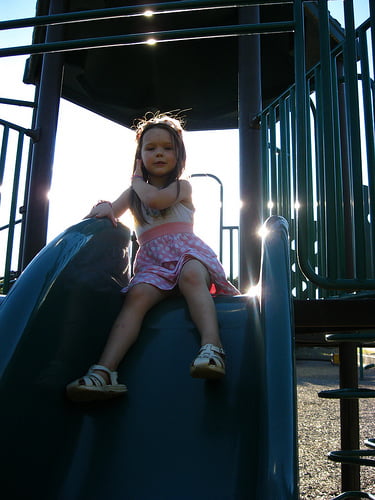
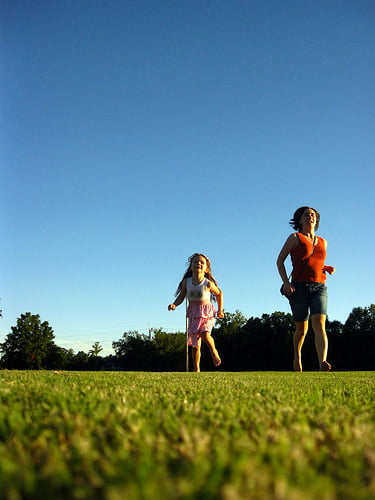
We finished Saturday at the park, with K and I musing how much she's grown since the first time we went to this neighborhood playground. Saturday she ran wildly, losing sight of us and popping up here and there giggling. Our first visit was cautious: no running without knowing where Mama and Tata are. No climbing without a protective hand on the bottom. No swinging without a toddler swing seat.

IMG_0871

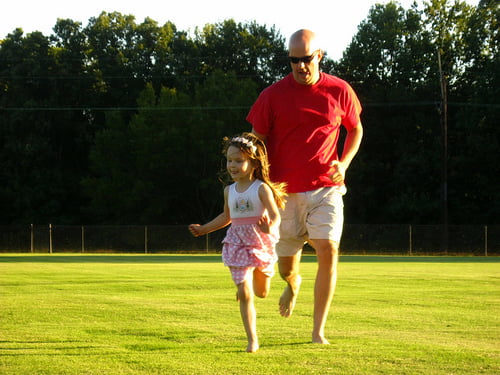
The follower has become the leader. "Come on, Mama!" she cried out when we went to the empty baseball field. "Chase me! Catch me!" We can still catch her, but it's not a question of three quick steps and swoosh! she's in our arms.

IMG_0873

She's become a moving target, with a sure, steady gait and a strong sense of independence.

IMG_0874

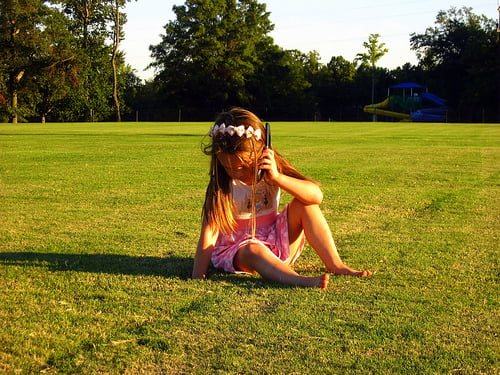
As she sat, talking to Nana and Papa, the "I can see her as a tween, as a teen, as an adult" moment washed over me all over again. The independence, the quick feet, the willingness to explore: all these things indicate the inevitable, but we so infrequently notice it.

DSC_5862

Sunday, we headed back to the park, but this time, a large state park with a couple of lakes, a few miles of trails, and plenty of rocks for climbing.

And boats.

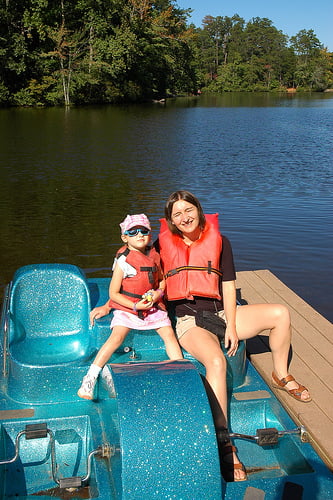
Blue boats.

Blue glittery boats.

"The only thing that would make this more perfect," I suggested as we neared the paddle boats, "would be for the sparkles to be pink."

"Right!" came the response.

DSC_5872

Where did this love of pink come from? Pink is the stereotypical girl color, and we have in fact tried to avoid purchasing pink clothes for her. Yet pink remains the eternal runner-up in the "my favorite color" contest.

DSC_5890

The only way to make the day more perfect was a picnic. "A picnic!" L cried. "I'm so happy!"

DSC_5904

With a mayonnaise-cheese sandwich (what odd taste little girls can have) and all the watermelon she could eat, she certainly had cause for joy.

The walk that followed somewhat damped that joy. "I want to go home!" was a common refrain,

DSC_5907

until we reached a small clearing with plenty of rocks for skipping ("making ducks" in Polish) and general tossing.

DSC_5927

As might have been expected, L modified the previous refrain, adding a quick "don't" when we suggested it was time to go.

DSC_5936

But we were all tired, and bedtime was approaching. Only the princesses were still on their feet.

Basilica of the Holy Trinity (Krakow V)

“You know what I’m looking forward to?” I asked K before we left for Poland. “The smell of an old church.”

“Oh, me too,” she replied.

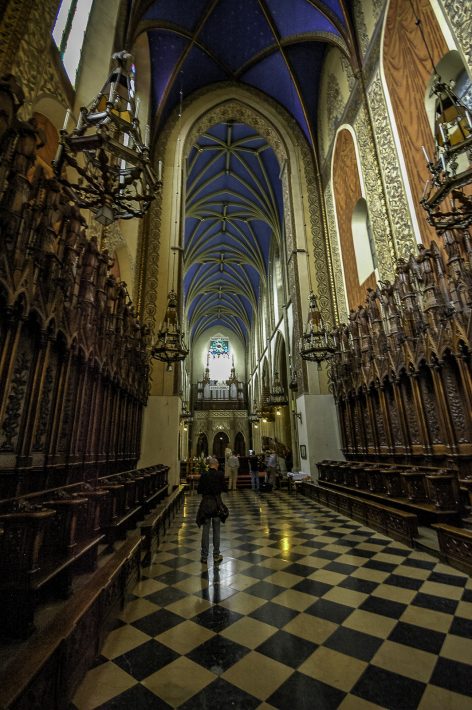
It’s an odor of slightly metallic dampness, old incense, leather, wool, and a thousand other notes that probably only a sommelier or blender of fine pipe tobaccos could notice and describe but which merge for us mere mortals into “old church.” It is to be in the midst of history: the structure is older than America. It is to be in the midst of profound calm: even in the most tourist-filled church, there is reverent silence.

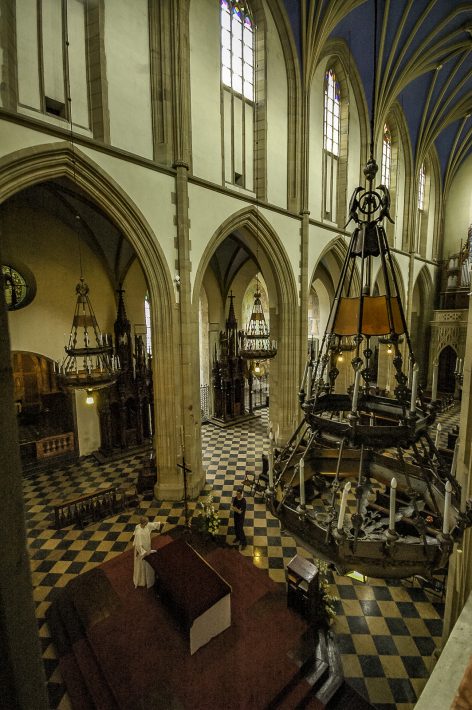
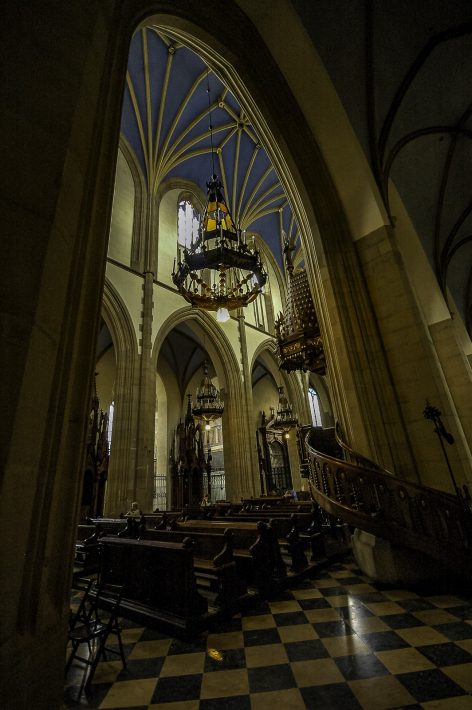
A day in Krakow, responsible only for myself. I decide there is only one thing to do: go into churches. I begin with one of K’s favorites: the thirteenth-century Gothic Basilica of the Holy Trinity.

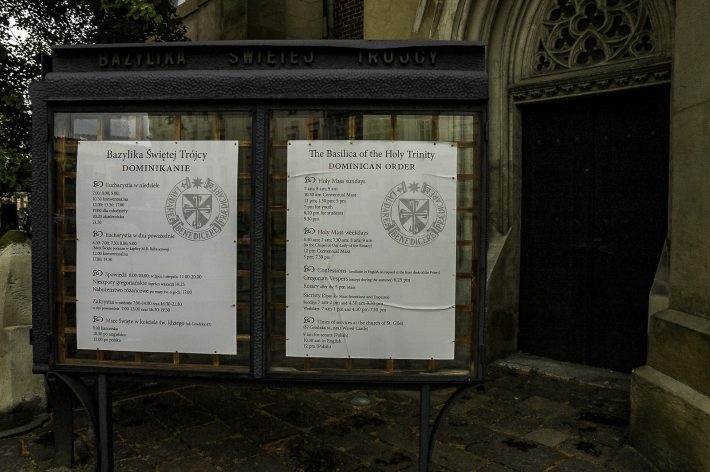
With so many churches in the Old Town of Krakow, it’s surprising how many masses the Basilica has. There are more on a weekday than on a Sunday at an average Catholic church here in the Old South, a clear illustration of the difference in relative demand. Then again, this particular church is popular among university students in Krakow.

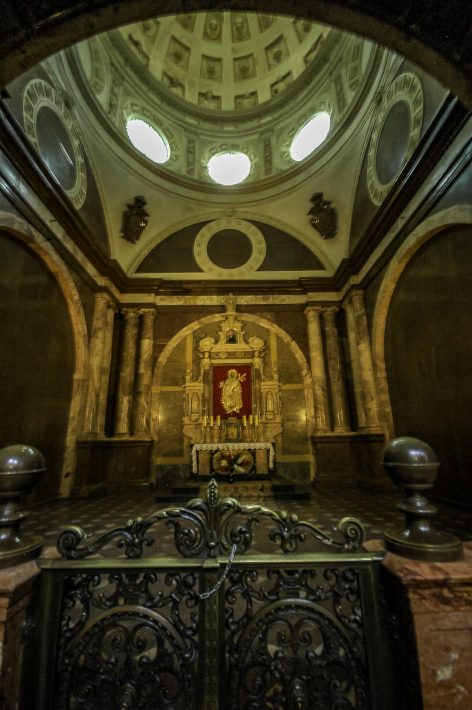
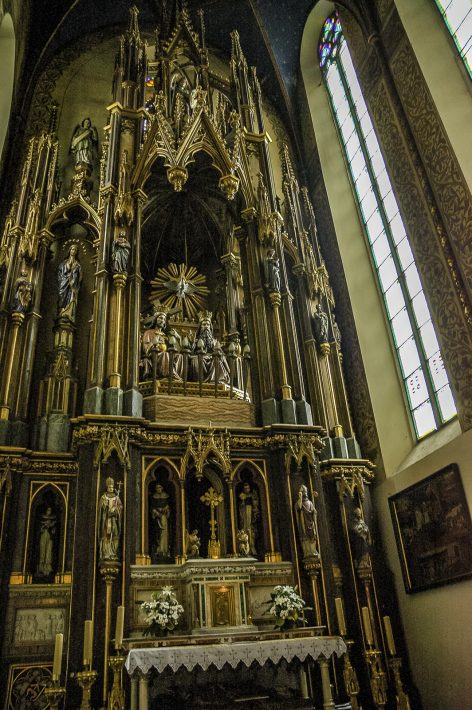
So many of the churches in Krakow — they begin to blend together after a while. That’s the tourist view, I’m sure. To parishioners, there’s a history and a relationship.

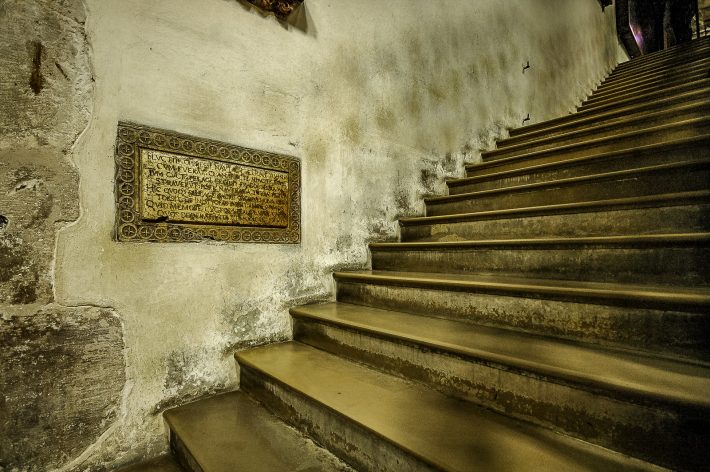
Yet, there are little details in each church, little architectural touches that set each one apart. The basilica, for example, has a small upper chapel.

The view provides a little different perspective. Instead of looking up — a common action in gothic churches, and very much by design — one has the opportunity to look down. Somewhat blasphemous in a certain sense: we mortals are to be looking up to God, and here I am looking down. And on what?

A young monk explaining an upcoming ceremony to four young men. I can’t hear what they’re saying, and every picture I take turns out later to be completely, irredeemable blurry. I make a logical assumption: these young lads are about to become monks themselves, but I’m not certain. I can’t eavesdrop without making it obvious, and something prevents me from simply walking up to them and asking. What’s stopping me?

The conspicuousness I always feel as a tourist certainly has something to do with it. Walking around, snapping pictures, changing lenses, taking more photos, changing lenses again — I’m simply a cacophony.

What’s worse, unlike the Catholic tourists, I don’t genuflect as I pass the altar, and I don’t cross myself on entering. I surely stand out, but what’s the problem? We all stand out.

Is it false modesty or simply an overactive ego?

Busted

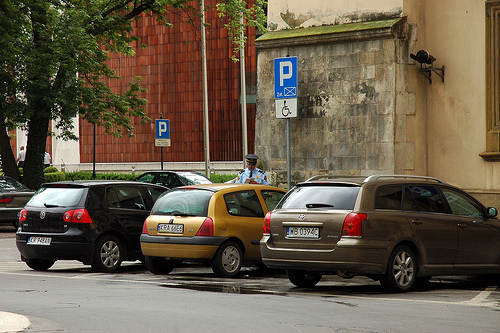
Parking in the Krakow Old Town can be hard to come by. Just ask this driver…

DSC_4676

Up (Krakow IV)

Krakow, like all European cities, is a mix of the old and the new. Young people walk along ancient cobblestone street checking email and updating their Facebook status on their cell phones. McDonald's sits on an ancient street in a building that is at least twice as old as the chain itself.

Often both are present at the same moment, in the same building. Visiting such an old city is a reminder that often, what's at street level is the least interesting sight. Or, perhaps more accurately, that which is above is at least as interesting as that which is at eye level.

DSC_4744

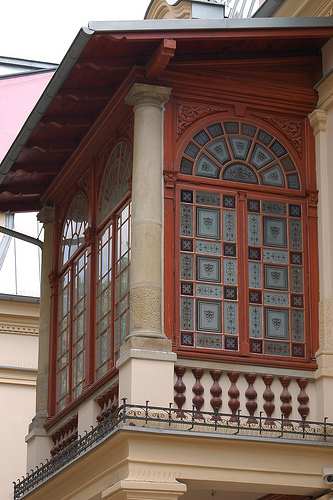
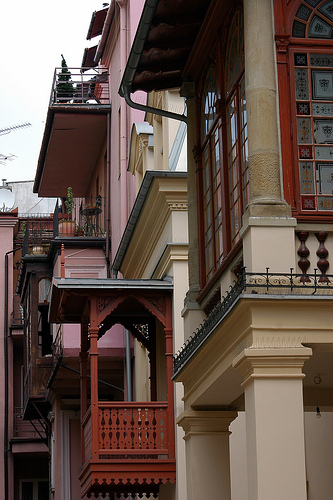
As I strolled along, taking a meandering walk from the rynek to Kazimierz, the old Jewish quarter, I began to pay attention to the balconies.

DSC_4962

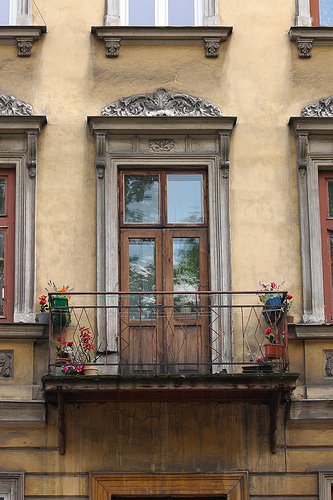
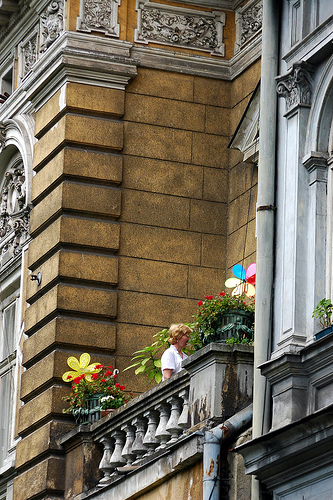
In an urban setting, balconies are often the only part of one's property that has anything at all to do with the out of doors. Parks, beautiful as they are, are after all public property. A balcony is the only "yard" a city dweller might own.

DSC_4801

A few flowers and it's positively garden-like.

Storage is another balcony option. I had a good friend in Warsaw who had a "balcony" at his apartment that couldn't have been more than ten square feet: just a little spot to stand. He stored his bike and a couple of other items on the balcony. After all, what else could you do with ten square feet? As a non-smoker and non-coffee drinker, he couldn't even enjoy a morning cigarette (if such things could be enjoyable) and cup of coffee on his balcony.

DSC_4802

As in most urban areas, space is at a premium. Some decide to turn their little bit of outdoors into an additional room. Then neighbors get balcony envy and enclose theirs,

DSC_4804

resulting in an alleyway of enclosed balconies.

Given the size of some apartments I've visited, it makes perfect sense.

DSC_4805

Still others, with a more classic balcony, simply leave it alone. Then again, if one's balcony is the size of others' apartments (and I have been in apartments in Warsaw that tiny), one probably has enough apartment on the other side of the balcony to make such a conversion unnecessary.

DSC_4816

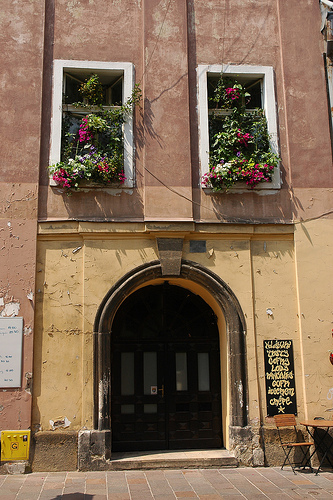
Yet not everyone has a balcony, especially in the Old Town. This is not to say they haven't carved out their own little outdoor garden. Some, more extravagantly than others.

DSC_4748

It makes for a bit of color in an otherwise gray setting.

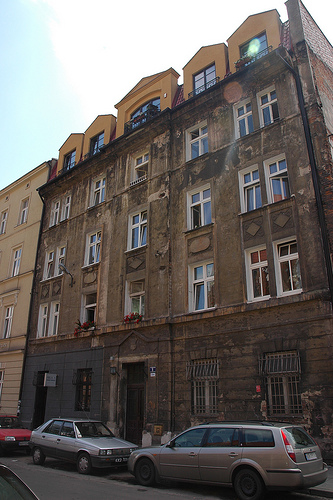
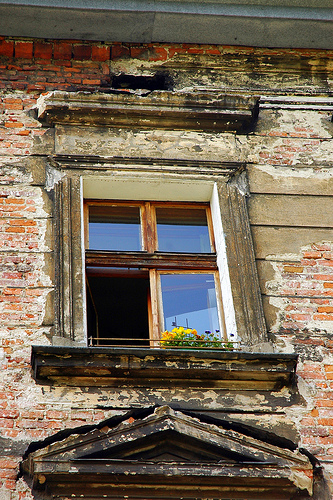
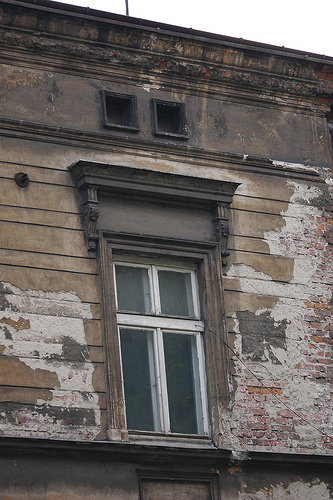
Many, however, just leave well enough alone. Perhaps they figure it's not worth the time. Perhaps the reason that there's not much use, given the state of the pre-war facade.

DSC_4800

With all the renovation going on all over the city (thanks, European Union), it's only a matter of time before such sights disappear. In a way, that's sad: such decrepit facades bear witness to history. They show the gritty underside of Poland, and they serve as a reminder to visitors that, as with much of Europe, the city hasn't always been filled with days of Italian ice cream and walks in the parks.

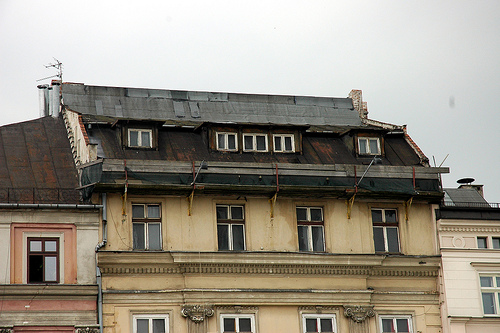
DSC_4675

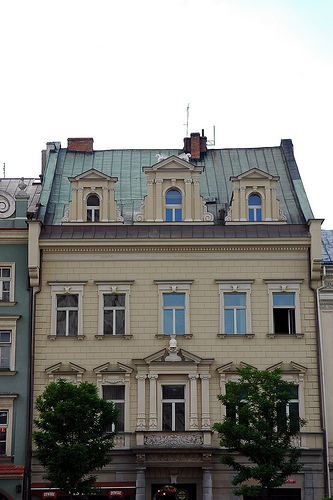
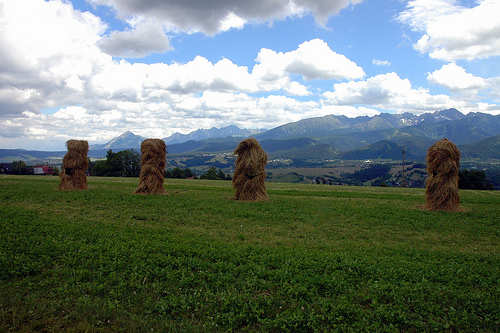
It also shows one of the paradoxes of modern Poland. The building above is literally on the rynek: the most prized location in Krakow real estate. Yet the roof is literally pathetic. It's the same as in Furmanowa, the meadow overlooking the Tatra Mountains in Zab: prized real estate that's used for cultivation.

Cousin It
Cousin It 9 July 2008

And yet the irony: so many Poles lament how so many of their compatriots have turned so materialistic in the last few years.

Top Floor

K’s parents have a large house. They have to: they run a little noclegi business — something like a bed and breakfast, but more often than not, without the latter.

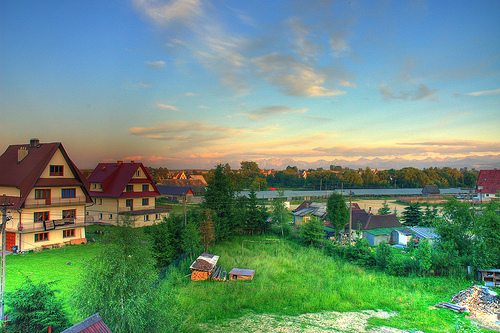
This is the view from their highest balcony.

__

All the quirks of Poland, on display. The relatively rich live beside the poor. They both live next to an enormous flea market, where everything is available, and all prices are negotiable. All framed by the mountains that give the region its beauty and its culture.