
fun in threes, sometimes fours
the girl
We’ve been taking L to swimming lessons at the local YWCA. Within a few weeks, we’ve gone from calmly moving her about the pool (“Dig, dig, dig! Kick, kick, kick!”) to dunking her under water after blowing in her face. She doesn’t much like the former, and the latter sets her to screaming more often than not. The instructor suggests that it’s the water running down her face when we pull her back up that upsets her.
Still, we take her regularly and follow the instructor’s advice, on the hopes that it’s the unfamiliarity of it all that is bothering L.
There’s a progress report at YouTube.
I don’t think any of us could have anticipated L’s success on the potty chair. In the past ten days or so, L has done her messier business almost exclusively in the potty chair.
So, she’s potty trained, right!? I mean, a couple of accidents, statistically speaking, are fairly meaningless. And the fact that she’s not telling us that she needs the potty chair is a function of her age and development and nothing more. After all, she knows what it’s for — every time you put her on it, she does her best to have a BM.
Well, admittedly, she’s not potty trained in the truest sense of the term, but I think we’ve laid a fairly sure foundation for a quick, painless training when the “real” time comes…
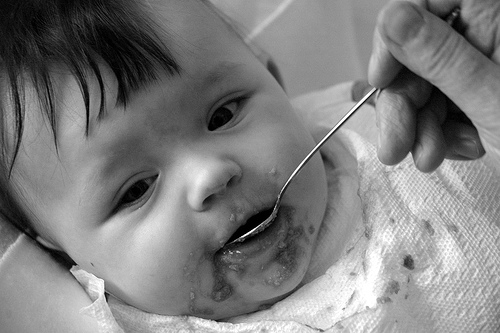
We've entered the wild, wonderful world of solids,
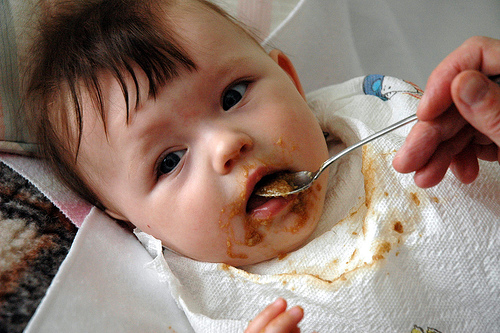
which means a number of things:
On the other hand, feeding is more amusing and more conducive to photography.
Few things in life are more of a milestone for a child than to learn how to use the toilet. There’s tons of advice about when and how to begin. “Most children show signs of readiness to begin using the toilet as toddlers, usually between 18 months and 3 years of age,” writes one site. It continues,
These signs include staying dry for at least 2 hours at a time, having regular bowel movements, being able to follow simple instructions, being uncomfortable with dirty diapers and wanting them to be changed, asking to use the potty chair, or asking to wear regular underwear. You should also be able to tell when your child is about to urinate or have a bowel movement by his facial expressions, posture or by what he says. If your child has begun to tell you about having a dirty diaper you should praise him for telling you and encourage him to tell you in advance next time.
Well, L can’t communicate yet, and in fact she’s just learned how to sit up on her own. That doesn’t mean she can’t use a potty chair already. How do we know? Because she’s successfully used the chair several times.
Is this real “potty training”? I do indeed think so — we’re giving her an alternative to dirty diapers from an early age, and we’re showing her how “grownups” do it.
The key is knowing when she usually relieves herself. BMs are the easiest, because she announces it clearly and well in advance. But at least two times, we’ve sat her on the potty chair after eating when she wasn’t showing any signs, and within a few moments, she made use of the chair.
Our hope is that this will make “real” potty training more manageable. We’ll see in a few months…
Last Monday we took L to her first swimming lesson. Granted, most of it was for us parents -- teaching us how to hold our children, how to roll over with them into a back float, etc.
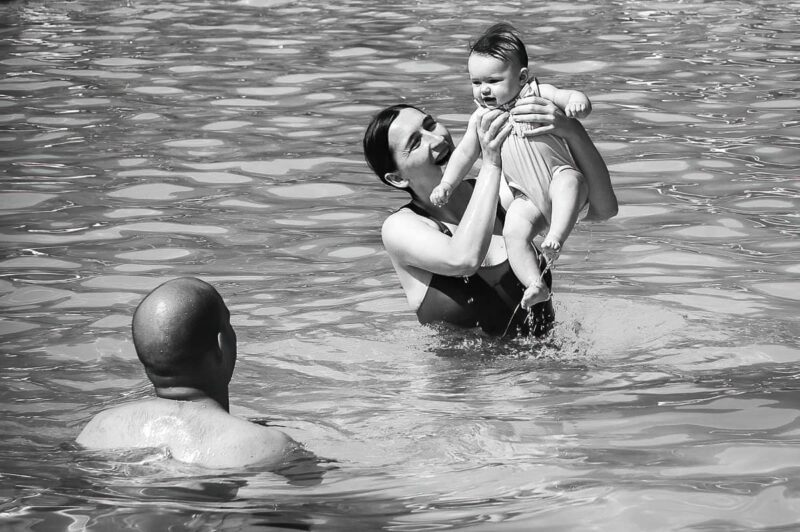
L loves water. She splashes like mad when taking a bath, so it seemed fair to expect her to like swimming. And she did. Sort of. It got old relatively quickly, but she valiantly survived to the end of the thirty-minute lesson.
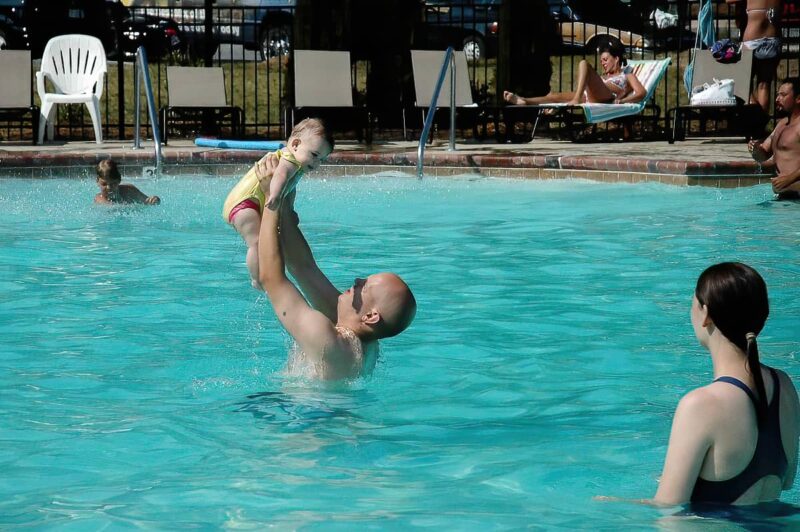
Yesterday, we finally took her swimming in our apartment complex pool, complete with the floating crab the grandparents brought:
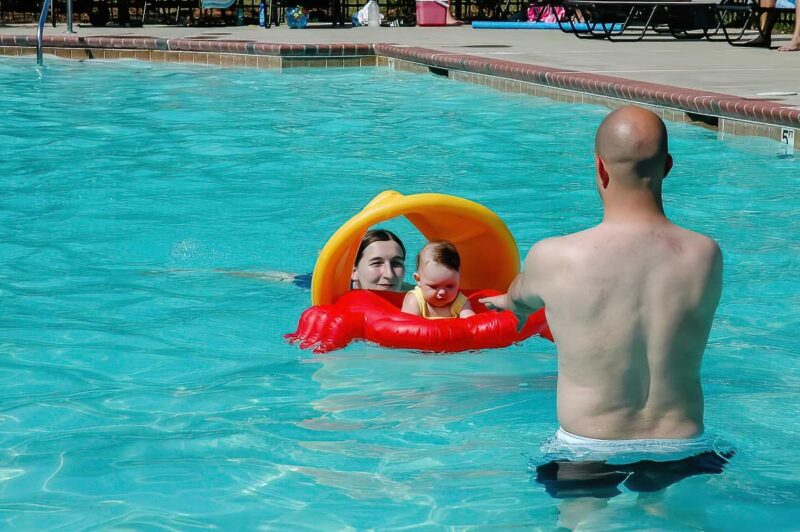
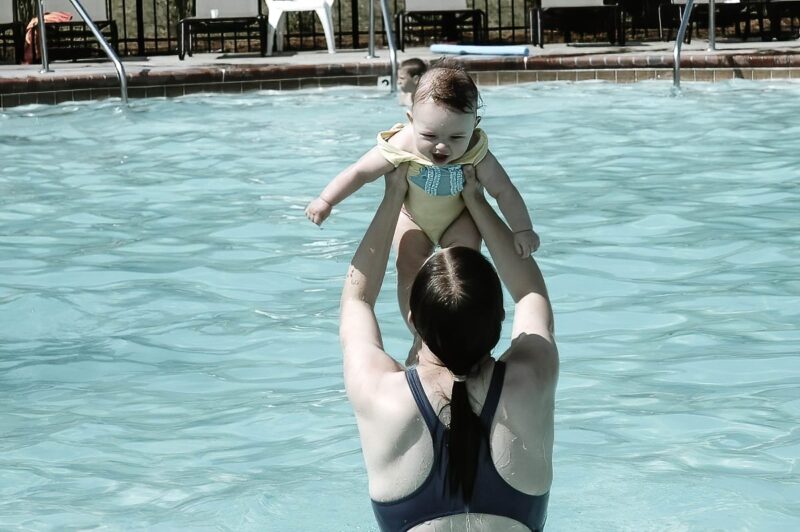
In reality, L really didn't like the crab that much. Or at least she tired of it quickly. Being tossed about was much more fun, I suppose.
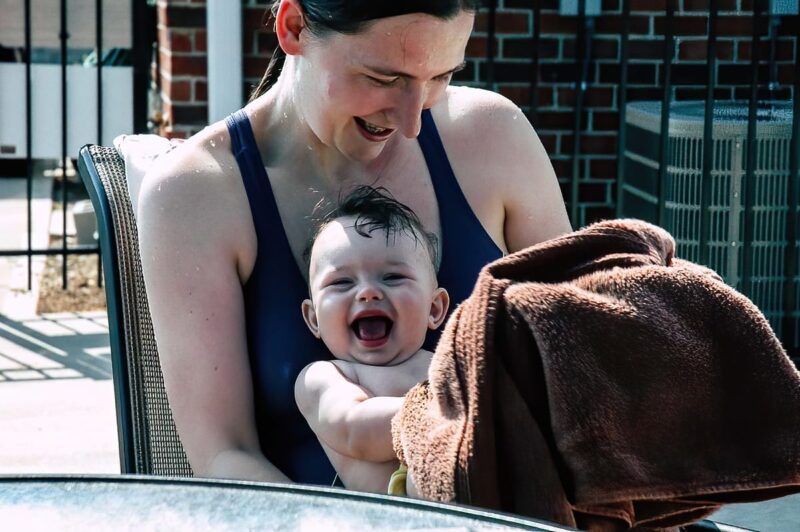
She enjoyed it, but she seemed happier while drying off.
The morning light in the second bedroom of our apartment is absolutely marvelous.
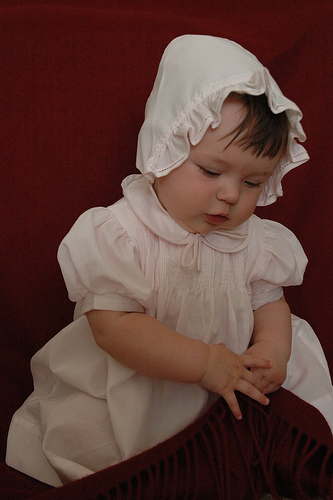
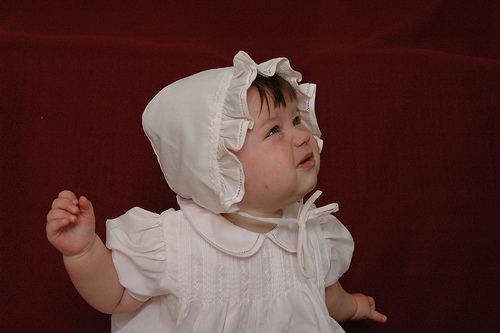
K has often talked about getting The Girl dressed up for some nice portraits.
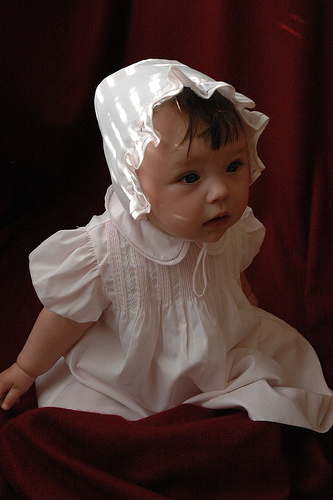
Last weekend, she did just that.
L's been able to lie on her stomach and hold up her head from some time now. Recently, she learned that her arms can help her in the endeavor.
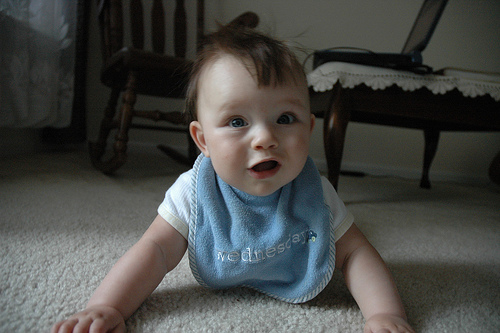
It's the first step to crawling, no pun intended. At least we hope. We're a little worried that she might want to skip crawling since she's already "standing" and "walking" all the time. Why? Well, there's all the hype about the importance of crawling, like this:
There have been some studies that indicate that late walkers score better later in life on academic achievement tests. It is hypothesized that because of the use of alternating sides of the body (e.g., right arm and left leg, then vica versa), there is increase communication between the two sides of the brain thus enhancing learning. (The Mentor Mom)
On the other hand:
There are many perfectly normal, well-coordinated children who bypass the crawling stage to move onto other modes of locomotion. Two of our own children, Robert and Erin, had very short crawling stages. Robert (now a partner in the Sears Family Pediatric practice) scooted on his bottom with one leg straight out and the other leg bent under him. Our daughter, Erin, stopped crawling at nine months and "walked" on her knees. (Parenting.com, via the Way Back Machine)
It's just one of the many "do I really need to worry about this?" parenting issues...
Sitting requires a lot of development, balance and strength chief among them. While L has, for some time, been sitting with supports, she's recently begun sitting (and falling) all by herself.
Sitting brings a whole new set of possibilities. The ability to entertain herself by picking up things she sees around her is a big plus when everyone's busy. The promise of crawling emerges when L leans forward and puts a fair amount of weight on her still-weak arms. Sitting is the first step toward mobility, for it means a much-expanded horizon for the Girl -- much to see, much to tempt...
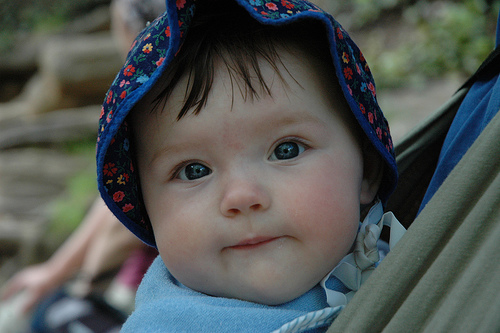
I often wonder what L is going to look like when she's older -- three, seven, ten years old. Once she reaches three it will be easier to guess what she might look like five years later.
At five months, though, it's fairly difficult to imagine what she might look like as a little girl rather than an infant.
But sometimes, when her expression is just right, there's a little glimpse.