matching tracksuits

fun in threes, sometimes fours

the girl

Trusty

“Will you need your trusty gloves?” the Girl asks. We’re getting ready to go another backyard adventure — our own little version of the Backyardigans — and she is packing her bag. Among other things, she has retrieved her and my work gloves (in as much as hers are work gloves), but she can’t decide if we need them.

“Go ahead and pack them,” I tell her, and we’re off — first for a series of pictures.
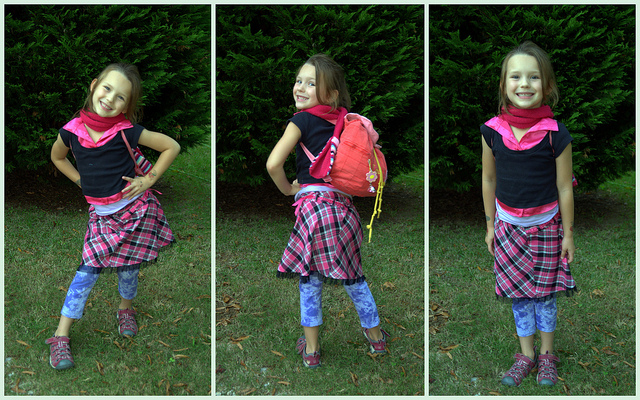
121015

“When I say ‘snap,’ you take the picture,” she instructs. She says it three times; I take three pictures. Simple.

As we march through the backyard, I learn that everything is “trusty” today: I have with my my trusty camera; she has packed her trusty binoculars; she’s worried about her gloves in her trusty bag.
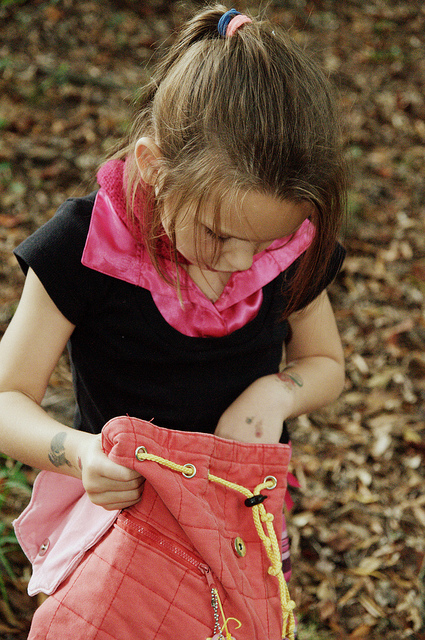
VIV_5081

Everything is so trusty, and I ask her what it means to be “trusty.”

“That means it knows you can trust it,” she explains.

And it gives me pause. In that case, am I trusty? As a parent, I almost assume I’m trusty. Perhaps it’s parents’ eternal worry that they are never as trusty as their children assume and need them to be. Maybe it’s easier said than done. There are certainly times when doubt seems to be the only appropriate response — a moment of reflection that makes us think, “I guess I could always do better.”

In the end, I know I always want my children to think of me as their “trusty Tata,” and I always worry a bit that I’m not living up to that.
Throw Away

I think we're almost all pack rats by nature. Sure, there are the few that throw away everything and anything the moment it's clear that the object no longer has an immediate use. Then there are those whose homes are garbage heaps with little paths through the clutter, people who ironically enough stand a reasonable chance of ending up on this or that reality show.

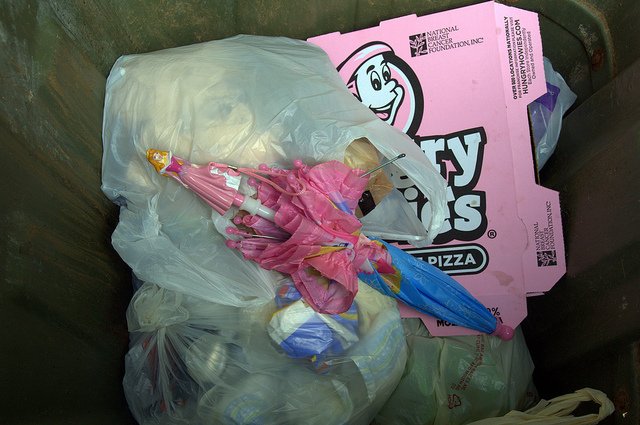
L has always been a bit of the latter. She'll try to keep broken objects for sentimental reasons, even if she has a replacement. A prime example of this is her princess umbrella collection. Various department stores sell them, and L has bought three or four over the last few years. They're flimsy, though, and break easily.

Trashy Miracle

Convincing her that she needed to throw the broken umbrella away, though, has always been tricky. It took her a bit of time to warm up to the idea. Today, we pointed out that the umbrella is broken -- again. "We'll need to throw it away," K began, probably sure that the conversation wouldn't result in much more than a bit of begging and fussing.

"Okay," came the reply.

Some days, she's a bigger girl than I realize.

Autumn Saturday

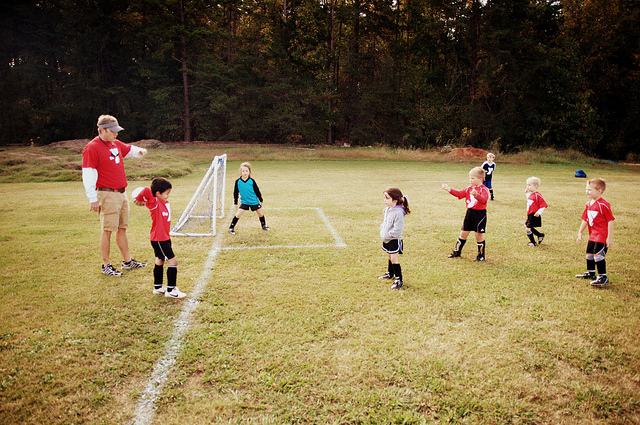
Saturday morning has a new routine since the Girl began playing soccer. Up at eight; on the field by nine — it’s a busy morning.

Goalie

Evenings, things return to normal.

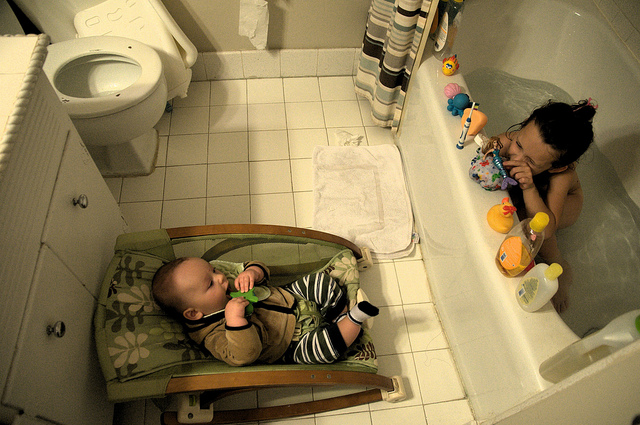
Bath and Relax

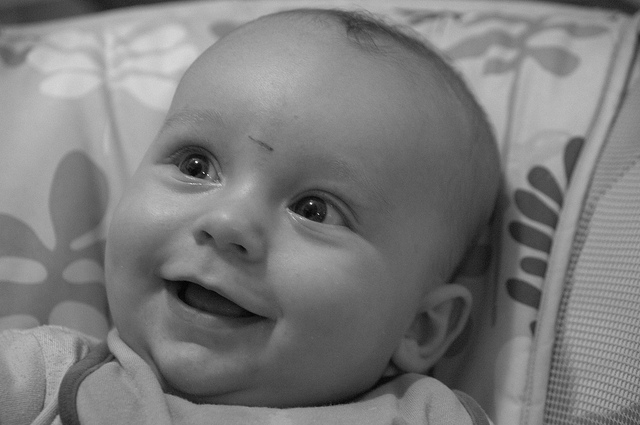
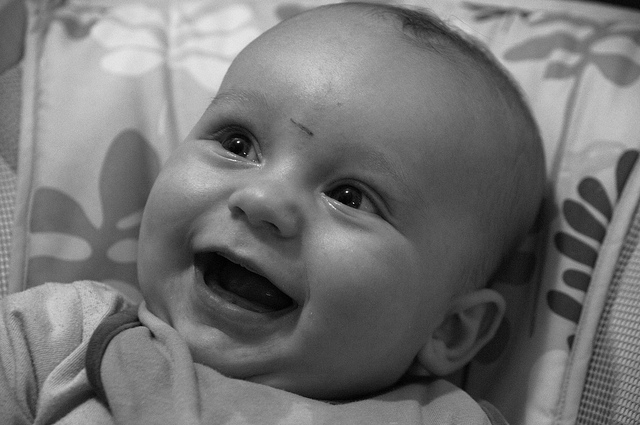
And that normal includes a boy who loves to smile.

Saturday Night Smile II

And does it well.

Saturday Night Smile

Autumn Sun

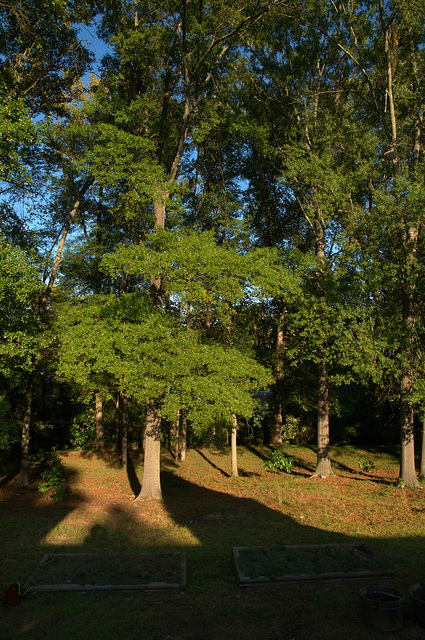
It’s the angle — no doubt. The sun is hitting the earth at a decreasing angle as the northern hemisphere moves further and further away from the sun. Yet that astro-mechanical explanation somehow doesn’t do justice to the quality of light this time of year. We sit down for an early dinner and the light outside is simply magnetic. One must head out to the deck to get a closer look.

Autumn Sun

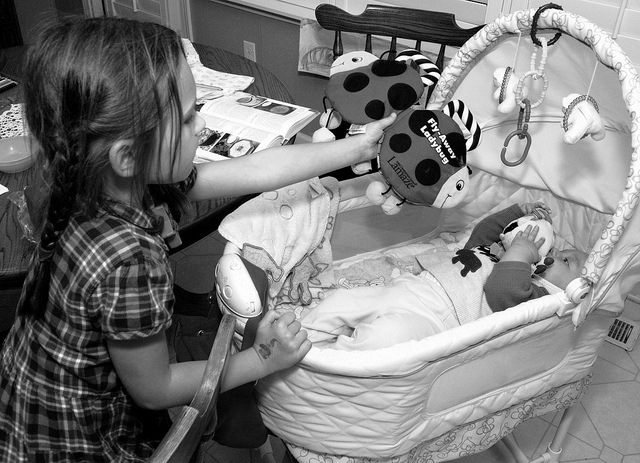
As the sun goes down, though, attention turns to more important things. The Girl can now read a book — a single book — to E. Perhaps in the recent past it would have been more a question of memorization than anything else, but these days, there’s no question she’s reading.

Reading to Brother

Of course, this doesn’t necessarily mean that the Boy is comprehending.

Push

When we go to Conestee Park, L has a little obsession: climbing the protruding manholes. Sometimes, I get into the action as well.

"Give Me Two Hands"

The Moment

Some moments, like on a Sunday afternoon walk in the early autumn, everything seems simply perfect.

DSC_4849

What was before and what will be after both seem to disappear and for a brief flash, we just are.

DSC_4855

She Shoots! She Scores!

Hula Hoop

This summer, the Girl developed an interest in the hula hoop.

Cartoons: A Father’s Perspective

It was a gradual change, so gradual that we really only noticed it when it became a frequent-enough occurrence to get K and me talking about how much time the Girl had been spending in time out.

"Where did she get that?" we asked each other after the Girl had mouthed of again after just coming out of time out. It was a sassy, arrogant, and cruel tone of voice.

"No one talks to her that way here," I said, "so there's only one place she could have learned it: television."

For years, whenever I was walking in some department store and a voice from a little kiosk beckoned me over to look at all the advantages of Direct TV, I could stop the conversation immediately by stating semi-truthfully, "We don't have a television." It wasn't the whole truth: we had Nana's and Papa's old television in the computer room hooked up to a buggy DVD player, but "We don't have a television" was more convenient (and close enough to the truth) than "We have a television, but it's only hooked up to a DVD player; we have no cable service, and we're not interested in it." Somewhat reluctantly, though, we bought a small home theater system a year or so ago, and now that it's wirelessly hooked up to our Netflix account, we can sort of watch television like "normal" people. It led the Girl into whole new realms of cartoon viewing.

Ay, there's the rub.

"Where could she have gotten it" was only a rhetorical question because we both knew that she had spent time only with family and one close friend -- not enough to explain the attitude, the sass, the trying to act like a grownup in five-year-old shorts. We sat and discussed the situation, narrowing it down quickly to two cartoons in particular: Horseland and the newest incarnation of My Little Pony that includes the deceptive subtitle, "Friendship is Magic."

I thought back to all the snippets of these shows I'd watched -- and a couple of episodes I'd watched almost entirely -- and realized that both shows have characters that behave in just this sassy, nasty manner. "Well fine. I never liked it in the first place!" Things like that. Sure, by the end of the episode, all has worked out (after all, "Friendship is Magic"), but the behavioral model was still there, and the Girl had picked up on it.

We sat down with the Girl and talked about what was going on. Informed of our decision to eliminate Horseland and My Little Pony as well as to curtail general television watching, the Girl sniffled a little, but seemed fine.

A couple of weeks passed. I'd even forgotten about the two offending shows. Then: "Have you noticed how much L has changed in the last two weeks? The snotty, sassy little brat has disappeared and our sweet girl has returned."

This brings up the obvious question: what affect do media have on children's behavior? In many ways, it's certainly a chicken/egg mystery: culture influences what is acceptable in the arts (and I use that term loosely with most television programming), and the arts in turn teach members of society (often unawares) what acceptable society members find interesting and amusing. I know for certain, though, that the behavior modeled in the cartoons showed up in our daughter. This might be a function of age: younger children are less critical of the influences that affect them. Yet once a model, always a model: it seems that the longer one watches television uncritically, the more of an unconscious influence it exerts. Certainly that's what advertisers count on, to some degree.

But was it always like this? Were cartoons always issues of concern with parents? I certainly remember comments from my parents about how violent some cartoons are. Episodes of Tom and JerryRoadrunner, and many others always involve seemingly countless instances of extreme violence, acts which children are supposed to laugh at -- and do laugh at. Yet it seems more likely that a child will take on the sarcastic, disrespectful tone of voice she hears in an episode of Horseland than, say, she will drop an anvil on a friend's head. Then again, tone down the severity of the violence to a slap and I suppose they're equally likely. Still, tone of voice is something that is not even necessarily regulated automatically in children, so it seems more influential. To see the changes since I was watching cartoons, though, one only has to look in an average classroom to see that the uptick in general disrespect is significant, whereas there was never a real corresponding increase in violence (though there has been a significant increase).

The change is most noticeable when comparing today's cartoons to some created in the 1950's and 1960's. Still more noticeable are the differences compared to cartoons from that era that rely totally on visuals. I'm thinking here of two shows in particular.

Koziołek Matołek

Originally a comic from the 1930's, Koziołek Matołek ("Matołek the Goat") follows the adventures of Matołek as he searches out a mythical city were goat shoes are made. Matołek is goofy, clumsy, and a bit silly, but always naive and pure.

https://youtube.com/watch?v=G7hdR-bVtEs

Krtecek ("Krecik" in Polish)

An import from Czechoslovakia, Krecik was the product of the 1950's, and it shows. The first episode shows a certain kind of self-reliance common to the times but strangely foreign to most of us today, and it certainly illustrates a kind of innocence lacking in many of the cartoons the Girl is drawn to.

https://youtube.com/watch?v=1EkwjkuznZE
Further Information

Saturday Break

We woke up to rain today. "We probably won't be going for soccer," I think as I poured my first cup of coffee. And the thought didn't break my heart. Still, knowing the Girl had the second game of the day, I decided to drive over to the field, only four or five miles from out house, to see if there were indeed games. I'd heard somewhere that the general rule for determining whether or not to play a soccer game is if the ball bounces when dropped from the waist. If it bounces, the game begins. But I wasn't sure what it would be like for four- and five-year-olds. I arrived at the field in a drizzle to find everyone playing as if nothing were happening. Still, the Girl has a way of getting a nasty cough very easily, so K and I decided it would be best not to go.

No Soccer

We were fairly certain the Girl would be a little disappointed. I saw the patch of dry pavement on the road and thought L would surely see that and certainly use that as justification. "See? It's drying." And so I was a little surprised when the reaction to "Sweetie, we're not going to be able to go play soccer today" was "Yippeee!"

My Math

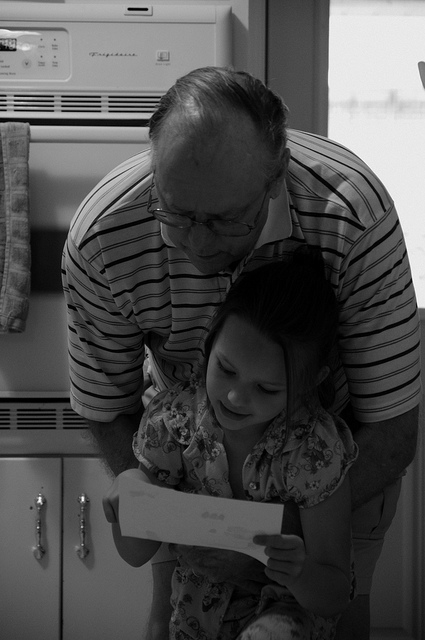
We ended up staying home most of the morning, with Nana and Papa coming for a visit and then L going to spend the afternoon at their place -- after a math lesson in the kitchen.

Lunch

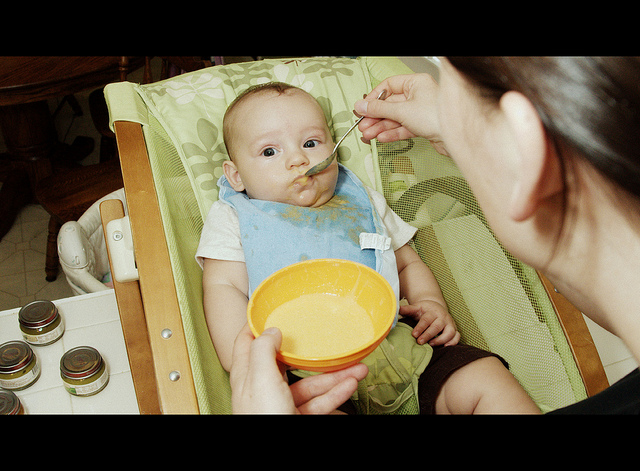
For E, there were very few changes in the routine. Eating, giggling, pooping, sleeping. Repeat.

Feeding

After some weeks, such a Saturday is just fine.