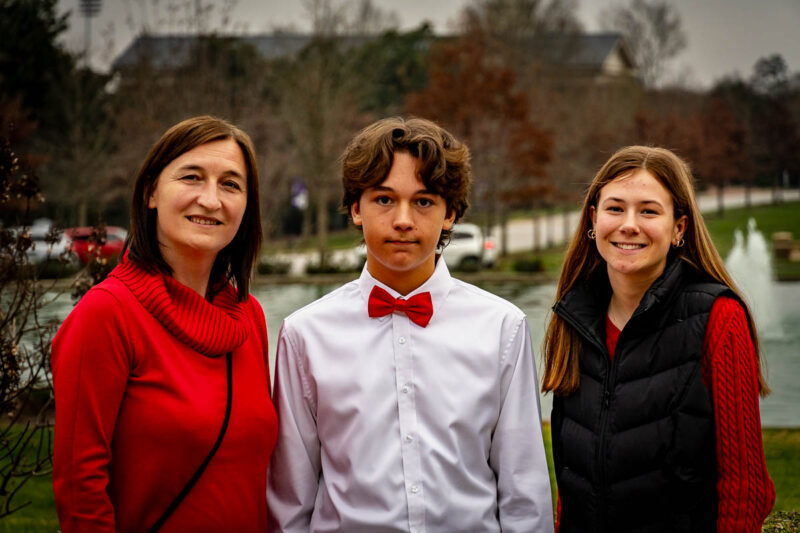

We’re into advent now, the first without the Girl living with us. She came for Thanksgiving and headed by that Friday because of a football game the next day. (I’m still not sure if she really cares for the game or if, more likely, it’s the social aspect of it all. She’s grown fond of tailgating, suggesting the latter.) It’s also the first year without an advent calendar. I think K was looking to get one for the Boy, but I haven’t seen one, so perhaps it never happened. Add to that all my ignorance about our advent-calendar-status and everyone’s apparent indifference to it and it’s obvious how much things have changed over the last few years.
One of the things that definitely has changed is this site: I rarely write anything here anymore and post pictures only sporadically. At first, I thought it was just a break. But it’s easy to slip out of the habit of daily reflection and the mental energy it requires. And as for the pictures, the Girl is gone, the Boy is an increasingly-reluctant subject, and honestly, I’m just getting tired of that whole process as well.
That’s not to say I’ve given up writing altogether. I spent some time in recent months working on my memoir about growing up in a fringe Christian sect, but even that has hit a jam: The more I read and listen to podcasts about growing up an Evangelical Christian, I realize my experience in a high-demand religion is par for the course here in America. We weren’t the only ones viewing ourselves as the only true Christians on the planet while relegating everyone else to The World — that big, bad anti-Christian amorphous society that seems to be everywhere and nowhere all at the same time. Evangelicals and we even referred to it identically: The World, while pointing fingers at each other and lumping the other into The World as well. Exclusivist religious views are hardly exclusive to fringe sects (though being on the fringe does help, sociologically speaking). So I reevaluated what I was writing, revised it heavily, then started again. And ran out of steam almost immediately. I poke at it every now and then, but it sits in a Google Doc festering now.
One positive change in all of this has been my new job. which I’ve not written about much at all. The difference is astounding: no stress about end-of-year testing or even lesson planning in a given format to a prescribed level of detail to be submitted by a specific day of the week. No stress about kids who are out of control and negatively impacting every other student in a given class. No stress about needing more time to complete a given topic juxtaposed against the ever-ticking clock of standardized testing. No more quarterly benchmark tests. No more tri-quarterly Common Formative Assessments. No more pretending administration is not telling us to teach the same thing on the same day when we all have to give the same CSA (Common Summative Assessment). No more mindlessly useless meetings to discuss “data” (quotes very intentional) as if it’s something we teachers have never done, some new revolutionary new pedagogical silver bullet. No more (almost) reports based on questions and prompts that seem to assume our cumulative classroom experience would be best measured in mere weeks. Not a single student has been disrespectful to me the entire school year. Not a single parent has taken her child’s account of events as gospel truth and verbally attacked me for disciplining the kid.





After three months away from home, the Girl returned tonight for the first time. Such a novel experience: for eighteen years, she was a daily joy in our lives, and then suddenly, she was gone. And now she’s back. “At last, I get to take a shower in my bathroom.” Well, the Boy has taken over most of the bathroom now, but never mind that. We had a drink in celebration of her return, talked about school, future plans, current classes, and random trivialities, and simply enjoyed having L back home.
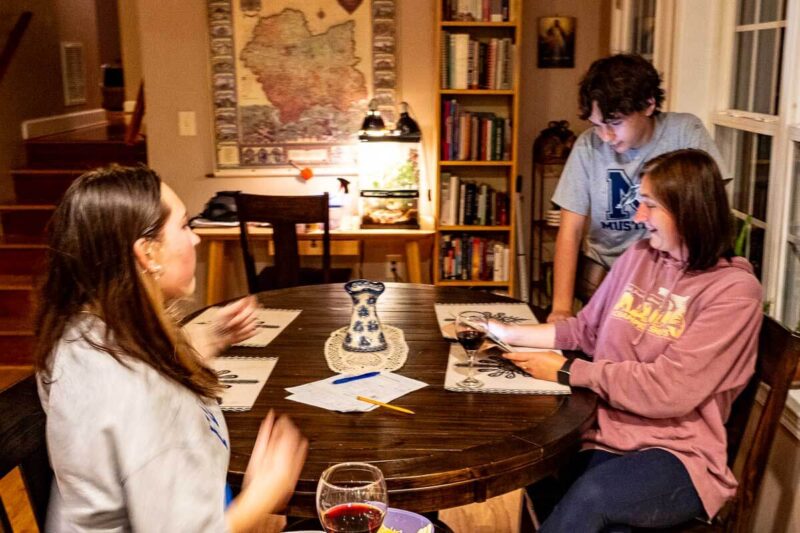
At one point, she noticed E’s math homework on the table. She glanced at it and sighed: “Oh, I’d love to have work this easy.” She pulled out her iPad and showed us some of her work in Calculus III.
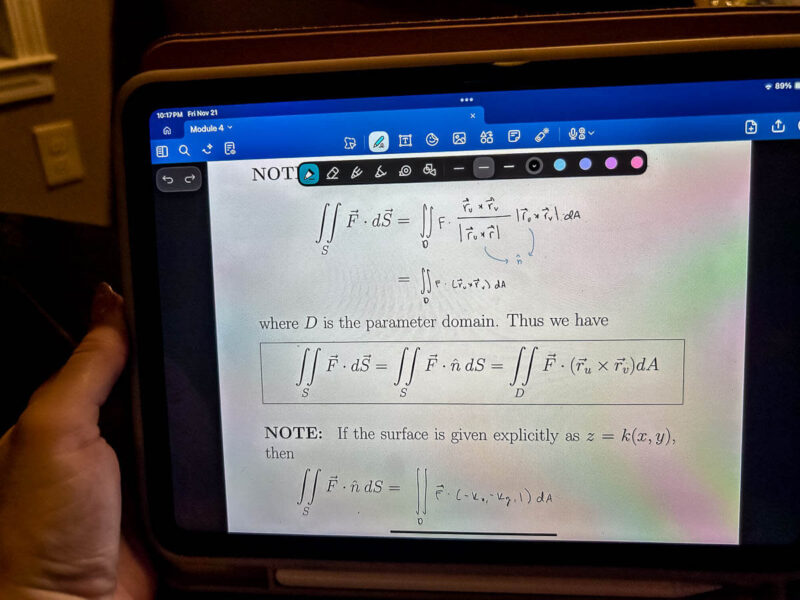
“See? There’s not even numbers anymore!!”
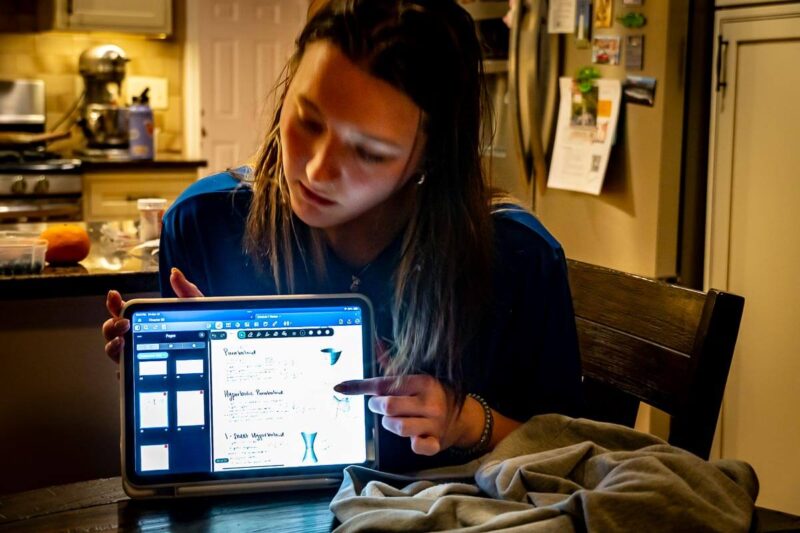
She showed us some of her physics problems (not shown above — more calc), some diagrams from Chem II (“Just wait until next semester when you take organic chemistry — it’s all diagrams,” I laughed.) and reveled in the tastiness of the water.
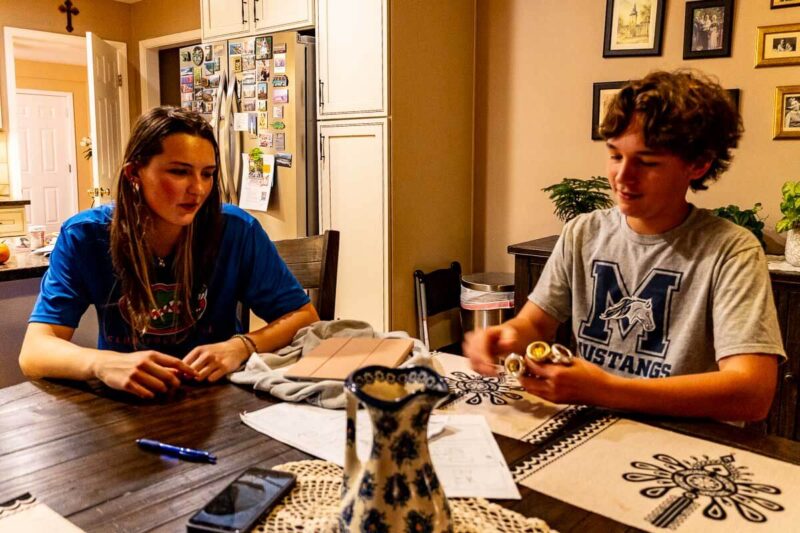
The Boy, for his part, after making us all laugh by annotating his algebra homework to look a little more like L’s calc homework, brought down his ever-growing collection of trombone mouthpieces. Earlier, when L and I were in the basement, she noticed two of his three guitars down there.
“Does he play at all anymore?” she asked.
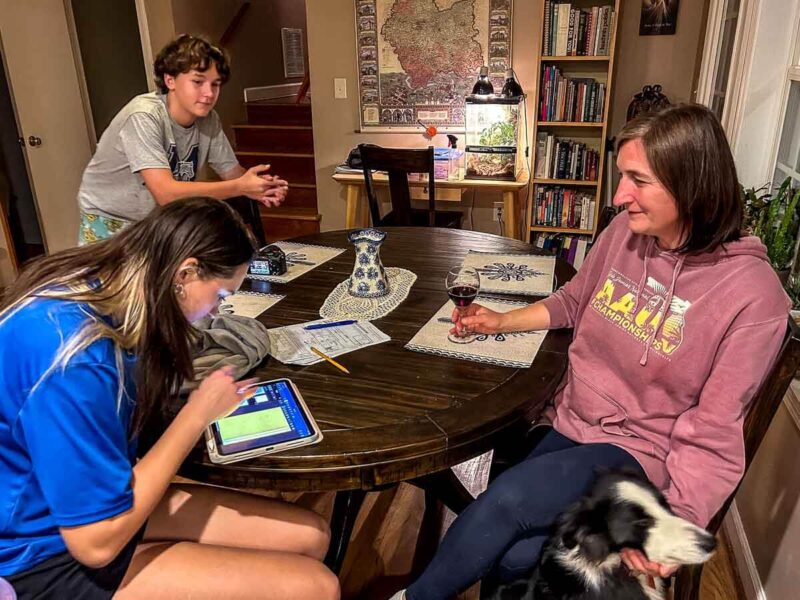
“Not so much. He’s focusing on trombone. But wait until you hear him play,” I replied.
A quiet, laughter-filled, joyful return. What more could we ask for?
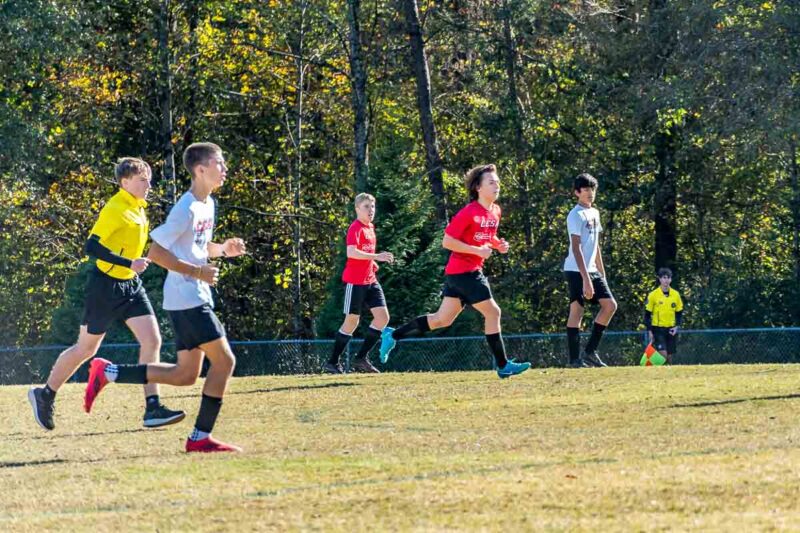
The boys pulled it off: a perfect season, without a single loss. They outscored their opponents 37-6 culminating in a sweep at the season-ending tournament.
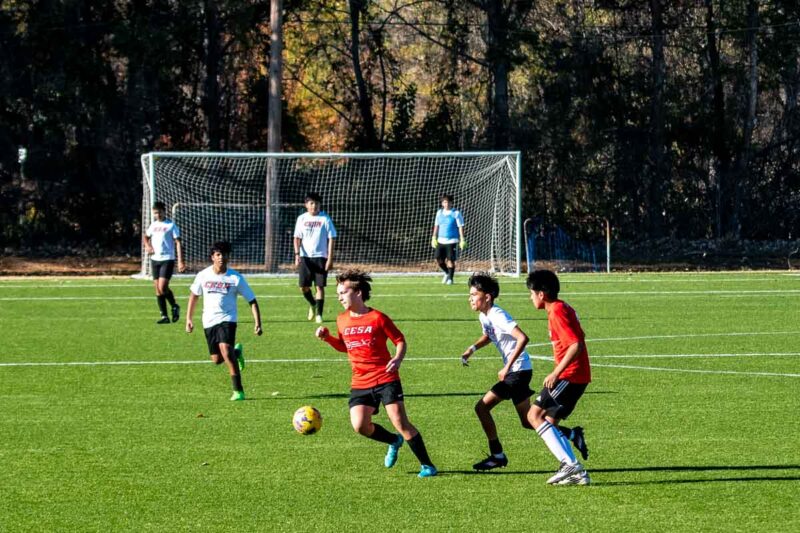

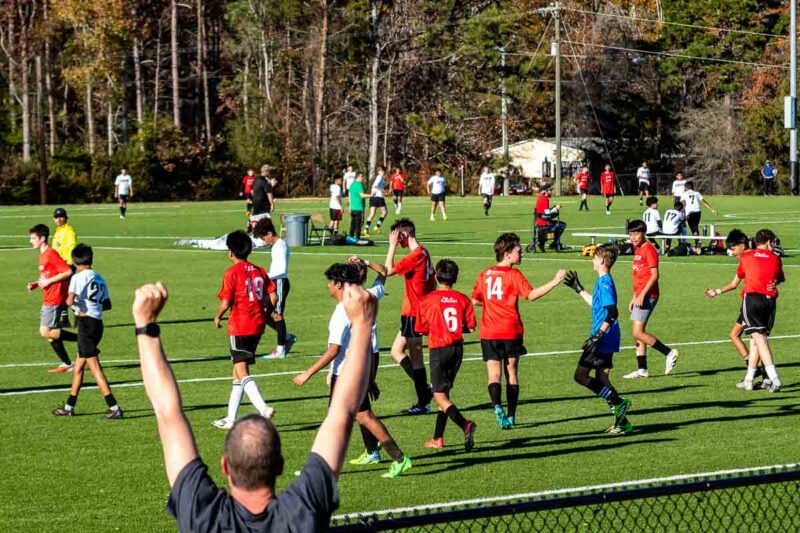
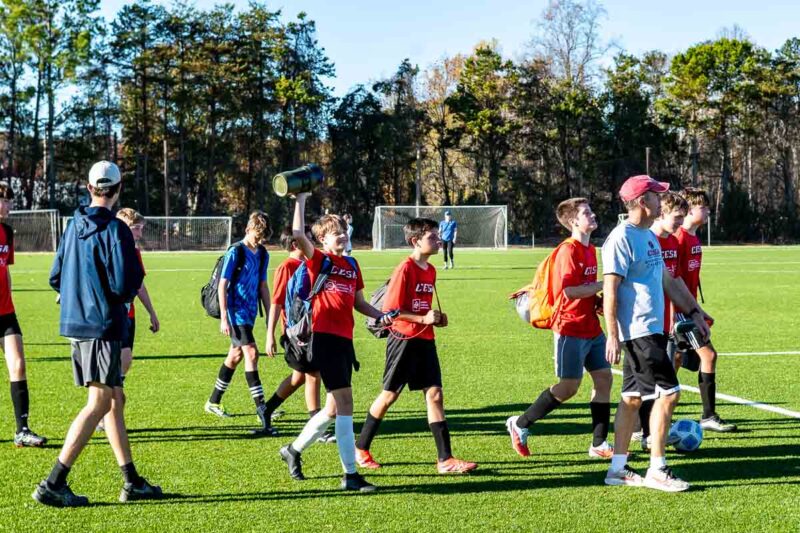
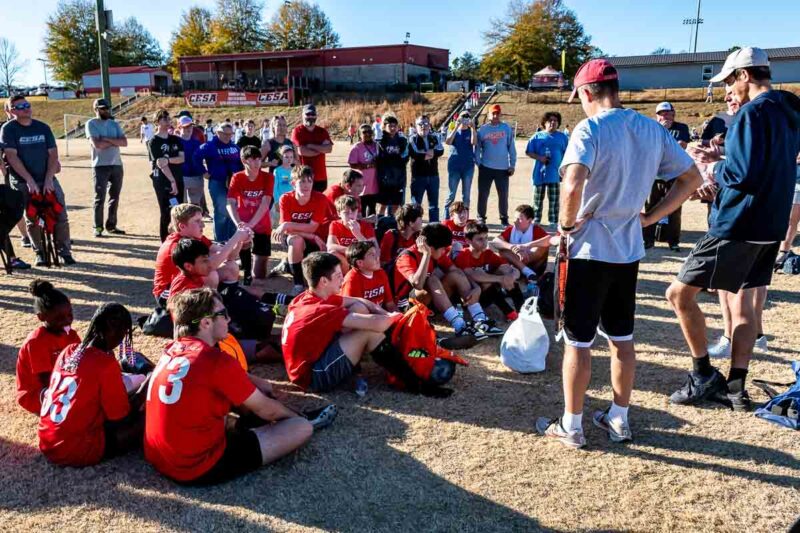



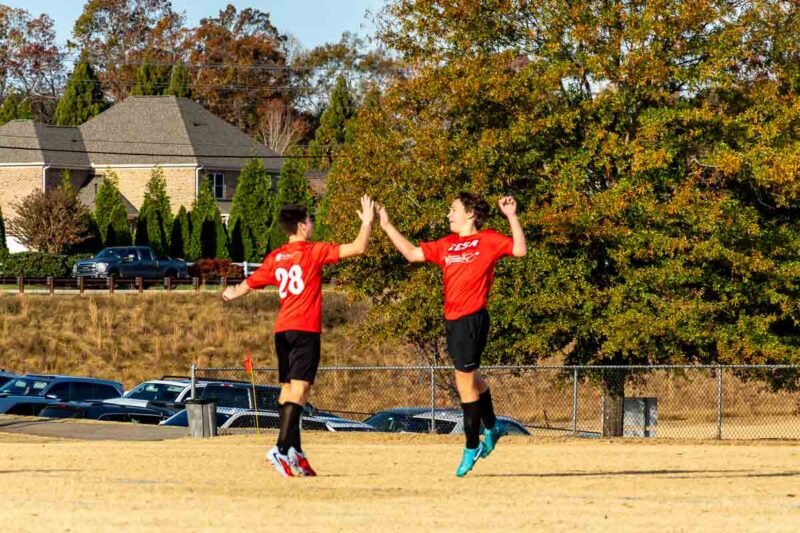




The Boy’s team finished the regular season undefeated this evening. It’s the best soccer season he’s ever experienced, and K and I are relieved he is finally having a great season like L did in volleyball and track.









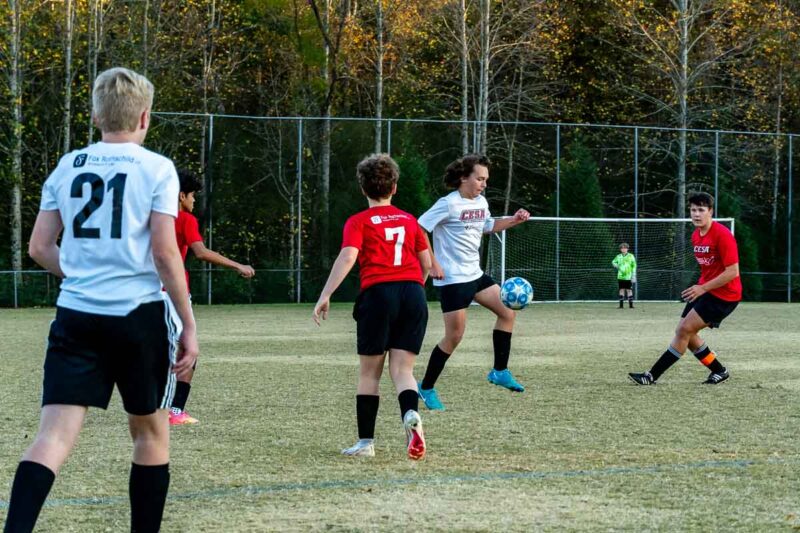



The Boy’s team has had quite the season this year: up to today’s game, they had allowed only a single goal. They beat most of their opponents handily. Today was different. They were up 3-0 by the first half, so the coach put in a new goalie. Someone who’d never played goalie before. I suppose the reasoning was that if the other team started scoring, he could make adjustments and put back one of the two boys who usually play in the goal. That seemed unnecessary, though: the boys added three more to the score, invoking the mercy rule, which means they were no longer allowed to score. In the final minutes, though, the goalie made a mistake that left too much room and allowed a shot into a virtually open goal. The boys still won 6-1, but E was a little disappointed: “I wanted to finish the season with only one goal scored against us.”
Today’s journal prompt for students touches on a universal motif:
Have your parents ever said something like, “Listen to me!” or “You’re not listening to me!” when they’re talking to you? What are you doing when they say that? Why do they think you’re not listening? What does it mean to listen?
We’re working our way through a unit on communication, and this week, we’ll be focusing on active listening. It should be a fairly straight-forward week, especially since we only have three days in school: Monday and Tuesday constituted our fall break, one week after and 100% longer than the Boy’s. (Wasn’t fall break three days at one point? At least two days. Greenville County Schools cut it back this year or last, I suppose.)
As students work, I find myself thinking now-familiar thoughts: this work is so much easier than teaching English, and it’s also easier, I think, than the other teachers’ responsibilities, which leaves me feeling a little guilty.
Why should I? It’s not like I’m spinning my wheels with the kids, just giving them busy work and straight 100s, which I theoretically could. I think that might be one of the reasons why the principal, who was my grade-level administrator at my old school, hired me to teach this leadership class: cruising is so tempting, and she knew I wouldn’t do that.
Compared to what I was doing, I certainly feel like I’m cruising. Gone are the hours of reading and providing feedback on a seemingly-endless pile of essays. Gone are the hours of tedious planning. Gone are the painful and endless meetings about “data.” (I swore last year I wouldn’t use that word anymore. Now that the year is over, perhaps I can lighten up.) Gone are the emails asking me to provide clarification for this or that element of a lesson that the instructional coach (what in the world even is that job? do some research: though every school has one, you won’t find a consistent definition or list of responsibilities) had observed and made notes about. Gone are the meetings leading up to a given benchmark during which administrators (and the instructional coach) encouraged us to encourage our students, motivate our students, push our students to take the benchmarks seriously even though almost none of the teachers took them seriously because of the lack of transparency in the benchmark and our inability to use it as a teaching aid in any sense because of its proprietary nature.
Count that: thirteen individuals with a job title that includes “Superintendent” in it, with the attendant six-figure salaries. With only an average of $150,000 a year — and the superintendent himself making over $300,000 — that comes to $1,950,000 for the salaries of thirteen people who work in public education and do little to nothing directly with students. They do nothing with the teachers. They are so far removed from actual education that to call them educators in anything more than a theoretical sense is insulting.
I often felt the district administrators, from the Superintendent to the Deputy Superintendent down through the seven (yes, seven) Assistant Superintendents for School Leadership, the Assistant Superintendent for Transformation, the Associate Superintendent for Academics, and the Associate Superintendent for Operations all could have used a lesson or two in active listening.
When my previous principal asked me if there was anything he could do that might convince me to stay, I told him there was nothing he could do because it’s all out of his hands. I rehearsed the list; he agreed. But why was it out of his hands? Because the thirteen six-figure-salary superintendents (almost none of whom I ever met except to speak with the superintendent ten seconds when he visited our school a decade ago and one of the assistant- or associates- when they visited our school as we were coming out of COVID lockdown) take those options out of principals hands. “You should tell them at the next meeting you have that you lost a teacher that you most certainly did not want to lose because of your inability to be flexible in any way,” I wanted to say, but they wouldn’t have listened. We’d all be wasting our breath.
So I’m not working nearly as hard as I used to, but I still feel I’m working, and doing important work at that. Sadly I’m not impacting many of the students who would most benefit from a class like mine (and what I could make it if I did have those at-risk students in the class), but I’m coming to terms with the fact that I don’t have to sacrifice my mental well-being and time for my entire teaching career. I made my sacrifice: time to move on.
But the Boy still has to face all nonsense that drove me out, but he faces it as a student. The endless cycles of benchmark tests with their weak questions drive him to the same level of frustration as they did me. He bemoans how poorly he does on them whether or not he tries, and he speaks of the frustration of hearing his teachers fuss at those who did poorly on the benchmark. “Next time they say that, politely suggest to your teacher that everyone might do better the next time if the teacher could take some time with the class and go over some of the questions the majority of students got wrong,” I decide to tell him when I get home today and listen to him fuss about the latest benchmark nonsense. I know full well that the teacher can do this. I know perfectly well that the teacher himself can’t even see the benchmark test but instead gets a report with the question number, the standard it supposedly covers (and don’t even get me started about how poorly the questions align with the standards), and whether or not a given student got that question right, with a cumulative report for each question and each class. It’s like doing target shooting with a blindfold on and being told only, “You missed. Try again.”
One teacher apparently told him the benchmark is so important that it will impact her decision about which high school class to place him in later this year. “Bullshit,” I want to say when he relates this to me, but I restrain myself and simply tell him that that’s not accurate. But who can blame teachers for doing things like this when everyone from the thirteen superintendents down to the principal, the assistant principal, and the instructional coach all harp on the same nonsense: getting students to make an acceptable score on these tests is equivalent to ending world poverty.
“Don’t tell him not to take this seriously,” K constantly admonishes me, and I do indeed tell the Boy that he should look at the benchmark as must an opportunity to practice with questions like the ones that will be on the end-of-the-year SC Ready test (which, yes, is just as useless but useless at a state level instead of just a district level). But even that is not accurate: the company that creates the benchmarks is not the one that creates the actual test, and while one might think that doesn’t really make a big difference, the quality of the questions from the latter is somewhat improved over the former.
So I am out of the system, out of the haranguing reality of GCS schools, but because E still has three quarters of a school year in middle school (all the testing ramps down in high school: it’s just End of Course exams, SAT, ACT, and AP tests), we still suffer through it together as a family.
Do you remember your first love and all the stress and joy that comes from the certain uncertainty that comes with it? Does she like me? Do I still like her? Is she flirting with him? Am I flirting with her? Are we going to make it last forever? Are we about to break up?

My first love, whom I met at band camp, was Tonya. She lived about two hours away, so our romance was a week together at camp (or less — we didn’t meet that first day) followed by a few months of letters and occasional phone calls. That all lasted three, maybe four months. By the time school started again, we were drifting apart — as if we were every really together.

That was forty years ago now. Tonya and I remained in loose, occasional contact until I was in high school, and we even saw each other a time or two (usually at church gatherings — she was raised in the same sect as I), but I haven’t seen her in over thirty years now, and I really have no clue about her life now. Nor, truth be told, do I really worry about it. Why would I?

But why am I thinking about her now? Because of the Boy and his girlfriend. “Have fun, enjoy this,” we tell him (and her parents probably tell her), “but don’t take it too seriously.” But how can you not take your first love seriously? It’s your first love, after all. Those enormous, overwhelming, awe-inspiring emotions surging through your thoughts continually make it impossible to do anything but take it seriously.

And we all did. We all went through that, “I know he’s the first boyfriend I’ve had, but he has to be the one fate meant for me!” certainty. “I know everyone else breaks up with their first girlfriend, but this is different.” It’s always different because it’s always real. It’s always deep. It’s always comfortable.

Until it isn’t. Until that uncertainty hits. And it always does. And it’s always countered with that certainty. Which is always tinged with that doubt. Which always has a sliver of assurance. That is lined with doubt powered with surety that has been dusted with misgivings.

In short, it’s great until it isn’t, and even when it isn’t, it’s perfectly imperfect.

The Boy is going through all the typical ups and downs of a first love, and we talk about all these things during our near-nightly walk. I encourage him, console him, laugh with him, and sometimes advise him. But mostly I just listen, letting the conversation wind where it will. Sometimes it ends up in band. Sometimes, soccer. Sometimes, something he discovered on the internet.

I try not to advise him too much because often people speak just because they want someone to hear them not necessarily to help them. But when asked, I do give a bit of advice. Yet how can I? Married for twenty years, I have long forgotten about the uncertainties of new relationships; an adult (legally speaking) for thirty-four years, I’ve long forgotten the details of my adolescent loves.

I remember that on-again/off-again uncertainty of it all, but I don’t remember how I dealt with it. I certainly didn’t talk to my dad about it because there was an understanding in our church that adolescent relationships were of little value and might actually hurt your spiritual growth. I honestly kept all my interests, loves, and infatuations from my parents until I was sixteen or seventeen, and it was no longer possible to hide them. Even those early loves, I’m sure they realized, but we never really talked about them.

That’s not to disparage my folks: I’m sure if I’d taken the initiative to discuss any of that with them, they would have talked to me about it. I just always got the sense from sermons and such that I just shouldn’t be having those feelings so young, and if I did have them, I was supposed to master them instead of letting them master me. Sort of purity culture on steroids.

So that’s likely one of the reasons I so treasure my walks with the Boy. That he trusts me to talk to me about these things is something to cherish.

Something else to cherish: a Tuesday-morning hike with your lovely wife of twenty years. Why Tuesday morning? Because I have fall break right now.
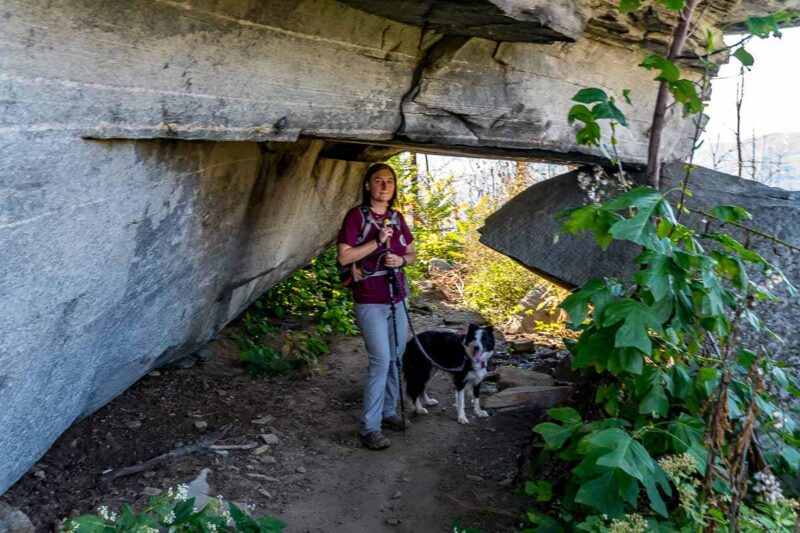
“I could take off one of those days, and we could go for a hike!” Kinga realized a month or so ago when we were looking at the calendar together. So that’s just what we did: a new trail up a mountain right beside one of the most-hiked trails in the area, Table Rock. Next to a table, one must have a chair or a stool or something. Enter the new trail: Stool Mountain Trail.











The Boy’s team notched a significant win this weekend, beating a previously-unbeaten team, and that decidedly. What does a wise coach do on Monday practice? Run drills? Work them silly? Burpees and suicides? Of course not — he just let them play.

And the sun did a little playing with the clouds as well. That photo looks excessively edited, but I did my best to make it look just as it did when I took it — some of the most brilliant and rich colors I’ve ever seen. Only the ground is too dark…
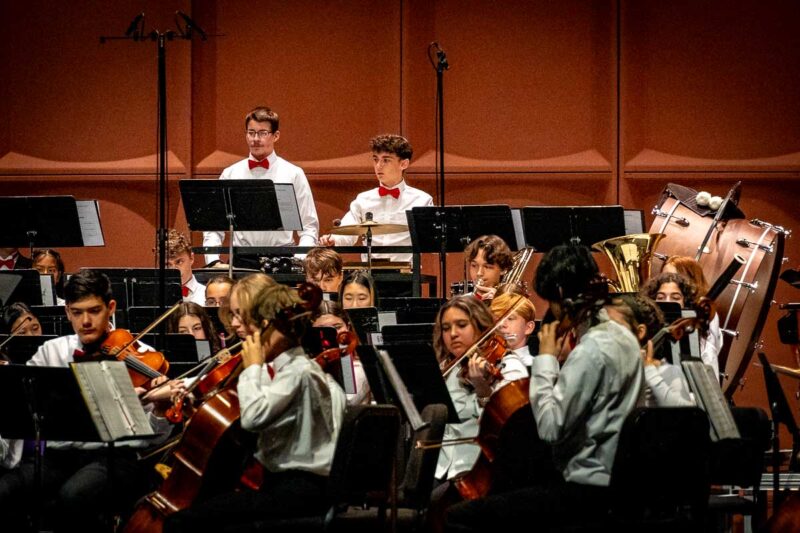
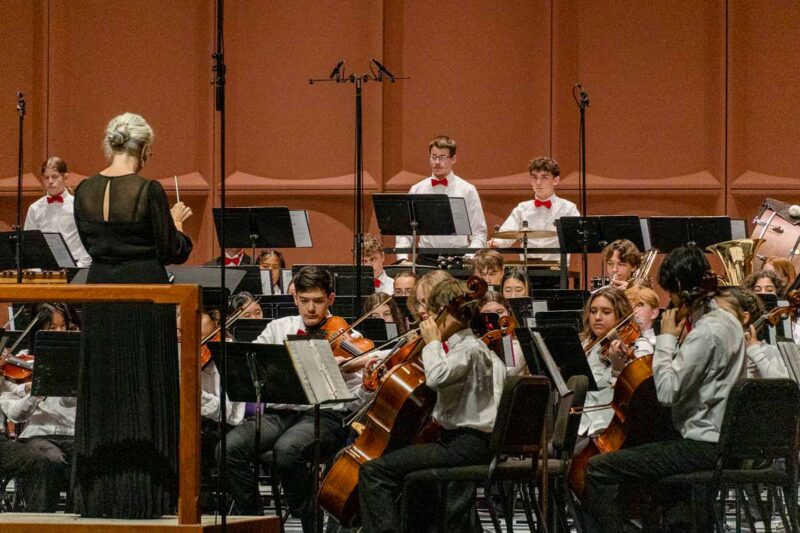
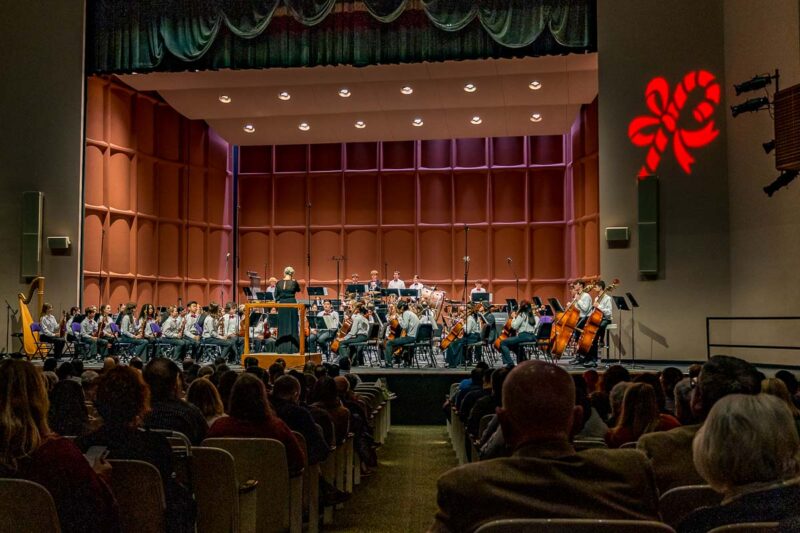
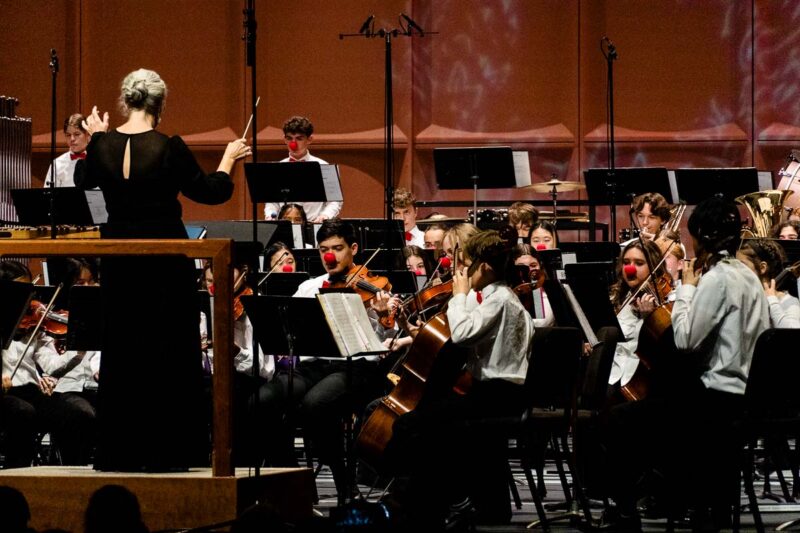
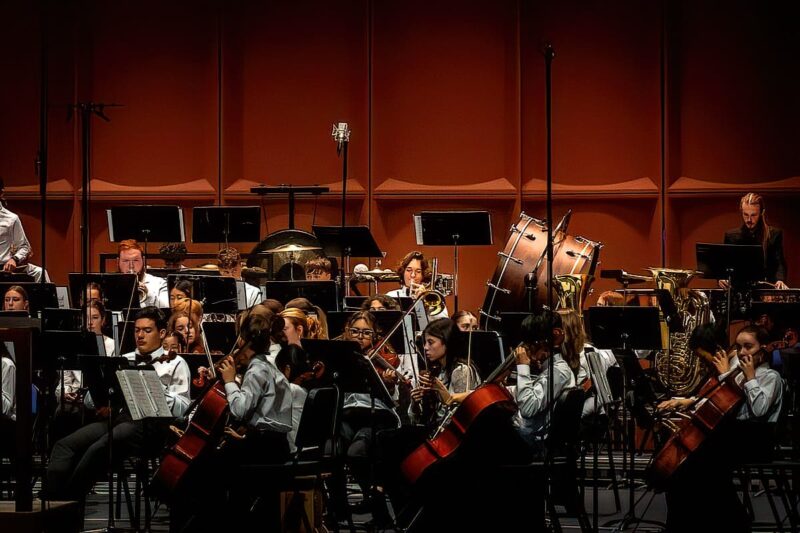
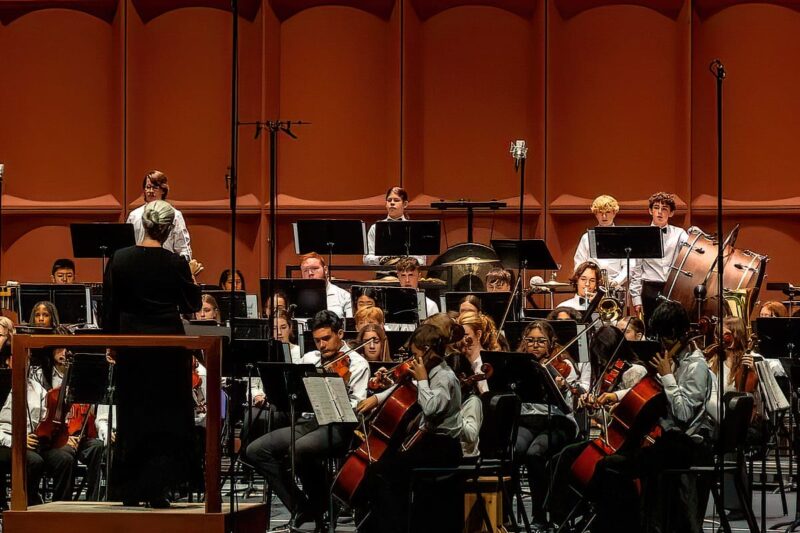
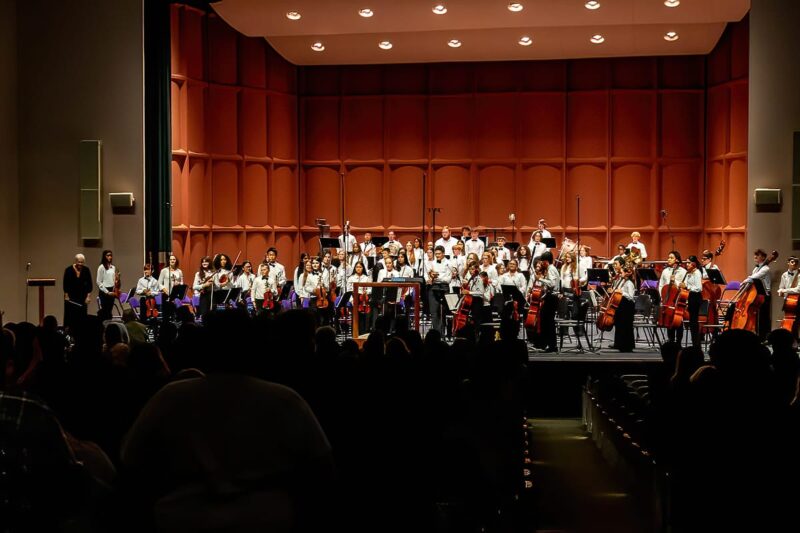
The Boy has joined the Carolina Youth Symphony. Their mission, according to their site:
Our mission is to encourage artistic excellence in a nurturing environment by providing the highest quality orchestral training and performance opportunities to qualified musicians, grades K-12, and make participation possible through many financial aid and work study programs.
CYS Website
Auditions were in May, but since the Boy’s middle school band teacher is one of the conductors for the CYS, he pulled some strings and got the Boy an audition in September.

Practice is every Sunday from 1:15 to 2:45, and it takes place on the Furman University campus in the north of the city. It’s a private university with a lovely campus complete with a lake and its famous tower. So while E plays, I go for a walk.
K and the pup went with us today since she had the free time, and we went for a four-mile walk while the Boy rehearsed with about 50 other local kids.

Of late, the Boy has really become focused on his music. We have an hour-long private lesson for him every Tuesday, and he returns home from that lesson and plays for another half hour or so, usually on the back deck. He told me that someone once shouted “Good job!” at him when he finished playing.
It’s not often Emil scores a goal: he plays left back most of the time, so defending is his thing. But the coach put him up front in the second half of today’s game, and he got a free kick.