
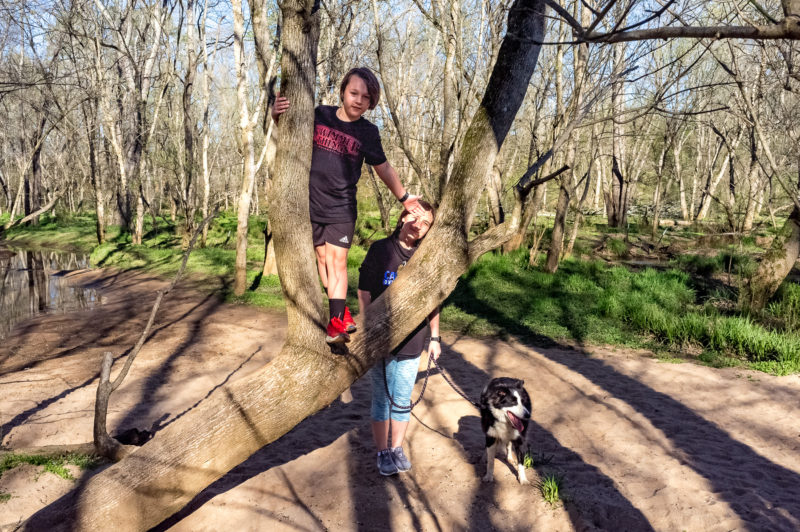
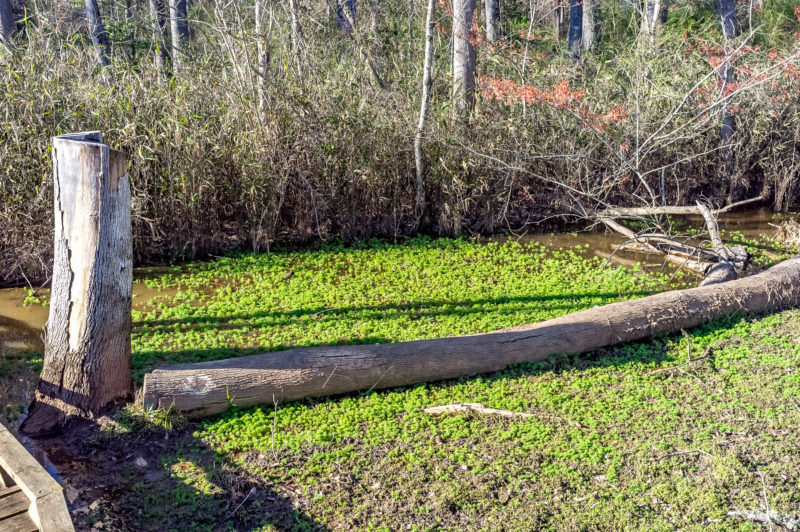

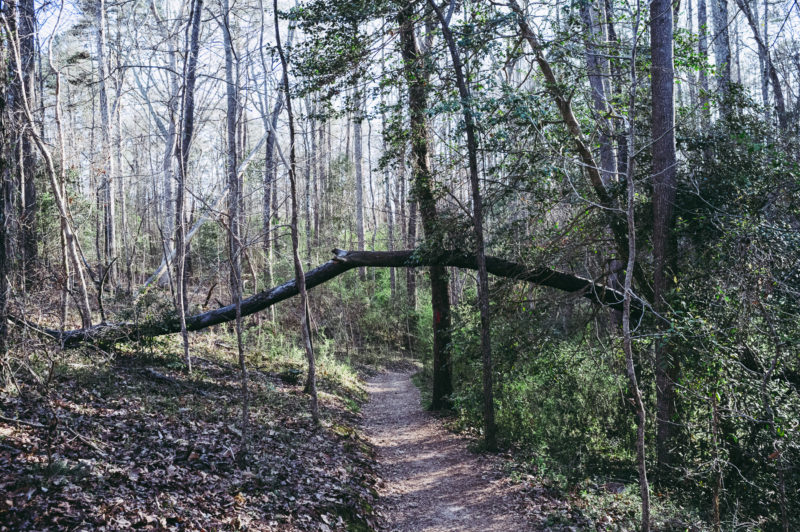

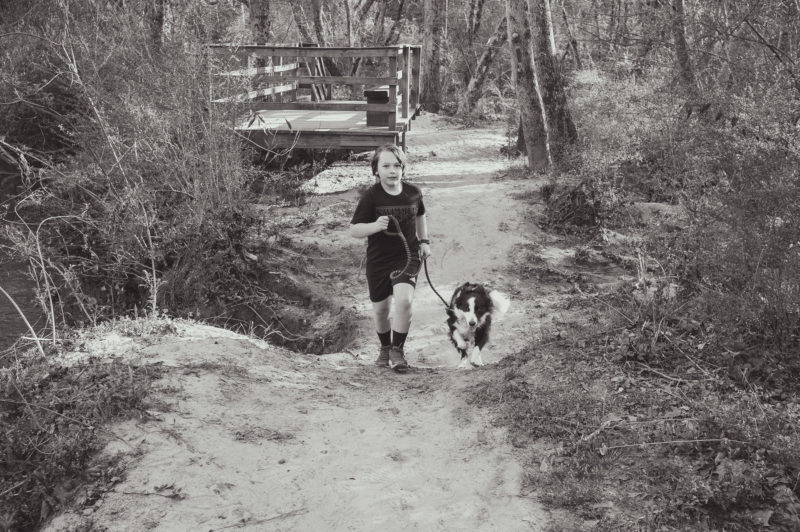

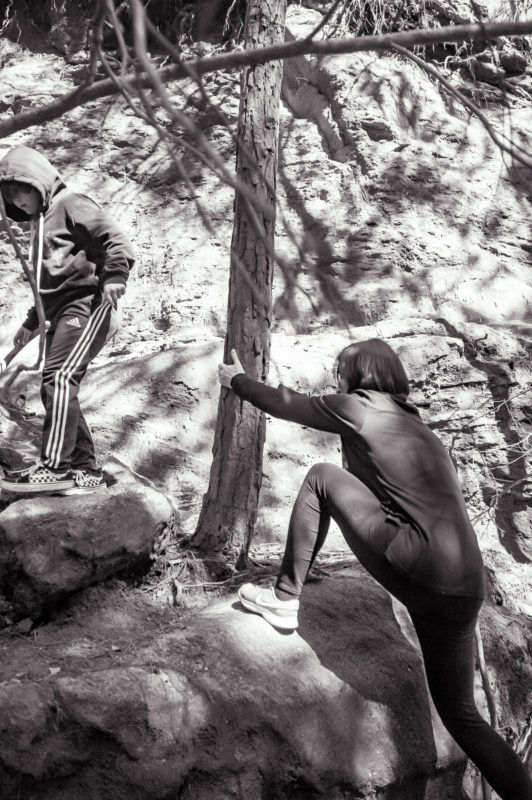
fun in threes, sometimes fours
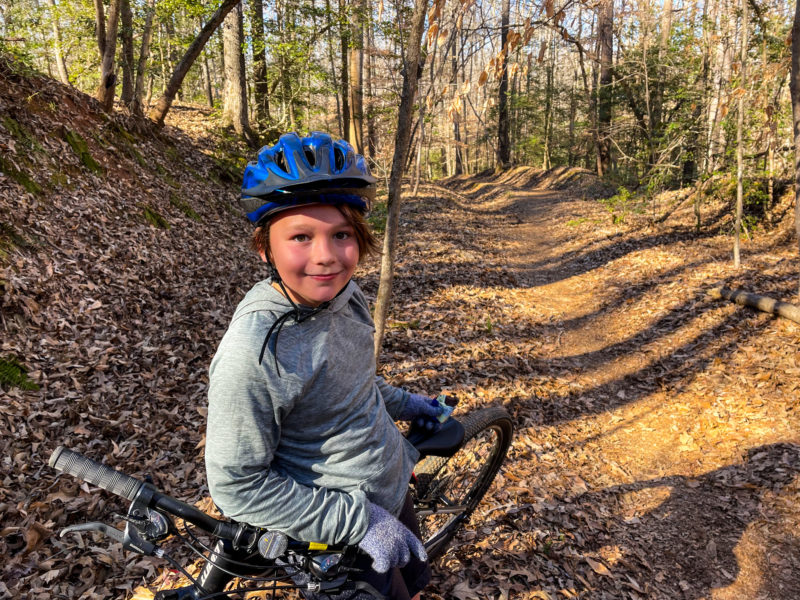
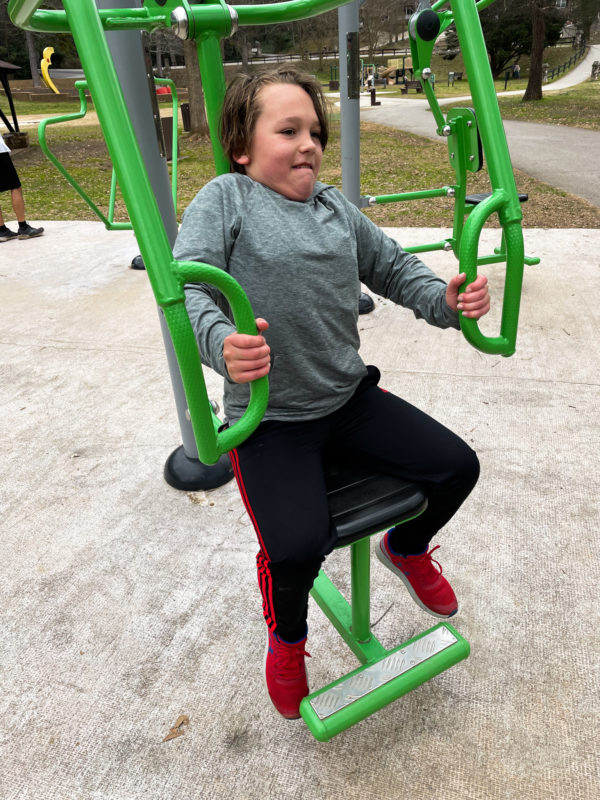
the boy
I'm still working my way through Trent Horn's Hard Sayings: A Catholic Approach to Answering Bible Difficulties. I encountered two passages this evening that just left me shaking my head.
The first was about Lot's behavior in Genesis 19:
The two angels arrived at Sodom in the evening, and Lot was sitting in the gateway of the city. When he saw them, he got up to meet them and bowed down with his face to the ground. 2 “My lords,” he said, “please turn aside to your servant’s house. You can wash your feet and spend the night and then go on your way early in the morning.”
“No,” they answered, “we will spend the night in the square.”
But he insisted so strongly that they did go with him and entered his house. He prepared a meal for them, baking bread without yeast, and they ate. 4 Before they had gone to bed, all the men from every part of the city of Sodom—both young and old—surrounded the house. They called to Lot, “Where are the men who came to you tonight? Bring them out to us so that we can have sex with them.”
Lot went outside to meet them and shut the door behind him and said, “No, my friends. Don’t do this wicked thing. Look, I have two daughters who have never slept with a man. Let me bring them out to you, and you can do what you like with them. But don’t do anything to these men, for they have come under the protection of my roof.”
“Get out of our way,” they replied. “This fellow came here as a foreigner, and now he wants to play the judge! We’ll treat you worse than them.” They kept bringing pressure on Lot and moved forward to break down the door.
But the men inside reached out and pulled Lot back into the house and shut the door. Then they struck the men who were at the door of the house, young and old, with blindness so that they could not find the door.
How can Lot be considered righteous when he offered his daughters up to be raped?
Trent explained it, in part, thusly:
Lot's righteousness is also seen in his hospitality toward strangers, which was a sacred duty in ancient Mesopotamia. In a time when you couldn't go to a department store for clothes or check in at a motel when you needed shelter, the kindness of strangers could mean the difference between life and death. Lot understood that anyone who slept outside in Sodom was in grave danger of being attacked. Therefore, he offered the city's visitor's shelter and wouldn't take no for an answer.
That, I admit, is at least somewhat reasonable. It seems to be the bare minimum as far as morality goes, but it's at least a step in a good direction.
But what about Lot's offer to give the crowd his daughters to be raped? How can that be justified? Surely it can't.

But that doesn't stop Horn from trying. The very next sentence:
Even Lot's misguided decision to offer his daughters to the mob can be seen as an act of hospitality meant to protect the guests dwelling under his roof.
Go back and reread that sentence.
It's unlikely you've ever read apologetics so preposterous. It's hard to take this book seriously after reading that.
Yet the second passage that floored me this evening makes it clear that the book is not even meant for me, however seriously (or not) I take it.
Horn closes one chapter with a quote from Karl Keating:
The Bible appears to be full of contradictions only if you approach it in the wrong way. If you think it is supposed to be a listing of theological propositions, you won't make heads or tails of it. If you think it is written in literary forms you're familiar with, you'll go astray in interpreting it. Your only safe bet is to read it with the mind of the Church, which affirms the Bible's inerrancy. If you do that, you'll see that it contains no fundamental contradictions because, being God's word inspired, it's wholly true and can't be anything else.
I have so many issues with this that I don't know where to begin.

First, I take umbrage with the assertion that there are only three options to approaching the Bible:
None of these approaches accurately describe how I'm reading it. I'm reading it with the claim that it is the word of a god firmly in my mind and then seeing what kind of god appears in its pages.
What Keating (and by quoting him, Horn) is suggesting is that we first assume that the Bible is the word of the Christian god, read and interpret the Bible as the Catholic church instructs, and that will clear up all our difficulties. I've never seen such an obvious, almost-celebrated example of begging the question in my life.
And it's that notion that makes it clear that I am not the intended audience of this book. This book is not intended to respond to skeptics' concerns; this book is for Catholics who've discovered those skeptics and are starting to have doubts. Thus Horn is leaning heavily on his shared assumptions with his audience. He knows that they, at one point or another, at least gave lip service to the proposition that the Bible is inerrant. He's just calling them back to that notion. He even once admitted that he's not trying to answer these objections but simply to show that there are possible answers out there. Well, sure, there are possible answers out there, but they're not terribly convincing -- unless you're a believer starting to feel pulled under by doubt, then they're a lifeline.
Exploring Spotify’s “Indie Bluegrass” playlist last night, I discovered her — Sarah Jarosz, a young singer/songwriter whose music excites me more than any music I can remember from the last ten years or so. I began wandering through her catalog, continually impressed and pleased, and then I heard it. Her cover of Dylan’s “Simple Twist of Fate.” A voice; a pizzicato cello — nothing else. Perfection.
I played it for the Boy this evening and he was asking me about it. “Does it bring back memories?” he asked.
“None at all,” I smiled. I guess he’s used to me reveling in the memories particular songs bring to mind, but this song, this performance — no memories at all. And that’s what makes connecting to new music so magical. For me, the new music that hook me have a certain timeless sense to them. They feel like they should have memories dripping from them.
Over the course of the last twenty-four hours, I’ve managed to listen to about four of her albums, but the first one I listened to remains my favorite: World on the Ground. The whole thing is available as a playlist on YouTube.
She’s also released a video of completely-stripped-down versions of some of the album’s best songs (undoubtedly in their original composition state).
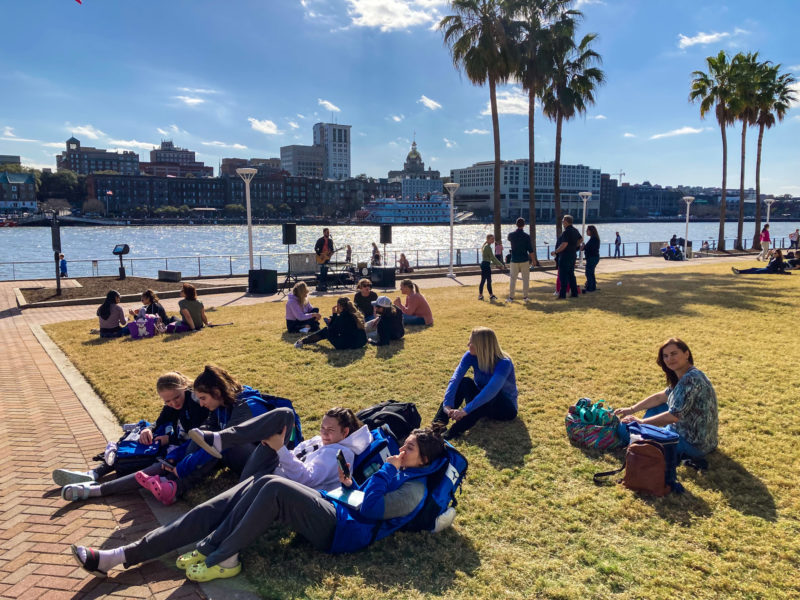
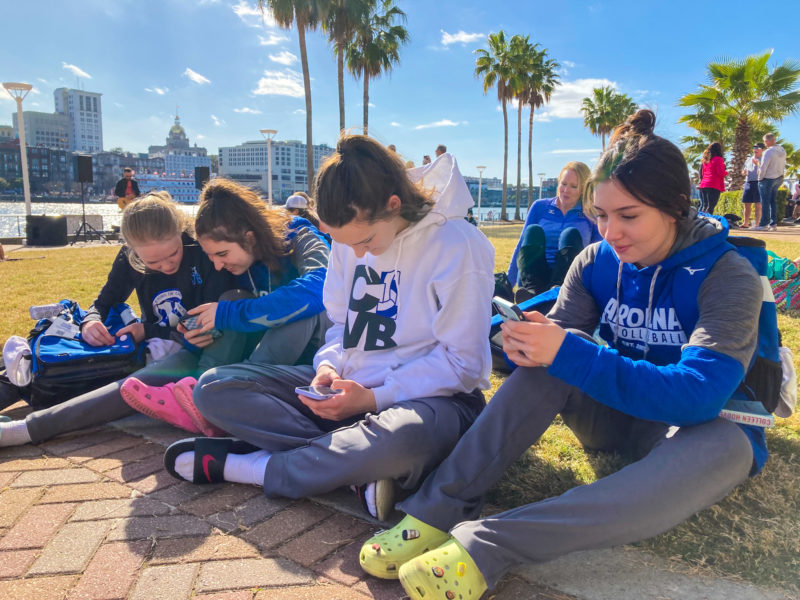
The Boy and I were alone for most of the day as the girls were in Rock Hill for the tournament -- three tournaments in three weeks means we're just about sick of them.
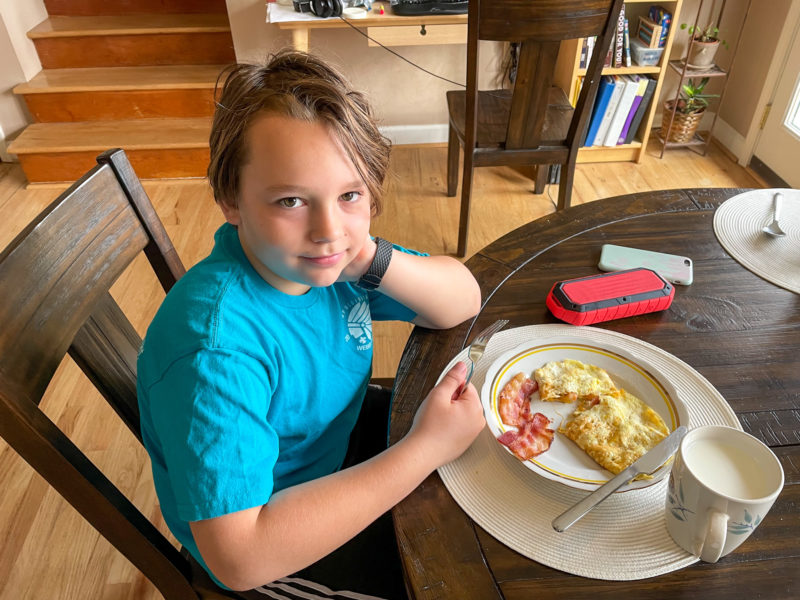
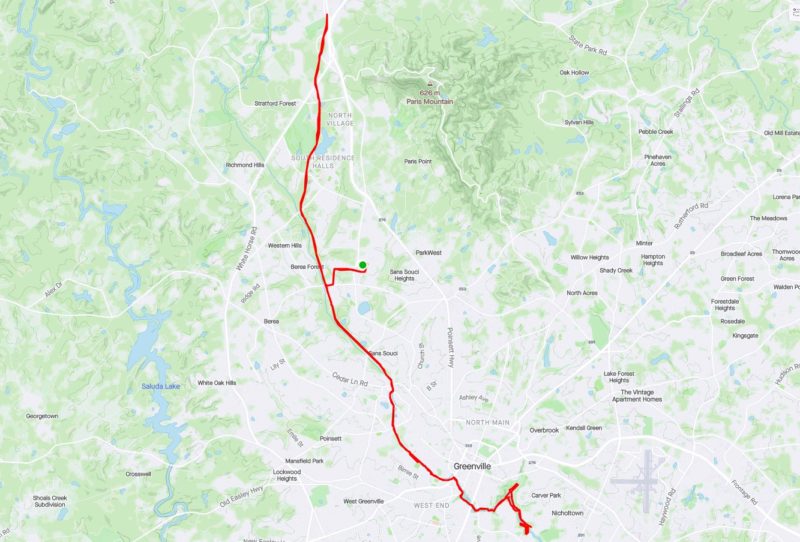
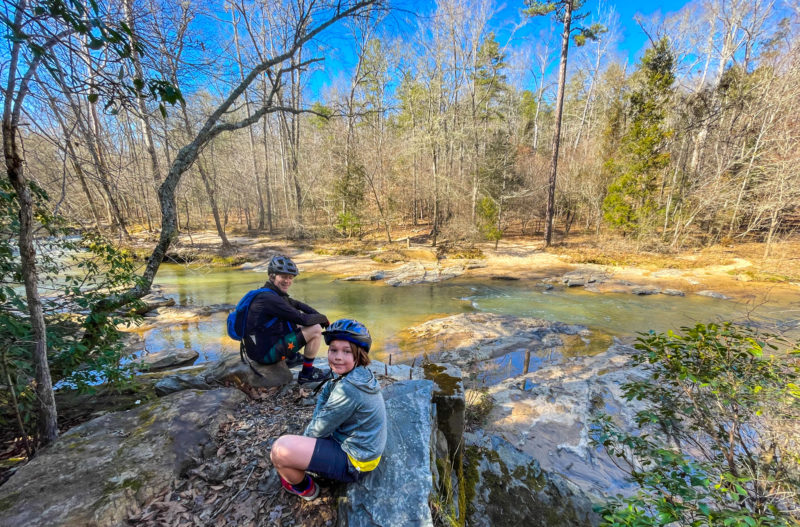
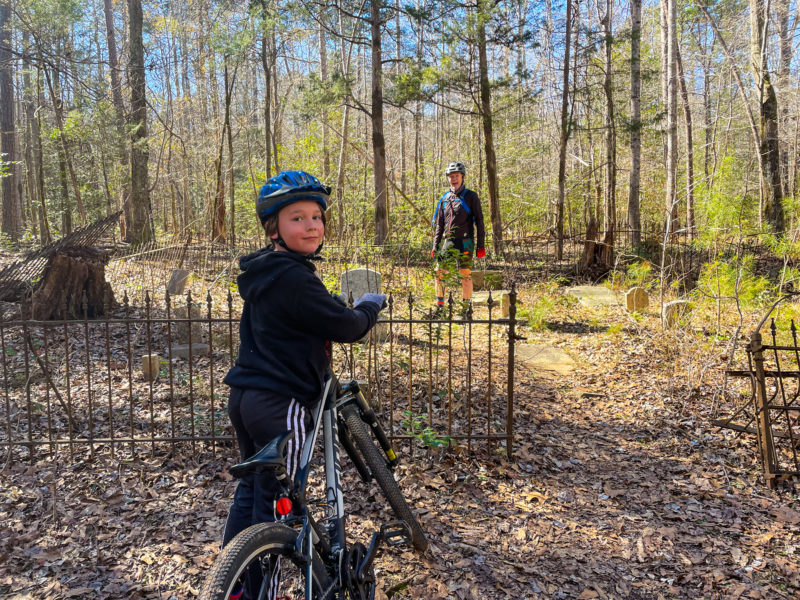
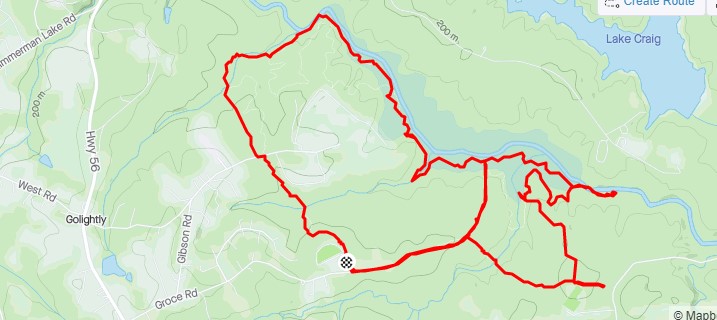
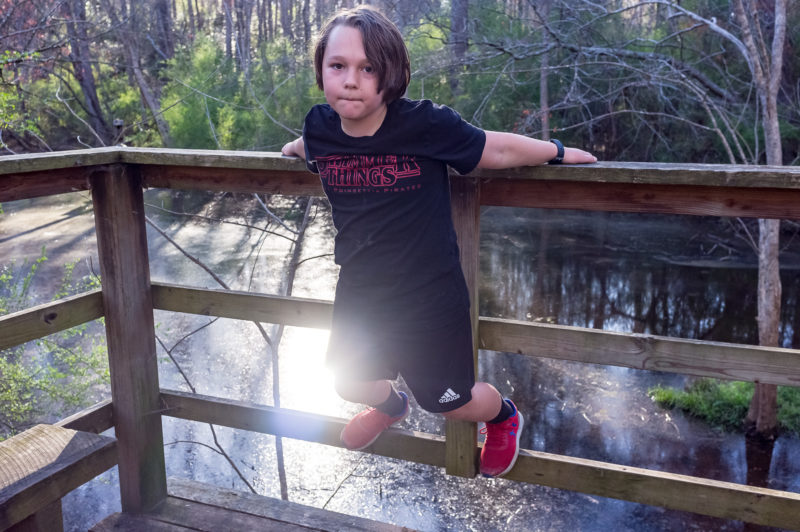
E and I had decided to go back to Southside Park to do some more riding. We first, though, had to perform a bit of maintenance. His bike developed a flat yesterday, so we had to get a new inner tube. That done, we headed out.
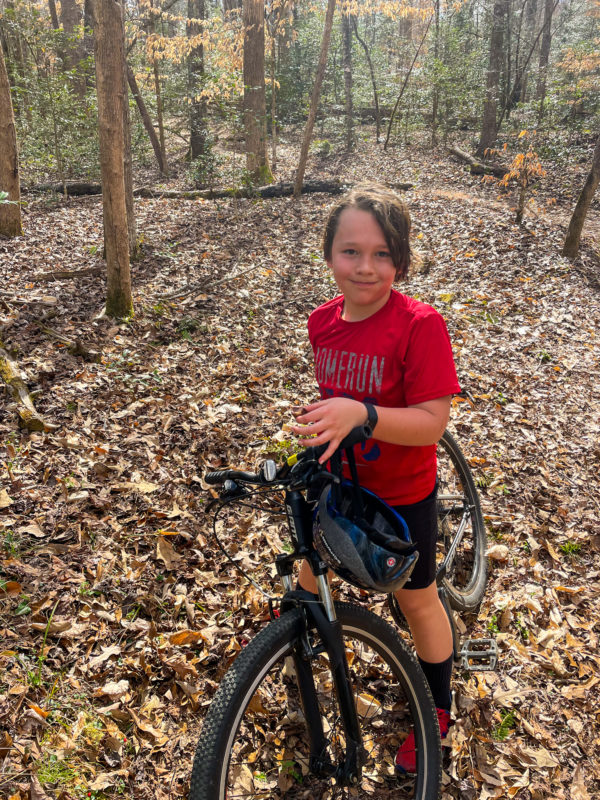
We went over to the improvised "Power Line" trail because that was what E had been dreaming of all week. At the start of it, I realized I'd lost my water bottle. We went back the way we came but to no avail, which meant a bit of judicious water bottle sharing: in short, I drank only when my throat was raging because the Boy always finishes his bottle and wants some of mine.
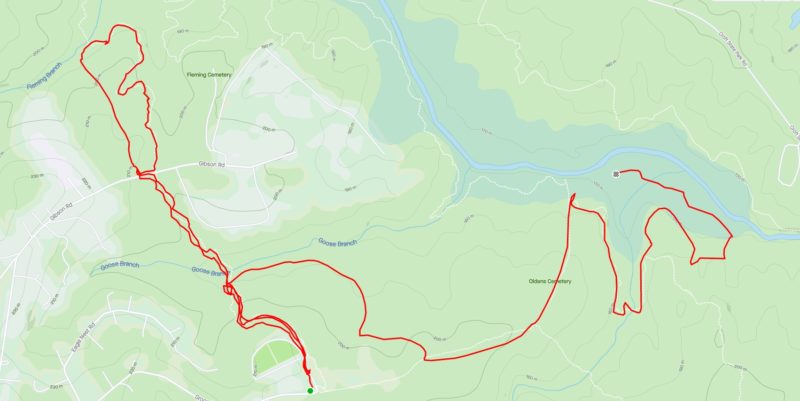
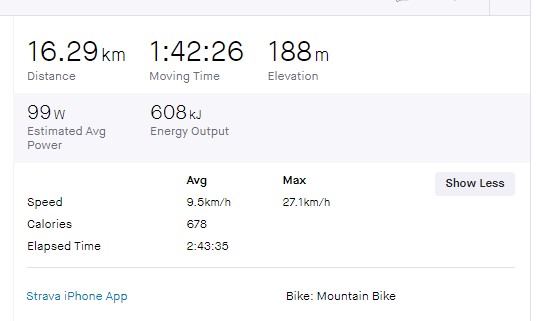
After 11 km of riding, we started back when suddenly, E got such a severe puncture that his rear tire -- the one with the new inner tube -- deflated almost instantaneously. Had to walk 2 km back to the car...
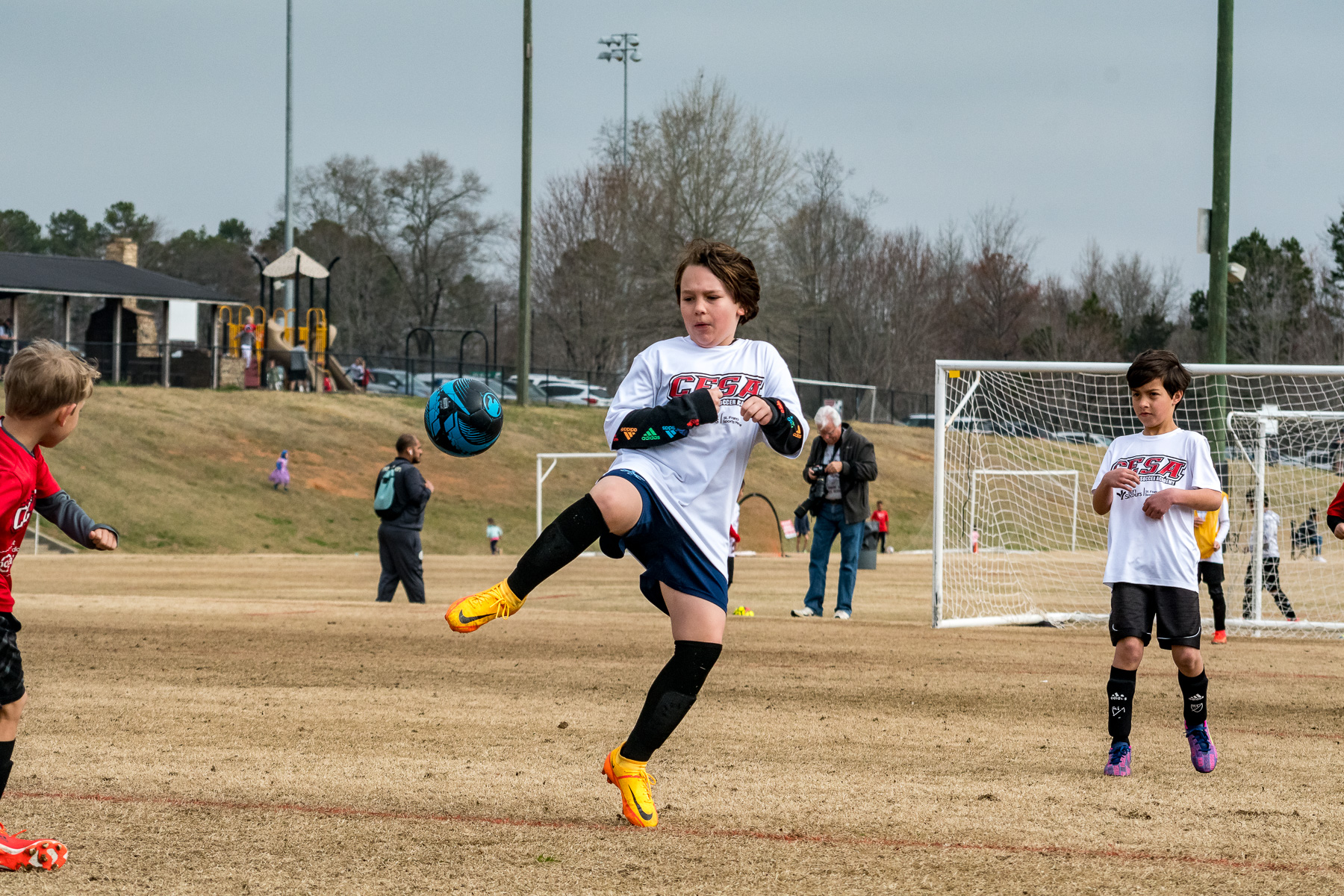
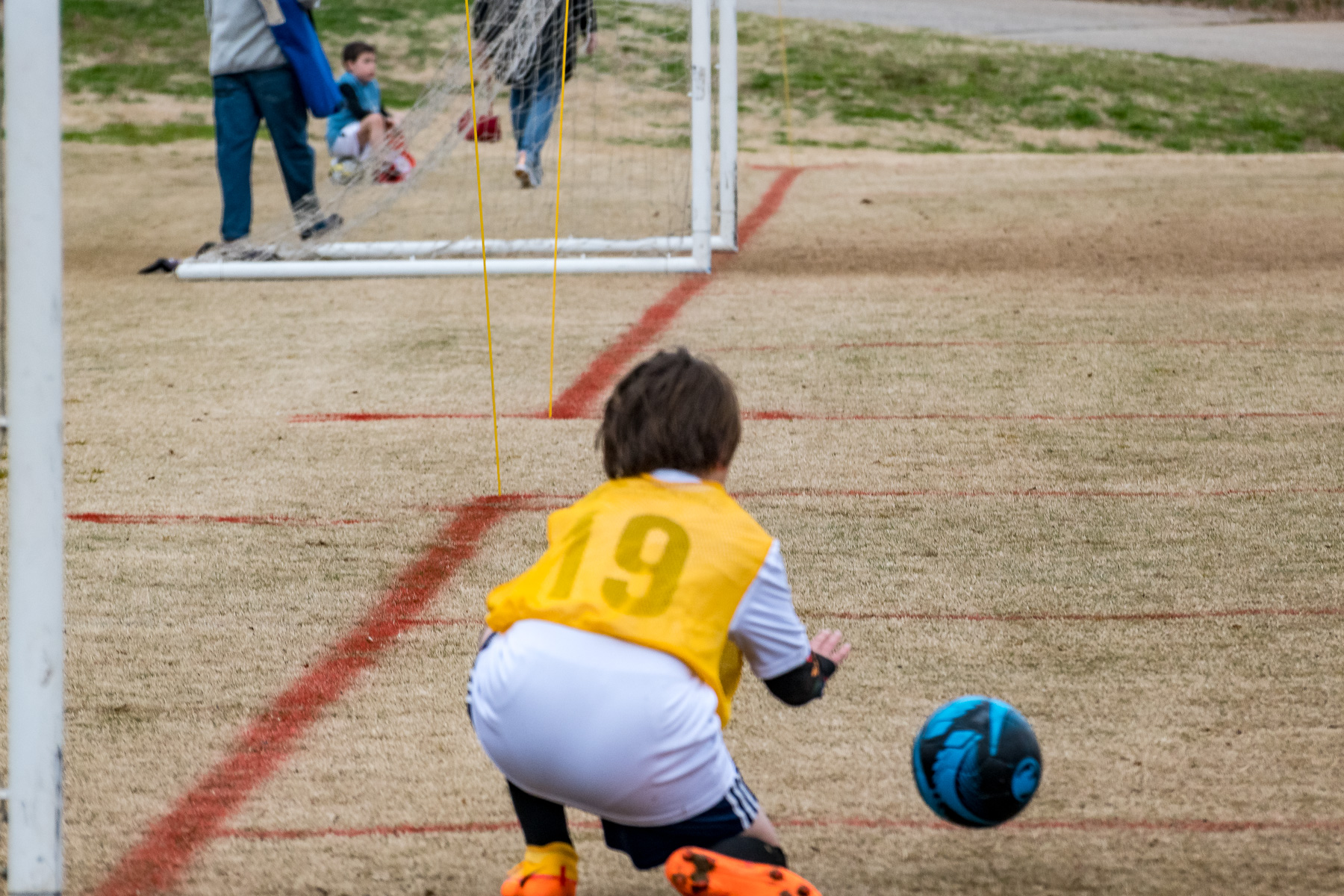
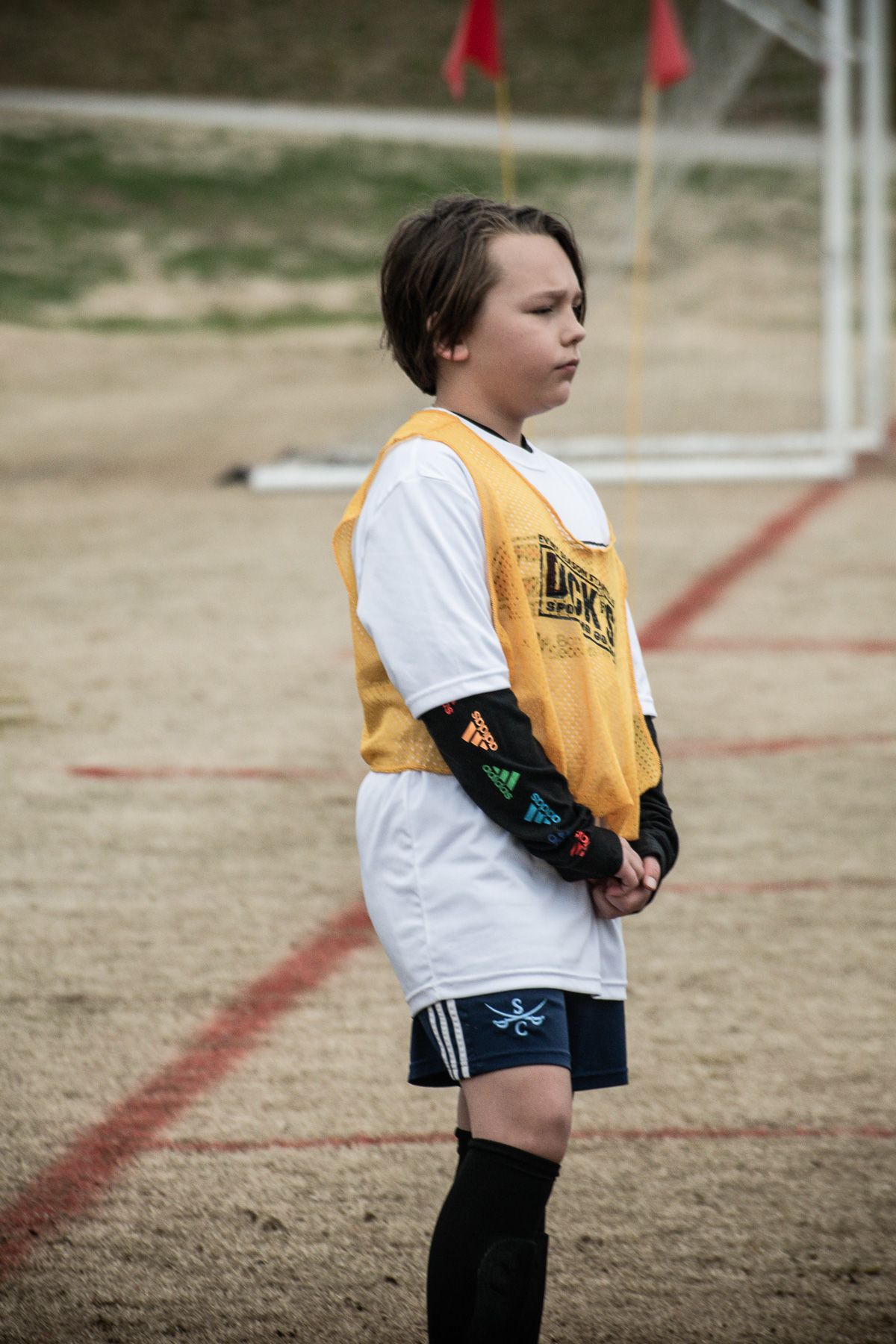
The Boy's soccer team won 2-1 with a literal last-minute goal.
The Girl's volleyball team won all three of their games in straight sets.
A good day in sports for our family.
There are a lot of things in the world that we might initially fear for no justifiable reason other than something deep within us says, “Run!” There are other things that seem completely harmless and yet can kill. How do we tell them apart?
Fortunately, in nature, evolution provided us with handy indicators: colorful creatures often are creatures we should avoid. Think of a coral snake. Bands of color warn us that this is a creature to avoid. Yet the scarlet king snake has very similar colors as an adaptive measure: it’s harmless, but it looks deadly. We stay away out of an abundance of caution.
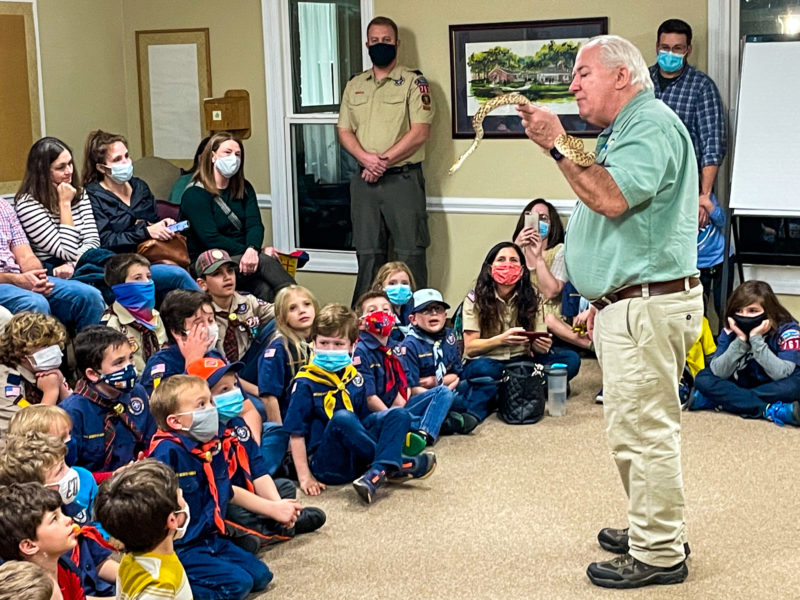
E’s scout pack had their Red and Gold Banquet tonight to celebrate the birthday of scouting. There were the usual scout meeting elements: a flag ceremony, recitation of the scout oath and law as well as the pledge, announcements, and the like There was a pleasant meal with friendly chatter. And there was something new: a visitor who brought a number of animals with him. There were snakes and frogs, insects and lizards, a couple of scorpions, some snakes, and a tortoise. Scouts got to handle some of them but mainly just look. One of the scorpions had venom in its stinger that could kill a human. It, of course, stayed inside its box.
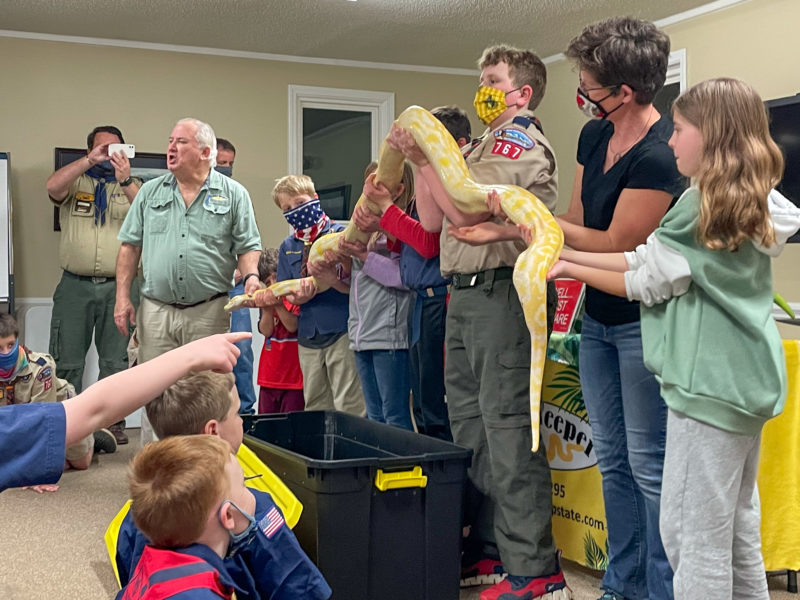
The highlight of the evening was the albino python that required seven minders plus the handler to hold. E got to hold a tarantula, which I thought he might back out of when the moment came. He looked over at me, though, getting a reassuring thumbs-up, he went ahead and conquered that fear.
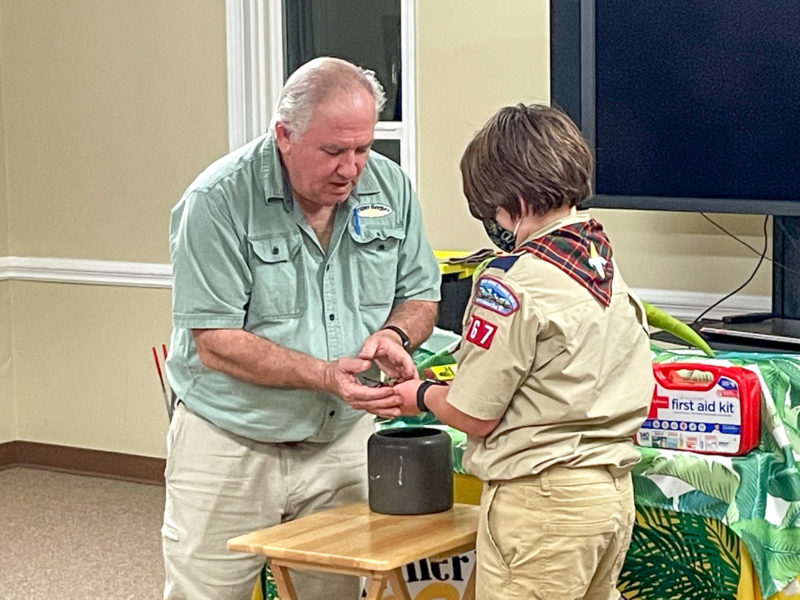
“The legs were hair and tickled a little,” he said on the way home.
Often people are the same as animals: they make clear with their words and actions that they are a threat, that they are someone that others need to deal with early on before things escalate. Russia’s attack on Ukraine was no surprise: Putin puffed out his chest, spread his tail, rattled his tail, flattened his hooded face, hissed, growled, clicked, and grunted, and the rest of us just contented ourselves with the thought that, like the scarlet snake, he only looked dangerous.
But we knew he was dangerous. All his words and deeds showed us that. Now we’re talking about draconian sanctions and such long after the time it could have actually helped. If we’d completely isolated Russia after it annexed Crimea, if we’d made life for its oligarchs all but impossible by completely cutting them off from all access of their incredible wealth held in Western banks and hedge funds, we might have affected some kind of change. But doing that now is a little like signing up for a self-defense course as you hear home invaders breaking down your door: too little much too late.
All the media outlets are running stories about how this changes everything, about how this is the greatest threat to Europe since World War 2, about how this will affect Russia and the rest of the world for years to come, and I think that’s an appropriate reaction. However, we should have had that reaction when they annexed Crimea. We should have had that reaction when they attacked Georgia. We should have known what kind of man we were dealing with when Putin began publishing pictures of himself without a shirt, puffing out his chest, riding horses.
It’s no wonder Trump gets sexually aroused just thinking out this guy. He’s everything Trump wants to be. It’s no wonder he’s praising this guy. He’s the cool bully in class that all the pimple-faced asshole bully-wannabes want to hang out with to get a little street credibility.
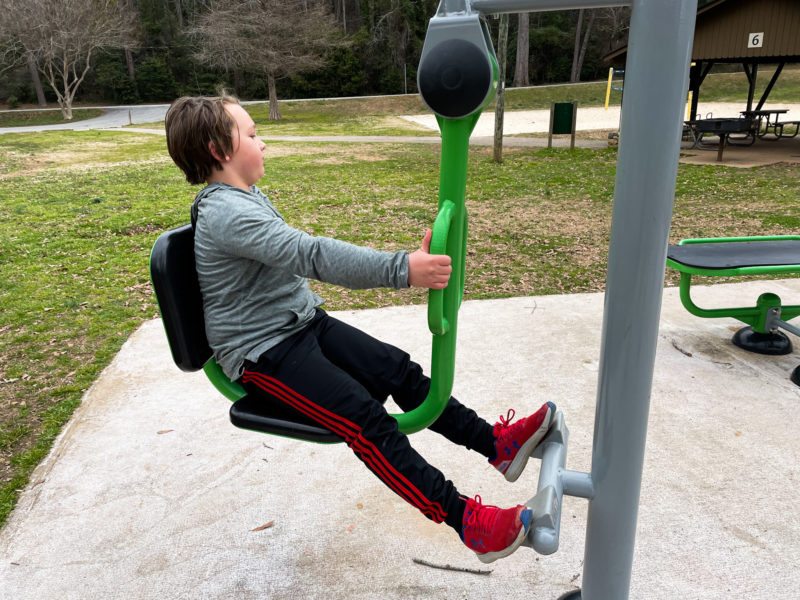

Twenty-six miles on a bike today.