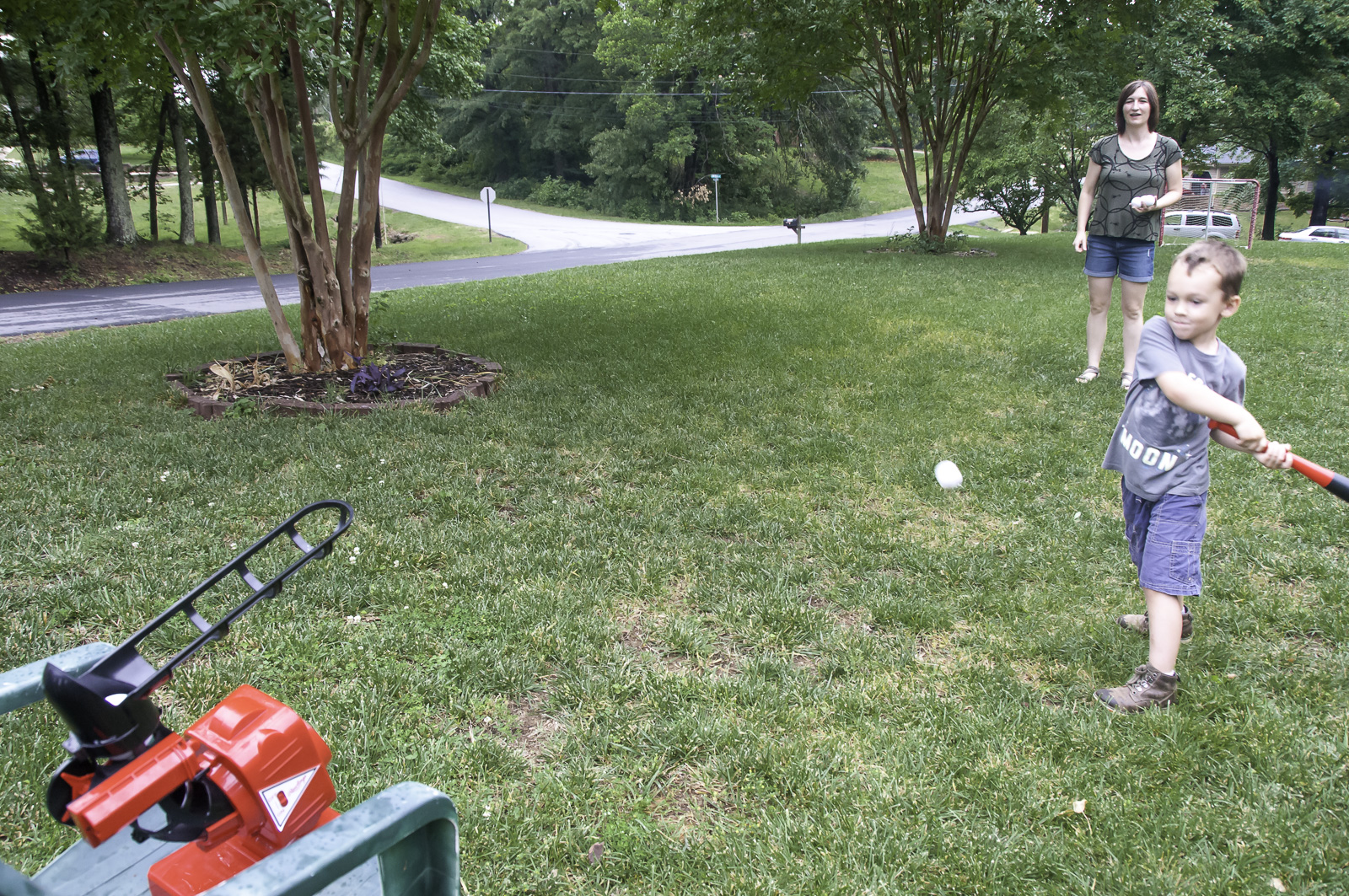
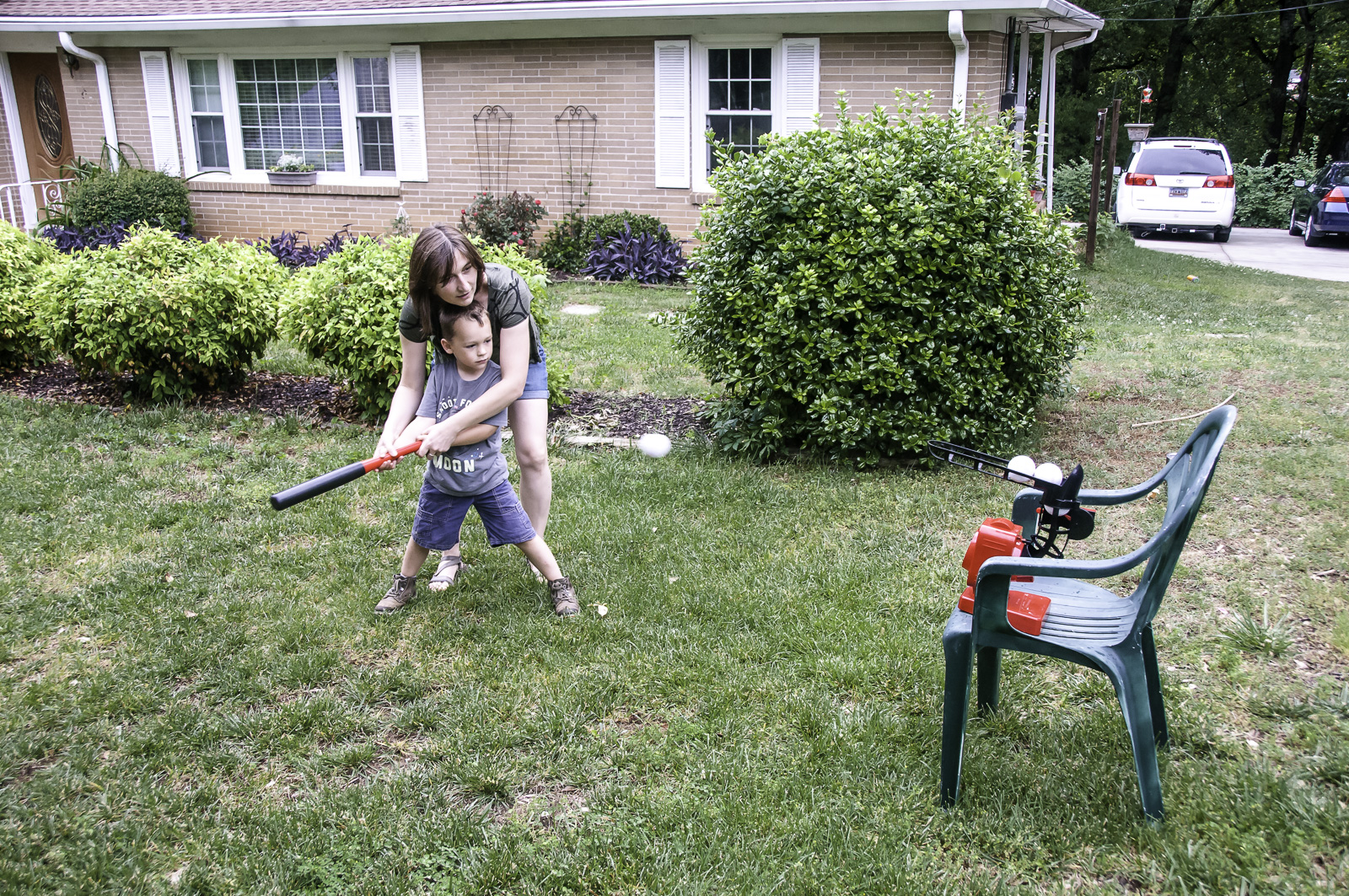
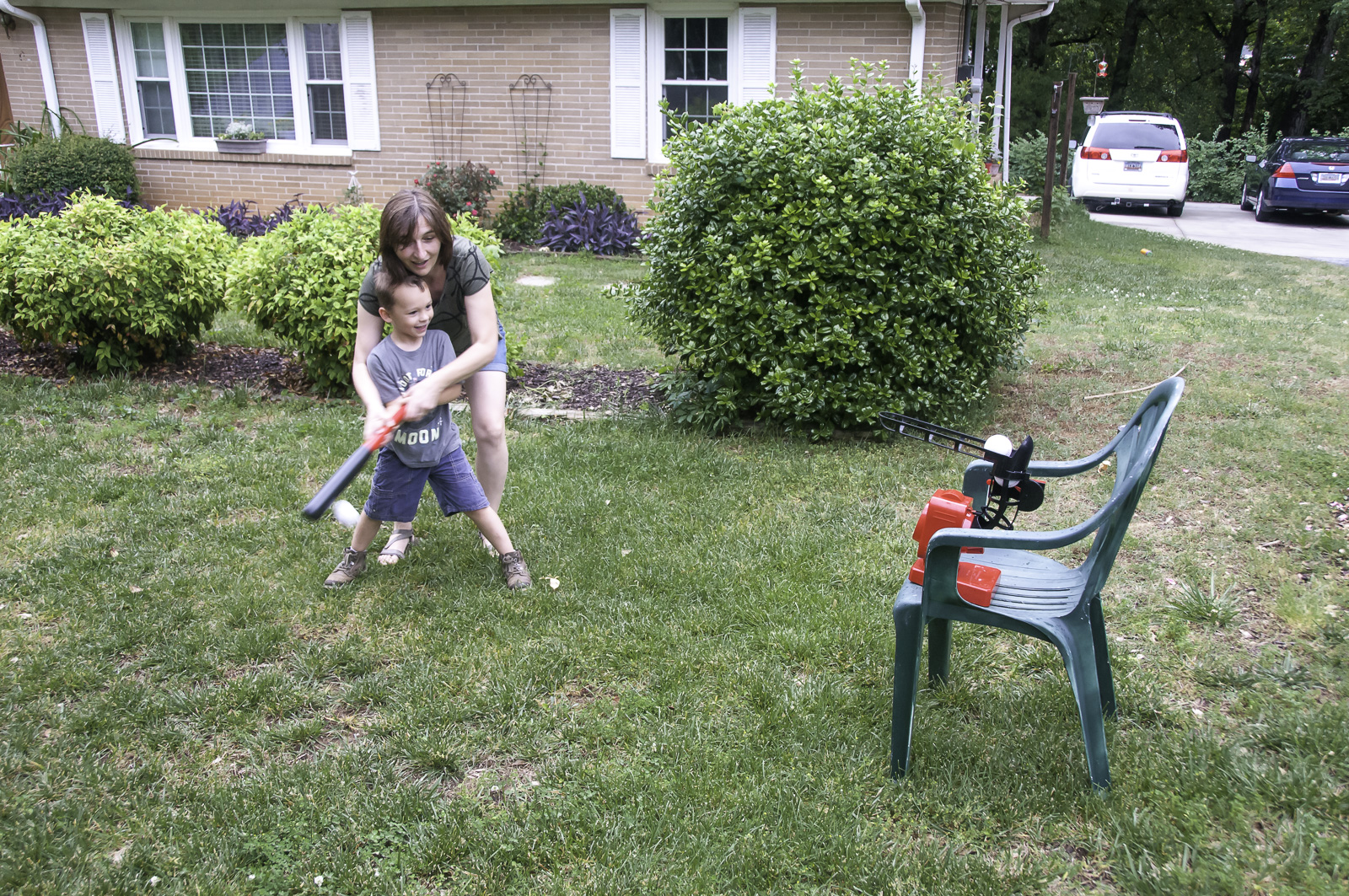
matching tracksuits

fun in threes, sometimes fours

the boy

W-wa Day One

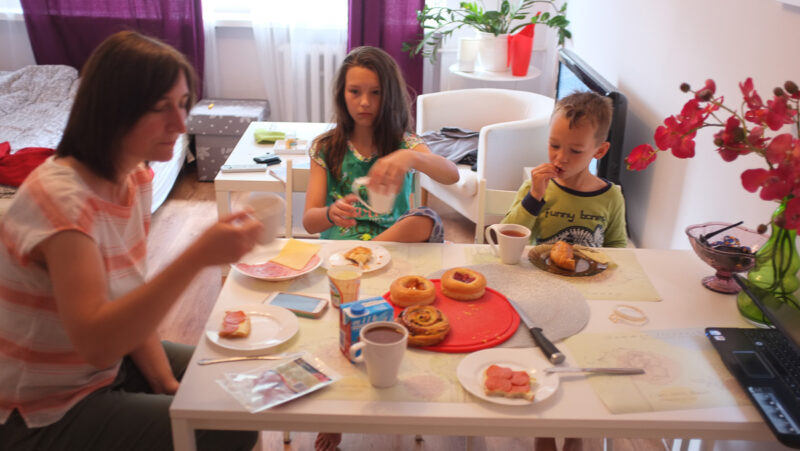
Where do you start when you get back from a day of wandering about Warsaw and you have almost 400 pictures that you manage only to whittle down to 78? At the beginning.

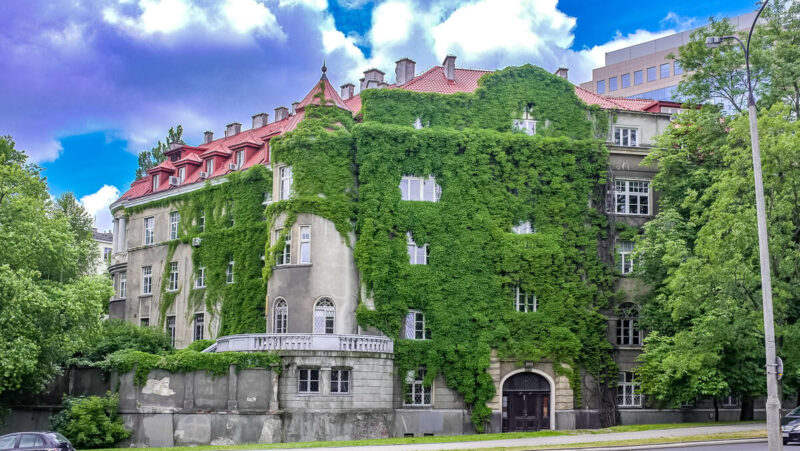
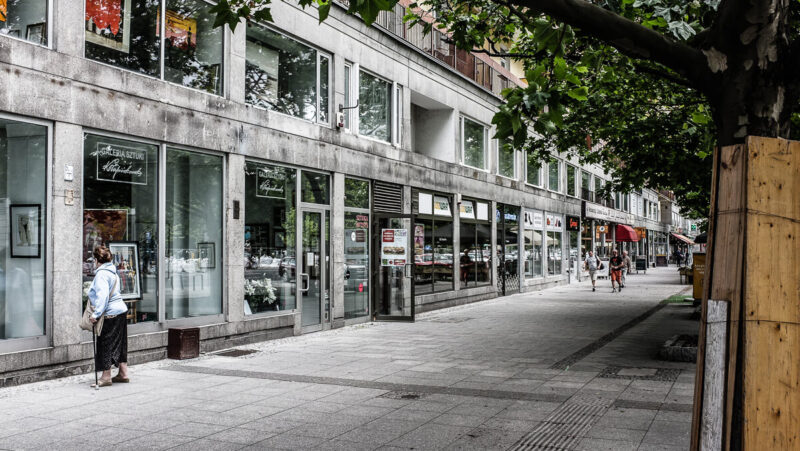
We're all tired from our intense pace these first few days, and it showed when we all collapsed into bed: it was eleven by the time we headed out the next morning. I'd already been out quickly for baked goods for breakfast. A friend who'd visited last night told us she'd passed a promising looking bakery on her way here, so I retraced her steps looking for it. I knew she'd taken the metro to get here, and the nearest station is Rondo ONZ, so I walked along Świętokrzyska Street toward the metro stop, but I saw nothing but old-style shops, all closed for renovation. I kind of wished at least one of them was still open. Still, even with everything closed, it looks like the Warsaw I knew in the late 1990s.
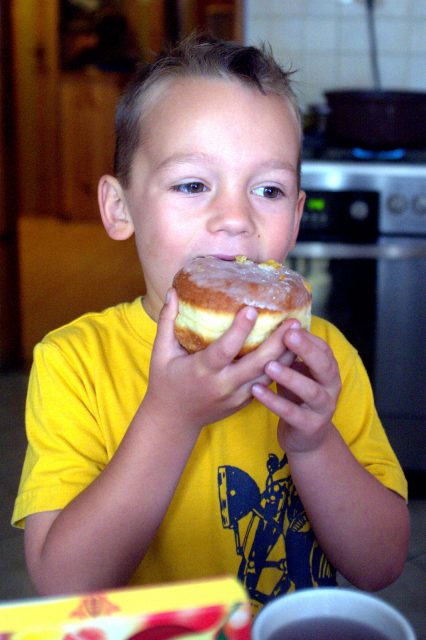
I couldn't find the bakery A had mentioned, but I knew that if I just wandered around a bit in a systematic way, I'd find one. And sure enough, half a block later, there was Piekarnia Aromat. This was no typical Polish bakery: not a regular drozdzowka or rose-filled donut to be found. Instead there were things like raspberry brioche and something called "buleczka z pistacjami." Literally, "a roll with pistachios," it was a big hit with everyone -- but L, of course. She was happy with her chocolate filled something-or-other.
Our plan for today was simple. In fact, we only had one thing on the agenda: Łazienki Park. It was a cool, overcast day -- perfect for a long walk in the park. In the end, we spent about five hours there, and we could have all easily spent more.
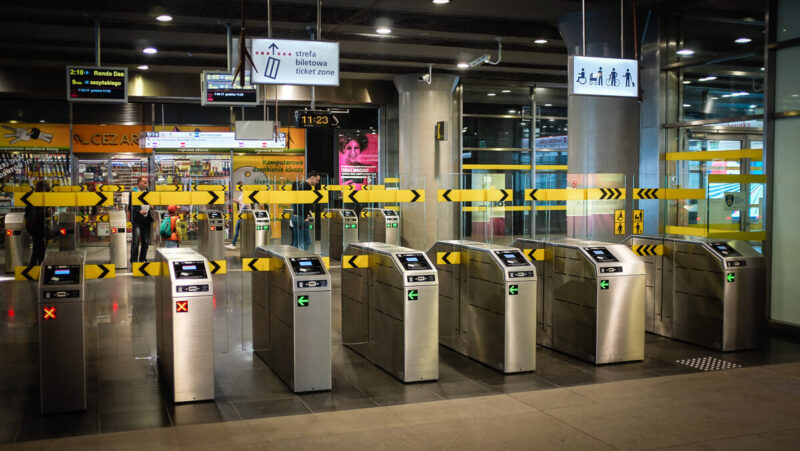
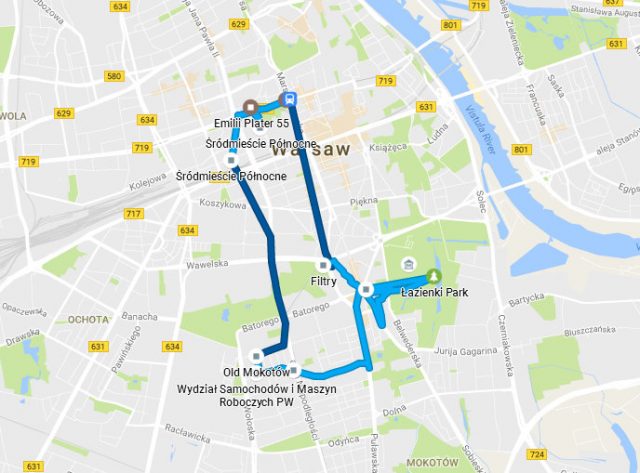
First, though, we had to get there. We walked down along the edge of Park Świętokrzyski on our way to the Świętokrzyska metro station. The Boy was already counting the modes of new transport he'd experienced: "First a train, now the subway!" He thought for a moment and asked about trams.

"Later. Maybe even today."
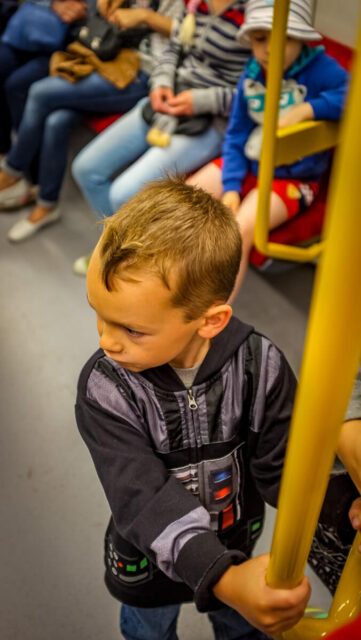
"Yesss!" (At one point the other day, when encouraged to "mow po polsku" he explained that "taaaaaak!" just doesn't express happiness like "Yesssss!").
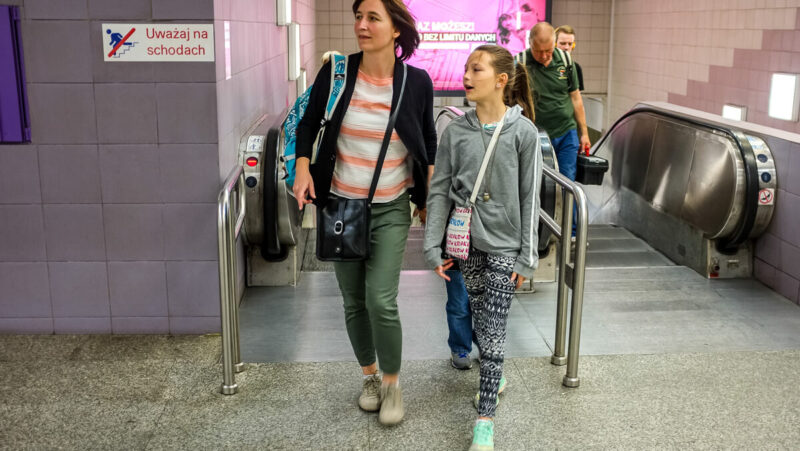
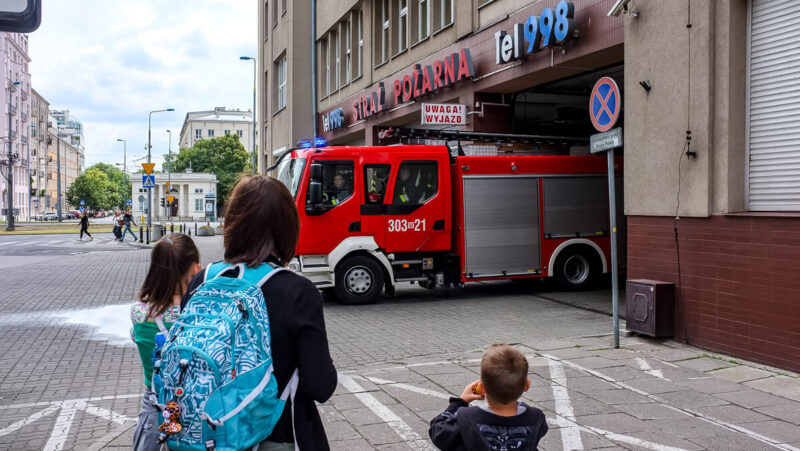
A few stops later, we got off at Politechnika station, walked a few hundred meters (which included a surprise: a rescue vehicle roared out of the station right as we approached),
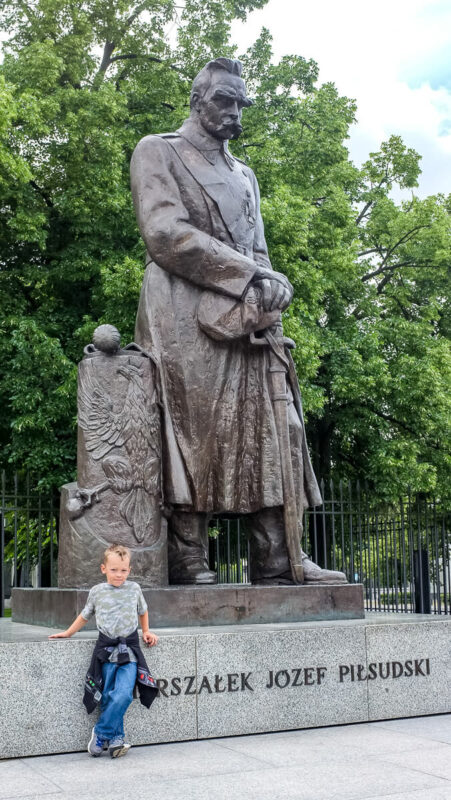
and there we were, in the famed Łazienki Park by the statue of Józef Piłsudski. The Boy insisted on a picture.
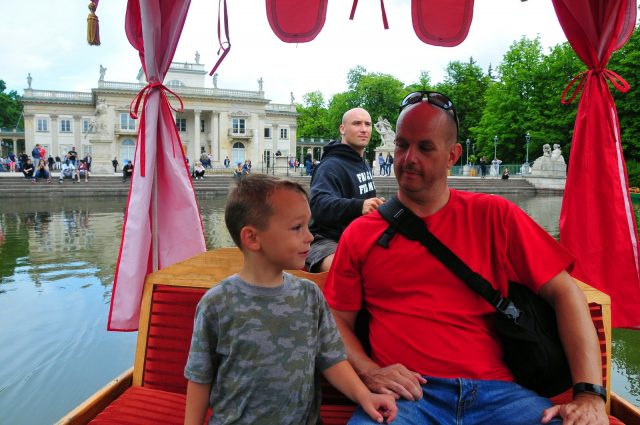
We wandered around a bit and took a gondola ride. The Boy managed to chalk up another mode of transportation, and the gondolier provided a bit of history, including the sad fact that the peacocks and other animals are harassed almost incessantly. "People will be people," he concluded rather stoically.
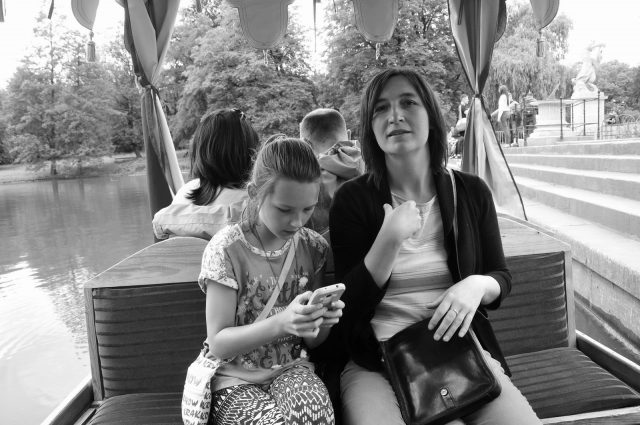
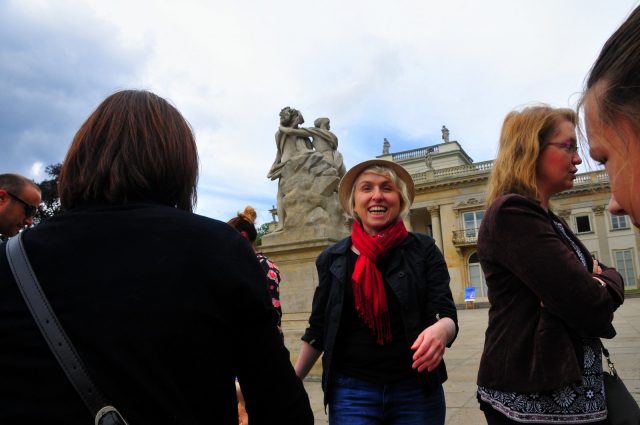
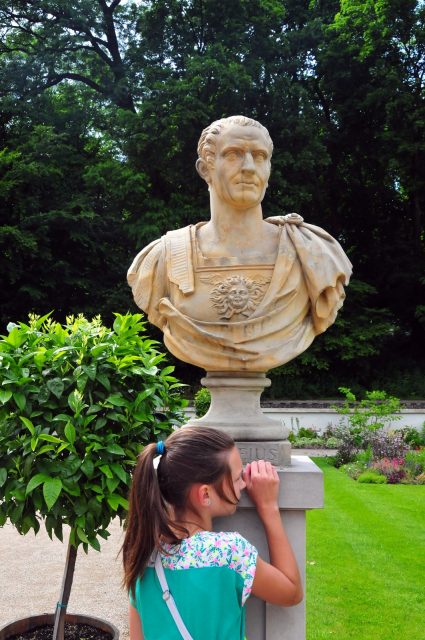
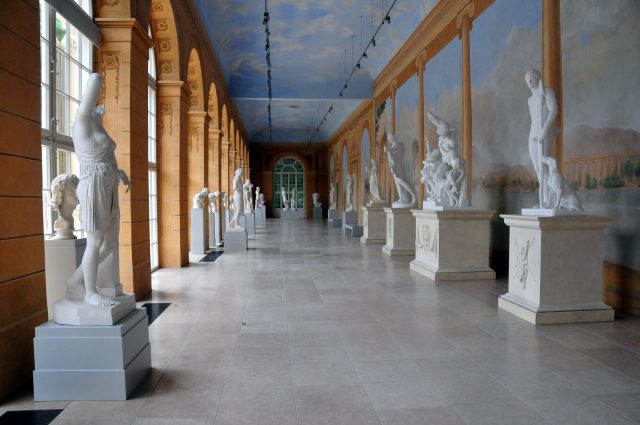
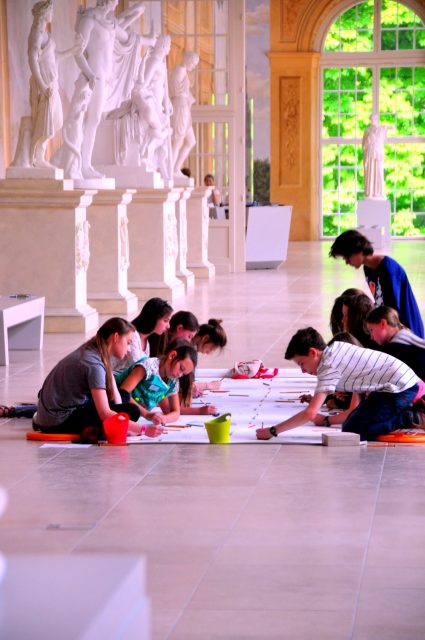
As we were disembarking from the gondola, we met M and her son E, and with our life-long Varsovian as a guide, we continued through the park, eventually making it to the Old Orangery, which is filled with statuary and busts of the most eclectic collection: busts of various Roman emperors -- including Caligula -- fill the garden, while the interior itself is filled with busts for famous Poles in history, most of them completed by Italians.
As we were leaving, we came upon a group of young people, probably ages eleven to fifteen, who were starting some kind of drawing exercise. The lady running it asked L her name, jotted it down on a name tag with the comment that she was the third L in the group, and gave her some charcoal pencils. ("See, I told you," laughed M later. "'L' has become a very popular name in Warsaw.")
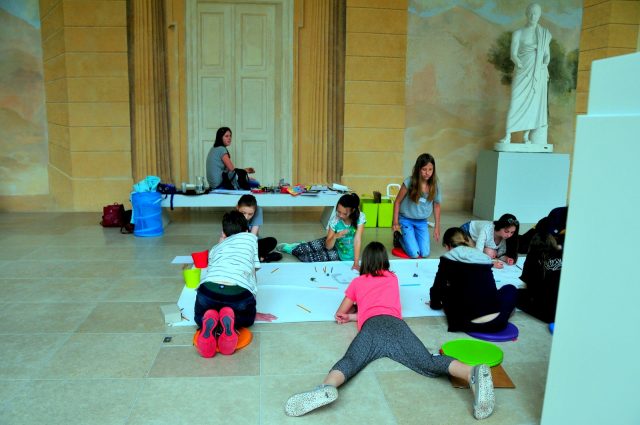
It turned out that it was a two-hour program. L begged to stay. She didn't have to beg long. K and I were both thrilled that she had taken the initiative to participate in something like this. We explained that we wouldn't stick around, that we'd leave her there and explore the park further on our own.

"That's fine."
"And you haven't eaten since breakfast. You won't be able to each for two hours more at least."

"That's fine."

Our girl is growing up.
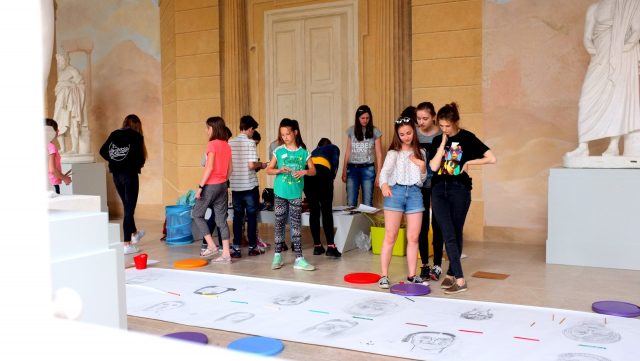
We left her among the statuary and went in search of gofry and ice cream. And people watching.

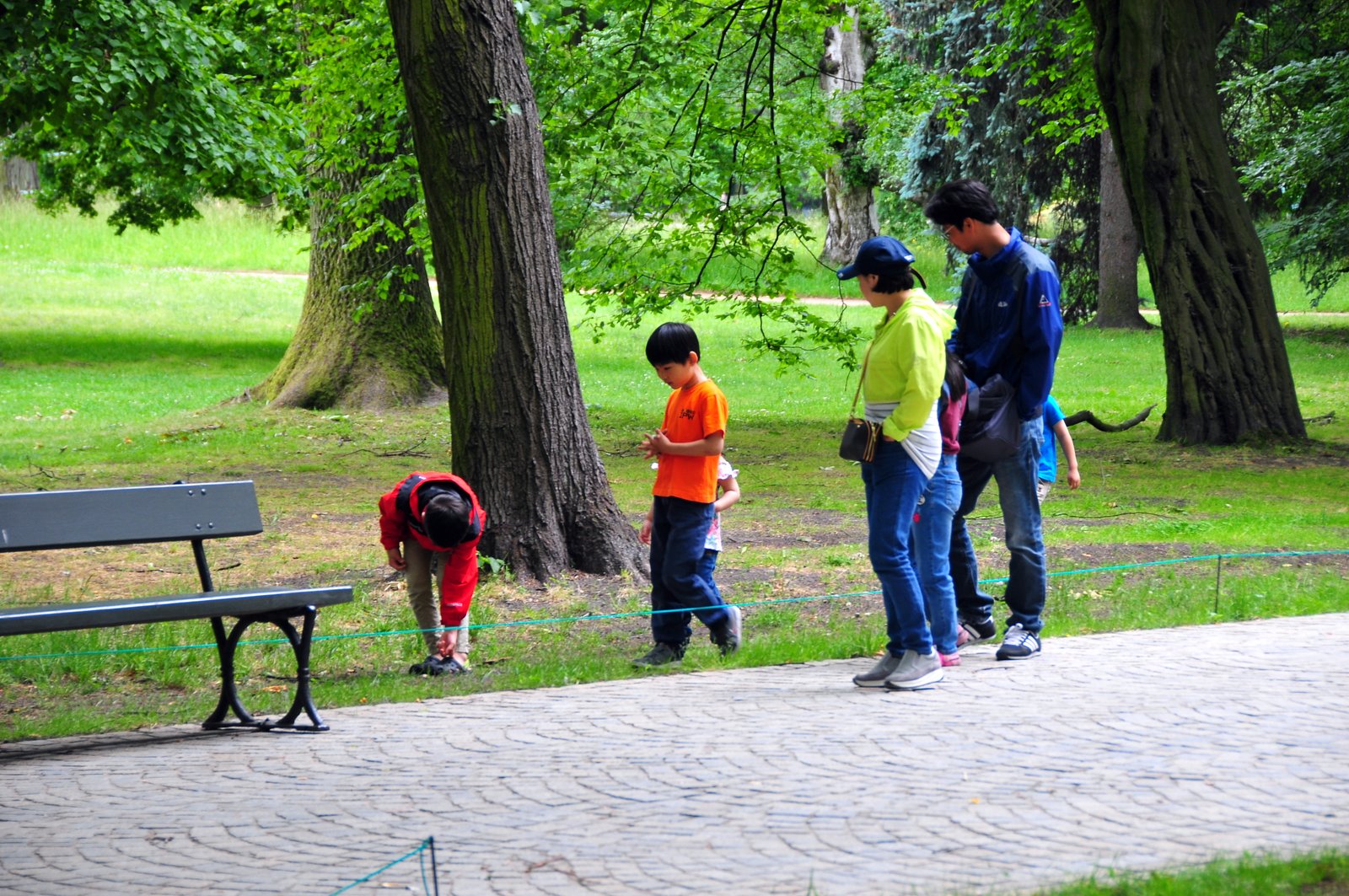
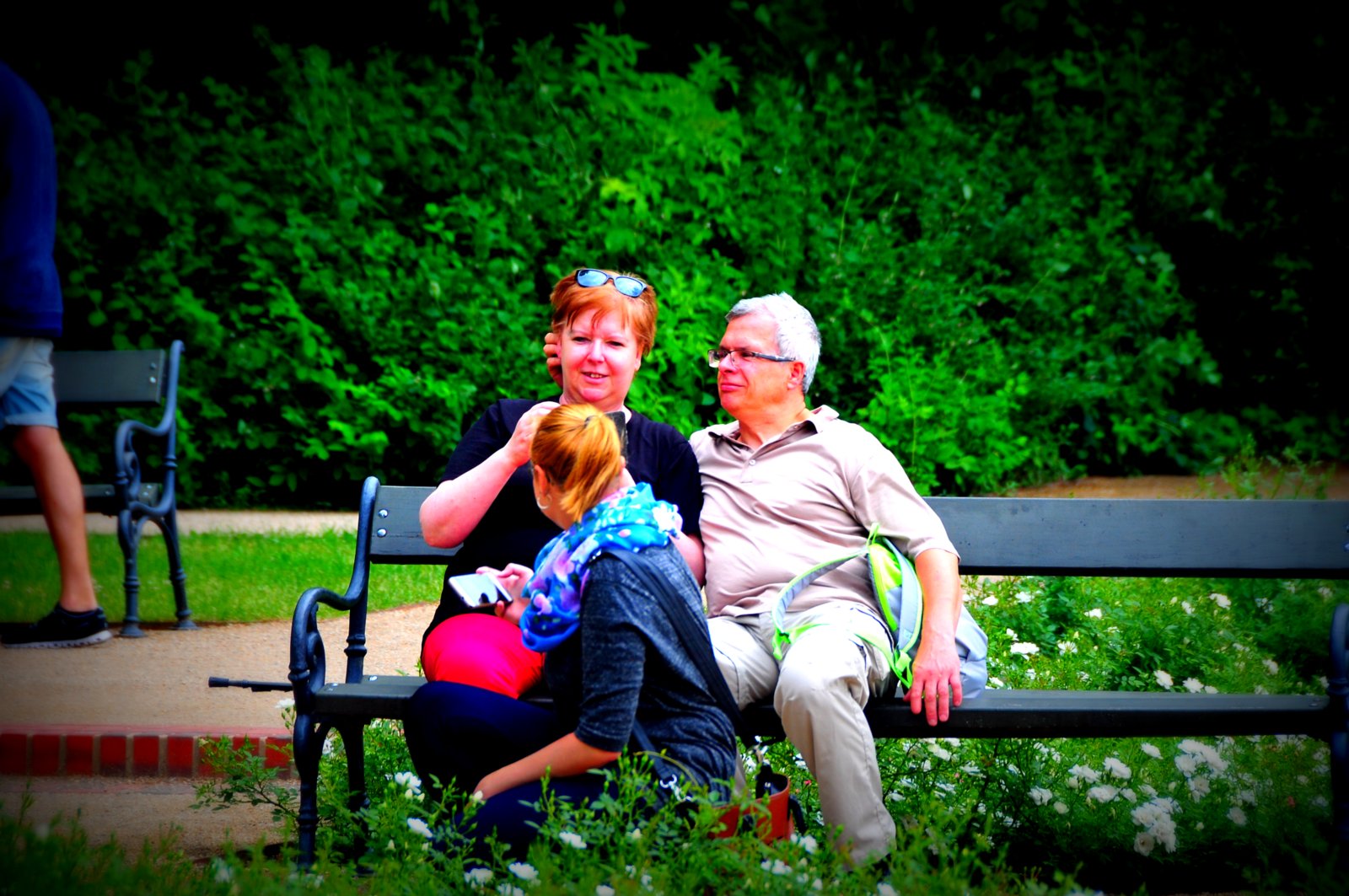
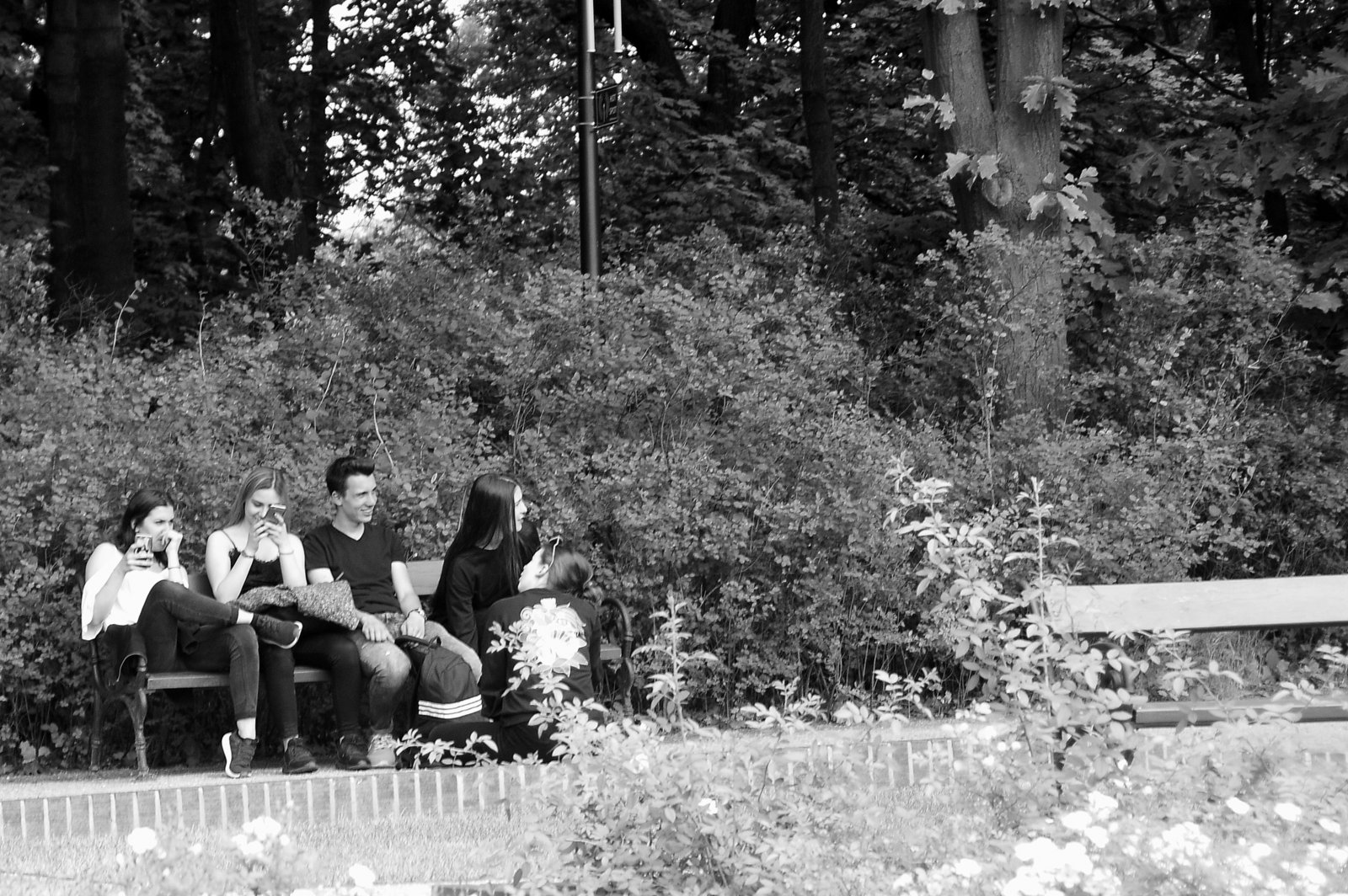
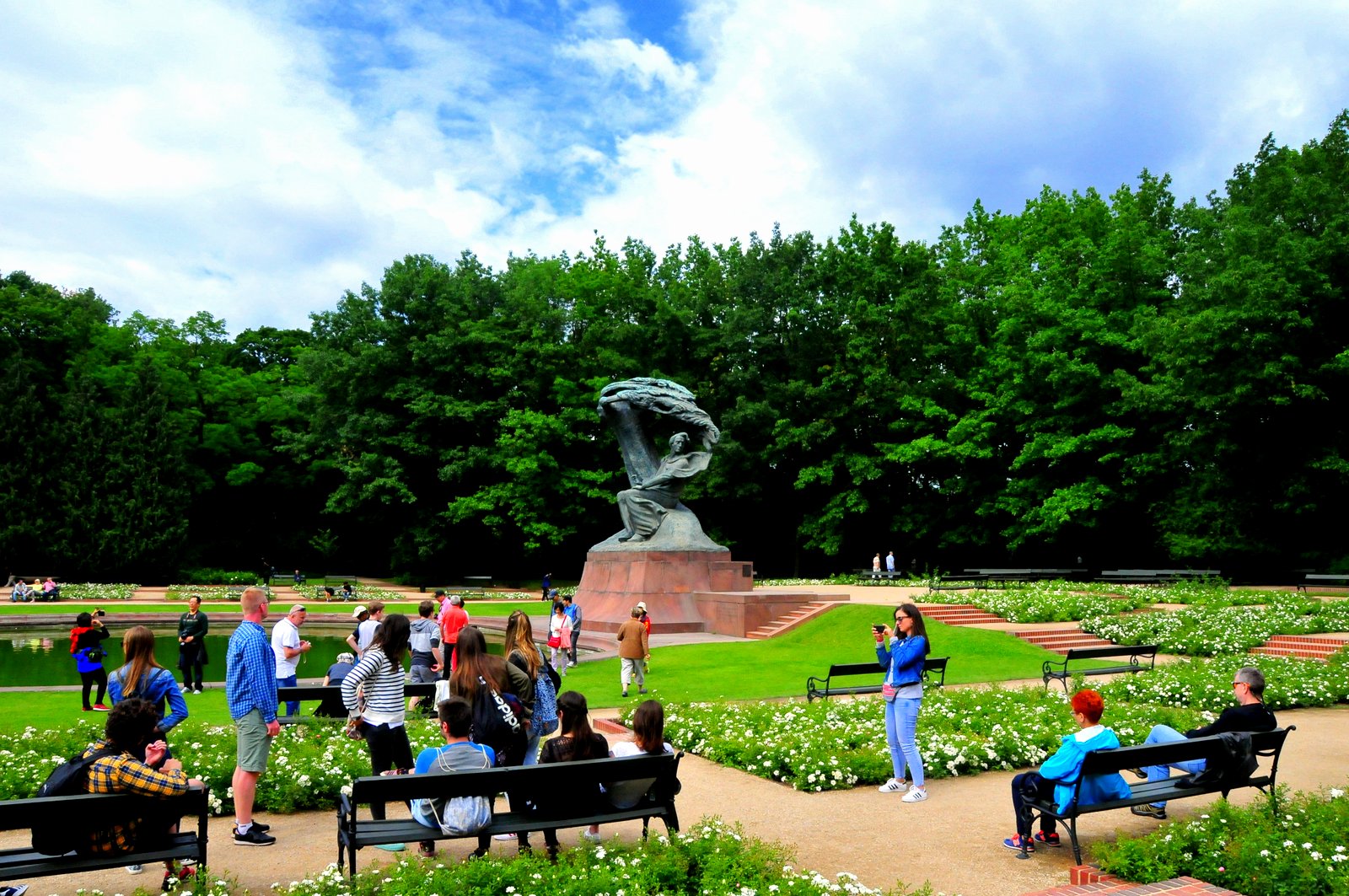
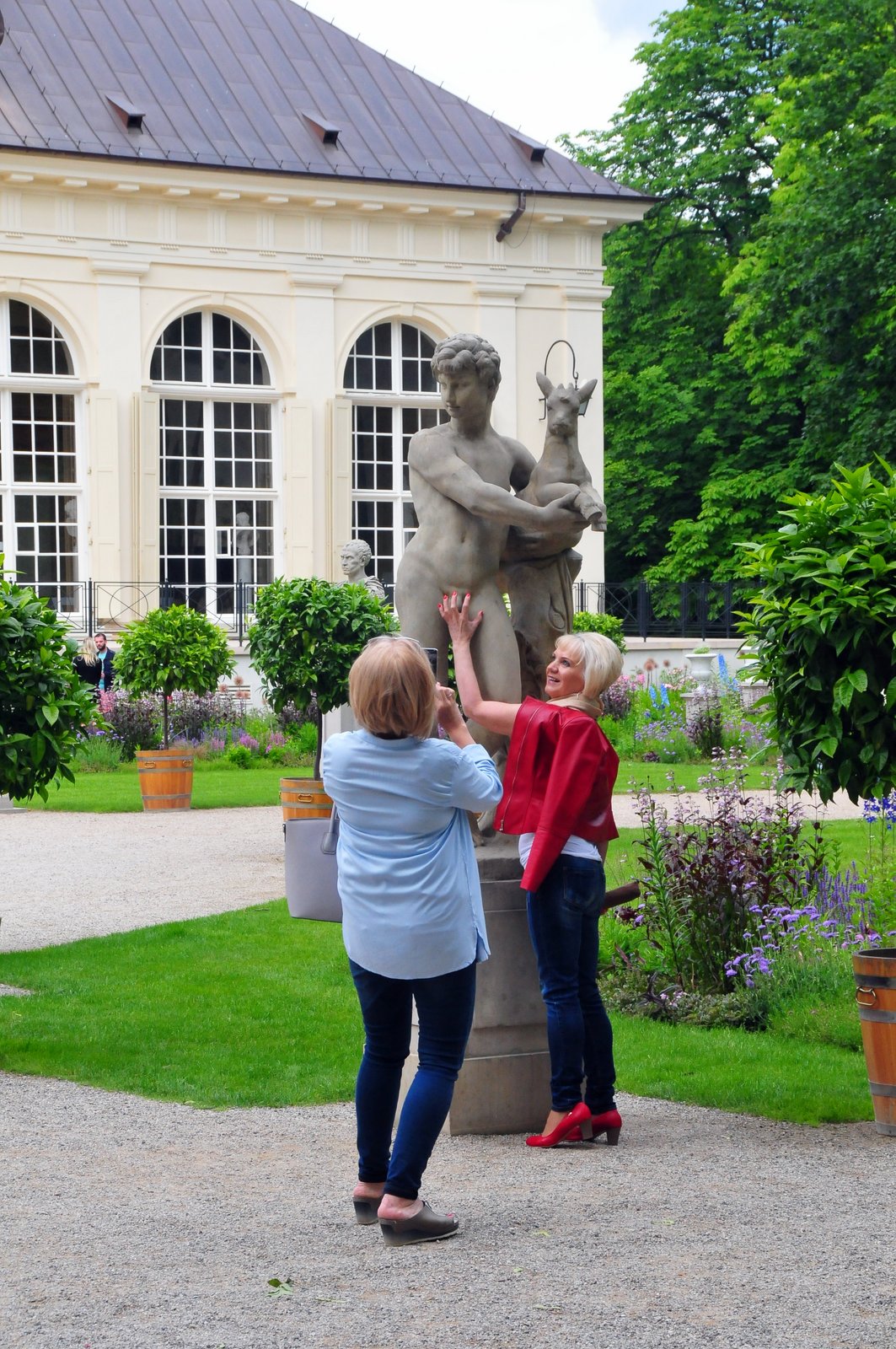
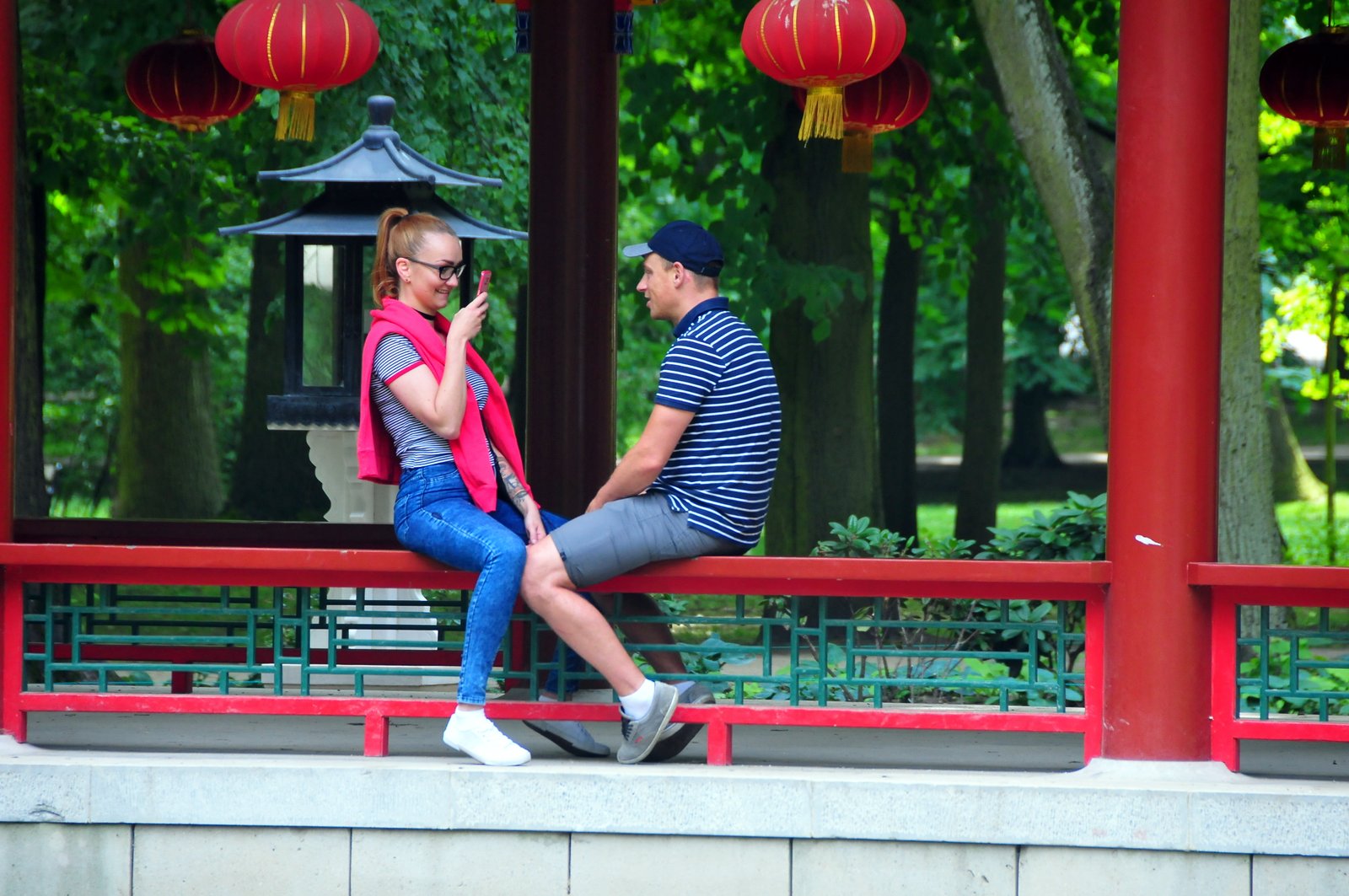
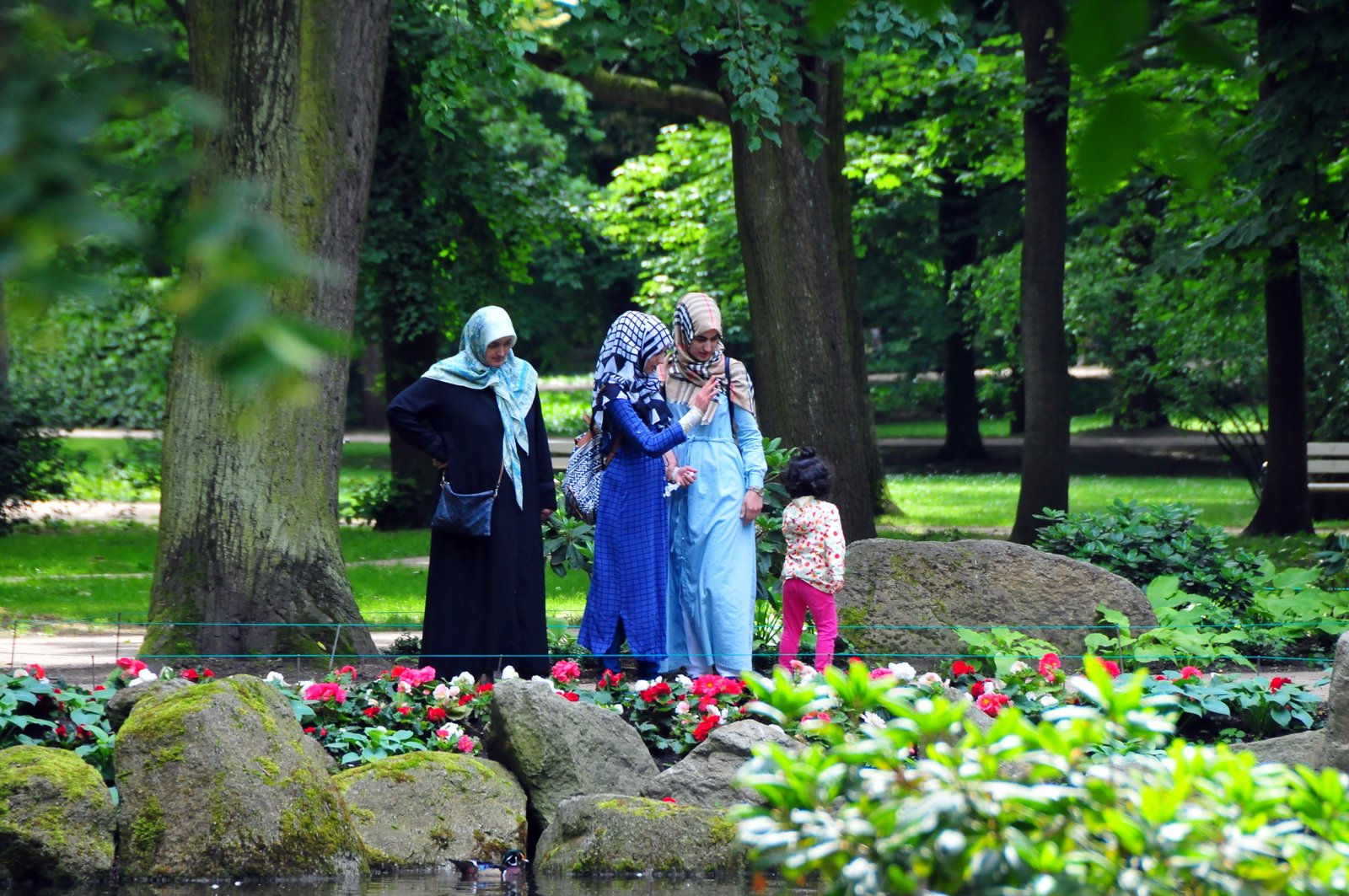
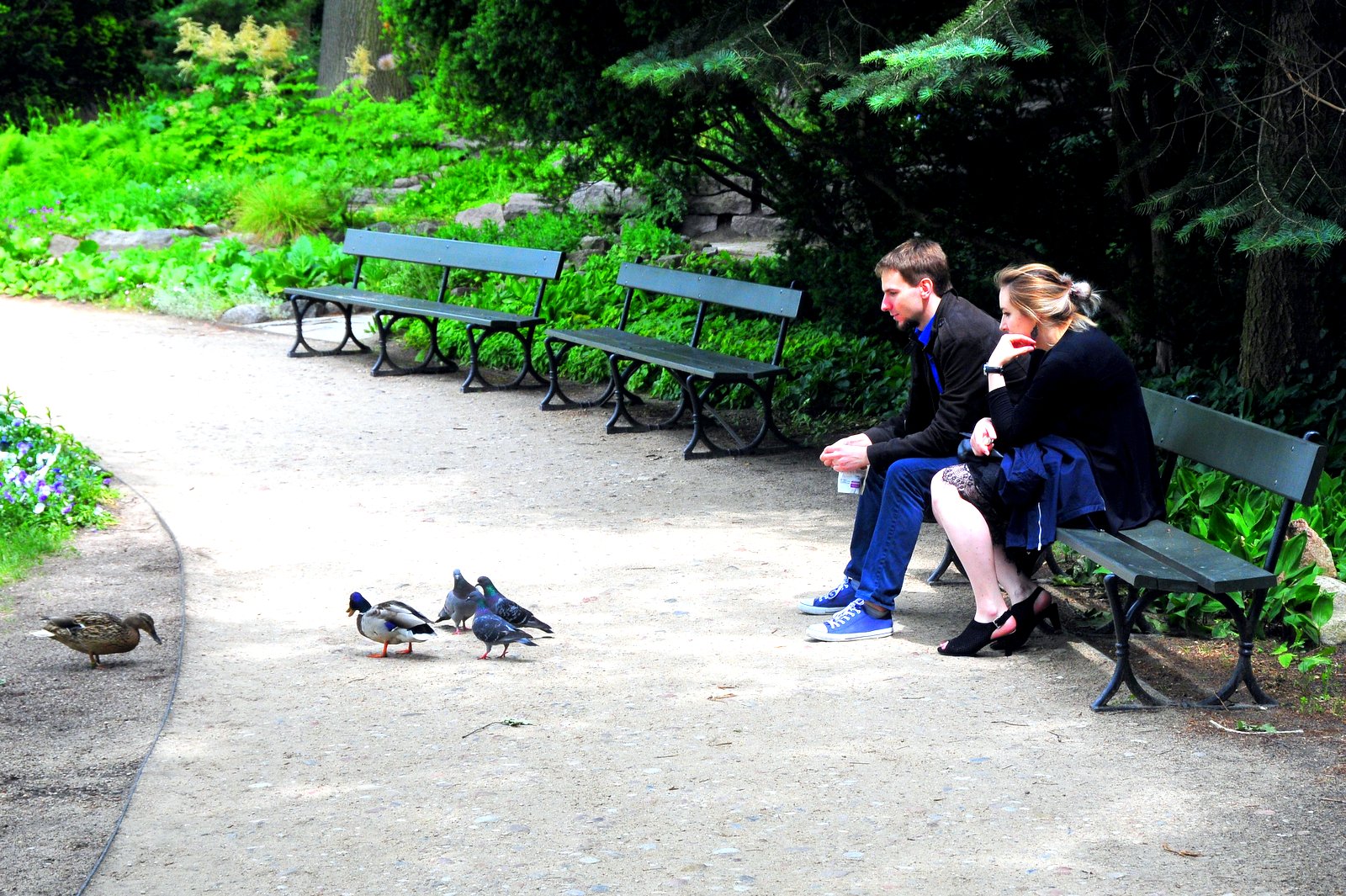
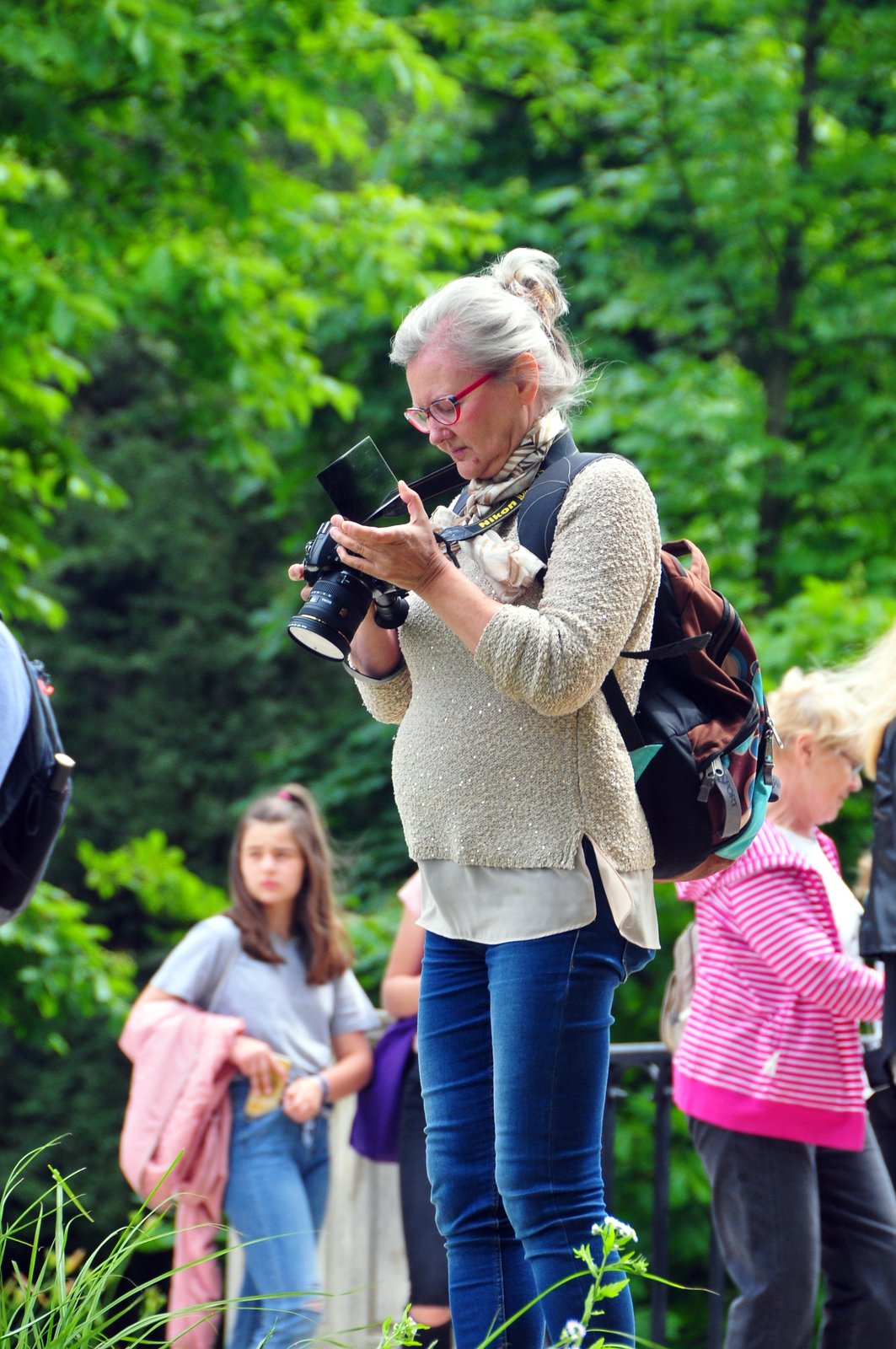
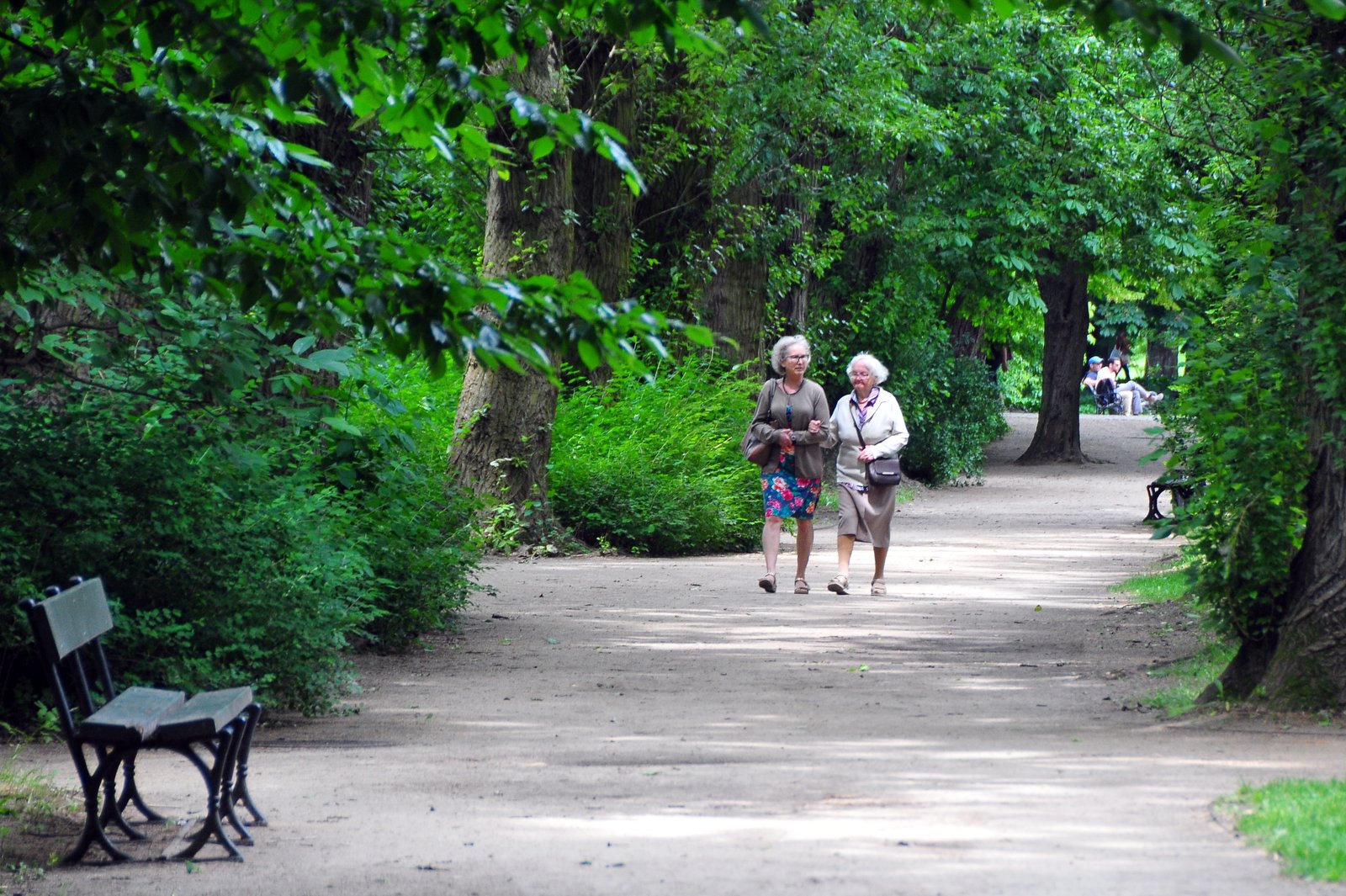
Łazienki Park is perhaps the best place in Warsaw to people-watch. There is an incredible mix of people: tourists, locals from two to one hundred and two, families, lovers.
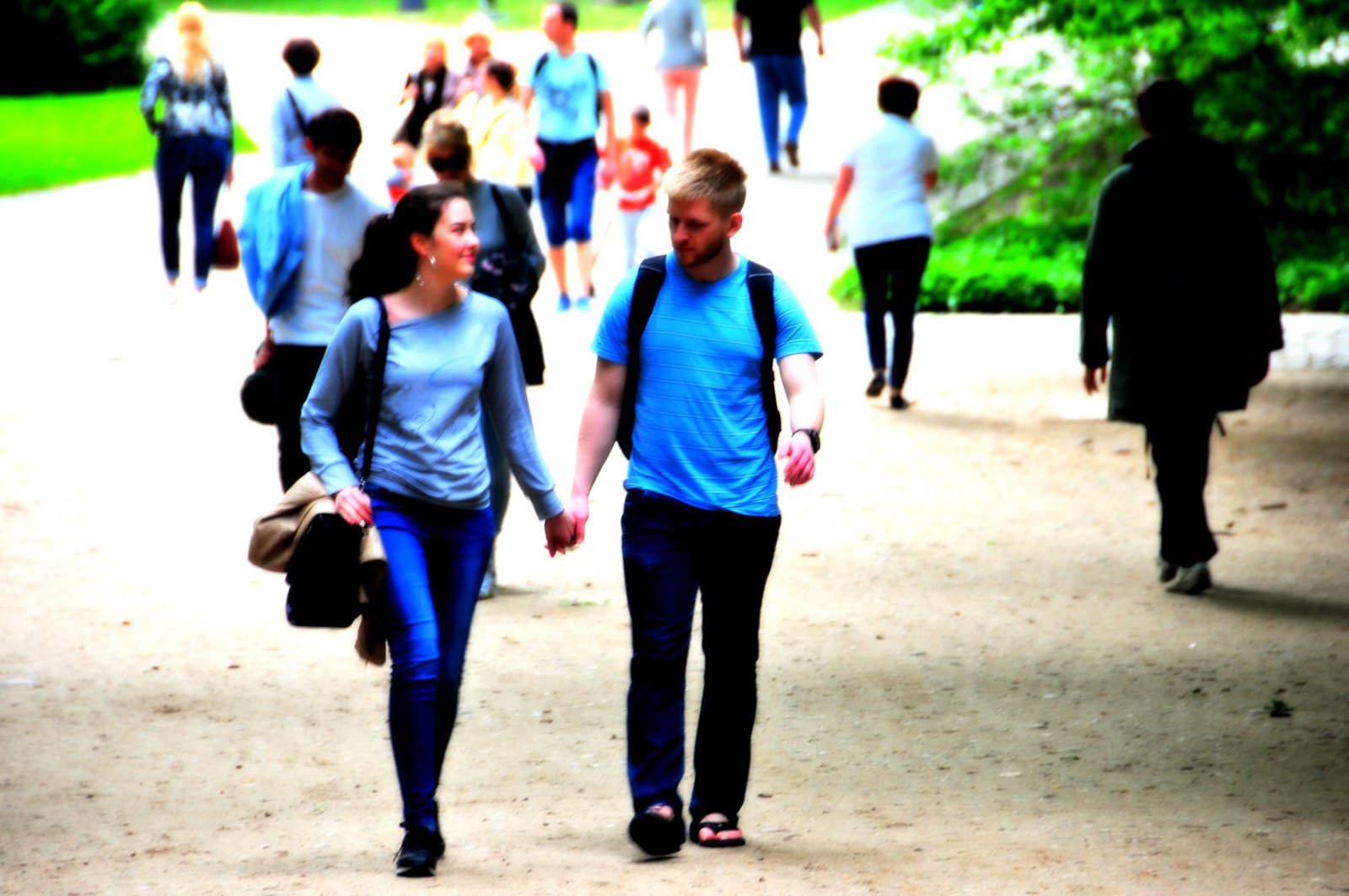
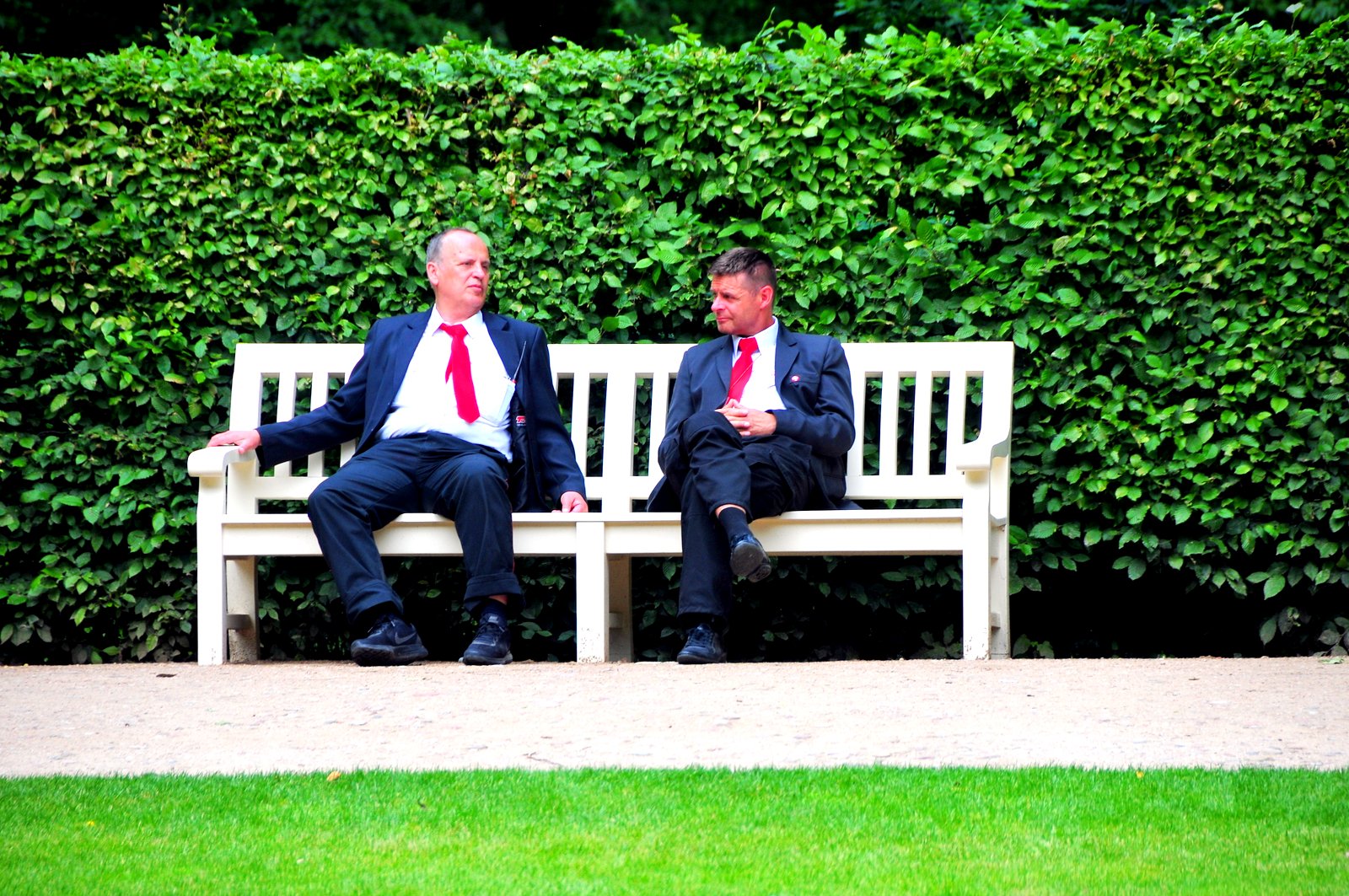
We returned to a happy girl with two gofry to snack on as we made our way to M's apartment, where her husband J was cooking dinner for us. Along the way, the big D300 put away, I snapped pictures with the little X100, trying to capture a few images that show the old Warsaw and the new, sometimes separately, sometimes juxtaposed.
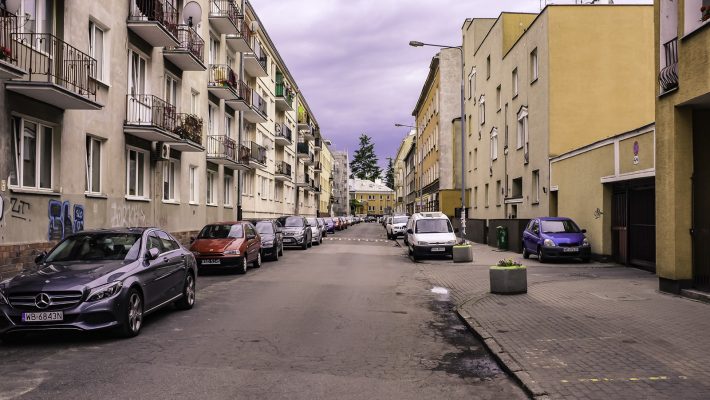
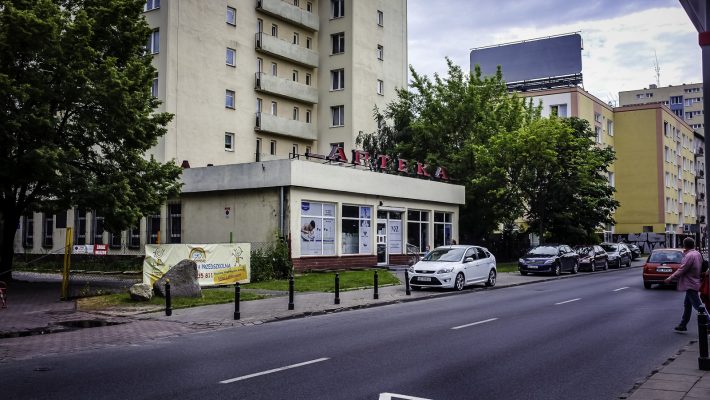
There was the drug store that looked just like shops did when I arrived first in 1996.
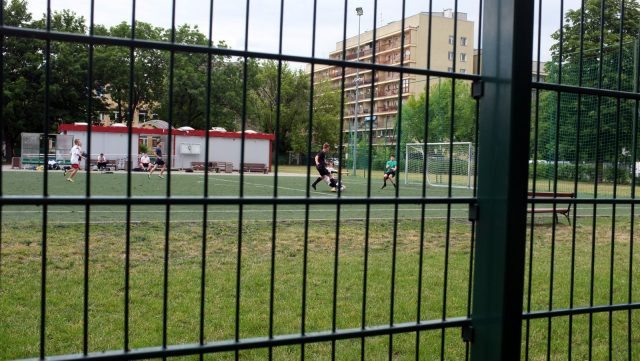
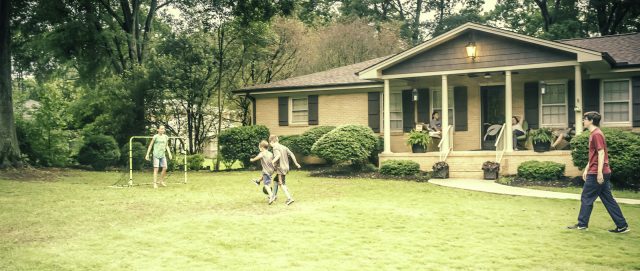
There was an enclosed soccer field that seemed timeless, as if it had always been there.
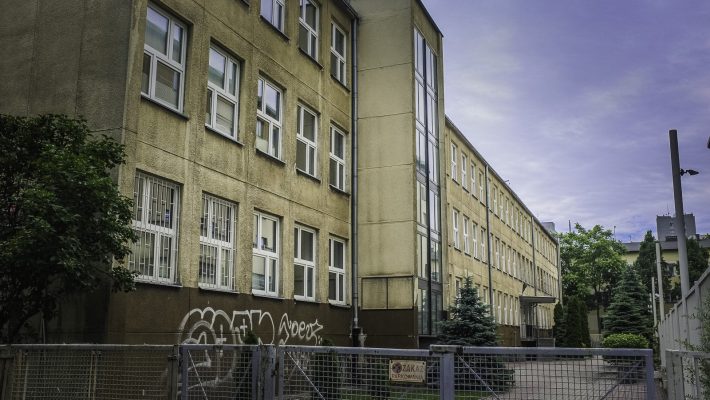
School in Warsaw

There was a middle school with graffiti and rebar.
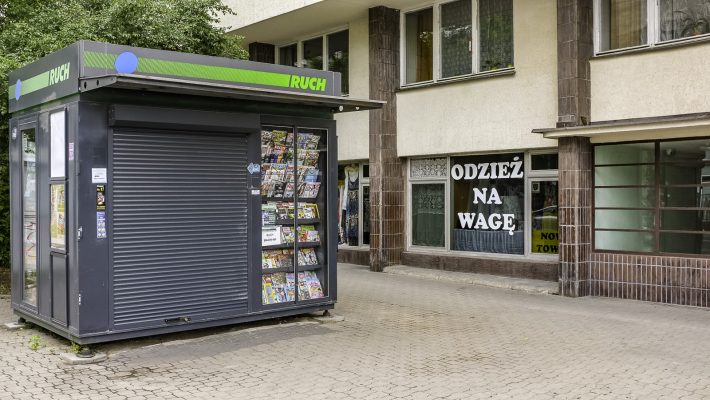
"Ja tutaj mieso mam!"

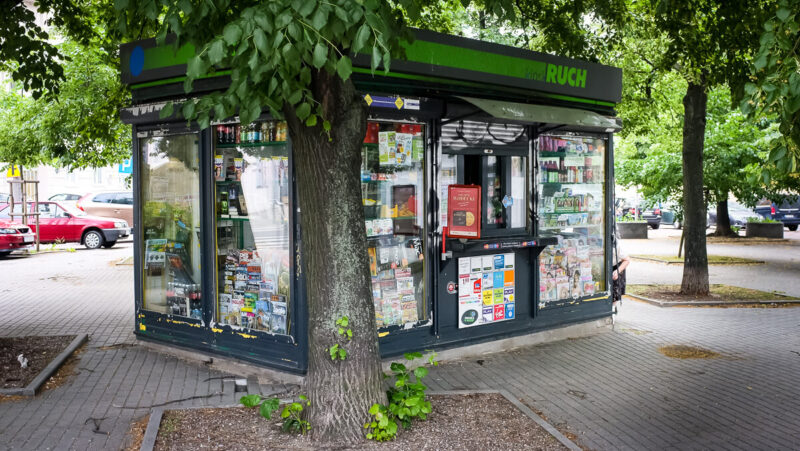
A newstand ("This, this, this is a newstand! I have meat here!" came to mind, a line from my favorite Polish film. In Mis, though, the newstand is not in a kiosk but its own building.) across from a used clothing store that sells clothes by weight.
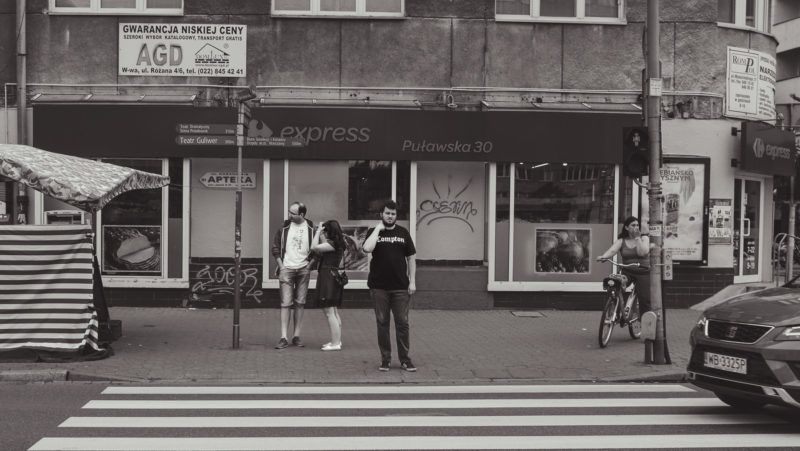
And lots of people just going about their business.

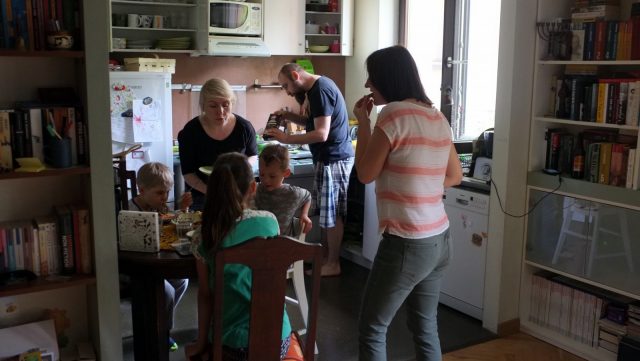
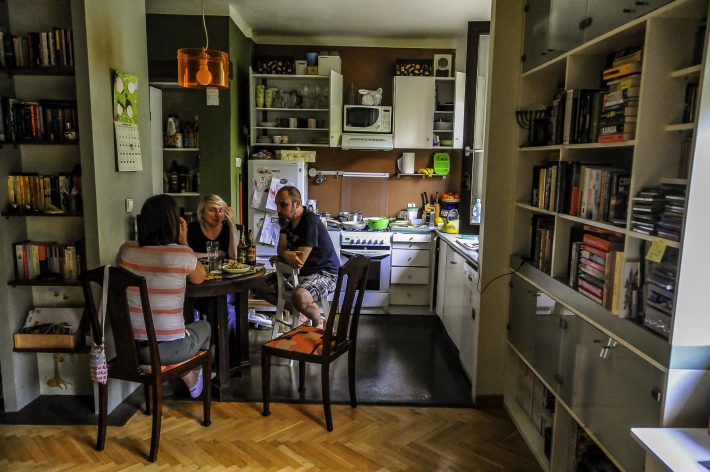
Dinner and the evening flew by as it does with friends you haven't seen in years. The conversation ranged far and wide, and for once there were no worries about whose toes we might step on with this or that comment when things turned to more political matters. We don't see eye-to-eye on everything, and we can talk about it rationally and leave disagreements be. Not that that happened this evening. Parenting and parenthood tended to dominate the conversation and the environment in general.
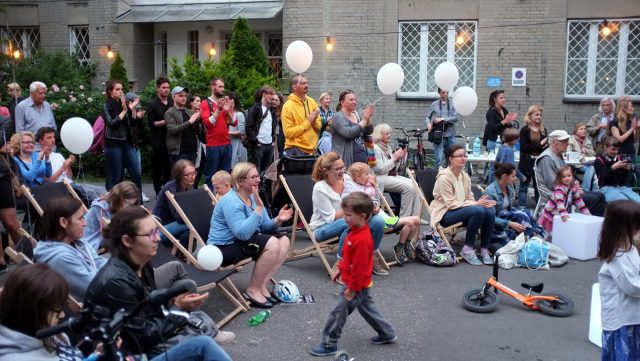
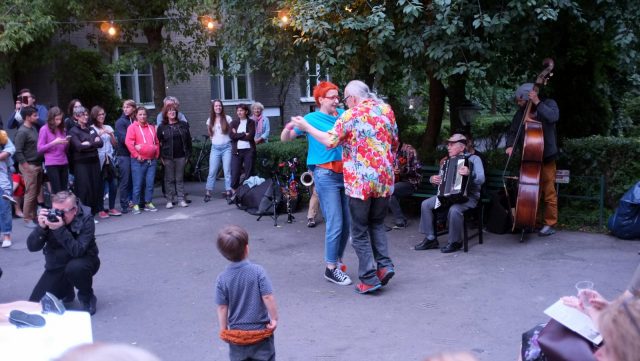
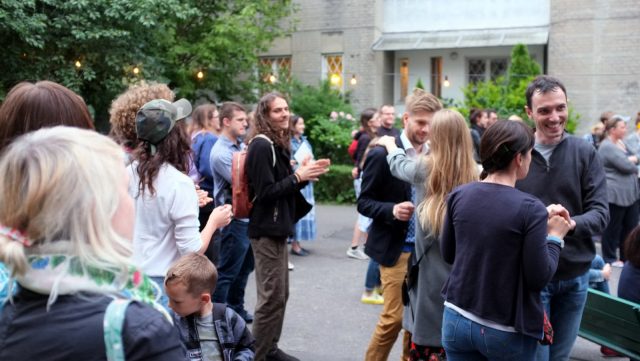
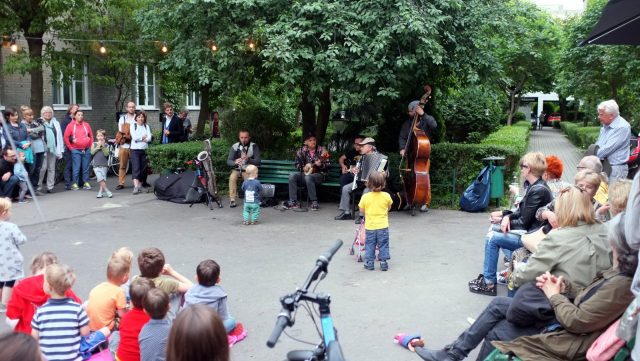
After dinner, one last adventure: a neighborhood concert just a few blocks away in Szare Domy, a neighborhood of blocks of flats dating from the twenties that have small garden areas tucked in between the blocks. Usually closed off to non-residents, the neighborhood was throwing something like a block party, and everyone was invited.

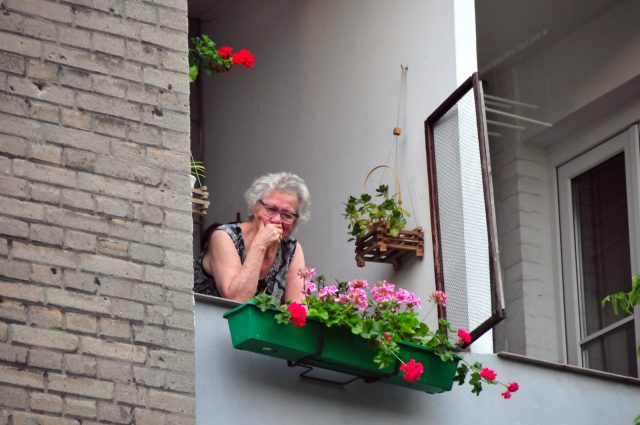
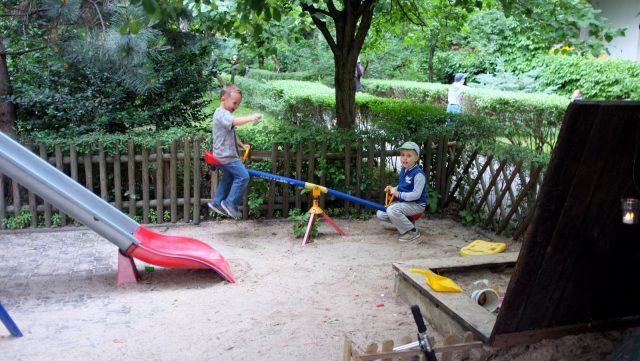
The kids played. The adults chatted. The residents who stayed at home watched from the balcony.
Finally, around nine, everyone called it an evening. The Ds went back to their apartment after walking us to the nearest tram stop.
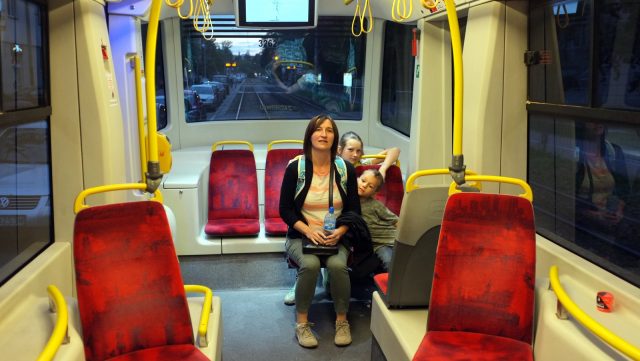
We made it back to Emilii Platter Street without worries, did some shopping, and had a final, amusing encounter. Walking out of the shop, E asked K, "Mommy, can I have the banana now?"

"No, just wait till we get back to the apartment," she replied in Polish.

A young man sitting on a bench called out after us in English: "Why does he speak English when she speaks Polish?"

I turned around and summed it up as quickly as I could: "American reality."
A few more pictures are at Flickr. I didn't manage to get all seventy-something pictures worked into this post.

Wednesday in the Village

Polish Village Reality

After a quick breakfast, a little reminder of Polish reality, at least an older reality: no hot water in the morning in the summer. The energy for heating the water is not electricity, for that would be far too expensive, but rather it comes from coal, as in a small coal-burning furnace. Babcia makes a fire in the evening to have warm water for baths, but by the morning, it's cooled down.

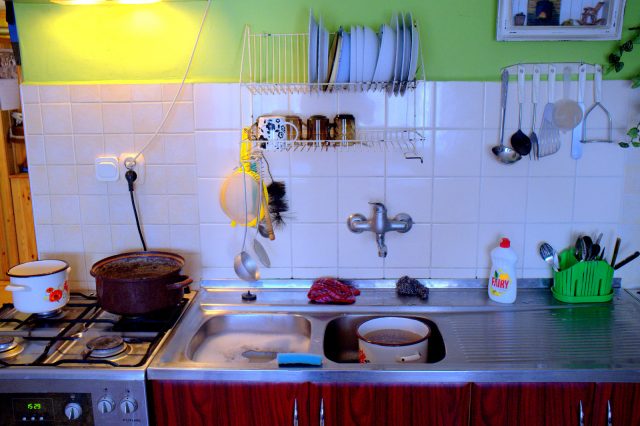
So to wash dishes, one has to warm water in a pot and then poured into the sink.

Homes built in the last fifteen years or so have different systems which means less work for the hot water. Apartment blocks in the city have central heating for hot water, as do whole neighborhoods in some sections. But in the village it was always (and is still at Babcia's) simple: to take a bath, build a fire.

Jarmark

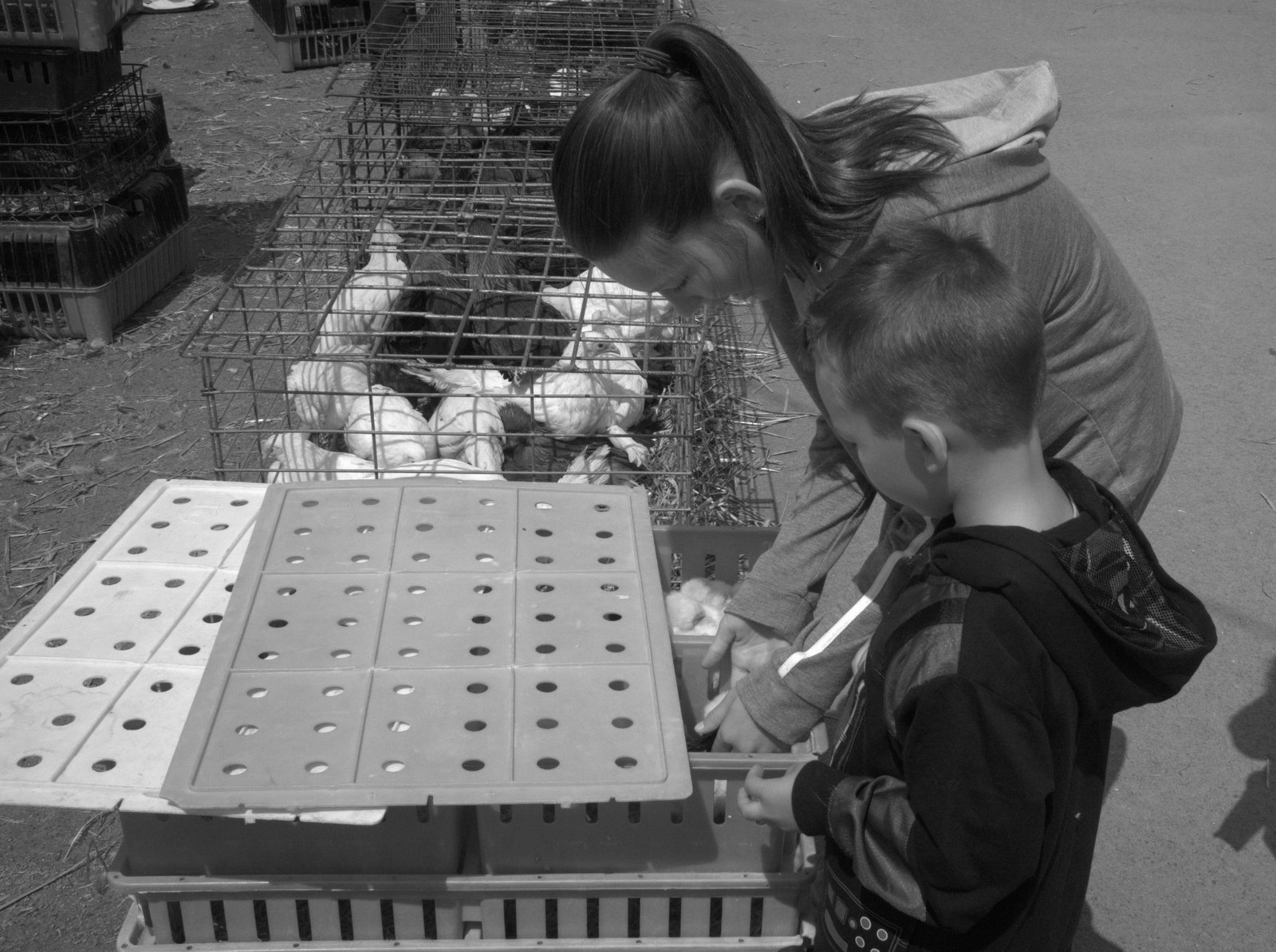
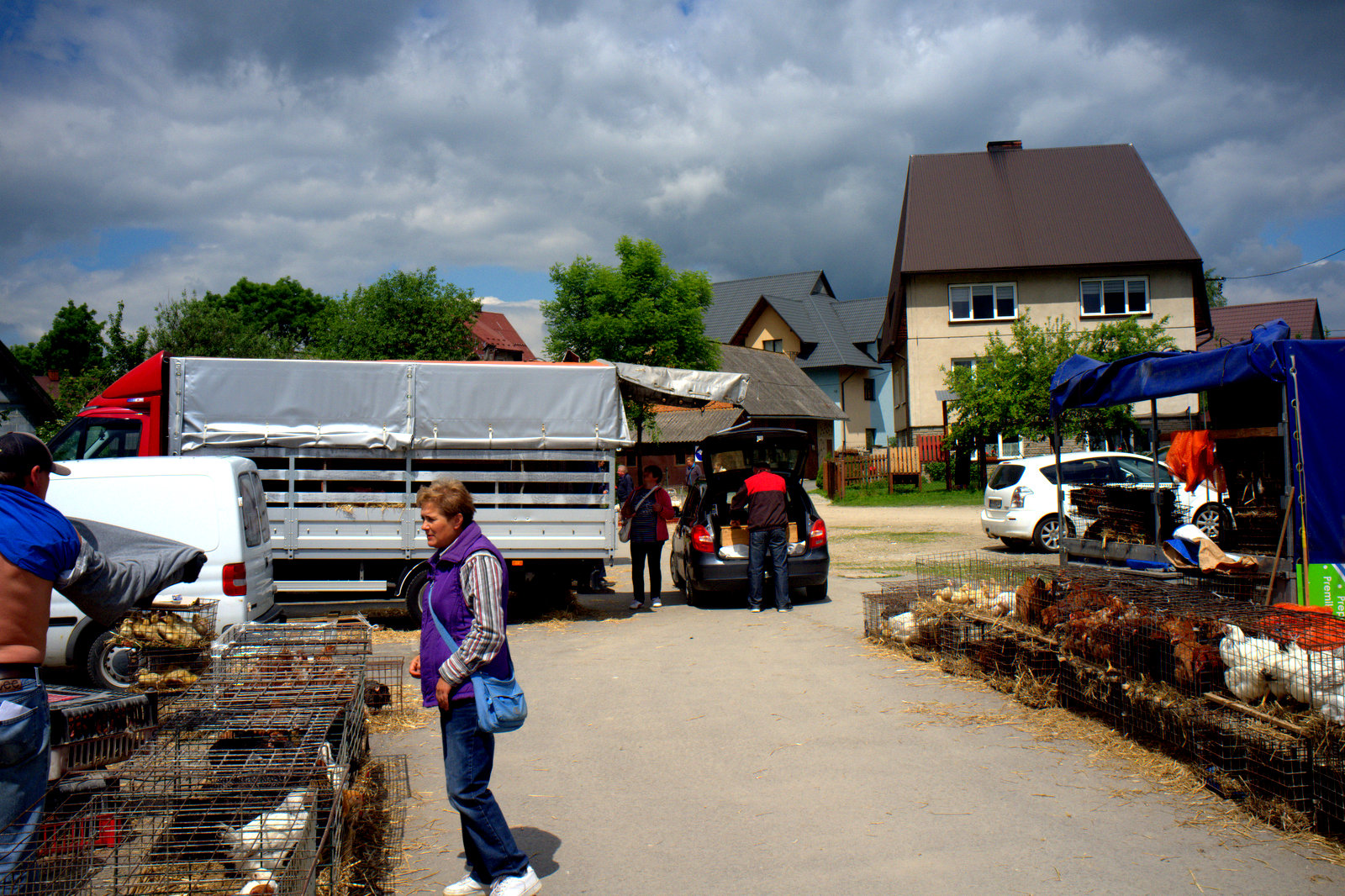
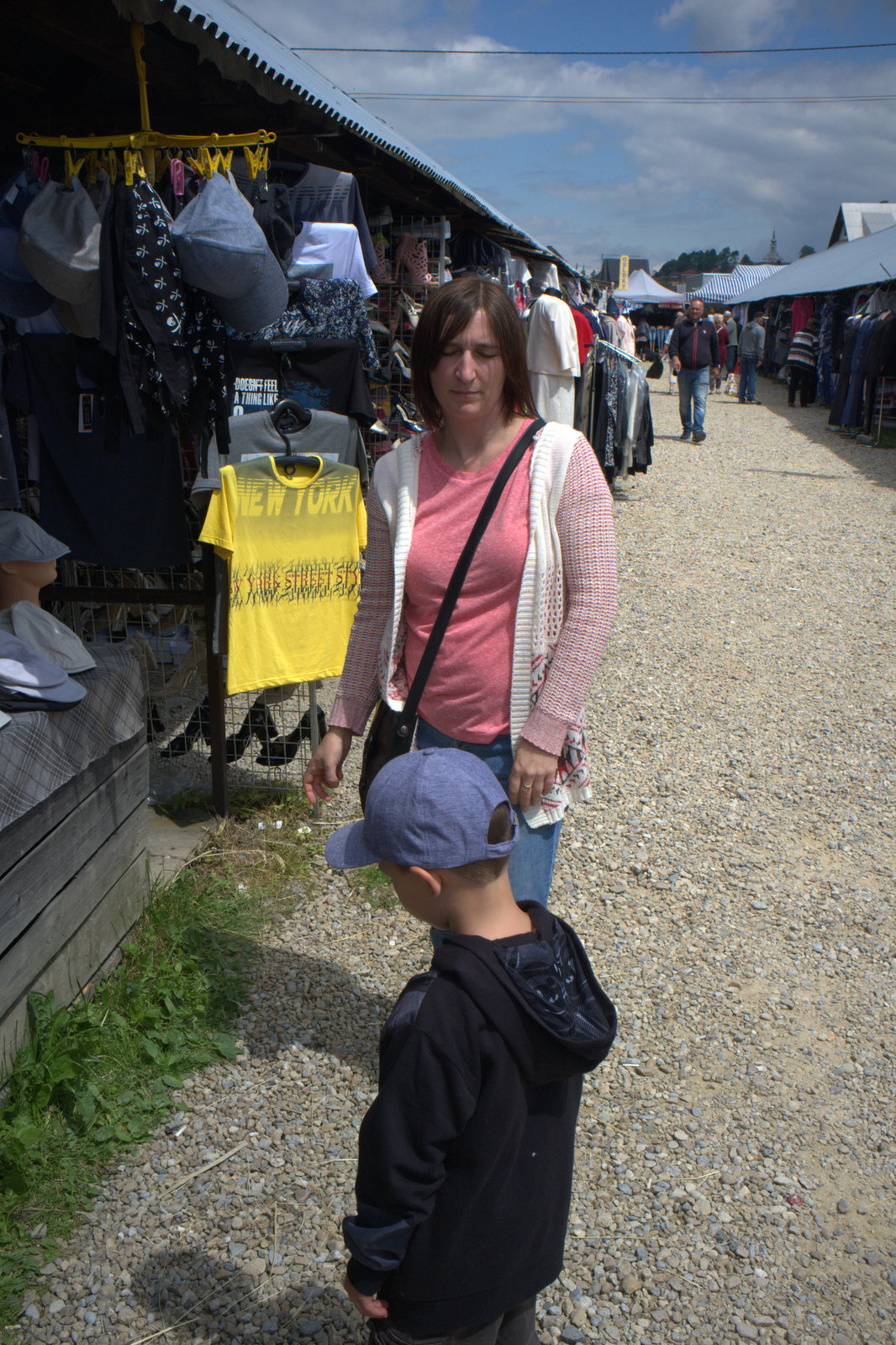
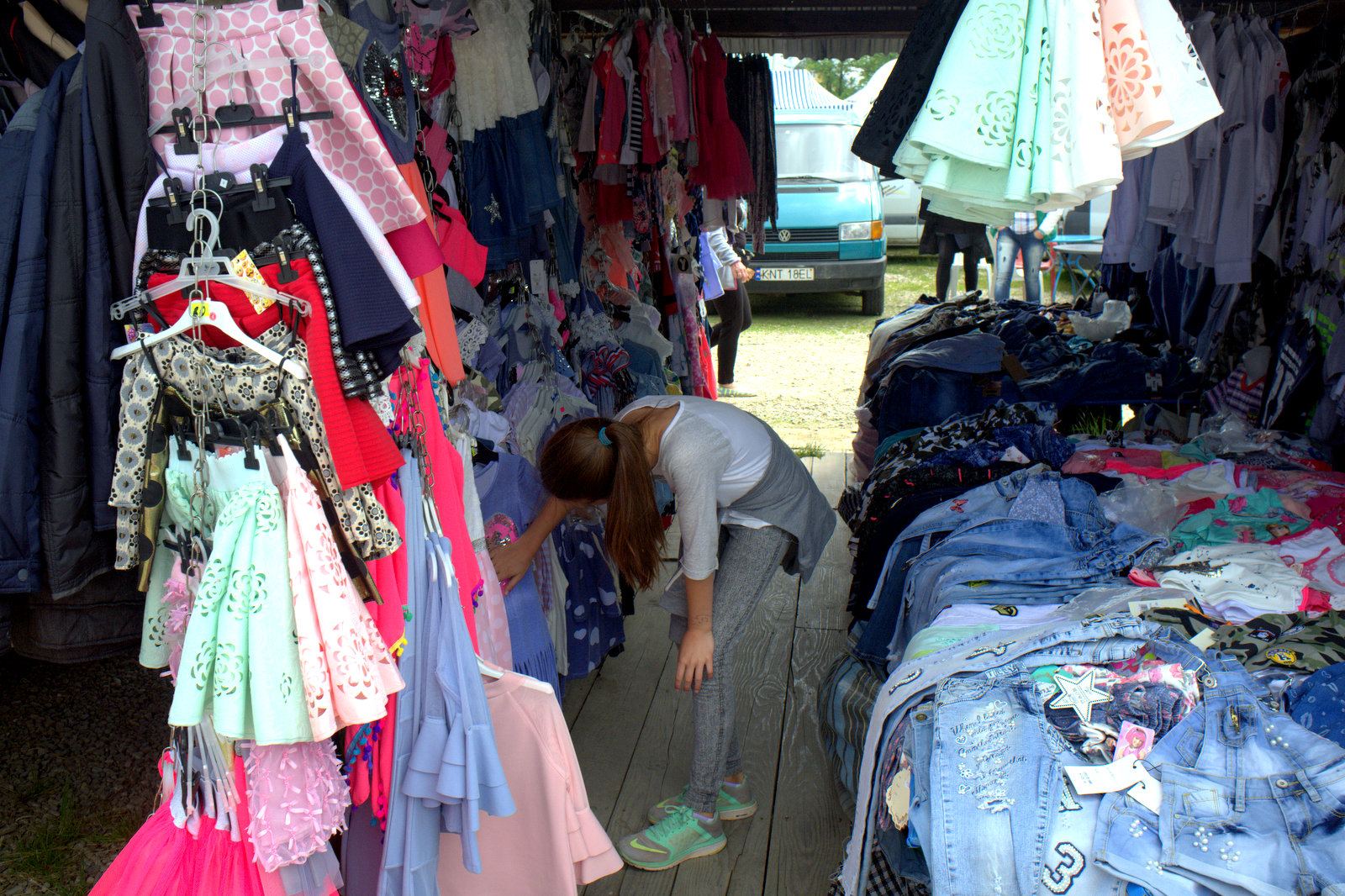
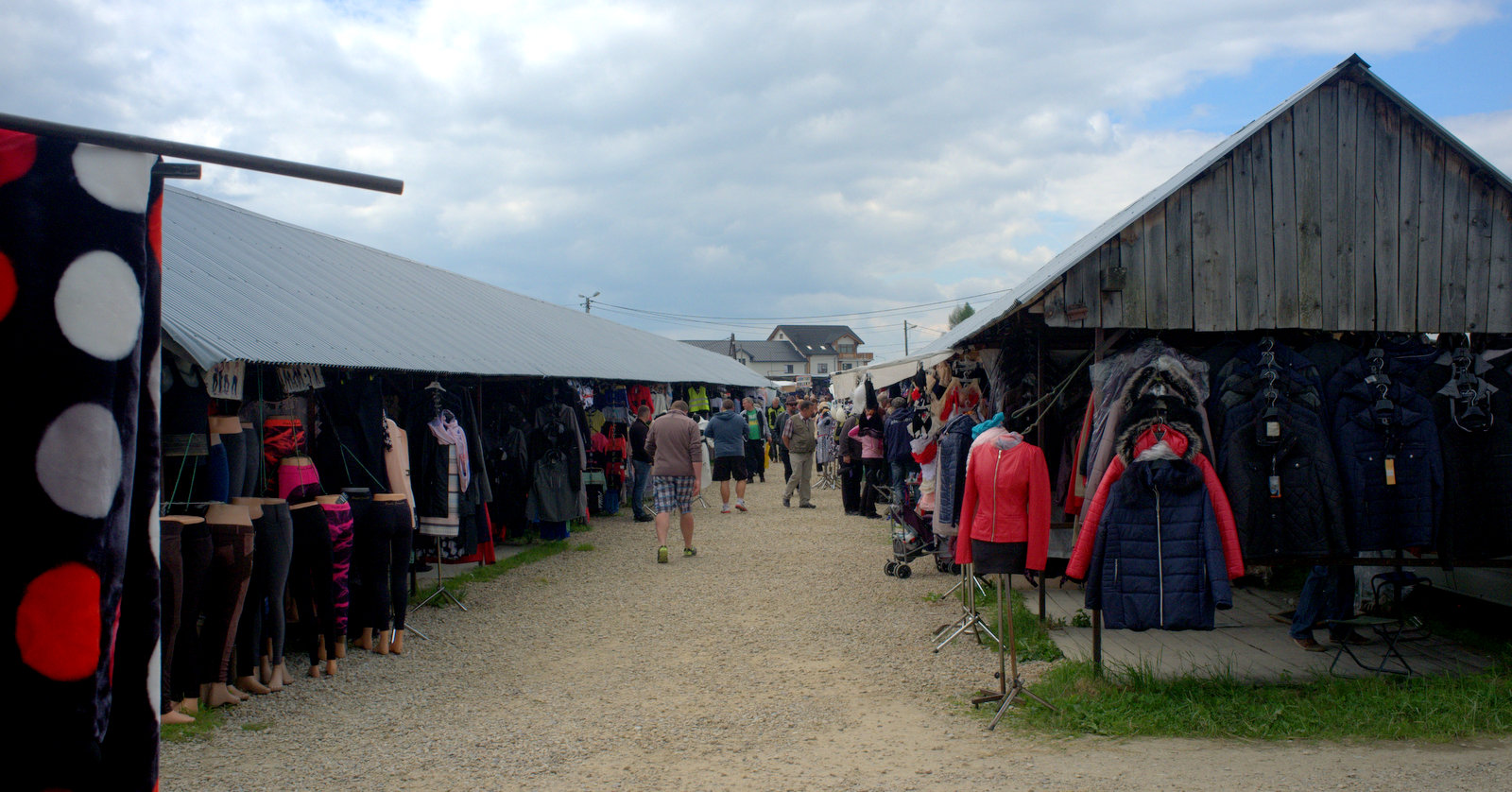
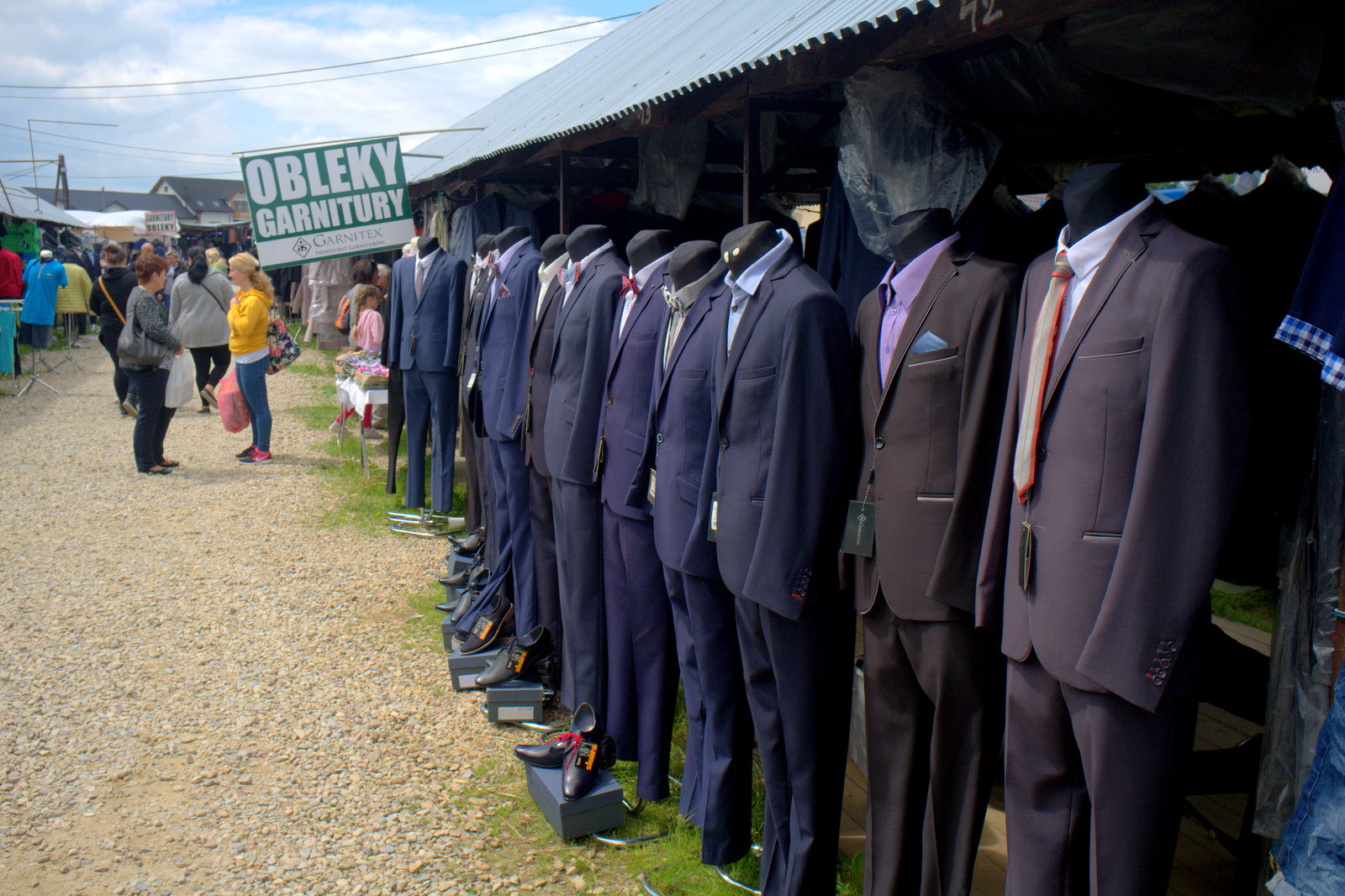
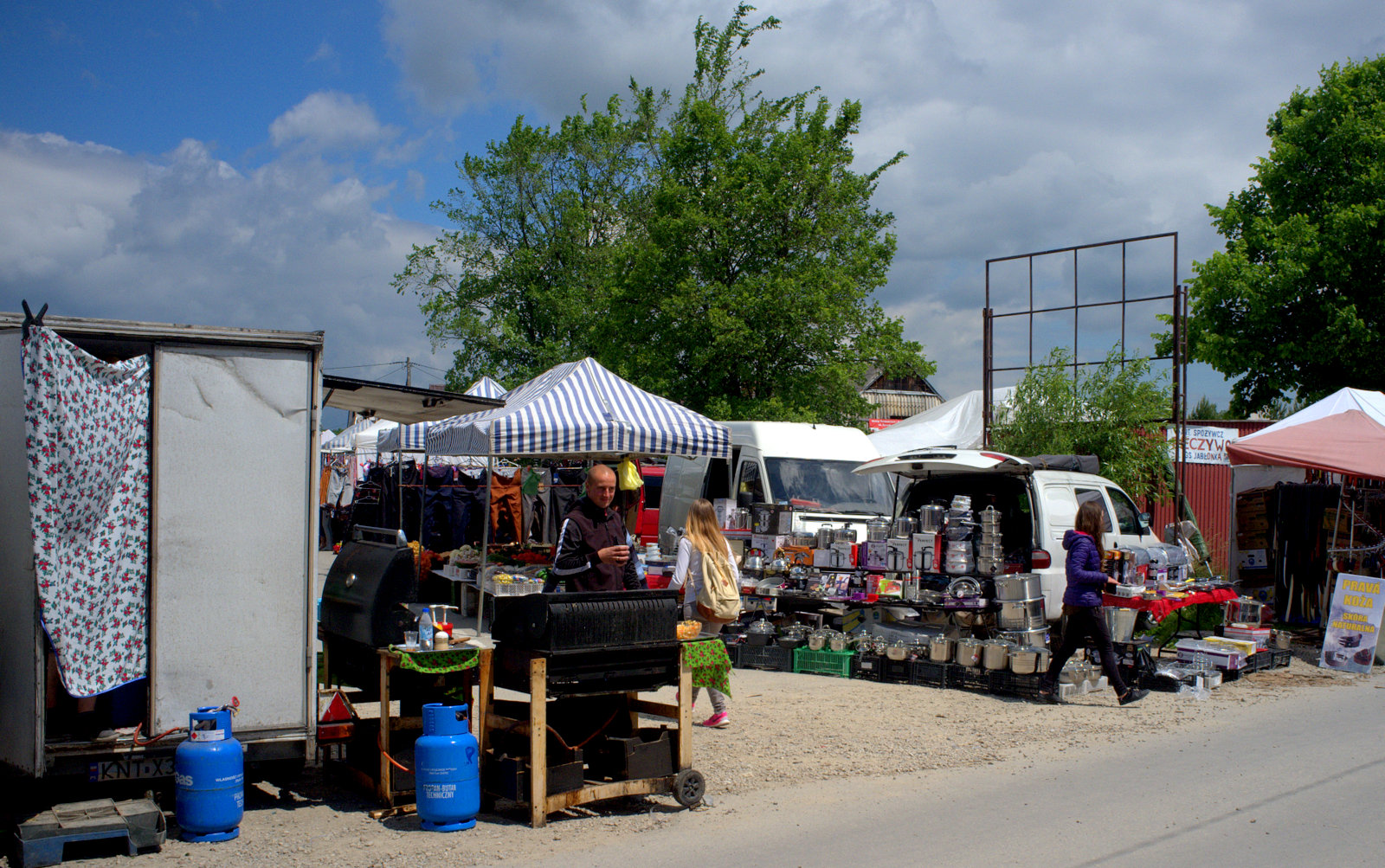
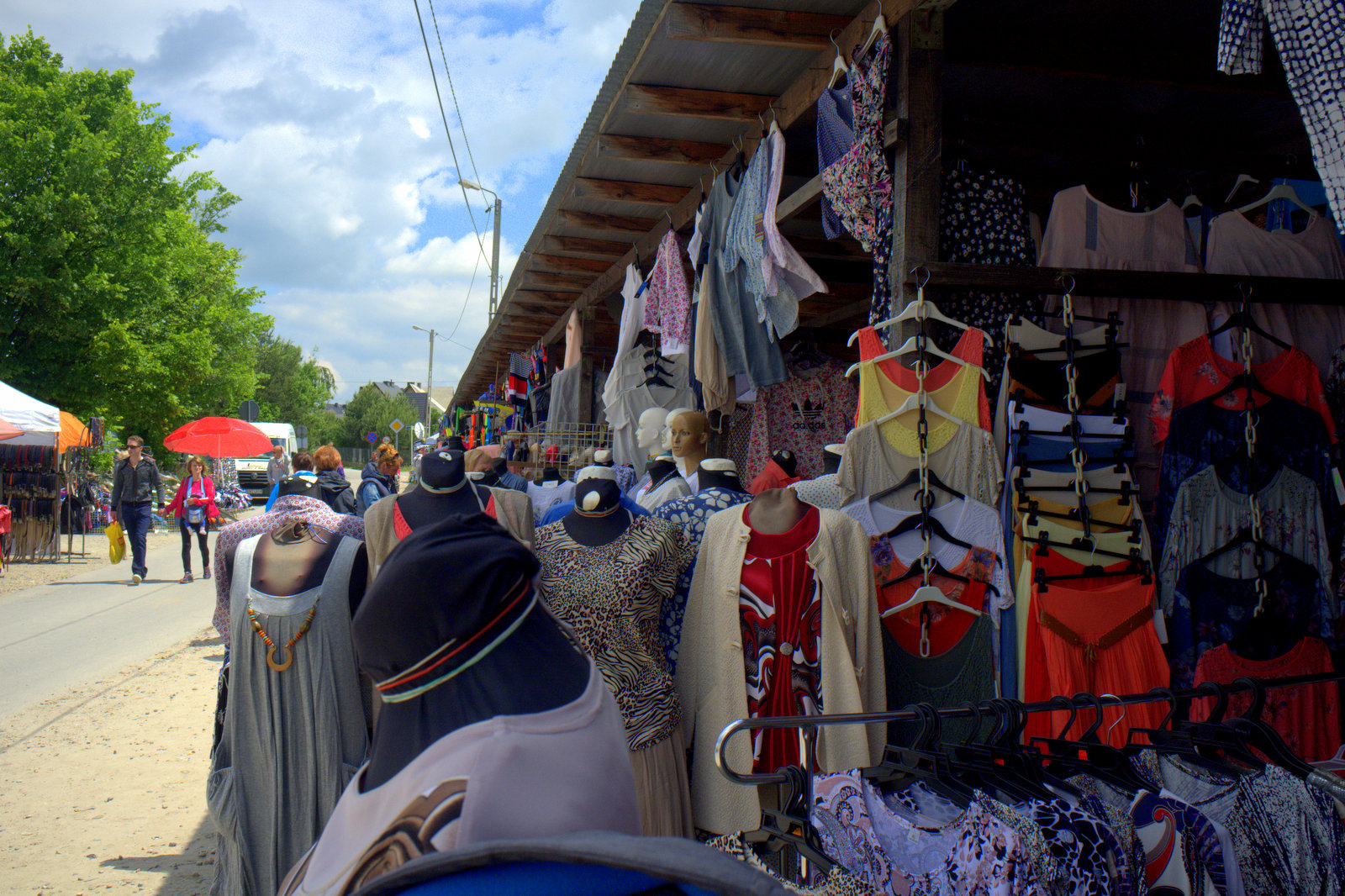
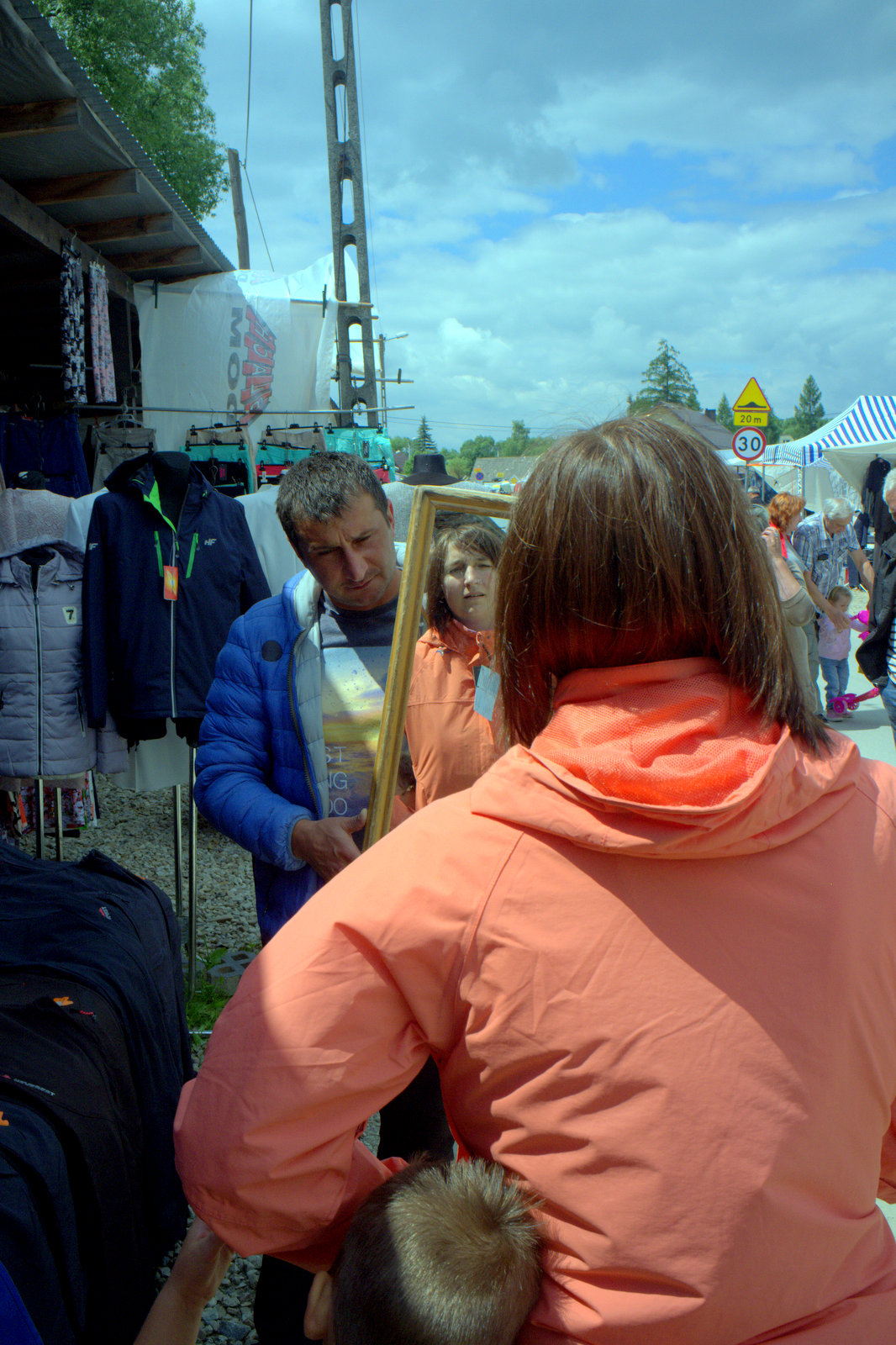
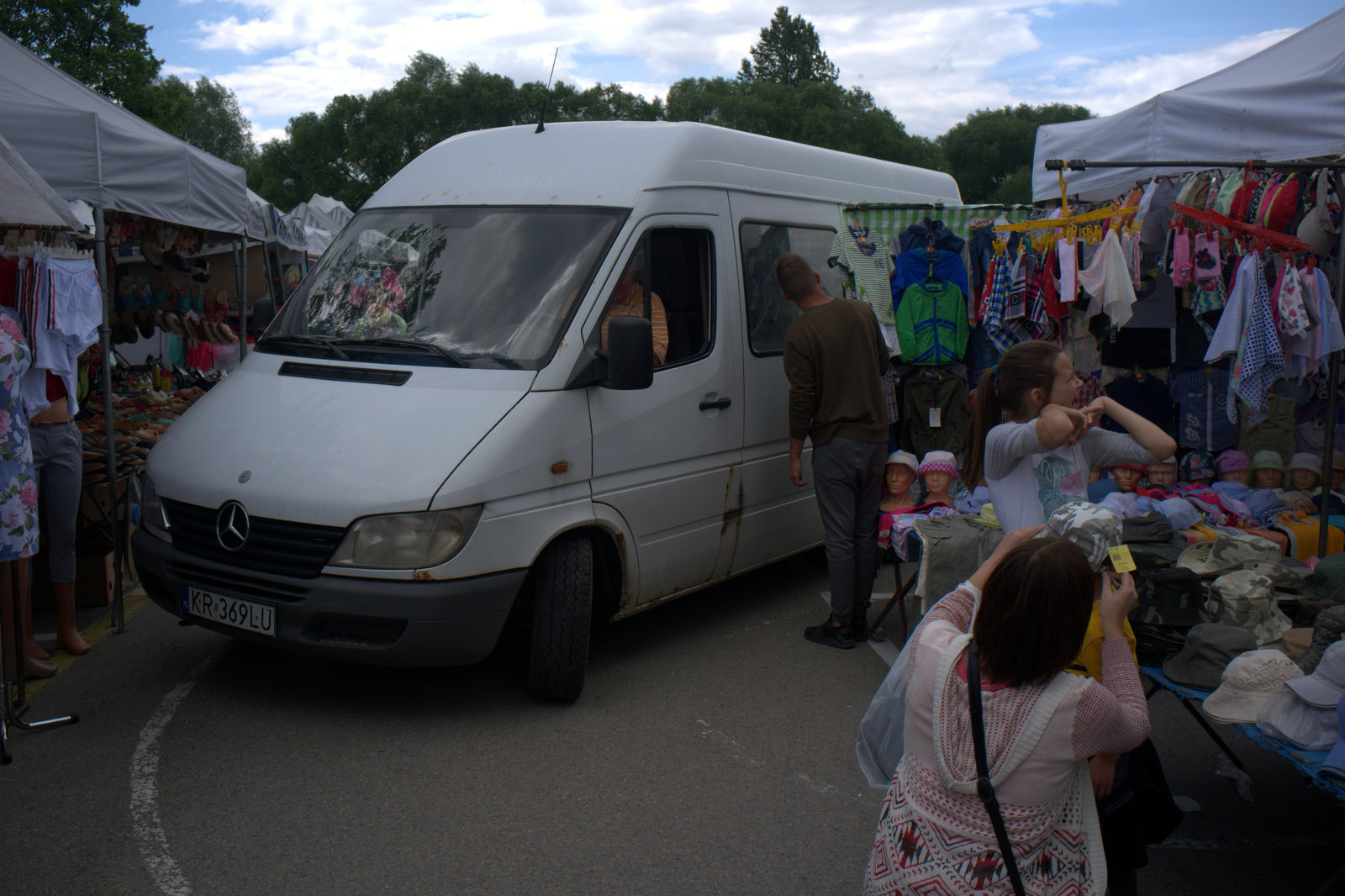
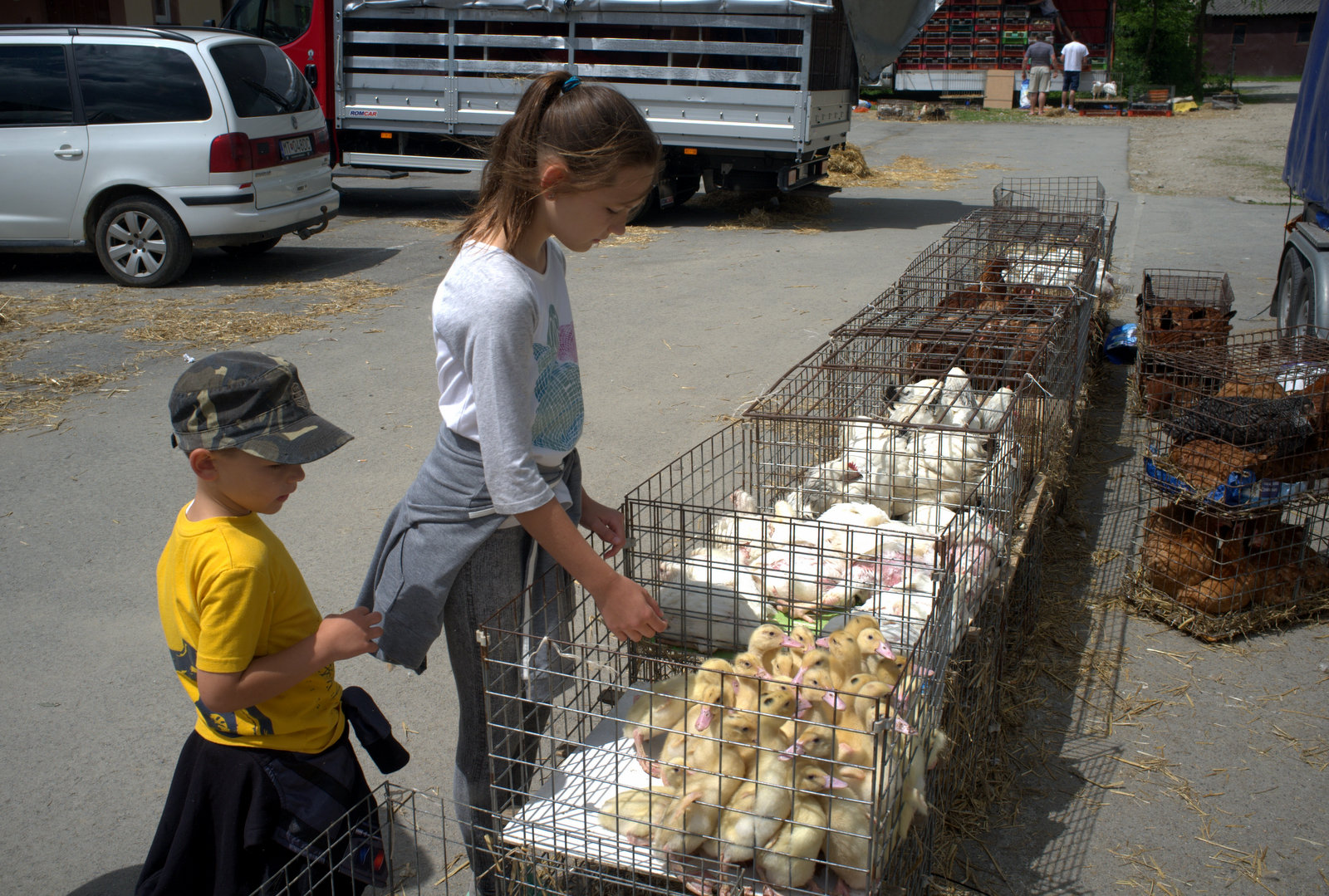
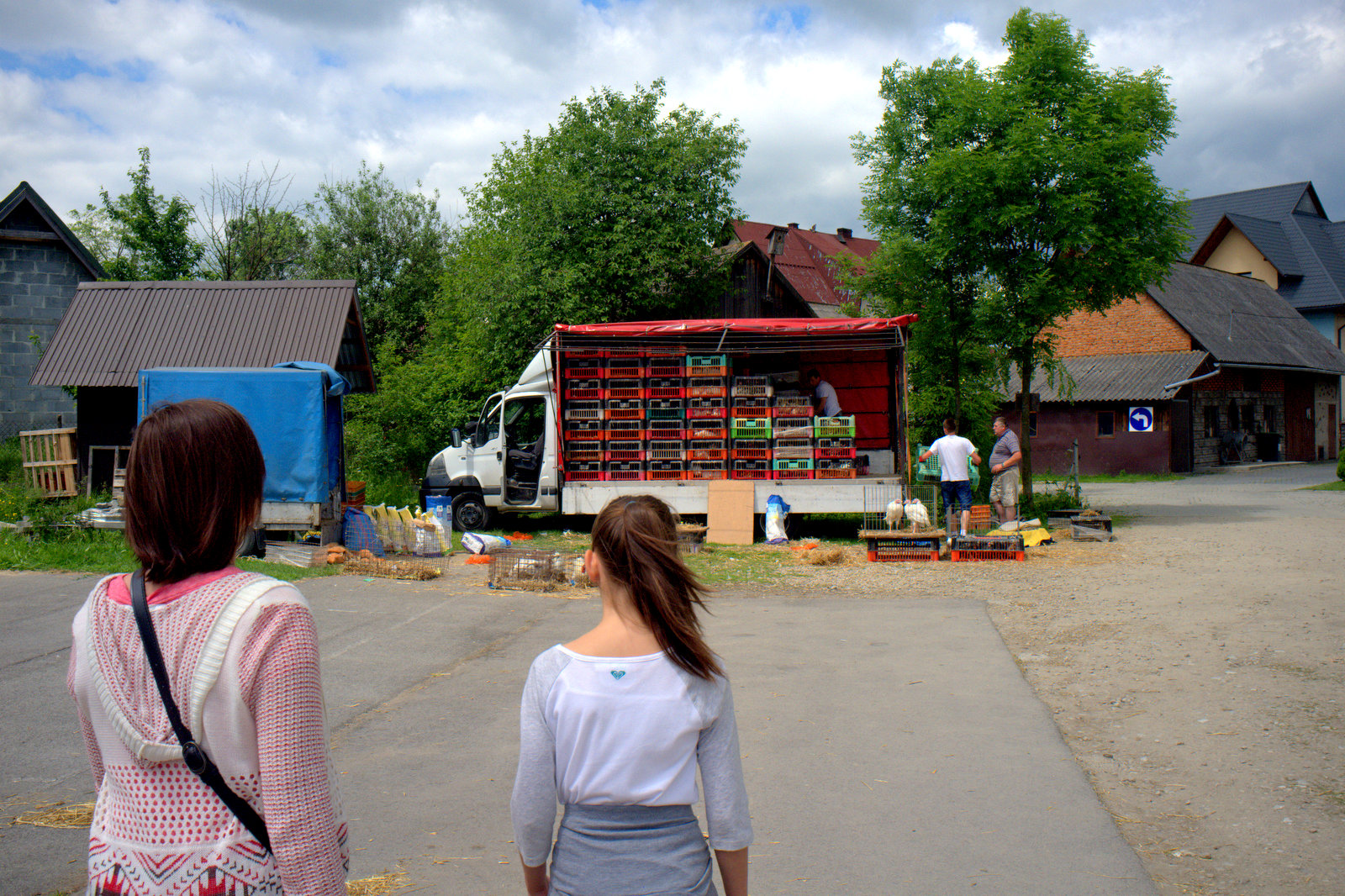
"Fish monger" is about the only use of "monger" I know in English. There must have been others, because the word exists, but it's largely fallen out of common use, but that's too bad: it would really come in handy when describing the flea market that appears every Wednesday in Jablonka. There are sock mongers, cheese mongers, suit mongers, hat mongers, jacket mongers, shoe mongers, farm tool mongers, auto part mongers, garden tool mongers, and just about anything else one could imagine.

Each of those mongers have a script, it seems, when it comes to selling. They begin always with "Prosze bardzo," which would really be translated "I really ask" but in essence "very please," which itself is a rather literal translation. It's not literally "Can I help you?" because that would be "Czym moge pomoc?" Yet it's a common greeting in stores. Next step: make a million suggestions about how this or that product is in fact perfect, is in fact just what the customer has been looking for. If the customer protests, well there's always this over here, which would be perfect.

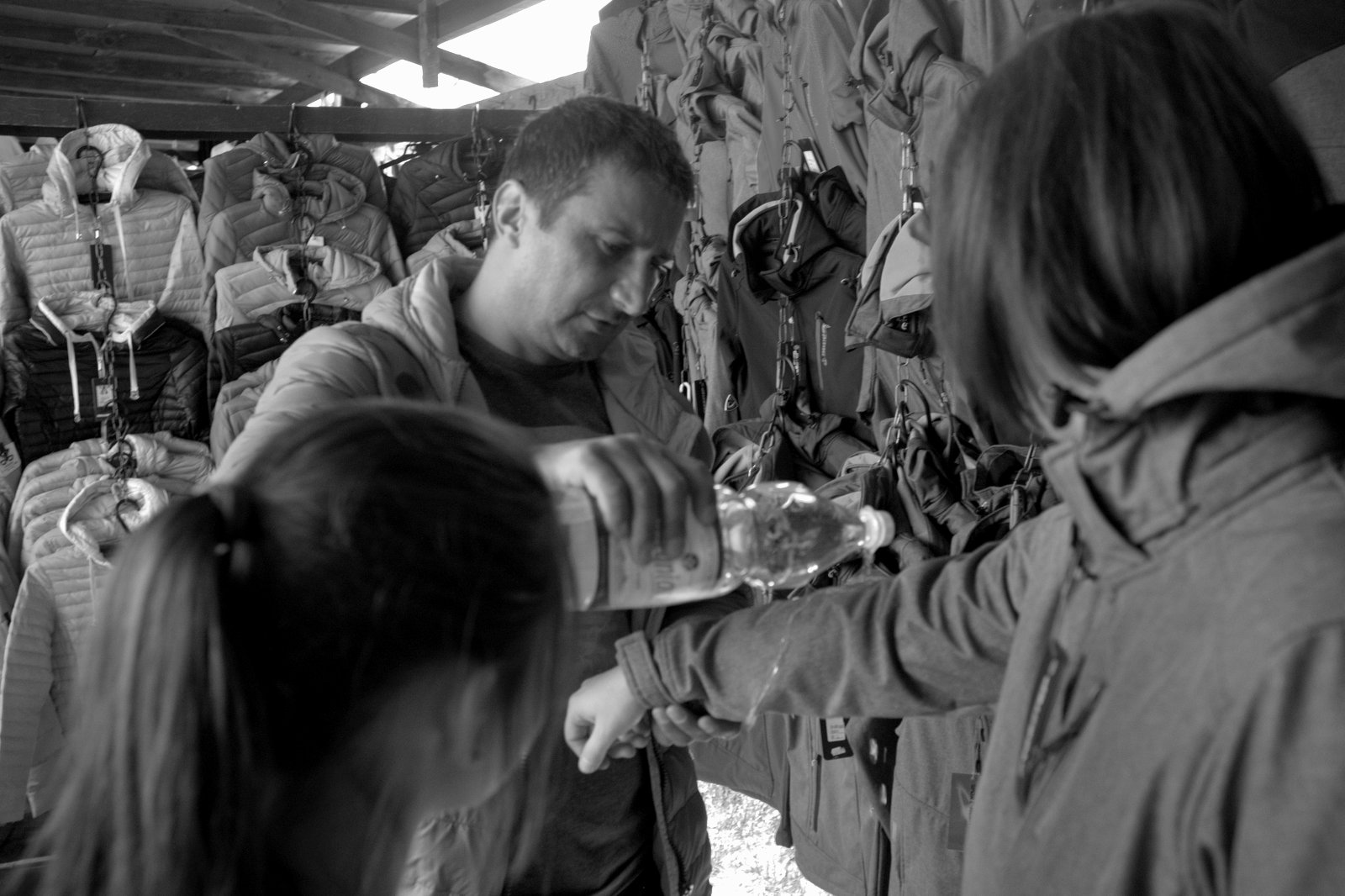
At some point, the monger will try to show how amazing his product is. When I bought a Russian-made Zenit camera in the market in Nowy Targ some twenty years ago, the monger literally drove a nail with the base of the camera to show how tough it was. Today, a jacket monger poured mineral water water on the jacket K was trying on to show how effectively water proof it was.

If the monger finally realizes that there's nothing to do but admit defeat, the responses become almost cold. "Nie ma." Finally, if a customer finds something she likes but wants to look further, the whole exchange ends as it began: "Prosze bardzo."
We came to Poland without jackets with the plan of simply buying them today at the market, so we met that formula several times today. Though I've been to that market (and others in the area) countless times and went at least once a month when I lived here, I only now noticed that linguistic pattern.

Respect

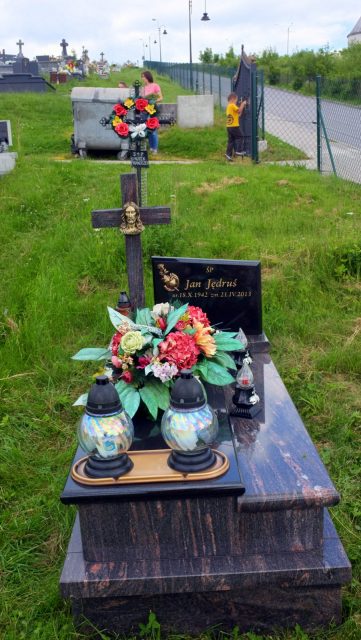
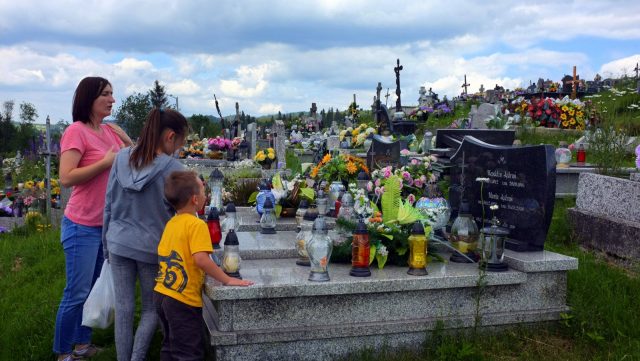
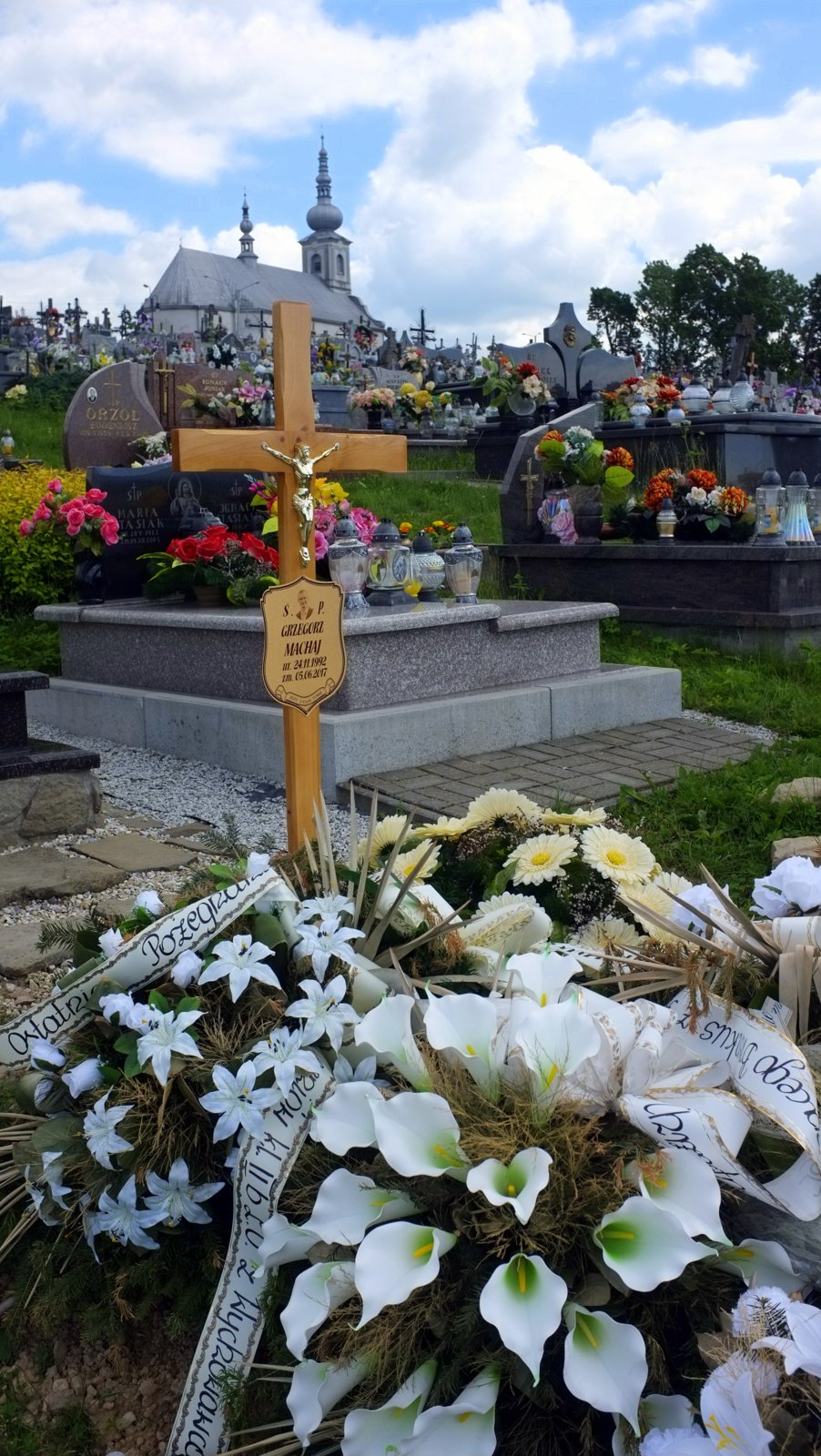
Poles take care of their graves. They wash the grave stone, pull weeds from around the grave, keep candles lit on the grave almost all the time.

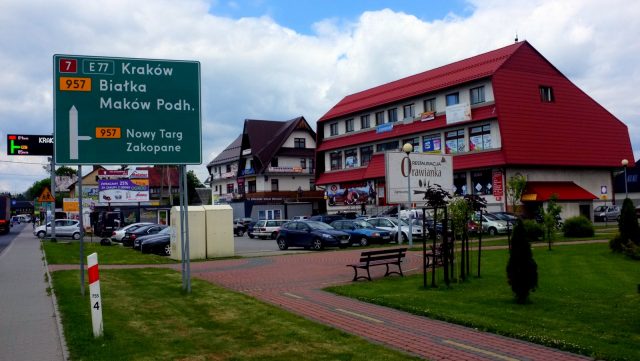
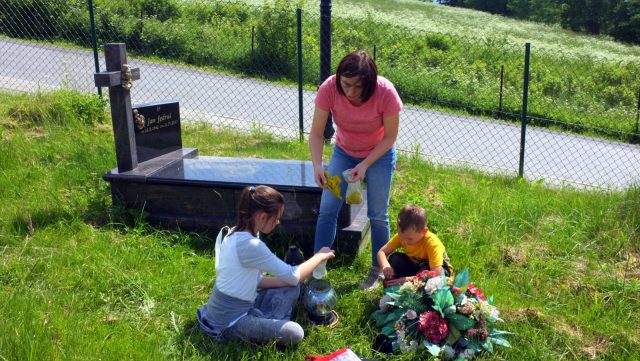
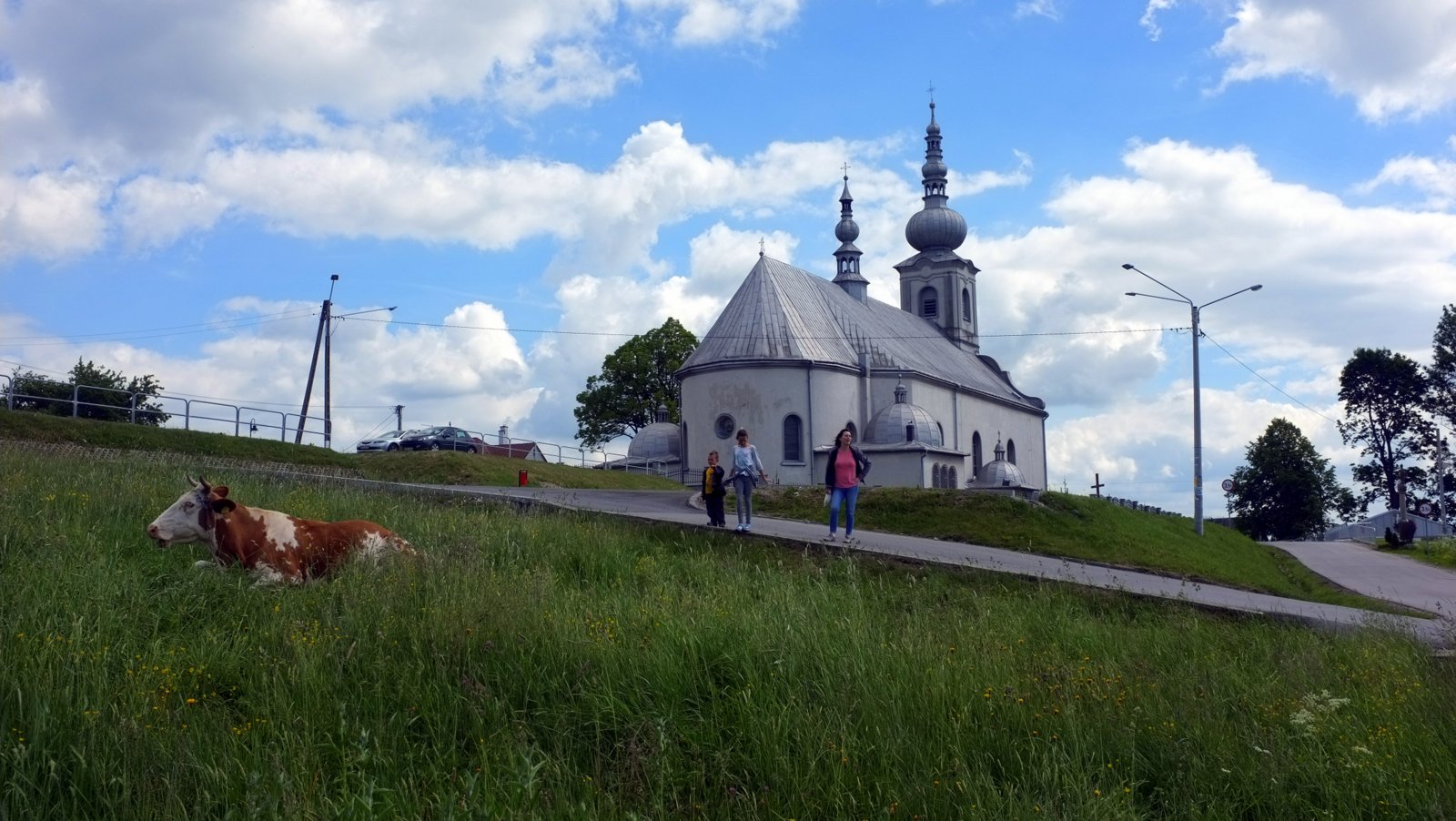
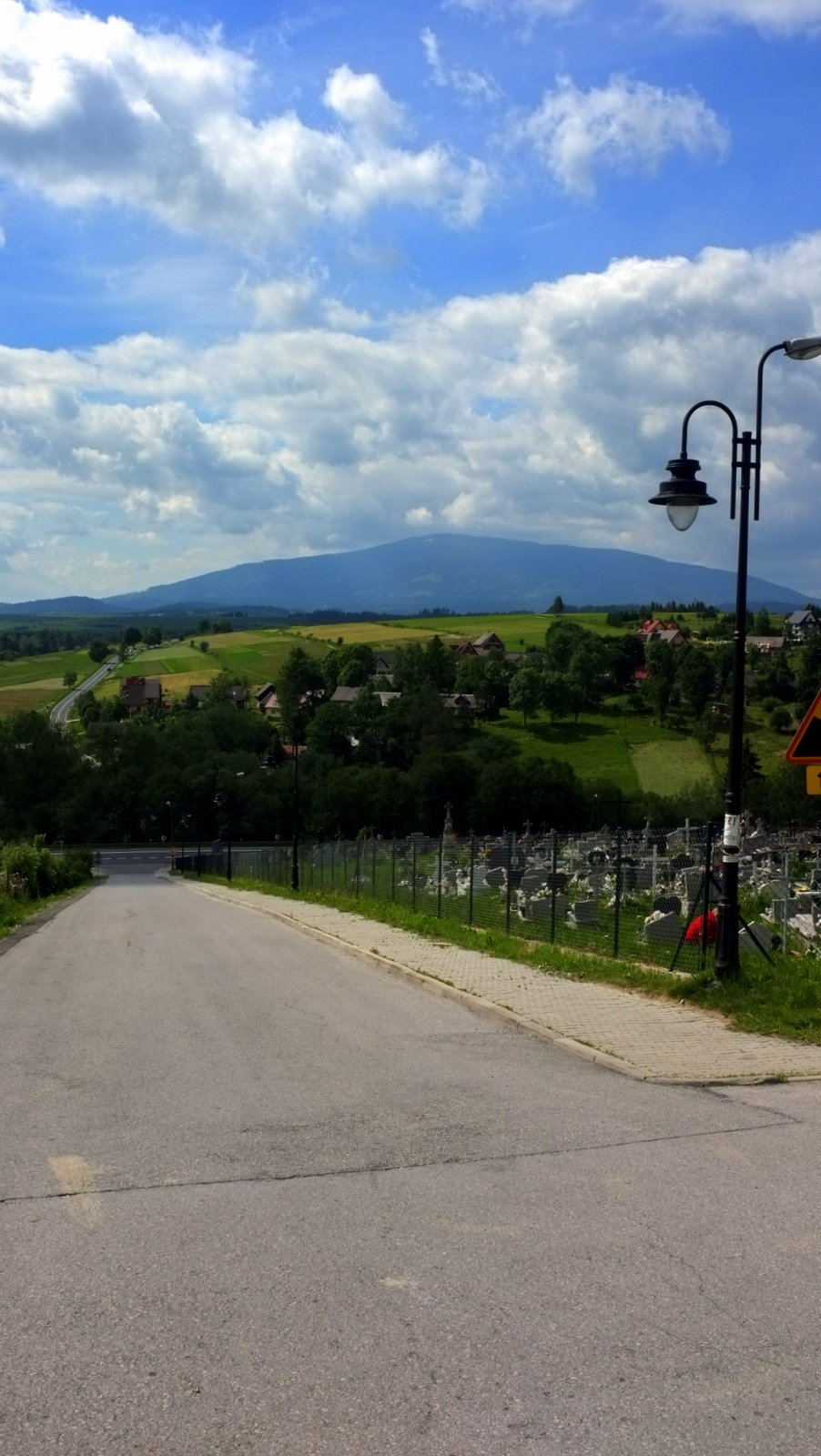
Today, Babcia asked us to take care of Dziadek's grave, sending us out on the one-mile walk to the cemetery with various cleaning clothes and several new candles. The walk revealed a new reality for Jablonka: there is now so much traffic through the main road of the village which leads from Krakow to Slovakia and eventually Budapest that the Boy was virtually yelling to tell us all the wonderful things he was noticing.

But some things don't change. The two main pavilions that hold everything from money changers to butcher shops, from a law office to a toy shop, from a hair salon to a post office, from a surveyor's office to a newsagent -- they still stand as they have since I first arrived in 1996.

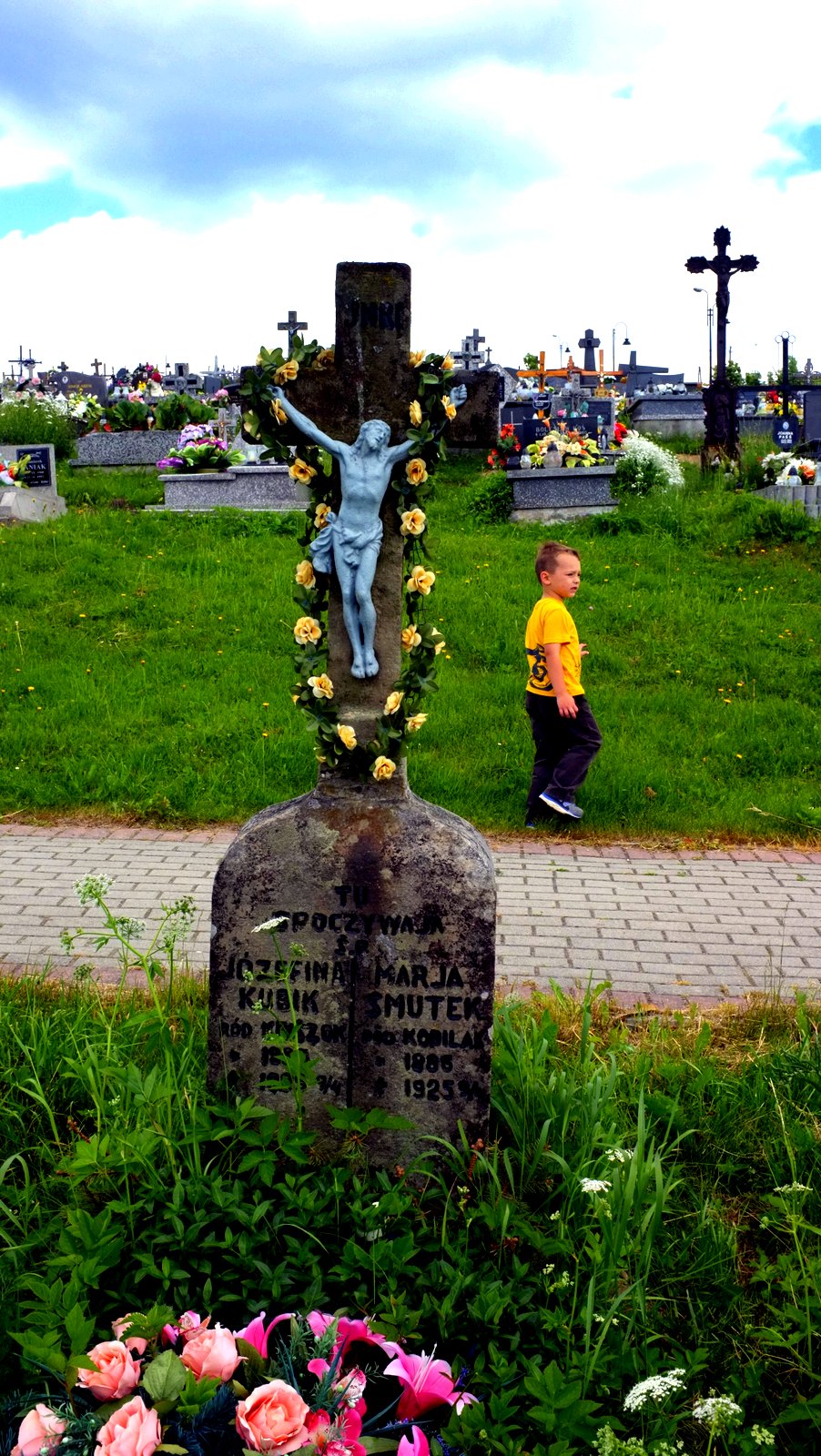
We cleaned the grave, lit new candles, pulled some weeds. We prayed an Our Father and threw away the old candles before moving to the other family graves.

"This is your great-grandmother and great-grandfather," K explained, in Polish.

"What does that mean?" asked E.

K explained in Polish, then added a few key words in English. It's a fairly typical way she talks to the Boy. Yet he's already begun chatting in Polish, so by the time we leave in six weeks, it should be a whole different story.

Old and New

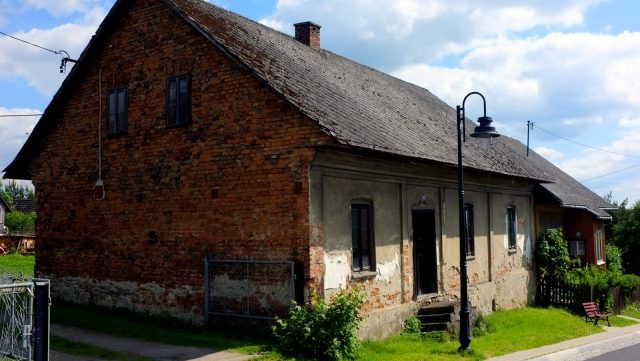
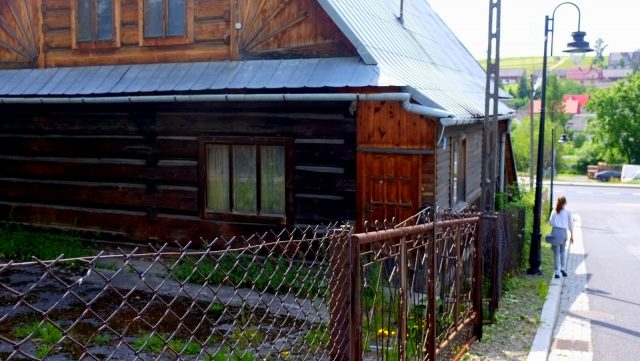
Within a village as old as Jablonka, one can find the newest of the new and houses that have stood for well over a century, and just about everything in between. This house stands on the way from the church and was built in the early 1920s. The plaster has fallen off in several places, yet it's still occupied. It's positively romantic.

Just down the street is an older house, now unoccupied. The door was open and we peeked in. L couldn't understand why no one lived there. I can't either.

Shops

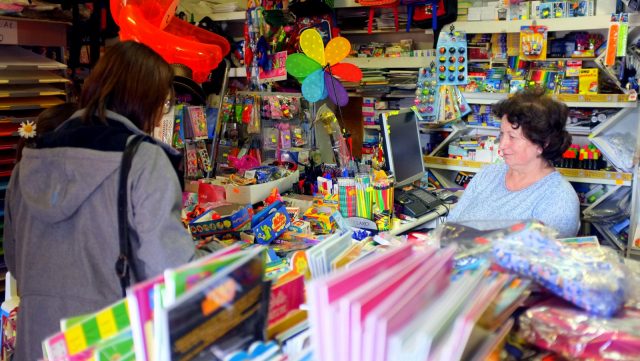
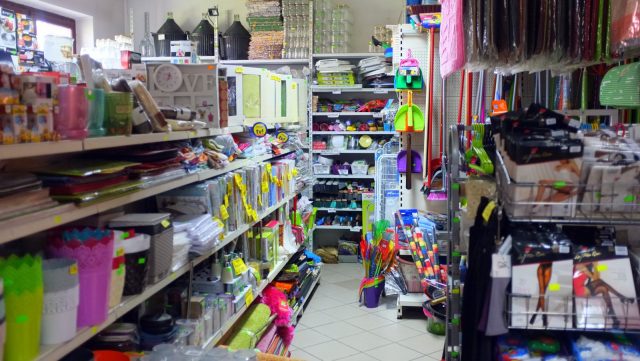
Traditional Polish shops have one thing in common: they are crammed full of goods. It's as if every square meter is the only square meter of the shop.

Newer stores are not like that, but shops in the pavilion (see above) are all packed tight, like herring in a jar to translate from Polish.

Evening Walk

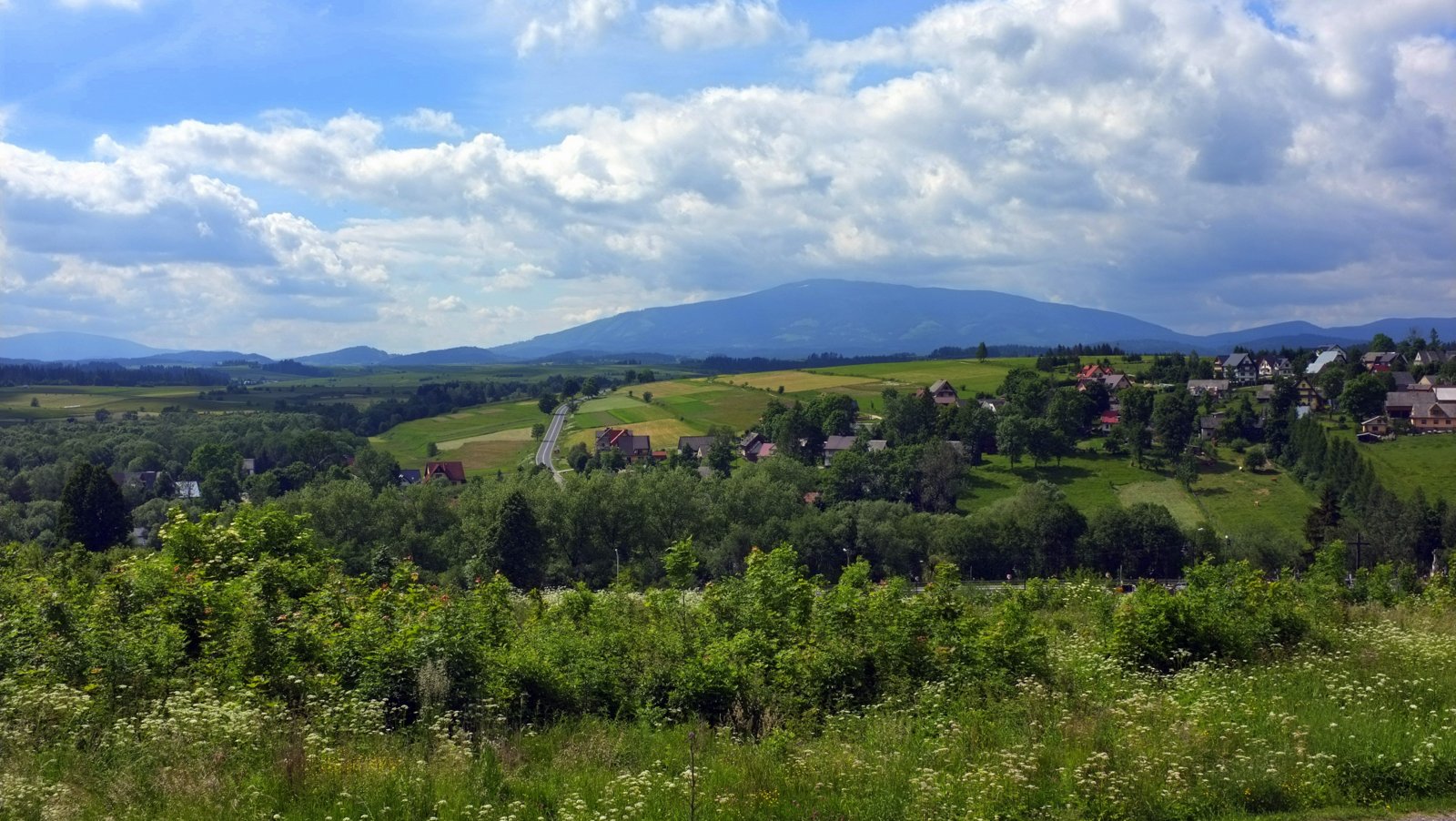
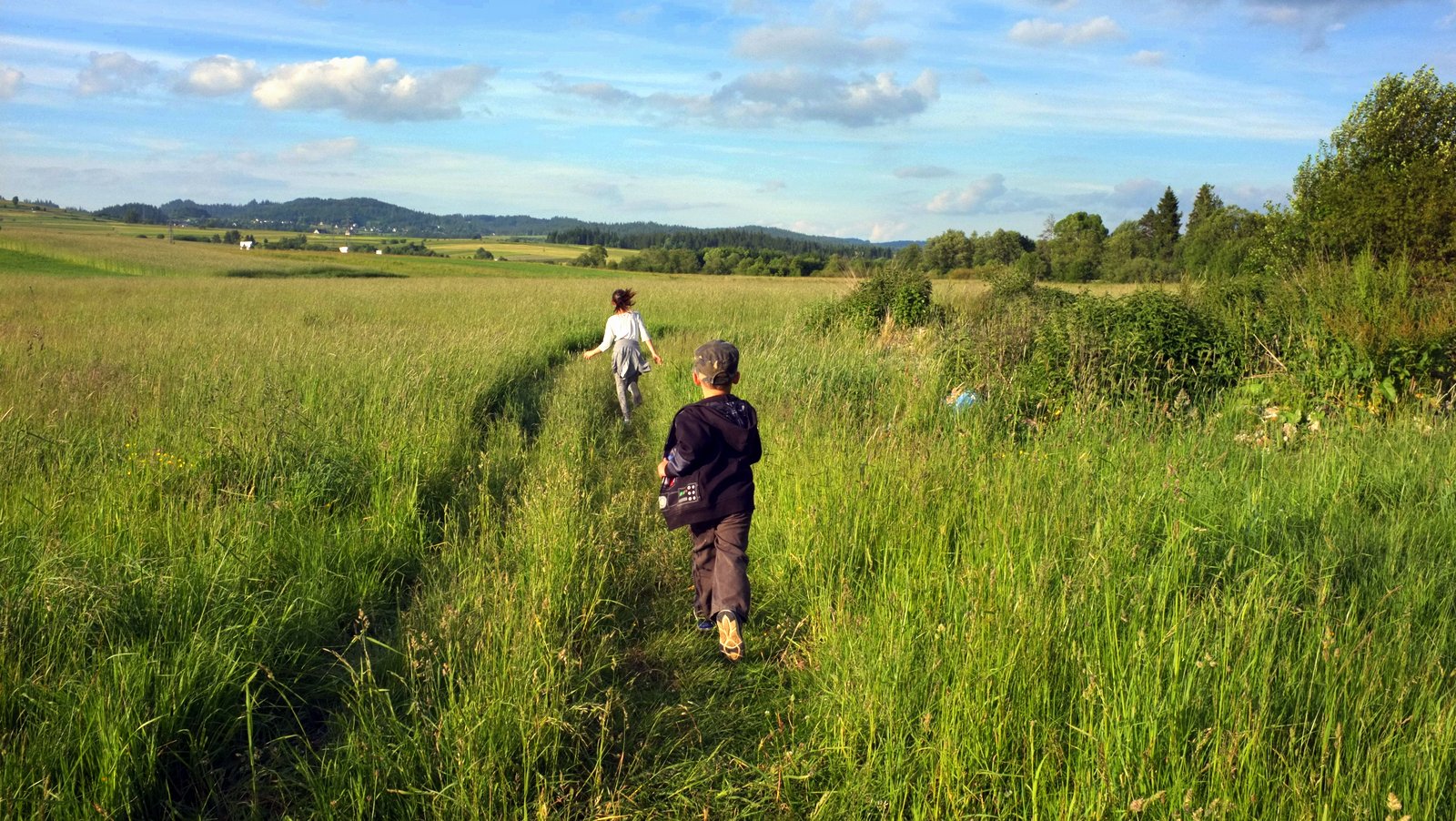
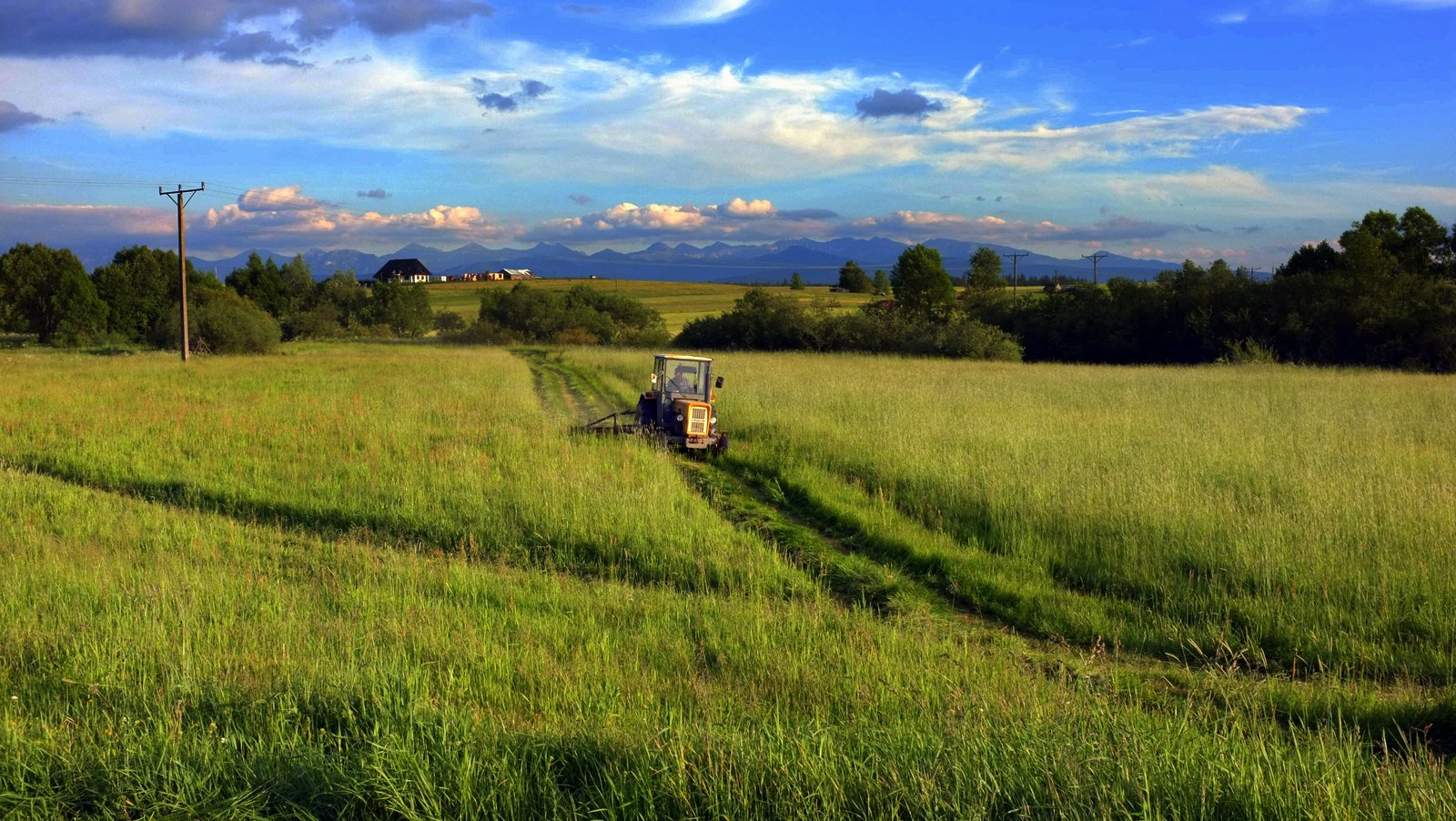
When it's this gorgeous outside, what else is there to do but take a walk?

Loans

Homes used to be built and paid for at the same time. It explains why there were so many half-finished yet occupied houses in the area when I first moved here. Loans were hard to come by. Now I see television advertisements for loans to pay for vacation. Not sure that's necessarily a good change.

The Market

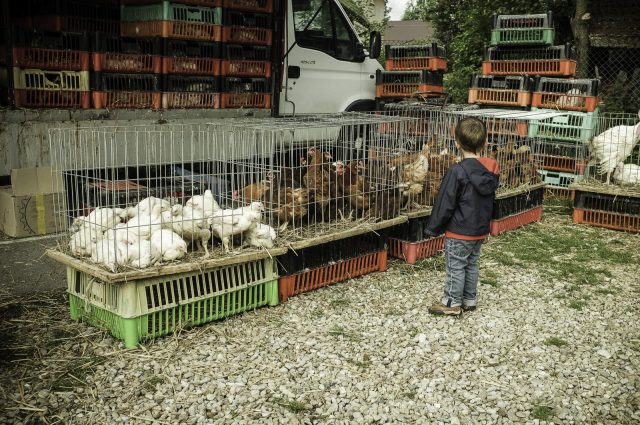
One of the things the Boy is most excited about our coming summer in Poland is going to the market on Wednesday.

The Girl, too.

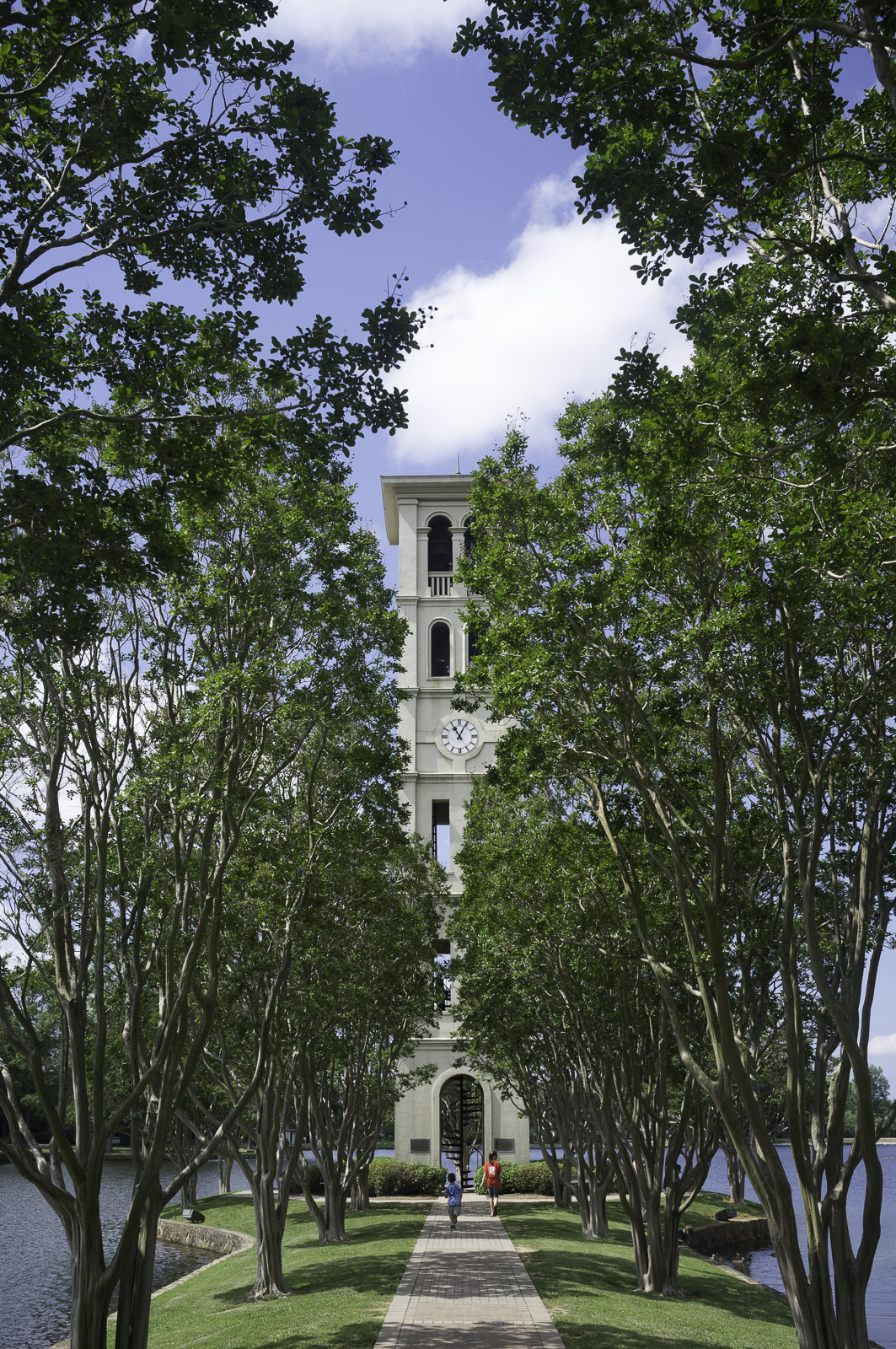
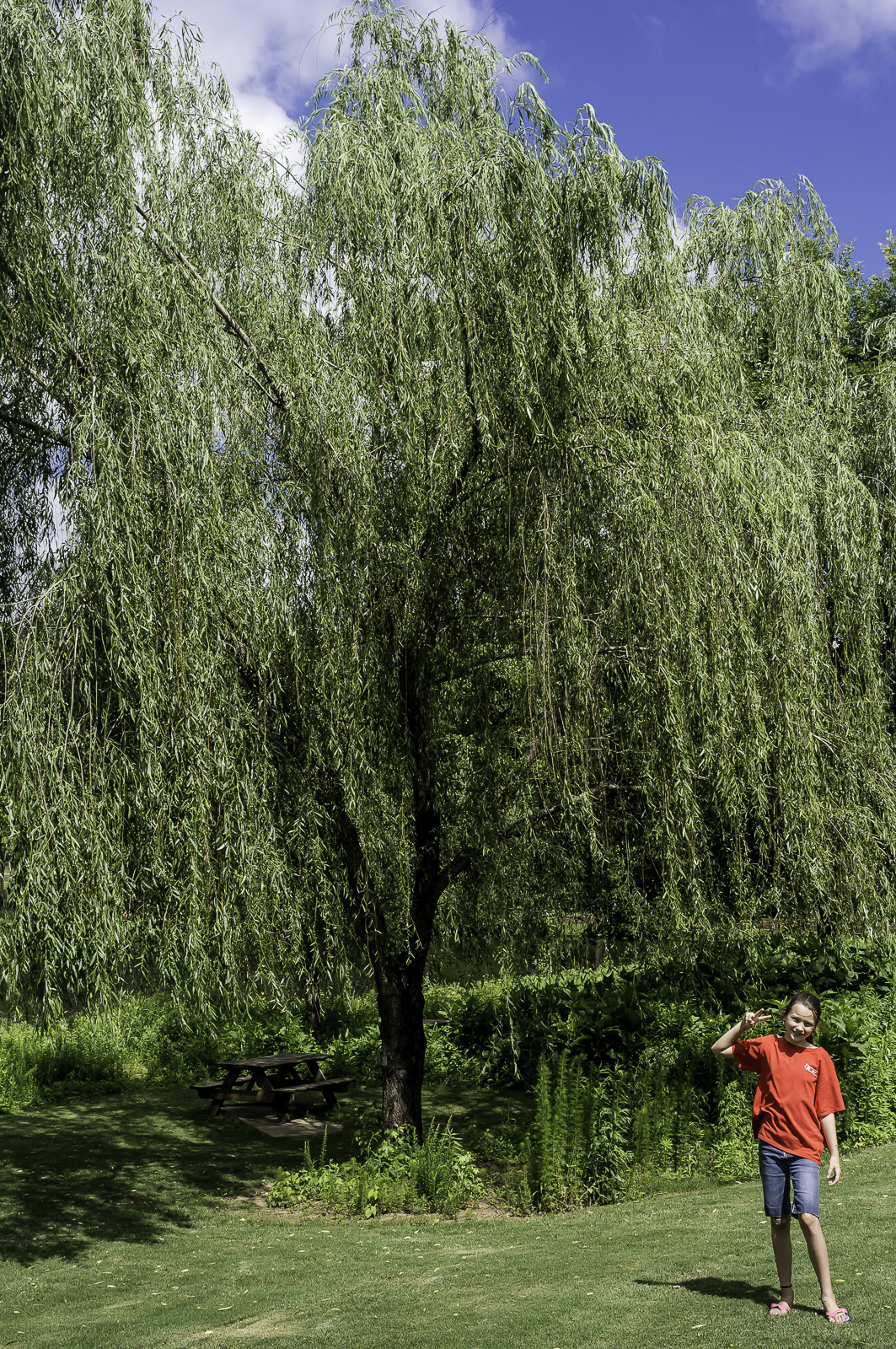
Late Morning at Furman

Blueberries

Evening Soccer

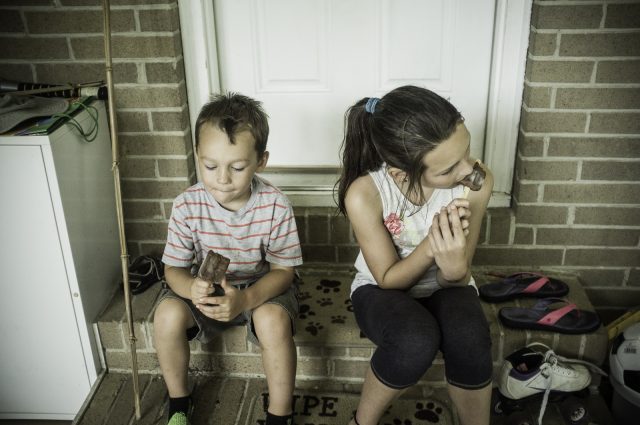
Dessert

Lucanus elaphus

I found it floating in a bucket out back that had a couple of inches of water from the last storm. It was still squirming, trying to escape, doomed to drown. I pulled it out and took it to the Boy to show him. He put on gloves and was eager to hold it.

Lucanus elaphus

Fear of such animals I supposed is learned, or more importantly taught. Tell a kid constantly that such creatures are out to get him, and he’ll likely believe it. Tell a girl that the only good snake is a dead snake, and she’s likely to hold that opinion for decades. But kids are naturally curious — it’s what gets the hurt. With the Boy and the Girl, we’ve tried to strike a happy medium: such insects might, like roaches, carry certain bacteria on their bodies that are not particularly helpful, but in and of themselves, they’re harmless. Certain snakes are deadly, so we should never approach a snake and try to make a plaything out of it, but an enormous black snake slithering through the grass (as happened here five years ago) does much more good than harm.

Atypical Saturday (Lent 2012: Day 32)

With people, there’s the whole additional possibility of deceptiveness. If only it were so simple with humans.

Huntington Beach 2017

We put it off several times: once, because someone was sick; a second time, because the timing was no longer convenient. Did we put it off a third time? I can't remember. But this weekend has been a long time in the making. We were originally going to spend last Labor Day weekend at Huntington Beach, but we ended up spending Memorial Day -- that seems appropriate, timing-wise, as they two three-day weekends bookend the school year.

We first went about six years ago.

We fell in love immediately. We went back again at some point, but none of us can remember when exactly. It was pre-E, for sure, but that's about all we can remember. Perhaps the link above is to our second visit? it all gets smeared in the memory. I reread the entry and find this:

Her first beach experience, some two years ago, was moderately traumatic for her. The sound of the waves terrified her, and the waves were forever chasing her form the water’s edge when she finally got the nerve to approach.

This year was different.

That first time at the ocean was at Edisto, so this must be have been our first time at Huntington. Still, it's only a year before the Boy's birth: when did we go again, pre-E? Again, smeared it the memory.

So I want to set about to to write down all the details of this experience I can remember, knowing that if I don't, I won't remember it. But I set out doing so with the understanding that I will only pick and choose, letting the pictures do the rest.

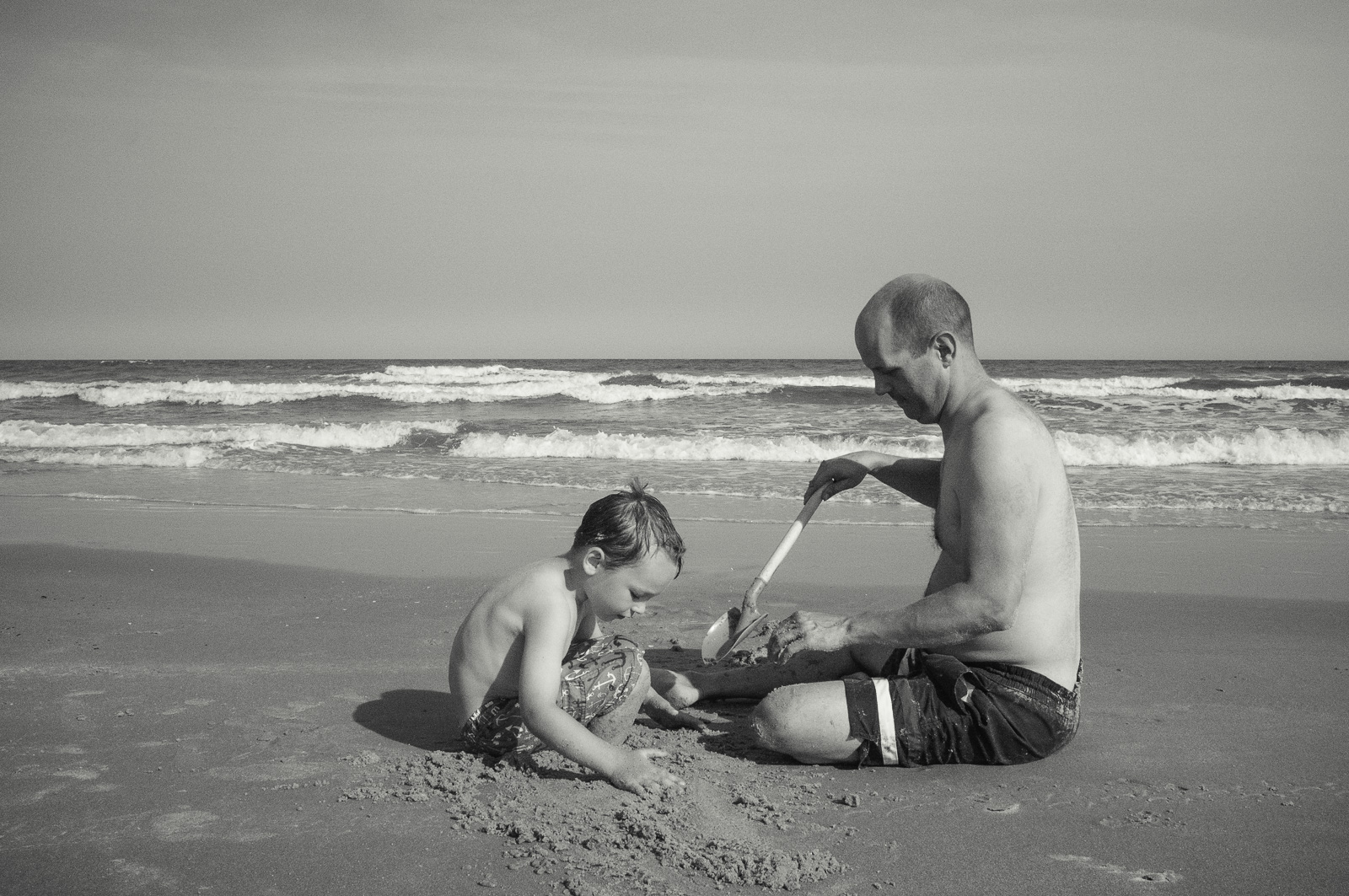
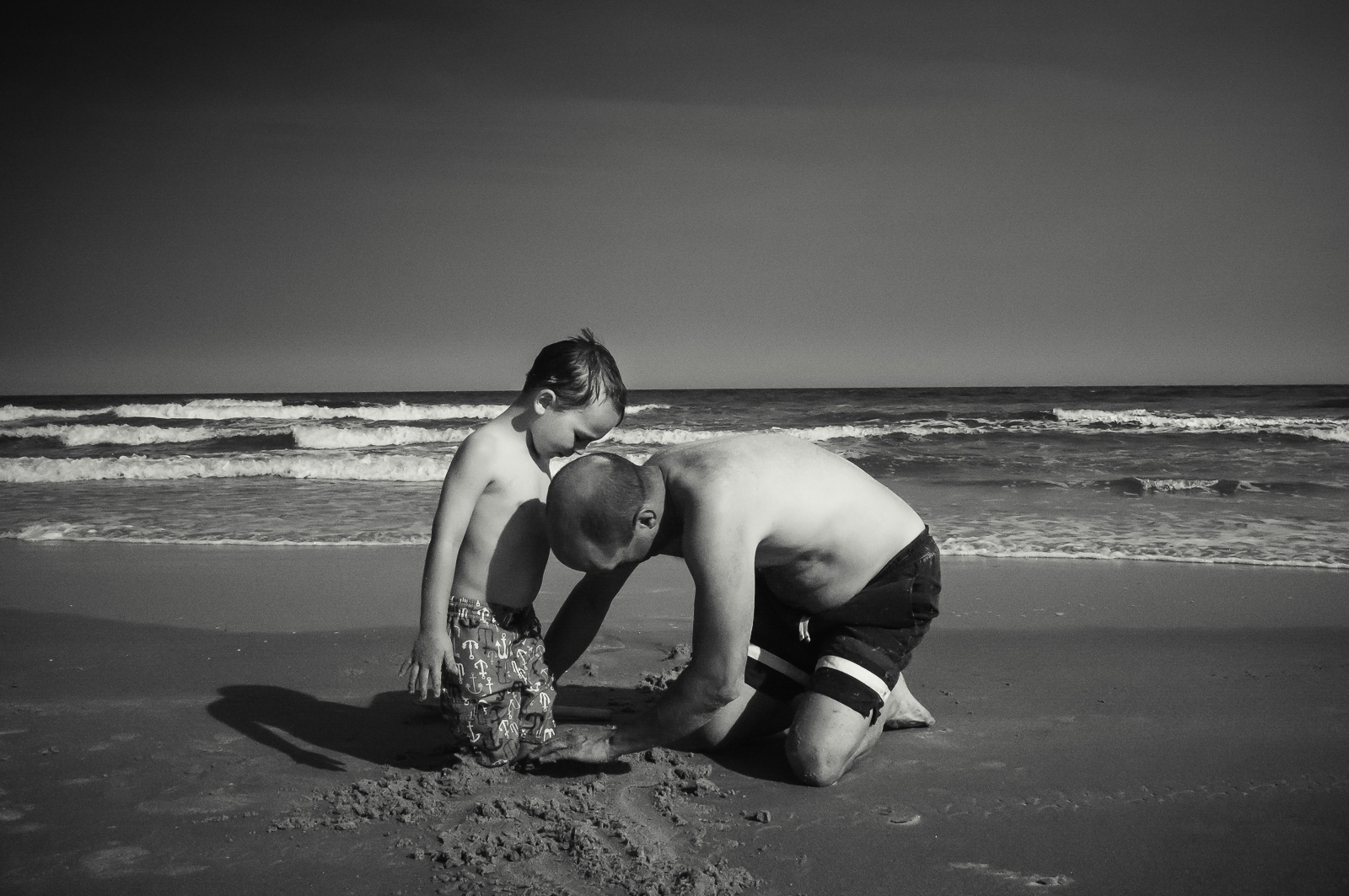
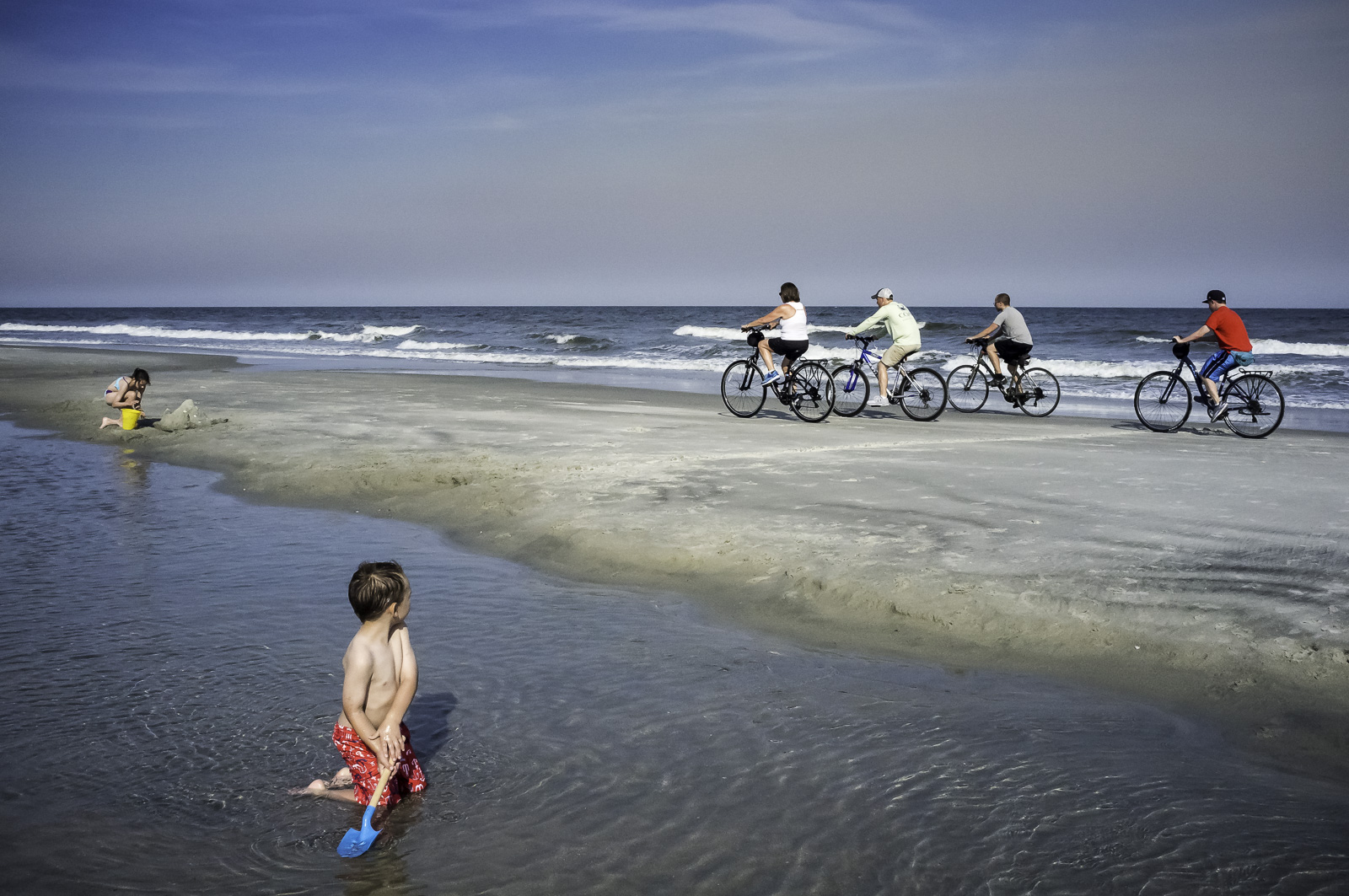
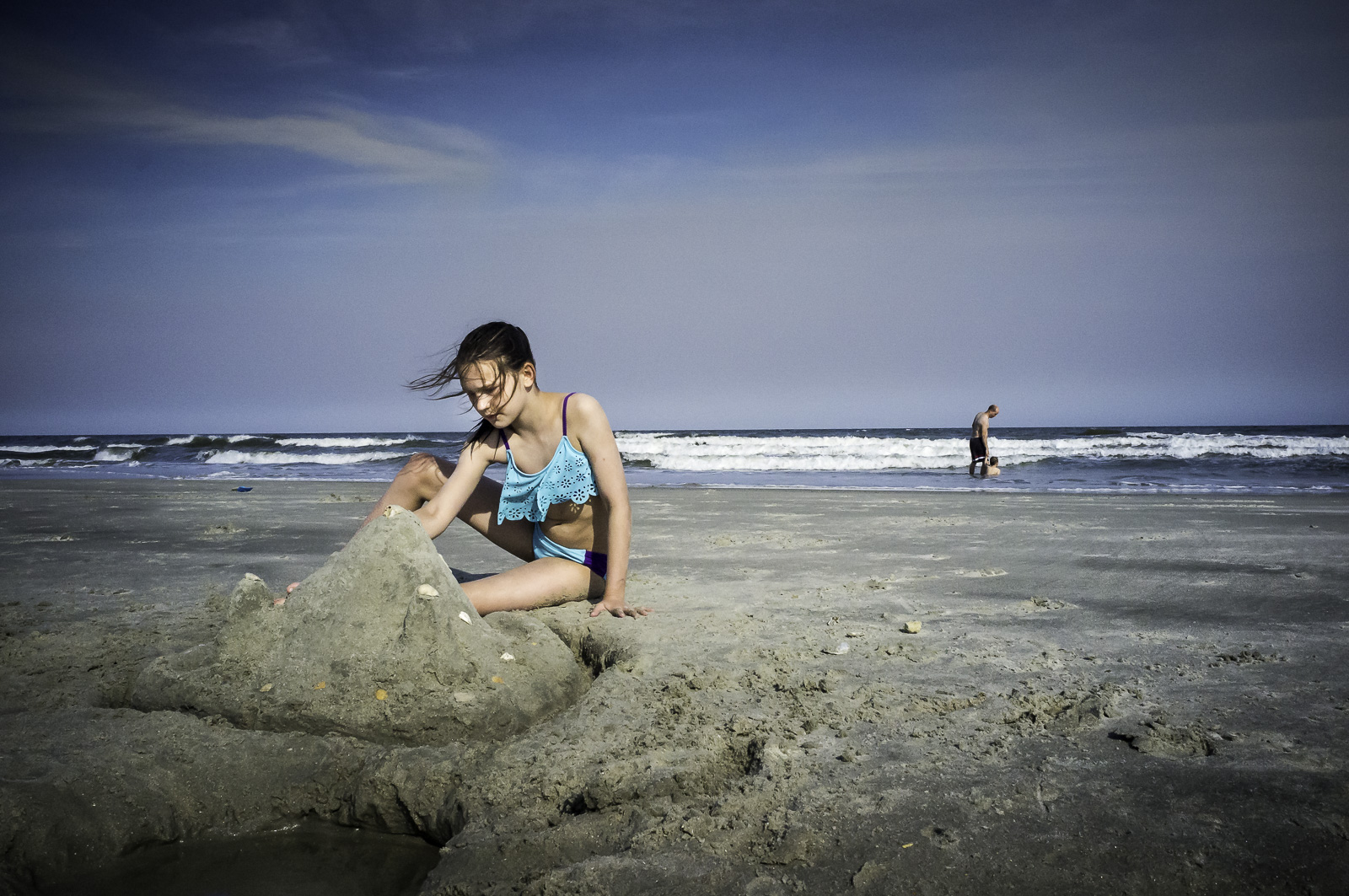
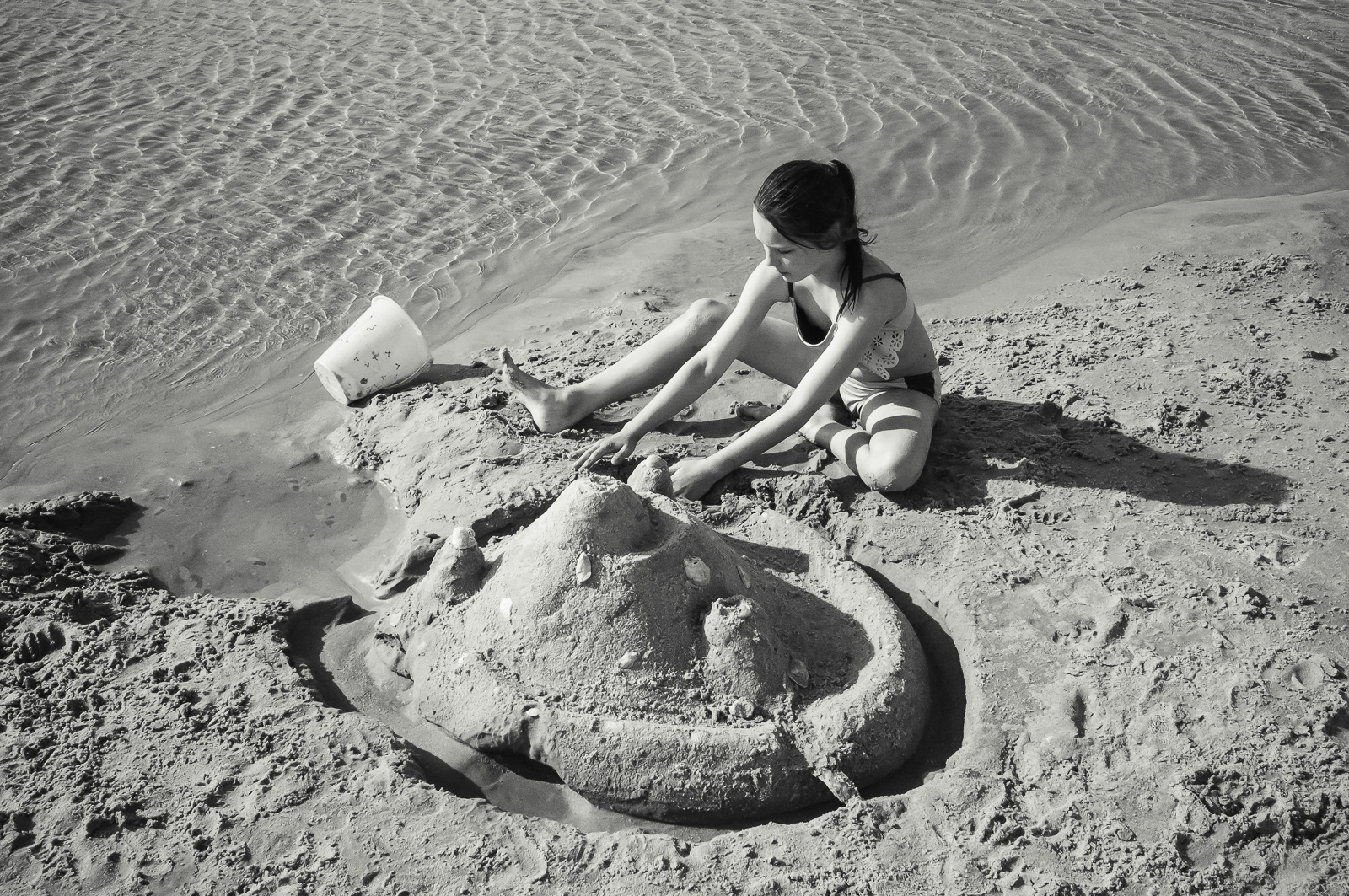
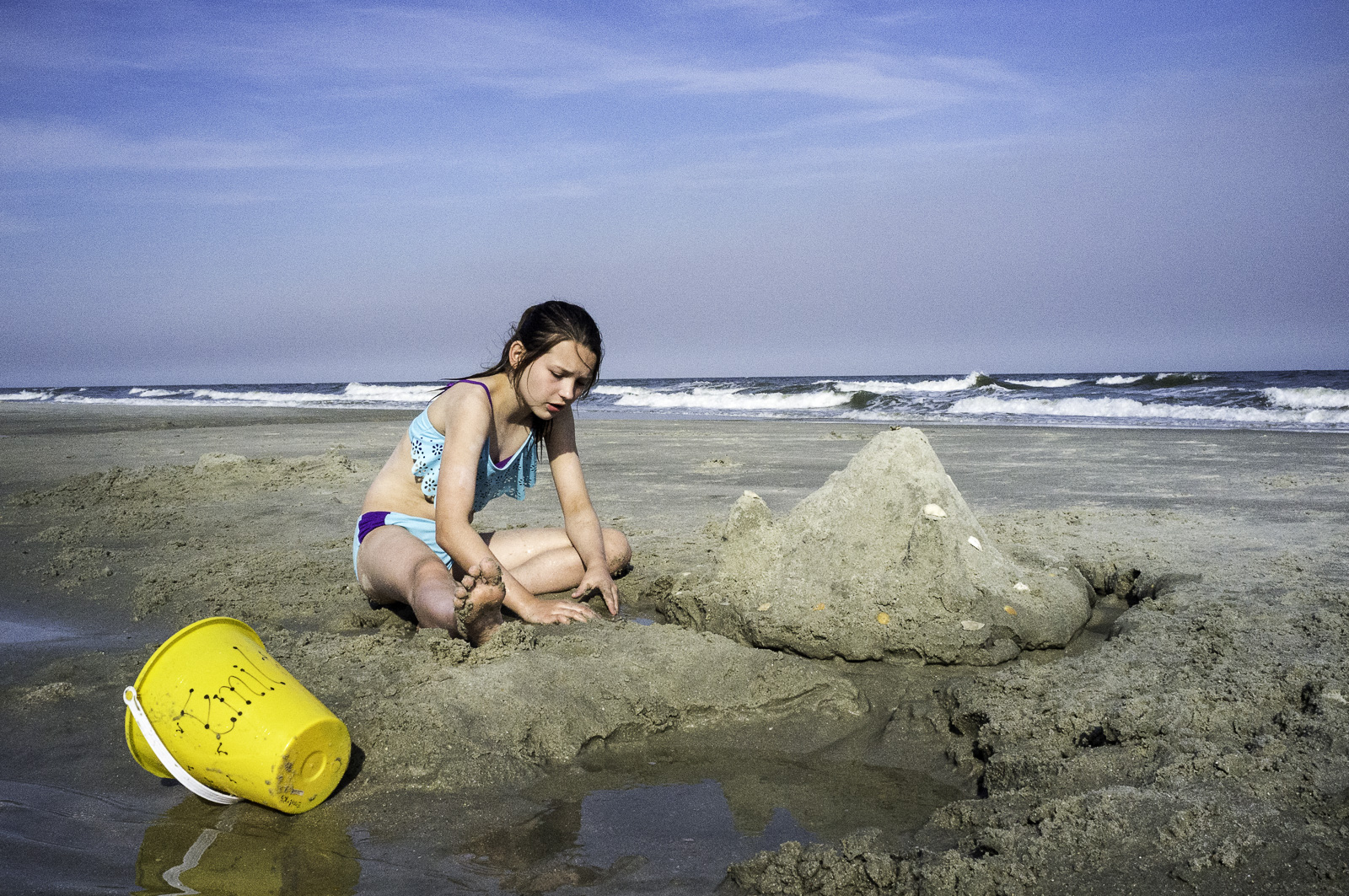
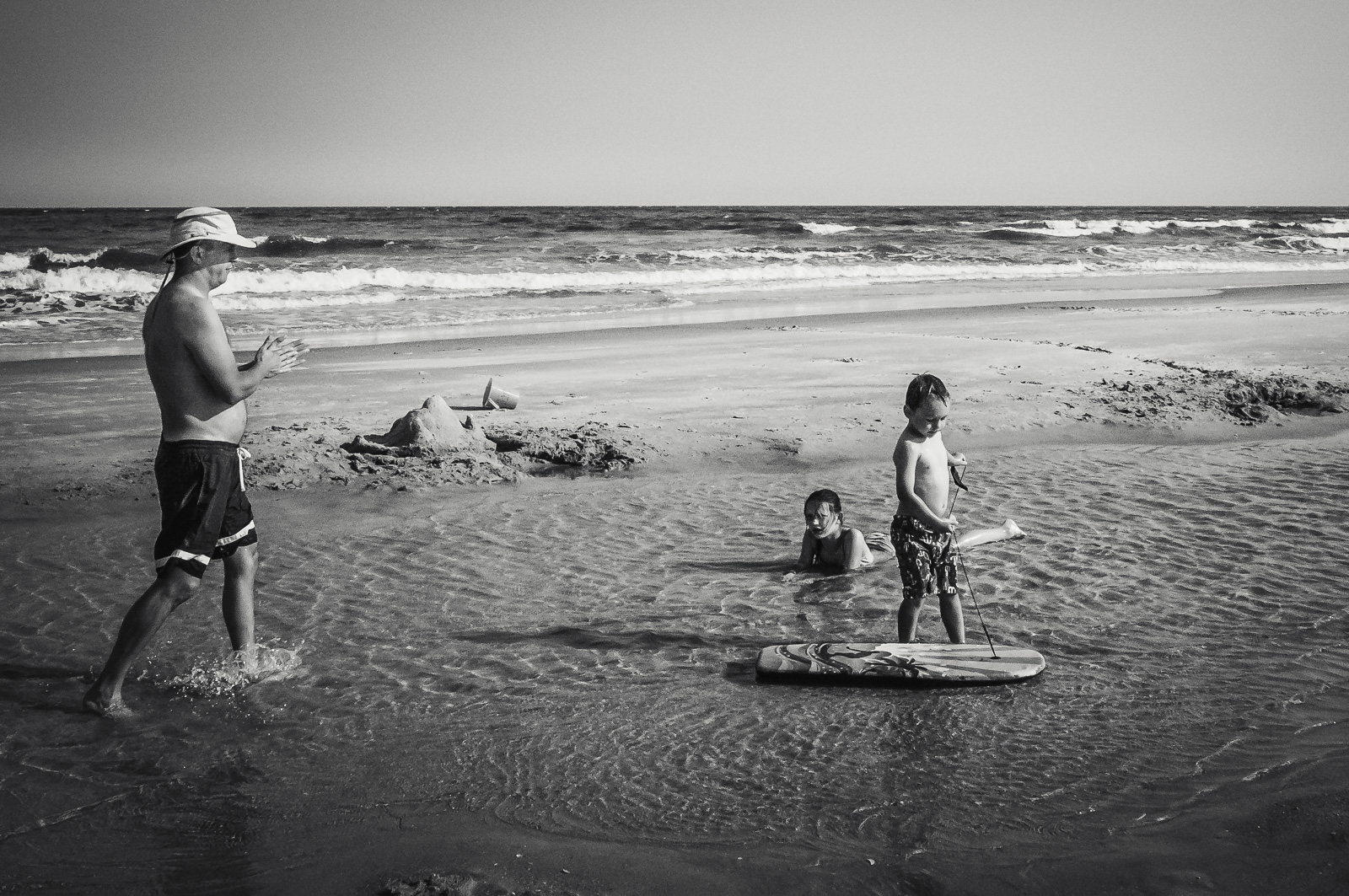
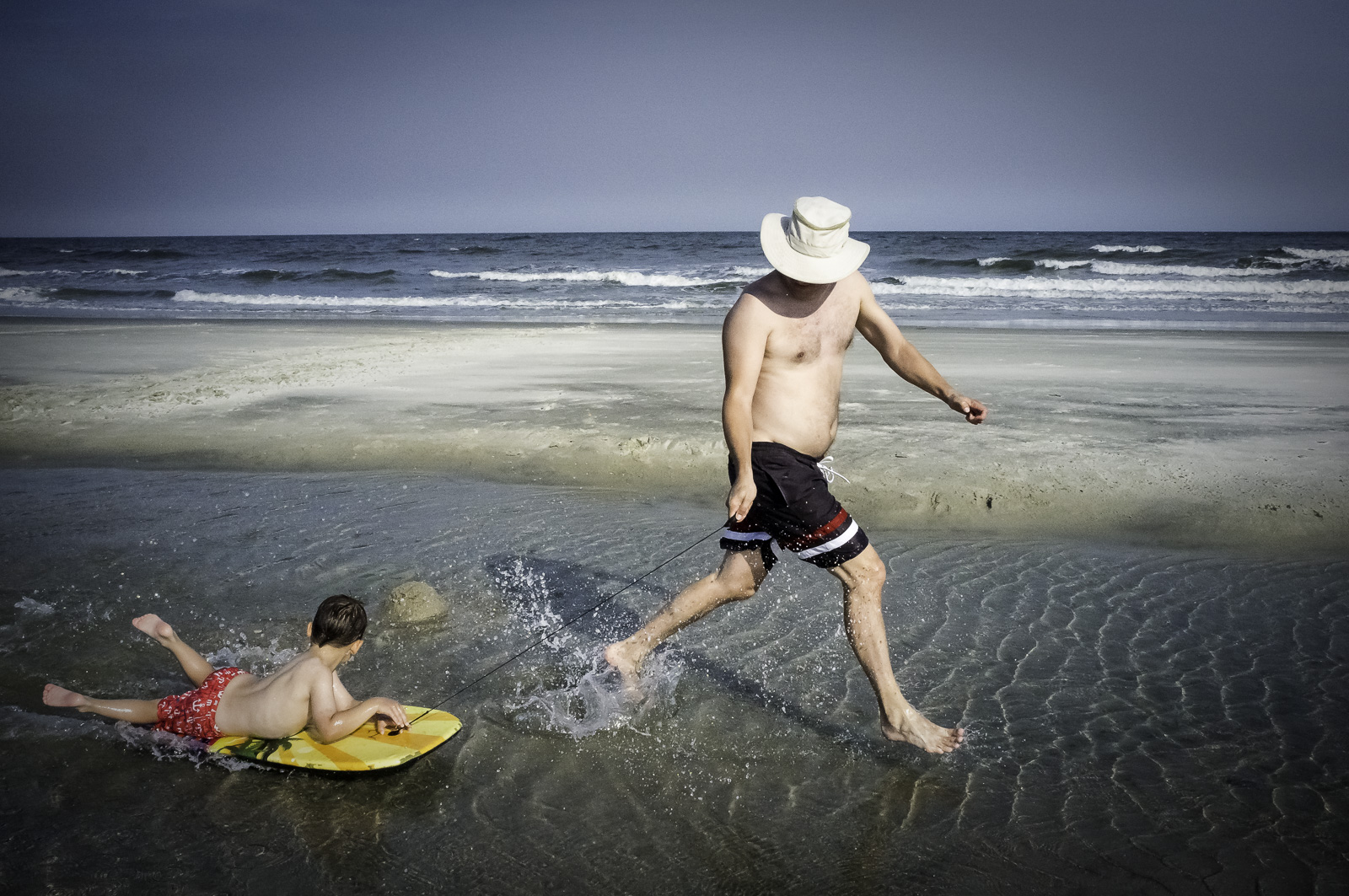
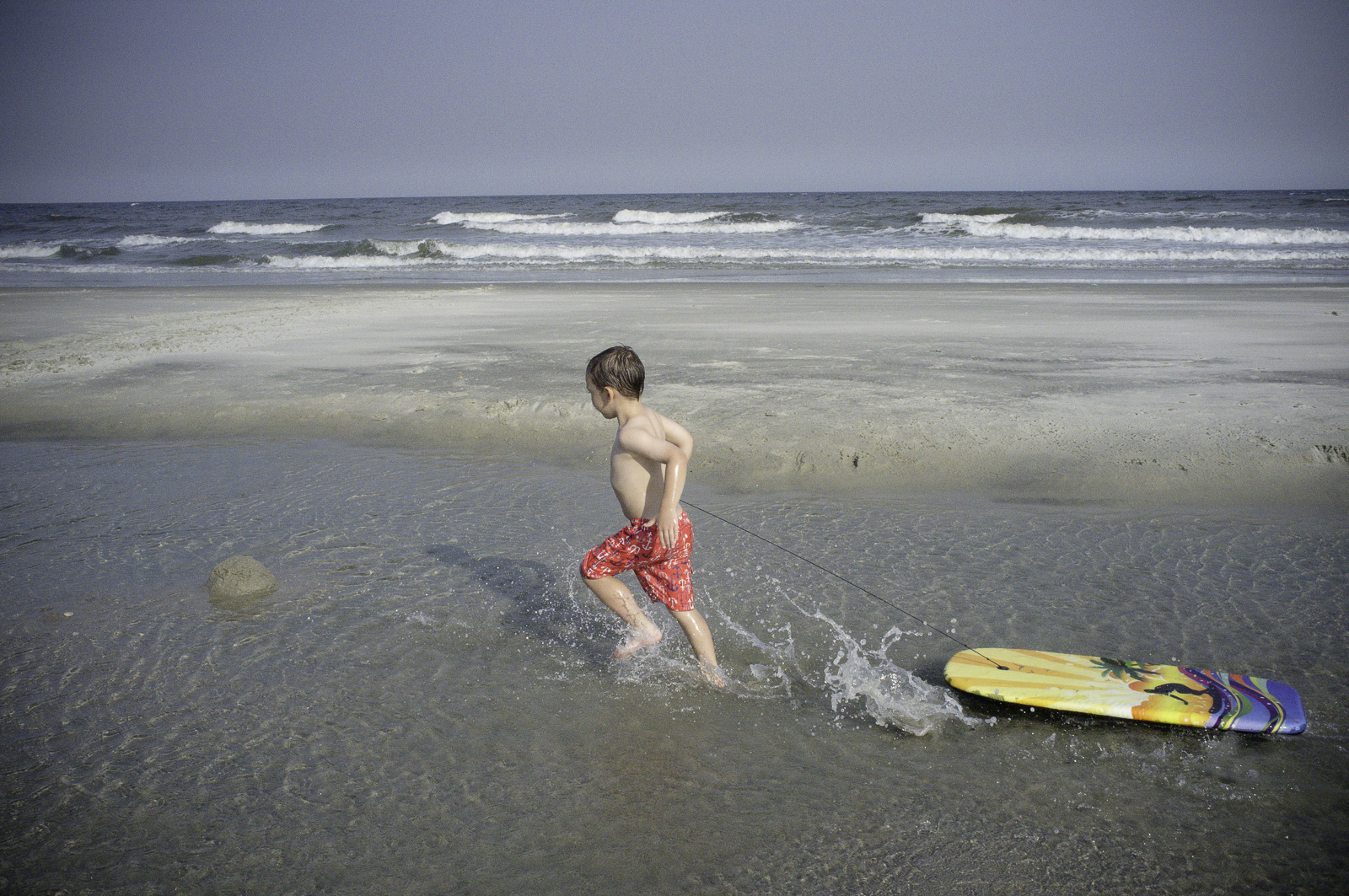
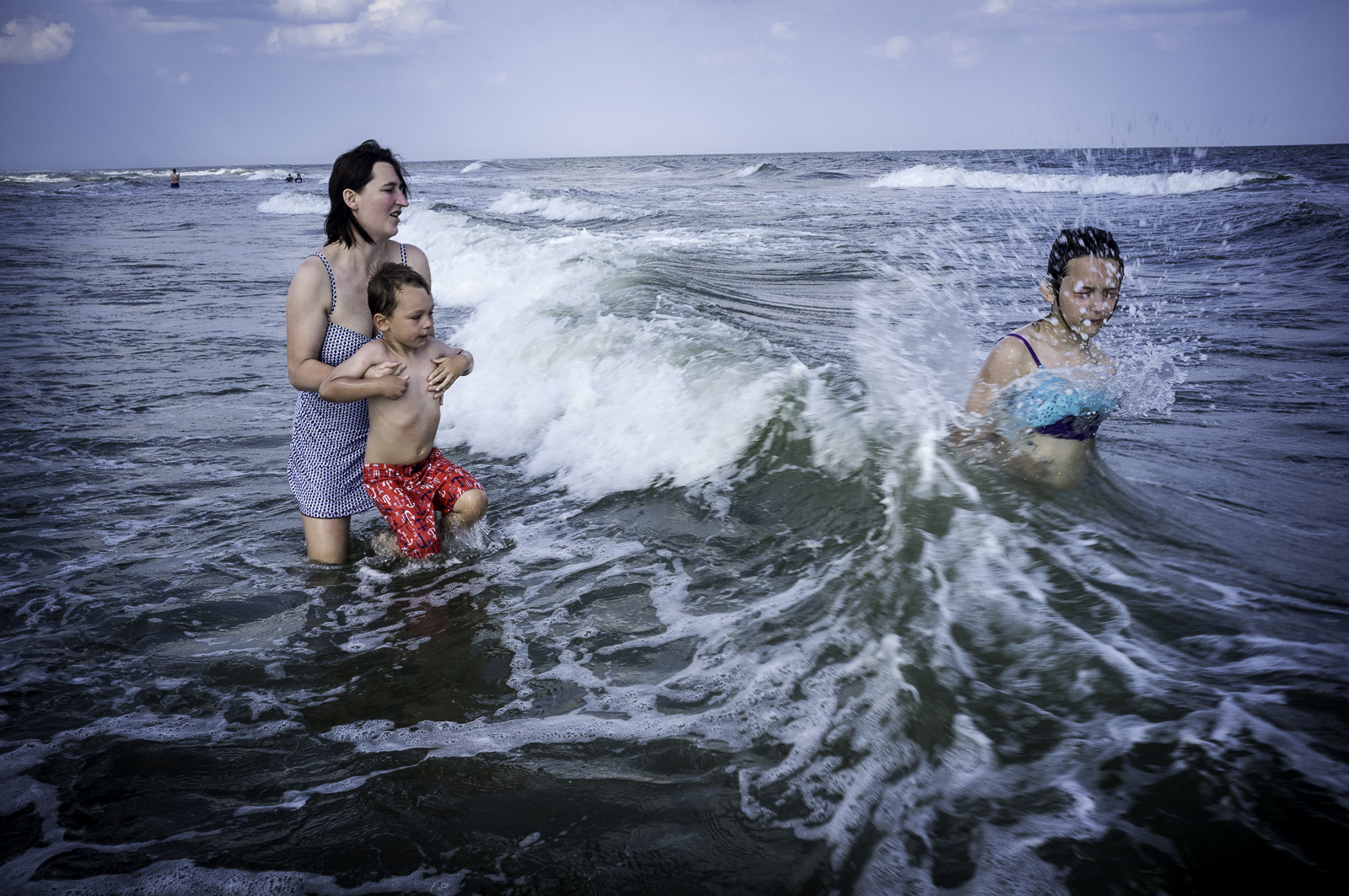
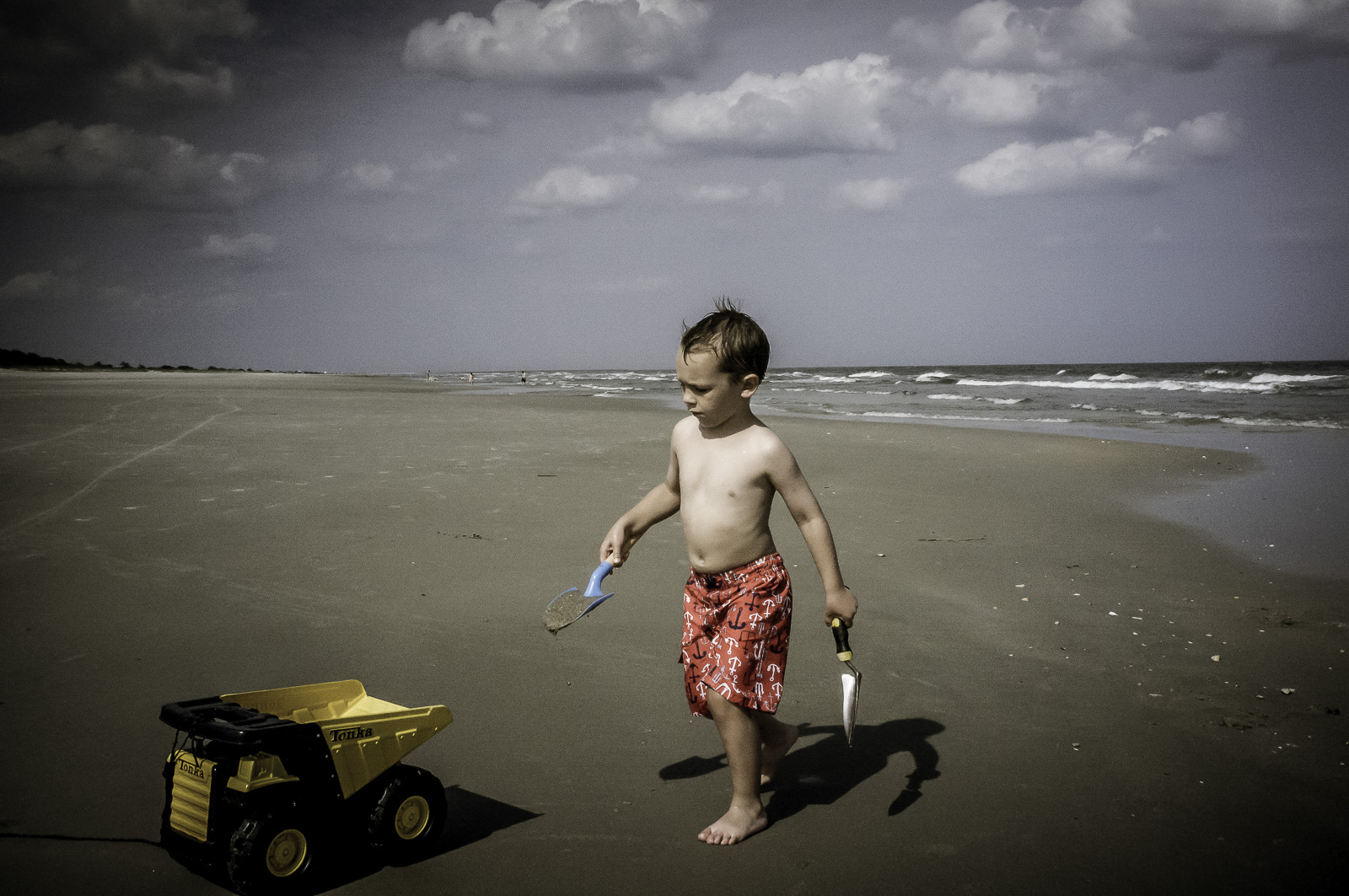
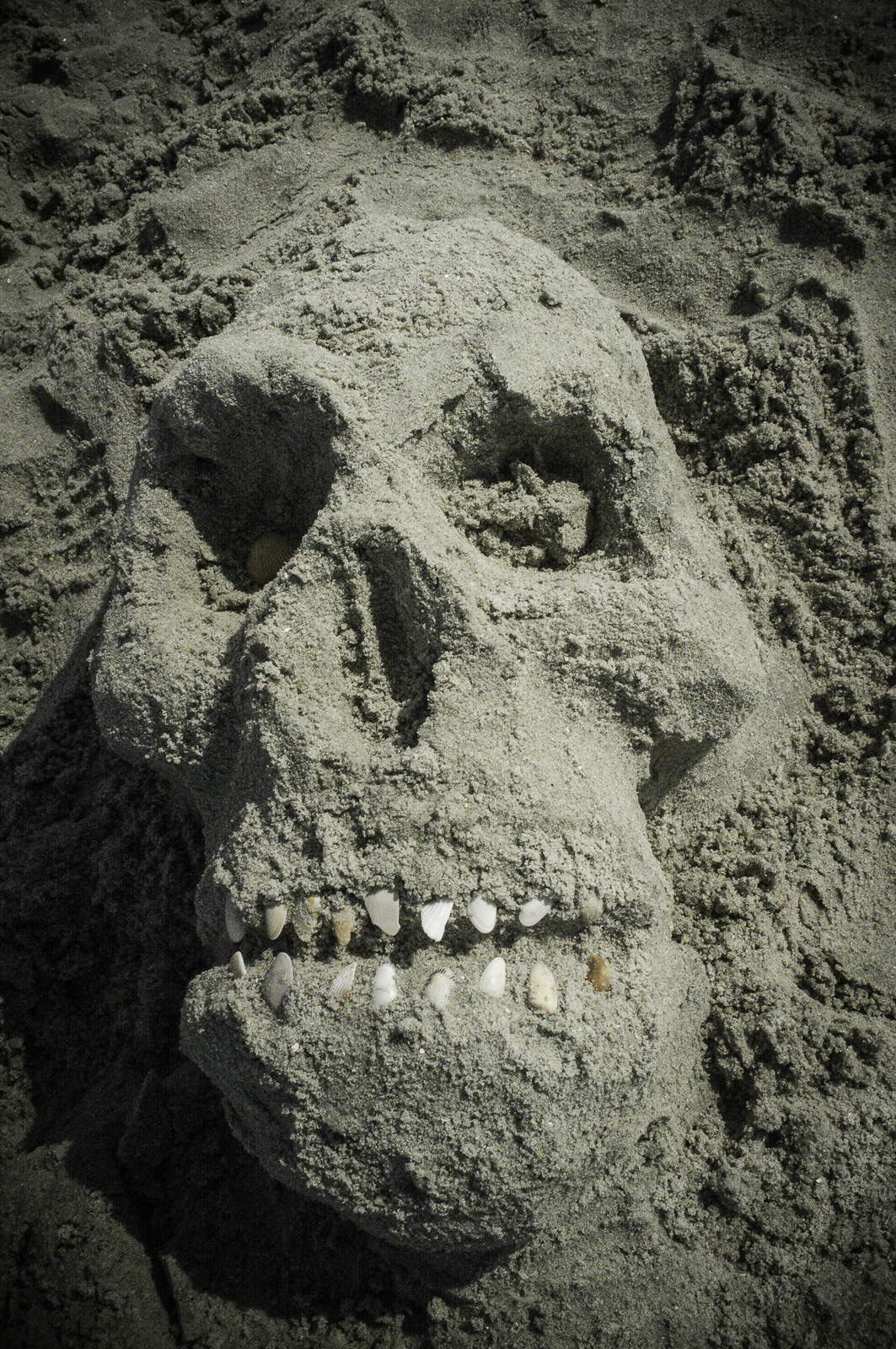
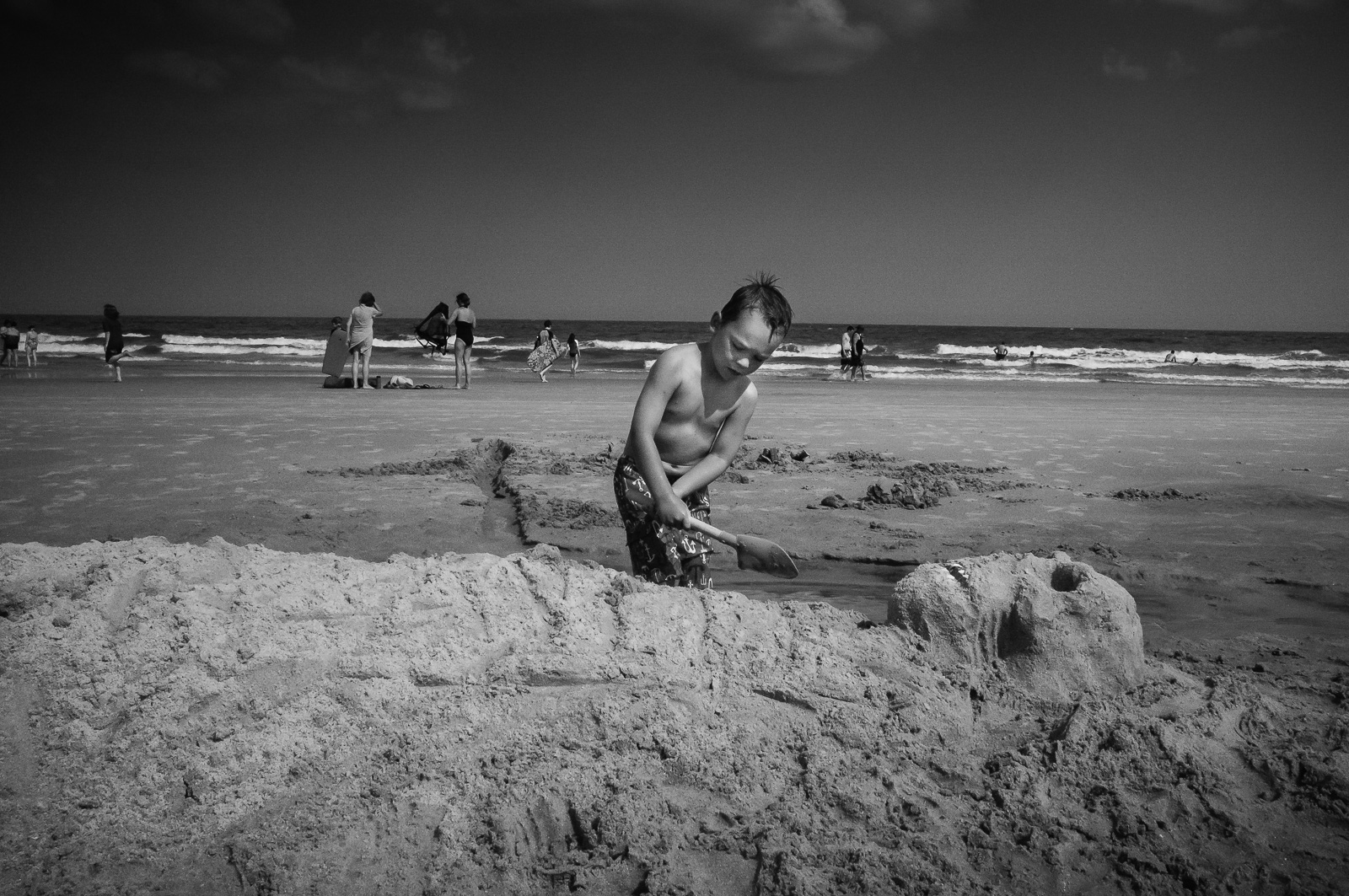
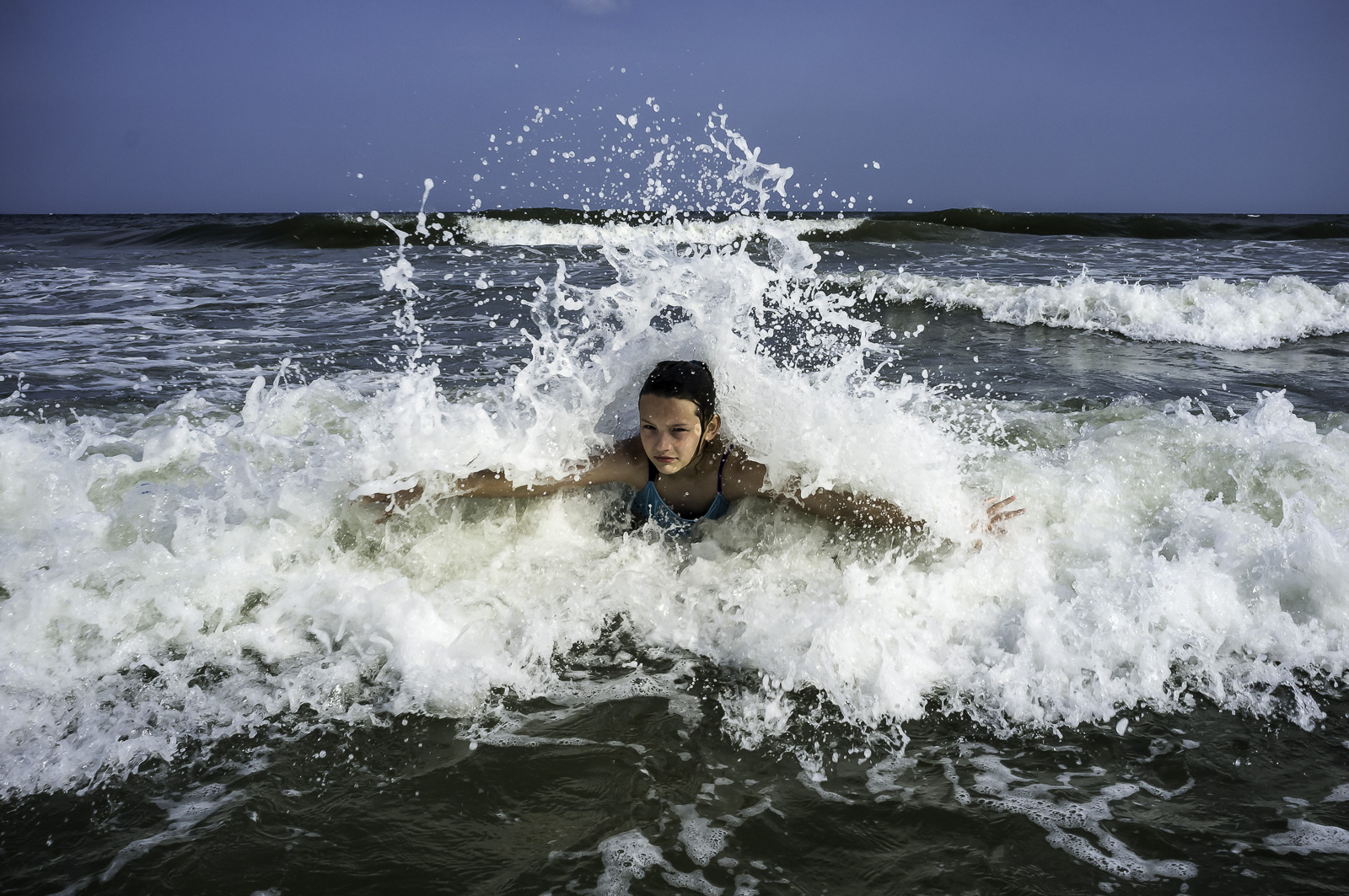
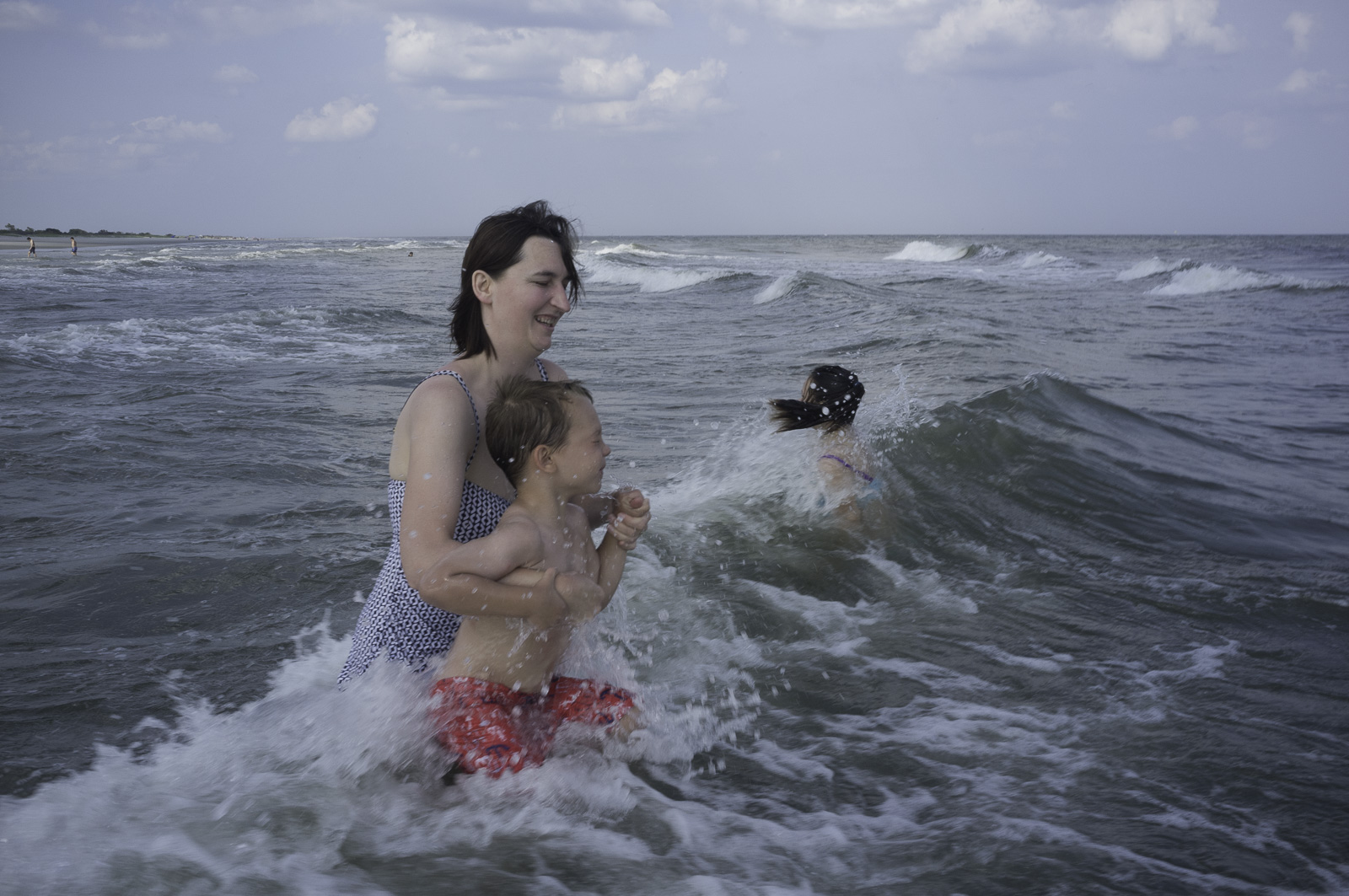
The first day we arrived and, after setting up camp, headed out to the beach. The Girl took her boogie board out to test the waves; the Boy, after a few minutes, turned to the gigantic sand box that lay all around him. Then they switched. That pretty much sums up the entire weekend: playing in the sand, playing in the waves. After all, what else can you do at the beach?

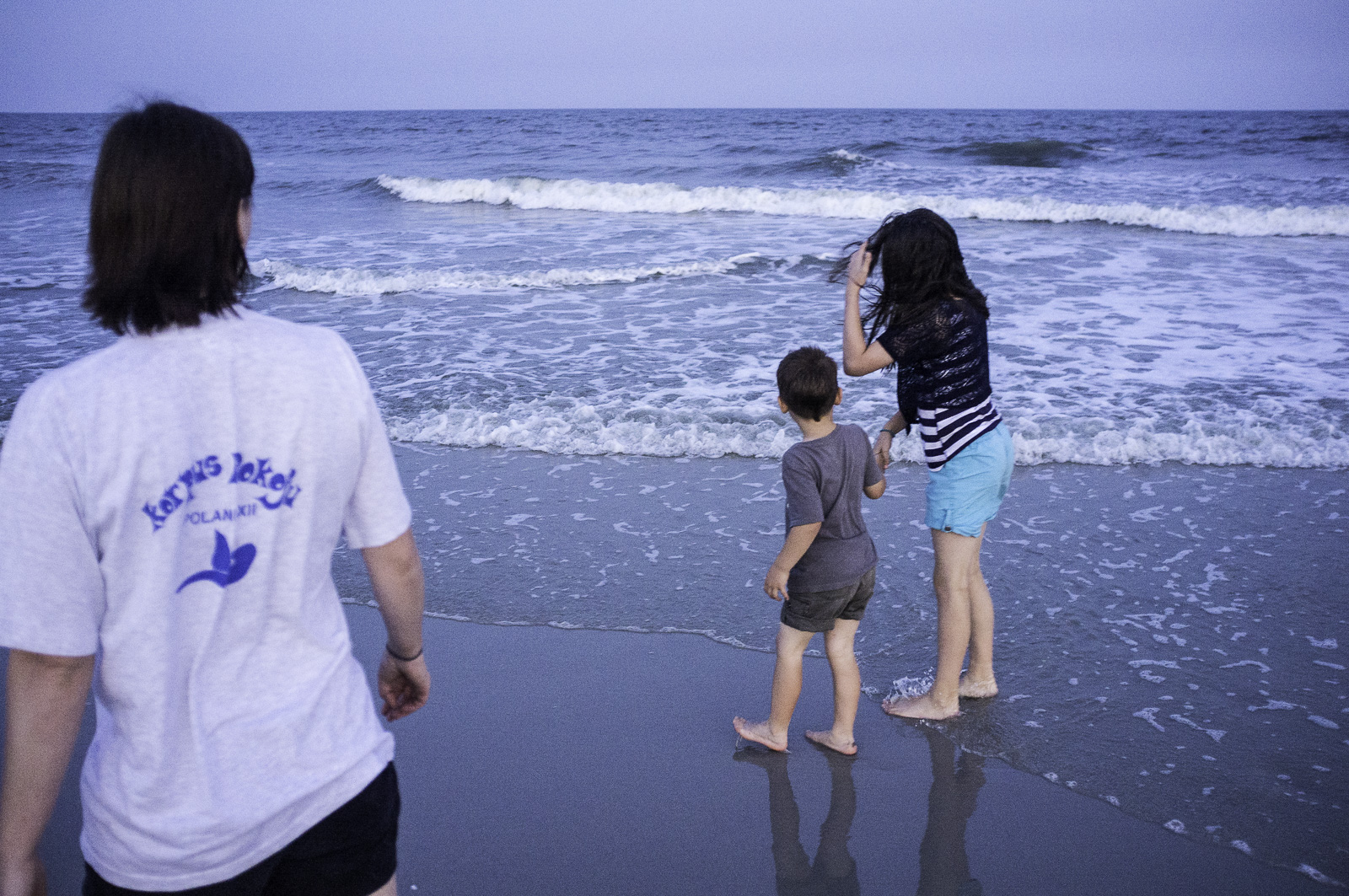
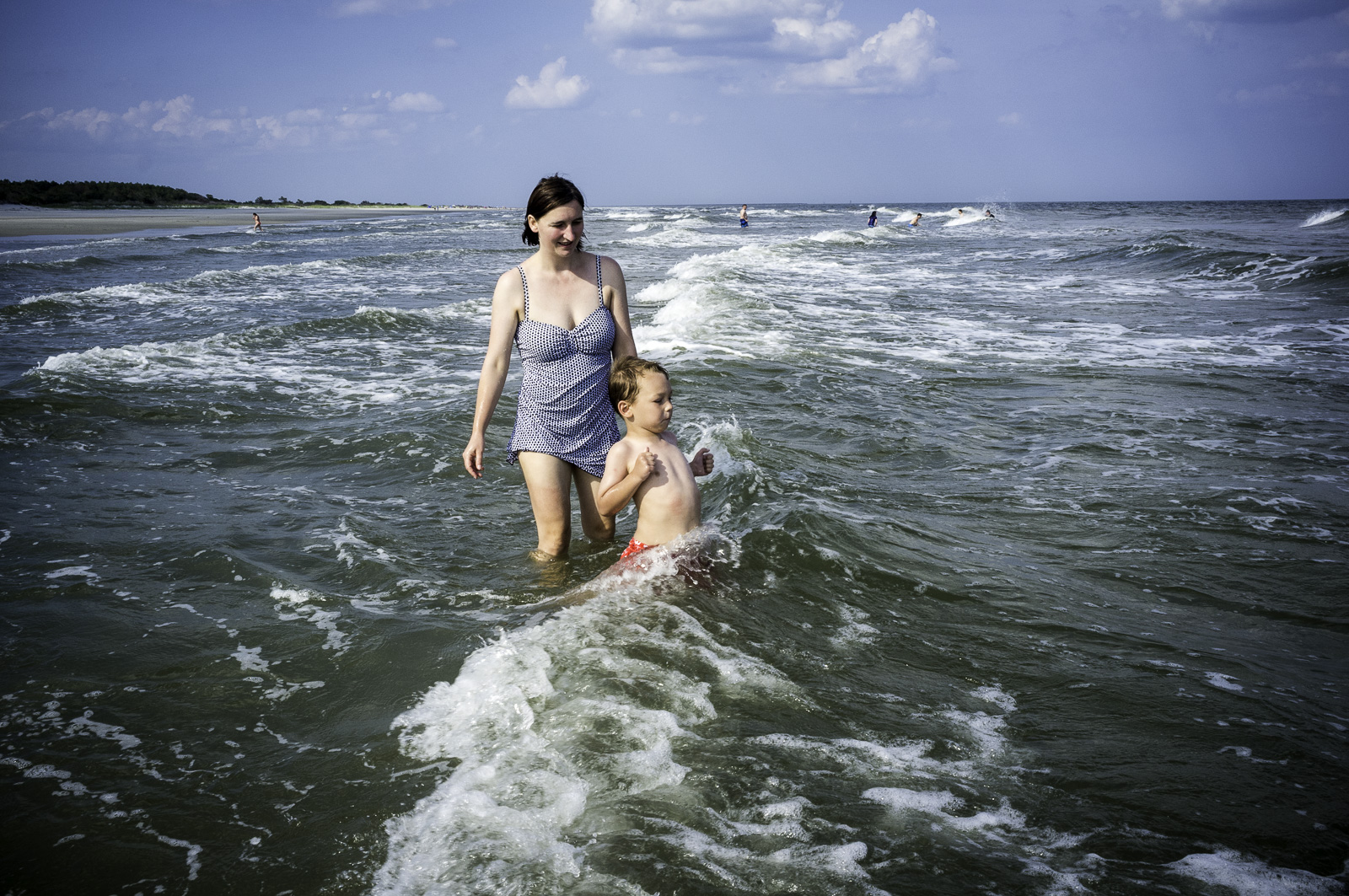
But there were the subtle changes. L, no longer afraid of the water, gradually found the courage to go out with me a little further than before, looking for more boggie-board-able waves. The Boy was at first reticent to go far beyond the last little crests and bubbles of waves that had been churning inland for some tens of feet. He finally found the courage, with a little help from K and me, to go out further, and to require less of a reassuring hand while doing so.

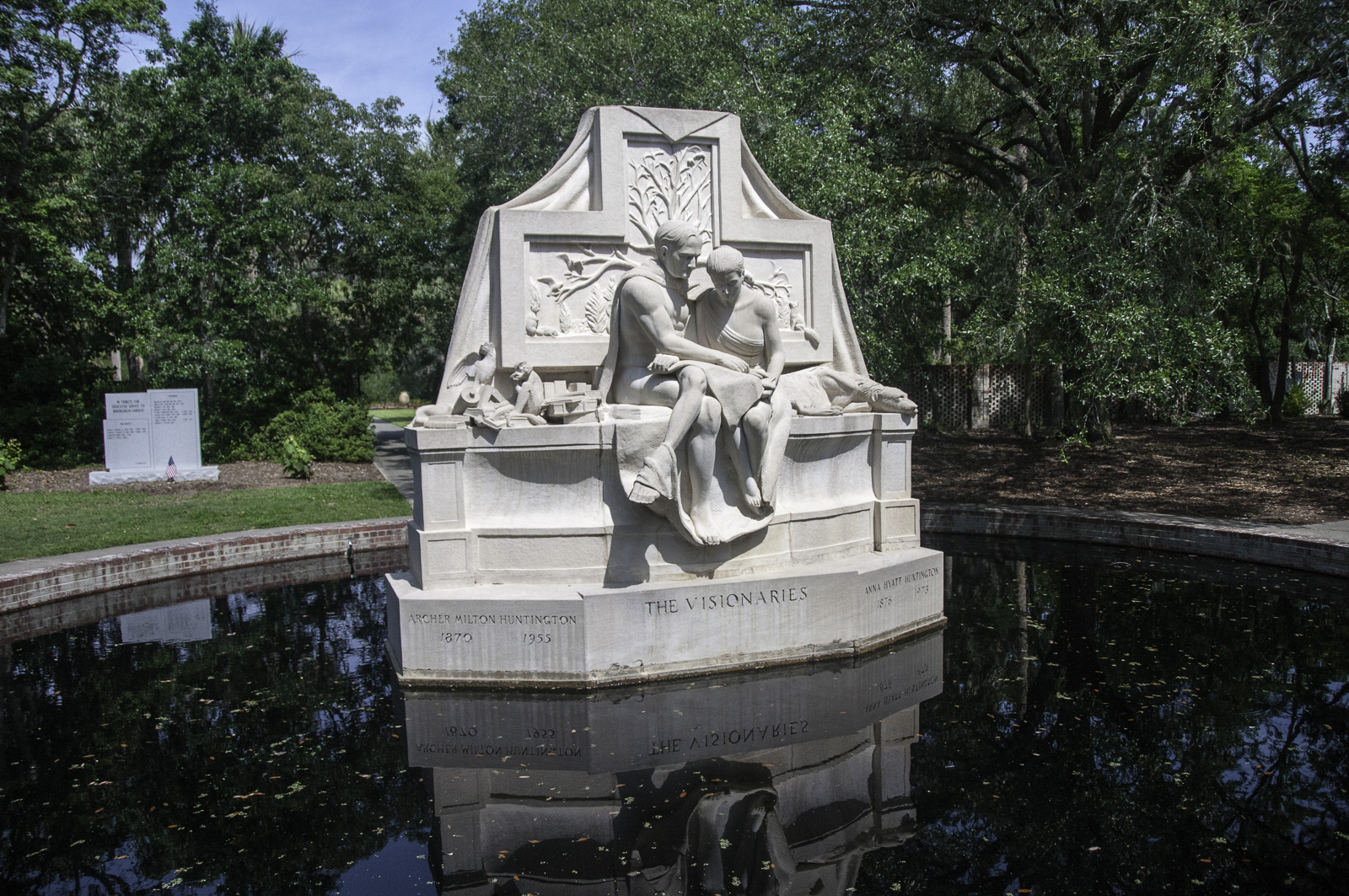
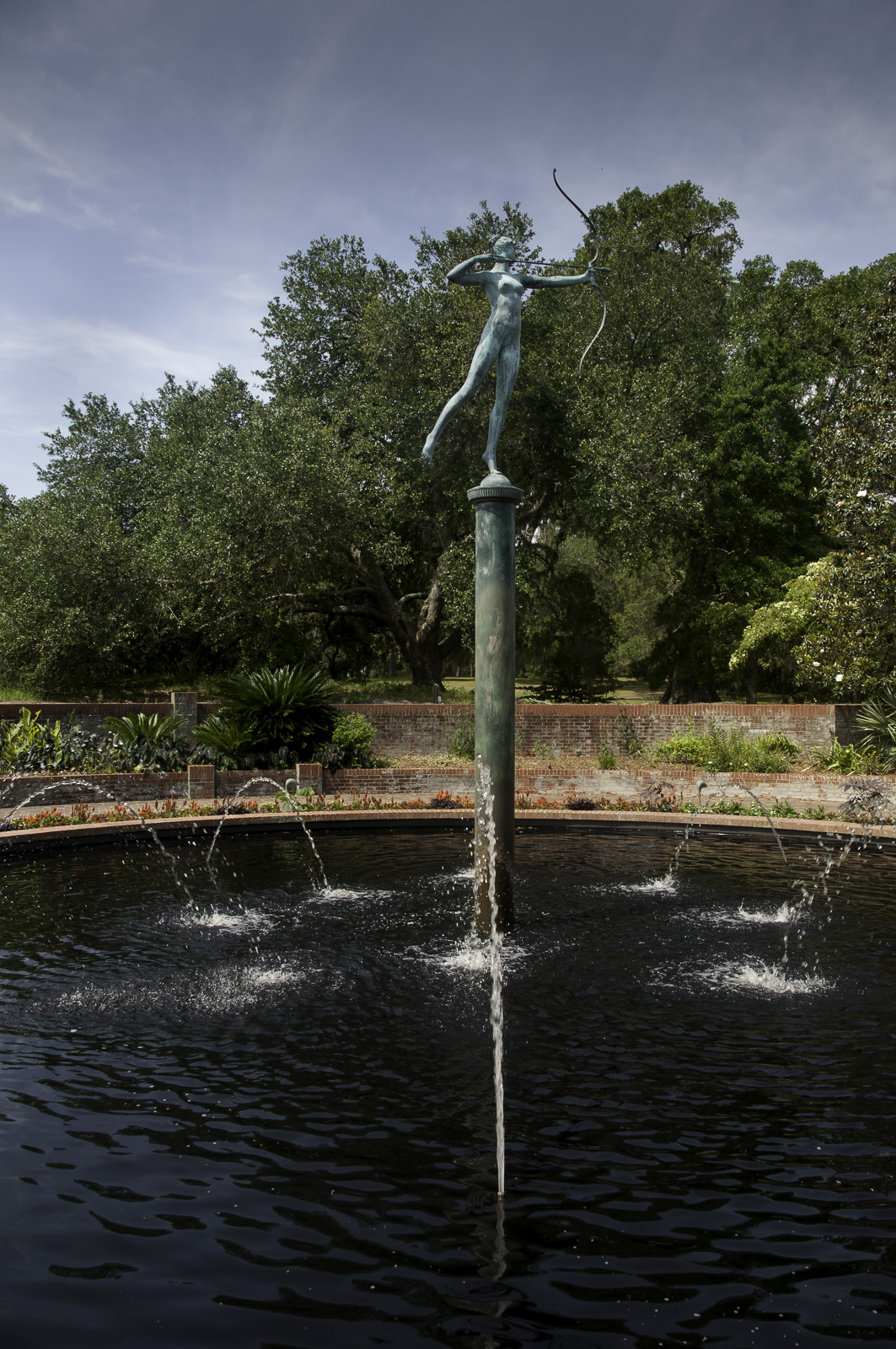
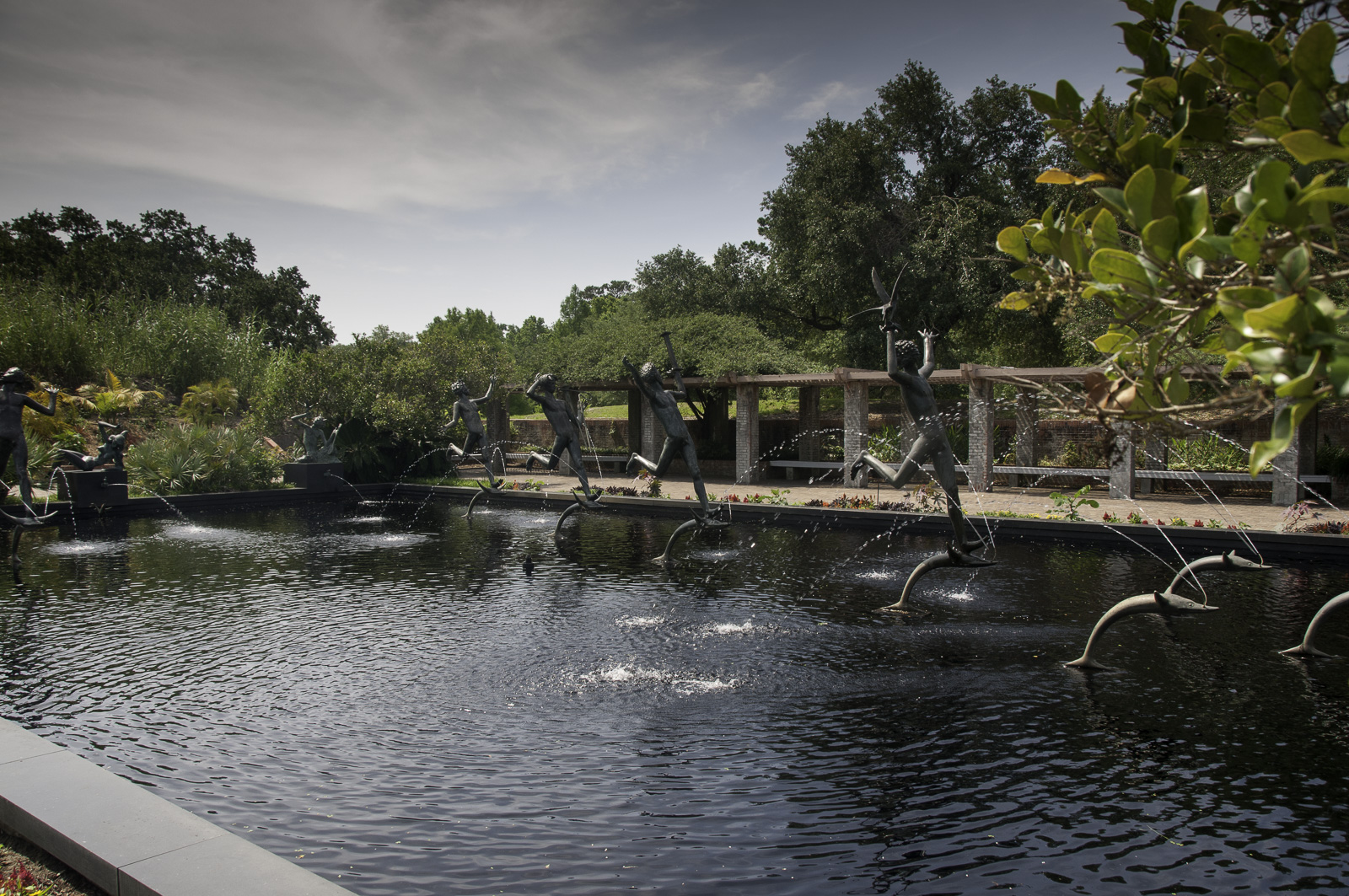
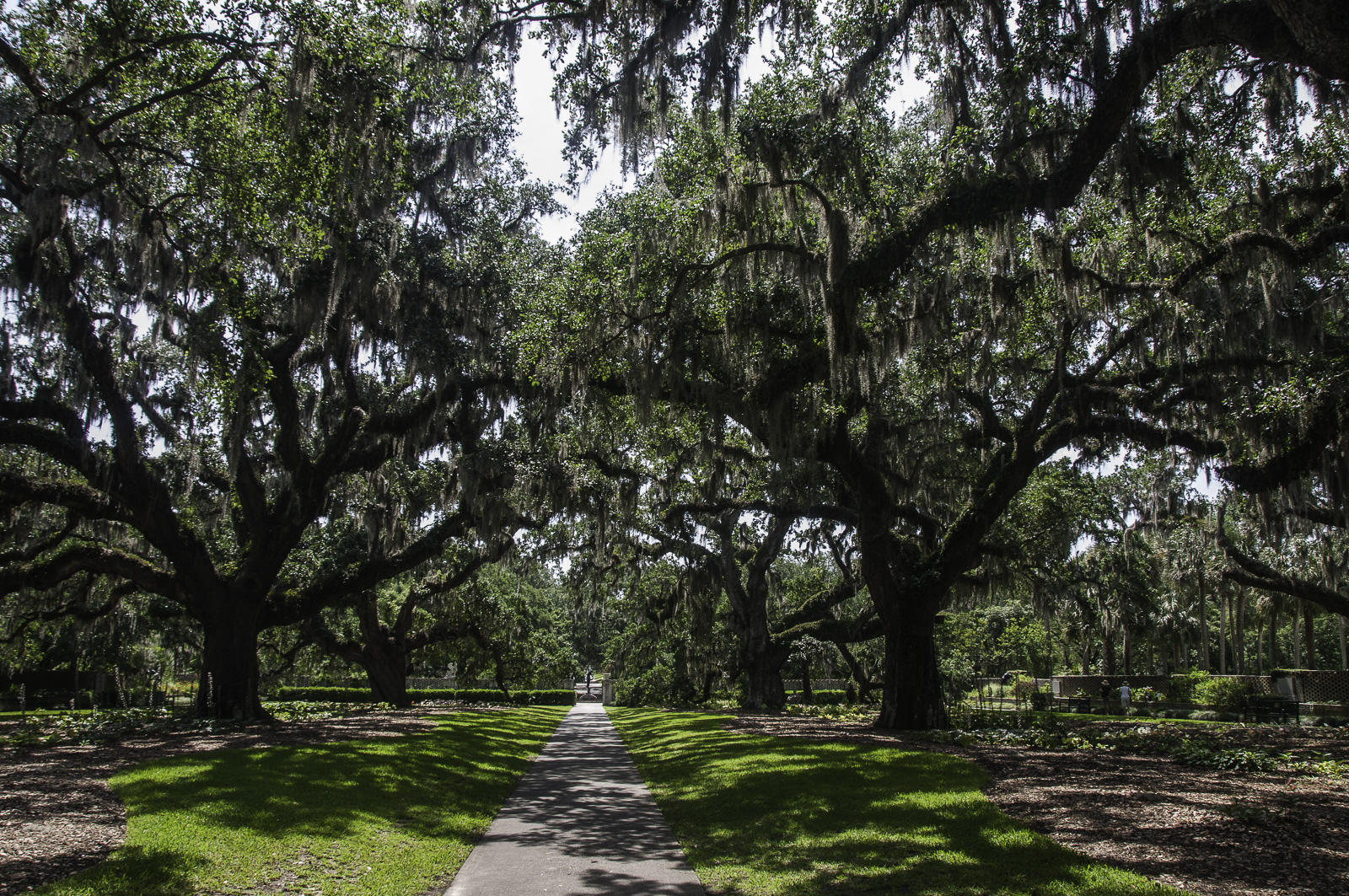
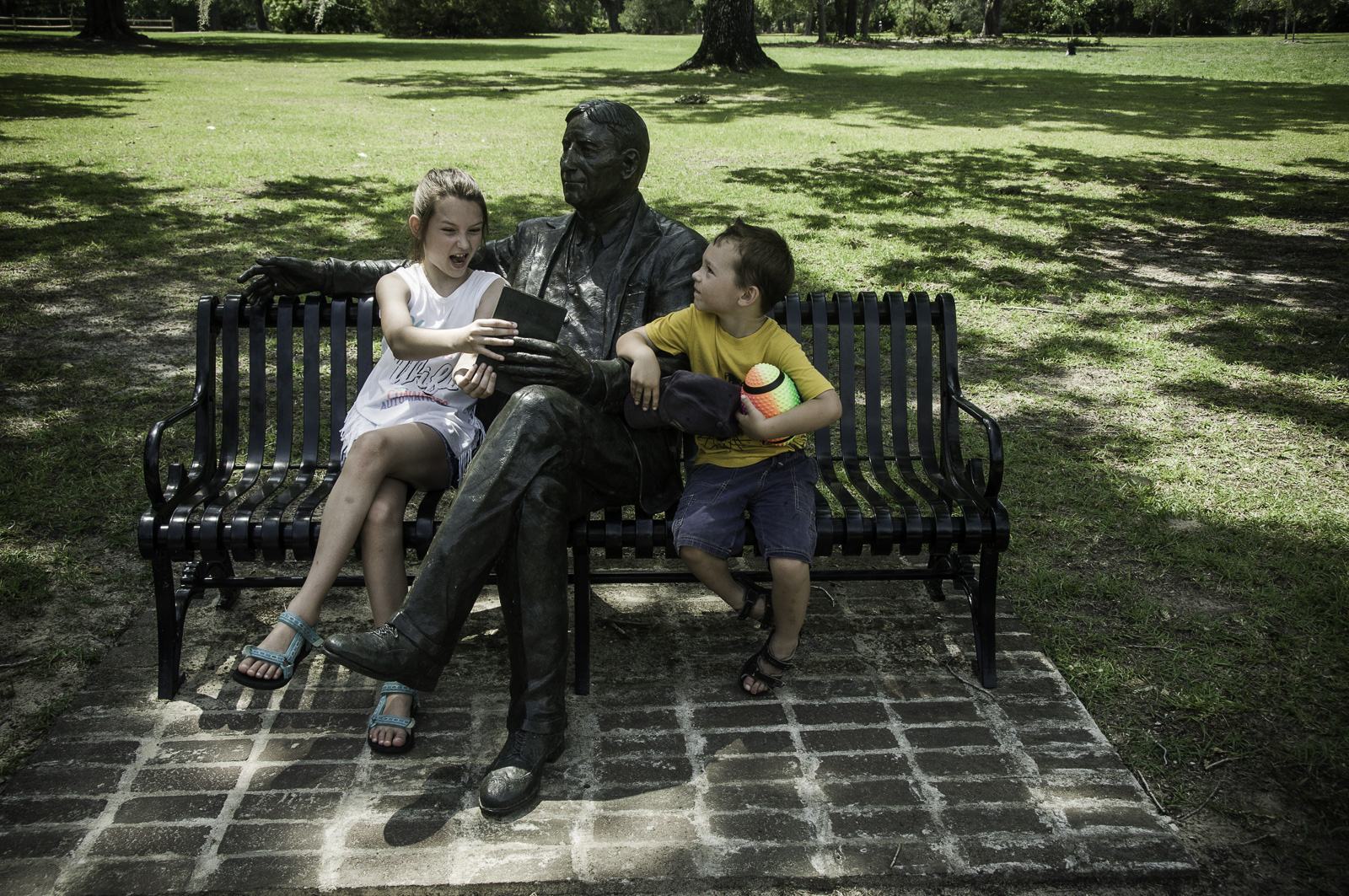
Day two started at Brookgreen Gardens. "We've been here three times now -- we have to go," declared K. It is famous for its sculptures, a fact interested me and bored L -- until she started seeing statues from Greek mythology, her current obsession thanks to the Percy Jackson series.

The final day -- another morning on the beach.

A perfect weekend, over all.

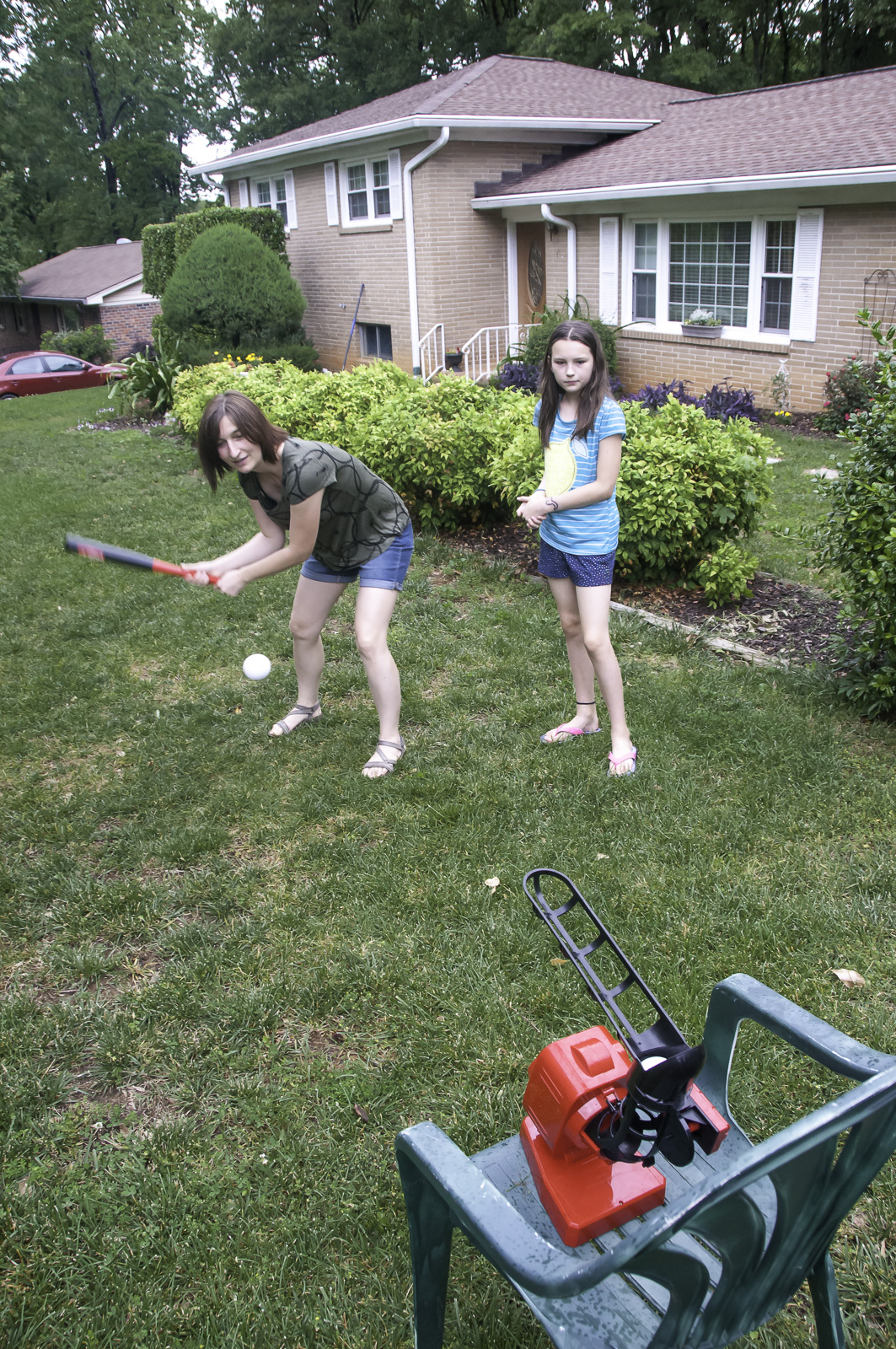
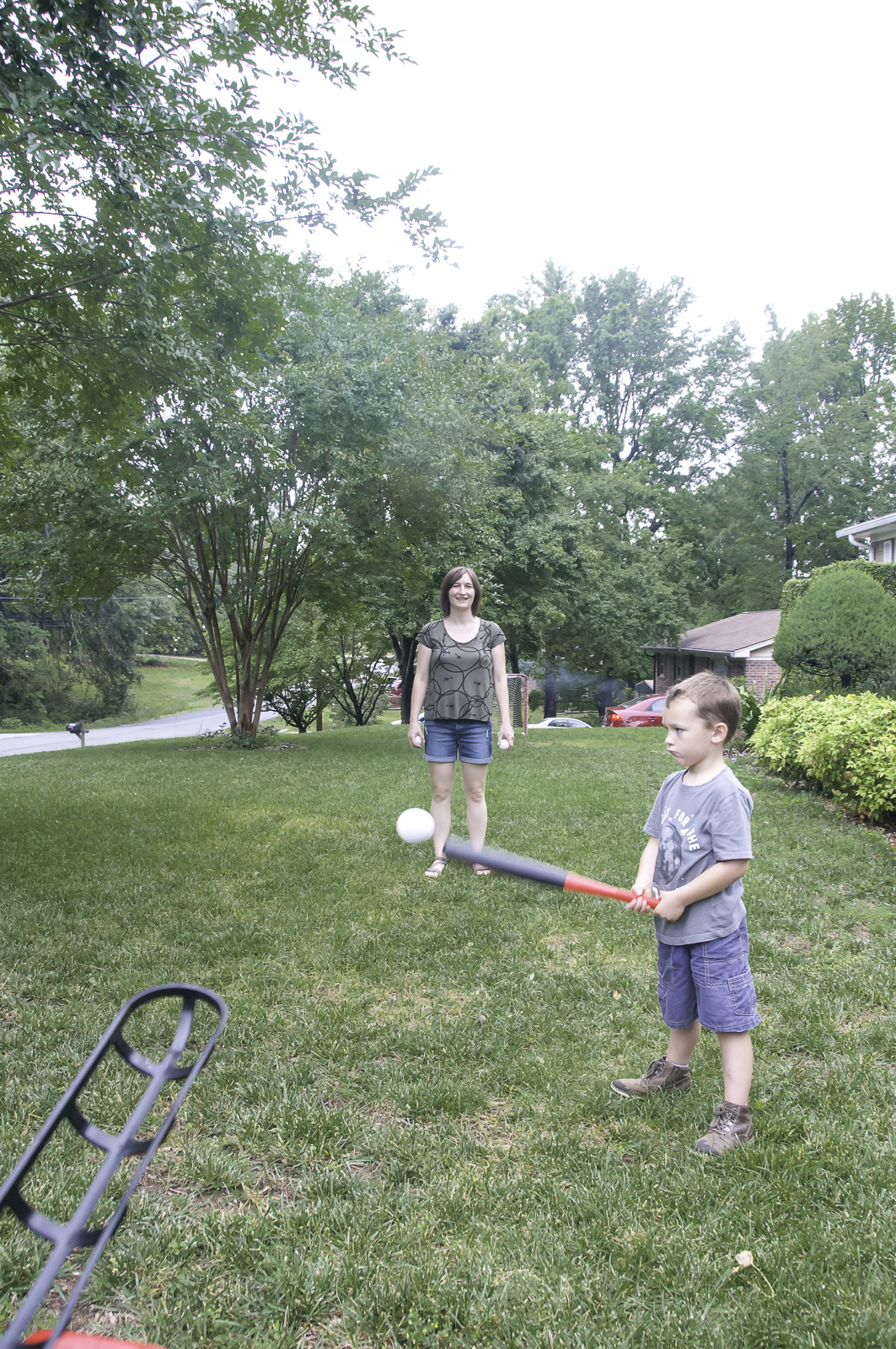
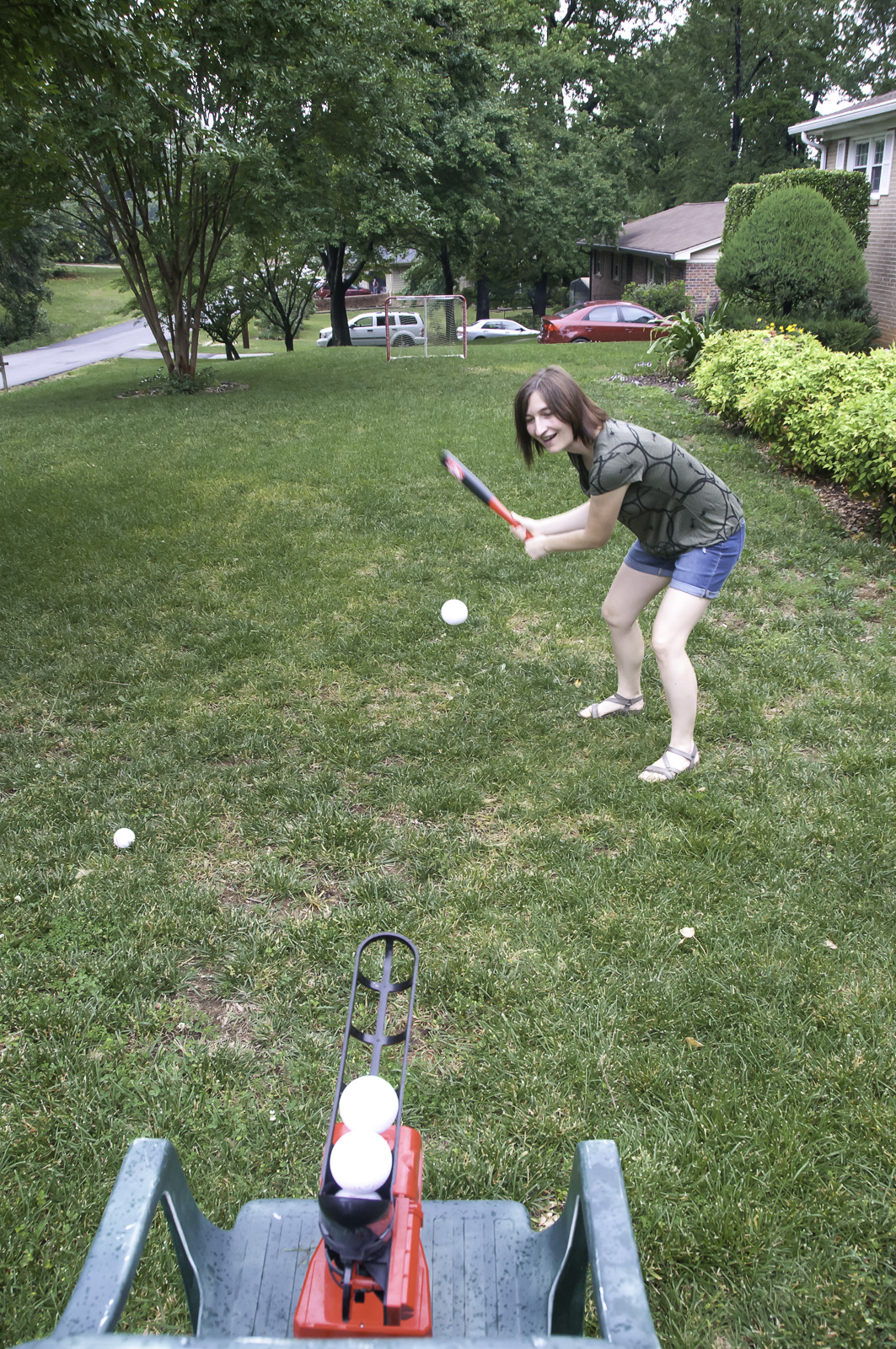
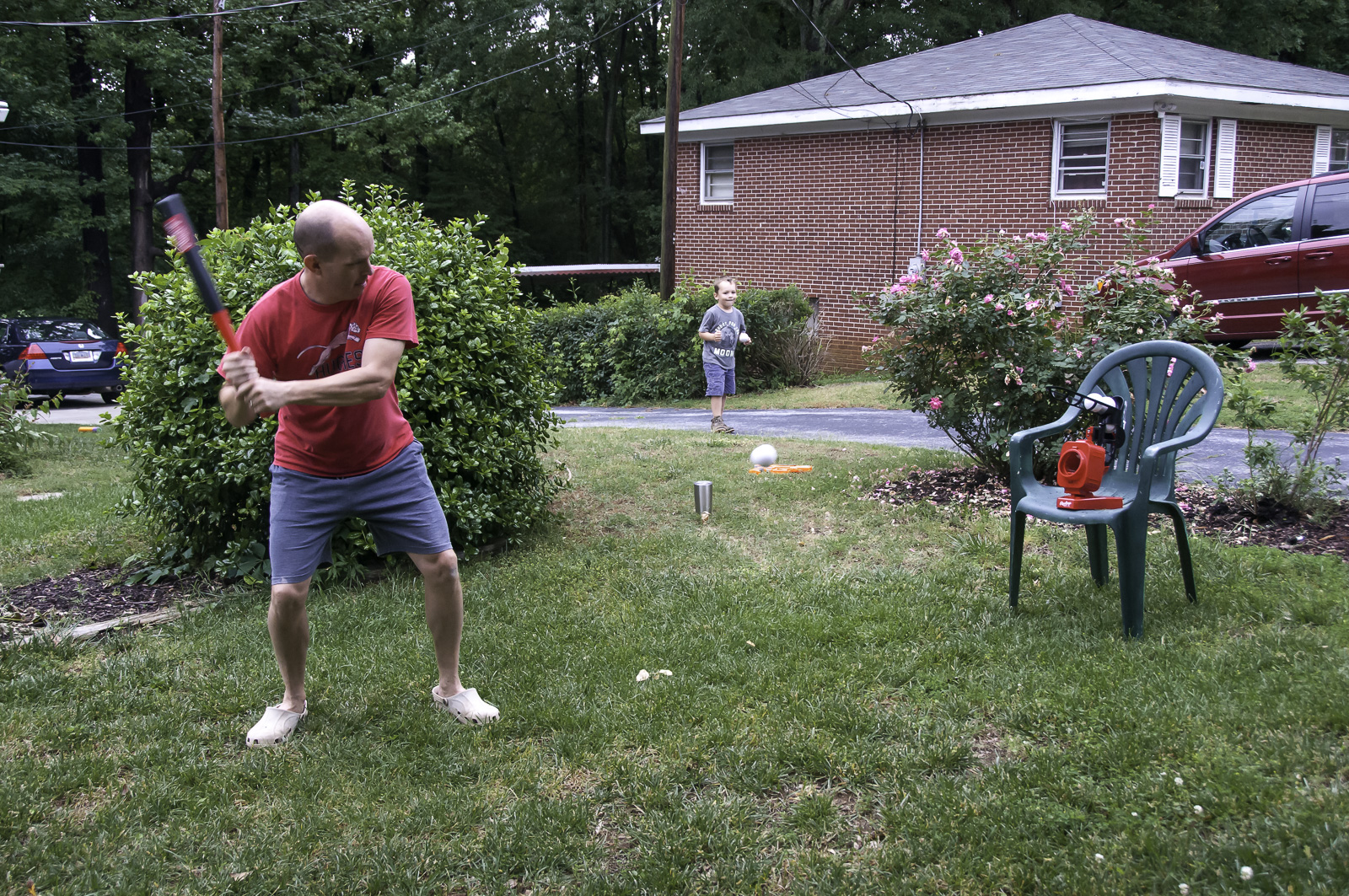
Batting Practice