
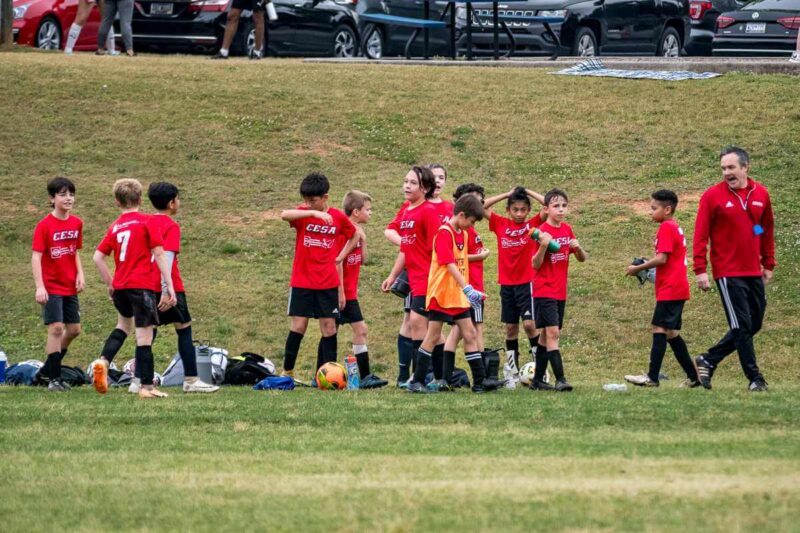
Today was the final day of our short spring tournament. They boys played their hearts out, and they had a good time — the results (0-1-2) weren’t as important.
It was a bittersweet afternoon, though: it will be the last season this team is together. There are always some new members each season, but this team has had a little core for the last three seasons, and now it’s all over. Several of the boys (E included) will be too old to play on the fall team, and the coach won’t be working with U12s anymore: he’s moving up to the 18s travel team.
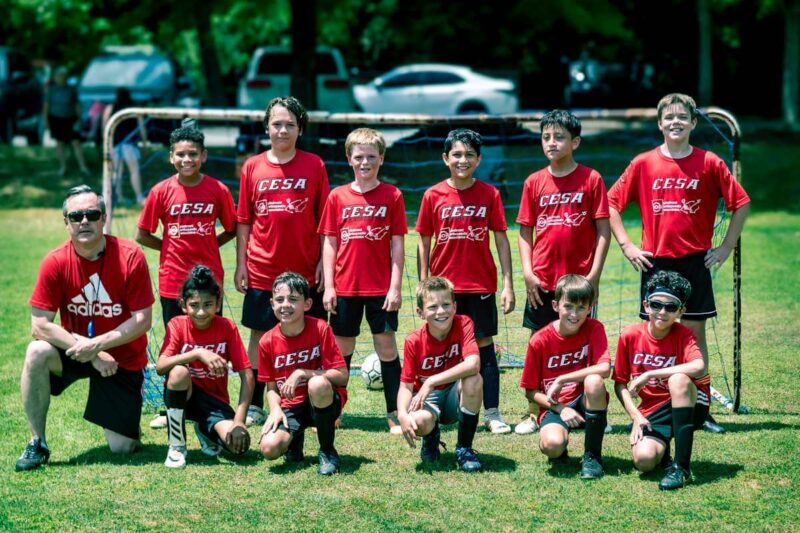
Coach M was a great coach, the only coach the Boy really wanted to play for, and we’re going to miss him.
In the evening, we went on our first ride of the season.
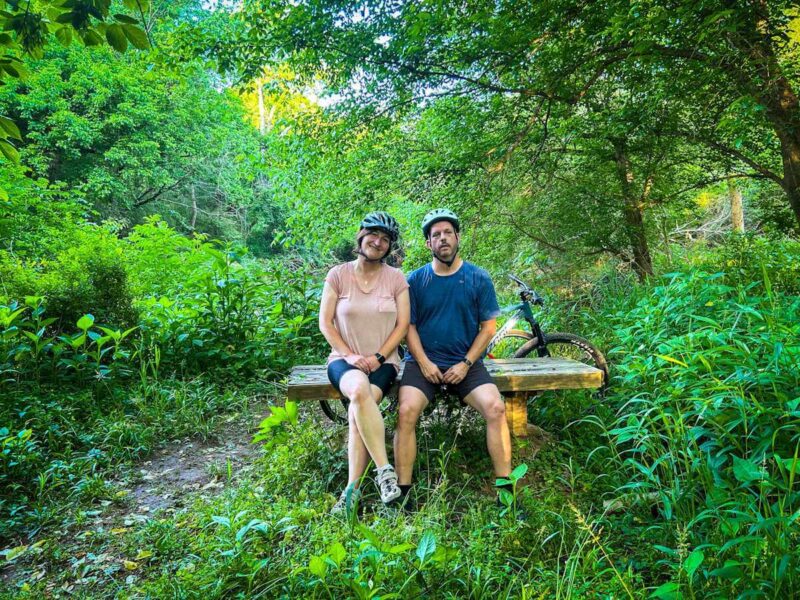
Except for L: she doesn’t like cycling, which is a shame.



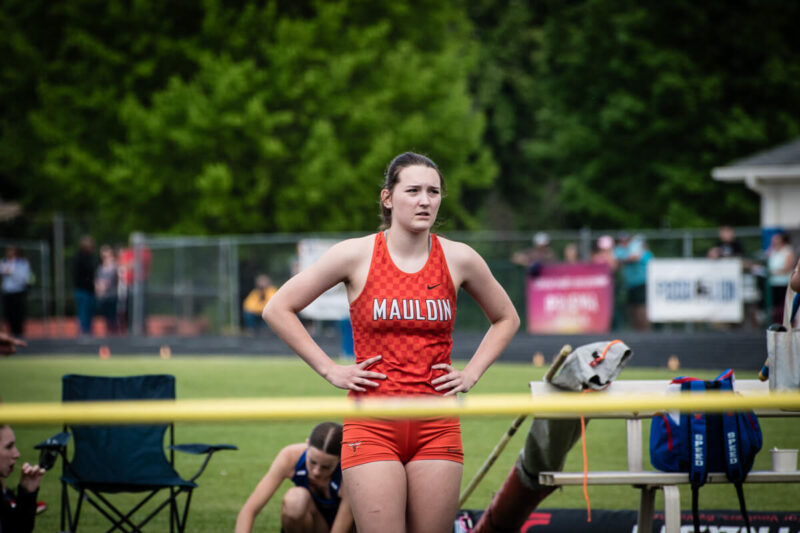
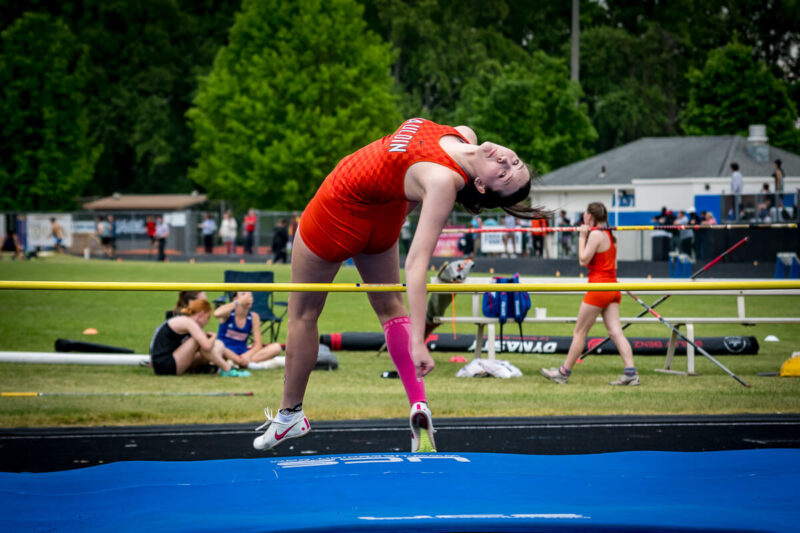
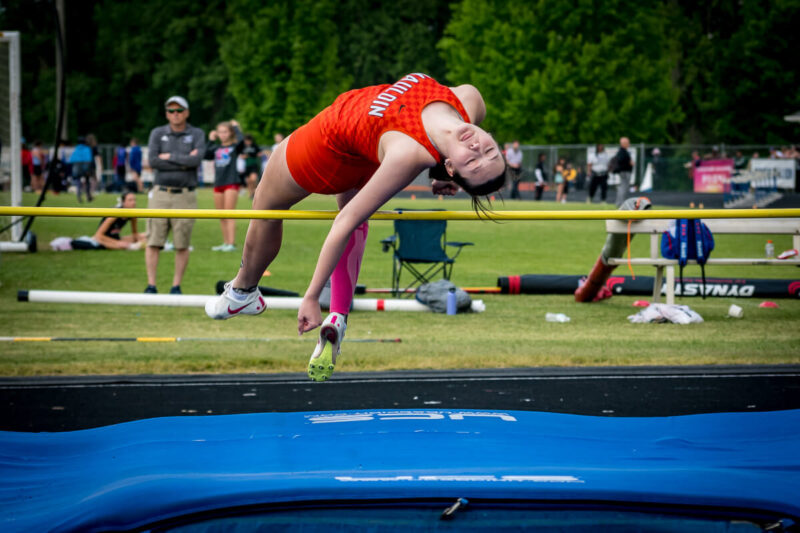
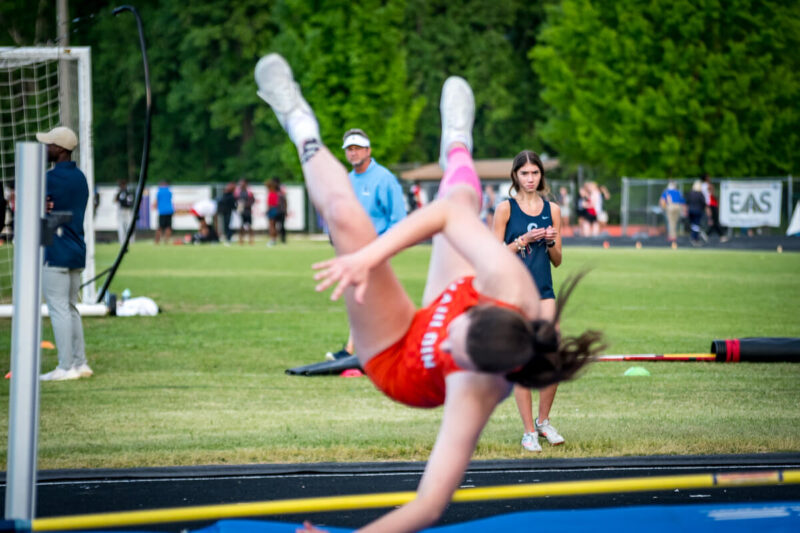
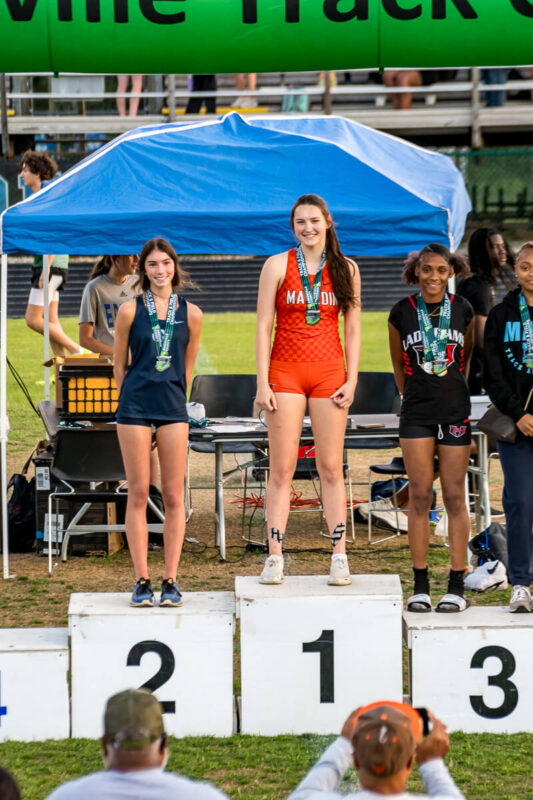
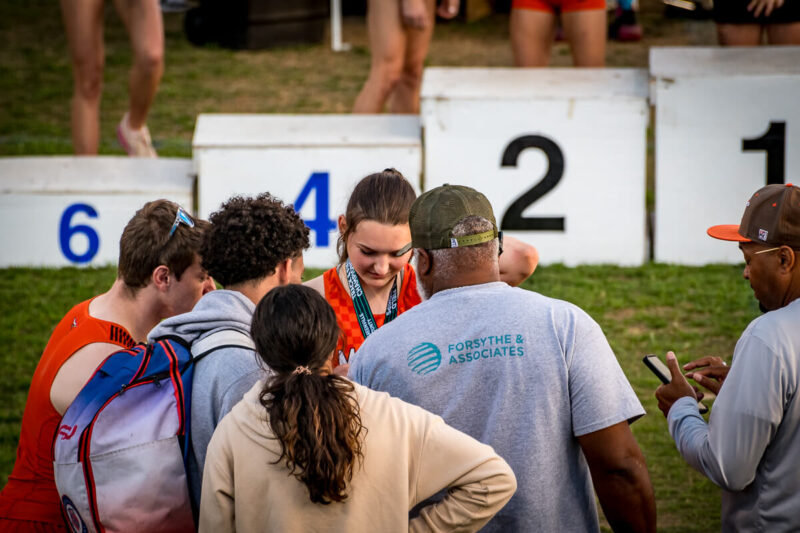
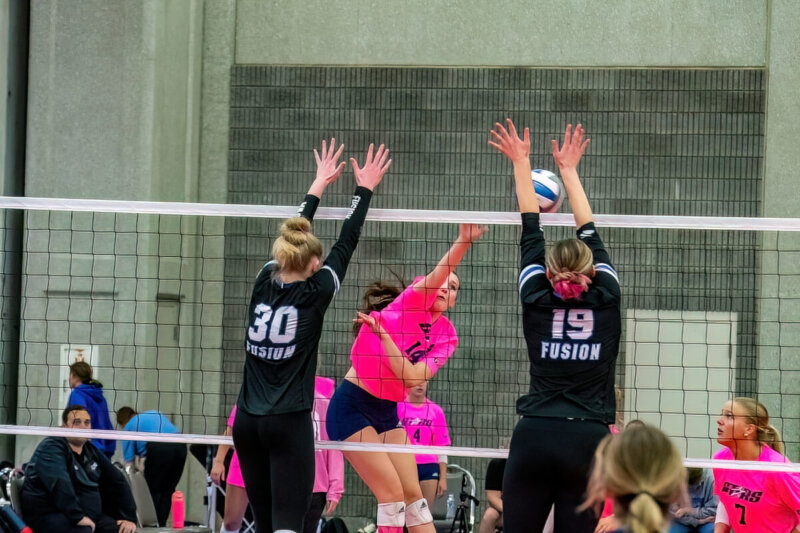
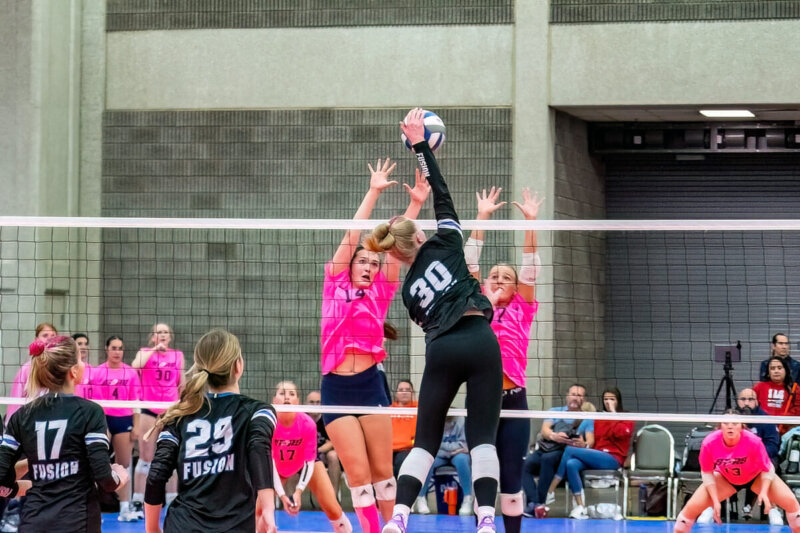
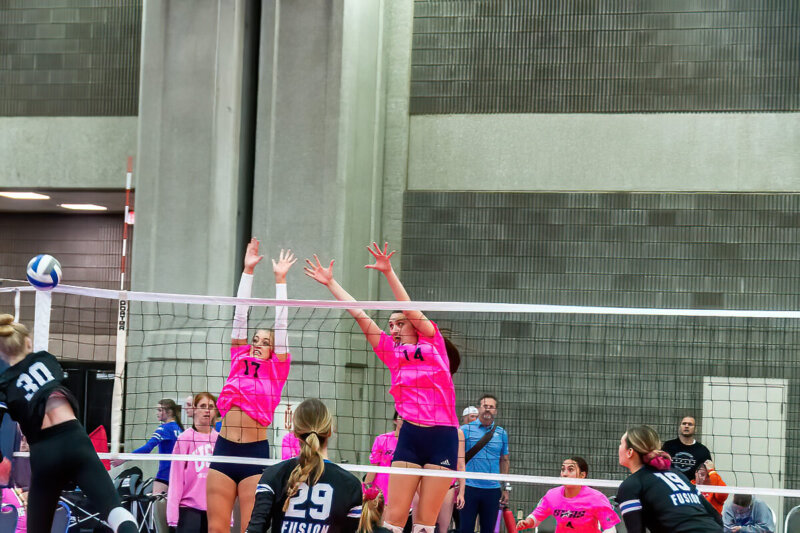


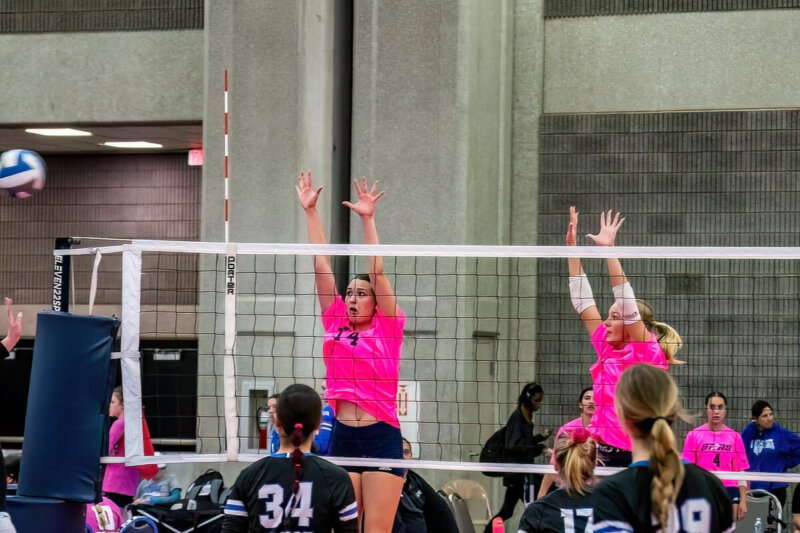
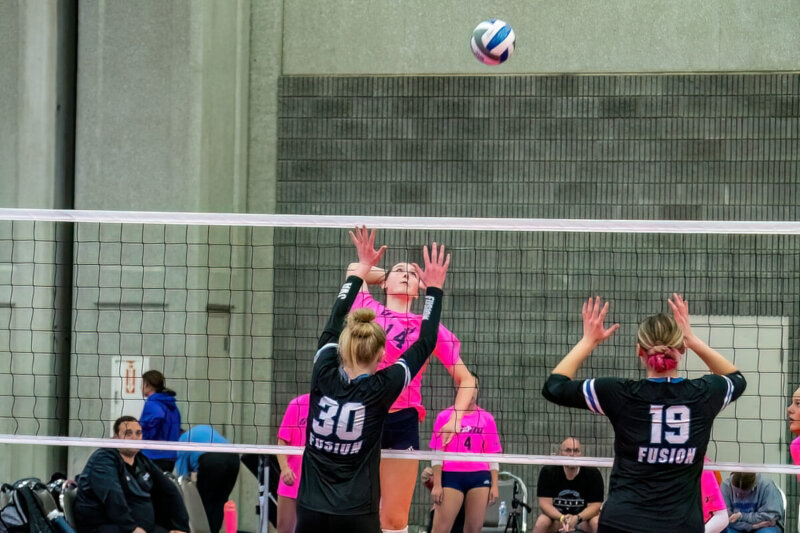
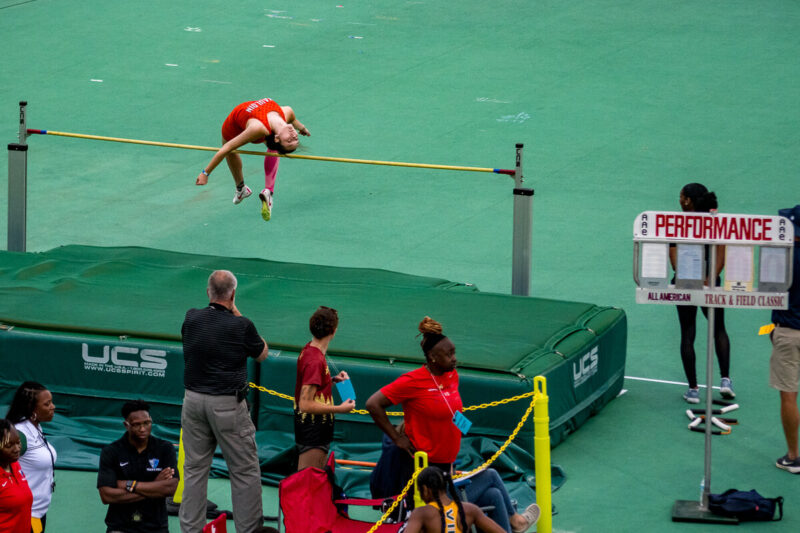
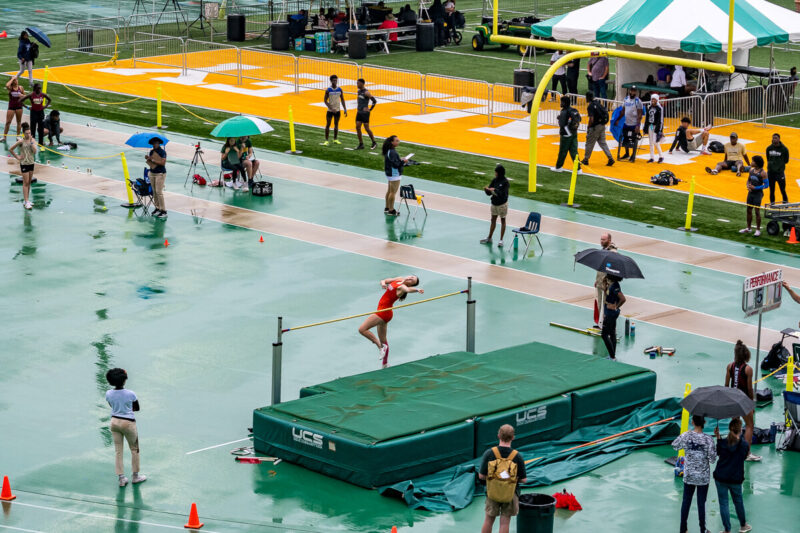
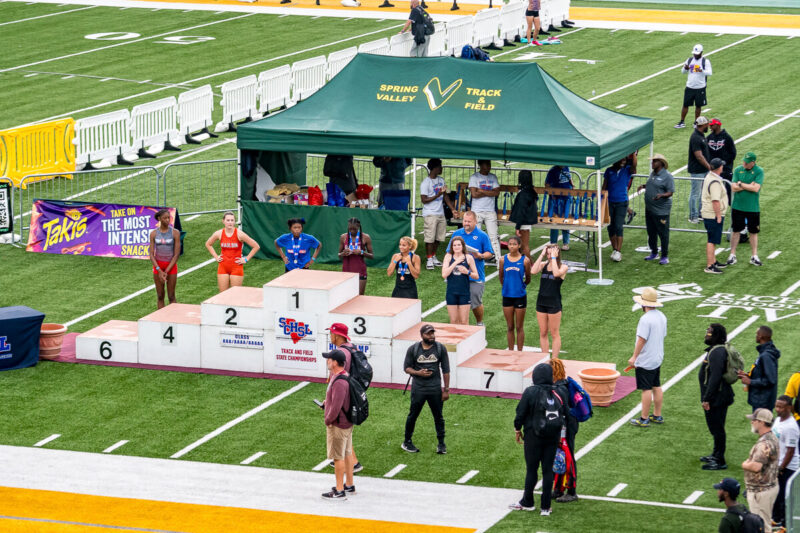
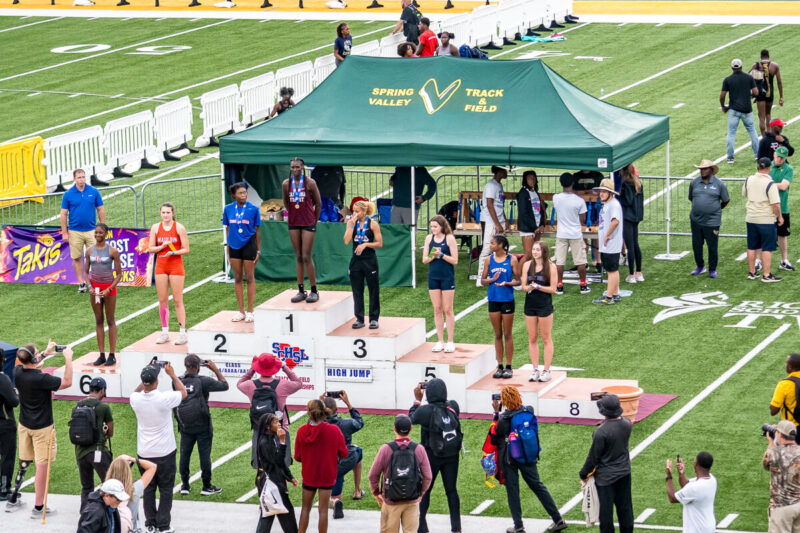
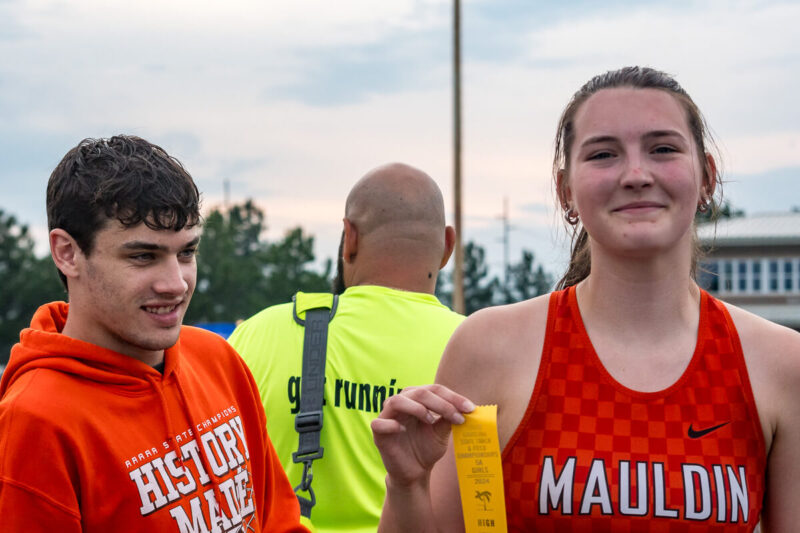
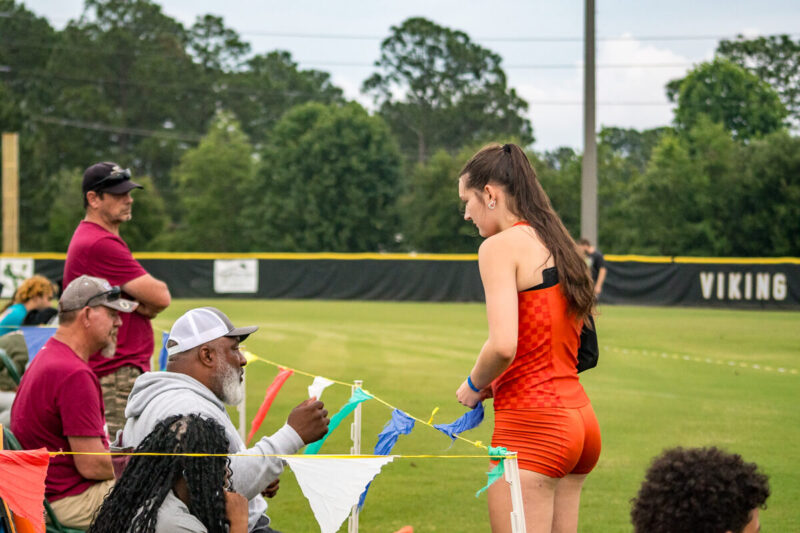
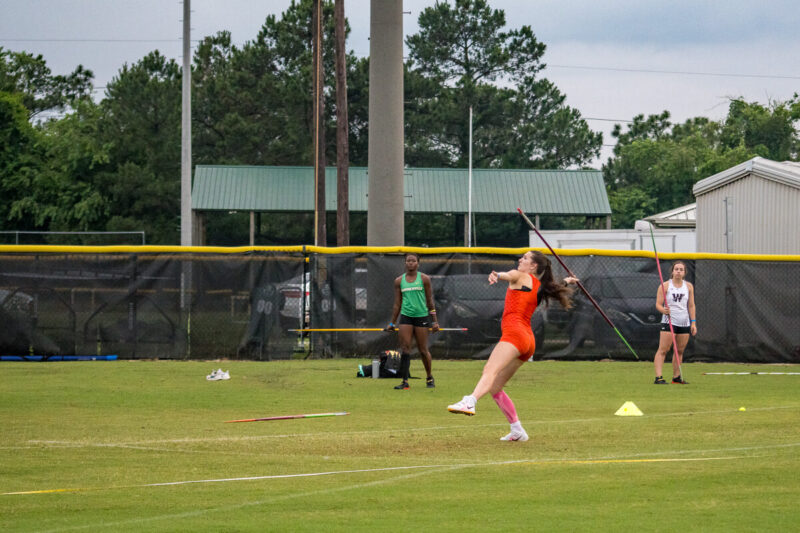
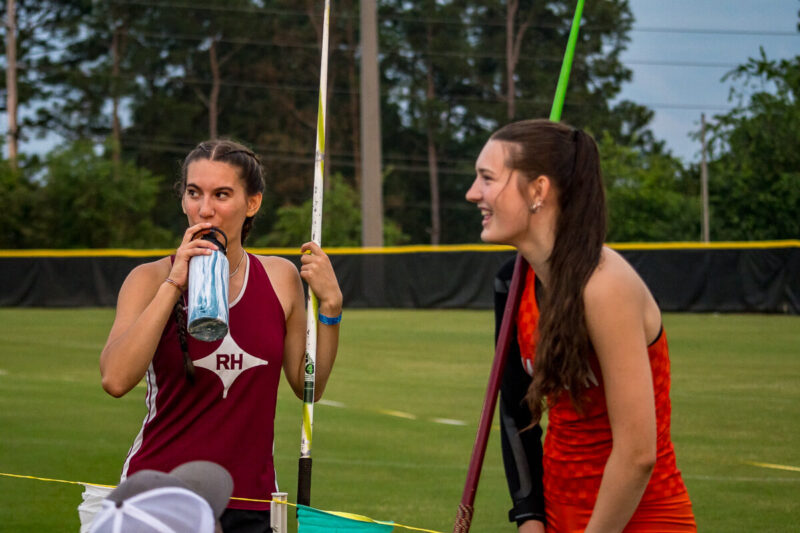
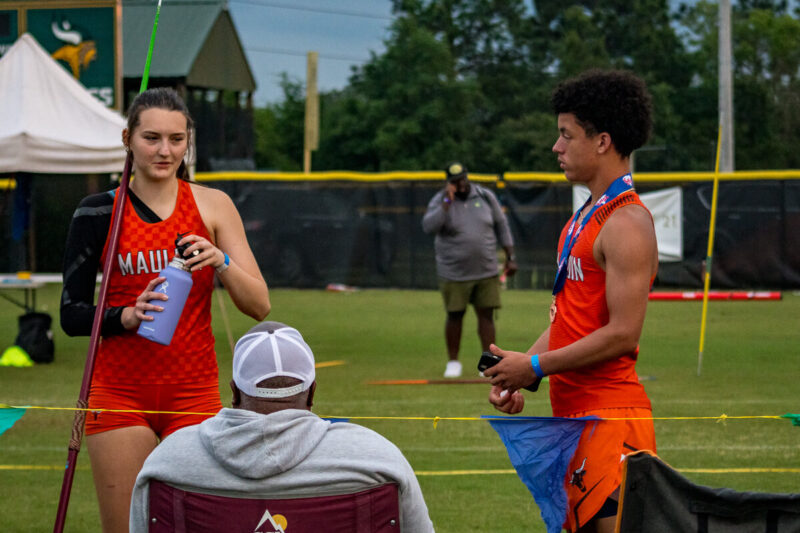
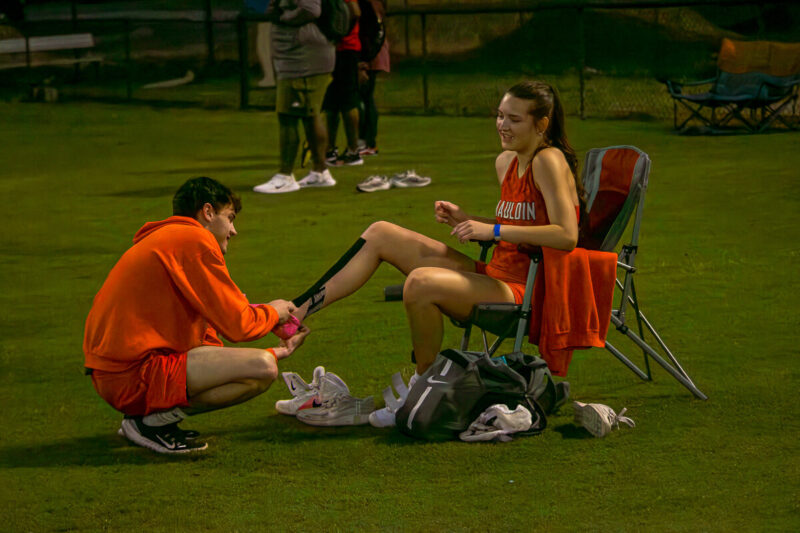
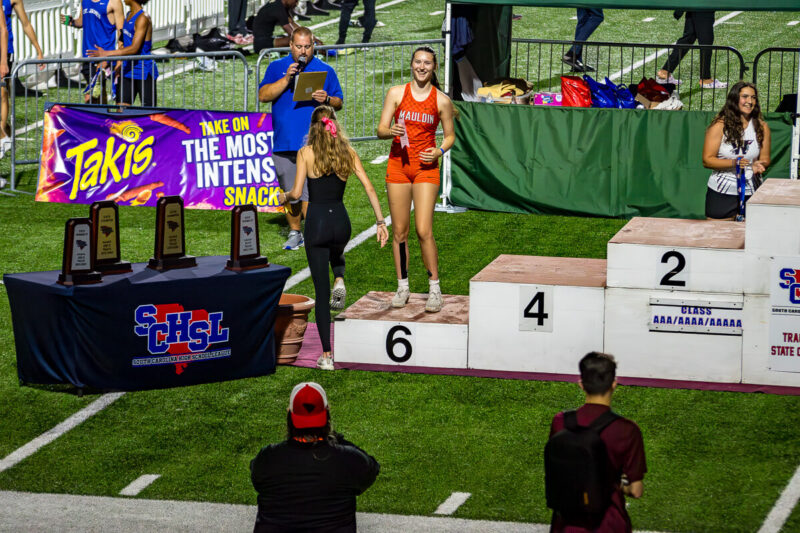
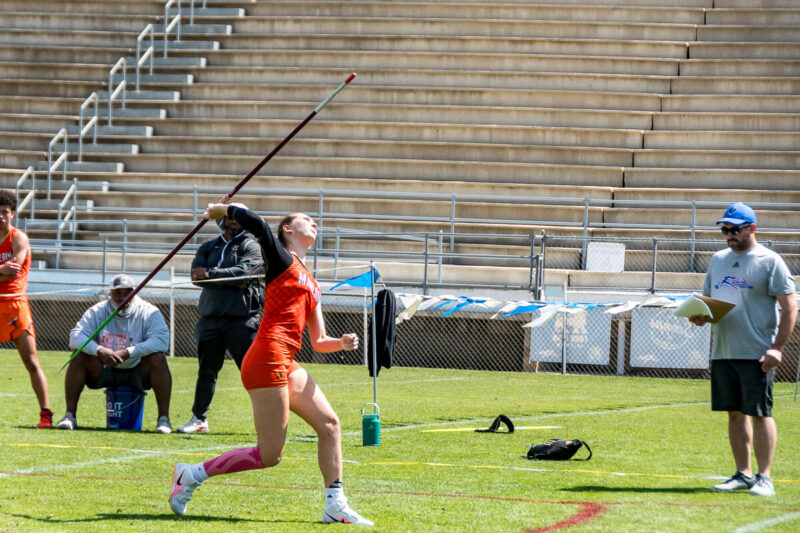
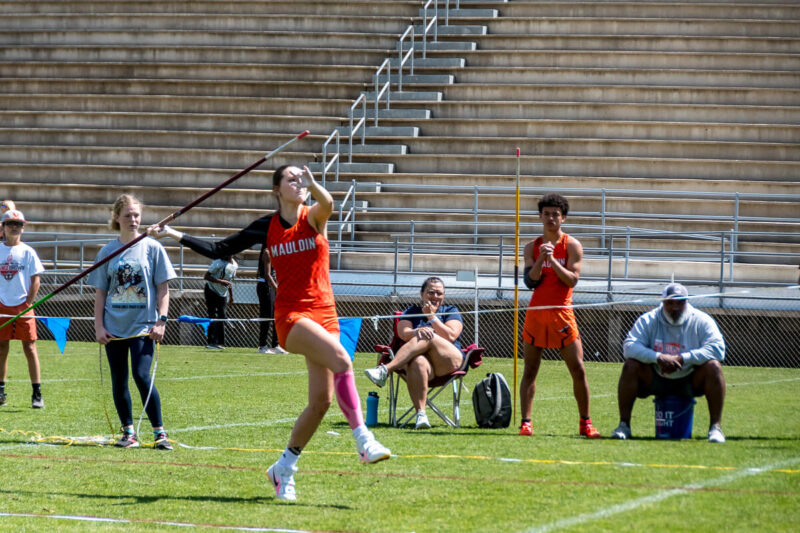
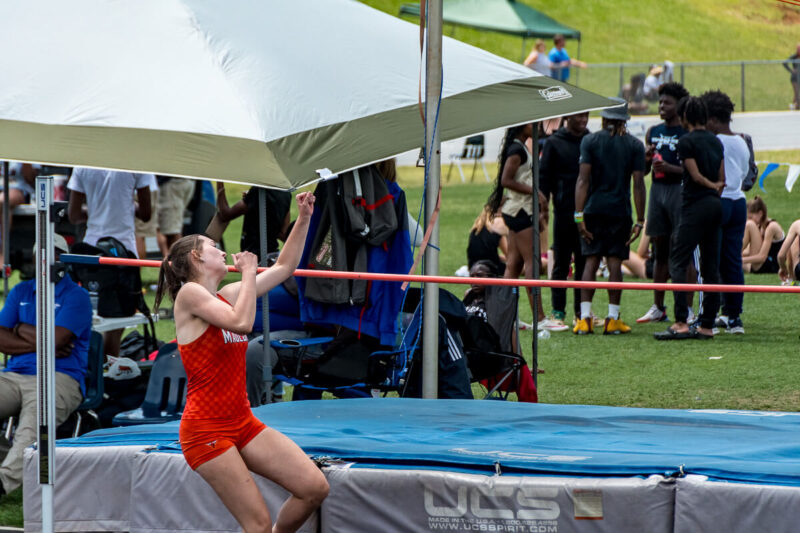
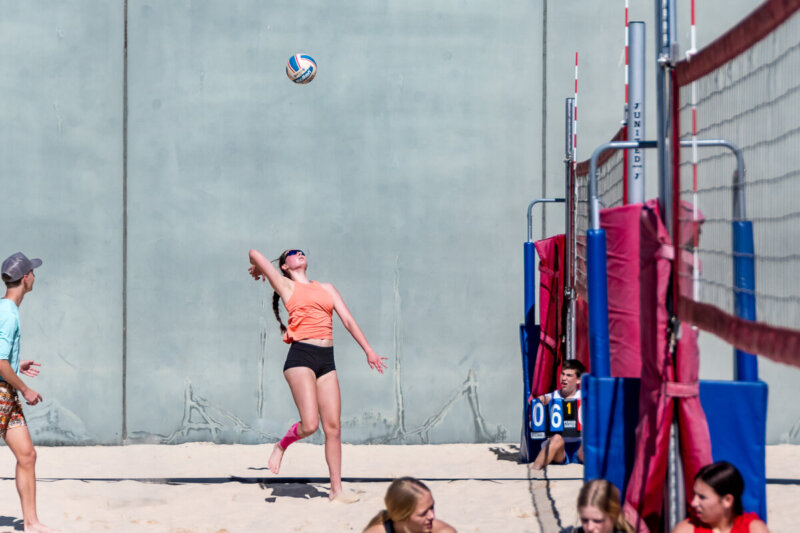
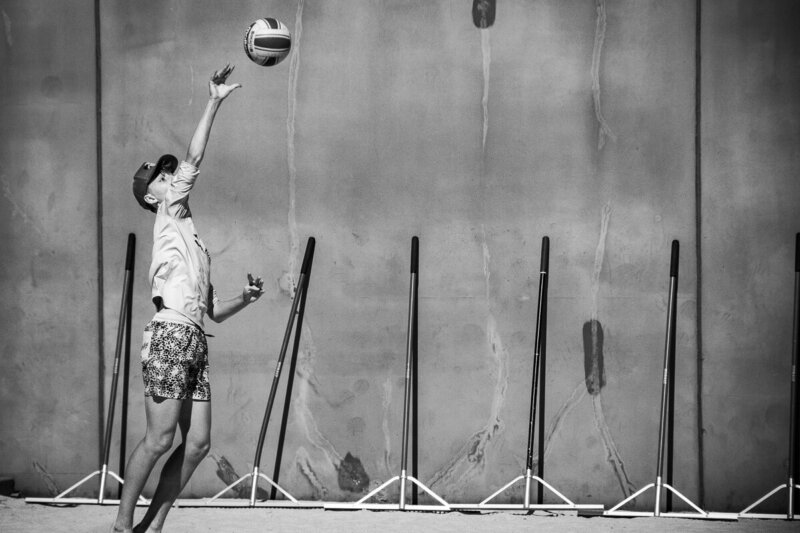
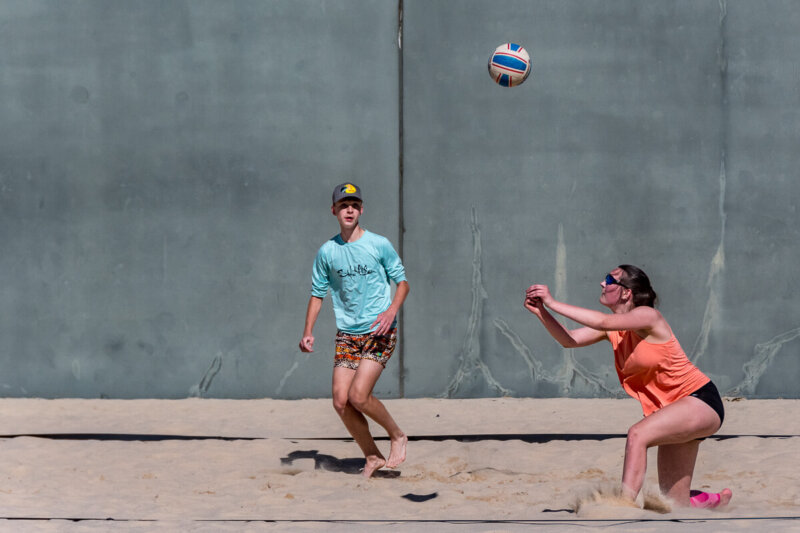
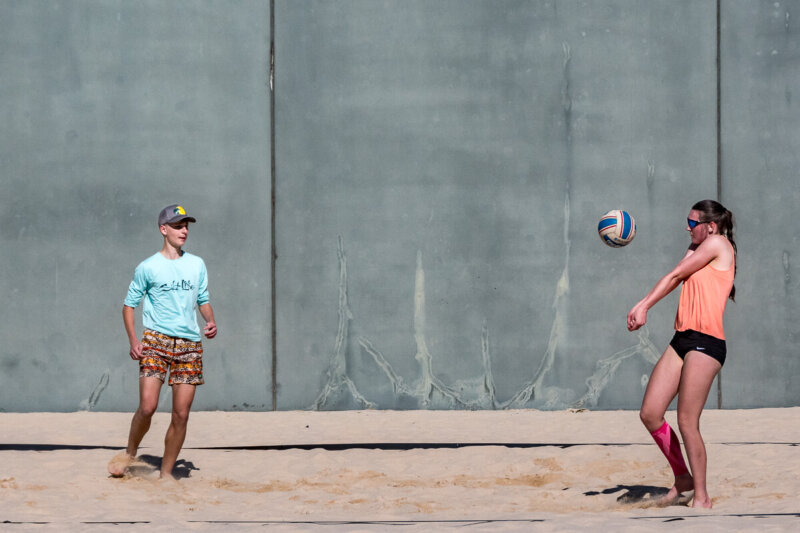
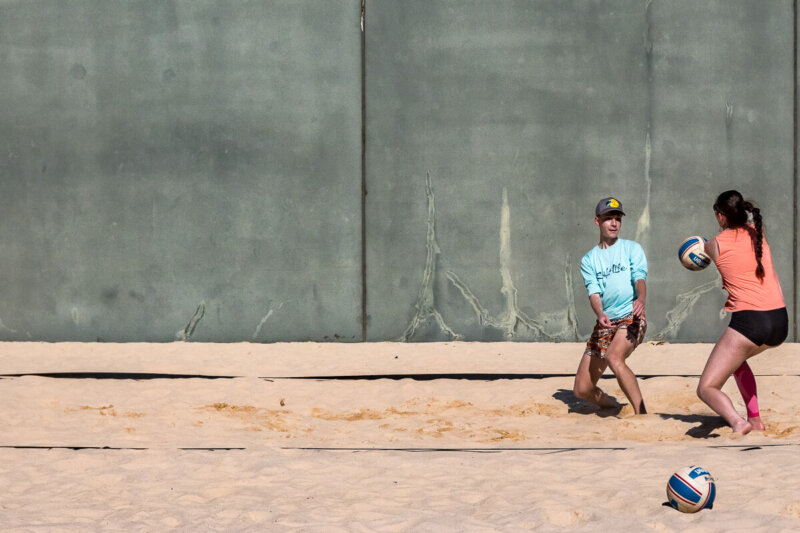
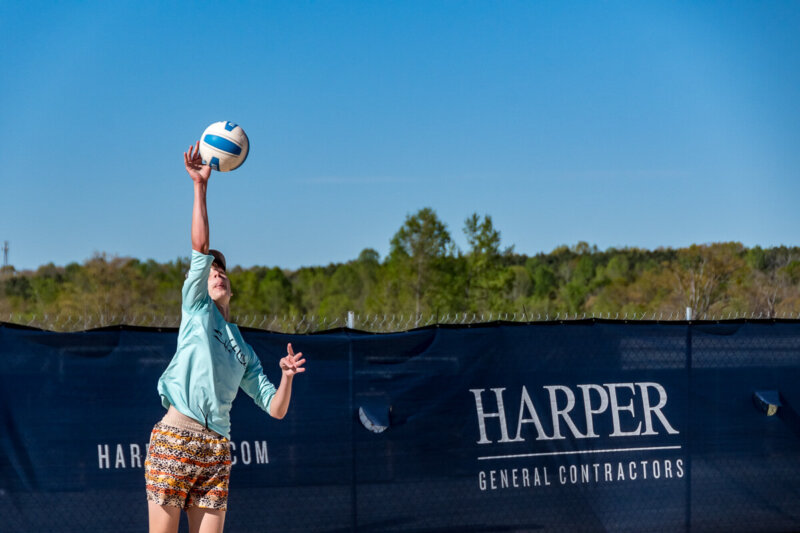
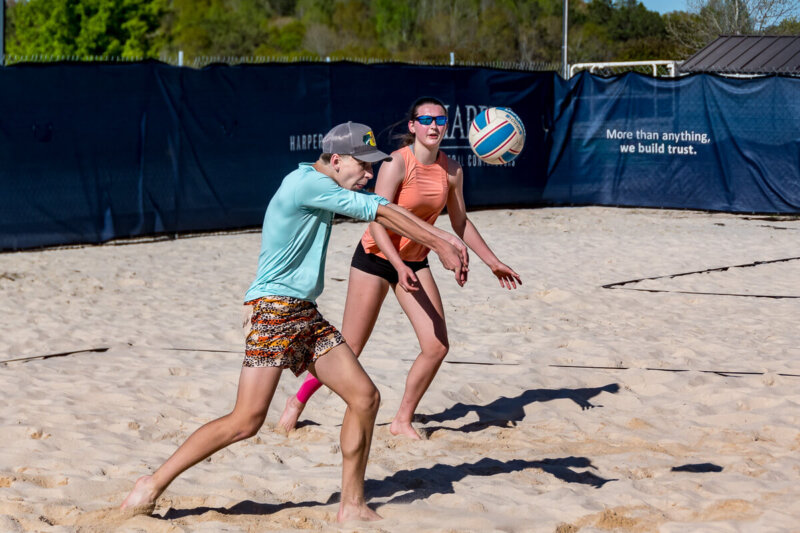
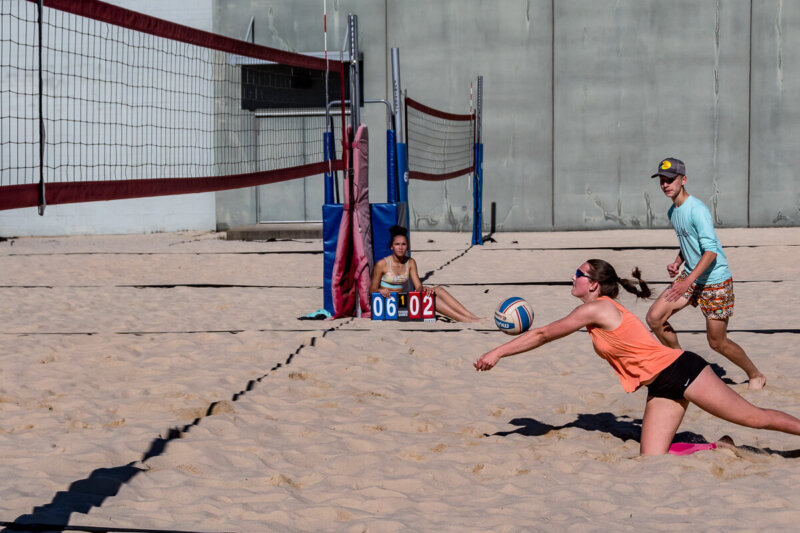
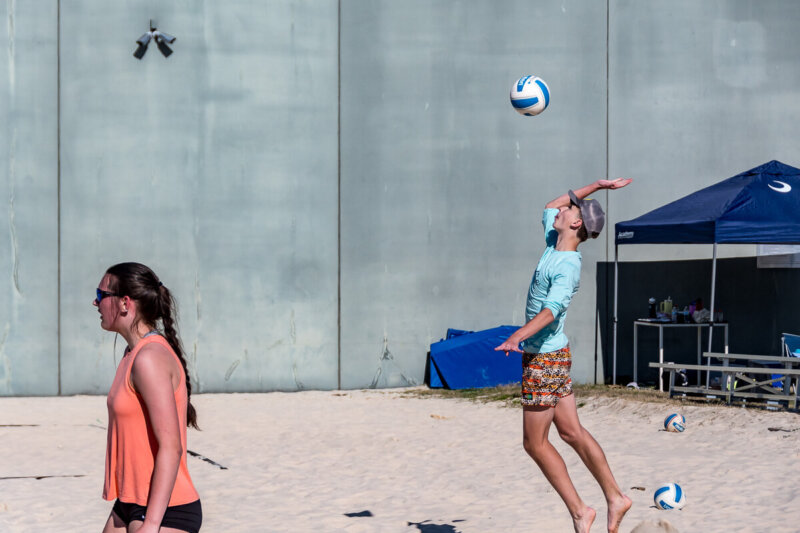
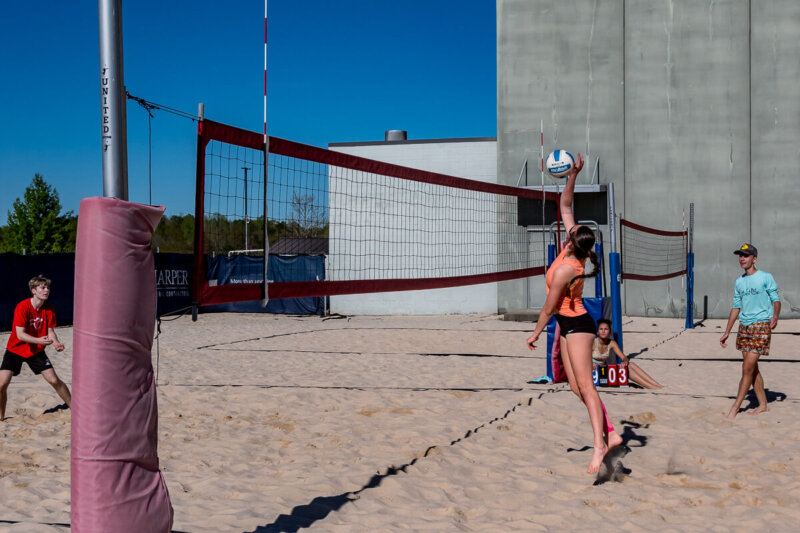
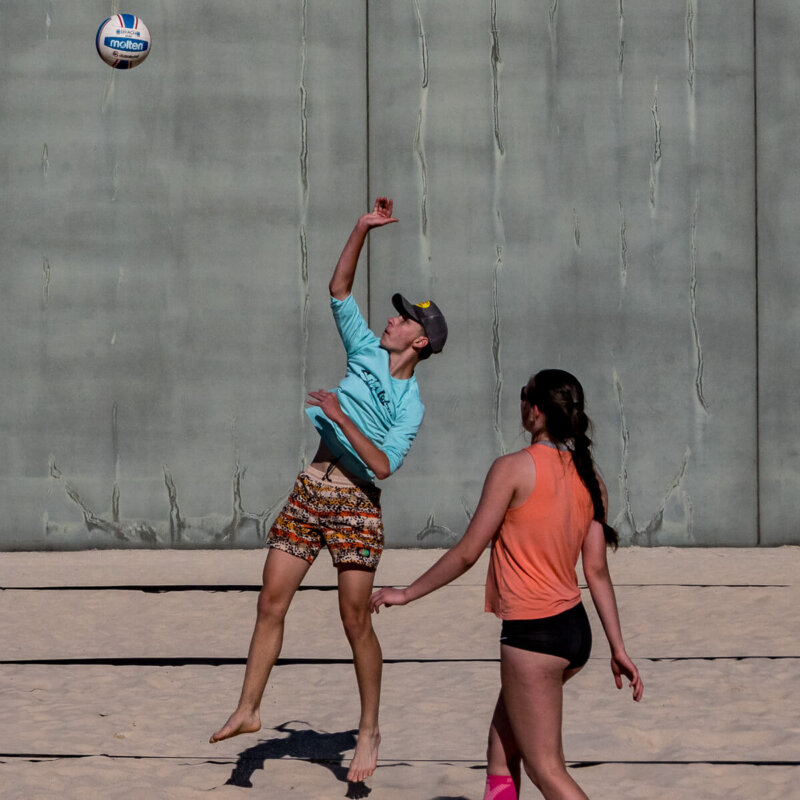
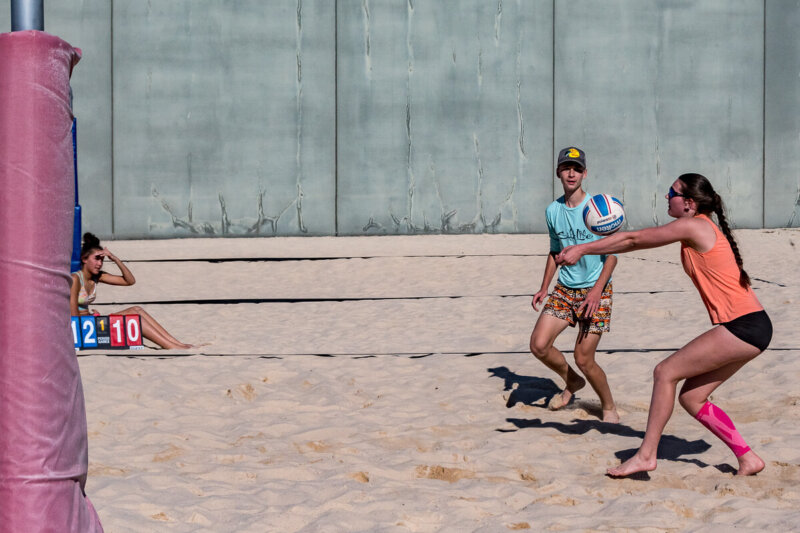
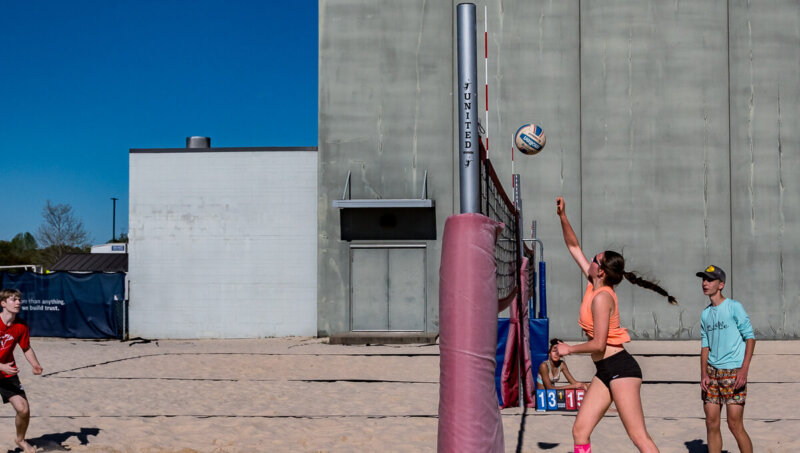
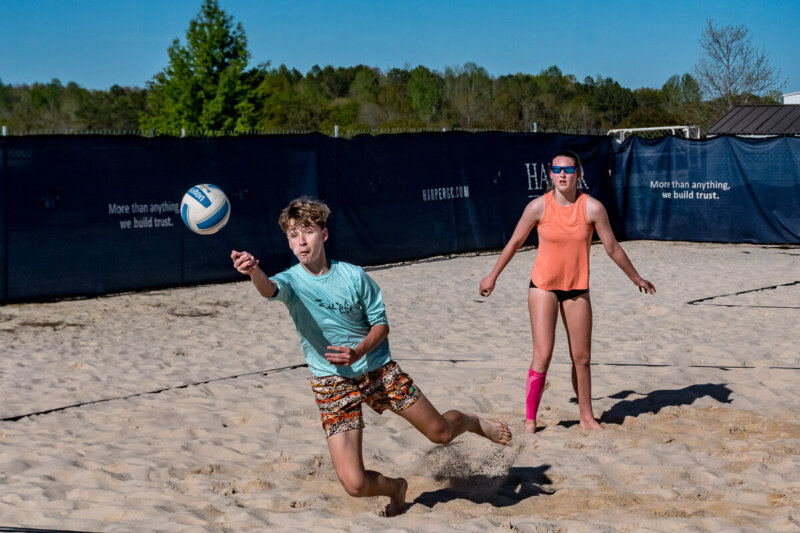
The Girl and the son of our dearest Polish friends — two kids who always argued when younger — played in a short sand volleyball tournament. L had just finished up a track meet, winning the high jump and placing second in the javelin, so she was a bit tired, I thought.
“No, I’m fine,” she insisted.
Youth…
We had our first of two tournaments during this spring break week today — at least, the pool play was today. Our girls are the number 4 ranked team in the tournament, and they were the highest-ranked team in their pool. They faced off first with a team from Myrtle Beach and dispatched them quickly: 25-12, 25-9. The Myrtle Beach team, ranked 18th in the tournament, just didn’t seem like they had their act together at all.
After a short break, they faced their second opponent, a team called Xcell, ranked 22. Our girls finished them off in straight sets as well. During the next break, the Myrtle Beach team played the second-highest-ranked team in our pool, a team from just north of Charlotte. They lost the first set 17-25 but won the second set 25-22. They dropped the third set 13-15, and I found myself thinking that if a team we beat 25-12, 25-9 took a set from the team from Charlotte, we shouldn’t have too much trouble with them.
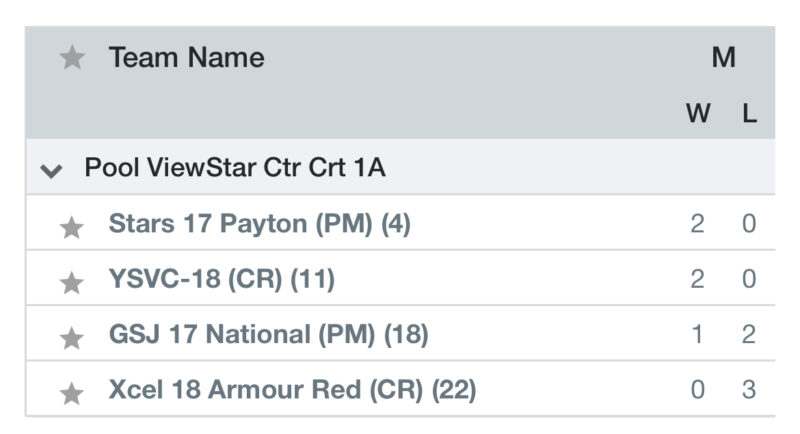
After another game, our girls faced off against them, the two undefeated teams in the pool. The first set was close for the first ten points each or so, but then our girls started pulling away and ended up winning 25-19.
The second set, our girls started falling apart a little, and then a lot. Soon, they were down 6-13. K was watching a stream of the game from home, and she went to the laundry room to do some work. Our girls decided to get some work done as well and went on a 10-1 run. From that amazing 16-14 comeback, they just kept plowing ahead, winning in the end 25-20. That means from 6-13 to the final 25-20 result, our girls went on a 19-7 run.
So they were the only undefeated team in the pool. They’ll start tomorrow in the early afternoon.
And the shocker: I decided not to take a camera today and simply enjoy the moments.

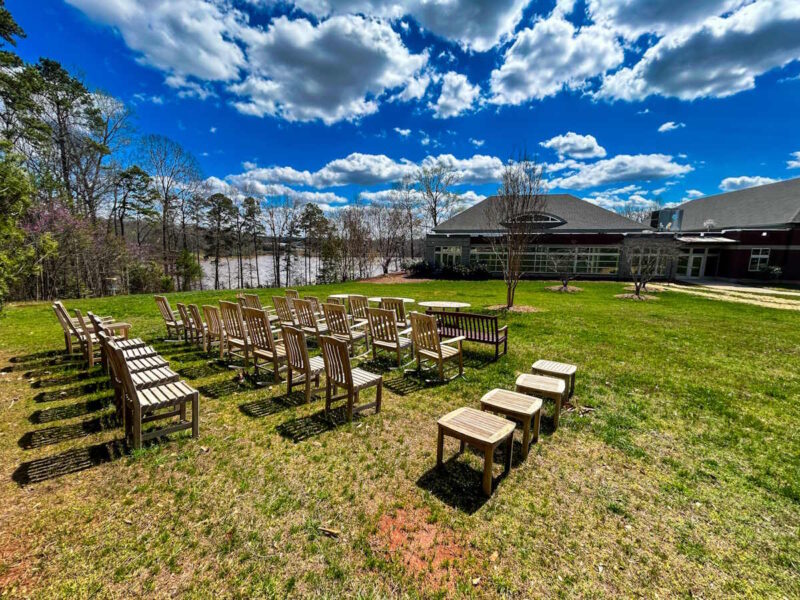
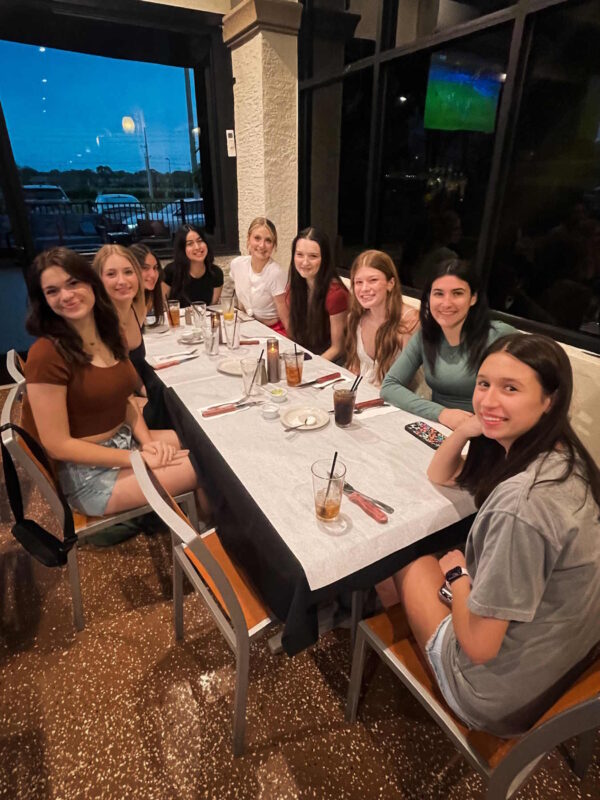
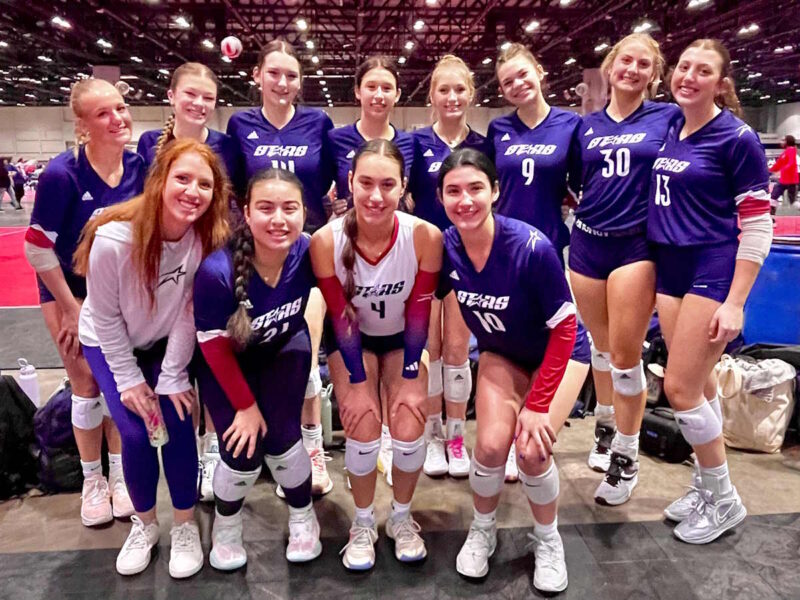
The girls spent the weekend in Orlando at the — guess! You’ll never guess — Sunshine Qualifier volleyball tournament, and K was sending me pictures the whole time, but I neglected to post them here.


“This might be the last time you’re here,” L told K when K was talking about all the food options there, “so enjoy it!”

Last time K is there? Well, I am taking her to Nationals in Orlando in June, but what about next year?

Truth be told, this might very well be the last club season for us. If L doesn’t get a volleyball-based scholarship, there will be very little motivation to spend the time and money next year. Does this mean she’s giving up on her dream? Not really—academic scholarships have always been more likely (the girl is ranked 11 in a class of 400+ students) and she’s never experienced anything other than success in school. I think her lowest grade of high school is a 94 or 95.



A 2-0 win, so now the team is 1-1-1.
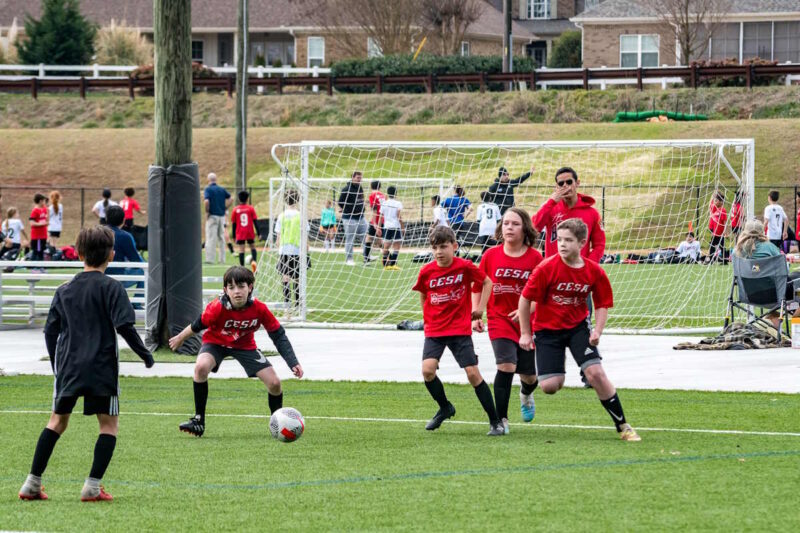
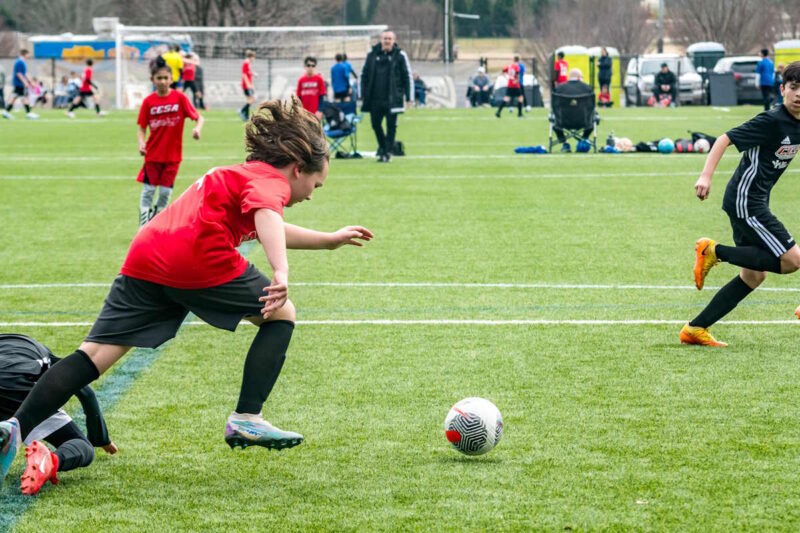
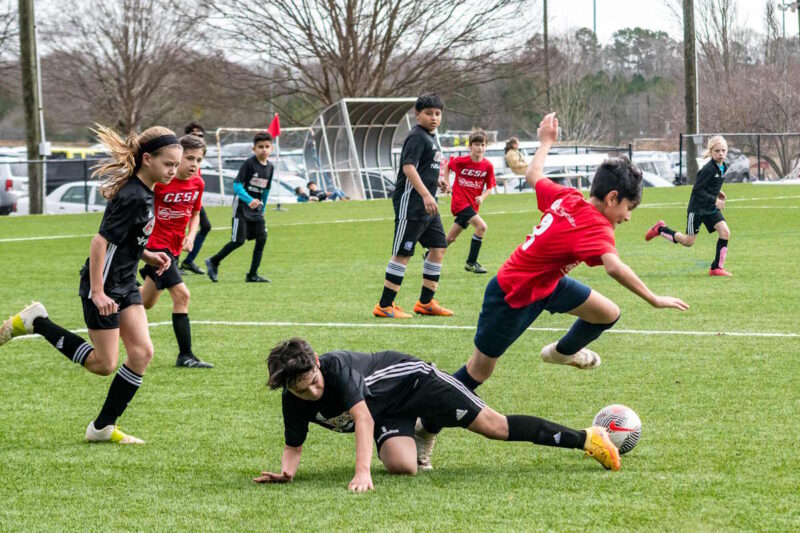

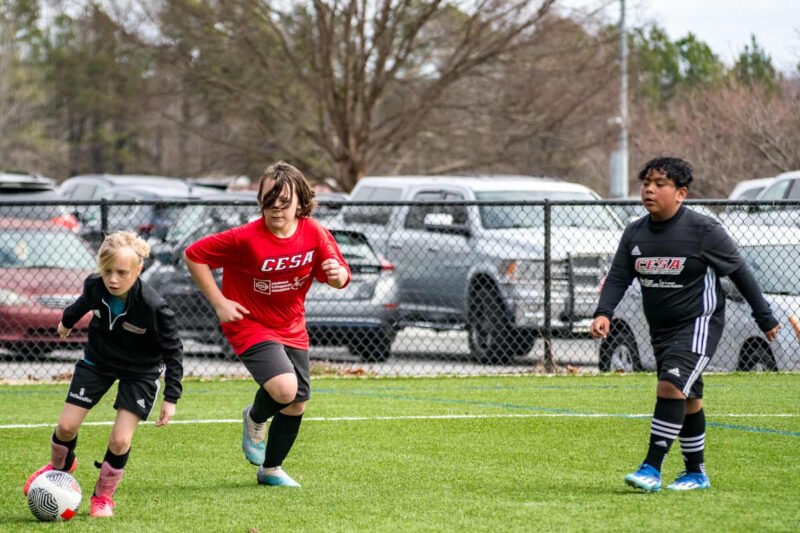
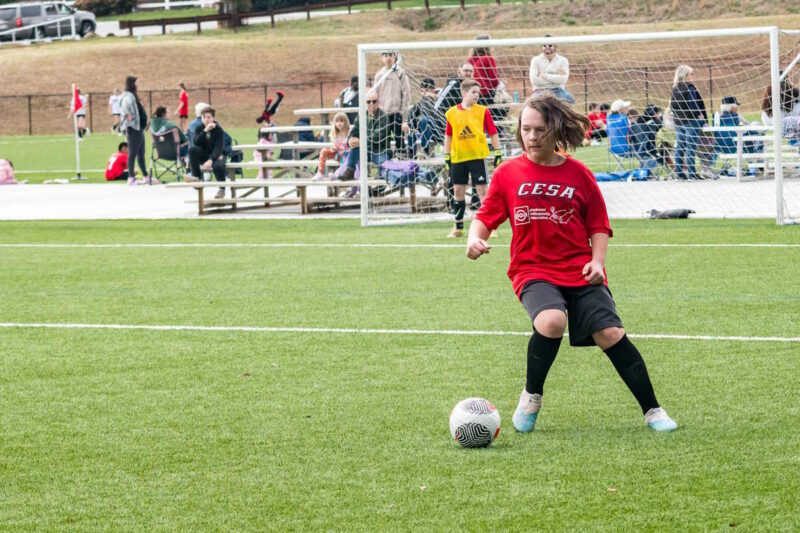
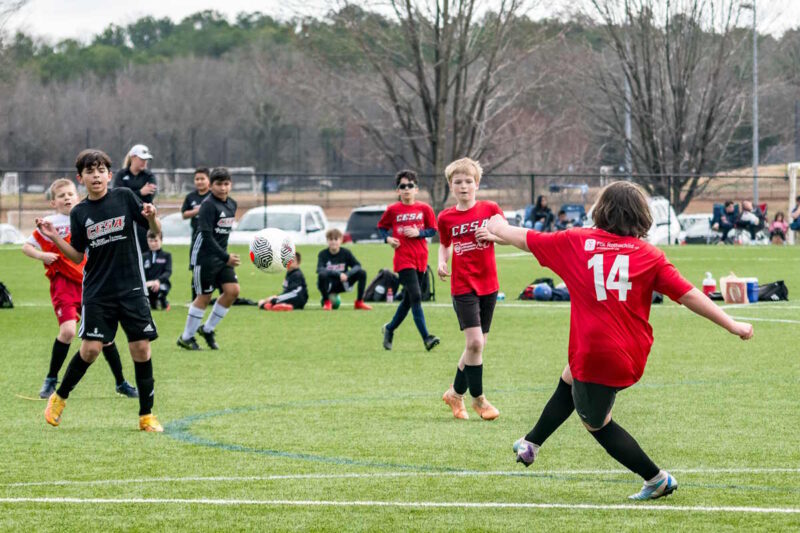
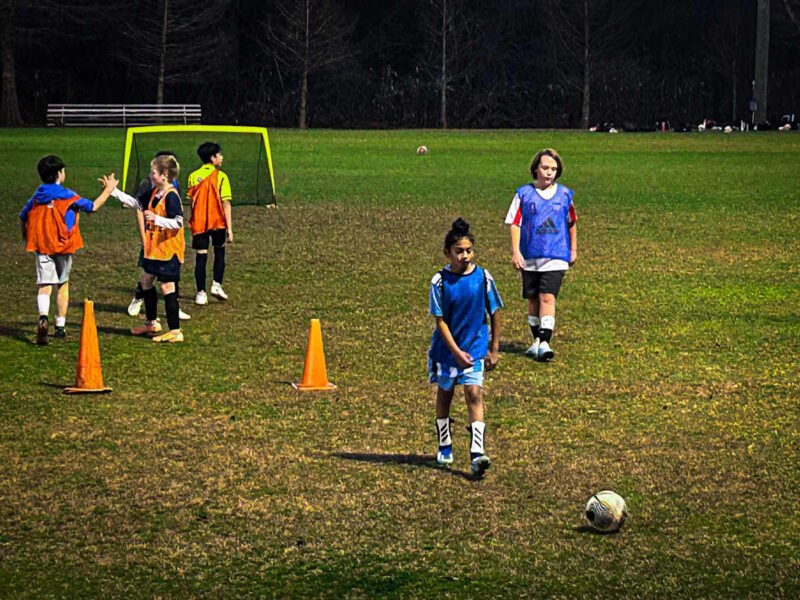
We’ve begun yet another season of soccer. We managed to get the Boy with the same coach he had last season, which made his day; several of the same boys rejoined the team as well, which made his day even more.
We received a new student on our team today: a fifteen-year-old boy from Central America who doesn’t speak a word of English and has not been in school since the first grade.
I have reservations.
I’m not fussing about any extra work entailed by having such a kid in my classroom. I’ve already got two complete-non-speakers and a fourth kid who barely speaks English. My reservations are about how effectively I can really help these kids. They are, of course, in my lowest level classes, which means there are a lot of behavior issues in those classes. I’m supposed to create a new curriculum for these boys because they’re so low with their English that modified materials don’t do anything for them in my class. In science, yes. In math, certainly. In social studies, a qualified yes. In English class, though? It’s impossible just to modify the curriculum. This newest student is illiterate in his first language: I can’t modify my curriculum that includes standards like “Determine one or more themes and analyze the development and relationships to character, setting, and plot over the course of a text; provide an objective summary” and “Determine the figurative and connotative meanings of words and phrases as they are used in text; analyze the impact of specific word choices on meaning and tone, including analogies texts.” You can’t do this with pictures. Besides, I struggle teaching the native speakers these things because of their low motivation — teaching a non-English-speaking student with the aid of pictures? Not going to happen. So I’ll have to invent a curriculum for these boys.
Is that type of teaching really in these boys’ best interest? Wouldn’t a part-time immersion with classes like gym and art coupled with a couple of direct English instruction courses be more effective? The people at the district office downtown will say, “No, the data don’t support that.” But I think that’s bullshit. I know from my own experience in Poland that dumping me into an environment where I didn’t speak the language without any direct language instruction would have only frustrated me, and that’s with me being 22 years old at that time. If I were only 14 in such a situation — forget it.
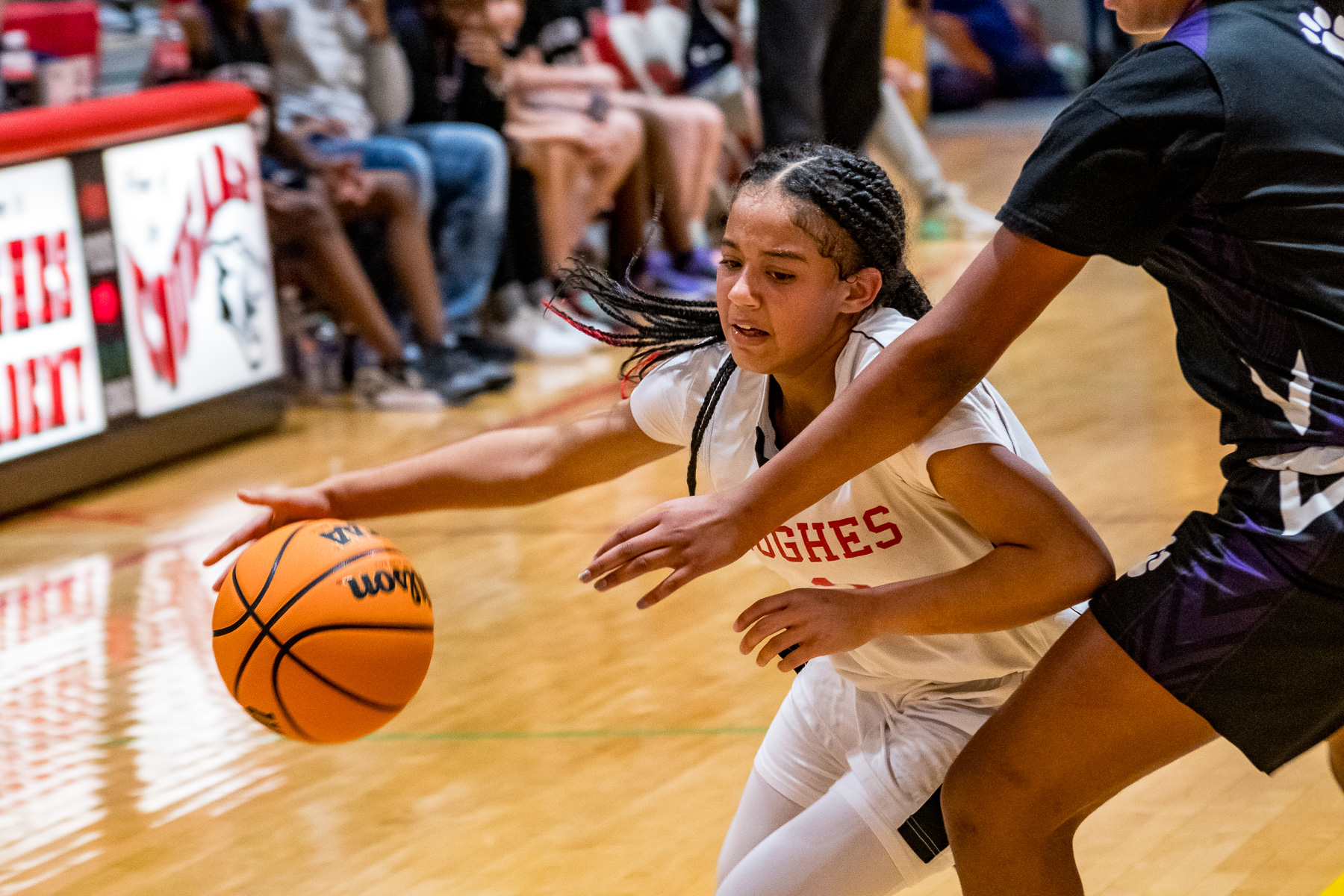
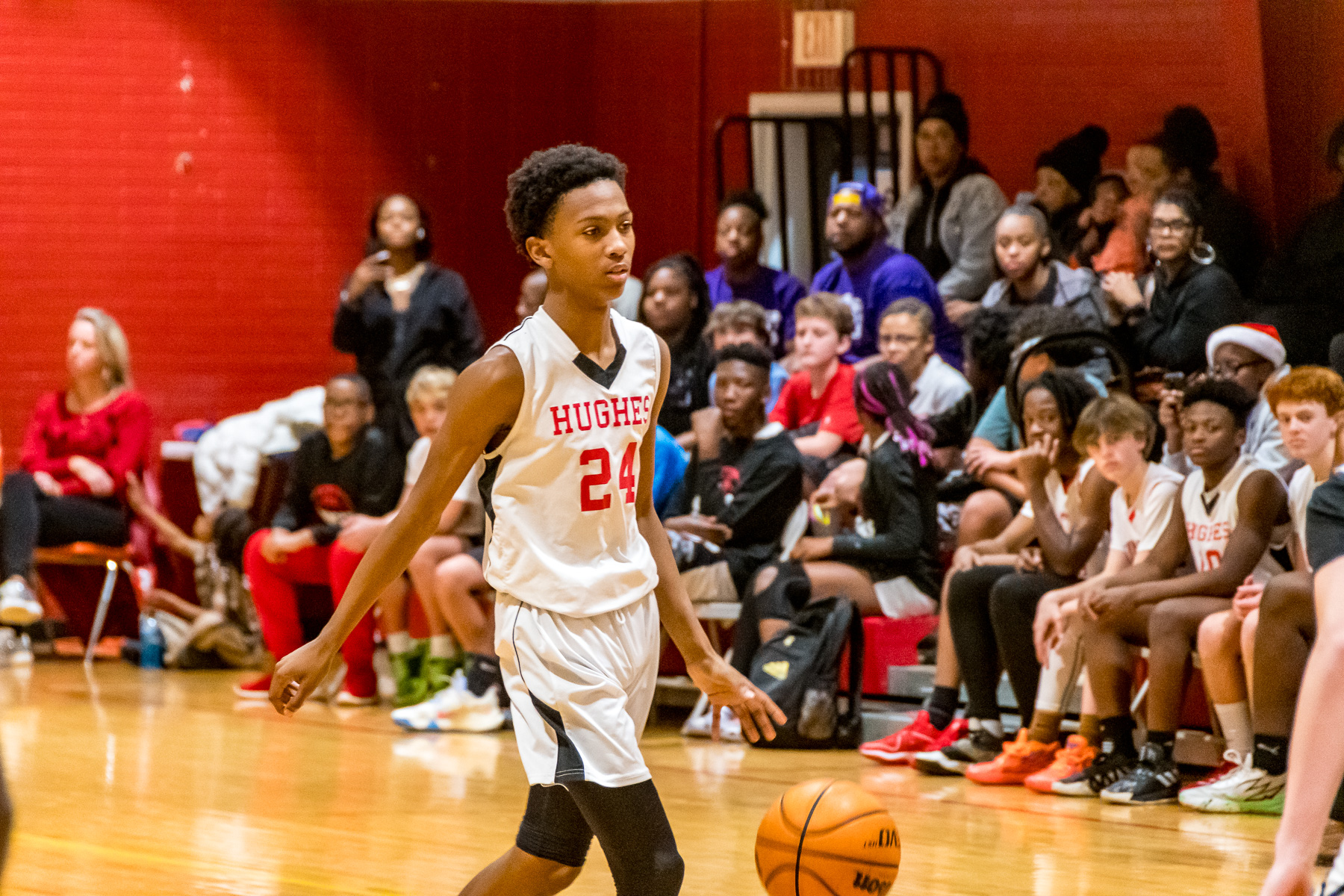
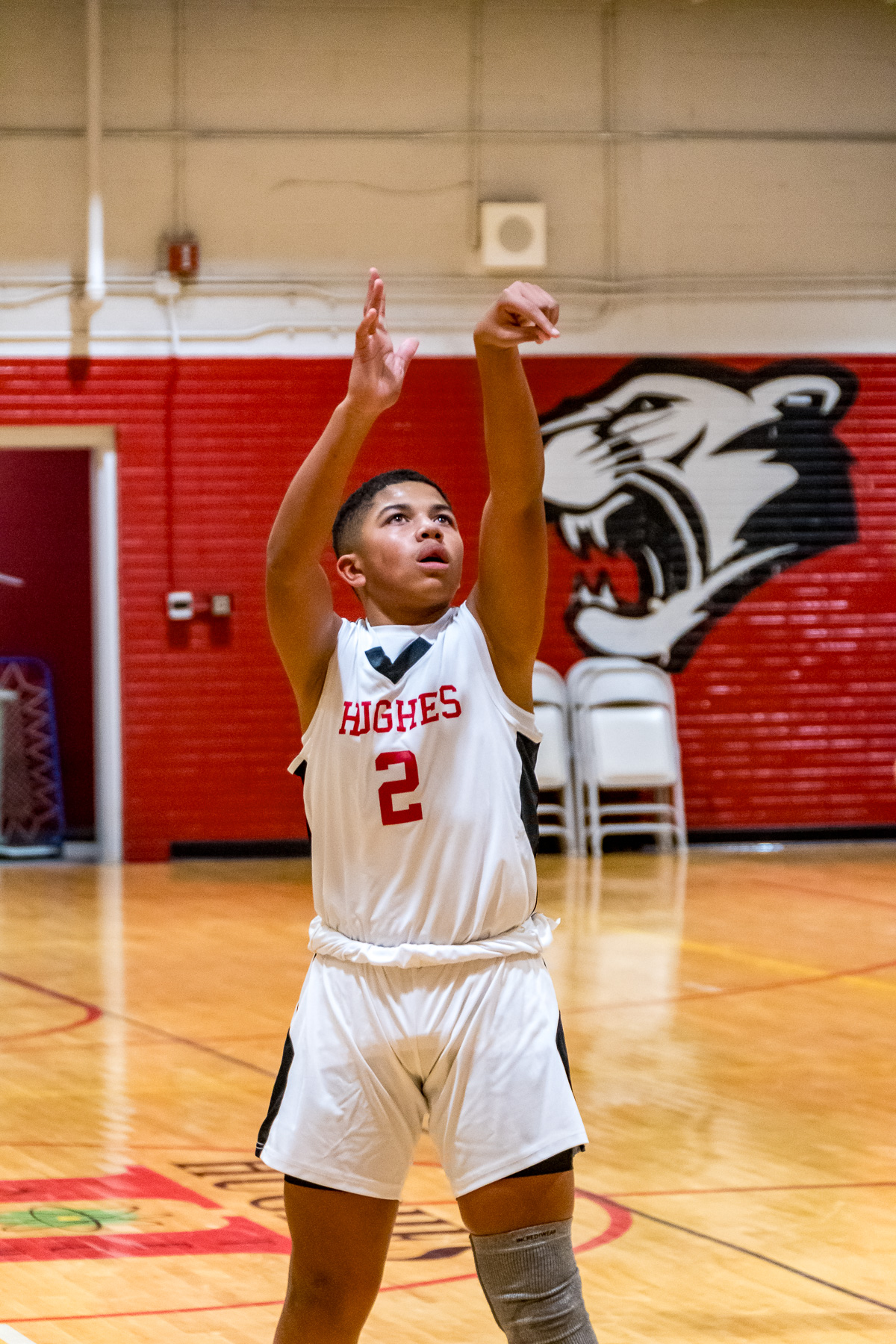
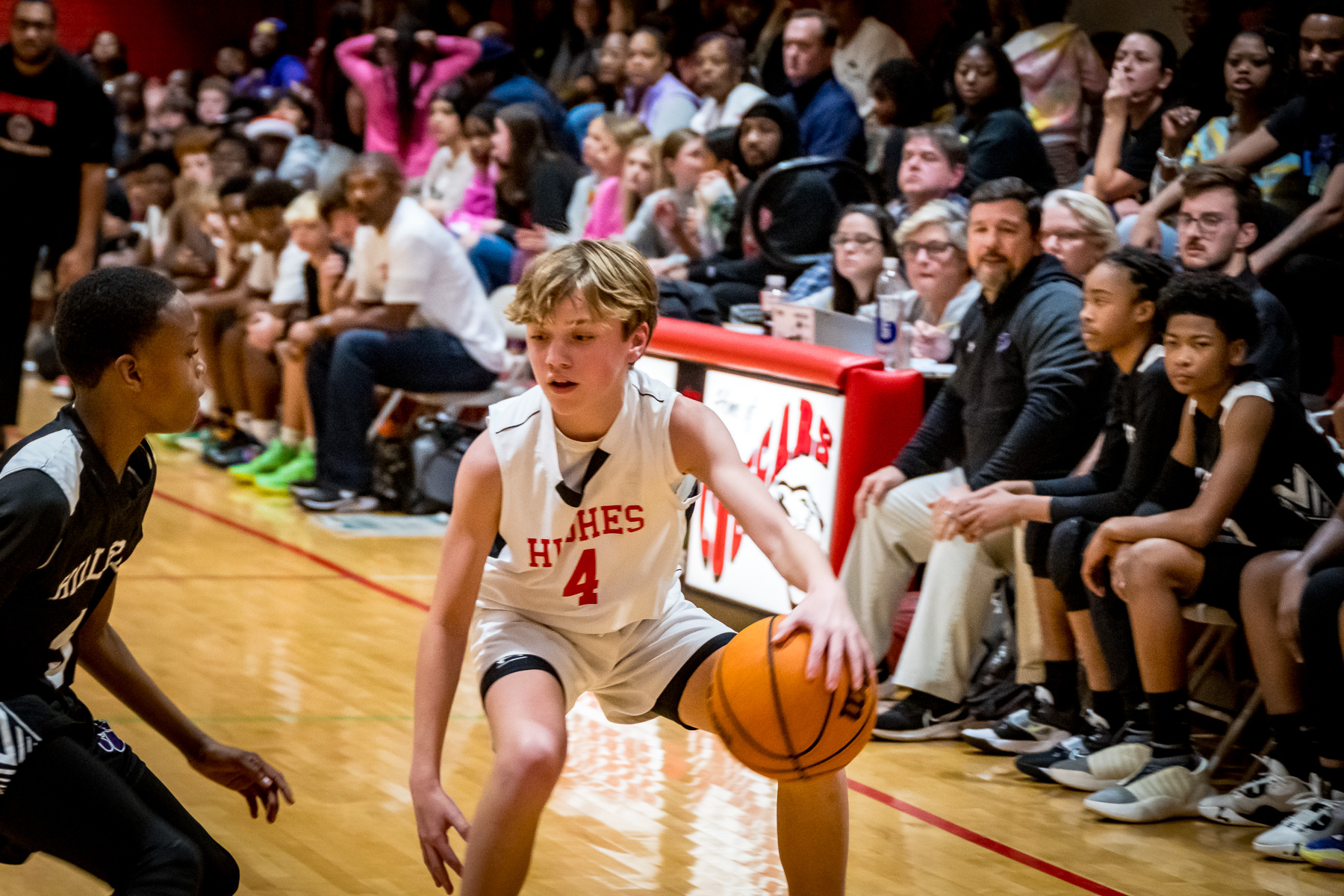
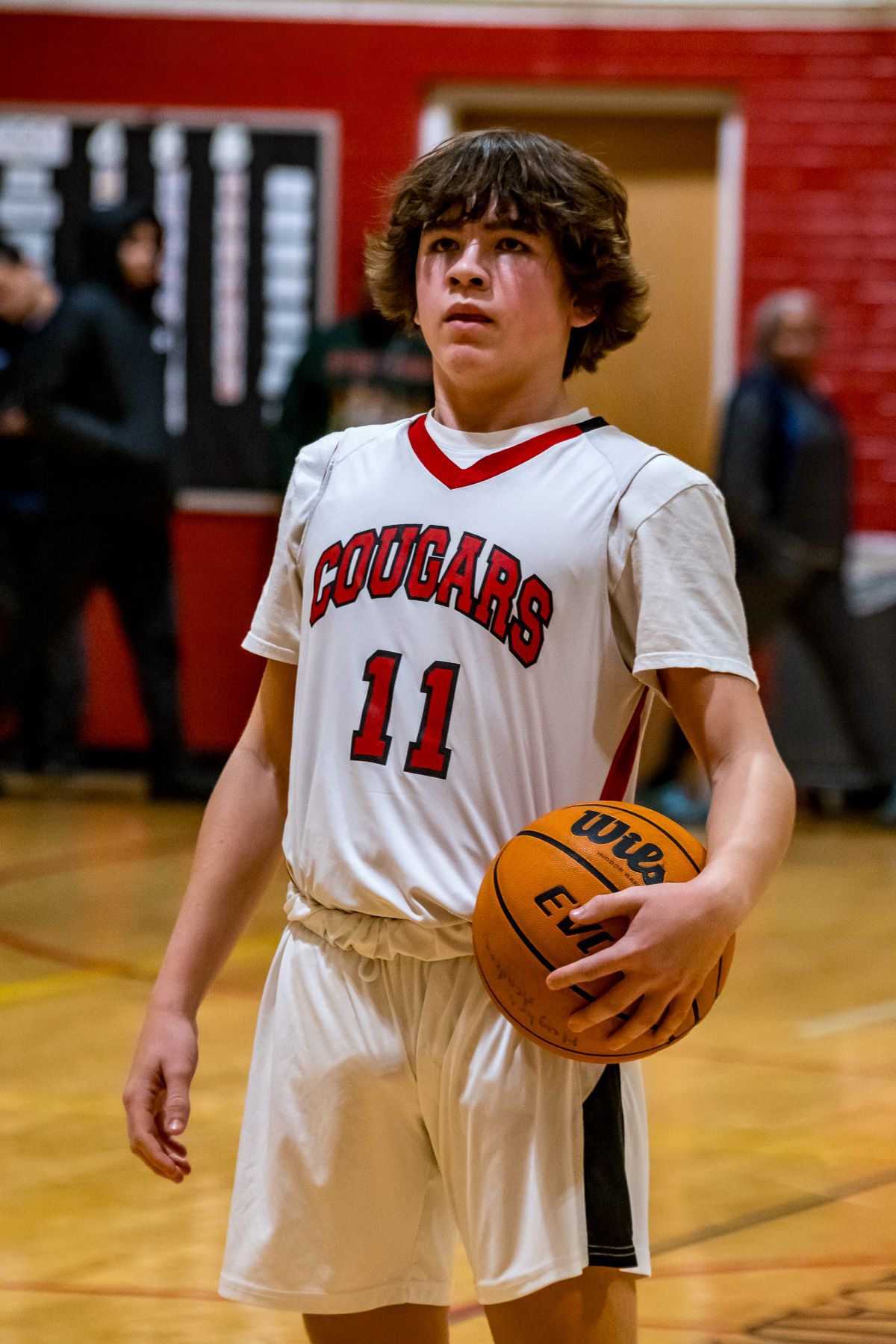
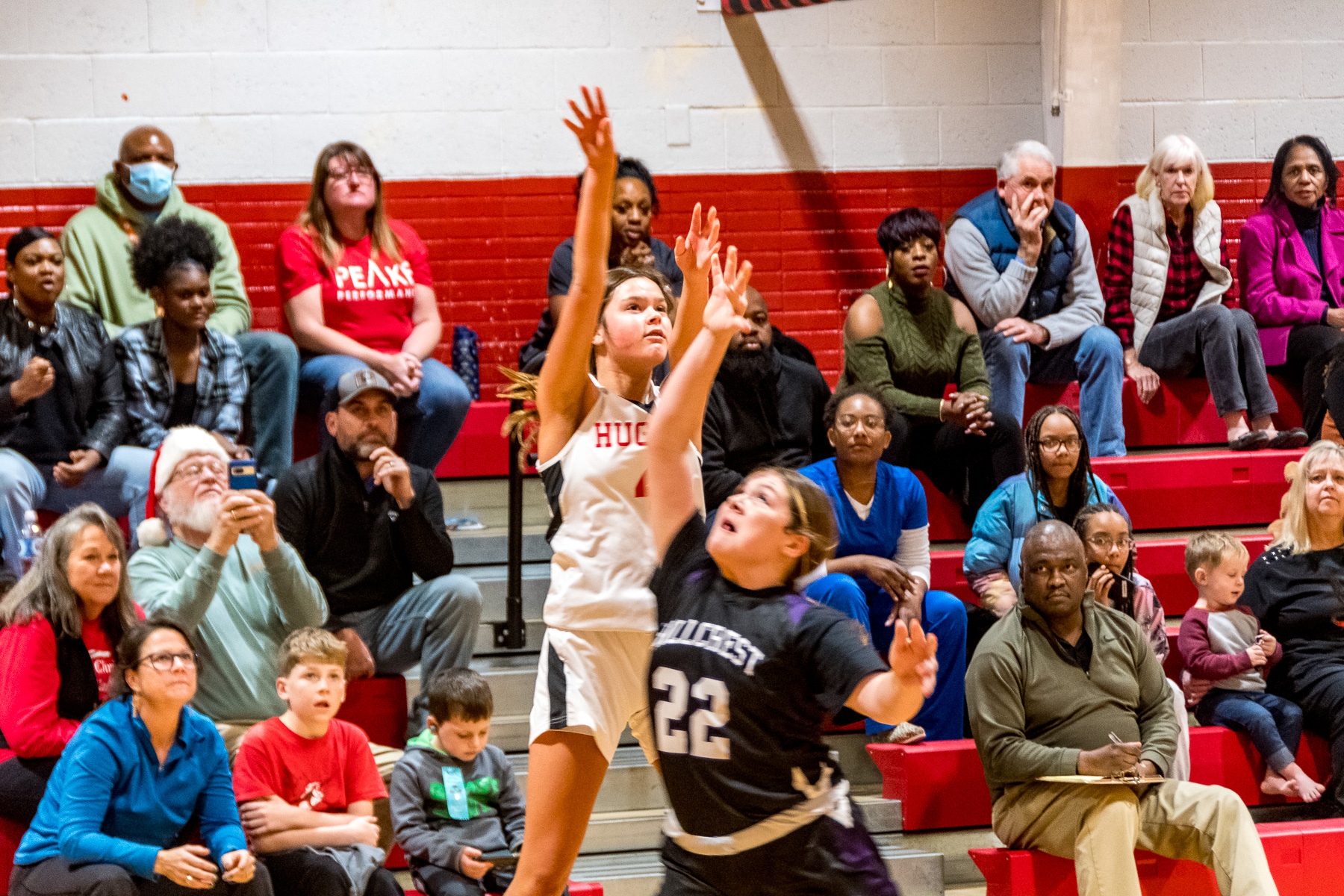
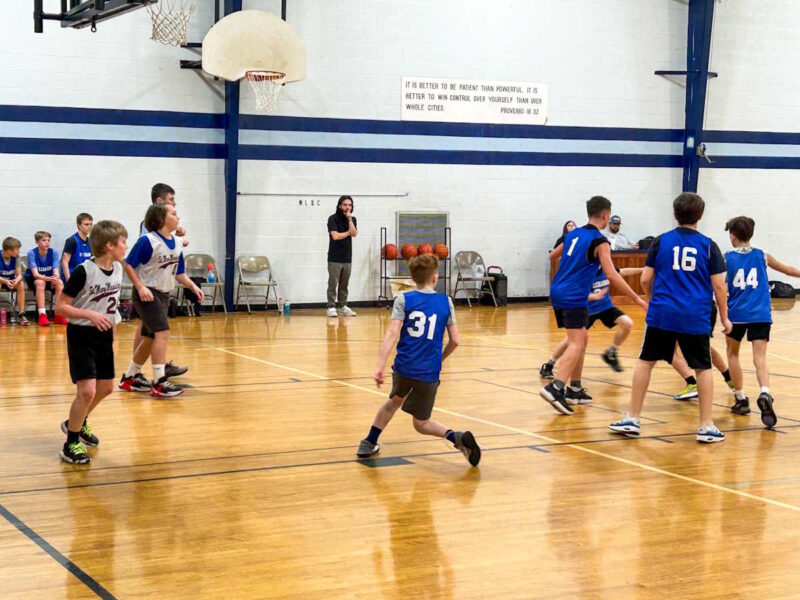
The Boy’s church league basketball team had their last game this evening, which sadly they lost 22-30. It was a tough season: they went 1-8. But it wasn’t the losing that bothered the Boy so much; it was the unsportsmanlike conduct so many of the players on the other teams exhibited. Tonight, for example, there was one boy who screamed at every shot attempt our team made in an effort to distract our boys.
I had some choice words to say in texts to K about this kid’s behavior.
“Just keep your cool,” she gently reminded me.
“Of course — he’s just a kid,” I replied. But that type of behavior doesn’t come from nowhere. Either his parents never tried to correct him because they saw nothing wrong with it, or they actively encouraged and/or taught him to behave like that.
Were I to coach such a kid, I’d tell him and his parents, “Look, if you do that, I bench you for the quarter. You do it again, it’s for the rest of the game. And every time after that, it’s for the rest of the game.”
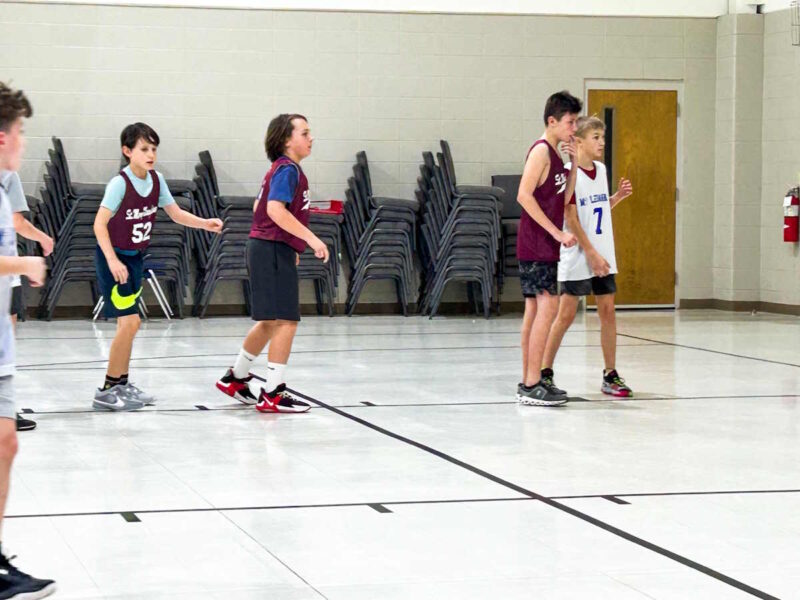
The Boy’s inherently empathetic outlook on things means such behavior would never enter his mind. Was that something we had to teach him? I guess we did, but I don’t remember doing so, and I suspect his empathy would lead him not to do that even if we didn’t explicitly teach him that.
The Boy’s team finally got their first win of the season today, and the Boy scored.
Things are returning to normal. The Girl’s GI issues seem to be slowly diminishing, and the Boy seems in better spirits.
Babcia is, as always, Babcia: always (almost) happy and smiling (until she gets to talking about Polish politics — don’t get her talking about politics).

After a good breakfast, L and I headed to Rock Hill for the second day of the weekend’s tournament. The Girl helped out with warmups and was the biggest cheerleader on the bench.
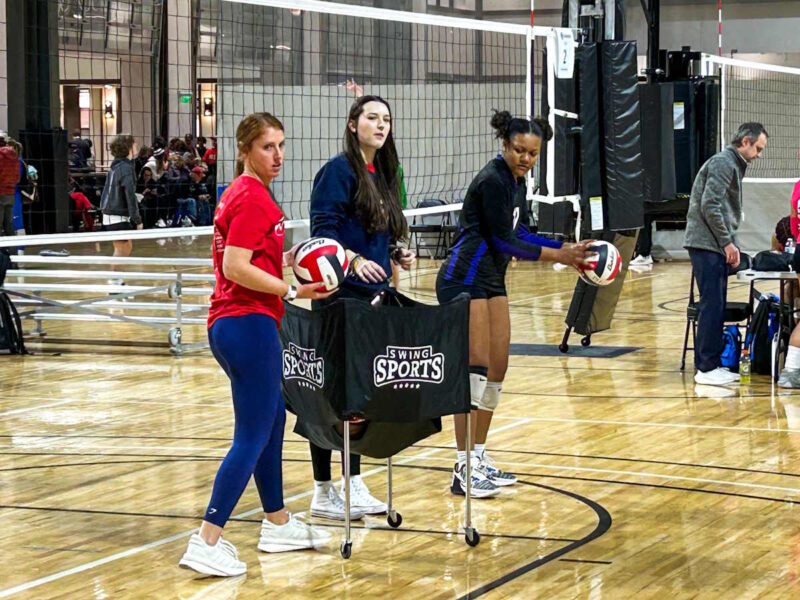
Their team made it to the final in the gold bracket — meaning in essence, the final for the whole tournament for their age bracket — and it was against another team from the same volleyball club. Since it, too, has a strong religious foundation (like last year’s team, but this club seems to be less interested in meddling in the private lives of the coaches like last year’s team, which fired the Girl’s team’s coaches — in the middle of the season — because they were living together out of wedlock — the shame!), the two teams circled up and prayed before the game.
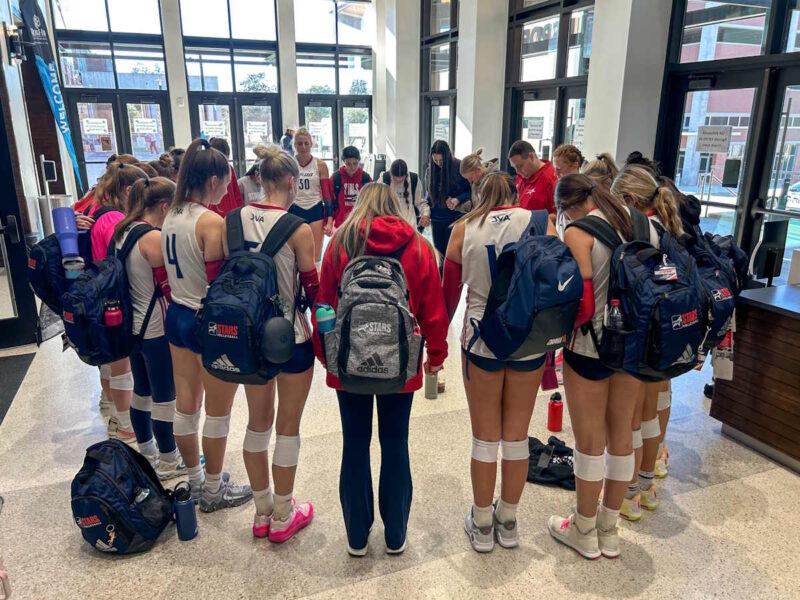
This team has beaten the Girl’s team badly once this year, but they were confident. Still, they’re kind of a family, I think: instead of simply giving each other low fives under the net, they popped onto the same side as our girls and there were hugs all around.
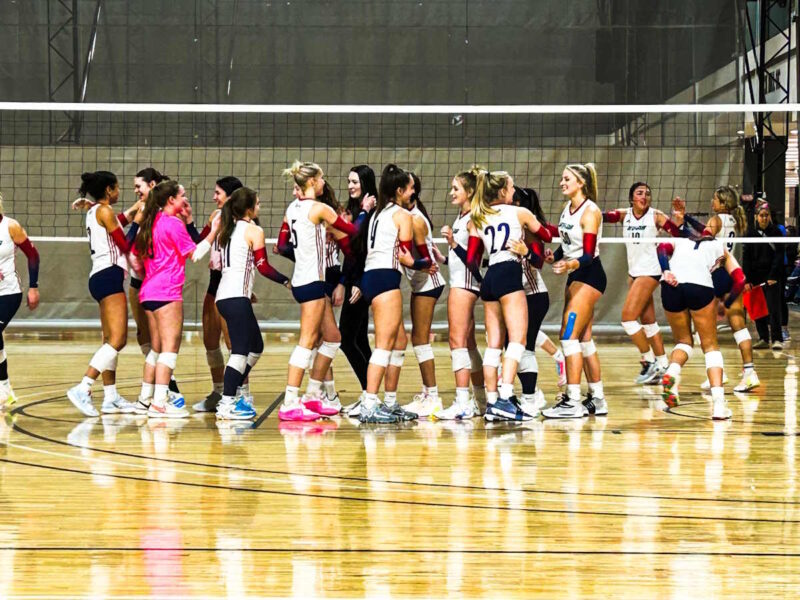
Our girls jumped out to an early lead in the first set and won it 25-21. The second set was a different story. They trailed by two for most of the set, but suddenly, it was 13-17. Then 13-18. And then 13-19. In the end, the lost 16-25.
The third and deciding set (which is only to 15) they were neck and neck until it was 8-8. Then three quick mistakes and they were down 8-11. Then 8-12. I was pretty sure it was over, the they rallied and evened the score at 13. They were up 14-13 when one of the other team’s hitters blasted a shot that was initially called out. Our girls celebrated; the parents were screaming. And then the call was reversed: there had been a touch on the block. 14-14. And how did it end? The girls rallied again and won 16-14:
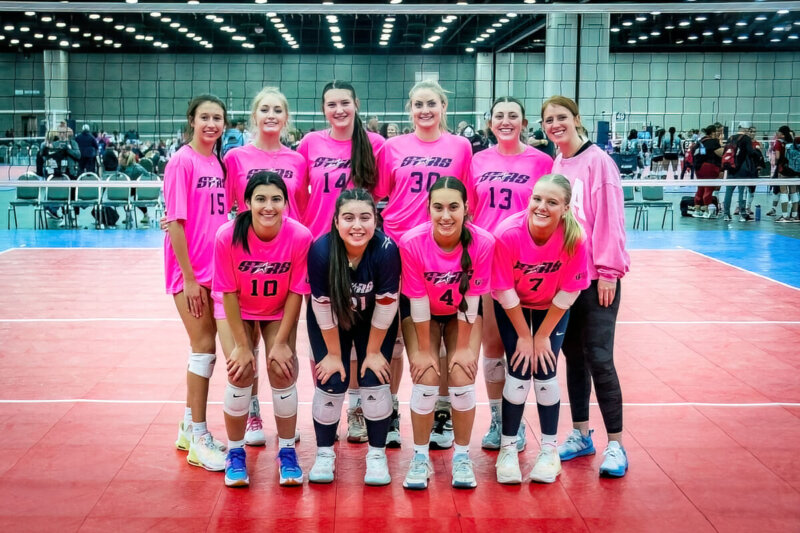
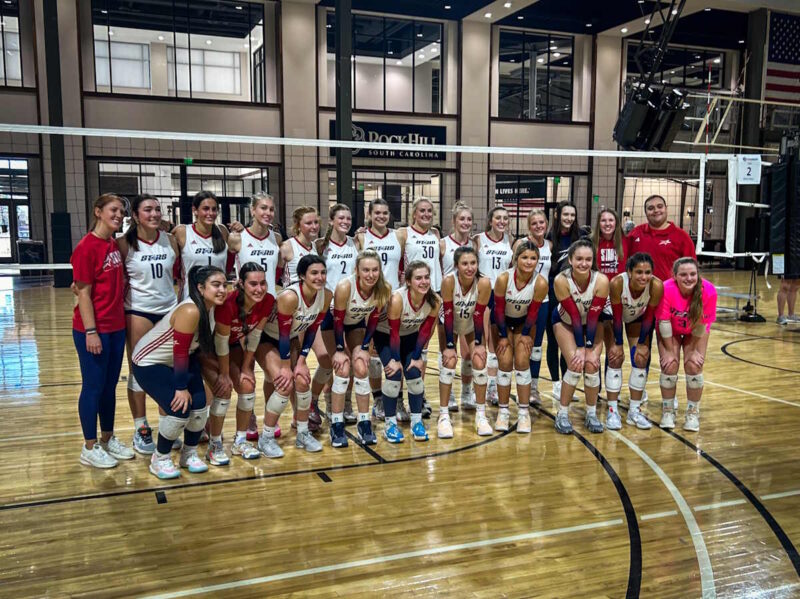
And afterward — a group picture with both teams.
K, the Boy, and Babcia, meanwhile, were having a fine day as well.
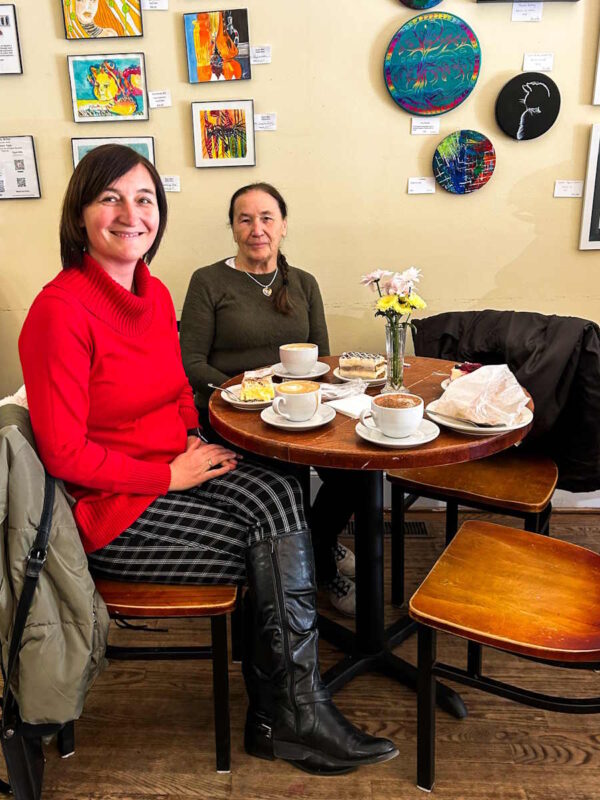
After church, they went to a relatively new cafe: Old Europe Cafe. The consensus among the Polish community: a nice cafe with a real Krakow-cafe feel.

Afterward, a walk in our lovely Falls Park.

In the evening, the Boy and I played cars a while — again. Just like old times.
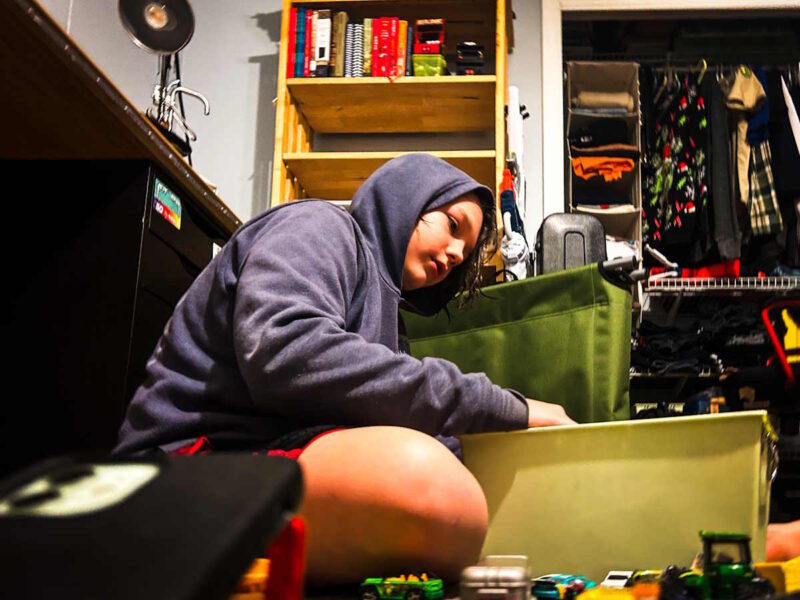
The Boy’s team is in the midst running drills when I walk in. They’re going one-on-one from the top of the key. When it’s his turn to take the offensive drill, he dribbles in, picks up the ball quite far from the basket, and tries to lob it over the defender. An air ball. And I can see the disappointment and disgust in his face.
He heads back to the backcourt line (I think that’s what it’s called) and stands in line for his next turn, but he seems to let anyone in front of him who wants to take an earlier turn. And there are plenty who want to.
Eventually, he drifts into the background as others excitedly take their turns, and he ends up leaning against the wall and watching the others. He pulls on his hoodie and sits down.
Later, when they’re scrimmaging, he does the best he can with the knowledge he has, but the truth is, we never watch basketball so he’s got nothing to imitate. And I really know very little about the sport, so I’m of little help to him. He does his best, but it’s clear the other boys have had lots of experience playing basketball in their neighborhood.
“I never get passes,” he’ll say later in the car. “Because I’m just not as good as they are.” All he sees are his deficits, and the lack of inclusion from other boys confirms it in his mind. When he does get a pass, it’s like he wants to get it out of his hands as fast as possible.
It’s tough to watch: I can certainly relate. I was never that confident when I found myself playing basketball, and I hated playing with those who were much better. I, too, felt I was out of my comfort zone.
But the Boy soldiers through, going to each practice, giving it his best show.
“I admire you for that, buddy,” I tell him on the way home.
“Thank you,” he says, then adds after a moment, “I don’t think basketball is for me.”
On the way to the basketball game, the Boy makes a comment about how many churches are around, and then turns the discussion to religion, remarking that Jesus has been dead 2000 years and has still not returned.
“Two thousand years is a long time,” he suggests.
I simply agree.
He continues: “How do we even know that all that stuff happened?”
“What do you think?” again trying to remain non-committal.
“Well, they say they were there,” he suggests.
“How do we know that?”
“Because that’s what they wrote.” He stops to think about it for a moment and then asks, “But how do we know those documents are authentic?”
The short answer is, we don’t. The Gospels, despite the purported authorship the Bible affixes to them, are anonymous. Those names — Matthew, Mark, Luke, and John — appear only in documents from the third or fourth century if memory serves. But I say none of this. Instead, I simply respond, “That’s a very good question. What do you think?”
“Well, all the Christian scientists trying to prove that are biased. They want to prove it.”
For a moment, I think, “Wait, how did we get onto the topic of Christian Science, but I realize quickly what he means: he’s referring to apologists and Christian New Testament scholars who consistently make the arguments that support Christianity, explaining away the problems like the one of the gospels’ anonymous authorship. But his point is very salient: apologists are indeed biased. They are not seeking truth as much as seeking ways to buttress Christian belief, and many skeptics suggest that apologists are almost exclusively preaching to the choir, so to speak, giving believers answers to questions they might have rather than providing skeptics with evidence to overcome their skepticism.
These are all very good questions that will lead to some answers that might lead the Boy away from church teaching, but I am trying my best not to provide any answers.
We get to the game and immediately see what we’re up against: a bunch of guys eighth graders who are enormous and merciless. They tower over most of our boys.

Their brutality comes from the coach down: They begin applying full-court pressure in the second half when they already have a significant, and they would only begin doing that (I think) because their coach has instructed them to do so. Every time the opposition scores, the coach whoops and hollers like it’s the greatest comeback in history. The final score is 13-22, and I hear the say to his team, “That was okay, but you missed a lot of easy baskets.” Translation: “You beat them badly, but you should have beaten the —- out of them.” At least that’s how I interpreted it as an objective observer…

The Boy’s team is now 0-2, a depressing start.
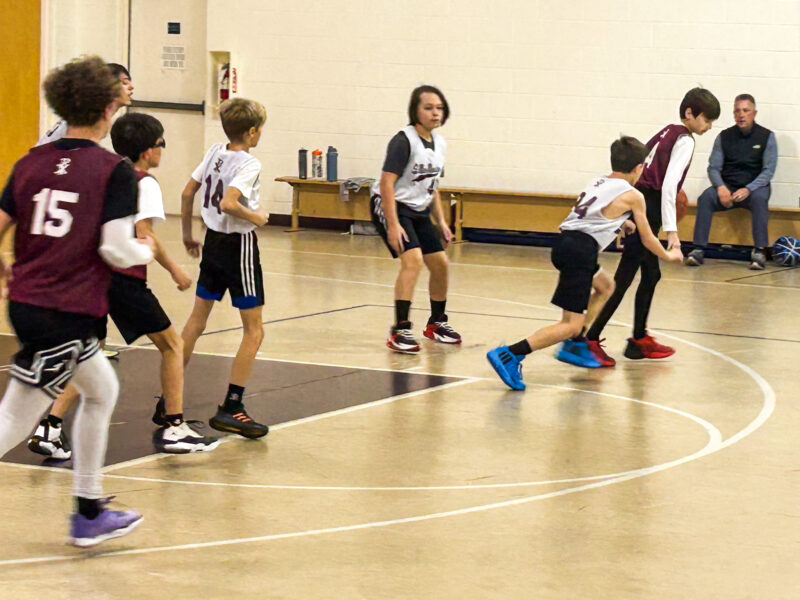
Today’s game was rough: it wasn’t that we were outplayed, but none of the boys could buy a basket.
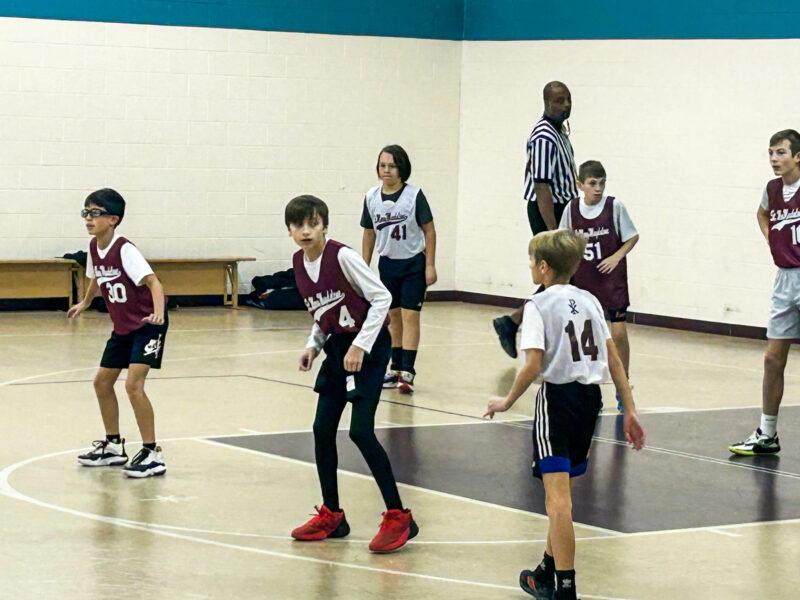
Cheering for my students — few things are better.