Matching Tracksuits

fun in fours

religion

Any posts about religion are my views alone and do not represent any attempt to de-convert anyone.

Day 49: Honking Adventure

Today was a somewhat low-key day. We went for a walk or two; we did a little work around the house; K led an in-house Mass substitute for the kids. But overall, it was a very lazy day.

In the morning, I took E on a walk with the dog. Well, I was planning on going alone, but he tagged along anyway. I was glad to have him.

"I want to hear the car honking!" he proclaimed, so we went back to the neighborhood where I'd heard it last week.

"Why do they do that?" he asked.

Why indeed. What's the point of all those "amens" and "hallelujahs"? I think it has to do with social bonding. It's like Catholics kneeling and standing and praying together, like Miloszcz said. I wanted to say, "It makes them feel good," but I didn't. And it probably isn't all that simple, either.
Clover's new ball

After the walk, I took care of a couple of little tasks left over from yesterday. I use construction adhesive to connect the landscaping timbers on which I mounted the composter to solid concrete blocks to give it a bit more weight. I wanted to make sure that, if when another flood washes through the backyard, the composter will stay put. (I also set it behind two trees, which will help break the flow of the water.) I used the rest of the adhesives on the fire pit, gluing pairs of bricks together to make it a little more solid but not completely permanent. (To be sure, I have no idea how long the adhesive can handle the heat in the fire pit before failing, so it might have been a waste of time. Still, I didn't have anything else to do with the remaining adhesive.

There was witchcraft in little Pearl's eyes, and her face, as she glanced upward at the minister, wore that naughty smile which made its expression frequently so elvish. She withdrew her hand from Mr. Dimmesdale's, and pointed across the street. But he clasped both his hands over his breast, and cast his eyes towards the zenith.

He looks up toward the heavens, and we know what will happen: he will see something; he will hear something; he will have some revelation. What's startling is the narrator's take on this:

Nothing was more common, in those days, than to interpret all meteoric appearances, and other natural phenomena, that occurred with less regularity than the rise and set of sun and moon, as so many revelations from a supernatural source. Thus, a blazing spear, a sword of flame, a bow, or a sheaf of arrows, seen in the midnight sky, prefigured Indian warfare. Pestilence was known to have been foreboded by a shower of crimson light. We doubt whether any marked event, for good or evil, ever befell New England, from its settlement down to Revolutionary times, of which the inhabitants had not been previously warned by some spectacle of this nature.

From a modern perspective, what's most interesting is the little side comment in the opening lines: "in those days." Were the people of Hawthorne's day any different? Are we any different? After all, it was the appearance of the Hale-Bopp comet that led 39 people to take their own lives.

Which is a volleyball, much to L's delight

It's really one of the many God-of-the-gaps situations: we don't understand this, therefore God. At some point, earthquakes or comets were the antecedents, the "this" which we don't understand. Science comes along, explains it, closes one gap, and believers searching for evidence of God's existence move on to other gaps. The complexity of DNA and the seeming impossibility of cosmology are the biggest gaps now, and they will not likely be closed for some time. Will science ever unravel those mysteries? I don't know. I'm not worried about it. As someone put it, I would rather have questions I can't answer than answers I can't question.

Not seldom, it had been seen by multitudes. Oftener, however, its credibility rested on the faith of some lonely eye-witness, who beheld the wonder through the colored, magnifying, and distorting medium of his imagination, and shaped it more distinctly in his after-thought. It was, indeed, a majestic idea, that the destiny of nations should be revealed, in these awful hieroglyphics, on the cope of heaven. A scroll so wide might not be deemed too expansive for Providence to write a people's doom upon. The belief was a favorite one with our forefathers, as betokening that their infant commonwealth was under a celestial guardianship of peculiar intimacy and strictness.

This problem is at the heart of all religious revelation: Joseph Smith discovered the plates that he translated into the Book of Mormon all by himself; Muhammed received his revelation alone, in a cave; Moses saw the burning bush all by himself; Mary was all by herself when the angel appeared. These revelations that started large religions later developed ways to deal with the problem that Hawthorne mentions (there were individuals who signed affidavits that they had seen Smith's golden plates in person, for example). The smaller revelations, which lead to smaller followings, don't: David Koresh alone heard God's voice. At that point, short of working miracles, how do such people convince followers?

But what shall we say, when an individual discovers a revelation addressed to himself alone, on the same vast sheet of record! In such a case, it could only be the symptom of a highly disordered mental state, when a man, rendered morbidly self-contemplative by long, intense, and secret pain, had extended his egotism over the whole expanse of nature, until the firmament itself should appear no more than a fitting page for his soul's history and fate!

Some people go further than this: David Pack, leader of a little sect of a few hundred to a couple of thousand followers, literally sees himself prophesied in the Bible. As such, he says things like "I have to be the most hated man on the planet," which he claims in one of his sermons.

We impute it, therefore, solely to the disease in his own eye and heart, that the minister, looking upward to the zenith, beheld there the appearance of an immense letter,โ€”the letter A,โ€”marked out in lines of dull red light. Not but the meteor may have shown itself at that point, burning duskily through a veil of cloud; but with no such shape as his guilty imagination gave it; or, at least, with so little definiteness, that another's guilt might have seen another symbol in it.

So it's remarkable to me that Nathaniel Hawthrone, writing The Scarlet Letter 170 years ago, created such commentary. And I wonder what he would have to say about contemporary Evangelical worship, with its rock-concert feels and amen-ing. And what he would have thought about nearly-sequestered worshippers replacing it with claxons.

First fire in new firepit

Day 42: The Sermon and the Wall

The Sermon

I went out for a walk this morning. It was sunny and warm, and everyone else was busy doing something, so I couldn't resist. Listening to The Brothers Karamazov as I walked, I heard an amplified voice over the reader's voice. Sometimes, when the conditions are just right, we hear the announcer at the local high school's football games. Of course, there are no such games now, and there wouldn't be any on a Sunday anyway. I paused the recording, stopped walking, and listened carefully. It took a moment, but I realized that it was a preacher delivering a Sunday morning message to the faithful as they sat in their cars. Drive-in church service.

As I walked a little further, I heard a little later furious honking coming from that direction, as if twenty or thirty cars were all randomly honking their horns. I took the earbuds out again and listened for some time.

Through the trees, I heard, "But we don't have to fear death! Christ Jesus has conquered death!" Fairly typical evangelical formulation. "Isn't that wonderful?" And then the horns began again, and I realized what was going on.

"They're honking their amens," I muttered to myself.

The Wall

The kids have taken the back corner of the house as their practice area: the Boy kicks his soccer ball against the wall; the Girl uses it for volleyball. They decided to use chalk to make some targets to practice accuracy.

The Girl had it all planned out. Colors, target shapes, everything. And then the Boy "messed it all up," using colors at random for no other reason than wanting to use that particular color. And so they cleaned it and began again.

Passing

I learned this evening that the pastor who led our local little congregation of the WCG when I was a teenager died recently. Nana and Papa had heard years ago from their connections that the man had Alzheimer’s or some other form of dementia, and that’s what one obit said about him:

R spent his life in the ministry, lastly in the Living Church of God. Due to his ailment, he was retired but continued to attend until his condition did not allow him that freedom.

The church I grew up in held some fairly heterodox beliefs, including the one that its members (at most 150,000 worldwide) were the only true Christians and everyone else, unbeknownst to them, was worshipping Satan and through his “counterfeit Christianity.”

When I read Peter Berger’s work on the sociology of knowledge (especially his books The Social Construction of Reality and The Sacred Canopy: Elements of a Social Theory of Religion), I felt he’d looked directly into my youth and described what I’d experienced. When you hold a view that’s in the cognitive minority, Berger explained, it’s difficult to maintain that view. Everyone else says you’re wrong. You either adopt the prevailing view or you insulate yourself with what Berger called plausibility structures — rituals and such that reinforce the heterodox ideas you hold and make them seem plausible in the face of a majority who says you’re wrong. One of the most basic plausibility structures is the cognitive ghetto: you isolate yourself from others physically and mentally to avoid contact with contaminated “others,” who might introduce new ideas that lead to doubt.

Our church did this exceptionally well. We had our own little culture with its own vocabulary, customs, retreats, and other structures that kept the perverted world with their Satanic ideas at bay.

Ministers in this church enforced this isolation with varying degrees of severity and using various leadership methods. It was not uncommon to find very authoritarian and controlling people drawn to the ministry of this organization as a result.

Growing up, I had contact with a number of these ministers and heard about others. Some of them ruled as an autocrat. Many of them were controlling, manipulative, and destructive.

R was none of these.

Certainly, he enforced the rules of the main organization, but there was a gentleness about him that was unlike many of the other ministers. He didn’t seem like he was on a power trip like so many of the pastors in the church did. He seemed humble, and he could certainly laugh at himself — a rarity in ministers in that sect. One online memorial expressed it succinctly: “He brought a new way of looking at things, he encouraged the entire congregation to try new things.”

I became close friends with his sons and spent countless weekends with their family in high school. He and his wife were always kind to me and the other teens in the church.

In the early- and mid-90s, the main organization went through some doctrinal changes that led ultimately to the breakup of the church. “It turns out, we were wrong — we aren’t the only Christians” seemed to be the overriding theme. “All these heterodox beliefs — they’re pretty daft as well.” Several groups splintered off in efforts to hold fast to the truth once delivered.

My parents accepted the changes; R and his family did not.ย For years I never heard from any of them.

I found myself thinking, “How could our friendship mean so little to them? How could they just let that all disappear? Were we friends only because we believed the same things?” I knew the answers.ย Instantly we were outside their cognitive ghetto; we were the other; we were heterodox, unkosher, unclean. Dangerous.

Then in the early 2000s, I found R’s email address on the internet and had a brief exchange with him. I was curious about why he stayed with the original beliefs; he was curious about why we left. We had a few exchanges and then as often happens, it ended rather suddenly for no real reason. What really did we have to say to each other, after all?

When Nana passed, I wondered if he and his wife (rumor had it they’d separated, even divorced, but the obituary I found indicates otherwise — or at least that she kept his name) had found out about her passing. My folks were close with them, and I know the dissolution of their friendship due to no-differing theological views pained them greatly.

In my interactions with R, though, I came to see that it pained them too, though in a different way. How could we turn our back on the truth we’d once held? How could we come out of the world (“the world” was the generic term for the non-member hordes) and then go right back into it? How could we hold the key to becoming God as God is God (but not quite — hey, I said it was quite heterodox but you probably weren’t thinking that heterodox) and then give it away?

In truth, it was the church that brought us together and provided the catalyst that we used to break ourselves apart. The Lord giveth and the Lord taketh away.ย But is that really any different from how other friendships come and go? Except for the handful of true, deep friendships we have, don’t we all move through relationships in the same way, regardless of religious belief or other baggage?

I do this on a smaller scale with 130+ students every single year. I get to know them; I get to like them; I don’t consider them friends, but they’re more than just students. And then they’re gone. And truth be told, I can’t remember most of their names initially when the handful comes back for a visit. “What’s your name again?” I ask with some embarrassment.

Patterns

Some random thoughts that had bounced around my head during the day having nothing whatsoever to do with the photos...

We are a pattern-seeking species. We see them everywhere, and when they don't occur naturally, we make them appear magically.

Take, for example, all the chatter online and off about the significance of today's date: February 20, 2020. "It's the same forwards and backward!" L explained cheerfully. "A palindrome!" I guess she learned that word from some social media post or other about the date, but there it is:

02022020

It even works if we write the year first, which I do when name files:

20200202

Of course, this only works if we're writing the day and month with leading zeros. Otherwise, it's just 222020 or 202022 -- not nearly so exciting.

If you use the Hebrew calendar, it would be 07055780 or 05075780, depending on whether we're to put the day or month first. In the Islamic calendar, it's 06081441 or 08061441, again depending on whether day or month is to come first.

All of that is to say the obvious: it's an arbitrary, meaningless day made somehow special because of an equally arbitrary way of numbering the day. There is no pattern there. We make the pattern and then feel special when it "appears."

Sometimes, when people see patterns, they read prophetic significance into it. Take, for example, today's reading in mass:

Thus says the Lord GOD:
Lo, I am sending my messenger
to prepare the way before me;
And suddenly there will come to the temple
the LORD whom you seek,
And the messenger of the covenant whom you desire.
Yes, he is coming, says the LORD of hosts.
But who will endure the day of his coming?
And who can stand when he appears?
For he is like the refinerโ€™s fire,
or like the fullerโ€™s lye.
He will sit refining and purifying silver,
and he will purify the sons of Levi,
Refining them like gold or like silver
that they may offer due sacrifice to the LORD.
Then the sacrifice of Judah and Jerusalem
will please the LORD,
as in the days of old, as in years gone by. (Malachi 3.1-4)

Fr. Longenecker suggested that this first portion is a prophecy that was fulfilled when Jesus was presented in the temple. In the day's gospel reading, we find:

The childโ€™s father and mother were amazed at what was said about him;
and Simeon blessed them and said to Mary his mother,
โ€œBehold, this child is destined
for the fall and rise of many in Israel,
and to be a sign that will be contradicted
--and you yourself a sword will pierce--
so that the thoughts of many hearts may be revealed.โ€

And so this is seen as a proof of providence, a proof that God controls everything. Except that the Old Testament source says he will "purify the sons of Levi, / refining them like gold or like silver." Since the majority of the Jews of Jesus's time did not convert to Christianity, it seems the sons of Levi weren't immediately purified -- if that's what it means, and that's not clear either. Perhaps it's about corruption: was there less corruption among the "sons of Levi" after the appearance of Jesus? Hard to say, but doubtful. (I don't even know if there was corruption -- I'm just working under the assumption of people being people.)

So this whole thing presents a pattern of prophecy and it's fulfillment. But it doesn't. It only creates that pattern if we accept certain interpretations (which I don't) and go into it with certain presuppositions (which I don't). For that matter, we don't even know if this Simeon bloke said these things or even if he existed -- the only evidence we have is the scriptural reference, and for many of us, that's dubious at best.

In other words, there is no naturally occurring pattern there. We create the pattern and then feel special when it "appears."

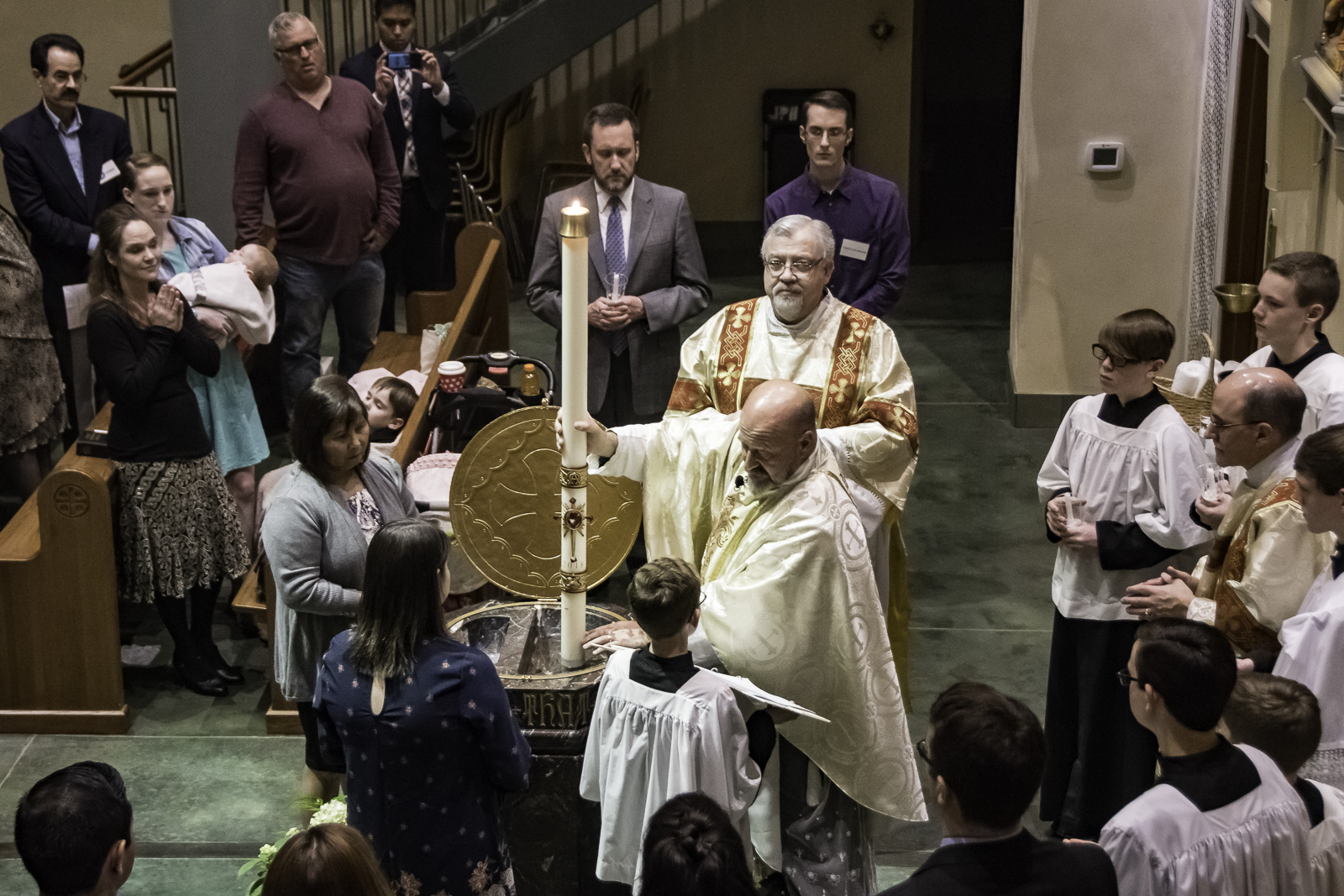
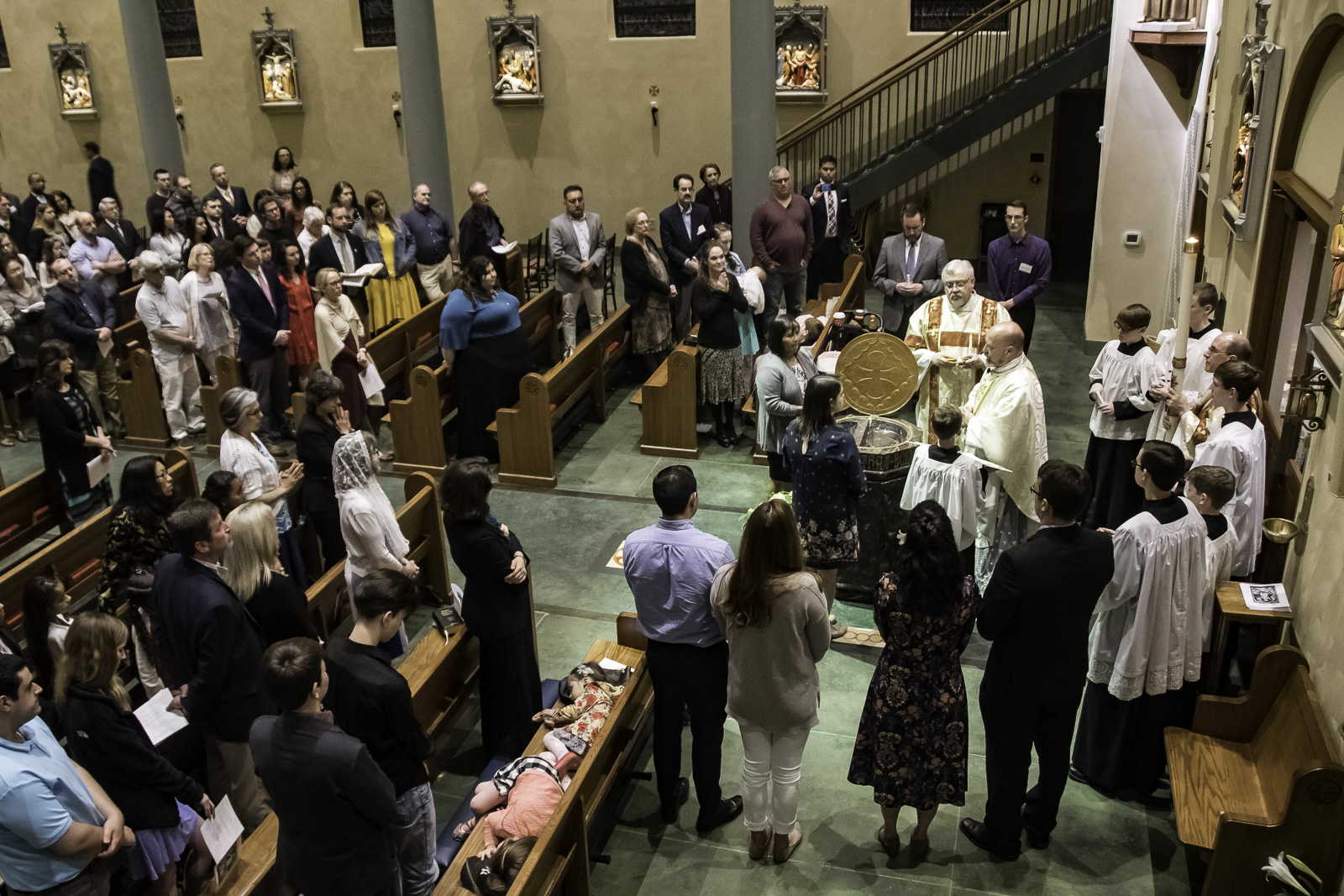
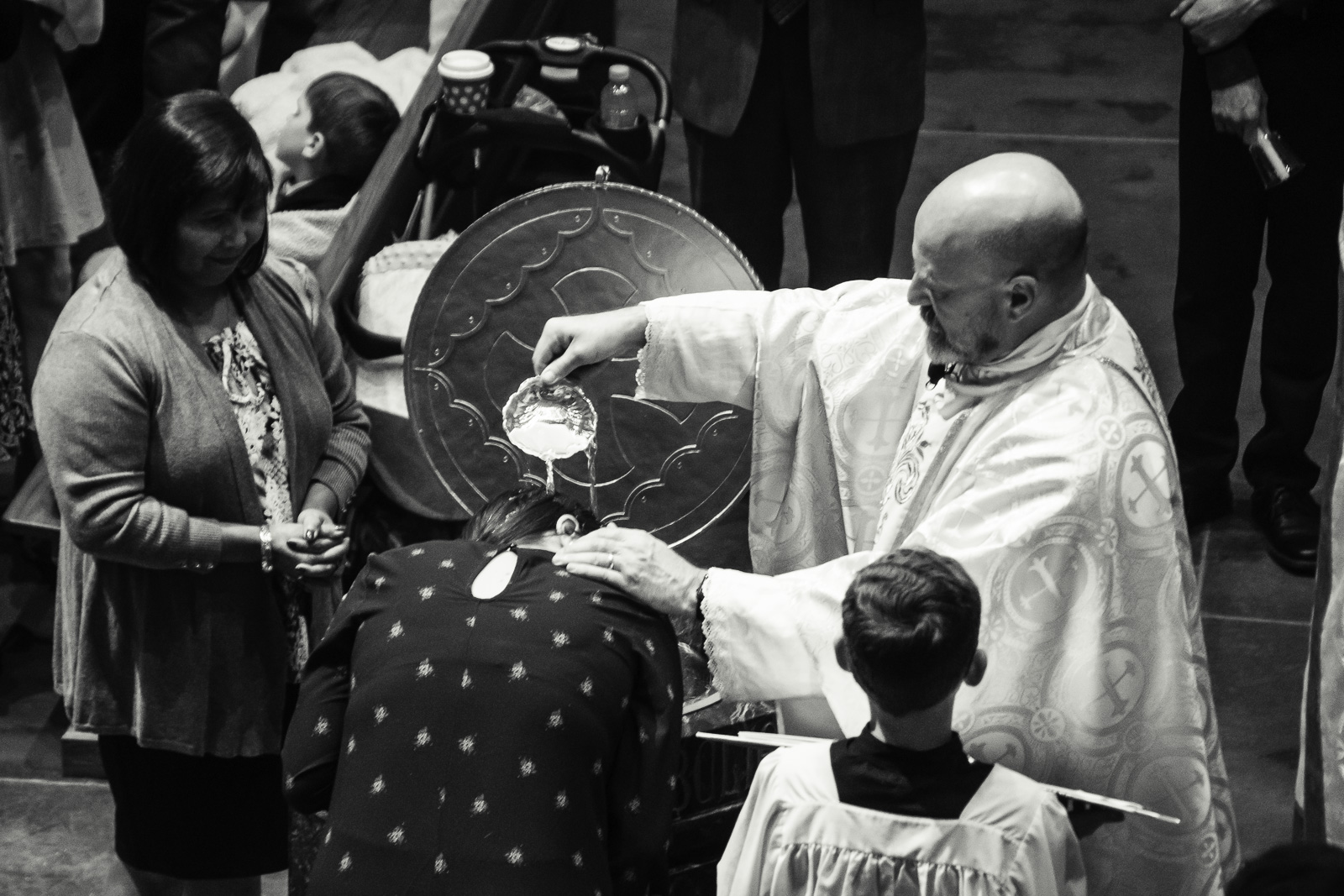
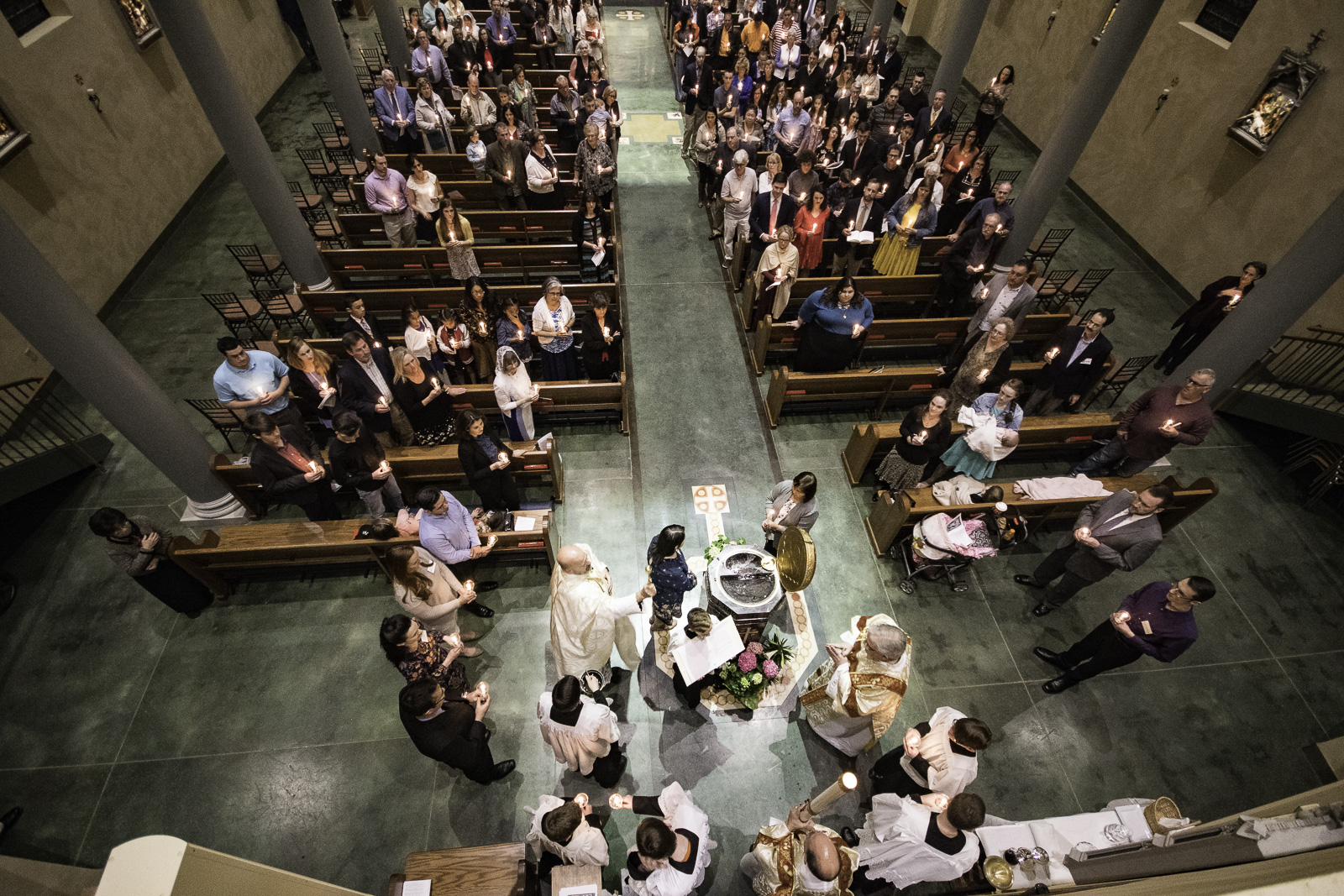
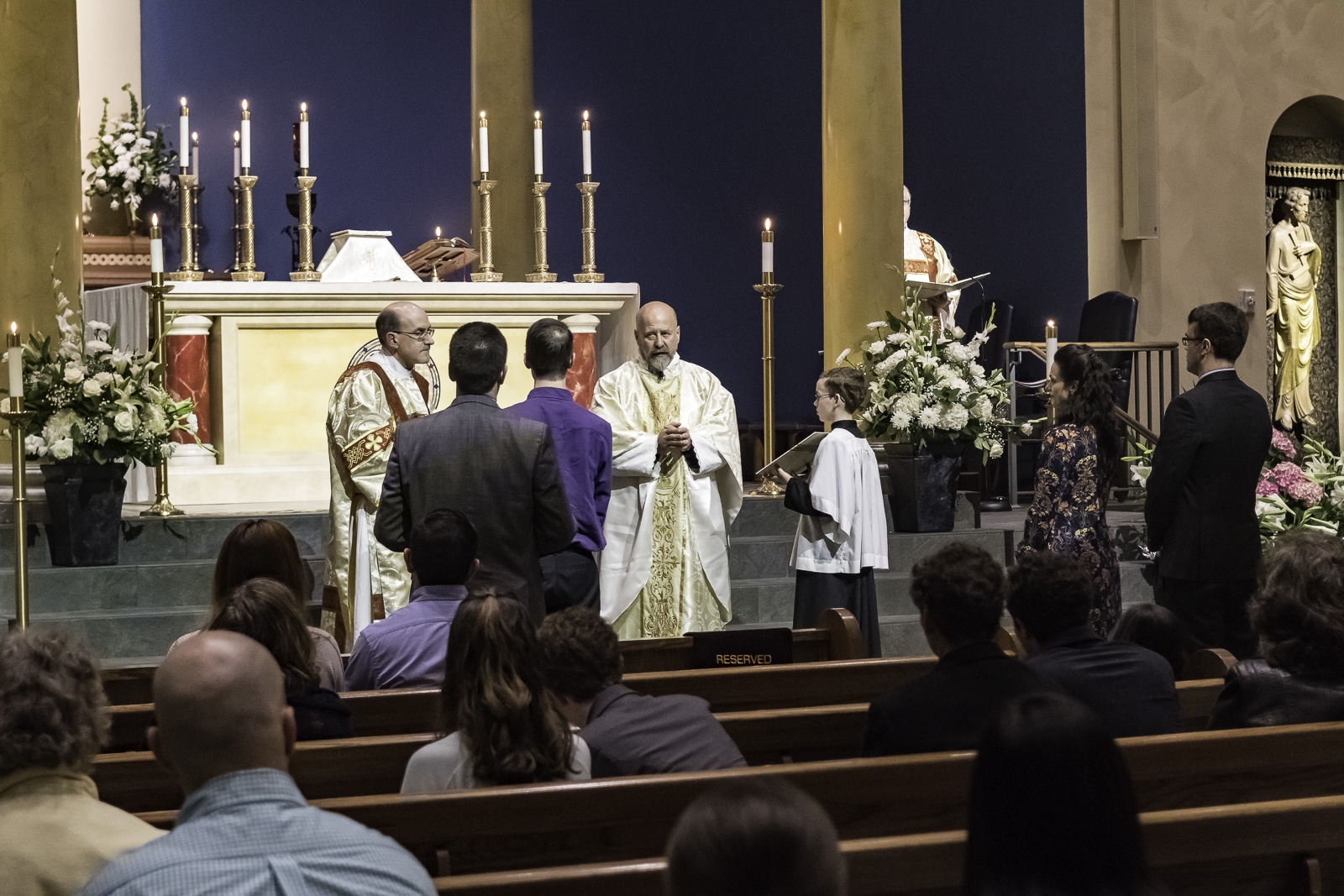
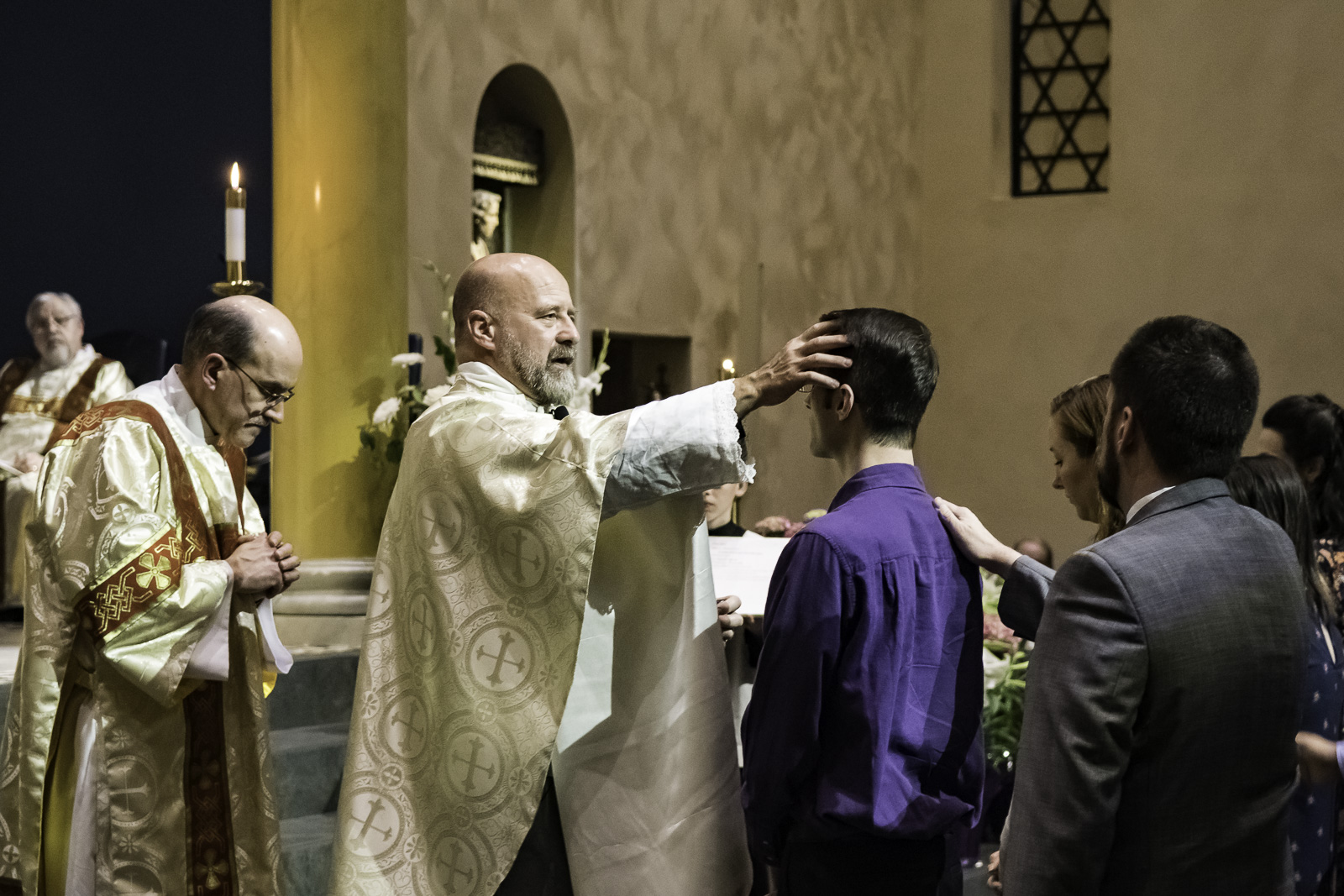
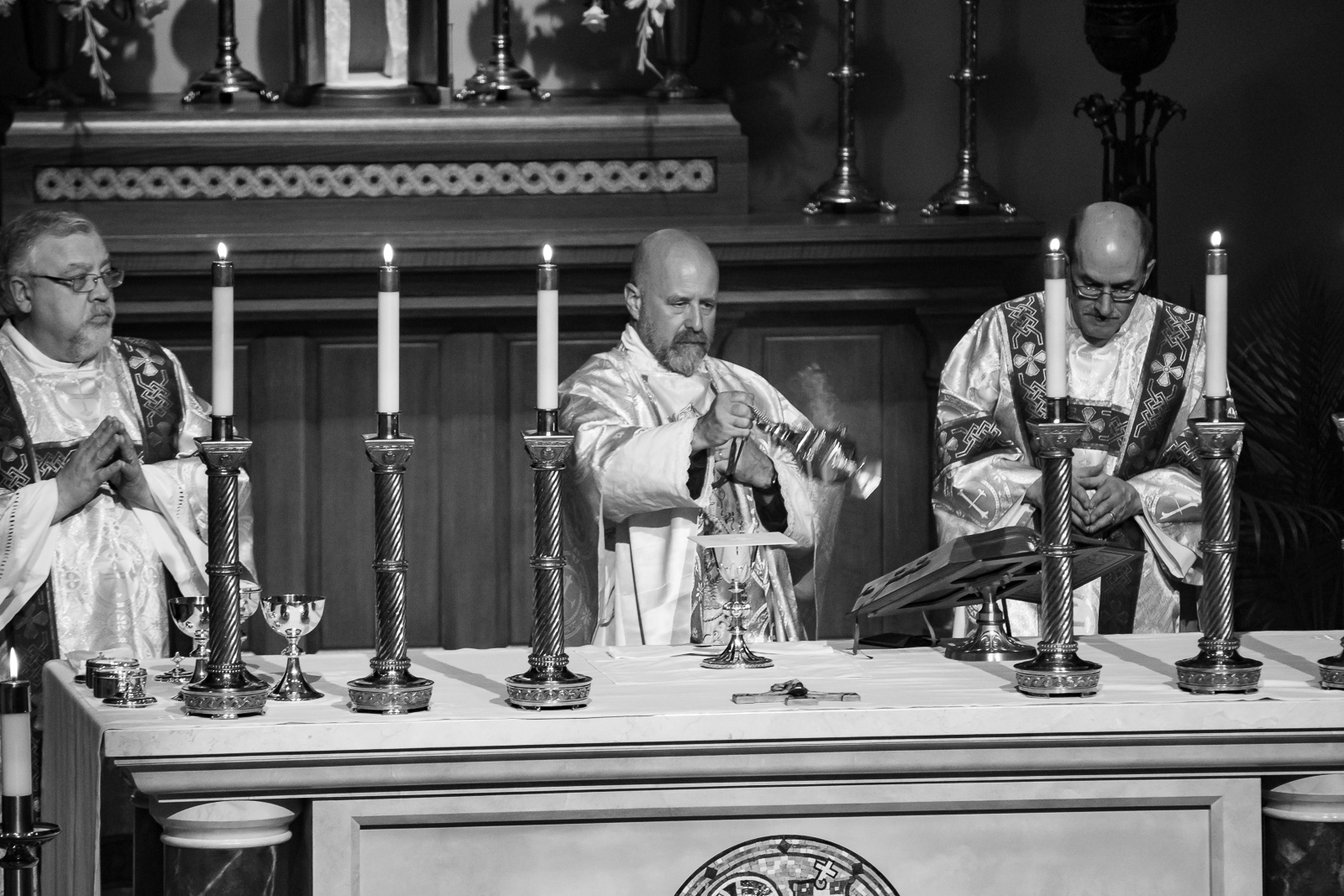
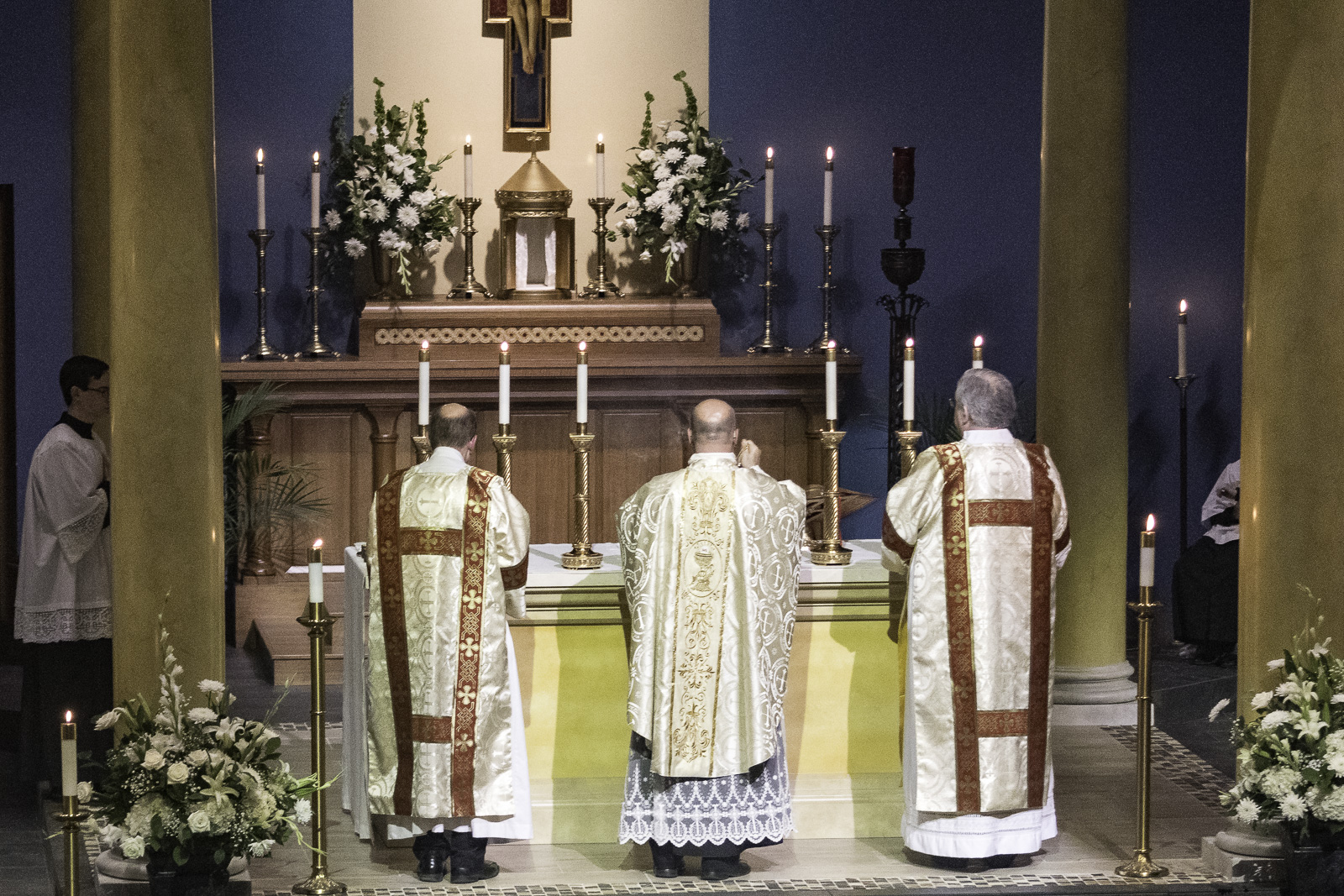
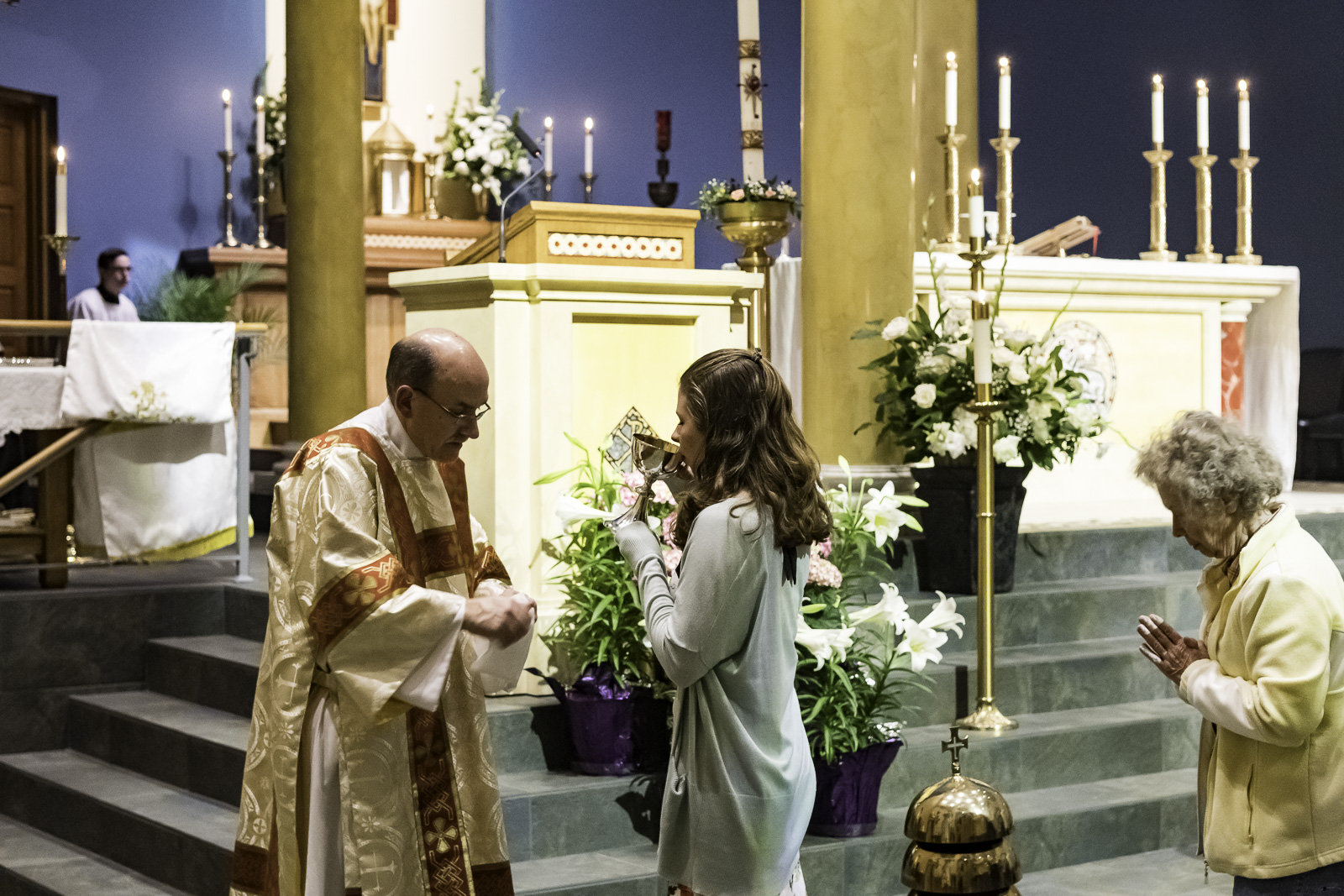
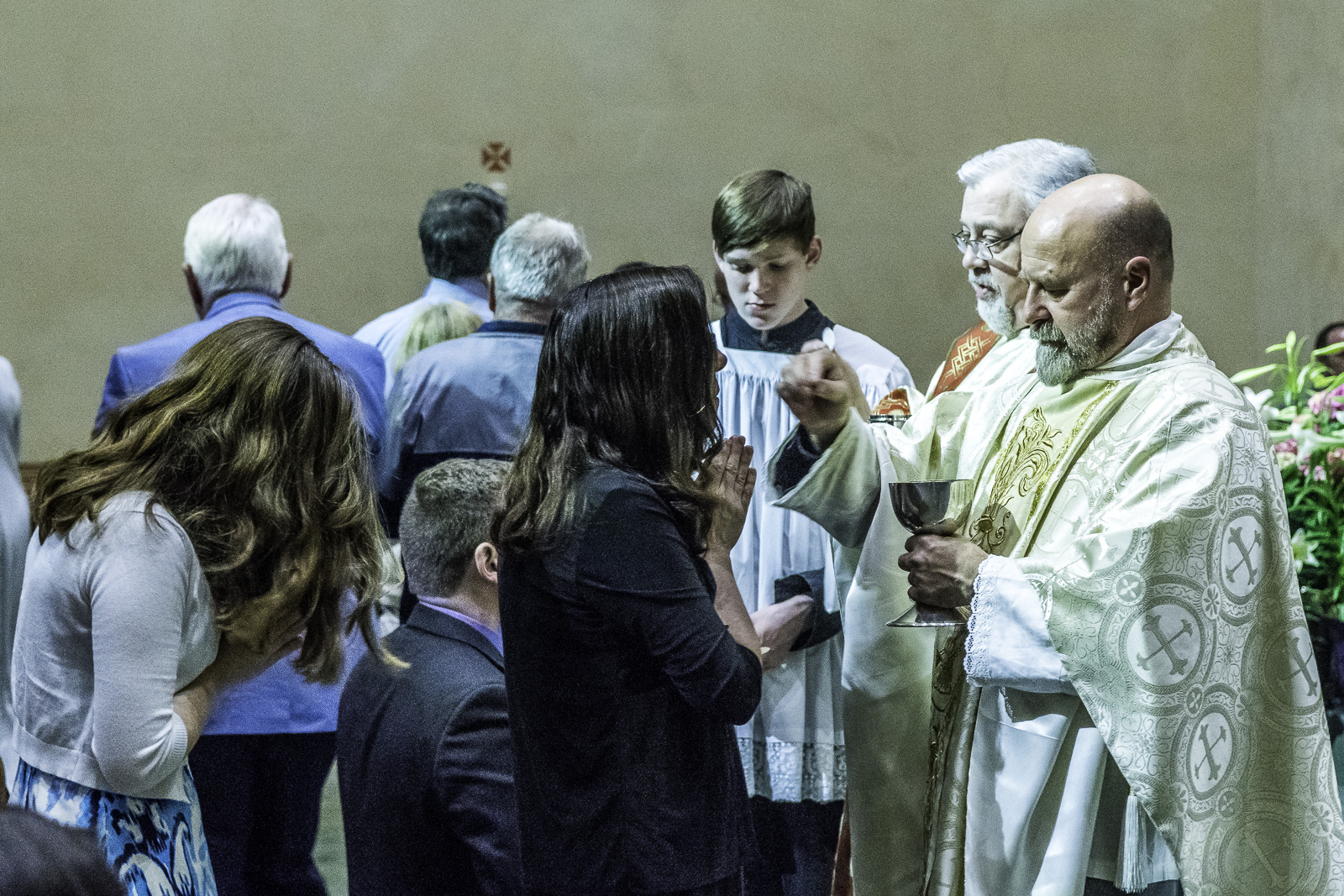
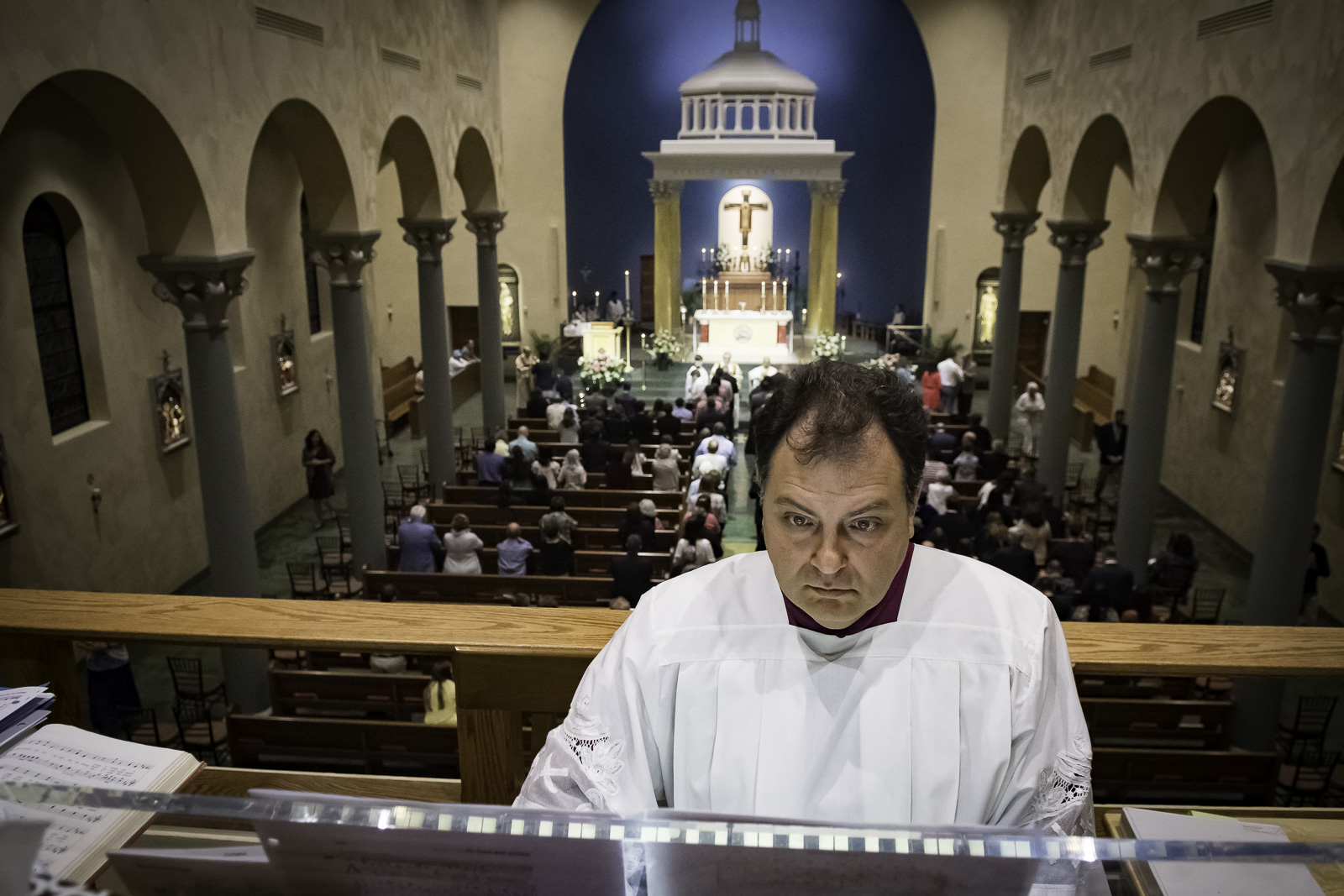
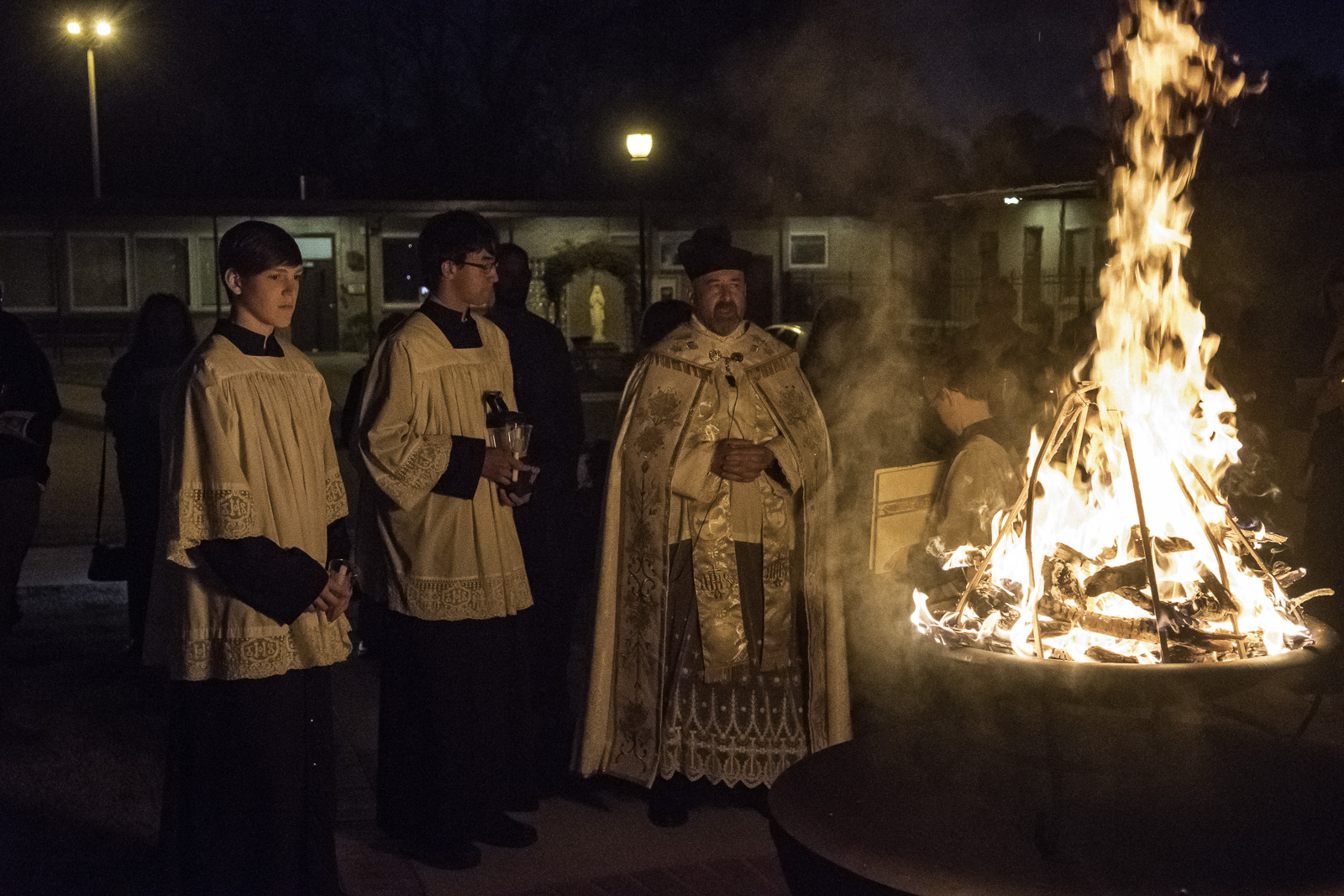
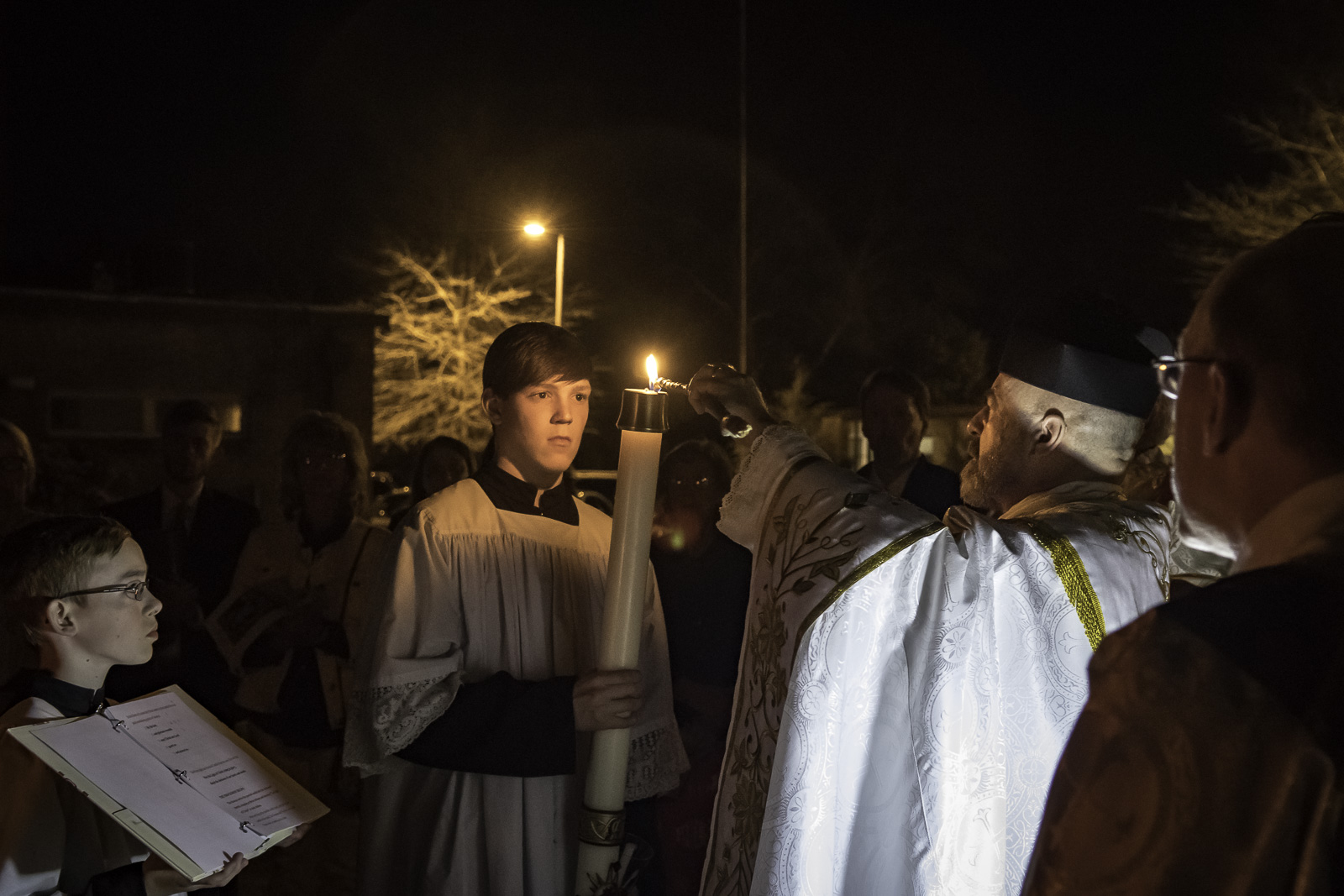
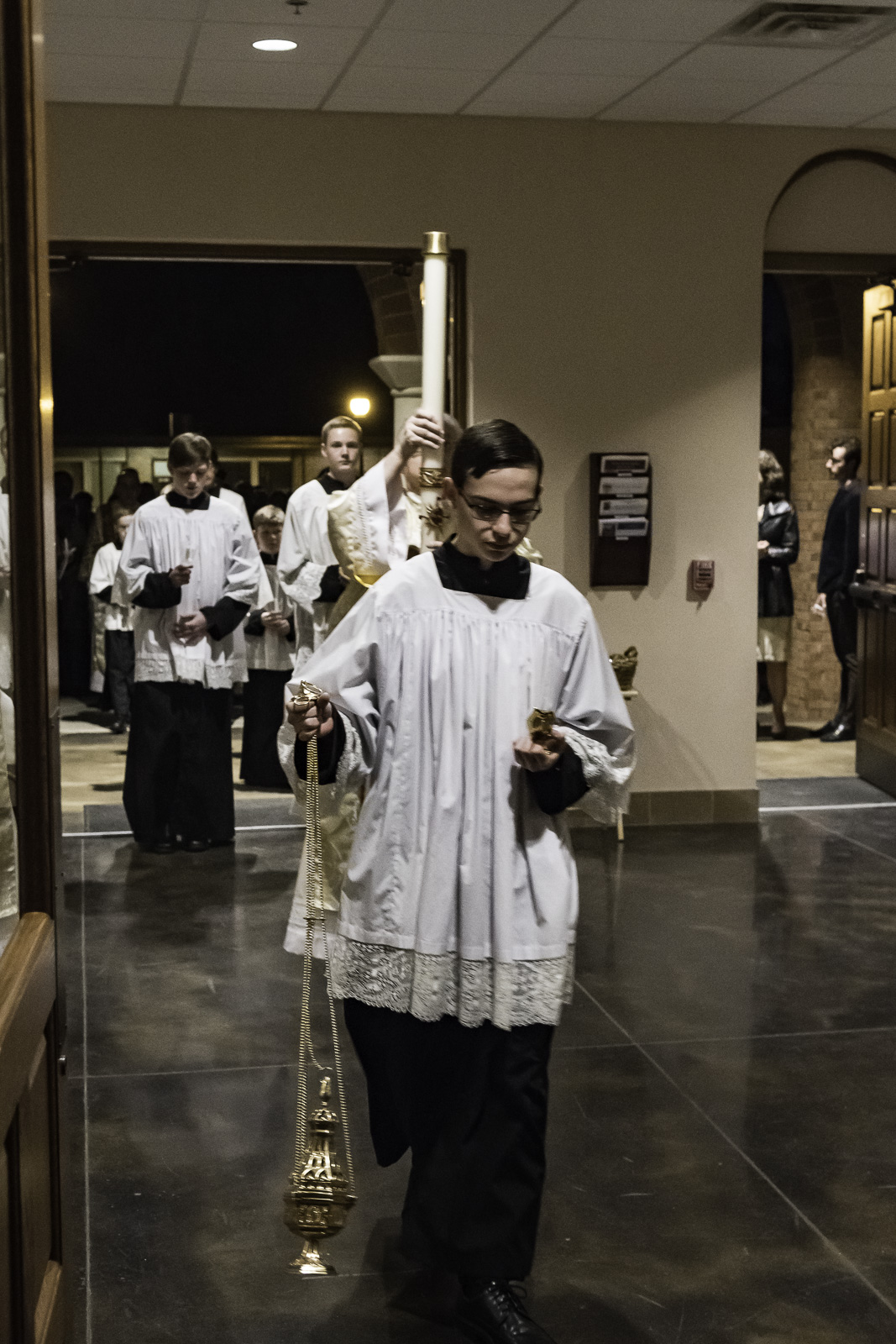
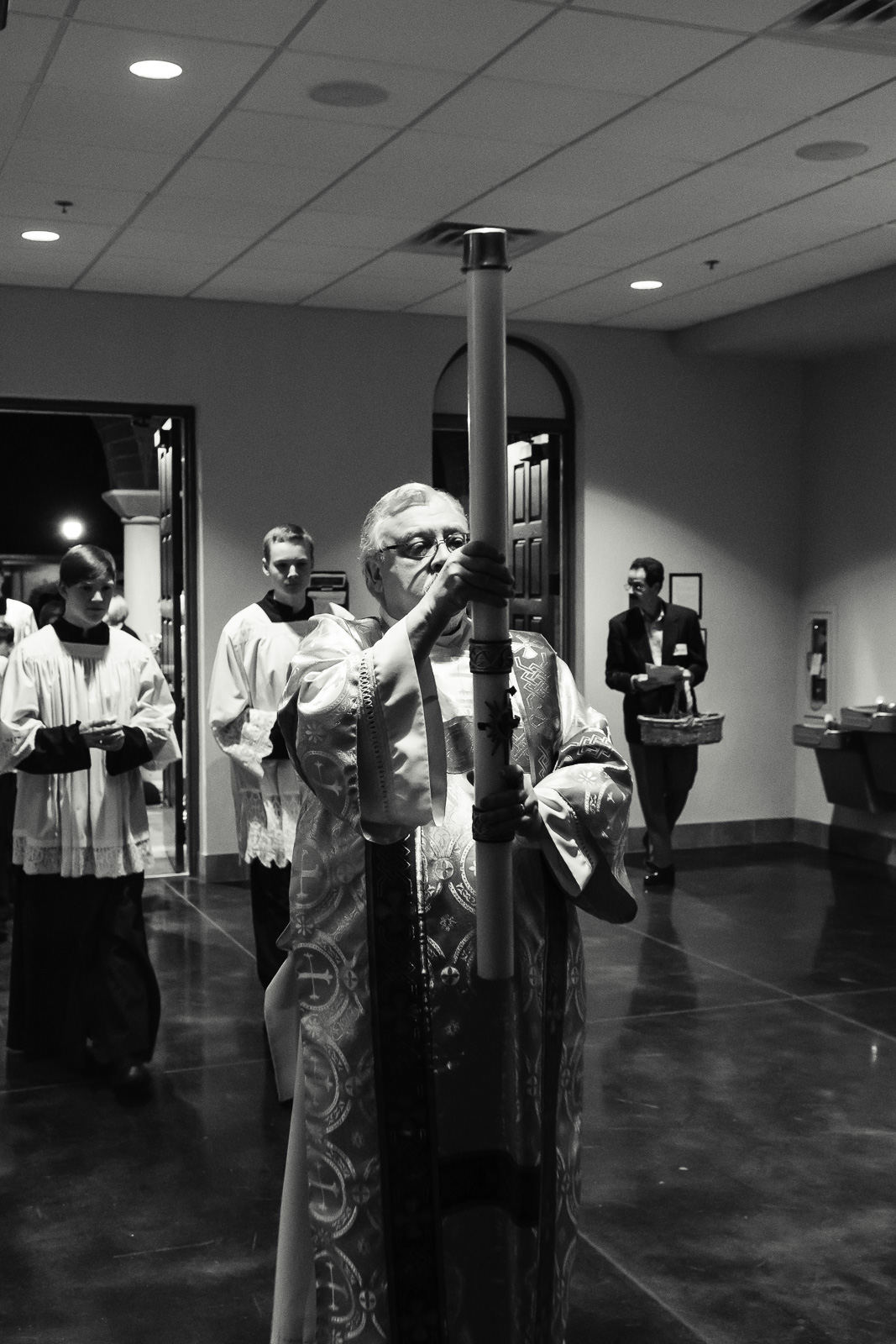
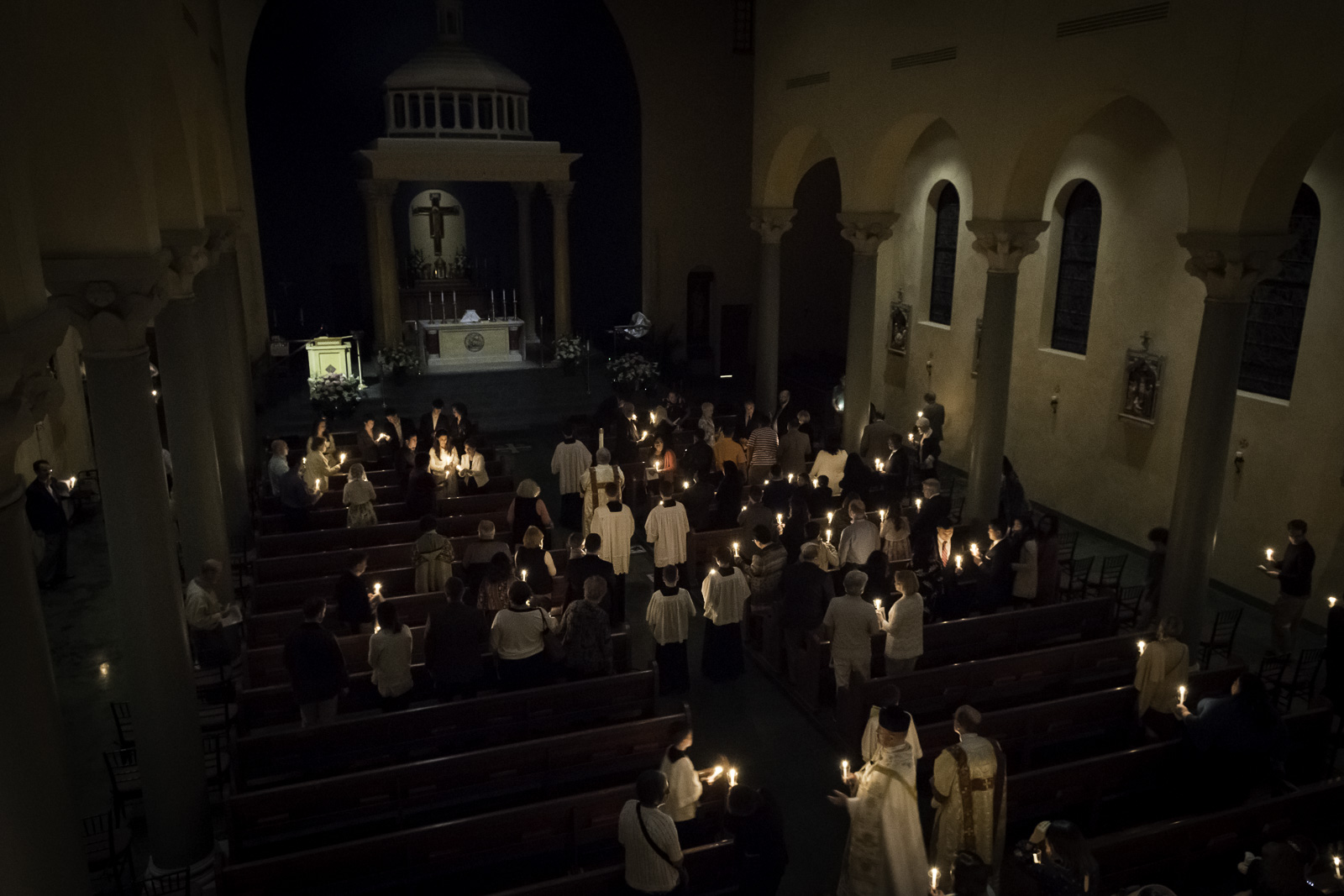
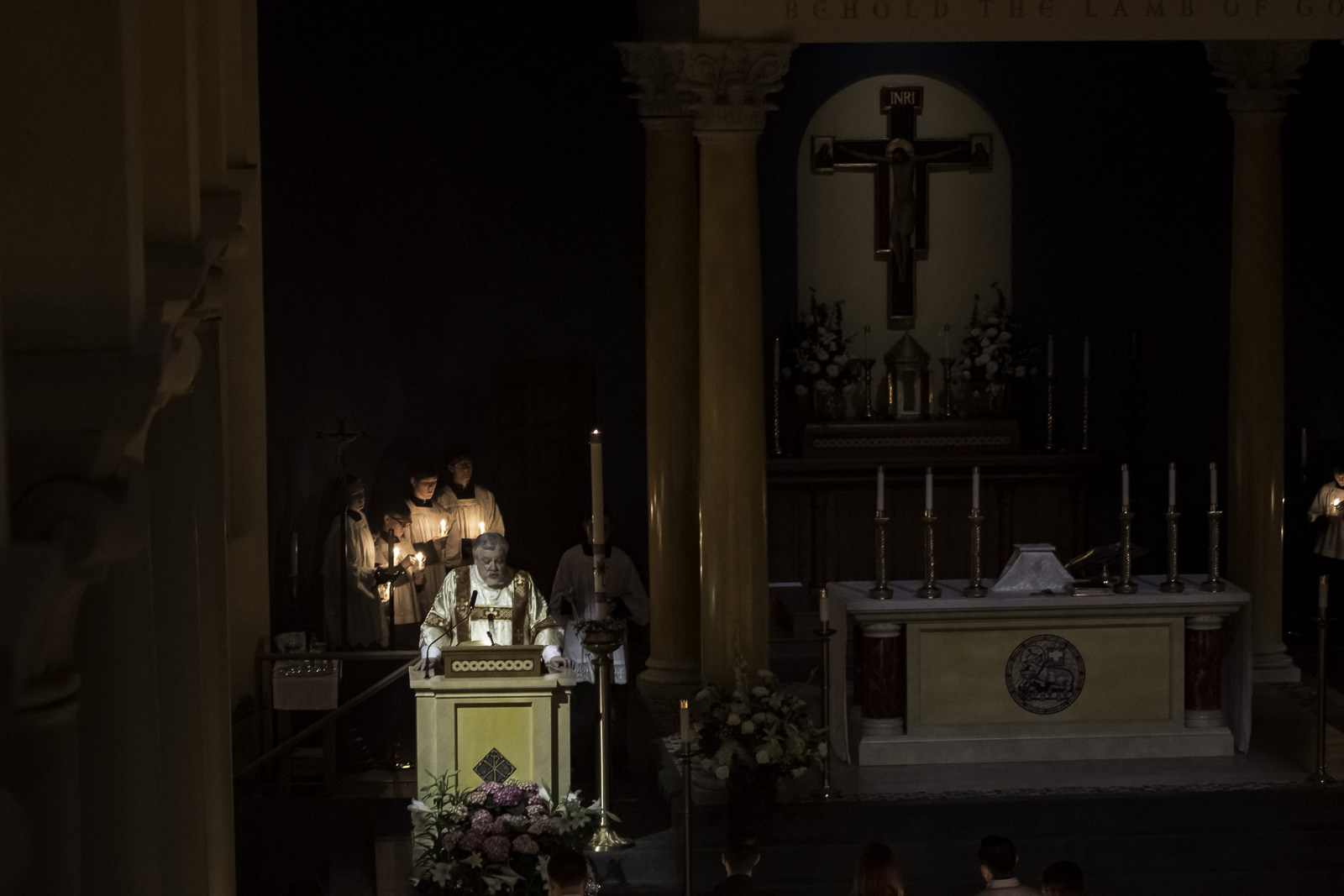
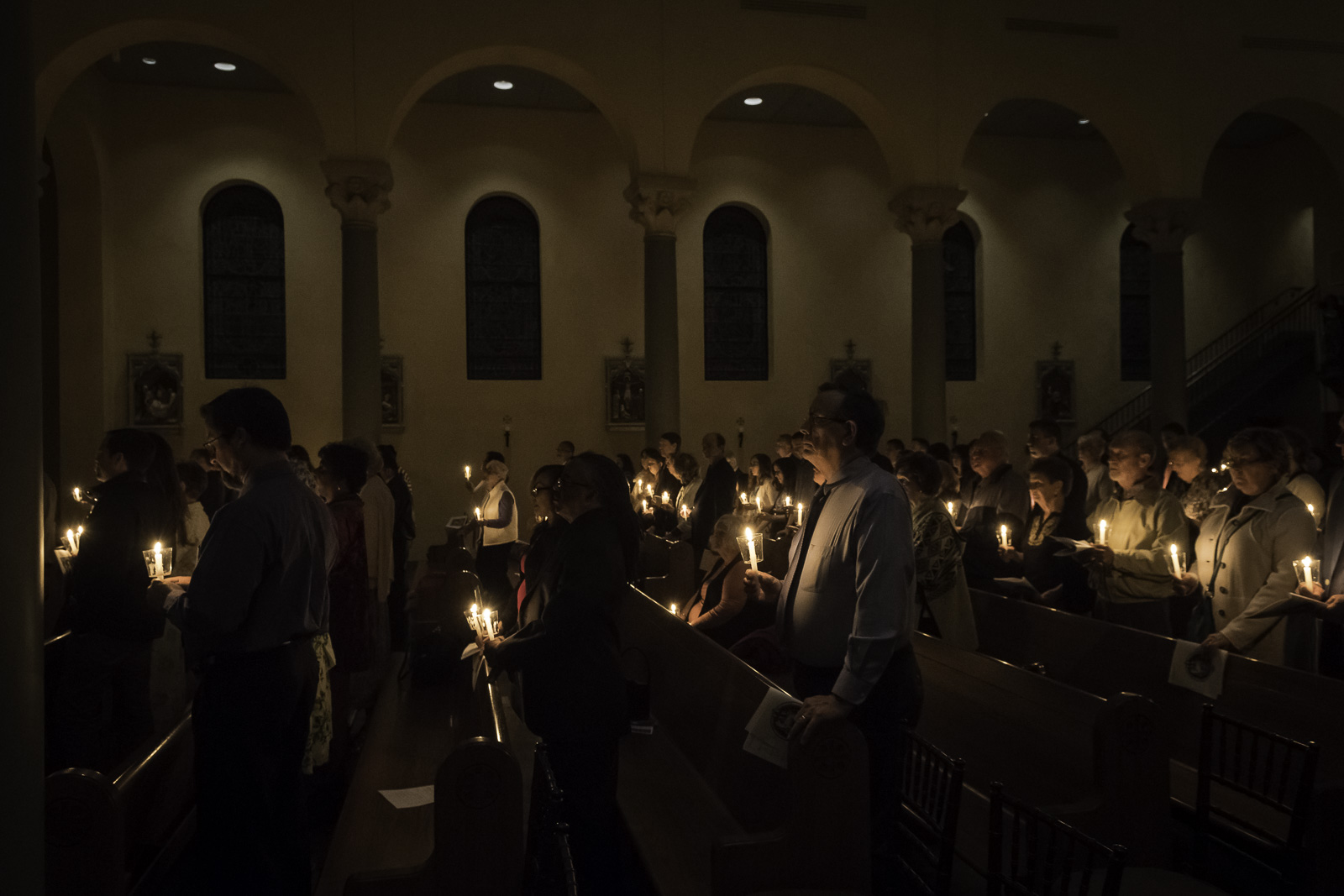
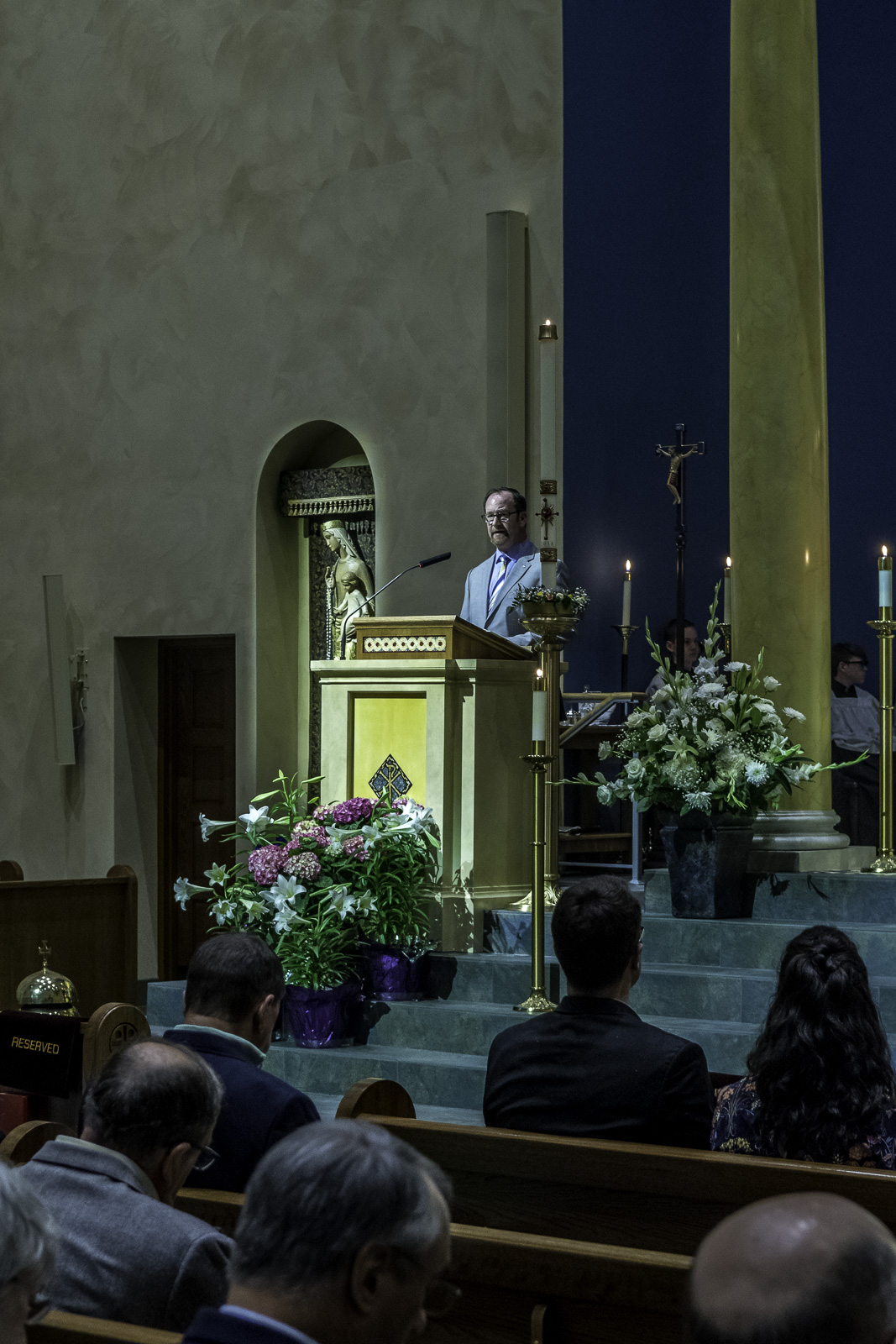
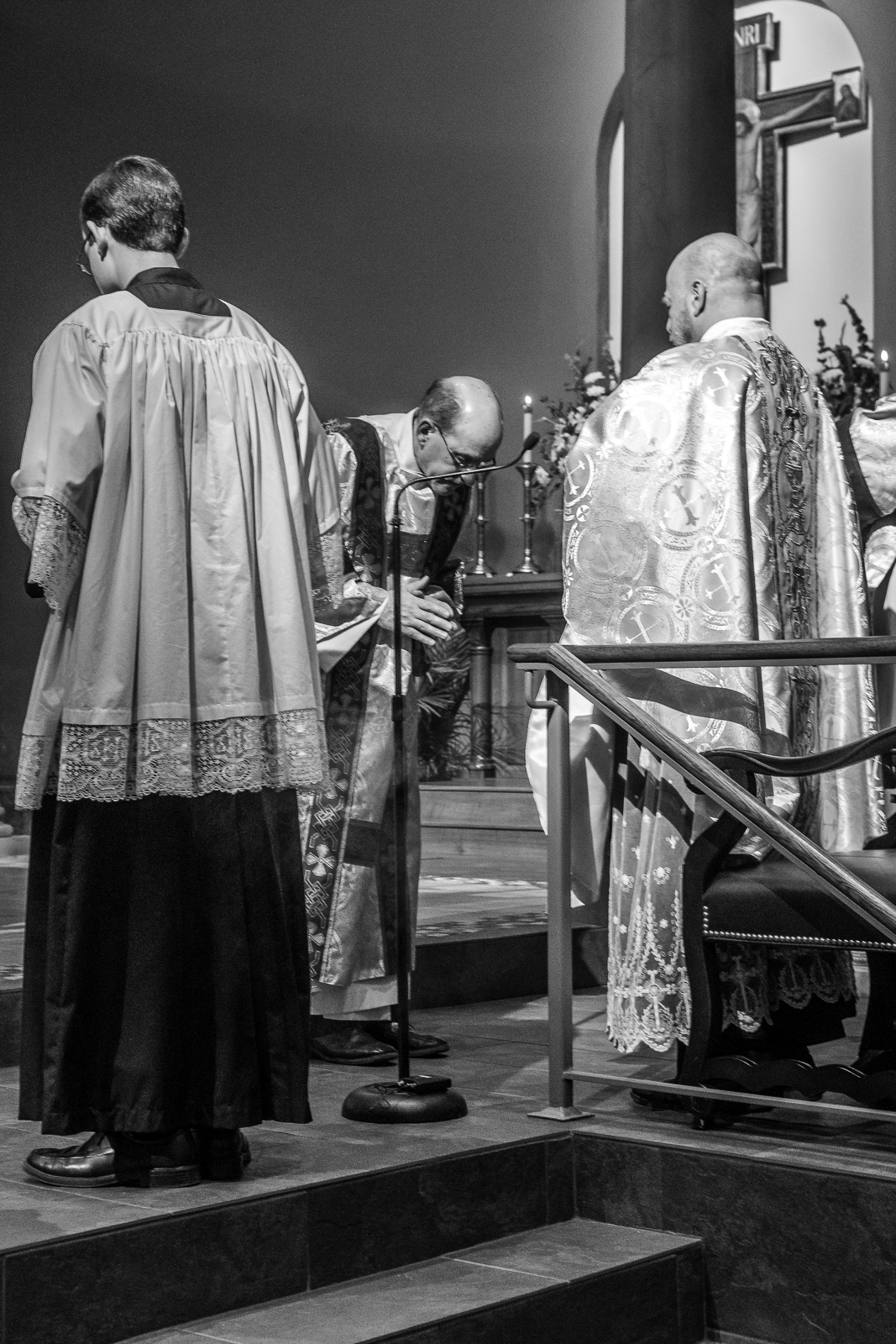
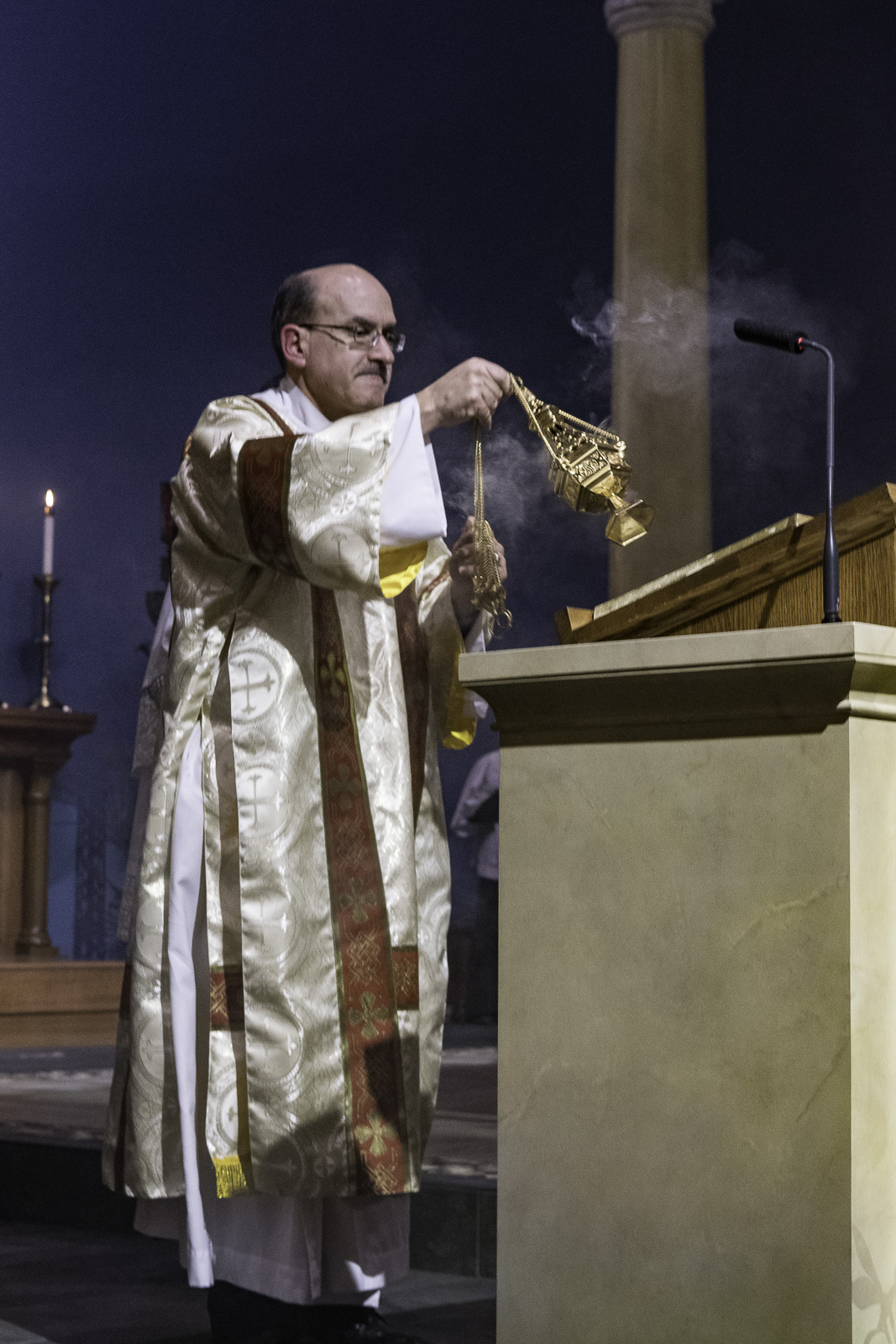
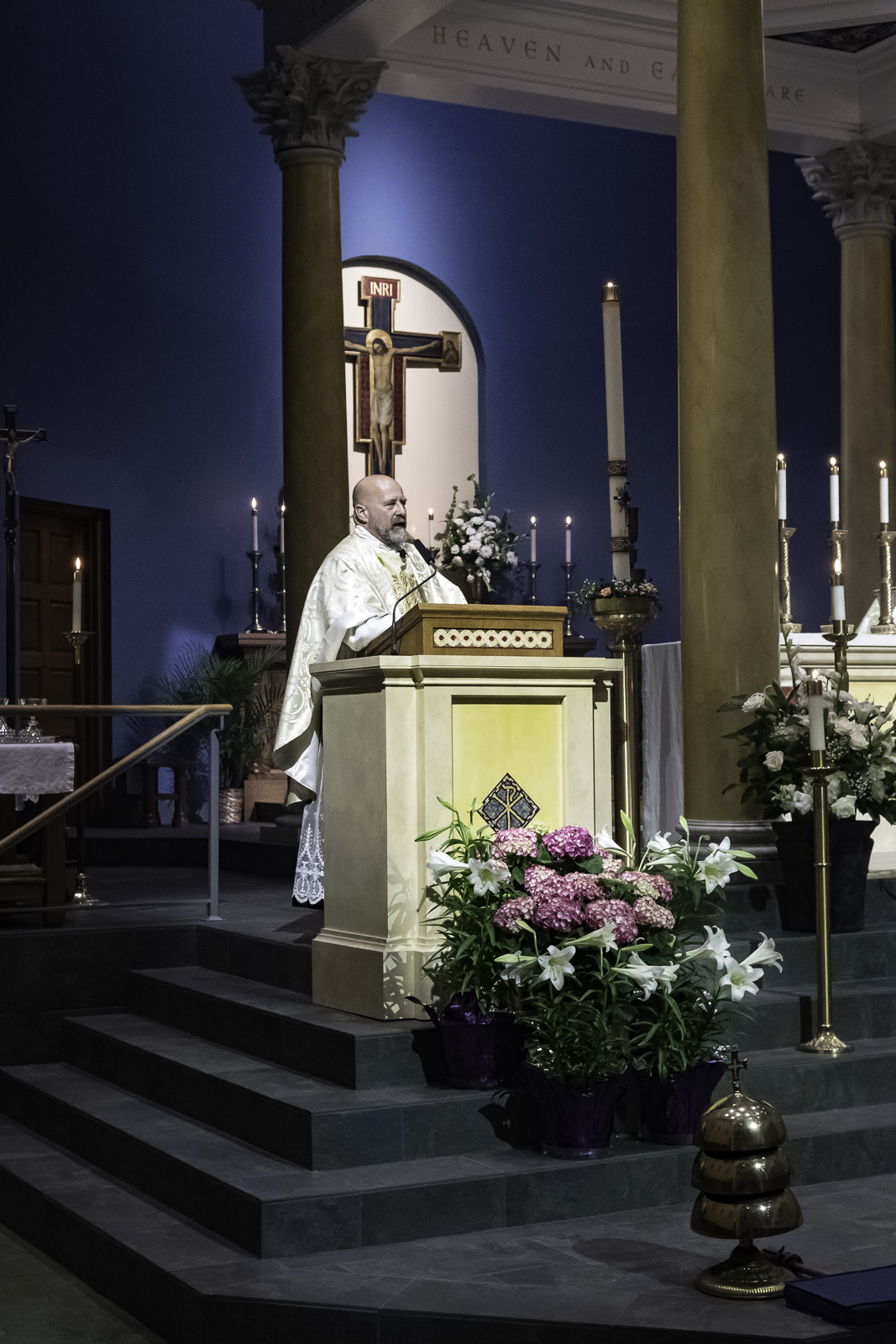
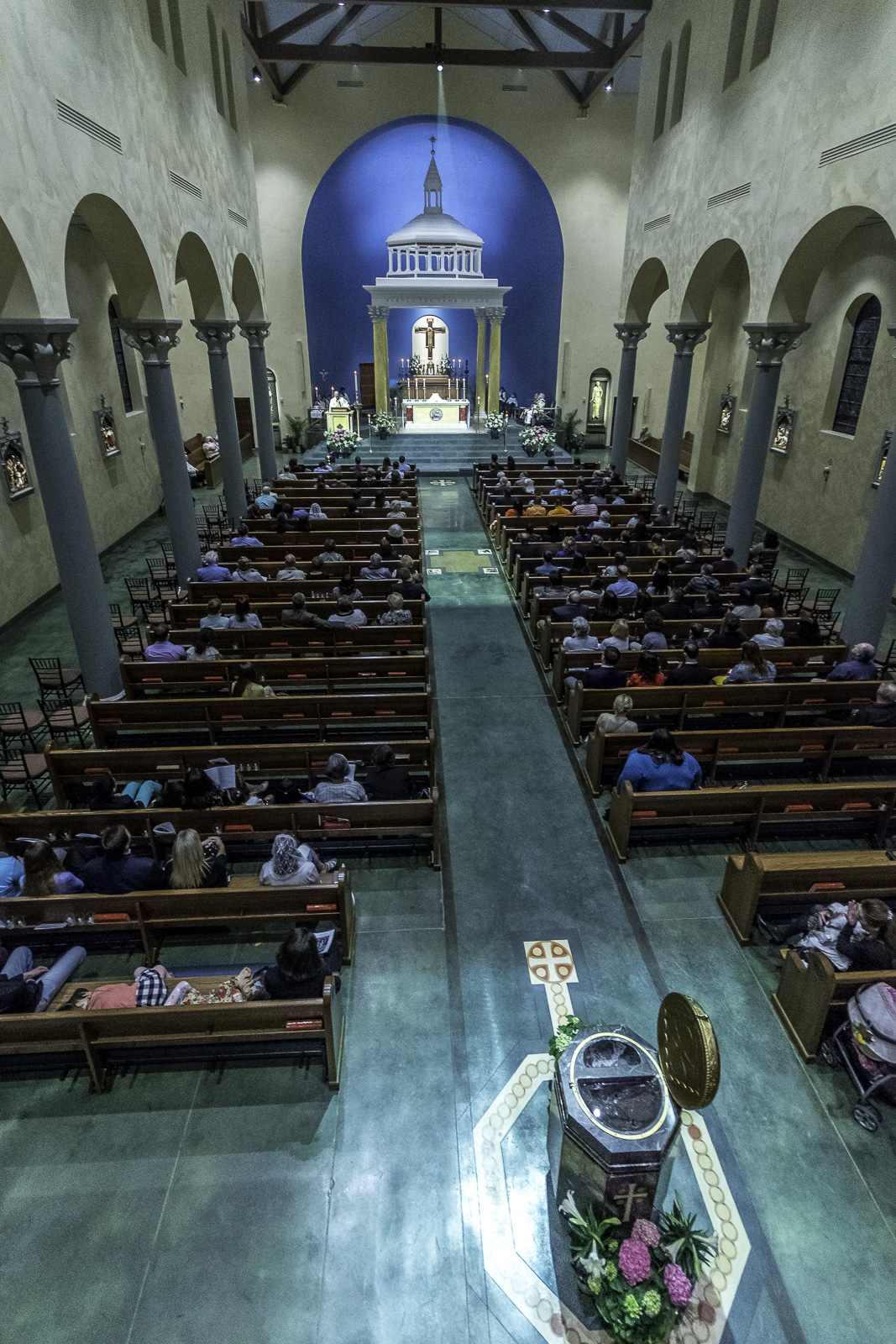
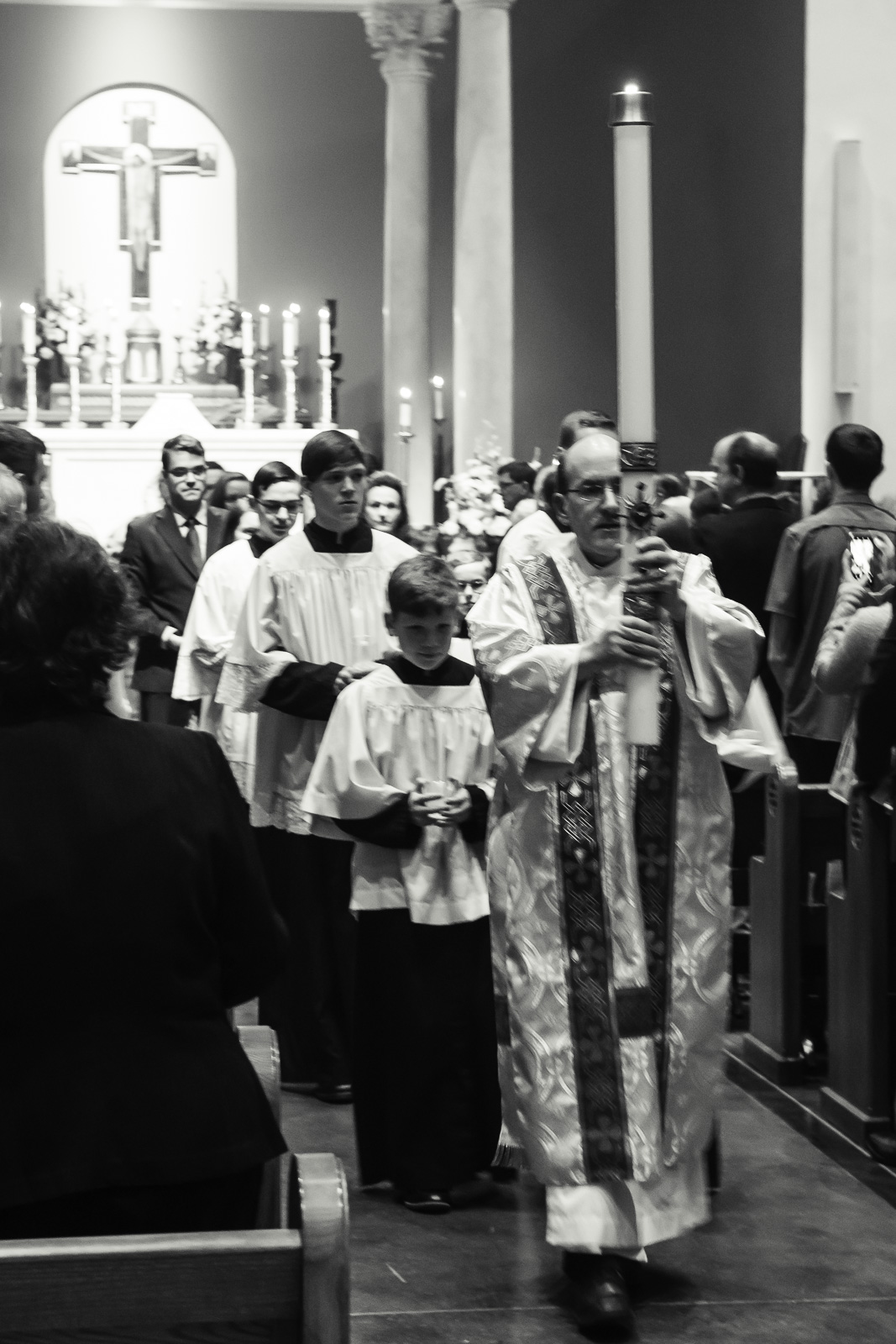
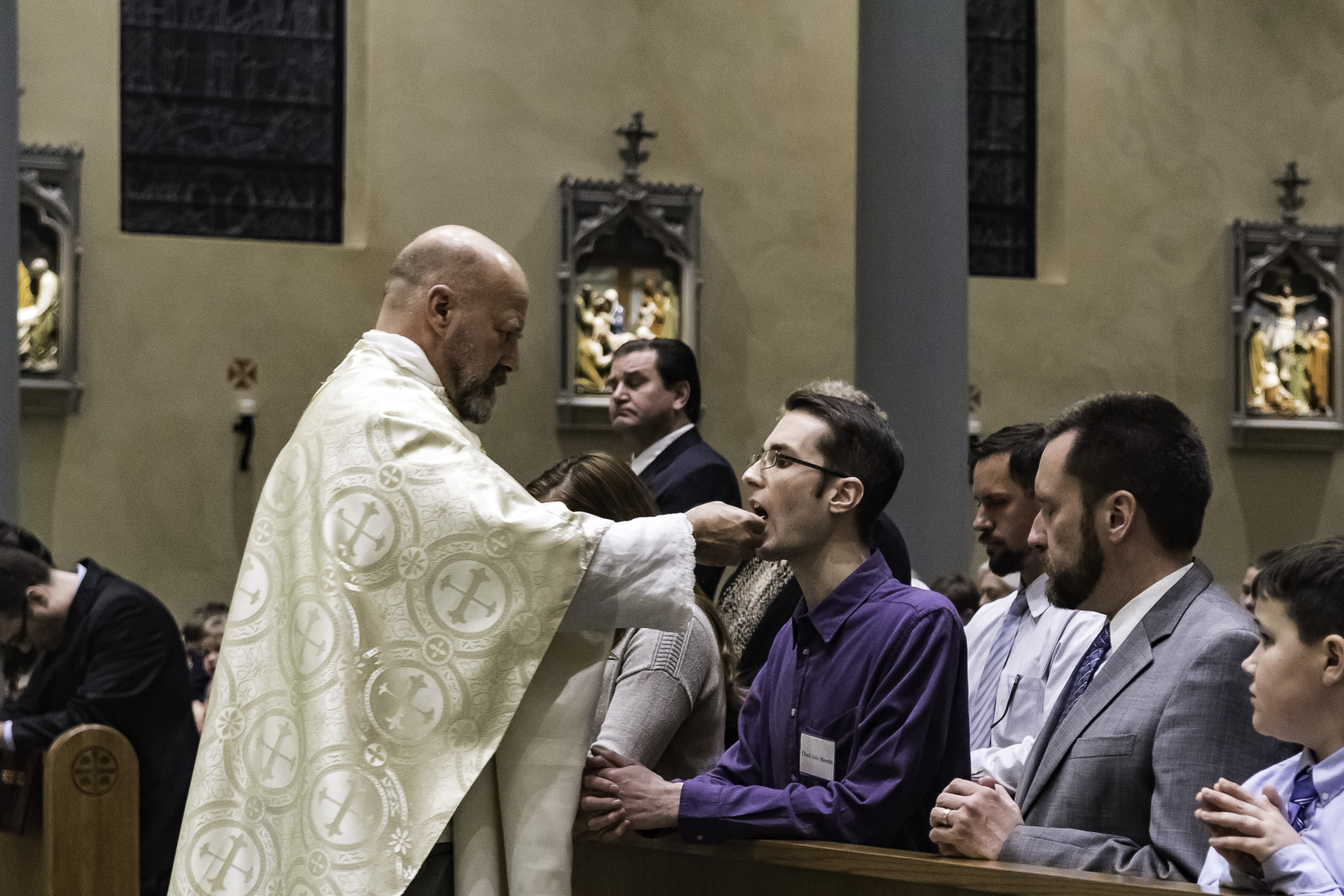
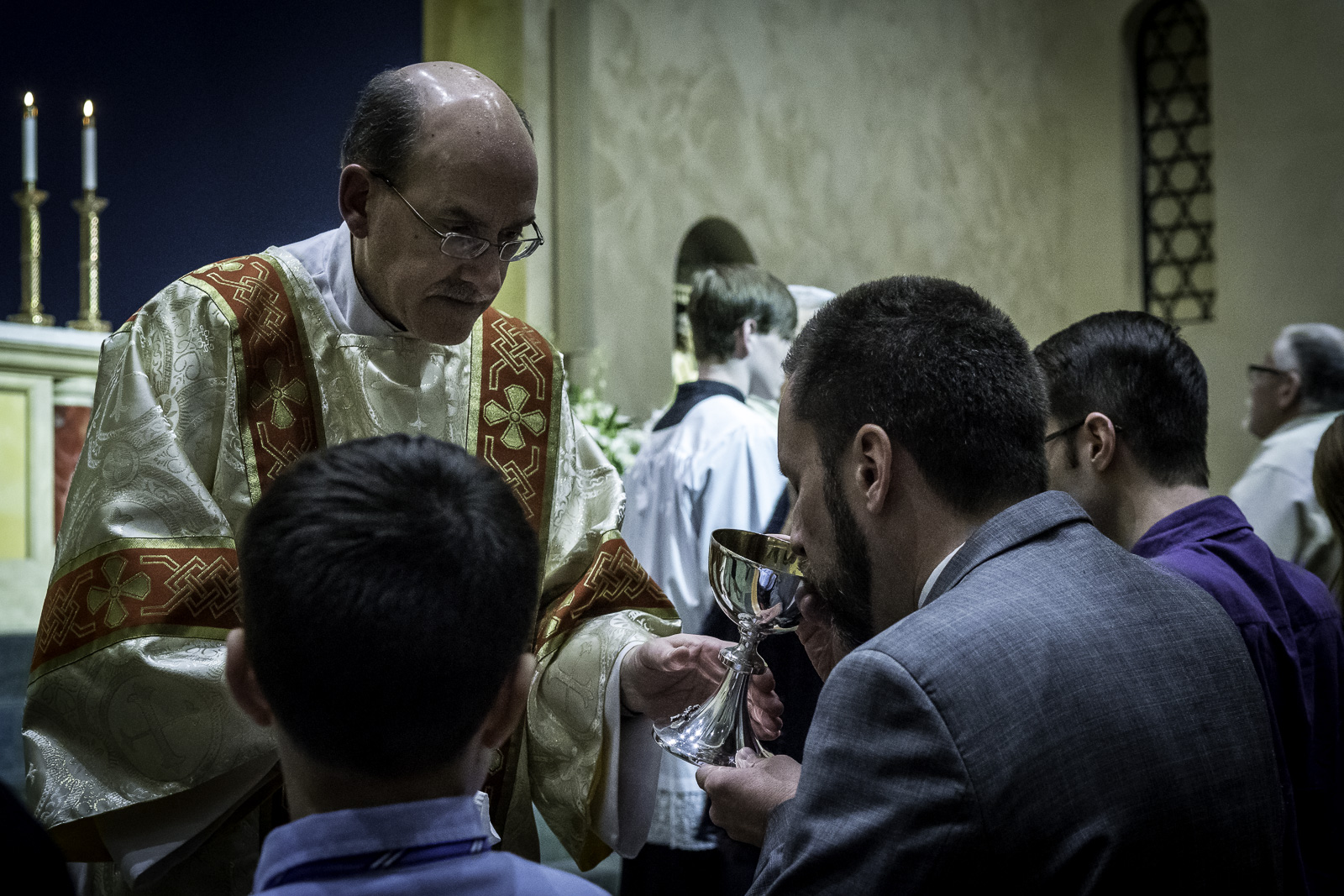
Easter Vigil 2018

Teaching

โ€œI just realized we havenโ€™t read E the Christmas story,โ€ my wife said to me this evening. I thought of the Dickens tale, and remembering the new film version of its making that is now out, I thought, โ€œWhat a great idea.โ€

โ€œYou mean the Dickens story?โ€ I asked to confirm.

โ€œNo, the Christmas story,โ€ my wife replied.

Iโ€™ve just crashed. I havenโ€™t so much lost my faith as given it up. Tossed it. Or rather, I think Iโ€™ve realized that I never had it to begin with. This is the second time in my life that this has happened. Why I didnโ€™t learn the first time is beyond me, but something made me want to be a Catholic like my wife. A desire for consistency? Who knows. I do know that that desire is gone now. It all seems so preposterous, the Bible, the saints, the Son of God โ€” it just seems like a fairy tale to me again.

So the last thing in the world I want to do now is to teach this to my children. But the next-to-last thing in the world I want to do now is come clean to my wife about my new, old skepticism. Iโ€™ve decided to just play along, for now, living in a sort of spiritual closet with my children and trying to keep quiet about my doubts in front of them.

And yet I hope to plant a seed of skepticism in my children, a questioning spirit that doesnโ€™t settle for simple answers, that doesnโ€™t accept answers without asking further questions.

As he was eating his pre-bed yogurt, I began reading the story from the illustrated Bible someone gave him.

DSCF6675

It begins with the Annunciation, an angel appearing before a young girl and announcing that she will bear the child of God.

My mind immediately began running through the problems with this: the whole nonsensical doctrine of completely human and completely divine; the oddly perverse insistence that the girl must be a virgin out of a desire to use this to fulfill a supposed Old Testament prophecy that the Messiah will be born of a virgin, which in fact was based on an inaccurate translation from Hebrew to Latin; the whole question of why in the world a god would announce his presence in such an oddly ineffective way. All this and more. Yet I just asked a simple question: โ€œWhat do you think about this?โ€

โ€œItโ€™s good,โ€ my son said.

โ€œWhat do you mean?โ€

โ€œBecause God can do anything,โ€ came the odd answer. He is, after all, five: critical thinking is not a skill he yet possesses.

On the next page, we read about Josephโ€™s concerns about marrying Mary and the account in Luke of an angel appearing to him to soothe his worries.

My mind immediately began running through the problems with this: was he just worried that Mary, being unmarried yet pregnant, risked some sort of horrible punishment at the hands of the first-century Jews, who were still stoning people? Did he find it odd that this happened before marriage, knowing the potential societal reaction? Did he wonder if perhaps Mary was just promiscuous? Why exactly did the angel need to calm his fears?

A few pages later, angels appear again, this time to the shepherds in the fields.

DSCF6674

โ€œHas an angel ever appeared to you?โ€ I asked.

โ€œNo,โ€ came the direct answer.

โ€œMe neither,โ€ I said. โ€œI wonder why.โ€ And I  continued reading.

Itโ€™s in these types of conversations that I hope to spark a bit of probing skepticism. Does this mean I am seeking superstitiously to undermine my wife? I suppose it does. Is that a bad thing? I suppose itโ€™s a bit dishonest.

If I keep this up, the real conundrum awaits in the probably-not-too-distant future: what will I say when my daughter, who is almost eleven, begins noticing the changes? I canโ€™t bring myself to say the creed during the Mass because I donโ€™t believe in one God, the Father almighty, maker of heaven and earth, of all things visible and invisible, and I donโ€™t  believe in one Lord Jesus Christ, the Only Begotten Son of God, born of the Father before all ages. I wonโ€™t be going for communion anymore because when the priest says, โ€œThe body of Christ,โ€ I am to assent to that belief by saying, โ€œAmen.โ€ And I donโ€™t believe that the priest is giving out anything other than tasteless wafers and overly-sweet wine.

So she will notice, and she will ask, โ€œDaddy, why donโ€™t you go to communion anymore?โ€

And what will I say?

Incense: A New Metaphor

Iโ€™ve always heard of incense being symbolic of prayer, and most formulations follow something similar to what Doug Eaton writes at Christian Theology, where he gives four ways incense is like prayer:

  1. Incense was beaten and pounded before it was used. Likewise acceptable prayer proceeds from a broken and contrite heart.
  2. Incense rises toward heaven, and the point of prayer is that it ascends to the throne of God.
  3. Incense requires fire for it to be useful, and prayer has no virtue unless is set on fire by the power of the Holy Spirit.
  4. Incense yields a sweet aroma, and our prayers are a sweet aroma to the Lord.

Today in Mass, watching the smoke waft up from the thurible into emptiness above it, I realized that, incense being smoke, there are a couple of ways a skeptic can continue to view incense as a symbol of a believerโ€™s prayer.

Incense, being smoke, dissipates into nothingness

The priest swings the thurible and billows of smoke flow from it, but like the spidery line of smoke rising from a cigarette, a few feet above the priestโ€™s head, itโ€™s turned to haze. As it rises to the top of the church, it disappears, indistinguishable from the smokeless air.

So too, words mumbled in prayer dissolve to nothingness as soon as they leave the lips. They rattle around inside hearersโ€™ heads for just a moment, producing a warm feeling if they are believers, to be sure, but if there is no god, they are just so much noise.

Incense, being smoke, is ultimately carcenogenic

Breath enough smoke and one risks cancer: we see that warning everywhere. The Mayo Clinicโ€™s web site describes the process thus:

Doctors believe smoking causes lung cancer by damaging the cells that line the lungs. When you inhale cigarette smoke, which is full of cancer-causing substances (carcinogens), changes in the lung tissue begin almost immediately.

At first your body may be able to repair this damage. But with each repeated exposure, normal cells that line your lungs are increasingly damaged. Over time, the damage causes cells to act abnormally and eventually cancer may develop.

In my slow arc back from belief to skepticism, Iโ€™m reading again Sam Harrisโ€™s The End of Faith, and I think the idea of faith, and its outward expression through prayer, causing a brain to act abnormally โ€” carcenogeically โ€” is apt. The funny thing about prayer is that for the believer, even when itโ€™s not answered, itโ€™s answered. โ€œGod just said โ€˜No'โ€ is the common response. Or โ€œGod has different plans.โ€ Nothing counts against it. No evidence stands contrary to it.

Thatโ€™s the very nature of faith, but thatโ€™s not how we work on a daily basis. We seek evidence for what we do. Teachers seek evidence for student mastery. Lawyers seek evidence for guilt or innocence. Construction workers seek evidence of a strong foundation before building higher. They all test, probe, ask questions, and ultimately, they might say, โ€œNo, thereโ€™s not sufficient evidence.โ€ And faith is not enough. I donโ€™t want to drive on a bridge that the engineers built on faith. I donโ€™t want to get in an elevator that an inspector has inspected on faith.

Why should it be different with religious belief? Extraordinary claims require extraordinary evidence asserted Carl Sagan (among others). To do otherwise is to think, in a sense, abnormally.

Crash

Within the last few weeks, itโ€™s all crashed, all caved in on itself like a house being remodeled by amateurs who know no better than to knock out a load-bearing wall in order to let more light in. At first, everything seemed alright. The light from the kitchen in the morning passed through and lit the living room, and the evening glow in the living room passed into the kitchen just as dinner was served. But if anyone had cared to look up, they would have noticed that it was already sagging. No extra weight necessary. No snow accumulating. No high pressure system moving in. Not even a leaf landing on the room. The weight of the support system itself was pulling everything down, as if it were betraying itself. The collapse itself happened in the middle of the night, when the light of the morning and afternoon had moved to the other side of the globe and thus was completely irrelevant. There was a cracking of timber, a moaning of nails being bent and wrenched out of place, and then an incredible implosion of drywall, insulation, joists, and shingles, a noise so loud that it jolted everyone in the house into a hyper-alertness immediately, foregoing completely the drugged, heavy-brained feeling of a morning come too soon.

The problem of evil began haunting me anew a few weeks ago, though I really donโ€™t know what was the catalyst. Perhaps the story of the child left dead in a swing for a week: โ€œAuthorities have charged an Iowa couple with murder in the death of their 4-month-old son, whose maggot-infested body was found in a baby swing in the familyโ€™s homeโ€ (source). A horrible story, but not as incredible as the story of the child left dead for two years: โ€œThe decomposed remains of a small boy still dressed in a baby-gro were found in his motherโ€™s cot almost two years after he starved to death, a jury was told today (source). Or the story of Declan Hainey , who โ€œwas left dead for up to eight months is filled with waste including empty bottles of Irn-Bru, 3 Hammers cider, Lucozade,  vodka and crisp packetsโ€ (source).

Rubbish strewn cot: Declan Hainey's bed filled with waste including empty bottles of Irn-Bru, 3 Hammers cider, Lucozade, viodka and crisp packets. On the table are strewn cans of Tenants beer and more snack packaging, with more rubbish on the floor

Come to think of it, I know exactly what it was: I reread The Brotherโ€™s Karamazov this summer, and Ivanโ€™s words haunted me just like they did the first time I read them, twenty years ago:

A well-educated, cultured gentleman and his wife beat their own child with a birch-rod, a girl of seven. I have an exact account of it. The papa was glad that the birch was covered with twigs. โ€˜It stings more,โ€™ said he, and so be began stinging his daughter. I know for a fact there are people who at every blow are worked up to sensuality, to literal sensuality, which increases progressively at every blow they inflict. They beat for a minute, for five minutes, for ten minutes, more often and more savagely. The child screams. At last the child cannot scream, it gasps, โ€˜Daddy daddy!โ€™ By some diabolical unseemly chance the case was brought into court. A counsel is engaged. The Russian people have long called a barrister โ€˜a conscience for hire.โ€™ The counsel protests in his clientโ€™s defence. โ€˜Itโ€™s such a simple thing,โ€™ he says, โ€˜an everyday domestic event. A father corrects his child. To our shame be it said, it is brought into court.โ€™ The jury, convinced by him, give a favourable verdict. The public roars with delight that the torturer is acquitted. Ah, pity I wasnโ€™t there! I would have proposed to raise a subscription in his honour! Charming pictures. But Iโ€™ve still better things about children. Iโ€™ve collected a great, great deal about Russian children, Alyosha. There was a little girl of five who was hated by her father and mother, โ€˜most worthy and respectable people, of good education and breeding.โ€™ You see, I must repeat again, it is a peculiar characteristic of many people, this love of torturing children, and children only. To all other types of humanity these torturers behave mildly and benevolently, like cultivated and humane Europeans; but they are very fond of tormenting children, even fond of children themselves in that sense. itโ€™s just their defencelessness that tempts the tormentor, just the angelic confidence of the child who has no refuge and no appeal, that sets his vile blood on fire. In every man, of course, a demon lies hiddenโ€”the demon of rage, the demon of lustful heat at the screams of the tortured victim, the demon of lawlessness let off the chain, the demon of diseases that follow on vice, gout, kidney disease, and so on.โ€

โ€œThis poor child of five was subjected to every possible torture by those cultivated parents. They beat her, thrashed her, kicked her for no reason till her body was one bruise. Then, they went to greater refinements of crueltyโ€”shut her up all night in the cold and frost in a privy, and because she didnโ€™t ask to be taken up at night (as though a child of five sleeping its angelic, sound sleep could be trained to wake and ask), they smeared her face and filled her mouth with excrement, and it was her mother, her mother did this. And that mother could sleep, hearing the poor childโ€™s groans! Can you understand why a little creature, who canโ€™t even understand whatโ€™s done to her, should beat her little aching heart with her tiny fist in the dark and the cold, and weep her meek unresentful tears to dear, kind God to protect her? Do you understand that, friend and brother, you pious and humble novice? Do you understand why this infamy must be and is permitted? Without it, I am told, man could not have existed on earth, for he could not have known good and evil. Why should he know that diabolical good and evil when it costs so much? Why, the whole world of knowledge is not worth that childโ€™s prayer to dear, kind God! I say nothing of the sufferings of grown-up people, they have eaten the apple, damn them, and the devil take them all! But these little ones! I am making you suffer, Alyosha, you are not yourself. Iโ€™ll leave off if you like.โ€ (source)

Ivan of course saves the greatest horror for the end:

โ€œOne picture, only one more, because itโ€™s so curious, so characteristic, and I have only just read it in some collection of Russian antiquities. Iโ€™ve forgotten the name. I must look it up. It was in the darkest days of serfdom at the beginning of the century, and long live the Liberator of the People! There was in those days a general of aristocratic connections, the owner of great estates, one of those menโ€”somewhat exceptional, I believe, even thenโ€”who, retiring from the service into a life of leisure, are convinced that theyโ€™ve earned absolute power over the lives of their subjects. There were such men then. So our general, settled on his property of two thousand souls, lives in pomp, and domineers over his poor neighbours as though they were dependents and buffoons. He has kennels of hundreds of hounds and nearly a hundred dog-boysโ€”all mounted, and in uniform. One day a serf-boy, a little child of eight, threw a stone in play and hurt the paw of the generalโ€™s favourite hound. โ€˜Why is my favourite dog lame?โ€™ He is told that the boy threw a stone that hurt the dogโ€™s paw. โ€˜So you did it.โ€™ The general looked the child up and down. โ€˜Take him.โ€™ He was takenโ€”taken from his mother and kept shut up all night. Early that morning the general comes out on horseback, with the hounds, his dependents, dog-boys, and huntsmen, all mounted around him in full hunting parade. The servants are summoned for their edification, and in front of them all stands the mother of the child. The child is brought from the lock-up. Itโ€™s a gloomy, cold, foggy, autumn day, a capital day for hunting. The general orders the child to be undressed; the child is stripped naked. He shivers, numb with terror, not daring to cryโ€ฆ โ€˜Make him run,โ€™ commands the general. โ€˜Run! run!โ€™ shout the dog-boys. The boy runsโ€ฆโ€™At him!โ€™ yells the general, and he sets the whole pack of hounds on the child. The hounds catch him, and tear him to pieces before his motherโ€™s eyes!โ€ฆI believe the general was afterwards declared incapable of administering his estates. Wellโ€”what did he deserve? To be shot? To be shot for the satisfaction of our moral feelings? Speak, Alyosha!โ€

And then the news of the child left in a swing for a week. And the discovery of all the other stories while searching for details about the swing death. Death upon death, all of children, piled one on top of another, and like Ivan, my thoughts return to the question of what kind of god would allow such barbarism.

The ceiling was sagging.

With all this on my mind, I watched a Bill Burr routine, and he began talking about leaving religion.

https://youtube.com/watch?v=O6lXGkOWBzM%3Ffeature%3Doembed

โ€œEveryone elseโ€™s religion sounds stupid,โ€ he says. The obvious conclusion: โ€œWhy does that make sense and that shit doesnโ€™t?โ€ Why does Scientology sound ridiculous but Catholicism doesnโ€™t? Why does Islam sound barbaric and Judaism doesnโ€™t? Why are Jim Jones or Heavenโ€™s Gate any different from Masada?

Burr explains that Scientology seemed stupid to him but Catholicism didnโ€™t because โ€œI heard my story when I was, like, four years old.โ€

There was more. Reading, thinking, watching videos debunking silly creationism.

All this sat in my head, just sat there swirling around, and because Iโ€™d lulled myself into a wishful Catholic sleep, I wasnโ€™t ready when it all came crashing down around me. When I was standing in Mass and found myself unable to say the creed.

I believe in one God,
the Father almighty,
maker of heaven and earth,
of all things visible and invisible.

No, Iโ€™ve been deluding myself and wanting to believe this, but I donโ€™t. Not in this sense. Not in the dogmatic sense of the Church.

I believe in one Lord Jesus Christ,
the Only Begotten Son of God,
born of the Father before all ages.
God from God, Light from Light,
true God from true God,
begotten, not made, consubstantial with the Father;
through him all things were made.

Nope. That doesnโ€™t even make sense: the โ€œOnly Begotten Sonโ€ who is โ€œconsubstantial with the Fatherโ€? Theyโ€™re supposed to be spirits โ€” how in the hell can they even be Father and Son, and yet still the same being? From no perspective can that make any sense, not even when you try to throw in that quantum uncertainty nonsense: โ€œWell, if light can act like a wave and a particleโ€ฆโ€ No. It doesnโ€™t work.

I believe in the Holy Spirit, the Lord, the giver of life,
who proceeds from the Father and the Son,
who with the Father and the Son is adored and glorified,
who has spoken through the prophets.

Why do they all want to be adored and glorified? That doesnโ€™t make any sense. What kind of insecure being makes an entire universe in order to create a small rock on which hairless apes live and work and kill and create vaccines and nuclear weapons and who are so stupid that many of them end up disbelieving in the effectiveness of the former and accepting the necessity of the latter โ€” what kind of pathetic being would create such a pathetic thing just to have it praise him? Just to have it adore him? To worship him?

Iโ€™ve known that these are my true thoughts ever since I began attending RCIA five or six years ago. I heard the priests explain their self-contradictory, illogical theology and had all the counterarguments popping up in my head, and I just stuffed them down and tamped them away and said, โ€œNope. This is more important.โ€

Important to what? Why did I cling? I have no idea. It was stupid, wishful thinking, and I simply canโ€™t keep the charade up any longer. And yet I must. I canโ€™t bring this up to my wife: it would crush her. I certainly canโ€™t bring this up to my parents: it might kill them to think Iโ€™ve reverted again. โ€œYour mother thinks itโ€™s just a phaseโ€ my father once said to me in a letter, referring to my atheism. It turns out, my silly dalliance with theism was the phase.

And I canโ€™t bring it up to my children because they would necessarily mention it to my wife: โ€œDaddy saysโ€ฆโ€

And thatโ€™s what haunts me. โ€œWhat harm can it do?โ€ some might ask. For fuckโ€™s sake, Iโ€™ve said that myself: Even if itโ€™s wrong, what harm does it do? Well, my son sometimes canโ€™t go to sleep because heโ€™s so scared about devils and demons. I havenโ€™t said a word about that, never taught him anything about devils or other superstitions, but the environment Iโ€™ve put him in teaches him that shit every Sunday morning, and so now he doesnโ€™t want to go to sleep alone. And I did that to him. I put the shackles on his mind myself. I put the chains on my daughterโ€™s thoughts. I betrayed them.

What would happen if I just said to my wife, my lovely cradle-Catholic wife, โ€œLook, I know it was a wonderful surprise to you when I started reconsidering my atheism, and it was an unqualified joy for you to see me enter the Catholic church, but I just donโ€™t believe it. I just donโ€™t buy it at all.โ€ What would she say? I can see the disappointment in her eyes, but what damage would it do to our relationship, that kind of hurt? She would feel just as betrayed as I fear my children would feel if I hadnโ€™t shackled them and they had a chance to look at this alternative life that I could have given them but didnโ€™t.

So now I sit in the rubble, wondering if I can hide it from my wife, wondering if I should even try, feeling dark and empty at the center of my being. โ€œThatโ€™s just the god-shaped hole,โ€ some might say. No. Thatโ€™s just the emptiness of realizing youโ€™ve been lying to everyone, including yourself, for the last few years.

Fear

โ€œA reading from the first chapter of Malachi,โ€ she intones. Itโ€™s the first reading of the thirty-first Sunday of Ordinary Time during the โ€œAโ€ cycle, lectionary 151. She pauses and begins.

โ€œA great King am I, says the LORD of hosts, / and my name will be feared among the nations.โ€ And in my own mind, that which I can never say to my wife โ€” the question. Why?

Why would God declare that his name will be feared? Why should we fear it? What kind of father would want his son to fear him? It makes God seem terribly petty, terribly immature, almost like a bully.

โ€œAnd now, O priests, this commandment is for you:โ€ And why then apply it to us? I recall the notion that we are all priests in some sense or another โ€” isnโ€™t that in one of the epistles? Itโ€™s terribly popular in Protestantism: the priesthood of believers.

If you do not listen,
if you do not lay it to heart,
to give glory to my name, says the LORD of hosts,
I will send a curse upon you
and of your blessing I will make a curse.

Again, why? Why does God seek glory? Why does he demand praise? Why does he require subjugation?

You have turned aside from the way,
and have caused many to falter by your instruction;
you have made void the covenant of Levi,
says the LORD of hosts.

What exactly did they do? How did they void the covenant? Was it just that they didnโ€™t praise him? Or did they eat ham?

I, therefore, have made you contemptible
and base before all the people,
since you do not keep my ways,
but show partiality in your decisions.

Does this mean that God somehow influenced the opinions of others to make the people โ€” his people, his chosen people โ€” seem base to others? Isnโ€™t that kind of cheating? And if he would do that, why not influence people to do good rather than the opposite?

Have we not all the one father?
Has not the one God created us?
Why then do we break faith with one another,
violating the covenant of our fathers?

Is this how a father treats his children?


I am falling away from the faith. I sit in Mass and think about it critically, as Iโ€™ve not done in years. I give myself licence to doubt.

Itโ€™s liberating.

Recital and Tour